
Exploring the Impact of VR Scaffolding on EFL Teaching and Learning: Anxiety Reduction, Perceptions, and Influencing Factors


Abstract
1. Introduction
1.1. Research Objectives
- To explore the relationships between learners’ perceptions, anxiety levels, and experiences when using VR for language learning.
- To determine the impact of VR scaffolding interventions on English language learning and English-speaking anxiety.
- To investigate how learners’ backgrounds (e.g., VR experience and English proficiency) affect the benefits of VR-assisted language learning and how the effectiveness of VR instruction is related to reliance on scaffolding (usage frequency and process).
1.2. Hypothesis and Framework
1.3. Literature Review
1.3.1. Scaffolding Theory
1.3.2. Scaffolding in Language Education
1.3.3. Scaffolding in VR and Creativity
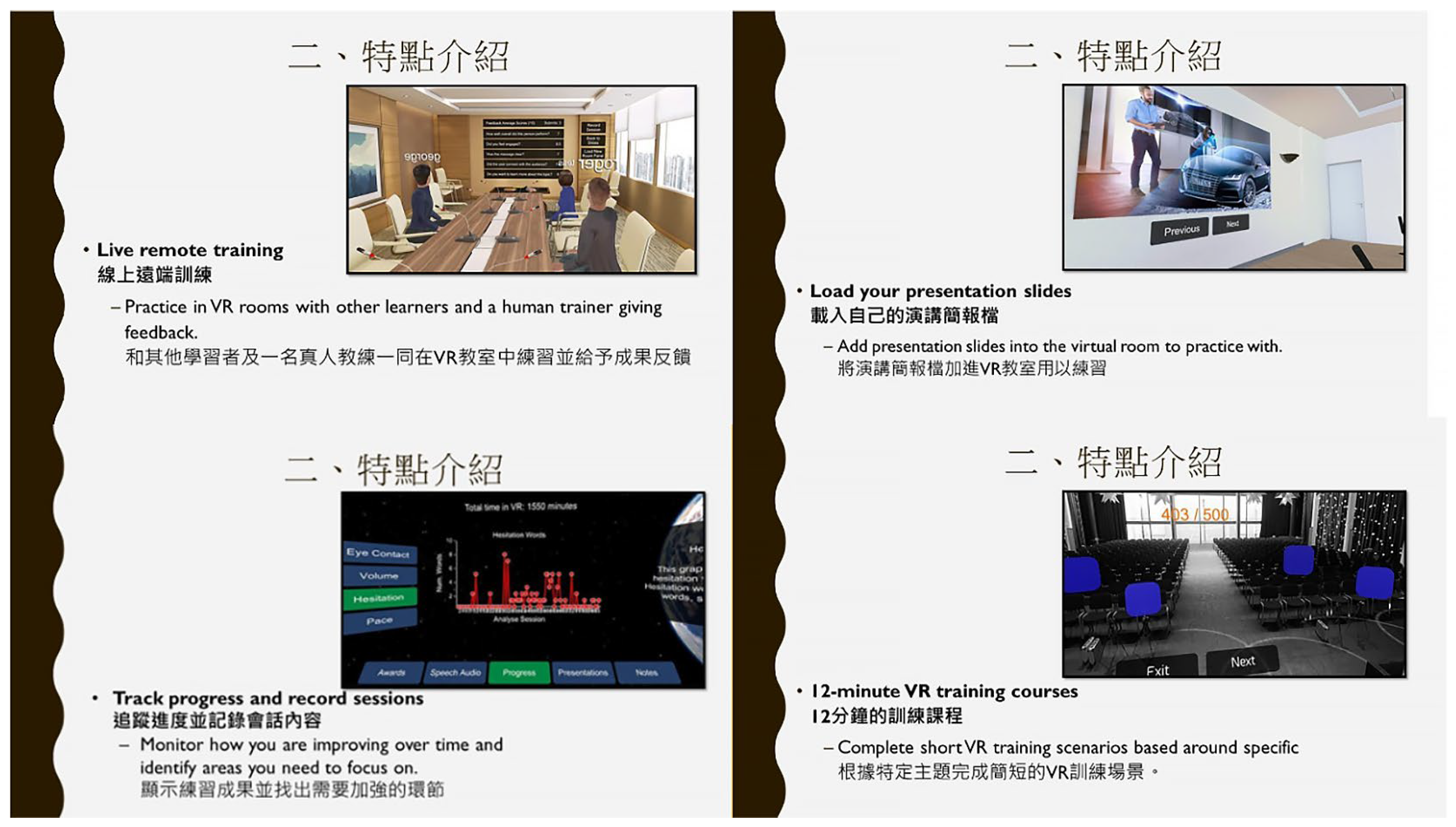
- Diversifying Types of Scaffolding: Emphasizing the four language skills (listening, speaking, reading, and writing) equally and tailoring scaffolding to different English proficiency levels and learning styles. Incorporating multimedia elements such as images, videos, and step-by-step demonstrations could facilitate active learner engagement and a sense of accomplishment in achieving educational goals.
- Enhancing Interaction and Immediate Feedback: Creating authentic learning scenarios in which students experience virtual communication contexts can guide students to connect these virtual scenarios to real-world communicative practices, thereby enhancing the practical application of language skills.
- Increasing Autonomy in VR Learning: Unlike in traditional classroom settings, VR environments do not have a universal outcome-oriented or standard answer. Learning participation varies among individuals. Regular monitoring and encouraging students to report their self-learning outcomes could boost their motivation and learning effectiveness [12,14,15,16,17,18,19].
2. Materials and Methods
2.1. Participants
2.2. Instruments and Methods
2.3. Data Analysis
3. Results
3.1. Correlation Analysis of Pre- and Post-Test Scores in VR-Based English Language Learning
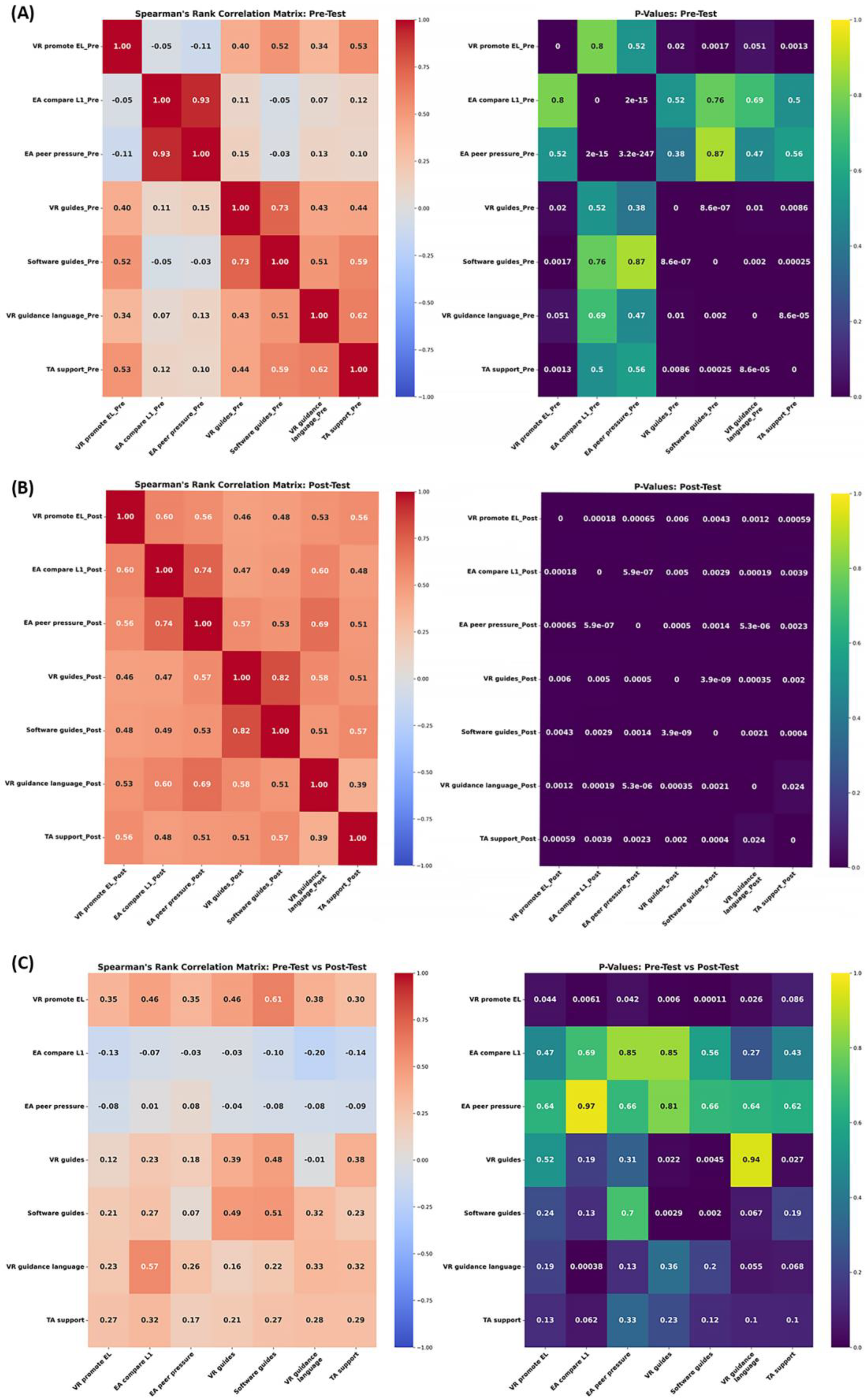
- There was a significant correlation between L1 proficiency and the VR guidance language (r = 0.69, p < 0.05), suggesting the need for tailored VR guidance for students with higher L1 proficiency.
- A significant correlation was found between VR guides and the promotion of English learning through VR (r = 0.57, p < 0.05), indicating that students who favored VR guides also supported the use of VR in English learning.
- There was a significant correlation between the software guides and the promotion of English learning through VR (r = 0.61, p < 0.05), demonstrating that students perceived software guides as crucial for the effectiveness of VR in promoting English learning.
Initially, I was quite nervous about using VR for English learning. I had never used VR before and was worried I might not handle it well, potentially affecting my performance. However, the VR guide made a huge difference. It provided clear, step-by-step instructions on using the equipment and navigating the learning modules, along with troubleshooting tips. This clarity reduced my confusion and anxiety, and as I became more familiar with the technology, my confidence grew. I started participating more actively in VR activities, especially virtual English conversations, and noticed a significant improvement in my learning outcomes. The guide was crucial in helping me overcome my fear of new technology, ultimately making the learning experience enjoyable and effective.
As a first-year medical student, I felt very anxious about VR-based learning even with a Common European Framework of Reference for Languages (CEFR) C1 level of English proficiency. Having never used VR technology before, I worried about my ability to effectively operate the equipment. I feared that any technical difficulties might impede my learning progress. Additionally, the VR learning environment was vastly different from the traditional classroom settings I was accustomed to, making me uncertain about how well I could adapt and benefit from this new approach. Most importantly, I was deeply concerned that my performance in the VR modules might not meet my expectations, potentially affecting my overall semester grades. However, after receiving detailed guidance, my situation improved significantly. The guide provided clear steps and troubleshooting tips, which helped reduce my fear of the technology and gradually familiarize myself with the VR equipment. As I became more comfortable with the VR technology, my confidence grew, allowing me to participate more actively in learning activities. Ultimately, my performance improved, and so did my grades.
3.2. Overall Impact of VR Scaffolding in Assisting Students to Learn
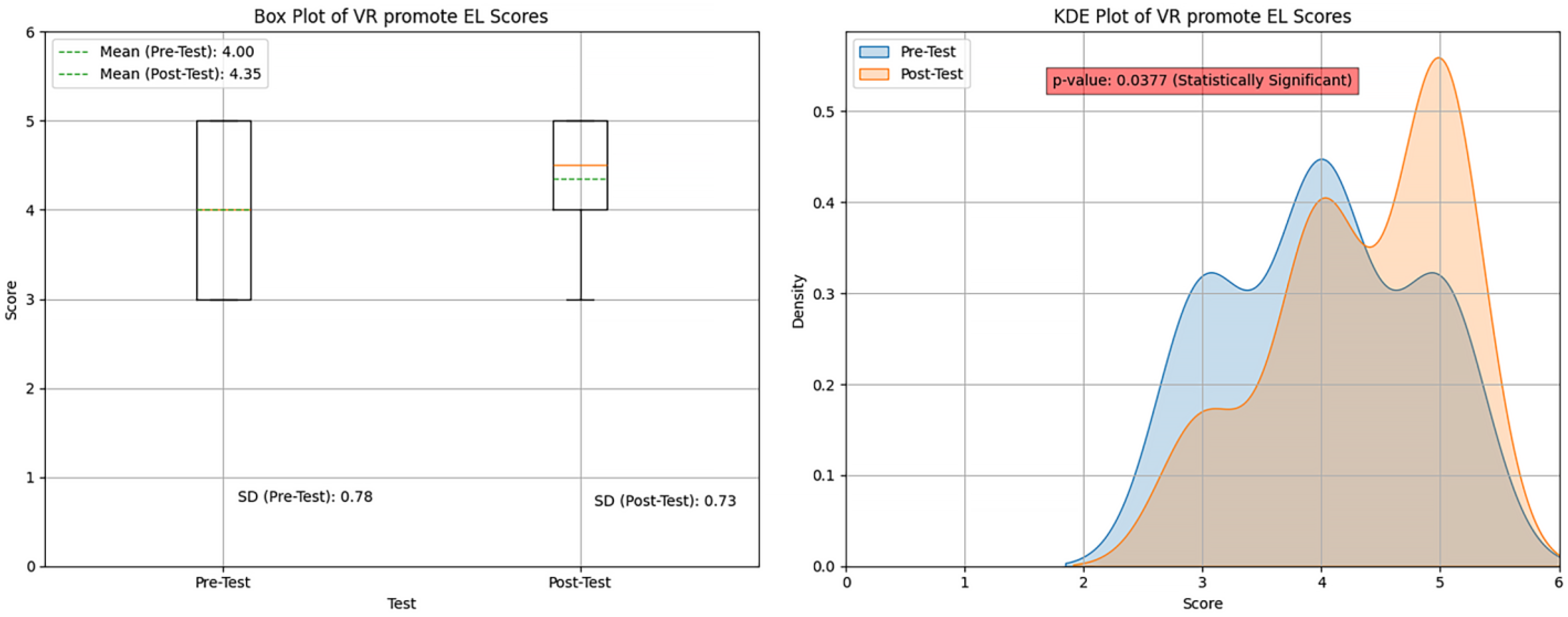
I think using VR for learning English really helps improve my skills. The user guide is very important. It helps because it shows me what to expect, and the teaching assistant’s demonstrations reduce my anxiety [I can just be a copycat (laughs)]. Sometimes, I’m not just worried about my English, but also about not being good with new technology. The VR lessons make learning more complicated because I must deal with language and technology worries.
4. Discussion
4.1. Analysis of English Proficiency Groups
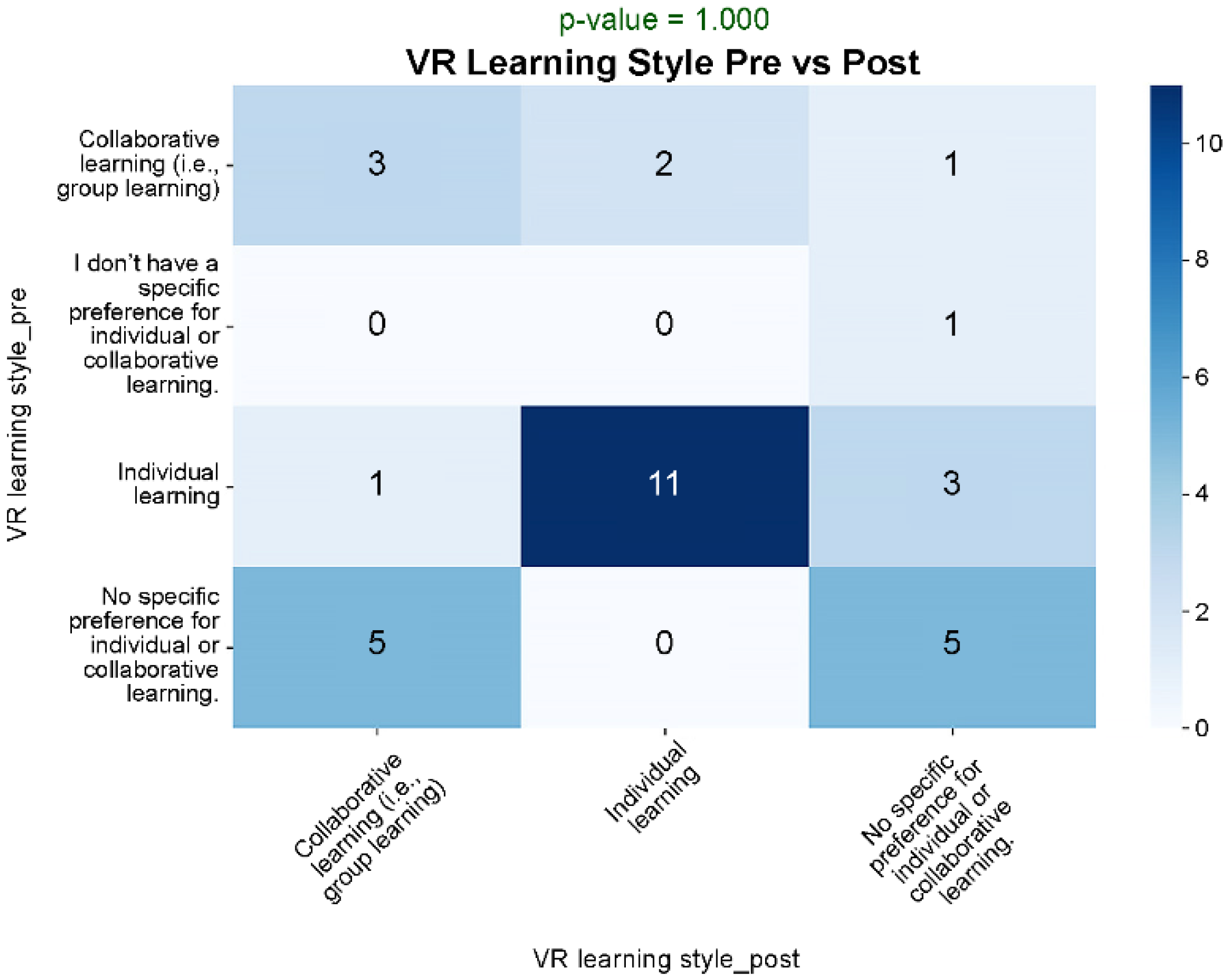
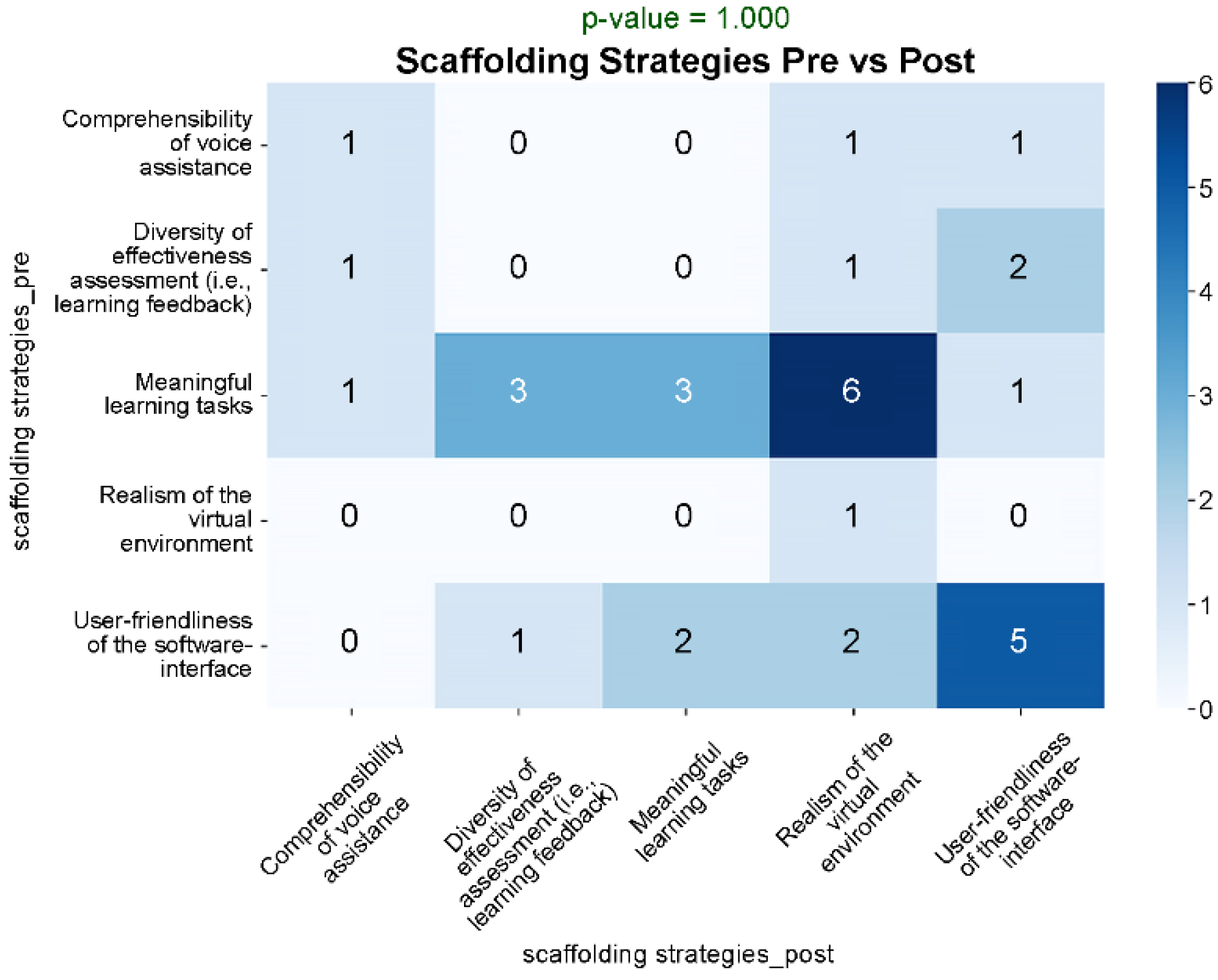
4.2. Comparison of Scaffolding Preferences
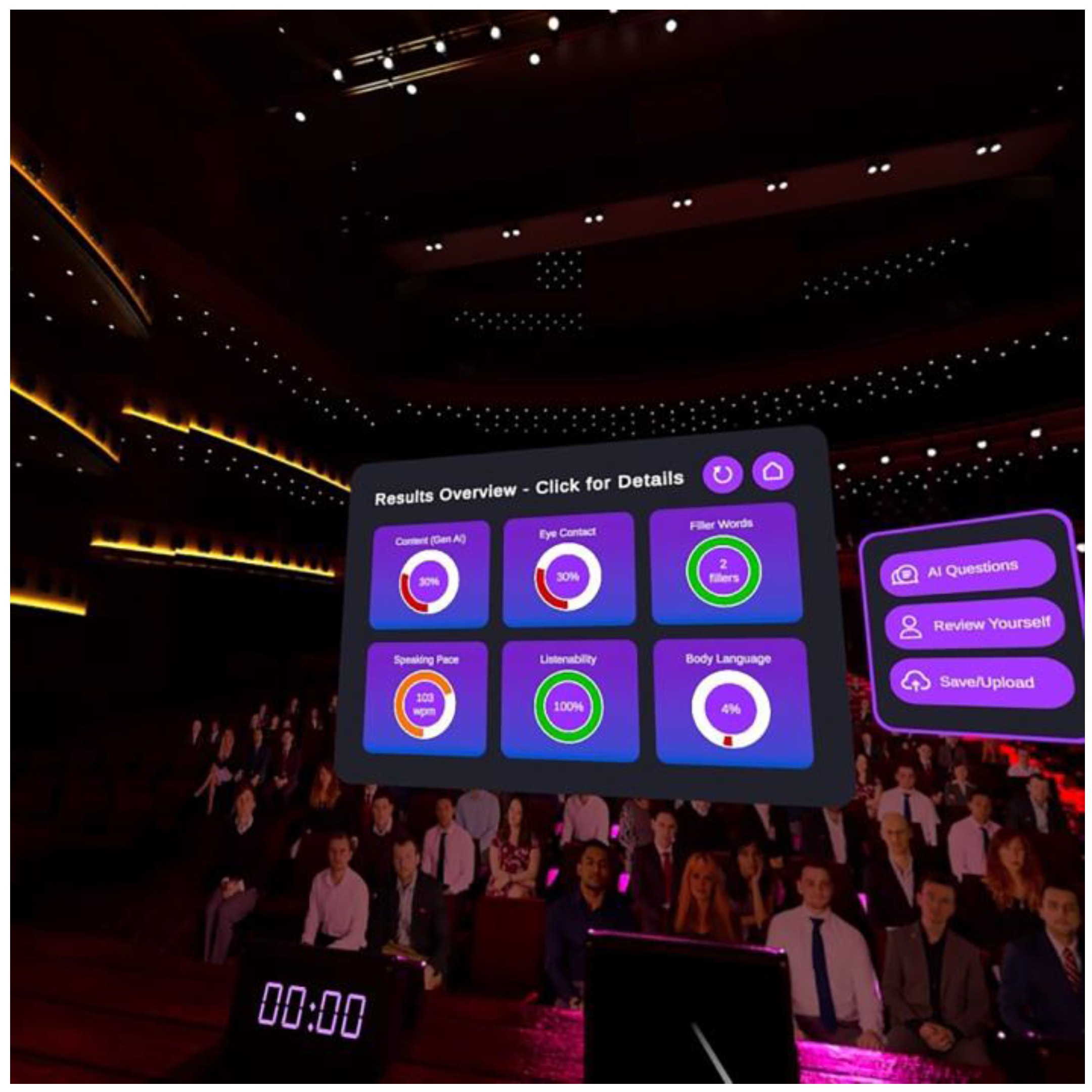
When I finish a VR task, I get instant feedback on my performance and suggestions for improvement. This helps me know what I did well and what I need to work on. For example, after practicing English speaking in VR, I received tips on how to improve my pronunciation. This feedback boosts my confidence and motivates me to keep trying. I feel less lost and more supported in my learning journey.
4.3. Comparison of VR Learning Styles
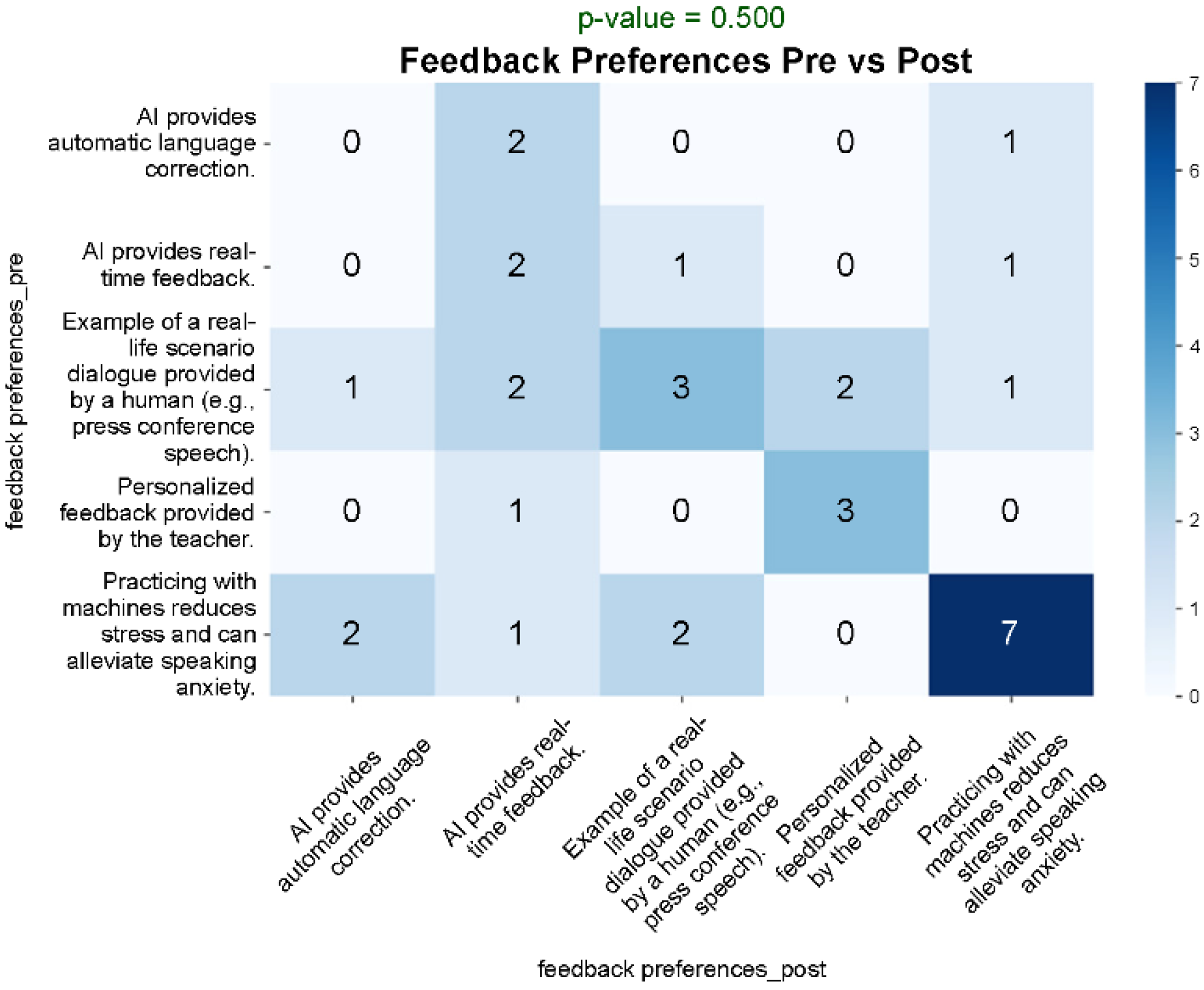
4.4. Comparison of Feedback Preferences
5. Conclusions
Funding
Institutional Review Board Statement
Informed Consent Statement
Data Availability Statement
Acknowledgments
Conflicts of Interest
Appendix A. The Framework by Quintana et al. (2004) [24] Used in This Study
Appendix A.1. Scaffolding Design Framework (Quintana et al., 2004 [24], p. 345)

| (a) Scaffolding Guidelines | Scaffolding Strategies |
|---|---|
| Science Inquiry Component: Sense Making | |
| 1. Use representations and language that bridge learners’ understanding | (a) Provide visual conceptual organizers to give access to functionality |
| (b) Use descriptions of complex concepts that build on learners’ intuitive ideas | |
| (c) Embed expert guidance to help learners use and apply science content | |
| 2. Organize tools and artifacts around the semantics of the discipline | (a) Make disciplinary strategies explicit in learner interactions with the tool |
| (b) Make disciplinary strategies explicit in the artifacts learners create | |
| 3. Use representations that learners can inspect in different ways to reveal important properties of underlying data | (a) Provide representations that can be inspected to reveal underlying properties of data |
| (b) Enable learners to inspect multiple views of the same object or data | |
| (c) Provide learners with ”malleable representations” that allow them to directly manipulate representations | |
| Science Inquiry Component: Process Management | |
| (d) Provide structure for complex tasks and functionality | (a) Restrict a complex task by setting useful boundaries for learners |
| (b) Describe complex tasks by using ordered and unordered task decompositions | |
| (c) Constrain the space of activities by using functional modes | |
| (e) Embed expert guidance about scientific practices | (a) Embed expert guidance to clarify characteristics of scientific practices |
| (b) Embed expert guidance to indicate the rationales for scientific practices | |
| (f) Automatically handle non-salient routine tasks | (a) Automate non-salient portions of tasks to reduce cognitive demands |
| (b) Facilitate the organization of work products | |
| (c) Facilitate navigation among tools and activities | |
| Science Inquiry Component: Articulation and Reflection | |
| (g) Facilitate ongoing articulation and reflection during the investigation | (a) Provide reminders and guidance to facilitate productive planning |
| (b) Provide reminders and guidance to facilitate productive monitoring | |
| (c) Provide reminders and guidance to facilitate articulation during sense-making | |
| (d) Highlight epistemic features of scientific practices and products | |
Appendix B. Rubrics for Speaking Performance Evaluation
| Components | Components | Components | Components |
|---|---|---|---|
| Organization | Presentation is clear, logical, and organized. Listener can follow line of reasoning. | Presentation is generally clear and well organized. A few minor points might be confusing. | Organization is haphazard; listener can follow presentation only with effort. Arguments are unclear. |
| Style | Level of presentation is appropriate for the audience. Presentation is a planned conversation, paced for audience understanding. It is not a reading of a paper. Speaker is comfortable in front of the group and can be heard by all. | Level of presentation is generally appropriate. Pacing is sometimes too fast or too slow. Presenter seems slightly uncomfortable at times, and audience occasionally has trouble hearing them. | Aspects of presentation are too elementary or sophisticated for audience. Presenter seems uncomfortable and can be heard only if listener is very attentive. Much of the information is read. |
| Use of communication aids | Communication aids enhance presentation. The font on the visuals is readable. Information is represented and organized to maximize audience comprehension. Details are minimized so that main points stand out. | Communication aids contribute to the quality of the presentation. Font size is mostly readable. Appropriate information is included. Some material is not supported by visual aids. | Communication aids are poorly prepared or used inappropriately. Font size is too small to read. Too much information is included. Details or unimportant information is highlighted, which might confuse the audience. |
| Content depth of content | Speaker provides accurate and complete explanations of key concepts and theories, drawing on relevant literature. Applications of theory illuminate issues. Listeners gain insights. | For the most part, explanations of concepts and theories are accurate and complete. Some helpful applications are included. | Explanations of concepts and theories are inaccurate or incomplete. Little attempt is made to tie theory to practice. Listeners gain little from the presentation. |
| Accuracy of content | Information (names, facts, etc.) included in the presentation is consistently accurate. | No significant errors are made. Listeners recognize any errors to be the result of nervousness or oversight. | Enough errors are made to distract a knowledgeable listener. Some information is accurate, but the listener must determine what information is reliable. |
Appendix B.1. Rubric for Formal Oral Communication
| Use of Language | |||
|---|---|---|---|
| Grammar and word choice | Sentences are complete and grammatically sound. They flow together easily. Words are well chosen; they express the intended meaning precisely. | Sentences are complete and grammatically sound for the most part. They flow together easily. With some exceptions, words are well chosen and precise. | Listeners can follow presentation, but they are distracted by some grammatical errors and use of slang. Some sentences are halting, incomplete, or vocabulary is limited or inappropriate. |
| Freedom from bias (e.g., sexism, racism, heterosexism, agism, etc.) | Both oral language and body language are free from bias. | Oral language and body language are free from bias with one or two minor exceptions. | Oral language and body language include some identifiable biases. Some listeners will be offended. |
| Responsiveness to Audience | |||
| Verbal interaction | Consistently clarifies, restates, and responds to questions. Summarizes when needed. | Generally responsive to audience questions and needs. Misses some opportunities for interaction. | Responds to questions inadequately. |
| Body language | Body language reflects comfort interacting with audience. | Body language reflects some discomfort interacting with audience. | Body language reveals a reluctance to interact with audience. |
Appendix C. List of Self-Learning and Core Scaffolding Courses (Highlighted in Bold)
| Course | Lecture (Video + Reading) | Practice | Quiz | VR Support | Hours to Complete |
|---|---|---|---|---|---|
| Essential Public Speaking | 53 | 7 | 2 | V | 5 h 28 min |
| Persuasive Business Storytelling | 23 | 5 | 3 | V | 5 h 13 min |
| Leadership Communication | 39 | 7 | 2 | V | 4 h 0 min |
| Train the Trainer | 57 | 4 | 0 | V | 3 h 23 min |
| English for Business | 50 | 6 | 0 | V | 2 h 40 min |
| Job Interview Preparation | 31 | 2 | 0 | V | 1 h 47 min |
| Media Training | 21 | 6 | 0 | V | 1 h 40 min |
| Business Ethics | 42 | 1 | 0 | V | 2 h 21 min |
| Body Language | 20 | 0 | 0 | V | 1 h 11 min |
| Sexual Harassment Training | 12 | 1 | 3 | V | 2 h 0 min |
| Sales Pitch and Closing | 34 | 7 | 2 | V | 3 h 9 min |
Appendix D. Updated Public Speaking Class Anxiety Scale Version Used in This Study
| Item Number | Statements Adopted with Minor Adaptation in Wording | Opinion | ||||
|---|---|---|---|---|---|---|
| (5) Strongly Agree | (4) Agree | (3) Undecided | (2) Disagree | (1) Strongly Disagree | ||
| 1 | I never feel quite sure of myself while I am speaking English. | |||||
| 2 | I start to panic when I have to speak English without advance preparation. | |||||
| 3 | In a speaking class, I can get so nervous I forget things I know. | |||||
| 4 | I feel confident while I am speaking English. | |||||
| 5 | I get nervous and confused when I am speaking English. | |||||
| 6 | I am afraid that other students will laugh at me while I am speaking English. | |||||
| 7 | I get nervous when the English teacher asks me to speak English which I have prepared in advance. | |||||
| 8 | I have no fear of speaking English. | |||||
| 9 | I can feel my heart pounding when I am going to be called on. | |||||
| 10 | I feel relaxed while I am speaking English. | |||||
| 11 | It embarrasses me to volunteer to go out first to speak English | |||||
| 12 | I face the prospect of speaking English with confidence. | |||||
| 13 | Certain parts of my body feel very tense and rigid while I am speaking English. | |||||
| 14 | I feel anxious while I am waiting to speak English. | |||||
| 15 | I dislike using my voice and body expressively while I am speaking English. | |||||
| 16 | I have trouble coordinating my movements while I am speaking English. | |||||
| 17 | Even if I am very well prepared, I feel anxious about speaking English. | |||||
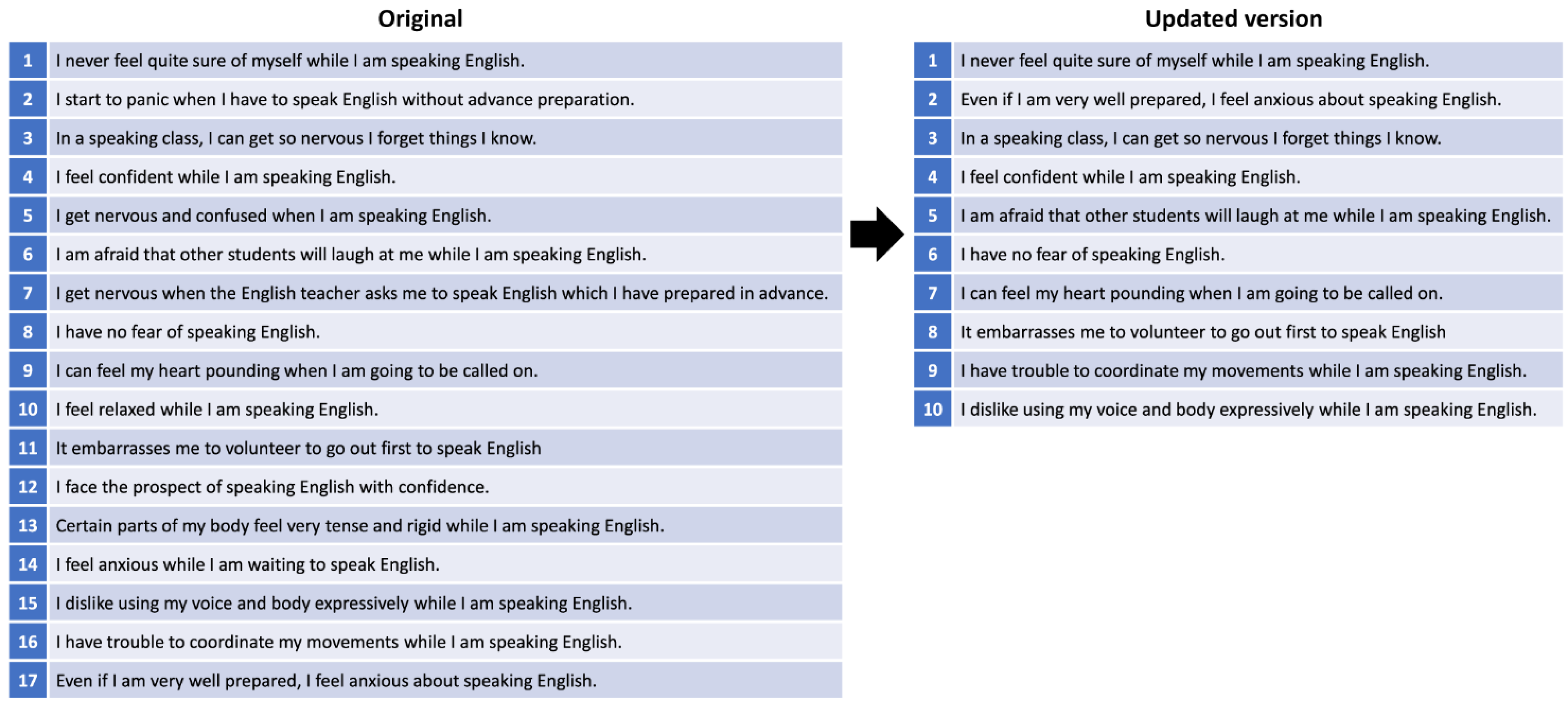
| Original | |
|---|---|
| 1 | I never feel quite sure of myself while I am speaking English. |
| 2 | I start to panic when I have to speak English without advance preparation. |
| 3 | In a speaking class, I can get so nervous I forget things I know. |
| 4 | I feel confident while I am speaking English. |
| 5 | I get nervous and confused when I am speaking English. |
| 6 | I am afraid that other students will laugh at me while I am speaking English. |
| 7 | I get nervous when the English teacher asks me to speak English which I have prepared in advance. |
| 8 | I have no fear of speaking English. |
| 9 | I can feel my heart pounding when I am going to be called on. |
| 10 | I feel relaxed while I am speaking English. |
| 11 | It embarrasses me to volunteer to go out first to speak English |
| 12 | I face the prospect of speaking English with confidence. |
| 13 | Certain parts of my body feel very tense and rigid while I am speaking English. |
| 14 | I feel anxious while I am waiting to speak English. |
| 15 | I dislike using my voice and body expressively while I am speaking English. |
| 16 | I have trouble coordinating my movements while I am speaking English. |
| 17 | Even if I am very well prepared, I feel anxious about speaking English. |
| Updated (Used in This Study) | |
| 1 | I never feel quite sure of myself while I am speaking English. |
| 2 | Even if I am very well prepared, I feel anxious about speaking English. |
| 3 | In a speaking class, I can get so nervous I forget things I know. |
| 4 | I feel confident while I am speaking English. |
| 5 | I am afraid that other students will laugh at me while I am speaking English. |
| 6 | I have no fear of speaking English. |
| 7 | I can feel my heart pounding when I am going to be called on. |
| 8 | It embarrasses me to volunteer to go out first to speak English |
| 9 | I have trouble coordinating my movements while I am speaking English. |
| 10 | I dislike using my voice and body expressively while I am speaking English. |
References
- Makransky, G.; Lilleholt, L. A structural equation modeling investigation of the emotional value of immersive virtual reality in education. Educ. Technol. Res. Dev. 2018, 66, 1141–1164. [Google Scholar] [CrossRef]
- Chen, C.H.; Lee, I.J.; Lin, L.Y. Augmented reality-based self-facial modeling to promote the emotional expression and social skills of adolescents with autism spectrum disorders. Res. Dev. Disabil. 2015, 36, 396–403. [Google Scholar] [CrossRef] [PubMed]
- Puntambekar, S.; Kolodner, J.L. Toward implementing distributed scaffolding: Helping students learn science from design. J. Res. Sci. Teach. 2005, 42, 185–217. [Google Scholar] [CrossRef]
- Wood, D.; Bruner, J.S.; Ross, G. The role of tutoring in problem solving. J. Child Psychol. Psychiatry 1976, 17, 89–100. [Google Scholar] [CrossRef]
- Shepard, L.A. The role of assessment in a learning culture. Educ. Res. 2000, 29, 4–14. [Google Scholar] [CrossRef]
- Vygotsky, L.S.; Cole, M.; John-Steiner, V.; Scribner, S.; Souberman, E. Mind in Society: The Development of Higher Psychological Processes; Harvard University Press: Cambridge, MA, USA, 1978. [Google Scholar]
- Belland, B.R. Instructional Scaffolding in STEM Education: Strategies and Efficacy Evidence; Springer Nature: Cham, Switzerland, 2017. [Google Scholar]
- Pea, R.D. The social and technological dimensions of scaffolding and related theoretical concepts for learning, education, and human activity. J. Learn. Sci. 2004, 13, 423–451. [Google Scholar] [CrossRef]
- Hannafin, M.; Land, S.; Oliver, K. Open learning environments: Foundations, methods, and models. In Instructional-Design Theories and Models; Routledge: London, UK, 2013; pp. 115–140. [Google Scholar]
- Duke, D.; Krishnan, M.; Faith, M.; Storch, E.A. The psychometric properties of the brief fear of negative evaluation scale. J. Anxiety Disord. 2006, 20, 807–817. [Google Scholar] [CrossRef]
- Zarei, A.A.; Rezadoust, H. The effects of scaffolded and unscaffolded feedback on EFL learners’ speaking anxiety and speaking self-efficacy. J. Mod. Res. Engl. Lang. Stud. 2020, 7, 111–132. [Google Scholar]
- Doo, M.Y.; Tang, Y.; Bonk, C.J.; Zhu, M. MOOC instructor motivation and career development. Distance Educ. 2020, 41, 26–47. [Google Scholar] [CrossRef]
- Legault, J.; Zhao, J.; Chi, Y.A.; Chen, W.; Klippel, A.; Li, P. Immersive virtual reality as an effective tool for second language vocabulary learning. Languages 2019, 4, 13. [Google Scholar] [CrossRef]
- Henderson, M.; Huang, H.; Grant, S.; Henderson, L. The impact of Chinese language lessons in a virtual world on university students’ self-efficacy beliefs. Australas. J. Educ. Technol. 2012, 28, 400–419. [Google Scholar] [CrossRef]
- Kim, H.G.; Lim, H.T.; Ro, Y.M. Deep virtual reality image quality assessment with human perception guider for omnidirectional image. IEEE Trans. Circuits Syst. Video Technol. 2019, 30, 917–928. [Google Scholar] [CrossRef]
- Lan, Y.J.; Kan, Y.H.; Hsiao, I.Y.T.; Yang, S.J.H.; Chang, K.E. Designing interaction tasks in Second Life for Chinese as a foreign language learner: A preliminary exploration. Australas. J. Educ. Technol. 2013, 29, 184–202. [Google Scholar] [CrossRef]
- Lan, Y.J.; Chen, N.S.; Li, P.; Grant, S. Embodied cognition and language learning in virtual environments. Educ. Technol. Res. Dev. 2015, 63, 639–644. [Google Scholar] [CrossRef]
- Mishan, F. Designing Authenticity into Language Learning Materials; Intellect Books: Bristol, UK, 2005. [Google Scholar]
- Winkler-Schwartz, A.; Yilmaz, R.; Mirchi, N.; Bissonnette, V.; Ledwos, N.; Siyar, S.; Azarnoush, H.; Karlik, B.; Del Maestro, R. Machine learning identification of surgical and operative factors associated with surgical expertise in virtual reality simulation. JAMA Netw. Open 2019, 2, e198363. [Google Scholar] [CrossRef]
- Arora, R.; Kazi, R.H.; Anderson, F.; Grossman, T.; Singh, K.; Fitzmaurice, G.W. Experimental evaluation of sketching on surfaces in VR. In Proceedings of the 2017 CHI Conference on Human Factors in Computing Systems, Denver, CO, USA, 6–11 May 2017; Association for Computing Machinery: New York, NY, USA, 2017; pp. 5643–5654. [Google Scholar]
- Mohamed Shaari, N.A.; Badioze Zaman, H. Scaffolding poetry lessons using desktop virtual reality. In Proceedings of the Second International Visual Informatics Conference IVIC 2011, Selangor, Malaysia, 9–11 November 2011; Proceedings, Part II. Springer: Berlin/Heidelberg, Germany, 2011; Volume 2, pp. 231–241. [Google Scholar]
- Alemdag, E.; Cagiltay, K. A systematic review of eye tracking research on multimedia learning. Comput. Educ. 2018, 125, 413–428. [Google Scholar] [CrossRef]
- Bacca Acosta, J.L.; Baldiris Navarro, S.M.; Fabregat Gesa, R.; Kinshuk, K. Framework for designing motivational augmented reality applications in vocational education and training. Australas. J. Educ. Technol. 2019, 35, 102–117. [Google Scholar] [CrossRef]
- Quintana, C.; Reiser, B.J.; Davis, E.A.; Krajcik, J.; Fretz, E.; Duncan, R.G.; Kyza, E.; Edelson, D.; Soloway, E. A scaffolding design framework for software to support science inquiry. J. Learn. Sci. 2004, 13, 337–386. [Google Scholar] [CrossRef]
- Dewey, J. How We Think; DigiCat: Rajasthan, India, 2022. [Google Scholar]
- Guilford, J.P. Intelligence, Creativity, and Emotional Implications; Knapp: San Diego, CA, USA, 1968. [Google Scholar]
- Polya, G. How to Solve It: A New Aspect of Mathematical Method; Princeton University Press: Princeton, NJ, USA, 2004; Volume 246. [Google Scholar]
- Veale, T.; Feyaerts, K.; Forceville, C. E unis pluri-bum: Using mental agility to achieve creative duality in word, image and sound. In Creativity and the Agile Mind: A Multi-Disciplinary Study of a Multi-Faceted Phenomenon (Applications of Cognitive Linguistics); Veale, T., Feyaerts, K., Forcewill, C., Eds.; De Gruyter Mouton: Boston, MA, USA, 2013; pp. 37–57. [Google Scholar]
- Yang, X.; Lin, L.; Cheng, P.Y.; Yang, X.; Ren, Y.; Huang, Y.M. Examining creativity through a virtual reality support system. Educ. Technol. Res. Dev. 2018, 66, 1231–1254. [Google Scholar] [CrossRef]
- Friedman, D. Brain-computer interfacing and virtual reality. In Handbook of Digital Games and Entertainment Technologies; Springer Science+Business Media: Singapore, 2015; pp. 151–171. [Google Scholar]
- Gilhooly, K.J.; Fioratou, E.; Anthony, S.H.; Wynn, V. Divergent thinking: Strategies and executive involvement in generating novel uses for familiar objects. Br. J. Psychol. 2007, 98, 611–625. [Google Scholar] [CrossRef]
- Keller, J.M.; Litchfield, B.C. Motivation and performance. In Trends and Issues in Instructional Design and Technology; Merill Prenctice Hall: Upper Saddle River, NJ, USA, 2002; Volume 2, pp. 89–92. [Google Scholar]
- Cho, D.; Ham, J.; Oh, J.; Park, J.; Kim, S.; Lee, N.K.; Lee, B. Detection of stress levels from biosignals measured in virtual reality environments using a kernel-based extreme learning machine. Sensors 2017, 17, 2435. [Google Scholar] [CrossRef] [PubMed]
- Ling Huang, O.H. Enhancing English Oral Communication Skills through Virtual Reality: A Study on Anxiety Reduction and Authentic Learning. Engl. Lang. Teach. 2024, 17, 1–11. [Google Scholar] [CrossRef]
- Garris, R.; Ahlers, R.; Driskell, J.E. Games, motivation, and learning: A research and practice model. Simul. Gaming 2002, 33, 441–467. [Google Scholar] [CrossRef]
- Yaikhong, K.; Usaha, S. A Measure of EFL public speaking class anxiety: Scale development and preliminary validation and reliability. Engl. Lang. Teach. 2012, 5, 23–35. [Google Scholar] [CrossRef]
- Fleming, N.D. Teaching and Learning Styles: VARK Strategies; VARK: Christchurch, New Zealand, 2001. [Google Scholar]
- Huba, M.E.; Freed, J.E. Learner-Centered Assessment on College Campuses: Shifting the Focus from Teaching to Learning; Allyn & Bacon: Boston, MA, USA, 2000. [Google Scholar]

Disclaimer/Publisher’s Note: The statements, opinions and data contained in all publications are solely those of the individual author(s) and contributor(s) and not of MDPI and/or the editor(s). MDPI and/or the editor(s) disclaim responsibility for any injury to people or property resulting from any ideas, methods, instructions or products referred to in the content. |
© 2024 by the author. Licensee MDPI, Basel, Switzerland. This article is an open access article distributed under the terms and conditions of the Creative Commons Attribution (CC BY) license (https://creativecommons.org/licenses/by/4.0/).
Share and Cite
Huang, H.L. Exploring the Impact of VR Scaffolding on EFL Teaching and Learning: Anxiety Reduction, Perceptions, and Influencing Factors. Multimodal Technol. Interact. 2024, 8, 85. https://doi.org/10.3390/mti8100085
Huang HL. Exploring the Impact of VR Scaffolding on EFL Teaching and Learning: Anxiety Reduction, Perceptions, and Influencing Factors. Multimodal Technologies and Interaction. 2024; 8(10):85. https://doi.org/10.3390/mti8100085
Chicago/Turabian StyleHuang, Hsiang Ling. 2024. "Exploring the Impact of VR Scaffolding on EFL Teaching and Learning: Anxiety Reduction, Perceptions, and Influencing Factors" Multimodal Technologies and Interaction 8, no. 10: 85. https://doi.org/10.3390/mti8100085
APA StyleHuang, H. L. (2024). Exploring the Impact of VR Scaffolding on EFL Teaching and Learning: Anxiety Reduction, Perceptions, and Influencing Factors. Multimodal Technologies and Interaction, 8(10), 85. https://doi.org/10.3390/mti8100085