
Article

A Compact Heat Sink Compatible with a Ka-Band Gyro-TWT with Non-Superconducting Magnets

1
School of Physics, University of Electronic Science and Technology of China, Chengdu 611731, China
2
School of Electronic Science and Engineering, University of Electronic Science and Technology of China, Chengdu 611731, China
*
Author to whom correspondence should be addressed.
Quantum Beam Sci. 2026, 10(1), 4; https://doi.org/10.3390/qubs10010004 (registering DOI)
Submission received: 4 November 2025 / Revised: 11 December 2025 / Accepted: 9 January 2026 / Published: 22 January 2026
(This article belongs to the Section Radiation Scattering Fundamentals and Theory)

Abstract

This paper presents a thermal management solution for a Ka-band gyrotron traveling wave tube (gyro-TWT) with non-superconducting magnets. At present, the miniaturization and non-superconductivity of gyro-TWT have become a trend, but miniaturization leads to a significant increase in power density and a severe limitation in heat sink volume, which critically limits power capacity. To address this challenge, a joint microwave–thermal management evaluation model is used to investigate the heat transfer process and identify the crucial factors constraining the power capacity. A cylindrical heat sink with narrow rectangular grooves is introduced. Based on this, the cooling efficiency has been enhanced through structural optimization. The beam–wave interaction, electrothermal conversion, and heat conduction processes of the interaction circuit are analyzed. The compact heat sink achieves a 1.2-fold increase in coolant utilization and reduces the overall volume by 27.4%. Meanwhile, this heat sink improves the cooling performance and power capability of the gyro-TWT effectively. At 29 GHz, the gyro-TWT achieves a pulse power of 150 kW. Simulation results show that the maximum temperature is 348 °C at a 45% duty cycle, reduced by 159 °C. The power capacity of the Ka-band gyro-TWT increases by 40.6%.

1. Introduction

The gyrotron traveling wave tube (gyro-TWT) is a high-power millimeter wave device, which uses electron cyclotron maser mechanism to overcome the frequency and efficiency limitations of conventional vacuum electronics. It coherently transfers kinetic energy across an extended interaction circuit. Characterized by their wide bandwidth and high power, the gyro-TWTs have been used in radar detection, satellite communication, electronic countermeasures, and so on [1,2,3]. The gyro-TWT is composed of an electron gun, an interaction circuit, a collector, an input and output structures. The high-energy electron beam emitted by a magnetron injection gun interacts with microwaves here, and microwave amplification is achieved.
Nowadays, the gyro-TWTs with different wavebands have been manufactured and applied. The researchers at University of Electronic Science and Technology of China (UESTC) experimentally verified a TE11 mode Ku-band gyro-TWT that achieved maximum continuous-wave (CW) output of 49 kW at 16 GHz with an efficiency of 21.8% and a saturation bandwidth of 2 GHz driven by a 50 kV.5 A electron beam [4]. At the Institute of Applied Physics of the Russian Academy of Sciences (IAP RAS), the Ka-band pulsed gyro-TWT experiment results show that it can produce 160-kW output power. For the Ka-band continuous-wave tube with a single depressed collector, it delivers continuous-wave power of up to 7.7 kW [5]. Researchers at UESTC presented a Ka-band gyro-TWT with a single depressed collector, driven by a 60 kV, 10 A electron beam; the maximum peak power of 155.3 kW can be achieved by using a 14 kV depressed collector, with the overall efficiency increased by 24.7% [6].
In the Ka-band gyro-TWT, in order to overcome the limitations of superconducting magnets in terms of flexibility, maneuverability, and quick start-up, a higher harmonic number can be introduced to reduce the working magnetic field [7]. However, higher harmonic number leads to a sharp decrease in output power, efficiency, and bandwidth. Another approach is to decrease the inner radius of the magnet, as the magnetic field strength increases positively with a reduction in inner radius. Researchers investigate a TE11 Ka-band gyro-TWT with non-superconducting magnets. This kind of gyro-TWT features a small size and is suitable for fast start-up scenarios. An inverse magnetron injection gun (MIG) with a reduced inner radius of 20 mm was designed. Compared with the conventional MIG, the maximum radius of the gun is reduced by 44% [8].
Figure 1 shows the schematic of the Ka-band gyro-TWT with non-superconducting magnets [9]. Due to the application of the TE11 mode, the size of the interaction circuit is reduced, and the power density of micro-losses will increase accordingly under the same conditions. This will lead to a decline in the power capacity of the interaction circuit, which is a crucial factor affecting the power capacity of miniaturized gyro-TWTs. No relevant evaluation or optimization design for interaction circuits has been conducted to date. The collector is not contained in the magnet; therefore, the heat dissipation performance of the collector is not affected [6]. This paper aims to improve the power capacity of the Ka-band gyro-TWT with non-conducting magnets by investigating the interaction circuit. Firstly, a joint microwave-thermal management evaluation model is developed. Beam–wave interaction, electrothermal conversion, and thermal management of the interaction circuit for the miniaturized gyro-TWT are investigated. In addition, the effects of the cooling channel’s width, height, and flow rate on the power capacity are analyzed, and an efficient heat sink compatible with the requirement of a miniaturized, high-power-capacity Ka-band gyro-TWT is designed. With the novel rectangular-slotted heat sink, the coolant utilization rate reaches 54%, an increase of 1.2 times. The volume of the heat sink is reduced by 27.4%. At 29 GHz, the pulse power of the gyro-TWT is 150 kW; at the pulse duty cycle of 45%, the simulation result shows that the maximum temperature with the novel heat sink is 348 °C, which is decreased by 159 °C, and the power capacity increases by 40.6%.

2. Analysis of Heat Source

Table 1 shows the design parameters of the interaction circuit for the minimized Ka-band gyro-TWT. The dielectric-loaded ceramic inner radius is 3.23 mm, and the design total length of the interaction circuit is 200 mm. It consists of 20 sections of dielectric-loaded ceramics, and the length of a single ceramic is 10 mm. The interaction circuit is where the beam–wave interaction occurs. It has linear and nonlinear segments. The linear segment is composed of beryllia ceramic rings distributed side by side. The dielectric-loaded ceramics serve as attenuation media to provide the required loss to suppress possible spurious oscillations and ensure the stable operation of the gyro-TWT [10,11,12]. The nonlinear segment is where the beam–wave interaction happens; the clustered electrons give the information they carry to the electromagnetic wave. The interaction circuit is wrapped by oxygen-free copper, whose main function is to transfer heat, so that the microwave dissipated power is finally released in the form of heat energy.
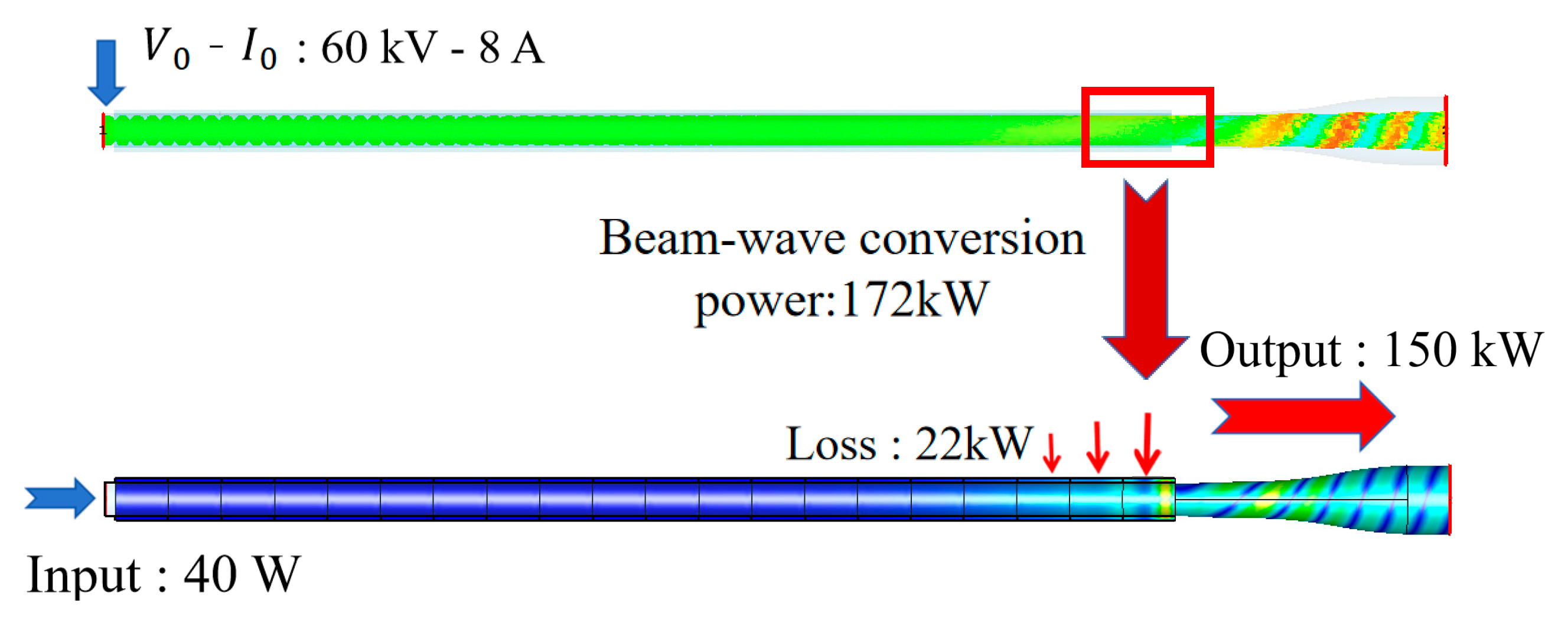
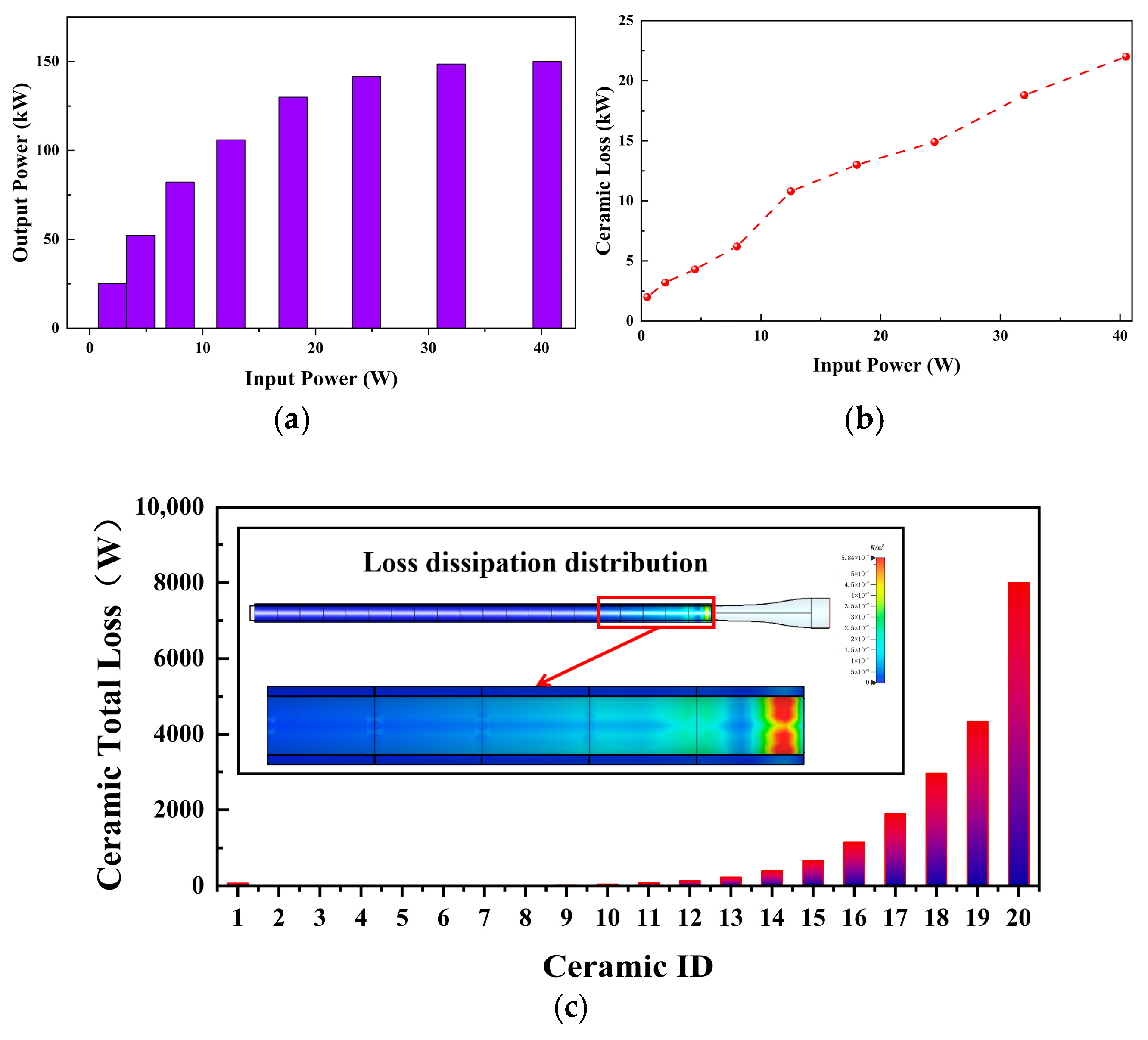
The ka-band gyro-TWT is driven by a 60 kV, 8 A electron beam. Figure 2 shows the energy conversion process of the interaction circuit. At 29 GHz, the output power increases as the input power increases. When the input power is 40 W, the output power tends to saturate as shown in Figure 3a calculated by CST Studio Suite 2022. The saturation output power is 150 kW and the TE11 mode gain is about 35.7 dB. When the input power exceeds 20 W, the output power varies nonlinearly, indicating that the amplifier is in overmodulation. Meanwhile, the loss on the ceramic continues to increase linearly as shown in Figure 3b. Considering redundancy, the thermoelectric management at an input power of 40 W is analyzed. When the input power is 40W, the power dissipation reaches 22kW, which is distributed on the ceramic surface in the form of heat. Figure 3c shows the distribution of power loss on the ceramic, which indicates that the ceramic loss is mainly concentrated in the last five sections of the ceramics, accounting for about 90% of the total power loss, meaning that the heat is also concentrated on these ceramics.
The thermal conductivity of dielectric-loaded ceramics decreases sharply with the increase of temperature. At room temperature, the thermal conductivity of ceramics is about 175 W/(m·°C). However, when the temperature rises to 350 °C, the thermal conductivity is only 67 W/(m·°C), which is less than 40% of that at normal temperature [9]. This will cause heat to accumulate inside the interaction circuit and not be transferred out. If the temperature is excessive, the stability of the system will be affected. Therefore, the cooling structure plays an important role in the power capacity of the gyro-TWT.

3. Joint Microwave–Thermal Management Evaluation Model

Compared with the reported structure of the Ka-band gyro-TWT [6], the interaction circuit of TE11 mode has a narrower radius and more concentrated heat loss. In addition, the magnet aperture decreased from 80 mm to 40 mm [8], resulting in a decrease in the space for heat dissipation. These will greatly affect the power capacity of the gyro-TWT. In order to solve this problem, a joint microwave–thermal management evaluation model is developed. Considering the beam–wave interaction and heat transfer mechanism comprehensively, an efficient heat sink compatible with a miniaturized Ka-band gyro-TWT is expected to be designed.
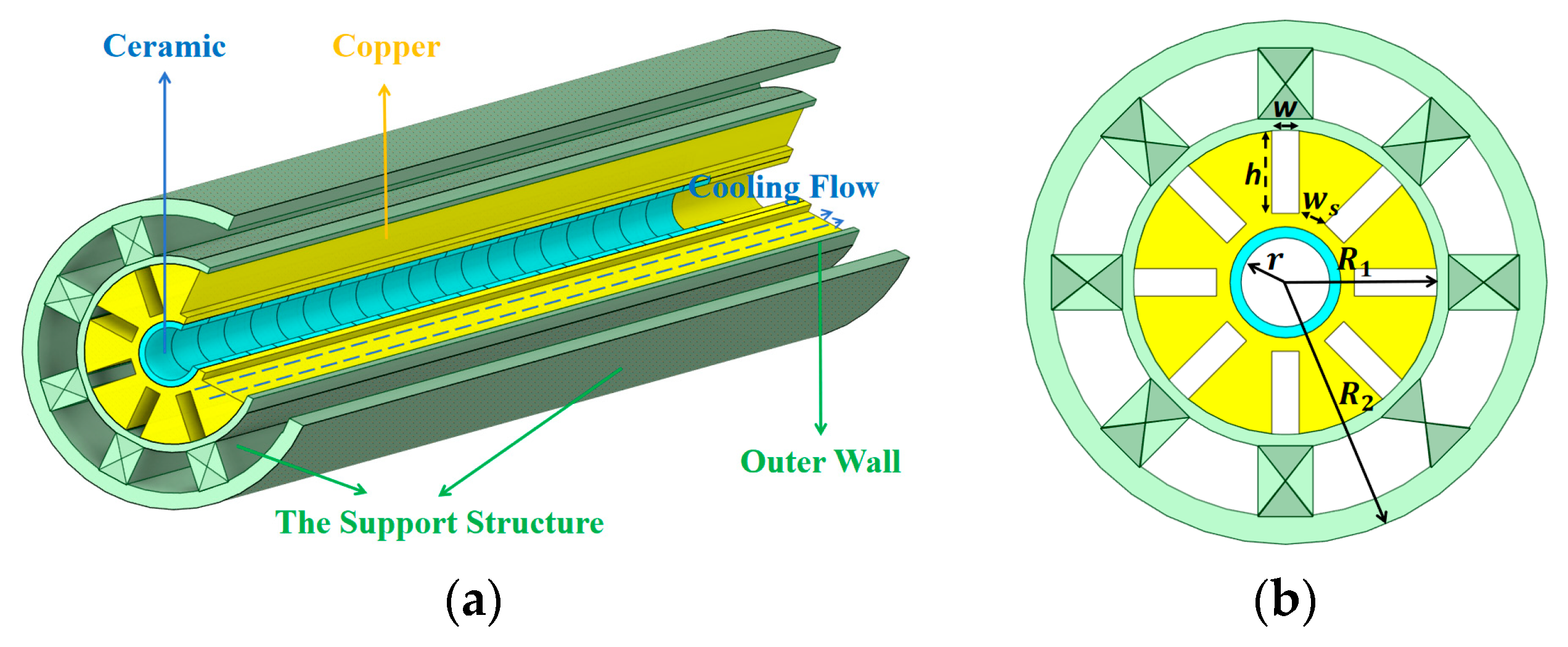
Table 2 shows initial parameters of the heat sink, and the model is shown in Figure 4. The blue section is the attenuation medium, which is beryllia ceramic rings with a thickness of 0.8 mm. The yellow section is oxygen-free copper, whose main function is heat transfer. The green section outside is the support structure and the outer wall of the gyro-TWT. A rectangular straight-slot channel is designed for coolant flow. Between the heat sink and the non-superconducting magnet, there are structures such as packaging, support structures, input waveguides, etc. Hence, the reserved space should be considered, and the height of the cooling channel should be limited. For the traditional Ka-band gyro-TWT, the high duty cycle requirement can be satisfied by increasing the size of the heat sink. However, in order to meet the needs of miniaturization scenarios, it is necessary to improve the heat dissipation efficiency of the heat sink.
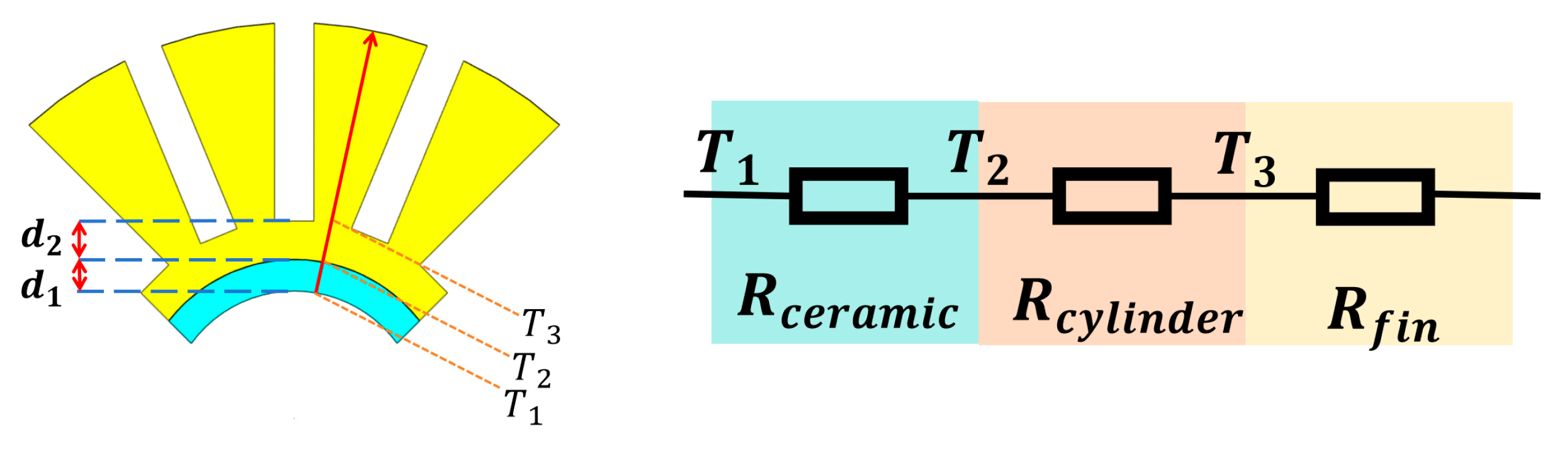
For the heat sink with rectangular straight slot cooling channel, channel width ( w ), sidewall width ( w s ), and aspect ratio ( α = h / w ) will affect cooling performance [13,14]. It is proved by numerical optimization that the channel width is the most crucial quantity in dictating the performance of a microchannel heat sink [15]. The aspect ratio of the cross section affects the T m a x in a rectangular microchannel [16]. When the temperature reaches a steady state, the electric analog of the heat transmission process is shown in Figure 5. R c e r a m i c is the transverse thermal resistance of the ceramic, R c y l i n d e r is the transverse thermal resistance of the copper-cylinder, and R f i n is the transverse thermal resistance of the copper-fin. Since the peripheral structure does not affect the thermal results, it was therefore modeled as an open (rather than hollow) structure in the following simulations. The microchannel with high aspect ratio usually has low thermal resistance and it is found that the rectangular microchannels have the best aspect ratio between 8.9 and 11.4 by numerical simulation [17]. Besides, the slot–width ratio ( w / w s ) also has a great effect on heat dissipation. The channel with high slot–width ratio will also have low thermal resistance, making it easier for heat to flow out.
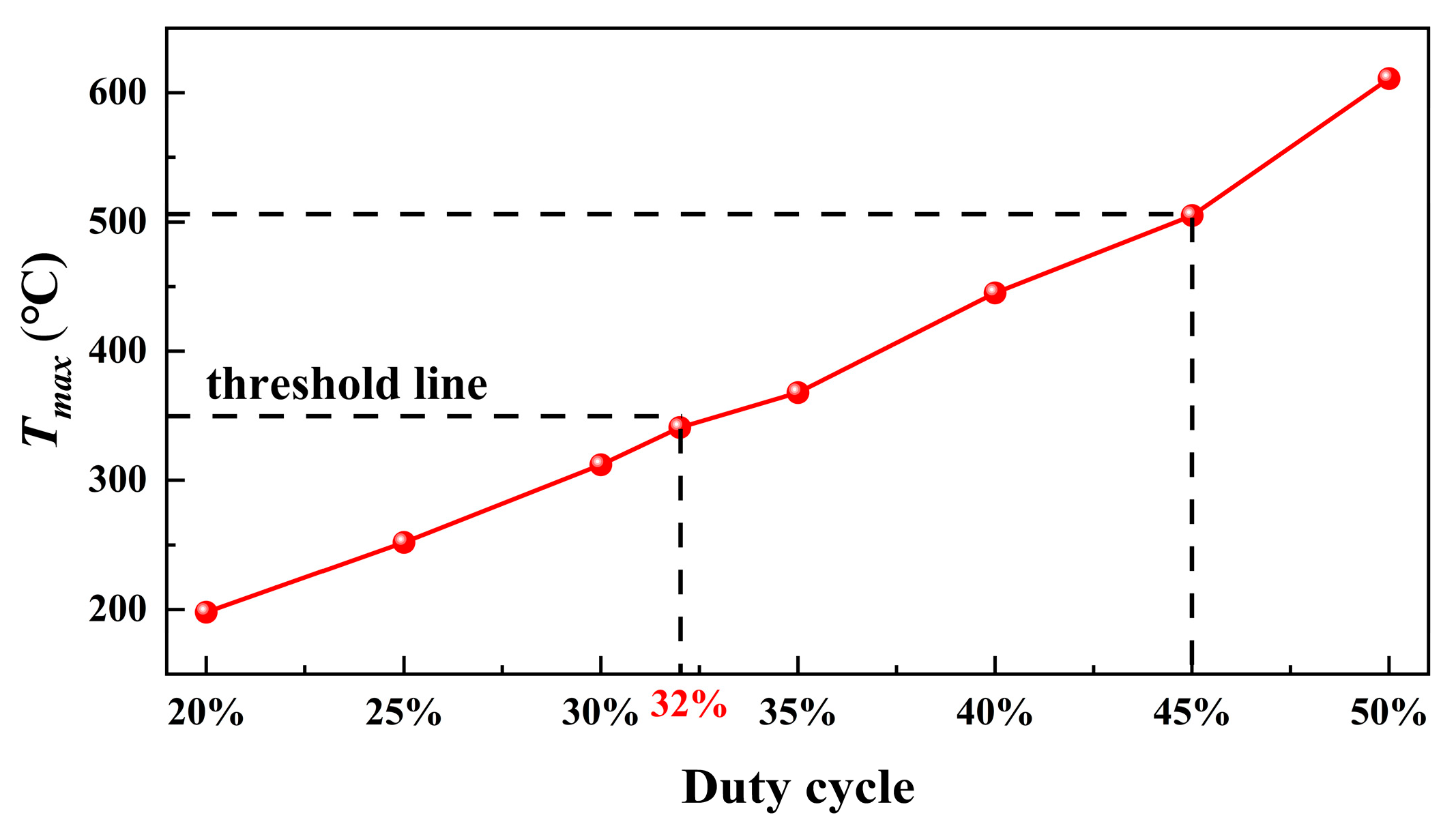
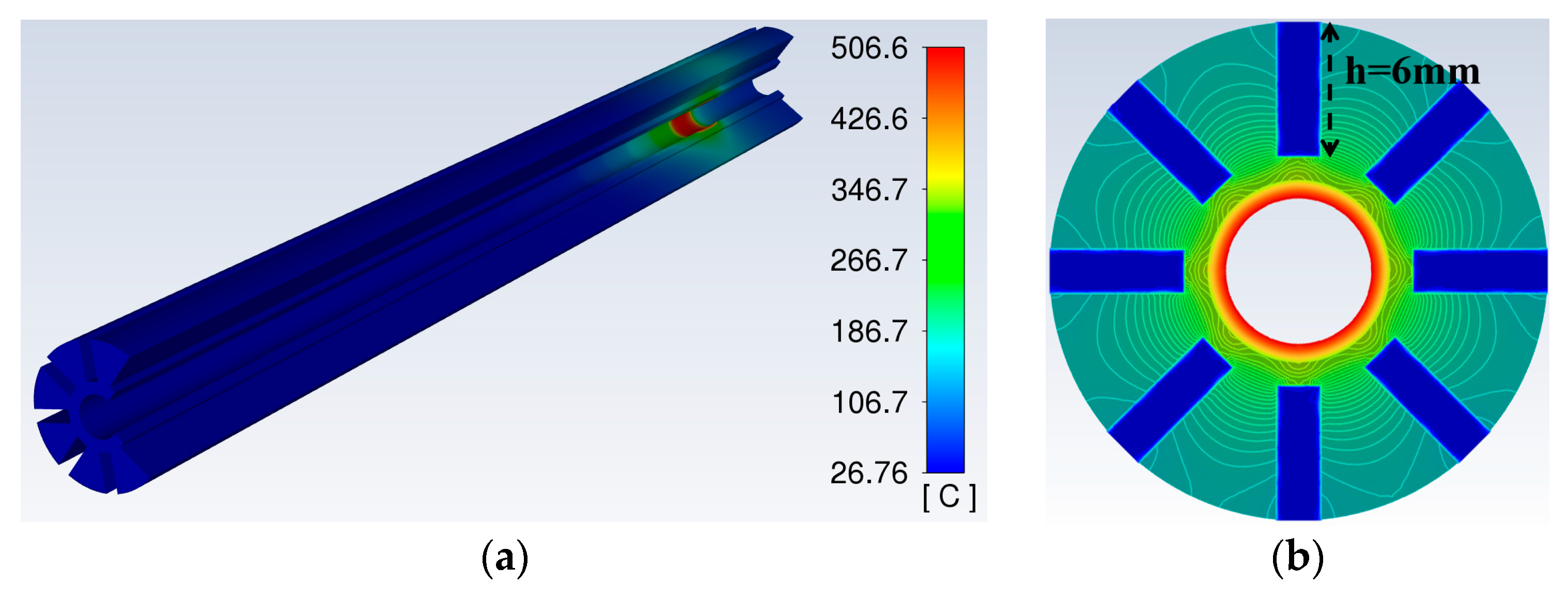
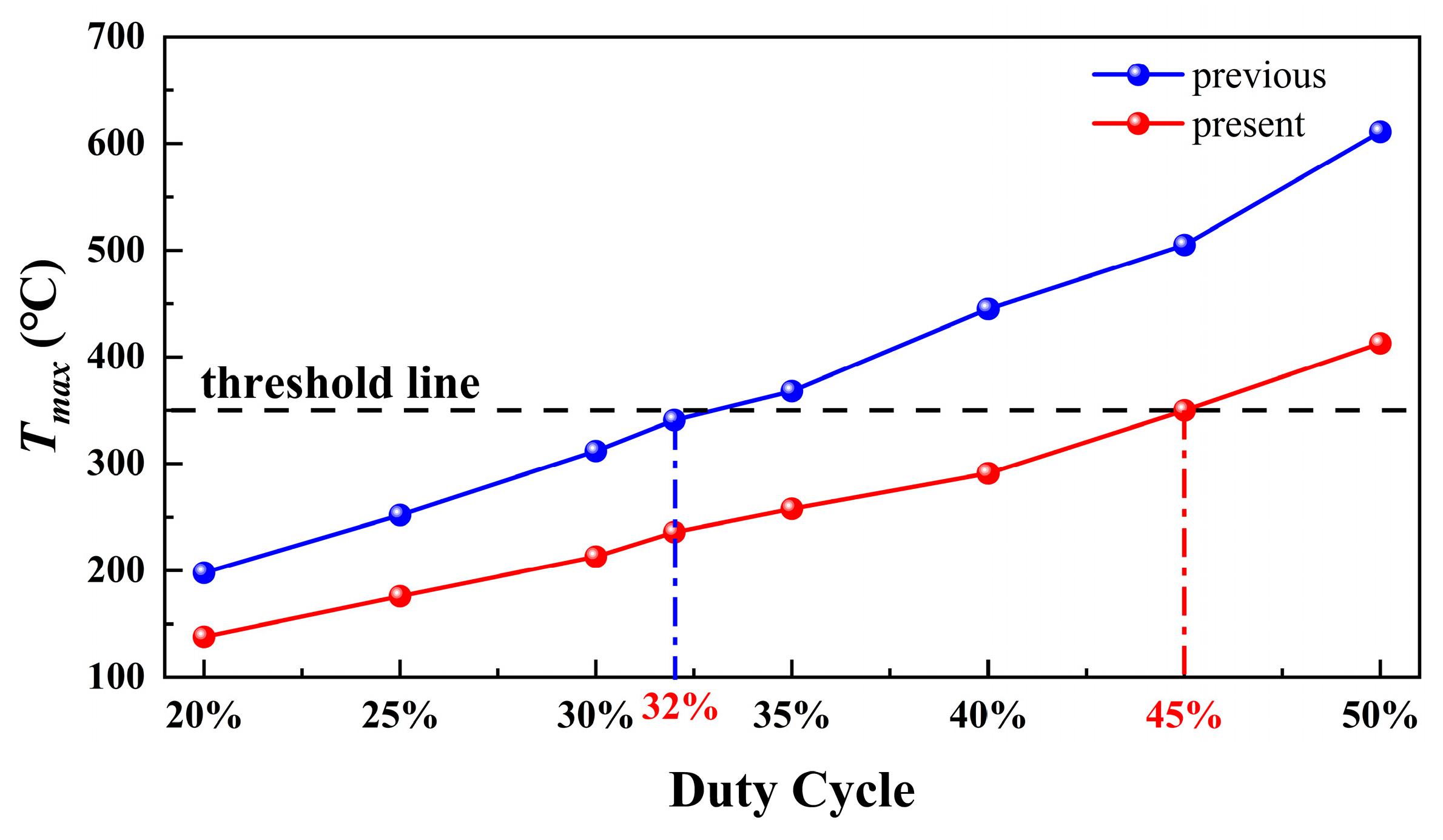
When the gyro-TWT operates at 29 GHz, maximum temperatures at different pulse duty cycles are shown in Figure 6 calculated by Ansys Workbench 2022 R1 Fluent (a fluid simulation software). When the duty cycle is 32%, the maximum temperature of the ceramics reaches the threshold value, which is 350 °C [9]. At a duty cycle of 45%, the maximum temperature ( T m a x ) of the ceramics reaches 507 °C, exceeding the normal operating temperature [4]. Figure 7a shows the solid temperature distribution on the interaction circuit. Figure 7b shows the cut view at the maximum temperature, the blue section represents the temperature distribution of the water coolant, and the boiling point of coolant is 100 °C. To achieve a higher power capacity in the gyro-TWT, it is critical to optimize the heat sink, thereby enabling effective heat dissipation and lowering the temperature of the ceramic.

3.1. Suitable Channel Structure for High Coolant Utilization

The cooling structure of the 2 mm width channel exhibits low heat dissipation efficiency for two main reasons. On the one hand, within a limited perimeter, the channel width restricts the number of channels. This limited contact area means the coolant cannot sufficiently dissipate heat. On the other hand, a wide channel allows only the coolant near the contact surface to participate in heat exchange, while most of the liquid in the center remains unused, resulting in significant coolant waste. Therefore, reducing the channel width is one of the keys to improve the power capacity of the gyro-TWT.
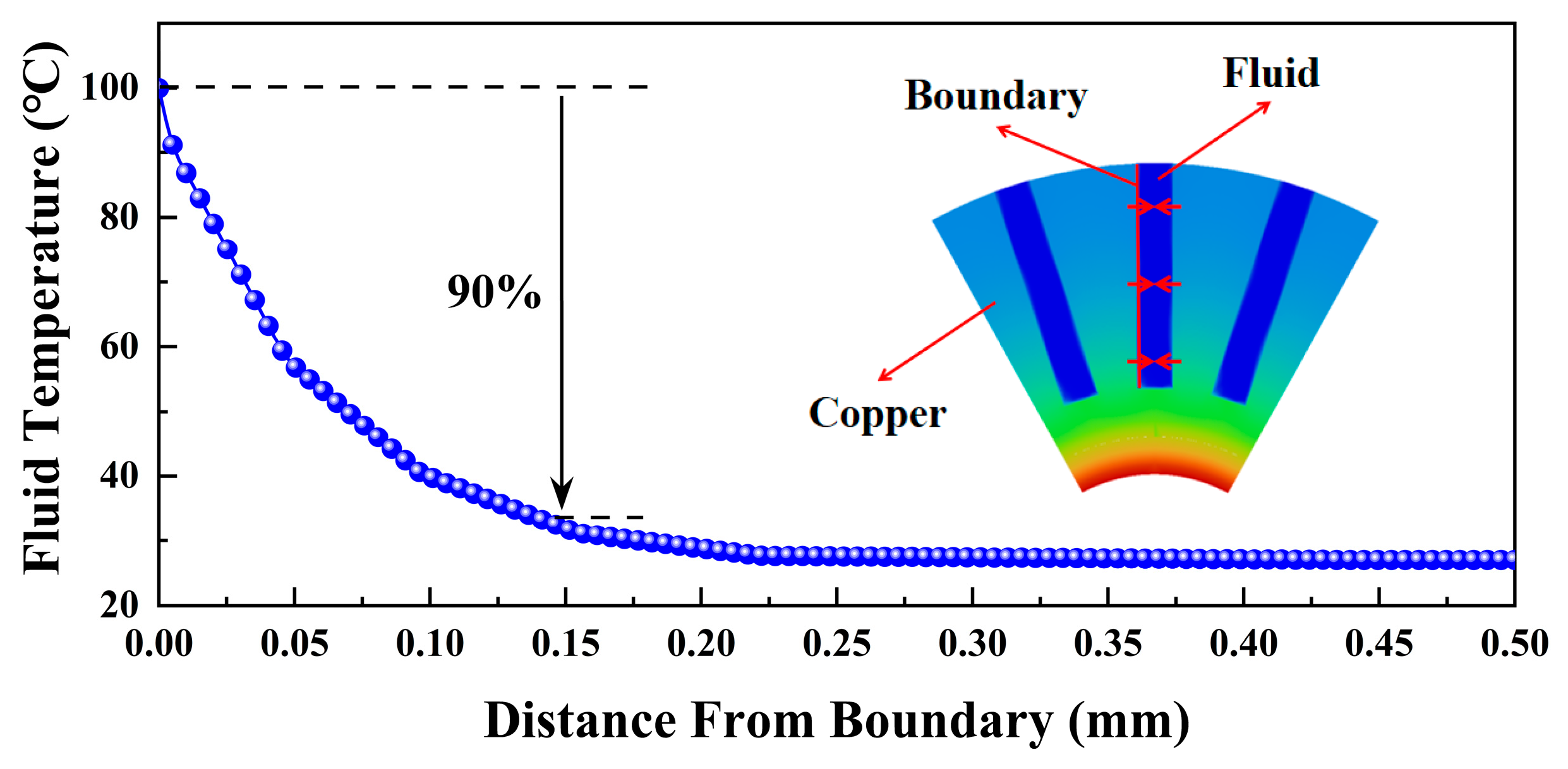
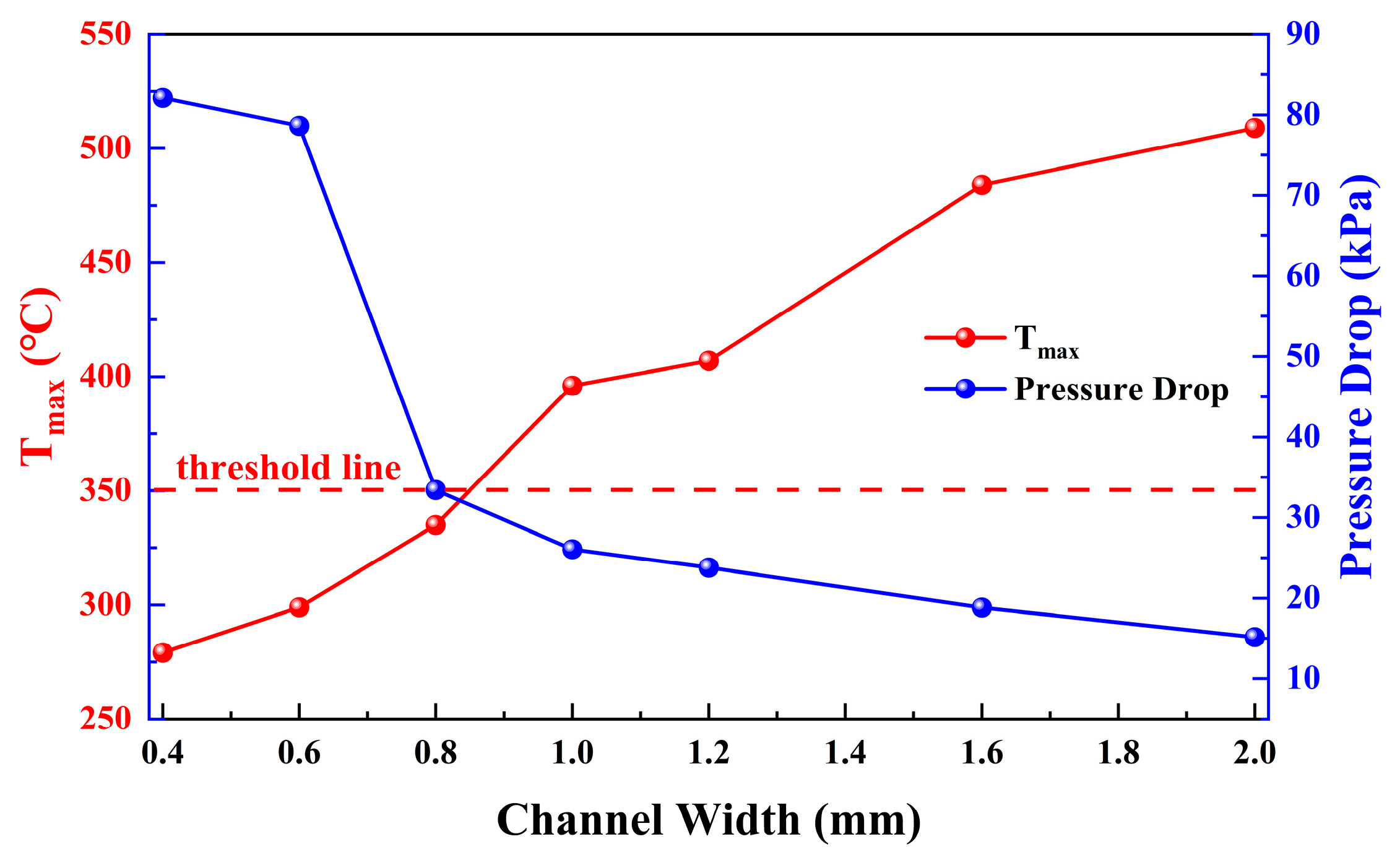
Figure 8 shows the temperature distribution extending from the solid–liquid interface along the normal direction to the liquid. Define the length of temperature drop of 90% as effective heat dissipation distance. The figure shows that the effective heat dissipation distance for the rectangular channel is about 0.15 mm. The usage of coolant is only 25%. An effective way to improve the usage of coolant is to reduce the channel width. When the channel width is 2 times the effective heat dissipation distance, 100% of coolant participates in effective heat transfer. Figure 9 shows the T m a x and pressure drop vary with the channel width. T m a x decreases with the decreasing channel width, and there is a minimum value when the channel width is 0.4 mm, because all the coolant in the channel can participate in heat exchange. While the variation trend of pressure drop is opposite to that, it increases rapidly when the channel width is less than 0.8 mm, which means higher velocity attenuation.
The heat transfer and pressure drop characteristics of cooling channels with different widths are analyzed by controlling variables in this section. The effective cooling distance of the channels is calculated. Considering the tradeoff between maximum temperature and pressure drop, the rectangular cooling channel with 0.8 mm width has better cooling performance. Coolant utilization increased by 1.2 times.

3.2. Cooling Structure with Low Thermal Resistance

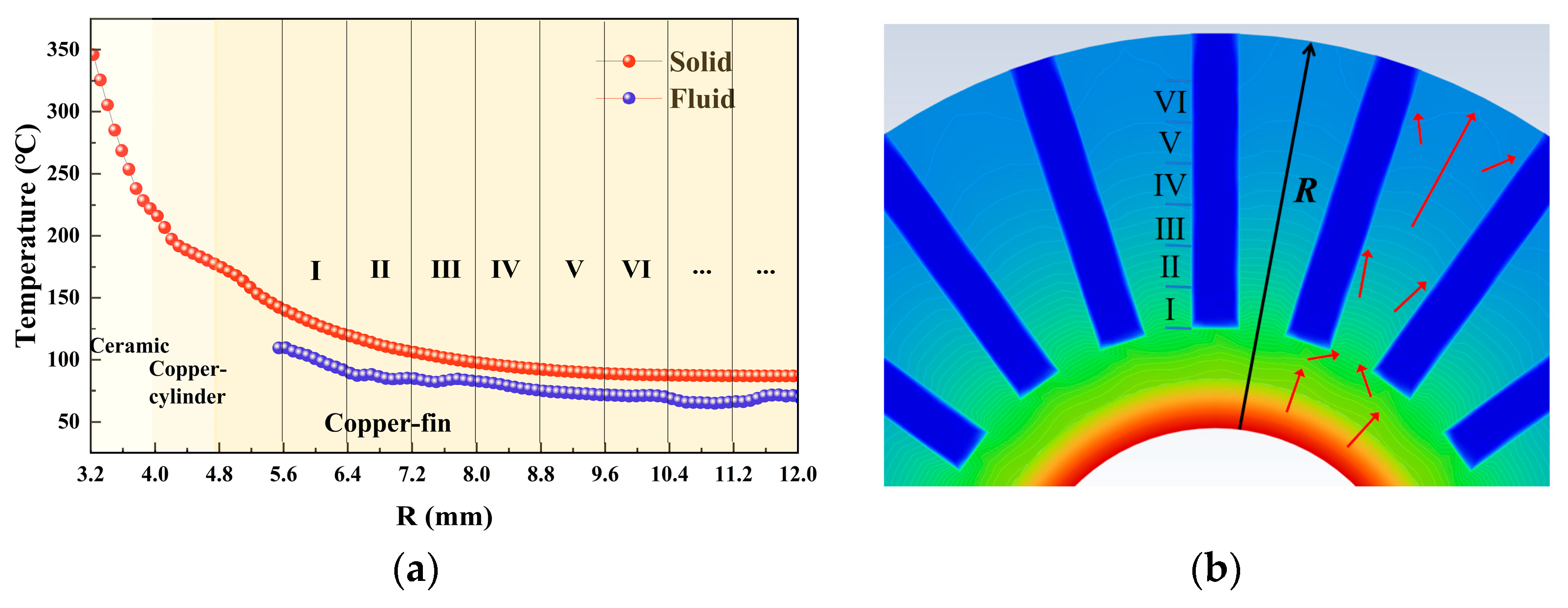
Figure 10a shows the temperature distribution along the radial direction for the rectangular straight slot heat sink. The temperature gradient mainly focuses on the dielectric-loaded ceramic, which is caused by the larger thermal resistance of the ceramic. The temperature difference in the ceramic is about 129 °C, and the temperature difference in the copper-cylinder is about 48 °C.
The copper fin is divided into several zones along the radial direction as shown in Figure 10b. The width of each zone is the same as the channel width. The heat flux in each zone is related to the temperature gradient. The coolant is water at normal temperature. The closer to the outside, the lower the temperature of the solid, meaning the smaller the temperature gradient. In other words, the heat flux is the largest at the bottom of the channel, and the farther away from the center, the smaller the heat flux. Therefore, the heat dissipation efficiency of the outside is much lower than that of the inside. In order to adapt to the miniaturization of the gyrotron traveling wave tube and reduce the lateral thermal resistance, the outer side of the cooling structure can be cut off, which not only reduces the volume of the radiator, but also improves the heat dissipation efficiency.
The heat transfer process can be equivalent to the thermal resistance model in Figure 5. Thermal resistance model analysis of a W-band gyro-TWT interaction circuit is presented. The result is the same as the simulation, indicating that R c e r a m i c is the main limitation for heat transfer. It depends on the thickness of the dielectric-loaded ceramic and the amount of T i O 2 added to the ceramic. However, these factors are related to the attenuation of the interaction circuit, meaning the cooling performance can only be improved in other ways. The R c y l i n d e r depends on the thickness of the copper cylinder. However, if the copper wall is too thin, it may lead to uneven temperature distribution in ceramics, affecting their attenuation characteristics. Therefore, the only way is to adjust the sidewall width.
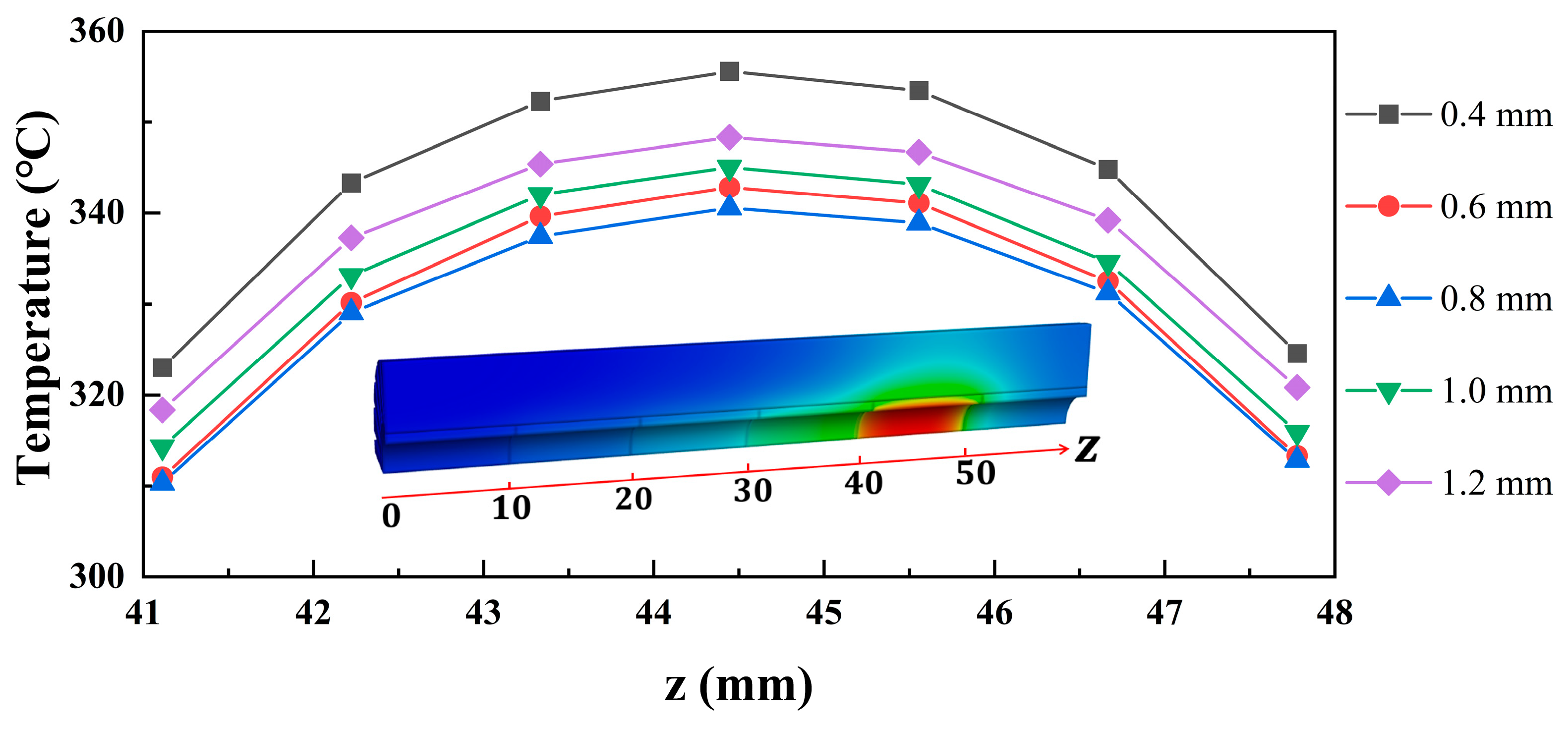
The sidewall width has a significant effect on transverse thermal resistance, and a numerical study found a turning point in sidewall width where the thermal resistance reaches its minimum. In Figure 11, T m a x values for ceramic are shown for w s from 0.4 mm to 1.2 mm. As the power consumption increases, the difference in T m a x increases. The peak temperature difference is 23 °C on the last ceramic. The result shows that the radial thermal resistance is at a minimum when the slot–width ratio ( w / w s ) is slightly less than 1. This is similar to the numerical study results [14].
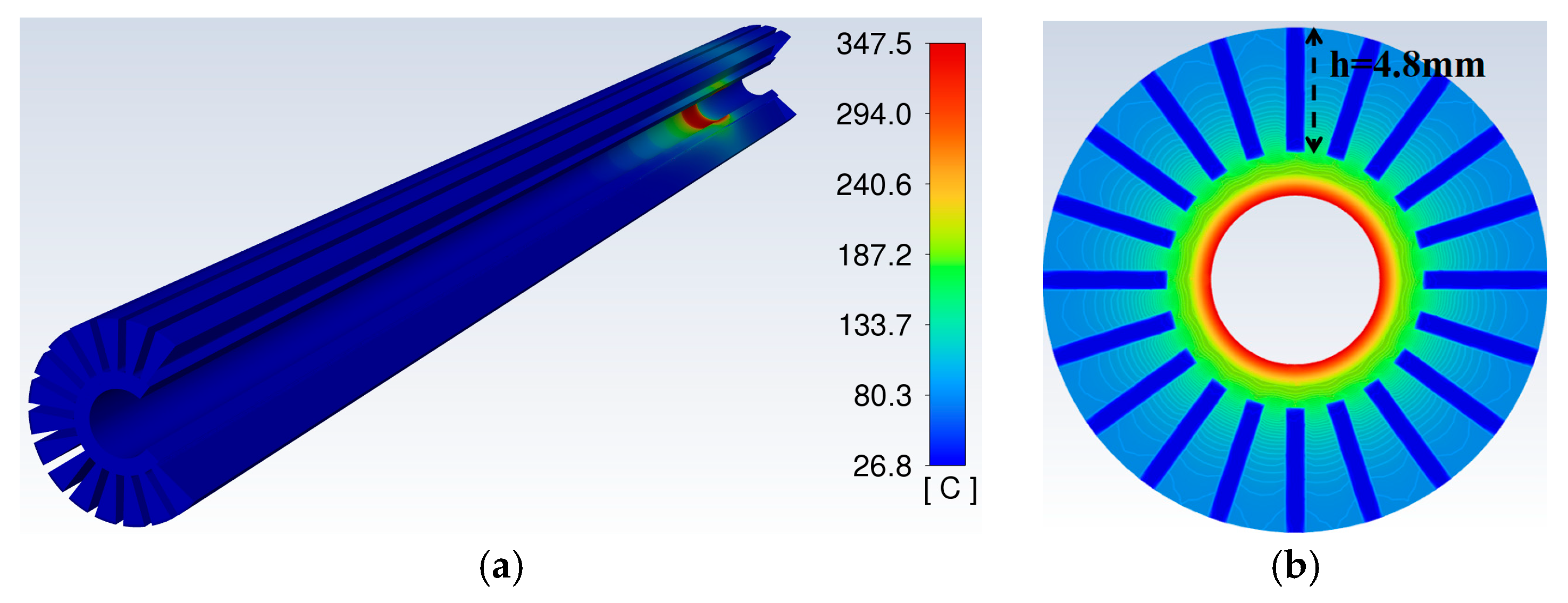
In this section, the transverse thermal resistance of the interaction circuit is analyzed. In order to improve the thermal conductivity, the height and sidewall width of the cooling channels are optimized. The height of the cooling channel was reduced from 6mm to 4.8 mm as shown in Figure 12. The volume of the rectangular-slotted heat sink is reduced by 27.4%. With higher heat dissipation efficiency, the optimized heat sink can be used in a miniaturized Ka-band gyro-TWT with non-superconducting material. At 29 GHz, the pulse output power of the gyro-TWT is 150 kW. Simulation results show that the maximum temperature of the ceramic is 348 °C at a duty cycle of 45%, which is reduced by 159 °C. In the previous structure, when the pulse duty cycle was 32%, the ceramic temperature exceeded the normal range. At present, the pulse duty cycle can reach 45% as shown in Figure 13. The power capacity of the interaction circuit for the miniaturized gyro-TWT is improved by 40.7%.

4. Conclusions

The power capacity and thermal management are investigated for a TE11 Ka-band gyro-TWT with non-superconducting magnets. To overcome the power capacity limitation of the miniaturized gyro-TWT, a joint microwave–thermal management evaluation model is developed to investigate the beam–wave interaction, electrothermal conversion, and thermal performance of the interaction circuit for the miniaturized gyro-TWT. Based on this, the influence of the heat sink channel width, height, and flow rate on the ceramic temperature is analyzed. An efficient heat sink suitable for miniaturized Ka-band gyro-TWT is obtained. Coolant utilization increases by 1.2 times, and the overall volume of the heat sink decreases by 27.4%. At 29 GHz, the pulse power of the gyro-TWT is 150 kW. The simulation results show that the maximum temperature of the ceramic is 348 °C at the duty cycle of 45%, reduced by 159 °C. The power capacity of the interaction circuit for the gyro-TWT is increased by 40.6%.

Author Contributions

Conceptualization, W.J. and S.J.; methodology, Z.W., B.H., J.Z., Q.C., G.L., Y.Y., J.W. and Y.L.; formal analysis, S.J. and B.D.; writing—original draft preparation, S.J.; writing—review and editing, S.J., W.J., B.D. and X.C. All authors have read and agreed to the published version of the manuscript.

Funding

This research was funded by Sichuan Science and Technology Program under Grant 2024ZYD0153.

Data Availability Statement

All data included in this study are available upon request by contacting with the corresponding author.

Conflicts of Interest

The authors declare no conflicts of interest.

References

  1. Thumm, M. Gyro-devices and their applications. In Proceedings of the International Vacuum Electronics Conference, Bangalore, India, 21–24 February 2011. [Google Scholar]
  2. Nguyen, K.T.; Calame, J.P.; Pershing, D.E.; Danly, B.G.; Garven, M.; Levush, B.; Antonsen, T.M. Design of a Ka-band gyro-TWT for radar applications. IEEE Trans. Electron Devices 2001, 48, 108–115. [Google Scholar] [CrossRef]
  3. Chu, K.R. The electron cyclotron maser. Rev. Mod. Phys. 2004, 76, 489–540. [Google Scholar] [CrossRef]
  4. Jiang, W.; Lu, C.; Dai, B.; Guo, L.; Wang, J.; Pu, Y.; Wu, Z.; Luo, Y. Experiment and Power Capacity Investigation for a Ku-Band Continuous-Wave Gyro-TWT. IEEE Trans. Electron Devices 2022, 69, 7039–7045. [Google Scholar] [CrossRef]
  5. Samsonov, S.V.; Levitan, B.A.; Murzin, V.N.; Gachev, I.G.; Denisov, G.G.; Bogdashov, A.A.; Mishakin, S.V.; Fiks, A.S.; Soluyanova, E.A.; Tai, E.M.; et al. Ka-Band Gyrotron Traveling-Wave Tubes with the Highest Continuous-Wave and Average Power. IEEE Trans. Electron Devices 2014, 61, 4264–4267. [Google Scholar] [CrossRef]
  6. Lu, C.; Jiang, W.; Liu, G.; Liu, Y.; Wang, J.; Pu, Y.; Wu, Z.; Luo, Y. Design and Experiment of a Dielectric-Loaded Gyro-TWT with a Single Depressed Collector. IEEE Trans. Electron Devices 2022, 69, 3920–3925. [Google Scholar] [CrossRef]
  7. Jintao, Y.; Efeng, W.; Chaojun, L.; Qixiang, Z.; Jinjun, F.; Zihan, L.; Xu, Z. Research on a Ka-band large-orbit gyro-TWT with periodic dielectric-loaded structure. Electron. Lett. 2023, 60, e13068. [Google Scholar] [CrossRef]
  8. Dai, B.; Jiang, W.; Han, B.; Lu, C.; Yao, Y.; Wu, Z.; Zhou, J.; Liu, G.; Wang, J.; Luo, Y. Investigation of a Magnetron Injection Gun with an External Anode for Ka-Band Gyro-TWT. IEEE Trans. Electron Devices 2025, 72, 1448–1454. [Google Scholar] [CrossRef]
  9. Jiang, W.; Dai, B.; Lu, C.; Liu, G.; Wang, J.; Pu, Y.; Luo, Y. High Average Power Investigation of Dielectric Dissipation in the W-Band Gyro-TWT. IEEE Trans. Electron Devices 2022, 69, 3926–3932. [Google Scholar] [CrossRef]
  10. Chu, K.R.; Chen, H.Y.; Hung, C.L.; Chang, T.H.; Barnett, L.R. Ultrahigh gain gyrotron traveling wave amplifier. Phys. Rev. Lett. 1998, 81, 4760. [Google Scholar] [CrossRef]
  11. Calame, J.P.; Garven, M.; Danly, B.G.; Levush, B.; Nguyen, K.T. Gyrotron-traveling wave-tube circuits based on lossy ceramics. IEEE Trans. Electron Devices 2002, 49, 1469–1477. [Google Scholar] [CrossRef]
  12. Chu, K.R.; Barnett, L.R.; Chen, H.Y.; Chen, S.H.; Wang, C.; Yeh, Y.S.; Tsai, Y.C.; Yang, T.T.; Dawn, T.Y. Stabilization of Absolute Instabilities in the Gyrotron Traveling Wave Amplifier. Phys. Rev. Lett. 1995, 74, 1103–1106. [Google Scholar] [CrossRef] [PubMed]
  13. Bello-Ochende, T.; Liebenberg, L.; Meyer, J.P. Constructal cooling channels for micro-channel heat sinks. Int. J. Heat Mass Transf. 2007, 50, 4141–4150. [Google Scholar] [CrossRef]
  14. Xie, X.L.; Liu, Z.J.; He, Y.L.; Tao, W.Q. Numerical study of laminar heat transfer and pressure drop characteristics in a water-cooled minichannel heat sink. Appl. Therm. Eng. 2009, 29, 64–74. [Google Scholar] [CrossRef]
  15. Ryu, J.H.; Choi, D.H.; Kim, S.J. Numerical optimization of the thermal performance of a microchannel heat sink. Int. J. Heat Mass Transf. 2002, 13, 2823–2827. [Google Scholar] [CrossRef]
  16. Sahar, A.M.; Wissink, J.; Mahmoud, M.M.; Karayiannis, T.G.; Ashrul Ishak, M.S. Effect of hydraulic diameter and aspect ratio on single phase flow and heat transfer in a rectangular microchannel. Appl. Therm. Eng. 2017, 115, 793–814. [Google Scholar] [CrossRef]
  17. Wang, H.; Chen, Z.; Gao, J. Influence of geometric parameters on flow and heat transfer performance of micro-channel heat sinks. Appl. Therm. Eng. 2016, 107, 870–879. [Google Scholar] [CrossRef]
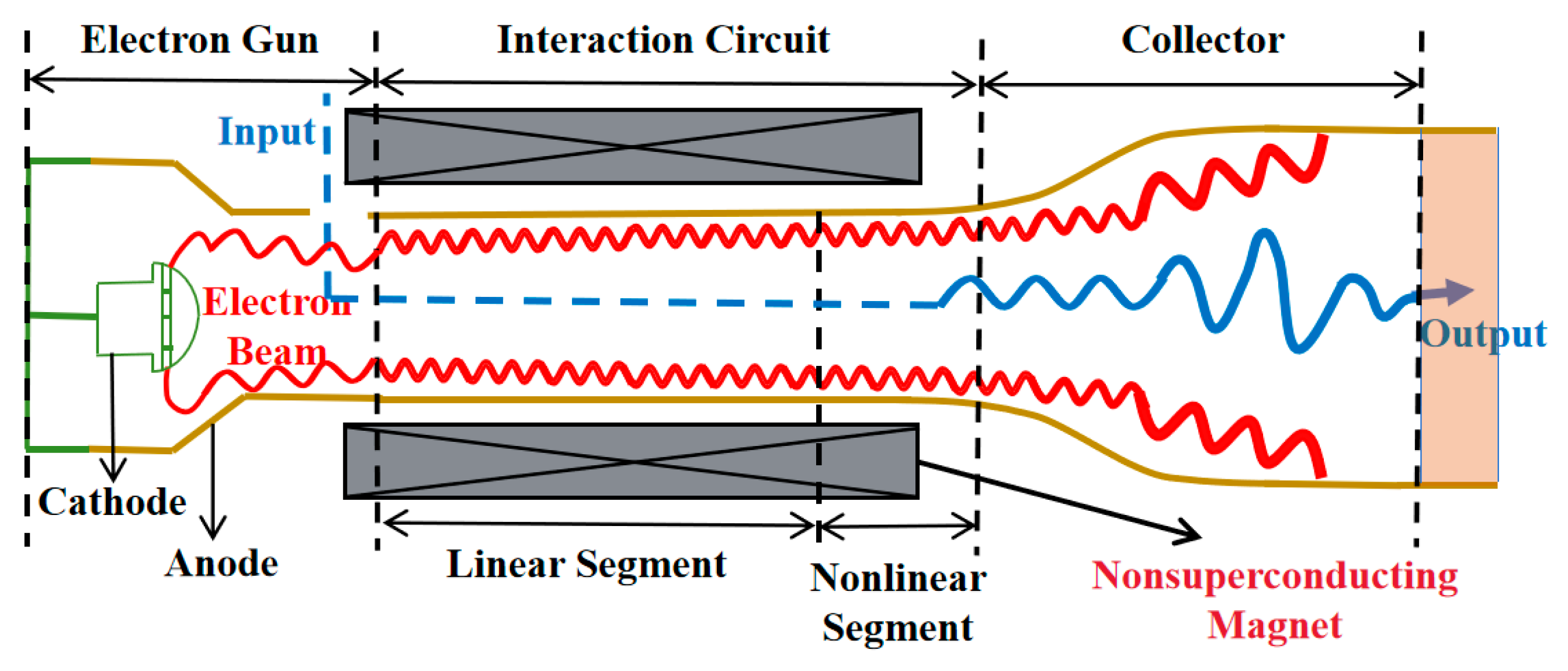
Figure 1. Schematic of the ka-band gyro-TWT with non-superconducting magnets. Adapted with permission from Ref. [9]. Copyright 2022 IEEE.
Qubs 10 00004 g001
Figure 2. Schematic of beam–wave conversion.
Qubs 10 00004 g002
Figure 3. (a) Output power varies with input power. (b) Loss on ceramic varies with input power. (c) Distribution of power loss on the ceramic at 29 GHz.
Qubs 10 00004 g003
Figure 4. (a) The 3/4 schematic of the heat sink for the interaction circuit. (b) The cross section of the interaction circuit. Adapted with permission from Ref. [9]. Copyright 2022 IEEE.
Qubs 10 00004 g004
Figure 5. Electric analog of the transverse heat transmission of the interaction circuit.
Qubs 10 00004 g005
Figure 6. Maximum temperature versus with duty cycle.
Qubs 10 00004 g006
Figure 7. (a) Solid temperature distribution of the interaction circuit. (b) Cut view at the maximum temperature.
Qubs 10 00004 g007
Figure 8. Temperature distribution from boundary to liquid.
Qubs 10 00004 g008
Figure 9. T m a x and pressure drop versus channel width.
Qubs 10 00004 g009
Figure 10. (a) Solid temperature distribution along the radial direction. (b) Heat transfer path. The red arrow indicates the direction of heat transfer, and the black arrow indicates the horizontal coordinate direction of the left figure. The dark blue rectangle represents the temperature of the liquid, and the other parts represent the temperature of the solid.
Qubs 10 00004 g010
Figure 11. T m a x on each ceramic with different sidewall width.
Qubs 10 00004 g011
Figure 12. (a) Solid temperature distribution of the interaction circuit. (b) Cut view at the maximum temperature.
Qubs 10 00004 g012
Figure 13. Maximum temperature of the interaction circuit versus with duty cycle.
Qubs 10 00004 g013
Table 1. Parameters of interaction circuits [8].
ParametersDesign Goal
Beam Voltage ( V 0 )60 kV
Beam Current ( I 0 )8 A
Magnetic Field ( B 0 )1.13 T
Operating Mode T E 11
Circuit Radius ( r )3.23 mm
Number of Ceramics20
Linear Segment Length ( L 1 )200 mm
Nonlinear Segment Length ( L 2 )14.5 mm
Table 2. Cooling structure parameters.
ParametersInitial Value
Ceramic Thickness ( d 1 )0.8 mm
Copper wall Thickness ( d 2 )1 mm
Ceramic Ring Length10 mm
Circuit Radius ( r )3.23 mm
Width of Channel ( w )2 mm
Sidewall Width ( w s )2 mm
Height of Channel ( h )6 mm
Heat Sink Radius ( R 1 )11.03 mm
Magnet Bore ( R 2 )19.03 mm
Disclaimer/Publisher’s Note: The statements, opinions and data contained in all publications are solely those of the individual author(s) and contributor(s) and not of MDPI and/or the editor(s). MDPI and/or the editor(s) disclaim responsibility for any injury to people or property resulting from any ideas, methods, instructions or products referred to in the content.