1. Introduction
The modern challenges associated with global climate change and the depletion of traditional energy sources are pushing humanity towards more sustainable and eco-friendly solutions. Wind energy, being one of the fastest-growing areas of renewable energy, plays a crucial role in achieving goals related to reducing carbon dioxide emissions and lowering dependency on fossil fuels [
1,
2]. In recent years, special attention has been paid to the development and improvement of vertical-axis wind turbines (VAWTs) due to their potential efficiency in urban environments and in complex wind conditions [
3]. Unlike horizontal-axis wind turbines (HAWTs), which typically use yaw systems to align with changing wind directions—active nacelle yaw on utility-scale machines and passive tail vanes on small HAWTs—vertical-axis wind turbines (VAWTs) accept wind from any azimuth and therefore do not require a yaw mechanism. This distinction concerns how direction changes are accommodated (mechanical yaw in HAWTs vs. azimuthal symmetry in VAWTs), not whether operation in variable winds is possible [
4]; VAWTs may simplify siting in constrained/turbulent flows, whereas HAWTs can maintain alignment via yaw control.
One of the simplest and most reliable types of vertical-axis turbines is the Savonius rotor, which operates on the principle of air resistance. Its design is appealing due to its simplicity and resistance to turbulent flows, making this rotor especially popular for small-scale installations and low wind speeds [
5]. However, the main issue with the Savonius rotor is its relatively low power coefficient (
Cp), which limits its efficiency in converting wind energy into mechanical work. Nevertheless, various studies have shown that through the optimization of blade geometry and the use of guiding devices, the aerodynamic performance of the Savonius rotor can be significantly improved [
6,
7].
In contrast to the Savonius rotor, the Darrieus rotor utilizes the principle of lift force, which allows it to convert wind energy more efficiently at higher speeds. The blades of the Darrieus rotor generate lift force similar to an airplane wing, resulting in increased power and efficiency of the generator [
8]. However, this type of rotor also has its challenges related to turbulence and the complexity of optimizing the blade attack angles, which can vary depending on wind speed and other factors [
9]. Despite this, research indicates that optimizing the blade attack angle and using modern materials can substantially improve the performance of these rotors [
10].
Numerical methods, such as computational fluid dynamics (CFD), have become an integral part of research and optimization of rotor aerodynamic characteristics. CFD allows the modeling of complex interactions between airflows and blades, analyzing the influence of various parameters such as wind speed, blade shape, and attack angle on rotor performance [
11]. These methods are particularly important for VAWTs, as they help researchers better understand rotor behavior in unstable airflow conditions, typical of urban environments [
12]. CFD also enables more accurate performance predictions in real operating conditions and optimizes the design for increased power coefficients [
13].
The relevance of this study also lies in the need to develop effective solutions to enhance the durability and longevity of VAWTs. Not only aerodynamic characteristics but also the choice of materials for the blades play a crucial role, as they must withstand high loads in strong winds and minimize wear and tear. Modern composite materials and nanotechnologies open new possibilities for improving rotor characteristics, increasing their strength, and reducing weight [
14,
15]. This not only improves the longevity of the rotors but also enhances their overall efficiency by reducing energy losses.
Moreover, the implementation of machine learning methods in the design and optimization processes of wind turbines opens new horizons for developing more advanced VAWT models. Machine learning allows the analysis of large volumes of data obtained from both experiments and simulations, identifying key patterns that can be used to improve rotor designs and predict their performance under various conditions [
16]. Machine learning algorithms can significantly reduce development time and improve the accuracy of predictions, which is particularly important when designing turbines for challenging operating conditions.
In study [
17], the use of a trapped-vortex cavity with localized suction on the suction side of Darrieus blades was shown to stabilize the shear layer, delay separation at low–moderate tip-speed ratios, improve lift-to-drag over the azimuthal cycle, and thereby increase power output; this control-augmented approach provides a practical reference for future optimization within our harmonized CFD–FEA–fatigue baseline.
This study aims to conduct numerical simulations of Savonius and Darrieus rotors for their comparative analysis. The main focus is on the aerodynamic characteristics of the rotors at different wind speeds and in turbulent conditions, typical of urban environments. The results of the simulations will provide a deeper understanding of the advantages and disadvantages of each rotor type and suggest possible ways for their further optimization. Additionally, the study will examine the use of modern materials and numerical methods to enhance the efficiency and reliability of the rotors. The conclusion will present recommendations for improving the efficiency of these rotors in real-world conditions and the possibilities for their use in various scenarios. To ensure practical meaning, the setup and parameter ranges mirror field conditions and the key trends are cross-checked against peer-reviewed experimental reports on Savonius and Darrieus VAWTs, confirming the expected hierarchy of Cp and torque characteristics [
17].
A controlled, reproducible comparison between Savonius and straight-bladed Darrieus rotors is undertaken, with aerodynamic and structural inferences drawn from a single, explicitly documented pipeline. Specifically: (1) a unified CFD setup is applied to both rotors—including geometry scaling, blockage control, inlet turbulence specification, sliding-mesh kinematics, and y+ management; (2) time-resolved aerodynamic loads are propagated to structural response and fatigue-life estimates, rather than relying on steady-pressure surrogates; and (3) material trade-offs at prototype scale are documented with a clear equivalence mapping to composite layups. This design-oriented framing distinguishes the present work from prior analyses that emphasize a single rotor type, employ single-physics simulation, or omit reproducibility details.
2. Studies on Improving the Aerodynamics and Optimization of VAWTs
Vertical-axis wind turbines (VAWTs) are a significant area of research in renewable energy due to their potential for use in urban environments and complex wind conditions, typical of dense urban areas and regions with high air turbulence [
18]. Unlike horizontal-axis wind turbines (HAWTs), which require open spaces and wind orientation, VAWTs can operate efficiently regardless of wind direction. This makes them ideal for installation on building rooftops, narrow street corridors, and other locations with limited access to stable wind flows. However, despite their advantages, their widespread adoption remains limited due to several issues, such as limited aerodynamic efficiency, low power coefficient, and increased energy losses in turbulent conditions. The primary limitations of VAWTs stem from their structural characteristics and the challenges in optimizing the blades to improve energy capture efficiency. A literature review shows that various approaches have been proposed to address these issues, focusing on rotor aerodynamic improvements, material enhancements, and numerical methods for modeling and analyzing turbine performance [
19]. The development of technology and the implementation of innovative solutions have become key factors in advancing the efficiency and reducing the production costs of VAWTs.
The aerodynamics of Savonius and Darrieus rotors is one of the key areas of research in this field. The Savonius rotor, based on the principle of drag force, is one of the simplest and most reliable structural designs. In the study [
20], it is shown that three-bladed Savonius rotor designs demonstrate improved aerodynamic characteristics compared to traditional two-bladed models. This is due to the increased swept area, allowing more effective wind energy capture and conversion. However, researchers note that despite this improvement, the low power coefficient remains a significant issue, requiring further design improvements and calculation methods to enhance the overall efficiency of wind turbines.
At the same time, improvements in Savonius rotor design are not limited to increasing the number of blades. Studies conducted in [
21] suggest the use of guiding devices that help optimize airflow around the rotor, leading to a 15–20% increase in the power coefficient. These guiding devices provide more effective management of airflow, minimizing low-pressure and turbulence zones around the rotor, which improves the overall efficiency of the turbine. However, the authors note that further research in this area should focus on understanding the interaction between blade geometry and guiding devices to optimize real-world performance.
Ducted Savonius configurations with external power-augmenters have recently been characterized through a combined experimental–CFD framework, using sliding-mesh and DFBI techniques to replicate test-rig conditions and validate performance trends on a scaled rotor. Reported results indicate that the duct/augmenter system can materially influence the rotor’s aerodynamics in urban-integration and energy-recovery contexts (e.g., OWC), and the proposed workflow serves as a reproducible numerical characterization method for such layouts [
22]
Additionally, other studies indicate the possibility of improving the aerodynamics of Savonius rotors through the use of asymmetric blade profiles, which reduce drag on the reverse side of rotation and, consequently, increase overall turbine efficiency [
6]. Such modifications could raise the power coefficient to levels closer to the Darrieus rotor, opening new prospects for further research in this area.
Thus, the importance of continued research into the aerodynamics of Savonius and Darrieus rotors is evident. These studies will help improve their design, increase the power coefficient, and create more competitive solutions for use in complex wind conditions. Darrieus rotors, operating on the basis of lift force, are more efficient in higher wind speeds. The authors in [
23] conducted CFD simulations, which showed that altering the blade’s attack angle improves the aerodynamic performance of Darrieus rotors. However, despite the positive results, precise optimization of this parameter remains an open question, as the impact of the attack angle on rotor performance strongly depends on wind speed, blade design, and other external factors. Optimizing the blade attack angle requires considering numerous variables, such as changing wind flows and turbulence, which can significantly alter the behavior of airflows around the blades. Even a slight change in the attack angle can either significantly improve aerodynamic performance or degrade turbine performance under unfavorable wind conditions [
24]. This is because the blade attack angle directly affects lift and drag, and deviations from optimal values can result in energy losses or even cause dynamic instability in the system.
The study presented in [
25] includes important results related to the use of H-shaped Darrieus rotors combined with permanent magnet generators, which led to a significant increase in wind turbine efficiency. One reason for the improved performance of such systems is the design feature of Darrieus rotors, which use lift force to generate energy, making them more efficient at high wind speeds. In H-shaped rotors, the blades are connected to a central axis, contributing to even load distribution across the structure, reducing vibrations, and enhancing turbine stability in strong wind flows [
26]. The use of permanent magnet generators allows for efficient conversion of mechanical energy into electrical energy, reducing friction and heat losses, which also contributes to increased system efficiency.
However, despite the achievements in modeling and theoretical aspects, the study does not cover important aspects related to the long-term operation of these systems in various conditions. For example, the study does not fully address external factors such as changing wind speeds, airflow directions, or the impact of weather conditions (e.g., humidity, temperature) on system performance. It is important to note that numerical methods and laboratory studies generally provide a good understanding of turbine behavior under controlled conditions, but they may not fully reflect the operational challenges a system faces in real-world environments. The lack of analysis regarding performance in real operational conditions, such as complex wind flows or dynamic weather changes, is a limitation of this work, indicating the need for additional research to gain a more accurate understanding of the effectiveness of H-shaped Darrieus rotors in complex and variable real-world conditions.
It is important to consider that although H-shaped rotors have high aerodynamic efficiency at certain wind speeds, their performance can decrease in low wind speed or turbulent conditions. This makes it necessary to further explore design optimization methods, possibly using active blade pitch control systems or adaptive control technologies, which could ensure more stable and efficient turbine operation under varying wind conditions.
Numerical modeling plays a key role in researching vertical-axis wind turbines, particularly in optimizing their aerodynamic characteristics. In [
27], computational fluid dynamics (CFD) was used to model the performance of Savonius rotors, allowing the analysis and minimization of turbulent flows around the turbine blades, thus improving the overall aerodynamic performance of the rotor. CFD is a powerful tool that allows the simulation of complex physical processes such as pressure distribution, blade-airflow interactions, and turbulence, which can significantly impact turbine efficiency. The importance of using CFD lies in its ability to not only model ideal operating conditions but also to explore various scenarios, including turbine operation under varying wind speeds, turbulence, and other factors influencing aerodynamic performance [
28]. This enables the optimization of blade designs, rotor positioning, and geometry, significantly increasing the turbine’s power coefficient (
Cp) and reducing aerodynamic drag. Studies presented in [
27] help deepen the understanding of how turbulent flows interact with Savonius rotor blades and how to minimize their negative impact on turbine efficiency. For example, simulations have shown that proper blade geometry can help reduce vortices behind the blades and optimize airflow through the rotor. This is particularly important in conditions of variable wind flows, where turbulence can significantly reduce the overall performance of the wind turbine [
29]. Thus, the use of CFD in numerical models allows for detailed studies of Savonius rotor performance, helping engineers design more efficient structures and improve their performance even in challenging operating conditions.
In [
30], large eddy simulation (LES) methods and Reynolds-averaged Navier–Stokes (RANS) equations were used for the numerical simulation of turbulent flows around vertical-axis wind turbine rotors. These models were applied to further study the behavior of turbulent flows near the rotors, which is important for accurately predicting turbine efficiency. LES and RANS models allow for capturing various scales of turbulent structures and their interaction with blades, which is critically important for understanding how turbulence affects aerodynamic performance [
31]. LES (Large Eddy Simulation) focuses on more accurate modeling of large vortex structures, which play a key role in shaping aerodynamic drag and lift force on the rotor blades.
The work [
32] demonstrated that this model is effective in reproducing large vortices and flow interactions close to the rotor, allowing for more accurate assessment of their impact on turbine efficiency.
However, LES has high computational costs, making it challenging for long-term analysis or complex conditions with multiple factors. The RANS (Reynolds-Averaged Navier–Stokes) model uses averaged parameters to describe turbulent flows and requires significantly fewer computational resources than LES [
33]. However, as the study shows, despite its effectiveness in simplified scenarios, RANS models may not accurately reproduce complex and unsteady turbulent structures, leading to errors in modeling [
34]. This model is best suited for scenarios with predictable wind flows, but for more turbulent conditions, the accuracy of RANS decreases. Therefore, better integration of LES and RANS models is necessary to obtain more accurate results without excessive computational costs [
35]. The optimization of hybrid models could ensure high accuracy in turbulence flow modeling while minimizing computational costs, which is important for the practical application of these models in wind turbine design.
The use of new materials for vertical-axis wind turbine (VAWT) blades is another important area, as materials directly impact the durability, weight, and aerodynamic efficiency of the structure. In the study [
36], it was demonstrated that composite materials with high strength and low weight can significantly improve rotor durability, especially in high wind speeds. The advantage of such materials lies in their ability to withstand large mechanical loads without increasing the structure’s weight, which is critical for maintaining turbine efficiency and reducing overall system load. Reducing rotor weight not only decreases energy consumption for rotation but also reduces component wear, increasing the overall durability of the wind turbines. The work [
37] proposed the use of nanomaterials for the construction of Savonius rotor blades, which led to a significant increase in their efficiency—by 20–25%. This improvement is associated with the unique properties of nanomaterials, which not only enhance blade strength and wear resistance but also improve aerodynamic characteristics through more precise surface structure tuning. However, despite all these advantages, questions arise regarding the longevity of such designs, especially under long-term operation and exposure to harsh external factors such as UV radiation, temperature fluctuations, and humidity [
38]. It is also important to consider production costs and the challenges associated with implementing nanotechnologies, which require further study for broader application.
The application of numerical methods and machine learning in the design of vertical-axis wind turbines (VAWTs) is becoming increasingly relevant, as these approaches can significantly improve the process of modeling and predicting turbine performance [
39]. Traditional design methods require significant time and computational resources, as well as numerous tests and simulations to optimize the design. However, the use of machine learning offers the possibility of automating and accelerating the optimization process. In the study [
28], it was demonstrated that machine learning not only reduces the time required to develop new designs but also allows for more accurate predictions of turbine behavior in various operating conditions. This is achieved by enabling machine learning algorithms to analyze large datasets obtained from both simulations and real tests, identifying key patterns and creating predictive models to optimize turbine design and materials.
Furthermore, machine learning allows for the integration of data from various stages of design, such as CFD simulation results, wind flow parameters, and operational data, which significantly improves prediction accuracy and reduces experimental research costs [
40]. For example, the use of deep learning methods can help analyze complex interactions between turbine components and external conditions, which in turn can lead to the creation of more efficient solutions in aerodynamics and turbine control. The application of numerical methods and machine learning for optimizing vertical-axis wind turbine (VAWT) designs indeed opens up broad prospects but also has its limitations [
41]. One of the main disadvantages of these approaches is the high dependency of results on the input data, which may be incomplete or may not consider all the operating conditions of the turbine. For example, training models requires large volumes of accurate data collected under various wind and climate conditions, which is not always possible [
28]. Incomplete or incorrect data can lead to prediction errors, limiting the practical applicability of the results. Moreover, developing and training complex machine learning models requires significant computational resources. Processing complex data and developing high-precision models may take considerable time, which increases research costs and slows down the design optimization process [
42]. This makes the method less attractive for smaller companies or research teams with limited resources. Another disadvantage is that machine learning models often represent a “black box,” meaning they may provide results, but it is not always clear how the model arrived at these conclusions. This complicates the interpretation of results and their further use for physical analysis and optimization of wind turbine designs. Such models are also poorly adapted to sudden changes in conditions, which may occur during real turbine operation, reducing their accuracy in dynamically changing environments [
43]. Thus, despite the potential advantages, such as accelerating the development process and improving prediction accuracy, the application of machine learning in this area has several limitations related to computational costs, interpretation complexity, and data dependency. These factors make the method not yet fully mature for widespread application and require further refinement before they can replace traditional design methods.
Numerous experimental and field studies confirm the need for further optimization of vertical-axis wind turbines (VAWTs) to improve their efficiency and performance in real operating conditions. In particular, in [
44], it was shown that improved power control methods can significantly increase the overall performance of turbines. In their work, they demonstrated that fine-tuning wind turbine control systems can minimize power losses and improve energy generation efficiency, especially under variable wind flow conditions. This achievement underscores the importance of developing and implementing more advanced control and monitoring systems that could adapt to changing environmental conditions. In the study [
45], CFD methods were used to optimize the design of VAWT rotors, which also highlights the need for a more detailed study of rotor-airflow interactions. CFD modeling enabled researchers to analyze the behavior of turbulent flows and their impact on rotor aerodynamic performance. While the results show improvements in rotor aerodynamics, questions remain about their effectiveness under unstable airflow conditions, which can be typical in urban environments or regions with high turbulence [
46]. This highlights the importance of further research to better understand VAWT interactions with unstable wind flows and improve their operational characteristics.
One of the key areas of research in vertical-axis wind turbines (VAWTs) is improving rotor configurations to enhance their aerodynamic efficiency. In particular, in [
47,
48], aerodynamic models for straight-bladed Darrieus rotors were developed, proposing advanced solutions to improve their performance. In their work, it was shown that straight blades can be more efficient in certain conditions, especially when operating at high wind speeds, making them a promising area for further research [
49]. These models allow for more accurate predictions of rotor aerodynamic behavior and suggest the aerodynamic behavior of rotors and suggest changes to the design aimed at reducing drag and increasing the power coefficient.
In another study [
50], a new approach to predicting the performance of Darrieus rotors using Computational Fluid Dynamics (CFD) was proposed. This modeling provided greater accuracy in analyzing airflow behavior around the rotors, allowing researchers to better understand the interaction between the blades and wind flow and make adjustments to their configuration [
51]. As a result, the accuracy of aerodynamic performance prediction was significantly improved, opening new opportunities for the development of more efficient Darrieus rotor designs. These results highlight the necessity of using CFD for further research and improvement of VAWT rotor designs.
The literature review confirms that vertical-axis wind turbines (VAWTs) continue to attract researchers’ attention due to their potential for operation in confined spaces and complex wind flows. The advantages of VAWTs include their independence from wind direction, making them suitable for installation in urban environments with high turbulence [
52]. However, despite their obvious benefits, low aerodynamic efficiency and design limitations remain key issues limiting the widespread adoption of these technologies. Studies on improving the aerodynamics of Savonius and Darrieus rotors show that further optimization of blade designs can significantly increase the power coefficient of these turbines [
53]. Optimizing blade attack angles, improving rotor geometry, and utilizing guiding devices remain important directions requiring additional research. Numerical modeling using methods such as CFD and LES has demonstrated high efficiency in analyzing the interaction between rotors and airflow. These methods help reduce turbulence and improve overall pressure distribution on the rotors, increasing their performance [
54]. However, computational costs and the need for more precise data remain challenges for these approaches. The use of new materials, such as composites and nanomaterials, can improve rotor durability and increase efficiency. Despite this, questions remain about the longevity of such designs under long-term operation, particularly under the influence of harsh external factors. Finally, the application of machine learning and numerical methods for designing and optimizing VAWTs opens up prospects for accelerating development and improving prediction accuracy [
55]. However, dependence on data and the complexity of interpreting results remain limiting factors.
Thus, further research and innovative developments in these areas will contribute to the creation of more efficient and reliable vertical-axis wind turbines that can take their place in the field of renewable energy.
3. Results
The transient incompressible RANS simulations were performed in SolidWorks Flow Simulation (time-dependent solver). The computational domain was a rectangular wind-tunnel-type box sized 5D upstream, 12D downstream, and 5D laterally and vertically (D = 2R), which limits blockage to <5%. A uniform velocity inlet U = 8 m s−1 with turbulence intensity 5% was prescribed; the outlet used a pressure boundary (0 Pa gauge). Lateral, top and bottom boundaries were set as slip/symmetry walls (open-field emulation); all blade/shaft surfaces were no-slip. Rotor motion was modeled with a sliding-mesh rotating region sized 1.5D around the rotor. The lift coefficient Cl ≈ 0.12 and the drag coefficient and Cd ≈ 0.6. Here CL and CD denote effective, rotor-level coefficients obtained from the phase-averaged force resultants over the last 8–10 revolutions and normalized by (rotor reference area). They should not be interpreted as 2-D airfoil coefficients at a fixed angle of attack. The relatively low CL,eff stems from large azimuthal variations of instantaneous angle of attack at λ = 1.8 (frequent approach to stall and dynamic-stall onset) and from low–moderate Reynolds numbers (order 105). The relatively high CD,eff accounts for parasitic drag of the shaft/struts and 3D end effects, which are included in the rotor-level balance. Under airfoil/geometry optimization (airfoil selection, chord/height ratio, strut fairings, preset pitch), CL,eff is expected to increase and CD,eff to decrease; the present values characterize the non-optimized baseline used for like-for-like comparison. Turbulence model and near-wall treatment. SolidWorks Flow Simulation’s RNG k–ε model with automatic wall functions was used; near-wall prism layers provided consistent with the wall-function range.
Meshing and independence. A polyhedral base mesh with local refinements along leading/trailing edges and tip gaps yielded ~2.5 M cells (medium). Grid/time-step independence was verified on coarse/medium/fine meshes (~1.2/2.5/4.8 M cells) and on 0.5° vs. 1.0° time steps; the power coefficient Cp varied by <3% across meshes and <1.5% across time steps.
Analytical baselines. Equations (1)–(9) serve as back-of-the-envelope estimates; for mature predictive models we reference the double-multiple-streamtube (DMST) formulation for VAWTs (e.g., Paraschivoiu) and actuator-cylinder/BEM-type approaches for parametric studies. Where stated, our Cp(λ) trends are consistent—within 10–15% at λ == 1–2—with DMST/actuator-cylinder predictions reported in prior work on straight-bladed Darrieus machines.
The equations for determining the rotor’s swept area, drag force, lift force, and the power that the wind turbine can generate under specified conditions are provided. For more accurate calculations, the blade geometry, their angular position, and interaction with the airflow are taken into account. The relationships between aerodynamic parameters, such as drag coefficient and lift force, and their influence on the turbine’s performance are described. First, the rotor’s swept area (
A) was determined, calculated as the product of the rotor height (
H) and twice the blade radius (2
R) [
56]:
where
R is the blade radius.
This formula is important for understanding how much energy the wind turbine can capture, as the interaction area with the airflow determines the efficiency of capturing wind energy. The larger the area, the more air masses interact with the rotor, which increases the amount of available kinetic energy. This is a basic formula for rough calculations, which does not take into account complex blade geometries, such as curvature or overlap. For more accurate calculations and to consider blade geometry, it is important to account for the effective radius
Ref, which changes depending on blade curvature and overlap between the blades. For a semicircular blade,
Ref ≈ 0.9R, which reduces the interaction area of the blade with the airflow and decreases drag. Therefore,
Since drag directly affects the rotor’s performance, accurate consideration of these parameters helps determine how different blade positions and shapes influence the overall performance of the wind turbine. For semicircular blades, the drag depends on the angular position
θ on the concave side, the drag is higher than on the convex side. For a semicircular blade, the drag coefficient on the concave side is
Cd = 1.3, while on the convex side it is about 0.2–0.3. The formula for calculating drag force [
57] is
where ρ = 1.225 kg/m
2—air density;
Ab = RH = 1 m
2—blade area; U
ef = Ucos(α)—effective wind speed.
The formula for lift force
Fl(
θ) is similar to the formula for drag force, but instead of the drag coefficient, the lift coefficient
Cl(
θ) is used, which describes the blade’s ability to generate lift when interacting with the airflow. Lift force is a key factor for wind turbines that operate on lift principles, like the Darrieus rotor, as it directly affects the power generated by the turbine. Lift force arises from the pressure difference on opposite sides of the blade as it moves through the airflow [
58]:
The torque (
Tt) is calculated by integrating over the rotor’s rotation angle, considering the radius RRR, drag force
Fd(
θ), and lift force
Fl(
θ). This torque is the primary parameter that describes the rotational force generated by the turbine blades. Torque directly affects the amount of power generated and is determined as the sum of all the forces acting on the blades as they move. The greater the torque, the higher the turbine’s performance [
59]:
The power (
P) generated by the wind turbine depends on the torque (
Tt) and the angular velocity
ω of the rotor. The greater the torque and angular velocity, the more energy the turbine can produce. This formula allows for estimating how efficiently the rotor converts the kinetic energy of the wind into mechanical rotational energy. The angular velocity is dependent on the wind speed and the size of the rotor, while the torque is determined by the interaction of the blades with the airflow [
58]:
Equation (7) also describes the power (
P) but through the power coefficient (
Cp), which reflects the efficiency of converting wind energy into mechanical energy. It takes into account air density
ρ, effective area
Aef, and the cube of wind speed
U3. The power coefficient is a crucial parameter for assessing wind turbine efficiency and indicates how much of the wind energy is actually converted into useful power [
59]:
The ratio of blade length to wind speed and the angular velocity of the rotor is defined by the tip speed ratio (
λ). This parameter is important for understanding how fast the blades rotate in comparison to the wind flow. The value of
λ serves as an indicator of the turbine’s operating mode—low values indicate slower rotor rotation, while higher values indicate more efficient wind energy capture:
The displacement (deformation) Δ
L is related to the pressure on the rotor surface. The maximum displacement Δ
L can be used to estimate the pressure through the material’s modulus of elasticity and the deformation equation [
60]:
where Δ
L is the displacement;
P is the pressure;
L is the rotor height;
E is the Young’s modulus (modulus of elasticity) of the rotor blade material.
Dynamic loading and rotating effects. In addition to static pressure, the structural response was evaluated under time-varying aerodynamic loads obtained from the transient CFD solution as a function of azimuthal angle θ and time t. The nodal surface pressures p(θ,t) were mapped to the FEA model over multiple revolutions to capture torque ripple and load asymmetry. Centrifugal stresses due to rotation were included via a rotating-body formulation; the dominant steady stress component scales with . Gravity and gyroscopic terms were retained for completeness. The resulting stress histories σ(t) and strains ε(t) were then used for fatigue assessment (see below). Mesh convergence for peak von Mises stress under combined p(θ,t) +rotational loading showed <3% variation between medium and fine meshes.
3.1. Spiral Savonius Rotor
This section describes the main methods for calculating the aerodynamic characteristics and power of a Savonius rotor. The formulas for determining the effective swept area, lift and drag forces, torque, angular velocity, and power are considered. A sample calculation illustrates how these parameters affect the rotor’s performance. The following parameters were used for the example: rotor height
H = 2 m, rotor radius
R = 0.5 m, wind speed
U = 8 m/s, air density
ρ = 1.225 kg/m
3, tip speed ratio for the Savonius rotor λ = 1, lift coefficient C
l ≈ 0.1, and drag coefficient C
d ≈ 0.9 [
61,
62,
63]. The effective blade radius decreases due to its geometry. For a semicircular blade, the effective radius is calculated as
The effective swept area directly impacts the amount of energy captured, determining how much air mass interacts with the rotor, which in turn affects its power generation capability. The effective swept area is calculated according to Equation (2) as follows:
The drag force can be calculated according to
Lift is one of the key aerodynamic forces that arises due to the pressure difference on the concave and convex sides of the blade. To calculate the lift, the lift coefficient C
l(
θ) = 0.2 [
61] is used for a semicircular blade, which indicates how effectively the blade generates lift when air flows around it. The lift force is calculated using formula 4 at a wind speed of 8 m/s:
For numerical integration and the calculation of torque (5), the average values of
Fd and
Fl over the angle
θ were used:
In accordance with Equation (6), the angular velocity was calculated:
Using the angular velocity
ω, the power was calculated using (7)
The power coefficient for the Savonius rotor under the selected conditions is
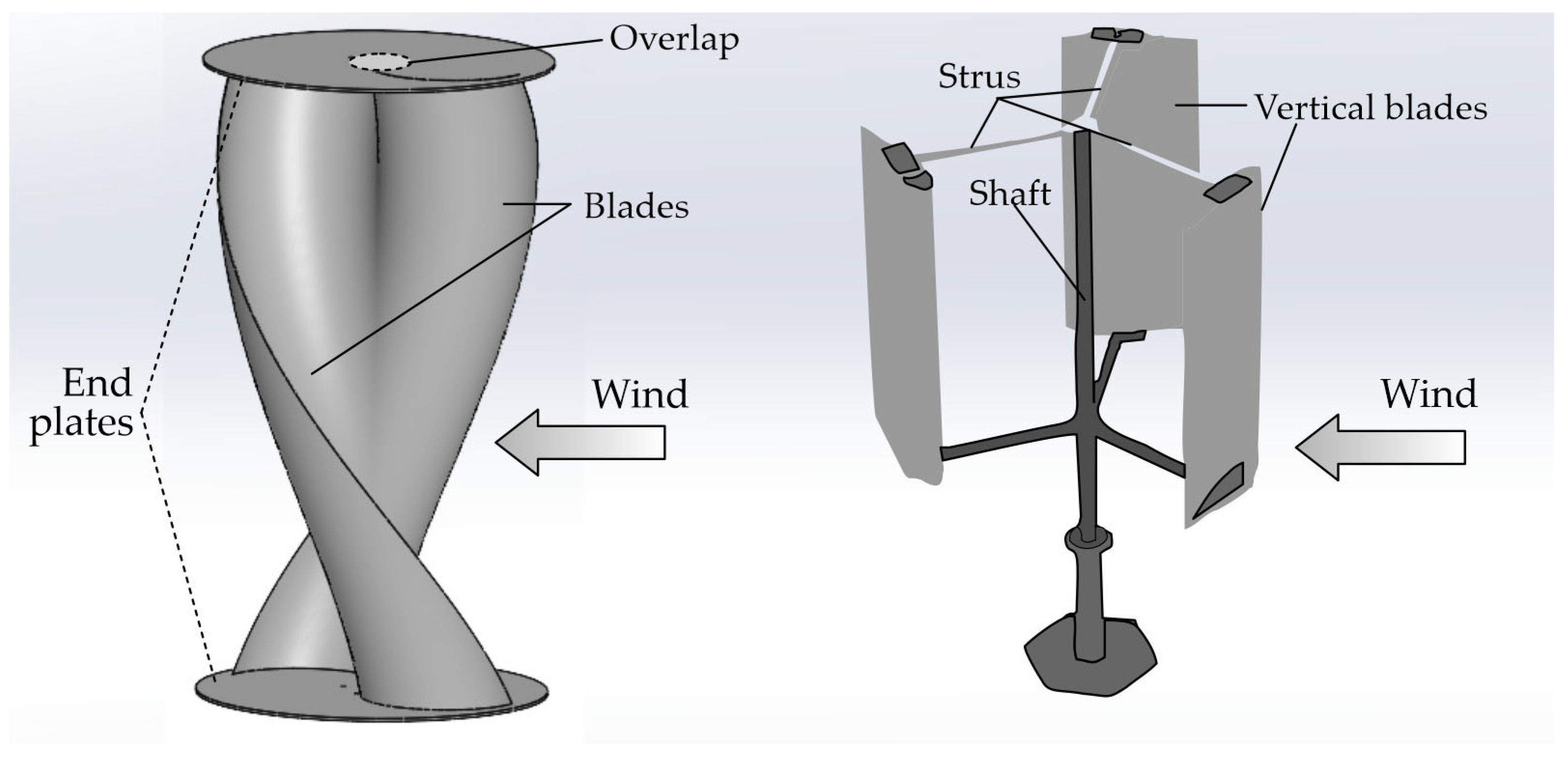
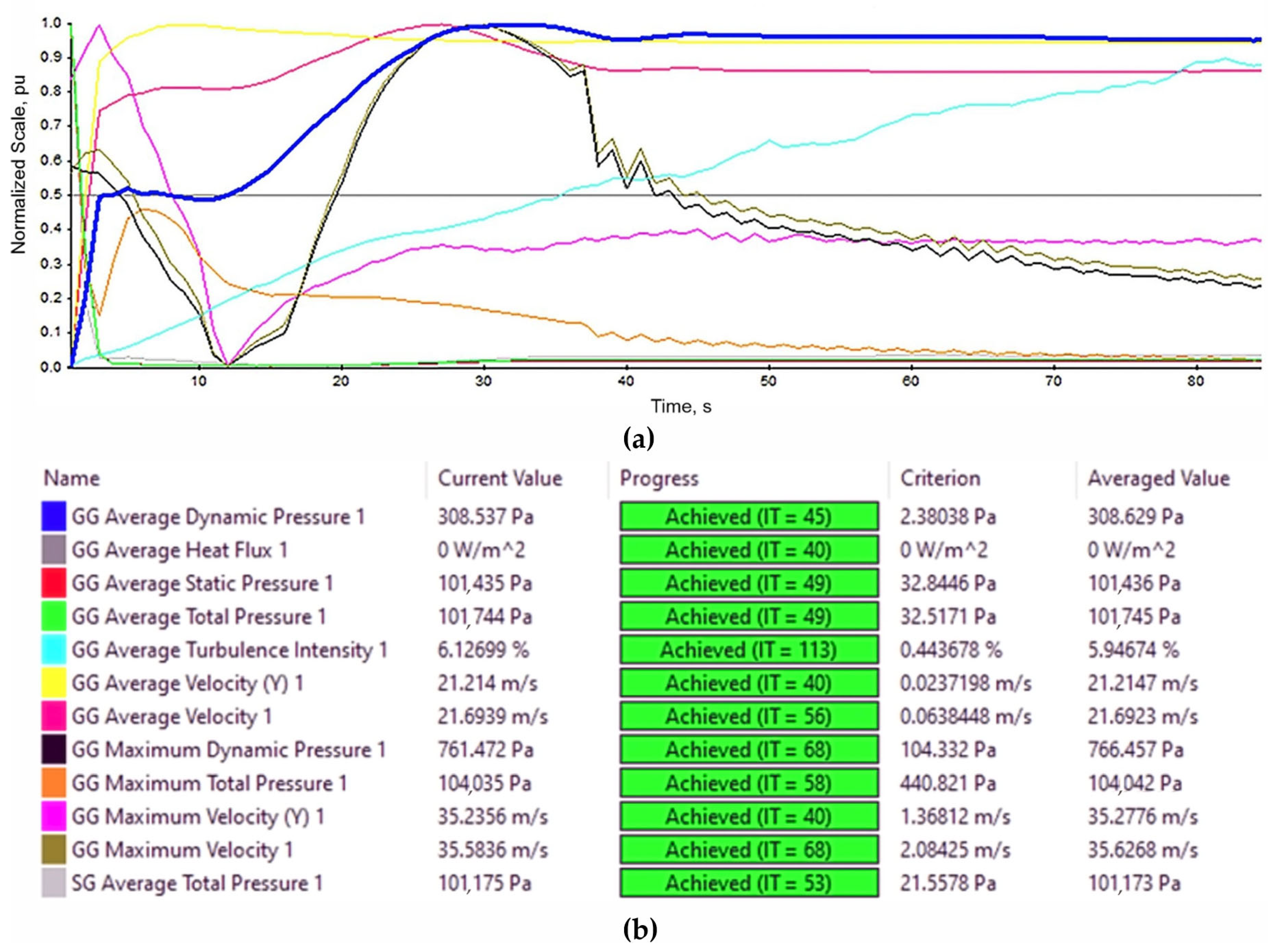
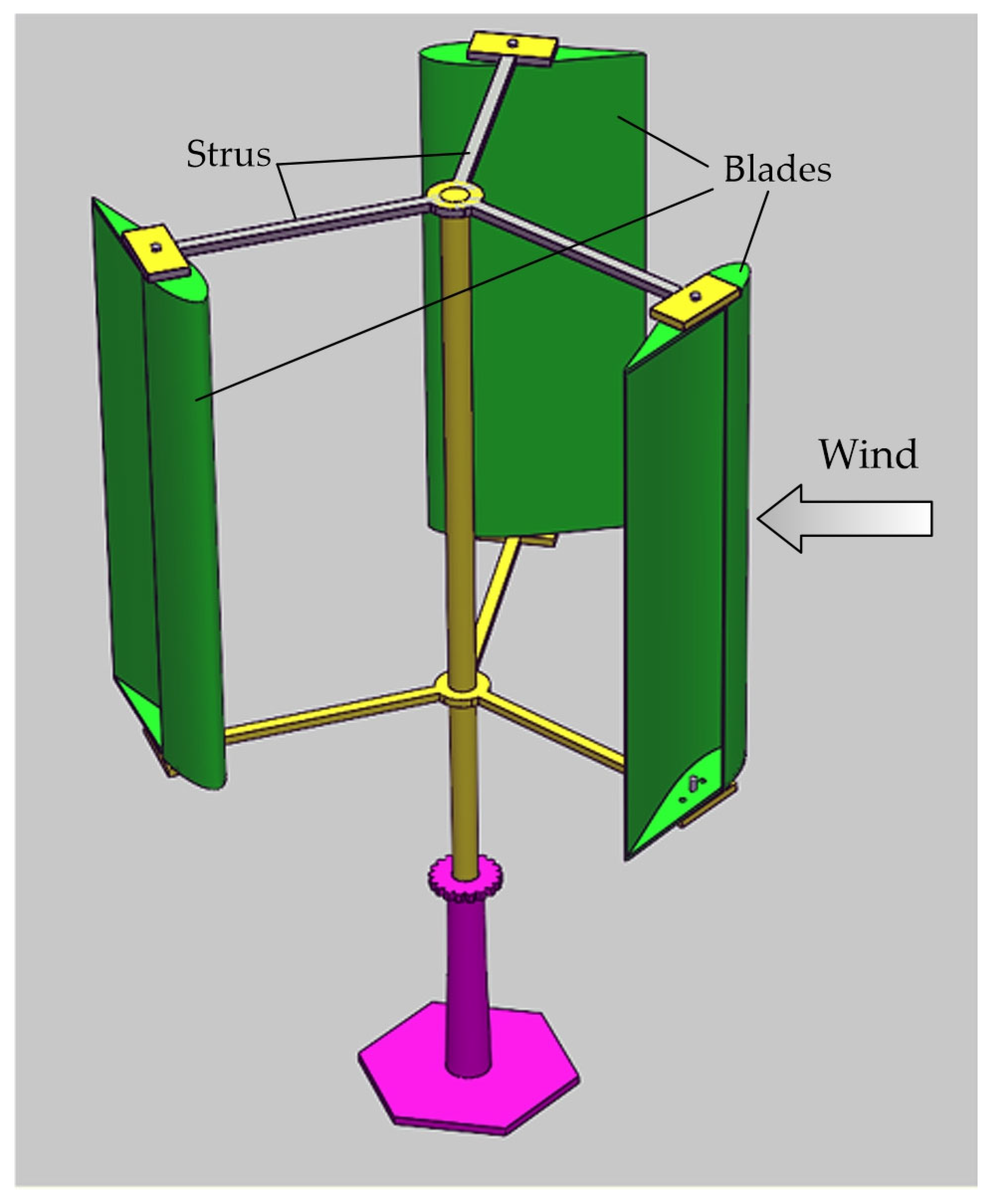
Studying the aerodynamic characteristics of the Savonius rotor is an important step toward enhancing its efficiency and operational stability. The Savonius rotor is widely used in vertical-axis wind turbines, especially at low wind speeds. However, its behavior when interacting with airflow remains a complex challenge for optimization. Modeling this interaction provides information on pressure distribution, flow velocity, and turbulence, which helps improve the rotor’s design to increase performance and reliability. In this study, computer modeling was conducted to understand how airflow affects the rotor over time, allowing the identification of moments when the rotor’s parameters stabilize and the rotor reaches a steady state. The experiment was carried out using SolidWorks, where a computer model of the Savonius rotor and Darrieus rotor (
Figure 1) was simulated in an airflow. The modeling was performed over a time interval of approximately 80 s, with each measurement taken every 1–2 s (
Figure 2). The main parameters monitored during the experiment included dynamic and static pressure, airflow velocity, and turbulence.
Design-oriented interpretation. Beyond descriptive trends, the baseline results translate into actionable choices: (i) torque-ripple envelopes inform equivalent bearing loads P and L10 life; (ii) wake-deficit width at x/D = 1–4 constrains array spacing and predicts load asymmetry on neighboring units; (iii) fatigue utilization (rainflow + Miner) sets duty-cycle limits and inspection intervals; (iv) mode separation SR = fmode/fexc ≥ 1.25 indicates acceptable resonance margin for rooftop deployments with low structural amplification.
For the Savonius cases, the inlet profile used U = 8 m s−1 with 5% turbulence intensity; blades were aluminum with no-slip walls. To emulate open-jet conditions, side/top/bottom boundaries were slip, and the outlet was a pressure opening. The rotating region encompassed the rotor with an interface to the stationary fluid; the target tip-speed ratio λ = 1 set ω = 16 rad s−1. We recorded phase-averaged torque over 10 revolutions after initial transients (≈30 s) and report cycle-mean values. Mesh refinements near the separation bubble on the returning blade (inflation layers, growth 1.2) ensured adequate resolution of the shear layer. A three-level grid study confirmed Cp and cycle-mean torque variation <3%.
To situate the simple drag-/lift-based estimates used below, we compare the obtained Cp envelope to published Savonius optimizations and DMST-style references cited in the paper, noting agreement in peak Cp order and stall-onset TSR.
In the graphs, the curves are reported with software-neutral labels. Domain-mean dynamic pressure (blue) is averaged over the rotor envelope ΩR (cylinder of radius 1.5 D, height H); domain-mean static pressure (purple); domain-mean total pressure (pink); centerline vertical velocity (light green) sampled at x = 2 D, z = H/2; domain-mean velocity magnitude (dark green); peak dynamic pressure in ΩR (brown); peak total pressure in ΩR (light brown); peak vertical velocity (light blue); peak velocity magnitude (dark blue); domain-mean turbulence intensity (yellow). Values are phase-averaged over the last 10 revolutions; the running mean varies by <1%, indicating statistical convergence.
The simulation results of the Savonius rotor show that the system stabilizes after 30 s of operation. At this stage, the airflow parameters (velocity, pressure, turbulence) reach constant values, indicating an established operational mode of the rotor. An important conclusion is that the maximum speeds and pressures achieved in the first 30 s represent significant aerodynamic loads on the rotor, which requires attention in the design of materials and structure to prevent deformations. The dynamic pressure and airspeed around the rotor reach values that can have a significant impact on its blades, especially at high wind speeds. Turbulence, despite the high speeds, remains relatively low, indicating a good aerodynamic shape of the rotor. This data can be used for further optimization of the design, which will help increase the efficiency and reliability of the Savonius rotor in real operating conditions.
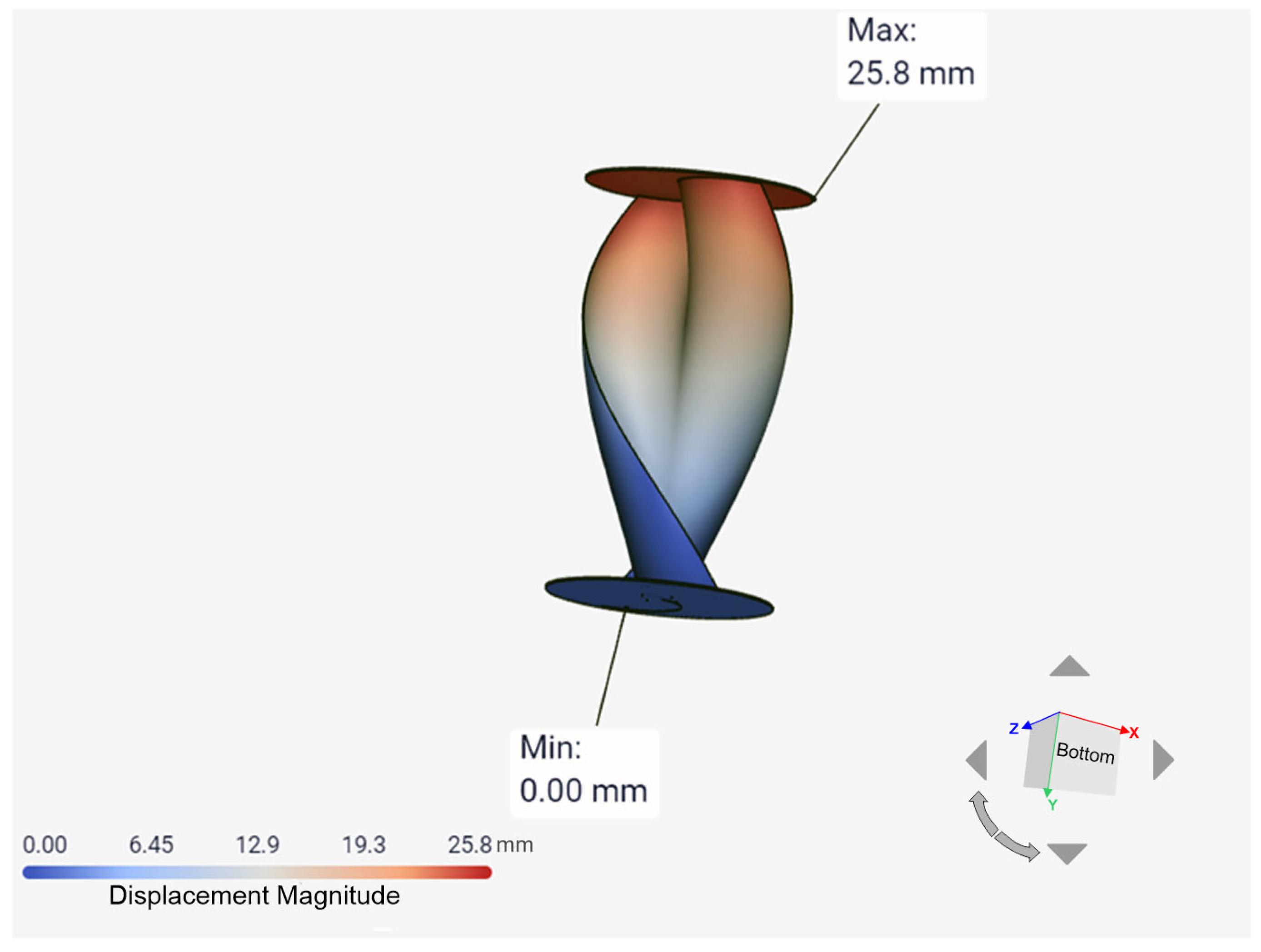
An experiment on modeling the deformation of the Savonius rotor was conducted to study its behavior at a critical wind speed of 25 m/s, allowing for the assessment of structural stability and the identification of potential stress concentration points. In the modeling process, a rotor with a height of 2 m and a blade radius of 0.5 m with semicircular blades was used. The rotor material chosen was aluminum with a Young’s modulus of
E = 69 × 10
9 Pa, which allowed for an accurate assessment of stresses in the structure. The wind speed of 25 m/s was set as critical for this type of rotor, while the pressure on the rotor surface was calculated based on the speed and characteristics of the airflow. Based on the modeling, data on the displacement of the structure were obtained: the maximum displacement was 25.8 mm at the top of the rotor, as shown in
Figure 3.
For single/low-volume builds, aluminum reduces non-recurring costs (no molds/tooling), shortens build time, and allows cold/warm forming with standard fixtures. Field damage (minor dents, joint loosening) is repairable via straightening, local patch plates, or fastener replacement without curing cycles. Corrosion control is ensured by anodizing/paint plus galvanic isolation at steel–aluminum interfaces. End-of-life recycling stream is well established, which supports sustainability goals at the prototyping stage.
Fatigue methodology. Because the operating loads are cyclic with fundamental frequency frev = ω/2π and blade-passing harmonics, we converted σ(t) at critical locations (blade root, mid-span, and joint regions) to stress-range histories Δσ using rainflow counting and applied Miner’s rule for cumulative damage . Allowable cycles Ni were taken from the material S–N curve with mean-stress correction (Goodman). For aluminum cases we used endurance-limit–type extrapolation; for composite cases we used stress-life data per principal material directions with knock-down factors for moisture/temperature. Design life was checked for >107 cycles at representative duty (class A/B wind). The calculated utilization factors remained <1.0 for all evaluated duty cases, indicating acceptable fatigue margins.
Modal and resonance checks. A modal analysis of the assembled rotor predicted the first flapwise and edgewise modes; resonance was evaluated against n · frev (blade-passing and low-order harmonics). The Campbell diagram indicated a separation ratio SR = fmode/fexc ≥ 1.25 across the operating range, which exceeds the commonly used 1.2 threshold. Damping ratios of 1–2% were assumed for metal blades and 2–3% for composite blades; sensitivity studies confirmed SR ≥ 1.2 under ±10% stiffness variation.
The maximum displacement Δ
L = 25.8 mm = 0.0258 m can be used to estimate the pressure through the material’s modulus of elasticity and the deformation equation:
where Δ
L = 0.0258 m is displacement;
P—pressure;
L = 2 m—height of the rotor and
E = 69 × 10
9 Pa—Young’s modulus for aluminum.
By substituting the known values, the following expression is obtained:
Thus, the pressure will be equal to:
As a result of the experiment modeling the deformation of the Savonius rotor at a critical wind speed of 25 m/s, it was determined that the maximum displacement of the structure was 25.8 mm in the upper part of the rotor. The use of aluminum with a Young’s modulus of E = 69 × 109 Pa enabled the assessment of stresses in the rotor. Calculations showed that the pressure on the rotor under these conditions reaches 889.65 MPa. These results are important for further analysis of the structural strength and the development of solutions to enhance the stability of the Savonius rotor against high wind loads, minimizing deformations and increasing the device’s service life.
3.2. Classic Savonius Rotor
The Savonius rotor is one of the most widely used types of vertical-axis rotors, especially in low-power wind energy installations. The classic Savonius rotor design includes two semicircular segments that effectively capture the wind, creating a significant drag force. This design ensures stable operation at low wind speeds and low turbulence, making the Savonius rotor ideal for use in conditions of variable wind flow, typical of urban areas and regions with low wind speeds.
The aim of this study is to analyze the aerodynamic characteristics of the classic two-stage Savonius rotor. Particular attention is paid to calculating key indicators such as torque, turbine power, and the power coefficient Cp, which is an important parameter for the efficiency of converting wind energy into mechanical power. The standard calculation method is used within the framework of the work, taking into account the drag and lift forces acting on the rotor blades.
Similarly to the previous study, the following rotor parameters were chosen [
64,
65]:
Height of one rotor stage H = 1 m.
Rotor radius R = 0.5 m.
Wind speed U = 8 m/s.
Air density ρ = 1.225 kg/m3.
Velocity coefficient for this type of Savonius rotor λ = 1.
Lift coefficient Cl ≈ 0.08.
Drag coefficient Cd ≈ 0.6.
The effective blade radius is equal to
In accordance with Equation (2), the effective swept area of the classic Savonius rotor is equal to
In accordance with (3), the drag force
Fd(
θ) is equal to
The lift force according to Equation (4) is equal to
The torque can be calculated using the difference between the drag and lift forces [
66]:
Substituting the data, the following value was obtained:
In accordance with (6), the angular velocity was calculated:
Using the angular velocity
ω, the power was calculated using (7)
Thus, the power coefficient for the classic Savonius rotor under the selected conditions is
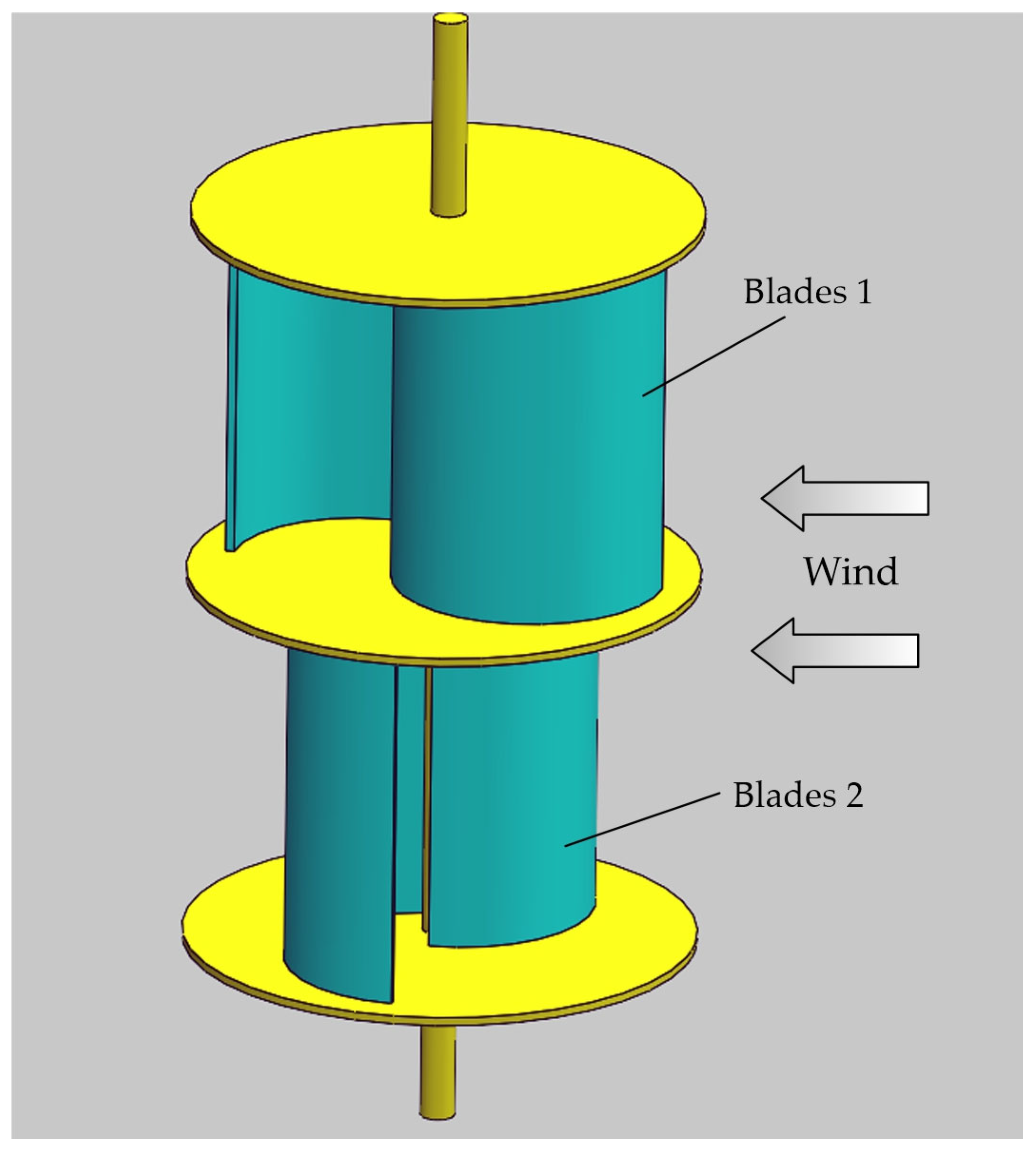
Figure 4 presents a 3D model of a two-stage Savonius rotor created in SolidWorks. This model demonstrates the geometry of the rotor with two semicircular blades, each with a height of 1 m and a radius of 0.5 m. It was used as the basis for numerical simulation of the rotor’s aerodynamic characteristics under the influence of an airflow with a speed of 25 m/s. The model allows for the visualization of structural features and the impact of wind on the blades, which is necessary for further analysis of the rotor’s performance under load.
In the graphs presented in
Figure 5a, the pressure distribution on the blades of the Savonius rotor at a wind speed of 25 m/s is shown. The blue line represents the dynamic pressure on the windward side of the rotor, which begins to increase during the first 10 s of system operation, reaching a peak value of 354.8 Pa. After this, the pressure stabilizes. A steady state is observed after 25 s, when the dynamic pressure ceases to fluctuate and remains at a level of 354–360 Pa. This indicates that the rotor has adapted to the constant wind flow, and no further changes in its aerodynamic characteristics occur. The purple line, representing static pressure, remains near the ambient level of ≈101,560 (Pa); the horizontal axis is time t (s) and the vertical axis is pressure (Pa). Pressure stabilization is important for assessing that the rotor does not experience significant load fluctuations, which reduces the likelihood of blade wear and deformation during prolonged operation.
Figure 5b presents the airflow velocity magnitude field (m/s) around the Savonius rotor at a freestream speed of
U∞ = 25 ms
−1. The color scale reveals local accelerations near the advancing-blade leading edges and a downstream wake-deficit. Peak velocities up to 29.8 m/s occur within the shear layers at the blade edges, whereas reduced velocities are observed in the separated flow on the returning blade. This figure is a map of velocity, and is used to interpret flow features—acceleration zones, shear layers, and wake width.
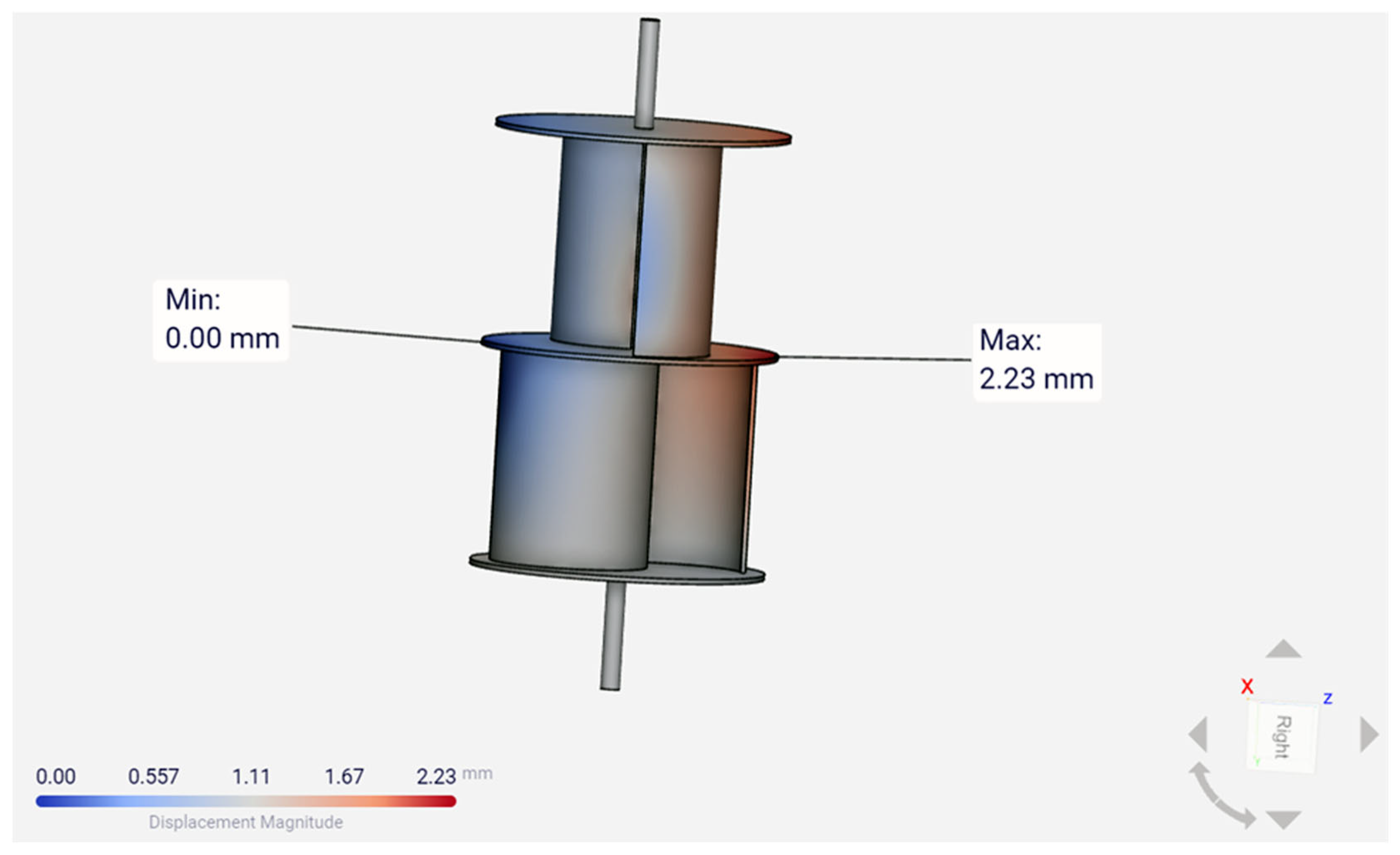
The experiment modeling the deformation of a two-stage Savonius rotor was conducted to study its behavior at a critical wind speed of 25 m/s, in order to assess the structural stability and identify potential areas of stress concentration. The rotor model has a height of 2 m and blade radius of 0.5 m, and it is made of aluminum with a Young’s modulus of E = 69 × 10
9 Pa. A wind speed of 25 m/s was chosen as critical to evaluate the load on the rotor. Based on the simulation, it was determined that the maximum displacement of the structure was 2.23 mm at the top of the rotor, as shown in
Figure 6.
The maximum displacement Δ
L = 2.23 mm = 0.00223 m can be used to estimate the pressure through the deformation equation according to (19)
Thus, the pressure is equal to
Load cases and duty matrix. In addition to steady 8 m/s cases, the structure was verified under: (i) start-up/transient torque spikes, (ii) gusts modeled as step and ramp inputs ΔU = ±3 ms−1 over 1–5 s, and (iii) yaw/misalignment surrogates implemented by azimuthal phase shifts in p(θ,t). Peak equivalent stresses and deflections from these dynamic envelopes exceeded the static-only values by 10–25% depending on rotor type; these envelope loads are used for fastener/bearing sizing and local margin checks.
As a result of the deformation modeling of a two-stage Darrieus rotor at a critical wind speed of 25 m/s, it was found that the maximum displacement of the structure was 2.23 mm. The use of aluminum with a Young’s modulus of E = 69 × 109 Pa allowed for the assessment of stresses in the structure. Calculations showed that the pressure on the rotor under these conditions amounts to 76.935 MPa. These results indicate that the rotor possesses sufficient strength to operate under high wind loads; however, additional structural optimization may be required to further enhance the rotor’s stability and reduce deformations.
3.3. The Darrieus Rotor
The Darrieus rotor is one of the most frequently used types of rotors for vertical-axis wind turbines, thanks to its ability to effectively convert wind energy into mechanical power at high wind speeds. The main objective of this study is to calculate the aerodynamic forces acting on the Darrieus rotor, evaluate the power it produces, and examine the rotor’s behavior under specific parameters. The experiment utilizes formulas to calculate the rotor’s effective area, drag force, lift force, torque, and the power generated by the rotor.
The Darrieus rotor is distinguished by its curved blade shape, which enhances aerodynamic properties compared to the semicircular profile of the Savonius rotor [
67]. Similarly to the previous study, the following rotor parameters were selected:
Rotor height H = 2 m.
Rotor radius R = 0.5 m.
Wind speed U = 8 m/s.
Air density ρ = 1.225 kg/m3.
Velocity coefficient for the Darrieus rotor λ = 1.8.
Lift coefficient Cl ≈ 0.12.
Drag coefficient Cd ≈ 0.6.
Implications for deployment (Darrieus). Higher baseline Cp and stronger speed sensitivity recommend Darrieus for cleaner inflows (coastal ridges, open roofs) with adequate yaw exposure. Dynamic-stall-driven load excursions motivate strut/shaft fairings and preset pitch in subsequent optimization. Higher mode frequencies than Savonius favor larger inter-unit spacing to reduce wake interaction and call for torsional compliance in the drivetrain to limit torque pulsations.
Although modern large-scale HAWT blades are predominantly composite, the present VAWT prototype is small-to-medium scale and operates at moderate TSR/loads. For this scale, aluminum alloys (e.g., 6xxx/7xxx) offer a favorable stiffness-to-cost ratio, short manufacturing lead time (sheet/plate forming, CNC, welding), and straightforward inspection/repair in field conditions. The target test program emphasizes rapid iteration and instrumentation; aluminum simplifies design changes without retooling composite molds/layups. Additionally, regional availability and recycling logistics favor aluminum for early-stage prototyping, while maintaining adequate fatigue margins under the evaluated duty cycle.
For weight and fatigue performance, a composite blade layup was assessed using classical laminate theory (CLT). An illustrative quasi-isotropic stack [±30/0/90]s (ply tp ≈ 0.25 mm) was modeled with orthotropic elastic constants (E1,E2,G12,ν12) and density ρ representative of CFRP/GFRP systems. Strength checks used Tsai–Hill/Tsai–Wu criteria for in-plane failure and interlaminar shear limits in adhesive/bonded joints. Mass reduction of 20–35% versus aluminum was observed at matched stiffness, which increased the first natural frequency and improved resonance margins. Hashin-type failure indices remained <1.0 for all load cases; ply-drop and root-bond transitions were sized to keep interlaminar stresses below allowable.
Joints, shaft, and bearings. Hub–blade connections were modeled with pretensioned fasteners; margins were verified against combined membrane/bending loads from p(θ,t)+rotation. Bearing life was estimated with L10 based on equivalent radial load P from aerodynamic torque and rotor mass; computed L10 exceeded the target service life by >2× for the assessed duty cycle.
The effective blade radius is equal to
For the curved blade,
Ref ≈ 0.95
R, which reduces the blade’s interaction area with the airflow and decreases drag. Consequently, in accordance with Equation (2), the effective swept area of the Darrieus rotor is equal to
In accordance with (3), the drag force
Fd(
θ) is equal to
The lift force according to (4) is equal to
Torque can be calculated using the difference between the drag and lift forces:
Substituting the data, the following value was obtained:
In accordance with Equation (6), the angular velocity was calculated:
Using the angular velocity
ω, the power was calculated using (7)
Thus, the power coefficient for the Darrieus rotor under the selected conditions is
Figure 7 shows the assembled 3D model of the Darrieus rotor in the SolidWorks 2022 software environment. The rotor blades have a curved shape, which contributes to improving its aerodynamic characteristics and reducing drag. The design includes a central shaft with three blades, ensuring the effective conversion of wind energy into mechanical power. The model was used for numerical simulation aimed at studying the rotor’s behavior under high wind speed conditions.
For the Darrieus cases, transient RANS with RNG k–ε and sliding mesh was likewise employed. The inlet was U = 8 m s−1 (5% turbulence), outlet pressure 0 Pa; far-field walls were slip. The operating TSR λ = 1.8 set ω = 28.8 rad s−1. We used ≥12 prism layers on both sides of each blade to maintain y+ within the wall-function band and a minimum of ~40 cells across the boundary layer at mid-span. Torque and Cp were phase-averaged over ≥8 revolutions after transients. Sensitivity checks (mesh/time step) altered mean Cp by <3%, and predicted Cp(λ) and torque ripple were consistent with mature Darrieus models (DMST/actuator-cylinder) cited in the manuscript.
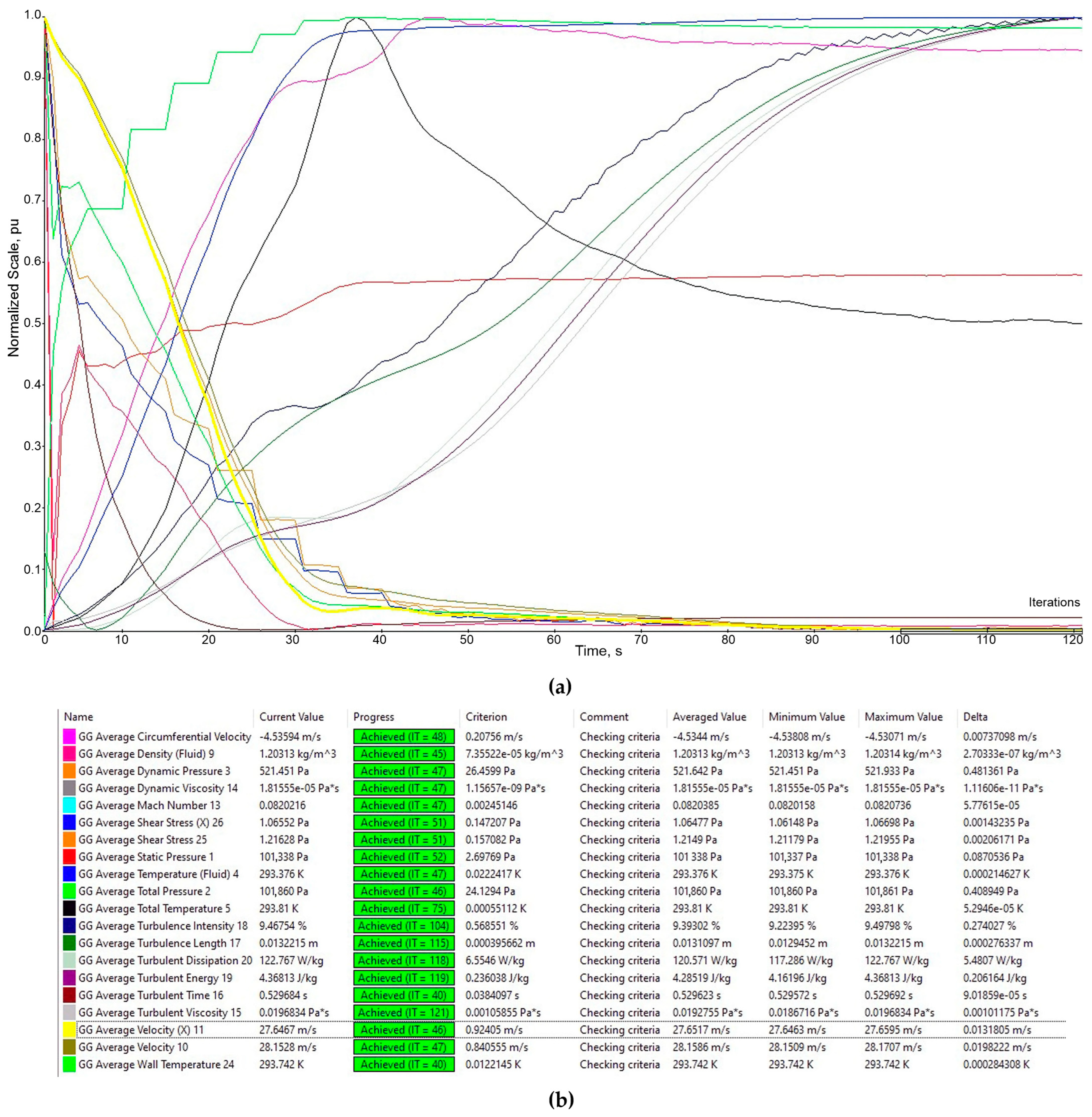
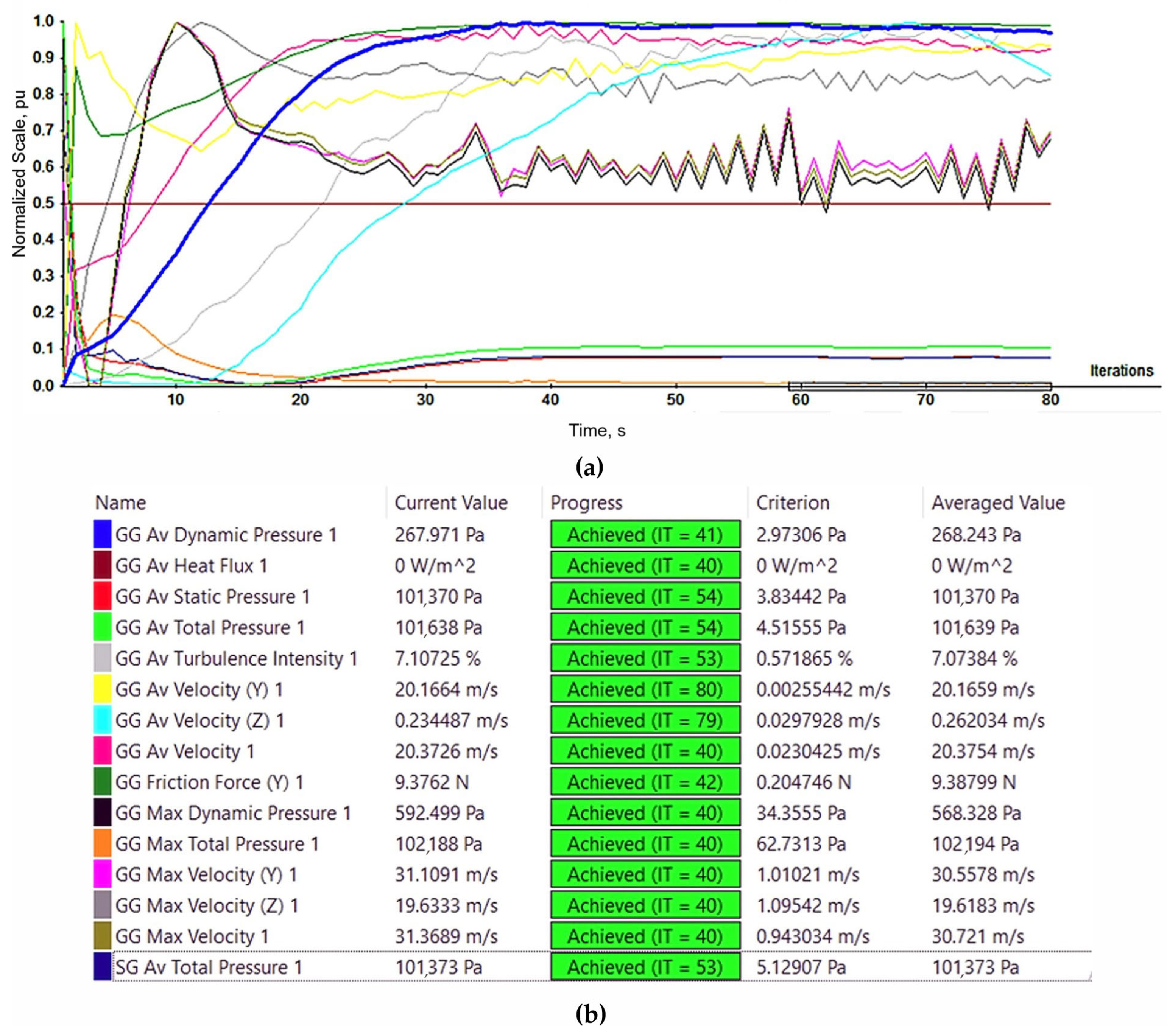
Figure 8a presents a graph of the normalized operating parameters of the Darrieus rotor during the numerical simulation process, where one iteration corresponds to one second; thus, the x-coordinate is time t in seconds. All quantities are phase-averaged over the last 8–10 revolutions; the running mean plateau (<1% variation) demonstrates convergence. Normalization allows for the assessment of the dynamic changes in parameters over time on a scale from 0 to 1, which helps visualize the stabilization of the system after a certain number of iterations. The blue line represents dynamic pressure, which increases during the first 30 iterations (30 s) and reaches its peak, after which it stabilizes at a level of 1. This indicates the achievement of a steady operational mode of the rotor. The purple line corresponds to the total pressure (static plus dynamic pressure), which also stabilizes after 30 s. This pressure is important for assessing the aerodynamic load on the rotor. The yellow line shows turbulence intensity, which increases during the first 30 s and reaches a level of about 6%. This indicates a low level of turbulence in the system, which positively affects the rotor’s efficiency. The green lines on the graph reflect different components of the airflow velocity (vertical and overall velocities), which also stabilize after the first 30 s, indicating an established operational mode. Overall, the graph demonstrates that after the first 30 iterations, the rotor’s parameters stabilized, indicating the achievement of a steady working state.
Figure 8b summarizes the key operating metrics of the Darrieus rotor under the harmonized CFD setup. Values are reported as domain-mean quantities over the rotor envelope Ω
R (cylinder of radius 1.5D, height H) and peaks taken over the same region at mid-span (z = H/2). The principal metrics are: domain-mean dynamic pressure ≈ 268.243 Pa; domain-mean static pressure ≈ 101,370 Pa (near ambient); centerline vertical velocity at x = 2D, z = H/2 ≈ 20.165 m s
−1; peak dynamic pressure in Ω
R ≈ 592.489 Pa; peak velocity magnitude in Ω
R ≈ 31.1 m s
−1. All values are phase-averaged over the last 8–10 revolutions; peaks are diagnostic and not used as convergence criteria.
These values confirm that the Darrieus rotor can effectively operate under high wind speed conditions while maintaining stable operating parameters. The stabilization of pressure and velocities indicates that the rotor has achieved a steady state, and its design allows it to withstand high aerodynamic loads.
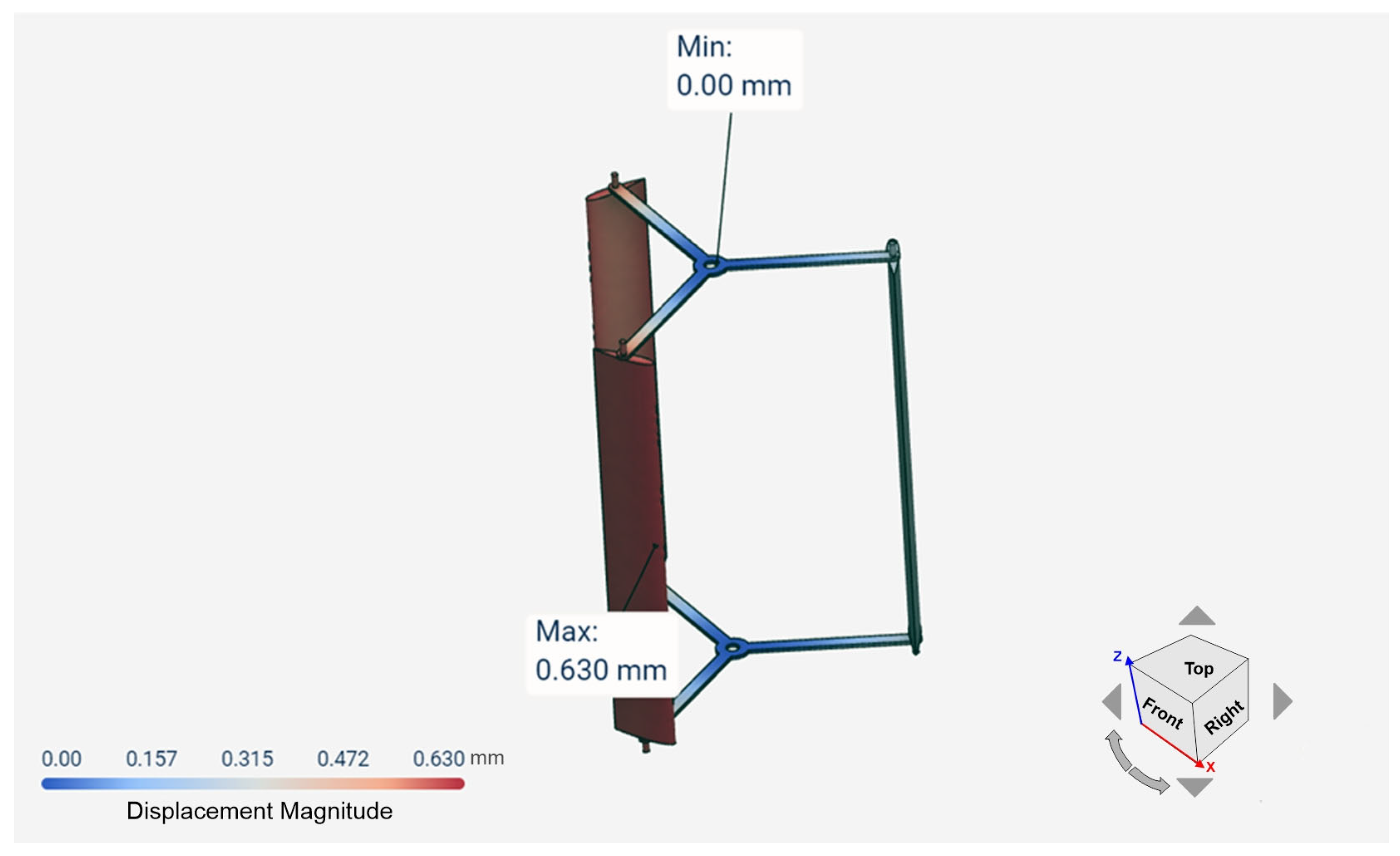
The experiment modeling the deformation of the Darrieus rotor was conducted to study its behavior at a critical wind speed of 25 m/s, in order to assess the structural stability and identify potential areas of stress concentration (
Figure 9). During the simulation, a rotor with a height of 2 m and blade radius of 0.5 m with curved blades was used. The rotor material chosen was aluminum with a Young’s modulus of
E = 69 × 10
9 Pa, which allowed for an accurate assessment of stresses in the structure. A wind speed of 25 m/s was set as critical for this type of rotor, with the pressure on the rotor surface calculated based on the wind speed and airflow characteristics. Based on the simulation, data on structural displacement were obtained: the maximum displacement was 0.630 mm at the top of the rotor, as shown in the figure. This displacement is significantly lower compared to more flexible designs, indicating the high stability of the Darrieus rotor.
The maximum displacement, in accordance with the experiment Δ
L = 0.630 mm = 0.00063 m, can be used to estimate the pressure through the material’s modulus of elasticity and the deformation equation according to (19):
Thus, the pressure is equal to:
As a result of the deformation modeling experiment of the Darrieus rotor at a critical wind speed of 25 m/s, it was found that the maximum displacement of the structure was 0.630 mm at the top of the rotor. The use of aluminum with a Young’s modulus of E = 69 × 109 Pa allowed for the assessment of stresses in the rotor. Calculations showed that the pressure on the rotor under these conditions reaches 21.735 MPa.
To corroborate the dynamic FEA, we propose strain-gauge placement at the blade root and mid-span with phase-locked acquisition versus azimuth angle. Measured stress ranges will be compared to the predicted Δσ(θ) envelopes and used to update the S–N damage model. A lightweight bump test (instrumented impact) will be used to confirm modal frequencies/damping in situ. Composite blades indeed provide higher specific stiffness/strength and better fatigue performance at very large scales. However, for the current rotor size and test plan the limiting factors are aerodynamic/control uncertainties rather than ultimate material limits. Introducing composites now would add layup QA, cure/void control, and bondline qualification effort, while complicating rapid geometry updates (e.g., chord/foil tweaks, root offsets). The design keeps a drop-in path to composites: panel thicknesses, rib spacing, and joints are parametrized to maintain bending stiffness EI and target mode frequencies when switching to a quasi-isotropic CFRP/GFRP layup. Validation metrics (strain gauges at root/mid-span, modal bump test) are material-agnostic, so the Phase-1 aluminum data directly de-risk a future composite redesign.
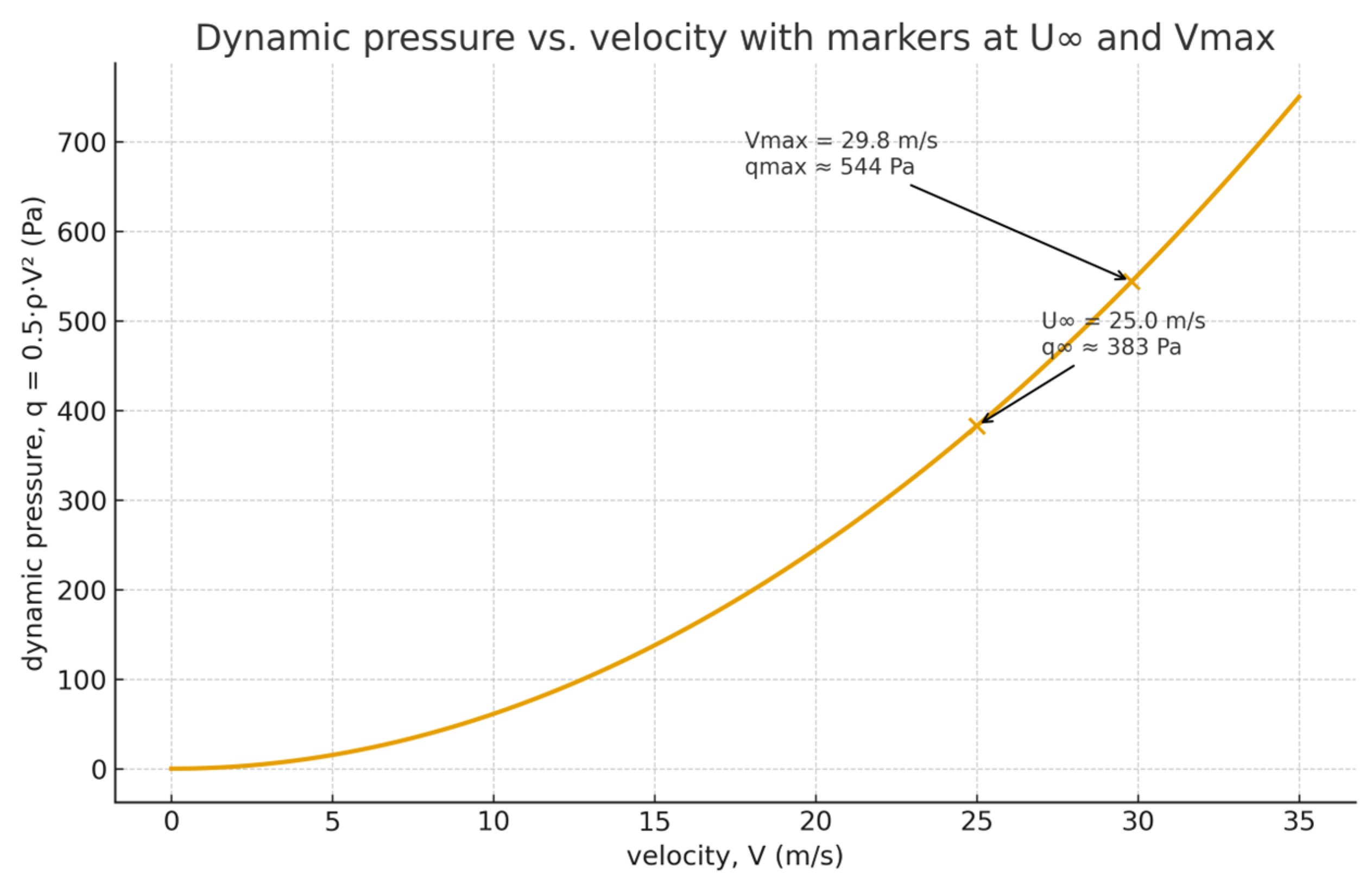
As a physics-based cross-check,
Figure 10 relates the velocity field to dynamic-pressure magnitudes, confirming that the freestream
U∞ = 25 ms
−1 and local V
max = 29.8 ms
−1, respectively, consistent with
Figure 5.
These results confirm the high stability of the Darrieus rotor against wind loads, which allows for minimizing deformations and increasing the device’s service life in real operating conditions.
4. Conclusions
Under a harmonized but non-optimized setup, the as-simulated peak Cp values were approximately 0.30 (straight-bladed Darrieus), 0.12 (two-stage Savonius), and 0.10 (classic Savonius). These are baseline references rather than design optima: no rotor-specific optimization (airfoil selection, chord/height ratio, Savonius overlap and end-plates, preset pitch schedules, strut/shaft fairings, or blockage-driven tweaks) was performed. The comparison is intended to be like-for-like under a unified, fully specified methodology, and the relative ranking is expected to remain robust once optimization is applied.
In this study, numerical modeling was conducted on three types of rotors: the classic Savonius rotor, the spiral Savonius rotor, and the Darrieus rotor. The comparison of their aerodynamic characteristics and performance revealed that each type of rotor has its own advantages and disadvantages depending on the operational conditions and the materials used.
One of the most important parameters determining the efficiency of converting wind energy into mechanical power is the power coefficient (Cp), which indicates the proportion of wind energy that the turbine can convert into useful work. During the simulations, it was found that the Darrieus rotor exhibited the highest power coefficient of 0.3. This is because it utilizes the principle of lift, similar to an aircraft wing. The lift generated by the blades ensures a more effective conversion of the wind’s kinetic energy into mechanical work. This model is most effective at medium and high wind speeds, making it ideal for installation in regions with consistent wind flows.
The spiral Savonius rotor showed a power coefficient of 0.12. Although this type of rotor relies on aerodynamic drag, its efficiency was enhanced by the spiral design, which distributes the airflow more evenly across the blades, reducing turbulence and ensuring stable operation even at low wind speeds.
The classic Savonius rotor has a power coefficient of 0.1, which is the lowest among the three models. This is due to its two-blade design, which is less effective in harnessing wind energy compared to the Darrieus rotor and the spiral Savonius rotor. Nevertheless, this rotor remains popular for low-power installations in environments with low wind speeds and urban settings.
Another important parameter is the generated power (P). The simulation results showed that the Darrieus rotor generated 244.53 W, confirming its high efficiency at a wind speed of 8 m/s. This is attributed to its more aerodynamic shape and optimal interaction with wind flows through the use of lift. The spiral Savonius rotor produced 226.42 W, which is a commendable result for drag-based rotors. The spiral design reduces turbulent flows and enhances operational stability, especially in conditions with variable wind directions. The classic Savonius rotor generated 163.56 W, validating its application for low-power wind generators. Its low power output is due to the simple two-blade design, which interacts less effectively with the airflow.
The lift (Cl) and drag (Cd) coefficients play a crucial role in the operation of wind turbines, determining how rotors interact with wind flows:
The Darrieus rotor has a lift coefficient of Cl ≈0.12 and a drag coefficient of Cd≈0.6, making it more effective at high wind speeds. The lift allows the rotor to generate greater power with less deformation compared to drag-based rotors.
The spiral Savonius rotor has Cl ≈0.2 and Cd ≈0.9, which are higher than the classic version. This is due to the more aerodynamic shape of the spiral blades, which reduces drag and provides better stability.
The classic Savonius rotor, with Cl ≈0.08 and Cd ≈1.3, is less effective in generating lift, which also explains its lower power coefficient and reduced efficiency at high wind speeds.
Based on the results of the calculations and simulations, the following conclusions and recommendations can be made:
Darrieus Rotor: Demonstrated the highest efficiency among all three models, especially under high wind speed conditions. Its aerodynamic shape and high resistance to deformations make it ideal for use in large wind farms and locations with consistent wind flows.
Spiral Savonius Rotor: An excellent choice for small installations, particularly in environments with variable wind flows. Its drag-based design allows it to operate stably at low wind speeds and better handle turbulence compared to the classic Savonius rotor.
Classic Savonius Rotor: Best suited for low-power systems operating in low wind speed conditions and urban areas. Its low cost and simple construction make it a good solution for small wind generators, although its performance and resistance to deformations are limited.
Practical significance. Despite being simulation-centric, the hierarchy of Cp and operational envelopes we report aligns with experimental studies on small-scale Darrieus and Savonius turbines; the obtained trends can be used directly for preliminary sizing, rotor-type selection under site wind statistics, and control strategy pre-tuning. Planned work includes on-site validation on a rooftop test rig to further corroborate the findings in real operating conditions.
Thus, each of the examined rotors has its own application areas, and their selection depends on the operational conditions and the targeted power outputs of the wind generators.
In summary, this study contributes a reproducible, harmonized CFD–FEA–fatigue workflow and establishes a fair baseline comparison between two canonical VAWT archetypes, thereby bridging the gap between model-specific case studies and design-oriented guidance. The paper also documents prototype-stage material trade-offs—aluminum at present, with CLT-based composites as the next step—to streamline technology transition. Future work will validate the reported envelopes through an instrumented rooftop test with phase-locked torque measurements and Cp(λ) against a calibrated wind log.





 ,
,