
Workflow for Gene Overexpression and Phenotypic Characterisation in Taraxacum kok-saghyz

 ,
,  , , , , ,
Abstract
1. Introduction
2. Experimental Design
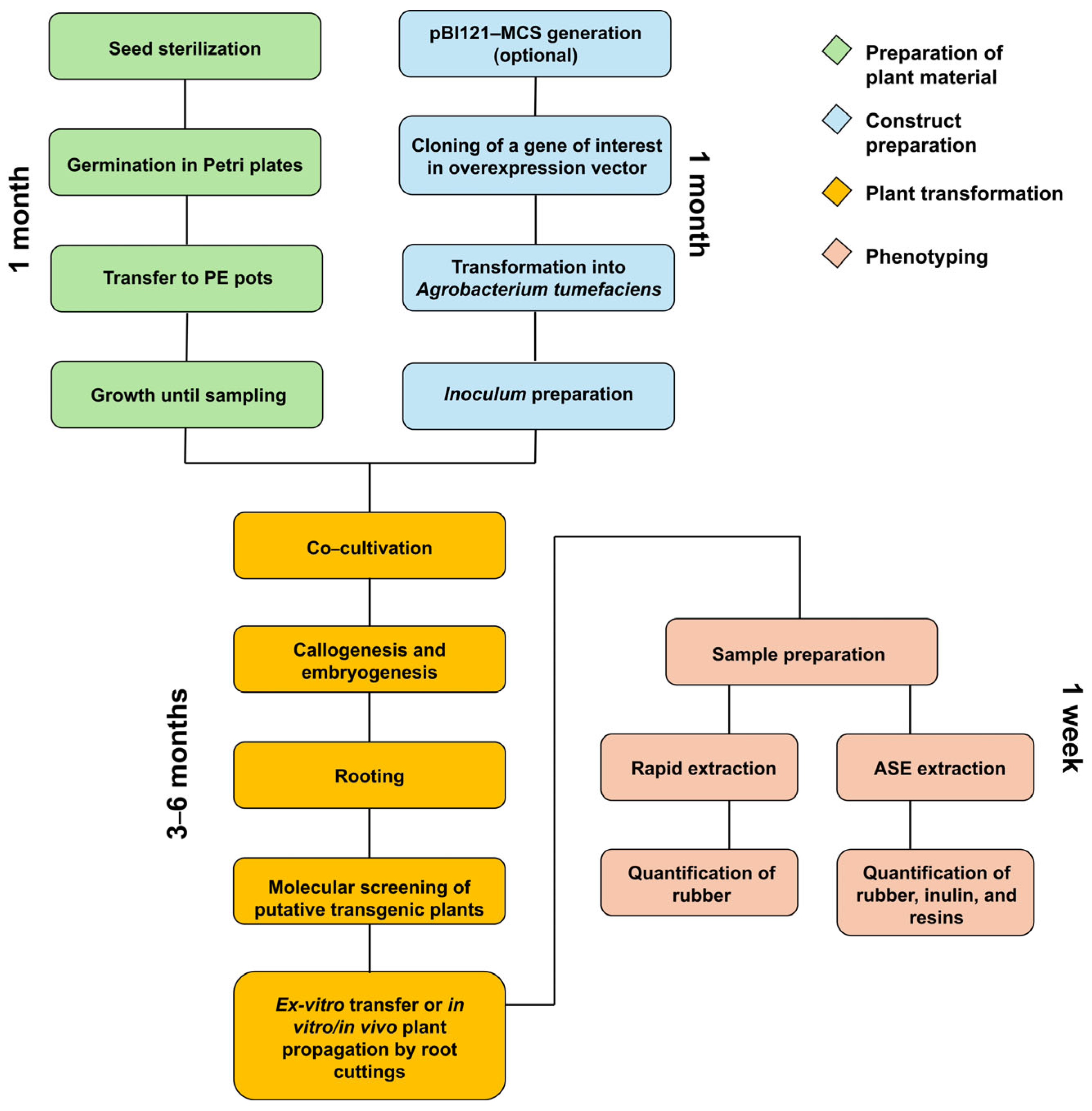
- The whole procedure is fast, allowing the generation of new transformed plants in 3 to 6 months.
- The in vitro culture procedure is simplified by reducing the number and complexity of necessary media.
- The protocol is applicable to multiple Taraxacum species, increasing its versatility.
- The use of somatic embryogenesis to regenerate transformed plants avoids the occurrence of chimerism as the somatic embryo derives from a single cell.
2.1. Materials
- 1-Naphtalenacetic acid (NAA) (Merck, Darmstadt, Germany; Cat. no.: N0640).
- Acetone (Merck, Darmstadt, Germany; Cat. no.:270725).
- Agar (Merck, Darmstadt, Germany; Cat. no.: 5040).
- Agarose (Merck, Darmstadt, Germany; Cat. no.: A9539).
- Agrobacterium tumefaciens strain EHA105 (GoldBio, St. Louis, MO, USA; Cat. no. CC-225-5x50).
- Aluminium foil weighing boats.
- Augumentin (Amoxicillin/Clavulanic acid, 875 mg/125 mg- GSK, London, UK).
- Bi-distilled sterile water.
- Shrimp Alkaline Phosphatase, rSAP (New England Biolabs, Ipswich, MA, USA; Cat. no.: M0371).
- Commercial bleach (5–10% NaClO).
- Competent Escherichia coli cells, strain DH5alpha.
- Absolute ethanol.
- Gamborg B5 vitamin mixture (Duchefa, Haarlem, the Netherlands; Cat. no.: G0415).
- Glycerol (Merck, Darmstadt, Germany; Cat. no.: G5516).
- 0.75 M HCl.
- 10 mN H2SO4.
- Hexane (Merck, Darmstadt, Germany; Cat. no.: 1.04367).
- Indole-3-acetic acid (IAA) (Merck, Darmstadt, Germany; Cat. no.: I2886).
- InnuPrep Plant DNA Kit (Analytik Jena, IST Innuscreen GmbH, Berlin; Cat. no.: 845-KS-1060010).
- InnuPrep Plant RNA Kit (Analytik Jena, IST Innuscreen GmbH, Berlin; Cat. no.: 845-KS-2060010).
- Kanamycin (Merck, Darmstadt, Germany; Cat. no.: K1377).
- LB Broth (Luria–Bertani Broth—Merk, Darmstadt, Germany; Cat. no.: 51208).
- Liquid nitrogen.
- MinElute PCR Purification Kit (Qiagen, Venlo, the Netherlands; Cat. no.: 28006).
- Murashige and Skoog Basal Salt mixture (MS) (Merck, Darmstadt, Germany; Cat. no.: M5524).
- pBI121 vector (TaKaRa Bio, Kusatsu, Japan).
- 0.45 µm PTFE Whatman® filter (Cytiva, Marlborough, MA, USA; Cat. no.: 6784-2504).
- Q5 High-Fidelity DNA Polymerase (New England Biolabs, Ipswich, MA, USA; Cat. no.: M0491L).
- QIAwave Plasmid Miniprep Kit (Qiagen, the Netherlands; Cat. no.: 27204).
- Rifampicin (Merck, Darmstadt, Germany; Cat. no.: R3501).
- Size-exclusion resins (Sephadex G-50 or Sepharose CL-6B).
- SuperScript™ IV Reverse Transcriptase (Thermo-Fischer Scientific, Waltham, MA, USA; Cat. no.: 18090010).
- T4 DNA ligase (New England Biolabs, Ipswich, MA, USA; Cat. no.: M0202)
- Trans-Zeatin (Duchefa, the Netherlands; Cat. no.: Z0917).
- Tween-20 (Merk, Darmstadt, Germany; Cat. no.: P1379).
- XbaI and SacI (New England Biolabs, Ipswich, MA, USA; Cat. no.: R0145L and R3156L).
2.2. Equipment
3. Procedure
3.1. Vector Selection
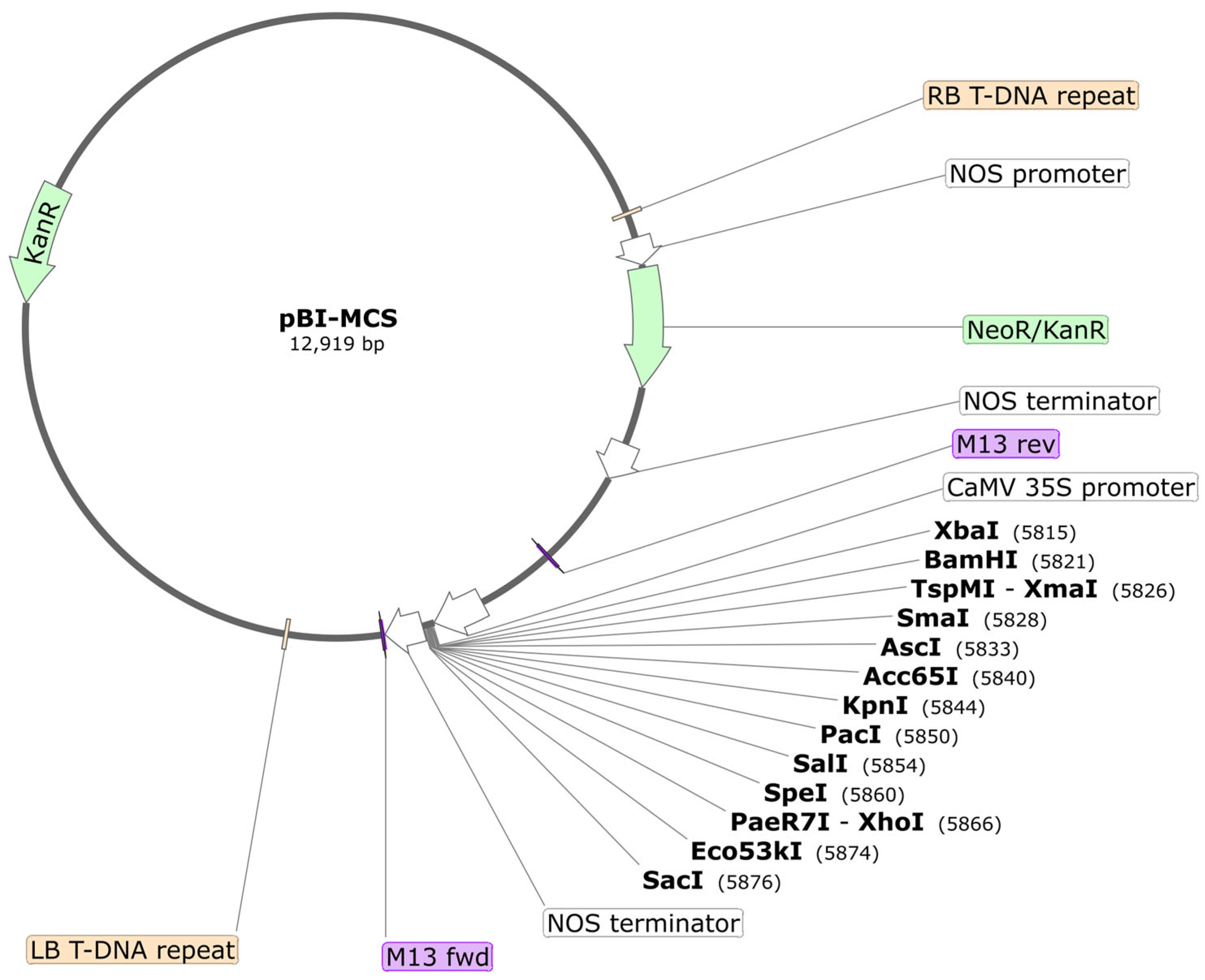
pBI121-MCS Generation
- Generate the insert containing the modified MCS by performing high-fidelity PCR with Q5 polymerase, using pBI121 as the template. Use primers 35S-for (5′-CTATCCTTCGCAAGACCCTTC-3′) and GUS-MCS-rev (5′-GGTGGTGAGCTCCTCGAGACTAGTGTCGACTTAATTAAGGTACGGCGCGCCGGTAGCAATTCCCGAGGCT-3′) to amplify a fragment of 2020 bp containing the GUS gene, and to introduce the MCS sequence at the reverse end.
- After amplification, check the PCR product on agarose gel and purify it with the MinElute PCR Purification Kit.
- Digest both the purified PCR product and pBI121 backbone with XbaI and SacI.
 CRITICAL STEP: Include 0.1 units/µL of rSAP in the vector-restriction reaction to prevent self-ligation. Phosphatase removes the 5′-phosphate group from the linearised vector ends, which are required for ligation by DNA ligase. By dephosphorylating the vector, the probability of the vector re-circularising without an insert is greatly reduced, thereby increasing the efficiency of cloning the desired fragment.
 - Heat-inactivate the digestion reactions at 65 °C for 20′. Purify them by column purification to obtain clean substrates for ligation.
- Combine insert and vector at an appropriate molar ratio, typically using a two- to five-fold excess of insert over vector. Perform the ligation with T4 DNA ligase under standard conditions.
- Use standard procedures to transform the ligation mixture into competent E. coli cells and plate the cells on selective medium containing kanamycin.
- Screen the resulting colonies by PCR with primers 35S-for and nos-rev (5′-CAATTATACATTTAATACGCG-3′) to confirm the presence of the correct insert. Grow positive colonies overnight in liquid LB.
- Isolate plasmid DNA using the Plasmid Miniprep Kit. Verify the construct via restriction analysis and Sanger sequencing.
- Digest the resulting plasmid (pBI121-GUS-MCS) with SmaI to remove the GUS sequence. The GUS gene is unnecessary for the overexpression experiment, and we suggest removing it to obtain a simpler vector with just a general-purpose MCS between promoter (35S) and nos terminator sequences. Separate the linearized plasmid backbone from the excised fragment via agarose gel electrophoresis and recover the backbone by gel extraction.
- Re-ligate the purified backbone to generate the final construct pBI121-MCS carrying the new MCS (XbaI, BamHI, XmaI/SmaI, AscI, KpnI, PacI, SalI, SpeI, XhoI, SacI) between the CaMV 35S promoter and the nos terminator. Transform the ligation mixture into competent E. coli cells and screen colonies by PCR or restriction digestion.
- Sequence plasmids from positive colonies across the junctions to confirm correct insertion and orientation of the MCS, using primers 35S-for and nos-rev.

3.2. Overexpression Vector Construction
- Extract total RNA with InnuPrep Plant RNA kit from a tissue or organ where the GOI is expected to be expressed and proceed to first-strand cDNA synthesis using SuperScript™ IV Reverse Transcriptase.
- Amplify the GOI CDS from cDNA via PCR using RS1-start-for and RS2-stop-rev primers and a high-fidelity polymerase such as Q5 High-Fidelity DNA Polymerase according to the manufacturer’s instructions.
 CRITICAL STEP: The use of a high-fidelity DNA polymerase is mandatory to avoid random point mutations caused by standard Taq DNA polymerase.
- Verify amplicon size by electrophoresis on 1.5% TAE agarose gel.
- Digest both the vector and the amplicon with the selected pair of restriction enzymes according to the manufacturer’s instructions.
- Purify the digested amplicon using a PCR purification kit such as the Qiagen MinElute PCR Purification Kit.
- Purify the linearised vector using size-exclusion resins such as Sephadex G-50 or Sepharose CL-6B. Do not use a PCR purification column or the linearised plasmid will remain stuck to it.
 CRITICAL STEP: Columns designed for PCR products are optimised for smaller DNA fragments and may retain or damage large plasmid DNA, resulting in low recovery. Size-exclusion chromatography using resins such as Sephadex G-50 or Sepharose CL-6B provides efficient separation and recovery of intact linearised plasmid molecules.
 - Ligate the insert and the vector with a molar ratio from 2:1 to 5:1 using T4 DNA Ligase according to the manufacturer’s instructions.
- Transform the ligation product into electrocompetent DH5 alpha E. coli cells using a standard electroporation procedure and grow overnight at 37 °C on a LB agar plate containing 100 mg/mL kanamycin.
- Screen at least 10 colonies via colony PCR for the presence of the desired insert with primers 35S-for and RS2-stop-rev and using the empty pBI121-MCS as a negative control. Visualise PCR products after electrophoresis on 1.5% TAE agarose gel and check for the presence of an amplicon of the expected size.
- Inoculate liquid LB medium containing 100 mg/mL kanamycin with a single positive colony and incubate overnight at 37 °C in an orbital shaker at 170 rpm.
- Perform plasmid extraction using the Plasmid Miniprep Kit following the manufacturer’s instructions. Store at −20 °C.
- Confirm the pBI-GOI vector via restriction analysis and sequencing to ensure the correct insertion and sequence of the GOI CDS fragment. Use 35s-for and nos-rev primers for 5′ and 3′ sequencing and, if the GOI CDS is longer than 1 kb, use additional forward and reverse primers internal to the CDS. Once the sequence is confirmed, the plasmid can be used as a binary vector for Agrobacterium-mediated plant transformation.
3.3. Vector Transformation into Agrobacterium tumefaciens
- Transform Agrobacterium tumefaciens electrocompetent EHA105 cells with the pBI-GOI vector using the MicroPulser Electroporator: mix 1–2 µL of plasmid DNA with 50 µL of electrocompetent EHA105 cells, then transfer to a pre-chilled 0.1 cm cuvette. Use the Agrobacterium-specific setting (2.2 kV voltage without pulse truncation) then immediately add 1 mL of LB medium. Alternatively, any standard electroporation procedure for Agrobacterium cells is fine.
- Recovery of Agrobacterium cells is performed at 28 °C with shaking for 4 h without antibiotics.
- After recovery, plate on selective LB agar containing 100 mg/L rifampicin and 100 mg/L kanamycin. Incubate at 28 °C until colonies appear (about 48 h).
- Screen resulting colonies by colony PCR as described in Section 3.2, step 10.
- Inoculate 50 mL of LB medium supplemented with 100 mg/L rifampicin and 100 mg/L kanamycin by picking a single positive colony. Incubate at 28 °C with 200 rpm shaking until culture OD600 reaches a value of about 0.6 (24 h can be sufficient).
- Prepare several glycerol stocks from the culture by mixing 500 µL of culture with 500 µL of sterile glycerol and freezing in liquid nitrogen. Store at −80 °C. Use stocks as starters to inoculate the cultures that will be employed for plant transformation.
3.4. Agrobacterium tumefaciens-Mediated Plant Transformation
3.4.1. Preparation of Plant Material (1 Week)
- Under a laminar flow hood, sterilise Tks seeds by rinsing 3′ in 25% commercial bleach in bdH2O (bidistilled water).
- Rapidly wash seeds 3 times in bdH2O.
- Place sterile seeds in Petri plates (20 seeds/plate) containing 20 mL solid bdH2O (autoclaved bdH2O with 10% agar). Put in a growth chamber at 23 °C with a 16/8 photoperiod until germination.
- Transfer germinated seedlings in vivo to 2.6 L polyethylene pots containing a commercial substrate consisting of decomposed peat moss supplemented with 7% horticultural sand (v/v) to improve drainage. Peat moss, which is partially decomposed sphagnum moss, is a common ingredient in horticultural substrates. It is highly porous, with good water- and nutrient-holding capacity. This provides a stable, aerated medium for root development. In this protocol, the addition of 7% horticultural sand to the peat moss improves drainage and prevents waterlogging, ensuring optimal growth conditions for the transferred seedlings. Alternatively, seedlings can be transferred in magenta boxes with 40 mL MS1/2B5 without hormones and maintained in vitro by monthly transfer to fresh medium. Magenta boxes are commercially available, autoclavable plastic culture vessels commonly used for plant tissue culture. They provide a sterile, contained environment suitable for in vitro growth and maintenance of seedlings and small plants. As an alternative, any transparent vessel that can be properly sealed and autoclaved can be used.
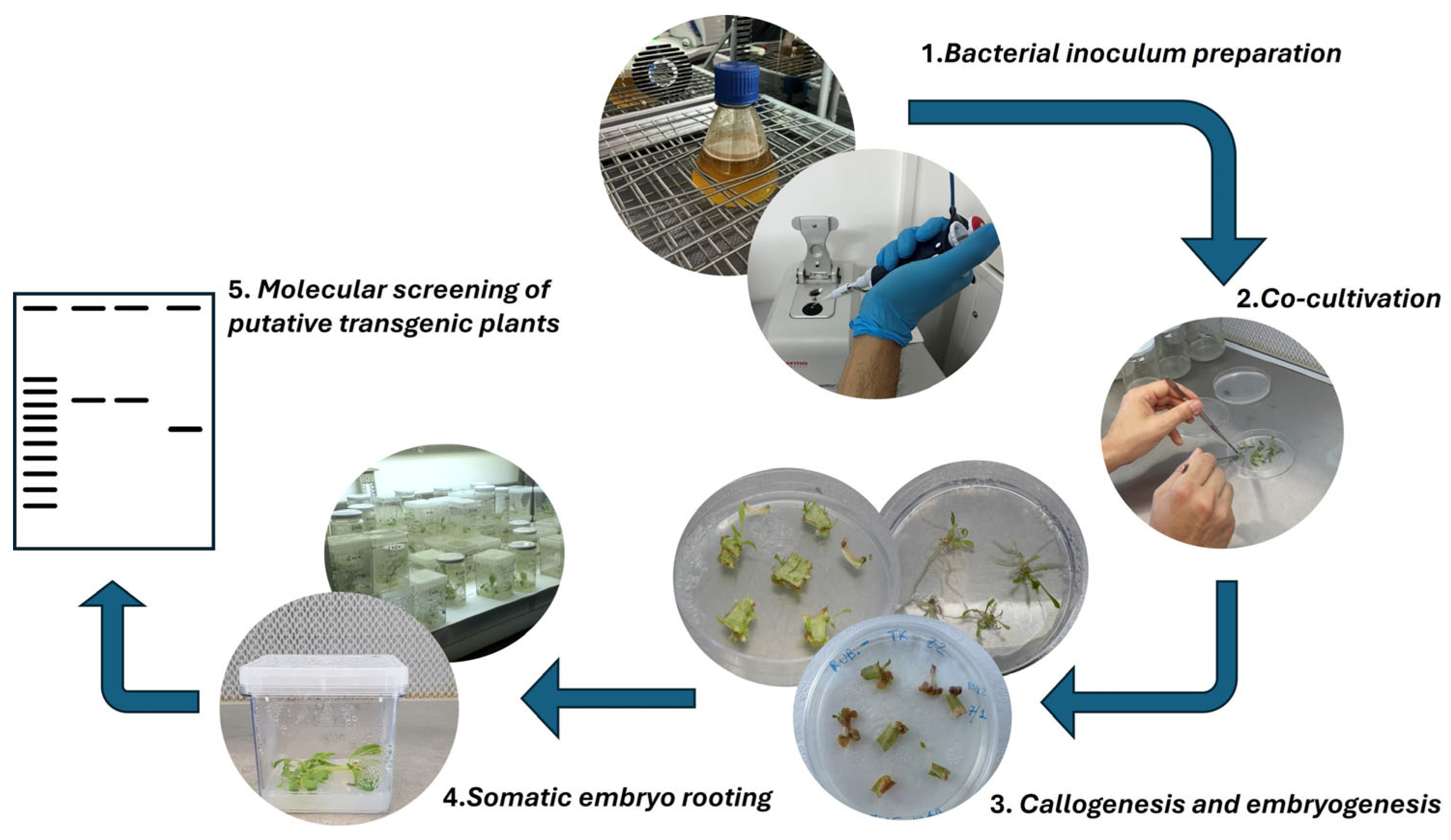
3.4.2. Bacterial Inoculum Preparation (2 Days)
- Inoculate a sterile flask containing 50 mL of LB liquid culture medium with 100 mg/L kanamycin and 100 mg/L rifampicin with a glycerol stock obtained as described in Section 3.3.
- Incubate at 28 °C for 24 h under shaking conditions.
- Assess the bacterial growth using a spectrophotometer. When the OD600 is between 0.4 and 0.8, recover the pellet by centrifuging at 4000 rcf for 30 min.
- Resuspend pellet in 20 mL sterile distilled water.
3.4.3. Infection and Co-Cultivation (2–3 Days)
- Sample young Tks leaves from the inner part of the rosette with a sterile blade and forceps and place in sterile bdH2O. All subsequent steps are performed under a laminar flow hood in sterility conditions.
- Quickly rinse the sampled leaves in 70% ethanol and immediately wash three times in sterile bdH2O.
- Rinse in a solution of 25% commercial bleach supplemented with one drop of Tween-20 for 5 min with occasional inversion. Then, wash leaf explants three times with sterile bdH2O and leave in sterile water until required.
- Sample young Tks leaves from the inner part of the rosette with a sterile blade and forceps and place in sterile bdH2O under a laminar flow hood in sterility conditions.
- Prepare explants from sterilised leaves in a Petri plate containing sterile water to avoid excessive desiccation by cutting transversally into pieces of about 0.5 cm, using a sterile scalpel.
 CRITICAL STEP: Keep 10–20 control explants separate to avoid contamination with Agrobacterium. Control explants, in the last step of the procedure described in this section, will be split into two groups: one with antibiotics (selection control) and one without antibiotics (positive embryogenesis control). The first group, consisting of non-transformed explants exposed to the selective agent, is included to confirm the efficacy of selection and to ensure that only transformed tissues survive and regenerate. What is normally observed is that explants in this group become necrotic and die. The second group provides a baseline for normal growth and development. What is normally observed in this group is that explants quickly produce calli and embryos.
- For the infection phase transfer, cut explants in a Petri dish containing the Agrobacterium suspension and incubate at room temperature for 30–60 min.
- Transfer the explants to Petri plates containing solid MSB5 medium. Use 10–15 explants/plate. Use 2 plates for untreated control explants. Seal with Parafilm.
- Place in growth chamber at 23 °C with a 16/8 photoperiod.
- In around two days, Agrobacterium becomes visible close to the leaf explants.
 CRITICAL STEP: Do not let Agrobacterium overgrow on explants.
 - Decontaminate explants by washing three times in sterile bdH2O with 400 mg/L Augmentin added under a laminar flow hood. EHA105 cells are susceptible to Augmentin; thus, the use of this antibiotic here and in later steps is necessary to eliminate residual Agrobacterium contamination.
- Tap explants on sterile filter paper and transfer to fresh plates containing MSB5 medium supplemented with kanamycin (25 mg/L) and Augmentin (200 mg/L) to select the transformed cells.
- Perform the same treatment to control explants and transfer to two fresh MSB5 plates, one with antibiotics as indicated above (selection control) and one without antibiotics (positive embryogenesis control).
3.4.4. Callogenesis and Embryogenesis (3–4 Weeks Before First Embryos Appear)
- Incubate the plates in the growth chamber at 23 °C with a 16/8 photoperiod.
- Transfer the explants to fresh medium supplemented with antibiotics every 2–3 weeks until callus formation. Augmentin can be reduced after first transfers if no bacterial growth is observed. After about 10–15 days, calli begin to form mainly from the cut close to the central leaf vein.
- As soon as calli grow and begin to form embryos, transfer to separate Petri dishes and label each callus with a univocal numeric identifier. Later, plants deriving from different calli will be considered as originating from independent transformation events.
3.4.5. Rooting
- Separate plantlets from calli when they appear as few-millimetre, unrooted rosettes of green leaves and transfer them to MS1/2B5 rooting medium. Add Augmentin only in case of Agrobacterium growth.
- Transfer every 2–3 weeks to fresh medium until roots form. Some plantlets develop roots quickly, while others require more time/transfers.
- Transfer rooted plantlets to magenta boxes containing MS1/2B5 medium without hormones or antibiotics for further development before in vivo transfer.
- Keep the magenta boxes in the growth chamber at 23 °C with a 16/8 photoperiod. If necessary, transfer to fresh medium monthly.
3.5. Molecular Screening of Putative Transgenic Plants
- In this phase, rooted plantlets can be examined for the presence of the transgene via PCR. Extract the genomic DNA from one leaflet using the InnuPrep Plant DNA Kit following the manufacturer’s protocol. Spectrophotometrically evaluate DNA quantity and quality.
- Perform the PCR amplification on 50–100 ng of DNA using 35S-for primer and a GOI-specific reverse primer. Use plasmid DNA as a positive control and DNA from wild-type plants as a negative control.
- Evaluate the presence of the specific amplicon by electrophoresis on a 1.5% TAE agarose gel.
- Positive transformed plants can be further analysed for GOI gene expression relative to the wild-type plants via RT-qPCR using gene-specific primers.
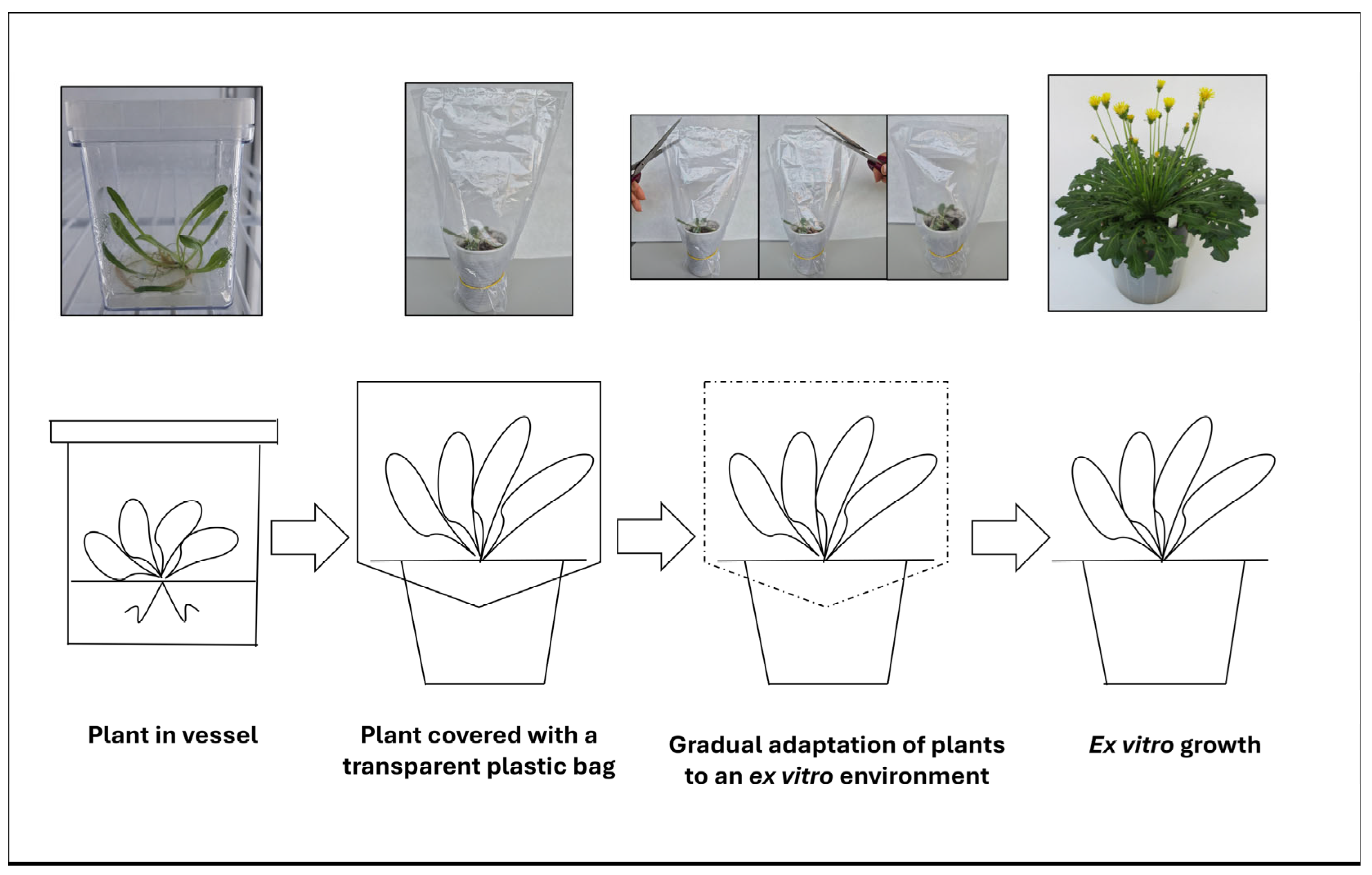
3.6. Ex Vitro Transfer (2–4 Weeks)
- Once plants are fully developed and a good radical apparatus is formed, carefully extract plants from magenta boxes avoiding damages to radical apparatus. Clean roots from excess agarised substrate residues.
- Place in 100 mL pots containing 50% sand and 50% cultural substrate, as described in Section 3.4.1. A high amount of sand can reduce possible root rot in this phase. Water and cover with a transparent plastic bag. The transparent plastic bag is used to maintain a humid environment around the seedlings during the initial transition from in vitro to ex vitro conditions. Plants grown in vessels develop in high-humidity environment and have a limited ability to regulate transpiration. Covering the pots with a transparent plastic bag enables gradual acclimatisation by reducing water loss and preventing desiccation, thus facilitating the transition from closed, sterile-culture conditions to non-sterile open-pot cultivation. Transfer to a growth chamber dedicated to non-sterile plant cultivation.
- After about a week, once new leaves begin to form, start cutting the corners of the plastic bag in order to gradually adapt the plants to the external environment.
- Completely remove the bag after about one more week. At this stage, the plants can grow for about one month in 100 mL pots and later can be transferred to larger (i.e., 2.6 L) pots for further development.
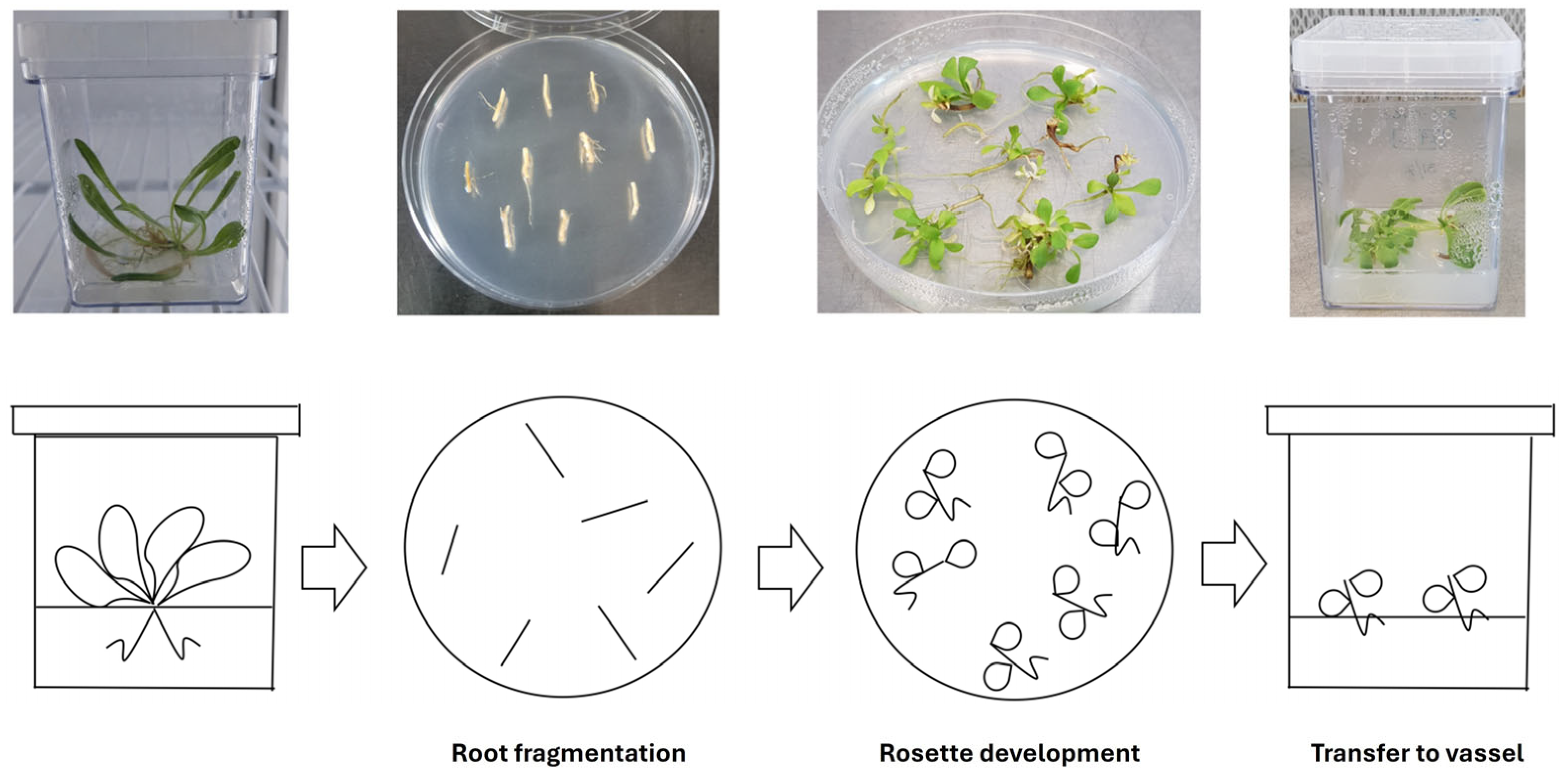
3.7. In Vitro Plant Propagation via Root Cuttings
- Under a laminar flow hood, take root portions from well-rooted Tks plants grown in magenta boxes and cut into small pieces measuring 1–2 cm.
- Place 10–15 root cuttings on Petri plates containing MS½B5 culture medium without hormones.
- Incubate the plates in the growth chamber at 23 °C with a 16/8 photoperiod. After about 3 weeks, rosettes will develop from root cuttings.
- Once new roots begin to develop from rosettes, transfer each plantlet to magenta boxes containing MS½B5 culture medium without hormones. Up to four plantlets can be grown in each box. Once full development is reached, transfer to ex vitro conditions as described.
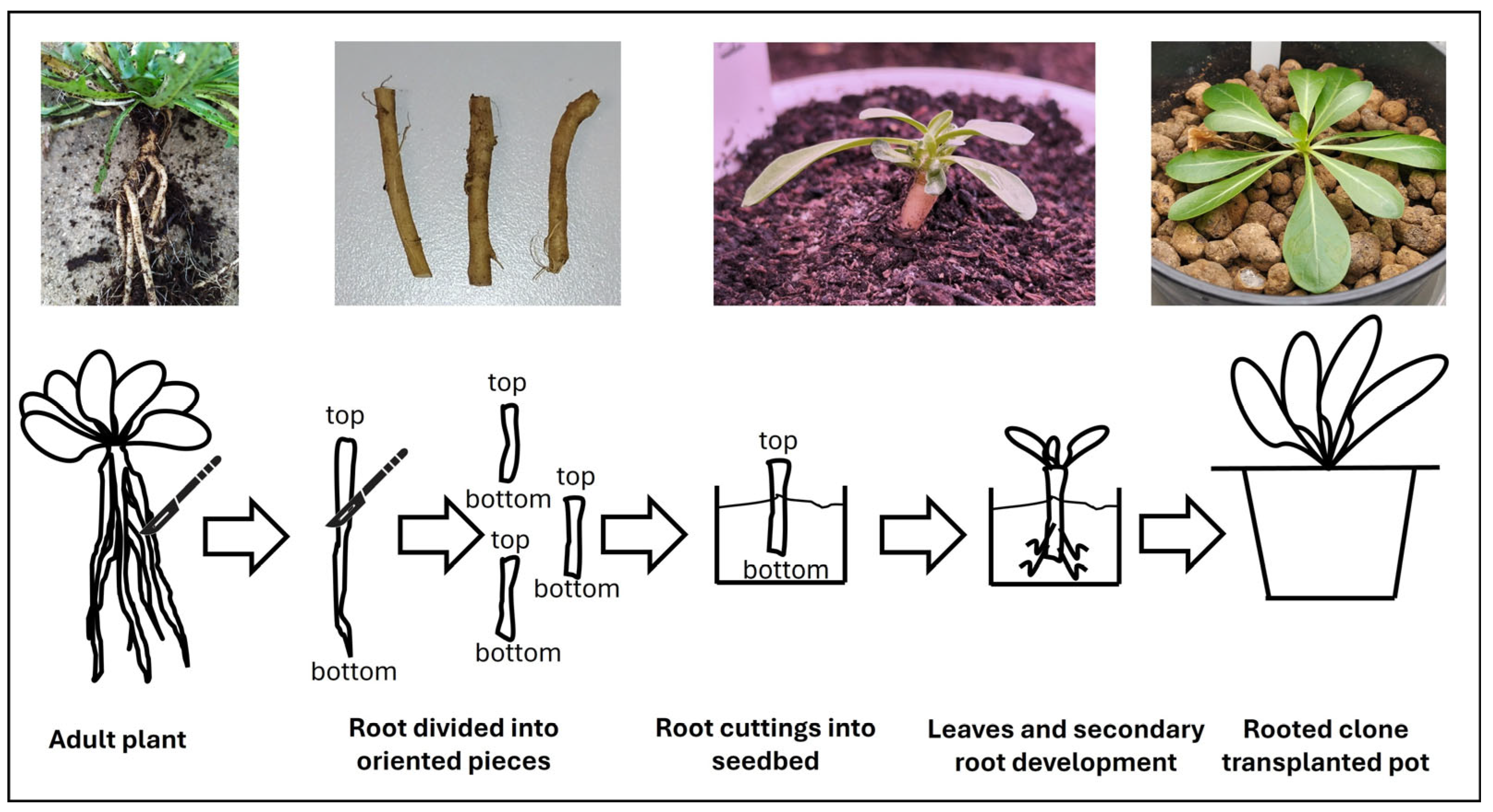
3.8. In Vivo Tks Plant Propagation by Root Cuttings
- Prepare growth substrate by mixing standard commercial culture substrate (decomposed peat moss) with 7% horticultural sand (v/v) to improve drainage. Put substrate in a plastic seed tray with diameter holes of about 5 cm.
- With a sterile scalpel, prepare the Tks plants root cuttings (about 4 cm long) from a well-developed root (more than 0.4 mm diameter).
- Plant cuttings by dipping 2/3 of their length in the right orientation on the prepared substrate, with two to three explants per seed tray hole.
 CRITICAL STEP: Ensure that the cuttings are placed in the correct apical–basal orientation, as inversion can severely reduce rooting and regeneration efficiency.
 - Cultivate plants in growth chamber at 23 °C with a 16/8 photoperiod. A rosette begins to develop from each cutting after around two weeks.
- Transplant the Tks cuttings into 2.6 litre polyethylene pots once they have fully developed into plantlets. This step requires at least one month.
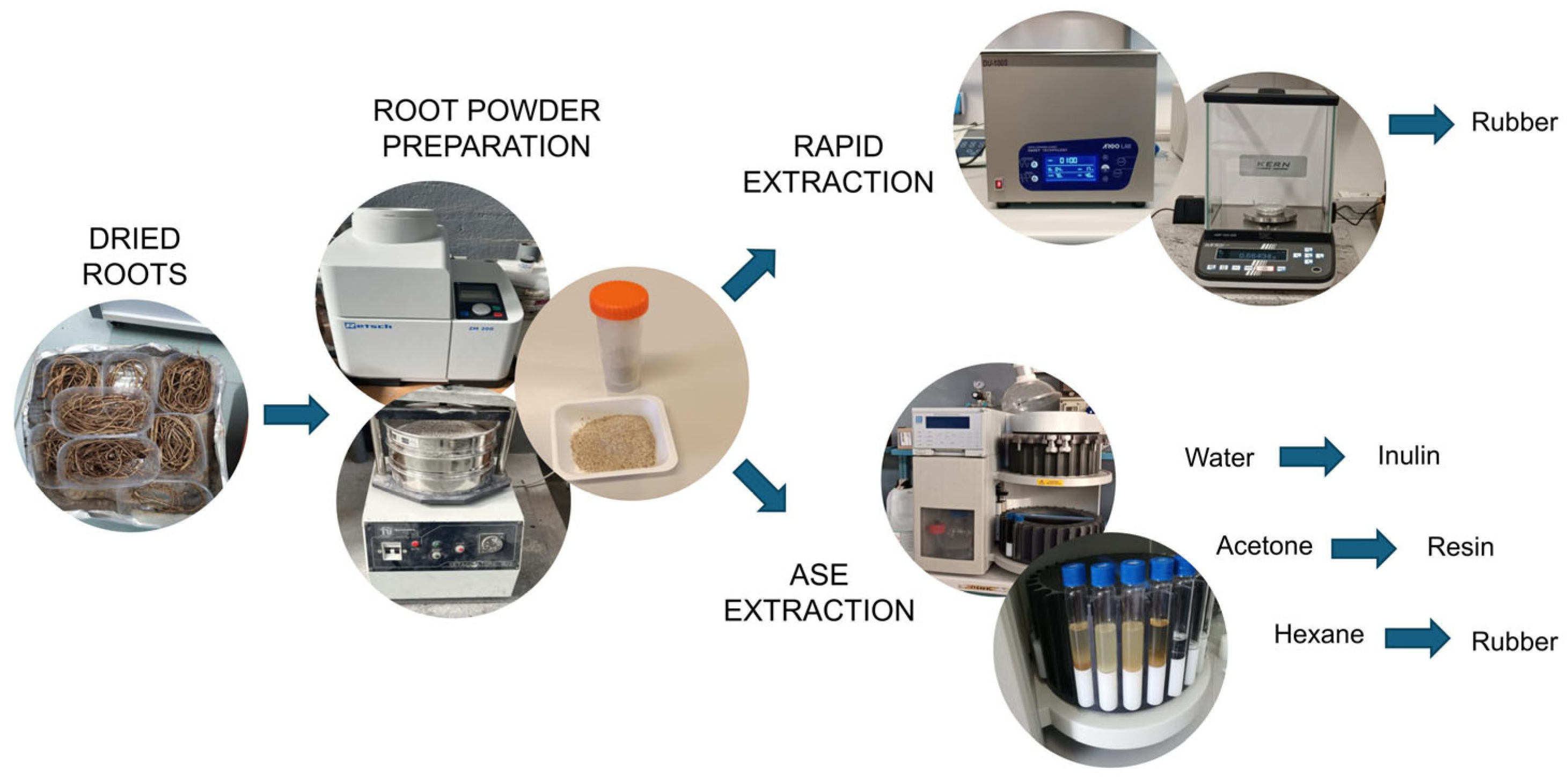
3.9. Natural Rubber, Inulin, and Resin Quantification in Tks Plants
3.9.1. Preparation of Dried Root Powder Samples (2–3 Days)
- Collect root pools from at least five plants of each genotype. Consider at least three replicates for each determination.
- Wash the roots thoroughly with tap water.
- Dry the roots in an oven at 45 °C until they reach a constant weight.
- Cut dried roots into ~1 cm long pieces.
- Grind these pieces in an ultracentrifugal mill and pass the resulting powder through a 3 mm sieve. Proceed with Section 3.9.2 or Section 3.9.3.
3.9.2. Rapid Extraction and Quantification of Rubber (2 Days)
- Weigh 100 mg to 1 gr of root powder and add 20 mL of acetone per gram of powder.
- Perform three ultrasonic treatment cycles (6 min for each cycle) for the acetone suspension using an ultrasonic cleaning bath at 80% power and a frequency of 40 kHz.
- After each cycle, centrifuge at 3500 rpm for 10 min and discard the supernatant.
 CRITICAL STEP: This step removes resins from the samples.
- Repeat the above ultrasonic treatment procedure (step b), replacing acetone with hexane (ratio 1:20, w/v).
- Collect hexane fractions after centrifugation and transfer them to pre-weighed aluminium weighing boats.
 CRITICAL STEP: Aluminium weighing boats need to be conditioned before using them. To this end, incubate them at 50 °C overnight or until constant weight.
- Allow hexane to evaporate under a fume hood until constant weight is achieved and determine rubber yield via gravimetric analysis of the dried extract, expressed relative to the dry weight of the roots.
3.9.3. ASE and Quantification of Rubber (3–4 Days)
- Place a cellulose filter at the bottom of an 11 mL extraction cell and fill the cell with 20–30 mesh inert material.
- Add 0.5 g of ground roots (Section 3.9.1), mixing continuously with a metal spatula before sealing the cell.
 CRITICAL STEP: Mix the powder gently and continuously as you add it to prevent channelling and to achieve uniform packing. Avoid compacting the sample too tightly and keep the bed lightly packed to facilitate uniform solvent flow and ensure the reproducibility of extraction processes.
- Set up the ASE instrument to perform the extraction cycles as follows:
- ○
- Water extraction: two cycles of 40 min each at 95 °C.
- ○
- Acetone extraction: one cycle of 40 min at 40 °C.
- ○
- Hexane extraction: three cycles of 20 min each at 160 °C.
 CRITICAL STEP: Use the ASE’s normal rinse and purge cycles between solvent changes as recommended by the instrument. Verify that the ASE solvent lines and seals are clean and that the temperature and pressure settings match the solvent boiling point and instrument recommendations.
- Collect the water, acetone, and hexane fractions after each extraction step.
- Transfer the acetone and hexane fractions into pre-weighed aluminium weighing boats. Evaporate the solvents under a fume hood until a constant weight is reached.
- Determine the resin and rubber yields by performing a gravimetric analysis of the acetone- and hexane-dried extracts, respectively.
- Use water extract for inulin quantification via high-performance liquid chromatography (HPLC), as described in Section 3.9.4.
3.9.4. Inulin Extraction, Hydrolysis, and Quantification (1 Day)
- Add 4 mL of 0.75 M HCl to 2 mL of the ASE water fraction and transfer the acidified solution containing inulin to a heat-shake system.
- Hydrolyse it for 15′ at 100 °C with agitation at 500 rpm.
- Centrifuge the hydrolysed solution at 3500 rpm for 5 min and filter the supernatant through a 0.45 µm PTFE Whatman® filter.
 CRITICAL STEP: Ensure complete filtration of the sample through a 0.45 µm PTFE filter. Any remaining particulates may damage the HPLC column or cause unstable baseline signals. Use clean, new filters and avoid applying excessive pressure during filtration.
- Analyse carbohydrates as described in [26], using an HPLC DX 300 system equipped with a Nucleogel® Ion 300 OA column. Use 10 mN H2SO4 as the mobile phase and detect the compounds with a Shodex RI101 refractive index detector.
- Calculate the inulin content (%) according to the following equation:
- where Cf and Cg are the concentration in g/L of fructose and glucose, respectively; 0.9 is the correction factor applied for the oligomer-to-monomer hydration; 3 is the dilution factor for the HCl hydrolysis; CR is the concentration in g/L of the initial suspended roots.
4. Reagent Setup
- 100× Indole-3-acetic acid (IAA): Dissolve 0.1 g/L of IAA in NH3 and dilute with sterile distilled water to volume. The preparation requires the use of a chemical hood. Sterilise by filtration (0.22 µm). Store at 4 °C.
- 100× Zeatin: Dissolve 0.1 g/L of Zeatin in HCl and dilute with sterile distilled water to volume. Store at 4 °C.
- 50× Kanamycin: Dissolve 50 mg of kanamycin in 1 mL of sterile distilled water. Sterilise by filtration (0.22 µm). Store at −20 °C.
- 50× Augmentin: Dissolve 50 mg of Augmentin in 1 mL of sterile distilled. Sterilise by filtration (0.22 µm). Store at −20 °C.
- 100× 1-naphthaleneacetic Acid (NAA): Dissolve 0.1 g/L of NAA in NH3 and dilute with sterile distilled water to volume. The preparation requires the use of a chemical hood. Store at 4 °C.
Supplementary Materials
Author Contributions
Funding
Institutional Review Board Statement
Informed Consent Statement
Data Availability Statement
Conflicts of Interest
References
- Panara, F.; Lopez, L.; Daddiego, L.; Fantini, E.; Facella, P.; Perrotta, G. Comparative transcriptomics between high and low rubber producing Taraxacum kok-saghyz R. plants. BMC Genom. 2018, 19, 875. [Google Scholar] [CrossRef] [PubMed]
- Yamashita, D.; Usui, K.; Takahashi, T.; Akutagawa, K.; Hojo, M.; Hironaka, K.; Tagaya, H. Chemical recycling of waste tire in high-temperature organic fluid. J. Mater. Cycles Waste Manag. 2020, 22, 1249–1257. [Google Scholar] [CrossRef]
- Singh, A.K.; Liu, W.; Zakari, S.; Wu, J.; Yang, B.; Jiang, X.J.; Zhu, X.; Zou, X.; Zhang, W.; Chen, C.; et al. A global review of rubber plantations: Impacts on ecosystem functions, mitigations, future directions, and policies for sustainable cultivation. Sci. Total Environ. 2021, 796, 148948. [Google Scholar] [CrossRef]
- Roy, C.B.; Newby, Z.J.; Mathew, J.; Guest, D.I. A climatic risk analysis of the threat posed by the South American leaf blight (SALB) pathogen Microcyclus ulei to major rubber producing countries. Eur. J. Plant Pathol. 2017, 148, 129–138. [Google Scholar] [CrossRef]
- Mooibroek, H.; Cornish, K. Alternative sources of natural rubber. Appl. Microbiol. Biotechnol. 2000, 53, 355–365. [Google Scholar] [CrossRef]
- Ramirez-Cadavid, D.A.; Cornish, K.; Michel, F.C., Jr. Taraxacum kok-saghyz (TK): Compositional analysis of a feedstock for natural rubber and other bioproducts. Ind. Crops Prod. 2017, 107, 624–640. [Google Scholar] [CrossRef]
- Piccolella, S.; Sirignano, C.; Pacifico, S.; Fantini, E.; Daddiego, L.; Facella, P.; Lopez, L.; Scafati, O.T.; Panara, F.; Rigano, D. Beyond natural rubber: Taraxacum kok-saghyz and Taraxacum brevicorniculatum as sources of bioactive compounds. Ind. Crops Prod. 2023, 195, 116446. [Google Scholar] [CrossRef]
- Kuluev, B.; Uteulin, K.; Bari, G.; Baimukhametova, E.; Musin, K.; Chemeris, A. Molecular genetic research and genetic engineering of Taraxacum kok-saghyz L.E. Rodin. Plants 2023, 12, 1621. [Google Scholar] [CrossRef] [PubMed]
- Peng, C.; Chang, L.; Wang, D.; Xie, Q.; Zheng, X.; Xu, B.; Tong, Z. An efficient Agrobacterium tumefaciens-mediated transformation system of Taraxacum kok-saghyz Rodin (Russian dandelion). In Vitr. Cell. Dev. Biol.-Plant 2023, 59, 413–423. [Google Scholar] [CrossRef]
- Yang, X.; Li, Z.; Ma, J.; Chen, H.; He, J.; Liu, X.; Zhang, Y.; Liu, H.; Ye, D.; Tang, C. Efficient vegetative propagation and genetic transformation of Russian dandelion (Taraxacum kok-saghyz Rodin) from leaf explants. Ind. Crops Prod. 2024, 209, 118072. [Google Scholar] [CrossRef]
- Lankitus, D.; Zhang, Y.; Ariyaratne, M.; Barker, D.J.; McNulty, S.L.; Amstutz, N.; Zhao, L.; Iaffaldano, B.J.; Cornish, K. Agrobacterium rhizogenes–induced altered morphology and physiology in rubber dandelion after genetic transformation. J. Am. Soc. Hortic. Sci. 2023, 148, 21–28. [Google Scholar] [CrossRef]
- Bae, T.W.; Park, H.R.; Kwak, Y.S.; Lee, H.Y.; Ryu, S.B. Agrobacterium tumefaciens-mediated transformation of a medicinal plant Taraxacum platycarpum. Plant Cell Tissue Organ Cult. 2005, 80, 51–57. [Google Scholar] [CrossRef]
- Cao, X.; Xie, H.; Song, M.; Zhao, L.; Deng, S.; Tian, Y.; Li, G.; Lang, Z.; Zhu, J.K. Extremely simplified cut-dip-budding method for genetic transformation and gene editing in Taraxacum kok-saghyz. Innov. Life 2023, 1, 100040. [Google Scholar] [CrossRef]
- Fantini, E.; Daddiego, L.; Facella, P.; Perrella, G.; Bianco, L.; Fasano, C.; Alagna, F.; Savoia, M.A.; Rigano, D.; Sirignano, C.; et al. MYC2 influences rubber and sesquiterpene lactones synthesis in Taraxacum species. Planta 2025, 262, 5. [Google Scholar] [CrossRef]
- Warmke, H.E. Macrosporogenesis, fertilization, and early embryology of Taraxacum kok-saghyz. Bull. Torrey Bot. Club 1943, 70, 164–173. [Google Scholar] [CrossRef]
- Hiscock, S.J. Genetic control of self-incompatibility in Senecio squalidus L. (Asteraceae): A successful colonizing species. Heredity 2000, 85, 10–19. [Google Scholar] [CrossRef]
- Brennan, A.C.; Tabah, D.A.; Harris, S.A.; Hiscock, S.J. Sporophytic self-incompatibility in Senecio squalidus (Asteraceae): S Allele dominance interactions and modifiers of cross-compatibility and selfing rates. Heredity 2011, 106, 113–123. [Google Scholar] [CrossRef][Green Version]
- Hodgson-Kratky, K.J.; Wolyn, D.J. Cytoplasmic Male Sterility in Russian Dandelion. J. Am. Soc. Hortic. Sci. 2015, 140, 580–586. [Google Scholar] [CrossRef]
- Lin, T.; Xu, X.; Du, H.; Fan, X.; Chen, Q.; Hai, C.; Zhou, Z.; Su, X.; Kou, L.; Gao, Q.; et al. Extensive sequence divergence between the reference genomes of Taraxacum kok-saghyz and Taraxacum mongolicum. Sci. China Life Sci. 2022, 65, 515–528. [Google Scholar] [CrossRef]
- Jefferson, R.A. Assaying chimeric genes in plants: The GUS gene fusion system. Plant Mol. Biol. Report. 1987, 5, 387–405. [Google Scholar] [CrossRef]
- Chen, P.Y.; Wang, C.K.; Soong, S.C.; To, K.Y. Complete sequence of the binary vector pBI121 and its application in cloning T-DNA insertion from transgenic plants. Mol. Breed. 2003, 11, 287–293. [Google Scholar] [CrossRef]
- Veatch-Blohm, M.E.; Ray, D.T.; McCloskey, W.B. Water-stress-induced changes in resin and rubber concentration and distribution in greenhouse-grown guayule. Agron. J. 2006, 98, 766–773. [Google Scholar] [CrossRef]
- Takeno, S.; Bamba, T.; Nakazawa, Y.; Fukusaki, E.; Okazawa, A.; Kobayashi, A. A high-throughput and solvent-free method for measurement of natural polyisoprene content in leaves by fourier transform near infrared spectroscopy. J. Biosci. Bioeng. 2008, 106, 537–540. [Google Scholar] [CrossRef] [PubMed]
- Suchat, S.; Pioch, D.; Palu, S.; Tardan, E.; van Loo, E.N.; Davrieux, F. Fast determination of the resin and rubber content in Parthenium argentatum biomass using near infrared spectroscopy. Ind. Crops Prod. 2013, 45, 44–51. [Google Scholar] [CrossRef]
- Takeno, S.; Bamba, T.; Nakazawa, Y.; Fukusaki, E.; Okazawa, A.; Kobayashi, A. Quantification of trans-1,4-polyisoprene in Eucommia ulmoides by fourier transform infrared spectroscopy and pyrolysis-gas chromatography/mass spectrometry. J. Biosci. Bioeng. 2008, 105, 355–359. [Google Scholar] [CrossRef] [PubMed]
- Pari, L.; Alfano, V.; Stefanoni, W.; Latterini, F.; Liuzzi, F.; De Bari, I.; Valerio, V.; Ciancolini, A. Inulin content in chipped and whole roots of cardoon after six months storage under natural conditions. Sustainability 2021, 13, 3902. [Google Scholar] [CrossRef]
- Gamborg, O.L.; Miller, R.A.; Ojima, K. Nutrient requirements of suspension cultures of soybean root cells. Exp. Cell Res. 1968, 50, 151–158. [Google Scholar] [CrossRef]





| Component | Amount for 1 L |
|---|---|
| MS salt | 4.3 g |
| B5 vitamins [27] | 1 mg |
| Indole-3-acetic acid (IAA) | 0.2 mg |
| Zeatin | 1.5 mg |
| Sucrose | 30 g |
| Agar | 8 g |
| To select transformed plant explants | |
| Kanamycin | 25 mg |
| Augmentin | 200–300 mg |
| Adjust pH to 5.8 | |
| Component | Amount for 1 L |
|---|---|
| MS salt | 2.15 g |
| B5 vitamins [27] | 1 mg |
| 1-naphthaleneacetic Acid (NAA) | 0.2 mg |
| Kanamycin | 10 mg |
| Augmentin | 100–200 mg |
| Sucrose | 15 g |
| Agar | 8 g |
| Adjust pH to 5.8 | |
Disclaimer/Publisher’s Note: The statements, opinions and data contained in all publications are solely those of the individual author(s) and contributor(s) and not of MDPI and/or the editor(s). MDPI and/or the editor(s) disclaim responsibility for any injury to people or property resulting from any ideas, methods, instructions or products referred to in the content. |
© 2026 by the authors. Licensee MDPI, Basel, Switzerland. This article is an open access article distributed under the terms and conditions of the Creative Commons Attribution (CC BY) license.
Share and Cite
Lopez, L.; Savoia, M.A.; Daddiego, L.; Facella, P.; Fantini, E.; Bianco, L.; Maci, S.; Panara, F. Workflow for Gene Overexpression and Phenotypic Characterisation in Taraxacum kok-saghyz. Methods Protoc. 2026, 9, 17. https://doi.org/10.3390/mps9010017
Lopez L, Savoia MA, Daddiego L, Facella P, Fantini E, Bianco L, Maci S, Panara F. Workflow for Gene Overexpression and Phenotypic Characterisation in Taraxacum kok-saghyz. Methods and Protocols. 2026; 9(1):17. https://doi.org/10.3390/mps9010017
Chicago/Turabian StyleLopez, Loredana, Michele Antonio Savoia, Loretta Daddiego, Paolo Facella, Elio Fantini, Linda Bianco, Simone Maci, and Francesco Panara. 2026. "Workflow for Gene Overexpression and Phenotypic Characterisation in Taraxacum kok-saghyz" Methods and Protocols 9, no. 1: 17. https://doi.org/10.3390/mps9010017
APA StyleLopez, L., Savoia, M. A., Daddiego, L., Facella, P., Fantini, E., Bianco, L., Maci, S., & Panara, F. (2026). Workflow for Gene Overexpression and Phenotypic Characterisation in Taraxacum kok-saghyz. Methods and Protocols, 9(1), 17. https://doi.org/10.3390/mps9010017