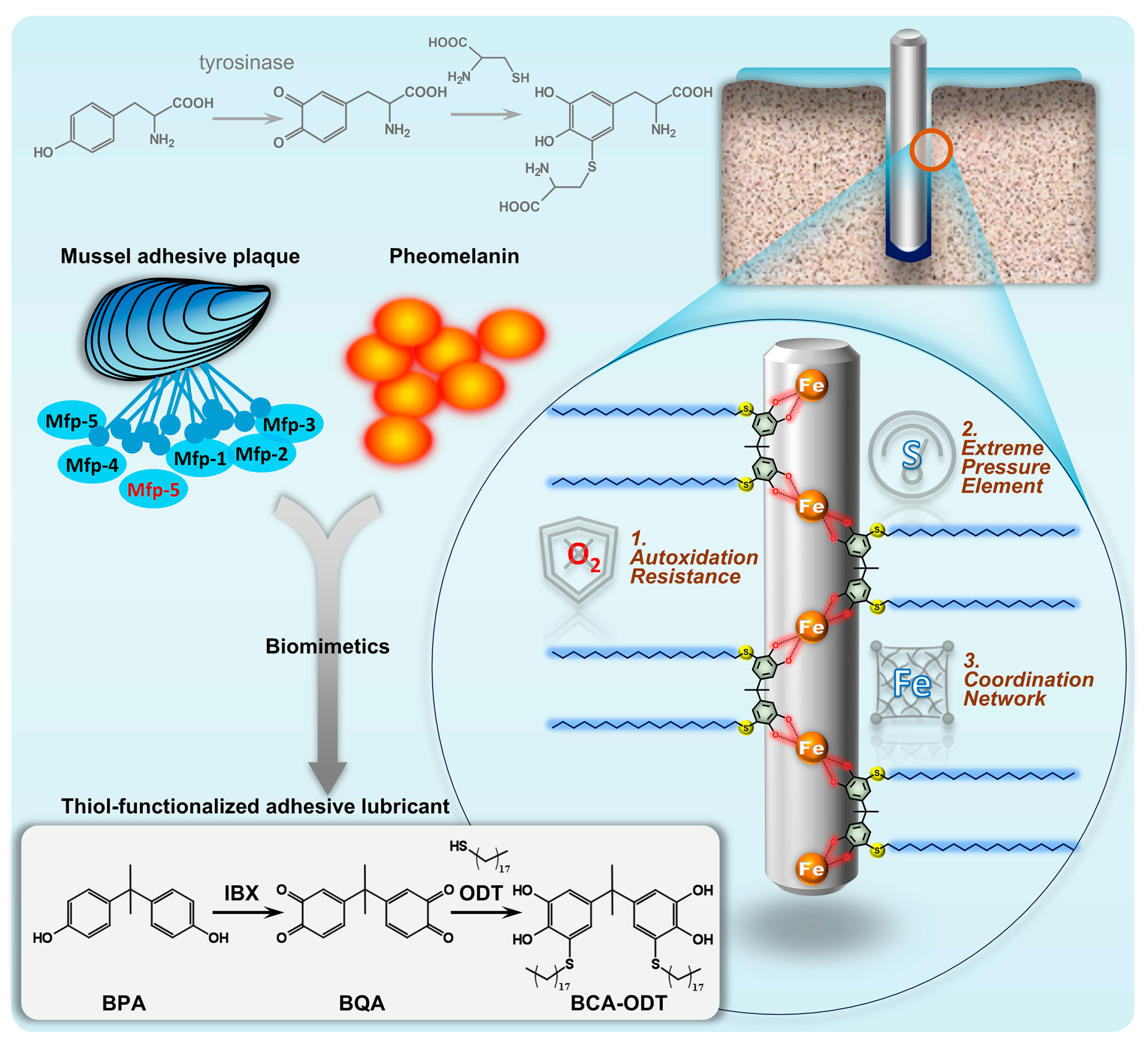
3.1. Synthesis of BQA
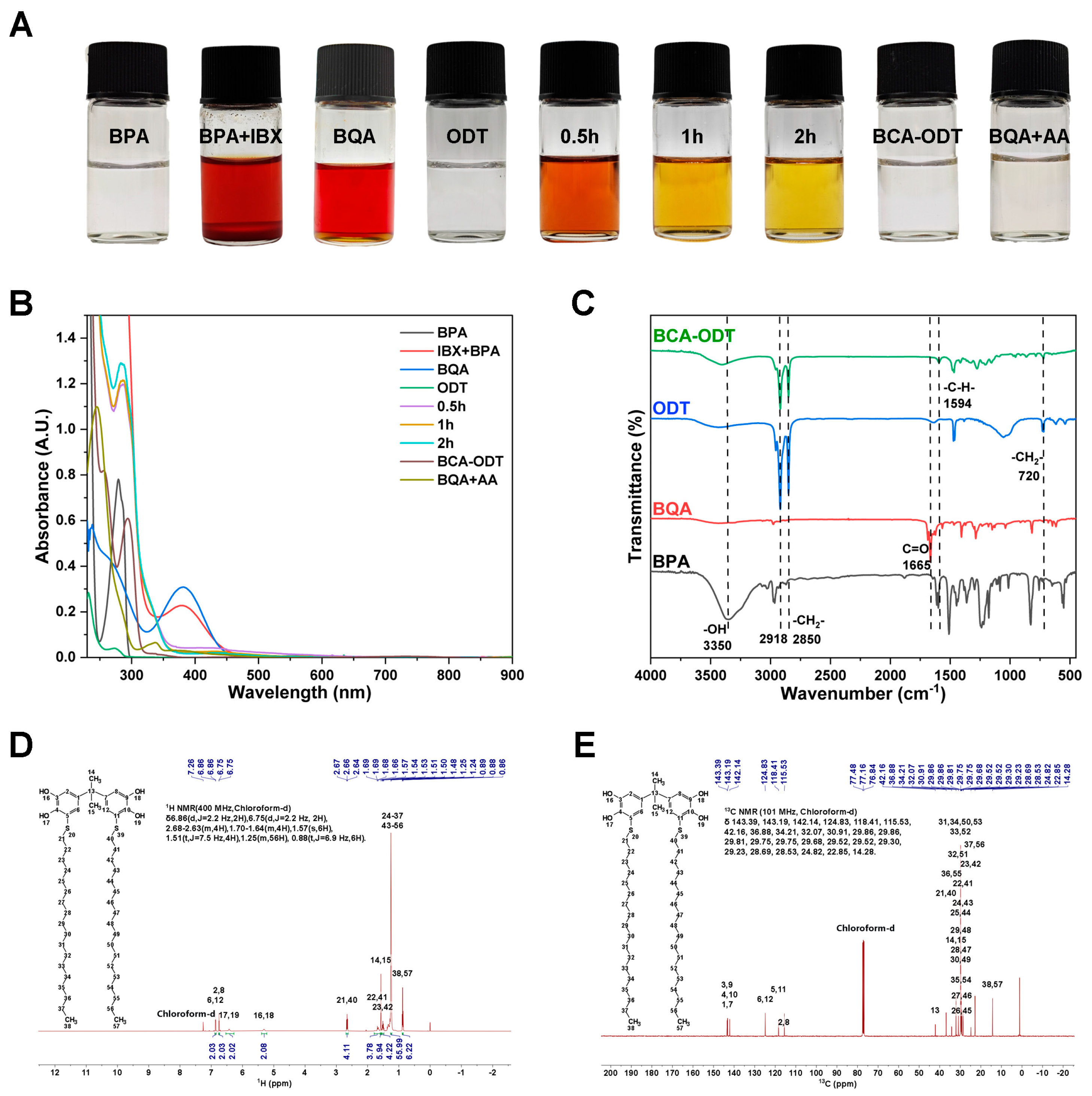
Upon IBX oxidation, the mixture changed from transparent to dark red, a characteristic color of catechol oxidation. A new peak emerged at 380 nm, which is the characteristic absorbance for o-quinone (
Figure 1A,B). As the reaction proceeded, BQA precipitated in high yield in the form of a reddish crystal from the reaction mixture, obviating the need for further purification [
15]. The crystals showed a prismatic morphology with an average length of about 140 μm (
Figure S1). Disappearance of the peak at 380 nm and the hypochromic shift for the peaks at 275 nm to 245 nm upon addition of ascorbic acid can be attributed to the reduction of the o-quinone to the catechol moiety. These observations suggested that the reddish crystals were BQA formed from the oxidation of BPA.
The molecular structure of BQA was characterized by FT-IR and NMR (
Figure 1C). The hydroxyl groups (–OH) stretching vibration band at 3350 cm
−1 almost disappeared, accompanied by the emergence of a new carbonyl (C=O) stretching band at 1665 cm
−1. BPA exhibits high molecular symmetry, with two phenolic hydroxyl protons in the downfield region at δ9.12 (
Figure S2A). The aromatic protons resonated at δ6.98 and δ6.63, while the methyl protons appeared in the upfield region.
1H-NMR results unambiguously verified that the structure of the oxidized product was completely consistent with the predicted structure. Upon oxidation to BQA, the hydroxyl proton signals disappeared (
Figure S2B). Due to partial disruption of molecular symmetry, the aromatic proton signals split into multiplets, whereas the methyl proton signals remained essentially unchanged at δ1.43. These spectral changes further confirmed the successful oxidation of BPA to BQA.
Quantitative determination of BQA was performed using the standard curve at an absorbance of 380 nm (
Figure S3A). The oxidation conditions were optimized through single-factor experiments (
Figure S4). A yield of 73.29% was obtained using the following optimized reaction conditions: BPA concentration of 100 mM, molar ratio of IBX to BPA of 1:3, reaction temperature of 35 °C, and reaction time for 10 min.
3.2. Synthesis of BCA-ODT Adduct as Thiol-Functionalized Lubricant
After the addition of ODT, the color of the mixture solution was changed immediately from dark red to pale yellow, indicating a rapid consumption of BQA [
15]. The quinone peak at 380 nm vanished rapidly. A single peak was observed at 291 nm, indicating that most of the catechol moiety was retained (
Figure 1A,B). These results illustrated that BQA actually reacted with ODT to synthesize BCA-ODT.
In the FT-IR spectrum of BCA-ODT (
Figure 1C), the carbonyl absorption band at 1665 cm
−1 disappeared, while the hydroxyl stretching band at 3350 cm
−1 reappeared, indicating that the reduction of the quinone group led to the restoration of the catechol group. Owing to intramolecular hydrogen bonding within the catechol moiety, the –OH band seemed weakened. Furthermore, the characteristic symmetric and asymmetric stretching vibrations of methyl (–CH
3) and methylene (–CH
2–) groups at 2918 and 2850 cm
−1, together with the in-plane rocking vibration of long methylene chains (–(CH
2)
n–) at 720 cm
−1, were also observed. This indicated that the conjugation of 1-octadecanethiol onto the aromatic framework proceeded as expected.
In the
1H NMR spectrum of BCA-ODT (
Figure 1D), a triplet at δ0.88 corresponding to the terminal methyl protons of the long alkyl chain, along with the multiplet at δ1.25 assigned to the methylene protons of the alkyl chain, were clearly observed, confirming the presence of the long hydrocarbon segment from ODT (
Figure S2C). The electron-withdrawing inductive effect of the sulfur atom on the adjacent alkyl groups led to deshielding and a downfield shift. As a result, signals at δ2.68–2.63 and δ1.70–1.64 were attributed to the methylene protons in the regions adjacent to the sulfur atom. The singlet at δ1.57 was assigned to the methyl protons from BPA. In the aromatic region, the resonance at δ6.86 corresponded to protons on the benzene rings, while the peaks at δ6.75 were attributed to protons at another aromatic position. The observed upfield shift in the spectrum was attributed to shielding at the ortho-position, caused by the electron-donating conjugative effect of the sulfur atom on the adjacent benzene ring. The four phenolic hydroxyl protons appeared as weak broad signals at about δ6.5 and δ5.5, which can be attributed to proton exchange with the deuterated solvent or intramolecular hydrogen bonding. These spectral features confirmed the successful Michael addition of ODT to BQA, resulting in the restoration of the catechol structure.
BQA: 1H NMR (400 MHz, DMSO-d6) δ7.08 (dd, J = 10.3, 2.6 Hz, 2H), 6.40–6.33 (m, 4H), 1.43 (s, 6H).
ODT: 1H NMR (400 MHz, Chloroform-d) δ2.51 (q, J = 7.5 Hz, 2H), 1.66–1.56 (m, 2H), 1.40–1.19 (m, 31H), 0.87 (t, J = 6.8 Hz, 3H).
BCA-ODT: 1H NMR (400 MHz, Chloroform-d) δ6.86 (d, J = 2.2 Hz, 2H), 6.75 (d, J = 2.2 Hz, 2H), 2.68–2.63 (m, 4H), 1.70–1.64 (m, 4H), 1.57 (s, 6H), 1.51 (t, J = 7.5 Hz, 4H), 1.25 (m, 56H), 0.88 (t, J = 6.9 Hz, 6H).
From the
13C NMR spectrum of BCA-ODT (
Figure 1E), a distinct signal at δ14.28 corresponded to the methyl carbon at the end of the long alkyl chain, serving as a characteristic signal for the adduct. Multiple peaks in the range from δ22.85 to δ42.16 were assigned to the methylene carbons of the alkyl chain derived from ODT as well as the saturated carbon atoms of the isopropyl group derived from the BPA backbone. In the downfield region, the signals between δ143.39 and δ115.53 were attributed to the aromatic carbon atoms of the benzene rings. Furthermore, the number of carbon resonances observed in the spectrum was consistent with the molecular symmetry, further confirming the successful synthesis of the target product.
The 13C NMR data are as follows: 13C NMR (101 MHz, Chloroform-d) δ143.39, 143.19, 142.14, 124.83, 118.41, 115.53, 42.16, 36.88, 34.21, 32.07, 30.91, 29.86, 29.86, 29.81, 29.75, 29.75, 29.68, 29.52, 29.52, 29.30, 29.23, 28.69, 28.53, 24.82, 22.85, 14.28.
Overall, the NMR results were consistent with the proposed molecular structure, indicating that the ODT was covalently coupled to the BQA through an aryl thioether bond to generate S-catecholyl functionalities. This result clearly and unambiguously demonstrated that oxidized BPA could be restored upon thiol addition.
Quantitative determination of BCA-ODT was performed using the standard curve at an absorbance of 291 nm (
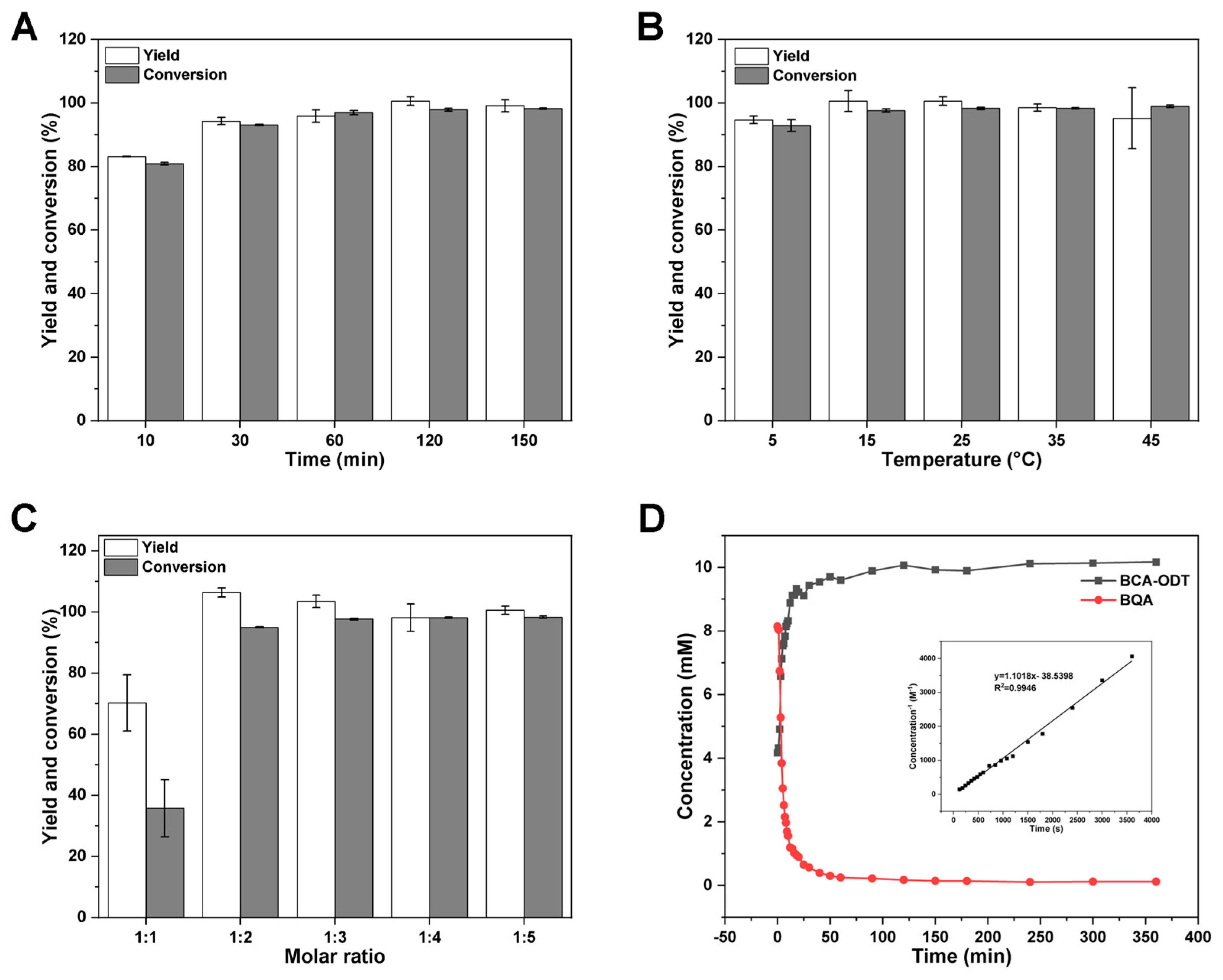
Figure S3B). Single-factor conditions were optimized to improve the yield of BCA-ODT (
Figure 2A–C). A yield of 108.12% was obtained under the optimized conditions with a reaction time of 120 min, temperature of 25 °C, and molar ratio of BQA to ODT of 1:2. The UV-based yield may be slightly overestimated because minor byproducts formed during subsequent oxidation and side reactions can also contribute to the absorbance at 290 nm. A light yellow powder was obtained. A molar ratio of 1:2 gave the highest yield, which matched the reaction stoichiometry of thiol-catechol adduct formation, given that one BQA molecule possesses two o-quinone moieties. Consequently, catechol groups that participate in metal complexation and are susceptible to oxidation into o-quinone could be preserved in the form of thiol-catechol adducts while maintaining intact catechol functionality, thereby contributing to durable adhesion.
A kinetic study was conducted by monitoring the absorbance at 380 nm (
Figure S5). The absorbance showed a remarkably rapid decay (
Figure 2D). Half of the BQA was consumed within 2 min and disappeared completely within up to 2 h. Similar phenomena have been widely observed [
15]. The reaction between thiol and o-quinone is reported to be one of the most favorable reactions [
24]. The apparent reaction rate constant was approximately 1.11 M
−1 s
−1. Such effective coupling was possibly owing to the strong nucleophilicity of the thiol group in ODT [
8]. Therefore, the strategy allowed for efficient preparation of biomimetic lubricants under mild conditions.
3.4. Metal Ion Interactions Ability of Thiol-Functionalized Lubricant
The adsorption capability of the synthesized product is primarily attributed to its catechol moieties, which can participate in multiple covalent and non-covalent interactions, thereby significantly enhancing adhesion at various interfaces. To elucidate the dominant interaction mechanism of the product and evaluate its potential applications, its coordination behavior with metal ions was investigated [
26].
Upon addition of Fe
3+ ions, the color of the BCA-ODT solution changed from colorless to a deep purplish-brown solution, whereas the BPA solution remained unchanged (
Figure S6). When BCA was obtained by reducing BQA with an excess of ascorbic acid, the addition of Fe
3+ ions also produced a typical greenish coloration. Similar phenomena were observed for tert-butylphenol (TBP) and tert-butylcatechol (TBC), which served as model molecules for monophenol and diphenol structures, respectively. These results indicated that only compounds containing catechol moieties exhibited visible color changes upon coordination with Fe
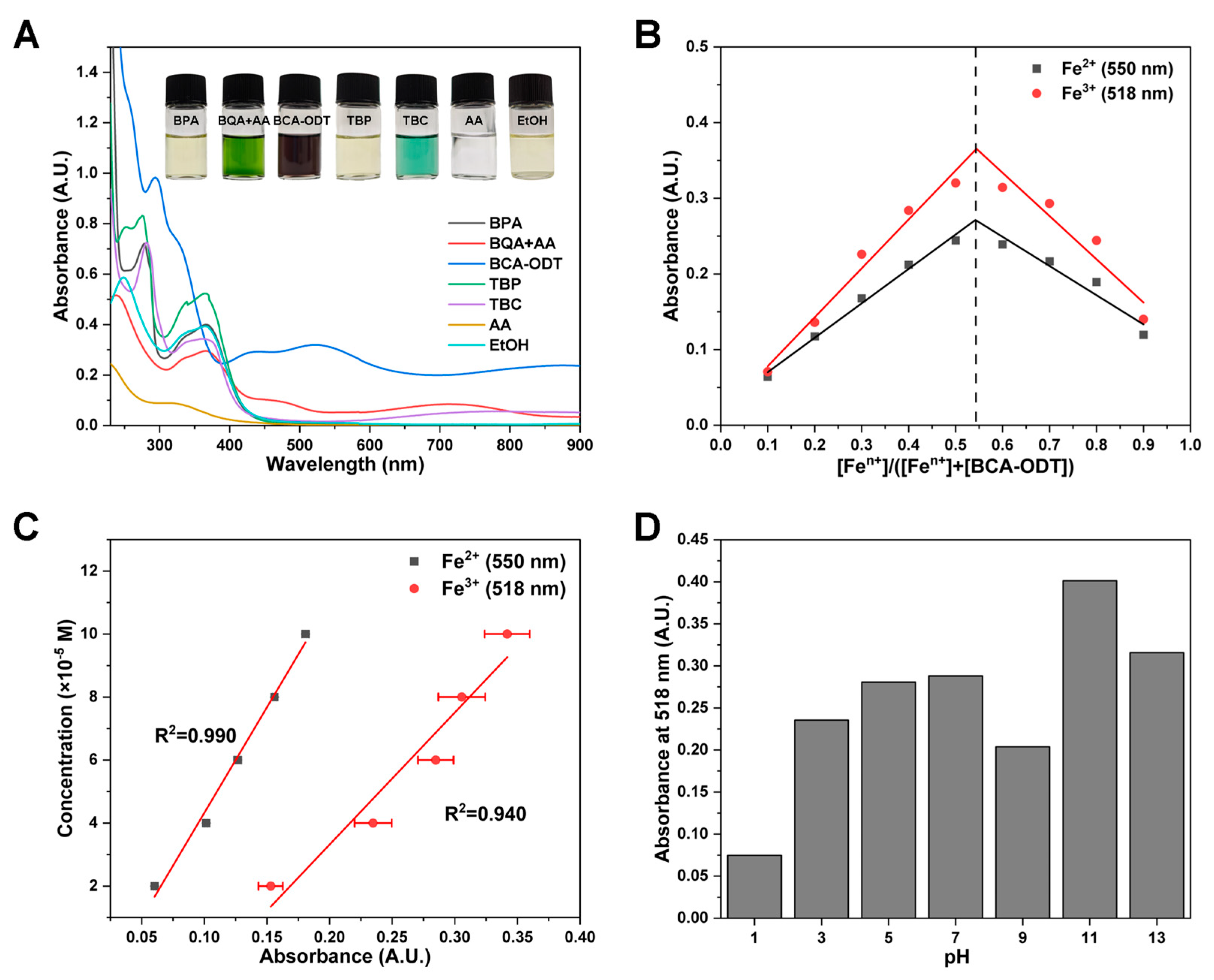
3+ ions, whereas compounds possessing monophenol moieties showed no such response. As shown in the UV-Vis spectra (
Figure 4A), a new absorption band appeared at 550 nm after the interaction between BCA-ODT and Fe
3+ ions [
27]. Coordination between the central metal ion and the ligand expands the electron cloud distribution, leading to a bathochromic shift of the characteristic absorption band of the complex. The characteristic absorption confirmed the coordination ability of BCA-ODT toward metal ions arising from the catechol moiety. Fe
3+ ions can form mono-, bis-, and tris-catecholate complexes depending on the pH and the ligand-to-metal ratio. These complexes typically exhibit characteristic ligand-to-metal charge transfer absorption bands, giving rise to distinctive colors in the visible region. It is generally believed that mono-catecholate complexes are green, while bis-catecholate complexes are purple. Such color differences implied that BCA-ODT exhibited a bis-coordination environment with Fe
3+ ions [
28].
Job’s plots are widely employed to investigate complex stoichiometry and coordination behavior [
29]. BCA-ODT exhibited an apparent 1:1 complexation stoichiometry with both Fe
3+ and Fe
2+. Given that the BCA-ODT molecule contains two catechol functional groups, a single metal ion could simultaneously coordinate with two catechol moieties, resulting in an intrinsic 1:2 (metal ion: catechol) binding mode to form bis-coordination. This conclusion was consistent with the color reaction results of BCA-ODT and Fe
3+ (
Figure 4B). Bis-coordination shows a higher affinity and longer lifetime than mono-coordination [
30,
31]. Considering the structure and steric hindrance of BCA-ODT, it is unlikely that the two catechol groups from a single BCA-ODT molecule simultaneously coordinate with one iron ion. Instead, it is reasonable to hypothesize that one iron ion separately coordinates with one catechol group from each of two different BCA-ODT molecules, thereby forming a metal-catechol cross-linking structure. Such a putative multidentate coordination network is conducive to enhancing the cohesion strength of the lubricant molecules, and improving the adsorption strength and stability of the interfacial film. By contrast, conventional lubricants mainly depend on weak single-point adsorption, which was easily disrupted. These findings suggested that the enhanced metal ion coordination interaction might be one of the key reasons for the superior lubricating and anti-wear properties of the product in water-based drilling fluids. Utilization of BPA to generate biscatechol is therefore crucial for the formation of a plausible cross-linking coordination network. The coordination with Fe
3+ was barely affected within the pH range from 3 to 11, demonstrating that the product possesses a wide pH tolerance for potential applications (
Figure 4D and
Figure S7).
The modified Benesi–Hildebrand (B-H) method was employed to determine the conditional stability constants (K
cond) of the complexes [
23]. The log (K
cond) values for BCA-ODT were 4.09 and 5.02 M
−1 for Fe
3+ and Fe
2+, respectively (
Figure 4C and
Figure S8). BCA-ODT exhibited higher complexation stability toward Fe
2+ than toward Fe
3+, which may be attributed to differences in the electronic configurations of the two iron oxidation states and their coordination modes with the catechol groups.
These results indicated that BCA-ODT possesses strong coordination capability and favorable affinity toward both Fe
3+ and Fe
2+ ions, confirming that the introduction of catechol moieties into the molecular structure effectively enhanced interactions with iron ions [
32]. This coordination mechanism provides a theoretical basis for its application as a drilling fluid lubricant and highlights its potential advantages in drilling operations.
3.5. Autoxidation Resistance and Thermal Stability of Thiol-Functionalized Lubricant
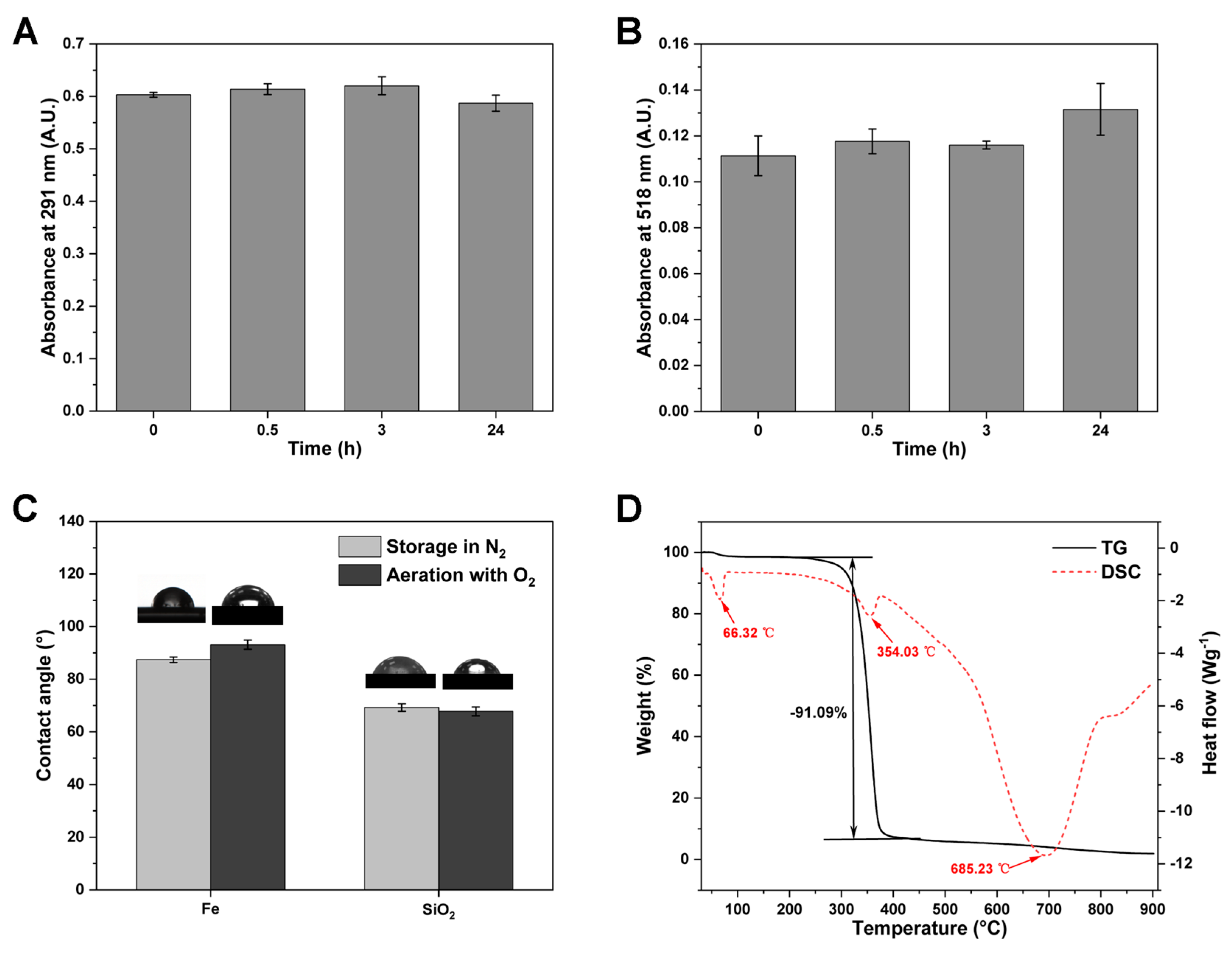
Upon aeration with oxygen for 24 h, the absorbance of the characteristic peak at 291 of BCA-ODT remained nearly unchanged, indicating that the catechol structure in BCA-ODT exhibited good resistance toward autoxidation (
Figure 5A). Furthermore, the coordination ability to Fe
3+ showed no significant decrease after exposure to oxygen for 24 h (
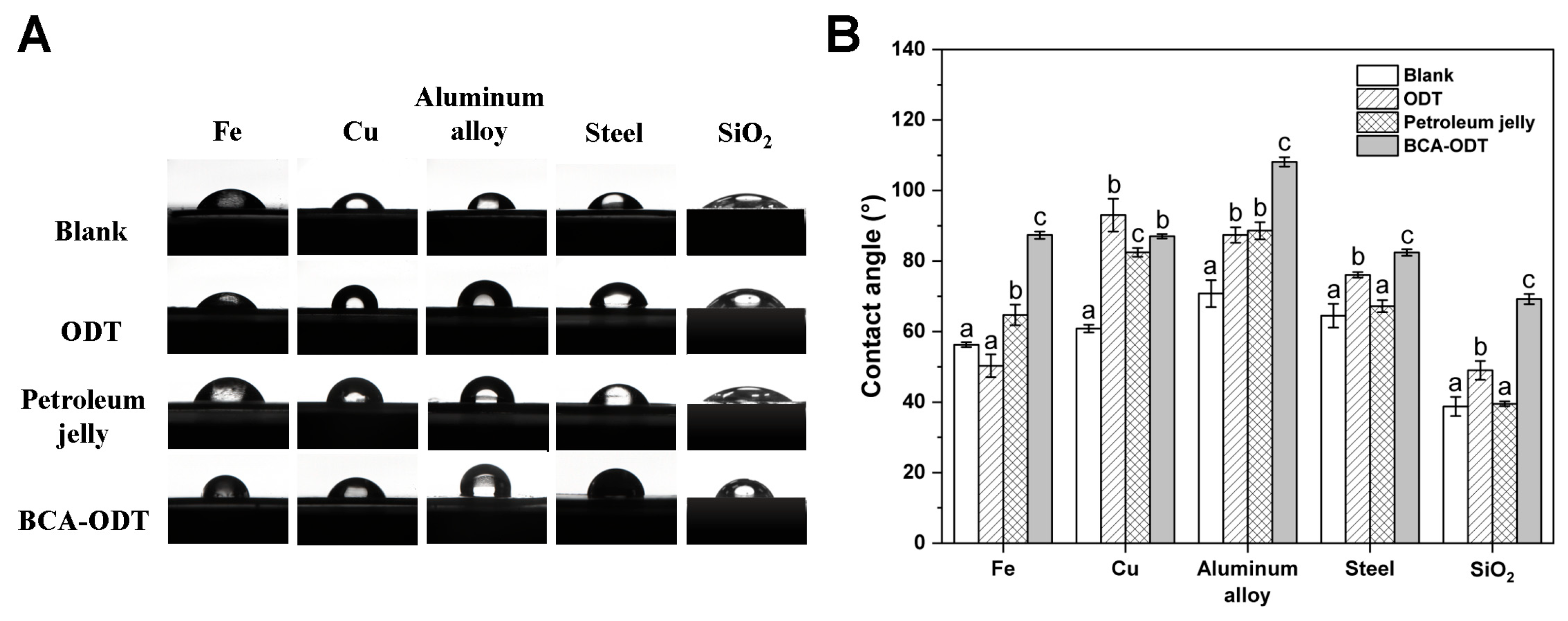
Figure 5B). Consistently, the change in the water contact angle on metal and glass surfaces treated with BCA-ODT after 24 h of air oxidation was negligible, indicating that the adhesive strength and lubrication performance of the lubricating film were well preserved, which further demonstrated the excellent oxidative stability of BCA-ODT (
Figure 5C).
The improved oxidative stability can be attributed to the thiol functionalization introduced into the molecular structure, which protects the reduced form of catechol from autoxidation. The long alkyl chain linked on ortho-position through the thioether bond introduces steric hindrance, forming a physical barrier that limits the approach of oxygen molecules and reactive radicals to the catechol hydroxyl groups. Furthermore, the sulfur atom may act as a radical scavenger, suppressing the propagation of oxidation reactions. The presence of sulfur can also exert an electron-withdrawing inductive effect, slightly decreasing the electron density of the phenolic hydroxyl groups and thereby reducing the tendency for dehydrogenation and free radical formation. These combined effects contribute to the enhanced oxidative stability of BCA-ODT, enabling it to maintain stable adhesion and lubrication performance even after prolonged oxidation.
As shown in
Figure 5D, thermogravimetric analysis (TG) and differential scanning calorimetry (DSC) were employed to evaluate the thermal stability of the product. The thermal degradation of BCA-ODT exhibited three distinct stages. The first stage occurred between 47 and 67 °C with a mass loss of 1.76%, accompanied by a small endothermic peak, which was attributed to the melting of the product and the removal of residual moisture. The second stage occurred between 250 and 400 °C with a mass loss of 91.09%, and the maximum degradation peak was observed at 359.37 °C, corresponding to the thermal decomposition and chain scission of the product. The third stage occurred above 400 °C, where the product gradually lost mass (5.27%) and exhibited a broad endothermic peak, indicating further carbonization and decomposition of the residual structure. In contrast, the thermal decomposition of ODT occurred near 265.16 °C (
Figure S9). These results suggested that the rigid aromatic ring structures significantly enhanced the thermal stability of the product. Below 250 °C, the product exhibited excellent thermal stability, indicating its potential for high-temperature applications.
3.6. Lubrication Performance of Thiol-Functionalized Lubricant
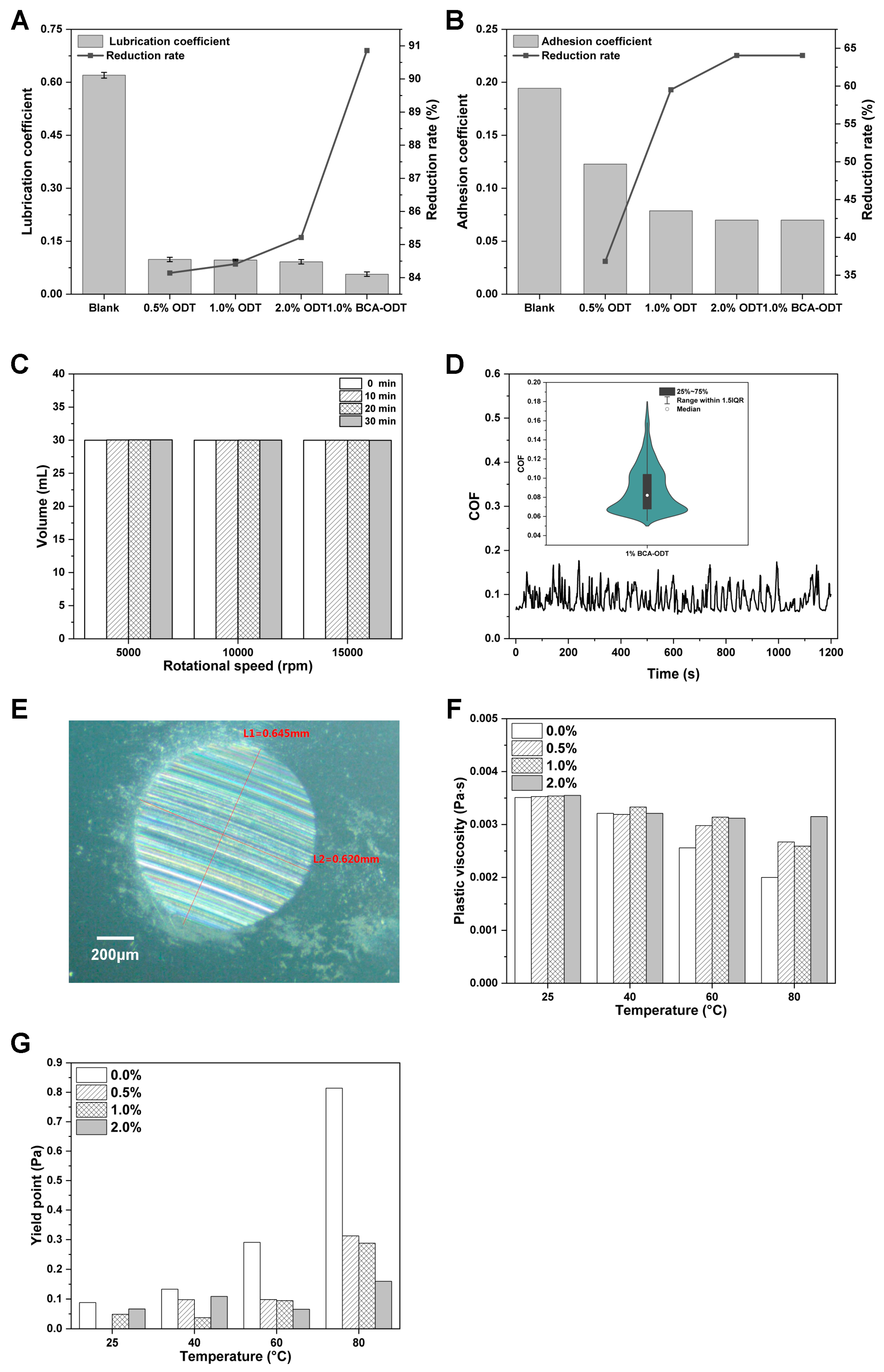
The extreme pressure lubrication performance of BCA-ODT at a 1% dosage in sodium bentonite fluid was evaluated. The lubrication coefficient was measured to be 0.06, showing a 90.86% reduction compared to the blank base slurry. Furthermore, the mud cake adhesion coefficient was measured to be 0.07 (
Figure 6A,B). BCA-ODT significantly lowered the mud cake adhesion coefficient by 64.04% when compared to the base fluid, indicating its effective role in improving lubrication. The enhanced lubrication performance can be attributed to the catechol moiety, which forms strong coordination bonds with metal surfaces, thereby strengthening the lubricating film and effectively resisting shear forces from clay particles. Additionally, sulfur elements, acting as extreme-pressure lubrication groups, are likely responsible for reducing friction and wear under high loads by forming a protective sulfide layer on the metal surfaces. This layer reduces direct metal-to-metal contact, minimizing wear under extreme pressure conditions [
21].
The volume of sodium bentonite fluid appeared to remain unchanged under high stirring at 15,000 rpm for 30 min in the presence of BCA-ODT at a 1% dosage (
Figure 6C). BCA-ODT did not generate foam, which can be attributed to its low hydrophilic-lipophilic balance (HLB) value of 1.30 [
3]. The low HLB indicated a greater affinity for oil phases, thus reducing the tendency to form stable foams. Substances with an HLB value in the range of 1–3 are generally used as defoaming agents, because they tend to exist as tiny oil droplets in aqueous systems to destroy foam by reducing the surface viscosity and elasticity of the foam liquid film. Therefore, BCA-ODT is able to help maintain the constant density of the drilling fluid and improve the quality of the mud cake by enhancing the fluid’s stability and consistency.
The tribological performance of the drilling fluid was evaluated by the four-ball friction test. The coefficient of friction (COF) was recorded in real time. With the addition of 1% BCA-ODT, the COF remained stable at approximately 0.09 throughout the test period, exhibiting slight fluctuations. The low COF demonstrated the effective friction-reducing capability of BCA-ODT. No distinct initial running-in stage was observed, which could be attributed to rapid formation of lubricating film due to the quick kinetics of the complexation between the catechol moiety and iron ions. The minor fluctuations in COF were ascribed to the dynamic equilibrium between film wear and in situ reassembly. Therefore, BCA-ODT enables an immediate lubrication state for effective protection within an extremely short time. The wear morphology of the steel ball surfaces was characterized after the friction test. As shown in
Figure 6D,E, the wear scars formed in the presence of BCA-ODT exhibited relatively shallow ploughing furrows with uniform and well-defined scratch patterns, suggesting a mild abrasive wear mechanism. The BCA-ODT system has a relatively small wear scar diameter (WSD) of 0.63 mm. Although the WSD value of BCA-ODT was larger than that of the synthetic ester-type catechol-based lubricant, their COF values were relatively close [
3]. BCA-ODT formed lubricating films on the steel ball friction surfaces with good wear resistance for better protection.
The rheological characteristics of drilling fluids, which determine their capacity to transport and suspend drill cuttings, are critical parameters for the design and evaluation of drilling fluid systems [
33]. Rheological measurements were conducted at representative temperatures of 25, 40, 60, and 80 °C to investigate the temperature-dependent behavior of the lubricants. As shown in
Figure S10, the addition of BCA-ODT at different dosages did not significantly alter the pseudoplastic characteristics of the drilling fluid, which exhibited typical shear-thinning behavior. At 80 °C, both the shear stress and apparent viscosity of the drilling fluid decreased after the addition of BCA-ODT at a given shear rate, suggesting that the lubricant reduced the internal friction within the fluid system. This phenomenon may be attributed to the enhanced molecular mobility and improved dispersion of BCA-ODT at elevated temperatures, which could facilitate the lubrication effect and weaken the interactions between solid particles in the drilling fluid.
The rheological parameters of the drilling fluids were further evaluated using the Bingham plastic model (
Figure 6F,G). The calculated plastic viscosity (PV) of the system remained relatively low, approximately 0.002–0.004 Pa·s, over the investigated temperature range, indicating reduced internal friction within the fluid system [
34]. Meanwhile, the yield point (YP) was maintained at approximately 0–1 Pa, suggesting that the incorporation of BCA-ODT did not significantly alter the overall structural framework formed by bentonite particles in the base fluid. The relatively high YP/PV ratio implied that the drilling fluid retained a structure-sensitive rheological response, which was beneficial for maintaining suspension capacity under low-shear conditions. At the same time, the low PV contributes to reduced flow resistance at elevated shear rates, thereby facilitating efficient cuttings transport during circulation. These results demonstrated that the addition of BCA-ODT provides lubrication functionality while preserving the essential rheological characteristics required for drilling fluid performance [
35].
BCA-ODT exhibited strong adhesion to metal surfaces due to the presence of catechol functional groups, which are known to form robust coordination interactions with metal substrates. As a result, BCA-ODT can form a compact and stable lubricating film on the contact surfaces. This protective layer effectively separates the drill string from the wellbore wall, thereby preventing direct solid–solid contact and reducing friction. Consequently, the overall lubrication performance of the drilling fluid is significantly improved.