
Robust Looming Spatial Localization in Dim Light via Daubechies Wavelet-Fused ON/OFF Pathways


Abstract
1. Introduction
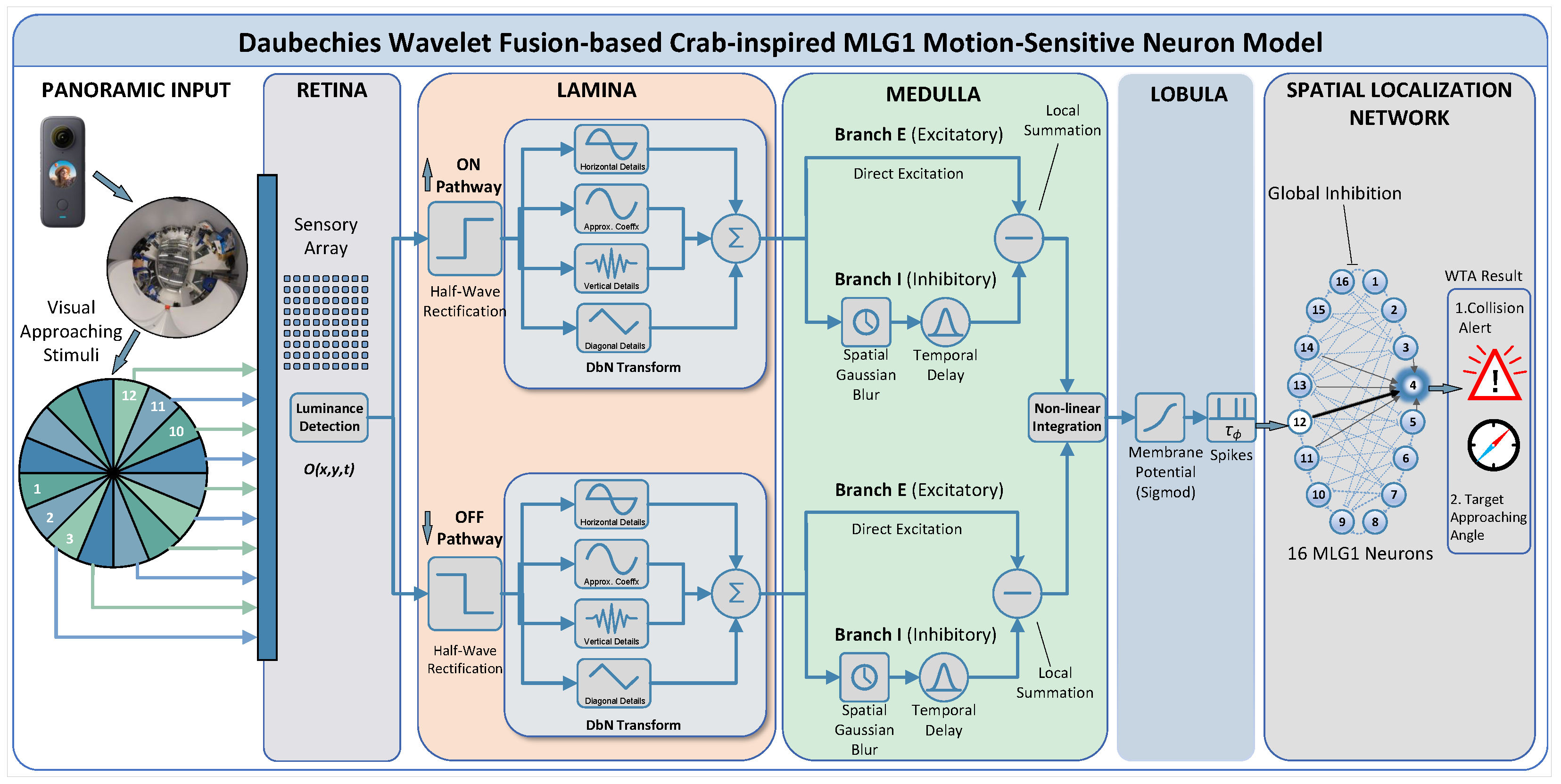
- To address the limited polarity-specific sensitivity of MLG1 model to approaching threats, we introduce novel neural computing architecture that incorporates an ON/OFF mechanism into a looming spatial localization visual system.
- This bio-inspired modeling research introduces a novel paradigm for dim light conditions, employing Daubechies wavelet neural network based on ON/OFF channels to address the challenge of looming spatial localization.
- This paper explores the specific implementation of MLG1 modeling combined with multi-scale frequency analysis in the topic of brain-inspired visual perception, extending the broader field of bio-inspired dim light vision systems. This work contributes novel perspectives to applications in specific domains such as dim light robotic navigation and autonomous collision avoidance.
2. Biological Mechanisms of Dim Light Vision
3. Network Architecture
3.1. Daubechies Wavelet
3.2. Retina Layer
3.3. Lamina Layer
3.4. Medulla Layer
3.5. Lobula Layer
3.6. Algorithm Summary
| Algorithm 1: Online algorithm of proposed model |
 |
4. Experimental Results and Analysis
4.1. Experimental Setup
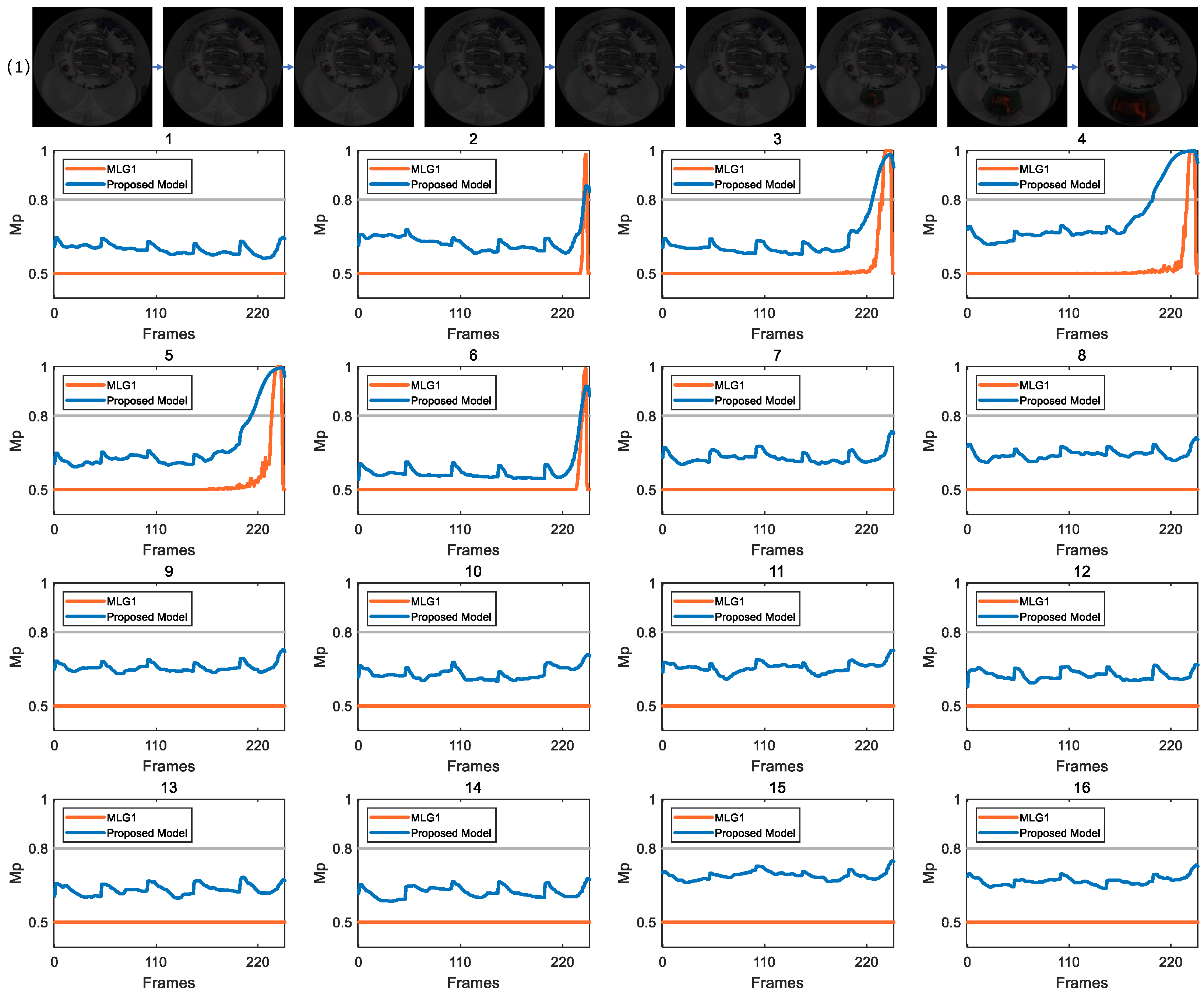
4.2. Detection of Looming Spatial Location
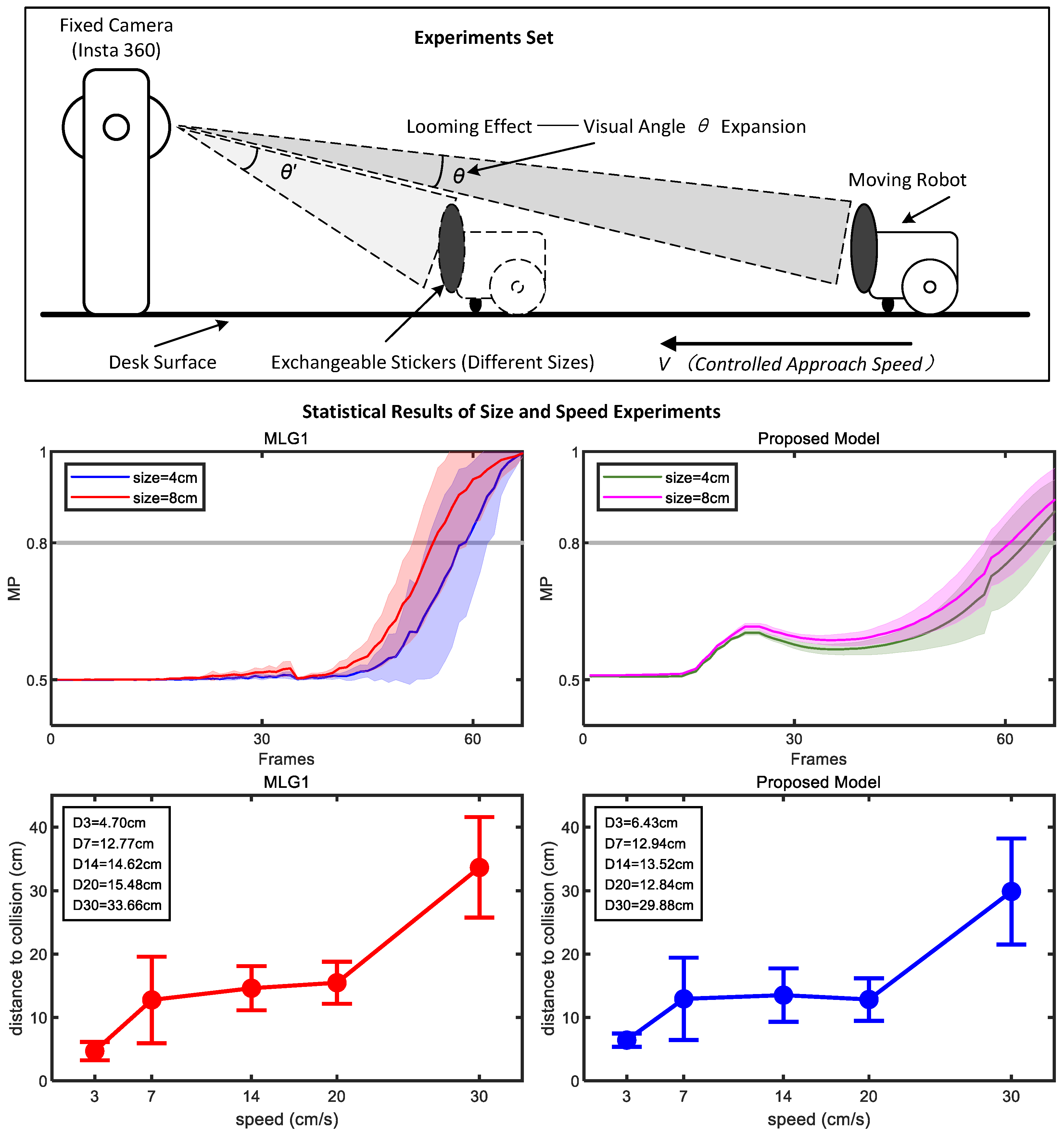
4.3. Multiple Size and Looming Velocity Tests
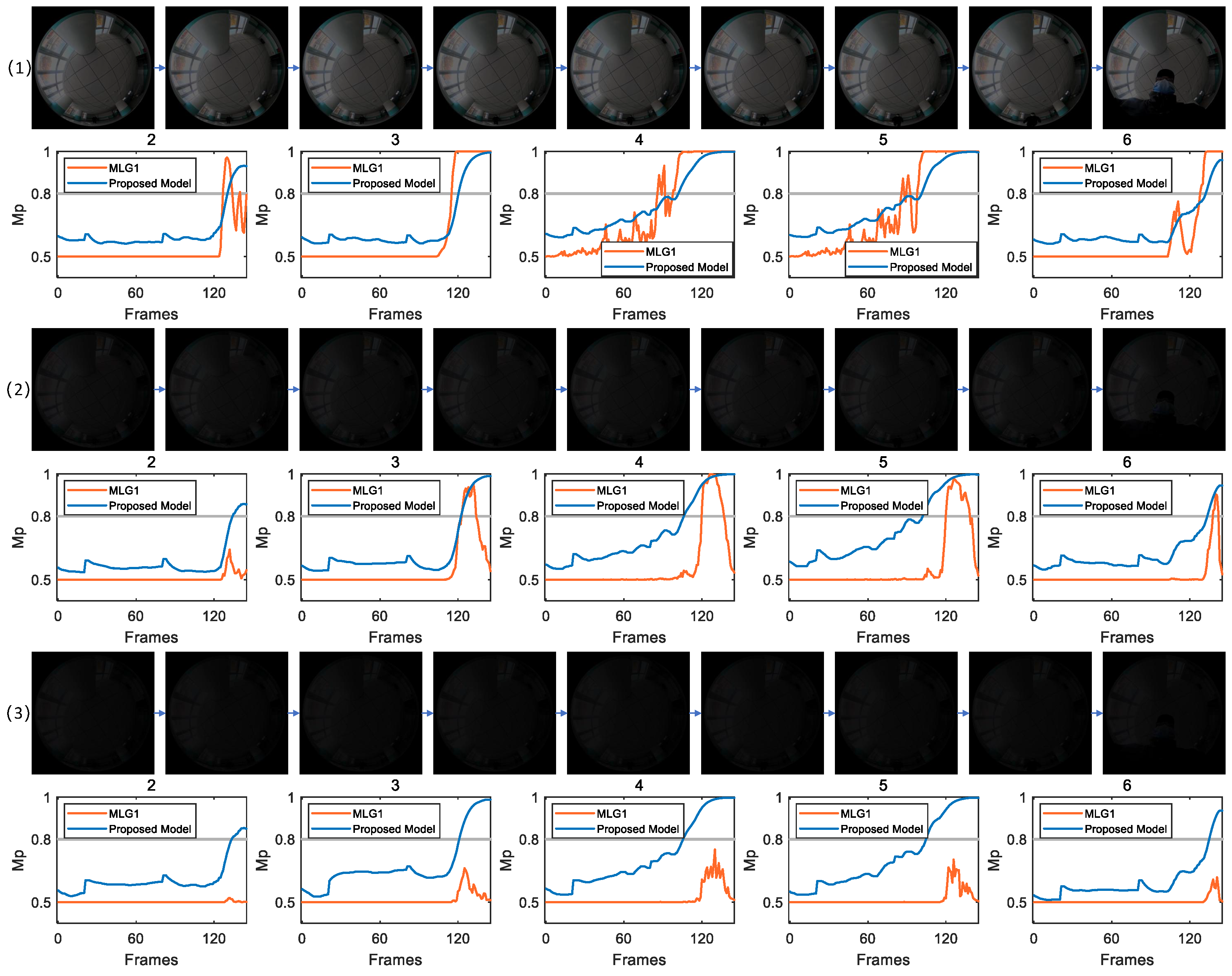
4.4. Results Under Testing with Structured Indoor Scenes
4.5. Results Under Testing of Complex Dynamic Scenes

| Number | Imax | Imin | Alert Frame of Proposed Model | Alert Frame of MLG1 Model | ||
|---|---|---|---|---|---|---|
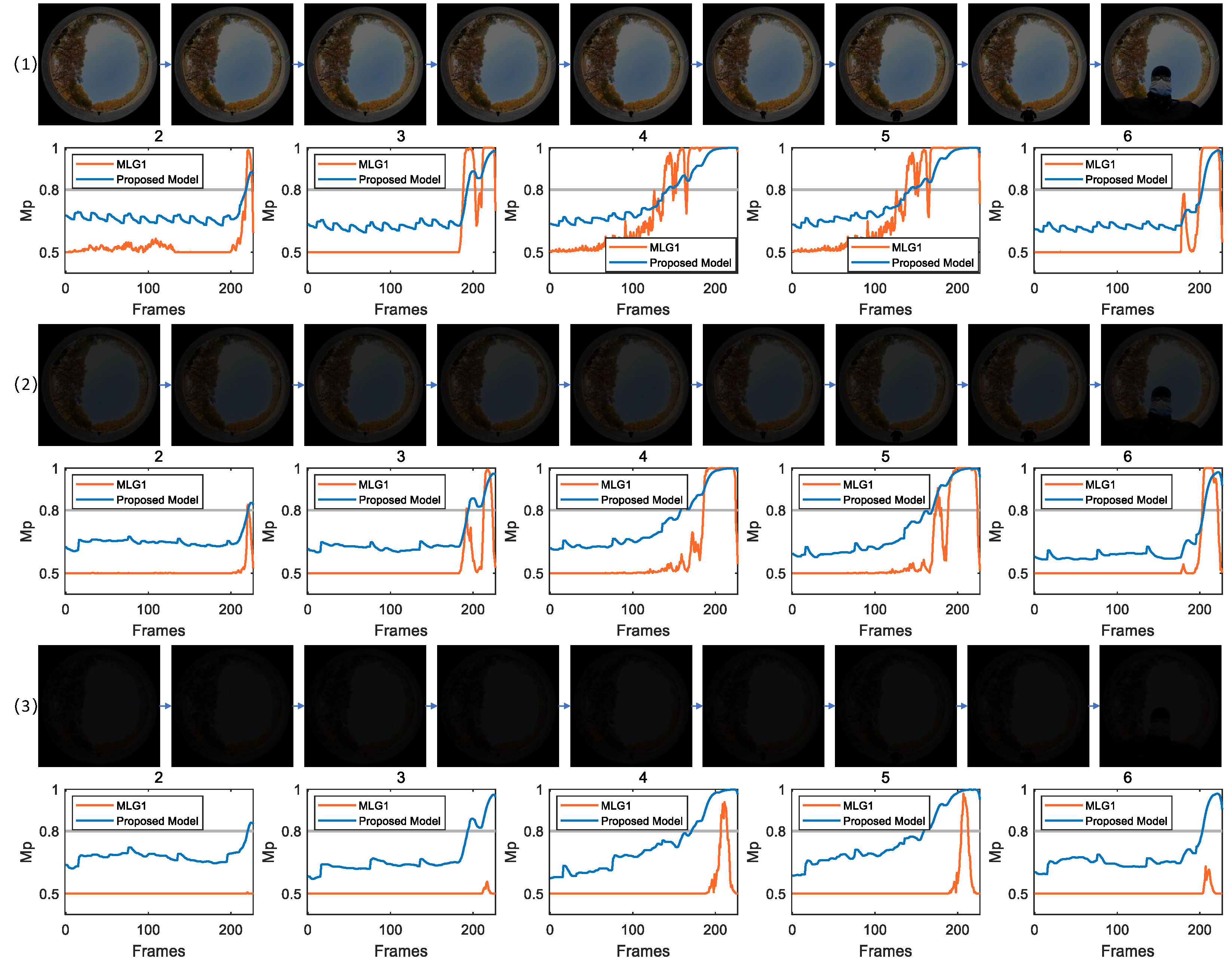
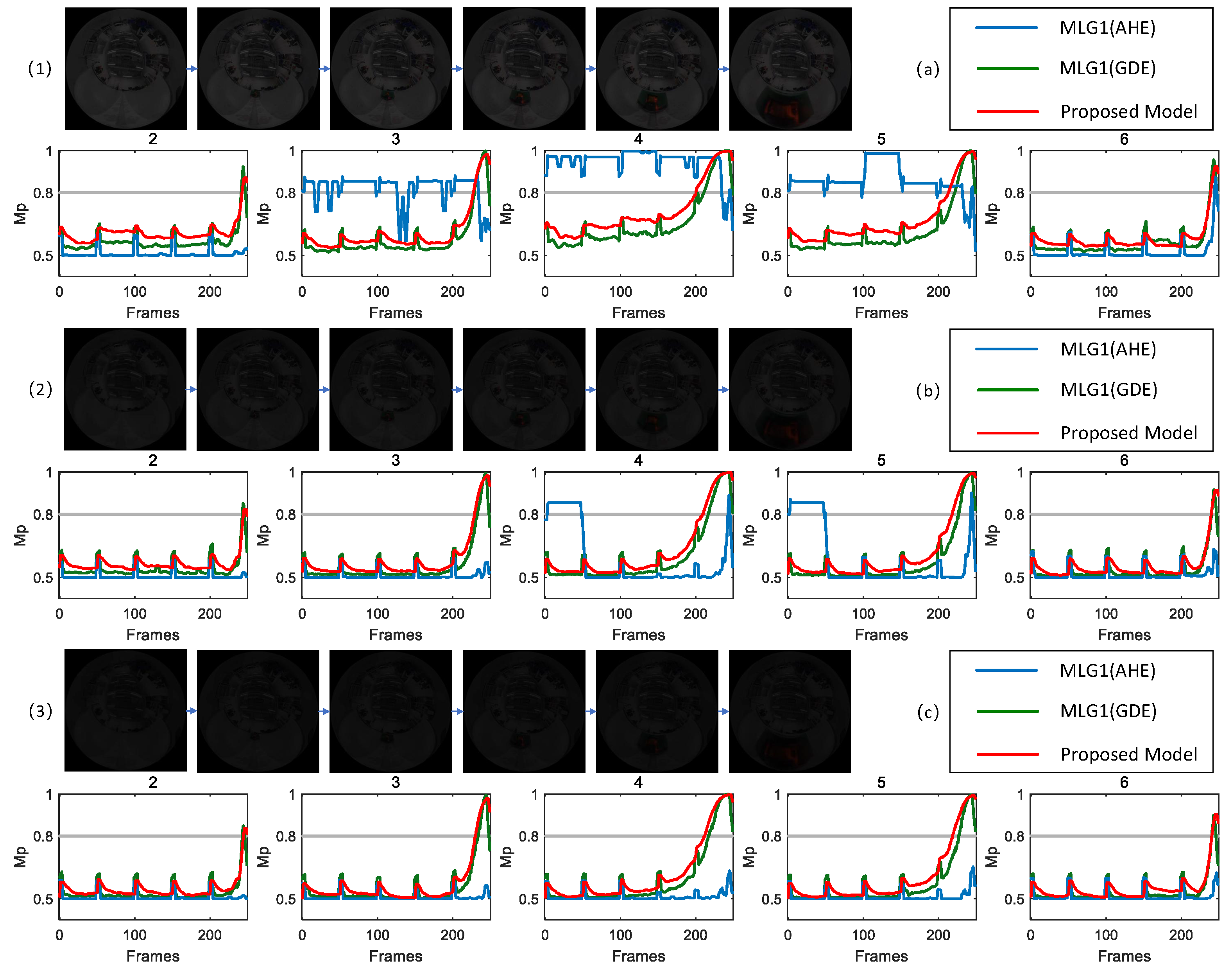
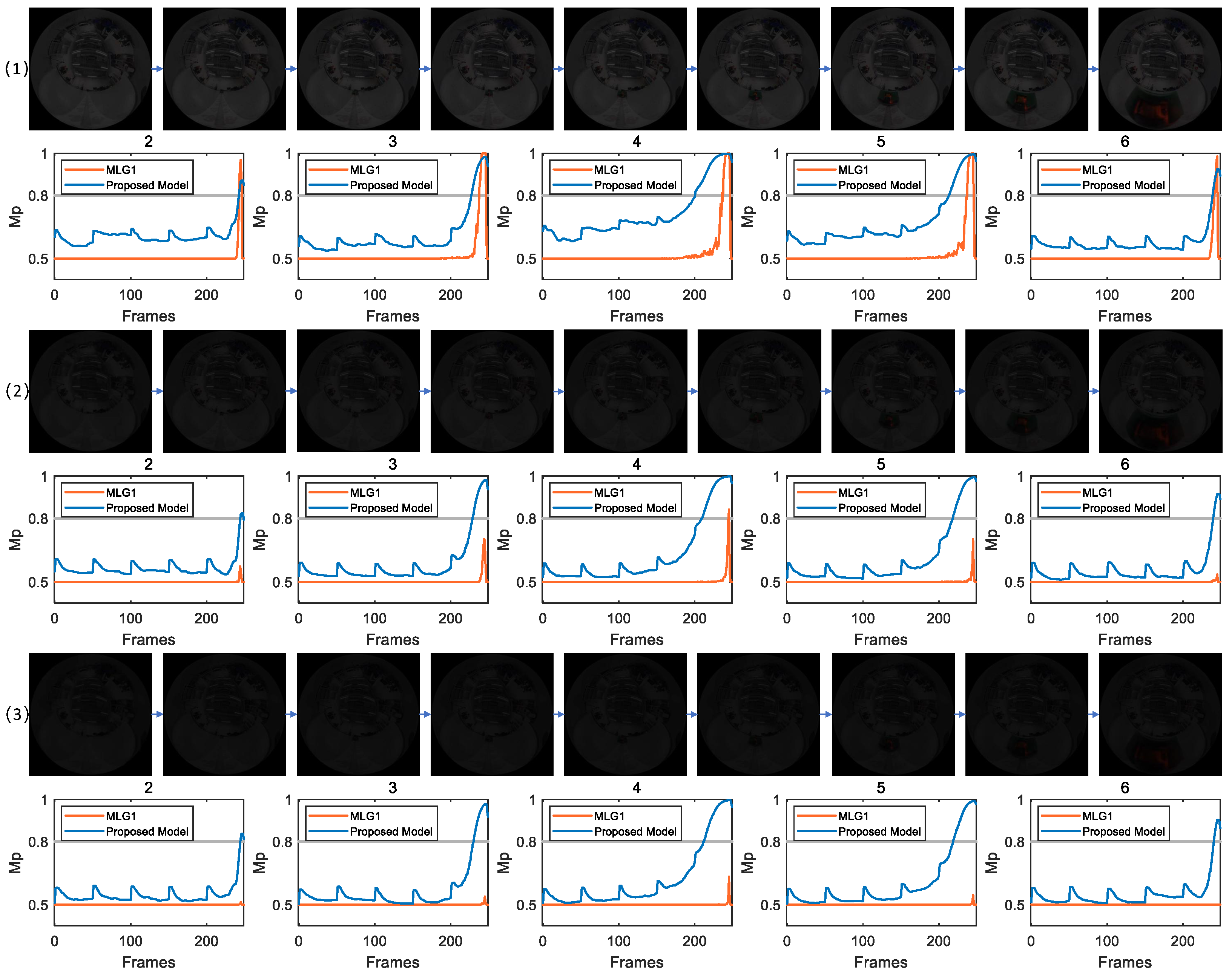
| Figure 2 (1) | 34 | 0 | 15.35 | 0.13 | 201 | 238 |
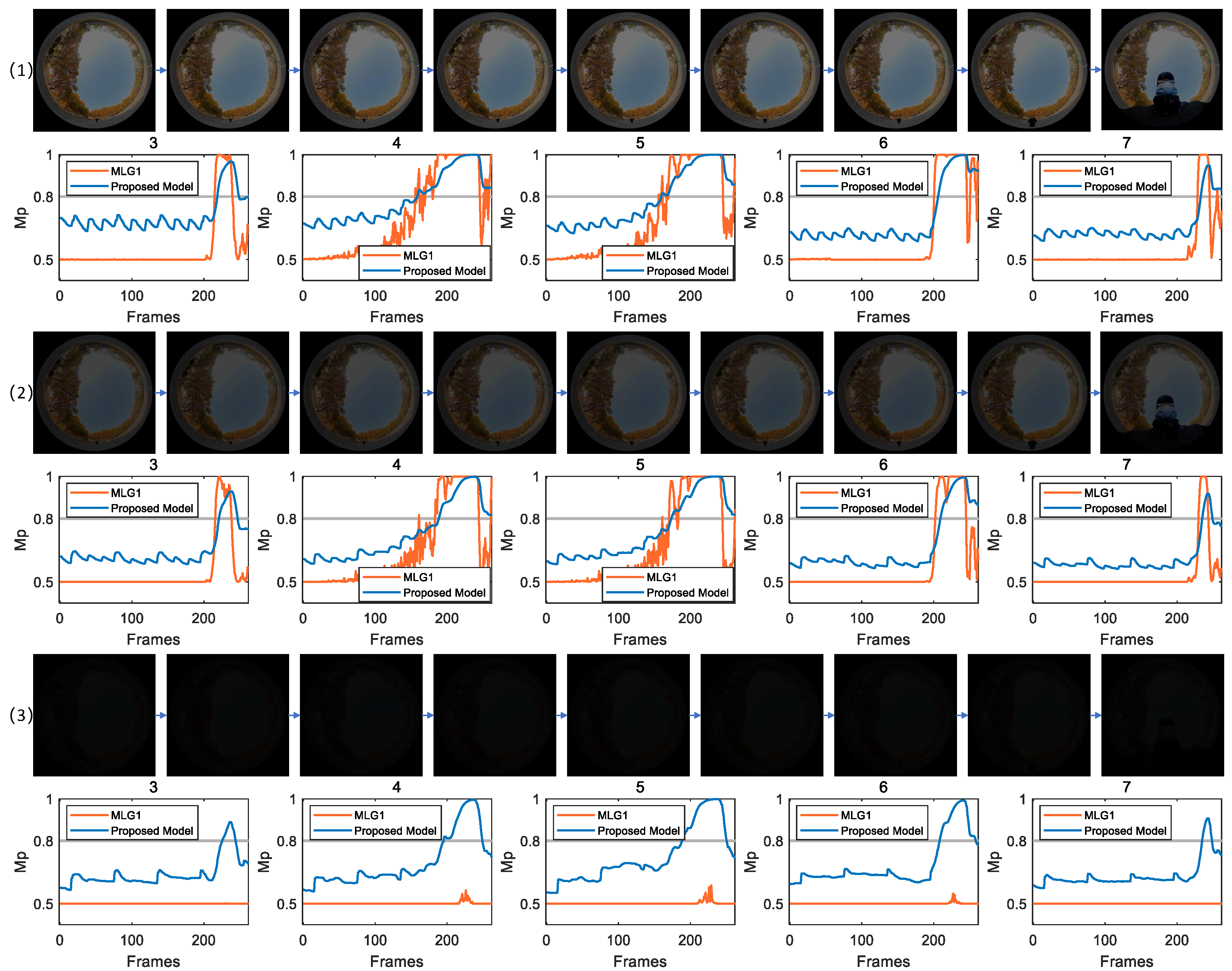
| Figure 4 (1) | 82 | 0 | 14.28 | 0.32 | 201 | 236 |
| Figure 4 (2) | 44 | 0 | 7.65 | 0.17 | 210 | 245 |
| Figure 4 (3) | 34 | 0 | 6.00 | 0.13 | 213 | - |
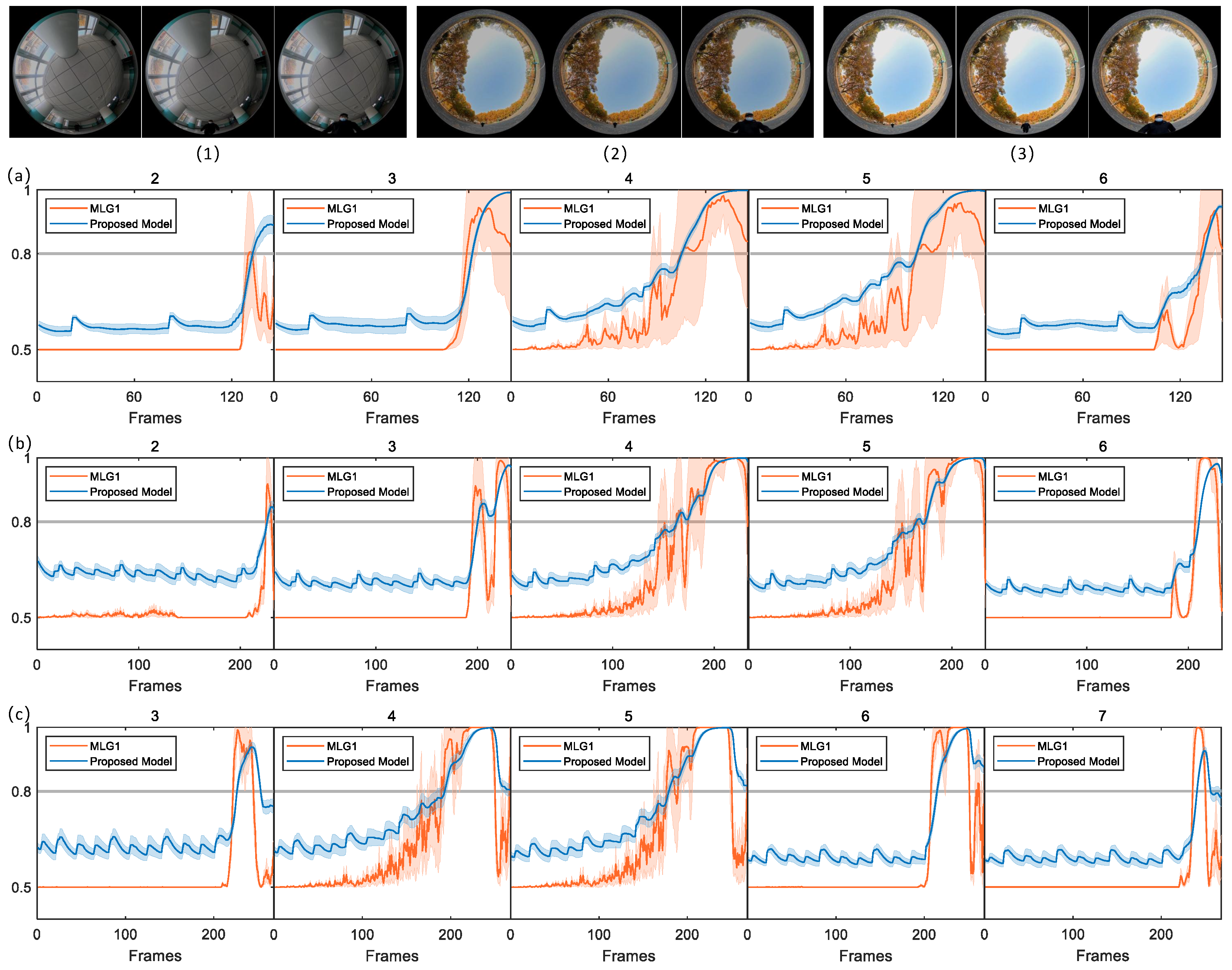
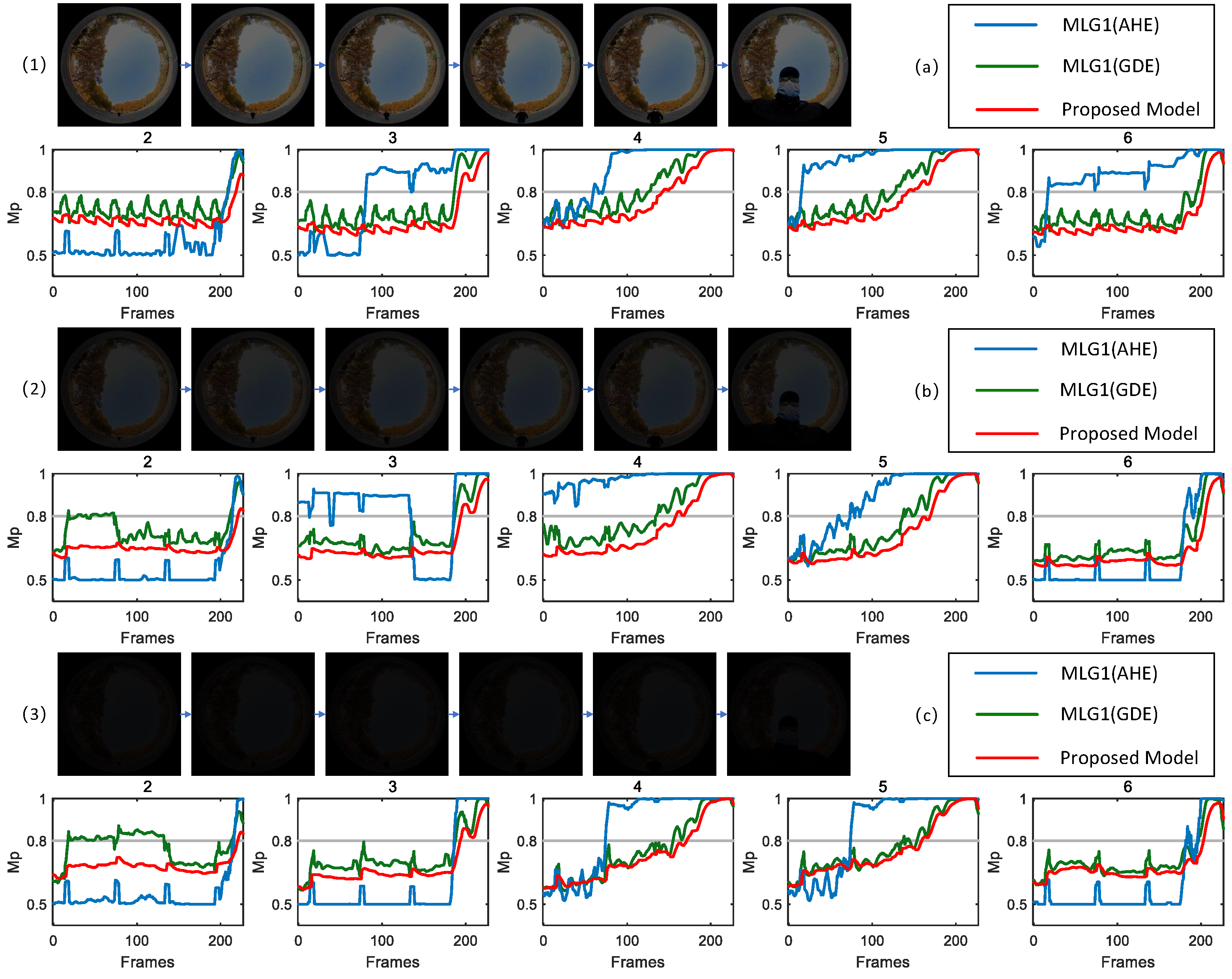
| Figure 5 (1) | 123 | 0 | 31.07 | 0.48 | 102 | 86 |
| Figure 5 (2) | 34 | 0 | 7.82 | 0.13 | 103 | 120 |
| Figure 5 (3) | 23 | 0 | 5.40 | 0.09 | 105 | - |
| Figure 6 (1) | 129 | 0 | 35.83 | 0.51 | 143 | 138 |
| Figure 6 (2) | 50 | 0 | 13.33 | 0.20 | 170 | 174 |
| Figure 6 (3) | 19 | 0 | 4.63 | 0.07 | 160 | 205 |
| Figure 7 (1) | 149 | 0 | 40.65 | 0.58 | 160 | 156 |
| Figure 7 (2) | 91 | 0 | 23.33 | 0.36 | 174 | 161 |
| Figure 7 (3) | 15 | 0 | 3.48 | 0.06 | 189 | - |
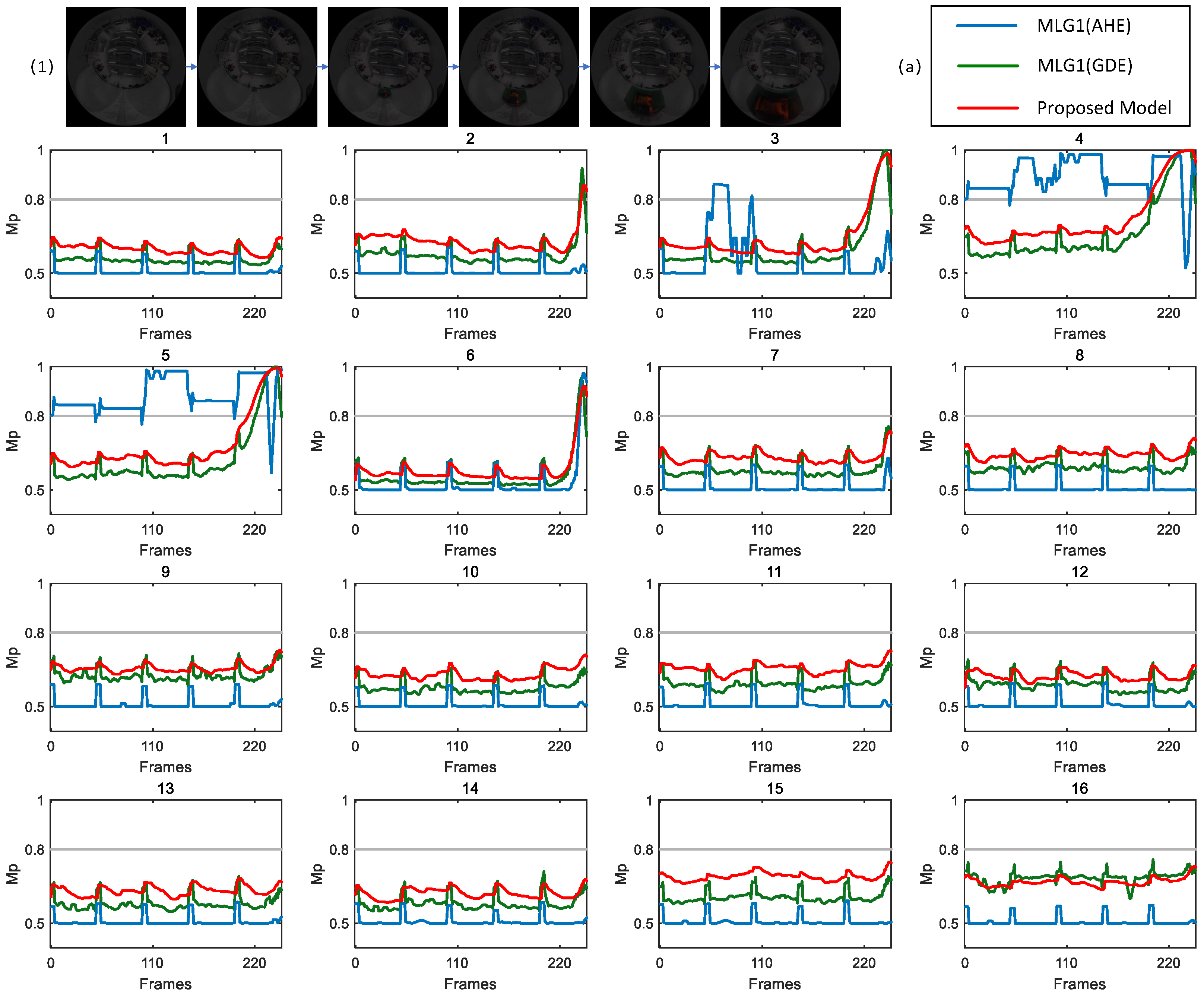
4.6. Comparison with Engineering Techniques
5. Conclusions
Author Contributions
Funding
Institutional Review Board Statement
Informed Consent Statement
Data Availability Statement
Conflicts of Interest
References
- Pan, X.; Shi, J.; Wang, P.; Wang, S.; Pan, C.; Yu, W.; Cheng, B.; Liang, S.J.; Miao, F. Parallel perception of visual motion using light-tunable memory matrix. Sci. Adv. 2023, 9, eadi4083. [Google Scholar] [CrossRef]
- Robinson, N.; Tidd, B.; Campbell, D.; Kulić, D.; Corke, P. Robotic vision for human-robot interaction and collaboration: A survey and systematic review. ACM Trans. Hum.-Robot Interact. 2023, 12, 1–66. [Google Scholar] [CrossRef]
- Cavanaugh, R. Electro-Optical and Infrared Design for Uncrewed Aerial System Collision Avoidance. Master’s Thesis, The University of Arizona, Tucson, AZ, USA, 2024. [Google Scholar]
- Xu, X.; Wu, B.; Teixeira, Â.P.; Soares, C.G. Ship Collision Risk Assessment and Visualization Using Radar Sequential Images for Intelligent Maritime Supervision. IEEE Trans. Intell. Transp. Syst. 2025, 26, 9004–9021. [Google Scholar] [CrossRef]
- Wu, H.; Yue, S.; Hu, C. Re-framing bio-plausible collision detection: Identifying shared meta-properties through strategic prototyping. Front. Neurorobot. 2024, 18, 1349498. [Google Scholar] [CrossRef] [PubMed]
- Wang, Y.; Li, H.; Zheng, Y.; Peng, J. A fractional-order visual neural network for collision sensing in noisy and dynamic scenes. Appl. Soft Comput. 2023, 148, 110897. [Google Scholar] [CrossRef]
- Chang, Z.; Chen, H.; Hua, M.; Fu, Q.; Peng, J. A bio-inspired visual collision detection network integrated with dynamic temporal variance feedback regulated by scalable functional countering jitter streaming. Neural Netw. 2025, 182, 106882. [Google Scholar] [CrossRef]
- Luan, H.; Fu, Q.; Zhang, Y.; Hua, M.; Chen, S.; Yue, S. A looming spatial localization neural network inspired by MLG1 neurons in the crab neohelice. Front. Neurosci. 2022, 15, 787256. [Google Scholar] [CrossRef] [PubMed]
- Guo, X.; Li, Y.; Ling, H. LIME: Low-light image enhancement via illumination map estimation. IEEE Trans. Image Process. 2016, 26, 982–993. [Google Scholar] [CrossRef]
- Adelson, E.H.; Bergen, J.R. Spatiotemporal energy models for the perception of motion. J. Opt. Soc. Am. A 1985, 2, 284–299. [Google Scholar] [CrossRef]
- Watson, A.B. Fourier, gabor, reichardt, Hilbert: Guides on the path to a model of human motion perception. In Proceedings of the Frontiers in Optics; Optica Publishing Group: Rochester, NY, USA, 2016; p. FTh4I-4. [Google Scholar]
- van Hateren, J.H. Theoretical predictions of spatiotemporal receptive fields of fly LMCs, and experimental validation. J. Comp. Physiol. A 1992, 171, 157–170. [Google Scholar] [CrossRef]
- Zaynidinov, H.; Juraev, U.; Tishlikov, S.; Modullayev, J. Application of Daubechies Wavelets in Digital Processing of Biomedical Signals and Images. In Proceedings of the International Conference on Intelligent Human Computer Interaction; Springer: Berlin/Heidelberg, Germany, 2023; pp. 194–206. [Google Scholar]
- Islam, M.T.; Samantaray, A.K.; Gorre, P.; Jatoth, D.N.; Kumar, S.; Al-Shidaifat, A.; Song, H. FPGA Implementation of an Effective Image Enhancement Algorithm Based on a Novel Daubechies Wavelet Filter Bank. Circuits Syst. Signal Process. 2025, 44, 365–386. [Google Scholar] [CrossRef]
- Trabelsi, R.; Nouri, K.; Ammari, I. Enhancing Traffic Sign Recognition Through Daubechies Discret Wavelet Transform and Convolutional Neural Networks. In Proceedings of the 2023 IEEE International Conference on Advanced Systems and Emergent Technologies (IC_ASET), Hammamet, Tunisia, 29 April–1 May 2023; pp. 1–6. [Google Scholar]
- Dyhr, J.P.; Higgins, C.M. The spatial frequency tuning of optic-flow-dependent behaviors in the bumblebee Bombus impatiens. J. Exp. Biol. 2010, 213, 1643–1650. [Google Scholar] [CrossRef]
- Baird, E.; Kornfeldt, T.; Dacke, M. Minimum viewing angle for visually guided ground speed control in bumblebees. J. Exp. Biol. 2010, 213, 1625–1632. [Google Scholar] [CrossRef]
- Warrant, E.J. Seeing in the dark: Vision and visual behaviour in nocturnal bees and wasps. J. Exp. Biol. 2008, 211, 1737–1746. [Google Scholar] [CrossRef]
- Somanathan, H.; Borges, R.M.; Warrant, E.J.; Kelber, A. Nocturnal bees learn landmark colours in starlight. Curr. Biol. 2008, 18, R996–R997. [Google Scholar] [CrossRef]
- Theobald, J.C.; Greiner, B.; Wcislo, W.T.; Warrant, E.J. Visual summation in night-flying sweat bees: A theoretical study. Vis. Res. 2006, 46, 2298–2309. [Google Scholar] [CrossRef] [PubMed][Green Version]
- Theobald, J.C.; Coates, M.M.; Wcislo, W.T.; Warrant, E.J. Flight performance in night-flying sweat bees suffers at low light levels. J. Exp. Biol. 2007, 210, 4034–4042. [Google Scholar] [CrossRef]
- De Grande, F.R.; Cannicci, S.; Costa, T.M. Can fiddler crabs detect underwater predators? A laboratory test with Leptuca thayeri. Ethol. Ecol. Evol. 2019, 31, 86–97. [Google Scholar]
- Scarano, F.; Tomsic, D.; Sztarker, J. Direction selective neurons responsive to horizontal motion in a crab reflect an adaptation to prevailing movements in flat environments. J. Neurosci. 2020, 40, 5561–5571. [Google Scholar] [CrossRef] [PubMed]
- Layne, J.; Land, M.; Zeil, J. Fiddler crabs use the visual horizon to distinguish predators from conspecifics: A review of the evidence. J. Mar. Biol. Assoc. U. K. 1997, 77, 43–54. [Google Scholar] [CrossRef]
- Salido, C.A.; Gancedo, B.J.; Tomsic, D. To escape or to pursue: Opposite decision making concerning a single moving object is influenced by starvation and sex. J. Exp. Biol. 2023, 226, jeb245297. [Google Scholar] [CrossRef]
- Aho, A.C.; Donner, K.; Hydén, C.; Larsen, L.O.; Reuter, T. Low retinal noise in animals with low body temperature allows high visual sensitivity. Nature 1988, 334, 348–350. [Google Scholar] [CrossRef]
- Warrant, E.J. Seeing better at night: Life style, eye design and the optimum strategy of spatial and temporal summation. Vis. Res. 1999, 39, 1611–1630. [Google Scholar] [CrossRef] [PubMed]
- Stöckl, A.L.; O’Carroll, D.C.; Warrant, E.J. Neural summation in the hawkmoth visual system extends the limits of vision in dim light. Curr. Biol. 2016, 26, 821–826. [Google Scholar] [CrossRef] [PubMed]
- Yovanovich, C.A.; Koskela, S.M.; Nevala, N.; Kondrashev, S.L.; Kelber, A.; Donner, K. The dual rod system of amphibians supports colour discrimination at the absolute visual threshold. Philos. Trans. R. Soc. B Biol. Sci. 2017, 372, 20160066. [Google Scholar] [CrossRef]
- Kelber, A.; Balkenius, A.; Warrant, E.J. Scotopic colour vision in nocturnal hawkmoths. Nature 2002, 419, 922–925. [Google Scholar] [CrossRef]
- Zeil, J.; Kelber, A.; Voss, R. Structure and function of learning flights in bees and wasps. J. Exp. Biol. 1996, 199, 245–252. [Google Scholar] [CrossRef] [PubMed]
- Theobald, J.C.; Warrant, E.J.; O’Carroll, D.C. Wide-field motion tuning in nocturnal hawkmoths. Proc. R. Soc. B Biol. Sci. 2010, 277, 853–860. [Google Scholar] [CrossRef]
- Rowe, A.C.; Abbott, P.C. Daubechies wavelets and mathematica. Comput. Phys. 1995, 9, 635–648. [Google Scholar] [CrossRef]




| Equation | Parameters | Description |
|---|---|---|
| (7) | the duration of luminance change | |
| (15) and (20) | standard deviation of Gaussian function in ON/OFF channels | |
| (18) and (21) | standard deviation of Gaussian function in ON/OFF channels | |
| (22) | term coefficient in summation layer | |
| (24) | coefficient in sigmoid function | |
| (25) | scale coefficient in spiking | |
| (25) | spiking threshold | |
| (26) | time window by discrete digital frames | |
| (26) | number of spikes within |
Disclaimer/Publisher’s Note: The statements, opinions and data contained in all publications are solely those of the individual author(s) and contributor(s) and not of MDPI and/or the editor(s). MDPI and/or the editor(s) disclaim responsibility for any injury to people or property resulting from any ideas, methods, instructions or products referred to in the content. |
© 2026 by the authors. Licensee MDPI, Basel, Switzerland. This article is an open access article distributed under the terms and conditions of the Creative Commons Attribution (CC BY) license.
Share and Cite
Chang, Z.; Wu, G.; Chen, H.; Zhang, H.; Luan, H.; Yang, Z. Robust Looming Spatial Localization in Dim Light via Daubechies Wavelet-Fused ON/OFF Pathways. Biomimetics 2026, 11, 244. https://doi.org/10.3390/biomimetics11040244
Chang Z, Wu G, Chen H, Zhang H, Luan H, Yang Z. Robust Looming Spatial Localization in Dim Light via Daubechies Wavelet-Fused ON/OFF Pathways. Biomimetics. 2026; 11(4):244. https://doi.org/10.3390/biomimetics11040244
Chicago/Turabian StyleChang, Zefang, Guangrong Wu, Hao Chen, He Zhang, Hao Luan, and Zhijian Yang. 2026. "Robust Looming Spatial Localization in Dim Light via Daubechies Wavelet-Fused ON/OFF Pathways" Biomimetics 11, no. 4: 244. https://doi.org/10.3390/biomimetics11040244
APA StyleChang, Z., Wu, G., Chen, H., Zhang, H., Luan, H., & Yang, Z. (2026). Robust Looming Spatial Localization in Dim Light via Daubechies Wavelet-Fused ON/OFF Pathways. Biomimetics, 11(4), 244. https://doi.org/10.3390/biomimetics11040244