1. Introduction
Benthic fish refer to fish species that inhabit the bottom layers of marine or freshwater environments, whose physiological structures and behaviors are highly adapted to benthic living. Common species include
Pleuronectiformes,
Rays,
Pleuronectes platessa,
Anguilla,
Anglerfish, and
Soles [
1,
2]. Typical characteristics of these fish include flattened or streamlined bodies, often with protective colours or markings resembling the surrounding sediments, and in some cases, the evolution of specialized organs such as bioluminescent lures (e.g.,
Anglerfish) or barbels (e.g.,
eel) for environmental sensing or prey attraction. Notably, most benthic fish have evolved a unique burrowing behavior [
3], whereby they bury part or all of their bodies into sediment substrates by body undulations, jetting, or fin stirring, forming a hidden state integrated with the surrounding environment.
The primary purposes of burrowing behavior are predation and survival. From a defensive perspective, benthic fish can effectively evade predators’ visual detection by burrowing. For instance,
Pleuronectiformes rapidly flap their pectoral fins to stir up sediments and settle into soft substrates when sensing danger, leaving only protruding eyes exposed for environmental monitoring [
4], while
sand lances burrow vertically into the sand [
5]. From an offensive standpoint, burrowing behavior is often combined with ambush predation strategies. For example,
Scophthalmus maximus rapidly flaps its pectoral fins to fluidize sediments, after instantaneous burial, waits for the prey to approach, and then leaps out at lightning speed to carry out the hunt [
6].
Anglerfish use their bioluminescent lure to attract curious small fish, complete precision hunting [
7,
8]. Many other benthic fish exhibit similar burrowing behaviors, such as
Solea [
9,
10],
Pleuronectes platessa [
11,
12],
Trypauchen vagina [
13],
Anguilla anguilla [
14], and
Wrasses [
15].
The Unmanned Underwater Vehicle (UUV) is an intelligent autonomous equipment that can complete underwater tasks autonomously, widely used in marine science research, resource exploration, military reconnaissance, and environmental monitoring [
16]. UUVs rely on their own energy and control systems to perform tasks, which imposes high requirements on their ability to maintain dynamic balance and positional stability during hovering fixed-point detection [
17,
18]. Whether it is a hovering UUV through buoyancy adjustment or a hovering UUV relying on auxiliary thrusters, it is necessary to overcome an unfavorable factor in the ocean bottom environment, ocean current. The submarine current velocity is usually between 0.5–1.5 m/s. The ocean current has strong time-varying and spatial heterogeneity. UUV is extremely sensitive to this unpredictable ocean current disturbance, resulting in unexpected drift and affecting the stable detection ability of UUV [
19,
20]. Moreover, the dynamics models of UUV exhibit highly nonlinear and strongly coupled characteristics, involving the combined effects of fluid inertia, viscous drag, and added mass effects [
21,
22,
23,
24]. In addition, time-varying underwater disturbances (e.g., turbulent vortices [
25] and density stratification [
26]) and uncertain hydrodynamic parameters [
27,
28] (e.g., varying Reynolds numbers) make it difficult to achieve robust control of UUVs [
29,
30]. Consequently, environmental unpredictability, coupled with nonlinear vehicle dynamics and parameter uncertainties of UUVs, limits the reliability and efficiency of UUVs in carrying out tasks in benthic environments. Achieving stable benthic station-keeping thus remains a formidable task.
To address the issue of UUV benthic stable residence, some researchers have proposed several strategies. Wang et al. [
31] and Matsuda et al. [
32] have developed a variable buoyancy system based on ballast water, which enables UUVs to settle on the seabed to extend endurance. Zhang et al. [
33] designed a landing gear that enables rigid contact with the seabed, but this approach requires precise terrain matching and often fails in rough or soft substrates. Furthermore, the mounting bracket significantly increases the volume and weight of the UUV, reducing the flexibility to perform tasks in other environments. In addition, many researchers [
19,
22,
34] employed anchor-chain systems to enhance hovering stability. While the anchor chain system can enhance the anti-current capability, in order to avoid seabed collisions between the UUV and the seabed, UUVs equipped with the anchor chain systems require frequent thruster activation to correct their positions. Therefore, the improvement of hovering stability by the anchor chain system comes at the expense of maneuverability, endurance, and payload capacity. More critically, these methods substantially reduce the stealth of UUV, so that it can be easily found by acoustic detection equipment when it resides on the seabed. Thus, existing solutions fail to achieve an optimal balance between stability, adaptability, and concealment. There is still room for improvement in benthic residence technology, and more flexible and efficient approaches are needed to meet future mission requirements.
The burying behavior of benthic fishes serves as a biomimetic reference for enabling stable benthic dwelling of UUVs. Inspired by such strategies, UUVs can realize self-burial and stable seabed settlement. This strategy confers twofold benefits:
First, enhancement of concealment. Acoustic detection of buried targets on the seabed is still a global challenge [
35,
36], as the acoustic attenuation coefficient in sandy medium is 2–4 orders of magnitude higher than in seawater. For example, the absorption attenuation of a 100 kHz acoustic signal is about 0.031 dB/m in seawater [
37], but reaches 74 dB/m in sandy sediments [
38]. The strong attenuation characteristics of sound waves in seabed sediments make it extremely difficult to detect and identify buried targets on the seabed. Therefore, the buried UUV can effectively avoid the detection of acoustic equipment and significantly enhance its underwater covert operation capabilities.
Second, extension of endurance. The UUV in its buried state can stably dwell on the seabed for reconnaissance without the need to expend energy counteracting ocean currents, thereby markedly prolonging its operational endurance.
Currently, most studies on fish burrowing behavior remain at the level of biological observation. Lu et al. [
39] observed the preference of
Paralichthys olivaceus juveniles for benthic particle size, and found that juveniles preferred to bury in fine sand, and the success rate of burial in fine sand was as high as 93.1%. Corn et al. [
40] found that
Parophrys vetulus uses the periodic fluctuation of its body to force water flow to disturb the bottom sediment and fluidize the sediment particles. The fluid vortex carries the sediment particles to reach the top of the fish’s body. When the fish stops fluctuating, the fluid velocity above the fish decreases, and the sediment particles settle onto the fish’s surface, achieving the burial behavior. They also quantified the effects of sediment grain size and fish body size on burial behavior, concluding that sand particle size had little impact, while larger fish typically buried using lower frequencies and longer durations. Gibson et al. [
12] studied the sediment selection behavior of juvenile
Pleuronectes platessa of different individual sizes, and found that smaller fish prefer finer-grained sediments, while larger fish showed no significant preference for the particle size of sediments. Scott et al. [
41,
42] employed Particle Image Velocimetry (PIV) and video analysis to investigate
Potamotrygon motoro burial behavior on sediments.
Potamotrygon motoro fluidizes the sediment below the fish’s body and transports it to the top of the pectoral fin by repeatedly and rapidly swinging the pectoral fin. The water–sand vortex collides above the midline of the stingray’s back, and the sediment settles to the back of the fish’s body, thus completing the burial behavior. Subsequently, they discussed the influence of the flapping frequency and amplitude of the fish body on the burial behavior. With the increase in the flapping displacement and velocity of the pectoral fin, the sediment coverage area on the back of the fish’s body also increased accordingly. The average sediment coverage area is about 82.5% of the back area of the fish body.
Biological observation experiments can analyze the burial process of fish on a macro scale. However, the mechanical parameters of live fish are difficult to measure accurately, and their burying behavior cannot be artificially controlled. Therefore, some researchers have employed controllable simulation models to conduct burying studies. To reproduce the burial behavior of benthic fish through experiments, McKee et al. [
43] constructed a variable-speed-driven elliptical silica gel plate model to study the impact of the fluctuation frequency of the
Pleuronectiformes model on the burrowing behavior. The study shows that the coverage area of the sediment increases with the increase in the model’s oscillation frequency. The flapping frequency required to completely cover the model exceeds 10 Hz, but the flapping frequency required for the complete burial of a live
Pleuronectiformes is usually within 10 Hz.
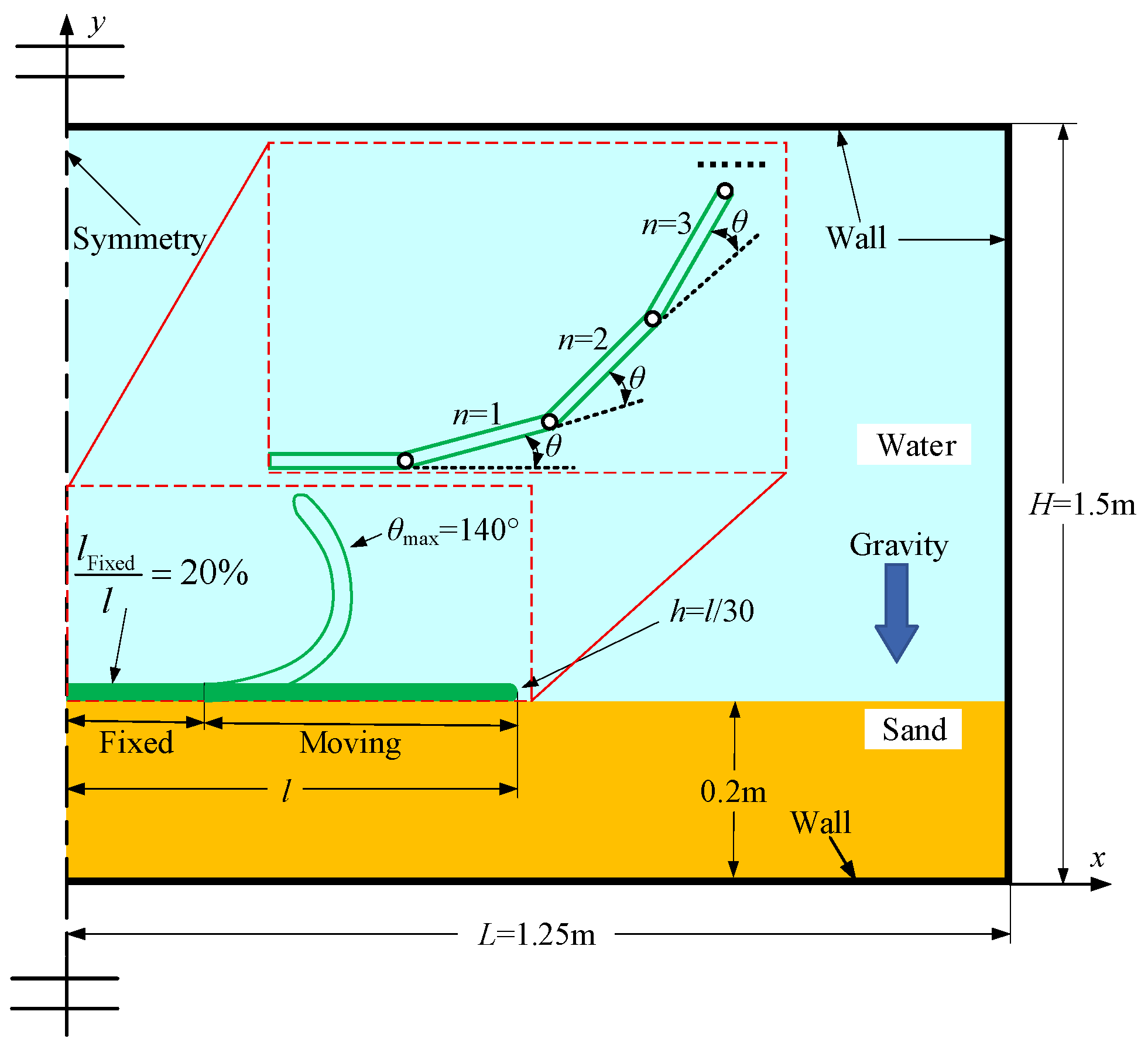
The present study aims to reveal the hydrodynamic mechanisms of benthic fish burrowing through numerical simulations and provide insights for biomimetic self-buried UUV design. First, a two-dimensional fluid-particle coupling model of self-burial behavior was developed to reproduce sediment fluidization, transport, and burial under fin flapping based on biological observation results of fish flapping burial behavior. Second, an orthogonal design was used to examine the effects of geometric parameters (body length), kinematic parameters (flapping amplitude, number, and frequency), and environmental parameters (particle size) on self-burial coverage ratio, input power, and burial efficiency. Combined with the velocity distribution, pressure field distribution, and vorticity structure evolution of the flow field, the synergistic mechanism of wingtip vortex, pressure difference, and fluid disturbance in particle initiation, transport, and deposition during the burial process was revealed. Finally, the enlightenment of benthic fish self-burial behavior on the design of underwater bionic self-burying UUVs is discussed, including the matching strategy of wing span size and motion parameters, energy consumption optimization schemes, and adaptability to different sediment environments.
The paper is organized as follows:
Section 2 presents the problem formulation and hydrodynamic evaluation parameters.
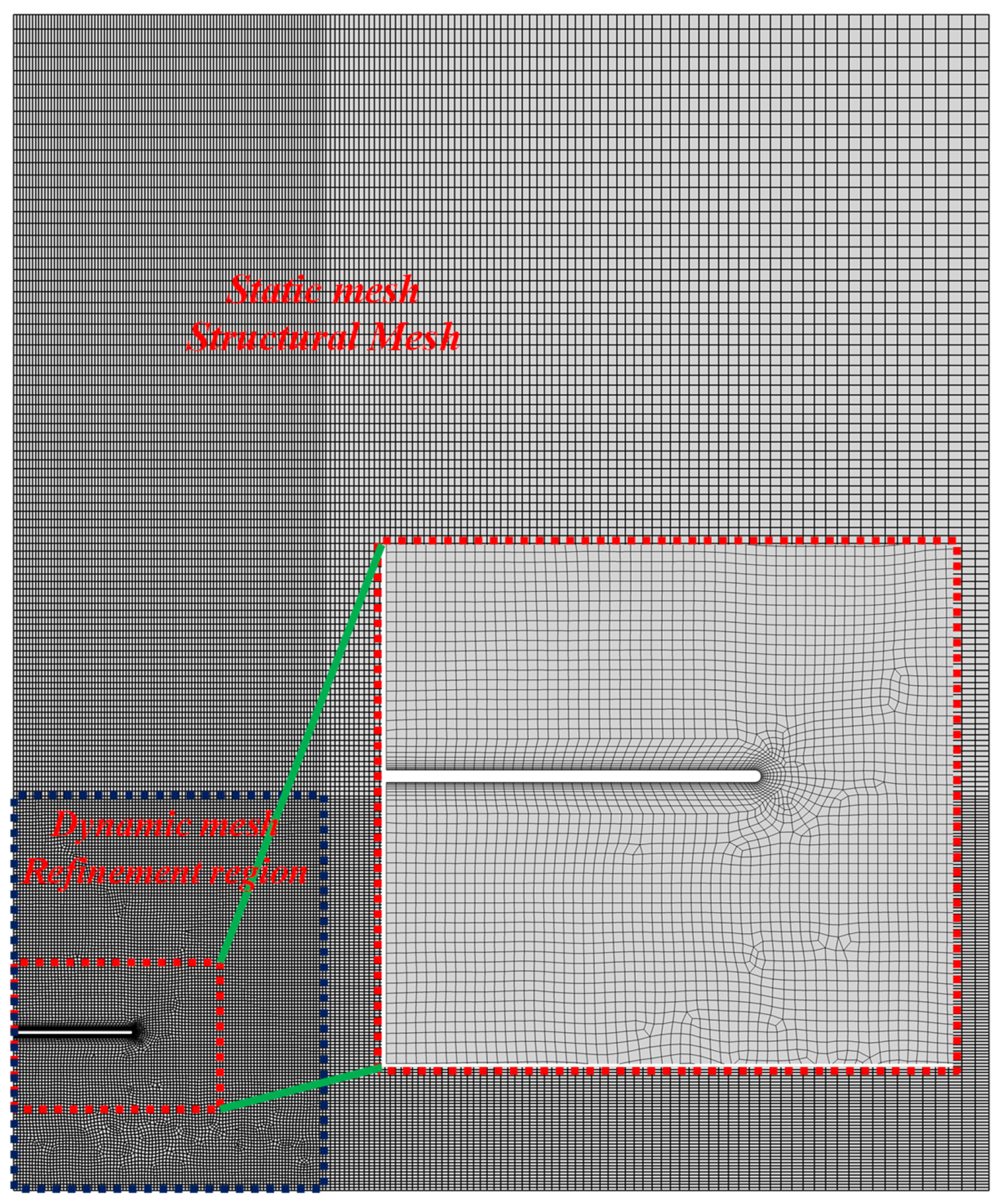
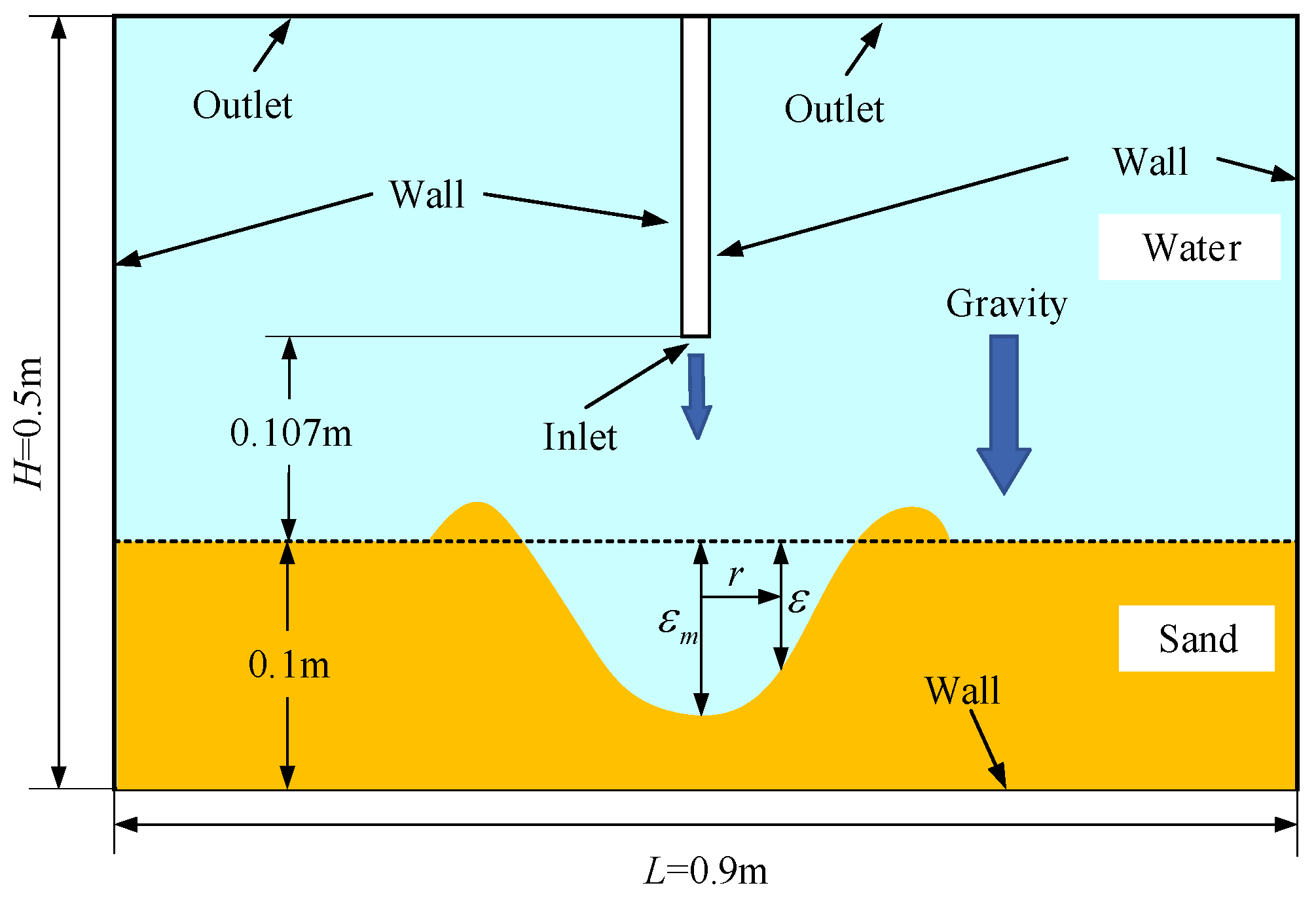
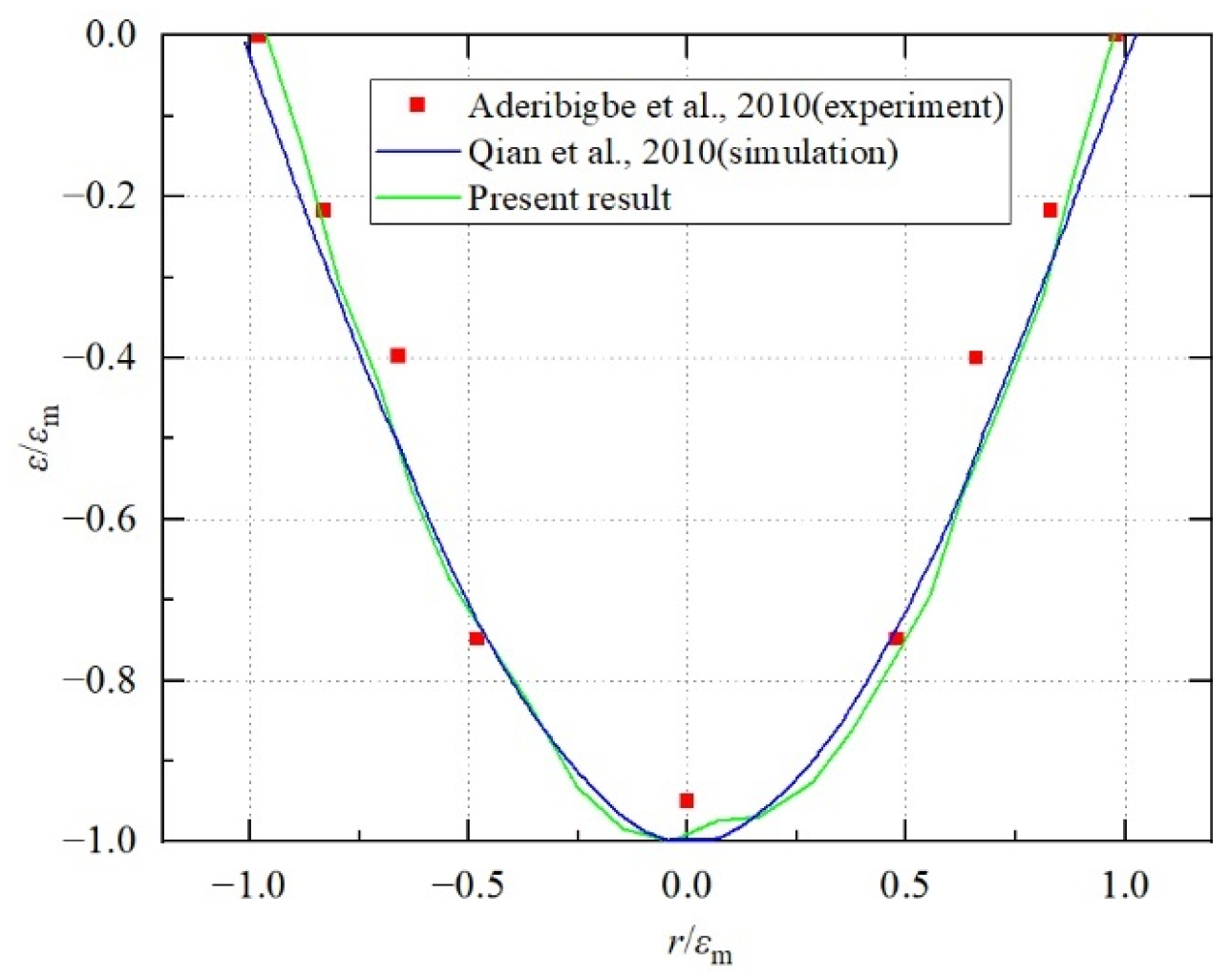
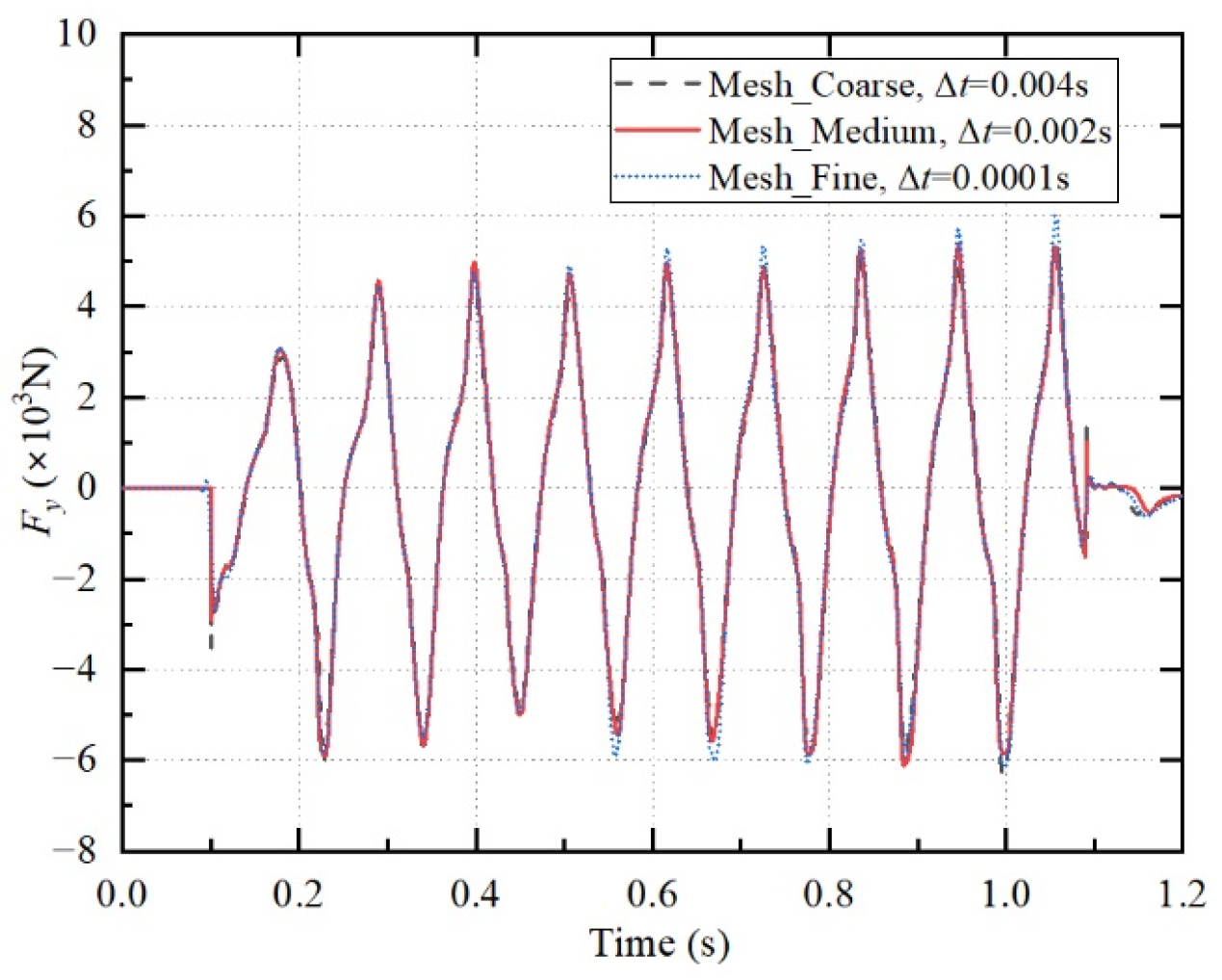
Section 3 first introduces the specific implementation details of the numerical model and then uses a standard example to verify the accuracy of the method, and verifies the grid and time step independence of the numerical model in the paper.
Section 4 gives the specific scheme of the orthogonal experiment.
Section 5 discusses the results of the orthogonal test and analyzes the numerical simulation results of this paper.
Section 6 discusses the correlation between the numerical results of this article and the biological observation results.
Section 7 presents the conclusions of the study.
4. Orthogonal Experimental Scheme
In this study, an orthogonal experimental design was adopted to evaluate the effects of plate length, flapping frequency, flapping number, flapping amplitude, and particle size on the self-burial performance. These five factors are mutually independent, and each includes multiple levels. If the traditional control variable method were applied, the number of tests would be enormous, and it would remain difficult to identify the relative importance of the factors. In contrast, the orthogonal design allows the simultaneous investigation of multi-factor and multi-level effects on self-burial behavior within a limited number of trials, while effectively distinguishing the primary and secondary influences of the factors. In this paper, the burial ratio, input power, and burial efficiency were selected as the evaluation indices of self-burial performance, and the significant differences in factors on the three evaluation indices are emphatically analyzed.
Specifically, five factors were defined in the experimental design (see
Table 3): Factor 1, fish body length (3, 6, 9, 12, and 15 cm); Factor 2, flapping frequency (5, 6, 7, 8, and 9 Hz); Factor 3, flapping number (2, 4, 6, 8, and 10 times); Factor 4, flapping amplitude (60°, 80°, 100°, 120°, and 140°); and Factor 5, sand particle size (0.1, 0.3, 0.5, 0.7, and 0.9 mm). Based on the principles of orthogonal design, an experimental scheme comprising 25 groups of representative combinations was constructed (see
Table 4). This scheme ensured a balanced distribution of all factors and levels within the test sequence. For each group of experiments, the burial ratio, input power, and burial efficiency were calculated, and then the contribution rate of each factor was quantified by range analysis and variance analysis to clarify the primary and secondary influence order of different factors on the self-burial effect.
5. Results
5.1. Orthogonal Experiment Results
Table 5 lists the coverage ratio, coverage size, input power, and burial efficiency results of each test group. In the range analysis of the orthogonal experiments, for a given factor at a specific level, the results corresponding to that level are summed to obtain the
K value of the factor at that level. On this basis, the
K value is divided by the average number of experimental repetitions
r at the corresponding level to yield the average value at the current level
Kavg, that is:
where
n represents the number of experimental repetitions at this level.
By comparing the K values of different factors at various levels, one can determine the relative advantages or disadvantages of each level. The range R is defined as the difference between the maximum and minimum K values of a certain factor. A larger value of R indicates that the factor has a more significant influence on the experimental results.
In the orthogonal experimental design of this study, the levels of each factor were not completely consistent. For instance, when the fish body length is 3 cm, the effective burial effect is not produced, and the coverage ratio remains 0. Therefore, Factor 1 (fish body length) has four valid levels, whereas other factors have five valid levels. This different setting of the level number constitutes a mixed orthogonal table. In range analysis, this discrepancy in the number of levels affects the evaluation of factor influence and must be addressed in combination with the conversion method.
To overcome this issue, the range values need to be converted. The convert coefficient
d is determined by the number of levels for each factor, and its value can be obtained from the coefficient table shown in
Table 6 (for four levels,
d = 0.45; for five levels,
d = 0.40). The corrected range value
R′ can be expressed as:
where
R denotes the original range value,
d is the conversion coefficient, and
r represents the average number of repetitions for each level under this factor.
By introducing the conversion coefficient and recalculating the range value R′, it can eliminate the influence of inconsistency in the number of factor levels (e.g., the 3 mm fish body length producing no burial effect). Therefore, in the range analysis of this study, the converted range value R′, rather than the original range R, is adopted as the basis for evaluating the influence strength of each factor. This guarantees the reliability of assessing the factors of fish body length, flapping frequency, flapping number, flapping amplitude, and sand grain size on coverage ratio, input power, and burying efficiency.
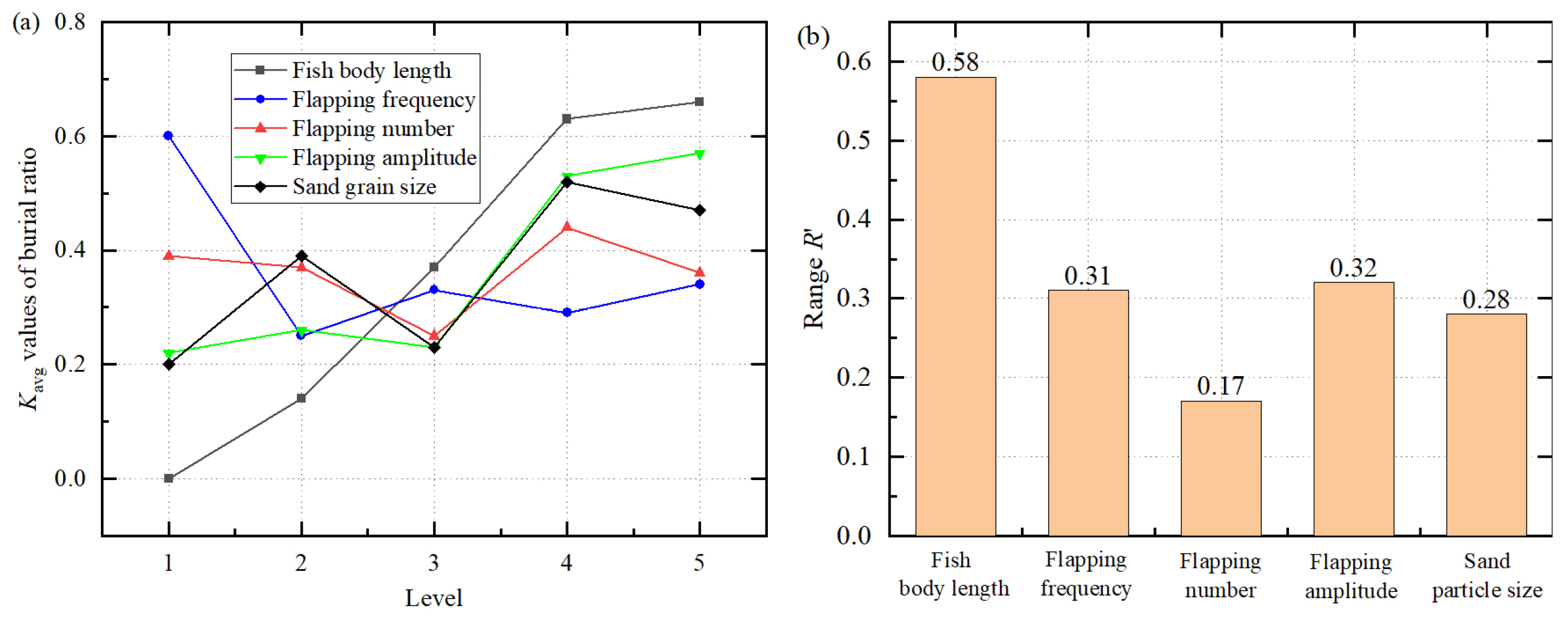
According to the range analysis results of the coverage ratio presented in
Table 7 and
Figure 6, significant differences exist in the influence of different factors on the coverage ratio. The ranking of the converted range values
R′ is as follows: fish body length (0.58) > flapping amplitude (0.32) > flapping frequency (0.31) > sand grain size (0.28) > flapping number (0.17). Among them, the range of fish body length is the largest, indicating that it exerts the most significant influence on coverage ratio and serves as the primary controlling factor. Flapping amplitude and frequency follow, while the effects of sand grain size and flapping number are relatively limited.
Based on the analysis of the Kavg values, the optimal combination for achieving maximum coverage ratio is: fish body length of 15 mm, flapping frequency of 5 Hz, flapping number of 8, flapping amplitude of 140°, and sand grain size of 0.7 mm. Under these parameter conditions, the coverage ratio reaches its optimum. Further analysis reveals that the coverage ratio increases markedly with increasing fish body length, suggesting that larger body sizes are most conducive to the self-burial process.
Table 8 presents the results of the multifactor Analysis of Variance (ANOVA) for the burying ratio. The results show that fish body length, flapping frequency, flapping amplitude, and sand grain size all have significant effects on the coverage ratio (
p < 0.05), with fish body length and flapping amplitude being the most significant (
p < 0.01). In contrast, the effect of flapping number is not significant (
p = 0.157). This indicates that the coverage ratio primarily depends on the geometric scale of the fish body and the flapping amplitude, while flapping frequency and grain size play a moderating role, and the contribution of flapping number is limited.
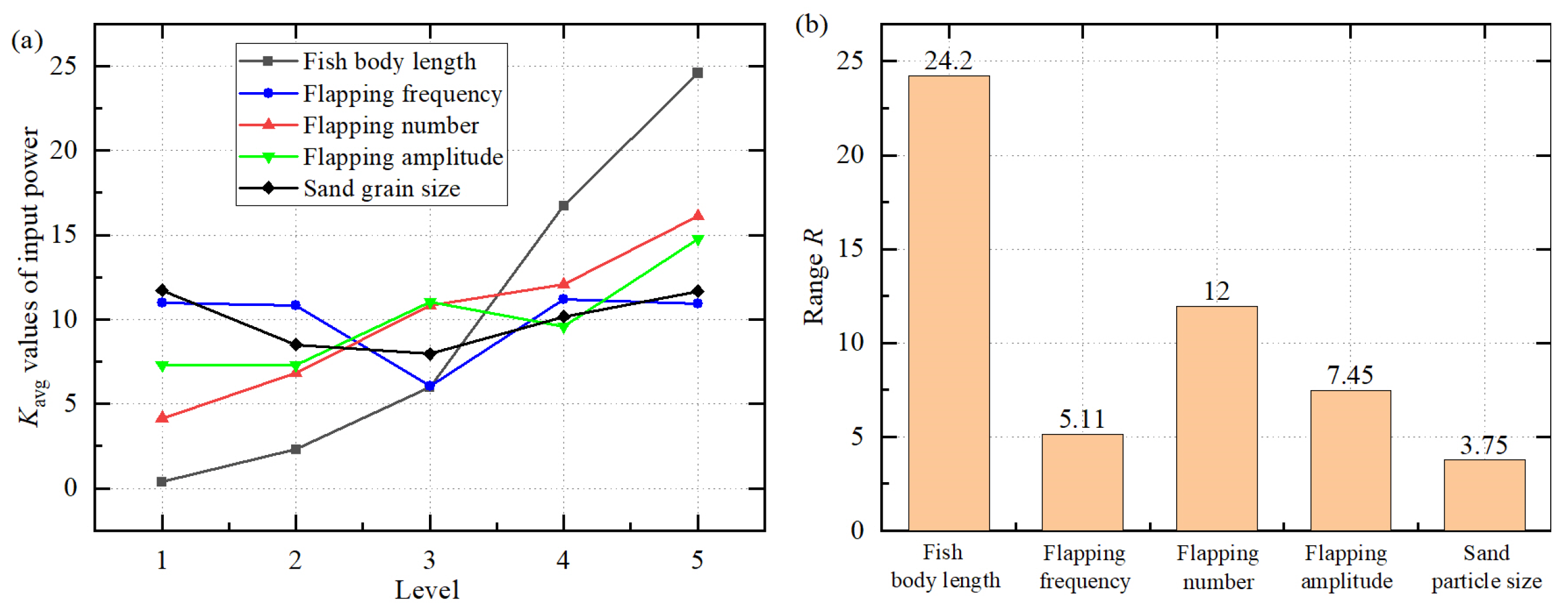
Table 9 and
Figure 7 show the range analysis results for input power. According to the ranking of ranges, the order is: fish body length (24.22) > flapping number (11.95) > flapping amplitude (7.45) > flapping frequency (5.11) > sand grain size (3.75). Among these, fish body length has the most significant effect, while flapping number and flapping amplitude also exert considerable influence. The effects of flapping frequency and sand grain size on input power are relatively minor. The optimal parameter level is: fish body length of 3 cm, flapping frequency of 7 Hz, flapping number of 2, flapping amplitude of 60°, and sand grain size of 0.5 mm. Under this combination, the required input power is relatively low. It can be seen that an increase in the length of the fish body will significantly enhance the input power. The reason for this might be that after the fish’s body size is enlarged, the fluid resistance and the range of particle disturbances increase significantly, thus requiring a higher power input.
Table 10 presents the multifactor ANOVA results for input power. It can be seen that fish body length has a significant effect on input power (
p < 0.05), while the other factors have no significant effect. (
p > 0.05). This indicates that input power mainly depends on the geometric size of the plate itself, with the remaining kinematic factors and particle characteristics playing secondary roles in energy consumption.
The burying efficiency combines the performance of the coverage ratio and input power, making it a key indicator for evaluating self-burying capacity.
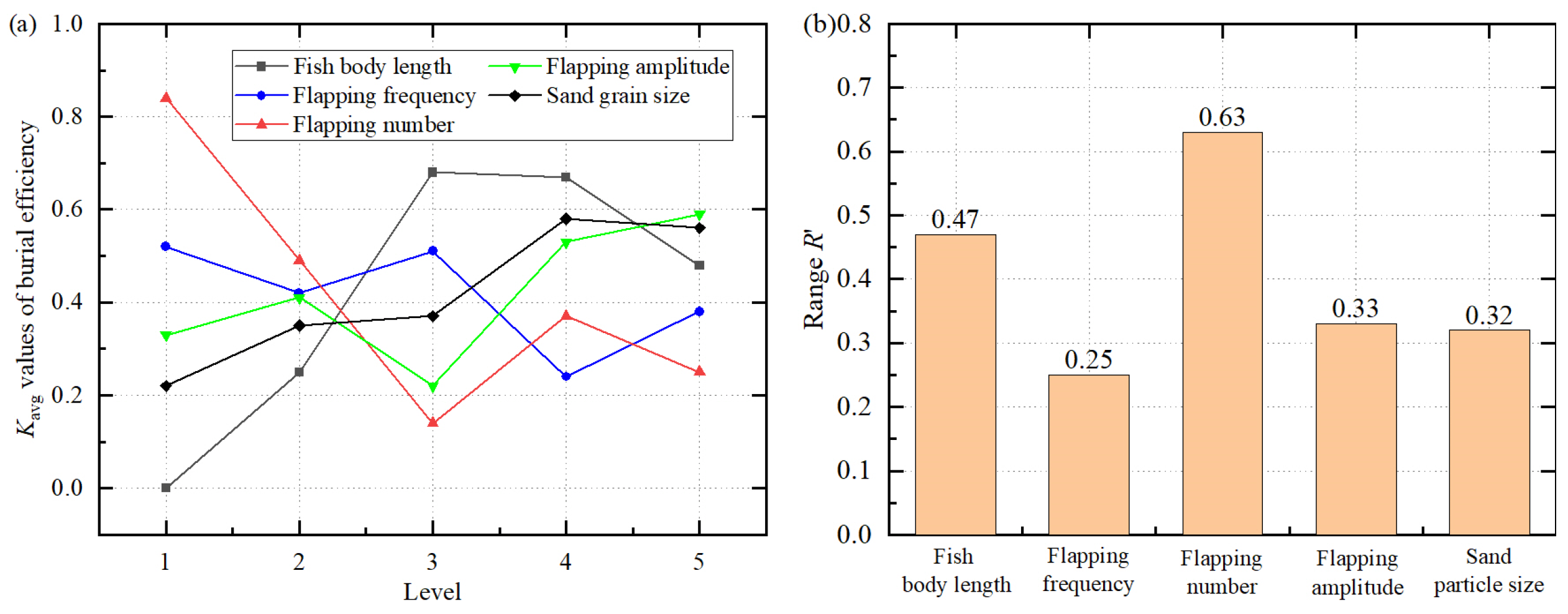
Table 11 and
Figure 8 show the range analysis results for burying efficiency. According to the ranking of R′, the order is: flapping number (0.63) > fish body length (0.47) > flapping amplitude (0.33) > sand grain size (0.32) > flapping frequency (0.25). Flapping number shows the largest range, indicating that it has the most prominent influence on burying efficiency, followed by fish body length, while flapping frequency has the weakest effect.
The optimal parameter combination is: fish body length of 9 cm, flapping frequency of 5 Hz, flapping number of 2, flapping amplitude of 140°, and sand grain size of 0.7 mm. Under these conditions, coverage effect and energy consumption reach a balance.
Table 12 shows the multifactor ANOVA results for burying efficiency. The results indicate that the influence of each factor on burial efficiency is not significant (
p > 0.05). This may be since the burial efficiency combines the coverage ratio and the input power, with its significance determined by the joint influence of multiple factors, thereby weakening the significance of single factors. Nevertheless, the range analysis still suggests that flapping number and fish body length play important roles in improving burying efficiency.
Through the orthogonal experiment and range analysis, it is clear that different factors exert distinct effects on coverage ratio, input power, and burying efficiency. For the coverage ratio, fish body length is the dominant factor, with the largest range, indicating that larger body size is favorable for achieving higher self-burial coverage ratios. Flapping amplitude and frequency follow, while flapping number and sand grain size have the weakest effects. The range analysis of input power shows that fish body length remains the key factor influencing energy consumption, with flapping number and flapping amplitude having secondary effects, while flapping frequency and sand grain size exert an insignificant influence. This suggests that input power is mainly determined by fish body size, while other kinematic parameters and particle properties play a limited role in regulating energy consumption. For burying efficiency as a comprehensive indicator, flapping number and fish body length exhibit larger ranges, indicating that increasing body size and flapping number can significantly enhance overall burying efficiency, and the influence of other factors is relatively weak. Multifactor ANOVA further confirms these conclusions: the coverage ratio was mainly significantly influenced by the fish body length and the flapping amplitude, while the input power was significantly dependent on the fish body length. The single-factor significance of the burial efficiency was relatively weak, but through the range analysis, the important roles of the flapping frequency and the fish body length could still be identified.
In summary, the geometric size of the fish body and its kinematic parameters (particularly flapping frequency and amplitude) play central regulatory roles in the self-burial process, and the role of sand grain size is relatively secondary. In the next step, visualization analysis of cloud maps will be conducted to reveal the specific mechanisms through which each factor influences particle deposition, fluid disturbance, and energy consumption, thereby further validating and explaining the regularity observed in the orthogonal experimental results.
5.2. Flow Evolution Analysis
Benthic fish achieve self-burying behavior in seabed sediments through the flapping of their pectoral fins. To elucidate this biological phenomenon from a numerical simulation perspective, the particle volume fraction contours, vorticity contours, velocity vector fields, and pressure fields of Case 16 were analyzed to examine the particle transport characteristics and fluid motion characteristics induced by fin flapping.
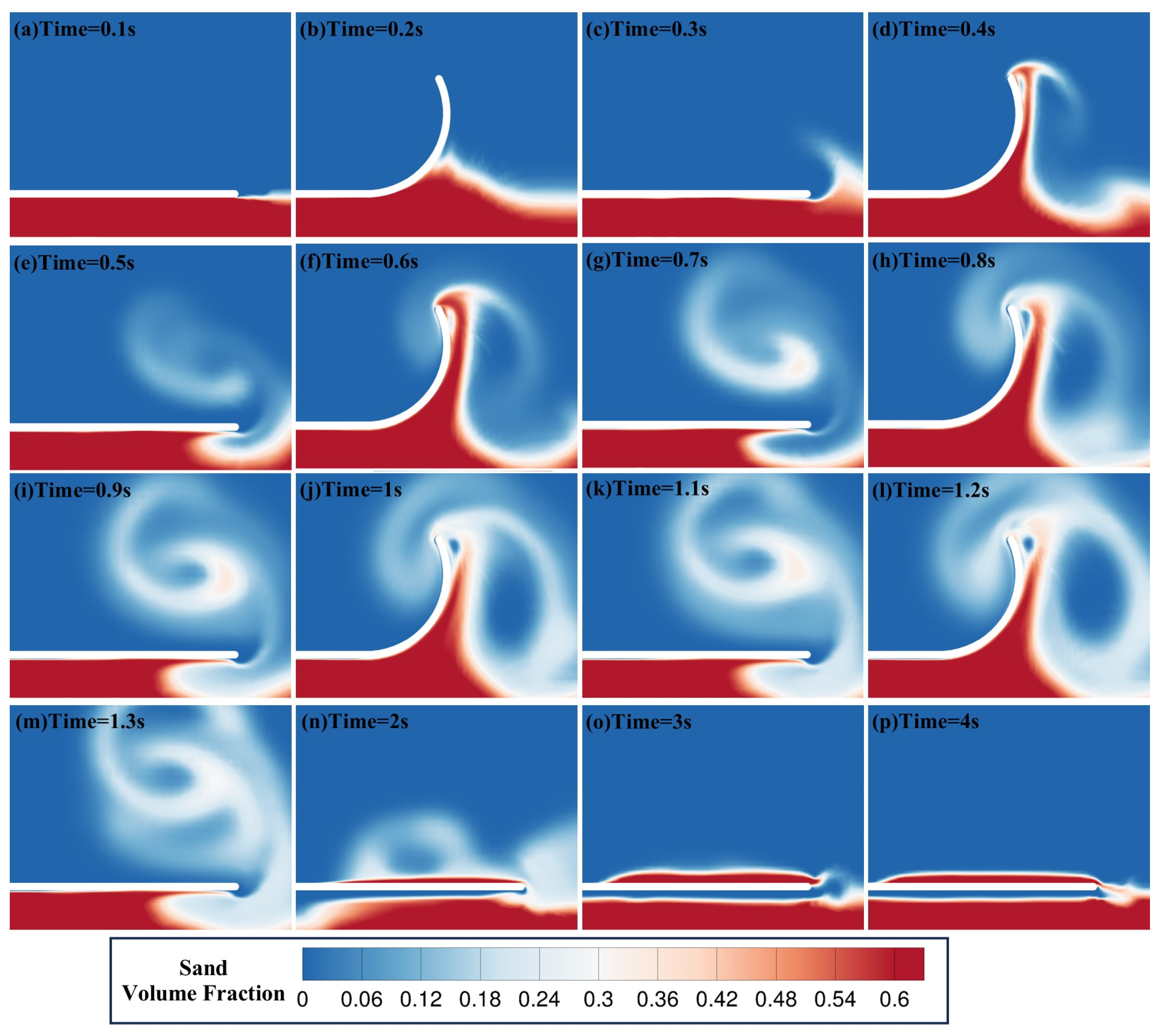
Figure 9 illustrates the temporal evolution of the sand volume fraction with time during the flapping-burying process in Case 16. As shown, with the periodic up-and-down flapping of the plate, particles beneath the plate are fluidized and lifted upward, accumulating above the plate and achieving self-burial. In the early stage of self-burial (0.1–0.4 s), particles mainly concentrate near the lower surface of the plate, exhibiting an accumulation pattern. As time progresses (0.5–1.2 s), more particles are entrained by the flapping-induced flow, and particles are rolled up to form a high-concentration particle band that moves toward the upper side of the plate. In the later stage (2–4 s), as flapping ceases, particles gradually deposit on the upper surface of the plate, forming a relatively stable covering layer. Thus, the flapping process significantly alters the stability of particle accumulation in the flow field, enabling particle fluidization, transport, and deposition.
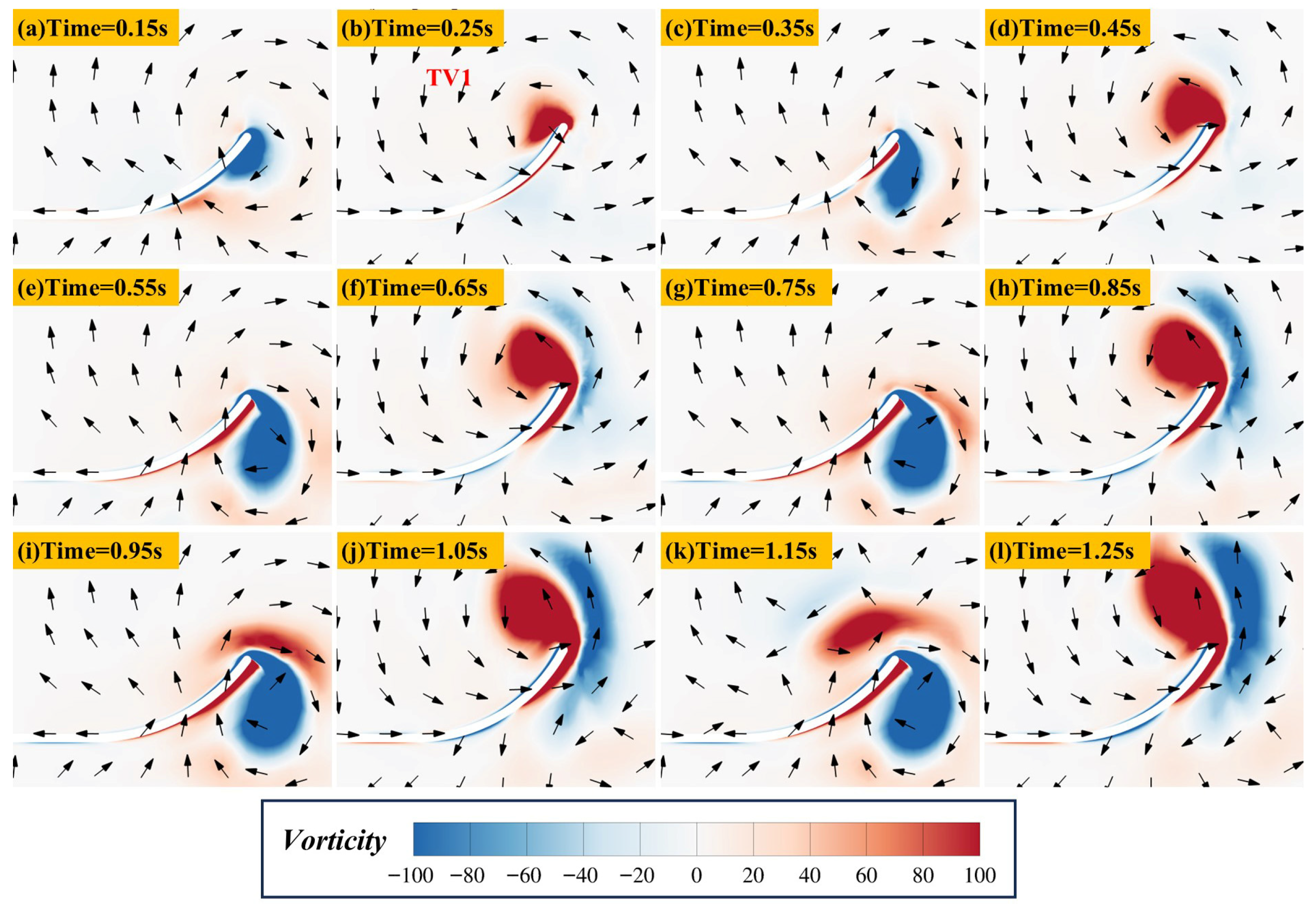
Figure 10 shows the vorticity and velocity vector distributions during the flapping-burying process in Case 16. It can be observed that strong shear layer separation occurs at the plate edges during each upward and downward flapping motion, inducing vortex structures at the plate tips. These vortex structures resemble the wingtip vortices of birds and aircraft. Their formation can be explained as follows: during upward flapping, the flow velocity below the plate decreases, leading to higher pressure, while the velocity above the plate increases, resulting in lower pressure. High-pressure and low-pressure fluids meet at the end of the plate, and the high-pressure fluid flows towards the upper part of the plate, generating wingtip vortices. During downward flapping, the vortex direction reverses. As the plate moves upward, fluid is transported from beneath the plate to above it. The alternating appearance of wingtip vortices during the flapping cycle induces a periodic entrainment–deposition process of the particle. Therefore, the unsteady flow distribution induced by flapping serves as the core driving force for particle fluidization and deposition.
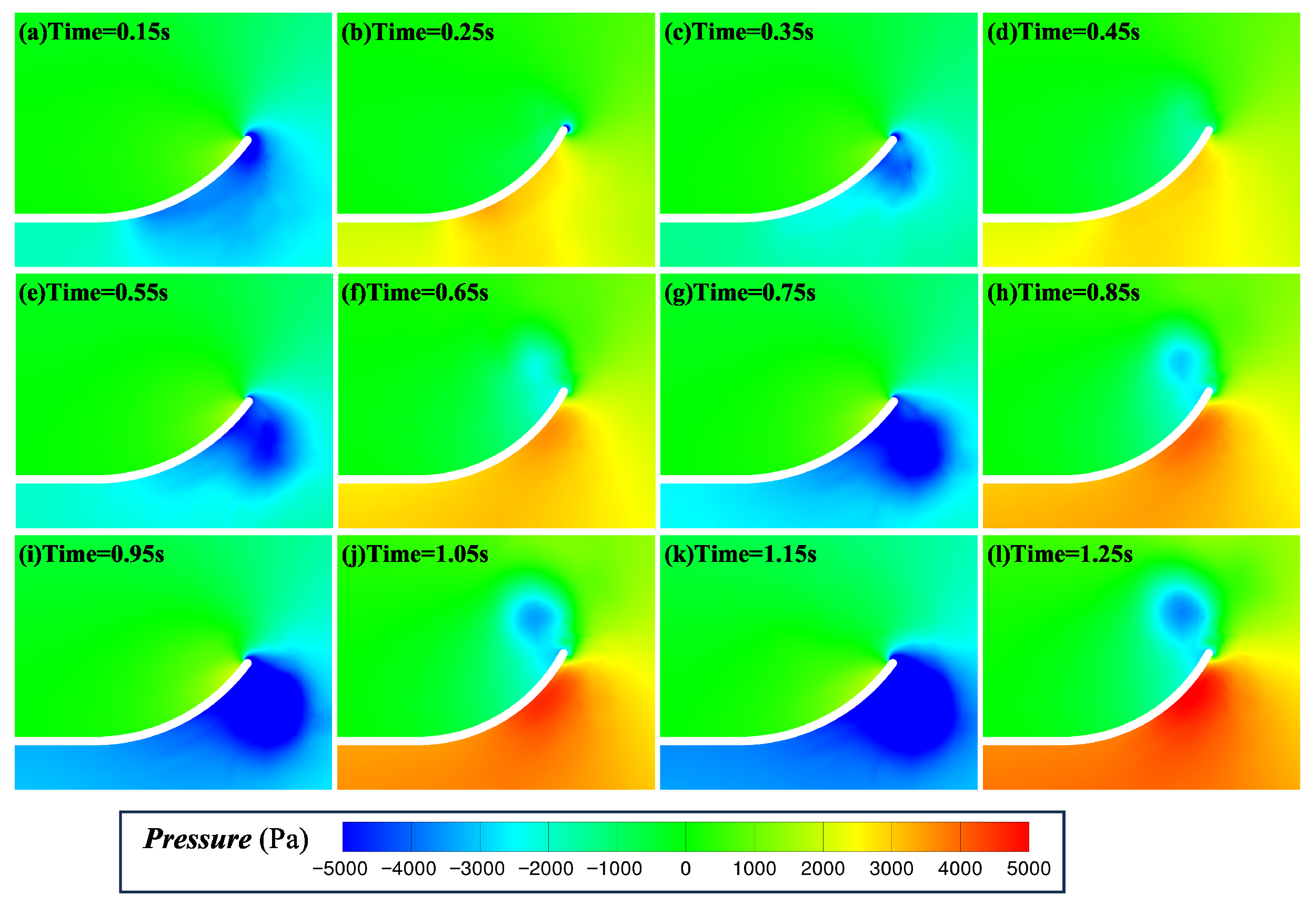
Figure 11 presents the temporal evolution of pressure during the flapping-burying process in Case 16. A significant pressure difference exists between the upper and lower surfaces of the plate during its motion. In upward flapping, a low-pressure region forms beneath the plate, and the fluid continuously entrains the particles at the bottom. In downward flapping, a high-pressure region develops beneath the plate, continuously transporting fluidized particles toward the upper surface. This periodic pressure distribution drives the surrounding fluid, continuously entraining particles from the bottom to the upper surface. The alternating pressure fields on both sides of the plate during flapping facilitate the uniform deposition of particles on the upper surface. Thus, the periodic variation in the pressure field provides a critical driving mechanism for particle transport.
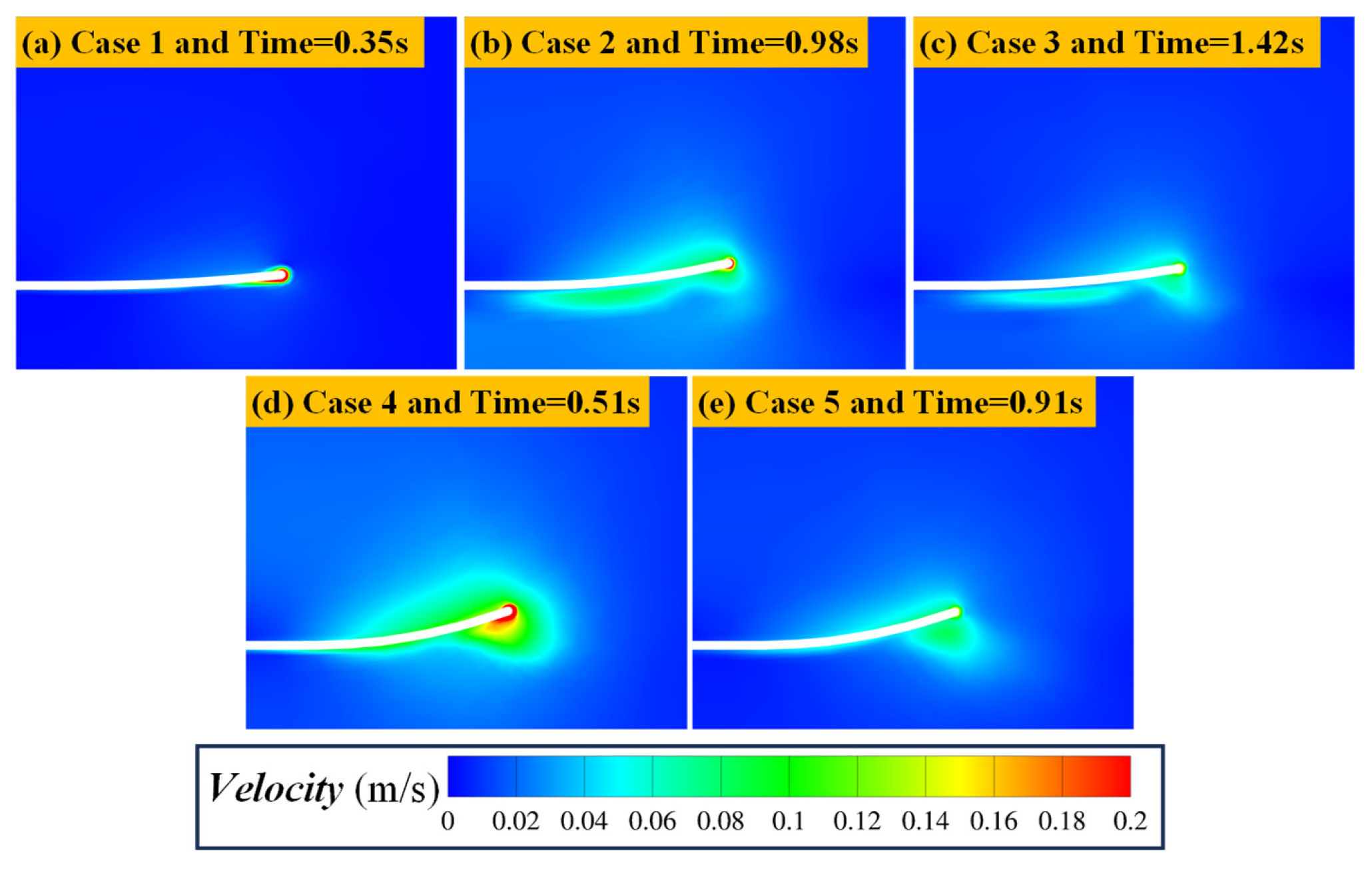
Figure 12 illustrates the velocity distribution at the moment of maximum velocity on the lower surface of the plate for five 3 cm plate cases (Case 1–Case 5). This moment approximately corresponds to the mid-phase of upward motion, at time 0.1 + (
N − 0.75)/
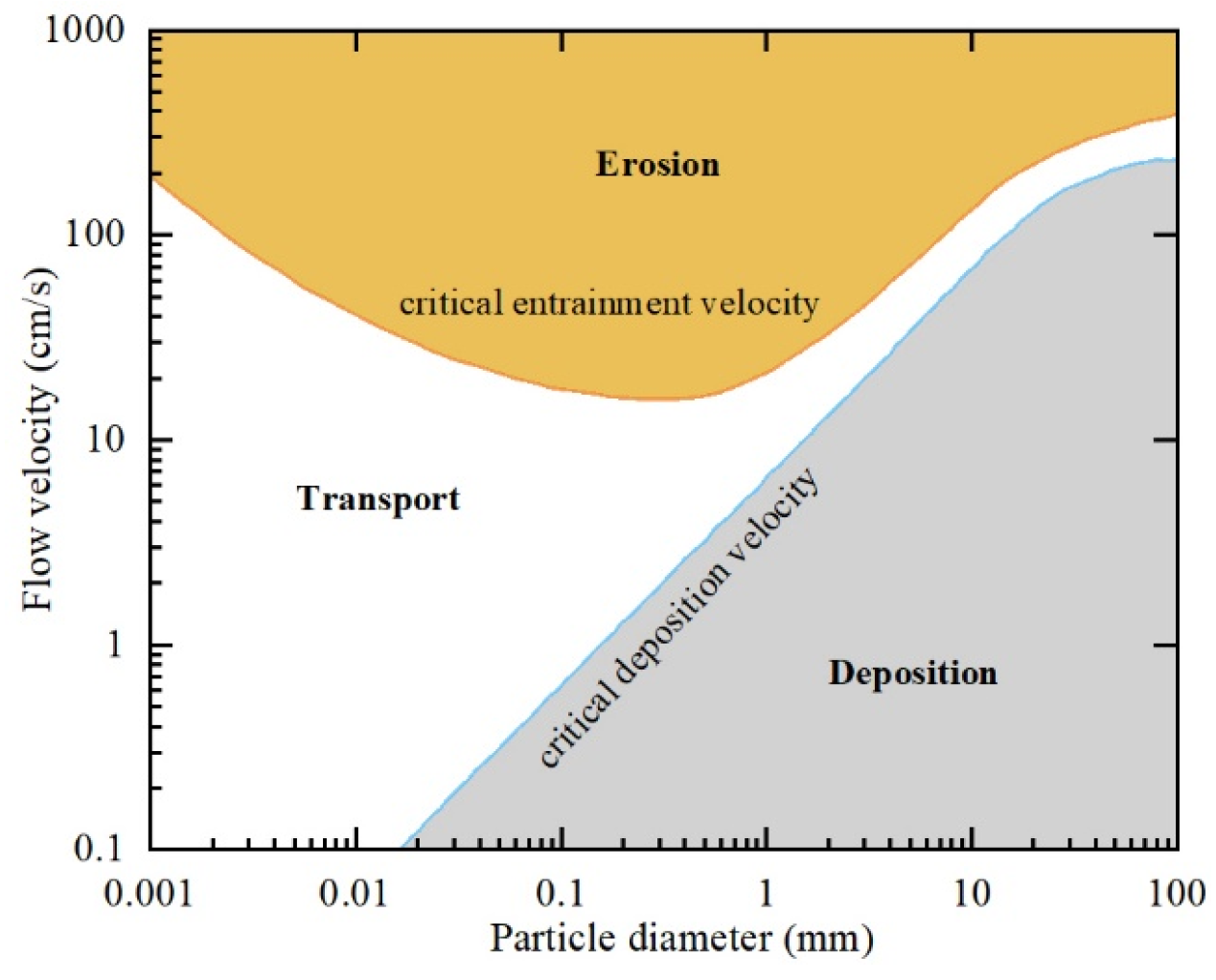
f. The body length of the five groups of cases was 3 cm, and all failed to produce effective burial behavior. The Hjulström curve can be used to describe the motion of particles in water. The Hjulström curve [
54] (
Figure 13) is an empirical diagram of the motion behavior of granular materials in water, which is used to quantitatively describe the relationship between water flow velocity and the motion states of particles of different sizes (erosion, transport, and deposition). According to this curve, the motion state of particles is divided into three categories: (1) When fluid velocity is below the critical start velocity, particles remain at rest. (2) When fluid velocity exceeds the critical start velocity, the force of the fluid on the particles exceeds the gravity and interparticle cohesion, leading to erosion, once the fluid rolls up the particles, only a small flow rate is needed to maintain the motion state of the particles. At this time, the particles are in the transportation stage. (3) When the flow velocity decreases below the critical deposition velocity, particles settle as the fluid force becomes insufficient to counter gravity and interparticle cohesion. Importantly, the critical start velocity varies with particle diameter. For the particle diameter (0.1–0.9 mm) in this study, the corresponding critical starting velocity is 0.2–0.35 m/s. Combined with the velocity distribution results in
Figure 12, it can be seen that the fastest velocity on the lower surface of the plate is approximately 0.1 m/s. At this time, the short plate has limited disturbance to the flow field during the flapping process. The velocity on the lower surface of the plate is low and lower than the critical starting velocity of the particles. Although the particles are disturbed by the fluid, they are difficult to fluidize and transport, so they fail to produce burial behavior.
To confirm that the larger fish size may be beneficial to the coverage and deposition of particles from the perspective of numerical simulation,
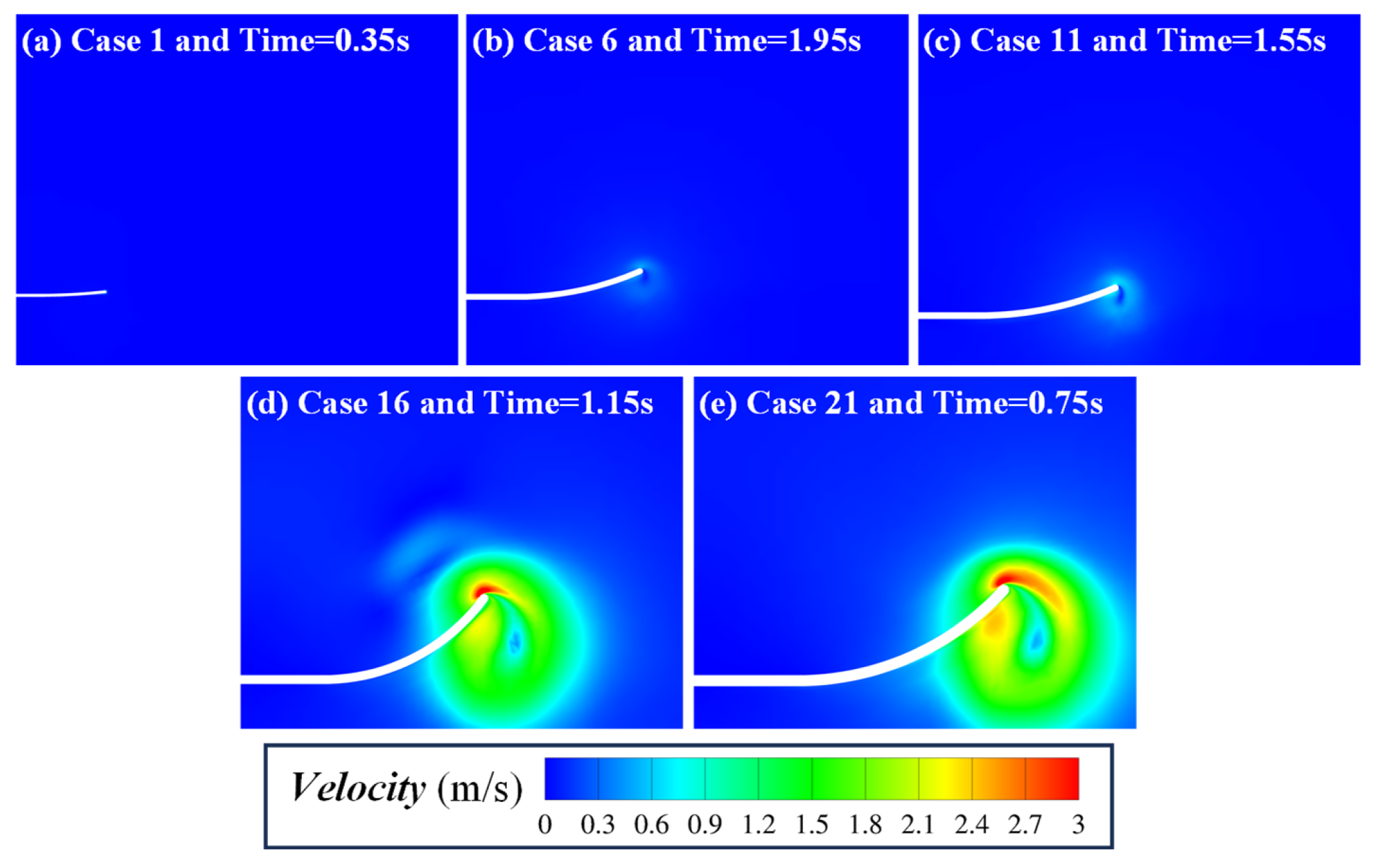
Figure 14 shows the flow field velocity distributions beneath the plate at the moment of maximum velocity for different plate lengths (Case 1, Case 6, Case 11, Case 16, and Case 21). The results indicate that as plate length increases, the intensity and spatial influence range of the generated velocity field by flapping grow significantly, making it easier for local velocities to exceed the critical start velocity defined by the Hjulström curve. Consequently, particles become fluidized and burial occurs. This explains why longer plates produce clear burial effects, while shorter plates fail to do so.
In summary, by integrating the Hjulström curve with flow field analyses across different cases, the inability of shorter plates to induce burial and the effectiveness of longer plates in achieving burial can be clearly explained. However, it should be pointed out that flow field contours alone cannot directly reveal the relative effects of motion parameters (flapping amplitude, frequency, and number) and environmental parameters (particle size) on input power. Similarly, it is difficult to intuitively analyze the influence of various factors on the burial efficiency from the flow field cloud diagram. At the macroscopic level, burying efficiency is jointly influenced by fish body length, flapping amplitude, frequency, number, and particle size. At the microscopic level, it is affected by complex interactions involving fluid vorticity, pressure distribution, and interparticle forces. Thus, burying efficiency exhibits multifactor coupling effects, and relying solely on flow field contours cannot accurately uncover its underlying mechanisms. Therefore, subsequent research should adopt the method of controlled variables to control and compare key parameters, thereby elucidating the mechanisms by which different factors influence fish burying behavior.
6. Discussion
The orthogonal experiments and range analysis results indicate that fish body length has the most significant influence on the coverage ratio. Longer bodies can generate larger-scale fluid disturbances during flapping, causing more sediment particles to deposit over the body surface and thus increasing the self-burial coverage ratio. However, this pattern contradicts the observations of Corn et al. [
40] on the self-burial of the
Parophrys vetulus. Corn et al. reported that body size had no significant effect on burial ratio, with both large and small individuals achieving comparable burial extents. The reason for this difference is likely to be related to the flapping frequency. According to their observations, larger fish bury themselves at lower flapping frequencies, whereas smaller fish employ higher flapping frequencies. Therefore, it can be inferred that when large and small fish bury at the same flapping frequency, the coverage ratio of larger fish will be significantly higher than that of smaller ones. This inference not only validates the significant influence of body length on coverage ratio but also aligns with the conclusions of the present orthogonal experiments. The numerical simulation results further corroborate this finding: as plate length increases, the velocity field intensity and disturbance range generated by flapping are substantially enhanced, making it easier for local flow velocity to exceed the critical start threshold defined by the Hjulström curve, thereby fluidizing particles and initiating the burial process.
The orthogonal experiments and range analysis also demonstrate that particle size exerts the weakest effect on coverage ratio. The reason for this rule can be explained in three aspects. First, in terms of body structure, the eyes of many benthic fish are located on the back of the body, that is, facing the water surface and back to the seabed, which may lead to the inability to perceive the particle size information of seabed sediments. Thus, burial behavior may not rely on the fish’s active selection of granular sediments of specific sizes. Second, from the perspective of biological evolution, burial is an adaptive strategy for predator avoidance and prey capture. To achieve self-burial across diverse benthic environments, benthic fish must be capable of burying themselves in sediments of varying sizes rather than depending on a specific grain size. Third, from the perspective of the present numerical simulations, the Hjulström curve (
Figure 13) shows that for particles with diameters between 0.1 mm and 0.9 mm, the critical start velocity ranges from 0.2 m/s to 0.35 m/s. The critical start velocity difference in different particle sizes is much lower than the flow velocity difference caused by the change in kinematic parameters. As shown in the flow velocity field contours in
Figure 14, when the velocity beneath the plate reaches its maximum, the bottom-surface velocity in Case 21 is nearly ten times that in Case 1. Compared with the variation in critical start velocity caused by particle size, the effect of fish body motion parameters on flow field velocity intensity is far more pronounced. Therefore, while sediment grain size does affect coverage ratio to some degree, its role is much weaker than the fluid disturbances generated by the geometric parameters and kinematic parameters of the fish body.
Regarding input power, it shows a strong correlation with fish body length. This result means that energy consumption is more determined by geometric scale. This phenomenon is also reflected in nature: large
Potamotrygon motoro, for example, generate intense vortices through wide-amplitude pectoral fin flapping during burial. However, their overall flapping frequency remains low, and the burial process takes longer, thereby reducing energy expenditure per unit time [
40].
Flapping amplitude and frequency emerged as secondary factors in this study, but they still contribute to self-burial by modulating the intensity of fluid disturbance. Moderate increases in amplitude and frequency enhance fluidization beneath the body and promote particle transport onto the dorsal surface, thus improving the coverage ratio. However, excessively high frequencies may reduce burial efficiency. This echoes the experimental findings of McKee et al. [
43]: although a silicone biomimetic model achieved greater coverage areas at frequencies above 10 Hz, the excessively high frequencies far exceeded the physiological capacity of natural fish, suggesting that benthic fish operate within adaptive boundaries of kinematic parameters.
From an engineering standpoint, the findings of this study offer important reference value for the benthic residence method of bionic self-buried UUV. First, the size of flapping wings dictates both the scale and intensity of fluid disturbances. Wings that are too small may fail to generate sufficient disturbance to exceed the critical start velocity, leading to burial failure, and too large wings increase structural load and input energy demand. This indicates that when designing self-buried UUVs, a balance must be struck between airfoil parameters and burial capacity. Second, strategies for coordinating kinematic parameters can be directly applied in biomimetic design. For instance, larger fish typically achieve burial at lower flapping frequencies, while smaller fish do so at higher frequencies. By combining geometric and kinematic parameters appropriately, it is possible to maintain high coverage ratios while reducing maximum instantaneous energy consumption, thereby extending endurance. Finally, the weak influence of sediment grain size suggests that biomimetic self-burial UUVs possess strong adaptability across diverse seabed environments, without requiring parameter adjustments for different sediments.
Although this study investigated the influence of geometric and kinematic parameters of benthic fish on self-burial behavior through numerical simulation and orthogonal experiments, there are still certain limitations. First, the simulations did not account for pectoral fin flexibility; instead, they directly specified fin boundary displacements. Flexible deformation of the fins may play an important role in self-burial. Second, the orthogonal experiments used here only allow for evaluating the influence of different factors. Future work could employ controlled variable methods to reveal the influence mechanisms of each factor on self-burial performance.
7. Conclusions
Based on the numerical simulation method, this study established a two-dimensional fluid-particle coupling model for the burial behavior of benthic fish. The pectoral fins are simplified as flexible plates, and the entire self-burial process induced by fin flapping is reproduced using an Euler–Euler multiphase flow framework, the SST k–ω turbulence model, and the Gidaspow interphase drag model. The spatiotemporal evolution of particle volume fraction, fluid vorticity, velocity vectors, and pressure fields during burial was analyzed. Within the orthogonal experimental framework, the relative influence of body length, flapping frequency, flapping number, flapping amplitude, and sediment grain size on the self-burial effect was systematically examined. Three quantitative indices—coverage ratio, input power, and burial efficiency—were employed for evaluation. Based on the numerical simulation and orthogonal experimental results, the following conclusions can be drawn:
- (1)
Orthogonal analysis reveals that fish body length is the most significant factor affecting both burial coverage ratio and input power. Larger body lengths generate stronger vortical structures and wider fluid disturbances, thereby markedly increasing coverage ratio. However, although larger individuals are more capable of achieving burial, this comes at the cost of greater energy consumption; smaller individuals, while requiring less energy, are less effective in producing sufficient sediment coverage. Flapping amplitude and frequency also play important roles. The higher flapping frequency contributes to the formation of a high-intensity vortex and the acceleration of particle suspension in a short time; however, if the frequency is too high, the burial efficiency may decrease due to the inertial effect of the fluid. Sediment grain size has a certain influence on burial performance, but compared to the geometric and kinematic parameters of the fish body, its role is relatively secondary.
- (2)
The numerical simulations visualize the evolution of the flow field during the self-burial process driven by pectoral fin flapping. The burial process of benthic fish can be described as follows: periodic flapping of the fins generates a vortex structure at the end of the wingtip vortex, which alternately acts on the flow field, entraining and transporting sediment upward until it gradually deposits on the dorsal surface of the plate to form a coverage layer. Meanwhile, alternating low-pressure suction and high-pressure thrust develop above and below the surface of the plate, enhancing sediment entrainment and transport. When the local flow velocity exceeds the critical start threshold of sediment particles, the sediments are effectively fluidized and enter a transport state, ensuring the continuity of the burial process. The periodic disturbance of the velocity field provides a stable transport pathway, maintaining a circulation loop from sediment rolling up to transportation.
This study elucidates the mechanisms by which geometric and kinematic parameters influence the self-burial process of benthic fish, offering important implications for the design of biomimetic self-burial UUVs. First, wing surface size directly determines the scale and intensity of fluid disturbances: undersized wings may fail to exceed the critical start velocity, leading to burial failure, while oversized wings substantially increase structural loads and energy consumption. Therefore, a balance between burial capacity and energy efficiency is essential. Second, kinematic parameters should be coordinated with geometric scale: larger wingspan may adopt lower flapping frequencies, amplitudes, and numbers to reduce instantaneous power requirements, whereas smaller spans require higher-frequency and larger-amplitude flapping to maintain sufficient coverage. This synergistic relationship between wing geometry and motion kinematics can guide the optimization of motion control strategies for self-burial UUVs. Finally, the influence of sediment particle size on the burial performance is limited. In comparison, the impact of kinematic parameters and geometric parameters on the burial performance is more significant. Therefore, more attention should be paid to the reasonable selection and optimization of motion parameters and geometric parameters in the design of self-buried UUVs.