1. Introduction
In high-risk engineering fields such as vehicles, aviation and ships, the design of energy-absorbing structures is closely related to the safety of occupants because it often bears the last line of defense for accident energy dissipation [
1,
2,
3,
4,
5]. However, existing thin-walled energy-absorbing structures commonly show critical bottlenecks under actual impact conditions: initial peak crushing force (IPCF) are difficult to effectively control, local buckling and deflection are common during folding, and energy absorption efficiency decreases rapidly during the mid-to-late stages of collision. As high-speed equipment requires more demanding safety standards, lightweight design, and resistance to impact reliability, the energy-absorbing capacity of conventional rectangular, polyhedral, and conical thin-walled types is reaching its limit. Their load-management capabilities and consistent energy absorption performance are unable to cope with the effect levels and structural restrictions imposed by new regulations [
6].
To improve the energy absorption capacity of thin-walled structures, researchers usually fill the interior of hollow tubes with porous materials such as honeycomb structures [
7,
8], lattice structures [
9,
10], or metal foams [
11,
12]. Honeycomb structure has been widely concerned by researchers because of its regular arrangement of holes and excellent specific stiffness. It is often fabricated into metal sandwich panels such as aluminum alloy, stainless steel and titanium alloy and used in aviation, vehicle and protective engineering [
13]. Rahimijonoush et al. [
14] studied sandwich panels consisting of titanium faces and aluminum honeycomb cores at various projectile impact velocities. The results indicate that asymmetrical face thickness designs perform better against high-velocity impacts. Similarly, Sun et al. [
15] performed a comprehensive analysis of the effect of geometric parameters such as aluminum plate thickness and honeycomb cell dimensions on collision responses. To improve the ability of structures to dissipate energy, honeycomb gaps were turned into lattice structures. These structures can be either two-dimensional (2D) or three-dimensional (3D) [
16]. Two-dimensional (2D) stretched lattices and hierarchical 2D lattices are two common types of 2D structures. Three-dimensional structures are often made up of spatial arrays of cubic, pyramidal, rhombic dodecahedral, or octahedral cells. Wei et al. [
17] used impact theory to construct and analyze the dynamic fragmentation behavior of star-triangular honeycomb (STH) auxiliary structures at various impact velocities. Hu [
18] and He et al. [
19] then proposed unit nesting and array combination methods that enhanced the energy absorption performance of 2D lattice matrices.
In contrast, foam metals, particularly foam aluminum, have received more attention in the recent past owing to their lightweight features and high specific energy absorption capacity, exceeding honeycomb and lattice structures [
20]. The efficiency of foam aluminum is greatly impacted by the manufacturing process, notably the control of pore dimensions and pore structure parameters. Wang et al. [
21] reviewed the influence of pore size of aluminum foam on the mechanical properties of the whole material in recent years, and found that the uniform distribution of pore size is more conducive to the coupling effect between foam and thin-walled tube. In view of this research direction, Zhang et al. [
22,
23,
24] systematically studied the interaction mechanism between aluminum foam cores with different density gradients and thin-walled structures, and revealed the regulation effect of layered aluminum foam on the energy absorption behavior of structures. Furthermore, Googarchin et al. [
25] proposed a prediction model of average compressive load when studying foam-filled conical tubes, which provided theoretical guidance for engineering design. In addition, Costas et al. [
26] developed a composite collision box structure by combining aluminum tube, GFRP frame and PET foam core, which fully demonstrated the great potential of the synergistic effect of aluminum foam and composite materials in improving energy absorption performance. These studies have shown that metal foams not only have unique advantages in porous material systems but also provide core material support for the design of high-performance thin-walled energy-absorbing components.
Recently, biomimetic design has gradually become the mainstream research direction in the field of energy-absorbing structures. The natural mechanical structures in organisms such as microorganisms [
27,
28], plants [
29,
30], and animals [
31] provide rich design inspiration for engineering protection systems and promote the development of innovative energy-absorbing structures. Based on the skeleton characteristics of deep-sea glass sponge, Xu et al. [
32] proposed a biomimetic cylindrical sandwich structure (BCCS) with a counter-supporting lattice, which exhibits higher energy storage capacity under impact load. Luo et al. [
33] drew inspiration from the natural spiral structure and constructed a foam-filled spiral tube (FFST), which can significantly reduce the load fluctuation of the structure in a high-load scenario, thereby improving its energy absorption stability. Similarly, Pham et al. [
34] developed biomimetic multi-cell tubes by imitating the multi-cell configuration of the cross-section of bamboo cross-section, which showed excellent comprehensive impact resistance under axial and inclined loading. In contrast, Emre [
35] considered the microporous voids within bamboo cross-sections and employed PLA material to fabricate tubular structures with varying grid patterns via 3D printing technology, subsequently conducting research on their energy-absorbing properties. Further, Yao et al. [
36] proposed a bioinspired multicellular tube (BIMCT) based on the hierarchical structure of animal long bones. The lateral multi-cell layout and axial gradient foam filling inside the structure achieve the controllability of the crushing process. It is also found that the design of thickness gradient can improve the crushing stability of the structure, while the increase in average density will reduce the specific energy absorption (SEA) and cause the increase in IPCF. In addition, Wei et al. [
37] proposed a biomimetic multi-cell tube configuration based on the microscopic fractal structure of beetle elytra, in which the B-type structure is the most prominent in the overall energy absorption performance. These studies show that the biomimetic design strategy can provide new design freedom in structural topology, material gradient and local strengthening mechanism, and provide a reliable engineering path for the development of more efficient and stable energy absorbers.
In the field of topological design and structural optimization, numerous studies recently have analyzed the force-bearing mechanisms of biological structures and simplified skeletal features, leading to the development of various innovative topological configurations with outstanding mechanical properties. Regarding mechanical performance enhancement, Yang et al. [
38] analyzed the force transmission and tensile load-bearing capacity of mesh structures inspired by spider webs. Using topological optimization, they developed a biomimetic mesh fabric structure applied to engineering scenarios such as interception, capture, and transportation. In the field of energy-absorbing structures, Zhang et al. [
39], inspired by the origami-like geometric features of tree branching regions, proposed a topological reconstruction of bark to create an OTSs structure for dissipating collision energy in railway vehicles. Beyond thin-walled structures, researchers modeled and optimized spatial topological features based on the multiscale fiber architecture of deep-sea glass sponges [
40], proposing a biomimetic sponge metamaterial structure for architectural protection applications.
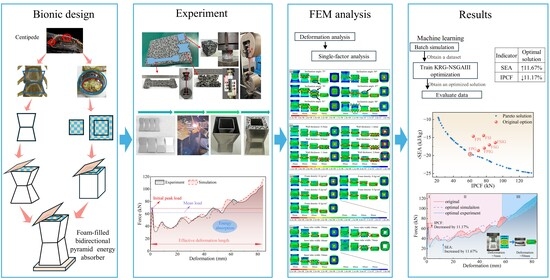
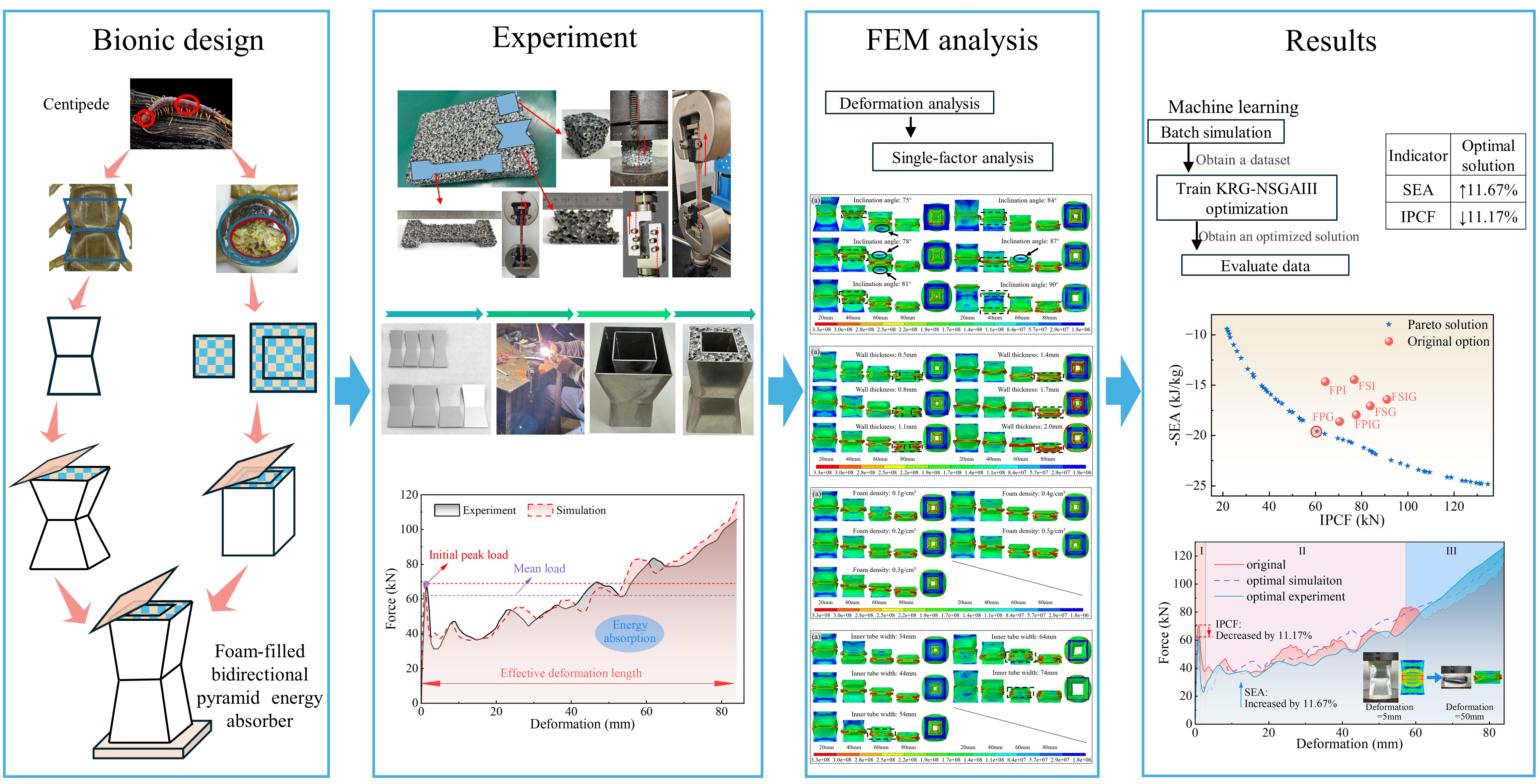
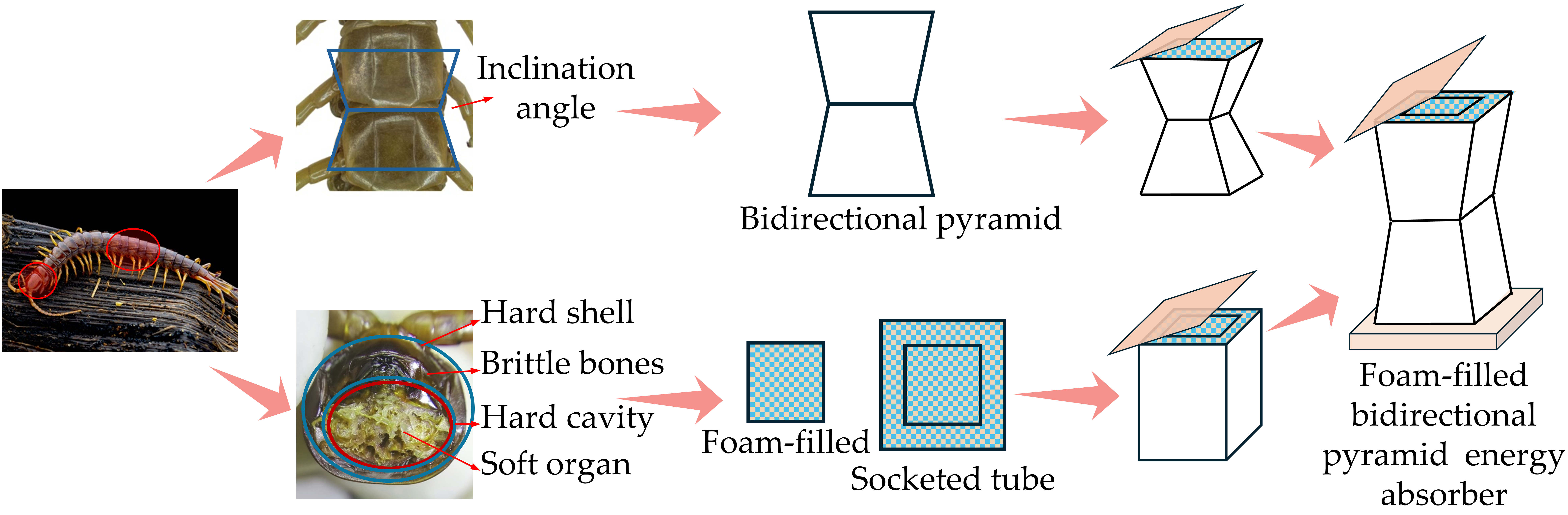
Although there have been a lot of studies in the field of porous materials and bionic structures, there are still some shortcomings in the existing work. The design of many bionic energy-absorbing structures only stays in the imitation of local morphology and lacks in-depth research on the multi-section coordination mechanism of organisms. In particular, the progressive folding mode and load transfer law of invertebrates such as centipedes in special environments have not been fully utilized. In addition, the research on the coupling effect between metal foam and bionic geometric shell is limited, and the influence of geometric parameters on energy absorption performance is not clear. Most of the current energy-absorbing structure designs rely on experience or local optimization and lack a systematic optimization framework based on high-precision surrogate models. In view of these shortcomings, this study proposes a bi-directional pyramid aluminum foam-filled composite energy-absorbing structure based on the centipede folding mode. Combined with experiments and finite element analysis, its deformation and energy absorption mechanism are revealed, and Kriging (KRG)-NSGA-III multi-objective optimization research is carried out. This study aims to fill the gap in the coupling optimization design of bionic folding mechanism and porous materials and provide new strategies and application basis for anti-collision energy-absorbing structure and lightweight design.
4. Parametric Analysis of FPG Under Axial Compression
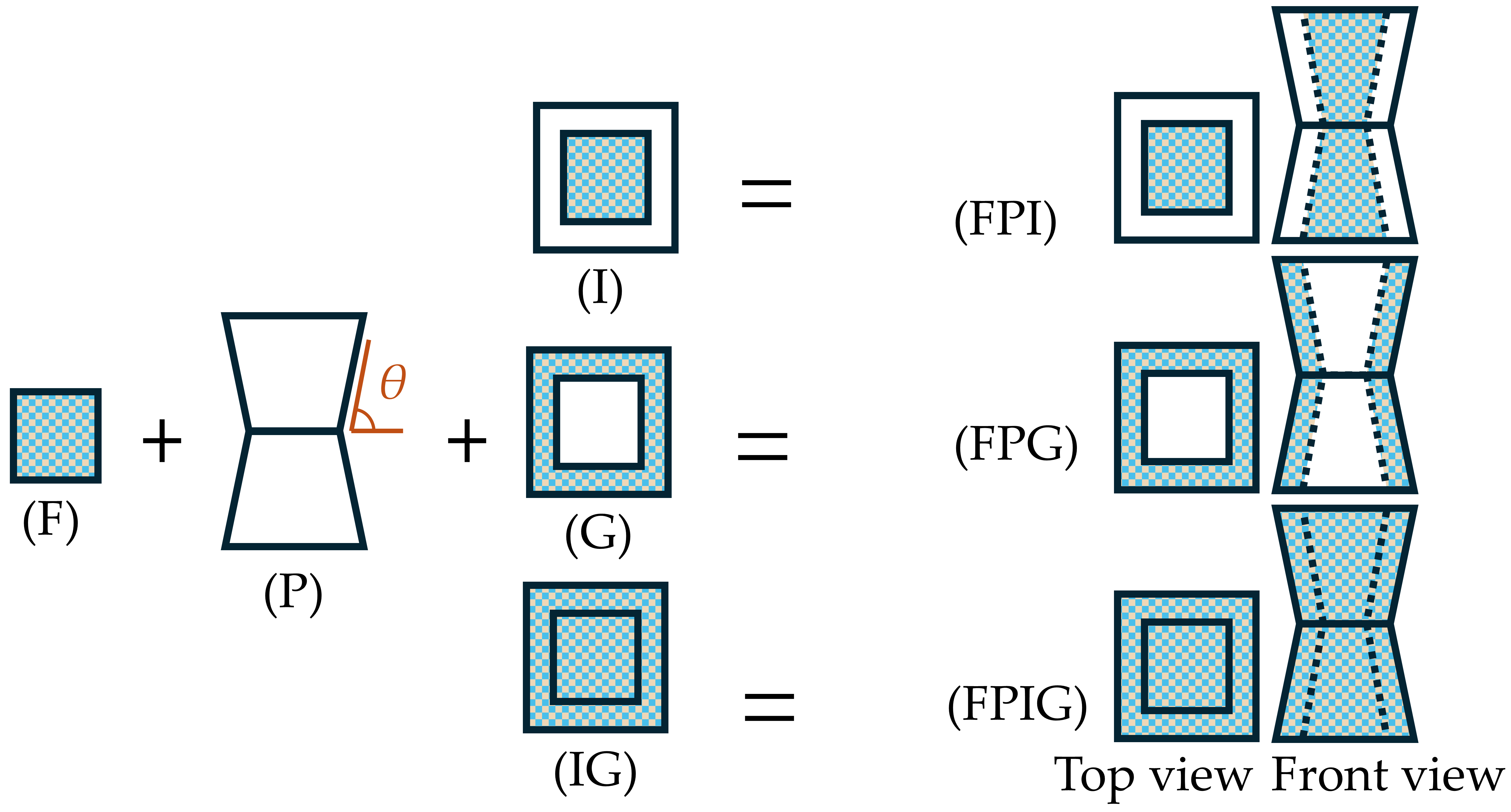
This section systematically analyzes the influence of geometric parameters on the deformation behavior and impact resistance of the FPG-type centipede-inspired energy-absorbing structure. The core geometric parameters of the FPG structure include tilt angle
θ, wall thickness
t, foam aluminum density
ρ, and inner tube width
d. The wall thickness
t was selected within the range of 0.5–2.0 mm, referencing research literature [
54,
55,
56] on thin-walled aluminum alloy energy-absorbing structures to balance structural stiffness and toughness requirements. The aluminum foam density varied between 0.1 and 0.5 g/cm
3. Existing studies [
11,
57] indicate that aluminum foam within this density range exhibits excellent impact energy absorption properties, effectively balancing energy dissipation and structural deformation. The inclination angle
θ is set between 75° and 90°, referencing literature on optimizing the crashworthiness of conical tubes under impact loads [
58] to ensure research validity. The range for inner tube width
d is constrained by material thickness and structural geometry: considering the minimum foam aluminum plate thickness of 3 mm (thinner plates are brittle and compromise hardness), the maximum inner tube width is calculated as 74 mm based on outer tube dimensions and wall thickness, while the minimum is 34 mm, derived from geometric relationships and material constraints. To ensure comprehensive parameter analysis, 5–6 equidistant values were designed within each parameter range (see
Table 3), providing a complete design space for subsequent numerical simulations and experimental validation.
4.1. Effect of Inclination Angle on Crashworthiness
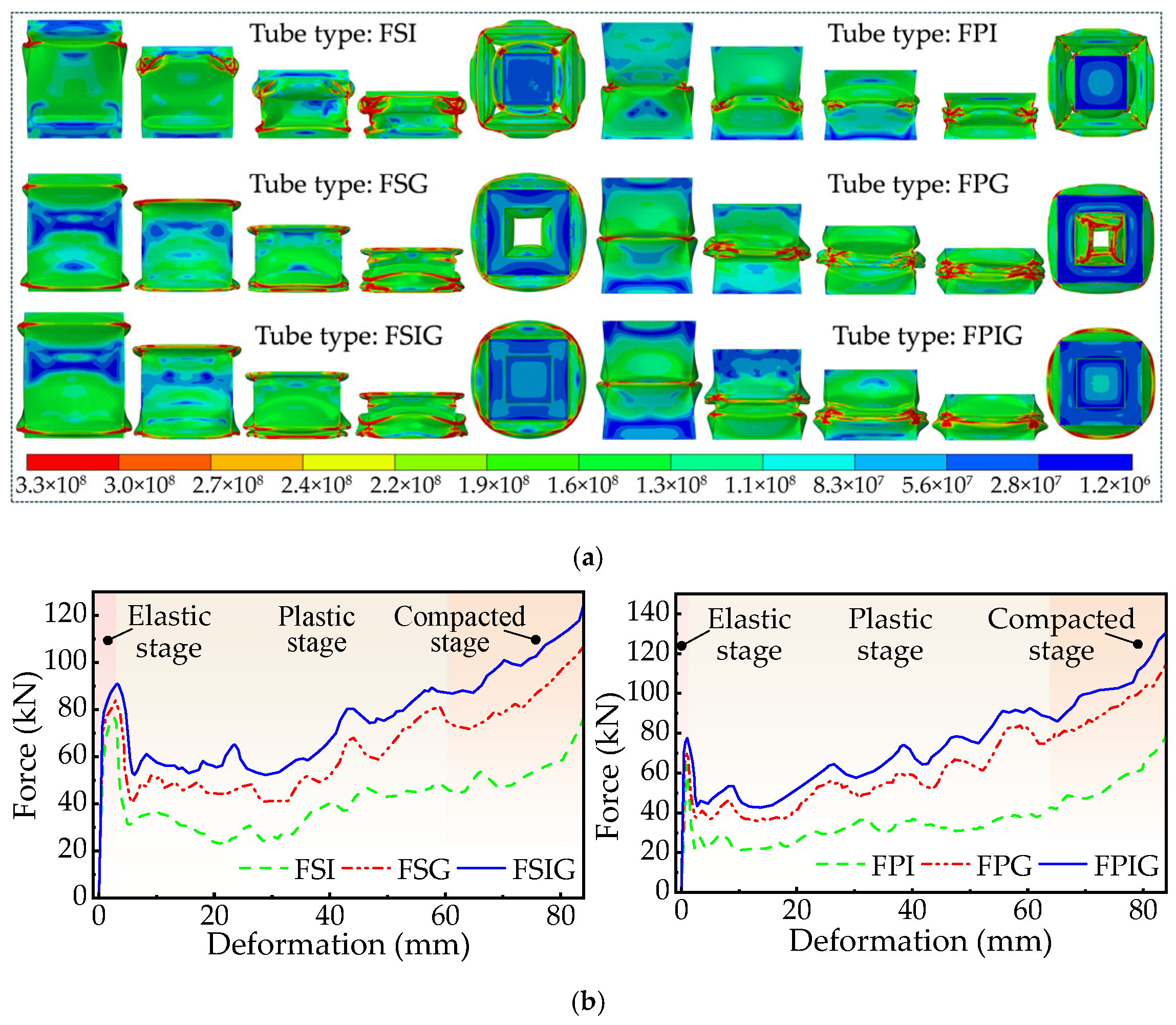
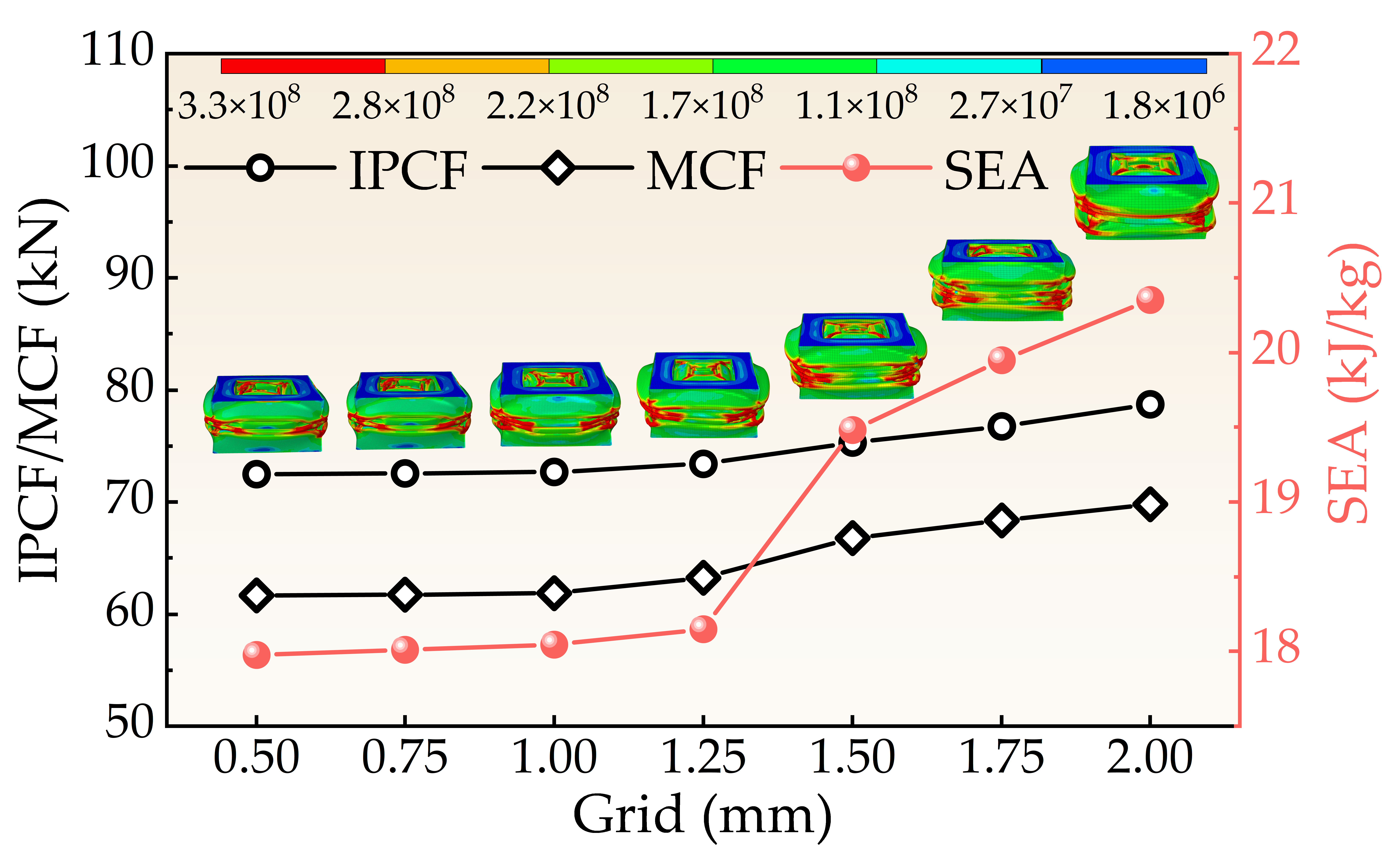
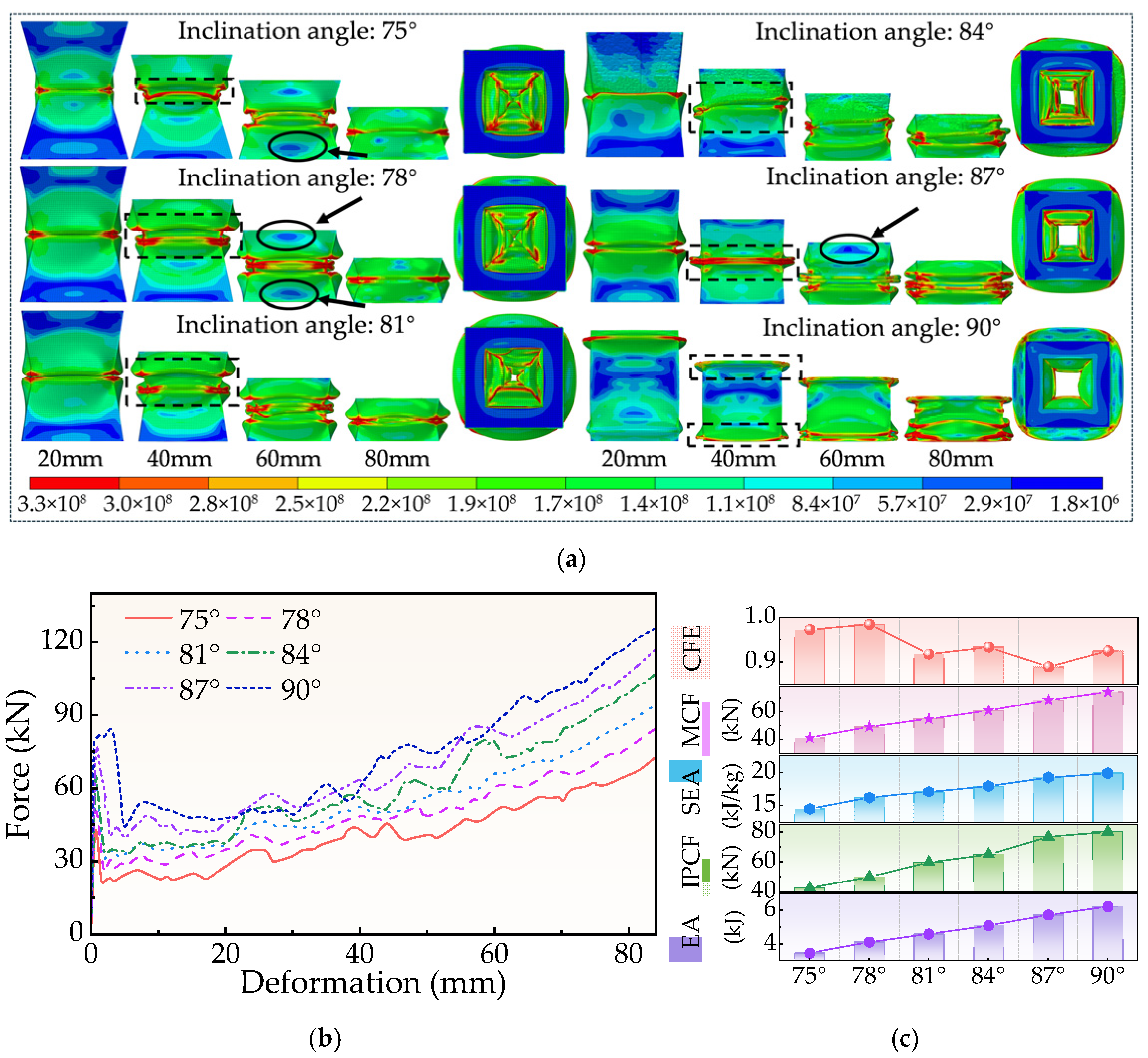
The development of deformation in FPG structures exposed to axial compression between 20 and 80 mm at different inclination degrees is shown in
Figure 10a. The location of the plastic hinge’s formation gradually moves toward both ends of the structure as
θ increases. Structures with slopes of 84° and 87° show significant downward displacement and buckling zone expansion at 60 mm. The impact-bearing zone expands, and when
θ exceeds 87°, the structure’s ability to concentrate energy absorption diminishes because local component stress becomes too laterally dispersed. Additionally, a low-stress area can be apparent at the position of 60 mm when
θ is less than 78° or greater than 87°. The local minimum stress is even lowered to about 1.8 × 10
7 N, demonstrating that the structure has an irregular stress phenomenon that affects the stability of its energy absorption behavior.
The matching force-displacement curve is shown in
Figure 10b. After encountering the initial peak crushing force, the structure of each inclination angle generally reaches an extremely steady energy absorption stage. The instability of the buckling mode and the discontinuity of the plastic energy dissipation route are reflected in the curve’s more frequent peaks and troughs when
θ < 78°. Conversely, a prolonged high-load platform occurs before the first peak force when
θ = 90°, indicating that the structure forms a broad pushed compression zone in the early stage. The energy absorption effect of energy-absorbing components is not supported by this very high and continuous load level.
Key crashworthiness index changes are outlined in
Table A1 and
Figure 10c. As the inclination angle
θ increases, IPCF, EA, SEA, and MCF all exhibit an upward trend. Specifically, at
θ = 75°, their values are 42.44 kN, 3.47 kJ, 14.50 kJ/kg, and 41.26 kN; at
θ = 90°, their values are 80.12 kN, 6.22 kJ, 19.88 kJ/kg, and 74.07 kN. Throughout this process, IPCF increased by 88.76%, EA increased by 79.55%, SEA increased by 37.10%, and MCF increased by 79.55%. The primary reasons are: (1) The increased tilt angle increases the extent of material available for plastic energy dissipation through increasing the aluminum foam filling area; (2) The external thin-walled shell’s increased tilt angle boosts axial load-bearing capacity, which improves the peak fracture force in proportionally. However, when the inclination angle is too large, the overall deformation mode of the structure will be transformed into rigid resistance, resulting in the inhibition of the progressive collapse characteristics that the energy-absorbing structure should have, thereby reducing its energy absorption effect.
In summary, the inclination angle has a dual effect on the energy absorption performance of the FPG structure. Too small inclination angle will lead to buckling instability and discontinuous stress concentration, while too large inclination angle will make the stress mode of the structure tend to be rigid, thus reducing the flexible collapse capacity required in the energy absorption process. Therefore, the optimal energy absorption performance of the FPG structure usually appears in a moderate inclination angle range, and a reasonable balance needs to be found between the stable buckling mode and the effective energy absorption capacity.
4.2. Effect of Wall Thickness on Crashworthiness
One important factor influencing the FPG energy absorption unit’s general stability, initial peak force, and energy absorption mode is the wall thickness t.
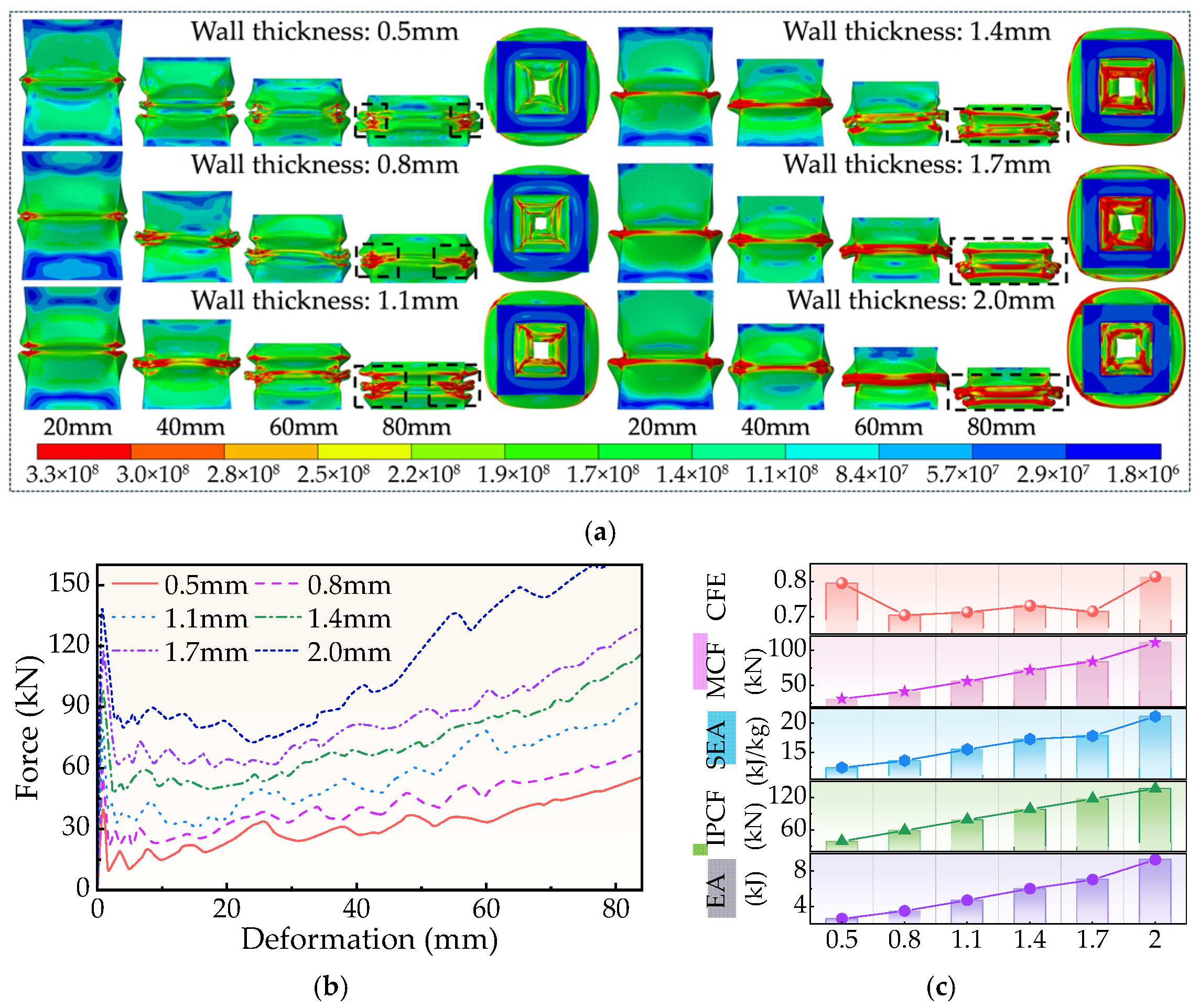
Figure 11a shows how the local buckling sensitivity of thin-walled tubes reduces as wall thickness grows, and the structure progressively switches from “local wrinkle-dominated” to “overall collapse-dominated.” The structure has outstanding deformation controllability and is readily capable of creating buckling waves locally under thin-walled conditions (
t = 0.5 mm), which leads energy to dissipate rapidly in a small area. Increasing the wall thickness to 2.0 mm greatly improves the tube wall’s stiffness, which causes stress to be transferred over a larger area during compression. As a result, the high-stress band almost entirely covers the loading end, preventing the formation of controllable wrinkles. The lack of stability leap that commonly follows such “overall rigid crushing” shrinks the energy absorption process’s smoothness.
The initial peak force grows greatly with wall thickness (
Figure 11b), reaching from 39.69 kN for 0.5 mm to 136.85 kN for 2.0 mm), the increase rate is 245%. In addition to increasing impact acceleration during the structure’s startup phase, the accompanying peak force surge could lead to an in-load transfer that is unfavorable to the main structure, even though thicker walls can increase the plastic stage’s bearing capacity and cause the total energy absorption EA to continue increasing. Further, improving the energy absorption capacity per unit mass is constrained by the mass increase brought on by thicker walls.
Table A2 and
Figure 11c further demonstrate that while an increase in wall thickness raises EA from 2.65 kJ to 9.35 kJ, an increase in mass from 0.212 kg to 0.441 kg limits the rise in SEA value. It means that while the wall thickness is too large, the rate of energy absorption decreases due to the simultaneous increase in mass and peak force. In contrast, the FPG construction still has room to maximize the energy absorption efficiency in the thin-walled interval (≤1.0–1.2 mm).
In short, wall thickness is an important factor that impacts the buckling mode, energy distribution mode, and energy absorption efficiency as well as being the primary parameter influencing the structural strength. Under the presumption of ensuring structural strength and stability, the correct choice of wall thickness may achieve the optimum equilibrium between mass, peak force, and energy absorption efficiency.
4.3. Effect of Foam Density on Crashworthiness
The impact of aluminum foam density
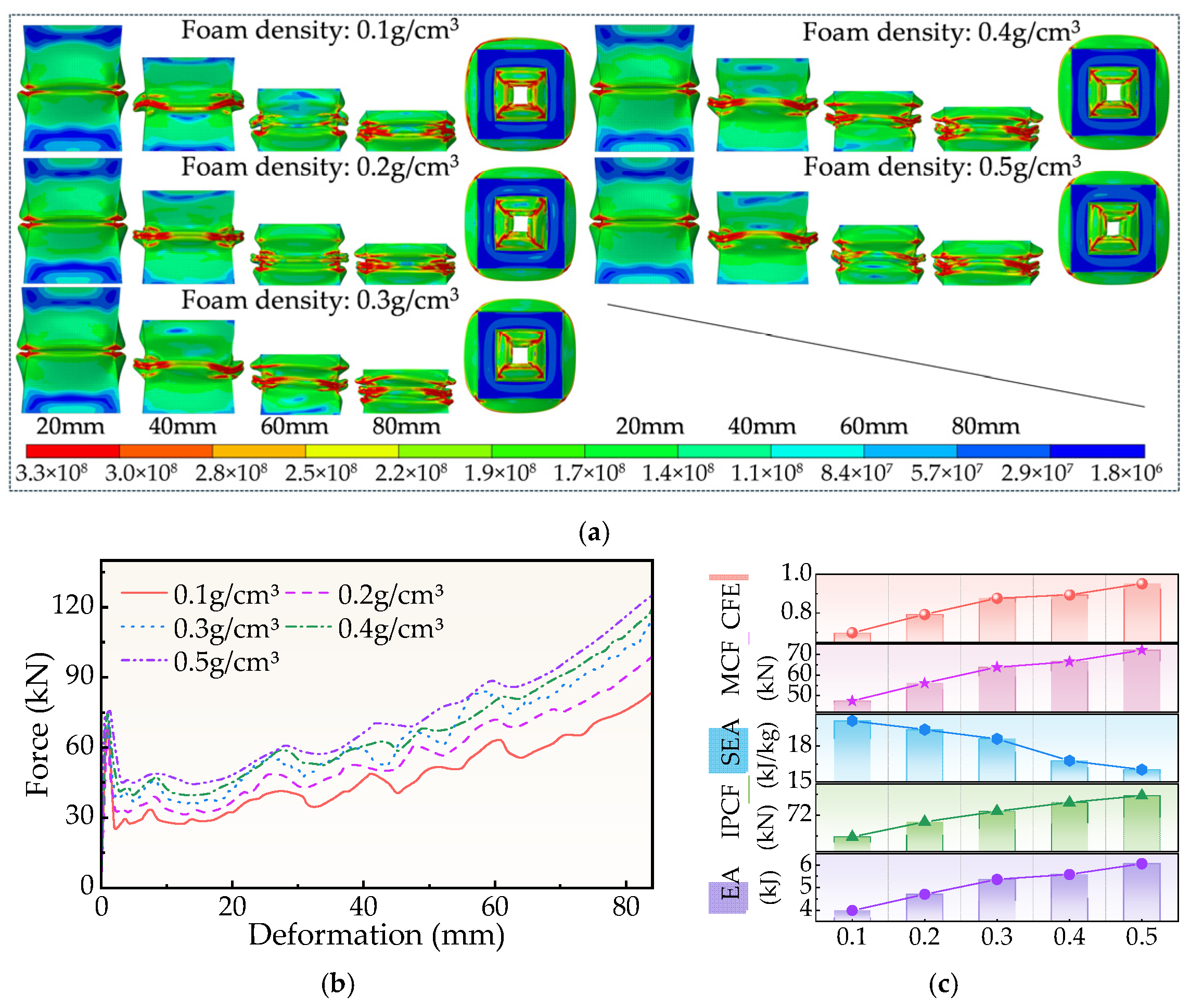
ρ on the FPG structure’s deformation mode is portrayed in
Figure 12a. The foam material provides stronger support for the thin-walled outer tube during the compression process, the plastic hinge formation is more stable, the buckling position becomes simpler to control, and the overall stress field is more uniform as
ρ grows since it increases the foam material’s yield platform stress. The high-density foam enhances the stability of deformation and eliminates early local wrinkles by strengthening the synergy between the outer tube and the interior filler material.
The force-displacement curve in
Figure 12b shows that the structure exhibits a similar stage buckling mode at different densities, but the high-density foam can increase the platform load and increase the EA value. This is mainly due to the enhanced interfacial force transfer ability between the foam and the tube wall after the density increase.
However, as shown in
Figure 12c and
Table A3, with increasing density, the IPCF value increased from 67.86 kN to 75.78 kN, representing an 11.67% change. Conversely, the SEA value decreased from 20.14 kJ/kg to 16.03 kJ/kg, reflecting a 20.41% reduction. The main reason is that the structural quality is much improved by the density increase, which dilutes the energy absorption efficiency per unit mass. Also, it might shorten the time for effective energy absorption and lead the foam to enter the densification stage earlier.
In conclusion, a moderate increase in foam density enhances bearing capacity and overall energy absorption; yet, an excessively high density could result in negative effects like higher weight and decreased SEA. Therefore, aluminum foam’s density ρ is more suited as a controlled parameter to balance mass and energy absorption performance than as the main optimization variable of FPG.
4.4. Effect of Inner Tube Width on Crashworthiness
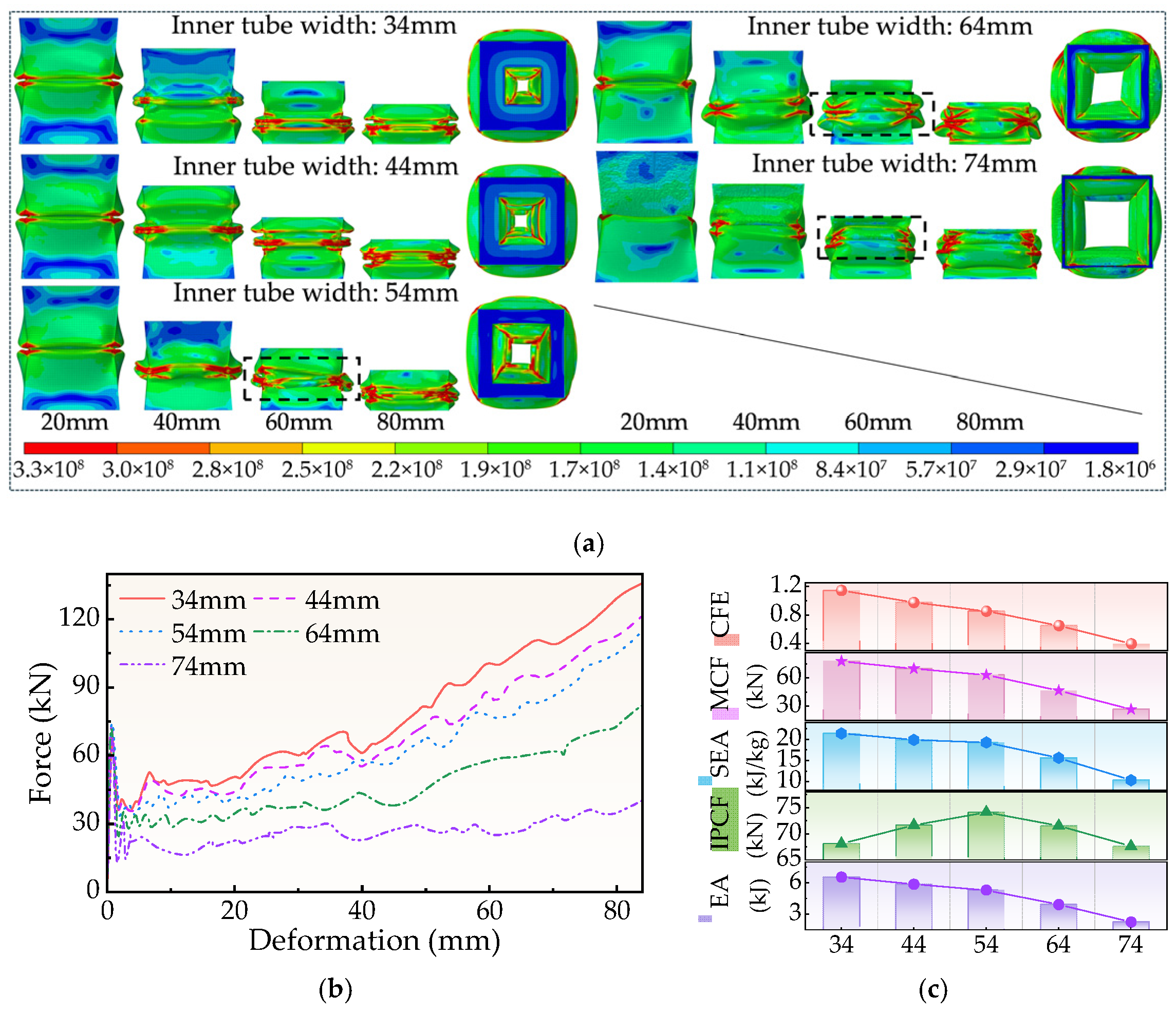
The FPG structure’s deformation mode under various inner tube widths (
d) appears in
Figure 13a. The structure exhibits obvious asymmetric collapsing at approximately 60 mm displacement when
d grows to 54 mm and 64 mm. Moreover, the folding transfers to one side, leading to overall instability. The efficiency of energy absorption will be reduced by this inequality distortion. On the other hand, the structure always retains satisfactory symmetry when
d falls between 34 and 44 mm, and the synergistic deformation of aluminum and thin-walled foam is stable, facilitating the emergence of a controllable wrinkle mode.
The force-displacement curve in
Figure 13b shows that as
d increases, the load rise rate slows down and the energy absorption capacity decreases. The shorter
d shows a steeper force rise curve, indicating that its energy absorption is more sufficient.
Figure 13c and
Table A4 further validate this trend: IPCF first increases and then decreases with increasing d. At
d = 34 mm, IPCF is 68.15 kN; at
d = 54 mm, IPCF increases to 74.17 kN; and at
d = 74 mm, IPCF decreases to 67.67 kN. In contrast, SEA, MCF, and CFE all exhibit a continuous decreasing trend with increasing
d. This indicates that excessively large
d values weaken stable energy dissipation capacity and induce unstable collapse.
Therefore, d is a key parameter affecting the structural performance of FPG. The appropriate length of the inner tube (about 34–44 mm) can ensure high energy absorption efficiency while maintaining symmetrical buckling, while too large d is not conducive to structural optimization.
5. Multi-Objective Optimization of FPG Structures
Section 4, the influence of geometric parameters (
θ,
ρ,
d,
t) on the energy absorption performance of FPG structure is systematically analyzed. The results show that
ρ has little effect on the performance, while
θ,
d and
t have more significant effects on energy absorption, buckling morphology and quality control. Based on this, the
Section 5 selects
θ,
d and
t as the main optimization variables to carry out multi-objective optimization design with the goal of improving energy absorption performance and reducing peak crushing force.
5.1. Optimization Methods
This study selected the highly representative impact resistance metrics SEA and IPCF to further enhance the energy absorption capacity of the energy-absorbing structure [
16,
59,
60]. Simultaneously, to reduce computational costs, other standards such as EA, CFE, and MCF were excluded. Consequently, the optimization design objective was transformed into maximizing SEA and minimizing IPCF, with the mathematical expression as follows:
where
F(x) is the objective function, and
θ,
d and
t are design variables. The key to optimization is to reasonably select structural parameters under geometric constraints, achieve a balance between energy absorption performance and lightweight, and improve structural safety and material utilization.
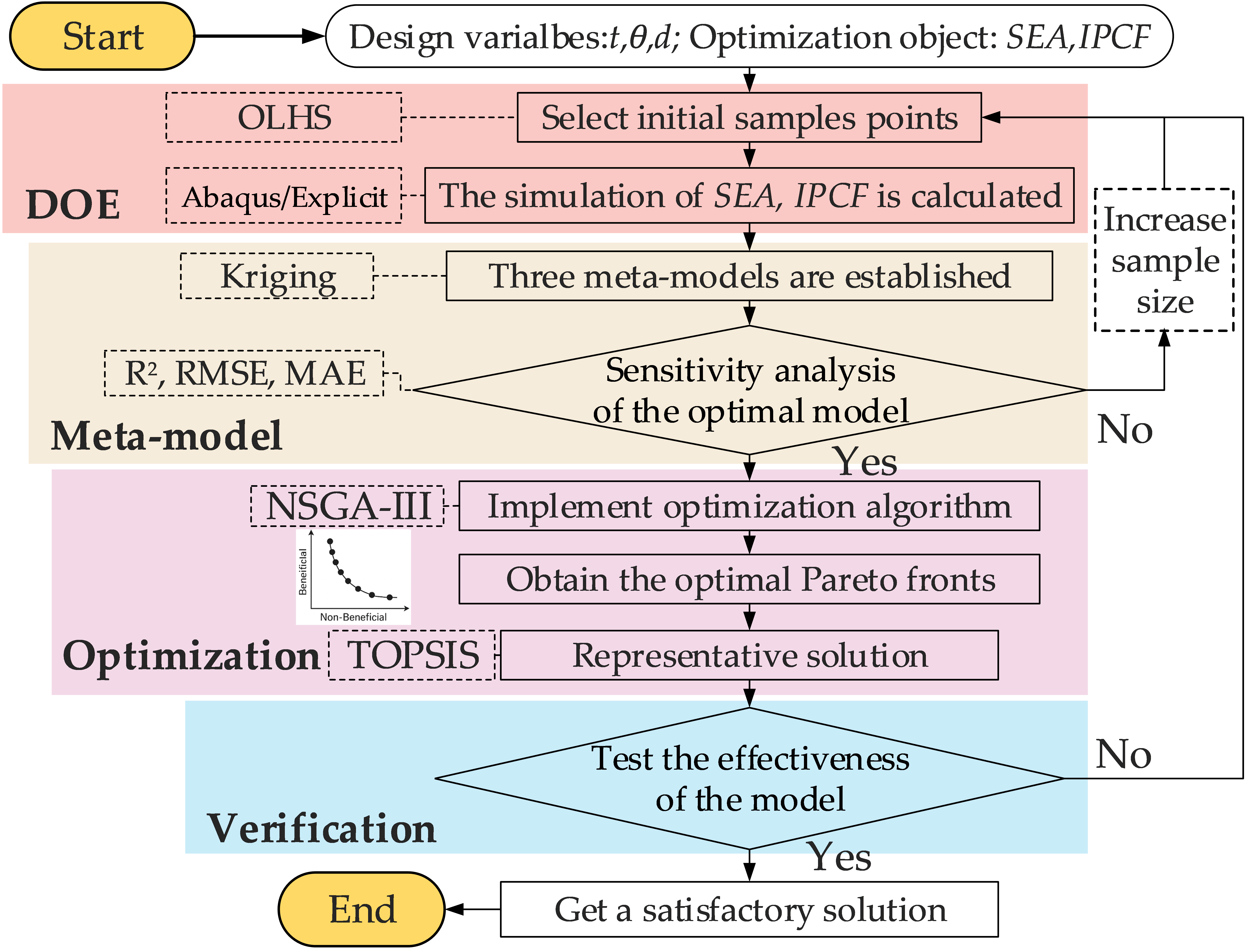
In recent years, optimal Latin hypercube sampling (OLHS) has been widely used because of its uniform spatial distribution and low correlation of variables. KRG model shows excellent prediction and generalization ability in high-dimensional nonlinear systems. The third-generation non-dominated sorting genetic algorithm (NSGA-III) has become an important means of multi-objective optimization with its excellent Pareto solution distribution and dimensional adaptability.
Based on this, this paper constructs a set of multi-objective optimization process suitable for collision energy absorption structure: first, 40 groups of samples are extracted in the parameter space by using OLHS; then the finite element analysis is carried out by Abaqus/Explicit to obtain the SEA and IPCF indexes. Then, the KRG meta-model is established, and the sensitivity analysis is carried out. Finally, multi-objective optimization was achieved using NSGA-III to obtain the Pareto frontier, and the optimal solution closest to the ideal point was selected via the TOPSIS method (
Figure 14).
5.2. Optimization Results
The OLHS method is implemented using the ‘pyDOE’ library in Python 3.13, and the generated 40 sets of uniformly distributed sample points are shown in
Table A5. Subsequently, each sample was simulated in Abaqus/Explicit to extract SEA and IPCF results (see
Table A5). Based on the obtained data, the KRG model is used to train the objective function (SEA and IPCF), and the model accuracy indicators R
2, RMSE and MAE (
Table 4) are calculated. The results show that the model prediction accuracy is good and the error is within a reasonable range.
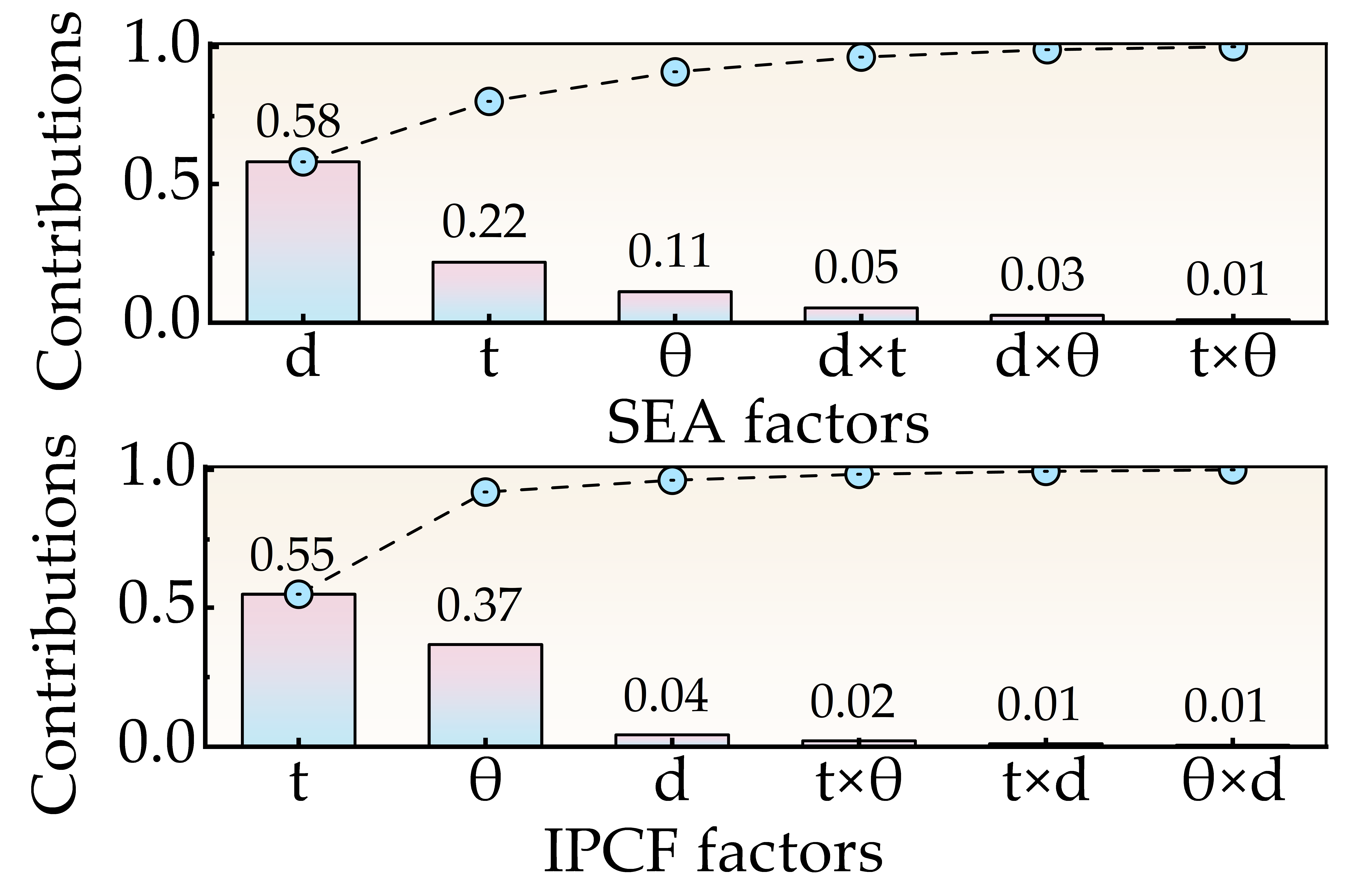
Figure 15 shows the sensitivity analysis results of SEA and IPCF. The sum of the main effects and interactions of variables is close to 1, which further verifies the reliability of the model.
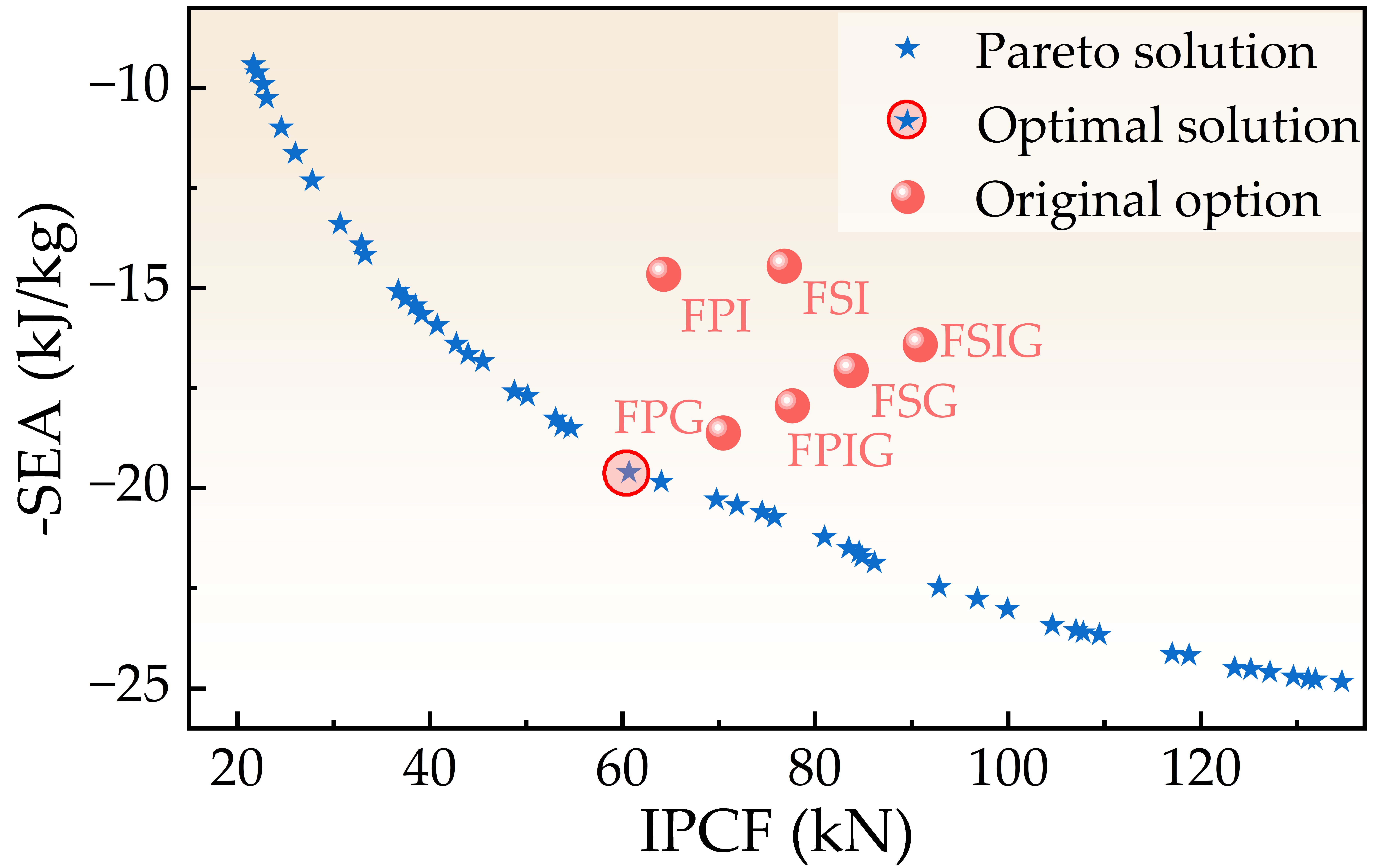
Subsequently, the NSGA-III algorithm was used to carry out multi-objective optimization. The parameters were set as follows: population size 300, maximum number of iterations 300, crossover probability 0.9, and mutation probability 0.33. Based on the joint operation of MATLAB R2024b Optimization Toolbox and Kriging surrogate model, 40 groups of evenly distributed Pareto optimal solutions (
Table A6) are obtained, and the optimal solution was identified using the TOPSIS method. As shown in
Figure 16, the comparison between the optimized solution set and the initial structure shows that when
θ = 86.25°,
d = 35.24 mm,
t = 0.665 mm, the SEA value of the FPG structure is increased to 19.6 kJ/kg, and the IPCF value is reduced to 61.65 kN. Compared with the original structure, the overall performance is improved by 5.28% in SEA and reduced by 13.9% in IPCF, which effectively takes into account the energy absorption capacity and structural safety, reflecting the significant advantages of optimization design.
5.3. Comparison and Validation of Structural Improvements Before and After
For the optimal FPG structure obtained in
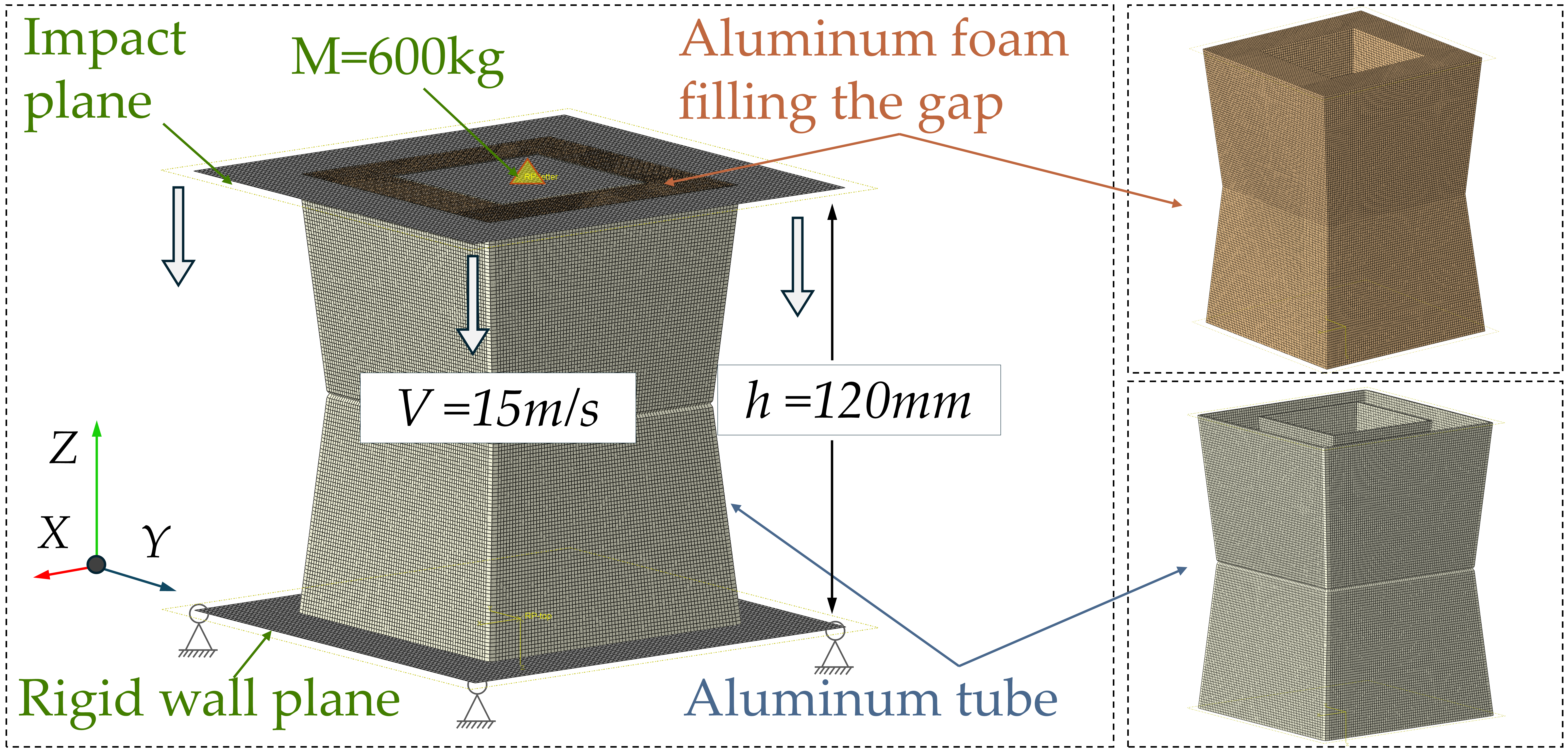
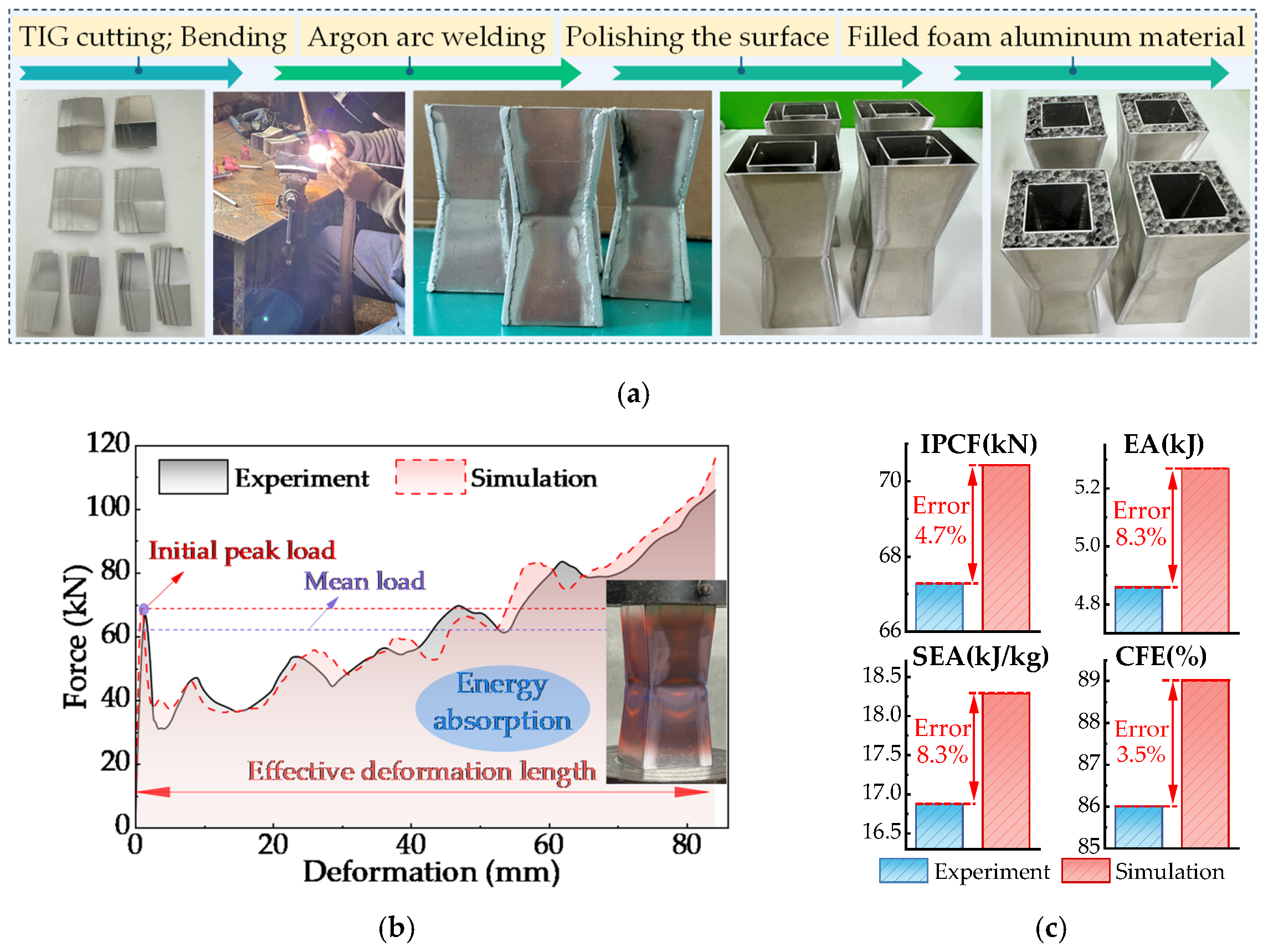
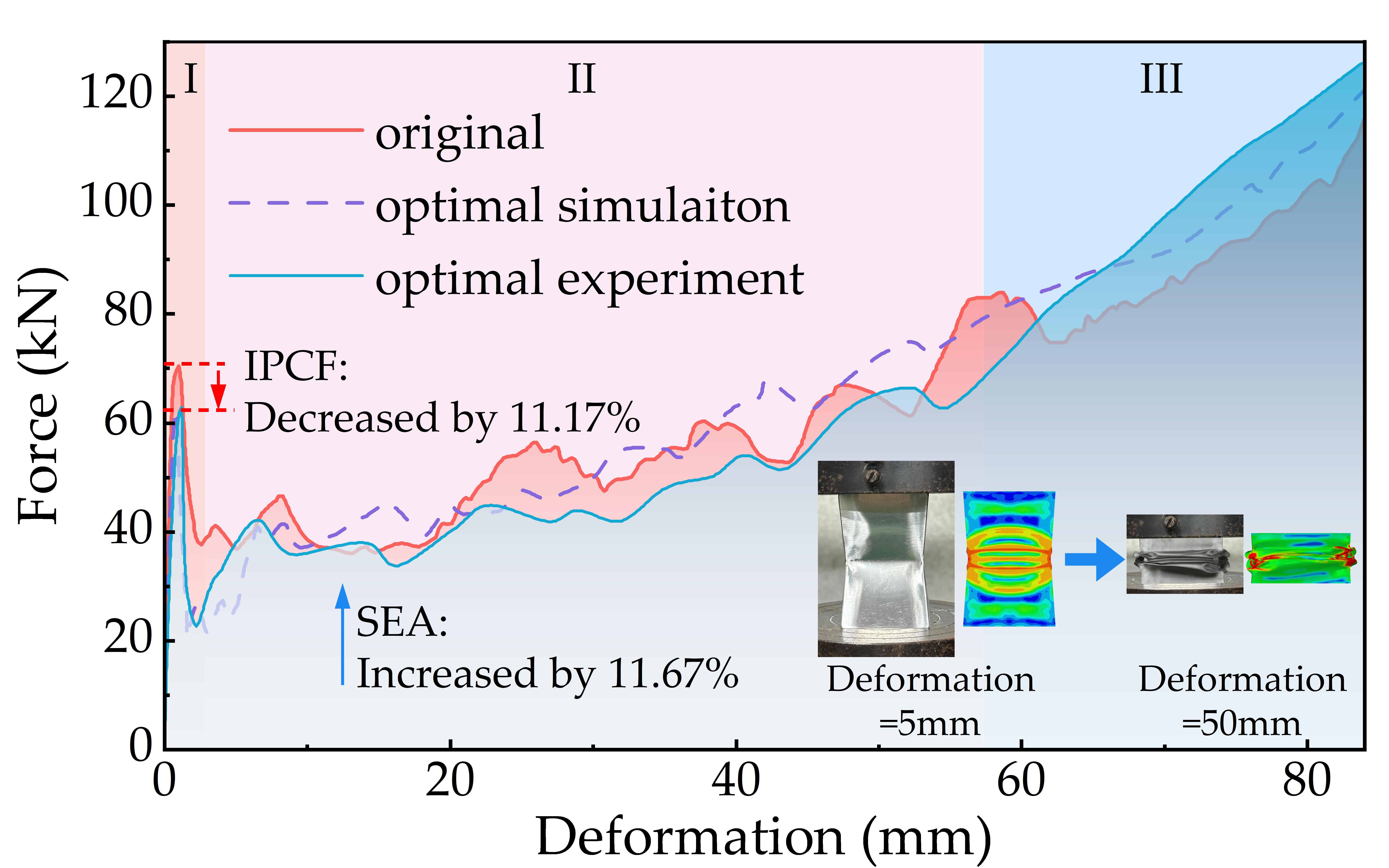
Section 5.2, a corresponding finite element simulation model was further established. A physical specimen was fabricated to conduct quasi-static compression tests, aiming to validate the optimization results while systematically analyzing its deformation evolution and failure mechanism. As shown in
Figure 17, the mechanical response of the structure during the collapse process can be divided into three typical stages.
In Stage I, both the original structure and the optimized structure (simulation results and experimental results) rapidly undergo global plastic buckling and form an initial failure mode. Compared to the original FPG structure with an IPCF of 70.44 kN, the optimized structure exhibits an IPCF of approximately 60 kN, representing a reduction of about 11.17%. This result indicates that the optimized structure effectively mitigates load surges during the initial loading phase, producing a smoother impact response. This improvement enhances the safety performance of the energy-absorbing structure during the early stages of impact.
In Stage II, the load–displacement curves of all three structures exhibited an overall fluctuating upward trend, yet their stability showed significant differences. The original FPG structure experienced multiple pronounced load peaks and troughs during this stage, indicating pronounced instability in its buckling process. In contrast, the load increase process for the optimized simulated and experimental structures was more continuous, with stable and uniform energy absorption, demonstrating superior deformation controllability and energy absorption stability.
Upon entering Stage III, the structure gradually transitions into a densification phase. At this point, the optimized FPG structure exhibits significantly enhanced energy absorption capacity. During sustained compression, the foam aluminum material undergoes continuous fragmentation and forms an effective synergistic deformation mechanism with the outer thin-walled components, thereby substantially improving the overall energy absorption efficiency of the structure.
Further comparative analysis results are shown in
Table 5. While the IPCF value decreased by 11.17%, the SEA value of the optimized structure increased by 11.67%. Additionally, the prediction errors between the optimized model and experimental test values were 1.50% and 3.78%, respectively, both within acceptable ranges. This fully validates the reliability of the proposed FPG structural optimization design method in terms of numerical prediction accuracy and engineering applicability.
6. Conclusions
In this study, a bidirectional pyramidal energy-absorbing structure that mimics the shape of the centipede was designed based on the foam-filled structure and bionic design theory. The crashworthiness of the structure was systematically evaluated by experiments, theoretical analysis and numerical simulation. The main conclusions are as follows:
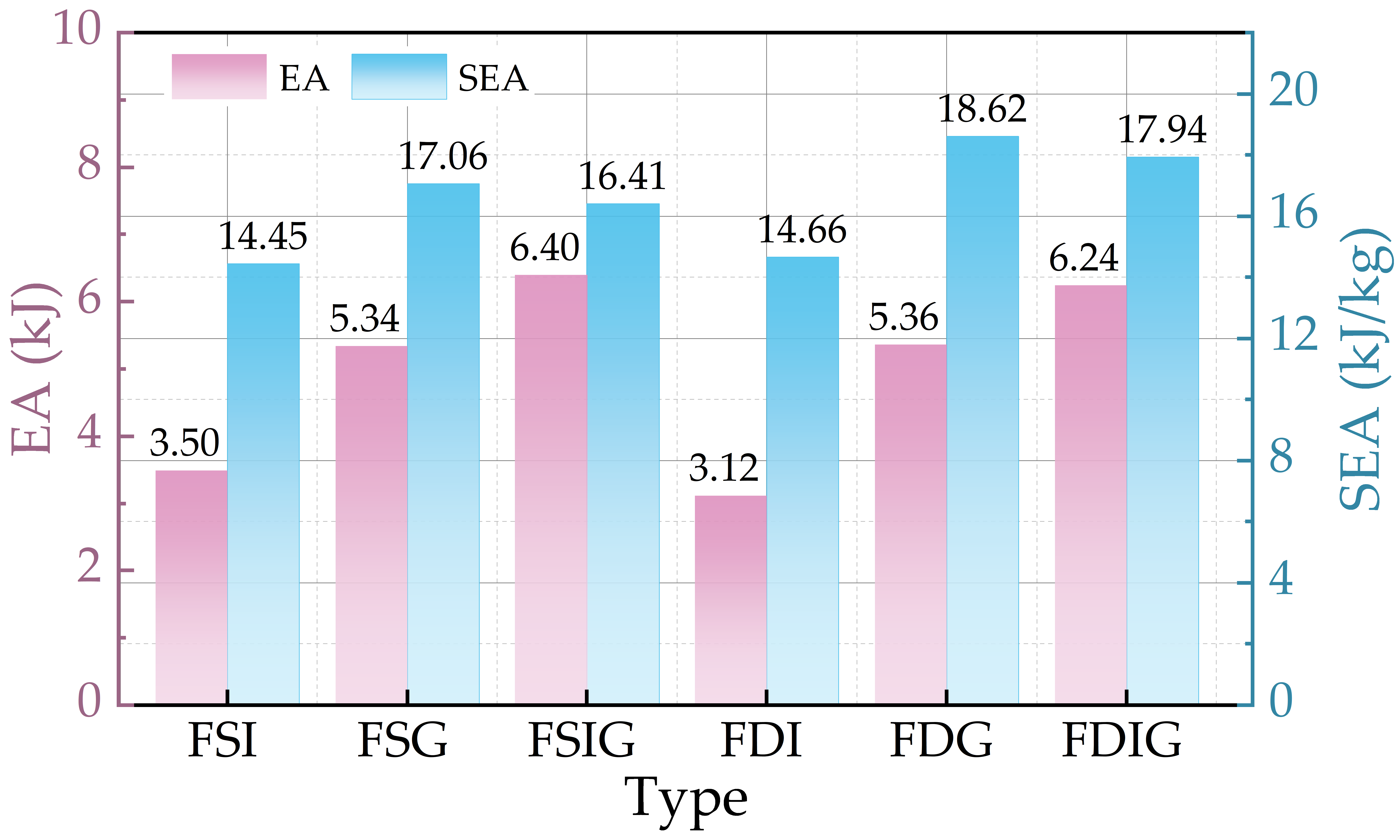
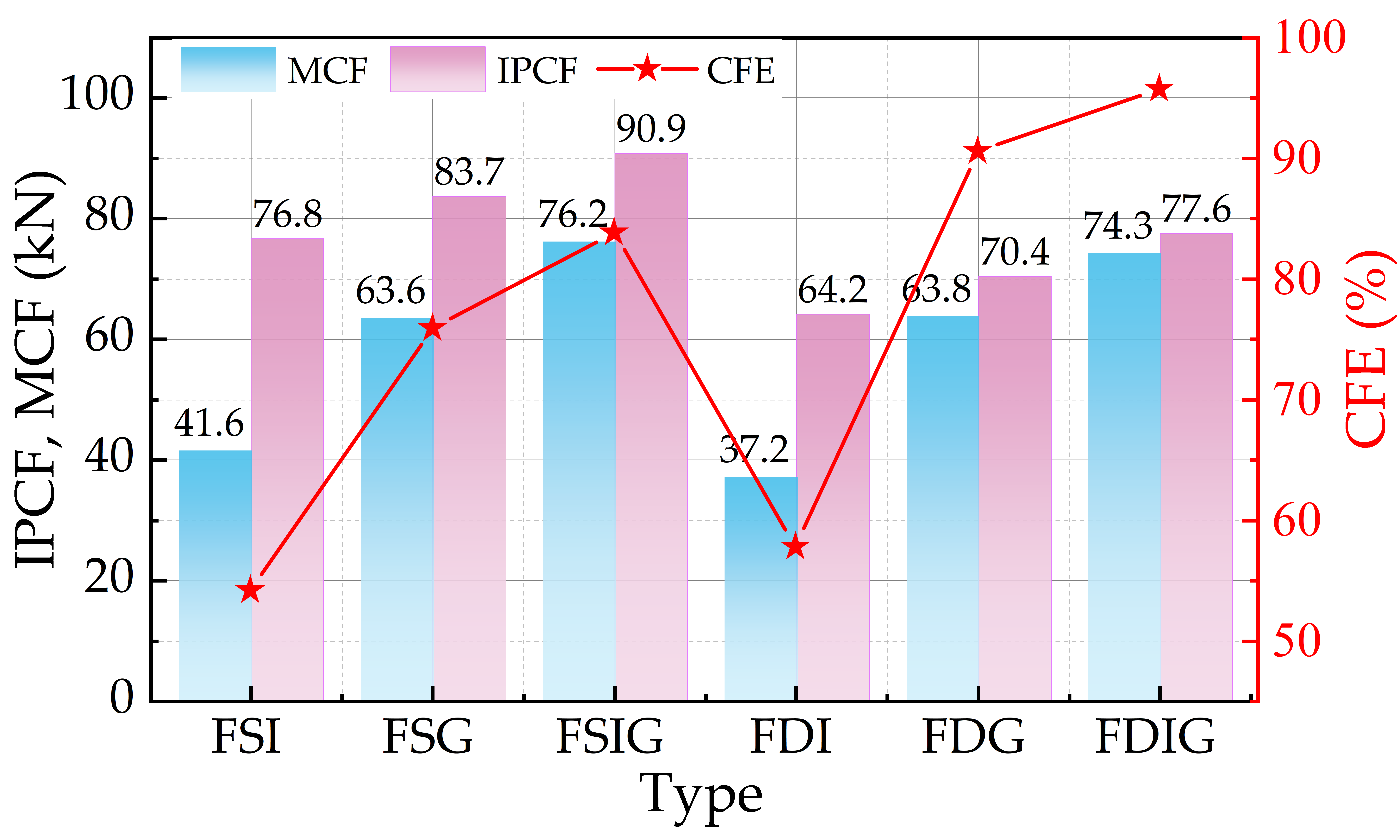
(1) The experimental results are in good agreement with the finite element simulation results. The relative errors of IPCF, EA, SEA and CFE are 4.7%, 8.3%, 8.3% and 3.5%, respectively, and the overall error is less than 7%, which indicates that the established simulation model has high reliability and is suitable for the follow-up study of this kind of bionic structure.
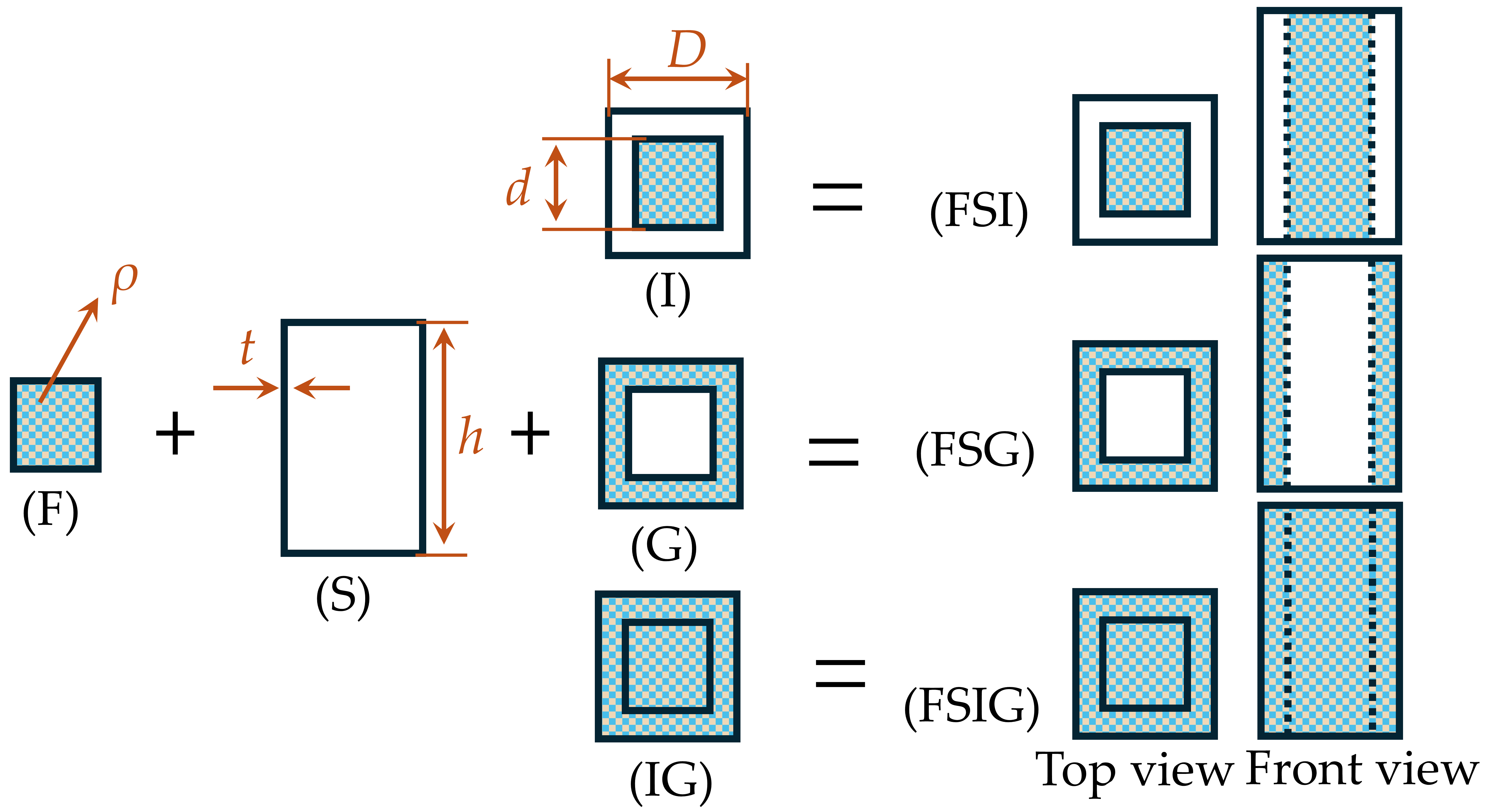
(2) Among the six structures, the aluminum foam-filled bi-directional pyramid gap tube (FPG) exhibits the best stability, stiffness characteristics and energy absorption efficiency. Its single factor analysis shows that the structure has better comprehensive performance and optimization potential when θ is in the range of 78–87°, t is less than 0.1 mm and d is in the range of 34–44 mm. However, ρ should not be used as a design variable for subsequent optimization.
(3) The optimization scheme realizes the SEA value is increased by 11.67%, and the IPCF is reduced by 11.17%. The prediction error of each performance index is less than 5%, which indicates that this optimization method can be compatible with structural lightweight and crashworthiness optimization.
In summary, FPG structures demonstrate promising applications in the field of collision safety for transport equipment, including vehicles, aviation, and marine engineering. Although this study achieved positive results in optimizing energy-absorbing structures, certain limitations remain. For instance, verification has not yet been performed on all structures, the current optimization objectives fail to encompass all factors potentially affecting structural crashworthiness, and the employed optimization strategy is relatively limited, insufficiently accounting for the impact of diverse operational conditions. Future research may explore integrating polygonal cross-section elements with lattice or honeycomb structures to conduct multiscale modeling analysis. This approach aims to enhance structural crashworthiness and engineering applicability.