

The Advanced BioTRIZ Method Based on LTE and MPV


Abstract
1. Introduction
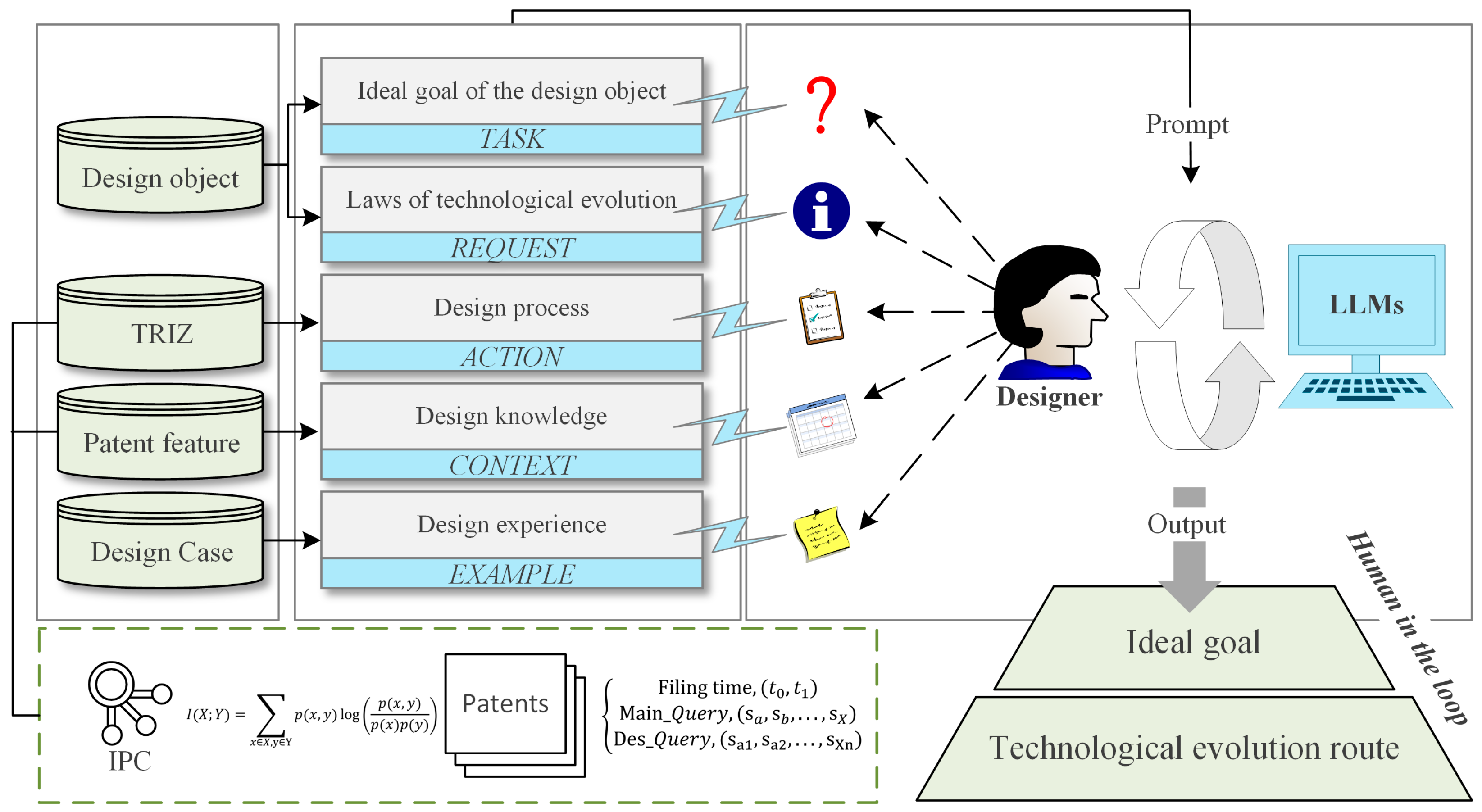
- A robust framework is developed that leverages LLMs to analyze the evolutionary trajectories of products based on pertinent patent data (C2) and to forecast optimal design objectives (C1);
- The integration of the laws of technological evolution (LTE) and ideal goals, as derived from TRIZ theory, addresses challenges associated with defining the operation domain of BioTRIZ (C3) and diminishes the complexity of biological knowledge;
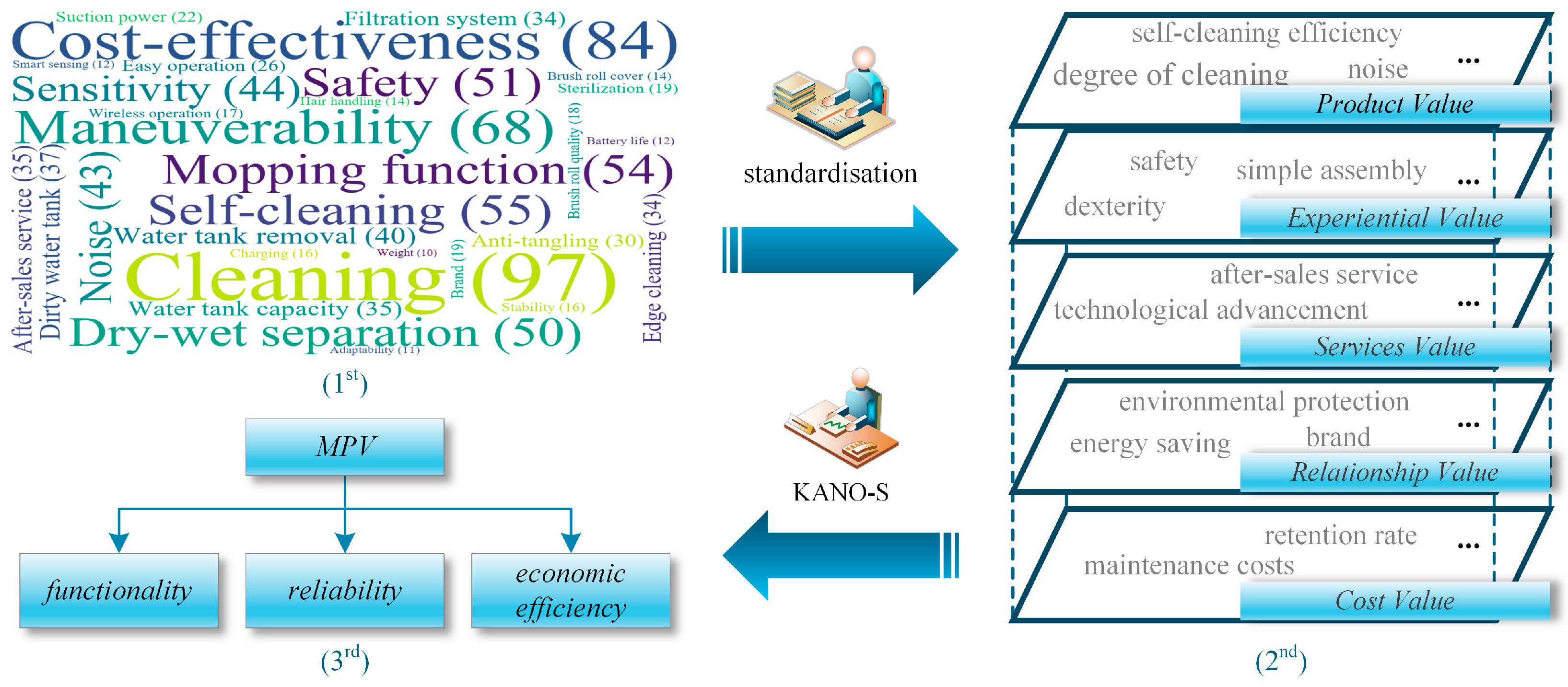
- The establishment of an evaluation system that combines MPV with biomimetic indicators through the inclusion of online product reviews, alongside the application of orthogonal design and fuzzy analytic hierarchy process (Fuzzy-AHP) for the effective quantitative assessment of integrated design schemes (C3).
2. Related Works
2.1. BioTRIZ
2.2. Technological Evolution Theory
3. Methodology
3.1. Analysis of Technological Evolution Driven by Patents and LLMs
3.1.1. Patent Search and Preprocessing
3.1.2. Patent Feature Extraction
3.1.3. Identification of the LTE Driven by LLMs
3.2. Acquisition and Design of Biological Prototypes
3.3. Evaluation of Conceptual Schemes
| Algorithm 1 Pseudocode for the construction of characteristic domain. |
|
4. Model Validation
4.1. BioTRIZ-Based Design Analysis
4.1.1. Confirmation of Corpus
4.1.2. Analysis of LTE and Ideal Goals Based on LLMs
4.1.3. Identification of Bio-Prototype
4.2. The Development of Evaluation Metrics
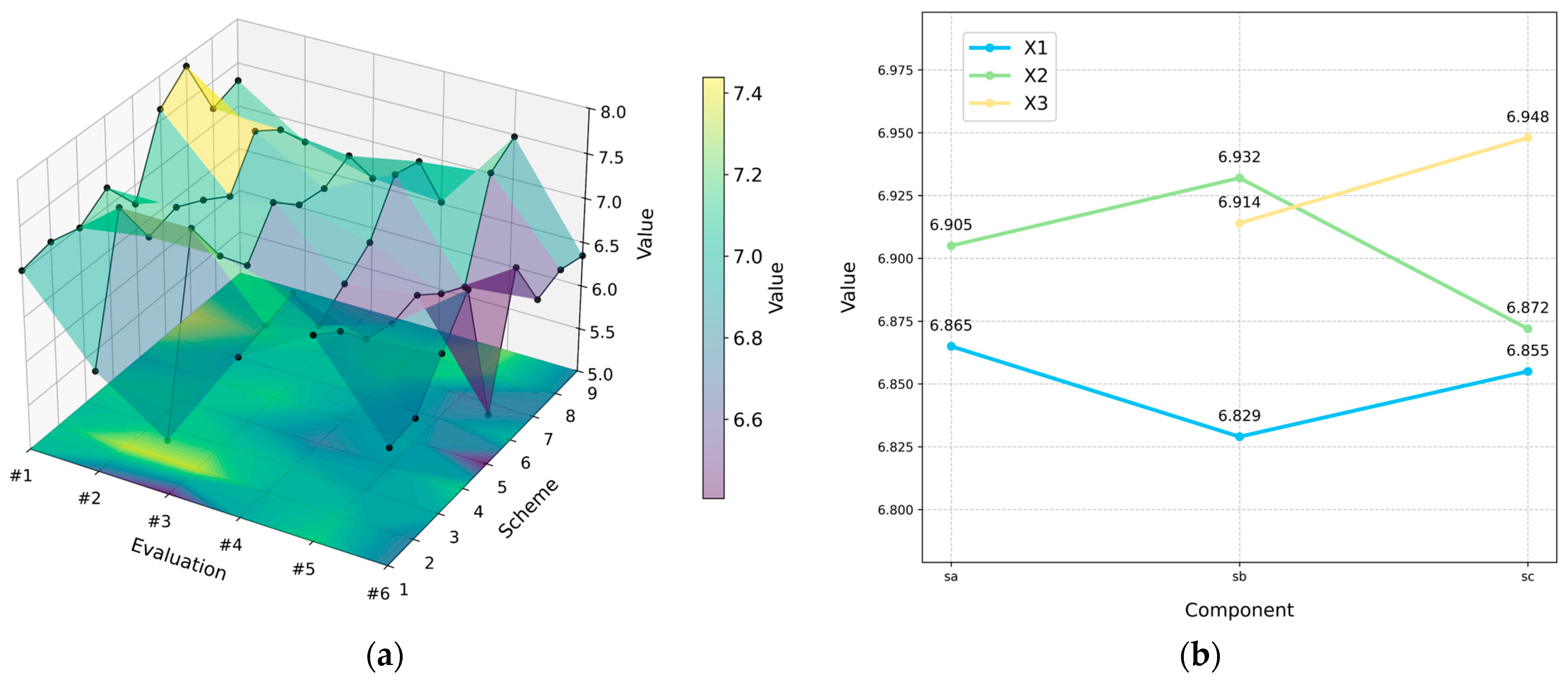
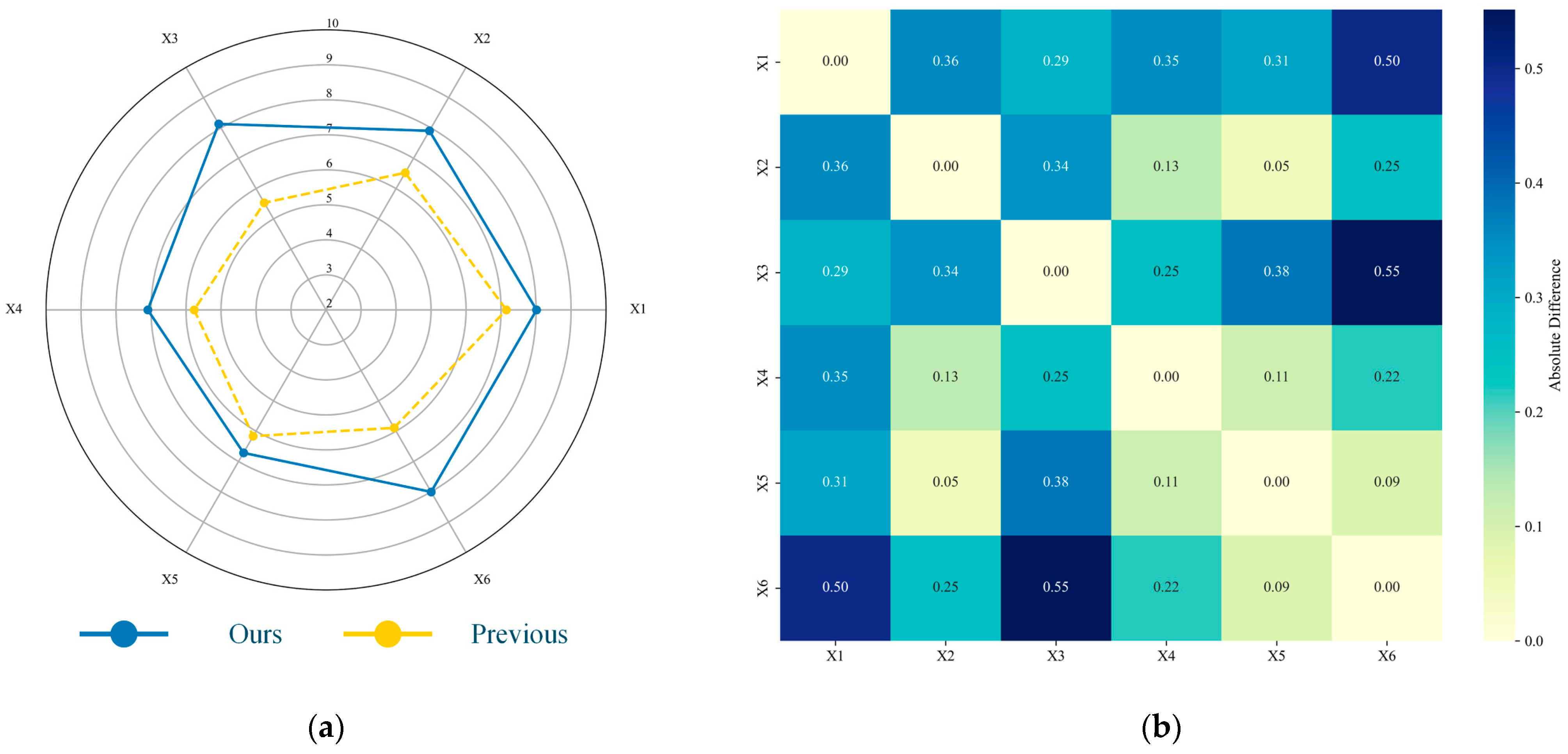
4.3. The Evaluation of Design Schemes
5. Discussion and Conclusions
Author Contributions
Funding
Institutional Review Board Statement
Informed Consent Statement
Data Availability Statement
Conflicts of Interest
Appendix A

| Component | Code | Bio-Prototype | Standardized Knowledge |
|---|---|---|---|
| A1 | shark skin scale | F: drag reduction and stain prevention; S’: microscopic groove patterns and scale arrangements; B: scale undulation; S: fluid dynamics principles and self-cleaning mechanisms. | |
| A2 | lotus leaf surface | F: self-cleaning and waterproofing; S’: microscopic papillae and nano-scale wax layers; A: hydrophobicity; S: hydrophobicity principles and self-cleaning effects. | |
| B1 | dorsal carapace of woodlice | F: protection and rotational capability; S’: hierarchical bony plates with flexible connections; B: curling motion; S: integration of rigidity and flexibility and zonal optimization principles. | |
| B2 | armadillo carapace | F: protection and support for locomotion; S’: layered hierarchical architectures; B: combination of rigid and flexible movements; S: strategies to avoid stress concentration. | |
| B3 | elephant trunk | F: flexible operation and protection; S’: muscular layers and connective tissues; B: multi-degree-of-freedom and adaptive movements; S: muscle coordination principles and layered structural optimization. | |
| C1 | human kidney | F: efficient filtration and waste separation; S’: graded filtration units; B: dynamic regulation; S: modular design and intelligent control systems. | |
| C2 | oral cavity of the megamouth shark | F: efficient filtration; S’: gill raker formations and streamlined morphology; B: water flow passage; S: graded filtration principles and streamlined optimization. | |
| C3 | oral cavity of the baleen whale | F: efficient filtration and protection; S’: baleen formations with layered structures; B: filtration capability; S: graded filtration principles. |
Appendix B
| Component | Invention Principle | Bio-Prototype |
|---|---|---|
| 1 | Insect segmentation, gecko tail autotomy, the phenomenon of lotus root fibers remaining connected despite breakage | |
| 15 | Visual processing systems, shark skin scales, nest construction behaviors of rock ants. | |
| 25 | The surface properties of lotus leaves, human arterial structures, dolphin skin characteristics, bat echolocation mechanisms | |
| 1 | The dorsal exoskeleton of woodlice, the scaled feet of snails, the backs of desert scorpions, the carapace of armadillos | |
| 2 | Bioluminescence in fireflies, jet propulsion in jellyfish, the visual system of purple sea urchins | |
| 3 | Cicada molting processes, visual processing systems, shark skin scales | |
| 15 | The trunk of elephants, arthropod morphology, predatory behaviors of frogs | |
| 1 | Gecko tail autotomy, the oral cavity of the frilled shark, the oral structures of baleen whales | |
| 3 | Dragonfly wings, cactus spines, human renal anatomy | |
| 25 | The surface characteristics of lotus leaves, dolphin skin, seeds of the maple tree |
Appendix C
| Code | Conceptual Schemes | Description |
|---|---|---|
| A1 | 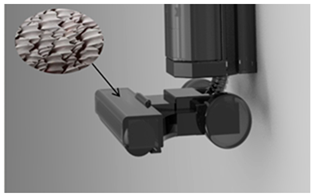 | Implement microscopic groove patterns inspired by shark skin scales to develop an anti-fouling coating for the roller brush casing. The rapid rotation of the roller brush induces airflow that facilitates the removal of debris, thereby enabling a self-cleaning mechanism. |
| A2 |  | Incorporate the waxy surface architecture derived from lotus leaves to fabricate an anti-fouling layer on the roller brush casing. The superhydrophobic characteristics and material properties of this structure contribute to an effective self-cleaning function. |
| Code | Conceptual Schemes | Description |
|---|---|---|
| B1 | 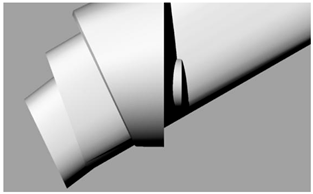 | Utilize the hierarchical bony plate configuration of the woodlouse’s dorsal armor to engineer the rotating shaft, integrating both rigidity and flexibility to ensure free rotation while safeguarding internal components. |
| B2 |  | Apply the structural zoning concept observed in the armadillo’s dorsal armor by employing a layered wrapping design that permits multidimensional expansion and contraction, simultaneously providing protection to internal elements. |
| B3 |  | Draw upon the boneless, layered tissue composition of the elephant’s trunk to fulfill the flexibility requirements of the rotating shaft, leveraging the interconnected nature of these tissues to achieve multi-degree-of-freedom movement. |
| Code | Conceptual Schemes | Description |
|---|---|---|
| C1 |  | Adopt the modular architecture of the human kidney to establish a hierarchical filtration system, wherein the lower section targets the removal of larger debris and the upper section addresses finer particulates, with dynamic adjustments responsive to the wastewater tank’s condition. |
| C2 |  | Employ the gill raker structures characteristic of the basking shark’s oral cavity, combined with streamlined design principles, to develop a filtration system that operates from the interior outward, incorporating groove features to mitigate clogging. |
| C3 |  | Utilize the baleen structures found in baleen whales to design a bottom-layer filtration system, implementing layered filtration to effectively segregate particulate matter of varying sizes prior to subsequent upper-level filtration, thereby preventing blockages. |
Appendix D
| Experts | #1 | #2 | #3 | #4 | #5 | #6 |
|---|---|---|---|---|---|---|
| 1 | 0.200 | 0.157 | 0.140 | 0.173 | 0.163 | 0.167 |
| 2 | 0.193 | 0.160 | 0.140 | 0.173 | 0.163 | 0.171 |
| 3 | 0.177 | 0.170 | 0.133 | 0.177 | 0.160 | 0.183 |
| 4 | 0.167 | 0.160 | 0.133 | 0.183 | 0.177 | 0.180 |
| 5 | 0.183 | 0.170 | 0.127 | 0.177 | 0.160 | 0.183 |
| 6 | 0.187 | 0.173 | 0.127 | 0.173 | 0.167 | 0.173 |
| 7 | 0.177 | 0.160 | 0.183 | 0.177 | 0.170 | 0.133 |
| 8 | 0.197 | 0.170 | 0.127 | 0.170 | 0.163 | 0.173 |
| 9 | 0.200 | 0.147 | 0.167 | 0.162 | 0.157 | 0.167 |
| 10 | 0.173 | 0.171 | 0.163 | 0.193 | 0.160 | 0.140 |
| 11 | 0.183 | 0.160 | 0.140 | 0.180 | 0.167 | 0.170 |
| 12 | 0.170 | 0.163 | 0.173 | 0.197 | 0.127 | 0.170 |
| 13 | 0.187 | 0.183 | 0.127 | 0.170 | 0.163 | 0.170 |
| 14 | 0.177 | 0.170 | 0.176 | 0.183 | 0.157 | 0.137 |
| 15 | 0.197 | 0.162 | 0.127 | 0.170 | 0.167 | 0.177 |
| 16 | 0.187 | 0.147 | 0.167 | 0.170 | 0.162 | 0.167 |
| 17 | 0.177 | 0.170 | 0.133 | 0.177 | 0.160 | 0.183 |
| 18 | 0.192 | 0.157 | 0.127 | 0.177 | 0.170 | 0.177 |
| 19 | 0.183 | 0.160 | 0.140 | 0.180 | 0.167 | 0.170 |
| 20 | 0.177 | 0.163 | 0.133 | 0.177 | 0.167 | 0.183 |
| Weighting factor | 0.184 | 0.164 | 0.144 | 0.177 | 0.162 | 0.169 |
References
- Kang, X.; Zhao, Z. Optimal design of ceramic form combining stable diffusion model and GRU-Attention. Adv. Eng. Inform. 2025, 64, 103062. [Google Scholar] [CrossRef] [Scilit]
- Rehmat, A.P.; Towner, A.A.; Alemdar, M.; Helms, M.E.; Rosen, J.H.; Moore, R.A.; Weissburg, M.J. Examining an Evolving Biologically Inspired Design Professional Learning Environment through Conjecture Mapping and Design-Based Research. Biomimetics 2024, 9, 468. [Google Scholar] [CrossRef] [Scilit]
- Kang, X. Biologically inspired product design combining kansei engineering and association creative thinking method. Adv. Eng. Inform. 2024, 62, 102615. [Google Scholar] [CrossRef] [Scilit]
- Kang, X.; Wang, N. Sustainable design of bamboo weaving products based on style generative adversarial network and Grasshopper technology. J. Eng. Des. 2025, 1–22. [Google Scholar] [CrossRef] [Scilit]
- Hernandez, I.; Watson, B.C.; Weissburg, M.J.; Bras, B. Using functional decomposition to bridge the design gap between desired emergent multi-agent-system resilience and individual agent design. Syst. Eng. 2024, 27, 911–930. [Google Scholar] [CrossRef] [Scilit]
- Yang, C.; Huang, X.; Zhang, Y.; Huang, Z.; Liu, F.; Wan, Y. Expert decision support system for biologically inspired product design integrating emotional preferences and image generation. Adv. Eng. Inform. 2025, 66, 103431. [Google Scholar] [CrossRef] [Scilit]
- Liu, A.; Teo, I.; Chen, D.; Lu, S.; Wuest, T.; Zhang, Z.; Tao, F. Biologically inspired design of context-aware smart products. Engineering 2019, 5, 637–645. [Google Scholar] [CrossRef] [Scilit]
- Chen, H.; Zhang, J.; Hu, X. Enhancing biological system engineering realisation through advanced feature transfer and extenics: A bionic design approach. J. Eng. Des. 2025, 36, 375–404. [Google Scholar] [CrossRef] [Scilit]
- Liu, F.; Deng, Q.; Jing, Y.; Gao, J. Product innovation design methods based on multi-biological knowledge inspiration. J. Eng. Des. 2025, 1–44. [Google Scholar] [CrossRef] [Scilit]
- Wang, B.; Yu, D. Combining BioTRIZ and Multi-Factor Coupling for Bionic Mechatronic System Design. Appl. Sci. 2024, 14, 6021. [Google Scholar] [CrossRef] [Scilit]
- Bai, Z.; Mu, L.; Lin, H.-C. Green product design based on the BioTRIZ multi-contradiction resolution method. Sustainability 2020, 12, 4276. [Google Scholar] [CrossRef] [Scilit]
- Zhou, P.; Tang, S.; Liu, Y.; Zhao, J.; Sun, Z. Optimization of feature transfer based on BioTRIZ. Comput. Ind. Eng. 2023, 181, 109281. [Google Scholar] [CrossRef] [Scilit]
- Cao, G.; Sun, Y.; Tan, R.; Zhang, J.; Liu, W. A function-oriented biologically analogical approach for constructing the design concept of smart product in Industry 4.0. Adv. Eng. Inform. 2021, 49, 101352. [Google Scholar] [CrossRef] [Scilit]
- Luu, R.K.; Buehler, M.J. BioinspiredLLM: Conversational large language model for the mechanics of biological and bio-inspired materials. Adv. Sci. 2024, 11, 2306724. [Google Scholar] [CrossRef] [Scilit] [PubMed]
- Tan, R.; Liu, W.; Cao, G.; Shi, Y. Creative design inspired by biological knowledge: Technologies and methods. Front. Mech. Eng. 2019, 14, 1–14. [Google Scholar] [CrossRef] [Scilit]
- Min, Q.; Zhao-Xian, R.; Can, W.; Li, X. Integrating user feedback into air purifier innovation: The FKANO-DEMATEL-VIKOR decision framework. Eng. Manag. J. 2025, 1–18. [Google Scholar] [CrossRef] [Scilit]
- Kang, X.; Qu, M. Multi-Kansei Qualities Optimization Design of Products Combined with Refined Kano Model and QFD. Comput.-Aided Des. Appl. 2021, 18, 954–969. [Google Scholar] [CrossRef] [Scilit]
- Yang, J.; Yecies, B.; Ma, J.; Li, W. Sparse fuzzy classification for profiling online users and relevant user-generated content. Expert Syst. Appl. 2022, 194, 116497. [Google Scholar] [CrossRef] [Scilit]
- Mortati, M.; Cautela, C. Data thickening: A new frontier in design cognition. Des. Stud. 2025, 100, 101327. [Google Scholar] [CrossRef] [Scilit]
- Xu, C.; Zhang, J.; Wu, C.; Zhang, J. A model for iterative construction of conflict flow networks based on extensible conduction transformation. Adv. Eng. Inform. 2024, 60, 102407. [Google Scholar] [CrossRef] [Scilit]
- Khodadadi, A.; Von Buelow, P. Design exploration by using a genetic algorithm and the Theory of Inventive Problem Solving (TRIZ). Autom. Constr. 2022, 141, 104354. [Google Scholar] [CrossRef] [Scilit]
- Vincent, J.F.; Mann, D.L. Systematic technology transfer from biology to engineering. Philos. Trans. R. Soc. London. Ser. A Math. Phys. Eng. Sci. 2002, 360, 159–173. [Google Scholar] [CrossRef] [Scilit]
- Vincent, J.F.; Bogatyreva, O.A.; Bogatyrev, N.R.; Bowyer, A.; Pahl, A.-K. Biomimetics: Its practice and theory. J. R. Soc. Interface 2006, 3, 471–482. [Google Scholar] [CrossRef] [Scilit]
- Lim, C.; Yun, D.; Park, I.; Yoon, B. A systematic approach for new technology development by using a biomimicry-based TRIZ contradiction matrix. Creat. Innov. Manag. 2018, 27, 414–430. [Google Scholar] [CrossRef] [Scilit]
- Abdala, L.N.; Fernandes, R.B.; Ogliari, A.; Löwer, M.; Feldhusen, J. Creative contributions of the methods of inventive principles of TRIZ and BioTRIZ to problem solving. J. Mech. Des. 2017, 139, 082001. [Google Scholar] [CrossRef] [Scilit]
- Bian, Z.; Zhang, Y.; Lin, H.; Zhu, Y.; Zhang, J. Integrating Sustainability into Biologically Inspired Design: A Systematic Evaluation Model. Biomimetics 2025, 10, 111. [Google Scholar] [CrossRef] [Scilit]
- Craig, S.; Harrison, D.; Cripps, A.; Knott, D. BioTRIZ suggests radiative cooling of buildings can be done passively by changing the structure of roof insulation to let longwave infrared pass. J. Bionic Eng. 2008, 5, 55–66. [Google Scholar] [CrossRef] [Scilit]
- Bogatyrev, N.; Bogatyreva, O. BioTRIZ: A win-win methodology for eco-innovation. In Eco-Innovation and the Development of Business Models: Lessons from Experience and New Frontiers in Theory and Practice; Springer: Berlin/Heidelberg, Germany, 2014. [Google Scholar]
- Bai, Z.; Song, M.; Zhang, X.; Zhang, J. Biological Prototype Acquisition Based on Biological Coupling in Bionic Design. Appl. Bionics Biomech. 2022, 2022, 8458243. [Google Scholar] [CrossRef] [Scilit]
- Guo, Z.; Song, M.; Fang, X.; Lin, C.; Zhang, H.; Li, X.; Wang, W. Exploring synergies between AIGC and TRIZ in the optimisation of road cone design through integrated innovation methods. J. Eng. Des. 2025, 36, 256–275. [Google Scholar] [CrossRef] [Scilit]
- Al’tshuller, G.S. The Innovation Algorithm: TRIZ, Systematic Innovation and Technical Creativity; Technical Innovation Center, Inc.: Worcester, UK, 1999. [Google Scholar]
- Fey, V.; Rivin, E. Innovation on Demand: New Product Development Using TRIZ; Cambridge University Press: Cambridge, UK, 2005. [Google Scholar]
- Jiang, S.; Li, W.; Qian, Y.; Zhang, Y.; Luo, J. AutoTRIZ: Automating engineering innovation with TRIZ and large language models. Adv. Eng. Inform. 2025, 65, 103312. [Google Scholar] [CrossRef] [Scilit]
- Wang, J.; Ding, Z.; Liu, Z.; Feng, L. Technology opportunity discovery based on patent analysis: A hybrid approach of subject-action-object and generative topographic mapping. Technol. Anal. Strateg. Manag. 2024, 36, 2070–2083. [Google Scholar] [CrossRef] [Scilit]
- Valverde, U.Y.; Nadeau, J.-P.; Scaravetti, D. A new method for extracting knowledge from patents to inspire designers during the problem-solving phase. J. Eng. Des. 2017, 28, 369–407. [Google Scholar] [CrossRef] [Scilit]
- Wu, C.; Wang, X.; Chen, T.; Li, H.; Wang, H.q. Conceptual design of smart product-service system based on function-oriented search. J. Eng. Des. 2025, 36, 976–1010. [Google Scholar] [CrossRef] [Scilit]
- Li, W.-q.; Li, Y.; Chen, J.; Hou, C.-y. Product functional information based automatic patent classification: Method and experimental studies. Inf. Syst. 2017, 67, 71–82. [Google Scholar] [CrossRef] [Scilit]
- Altshuller, G.S. Creativity as An Exact Science; CRC Press: Boca Raton, FL, USA, 1984. [Google Scholar]
- Ye, Z.; Wu, J.; He, X.; Wang, L.; Jiang, W. Exemplar-free class incremental learning for rotating machinery fault diagnosis via adaptive prototype correction and separation network. Adv. Eng. Inform. 2025, 66, 103420. [Google Scholar] [CrossRef] [Scilit]
- Kim, S.; Yoon, B. Patent infringement analysis using a text mining technique based on SAO structure. Comput. Ind. 2021, 125, 103379. [Google Scholar] [CrossRef] [Scilit]
- Jung, J.; Kim, S.; Yoon, B. A data-driven approach to establishing a patent strategy by generating a patent map based on generative topographic mapping. Technol. Forecast. Soc. Change 2025, 220, 124325. [Google Scholar] [CrossRef] [Scilit]
- Chen, S.; Xu, H.; Zhang, X.; Jiang, T.; Ma, Z. Inversion of Biological Strategies in Engineering Technology: A Case Study of the Underwater Soft Robot. Biomimetics 2025, 10, 362. [Google Scholar] [CrossRef] [Scilit]
- Lv, C.; Bao, J. CADInstruct: A Multimodal Dataset for Natural Language-Guided CAD Program Synthesis. Comput.-Aided Des. 2025, 188, 103926. [Google Scholar] [CrossRef] [Scilit]
- Xiong, X.; Cai, H.; Yu, H.; Shen, B.; Hu, P. DR-RAG: Domain-Rule-based Retrieval-Augmented Generation for aviation digital model design. Adv. Eng. Inform. 2025, 68, 103688. [Google Scholar] [CrossRef] [Scilit]
- Lok, A. MPV-based engineering system evolution. TRIZfest 2017, 2017, 259. [Google Scholar]
- Ghane, M.; Ang, M.C.; Cavallucci, D.; Kadir, R.A.; Ng, K.W.; Sorooshian, S. TRIZ trend of engineering system evolution: A review on applications, benefits, challenges and enhancement with computer-aided aspects. Comput. Ind. Eng. 2022, 174, 108833. [Google Scholar] [CrossRef] [Scilit]
- Ghane, M.; Ang, M.C.; Cavallucci, D.; Abdul Kadir, R.; Ng, K.W.; Sorooshian, S. Semantic TRIZ feasibility in technology development, innovation, and production: A systematic review. Heliyon 2024, 10, e23775. [Google Scholar] [CrossRef] [Scilit] [PubMed]
- Chen, H.-K.; Wang, H.-H. An Innovative Retrieval-Augmented Generation Framework for Stage-Specific Knowledge Translation in Biomimicry Design. Biomimetics 2025, 10, 626. [Google Scholar] [CrossRef] [Scilit] [PubMed]
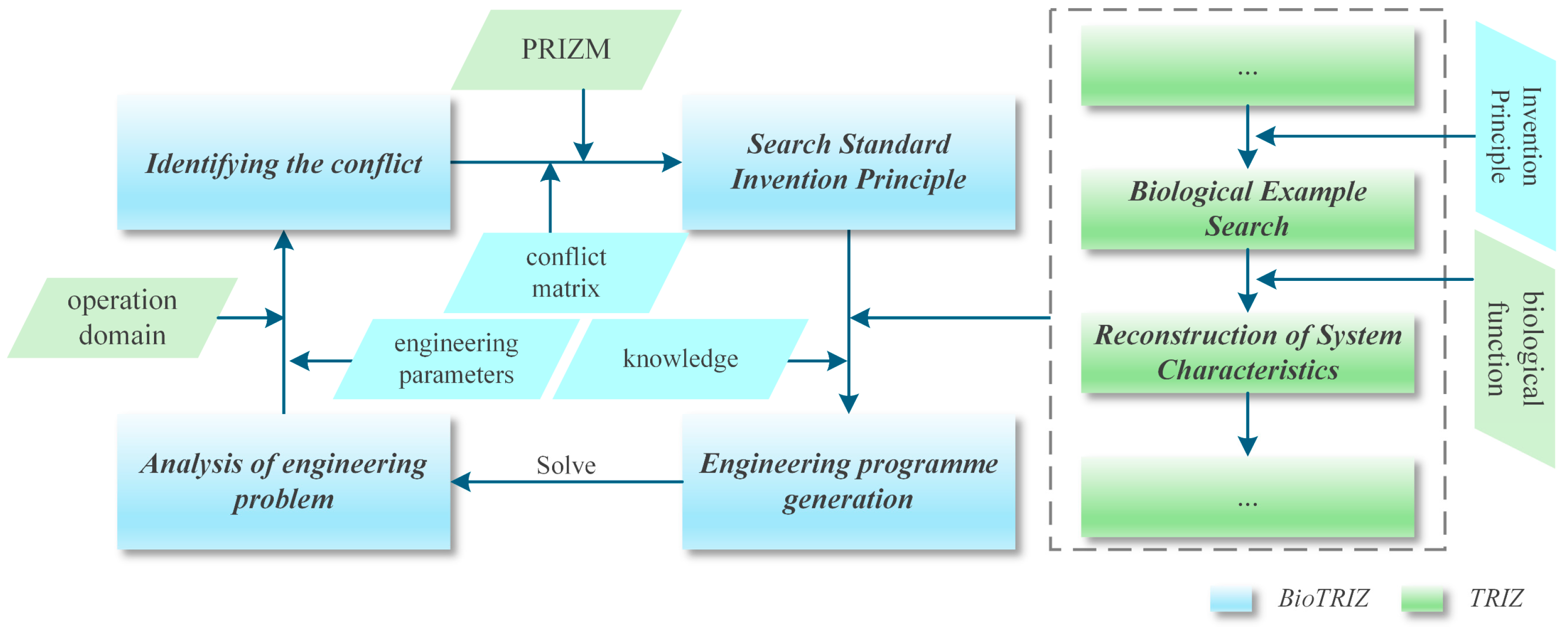

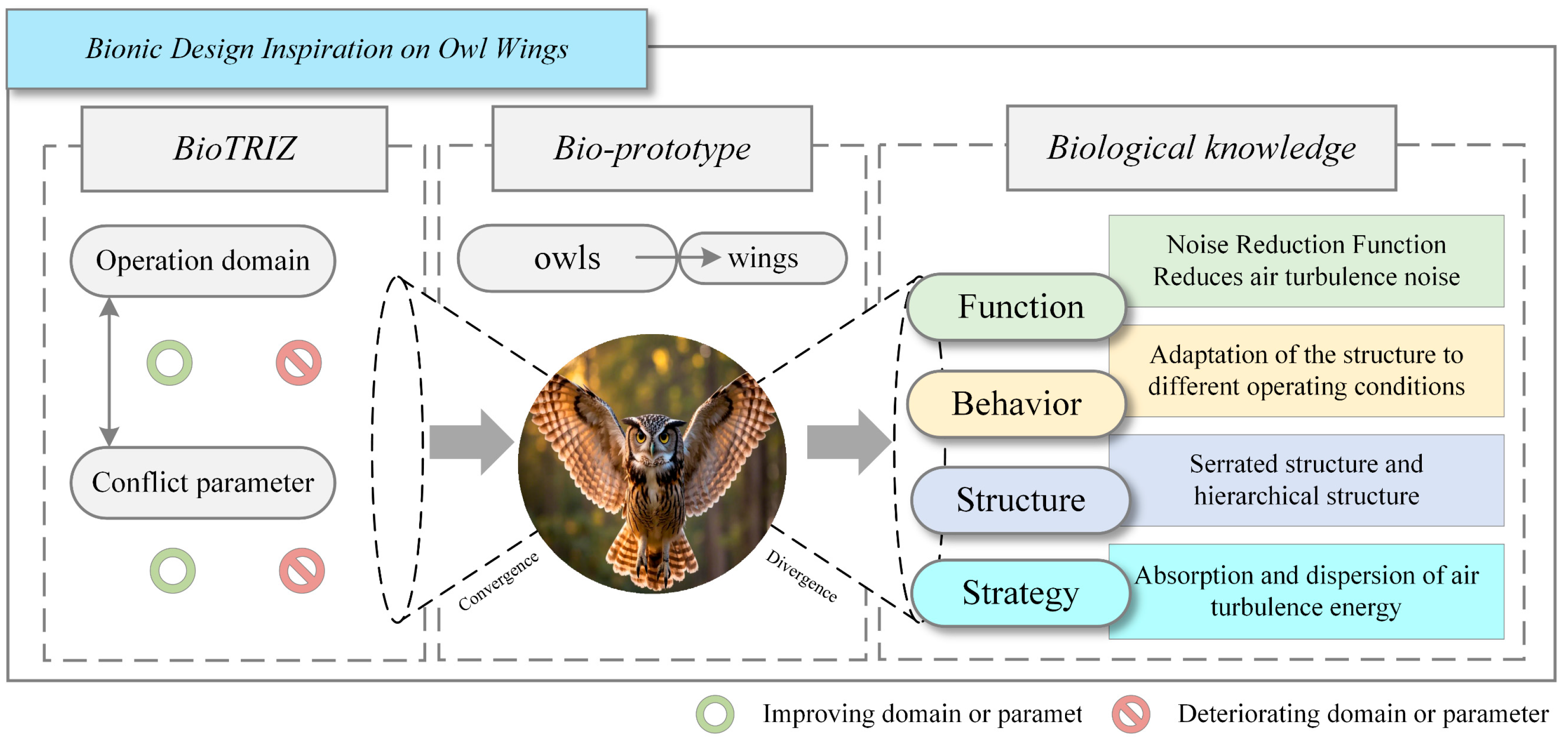


| Operation Domains | Matter (M) | Structure (St) | Space (Sp) | Time (T) | Energy (E) | Information (I) |
|---|---|---|---|---|---|---|
| M | 13, 15, 17, 20, 31, 40 | 1-3, 15, 24, 26 | 1, 5, 13, 15, 31 | 15, 19, 27, 29, 30 | 3, 6, 9, 25, 31, 35 | 3, 25, 26 |
| St | 1, 10, 15, 19 | 1, 15, 19, 24, 34 | 10 | 1, 2, 4 | 1, 2, 4 | 1, 3, 4, 15, 19, 24, 25, 35 |
| Sp | 3, 14, 15, 25 | 2-5, 10, 15, 19 | 4, 5, 36, 14, 17 | 1, 19, 29 | 1, 3, 4, 15, 19 | 3, 15, 21, 24 |
| T | 1, 3, 15, 20, 25, 38 | 1-4, 6, 15, 17, 19 | 1-4, 7, 38 | 2, 3, 11, 20, 26 | 3, 9, 15, 20, 22, 25 | 1-3, 10, 19, 23 |
| E | 1, 3, 13, 14, 17, 25, 31 | 1, 3, 5, 6, 25, 35, 36, 40 | 1, 3, 4, 15, 25 | 3, 10, 23, 25, 35 | 3, 5, 9, 22, 25, 32, 37 | 1, 3, 4, 15, 16, 25 |
| I | 1, 6, 22 | 1, 3, 6, 18, 22, 24, 32, 34, 40 | 3, 20, 22, 25, 33 | 2, 3, 9, 17, 22 | 1, 3, 6, 22, 32 | 3, 10, 16, 23, 25 |
| Code | LTE |
|---|---|
| L1 | Elevated degree of idealization |
| L2 | The uneven development of subsystems |
| L3 | Dynamic growth |
| L4 | Evolution toward a supersystem |
| L5 | Evolution toward microsystems |
| L6 | Integrity |
| L7 | Reduce the length of the energy flow |
| L8 | Enhance controllability |
| L9 | Enhance harmony |
| Category | Element |
|---|---|
| Structured data | Patent number, filing date, international patent classification (IPC), etc. |
| Unstructured data | Specification, claims, abstract, etc. |
| Index | Features Description |
|---|---|
| This dimension describes the addition and reduction of components in a technical system, or changes in their functions, and is used to reflect adjustments in system complexity and functionality. | |
| This dimension describes changes in the topological structure of a technical system and the spatial relationships between components, and is used to reflect innovations in system architecture. | |
| This dimension describes the optimization and adjustment of parameters in a technical system, and is used to reflect the optimization of system performance. |
| Value | Value Standard |
|---|---|
| 0.2 | Basically |
| 0.4 | Slightly |
| 0.6 | Obviously |
| 0.8 | Very |
| 1 | Extremely |
| Code | Component | Issues for Improvement |
|---|---|---|
| roller brush cover | During operation, the roller brush rotates at high velocity, causing contaminants to accumulate on the external surface of the roller brush housing. This buildup causes unpleasant odors and requires frequent disassembly for cleaning. | |
| rotating shaft | To safeguard the internal wiring and the water inlet and outlet pipes, this component is constructed with a rigid framework; however, this design is incompatible with the flexible rotation demanded during use, resulting in reduced maneuverability of the floor scrubber | |
| wastewater tank | Particulate matter of various sizes readily clogs the filter screen within the wastewater tank, impeding the efficient separation of wet and dry debris, thereby requiring regular disassembly and rinsing maintenance. |
| Component | Conflict Domain | Invention Principle |
|---|---|---|
| Time/matter | 1(Y), 3, 15(Y), 20, 25(Y), 38 | |
| Matter/structure | 1(Y), 2(Y), 3(Y), 15(Y), 24, 26 | |
| Energy/Structure | 1(Y), 3(Y), 5, 6, 25(Y), 35, 36, 40 |
| Code | |||
|---|---|---|---|
| 1 | A1 | B1 | C1 |
| 2 | A1 | B2 | C3 |
| 3 | A1 | B3 | C2 |
| 4 | A2 | B1 | C3 |
| 5 | A2 | B2 | C2 |
| 6 | A2 | B3 | C1 |
| 7 | A2 | B1 | C2 |
| 8 | A2 | B2 | C1 |
| 9 | A2 | B3 | C3 |
| Basic LLMs | Method | Recall@3 | Hits@1 |
|---|---|---|---|
| Deepseek-R1 | Standard prompt | 41.56% | 33.76% |
| TRACE prompt | 67.53% | 51.95% | |
| Ours | 77.92% | 71.43% | |
| GPT-4o-mini | Standard prompt | 38.71% | 29.03% |
| TRACE prompt | 48.39% | 45.16% | |
| Ours | 74.19% | 70.96% | |
| Claude-3.7-sonnet | Standard prompt | 30.19% | 28.30% |
| TRACE prompt | 49.06% | 47.17% | |
| Ours | 77.36% | 62.26% |
Disclaimer/Publisher’s Note: The statements, opinions and data contained in all publications are solely those of the individual author(s) and contributor(s) and not of MDPI and/or the editor(s). MDPI and/or the editor(s) disclaim responsibility for any injury to people or property resulting from any ideas, methods, instructions or products referred to in the content. |
© 2026 by the authors. Licensee MDPI, Basel, Switzerland. This article is an open access article distributed under the terms and conditions of the Creative Commons Attribution (CC BY) license.
Share and Cite
Bai, Z.; Li, L.; Hao, Y.; Zhang, X. The Advanced BioTRIZ Method Based on LTE and MPV. Biomimetics 2026, 11, 23. https://doi.org/10.3390/biomimetics11010023
Bai Z, Li L, Hao Y, Zhang X. The Advanced BioTRIZ Method Based on LTE and MPV. Biomimetics. 2026; 11(1):23. https://doi.org/10.3390/biomimetics11010023
Chicago/Turabian StyleBai, Zhonghang, Linyang Li, Yufan Hao, and Xinxin Zhang. 2026. "The Advanced BioTRIZ Method Based on LTE and MPV" Biomimetics 11, no. 1: 23. https://doi.org/10.3390/biomimetics11010023
APA StyleBai, Z., Li, L., Hao, Y., & Zhang, X. (2026). The Advanced BioTRIZ Method Based on LTE and MPV. Biomimetics, 11(1), 23. https://doi.org/10.3390/biomimetics11010023