
Gait Planning and Load-Bearing Capacity Analysis of Bionic Quadrupedal Robot Actuated by Water Hydraulic Artificial Muscles
Abstract
1. Introduction
2. Robot Structure
2.1. Design and Analysis of Joint Module
2.2. Structural Design of Quadruped Robot Actuated by WHAMs
3. Gait Planning and Torque Solving
3.1. Kinematic Analysis of the Leg Joint
3.2. Structural Parameters and Supporting Force Analysis of the Quadruped Robot
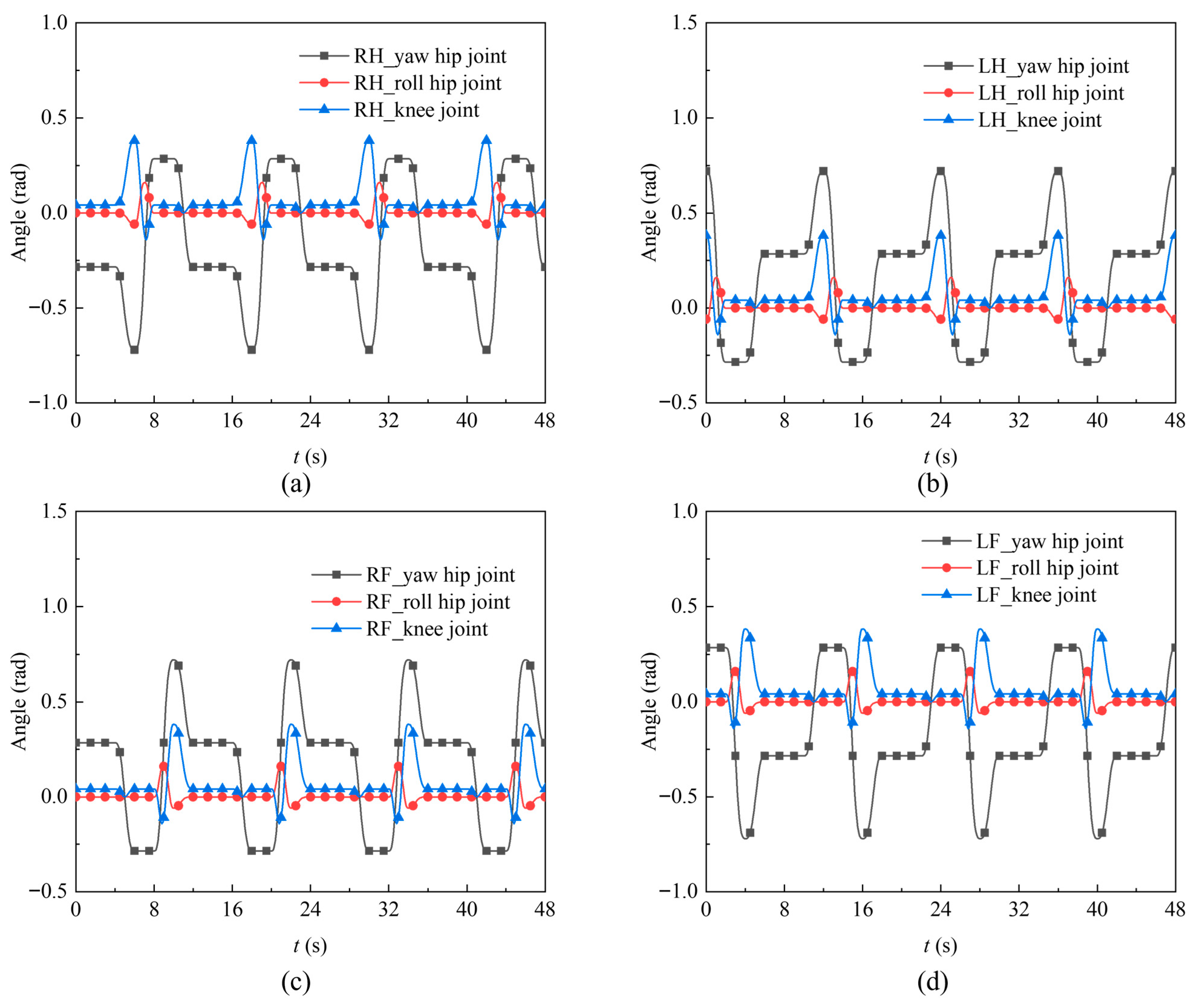
3.3. Gait Planning
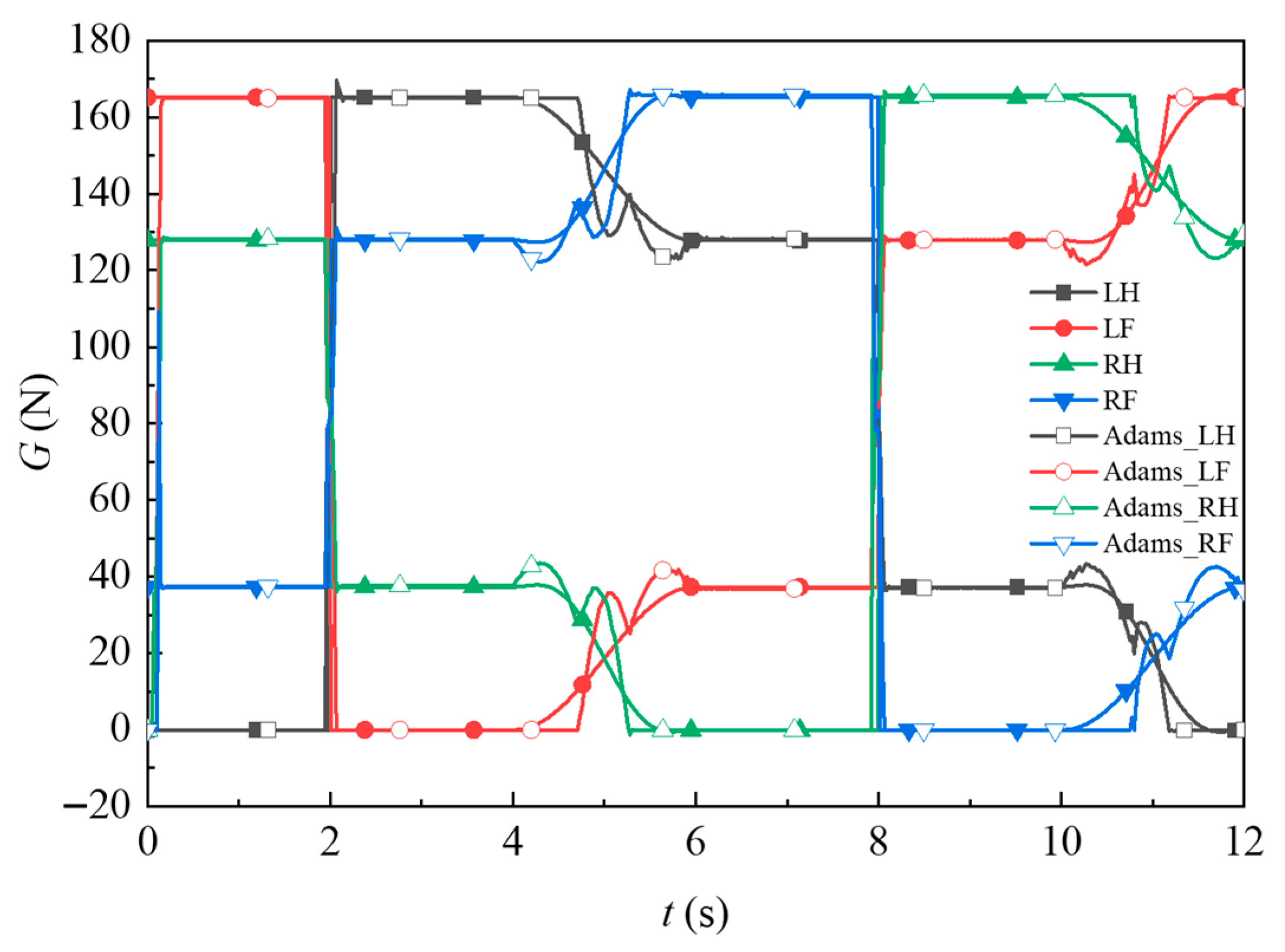
3.4. The Determination of the Foot End Supporting Force
- (1)
- Equilibrium of Forces (Vertical Direction)
- (2)
- Regarding the torque balance of the x-axis
- (3)
- Regarding the torque balance on the y-axis
4. Single-Leg Weight-Bearing Test
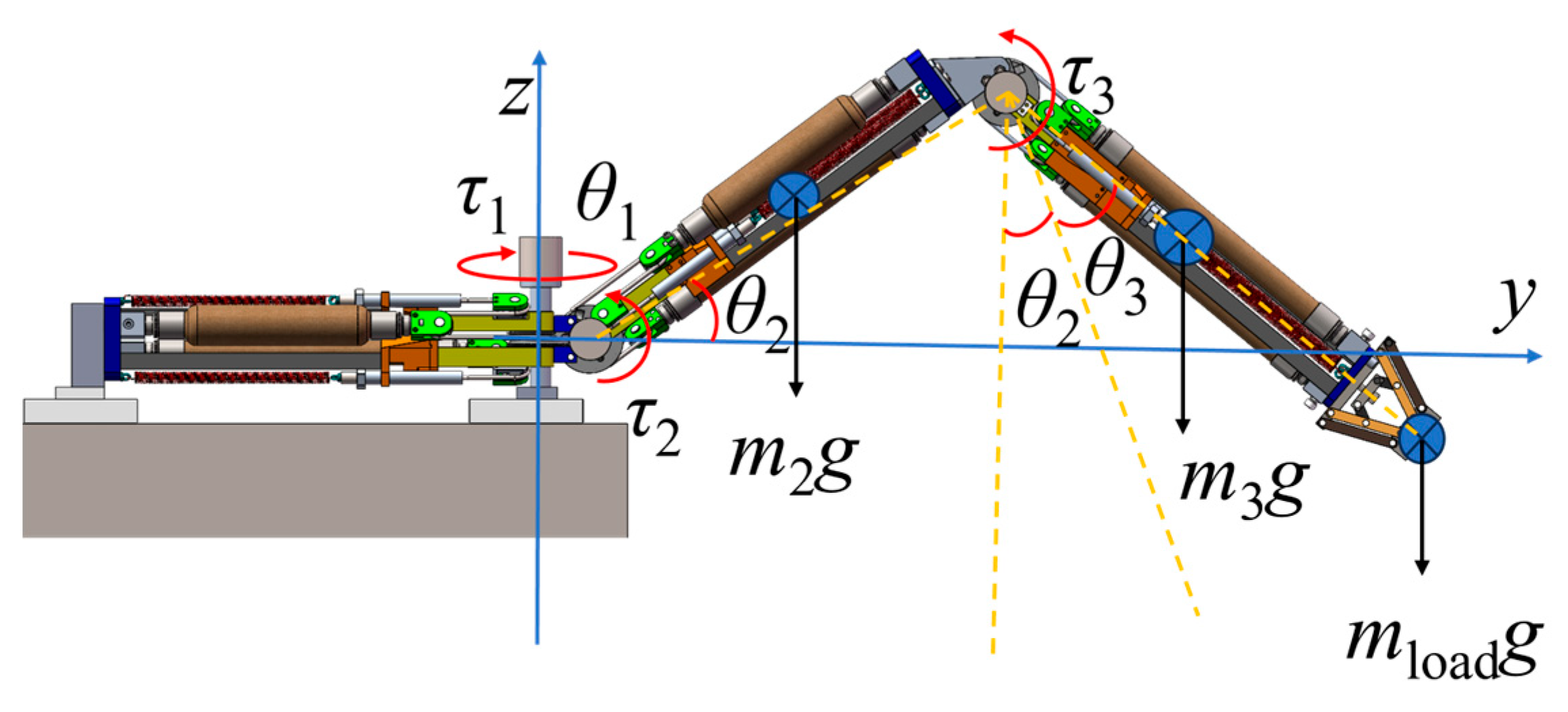
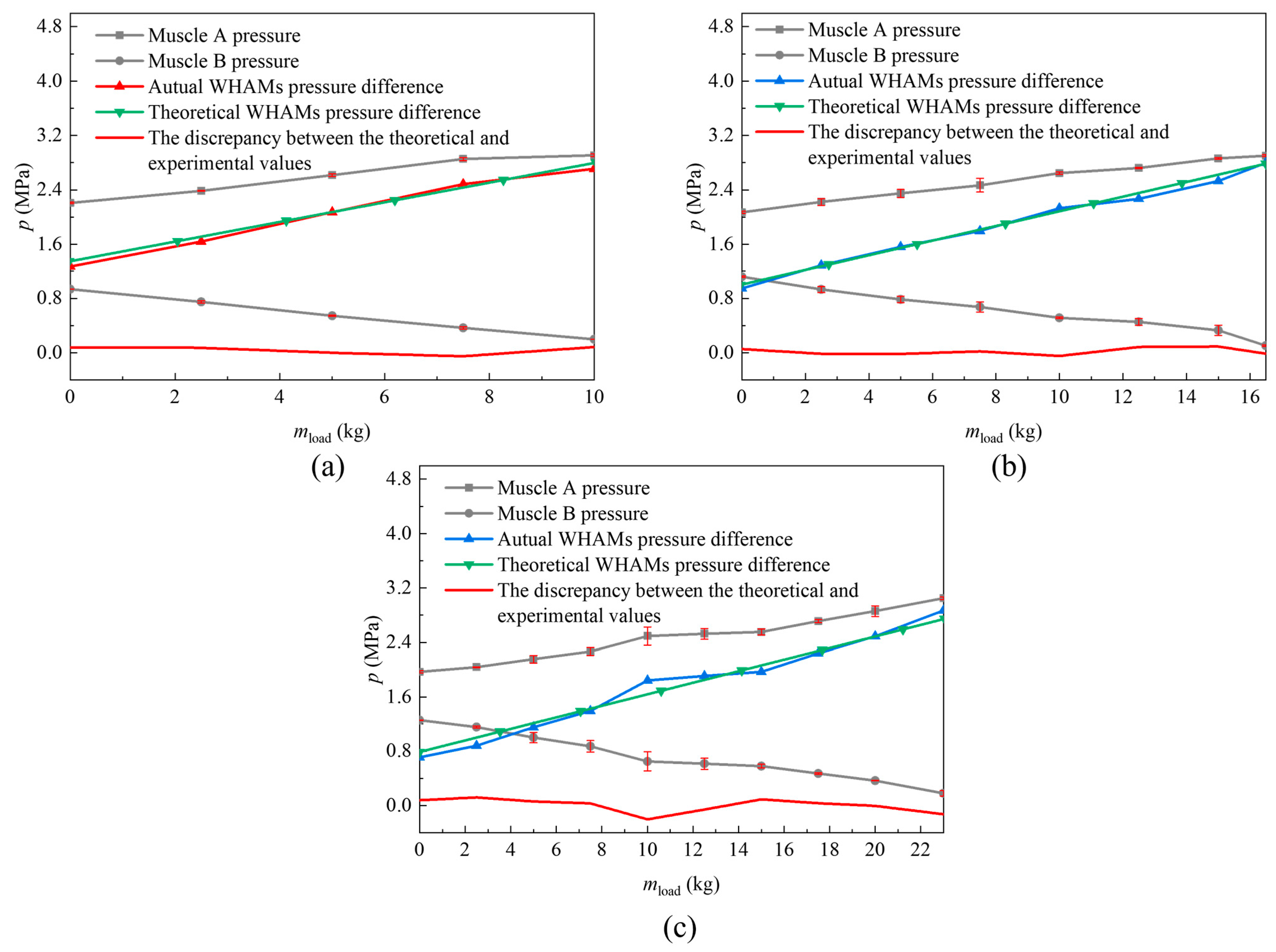
4.1. The Relationship Between the Pressure Difference of WHAMs and the Load
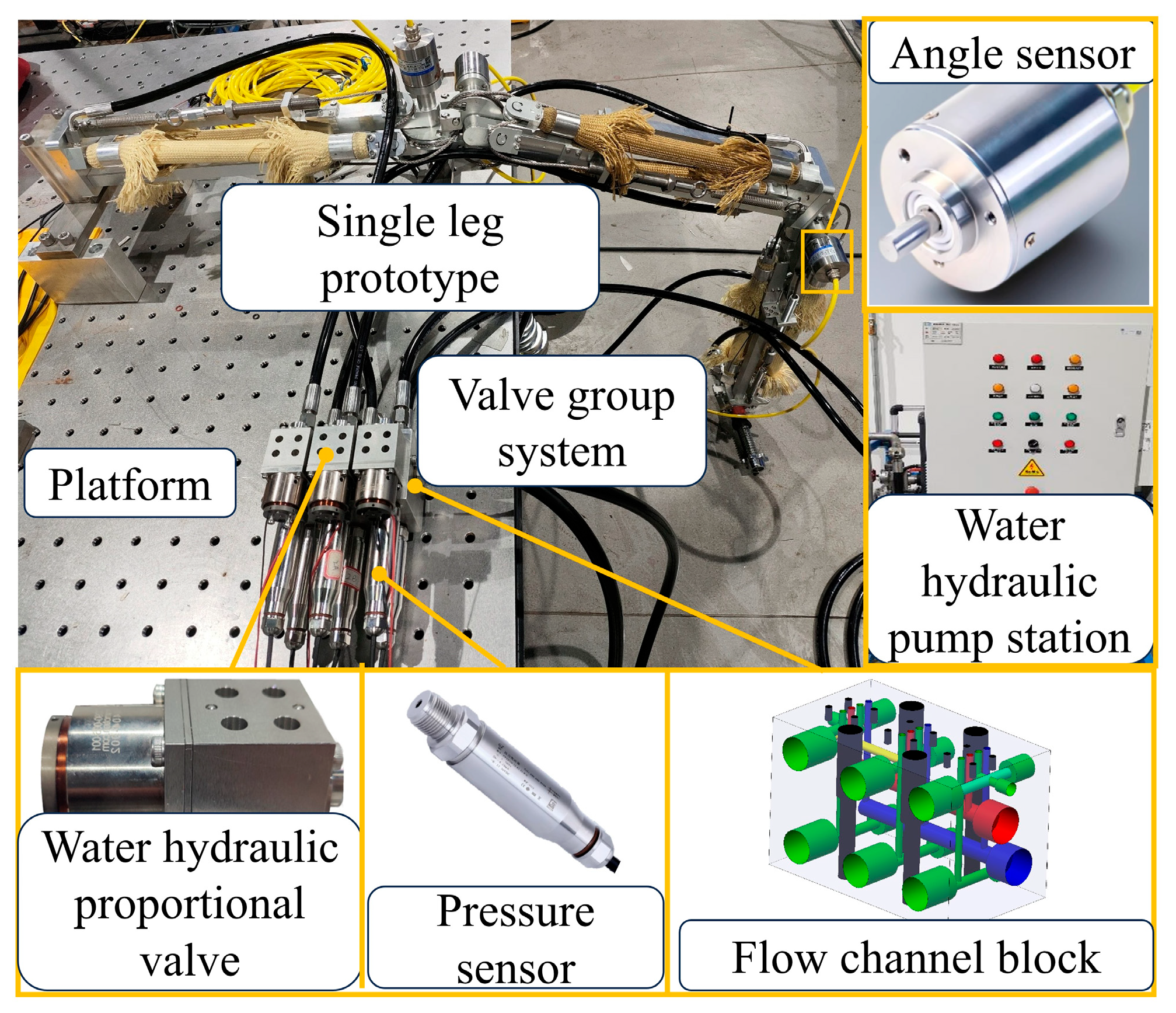
4.2. Introduction to the Single-Leg Test Bench
4.3. Test and Analysis of Static Ultimate Load Capacity of a Single Leg
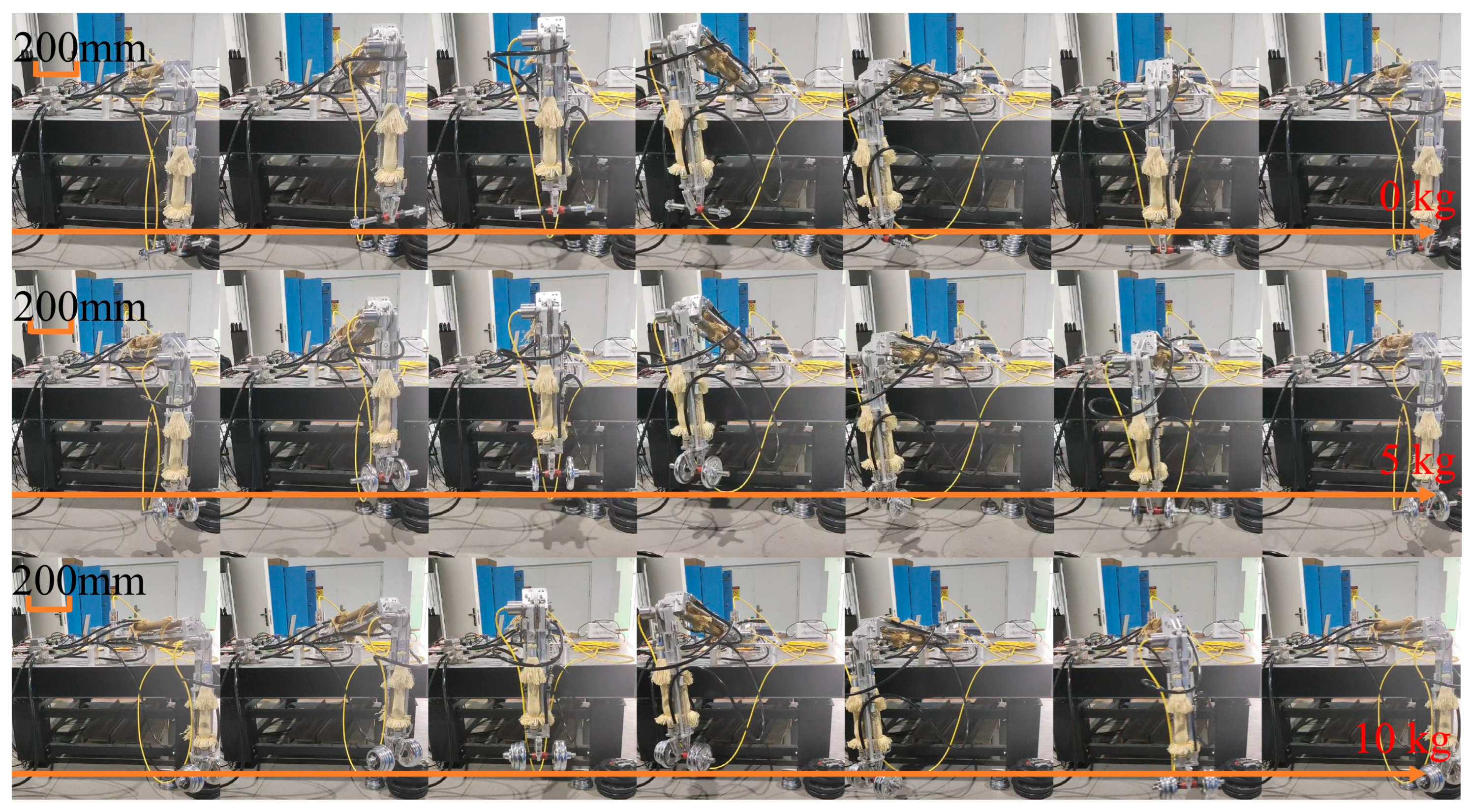
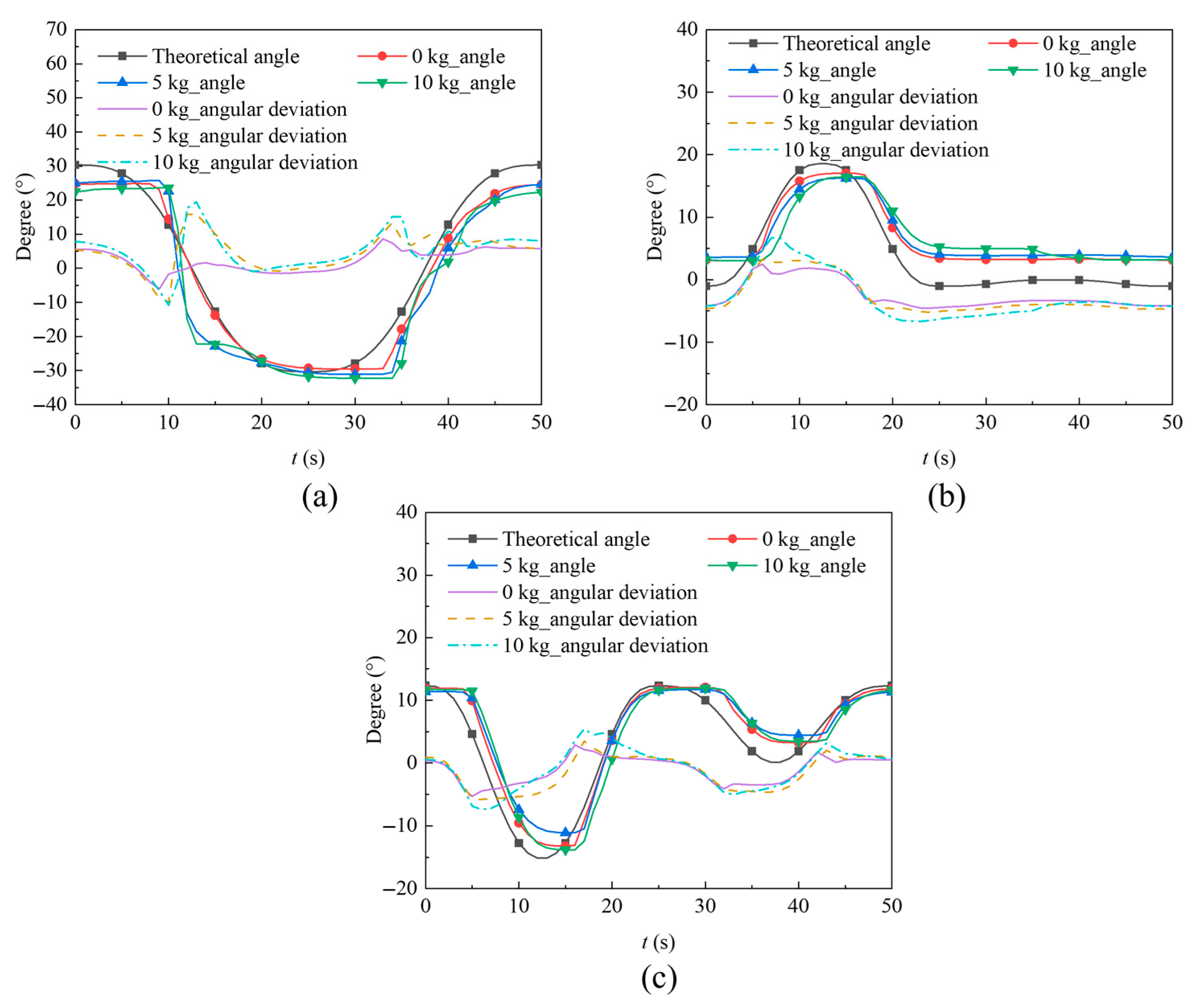
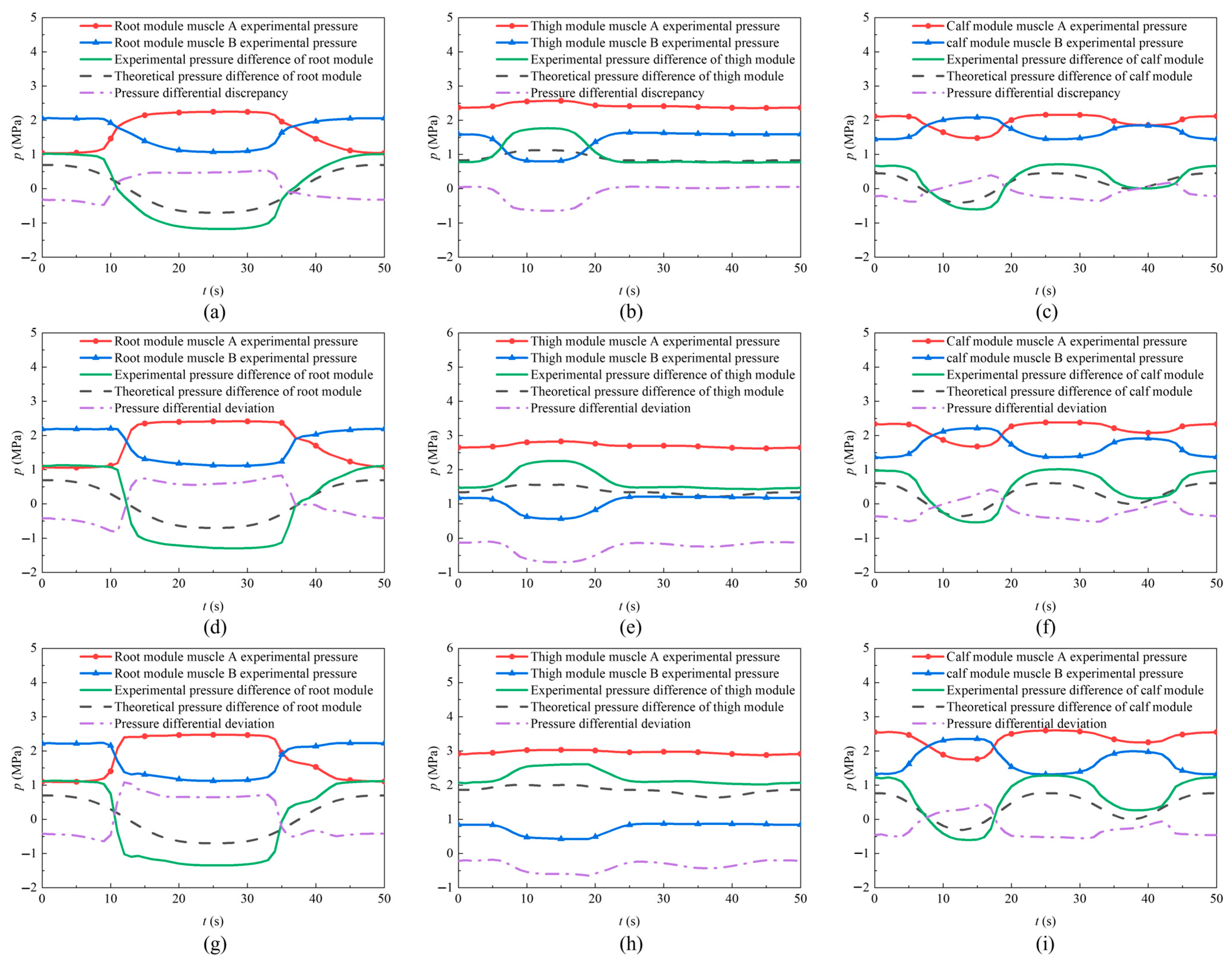
4.4. Dynamic Loaded Motion Test and Analysis of Single Leg
5. Conclusions
- (1)
- A novel WHAM-actuated quadrupedal robot structure was proposed. The WHAMs were applied to the field of quadrupedal robots.
- (2)
- A theoretical model correlating the pressure difference in the WHAMs of the leg joint module and end load was developed. Static tests verified that the deviation between the theoretical and experimental pressure differences in the thigh module under the same load was within an acceptable range, whereas the dynamic tests also demonstrated good agreement with the theoretical predictions. These results provide a theoretical basis for setting the pre-adjusted length of the steel wire ropes in WHAM modules.
- (3)
- Static tests showed that at an initial contraction rate of 0.05 of the WHAMs, the single leg could bear a maximum load of 23.00 kg, exceeding the no-load requirement of 16.85 kg by a redundancy of 6.15 kg. In the dynamic tests, the leg could perform lifting motions with a load of 10 kg.
Author Contributions
Funding
Institutional Review Board Statement
Informed Consent Statement
Data Availability Statement
Acknowledgments
Conflicts of Interest
References
- Shin, J.; Jamil, B.; Moon, H.; Koo, J.; Choi, H.; Rodrigue, H. Thermo-Pneumatic Artificial Muscle: Air-Based Thermo-Pneumatic Artificial Muscles for Pumpless Pneumatic Actuation. Soft Robot. 2024, 11, 187–197. [Google Scholar] [CrossRef] [Scilit]
- Watanabe, M.; Tadakuma, K.; Tadokoro, S. Hyperboloidal Pneumatic Artificial Muscle With Braided Straight Fibers. IEEE Robot. Autom. Lett. 2024, 9, 4242–4249. [Google Scholar] [CrossRef] [Scilit]
- Zhang, Y.; Liu, C.; Cai, M.; Shi, Y.; Gong, S.; Zhang, H.; Zhang, S. Force-displacement hysteresis characteristics of PAM based on improved generalised Prandtl-Ishlinskii model. Proc. Inst. Mech. Eng. Part C-J. Mech. Eng. Sci. 2025, 239, 2512–2528. [Google Scholar] [CrossRef] [Scilit]
- Marshall, R.; Souppez, J.; Khan, M.; Viola, I.M.; Nabae, H.; Suzumori, K.; Stokes, A.A.; Giorgio-Serchi, F. Mechanical Characterisation of Woven Pneumatic Active Textile. IEEE Robot. Autom. Lett. 2023, 8, 2804–2811. [Google Scholar] [CrossRef] [Scilit]
- Mazzoleni, N.; Bryant, M. Hardware-in-the-loop dynamic load emulation of robotic systems actuated by fluidic artificial muscles. J. Intell. Mater. Syst. Struct. 2024, 35, 945–959. [Google Scholar] [CrossRef] [Scilit]
- Zhang, Z.; Zhang, D.; Che, J.; Xie, Y.; Yang, Y.; Gong, Y. Analysis on fatigue behavior of water hydraulic artificial muscles under different elastic loads in underwater environment. Fatigue Fract. Eng. Mater. Struct. 2023, 46, 2864–2877. [Google Scholar] [CrossRef] [Scilit]
- Zhou, H.; Wang, C.; Jian, Y.; Hu, J.; Shi, L.; Li, B. Electroactive Artificial Muscle with Macroscopic Stroke Enabled by Liquid Crystal Plasticizing. ACS Appl. Polym. Mater. 2025, 7, 4885–4894. [Google Scholar] [CrossRef] [Scilit]
- Jia, Y.; Zhang, Z.; Yang, Y.; Xu, W.; Yang, R.; Gong, Y. Static characteristics of a biomimetic robot module driven by water hydraulic artificial muscles resisted with helical spring. Sens. Actuators A-Phys. 2024, 373, 115447. [Google Scholar] [CrossRef] [Scilit]
- Zhang, Z.M.; Che, J.K.; Ning, D.Y.; Liu, P.P.; Gong, Y.J. Effects of the geometry and material properties on the mechanical strength and failure modes of water hydraulic artificial muscles. Smart Mater. Struct. 2021, 30, 085013. [Google Scholar] [CrossRef] [Scilit]
- Feng, Y.; Ide, T.; Nabae, H.; Endo, G.; Sakurai, R.; Ohno, S.; Suzumori, K. Experimental Validation of a 7-DOF Power Soft Robot Driven by Hydraulic Artificial Muscles. IEEE Robot. Autom. Lett. 2024, 9, 5472–5479. [Google Scholar] [CrossRef] [Scilit]
- Yang, C.; Xu, H.; Li, X.; Yu, F. Kinematic modeling and solution of rigid-flexible and variable-diameter underwater continuous manipulator with load. Robotica 2022, 40, 1020–1035. [Google Scholar] [CrossRef] [Scilit]
- Ito, F.; Horiuchi, I.; Tsuru, K.; Nakamura, T. Development of an Earthworm-Type Electrical Wire Installation Assistance Robot Using Artificial Muscles. IEEE Robot. Autom. Lett. 2023, 8, 2999–3006. [Google Scholar] [CrossRef] [Scilit]
- Liu, C.J.; Wang, J.W.; Liu, Z.Y.; Zhao, Z.J.; Zhang, G.Q. Design and movement mechanism analysis of a multiple degree of freedom bionic crocodile robot based on the characteristic of “death roll”. J. Field Robot. 2024, 41, 2650–2662. [Google Scholar] [CrossRef] [Scilit]
- Wu, Q.X.; Qiu, Z.H.; Ma, Y.Z.; Fang, Y.C.; Sun, N. Crocodile-Inspired Soft Robots with Spatial Bending Leg Actuators and Coordinated Locomotion Planning for Amphibious Environments. IEEE Trans. Ind. Electron. 2025, 10, 14553–14562. [Google Scholar] [CrossRef] [Scilit]
- Garcia, E.; Arevalo, J.C.; Cestari, M.; Sanz-Merodio, D. On the Technological Instantiation of a Biomimetic Leg Concept for Agile Quadrupedal Locomotion. J. Mech. Robot. 2015, 7, 031005. [Google Scholar] [CrossRef] [Scilit]
- Tanaka, H.; Matsumoto, O.; Kawasetsu, T.; Hosoda, K. Swinging mass for energy-efficient quadrupedal locomotion. Adv. Robot. 2023, 37, 1042–1051. [Google Scholar] [CrossRef] [Scilit]
- Eckert, P.; Schmerbauch, A.E.; Horvat, T.; Soehnel, K.; Fischer, M.S.; Witte, H.; Ijspeert, A.J. Towards rich motion skills with the lightweight quadruped robot Serval. Adapt. Behav. 2020, 28, 129–150. [Google Scholar] [CrossRef] [Scilit]
- Liu, Y.Y.; Zhang, J.H.; Wang, L.W.; Li, L.W.; Shi, Y.L.; Xie, G.Z.; Wang, X.M. Optimization design of a bionic horse’s leg system driven by a cam-linkage mechanism. Proc. Inst. Mech. Eng. Part C-J. Mech. Eng. Sci. 2023, 237, 573–588. [Google Scholar] [CrossRef] [Scilit]
- Shao, D.H.; Wang, Z.Y.; Ji, A.H.; Dai, Z.D.; Manoonpong, P. A gecko-inspired robot with CPG-based neural control for locomotion and body height adaptation. Bioinspir. Biomim. 2022, 17, 036008. [Google Scholar] [CrossRef] [Scilit] [PubMed]
- Bian, S.Y.; Wei, Y.L.; Xu, F.; Kong, D.Y. A Four-legged Wall-climbing Robot with Spines and Miniature Setae Array Inspired by Longicorn and Gecko. J. Bionic Eng. 2021, 18, 292–305. [Google Scholar] [CrossRef] [Scilit]
- Ju, Z.J.; Wei, K.; Jiang, Z.; Xu, Y.D. Bio-inspired single-driver multi-motion modes wall climbing robot. J. Mech. Sci. Technol. 2023, 37, 3777–3791. [Google Scholar] [CrossRef] [Scilit]
- Qiu, J.H.; Ji, A.H.; Zhu, K.J.; Han, Q.F.; Wang, W.; Qi, Q.; Chen, G.M. A Gecko-Inspired Robot with a Flexible Spine Driven by Shape Memory Alloy Springs. Soft Robot. 2023, 10, 713–723. [Google Scholar] [CrossRef] [Scilit]
- Kim, J.; Kim, J.; Oh, J. Adaptive walking pattern generation and balance control of the passenger-carrying biped robot, HUBO FX-1, for variable passenger weights. Auton. Robot. 2011, 30, 427–443. [Google Scholar] [CrossRef] [Scilit]
- Deng, H.; Xin, G.; Zhong, G.; Mistry, M. Object carrying of hexapod robots with integrated mechanism of leg and arm. Robot. Comput.-Integr. Manuf. 2018, 54, 145–155. [Google Scholar] [CrossRef] [Scilit]
- Pan, Y.; Zhang, L.; Mei, D.; Tang, G.; Ji, Y.; Tan, K.; Wang, Y. Gait and simulation analysis of quadruped crawling robot based on metamorphic structure. Ind. Robot-Int. J. Robot. Res. Appl. 2024, 51, 91–104. [Google Scholar] [CrossRef] [Scilit]
- Krasny, D.P.; Orin, D.E. Generating high-speed dynamic running gaits in a quadruped robot using an evolutionary search. IEEE Trans. Syst. Man Cybern. Part B-Cybern. 2004, 34, 1685–1696. [Google Scholar] [CrossRef] [Scilit] [PubMed]
- Humphreys, J.; Li, J.; Wan, Y.H.; Gao, H.B.; Zhou, C.X. Bio-Inspired Gait Transitions for Quadruped Locomotion. IEEE Robot. Autom. Lett. 2023, 8, 6131–6138. [Google Scholar] [CrossRef] [Scilit]
- Wang, P.; Song, C.; Li, X.; Luo, P. Gait planning and control of quadruped crawling robot on a slope. Ind. Robot-Int. J. Robot. Res. Appl. 2020, 47, 12–22. [Google Scholar] [CrossRef] [Scilit]
- Koo, I.M.; Kang, T.H.; Vo, G.L.; Trong, T.D.; Song, Y.K.; Choi, H.R. Biologically Inspired Control of Quadruped Walking Robot. Int. J. Control Autom. Syst. 2009, 7, 577–584. [Google Scholar] [CrossRef] [Scilit]
- Gu, S.; Meng, F.; Liu, B.; Chen, X.; Yu, Z.; Huang, Q. Adaptive Interactive Control of Human and Quadruped Robot Load Motion. IEEE-Asme Trans. Mechatron. 2025, 30, 1459–1470. [Google Scholar] [CrossRef] [Scilit]
- Zong, H.; Ai, J.K.; Zhang, K.; Fang, L.; Jiang, L.; Zhang, J.; Xu, B. Lightweight and modular design of a hydraulically actuated quadruped robot with high payload-to-mass ratio. Proc. Inst. Mech. Eng. Part C-J. Mech. Eng. Sci. 2025, 239, 3403–3416. [Google Scholar] [CrossRef] [Scilit]
- Meller, M.A.; Bryant, M.; Garcia, E. Reconsidering the McKibben muscle: Energetics, operating fluid, and bladder material. J. Intell. Mater. Syst. Struct. 2014, 25, 2276–2293. [Google Scholar] [CrossRef] [Scilit]
- Higham, T.E.; Russell, A.P. Divergence in locomotor performance, ecology, and morphology between two sympatric sister species of desert-dwelling gecko. Biol. J. Linn. Soc. 2010, 101, 860–869. [Google Scholar] [CrossRef] [Scilit]
- Ziegler, J.G.; Nichols, N.B. Optimum Settings for Automatic Controllers. Trans. Am. Soc. Mech. Eng. 1942, 64, 759–765. [Google Scholar] [CrossRef] [Scilit]

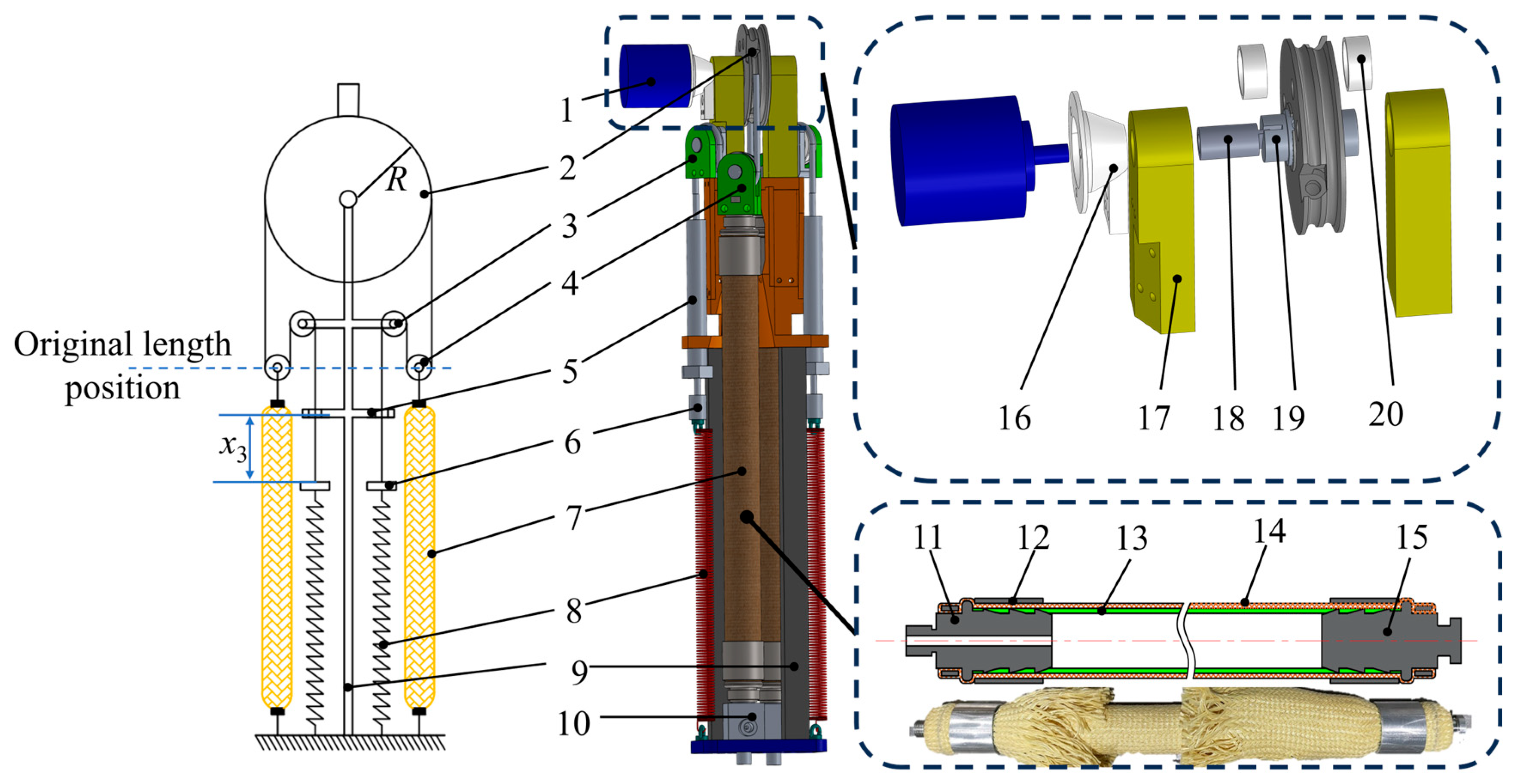
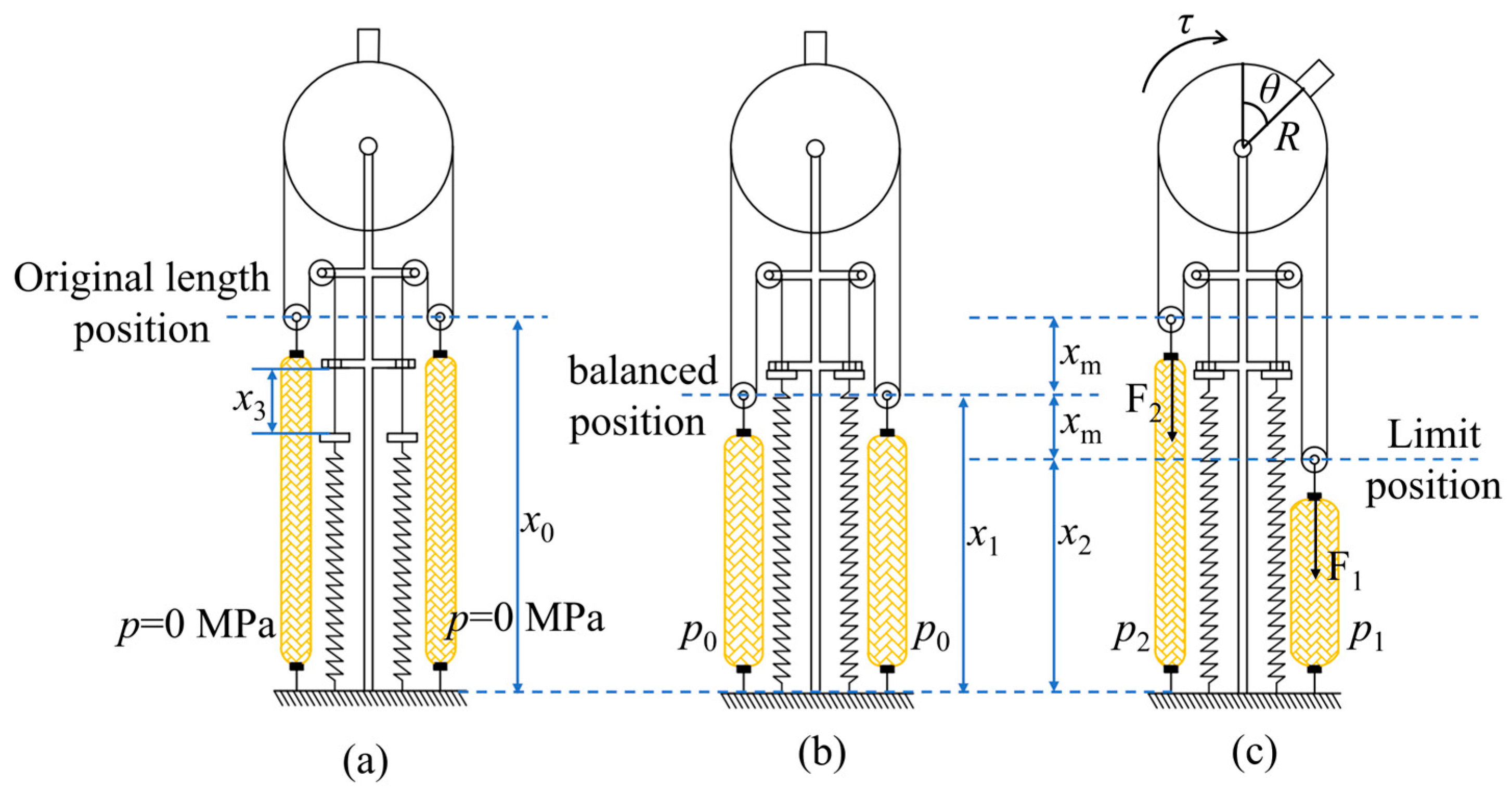


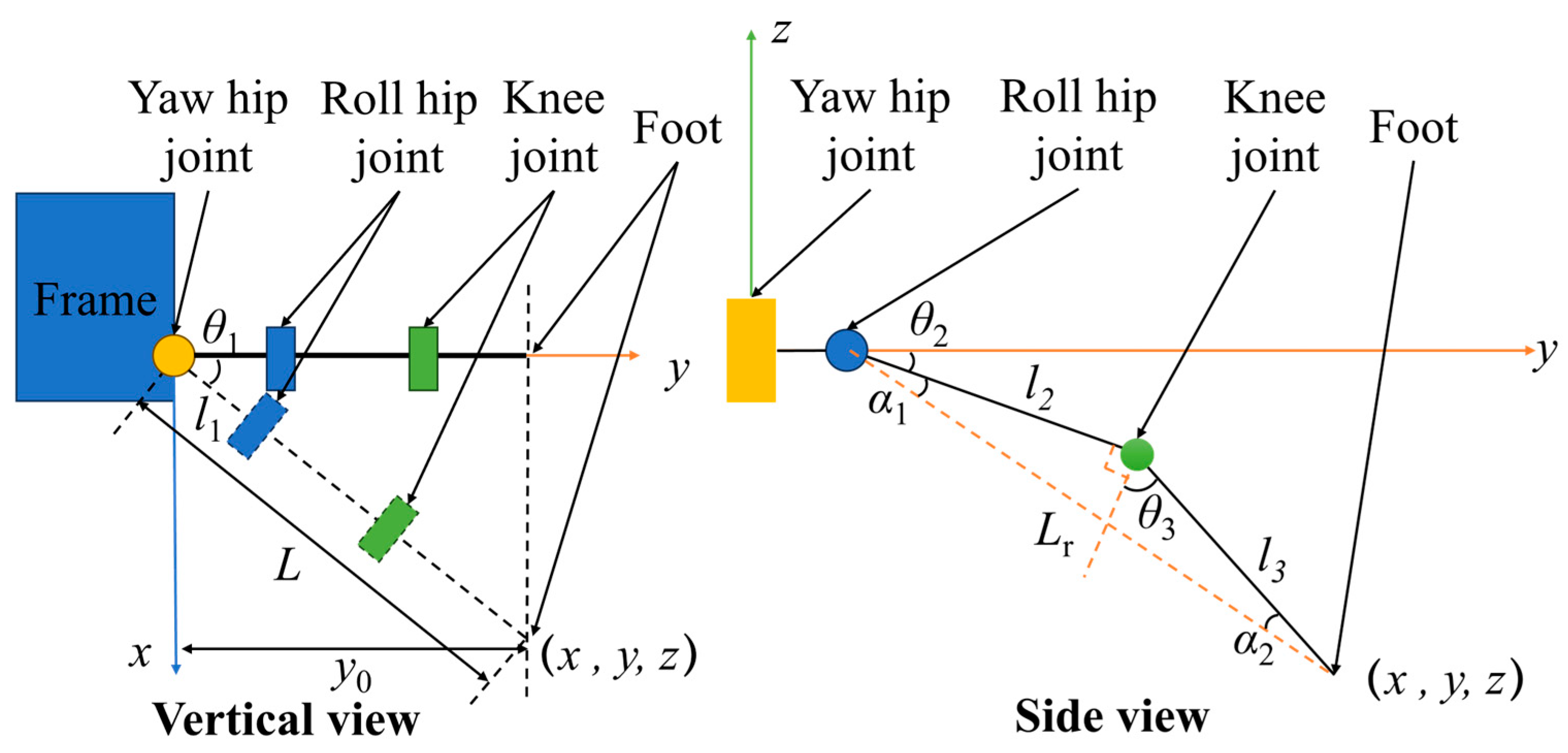
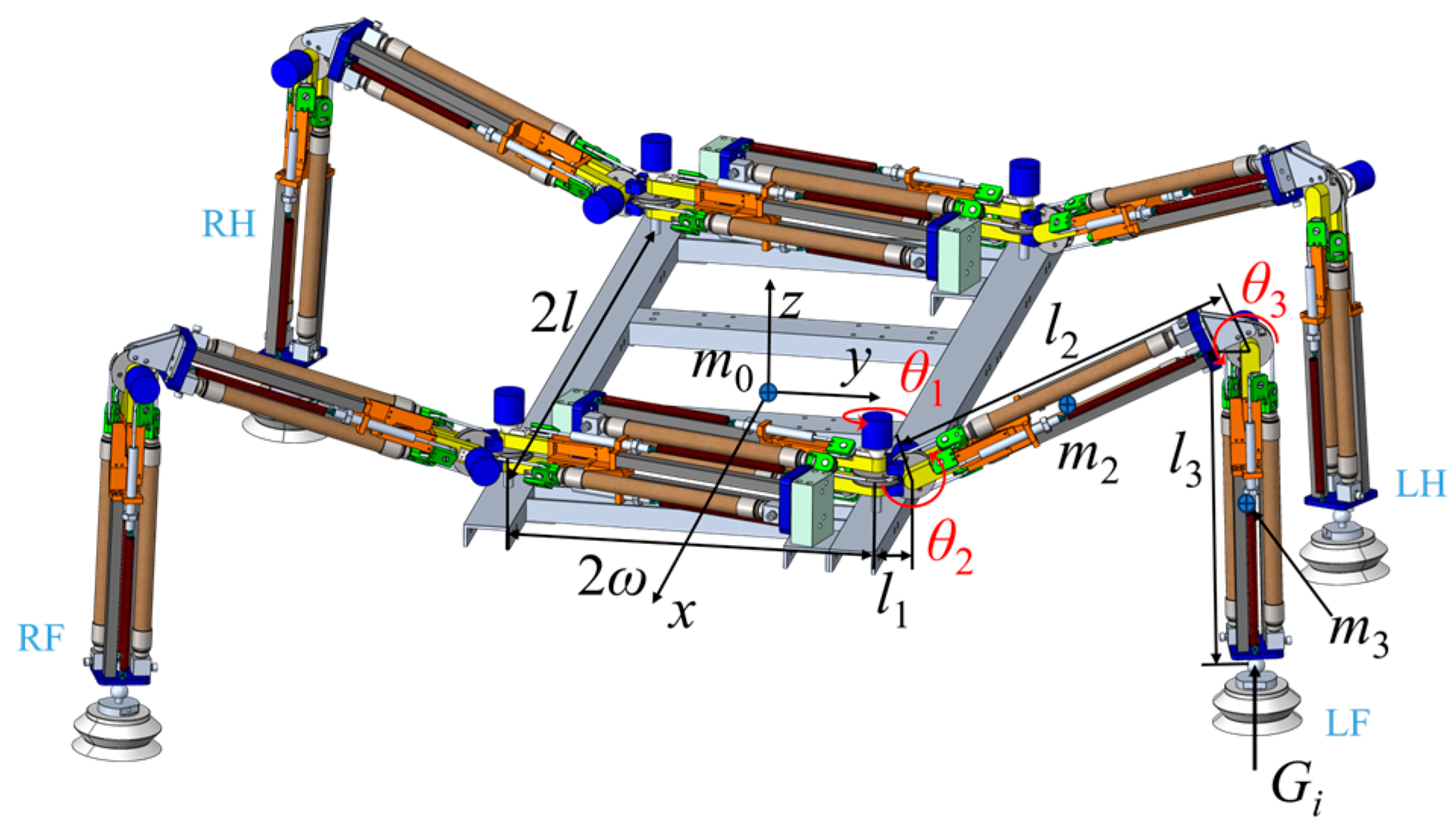



| Parameters | Units | Specification |
|---|---|---|
| Initial length of WHAM, | mm | 300 |
| Initial radius of WHAM, | mm | 15 |
| Stress adjustment parameter, | 0.73 | |
| Strain adjustment parameter, | 1.13 | |
| Joint wheel radius, R | mm | 40 |
| Initial contraction rate of WHAM, | 0~0.3 | |
| Initial weaving angle, | ° | 25 |
| Initial pressure, | MPa |
| Species | Snout Vent Length | Upper Limb | Lower Limb |
|---|---|---|---|
| Rhoptropus boultoni | 41.8 ± 1.6 mm | 13.3 ± 0.5 mm | 13.0 ± 0.5 mm |
| Parameters | Units | Specification |
|---|---|---|
| Half the distance between the yaw hip joints along the x-axis, l | mm | 685.0 |
| Half the distance between the yaw hip joints along the y-axis, ω | mm | 322.0 |
| Distance between the yaw hip joint and the roll hip joint, | mm | 60.0 |
| The distance between the roll hip joint and the knee joint, | mm | 623.6 |
| The distance from the knee joint to the foot, | mm | 555.5 |
| Body mass (including root modules), | kg | 33.7 |
| Thigh module mass, | kg | 5.5 |
| Calf module mass, | kg | 6.5 |
| Yaw hip joint rotation angle, | degree | −75~75 |
| Roll hip joint rotation angle, | degree | −90~90 |
| Knee joint rotation angle, | degree | −90~90 |
| Schemes | Legs | m | i |
|---|---|---|---|
| 1 | LH | −3/4 | 1 |
| 2 | LF | −1/4 | 1 |
| 4 | RH | 3/4 | −1 |
| 5 | RF | 1/4 | −1 |
| Stages | Legs | n | j |
|---|---|---|---|
| 3 | LH | −1/4 | 1 |
| LF | 1/4 | 1 | |
| RH | 3/4 | −1 | |
| RF | 1/4 | −1 | |
| 6 | LH | −3/4 | 1 |
| LF | −1/4 | 1 | |
| RH | 1/4 | −1 | |
| RF | −1/4 | −1 |
| Target | kP | kI | kD |
|---|---|---|---|
| Root module | 0.4 | 0.3 | 0.075 |
| Thigh module | 0.8 | 0.6 | 0.14 |
| Calf module | 0.6 | 0.3 | 0.078 |
Disclaimer/Publisher’s Note: The statements, opinions and data contained in all publications are solely those of the individual author(s) and contributor(s) and not of MDPI and/or the editor(s). MDPI and/or the editor(s) disclaim responsibility for any injury to people or property resulting from any ideas, methods, instructions or products referred to in the content. |
© 2026 by the authors. Licensee MDPI, Basel, Switzerland. This article is an open access article distributed under the terms and conditions of the Creative Commons Attribution (CC BY) license.
Share and Cite
Li, J.; Zhang, Z.; Feng, S.; Yang, Y.; Gong, Y. Gait Planning and Load-Bearing Capacity Analysis of Bionic Quadrupedal Robot Actuated by Water Hydraulic Artificial Muscles. Biomimetics 2026, 11, 24. https://doi.org/10.3390/biomimetics11010024
Li J, Zhang Z, Feng S, Yang Y, Gong Y. Gait Planning and Load-Bearing Capacity Analysis of Bionic Quadrupedal Robot Actuated by Water Hydraulic Artificial Muscles. Biomimetics. 2026; 11(1):24. https://doi.org/10.3390/biomimetics11010024
Chicago/Turabian StyleLi, Jun, Zengmeng Zhang, Shoujie Feng, Yong Yang, and Yongjun Gong. 2026. "Gait Planning and Load-Bearing Capacity Analysis of Bionic Quadrupedal Robot Actuated by Water Hydraulic Artificial Muscles" Biomimetics 11, no. 1: 24. https://doi.org/10.3390/biomimetics11010024
APA StyleLi, J., Zhang, Z., Feng, S., Yang, Y., & Gong, Y. (2026). Gait Planning and Load-Bearing Capacity Analysis of Bionic Quadrupedal Robot Actuated by Water Hydraulic Artificial Muscles. Biomimetics, 11(1), 24. https://doi.org/10.3390/biomimetics11010024