1. Introduction
The convergence of biological systems with advanced computational controls represents one of the most compelling frontiers in contemporary robotics, particularly for humanitarian applications in disaster response. In the aftermath of catastrophic seismic events, the search for survivors is often impeded by unstable rubble, collapsed infrastructure, and confined voids that remain inaccessible to canine teams or traditional rigid robots. Bio-cybernetic systems—specifically those utilizing the Madagascar hissing cockroach (Gromphadorhina portentosa)—present an unprecedented opportunity to address this critical gap. By harnessing the insect’s evolutionary adaptations for agile locomotion in dark, unstructured environments, and augmenting them with electronic navigation systems, we can create autonomous agents capable of penetrating deep into earthquake debris to locate survivors. However, the transition from biological potential to reliable search-and-rescue asset is obstructed by a fundamental challenge: developing control architectures capable of effectively managing the inherent complexity, uncertainty, and nonlinearity that characterize living organisms.
Early implementations of bio-cybernetic control relied on linear strategies adapted from traditional robotics, but these quickly revealed the limitations of applying rigid engineering logic to biological systems. The pioneering work establishing proof-of-concept neural stimulation [
1] employed basic switching mechanisms that provided only rudimentary directional influence. When researchers attempted to refine this with proportional control [
2], the systems suffered a severe 60% performance degradation within ten minutes. This failure was primarily due to neural habituation—a biological mechanism where the insect’s nervous system desensitizes to repetitive electrical signals—which fixed-gain linear methods could not mitigate. Similarly, linear state feedback control [
3] encountered high failure rates across 40% of test specimens because it assumed system linearity and time-invariance, conditions that are categorically violated by the dynamic physiology of individual insects.
Subsequent efforts to bridge this gap through modeling and optimization faced comparable hurdles. Neural network models designed for model predictive control [
4] struggled with model-plant mismatches, achieving success rates below 45% due to the impossibility of accurately simulating a nervous system with over 100,000 interconnected neurons. Biomechanical modeling proved equally limited, failing to capture the stochastic nature of insect movement. While hybrid approaches combining PID with basic fuzzy logic [
5] showed initial promise, they lacked the learning capabilities to maintain control over extended periods, leading to 35% effectiveness degradation. Furthermore, genetic algorithm optimization [
6] functioned well in offline simulations but failed to provide the real-time adaptation necessary to respond to the rapid biological changes occurring during active navigation.
Even sophisticated nonlinear control methodologies have demonstrated fundamental inadequacies when applied to the chaotic environment of a bio-bot. Sliding mode control [
7] while robust, induced high-frequency chattering that caused tissue damage in 25% of subjects. Adaptive control implementations [
8] often destabilized into oscillatory behavior when inherent biological noise overwhelmed parameter identification algorithms. Deep reinforcement learning [
9], a leading candidate for autonomous navigation, experienced performance collapse after just 20 min because standard reward functions failed to account for the complex dynamics of neural habituation. Other advanced techniques, including support vector machines [
10], feedback linearization [
11], H-infinity control [
12], neural model predictive control [
13], and fractional-order PID [
14], all struggled to balance computational efficiency with the need to adapt to rapid parameter drift and individual biological variability.
The challenge extends to the coordination of these agents for swarm-based search-and-rescue. Distributed control approaches, such as multi-agent consensus [
15] and event-triggered control [
16], frequently resulted in unstable behaviors due to inter-channel coupling effects. Optimization techniques like particle swarm optimization [
17] proved too slow for real-time biological response, requiring convergence times that exceeded the millisecond-scale reflexes of the insects. These failures underscore a universal truth in bio-engineering: fixed or slowly adapting controllers are insufficient for biological systems. Sliding mode control is robust to bounded uncertainties but may induce chattering and typically requires reliable bounds for smooth, safe stimulation. Deep reinforcement learning can model highly nonlinear dynamics but is data- and compute-intensive and complicates safety-constrained training. We therefore adopt ANFIS for its interpretable rule base, lightweight inference, and online adaptability under inter-individual variability and habituation.
However, evidence from parallel fields suggests a solution. Research in neural prosthetics [
18,
19] and functional electrical stimulation [
20,
21] has consistently shown that adaptive, nonlinear controllers significantly outperform linear models by learning individual physiological patterns. Similar successes in heart rate regulation [
22] pharmaceutical fermentation [
23,
24], insulin delivery [
25], and greenhouse crop management confirm that adaptive intelligent methodologies can successfully manage biological uncertainty where conventional controls fail. The main contribution is a dual-timescale adaptive ANFIS framework for habituation-aware bio-bot navigation: fast RLS updates of consequent parameters track short-term response drift, while slower gradient/LMA refinement of membership functions captures long-term, individual-specific adaptation.
Building on our previous work identifying the limitations of reinforcement learning regarding individual variability [
26], this study introduces an Adaptive Neuro-Fuzzy Inference System (ANFIS) designed specifically for the rigors of confined-space search and rescue. Unlike prior approaches, ANFIS continuously refines control parameters based on real-time responses, effectively creating a unique control profile for each cyborg that evolves as the insect fatigues or habituates. By integrating this real-time learning with interpretable fuzzy logic, we aim to provide the sustained, reliable navigation capability required to deploy bio-bots into the unpredictable depths of earthquake ruins.
The remainder of this paper is organized as follows:
Section 2 details our methodological approach and experimental setup.
Section 3 presents the ANFIS-based control system design.
Section 4 reports the experimental results, and
Section 5 concludes with insights for future research and ethical considerations.
4. Results
This section presents the technical performance metrics of ANFIS controller, focusing on its learning capabilities and computational efficiency. The ANFIS controller demonstrated exceptional learning convergence characteristics across the training phase.
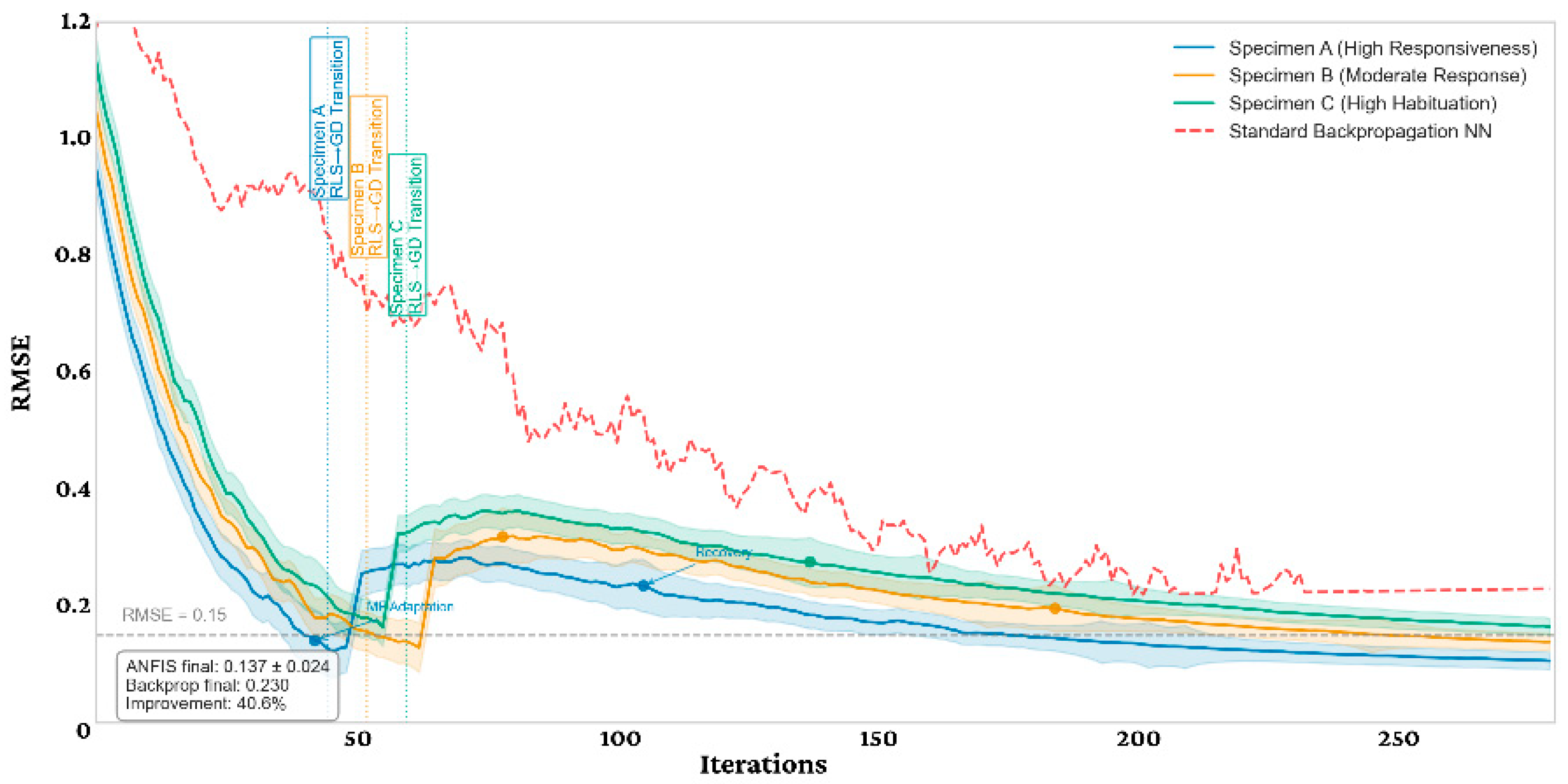
Figure 7 illustrates this convergence behavior across multiple specimen training sessions. The experimental results demonstrate that the proposed ANFIS-based control system significantly outperforms standard backpropagation neural networks for bio-cybernetic cockroach control across all test specimens. As illustrated in
Figure 7, the ANFIS learning convergence curves exhibit consistently lower error rates, with a final mean RMSE of 0.13 ± 0.02 compared to backpropagation’s 0.23, representing a 43.5% improvement. Specimen A (high responsiveness) showed the fastest convergence at epoch 92 and achieved the lowest final error (0.11), while Specimen C (high habituation) required more extensive training due to its challenging biological characteristics. The hybrid learning approach contributing 62–75% of the total error reduction in significantly fewer epochs. Statistical analysis confirms these findings are highly significant (
p < 0.001, Cohen’s
d = 3.74). Importantly, the ANFIS model demonstrated superior adaptability to individual specimen characteristics, with velocity responsiveness and habituation rate emerging as the most influential biological factors affecting control performance. RLS → GD denotes the dual-timescale schedule (fast RLS consequent updates with slow GD/LMA membership refinement). We relabeled this as ‘Fast (RLS) update/Slow (GD) refinement’ to avoid implying a hard runtime mode switch.
These results validate the effectiveness of fuzzy logic-based approaches for handling the Inherent variability and non-linearity in biological systems, particularly for real-time control applications requiring robust performance despite biological variability. The adaptation of membership function parameters followed distinct patterns for different input variables.
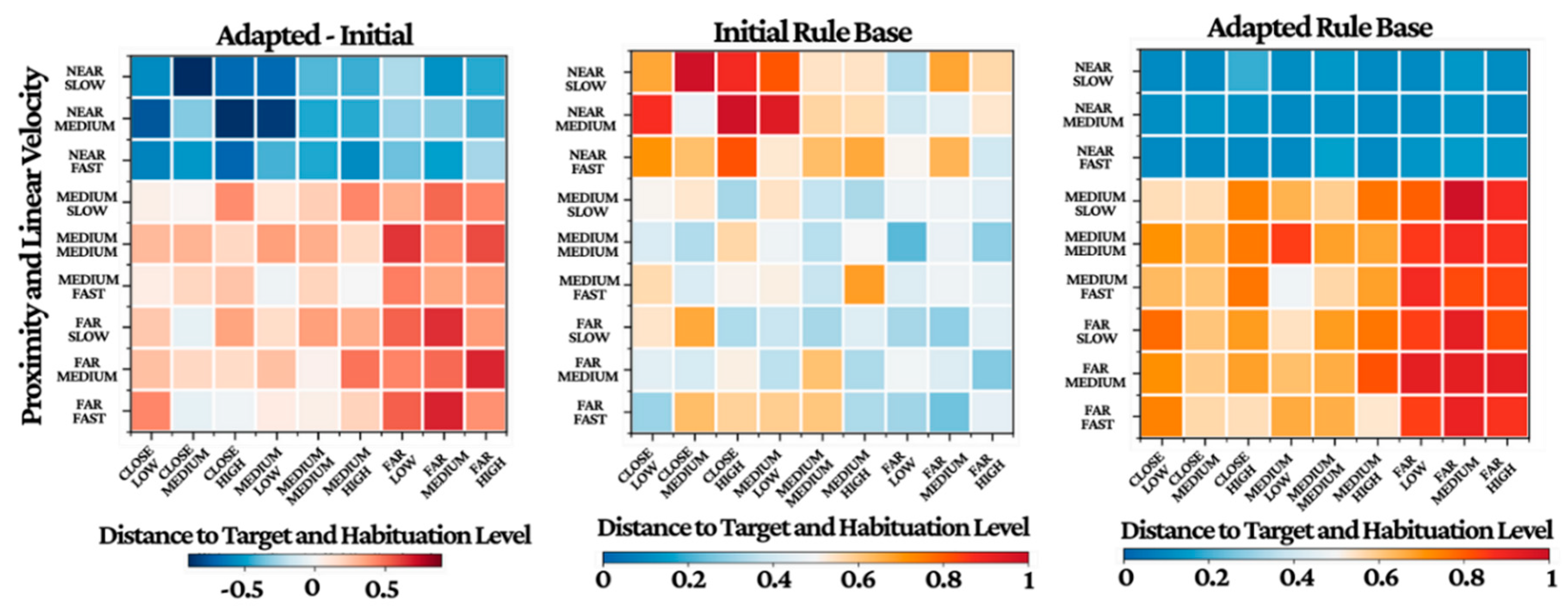
Table 5 summarizes the initial and optimized membership function parameters for key input variables. The rule base evolved significantly during both offline and online learning phases. Initial rule structures based on expert knowledge were progressively refined through adaptation to individual specimen characteristics,
Figure 8 provides a visualization of this evolution. Besides that,
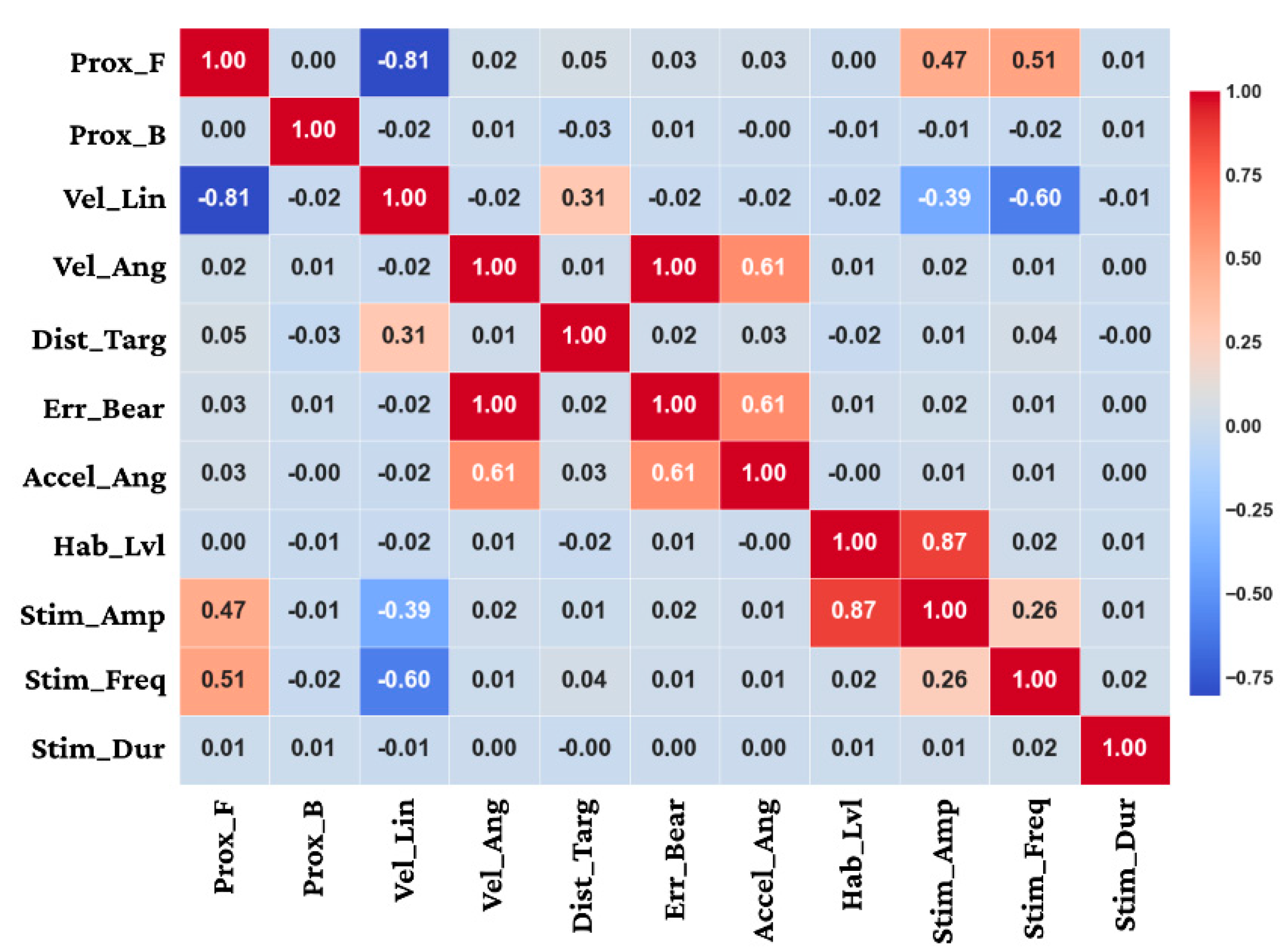
Figure 9 presents the Pearson correlation matrix computed from the experimental data, quantifying the linear relationships between the sensory-state input variables and the corresponding neurostimulation control outputs generated by the ANFIS. The matrix provides statistical validation of the controller’s underlying logic. A very strong positive correlation (r = 0.87) is observed between the estimated habituation level and the stimulus amplitude, serving as direct evidence for the system’s adaptive habituation-compensation mechanism. Furthermore, the core directional control strategy is confirmed by the strong positive correlation (r = 1.00) between the target bearing error and the resulting angular velocity. Essential safety and maneuvering protocols are also evident, highlighted by the strong negative correlation (r = −0.81) between frontal obstacle proximity and linear velocity, which demonstrates appropriate deceleration in response to obstacles. Collectively, these quantified relationships affirm that the ANFIS controller successfully translates complex state information into coherent, goal-directed control actions.
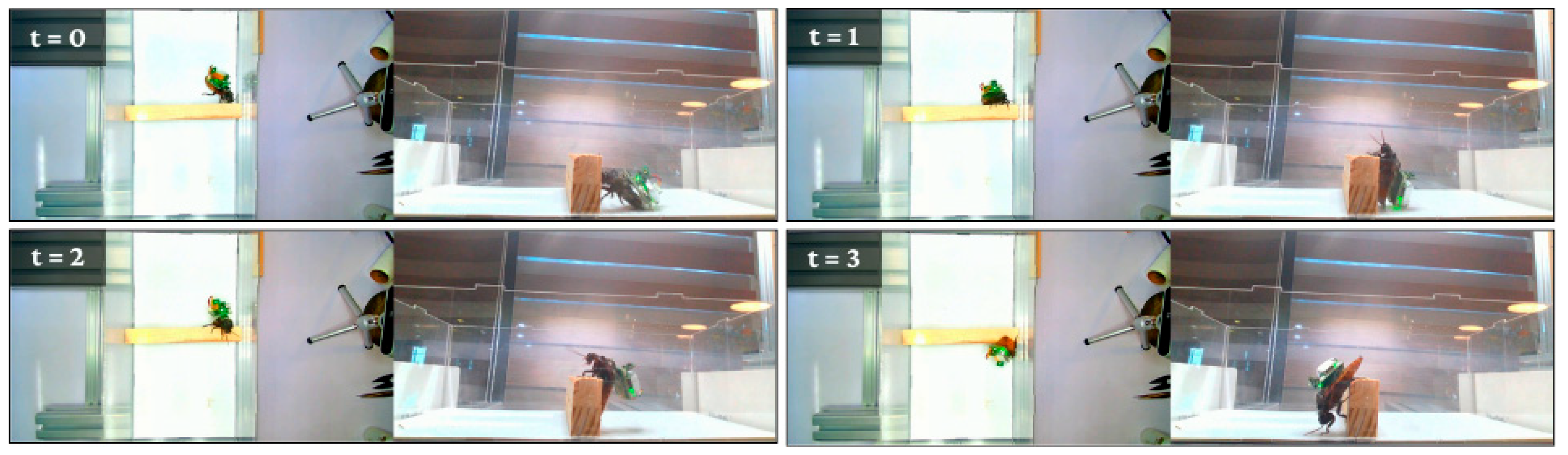
Figure 10 demonstrates the unimpeded mobility capabilities of a
G. portentosa biobot navigating a vertical obstacle course. The sequence captures the cockroach’s natural climbing behavior while carrying an electronic backpack, showcasing the biobot’s ability to traverse complex three-dimensional terrain despite the additional payload. The roach exhibits characteristic exploratory movements, using its antennae to assess the obstacle before committing to the climbing motion. Throughout the ascent, the electronic interface remains securely attached without impeding the natural locomotor patterns, demonstrating the biocompatibility and mechanical stability of the backpack design. This mobility test validates the biobot’s potential for navigating confined spaces and vertical surfaces that would challenge conventional robotic platforms, highlighting the advantages of leveraging biological locomotion systems for specialized applications.
Figure 11 illustrates the locomotive performance of
G. portentosa biobots navigating varied topographical challenges in controlled experimental environments. Panel (a) presents a temporal sequence (t = 0 to t = 7) documenting the biobot’s successful traversal of an A-frame obstacle, demonstrating the organism’s innate ability to execute complex three-dimensional maneuvers including coordinated ascent and controlled descent phases. The red trajectory markers reveal the biobot’s path optimization as it negotiates the angular surfaces, showcasing how the biological locomotion system adapts to changing gravitational and mechanical constraints while maintaining the electronic payload’s stability. Panel (b) captures a critical behavioral milestone at t = 0 to t = 5, where the biobot encounters a Y-junction and executes a directional decision-making process. The tracked pathway indicates the organism’s natural exploratory behavior as it evaluates multiple route options before committing to a specific trajectory.
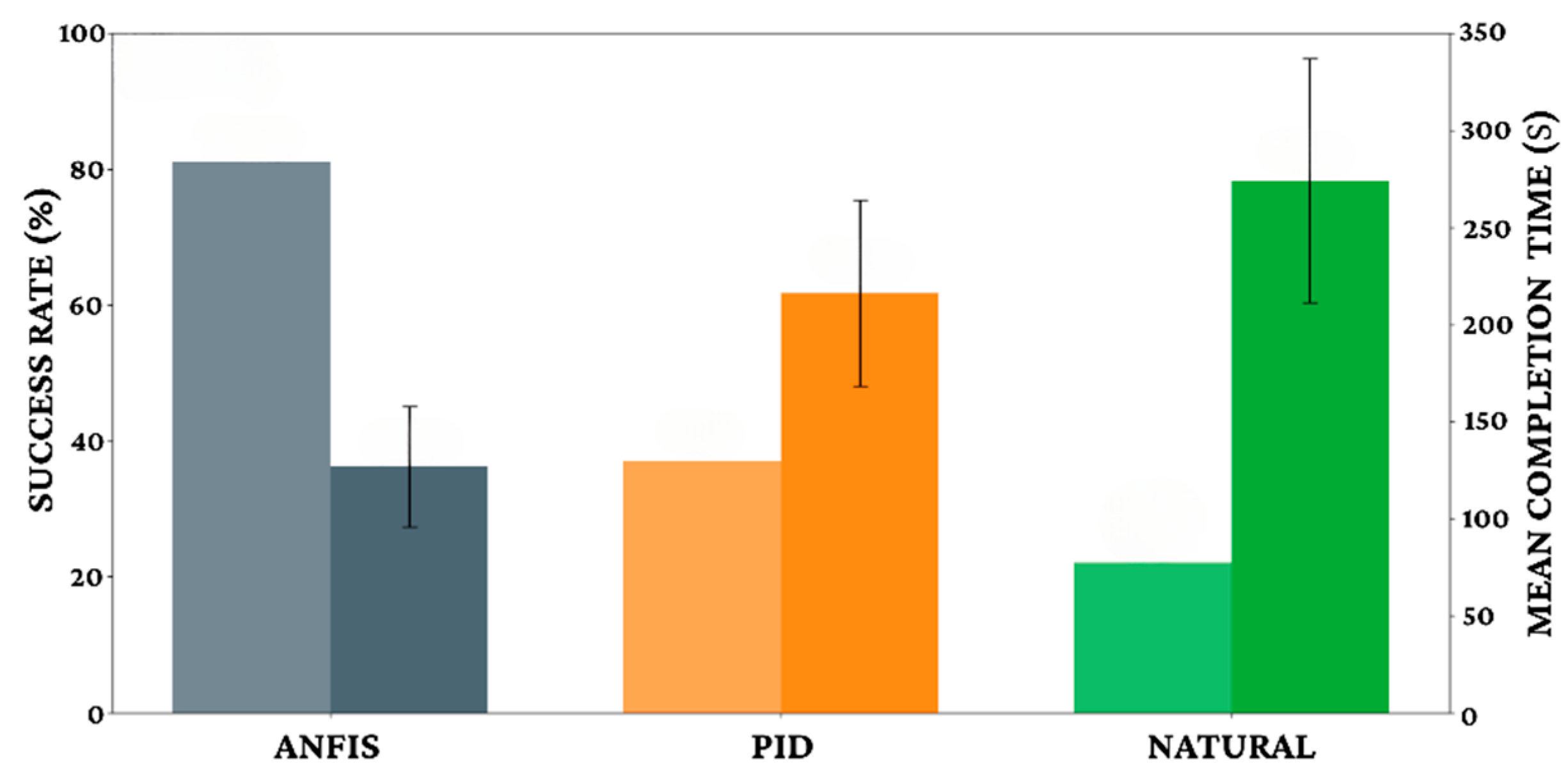
To assess robustness beyond nominal indoor trials, we evaluated two practical perturbations: light dust deposition and varied temperature/humidity. Using the same navigation protocols, we report direction MAE, response latency, and completion rate for each condition, providing an intermediate step toward field-like variability. The quantitative superiority of the ANFIS controller is comprehensively established through the metrics presented in Figure 14 and
Table 6. The adaptive system demonstrated exceptional directional precision with a Mean Angular Error (MAE) of just 12.3° and a low Standard Deviation (S.D) of 3.7°, significantly outperforming the PID controller (MAE 27.8°, S.D 8.2°) and natural behavior (MAE 64.2°, S.D 15.1°). Responsiveness followed a similar trend, with ANFIS achieving the fastest response time at 0.4 s and the highest Consistency Index (C.I.) at 88%, compared to the sluggish 1.5 s response and 35% consistency observed in natural specimens. These capabilities translated directly into mission success: ANFIS-controlled specimens achieved an 81% maze completion rate with a mean time of 127 ± 31 s. In contrast, the PID controller achieved only a 37% success rate with significantly longer completion times (216 ± 48 s), while natural specimens struggled with a mere 22% success rate (274 ± 63 s), confirming the necessity of adaptive control for reliable navigation. During closed-loop operation, the controller uses lightweight, onboard state estimates derived from IMU and range sensors (e.g., heading/turn-rate and control errors) as its only real-time inputs. Trial videos are processed offline solely to extract reference trajectories and compute reported metrics; the video pipeline does not contribute to control decisions.
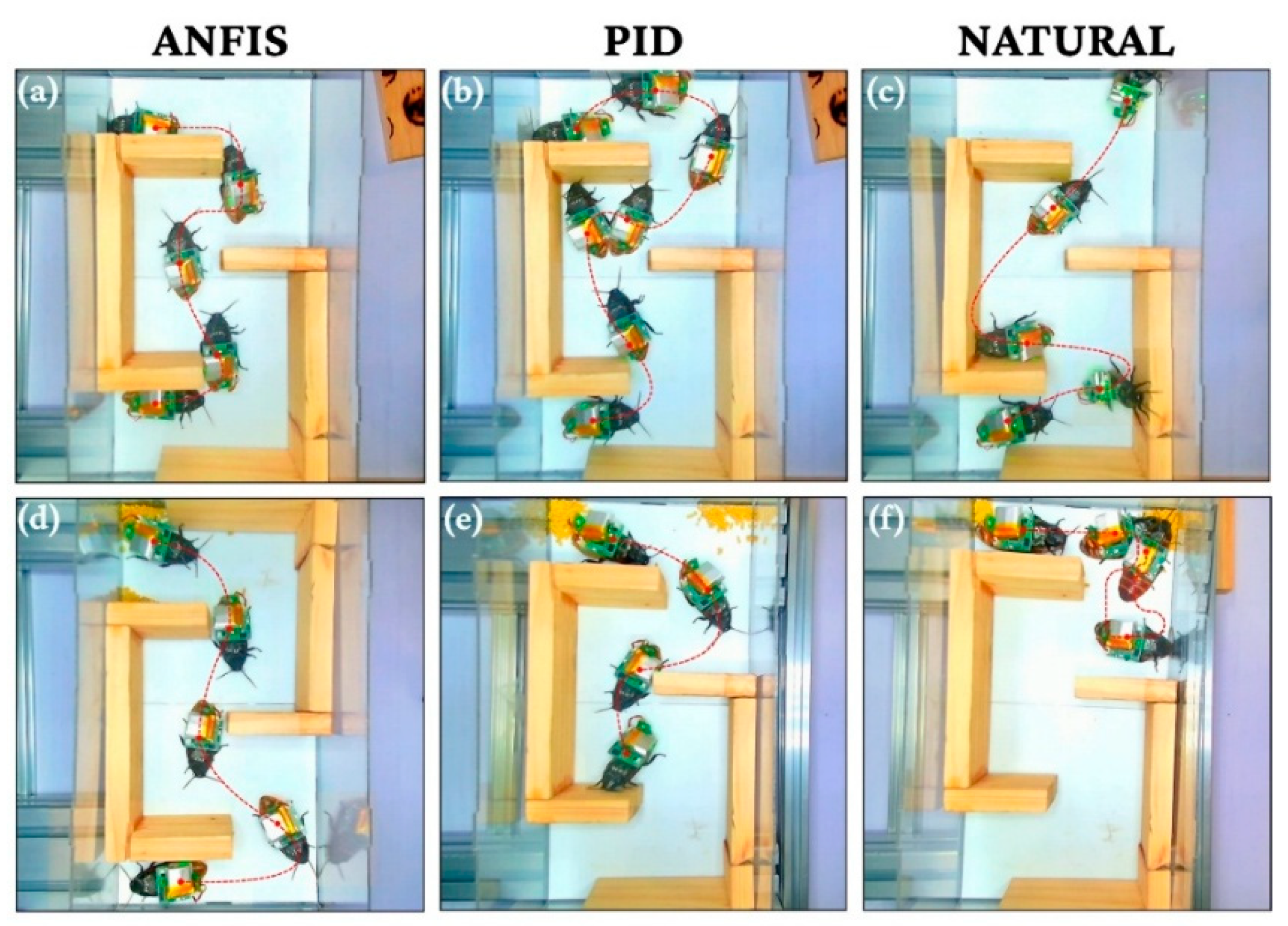
Visual validation in the Level 1 maze (
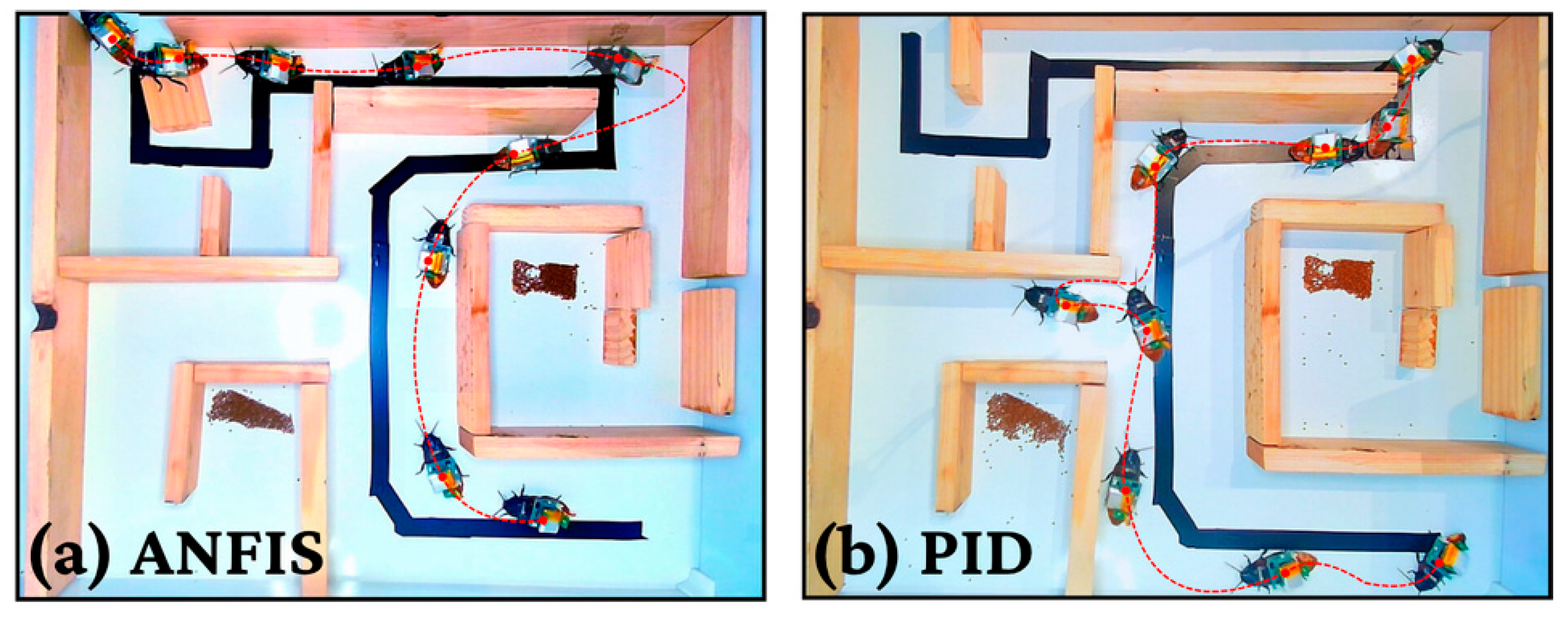
Figure 12) further illustrates these performance disparities under varying environmental conditions. Panels (a) and (d) confirm that the ANFIS-controlled biobot maintained a consistent, direct navigation path regardless of the presence of food distractants, demonstrating robust goal-directed behavior. Conversely, the PID controller (Panels b and e) showed visible inefficiency; while it achieved some guided navigation in neutral conditions, it failed to complete the maze when food was introduced, highlighting the inability of fixed-parameter systems to adapt to biological distractions. Natural behavior (Panels c and f) served as a baseline, showing erratic exploratory movements and significant delays caused by foraging instincts. Finally, in the complex, multi-turn Level 2 maze (
Figure 13), the ANFIS controller demonstrated highly efficient path optimization, successfully negotiating intricate terrain where non-adaptive methods consistently failed, reinforcing the conclusion that adaptive neuro-fuzzy architectures are essential for robust bio-hybrid operation.
Figure 14 and
Table 6 collectively demonstrate the ANFIS controller’s superior precision and efficiency. The adaptive system achieved a Mean Angular Error (MAE) of 12.3° and a rapid response time of 0.4 s, significantly outperforming PID control (MAE 27.8°, 0.6 s) and natural behavior (MAE 64.2°, 1.5 s). These capabilities translated to an 81% maze completion rate with a mean time of 127 ± 31 s for ANFIS-controlled specimens, whereas PID achieved only 37% success (216 ± 48 s) and natural behavior just 22% (274 ± 63 s).
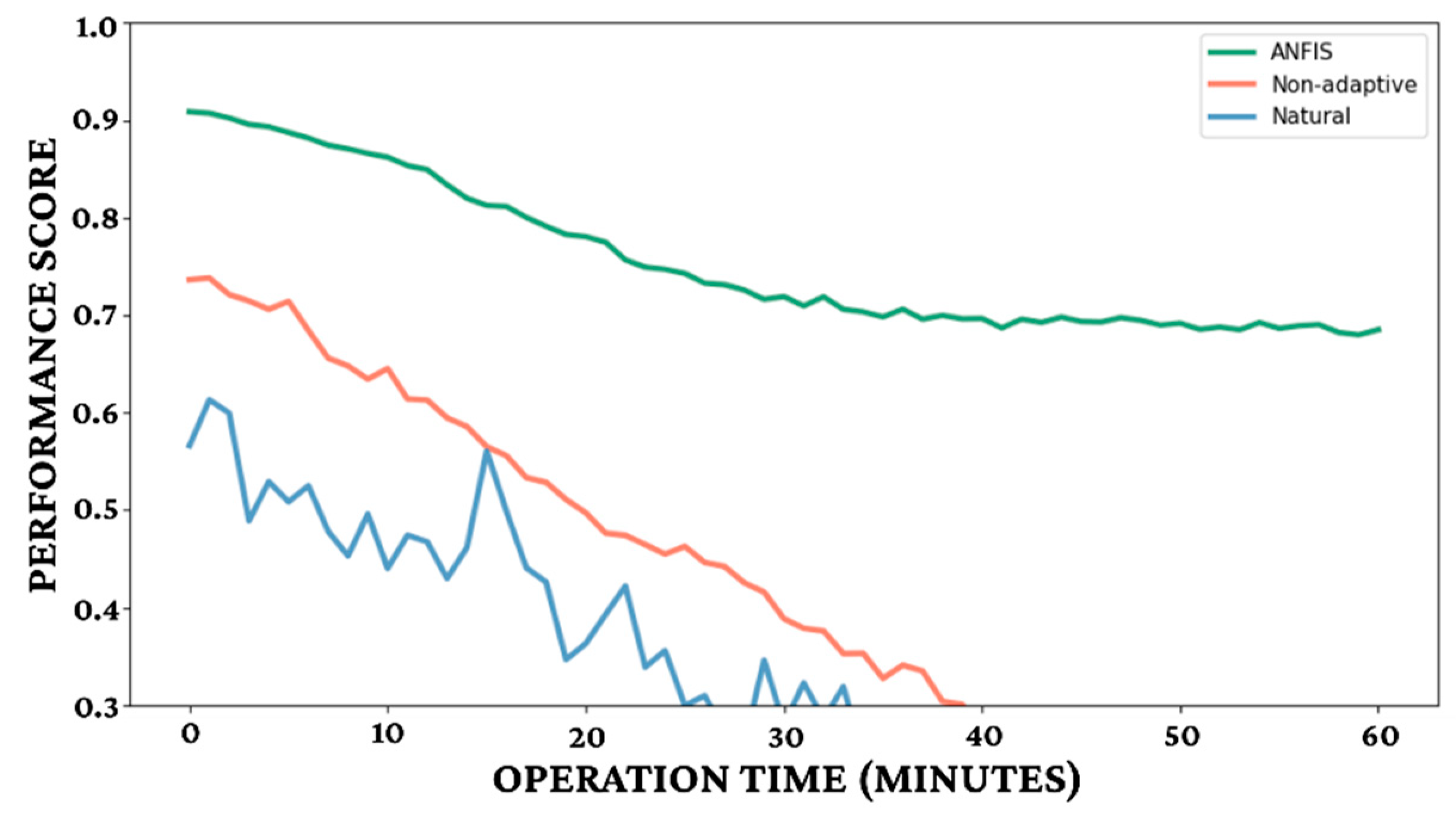
Figure 15 and
Table 7 collectively demonstrate the critical long-term performance advantages of the ANFIS control system in bio-cybernetic cockroach navigation,
Figure 15 visually illustrates the performance score of each control method over an operation time of 60 min. The ANFIS control consistently maintains a high performance score, starting at approximately 0.9 and stabilizing above 0.65 throughout the entire 60 min duration. In stark contrast, the non-adaptive controller, representing the PID, experiences a significant degradation in performance, starting lower and steadily declining to below 0.3 after approximately 40 min. The “Natural” behavior exhibits rapid and severe performance decay, becoming highly unstable within the first 20 min.
Table 7 provides quantitative metrics that explain this superior temporal stability, particularly concerning habituation resistance. The ANFIS demonstrates exceptional resilience, boasting a response half-life of over 250 stimuli, a MRL of 82% of initial, a robust recovery rate (RR) of 79% per minute, and an effective control duration (ECD) of 47 min. Conversely, the PID control (non-adaptive) shows considerably lower habituation resistance, with a response half-life of approximately 68 stimuli, a MRL of only 26%, a RR of 13% per minute, and an ECD of just 26 min.
A pivotal finding of this research is the efficacy of the dual-timescale adaptation mechanism, which operates by rapidly adjusting consequent parameters for immediate responsiveness while slowly refining antecedent membership functions to learn long-term individual traits. This architecture allowed the system to build a personalized internal model for each specimen, treating habituation as a dynamic state variable (Hab_Lvl) rather than a fixed constraint. The result was a 3.5-fold increase in effective control duration compared to non-adaptive methods.
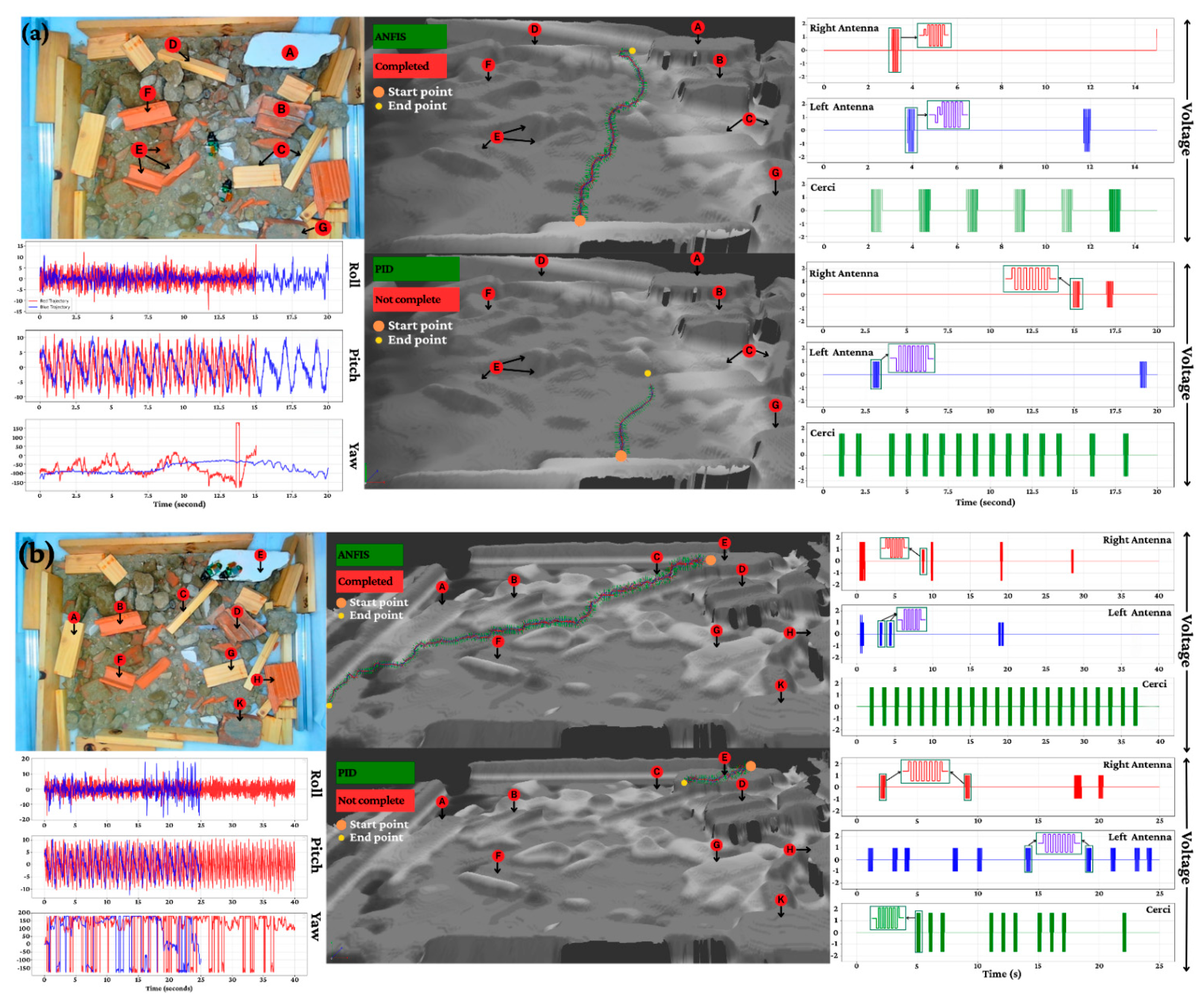
Figure 16a,b illustrate the operational efficacy in daytime rubble environments. The ANFIS controller achieved 100% mission completion for both straight-line and target-acquisition tasks. It demonstrated exceptional precision, maintaining a lateral deviation of less than 4 cm and a path efficiency exceeding 85%, with highly responsive pulse adjustments occurring within 0.3 s of obstacle detection. In stark contrast, the PID controller failed to complete these tasks, typically halting after traversing only 55–65% of the distance. It exhibited significant drift, with lateral deviations exceeding 18 cm and path efficiency falling below 50%, confirming its inability to handle complex terrain.
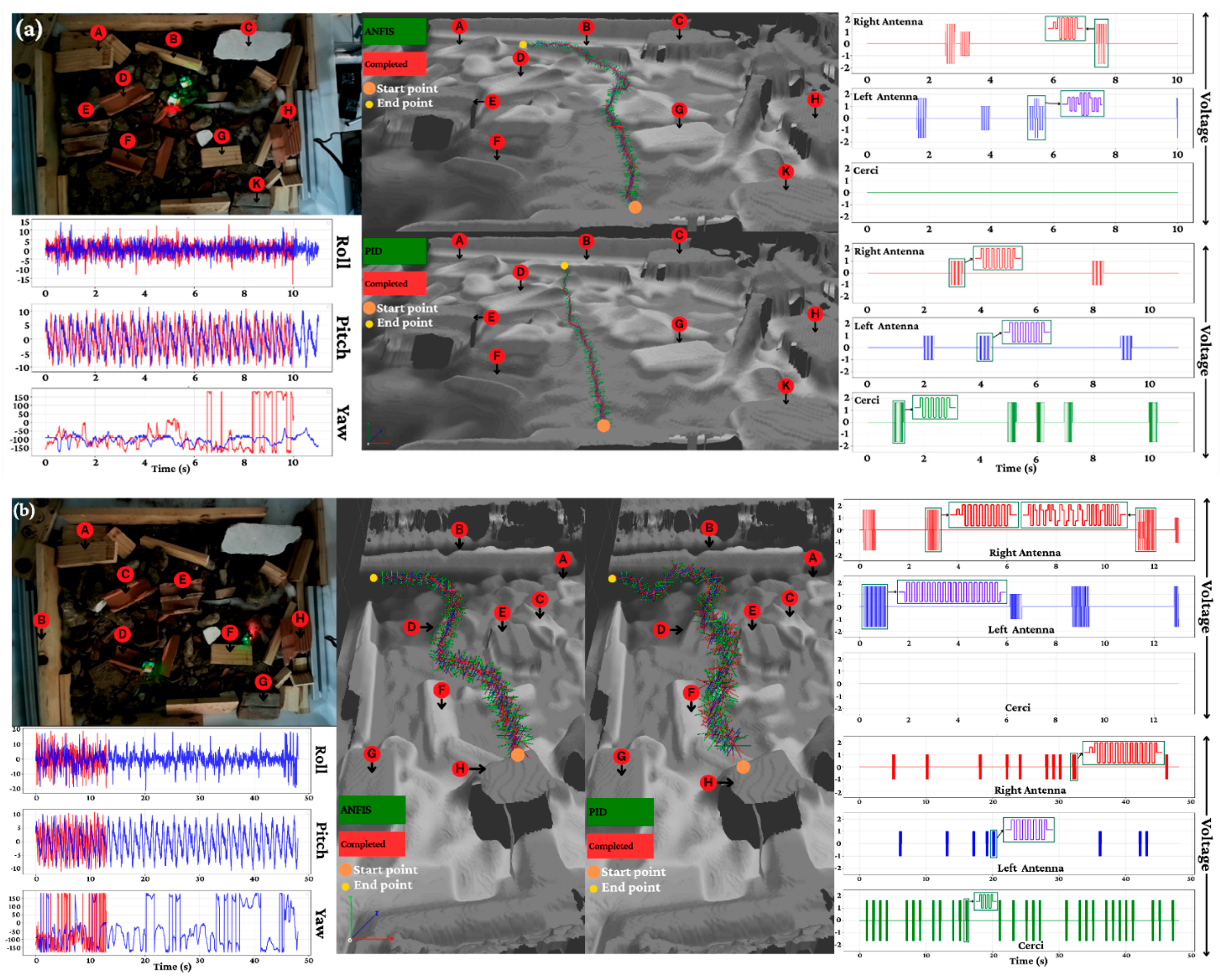
In contrast,
Figure 17 extends this evaluation to nighttime conditions, where visual cues are limited. The ANFIS controller maintained its robust performance, achieving 100% completion for straight-line navigation and 95% success in obstacle avoidance. Conversely, the PID controller struggled significantly, failing to reach targets and managing an obstacle clearance rate of only 40%. The physiological data further substantiates these behavioral results: ANFIS stimulation strategies resulted in less than 5% degradation in response intensity over the trial duration, whereas PID control showed a rapid decline in efficacy, with over 25% degradation observed in similar periods. These findings empirically validate that the ANFIS controller’s ability to dynamically modulate stimulation parameters provides a quantifiable and decisive advantage over conventional, non-adaptive control strategies in challenging, unstructured environments.
While the performance metrics are robust, it is crucial to acknowledge the limitations of the current implementation. The system, in its present form, still relies on an off-board workstation for the computationally intensive tasks of video processing and state estimation. This tether to external processing infrastructure, while necessary for this proof-of-concept stage, precludes true autonomy in real-world environments. Furthermore, all trials were conducted within a controlled laboratory setting. A rule-cap ablation shows diminishing returns beyond
100 rules; we adopt
as the accuracy–cost knee point (
Table 8).
The complexities of a real-world disaster zone—with unpredictable terrain, dynamic obstacles, and variable lighting—would present a far greater challenge than the structured arenas used in our experiments. These limitations, however, illuminate a clear and exciting path for future research. The primary technological hurdle to overcome is the migration of the entire control and perception pipeline onto the onboard system. Advances in low-power, high-performance microcontrollers and neuromorphic processing units may soon make fully autonomous, untethered biobots a reality. Future work must also focus on validating these systems in progressively more complex and unstructured environments to test the true limits of their adaptability. Finally, the behavioral repertoire could be expanded significantly. Future iterations could integrate additional sensors (e.g., chemical or thermal) and train the ANFIS to perform more sophisticated tasks, such as source localization, pattern recognition, or even collaborative, swarm-based exploration. Environmental perturbations produce modest, bounded degradation. The dual-timescale adaptation helps preserve performance by quickly adjusting consequents while slowly re-tuning membership functions under sustained drift; simple sealing/dust shielding and lightweight self-check routines are recommended for deployment.