Article

Transfer Learning Fusion Approaches for Colorectal Cancer Histopathological Image Analysis

1
Department of Information Technology, College of Computing and Information Sciences, University of Technology and Applied Sciences, Muscat 133, Oman
2
Graduate School of Technology, Asia Pacific University of Technology and Innovation, Kuala Lumpur 57000, Malaysia
*
Author to whom correspondence should be addressed.
J. Imaging 2025, 11(7), 210; https://doi.org/10.3390/jimaging11070210

Submission received: 15 May 2025 / Revised: 17 June 2025 / Accepted: 24 June 2025 / Published: 26 June 2025
(This article belongs to the Section Medical Imaging)

Abstract

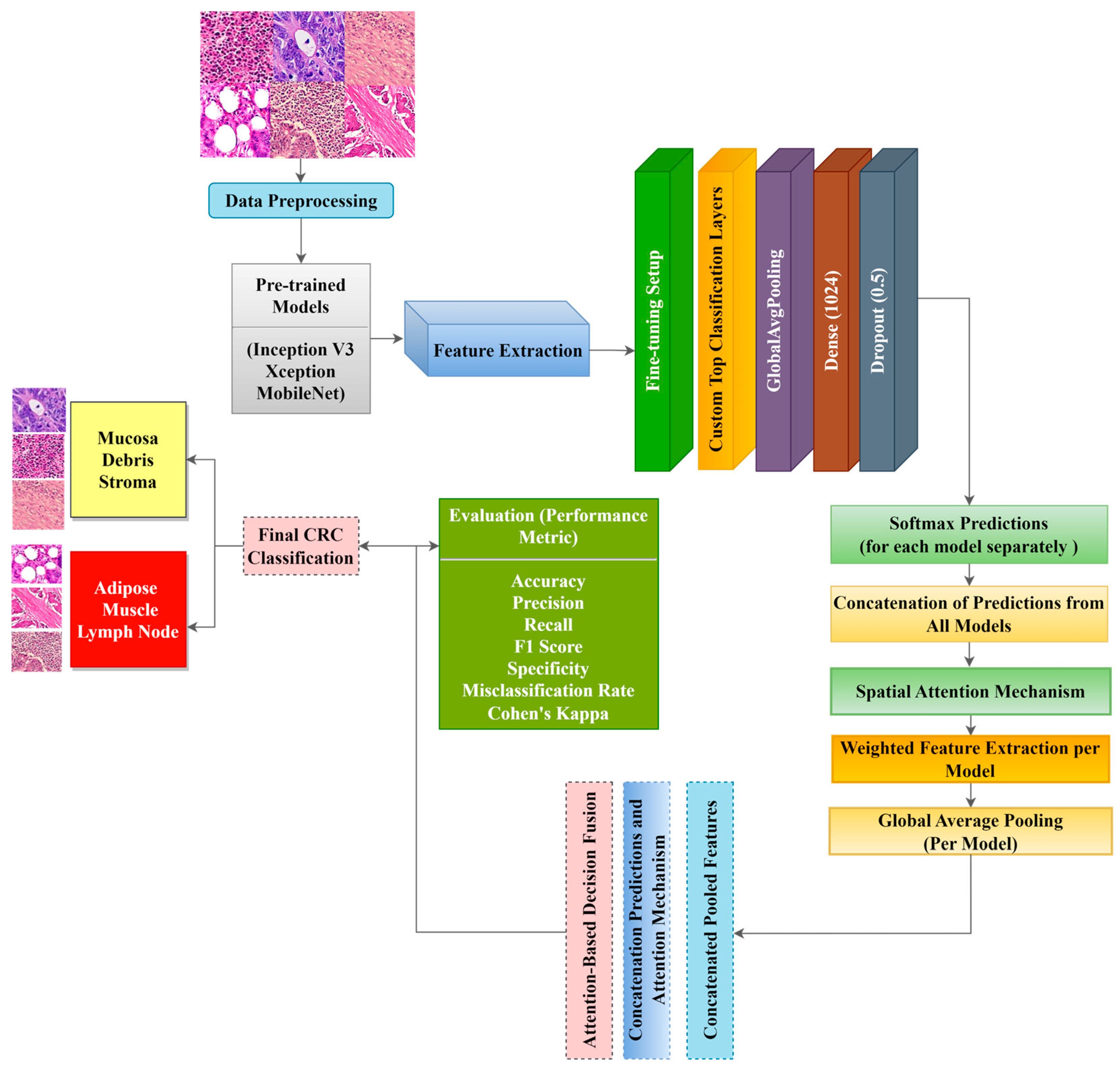
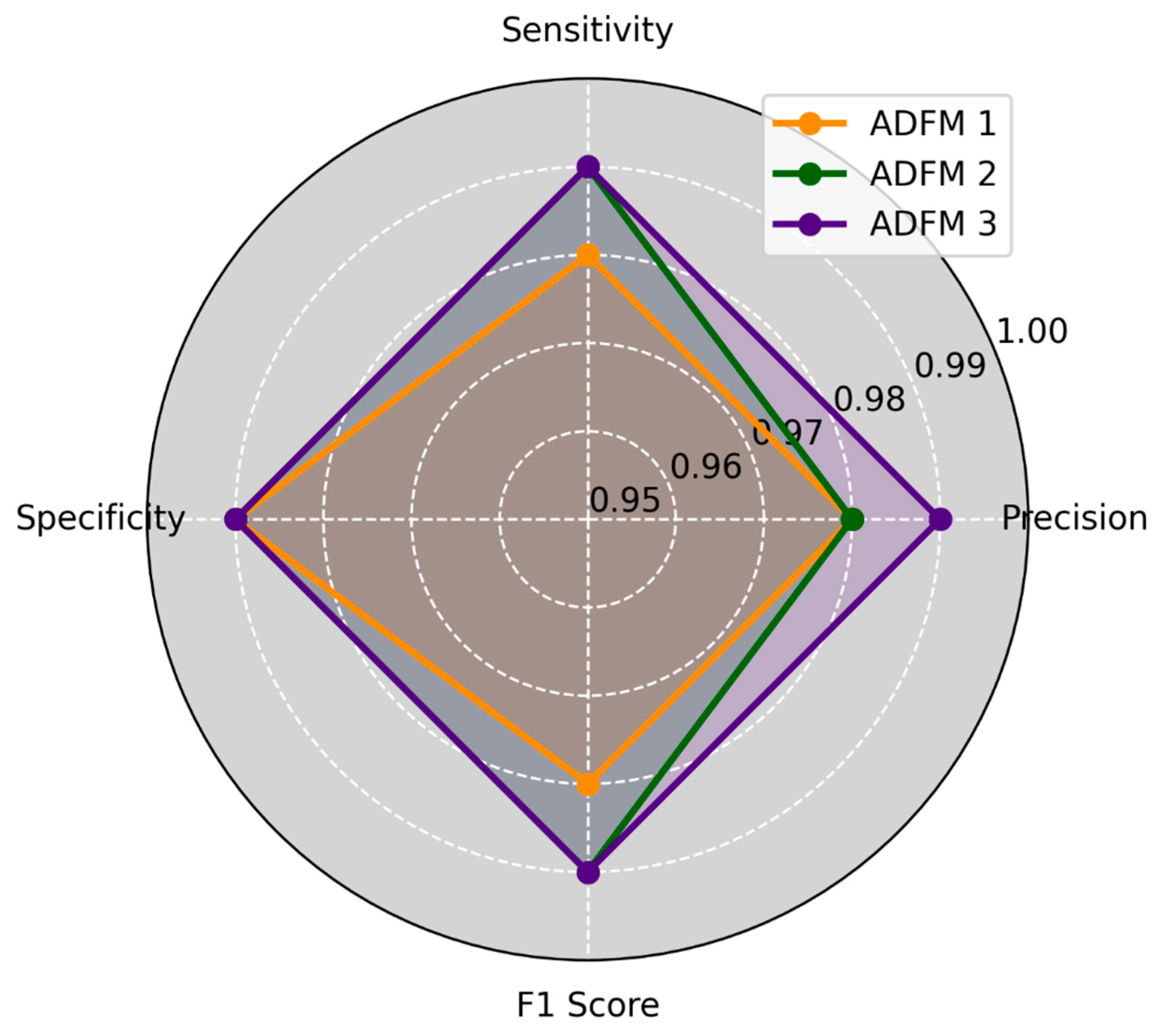
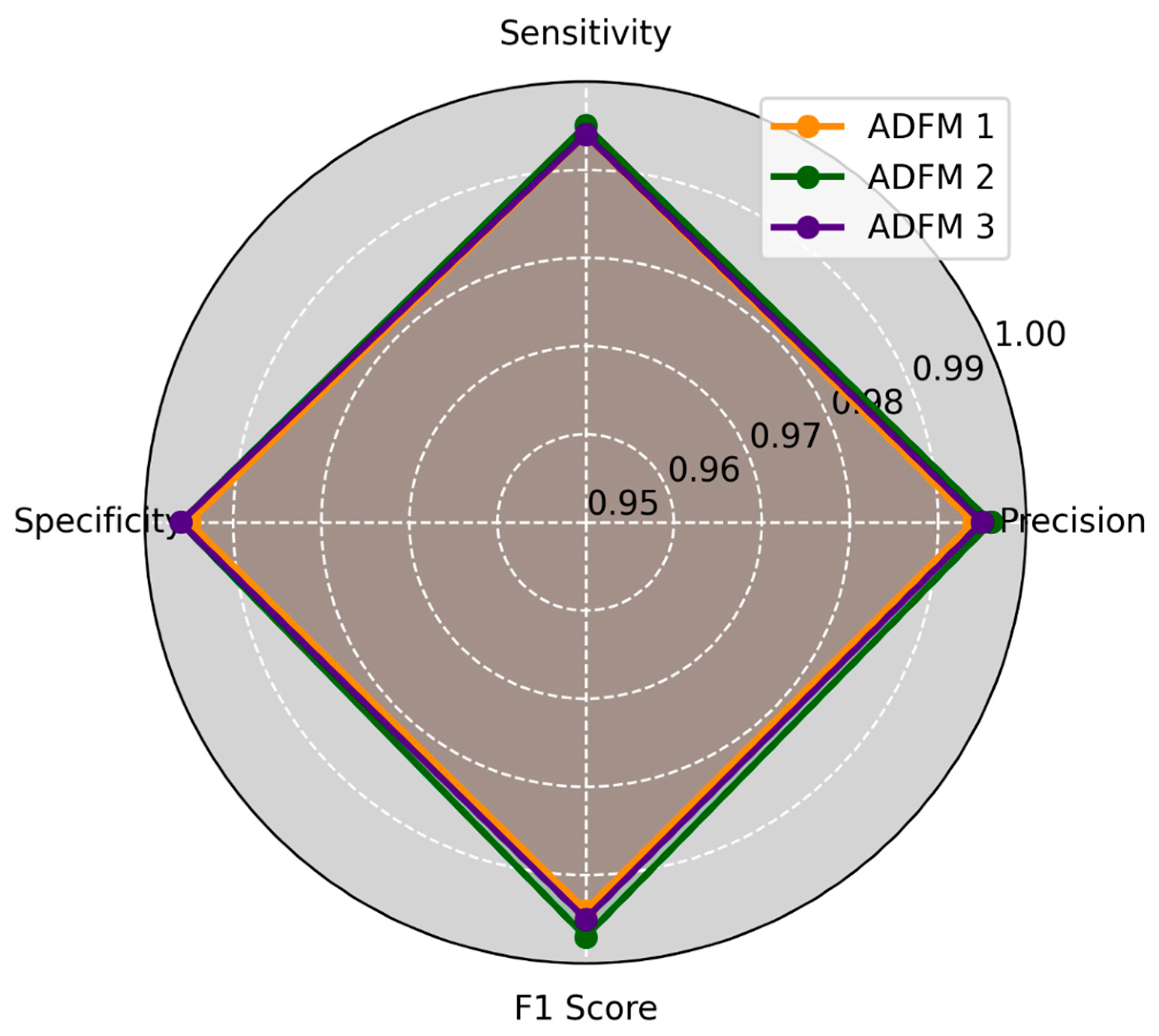
It is well-known that accurate classification of histopathological images is essential for effective diagnosis of colorectal cancer. Our study presents three attention-based decision fusion models that combine pre-trained CNNs (Inception V3, Xception, and MobileNet) with a spatial attention mechanism to enhance feature extraction and focus on critical image regions. A key innovation is the attention-driven fusion strategy at the decision level, where model predictions are weighted by relevance and confidence to improve classification performance. The proposed models were tested on diverse datasets, including 17,531 colorectal cancer histopathological images collected from the Royal Hospital in the Sultanate of Oman and a publicly accessible repository, to assess their generalizability. The performance results achieved high accuracy (98–100%), strong MCC and Kappa scores, and low misclassification rates, highlighting the robustness of the proposed models. These models outperformed individual transfer learning approaches (p = 0.009), with performance differences attributed to the characteristics of the datasets. Gradient-weighted class activation highlighted key predictive regions, enhancing interpretability. Our findings suggest that the proposed models demonstrate the potential for accurately classifying CRC images, highlighting their value for research and future exploration in diagnostic support.
Keywords: colorectal cancer; decision fusion; transfer learning; spatial attention mechanisms; histopathological images colorectal cancer; decision fusion; transfer learning; spatial attention mechanisms; histopathological images