Article

First-Principles Calculation Study on the Interfacial Stability Between Zr and F Co-Doped Li6PS5Cl and Lithium Metal Anode


1
Department of Electric Power Engineering, Nanjing Normal University Taizhou College, Taizhou 225300, China
2
Department of Energy Science and Engineering, Nanjing Tech University, Nanjing 210009, China
3
Department of Chemistry and Bioengineering, Nanjing Normal University Taizhou College, Taizhou 225300, China
*
Author to whom correspondence should be addressed.
Batteries 2025, 11(12), 456; https://doi.org/10.3390/batteries11120456
Submission received: 24 October 2025 / Revised: 25 November 2025 / Accepted: 8 December 2025 / Published: 11 December 2025

Abstract

Li-Argyrodite-type Li6PS5Cl solid electrolyte is one of the most extensively investigated and promising materials in the field of all-solid-state batteries. However, its interfacial stability against lithium metal anodes remains challenging. Herein, first-principles calculations were employed to probe the effects of Zr and F co-doping on the interfacial structural characteristics of Li6P0.9Zr0.1S4.9F0.1Cl solid electrolytes in contact with lithium metal at the atomic scale. Systematic investigations were conducted on interfacial structural stability, electronic structure, lithium-ion transport properties, and stress–strain properties. Theoretical results demonstrate that the formation energy of sulfur on the lithium metal side in the Zr and F co-doped interface is significantly increased, which stems from the strong bonding interactions of Zr–S and P-F bonds. This effectively suppresses sulfur diffusion toward the lithium metal anode, thereby enhancing the interfacial structural stability. Moreover, Zr and F co-doping simultaneously improves both the lithium-ion migration capability and mechanical stress–strain properties at the interface. The maximum strain at the Li/Li6PS5Cl interface increases substantially from 6% to 12% with the implementation of Zr/F co-doping. The Li+ migration barrier at the interface exhibits a reduction of 36%. The insights from this study can serve as a design guideline for engineering high-performance solid electrolytes for all-solid-state batteries.

1. Introduction

Given the global imperative to achieve carbon peak and neutrality, developing advanced battery materials has emerged as a key enabler for sustainable transportation and the utilization of intermittent solar and wind energy. However, the performance of lithium-ion batteries, despite their broad deployment in these fields, is becoming limited by the fundamental constraints of liquid organic electrolytes [1,2,3]. These volatile and flammable electrolytes pose significant safety risks. Furthermore, with the energy density of conventional lithium-ion batteries nearing its intrinsic ceiling, they are increasingly unable to meet the growing demand for longer driving ranges and higher-power applications [4,5]. Thus, the design and engineering of safe, high-energy-density rechargeable batteries has become a critical objective for advancing modern energy storage systems [6,7,8]. In this context, all-solid-state batteries are positioned as a promising candidate for next-generation energy storage. By substituting liquids with solid electrolytes, all-solid-state batteries offer a fundamental redesign: inherent non-flammability ensures enhanced safety; meanwhile, compatibility with high-capacity metallic lithium anodes (3860 mAh·g−1) and high-voltage cathodes opens a direct route to superior energy and power densities [9,10].
Significant progress in solid electrolytes is evidenced by their room-temperature ionic conductivities (≈10−3 to 10−2 S·cm−1), which now approach or even surpass those of organic liquid electrolytes and are sufficient to meet the requirements for commercial batteries [11,12,13]. Among solid-state electrolytes, sulfide-based materials stand out for their superior ionic conductivity, desirable mechanical properties, and intrinsic advantages for all-solid-state batteries [14,15]. Take Li10GeP2S12 (LGPS), a lithium thiophosphate with germanium partially substituting for phosphorus, as an example; its room-temperature ionic conductivity can reach 1.2 × 10⁻² S·cm−1 [16]. Other sulfide materials, including Li7P3S11, also demonstrate ionic conductivities on the order of 10−3 S·cm−1 [17].
Among the various sulfide-based electrolytes, the argyrodite-type Li6PS5Cl has stood out as a particularly promising candidate. Its crystal structure features a face-centered cubic arrangement of PS43− tetrahedra, forming a framework with interconnected lithium-ion migration pathways. This distinctive structure enables the material to deliver exceptional room-temperature ionic conductivity, frequently surpassing 10−3 S·cm−1-a performance that rivals or even exceeds that of common liquid electrolytes [18,19]. Furthermore, materials like Li6PS5Cl exhibit favorable mechanical properties: their relatively soft and ductile nature allows them to be effectively processed into dense pellets through cold-pressing, ensuring good interfacial contact with electrode materials without requiring high-temperature sintering [20,21,22]. Consequently, Li6PS5Cl has attracted considerable research interest as a promising solid electrolyte for all-solid-state lithium batteries.
However, the commercialization path of Li6PS5Cl is hindered by challenges in interfacial stability. The interfacial compatibility of Li6PS5Cl with metallic lithium anodes poses a major impediment to its operational deployment, primarily due to its inherent thermodynamic instability [23,24]. When Li6PS5Cl comes into contact with metallic lithium (a strong reducing agent), spontaneous chemical reactions occur: PS43− units are reduced, forming an interphase layer composed of lithium sulfide (Li2S), lithium phosphide (Li3P), and lithium chloride (LiCl) [25,26,27]. Although this layer can sometimes function as a passivating solid electrolyte interphase (SEI), it is typically too thick, non-uniform, and highly resistive. Such an inferior interphase leads to a rapid increase in battery impedance, capacity decay, and most critically, fails to uniformly suppress lithium dendrite growth. The uneven ion flux can trigger lithium dendrites penetrating through the electrolyte, resulting in internal short circuits and battery failure [28,29,30].
To overcome these interfacial instabilities, elemental doping/substitution has been widely recognized as an effective strategy for modulating the properties of solid-state electrolytes. Doping involves the partial replacement of host lattice ions with foreign elements to regulate the material’s electronic structure, ionic conductivity, and thermodynamic properties [31,32]. Based on the key insights from previous studies, Zirconium ions (Zr4+), with their larger ionic radius and higher valence state compared to phosphorus ions (P5+), can enhance the mechanical strength of the sulfide crystal lattice upon incorporation. The introduction of Zr may induce additional local structural disorder, which is considered beneficial for rapid lithium-ion conduction in sulfide electrolytes. Furthermore, the Zr–S bonds contribute to enhanced framework stability [33,34]. The substitution of sulfur ions (S2−) with fluorine ions (F) leads to the formation of P-F bonds, which exhibit significantly higher bond energy (~490 kJ·mol−1) and shorter bond lengths than P-S bonds, resulting in superior stability. Meanwhile, F doping partially substitutes S2− and forms P-F bonds with higher bond energy within the bulk electrolyte, which directly reduces the proportion of highly reactive S2− anions in the overall electrolyte that are susceptible to reduction by lithium. When this modified electrolyte comes into contact with lithium metal, the presence of fluorine at the electrode/electrolyte interface facilitates the formation of a stable solid electrolyte interphase (SEI) layer, thereby enhancing the (electro)chemical stability of the interface. During interfacial reactions, F preferentially combines with Li+ to form highly stable LiF [35,36]. Although the individual effects of Zr or F doping have been preliminarily explored, their synergistic behavior within the Li6PS5Cl structure remains an uncharted research territory. This co-doping strategy, potentially capable of simultaneously resolving interfacial instability issues between sulfide solid-state electrolytes and lithium metal anodes, constitutes a compelling scientific hypothesis.
Therefore, this study constructed a Zr and F co-doped Li6PS5Cl (LPSCl) structural model, Li6P0.9Zr0.1S4.9F0.1Cl (LPSClZrF), by partially substituting P atoms with Zr atoms and S atoms with F atoms in the Li6PS5Cl bulk phase. Subsequently, the interface structures of LPSCl/Li and LPSClZrF/Li were constructed. To investigate the stability, electronic properties, stress–strain behavior, and Li-ion migration energy barriers of two interface structures, we performed comprehensive first-principles calculations using the Vienna Ab initio Simulation Package (VASP Software GmbH, Berggasse 21/14, A-1090, Vienna, Austria) based on density functional theory (DFT).

2. Computational Methodology and Structure Models

2.1. Computational Methodology

This study conducted density functional theory (DFT) calculations using the VASP.5.4.1 software with the Perdew-Burke-Ernzerhof (PBE) generalized gradient approximation (GGA) functional [37]. The electron-ion interactions were treated with the projector augmented wave (PAW) pseudopotential. A 2 × 3 × 4 k-point mesh was employed for Brillouin zone sampling, with a plane-wave energy cutoff of 450 eV. The convergence criteria were defined with thresholds of 10−6 eV for energy, 0.03 eV/Å for forces, and 0.001 Å for the maximum displacement. To probe the pathways and energy barriers for lithium-ion migration across the LPSCl/Li and LPSClZrF/Li interfaces, the climbing image nudged elastic band (CI-NEB) approach was employed. A set of six intermediate configurations was generated between the initial and final states. Each of these images subsequently underwent a structural relaxation procedure, which was considered complete when the maximum residual force on any atom fell below the convergence criterion of 0.01 eV/Å.

2.2. Structure Model and Properties of LPSClZrF

Based on established literature, our methodology involves the selective occupation of P sites by Zr to form Zr–S bonds, which generate a sulfur-anchoring effect that reinforces the stability of PS4 tetrahedral units [38]. To determine the optimal substitution sites for F in LPSCl (Cl, S, and Li sites), we systematically computed the formation energies for fluorine incorporation. The formation energy (Ef) for fluorine substitution at the X atom site was calculated using the following formula: Ef = Edoped + μX − Epristine − μF, where Edoped and Epristine represent the total energies of the doped and pristine supercells, respectively; μX denotes the chemical potential of the removed atom, and μF denotes the chemical potential of the incorporated fluorine atom. The calculated values are −0.715 eV (Figure 1a), −1.526 eV (Figure 1b), and −0.406 eV (Figure 1c), respectively. The substantially lower energy observed for the S site confirms its role as the most thermodynamically stable substitution position.
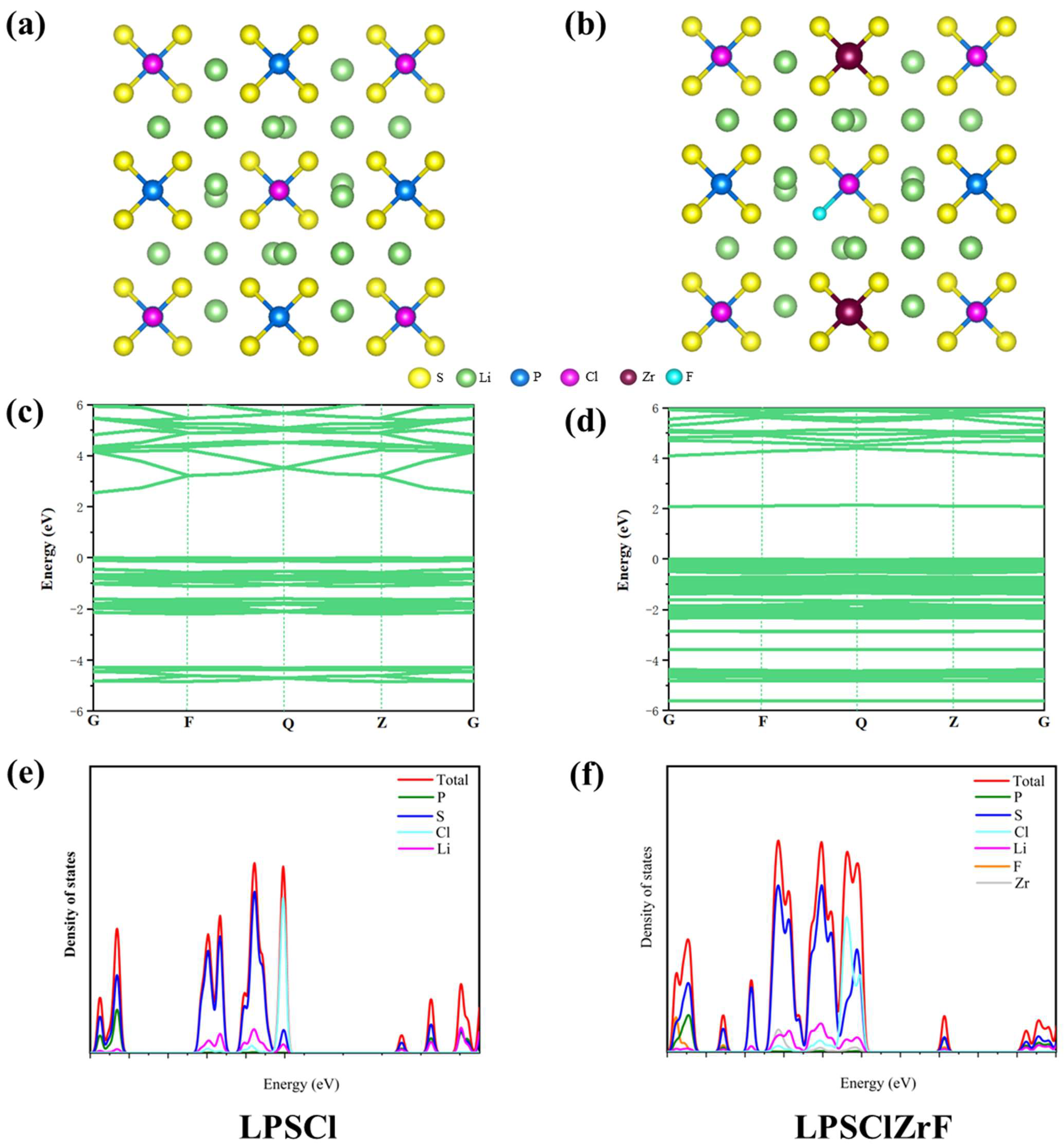
Figure 2a,b show the structures of LPSCl and Zr/F co-doped LPSCl, respectively. Figure 2c,d present the band structures of LPSCl and Zr/F co-doped LPSCl, revealing that the incorporation of Zr and F creates doped energy levels between the conduction and valence bands of LPSCl. The calculated band gaps for the pristine LPSCl and doped LPSClZrF structures are 2.41 eV and 2.02 eV, respectively. As can be seen from the density of state (DOS) diagram, the intermediate electronic states are mainly caused by new energy level changes induced by the doping of F and Zr. Therefore, these dopants do not lead to the formation of a band gap and have a negligible impact on the electronic properties of the electrolyte.
The mechanical properties, including Young’s modulus and the B/G ratio, were evaluated based on the calculated elastic constants. First, the full matrix of second-order elastic constants (Cij) was determined by applying a series of finite homogeneous deformations to the conventional unit cell of the optimized structure and fitting the resulting stress–strain relationships. Subsequently, the Voigt-Reuss-Hill (VRH) method was employed to derive the isotropic bulk modulus (B) and shear modulus (G) from these elastic constants. Specifically, the bulk modulus was calculated as B = (BV + BR)/2, and the shear modulus as G = (GV + GR)/2. Here, the bulk moduli satisfy BV = BR = (C11 + 2C12)/3, the Voigt shear modulus is given by GV = (C11 − 2C12 + 3C44)/5, and the Reuss shear modulus is given by GR = 5C44(C11 − C12)/[4C44 + 3(C11 − C12)]. Finally, Young’s modulus (E) was computed using the formula E = 9BG/(3B + G), and the B/G ratio was obtained directly from B and G [39].
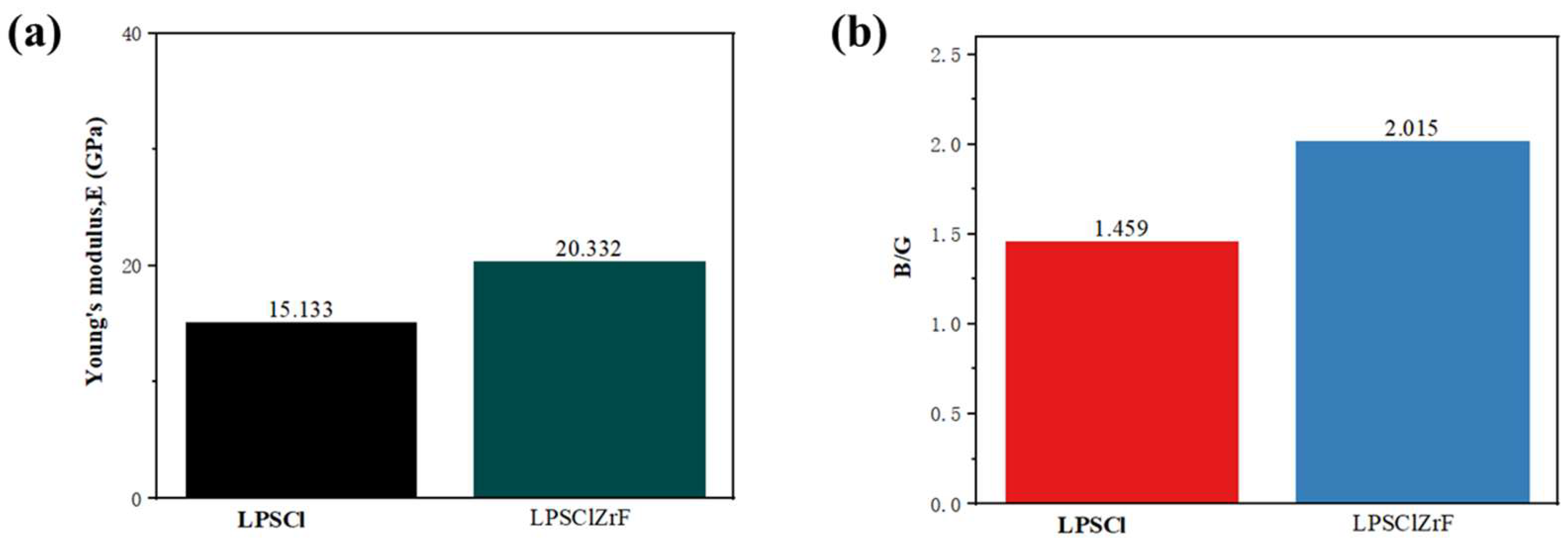
Figure 3a,b present the Young’s modulus and B/G ratio of LPSCl and LPSClZrF, respectively. It is clearly observed that the shear modulus of Zr/F co-doped LPSClZrF exceeds that of undoped LPSCl, indicating enhanced mechanical properties after doping. Additionally, the B/G ratio (bulk modulus B to shear modulus G) of LPSClZrF exceeds 1.74. According to Pugh’s criterion, the B/G ratio serves as an empirical parameter for distinguishing ductile and brittle materials: values greater than 1.74 suggest ductile behavior, while values below 1.74 indicate brittleness [40,41]. Consequently, LPSClZrF exhibits superior ductility compared to LPSCl, which facilitates improved physical contact between the solid electrolyte and electrodes.

2.3. Interface Structure Models

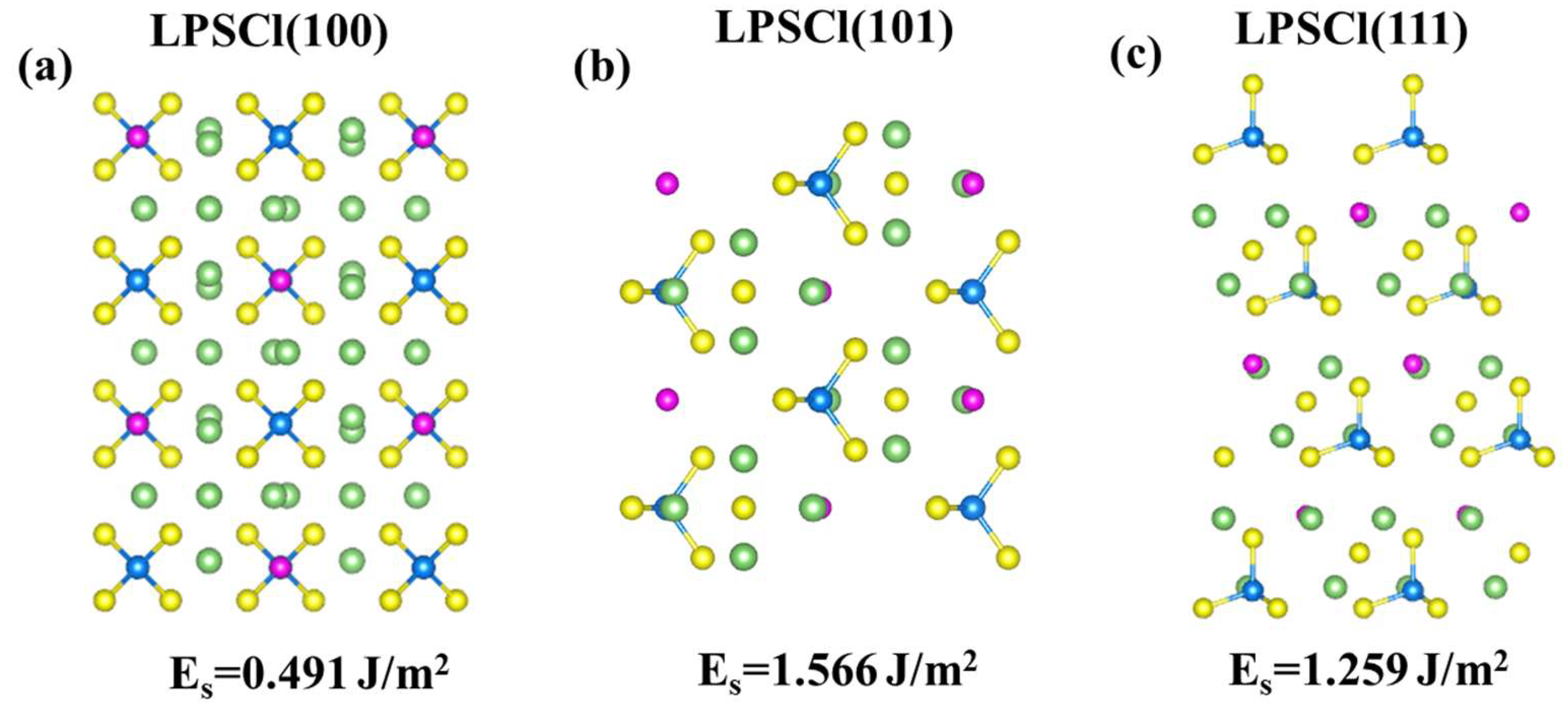
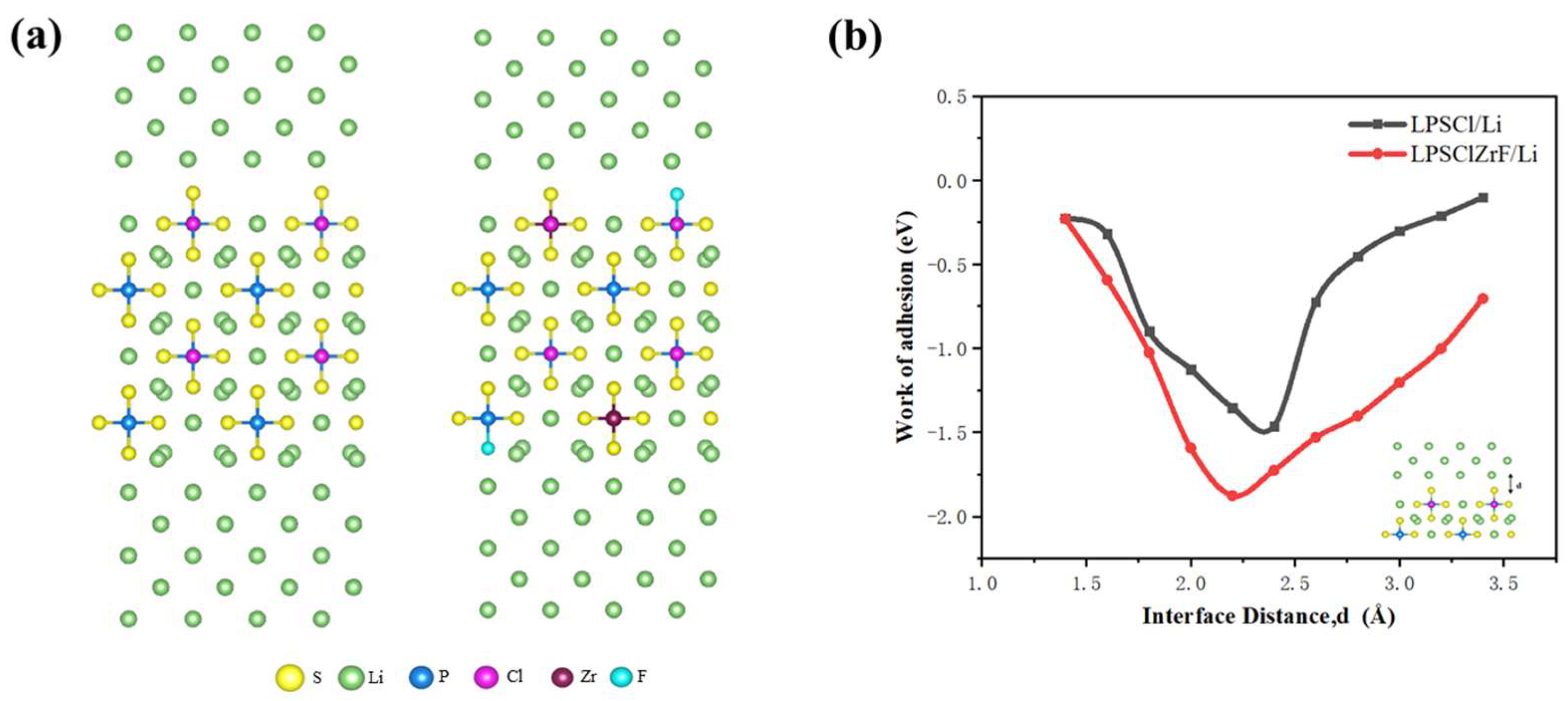
To construct the LPSCl/Li interface structure, we first calculated the surface energies of various LPSCl crystal planes. As shown in Figure 4, the (100) plane exhibits the lowest surface energy. Consequently, during interface modeling, a Li6PS5Cl (100) slab model was constructed by introducing a 15 Å vacuum layer into the bulk Li6PS5Cl structure. Subsequently, based on previous literature studies, a Li (100) slab model was cleaved from bulk lithium metal [26,42]. The interface exhibits a favorable lattice match, with a mismatch below 5% between the Li6PS5Cl (100) and Li (100) planes, which is critical for maintaining mechanical stability during the initial formation stage. The interface configuration is presented in Figure 5a. To obtain a stable interface structure, we also calculated the adhesion work (Wad) as a function of interfacial separation distance (d) using the equation: Wad = (Einterface − Eslab1 − Eslab2)/A, where Einterface denotes the total energy of the heterostructure, Eslab1 and Eslab2 represent the energies of the isolated slabs, and A is the interfacial contact area. The interfacial adhesion work (Wad), plotted in Figure 5b, profiles the energy landscape as a function of separation. This curve exhibits a well-defined global minimum, which corresponds to the interface structure of greatest thermodynamic stability.
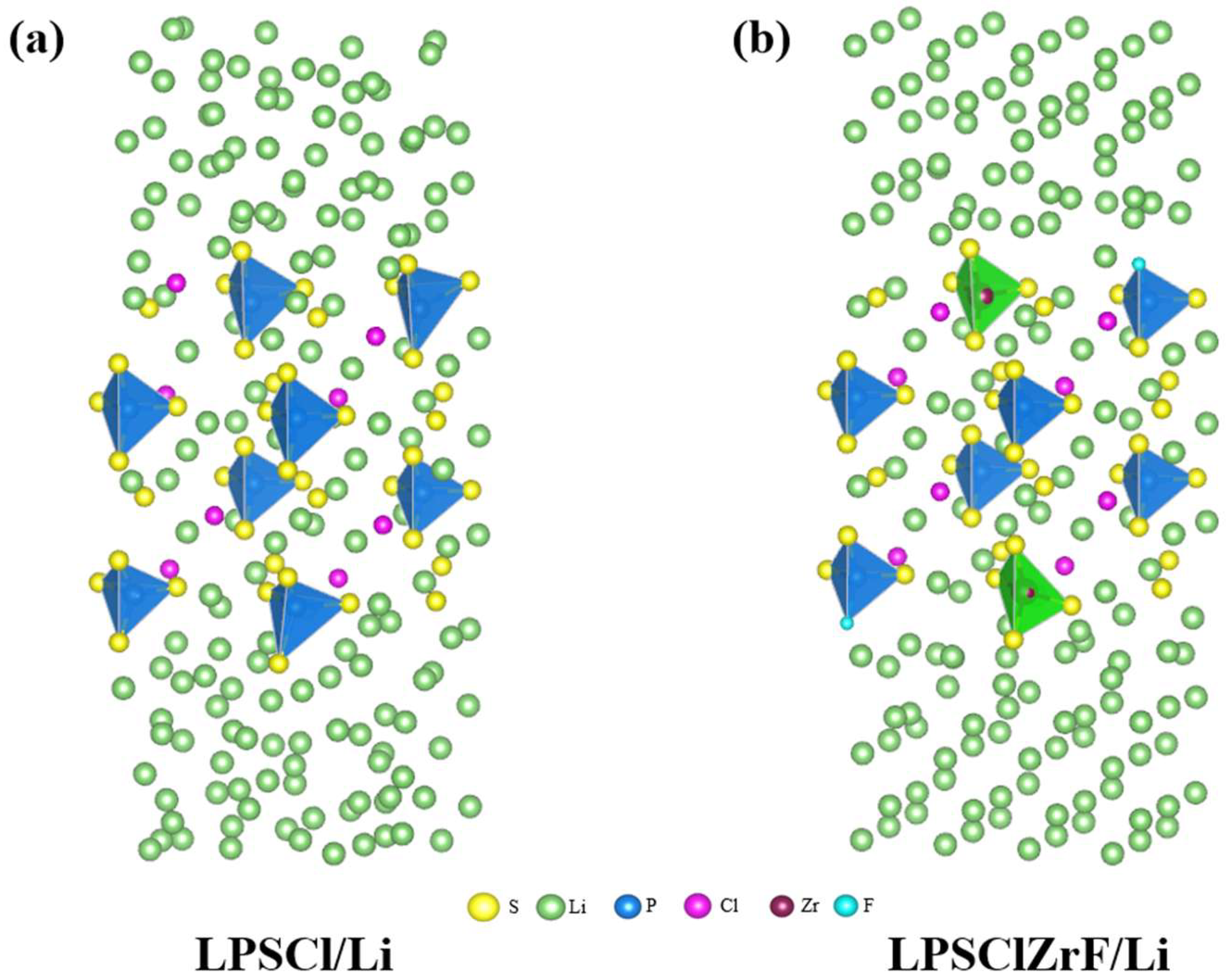
Based on the calculated adhesion work, the most stable configurations for the LPSCl/Li and LPSClZrF/Li interfaces were identified, as depicted in Figure 6a,b. These figures clearly illustrate the structural deformation of the optimized interfacial crystals and the corresponding rearrangement of atomic positions. In the LPSCl/Li interface structure (Figure 6a), sulfur atoms near the interface exhibit significant migration toward the lithium metal anode, accompanied by considerable distortion of PS4 tetrahedra and notable displacement of lithium atoms in the anode region. In contrast, for the Zr–F co-doped LPSClZrF/Li interface (Figure 6b), the PS4 tetrahedra adjacent to the interface retain much better structural integrity with only slight deformation, while lithium atoms in the metal anode show negligible displacement.

3. Results and Discussion

3.1. Comparative Analysis of Interfacial Deformation

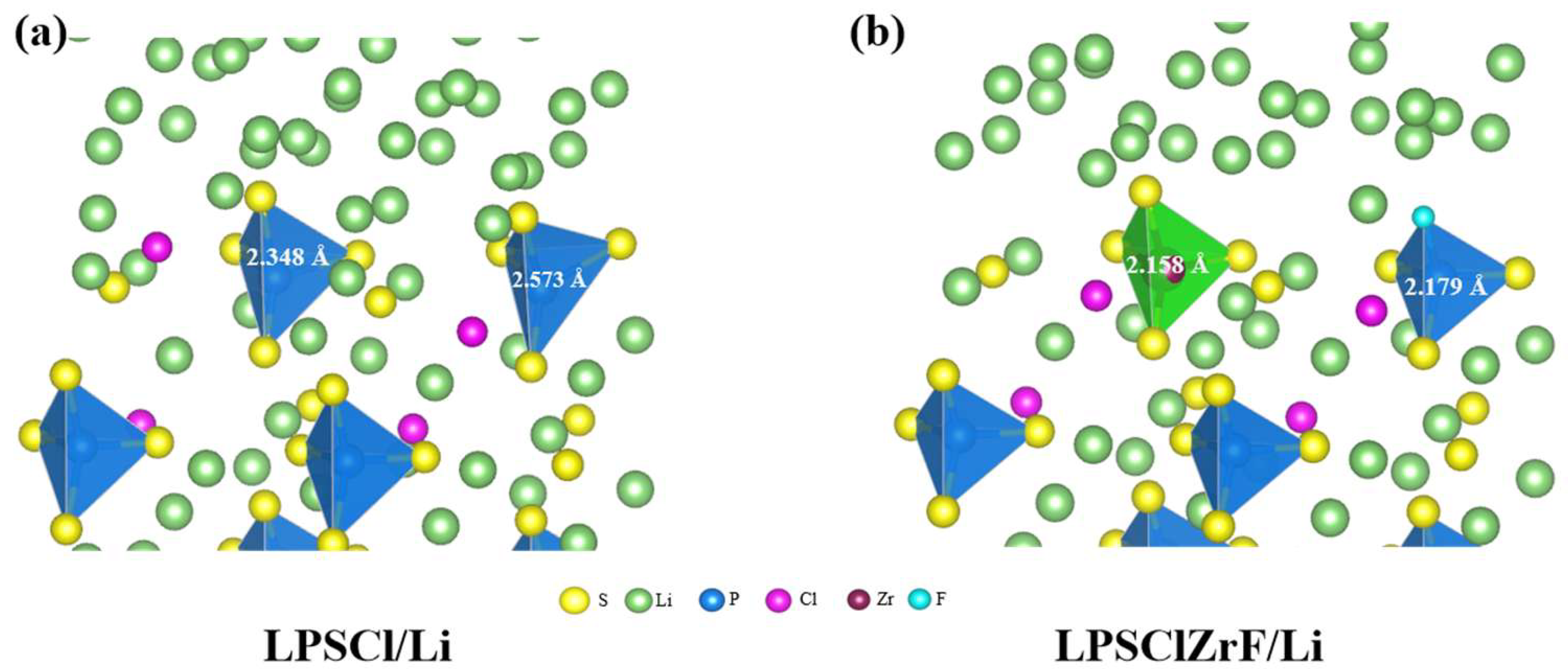
Figure 6 clearly shows that all optimized interface structures underwent certain deformation, and atomic positions shifted. As shown in Figure 7a, the P–S bond lengths of the two PS4 tetrahedra near the LPSCl/Li interface are 2.348 Å and 2.573 Å, respectively. However, in Figure 7b, the P-S bond lengths of the two PS4 tetrahedra at the same location near the LPSClZrF/Li interface are 2.158 Å and 2.179 Å, respectively. It is evident that in the LPSCl/Li interface structure, the stretching of P-S bonds lead to the deformation of PS4 tetrahedra, resulting in P-S bond breakage and consequently reducing structural stability. In contrast, within the LPSClZrF/Li interface structure, the PS4 tetrahedra near the interface undergo only minor deformation. This can be attributed to the substitution of Zr for P near the interface, which forms stronger Zr–S bonds with S, and the substitution of F for S, which weakens and disrupts the unstable P-S bonds, resulting in the formation of more stable P-F bonds. Therefore, the incorporation of doping elements prevents severe distortion in the LPSClZrF/Li interface structure, allowing it to maintain stability.
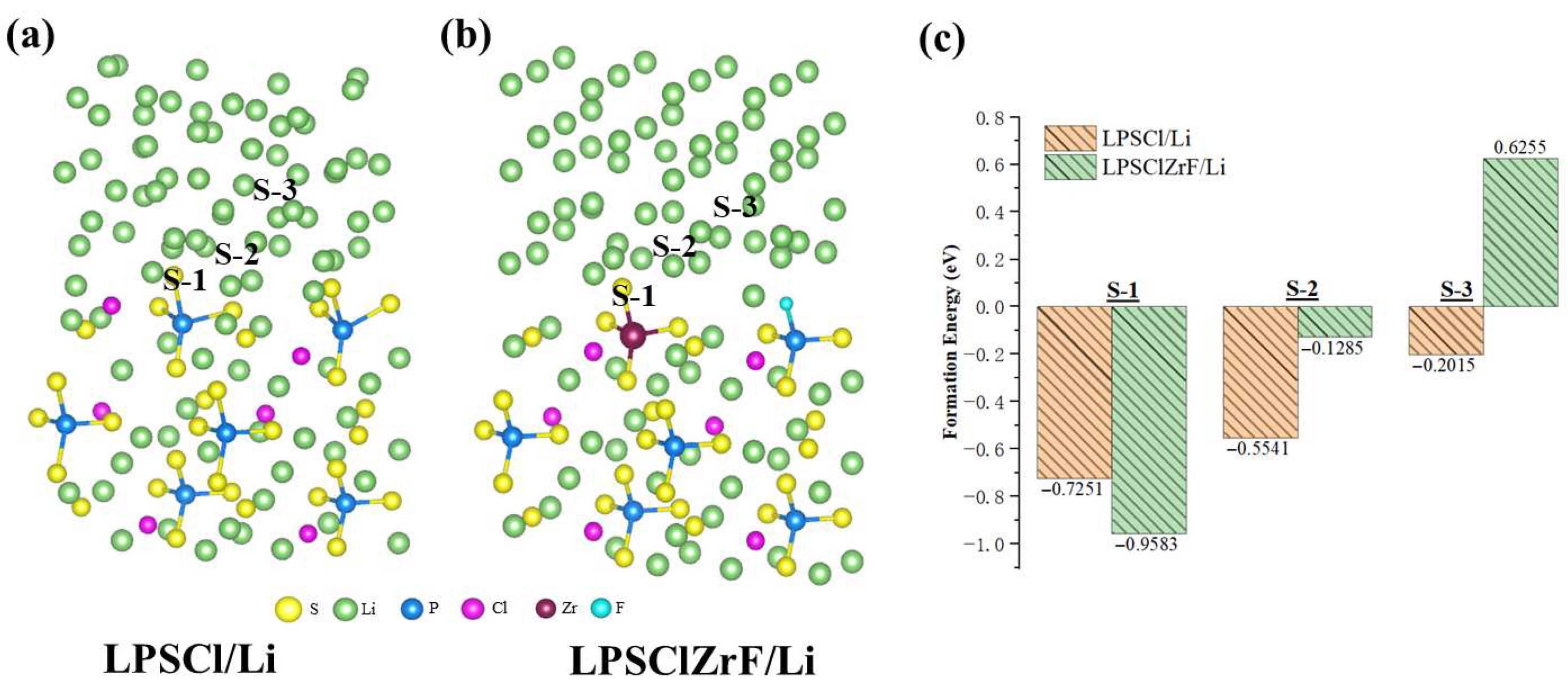
The anchoring effect of Zr/F co-doping on sulfur was evaluated by calculating the formation energy of sulfur at different corresponding sites (S-1, S-2, S-3) in the LPSCl/Li and LPSClZrF/Li interface structures, as shown in Figure 8a,b. The S-1 site refers to sulfur atoms located at the interface. A lower formation energy for the S-1 site indicates a more stable interfacial structure and greater difficulty for sulfur to migrate towards the lithium metal anode. The S-2 and S-3 sites represent potential sulfur formation sites within the lithium metal anode. Higher formation energies for sulfur at these sites imply greater difficulty for sulfur to form within the Li metal anode. The calculated formation energies of sulfur at these different sites are presented in Figure 8c. The results show that the formation energy of sulfur at the S-1 site in the LPSClZrF/Li interface is lower than that at the corresponding site in the LPSCl/Li interface structure. This indicates that in the LPSClZrF/Li interface structure, sulfur migration towards the lithium metal anode is more hindered, and the interface structure is more stable. Furthermore, the formation energies of sulfur at the S-2 and S-3 sites within the lithium metal in the LPSClZrF/Li structure are both higher than those at the corresponding sites in the LPSCl/Li interface structure, demonstrating that the formation of sulfur within the lithium metal anode is more difficult in the LPSClZrF/Li structure. These findings collectively prove that Zr/F co-doping can significantly suppress sulfur migration into the lithium metal layer, thereby enhancing the stability of the interfacial structure.

3.2. Electronic Structure

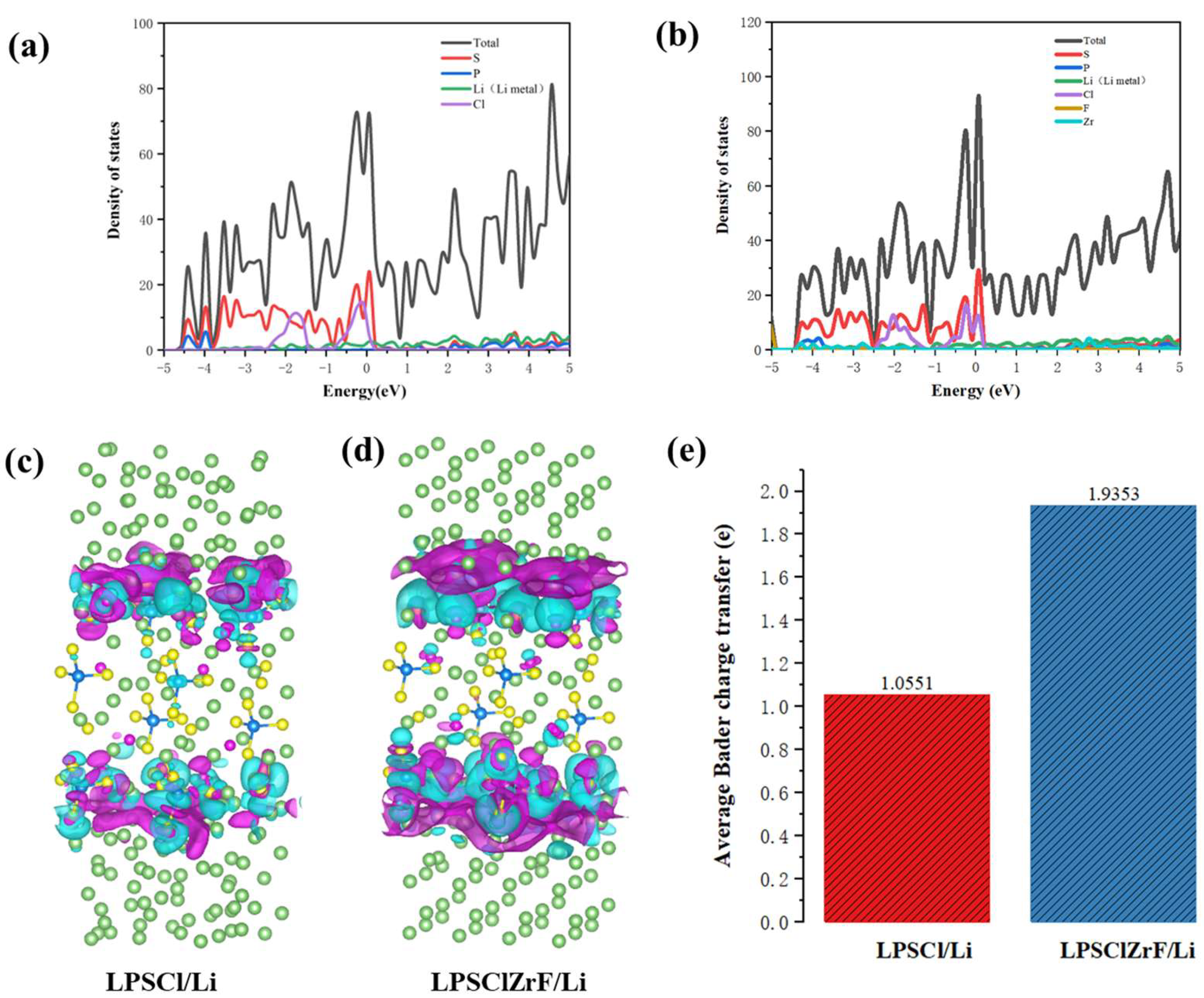
To probe the interfacial stability, the density of states (DOS) was computed for both LPSCl/Li and LPSClZrF/Li configurations (Figure 9a,b). Notably, the DOS profile of the LPSClZrF/Li interface reveals pronounced resonant peaks near the Fermi level for Zr and S atoms, indicative of a strong coupling interaction. This Zr–S coupling effectively anchors sulfur atoms, contributing to the integrity of the PS4 tetrahedra and enhancing interfacial stability. Additionally, observed resonance between P and F orbitals signifies a robust coupling that further reinforces the interface. Therefore, Zr and F co-doping is concluded to be an effective strategy for stabilizing the Li6PS5Cl/Li metal anode interface.
To elucidate the bonding characteristics and electronic hybridization at the interface, charge density difference plots were computed for the LPSCl/Li and LPSClZrF/Li systems (Figure 9c,d). In these plots, electron depletion and accumulation are represented by blue and purple regions, respectively. The LPSCl/Li interface shows faint blue-purple contrast, suggesting limited electron transfer and corresponding interfacial instability. Conversely, the LPSClZrF/Li interface displays prominent purple electron accumulation zones accompanied by smaller blue depletion areas, indicating strong ionic bonding between Zr–S and P-F pairs. This electronic redistribution stabilizes the interface, which is corroborated by Bader charge analysis showing average charge transfers of 1.0551 e and 1.9353 e for LPSCl/Li and LPSClZrF/Li interfaces, respectively (Figure 9e). This indicates that the LPSClZrF/Li interface structure exhibits a high charge transfer number, suggesting it has the strongest binding affinity and a stable interfacial structure.

3.3. Lithium-Ion Migration at the Interface

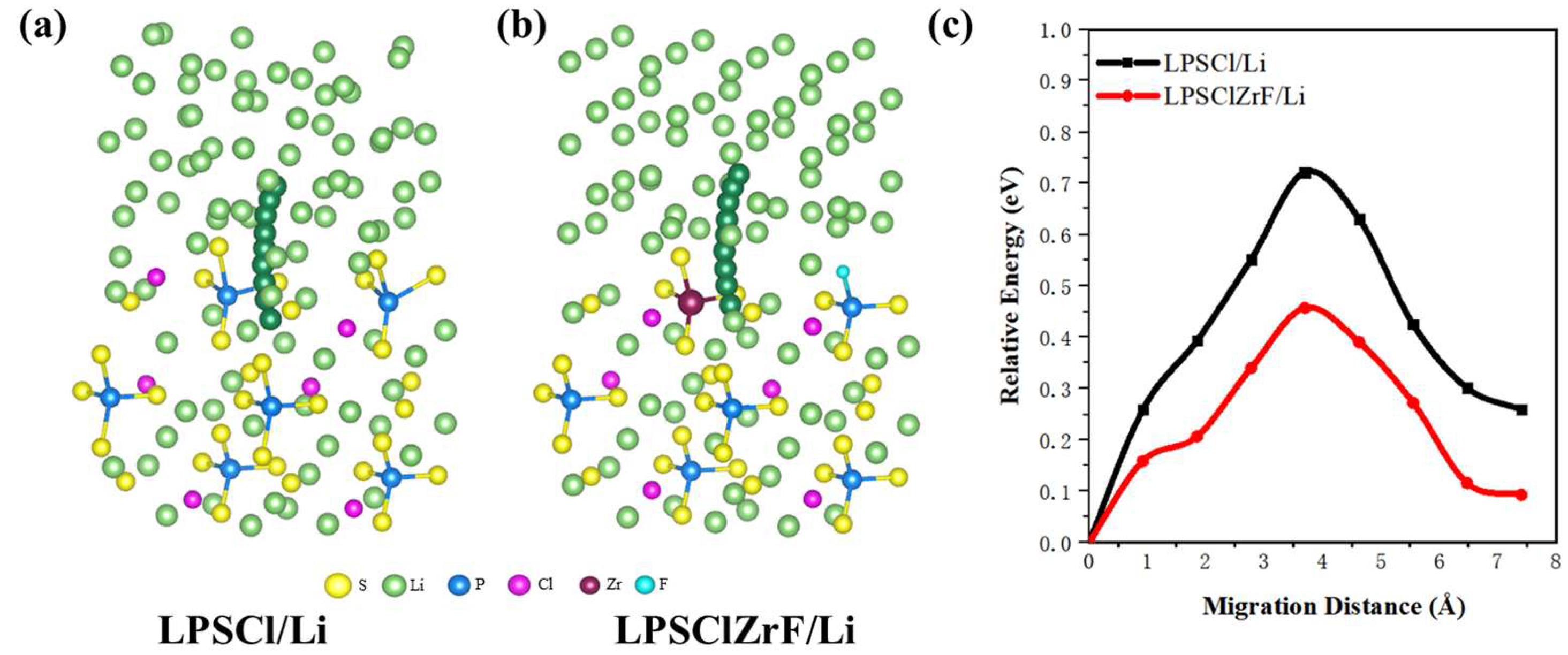
To understand interfacial Li-ion transport, the energy barrier was computed for Li-ions traversing the interface from the electrolyte to occupy interstitial sites within the lithium metal anode. By manually moving a lithium atom along the c-axis direction from a vacancy site to an interstitial site (i.e., the diffusion path of lithium ions from the electrolyte side to interstitial sites on the lithium metal anode side, corresponding to the dark green spheres shown in Figure 10a,b), the climbing image nudged elastic band (CI-NEB) method was employed to calculate the migration energy barrier for Li-ions crossing the interface, as shown in Figure 10c. The results demonstrate that the Li-ion migration energy barrier for the LPSCl/Li interface structure is 0.72 eV for LPSCl/Li, compared to 0.46 eV for LPSClZrF/Li. This corresponds to a 36% reduction in the Li+ migration barrier at the interface. This is primarily attributed to the introduction of the smaller F ion compared to S2−, which may expand the bottleneck size of lithium-ion migration pathways. Furthermore, the polarizing effect of F on the anionic framework (such as P-S bonds) likely weakens the interaction force between Li+ and the framework, thereby reducing the energy barrier that Li+ must overcome during hopping. Additionally, the incorporation of Zr4+ may introduce extra local structural disorder, which is considered conducive to rapid lithium-ion conduction in sulfide electrolytes, thereby enhancing the ionic conductivity. This indicates that Zr and F co-doping helps improve the lithium-ion migration performance at the electrode interface, suggesting that lithium transfer from lithium metal to the electrolyte becomes easier, which facilitates rapid lithium transport and enhances battery performance, particularly rate capability.

3.4. Stress–Strain Analysis of Interface Structures

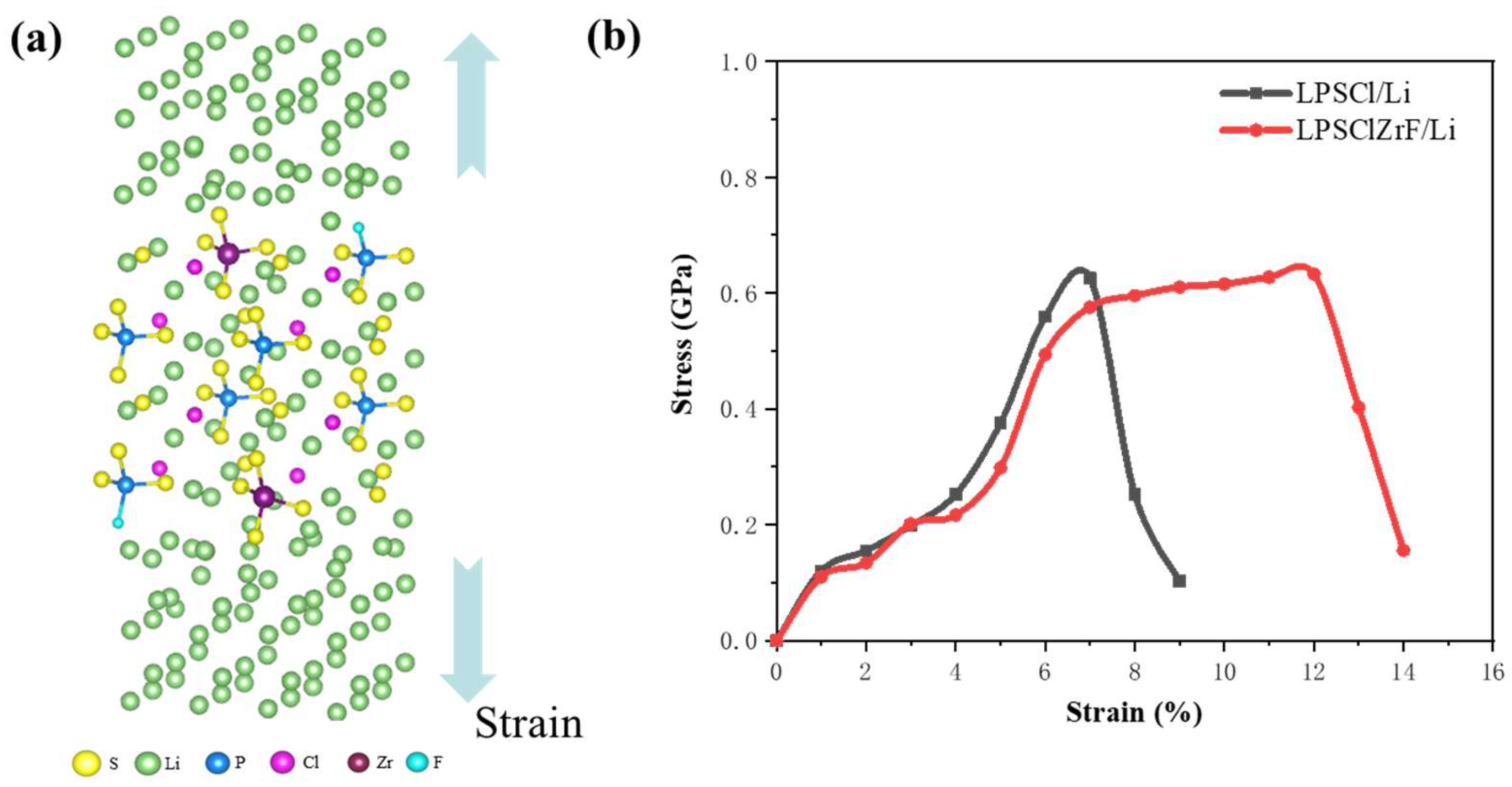
Significant mechanical stress develops at the solid electrolyte/electrode interface during solid-state battery cycling. This stress originates from the volume changes in electrode materials during lithiation/delithiation, as well as the increasing interface roughness caused by side reactions during repeated cycling. Since the c-direction corresponds to the interface formation direction where interfacial interaction forces are relatively weak, and Li-ion diffusion at the interface also follows the c-direction, the stress–strain performance along the c-direction constitutes the primary research focus. Therefore, during modeling, strain deformation was applied along the c-direction at 1% intervals, as shown in Figure 11a, creating interface structures capable of withstanding varying degrees of c-axis tensile strain. The tensile response of the fully relaxed interfaces was evaluated, with structural constraints applied to angles α, β, γ and the c-direction during relaxation. The calculated stress–strain curves are shown in Figure 11b, where the peak values correspond to the interfacial tensile strength. For the LPSCl/Li interface strained along the c-direction, a volumetric strain of 6% marks the fracture point, as evidenced by a sudden collapse in stress. The mechanical response of the LPSClZrF/Li interface is notably superior to that of LPSCl/Li. While the latter fails at 6% strain with an ultimate strength of 0.62 GPa, the former exhibits a clear yield point at 0.63 GPa and 7% strain, followed by a prolonged plastic plateau. This enhanced ductility allows it to withstand up to 12% strain, representing a remarkable 100% increase in maximum strain. The observed enhancement in stress–strain performance with Zr and F doping demonstrates that co-doping with these elements enhances interfacial strength and improves bonding force.

4. Conclusions

In summary, this study systematically investigated the interfacial characteristics of LPSCl/Li and LPSClZrF/Li through first-principles calculations to evaluate the mechanism of Zr and F co-doping in stabilizing the Li metal/solid electrolyte (Li/SE) interface. Structural optimization analysis revealed that PS4 tetrahedra near the LPSCl/Li interface undergo severe deformation with broken P-S bonds, causing S atoms to migrate toward the Li metal anode, whereas the LPSClZrF/Li interface exhibited only minor structural distortion. Analysis of the density of states and differential charge density for both interfaces demonstrated the formation of resonance peaks between Zr and S, as well as between P and F, indicating significantly enhanced bonding strength. By stabilizing the PS4 tetrahedral configuration at the interface, Zr and F co-doping not only limits sulfur ingress into the lithium metal anode but also consolidates the ion-transport framework, thus enabling the formation of a stable electrolyte–anode interphase.
Furthermore, calculations of Li-ion migration energy barriers at the interface confirmed that co-doping improves Li-ion transport efficiency across the Li/SE interface. Stress–strain calculations under varying tensile strains revealed substantially enhanced mechanical properties in the Zr- and F-doped Li6PS5Cl interface: the LPSClZrF/Li interface achieves a maximum strain of 12%, representing a 6% improvement over Li/LPSCl. Particularly noteworthy is the appearance of a yield plateau in the stress–strain curve at 7–12% strain for the LPSClZrF/Li interface, indicating entry into the plastic yield stage with a yield stress of 0.63 GPa.
These findings provide deeper insights into the interfacial stability of Zr-F co-doped Li6PS5Cl and the Li-ion diffusion mechanism at Li/SE interfaces. The atomic-scale calculations offer new theoretical foundations for designing high-performance Li/SE interfaces to advance all-solid-state lithium battery technology.

Author Contributions

Conceptualization: J.Z. and J.M.; methodology: B.C. and J.Z.; Calculation and analysis: H.Z. and P.C.; general investigation and analysis: J.M. and J.W.; writing—original draft preparation: T.B. and Y.W.; writing—review and editing: Y.J. and C.Q. All authors have read and agreed to the published version of the manuscript.

Funding

This work was supported by the Science and Technology Support Program (Social Development) of Taizhou City, Jiangsu Province (Grant No. TSL202525) and Jiangsu Province Young Scientific and Technological Talents Support Project (Grant No. JSTJ2025965).

Data Availability Statement

The original contributions presented in this study are included in the article. Further inquiries can be directed to the corresponding author.

Acknowledgments

We are grateful to the High-Performance Computing Center of Nanjing Tech University for supporting the computational resources.

Conflicts of Interest

There are no conflicts of interest to declare.

References

  1. Merrill, L.C. Resting restores performance of discharged lithium-metal batteries. Nature 2024, 626, 266–267. [Google Scholar] [CrossRef] [PubMed]
  2. Huang, J.D.; Zhu, Y.H.; Feng, Y.; Han, Y.H.; Gu, Z.Y.; Liu, R.X.; Yang, D.Y.; Chen, K.; Zhang, X.Y.; Sun, W.; et al. Research Progress on Key Materials and Technologies for Secondary Batteries. ACTA Phys.-Chim. Sin. 2022, 38, 2208008. [Google Scholar] [CrossRef]
  3. Li, Q.; Liu, Y.; Guo, S.H.; Zhou, H.S. Solar energy storage in the rechargeable batteries. NanoToday 2017, 16, 46–60. [Google Scholar] [CrossRef]
  4. Zhu, Z.X.; Jiang, T.L.; Ali, M.; Meng, Y.H.; Jin, Y.; Cui, Y.; Chen, W. Rechargeable Batteries for Grid Scale Energy Storage. Chem. Rev. 2022, 122, 16610–16751. [Google Scholar] [CrossRef]
  5. Liu, L.; Zhang, X.Y.; Liu, Y.H.; Gong, X. Electrochemical Energy Storage Devices-Batteries, Supercapacitors, and Battery-Supercapacitor Hybrid Devices. ACS Appl. Electron. Mater. 2025, 7, 2233–2270. [Google Scholar] [CrossRef]
  6. Ling, C.X.; Wang, L.Y.; Kan, C.D.; Yang, C. Thermal-Electrical-Mechanical Coupled Finite Element Models for Battery Electric Vehicle. Machines 2024, 12, 596. [Google Scholar] [CrossRef]
  7. Olabi, A.G.; Abbas, Q.; Shinde, P.A.; Abdelkareem, M.A. Rechargeable batteries: Technological advancement, challenges, current and emerging applications. Energy 2023, 266, 126408. [Google Scholar] [CrossRef]
  8. Xin, S.; Zhang, X.; Wang, L.; Yu, H.J.; Chang, X.; Zhao, Y.M.; Meng, Q.H.; Xu, P.; Zhao, C.Z.; Chen, J.H.; et al. Roadmap for rechargeable batteries: Present and beyond. Sci. China-Chem. 2024, 67, 13–42. [Google Scholar] [CrossRef]
  9. Wang, C.H.; Kim, J.T.; Wang, C.S.; Sun, X.L. Progress and Prospects of Inorganic Solid-State Electrolyte-Based All-Solid-State Pouch Cells. Adv. Mater. 2023, 35, 2209074. [Google Scholar] [CrossRef]
  10. Liu, J.; Yuan, H.; Liu, H.; Zhao, C.Z.; Lu, Y.; Cheng, X.B.; Huang, J.Q.; Zhang, Q. Unlocking the Failure Mechanism of Solid State Lithium Metal Batteries. Adv. Energy Mater. 2022, 12, 2100748. [Google Scholar] [CrossRef]
  11. Chen, X.F.; Guan, Z.Q.; Chu, F.L.; Xue, Z.C.; Wu, F.X.; Yu, Y. Air-stable inorganic solid-state electrolytes for high energy density lithium batteries: Challenges, strategies, and prospects. Infomat 2022, 4, e12248. [Google Scholar] [CrossRef]
  12. Yersak, T.A.; Malabet, H.J.G.; Yadav, V.; Pieczonka, N.P.W.; Collin, W.; Cai, M. Flammability of sulfide solid-state electrolytes β-Li3PS4 and Li6PS5Cl: Volatilization and autoignition of sulfur vapor-New insight into all-solid-state battery thermal runaway. J. Energy Chem. 2025, 102, 651–660. [Google Scholar] [CrossRef]
  13. Ai, S.; Wu, X.L.; Wang, J.T.; Li, X.; Hao, X.F.; Meng, Y.Z. Research Progress on Solid-State Electrolytes in Solid-State Lithium Batteries: Classification, Ionic Conductive Mechanism, Interfacial Challenges. Nanomaterials 2024, 14, 1773. [Google Scholar] [CrossRef] [PubMed]
  14. Kim, J.; Choi, W.; Hwang, S.J.; Kim, D.W. Incorporation of Ionic Conductive Polymers into Sulfide Electrolyte-Based Solid-State Batteries to Enhance Electrochemical Stability and Cycle Life. Energy Environ. Mater. 2024, 7, e12776. [Google Scholar] [CrossRef]
  15. Liu, Y.K.; Yu, T.; Guo, S.H.; Zhou, H.S. Designing High-Performance Sulfide-Based All-Solid-State Lithium Batteries: From Laboratory to Practical Application. Acta Phys.-Chim. Sin. 2023, 39, 2301027. [Google Scholar] [CrossRef]
  16. Kamaya, N.; Homma, K.; Yamakawa, Y.; Hirayama, M.; Kanno, R.; Yonemura, M.; Kamiyama, T.; Kato, Y.; Hama, S.; Kawamoto, K.; et al. A lithium superionic conductor. Nat. Mater. 2011, 10, 682–686. [Google Scholar] [CrossRef]
  17. Jin, Y.M.; He, Q.S.; Liu, G.Z.; Gu, Z.; Wu, M.; Sun, T.Y.; Zhang, Z.H.; Huang, L.F.; Yao, X.Y. Fluorinated Li10GeP2S12 Enables Stable All-Solid-State Lithium Batteries. Adv. Mater. 2023, 35, 2211047. [Google Scholar] [CrossRef]
  18. Seino, Y.; Ota, T.; Takada, K.; Hayashi, A.; Tatsumisago, M. A sulphide lithium super ion conductor is superior to liquid ion conductors for use in rechargeable batteries. Energy Environ. Sci. 2014, 7, 627–631. [Google Scholar] [CrossRef]
  19. Rayavarapu, P.R.; Sharma, N.; Peterson, V.K.; Adams, S. Variation in structure and Li+-ion migration in argyrodite-type Li6PS5X (X = Cl, Br, I) solid electrolytes. J. Solid State Electrochem. 2012, 16, 1807–1813. [Google Scholar] [CrossRef]
  20. Liang, Z.T.; Xiang, Y.X.; Wang, K.J.; Zhu, J.P.; Jin, Y.T.; Wang, H.C.; Zheng, B.Z.; Chen, Z.R.; Tao, M.M.; Liu, X.S.; et al. Understanding the failure process of sulfide-based all-solid-state lithium batteries via operando nuclear magnetic resonance spectroscopy. Nat. Commun. 2023, 14, 259. [Google Scholar] [CrossRef]
  21. Liu, M.C.; Hong, J.J.; Sebti, E.; Zhou, K.; Wang, S.; Feng, S.J.; Pennebaker, T.; Hui, Z.Y.; Miao, Q.S.; Lu, E.R.; et al. Surface molecular engineering to enable processing of sulfide solid electrolytes in humid ambient air. Nat. Commun. 2025, 16, 213. [Google Scholar] [CrossRef] [PubMed]
  22. Ding, J.X.; Gupta, M.K.; Rosenbach, C.; Lin, H.M.; Osti, N.C.; Abernathy, D.L.; Zeier, W.G.; Delaire, O. Liquid-like dynamics in a solid-state lithium electrolyte. Nat. Phys. 2025, 21, 118–125. [Google Scholar] [CrossRef]
  23. Lim, H.; Jun, S.; Song, Y.B.; Baeck, K.H.; Bae, H.; Lee, G.; Kim, J.; Jung, Y.S. Rationally Designed Conversion-Type Lithium Metal Protective Layer for All-Solid-State Lithium Metal Batteries. Adv. Energy Mater. 2024, 14, 2303762. [Google Scholar] [CrossRef]
  24. Zhao, Y.; Liu, J.Q.; Zhang, Y.; Zhu, H.; Yang, J.; Nuli, Y.N.; Wang, J.L. Realizing the dendrite-free sulfide-based all-solid-state Li metal battery by surface design. Energy Storage Mater. 2024, 69, 103432. [Google Scholar] [CrossRef]
  25. Wan, H.; Wang, Z.; Zhang, W.; He, X.; Wang, C. Interface design for all-solid-state lithium batteries. Nature 2023, 623, 739–744. [Google Scholar] [CrossRef]
  26. Golov, A.; Carrasco, J. Molecular-Level Insight into the Interfacial Reactivity and Ionic Conductivity of a Li-Argyrodite Li6PS5Cl Solid Electrolyte at Bare and Coated Li-Metal Anodes. ACS Appl. Mater. Interfaces 2021, 13, 43734–43745. [Google Scholar] [CrossRef]
  27. Seol, K.; Kaliyaperumal, C.; Uthayakumar, A.; Yoon, I.; Lee, G.H.Y.; Shin, D. Enhancing the Moisture Stability and Electrochemical Performances of Li6PS5Cl Solid Electrolytes through Ga Substitution. Electrochim. Acta 2023, 441, 141757. [Google Scholar] [CrossRef]
  28. Wenzel, S.; Sedlmaier, S.J.; Dietrich, C.; Zeier, W.G.; Janek, J. Interfacial reactivity and interphase growth of argyrodite solid electrolytes at lithium metal electrodes. Solid State Ion. 2018, 318, 102–112. [Google Scholar] [CrossRef]
  29. Zou, C.F.; Yang, L.; Luo, K.L.; Liu, L.; Tao, X.Y.; Yi, L.G.; Liu, X.H.; Luo, Z.G.; Wang, X.Y. Performance Improvement of Li6PS5Cl Solid Electrolyte Modified by Poly(ethylene oxide)-Based Composite Polymer Electrolyte with ZSM-5 Molecular Sieves. ACS Appl. Energy Mater. 2022, 5, 2356–2365. [Google Scholar] [CrossRef]
  30. Chang, M.Y.; Yang, M.L.; Xie, W.R.; Tian, F.L.; Liu, G.Z.; Cui, P.; Wu, T.; Yao, X.Y. Micro-Sized MoS6@15%Li7P3S11 Composite Enables Stable All-Solid-State Battery with High Capacity. Batteries 2023, 9, 560. [Google Scholar] [CrossRef]
  31. Chen, Y.; Yao, L.; Chen, X.D.; Jin, J.; Wu, M.F.; Wang, Q.; Zha, W.P.; Wen, Z.Y. Double-Faced Bond Coupling to Induce an Ultrastable Lithium/Li6PS5Cl Interface for High-Performance All-Solid-State Batteries. ACS Appl. Mater. Interfaces 2022, 14, 11950–11961. [Google Scholar] [CrossRef] [PubMed]
  32. Wang, Z.Y.; Xia, J.L.; Ji, X.; Liu, Y.J.; Zhang, J.X.; He, X.Z.; Zhang, W.R.; Wan, H.L.; Wang, C.S. Lithium anode interlayer design for all-solid-state lithium-metal batteries. Nat. Energy 2024, 9, 251–262. [Google Scholar] [CrossRef]
  33. Shao, Q.; Yan, C.; Gao, M.; Du, W.; Chen, J.; Yang, Y.; Gan, J.; Wu, Z.; Sun, W.; Jiang, Y.; et al. New Insights into the Effects of Zr Substitution and Carbon Additive on Li3-xEr1-xZrxCl6 Halide Solid Electrolytes. ACS Appl. Mater. Interfaces 2022, 14, 8095–8105. [Google Scholar] [CrossRef] [PubMed]
  34. Zou, C.; Yang, L.; Luo, K.; Liu, L.; Tao, X.; Yi, L.; Liu, X.; Luo, Z.; Wang, X. Ionic conductivity and interfacial stability of Li6PS5Cl–Li6.5La3Zr1.5Ta0.5O12 composite electrolyte. J. Solid State Electrochem. 2021, 25, 2513–2525. [Google Scholar] [CrossRef]
  35. Arnold, W.; Shreyas, V.; Li, Y.; Koralalage, M.K.; Jasinski, J.B.; Thapa, A.; Sumanasekera, G.; Ngo, A.T.; Narayanan, B.; Wang, H. Synthesis of Fluorine-Doped Lithium Argyrodite Solid Electrolytes for Solid-State Lithium Metal Batteries. ACS Appl. Mater. Interfaces 2022, 14, 11483–11492. [Google Scholar] [CrossRef]
  36. Yan, H.; Yao, J.M.; Ye, Z.R.; Lin, Q.Q.; Zhang, Z.Q.; Li, S.L.; Song, D.W.; Wang, Z.Y.; Yu, C.; Zhang, L. Al-F co-doping towards enhanced electrolyte-electrodes interface properties for halide and sulfide solid electrolytes. Chin. Chem. Lett. 2025, 36, 109568. [Google Scholar] [CrossRef]
  37. Chen, B.B.; Xu, C.Q.; Wang, H.; Zhou, J.Q. Insights into interfacial stability of Li6PS5Cl solid electrolytes with buffer layers. Curr. Appl. Phys. 2019, 19, 149–154. [Google Scholar] [CrossRef]
  38. Zhang, J.; Zhu, G.; Li, H.; Ju, J.; Gu, J.; Xu, R.; Jin, S.; Zhou, J.; Chen, B. Novel Zr-doped β-Li3PS4 solid electrolyte for all-solid-state lithium batteries with a combined experimental and computational approach. Nano Res. 2022, 16, 3516–3523. [Google Scholar] [CrossRef]
  39. Munsif, M.; Shah, M.; Ullah, Z.; Ashraf, M.W.; Fayaz, M.; Alsalmah, H.A.; Murtaza, G. First principles study of the structural, mechanical and optical properties of Li6PS5X (X= Cl, I) argyrodite compounds. Phys. B Condens. Matter 2023, 661, 414932. [Google Scholar] [CrossRef]
  40. Pugh, S.F. XCII. Relations between the Elastic Moduli and the Plastic Properties of Polycrystalline Pure Metals. Lond. Edinb. Dublin Philos. Mag. J. Sci. 1954, 45, 823–843. [Google Scholar] [CrossRef]
  41. Deng, Z.; Wang, Z.; Chu, I.-H.; Luo, J.; Ong, S.P. Elastic Properties of Alkali Superionic Conductor Electrolytes from First Principles Calculations. J. Electrochem. Soc. 2015, 163, A67–A74. [Google Scholar] [CrossRef]
  42. Cheng, T.; Merinov, B.V.; Morozov, S.; Goddard, W.A. Quantum Mechanics Reactive Dynamics Study of Solid Li-Electrode/Li6PS5Cl-Electrolyte Interface. ACS Energy Lett. 2017, 2, 1454–1459. [Google Scholar] [CrossRef]
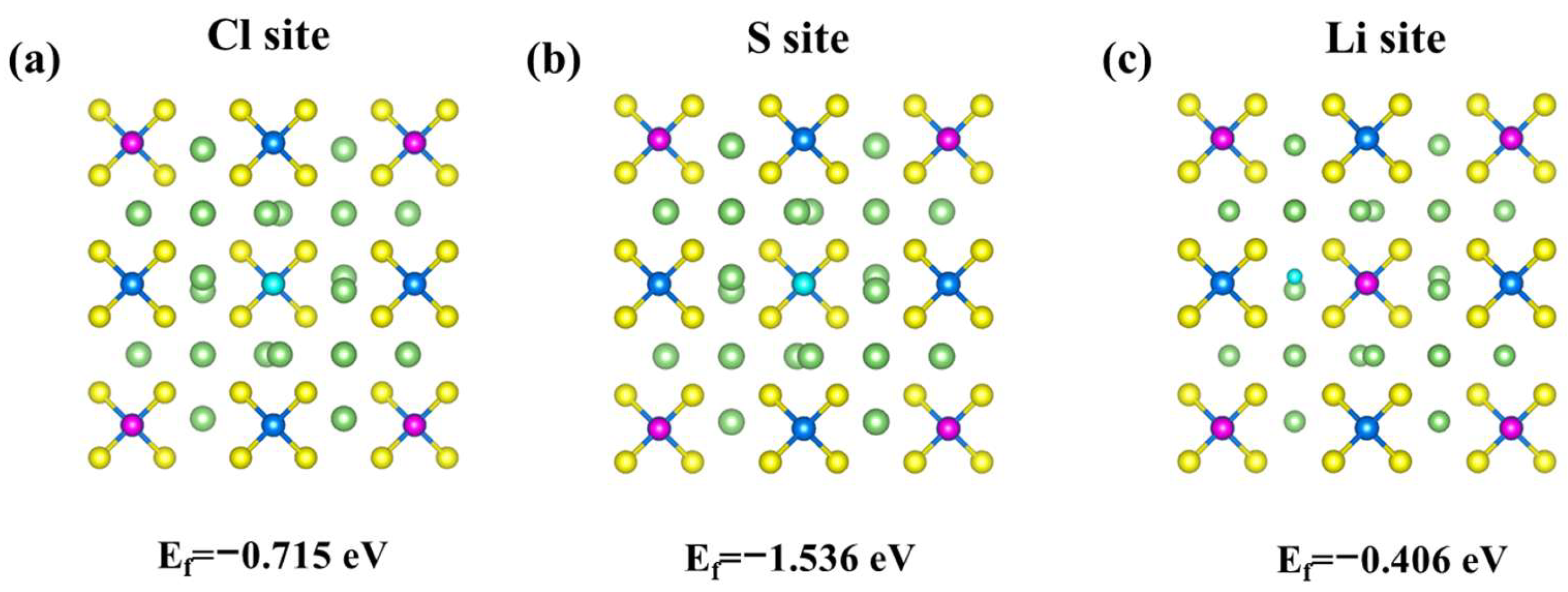
Figure 1. Formation energy of F at doping sites in LPSCl: (a) S site, (b) Cl site, and (c) Li site. Li, P, S, Cl and F are represented by green, blue, yellow, purple, yellow, pink, and cyan ball, respectively.
Batteries 11 00456 g001
Figure 2. Crystal structure of (a) LPSCl and (b) LPSClZrF, band structure of (c) LPSCl and (d) LPSClZrF, the DOS of (e) LPSCl and (f) LPSClZrF, Li, P, S, Cl, Zr and F are represented by green, blue, yellow, purple, yellow, pink, claret, and cyan ball, respectively.
Batteries 11 00456 g002
Figure 3. (a) Young’s modulus of LPSCl and LPSClZrF structures, (b) B/G value of LPSCl and LPSClZrF structures.
Batteries 11 00456 g003
Figure 4. The surface energies of different LPSCl surfaces: (a) (100), (b) (101), (c) (111).
Batteries 11 00456 g004
Figure 5. (a) The LPSCl/Li and LPSClZrF/Li interfacial structures before optimization, (b) adhesion Work versus interface distance of LPSCl/Li and LPSClZrF/Li interfaces.
Batteries 11 00456 g005
Figure 6. The optimized interface structures of (a) LPSCl/Li and (b) LPSClZrF/Li. Blue tetrahedron is PS4 and green tetrahedron is ZrS4.
Batteries 11 00456 g006
Figure 7. The distribution of the PS4 tetrahedral structure and the average bond lengths within the PS4 tetrahedra in the (a) LPSCl/Li and (b) LPSClZrF/Li interface structures.
Batteries 11 00456 g007
Figure 8. Schematic diagrams of the formation energy sites for sulfur (S) at different locations (S-1, S-2, S-3) on the Li-metal side in the (a) LPSClZrF/Li and (b) LPSCl/Li interface structures; (c) Formation energy of Sulfur at different locations (S-1, S-2, S-3) in the LPSCl/Li and LPSClZrF/Li interface Structures.
Batteries 11 00456 g008
Figure 9. The DOS of (a) LPSCl/Li, (b) LPSClZrF/Li. The differential charge density of (c) LPSCl/Li, (d) LPSClZrF/Li. (e) The average Bader charge transfer of LPSCl/Li and LPSClZrF/Li. The blue and purple regions represent electron depletion and electron accumulation, respectively.
Batteries 11 00456 g009
Figure 10. Li-ion interfacial migration: (a) Pathway in LPSCl/Li, (b) Pathway in LPSClZrF/Li, and (c) Migration Energy Barrier. The dark green balls arranged in a queue represent the migration path of lithium ion.
Batteries 11 00456 g010
Figure 11. (a) Schematic of strain distribution at the interface; (b) Comparative stress–strain curves for LPSCl/Li and LPSClZrF/Li interfaces.
Batteries 11 00456 g011
Disclaimer/Publisher’s Note: The statements, opinions and data contained in all publications are solely those of the individual author(s) and contributor(s) and not of MDPI and/or the editor(s). MDPI and/or the editor(s) disclaim responsibility for any injury to people or property resulting from any ideas, methods, instructions or products referred to in the content.