You are currently viewing a new version of our website. To view the old version click .
Horticulturae
  • Article
  • Open Access

10 December 2019

Evaluation of the Effect of Temperature on a Stem Elongation Model of Phalaenopsis


Department of Bio-industrial Mechatronics Engineering, National Chung Hsing University, 250 Kuokuang Road, Taichung 40227, Taiwan

Abstract

Phalaenopsis orchid has become one of the most important potted plants in flower markets. However, the timing at which flowers reach the saleable stage can be very important since the demand may be larger for specific holidays. The regulation of stem growth could serve as an opportunity for regulation of flowering. The purpose of this study was to evaluate the effect of temperature on stem elongation. In this study, a stem elongation model established by a statistical technique was used to evaluate the effect of temperature. The stem lengths of four named Phalaenopsi varieties and 15 unnamed Phalaenopsi hybrids were measured under different temperature regimes. The three parameters of the logistic growth model, the maximum stem length, growth rate, and inflection point at which the growth rate reached a maximum value were estimated by using nonlinear regression analysis. Then, the differences among varieties in these three parameters were assessed by categorical testing. The results of this study indicated that stem growth rate was positively affected only by day temperature. The maximum stem length was negatively affected by the day temperature and positively influenced by the temperature difference between day and night. The results of this study could provide a practical method to regulate stem elongation by adjusting the temperatures, thus helping growers time the flowering of their potted orchids to meet market demand.

1. Introduction

Commercial production of potted orchids has increased significantly since 2004 [1,2]. Phalaenopsis has become the most important orchid in the floral market, due to its long-lasting flowers, diversity of floral color and size, and the ability to schedule its availability on the market. Like other floral crops, market demand for Phalaenopsis is not uniform. Market demand increases significantly for certain holidays, such as Valentine’s Day, Mother’s Day, and Easter. However, in addition to quantity and quality, the time at which orchids in bloom reach the market is very important. In order to help growers produce orchids that are good quality and send them to market on schedule, some production guides have been published by nursery companies [1,2,3].
Relating biological parameters to environmental factors has been very useful for the bio-industry. To understand pesticide transport in soils, a multivariate adaptive regression splines model was established and applied [4]. Regression analysis and analysis of variance (ANOVA) were used to evaluate the effect of light quality on the growing characteristics of Phalaenopsis plantlets in vitro [5]. In order to send a potted Phalaenopsis in bloom to the market, control of spiking and stem elongation is the key technique. The influence of environmental factors on stem elongation still need to be determined. An empirical equation relating stem elongation to temperature would be very useful for a Phalaenopsis production plan.
The research hypothesis of this study was to assume temperature is one of the dominant factors influencing the growth and flowering of orchids. Lopez and Runkle [6] investigated the effect of five temperatures on the development of the leaves and flowers of hybrid Zygopetalum Redvale orchids. They also studied the regulation of the flowering of potted Miltoniopsis orchids [7]. Blanchard and Runkle [8] studied the effect of day and night temperature on flowering of Phalaenopsis orchids and found that day temperature plays a significant role in spiking and flowering. Newton and Runkle [9] found that a high temperature (29 °C for 8 or 12 h) could prohibit the initiation of an inflorescence of four Phalaenopsis and Doritaenopsis orchids. Leaf growth models for Phalaenopsis orchids at different day temperatures, light intensities, and fertilizer rates were developed, showing that day temperature had a significant effect on leaf development [10]. Paradiso et al. [11] studied the effects of different day and night temperature regimes on flower induction and the development of Phalaenopsis and found that stem and inflorescence characteristics were significantly affected by temperature. Paradiso and De Pascale [12] studied the effects of plant size, temperature, and light intensity on flowering characteristics of Phalaenopsis.
The timing at which the Phalaenopsis reaches the saleable stage and is then sent to market is a critical technique for this orchid because of the uneven demand on the orchid market. There are different growth stages of Phalaenopsis, such as vegetative growth, flower induction, inflorescence development, and a finishing phase [1,3,11,12]. The flower induction period can be divided into two stages, spiking and stem elongation [13], as reported in Phalaenopsis production guides [1,2,3]. The stem elongation period is defined as the period from floral initiation to the maximum time of stem growth. Stem elongation is mainly influenced by environmental factors which could provide an opportunity to regulate the times at which Phalaenopsis in bloom are sent to market [13].
In this study, in order to assess the effect of temperature on Phalaenopsis stem growth, several varieties were treated with different day and night temperatures, and the stem growth characteristics of each were studied.

2. Materials and Methods

2.1. Testing Materials

The experiment was performed by using several controlled-environment walk-in chambers in Taichung, Taiwan. All of the potted Phalaenopsis were 18-month-old plants grown in 9 cm transparent plastic pots with 100% sphagnum moss. All plants were obtained from several orchid nurseries after floral initiation had just finished. Floral buds could be visually observed in the leaf axil. These plants were irrigated regularly with reverse osmosis water mixed with 20N-20P-20N liquid fertilizer (Hyponex Corp. Marysville, OH) in 250 mg/L.
Four commercial varieties (Jiuhbao Red rose, Chienda Red rose, Queen Beer, and Mansanred) and 15 unnamed hybrid varieties were selected to evaluate the effect of temperature on stem elongation. The plants and flower characteristics of four commercial varieties are listed in Table 1. These varieties are popular in Asian floral markets for their bright color and numerous flowers. The temperature regimes used in the study are listed in Table 2. The light intensity was maintained at 200 μmol m−2s−1, with T5 fluorescent lamps, and the daylength was 14 h. The different day and night temperatures were set based on the requirements of the orchid nurseries.
Table 1. Plant and flower characteristics of the four Phalaenopsis orchids in the study.
Table 2. The day and night temperatures (°C) in the closed walk-in chambers of the study.

2.2. Measurements and Data Analysis

The stem length was measured periodically, using a digital caliper (Mitutoyo Com., Kawasaki, Japan). A logistic growth model was used to express the relationship between stem length and days.
Y = Y m a x 1 + A E x p ( K t )
where Y is the stem length in cm, t is the days of measurement from the beginning of the experiment, Ymax is the maximum stem length, K is the growth rate, and A is the inflection point at which the growth rate reaches its maximum value and growth begins to slow down.
The data were analyzed, using SigmaPlot version 12.0 (SPSS Inc., Chicago, IL, USA). The coefficient of determination R2 and estimated standard error of regression s were considered to be the quantitative criteria to assess the fit of the nonlinear equation [13,14,15]. The plot of residuals vs. predicted values was used as the qualitative criterion. For various varieties and unnamed hybrids, these parameters were assessed during each day and night temperature treatment. The parameters Ymax, K, and A were then further analyzed to evaluate the effects of temperature and variety.

2.3. Statistical Analysis

Linear regression analysis was used to evaluate the effect of temperature on three parameters, as shown in the following three basic equations:
Ymax = b0 + b1Td + b2Tn + b3Tdiff;
K = c0 + c1Td + c2Tn + c3Tdiff;
A = d0 + d1Td + d2Tn + d3Tdiff.
where Td is the day temperature in °C; Tn is the night temperature in °C; Tdiff is the difference between Td and Tn in °C; and b0, …, b3, c0, …, c3, and d0, …, d3 are constants.

2.3.1. Tests on the Single Regression Coefficient

The effects of Td, Tn, and Tdiff were evaluated by using the significance test of parameter values.
After finishing the linear regression analyses (Equations (2) to (4)), a single parameter coefficient was tested by the t-test [14,15,16], where the hypothesis was as follows:
Ho: bj = 0
H1: bj ≠ 0
The t-value was calculated as follows:
t = bj/se(bj)
where bj is the parameter value from regression analysis, and se(bj) is the standard error of bj.
The t-values and p-values were presented for each estimated parameter.

2.3.2. Categorical Testing

The study used the adequate regression equation prior to categorical testing and then assessed the effect of each variety on the parameters [15,16].
1. Testing the intercept and slope for two treatments
In order to evaluate the effect of variety, an indicator variable is useful. The regression equation relating to two types of datasets that differ in both intercept and slope is as follows:
y = B 0 + B 1 X 1 + B 2 Z i + B 3 X 1 Z i + ε
Z i = 0 , if the observation is from the variety or factor A,
Z i = 1 , if the observation is from the variety or factor B,
For factor A:
y = B 0 + B 1 X 1 + ε
For factor B:
y = ( B 0 + B 2 ) + ( B 1 + B 3 ) X 1 + ε
H 0 : B 2 = B 3 = 0
H 1 : B 2 0 , B 3 0
2. Testing the slope for three treatments
The regression equation relating to three types of datasets that differ in both intercept and slope is as follows:
y = B 0 + B 1 X 1 + B 2 Z 1 + B 3 Z 2 + B z 2 X 1 Z 1 + B z 3 X 1 Z 2 + ε
Z 1 = Z 2 = 0 , if the observation is from factor A,
Z1 = 1 and Z2 = 0, if the observation is from factor B,
Z1 = 0 and Z2 = 1, if the observation is from factor C,
For factor A:
y = B 0 + B 1 X 1 + ε
For factor B:
y = ( B 0 + B 2 ) + ( B 1 + B z 2 ) X 1 + ε
For factor C:
y = ( B 0 + B 3 ) + ( B 1 + B z 3 ) X 1 + ε
H 0 : B z 2 = B z 3 = 0
H 1 : B z 2 0 , B z 3 0

3. Results

3.1. The Growth Equation of the Stem

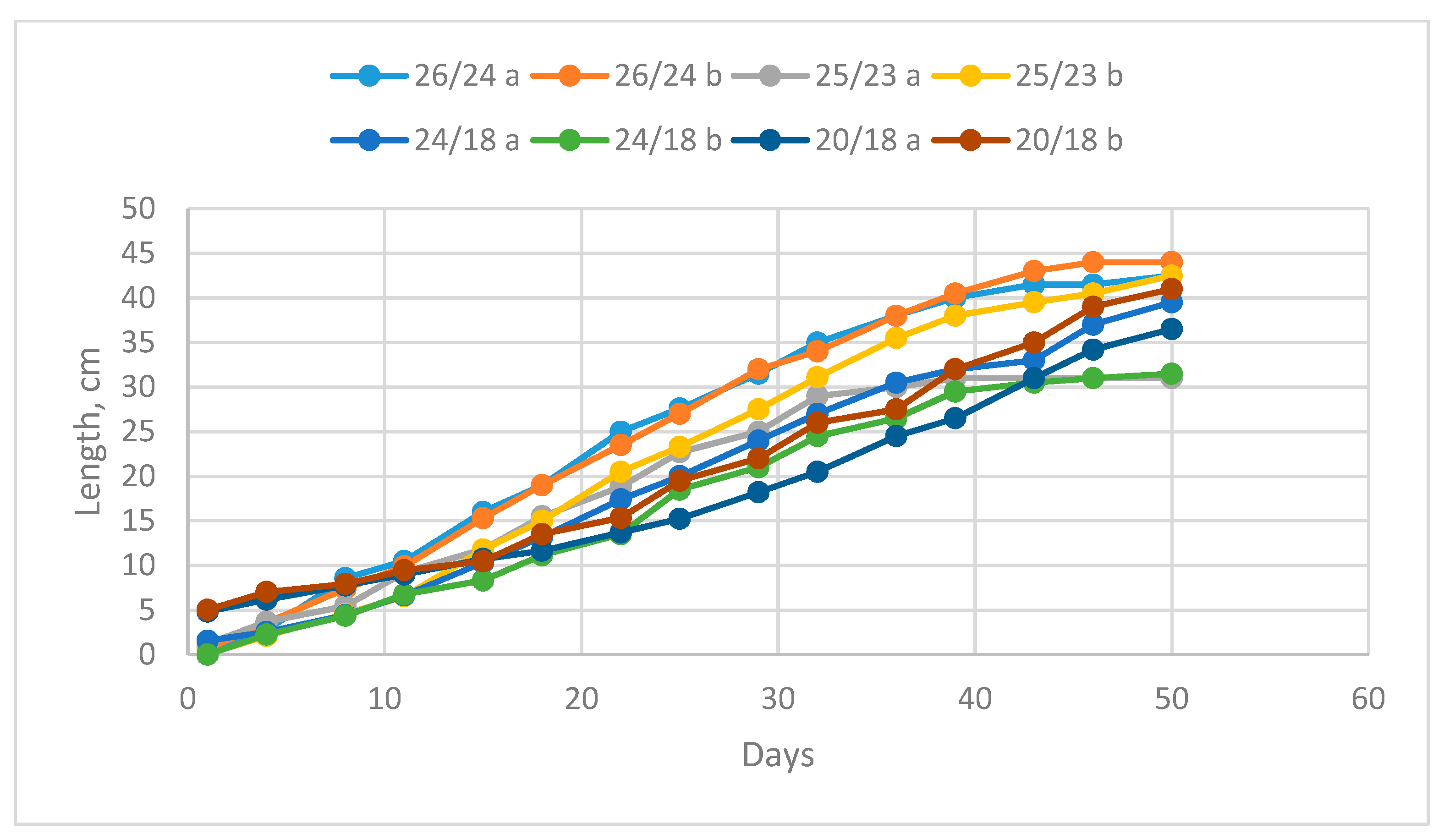
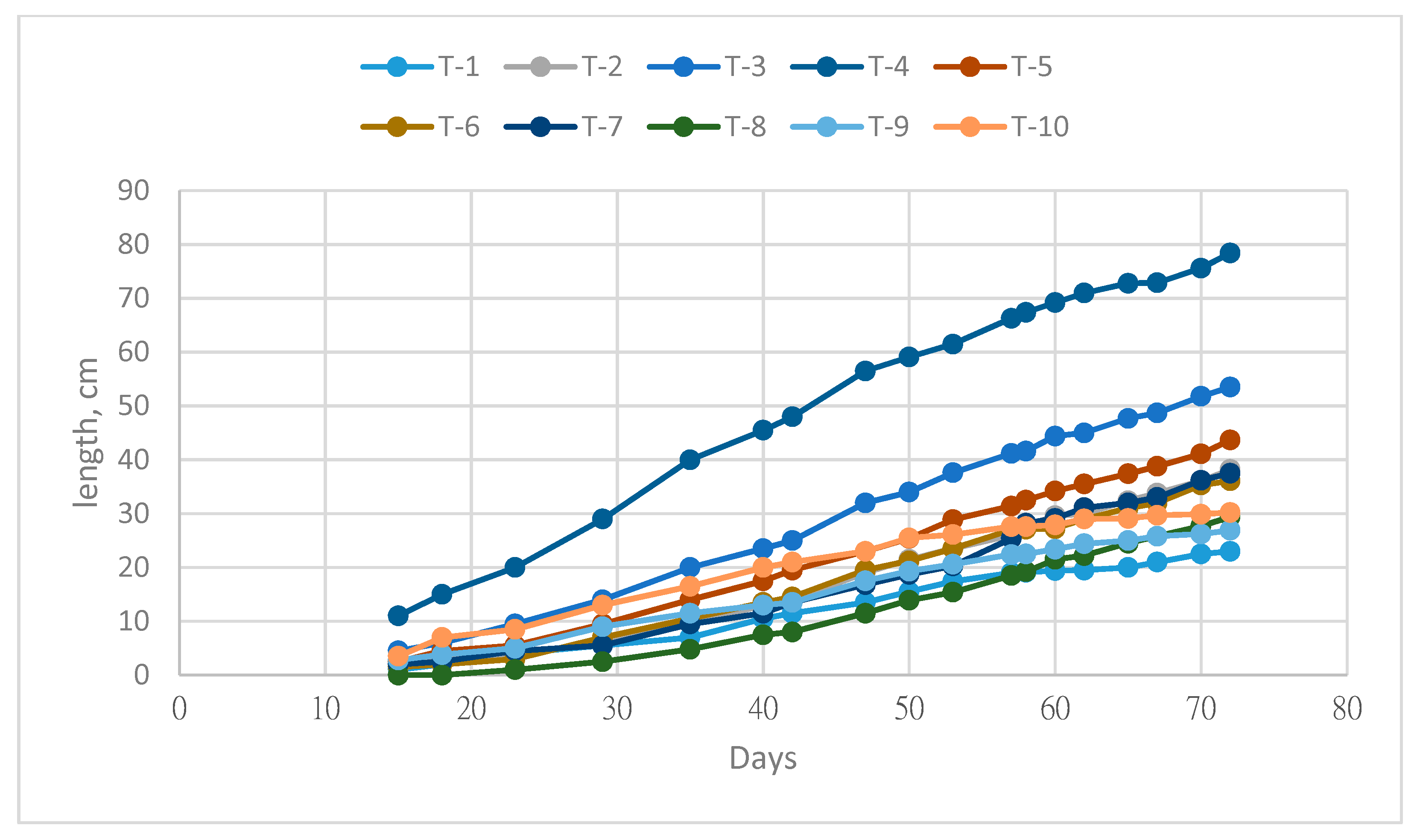
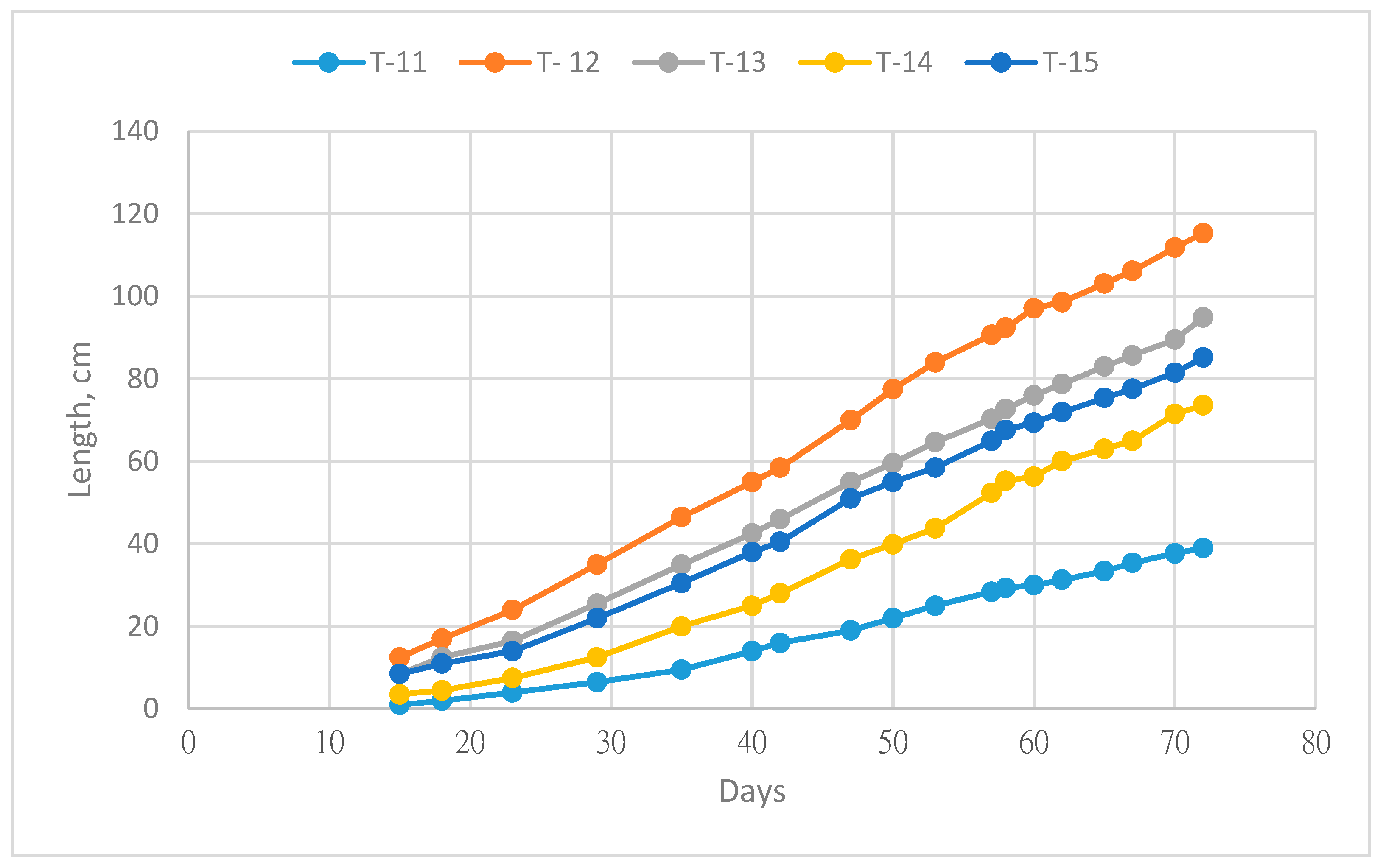
The relationship between stem length and the number of days of growth of 10 unnamed hybrids at 20/18 °C day/night temperatures is shown in Figure 1, and that of five unnamed hybrids treated at 22/19 °C day/night temperatures is shown in Figure 2. Some typical curves of the Jiuhbao Red rose variety at different temperature regimes are shown in Figure 3.
Figure 1. The relationship between stem length and number of days of growth of ten unnamed Phalaenopsis hybrids (T-1 to T-10) treated at 20/18 °C day/night temperatures.
Figure 2. The relationship between stem length and number of days of growth of five unnamed Phalaenopsis hybrids (T-11 to T-15) treated at 22/19 °C day/night temperatures.
Figure 3. The relationship between stem length and number of days of growth of the Jiuhbao Red rose Phalaenopsis variety at different temperature regimes.
The logistic growth model showed a good fit for expressing the data for stem elongation. Some typical logistic growth models for the ten unnamed hybrids (Figure 1) are as follows:
  • T-1
    Y = 43.3670 1 + 48.654   E x p ( 0.0796 t ) ,   R 2 = 0.9973 ,   s = 0.5746
  • T-2
    Y = 52.141 1 + 54.7751   E x p ( 0.0768 t ) ,   R 2 = 0.9989 ,   s = 0.8043
  • T-6
    Y = 49.0029 1 + 54.412   E x p ( 0.0753 t ) ,   R 2 = 0.9985 ,   s = 0.7768
  • T-9
    Y = 42.376 1 + 25.445 E x p ( 0.0791 t ) ,   R 2 = 0.9982 ,   s = 0.5237
The high R2 value, small s value, and uniform distribution of residual plots indicated the adequateness of the logistic growth model to express the relationship between stem length and days of growth. The typical parameters of this growth model for five hybrids at 22/19 °C (Figure 2) and the Jiuhbao Red rose variety at different day and night temperatures (Figure 3) are listed in Table 3 and Table 4, respectively.
Table 3. The parameters for stem length maximum (Ymax), growth rate (K), and the inflection point (A) of the stem elongation model for five unnamed Phalaenopsis hybrids grown at 22/19 °C day/night temperatures.
Table 4. The parameters or stem length maximum (Ymax), growth rate (K), and the inflection point (A) of the stem-elongation model for each plant of the Jiuhbao Red rose Phalaenopsis variety at different day and night temperatures.

3.2. Growth Rate (K)

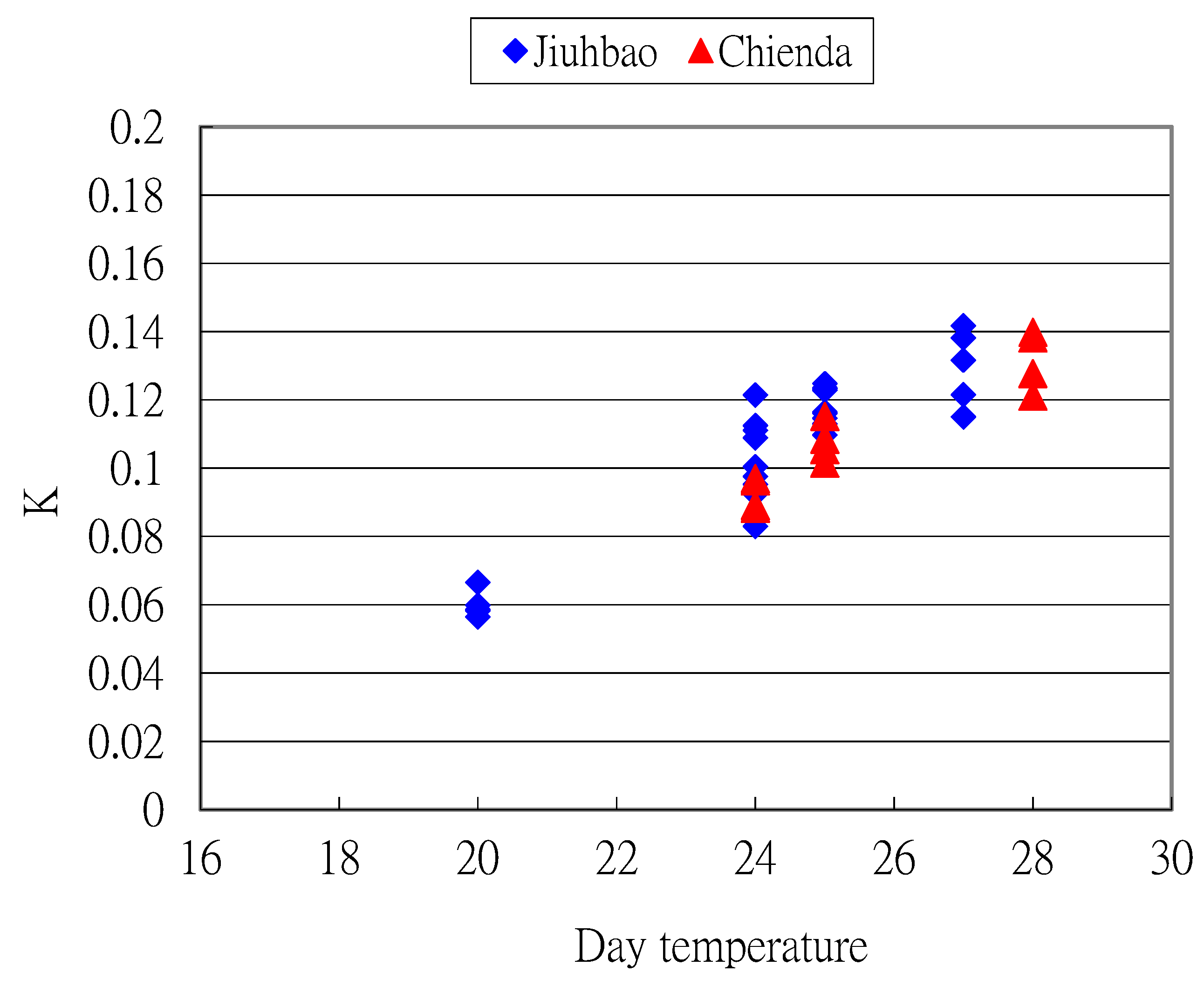
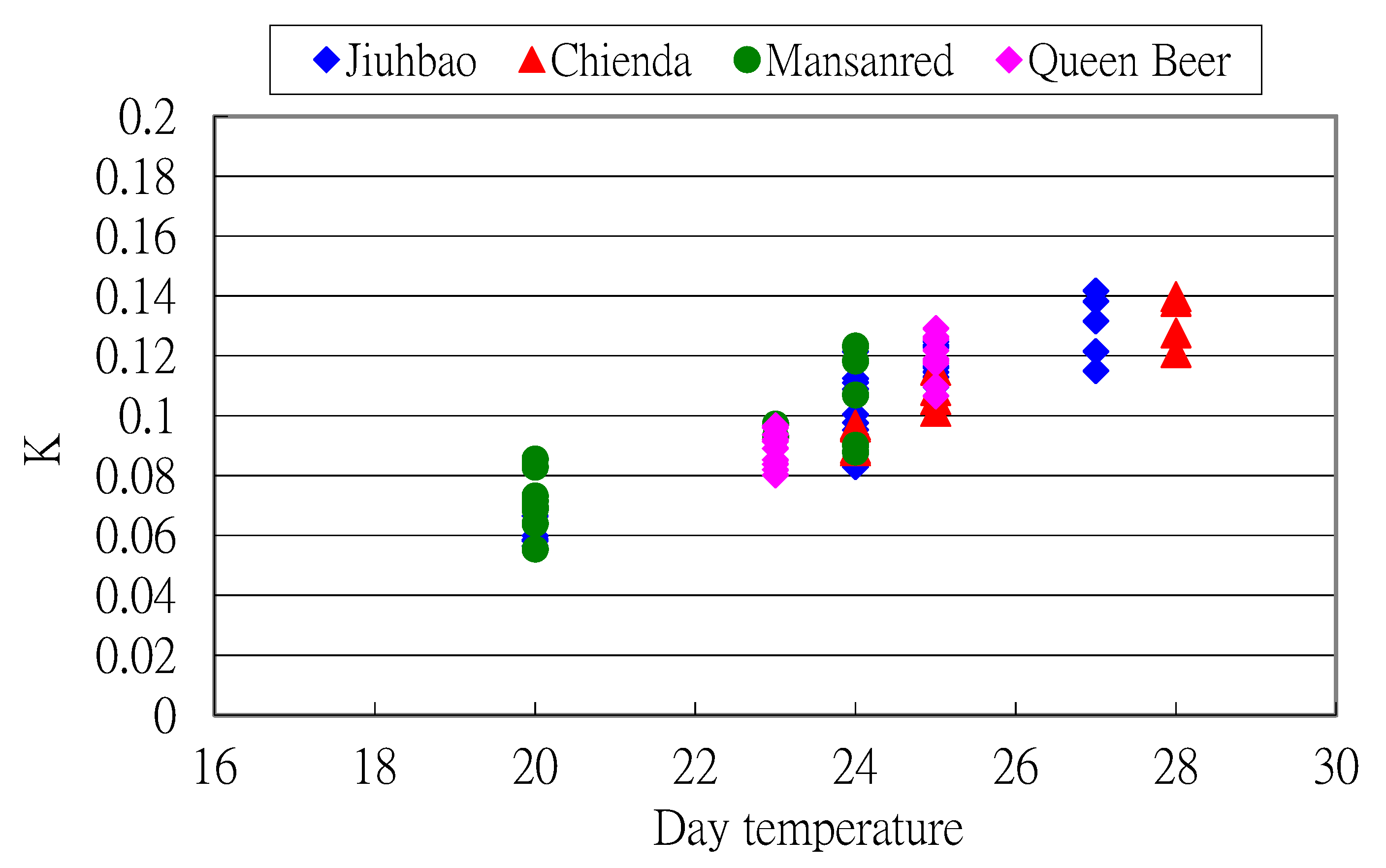
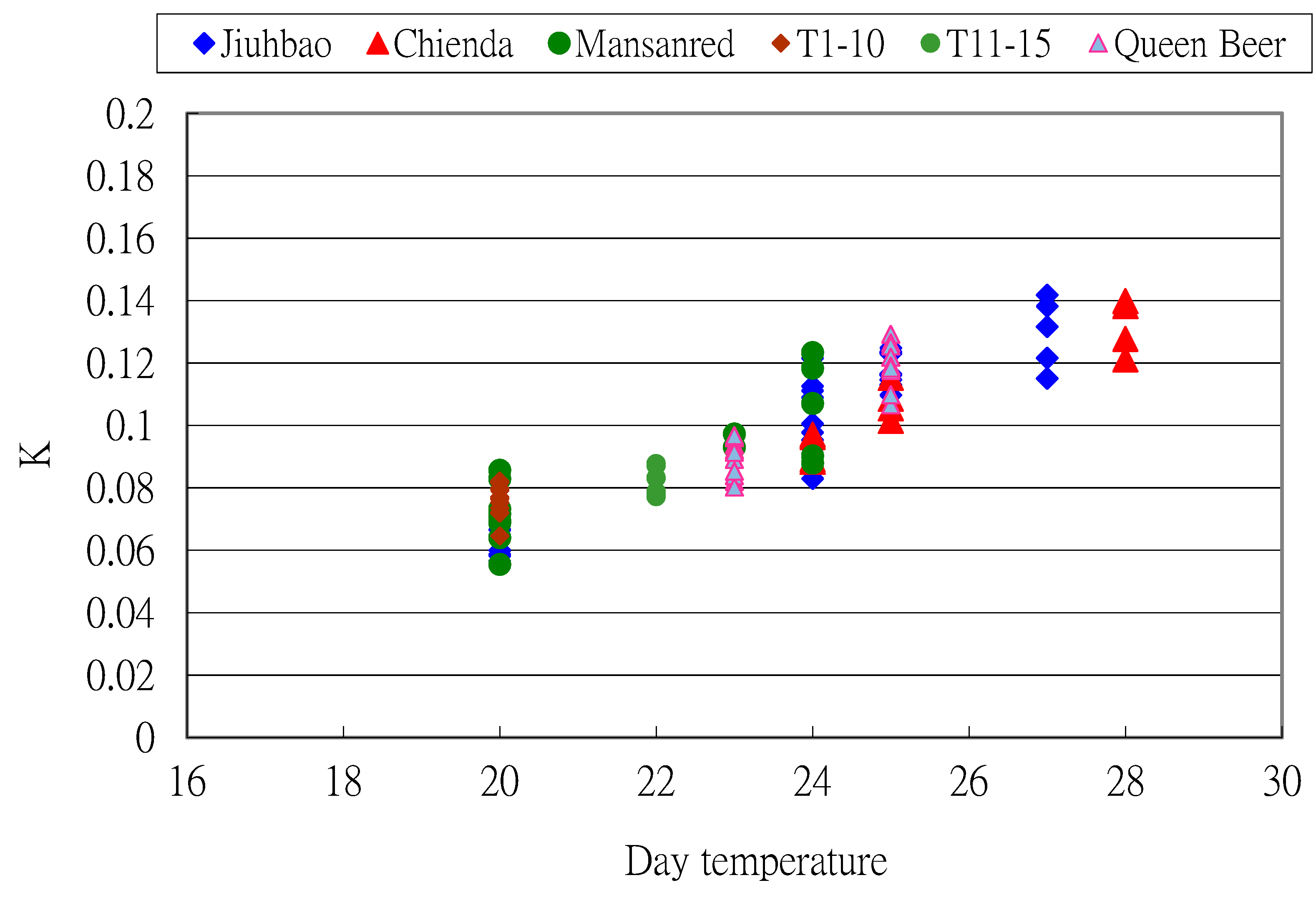
The relationships between K values and day temperature for Jiuhbao, Chienda, Queen Beer, and Mansanred Phalaenopsis varieties and the 15 unnamed Phalaenopsis hybrids are shown in Figure 4, Figure 5 and Figure 6.
Figure 4. The relationship between K value and day temperature for Jiuhbao and Chienda Red rose Phalaenopsis.
Figure 5. The relationship between K value and day temperature of Jiuhbao, Chienda, Queen Beer, and Mansanred Phalaenopsis varieties.
Figure 6. The relationship between K value and day temperature for all Phalaenopsis varieties and unnamed hybrids.
The regression analysis between K (growth rate) and temperature is as follows:
K = −0.08262 + 0.0077345Td − 0.00135Tdiff, R2 = 0.7615, s = 0.0108
(t = −7.368; p < 0.001), (t = 15.116; p < 0.001), (t = −0.216; p = 0.829)
Day temperature is the only factor that influences the growth rate in this study, and thus the final equation derived from the regression analysis is listed as follows:
K = −0.081798 + 0.007682 Td, R2 = 0.7614, s = 0.01073

3.2.1. The Categorical Tests of Jiuhbao and Chienda Red Rose Varieties

The categorical test of the Jiuhbao and Chienda Red rose varieties was performed, and the result was as follows:
K = −0.14368 + 0.010285Td + 0.013908 Z − 0.00092 Td · Z
(t = −8.440; p < 0.001), (t = 14.561; p < 0.001), (t = 0.335; p = 0.739), (t = −0.563; p = 0.577)
It can be stated that, as the two parameters that related to categories (0.013908 and 0.00092) were not significantly different from zero, the varieties did not significantly differ in growth rate.

3.2.2. The Categorical Test of Queen Beer and Mansanred Varieties

The result of the categorical test of Queen Beer and Mansanred varieties was as follows:
K = −0.09681 + 0.008406 Td − 0.16262 Z + 0.006745 Td · Z
(t = −3.566; p < 0.001), (t = 6.55; p < 0.001), (t = 0.286; p = 0.701), (t = 0.278; p = 0.907)
As discussed above, the varieties did not differ in growth rate.

3.2.3. The Categorical Test of Jiuhbao, Chienda Red Rose, Queen Beer, and Mansanred Varieties

The data of each of the varieties were pooled and treated similarly. The result of the regression analysis was as follows:
K = −0.11454 + 0.009041 Td − 0.0063 Z + 0.000299 Td · Z
(t = −7.404; p < 0.001), (t = 14.12; p < 0.001), (t = −0.241; p = 0.810), (t = 0.264; p = 0.792)
The results indicated that the varieties did not significantly differ in growth rate.

3.2.4. The Categorical Test of the Named Commercial Varieties and 15 Unnamed Hybrids

The growth rates of the 15 unnamed hybrids were placed under one category. The K values of the varieties with different sizes of red flowers were recognized as two different categories. The results of the regression analysis of categorical testing by Equation (15) were as follows:
K = −0.10872 + 0.008812 Td + 0.00259 Td · Z
(t = −9.566; p < 0.001), (t = 18.44; p < 0.001), (t = 1.842; p = 0.068)
The categorical factor did not have any significant effect on the growth rates. That is, different varieties exhibited the same relationship between growth rate and day temperature. The growth rate of stem elongation for Phalaenopsis was a function of day temperature, i.e., when the day temperature was higher, stem elongation was faster. However, if the day temperature is too high, flower quality is affected [13]. The limitation of higher temperature is not greater than that of cultivation temperature of vegetable growth. If day temperature is higher than that of the cultivation temperature value, the leaf is formed in the stem, which is called Keiki’s process [2,13].

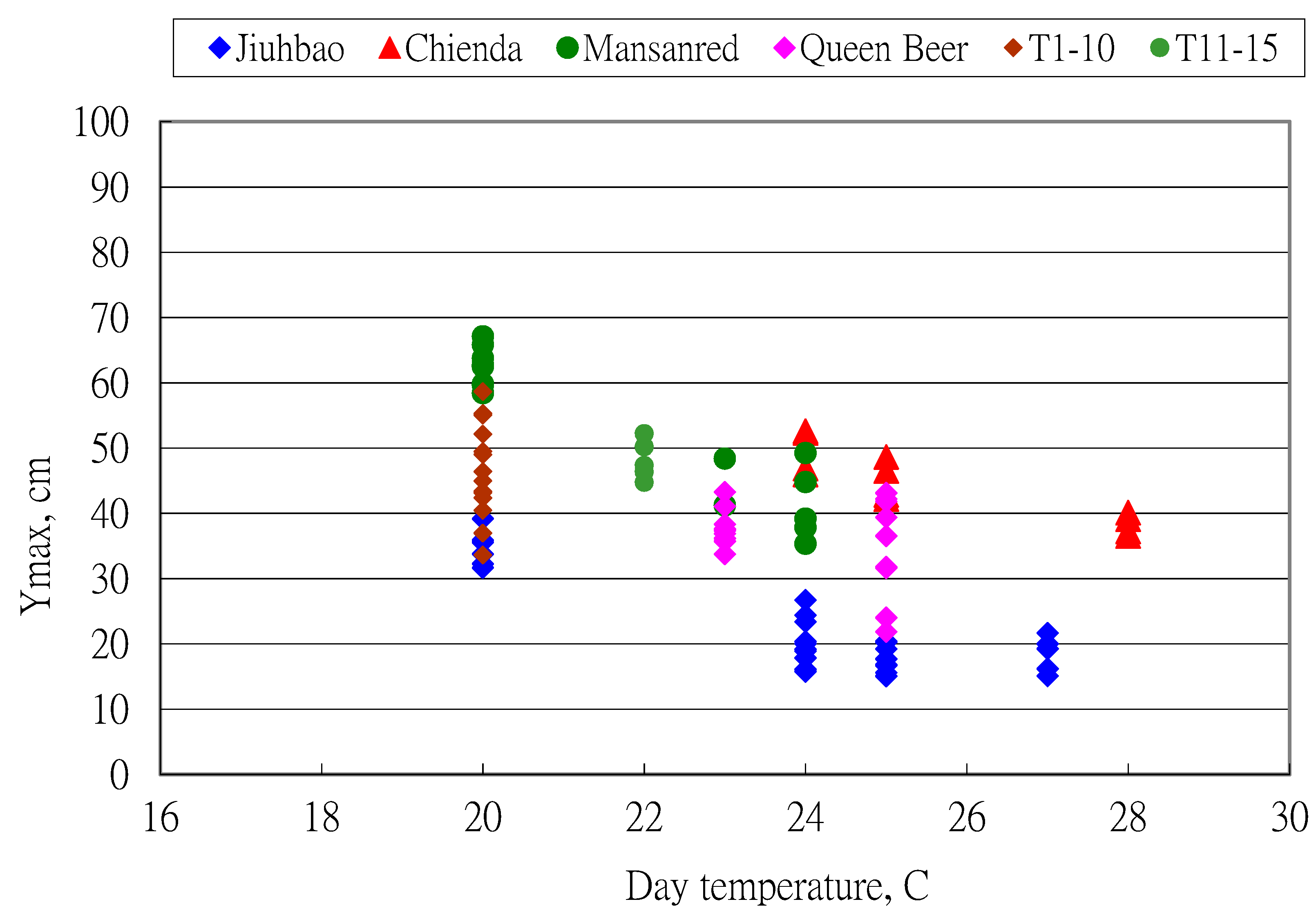
3.3. The Maximum Length of the Stem (Ymax)

The relationships between maximum length and day temperature of all Phalaenopsis types are shown in Figure 7.
Figure 7. The relationship between maximum length and day temperature of all Phalaenopsis types.
The results obtained from the regression analysis were as follows:
ymax = 123.7421 − 3.86106Td + 1.24075 Tdiff
(t = 11.23; p < 0.001), (t = −7.664; p < 0.001), (t = 2.614; p = 0.037)
The systematic analysis carried out in this study indicated that both day temperature (Td) and the temperature difference between day and night (Tdiff) could be significant factors affecting the maximum length of stems. If the day temperature is higher, the stem length decreases. If the temperature difference is increased, then the stem length also increases. The Ymax = c0 + c1Td + c2Tdiff was the common equation used for the categorical test.
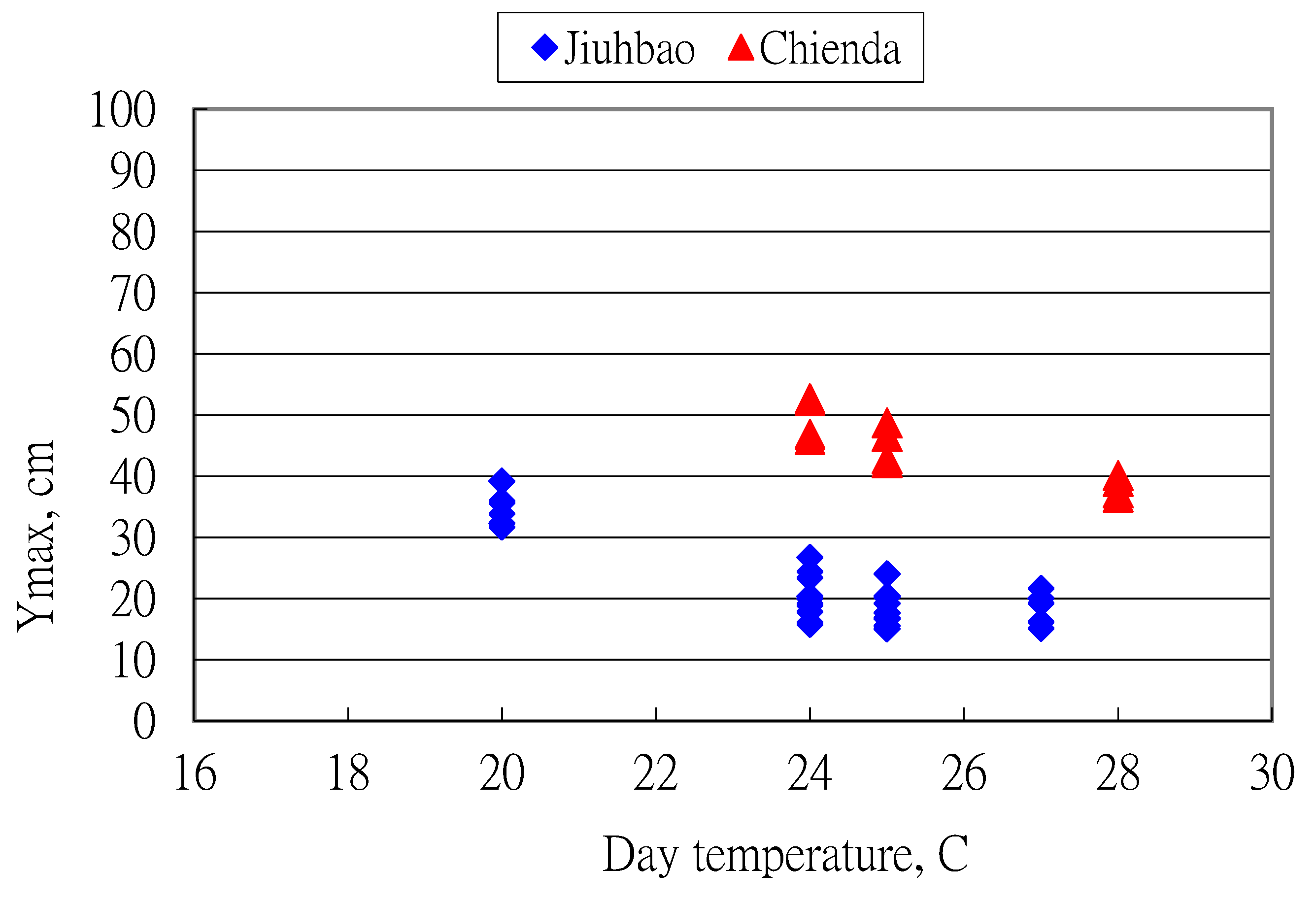
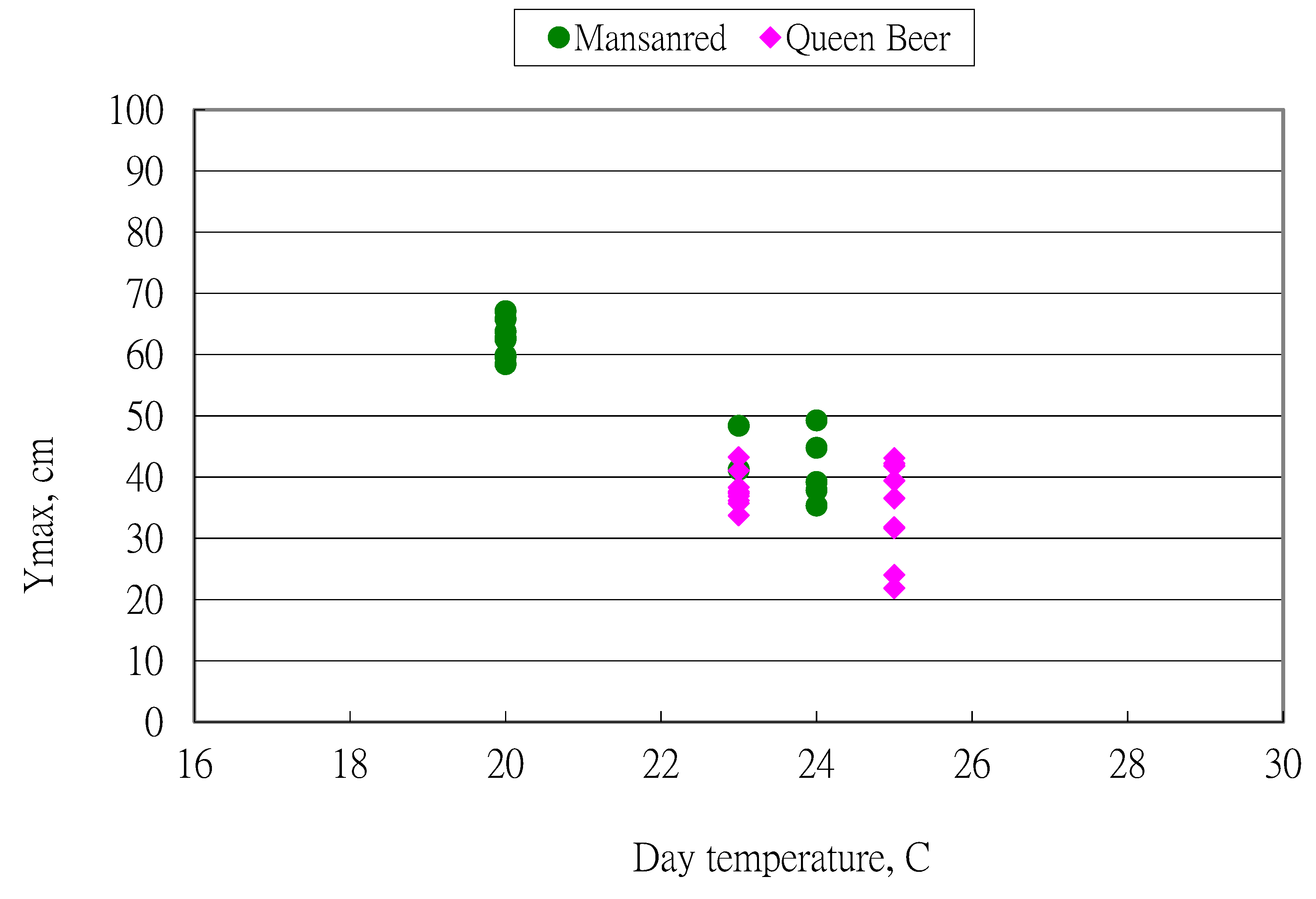
The relationship between maximum stem length and day temperature of Jiuhbao and Chienda Red rose (large flowers) is shown in Figure 8. The results of the statistical test indicated that they have different intercept (c0) values. However, there was no significant difference in the parameters of c1 and c2. The relationship between Ymax and Td of Queen Beer and Mansanred (small flowers) is shown in Figure 9. No significant difference could be found between the two data sets.
Figure 8. The relationship between maximum length and day temperature of Jiuhbao and Chienda Red rose.
Figure 9. The relationship between maximum length and day temperature on Queen Beer and Mansanred.

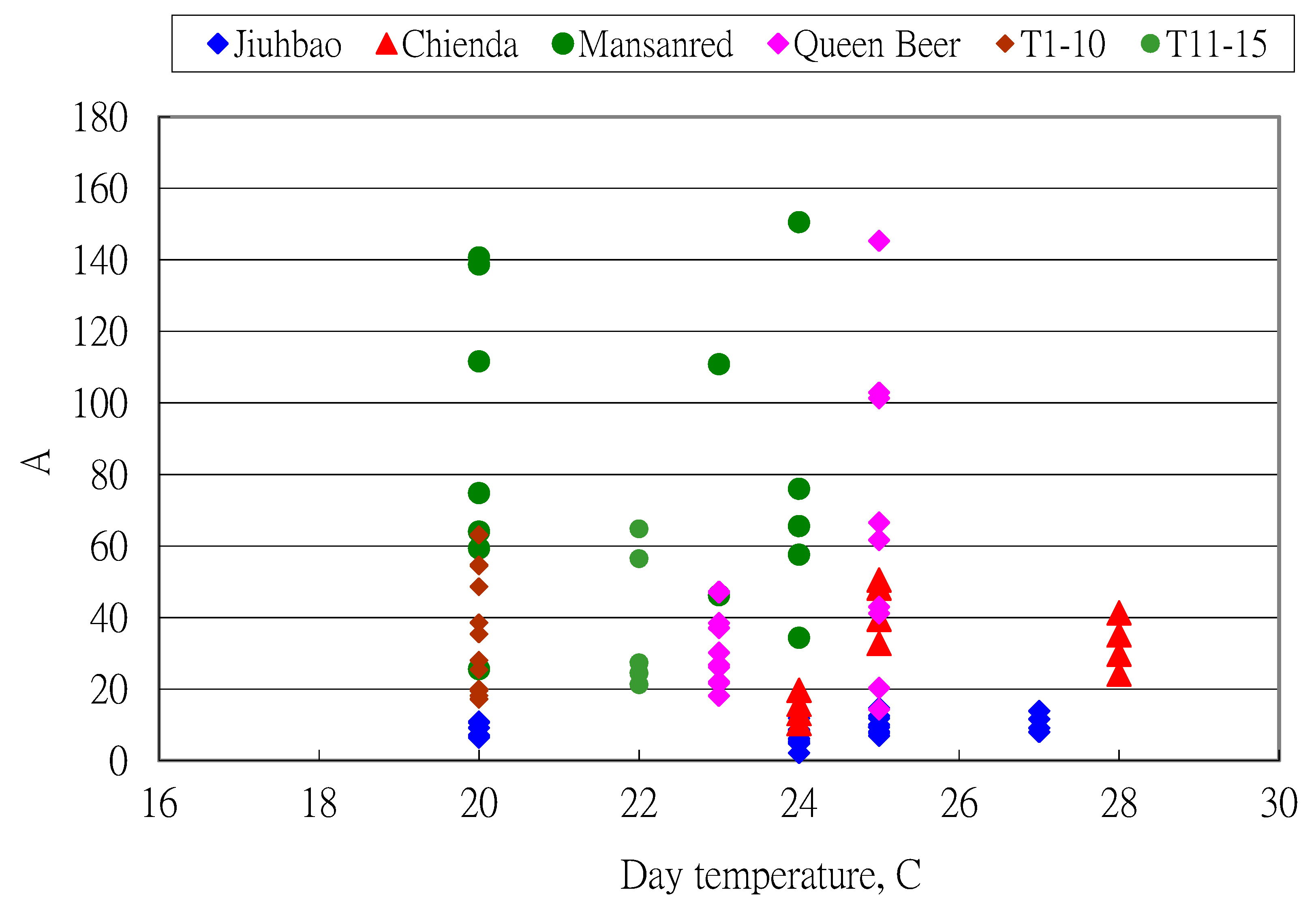
3.4. Inflection Point (A)

The relationships between the inflection point (A) and day temperature of all varieties and hybrids are shown in Figure 10. By the regression analysis, no relationship between the A values and two environment factors could be found. The A value was interpreted as a specific characteristic for each variety.
Figure 10. The relationship between the inflection point (A) and day temperature of all Phalaenopsis types.

4. Discussion and Conclusions

The results of this study indicated that stem growth rate was mainly influenced by day temperature, not night temperature or the difference between day and night. The positive relationship between the K value and day temperature was observed as a linear equation and was also evident at different temperature regimes. An increase in day temperature also increased growth rates of stems. Similar results were reported previously [11].
The growth rate of the stem can be regulated by adjusting the day temperature. However, it is noteworthy to mention that, if the day temperature is higher than that of the cultivation stage, the leaf is formed in the stem, which is called Keiki’s process [2,13].
Our findings suggested that day temperature (negative effect) and the temperature difference between day and night (positive effect) are the main factors influencing maximum stem length. The required stem length differs under specific conditions. For example, Japan’s consumers prefer the longer single stems of potted Phalaenopsis orchids. Because of the transportation cost, stems with lengths of 75 cm are very popular in Western Europe. Thus, stem length could be regulated according to these two environmental factors. The results also showed that no relationship could be established between the inflection point of the growth rate, i.e., when it slows down, and these temperature factors.
More detailed experiments need to be performed by considering other factors, such as light intensity and different temperature regimes, since the temperature regimes were suggested by the nursery sources of the plants used in the study. However, the results of this study can provide a practical technique for orchid growers to regulate the progress of stem elongation and supply their products to market on time.

Author Contributions

C.C. drafted the proposal, executed experiments, wrote the manuscript, and interpreted the results.

Funding

This research received no external funding.

Acknowledgments

The authors would like to thank the Ministry of Science and Technology of the Republic of China for financially supporting this research under Contract No. MOST-107-2313-B-005-012.

Conflicts of Interest

The authors declare no conflicts of interest.

References

  1. Anthura, B.V. Cultivation Guidelines Phalaenopsis Pot Plant. Available online: file:///C:/Users/Dr.%20Chen/Downloads/Teelthandleiding-phalaenopsis-EN.pdf (accessed on 30 August 2019).
  2. Anthura, B.V. Cultivation Guide Phalaenopsis—Knowledge for Professionals; Anthuriumweg 14, 2665 KV: Bleiswijk, The Netherlands, 2005. [Google Scholar]
  3. Floricultura, B.V. Floriclone Phalaenopsis Pot Plant. Available online: https://www.floricultura.com/media/988609/phalaenopsis.pdf (accessed on 11 July 2019).
  4. Yang, C.; Prasher, S.O.; Lacroix, R.; Kim, S.H. A multivariate adaptive regression splines model for simulation of pesticide transport in soils. Biosyst. Eng. 2003, 86, 9–15. [Google Scholar] [CrossRef]
  5. Chen, C.; Hsu, H. Statistical technique for the evaluation of the effect of light quality on growing characteristics of in vitro cultures. Biosyst. Eng. 2009, 103, 257–264. [Google Scholar] [CrossRef]
  6. Lopez, R.G.; Runkle, E.S. The effect of temperature on leaf and flower development and flower longevity of Zygopetalum Redvale ‘Fire Kiss’ Orchid. HortScience 2004, 39, 1630–1634. [Google Scholar] [CrossRef]
  7. Lopez, R.G.; Runkle, E.S. Temperature and photoperiod regulate flowering of potted Miltoniopsis Orchids. HortScience 2006, 41, 593–597. [Google Scholar] [CrossRef]
  8. Blanchard, M.G.; Runkle, E.S. Temperature during the day, but not during the night, controls flowering of Phalaenopsis orchids. J. Exp. Bot. 2006, 57, 4043–4049. [Google Scholar] [CrossRef] [PubMed]
  9. Newton, L.A.; Runkle, E.S. High-temperature Inhibition of flowering of Phalaenopsis and Doritaenopsis orchids. HortScience 2009, 44, 1271–1276. [Google Scholar] [CrossRef]
  10. Chen, C.; Chien, M. The leaf growth model and influencing factors in Phalaenopsis orchids. Afr. J. Agric. Res. 2012, 7, 4045–4055. [Google Scholar]
  11. Paradiso, R.; Maggio, A.; De Pascale, S. Moderate variations of day/night temperatures affect flower induction and inflorescence development in Phalaenopsis. Sci. Hortic. 2012, 139, 102–107. [Google Scholar] [CrossRef]
  12. Paradiso, R.; De Pascale, S. Effects of plant size, temperature, and light Intensity on flowering of Phalaenopsis hybrids in Mediterranean greenhouses. Sci. World J. 2014, 2014, 1–9. [Google Scholar] [CrossRef] [PubMed][Green Version]
  13. Chen, C. Culture Guide of Phalaenopsis; Taiwan Commercial Orchids School: Taichung, Taiwan, 2014. [Google Scholar]
  14. Myers, R.H. Classical and Modern Regression with Applications, 2nd ed.; Duxbury: Pacific Grove, CA, USA, 1990; p. 488. [Google Scholar]
  15. Kutner, M.H.; Nachtsheim, J.; Neter, J. Applied Linear Regression Models, 4th ed.; McGraw-Hill: New York, NY, USA, 2004. [Google Scholar]
  16. Weisberg, S. Applied Linear Regression, 4th ed.; Wiley: New York, NY, USA, 2013; p. 384. [Google Scholar]
Article Metrics

Citations

Article Access Statistics

Multiple requests from the same IP address are counted as one view.