Article

Strain-Specific Microalgal and Cyanobacterial Suspensions Modulate Germination Kinetics and Early Seedling Vigor in Cucumber


by
Prabhaharan Renganathan
1,
Alsu Yakupova
1,
Artyom Filippov
1,
Irina Larionova
1,
Rezeda Sushchenko
2,
Alfia Mufazalova
1,
Liliia Khilazhetdinova
1,
Kamilla Gaysina
3 and
Lira A. Gaysina
1,4,5,*
1
Department of Bioecology and Biological Education, M. Akmullah Bashkir State Pedagogical University, 450000 Ufa, Russia
2
Laboratory of Botany, Federal Scientific Center of the East Asia Terrestrial Biodiversity, Far Eastern Branch, Russian Academy of Sciences, 690022 Vladivostok, Russia
3
Faculty of General Medicine, Bashkir State Medical University, Teatralnaya Street 2a, 450000 Ufa, Russia
4
All-Russian Research Institute of Phytopathology, 143050 Bolshye Vyazemy, Russia
5
Phystech School of Biological and Medical Physics, Moscow Institute of Physics and Technology, 141701 Dolgoprudny, Russia
*
Author to whom correspondence should be addressed.
Horticulturae 2026, 12(4), 414; https://doi.org/10.3390/horticulturae12040414
Submission received: 22 February 2026 / Revised: 25 March 2026 / Accepted: 26 March 2026 / Published: 27 March 2026
(This article belongs to the Topic Applications of Biotechnology in Food and Agriculture)

Abstract

Microalgal and cyanobacterial biostimulants are increasingly recognized as sustainable tools for enhancing crop establishment and reducing dependence on synthetic agrochemicals. However, the strain-specific effects of many taxa on seed germination and early seedling development remain insufficiently characterized. This study evaluated the effects of seven microalgal and cyanobacterial suspensions on the germination kinetics and early seedling vigor of cucumber (Cucumis sativus L.). Several strains significantly accelerated germination and enhanced seedling performance relative to the control. Treatment with Coelastrella rubescens BCAC 301 S39, Scotinosphaera lemnae BCAC 113, Vischeria magna UTEX 2351, and Anabaena sp. IT4 significantly reduced mean germination time from 4.50 d to 2.23–2.29 d and advanced the time to 50% germination (T50) from 4.0 to 2.0–2.1 d. These treatments also increased the germination index from 48.32 to 78.17–100.67 and enhanced seedling traits, including root length (32–53%), shoot length (≈29%), leaf length (17–21%), and fresh (30–43%) and dry biomasses (12–22%). Correlation analysis revealed strong positive associations between germination indices and seedling vigor parameters, indicating the faster germination promotes early growth. In conclusion, the results demonstrate that specific microalgal strains can function as effective seed-phase biostimulants, offering a sustainable strategy to enhance germination uniformity, early seedling establishment, and crop productivity.

1. Introduction

Seed germination is an early developmental phase that significantly influences physiological performance, resource acquisition, and productivity. Suboptimal germination is a major global agronomic constraint that is highly attributed to abiotic stresses, including salinity, drought, extreme temperatures, and soil nutrient deficiencies. Studies indicate that 20–30% of yield losses in major crops result from poor germination and limited seedling establishment [1,2,3]. Under saline and osmotic stress, germination percentage may decline by 40–60%, whereas mean germination time (MGT) can increase by 70%, reducing field uniformity and competitive ability [4]. Similarly, low-temperature stress has been shown to reduce cucumber seed germination by several days compared with optimal temperature conditions [5]. Conventional seed treatments, including chemical priming, synthetic growth regulators, and nutrient-or polymer-based seed coatings, improve germination rates and early seedling vigor [3]. However, these approaches raise sustainability concerns as they rely on synthetic chemicals that pose ecological risks, including leaching of polymer-based seed coatings into soil matrices, accumulation of nitrate and phosphate residues that increase groundwater eutrophication, and persistence of xenobiotic priming agents that disrupt soil microbial communities [2,6]. Moreover, their production and field applications impose substantial economic costs [6]. Consequently, biostimulant-based seed treatments have gained significant attention as ecological alternatives to synthetic fertilizers. Biostimulant inoculation improves germination percentage by 15–40%, reduces T50 and MGT by 25–55%, and enhances early vigor under diverse stress conditions [7].
Among biological agents, plant growth-promoting microorganisms (PGPM), particularly microalgae and cyanobacteria, have gained attention because of their metabolic capacity to produce bioactive compounds. Microalgae synthesize bioactive metabolites, including indole-3-acetic acid (IAA), cytokinins, abscisic acid (ABA), amino acids, peptides, vitamins, phenolics, and polysaccharides, which regulate germination and seedling development [8,9,10,11]. Studies have shown that seed treatment with microalgal biomass or extracts (e.g., Chlorella vulgaris, Scenedesmus obliquus, and Spirulina platensis) can improve seed germination rate and seedling vigor in horticultural crops, including tomato, lettuce, and cucumber, compared to untreated controls [8,12,13]. In tomato seed-priming, microalgal extracts achieved 100% germination within 3 d and enhanced shoot and root fresh weights at the early seedling stage using suspensions containing 105–106 cells mL−1 [12]. Treatment of vernalized Medicago truncatula seeds with Chlamydomonas reinhardtii cc124 suspension and weekly watering with water-based algal suspension (0.05 g/L) increased chlorophyll a, b, and total chlorophyll content by 32%, 35%, and 32%, respectively [14].
Cyanobacterial species, such as Anabaena, Nostoc, and Calothrix, with microalgal and nitrogen-fixing bacterial consortia, contribute to nitrogen fixation, siderophore production, and exopolysaccharide improvements during seed hydration [8,15,16]. Anabaena treatments reduce MGT by 15–25%, whereas Nostoc-based priming enhances root elongation (15–40%) and increases the seedling vigor index (SVI) (20–50%) under controlled conditions [17,18]. Studies have shown that Chlamydomonas reinhardtii produces extracellular IAA via LAO1 and engages in metabolic cross-feeding with Methylobacterium aquaticum, which utilizes algal-derived IAA during co-cultivation [19]. These algal–bacterial interactions enhance the biostimulant effects of multispecies assemblies. For example, AnabaenaAzotobacter, AnabaenaTrichoderma, and Anabaena + Providencia consortia significantly improved soil microbial activity and increased corn yield components [20].
Germination dynamics provide a robust framework for quantifying the efficacy of microalgal biostimulants. Germination indices, including the final germination percentage (FGP), MGT, time to 50% germination (T50), germination index (GI), and coefficient of velocity of germination (CVG), provide metrics for assessing the germination rate [21]. Studies have shown positive associations between germination indices and seedling performance traits, such as root or shoot growth, biomass accumulation, and SVI. Under salinity stress, the germination rate of barley correlates with seedling dry weight (r ≈ 0.61), and the germination percentage correlates with dry weight (r ≈ 0.56) [22]. In maize, germination indices correlate with early root fresh weight, seedling weight and root dry weight [23]. Furthermore, analyses of germination kinetics via water uptake dynamics in soybeans showed that rapid imbibition is associated with SVI and normal seedling development [24]. Therefore, an integrated assessment combining germination metrics, seedling morphology, biomass traits, and correlation networks characterizes the biostimulatory potential of microalgal strains.
Despite the increasing interest in microalgae-based seed biostimulants, species-specific comparative studies are limited. Most studies have evaluated only a few microalgal strains, focusing on model organisms such as Spirulina and Chlamydomonas, using extracts rather than whole biomass suspensions. Studies on lesser-known taxa, such as Coelastrella, Scotinosphaera, Vischeria, and Klebsormidium, suggest that these genera produce high concentrations of phytohormone-like compounds and stress-associated metabolites with distinct metabolic profiles. Biochemical and metabolomic studies have shown that Coelastrella spp. accumulate carotenoids, terpenoids, and lipid-derived antioxidants under stress, indicating a robust metabolic network with potential biostimulant relevance [25]. Likewise, lipidomic analyses of Vischeria show unique characteristics of polyunsaturated fatty acids and nitrogen-responsive lipid metabolite shifts, differentiating it from Chlorophyta model taxa [26]. Although metabolomic datasets for Scotinosphaera remain limited, pigment and biochemical assessments indicate that specialized pigment–lipid complexes and phenolic constituents contribute to its adaptive physiology. The comparative performance of these taxa in seed germination bioassays remains poorly characterized.
This study aimed to (i) evaluate the effects of seven microalgal and cyanobacterial biomass suspensions (Chlorella vulgaris BCAC 76 (CV), Coelastrella rubescens BCAC 301 S39 (CR), Nostoc punctiforme 739 S39 (NP), Klebsormidium sp. BCAC 344 (KLE), Vischeria magna UTEX 2351 (VM), Scotinosphaera lemnae BCAC 113 (SCL), and Anabaena sp. IT4 (ANA)) on seed germination parameters (FGP, MGT, T50, GI, and CVG) of cucumber; (ii) quantify the effects of microalgal treatments on early seedling morphometric traits (shoot, root, and leaf lengths) and biomass; (iii) determine the associations between germination indices and seedling performance using Pearson’s correlation and hierarchical clustering; and (iv) identify high-performing microalgal strains for sustainable biostimulant applications.

2. Materials and Methods

2.1. Microalgal and Cyanobacterial Strains

Seven freshwater and terrestrial microalgal and cyanobacterial strains were used: Chlorella vulgaris BCAC 76 (CV), Coelastrella rubescens BCAC 301 S39 (CR), Nostoc punctiforme 739 S39 (NP), Klebsormidium sp. BCAC 344 (KLE), Vischeria magna UTEX 2351 (VM), Scotinosphaera lemnae BCAC 113 (SCL), and Anabaena sp. IT4 (ANA).
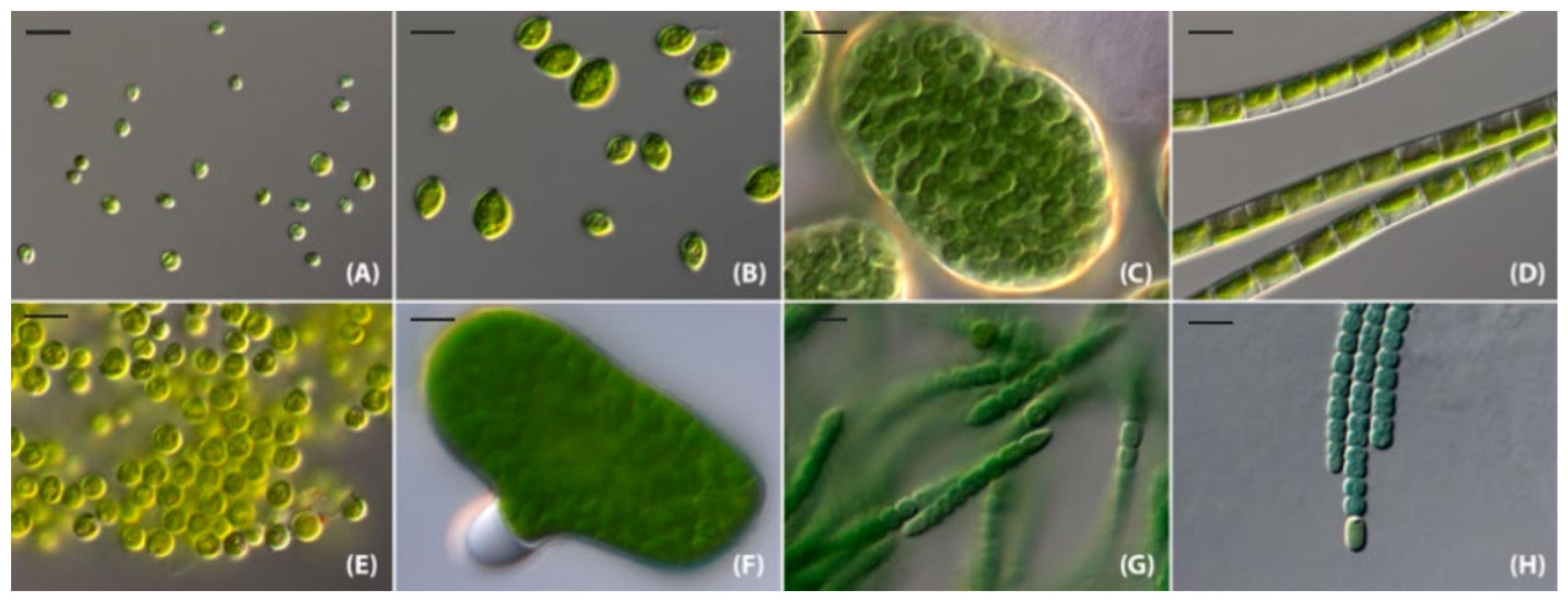
The morphological features of the isolates are shown in Figure 1. Their taxonomic identities, authentication, culture collection accession, and ecological origins are presented in Table 1.

2.2. Preparation of Microalgal and Cyanobacterial Suspensions

Microalgal cultures were maintained in Bold’s liquid medium [27] and cyanobacterial strains in Z8 medium [28], as previously described [29]. Two months before the experiments, the strains were transferred to 500 mL Erlenmeyer flasks containing 300 mL of Z8 medium.
Cultures were incubated at 25 ± 1 °C under a 12:12 h light–dark photoperiod with cool-white LED illumination (100 ± 10 µmol photons m−2 s−1). Cell density was calculated using linear regression models based on the cell concentration (N mL−1) and optical density (OD). Species-specific calibration curves were constructed by correlating the optical density at 680 nm (OD680) with direct cell counts using a Goryaev counting chamber. The calibration curves showed high linearity, with determination coefficients (R2) ranging from 0.982 to 0.996 for the seven strains, indicating their excellent reliability. Linear regression equations derived from this calibration were used to convert OD values into cell concentrations (cells mL−1) for suspension standardization purposes. The optical density (OD) of the suspensions was determined at 680 nm using a UV-1800 spectrophotometer (Shimadzu, Kyoto, Japan). The final suspension density was standardized to 106 cells mL−1 to ensure uniform biomass input across treatments during the strain-screening experiment. This density corresponds to approximately 0.02–0.05 g L−1 dry biomass, based on typical microalgal cell dry weight values reported in algal culture studies [29]. Previous studies have demonstrated that microalgal biomass and extracts can stimulate seed germination and early plant growth. Although the extent of the response is often dose-dependent and strain specific [12,13]. Therefore, a single standardized concentration was used to enable direct comparison of the biostimulant potential among strains.
Suspensions were applied as fresh cultures without drying, extraction, or chemical fractionation. Before application, the cultures were gently homogenized by manual swirling to ensure uniform cell distribution and prevent sedimentation, thereby maintaining experimental consistency. The cells were seeded at 106 cells mL−1 with 5–10 mL per Petri dish.

2.3. Seed Germination Assay

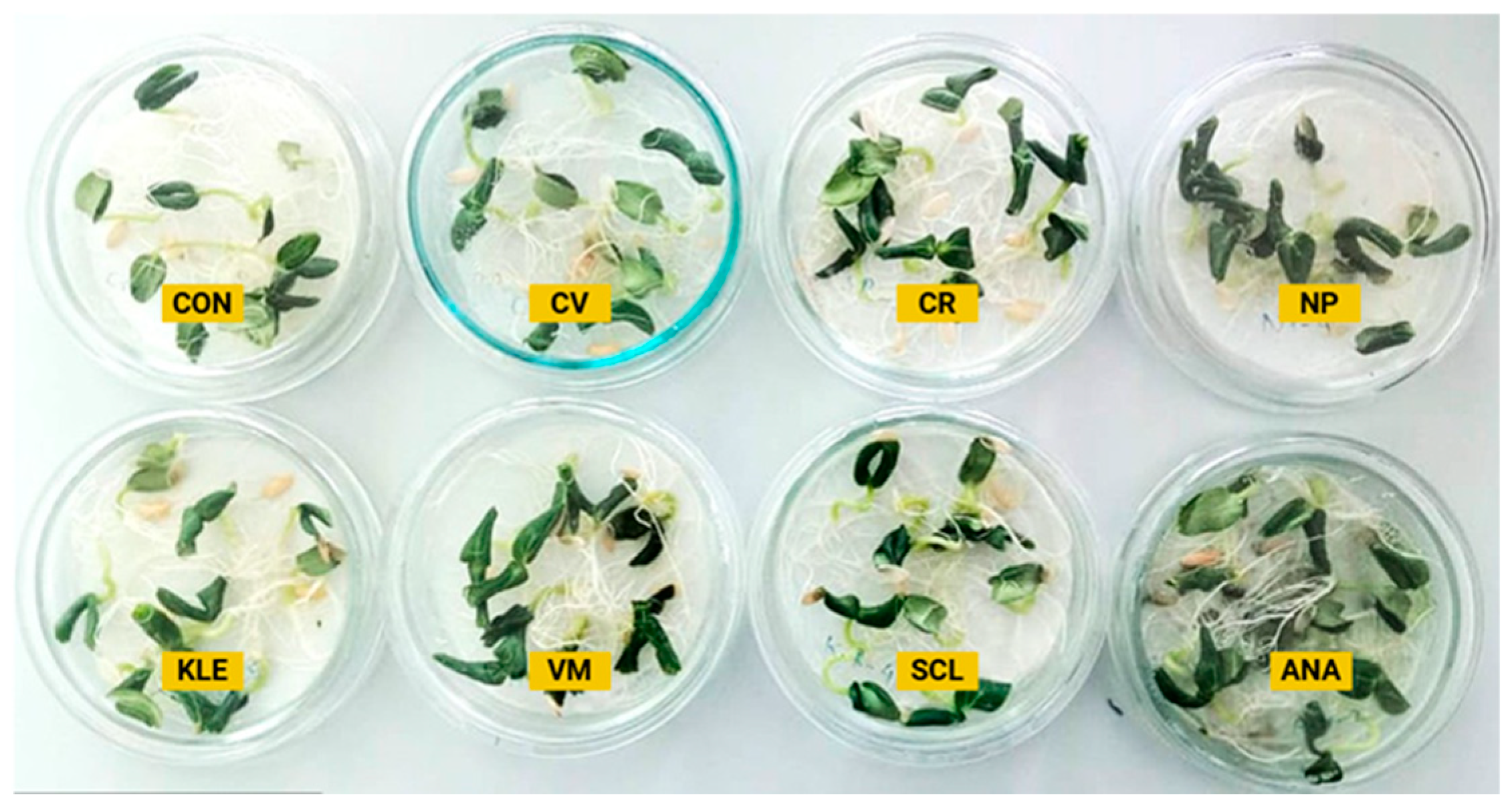
A completely randomized design (CRD) was used with eight treatments: seven microalgal and cyanobacterial suspensions and a Z8-only control. Each treatment had five replicates of ten seeds each, totaling 50 seeds per treatment (Figure 2). Cucumber (Cucumis sativus L.) seeds of the hybrid cultivar ‘Majestic F1’ were used in the germination experiments. The seeds were obtained from a certified commercial supplier (Centre-OGORODNIK LLC, Moscow, Russia). Prior to the experiment, seeds were stored under dry conditions at room temperature. Only uniform, undamaged seeds with similar size and morphology were manually selected to ensure experimental consistency and minimize variability during germination assays. The seeds were not surface sterilized prior to the experiment because commercially supplied hybrid seeds are typically provided under clean storage conditions.
For germination, two layers of filter paper were placed in each Petri dish, with seeds on top. Then, 5–10 mL of microalgal suspension was added until moistened and covered with another filter paper. The control group received 10 mL of sterile Z8 medium. Z8 was selected to match the basal medium for culturing microalgal and cyanobacterial suspensions, preventing differences in ionic strength and micronutrient composition. This ensured that the observed effects were due to cellular biological activity and not medium variability. This ensured that the observed effects were due to cellular biological activity and not medium variability. Petri plates were incubated at 25 °C under controlled conditions [30].
The seeds were monitored daily for 10 d. To prevent moisture fluctuations and differential evaporation, filter papers were checked daily, and moisture loss was replenished with the respective solution using a micropipette to restore saturation without waterlogging. Seeds were considered to have germinated when the radicles reached 2 mm. Daily counts were continued until no new germination occurred for three consecutive days.
On day 10, root length, shoot length, and leaf length (in mm) were measured using a ruler from the base of the hypocotyl to the respective organ tip. Fresh biomass was recorded using Ohaus Pioneer PA214C analytical scales (OHAUS Corporation, Parsippany, NJ, USA) (0.001 g precision). The seedlings were oven-dried at 70 °C for 48 h for dry mass determination. In each plate, the shoot, root, and leaf lengths of all ten seedlings were measured individually and averaged to obtain a plate-level replicate value. Mean values (n = 5 plates per treatment) were used for statistical analyses.

2.4. Germination Assessment

2.4.1. Final Germination Percentage

The FGP quantified the proportion of seeds that completed germination during the assessment period and was calculated as follows:
FGP = N final S × 100
where N final is the number of germinated seeds and S = 10 is the number of seeds per plate.

2.4.2. Mean Germination Time

MGT describes the temporal distribution of germination events and was calculated as follows [31]:
MGT = n i t i n i
where n i is the number of seeds germinated per day t i .

2.4.3. Germination Index

The GI emphasizes early germination and was calculated according to Maguire [32]:
GI = i = 1 k n i t i
where n i is the number of seeds germinated per day t i .

2.4.4. Coefficient of Velocity of Germination

CVG provides a relative measure of germination speed and was calculated as described by Ranal and Santana [21]:
CVG = n i n i t i × 100
where n i is the number of seeds germinated per day t i .

2.4.5. Time to 50% Germination

T50 was estimated using linear estimation, following the method described by Coolbear et al. [33]:
T 50 = t i + ( N / 2 ) N i N j N i ( t j t i )
where N is the final cumulative germination count, and N i and N j are the cumulative germination counts immediately below and above 50% germination at times t i and t j , respectively.

2.4.6. Seedling Vigor Index

The SVI integrates germination performance with early seedling growth, following Abdul-Baki and Anderson [34].
SVI = FGP × mean   seedling   length   ( cm )
where mean seedling length represents the sum of root length and shoot length measured for each seedling.

2.5. Statistical Analysis

Statistical analyses were performed at p < 0.05. Germination parameters and seedling growth traits were analyzed using one-way analysis of variance (ANOVA) to assess the treatment effects. When ANOVA indicated significant differences, mean separation was conducted using Tukey’s Honestly Significant Difference (HSD) post hoc test. Analyses were performed using IBM SPSS Statistics software (version 27; IBM Corp., Armonk, NY, USA).
Each Petri dish (n = 5 per treatment) served as an independent experimental unit. Although ten seeds were placed in each dish, these seeds were treated as subsamples within the experimental unit rather than independent replicates. Measurements from individual seedlings within each dish were averaged to obtain a single plate-level value prior to statistical analysis, thereby avoiding pseudoreplication and ensuring independence among experimental units.
The relationship between germination kinetics and seedling growth was examined using Pearson’s correlation coefficient (r). Correlation analyses were performed using plate-level replicate values (n = 5 per treatment) in Python 3.10 with the pandas and numpy libraries. Correlation heat maps with hierarchical clustering were generated using Seaborn v0.13.0 and Matplotlib v3.8.0. Data normality and homogeneity of variance were verified using the Shapiro–Wilk and Levene tests. All variables met the ANOVA assumptions without requiring transformation.

3. Results

3.1. Germination Kinetics and Early Germination Response

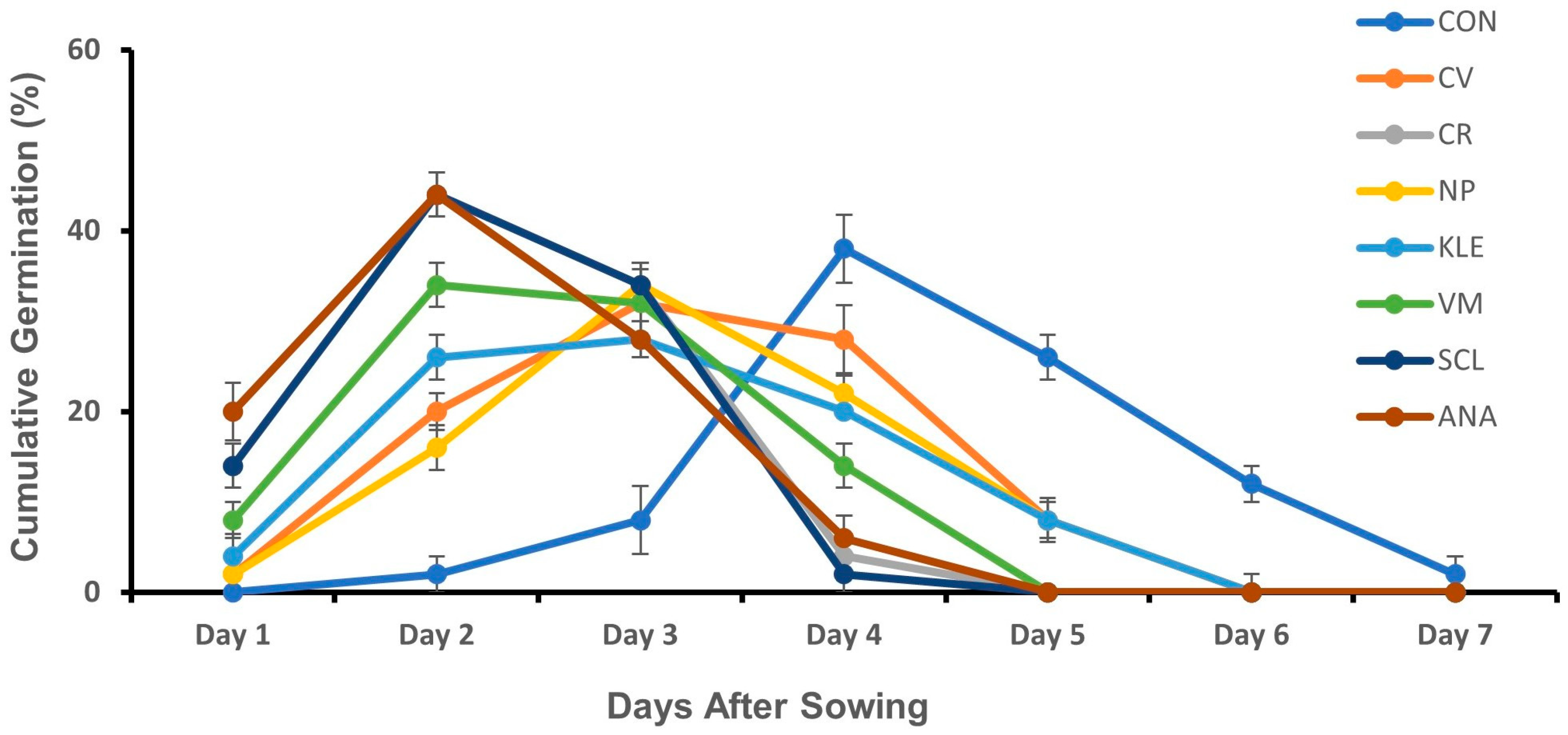
The germination rate showed distinct responses across the treatments (Figure 3). In the control group, germination was 10% on day 1, increasing to 35% on day 2 and 38% on day 3. ANA achieved 20% germination on day 1, a 100% increase compared to the control. VM, CR, and CV achieved 8–14% germination on day 1, showing a 40–80% increase compared to the control. By day 2, differences between the treatments and the control became evident. The control group reached 35%, whereas the VM, CR, CV, and NP groups showed a 32–44% increase. CR and ANA showed the highest values (~44%). By day 3, the treated seeds maintained a higher cumulative germination rate of 15–35% compared to the control. On day 4, the KLE reached 38%, nearly double the control (20%). Other treatments, including CV, CR, NP, VM, and ANA, exhibited higher cumulative germination rates (22–28%). Microalgae-treated seeds completed germination between days 3 and 5, whereas the control seeds required up to 7 d. Overall, microalgal and cyanobacterial treatments accelerated the onset and progression of germination compared with the untreated control, with CR, ANA, and VM showing the most rapid germination responses.

3.2. Germination Indices and Seedling Vigor Responses

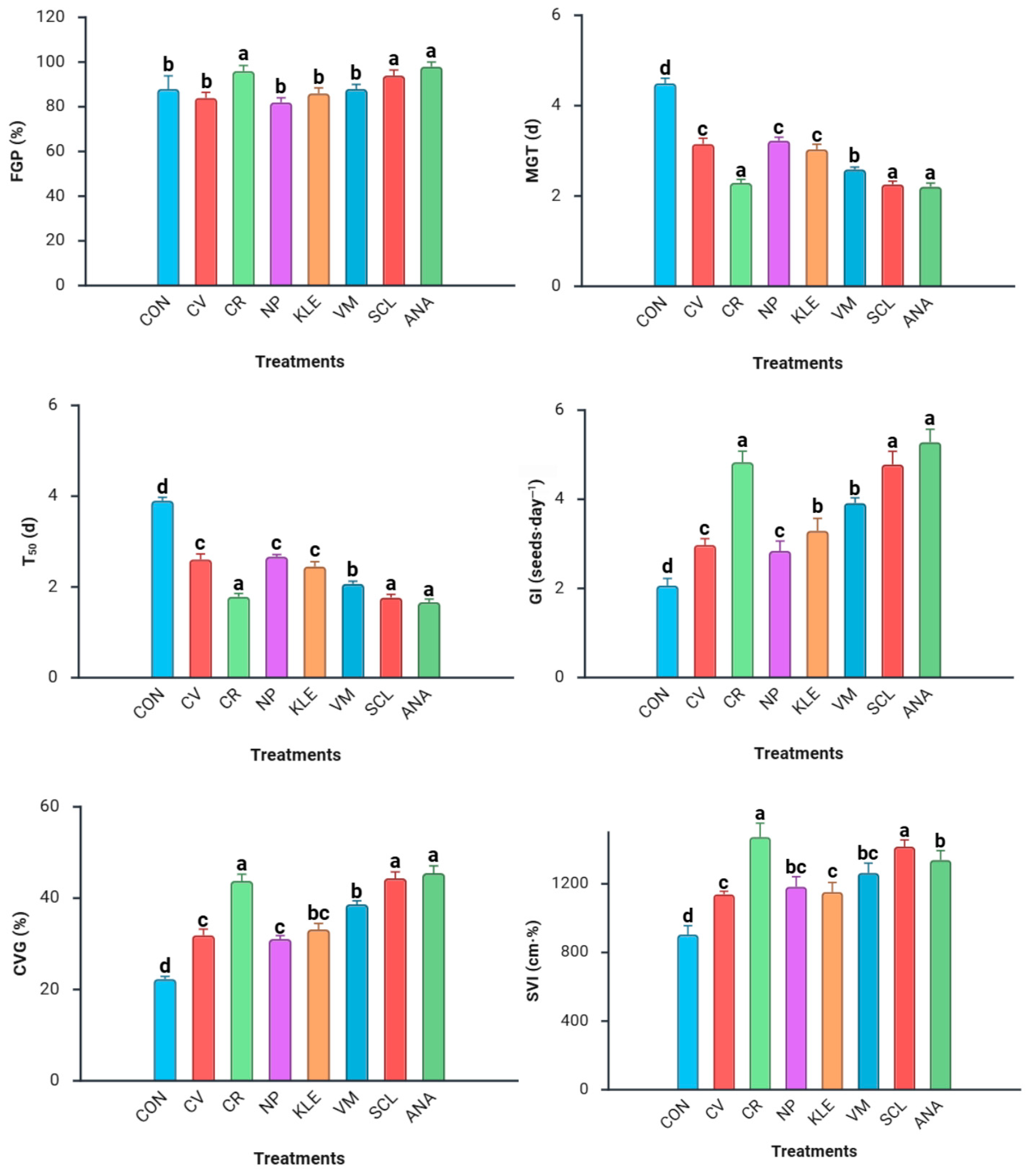
Microalgal and cyanobacterial treatments showed species-dependent effects on the germination of cucumber seeds (Figure 4). The control achieved an FGP of 88%, whereas the ANA (98%), SCL (94%), and CR (96%) treatments showed increases of 11–14% relative to the control (p < 0.05). In contrast, CV and NP did not significantly enhance the FGP. MGT significantly decreased in all microalgal treatments. The control required 4.50 d, whereas SCL, CR, and ANA reduced MGT to 2.23–2.29 d, a 49–51% reduction (p < 0.05). The T50 values showed similar responses: the control reached 50% germination at 4.0 d, whereas the microalgal treatments reached this at 2.0–2.1 d.
The control had a GI value of 48.32, whereas CR, SCL, and ANA had GI values of 83.17, 78.17, and 100.67, respectively. The CVG increased from 22.30% in the control to 44–45% in the microalgal treatments. SVI was significantly increased, with SCL (1588), CR (1471), and VM (1444) achieving 58–74% higher values than the control (913) (p < 0.05). The coefficient of variation (CV%) among replicate Petri dishes ranged from 6.6 to 18.9% for the germination index (GI) and 4.3–8.8% for mean germination time (MGT), indicating acceptable experimental reproducibility. These results indicate that several microalgal treatments, particularly CR, SCL, and ANA, significantly improved germination performance and vigor relative to the untreated control.

3.3. Seedling Growth and Biomass Responses

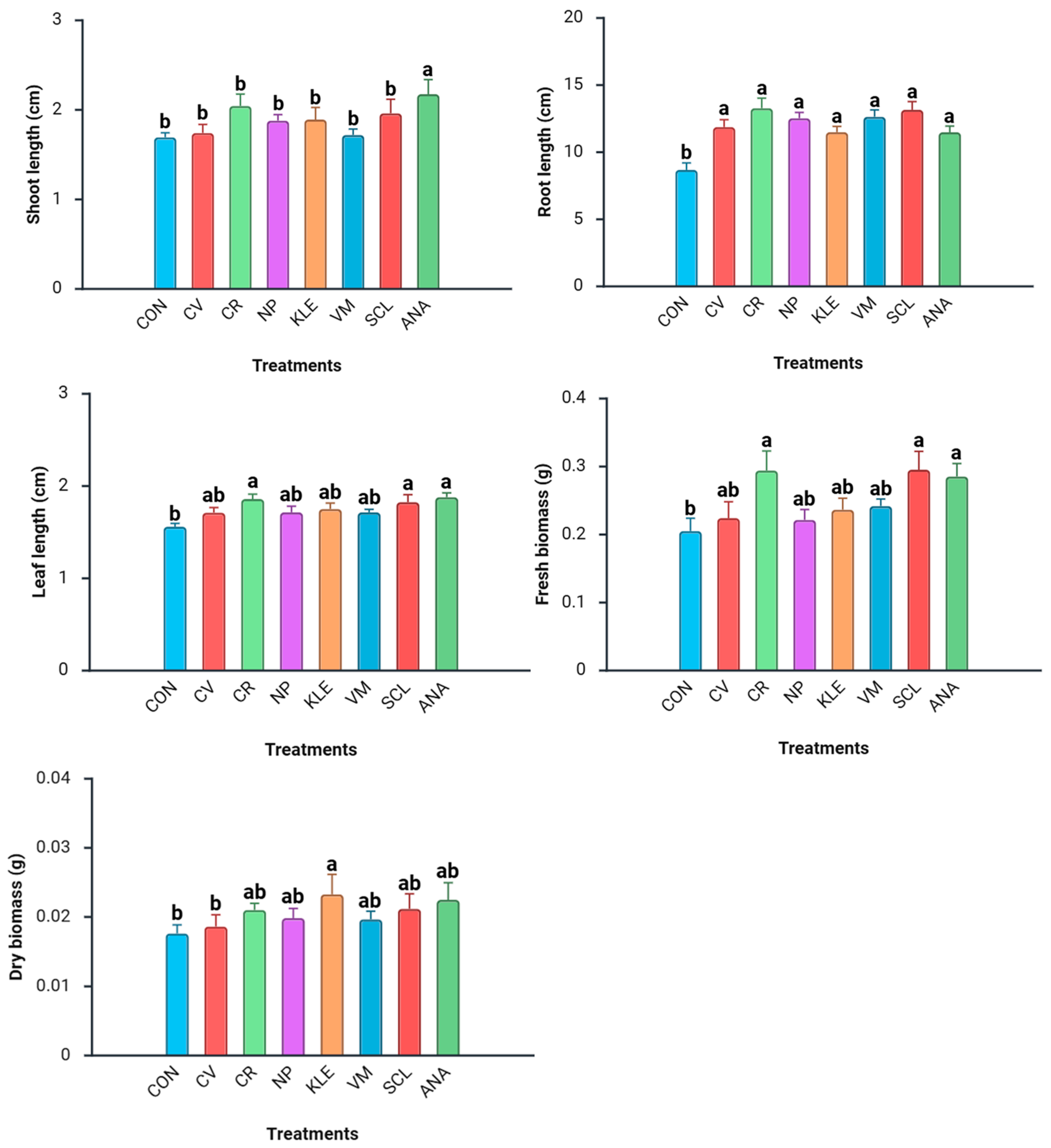
Shoot elongation responded differentially to microalgal treatments, whereas root development and biomass showed more pronounced responses (Figure 5). The control group had a mean shoot length of 1.69 cm. ANA showed a significant increase to 2.18 cm, a 29% increase compared with the control (p < 0.05). CR (2.04 cm) and SCL (1.96 cm) showed significant increases of 16–21% relative to the control (p < 0.05), whereas CV, NP, and VM showed moderate shoot elongation below the highest-performing treatments.
The control seedlings had a root length of 8.68 cm, whereas all treatments significantly increased root length compared to the control (p < 0.05). The highest increases were observed in the CR (13.28 cm, 53% increase), SCL (13.16 cm, 51% increase), and VM (12.64 cm, 46% increase) groups. NP and KLE also significantly increased root length (32–44% relative to the control; p < 0.05), but to a lesser extent.
Leaf elongation exhibited a similar pattern. The control reached a mean leaf length of 1.56 cm, whereas CR (1.86 cm), SCL (1.83 cm), and ANA (1.88 cm) showed significant increases of 17–21% compared with the control (p < 0.05). CV, NP, and VM showed moderate leaf length increases (1.71–1.75 cm).
The fresh biomass of the control seedlings (0.21 g) was significantly lower than that of the CR and SCL groups (0.30 g), with a 43% increase (p < 0.05). ANA and KLE also showed significant increases (0.24–0.29 g; p < 0.05).
Dry biomass followed a similar trend: the control reached 0.018 g, whereas CR, KLE, SCL, and ANA achieved significantly higher values (0.020–0.022 g; 11–22% increase; p < 0.05). Collectively, these findings demonstrate that microalgal and cyanobacterial treatments enhanced early cucumber seedling growth, with CR, SCL, and VM producing the most pronounced improvements in root development and biomass accumulation.

3.4. Correlation Analysis Between Germination and Seedling Traits

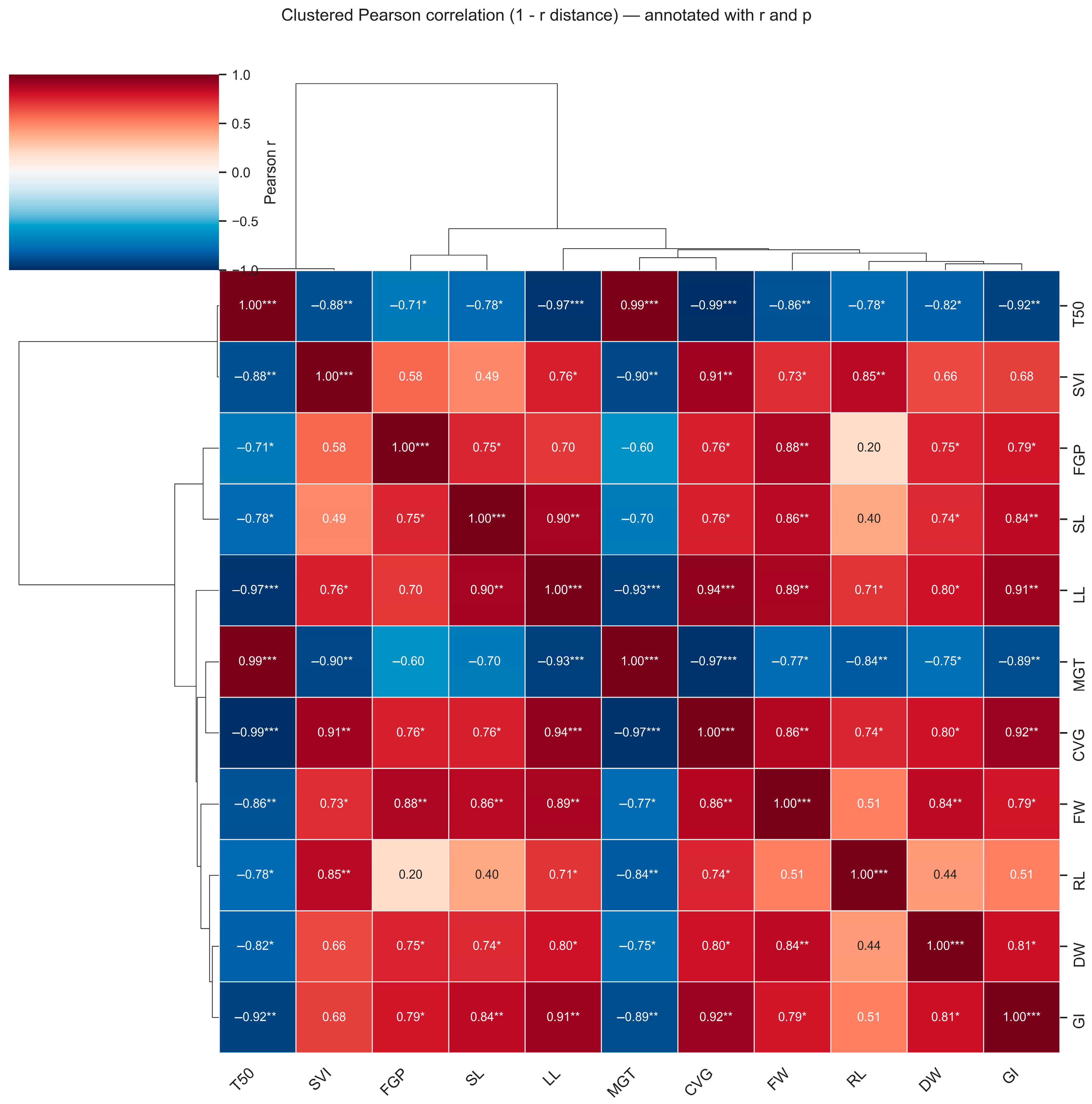
Pearson’s correlation analysis with hierarchical clustering was used to examine the relationship between germination rate and seedling growth under microalgal and cyanobacterial treatments (Figure 6). The dataset used for the Pearson correlation analysis and generation of the heatmap is provided in Supplementary Data S1. The primary indicators of seed germination, GI and CVG, were significantly correlated with SVI (GI: r = 0.906; CVG: r = 0.869; p < 0.001). GI and CVG also showed significant correlations with biomass parameters, particularly fresh biomass (GI: r = 0.967; CVG: r = 0.949) and dry biomass (GI: r = 0.900; CVG: r = 0.893), respectively.
Root length was significantly correlated with the SVI (r = 0.941) and GI (r = 0.835). Leaf length was strongly correlated with GI (r = 0.902) and CVG (r = 0.876). In contrast, slow germination parameters, such as MGT and T50, formed a distinct cluster. Both indices showed significant inverse correlations with GI (MGT: r = −0.975; T50: r = −0.951), CVG (MGT: r = −0.948; T50: r = −0.922), and SVI (MGT: r = −0.882; T50: r = −0.832). Overall, the correlation analysis confirms that faster germination kinetics are strongly associated with improved seedling vigor and biomass accumulation in cucumber.

4. Discussion

4.1. Microalgal Modulation of Germination Kinetics

The acceleration and improved uniformity of germination demonstrated the stimulatory effects of microalgal and cyanobacterial suspensions, particularly on CR, SCL, VM and ANA. These strains advanced their peak germination to 2–3 d after sowing (DAS), whereas the control showed slower germination rates. MGT decreased from 4.50 d in the control to 2.23–2.29 d in the effective treatments, representing a 49–51% improvement. A reduction in T50 from 4.0 to 2.0–2.1 d confirmed that the treated seeds completed germination earlier and with greater coherence.
These results align with those of previous studies showing the significant effects of microalgal biomass on seed germination. Puglisi et al. [35] reported enhanced germination rates and cotyledon elongation in sugar beet plants treated with Chlorella and Scenedesmus extracts. Navarro-López et al. [36] showed that S. obliquus biomass increased germination indices in cucumbers, with a 40% improvement in GI compared to the control. Ferreira et al. [37] reported increases in GI across diverse crops, from 70 to 100%, with optimized dosage and extract preparation.
Microalgal and cyanobacterial biomasses contain regulatory compounds such as phytohormones, amino acids, peptides, betaines, and soluble carbohydrates. These molecules facilitate seed physiology during imbibition by enhancing reserve mobilization through α-amylase and protease activity, promoting membrane repair, and improving antioxidant balance. Navarro-López et al. [36] and Puglisi et al. [35] reported hormone-like compounds decreased lag phase and increased germination. Santini et al. [38] observed osmoprotectants and peptide-mediated redox regulation increasing seeds completing germination earlier. Our results are supported by studies that have identified phytohormones in similar species. Gibberellins have been found in Coelastrella terrestris, Klebsormidium flaccidum, and C. vulgaris [39]. Cytokinins have been reported in C. vulgaris, K. flaccidum, and Anabaena sp. [40,41]. IAA production has been detected in Nostoc sp., N. muscorum [42], representatives of Anabaena [41,43,44], and K. flaccidum [45]. Although quantitative differences among the strains were evident, enhanced germination kinetics were observed across diverse taxa.
Two key considerations emerged from the comparison of our results with those of previous studies. First, the biomass concentration and preparation methods influenced efficacy. Studies have reported bell-shaped dose–response patterns, where moderate concentrations stimulate germination, while higher concentrations inhibit it. Puglisi et al. [35] and Navarro-López et al. [36] emphasized the importance of defining biomass concentration (g L−1) and extraction steps to ensure reproducibility. Second, species-and seed lot-specific responses should be considered, explaining GI enhancements ranging from moderate to over 100% in certain crops [13].
The reductions in MGT and T50 and the enhanced early germination observed in this study align with the known effects of microalgal biostimulants. These findings, integrated with studies on extract composition and hormone-activity assays, indicate that microalgal suspensions act as complex priming agents that (i) induce low-level phytohormonal signals, (ii) provide nitrogenous and osmoprotective molecules, and (iii) enhance redox balance during imbibition, improving germination speed and synchrony.

4.2. Improved Germination Performance and Vigor

Enhancements in the germination indices of cucumber seeds under microalgal and cyanobacterial treatments confirmed their biostimulant activity (Figure 4). Increased FGP, reduced MGT and T50, and increased GI, CVG, and SVI indicate enhanced germination integrity, rate, and coherence. The most effective treatments were ANA (98%), CR (96%), and SCL (94%), which showed 11–14% higher FGP than the control (88%). These results align with previous studies showing that microalgal priming improves germination efficiency. Jafarlou et al. [46] reported FGP increase (10–15%) in Calotropis procera with optimized algal extracts, while Mollo and Norici [47] showed FGP increases of 8–20% across legumes, cereals, and horticultural crops. CV and NP did not significantly affect FGP, highlighting the strain-specific differences in biochemical composition. Previous studies have indicated that only strains enriched with phytohormone-like molecules, free amino acids, or osmoprotectants enhance FGP, whereas biochemically weaker strains have limited effects [47,48].
MGT decreased from 4.50 d in the control to ~2.23–2.29 d in efficient treatments, and T50 was reduced from 4.0 to ~2.0–2.1 d, representing a 50% enhancement in germination kinetics. These findings align with seed physiology principles, wherein MGT and T50 serve as reliable indicators of the germination rate [49]. Ullah et al. [50] reported that oat seeds with reduced MGT under priming showed superior emergence and vigor, whereas hydro- and halopriming in Capsicum annuum showed that decreases in MGT were associated with enhanced early growth and antioxidant accumulation [51].
The GI increased from 48.3 in the control to 83–100.7, and CVG doubled from 22.3% to 44–45%, showing that microalgal suspensions decreased germination time and phase. GI and CVG integrate the temporal and quantitative aspects of germination, making them informative in priming studies, where coherence and early emergence are critical [21]. The SVI increased from 913 in the control to 1444–1588 in the effective treatments (58–74% increase), indicating that enhanced germination improves seedling performance. SVI is recognized as an integrative measure of early seedling quality and often predicts field establishment better than FGP [34].
Microalgal extracts act as priming agents containing phytohormones, antioxidants, osmoprotectants, bioavailable nitrogen, and trace elements that enhance membrane repair, accelerate reserve mobilization, maintain redox homeostasis, and stimulate metabolic activities. These mechanisms explain the reductions in MGT and T50 and increases in GI, CVG, and SVI [47,48]. Species- and strain-specific screenings are crucial, as only strains with favorable profiles exhibit strong biostimulatory effects. Optimizing biomass concentration and preparation methods is essential to maximize the benefits of these additives [35,36].
The present study evaluated the physiological biostimulant effects of live microalgal and cyanobacterial suspensions during early seed germination, rather than assessing their function as nutrient amendments or biofertilizers. The biomass was applied at a standardized low cell density (106 cells mL−1), corresponding to the minimal total biomass input per Petri dish, which is unlikely to contribute substantially to macroelement availability relative to seed reserves. The observed enhancements in germination kinetics and seedling vigor were attributed to bioactive signaling molecules and priming-related physiological modulation. Comprehensive compositional analyses, including elemental C/N ratio determination, total solids and ash content, and macro- and micronutrient profiling, were beyond the scope of this study, as the objective focused on functional bioactivity screening. Future studies integrating detailed biochemical characterization, metabolomic profiling, and dose–response analyses are essential to elucidate the mechanistic pathways and support formulation development for agronomic applications.

4.3. Regulation of Seedling Growth and Biomass Accumulation

Microalgal and cyanobacterial treatments enhanced cucumber seedling morphology and biomass accumulation compared with the untreated control (Figure 5). Root elongation increased up to 53%, followed by fresh biomass (~43%) and dry biomass (11–22%) compared to the control. These results show that algal priming effects extend beyond germination to early vegetative development, which is consistent with recent studies on horticultural crops. Di Serio et al. [52] reported that foliar application of Nannochloropsis gaditana and Porphyridium spp. extracts increased fresh weight in baby-leaf lettuce by ~31%, with enhancements in plant height, leaf number, nitrogen assimilation, and water-use efficiency. Mutum et al. [53] observed significant effects of microalgal seed treatment on root development and early growth in wheat seedlings, highlighting root elongation as the primary biostimulant. Co-cultivation of Nostoc with wheat and rice seedlings under greenhouse conditions increased the shoot length, root length, and grain weight [54]. Cyanobacterial strains stimulate lateral root formation, thereby increasing the plant root surface area in contact with cyanobacteria. Phytohormones secreted by cyanobacteria promote better colonization [54,55,56].
The observed root elongation (~13.3 cm; 50–53% increase) showed synergistic effects of hormone-like signals, improved rhizosphere microenvironments, and metabolic activation that were initiated during germination. Enhanced root systems facilitate water and nutrient acquisition and strengthen basil and tomato plants under stress conditions [57,58]. The enhancement of leaf and root lengths in CR, SCL, and ANA indicates coordinated growth stimulation. CR, SCL, VM, and ANA showed efficient responses, whereas CV exhibited only moderate effects despite accelerating germination rates. The superior performance of CR, SCL, and ANA may be associated with bioactive metabolites reported in related microalgal and cyanobacterial taxa. Microalgae and cyanobacteria are known to synthesize plant growth–regulating compounds such as indole-3-acetic acid (IAA), cytokinins, and gibberellins, which influence seed germination and early seedling development [39,40,41,59]. In addition to phytohormones, these microorganisms produce amino acids, vitamins, antioxidants, and extracellular metabolites that can enhance metabolic activation and redox balance during early plant growth [38]. Cyanobacteria of the genus Anabaena have been reported to produce auxin-like compounds and other growth-promoting metabolites that stimulate root elongation and seedling development [41,42,43,44]. Likewise, chlorophyte microalgae including Coelastrella sp. are known to accumulate carotenoids and other antioxidant compounds that may contribute to improved physiological performance under stress conditions [25]. Collectively, these metabolites may act synergistically to accelerate germination kinetics and enhance early seedling development in cucumber.
These results highlight the importance of systematic strain screening and biochemical profiling. Lesser-studied genera, such as CR and VM, may outperform widely used taxa, such as CV.

4.4. Functional Relationships Between Germination and Growth Traits

The correlation structure from the Pearson matrix and hierarchical clustering showed that the germination kinetics rate mediated early seedling vigor and biomass in cucumbers (Figure 6). Two features were evident: (i) strong positive associations between germination indices GI and CVG with seedling vigor and biomass traits, and (ii) consistent negative correlations between time-based indices MGT and T50 and growth parameters. These patterns indicate that earlier and more uniform germination provides developmental advantages, enhancing root expansion, leaf development, and biomass accumulation.
GI was strongly associated with SVI (r = 0.906) and fresh biomass (r = 0.967), whereas CVG showed similar associations with morphological and biomass traits. These findings are consistent with those of previous studies on algal priming. Alling et al. [13] reported comparable correlation coefficients integrating germination speed with seedling biomass in tomatoes and barley, whereas Domíngues-Neto et al. [60] observed significant associations between GI, CVG, and early biomass in citrus, highlighting these indices as reliable predictors of seedling performance.
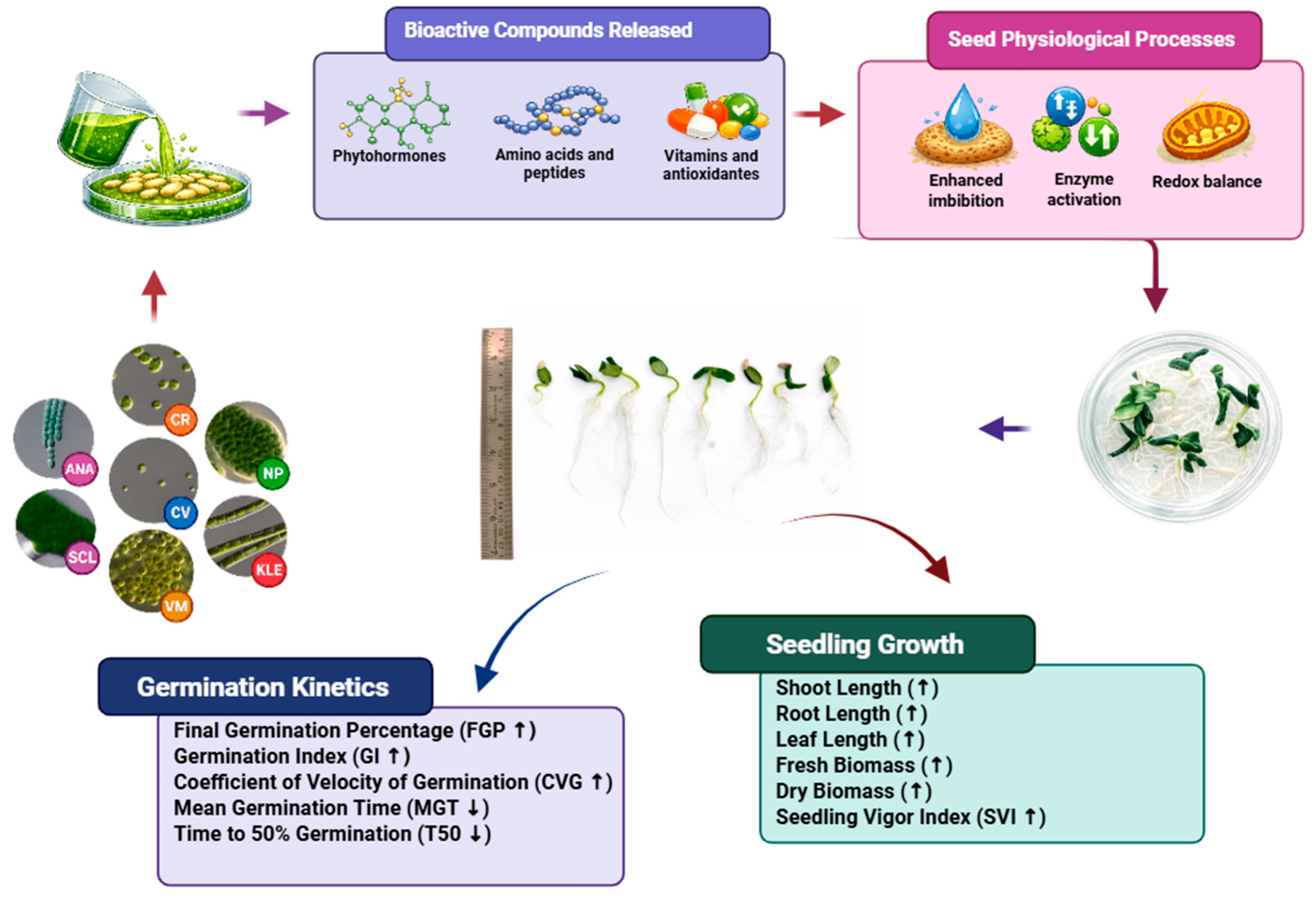
In contrast, MGT and T50 showed strong negative correlations with vigor and biomass (e.g., MGT vs. SVI: r = −0.882; T50 vs. fresh biomass: r ≈ −0.871), which is consistent with physiological expectations. Similar negative relationships have been reported for cereals, vegetables, and horticultural crops, with r-values typically ranging from 0.7 to 0.95 under controlled conditions [61,62]. These physiological responses are consistent with the understanding of microalgal priming mechanisms. Microalgal and cyanobacterial treatments stimulate reserve mobilization via amylase and protease activities, enhance antioxidant defenses to mitigate imbibition stress, and modulate hormonal balance, thereby mediating cell division and elongation [63,64]. Treatments that accelerated germination most effectively (CR, SCL, VM, and ANA) produced the most vigorous and biomass-rich seedling. Because the metabolites involved in microalgal biostimulant activity, such as phytohormones, amino acids, antioxidants, and extracellular polysaccharides, act through fundamental plant physiological pathways, similar responses may be expected in other crop species beyond cucurbits. Previous studies have reported that microalgal priming improves germination and early growth in cereals, legumes, and horticultural crops, indicating that these mechanisms are not crop-specific but are associated with conserved processes regulating seed metabolism and seedling development [12,13,53]. Nevertheless, the magnitude of the response may vary among plant species depending on seed physiology, metabolic reserves, and environmental conditions. The proposed physiological mechanisms underlying the stimulatory effects of microalgal and cyanobacterial suspensions on cucumber seed germination and early seedling development are illustrated in the conceptual model presented in Figure 7.
Despite the clear biostimulant effects observed, this study has certain limitations that should be acknowledged. First, the experimental design employed a single standardized biomass concentration (106 cells mL−1), which enabled comparative screening of strain-specific effects but did not allow evaluation of dose–response relationships. Given that microalgal biostimulant activity is often nonlinear and concentration-dependent, further studies across a wider concentration range are necessary to optimize application rates. Second, the use of Z8 medium as the control ensured uniform basal conditions across treatments; however, the absence of additional controls, such as distilled water or heat-killed biomass, limits the ability to fully distinguish between biological and potential nutrient-mediated effects. Third, although Petri dish–based assays provide controlled conditions for assessing germination responses, extrapolation to field conditions requires further validation under soil-based and agronomic environments. Finally, the biochemical composition of the microalgal and cyanobacterial suspensions was not directly characterized in this study. Therefore, the specific metabolites responsible for the observed strain-specific effects remain to be elucidated. Addressing these limitations through dose–response analyses, expanded control treatments, and metabolomic profiling will further strengthen the mechanistic understanding and agronomic applicability of microalgal biostimulants.

5. Conclusions

This study provides one of the first systematic evaluations of freshwater and terrestrial microalgal/cyanobacterial suspensions as seed-phase biostimulants for cucumber, demonstrating that strains can significantly modulate germination kinetics and early seedling development. Comparative screening revealed clear taxonomic variability in biostimulant efficacy, highlighting the importance of strain-level selection for agricultural applications. The integration of germination indices with morphological and biomass parameters showed that rapidity-based metrics such as GI and CVG were strongly associated with seedling vigor and biomass accumulation, providing reliable indicators for identifying effective biostimulant candidates.
Among the evaluated strains, Coelastrella rubescens BCAC 301 S39, Scotinosphaera lemnae BCAC 113, Vischeria magna UTEX 2351, and Anabaena sp. IT4 exhibited the most pronounced stimulatory effects on germination and early growth, suggesting their potential as promising candidates for microalgal biostimulant development. The conceptual framework proposed in this study highlights the role of bioactive metabolites, including phytohormones, amino acids, peptides, and antioxidants, in enhancing seed physiological processes during imbibition and promoting early plant development. Future research should focus on biochemical and metabolomic profiling of high-performing strains, dose–response optimization, and validation under greenhouse and field conditions to facilitate the development of scalable and environmentally sustainable microalgae-based biostimulant formulations.

Supplementary Materials

The following supporting information can be downloaded at https://www.mdpi.com/article/10.3390/horticulturae12040414/s1, Data S1. Raw replicate dataset used for germination indices, seedling growth traits, and correlation analysis (n = 5 per treatment).

Author Contributions

Conceptualization, P.R. and L.A.G.; methodology, P.R.; software, P.R. and K.G.; validation, P.R. and L.A.G.; formal analysis, P.R., A.Y., A.F., I.L., R.S., A.M., L.K. and K.G.; investigation, P.R.; resources, L.A.G.; data curation, P.R.; writing—original draft preparation, P.R.; writing—review and editing, P.R.; visualization, P.R.; supervision, L.A.G.; project administration, L.A.G.; funding acquisition, L.A.G. All authors have read and agreed to the published version of the manuscript.

Funding

This research was funded by the Russian Science Foundation, grant number 25-24-00481.

Data Availability Statement

The original contributions presented in this study are included in the article/Supplementary Materials. Further inquiries can be directed to the corresponding author.

Acknowledgments

In this study, we used Paperpal (Version 2025.3), developed by Cactus Communications, Mumbai, India, an AI-powered writing assistant, to improve the grammar, language, and clarity of the manuscript. No content was generated by artificial intelligence, and all intellectual contributions, including data analysis, interpretation, and conclusions were made solely by the authors.

Conflicts of Interest

The authors declare no conflicts of interest.

Abbreviations

The following abbreviations are used in this manuscript:
ANAAnabaena sp. IT4
CRCoelastrella rubescens BCAC 301 S39
CVChlorella vulgaris BCAC 76
KLEKlebsormidium sp. BCAC 344
NPNostoc punctiforme 739 S39
SCLScotinosphaera lemnae BCAC 113
VMVischeria magna UTEX 2351
CONControl treatment
CVGCoefficient of Velocity of Germination
FGPFinal Germination Percentage
GIGermination Index
LLLeaf Length
MGTMean Germination Time
RLRoot Length
SLShoot Length
SVISeedling Vigor Index
T50Time to 50% Germination
FWFresh Biomass
DWDry Biomass
BCACBiological Collection of Algae and Cyanobacteria
CRDCompletely Randomized Design
DASDays After Sowing
Z8Cyanobacterial Culture Medium

References

  1. Rueda-Puente, E.O.; Prabhaharan, R.; Murillo-Amador, B.; Ruiz-Espinoza, F.; Puente, M.; Valdez-Cepeda, R.D. Ameliorative effects of salt resistance on physiological parameters in the halophyte Salicornia bigelovii Torr. with plant growth-promoting rhizobacteria. Afr. J. Biotechnol. 2013, 12, 5278–5284. [Google Scholar] [CrossRef]
  2. Renganathan, P.; Borboa-Flores, J.; Rosas-Burgos, E.C.; Cárdenas-López, J.L.; Murillo-Amador, B.; Ortega-García, J.; Rueda-Puente, E.O. Inoculation of nitrogen-fixing halobacteria contributing to salt stress tolerance in tepary bean. Rev. Mex. Cienc. Agríc. 2018, 9, 4289–4300. [Google Scholar] [CrossRef][Green Version]
  3. Prabhaharan, R.; Borboa-Flores, J.; Rosas-Burgos, E.C.; Cárdenas-López, J.L.; Ortega-García, J.; Rueda-Puente, E.O. Phaseolus acutifolius associated with Bacillus amyloliquefaciens and Azospirillum halopraeferens under salinity conditions. Biotecnia 2019, 21, 127–132. [Google Scholar]
  4. Nikolić, N.; Ghirardelli, A.; Schiavon, M.; Masin, R. Effects of the salinity–temperature interaction on seed germination and early seedling development: A comparative study of crop and weed species. BMC Plant Biol. 2023, 23, 446. [Google Scholar] [CrossRef]
  5. Zhang, Y.; He, H.; Song, M.; Chen, A.; Chen, M.; Lin, W.; Yang, J.; Luo, D.; Ye, J.; Xu, F. Advances in physiological and molecular mechanisms of cucumber response to low-temperature stress. Horticulturae 2025, 11, 1268. [Google Scholar] [CrossRef]
  6. Mishra, S.N.; Singh, S.; Para, P.K.; Sharma, L.; Bhandari, V.V. Combination of fungicide, polymer coating and packaging materials improves germination rate and uniformity of seedling emergence during storage. Int. J. Environ. Clim. Change 2023, 13, 2142–2157. [Google Scholar] [CrossRef]
  7. Du Jardin, P. Plant biostimulants: Definition, concept, main categories and regulation. Sci. Hortic. 2015, 196, 3–14. [Google Scholar] [CrossRef]
  8. Renganathan, P.; Puente, E.O.; Sukhanova, N.V.; Gaysina, L.A. Hydroponics with microalgae and cyanobacteria: Emerging trends and opportunities in modern agriculture. BioTech 2024, 13, 27. [Google Scholar] [CrossRef]
  9. Renganathan, P.; Gaysina, L.A.; Holguín-Peña, R.J.; Sainz-Hernández, J.C.; Ortega-García, J.; Rueda-Puente, E.O. Phycore-mediated microalgae and cyanobacteria biomass as biofertilizer for sustainable agriculture: A holistic biorefinery approach to promote circular bioeconomy. Biomass 2024, 4, 1047–1077. [Google Scholar]
  10. Renganathan, P.; Astorga-Eló, M.; Gaysina, L.A.; Puente, E.O.; Sainz-Hernández, J.C. Nitrogen fixation by diazotrophs: A sustainable alternative to synthetic fertilizers in hydroponic cultivation. Sustainability 2025, 17, 5922. [Google Scholar] [CrossRef]
  11. Renganathan, P.; Bustamante, G.A.; Ruíz, F.E.; Puente, E.O. Microbial diversity and functional profiles of three commercial biofertilizers and impacts on the bacterial communities of avocado’s soil rhizosphere. Cienc. Tecnol. Agropecu. 2024, 25, 2. [Google Scholar] [CrossRef]
  12. Supraja, K.V.; Behera, B.; Balasubramanian, P. Efficacy of microalgal extracts as biostimulants through seed treatment and foliar spray for tomato cultivation. Ind. Crops Prod. 2020, 151, 112453. [Google Scholar] [CrossRef]
  13. Alling, T.; Funk, C.; Gentili, F.G. Nordic microalgae produce biostimulant for the germination of tomato and barley seeds. Sci. Rep. 2023, 13, 3509. [Google Scholar] [CrossRef]
  14. Gitau, M.M.; Farkas, A.; Balla, B.; Ördög, V.; Futó, Z.; Maróti, G. Strain-specific biostimulant effects of Chlorella and Chlamydomonas green microalgae on Medicago truncatula. Plants 2021, 10, 1060. [Google Scholar] [CrossRef]
  15. Solomon, W.; Mutum, L.; Janda, T.; Molnár, Z. Potential benefit of microalgae and their interaction with bacteria to sustainable crop production. Plant Growth Regul. 2023, 101, 53–65. [Google Scholar] [CrossRef]
  16. Gouveia, L.; Ferreira, A.; Bastos, C.V.; Avetisova, G.; Karapetyan, Z.; Toplaghaltsyan, A.; Melkonyan, L. Consortium of microalgae/nitrogen-fixing bacteria as a next-generation biofertilizer, biostimulant and biopesticide. J. Appl. Phycol. 2025, 37, 3703–3713. [Google Scholar] [CrossRef]
  17. Toribio, A.J.; Jurado, M.M.; Suárez-Estrella, F.; López, M.J.; López-González, J.A.; Moreno, J. Seed biopriming with cyanobacterial extracts as an eco-friendly strategy to control damping-off caused by Pythium ultimum in seedbeds. Microbiol. Res. 2021, 248, 126766. [Google Scholar] [CrossRef] [PubMed]
  18. Cardarelli, M.; Woo, S.L.; Rouphael, Y.; Colla, G. Seed treatments with microorganisms can have a biostimulant effect by influencing germination and seedling growth of crops. Plants 2022, 11, 259. [Google Scholar] [CrossRef] [PubMed]
  19. Calatrava, V.; Hom, E.F.Y.; Guan, Q.; Llamas, A.; Fernández, E.; Galván, A. Genetic evidence for algal auxin production in Chlamydomonas and its role in algal–bacterial mutualism. iScience 2024, 27, 108762. [Google Scholar] [CrossRef]
  20. Prasanna, R.; Kanchan, A.; Ramakrishnan, B.; Ranjan, K.; Venkatachalam, S.; Venkatachalam, S.; Hossain, F.; Shivay, Y.S.; Krishnan, P.; Nain, L. Cyanobacteria-based bioinoculants influence growth and yields by modulating microbial communities in maize hybrid rhizospheres. Eur. J. Soil Biol. 2016, 75, 15–23. [Google Scholar] [CrossRef]
  21. Ranal, M.A.; Santana, D.G. How and why to measure the germination process? Braz. J. Bot. 2006, 29, 1–11. [Google Scholar] [CrossRef]
  22. El-Sharkawy, M.S.; El-Beshsbeshy, T.R.; Hassan, S.M.; Mahmoud, E.K.; Abdelkader, N.I.; Al-Shal, R.M.; Missaoui, A.M. Alleviating salt stress in barley by use of plant growth stimulants and potassium sulfate. J. Agric. Sci. 2017, 4, 136–154. [Google Scholar] [CrossRef][Green Version]
  23. Du, W.; Zhang, F.; Zhang, L.; Hu, M.; Tian, H.; Ying, H.; Ding, S.; Dan, Z. Comprehensive evaluation and screening of drought resistance in maize at germination and seedling stages. Front. Plant Sci. 2025, 16, 1672228. [Google Scholar] [CrossRef] [PubMed]
  24. Ribeiro-Oliveira, J.P.; Bosseli, M.A.; da Silva, E.A.A. Acceleration in germination sensu stricto plays a central role in seedling vigor in post-germination. Plants 2021, 10, 2151. [Google Scholar] [CrossRef] [PubMed]
  25. Zhu, D.; Li, Z.; She, Y.; Jing, X.; Wang, M.; Gao, X. Lipidomic investigation reveals distinct lipid metabolite patterning of an oil-producing microalga (Vischeria sp. WL1) cultured by different nitrogen nutrients. J. Appl. Phycol. 2023, 35, 91–98. [Google Scholar] [CrossRef]
  26. Saito, M.; Watanabe, H.; Sasaki, M.; Ookubo, M.; Yarita, T.; Shiraiwa, M.; Asayama, M. Coproduction of lipids and carotenoids by the novel green alga Coelastrella sp. depending on cultivation conditions. Biotechnol. Rep. 2022, 37, e00769. [Google Scholar] [CrossRef]
  27. Bischoff, H.W.; Bold, H.C. Phycological Studies IV. In Some Soil Algae from Enchanted Rock and Related Algal Species; University of Texas: Austin, TX, USA, 1963. [Google Scholar]
  28. Carmichael, W.W. Isolation, culture, and toxicity testing of toxic freshwater cyanobacteria. In Fundamental Research in Homogenous Catalysis; Shilov, V., Ed.; Gordon & Breach: New York, NY, USA, 1986; Volume 3, pp. 1249–1262. [Google Scholar]
  29. Andersen, R.A. (Ed.) Algal Culturing Techniques; Elsevier: Amsterdam, The Netherlands, 2005. [Google Scholar]
  30. Vildanova, G.I.; Allaguvatova, R.Z.; Kunsbaeva, D.F.; Sukhanova, N.V.; Gaysina, L.A. Application of Chlorella vulgaris as a biostimulant for growing cucumber seedlings in hydroponics. BioTech 2023, 12, 42. [Google Scholar] [CrossRef]
  31. Soltani, E.; Ghaderi-Far, F.; Baskin, C.C.; Baskin, J.M. Problems with using mean germination time to calculate rate of seed germination. Aust. J. Bot. 2015, 63, 631–635. [Google Scholar] [CrossRef]
  32. Maguire, J.D. Speed of germination—Aid in selection and evaluation for seedling emergence and vigor. Crop Sci. 1962, 2, 176–177. [Google Scholar] [CrossRef]
  33. Coolbear, P.; Francis, A.; Grierson, D. The effect of low-temperature pre-sowing treatment on germination performance and membrane integrity of artificially aged tomato seeds. J. Exp. Bot. 1984, 35, 1609–1617. [Google Scholar] [CrossRef]
  34. Abdul-Baki, A.A.; Anderson, J.D. Vigor determination in soybean seed by multiple criteria. Crop Sci. 1973, 13, 630–633. [Google Scholar] [CrossRef]
  35. Puglisi, I.; Barone, V.; Fragalà, F.; Stevanato, P.; Baglieri, A.; Vitale, A. Effect of microalgal extracts from Chlorella vulgaris and Scenedesmus quadricauda on germination of Beta vulgaris seeds. Plants 2020, 9, 675. [Google Scholar] [CrossRef]
  36. Navarro-López, E.; Ruíz-Nieto, A.; Ferreira, A.; Acién, F.G.; Gouveia, L. Biostimulant potential of Scenedesmus obliquus grown in brewery wastewater. Molecules 2020, 25, 664. [Google Scholar] [CrossRef]
  37. Ferreira, A.; Melkonyan, L.; Carapinha, S.; Ribeiro, B.; Figueiredo, D.; Avetisova, G.; Gouveia, L. Biostimulant and biopesticide potential of microalgae growing in piggery wastewater. Environ. Adv. 2021, 4, 100062. [Google Scholar] [CrossRef]
  38. Santini, G.; Biondi, N.; Rodolfi, L.; Tredici, M.R. Plant biostimulants from cyanobacteria: An emerging strategy to improve yields and sustainability in agriculture. Plants 2021, 10, 643. [Google Scholar] [CrossRef]
  39. Stirk, W.A.; Bálint, P.; Tarkowská, D.; Novák, O.; Strnad, M.; Ördög, V.; van Staden, J. Hormone profiles in microalgae: Gibberellins and brassinosteroids. Plant Physiol. Biochem. 2013, 70, 348–353. [Google Scholar] [CrossRef]
  40. Stirk, W.A.; Ördög, V.; Novák, O.; Rolčík, J.; Strnad, M.; Bálint, P.; van Staden, J. Auxin and cytokinin relationships in 24 microalgae strains. J. Phycol. 2013, 49, 459–467. [Google Scholar] [CrossRef]
  41. Hussain, A.; Krischke, M.; Roitsch, T.; Hasnain, S. Rapid determination of cytokinins and auxin in cyanobacteria. Curr. Microbiol. 2010, 61, 361–369. [Google Scholar] [CrossRef]
  42. Karthikeyan, N.; Prasanna, R.; Sood, A.; Jaiswal, P.; Nayak, S.; Kaushik, B.D. Physiological characterization and electron microscopic investigations of cyanobacteria associated with wheat rhizosphere. Folia Microbiol. 2009, 54, 43–51. [Google Scholar] [CrossRef] [PubMed]
  43. Sergeeva, E.; Liaimer, A.; Bergman, B. Evidence for production of indole-3-acetic acid by cyanobacteria. Planta 2002, 215, 229–238. [Google Scholar] [CrossRef] [PubMed]
  44. Hussain, A.; Hasnain, S. Phytostimulation and biofertilization in wheat by cyanobacteria. J. Ind. Microbiol. Biotechnol. 2011, 38, 85–92. [Google Scholar] [CrossRef] [PubMed]
  45. Melnikov, A.S.; Maslennikova, D.R.; Bezrukova, M.V. Growth-promoting effect of cultural fluid of soil microalgae on soft wheat. Bull. Bashkir State Univ. 2014, 19, 1193–1195. Available online: https://cyberleninka.ru/article/n/rostostimuliruyuschiy-effekt-kulturalnoy-zhidkosti-pochvennyh-mikrovodorosley-na-rasteniya-myagkoy-pshenitsy (accessed on 25 March 2026).
  46. Jafarlou, B.M.; Pilehvar, B.; Modarresi, M.; Mohammadi, M. Algae extract priming improves seed germination indices and salt tolerance in Calotropis procera. Iran. J. Sci. Technol. Trans. A Sci. 2021, 45, 493–502. [Google Scholar] [CrossRef]
  47. Mollo, L.; Norici, A. Biostimulant potential of three Chlorophyta and their consortium: Application on tomato seeds. Discov. Plants 2025, 2, 130. [Google Scholar] [CrossRef]
  48. Sabnam, S.; Mondal, A.; Paul, S. Advancing seed priming with algal extracts: Mechanistic roles in germination and plant growth. Explor. Environ. Resour. 2025, 2, 025120025. [Google Scholar] [CrossRef]
  49. Kumar, S.; Basu, S.; Anand, A.; Lal, S.K.; Tomar, B.S. Identification of the best germination indices representing seed quality in unaged and aged onion seeds. Int. J. Curr. Microbiol. Appl. Sci. 2021, 10, 76–85. [Google Scholar] [CrossRef]
  50. Ullah, S.; Saud, S.; Liu, K.; Harrison, M.T.; Hassan, S.; Nawaz, T.; Zeeshan, M.; Nasar, J.; Khan, I.; Liu, H.; et al. Germination response of Avena sativa to temperature and salinity based on the halothermal time model. Plant Stress 2023, 10, 100263. [Google Scholar] [CrossRef]
  51. Granata, A.; Capozzi, F.; Gaglione, A.; Riccardi, R.; Spigno, P.; Giordano, S.; Sorrentino, M.C.; Spagnuolo, V. Seed priming enhances germination and growth in neglected Capsicum annuum cultivars. PeerJ 2024, 12, e18293. [Google Scholar] [CrossRef]
  52. Di Serio, A.; Alfano, V.; Tava, A.; Biazzi, E.; Cappetta, E.; Del Regno, C.; Ambrosone, A.; Ronga, D. Marine microalgae extracts as plant biostimulants to boost baby-leaf lettuce. Sci. Rep. 2025, 15, 32825. [Google Scholar] [CrossRef]
  53. Mutum, L.; Janda, T.; Darkó, É.; Szalai, G.; Hamow, K.Á.; Molnár, Z. Microalgae biomass impacts seed germination and hormonal activity in winter wheat. Agronomy 2023, 13, 1088. [Google Scholar] [CrossRef]
  54. Hussain, A.; Hamayun, M.; Shah, S.T. Root colonization and phytostimulation by phytohormone-producing Nostoc sp. AH-12. Curr. Microbiol. 2013, 67, 624–630. [Google Scholar] [CrossRef]
  55. Ahmed, M.; Stal, L.J.; Hasnain, S. Association of non-heterocystous cyanobacteria with crop plants. Plant Soil 2010, 336, 363–375. [Google Scholar] [CrossRef]
  56. Narendra, K.; Lakshmi, K.S.; Khan, Z.; Latha, G.S.; Latha, M.M.; Ragalatha, R.; Xavier, J.; Vijay, N. Algal extracts and their significance in promoting plant growth. Afr. J. Biol. Sci. 2024, 6, 1146–1163. [Google Scholar] [CrossRef]
  57. Michalak, I.; Chojnacka, K.; Dmytryk, A.; Wilk, R.; Gramza, M.; Rój, E. Evaluation of supercritical algal extracts as biostimulants in field trials. Front. Plant Sci. 2016, 7, 1591. [Google Scholar] [CrossRef]
  58. Xie, R.; Dang, K.; Kan, S.; Sauve, J.; Johnson, R.; Clay, M.; Jessup, R.; Qin, H. Microalgae as biostimulants for seed germination. Proc. Int. Plant Propagators’ Soc. 2022, 72, 119–126. Available online: https://ipps.org/wp-content/uploads/2025/05/3l_sr_xie_2022.pdf (accessed on 25 March 2026).
  59. Renganathan, P.; Gaysina, L.A.; Rueda-Puente, E.O. Microbial Biofertilizers for Salinity Stress Mitigation in Hydroponic Systems. Curr. Issues Mol. Biol. 2025, 47, 1029. [Google Scholar] [CrossRef] [PubMed]
  60. Domingues Neto, F.J.; Carneiro, D.C.; Putti, F.F.; Rodrigues, J.D.; Tecchio, M.A.; Leonel, S.; Silva, M.D. Physiological indexes of seed germination and seedling growth in rangpur lime. Agronomy 2024, 14, 2066. [Google Scholar] [CrossRef]
  61. Sedghi, M. Integrated assessment of seed germination performance under abiotic stress using classical and complementary metrics. Sci. Rep. 2025, 15, 41880. [Google Scholar] [CrossRef]
  62. Dimaano, N.G.; Ali, J.; Mahender, A.; Sta. Cruz, P.C.; Baltazar, A.M.; Diaz, M.G.; Pang, Y.L.; Acero, B.L.; Li, Z. Identification of quantitative trait loci governing early germination and seedling vigor traits related to weed competitive ability in rice. Euphytica 2020, 216, 159. [Google Scholar] [CrossRef] [PubMed]
  63. Puente-Padilla, B.L.; Romero-Villegas, G.I.; Sánchez-Estrada, A.; Cira-Chávez, L.A.; Estrada-Alvarado, M.I. Marine microalgae biomass effects on germination and vigor of bean seeds. Life 2025, 15, 386. [Google Scholar] [CrossRef] [PubMed]
  64. Arenas Colarte, C.; Balic, I.; Díaz, Ó.; Cortes, I.; Moreno, A.A.; Amenabar, M.J.; Retamal, M.C.; Fuentes, N.C. Microalgae-based biostimulants improve growth and stress resistance in crops. Plants 2025, 14, 3488. [Google Scholar] [CrossRef] [PubMed]
Figure 1. Morphology of the microalgal and cyanobacterial strains used in this study. (A) Chlorella vulgaris BCAC 76, (B) Coelastrella rubescens BCAC 301 S39, (C) Nostoc punctiforme 739 S39, and (D) Klebsormidium spp. Bashkir BCAC 344, (E) Vischeria magna UTEX 2351, (F) Scotinosphaera lemnae BCAC 113, (G) bulbous trichomes with pointed ends, (H) trichomes with terminal heterocytes) of Anabaena sp. IT4. Scale bar—10 µm.
Horticulturae 12 00414 g001
Figure 2. Representative photographic documentation of cucumber seed germination and early seedling development under microalgal and cyanobacterial biomass suspension treatments after 10 d of incubation. Petri dishes corresponded to the untreated control (CON) and seven treatments: Chlorella vulgaris BCAC 76 (CV), Coelastrella rubescens BCAC 301 S39 (CR), Nostoc punctiforme 739 S39 (NP), Klebsormidium sp. Bashkir BCAC 344 (KLE), Vischeria magna UTEX 2351 (VM), Scotinosphaera lemnae BCAC 113 (SCL), and Anabaena sp. IT4 (ANA). Visible differences in radicle elongation, shoot expansion, and overall seedling density illustrated treatment-dependent variations in early growth performance.
Horticulturae 12 00414 g002
Figure 3. Cumulative germination curves of cucumber seeds in response to microalgal and cyanobacterial biostimulant treatments. Cumulative germination (%) was recorded over seven days after sowing (DAS) for the control (CON) and seven biomass suspension treatments: Chlorella vulgaris BCAC 76 (CV), Coelastrella rubescens BCAC 301 S39 (CR), Nostoc punctiforme 739 S39 (NP), Klebsormidium sp. BCAC 344 (KLE), Vischeria magna UTEX 2351 (VM), Scotinosphaera lemnae BCAC 113 (SCL), and Anabaena IT4 (ANA) were used. Values are expressed as mean ± standard error (SE) (n = 5). Values are expressed as mean ± standard error (n = 5). Treatment effects were evaluated using one-way ANOVA followed by Tukey’s HSD test at p < 0.05.
Horticulturae 12 00414 g003
Figure 4. Germination performance of cucumber seeds in response to microalgal and cyanobacterial treatment. The final germination percentage (FGP), mean germination time (MGT), time to 50% germination (T50), germination index (GI), coefficient of velocity of germination (CVG), and seedling vigor index (SVI) for the untreated control (CON) and seven microalgal/cyanobacterial biomass suspension treatments (Chlorella vulgaris BCAC 76 (CV), Coelastrella rubescens BCAC 301 S39 (CR), Nostoc punctiforme 739 S39 (NP), Klebsormidium sp. BCAC 344 (KLE), Vischeria magna UTEX 2351 (VM), Scotinosphaera lemnae BCAC 113 (SCL), and Anabaena IT4 (ANA)). Values are presented as mean ± SE (n = 5). Different lowercase letters above the bars indicate statistically significant differences among treatments based on one-way ANOVA, followed by Tukey’s HSD test (p < 0.05).
Horticulturae 12 00414 g004
Figure 5. Effects of microalgal and cyanobacterial treatments on cucumber seedling growth traits and biomass accumulation (mean ± SE; n = 5). Untreated control (CON), Chlorella vulgaris BCAC 76 (CV), Coelastrella rubescens BCAC 301 S39 (CR), Nostoc punctiforme 739 S39 (NP), Klebsormidium sp. BCAC 344 (KLE), Vischeria magna UTEX 2351 (VM), Scotinosphaera lemnae BCAC 113 (SCL), and Anabaena IT4 (ANA) were used. Distinct lowercase letters above the bars indicate statistically significant differences among treatments based on one-way ANOVA, followed by Tukey’s HSD test (p < 0.05).
Horticulturae 12 00414 g005
Figure 6. Pearson correlation matrix with hierarchical clustering showing the relationships among germination indices and early seedling growth traits of cucumber under microalgal and cyanobacterial treatment. Values represent Pearson’s correlation coefficients (r) computed across all treatments, and the heatmap was clustered using Ward’s method applied to Z-score–standardized data. Positive correlations are shown in red and negative correlations in blue, with the intensity proportional to the magnitude of r. Asterisks denote correlation significance levels: * p < 0.05, ** p < 0.01, *** p < 0.001. Abbreviations: FGP, final germination percentage; MGT, mean germination time; T50, time to 50% germination; GI, germination index; CVG, coefficient of velocity of germination; SVI, seedling vigor index; SL, shoot length; RL, root length; LL, leaf length; FW, fresh biomass; DW, dry biomass.
Horticulturae 12 00414 g006
Figure 7. Conceptual model illustrating the physiological and biochemical mechanisms through which microalgal and cyanobacterial biomass suspensions enhance cucumber seed germination kinetics and early seedling growth. Symbols: (↑) indicate an increase, and (↓) indicate a decrease.
Horticulturae 12 00414 g007
Table 1. Details of algal and cyanobacterial isolates with their original habitat.
Strain CodeStrain NameClass/FamilyAuthentication StatusCulture Collection ReferenceOriginal Habitat/Geographic Origin
BCAC 76Chlorella vulgaris BeijerinckChlorophyta—Trebouxiophyceae; ChlorellaceaeYesSAG 211-11bEutrophic shallow pond, Netherlands
BCAC 301 S39Coelastrella rubescens (Vinatzer) Kaufnerová & EliášChlorophyta—Chlorophyceae; ScenedesmaceaeNoSteppe-region soil, Republic of Bashkortostan, Russia
739 P6Nostoc punctiforme HariotCyanobacteria—Nostocales; NostocaceaeNoBroadleaf forest soil, Republic of Bashkortostan, Russia
BCAC 344Klebsormidium sp. (Bashkir isolate)Charophyta—Klebsormidiophyceae; KlebsormidiaceaeNoRainwater collected from outdoor garden tank, Republic of Bashkortostan, Russia
UTEX 2351Vischeria magna (J.B. Petersen) Kryvenda, Rybalka, Wolf & FriedlOchrophyta (Heterokontophyta)—Eustigmatophyceae; EustigmataceaeNoUTEX 2351 (Eustigmatos magna)Soil, Bealey region, New Zealand
BCAC 113Scotinosphaera lemnae (Punčochářová) Wujek & R.H. ThompsonChlorophyta—Scotinosphaerales; ScotinosphaeraceaeYesCCAP 241/1; UTEX 100; CAUP H5303aFreshwater pond near Glasgow, United Kingdom
IT4Anabaena sp.Cyanobacteria—Nostocales; AphanizomenonaceaeNoVolcanic soil, Iturup Island (Kuril Islands, Russia)
Disclaimer/Publisher’s Note: The statements, opinions and data contained in all publications are solely those of the individual author(s) and contributor(s) and not of MDPI and/or the editor(s). MDPI and/or the editor(s) disclaim responsibility for any injury to people or property resulting from any ideas, methods, instructions or products referred to in the content.