Article

Controlled Light Spectrum Ratios Regulate Plant Performance and Androphapholide Production in Andrographis paniculata (Burm.f) Grown in a Plant Factory

by
Praderm Wanichananan
,
Suchalee Sueachuen
,
Supattana Janta
,
Tanawut Chiangklang
,
Kriengkrai Mosaleeyanon
,
Akira Thongtip
and
Panita Chutimanukul
*
National Center for Genetic Engineering and Biotechnology (BIOTEC), National Science and Technology Development Agency, Khlong Luang, Pathum Thani 12120, Thailand
*
Author to whom correspondence should be addressed.
These authors contributed equally to this work.
Horticulturae 2026, 12(3), 355; https://doi.org/10.3390/horticulturae12030355
Submission received: 4 February 2026 / Revised: 20 February 2026 / Accepted: 13 March 2026 / Published: 13 March 2026

Abstract

Light spectrum is a crucial environmental factor influencing plant growth and secondary metabolite production in controlled-environment agriculture. This study investigated the combined effects of light spectral composition on growth performance and andrographolide accumulation in Andrographis paniculata (Burm.f.) cultivated in a plant factory system. Two Thai cultivars, RBR and TTT, were grown under white light and various red–green–blue (R:G:B) LED ratios during the vegetative and flowering stages. Plant morphological traits, biomass accumulation, and andrographolide derivatives (AP1, AP4, AP6, and total AP) were quantified. Growth and biomass production were significantly enhanced under white light and red-enriched spectra, particularly during the vegetative stage, whereas stem elongation exhibited reduced sensitivity to light spectral quality during the flowering stage. In contrast, andrographolide accumulation showed a strong cultivar-dependent response to light spectrum. The TTT cultivar showed pronounced increases in AP1, AP4, AP6, and total AP under blue-enriched spectra, with the 60B:10G:30R treatment producing the highest total diterpenoid content in both cultivars, while the RBR cultivar displayed limited responsiveness to spectral variation. These results demonstrate light spectrum affecting both biomass production and phytochemical accumulation. Optimization of light spectral composition combined with appropriate cultivar selection offers an effective strategy for enhancing pharmaceutical-grade andrographolide production in plant factory systems.

1. Introduction

Andrographis paniculata (Burm.f.) Wall. ex Nees, commonly referred to as the “King of Bitters,” is an extensively utilized medicinal herb in the tropical and subtropical regions of Asia. The species is acknowledged for its potent therapeutic properties and has historically been employed in the treatment of fever, inflammation, digestive ailments, and respiratory infections [1,2]. The principal bioactive diterpenoid lactone, andrographolide, together with its derivatives (neoandrographolide and 14-deoxy-11,12-didehydroandrographolide), is responsible for its anti-inflammatory, antiviral, hepatoprotective, immunomodulatory, and antioxidant effects [3,4]. Due to the rising worldwide demand for phytopharmaceuticals, optimizing andrographolide content while maintaining uniform biomass yield has emerged as a primary focus of research [2].
The accumulation of andrographolide significantly changes according to environmental conditions, cultivation methods, plant developmental stages, and genetic factors [5,6]. Traditional field farming frequently leads to variable quality owing to irregular light, temperature, water supply, and biological stressors [5]. Various techniques, including elicitation (MeJA, salicylic acid), nutrition management, water stress, and manipulation of light quality, have been investigated to augment diterpenoid production [6,7]. Light spectrum manipulation has become one of the most efficient and non-invasive methods for enhancing secondary metabolite accumulation, as light directly affects photosynthesis, photomorphogenesis, and specialized metabolism via photoresponsive signaling pathways [5].
Blue and red wavelengths are recognized for their regulation of essential biosynthetic processes in medicinal plants. Blue light promotes chlorophyll production, stomatal conductance, reactive oxygen species signaling, and frequently activates phenolic and terpenoid pathways via cryptochrome- and phototropin-mediated mechanisms [8,9]. Red light, detected by phytochromes, facilitates leaf expansion and biomass accumulation, and can collaborate with blue light to enhance growth and metabolite synthesis [8,10]. Further studies in plant factory systems indicate that blue and red LED components significantly impact growth and photosynthetic characteristics in leafy and medicinal crops, such as coriander and pakchoi, with optimal red:blue ratios increase efficient photosynthesis and biomass production [11,12]. High-intensity blue-red LED combinations have also been found to improve photosynthesis, plant growth, and optical qualities in red lettuce under controlled conditions [13]. Research on other medicinal species, including Ocimum, Artemisia, and Labisia pumila, suggests that heightened blue light ratios typically enhance bioactive chemicals, while moderate blends of red and blue light foster balanced development and phytochemical enhancement [8,9]. Green light has been recognized as a biologically active spectral component, rather than a superfluous waveband, beyond the red and blue wavelengths. Green light enhances whole-canopy photosynthesis and increases light distribution in dense planting or multilayer cultivation methods due to its better penetration into leaf tissues and plant canopies [14,15,16]. Evidence from controlled-environment studied suggests that incorporating green light during early growth stages can enhance seedling vigor, growth uniformity, and early biomass accumulation, thereby establishing a physiological foundation for subsequent secondary metabolite production [17]. Recent research on basil family microgreens confirms the importance of spectrum adjustment, indicating that specific light spectra significantly impact growth and antioxidant characteristics under controlled conditions [18]. Nonetheless, systematic investigations examining the effects of red:blue light spectrum ratios on andrographolide biosynthesis across different A. paniculata genotypes remain scarce, particularly under plant factory conditions.
Furthermore, varietal differences in A. paniculata have been recorded, with diverse genotypes displaying varying levels of andrographolide, photosynthetic efficiency, morphological characteristics, and responsiveness to environmental stimuli [19,20]. Importantly, plant responses to light spectrum are frequently genotype-dependent, as variations in photoreceptor sensitivity and metabolic control can lead to divergent growth and secondary metabolite accumulation patterns among cultivars. Comprehending the response of each genotype to the regulated spectrum is essential for the selection of high-performing cultivars in commercial production systems.
Plant factories utilizing artificial lighting (PFALs) offer a completely controlled environment where the light spectrum, intensity, temperature, humidity, and nutrients can be meticulously managed. In contrast to genetic modification or chemical elicitation, light spectrum modulation provides a non-transgenic, residue-free, and adaptable approach that is especially appropriate for commercial plant manufacturing systems [10]. Such technologies rectify field irregularities and provide year-round cultivation of standardized medical raw materials [21,22]. PFALs function as optimal platforms for light-driven metabolic engineering, facilitating the precise alteration of light quality to enhance secondary metabolite production [23]. Notwithstanding the benefits, data about the regulation of plant performance and andrographolide biosynthesis in A. paniculata by regulated light spectrum ratios is limited, especially in commercial PFAL settings [22].
This study examines the impact of regulated red:blue light spectrum ratios on the growth characteristics, physiological performance, and andrographolide synthesis of A. paniculata cultivated in a plant factory system. We investigate whether genotype-specific responses influence variability in metabolite accumulation. The studies seek to improve controlled-environment techniques for cultivating superior medicinal herbs with elevated concentrations of essential bioactive chemicals.

2. Materials and Methods

2.1. Plant Material and Growth Conditions

Seeds of Andrographis paniculata (Burm.f.) were obtained from two sources representing distinct genotypes. The commercial cultivar ‘TTT (Tongsam)’ was supplied by Benjamitr Enterprise (1991) Co., Ltd. (Nonthaburi, Thailand), while the wild-collected accession ‘RBR’ was collected from Ban Pong District, Ratchaburi Province, Thailand. These genotypes represent contrasting genetic and phenotypic backgrounds, comprising a commercial breeding line and a locally adapted accession. They were selected to assess genotype-dependent responses to controlled light spectra under plant factory conditions [24]. Representative morphological characteristics of both cultivars are shown in Figure S1.
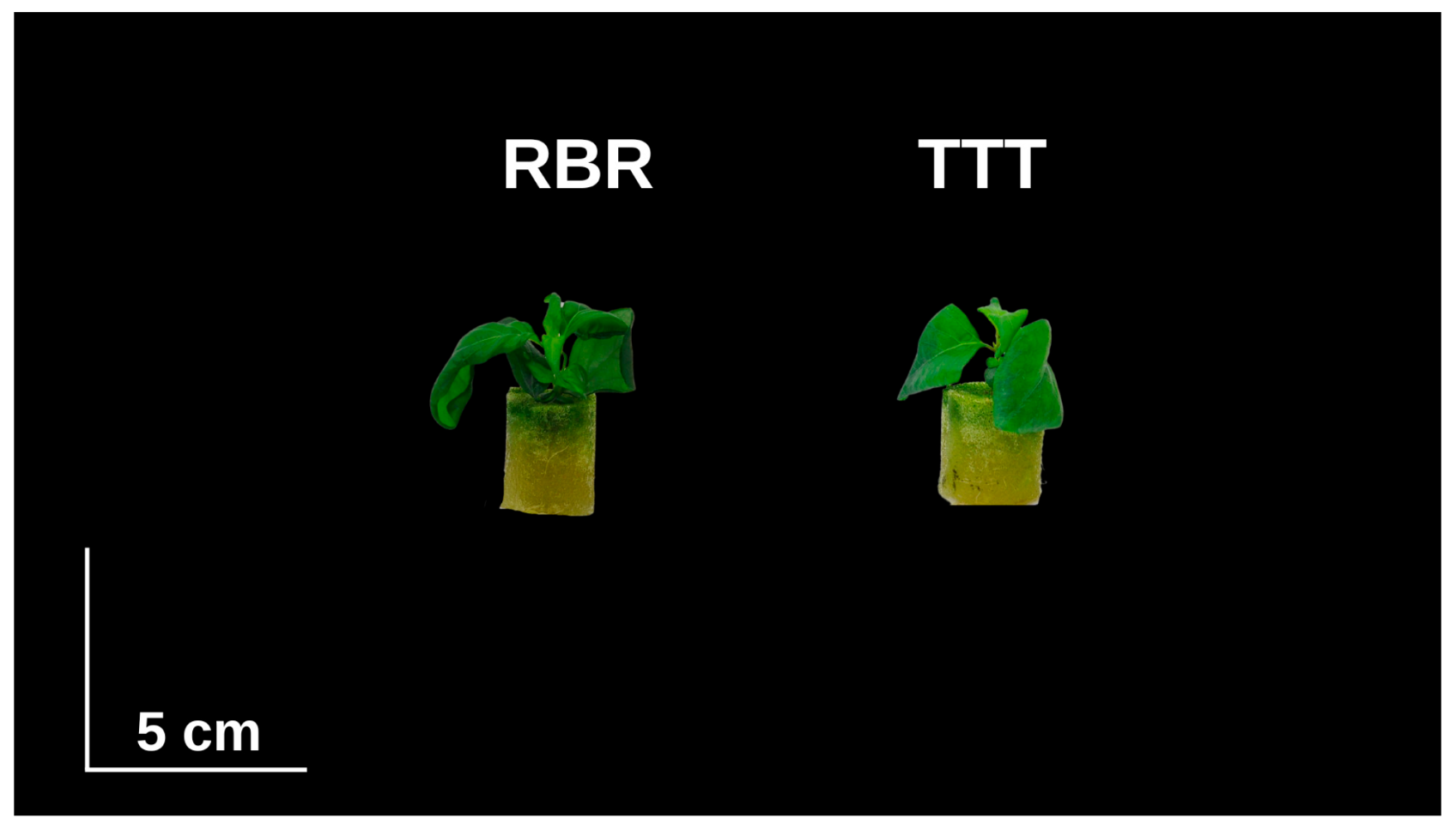
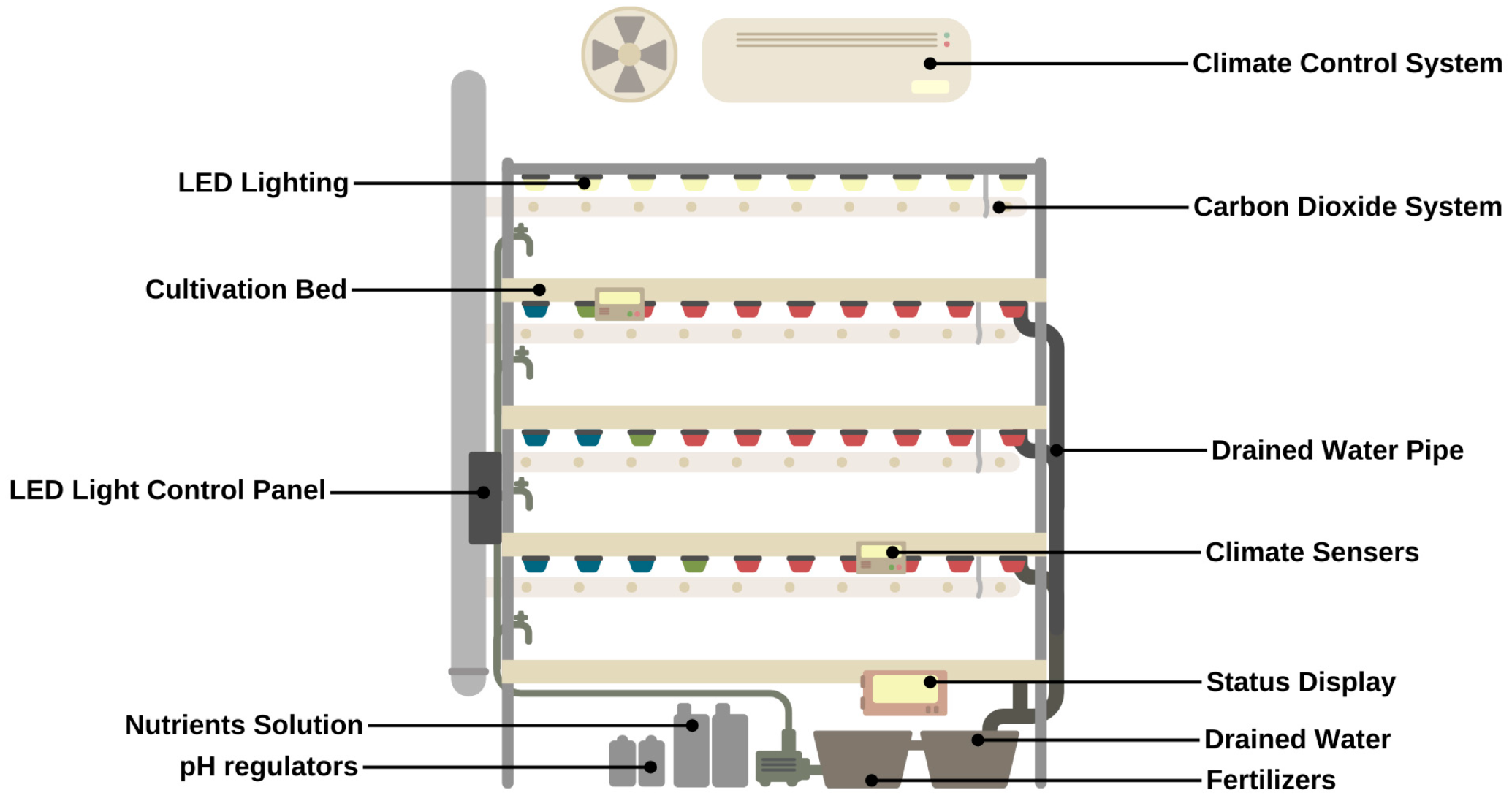
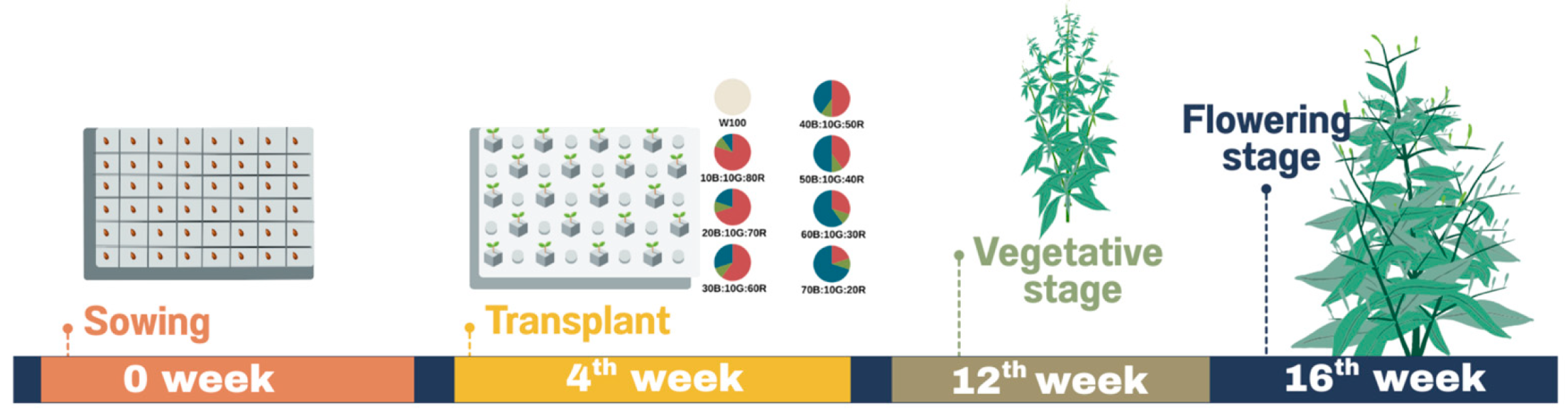
All seeds were germinated in a sponge growing medium under controlled environmental conditions, including white LED light at a photosynthetic photon flux density (PPFD) of 100 µmol m−2 s−1, a 16 h d−1 photoperiod, ambient CO2 concentration, air temperature of 25 ± 1 °C, and relative humidity [16] of 75 ± 5% [22]. PPFD was measured at the base of the foam cultivation surface using a quantum sensor and maintained at 100 µmol m−2 s−1 throughout the experiment. As plants developed, the actual irradiance received at the canopy level varied according to plant height and leaf positioning. After 30 days of germination, uniform seedlings were transplanted into a Deep Flow Technique (DFT) hydroponic system installed in a controlled-environment plant factory (Figure 1). The nutrient solution was initially adjusted to an electrical conductivity [20] of 1.5 mS cm−1 and maintained at a pH of 5.5–6.0. Plants were cultivated under the same baseline environmental conditions as those used during germination (PPFD 100 µmol m−2 s−1, 16 h d−1 photoperiod, ambient CO2, 25 ± 1 °C, and 75 ± 5% RH), prior to the application of light spectrum treatments (Figure 2). All experiments were conducted in the plant factory facility at the National Center for Genetic Engineering and Biotechnology (BIOTEC), National Science and Technology Development Agency (NSTDA), Thailand.

2.2. Spectral Light Conditions

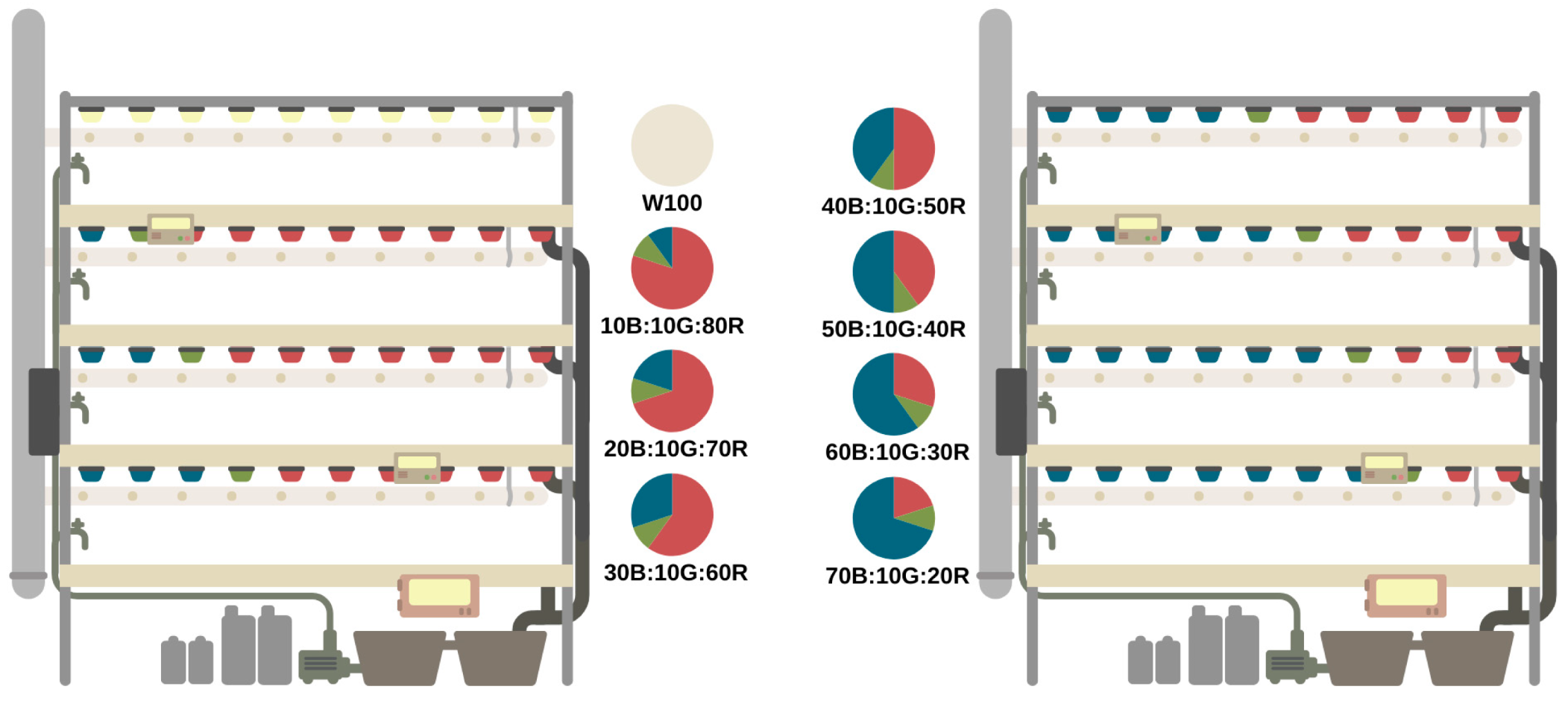
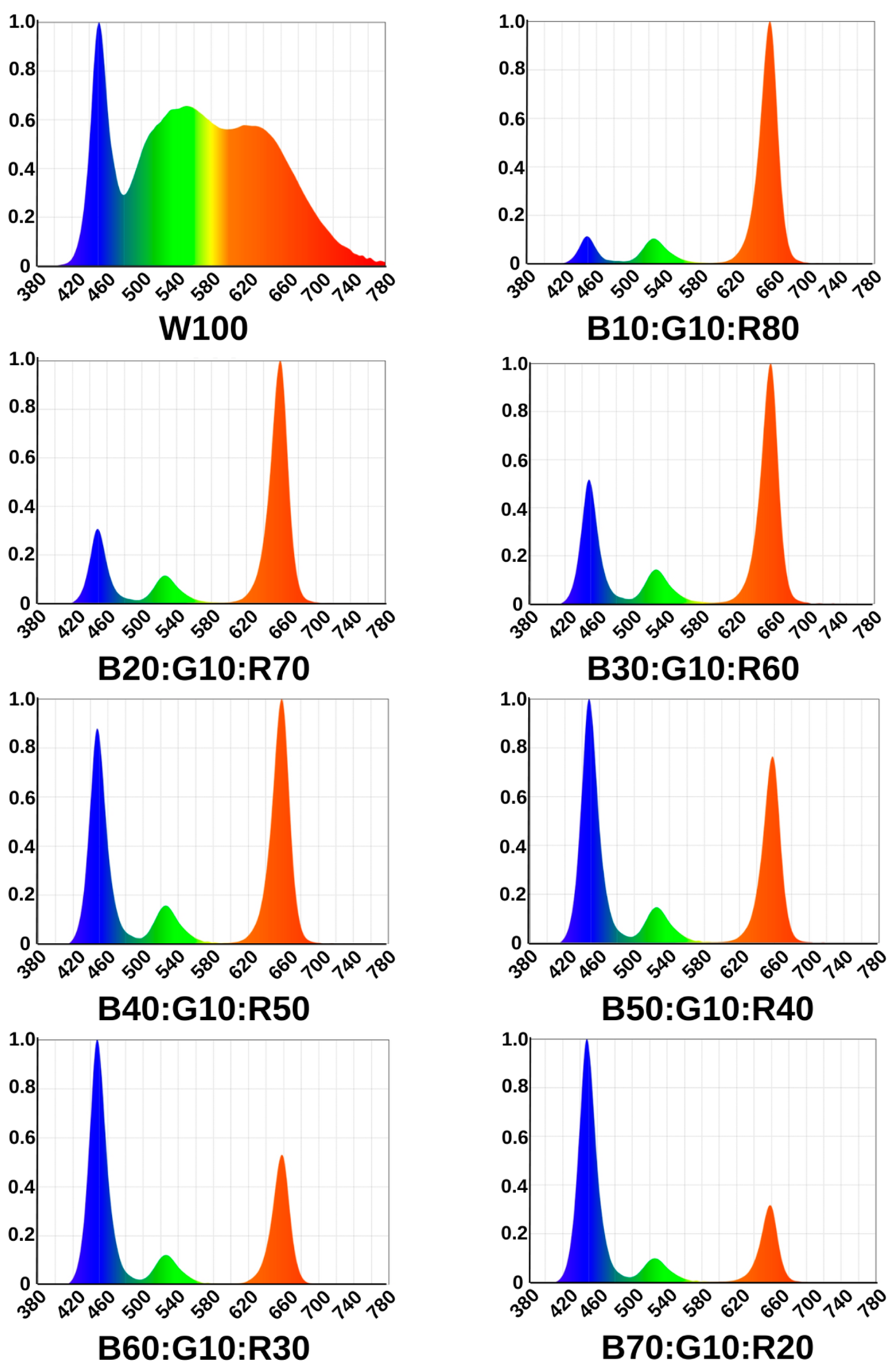
Eight LED lighting treatments were applied, each providing a photosynthetic photon flux density (PPFD) of 100 µmol m−2 s−1 at the canopy level. The light spectra were composed of blue (B), green (G), and red (R) wavelengths, defined as blue light ranging from 390 to 500 nm (peak wavelength at 448 nm), green light from 500 to 600 nm (peak wavelength at 523 nm), and red light from 600 to 700 nm (peak wavelength at 660 nm). The eight spectral treatments consisted of: (1) white light; (2) 10B:10G:80R; (3) 20B:10G:70R; (4) 30B:10G:60R; (5) 40B:10G:50R; (6) 50B:10G:40R; (7) 60B:10G:30R; and (8) 70B:10G:20R, where the values indicate the relative photon flux proportion (%) of each wavelength component (Figure 3 and Figure 4). All light treatments were provided using LED fixtures manufactured by AGRI-OPTECH Co., Ltd. (Taiwan). Light intensity and spectral composition were calibrated and verified before the experiment to ensure uniform irradiance across treatments.

2.3. Physiological and Growth Measurements

Plants of both cultivars were harvested at two growth stages: the vegetative stage at 12 weeks after sowing and the flowering stage at 16 weeks after sowing (Figure 5). Growth responses under the eight LED spectral treatments were evaluated by measuring plant height and plant width. Plant height was measured from the base of the stem to the apical meristem, while plant width was determined as the maximum canopy diameter. Yield performance was assessed based on shoot fresh weight and dry weight. Fresh weight was recorded immediately after harvest. For dry weight determination, shoot samples were freeze-dried using a lyophilizer (SP VirTis Genesis Pilot Lyophilizer, Warminster, PA, USA) until a constant weight was achieved.

2.4. Andrographolide Quantification

At the flowering stage (16 weeks after sowing), the contents of andrographolide (AP1), neoandrographolide (AP4), 14-deoxyandrographolide (AP6), and total andrographolide contents were quantified. Dried shoot samples were finely ground into powder, and 120 mg of each sample was extracted with 10 mL of 99.99% methanol. The mixture was vortexed and subsequently sonicated for 30 min using an ultrasonicator (Bransonic®, Branson, Germany), followed by centrifugation at 7000 rpm for 10 min (Eppendorf 5810 R, Hamburg, Germany). The supernatant was filtered through Whatman No. 1 filter paper, and the solvent was evaporated at 40 °C using a vacuum centrifugal evaporator (Genevac Rocket, SP Scientific, Warminster, PA, USA). The crude extract was re-dissolved in 5 mL of 5% methanol and purified by solid-phase extraction (SPE; Sep-Pak C18 6 cc Vac Cartridge, Waters, Milford, MA, USA). The SPE column was activated with 6 mL of methanol followed by 6 mL of water. The compounds were eluted with 5 mL of 80% methanol. Quantification of AP1, AP4, AP6, and total andrographolide was performed using an HPLC system (UltiMate™ 3000 UHPLC, Thermo Scientific, Waltham, MA, USA) equipped with a diode array detector (DAD). Chromatographic separation was achieved on a Hypersil GOLD C18 column (250 × 4.6 mm, 5 µm) using acetonitrile and deionized water as the mobile phase at a flow rate of 1.0 mL min−1. The injection volume was 10 µL, detection wavelength was set 206 nm, and the total run time was 30 min.

2.5. Statistical Analysis

The experiment was conducted using a completely randomized design (CRD) with four replications. Each replication consisted of six plants, which were considered biological replicates. Measurements were conducted on individual plants within each replication. All data were subjected to analysis of variance (ANOVA), and mean comparisons among treatments were performed using Duncan’s New Multiple Range Test (DMRT) at a 95% confidence level (p ≤ 0.05). comparisons analyses were carried out using R software (version 4.5.0; R Foundation for Statistical Computing, Vienna, Austria) in RStudio (RStudio Inc., Boston, MA, USA).

3. Results

3.1. Plant Production

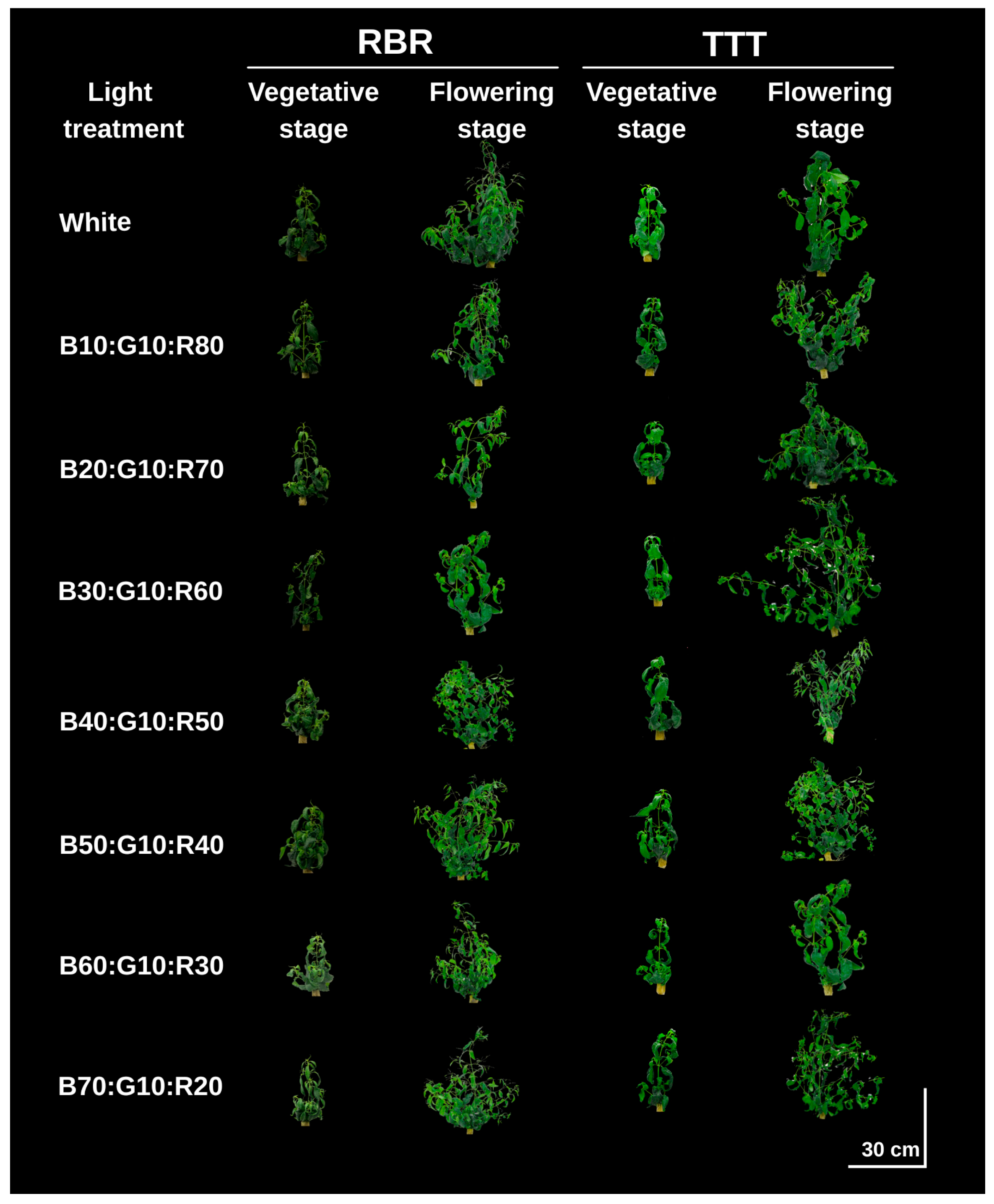
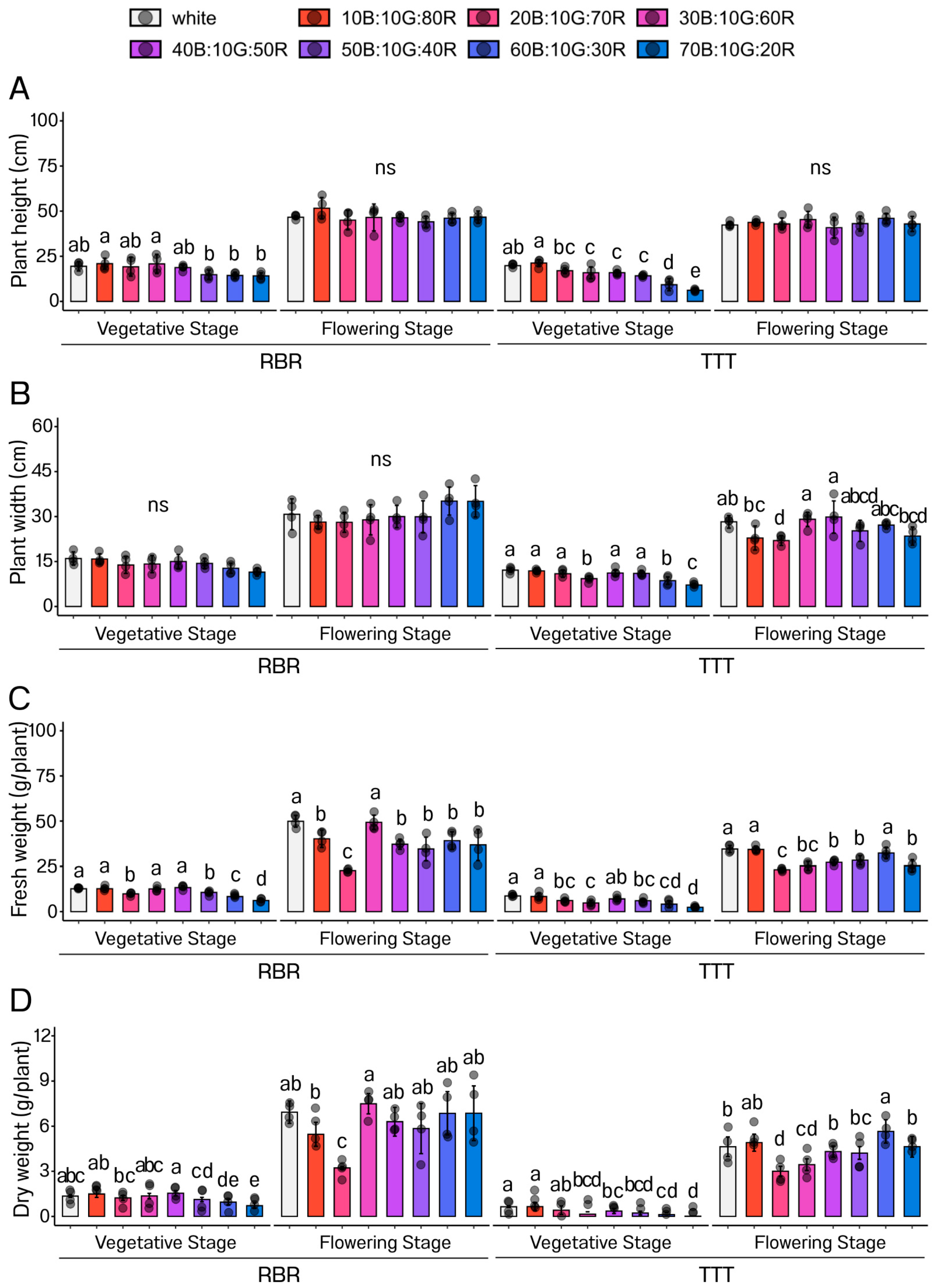
The morphological differences between cultivars and developmental stages under the various light treatments are illustrated in Figure 6. During the vegetative stage, plant height was significantly influenced by the light spectral composition (Figure 7A). In the RBR cultivar, the greatest plant height was observed under the 10B:10G:80R and 30B:10G:60R treatments. These were followed by the white light treatment and intermediate red–blue ratios, including 20B:10G:70R and 40B:10G:50R. In contrast, blue-enriched spectra resulted in reduced plant height, with the lowest values recorded under the 50B:10G:40R, 60B:10G:30R, and 70B:10G:20R treatments. A similar response pattern was observed in the TTT cultivar, which the greatest plant height was achieved under the high red-light ratio (10B:10G:80R). Overall, increasing the proportion of blue light resulted in a gradual decrease in plant height, with minimum height consistently observed under the 70B:10G:20R treatment. Across both cultivars, the results indicate a clear inverse relationship between blue-light proportion and stem elongation during the vegetative stage. Furthermore, during the flowering stage, plant height did not differ significantly among light spectral treatments in RBR and TTT, indicating reduced sensitivity of stem elongation to spectral variation at the flowering stage (Figure 7A).
Plant width in RBR was not significantly affected by different light spectrum treatments during both the vegetative and flowering stages (Figure 7B). TTT response showed specificity to the 70B:10G:20R treatment, which resulted in the lowest plant width during the vegetative stage. Overall, treatments with higher red-light proportions tended to promote greater plant width compared with spectra containing a high proportion of blue light. At the flowering stage, the light treatments 30B:10G:60R and 40B:10G:60R resulted in the greatest plant width. In contrast, under the TTT condition, the lowest plant width was observed in the 20B:10G:70R treatment compared to the other treatments.
Fresh weight was significantly higher at the flowering stage than at the vegetative stage in both RBR and TTT cultivars (Figure 7C). At the vegetative stage, both cultivars tended to produce greater fresh weight under treatments with a high red-light ratio and white light. During the flowering stage, white light resulted in the highest fresh weight in both cultivars. Compared with the vegetative stage, fresh weight values increased markedly across all light treatments, reflecting greater biomass allocation during reproductive development. Dry weight exhibited a pattern similar to that observed for fresh weight during the vegetative stage in both cultivars (Figure 7D). Higher dry weight was generally associated with treatments containing a greater proportion of red light and white light. At the flowering stage, all treatments resulted in relatively high dry weight, except for plants grown under the 20B:10G:70R light treatment, which produced the lowest dry weight in both RBR and TTT.

3.2. Andrographolide Content

Both cultivar and light spectral composition significantly affected the accumulation of andrographolide derivatives in Andrographis paniculata grown under plant factory conditions. Two cultivar, RBR and TTT, were cultivated under eight LED light treatments, including white light and seven red–green–blue (RGB) combinations. The concentrations of andrographolide (AP1), neoandrographolide (AP4), 14-deoxyandrographolide (AP6), and total andrographolides (Total AP) were quantified and compared among treatments. Across all light treatments, AP1 was the predominant andrographolide component in both cultivars, followed by AP6 and AP4. Although this compositional hierarchy was consistent, the absolute concentrations of individual andrographolides and total AP varied markedly between cultivars and among light spectral treatments. Distinct response patterns were observed depending on both cultivars and spectral composition, indicating differential sensitivity of andrographolide accumulation to light quality.

3.2.1. AP1 Content

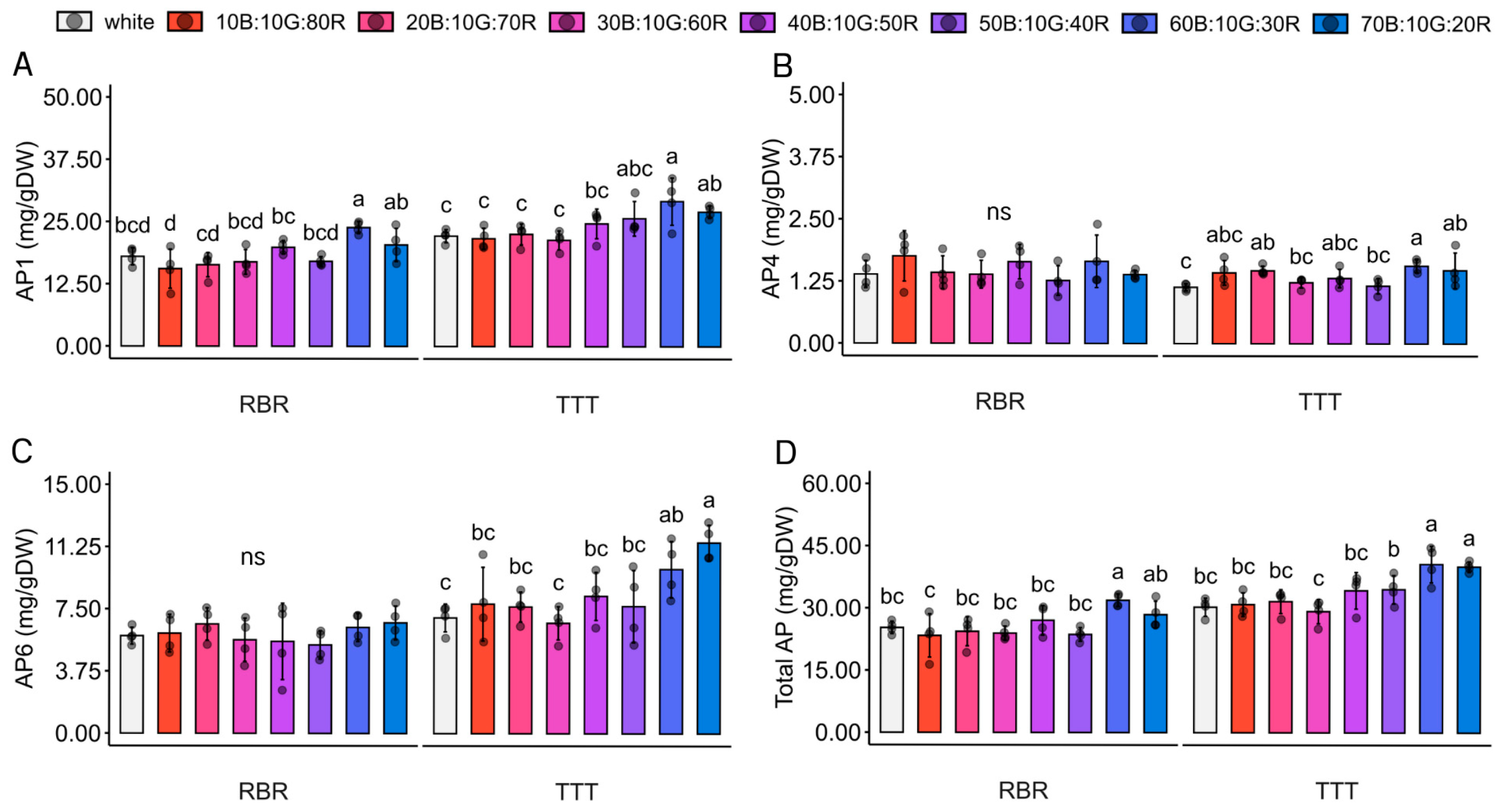
In RBR cultivar, AP1 concentrations varied significantly among light treatments (Figure 8A). Plants grown under white light accumulated 18.00 mg g−1 DW of AP1. Significantly lower AP1 content was observed under the red-dominant treatments 10B:10G:80R (15.56 mg g−1 DW) and 20B:10G:70R (16.35 mg g−1 DW), which were statistically similar to the 30B:10G:60R treatment (16.92 mg g−1 DW). A notable elevation in AP1 occurred under 40B:10G:50R treatment, reaching 19.86 mg g−1 DW. The highest AP1 accumulation was observed under the 60B:10G:30R spectrum (23.86 mg g−1 DW), which was significantly greater than that observed under other treatments. Under the 70B:10G:20R treatment, AP1 content declined to 20.38 mg g−1 DW, remaining significantly lower than that of 60B:10G:30R but higher than those measured under red-dominant spectra.
In TTT cultivar, AP1 content was markedly affected by the light spectrum (p < 0.05) (Figure 8A). Under white light, AP1 concentration reached 22.16 mg g−1 DW. No significant differences were found among white light and the red-dominant treatments 10B:10G:80R (21.66 mg g−1 DW), 20B:10G:70R (22.54 mg g−1 DW), and 30B:10G:60R (21.36 mg g−1 DW). A significant increase in AP1 concentration was observed with increasing blue-light proportion, particularly under 40B:10G:50R (24.68 mg g−1 DW) and 50B:10G:40R (25.73 mg g−1 DW) treatment. The maximum AP1 content was obtained under the 60B:10G:30R treatment (29.18 mg g−1 DW), which was significantly higher than all other light treatments. Although AP1 concentration under 70B:10G:20R (27.06 mg g−1 DW) was comparable to that under 50B:10G:40R, it remained significantly lower than the peak value observed at 60B:10G:30R.

3.2.2. AP4 Content

In RBR cultivar, AP4 content was not significantly influenced by light treatments [7] (Figure 8B). AP4 concentrations ranged from 1.26 to 1.76 mg g−1 DW across all spectra, with no discernible statistical differentiation across treatments, suggesting that AP4 accumulation in RBR remained reasonably consistent under various light circumstances. In contrast, AP4 concentrations in TTT cultivar exhibited significant variations between light treatments (p < 0.05) (Figure 8B). The lowest AP4 concentration was recorded under white light (1.13 mg g−1 DW) and the 50B:10G:40R treatment (1.17 mg g−1 DW), which did not differ significantly from each other. Significantly higher AP4 concentrations were observed under the 10B:10G:80R (1.43 mg g−1 DW), 20B:10G:70R (1.47 mg g−1 DW), and 70B:10G:20R (1.47 mg g−1 DW) treatments. The highest AP4 content was obtained under 60B:10G:30R (1.56 mg g−1 DW), which was significantly greater than that recorded under white light.

3.2.3. AP6 Content

In the RBR cultivar, AP6 accumulation was not significantly affected between light treatments [7] (Figure 8C). AP6 concentrations ranged from 5.33 to 6.67 mg g−1 DW across all light spectra. Although relatively higher AP6 values were observed under the 20B:10G:70R and 70B:10G:20R treatments, these increases were not statistically significant compared with the other treatments. In contrast, AP6 content in the TTT cultivar was significantly influenced by the light spectral composition (p < 0.05) (Figure 8C). Under white light, the AP6 concentration reached 6.97 mg g−1 DW. Notably elevated AP6 concentration was recorded under 10B:10G:80R (7.81 mg g−1 DW) and 20B:10G:70R (7.64 mg g−1 DW) treatment. AP6 concentration declined under the 30B:10G:60R treatment (6.66 mg g−1 DW) before increasing again under the 40B:10G:50R (8.29 mg g−1 DW) and 50B:10G:40R (7.67 mg g−1 DW) treatments. The highest AP6 accumulation was observed under the 70B:10G:20R spectrum, reaching 11.52 mg g−1 DW, which was significantly greater than all other treatments. The second-highest AP6 level was recorded under the 60B:10G:30R treatment (9.91 mg g−1 DW).

3.2.4. Total Andrographolides

The total andrographolide (Total AP) content in RBR cultivar varied significantly among light spectral treatments (p < 0.05) (Figure 8D). Total AP concentration is expressed as mg g−1 DW. In addition, total andrographolide yield per plant dry weight (mg plant DW−1) was calculated by multiplying andrographolide concentration (mg g−1 DW) by the corresponding plant dry weight (g plant−1). The calculated yield values are presented in Table S1. Under white light, Total AP reached 25.27 mg g−1 DW. Significantly lower total AP levels were recorded under the red-dominant treatments10B:10G:80R (23.34 mg g−1 DW), 20B:10G:70R (24.36 mg g−1 DW), and 30B:10G:60R (23.95 mg g−1 DW). A notable increase in Total AP was observed under the 40B:10G:50R treatment, which yielded 27.05 mg g−1 DW. The highest Total AP accumulation in RBR cultivar was found in the 60B:10G:30R spectrum, reaching 31.90 mg g−1 DW, a value significantly greater than all other treatments. Although Total AP under the 70B:10G:20R treatment (28.44 mg g−1 DW) declined relative to the maximum observed at 60B:10G:30R, it remained significantly higher than those recorded under red-dominant spectra.
Total AP accumulation in TTT showed significant variation between light treatments (p < 0.05) (Figure 8D). Under white light, Total AP measured 30.27 mg g−1 DW. No significant differences were detected among white light, 10B:10G:80R (30.90 mg g−1 DW), and 20B:10G:70R (31.65 mg g−1 DW). A significantly lower Total AP was observed under the 30B:10G:60R treatment (29.25 mg g−1 DW). A significantly lower Total AP value was observed under the 30B:10G:60R treatment (29.25 mg g−1 DW). In contrast, substantial increases in Total AP were recorded under the 40B:10G:50R (34.28 mg g−1 DW) and 50B:10G:40R (34.56 mg g−1 DW) treatments. The highest Total AP content was found in the 60B:10G:30R treatment, reaching 40.65 mg g−1 DW. The 70B:10G:20R spectrum produced a comparably high Total AP content (40.05 mg g−1 DW), ranking second to the 60B:10G:30R treatment.

4. Discussion

Light quality plays a crucial role in regulating plant growth, morphological development, and the accumulation of bioactive compounds in controlled-environment agriculture [25]. The present study clearly indicates that light quality significantly modulates growth performance, morphological traits, and biomass accumulation in Andrographis paniculata, highlighting the central role of photoregulation in plant factory systems. During the vegetative stage, which is characterized by rapid leaf expansion and stem elongation, plants exposed to white light and a high red-light ratio (10B:10G:80R) exhibited greater plant height, wider canopy, and higher fresh and dry weights. The enhanced vegetative growth observed under red-enriched spectra can be attributed to the activation of phytochromes (Phys), which are key photoreceptors regulating photomorphogenic responses such as stem elongation, leaf expansion, and biomass partitioning [26]. Red light has been widely reported to promote longitudinal growth and yield enhancement across diverse plant species and leaf expansion through enhanced leaf expansion [26]. In agreement with these findings [27,28], Chutimanukul, et al. [23] demonstrated that a high red light ratio enhanced radish growth across all cultivars, as reflected by increased root length, fresh weight, and dry weight relative to other spectral treatments.
Notably, white light treatments exhibited comparable, and in some cases superior, effectiveness in promoting plant growth compared with specific red-blue light combinations. This response is likely attributable to the broad spectral composition of white light, which provides a balanced range of wavelengths capable of simultaneously activating multiple photoreceptors and physiological processes, including phytochromes, cryptochromes, and phototropins. Such comprehensive spectral coverage supports diverse physiological processes, including photosynthesis, photomorphogenesis, and canopy development. Consistent with these findings, Lalge, et al. [29] reported that white light outperformed red/blue LED combinations in Cannabis sativa, highlighting the potential advantages of full-spectrum lighting for enhancing overall plant growth and biomass production under controlled conditions. During the flowering stage, the red and blue light ratio (R:B ratio) significantly influenced plant growth, fresh weight, and dry weight in both RBR and TTT cultivars. However, plant height did not differ significantly among light treatments [7] in either cultivar. This finding is consistent with previous studies indicating that stem elongation becomes less responsive to light quality once plants transition into the reproductive stage, as assimilates are increasingly allocated toward inflorescence and reproductive organ development rather than vegetative elongation [30]. Consequently, light spectral effects during the flowering stage appear to be more closely associated with biomass accumulation and canopy architecture than with further increases in plant height [30].
In contrast to plant height, plant width responded more distinctly to light spectral composition. In the TTT cultivar, the widest canopy was observed under the 30B:10G:60R and 40B:10G:50R light treatments, both of which remained dominated by red light. This response can be attributed to the role of red light in promoting leaf and petiole expansion through the regulation of cell division and cell enlargement mediated by phytochrome signaling [31]. Red light has been shown to stimulate lateral growth and leaf area development, thereby contributing to increased canopy spread under controlled environments [31]. However, an excessive proportion of red light may constrain photosynthetic efficiency within the canopy, particularly during the flowering stage when canopy structure becomes denser. Under such conditions, limited light penetration to lower leaf layers may reduce whole-canopy photosynthetic performance.
When the light spectrum was optimized by increasing the proportion of blue light, plants exhibited improved canopy development and overall growth performance. Blue light, which possesses higher photon energy than red light, is able to penetrate more effectively into dense canopies and plays a key role in regulating canopy architecture, leaf expansion, and stomatal behavior. These effects collectively enhance light interception and overall photosynthetic efficiency at the canopy level. Consistent patterns were observed for fresh weight and dry weight in both cultivars, with certain R:B ratios producing the highest biomass accumulation. Enhanced biomass production reflects improved photosynthetic performance under an optimized spectral composition. Red light primarily drives photosynthetic electron transport through photosystem II, while blue light improves stomatal opening and structural canopy regulation, enabling more efficient utilization of incident light energy [32]. Together, these results highlight the importance of optimizing red and blue light proportions during the flowering stage to maximize biomass accumulation and overall plant performance under controlled-environment cultivation systems.
In addition to vegetative and reproductive growth, light spectral quality significantly affects andrographolide accumulation, indicating that primary and secondary metabolic process are concurrently regulated under controlled plant factory conditions. The present study indicates that spectral quality plays a decisive role in modulating andrographolide production in A. paniculata, with clear cultivar-dependent differences in response. Notably, the TTT cultivar exhibited greater sensitivity to blue-enriched LED spectra than the RBR cultivar, suggesting genotype-specific differences in photobiological regulation, potentially linked to variation in photoreceptor sensitivity or downstream metabolic control. These findings highlight the importance of selecting appropriate cultivars for controlled-environment cultivation of medicinal plants, particularly when the objective is to enhance phytochemical accumulation rather than biomass yield [10]. Across both cultivars and all light treatments, andrographolide (AP1) was consistently the predominant diterpenoid, followed by AP6 and AP4, in agreement with previous reports identifying AP1 as the major bioactive compound in A. paniculata. The dominance of AP1 highlights its central role in the diterpenoid metabolic network. Light quality is known to regulate secondary metabolism through photoreceptor-mediated signaling pathways, whereby specific wavelengths activate distinct photoreceptors that modulate metabolic gene expression and metabolite accumulation patterns [33,34]. Photoperiod, light intensity, and spectral composition function as environmental signals that modulate biosynthetic pathways, showing the adaptability of plant metabolic responses to light-induced stimuli [35]. In both genotypes, AP1 was the most prevalent diterpenoid, succeeded by AP6 and AP4, corroborating earlier findings that andrographolide (AP1) is the most bioactive diterpenoid in A. paniculata [1,3]. Light quality and spectrum have been shown to dynamically regulate secondary metabolite biosynthesis through photoreceptor-mediated signaling networks, indicating a high level of environmental adaptability in these pathways. Different wavelengths selectively activate photoreceptors that alter metabolic gene expression and metabolite accumulation patterns in plants [33,34]. Photoperiod, light intensity, and spectral composition function as environmental signals that modulate biosynthetic pathways, showing the adaptability of plant metabolic responses to light-induced stimuli [35].
In the TTT cultivar, AP1, AP4, AP6, and total andrographolides (Total AP) increased significantly under blue-enriched spectra, with the 60B:10G:30R treatment producing the highest levels of AP1 and Total AP, while the 70B:10G:20R treatment yielded the maximum AP6 content. The results indicate that many branches of the diterpenoid biosynthesis pathway in TTT are influenced by blue light [34,36]. Blue light activates cryptochrome and phototropin photoreceptors [33], which initiate signaling cascades that influence both primary and secondary metabolic processes, including terpenoid and phenylpropanoid biosynthesis [33,34]. The enhanced response in TTT may consequently indicate increased photoreceptor sensitivity or augmented expression of downstream transcription factors that govern specialized metabolism, such as MYB and bHLH [9]. However, transcriptomic analyses were not conducted in the present study. Further transcriptomic and molecular analyses are required to elucidate the regulatory mechanisms linking blue-light perception to diterpenoid biosynthesis in A. paniculata.
In contrast, the RBR cultivar had notable spectrum responses solely in AP1 and Total AP, but AP4 and AP6 showed no statistically significant variation across all light treatments, suggesting diminished metabolic adaptability. Genotype-specific variation in photobiological responses has been extensively documented in medicinal plants, potentially attributable to disparities in photoreceptor density, enzymatic capabilities, or precursor distribution in terpenoid biosynthesis pathways [37,38]. These intrinsic genetic differences likely constrain the extent to which RBR cultivar can modulate specific diterpenoid branches in response to changes in light spectrum.
From a practical production perspective, these findings have immediate significance for plant industrial-scale cultivation of A. paniculata in controlled-environment systems. The use of blue-enriched LED spectra represents a non-invasive and environmentally sustainable strategy to enhance the accumulation of therapeutically valuable diterpenoids without the need for exogenous elicitors or genetic modification [33,34,36]. The ability to precisely regulate light quality is a key advantage of plant factory systems, enabling the production of plant materials with stable and reproducible phytochemical profiles throughout the year. This level of control effectively mitigates the variability associated with seasonal changes, climatic fluctuations, and other uncontrollable environmental factors inherent to open-field cultivation [10,25,39]. In this study, the 60B:10G:30R light spectrum consistently produced the largest yields of diterpenoids in both cultivars, rendering it appropriate for cultivation focused on functional metabolites.
This work further suggests that diterpenoid accumulation in A. paniculata is governed by a strong interaction between cultivar and light spectral composition. The pronounced genotype and light interaction indicate that future breeding for controlled-environment agriculture ought to integrate photobiological characteristics with agronomic qualities. Plant cultivars with enhanced sensitivity to specific light spectra, particularly blue-enriched conditions, may offer superior performance in plant factory systems designed for pharmaceutical-grade compound production. Further omics-level analyses—such as transcriptomics, metabolomics, or enzyme assays—would elucidate regulatory nodes connecting blue-light perception to diterpenoid production. These insights could expedite the formulation of improved photoregulation techniques for pharmaceutical-grade production in plant factory systems [34].

5. Conclusions

This study indicates that light spectral composition is a key regulator of both plant growth and andrographolide biosynthesis in Andrographis paniculata cultivated under plant factory conditions. White light and red-enriched spectra promoted vegetative growth and biomass accumulation, particularly during the vegetative stage, whereas stem elongation became less responsive to spectral variation during flowering. In contrast, andrographolide accumulation exhibited a strong cultivar-dependent response to light spectrum. The TTT cultivar showed pronounced increases in AP1, AP4, AP6, and total andrographolides under blue-enriched LED spectra, while the RBR cultivar displayed comparatively limited responsiveness. Notably, the 60B:10G:30R treatment showed a consistent trend toward enhanced AP1 and total andrographolide accumulation in the RBR cultivar, indicating that moderate blue enrichment can still positively influence diterpenoid production in this genotype. Among the tested treatments, the 60B:10G:30R spectrum consistently produced the highest total diterpenoid content in both cultivars, highlighting the effectiveness of spectral optimization for phytochemical enhancement. Integrating optimized light spectral management with appropriate cultivar selection provides an effective, non-invasive strategy for improving pharmaceutical-grade andrographolide production in controlled-environment plant factory systems.

Supplementary Materials

The following supporting information can be downloaded at: https://www.mdpi.com/article/10.3390/horticulturae12030355/s1. Figure S1: Morphological characteristics of two Andrographis paniculata cultivars (RBR and TTT) grown in pots under greenhouse conditions. Table S1: Andrographolide content of two cultivars on different light spectrum ratio treatments. On AP1, AP4, AP6 and Total AP per plant DW. Values are represented as mean ± SE (n = 4). Different letters indicate significant difference between planting densities at p < 0.05.

Author Contributions

Conceptualization, P.W. and K.M.; methodology, P.W., S.S., S.J., T.C. and P.C.; validation, S.S., S.J., T.C. and P.C.; formal analysis, P.W., S.S., S.J., T.C., A.T. and P.C.; resources, P.W. and P.C.; data curation, P.W., S.S., A.T. and P.C.; writing—original draft preparation, S.S., A.T. and P.C.; writing—review and editing, S.S. and P.C.; supervision, P.W.; project administration, P.W. and K.M.; funding acquisition, P.W. All authors have read and agreed to the published version of the manuscript.

Funding

This study was supported by the National Center for Genetic Engineering and Biotechnology (BIOTEC), Thailand, grant number P2550484 (basic research fund: fiscal year 2026 with contract No. 4826938).

Data Availability Statement

The original contributions and data presented in this research are included in the article; further inquiries can be directed to the corresponding authors.

Acknowledgments

The authors sincerely thank Prachaya Saleelar for his valuable assistance with data collection. We also express our gratitude to Theerayut Toojinda, at BIOTEC, and Poonpipope Kasemsap, Horticulture Innovation Laboratory, Regional Center, Kasetsart University, for their invaluable conceptual guidance during the project planning phase.

Conflicts of Interest

The authors declare no conflicts of interest.

References

  1. Akbar, S. Andrographis paniculata: A review of pharmacological activities and clinical effects. Altern. Med. Rev. 2011, 16, 66–77. [Google Scholar]
  2. Hossain, M.S.; Urbi, Z.; Sule, A.; Rahman, K.M.H. Andrographis paniculata (Burm.f.) Wall. ex Nees: A review of ethnobotany, phytochemistry, and pharmacology. Sci. World J. 2014, 2014, 274905. [Google Scholar] [CrossRef] [PubMed]
  3. Jarukamjorn, K.; Nemoto, N. Pharmacological aspects of Andrographis paniculata on health and its major diterpenoid constituent andrographolide. J. Health Sci. 2008, 54, 370–381. [Google Scholar] [CrossRef]
  4. Mishra, S.K.; Sangwan, N.S.; Sangwan, R.S. Phcog rev.: Plant review Andrographis paniculata (Kalmegh): A review. Pharmacogn. Rev. 2007, 1, 283–298. [Google Scholar]
  5. Pant, P.; Pandey, S.; Dall’Acqua, S. The influence of environmental conditions on secondary metabolites in medicinal plants: A literature review. Chem. Biodivers. 2021, 18, e2100345. [Google Scholar] [CrossRef]
  6. Verma, N.; Shukla, S. Impact of various factors responsible for fluctuation in plant secondary metabolites. J. Appl. Res. Med. Aromat. Plants 2015, 2, 105–113. [Google Scholar] [CrossRef]
  7. Chutimanukul, P.; Thongtip, A.; Panya, A.; Phonsatta, N.; Thangvichien, S.; Mosaleeyanon, K.; Wanichananan, P.; Sae-Tang, W.; Chutimanukul, P. Enhancing the biochemical potential of holy basil through methyl jasmonate elicitation with insights into physiological responses in a plant factory. Sci. Rep. 2025, 15, 27518. [Google Scholar] [CrossRef]
  8. Chen, X.; Yao, Q.; Gao, X.; Jiang, C.; Harberd, N.P.; Fu, X. Shoot-to-root mobile transcription factor HY5 coordinates plant carbon and nitrogen acquisition. Curr. Biol. 2016, 26, 640–646. [Google Scholar] [CrossRef]
  9. Zoratti, L.; Karppinen, K.; Luengo Escobar, A.; Häggman, H.; Jaakola, L. Light-controlled flavonoid biosynthesis in fruits. Front. Plant Sci. 2014, 5, 534. [Google Scholar] [CrossRef] [PubMed]
  10. Carvalho, S.D.; Folta, K.M. Environmentally modified organisms–expanding genetic potential with light. Crit. Rev. Plant Sci. 2014, 33, 486–508. [Google Scholar] [CrossRef]
  11. Gao, Q.; Liao, Q.; Li, Q.; Yang, Q.; Wang, F.; Li, J. Effects of LED red and blue light component on growth and photosynthetic characteristics of coriander in plant factory. Horticulturae 2022, 8, 1165. [Google Scholar] [CrossRef]
  12. Li, Y.; Liu, N.; Ji, F.; He, D. Optimal red:blue ratio of full spectrum LEDs for hydroponic pakchoi cultivation in plant factory. Int. J. Agric. Biol. Eng. 2022, 15, 72–77. [Google Scholar] [CrossRef]
  13. Modarelli, G.C.; Paradiso, R.; Arena, C.; De Pascale, S.; Van Labeke, M.-C. High light intensity from blue-red LEDs enhance photosynthetic performance, plant growth, and optical properties of red lettuce in controlled environment. Horticulturae 2022, 8, 114. [Google Scholar] [CrossRef]
  14. Dou, H.; Niu, G.; Gu, M. Photosynthesis, Morphology, Yield, and Phytochemical Accumulation in Basil Plants Influenced by Substituting Green Light for Partial Red and/or Blue Light. HortScience 2019, 54, 1769–1776. [Google Scholar] [CrossRef]
  15. Chen, Y.; Bian, Z.; Marcelis, L.F.M.; Heuvelink, E.; Yang, Q.; Kaiser, E. Green light is similarly effective in promoting plant biomass as red/blue light: A meta-analysis. J. Exp. Bot. 2024, 75, 5655–5666. [Google Scholar] [CrossRef] [PubMed]
  16. Farhangi, H.; Mozafari, V.; Roosta, H.R.; Shirani, H.; Farhangi, S.; Farhangi, M. Optimizing LED lighting spectra for enhanced growth in controlled-environment vertical farms. Sci. Rep. 2025, 15, 30152. [Google Scholar] [CrossRef]
  17. Thongtip, A.; Mosaleeyanon, K.; Korinsak, S.; Toojinda, T.; Darwell, C.T.; Chutimanukul, P.; Chutimanukul, P. Promotion of seed germination and early plant growth by KNO3 and light spectra in Ocimum tenuiflorum using a plant factory. Sci. Rep. 2022, 12, 6995. [Google Scholar] [CrossRef]
  18. Thongtip, A.; Mosaleeyanon, K.; Janta, S.; Wanichananan, P.; Chutimanukul, P.; Thepsilvisut, O.; Chutimanukul, P. Assessing light spectrum impact on growth and antioxidant properties of basil family microgreens. Sci. Rep. 2024, 14, 27875. [Google Scholar] [CrossRef]
  19. Pandey, A.; Gulati, S.; Gupta, A.; Tripathi, Y. Variation in andrographolide content among different accessions of Andrographis paniculata. Pharma Innov. J. 2019, 8, 140–144. [Google Scholar]
  20. Pholphana, N.; Rangkadilok, N.; Saehun, J.; Ritruechai, S.; Satayavivad, J. Changes in the contents of four active diterpenoids at different growth stages in Andrographis paniculata (Burm.f.) Nees (Chuanxinlian). Chin. Med. 2013, 8, 2. [Google Scholar] [CrossRef]
  21. Chutimanukul, P.; Jindamol, H.; Thongtip, A.; Korinsak, S.; Romyanon, K.; Toojinda, T.; Darwell, C.T.; Wanichananan, P.; Panya, A.; Kaewsri, W.; et al. Physiological responses and variation in secondary metabolite content among Thai holy basil cultivars (Ocimum tenuiflorum L.) grown under controlled environmental conditions in a plant factory. Front. Plant Sci. 2022, 13, 1008917. [Google Scholar] [CrossRef] [PubMed]
  22. Chutimanukul, P.; Mosaleeyanon, K.; Janta, S.; Toojinda, T.; Darwell, C.T.; Wanichananan, P. Physiological responses, yield and medicinal substance (andrographolide, AP1) accumulation of Andrographis paniculata (Burm.f) in response to plant density under controlled environmental conditions. PLoS ONE 2022, 17, e0272520. [Google Scholar] [CrossRef] [PubMed]
  23. Chutimanukul, P.; Piew-ondee, P.; Dangsamer, T.; Thongtip, A.; Janta, S.; Wanichananan, P.; Thepsilvisut, O.; Ehara, H.; Chutimanukul, P. Effects of Light Spectra on Growth, physiological responses, and antioxidant capacity in five Radish varieties in an indoor Vertical Farming System. Horticulturae 2024, 10, 1059. [Google Scholar] [CrossRef]
  24. Wanichananan, P.; Janta, S.; Sueachuen, S.; Chiangklang, T.; Mosaleeyanon, K.; Korinsak, S.; Darwell, C.T.; Chutimanukul, P. Morphological characteristics and genome-wide association analysis among local Andrographis paniculata from Thailand under controlled environment in plant factory. PLoS ONE 2025, 20, e0320667. [Google Scholar] [CrossRef] [PubMed]
  25. Kozai, T.; Niu, G.; Takagaki, M. Plant Factory: An Indoor Vertical Farming System for Efficient Quality Food Production; Academic Press: Cambridge, MA, USA, 2019. [Google Scholar]
  26. Anpo, M.; Fukuda, H.; Wada, T. Plant Factory Using Artificial Light: Adapting to Environmental Disruption and Clues to Agricultural Innovation; Elsevier: Amsterdam, The Netherlands, 2018. [Google Scholar]
  27. Yanagi, T.; Okamoto, K.; Takita, S. Effects of blue, red, and blue/red lights of two different PPF levels on growth and morphogenesis of lettuce plants. In Proceedings of the International Symposium on Plant Production in Closed Ecosystems 440, Narita, Japan, 26–29 August 1996; pp. 117–122. [Google Scholar]
  28. Zanoria, J.; Enojada, G.; Pascual, P.; Mosaleeyanon, K. Morphological and photosynthetic responses of in vitro culture of India echinacea (Andrographis paniculata) to light spectrum and carbon sources. Agrik. CRI J. 2021, 1, 46–55. [Google Scholar]
  29. Lalge, A.; Cerny, P.; Trojan, V.; Vyhnanek, T. The effects of red, blue and white light on the growth and development of Cannabis sativa L. Mendel Net 2017, 8, 646–651. [Google Scholar]
  30. Franklin, K.A.; Whitelam, G.C. Phytochromes and shade-avoidance responses in plants. Ann. Bot. 2005, 96, 169–175. [Google Scholar] [CrossRef]
  31. Massa, G.D.; Kim, H.-H.; Wheeler, R.M.; Mitchell, C.A. Plant productivity in response to LED lighting. HortScience 2008, 43, 1951–1956. [Google Scholar] [CrossRef]
  32. Hogewoning, S.W.; Trouwborst, G.; Maljaars, H.; Poorter, H.; van Ieperen, W.; Harbinson, J. Blue light dose-responses of leaf photosynthesis, morphology, and chemical composition of Cucumis sativus grown under different combinations of red and blue light. J. Exp. Bot. 2010, 61, 3107–3117. [Google Scholar] [CrossRef]
  33. Wu, W.; Wu, H.; Liang, R.; Huang, S.; Meng, L.; Zhang, M.; Xie, F.; Zhu, H. Light regulates the synthesis and accumulation of plant secondary metabolites. Front. Plant Sci. 2025, 16, 1644472. [Google Scholar] [CrossRef]
  34. Zhang, S.; Zhang, L.; Zou, H.; Qiu, L.; Zheng, Y.; Yang, D.; Wang, Y. Effects of light on secondary metabolite biosynthesis in medicinal plants. Front. Plant Sci. 2021, 12, 781236. [Google Scholar] [CrossRef] [PubMed]
  35. Shin, Y.K.; Song, J.W.; Lee, J.G. Controlled Application of Far-Red Light to Improve Growth and Bioactive Compound Yield in Centella asiatica. Horticulturae 2025, 11, 728. [Google Scholar] [CrossRef]
  36. Su, Q.; Park, Y.G.; Kambale, R.D.; Adelberg, J.; Karthikeyan, R.; Jeong, B.R. Advancing Light-Mediated Technology in Plant Growth and Development: The Role of Blue Light. Horticulturae 2025, 11, 795. [Google Scholar] [CrossRef]
  37. Anichini, S.; Bellini, A.; Cai, G.; Romi, M.; Parri, S. Light spectrum differentially modulates physiology and secondary metabolism in underutilized leafy greens grown in aeroponics. Plant Physiol. Biochem. 2025, 229, 110546. [Google Scholar] [CrossRef] [PubMed]
  38. Cioć, M.; Szopa, A.; Prokopiuk, B.; Pawłowska, B.; Łopusiewicz, Ł. Influence of LED Light Spectra on Morphogenesis, Secondary Metabolite Production and Antioxidant Potential in Eucomis autumnalis Cultured In Vitro. Agronomy 2025, 15, 2197. [Google Scholar] [CrossRef]
  39. Goto, E. Plant production in a closed plant factory with artificial lighting. In Proceedings of the VII International Symposium on Light in Horticultural Systems 956, Wageningen, The Netherlands, 14–18 October 2012; pp. 37–49. [Google Scholar]
Figure 1. Representative seedlings of Andrographis paniculata cultivars RBR and TTT at 30 days after sowing (DAS).
Horticulturae 12 00355 g001
Figure 2. Automated environmental and nutrient management system in the plant factory.
Horticulturae 12 00355 g002
Figure 3. Eight different LED lighting treatments with blue (B), green (G), and red (R) light ratios were used for the cultivation of A. paniculata.
Horticulturae 12 00355 g003
Figure 4. Proportional ratios of blue, green, and red light in the eight LED spectral treatments applied at a PPFD of 100 µmol m−2 s−1: white light (W100); 10B:10G:80R; 20B:10G:70R; 30B:10G:60R; 40B:10G:50R; 50B:10G:40R; 60B:10G:30R; and 70B:10G:20R. Blue, green, and red wavelengths were defined as 390–500 nm (peak 448 nm), 500–600 nm (peak 523 nm), and 600–700 nm (peak 660 nm), respectively.
Horticulturae 12 00355 g004
Figure 5. Cultivation and harvesting timeline of Andrographis paniculata at vegetative and flowering stages.
Horticulturae 12 00355 g005
Figure 6. Representative plant morphology of Andrographis paniculata cultivars RBR and TTT at vegetative and flowering stages under different light treatments.
Horticulturae 12 00355 g006
Figure 7. Growth parameters of two cultivars of Andrographis paniculata under different light spectrum ratio treatments, showing plant height (A), plant width (B), fresh weight (C), and dry weight (D) of A. paniculata during vegetative and flowering stages. Values are presented as mean ± SE (n = 4). Different letters indicate a significant difference among light spectrum ratio treatments at p < 0.05. “ns” indicates no significant difference.
Horticulturae 12 00355 g007
Figure 8. Andrographolide content of two cultivars of Andrographis paniculata under different light spectrum ratio treatments, showing AP1 (A), AP4 (B), AP6 (C), and total andrographolide (Total AP; (D)) During the flowering stages. Values are presented as mean ± SE (n = 4). Different letters indicate significant differences among light spectrum ratio treatments at p < 0.05. “ns” indicates no significant difference.
Horticulturae 12 00355 g008
Disclaimer/Publisher’s Note: The statements, opinions and data contained in all publications are solely those of the individual author(s) and contributor(s) and not of MDPI and/or the editor(s). MDPI and/or the editor(s) disclaim responsibility for any injury to people or property resulting from any ideas, methods, instructions or products referred to in the content.