Review

Contemporary Advances and Future Perspectives in Rosaceae Plant Regeneration

1
Agronomy and Life Science Department, Zhaotong University, Zhaotong 657000, China
2
College of Horticulture, Shenyang Agricultural University, Shenyang 110866, China
*
Authors to whom correspondence should be addressed.
These authors contributed equally to this work.
Horticulturae 2026, 12(2), 183; https://doi.org/10.3390/horticulturae12020183

Submission received: 31 December 2025 / Revised: 26 January 2026 / Accepted: 30 January 2026 / Published: 2 February 2026

Abstract

Members of the Rosaceae family possess substantial economic and ornamental value, making their effective propagation and genetic improvement critical. Plant regeneration represents a foundational technology for efficient breeding, genetic transformation, functional genomics, molecular breeding, germplasm conservation, and large-scale commercial propagation. The regenerative capacity of explants in many Rosaceae taxa remains limited, despite significant progress. This review systematically synthesized conventional and emerging plant regeneration strategies and critically examined the principal biological and technical constraints affecting regenerative efficiency. A comprehensive comparison was first made among the various genera of the Rosaceae family regarding regeneration processes, environmental conditions, PGRs, exogenous additives, basal media, common obstacles and regeneration suggestions. The application of molecular biotechnology approaches in elucidating the mechanisms underlying regeneration and in enhancing regeneration capacity is also evaluated. Finally, this review assesses the future potential of these advanced technologies for improving regeneration systems in Rosaceae plants, providing a comprehensive reference framework for both academic research and industrial applications.

1. Introduction

Rosaceae is a core family of fruit crops, ornamental plants, and economically important species, encompassing apple, pear, peach, rose, and strawberry taxa. As one of the most economically important temperate fruit crops worldwide, apple contributes substantially to global agriculture through the production juice, cider, and dried products. Pear ranks among the top fruit crops globally, with an estimated annual production of approximately 23.1 million metric tons in 2020. China leads global pear and plum production, followed by major producing countries such as Romania, Serbia, Chile, Iran, and the United States [1,2]. Among berry crops, strawberry cultivation area and yield rank second only to grapes worldwide, underscoring its commercial importance [3]. Roses are widely cultivated for ornamental, medicinal, and industrial purposes and are highly valued for their visual appeal, extended flowering period, and characteristic fragrance [4,5]. Roses are rich sources of bioactive compounds with pharmacological potential, and their essential oils are widely used in perfumery, cosmetics, and therapeutic products [6]. Collectively, species within the Rosaceae family represent crops of considerable nutritional, medicinal, and economic importance, supporting diverse agricultural, industrial, and commercial sectors worldwide. These figures underscore the considerable economic and horticultural value of the Rosaceae species. High-quality germplasm development is directly linked to large-scale production capacity and industry expansion. In vitro plant regeneration technology serves as a central platform for the rapid breeding of high-quality germplasm and economic value enhancement within related industries. Genetic engineering and molecular breeding have undergone transformative progress in parallel with the rapid advances in molecular biology. As the biological foundation for genetic transformation and genome editing, plant regeneration plays a pivotal role in these technologies. Recently, the regeneration efficiency of many Rosaceae family members has been significantly improved by optimizing explant selection, plant growth regulator regimes, and the use of exogenous additives. However, critical bottlenecks in the regeneration of several Rosaceae taxa remain unresolved. Low regeneration efficiency, prolonged breeding cycles, and the widespread prevalence of viral diseases continue to constrain rapid clonal propagation, virus-free plant production, genetic improvement, molecular breeding, and the diversification of Rosaceae crop development.
Recent studies have indicated that plant regenerative capacity is largely determined by cellular and tissue fate, which is closely associated with their tissue of origin. During the initial stages of regeneration, plant cells undergo fate reprogramming and transition into a regenerative state. Key molecular factors, including regeneration-associated genes and epigenetic modifications tightly regulate this process. With the growing understanding of the molecular mechanisms governing plant regeneration, a range of advanced molecular tools have been employed to address regeneration constraints in Rosaceae, including the targeted manipulation of regeneration-related genes, epigenetic regulation strategies, and the application of contemporary genome editing technologies.
This study systematically reviews the key factors influencing regeneration in Rosaceae members, including genotype, environmental conditions, plant growth regulators, and exogenous additives, and identifies the major technical bottlenecks unique to this plant family. The critical roles of gene regulatory networks and epigenetic mechanisms in the regulation of regenerative processes are further elucidated in this study. This study also examined the application potential of emerging technologies, such as genome editing, nontissue culture-based genetic transformation and temporary immersion system (TIB), to overcome the current limitations in regeneration systems. More importantly, this study systematically compared the regeneration processes, environmental conditions, PGRs, exogenous added substances, basic culture media, and regeneration obstacles and suggestions of different genera within the Rosaceae family. This review offers strategic guidance for addressing persistent challenges in the regeneration and genetic transformation of Rosaceae taxa.

2. Plant Regeneration Pathways

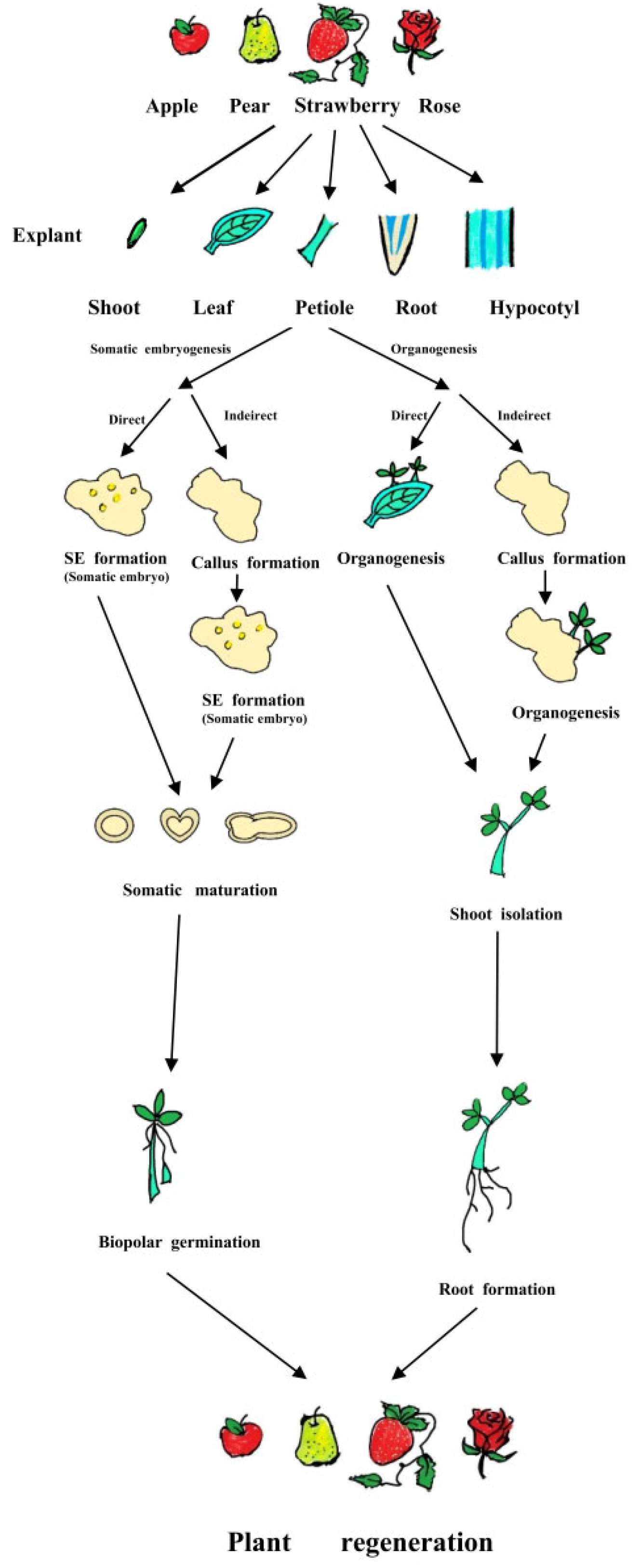
Plant regeneration—the capacity of a somatic cell or a group of cells to develop into a complete, functional plant—is the most compelling demonstration of plant cell totipotency. This characteristic not only serves as a fundamental strategy for plant survival and reproduction but also underpins modern plant biotechnology, including genetic transformation, gene editing, and germplasm conservation. Plant regeneration occurs primarily through two pathways: organogenesis and somatic embryogenesis. Regeneration can be classified as either direct or indirect depending on whether a callus is formed during the process. The direct regeneration pathway occurs without visible callus formation, with regenerated cells arising directly from extant cambium tissue within the vascular system [7]. Conversely, the indirect regeneration pathway involves the activation of the proliferative callus from juvenile tissues, which subsequently differentiates into complete seedlings [8] (Figure 1).
Genotypic variation is recognized as a primary determinant of differences in the regenerative capacity of individuals in the Rosaceae family. Regeneration-related indicators of typical crops belonging to different genera of the Rosaceae family were statistically analyzed, as shown in Table 1 [9,10,11,12,13,14,15,16,17,18,19,20,21,22,23,24,25,26,27,28,29,30,31,32,33,34,35,36,37,38,39,40,41,42,43]. Apple (Malus domestica), a woody species of high economic importance, undergoes regeneration via somatic embryogenesis [44,45]; however, organogenesis remains the predominant regenerative pathway (Table 1). For instance, in the leaf-derived regeneration of the apple rootstock ‘Luzhen 1’, the regeneration rate reached up to 90% [46]. Conversely, regeneration in other woody Rosaceae, including pear (Pyrus spp.) [22,47,48], peach (Prunus persica) [49], apricot (Prunus armeniaca) [50], and plum (Prunus spp.) [51], is largely mediated through somatic embryogenesis. This pathway is characterized by the use of immature zygotic embryos with high embryogenic competence, enabling the efficient and stable production of embryogenic callus and synchronized somatic embryos. It represents a highly suitable regeneration route for genetic transformation, crop improvement, protoplast fusion, functional genomics, and artificial seed research. Immature zygotic embryos of the Ussurian pear (Pyrus ussuriensis Maxim.) cv. ‘Shanli’ and the peach cultivar (‘O’Henry’ and ‘Elegant Lady’) have been successfully induced to undergo efficient somatic embryogenesis and whole-plant regeneration by optimizing plant hormone ratios [52,53]. As a representative ornamental taxon, rose regeneration occurs via organogenesis or somatic embryogenesis (Table 1). In Rosa rugosa f. rubra, adventitious shoot buds were directly induced from leaf explants on Murashige–Skoog (MS) medium supplemented with 1.0 mg/L 6-benzyladenine (BA) and 0.1 mg/L naphthaleneacetic acid (NAA) [54]. Herbaceous strawberry (Fragaria spp.) is a well-established tissue culture and rapid clonal propagation model. It exhibits a high propagation coefficient from the shoot tips, allowing for large-scale production. Regeneration in strawberry occurs via the highly efficient direct organogenesis pathway. For instance, the shoot tips of the Fragaria ananassa cultivars ‘San Andres’, ‘Malwina’, ‘Black Prince’ and ‘Sabrina’ achieved single-bud germination rates of >95% and proliferation coefficients of >4-fold across different culture media [39,55]. Indirect organ regeneration and somatic embryogenesis have been reported for genetic improvement and functional genomics studies in strawberry [56]. Somatic embryo regeneration was successfully induced in the cultivated strawberry variety using immature embryos as explants, yielding a germination rate of 78% [57]. Similarly, strawberry ‘PBGEL-2000’ underwent callus induction from leaf and nodal tissues, followed by differentiation into somatic embryos, with a regeneration rate of 95% [40]. Overall, regenerative outcomes vary according to genotype, explants, PGRs, and specific regeneration objectives.

3. Effects of Multiple Factors on the Regeneration of Rosaceae Plants

3.1. Effects of Rosaceae Genotypes and Explants on Plant Regeneration

Genotypic and species-specific variation significantly influences the regeneration efficiency of Rosaceae plants. Well-established regeneration systems have been successfully applied across multiple genotypes in lineages with relatively simple genetic backgrounds and characteristics that are easier to manipulate [7]. In contrast, members of the Rosaceae family often exhibit complex genetic backgrounds, and cultivars or varieties within the same display substantial genetic diversity in structural traits, pigment composition, and stress tolerance. Strawberry (Fragaria spp.) comprises approximately 26 recognized worldwide, exhibiting extensive ploidy variation, including diploid, tetraploid, hexaploid, octoploid, and decaploid forms. The diploid F. pentaphylla Lozinsk. exhibits substantial genetic diversity, as evidenced by leaf shape, leaf color, fruit color, and flower color variations [58]. Variations in flesh color (white, yellow, and red), peel type (peach, nectarine, and flat peach), fruit shape (round, flat, and ovate), and an extended maturity window exceeding two months characterize genetic diversity within the genus Prunus. Representative examples include P. persica ‘Yulu’, which exhibits white, highly juicy flesh; P. persica var. nectarina, which is characterized by a glabrous epidermis and crisp flesh; and P. persica var. platycarpa, which is distinguished by a flattened phenotype with a concave apex [59]. This intraspecific diversity contributes to pronounced differences in regenerative capacity among genotypes, making regeneration protocols in Rosaceae more complex than those established for model plant systems.
Extensive research has demonstrated that the genotypic variation in Rosaceae plants substantially influences their regenerative capacity. This effect is particularly pronounced in woody Rosaceae plants. Apple cultivars ‘Gala’ and ‘Royal Gala’ exhibit strong regeneration potential, which is attributed to favorable endogenous hormone balance and efficient regeneration-associated gene expression (e.g., WUSCHEL). Therefore, they are widely regarded as ‘model genotypes’ for genetic transformation [10]. In contrast, the regeneration efficiency of apple cultivar ‘Fuji’ was extremely low, which severely constrains its application in molecular breeding [14]. Another instance of genotype-dependent variation was observed in the apical meristem regeneration capacity among diverse apple varieties, with regeneration performance ranked as follows: ‘Gl-3’ > ‘Gala’ > ‘GD’ > ‘HF’ > ‘Fuji’ [60]. Genotype-dependent differences have been reported in other fruit trees, including pear, peach, and strawberry [61,62]. For example, the octoploid strawberry cultivars ‘Virginia’, ‘Sengala’, ‘Festival’, and ‘Fortuna’ show significantly higher regeneration rates than ‘Guinugan’, ‘Fengxiang’, and ‘Sweet Charlie’ [35]. Similar genotype-dependent responses have also been observed in ornamental taxa. Under identical culture conditions, varieties including R. hybrida ‘Baby Love’, ‘Ingrid Bergman’, ‘Perfume Delight’, ‘Prominent’, and ‘Sunflare’ failed to regenerate, whereas ‘Tournament of Roses’ successfully produced somatic embryos [63]. Although genotypes exert a strong influence on regeneration efficiency, Rosaceae plants within the same often share conserved regeneration pathways (Table 1).
The selection of explant material is a critical determinant of regeneration success. Leaves, hypocotyls, and other organs are commonly used as explants for models, such as Arabidopsis thaliana and Nicotiana tabacum. A broader range of explant types, including leaves, petioles, cotyledons, stem tips, embryos, and related tissues, has been employed in Rosaceae. Explant selection is primarily determined by the intended regeneration objective. Stem segments and shoot apical meristems are typically used to achieve rapid clonal propagation and preserve varietal traits. For example, the stem segments of the Fragaria cultivar ‘Redcoat’ and ‘Veestar’ exhibit elevated multiplication rates, making this explant highly suitable for commercial propagation due to its genetic stability and cost efficiency [64]. Conversely, when the objective is genetic improvement through engineering of traits (such as leaf pigmentation or floral fragrance), tender leaves, leaf disks, and floral organs are preferentially selected as explants [42,65,66,67]. For instance, petal explants from the rose R. hybrida cultivar ‘Meirutral and Anny’ have demonstrated high regeneration efficiency via both somatic embryogenic regeneration and organogenesis, providing a robust foundation for floral trait modification [32,68]. These findings highlight the adaptive advantages of specific explant types for genetic enhancement and large-scale production. Regenerative capacity substantially varies among explant types, and selection should be tailored to species-specific biological characteristics. For example, strawberry stem tips and leaf disks are commonly used as explants to achieve high regeneration efficiencies, supporting both commercial propagation and genetic engineering research [34,69]. Therefore, explant selection should be comprehensively determined based on species characteristics, underlying regeneration mechanisms, and intended application.
Explant age is a critical factor influencing in vitro regeneration and cannot be overlooked. Its effects are manifested across multiple levels, ranging from whole-plant developmental stage to individual organs’ physiological status. Substantial differences in this response have been observed among Rosaceae. In woody Rosaceae plants, such as apple, pear, and peach, the developmental age of the donor plant directly affects regeneration efficiency. For example, in the hybrid offspring of five-year-old apples, juvenile leaves collected at the seedling stage displayed significantly higher regeneration rates than tissues obtained at the adult stage [70,71]. This largely irreversible, developmentally determined decline in regenerative competence constitutes a major constraint on the efficiency of genetic transformation in woody fruit trees. In contrast, in herbaceous plants, the effect of explant age is primarily associated with the physiological age of organs, which is reflected by tissue tenderness. Juvenile tissues possess superior regenerative capacity than mature tissues [72]. For instance, fully expanded, bright green, and active cell division young leaves in strawberry show significantly higher regeneration efficiency than senescent leaves [33]. The developmental age of the donor plant and seasonal physiological conditions influence the growth of ornamental plants, including rose and cherry. The regenerative potential of juvenile tissues, including immature zygotic embryos and seedling hypocotyls, was substantially greater than that of mature woody tissues obtained from field-established cultivars [54,73]. Therefore, both the development stage and sampling season are crucial determinants of regeneration efficiency in ornamental Rosaceae. The effects of explant age on the in vitro regeneration of Rosaceae plants exhibited multidimensional patterns. In woody fruit trees, regeneration efficiency declined with increasing developmental age, with seedling-derived leaves exhibiting higher regenerative potential than tissues collected during the fruiting stage. In herbaceous plants, regeneration capacity is more strongly associated with the physiological age of organs, with juvenile leaves generally outperforming mature leaves. In ornamental plants, regenerative performance is constrained by the combined effects of developmental stage and seasonal physiological status.

3.2. Effects of Environmental Factors on the Regeneration of Rosaceae

The regeneration of Rosaceae plants is strongly influenced by environmental factors, among which the culture medium is a fundamental determinant of in vitro regenerative success. The medium supplies essential nutrients, including inorganic salts, vitamins, and carbohydrates to explants. Owing to the taxonomic and physiological diversity of Rosaceae species, which encompasses woody fruit trees, herbaceous, and ornamental plants, and their pronounced genotype dependence, medium selection must be tailored to the specific requirements of the species. The high-salt MS medium, characterized by elevated nitrogen and inorganic salt concentrations, effectively supports rapid cell division in leaf explants, promotes adventitious bud differentiation and somatic embryo formation. Consequently, it is widely used to induce regeneration for Rosaceae species, such as Malus domestica cultivar ‘Royal Gala’, R. floribunda ‘Trumpeter’, R. hybrida ‘Dr. Huey’, R. multiflora ‘Tineké’, and Fragaria nilgerrensis [10,33,74]. Although used less frequently, Gamborg’s B5, Schenk and Hildebrandt (SH), woody plant medium (WPM), Driver and Kuniyuki walnut (DKW), and Nitsch and Nitsch (NN) formulations are particularly effective for regenerating distinct Rosaceae taxa, sometimes outperforming more commonly employed media. For instance, a study on the regeneration media of five economically important sweet cherry varieties, i.e., ‘Schneiders’, ‘Sweetheart’, ‘Starking Hardy Giant’, ‘Kordia’ and ‘Regina’ (Prunus avium L.), demonstrated that FDKW/WPM (1:1) and Quoirin/Lepoivre (QL) basal media were more effective at promoting organogenesis than QL/WPM (1:1), Chee and Pool (CP), MS, DKW, or WPM media in inducing organogenesis [75]. Moreover, NN medium are employed for leaf disks regeneration pathway in pear cultivars (Pyrus spp.), owing to their optimized vitamin composition [76]. QL medium significantly improves in vitro regeneration in pear. Culturing microshoots on this medium enhanced regeneration capacity across multiple cultivars, with ‘Williams’ and ‘Dar Gazi’ achieving up to 90% regeneration [23]. Subsequent studies reported regeneration rates of 87.3% for ‘Conference’ and 68% for ‘Abate Fétel’ using the same medium [24]. Furthermore, in the cultivation of strawberry microspores and anther, the highest regeneration rates were achieved on the NLN (Jean P. Nitsch and Colette Nitsch Medium), NN and H1 (inorganic medium) media compared to the MS medium [37,38]. Overall, appropriate medium selection in Rosaceae is explant-dependent and is essential for regulating regenerative responses.
Temperature exerts a significant influence on plant regeneration. Extensive studies have shown that the highest rates of adventitious bud regeneration were achieved when tissue segments were cultured at 25 ± 2 °C [77,78,79,80]. These findings indicate that 25 ± 2 °C is generally optimal for most Rosaceae plants to regenerate (Table 1). Nevertheless, notable exceptions exist. Several varieties require markedly different temperature regimes at specific developmental stages. For instance, in studies on the regeneration of strawberry ‘Jukhyang’, embryogenic callus exhibited maximal efficiency following a 24 h heat shock at 32 °C, and anther-derived callus achieved the highest regeneration frequency [38]. However, despite the existence of a general optimal temperature range for Rosaceae regeneration, and stage-specific temperature adjustments can further enhance regeneration efficiency. Photoperiod exerts a critical influence on plant regeneration. The optimal light–dark regime for Rosaceae is closely associated with genotype and regeneration pathway. Investigations on rose and strawberry solid-media culture have revealed stage-specific light requirements: embryogenic callus generally develops in darkness, whereas somatic embryo maturation necessitates exposure to white light at different intensities. Conversely, adventitious shoot formation appears largely insensitive to light [33,77]. For example, a 16 h light/8 h dark photoperiod produces maximal regeneration efficiency in the leaf cultures of sweet cherry varieties [75]. In contrast, incubation of the callus in the dark promoted somatic embryo production in several rose cultivars, including R. hybrida ‘Livin’ Easy’, R. floribunda ‘Trumpeter’, R. hybrida ‘Dr. Huey’, and R. multiflora ‘Tineké’ [74,81] (Table 1). Similarly, F. nilgerrensis leaves cultured in darkness for 14–21 days produced high-quality callus with an induction efficiency of up to 97% [82]. Light quality is another important determinant of regenerative competence. Although most studies on light quality have focused on the model, such as Arabidopsis and Nicotiana [82,83], similar effects have been documented in Rosaceae plants [84,85]. For instance, in the rose cultivar ‘Kordesii’, a light emitting diode (LED) light ratio favoring red over blue increased the adventitious bud differentiation rate compared with white light controls [86]. Light intensity also plays a significant role in regeneration. In strawberry leaf disk cultures, a light intensity of 50–70 μmol m−2 s−1 was found to be optimal [42]. Light effects during rose regeneration revealed that light intensities between 11.5 and 230 µmol m−2 s−1 influence regeneration outcomes [77]. For example, in R. hybrida ‘Soraya’, somatic embryos first developed under cool-white fluorescent illumination at 50 µmol m−2 s−1 [29], while further differentiation into plantlets required transfer to an elevated intensity of 150 µmol m−2 s−1. Collectively, these findings demonstrate that light conditions, including photoperiod, spectral quality, and intensity, must be carefully regulated to optimize in vitro regeneration. Optimal lighting parameters should be tailored to specific species and experimental objectives.
Selection and proportion of exogenous nutrients in the in vitro regeneration of Rosaceae plants directly influence regeneration efficiency. These substances can be functionally categorized into two groups: nutritional and regulatory components. As the primary carbon source, sucrose supplies energy and carbon skeletons and modulates regeneration by regulating osmotic pressure. Several studies have reported that replacing or supplementing sucrose with glucose, fructose, or maltose can occasionally enhance regenerative efficiency [27,37]. Among inorganic salts, KNO3 serves as a key nitrogen source and an osmotic regulator; its availability directly affects protein synthesis and cellular division [38,65]. For instance, supplementing culture media with nutrients such as KNO3 markedly enhances callus induction and shoot formation in leaf explants of strawberry ‘Allstar’ [41]. Moreover, ethylenediamine di-o-hydroxyphenylacetic acid (Fe-EDDHA) facilitated rooting in Prunus rootstock GF-677, achieving a 95% rooting efficiency and thereby improving overall regeneration [87]. Furthermore, MS media frequently receives additional Fe-EDDHA to optimize iron uptake in Rosa Wichurana and Rosa ‘White Pet’ hybrids [88]. Similarly, the addition of 75 mg/L Fe-EDTA to NLN medium enhanced the quality of the embryogenic callus in strawberry ‘Jukhyang’ [38]. Casein hydrolysate (CH) is enriched with diverse amino acids and low-molecular-weight peptides, providing essential organic nitrogen and growth-promoting factors for callus production in Prunus species (such as almond varieties ‘Nonpareil and Ne Plus Ultra’), thereby significantly enhancing callus quality and quantity and regeneration efficiency [89]. Similar findings have also been reported for strawberry. For instance, compared with the control, regeneration efficiency of Fragaria nilgerrensis leaf explants increased by 76.8% when 0.5 mg/L CH was added to the MS medium [33]. Yeast extract (YE), which is rich in B-complex vitamins, amino acids, and trace elements, exerting a synergistic effect in the genetic transformation of Rosaceae members, including strawberry [90]. In addition, the growth regulator dicamba, a highly effective synthetic auxin, plays a critical role in inducing of embryo development into plantlets in Rosaceae varieties, such as rose cultivar ‘Kardinal’, exhibiting higher activity than 2,4-dichlorophenoxyacetic acid (2,4-D) [91]. Silver nitrate (AgNO3), as a potent inhibitor of ethylene action, is crucial for the regeneration of ethylene-sensitive species, such as apple. By suppressing ethylene signaling, AgNO3 can markedly reduce the browning of apple ‘Fuji’ leaf explants, delay culture senescence, and increase the regeneration of adventitious buds by up to threefold [92]. In summary, these exogenous nutrients contribute to regeneration through synergistic interactions. Carbon and nitrogen sources (e.g., KNO3) provide the metabolic foundation, trace elements such as Fe-EDTA maintain physiological homeostasis, organic additives (CH and YE) supply complex nutrients, and inhibitors (AgNO3) directly modulate developmental fate. For recalcitrant Rosaceae members, these factors are crucial for overcoming technical constraints in regeneration.
Several studies have highlighted the role of carbohydrate concentration and gaseous exchange in crop micropropagation. Enhancing aeration through microporous membranes promoted photosynthetic efficiency, biomass accumulation, and acclimatization in micropropagated Humulus lupulus, particularly under low sucrose conditions (15 g/L) [93]. Similar outcomes were reported in potato and Eucalyptus urophylla [94,95]. Research on regeneration and micropropagation has also been conducted in the family Rosaceae. For example, in apple rootstock MM 106, the maximal expansion of leaf area was observed in plantlets grown on a medium containing 1% sucrose combined with gas-permeable closures [96]. Similarly, the use of caps with porous membrane increased root dry weight in strawberry micropropagation [97].
Liquid culture in bioreactors is emerging as a promising alternative to agar-based micropropagation, offering advantages for plant quality and automation [98]. Studies in Rosaceae species, such as ancient Galician plum, showed that temporary immersion bioreactors (TIBs) (e.g., RITA®) can double shoot multiplication and increase shoot length by 1.7-fold compared to conventional jars under optimized conditions [1]. Furthermore, beyond regeneration intermediate, callus serves as a versatile bioreactor platform for biomanufacturing. This dedifferentiated tissue can be directed to mass-produce valuable secondary metabolites [99]. Elicitors like salicylic acid enhance the synthesis of compounds within callus tissues, such as flavonoids and phenolics. The automated large-scale production of callus tissue can be achieved through the TIBs system. For instance, Verbena officinalis callus cultured in a stirred-tank bioreactor yields the highest verbascoside content, showing superior antiproliferative, antioxidant, and antibacterial activities compared to other systems [100]. In the future, the integration of TIBs with robotics and AI will completely transform the workflow, from callus induction to metabolite production, advancing the field toward standardized, high-throughput biofactories.

3.3. Effects of Plant Growth Regulators on Rosaceae Plant Regeneration

Plant growth regulators (PGRs) play a pivotal role in plant regeneration. Multiple PGRs and endogenous hormones, including auxins (AUXs), cytokinins (CTKs), gibberellins (GAs), abscisic acid (ABA), ethylene (ETH), and brassinosteroids (BRs), regulate plant growth and development in the A. thaliana model plant. These hormonal signals interact with regeneration-associated transcription factors and are essential for meristem maintenance, organogenesis, and gene expression regulation.
Thidiazuron (TDZ) is a highly effective cytokinin, has been reported to outperform N6-benzyladenine (BA) in promoting shoot regeneration in numerous studies of Rosaceae plants [2,33,101,102,103]. Investigations have demonstrated that TDZ can efficiently induce the direct formation of numerous adventitious buds from leaf explants of apple ‘Royal Gala’, cultivated strawberry, and three rose cultivars, Chewnicebell (Oso Easy Italian Ice), Bucbi (Carefree Beauty), and Cheweyesup (Ringo All-Star) [10,104,105]. TDZ at concentrations of 2.3–9.6 µM also promoted organogenic shoot formation in R. wichurana, R. hybrida ‘White Pet’, R. chinensis ‘Old Blush’, R. hybrida ‘Delstrimen’, and R. hybrida ‘Félicité et Perpétue’ [88], indicating that the optimal TDZ concentration for shoot induction varies markedly among genotypes. For instance, apple cultivars, such as ‘McIntosh’ and ‘Triple Red Delicious’, responded favorably to approximately 10 μM TDZ [106] whereas cultivars including ‘M9’, ‘Golden Delicious’, and ‘Fuji’, necessitated TDZ levels exceeding 10 μM to achieve efficient shoot induction [107,108]. Conversely, some cultivars displayed maximal regeneration at TDZ 5.0 μM [107,109]. However, high cytokinin concentrations alone often result in bud clustering, morphological deformity, or vitrification [78]. Therefore, low concentrations of auxins (such as NAA or Indole-3-butyric acid (IBA) are commonly incorporated to act synergistically, thereby enhancing organogenesis and promoting the direct differentiation of bud primordia [7]. For instance, apple cultivar ‘Orin’ can directly regenerate into buds from leaf tissues under combined treatment with 0.1 μM NAA and high 20 μM TDZ concentration [108]. The dynamic adjustment of growth regulator gradients plays a critical role in organ differentiation induced by indirect organogenesis. Typically, callus formation is first induced, followed by hormonal balance modification to promote bud primordium differentiation. For instance, leaf explants of apple ‘Fuji’ were reported to form compact callus on media supplemented with 2.0–3.0 mg/L TDZ and 0.5 mg/L NAA, and subsequent transfer to a differentiation medium with reduced auxin concentration successfully induced adventitious bud formation [109]. In contrast, other studies have revealed that shoot regeneration can occur directly from the callus without the need for stepwise hormonal gradients. For instance, supplementation with 2.0 mg/L TDZ and 0.1 mg/L NAA induced the formation of compact, yellow callus from leaf explants of F. nilgerrensis leaf explants, which subsequently differentiated directly into seedlings within 25 days, achieving a regeneration rate of up to 97% [33].
Somatic embryogenesis refers to the formation of bipolar somatic embryos and represents an ideal system for large-scale clonal propagation and artificial seed technology development. Exogenous auxins play a central role in this regeneration pathway, with 2,4-D being particularly critical. Numerous studies have demonstrated that relatively high concentrations of 2,4-D (1.0–5.0 mg/L) effectively induce embryogenic callus in ‘Anna’ apple, rose R. hybrida ‘Carefree Beauty’, and R. floribunda ‘Trumpeter’, thereby promoting somatic embryogenesis [74,110,111,112]. In addition, 2,4-D can redirect developmental pathways of explants from organogenic responses toward somatic embryogenesis, thereby facilitating regeneration through the embryonic routes [7]. Consequently, high concentrations of 2,4-D are generally unsuitable for organogenesis-based regeneration systems, whereas this auxin remains indispensable in somatic embryogenesis protocols.
Other plant growth regulators, including ABA, GA, ETH, Dicamba, and Picloram, also play critical roles in the regulation of regeneration processes in Rosaceae plants. GA3 plays a critical role in shoot elongation, particularly during apple regeneration. Dastjerd et al. (2013) [113] reported successful shoot induction and elongation occurred in apple M26 rootstock in media supplemented with BA, crab chitosan, and GA3. The exogenous application of ABA can enhance the indirect regeneration frequency of the Anna apple cultivar [110]. The role of ETH in regeneration is bidirectional. Ethylene supplementation increased root formation in apple microcutting assays, indicating a stimulatory effect [114]. Conversely, the application of ethylene inhibits the embryogenic callus induction in R. hybrida ‘Tineké’, revealing a negative regulatory role of ethylene in this context [115]. The mechanistic basis may involve ethylene-mediated suppression in parallel with its function in facilitating cellular dissociation [78]. Synthetic auxinic compounds, including 3,6-dichloro-2-methoxybenzoic acid (dicamba) and 4-amino-3,5,6-trichloropyridine-2-carboxylic acid (picloram), play a supportive role in rose regenerative responses. For example, the combined use of 2,4-D and dicamba promoted embryogenic development in Rosa hybrida ‘Anny’ and ‘Saltze Gold’ [116]. Conversely, a genotype-dependent effect was observed: co-application of 2,4-D and picloram triggered the formation of embryogenic tissue in Rosa rugosa Thunb., whereas picloram alone was adequate to elicit both somatic embryo production and shoot organ formation in Rosa hybrida ‘Pariser Charme’ [31,117].
Importantly, responses to identical plant regulators vary substantially among Rosaceae species and cultivars. This variation in response exists not only among species but also among cultivars, highlighting the influence of endogenous hormone levels, receptor distribution, and signal transduction pathways on regeneration outcomes in Rosaceae plants. For instance, TDZ effectively induces direct organogenesis in apple ‘Royal Gala’, whereas it predominantly promotes indirect organogenesis in the cultivar ‘Fuji’ [10,14]. Such differences are likely associated with variations in endogenous hormone levels, receptor distribution, and downstream signal transduction pathways. Although PGRs are central to regeneration, certain Rosaceae genotypes remain recalcitrant even after regulator type and concentration optimization.

4. Obstacles to Plant Regeneration in Rosaceae

In vitro regeneration technology is critical for commercial production, breeding, and biotechnological applications of Rosaceae species. However, several limiting factors, including recalcitrant regeneration, severe browning, and cell clonal variation, persist in the regeneration process.
Regeneration difficulty is primarily manifested as a low differentiation rate of adventitious buds from callus, largely influenced by the genotype and the physiological state of explants. In apple genetic transformation research, cultivars exhibiting strong regenerative potential, such as ‘Gala’, are generally favored [10]. Regeneration efficiency can be enhanced by hormonal optimization and concentration gradient experiments. The application of low concentrations of TDZ (2.0–3.0 mg/L) significantly elevated the induction rate of adventitious buds during leaf regeneration of the Fuji apple, illustrating the effectiveness of optimized hormone treatments in overcoming genotype-dependent regeneration limitations [109].
Browning represents a significant challenge in Rosaceae plant tissue culture. It results from the oxidation of phenolic compounds in plant tissues, which can cause rapid explant death during the early stages of culture. Browning occurs because cell damage during explant excision releases phenolic substances, which are converted into brown and black quinones upon contact with polyphenol oxidase and oxygen. These quinones are toxic to proteins and enzymes and form a surface barrier on the explants, hindering nutrient absorption. Browning can be mitigated by using young shoots collected during the early growing season, pretreating explants with antioxidant solutions (such as ascorbic acid, citric acid, or polyvinylpyrrolidone), and incorporating activated carbon (AC) or polyphenol oxidase (PPO) inhibitors into the primary culture medium. For instance, in studies on the regeneration and genetic transformation of apple (Malus × domestica) young shoots, transgenic lines carrying antisense PPO constructs exhibited reduced browning compared with non-transformed controls [118]. In addition, the initial dark incubation period further alleviated tissue browning. Moreover, the frequent subculturing of explants onto fresh media has been shown to effectively limit browning, a strategy widely reported in regeneration studies within the Rosaceae family [119,120]. During wild strawberry micropropagation, repeated transfer of explants to fresh medium at different intervals prevented the accumulation of phenolic exudates and promoted explant survival [121]. Collectively, these strategies can substantially improve the regeneration efficiency of Rosaceae plants.
Micropropagation is a key technique for the mass production of genetically uniform plants, ensuring clonal fidelity, which is essential for commercial consistency in yield and quality. This genetic uniformity, or true-to-type propagation, has been successfully demonstrated in Rosaceae plants such as apple, and strawberry [122,123]. During micropropagation, variations in traits such as color, shape and size, namely somatic mutations, may significantly reduce the commercial and market value, thereby causing economic losses [124]. Somaclonal variation refers to genetic or phenotypic differences between plants regenerated from somatic tissues in vitro and their parent plants. This phenomenon represents a major impediment to the commercial micropropagation of Rosaceae species [125]. Somaclonal variation represents a significant paradox in micropropagation and crop improvement. It is simultaneously a source of undesired genetic instability, jeopardizing clonal fidelity, and a valuable reservoir of novel genetic diversity for the selection of improved traits. The use of in vitro generated somaclonal variations for selecting novel variants aids in the development of novel genotypes having desirable agronomic traits of horticultural crops that can be released as varieties or utilized for breeding purposes [126,127]. For example, in the study on a new Fragaria × ananassa cultivar, elevated BAP concentration in the culture medium effectively induced somaclonal variation. The resulting somaclones exhibiting superior horticultural traits showed significant phenotypic divergence in leaf, flower, fruit, and plant architecture. Genetic stability of these variants was assessed using RAPD markers, and their agronomic performance was characterized through field evaluation [128].The causes of somaclonal variation are multifactorial and may involve epigenetic modifications (e.g., DNA methylation), genetic alterations (including chromosomal aberrations and gene amplification or loss) occurring during de-differentiation and re-differentiation, as well as ploidy changes arising from rapid cell proliferation and the prolonged use of high concentrations of hormones [7,129]. Stem tip or axillary bud culture is preferred for direct organ regeneration in Rosaceae regeneration systems because they bypass the callus phase and thereby reduce mutation frequency [10]. Moreover, hormone composition adjustment can improve genetic stability. For instance, partial replacement of TDZ with zeatin during the regeneration of the R. hybrida ‘Carola’ facilitates the production of genetically stable regenerated seedlings [26]. Currently, the primary approaches for resolving somaclonal variation in Rosaceae plants encompass phenotypic screening, molecular marker analysis, cytogenetic assessment via flow cytometry, and epigenetic profiling targeting methylation and acetylation modifications [130]. Finally, the genetic structure and stability of regenerated plants must be continuously assessed during tissue culture, along with the systematic screening of putative variants in Rosaceae.
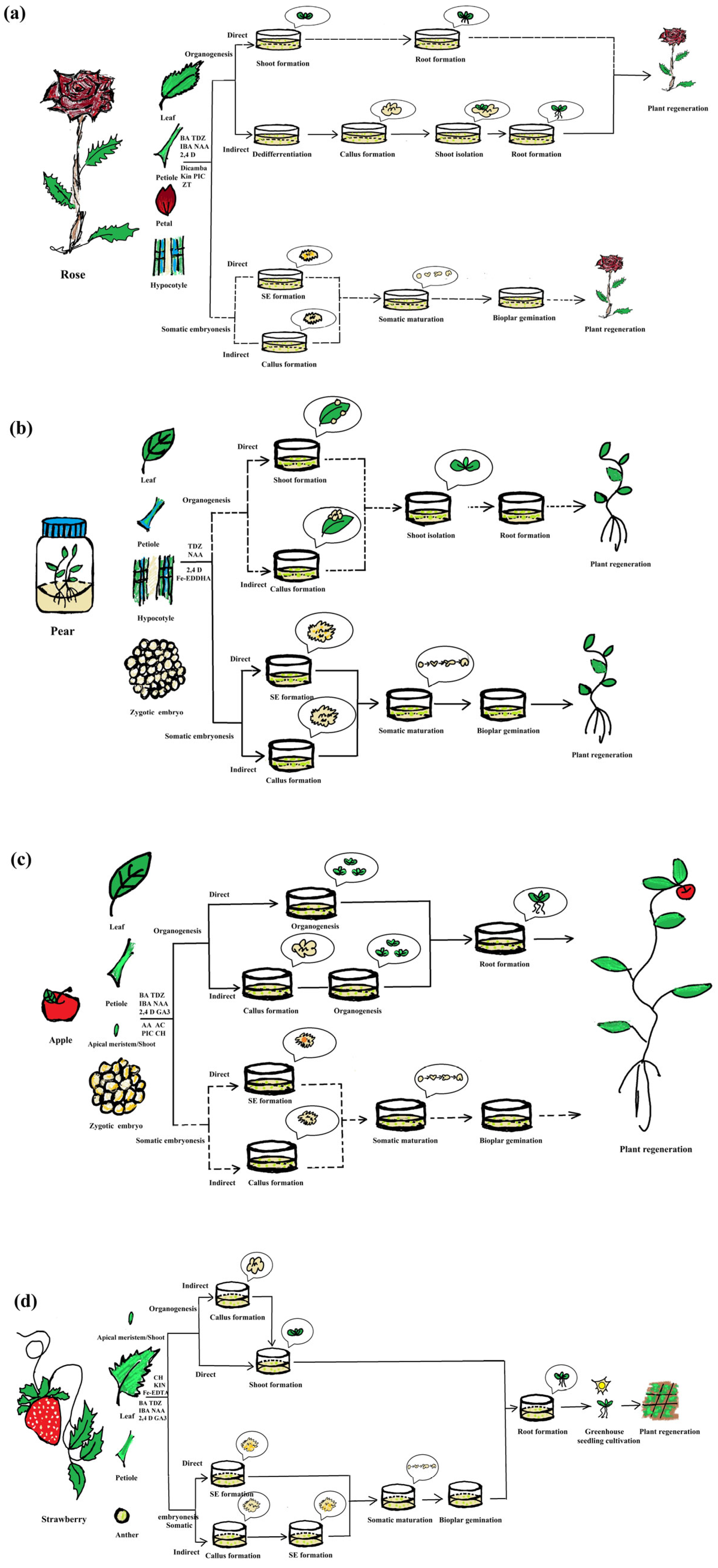
Based on key Rosaceae benchmark reviews [61,78,80,131,132] and our comparative analysis (Table 1), regeneration protocols were summarized across genera. Organogenesis was dominant in apple, strawberry, and rose, while pear primarily followed somatic embryogenesis. Leaves and shoots were common explants; anthers and petals were also used in strawberry and rose. MS medium with sucrose remained the basal standard, though QL and NN mediums, respectively, benefited pear and strawberry, with fructose, glucose, maltose, or sorbitol often employed in rose. Exogenous additives showed genus-specific roles: PIC, dicamba, kinetin, and zeatin enhanced rose regeneration; CH was effective in strawberry; and ascorbic acid (AC) with activated charcoal (AA) reduced browning in apple. Commonly used PGRs included BA, GA3, and 2,4-D for propagation, shoot growth, and callus induction, respectively, while TDZ combined with NAA or IBA significantly improved regeneration. Dark culture is often necessary for the induction of callus tissue, and the addition of Fe-EDDHA has a significant effect. Therefore, species-specific regeneration recommendations were formulated. For pear, regeneration is effectively induced using QL medium supplemented with TDZ, NAA, and 2,4-D. The addition of CH to MS medium yields significant improvement in strawberry regeneration. For rose, a combination of MS medium with alternative carbon sources (fructose, glucose, maltose, or sorbitol) and exogenous additives such as PIC, dicamba, kinetin, or zeatin exerts a pronounced positive impact on regeneration (Figure 2).

5. Application of Molecular Biotechnology in Plant Regeneration in Rosaceae

5.1. Regeneration-Related Genes and Their Regulatory Networks

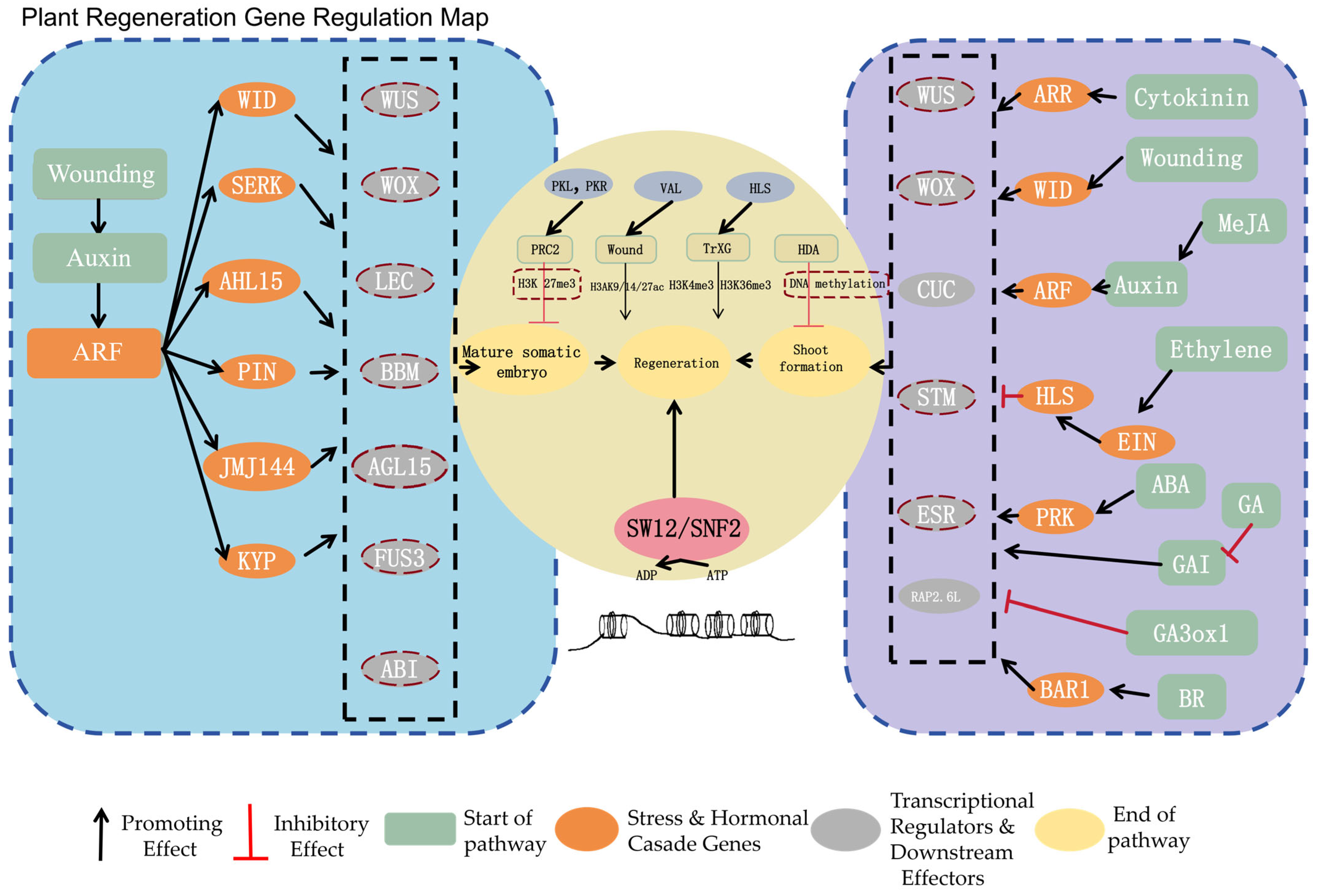
With advances in genomics and transcriptomics, research on regeneration in plants has increasingly focused on identifying key genes and their associated signaling pathways, highlighting the need for precise and coordinated gene regulation during regenerative processes. Regeneration-associated gene expression levels govern the regenerative capacity and developmental trajectory of explants. The conversion of non-regenerative cells into regenerative competence primarily relies on the activation of core genes responsible for cell fate reprogramming. Previous studies in model plant systems have identified several key regeneration-related gene families, including WUSCHEL (WUS) and WUSCHEL-RELATED HOMEOBOX (WOX), PLETHORA (PLT), SHOOT MERISTEMLESS (SM), SOMATIC EMBRYOGENESIS RECEPTOR-LIKE KINASE (SERK), EMBRYO MAKER (EM), and LEAFY COTYLEDON (LEC) genes [133] (Figure 3). Although these genes are indispensable for plant regeneration, they perform distinct and pathway-specific functions. Among them, WUS and its homolog WOX, which function as central regulators of the shoot and root apical meristems, respectively, act as molecular ‘switches’ that initiate and maintain regenerative competence [134,135]. Furthermore, BABY BOOM (BBM), LEC, and PLT stimulate somatic embryogenesis by modulating auxin signaling and biosynthetic pathways [136,137]. Collectively, these genes form the genetic foundation of regenerative capacity, and their precise temporal activation constitutes a fundamental prerequisite for successful plant regeneration.
Plant regeneration is governed by a coordinated, hormone-mediated regulatory network that precisely controls each stage and trajectory of the regenerative process. In model plant systems gene-regulated regenerative pathways have been well characterized (Figure 3). During shoot regeneration, wound-associated stress triggers the induction of WOUND-INDUCED DEDIFFERE-NTIATION1 (WIND1), which subsequently activates ENHANCER OF SHOOT REGENE-RATION1 (ESR1). Sustained ESR1 expression promotes the activation of shoot meristem-associated genes, including CUC1, WUS, SHOOT MERISTEMLESS (STM), and WOX, enabling shoot formation under shoot induction conditions (direct regeneration pathway). Alternatively, ESR1 activity can be stimulated during callus induction in the presence of auxin and cytokinin, thereby constituting the indirect regeneration pathway. Cytokinin signaling activates ARABIDOPSIS RESPONSE REGULATOR1 (ARR) genes, while auxin signaling induces several AUXIN RESPONSE FACTORS (ARFs), which collectively promote the expression of LATERAL ORGAN BOUNDARIES DOMAIN (LBD) genes., leading to the formation of pluripotent callus. Subsequent exposure to cytokinin-rich media upregulates shoot meristem regulators, driving callus reorganization into shoot structures. The onset of somatic embryogenesis depends on the intrinsic developmental competence of cells, which may be strengthened by hormonal interventions or stress-related signals, such as treatment with synthetic auxin 2,4-D. These cues stimulate the activation of central transcriptional regulators, notably WUS and BBM. Once activated, these factors generate a robust, self-sustaining regulatory circuit by inducing downstream effectors, including AGAMOUS-LIKE15 (AGL15) and the LAFL genes—LEC1, LEC2, ABSCISIC ACID INSENSITIVE 3 (ABI3), and FUSCA3 (FUS3) [138]. Multiple epigenetic silencers, such as POLYCOMB REPRESSIVE COMPLEXES (PRC1 and PRC2), PICKLE (PKL), and VIVIPAROUS/ABI3-LIKE factors (VAL1 and VAL2), fine-tune transcriptional activity and orchestrate regenerative processes through integrated feedback networks in concert with activating regulators [139] (Figure 3). Collectively, these findings demonstrate that an integrated regulatory network centered on core genes, such as WUS/STM, PLT, and LEC, which operate under the precise control of auxin and cytokinin signaling, orchestrates the regenerative capacity of plants.
Current knowledge of the regulatory networks controlling regeneration in the Rosaceae taxa is limited. Existing studies have largely focused on the functions of individual regulatory genes, including WUS, WOX, AIL, LEC, BBM, FUS, ABI3, STM, and AGL [17,140,141,142,143,144,145,146,147,148] (Figure 3). For instance, MdWOX 4-2 in apple enhances leaf regenerative competence and promotes adventitious shoot formation [140]. Similarly, MdAIL5 overexpression substantially increased apical meristem regenerative capacity [60]. The production efficiency of transgenic apple ‘Royal Gala’ was markedly improved through the ectopic expression of MdBBM1 [141]. MdWOX11 overexpression stimulated the initiation of adventitious root (AR) primordia in apple, whereas MdWOX11 suppression reduced AR primordium formation, highlighting its critical role in vegetative propagation [142]. WUS has been identified as a central regulator of shoot apical meristem (SAM) development in Fragaria vesca [143]. Furthermore, Garrido-Bigotes (2021) [149] used in silico approaches to analyze the homology and molecular evolution of LEC1, LEC2, FUS3, ABI3, and BBM, genes associated with somatic embryo development in cultivated strawberry. This analysis provided valuable genomic resources and insights for optimizing propagation systems and investigating ploidy-related effects on somatic embryogenesis within the Rosaceae family [149]. In rose, RcBBM1, RcBBM2, RcFUS3, and RcAGL15 participate in the regulation of somatic embryogenesis in R. canina [144,145,146]. Collectively, the identification and functional characterization of these regulators not only advances the understanding of plant cell totipotency but also provides a theoretical and technical basis for enhancing asexual propagation efficiency through genetic engineering (such as targeted editing of WUS or LEC) and molecular marker-assisted breeding strategies (such as employing SERK-based markers).

5.2. Epigenetic Modification Promotes Plant Regeneration

Epigenetic regulation of DNA methylation, histone modification, and chromatin remodeling plays an increasingly pivotal role in plant regeneration regulation. DNA methylation is a critical epigenetic mechanism that influences regenerative competence [147,150] (Figure 3). In plant systems, cytosine methylation occurs not only at CG dinucleotides but also within non-CG sequence contexts, including CHG and CHH. In mammals, however, this epigenetic modification is largely confined to CG sites [151]. In plants such as apple, overall methylation levels progressively decline with increasing rejuvenation status [152]. Treatment with the DNA methylation inhibitor (5-azacytidine) improved adventitious root formation and elevated the expression level of rooting-associated genes, including MdANT, in in vitro cultures of the apple rootstock M9T337 [153]. Higher DNA methylation levels have been detected in adult meristems in peach than in juvenile or juvenile-like meristems, supporting growing evidence that increased DNA methylation accompanies developmental maturation in plants [154,155,156]. Comparative analyses in strawberry tissue culture have revealed pronounced epigenetic reprogramming during callus induction. Studies in wild strawberry Fragaria nilgerrensis demonstrated that global methylation patterns varied across sequential culture stages, with the most substantial methylation occurring in the CHH context within transposable element-rich regions [157]. Similarly, in diploid wild Fragaria vesca, leaf-derived callus exhibited elevated DNA methylation levels, primarily at CG and CHG sites, concomitant with increased expression of four methyltransferase and two AGO genes, indicating a regulatory role for DNA methylation during callus formation [158]. Rosaceae fruit crops use species-specific epigenetic strategies during tissue culture. For instance, 5-azacytidine (5-AzaC) application inhibited callus initiation and shoot formation in strawberry leaf explants [158], whereas the same treatment stimulated callus proliferation in peach [159].
In addition, histone modifications significantly contribute to regeneration (Figure 3). Dynamic regulation of the histone mark H3K27me3 is essential for callus production during tissue culture [160]. In Arabidopsis, the demethylase JMJD5 removes H3K27me3, thereby activating LBD genes during root primordia initiation, highlighting an epigenetic mechanism underlying callus development and regeneration [161]. In contrast, regenerative-related genes, such as AtWIND1, AtERF113/AtRAP2.6L, and AtLBD16, which are rapidly activated following wounding, are enriched with activating histone markers, including H3K9/14ac and H3K27ac, thereby facilitating callus induction [162]. Comparative epigenetic regulation has also been reported in members of the Rosaceae family. In peach, the in vitro culture of leaf explants induces extensive epigenetic reprogramming marked by the removal of H3K27me3, resulting in the activation of hormone-responsive regulators and subsequent callus development [159] (Figure 3).
Chromatin remodeling is another key regulatory layer. Remodeling complexes, such as SWItch/Sucrose Non-Fermenting (SWI/SNF), enhance chromatin accessibility at targeted genomic loci and are essential for maintaining apical meristem identity [163,164]. For example, BRAHMA (BRM), a central ATPase subunit of the SWI/SNF (BAS) chromatin remodeling complex, play a pivotal role in shoot regeneration through the formation of root-derived callus [165]. However, comparable investigations into the involvement of chromatin remodeling complexes in Rosaceae regeneration remain lacking.
The coordinated action of these epigenetic mechanisms provides deeper insights into the regulatory basis of plant regeneration and offers practical strategies for overcoming regeneration barriers. The targeted use of epigenetic modulators represents an effective potential for enhancing the regeneration efficiency of Rosaceae plants.

6. Prospects for Plant Regeneration Technology of Rosaceae

6.1. Regeneration and Transformation Methods Independent of Tissue Culture

Although the integration of regeneration-related genes with gene-editing technologies has substantially advanced plant regeneration and genetic improvement, two major challenges remain. First, genotype dependence continues to constrain the efficiency of genetic transformation in most plants [166]. Second, traditional tissue culture-based methods are labor-intensive and time-consuming. Tissue culture-independent transformation techniques, such as the inflorescence dip method, have been widely applied in A. thaliana [167]. However, owing to variation in floral architecture, pollination mechanisms, and overall growth habit, the applicability of this technique across many Rosaceae taxa remains restricted.
Within this context, the Cut–Dip–Budding (CDB) system, which leverages specific root developmental characteristics, exhibits distinct advantages. This system is particularly suitable for plants capable of producing root tillers. Inoculation with Agrobacterium tumefaciens induces adventitious roots and subsequently promotes bud primordia, which ultimately develop into complete plants [166]. The CDB technique has been successfully applied to generate transgenic or gene-edited lines in several plants, including herbaceous species (e.g., rubber grass, Coronilla varia), root-tuber crops (e.g., sweet potato), and woody plants (e.g., Ailanthus altissima, Aralia elata, Clerodendrum philippinum) [166]. Nonetheless, reports documenting the direct application of CDB systems in Rosaceae crops remain limited. Although Liu et al. (2024) [168] developed a root-bud-shoot (RBS) transformation method analogous to the CDB platform, which substantially enhanced the efficiency and rate of apple genetic transformation through a ‘root-first, bud-second’ process and reduced regeneration time to 9 weeks with the assistance of key stem-cell regulatory genes (such as MdWOX5)—this method still ultimately relies on tissue culture procedures.
The FastTrACC technology represents another innovative regeneration strategy that circumvents the conventional tissue culture-dependent transformation process. This approach relies on a rapid injection-based delivery system in which Agrobacterium is directly introduced into living plant explants to achieve gene transformation without the need for in vitro culture [169]. Recent studies have demonstrated that direct delivery of the developmental regulators WUS2 and STM into somatic cells of Nicotiana benthamiana using the Fast-TrACC system enables efficient genetic transformation and genome editing without the need for conventional tissue culture [169]. However, this approach has not yet been applied to Rosaceae taxa.
Although tissue culture-independent approaches show considerable potential, their application in Rosaceae regeneration remains constrained by several factors. First, non-tissue culture strategies, such as CDB or FastTrACC, generally exhibit low transformation efficiency and frequently generate chimeric shoots, thereby limiting their effectiveness for precise gene editing. Although these approaches are operationally less complex than conventional tissue culture, they still require careful optimization of delivery parameters (e.g., vacuum infiltration conditions and injection depth) and rely on specialized equipment, which may restrict their adoption in non-specialized laboratories or field settings. Furthermore, achieving stable and heritable integration of exogenous genetic material remains a significant technical hurdle, particularly in perennial Rosaceae crops.
Future, as knowledge of regeneration-related gene function in Rosaceae continues to expand, integrating these key regulatory genes with tissue culture-independent transformation technologies may provide a viable pathway for achieving genetic modification even in cultivars that exhibit poor regenerative capacity under traditional in vitro systems.

6.2. CRISPR/Cas9 System

The CRISPR/Cas9 system is a major advancement in plant science, enabling precise regulation of regenerative genes and epigenetic modifications to enhance regeneration capacity. This system allows targeted manipulation of key transcription factors, such as WUS and BBM, thereby effectively improving regeneration efficiency. For instance, in apple, CRISPR/Cas9-mediated knockout of WOX family genes not only facilitates functional analysis of their role in the salicylic acid-mediated inhibition of somatic embryogenesis but also offers a direct framework for overcoming the regeneration bottleneck in woody species such as apple and pear through precise modulation of endogenous regeneration gene networks [44]. CRISPR/Cas9-based approaches provide a novel avenue for regeneration research in the context of epigenetic regulation. This system enables targeted DNA methylation, demethylation, or histone modifications without altering the underlying DNA sequences by recruiting activation/inhibition domains to specific loci. This technology has been successfully applied in A. thaliana [170,171].
Recent years have witnessed marked progress in CRISPR/Cas9 applications for Rosaceae plants, spanning from tangible trait enhancement to foundational platform development. Direct improvements in agronomic traits have been achieved; for instance, knockout of the FaPG1 gene significantly increased fruit firmness by 33–70%, extended shelf life, and boosted pathogen resistance [172], while mutations in FvMYB46 and FaPDS have enabled precise modulation of fruit color, fertility, and development [173,174]. Concurrently, methodological advances are overcoming technical bottlenecks, exemplified by a high-throughput sgRNA screening platform in rose suspension cells that elevated editing efficiency to 82.5% and successfully targeted the ethylene-response gene RhEIN2 to alter flower senescence [175]. Furthermore, discovery of the novel scent gene SCREP regulating rose fragrance and validation of its conserved function in strawberry [176] provide a critical target for cross-species metabolic engineering. Collectively, these efforts are bridging the gap between robust editing platforms and practical trait optimization. The field is now poised to transition toward precision transcriptional and epigenetic regulation using nuclease-inactive dCas9 fused to effector domains, enabling programmable gene modulation without altering DNA sequences [177].
CRISPR/Cas9 technology also has several inherent limitations persist. First, CRISPR/Cas9 system itself limitations, including PAM sequence dependency, the need for system-specific optimization, frequent generation of chimeric mutations, and unreliable gRNA design tools. To overcome these, the field is advancing through engineered nucleases like SpRY, high-fidelity editors for precise changes, and inducible systems to eliminate vector sequences for transgene-free plants. Second, CRISPR/Cas9 delivery systems limitations. CRISPR/Cas9 delivery systems face a key challenge of low mutation rates, which persists even with direct RNP delivery. Current optimization strategies include reducing vector size via PTG/Cas9 systems and self-cleaving 2A linkers, alongside exploring more compact nucleases like CasΦ and novel viral vectors such as recombinant Rhabdovirus. Third, selection and regeneration limitations. The low and unstable regeneration efficiency in most Rosaceae plants necessitates optimization of regeneration protocols to improve both transformed plant survival and the regeneration frequency of homozygous mutant buds. Finally, biological characteristics limitations. The inherent biological complexities of Rosaceae plants—such as high genome heterozygosity and polyploidy—necessitate precise gRNA design and sequencing verification, while the field is further constrained by a significant lack of studies analyzing edited T1 and F1 generations beyond initial transformations [178].
In the future, CRISPR/Cas9 system is expected to enable more efficient generation of homozygous mutants without the introduction of exogenous Cas9 using fluorescence-based screening, providing a practical approach for rapidly obtaining stable genetic material in woody Rosaceae plants with long regeneration cycles. Targeted activation of the epigenetic states of one or more regeneration-associated genes (such as LEC) can enhance the regeneration potential of adult tree tissues, representing a transformative advance for efficient genetic transformation and varietal improvement of recalcitrant Rosaceae woody fruit trees, including peach and plum. CRISPR/Cas9 is poised to become a pivotal tool in the molecular breeding of Rosaceae plants by integrating species-specific promoters, optimized regeneration and transformation platforms, and efficient strategies for isolating non-transgenic edited plants.
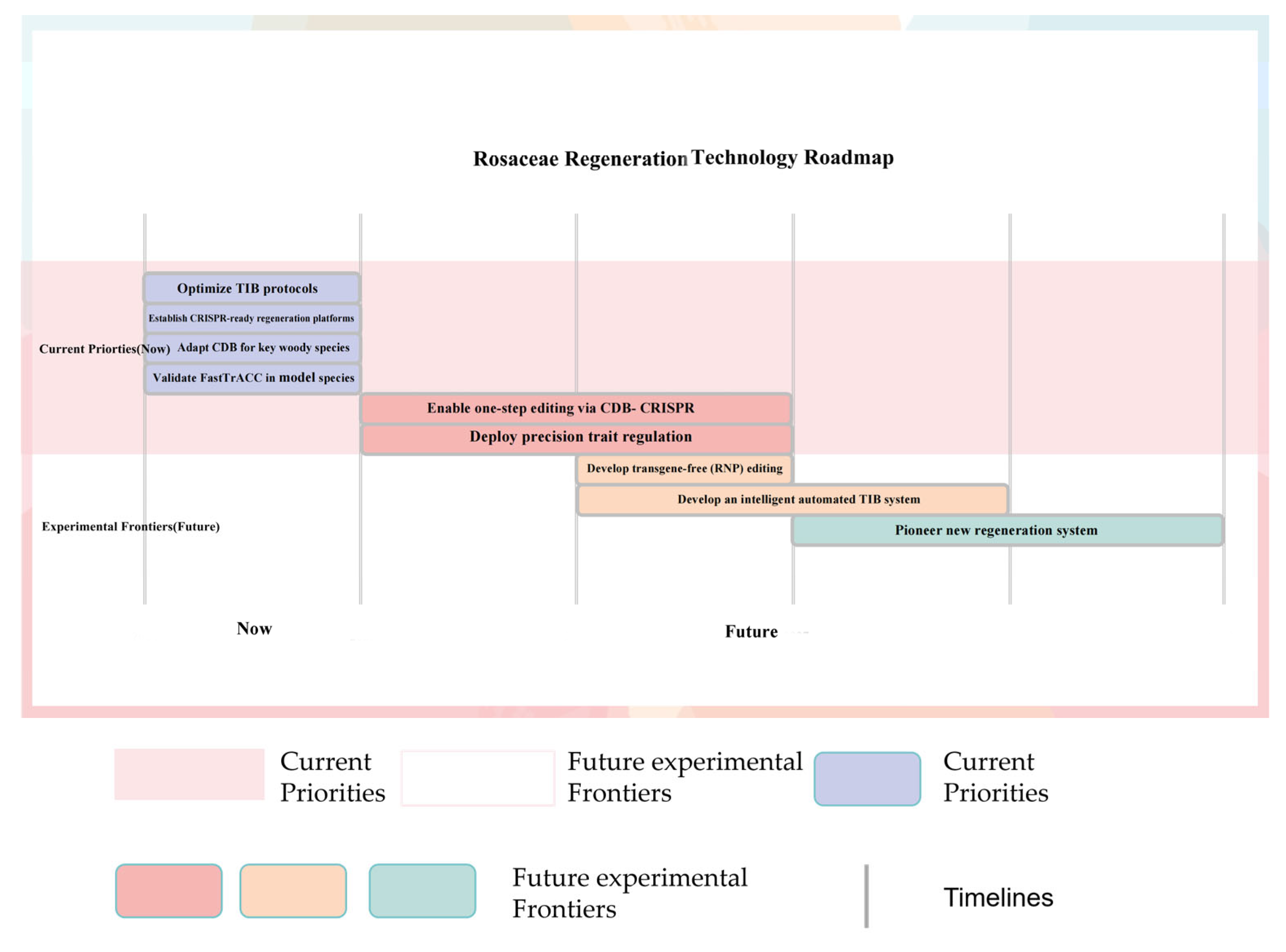
Current efforts of Rosaceae regeneration prioritize directly applicable or preliminarily verified technologies, such as applying Crisper-Cas9 and optimizing CDB protocols as well as establishing routine regeneration platforms. Meanwhile, experimental frontiers focus on next-generation targets validated in other systems, including non-genetically edited techniques and new regeneration methods. The FastTrACC and bioreactors technology towards the long-term goal of independence from genotypes and achieving automation will accelerate the development of traits and overcome the existing bottlenecks in Rosaceae regeneration (Figure 4).

7. Conclusions

Rapid in vitro propagation and efficient regeneration in Rosaceae plants are critical for germplasm resource conservation and industrial use. Although progress has been made in overcoming regeneration limitations in certain varieties through optimization of culture media, adjustment of growth regulator ratios, and application of exogenous additives, the underlying regeneration mechanisms in this family remain complex, and interspecific differences are substantial. Consequently, the development of a universal regeneration system continues to face challenges, with issues such as somatic variation, difficulty in bud formation, and tissue browning remaining significant. This review first conducted a comprehensive comparison among the various genera of the Rosaceae family regarding regeneration processes and conditions. It highlighted the core impediments in the regeneration of Rosaceae plants and examined the efficacy of regeneration-related gene integration and epigenetic modifications. Innovative approaches, such as the activation of endogenous genes via the CRISPR/dCas9 system and the application of non-tissue culture transformation methods for genetic improvement, were prospectively proposed. Future efforts will focus on enhancing CRISPR-Cas9 delivery (e.g., CDB protocols), applying non-genetic engineering techniques, and advancing novel regeneration platforms like FastTrACC and automated bioreactors to accelerate trait development and overcome regeneration bottlenecks. Collectively, these insights provide a robust theoretical framework and practical guidance for Rosaceae plant propagation and genetic enhancement.

Author Contributions

Study conception and design: S.J. and J.L.; data collection: Q.Z., D.H. and M.D.; analysis and interpretation of results: M.D. and L.L.; draft manuscript preparation: Q.Z. and D.H.; feedback on the analysis and manuscript: S.J., J.L., S.L. and K.L. All authors have read and agreed to the published version of the manuscript.

Funding

This work was jointly funded by the National Natural Science Foundation of China (No. 32560717); The project of Joint Special Project for Local Universities of Yunnan Provincial Department of Science and Technology, Grant No.: 202501BA070001-092. All the authors have proofread the final version.

Institutional Review Board Statement

Not applicable.

Informed Consent Statement

Not applicable.

Data Availability Statement

The data presented in this study are available in the article.

Conflicts of Interest

The authors declare no conflicts of interest.

References

  1. Gago, D.; Sánchez, C.; Aldrey, A.; Christie, C.B.; Bernal, M.Á.; Vidal, N. Micropropagation of plum (Prunus domestica L.) in bioreactors using photomixotrophic and photoautotrophic Conditions. Horticulturae 2022, 8, 286. [Google Scholar] [CrossRef]
  2. Keldibekova, M.; Knyazev, S. Effective in vitro regeneration systems from leaf explants for commercially important pear cultivars (Pyrus communis L.). Pak. J. Bot. 2025, 57, 749–754. [Google Scholar] [CrossRef] [PubMed]
  3. Lei, J.J.; Jiang, S.; Ma, R.Y.; Xue, L.; Zhao, J.; Dai, H.P. Current status of strawberry industry in China. Acta Hortic. 2021, 1309, 349–352. [Google Scholar] [CrossRef]
  4. Chavez, D.E.; Palma, M.A.; Byrne, D.H.; Hall, C.R.; Ribera, L.A. Willingness to pay for rose attributes: Helping provide consumer orientation to breeding programs. J. Agric. Appl. Econ. 2020, 52, 1–15. [Google Scholar] [CrossRef]
  5. Wang, H. Beneficial medicinal effects and material applications of rose. Heliyon 2024, 10, e23530. [Google Scholar] [CrossRef] [PubMed]
  6. Nasery, M.; Hassanzadeh, M.; Najaran, Z.T.; Emami, S.A. Rose (Rosa × damascena Mill.) Essential Oils. In Essential Oils in Food Preservation, Flavor, and Safety; Preedy, V.R., Ed.; Academic Press: Cambridge, MA, USA, 2016; pp. 659–665. [Google Scholar]
  7. Zhu, L.; Zhou, L.; Li, J.; Chen, Z.; Wang, M.Y.; Li, B.B.; Xu, S.W.; Luo, J.; Zeng, T.; Wang, C.Y. Regeneration of ornamental plants: Current status and prospects. Ornam. Plant Res. 2024, 4, e022. [Google Scholar] [CrossRef]
  8. Palei, S.; Rout, G.R.; Das, A.K.; Dash, D.K. Callus induction and indirect regeneration of strawberry (Fragaria × ananassa) Duch. CV. Chandler. Int. J. Curr. Microbiol. Appl. Sci. 2017, 6, 1311–1318. [Google Scholar] [CrossRef]
  9. Amiri, E.M.; Elahinia, A. Influence of medium compositions on growth of apple rootstocks (‘M9’, ‘M27’, ‘MM106’) in vitro condition. Acta Hortic. 2011, 923, 139–146. [Google Scholar] [CrossRef]
  10. Dobránszki, J.; Teixeira da Silva, J.A. Adventitious shoot regeneration from leaf thin cell layers in apple. Sci. Hortic. 2011, 127, 460–463. [Google Scholar] [CrossRef]
  11. Hu, D.G.; Sun, M.H.; Sun, C.H.; Liu, X.; Zhang, Q.Y.; Zhao, J.; Hao, Y.J. Conserved vacuolar H+-ATPase subunit B1 improves salt stress tolerance in apple calli and tomato plants. Sci. Hortic. 2015, 197, 107–116. [Google Scholar] [CrossRef]
  12. An, J.P.; Li, H.H.; Song, L.Q.; Su, L.; Liu, X.; You, C.X.; Wang, X.F.; Hao, Y.J. The molecular cloning and functional characterization of MdMYC2, a bHLH transcription factor in apple. Plant Physiol. Biochem. 2016, 108, 24–31. [Google Scholar] [CrossRef] [PubMed]
  13. Stanišić, M.; Ninković, S.; Savić, J.; Ćosić, T.; Mitić, N. The effects of β-lactam antibiotics and hygromycin B on de novo shoot organogenesis in apple cv. Golden Delicious. Arch. Biol. Sci. 2018, 70, 179–190. [Google Scholar] [CrossRef]
  14. Feng, C.H.; Cui, Z.H.; Li, B.Q.; Chen, L.; Ma, Y.L.; Zhao, Y.H.; Wang, Q.C. Duration of sucrose preculture is critical for shoot regrowth of in vitro-grown apple shoot-tips cryopreserved by encapsulation dehydration. Plant Cell Tissue Organ Cult. 2013, 112, 369–378. [Google Scholar] [CrossRef]
  15. Mir, J.I.; Ahmed, N.; Singh, D.B.; Rashid, R.; Shafi, W.; Zaffer, S.; Sheikh, M.A.; Noor, U.; Khan, M.H.; Rather, I. Fast and efficient in vitro multiplication of apple clonal root stock MM-106. Vegetos 2013, 26, 198–202. [Google Scholar] [CrossRef]
  16. Righetti, L.; Djennane, S.; Berthelot, P.; Cournol, R.; Wilmot, N.; Loridon, K.; Vergne, E.; Chevreau, E. Elimination of the nptII marker gene in transgenic apple and pear with a chemically inducible R/Rs recombinase. Plant Cell Tissue Organ Cult. 2014, 117, 335–348. [Google Scholar] [CrossRef]
  17. Poisson, A.S.; Berthelot, P.; Le Bras, C.; Grapin, A.; Vergne, E.; Chevreau, E. A droplet-vitrification protocol enabled cryopreservation of doubled haploid explants of Malus × domestica Borkh. ‘Golden Delicious’. Sci. Hortic. 2016, 209, 187–191. [Google Scholar] [CrossRef]
  18. Mehta, M.; Ram, R.; Bhattacharya, A. A simple and cost effective liquid culture system for the micropropagation of two commercially important apple rootstocks. Indian J. Exp. Biol. 2014, 52, 748–754. [Google Scholar]
  19. Mao, J.P.; Zhang, D.; Meng, Y.; Li, K.; Wang, H.; Han, M.Y. Inhibition of adventitious root development in apple rootstocks by cytokinin is based on its suppression of adventitious root primordia formation. Physiol. Plant. 2018, 166, 663–676. [Google Scholar] [CrossRef]
  20. Vogiatzi, C.; Rosenqvist, E.; Grout, B.W.W. Gas exchange measurement as a non-destructive viability assay for frozen-thawed, winter-dormant apple buds. Cryobiology 2018, 107, 74–77. [Google Scholar] [CrossRef]
  21. Kakimzhanova, A.; Dyussembekova, D.; Nurtaza, A.; Yessimseitova, A.; Shevtsov, A.; Lutsay, V.; Ramankulov, Y.; Kabieva, S. An efficient micropropagation system for the vulnerable wild apple species, Malus sieversii, and confirmation of its genetic homogeneity. Erwerbs-Obstbau 2023, 65, 621–632. [Google Scholar] [CrossRef]
  22. Ameri, A.; Davarynejad, G.; Moshtaghi, N.; Tehranifar, A. Optimization of direct somatic embryogenesis induction and plantlet regeneration in European Pear. J. Plant Biol. 2019, 11, 43–45. [Google Scholar] [CrossRef]
  23. Abdollahi, H.; Muleo, R.; Rugini, E. Optimisation of regeneration and maintenance of morphogenic callus in pear (Pyrus communis L.) by simple and double regeneration techniques. Sci. Hortic. 2006, 108, 352–358. [Google Scholar] [CrossRef][Green Version]
  24. Ricci, A.; Mezzetti, B.; Navacchi, O.; Sabbadini, S. In vitro shoot regeneration from leaves of Pyrus communis L. rootstock and cultivars. Plant Biotech. Rep. 2023, 17, 341–352. [Google Scholar] [CrossRef]
  25. Leblay, C.; Chevreau, E.; Raboin, L.M. Adventitious shoot regeneration from in vitro leaves of several pear cultivars (Pyrus communis L.). Plant Cell Tissue Organ Cult. 1991, 25, 99–105. [Google Scholar] [CrossRef]
  26. Duan, M.; Liu, J.; Zhao, Y.; Wang, X.; Li, L.; Wang, S.; Jia, R.; Zhao, X.; Kou, Y.; Su, K.; et al. Somatic embryogenesis from the leaf-derived calli of in vitro shoot-regenerated plantlets of Rosa hybrida ‘Carola’. Plants 2024, 13, 3553. [Google Scholar] [CrossRef]
  27. Chen, J.R.; Wu, L.; Hu, B.W.; Yi, X.; Liu, R.; Deng, Z.N.; Xiong, X.Y. The Influence of plant growth regulators and light quality on somatic embryogenesis in China rose (Rosa chinensis Jacq.). Plant Growth Regul. 2014, 33, 295–304. [Google Scholar] [CrossRef]
  28. Hsia, C.; Korban, S.S. Organogenesis and somatic embryogenesis in callus cultures of Rosa hybrida and Rosa chinensis minima. Plant Cell Tissue Organ Cult. 1996, 44, 1–6. [Google Scholar] [CrossRef]
  29. Kintzios, S.; Manos, C.; Makri, O. Somatic embryogenesis from mature leaves of rose (Rosa sp.). Plant Cell Rep. 1999, 18, 467–472. [Google Scholar] [CrossRef]
  30. Pourhosseini, L.; Kermani, M.J.; Habashi, A.A.; Khalighi, A. Efficiency of direct and indirect shoot organogenesis in different genotypes of Rosa hybrida. Plant Cell Tissue Organ Cult. 2013, 112, 101–108. [Google Scholar] [CrossRef]
  31. Kunitake, H.; Imamizo, H.; Mii, M. Somatic embryogenesis and plant regeneration from immature seed-derived calli of rugosa rose (Rosa rugosa Thunb.). Plant Sci. 1993, 90, 187–194. [Google Scholar] [CrossRef]
  32. Borissova, A.; Tsolova, V.; Angeliev, V.; Atanassov, A. Somatic embryogenesis of Rosa hybrida L. Biotechnol. Biotechnol. Equip. 2000, 14, 44–51. [Google Scholar] [CrossRef][Green Version]
  33. Jiang, S.; Ji, Y.; Wang, M.; Xue, L.; Zhao, J.; Zheng, Y.; Dai, H.P.; Lei, J.J. Establishing a high-efficiency in vitro regeneration system for Agrobacterium-mediated transformation in Fragaria nilgerrensis. Fruit Res. 2023, 3, 9. [Google Scholar] [CrossRef]
  34. Husaini, A.M. Pre-and post-agroinfection strategies for efficient leaf disk transformation and regeneration of transgenic strawberry plants. Plant Cell Rep. 2010, 29, 97–110. [Google Scholar] [CrossRef]
  35. Dawa, K.K.; El-Denary, M.E.; Abo-Elglagel, I.M. Callus formation and shoot regeneration as affected by plant growth regulators and explant types in three strawberry cultivars (Fragaria × ananassa Duch.). Int. J. Plant Prod. 2017, 8, 599–604. [Google Scholar] [CrossRef]
  36. Cappelletti, R.; Sabbadini, S.; Mezzetti, B. The use of TDZ for the efficient in vitro regeneration and organogenesis of strawberry and blueberry cultivars. Sci. Hortic. 2016, 207, 117–124. [Google Scholar] [CrossRef]
  37. Owen, H.R.; Miller, A.R. Haploid plant regeneration from anther cultures of three north American cultivars of strawberry (Fragaria × ananassa Duch). Plant Cell Rep. 1996, 15, 905–909. [Google Scholar] [CrossRef]
  38. Kim, J.; Lee, C.G.; Na, H. Optimal culture environment for anther derived callus, embryo, and regeneration of strawberry ‘Jukhyang’. Hortic. Environ. Biotechnol. 2020, 61, 1031–1038. [Google Scholar] [CrossRef]
  39. Nehra, N.S.; Stushnoff, C.; Kartha, K.K. Direct shoot regeneration from strawberry leaf disks. J. Am. Soc. Hortic. Sci. 1989, 14, 1014–1018. [Google Scholar] [CrossRef]
  40. Biswas, M.K.; Islam, R.; Hossain, M. Somatic embryogenesis in strawberry (Fragaria spp.) through callus culture. Plant Cell Tissue Organ Cult. 2007, 90, 49–54. [Google Scholar] [CrossRef]
  41. Liu, Z.R.; Sanford, J.C. Plant regeneration by organogenesis from strawberry leaf and runner tissue. HortScience 1988, 23, 1057–1059. [Google Scholar] [CrossRef]
  42. Passey, A.; Barrett, K.; James, D. Adventitious shoot regeneration from seven commercial strawberry cultivars (Fragaria × ananassa Duch.) using a range of explant types. Plant Cell Rep. 2003, 21, 397–401. [Google Scholar] [CrossRef]
  43. Husaini, A.M.; Samina Aquil, S.A.; Mukhtar Bhat, M.B.; Abassum Qadri, T.Q.; Kamaluddin, K.; Abdin, M.Z. A high-efficiency direct somatic embryogenesis system for strawberry (Fragaria × ananassa Duch.) cultivar Chandler. J. Crop Sci. Biotechnol. 2008, 11, 107–109. [Google Scholar]
  44. Yang, Y.; Duan, Y.; Tang, J.Y.; Feng, J.; Wang, Y.; Chen, M.K.; Zhou, X.L.; Li, S.; Wei, J.; Liang, X.L.; et al. Enhancing somatic embryogenesis and genetic transformation through overexpression of MdWOX4 in apple. Hortic. Plant J. 2025, in press. [Google Scholar] [CrossRef]
  45. Xiao, X.; Zhang, C.L.; Liu, Y.; Wang, X.F.; You, C.X. Functional identification of apple Baby Boom in genetic transformation and somatic embryogenesis. Vitr. Cell. Dev. Biol.-Plant. 2023, 59, 1–13. [Google Scholar] [CrossRef]
  46. Wang, H.B.; Wang, S.; Zheng, W.Y.; He, X.W.; Chang, Y.S.; He, P.; Sun, Q.R.; Li, L.G. High-efficiency plantlet regeneration from leaf explants of apple rootstock ‘Luzhen 1’. J. Fruit Sci. 2024, 41, 1781–1788. [Google Scholar] [CrossRef]
  47. Lane, W.D.; Iketani, H.; Hayashi, T. Shoot regeneration from cultured leaves of Japanese pear (Pyrus pyrifolia). Plant Cell Tissue Organ Cult. 1998, 54, 9–14. [Google Scholar] [CrossRef]
  48. Yu, Z.; Wang, Y.; Zhang, M.; Liu, Q.; Pan, Q.; Li, T.; Wang, S. An efficient leaf regeneration and genetic transformation system for Pyrus betulifolia. Hortic. Adv. 2025, 3, 6. [Google Scholar] [CrossRef]
  49. de Almeida, M.; de Almeida, C.V.; Graner, E.M.; Brondani, G.E.; de Abreu-Tarazi, M.F. Pre-procambial cells are niches for pluripotent and totipotent stem-like cells for organogenesis and somatic embryogenesis in the peach palm: A histological study. Plant Cell Rep. 2012, 31, 1495–1515. [Google Scholar] [CrossRef]
  50. Goffreda, J.C.; Scopel, A.L.; Fiola, J.A. Indole butyric acid induces regeneration of phenotypically normal apricot (Prunus armeniaca L.) plants from immature embryos. Plant Growth Regul. 1995, 17, 41–46. [Google Scholar] [CrossRef]
  51. Tian, L.; Wen, Y.; Jayasankar, S.; Sibbald, S. Regeneration of Prunus salicina Lindl (Japanese plum) from hypocotyls of mature seeds. Vitr. Cell. Dev. Biol.-Plant 2007, 43, 343–347. [Google Scholar] [CrossRef]
  52. Yang, Y.J.; Wang, D.F.; Wang, C.S.; Wang, X.H.; Li, J.N.; Wang, R. Construction of high efficiency regeneration and transformation systems of Pyrus ussuriensis Maxim. Plant Cell Tissue Organ Cult. 2017, 131, 139–150. [Google Scholar] [CrossRef]
  53. Ricci, A.; Sabbadini, S.; Prieto, H.; Padilla, I.M.G.; Li, Z.J.; Scorza, R.; Limera, C.; Mezzetti, B.; Dardick, C.; Perez-Jimenez, M.; et al. Genetic transformation in peach (Prunus persica L.): Challenges and ways forward. Plants 2020, 9, 971. [Google Scholar] [CrossRef]
  54. Kim, S.W.; Oh, M.J.; Liu, J.R. Somatic embryogenesis and plant regeneration in zygotic embryo explant cultures of rugosa rose. Plant Biotechnol. Rep. 2009, 3, 199–203. [Google Scholar] [CrossRef]
  55. Tashkenbayeva, A.K.; Sarshayeva, M.Z.H. Propagation of certified Fragaria ananassa in tissue culture. Acta Hortic. 2024, 1413, 59–66. [Google Scholar] [CrossRef]
  56. Gerdakaneh, M.; Mozaffari, A. Plant regeneration via direct somatic embryogenesis in three strawberry (Fragaria ananassa Duch.) cultivars. Agrotech. Ind. Crops 2021, 1, 103–109. [Google Scholar] [CrossRef]
  57. Wang, D.Y.; Wergin, W.P.; Zimmerman, R.H. Somatic embryogenesis and plant regeneration from immature embryos of strawberry. HortScience 1984, 19, 71–72. [Google Scholar] [CrossRef]
  58. Lei, J.J.; Xue, L.; Guo, R.X.; Dai, H.P. The Fragaria species native to China and their geographical distribution. Acta Hortic. 2017, 1156, 37–46. [Google Scholar] [CrossRef]
  59. Demirel, S.; Pehluvan, M.; Aslantaş, R. Evaluation of genetic diversity and population structure of peach (Prunus persica L.) genotypes using inter-simple sequence repeat (ISSR) markers. Genet. Resour. Crop Evol. 2024, 71, 1301–1312. [Google Scholar] [CrossRef]
  60. Liu, K.; Yang, A.; Yan, J.; Liang, Z.l.; Yuan, G.p.; Cong, P.h.; Zhang, L.Y.; Han, X.L.; Zhang, C.X. MdAIL5 overexpression promotes apple adventitious shoot regeneration by regulating hormone signaling and activating the expression of shoot development-related genes. Hortic. Res. 2023, 10, uhad198. [Google Scholar] [CrossRef] [PubMed]
  61. Aldwinckle, H.S.; Malnoy, M. Plant regeneration and transformation in the Rosaceae. Transgenic. Plant J. 2009, 3, 1–38. [Google Scholar]
  62. Nakajima, I.; Sato, Y.; Saito, T.; Moriguchi, T.; Yamamoto, T. Agrobacterium-mediated genetic transformation using cotyledons in Japanese pear (Pyrus pyrifolia). Breed. Sci. 2013, 63, 275–283. [Google Scholar] [CrossRef][Green Version]
  63. Burrell, A.M.; Lineberger, R.D.; Rathore, K.S.; Byrne, D.H. Genetic variation in somatic embryogenesis of rose. HortScience 2006, 41, 1165–1168. [Google Scholar] [CrossRef]
  64. Nehra, N.S.; Kartha, K.K.; Stushnoff, C.; Giles, K.L. Effect of in vitro propagation methods on field performance of two strawberry cultivars. Euphytica 1994, 76, 107–115. [Google Scholar] [CrossRef]
  65. Nehra, N.S.; Chibbar, R.N.; Kartha, K.K.; Datla, R.S.S.; Crosby, W.L.; Stushnoff, C. Genetic transformation of strawberry by Agrobacterium tumefaciens using a leaf disk regeneration system. Plant Cell Rep. 1990, 9, 293–298. [Google Scholar] [CrossRef]
  66. Chung, H.H.; Ouyang, H.Y. Use of Thidiazuron for high-frequency callus induction and organogenesis of wild strawberry (Fragaria vesca). Plants 2021, 10, 67. [Google Scholar] [CrossRef] [PubMed]
  67. Rugini, E.; Orlando, R. High efficiency shoot regeneration from calluses of strawberry (Fragaria × ananassa Duch.) stipules of in vitro shoot cultures. J. Hortic. Sci. Biotech. 1992, 67, 577–582. [Google Scholar] [CrossRef]
  68. Arene, L.; Pellegrino, C.; Gudin, S.A. Comparison of the somaclonal variation level of Rosa hybrida L. cv Meirutral plants regenerated from callus or direct induction from different vegetative and embryonic tissues. Euphytica 1993, 71, 83–90. [Google Scholar] [CrossRef]
  69. Haddadi, F.; Aziz, M.A.; Kamaladini, H.; Ravanfar, S.A. Thidiazuron- and zeatin-induced high-frequency shoot regeneration from leaf and shoot-tip explants of strawberry. HortTechnology 2013, 23, 276–281. [Google Scholar] [CrossRef]
  70. Jia, X.; Xu, S.; Wang, Y.; Jin, L.; Gao, T.; Zhang, Z..; Yang, C.; Qing, Y.; Li, C.; Ma, F. Age-dependent changes in leaf size in apple are governed by a cytokinin-integrated module. Plant Physiol. 2024, 195, 2406–2427. [Google Scholar] [CrossRef]
  71. Gao, Y.; Yang, F.Q.; Cao, X.; Li, C.M.; Wang, Y.; Zhao, Y.B.; Zeng, G.J.; Chen, D.M.; Han, Z.H.; Zhang, X.Z. Differences in gene expression and regulation during ontogenetic phase change in apple seedlings. Plant Mol. Biol. Rep. 2014, 32, 357–371. [Google Scholar] [CrossRef]
  72. Day, M.E.; Greenwood, M.S.; Diaz-Sala, C. Age- and size-related trends in woody plant shoot development: Regulatory pathways and evidence for genetic control. Tree Physiol. 2002, 22, 507–513. [Google Scholar] [CrossRef] [PubMed]
  73. Luo, G.; Trinh, M.D.L.; Falkenberg, M.K.D.; Chiurazzi, M.J.; Najafi, J.; Nørrevang, A.F.; Correia, P.M.P.; Palmgren, M. Unlocking in vitro transformation of recalcitrant plants. Trends Plant Sci. 2025, 30, 1306–1321. [Google Scholar] [CrossRef]
  74. Castillón, J.; Kamo, K. Maturation and conversion of somatic embryos of three genetically diverse rose cultivars. HortScience 2002, 37, 973–977. [Google Scholar] [CrossRef]
  75. Matt, A.; Jehle, J.A. In vitro plant regeneration from leaves and internode sections of sweet cherry cultivars (Prunus avium L.). Plant Cell Rep. 2005, 24, 468–476. [Google Scholar] [CrossRef]
  76. Hennayak, C.K.; Dissanayake, K.; Matsuda, N.; Takasaki, T.; Nakanishi, T. An efficient and reproducible in vitro plant regeneration from leaf discs in pear cultivars (Pyrus spp.). Plant Biotechnol. J. 2003, 20, 283–289. [Google Scholar] [CrossRef]
  77. Nelson, A.; Ranney, T.; Liu, W.S.; Kelliher, T.; Duan, H.; Da, K. Overcoming recalcitrance: A review of regeneration methods and Challenges in roses. Plants 2025, 14, 3797. [Google Scholar] [CrossRef]
  78. Teixeira da Silva, J.A.; Gulyás, A.; Magyar-Tábori, K.; Wang, M.R.; Wang, Q.C.; Dobránszki, J. In vitro tissue culture of apple and other Malus species: Recent advances and applications. Planta 2019, 249, 975–1006. [Google Scholar] [CrossRef]
  79. Bhatti, S.; Jha, G. Current trends and future prospects of biotechnological interventions through tissue culture in apple. Plant Cell Rep. 2010, 29, 1215–1225. [Google Scholar] [CrossRef] [PubMed]
  80. Pati, P.K.; Rath, S.P.; Sharma, M.; Sood, C.A.; Ahuja, P.S. In vitro propagation of rose-a review. Biotechnol. Adv. 2006, 24, 94–114. [Google Scholar] [CrossRef]
  81. Estabrooks, T.; Browne, R.; Dong, Z. 2,4,5-Trichlorophenoxyacetic acid promotes somatic embryogenesis in the rose cultivar ‘Livin’ Easy’ (Rosa sp.). Plant Cell Rep. 2007, 26, 153–160. [Google Scholar] [CrossRef] [PubMed]
  82. Su, L.; Zhou, P.; Guo, L.; Jia, X.L.; Wang, S.; Gao, J.W.; Li, H.Y.; Liu, B.; Song, M.F.; Yang, J.P. Arabidopsis SPA2 represses seedling de - etiolation under multiple light conditions. Plant Direct 2022, 6, e403. [Google Scholar] [CrossRef]
  83. Yang, L.Y.; Wang, L.T.; Ma, J.H.; Li, J.Y.; Gong, M. Effects of light quality on growth and development, photosynthetic characteristics and content of carbohydrates in tobacco (Nicotiana tabacum L.) plants. Photosynthetica 2017, 55, 467–477. [Google Scholar] [CrossRef]
  84. Husaini, A.M.; Abdin, M.Z. Interactive effect of light, temperature and TDZ on the regeneration potential of leaf discs of Fragaria × ananassa Duch. Vitr. Cell. Dev. Biol.-Plant 2007, 43, 576–584. [Google Scholar] [CrossRef]
  85. Sarikhani, H.; Sarikhani-Khorami, H. Effect of Light Quality on Micropropagation and some morphological properties of Cadaman Avimag (Prunus persica × P. davidiana) rootstock. Int. J. Hortic. Sci. Technol. 2021, 8, 51–65. [Google Scholar] [CrossRef]
  86. Miler, N.; Kulus, D.; Woźny, A.; Rymarz, D.; Hajzer, M.; Wierzbowski, K.; Nelke, R.; Szeffs, L. Application of wide-spectrum light-emitting diodes in micropropagation of popular ornamental plant species: A study on plant quality and cost reduction. Vitr. Cell.Dev.Biol.-Plant 2018, 55, 99–108. [Google Scholar] [CrossRef]
  87. Hasan, S.Z.U.; Ahmad, T.; Hafiz, I.A.; Hussain, A. Direct plant regeneration from leaves of Prunus rootstock GF677 (Prunus amygdalus × P. persica). Pak. J. Bot. 2010, 42, 3817–3830. [Google Scholar]
  88. Hamama, L.; Voisine, L.; Pierre, S.; Cesbron, D.; Ogé, L.; Lecerf, M.; Cailleux, S.; Bosselut, J.; Foucrier, S.; Foucher, F.; et al. Improvement of in vitro donor plant competence to increase de novo shoot organogenesis in rose genotypes. Sci. Hortic. 2019, 252, 85–95. [Google Scholar] [CrossRef]
  89. Ainsley, P.J.; Collins, G.G.; Sedgley, M. Adventitious shoot regeneration from leaf explants of almond (Prunus dulcis Mill.). Vitr. Cell. Dev. Biol.-Plant 2000, 36, 470–474. [Google Scholar] [CrossRef]
  90. Cappelletti, R.; Sabbadini, S.; Mezzetti, B. Strawberry (Fragaria × ananassa). In Agrobacterium Protocols; Wang, K., Ed.; Methods In Molecular Biology; Spring: Berlin/Heidelberg, Germany, 2015; p. 1224. [Google Scholar] [CrossRef]
  91. Kamo, K.; Jones, B.; Bolar, J.; Smith, F. Regeneration from long-term embryogenic callus of the Rosa hybrida cultivar Kardinal. Vitr. Cell. Dev. Biol.-Plant 2005, 41, 32–36. [Google Scholar] [CrossRef]
  92. Seong, E.S.; Song, K.J.; Jegal, S.; Yu, C.Y.; Chung, M. Silver nitrate and aminoethoxyviny- lglycine affect Agrobacterium-mediated apple transformation. Plant Growth Regul. 2005, 45, 75–82. [Google Scholar] [CrossRef]
  93. Vale, E.M.; Miranda, D.P.; de Paula Bernardo, W.; de Souza, G.A.R.; Correia, L.Z.; de Oliveira Martins, M.H.; de Miranda, R.; Carvalho, V.; Campostrini, E. Increased gas exchange improves photosynthetic efficiency, growth, and acclimatization in micropropagated hop plants. Plant Cell Tissue Organ Cult. 2025, 162, 13. [Google Scholar] [CrossRef]
  94. Miranda, N.A.; Xavier, A.; de Moura, L.C.; Otoni, W.C. Gas exchange rates and sucrose concentrations affect development in microstumps of Eucalyptus urophylla grown in vitro. For. Sci. 2024, 70, 250–258. [Google Scholar] [CrossRef]
  95. Mohamed, M.A.H.; Alsadon, A.A. Influence of ventilation and sucrose on growth and leaf anatomy of micropropagated potato plantlets. Sci. Hortic. 2010, 23, 295–300. [Google Scholar] [CrossRef]
  96. Nacheva, L.; Ivanova, K.; Zlatev, Z. Effect of sucrose level on the photosynthetic ability of in vitro cultivated apple rootstock MM 106. Acta Hortic. 2009, 839, 343–350. [Google Scholar] [CrossRef]
  97. Santos, L.S.; Lopes, É.M.G.; Nunes, C.F.; Sanglard, D.A.; Damião, E.F.; Reis, M.M.; Fernandes, L.A. Biochar as an alternative to improve the in vitro environment for Pitaya (Hylocereus undatus Haw) and strawberry (Fragaria × ananassa Duch) growing. Afr. J. Agr. Res. 2023, 19, 226–234. [Google Scholar] [CrossRef]
  98. Etienne, H.; Berthouly, M. Temporary immersion systems in plant micropropagation. Plant Cell Tissue Organ Cult. 2002, 69, 215–231. [Google Scholar] [CrossRef]
  99. Li, H.; Piao, X.C.; Gao, R.; Jin, M.Y.; Jiang, J.; Lian, M.L. Effect of several physicochemical factors on callus biomass and bioactive compound accumulation of R. sachalinensis bioreactor culture. Vitr. Cell. Dev. Biol.-Plant 2016, 52, 241–250. [Google Scholar] [CrossRef]
  100. Kubica, P.; Szopa, A.; Kokotkiewicz, A.; Miceli, N.; Taviano, M.F.; Maugeri, A.; Cirmi, S.; Synowiec, A.; Gniewosz, M.; Elansary, H.O.; et al. Production of verbascoside, isoverbascoside and phenolic acids in callus, suspension, and bioreactor cultures of Verbena officinalis and biological properties of biomass extracts. Molecules 2020, 25, 5609. [Google Scholar] [CrossRef]
  101. Dobránszki, J.; Hudák, I.; Magyar-Tábori, K.; Jámbor-Benczúr, E.; Galli, Z.S.; Kiss, E. Effects of different cytokinins on the shoot regeneration from apple leaves of ‘Royal Gala’ and ‘M26’. Int. J. Hortic. Sci. 2004, 10, 69–75. [Google Scholar] [CrossRef]
  102. Dobránszki, J.; Hudák, I.; Magyar-Tábori, K.; Jámbor-Benczúr, E.; Galli, Z.S.; Kiss, E. How can different cytokinins influence the process of shoot regeneration from apple leaves in ‘Royal Gala’ and ‘M26’? Acta Hortic. 2006, 725, 191–196. [Google Scholar] [CrossRef]
  103. Mitić, N.; Stanišić, M.; Milojević, J.; Tubić, L.; Ćosić, T.; Nikolić, R.; Ninković, S.; Miletić, R. Optimization of in vitro regeneration from leaf explants of apple cultivars Golden Delicious and Melrose. HortScience 2012, 47, 1117–1122. [Google Scholar] [CrossRef]
  104. Harmon, D.D.; Touchell, D.H.; Ranney, T.G.; Da, K.; Liu, W. Tissue culture and regeneration of three rose cultivars. HortScience 2022, 57, 1430–1435. [Google Scholar] [CrossRef]
  105. Landi, L.; Mezzetti, B. TDZ, auxin and genotype effects on leaf organogenesis in Fragaria. Plant Cell Rep. 2006, 25, 281–288. [Google Scholar] [CrossRef]
  106. Fasolo, F.; Zimmerman, R.H.; Fordham, I. Adventitious shoot formation on excised leaves of in vitro grown shoots of apple cultivars. Plant Cell Tissue Organ Cult. 1989, 16, 75–87. [Google Scholar] [CrossRef]
  107. Magyar-Tábori, K.; Dobránszki, J.; Bulley, S.M.; Teixeira da Silva, J.A.; Hudák, I. The role of cytokinins in shoot organogenesis in apple. Plant Cell Tissue Organ Cult. 2010, 101, 251–267. [Google Scholar] [CrossRef]
  108. Gamage, N.; Nakanishi, T. In vitro shoot regeneration from leaf tissue of apple (cultivar “Orine”): High shoot proliferation using carry over effect of TDZ. Acta Hortic. 2000, 520, 291–300. [Google Scholar] [CrossRef]
  109. Li, B.Q.; Feng, C.H.; Hu, L.Y.; Wang, M.R.; Chen, L.; Wang, Q.C. Shoot regeneration and cryopreservation of shoot tips of apple (Malus) by encapsulation–dehydration. Vitr. Cell. Dev. Biol.-Plant 2014, 50, 357–368. [Google Scholar] [CrossRef]
  110. Alayón-Luaces, P.; Ponce, N.M.A.; Mroginski, L.A.; Stortz, C.A.; Sozzi, G.O. Compositional changes in cell wall polysaccharides from apple fruit callus cultures modulated by different plant growth regulators. Plant Sci. 2012, 185, 169–175. [Google Scholar] [CrossRef]
  111. Li, X.; Krasnyanski, S.F.; Korban, S.S. Somatic embryogenesis, secondary somatic embryogenesis, and shoot organogenesis in Rosa. J. Plant Physiol. 2002, 159, 313–319. [Google Scholar] [CrossRef]
  112. Kou, Y.; Yuan, C.; Zhao, Q.; Liu, G.; Nie, J.; Ma, Z.; Cheng, C.; Teixeira Da Silva, J.A.; Zhao, L. Thidiazuron triggers morphogenesis in Rosa canina L. protocorm-like bodies by changing incipient cell fate. Front. Plant Sci. 2016, 7, 557. [Google Scholar] [CrossRef]
  113. Dastjerd, Z.H.; Jabbarzadeh, Z.; Marandi, R.J. Interaction effects of chitosan, benzyladenine, and gibberellic acid on in vitro proliferation of M26 apple rootstock. Hortic. Environ. Biotechnol. 2013, 54, 538–547. [Google Scholar] [CrossRef]
  114. de Klerk, G.J.; van der Krieken, W.; de Jong, J.C. Review the formation of adventitious roots: New concepts, new possibilities. Vitr. Cell. Dev. Biol. -Plant 1999, 35, 189–199. [Google Scholar] [CrossRef]
  115. Han, S.; Zhang, J.; Wang, W.; Zhang, S.; Qin, Z.; Pei, H. Reactive oxygen and related regulatory factors involved in ethylene induced petal abscission in roses. Plants 2024, 13, 1718. [Google Scholar] [CrossRef]
  116. Zakizadeh, H.; Lütken, H.; Sriskandarajah, S.; Serek, M.; Müller, R. Transformation of miniature potted rose (Rosa hybrida cv. Linda) with PSAG12 -ipt gene delays leaf senescence and enhances resistance to exogenous ethylene. Plant Cell Rep. 2013, 32, 195–205. [Google Scholar] [CrossRef]
  117. Schum, A.; Hofmann, K. Use of isolated protoplasts in rose breeding. Acta Hortic. 2001, 547, 35–44. [Google Scholar] [CrossRef]
  118. Murata, M.; Miyoshi Haruta, M.; Nanae Murai, N.; Natsu Tanikawa, N.; Makiyo Nishimura, M.; Seiichi Homma, S.; Yuji Itoh, Y. Transgenic apple (Malus × domestica) shoot showing low browning potential. Agric. Food Chem. 2000, 48, 5243–5248. [Google Scholar] [CrossRef]
  119. Amente, G.; Chimdessa, E. Control of browning in plant tissue culture: A review. Sci. Agric. 2021, 5, 67–71. [Google Scholar] [CrossRef]
  120. Dalal, M.A.; Das, B.; Rather, M.A.; Bijau, S. Effect of media additives, incubation culture conditions and subculturing on control of oxidative browning in in-vitro culture of apple (Malus domestica). Indian J. Agric. Sci. 2004, 74, 600–603. [Google Scholar]
  121. Bhatt, I.D.; Dhar, U. Micropropagation of Indian wild strawberry. Plant Cell Tissue Organ Cult. 2000, 60, 83–88. [Google Scholar] [CrossRef]
  122. Debnath, S. Bioreactors and molecular analysis in berry crop micropropagation—A Review. Can. J. Plant Sci. 2011, 91, 147–157. [Google Scholar] [CrossRef]
  123. Gupta, R.; Modgil, M.; Chakrabarti, S.K. Assessment of genetic fidelity of micropropagated apple rootstock plants, EMLA 111, using RAPD markers. Indian J. Exp. Biol. 2009, 47, 925–928. [Google Scholar] [PubMed]
  124. Amin, A.; Sharma, N.; Sultan, P.; Gandhi, S.G.; Srinivas, K.; Hassan, Q.P.; Ahmed, Z. In vitro propagation of Bergenia stracheyi: An alternative approach for higher production of valuable bioactive compounds. Vegetos 2024, 38, 1541–1550. [Google Scholar] [CrossRef]
  125. Hasnain, A.; Naqvi, S.A.H.; Ayesha, S.I.; Khalid, F.; Ellahi, M.; Iqbal, S.; Hassan, M.Z.; Abbas, A.; Adamski, R.; Markowska, D.; et al. Plants in vitro propagation with its applications in food, pharmaceuticals and cosmetic industries; current scenario and future approaches. Front. Plant Sci. 2022, 13, 1009395. [Google Scholar] [CrossRef]
  126. Manchanda, P.; Sharma, D.; Kaur, G.; Kaur, H.; Vanshika. Exploring the significance of somaclonal variations in horticultural crops. Mol. Biotechnol. 2025, 67, 2185–2203. [Google Scholar] [CrossRef]
  127. Rai, M.K.; Rathour, R.; Yadav, S.; Singh, A.; Kaushik, S. Somaclonal variation in fruit crop improvement. In Somaclonal Variation: Basic and Practical Aspects; Sánchez-Romero, C., Ed.; Springer: Cham, Switzerland, 2024. [Google Scholar] [CrossRef]
  128. Biswas, M.K.; Dutt, U.M.; Roy, K.; Islam, R.; Hossain, M. Development and evaluation of in vitro somaclonal variation in strawberry for improved horticultural traits. Sci. Hortic. 2009, 122, 409–416. [Google Scholar] [CrossRef]
  129. Rodriguez-Enriquez, J.; Dickinson, H.G.; Grant-Downton, R.T. MicroRNA misregulation: An overlooked factor generating somaclonal variation? Trends Plant Sci. 2011, 16, 242–248. [Google Scholar] [CrossRef]
  130. Sarmast, M.K. Genetic transformation and somaclonal variation in conifers. Plant Biotechnol. Rep. 2016, 10, 309–325. [Google Scholar] [CrossRef]
  131. Dobránszki, J.; Teixeira da Silva, J.A. Micropropagation of apple—A review. Biotechnol. Adv. 2010, 28, 462–488. [Google Scholar] [CrossRef]
  132. Mukherjee, E.; Gantait, S. Strawberry biotechnology: A review on progress over past 10 years. Sci. Hortic. 2024, 338, 113618. [Google Scholar] [CrossRef]
  133. Eshed Williams, L. Genetics of shoot meristem and shoot regeneration. Annu. Rev. Genet. 2021, 55, 661–681. [Google Scholar] [CrossRef]
  134. Jha, P.; Ochatt, S.J.; Kumar, V. WUSCHEL: A master regulator in plant growth signaling. Plant Cell Rep. 2020, 39, 431–444. [Google Scholar] [CrossRef]
  135. Hendelman, A.; Zebell, S.; Rodriguez-Leal, D.; Dukler, N.; Robitaille, G.; Wu, X.; Kostyun, J.; Tal, L.; Wang, P.P.; Bartlett, M.E.; et al. Conserved pleiotropy of an ancient plant homeobox gene uncovered by cis-regulatory dissection. Cell 2021, 184, 1724–1739.e16. [Google Scholar] [CrossRef]
  136. Li, M.; Wrobel-Marek, J.; Heidmann, I.; Horstman, A.; Chen, B.; Reis, R.; Angenent, G.C.; Boutilier, K. Auxin biosynthesis maintains embryo identity and growth during BABY BOOM-induced somatic embryogenesis. Plant Physiol. 2022, 188, 1095–1110. [Google Scholar] [CrossRef]
  137. Motte, H.; Vanneste, S.; Beeckman, T. Molecular and environmental regulation of root development. Annu. Rev. Plant Biol. 2019, 70, 465–488. [Google Scholar] [CrossRef]
  138. Lenhard, M.; Jürgens, G.; Laux, T. The WUSCHEL and SHOOTMERISTEMLESS genes fulfil complementary roles in Arabidopsis shoot meristem regulation. Development 2002, 129, 3195–3206. [Google Scholar] [CrossRef] [PubMed]
  139. Iwase, A.; Harashima, H.; Ikeuchi, M.; Rymen, B.; Ohnuma, M.; Komaki, S.; Morohashi, K.; Kurata, T.; Nakata, M.; Ohme-Takagi, M.; et al. WIND1 promotes shoot regeneration through transcriptional activation of ENHANCER OF SHOOT REGENERATION1 in Arabidopsis. Plant Cell 2017, 29, 54–69. [Google Scholar] [CrossRef] [PubMed]
  140. Dong, H.; Zheng, Q.; Zhou, Y.; Zhou, Y.; Bao, Z.; Lan, Q.Q.; Li, X. MdWOX4-2 modulated MdLBD41 functioning in adventitious shoot of apple (Malus domestica). Plant Physiol. Biochem. 2022, 186, 11–18. [Google Scholar] [CrossRef]
  141. Chen, J.J.; Tomes, S.; Andrew, P.G.; Hall, W.; Luo, Z.; Xu, J.; Yao, J.L. Significant improvement of apple (Malus domestica Borkh.) transgenic plant production by pre-transformation with a baby boom transcription factor. Hortic. Res. 2022, 9, uhab014. [Google Scholar] [CrossRef]
  142. Yang, X.; Zhao, X.; Miao, Y.; Wang, D.; Zhang, Z.; Liu, Y. Genome-wide identification and expression profile analysis of the WUSCHEL-related homeobox (WOX) genes in woodland strawberry (Fragaria vesca). Horticulturae 2022, 8, 1043. [Google Scholar] [CrossRef]
  143. Mao, J.P.; Niu, C.D.; Li, K.; Fan, L.; Liu, Z.M.; Li, S.H.; Ma, D.; Tahir, M.M.; Xing, L.; Zhao, C.P.; et al. Cytokinin-responsive MdTCP17 interacts with MdWOX11 to repress adventitious root primordium formation in apple rootstocks. Plant Cell 2023, 35, 1202–1221. [Google Scholar] [CrossRef]
  144. Yang, H.F.; Kou, Y.P.; Gao, B.; Soliman, T.M.A.; Xu, K.D.; Ma, N.; Cao, X.; Zhao, L.J. Identification and functional analysis of BABY BOOM genes from Rosa canina. Biol. Plant. 2014, 58, 427–435. [Google Scholar] [CrossRef]
  145. Xu, K.; Zhang, J.; Wu, J.; Wang, W.; Wang, J.; Liu, P.; Kuang, L.; Liu, Q.; Zhan, M.; Li, C.; et al. Overexpression of RcFUSCA3, a B3 transcription factor from the PLB in Rosa canina, activates starch accumulation and induces male sterility in Arabidopsis. Plant Cell Tissue Organ Cult. 2018, 133, 87–101. [Google Scholar] [CrossRef]
  146. Xu, K.; Liu, K.; Wu, J.; Wang, W.; Zhu, Y.; Li, C.; Zhao, M.; Wang, Y.; Li, C.; Zhao, L. A MADS-Box gene associated with protocorm-like body formation in Rosa canina alters floral organ development in Arabidopsis. Can. J. Plant Sci. 2017, 98, 309–317. [Google Scholar] [CrossRef]
  147. Wang, Z.; Li, Z.n.; Wu, D.C.; Tian, Q.; Su, S.H.; Cheng, C.X.; Nie, J.Y.; Yuan, Y.B.; Wang, Y.Z.; Xu, X.Z. DNA methylation variation is crucial to restore adventitious rooting ability during in vitro shoot culture-induced rejuvenation in apple rootstock. Plant J. 2023, 114, 554–569. [Google Scholar] [CrossRef]
  148. Abdelsattar, M.; Ismail, R.M.; El-Heba, G.A.A.; Nagaty, M.A.; Mangury, K.E.; Youssef, A.B.; Hosny, G.M. Epigenetic regulation in development of prunus persica during regeneration using cotyledon explant. Plant Arch. 2020, 20, 8291–8302. [Google Scholar]
  149. Garrido-Bigotes, A.; Silva, H.; Hasbún, R. Genome-wide analysis of somatic embryogenesis- related transcription factors in cultivated strawberry (Fragaria × ananassa) and evolutionary relationships among Rosaceae species. Agronomy 2021, 11, 356. [Google Scholar] [CrossRef]
  150. Lawson, T.O.; Selva, J.P.; Carballo, J.; Caccamo, M.; Sargent, D.J.; Šurbanovski, N. Developmental processes in the Rosaceae through the lens of DNA and RNA methylation. Planta 2025, 261, 54. [Google Scholar] [CrossRef]
  151. Henderson, I.R.; Jacobsen, S.E. Epigenetic inheritance in plants. Nature 2007, 447, 418–424. [Google Scholar] [CrossRef]
  152. Sun, L.; Zhu, Z. The molecular basis of age-modulated plant de novo root regeneration decline in Arabidopsis thaliana. Plant Cell Physiol. 2021, 62, 3–7. [Google Scholar] [CrossRef]
  153. Huang, H.; Han, S.S.; Wang, Y.; Zhang, X.Z.; Han, Z.H. Variations in leaf morphology and DNA methylation following in vitro culture of Malus xiaojinensis. Plant Cell Tissue Organ Cult. 2012, 111, 153–161. [Google Scholar] [CrossRef]
  154. Bitonti, M.B.; Cozza, R.; Chiappetta, A.; Giannino, D.; Ruffini Castiglione, M.; Dewitte, W.; Mariotti, D.; Van Onckelen, H.; Maria Innocenti, A. Distinct nuclear organization, DNA methylation pattern and cytokinin distribution mark juvenile, juvenile-like and adult vegetative apical meristems in peach (Prunus persica (L.) Batsch). J. Exp. Bot. 2002, 53, 1047–1054. [Google Scholar] [CrossRef]
  155. Ruiz-Garcıa, L.; Cervera, M.T.; Martınez-Zapater, J.M. DNA methylation increases throughout Arabidopsis development. Planta 2005, 222, 301–306. [Google Scholar] [CrossRef]
  156. Poethig, R.S. Phase change and the regulation of shoot morphogenesis in plants. Science 1990, 250, 923–930. [Google Scholar] [CrossRef]
  157. Cao, Q.; Feng, Y.; Dai, X.; Huang, L.; Li, J.; Tao, P.; Crabbe, M.J.C.; Zhang, T.; Qiao, Q. Dynamic changes of DNA methylation during wild strawberry (Fragaria nilgerrensis) tissue culture. Front. Plant Sci. 2021, 12, 765383. [Google Scholar] [CrossRef] [PubMed]
  158. Liu, D.; Mu, Q.; Li, X.; Xu, S.; Li, Y.; Gu, T. The callus formation capacity of strawberry leaf explant is modulated by DNA methylation. Hortic. Res. 2022, 9, uhab073. [Google Scholar] [CrossRef]
  159. Zheng, B.B.; Liu, J.J.; Gao, A.Q.; Chen, X.M.; Gao, L.L.; Liao, L.; Luo, B.W.; Ogutu, C.O.; Han, Y.P. Epigenetic reprogramming of H3K27me3 and DNA methylation during leaf-to-callus transition in peach. Hortic. Res. 2022, 9, uhac132. [Google Scholar] [CrossRef] [PubMed]
  160. He, C.; Chen, X.; Huang, H.; Xu, L. Reprogramming of H3K27me3 is critical for acquisition of pluripotency from cultured Arabidopsis tissues. PLoS Genet. 2012, 8, e1002911116. [Google Scholar] [CrossRef]
  161. Okushima, Y.; Fukaki, H.; Onoda, M.; Theologis, A.; Tasaka, M. ARF7 and ARF19 regulate lateral root formation via direct activation of LBD/ASL genes in Arabidopsis. Plant Cell 2007, 19, 118–130. [Google Scholar] [CrossRef] [PubMed]
  162. Rymen, B.; Kawamura, A.; Lambolez, A.; Inagaki, S.; Takebayashi, A.; Iwase, A.; Sakamoto, Y.; Sako, K.; Favero, D.S.; Ikeuchi, M.; et al. Histone acetylation orchestrates wound-induced transcriptional activation and cellular reprogramming in Arabidopsis. Commun. Biol. 2019, 2, 404. [Google Scholar] [CrossRef]
  163. Li, X.; Zhu, G.; Zhao, B. Chromatin remodeling in tissue stem cell fate determination. Cell Regen. 2024, 13, 18. [Google Scholar] [CrossRef]
  164. Han, S.K.; Wu, M.F.; Cui, S.; Wagner, D. Roles and activities of chromatin remodeling ATP ases in plants. Plant J. 2015, 83, 62–77. [Google Scholar] [CrossRef] [PubMed]
  165. Horie, A.; Sato, H.; Sakamoto, T.; Inui, Y.; Diaz, M.; Suzuki, Y.; Matsunaga, S. SWI/SNF chromatin remodeling factor BRAHMA promotes de novo shoot regeneration by epigenetic priming via H3K27me3 removal. Plant J. 2025, 124, e70630. [Google Scholar] [CrossRef]
  166. Cao, X.; Xie, H.T.; Song, M.L.; Lang, Z.B.; Li, G.F.; Zhu, J.K. Cut–dip–budding delivery system enables genetic modifications in plants without tissue culture. Innovation 2023, 4, 1100345. [Google Scholar] [CrossRef]
  167. Ali, I.; Sher, H.; Ali, A.; Hussain, S.; Ullah, Z. Simplified floral dip transformation method of Arabidopsis thaliana. J. Microbiol. Methods. 2022, 197, 106492. [Google Scholar] [CrossRef]
  168. Liu, L.; Qu, J.H.; Wang, C.Y.; Liu, M.; Zhang, C.M.; Zhang, X.Y.; Guo, C.; Wu, C.G.; Yang, G.D.; Huang, J.G.; et al. An efficient genetic transformation system mediated by Rhizobium rhizogenes in fruit trees based on the transgenic hairy root to shoot conversion. Plant Biotechnol. J. 2024, 22, 2093–2103. [Google Scholar] [CrossRef] [PubMed]
  169. Cody, J.P.; Maher, M.F.; Nasti, R.A.; Starker, C.G.; Chamness, J.C.; Voytas, D.F. Direct delivery and fast-treated Agrobacterium co-culture (Fast-TrACC) plant transformation methods for Nicotiana benthamiana. Nat. Protoc. 2023, 18, 81–107. [Google Scholar] [CrossRef]
  170. Papikian, A.; Liu, W.; Gallego-Bartolomé, J.; Jacobsen, S.E. Site-specific manipulation of Arabidopsis loci using CRISPR-Cas9 SunTag systems. Nat. Commun. 2019, 10, 729. [Google Scholar] [CrossRef]
  171. Gallego-Bartolomé, J.; Gardiner, J.; Liu, W.; Papikian, A.; Ghoshal, B.; Kuo, H.Y.; Zhao, J.M.C.; Segal, D.J.; Jacobsen, S.E. Targeted DNA demethylation of the Arabidopsis genome using the human TET1 catalytic domain. Proc. Natl. Acad. Sci. USA 2018, 115, 2125–2134. [Google Scholar] [CrossRef]
  172. López-Casado, G.; Sánchez-Raya, C.; Ric-Varas, P.D.; Paniagua, C.; Blanco-Portales, R.; Muñoz-Blanco, J.; Pose, S.; Matas, A.J.; Mercado, J.A. CRISPR/Cas9 editing of the polygalacturonase FaPG1 gene improves strawberry fruit firmness. Hortic. Res. 2023, 10, uhad011. [Google Scholar] [CrossRef]
  173. Rai, A.; Skårn, M.N.; Elameen, A.; Tengs, T.; Amundsen, M.R.; Bjorå, O.S.; Haugland, L.K.; Yakovlev, I.A.; Brurberg, M.B.; Thorstensen, T. CRISPR-Cas9-mediated deletions of FvMYB46 in Fragaria vesca reveal its role in regulation of fruit set and phenylpropanoid biosynthesis. BMC Plant Biol. 2025, 25, 256. [Google Scholar] [CrossRef] [PubMed]
  174. Kim, J.H.; Yoo, C.M.; Nguyen, C.D.; Huo, H.; Lee, S. Optimization of shoot regeneration and application of CRISPR/Cas9 gene editing to cultivated strawberry (Fragaria × ananassa). J. Am. Soc. Hortic. Sci. 2023, 15, 08. [Google Scholar] [CrossRef]
  175. Wang, C.; Li, Y.; Wang, N.; Yu, Q.; Li, Y.; Gao, J. An efficient CRISPR/Cas9 platform for targeted genome editing in rose (Rosa hybrida). J. Integr. Plant Biol. 2023, 65, 895–899. [Google Scholar] [CrossRef] [PubMed]
  176. Li, Y.; Li, R.; Shang, J.; Zhao, K.; Sui, Y.; Liu, Z.; Yan, H.; Bao, M.; Liang, M.; Zhao, Q.; et al. A de novo-originated gene drives rose scent diversification. Cell 2025, 188, 6121–6137.e24. [Google Scholar] [CrossRef] [PubMed]
  177. Liu, J.; Zhang, R.; Chai, N.; Su, L.; Zheng, Z.; Liu, T.; Guo, Z.; Ma, Y.; Xie, Y.; Xie, X.; et al. Programmable genome engineering and gene modifications for plant biodesign. Plant Commun. 2025, 6, 101427. [Google Scholar] [CrossRef] [PubMed]
  178. Fizikova, A.; Tikhonova, N.; Ukhatova, Y.; Ivanov, R.; Khlestkina, E. Applications of CRISPR/Cas9 system in vegetatively propagated fruit and berry crops. Agronomy 2021, 11, 1849. [Google Scholar] [CrossRef]
Figure 1. Plant regeneration pathways. The developmental pathways of somatic embryogenesis (left) and organogenesis (right) are categorized as direct or indirect based on the formation of callus tissue.
Horticulturae 12 00183 g001
Figure 2. Schematic diagram of genus-specific regeneration in Rosaceae. In the schematic, labels (ad) correspond to the regeneration pathways for Rosa (rose), Pyrus (pear), Malus (apple), and Fragaria (strawberry), respectively, where solid lines represent the primary pathways and dashed lines denote the secondary pathways.
Horticulturae 12 00183 g002
Figure 3. Schematic diagram of genetic regulatory networks governing plant regeneration. The left blue box encompasses regulatory genes associated with the somatic embryogenesis pathway, and the right blue box encompasses those involved in the organogenesis pathway; centrally, the black box contains the core regulatory genes that orchestrate the regeneration process. The upper section of the diagram illustrates the epigenetic regulation mechanisms, while the lower section details the contributions of chromatin remodeling to regeneration. Notably, regulatory elements and pathways specific to regeneration in Rosaceae species are highlighted within the red border.
Horticulturae 12 00183 g003
Figure 4. Future research roadmap of Rosaceae regeneration.
Horticulturae 12 00183 g004
Table 1. Regeneration for selected Rosaceae.
CategorySpecies, Cultivars or RootstocksExplant SourceRegeneration Type Media Composition Associated PGRsEnvironmental ConditionsExperiment ResultsReferences
Woody fruit treesApple rootstocks (M9, M27, MM106)Nodal explantsOrganogenesis2 × MS; MS SucroseBA; IBA; TDZ; GA3; 2,4D25 ± 2 °C;
16 h photoperiod;
50 µmol m−2 s−1
Shoot multiplication ratio: in MS, 4.9 (M9), 5.7 (M27), 3.9 (MM106); in 2 × MS, 5.1 (M9), 5.9 (M27), 3.8 (MM106). [9]
Apple cultivars (Royal Gala, Freedom)Young leavesOrganogenesisMS sucroseNAA; TDZ; IBA; GA324.5 °C; 16 h photoperiod;
105 µmol m−2 s−1
Shoot regeneration rate: 25–39% (Freedom), 71–78% (Royal Gala); 0–35% and 0–11% (Freedom), (depending on light/dark condition)[10]
Apple cultivar (Orin)Young embryoSomatic embryogenesisMS sucroseBA; IAA; 2,4DDarkness; 25 °CTransgenic callus weight was as high as untransformed callus in the absence of NaCl.[11,12]
Apple cultivar (Anna)Flesh tissue OrganogenesisMS sucrose2,4D + BA: Subculture;
PIC + ABA + GA3: CIM
Darkness;
27 ± 2 °C
Increase in callus tissue[13]
Apple cultivars (Gala, Fuji, Wangshan hong), rootstocks (M9, GM256), M. micromalus, and M. robustaShootsOrganogenesisMS sucroseBA + IBA: SMM16 h photoperiod;
50 µmol m−2 S−1; 24 ± 2 °C
Shoot regrowth rate: 75% (Gala highest), 36% (Wangshanhong lowest), averaging 61%.[14]
Apple rootstock (MM-106)Apical meristemOrganogenesisMS BA + IBA: SIM;
BA + GA3: SMM
IBA: RIM
Not reportedShoot number: 13; Rooting rate 80%; Survival rate 80%.[15]
Apple cultivars (Galaxy (2014); Golden Delicious (GD), double haploid (DH) derivative of GD, X9273 (2016))ShootsOrganogenesisMS sucroseBA + IBA: SMM;
TDZ + IBA: SIM
SIM: Darkness;
SMM: 16 h photoperiod
40–60 µmol m−2 s−1;
23 ± 1 °C
2014 study: Transgenic regeneration rate: 83% and 93% (Shoot number: 4.6 and 7.8); while control: 100% (Shoot number: 14.9);
2016 study: Shoot apex survival rate: 97% (GD); 90% (DH).
[16,17]
Apple rootstocks (Budagovsky 9 (B.9), MM106)Nodal segmentsOrganogenesisMS sucroseBA + NAA + AC + AA + CH: SIM;
PGR-free: SMM, RIM.
Darkness
45 d;
16 h photoperiod;
70 µmol m−2 s−1; 25 ± 2 °C
For MM106 and B9,
Shoots formation rate: 37% and 47%;
Shoot number: 5–6 and 6–7;
Rooting rate: 98% and 96%;
Transplant survival rate: 98% and 93%.
[18]
Apple rootstock (M26)Stem cuttings Organogenesis1/2MS sucroseBA + IBA: RIM Not reportedAdventitious root formation: 3 to 7 d.[19]
Apple cultivars (Holsteiner Cox, Maglemer, Prima)Axillary budsOrganogenesisMS sucroseBA + NAA: SMM16 h photoperiod;
52 µmol m−2 S−1;
25 ± 2 °C.
Shoots formation rate: Gas exchange: 85%; grafted shoots: 91%; cryopreserved buds: 0%; Control:76%.[20]
Wild apple Malus sieversiiAxillary budsOrganogenesisQL; WPM; MSBAP; GA3; IBA; NAA25 ± 1 °C;
Dark conditions;
16 h photoperiod
QL + 1.5 mg/L BAP + 0.01 mg/L IBA: 100% shoot regeneration;
QL + 0.75 mg/L + 0.2 mg/L GA3: Shoots number (17.20 ± 0.64), shoot length (2.80 ± 0.10 cm greatest);
1/2 QL + 0.5 mg/L IBA: Root formation 100%, roots number (8.13 ± 0.44 greatest), root length (3.77 ± 0.23 cm longest).
[21]
Pear cultivars (Atanzi, Ghosi, Dar Gazi, Williams)Immature cotyledon; EndospermSomatic embryogenesisMSTDZ; 2,4D; Fe-EDDHA; AgNO3; GA3Dark cultureEndosperm of Ghosi cultivar in MS: direct somatic embryos;
0.5 µM 2,4-D: Embryos production rate 12.66% (highest); 0.5 µM 2,4-D and 0.5 µM 2,4-D + 4.5 µM TDZ: normal embryo rate 71% and 70% (highest); Germination rate (9.66% highest); Plant recovery rate (12% Fe-EDDHA).
[22]
Six pear cultivars (Abate Fetel, Conference, Dar Gazi, Harrow Sweet, Kaiser and Williams)LeavesOrganogenesisMS; QL;
sucrose
BA; TDZ; NAADark cultureDouble regeneration: Callus formation and subculture;
QL: overcoming 90% of regeneration (Dar Gazi and Williams);
Adventitious shoots number 10
[23]
Pear cultivars (Conference and Abate Fétel)LeavesOrganogenesisMS; QL; sucroseBA; TDZ; NAA16 h photoperiod;
52 µmol m−2 S−1;
25 ± 2 °C.
QL + 5.89–13.5 µM TDZ + 1 µM NAA: percentage of regeneration 87.3% (Conference) and 68% (Abate Féte)[24]
Pear cultivar (Williams)LeavesOrganogenesisMS; sucroseBA; TDZ; NAA16 h photoperiod;
52 µmol m−2 S−1;
25 ± 2 °C.
MS + 5 µM TDZ + 2.7 mg/L NAA:[25]
Ornamental plantsR. hybrida ‘Carola’LeavesSomatic embryogenesisMS;
MS Vitamins; Glucose
BAP; IBA; NAA; Zeatin25 ± 1 °C;
Dark conditions;
16 h photoperiod
MS + 2.0 g/L NAA + 30 g/L glucose: Calli induction rate 100%;
MS + 2.0 mg/L ZT, 0.1 mg/L NAA + 30 g/L glucose: Somatic embryos induction rate 13.33% (highest);
MS + 1.5 mg/L ZT + 0.2 mg/L NAA + 0.1 mg/L GA3 + 60 g/L glucose: Somatic embryos proliferation rate 4.02;
MS + 1.0 mg/L 6-BA + 0.01 mg/L IBA + 30 g/L glucose: Somatic embryos germination rate (43.33% highest ).
[26]
R. chinensis ‘Jacq.’LeavesSomatic embryogenesis
SH;
SH Vitamins; Maltose; Sucrose
2,4-D; ABA; TDZ25 ± 2 °C;
Dark, red, and white light;
16 h photoperiod
Red light: Embryos numbers (greatest), one SE1 or two SE2;
Dark treatment: Shoot-like SE0 embryos numbers (largest);
9.45 μM ABA: Proliferation and germination of SE2 embryos (most effective).
[27]
R. chinensis minima ‘Baby Katie’ R. chinensis minima ‘Red Sunblaze’Leaf; Stem segmentsOrganogenesisMS;
MS Vitamins; Sucrose;
Glucose
GA3; TDZ; NAA22 ± 1 °C;
Dark conditions;
16 h photoperiod
MS + NAA: Shoot organogenesis (Callus) 25% increase (Red Sunblaze);
111 mM glucose: organogenic (33%) and embryogenic (25%) calluses (Carefree Beauty).
[28]
R. hybrida ‘Soraya’LeavesSomatic embryogenesisMS;
MS Vitamins;
Sucrose
BAP; 2,4-D; GA3; IAA; Kinetin; pCPA25 °C;
16 h photoperiod
MS + 53.5 μm pCPA + 4.6 μm kinetin: Somatic embryos induce (Soraya).[29]
R. hybrida ‘Amanda’
R. hybrida ‘Black Baccara’
R. hybrida ‘Maroussia’
R. hybrida ‘Apollo
LeavesOrganogenesisMS;
MS Vitamins;
Sucrose
2,4-D; GA3; TDZ
ABA; BAP; GA3; NAA; TDZ; Zeatin
22 ± 2 °C
Dark conditions
10 µM 2,4-D: Callus production rate (highest);
MS + 2.5 µM TDZ + 2 µM GA3: Regeneration rate (60.8% highest indirect);
10 µM TDZ: Regeneration rate (80.2% highest direct).
[30]
R. rugosaSeedsSomatic embryogenesisMS;
MS Vitamins;
Fructose; Glucose; Maltose; Sorbitol; Sucrose
2,4-D; BAP;
Kinetin; NAA; Picloram; Zeatin
25 °C
Continuous photoperiod
MS: Embryogenic calli formation;
MS + 0.1 MM fructose/sucrose without PGRs: Somatic embryos formation;
MS + 0.1 M sorbitol: Germinated and grew into plantlets 3%.
[31]
R. hybrida ‘Anny’PetalsSomatic embryogenesisMS;
MS Vitamins;
Sucrose
2-iP; Dicamba; Kinetin25 °C
Dark conditions
16 h photoperiod
MS + Dicamba + kinetin + 2-ip: The most efficient for the embryo induction of callus derived from petals. [32]
Herbaceous plantsWild strawberry (Fragaria nilgerrensis)Leaf disksOrganogenesisMS sucroseTDZ; IBA; CH25 ± 2 °C;
14–21 d. darkness;
16 h photoperiod;
50 µmol m−2 s−1.
MS + 2 mg/L TDZ + 0.1 mg/L IBA + CH + 14 d darkness: Average regeneration rate 97.3% 45 d; Average transformation percentage 8.67% 4–5 m.[33]
Strawberry cultivar (Chandler)Leaf disksOrganogenesisMS sucroseTDZ; NAA14 d darkness;
25 ± 2 °C
MS + TDZ + NAA: Average percentage shoots forming 5.4% [34]
Strawberry cultivars (Festival, Fortuna, Sweet Charlie)Shoot tips; Leaves;
Fruits;
Anthers
OrganogenesisMS sucrose2,4D; 6-BA; NAADarkness 14 d; 25 ± 2 °CMS + 0.5 mg/L BAP + 1.5 mg/L 2,4-D: Callus formation rate 95.75%, runner explant 75.38%, immature fruit was the lowest;
Runner as explant + source + 2.0 mg/L BAP: Significant regeneration rate.
[35]
Strawberry cultivars (Calypso, Sveva)LeavesOrganogenesisMS sucrose2,4D; TDZ; BA; IBADarkness;
25 ± 2 °C
MS + 0.5 mg/L TDZ + 0.02 mg/L 2,4-D: Regeneration rate (Calypso best).
MS + 3 mg/L BA + 0.2 mg/L IBA:
Regeneration rate (Sveva best).
[36]
Strawberry cultivars (Chandler, Honeoye, and Redchief)AnthersOrganogenesisMS; NN; H1
Sucrose; Glucose; Maltose
IAA; NAA; BA; BPA; KIN; Fe-EDTAYellow light;
16 h photoperiod;
25 ± 2 °C
MS + 2 mg/L IAA + 1 mg/L BA + 0.2 M glucose: Shoot regeneration rate 8% (highest);
H1 + gellan gum: Shoot regeneration 19% (highest);
Fe-EDTA: More shoots, shoots average regeneration 16% (anthers darkness 30 d).
[37]
Strawberry cultivar (Jukhyang)AnthersOrganogenesisMS; NLN; B5Myo-inositol; AgNO3; Fe-EDTA32 °C 24 h heat shock;
25 ± 2 °C culture
Heat shock 32 °C 24 h: Callus induction rate (highest);
NLN + 100 mg/L myo-inositol + 25 mg/L AgNO3: Callus induction rate 71.4%;
100 mg/L Fe-EDTA: Callus induction rate 51%;
1/2 MS: Regeneration rate 92.7% (highest);
25 ± 2 °C: Growth and survival rate highest
[38]
Strawberry cultivar (Redcoat)Leaf disksOrganogenesisMS; B5 vitaminsBA; IAA16 h photoperiod;
12.5 μmol·s −1 m −2
MS + B5 + 10 μm BA + 10 μm IAA: Regeneration rate 94%, 13 shoots, 8w.[39]
Strawberry clone (pbgel-2000)Leaves; Nodal segmentsSomatic embryogenesisMS2,4D; BAP; prolineDark culture;
16 h photoperiod
MS + 1.0 mg/L 2,4-D + 0.5 mg/L BAP + 50% proline + darkness: somatic embryos rate highest.[40]
Strawberry cultivars (Allstar and Honeoye)Leaves; RunnersOrganogenesisLSBA; IBA; CH; IAA; KON325 ± 2 °C;
Dark conditions;
14 h photoperiod
MS + BA+ IBA + CH + KON3 + darkness: callus induction rate highest.[41]
Strawberry cultivars (Calypso, Pegasus, Bolero, Tango and Emily)Leaf disks; Petioles; roots; StipulesOrganogenesisMSTDZ; IBA25 ± 2 °C;
Dark conditions;
14 h photoperiod
Efficient levels of regeneration were achieved: cultivars Calypso, Pegasus, Bolero, Tango and Emily with leaf disks, petioles, roots and stipules.[42]
Strawberry cultivar (Chandler)Leaf disksSomatic embryogenesisMS;
B5 vitamins;
2% glucose
TDZ10 ± 1 °C;
Darkness
7 d;
16 h photoperiod.
MS + vitamins + 2% glucose + 4.0 mg/L TDZ +darkness 1 w + 16 h photoperiod 3 w: 31 somatic embryos per explant.[43]
Table note: CIM callus induction medium; SIM shoot induction medium; SMM shoot multiplication medium; RIM root induction medium; MS Murashige & Skoog Medium; WPM woody plant medium; QL Quoirin and Lepoivre Medium; B5 Gamborg Medium; NLN Nitsch and Nitsch Medium; NN Nitsch and Nitsch Medium; H1 Inorganic Medium; LS Linsmaier & Skoog Medium; SH Schenk and Hildebrandt Medium; 2iP 6-(γ,γ-dimethylallylamino) purine; AA ascorbic acid; AC activated charcoal; PIC picloram (4-amino-3,5,6-trichloro-pyridine-2-carboxylic acid); ZT Zeatin; CH casein hydrolysate; pCPA p-chlorophenoxyacetic acid; Dicamba Benzoic acid; Kin kinetin (6-furfuryl aminopurine); Fe-EDDHA Ethylenediamine di-o-hydroxyphenylacetic acid; PGR plant growth regulator; 6-BA/BAP 6-benzylaminopurine; ABA abscisic acid; NAA α-naphthaleneacetic acid; TDZ thidiazuron (N-phenyl-N’- 1,2,3-thiadiazol-5-ylurea); 2,4-D 2,4-dichlorophenoxyacetic acid; GA3 gibberellic acid, IAA indole-3-acetic acid, IBA indole-3-butyric acid; w week(s); d day(s); m month(s).
Disclaimer/Publisher’s Note: The statements, opinions and data contained in all publications are solely those of the individual author(s) and contributor(s) and not of MDPI and/or the editor(s). MDPI and/or the editor(s) disclaim responsibility for any injury to people or property resulting from any ideas, methods, instructions or products referred to in the content.