Allelopathic Potential and Cytotoxic, Genotoxic, and Antigenotoxic Effects of Tecoma stans Flowers (Bignoniaceae)
 , , , ,
  and
and 
Abstract
1. Introduction
2. Materials and Methods
2.1. Chemicals
2.2. Collection and Preparation of Plant Material
2.3. Nuclear Magnetic Resonance (NMR) of the Ethanol Extract and Its Fractions
2.4. Analysis of Seed Germination
2.5. Seedling Growth Analysis
2.6. Cytogenotoxicity Assay
2.7. Antigenotoxicity Assay
2.8. Preparation of Glass Slides
2.9. Statistical Analysis
3. Results and Discussion
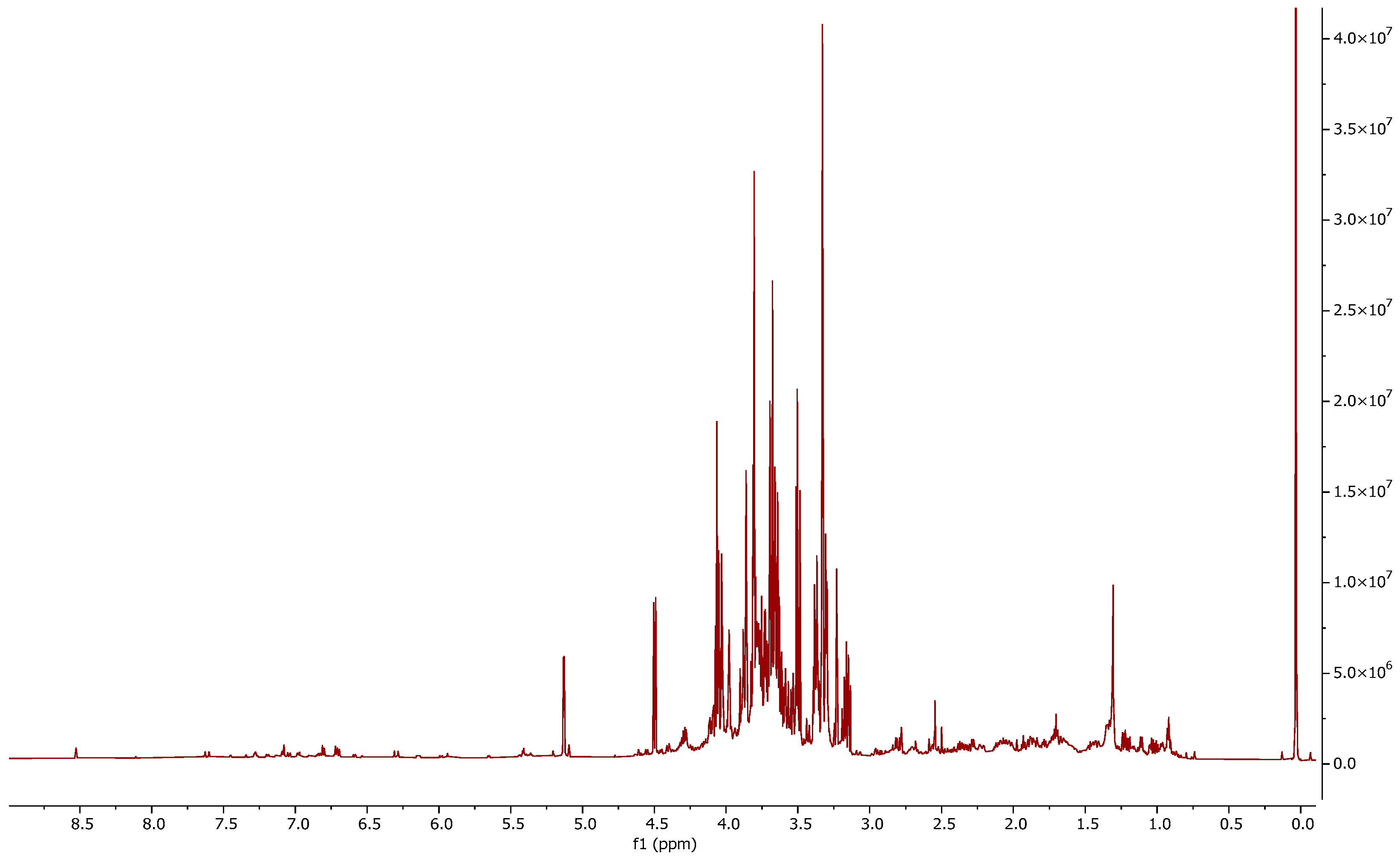
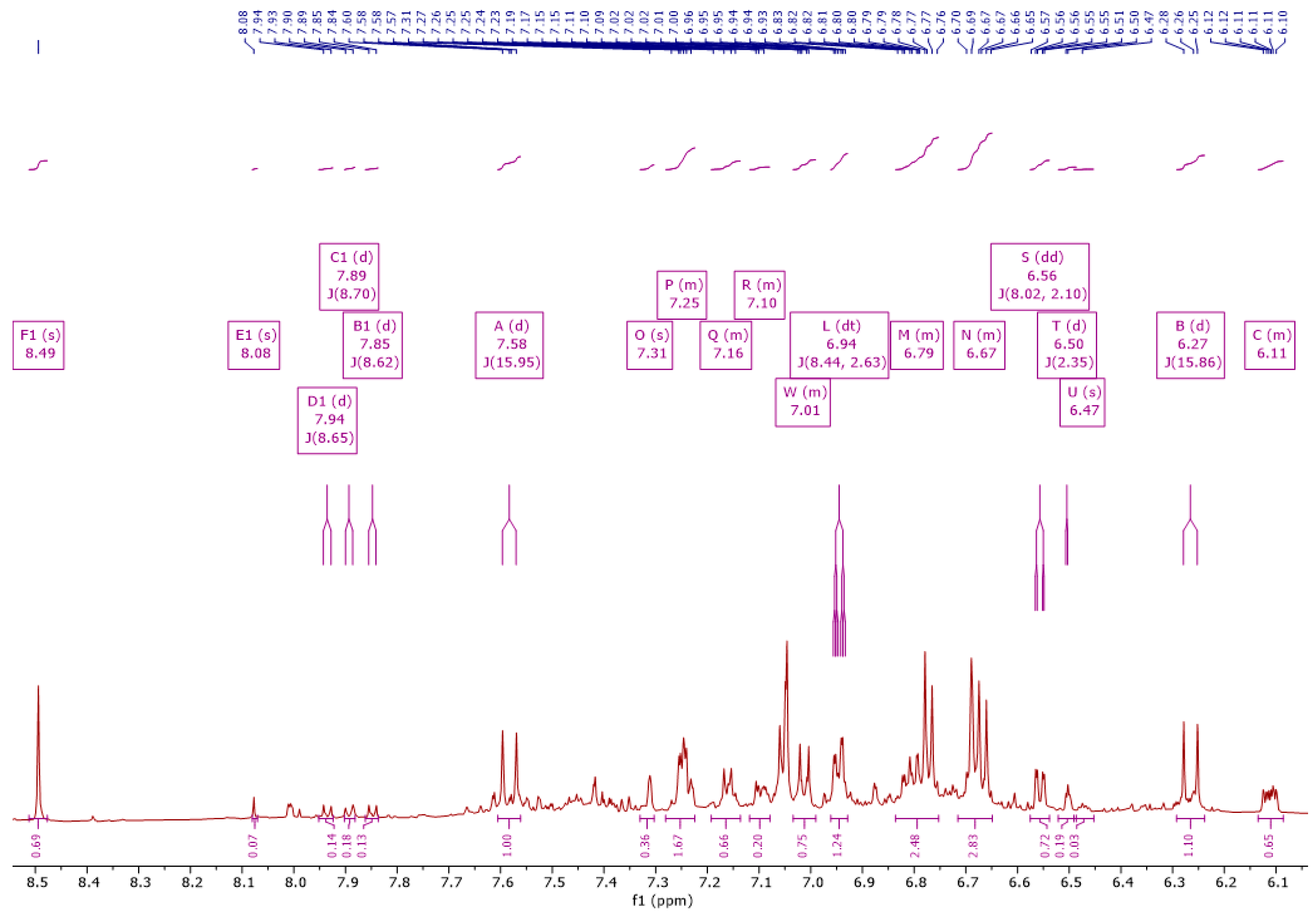
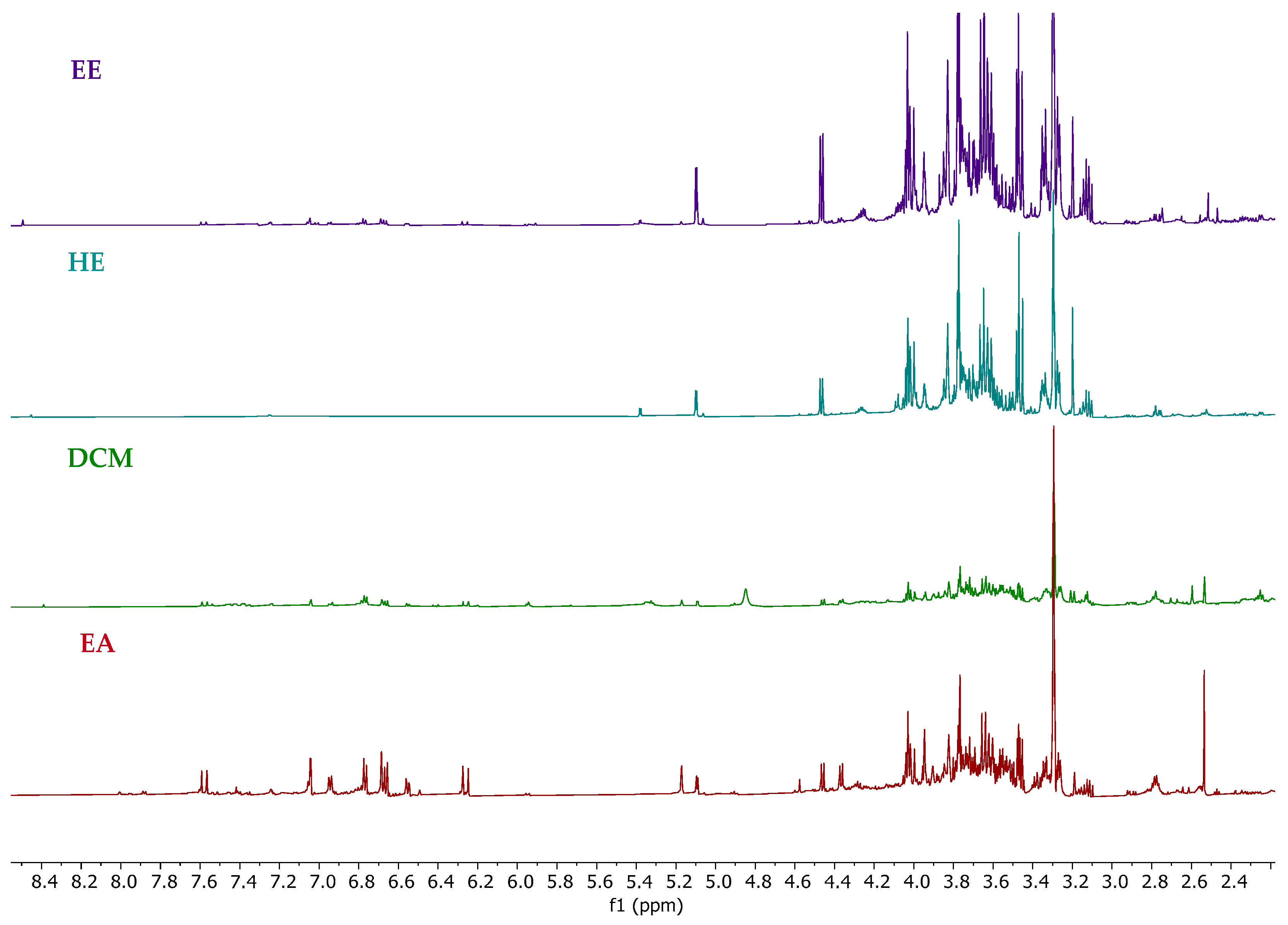
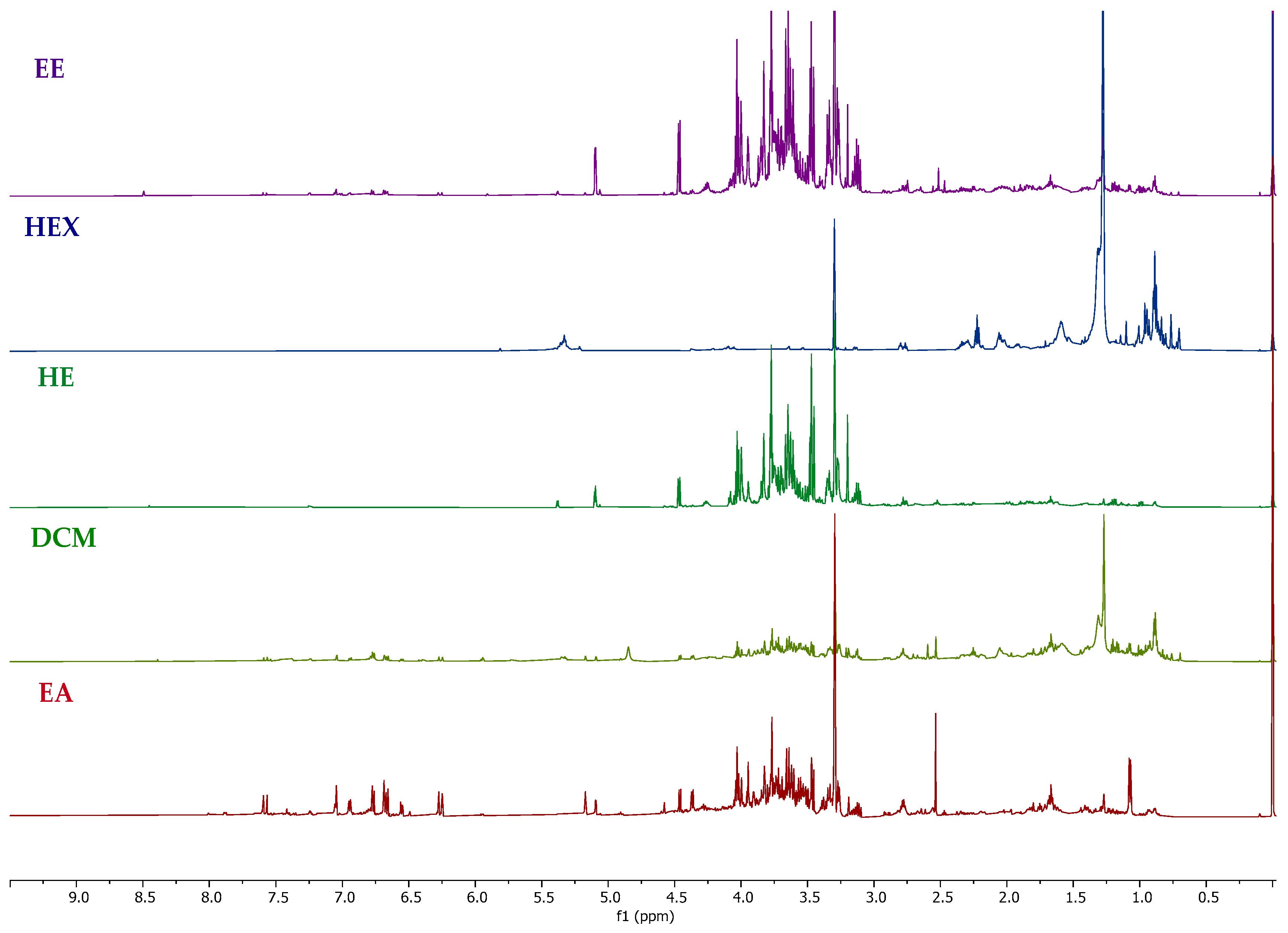
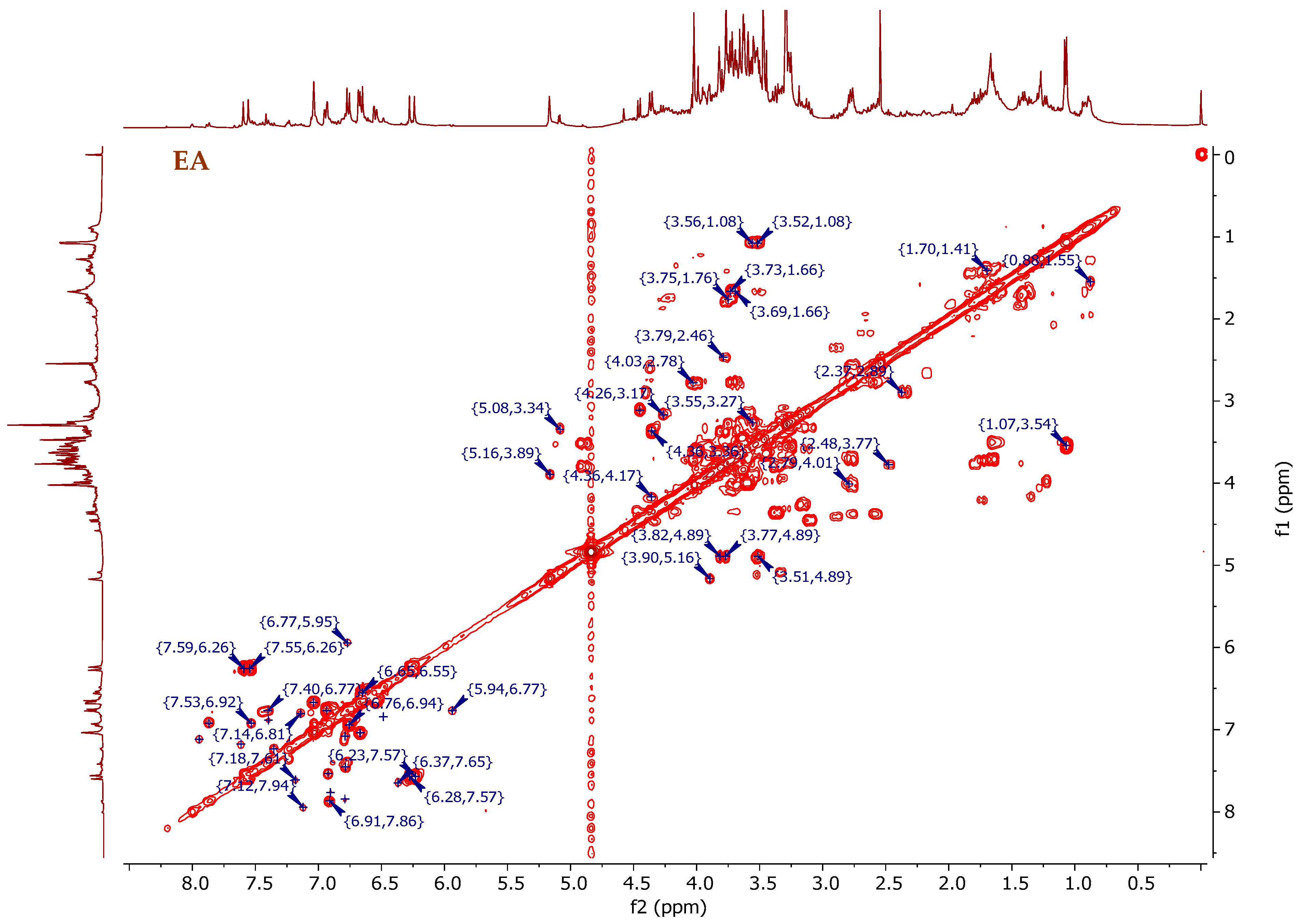
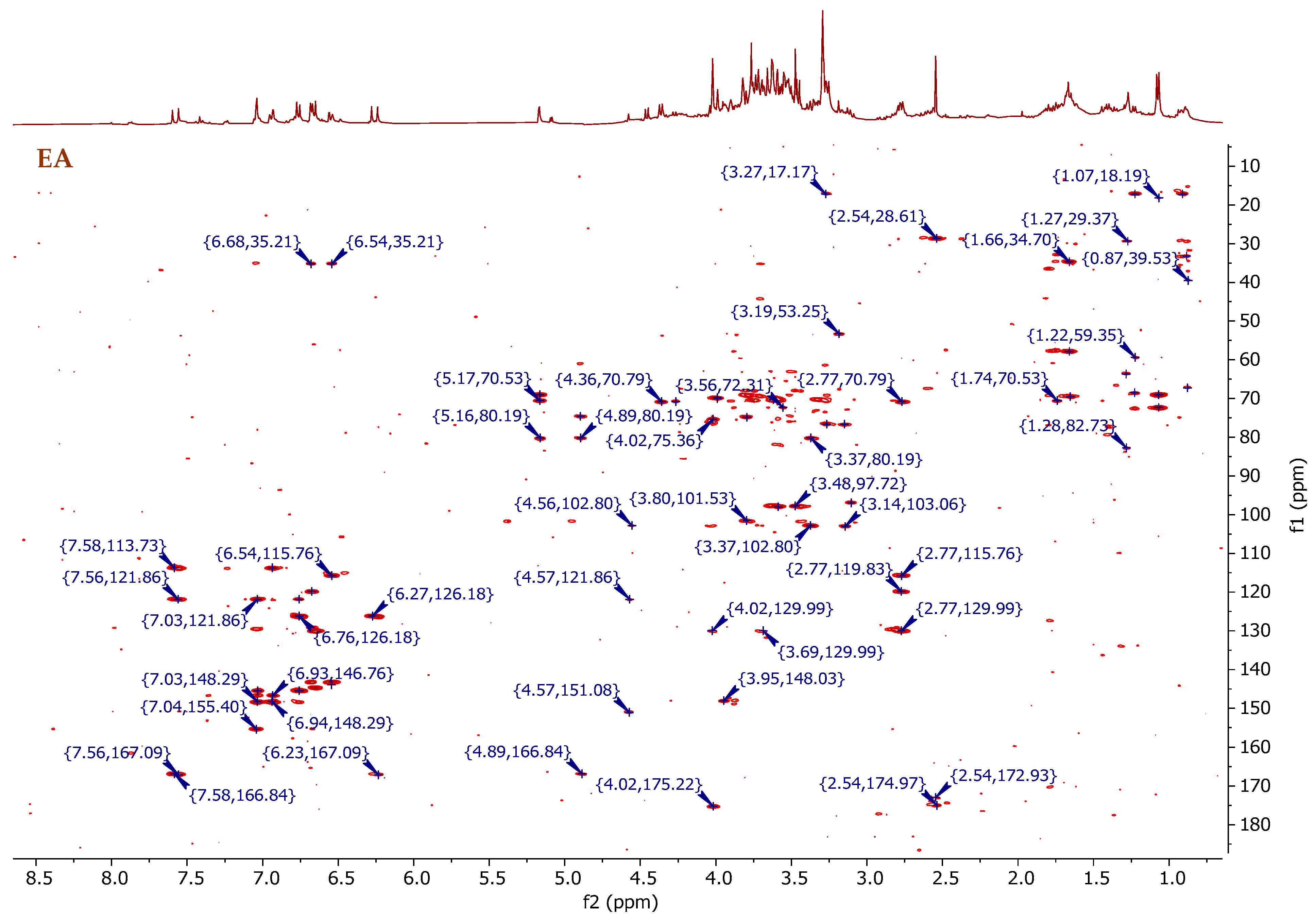
3.1. Analysis of 1H NMR Spectra of T. stans Samples
3.2. Germination Response of Seeds to Extract and Fractions of T. stans
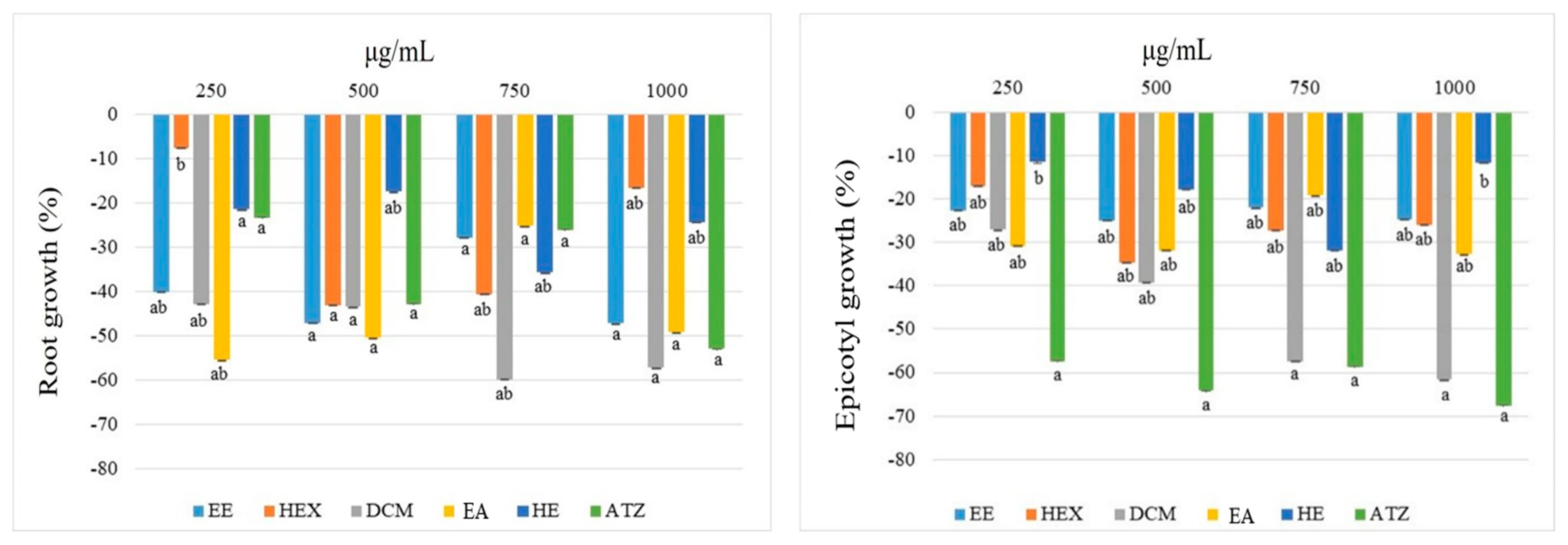
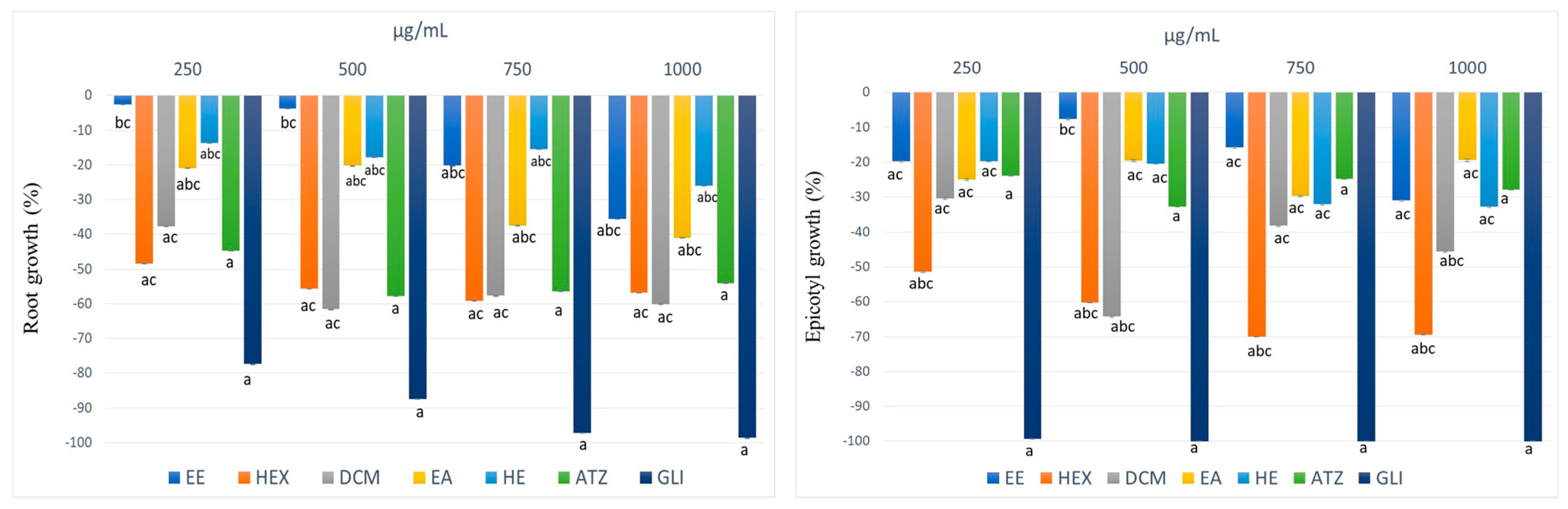
3.3. Seedling Growth Analysis
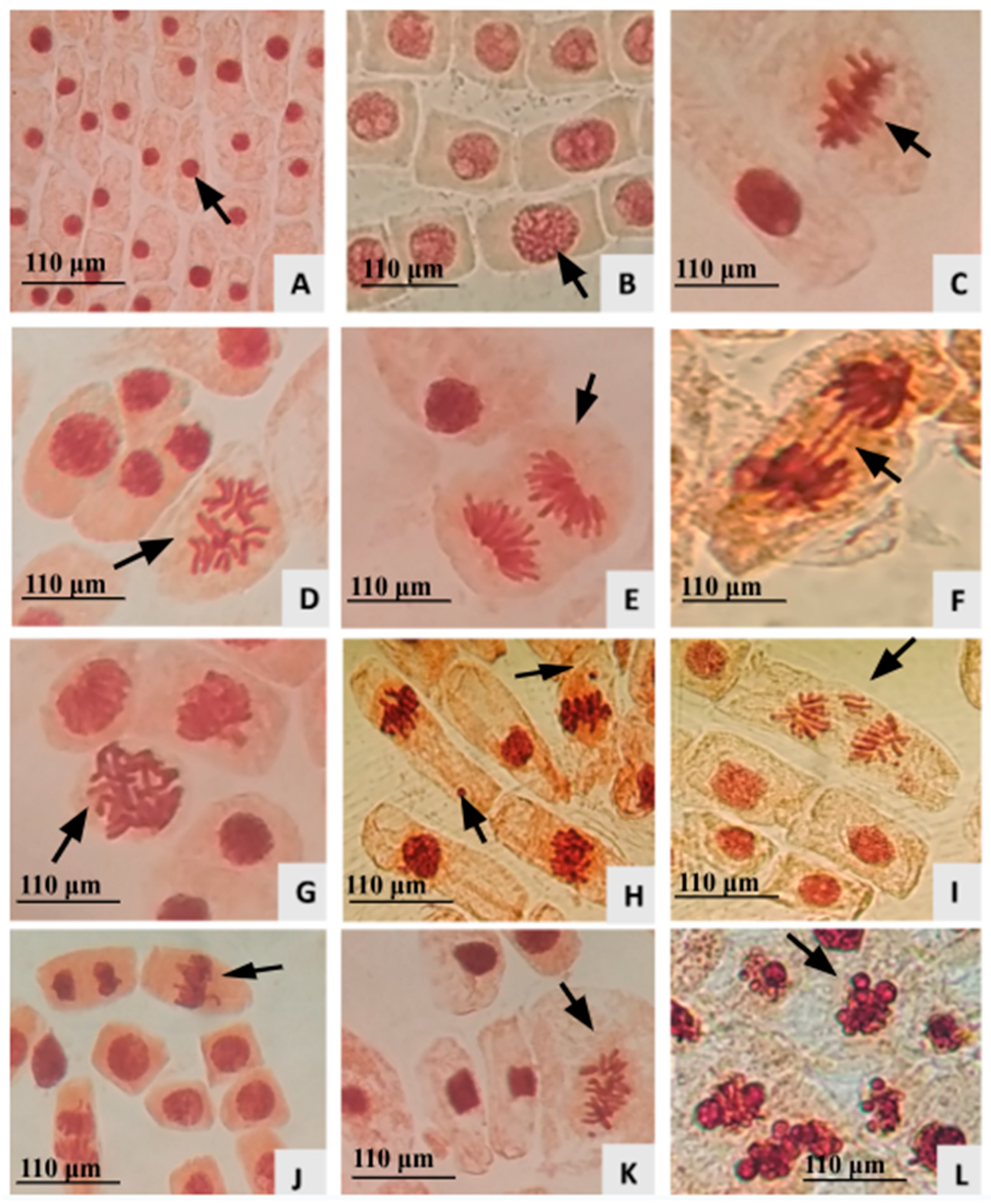
3.4. Genotoxic Potential of T. stans
3.5. Antigenotoxic Potential of T. stans
4. Conclusions
Supplementary Materials
Author Contributions
Funding
Data Availability Statement
Acknowledgments
Conflicts of Interest
References
- IBGE. Indicadores de Desenvolvimento Sustentável: Brasil 2015; Instituto Brasileiro de Geografia e Estatística (IBGE), Coordenação de Recursos Naturais e Estudos Ambientais Coordenação de Geografia; IBGE: Rio de Janeiro, Brazil, 2015; 348p. [Google Scholar]
- Londres, F. Agrotóxicos No Brasil: Um Guia Para a Ação e Defesa da Vida, 1st ed.; AS-PTA: Rio de Janeiro, Brazil, 2011; 191p. [Google Scholar]
- Conselho Nacional de Segurança Alimentar e Nutricional—CONSEA. Os Impactos dos Agrotóxicos na Segurança Alimentar e Nutricional: Contribuições do CONSEA; Conselho Nacional de Segurança Alimentar e Nutricional—CONSEA: Brasília, Brazil, 2014; 28p. [Google Scholar]
- Pignati, W.A. Os Riscos, Agravos e Vigilância em Saúde No Espaço de Desenvolvimento do Agronegócio No Mato Grosso. Ph.D. Thesis, Escola Nacional de Saúde Pública Sergio Arouca, Fundação Oswaldo Cruz, Rio de Janeiro, Brazil, 2007; 114p. [Google Scholar]
- Perotti, V.E.; Larran, A.S.; Palmieri, V.E.; Martinatto, A.K.; Permingeat, H.R. Herbicide resistant weeds: A call to integrate conventional agricultural practices, molecular biology knowledge and new technologies. Plant Sci. 2020, 290, 110255. [Google Scholar] [CrossRef]
- Lazarević-Pašti, T.; Milanković, V.; Tasić, T.; Petrović, S.; Leskovac, A. With or without you?—A critical review on pesticides in food. Foods 2025, 14, 1128. [Google Scholar] [CrossRef] [PubMed]
- Sammons, R.D.; Gaines, T.A. Glyphosate resistance: State of knowledge. Pest Manag. Sci. 2014, 70, 1367–1377. [Google Scholar] [CrossRef] [PubMed]
- Van Bruggen, A.H.C.; He, M.M.; Shin, K.; Mai, V.; Jeong, K.C.; Finckh, M.R.; Morris, J.G., Jr. Environmental and health effects of the herbicide glyphosate. Sci. Total Environ. 2018, 616–617, 255–268. [Google Scholar] [CrossRef]
- Trebst, A. The mode of action of triazine herbicides in plants. In The Triazine Herbicides: 50 Years Revolutionizing Agriculture; LeBaron, H.M., McFarland, J.E., Burnside, O., Eds.; Elsevier Science: Amsterdam, The Netherlands, 2008; pp. 101–110. [Google Scholar]
- European Union. Decision N° 2455/2001/EC of the European Parliament and of the Council of 20 November 2001 establishing the list of priority substances in the field of water policy and amending, Directive 2000/60/EC. Off. J. Eur. Communities 2001, L 331, 1–5. [Google Scholar]
- De Ross, A.J.; Zahm, S.H.; Cantor, K.P.; Weisenburger, D.D.; Holmes, F.F.; Burmeister, L.F.; Blair, A. Integrative assessment of multiple pesticides as risk factors for non Hodgkin’s lymphoma among men. Occup. Environ. Med. 2003, 60, E11. [Google Scholar] [CrossRef]
- Rusiecki, J.A.; De Roos, A.; Lee, W.J.; Dosemeci, M.; Lubin, J.H.; Hoppin, J.A.; Blair, A.; Alavanja, M.C. Cancer incidence among pesticide applicators exposed to atrazine in the Agricultural Health Study. J. Natl. Cancer Inst. 2004, 96, 1375–1382. [Google Scholar] [CrossRef]
- Matias, T.P.; Braga, J.K.; Damasceno, L.H.S.; Brucha, G. Overview of atrazine biodegradation under different oxidation-reduction conditions. Res. Soc. Dev. 2021, 10, e59910817689. [Google Scholar] [CrossRef]
- Thomaz Júnior, A. Trabalho e saúde no ambiente destrutivo do agrohidronegócio canavieiro no Pontal do Paranapanema (SP). PEGADA—Rev. Geogr. Trab. 2014, 15, 4–18. [Google Scholar]
- Hasan, M.; Ahmad-Hamdani, M.S.; Rosli, A.M.; Hamdan, H. Bioherbicides: An eco-friendly tool for sustainable weed management. Plants 2021, 10, 1212. [Google Scholar] [CrossRef]
- Arora, S.; Tajammul Husain, T.; Sheo Mohan Prasad, S.M. Allelochemicals as biocontrol agents: Promising aspects, chalenges and opportunities. S. Afr. J. Bot. 2024, 166, 503–511. [Google Scholar] [CrossRef]
- Schandry, N.; Becker, C. Allelopathic plants: Models for studying plant–interkingdom interactions. Trends Plant Sci. 2020, 25, 176–185. [Google Scholar] [CrossRef]
- Roberts, J.; Florentine, S.; Fernando, W.G.D.; Tennakoon, K.U. Achievements, developments and future challenges in the field of bioherbicides for weed control: A global review. Plants 2022, 11, 2242. [Google Scholar] [CrossRef]
- Rodríguez-Mejías, F.J.; Scavo, A.; Chinchilla, N.; Molinillo, J.M.G.; Schwaiger, S.; Mauromicale, G.; Macías, F.A. Perspectives and advances in organic formulations for agriculture: Encapsulation of herbicides for weed control. Agronomy 2023, 13, 1898. [Google Scholar] [CrossRef]
- Hazrati, H.; Saharkhiz, M.J.; Niakousari, M.; Moein, M. Natural herbicide activity of Satureja hortensis L. essential oil nanoemulsion on the seed germination and morphophysiological features of two important weed species. Ecotoxicol. Environ. Saf. 2017, 142, 423–430. [Google Scholar] [CrossRef] [PubMed]
- Venkataravanappa, J.T.; Saraswathi, S.; Gopalkrishnashetty, Y.S.; Soman, P.; Gupta, N.M.L.; Srivastava, S.; Kumari, S. Allium cepa L. as a bioindicator: A comprehensive review of genotoxicity and cytotoxicity assessment methods. Toxicon 2025, 267, 108586. [Google Scholar] [CrossRef] [PubMed]
- Khan, I.S.; Ali, M.N.; Hamid, R.; Ganie, S.A. Genotoxic effect of two commonly used food dyes metanil yellow and carmoisine using Allium cepa L. as indicator. Toxicol. Rep. 2020, 7, 370–375. [Google Scholar] [CrossRef] [PubMed]
- Sponchiado, G.; Adam, M.L.; Silva, C.D.; Soley, B.S.; de Mello-Sampayo, C.; Cabrini, D.A.; Correr, C.J.; Otuki, M.F. Quantitative genotoxicity assays for analysis of medicinal plants: A systematic review. J. Ethnopharmacol. 2016, 178, 289–296. [Google Scholar] [CrossRef]
- Cristóbal-Luna, J.M.; Álvarez-González, I.; Madrigal-Bujaidar, E.; Chamorro-Cevallos, G. Grapefruit and its biomedical, antigenotoxic and chemopreventive properties. Food Chem. Toxicol. 2018, 112, 224–234. [Google Scholar] [CrossRef]
- Bacalini, M.G.; Boattini, A.; Gentilini, D.; Giampieri, E.; Pirazzini, C.; Giuliani, C.; Fontanesi, E.; Remondini, D.; Capri, M.; Del Rio, A.; et al. A meta-analysis on age-associated changes in blood DNA methylation: Results from an original analysis pipeline for Infinium 450k data. Aging 2015, 7, 97–109. [Google Scholar] [CrossRef]
- Madduma Hewage, S.R.K.; Piao, M.J.; Kim, K.C.; Cha, J.W.; Han, X.; Choi, Y.H.; Chae, S.; Hyun, J.W. Galangin (3,5,7-trihydroxyflavone) shields human keratinocytes from ultraviolet B-induced oxidative stress. Biomol. Ther. 2015, 23, 165–173. [Google Scholar] [CrossRef]
- Bacanli, M.; Aydin, S.; Başaran, A.A.; Başaran, N. Are all phytochemicals useful in the preventing of DNA damage? Food Chem. Toxicol. 2017, 109, 210–217. [Google Scholar] [CrossRef]
- Gonçalves, T.P.R.; Amado, P.A.; Mendes, I.C.; Parreira, A.G.; Lima, L.A.R.S. Biological potential of the species Tecoma stans (L.) Kunth (Bignoniaceae). In Phytochemicals: Plant Sources and Potential Health Benefits; Ryan, I., Ed.; Nova Science Publisher: New York, NY, USA, 2019; pp. 215–231. [Google Scholar]
- Anand, M.; Basavaraju, R. A review on phytochemistry and pharmacological uses of Tecoma stans (L.) Juss. ex Kunth. J. Ethnopharmacol. 2021, 265, 113270. [Google Scholar] [CrossRef] [PubMed]
- Cipriani, F.A.; Kaplan, M.A.C.; Isaias, R.M.S.; Soares, G.L.G. Evaluation of the phytotoxicity of Tecoma stans (L.) Kunth. Floresta Ambient. 2014, 21, 1–7. [Google Scholar] [CrossRef]
- Bhat, M.A.; Yogamoorthi, A. Evaluation of allelopathic effect of aqueous leaf extract of Tecoma stans (L.) on seed germination and biochemical changes in Vigna radiata (L.). Int. J. Curr. Res. 2017, 9, 51014–51021. [Google Scholar]
- Garcia, L.M.; Pastorini, L.H.; Souza, L.A. Efeito alelopático de Tecoma stans, na germinação e crescimento inicial de Lactuca sativa e de três espécies nativas da Bacia do Rio Pirapó- PR. J. Biotechnol. Biodivers. 2022, 10, 194–205. [Google Scholar] [CrossRef]
- Amado, P.A.; Castro, A.H.F.; Zanuncio, V.S.S.; Stein, V.C.; Silva, D.B.; Lima, L.A.R.d.S. Assessment of allelopathic, cytotoxic, genotoxic and antigenotoxic potential of Smilax brasiliensis Sprengel leaves. Ecotoxicol. Environ. Saf. 2020, 192, e110310. [Google Scholar] [CrossRef]
- Freitas, L.B.O.; Boaventura, M.A.D.; Santos, W.L.; Stehmann, J.R.; Junior, D.D.; Lopes, M.T.P.; Magalhães, T.F.F.; Silva, D.L.; Resende, M.A. Allelopathic, cytotoxic and antifungic activities of new dihydrophenanthrenes and other constituents of leaves and roots extracts of Banisteriopsis anisandra (Malpighiaceae). Phytochem. Lett. 2015, 12, 9–16. [Google Scholar] [CrossRef]
- Maguire, J.D. Speed of germination—Aid in selection and evaluation for seedling emergence and vigor. Crop. Sci. 1962, 2, 176–177. [Google Scholar] [CrossRef]
- Brasil. Ministério da Agricultura, Pecuária e Abastecimento. Regras Para Análise de Sementes; Ministério da Agricultura, Pecuária e Abastecimento.; Secretaria de Defesa Agropecuária—MAPA/ACS: Brasília, Brazil, 2009; 398p. [Google Scholar]
- Sousa, M.A.A.; Silva, F.S.L.; Orlanda, J.F.F. Genotoxic and antiproliferative effect of Alpinia zerumbet (Zingiberaceae) essential oil in Allium cepa biotest. Ciência Nat. 2024, 46, e73445. [Google Scholar] [CrossRef]
- Guerra, M.; Souza, M.J. Como Observar Cromossomos: Um Guia de Técnicas em Citgenética Vegetal, Animal e Humana; Fundação de Pesquisas Científicas de Ribeirão Preto: Ribeirão Preto, Brazil, 2002; 131p. [Google Scholar]
- Aragão, F.B.; Bernardes, M.P.; Ferreira, A.; Ferreira, M.F.S.; Andrade-Vieira, L.F. Cyto(geno)toxicity of commercial fungicides based on the active compounds tebuconazole, difenoconazole, procymidone, and iprodione in Lactuca sativa L. meristematic cells. Water Air Soil Pollut. 2019, 230, 25. [Google Scholar] [CrossRef]
- Carvalho, M.S.S.; Andrade-Vieira, L.F.; Santos, F.E.; Correa, F.F.; Cardoso, M.G.; Vilela, L.R. Allelopathic potential and phytochemical screening of ethanolic extracts from five species of Amaranthus spp. in the plant model Lactuca sativa. Sci. Hortic. 2019, 245, 90–98. [Google Scholar] [CrossRef]
- Palmieri, M.J.; Andrade-Vieira, L.F.; Campos, J.M.S.; Gedraite, L.S.; Davide, L.C. Cytotoxicity of spent pot liner on Allium cepa root tip cells: A comparative analysis in meristematic cell type on toxicity bioassays. Ecotoxicol. Environ. Saf. 2016, 133, 442–447. [Google Scholar] [CrossRef]
- Aragão, F.B.; Palmieri, M.J.; Ferreira, A.; Costa, A.V.; Queiroz, V.T.; Pinheiro, P.F.; Andrade-Vieira, L.F. Phytotoxic and cytotoxic effects of Eucalyptus essential oil on lettuce (Lactuca sativa L.). Allelopath. J. 2015, 35, 259–272. [Google Scholar]
- Prajitha, V.; Thoppil, J.E. Genotoxic and antigenotoxic potential of the aqueous leaf extracts of Amaranthus spinosus Linn. using Allium cepa assay. S. Afr. J. Bot. 2016, 102, 18–25. [Google Scholar] [CrossRef]
- Wolfender, J.-L.; Marti, G.; Queiroz, E.F. Advances in techniques for profiling crude extracts and for the rapid identification of natural products: Dereplication, quality control and metabolomics. Curr. Org. Chem. 2010, 14, 1808–1832. [Google Scholar] [CrossRef]
- Pilon, A.C.; Selegato, D.M.; Fernandes, R.P.; Bueno, P.C.P.; Pinho, D.R.; Carnevale Neto, F.; Freire, R.T.; Castro-Gamboa, I.; Bolzani, V.S.; Lopes, N.P. Metabolômica de plantas: Métodos e desafios. Quim. Nova 2020, 43, 329–354. [Google Scholar] [CrossRef]
- Brown, G.D.; Bauer, J.; Osborn, H.M.I.; Kuemmerle, R. A solution NMR approach to determine the chemical structures of carbohydrates using the hydroxyl groups as starting points. ACS Omega 2018, 3, 17957−17975. [Google Scholar] [CrossRef]
- Gonçalves, T.P.R.; Parreira, A.G.; Zanuncio, V.S.S.; Farias, K.S.; Silva, D.B.; Lima, L.A.R.S. Antibacterial and antioxidant properties of flowers from Tecoma stans (L.) Juss. ex Kunth (Bignoniaceae). S. Afr. J. Bot. 2022, 144, 156–165. [Google Scholar] [CrossRef]
- Gonçalves, T.P.R.; Azevedo, L.S.; Alves, S.N.; Zanuncio, V.S.S.; Farias, K.S.; Silva, D.B.; Lima, L.A.R.S. Larvicide potential and toxicity of extract and fractions from flowers of Tecoma stans (Bignoniaceae). Nat. Prod. Res. 2025, 1–6, in press. [Google Scholar] [CrossRef]
- Fan, T.W.M. Metabolite profiling by one- and two-dimensional NMR analysis of complex mixtures. Prog. Nucl. Magn. Reson. Spectrosc. 1996, 28, 161–219. [Google Scholar] [CrossRef]
- Farag, M.A.; Otify, A.; Porzel, A.; Michel, C.G.; Elsayed, A.; Wessjohann, L.A. Comparative metabolite profiling and fingerprinting of genus Passiflora leaves using a multiplex approach of UPLC-MS and NMR analyzed by chemometric tools. Anal. Bioanal. Chem. 2016, 408, 3125–3143. [Google Scholar] [CrossRef]
- Costantino, L.; Raimondi, L.; Pirisino, R.; Brunetti, T.; Pessotto, P.; Giannessi, F.; Lins, A.P.; Barlocco, D.; Antonini, L.; El-Abady, S.A. Isolation and pharmacological activities of the Tecoma stans alkaloids. Farmaco 2003, 58, 781–785. [Google Scholar] [CrossRef]
- Paniagua-Vega, D.; Huerta-Heredia, A.A.; Sánchez-Otero, M.G.; Waksman-Minsky, N.; Lucio-Gutiérrez, J.R.; Saucedo, A.L. NMR and chemometric analysis of verbascoside and isoverbascoside produced in Tecoma stans in vitro cultures. Magn. Reson. Chem. 2025, 63, 593–602. [Google Scholar] [CrossRef]
- Khattab, A.; Awad, N.E.; Fadeel, D.A.; Fadel, M. Reviewing the reported pharmacognostic and pharmacological investigations on Tecoma stans Juss. Ex Kunth. J. Herbmed Pharmacol. 2023, 12, 25–40. [Google Scholar] [CrossRef]
- Inderjit; Duke, S.O. Ecophysiological aspects of allelopathy. Planta 2003, 217, 529–539. [Google Scholar] [CrossRef]
- Silva, B.P. Potencial Alelopático de Cosmos sulphureus CAV. Ph.D. Thesis, Faculdade de Ciências Agrárias e Veterinárias, Universidade Estadual Paulista, São Paulo, Brazil, 2017; 151p. [Google Scholar]
- Calabrese, E.J.; Baldwin, L.A. Hormesis: The dose-response revolution. Annu. Rev. Pharmacol. Toxicol. 2003, 43, 175–197. [Google Scholar] [CrossRef]
- Arroyo, A.I.; Pueyo, Y.; Giner, M.L.; Foronda, A.; Sanchez-Navarrete, P.; Saiz, H.; Alados, C.L. Evidence for chemical interference effect of an allelopathic plant on neighboring plant species: A field study. PLoS ONE 2018, 13, e0193421. [Google Scholar] [CrossRef]
- Taiz, L.; Zeiger, E. Fisiologia Vegetal, 5th ed.; Artmed: Porto Alegre, Brazil, 2013; 954p. [Google Scholar]
- Pardo-Muras, M.; Puig, C.G.; Souto, X.C.; Nuria, P. Water-soluble phenolic acids and flavonoids involved in the bioherbicidal potential of Ulex europaeus and Cytisus scoparius. S. Afr. J. Bot. 2020, 133, 201–211. [Google Scholar] [CrossRef]
- Schnarr, L.; Segatto, M.L.; Olsson, O.; Zuin, V.G.; Kümmerer, K. Flavonoids as biopesticides—Systematic assessment of sources, structures, activities and environmental fate. Sci. Total Environ. 2022, 824, 153781. [Google Scholar] [CrossRef] [PubMed]
- Hister, C.A.L.; Trapp, K.C.; Tedesco, S.B. Potencial alelopático e antiproliferativo de extratos aquosos das folhas de Psidium cattleianum Sabine sobre Lactuca sativa L. Rev. Bras. Biociênc. 2016, 14, 124–129. [Google Scholar]
- Mercado, S.A.S.; Caleño, J.D.Q. Cytotoxic evaluation of glyphosate, using Allium cepa L. as bioindicator. Sci. Total Environ. 2020, 700, 134452. [Google Scholar] [CrossRef] [PubMed]
- Carvalho, L.B. Herbicidas, 1st ed.; Garcia Edizioni: Lages, SC, Brazil, 2013; 72p. [Google Scholar]
- Xu, L.; Wang, X. A comprehensive review of phenolic compounds in horticultural plants. Int. J. Mol. Sci. 2025, 26, 5767. [Google Scholar] [CrossRef]
- Pereira, J.C.; Paulino, C.L.A.; Granja, B.S.; Santana, A.E.G.; Endres, L.; Souza, R.G. Allelopathic potential and identification of secondary metabolites in extracts of Canavalia ensiformis L. Rev. Ceres 2018, 65, 243–252. [Google Scholar] [CrossRef]
- Herrig, V.; Ferrarese, M.L.; Suzuki, L.S.; Rodrigues, J.D.; Ferrarese-Filho, O. Peroxidase and phenylalanine ammonia-lyase activities, phenolic acid contents, and allelochemicals-inhibited root growth of soybean. Biol. Res. 2002, 35, 59–66. [Google Scholar] [CrossRef]
- Li, Z.-H.; Wang, Q.; Ruan, X.; Pan, C.-D.; Jiang, D.-A. Phenolics and plant allelopathy. Molecules 2010, 15, 8933–8952. [Google Scholar] [CrossRef] [PubMed]
- Einhellig, F.A. Mode of allelochemical action of phenolic compounds. In Allelopathy: Chemistry and Mode of Action of Allelochemicals; Macías, F.A., Galindo, J.C.G., Molinillo, J.M.G., Cutler, H.G., Eds.; CRC Press: Boca Raton, FL, USA, 2004; pp. 217–238. [Google Scholar]
- Basu, S.; Tripura, K. Differential sensitivity of Allium cepa L. and Vicia faba L. to aqueous extracts of Cascabela thevetia (L.) Lippold. S. Afr. J. Bot. 2021, 139, 67–78. [Google Scholar] [CrossRef]
- Wink, M. Allelochemical properties of quinolizidine alkaloids. In Allelopathy: Chemistry and Mode of Action of Allelochemicals; Macías, F.A., Galindo, J.C.G., Molinillo, J.M.G., Cutler, H.G., Eds.; CRC Press: Boca Raton, FL, USA, 2004; pp. 183–200. [Google Scholar]
- Latif, S.; Chiapusio, G.; Weston, L.A. Allelopathy and the role of allelochemicals in plant defence. In Advances in Botanical Research: How Plants Communicate with Their Biotic Environment; Becard, G., Ed.; Academic Press: Cambridge, MA, USA, 2017; Volume 82, pp. 19–54. [Google Scholar]
- Nebo, L.; Varela, R.M.; Molinillo, J.M.G.; Sampaio, O.M.; Severino, V.G.P.; Cazal, C.M.; Fernandes, M.F.G.; Fernandes, J.B.; Macías, F.A. Phytotoxicity of alkaloids, coumarins and flavonoids isolated from 11 species belonging to the Rutaceae and Meliaceae families. Phytochem. Lett. 2014, 8, 226–232. [Google Scholar] [CrossRef]
- Tundis, R.; Loizzo, M.R.; Menichini, F.; Statti, G.A.; Menichini, F. Biological and pharmacological activities of iridoids: Recent developments. Mini Rev. Med. Chem. 2008, 8, 399–420. [Google Scholar] [CrossRef]
- Anwar, T.; Qureshi, H.; Mahnashi, M.H.; Kabir, F.; Parveen, N.; Ahmed, D.; Afzal, U.; Batool, S.; Awais, M.; Alyami, S.A.; et al. Bioherbicidal ability and weed management of allelopathic methyl esters from Lantana camara. Saudi J. Biol. Sci. 2021, 28, 4365–4374. [Google Scholar] [CrossRef]
- Hildebrandt, W.B.; Hirota, B.C.K.; Silva, C.B.; Dias, J.F.G.; Miyazaki, C.M.S.; Miguel, O.G.; Miguel, M.D. Phytotoxicity and antioxidant activity of Jacaranda micrantha (Bignoniaceae) flowers. Visão Acad. 2013, 14, 4–13. [Google Scholar] [CrossRef]
- Cansian, F.C.; Lima, C.P.; Zortéa, F.M.; Miguel, O.G.; Miguel, M.D. Allelopathic effects of Tynanthus micranthus Corr. Mello ex. Schum. (Bignoniaceae) on diaspores of Lactuca sativa L. Rev. Ciênc. Farm. Básica Apl. 2013, 34, 137–140. [Google Scholar]
- Ferreira Antunes, D.; Melo de Alcântara, B.; Anderson Soares da Silva, J.; Larissa Pereira da Silva, C.; Rufino dos Santos, F.; Aurélio Figueiredo dos Santos, M.; Idalva de Souza Melo, M.; Arlene Pessoa da Silva, M. Phytotoxicity of Handroanthus serratifolius (Vahl) s. Grose (Bignoniaceae) on Zea mays L. (Poaceae). J. Educ. Sci. Health 2022, 2, 1–8. [Google Scholar] [CrossRef]
- Braga, J.R.M.; Lopes, D.M. Cytotoxicity and genotoxicity in water of the Subaé River (Humildes, Bahia, Brazil) using Allium cepa L. as a bioindicator. Rev. Ambient. Água 2015, 10, 130–140. [Google Scholar] [CrossRef]
- Krüger, R.A. Análise da Toxicidade e da Genotoxicidade de Agrotóxicos Utilizados na Agricultura Utilizando Bioensaios com Allium cepa. Master’s Dissertation, Centro Universitário Feevale, Nova Hamburgo, Brazil, 2009; 58p. [Google Scholar]
- Issa, M.; Chandel, S.; Singh, H.P.; Batish, D.R.; Kohli, R.K.; Yadav, S.S.; Kumari, A. Appraisal of phytotoxic, cytotoxic and genotoxic potential of essential oil of a medicinal plant Vitex negundo. Ind. Crop. Prod. 2020, 145, 112083. [Google Scholar] [CrossRef]
- Parvan, L.G.; Leite, T.G.; Freitas, T.B.; Pedrosa, P.A.A.; Calixto, J.S.; Agostinho, L.A. Allium cepa bioassay reveals genotoxicity of flumioxazin herbicide. Rev. Pan-Amaz. Saúde 2020, 11, e202000544. [Google Scholar]
- Qiao, D.; Tang, M.; Jin, L.; Mi, X.; Chen, H.; Zhu, J.; Liu, S.; Wei, C. A monoterpene synthase gene cluster of tea plant (Camellia sinensis) potentially involved in constitutive and herbivore-induced terpene formation. Plant Physiol. Biochem. 2022, 184, 1–13. [Google Scholar] [CrossRef]
- Ubessi, C.; Tedesco, S.B.; Silva, C.B.; Baldoni, M.; Krysczun, D.K.; Heinzmann, B.M.; Rosa, I.A.; Mori, N.C. Antiproliferative potential and phenolic compounds of infusions and essential oil of chamomile cultivated with homeopathy. J. Ethnopharmacol. 2019, 239, 111907. [Google Scholar] [CrossRef] [PubMed]
- Tsai, P.H.; Cheng, C.H.; Lin, C.Y.; Huang, Y.T.; Lee, L.T.; Kandaswami, C.C.; Lin, Y.C.; Lee, K.P.H.; Hung, C.C.; Hwang, J.J.; et al. Dietary flavonoids luteolin and quercetin suppressed cancer stem cell properties and metastatic potential of isolated prostate cancer cells. Anticancer Res. 2016, 36, 6367–6380. [Google Scholar] [CrossRef]
- Dornelles, R.C.; Leal, G.C.; Decian, A.C.S.; Santos, D.D.; Radiske, G.A.; Manfron, M.P.; Tedesco, S.B. Antiproliferative and genotoxic potential from extracts and fractions of Richardia brasiliensis Gomes (Rubiaceae) by the Allium cepa L. test system. Iheringia Série Botânica 2017, 72, 424–431. [Google Scholar] [CrossRef]
- Tedesco, M.; Kuhn, A.W.; Boligon, A.A.; Laughinghouse, H.D., IV; Athayde, M.L.; Silva, A.C.F.; Tedesco, S.B. Chromatographic analysis, antiproliferative effect and genotoxicity of aqueous extracts of Citrus sinensis (L.) Osbeck on the Allium cepa L. test system. Biosci. J. 2015, 31, 1213–1221. [Google Scholar] [CrossRef]
- Pereira, J.S.; Rodrigues, L.G.; Freitas, J.M.B.; Tedesco, S.B. Potencial antiproliferativo de extratos aquosos de cascas de Handroanthus chrysotrichus (Mart. ex DC.) Mattos pelo teste Allium cepa L. Encicl. Biosf. 2019, 16, 1925–1932. [Google Scholar] [CrossRef]
- Reis, A.C.C.; Silva, B.M.; Souza Filho, J.D.; Pereira, G.R.; Brandão, G.C. Cytotoxic activity of extracts from Tecoma species and isolated lignans. Braz. J. Pharm. Sci. 2022, 58, e181096. [Google Scholar] [CrossRef]
- Robinson, J.P.; Suriya, K.; Subbaiya, R.; Ponmurugan, P. Antioxidant and cytotoxic activity of Tecoma stans against lung cancer cell line (A549). Braz. J. Pharm. Sci. 2017, 53, e00204. [Google Scholar] [CrossRef]
- Tariq, H.; Rafi, M.; Amirzada, M.I.; Muhammad, S.A.; Yameen, M.A.; Mannan, A.; Ismail, T.; Shahzadi, I.; Murtaza, G.; Fatima, N. Photodynamic cytotoxic and antibacterial evaluation of Tecoma stans and Narcissus tazetta mediated silver nanoparticles. Arab. J. Chem. 2022, 15, 103652. [Google Scholar] [CrossRef]
- Zhu, J.; Viñas, R.; Smith, E.E. In vitro evaluation of human liver cancer cells and the potential cytotoxicity of Tecoma stans (Bignoniaceae) and Brickellia cavanillesi (Asteraceae) both single and in combination. Toxicol. Environ. Chem. 2008, 90, 801–808. [Google Scholar] [CrossRef]
- Leme, D.M.; Marin-Morales, M.A. Allium cepa test in environmental monitoring: A review on its application. Mutat. Res. 2009, 682, 71–81. [Google Scholar] [CrossRef]
- Cree, I.A.; Tan, P.H.; Travis, W.D.; Wesseling, P.; Yagi, Y.; White, V.A.; Lokuhetty, D.; Scolyer, R.A. Counting mitoses: SI(ze) matters! Mod. Pathol. 2021, 34, 1651–1657. [Google Scholar] [CrossRef]
- Kupske, C. Exposição ao Glifosato e Incidência de Câncer em Agricultores Familiares do Município de Cerro Largo-RS. Master’s Dissertation, Universidade Federal da Fronteira Sul, Cerro Largo, Brazil, 2018; 97p. [Google Scholar]
- Laughinghouse, H.D., 4th; Prá, D.; Silva-Stenico, M.E.; Rieger, A.; Frescura, V.D.S.; Fiore, M.F.; Tedesco, S.B. Biomonitoring genotoxicity and cytotoxicity of Microcystis aeruginosa (Chroococcales, Cyanobacteria) using the Allium cepa test. Sci. Total Environ. 2012, 432, 180–188. [Google Scholar] [CrossRef]
- Ventura-Camargo, B.; Parise-Maltempi, P.; Marin-Morales, M.A.; Morales, M. The use of the cytogenetic to identify mechanisms of action of an azo dye in Allium cepa meristematic cells. J. Environ. Anal. Toxicol. 2011, 1, 109. [Google Scholar] [CrossRef]
- Liman, R.; Ciğerci, İ.H.; Öztürk, N.S. Determination of genotoxic effects of Imazethapyr herbicide in Allium cepa root cells by mitotic activity, chromosome aberration, and comet assay. Pestic. Biochem. Physiol. 2015, 118, 38–42. [Google Scholar] [CrossRef]
- Verschaeve, L.; Van Staden, J. Mutagenic and antimutagenic properties of extracts from South African traditional medicinal plants. J. Ethnopharmacol. 2008, 119, 575–587. [Google Scholar] [CrossRef]
- Madić, V.; Stojanović-Radić, Z.; Jušković, M.; Jugović, D.; Popović, A.Z.; Vasiljević, P. Genotoxic and antigenotoxic potential of herbal mixture and five medicinal plants used in ethnopharmacology. S. Afr. J. Bot. 2019, 125, 290–297. [Google Scholar] [CrossRef]
- Kilani-Jaziri, S.; Bhouri, W.; Skandrani, Y.; Limem, I.; Chekir-Ghedira, L.; Ghedira, K. Phytochemical, antimicrobial, antioxidant and antigenotoxic potentials of Cyperus rotundus extracts. S. Afr. J. Bot. 2011, 77, 767–776. [Google Scholar] [CrossRef]
- Ittagi, S.; Merugumolu, V.K.; Siddamsetty, R.S. Cardioprotective effect of hydroalcoholic extract of Tecoma stans flowers against isoproterenol induced myocardial infarction in rats. Asian Pac. J. Trop. Dis. 2014, 4, S378–S384. [Google Scholar] [CrossRef]
- Briguglio, G.; Costa, C.; Pollicino, M.; Giambò, F.; Catania, S.; Fenga, C. Polyphenols in cancer prevention: New insights (Review). Int. J. Func. Nutr. 2020, 1, 9. [Google Scholar] [CrossRef]
- Ahmad, S.; Tan, M.L.; Hamid, S. DNA repair mechanisms: Exploring potentials of nutraceutical. J. Funct. Foods 2023, 101, 105415. [Google Scholar] [CrossRef]
- Miadokova, E.; Nadova, S.; Vlckova, V.; Duhova, V.; Kopaskova, M.; Cipak, L.; Rauko, P.; Mucaji, P.; Grancai, D. Antigenotoxic effect of extract from Cynara cardunculus L. Phytother. Res. 2008, 22, 77–81. [Google Scholar] [CrossRef]
- Zarev, Y.; Foubert, K.; Lucia de Almeida, V.; Anthonissen, R.; Elgorashi, E.; Apers, S.; Pieters, L. Antigenotoxic prenylated flavonoids from stem bark of Erythrina latissima. Phytochemistry 2017, 141, 140–146. [Google Scholar] [CrossRef]
- Silva, J.P.; Gomes, A.C.; Coutinho, O.P. Oxidative DNA damage protection and repair by polyphenolic compounds in PC12 cells. Eur. J. Pharmacol. 2008, 601, 50–60. [Google Scholar] [CrossRef] [PubMed]
- Sghaier, M.B.; Ismail, M.B.; Bouhlel, I.; Ghedira, K.; Chekir-Ghedira, L. Leaf extracts from Teucrium ramosissimum protect against DNA damage in human lymphoblast cell K562 and enhance antioxidant, antigenotoxic and antiproliferative activity. Environ. Toxicol. Pharmacol. 2016, 44, 44–52. [Google Scholar] [CrossRef] [PubMed]
- Cvetković, S.; Nastasijević, B.; Mitić-Ćulafić, D.; Đukanović, S.; Tenji, D.; Knežević-Vukčević, J.; Nikolić, B. New insight into the antigenotoxic activity of Gentiana lutea extracts—Protective effect against food borne mutagens. Mutat. Res. Genet. Toxicol. Environ. Mutagen. 2020, 858–860, 503251. [Google Scholar] [CrossRef]
- Jasim, I.R.; Alwattar, M.T.; Yaqub, H.M. Terpenoids as natural allelopathic compounds in plants. Rafidain J. Sci. 2023, 2, 106–116. [Google Scholar] [CrossRef]
- Azonsivo, R.; Albuquerque, K.C.O.; Castro, A.L.G.; Correa-Barbosa, J.; Souza, H.J.R.; Almada-Vilhena, A.O.; Ferreira, G.G.; Souza, A.A.; Marinho, A.M.R.; Percario, S.; et al. Cytotoxicity and genotoxicity evaluation of Zanthoxylum rhoifolium Lam and in silico studies of its alkaloids. Molecules 2023, 28, 5336. [Google Scholar] [CrossRef]
- de Carvalho, N.C.; Corrêa-Angeloni, M.J.; Leffa, D.D.; Moreira, J.; Nicolau, V.; de Aguiar Amaral, P.; Rossatto, A.E.; de Andrade, V.M. Evaluation of the genotoxic and antigenotoxic potential of Melissa officinalis in mice. Genet. Mol. Biol. 2011, 34, 290–297. [Google Scholar] [CrossRef] [PubMed]
- dos Santos Freire, J.; dos Santos Fernandes, B.C.; da Silva, J.A.C.; da Silva Araújo, J.R.; de Almeida, P.M.; da Costa Júnior, J.S.; da Silva, J.N.; de Freitas, S.D.L.; Martins, F.A. Phytochemical and antioxidant characterization, cytogenotoxicity and antigenotoxicity of the fractions of the ethanolic extract of in Poincianella bracteosa (Tul.) L.P. Queiroz. J. Toxicol. Environ. Health A 2020, 83, 730–747. [Google Scholar] [CrossRef] [PubMed]



| Mitotic Phase | Types of Aberrations |
|---|---|
| Interphase | Presence of heterochromatins, micronuclei, nuclear buds and formation of more than 3 nucleoli |
| Prophase | Presence of micronuclei, wandering chromosomes or fragments and aneuploidy |
| Metaphase | C-metaphase, sticky chromosomes, micronuclei, wandering chromosomes, aneuploidies and polyploidies |
| Anaphase | Anaphase bridges, micronuclei, wandering chromosomes and lagging chromosomes |
| Telophase | Micronuclei, wandering chromosomes, aneuploidies and heterochromatins |
| L. sativa | A. cepa | |||||||
|---|---|---|---|---|---|---|---|---|
| μg/mL | 1st Count (%) | Germination Rate (%) | GSI | μg/mL | 1st Count (%) | Germination Rate (%) | GSI | |
| MES | 0 | 78.0 ± 5.8 | 93.0 ± 2.2 | 11.2 ± 0.5 | 0 | 88.0 ± 3.7 | 100.0 ± 0.0 | 8.9 ± 0.4 |
| EE | 250 | 63.0 ± 3.5 a | 72.0 ± 4.6 a | 9.5 ± 0.7 | 250 | 74.0 ± 4.0 a | 89.0 ± 1.2 a | 5.7 ± 0.4 a |
| 500 | 67.0 ± 3.9 | 72.0 ± 1.9 a | 8.6 ± 0.4 a | 500 | 69.0 ± 6.4 ac | 95.0 ± 2.2 c | 5.8 ± 0.2 ac | |
| 750 | 71.0 ± 3.5 | 78.0 ± 1.3 a | 8.6 ± 0.3 a | 750 | 81.0 ± 2.9 c | 92.0 ± 4.2 c | 6.0 ± 0.2 ac | |
| 1000 | 71.0 ± 2.9 | 72.0 ± 3.3 a | 8.5 ± 0.4 a | 1000 | 72.0 ± 4.2 ac | 95.0 ± 1.2 bc | 5.8 ± 0.3 abc | |
| HEX | 250 | 67.0 ± 2.2 | 76.0 ± 2.7 a | 10.6 ± 0.6 | 250 | 50.0 ± 5.8 abc | 81.0 ± 3.9 ab | 3.8 ± 0.3 abc |
| 500 | 66.0 ± 4.0 | 67.0 ± 3.9 a | 8.5 ± 0.5 a | 500 | 33.0 ± 7.4 ab | 85.0 ± 3.9 ac | 3.1 ± 0.2 ab | |
| 750 | 67.0 ± 3.5 | 74.0 ± 1.3 a | 8.1 ± 0.2 a | 750 | 25.0 ± 2.2 ab | 80.0 ± 4.2 ac | 2.9 ± 0.1 abc | |
| 1000 | 70.0 ± 4.4 | 77.0 ± 3.9 a | 8.4 ± 0.3 a | 1000 | 21.0 ± 6.1 abc | 85.0 ± 2.9 ac | 2.8 ± 0.2 abc | |
| DCM | 250 | 63.0 ± 2.2 a | 76.0 ± 3.3 a | 9.9 ± 0.3 | 250 | 66.0 ± 10.0 ab | 81.0 ± 7.1 ab | 5.6 ± 0.7 a |
| 500 | 63.0 ± 2.9 a | 72.0 ± 4.2 a | 7.6 ± 0.4 a | 500 | 43.0 ± 8.9 ab | 69.0 ± 3.9 abc | 3.6 ± 0.3 ab | |
| 750 | 42.0 ± 3.0 ab | 58.0 ± 5.5 ab | 4.6 ± 0.4 ab | 750 | 74.0 ± 4.8 ac | 88.0 ± 3.8 ac | 5.4 ± 0.4 abc | |
| 1000 | 52.0 ± 6.0 a | 65.0 ± 6.0 a | 4.7 ± 0.4 ab | 1000 | 78.0 ± 4.4 c | 92.0 ± 1.9 c | 6.1 ± 0.4 ac | |
| EA | 250 | 68.0 ± 2.8 | 78.0 ± 1.3 a | 9.7 ± 0.8 | 250 | 79.0 ± 7.1 | 97.0 ± 3.5 c | 6.6 ± 0.3 a |
| 500 | 67.0 ± 3.5 | 76.0 ± 1.9 a | 11.0 ± 0.5 | 500 | 74.0 ± 6.1 c | 93.0 ± 1.2 c | 5.8 ± 0.4 ac | |
| 750 | 70.0 ± 1.3 | 74.0 ± 3.0 a | 10.4 ± 0.2 | 750 | 77.0 ± 3.5 c | 95.0 ± 2.9 c | 6.4 ± 0.1 ac | |
| 1000 | 71.0 ± 2.9 | 73.0 ± 2.9 a | 9.9 ± 0.5 | 1000 | 64.0 ± 4.2 ac | 90.0 ± 4.0 c | 5.5 ± 0.3 abc | |
| HE | 250 | 70.0 ± 4.0 | 73.0 ± 5.1 a | 11.12 ± 1.2 | 250 | 78.0 ± 3.0 | 92.0 ± 3.8 | 6.3 ± 0.3 a |
| 500 | 68.0 ± 5.0 | 71.0 ± 5.1 a | 9.1 ± 0.8 a | 500 | 66.0 ± 6.7 abc | 91.0 ± 3.5 c | 5.9 ± 0.4 ac | |
| 750 | 63.0 ± 3.9 a | 74.0 ± 6.9 a | 11.3 ± 0.7 b | 750 | 76.0 ± 9.4 c | 92.0 ± 3.3 c | 5.7 ± 0.5 abc | |
| 1000 | 71.0 ± 1.2 | 81.0 ± 1.2 a | 11.9 ± 0.7 | 1000 | 73.0 ± 8.3 c | 90.0 ± 1.3 ac | 5.6 ± 0.4 abc | |
| ATZ | 250 | 71.0 ± 1.1 | 77.0 ± 2.2 a | 9.5 ± 0.5 | 250 | 77.0 ± 5.1 | 96.0 ± 1.9 | 6.8 ± 0.7 a |
| 500 | 67.0 ± 2.2 | 73.0 ± 3.9 a | 9.2 ± 0.5 a | 500 | 75.0 ± 4.4 | 88.0 ± 1.9 a | 6.6 ± 0.3 a | |
| 750 | 66.0 ± 2.3 | 74.0 ± 4.0 a | 8.9 ± 0.6 a | 750 | 72.0 ± 3.3 a | 90.0 ± 1.3 a | 6.9 ± 0.2 a | |
| 1000 | 64.0 ± 4.2 a | 75.0 ± 3.9 a | 10.2 ± 0.8 | 1000 | 79.0 ± 2.9 | 82.0 ± 4.0 a | 7.1 ± 0.4 a | |
| GLI | 250 | - | - | - | 250 | 78.0 ± 5.5 | 82.0 ± 5.5 a | 5.9 ± 0.7 a |
| 500 | - | - | - | 500 | 44.0 ± 6.3 a | 53.0 ± 6.4 a | 2.9 ± 0.4 a | |
| 750 | - | - | - | 750 | 13.3 ± 1.3 a | 20.0 ± 3.5 a | 1.0 ± 0.2 a | |
| 1000 | - | - | - | 1000 | 3.2 ± 2.5 a | 9.0 ± 3.1 a | 0.4 ± 0.2 a | |
| Sample | Treatments (μg/mL) | MI | AI | NI |
|---|---|---|---|---|
| MES | 0 | 4.52 ± 0.66 | 5.61 ± 1.42 | 0 |
| EE | 250 | 2.95 ± 0.90 b | 4.52 ± 0.26 b | 0.09 ± 0.09 |
| 500 | 2.66 ± 0.37 | 5.71 ± 2.85 bc | 0.14 ± 0.14 | |
| 750 | 2.47 ± 0.09 | 8.90 ± 1.71 c | 0.42 ± 0.21 | |
| 1000 | 1.66 ± 0.26 abc | 12.98 ± 1.82 c | 0.47 ± 0.12 c | |
| HEX | 250 | 1.23 ± 0.17 abc | 4.71 ± 1.24 b | 0 |
| 500 | 1.57 ± 0.21 ab | 8.19 ± 2.02 bc | 0 | |
| 750 | 1.76 ± 0.91 a | 9.76 ± 1.06 c | 0 | |
| 1000 | 1.33 ± 0.12 abc | 11.61 ± 1.24 c | 0 bc | |
| DCM | 250 | 2.19 ± 0.20 abc | 5.57 ± 0.42 b | 0 |
| 500 | 1.70 ± 0.50 ab | 7.25 ± 0.94 bc | 0 | |
| 750 | 1.38 ± 0.34 a | 8.71 ± 1.13 c | 0 | |
| 1000 | 1.28 ± 0.21 abc | 10.95 ± 1.83 c | 0.09 ± 0.09 c | |
| EA | 250 | 3.14 ± 0.50 b | 8.80 ± 1.53 | 0.19 ± 0.12 |
| 500 | 3.04 ± 0.28 | 13.00 ± 2.42 a | 0.38 ± 0.12 | |
| 750 | 3.71 ± 0.71 | 16.00 ± 1.00 ac | 1.71 ± 0.82 | |
| 1000 | 1.80 ± 0.88 bc | 17.00 ± 1.14 ac | 0.38 ± 0.17 c | |
| HE | 250 | 4.10 ± 0.41 | 5.10 ± 0.84 b | 0 |
| 500 | 2.71 ± 0.42 | 5.50 ± 0.82 bc | 0.66 ± 0.00 | |
| 750 | 3.19 ± 0.40 | 10.23 ± 3.26 c | 0.28 ± 0.28 | |
| 1000 | 2.00 ± 0.65 abc | 10.38 ± 0.84 c | 0.28 ± 0.28 c | |
| ATZ | 250 | 5.57 ± 0.54 | 13.42 ± 2.21 a | 2.14 ± 1.09 |
| 500 | 5.42 ± 1.24 | 16.71 ± 1.91 a | 0.23 ± 0.09 | |
| 750 | 3.76 ± 0.25 | 10.66 ± 2.14 | 1.95 ± 1.14 | |
| 1000 | 7.85 ± 0.86 | 19.23 ± 2.69 a | 3.19 ± 1.27 | |
| GLI | 250 | 5.13 ± 0.51 | 7.41 ± 0.70 | 1.47 ± 1.26 |
| 500 | 2.80 ± 1.95 | 18.66 ± 1.76 a | 0.85 ± 0.49 | |
| 750 | 1.42 ± 0.73 a | 29.19 ± 4.14 a | 0.95 ± 0.12 | |
| 1000 | 6.76 ± 3.56 | 48.95 ± 6.88 a | 27.09 ± 3.04 a |
| Atrazine | Glyphosate | ||||||||
|---|---|---|---|---|---|---|---|---|---|
| Samples | μg/mL | MI | AI | Low AI (%) | Samples | μg/mL | MI | AI | Low AI (%) |
| MES | 0 | 4.38 ± 1.45 | 4.19 ± 1.04 | - | MES | 0 | 4.09 ± 0.60 | 4.28 ± 1.59 | - |
| ATZ | 500 | 4.23 ± 0.88 | 13.90 ± 1.81 a | - | GLI | 500 | 1.38 ± 0.47 a | 17.71 ± 1.08 a | - |
| EE | 250 | 1.38 ± 0.33 a | 6.95 ± 0.59 b | 71.56 | EE | 250 | 2.14 ± 0.37 | 9.04 ± 1.40 c | 64.53 |
| 500 | 1.14 ± 0.32 ab | 9.09 ± 1.25 a | 49.50 | 500 | 1.14 ± 0.43 a | 5.33 ± 1.61 c | 92.19 | ||
| 750 | 1.07 ± 0.27 ab | 10.77 ± 1.33 a | 32.17 | 750 | 3.14 ± 1.62 | 6.42 ± 1.15 c | 84.04 | ||
| 1000 | 0.95 ± 0.45 ab | 11.19 ± 1.21 a | 27.94 | 1000 | 2.42 ± 0.41 | 7.18 ± 1.97 c | 78.40 | ||
| HEX | 250 | 1.52 ± 0.41 | 4.57 ± 0.64 b | 96.07 | HEX | 250 | 1.52 ± 0.26 a | 7.00 ± 2.00 c | 79.78 |
| 500 | 1.19 ± 0.25 ab | 7.38 ± 1.85 b | 67.15 | 500 | 2.33 ± 0.45 | 2.23 ± 0.66 c | 115.24 | ||
| 750 | 1.09 ± 0.20 ab | 9.23 ± 0.78 a | 48.03 | 750 | 1.42 ± 0.51 a | 4.90 ± 0.67 c | 95.39 | ||
| 1000 | 0.85 ± 0.50 ab | 9.29 ± 0.49 a | 47.42 | 1000 | 1.19 ± 0.41 a | 4.47 ± 0.38 c | 98.58 | ||
| DCM | 250 | 1.09 ± 0.20 ab | 3.71 ± 0.08 b | 104.90 | DCM | 250 | 1.33 ± 0.49 a | 8.38 ± 2.71 c | 69.50 |
| 500 | 1.04 ± 0.37 ab | 6.14 ± 0.59 b | 79.90 | 500 | 0.76 ± 0.42 a | 6.61 ± 1.99 c | 82.62 | ||
| 750 | 1.23 ± 0.04 ab | 9.80 ± 0.53 a | 42.15 | 750 | 0.52 ± 0.12 a | 7.28 ± 0.43 c | 77.65 | ||
| 1000 | 1.04 ± 0.19 ab | 10.29 ± 0.92 a | 37.11 | 1000 | 0.38 ± 0.12 a | 6.42 ± 2.45 c | 84.04 | ||
| EA | 250 | 3.00 ± 0.45 | 7.95 ± 2.12 b | 61.27 | EA | 250 | 3.14 ± 0.45 | 8.14 ± 0.41 c | 71.27 |
| 500 | 3.28 ± 1.14 | 10.71 ± 1.23 a | 32.84 | 500 | 2.61 ± 0.54 | 7.33 ± 1.83 c | 77.30 | ||
| 750 | 2.04 ± 0.49 | 11.38 ± 0.26 a | 25.98 | 750 | 4.14 ± 2.26 c | 12.80 ± 4.13 a | 36.52 | ||
| 1000 | 1.61 ± 0.17 | 12.47± 1.69 a | 14.70 | 1000 | 3.09 ± 0.48 | 13.90 ± 2.99 a | 28.36 | ||
| HE | 250 | 1.90 ± 0.76 | 6.85 ± 1.39 b | 72.54 | HE | 250 | 1.80 ± 0.58 | 9.90 ± 2.18 c | 58.15 |
| 500 | 2.14 ± 0.57 | 8.57 ± 1.93 b | 54.90 | 500 | 2.47 ± 0.59 | 4.23 ± 0.73 c | 100.35 | ||
| 750 | 1.95 ± 0.66 | 9.76 ± 0.83 a | 42.64 | 750 | 0.71 ± 0.43 a | 4.19 ± 0.71 c | 100.70 | ||
| 1000 | 1.57 ± 0.45 | 10.52 ± 0.93 a | 34.80 | 1000 | 1.52 ± 0.80 | 3.76 ± 1.34 c | 103.90 | ||
Disclaimer/Publisher’s Note: The statements, opinions and data contained in all publications are solely those of the individual author(s) and contributor(s) and not of MDPI and/or the editor(s). MDPI and/or the editor(s) disclaim responsibility for any injury to people or property resulting from any ideas, methods, instructions or products referred to in the content. |
© 2026 by the authors. Licensee MDPI, Basel, Switzerland. This article is an open access article distributed under the terms and conditions of the Creative Commons Attribution (CC BY) license.
Share and Cite
Gonçalves, T.P.R.; Azevedo, L.S.; Aguilar, M.G.d.; Pimenta, L.P.S.; Castro, A.H.F.; Lima, L.A.R.d.S. Allelopathic Potential and Cytotoxic, Genotoxic, and Antigenotoxic Effects of Tecoma stans Flowers (Bignoniaceae). Horticulturae 2026, 12, 88. https://doi.org/10.3390/horticulturae12010088
Gonçalves TPR, Azevedo LS, Aguilar MGd, Pimenta LPS, Castro AHF, Lima LARdS. Allelopathic Potential and Cytotoxic, Genotoxic, and Antigenotoxic Effects of Tecoma stans Flowers (Bignoniaceae). Horticulturae. 2026; 12(1):88. https://doi.org/10.3390/horticulturae12010088
Chicago/Turabian StyleGonçalves, Thaís Paula Rodrigues, Lucas Santos Azevedo, Mariana Guerra de Aguilar, Lúcia Pinheiro Santos Pimenta, Ana Hortência Fonsêca Castro, and Luciana Alves Rodrigues dos Santos Lima. 2026. "Allelopathic Potential and Cytotoxic, Genotoxic, and Antigenotoxic Effects of Tecoma stans Flowers (Bignoniaceae)" Horticulturae 12, no. 1: 88. https://doi.org/10.3390/horticulturae12010088
APA StyleGonçalves, T. P. R., Azevedo, L. S., Aguilar, M. G. d., Pimenta, L. P. S., Castro, A. H. F., & Lima, L. A. R. d. S. (2026). Allelopathic Potential and Cytotoxic, Genotoxic, and Antigenotoxic Effects of Tecoma stans Flowers (Bignoniaceae). Horticulturae, 12(1), 88. https://doi.org/10.3390/horticulturae12010088