


Abstract
Chilling injury (CI) is a major constraint to the postharvest shelf-life of tomato fruit (Solanum lycopersicum L.), leading to severe quality deterioration, which is closely linked to cell membrane damage. While individual postharvest treatments with the elicitors, such as methyl salicylate (MeSA), methyl jasmonate (MeJA), and the nitric oxide donor sodium nitroprusside (SNP), alleviate cold stress, their synergistic potential in combination has not been systematically explored. The present study evaluated the postharvest efficacy of 1 mM MeSA, MeJA, SNP, and their combinations (MeSA + MeJA, MeSA + SNP, MeJA + SNP) on ‘Vivalto RZ’ tomato fruits stored for 20 days at 2 °C, followed by a 2-day shelf-life period at 20 °C. All treatments effectively mitigated quality loss and CI incidence compared to the control. Notably, the MeSA + SNP and MeJA + SNP combinations demonstrated the highest efficacy, resulting in the lowest CI indices (1.2–1.4 vs. 3.4 in control) and the best preservation of firmness and titratable acidity. This enhanced tolerance was correlated with improved membrane integrity (lower malondialdehyde content and ion leakage) and the strongest upregulation of the antioxidant system, specifically achieving the highest ascorbate peroxidase (APX) activity. The combined application of MeSA or MeJA with SNP exerts a synergistic effect that provides superior chilling tolerance, representing a highly effective and commercially viable strategy to extend the postharvest shelf-life of tomato fruit.
1. Introduction
Tomato (Solanum lycopersicum L.) is a horticultural commodity of global significance, yet it faces substantial postharvest challenges, contributing to the estimated 45% loss or waste of total fruit and vegetable production, particularly in developing countries, resulting in significant economic losses [1,2]. Refrigeration remains the primary strategy employed globally in postharvest logistics to mitigate substantial quality losses and prolong the shelf-life of horticultural commodities, including tomato, primarily by slowing down respiration rates and degradative metabolic processes [3,4,5,6]. While refrigeration is crucial for delaying deterioration and extending storage life, tomato is highly susceptible to chilling injury (CI) when stored below 10 °C for extended periods (e.g., storage at 5 °C for longer than 7 to 8 days), constraining its postharvest quality and marketability [4,7,8,9,10,11,12]. Chilling injury is a complex physiological disorder manifested by visible symptoms, including surface pitting, browning, and indentation, alongside major quality degradation indicators such as irregular colouration, failure to ripen, and increased susceptibility to pathogens like Alternaria rot [8,13,14,15,16,17,18]. Crucially, the economic and quality significance of CI is further underscored by the fact that internal CI, particularly aroma and flavor loss, occurs prior to the manifestation of visual symptoms, characterized by the generalized suppression of volatile components, including aldehydes, alcohols, and ketones, which are key aroma contributors to tomato fruit and critical for consumer liking [8,17]. Mechanistically, chilling stress targets the cell membrane, with damage reflected by increased ion leakage (IL) and the accumulation of lipid peroxidation products, such as malondialdehyde (MDA), often triggered by the excessive generation of reactive oxygen species (ROS) [5,11,19,20,21,22,23,24,25,26,27]. This widespread quality deterioration and shortened shelf-life caused by CI represents a major postharvest problem due to the highly perishable nature of the fruit and the inherent limitations of relying solely on cold storage for preservation [4,5,8,11].
Given that CI symptoms, such as flavor loss, can manifest internally even before visible damage appears, there is an imperative need for effective and sustainable postharvest treatments capable of inducing resistance mechanisms to counteract cold stress and resulting quality degradation [5,6,28,29,30]. Recent comprehensive bibliographical reviews and targeted studies highlight the success of exogenous application of plant hormones or elicitors in alleviating these chilling disorders in tomato fruit [5,11,12,27]. Methyl salicylate (MeSA) is a volatile derivative of salicylic acid (SA) and an endogenous signal molecule widely recognized as a natural plant hormone that mediates defense resistance against biotic and abiotic stresses, such as chilling injury, in horticultural crops [26,31]. Specifically, MeSA vapor (e.g., 0.01 mM) effectively alleviates CI in tomato [13,14,27,32] by maintaining cellular redox homeostasis through ROS suppression and lipid peroxidation inhibition, while simultaneously activating the SlNAC1/SlNRX2 pathway to induce alternative oxidase (AOX) and heat shock proteins (HSPs) [26,27,32]. This protective mechanism is further reinforced by the stimulation of arginine catabolism and the gamma-aminobutyric acid (GABA) shunt, which provides essential polyamines, nitric oxide (NO), and alternative energy sources to sustain metabolic activity during cold-induced adenosine triphosphate (ATP) deficits [33,34]. Moreover, MeSA application in tomato fruit primarily confers resistance against Alternaria rot and Botrytis cinerea [4,14,26]. This biotic defense mechanism is characterized by the substantial induction of PR-2b and PR-3a transcripts, which encode essential pathogenesis-related (PR) proteins [14]. Similarly, treatments involving methyl jasmonate (MeJA) vapor (e.g., 0.05 mM) have been shown to significantly reduce CI index and enhance chilling tolerance in tomato [4,5,12,29]. Methyl jasmonate (MeJA) is an important endogenous signal molecule and natural plant hormone that mediates diverse developmental processes and defense responses, including enhancing tolerance to abiotic stresses such as CI in horticultural crops [30,35]. At a molecular level, MeJA acts by modulating the SlMYC2 transcription factor, which regulates the biosynthesis of polyamines [12], stimulates the SlICE-SlCBF-SlCOR signaling pathway [29], and promotes antioxidant systems like the ascorbate-glutathione (AsA-GSH) cycle [29].
Furthermore, sodium nitroprusside (SNP) is a widely utilized chemical donor of NO [36], which acts as an important signal molecule in plants to mediate diverse physiological and molecular responses [11]. The application of NO donor SNP improves tomato quality and reduces CI [11,36] by inducing NO accumulation and activating key cold resistance genes, such as the transcription factor LeCBF1 [36,37], thereby offering promising avenues for cold stress mitigation and shelf-life extension [11]. Comparative studies assessing postharvest MeSA and MeJA vapor pretreatments demonstrate that both phytohormones effectively enhance resistance to chilling temperature and reduce visual CI symptoms and decay in tomato fruit, largely attributed to the induction of defense-related elements like HSPs and PR proteins [8,13,14]. However, focusing on internal quality degradation, MeSA exhibited superior efficacy in mitigating aroma and flavor loss, a critical form of CI occurring prior to visible damage [8]. Sensory evaluation confirmed that only MeSA pretreatment significantly alleviated chilling-induced suppression of key volatile compounds, resulting in greater perceived tomato aroma, whereas MeJA treatment had a negligible impact on overall aroma retention [8]. Despite the proven efficacy of these individual compounds in bolstering cold tolerance mechanisms, the potential synergistic effects of combining MeSA and MeJA treatments have not been systematically investigated in postharvest tomato fruit. Furthermore, current research, while confirming that SNP, an NO donor, independently alleviates CI by enhancing antioxidant capacity and upregulating cold resistance genes (e.g., LeCBF1), has not yet explored the dual combinations (MeSA + SNP and MeJA + SNP) to determine if a combined approach offers superior cold tolerance enhancement [11,36]. Therefore, the main aim of this study is to evaluate the effectiveness of postharvest application of MeSA, MeJA, and SNP, used individually and in combination (MeSA + MeJA, MeSA + SNP, and MeJA + SNP), in reducing the incidence of CI in tomato fruit. The development of an effective strategy should improve the storage ability of tomatoes and extend their shelf life.
2. Materials and Methods
2.1. Fruit Materials and Postharvest Treatments
Tomato fruits (Solanum lycopersicum L. cv. Vivalto RZ), a cultivar of cocktail tomato for harvesting on the vine, were harvested at the red maturity stage from a local farm in Mazarrón (Murcia, Spain) on 14th March 2024 with a mean daytime temperature of 16.4 °C. Fruits were quickly transported to the laboratory of the ‘Postharvest of Fruits and Vegetables’ research group at Miguel Hernández University (Alicante, Spain), and no exogenous ethylene was applied. After separating the fruits from the bunches, a total of 420 blemish-free fruits of the same size, shape, and color were selected and randomly divided into seven lots of 60 fruits each. Each lot was placed in a 25 L container. A further 15 individual tomatoes were selected, washed, and analyzed for quality on the day of harvest (at harvest). The MeSA, MeJA, and SNP were purchased from Sigma–Aldrich (Merck Life Science S.L.U., Madrid, Spain). The concentrations of MeSA and MeJA were chosen based on previous studies for other cold-stored fruits [38,39], which reported that 1 mM was the optimal dose for both postharvest treatments. Similarly, the applied concentration for SNP treatment was 1 mM, based on a preliminary study carried out on tomatoes [40]. Tomato fruits were immersed in 1 mM aqueous solution of each treatment tested, or distilled water as a control, for 30 min, with 1 mL L−1 of Tween 20, and dried in air at 25 °C for 2 h. The combinations of 1 mM MeSA with 1 mM MeJA (MeSA + MeJA), 1 mM MeSA with 1 mM SNP (MeSA + SNP), and 1 mM MeJA with 1 mM SNP (MeJA + SNP) were performed under the aforementioned conditions. Therefore, a total of seven treatments were studied: Control, MeSA, MeJA, SNP, MeSA + MeJA, MeSA + SNP, and MeJA + SNP. Specifically, a total of 420 blemish-free tomatoes were selected and divided into seven lots of 60 fruits each. For quality analysis, 15 individual tomatoes were evaluated on the day of harvest (baseline), and subsequent measurements for all physiological and physico-chemical parameters were conducted in triplicate (n = 3), using 5 fruits per replicate at each sampling date.
Physiological, physico-chemical, functional, CI, and membrane integrity-related parameters were evaluated at harvest and at sequential intervals during storage. Specifically, after 5, 10, 15, and 20 days of cold storage at 2 ± 1 °C and 90% of relative humidity (RH), independent batches of fruit were transferred to 20 °C for a 2-day shelf-life period, after which all analytical determinations were performed. This sequential sampling protocol ensured that the development of CI and quality changes were monitored under shelf-life conditions following different durations of cold stress. At each sampling time point, equatorial slices were taken from each fruit, diced, frozen in liquid nitrogen within 2 min, and stored at −80 °C until used.
2.2. Weight Losses, Respiration Rate, and Ethylene Production
The weight loss of the tested treatments was determined by weighing each tomato individually at harvest and at subsequent sampling dates (5, 10, 15, and 20 days) after storage at 20 °C for 2 days. The weight loss was expressed as the percentage (%) difference between the initial weight and the weight after a specified storage period [38]. The respiration rate was determined at room temperature by placing five individual fruits in 2 L glass jars with a hermetic seal for 60 min (n = 3). One milliliter of the atmosphere within the holder was then withdrawn for the quantification of carbon dioxide (CO2) using a gas chromatograph (GC-14B, Shimadzu, Kyoto, Japan) equipped with a thermal conductivity detector [41]. The respiration rate was then expressed as mg of CO2 kg−1 h−1. Ethylene production was measured using a Hewlett-Packard™ model 5890A gas chromatograph (GC) (Wilmington, DE, USA). The GC was equipped with a flame ionization detector (FID) and a 3-m stainless steel column with an inner diameter of 3.5 mm, packed with 80/100 mesh activated alumina. The operating conditions included a column temperature of 90 °C and injector and detector temperatures set at 150 °C. The detection limit of the ethylene GC was 0.001 µL L−1. The results were expressed as nL of ethylene g−1 h−1 [42].
2.3. Firmness, Color, Total Soluble Solids, Titratable Acidity, and Ripening Index
The firmness of each tomato was analyzed individually using a TX-XT2i texture analyzer (Stable Micro Systems, Godalming, UK). The texture analyzer used a flat steel plate to determine the deformation of the equatorial diameter by 5% under force at a speed of 100 mm min−1. The data obtained were reported from five fruits per replicate (n = 3) as the ratio of applied force to distance traveled by the probe (N mm−1), as recently reported by Ilea et al. [43] in tomato fruit. The color of the tomatoes was evaluated at three different points around the equator of five fruits per replicate (n = 3) using a CRC 400 colourimeter (Minolta Camera Co., Tokyo, Japan). The results were expressed in terms of the hue angle (h°), calculated from the CIELab coordinates [38]. After halving the tomatoes, around 20 g of flesh from each half of each fruit in each replicate (n = 3) was squeezed through two layers of cotton cloth. The total soluble solids (TSS) content was then evaluated in duplicate for each replicate using a PR-101 Atago refractometer (Atago Co., Ltd., Tokyo, Japan) at 20 °C [43]. Similarly, the juice’s titratable acidity (TA) was measured in duplicate using an automatic titrator (785 DMP Titrino, Metrohm, Herisau, Switzerland) with 1 mL of diluted juice (25 mL) [43]. TSS and TA were expressed as g per 100 mL and g of citric acid equivalents per 100 mL, respectively. Finally, the ripening index (RI) was calculated as the TSS/TA ratio (dimensionless) [38], which was used as a key metric to assess the fruit’s ripening stage.
2.4. Chilling Injury, Malondialdehyde Content, and Ion Leakage
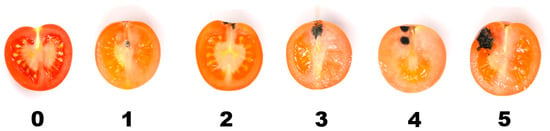
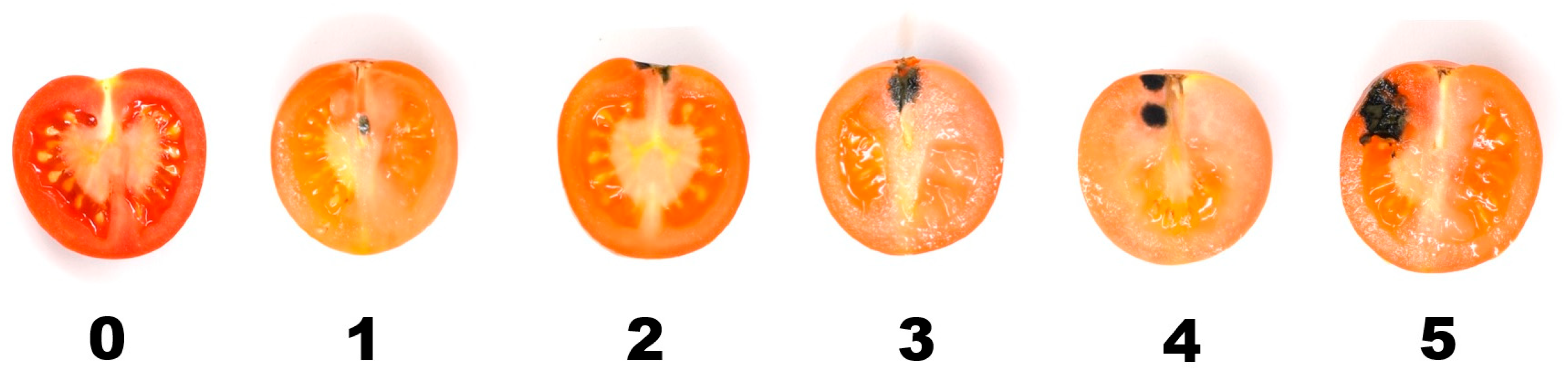
Ten trained assessors from the Department of Agro-Food Technology at Miguel Hernández University in Elche (Orihuela, Alicante, Spain) were selected to visually evaluate the incidence of CI in tomatoes. The assessors were aged between 25 and 55 years, and 50% were female. They evaluated the internal surface damage on a scale of 0 to 5: 0 = no symptoms; 1 = very slight (surface pitting affecting <5% of the area); 2 = slight (5–15% affected area); 3 = moderate (16–35% area with visible browning); 4 = severe (36–50% area with coalescing pits); and 5 = extremely severe (>50% of the surface showing extensive breakdown), as illustrated in Figure 1. The MDA content in tomato tissue was analyzed following the methods previously described [43,44]. A 2.5 g sample was manually ground with a mortar and subsequently mixed with a 10% trichloroacetic acid solution (10 mL). After centrifuging the mixture at 4 °C and 10,000× g for 20 min, the supernatant was obtained, and 2 mL was mixed with 6 mL of 0.67% thiobarbituric acid and homogenized. The samples were heated (95 °C for 20 min) and then brought to ambient temperature before their evaluation at different wavelengths (450, 532, and 600 nm) with a spectrophotometer (1900 UV/Vis, Shimadzu, Kyoto, Japan) [43,44]. These evaluations were conducted in duplicate and reported as µmol kg−1.
Figure 1.
Hedonic scale (0–5) of chilling injury (CI) incidence in ‘Vivalto RZ’ tomato fruit. Fruits were stored at 2 °C for 20 days and then transferred to 20 °C for 2 days to allow symptom expression. CI index was rated on a scale of 0 to 5 based on the percentage of the affected internal surface damage: 0 = no symptoms; 1 = very slight (surface pitting affecting <5% of the area); 2 = slight (5–15% affected area); 3 = moderate (16–35% area with visible browning); 4 = severe (36–50% area with coalescing pits); and 5 = extremely severe (>50% of the surface showing extensive breakdown).
The IL was measured using methods previously described for tomato fruit [43,45]. From each replicate, 15 disks (1 cm in diameter) were obtained from the outer rind of the tomato using a cork borer after the interior matrix had been removed and the disks had been rinsed. The disks were rinsed three times with deionized water for three minutes each, then immersed in deionized water (50 mL) for one hour at room temperature with continuous agitation. The initial electrical conductivity (C1) at 20 °C was recorded. The disks were heated to 121 °C for 15 min, cooled to ambient temperature, and then the conductivity (C2) was recorded. The IL results were obtained using the following formula: (C1/C2) × 100. These results are expressed as a percentage (%).
2.5. Total Phenolic Content and Hydrophilic and Lipophilic Total Antioxidant Activity
In brief, the total phenolic content (TPC) of 2.5 g of tomato tissue collected from each treatment and sampling date was determined by homogenizing it in 10 mL of an 8:2 methanol solution containing 2 mM sodium fluoride, which inhibits polyphenol oxidase activity. Following centrifugation at 10,000× g at 4 °C for 15 min, 200 µL of the supernatant was mixed with 300 µL of phosphate buffer, 2.5 mL of Folin–Ciocalteu reagent, and 2 mL of 1 N Na2CO3. The mixture was then incubated at 50 °C for 5 min, after which the absorbance was measured at 760 nm using a Shimadzu UV-1700 spectrophotometer [43]. Results were expressed as mg of gallic acid equivalent (GAE) per 100 g of fresh weight (FW), based on a gallic acid calibration curve. The total antioxidant activity (TAA) in both fractions [hydrophilic (H-TAA) and lipophilic (L-TAA)] was extracted and quantified according to the methodology previously reported by Dobón-Suárez et al. [46]. In summary, 10 mL of 50 mmol L−1 phosphate buffer (pH = 7.8) and 5 mL ethyl acetate were used to homogenize 2.5 g of tomato fruit. Subsequently, the extracts were centrifuged at 10,000× g for 15 min at 4 °C. The H-TAA was quantified using the lower fraction, while the L-TAA was determined in the upper extract. The results for both parameters were expressed as mg 100 g−1 FW.
2.6. Ascorbate Peroxidase Activity
For the analysis of ascorbate peroxidase (APX) activity, tomato fruit samples were collected at harvest (day 0) and at each sampling interval during the experiment (days 5, 10, 15, and 20 of cold storage, each followed by 2 days at 20 °C). At each time point, representative tissue samples were immediately frozen in liquid nitrogen and stored at −80 °C until the enzymatic assays were performed. The total crude enzyme extract was prepared by homogenizing 2.5 g of tomato pericarp tissue in 10 mL of 50 mM potassium phosphate buffer (pH 6.8), containing 1.0 mM ethylenediaminetetraacetic acid (EDTA) and 1% (w/v) polyvinylpyrrolidone (PVP). The homogenate was then centrifuged at 10,000× g for 15 min at 4 °C, and the resulting supernatant was collected and used as the crude enzyme extract for the APX activity assay according to the methodology previously described by García-Pastor et al. [47]. Antioxidant enzyme activity was expressed as units of enzymatic activity (U min−1 g−1 FW). One enzymatic unit (U) was defined as a 0.01 decrease in ascorbate at 290 nm min−1, with the U of APX activity being determined as the amount of enzyme that oxidizes 1 μmol of ascorbate per minute under the assay conditions.
2.7. Statistical Analysis
All analytical determinations were subjected to statistical analysis, with three replicates (n = 3) of five tomatoes (15 fruits per treatment and sampling date) for each parameter analyzed. The results were expressed as the mean ± SE. The data were subjected to an analysis of variance (ANOVA). The source of variation was the treatments. The mean comparisons were conducted using Tukey’s honestly significant difference (HSD) test to determine whether the observed differences among treatments were statistically significant at p < 0.05. Treatments that differed significantly within the same sampling period were indicated by different lowercase letters. All analyses were conducted using the SPSS software package, version 20.0 for Windows (IBM Corporation, Armonk, NY, USA).
3. Results
3.1. The Effect of Individual and Combined Treatments of MeSA, MeJA, and SNP on Weight Losses, Respiration Rate, and Ethylene Production
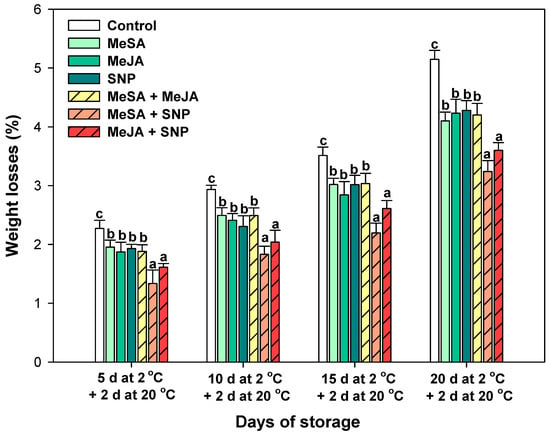
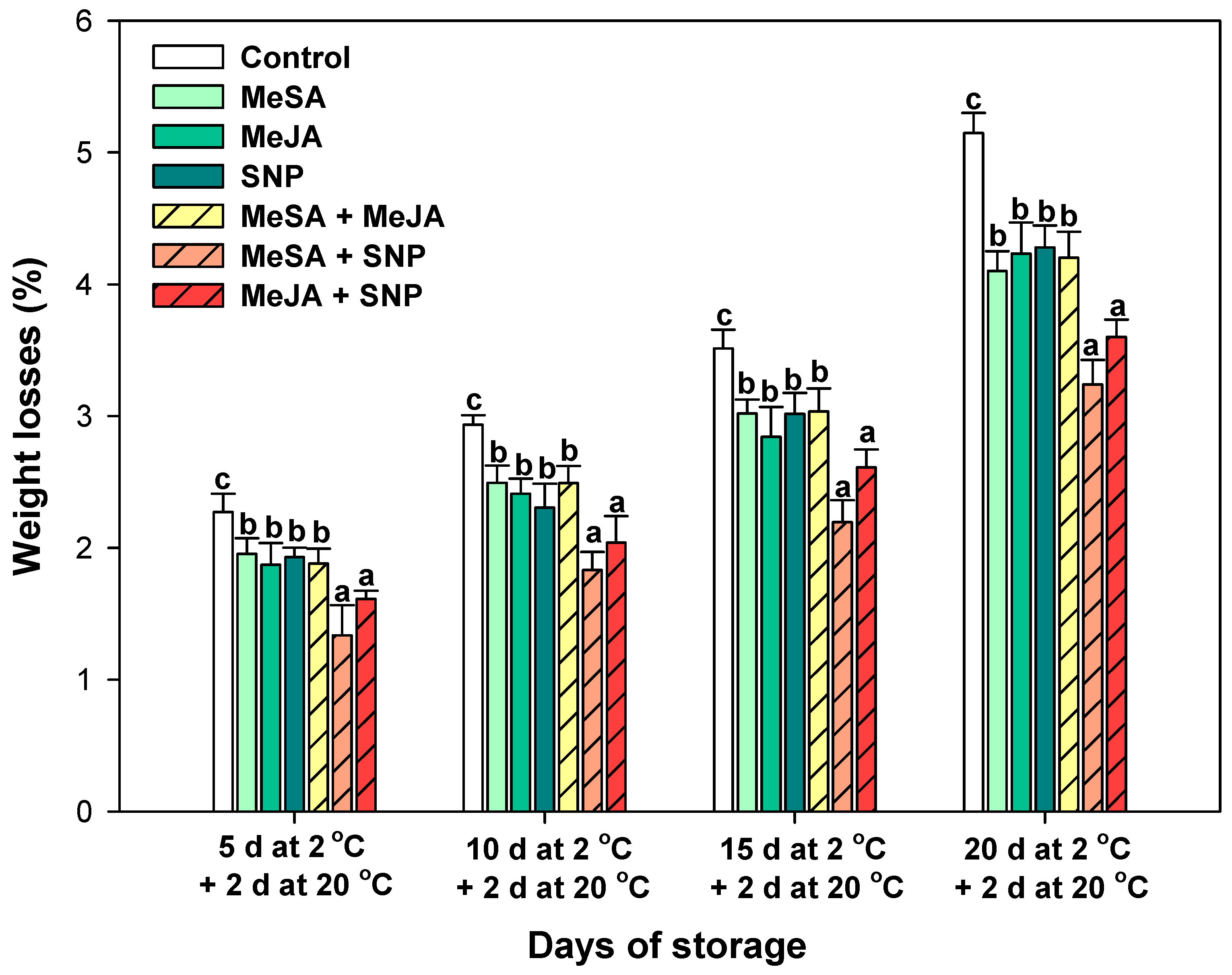
The application of MeSA, MeJA, and SNP, both individually and in dual combinations (MeSA + MeJA, MeSA + SNP, and MeJA + SNP), significantly (p < 0.05) mitigated postharvest weight loss in tomato fruit, ‘Vivalto RZ’ cultivar, compared to the control group across all storage periods (5, 10, 15, and 20 days at 2 °C plus 2 days at 20 °C) (Figure 2).
Figure 2.
Effect of individual and combined treatments of MeSA, MeJA, and SNP on weight losses (%) of tomato fruit, ‘Vivalto RZ’ cultivar, stored at 2 °C, followed by 2 days at 20 °C. Different lowercase letters indicate significant differences at p < 0.05 among treatments for each day of storage.
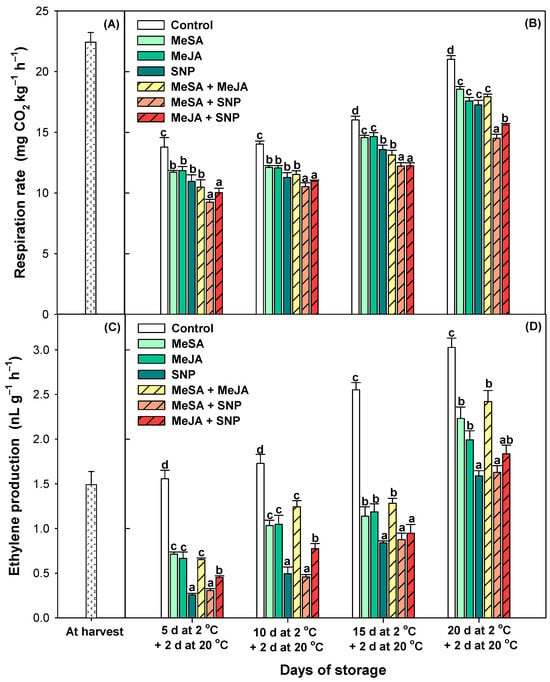
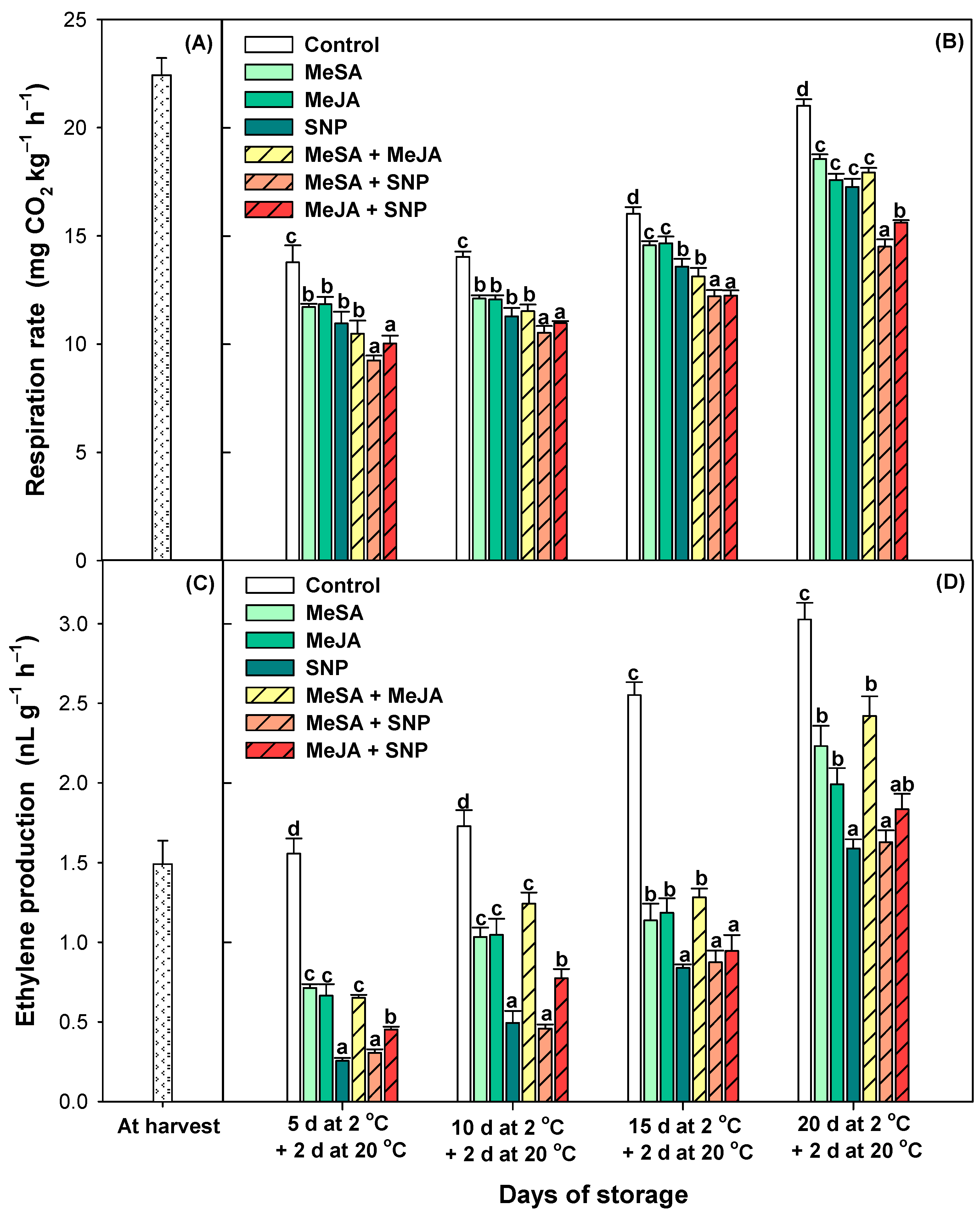
After 20 days of cold storage and subsequent shelf-life, the control fruit exhibited the highest weight loss. All treatments significantly (p < 0.05) reduced this loss. Notably, the combined treatments, specifically MeSA + SNP and MeJA + SNP, consistently provided the greatest efficacy, resulting in the lowest weight losses (p < 0.05). The beneficial effects of all treatments were maintained throughout the storage period. This indicates that these compounds enhance water retention and preserve the quality of marketable fruit, particularly when MeSA or MeJA were used in combination with SNP (Figure 2). Furthermore, the application of MeSA, MeJA, and SNP treatments significantly (p < 0.05) affected both the respiration rate (Figure 3A,B) and ethylene production (Figure 3C,D) in postharvest of tomato fruit compared to the untreated.
Figure 3.
Effect of individual and combined treatments of MeSA, MeJA, and SNP on respiration rate (mg CO2 kg−1 h−1) (A,B) and ethylene production (nL g−1 h−1) (C,D) of tomato fruit, ‘Vivalto RZ’ cultivar, at harvest (A,C) and stored at 2 °C followed by 2 days at 20 °C (B,D). Different lowercase letters indicate significant differences at p < 0.05 among treatments for each day of storage.
At harvest, the initial respiration rate was 22.4 mg CO2 kg−1 h−1 (Figure 3A), and the ethylene production was 1.5 nL g−1 h−1 (Figure 3C), serving as the baseline for evaluating postharvest treatments. The control fruit maintained higher respiration rates and ethylene production throughout all storage periods (Figure 3B,D). Specifically, after 20 days of cold storage plus 2 days at 20 °C, the control exhibited a maximum respiration rate (Figure 3B) and ethylene production (Figure 3D). All treatments significantly (p < 0.05) reduced the intensity of this biological process, suggesting a delay in ripening and senescence. Crucially, the MeSA + SNP and MeJA + SNP combination treatments were the most effective, resulting in the lowest respiration rates (Figure 3B) and ethylene production (Figure 3D) by the end of the storage period. These combined treatments consistently showed statistically significant (p < 0.05) differences compared with the single applications and the control, confirming the synergistic role of SNP in suppressing metabolic activity.
3.2. The Effect of Individual and Combined Treatments of MeSA, MeJA, and SNP on Firmness, Color, Total Soluble Solids, Titratable Acidity, and Ripening Index
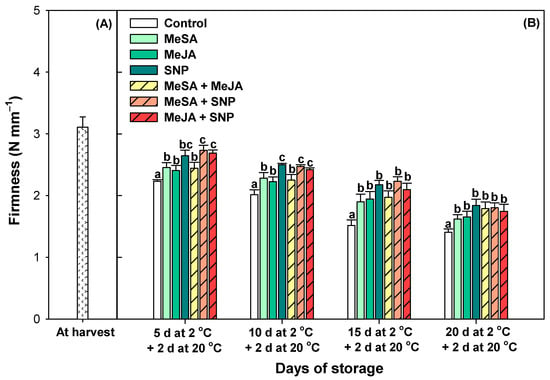
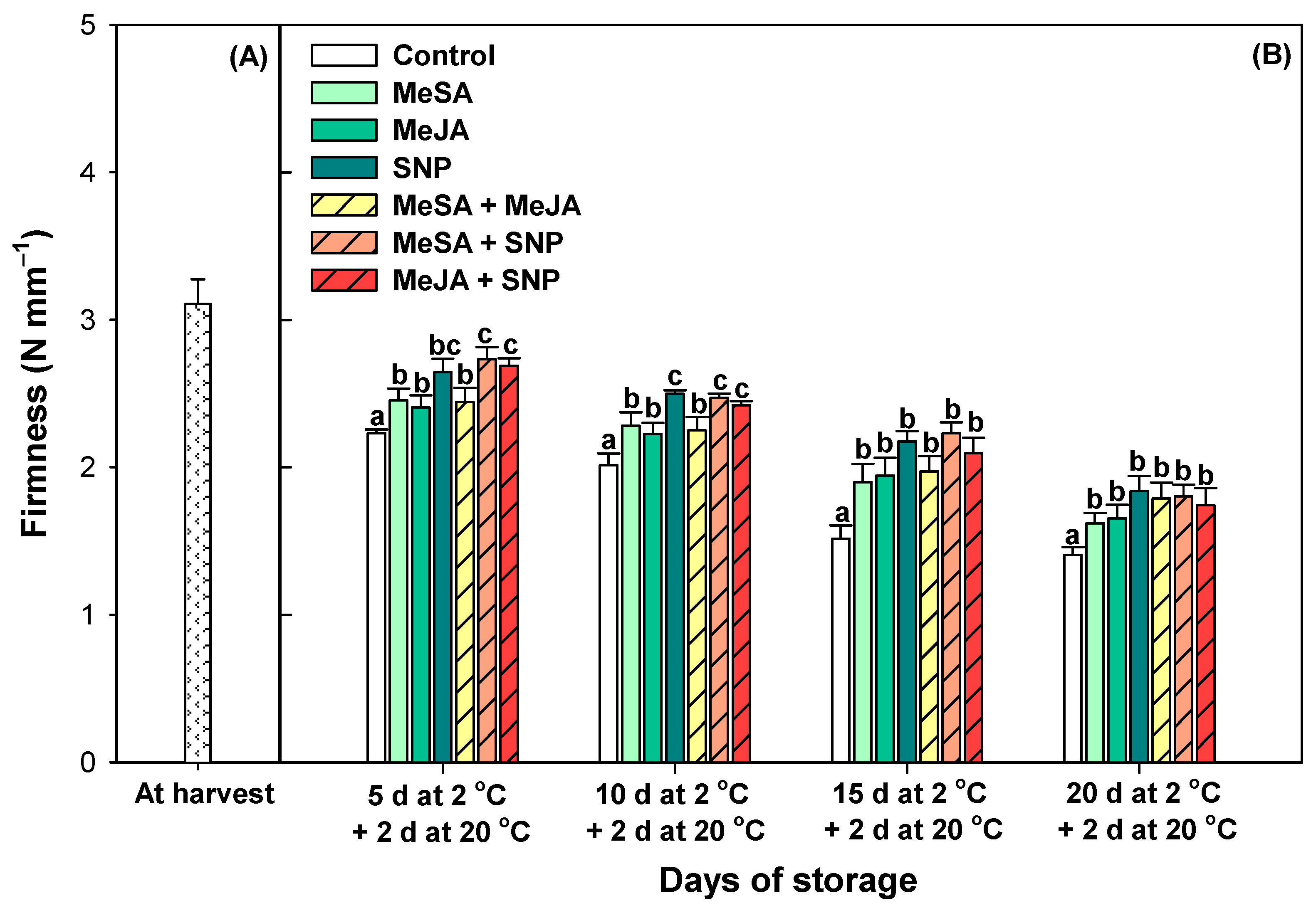
The initial firmness of the ‘Vivalto RZ’ tomato fruit at harvest was 3.1 N mm−1 (Figure 4A), serving as the baseline for evaluating postharvest quality changes. Across all storage periods, all treatments—MeSA, MeJA, and SNP, both individually and in dual combinations (MeSA + MeJA, MeSA + SNP, and MeJA + SNP), —significantly (p < 0.05) retarded firmness loss compared to the control fruit (Figure 4B). The control fruit exhibited the lowest firmness values at every assessment point, notably dropping to 1.4 N mm−1 at the final 20-day assessment (Figure 4B).
Figure 4.
Effect of individual and combined treatments of MeSA, MeJA, and SNP on firmness (N mm−1) (A,B) of tomato fruit, ‘Vivalto RZ’ cultivar, at harvest (A) and stored at 2 °C followed by 2 days at 20 °C (B). Different lowercase letters indicate significant differences at p < 0.05 among treatments for each day of storage.
In contrast, the fruit treated with the combined applications, specifically MeSA + SNP and MeJA + SNP, maintained significantly (p < 0.05) higher firmness at the final 20-day period than the other treatments (Figure 4B). These combination treatments were consistently among the most effective after 5 and 10 days of cold storage and subsequent shelf-life. They showed statistical differences (p < 0.05) from the control, single applications of MeSA and MeJA, and the combined treatment of MeSA and MeJA, demonstrating superior preservation of cell wall integrity and textural quality during cold storage and subsequent shelf-life. The initial h° at harvest was 57.6, establishing the baseline color (Supplementary Figure S1A). Throughout the storage period, all treatments (MeSA, MeJA, SNP, and their combinations) significantly (p < 0.05) promoted the decline in h° compared to the control (Supplementary Figure S1B). At the final 20-day assessment, the control fruit reached a h° of approximately 49.9 (Supplementary Figure S1B). While differences among the treated groups were often statistically non-significant (p ≥ 0.05), all treated fruit maintained a significantly lower (p < 0.05) h° (46.9–48.7) than the control, except for the MeSA treatment (49.0), confirming their efficacy in preserving color quality (Supplementary Figure S1B).
The initial TSS content at harvest was 4.4 g 100 mL−1 (Supplementary Figure S2A), and the TA was 0.4 g 100 mL−1 (Supplementary Figure S2C). Throughout the storage period, TSS content generally increased, while TA decreased, reflecting the normal ripening process. Regarding TSS, the treatments based on SNP maintained significantly (p < 0.05) lower levels than the control at all time points, although the differences between the other treatments tested and the control were generally not statistically significant (p ≥ 0.05; Supplementary Figure S2B). For TA, the control fruit consistently showed the greatest loss of acidity with a 22.1% decrease after 20 days at 2 °C plus 2 days at 20 °C (Supplementary Figure S2D). Importantly, all treatments significantly (p < 0.05) mitigated the decline in TA compared to the control. The combined treatments, especially MeSA + SNP and MeJA + SNP, were highly effective in maintaining acidity, showing values around 0.31 g 100 mL−1 at the final assessment, which was statistically (p < 0.05) higher than the control (≈ 0.26 g 100 mL−1), indicating a better preservation of sour taste and delayed organic acid metabolism (Supplementary Figure S2D). Finally, the initial RI at harvest was 11.4 (Supplementary Figure S3A). Throughout storage, all treatments (MeSA, MeJA, SNP, and combinations) significantly (p < 0.05) delayed the increase in RI compared to the control (Supplementary Figure S3B). The control fruit reached the highest RI value (around 20.7) after 20 days plus shelf-life conditions. The combined treatments of MeSA + SNP and MeJA + SNP were the most effective, resulting in the lowest RI values (approximately 15.5) and exhibiting statistical superiority (p < 0.05) over the control and often over single applications. This confirms their superior efficacy in delaying the ripening process (Supplementary Figure S3B).
3.3. The Effect of Individual and Combined Treatments of MeSA, MeJA, and SNP on Chilling Injury, Malondialdehyde Content, and Ion Leakage
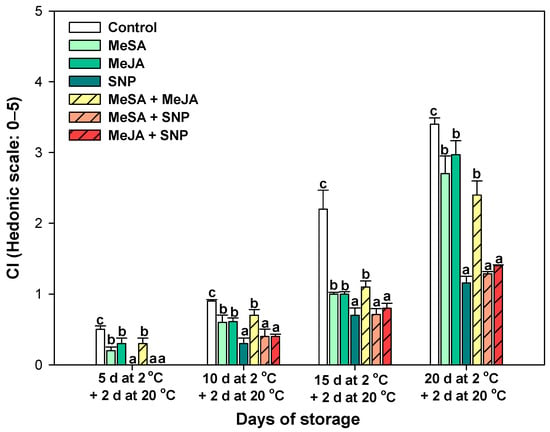
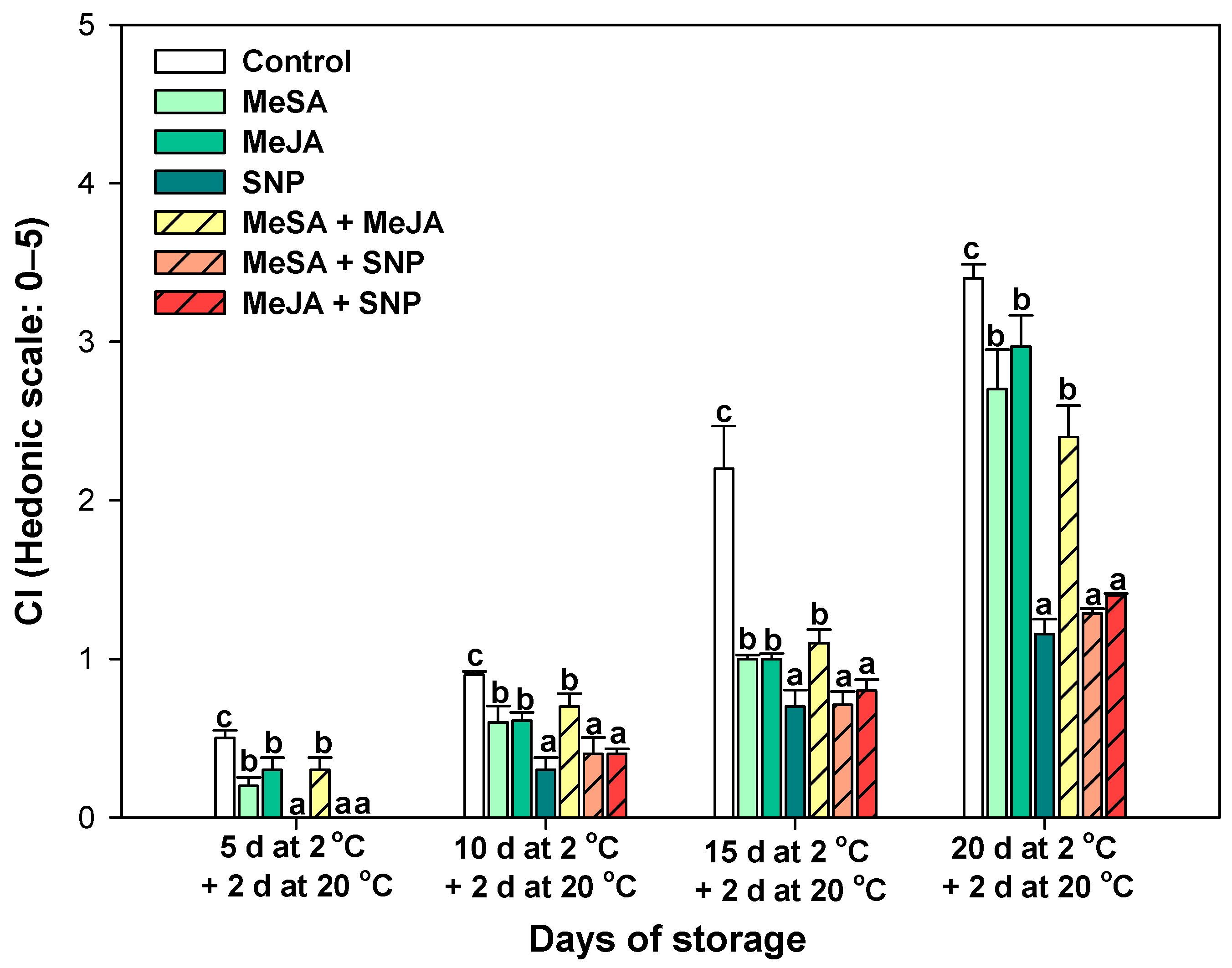
The application of all postharvest treatments significantly (p < 0.05) reduced the incidence of CI compared to the untreated group across all storage periods (Figure 5). The control fruit showed a gradual increase in CI, reaching a maximum after 20 days of cold storage, followed by 2 days at 20 °C. In contrast, all treated fruits maintained significantly (p < 0.05) lower CI scores. Notably, the MeSA + SNP and MeJA + SNP combination treatments, as well as the SNP single application, were the most effective in mitigating cold stress symptoms. These applications consistently resulted in the lowest CI indices at 20 days plus shelf-life conditions and differed statistically (p < 0.05) from both the control and MeSA and MeJA applications. This preservation of quality suggests that MeSA, MeJA, and SNP, particularly in dual combinations (MeSA + MeJA, MeSA + SNP, and MeJA + SNP), successfully enhanced the chilling tolerance (Figure 5). In this sense, the visual assessment of the internal surface in ‘Vivalto RZ’ tomato fruit after 20 days at 2 °C, followed by 2 days at 20 °C, clearly demonstrates the differential efficacy of the applied postharvest treatments against internal CI incidence by the end of cold storage (Supplementary Figure S4).
Figure 5.
Effect of individual and combined treatments of MeSA, MeJA, and SNP on the incidence of chilling injury (CI) evaluated by a hedonic scale (0–5) of tomato fruit, ‘Vivalto RZ’ cultivar, stored at 2 °C, followed by 2 days at 20 °C. Different lowercase letters indicate significant differences at p < 0.05 among treatments for each day of storage.
The internal surfaces of the tomatoes evaluated at harvest displayed a fresh, firm appearance with uniform, undamaged internal tissue, as can be observed in the Supplementary Figure S4. In sharp contrast, the control fruit exhibited severe CI symptoms, characterized by extensive internal browning, tissue darkening, and a conspicuous water-soaked, collapsed appearance of the locular gel and pericarp (Supplementary Figure S4). While the single applications of MeSA, MeJA, and SNP reduced the severity compared to the control, the combined treatments (MeSA + MeJA, MeSA + SNP, and MeJA + SNP) provided the highest level of protection. Specifically, the MeSA + SNP and MeJA + SNP combinations most effectively preserved the internal structure, minimizing tissue discoloration and structural damage. The internal surfaces from these combined treatments closely maintained the integrity observed at harvest, confirming their superior ability to enhance the chilling tolerance of tomato fruit (Supplementary Figure S4).
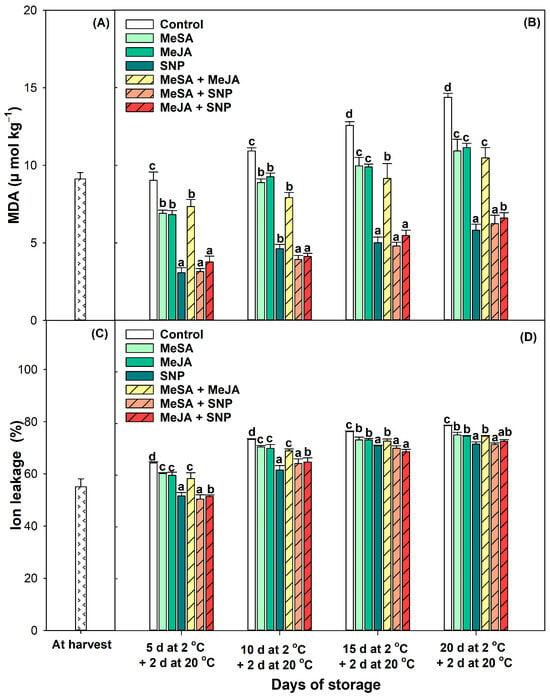
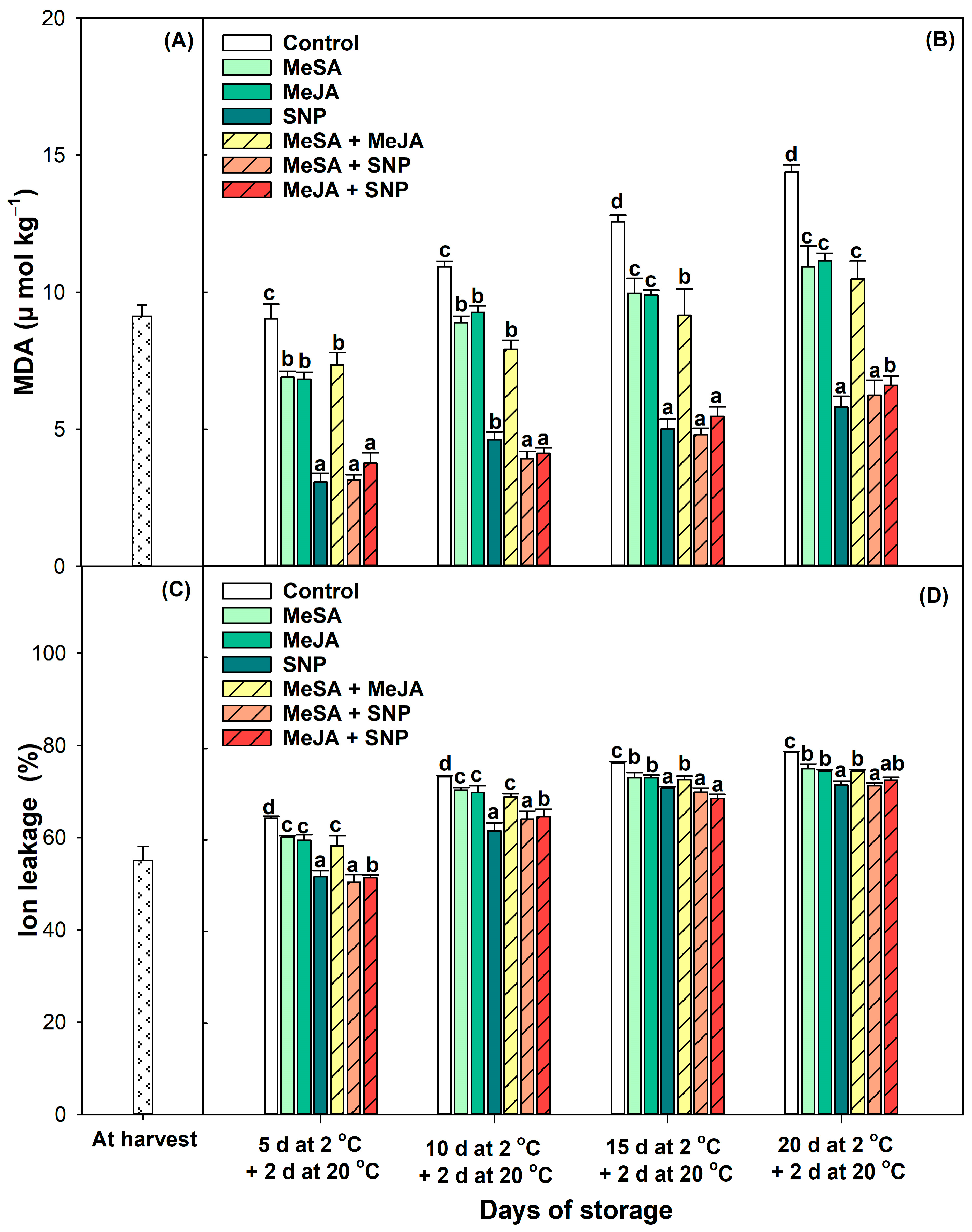
The initial MDA content at harvest was 9.1 µmol kg−1 (Figure 6A), and the percentage of IL was 55.0% (Figure 6C), serving as the baseline for assessing membrane damage of ‘Vivalto RZ’ tomato fruit. During storage, the control fruit showed a significant increase in MDA and IL, indicating progressive membrane degradation under stress (Figure 6B,D). After 20 days plus shelf-life conditions, control reached the highest levels for both parameters. Crucially, all treatments significantly (p < 0.05) retarded the accumulation of MDA and reduced IL compared to the control. The SNP single treatment and the combined treatments (MeSA + SNP and MeJA + SNP) provided the highest efficacy in preserving membrane integrity. At the final assessment, these combined groups showed the lowest MDA levels (Figure 6B) and maintained the lowest IL (Figure 6D). These low values were statistically (p < 0.05) distinct from the control and two other single treatments, confirming that the application of these compounds, particularly those involving SNP, effectively reduced oxidative stress and membrane lipid peroxidation throughout the storage period (Figure 6B,D).
Figure 6.
Effect of individual and combined treatments of MeSA, MeJA, and SNP on the malondialdehyde content (MDA; µmol kg−1) (A,B) and ion leakage (%) (C,D) of tomato fruit, ‘Vivalto RZ’ cultivar, at harvest (A,C) and stored at 2 °C followed by 2 days at 20 °C (B,D). Different lowercase letters indicate significant differences at p < 0.05 among treatments for each day of storage.
3.4. The Effect of Individual and Combined Treatments of MeSA, MeJA, and SNP on Total Phenolic Content and Hydrophilic and Lipophilic Total Antioxidant Activity
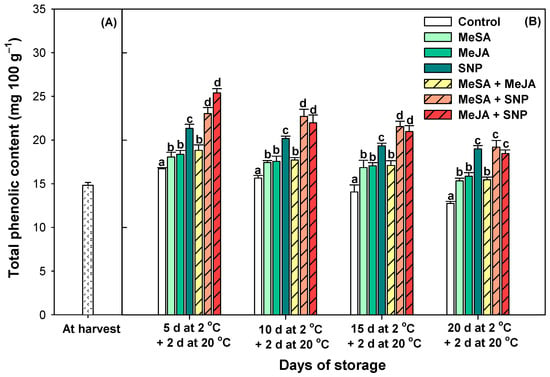
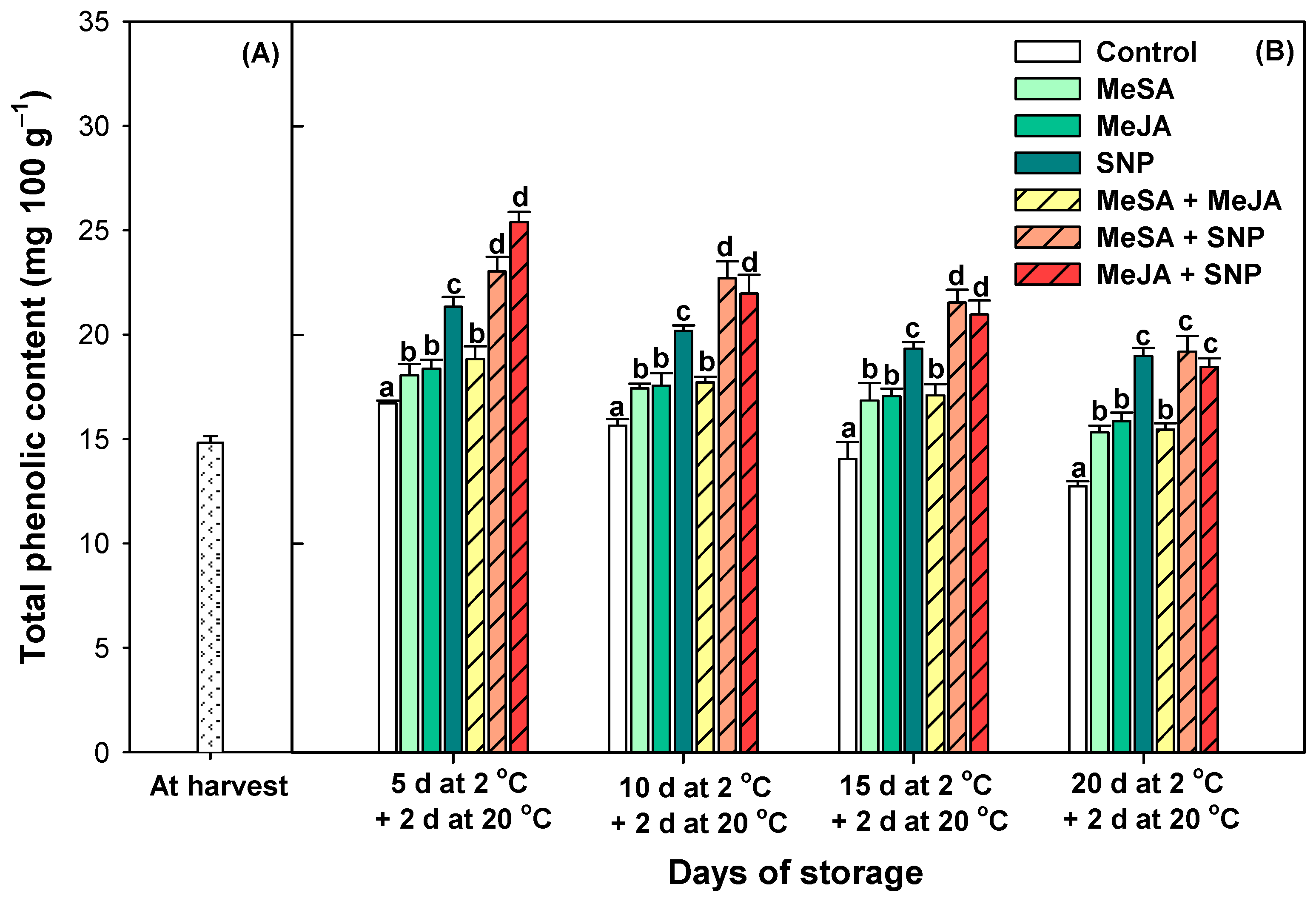
The initial TPC at harvest was 14.8 mg 100 g−1 (Figure 7A), representing the baseline antioxidant status. During storage, TPC generally decreased, reflecting the consequence of oxidative stress [26,39]. However, the treatments exhibited clear differences in modulating this response (Figure 7B). The untreated fruit consistently showed the lowest TPC throughout the storage period after 20 days plus shelf-life conditions. In contrast, all treatments significantly (p < 0.05) enhanced the TPC compared to the control. The most pronounced effect was observed in SNP, MeSA + SNP, and MeJA + SNP treatments, which yielded the highest TPC values at each assessment point. After 20 days plus 2 days at 20 °C, these combination treatments maintained TPC levels higher, which were statistically (p < 0.05) superior to control and MeSA and MeJA single applications. This finding suggests that these treatments stimulate the biosynthesis and accumulation of phenolic compounds, thereby enhancing the fruit’s antioxidant capacity and resistance to postharvest deterioration (Figure 7B).
Figure 7.
Effect of individual and combined treatments of MeSA, MeJA, and SNP on the total phenolic content (TPC; mg 100 g−1) (A,B) of tomato fruit, ‘Vivalto RZ’ cultivar, at harvest (A) and stored at 2 °C followed by 2 days at 20 °C (B). Different lowercase letters indicate significant differences at p < 0.05 among treatments for each day of storage.
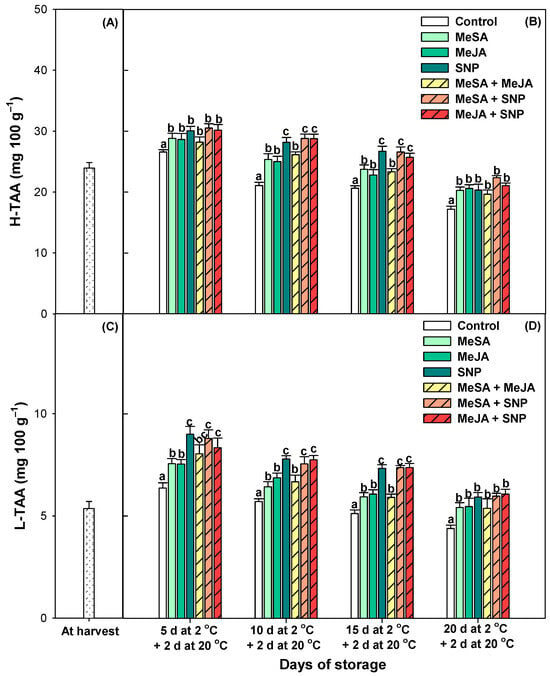
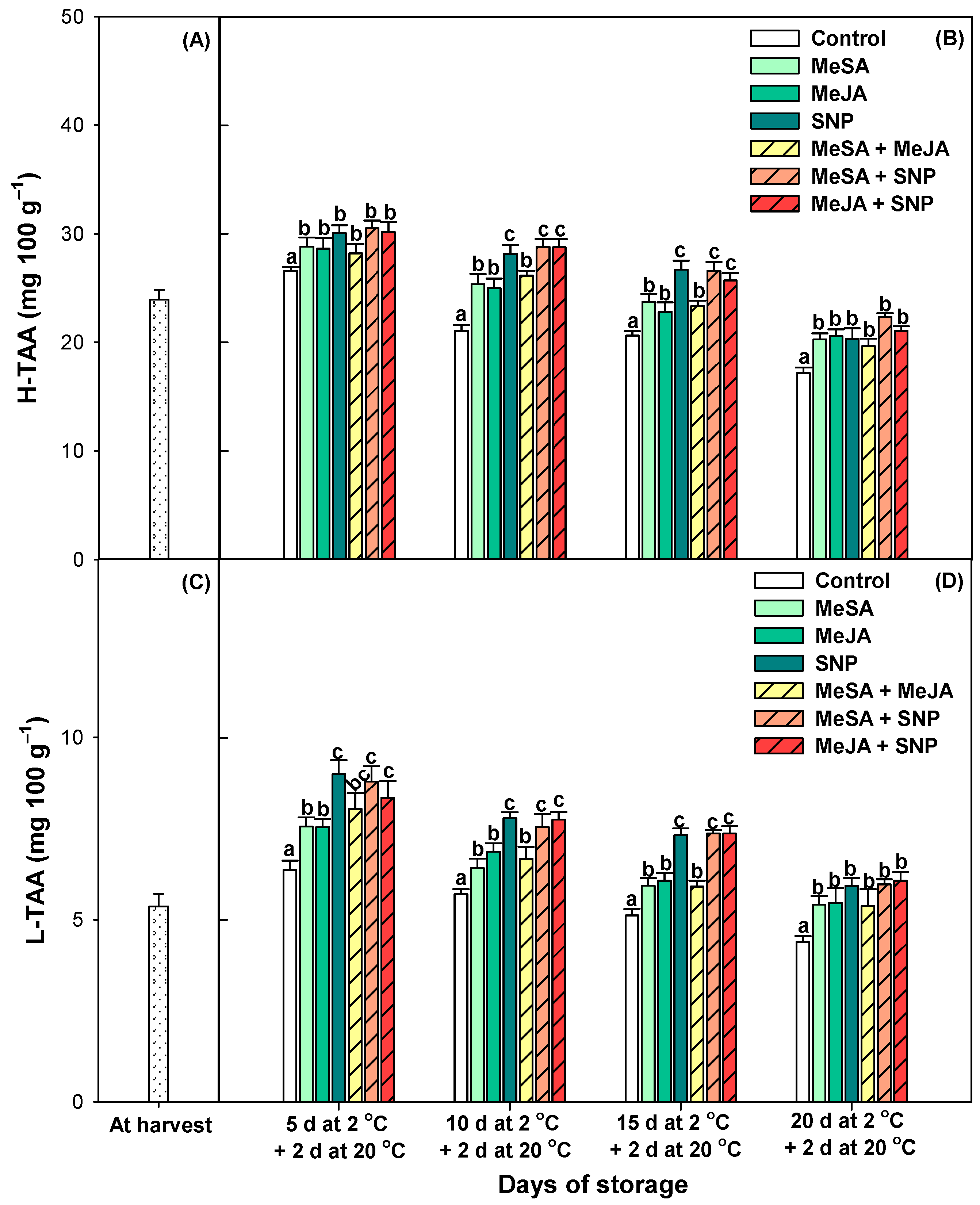
The TAA was fractionated into hydrophilic (H-TAA) and lipophilic (L-TAA) components, as shown in Figure 8. At harvest, the H-TAA and L-TAA levels were measured at 23.9 and 5.4 mg 100 g−1, respectively (Figure 8A,C). Throughout the storage period, both H-TAA (Figure 8B) and L-TAA (Figure 8D) parameters in the control fruit exhibited a progressive and substantial decline, reaching the lowest values by day 20 plus shelf-life conditions. However, all applied treatments—including MeSA, MeJA, SNP, and their various combinations—significantly (p < 0.05) retarded the loss of both H-TAA and L-TAA when compared to the control at every evaluation point. Specifically, the SNP treatment and the combined treatments, namely MeSA + SNP and MeJA + SNP, consistently resulted in the highest retention of both hydrophilic and lipophilic TAA fractions, suggesting a potent effect in preserving the overall antioxidant capacity during the postharvest storage and shelf-life simulation (Figure 8B,D).
Figure 8.
Effect of individual and combined treatments of MeSA, MeJA, and SNP on the hydrophilic total antioxidant activity (H-TAA; mg 100 g−1) (A,B) and lipophilic total antioxidant activity (L-TAA; mg 100 g−1) (C,D) of tomato fruit, ‘Vivalto RZ’ cultivar, at harvest (A,C) and stored at 2 °C followed by 2 days at 20 °C (B,D). Different lowercase letters indicate significant differences at p < 0.05 among treatments for each day of storage.
3.5. The Effect of Individual and Combined Treatments of MeSA, MeJA, and SNP on Ascorbate Peroxidase Activity
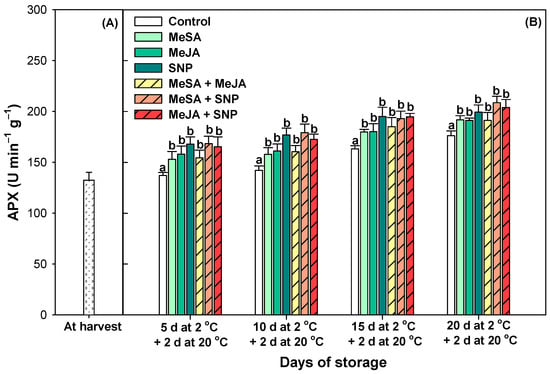
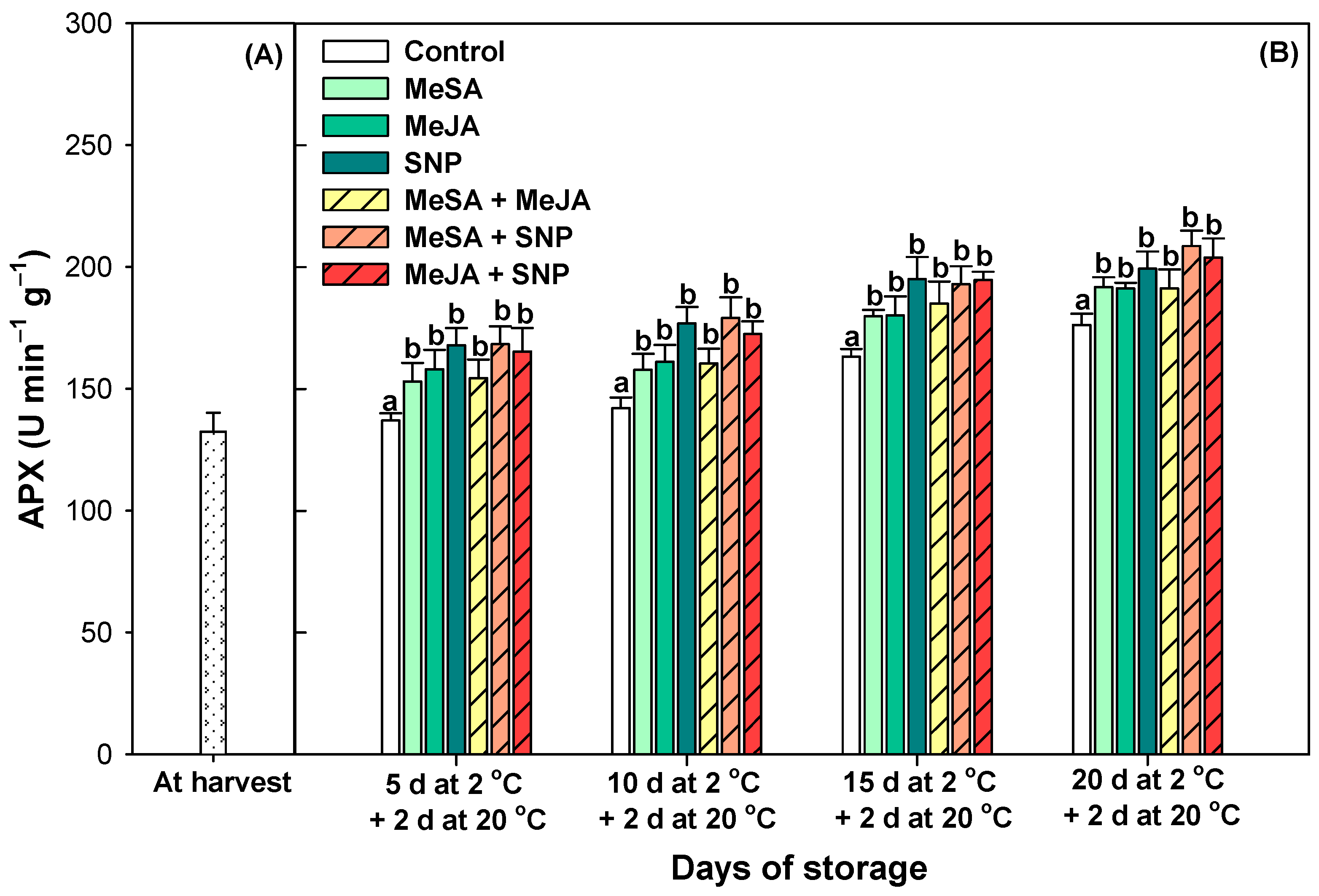
The initial activity of the enzyme APX at harvest was approximately 132.3 U min−1 g−1 (Figure 9A). Throughout the 20 days of storage plus 2 days at 20 °C, the APX activity in the control fruit exhibited a progressive increase (Figure 9B). Critically, all individual treatments—MeSA, MeJA, and SNP—as well as their combinations (MeSA + MeJA, MeSA + SNP, and MeJA + SNP), significantly (p < 0.05) enhanced APX activity compared to the control group at all evaluation time points (5, 10, 15, and 20 days, plus shelf-life conditions). Statistically, there were no significant differences between treatments (p ≥ 0.05), so the only noticeable trend was higher APX growth in tomatoes treated with SNP, MeSA + SNP, or MeJA + SNP, compared to treatments with single MeSA or MeJA, or the MeSA + MeJA combination. This outcome suggests that these treatments are highly successful in stimulating the fruit’s internal enzymatic antioxidant defense mechanisms against oxidative stress during postharvest (Figure 9B).
Figure 9.
Effect of individual and combined treatments of MeSA, MeJA, and SNP on the ascorbate peroxidase activity (APX; U min−1 g−1) (A,B) of tomato fruit, ‘Vivalto RZ’ cultivar, at harvest (A) and stored at 2 °C followed by 2 days at 20 °C (B). Different lowercase letters indicate significant differences at p < 0.05 among treatments for each day of storage.
4. Discussion
The observed mitigation of CI symptoms in ‘Vivalto RZ’ tomatoes (Figure 1) underscores the potential of combinatorial postharvest treatments as a superior strategy over conventional single-molecule applications (Supplementary Figure S4). While the individual roles of MeSA, MeJA, and SNP in modulating plant stress responses have been documented [4,11,13,14,32,33], this study reveals a novel synergistic interaction when these signaling molecules are applied in dual combinations (MeSA + MeJA, MeSA + SNP, and MeJA + SNP). Specifically, our findings demonstrate that the integrated application of these elicitors triggers a more robust defense mechanism, effectively bridging the gap between hormonal signaling and oxidative stress regulation. By focusing on these specific combinations, this research provides new insights into how multi-target treatments can more effectively preserve fruit quality and metabolic stability during cold storage than previously reported methods, thereby offering a more comprehensive approach to extending the postharvest life of sensitive tomato cultivars.
Our results demonstrate that treatments using MeSA, MeJA, and SNP markedly attenuate the significant reduction in weight loss in tomato fruit, which is primarily driven by water loss via transpiration and accelerated metabolic activity (respiration rate) (Figure 2). This is in accordance with previous studies [11,38,43]. This beneficial effect stems from the treatments’ capacity observed in this trial to suppress core ripening and senescence processes, namely respiration rate (Figure 3A,B) and ethylene production (Figure 3C,D) [11,15,48]. The MeSA reduces WL and delays senescence by inhibiting the fruit’s respiration rate and suppressing ethylene synthesis, an action often linked to the inhibition of key ethylene production-related enzyme activities, such as 1-aminocyclopropane-1-carboxylic acid oxidase (ACO) and synthase (ACS) [26,38,49]. Furthermore, MeSA activates arginine catabolism, leading to increased polyamine and NO levels, which contribute to overall diminished deteriorative metabolism and enhanced firmness [33]. MeSA, MeJA, and SNP treatments, applied individually or in dual combinations (MeSA + MeJA, MeSA + SNP, and MeJA + SNP) in the present study, fundamentally maintain tomato fruit firmness and reduce weight loss by inhibiting ripening and senescence processes (Figure 4A,B); this is primarily achieved through the suppression of ethylene production and respiration rates, specifically by inhibiting the conversion of ACC and forming complexes with ACO [11,15,26,40,48].
Mechanistically, MeSA and its derivatives delay softening by restraining the activity of cell wall-degrading enzymes, notably polygalacturonase (PG) and pectin methylesterase (PME), thereby maintaining cell wall integrity [26,38]. Similarly, SNP (a NO donor) inhibits softening by suppressing ethylene biosynthesis [11] and regulating the transcription of cell wall-related genes, such as LePG and LePME, which delays the dissolution of polyuronides [40]. In terms of red color development (lycopene accumulation), we found that all treatments initially promote the red color change indicated by the evolution of the h° parameter during cold storage (Supplementary Figure S1). Crucially, by mitigating CI—a condition characterized by the failure to develop full color [14,15]—low concentrations of MeSA and MeJA ensure that fruit maintain their ripening capacity, developing normal, uniform red pigmentation post-chilling stress [14]. Furthermore, MeJA treatment actively enhances lycopene content [4], while SNP maintains high lycopene levels, possibly by blocking β-carotene biosynthesis pathways, thereby channeling precursors toward lycopene accumulation and supporting red color development [11].
The combined suppression of respiratory peaks and ethylene levels preserves internal substrates and delays senescence, thereby maintaining quality indices such as TSS and TA [11,48], as reported in this study (Supplementary Figure S2). We found that the individual or combined treatments (MeSA + MeJA, MeSA + SNP, and MeJA + SNP) mitigate the postharvest RI, as can be observed in Supplementary Figure S3, by significantly (p < 0.05) suppressing ethylene production and metabolic respiration rates [11,26,40,50]. The SNP treatment inhibits ethylene synthesis and down-regulates cell wall-related genes (LePG and LePME) [11,40]. The MeSA treatment delays fruit softening by inhibiting PG and PME activity, whereas MeJA delays it by regulating the SlMYC2 transcription factor to boost polyamine synthesis [12,38]. This coordinated molecular suppression preserves ripening capacity, resulting in the development of normal, uniform red pigmentation and a reduced incidence of abnormal ripening (CI symptom) post-cold stress [4,14], as observed in our study (Supplementary Figure S4).
The CI development in tomato fruit is intrinsically linked to cellular oxidative stress, characterized by excessive ROS accumulation that triggers membrane lipid peroxidation, resulting in cellular damage marked by increased MDA content and IL [5,11,29]. Our results demonstrate that postharvest treatments with MeSA, MeJA, and the NO donor SNP consistently alleviate CI symptoms (Figure 5) by inhibiting the increase in MDA production (Figure 6A,B) and IL (Figure 6C,D). These results are consistent with previous reports on various fruits and vegetables [4,27,33,36,51]. This protective action is achieved by fortifying the cellular membrane integrity through the activation of complementary defense systems. The MeSA reduces MDA and IL by diminishing ROS accumulation (e.g., H2O2 and O2•−) [27], a mechanism mediated by promoting the SlNAC1 transcription factor, which subsequently enhances SlNRX2 expression for ROS detoxification [27]. On the other hand, MeJA inhibits the increase in MDA and IL [4] primarily by relying on the SlMYC2 transcription factor, which regulates key enzymatic antioxidants [like superoxide dismutase (SOD), catalase (CAT), and APX] [4] and the ascorbate-glutathione (AsA-GSH) cycle [6,29], thereby mitigating membrane lipid peroxidation [5,29]. Correspondingly, SNP reduces MDA content and IL by directly promoting cellular integrity [36,48] via the suppression of lipid peroxidation and the hyperactivation of the enzymatic antioxidant defense system [11,36].
The reduction in CI in tomato fruit mediated by MeSA, MeJA, and SNP is strongly correlated with a robust enhancement of both enzymatic and non-enzymatic antioxidant defenses. We found that these treatments consistently induce or maintain high levels of TPC (Figure 7), contributing significantly to elevated H-TAA (Figure 8A,B). Both MeSA and MeJA could promote this non-enzymatic defense by inducing key enzymes in the phenylpropanoid pathway, e.g., phenylalanine ammonia lyase (PAL), chalcone synthase (CHS)], leading to greater accumulation of phenolics [26,30]. Similarly, SNP enhances phenols and flavonoids, potentially by activating the phenylpropanoid pathway [48]. Finally, the increase observed in L-TAA in the present study (Figure 8C,D) could be related to the carotenoid synthesis, which could be promoted by the treatments tested [26]. In summary, the superior effectiveness often observed in combined treatments (e.g., MeSA + SNP or MeJA + SNP) is hypothesized to arise from the synergistic activation of complementary defense pathways; while MeSA and MeJA trigger internal metabolic shifts and upregulate protective mechanisms (e.g., polyamines, SlMYC2, endogenous NO) [12,33], SNP provides external NO signaling that directly reinforces the antioxidant defense system and cell membrane integrity, yielding maximized protection against desiccation and metabolic breakdown [11,33,48].
The APX activity increases significantly in chilled tomato fruit as an indispensable defense mechanism against oxidative stress caused by CI [4,29]. This enzymatic induction is crucial for maintaining cellular redox homeostasis by intensifying the detoxification of excessive ROS, notably H2O2 [6,29]. APX, as a core component of the AsA-GSH cycle, enhances the fruit’s capacity to scavenge, thereby correlating strongly with improved cold tolerance [29]. Furthermore, applications like MeJA actively promote APX activity to foster a robust antioxidant system [4]. Mechanistically, this enhancement is regulated by the transcription factor SlMYC2, exhibiting a positive correlation with APX induction and linking hormonal signaling to the cold defense pathway [29,50]. Crucially, the present study demonstrates that all three molecules promote the activity of key ROS scavenging enzymes, notably APX, as can be observed in Figure 9, in accordance with previous reports [4,26,36,48,51]. MeJA, in particular, achieves membrane protection by positively regulating the AsA-GSH cycle, thereby increasing APX activity and maintaining high ascorbate and glutathione contents necessary for mitigating oxidative stress under cold conditions [6,29]. In this sense, MeJA actively promoted the defense system, evidenced by the central role of the transcription factor SlMYC2, whose expression shows a high positive correlation (r = 0.92**) with APX induction, linking MeJA signaling to the SlICE-SlCBF-SlCOR pathway [29]. Furthermore, application of NO donors, such as SNP, consistently enhanced APX activity (pooled SMD = −0.97) and effectively limited the accumulation of ROS like superoxide anion (O2•−) and H2O2 [36,48]. This NO-mediated induction of enzymatic antioxidants is vital for regulating cellular redox balance and mitigating CI [36,48]. Additionally, MeSA contributed to CI resistance by promoting the transcription of AOX genes and leveraging the SlNAC1/SlNRX2 pathway to suppress ROS overproduction [27,36]. Our results showing enhanced APX activity and gene expression during cold storage are thus strongly related to these intricate molecular mechanisms established for NO and jasmonate-mediated cold defense.
5. Conclusions
The present study constitutes a novel systematic exploration into the synergistic postharvest application of MeSA, MeJA, and SNP to alleviate CI in ‘Vivalto RZ’ tomato fruit. Our findings conclusively demonstrate that all SNP-based postharvest treatments (SNP alone, MeSA + SNP, and MeJA + SNP) were highly effective in inducing resistance to cold damage, as evidenced by a significant reduction in CI incidence, MDA content, and IL, and a substantial mitigation of postharvest quality losses, including superior preservation of firmness and TA. These SNP-based treatments exhibited the greatest efficacy, enhancing chilling tolerance through the maintenance of cellular integrity and the strongest activation of the enzymatic antioxidant system, notably APX activity. This successful chemical priming approach, leveraging a potential defense signaling cross-talk, establishes the MeSA/MeJA + SNP combinations as a promising and commercially viable strategy to extend the shelf-life of cold-sensitive tomatoes. Despite these promising results, this study was limited to a single tomato cultivar (‘Vivalto RZ’) at the red maturity stage. Future research should investigate the molecular pathways underlying these synergistic effects and evaluate the efficacy of these combined treatments across different cultivars and ripening stages to validate their broader commercial applicability.
Supplementary Materials
The following supporting information can be downloaded at https://www.mdpi.com/article/10.3390/horticulturae12010052/s1: Figure S1: Effect of individual and combined treatments of MeSA, MeJA, and SNP on color (h°) of tomato fruit, ‘Vivalto RZ’ cultivar, stored at 2 °C followed by 2 days at 20 °C. Different lowercase letters indicate significant differences at p < 0.05 among treatments for each day of storage; Figure S2: Effect of individual and combined treatments of MeSA, MeJA, and SNP on the content of total soluble solids [TSS; g 100 mL−1 (A,B)] and total acidity [TA; g 100 mL−1 (C,D)] of tomato fruit, ‘Vivalto RZ’ cultivar, at harvest (A,C) and stored at 2 °C followed by 2 days at 20 °C (B,D). Different lowercase letters indicate significant differences at p < 0.05 among treatments for each day of storage; Figure S3: Effect of individual and combined treatments of MeSA, MeJA, and SNP on the ripening index (RI) (A,B) of tomato fruit, ‘Vivalto RZ’ cultivar, at harvest (A) and stored at 2 °C followed by 2 days at 20 °C (B). Different lowercase letters indicate significant differences at p < 0.05 among treatments for each day of storage; Figure S4: Visual evidence of the mitigation of internal chilling injury (CI) in cold-stored ‘Vivalto RZ’ tomato fruit by MeSA, MeJA, and SNP treatments, either individually or in combination, after 20 days at 2 °C followed by 2 days at 20 °C (shelf-life conditions).
Author Contributions
Conceptualization, M.E.G.-P. and H.M.D.-M.; methodology, F.G.; software, M.E.G.-P.; validation, M.S. and D.V.; formal analysis, P.A.P.-G.; investigation, P.A.P.-G., M.I.M.I., M.E.G.-P. and H.M.D.-M.; resources, H.M.D.-M.; data curation, M.E.G.-P. and H.M.D.-M.; writing—original draft preparation, P.A.P.-G., M.I.M.I., M.E.G.-P. and H.M.D.-M.; writing—review and editing, F.G., D.V., M.S., M.E.G.-P. and H.M.D.-M.; supervision, M.E.G.-P.; project administration, H.M.D.-M.; funding acquisition, H.M.D.-M. All authors have read and agreed to the published version of the manuscript.
Funding
This research was funded by research grants from the Vice-Chancellor’s Office for Research and Transfer at Miguel Hernández University in Elche (Alicante, Spain) within the Rector’s Resolution 00686/2025 of 17 March 2025 (04-541-4-2025-0032-N).
Data Availability Statement
The original contributions presented in this study are included in the article and in the Supplementary Material section. Further inquiries can be directed to the corresponding author.
Acknowledgments
The authors thank Salvador Castillo and Alfonso J. Díaz for their support. In addition, the authors thank BioRender (Toronto, ON, Canada, https://www.biorender.com/) for providing pictures used in the graphical abstract.
Conflicts of Interest
The authors declare no conflicts of interest.
Abbreviations
The following abbreviations are used in this manuscript:
| CI | Chilling Injury |
| MeSA | Methyl Salicylate |
| PR | Pathogenesis-Related |
| MeJA | Methyl Jasmonate |
| SNP | Sodium Nitroprusside |
| APX | Ascorbate Peroxidase |
| IL | Ion Leakage |
| MDA | Malondialdehyde |
| ROS | Reactive Oxygen Species |
| SA | Salicylic Acid |
| AOX | Alternative Oxidase |
| HSPs | Heat Shock Proteins |
| GABA | Gamma-Aminobutyric Acid |
| NO | Nitric Oxide |
| ATP | Adenosine Triphosphate |
| AsA-GSH | Ascorbate-Glutathione |
| RH | Relative Humidity |
| GC | Gas Chromatography |
| FID | Flame Ionization Detector |
| TSS | Total Soluble Solids |
| TA | Total Acidity |
| RI | Ripening Index |
| C1 | Initial Electrical Conductivity |
| C2 | Final Electrical Conductivity |
| TPC | Total Phenolic Content |
| GAE | Gallic Acid Equivalents |
| TAA | Total Antioxidant Activity |
| H-TAA | Hydrophilic Total Antioxidant Activity |
| L-TAA | Lipophilic Total Antioxidant Activity |
| EDTA | Ethylenediaminetetraacetic Acid |
| FW | Fresh Weight |
| U | Enzymatic Unit |
| ANOVA | Analysis of Variance |
| HSD | Honestly Significant Difference |
| WL | Weight Loss |
| ACO | 1-Aminocyclopropane-1-Carboxylic Acid Oxidase |
| ACS | 1-Aminocyclopropane-1-Carboxylic Acid Synthase |
| ACC | 1-Aminocyclopropane-1-Carboxylic Acid |
| PG | Polygalacturonase |
| PME | Pectin Methylesterase |
| SOD | Superoxide Dismutase |
| CAT | Catalase |
| PAL | Phenylalanine Ammonia Lyase |
| CHS | Chalcone Synthase |
References
- Zhang, W.; Jiang, W. UV Treatment Improved the Quality of Postharvest Fruits and Vegetables by Inducing Resistance. Trends Food Sci. Technol. 2019, 92, 71–80. [Google Scholar] [CrossRef] [Scilit]
- Lufu, R.; Ambaw, A.; Opara, U.L. Water loss of fresh fruit: Influencing pre-harvest, harvest and postharvest factors. Sci. Hortic. 2020, 272, 109519. [Google Scholar] [CrossRef] [Scilit]
- He, Q.G.; Hong, K.Q.; Zou, R.; Liao, F.; Cui, S.F.; Zhang, E.Z.; Huang, M.K. The role of jasmonic acid and lipoxygenase in propylene-induced chilling tolerance on banana fruit. Eur. Food Res. Technol. 2014, 238, 71–78. [Google Scholar] [CrossRef] [Scilit]
- Min, D.; Li, F.; Zhang, X.; Shu, P.; Cui, X.; Dong, L.; Ren, C.; Meng, D.; Li, J. Effect of methyl salicylate in combination with 1-methylcyclopropene on postharvest quality and decay caused by Botrytis cinerea in tomato fruit. J. Sci. Food Agric. 2018, 98, 3815–3822. [Google Scholar] [CrossRef] [Scilit] [PubMed]
- Zhou, J.X.; Min, D.D.; Li, Z.L.; Fu, X.D.; Zhao, X.M.; Wang, J.H.; Zhang, X.H.; Li, F.J.; Li, X.A. Effects of chilling acclimation and methyl jasmonate on sugar metabolism in tomato fruits during cold storage. Sci. Hortic. 2021, 289, 110495. [Google Scholar] [CrossRef] [Scilit]
- Liu, Y.F.; Liu, Y.; Chen, Q.M.; Yin, F.L.; Song, M.B.; Cai, W.; Shuai, L. Methyl jasmonate treatment alleviates chilling injury and improves antioxidant system of okra pod during cold storage. Food Sci. Nutr. 2023, 11, 2049–2060. [Google Scholar] [CrossRef] [Scilit]
- Suslow, T.V.; Cantwell, M. Tomato: Recommendations for Maintaining Postharvest Quality. Available online: https://postharvest.ucdavis.edu/produce-facts-sheets/tomato (accessed on 20 November 2025).
- Wang, L.; Baldwin, E.A.; Plotto, A.; Luo, W.; Raithore, S.; Yu, Z.; Bai, J. Effect of methyl salicylate and methyl jasmonate pre-treatment on the volatile profile in tomato fruit subjected to chilling temperatures. Postharvest Biol. Technol. 2015, 108, 28–38. [Google Scholar] [CrossRef] [Scilit]
- Li, Y.; Han, L.; Wang, H.; Zhang, J.; Sun, S.; Feng, D.; Yang, C.; Sun, Y.; Zhong, N.; Xia, G. The thioredoxin GbNRX1 plays a crucial role in homeostasis of apoplastic reactive oxygen species in response to Verticillium dahliae infection in cotton. Plant Physiol. 2016, 170, 2392–2406. [Google Scholar] [CrossRef] [Scilit]
- Biswas, P.; East, A.R.; Hewett, E.W.; Heyes, J.A. Chilling injury in tomato fruit. Hortic. Rev. 2016, 44, 229–278. [Google Scholar] [CrossRef] [Scilit]
- Ahmadi Soleimanie, S.; Vafaee, Y.; Koushesh Saba, M. Preharvest application of sodium nitroprusside improves tomato fruit quality and alleviates chilling injury during cold storage. Int. J. Veg. Sci. 2020, 26, 364–378. [Google Scholar] [CrossRef] [Scilit]
- Min, D.; Zhou, J.; Li, J.; Ai, W.; Li, Z.; Zhang, X.; Fu, X.; Zhao, X.; Li, F.; Li, X.; et al. SlMYC2 targeted regulation of polyamines biosynthesis contributes to methyl jasmonate-induced chilling tolerance in tomato fruit. Postharvest Biol. Technol. 2021, 174, 111443. [Google Scholar] [CrossRef] [Scilit]
- Ding, C.-K.; Wang, C.Y.; Gross, K.C.; Smith, D.L. Reduction of chilling injury and transcript accumulation of heat shock proteins in tomato fruit by methyl jasmonate and methyl salicylate. Plant Sci. 2001, 161, 1153–1159. [Google Scholar] [CrossRef] [Scilit]
- Ding, C.-K.; Wang, C.; Gross, K.C.; Smith, D.L. Jasmonate and salicylate induce the expression of pathogenesis-related-protein genes and increase resistance to chilling injury in tomato fruit. Planta 2002, 214, 895–901. [Google Scholar] [CrossRef] [Scilit] [PubMed]
- Siripatrawan, U.; Assatarakul, K. Methyl jasmonate coupled with modified atmosphere packaging to extend shelf life of tomato (Lycopersicon esculentum Mill.) during cold storage. Int. J. Food Sci. Technol. 2009, 44, 1065–1071. [Google Scholar] [CrossRef] [Scilit]
- Sevillano, L.; Sanchez-Ballesta, M.T.; Romojaro, F.; Flores, F.B. Physiological, hormonal and molecular mechanisms regulating chilling injury in horticultural species. Postharvest technologies applied to reduce its impact. J. Sci. Food Agric. 2009, 89, 555–573. [Google Scholar] [CrossRef] [Scilit]
- Maul, F.; Sargent, S.; Sims, C.; Baldwin, E.; Balaban, M.; Huber, D. Tomato flavor and aroma quality as affected by storage temperature. J. Food Sci. 2000, 65, 1228–1237. [Google Scholar] [CrossRef] [Scilit]
- Acosta-Ramírez, C.; Lares-Carrillo, I.; Ayón-Reyna, L.; Lopez-López, M.; Vega-García, M.; López-Velázquez, J.; Gutiérrez-López, G.; Osuna-Martínez, U.; García-Armenta, E. A comprehensive study from the micro- to the nanometric scale: Evaluation of chilling injury in tomato fruit (Solanum lycopersicum). Food Res. Int. 2024, 176, 113822. [Google Scholar] [CrossRef] [Scilit]
- Heidarvand, L.; Maali Amiri, R. What happens in plant molecular responses to cold stress? Acta Physiol. Plant. 2010, 32, 419–431. [Google Scholar] [CrossRef] [Scilit]
- Luo, Z.S.; Chen, C.; Xie, J. Effect of salicylic acid treatment on alleviating chilling injury during postharvest of ‘Qingnai’ plum fruit. Postharvest Biol. Technol. 2011, 62, 115–120. [Google Scholar] [CrossRef] [Scilit]
- Aghdam, M.; Bodbodak, S. Physiological and biochemical mechanisms regulating chilling tolerance in fruits and vegetables under postharvest salicylates and jasmonates treatments. Sci. Hortic. 2013, 156, 73–85. [Google Scholar] [CrossRef] [Scilit]
- Jin, P.; Duan, Y.F.; Wang, L.; Wang, J.; Zheng, Y.H. Reducing chilling injury of loquat fruit by combined treatment with hot air and methyl jasmonate. Food Bioprocess Technol. 2014, 7, 2259–2266. [Google Scholar] [CrossRef] [Scilit]
- Guo, X.; Liu, D.; Chong, K. Cold signaling in plants: Insights into mechanisms and regulation. J. Integr. Plant Biol. 2018, 60, 745–756. [Google Scholar] [CrossRef] [Scilit] [PubMed]
- Waszczak, C.; Carmody, M.; Kangasjärvi, J. Reactive oxygen species in plant signaling. Annu. Rev. Plant Biol. 2018, 69, 209–236. [Google Scholar] [CrossRef] [Scilit] [PubMed]
- Chotikakham, S.; Faiyue, B.; Uthaibutra, J.; Saengnil, K. Exogenous methyl salicylate alleviates senescent spotting by enhancing the activity of antioxidative ascorbate-glutathione cycle in harvested ‘Sucrier’ bananas. Sci. Hortic. 2020, 267, 109324. [Google Scholar] [CrossRef] [Scilit]
- Chen, C.; Sun, C.; Wang, Y.; Gong, H.; Zhang, A.; Yang, Y.; Li, X. The preharvest and postharvest application of salicylic acid and its derivatives on storage of fruit and vegetables: A review. Sci. Hortic. 2023, 312, 111858. [Google Scholar] [CrossRef] [Scilit]
- Jiao, C.; Sun, J. SlNAC1 mediates MeSA application-promoted cold resistance by improving transcription of SlNRX2 in tomato fruit. Postharvest Biol. Technol. 2025, 223, 113459. [Google Scholar] [CrossRef] [Scilit]
- Romanazzi, G.; Sanzani, S.M.; Bi, Y.; Tian, S.P.; Gutiérrez Martínez, P.; Alkan, N. Induced resistance to control postharvest decay of fruit and vegetables. Postharvest Biol. Technol. 2016, 122, 82–94. [Google Scholar] [CrossRef] [Scilit]
- Li, H.; Guo, Y.L.; Lan, Z.X.; Xu, K.; Chang, J.J.; Ahammed, G.J.; Ma, J.X.; Wei, C.H.; Zhang, X. Methyl jasmonate mediates melatonin-induced cold tolerance of grafted watermelon plants. Hortic. Res. 2021, 8, 57. [Google Scholar] [CrossRef] [Scilit]
- Zhu, Y.; Wang, H.; Guo, Y.; Li, X.; Ji, N.; Min, D. Methyl jasmonate and phytohormones crosstalk in quality regulation of postharvest fruit and vegetables. Eur. J. Plant Pathol. 2025, 1–16. [Google Scholar] [CrossRef] [Scilit]
- Poitou, X.; Redon, P.; Pons, A.; Bruez, E.; Delière, L.; Marchal, A.; Cholet, C.; Geny-Denis, L.; Darriet, P. Methyl salicylate, a grape and wine chemical marker and sensory contributor in wines elaborated from grapes affected or not by cryptogamic diseases. Food Chem. 2021, 360, 130120. [Google Scholar] [CrossRef] [Scilit]
- Fung, R.W.; Wang, C.Y.; Smith, D.L.; Gross, K.C.; Tao, Y.; Tian, M. Characterization of alternative oxidase (AOX) gene expression in response to methyl salicylate and methyl jasmonate pre-treatment and low temperature in tomatoes. J. Plant Physiol. 2006, 163, 1049–1060. [Google Scholar] [CrossRef] [Scilit]
- Zhang, X.; Shen, L.; Li, F.; Meng, D.; Sheng, J. Methyl salicylate-induced arginine catabolism is associated with up-regulation of polyamine and nitric oxide levels and improves chilling tolerance in cherry tomato fruit. J. Agric. Food. Chem. 2011, 59, 9351–9357. [Google Scholar] [CrossRef] [Scilit]
- Aghdam, M.S.; Jannatizadeh, A.; Luo, Z.; Paliyath, G. Ensuring sufficient intracellular ATP supplying and friendly extracellular ATP signaling attenuates stresses, delays senescence and maintains quality in horticultural crops during postharvest life. Trends Food Sci. Technol. 2018, 76, 67–81. [Google Scholar] [CrossRef] [Scilit]
- Wang, C.; Huang, D.; Tian, W.; Zhu, S. Nitric Oxide Alleviates Mitochondrial Oxidative Damage and Maintains Mitochondrial Functions in Peach Fruit During Cold Storage. Sci. Hortic. 2021, 287, 110249. [Google Scholar] [CrossRef] [Scilit]
- Zhao, R.; Sheng, J.; Lv, S.; Zheng, Y.; Zhang, J.; Yu, M.; Shen, L. Nitric Oxide Participates in the Regulation of LeCbf1 Gene Expression and Improves Cold Tolerance in Harvested Tomato Fruit. Postharvest Biol. Technol. 2011, 62, 121–126. [Google Scholar] [CrossRef] [Scilit]
- Zhao, D.Y.; Shen, L.; Fan, B.; Liu, K.L.; Yu, M.M.; Zheng, Y.; Ding, Y.; Sheng, J.P. Physiological and genetic properties of tomato fruits from 2 cultivars differing in chilling tolerance at cold storage. Food Chem. 2009, 74, 348–352. [Google Scholar] [CrossRef] [Scilit]
- Giménez, M.J.; Valverde, J.M.; Valero, D.; Zapata, P.J.; Castillo, S.; Serrano, M. Postharvest methyl salicylate treatments delay ripening and maintain quality attributes and antioxidant compounds of ‘Early Lory’ sweet cherry. Postharvest Biol. Technol. 2016, 117, 102–109. [Google Scholar] [CrossRef] [Scilit]
- Baswal, A.K.; Dhaliwal, H.S.; Singh, Z.; Mahajan, B.V.C. Post-harvest application of methyl jasmonate, 1-methylcyclopropene and salicylic acid elevates health-promoting compounds in cold-stored ‘kinnow’mandarin (Citrus nobilis Lour x C. deliciosa Tenora) Fruit. Int. J. Fruit Sci. 2021, 21, 147–157. [Google Scholar] [CrossRef] [Scilit]
- Lai, T.; Wang, Y.; Li, B.; Qin, G.; Tian, S. Defense Responses of Tomato Fruit to Exogenous Nitric Oxide During Postharvest Storage. Postharvest Biol. Technol. 2011, 62, 127–132. [Google Scholar] [CrossRef] [Scilit]
- Dobón-Suárez, A.; Giménez, M.J.; Zapata, P.J.; García-Pastor, M.E. Methyl jasmonate fumigation enhances crop yield and delays physiochemical quality changes by modulating the secondary metabolism in green bell pepper. J. Sci. Food Agric. 2025, 106, 55–72. [Google Scholar] [CrossRef] [Scilit]
- Guirao, A.; García-Pastor, E.; Valverde, J.M.; García-Ponsoda, P.; Díaz-Mula, H.M.; Valero, D.; Martínez-Romero, D. A new ethylene scrubber reactor that also eliminate ozone: Practical application confirmed with broccoli heads. Sci. Hortic. 2024, 328, 112939. [Google Scholar] [CrossRef] [Scilit]
- Ilea, M.I.M.; Zapata, P.J.; Fernández-Picazo, C.; Díaz-Mula, H.M.; Castillo, S.; Guillén, F. Chlorogenic acid as a promising tool for mitigating chilling injury: Cold tolerance and the ripening effect on tomato fruit (Solanum lycopersicum L.). Plants 2024, 13, 2055. [Google Scholar] [CrossRef] [Scilit]
- Zhang, M.; Liu, W.; Li, C.; Shao, T.; Jiang, X.; Zhao, H.; Ai, W. Postharvest hot water dipping and hot water forced convection treatments alleviate chilling injury for zucchini fruit during cold storage. Sci. Hortic. 2019, 249, 219–227. [Google Scholar] [CrossRef] [Scilit]
- Yuan, F.; Wang, C.; Yi, P.; Li, L.; Wu, G.; Huang, F.; Huang, M.; Gan, T. The effects of combined 1-methylcyclopropene and melatonin treatment on the quality characteristics and active oxygen metabolism of mango fruit during storage. Foods 2023, 12, 1979. [Google Scholar] [CrossRef] [Scilit]
- Dobón-Suárez, A.; Giménez, M.J.; Castillo, S.; García-Pastor, M.E.; Zapata, P.J. Influence of the phenological stage and harvest date on the bioactive compounds content of green pepper fruit. Molecules 2021, 26, 3099. [Google Scholar] [CrossRef] [Scilit] [PubMed]
- García-Pastor, M.E.; Giménez, M.J.; Serna-Escolano, V.; Guillén, F.; Valero, D.; Serrano, M.; Zapata, P.J. Oxalic acid preharvest treatment improves colour and quality of seedless table grape ‘Magenta’ upregulating on-vine abscisic acid metabolism, relative VvNCED1 gene expression, and the antioxidant system in berries. Front. Plant Sci. 2021, 12, 740240. [Google Scholar] [CrossRef] [Scilit]
- Madebo, M.P.; Ayalew, Y.; Zheng, Y.; Jin, P. Nitric oxide and its donor sodium-nitroprusside regulation of the postharvest quality and oxidative stress on fruits: A systematic review and meta-analysis. Food Rev. Int. 2022, 39, 6648–6676. [Google Scholar] [CrossRef] [Scilit]
- Ding, C.-K.; Wang, C.Y. The dual effects of methyl salicylate on ripening and expression of ethylene biosynthetic genes in tomato fruit. Plant Sci. 2003, 164, 589–596. [Google Scholar] [CrossRef] [Scilit]
- Wu, X.; Hu, Q.; Liang, X.; Chen, J.; Huan, C.; Fang, S. Methyl jasmonate encapsulated in protein-based nanoparticles to enhance water dispersibility and used as coatings to improve cherry tomato storage. Food Packaging Shelf. 2022, 33, 100925. [Google Scholar] [CrossRef] [Scilit]
- Zhang, X.; Li, F.; Ji, N.; Shao, S.; Wang, D.; Li, L.; Cheng, F. Involvement of arginase in methyl jasmonate–induced tomato fruit chilling tolerance. J. Amer. Soc. Hort. Sci. 2016, 141, 139–145. [Google Scholar] [CrossRef] [Scilit]
Disclaimer/Publisher’s Note: The statements, opinions and data contained in all publications are solely those of the individual author(s) and contributor(s) and not of MDPI and/or the editor(s). MDPI and/or the editor(s) disclaim responsibility for any injury to people or property resulting from any ideas, methods, instructions or products referred to in the content. |
© 2025 by the authors. Licensee MDPI, Basel, Switzerland. This article is an open access article distributed under the terms and conditions of the Creative Commons Attribution (CC BY) license.