Article

Mechanism of Intermittent Hypobaric Affecting the Postharvest Quality of Cassava Roots: An Integrated Analysis Based on Respiration, Energy Metabolism, and Transcriptomics


1
State Key Laboratory for Tropical Crop Breeding, Sanya Institute of Breeding and Multiplication, Hainan University, Sanya 572025, China
2
Key Laboratory of Ministry of Agriculture for Germplasm Resources Conservation and Utilization of Cassava, Tropical Crops Genetic Resources Institute, Chinese Academy of Tropical Agricultural Sciences, Haikou 571101, China
3
National R&D Processing Centre for Potatoes, Danzhou 571737, China
*
Authors to whom correspondence should be addressed.
These authors contributed equally to this work.
Horticulturae 2026, 12(1), 48; https://doi.org/10.3390/horticulturae12010048 (registering DOI)
Submission received: 24 November 2025 / Revised: 25 December 2025 / Accepted: 26 December 2025 / Published: 30 December 2025
(This article belongs to the Section Postharvest Biology, Quality, Safety, and Technology)

Abstract

Intermittent Hypobaric Storage (IHS) effectively inhibits postharvest deterioration of cassava roots, yet its physiological regulatory mechanisms and associated quality alterations remain poorly understood. This study investigated the regulatory mechanisms of root respiratory physiology under IHS and their impact on quality. Results indicate that IHS reduces root respiration rates and maintains generally low anaerobic respiration enzyme activity, while ATP content remains higher than in the control. This supports efficient energy supply for cellular metabolism, thereby delaying senescence. Transcriptomic analysis revealed that IHS modulates glycolytic genes, suppresses excessive anaerobic respiration, and upregulates pathways associated with ribosome biogenesis and oxygen response. Meanwhile, IHS downregulated ATP-consuming pathways involved in phenylpropanoid biosynthesis. IHS effectively prolongs shelf life and preserves the nutritional quality of cassava roots, maintaining levels comparable to those of fresh roots. These molecular responses collectively support the physiological and biochemical benefits of IHS, providing valuable insights for optimizing its application in cassava postharvest storage.

1. Introduction

Cassava (Manihot esculenta Crantz), the third most important source of calories in tropical regions, provides a reliable food source for more than a billion people worldwide [1]. However, cassava roots deteriorate rapidly, approximately three days after harvest, a process known as postharvest physiological deterioration (PPD) [2,3]. Accounting for over 5% of total production losses, PPD results in estimated annual global economic losses exceeding over USD 200 million [4,5].
To mitigate PPD, various preservation strategies have been explored, including chemical treatments, modified atmosphere packaging, and genetic improvement [6,7]. Nevertheless, these methods have limitations, including high energy requirements, potential safety concerns, and limited effectiveness.
Hypobaric storage is an emerging technique proven to effectively extend the shelf life of fruits and vegetables by maintaining low-pressure and high-humidity environments [8,9,10]. Studies indicate that hypobaric storage reduces internal oxygen (O2) partial pressure while increasing the carbon dioxide (CO2) levels. This atmospheric modification inhibits aerobic respiration and may trigger a shift to anaerobic respiration to maintain energy supply [11,12]. According to reports, continuous hypobaric conditions may excessively promote anaerobic respiration, leading to the accumulation of metabolites such as ethanol and lactic acid, which adversely affect quality and flavor [13]. Building on traditional hypobaric storage, intermittent hypobaric storage (IHS) has been developed as an advanced alternative. Although previous studies demonstrated that cassava roots stored under IHS for 20 days showed no visible signs of PPD, the regulatory physiological mechanisms remain largely unexplored [14]. Therefore, investigating the regulatory mechanisms of respiratory physiology under IHS is essential for advancing this technology.
This study aims to examine the impact of IHS on cassava root respiration and elucidate its potential genomic responses. By integrating physiological measurements with transcriptomic profiling, we provide novel insights into the mechanisms by which IHS mitigates PPD and propose molecular markers that may enhance cassava storage management.

2. Materials and Methods

2.1. Materials

Root materials of the cassava cultivar South China 9 (SC9) were obtained from the Tropical Crops Genetic Resources Institute, Chinese Academy of Tropical Agriculture Sciences (Danzhou City, Hainan Province, China), and planting was conducted in March 2024. Sixty healthy cassava roots free of pests and diseases were selected, with an average weight of 200 ± 30 g.
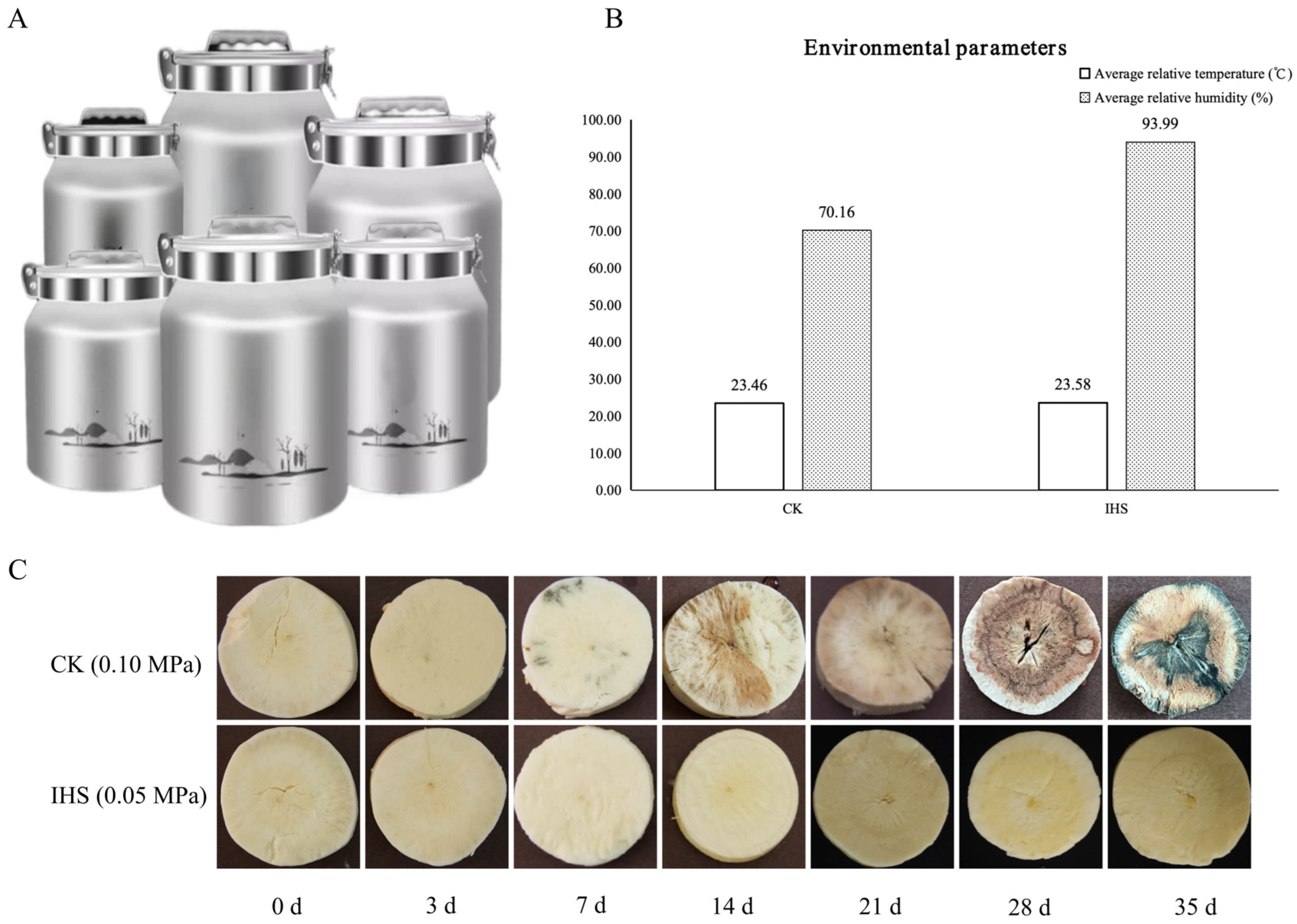
All cassava roots were stored in sealed 28 L aluminum chambers for storage, either covered or wrapped. The roots were divided into two groups with three replicates each: the control (CK), maintained at an atmospheric pressure of 0.10 MPa; and the IHS treatment, maintained at 0.05 MPa using a vacuum pump [14]. Every 12 h, all storage chambers were opened for air circulation and disinfected under ultraviolet light for 30 min, completing two cycles within 24 h. Three roots were randomly selected on days 0, 3, 7, 14, 21, 28, and 35 for the determination and analysis of physiological and biochemical indices. Environmental parameters were recorded in real time. Relative humidity in the IHS environment was always maintained above 90%, whereas the average relative humidity in the CK was 70.2%, and the relative temperature in the CK was slightly higher than in the IHS (Supplementary Table S1).

2.2. Analytical Methods

2.2.1. Determination of Weight Loss and Moisture Content

Cassava samples were weighed while fresh and at each time point for up to 35 days. Weight loss was calculated as the difference between the initial and final root weights and expressed as a percentage of fresh weight. Weight loss was determined based on the reduction in root mass during storage across the Vázquez-Celestino’s and Lin’s method [12,13,15].
Moisture content was determined by measuring the water content in fresh tissue [16]. A sample of a predetermined weight was dried at 105 °C until constant weight was achieved, cooled in a desiccator, and repeatedly weighed until the readings stabilized. The average value is then used for calculation [17].

2.2.2. Determination of Nutritional Components

Starch determination: The starch content was determined according to the previous method [18]. The detection using the enzyme hydrolysis method is based on the principle that after removing fats and soluble sugars from the sample, the starch is hydrolyzed into small sugar molecules by amylase, then further hydrolyzed into monosaccharides with hydrochloric acid; these are then measured as reducing sugars and converted to total starch content.
Crude fiber determination: The filter bag (SLXWFXLD-100, Haikou Lvhengyuan Biotechnology Co., Ltd., Haikou, China) for fiber analysis was dried to a constant weight, and its weight was recorded. Samples were taken using the quartering method, and the total weight of the bag and sample was measured (accurate to 0.0001 g). After sealing the bag with a manual heat sealer (DH-1012, Beijing Libotaiye Technology Co., Ltd., Beijing, China), the sample underwent sequential acid digestion, alkaline digestion, and drying to obtain the final results [19].
Crude fat determination: Refer to the method specified, using the Soxhlet extraction method [20]. The filter paper cylinder was placed into the extraction tube of the Soxhlet extractor. A receiving flask, which had been dried to constant weight, was connected. Anhydrous ether or petroleum ether was added through the top of the condenser until the flask was approximately two-thirds full. The apparatus was heated on a water bath to maintain continuous reflux of the solvent. Extraction was considered complete when a drop of the extract, touched with a glass rod, left no visible oil spot on the rod.
Crude protein determination: Samples were digested and analyzed according to the standard Kjeldahl (Foss/Kjeltec 8400, C&D (Guangzhou) Co., Ltd., Guangzhou, China) method [19].

2.2.3. Respiration Rate

For respiration measurements, three replicates of both hypobaric and atmospheric cassava roots were analyzed. Gas concentration in the chambers was measured using a portable gas analyzer (A-116 Gas Analyzer, Zhongan, Zhengzhou, China). After calibration, the CO2 monitor was placed into the chamber to measure the carbon dioxide concentration [21].

2.2.4. Enzyme Activity Assay

Alcohol dehydrogenase (ADH; U/g) activity was determined using commercial detection kits (Beijing Solarbio Science and Technology Co., Ltd., Beijing, China), following the manufacturer’s instructions. In the reaction system, the oxidation of 1 μmol NADH per gram of fresh tissue per minute at 25 °C is defined as one enzyme activity unit.
L-Lactic Dehydrogenase (L-LDH; U/g) activity was determined using commercially available detection kits (Beijing Solarbio Science and Technology Co., Ltd., Beijing, China) according to the manufacturer’s instructions. In the reaction system, the enzyme activity unit is defined as the amount catalyzing the production of 1 nmol pyruvate per gram of fresh tissue per minute.
Adenosine Triphosphate (ATP; μmol/g) activity was determined using commercially available detection kits (Beijing Solarbio Science and Technology Co., Ltd., Beijing, China) according to the manufacturer’s instructions, using fresh tissue.

2.2.5. Transcriptome Material and Methods

For plant samples, RNA extraction was performed using a combination of the CTAB method and PBIOZOL reagent. For conventional animal samples, the extraction was performed using the phenol and guanidine isothiocyanate method. After the successful extraction, the obtained RNA was dissolved in DEPC water. Subsequently, a Qubit fluorometer was used to accurately quantify the RNA. Meanwhile, the RNA integrity number (RQN value) was detected by a Qsep400 high-throughput biofragment analyzer to ensure that the sample quality met the library construction standards. The cDNA libraries were sequenced on the MGI sequencing platform by Metware Biotechnology Co., Ltd. (Wuhan, China).
Raw data were filtered using ‘FASTP’ to remove reads containing adapters. Reads were removed if the number of ambiguous bases exceeded 10% of the read length or if more than 50% ofbases low quality. Subsequent analyses were performed using clean reads.

2.3. Statistics

All experiments were performed in triplicate, and results are expressed as mean ± standard deviation. The heatmap module was taken from the Metware Cloud (https://cloud.metware.cn, accessed on 1 October 2025) for data analysis [22]. Identified metabolites were annotated using the KEGG Compound database (http://www.kegg.jp/kegg/compound, accessed on 30 October 2025) and mapped to metabolic pathways in the KEGG Pathway database (http://www.kegg.jp/kegg/pathway.html, accessed on 30 October 2025). Statistical significance and principal component analysis (PCA) were assessed using one-way ANOVA (p < 0.05) with IBM SPSS Statistics version 26 (IBM SPSS Inc., Chicago, IL, USA). Graphs were plotted using Origin 2021 (OriginLab Corporation, Northampton, MA, USA). DESeq2 was used for differential gene expression analysis between two groups, and Benjamini and Hochberg correction was applied to p-values. Corrected p-values and log2 fold change were used as thresholds for significant differential expression.

3. Results

3.1. Effects of Storage Quality

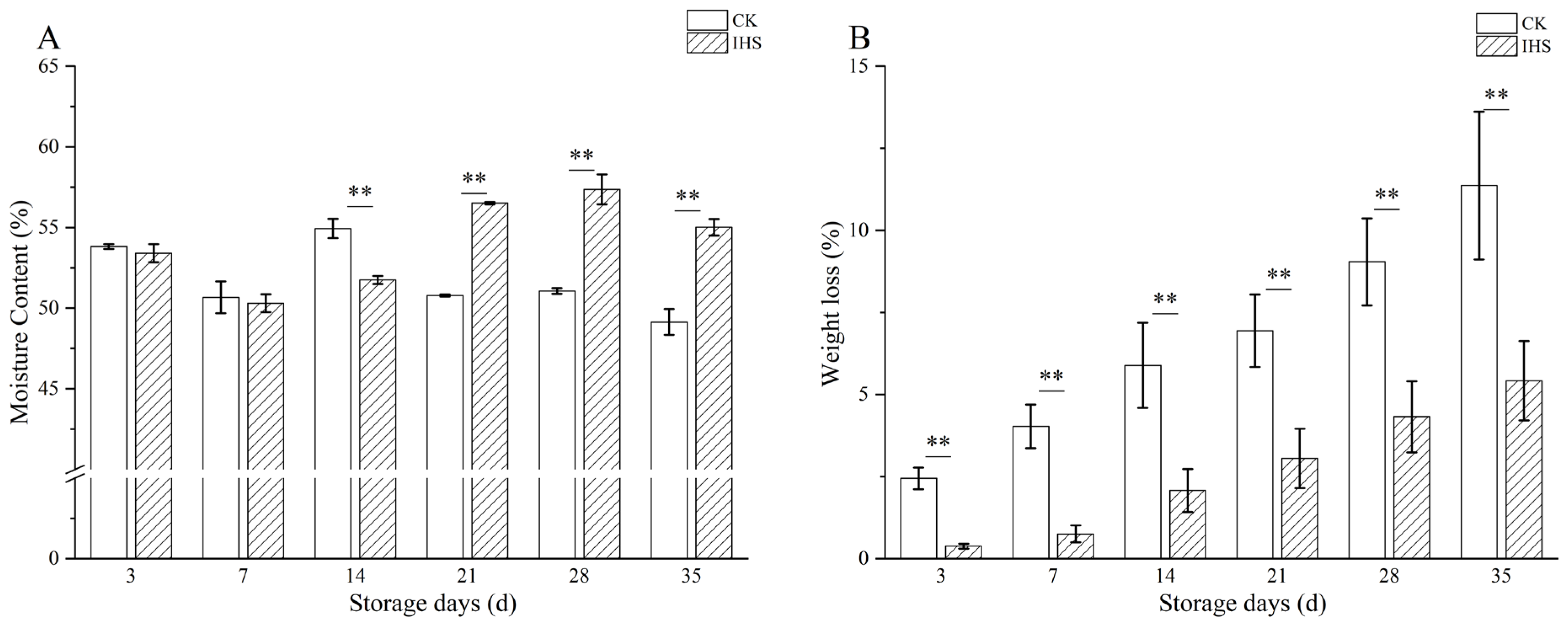
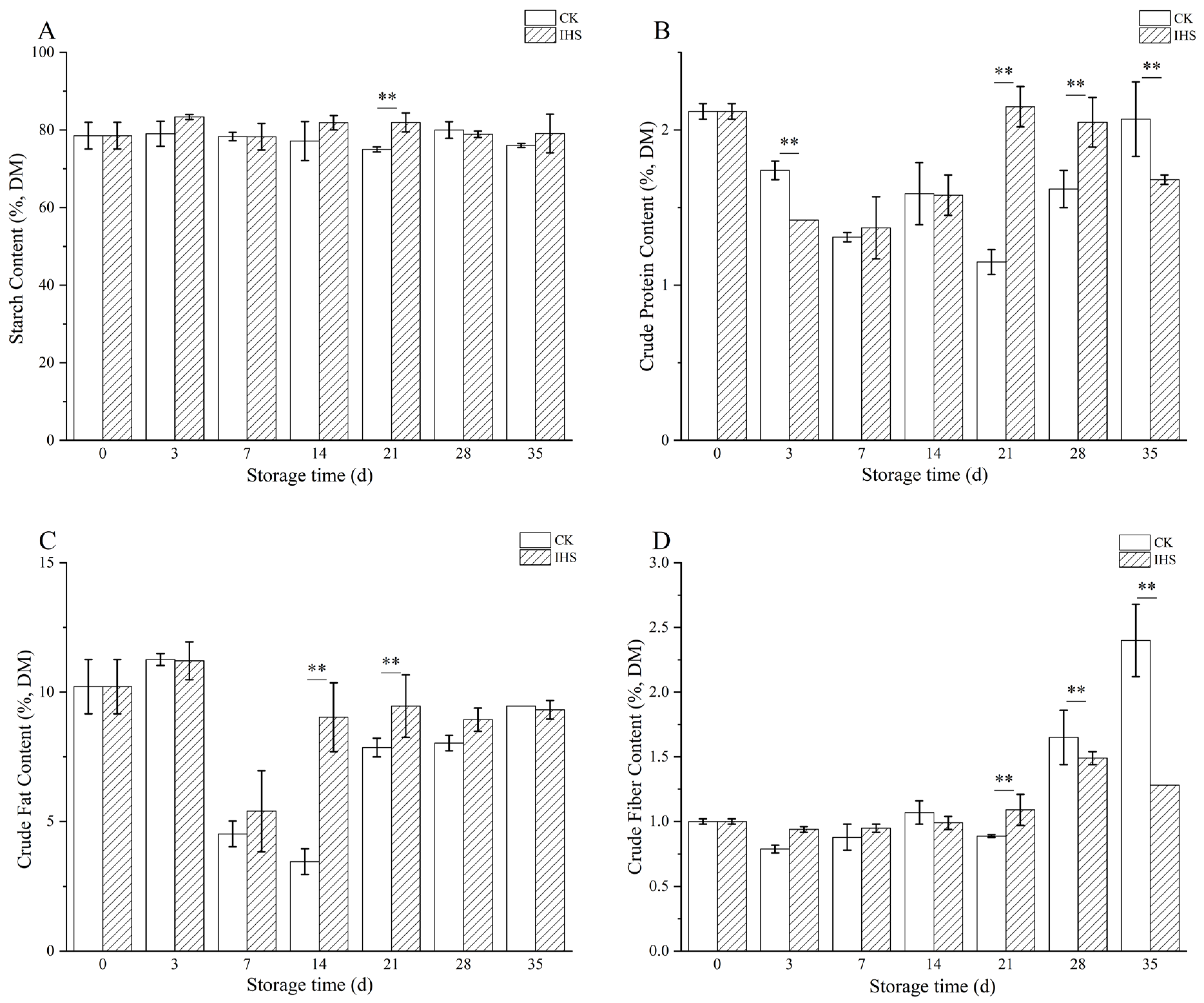
As shown in Figure 1 and Figure 2, IHS treatment maintained higher storage temperatures and relative humidity, resulting in significantly lower weight loss compared to CK. Starch content in CK slightly decreased by approximately 4% by day 21 relative to day 0. In contrast, IHS treatment led to an increase of approximately 2–6% over the same period in Figure 3A. As presented in Figure 3B, crude protein content of cassava roots was significantly higher in the CK than in the IHS at both the beginning and the end of storage. As shown in Figure 3C, crude fat content exhibited dynamic changes. In CK, it decreased by approximately 70% by day 14, then rebounded to a near baseline (day 0) level by day 35. In contrast, in the IHS group, it decreased by about 5% on day 7, increased on day 21, and subsequently stabilized. As shown in Figure 3D, by day 35, crude fiber content in CK increased by nearly 1.5% relative to day 0, whereas the increase in the IHS was significantly lower. A fundamental challenge in postharvest storage is high respiration rates, which deplete nutrients, induce internal hypoxia, and disrupt normal aerobic metabolism [23].

3.2. Effects of Respiration

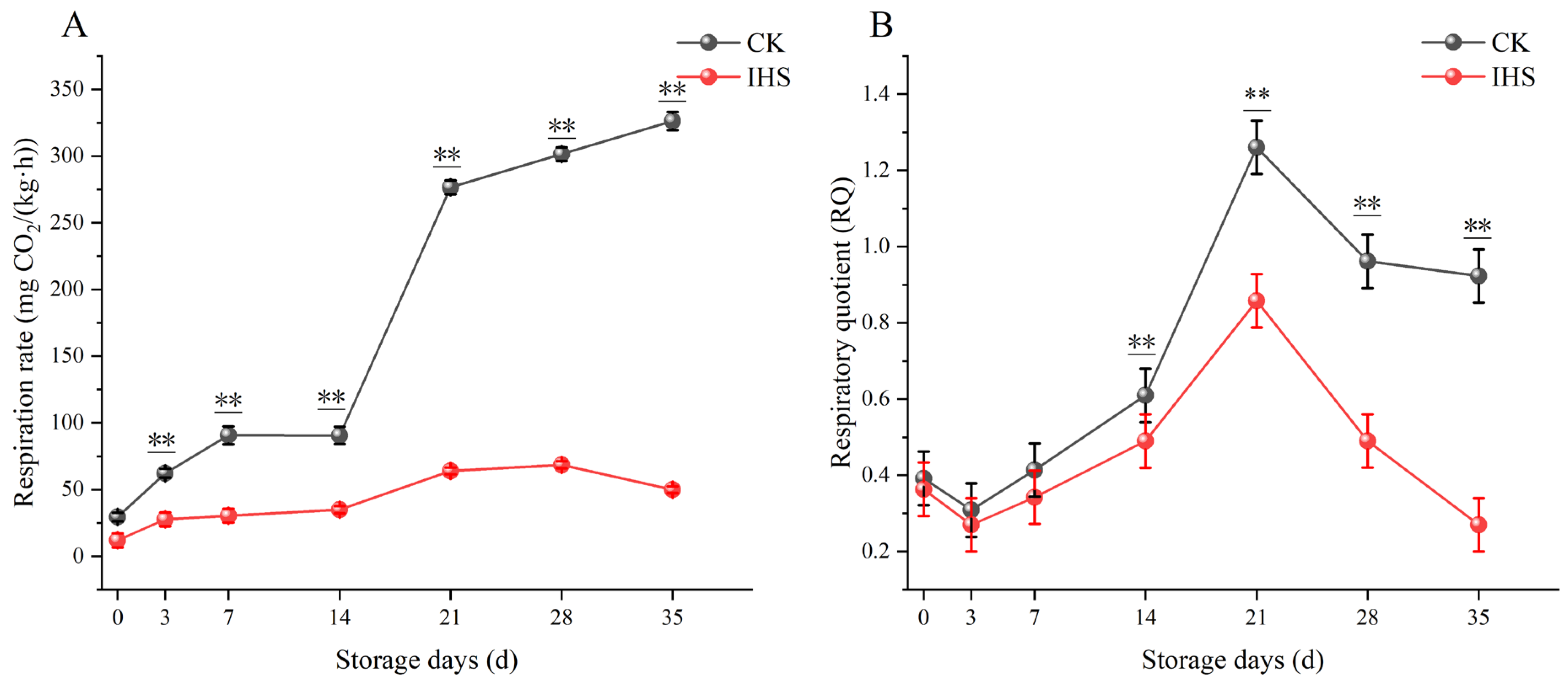
Figure 4A shows that roots maintain a relatively stable and low respiration rate under IHS, peaking at approximately 70 mg CO2·kg−1·h−1. In contrast, CK roots exhibited a gradually increasing respiration rate, reaching about 325 mg CO2·kg−1·h−1 on day 35, which was five times the CO2 emission rate of IHS on the same day.
The respiratory quotient (RQ), the ratio of CO2 released to O2 consumed, serves as a key indicator of respiratory metabolic pathways [24]. Aerobic metabolism is indicated by an RQ value less than 1. Conversely, a value greater than 1 is interpreted as suggesting the onset of anaerobic respiration [25,26]. As shown in Figure 4B, RQ in IHS remained consistently low and stable, ranging from 0.27 to 0.49, whereas in CK, it fluctuated initially and then continuously increased, reaching a peak value of 1.25 on day 21, followed by a gradual decline. The contrasting RQ values indicated fundamentally different postharvest respiration modes. While intermittent hypobaric storage maintained aerobic respiration, atmospheric storage induced a partially anaerobic state. The latter promoted the accumulation of metabolites like ethanol and lactic acid, thereby negatively affecting storage quality [24,25,26,27].

3.3. Effects of Enzymatic Activity

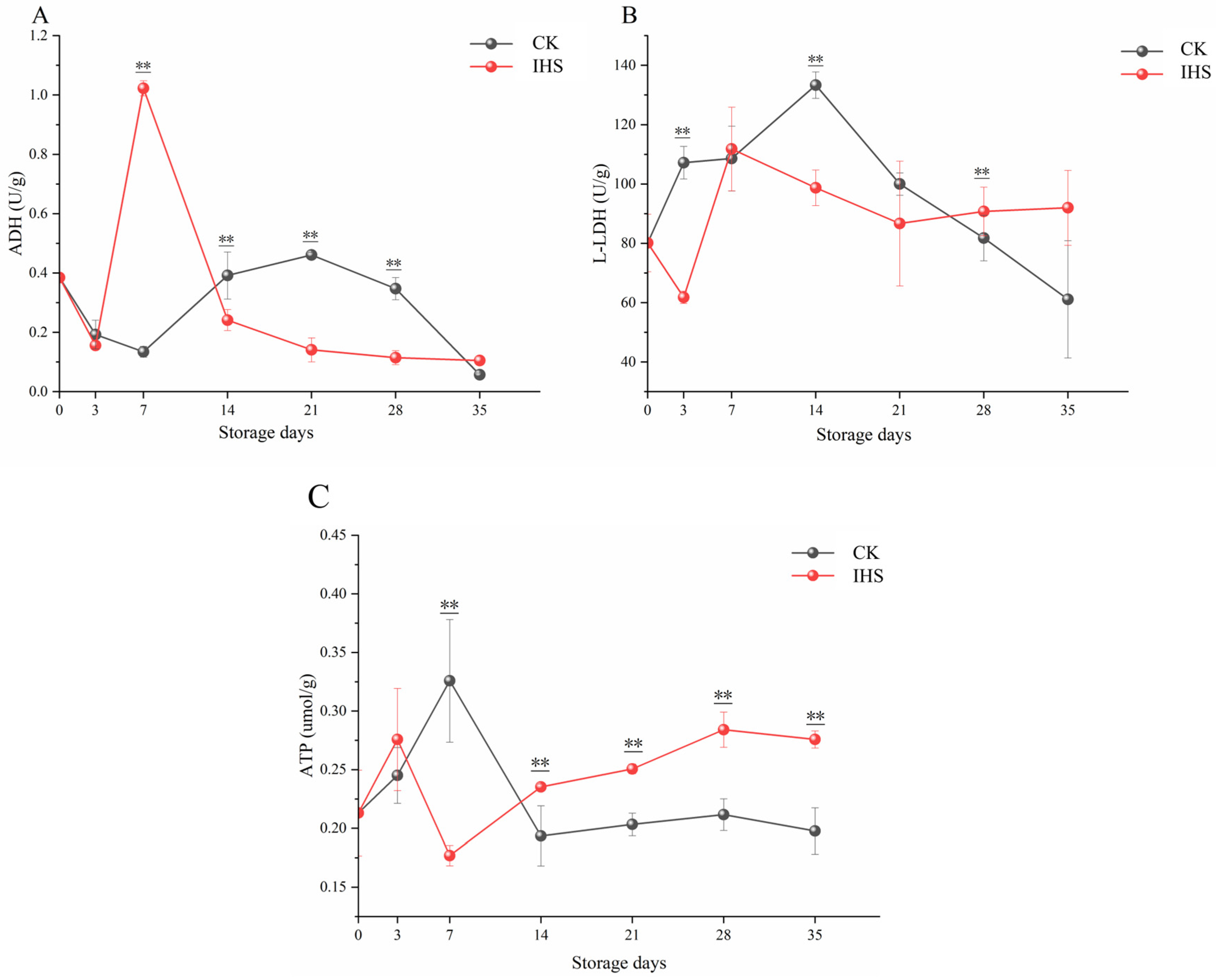
As shown in Figure 5A, ADH activity under IHS peaked sharply early in storage and subsequently remained low, whereas under CK it gradually increased from days 7 to 21 following initial fluctuations, with overall activity surpassing that of IHS. From Figure 5B, L-LDH activity fluctuated during the first 7 days of storage and then gradually decreased in CK, exhibiting an opposite trend to ADH. This pattern indicates a significant suppression of aerobic respiration under IHS.
While ATP levels under 0.05 MPa peaked early, plummeted, and then recovered to a high, stable plateau after day 14, those under 0.10 MPa fluctuated until day 7 before declining and undergoing only a limited recovery to a low plateau in later storage. The changes in the ATP pattern under IHS indicated sustained energy production, thereby helping to suppress postharvest decay through the maintenance of metabolic homeostasis.

3.4. Effects of Transcriptomic Profiles

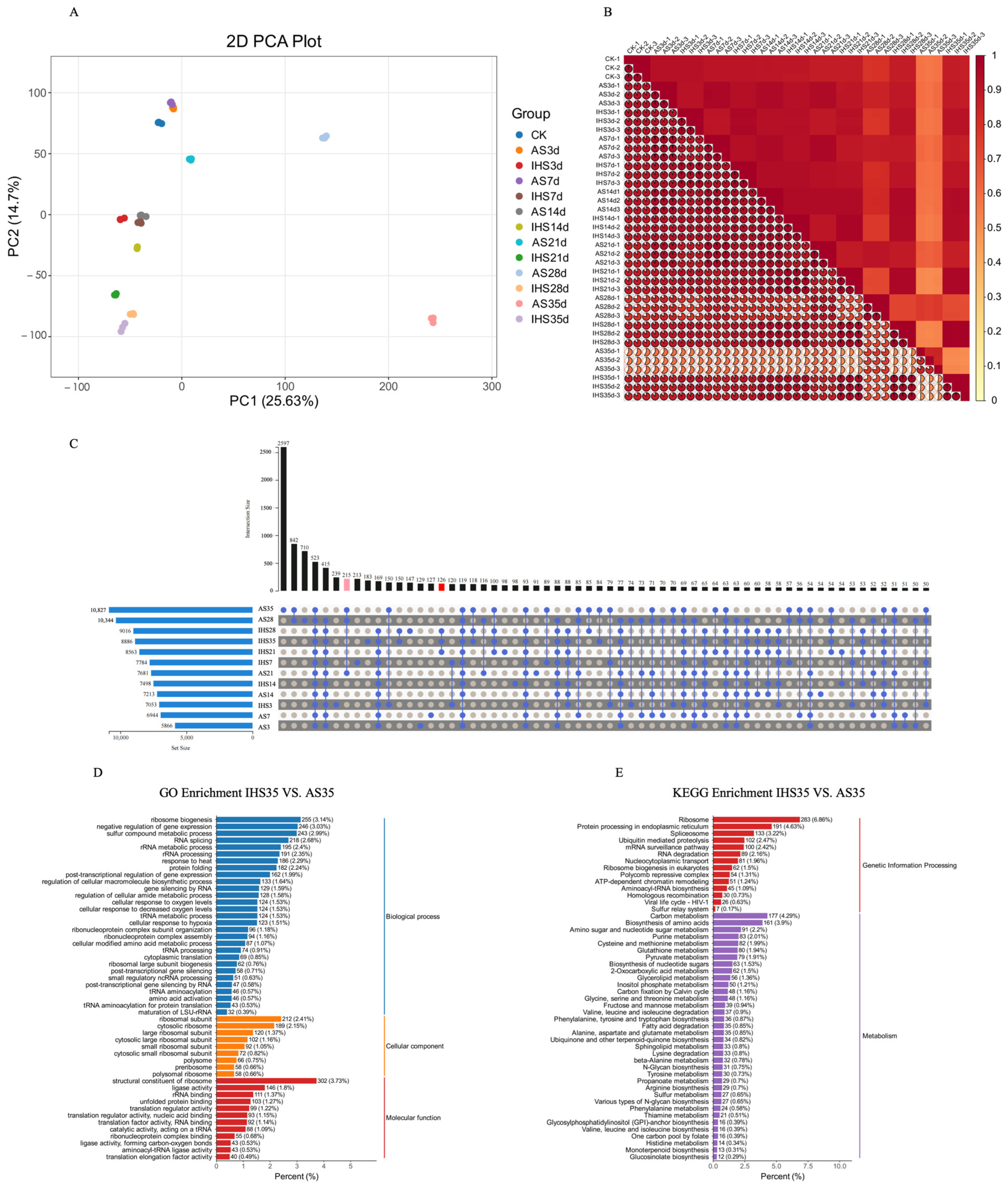
RNA-seq analysis of key molecular events associated with postharvest handling yielded a total of 118.15 Gb clean data from 39 samples, with over 96% of reads achieving Q30 quality. Gene expression analysis was conducted based on alignment results. Differentially expressed genes (DEGs) were identified across samples, followed by functional annotation and enrichment analysis.

3.4.1. PCA

PCA delineated transcriptomic patterns clearly influenced by storage conditions and time, presented in Figure 6A. The first principal component explained 25.63 percent of the variance and revealed a progressive temporal separation, highlighting significant transcriptome dynamics during prolonged IHS. This temporal progression appeared to attenuate after day 28, as demonstrated by the clustering of IHS28 and IHS35 along the second component. Meanwhile, CK samples exhibited their most distinct change at day 35. The marked separation between CK35 and IHS35 ultimately highlights the substantial gene regulatory impact of the IHS treatment.

3.4.2. DEGs Analysis

DEGs were screened in pairwise comparisons using defined threshold criteria. As shown in Figure 6, the numbers of DEGs in the control (CK) and hypobaric storage (IHS) groups were 5866–10,872 and 7053–9016, respectively. The upset further revealed that among the 215 differentially expressed genes (pink bars), there exist genes specifically responsive to long-term CK for ≥21 days, while 126 genes (red bars) are specifically present under long-term IHS. GO enrichment analysis of DEGs between IHS35 and CK35 revealed significant enrichment in the biological process dimension, including ribosome biogenesis with 3.14% and cellular response to oxygen levels with 2.29% were significantly enriched; in the cellular component dimension, large ribosomal subunit with 1.37%, cytosolic ribosome with 2.15%, and small ribosomal subunit with 1.05% were significantly enriched; and in the molecular function dimension, structural constituent of ribosome with 3.73% was enriched. Additionally, membrane-related pathways such as the cytosolic ribosome and protein folding associated with proper processing of membrane proteins also showed enrichment trends. Moreover, multiple KEGG pathways associated with genetic information processing, energy metabolism, and stress protection were enriched in this comparison, among which the ribosome pathway, highly synergistic with GO-enriched ribosome functions, was identified as the most significantly enriched pathway.

3.4.3. RNA-Seq Analysis

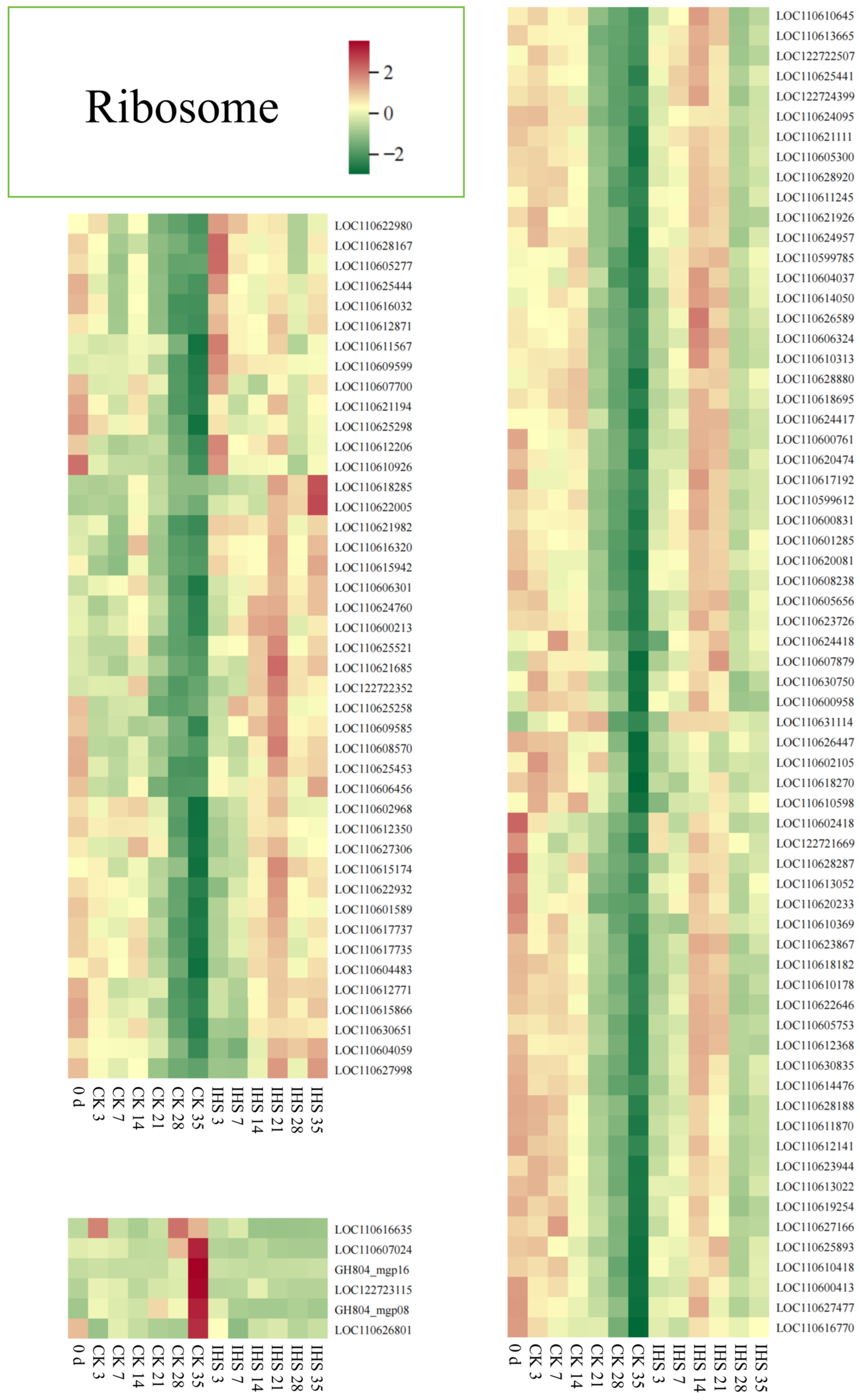
Ribosomes are the central sites for the synthesis of key enzymes in respiratory metabolism, including hexokinase and pyruvate kinase within the glycolytic pathway. Their functional stability directly influences the efficiency of late-stage anaerobic respiration. The expression profiles in Figure 7 revealed a key contrast: ribosomal structural genes remained relatively stable under IHS, whereas their expression changed under CK over time. Quantification indicated that the proportion of upregulated genes ranged from 4.84% to 6.59% across all time points.
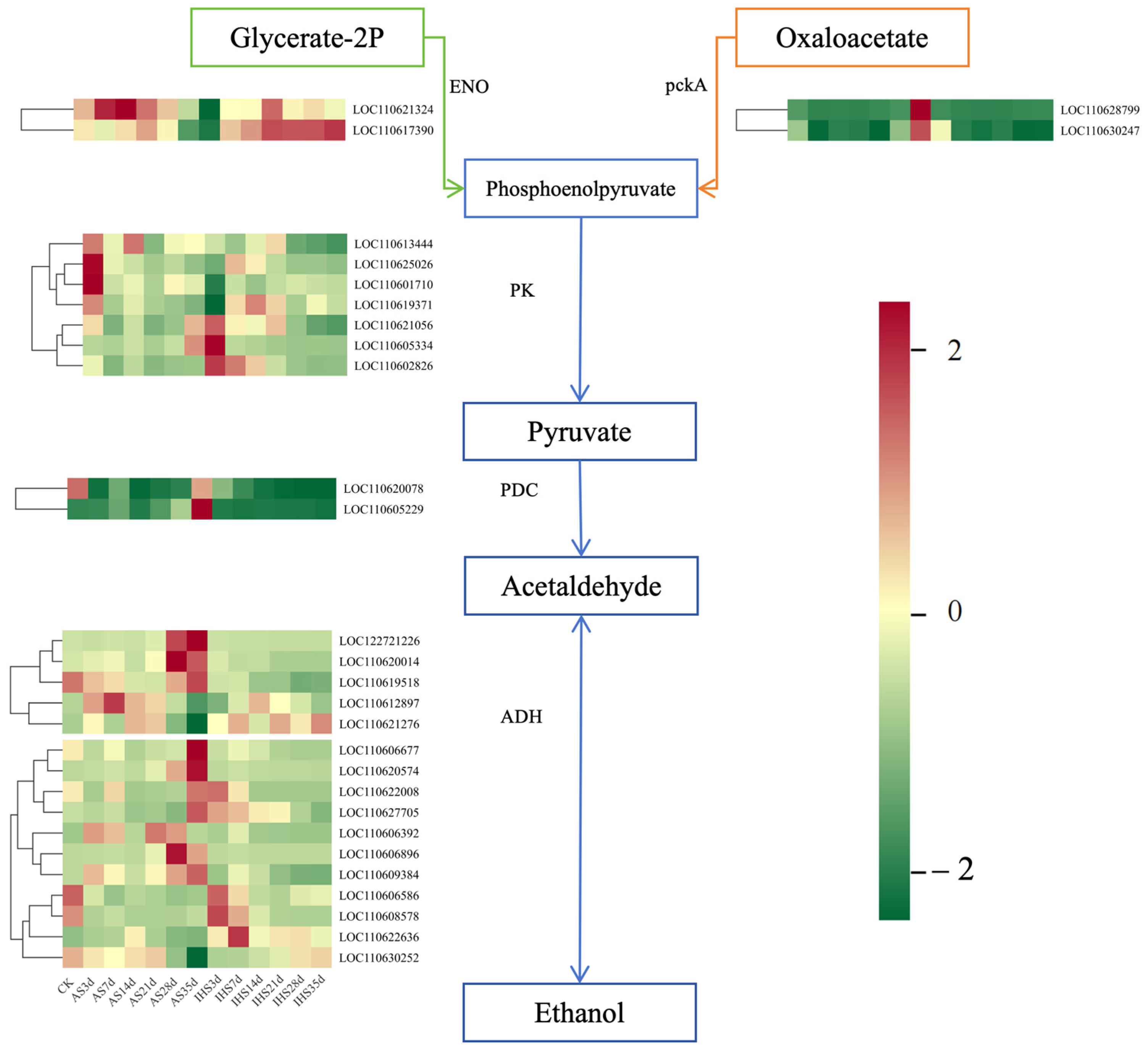
The expression patterns of differentially expressed genes (DEGs) within the glycolysis pathway are detailed in Figure 8. Within glycolysis and associated fermentation pathways, IHS was associated with a general downregulation trend for several key genes, including those encoding enolase (ENO), phosphoenolpyruvate carboxykinase (PCK), pyruvate kinase (PK), pyruvate decarboxylase (PDC), and alcohol dehydrogenase (ADH) in Figure 8. Exceptions to this trend included one ENO gene isoform and two PDC genes, which showed increased transcript levels under IHS. In contrast, the expression of most other glycolytic enzyme genes remained largely unchanged under IHS but displayed more variable or declined expression in the CK group.

3.4.4. GSEA Reveals Further Insights

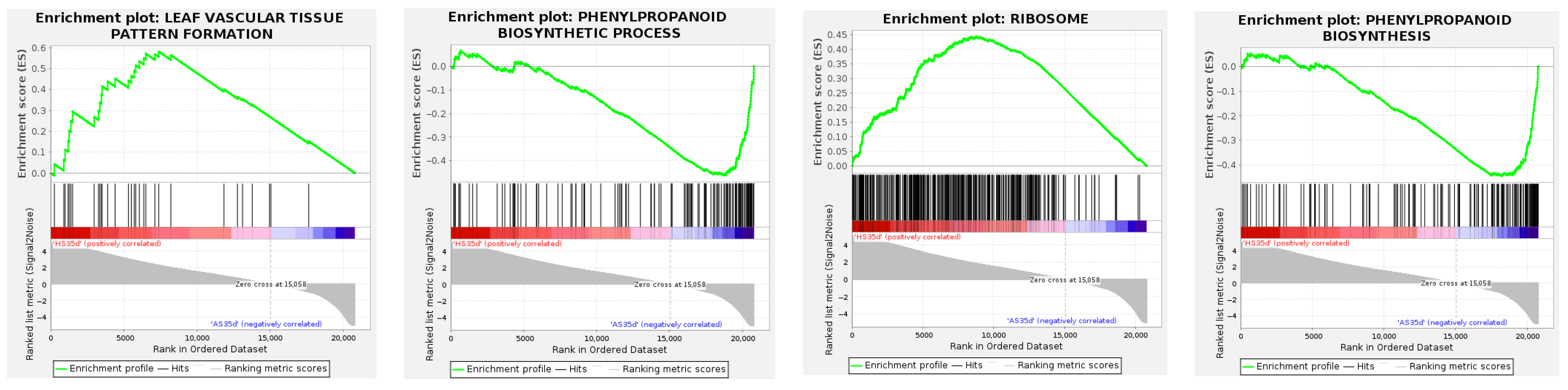
By integrating Normalized Enrichment Score (NES) and False Discovery Rate (FDR) values, we identified significantly enriched gene sets, which revealed the biological processes and pathways involved in the IHS35 vs. CK35 comparison. Heatmaps and bubble plots in Figure 9 were further utilized to visualize the transcriptional levels of leading-edge genes and the significance of enrichment, offering valuable references for subsequent research. Both GO and KEGG databases designated phenylpropanoid biosynthesis (GO: 0009699, ko00940) as the most significantly negatively enriched pathway. This suggests that IHS may reduce energy consumption in secondary metabolism, thereby mitigating quality deterioration caused by wasteful energy expenditure. In the KEGG database, the ribosome pathway was identified as the most enriched pathway, which plays a critical role in maintaining starch metabolism homeostasis and membrane structural integrity. This result is further supported by the upregulated expression of proteasome-related genes in this subgroup, reflecting active protein turnover under IHS.
Collectively, these results highlight the core molecular signatures induced by IHS. The ribosome and phenylpropanoid biosynthesis pathways act as key regulatory hubs in this process. Our findings clarify the regulatory advantages and target sites of IHS, providing critical theoretical support for optimizing the long-term postharvest storage technology of cassava roots.

4. Discussion

The preservation effect of hypobaric storage on various fruits and vegetables has been well documented [28]. However, the effects of hypobaric storage and IHS on postharvest respiration physiology, energy metabolism, and nutritional quality differ among crops. Our research shows that, compared to CK, cassava roots under IHS exhibit lower respiration rates and reduced activity of key anaerobic respiration enzymes while maintaining higher cellular energy levels. The combination of lower respiration and higher energy levels suggests that IHS suppresses unnecessary metabolic activity, thereby reducing energy consumption. As storage time progresses, energy consumption can no longer support metabolic needs; meanwhile, the respiration pattern of cassava roots responds accordingly. It is shown by a sharp increase in ADH activity during storage, accompanied by a gradual rise in respiration rate in the later storage period to meet energy demands. This is consistent with studies on kiwi fruit, where energy metabolism regulation occurs in different storage conditions [29].
Transcriptomic analysis provides additional insight into gene transcription and regulatory patterns in crop cells. Functional enrichment analysis of key DEGs revealed three core mechanisms: inhibition of energy-consuming pathways, enhancement of oxygen-response and cell-protection pathways, and maintenance of ribosomal functional homeostasis. Among them, key genes in the phenylpropanoid biosynthesis pathway were significantly downregulated. Suppression of this secondary metabolism pathway reduces the breakdown of organic substances, such as starch, into substrates for respiration [30]. This may explain why, at the end of storage, the content of starch, crude protein, and other components in the cassava roots remains essentially unchanged. Meanwhile, hypoxia-inducible factor (HIF) responses were activated, enhancing adaptation to hypoxic environments and mitigating hypoxia-induced damage [31,32]. Compared to CK, IHS exhibited greater enrichment of ribosome biosynthesis pathways and more stable expression of core ribosomal protein genes. This study confirms that stable ribosome function is a prerequisite for the synthesis of respiratory enzymes and the maintenance of energy metabolism [33].

5. Conclusions

This work presents a theoretical and experimental investigation demonstrating that IHS delays PPD in cassava roots and maintains their quality. From physiological and transcriptomic perspectives, IHS functions by reducing energy consumption through modulation of respiration rates and maintaining metabolic stability by preservation of ribosomal function. It promotes nutrient retention through reprogramming metabolic pathways. These findings not only advance the theoretical understanding of postharvest biology in cassava but also provide practical, scalable strategies to enhance food security in tropical regions.

Supplementary Materials

The following supporting information can be downloaded at: https://www.mdpi.com/article/10.3390/horticulturae12010048/s1, Table S1: The environmental conditions for storage.

Author Contributions

Conceptualization: M.L. and L.L.; methodology: M.L. and L.L.; software: M.L.; validation: L.L., H.Z. and Q.W.; formal analysis: M.L. and L.L.; investigation: M.L.; resources: Z.Z. and H.Y.; data curation: M.L. and L.L.; writing—original draft preparation: M.L.; writing—review and editing, L.L. and Z.Z.; visualization: M.L.; supervision: Y.C. and Z.Z.; project administration: Y.C. and Z.Z.; funding acquisition: Z.Z. All authors have read and agreed to the published version of the manuscript.

Funding

This research was funded by the National Key Research and Development Program of China, grant No. 2023YFD1600600, and the Modern Agricultural Industry Technology System, grant No. CARS-11-HNZZW, No. CARS-11-HNCYH.

Data Availability Statement

Data is contained within the article or Supplementary Materials.

Acknowledgments

Thanks to Jinquan Zhang, Peixu Du, and Yusi Fang for their guidance and assistance with the analytical methods and formatting of this article.

Conflicts of Interest

The authors declare no conflicts of interest.

References

  1. FAO Food and Agriculture Organization of the United Nations. Available online: https://www.fao.org/faostat/en/#data/QCL (accessed on 24 November 2025).
  2. Reilly, K.; Bernal, D.; Cortés, D.F.; Gómez-Vásquez, R.; Tohme, J.; Beeching, J.R. Towards Identifying the Full Set of Genes Expressed during Cassava Post-Harvest Physiological Deterioration. Plant Mol. Biol. 2007, 64, 187–203. [Google Scholar] [CrossRef] [PubMed]
  3. Zidenga, T.; Leyva-Guerrero, E.; Moon, H.; Siritunga, D.; Sayre, R. Extending Cassava Root Shelf Life via Reduction of Reactive Oxygen Species Production. Plant Physiol. 2012, 159, 1396–1407. [Google Scholar] [CrossRef]
  4. Zeng, J.; Wang, C.; Ding, Z.; Wang, B.; Liu, Y.; Guo, J.; Chen, J.; Wu, C.; Tie, W.; Yan, Y.; et al. Identification and Functional Prediction of lncRNAs during Cassava Post-Harvest Physiological Deterioration. Agron. J. 2020, 112, 4914–4925. [Google Scholar] [CrossRef]
  5. Djabou, A.S.M.; Carvalho, L.J.C.B.; Li, Q.X.; Niemenak, N.; Chen, S. Cassava Postharvest Physiological Deterioration: A Complex Phenomenon Involving Calcium Signaling, Reactive Oxygen Species and Programmed Cell Death. Acta Physiol. Plant. 2017, 39, 91. [Google Scholar] [CrossRef]
  6. Buschmann, H.; Reilly, K.; Rodriguez, M.X.; Tohme, J.; Beeching, J.R. Hydrogen Peroxide and Flavan-3-Ols in Storage Roots of Cassava (Manihot esculenta Crantz) during Postharvest Deterioration. J. Agric. Food Chem. 2000, 48, 5522–5529. [Google Scholar] [CrossRef]
  7. Morante, N.; Sánchez, T.; Ceballos, H.; Calle, F.; Pérez, J.C.; Egesi, C.; Cuambe, C.E.; Escobar, A.F.; Ortiz, D.; Chávez, A.L.; et al. Tolerance to Postharvest Physiological Deterioration in Cassava Roots. Crop Sci. 2010, 50, 1333–1338. [Google Scholar] [CrossRef]
  8. Anthony, B.M.; Kim, Y.-K.; Minas, I.S. Evaluating low pressure storage for prolonging the postharvest life of blueberries. Sci. Hortic. 2024, 337, 113535. [Google Scholar] [CrossRef]
  9. Shah, H.M.S.; Singh, Z.; Hasan, M.U.; Kaur, J.; Afrifa-Yamoah, E.; Woodward, A. Melatonin application suppresses oxidative stress and maintains fruit quality of cold stored esperanza raspberries by regulating antioxidant system. Postharvest Biol. Technol. 2024, 207, 112597. [Google Scholar] [CrossRef]
  10. Wang, X.; Chen, J.; Luo, D.; Ba, L. Advances in the understanding of postharvest physiological changes and the storage and preservation of pitaya. Foods 2024, 13, 1307. [Google Scholar] [CrossRef]
  11. Paskus, B.; Abeli, P.; Beaudry, R. Hypobaric Storage of Representative Root, Leaf, Fruit, and Flower Tissues: Comparisons to Storage at Atmospheric Pressure and Normoxia. HortScience 2021, 56, 780–786. [Google Scholar] [CrossRef]
  12. Chen, W.; Zhou, Y.; Chen, H.; Mao, J.; Gao, H. Research-on-technology-of-storage-for-hypobaric-storage-of-bamboo-shoots. Food Sci. Technol. 2005, 10, 80–83. [Google Scholar] [CrossRef]
  13. Li, D.; Li, L.; Li, W.; Xu, Y.; Han, X.; Bao, N.; Sheng, Z.; Yuan, Y.; Zhang, X.; Luo, Z. Elevated o 2 alleviated anaerobic-metabolism-in-postharvest-winter-jujube-fruit-by-regulating-pyruvic-acid-and-energy-metabolism. Postharvest Biol. Technol. 2023, 203, 112397. [Google Scholar] [CrossRef]
  14. Lin, L.; Luo, X.; Yu, H.; Wang, Q.; Zhang, Z.; Li, K. The Effect of Postharvest Water Migration on Metabolism of Cassava Root by Hypobaric Storage. Innov. Food Sci. Emerg. Technol. 2024, 93, 103609. [Google Scholar] [CrossRef]
  15. Vázquez-Celestino, D.; Ramos-Sotelo, H.; Rivera-Pastrana, D.M.; Vázquez-Barrios, M.E.; Mercado-Silva, E.M. Effects of Waxing, Microperforated Polyethylene Bag, 1-Methylcyclopropene and Nitric Oxide on Firmness and Shrivel and Weight Loss of ‘Manila’ Mango Fruit during Ripening. Postharvest Biol. Technol. 2016, 111, 398–405. [Google Scholar] [CrossRef]
  16. Wang, H.; Liu, J.; Min, W.; Zheng, M.; Li, H. Changes of Moisture Distribution and Migration in Fresh Ear Corn during Storage. J. Integr. Agric. 2019, 18, 2644–2651. [Google Scholar] [CrossRef]
  17. Ahn, J.Y.; Kil, D.Y.; Kong, C.; Kim, B.G. Comparison of Oven-Drying Methods for Determination of Moisture Content in Feed Ingredients. Anim. Biosci. 2014, 27, 1615–1622. [Google Scholar] [CrossRef]
  18. Ribeiro, N.R.; E Sousa, M.B.; de Oliveira, L.A.; de Oliveira, E.J. Variability of Amylose Content and Its Correlation with the Paste Properties of Cassava Starch. PLoS ONE 2024, 19, e0309619. [Google Scholar] [CrossRef]
  19. Nadjiam, D.; Ayessou, N.C.; Guissé, A. Physicochemical Characterization of Nine Cassava (Manihot esculenta Crantz) Cultivars from Chad. Food Nutr. Sci. 2020, 11, 741–756. [Google Scholar] [CrossRef]
  20. Serge, A.C.; Cathérine, E.D.B.; Bilo, L.J.-F.R.; Françoise, K.A. Effect of Soil Organic Fertilizers on the Physico-Chemical and Agronomic Characteristics of Cassava (Manihot esculenta C.). J. Chem. Biol. Phys. Sci. 2020, 11, 80–90. [Google Scholar] [CrossRef]
  21. Ge, W.; Zhou, Q.; Meng, Z.; Gao, J.; Chen, G.; Li, Y.; Yang, H. Breath of the Chill: Transcriptomic Exploration of Respiration and Energy Metabolism in Sweet Potato Roots during Cold Storage. Postharvest Biol. Technol. 2025, 224, 113483. [Google Scholar] [CrossRef]
  22. Sun, C.; Li, T.; Song, X.; Huang, L.; Zang, Q.; Xu, J.; Bi, N.; Jiao, G.; Hao, Y.; Chen, Y.; et al. Spatially Resolved Metabolomics to Discover Tumor-Associated Metabolic Alterations. Proc. Natl. Acad. Sci. USA 2019, 116, 52–57. [Google Scholar] [CrossRef]
  23. Wang, D.; Ma, Q.; Li, D.; Li, W.; Li, L.; Aalim, H.; Luo, Z. Moderation of Respiratory Cascades and Energy Metabolism of Fresh-Cut Pear Fruit in Response to High CO2 Controlled Atmosphere. Postharvest Biol. Technol. 2021, 172, 111379. [Google Scholar] [CrossRef]
  24. Badillo, G.M.; Segura-Ponce, L.A. Classic and Reaction-Diffusion Models Used in Modified Atmosphere Packaging (MAP) of Fruit and Vegetables. Food Eng. Rev. 2020, 12, 209–228. [Google Scholar] [CrossRef]
  25. Liu, S. Effects of hypobaric and low temperature on storage quality of pluot fruit. Guoshu Xuebao 2011, 28, 521–525. [Google Scholar] [CrossRef]
  26. Zhang, X.; Li, D.; Wang, Y.; Ettoumi, F.; Jia, H.; Fang, J.; Chen, Y.; Li, L.; Xu, Y.; Gong, L.; et al. Fumigation of SO2 in combination with elevated CO2 regulate sugar and energy metabolism in postharvest strawberry fruit. Postharvest Biol. Technol. 2022, 192, 112021. [Google Scholar] [CrossRef]
  27. O’Leary, B.M.; Scafaro, A.P.; York, L.M. High-Throughput, Dynamic, Multi-Dimensional: An Expanding Repertoire of Plant Respiration Measurements. Plant Physiol. 2023, 191, 2070–2083. [Google Scholar] [CrossRef]
  28. Zhang, Y.; Zhao, Y.; Feng, J.; Dong, H.; Liao, W.; Yang, X.; Chen, S.; He, Q. Development of Equilibrium Modified Atmosphere Packaging (EMAP) for Postharvest Strawberries Based on Material Modification of Permeability and Selectivity: Theoretical Design, Model Validation, and Application Effects. Postharvest Biol. Technol. 2024, 211, 112799. [Google Scholar] [CrossRef]
  29. Xu, F.; Liu, S.; Liu, Y.; Xu, J.; Liu, T.; Dong, S. Effectiveness of Lysozyme Coatings and 1-MCP Treatments on Storage and Preservation of Kiwifruit. Food Chem. 2019, 288, 201–207. [Google Scholar] [CrossRef] [PubMed]
  30. Liu, Z.; Wang, H.; Zhang, J.; Chen, Q.; He, W.; Zhang, Y.; Luo, Y.; Tang, H.; Wang, Y.; Wang, X. Comparative metabolomics profiling highlights unique color variation and bitter taste formation of Chinese cherry fruits. Food Chem. 2023, 439, 138072. [Google Scholar] [CrossRef]
  31. Gul, H.S.; Ulfat, M.; Zafar, Z.U.; Haider, W.; Ali, Z.; Manzoor, H.; Afzal, S.; Ashraf, M.; Athar, H.-R. Photosynthesis and salt exclusion are key physiological processes contributing to salt tolerance of canola Brassica napus L.: Evidence from physiology and transcriptome analysis. Genes 2022, 14, 3. [Google Scholar] [CrossRef] [PubMed]
  32. Pei, W.; Jain, A.; Zhao, G.; Feng, B.; Xu, D.; Wang, X. Knockdown of ossae1a affects the growth and development and phosphate homeostasis in rice. J. Plant Physiol. 2020, 255, 153275. [Google Scholar] [CrossRef] [PubMed]
  33. Ren, R.C.; Lu, X.; Zhao, Y.J.; Wei, Y.M.; Wang, L.L.; Zhang, L.; Zhang, W.T.; Zhang, C.; Zhang, X.S.; Zhao, X.Y. Pentatricopeptide repeat protein dek40 is required for mitochondrial function and kernel development in maize. J. Exp. Bot. 2019, 70, 6163–6179. [Google Scholar] [CrossRef] [PubMed]
Figure 1. Cassava roots were stored under different conditions over the storage period. CK: atmospheric storage as control; IHS: intermittent hypobaric storage. (A) Storage chambers equipment; (B) environmental parameters of two groups; (C) appearance of cassava after storage in two groups.
Horticulturae 12 00048 g001
Figure 2. Changes in postharvest moisture during storage under different storage conditions. (A) Moisture content; (B) weight loss. Error bars represent S.E.s from three biological replicates. ** The columns above indicate significant differences at the p < 0.05 level.
Horticulturae 12 00048 g002
Figure 3. Quality changes in cassava roots during storage under different storage conditions, DM: dry matter. (A) Starch content; (B) crude fat content; (C) crude protein content; (D) crude fiber content. ** The columns above indicate significant differences at the p < 0.05 level.
Horticulturae 12 00048 g003
Figure 4. Changes in respiration rate (A) and respiratory quotient (B) during storage under different storage conditions. ** The columns above indicate significant differences at the p < 0.05 level.
Horticulturae 12 00048 g004
Figure 5. Changes in ADH (A), L-LDH (B), and ATP content (C) during storage under different storage conditions. ** The columns above indicate significant differences at the p < 0.05 level.
Horticulturae 12 00048 g005
Figure 6. Transcriptome analysis of cassava roots stored under IHS. (A) Principal component analysis (PCA) showing the distribution and variation in samples based on transcriptome features; (B) Sample correlation heatmap representing pairwise; (C) Upset plot representing the intersection and unique counts of DEGs across different gene sets (0 d as the control), pink bars indicate the total DEG set size for each group, red bars indicate the DEG set size for IHS group; (D,E) GO and KEGG enrichment analyses for DEGs between IHS35 and CK35.
Horticulturae 12 00048 g006
Figure 7. Heatmap of log2 fold changes in cassava ribosomal and respiration-related genes.
Horticulturae 12 00048 g007
Figure 8. Heatmap of log2 fold changes in cassava glycolysis pathway and respiration-related genes.
Horticulturae 12 00048 g008
Figure 9. GSEA analysis of IHS vs. CK of leaf vascular tissue pattern formation and phenylpropanoid biosynthetic process of GO, ribosome, and phenylpropanoid biosynthesis of KEGG.
Horticulturae 12 00048 g009
Disclaimer/Publisher’s Note: The statements, opinions and data contained in all publications are solely those of the individual author(s) and contributor(s) and not of MDPI and/or the editor(s). MDPI and/or the editor(s) disclaim responsibility for any injury to people or property resulting from any ideas, methods, instructions or products referred to in the content.