Article

Ratios of Nitrogen Forms for Substrate-Cultivated Blueberry
1
Engineering Center of Genetic Breeding and Innovative Utilization of Small Fruits of Jilin Province, College of Horticulture, Jilin Agricultural University, Changchun 130118, China
2
College of Landscape Architecture, Changchun University, Changchun 130022, China
*
Authors to whom correspondence should be addressed.
These authors contributed equally to this work.
Horticulturae 2026, 12(1), 45; https://doi.org/10.3390/horticulturae12010045 (registering DOI)
Submission received: 15 October 2025 / Revised: 26 December 2025 / Accepted: 27 December 2025 / Published: 30 December 2025
(This article belongs to the Section Plant Nutrition)

Abstract

Nitrogen (N) is the most critical element influencing plant growth and development. Different plant species exhibit varying preferences for different N forms. In order to identify an appropriate nutrient solution N formula for optimizing blueberry substrate cultivation, we investigated the effects of seven different NH4+-N/NO3-N ratios on the growth characteristics, photosynthetic physiology, mineral element content, enzymes related to N metabolism, and fruit quality, with ‘F32’ used as the experimental material and water served as controls. The results demonstrated that both the aboveground and belowground parts of blueberry plants exhibited enhanced growth when NH4+-N was used as the primary N source in the nutrient solution, compared to single NH4+-N or a high NO3-N ratio. The most significant growth promotion occurred when the NH4+-N to NO3-N ratio was 7:3. When NH4+-N and NO3-N are concurrently supplied in the nutrient solution, the processes of NO3 reduction, the GS-GOGAT cycle, and NH4+ assimilation are significantly enhanced during nitrogen metabolism. Thereby, providing a theoretical foundation for optimizing nutrient solution management in substrate-cultivated blueberry.

1. Introduction

Blueberries have increasingly become a globally cultivated crop, with both cultivation area and yield showing consistent growth over time [1]. Due to the low demand for mechanized operations and the relatively small initial investments in field establishments, blueberry production in North America mainly adopts open-field cultivation systems. Substrate culture is increasingly attracting significant attention [2]. A limited number of studies on substrate cultivation have primarily focused on aspects such as container selection and the optimization of substrate composition [3,4]. In China, conventional open-field cultivation is becoming increasingly insufficient to meet the demands of commercial blueberry production, primarily due to its vulnerability to soil-borne diseases and pests, along with other limiting factors. As a result, soilless substrate-based cultivation is expected to become the dominant system in the future development of the blueberry industry [5]. However, in soilless cultivation, precise control of nutrient concentrations in the nutrient solution is essential to meet the specific growth and developmental requirements of plants [6]. Therefore, the allocation and management of the nutrient solution constitute a critical factor for the success of substrate cultivation.
Blueberry is well-suited to acidic, nutrient-deficient soils; however, nitrogen (N) and other nutrients are typically applied on a regular basis [7]. Nitrogen is an indispensable key element for plant growth and development, and it is essential in large quantities for the normal growth of blueberry. The unreasonable application of N fertilizer not only compromises plant health but can also lead to disease or death [8]. The forms of inorganic N absorbed and utilized by plants primarily consist of nitrate (NO3-N) and ammonium (NH4+-N). There are significant differences among various plant species in terms of the absorption, assimilation, and translocation of these two forms of N [9]. Different forms of N significantly influence the entire physiological process of plant growth [10]. The application of different N forms significantly influenced carbohydrate accumulation in plants [11,12]. Previous research has demonstrated that using NO3-N as the primary N source not only promotes root growth and elongation but also stimulates lateral root formation, thereby enhancing overall carbohydrate accumulation in plants [13]. However, Zhang et al. [14] found that low N stress not only promotes the formation of roots but also results in the accumulation of indole-3-acetic acid and jasmonic acid. Furthermore, when crops were supplied with both NO3-N and NH4+-N simultaneously, their growth status was superior to that observed when provided with either form of N alone. The response of different plants to varying ammonium–nitrate ratios differs, indicating that distinct ammonium–nitrate ratios have differential effects on the growth of individual plant species. Zhu et al. [15] investigated that the ratio of ammonium salts to nitrates plays a significant role in enhancing the biomass accumulation of cabbage seedlings. Liu et al. [16] demonstrated in their study on tomatoes that a nitrate-to-ammonium ratio of 75:25 optimized growth parameters, photosynthetic rate, chlorophyll content, and soluble protein levels in the root system.
Photosynthesis serves as the foundation for plant growth and development, acting as a critical determinant of organic matter accumulation [17]. The N nutrition level in the plant growth environment directly influences key physiological processes [18]. Through the study of various crops, it has been demonstrated that N is intricately linked to chlorophyll content, photosynthetic rate, enzyme activity, accumulation of organic matter, and material metabolism in plants [19]. Consequently, N can exert both direct and indirect effects on the process of photosynthesis [20]. N metabolism in plants is a complex and dynamic process that requires the coordinated action of numerous metabolic enzymes. So far, the majority of studies have primarily focused on nitrate reductase (NR) [21,22], nitrite reductase (NiR), glutamine synthetase (GS), glutamate synthase (GOGAT), and glutamate dehydrogenase (GDH) [23]. They play a crucial role in the processes of N absorption and accumulation in plants. Their activity directly reflects the efficiency of N uptake and utilization, making them an indispensable factor in plant N metabolism [24]. Mineral elements, which are primarily absorbed from the soil by the root system, serve as essential nutrients for plant growth and can be categorized into macronutrients and micronutrients. Different forms of N influence the absorption efficiency of mineral elements by altering the soil pH. Moreover, there are considerable variations in mineral element requirements among different plant species. In substrate cultivation, the substrate often lacks many essential elements, necessitating a continuous supply of nutrient solution to ensure healthy plant development. However, there is limited research on whether the elemental demand patterns in substrate cultivation align with those in field production. Blueberries have unique nutritional requirements compared to other horticultural plants. While some studies have proposed fertilization schemes for open-field blueberry cultivation, there remains a paucity of research on nutrient solution formulations specifically for substrate-grown blueberries. In this study, we investigated the effects of various N forms and ratios on the growth, development, and physiological characteristics of blueberry plants under substrate cultivation. These results can provide theoretical support for optimizing nutrient solution formulations in blueberry substrate cultivation.

2. Materials and Methods

2.1. Plant Materials and Design

The experiment was conducted at the small berry germplasm resources garden of Jilin Agricultural University, using the two-year-old northern highbush blueberry hybrid strain ‘F32’ under substrate cultivation as plant materials. The cultivation substrate consisted of a mixture of 5–20 mm Dutch sphagnum peat, peat moss, and perlite, blended in a volumetric ratio of 2:1:1. Sphagnum peat moss is produced by SIAETEPEK in Latvia. Its pH range is 2.5–4.5, fiber length is 10–40 mm, and organic matter content is as high as 95%. Both peat soil and perlite are domestic products from China, supplied by Jilin Xianlu Agricultural Science and Technology Development Co., Ltd (Liaoyuan, China). The pH of peat soil is 5.5–6.5, fiber length is 0–10 mm, and organic matter content is 60%. The particle diameter of perlite is no less than 5 mm. The plants were cultivated in 30 L plastic pots and placed in a plastic greenhouse. The integrated water and fertilizer system was procured from the Netafim, a leading company in precision irrigation solutions. The experiment employed a randomized block design with a row spacing of 2.5 m and plant spacing of 1.0 m. Each block contained 20 plants, and protective rows were established around the experimental area to minimize environmental interference. Based on the modified Hoagland nutrient solution, the total N concentration was set at 14.1 mmol L−1, and the NH4+-N:NO3-N ratios were set to 10:0, 9:1, 8:2, 7:3, 6:4, 5:5, and 3:7. Additionally, a control treatment (CK, water) was included. Each treatment was replicated three times, with five plants included in each replicate. Therefore, 15 plants were assigned to each treatment, with a total of 8 treatments, resulting in 120 plants required overall. High NH4+-N ratios were achieved by increasing the concentrations of ammonium sulfate and ammonium dihydrogen phosphate, while high NO3-N ratios were achieved by increasing the concentrations of calcium ammonium nitrate, potassium nitrate, and ammonium nitrate. The specific nutrient source contents used in the working solution are shown in Table 1. The nutrient solution was prepared in a 100 L plastic bucket every two days. During preparation, working solution A was added first, followed by working solution B after thorough stirring and complete dissolution. The pH of the nutrient solution was adjusted using a 10% phosphoric acid solution (1:10,000) to maintain it within the range of 4.0–5.5.

2.2. Determination of Shoot Growth and Biomass

During cessation of terminal shoot extension, plant height, bush width, elongated net shoot growth, and the length and thickness of basal branches were measured using a tape measure and vernier caliper. The leaf area of mature leaves from the middle section of new shoots was determined using a YMJ-B leaf area meter manufactured by Zhejiang Topu Yunnong Technology Co., Ltd. (Hangzhou, China). Additionally, the fresh and dry weights of branches and leaves were assessed using the drying method.

2.3. Determination of Belowground Growth and Biomass

After the fruit ripened, the aboveground portion was separated from the belowground portion using pruning shears at a height of 2 cm above the substrate. The excised root system was then cleaned with distilled water, and the surface moisture was absorbed using filter paper. A relatively uniform lateral root from different treatments was selected for scanning and analysis. The root length, average diameter, and surface area were measured using a LA2400 scanner manufactured by Zhejiang Topu Yunnong Technology Co., Ltd. (Hangzhou, China), and analyzed with WinRHIZO (Pro 2019) software by Groupe de Recherche en Ecologie Forestière and Université du Québec à Montréal. All roots were collected and dried, then their fresh and dry weights were determined.

2.4. Determination of Photosynthetic Characteristic Parameters

In early July, healthy and mature leaves from the middle sections of the extension branches in four directions of blueberry plants were selected as test samples. The leaves were washed with distilled water at least twice, blotted dry with filter paper, and chlorophyll content was determined using the ethanol–acetone mixed solution extraction method. In mid-July, four key photosynthetic indices—net photosynthetic rate (Pn), transpiration rate (E), intercellular CO2 concentration (Ci), and stomatal conductance (Gs)—were measured using the CIRAS-3 portable photosynthesis system manufactured by Lufthansa Scientific Instrument Co., Ltd. (Taian, China). The measurements were conducted on a clear morning with plants exhibiting uniform growth potential. The fluorescence indices of healthy mature leaves from the middle and upper branches of plants were measured using the portable M-pea fluorescence efficiency analyzer.

2.5. Determination of Key Enzyme Activities in Leaves During Nitrogen Metabolism

In the experiment, healthy mature leaves from the middle sections of extension branches extending in four directions on blueberry plants were selected at the end of July. The leaves were washed with distilled water at least twice and then blotted dry with filter paper. Nitrate reductase (NR) activity was employed by the in vivo method [25]. The determination of glutamine synthetase (GS) activity, glutamate synthase (GOGAT) activity, and glutamate dehydrogenase (GDH) activity was conducted in accordance with the instructions provided by the GS, GOGAT, and GDH kit from Beijing Solarbio Technology Co., Ltd. (Beijing, China).
NR (μg/g/h FW) = ((ΔA × Vt/Vs) ÷ FW × t)
GS (μmol/min/g) = (ΔA − 0.0008) ÷ 0.8348 × V anti-total ÷ (W × V sample ÷ V sample total) ÷ T
GOGAT (nmol/min/g) = [ΔA × V anti-total ÷ (ε × d) × 109] ÷ (W × V sample ÷ V sample) ÷ T
GDH (nmol/min/g) = [ΔA × V anti-total ÷ (ε × d) × 109] ÷ (W × V sample ÷ V sample) ÷ T
ΔA: Variation in Absorbance, Vt/Vs: the volumetric dilution factor of the total volume relative to the reaction volume, FW/W: Fresh weight of plant tissue, t/T: Enzymatic reaction time, V anti-total: The final total volume of the entire determination system, V sample: The volume of crude enzyme extract added to the reaction system, V sample total: The original total volume of the crude enzyme extract obtained, ε: Molar extinction coefficient, d: Path length of the cuvette.

2.6. Determination of Mineral Elements in Leaves

During the fruit-harvesting period, mature leaves from the middle section of fruit-bearing branches were collected as samples. From each plant, 10 leaves were selected according to four cardinal directions, resulting in a total of 40 leaves per sample. The leaves were first cleaned with 0.1% neutral detergent, followed by rinsing with clean water and at least two rinses with deionized water to remove any residual impurities. After cleaning, the leaves were blotted dry and then treated in an oven at 105 °C for 10 min, followed by drying at 70–80 °C until completely dry and brittle. The dried leaf samples were subsequently ground, sieved, and stored in a desiccator for analysis. The mineral element content was determined using microwave digestion combined with ICP-OES/ICP-MS techniques. Place the sample into a Microwave Digestion System for digestion. The digestion program is set as follows: conduct digestion at 150 °C for 120 min, and then continue the digestion process at 210 °C for another 120 min. The reagents used are aqua regia, hydrogen peroxide, and hydrofluoric acid. The instrumentation utilized in this study consists of an Inductively Coupled Plasma Optical Emission Spectrometer (ICP-OES), an Inductively Coupled Plasma Mass Spectrometer (ICP-MS), and a Microwave Digestion System. This study employed ICP-OES for the determination of N, P, K, Ca, and Mg, whereas ICP-MS was utilized for the analysis of Fe, Mn, and Zn. When conducting measurements, perform the operation three times in repetition to ensure the validity of the results.

2.7. Determination of Fruit Quality

During the ripening stage, the proportion of harvested ripe fruits was evaluated, and the longitudinal diameter, transverse diameter, fruit shape index, and individual fruit weight of the ripe fruits were measured using vernier calipers and electronic balances.

2.8. Data Processing

Statistical analysis and mean comparisons were performed using DPS (2020) software, and figures were generated using ORIGIN (2022) software.

3. Results

3.1. Effects of Varying Nitrogen Ratios on Growth and Development of Blueberry in Substrate Cultivation

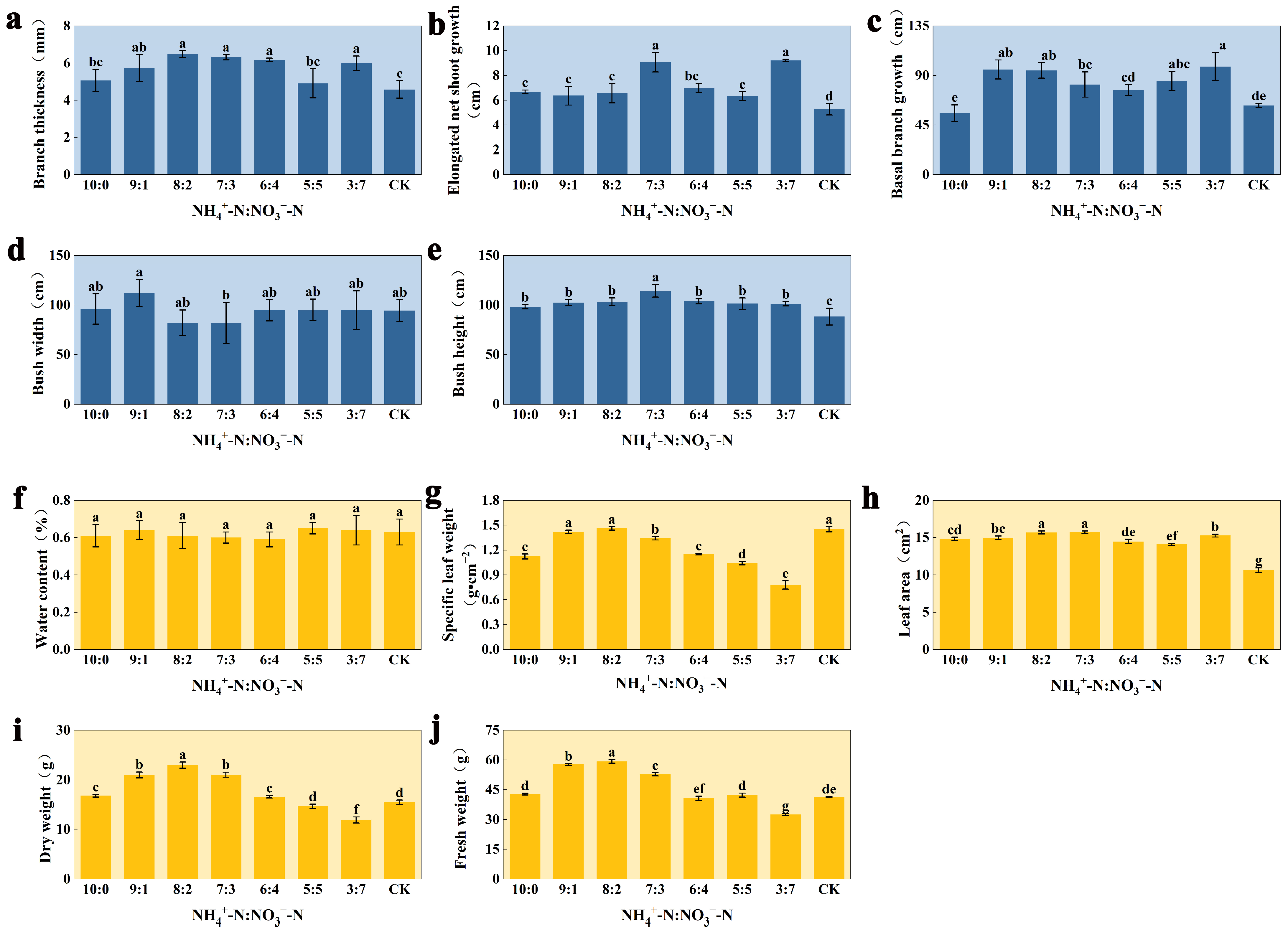
With the increase in the NO3-N ratio and the decrease in the NH4+-N ratio, basal branch thickness, elongated net shoot growth, basal branch growth, bush width, and bush height exhibited an increase followed by a subsequent decrease. Comprehensive analysis of various indices revealed that plant growth was optimal when the NH4+-N:NO3-N ratio was 7:3 or 8:2. However, plant growth was significantly inhibited when the NH4+-N:NO3-N ratio exceeded 5:5. Among the seven NH4+-N:NO3-N treatments, six treatments showed significantly higher growth indices compared to CK, except for the 10:0 treatment, which exhibited little difference from CK (Figure 1a–e). Although the 3:7 treatment resulted in the highest net shoot growth of elongated branches, this trend was consistent with changes in bush height. The net growth and thickness of basal branches initially increased and then decreased as the ratio of NH4+-N decreased and the ratio of NO3-N increased. Specifically, the net growth of basal branches was significantly higher in the 9:1 and 8:2 treatments compared to other treatments, while basal branch thickness was significantly greater in the 8:2, 7:3, and 6:4 treatments. The effect of different NH4+-N:NO3-N ratios on bush width did not exhibit a clear pattern.
There were no significant differences in water content among the treatments. With the decrease in the proportion of NH4+-N and the increase in the proportion of NO3-N, the specific leaf weight, leaf area, dry weight, and fresh weight of leaves initially increased and then decreased. Notably, when the ratio of NH4+-N:NO3-N was 3:7, plant growth was significantly inhibited. In contrast, the growth indexes of the other six treatments were significantly higher than those observed with the CK (Figure 1f–j). When the ratio of NH4+-N to NO3-N was 7:3 or 8:2, the leaf area was significantly higher than other treatments. Additionally, the specific leaf weight in the 9:1 and 8:2 treatments was significantly higher than other treatments. Based on the analysis of various leaf indexes, a ratio of NH4+-N to NO3-N of 8:2 appears to be more favorable for leaf growth.
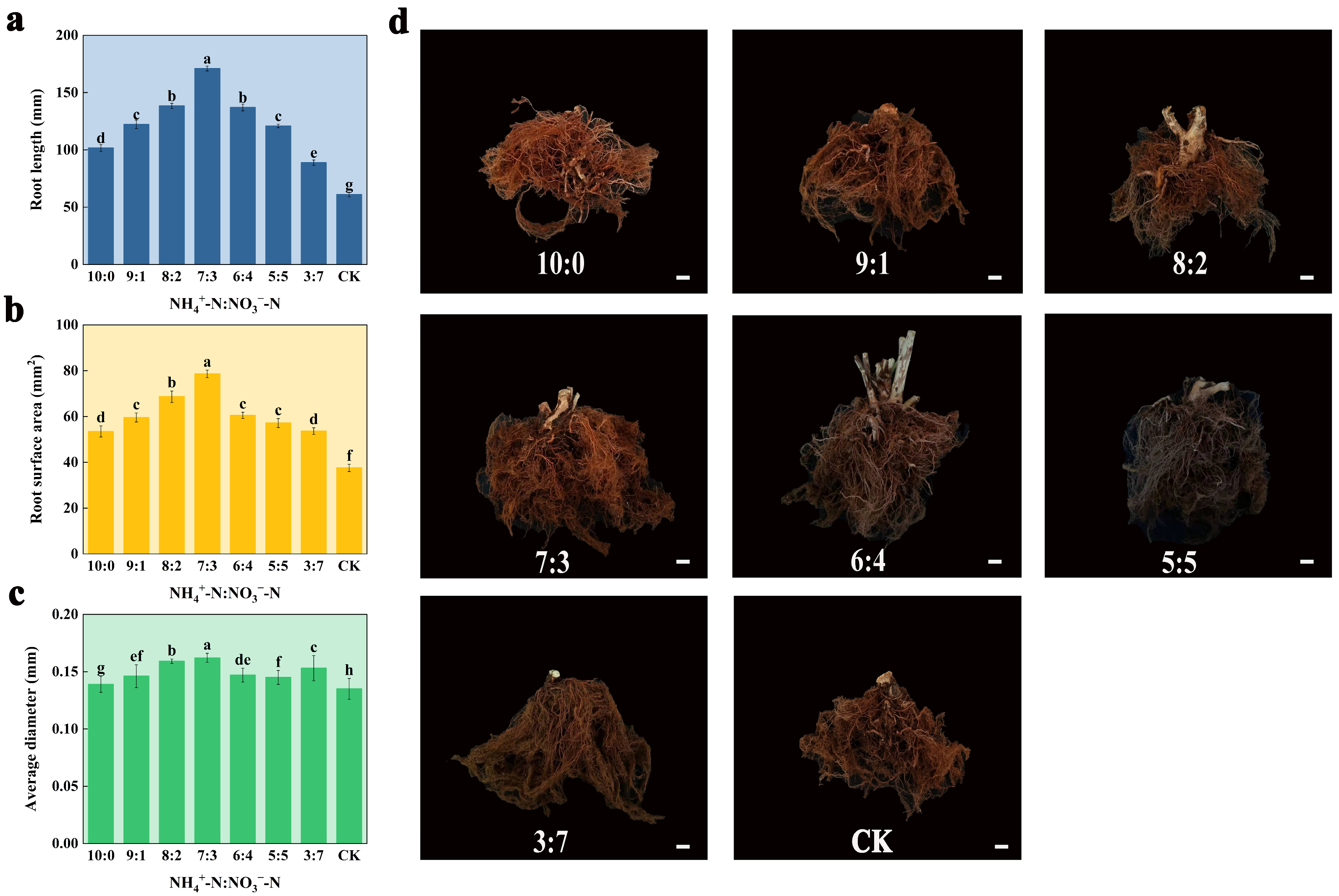
With the adjustment of the ratio of NH4+-N to NO3-N in the nutrient solution, a trend of increase followed by decrease was observed in root length (Len), root surface area (SA), and average diameter (Avg D) as the proportion of NH4+-N gradually decreased. The highest values for these parameters were achieved under the 7:3 treatment condition. Compared with other treatments, the 7:3 treatment achieved significant differences in all root indexes. Specifically, the root length in the 7:3 treatment was significantly higher than in the CK treatment (Figure 2a). The trends in root surface area and average diameter were consistent with the changes in root length Figure 2b,c). In contrast, the three indices in the 3:7 treatment showed little difference from that in the CK treatment but were significantly lower than those in the 5:5 and higher treatments. This indicates that increasing the NO3-N ratio is not conducive to root growth and development. Based on the analysis of root growth indices, a nutrient solution ratio of NH4+-N:NO3-N at 5:5 appears to be the minimum suitable threshold for optimal root development. The overall size of the root system can be seen (Figure 2d).
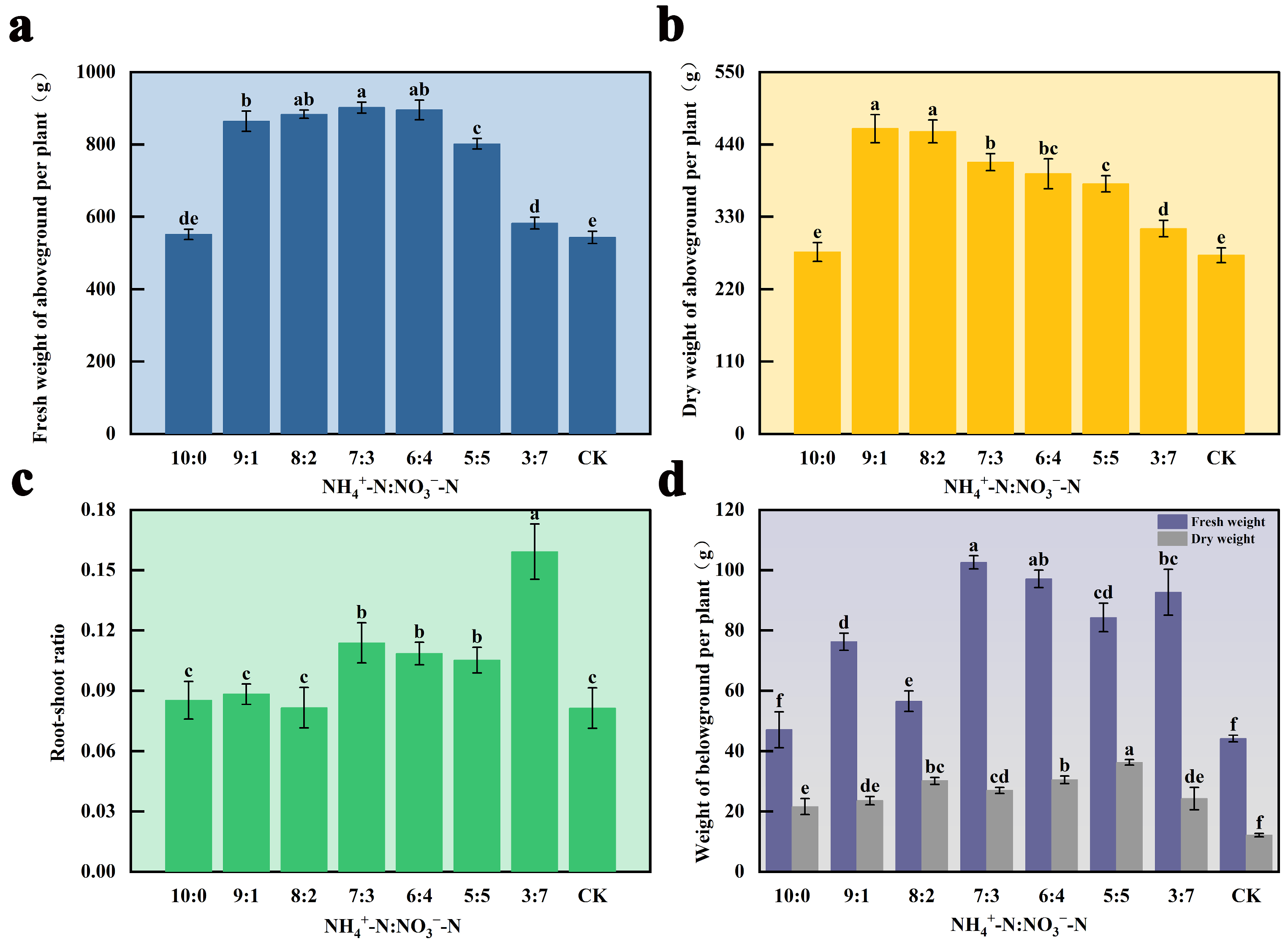
With the decrease in the NH4+-N ratio, fresh weight of aboveground and belowground plant parts initially increased but subsequently decreased (Figure 3a,d). The aboveground fresh weight in the 3:7 treatment was less than that in the CK treatment, but significantly lower than that in the 5:5 treatment. This suggests that a higher proportion of NO3-N is not beneficial for increasing aboveground fresh weight. The variation trend in belowground fresh weight mirrored that of the aboveground fresh weight, with the highest values observed when the NH4+-N:NO3-N ratio was 7:3. These results indicate that adding an appropriate amount of NO3-N in the nutrient solution can promote aboveground fresh weight, while excessive NO3-N is detrimental to the overall accumulation of plant fresh weight. The dry weight of aboveground and belowground parts of plants was analyzed. The dry weight of the aboveground portions showed a decreasing trend as the NH4+-N ratio decreased, starting from the 9:1 treatment (Figure 3b,d). The root–shoot ratio exhibited a gradual upward trend with increasing NO3-N concentration in the nutrient solution. When the NH4+-N:NO3-N ratio was 3:7, both the fresh and dry weights of aboveground and belowground biomass were significantly lower compared to other treatments. However, the root–shoot ratio reached its peak and was significantly higher than that observed in other treatments. This suggests that incorporating an appropriate amount of NO3-N in the nutrient solution can markedly enhance the root–shoot ratio (Figure 3c).

3.2. Effects of Varying Nitrogen Ratios on Photosynthetic Characteristics of Blueberry Leaves in Substrate Cultivation

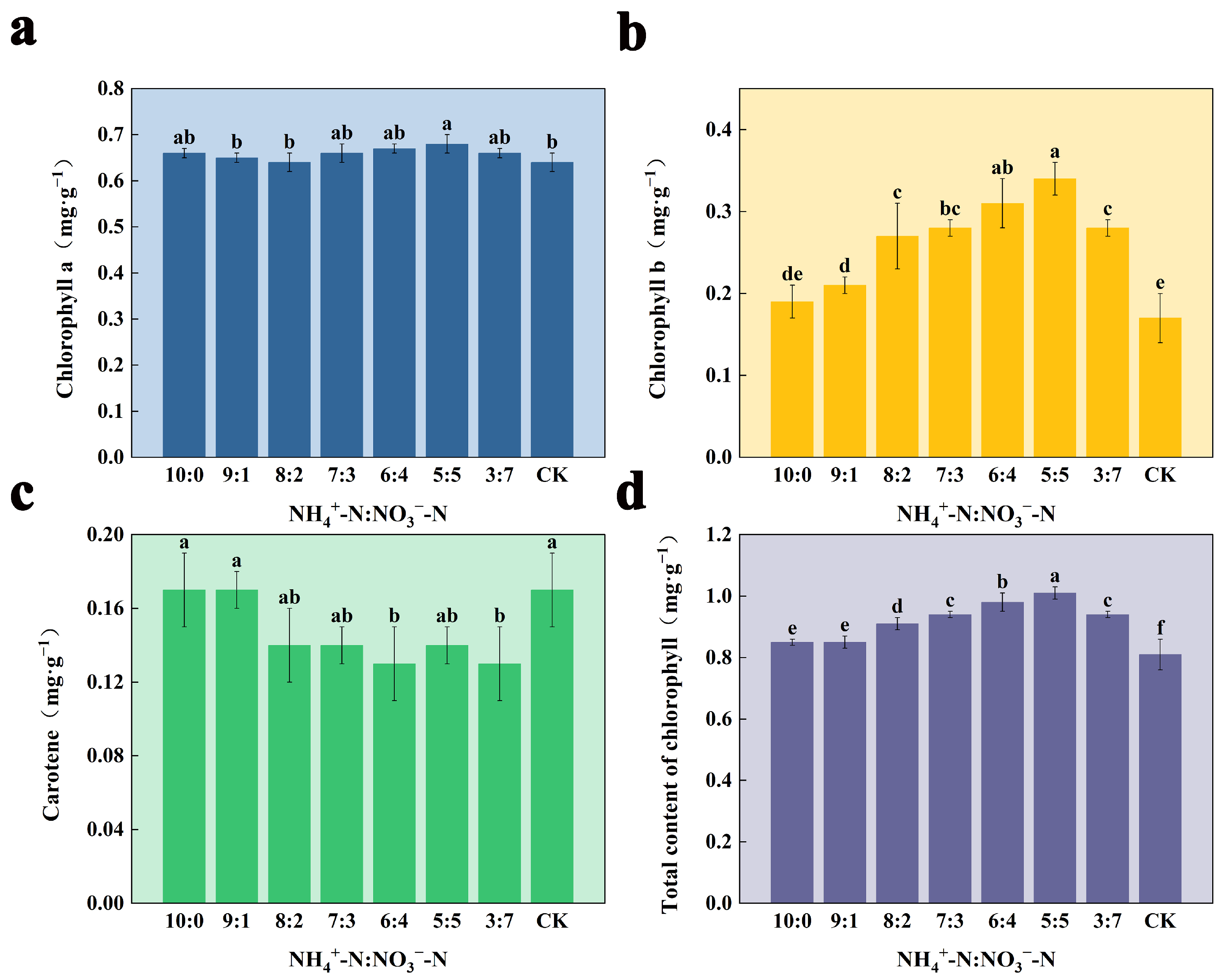
With the decrease in the NH4+-N ratio and the increase in the NO3-N ratio, the chlorophyll b and total chlorophyll contents across different treatments initially increased and subsequently decreased (Figure 4). When the ratio of NH4+-N:NO3-N was 5:5, the total chlorophyll content peaked at 1.01 +/− 0.02 mg g−1, which was significantly higher compared to other treatment groups. The trend in chlorophyll b content mirrored that of the total chlorophyll. The comprehensive analysis revealed that a ratio of NH4+-N:NO3-N at 5:5 was most favorable for the total chlorophyll content in leaves. Apart from the 10:0 and 9:1 treatments, there were no significant differences in carotene content among the other treatments, with the highest carotene content observed in the CK control group. Despite lower levels of chlorophyll b and total chlorophyll in the 10:0 and 9:1 treatments, the carotene content in these treatments did not significantly differ from that of the CK control group but was notably higher compared to other treatment groups. This indicates that a higher proportion of NH4+-N in the nutrient solution is more conducive to carotene accumulation.
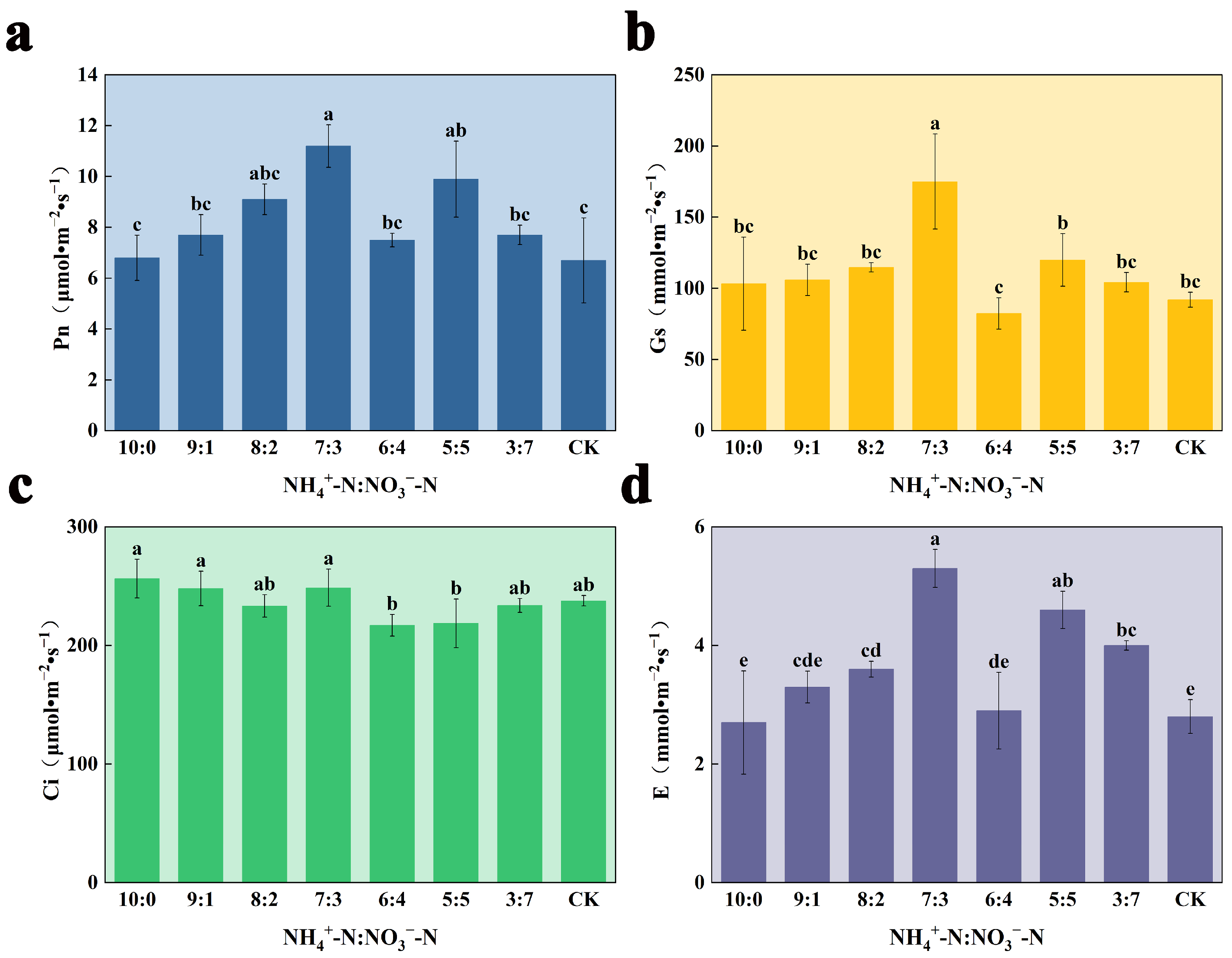
The study on gas exchange parameters of blueberry leaves revealed that as the ratio of NH4+-N decreased and the ratio of NO3-N increased, the net photosynthetic rate (Pn), stomatal conductance (Gs), and transpiration rate (E) exhibited an initial increase followed by a subsequent decrease (Figure 5a,b,d). Comprehensive analysis of various indices indicated that photosynthetic efficiency peaked when the NH4+-N:NO3-N ratio was 7:3. Photosynthetic efficiency significantly declined when the NH4+-N:NO3-N ratio dropped to 5:5 or lower. Moreover, the photosynthetic efficiency in all treatment groups exceeded that observed with CK. With the increase in NO3-N ratio, the Pn gradually increased. In the 7:3 treatment, Pn was elevated by 40.18% compared to CK. Additionally, Gs, intercellular CO2 concentration (Ci), and E under the 7:3 treatment were significantly higher than those observed in other treatments (Figure 5c). Across all treatments, when the NH4+-N:NO3-N ratio was 10:0, the leaf Pn was at its lowest, with Gs and E also reaching their minimum values under this condition. Comprehensive analysis revealed that the photosynthetic efficiency of blueberry leaves peaked when the ratio of NH4+-N to NO3-N in the nutrient solution was 7:3. This suggests that, under substrate cultivation conditions, the exclusive use of NH4+-N is not favorable for organic matter accumulation in leaves, whereas an appropriate increase in the proportion of NO3-N can significantly enhance photosynthesis.
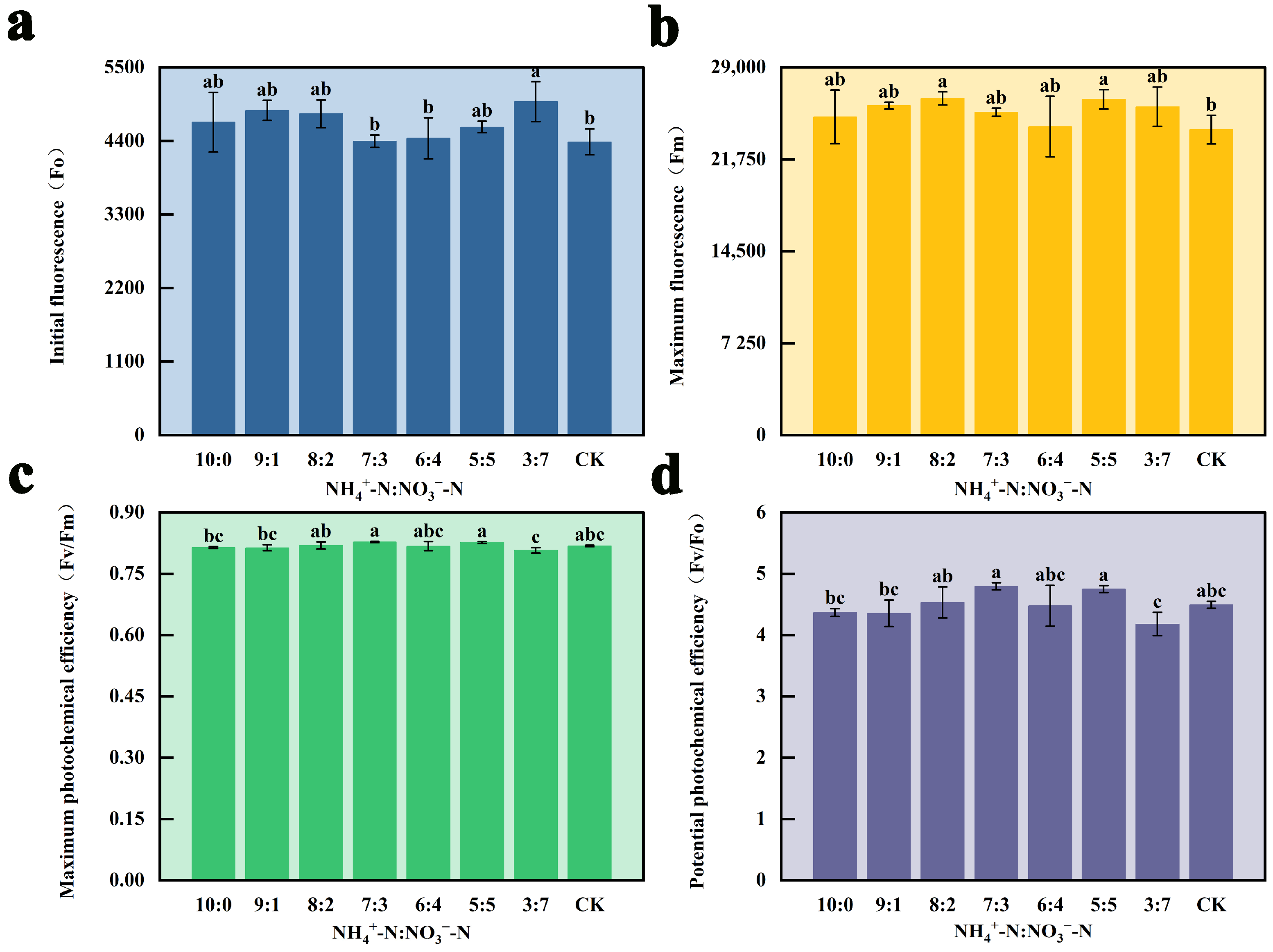
The fluorescence characteristics of plant leaves serve as crucial indicators of photosynthetic capacity. As the proportion of NH4+-N decreased and that of NO3-N increased, the initial fluorescence (Fo) and maximum fluorescence (Fm) did not exhibit a consistent trend across different treatments. However, both the maximum photochemical efficiency (Fv/Fm) and potential photochemical efficiency (Fv/Fo) initially increased and then decreased, peaking at the 7:3 treatment condition (Figure 6c,d). Under the 3:7 treatment condition, these two indexes were not significantly different from that of the CK, but were significantly lower compared to treatments with ratios of 5:5 and higher. This suggests that an increase in the NO3-N ratio is detrimental to the light energy utilization efficiency of the leaves.

3.3. Effects of Varying Nitrogen Ratios on the Activities of Key Enzymes Involved in Nitrogen Metabolism in Blueberry Leaves Under Substrate Cultivation

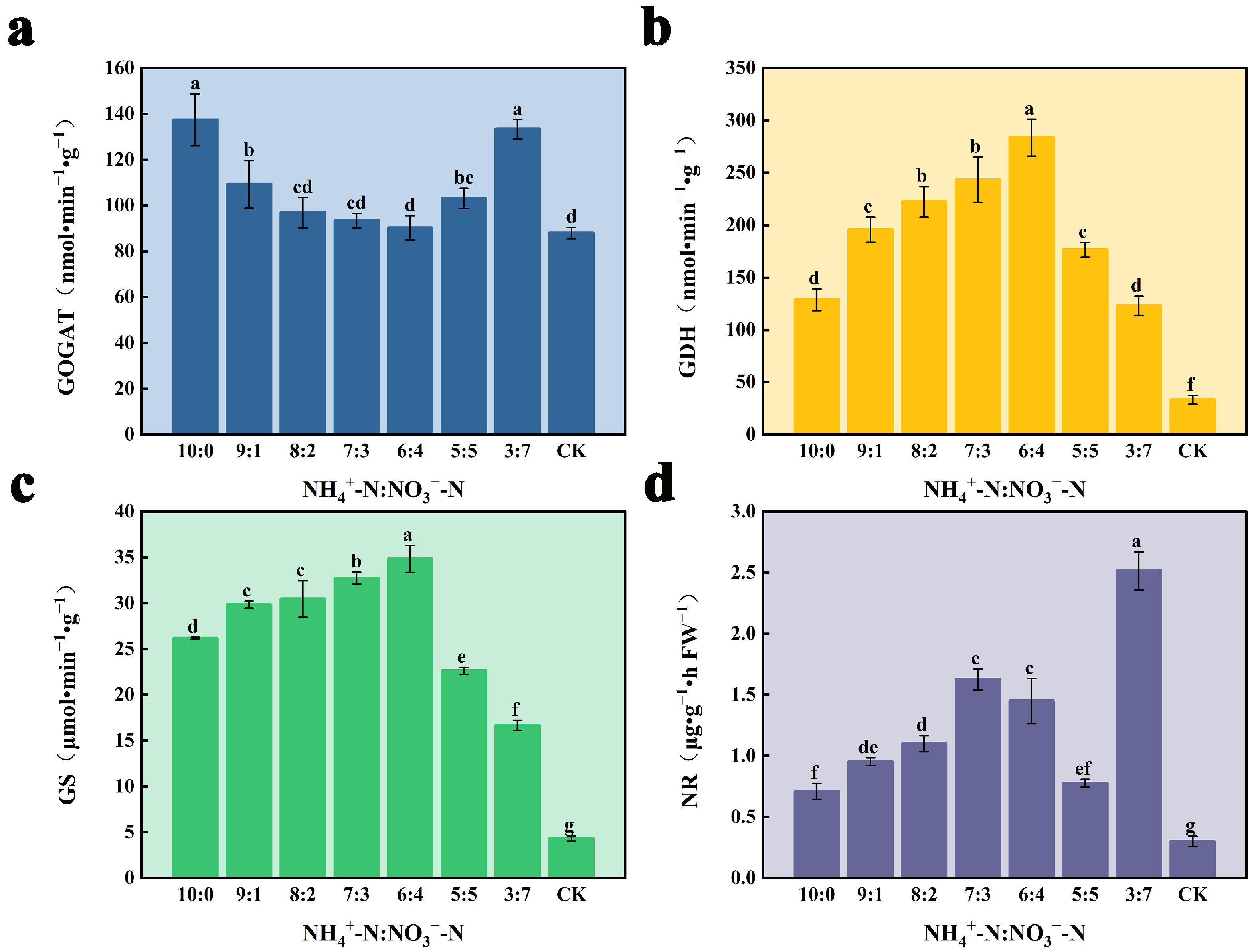
Glutamate synthase (GOGAT) plays a pivotal role in plant N metabolism by catalyzing the conversion of inorganic N absorbed from soil into organic forms that are usable by plants. As a key enzyme in the glutamine–glutamate cycle, GOGAT activity is highly sensitive to the ratio of N forms. Specifically, as the proportion of NH4+-N in the nutrient solution decreased, GOGAT activity exhibited an initial decrease followed by an increase (Figure 7a). Notably, GOGAT activity was significantly enhanced when the NH4+-N:NO3-N ratio was 10:0 and 3:7. Under other treatment conditions, no significant differences in enzyme activity were observed. These findings suggest that both the exclusive use of NH4+-N and a higher proportion of NO3-N in the nutrient solution can effectively enhance GOGAT activity. In the process of plant N metabolism, glutamate dehydrogenase (GDH) activity functions as an auxiliary pathway to the GS-GOGAT cycle, primarily responsible for assimilating excess NH4+ accumulation in cells under stress conditions. GDH activity not only determines the rate at which free ammonia is assimilated into amino acids but also correlates closely with the proportion of N sources in the nutrient solution. As the NO3-N ratio increases, GDH activity initially rises and then declines (Figure 7b). Specifically, when the NH4+-N:NO3-N ratio was 6:4, GDH activity peaked before decreasing significantly. This suggests that a higher NO3-N ratio in the nutrient solution is detrimental to maintaining high GDH activity, whereas an NH4+-N:NO3-N ratio of 6:4 is most favorable for optimizing GDH activity.
The activity of glutamine synthetase (GS) was positively correlated with N absorption and utilization efficiency. As the NO3-N ratio increased, GS activity exhibited a trend similar to that of GDH (Figure 7b,c). When the NH4+-N:NO3-N ratio was 6:4, GS activity peaked and subsequently declined rapidly. However, GS activity in all treatment groups remained higher than in the CK. This suggests that when the proportion of NH4+-N exceeds that of NO3-N in the nutrient solution, the N uptake capacity of plant leaves is significantly enhanced, thereby promoting blueberry growth and development and improving economic benefits. Nitrate reductase (NR) is a rate-limiting enzyme in the nitrate assimilation process, and its activity is positively correlated with the efficiency of inorganic N utilization. As the NO3-N ratio in the nutrient solution increased, NR activity initially rose, then decreased, and subsequently exhibited a significant increase (Figure 7d). Notably, NR activity reached its peak when the NO3-N ratio exceeded that of NH4+-N, particularly at an NH4+-N:NO3-N ratio of 3:7.

3.4. Effects of Varying Nitrogen Ratios on Mineral Element Composition of Blueberry Leaves in Substrate Cultivation

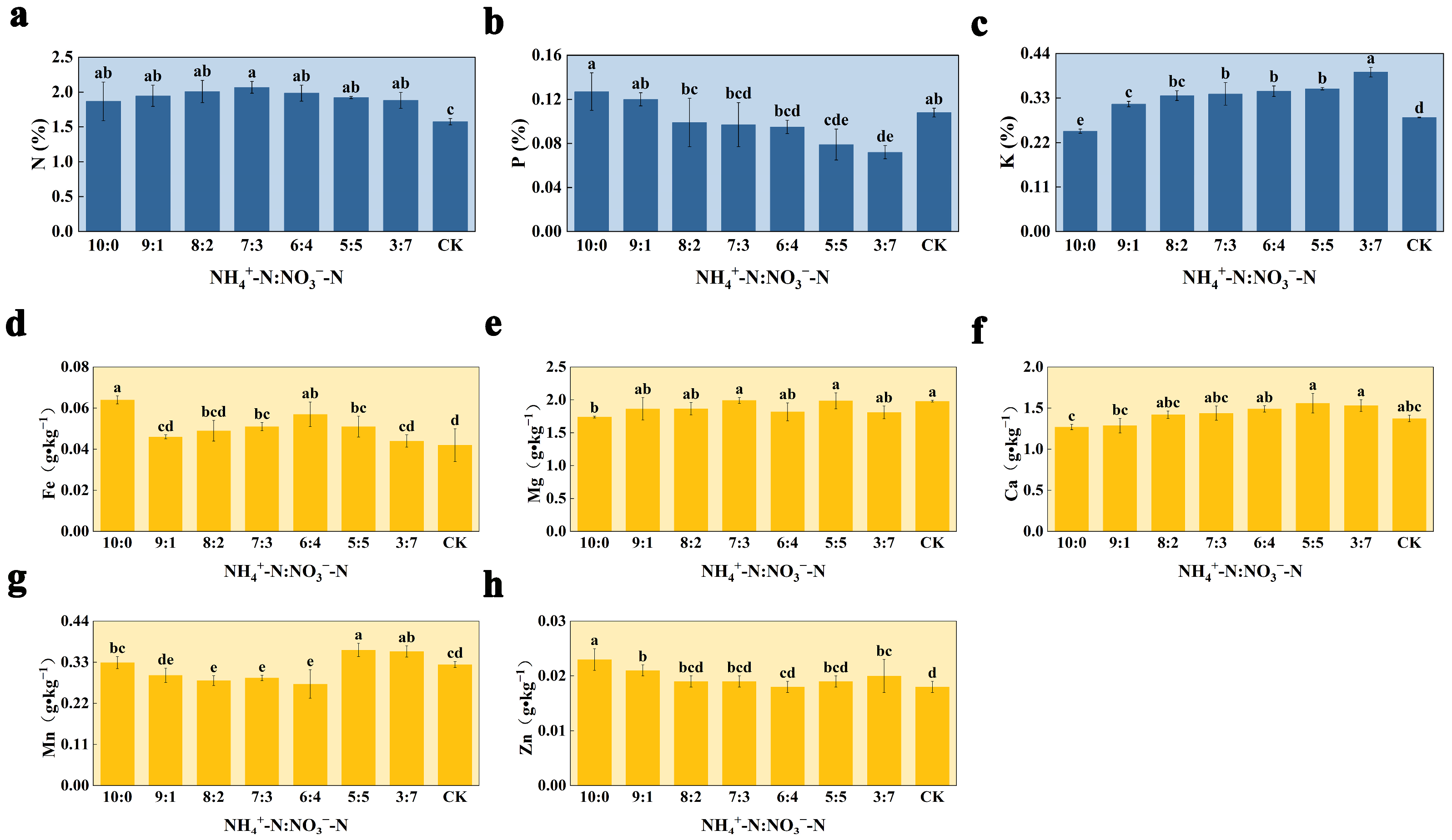
The effects of different N form ratios on mineral elements in the leaves of blueberry plants cultivated in a matrix are illustrated in Figure 8. As appropriate amounts of NO3-N were gradually added to NH4+-N, the leaf concentrations of N, Fe, and Mg significantly increased. When the proportion of NO3-N in the mixed N fertilizer exceeded that of NH4+-N, there was a significant increase in the leaf concentrations of K, Ca and Mn. At an NH4+-N:NO3-N ratio of 10:0, the leaf concentrations of P, Zn, and Fe showed significant increase. Notably, at an NH4+-N:NO3-N ratio of 7:3, the leaf concentrations of N and Mg reached their highest levels.

3.5. Effects of Varying Nitrogen Ratios on the Fruit Size and Maturity of Blueberries in Substrate Cultivation

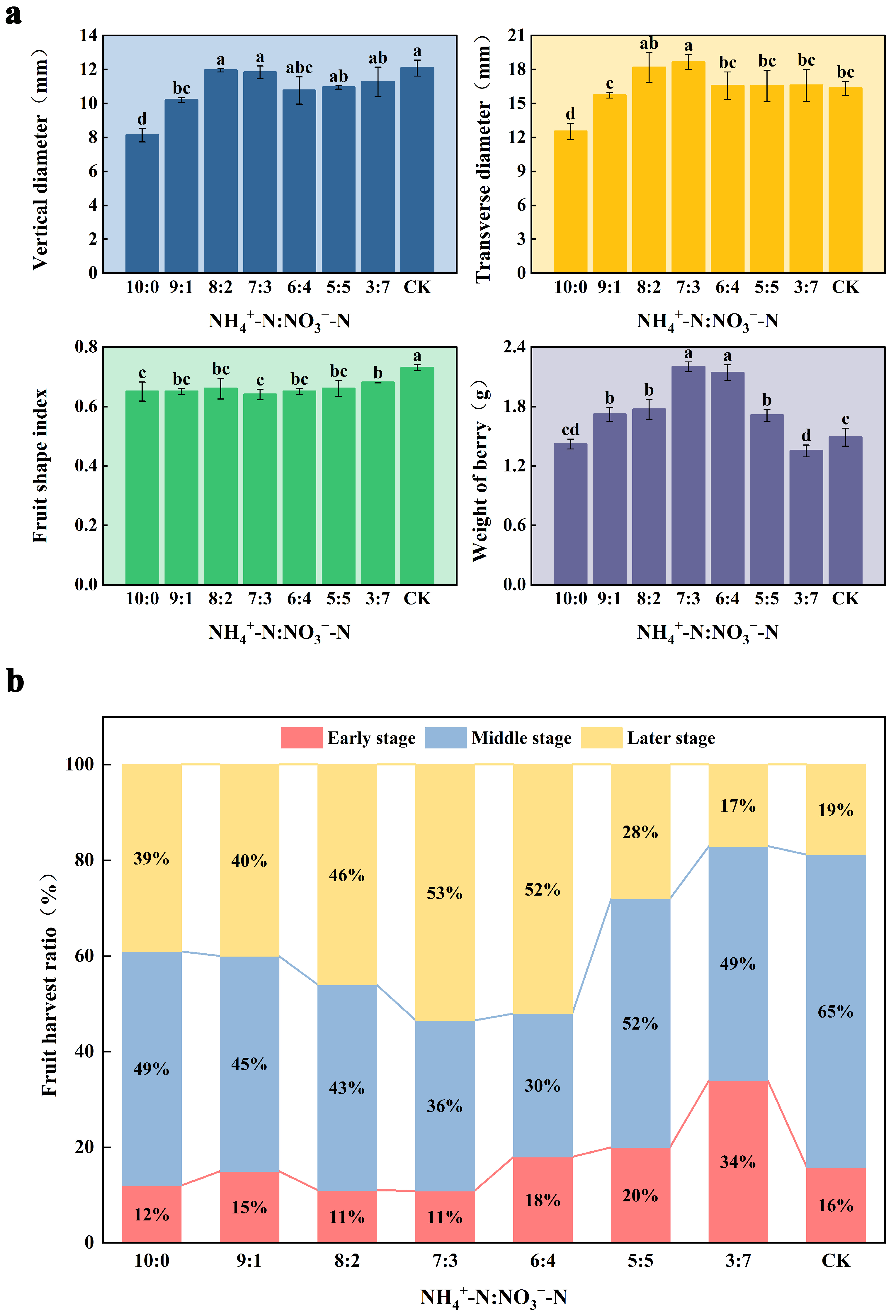
Fruit shape index is one of the critical indicators for evaluating fruit appearance quality. As the NO3-N ratio increased, the vertical and transverse diameters of fruits in different treatment groups initially increased and then decreased. However, the changes in the fruit shape index did not exhibit a clear pattern (Figure 9a). When the ratio of NH4+-N:NO3-N was 8:2 and 7:3, the vertical and transverse diameters of blueberry fruits were significantly increased, leading to a larger fruit volume. Specifically, the fruit shape index reached its minimum value at an NH4+-N:NO3-N ratio of 7:3. As the proportion of NO3-N increased, the single fruit weight initially increased and then decreased, peaking at an NH4+-N:NO3-N ratio of 7:3. In contrast, the single fruit weight at an NH4+-N:NO3-N ratio of 3:7 was significantly lower than that observed with the CK.
The ripening stage of the fruit is a critical determinant of the economic benefit of blueberry cultivation. In matrix cultivation, the ratio of different N forms notably influenced the harvest yield of blueberry fruits at maturity, as illustrated in Figure 9b. At the early stage of fruit ripening, as the NO3-N ratio increased, the fruit harvest ratio initially decreased and then gradually increased. Specifically, under the 7:3 treatment condition, the harvest ratio dropped to 11%, whereas the 3:7 treatment exhibited higher harvest ratios and the treatment groups also matured more extensively at an earlier time. During the middle stage of fruit ripening, the trend in the harvest ratio remained similar to that observed in the early stage. At the later stage of fruit ripening, the harvest ratios for the 7:3 and 6:4 treatments were significantly higher than those of other treatments, at 54% and 52%, respectively. These values were 37% and 35% higher than the harvest ratio of the 3:7 treatment, which had the lowest harvest ratio. This suggests that incorporating an appropriate amount of NO3-N in the nutrient solution can significantly promote fruit ripening.

4. Discussion

4.1. The Form of Nitrogen Significantly Influences Enzyme Activity as Well as Plant Growth and Development

Recent studies have demonstrated that N not only serves as an essential nutrient for plant growth but also functions as a signaling molecule, regulating various physiological processes through mechanisms such as epigenetic modifications [26], redox homeostasis [27], and responses to osmotic stress [28]. In-depth analyses of enzymatic activities reveal distinct regulatory mechanisms underlying the assimilation of NO3-N and NH4+-N in plants [29]. During the N assimilation process, nitrate reductase (NR), nitrite reductase (NiR), glutamine synthetase (GS), and glutamate synthase (GOGAT) are key enzymes involved [30]. The assimilation of NO3-N occurs in two sequential stages: the reduction of NO3 to NH4+ and the subsequent assimilation of NH4+ into organic compounds. NR is the primary rate-limiting enzyme in the first stage and its activity is regulated by nitrate induction [31], light-dependent modulation [32], and feedback inhibition by end products [33]. The findings of this study offer indirect support for this perspective, as NR activity peaked under an NH4+-N:NO3-N ratio of 3:7, significantly exceeding levels observed in other treatment groups. Meanwhile, NH4+-N can be directly assimilated through the GS-GOGAT cycle without prior reduction, constituting a core pathway for organic N synthesis in plants [34]. This pathway demonstrates high substrate specificity and catalytic efficiency, effectively preventing excessive intracellular accumulation of NH4+ while simultaneously supporting the maintenance and enhancement of key enzymatic activities [35]. This study demonstrates that a higher proportion of NH4+-N significantly enhances GS activity, while a greater share of NO3-N tends to suppress it. GOGAT activity peaks under a 10:0 NH4+-N:NO3-N ratio, indicating that exclusive NH4+-N application substantially promotes GOGAT activity in blueberry leaves compared to combined NH4+-N and NO3-N supply. Therefore, supplying various forms of N can effectively enhance the N assimilation process, thereby exerting a significant influence on plant growth and development. Research shows that a combined supply of NH4+-N and NO3-N promotes plant growth more effectively than either N form alone [36]. This study demonstrates that an NH4+-N to NO3-N ratio of 7:3 optimizes key growth parameters, including plant height, bush width, basal branch thickness, and leaf area, while also enhancing root length and average diameter. These results are consistent with previous findings [37,38], indicating that appropriate regulation of the ammonium-to-nitrate ratio positively influences the growth and development of blueberry plants.

4.2. A Higher Proportion of NH4+-N Enhances the Uptake of Mineral Elements in Plants

The physiological functions of mineral elements depend on nitrogen-synthesized “carrier substances”, such as proteins, enzymes, and coenzymes, for their effective execution. Simultaneously, mineral elements regulate the assimilation of N. Through synergistic interactions, these elements collectively influence plant nutrient utilization efficiency and growth performance. The concentrations of various mineral elements within plant tissues provide an accurate reflection of the plant’s nutritional status and growth level. This study demonstrates that applying NH4+-N at high concentrations significantly increases N and Mg concentrations in blueberry leaves. The results of this study are in agreement with previous research [39]. This suggests that a higher proportion of NH4+-N promotes the accumulation of N and Mg nutrients. This phenomenon may be attributed to the dynamic equilibrium established by the antagonistic interactions between NH4+ and NO3 ions, which enhances the absorption and utilization of other mineral elements [40]. Notably, leaf P, Zn, and Fe concentrations peaked when the NH4+-N:NO3-N ratio was maintained at 10:0. Plant survival is governed by intricate homeostatic interactions among P, Zn, and Fe, the deficiencies of which significantly impair multiple intracellular metabolic processes [41,42]. These findings indicate that NH4+-N may partially enhance cellular metabolic activity.

4.3. A Higher Proportion of NH4+-N Enhances the Photosynthetic Characteristics of Plants

Chlorophyll content in leaves plays a crucial role in determining photosynthetic efficiency, and it has been established that appropriate N application can significantly enhance chlorophyll accumulation [43]. The experimental results show that under different ratios of N forms, the contents of chlorophyll a, chlorophyll b, and total chlorophyll in blueberry leaves were significantly higher compared to the CK. Since the majority of chlorophyll is directly involved in capturing and transferring light energy, N application is expected to further improve the efficiency of light energy conversion [44]. Chlorophyll fluorescence kinetic parameters, derived from the principles of chlorophyll fluorescence induction kinetics, have been widely used to assess the impacts of nutrient availability on plant growth and photosynthetic efficiency [45]. The application of various N forms helped sustain the maximum photochemical efficiency (Fv/Fm) at an elevated level [46]. The results indicate that Fv/Fm and Fv/Fo reached their maximum value when the NH4+-N:NO3-N ratio was 7:3. N stress-induced photochemical adaptations modulate the photosynthetic electron transport chain, thereby regulating carbon dioxide fixation efficiency in plants [47]. Through the analysis of gas exchange parameters, the leaf Pn peaked when the ratio of NH4+-N:NO3-N was 7:3. The comprehensive analysis revealed that simultaneously supplying NH4+-N and NO3-N to blueberry plants in substrate cultivation significantly enhanced the Pn of leaves, thereby enhancing the accumulation level of organic matter [48].

5. Conclusions

When the ratio of NH4+-N:NO3-N is 10:0, plant absorption of P and Fe is significantly enhanced, and fruit ripening is delayed. When NO3-N serves as the primary N source, at a ratio of NH4+-N:NO3-N of 3:7, it markedly promotes the uptake of K and accelerate fruit ripening. With NH4+-N as the main N source, particularly at a ratio of NH4+-N:NO3-N of 7:3, the absorption of N and Mg is significantly increased, leading to maximal growth, significant increases in leaf area, enhanced chlorophyll synthesis, higher photosynthetic rates, increased single fruit weight, and improved plant yield. When the nutrient solution contains equal amounts of NH4+-N and NO3-N (i.e., a ratio of 5:5), the absorption of Ca and Mn is significantly promoted, and total chlorophyll content increases. High NO3-N treatment significantly enhanced the activity of NR, with the 3:7 treatment exhibiting the highest activity. The activities of GS and GDH initially increased and then decreased as the NO3-N ratio in the nutrient solution rose. GS activity peaked at the 5:5 treatment, while GDH activity was highest at the 6:4 treatment. The activity of GOGAT initially decreased and then increased with the rise in NO3-N ratio, reaching its peak at the 10:0 treatment. In conclusion, the promotion effect of NH4+-N as the primary N source on blueberry cultivation was superior to that of single NH4+-N or high NO3-N ratios among different N form combinations. Specifically, in all treatment combinations, a ratio of 7:3 for NH4+-N to NO3-N yielded the most significant promotion effect.

Author Contributions

Conceptualization, D.Z. and X.X.; methodology, X.X. and J.L.; software, D.Z. and J.L.; formal analysis, D.Z.; investigation, X.X. and J.L.; resources, Y.L.; data curation, K.D. and F.C.; writing—original draft preparation, D.Z. and J.L.; writing—review and editing, D.Z. and L.C.; visualization, K.D. and F.C.; supervision, H.S., L.C. and Y.L.; funding acquisition, H.S., L.C. and Y.L. All authors have read and agreed to the published version of the manuscript.

Funding

This study was supported by grants from Jilin Provincial Science and Technology Development Program Project (20250202007NC) and the National Natural Science Foundation of China (32472695).

Data Availability Statement

The data presented in this study are available on request from the corresponding author due to the laboratory confidentiality regulations.

Acknowledgments

We would like to thank Jun Ai and Zhenxing Wang for their instrumentation and technical support during the study.

Conflicts of Interest

The authors declare no conflicts of interest.

References

  1. Jung, Y.S.; Kwak, I.A.; Lee, S.G.; Cho, H.; Cho, Y.; Kim, D. Influence of Production Systems on Phenolic Characteristics and Antioxidant Capacity of Highbush Blueberry Cultivars. J. Food Sci. 2021, 86, 2949–2961. [Google Scholar] [CrossRef] [PubMed]
  2. Voogt, W.; Van Dijk, P.; Douven, F.; Van Der Maas, R. Development of a Soilless Growing System for Blueberries (Vaccinium Corymbosum): Nutrient Demand and Nutrient Solution. Acta Hortic. 2014, 1017, 215–221. [Google Scholar] [CrossRef]
  3. Fang, Y.; Nunez, G.; Fisher, P.; Munoz, P.R. Effect of Container Size, Substrate Composition, and Genotype on Growth and Fruit Quality of Young Southern Highbush Blueberry in a Container-Based Intensive Production System. Sci. Hortic. 2022, 302, 111149. [Google Scholar] [CrossRef]
  4. Fang, Y.; Nunez, G.H.; Silva, M.N.D.; Phillips, D.A.; Munoz, P.R. A Review for Southern Highbush Blueberry Alternative Production Systems. Agronomy 2020, 10, 1531. [Google Scholar] [CrossRef]
  5. Yang, H.; Duan, Y.; Wei, Z.; Wu, Y.; Zhang, C.; Wu, W.; Lyu, L.; Li, W. Integrated Physiological and Metabolomic Analyses Reveal the Differences in the Fruit Quality of the Blueberry Cultivated in Three Soilless Substrates. Foods 2022, 11, 3965. [Google Scholar] [CrossRef]
  6. Liu, S.; Qiang, X.; Liu, H.; Han, Q.; Yi, P.; Ning, H.; Li, H.; Wang, C.; Zhang, X. Effects of Nutrient Solution Application Rates on Yield, Quality, and Water–Fertilizer Use Efficiency on Greenhouse Tomatoes Using Grown-in Coir. Plants 2024, 13, 893. [Google Scholar] [CrossRef] [PubMed]
  7. Bryla, D.R.; Strik, B.C. Nutrient Requirements, Leaf Tissue Standards, and New Options for Fertigation of Northern Highbush Blueberry. HortTechnology 2015, 25, 464–470. [Google Scholar] [CrossRef]
  8. Bryla, D.R.; Machado, R.M.A. Comparative Effects of Nitrogen Fertigation and Granular Fertilizer Application on Growth and Availability of Soil Nitrogen during Establishment of Highbush Blueberry. Front. Plant Sci. 2011, 2, 46. [Google Scholar] [CrossRef]
  9. Ito, T.; Tanaka-Oda, A.; Masumoto, T.; Akatsuki, M.; Makita, N. Different Relationships of Fine Root Traits with Root Ammonium and Nitrate Uptake Rates in Conifer Forests. J. For. Res. 2023, 28, 25–32. [Google Scholar] [CrossRef]
  10. Fang, Y.; Williamson, J.; Darnell, R.; Li, Y.; Liu, G. Nitrogen Uptake and Allocation at Different Growth Stages of Young Southern Highbush Blueberry Plants. HortScience 2017, 52, 905–909. [Google Scholar] [CrossRef]
  11. Darnell, R.L.; Casamali, B.; Williamson, J.G. Nutrient Assimilation in Southern Highbush Blueberry and Implications for the Field. HortTechnology 2015, 25, 460–463. [Google Scholar] [CrossRef]
  12. Korcak, R.F. The Importance of Calcium and Nitrogen Source in Fruit Tree Nutrition. Acta Hortic. 1980, 92, 267–278. [Google Scholar] [CrossRef]
  13. Wang, P.; Yang, L.; Sun, X.; Shi, W.; Dong, R.; Wu, Y.; Mi, G. Lateral Root Elongation in Maize Is Related to Auxin Synthesis and Transportation Mediated by N Metabolism under a Mixed NO3 and NH4+ Supply. J. Integr. Agric. 2024, 23, 1048–1060. [Google Scholar] [CrossRef]
  14. Zhang, W.; Zhang, T.; Zhang, J.; Lei, W.; Zhao, L.; Wang, S.; Shi, M.; Wei, M. Low Nitrogen Stress Promotes Root Nitrogen Uptake and Assimilation in Strawberry: Contribution of Hormone Networks. Horticulturae 2023, 9, 249. [Google Scholar] [CrossRef]
  15. Zhu, Y.; Qi, B.; Hao, Y.; Liu, H.; Sun, G.; Chen, R.; Song, S. Appropriate NH4+/NO3 Ratio Triggers Plant Growth and Nutrient Uptake of Flowering Chinese Cabbage by Optimizing the pH Value of Nutrient Solution. Front. Plant Sci. 2021, 12, 656144. [Google Scholar] [CrossRef]
  16. Liu, G.; Du, Q.; Li, J. Interactive Effects of Nitrate-Ammonium Ratios and Temperatures on Growth, Photosynthesis, and Nitrogen Metabolism of Tomato Seedlings. Sci. Hortic. 2017, 214, 41–50. [Google Scholar] [CrossRef]
  17. Salazar-Gutiérrez, M.R.; Lawrence, K.; Coneva, E.D.; Chaves-Córdoba, B. Photosynthetic Response of Blueberries Grown in Containers. Plants 2023, 12, 3272. [Google Scholar] [CrossRef]
  18. Cao, X.; Li, W.; Wang, P.; Ma, Z.; Mao, J.; Chen, B. New Insights into MdSPS4-Mediated Sucrose Accumulation under Different Nitrogen Levels Revealed by Physiological and Transcriptomic Analysis. Int. J. Mol. Sci. 2022, 23, 16073. [Google Scholar] [CrossRef]
  19. Throop, P.; Hanson, E. Effects of Dicyandiamide on Blueberry Uptake and Soil Transformations of Nitrogen. HortScience 1995, 30, 784E. [Google Scholar] [CrossRef]
  20. Zhang, H.; Chen, T.; Yu, S.; Zhou, C.; Teng, A.; Lei, L.; Li, F. Optimizing the Mulching Pattern and Nitrogen Application Rate to Improve Maize Photosynthetic Capacity, Yield, and Nitrogen Fertilizer Utilization Efficiency. Plants 2024, 13, 1241. [Google Scholar] [CrossRef] [PubMed]
  21. Poonnachit, U.; Darnell, R.L. 624 Nitrate and Iron Reductase Activities in Vaccinium Species. HortScience 2000, 35, 505A. [Google Scholar] [CrossRef]
  22. Merhaut, D.J.; Darnell, R.L. Nitrate Reductase Activity in Leaves and Roots of Two Blueberry Species. HortScience 1996, 31, 664a. [Google Scholar] [CrossRef]
  23. Rizwan, M.; Usman, K.; Alsafran, M.; Jabri, H.A.; Samreen, T.; Saleem, M.H.; Tu, S. Nickel Toxicity Interferes with NO3/NH4+ Uptake and Nitrogen Metabolic Enzyme Activity in Rice (Oryza sativa L.). Plants 2022, 11, 1401. [Google Scholar] [CrossRef]
  24. Fontaine, J.-X.; Tercé-Laforgue, T.; Armengaud, P.; Clément, G.; Renou, J.-P.; Pelletier, S.; Catterou, M.; Azzopardi, M.; Gibon, Y.; Lea, P.J.; et al. Characterization of a NADH-Dependent Glutamate Dehydrogenase Mutant of Arabidopsis Demonstrates the Key Role of This Enzyme in Root Carbon and Nitrogen Metabolism. Plant Cell 2012, 24, 4044–4065. [Google Scholar] [CrossRef]
  25. Zhang, Z.; Chen, Z. Experimental Techniques in Plant Physiology, 2nd ed.; Jilin University Press: Changchun, China, 2008. [Google Scholar]
  26. Zhang, H.; Zhang, X.; Xiao, J. Epigenetic Regulation of Nitrogen Signaling and Adaptation in Plants. Plants 2023, 12, 2725. [Google Scholar] [CrossRef]
  27. Nejamkin, A.; Del Castello, F.; Lamattina, L.; Foresi, N.; Correa Aragunde, N. Redox Regulation in Primary Nitrate Response: Nitric Oxide in the Spotlight. Plant Physiol. Biochem. 2024, 210, 108625. [Google Scholar] [CrossRef]
  28. Zhao, M.; Gao, Z.; Kuang, C.; Chen, X. Partial Root-Zone Drying Combined with Nitrogen Treatments Mitigates Drought Responses in Rice. Front. Plant Sci. 2024, 15, 1381491. [Google Scholar] [CrossRef]
  29. Chen, M.; Zhu, K.; Xie, J.; Liu, J.; Qiao, Z.; Tan, P.; Peng, F. Ammonium-Nitrate Mixtures Dominated by NH4+-N Promote the Growth of Pecan (Carya illinoinensis) through Enhanced N Uptake and Assimilation. Front. Plant Sci. 2023, 14, 1186818. [Google Scholar] [CrossRef] [PubMed]
  30. Liu, X.; Hu, B.; Chu, C. Nitrogen Assimilation in Plants: Current Status and Future Prospects. J. Genet. Genom. 2022, 49, 394–404. [Google Scholar] [CrossRef]
  31. Du, S.; Zhang, R.; Zhang, P.; Liu, H.; Yan, M.; Chen, N.; Xie, H.; Ke, S. Elevated CO2-Induced Production of Nitric Oxide (NO) by NO Synthase Differentially Affects Nitrate Reductase Activity in Arabidopsis Plants under Different Nitrate Supplies. J. Exp. Bot. 2016, 67, 893–904. [Google Scholar] [CrossRef] [PubMed]
  32. Calatayud, A.; Roca, D.; Gorbe, E.; Martínez, P.F. Light Acclimation in Rose (Rosa hybrida Cv. Grand Gala) Leaves after Pruning: Effects on Chlorophyll a Fluorescence, Nitrate Reductase, Ammonium and Carbohydrates. Sci. Hortic. 2007, 111, 152–159. [Google Scholar] [CrossRef]
  33. Chamizo-Ampudia, A.; Sanz-Luque, E.; Llamas, A.; Galvan, A.; Fernandez, E. Nitrate Reductase Regulates Plant Nitric Oxide Homeostasis. Trends Plant Sci. 2017, 22, 163–174. [Google Scholar] [CrossRef]
  34. Fortunato, S.; Nigro, D.; Lasorella, C.; Marcotuli, I.; Gadaleta, A.; De Pinto, M.C. The Role of Glutamine Synthetase (GS) and Glutamate Synthase (GOGAT) in the Improvement of Nitrogen Use Efficiency in Cereals. Biomolecules 2023, 13, 1771. [Google Scholar] [CrossRef]
  35. Sellers, B.A.; Smeda, R.J.; Li, J. Glutamine Synthetase Activity and Ammonium Accumulation Is Influenced by Time of Glufosinate Application. Pestic. Biochem. Physiol. 2004, 78, 9–20. [Google Scholar] [CrossRef]
  36. Di, D.; Wang, S.; Chen, G.; Wang, Q.; Zhang, J.; Niu, X.; Huang, D. NH4+-N and Low Ratios of NH4+-N/NO3-N Promote the Remediation Efficiency of Salix Linearistipularis in Cd- and Pb-Contaminated Soil. Forests 2024, 15, 419. [Google Scholar] [CrossRef]
  37. Xu, J.; Fang, Y.; Tavakkoli, E.; Pan, X.; Liao, F.; Chen, W.; Guo, W. Preferential Ammonium: Nitrate Ratio of Blueberry Is Regulated by Nitrogen Transport and Reduction Systems. Sci. Hortic. 2021, 288, 110345. [Google Scholar] [CrossRef]
  38. Zhang, J.; Lv, J.; Dawuda, M.M.; Xie, J.; Yu, J.; Li, J.; Zhang, X.; Tang, C.; Wang, C.; Gan, Y. Appropriate Ammonium-Nitrate Ratio Improves Nutrient Accumulation and Fruit Quality in Pepper (Capsicum annuum L.). Agronomy 2019, 9, 683. [Google Scholar] [CrossRef]
  39. Wang, C.; Wu, G.; Wang, H.; Wang, J.; Yuan, M.; Guo, X.; Liu, C.; Xing, S.; Sun, Y.; Talpur, M.M.A. Optimizing Tomato Cultivation: Impact of Ammonium–Nitrate Ratios on Growth, Nutrient Uptake, and Fertilizer Utilization. Sustainability 2024, 16, 5373. [Google Scholar] [CrossRef]
  40. Ueda, Y.; Konishi, M.; Yanagisawa, S. Molecular Basis of the Nitrogen Response in Plants. Soil Sci. Plant Nutr. 2017, 63, 329–341. [Google Scholar] [CrossRef]
  41. Kumar, S.; Kumar, S.; Mohapatra, T. Interaction Between Macro- and Micro-Nutrients in Plants. Front. Plant Sci. 2021, 12, 665583. [Google Scholar] [CrossRef] [PubMed]
  42. Xie, X.; Hu, W.; Fan, X.; Chen, H.; Tang, M. Interactions Between Phosphorus, Zinc, and Iron Homeostasis in Nonmycorrhizal and Mycorrhizal Plants. Front. Plant Sci. 2019, 10, 1172. [Google Scholar] [CrossRef]
  43. Liu, B.; Mao, P.; Yang, Q.; Qin, H.; Xu, Y.; Zheng, Y.; Li, Q. Appropriate Nitrogen Form Ratio and UV-A Supplementation Increased Quality and Production in Purple Lettuce (Lactuca sativa L.). Int. J. Mol. Sci. 2023, 24, 16791. [Google Scholar] [CrossRef] [PubMed]
  44. Mu, X.; Chen, Y. The Physiological Response of Photosynthesis to Nitrogen Deficiency. Plant Physiol. Biochem. 2021, 158, 76–82. [Google Scholar] [CrossRef] [PubMed]
  45. Qi, Z.; Sun, W.; Luo, C.; Zhang, Q.; Osman, F.M.; Guan, C.; Wang, Y.; Zhang, M.; Zhang, X.; Ding, J.; et al. Differential Responses of Rice Genotypes to Nitrogen Supply: Impacts on Nitrogen Metabolism and Chlorophyll Fluorescence Kinetics. Plants 2025, 14, 2467. [Google Scholar] [CrossRef]
  46. Xiaochuang, C.; Chu, Z.; Chunquan, Z.; Junhua, Z.; Lianfeng, Z.; Lianghuan, W.; Qianyu, J. Variability of Leaf Photosynthetic Characteristics in Rice and Its Relationship with Resistance to Water Stress under Different Nitrogen Nutrition Regimes. Physiol. Plant. 2019, 167, 613–627. [Google Scholar] [CrossRef]
  47. Lu, C.; Zhang, J. Photosynthetic CO2 Assimilation, Chlorophyll Fluorescence and Photoinhibition as Affected by Nitrogen Deficiency in Maize Plants. Plant Sci. 2000, 151, 135–143. [Google Scholar] [CrossRef] [PubMed]
  48. Noor, H.; Yan, Z.; Sun, P.; Zhang, L.; Ding, P.; Li, L.; Ren, A.; Sun, M.; Gao, Z. Effects of Nitrogen on Photosynthetic Productivity and Yield Quality of Wheat (Triticum aestivum L.). Agronomy 2023, 13, 1448. [Google Scholar] [CrossRef]
Figure 1. Effects of varying nitrogen ratios on the growth of blueberry in substrate cultivation, including (a) branch thickness, (b) elongated net shoot growth, (c) basal branch growth, (d) bush width, and (e) bush height indexes. Effects of varying nitrogen ratios on the leaf growth of blueberry in substrate cultivation, including (f) water content, (g) specific leaf weight, (h) leaf area, (i) dry weight, and (j) fresh weight indexes. No same letter indicated significant difference (p < 0.05), n = 3.
Horticulturae 12 00045 g001
Figure 2. Effects of varying nitrogen ratios (a) root length, (b) root surface area, (c) average root diameter, and (d) root size of blueberry in substrate cultivation. No same letter indicated significant difference (p < 0.05), n = 3. The scale is 100 mm.
Horticulturae 12 00045 g002
Figure 3. Effects of varying nitrogen ratios on (a) fresh weight of aboveground per plant, (b) dry weight of aboveground per plant, (c) root–shoot ratio, and (d) weight of belowground per plant of blueberry plants grown in substrate cultivation. No same letter indicated significant difference (p < 0.05), n = 3.
Horticulturae 12 00045 g003
Figure 4. Effects of varying nitrogen ratios on (a) the chlorophyll a, (b) the chlorophyll b, (c) the content of carotene, and (d) the total chlorophyll content of blueberry leaves grown in substrate cultivation. No same letter indicated significant difference (p < 0.05), n = 3.
Horticulturae 12 00045 g004
Figure 5. Effects of varying nitrogen ratios on (a) Pn, (b) Gs, (c) Ci, and (d) E of blueberry leaves in substrate cultivation. No same letter indicated significant difference (p < 0.05), n = 3.
Horticulturae 12 00045 g005
Figure 6. Effects of varying nitrogen ratios on (a) the content of initial fluorescence, (b) the content of maximum fluorescence, (c) the content of maximum photochemical efficiency, and (d) the content of potential photochemical efficiency of blueberry leaves in substrate cultivation. No same letter indicated significant difference (p < 0.05), n = 3.
Horticulturae 12 00045 g006
Figure 7. Effects of varying nitrogen ratios on (a) the content of glutamate synthase, (b) the content of glutamate dehydrogenase, (c) the content of glutamine synthetase, and (d) the content of nitrate reductase in blueberry leaves in substrate cultivation. No same letter indicated significant difference (p < 0.05), n = 3.
Horticulturae 12 00045 g007
Figure 8. Effects of varying nitrogen ratios on main mineral elements of blueberry leaves in substrate cultivation, including (a) N, (b) P, and (c) K. Effects of varying nitrogen ratios on other mineral elements of blueberry leaves in substrate cultivation, including (d) Fe, (e) Mg, (f) Ca, (g) Mn, and (h) Zn. No same letter indicated significant difference (p < 0.05), n = 3.
Horticulturae 12 00045 g008
Figure 9. Effects of varying nitrogen ratios on (a) fruit development, and (b) fruit maturity of blueberry in substrate cultivation. No same letter indicated significant difference (p < 0.05), n = 3.
Horticulturae 12 00045 g009
Table 1. Nutrient solution formula table with varying nitrogen ratios.
Working SolutionNutrient Source10:09:18:27:36:45:53:7
A5Ca(NO3)2·NH4NO3·10H2O0.0000.1280.2560.3850.4900.4900.490
ACa [HCOOCH (NH2) CH2COO]20.8200.8200.8200.8200.8200.8200.820
AC10H12N2O8FeNa·3H2O0.0490.0490.0490.0490.0490.0490.049
BK2SO41.9801.9801.9801.9801.6551.8550.615
BCa (CH3COO)22.4501.8101.1700.5250.0000.0000.000
BKNO30.0000.0000.0000.0000.2000.0002.480
BKH2PO40.0000.0000.0000.0000.4510.2510.251
BNH4NO30.0000.0000.0000.0000.0001.6452.000
B(NH4)2SO46.0725.3044.5363.7623.2581.6130.018
BNH4H2PO41.9561.9561.9561.9561.5051.7051.705
BMgSO43.0073.0073.0073.0073.0073.0073.007
BNa2B4O7·10H2O0.0050.0050.0050.0050.0050.0050.005
BMnSO40.0210.0210.0210.0210.0210.0210.021
BCuSO40.0020.0020.0020.0020.0020.0020.002
BZnSO40.0190.0190.0190.0190.0190.0190.019
BNa2MoO40.0010.0010.0010.0010.0010.0010.001
Disclaimer/Publisher’s Note: The statements, opinions and data contained in all publications are solely those of the individual author(s) and contributor(s) and not of MDPI and/or the editor(s). MDPI and/or the editor(s) disclaim responsibility for any injury to people or property resulting from any ideas, methods, instructions or products referred to in the content.