Article

Acid Electrolyzed Water Priming Induces Phenylpropane Metabolism and Antioxidant Enzyme System to Promote Seed Germination of Celery


1
College of Agricultural Engineering and Food Science, Shandong University of Technology, Zibo 255000, China
2
Institute of Modern Agricultural Equipment, Shandong University of Technology, Zibo 255000, China
3
Key Laboratory of Smart Agriculture Technology and Intelligent Agricultural Machinery Equipment for Field Crops in Shandong Province, Zibo 255000, China
4
School of Agriculture and Biology, Shanghai Jiao Tong University, Shanghai 200240, China
*
Author to whom correspondence should be addressed.
Horticulturae 2025, 11(12), 1543; https://doi.org/10.3390/horticulturae11121543
Submission received: 21 November 2025 / Revised: 15 December 2025 / Accepted: 16 December 2025 / Published: 18 December 2025
(This article belongs to the Special Issue Seed Biology in Horticulture: From Dormancy to Germination)

Abstract

Seed germination of celery (Apium graveolens L.) is notoriously slow and asynchronous, which severely constrains uniform seedling establishment and crop yield. Seed priming is an effective technique to improve germination, and acidic electrolyzed water, characterized by low pH and high oxidation–reduction potential, has emerged as a novel priming agent. However, the effect of acid electrolyzed water priming (EWP) on celery seed germination and the underlying mechanisms still need to be explored. The present study aimed to investigate the physiological and molecular mechanisms by which EWP promotes celery seed germination, with a focus on the roles of the phenylpropane metabolism and the antioxidant enzyme system. Celery seeds were treated with EWP, hydro-priming (HYD), and untreated (CK). It was found that the EWP treatment significantly enhanced germination characteristics compared to both CK and HYD. Transcriptome analysis revealed that EWP triggered more extensive transcriptional reprogramming than HYD, and EWP specifically enriched “Phenylpropanoid biosynthesis” and “Flavonoid biosynthesis” pathways, downregulating upstream genes (PAL, 4CL) while upregulating downstream genes (CCR, CHI, F3H) in the phenylpropane pathway. Physiologically, EWP significantly increased CHI activity and the contents of total phenols and flavonoids at all sampling time points, and enhanced the activities of SOD, POD, CAT, and APX. Consequently, the DPPH and FRAP free radical scavenging capacities were significantly strengthened in EWP-treated seeds. In conclusion, it is believed that EWP activation promotes celery seed germination by coordinating the phenylpropane pathway and antioxidant enzyme system, ensuring effective radical scavenging activities and cell protection. These findings provide a theoretical basis for the application of EWP and highlight the potential as a novel priming technology for celery and other horticultural crops.

1. Introduction

Celery (Apium graveolens L.) is an important vegetable crop widely grown worldwide, highly valued for the unique flavor and rich variety of beneficial bioactive substances such as phenols and flavonoids [1,2]. However, a major limiting factor in celery production is slow and irregular seed germination, which is mainly attributed to the inherent physiological characteristics of the seeds, namely poor texture and water permeability of the seed coat, as well as the presence of inherent germination-inhibiting substances [3,4]. Especially under suboptimal conditions such as high temperature stress, the germination rate of celery can plummet to below 10% [5], making the development of effective priming technologies a matter of practical urgency for celery cultivation. As an advanced pre-sowing treatment technique, seed priming controls the seeds to slowly absorb water, allowing them to complete pre-germination physiological activities without breaking through the seed coat, thus achieving rapid and uniform germination performance [6,7,8]. In recent years, acid electrolyzed water has shown potential as a new type of green initiator due to the low pH, high oxidation–reduction potential, and active chlorine content [9,10,11,12]. Research has shown that acid electrolyzed water tends to promote seed germination in crops such as rice [13], watermelon [14], and sunflower [15], but the potential and mechanism of action in celery seeds, especially the impact on deep metabolic pathways, still need to be further explored.
The promoting effect of seed priming originates from their multiple repair and activation mechanisms initiated at the cellular and molecular levels [7,16]. During the priming process, the cell membrane system of seed can be repaired, thereby reducing electrolyte leakage and enhancing cell integrity [17,18]. At the same time, a series of metabolic activities related to germination are activated, including the initiation of the energy metabolism (such as glycolysis and tricarboxylic acid cycle), the mobilization of storage substances, and the dynamic balance regulation of endogenous hormone levels, especially the increase in gibberellin (GA) content and the decrease in abscisic acid (ABA) content [19,20,21]. Among numerous metabolic pathways, the phenylpropanoid metabolism, as a core hub connecting primary metabolism and multiple secondary metabolites, is increasingly receiving attention for the role in seed response to environmental signals and germination regulation [22,23]. The phenylpropanoid metabolism starts with phenylalanine and is catalyzed by a series of key enzymes, such as phenylalanine ammonia lyase (PAL) and 4-coumaroyl CoA ligase (4CL), to generate abundant phenolic acids, flavonoids, lignin, and other compounds. The phenylpropanoid metabolism begins with the deamination of phenylalanine, catalyzed by PAL, to form cinnamic acid, which serves as the central precursor. Through a series of hydroxylation, methylation, and conjugation reactions, this pathway generates a diverse array of compounds. The biological importance of phenylpropanoids is immense; they are not only crucial for providing mechanical strength through the biosynthesis of lignin, a major component of cell walls, but also serve as key defensive compounds [24,25]. These metabolites play multiple roles during seed germination: flavonoids and phenolic acids are powerful antioxidants that help clear excess reactive oxygen species (ROS) and maintain redox homeostasis [26,27], while lignin participates in the weakening of seed coat and the softening of endosperm, providing mechanical assistance for the extension of embryonic roots [28,29].
Seed germination is a high oxygen-consuming process that inevitably produces ROS, and maintaining the dynamic balance of ROS is crucial for successful germination [30]. There is a sophisticated antioxidant defense system in plants, including enzymatic and non-enzymatic systems [31]. It is worth noting that there is an inherent close relationship between the enhancement of the phenylpropane metabolism and the improvement of antioxidant capacity. The flavonoids and some phenolic acids produced by the phenylpropane metabolism are important non-enzymatic antioxidants that can directly and effectively eliminate ROS [31]. Meanwhile, studies have shown that the activation of the phenylpropane metabolism and the enhancement of enzymatic antioxidant systems often occur synergistically, forming a dual line of defense against oxidative stress [32,33]. This synergistic effect ensures that seeds can effectively manage oxidative stress during the stage of high energy demand for germination, but there is still a lack of evidence to determine whether this synergy affects the regulation of celery seed germination.
The present work is based on the phenomenon that acid electrolysis priming (EWP) is more effective in promoting celery seed germination compared to hydro-priming (HYD). The mechanism of the EWP treatment promoting germination is explored by comprehensively using transcriptome analysis (RNA-seq) and targeted physiological and biochemical index detection. The specific research content includes the following: (1) evaluating the effects of EWP and HYD treatments on the germination characteristics of celery seeds; (2) comprehensively comparing the differences in gene expression profiles among CK, HYD, and EWP groups through RNA-seq, focusing on screening differentially expressed genes (DEGs) in the phenylpropanoid metabolism and flavonoid biosynthesis pathways based on the enrichment analysis of DEGs, and selecting DEGs to explore their expression patterns over time; (3) determining the activity changes in key enzymes in the phenylpropane metabolism and antioxidant enzyme system; (4) analyzing the content of total phenols, total flavonoids, and overall antioxidant capacity. It was hypothesized that EWP, unlike HYD, acts as a mild oxidative stress that selectively modulates the phenylpropanoid metabolism by preferentially inducing downstream branches related to flavonoid biosynthesis. Moreover, it was postulated that this metabolic reprogramming would act in coordination with the antioxidant enzyme system to maintain ROS homeostasis, constituting a novel mechanism for enhancing germination vigor. The aim of this study is to systematically elucidate the intrinsic mechanism of EWP-induced promotion of celery seed germination, particularly revealing the core roles of the phenylpropane metabolism and antioxidant systems in this process, providing a theoretical basis for the development of efficient seed priming technology of celery.

2. Materials and Methods

2.1. Treatment Protocol of Seed Material

Jinnan Shiqin No.1 was used as the tested variety of celery. The seeds were produced in 2023 and stored at 5 °C and 35% relative humidity prior to use. Three treatments were set up: control (CK), HYD, and EWP. For the HYD treatment, seeds were soaked in distilled water at 20 °C for 6 h, followed by incubation in a climate chamber (QHX-300BSH-III, Ningbo Jiangnan Instrument Factory, Ningbo, China) at 20 °C and 100% relative humidity under dark conditions for 48 h. After imbibition, seeds were desiccated at 25 °C in a drum wind dryer until their initial weight was restored. For the EWP treatment, seeds were soaked in acid electrolyzed water at 20 °C for 20 min, and subsequent imbibition and drying steps were identical to the HYD protocol. Acidic electrolyzed water was produced by an electrolyzed water generator (DSJ-50A, Ruinong Agricultural Technology Co., Ltd., Zhengzhou, China). A total of 3 g/L potassium chloride was added into pure water and then passed into the generator suction pipe. After powering on, the current was adjusted to 2A. The outlet can obtain acidic electrolytic water (pH = 2.8) for the EWP treatment. The pH value of electrolyzed water and soaking time suitable for EWP treatment was determined through preliminary experiments. Untreated seeds were served as the control (CK). All primed seeds were subjected to germination assays and physiological analyses.

2.2. Seed Germination Assay

The celery seeds of each treatment were evenly sprinkled in a 90 mm culture dish with two layers of filter paper (50 seeds per dish per replicate, four biological replicates for each treatment), 3 mL of pure water was added to each dish, and 0.5 mL of pure water was replenished every 24 h. The culture dishes were placed in the artificial climate chamber (QHX-300BSH-III), set at 25/15 °C, 80% relative humidity, and photoperiod of 14 h/10 h (Photosynthetic Photon Flux Density set to 50 μmol/m2/s). The number of germinating seeds was counted every 24 h after sowing. On the 9th day after sowing, the fresh weight (FW) was determined in units of 10 seedlings. The germination percentage on the 9th day was defined as germination rate (GR), and the germination percentage on the 7th day was defined as germination potential (GP). The germination index (GI), vigor index (VI), and mean germination time (MGT) were calculated according to the following formula.
GI = ∑ (Gt/Dt)
VI = GI × FW
MGT = ∑ (Gt × Dt)/∑ Dt
Dt is the number of days used to count the number of germinated seeds, and Gt is the number of germinated seeds counted on the corresponding date.

2.3. Transcriptome Sequencing and Analysis

2.3.1. RNA Extraction and Library Construction

Celery seeds after different treatments and before imbibition (three biological replicates) were flash-frozen in liquid nitrogen and ground into powder. Total RNA was extracted using the TRIzol reagent method (Invitrogen, Thermo Fisher Scientific (China) Co., Ltd., Shanghai, China). RNA integrity was verified using an Agilent 2100 Bioanalyzer (Agilent Technologies, California, CA, USA) (RIN ≥ 7.5), and concentration/purity (OD260/280 = 1.8–2.2) was measured using a NanoDrop ND-2000 spectrophotometer (Thermo Fisher Scientific, Waltham, MA, USA). Strand-specific cDNA libraries were constructed using the TruSeq Stranded mRNA Library Prep Kit (Illumina, San Diego, CA, USA).

2.3.2. Sequencing and Data Preprocessing

Libraries were quantified using a Qubit 3.0 fluorometer and quality-checked with an Agilent 2100 system. Paired-end 150 bp (PE150) sequencing was performed on an Illumina NovaSeq 6000 platform. Raw data was processed using Fastp software (v0.23.1) to remove low-quality reads (Q < 20), adapter contaminants, and reads with >5% ambiguous bases (N content), yielding high-quality clean reads.

2.3.3. Sequence Alignment and Differential Expression Analysis

Clean reads were aligned to the celery reference genome (http://bio2db.com/download.html (accessed on 24 March 2025)). Alignment rates were calculated using SAMtools (v2.2.1). Gene expression levels were quantified as TPM (Transcripts Per Million) using StringTie (v1.19.2). DEGs were identified with DESeq2 (v1.34.0) using thresholds of |log2(fold change)| ≥ 1 and adjusted p-value (FDR) ≤ 0.05.

2.3.4. Enrichment Analysis of DEGs

The software Goatools (https://pypi.org/project/goatools/, accessed on 24 March 2025) and KOBAS (http://bioinfo.org/kobas, accessed on 24 March 2025) were used for the GO and KEGG pathway enrichment analyses of the DEGs.

2.4. qRT-PCR Analysis of Key DEGs in Phenylpropane Metabolism

The selected DEGs encoded PAL, 4CL, cinnamoyl CoA reductase (CCR), hydroxycinnamoyl transferase (HCT), chalconeisomerase (CHI), and flavanone 3-hydroxylase (F3H) for expression pattern study. Primer 6.0 was used to design primers (Table S1), with actin (Ag10G02000) of celery as the reference gene. Total RNA was extracted from seed samples before sowing (S0), 3 days after sowing (S3, key time points for germination of the EWP treatment), and 7 days after sowing (S7) using TRIzol reagent (Invitrogen, USA). cDNA synthesis was performed using the Goldenstar RT6 cDNA synthesis kit (Tsingke Biotechnology, Shanghai, China). Run qPCR reaction containing 2 × T5 rapid qPCR mixture (SYBR Green I) on QuantStudio 5 real-time PCR system (Thermo Fisher Scientific, USA). Amplification conditions: 1 min at 95 °C (initial denaturation); 40 cycles, 95 °C for 15 s, 60 °C for 15 s, 72 °C for 30 s; melting curve analysis (95 °C for 5 s, 60 °C for 1 min, continuous fluorescence collection from 60 °C to 95 °C). Relative gene expression was calculated using the 2−ΔΔCt method and three technical replicates were performed.

2.5. Activity Determination of Key Enzymes in the Phenylpropane Metabolism and Antioxidant Enzyme System

Celery seeds were sampled at S0, S3, and S7. Seeds (approximately 0.2 g per replicate, three biological replicates for each treatment) were rapidly snap-frozen in liquid nitrogen and stored at −80 °C. All enzyme activity assays were performed with four biological replicates. The enzyme activity was expressed as units per gram of fresh weight (U·g−1). The activities of PAL (EC 4.3.1.5) and CHI (EC 5.5.1.6) in the metabolism of phenylpropane and flavonoid were determined. The PAL activity was determined by detecting the amount of trans cinnamic acid produced. The reaction system contains 0.1 mL of enzyme solution and 0.9 mL of 20 mM L-phenylalanine (dissolved in 50 mM boric acid buffer, pH 8.8). After reacting at 37 °C for 30 min, 0.1 mL of 6 M HCl was added to terminate the reaction. The control group replaced the substrate with buffer solution. The absorbance change was measured of the reaction solution at 290 nm. One unit (U) of enzyme activity was expressed as the amount of cinnamic acid generated per minute. The CHI enzyme activity was measured using the assay kit (Michy Biomedical Technology Co., Ltd., Suzhou, China). A total of 0.2 g of seeds and 1 mL of extract were weighed and homogenized in an ice bath in a centrifuge tube. The supernatant was collected by centrifugation at 4 °C and placed on ice for further testing. Zero the spectrophotometer with distilled water, add 50 μL of supernatant and 950 μL of buffer to a 1 mL glass colorimetric dish, immediately mix well, and measure the initial absorbance (A) value at 381 nm, denoted as A1. After holding at 37 °C for 30 min, measure the A value, denoted as A2, and calculate ΔA (ΔA = A2 − A1). The CHI activity was calculated according to the formula (CHI activity = 400 × ΔA/sample mass). The activities of antioxidant enzymes were also determined. The activities of superoxide dismutase (SOD), peroxidase (POD), catalase (CAT), and ascorbate peroxidase (APX) were determined using the assay kit (Michy Biomedical Technology Co., Ltd., Suzhou, China). One unit of activities of SOD, POD, CAT and APX were defined as a change of 1 per min in the absorbance of 560 nm, 240 nm, 470 nm, and 290 nm.

2.6. Determination of Total Flavonoids and Phenolic Content

The sampling method and time points for celery seeds were consistent with those described in Section 2.5. The determination of total flavonoids was based on the method established by Mencin et al. [34]. The seed sample was extracted with 40 mL of anhydrous methanol, and rutin was used as a control to determine the total flavonoid content in the extraction solution. The total flavonoid content in the sample was calculated from the standard curve in the absorbance of 510 nm. The determination of total phenolic content was based on the method established by Mencin et al. [34]. The seed sample was extracted with a 60% ethanol solution and detected using the Folin phenol reagent method, and the absorbance of 760 nm determined, with gallic acid as the standard.

2.7. Determination of DPPH/FRAP Free Radical Scavenging Rate

The sampling method and time points for celery seeds were consistent with those described in Section 2.5. The determination of DPPH/FRAP free radical scavenging rate was based on the method established by Zhang et al. [35]. The seed samples were grinded with pure water, and the supernatant was added to the corresponding reaction solution. The absorbance was determined at 517 nm and 593 nm, respectively.

2.8. Statistical Analysis

SPSS 27.0 was used to process the germination data, physiological index, and qRT-PCR analysis data. Statistical analysis was performed via ANOVA, and Duncan’s multiple comparison tests was used for multiple comparisons of mean values between treatments. Prior to performing ANOVA, the assumptions of normality and homogeneity of variances (homoscedasticity) were verified.

3. Results

3.1. Differences in Germination Characteristics of Celery Seeds

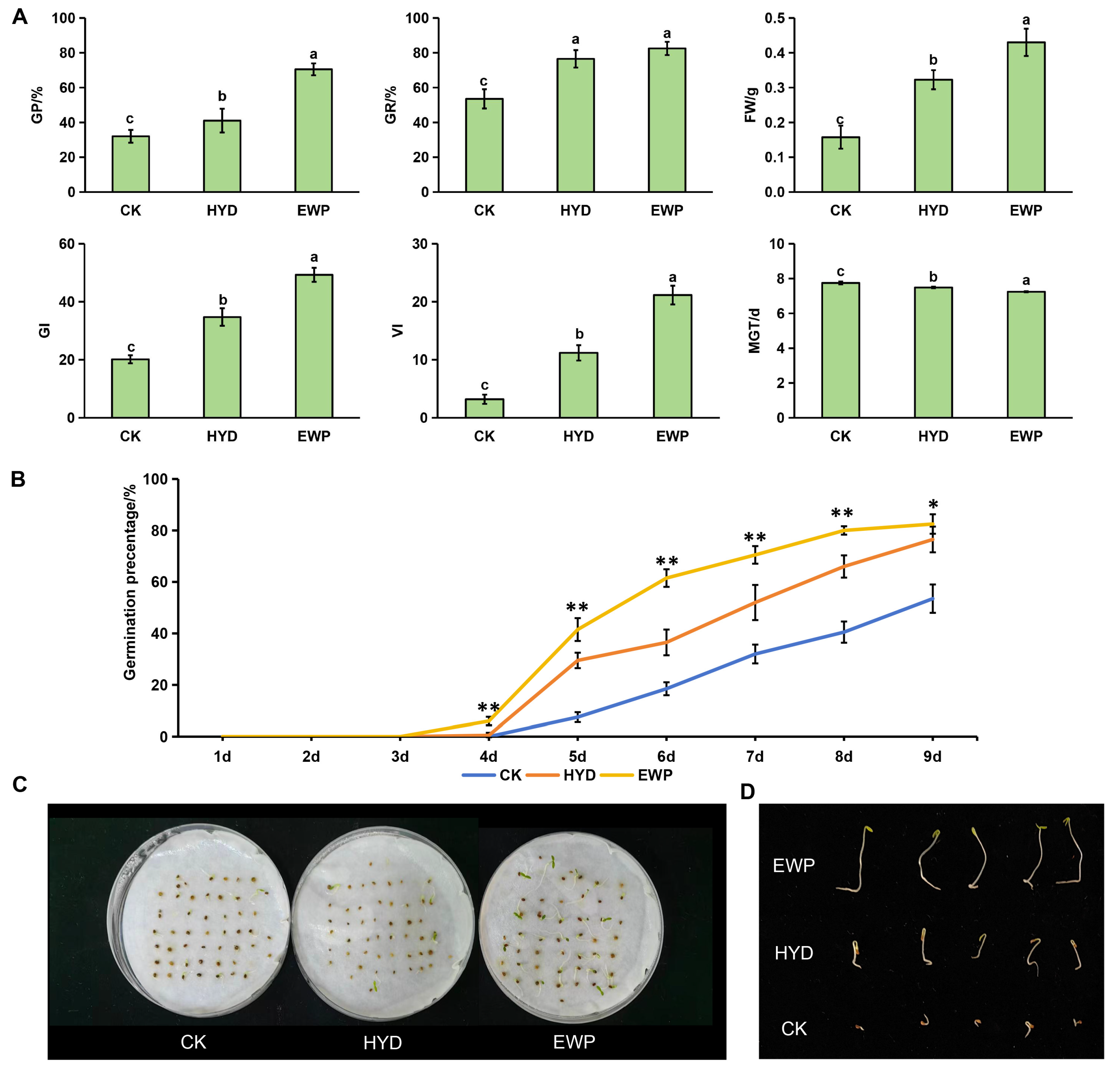
Both HYD and EWP treatments accelerated the germination of celery seeds. As shown in Figure 1A, the GP, GR, FW, GI, and VI of EWP and HYD treatments were significantly higher than those of CK, and the above indicators of EWP were also significantly higher than those of HYD. EWP treatment increased GR and GP by 38.5 and 29 percentage points, while the seed GI and VI of the EWP treatment reached 2.4 times and 6.6 times that of CK, respectively. Meanwhile, EWP significantly shortened the average germination time. As shown in Figure 1B, the germination initiation of the EWP treatment was earlier than that of CK by one day, and the germination percentage of the EWP treatment remained significantly higher than that of CK. On the ninth day after sowing, the elongation of embryonic roots and unfolding of cotyledons could be observed in the EWP treatment, but only the elongation of seed coat was observed in CK treatment (Figure 1C,D).

3.2. Data Statistics of RNA-Seq

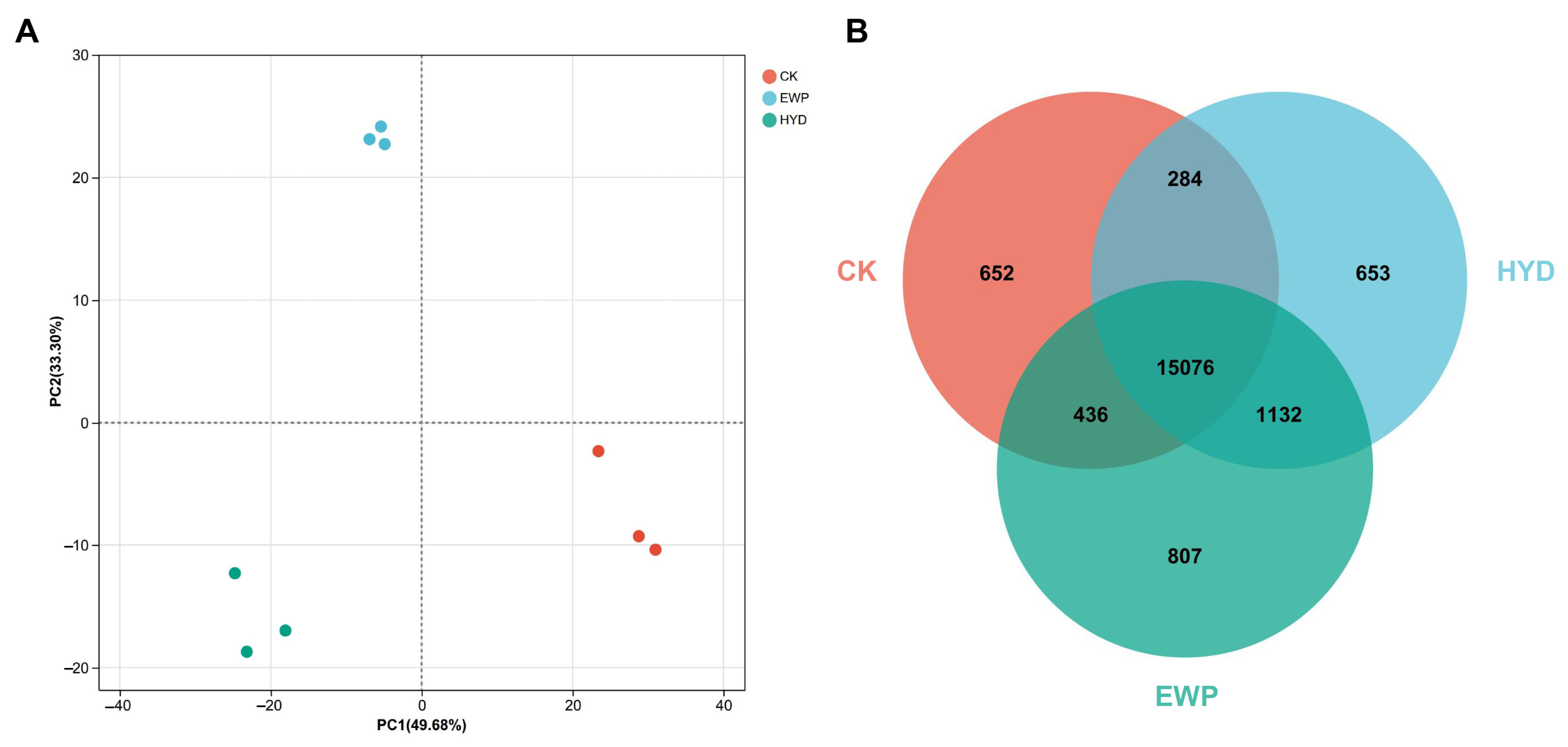
A transcriptome analysis of nine samples was completed based on the promoting effect of the EWP treatment on celery seed germination, which obtained 43.2~67.9 million total reads from each sample. Then, the clean reads of each sample were mapped to the celery genomic database, and the alignment rate ranged from 84.12% to 91.16% (Table S2). Principal Component Analysis (PCA) revealed a clear separation in the global transcriptome profiles among the CK, HYD, and EWP treatments (Figure 2A). The first two principal components, PC1 and PC2, accounted for 49.68% and 33.30% of the total transcriptional variance, respectively, with a cumulative contribution rate of 83.0%. This indicates that these two components sufficiently captured the major sources of variation within the dataset. The distinct clustering of biological replicates within each treatment group (CK, HYD and EWP) demonstrated high reproducibility of the sequencing data. Notably, the EWP-treated samples were clearly separated from both the CK and HYD samples along PC1, which represented the largest source of variation (49.68%). This pronounced separation along the primary axis of variation underscores that EWP induced a fundamentally distinct transcriptional response compared to both the untreated control and HYD. Furthermore, the HYD group was also separated from the CK group, primarily along PC2, suggesting that hydration alone induces specific changes, but to a lesser extent than EWP. Through TPM quantitative analysis, 16,448, 17,451, and 17,145 expressed genes were identified in CK, EWP, and HYD treatments, respectively. Among them, 652, 807, and 653 genes were specifically expressed in CK, EWP, and HYD treatments, while 15,079 genes were co expressed in all treatments (Figure 2B).
As shown in Table 1, DEGs between CK and HEHP, with the screening threshold of |log2FC| > 1 and p-adjust values ≤ 0.05, the maximum number of DEGs appeared between EWP and CK (6855 DEGs including 3201 upregulated and 3654 downregulated), while the minimum number of DEGs appeared between HYD and CK (5321 DEGs, including 2321 upregulated and 3000 downregulated). Surprisingly, the number of DEGs between the EWP and HYD treatments also reached 6664, including 3479 upregulated and 3185 downregulated. The above results suggest that there may be differences in the mechanisms by which the HYD and EWP treatments promote celery seed germination. In addition, except for the EWP vs. HYD group, in both the DEGs in EWP vs. CK and HYD vs. CK groups, there were more downregulated DEGs than upregulated DEGs, indicating that the EWP and HYD treatments mainly regulate seed gene expression through downregulation in celery.

3.3. GO and KEGG Enrichment Analysis of DEGs

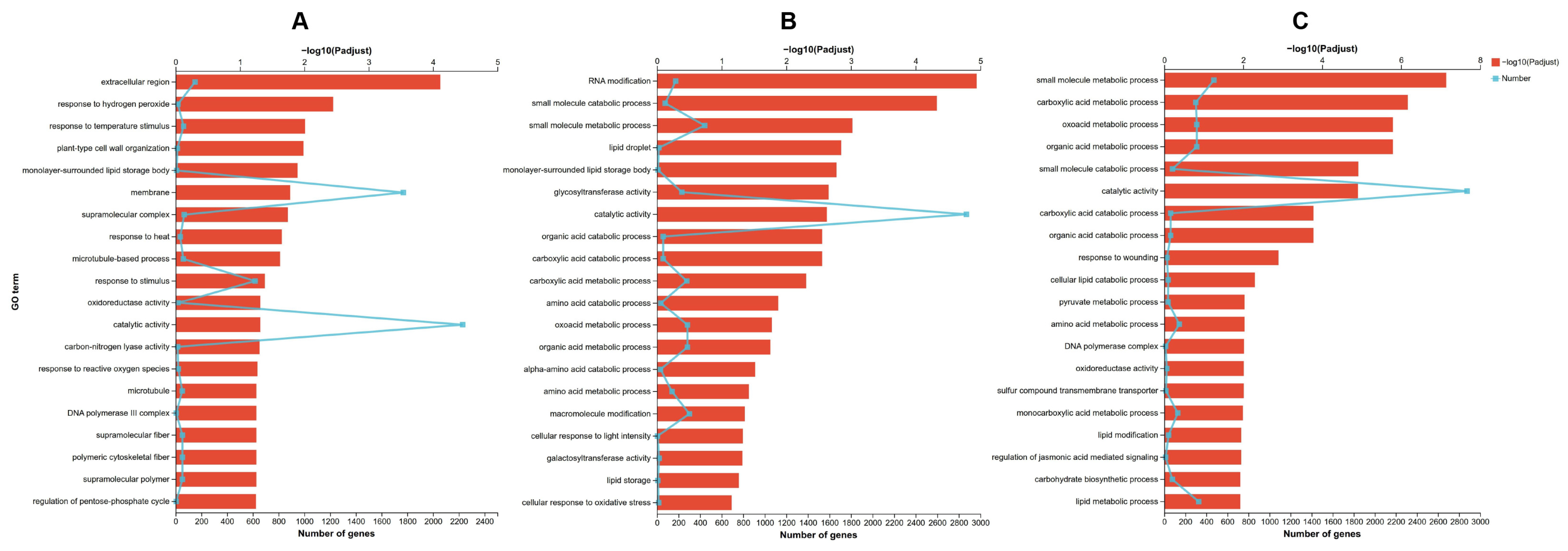
In order to reveal significant biological functions associated with DEGs, GO enrichment analysis was performed on DEGs among CK, HYD, and EWP treatments (Table S3). The top 20 GO terms enriched in EWP vs. CK, HYD vs. CK, EWP and HYD are shown in Figure 3. The GO terms named “extracellular region”, “response to hydrogen peroxide”, “response to temperature stimulus”, “plant-type cell wall organization” and “monolayer-surrounded lipid storage body” were the top enriched in the EWP vs. CK group (Figure 3A), while “RNA modification”, “small molecule catabolic process”, “small molecule metabolic process”, “lipid droplet” and “monolayer-surrounded lipid storage body” were the top enriched in the HYD vs. CK group (Figure 3B), indicating that the lipid metabolism may be critical in triggering the activation of germination metabolism during priming treatments. In the EWP vs. HYD group, “small molecule metabolic process”, “carboxylic acid metabolic process”, “oxoacid metabolic process”, “organic acid metabolic process” and “small molecule catabolic process” were the top enriched GO terms (Figure 3C). It is worth noting that the “catalytic activity” term involved the most DEGs in all three groups.
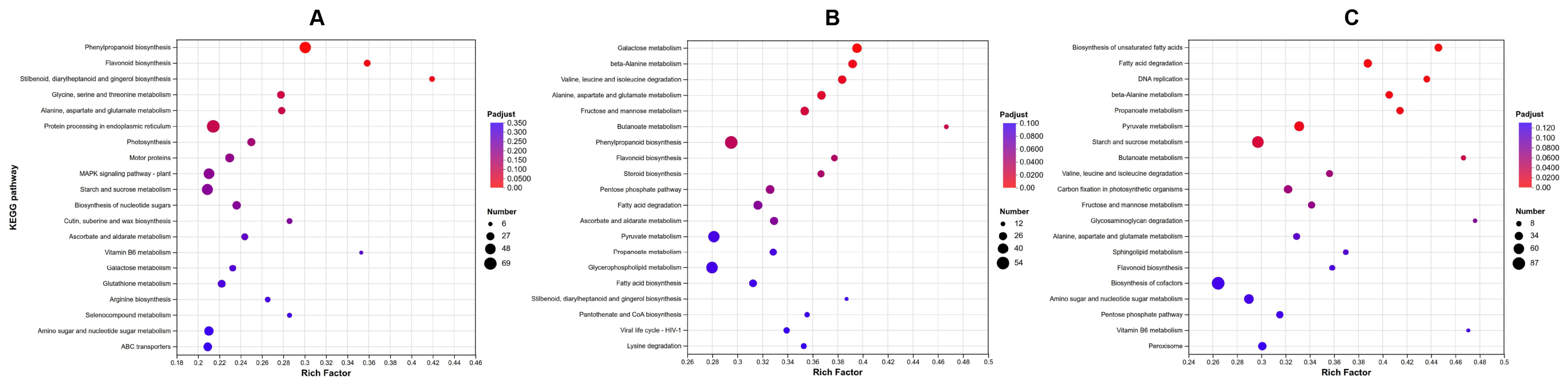
KEGG enrichment analysis was also performed on DEGs to understand the main pathways involved in the metabolic response of seed germination (Table S4). In the EWP vs. CK group, the top five enriched KEGG pathways were “Phenylpropanoid biosynthesis”, “Flavonoid biosynthesis”, “Stilbenoid, diarylheptanoid and gingerol biosynthesis”, “Glycine, serine and threonine metabolism” and “Alanine, aspartate and glutamate metabolism” (Figure 4A), which suggests that one of the core functions of the EWP treatment is to regulate the phenylpropane metabolism in celery seeds. In the HYD vs. CK group, the top five enriched KEGG pathways were “Galactose metabolism”, “beta-Alanine metabolism”, “Valine, leucine and isoleucine degradation”, “Alanine, aspartate and glutamate metabolism” and “Fructose and mannose metabolism” (Figure 4B), indicating that the HYD treatment mainly activates the basic energy metabolism (such as the sugar metabolism and amino acid metabolism), providing the energy and building materials for germination. In the EWP vs. HYD group, the top five enriched KEGG pathways were “Biosynthesis of unsaturated fatty acids”, “Fatty acid degradation”, “DNA replication”, “beta-Alanine metabolism” and “Propanoate metabolism” (Figure 4C), indicating that the EWP treatment is likely to regulate deeper physiological processes (such as the fatty acid metabolism and secondary metabolism) on the basis of HYD.

3.4. Key DEGs Involved in Phenylpropane Metabolism and Downstream Pathways

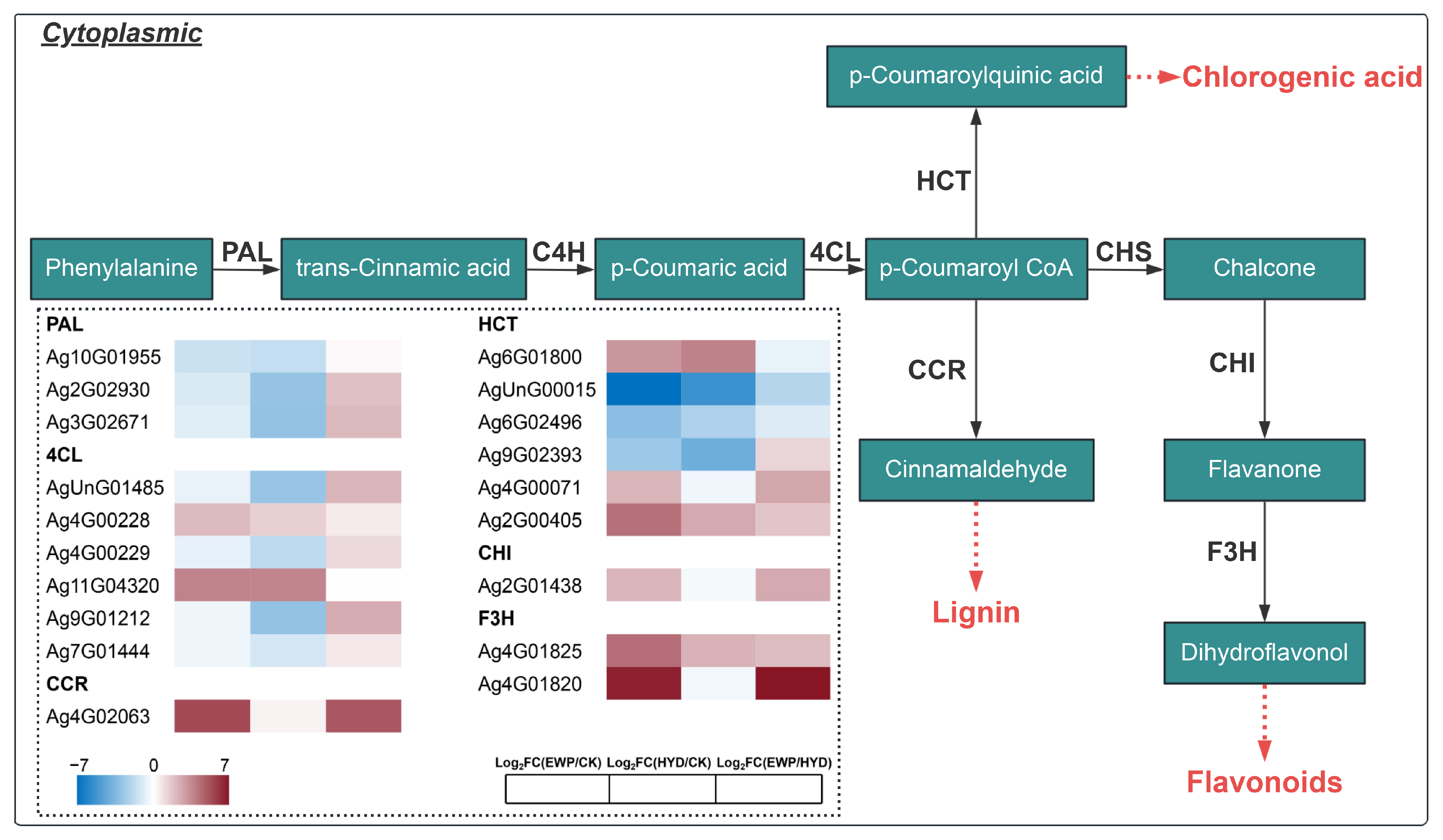
On the basis of enrichment analysis, in order to specifically understand the regulatory effects of the EWP treatment on phenylpropane metabolism and related pathways, DEGs encoding key enzymes in phenylpropane metabolism and downstream pathways were screened. As shown in Figure 5, PAL is a key enzyme in the first step of the phenylpropane metabolism; the three PALs were all downregulated by EWP. 4CL catalyzes the generation of activated p-Cinnamoyl-CoA. Among the six 4CLs, four 4CLs were downregulated by EWP. The downstream pathways of the phenylpropane metabolism mainly involve the biosynthesis of flavonoids, lignin, and chlorogenic acid. Among the DEGs, coding genes for CCR (catalyzing the generation of lignin monomer), HCT (key enzyme for chlorogenic acid synthesis), CHI (catalyzing isomerization reaction from chalcone to flavanone), and F3H (catalyzing the generation of dihydroflavonol) were screened. For the downstream branch of the phenylpropane metabolism, it was found that all DEGs encoding CCR, CHI, and F3H were upregulated by EWP, while three HCTs were upregulated by EWP among the six HCTs. The above results indicate that the EWP treatment moderately constrains the upstream pathway of the phenylpropane metabolism but may selectively activate downstream pathways, such as the biosynthesis of flavonoids and lignin.

3.5. Analysis of Expression Patterns of Key DEGs in Phenylpropane Metabolism

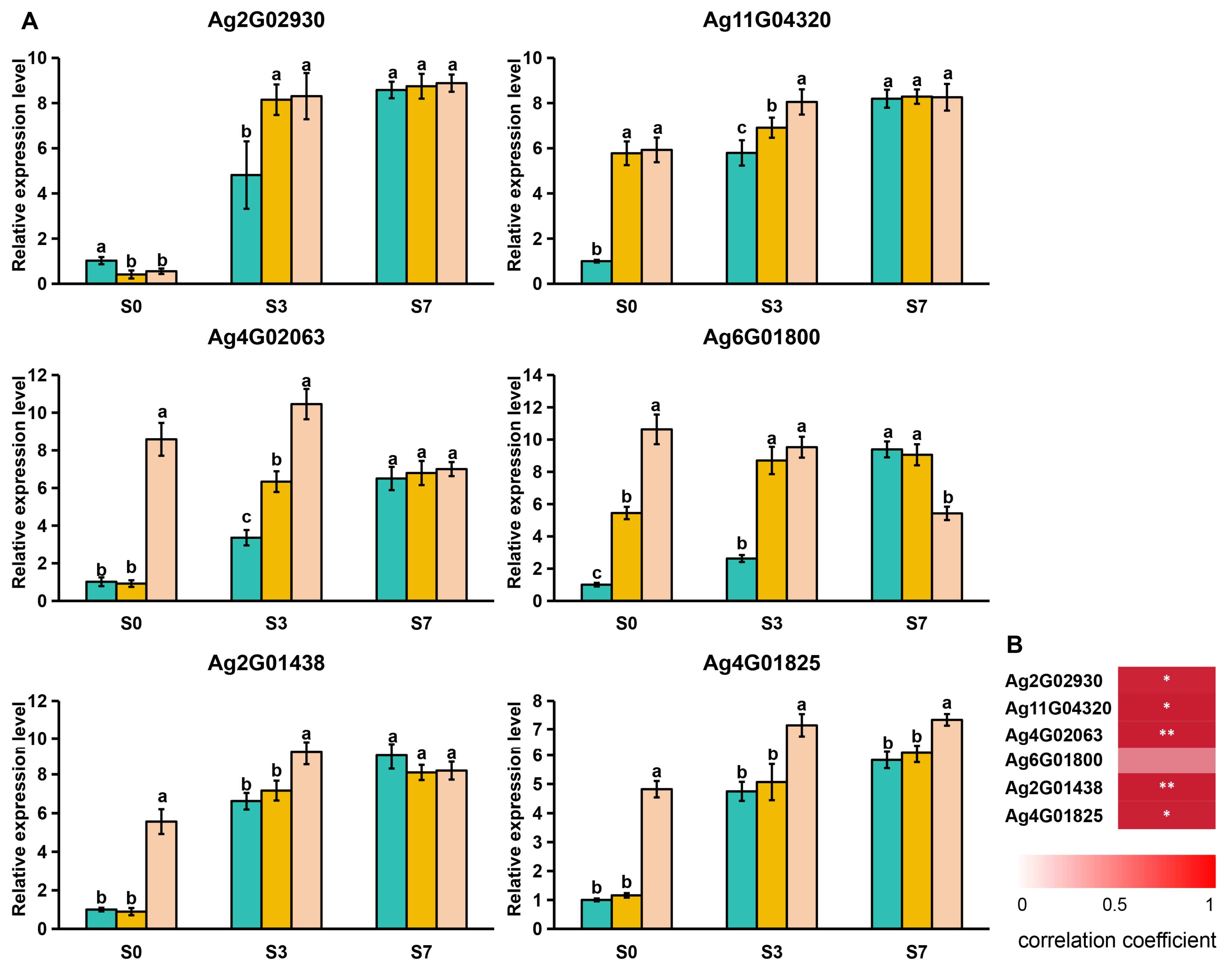
Six DEGs related to phenylpropane metabolism were selected for qRT-PCR analysis to investigate their expression patterns at different imbibition times and validate the accuracy of transcriptome data. The DEGs used for analysis include genes encoding PAL, 4CL, CCR, HCT, CHI, and F3H. As shown in Figure 6A, except for one DEG (Ag2G02930 encoding PAL), all other DEGs were significantly upregulated by the EWP treatment compared to CK, while HYD only upregulated two DEGs (Ag4G02063 encoding 4CL and Ag6G01800 encoding HCT). One DEG (Ag2G02930 encoding PAL) was downregulated by both treatments. At S3, all the selected DEGs were upregulated by the EWP treatment, and two DEGs were not upregulated by the HYD treatment (Ag2G01438 encoding CHI and Ag4G01825 encoding F3H). At S7, the EWP treatment upregulated one DEG (Ag4G01825 encoding F3H) and downregulated one DEG (Ag6G01800 encoding HCT), respectively. There was no significant difference in the expression of the other four DEGs among the treatments. In addition, the expression pattern of selected DEGs at S0 obtained from qRT-PCR was positively correlated with the transcriptome data, reflecting that the transcriptome data was reliable (Figure 6B).

3.6. Analysis of Key Enzyme Activities in Phenylpropane Metabolism and Antioxidant Enzyme System

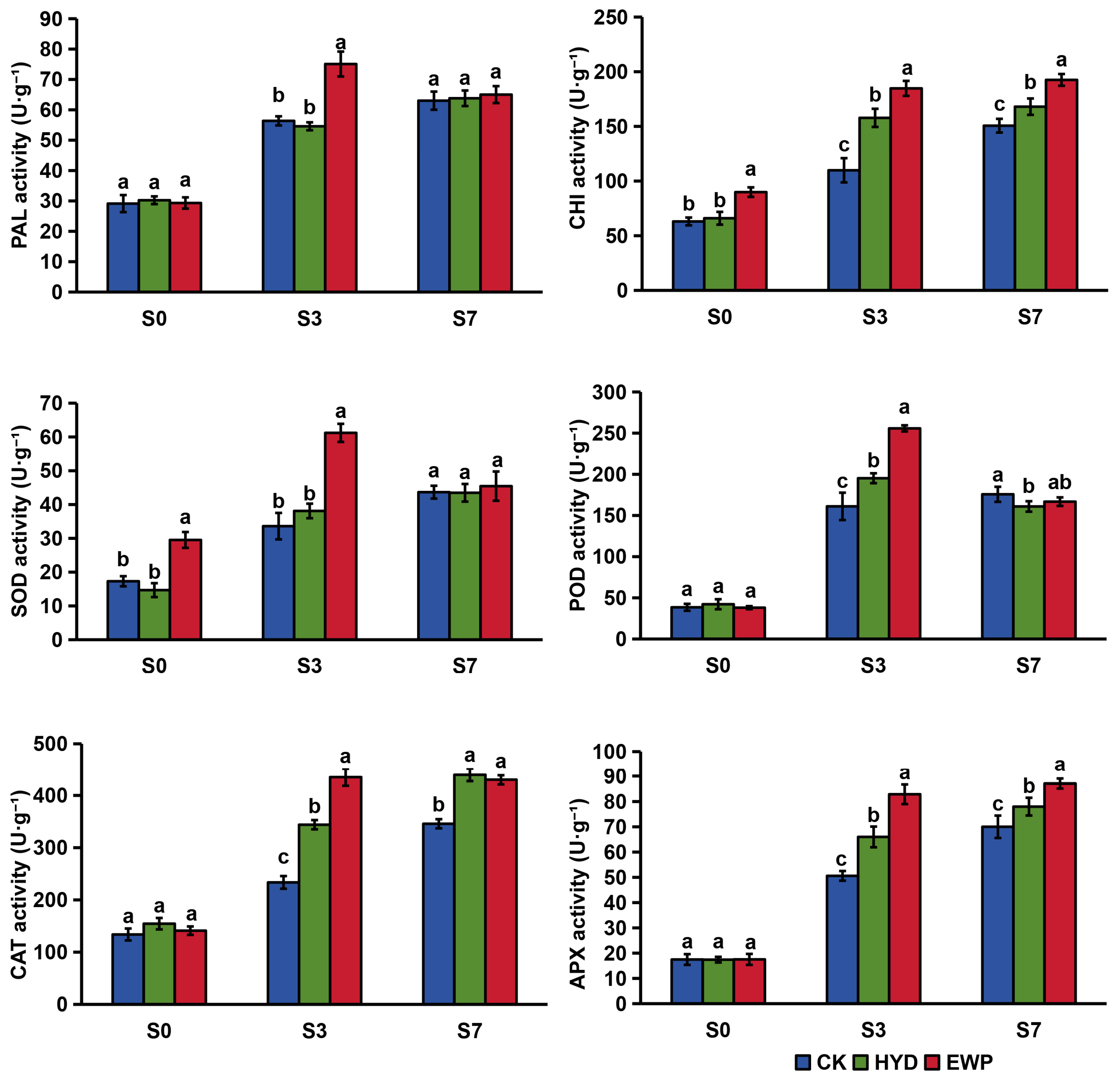
The activities of the key enzymes involved in phenylpropane metabolism of celery seeds under different treatments were determined at three selected time points, as shown in Figure 7. The EWP treatment increased the PAL activity only at S3, while it increased the CHI activity at all three sampling times compared with HYD and CK (S0, S3 and S7). The PAL activity treated with EWP showed a trend of first increasing and then decreasing with the prolongation of imbibition time. The PAL activity was not affected by the HYD treatment significantly, while it was increased by HYD at S3 and S7. Moreover, due to the relationship between phenylpropane metabolites and antioxidant metabolism, the main antioxidant enzyme activities were also determined. At S0, the SOD activity was increased by the EWP treatment, while the activities of POD, CAT, and APX were not affected by either of the priming treatments significantly. At S3, the EWP treatment increased the activity of all four antioxidant enzymes compared with HYD and CK, and the HYD treatment increased the activities of POD, CAT, and APX. At S7, only the activities of CAT and APX were increased by the two priming treatments.

3.7. Analysis of Total Flavonoids and Phenols Content and Antioxidant Capacity

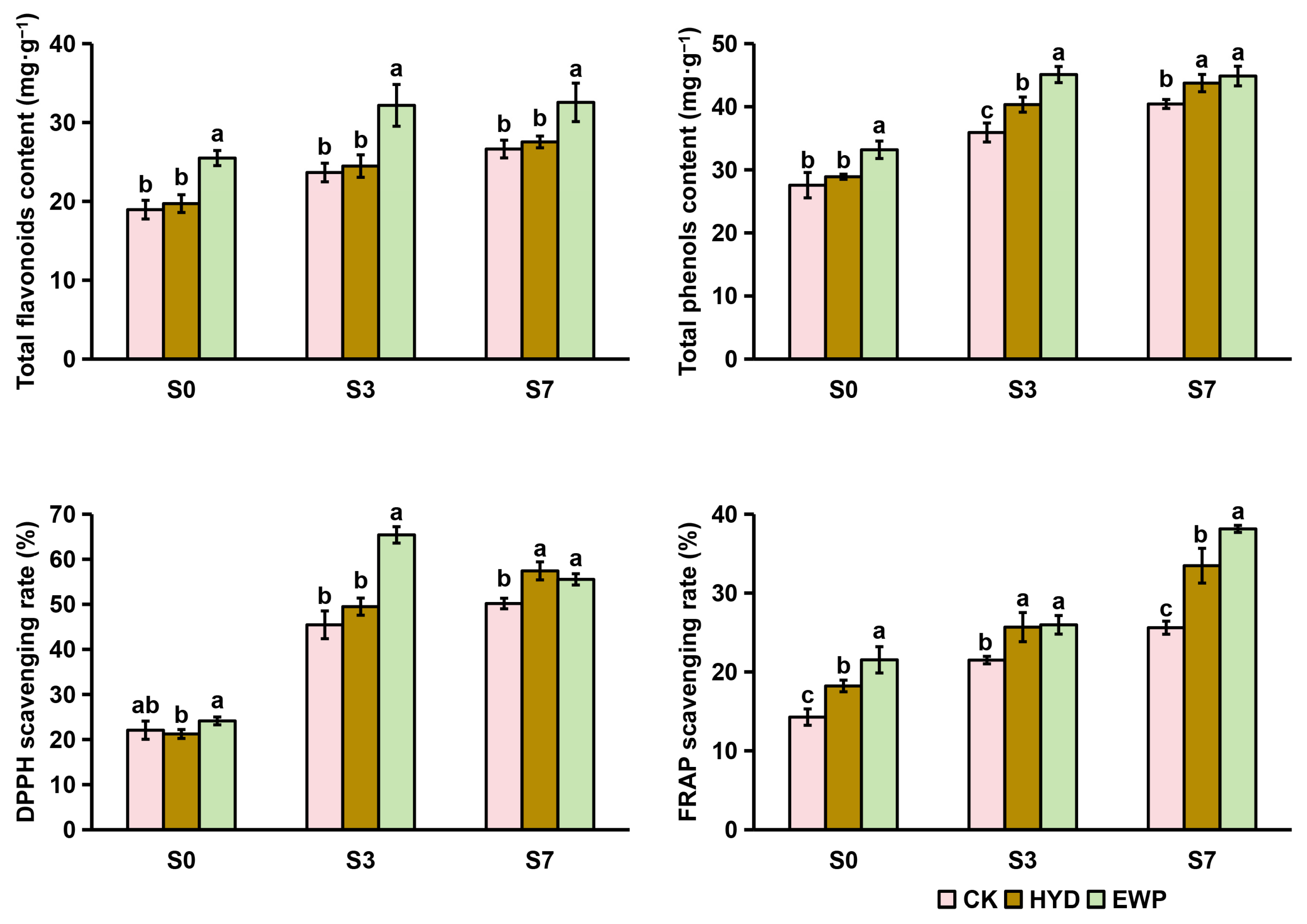
The content of total flavonoids and phenols can reflect the intensity of phenylpropane metabolism and is closely related to antioxidant capacity, so the total flavonoids and phenols content and antioxidant capacity indexes (DPPH/FRAP free radical scavenging rate) were also determined to verify the promotion of the phenylpropane metabolism by EWP and the association with antioxidant capacity. As shown in Figure 8, both the total flavonoids and phenols content were increased by the EWP treatment at all three sampling times, but the HYD treatment only increased the total phenols content at S3 and S7. As the imbibition time prolongs, the total flavonoid and total phenolic content shows an upward trend. For the DPPH/FRAP free radical scavenging rate, the effects of EWP and HYD treatments were similar to the effects on total flavonoids and phenolic content. The DPPH scavenging rate was increased by the EWP treatment at S3 and S7, while the FRAP scavenging rate was increased by the EWP treatment at all three sampling times. The HYD treatment also increased the FRAP scavenging rate at all three sampling times.

4. Discussion

4.1. EWP Effectively Promotes Celery Seed Germination

Acidic electrolyzed water is a new type of disinfectant that is colorless, odorless, and harmless to the human body. At present, it is mostly used for food processing to extend shelf life [36,37], and there is relatively little research on the seed pre-sowing treatment. The present study clearly indicates that both EWP and HYD could significantly improve the germination performance of celery seeds compared to the control group, and the effect of EWP is more excellent. The EWP treatment resulted in a significant increase in GR, GP, GI, and VI, while the MGT was significantly shortened. The phenotypic progression observed in seeds treated with EWP, including earlier embryonic root breakthrough and cotyledon unfolding, highlights the effectiveness of EWP as a seed priming technique. These findings are consistent with previous research reports. The GI and VI of watermelon seeds treated with acidic electrolyzed water increased by more than 40% [14]. The promoting effect of EWP is usually attributed to the unique physicochemical properties, which may help loosen the seed coat structure, enhance water absorption (imbibition), and act as a mild oxidative stress to activate the defense and metabolic system [38]. Compared with the traditional HYD treatment, this initial stress signal may trigger stronger preparatory responses, leading to the faster and more uniform germination of celery.

4.2. Transcriptomic Reprogramming: Distinct Regulatory Landscapes of EWP Versus HYD

RNA-seq analysis revealed two profound transcriptome changes induced by the two priming treatments. Although HYD caused 5321 DEGs compared to CK, the comparison between EWP and CK identified significantly more DEGs (6855), indicating that EWP triggered broader transcriptional reprogramming. More importantly, the direct comparison between EWP and HYD revealed 6664 DEGs, providing convincing evidence that EWP and HYD treatments operate through distinct molecular mechanisms, far beyond the simple effect of hydration. GO enrichment analysis indicated that HYD primarily influenced terms related to the basic metabolism such as “small molecule metabolic process” and “RNA modification”. In contrast, EWP-specific DEGs were significantly enriched in terms like “response to hydrogen peroxide” and “plant-type cell wall organization”, indicating an enhanced response to oxidative stress and cellular restructuring. KEGG pathway analysis further solidified this distinction: HYD predominantly activated the pathways associated with the fundamental energy metabolism (“Galactose metabolism”, “Valine, leucine and isoleucine degradation”). Conversely, EWP specifically enriched the pathways related to specialized metabolism, most notably “Phenylpropanoid biosynthesis” and “Flavonoid biosynthesis”, which indicates that EWP effectively shifts the metabolic state of celery seed towards the production of secondary metabolites critical for stress protection and germination vigor. Previous studies have shown that acidic electrolyzed water treatment has a significant promoting effect on the secondary metabolism from seed germination to seedling establishment [39]. Our previous studies on the transcriptome of carrot (belonging to the Apiaceae family) seeds also showed a close relationship between secondary metabolic pathways and their rapid germination performance [29].

4.3. EWP Selectively Activates Downstream Branches of Phenylpropanoid Metabolism

A core finding of this study is that EWP treatment specifically activates phenylpropane metabolism. The transcriptome data revealed a subtle regulatory pattern: while genes encoding upstream enzymes such as PAL and 4CL were primarily downregulated, genes responsible for downstream branches were significantly up-regulated. Specifically, genes encoding CCR, CHI, and F3H were all induced by EWP. This pattern indicates that EWP is not simply enhancing the entire pathway but carefully planning the strategic redistribution of metabolic flow. The promotion of the phenylpropane metabolism by acidic electrolytic water treatment has been confirmed by previous studies [37,40,41], but there are few reports on precise regulation of the phenylpropane metabolism in the process of germination. This observed suppression of upstream genes concurrent with the activation of downstream branches and the accumulation of end products can be explained by well-established regulatory mechanisms in a plant-specialized metabolism. First, feedback inhibition represents a plausible mechanism. The accumulation of certain phenylpropanoid intermediates or end products (e.g., flavonoids) may act as a signal to downregulate the expression of early pathway genes like PAL and 4CL, thus maintaining metabolic homeostasis and preventing over-accumulation. Second, the coordinated upregulation of downstream genes might enhance the formation of efficient metabolic units that direct the limited pool of precursors toward the biosynthesis of specific, functionally crucial compounds like lignin monomers and flavonoids. Furthermore, the constraint on upstream steps may be a mechanism to save energy and carbon resources, while the synergistic upregulation of downstream genes guides phenylpropane precursors to synthesize specific protective compounds [42,43]. This transcriptional profile has been strongly confirmed by physiological data. EWP treatment significantly increased CHI enzyme activity at all sampling time points (S0, S3, S7), and enhanced PAL activity at the critical S3. In addition, compared with CK and HYD, seeds treated with EWP accumulated significantly higher levels of total phenols and flavonoids, which highlights a complex regulatory mechanism, whereby EWP activates seeds by enhancing the potential for synthesizing antioxidant flavonoids and potentially reinforcing compounds such as lignin, consistent with research findings related to phenylpropane metabolism and improved stress tolerance in other species [44,45,46]. Therefore, the observed suppression of upstream genes coupled with the strong induction of downstream genes suggests a finely tuned, selective regulation rather than a broad-brush activation of the entire phenylpropanoid pathway. This metabolic channeling, directing precursors towards specific defensive compounds (flavonoids, lignin), represents a key novelty of the EWP effect.

4.4. Synergistic Action of Phenylpropanoid Metabolism and Antioxidant System in Germination Promotion

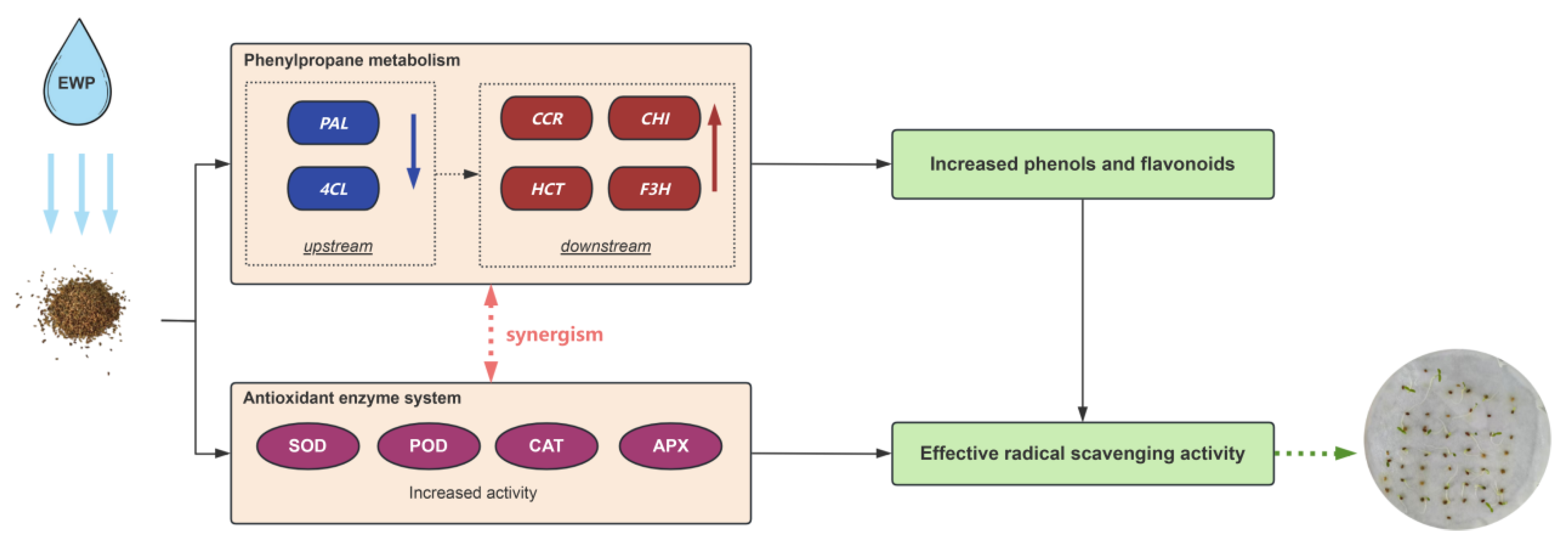
The enhanced germination vitality observed in seeds treated with EWP is likely mediated by the synergistic interaction between induced phenylpropane metabolism and antioxidant enzyme system. Seed germination is an oxidative process that generates ROS, which act as signaling molecules at low levels but cause cellular damage at high concentrations [47]. Our results indicate that EWP treatment not only increased the accumulation of non-enzymatic antioxidants (flavonoids and phenols), but also significantly enhanced the activity of key antioxidant enzymes (SOD, POD, CAT, APX), especially in the S3 stage, which coincides with the peak period of germination metabolic activity. Phenolic compounds synthesized through the phenylpropane pathway are effective scavengers of ROS [43], while antioxidant enzymes constitute the first line of defense against oxidative stress [48,49]. The significant increase in DPPH and FRAP free radical scavenging ability in seeds treated with EWP provides direct functional evidence for the enhanced antioxidant system. The mild oxidative stress applied by EWP during the initiation process pre activates this integrated defense network. The synergistic effect of enzymatic and non-enzymatic systems will more effectively manage ROS homeostasis during subsequent germination stages, preventing oxidative damage to cellular structures such as membranes and DNA, while allowing beneficial ROS signaling to continue. This creates the optimal internal environment for the rapid emergence of embryonic roots and the growth of seedlings [50]. In contrast, the HYD treatment induced weaker reactions in both the phenylpropane metabolism and antioxidant enzyme system, which explains why the promotion of germination is milder compared to EWP. The concurrent enhancement of antioxidant enzyme activities and the accumulation of non-enzymatic antioxidants demonstrates a coordinated induction of a dual-layer defense system. This synergistic crosstalk between the enzymatic and non-enzymatic antioxidant systems, primed by the selective activation of the phenylpropanoid metabolism, is a central finding of this study. It provides a mechanistic explanation for the superior performance of EWP over HYD, moving beyond the concept of simple hydration. Therefore, EWP promotes celery seed germination by synergistically regulating the phenylpropane pathway and antioxidant enzyme system, ensuring effective radical scavenging activities and cell protection (Figure 9).

5. Conclusions

The present study comprehensively demonstrates that EWP is a highly effective strategy for enhancing seed germination in celery, outperforming traditional HYD. The superiority of EWP is not merely a consequence of enhanced hydration but is rooted in the ability to induce profound transcriptional reprogramming and activate specific physiological defense systems within the seed. The integrated transcriptomic and physiological analyses reveal that EWP treatment functions as a mild oxidative stress signal that selectively modulates the phenylpropanoid metabolism pathway. Notably, EWP fine-tunes this pathway by moderately constraining upstream genes (PAL and 4CL), while activating downstream branches, leading to the accelerated biosynthesis of flavonoids and potentially lignin. This targeted metabolic shift is coupled with a significant enhancement of the antioxidant enzyme system (SOD, POD, CAT, APX). The synergistic action between the accumulated non-enzymatic antioxidants (flavonoids and phenols) and the enzymatic defense system collectively establishes a robust mechanism for maintaining ROS homeostasis. This ensures that ROS levels remain within beneficial levels during the critical stage of germination, thereby minimizing oxidative damage, promoting rapid elongation of embryonic roots, and establishing seedlings. Therefore, it is believed that EWP activation promotes celery seed germination by coordinating the phenylpropane pathway and antioxidant enzyme system, ensuring effective radical scavenging activities and cell protection. These findings provide in-depth insights into the molecular basis of EWP-mediated seed enhancement and highlight its enormous potential as a novel environmentally friendly priming technology in celery and other horticultural crops. Future research should focus on verifying the functions of key genes such as CCR and F3H and exploring the application of EWP technology under field conditions.

Supplementary Materials

The following supporting information can be downloaded at https://www.mdpi.com/article/10.3390/horticulturae11121543/s1, Table S1: Selected DEGs and primers used for qRT-PCR; Table S2: Statistics of sequence alignment results; Table S3: (A) Enriched GO terms in EWP vs. CK; (B) enriched GO terms in HYD vs. CK; (C) enriched GO terms in EWP vs. HYD; Table S4: (A) Enriched KEGG terms in EWP vs. CK; (B) enriched KEGG terms in HYD vs. CK; (C) enriched KEGG terms in EWP vs. HYD.

Author Contributions

Conceptualization, D.H. and S.Z.; methodology, Y.Z., Y.S., and S.Z.; validation, Y.S. and H.L.; formal analysis, Y.S.; data curation, H.L.; writing—original draft preparation, Y.Z.; writing—review and editing, Y.L. and S.Z.; project administration, Y.L. and S.Z.; funding acquisition, Y.L., D.H., and S.Z. All authors have read and agreed to the published version of the manuscript.

Funding

This research was funded by Key R&D Program Major Special Project of Ningxia Hui Autonomous Region (2025BBF01004), National Natural Science Foundation of China (32402557), Shandong Provincial Natural Science Foundation (ZR2023QC213), and College Student Innovation Training Program Project of Shandong Province (S202510433032).

Data Availability Statement

The original contributions presented in this study are included in the article/Supplementary Materials. Further inquiries can be directed to the corresponding author.

Conflicts of Interest

The authors declare no conflicts of interest.

References

  1. Singh, S.; Singh, R.; Priyadarsini, S.; Ola, A.L. Genomics empowering conservation action and improvement of celery in the face of climate change. Planta 2024, 259, 42. [Google Scholar] [CrossRef]
  2. Zhang, Y.Q.; Wang, T.T.; Wang, X.X.; Dong, R.X.; Wang, D.X.; Zhao, G.S. Apium Graveolens Linn. (celery) seeds: A comprehensive review of phytochemistry profile, pharmacological effects and future trends. Food Rev. Int. 2025, 1–28. [Google Scholar] [CrossRef]
  3. Gupta, S.; Hrdlicka, J.; Kulkarni, M.; Dolezalova, I.; Pencik, A.; Van Staden, J.; Novák, O.; Dolezal, K. Karrikinolide1 (KAR1), a bioactive compound from smoke, improves the germination of morphologically dormant Apium graveolens L. seeds by reducing indole-3-acetic acid (IAA) levels. Plants 2024, 13, 2096. [Google Scholar] [CrossRef]
  4. Walker, M.; Nakabayashi, K.; Gawthrop, F.; Leubner-Metzger, G. The initiation of embryo growth in imbibed celery mericarps marks a key mechanism by which temperature signals are integrated to regulate germination timing. J. Exp. Bot. 2025, eraf326. [Google Scholar] [CrossRef]
  5. Parera, C.A.; Qiao, P.; Cantliffe, D.J. Enhanced celery germination at stress temperature via solid matrix priming. Hortscience 1993, 28, 20–22. [Google Scholar] [CrossRef]
  6. Jatana, B.S.; Grover, S.; Ram, H.; Baath, G.S. Seed priming: Molecular and physiological mechanisms underlying biotic and abiotic stress tolerance. Agronomy 2024, 14, 2901. [Google Scholar] [CrossRef]
  7. Pagano, A.; Macovei, A.; Balestrazzi, A. Molecular dynamics of seed priming at the crossroads between basic and applied research. Plant Cell Rep. 2023, 42, 657–688. [Google Scholar] [CrossRef]
  8. Afzal, I. Seed priming: What’s next? Seed Sci. Technol. 2023, 51, 379–405. [Google Scholar] [CrossRef]
  9. Rao, H.; Xue, F.; Ma, S.H.; Zhao, M.; Zhao, D.D.; Hao, J.X. Contribution of slightly acidic electrolytic water (SAEW) to food safety, nutrients enrichment, and allergenicity reduction of peanut sprouts. J. Food Process. Preserv. 2022, 46, 3. [Google Scholar] [CrossRef]
  10. Wang, H.X.; Zhang, Y.Q.; Jiang, H.T.; Cao, J.K.; Jiang, W.B. A comprehensive review of effects of electrolyzed water and plasma-activated water on growth, chemical compositions, microbiological safety and postharvest quality of sprouts. Trends Food Sci. Technol. 2022, 129, 449–462. [Google Scholar] [CrossRef]
  11. Yan, P.; Aloo, S.O.; Shan, L.; Tyagi, A.; Oh, D.H. Effects of slightly acidic electrolyzed water on safety, antioxidant activity, and metabolite profile of buckwheat sprouts (Fagopyrum spp.). J. Cereal Sci. 2024, 118, 103969. [Google Scholar] [CrossRef]
  12. Hao, J.X.; Wu, T.J.; Li, H.Y.; Wang, W.; Liu, H.J. Dual effects of slightly acidic electrolyzed water (SAEW) treatment on the accumulation of γ-aminobutyric acid (GABA) and rutin in germinated buckwheat. Food Chem. 2016, 201, 87–93. [Google Scholar] [CrossRef]
  13. Hou, T.G.; Cui, F.M.; Cui, H.G.; Liu, C.H.; Xin, M.J.; Wu, L.Y. Effects of pH and available chlorine concentration of slightly acidic electrolyzed water on rice seed germination and GABA accumulation. Agriculture 2025, 15, 1327. [Google Scholar] [CrossRef]
  14. Wu, X.; Wu, C.N.; Bian, Z.H.; Ye, Z.Y.; Meng, L.L.; Xia, L.R.; Bao, E.C.; Cao, K. Abscisic acid and reactive oxygen species were involved in slightly acidic electrolyzed water-promoted seed germination in watermelon. Sci. Hortic. 2022, 291, 110581. [Google Scholar] [CrossRef]
  15. Inpitak, P.; Udompijitkul, P. Effect of household sanitizing agents and electrolyzed water on Salmonella reduction and germination of sunflower and roselle seeds. Int. J. Food Microbiol. 2022, 370, 109668. [Google Scholar] [CrossRef]
  16. Fu, Y.F.; Ma, L.; Li, J.C.; Hou, D.P.; Zeng, B.; Zhang, L.K.; Liu, C.Q.; Bi, Q.Y.; Tan, J.S.; Yu, X.Q.; et al. Factors influencing seed dormancy and germination and advances in seed priming technology. Plants 2024, 13, 1319. [Google Scholar] [CrossRef]
  17. Yan, N.; Cao, J.F.; Wang, J.; Zou, X.X.; Yu, X.N.; Zhang, X.J.; Si, T. Seed priming with graphene oxide improves salinity tolerance and increases productivity of peanut through modulating multiple physiological processes. J. Nanobiotechnol. 2024, 22, 565. [Google Scholar] [CrossRef]
  18. Ellouzi, H.; Debez, I.B.; Amraoui, S.; Rabhi, M.; Hanana, M.; Alyami, N.M.; Debez, A.; Abdelly, C.; Zorrig, W. Effect of seed priming with auxin on ROS detoxification and carbohydrate metabolism and their relationship with germination and early seedling establishment in salt stressed maize. BMC Plant Biol. 2024, 24, 704. [Google Scholar] [CrossRef]
  19. Zhao, S.; Zou, H.; Jia, Y.; Pan, X.; Huang, D. Carrot (Daucus carota L.) seed germination was promoted by hydro-electro hybrid priming through regulating the accumulation of proteins involved in carbohydrate and protein metabolism. Front. Plant Sci. 2022, 13, 824439. [Google Scholar] [CrossRef]
  20. Zhang, H.; Zhang, X.L.; Gao, G.Q.; Ali, I.; Wu, X.Y.; Tang, M.Y.; Chen, L.; Jiang, L.G.; Liang, T.F. Effects of various seed priming on morphological, physiological, and biochemical traits of rice under chilling stress. Front. Plant Sci. 2023, 14, 1146285. [Google Scholar] [CrossRef] [PubMed]
  21. Luo, X.F.; Xu, X.J.; Xu, J.H.; Zhao, X.T.; Zhang, R.R.; Shi, Y.P.; Xia, M.Y.; Xian, B.S.; Zhou, W.G.; Zheng, C.; et al. Melatonin priming promotes crop seed germination and seedling establishment under flooding stress by mediating aba, ga, and ros cascades. J. Pineal Res. 2024, 76, e13004. [Google Scholar] [CrossRef]
  22. Jiang, X.G.; Li, D.R.; Wang, H.; Yang, Y.Y.; Yu, K.D.; You, J.W.; Liu, H.H.; Guo, X.L.; He, Y.S.; Zhou, W.X.; et al. Fluridone promotes the germination of Polygonatum cyrtonema seeds by modulating hormone signal transduction, phenylpropanoid biosynthesis, and energy metabolism. Chem. Biol. Technol. Agric. 2025, 12, 67. [Google Scholar] [CrossRef]
  23. Dong, N.Q.; Lin, H.X. Contribution of phenylpropanoid metabolism to plant development and plant-environment interactions. J. Integr. Plant Biol. 2021, 63, 180–209. [Google Scholar] [CrossRef] [PubMed]
  24. Chen, T.H.; Cai, Q.A.; Liu, C.L.; Li, R.; Wang, L.Y.; Chen, J.A.; Liu, N.; Yang, B.S.; Zhou, S.; Zhu, Z.H.; et al. Pod lignin biosynthesis contributes to pre-harvest sprouting tolerance of rapeseed. Environ. Exp. Bot. 2025, 232, 106129. [Google Scholar] [CrossRef]
  25. Zhang, S.; Yang, J.; Li, H.Q.; Chiang, V.C.L.; Fu, Y.J. Cooperative regulation of flavonoid and lignin biosynthesis in plants. Crit. Rev. Plant Sci. 2021, 40, 109–126. [Google Scholar] [CrossRef]
  26. Xie, J.G.; Zheng, Y.H.; Li, G.; Zhang, W.; Meng, F.F.; Fan, X.H.; Sun, X.M.; Zhang, Y.F.; Wang, M.L.; Chen, Q.S.; et al. Combined physiological and transcriptomic analysis reveals key regulatory networks and potential hub genes controlling chilling tolerance during soybean germination. Plant Direct 2024, 8, e70027. [Google Scholar] [CrossRef]
  27. Wei, X.M.; Shu, J.; Fahad, S.; Tao, K.L.; Zhang, J.W.; Chen, G.L.; Liang, Y.C.; Wang, M.Q.; Chen, S.Y.; Liao, J.G. Polyphenol oxidases regulate pollen development through modulating flavonoids homeostasis in tobacco. Plant Physiol. Biochem. 2023, 198, 107702. [Google Scholar] [CrossRef]
  28. Zhao, S.; Han, X.; Yin, Y.L.; Wang, G.B.; Huang, D.F.; Lan, Y.B. Enzymatic loosening mechanism of endosperm weakening plays a key role in promoting carrot (Daucus carota L.) seed germination by hydro-electro hybrid priming. Sci. Hortic. 2024, 333, 113255. [Google Scholar] [CrossRef]
  29. Sun, Y.F.; Yin, Y.L.; Wang, G.B.; Han, X.; Lan, Y.B.; Huang, D.F.; Zhao, S. Hydro-electro hybrid priming synchronizes cell wall remodeling to accelerate carrot (Daucus carota L.) seed germination. Agronomy 2025, 15, 1147. [Google Scholar] [CrossRef]
  30. Li, W.J.; Niu, Y.Z.; Zheng, Y.Y.; Wang, Z.F. Advances in the Understanding of Reactive Oxygen Species-Dependent Regulation on Seed Dormancy, Germination, and Deterioration in Crops. Front. Plant Sci. 2022, 13, 826809. [Google Scholar] [CrossRef]
  31. Postiglione, A.E.; Delange, A.M.; Ali, M.F.; Wang, E.Y.; Houben, M.; Hahn, S.L.; Khoury, M.G.; Roark, C.M.; Davis, M.; Reid, R.W.; et al. Flavonols improve tomato pollen thermotolerance during germination and tube elongation by maintaining reactive oxygen species homeostasis. Plant Cell 2024, 36, 4511–4534. [Google Scholar] [CrossRef]
  32. Qian, J.; Zhao, Y.; Yan, W.J.; Zhang, J.H.; Wang, J. Improvement of antioxidant capacity and gray mold resistance of strawberries by combined plasma technology. Postharvest Biol. Technol. 2025, 223, 113426. [Google Scholar] [CrossRef]
  33. Li, W.X.; Liu, X.Y.; Ma, Y.; Huang, X.Q.; Hai, D.; Cheng, Y.X.; Bai, G.; Wang, Y.P.; Zhang, B.; Qiao, M.W.; et al. Changes in physio-biochemical metabolism, phenolics and antioxidant capacity during germination of different wheat varieties. Food Chem.-X 2024, 22, 101429. [Google Scholar] [CrossRef] [PubMed]
  34. Mencin, M.; Abramovic, H.; Jamnik, P.; Petkovsek, M.M.; Veberic, R.; Terpinc, P. Abiotic stress combinations improve the phenolics profiles and activities of extractable and bound antioxidants from germinated spelt (Triticum spelta L.) seeds. Food Chem. 2021, 344, 128704. [Google Scholar] [CrossRef] [PubMed]
  35. Zhang, H.H.; Gao, P.; Mao, Y.N.; Dong, J.H.; Zhong, W.; Hu, C.R.; He, D.P.; Wang, X.G. Physicochemical study of Camellia oleifera Abel. seed oils produced using different pretreatment and processing methods. LWT-Food Sci. Technol. 2023, 173, 114396. [Google Scholar] [CrossRef]
  36. Jia, L.L.; Li, Y.; Liu, G.S.; He, J.G. Acidic electrolyzed water improves the postharvest quality of jujube fruit by regulating antioxidant activity and cell wall metabolism. Sci. Hortic. 2022, 304, 111253. [Google Scholar] [CrossRef]
  37. Jia, L.L.; Liu, G.S.; He, J.G. Acidic electrolyzed water treatment delays the senescence of ‘Lingwu long’ jujube fruit during cold storage by regulating energy and respiratory metabolism. Postharvest Biol. Technol. 2024, 207, 112608. [Google Scholar] [CrossRef]
  38. Wang, L.P.; Yu, L.; Wu, Z.Y. Synergistic germination-promoting and antimicrobial effects of ultrasonic and slightly acidic electrolyzed water treatments on peanut seeds. LWT-Food Sci. Technol. 2025, 228, 118092. [Google Scholar] [CrossRef]
  39. Li, C.; Song, S.H.; He, Y.N.; Zhang, X.D.; Liu, H.J. CaCl2-HCl electrolyzed water affects glucosinolate metabolism and improves the quality of broccoli sprouts. Food Res. Int. 2021, 150, 110807. [Google Scholar] [CrossRef]
  40. Chen, H.B.; Feng, S.J.; Chen, Y.Z.; Jiang, X.J.; Lin, Y.Z.; Chen, Y.H. Postharvest immersion in slightly acidic electrolyzed water improves guava storability by regulating phenylpropane metabolism. Foods 2024, 13, 3850. [Google Scholar] [CrossRef]
  41. Jiang, X.J.; Lin, X.Z.; Lin, Y.Z.; Chen, Y.Z.; Chen, Y.H.; Chen, H.B. Slightly acidic electrolyzed water improves the postharvest quality of litchi fruit by regulating the phenylpropane pathway. Horticulturae 2025, 11, 751. [Google Scholar] [CrossRef]
  42. Begum, K.; Hasan, N.; Shammi, M. Selective biotic stressors’ action on seed germination: A review. Plant Sci. 2024, 346, 112156. [Google Scholar] [CrossRef]
  43. Zhang, Y.; Xia, Y.X. Quercetin enhances tomato seed germination via phenylpropanoid-dependent regulation of ROS, hormone signaling, and starch hydrolysis. Plant Physiol. Biochem. 2026, 230, 110590. [Google Scholar] [CrossRef]
  44. Cheng, Y.X.; Qiu, L.Z.; Shen, P.K.; Wang, Y.Q.; Li, J.L.; Dai, Z.Y.; Qi, M.F.; Zhou, Y.; Zou, Z.K. Transcriptome studies on cadmium tolerance and biochar mitigating cadmium stress in muskmelon. Plant Physiol. Biochem. 2023, 197, 107661. [Google Scholar] [CrossRef]
  45. Chen, X.H.; Su, W.L.; Zhang, H.; Zhan, Y.G.; Zeng, F.S. Fraxinus mandshurica 4-coumarate-CoA ligase 2 enhances drought and osmotic stress tolerance of tobacco by increasing coniferyl alcohol content. Plant Physiol. Biochem. 2020, 155, 697–708. [Google Scholar] [CrossRef] [PubMed]
  46. Sun, Q.; Ma, L.H.; Zhu, X.X. Metabolomics-based exploration the response mechanisms of Saussurea involucrata leaves under different levels of low temperature stress. BMC Genom. 2023, 24, 297. [Google Scholar] [CrossRef] [PubMed]
  47. Wang, Y.K.; Sun, X.Y.; Peng, J.; Li, F.G.; Ali, F.; Wang, Z. Regulation of seed germination: ROS, epigenetic, and hormonal aspects. J. Adv. Res. 2025, 71, 107–125. [Google Scholar] [CrossRef] [PubMed]
  48. Amirikhah, R.; Etemadi, N.; Sabzalian, M.R.; Nikbakht, A.; Eskandari, A. Gamma radiation negatively impacted seed germination, seedling growth and antioxidant enzymes activities in tall fescue infected with Epichloe? endophyte. Ecotoxicol. Environ. Saf. 2021, 216, 112169. [Google Scholar] [CrossRef]
  49. Ibrahim, E.A. Seed priming to alleviate salinity stress in germinating seeds. J. Plant Physiol. 2016, 192, 38–46. [Google Scholar] [CrossRef]
  50. Weitbrecht, K.; Müller, K.; Leubnermetzger, G. First off the mark: Early seed germination. J. Exp. Bot. 2011, 62, 3289–3309. [Google Scholar] [CrossRef]
Figure 1. Effect of different treatments on the seed germination of celery. (A) Effects of different treatments on the germination characteristics of celery seed. Different lowercase letters above the bars indicate significant differences according to Duncan’ s multiple range test (p < 0.05) and the error bars represent the standard deviation of the mean. (B) The change trend of germination percentage with time after sowing. * means that the germination percentage of EWP treatment is significantly higher than HYD and CK treatments, ** means that the germination percentage of the EWP treatment is only significantly higher than CK treatment. (C) A photograph of the seed germination experiment on 9th day after sowing. (D) A photograph of the seedlings on 9th day after sowing.
Horticulturae 11 01543 g001
Figure 2. Data statistics of sequencing samples. (A) Principal Component Analysis between sequencing samples. (B) Venn diagram showing specific and overlapping identified genes.
Horticulturae 11 01543 g002
Figure 3. GO enrichment analysis of DEGs among the CK, HYD, and EWP treatments. (A) Top 20 enriched GO terms of the DEGs in the EWP vs. CK group; (B) top 20 enriched GO terms of the DEGs in the HYD vs. CK group; (C) top 20 enriched GO terms of the DEGs in the EWP vs. HYD group.
Horticulturae 11 01543 g003
Figure 4. KEGG enrichment analysis of DEGs among the CK, HYD, and EWP treatments. (A) Top 20 enriched KEGG pathways of the DEGs in the EWP vs. CK group; (B) top 20 enriched KEGG pathways of the DEGs in the HYD vs. CK group; (C) top 20 enriched KEGG pathways of the DEGs in the EWP vs. HYD group.
Horticulturae 11 01543 g004
Figure 5. Differential expression of DEGs involved in phenylpropane metabolism and downstream pathways. (PAL, phenylalanine ammonia lyase; C4H, cinnamate-4-hydroxylase; 4CL, 4-coumaroyl CoA ligase; CHS, chalcone synthase; CHI, chalconeisomerase; F3H, flavanone 3-hydroxylase; CCR, cinnamoyl-CoA reductase; HCT, hydroxycinnamyltransferase).
Horticulturae 11 01543 g005
Figure 6. Expression patterns of key DEGs in phenylpropane metabolism. (A) qRT-PCR analysis of selected DEGs in phenylpropane metabolism at different time points. Different lowercase letters above the bars indicate significant differences according to Duncan’ s multiple range test (p < 0.05) and the error bars represent the standard deviation of the mean. (B) Correlation analysis between the results of qRT-PCR and transcriptome. The Pearson correlation coefficient was used. * means significant at the level of p < 0.05. ** means significant at the level of p < 0.01.
Horticulturae 11 01543 g006
Figure 7. Key enzyme activities of celery seeds treated with different treatments in the phenylpropane metabolism and antioxidant enzyme system. Different lowercase letters above the bars indicate significant differences according to Duncan’ s multiple range test (p < 0.05) and the error bars represent the standard deviation of the mean.
Horticulturae 11 01543 g007
Figure 8. Total flavonoids and phenols content and antioxidant capacity of celery seeds treated with different treatments. Different lowercase letters above the bars indicate significant differences according to Duncan’ s multiple range test (p < 0.05) and the error bars represent the standard deviation of the mean.
Horticulturae 11 01543 g008
Figure 9. EWP coordinates the phenylpropane metabolism and antioxidant enzyme system to promote the seed germination of celery.
Horticulturae 11 01543 g009
Table 1. Statistics of DEGs.
GroupTotal DEGsUpregulatedDownregulated
EWP vs. CK685532013654
EWP vs. HYD666434793185
HYD vs. CK532123213000
Disclaimer/Publisher’s Note: The statements, opinions and data contained in all publications are solely those of the individual author(s) and contributor(s) and not of MDPI and/or the editor(s). MDPI and/or the editor(s) disclaim responsibility for any injury to people or property resulting from any ideas, methods, instructions or products referred to in the content.