Review

Biotechnologies for Promoting Germplasm Resource Utilization and Preservation of the Coconut and Important Palms


1
Academy of Agriculture and Forestry Sciences, Qinghai University, Xining 810016, China
2
Coconut Research Center, Department of Biology Education, Kampus Dukuhwaluh, Kembaran, The University of Muhammadiyah Purwokerto, Purwokerto 53182, Central Java, Indonesia
3
Applied Biotechnology for Crop Development Research Unit, International University, Vietnam National University, Ho Chi Minh City 70000, Vietnam
4
Coconut Development Board, Kera Bhavan, Kochi 682011, Kerala, India
5
Agriculture Research Centre Ulu Dusun, Department of Agriculture Sabah, P.O. Box 1401, Sandakan 90715, Sabah, Malaysia
6
Hainan Seed Industry Laboratory, 7 Yumin Road, Sanya 572024, China
7
Sanya Research Institute, Hainan University, No. 7 Daxue Road, Yazhou District, Sanya 572025, China
*
Author to whom correspondence should be addressed.
These authors contributed equally to this work.
Horticulturae 2025, 11(12), 1461; https://doi.org/10.3390/horticulturae11121461
Submission received: 24 October 2025 / Revised: 30 November 2025 / Accepted: 1 December 2025 / Published: 3 December 2025
(This article belongs to the Special Issue Multi-Omics-Driven Breeding for Tropical Horticultural Crops)

Abstract

Coconut (Cocos nucifera L.) plays a vital economic and cultural role in many tropical and subtropical regions. A comprehensive review of the existing literature underscores that advanced biotechnologies are pivotal in unlocking the full potential of coconut germplasm exchange, which is crucial for the future sustainability of this crop. While traditional exchange methods are hampered by phytosanitary risks and logistical burdens, biotechnological interventions such as in vitro conservation and cryopreservation present targeted solutions to overcome these bottlenecks. The exchange, facilitated by these technologies, allows for the efficient introduction of desirable traits. We indicate that diversification and germplasm exchange hold the key to improving coconut quality and yield, developing varieties resistant to pests and diseases, and ensuring long-term conservation of coconut genetic diversity. This review highlights the potential to overcome the challenges faced by regional breeding programs often hindered by restricted genetic resources. Furthermore, by examining past successes and challenges in coconut germplasm identification and exchange, we offer perspectives on optimizing strategies to conserve diversity. This work emphasizes that germplasm exchange paves the way for coconut varieties that can thrive under changing environmental conditions, securing the future of this highly valuable crop.

1. The Distribution of Important Coconut Germplasms Worldwide

The term coconut refers to the seed or the fruit of coconut palm (Cocos nucifera L.). Cocos is a monotypic genus of the family Arecaceae. The epithet nut is a misnomer, as the fruit is botanically drupe [1]. The coconut palm has immense significance globally, revered for its multifaceted utility and cultural importance [2]. Known as the “tree of life,” every part of the coconut—from its nutritious water and versatile flesh to its fibrous husk and sturdy trunk—finds extensive use in food, medicine, construction, and industry [3]. Beyond its economic value, coconuts play vital roles in tropical ecosystems, providing habitat and sustenance for diverse flora and fauna. The coconut’s resilience in harsh coastal environments and its adaptability make it a cornerstone of livelihoods in many tropical regions, showcasing its indispensable nature [4].
Modern coconut populations have a worldwide tropical distribution (Figure 1) on all continents (except Antarctica) and on all but the smallest tropical oceanic islands. Wild coconut palms are widespread on the island strands and large landmasses throughout South Asia (India, Sri Lanka, etc.), Southeast Asia (Indonesia, Philippines, etc.), Melanesia (Papua Niugini, Solomons, Vanuatu, Fiji Islands, New Caledonia, etc.), Polynesia (Tonga, Samoa, Cook Islands, French Polynesia, Hawai’i, Tuvalu, Niue, etc.), and Micronesia (Kiribati, Guam, Federated States of Micronesia, etc.) [5]. Significant diversity within the coconut species, both in terms of genetic variation and heterozygosity, has been noted, and various efforts have been made by researchers to systematically classify this genetic diversity. These efforts are typically considered as principal component analysis of physical characteristics, e.g., the palm’s size, leaf, inflorescence, and fruit characteristics, as well as its pollination type [6]. This rich genetic diversity provides a foundation for biotechnology-assisted germplasm utilization, particularly through molecular markers and in vitro culture techniques to exploit and preserve these valuable resources [7].
There are two widely acknowledged varieties, considered as coconut natural mutant varieties with higher economic value: those with a tasty jelly-like endosperm and those with flavorsome aromatic water (Table 1). The variety with fruit containing a jelly-like endosperm is known as “makapuno” (or macapuno), a word derived from a Filipino term meaning ‘tends to fullness’. This variety was first identified in the Philippines, where the cavity becomes completely or partially filled with white, gelatinous endosperm [8,9]. Similar varieties are also found in other countries with different local names: Dua Sap (Vietnam); Dikiri Pol (Sri Lanka); Kopyor (Indonesia); Maphrao Kathi (Thailand); Dahi Nariyel (Myanmar); Thairu Thengai (India); Dong Kathy (Cambodia); and Niu Garuk (Papua New Guinea) [8]. The second variety, which has refreshing fragrant, flavorsome water, is commonly known as the “aromatic” coconut. This kind of fruit is highly regarded in many coconut-growing countries, particularly in the Southeast Asia region, where it is consumed as a fresh drink [10].
The coconut, recognized globally as a crucial crop for ensuring food security, holds a position among the 35 most significant economic crops outlined in the International Treaty of Plant Genetic Resources for Food and Agriculture [11,12]. Therefore, ensuring food security for populations in tropical and subtropical regions necessitates the exchange and protection of coconut germplasm resources.

2. The Domestication and Diversification History of the Coconut

The domestication of the coconut is a complex and intriguing process that has spanned thousands of years and multiple geographic regions [13]. Evidence suggests the coconut might have been first cultivated or improved by people living on islands and coastlines near the northern Indian Ocean (Arabian Sea, Bay of Bengal), Malaysia, and the western Pacific [14,15]. Being a monotypic species without any known wild or domesticated relatives, coconut exhibits significant intraspecific diversity and genetic heterozygosity [16]. Understanding the origin, dissemination, and genetic diversity levels and distribution in coconuts is crucial for plant breeders and conservationists. This knowledge enables the selection of superior breeding materials and the development of effective conservation strategies [13]. The exact process of the prehistoric distribution of coconuts remains unclear. Over the past two decades, molecular markers have been developed to study the genetic diversity of coconuts, evaluate gene flow, and identify markers associated with agronomic traits [17]. For example, coconuts in the Pacific Islands evolved to have thicker husks and more buoyant fruits, which aided in their spread across vast ocean distances [18]. These adaptations were crucial for their survival and dispersal across the numerous islands of the Pacific, where they became a cornerstone of local diets and economies [19]. In contrast, coconuts in South Asia were selected for higher water content and sweeter flesh, catering to the culinary preferences of the local populations [20]. The variety of uses, from coconut milk and oil in cooking to the fibrous husk in coir production, drove the selection for specific traits that enhanced these utilities.
Early humans recognized the importance of this palm and began to cultivate it deliberately. The diversity of coconuts in terms of spatial distribution and traits has been utilized to enhance yield, increase disease resistance, and develop value-added products [21]. The domestication process involved selecting for traits such as slower growth, bigger fruit size, thinner husks, and higher oil content, which made the coconuts more useful and easier to harvest. Over time, these domesticated varieties spread across coastal regions and islands through human migration and trade routes, adapting to diverse environments and becoming integral to the cultures and economies of many tropical regions. The Dwarf phenotype in coconuts is thought to have arisen through domestication [13,22]. There are two distinct types of coconut according to size and stature of the palm—Talls and Dwarfs (Table 1). Talls are cross-pollinated and are thus highly variable. Dwarfs, on the other hand, are largely self-pollinated and are thus genetically more homogeneous [3]. This began with the emergence of self-pollination, resulting in the development of fixed lines over several generations. Genotypes with desirable traits, such as early fruiting and attractive fruit qualities, including good drinking water in immature fruits, were selected and cultivated near human settlements. This selective process led to the formation of Dwarfs as a distinct gene pool [23]. Most contemporary coconuts exhibit little genetic mixing between the Tall and Dwarf varieties. This implies that these subpopulations were isolated for a long time before human involvement, as there are no known reproductive barriers between them. The considerable genetic diversity found in the western Indian Ocean suggests a substantial human role in the introduction and dissemination of coconuts in that region [13]. While these historical dispersal and domestication events have sculpted the coconut’s genetic landscape, understanding and utilizing this diversity for modern breeding has been constrained by the palm’s long lifecycle and the challenges of traditional germplasm exchange. This is where modern biotechnology becomes indispensable.
This diversification is also evident in the genetic makeup of coconuts, which shows variation between populations in different parts of the world [24]. The study of these genetic differences provides insights into the migration patterns of early human societies and the evolutionary history of the coconut palm [25]. Analyses have identified two highly genetically distinct subpopulations of coconut corresponding to the Pacific and Atlantic oceanic basins. The early divergent Atlantic Tall cultivar separated from its sister groups, the Pacific Tall and Pacific Dwarf cultivars, about 5400 years ago. Meanwhile, the Pacific Tall and Pacific Dwarf cultivars diverged from their common ancestor around 1600 years ago [26].
As coconuts were transported to different parts of the world, they underwent significant diversification, resulting in a wide range of varieties adapted to local conditions. The environmental conditions and human cultivation practices in various regions led to the development of distinct coconut varieties with unique characteristics [27]. Nowadays, this rich genetic diversity is harnessed in breeding programs to improve sweetness, height, yield, and adaptability, ensuring the continued importance of this versatile crop [28]. The ongoing study and conservation of coconut diversity are essential for sustaining this vital crop for future generations. The perennial and open-pollinated nature of coconut, combined with its long gestation period, has historically posed challenges for applying genomics in its improvement. However, next-generation sequencing (NGS) technologies have significantly advanced this field by generating vast amounts of genomic and transcriptomic data at relatively low costs. Furthermore, the breeders’ toolkit has been enriched with various techniques, including molecular marker kits, association mapping, and genomic selection, enhancing the effectiveness of breeding programs [29]. While these historical dispersal and domestication events have sculpted the coconut’s genetic landscape, understanding and utilizing this diversity for modern breeding has been constrained by the palm’s long lifecycle and the challenges of traditional germplasm exchange [30,31]. In summary, the domestication history of coconut has shaped its current genetic landscape, and understanding this history is crucial for employing modern biotechnological approaches for efficient breeding.
Table 1. Characteristics of major coconut germplasm types and their breeding values.
Germplasm TypeKey CharacteristicsBreeding Advantages BreedingLimitationsApplication ProspectsReference
Tall CoconutHigh genetic diversity, strong adaptabilityProvides broad genetic base, strong stress toleranceLong growth cycle, low breeding efficiencyAs breeding parent providing superior genes[27,32,33]
Dwarf CoconutEarly fruiting, self-pollinating, uniform traitsShortens breeding cycle, facilitates variety purificationNarrow genetic base, environmental sensitivityDirect cultivation and breeding material[27,32,34]
Makapuno TypeGelatinous endosperm, unique textureDevelopment of high-value productsDifficult to propagate naturallyCommercial development through embryo rescue[8,10,35]
Aromatic CoconutUnique flavor, high market demandEnhances commercial valueRelatively low yieldPremium fresh market, specialty beverages[8,36,37]

3. Identification and Evaluation of Coconut Germplasm Using Advanced Genomic Research Tools

Coconut genomics research has significantly advanced our understanding of this economically important palm. The genome research on coconut helped us to understand the nature and history of coconut in a better way. For instance, it has been hypothesized that Dwarf coconut varieties did not originate from Tall varieties because flow cytometry analysis showed no significant difference in genome sizes between the Talls and Dwarfs [38]. Using flow cytometric analysis of nuclei isolated from young coconut leaves, researchers estimated the genome sizes of 23 coconut cultivars (spanning Talls, Dwarfs, and hybrids) from various global locations. The coconut genome is remarkably large, with an average size of 5.966 pg, and shows intraspecific variation associated with domestication. The genetic variation found among the Tall coconut cultivars was significantly higher than that seen in Dwarfs [39]. Simple sequence repeat (SSR) marker analysis also indicated that Dwarf coconut varieties originated from Tall varieties through a single domestication event [23]. This finding is supported by whole genome sequence data comparisons between “Hainan Tall” and “Catigan Green Dwarf,” which revealed significant differences in genome sizes as indicated by k-mer analysis [24]. The comparative study delineates a genetic schism between the two coconut sub-species dating back approximately 2–8 million years ago, coinciding with the enduring Arecaceae-specific whole-genome duplication event estimated around 47–53 million years ago. The comprehensive multi-omics analysis delves deeper, pinpointing the disparity in coconut plant stature to an altered gibberellin metabolism. This difference stems from variations in both the copy number of GA20ox genes and a single-nucleotide alteration in the promoter region, synergistically shaping the contrasting heights observed between Cocos nucifera tall (Cn. tall) and Cocos nucifera dwarf (Cn. dwarf) [40]. Additionally, multi-omics analysis of Tall and Dwarf coconut varieties demonstrated that human-driven breeding practices led to the selection of Dwarf coconuts. Differences in the expression of gibberellin (GA) biosynthetic enzymes, specifically GA-20 oxidase (GA20ox), and GA content between Dwarf and Tall cultivars were also observed. These changes lead to consistently low expression of the GA biosynthetic enzyme GA-20 oxidase and a consequent deficiency in bioactive GA levels. This hormonal profile directly shapes a suite of domestication-related physiological traits, including significantly reduced internode elongation resulting in short stature, precocious flowering that shortens the juvenile phase, and a tendency for autogamy which ensures phenotypic stability. Furthermore, this compact growth habit enhances wind firmness, collectively making Dwarf varieties more resilient and agronomically superior [13,40]. Genome-wide association studies (GWAS) identified that the GA20ox gene on chromosome 12 influences the height characteristics of coconuts [40]. This suggests that the selection process for plant height has consistently favored the preservation and propagation of a specific gene over millions of years. Consequently, there is now substantial evidence that the Dwarf coconut cultivar originated from Tall varieties due to domestication events [41]. Another significant evolutionary event in the history of palms were identified in 2021 using genetic tools; coconut experienced a massive transposable element invasion within the last million years, potentially linked to sea level fluctuations during the Pleistocene glaciations that caused a population bottleneck [42]. Scholars have used genetic tools to study regional coconut issues and have achieved significant results. Scholars investigated 112 coconut accessions from Colombia’s Atlantic and Pacific coasts, and Pacific groups exhibited slow linkage disequilibrium (LD) decay, a low Fixation Index (Fst), and low nucleotide diversity (π). In contrast, the Atlantic group showed slightly higher genetic diversity and a faster rate of LD decay [43].
In addition to these evolutionary insights, the breeders’ toolkit has been significantly enhanced by the availability of various molecular techniques. Several coconut genome assemblies have been published, providing valuable insights into important biological traits such as salt tolerance, fiber content, and plant height [2,40,44]. The creation of innovative SSR markers tailored for coconuts represents a pivotal asset for various applications in plant breeding. These markers will facilitate the mapping of quantitative trait loci (QTLs), enable the evaluation of genetic variability and population structure, validate hybridity, and support marker-guided breeding strategies, among other endeavors aimed at enhancing coconut cultivars [45]. To practically add value to the industry, tools such as molecular marker kits, genomic selection, association mapping, genomic-assisted breeding, next-generation sequencing (NGS)-derived genotyping, and genome editing tools emerge as potent avenues for enhancing coconut cultivation. These advanced biotechnologies can improve the efficiency and effectiveness of coconut breeding programs [28]. CRISPR/Cas9 has emerged as a powerful tool for genome editing, offering a means to introduce desired traits into coconut without compromising their inherent characteristics, while traditional breeding methods have been employed for genetic enhancement in palms; the urgency to address growing demands necessitates the adoption of advanced technologies [46,47].
In addition, an Arecaceae database was introduced in 2023, which is a comprehensive platform that consolidates multi-omics data for the Arecaceae family. It was regularly updated with newly published data and additional layers of omics data, such as proteomics, epiomics, and noncoding RNA, along with enhanced data analysis. This platform is a valuable tool for both functional genome studies and genetic breeding research within the Arecaceae family including the coconut palm [3]. Leveraging a comprehensive Arecaceae database significantly accelerates coconut breeding through comparative genomics. By analyzing data from well-studied relatives such as oil palm and date palm via this platform, conserved genes and syntenic genomic regions controlling crucial agronomic traits—including disease resistance and fruit quality—can be identified. This approach facilitates the rapid discovery of candidate genes and enables the development of functional markers for marker-assisted selection, thereby bridging knowledge gaps and enhancing breeding efficiency [28,48,49]. NGS technologies have revolutionized the field by providing vast amounts of genomic and transcriptomic data at a relatively low cost [28]. Integration of these technologies with high-throughput phenotyping techniques and accelerated breeding techniques has the potential to expedite genetic advancements in coconut breeding, offering a pathway to address longstanding industry challenges [50]. As research continues to progress, these advancements are expected to contribute significantly to the sustainability and productivity of coconut farming worldwide. Notably, while these genomic tools provide unprecedented resolution, their effective translation into breeding practice still requires overcoming challenges posed by coconut’s long lifecycle and complex genetic background.

4. Importance of Coconut Germplasm Exchange and Conservation

The coconut palm is grown in 93 countries worldwide, and its considerable genetic diversity-critical for crop adaptation-has been documented [51]. The coconut palm is grown in more than 90 countries worldwide, and its vast genetic diversity has been well documented [3]. Harnessing and conserving this diversity globally is essential for food security, for boosting coconut productivity, and for addressing challenges posed by climate change and pest and disease epidemics [52]. Diverse germplasm is the most basic prerequisite for plant breeding, as it provides the raw material for genetic improvement.
Germplasm exchange across borders is critical to improve global agricultural production. Promoting germplasm exchange leads to greater food security and rural prosperity [53]. The pillar of germplasm conservation, exchange, and use will ensure the perpetuity of the vast genetic resources for industry security. Its contribution to the socioeconomic well-being of more than 100 million people dependent directly or indirectly on coconut is of global scope [54]. With the increasing popularity of health products from coconut, the growing demand for coconut-based products is inevitable globally [4]. It offers new opportunities and projected market trends which are congruent to increasing incomes for millions of small-scale coconut producers and big stakeholders. The success of any crop improvement depends on the availability of diverse germplasm resources [55]. Collection and assembly of germplasm at some locations and easy access to that germplasm has facilitated crop improvement progress globally.
The inevitable exchanges of coconut germplasm in view of international cooperation pose a risk of introducing pests and diseases that can be devastating to the agricultural industry of any country [56]. It has been reported that varietal exchange and sharing of cultivars in any crop is a risk factor for pest incursion and disease outbreak. Hence, one of the main drawbacks of coconut germplasm exchange is the threat of the introduction and transfer of pests and diseases from the source country to its destination [57]. Warranty of the safe movement of germplasm is of primary consideration to be accorded with the biosafety policies of the countries involved in the exchange and sharing of germplasm. This is why we need in vitro biotechnology for coconut germplasm purposes for its asepsis.
Conservation refers to the responsible oversight of human activities within the biosphere, aiming to maximize sustainable benefits for current generations while preserving its capacity to fulfill the needs and aspirations of future generations [51]. Hence, conservation encompasses the preservation, upkeep, sustainable use, restoration, and improvement of the natural environment [58]. Coconut Genetic Resources Network (COGENT) was built for this purpose; COGENT is an international collaborative organization dedicated to the conservation, research, and promotion of coconut genetic resources. Under the International Coconut Community’s (ICC) COGENT program, five International Coconut Gene Banks (ICGs) have been established and are hosted by five countries across major coconut-growing regions: Côte d’Ivoire (Africa and the Indian Ocean), Brazil (Latin America and the Caribbean), India (South Asia and the Middle East), Indonesia (Southeast Asia), and Papua New Guinea (South Pacific) [59]. Within these ICGs, diverse coconut cultivars are maintained through regional germplasm exchange, a practice that enables the development, multiplication, and conservation of new, improved cultivars in participating countries [60]. However, a noticeable genetic erosion of coconut germplasm is still occurring within its native habitats [61,62,63,64]. This alarming reality, coupled with the fact that germplasm exchange has been limited in recent years, underscores the critical recommendation for strengthening in situ conservation methods alongside complementary strategies to ensure the preservation of coconut genetic diversity [6]. Therefore, while ensuring biosafety, promoting international exchange of coconut germplasm has become a key strategy for sustaining the global coconut industry.

5. Methods for Coconut Germplasm Identification and Exchange

5.1. Traditional Transportation of Coconut Nuts/Seedlings and Its Risks

To safeguard valuable plant genetic resources for future use, ex situ conservation has been proposed as a means of conserving genetic resources outside their natural environment, typically through the establishment of active coconut collections [64]. Ex situ conservation may include the exchange, transportation, and storage of coconuts in a local gene bank or the cultivation of seedlings from seeds or vegetative materials in a botanical garden. While conventional plant genetic resource conservation often relies on seeds, tubers, rhizomes, or cuttings [65], seed exchange is considered a suitable technique for preserving genetic diversity in plant species due to its merits in safeguarding germplasm from diseases, natural disasters, and changing climate [64]. Nevertheless, long-term storage is not feasible for coconut as it is recalcitrant; coconuts are desiccation-sensitive and cannot be fully desiccated prior to storage [66]. Given the absence of vegetative reproductive modes in numerous recalcitrant species, diverse biotechnological methods have been investigated for germplasm preservation and exchange.
The traditional options on transferring coconut materials to other destination countries is by transferring seed nuts and pollen. These techniques should be performed under specific circumstances when the biotechnology facilities, including technical expertise, are not available in both exporting and destination countries. The seed nuts for transferring coconut materials should be partially dehusked, followed by fumigation with methyl bromide or other recommended fumigation techniques, then followed by fungicide before dispatching them to the destination country. Upon arrival, the seed nuts should be inspected for the presence of pests and diseases, then refumigated again or just destroyed when any sign of pests and diseases are detected. The seedlings should be germinated under quarantine protocol and can be released when negative results are shown on index of viroid, viruses, and phytoplasmas. Transferring seed nuts to the destination country is relatively easy and simple. However, the large size and heaviness of the nut, leading to high transportation costs particularly over long distances, lack of dormancy with limited self-life, and phytosanitary problems remain the limitations on applying this technique for safe movement of coconut germplasm [67].
The second simple and easy technique for sending coconut materials is using pollen for germplasm movement [22]. To prevent pollen contamination from neighboring palms and to prevent contamination by air-borne pests and diseases, the pollen should be isolated from the unopen spathe just before its opening. The spathe needs to be surface sterilized using ethanol and calcium hypochlorite before collecting male flowers, transferred to a paper bag, and left overnight in the incubator oven for 40 °C. The male flowers then need to be cracked using a roller, dry again for another 24 h, followed by filtering using a sieve (60–100 mesh) to collect pollen. The pollen is then sealed in a plastic bag or glass vials. Before dispatch, the pollen should be inspected for the presence of mites, fungi, or bacteria and tested for its viability. No tissue culture facilities are needed for isolating and transferring pollen to the destination country. The dried pollen can also be stored for a few months when it is kept at −18 °C or several years under vacuum condition.
Extensive techniques have been developed for the conservation and transportation of pollen, particularly in fruit tree species, enabling controlled pollination among genotypes with asynchronous flowering patterns [68]. This approach has emerged as a promising technology for genetic conservation in various crops due to its ease of collection and treatment in large quantities within a confined space [7,69]. Notably, exchanging coconut germplasm through pollen entails fewer quarantine complexities compared to seeds or other plant propagules, making it a favorable option for genetic resource exchange and conservation initiatives [64]. However, pollen collection and processing remain the critical limitations to applying this technique. The in vitro androgenesis through pollen culture remains a significant challenge in a wide range of crop species [70].
However, coconut germplasm exchange using traditional approaches may cause an accident introduction of the plant pests and diseases to the new destination areas. Few diseases showed a dramatical effect that killed millions of coconut palms such as the lethal yellowing-type diseases (LYDs), diseases caused by pathogens belonging to the group called phytoplasma. Between 1961 and 1983, LYD-associated phytoplasmas killed more than 4.5 million coconut palms in Jamaica as well as in Tanzania; the LYDs killed about 38% of coconut palms or more than 8 million [71]. Currently, LYDs have been found in almost all major coconut-producing countries. These diseases then become the major constraint in the safe movement of coconut genetic resources. Although germplasm exchange is an important component of the coconut improvement program, the exchange activities should be performed under appropriate quarantine protocols. All coconut materials transferred from country to country or even from one region to another region must only be taken from plants that are known to be free from diseases, and the materials should be indexed for viroids, viruses, or phytoplasmas before being released for growing in the nursery. The stringent yet necessary measures outlined here underscore the high costs and risks associated with the traditional movement of bulky seed nuts and seedlings. Consequently, these challenges have been a primary driver for the development of aseptic, biotechnology-based exchange methods.
Based on “FAO/IBPGR Technical Guidelines for Safe Movement of Coconut Germplasm”, the recommended technique for safely transferring coconut materials from one country to another country or region has to use embryos [72,73]. Although specific deadly diseases such as phytoplasma have been found in embryos in infected palms, the 2-year-old seedlings tested for phytoplasma did not develop any LYD symptoms [74]. Moreover, the embryos approach has been used successfully to transfer coconut materials during the development of International Coconut Gene Banks (ICGs), ICG for South Pacific in Papua New Guinea, ICG for South Asia in India, ICG for Southeast and East Asia in Indonesia, and ICG for Africa and Indian Ocean in Ivory Coast [75] and ICG-LAC in Brazil.

5.2. Embryo Culture/Fresh Embryo Exchange Techniques or Similar Techniques

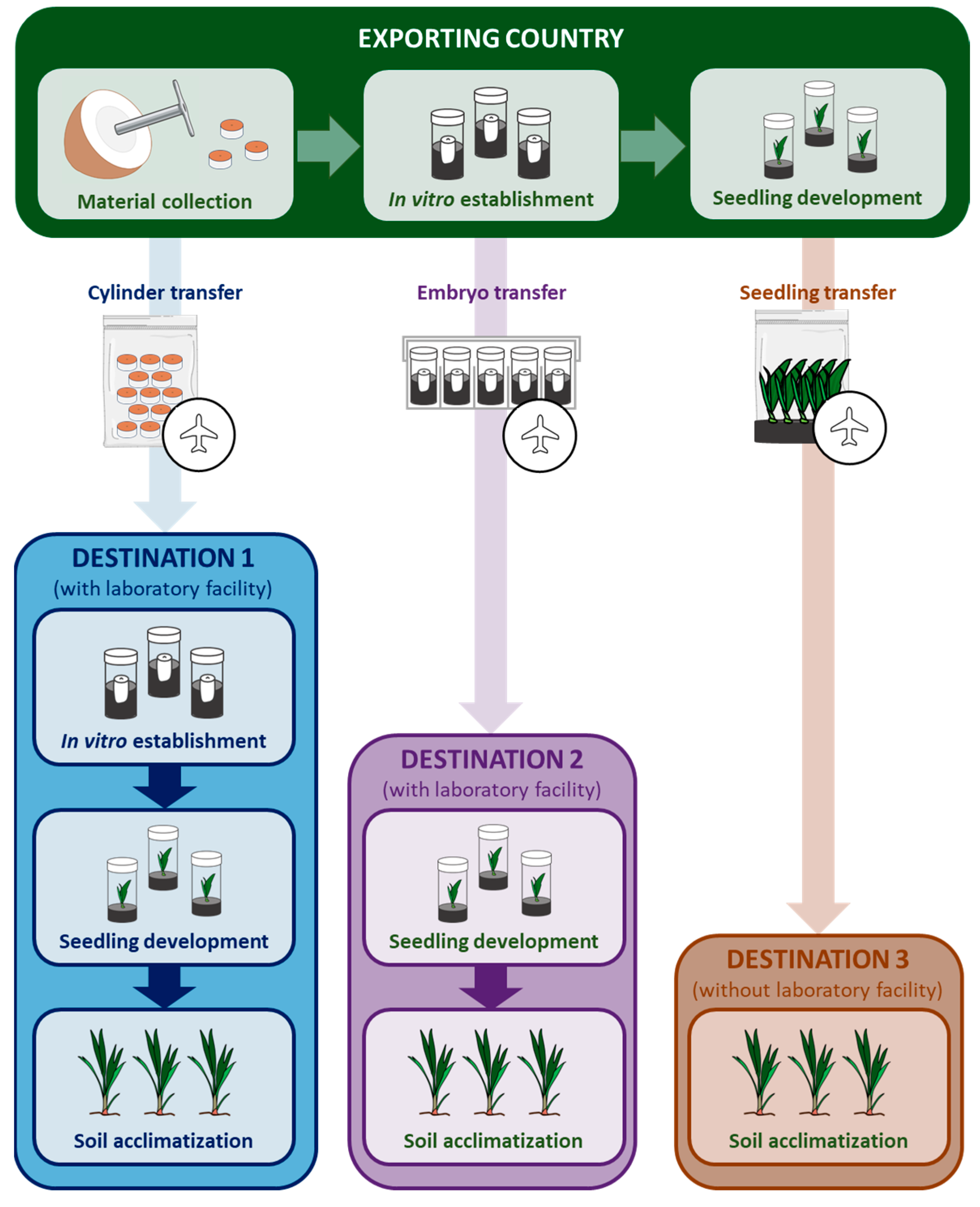
Transferring coconut embryos can be used to avoid inadvertent transfer of contaminating materials as well as save significant airfreight (as demonstrated in Table 2). Five to ten surface-sterilized coconut embryos can be sent in sterile condition in a culture tube, or even a single embryo in a small vial. This technique can reduce the weight from about 1 to 2 kg of a single coconut seed to only about 1 g per coconut embryo. However, most problems with applying germplasm exchange using the embryo technique are high contamination (10–98%) during the sending and embryo culture process and poor germination (0–90%) [67]. These limitations cause a decrease of about 40% in accession sizes compared to transfers using seed nuts [72]. Furthermore, the biggest limitation of applying this technique is the availability of coconut embryo culture facilities, including human resources in both exporting and destination countries. Upgrading of the capacity and resources to deal with coconut embryo culture protocol remains the major bottle neck in some coconut countries [72]. Other diverse issues including equity concerns and intellectual property rights remain a hard barrier for the exchange of coconut germplasm and need to be cracked, although most coconut-producing countries agreed that conserving coconut germplasm is a common good and not for sale [72].
In the case of embryo culture facilities including technical expertise only available in the exporting county, the coconut embryos can be sent to a laboratory wherein the embryos will be cultured until they are ready for the acclimatization process. The seedlings with be fully developed shoots with at least one fully open leaf and with primary or secondary roots and must be transferred in in vitro conditions to the destination countries [67]. A screen house facility with technical expertise on establishing seedlings to ex vitro condition must be available in the destination county. It is similar to transferring coconut material in the form of embryos; sending coconut seedlings can also avoid unnecessary contaminants, including diseases, and can save significant airfreight compared to sending seed nuts. However, the low success rate during the acclimatization process [79] remain the major problem in applying this technique for sending coconut materials overseas.
On the other hand, if the facilities and technical expertise for coconut embryo culture are only available in the destination country, coconut materials can be transferred using a cylinder of endosperm containing embryos. Transferring a cylinder of endosperm is relatively simple and can be performed in a remote area without a tissue culture facility. The cylinder of endosperms just needs to be washed upon extraction from the seed nuts, followed by disinfection with ethanol and bleach or calcium hypochlorite, then sealed in the sterile plastic bags [76,80,81]. However, the cylinder should reach the destination within 5 days because contamination levels after culture will increase and the germination rate will significantly drop.

5.3. In Vitro Technology: A Key Tool for Coconut Germplasm Exchange

In vitro technology provides a valuable method for establishing coconut germplasm collections, facilitating the exchange of genetic resources (e.g., zygotic embryos) and enabling short- to medium-term conservation [7]. Compared to traditional seed storage, tissue culture systems offer significant advantages, including rapid clonal propagation, the maintenance of disease-free plant materials, minimal space requirements, and reduced labor inputs [82]; a representative tissue culture protocol is illustrated in Figure 2. A potential drawback, however, is the risk of somaclonal variation associated with long-term in vitro culture [64]. Despite this limitation, these methods are particularly valuable for coconut breeding programs, where the objective is to maintain viable germplasm for periods ranging from several months to a year [83]. To properly store the culture, the environment is carefully modified by adjusting factors such as temperature, light intensity, mineral content, culture medium, and the application of plant growth regulators. For instance, coconut zygotic embryos were maintained using a modified Y3 medium consisting of MS nutrients; ca. 50% of these embryos were successfully grown into seedlings after a storage period of two months [84]. Zygotic embryos from West Coast Tall coconut achieved a high germination rate after being stored in sterile water for ca. 8 weeks and were then transferred to a recovery medium [85]. A medium-term storage protocol of coconut zygotic embryos was developed. A total of 24% of dehydrated zygotic embryos can be stored for 26 weeks under −80 °C [86]. Better results have been reported in which all embryos remained viable after six months of storage on MS medium without sucrose at room temperature, and half of embryos survived for up to a year on MS medium with 0.05 M sucrose [85].
Advanced techniques for the preservation and transport of pollen in fruit tree species have greatly enhanced the ability to conduct controlled pollination among genotypes with differing flowering times. For example, the preservation of fruit tree pollen through storage techniques allows for the maintenance of genetic diversity, enabling successful cross-breeding efforts even when flowering times do not align naturally [87]. Cryopreserved pollen from species like wild pineapple and mango ensures that viable pollen can be kept for extended periods and transported over long distances, which is crucial for breeding programs involving asynchronous flowering genotypes [88]. Improved collection and cryopreservation methods have been developed for tropical fruit species such as mango and litchi, facilitating the long-term storage and subsequent use of pollen in controlled pollination efforts, thus optimizing breeding outcomes [89,90]. These approaches have proven to be highly effective methods for genetic conservation across various crops because pollen can be easily collected, treated, and stored in large quantities within a small space [91]. Moreover, the exchange of coconut germplasm through pollen involves fewer quarantine restrictions than seeds or other plant materials, making it a preferred option for genetic resource exchange and conservation programs [92].

5.4. Cryopreservation: An Important Method for Preserving Long-Term Coconut Germplasm

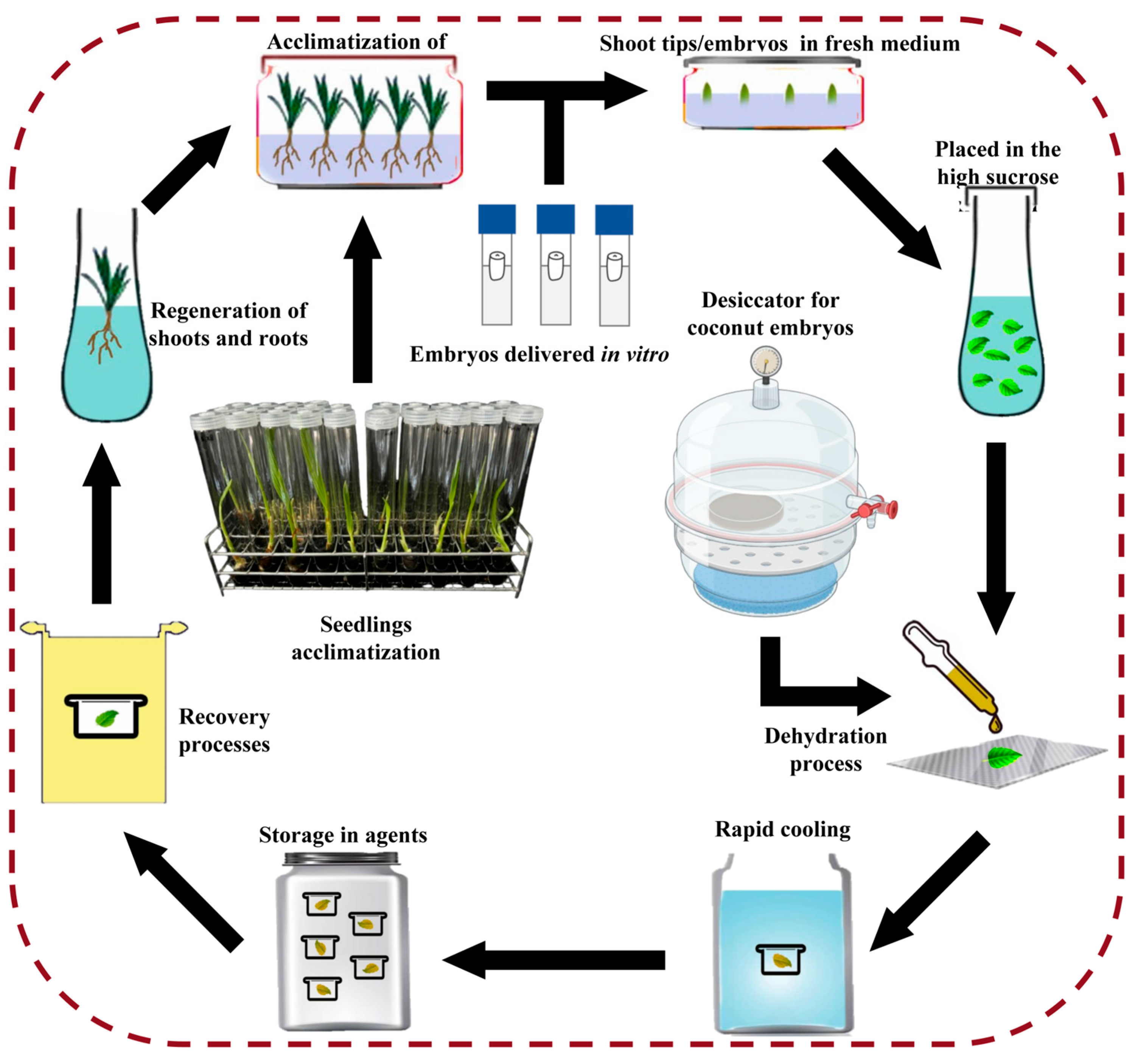
Innovative biotechnologies are being devised to store, upkeep, preserve, and globally exchange genetic materials with cultural and economic significance as well as to institute genetic resource banks for uncommon plant species [91], as demonstrated in Figure 3. The preservation of plant materials in active collections necessitates duplication to safeguard against potential risks such as diseases or environmental catastrophes. Despite the expense involved, duplicating fruit tree cultivars as field collections at an alternate site can be a viable strategy [93]. A common long-term preservation technique employed by many of these banks is cryopreservation, which involves storing tissue samples at ultra-low temperatures ranging from −135 °C to −196 °C for extended periods, minimizing the risk of genetic variation. Successful cryopreservation in liquid nitrogen (LN) relies on mitigating the detrimental effects of ice crystal formation by eliminating water and inducing the formation of biological glass (vitrification) [94].
Cryopreservation has been applied to coconut (Table 3) and other palm species (Table 4) for long-term conservation of zygotic embryos, plumules, and embryogenic calli, somatic embryos or pollen. A wider range of explant types have been used for cryopreservation, such as zygotic embryos, plumules embryogenic calli, somatic embryos or pollen. For coconut, zygotic embryos are highly likely to be a premier explant for cryopreservation compared with meristem [95,96]. First of all, it is much simpler to work on embryos rather than meristem regarding their physical nature. Even technicians who went through a short training period are capable of doing so The growth process of embryos is more rapid compared with meristem and other explant types, which can be a major advantage in efficiency. Due to its simplicity, it is possible for embryos to be cryopreserved on a large scale, and many can be dealt with in a short period [64]. The developmental stage of the embryo during cryopreservation is an important determinant of tissue viability [97]. Research has indicated that the mature embryo stage is optimal for cryopreservation [98,99]. However, the ideal embryo stage for cryopreservation can differ among recalcitrant plant species. In the case of coconuts, two embryo maturity stages have been investigated for cryopreservation: immature embryos taken from 7- to 8-month-old fruits and mature embryos taken from 10- to 12-month-old fruits [85].
Early work used slow freezing of 7- to 8-month-old immature embryos and recovered only 15–29% viable tissue but crucially obtained no plantlets (Table 3). These historical data underscore why current protocols now favor rapid dehydration or droplet vitrification of mature (≥10-month) embryos, which routinely give 60–80% survival and 20–40% soil establishment [110]. A study explored cryopreservation of immature zygotic coconut embryos after employing a pre-growth-desiccation technique in 1992 [85,111]. This involved subjecting embryos to rapid freezing following a 4 h pre-treatment on a semi-solid medium enriched with 600 g L−1 glucose and 15% sorbitol. While this method led to an increased embryo survival rate of up to 43%, only one embryo managed to develop into a rooted plantlet after 2.5 months post-freezing, albeit without successful establishment in soil [112].
The inaugural cryopreservation attempt for mature zygotic embryos (10–12 months old post-pollination) was conducted across various coconut varieties [113,114]. Recovery rates ranged from 33% to 93% among different varieties, including West African Tall (WCT), Malayan Yellow Dwarf (MYD) [85,115], and 10 other coconut varieties [113]. However, no further work was undertaken on the acclimatization process and, therefore, no plants in soil were obtained from these seedlings recovered from cryopreservation. Conversely, employing a physical desiccation technique resulted in lower recovery rates (20% to 29%) specifically for WCT [116,117]. Mature embryos underwent desiccation using silica gel and immersion in a solution comprising 600 g L−1 glucose and 15% glycerol for 15 h before cryopreservation, achieving a 60% recovery rate for viable embryos [118]. Up to 60% embryo survival and 25% plantlet recovery using an optimized rapid dehydration protocol followed by rapid cooling and rapid warming processes was achieved [95]. Furthermore, the seedlings produced from these processes did not show any morphological, cytological or molecular changes compared to non-cryopreserved seedlings [119]. We delved into diverse preculture conditions and vitrification strategies, noting an embryo survival rate of up to 60% and subsequent plantlet production in soil amounting to 40% post-cryopreservation [116].
Zygotic embryos have also been applied as explants for cryopreservation of other palm species such as in oil palm (Elaeis guineensis). The initial investigation into cryopreserving oil palm dehydrated zygotic embryos by reducing their moisture content to 10% before immersing them in liquid nitrogen (LN) for 32 weeks revealed no discernible disparity in their germination rates compared to non-frozen embryos [85,120]. Subsequent research employing two cryopreservation techniques demonstrated that 65% of embryos from rehydrated kernels and 25% of zygotic embryos from dry kernels also successfully developed into plantlets, emphasizing the advantageous impact of partially dehydrating oil palm embryos prior to cryopreservation [121]. These findings align with previous investigations that reported an 80% survival rate for cryopreserved oil palm embryos [120], and there was no significant difference in the survival rates of zygotic embryos from five oil palm genotypes before and after cryopreservation [85]. As listed in Table 4, 74% survival was obtained after only 8 h silica gel dehydration and direct LN plunge—parameters identical to the optimal coconut protocol. Such cross-species convergence validates the 8 h/10% moisture target as a universal benchmark for Arecaceae embryo cryopreservation [100].

5.5. Recovery or Acclimatization Processes After Germplasm Exchange

Despite the use of different materials and methodologies, the ultimate goal for coconut micropropagation and germplasm exchange is the successful establishment of healthy seedlings at the target field locations. However, germplasm samples often encounter various stresses and unfavorable conditions during these processes, negatively affecting seedling regeneration and transplantation. For germplasm exchange, coconut tissues are usually required to be isolated from their natural in vivo conditions, disinfected, and packaged in small air-tight containers for phytosanitary and space-efficient purposes. Unfortunately, this procedure, when applied in long-distance and long-duration transport, results in tissue starvation due to low availability of airspace and nutrients, leading to low survivability and potential abnormalities in regenerated plantlets due to the failure of vital cellular organells [122]. Moreover, other factors such as uncontrolled temperature and intense mechanical stresses caused by vibration and careless handling can also impose damage on coconut tissues at certain levels during transportation. After successfully recovering and regenerating exchanged germplasm into intact coconut seedlings, the transition of these seedlings from laboratory to field conditions presents another major bottleneck. As in vitro seedlings have become used to favorable environments with pathogen-free status, freely available nutrients and carbon sources, and optimal physical conditions, seedlings usually become more sensitive to the harsh and unpredictable conditions when being transferred to an ex vitro environment [123,124,125]. To address these challenges, a specialized adaptation process, known as acclimatization, is employed for coconut germplasm, aiming to enhance their survival, recovery, and development into fully functional palms after distant transportation and lab-to-field establishment [85,123,126].
Upon arrival of coconut germplasm after transportation and quarantine, different acclimatization procedures need to be implemented to ensure efficient establishment at the target destination. These procedures are generally divided into two main stages: (i) in vitro acclimatization or pre-acclimatization, and (ii) ex vitro acclimatization (as summarized in Table 4). For pre-acclimatization, the primary purpose is to recover coconut tissues from previous stresses incurred during previous transport and to subsequently support their development into healthy and fully functional seedlings by providing proper culture conditions, including nutrient-rich media, comfortable vessel space, and controlled physical conditions. During this stage, liquid culture media supplemented with exogenous sucrose are commonly used to maximize nutrient uptake and enhance the photosynthetic capacity of coconut seedlings [80,127,128], especially for those experiencing prolonged transportation with limited nutrients and no light accessibility. In addition, photoautotrophic culture presents a promising approach to maximize seedling development during in vitro acclimatization. By employing a highly controlled growth chamber with suitable illumination, humidity, and CO2 enrichment, coconut seedlings exhibited improved photosynthesis, accelerated growth, higher survival rate, and significantly reduction in acclimatization time, making this intervention a promising option for smart, automated in vitro acclimatization [56,129] (Table 5).
After in vitro culture, fully developed seedlings are subjected to ex vitro acclimatization, which allows them to gradually adapt to field conditions through a semi-natural environment. The basic concept for coconut acclimatization typically includes application of fungicides to prevent contaminations, transplantation of seedlings into moisturized but well-drained substrates, and maintenance under gradually decreasing humidity levels to ambient conditions [126]. However, most established protocols rely on conventional methods such as transparent plastic covers or mist irrigation systems, which are difficult to control and often result in low ex vitro survival rates and high labor costs [127,133]. To overcome this bottleneck, different innovative acclimatization systems, including the plastic tent, the wooden box humidity chamber [133], and the Mini-growth chamber [130], have been developed and have successfully promoted acclimatization success (up to 90%), shortened the acclimatization period, and facilitated scalability for industrial application [130,133]. In addition to advancements in acclimatization systems, recent studies have revealed the beneficial effects of applying anti-transpirant solutions and arbuscular mycorrhizal fungi (AMF), which improve ex vitro survival and development of coconut seedlings in nursery conditions [134,135]. Nevertheless, the integration of AMF into germplasm exchange protocols presents substantial challenges that require further evaluation. The absence of phytosanitary standards for cross-border shipment of live AMF inoculants constitutes a major biosecurity concern. Furthermore, the establishment efficacy of introduced AMF strains in diverse field environments remains uncertain, and their potential to disrupt native soil ecosystems warrants careful risk assessment. Therefore, despite promising nursery results, AMF application in germplasm transfer requires thorough validation of its long-term agronomic reliability and ecological safety before implementation [136,137,138]. These novel findings offer even further enhancements regarding acclimatization of coconut germplasm in the future. As a result, with the implementation of advanced acclimatization procedures, coconut germplasm can effectively be recovered after exchange and be subsequently established to field conditions at the desired destination for potential conservation and production purposes (Table 6).

6. Restrains and Future Perspectives

Firstly, there are still some technical issues that restrain the success of coconut germplasm exchange. Even though germplasm from overseas can be successfully transported and recovered in the laboratory using different methods stated above, the success rate of cultures exchanged in vitro is not determined by the number of regenerated seedlings or plantlets but by the number of field-established plants [83]. Tissue culture-derived seedlings must be transferred from heterotrophic to autotrophic conditions, and this transitional phase is key to plant survival [123]. This has been successfully achieved in oil palm on several occasions. One study reported that 100% of plantlets regenerated from cryopreserved somatic embryos were normal and exhibited standard floral conformity [143]. Another long-term study observed an average recovery rate of 34% for plants derived from cryopreserved callus after their transfer to the field [149]. For coconut, however, the recovery of plantlets from internationally exchanged germplasm (Fiji Tall and MYD) after cryopreservation was lower, with final rates of 21% and 28%, respectively, upon transfer to pots [150]. Usually after 3 months, appropriately acclimatized coconut seedlings can be transferred to the nursery for further growth [126]. During this period, seedlings in vitro can be easily damaged by sudden changes in the environment [151]. The reason behind this is that non-acclimatized seedlings possessed 15% less surface wax when compared with fully acclimatized coconut seedlings, and insufficient leaf wax causes extreme water loss and leads to wilting of the seedlings [152]. Thus, due to the poorly developed stomates and wax layers, excessive water loss through transpiration occurs when seedlings are transferred from in vitro to ex vitro environmental conditions [153]. Nowadays, the acclimatization of coconut seedlings from in vitro exchange processes is still considered to be one of the main bottlenecks in delivering various tissue culture protocols for coconut [56]. Thus, to improve this scenario, automated technologies can be applied [154,155]. The exchange of coconut germplasm resources also faces legal and ethical challenges encompassing intellectual property rights, fair distribution, and sustainability, cultural and traditional knowledge protection, biosecurity, environmental risks, and international compliance. These issues necessitate careful consideration to ensure equitable access to resources, respect for cultural values, mitigation of risks, and adherence to international legal frameworks, ultimately facilitating effective management and responsible utilization of coconut germplasm resources. From a broader perspective, the main contradiction in current coconut biotechnology development lies in the gap between advanced tool development and their effective application in practical breeding. Future research should focus more on translating genomic discoveries into practical breeding strategies, particularly through establishing efficient genotype–phenotype association platforms [28].
The effective utilization and value enhancement of collected elite germplasm resources are of paramount importance. These high-quality germplasm resources serve as a foundation for breeding superior new varieties. Concurrently, it is essential to broaden the scope of germplasm resource collection, prioritizing the acquisition of coconut germplasm with desirable traits. The future of coconut germplasm utilization lies in the systematic identification and collection of high-quality, high-yielding, aromatic, cold-tolerant, Dwarf coconut germplasm. The integration of advanced genomic tools, such as whole-genome sequencing and gene-editing technologies, holds immense promise for pinpointing key genes associated with desirable traits, including superior yield, enhanced sweetness, and stress resistance. Leveraging third- and fourth-generation breeding technologies—such as CRISPR/Cas-mediated genome editing and genomic selection—will enable the rapid development of novel coconut cultivars tailored to specific environmental and market demands. These approaches will not only accelerate the breeding process but also enrich the genetic diversity of coconut germplasm, providing a robust foundation for sustainable coconut agriculture and industry innovation. By fostering global collaboration and investing in cutting-edge breeding platforms, the creation of elite germplasm resources will revolutionize the coconut industry, meeting the growing demands for high-value coconut products while ensuring long-term environmental sustainability.

7. Conclusions

Coconut germplasm resources are pivotal for ensuring food security, economic development, and ecological stability in tropical and subtropical regions. Germplasm exchange, as a core strategy for enhancing coconut quality, yield, and stress resistance, is indispensable despite the risks of pest and disease transmission. Advanced biotechnologies, such as in vitro culture, cryopreservation, and genomic tools, have effectively addressed traditional limitations in germplasm transportation, storage, and identification, providing safe and efficient solutions for resource conservation and utilization. However, challenges remain, including low acclimatization success rates of tissue-cultured seedlings and legal barriers to resource exchange. Future efforts should focus on integrating cutting-edge breeding technologies (e.g., CRISPR/Cas9) with global collaborative networks like COGENT, strengthening the collection and evaluation of elite germplasm, and optimizing acclimatization protocols. This holistic approach will safeguard coconut genetic diversity and sustain the long-term development of the coconut industry amid changing environmental and market demands. The future of coconut germplasm resources lies in establishing integrated conservation systems that combine traditional knowledge with modern technologies, which should dynamically respond to climate change and market demands while ensuring equitable access to genetic resources and benefit-sharing.

Author Contributions

The authors confirm their contribution to the paper as follows: S.Y. and K.D. contributed equally; paper designing: Z.M.; review paper writing: S.Y., K.D., B.-M.T., S.S., M.K. and N.S.; figure and table modification: S.Y. and Z.M.; review and editing: K.D. and Z.M. All authors have read and agreed to the published version of the manuscript.

Funding

This research was funded by the Project of Sanya Yazhou Bay Science and Technology City, Grant No: SCKJ-JYRC-2024-35, and the Technology and Innovation Project for Talent of Hainan (KJRC2023L09).

Data Availability Statement

All data used in this review paper were derived from Hainan University institutional repository and Qinghai University institutional repository. All data were freely available and accessible without restrictions.

Acknowledgments

During the preparation of this manuscript, the authors used Doubao (Chromium Engine Ver. 135.0.7049.72) and Gemini (Ver. 3 pro) for the purposes of checking for language errors and the acquisition/modification of several graphic elements. The authors have reviewed and edited the output and take full responsibility for the content of this publication. Furthermore, several graphic elements were created with BioRender.com.

Conflicts of Interest

The authors declare no conflicts of interest.

Abbreviations

The following abbreviations are used in this manuscript:
GAGibberellin
GA20oxGA-20 oxidase
GWASGenome-wide association studies
LDLinkage disequilibrium
FstFixation Index
QTLQuantitative trait loci
NGSNext-generation sequencing
CRISPR/Cas9Clustered Regularly Interspaced Short Palindromic Repeats/CRISPR-associated protein 9)
COGENTCoconut Genetic Resources Network
ICCInternational Coconut Community
LYDsLethal yellowing-type diseases
ICGsInternational Coconut Gene Banks
WCTWest African Tall
MYDMalayan Yellow Dwarf

References

  1. Judd, W.; Campbell, C.; Kellogg, E.; Stevens, P.; Donoghue, M. Chapter 3—Plant Systematics: A Phylogenetic Approach; Oxford University Press: Oxford, UK, 2015. [Google Scholar]
  2. Sun, X.; Kaleri, G.A.; Mu, Z.; Feng, Y.; Yang, Z.; Zhong, Y.; Dou, Y.; Xu, H.; Zhou, J.; Luo, J.; et al. Comparative transcriptome analysis provides insights into the effect of epicuticular wax accumulation on salt stress in coconuts. Plants 2024, 13, 141. [Google Scholar] [CrossRef]
  3. Yang, Z.; Liu, Z.; Xu, H.; Li, Y.; Huang, S.; Cao, G.; Shi, M.; Zhu, J.; Zhou, J.; Li, R.; et al. ArecaceaeMDB: A comprehensive multi-omics database for Arecaceae breeding and functional genomics studies. Plant Biotechnol. J. 2023, 21, 11–13. [Google Scholar] [CrossRef]
  4. Mu, Z.; Tran, B.-M.; Xu, H.; Yang, Z.; Qamar, U.Z.; Wang, X.; Xiao, Y.; Luo, J. Exploring the potential application of coconut water in healthcare and biotechnology: A review. Beverage Plant Res. 2024, 4, e018. [Google Scholar] [CrossRef]
  5. Nayar, N. C. Elevitch (ed): Speciality crops for the Pacific Islands: Permanent agriculture resources. Agrofor. Syst. 2011, 83, 373–374. [Google Scholar] [CrossRef]
  6. Niral, V.; Jerard, B.A.; Rajesh, M.K. Germplasm resources: Diversity and conservation. In The Coconut Genome; Rajesh, M.K., Ramesh, S.V., Perera, L., Kole, C., Eds.; Springer International Publishing: Cham, Switzerland, 2021; pp. 27–46. [Google Scholar]
  7. Engelmann, F. Use of biotechnologies for the conservation of plant biodiversity. In Vitro Cell. Dev. Biol.-Plant 2011, 47, 5–16. [Google Scholar] [CrossRef]
  8. Nguyen, Q.T.; Bandupriya, H.D.; Foale, M.; Adkins, S.W. Biology, propagation and utilization of elite coconut varieties (makapuno and aromatics). Plant Physiol. Biochem. 2016, 109, 579–589. [Google Scholar] [CrossRef] [PubMed]
  9. Kumar, K.D.; Gautam, R.K.; Ahmad, I.; Roy, S.D.; Sharma, A. Biochemical, genetic and moleculra basis of the novel and commercially important soft endosperm Makapuna coconut—A review. J. Food Agric. Environ. 2015, 14, 61–65. [Google Scholar]
  10. Phonphoem, W.; Sinthuvanich, C.; Aramrak, A.; Sirichiewsakul, S.; Arikit, S.; Yokthongwattana, C. Nutritional profiles, phytochemical analysis, antioxidant activity and DNA damage protection of makapuno derived from Thai aromatic coconut. Foods 2022, 11, 3912. [Google Scholar] [CrossRef] [PubMed]
  11. Jayasekhar, S.; Chandran, K.P. World Economic Importance. In The Coconut Genome; Rajesh, M.K., Ramesh, S.V., Perera, L., Kole, C., Eds.; Springer International Publishing: Cham, Switzerland, 2021; pp. 1–12. [Google Scholar]
  12. Alouw, J.C.; Chinthaka, A.H.N.; Pirmansah, A.; Sintoro, O.; Ilmawan, B.; Hosang, K.D.; Soetopo, D.; Kardinan, A.; Samsudin; Marwanto, S. The economic, social and environmental importance of coconut. In Science-Based Pest Management for a Sustainable and Resilient Coconut Sector; Alouw, J.C., Chinthaka, A.H.N., Eds.; Springer Nature Switzerland: Cham, Switzerland, 2025; pp. 3–13. [Google Scholar]
  13. Gunn, B.F.; Baudouin, L.; Olsen, K.M. Independent origins of cultivated coconut (Cocos nucifera L.) in the old world tropics. PLoS ONE 2011, 6, e21143. [Google Scholar] [CrossRef] [PubMed]
  14. Nayar, N.M. The Coconut: Phylogeny, Origins, and Spread; Academic Press: Cambridge, MA, USA, 2017; pp. 1–224. [Google Scholar]
  15. Rajesh, M.K.; Gangurde, S.S.; Pandey, M.K.; Niral, V.; Sudha, R.; Jerard, B.A.; Kadke, G.N.; Sabana, A.A.; Muralikrishna, K.S.; Samsudeen, K.; et al. Insights on genetic diversity, population structure, and linkage disequilibrium in globally diverse coconut accessions using genotyping-by-sequencing. Omics J. Integr. Biol. 2021, 25, 796–809. [Google Scholar] [CrossRef]
  16. Niral, V.; Jerard, B.A. Botany, Origin and Genetic Resources of Coconut. In The Coconut Palm (Cocos nucifera L.)—Research and Development Perspectives; Krishnakumar, V., Thampan, P.K., Nair, M.A., Eds.; Springer: Singapore, 2018; pp. 57–111. [Google Scholar]
  17. Baudouin, L. Genome studies for effective management and utilization of coconut genetic resources. In Coconut Biotechnology: Towards the Sustainability of the ‘Tree of Life’; Adkins, S., Foale, M., Bourdeix, R., Nguyen, Q., Biddle, J., Eds.; Springer International Publishing: Cham, Switzerland, 2020; pp. 123–149. [Google Scholar]
  18. Foale, M.; Biddle, J.; Bazrafshan, A.; Adkins, S. Biology, ecology, and evolution of coconut. In Coconut Biotechnology: Towards the Sustainability of the ‘Tree of Life’; Adkins, S., Foale, M., Bourdeix, R., Nguyen, Q., Biddle, J., Eds.; Springer International Publishing: Cham, Switzerland, 2020; pp. 17–27. [Google Scholar]
  19. Salum, U.; Foale, M.; Biddle, J.; Bazrafshan, A.; Adkins, S. Towards the sustainability of the “tree of life”: An introduction. In Coconut Biotechnology: Towards the Sustainability of the ‘Tree of Life’; Adkins, S., Foale, M., Bourdeix, R., Nguyen, Q., Biddle, J., Eds.; Springer International Publishing: Cham, Switzerland, 2020; pp. 1–15. [Google Scholar]
  20. Rethinam, P.; Krishnakumar, V. Tender coconut varieties. In Coconut Water: A Promising Natural Health Drink-Distribution, Processing and Nutritional Benefits; Rethinam, P., Krishnakumar, V., Eds.; Springer International Publishing: Cham, Switzerland, 2022; pp. 37–76. [Google Scholar]
  21. Arunachalam, V.; Rajesh, M.K. Coconut genetic diversity, conservation and utilization. In Biodiversity and Conservation of Woody Plants; Ahuja, M.R., Jain, S.M., Eds.; Springer International Publishing: Cham, Switzerland, 2017; pp. 3–36. [Google Scholar]
  22. Bourdeix, R.; Konan Konan, J.L.; N’Cho, Y.P. Coconut. A Guide to Traditional and Improved Varieties; Diversiflora: Montpellier, France, 2005; p. 104. [Google Scholar]
  23. Perera, L.; Baudouin, L.; Mackay, I. SSR markers indicate a common origin of self-pollinating dwarf coconut in South-East Asia under domestication. Sci. Hortic. 2016, 211, 255–262. [Google Scholar] [CrossRef]
  24. Lantican, D.V.; Strickler, S.R.; Canama, A.O.; Gardoce, R.R.; Mueller, L.A.; Galvez, H.F. De novo genome sequence assembly of dwarf coconut (Cocos nucifera L. ‘Catigan Green Dwarf’) provides insights into genomic variation between coconut types and related palm species. G3 2019, 9, 2377–2393. [Google Scholar] [CrossRef] [PubMed]
  25. Baudouin, L.; Lebrun, P. Coconut (Cocos nucifera L.) DNA studies support the hypothesis of an ancient Austronesian migration from Southeast Asia to America. Genet. Resour. Crop Evol. 2009, 56, 257–262. [Google Scholar] [CrossRef]
  26. Muñoz-Pérez, J.M.; Cañas, G.P.; López, L.; Arias, T. Genome-wide diversity of northern South America cultivated Coconut (Cocus nucifera L.) uncovers diversification times and targets of domestication of coconut globally. bioRxiv 2019. [Google Scholar] [CrossRef]
  27. Yang, Y.; Iqbal, A.; Qadri, R. Breeding of Coconut (Cocos nucifera L.): The Tree of Life. In Advances in Plant Breeding Strategies: Fruits: Volume 3; Al-Khayri, J.M., Jain, S.M., Johnson, D.V., Eds.; Springer International Publishing: Cham, Switzerland, 2018; pp. 673–725. [Google Scholar]
  28. Arumugam, T.; Hatta, M.A.M. Improving Coconut Using Modern Breeding Technologies: Challenges and Opportunities. Plants 2022, 11, 3414. [Google Scholar] [CrossRef] [PubMed]
  29. Ramesh, S.V.; Arunachalam, V.; Rajesh, M.K. Genomic Designing of Climate-Smart Coconut. In Genomic Designing of Climate-Smart Fruit Crops; Kole, C., Ed.; Springer International Publishing: Cham, Switzerland, 2020; pp. 135–156. [Google Scholar]
  30. Rethinam, P. International Scenario of Coconut Sector. In The Coconut Palm (Cocos nucifera L.)—Research and Development Perspectives; Krishnakumar, V., Thampan, P.K., Nair, M.A., Eds.; Springer: Singapore, 2018; pp. 21–56. [Google Scholar]
  31. Nguyen, Q.T.; Bandupriya, H.D.; López-Villalobos, A.; Sisunandar, S.; Foale, M.; Adkins, S.W. Tissue culture and associated biotechnological interventions for the improvement of coconut (Cocos nucifera L.): A review. Planta 2015, 242, 1059–1076. [Google Scholar] [CrossRef] [PubMed]
  32. Grattapaglia, D.; Alves, W.; Pacheco, C.A.P. High-density linkage to physical mapping in a unique Tall × Dwarf coconut (Cocos nucifera L.) outbred F(2) uncovers a major QTL for flowering time colocalized with the FLOWERING LOCUS T (FT). Front. Plant Sci. 2024, 15, 1408239. [Google Scholar] [CrossRef]
  33. Pan, K.; Wang, W.; Wang, H.; Fan, H.; Wu, Y.; Tang, L. Genetic diversity and differentiation of the Hainan Tall coconut (Cocos nucifera L.) as revealed by inter-simple sequence repeat markers. Genet. Resour. Crop Evol. 2018, 65, 1035–1048. [Google Scholar] [CrossRef]
  34. Xia, W.; Liu, R.; Zhang, J.; Mason, A.S.; Li, Z.; Gong, S.; Zhong, Y.; Dou, Y.; Sun, X.; Fan, H.; et al. Alternative splicing of flowering time gene FT is associated with halving of time to flowering in coconut. Sci. Rep. 2020, 10, 11640. [Google Scholar] [CrossRef]
  35. Huang, J.; Liu, Z.; Guo, Q.; Zou, J.; Zheng, Y.; Li, D. Induction and Transcriptome Analysis of Callus Tissue from Endosperm of Makapuno Coconut. Plants 2024, 13, 3242. [Google Scholar] [CrossRef] [PubMed]
  36. Zhou, L.; Sun, X.; Iqbal, A.; Yarra, R.; Wu, Q.; Li, J.; Lv, X.; Ye, J.; Yang, Y. Revealing the aromatic sonata through terpenoid profiling and gene expression analysis of aromatic and non-aromatic coconut varieties. Int. J. Biol. Macromol. 2024, 280, 135699. [Google Scholar] [CrossRef]
  37. Guo, H.; Lai, J.; Li, C.; Zhou, H.; Wang, C.; Ye, W.; Zhong, Y.; Zhao, X.; Zhang, F.; Yang, J.; et al. Comparative Metabolomics Reveals Key Determinants in the Flavor and Nutritional Value of Coconut by HS-SPME/GC-MS and UHPLC-MS/MS. Metabolites 2022, 12, 691. [Google Scholar] [CrossRef]
  38. Freitas Neto, M.; Pereira, T.N.; Geronimo, I.G.; Azevedo, A.O.; Ramos, S.R.; Pereira, M.G. Coconut genome size determined by flow cytometry: Tall versus Dwarf types. Genet. Mol. Res. 2016, 15, gmr.15017470. [Google Scholar] [CrossRef]
  39. Gunn, B.F.; Baudouin, L.; Beulé, T.; Ilbert, P.; Duperray, C.; Crisp, M.; Issali, A.; Konan, J.L.; Rival, A. Ploidy and domestication are associated with genome size variation in Palms. Am. J. Bot. 2015, 102, 1625–1633. [Google Scholar] [CrossRef] [PubMed]
  40. Wang, S.; Xiao, Y.; Zhou, Z.W.; Yuan, J.; Guo, H.; Yang, Z.; Yang, J.; Sun, P.; Sun, L.; Deng, Y.; et al. High-quality reference genome sequences of two coconut cultivars provide insights into evolution of monocot chromosomes and differentiation of fiber content and plant height. Genome Biol. 2021, 22, 304. [Google Scholar] [CrossRef]
  41. Okemo, P.; Wijesundra, U.; Nakandala, U.; Dillon, N.; Chandora, R.; Campbell, B.; Smith, M.; Hardner, C.; Cadorna, C.A.; Martin, G.; et al. Crop domestication in the Asia Pacific Region: A review. Agric. Commun. 2024, 2, 100032. [Google Scholar] [CrossRef]
  42. Yang, Y.; Bocs, S.; Fan, H.; Armero, A.; Baudouin, L.; Xu, P.; Xu, J.; This, D.; Hamelin, C.; Iqbal, A.; et al. Coconut genome assembly enables evolutionary analysis of palms and highlights signaling pathways involved in salt tolerance. Commun. Biol. 2021, 4, 105. [Google Scholar] [CrossRef]
  43. Muñoz-Pérez, J.M.; Cañas, G.P.; López, L.; Arias, T. Genome-wide diversity analysis to infer population structure and linkage disequilibrium among Colombian coconut germplasm. Sci. Rep. 2022, 12, 2958. [Google Scholar] [CrossRef]
  44. Xiao, Y.; Xu, P.; Fan, H.; Baudouin, L.; Xia, W.; Bocs, S.; Xu, J.; Li, Q.; Guo, A.; Zhou, L.; et al. The genome draft of coconut (Cocos nucifera). GigaScience 2017, 6, gix095. [Google Scholar] [CrossRef] [PubMed]
  45. Caro, R.E.S.; Cagayan, J.; Gardoce, R.R.; Manohar, A.N.C.; Canama-Salinas, A.O.; Rivera, R.L.; Lantican, D.V.; Galvez, H.F.; Reaño, C.E. Mining and validation of novel simple sequence repeat (SSR) markers derived from coconut (Cocos nucifera L.) genome assembly. J. Genet. Eng. Biotechnol. 2022, 20, 71. [Google Scholar] [CrossRef] [PubMed]
  46. Khan, F.S.; Goher, F.; Zhang, D.; Shi, P.; Li, Z.; Htwe, Y.M.; Wang, Y. Is CRISPR/Cas9 a way forward to fast-track genetic improvement in commercial palms? Prospects and limits. Front. Plant Sci. 2022, 13, 1042828. [Google Scholar] [CrossRef] [PubMed]
  47. Batool, S.; Li, Z.; Zhang, D.; Shi, P.; Htwe, Y.M.; Nie, H.; Ma, M.; Su, H.; Fang, X.; Ahmed, M.A.A.; et al. PEG-mediated transformation and CRISPR/Cas9 gene editing of CnPDS in coconut protoplast. Ind. Crops Prod. 2025, 235, 121674. [Google Scholar] [CrossRef]
  48. Perera, L.; Ramaswamy, M.; Dissanayake, P.D.; Yang, C.; Kalaipandian, S. Breeding and Genetics for Coconut Improvement. Agrosystems Geosci. Environ. 2024, 7, 111–125. [Google Scholar] [CrossRef]
  49. Yang, Y.; Saand, M.A.; Huang, L.; Abdelaal, W.B.; Zhang, J.; Wu, Y.; Li, J.; Sirohi, M.H.; Wang, F. Applications of Multi-Omics Technologies for Crop Improvement. Front. Plant Sci. 2021, 12, 563953. [Google Scholar] [CrossRef]
  50. Yousefi, K.; Abdullah, S.N.A.; Hatta, M.A.M.; Ling, K.L. Genomics and Transcriptomics Reveal Genetic Contribution to Population Diversity and Specific Traits in Coconut. Plants 2023, 12, 1913. [Google Scholar] [CrossRef]
  51. Rajanaidu, N.; Ainul, M.M. Conservation of Oil Palm and Coconut Genetic Resources. In Conservation of Tropical Plant Species; Normah, M.N., Chin, H.F., Reed, B.M., Eds.; Springer: New York, NY, USA, 2013; pp. 189–212. [Google Scholar]
  52. Singh, G.; Mridula, K. Technology mission on coconut—An overview. Indian Coconut J. 2016, 59, 17–20. [Google Scholar]
  53. Lédo, A.; Oliveira, L.; Machado, C.; Silva, A.V.; Ramos, S. Strategies for exchange of coconut germplasm in Brazil. Ciência Rural 2017, 47, e20160391. [Google Scholar] [CrossRef]
  54. Subramanian, P.; Gupta, A.; Gopal, M.; Selvamani, V.; Mathew, J.; Surekha; Indhuja, S. Coconut (Cocos nucifera L.). In Soil Health Management for Plantation Crops: Recent Advances and New Paradigms; Thomas, G.V., Krishnakumar, V., Eds.; Springer Nature: Singapore, 2024; pp. 37–109. [Google Scholar]
  55. Upadhyaya, H.D.; Gowda, C.L.L.; Buhariwalla, H.K.; Crouch, J.H. Efficient use of crop germplasm resources: Identifying useful germplasm for crop improvement through core and mini-core collections and molecular marker approaches. Plant Genet. Resour. 2006, 4, 25–35. [Google Scholar] [CrossRef]
  56. Samosir, Y.M.S.; Adkins, S. Improving acclimatization through the photoautotrophic culture of coconut (Cocos nucifera) seedlings: An in vitro system for the efficient exchange of germplasm. In Vitro Cell. Dev. Biol.-Plant 2014, 50, 493–501. [Google Scholar] [CrossRef]
  57. Bourdeix, R.; Coppens d’Eeckenbrugge, G.; Konan, J.L.; Novarianto, H.; Perera, C.; Wolf, V.L.F. Collecting Coconut Germplasm for Disease Resistance and Other Traits. In Coconut Biotechnology: Towards the Sustainability of the ‘Tree of Life’; Adkins, S., Foale, M., Bourdeix, R., Nguyen, Q., Biddle, J., Eds.; Springer International Publishing: Cham, Switzerland, 2020; pp. 77–99. [Google Scholar]
  58. Borokini, T.I.; Okere, A.U.; Giwa, A.O.; Daramola, B.O.; Odofin, W.T. Biodiversity and conservation of plant genetic resources in the Field Genebank of the National Centre for Genetic Resources and Biotechnology, Ibadan, Nigeria. Int. J. Biodivers. Conserv. 2010, 2, 37–50. [Google Scholar]
  59. Karun, A.; Ramesh, S.V.; Rajesh, M.K.; Niral, V.; Sudha, R.; Muralikrishna, K.S. Conservation and Utilization of Genetic Diversity in Coconut (Cocos nucifera L.). In Cash Crops: Genetic Diversity, Erosion, Conservation and Utilization; Priyadarshan, P.M., Jain, S.M., Eds.; Springer International Publishing: Cham, Switzerland, 2022; pp. 197–250. [Google Scholar]
  60. Wilms, H.; Bazrafshan, A.; Panis, B.; Adkins, S.W. Coconut Conservation and Propagation. In The Coconut: Botany, Production and Uses; CABI: Wallingford, UK, 2024; pp. 126–142. [Google Scholar] [CrossRef]
  61. Jain, S.M. Radiation-Induced Mutations for Date Palm Improvement. In Date Palm Biotechnology; Jain, S.M., Al-Khayri, J.M., Johnson, D.V., Eds.; Springer: Dordrecht, The Netherlands, 2011; pp. 271–286. [Google Scholar]
  62. Hayati, A.; Wickneswari, R.; Maizura, I.; Rajanaidu, N. Genetic diversity of oil palm (Elaeis guineensis Jacq.) germplasm collections from Africa: Implications for improvement and conservation of genetic resources. Theor. Appl. Genet. 2004, 108, 1274–1284. [Google Scholar] [CrossRef]
  63. Nanduri, K. Plant genetic resources: Advancing conservation and use through biotechnology. Afr. J. Biotechnol. 2003, 3, 136–145. [Google Scholar] [CrossRef]
  64. Camadro, E.; Rimieri, P. Ex situ plant germplasm conservation revised at the light of mechanisms and methods of genetics. J. Basic Appl. Genet. 2021, 32, 11–24. [Google Scholar] [CrossRef]
  65. Halewood, M.; Chiurugwi, T.; Sackville Hamilton, R.; Kurtz, B.; Marden, E.; Welch, E.; Michiels, F.; Mozafari, J.; Sabran, M.; Patron, N.; et al. Plant genetic resources for food and agriculture: Opportunities and challenges emerging from the science and information technology revolution. New Phytol. 2018, 217, 1407–1419. [Google Scholar] [CrossRef]
  66. Engelmann, F.; Engels, J. Technologies and strategies for ex situ conservation. In Proceedings of the Managing Plant Genetic Diversity, Proceedings of the an International Conference, Kuala Lumpur, Malaysia, 12–16 June 2000; pp. 89–103. [Google Scholar]
  67. Cueto, C.; Johnson, V.; Engelmann, F.; Kembu, A.; Louis, K.; Kouassi, M.; Rivera, R.L.; Vidhanaarachchi, V.; Bourdeix, R. Technical Guidelines for the Safe Movement and Duplication of Coconut (Cocos nucifera L.) Germplasm Using Embryo Culture Transfer Protocols; COGENT: Montpellier, France, 2012. [Google Scholar]
  68. Rajasekharan, P.E.; Srinivasan, G. Conservation and management of haploid genetic diversity through pollen cryopreservation. Palynology 2005, 41, 39–48. [Google Scholar]
  69. Hanna, W.W.; Towill, L.E. Chapter 5–Plant Breeding Reviews: Long-Term Pollen Storage. In Plant Breeding Reviews; John Wiley & Sons, Inc.: Hoboken, NJ, USA, 1995; pp. 179–207. [Google Scholar]
  70. Bohanec, B.; Murovec, J. Haploids and Doubled Haploids in Plant Breeding. In Plant Breeding; Abdurakhmonov, I.Y., Ed.; IntechOpen: London, UK, 2012. [Google Scholar]
  71. Gurr, G.M.; Johnson, A.C.; Ash, G.J.; Wilson, B.A.; Ero, M.M.; Pilotti, C.A.; Dewhurst, C.F.; You, M.S. Coconut Lethal Yellowing Diseases: A Phytoplasma Threat to Palms of Global Economic and Social Significance. Front. Plant Sci. 2016, 7, 1521. [Google Scholar] [CrossRef] [PubMed]
  72. Bourdeix, R.; Engels, J. A Global Strategy for the Conservation and Use of Coconut Genetic Resources 2018–2028; Bioversity International: Montpellier, France, 2018. [Google Scholar]
  73. Frison, E.; Putter, C.A.J.; Diekmann, M. FAO/IBPGR Technical Guidelines for the Safe Movement of Coconut Germplasm; Bioversity International: Montpellier, France, 1993. [Google Scholar]
  74. Oropeza, C.; Cordova, I.; Chumba, A.; Narváez, M.; Sáenz, L.; Ashburner, R.; Harrison, N. Phytoplasma distribution in coconut palms affected by lethal yellowing disease. Ann. Appl. Biol. 2011, 159, 109–117. [Google Scholar] [CrossRef]
  75. Batugal, P. International Coconut Genetic Resources Network (COGENT): Its history and achievements. CORD 2005, 21, 34. [Google Scholar] [CrossRef]
  76. Biddle, J.; Nguyen, Q.; Mu, Z.H.; Foale, M.; Adkins, S. Germplasm Reestablishment and Seedling Production: Embryo Culture. In Coconut Biotechnology: Towards the Sustainability of the ‘Tree of Life’; Adkins, S., Foale, M., Bourdeix, R., Nguyen, Q., Biddle, J., Eds.; Springer International Publishing: Cham, Switzerland, 2020; pp. 199–225. [Google Scholar]
  77. Ikin, R. Germplasm Health Management for COGENT’s Multi-site International Coconut Genebank. In Proceedings of the International Plant Genetic Resources Institute—Regional Office for Asia, the Pacific and Oceania (IPGRI-APO), Serdang, Malaysia, 15–18 July 2023; pp. 57–59. [Google Scholar]
  78. Batugal, P.; Bourdeix, R.; Baudouin, L. Coconut Breeding. In Breeding Plantation Tree Crops: Tropical Species; Jain, S.M., Priyadarshan, P.M., Eds.; Springer: New York, NY, USA, 2009; pp. 327–375. [Google Scholar]
  79. Adkins, S. Improving the Availability of Valuable Coconut Germplasm using Tissue Culture Techniques. CORD 2016, 32, 10. [Google Scholar] [CrossRef]
  80. Sáenz, L.; Chan, J.L.; Narvaez, M.; Oropeza, C. Protocol for the Micropropagation of Coconut from Plumule Explants. In Plant Cell Culture Protocols; Loyola-Vargas, V.M., Ochoa-Alejo, N., Eds.; Springer: New York, NY, USA, 2018; pp. 161–170. [Google Scholar]
  81. Nikila, A.; Renuka, R.; Kumar, K.; Mohanalakshmi, M.; Suresh, J.; Thavaprakash, N. Advances in coconut micropropagation: Prospects, constraints and way forward. Plant Sci. Today 2025, 12, 5826. [Google Scholar] [CrossRef]
  82. Kalaipandian, S.; Mu, Z.; Kong, E.Y.Y.; Biddle, J.; Cave, R.; Bazrafshan, A.; Wijayabandara, K.; Beveridge, F.C.; Nguyen, Q.; Adkins, S.W. Cloning Coconut via Somatic Embryogenesis: A Review of the Current Status and Future Prospects. Plants 2021, 10, 2050. [Google Scholar] [CrossRef]
  83. Yang, C.; Nguyen, V.A.; Nulu, N.P.C.; Kalaipandian, S.; Beveridge, F.C.; Biddle, J.; Young, A.; Adkins, S.W. Towards Pathogen-Free Coconut Germplasm Exchange. Plants 2024, 13, 1809. [Google Scholar] [CrossRef] [PubMed]
  84. Mounika Sai, K.; Nair, S.; Mohan, M.; Kiran, A.G. Expression profiling of cell cycle regulatory genes E2F and CDKA during early stages of zygotic embryo culture in coconut (Cocos nucifera L.). Plant Cell Tissue Organ Cult. 2023, 155, 709–717. [Google Scholar] [CrossRef]
  85. Bazrafshan, A.; Sudarma, S.; Kalaipandian, S.; Biddle, J.M.; Mu, Z.; Kong, E.Y.Y.; Nulu, N.P.C.; Adkins, S.W. New Method for Enhancing Coconut (Cocos nucifera L.) Embryo Dehydration: An Important Step Towards Proficient Cryopreservation. Plants 2025, 14, 600. [Google Scholar] [CrossRef] [PubMed]
  86. Sisunandar; Novarianto, H.; Mashud, N.; Samosir, Y.M.S.; Adkins, S.W. Embryo maturity plays an important role for the successful cryopreservation of coconut (Cocos nucifera). In Vitro Cell. Dev. Biol.-Plant 2014, 50, 688–695. [Google Scholar] [CrossRef]
  87. Rajasekharan, P.E.; Gowthami, R.; Magudeeswari, P. Cryopreserved Pollen: Applications in Biotechnology and Crop Improvement. In Pollen Cryopreservation Protocols; Rajasekharan, P.E., Gowthami, R., Eds.; Springer: New York, NY, USA, 2025; pp. 33–56. [Google Scholar]
  88. Silva, R.L.d.; Souza, E.H.d.; Vieira, L.d.J.; Pelacani, C.R.; Souza, F.V.D. Cryopreservation of pollen of wild pineapple accessions. Sci. Hortic. 2017, 219, 326–334. [Google Scholar] [CrossRef]
  89. Wang, L.; Wu, J.; Chen, J.; Fu, D.; Zhang, C.; Cai, C.; Ou, L. A simple pollen collection, dehydration, and long-term storage method for litchi (Litchi chinensis Sonn.). Sci. Hortic. 2015, 188, 78–83. [Google Scholar] [CrossRef]
  90. Dinato, N.; Rita, I.; Santos, I.; Baccili, B.; Vigna, B.; Paula, A.; Fávero, A. Pollen Cryopreservation for Plant Breeding and Genetic Resources Conservation. Cryo Lett. 2020, 41, 115–127. [Google Scholar] [CrossRef]
  91. Withers, L.A. In-vitro conservation. Biol. J. Linn. Soc. 1991, 43, 31–42. [Google Scholar] [CrossRef]
  92. Bazrafshan, A. Ex situ conservation of coconut (Cocos nucifera L.) germplasm using cryopreservation. Ph.D. Thesis, The University of Queensland, Brisbane, Australia, 2022. [Google Scholar]
  93. Höfer, M.; Hanke, M.-V. Cryopreservation of fruit germplasm. In Vitro Cell. Dev. Biol.-Plant 2017, 53, 372–381. [Google Scholar] [CrossRef]
  94. Roque-Borda, C.A.; Kulus, D.; Vacaro de Souza, A.; Kaviani, B.; Vicente, E.F. Cryopreservation of Agronomic Plant Germplasm Using Vitrification-Based Methods: An Overview of Selected Case Studies. Int. J. Mol. Sci. 2021, 22, 6157. [Google Scholar] [CrossRef]
  95. Sisunandar; Rival, A.; Turquay, P.; Samosir, Y.; Adkins, S.W. Cryopreservation of coconut (Cocos nucifera L.) zygotic embryos does not induce morphological, cytological or molecular changes in recovered seedlings. Planta 2010, 232, 435–447. [Google Scholar] [CrossRef]
  96. Bandupriya, H.D.D.; Perera, S.A.C.N.; Ranasinghe, C.S.; Yalegama, C.; Hewapathirana, H.P.D.T. Physiological, biochemical and molecular evaluation of micropropagated and seed-grown coconut (Cocos nucifera L.) palms. Trees 2022, 36, 127–138. [Google Scholar] [CrossRef]
  97. Sisunandar, S.; Rival, A.; Samosir, Y.; Adkins, S. Cryopreservation of coconut (Cocos nucifera L.): The influence of embryo maturity upon rate of recovery and fidelity of seedlings. In Vitro Cell. Dev. Biol.-Anim. 2010, 232, 435–447. [Google Scholar] [CrossRef]
  98. Kermode, A.; Finch-Savage, B. Desiccation Sensitivity in Orthodox and Recalcitrant Seeds in Relation to Development; CABI Publishing: Wallingford, UK, 2002; pp. 149–184. [Google Scholar]
  99. Vineesh, P.S.; Skaria, R.; Mukunthakumar, S.; Padmesh, P.; Decruse, S.W. Seed germination and cryostorage of Musa acuminata subsp. burmannica from Western Ghats. S. Afr. J. Bot. 2015, 100, 158–163. [Google Scholar] [CrossRef]
  100. Abdullah, N. Long-term storage of oil palm germplasm zygotic embryo using cryopreservation. J. Oil Palm Res. 2017, 29, 541–547. [Google Scholar] [CrossRef]
  101. Preece, J.E.; Sutter, E.G. Acclimatization of micropropagated plants to the greenhouse and field. In Micropropagation: Technology and Application; Debergh, P.C., Zimmerman, R.H., Eds.; Springer: Dordrecht, The Netherlands, 1991; pp. 71–93. [Google Scholar]
  102. Lédo, A.; Jenderek, M.; Skogerboe, D.; Staats, E.; Machado, C.; Oliveira, L. Cryopreservation of zygotic embryos of the Brazilian Green Dwarf coconut. Pesqui. Agropecuária Bras. 2018, 53, 514–517. [Google Scholar] [CrossRef]
  103. Lédo, A.; Passos, E.; Fontes, H.; Ferreira, J.; Talamini, V.; Vendrame, W. Advances in Coconut palm propagation. Rev. Bras. Frutic. 2019, 41, e-159. [Google Scholar] [CrossRef]
  104. Wilms, H.; Rhee, J.; Rivera, R.L.; Longin, K.; Panis, B.J.A.H. Developing coconut cryopreservation protocols and establishing cryo-genebank at RDA; a collaborative project between RDA and Bioversity International. In Proceedings of the III International Symposium on Plant Cryopreservation, Bangkok, Thailiand, 26 March 2018. [Google Scholar]
  105. Welewanni, I.; Jayasekera, A.; Bandupriya, H. Coconut Cryopreservation: Present Status and Future Prospects. CORD 2017, 33, 41–61. [Google Scholar] [CrossRef]
  106. Alansi, S.; Al-Qurainy, F.; Nadeem, M.; Khan, S.; Tarroum, M.; Alshameri, A.; Gaafar, A.-R.Z. Cryopreservation: A tool to conserve date palm in Saudi Arabia. Saudi J. Biol. Sci. 2019, 26, 1896–1902. [Google Scholar] [CrossRef]
  107. El-Din, M.; Solliman, M.E.-D.; Alkhateeb, A.; Heba, A.; Mohasseb, H.; Aldaej, M.; Al-Khateeb, S. Towards development of new technique for cryopreservation of date palm (Phoenix dactylifera L.) in vitro grown cultures. Fresenius Environ. Bull. 2019, 28, 6256–6263. [Google Scholar]
  108. Palanyandy, S.R.; Gantait, S.; Subramaniam, S.; Sinniah, U.R. Cryopreservation of oil palm (Elaeis guineensis Jacq.) polyembryoids via encapsulation-desiccation. 3 Biotech 2020, 10, 9. [Google Scholar] [CrossRef]
  109. Ree, J.F.; Guerra, M.P. Exogenous inorganic ions, partial dehydration, and high rewarming temperatures improve peach palm (Bactris gasipaes Kunth) embryogenic cluster post-vitrification regrowth. Plant Cell Tissue Organ Cult. 2021, 144, 157–169. [Google Scholar] [CrossRef]
  110. Bajaj, Y.P.S. Cryopreservation of Pollen and Pollen Embryos, and the Establishment of Pollen Banks. In International Review of Cytology; Bourne, G.H., Jeon, K.W., Friedlander, M., Eds.; Academic Press: Cambridge, MA, USA, 1987; Volume 107, pp. 397–420. [Google Scholar]
  111. Magdalita, P.M.; Damasco, O.P.; Samosir, Y.M.S.; Mashud, N.; Novariento, H.; Rillo, E.P.; Lien, V.T.; Kembu, A.; Fauare, M.; Adkins, S.W. An enhanced embryo culture methodology for coconut (Cocos nucifera L.). Int. J. Innov. Sci. 2015, 4, 485–493. [Google Scholar] [CrossRef]
  112. Assy-Bah, B.; Engelmann, F. Cryopreservation of immature embryos of coconut (Cocos nucifera L.). Cryo Lett. 1992, 13, 117–126. [Google Scholar]
  113. N’Nan, O.; Borges, M.; Konan, J.L.K.; Hocher, V.; Verdeil, J.L.; Tregear, J.; N’guetta, A.S.P.; Engelmann, F.; Malaurie, B. A simple protocol for cryopreservation of zygotic embryos of ten accessions of coconut (Cocos nucifera L.). In Vitro Cell. Dev. Biol.-Plant 2012, 48, 160–166. [Google Scholar] [CrossRef]
  114. Sopade, P.A.; Samosir, Y.M.; Rival, A.; Adkins, S.W. Dehydration improves cryopreservation of coconut (Cocos nucifera L.). Cryobiology 2010, 61, 289–296. [Google Scholar] [CrossRef]
  115. Cueto, C.; Rivera, R.; Kim, H.-H.; Kong, H.; Baek, H.-J.; Sebastian, L.; Park, H. Development of Cryopreservation Protocols for Cryobanks of Coconut Zygotic Embryos. Acta Hortic. 2014, 1039, 297. [Google Scholar] [CrossRef]
  116. Sajini, K.K.; Karun, A.; Amamath, C.H.; Engelmann, F. Cryopreservation of coconut (Cocos nucifera L.) zygotic embryos by vitrification. Cryo Lett. 2011, 32, 317–328. [Google Scholar] [CrossRef]
  117. Karun, A.; Sajini, K. Cryopreservation of Coconut Zygotic Embryos and Pollen; Central Plantation Crops Research Institute: Kasaragod, Phillipine, 2010. [Google Scholar]
  118. Jayasinghe, J.; Weerakoon, L.; Weerakoon, S. Studies on cryopreservation of mature zygotic embryos of coconut (Cocos nucifera L.). Proc. Sri Lanka Assoc. Adv. Sci. 2002, 58, 66. [Google Scholar]
  119. Speaker Abstracts. In Vitro Cell. Dev. Biol.-Anim. 2010, 46, 1–92. [CrossRef]
  120. Wei, Q.; Shi, P.; Khan, F.S.; Htwe, Y.M.; Zhang, D.; Li, Z.; Wei, X.; Yu, Q.; Zhou, K.; Wang, Y. Cryopreservation and Cryotolerance Mechanism in Zygotic Embryo and Embryogenic Callus of Oil Palm. Forests 2023, 14, 966. [Google Scholar] [CrossRef]
  121. Engelmann, F.; Chabrillange, N.; Dussert, S.; Duval, Y. Cryopreservation of zygotic embryos and kernels of oil palm (Elaeis guineensis Jacq.). Seed Sci. Res. 1995, 5, 81–86. [Google Scholar] [CrossRef]
  122. Veira, P.; Wei, S.Q.; Ukah, U.V.; Healy-Profitós, J.; Auger, N. Black-White Inequality in Outcomes of In Vitro Fertilization: A Systematic Review and Meta-analysis. Reprod. Sci. 2022, 29, 1974–1982. [Google Scholar] [CrossRef]
  123. Lawrence, R.H. In vitro plant cloning systems. Environ. Exp. Bot. 1981, 21, 289–300. [Google Scholar] [CrossRef]
  124. Grzelak, M.; Pacholczak, A.; Nowakowska, K. Challenges and insights in the acclimatization step of micropropagated woody plants. Plant Cell Tissue Organ Cult. 2024, 159, 72. [Google Scholar] [CrossRef]
  125. Afreen, F. Physiological and Anatomical Characteristics of In Vitro Photoautotrophic Plants; Springer: Dordrecht, The Netherlands, 2005; pp. 61–90. [Google Scholar]
  126. Narváez, M.; Gómez-Falcón, N.; Oropeza, C. Protocol for the Acclimatization of Coconut Vitro-Plants Under Ex Vitro Conditions. Methods Mol. Biol. 2024, 2827, 197–206. [Google Scholar] [CrossRef] [PubMed]
  127. Fuentes, G.; Talavera, C.; Oropeza, C.; Desjardins, Y.; Santamaria, J.M. Exogenous sucrose can decrease in vitro photosynthesis but improve field survival and growth of coconut (Cocos nucifera L.) in vitro plantlets. In Vitro Cell. Dev. Biol.-Plant 2005, 41, 69–76. [Google Scholar] [CrossRef]
  128. Oropeza, C.; Sandoval-Cancino, G.; Sáenz, L.; Narváez, M.; Rodríguez, G.; Chan, J.L. Coconut (Cocos nucifera L.) Somatic Embryogenesis Using Immature Inflorescence Explants. In Step Wise Protocols for Somatic Embryogenesis of Important Woody Plants: Volume II; Jain, S.M., Gupta, P., Eds.; Springer International Publishing: Cham, Switzerland, 2018; pp. 103–111. [Google Scholar]
  129. Mu, Z.; Li, Z.; Nulu, N.P.C.; Kalaipandian, S.; Biddle, J.M.; Bazrafshan, A.; Kong, E.; Adkins, S.W. A Photomixotrophic System to Improve the Growth of In Vitro-Cultured Seedlings of Coconut (Cocos nucifera L.). Horticulturae 2025, 11, 224. [Google Scholar] [CrossRef]
  130. Sisunandar; Alkhikmah; Husin, A.; Julianto, T.; Yuniaty, A.; Rival, A.; Adkins, S.W. Ex vitro rooting using a mini growth chamber increases root induction and accelerates acclimatization of Kopyor coconut (Cocos nucifera L.) embryo culture-derived seedlings. In Vitro Cell. Dev. Biol.-Plant 2018, 54, 508–517. [Google Scholar] [CrossRef]
  131. Magdalita, P.; Damasco, O.; Adkins, S. Effect of medium replenishment and acclimatization techniques on growth and survival of embryo cultured coconut seedlings. Philipp. Sci. Lett. 2010, 3, 1–9. [Google Scholar]
  132. Bett, C.; Mweu, C.; Nyende, A.B. African Journal of Biotechnology In vitro regeneration of coconut (Cocos nucifera L) through indirect somatic embryogenesis in Kenya. Afr. J. Biotechnol. 2019, 18, 1113–1122. [Google Scholar] [CrossRef]
  133. Magdalita, P.; Damasco, O.; Adkins, S. Effect of Chemical and Physical Treatments on the In Vitro Germination and Growth of ‘Laguna Tall’ Coconut Embryos. Crop Prot. Newsl. 2010, 35, 41–49. [Google Scholar]
  134. Gómez-Falcón, N.; Sáenz-Carbonell, L.A.; Andrade-Torres, A.; Lara-Pérez, L.A.; Narváez, M.; Oropeza, C. Arbuscular mycorrhizal fungi increase the survival and growth of micropropagated coconut (Cocos nucifera L.) plantlets. In Vitro Cell. Dev. Biol.-Plant 2023, 59, 401–412. [Google Scholar] [CrossRef]
  135. Li, X.; Wu, Y.; Huang, C.; Rahman, M.A.; Argaman, E.; Xiao, Y. Inoculation with arbuscular mycorrhizal fungi in the field promotes plant colonization rate and yield. Eur. J. Agron. 2025, 164, 127503. [Google Scholar] [CrossRef]
  136. Schwartz, M.W.; Hoeksema, J.D.; Gehring, C.A.; Johnson, N.C.; Klironomos, J.N.; Abbott, L.K.; Pringle, A. The promise and the potential consequences of the global transport of mycorrhizal fungal inoculum. Ecol. Lett. 2006, 9, 501–515. [Google Scholar] [CrossRef]
  137. Pellegrino, E.; Bedini, S. Enhancing ecosystem services in sustainable agriculture: Biofertilization and biofortification of chickpea (Cicer arietinum L.) by arbuscular mycorrhizal fungi. Soil Biol. Biochem. 2014, 68, 429–439. [Google Scholar] [CrossRef]
  138. Aslani, F.; Juraimi, A.S.; Ahmad-Hamdani, M.S.; Alam, M.A.; Hasan, M.M.; Hashemi, F.S.G.; Bahram, M. The role of arbuscular mycorrhizal fungi in plant invasion trajectory. Plant Soil 2019, 441, 1–14. [Google Scholar] [CrossRef]
  139. Veluru, A.; Prakash, K.; Neema, M.; Muralikrishna, K.S.; Samsudeen, K.; Chandran, K.P.; Rajesh, M.K.; Karun, A. Pollen storage of coconut dwarf accession Chowghat Orange Dwarf at low temperature. Indian J. Agric. Sci. 2021, 91, 321–324. [Google Scholar] [CrossRef]
  140. Karun, A.; Sjini, K.K.; Niral, V.; Amarnth, C.H.; Remya, P.; Rajesh, M.K.; Samsudeen, K.; Jerard, B.A.; Engelmann, F. Coconut (Cocos nucifera L.) pollen cryopreservation. Cryo Lett. 2014, 35, 407–417. [Google Scholar]
  141. Jiji, K.; Palayyan, M. Identification and characterization of phytoconstituents of ethanolic root extract of Clitoria ternatea L. utilizing HR-LCMS analysis. Plant Sci. Today 2021, 8, 535–540. [Google Scholar] [CrossRef]
  142. Mu, Z.; Tran, B.-M.; Wang, X.; Yang, S.; Pham, T.T.-T.; Le, M.-A.; Indrachapa, M.T.N.; Nguyen, P.T.; Luo, J. Optimized In Vitro Method for Conservation and Exchange of Zygotic Embryos of Makapuno Coconut (Cocos nucifera). Horticulturae 2025, 11, 816. [Google Scholar] [CrossRef]
  143. Nguyen, V.-A.; Nguyen, P.T.; Le, M.-A.; Bazrafshan, A.; Sisunandar, S.; Kalaipandian, S.; Adkins, S.W.; Nguyen, Q.T. A practical framework for the cryopreservation of palm species. In Vitro Cell. Dev. Biol.-Plant 2023, 59, 425–445. [Google Scholar] [CrossRef]
  144. Wilms, H.; De Bièvre, D.; Longin, K.; Swennen, R.; Rhee, J.; Panis, B. Development of the first axillary in vitro shoot multiplication protocol for coconut palms. Sci. Rep. 2021, 11, 18367. [Google Scholar] [CrossRef]
  145. Lah, N.H.C.; El Enshasy, H.A.; Mediani, A.; Azizan, K.A.; Aizat, W.M.; Tan, J.K.; Afzan, A.; Noor, N.M.; Rohani, E.R. An Insight into the Behaviour of Recalcitrant Seeds by Understanding Their Molecular Changes upon Desiccation and Low Temperature. Agronomy 2023, 13, 2099. [Google Scholar] [CrossRef]
  146. Kong, E.Y.Y.; Biddle, J.; Kalaipandian, S.; Bazrafshan, A.; Mu, Z.; Adkins, S.W. Improvement of somatic embryo maturation and shoot formation in somatic embryogenesis of Asian coconut varieties. Sci. Hortic. 2025, 343, 114069. [Google Scholar] [CrossRef]
  147. Khan, F.S.; Li, Z.; Shi, P.; Zhang, D.; Htwe, Y.M.; Yu, Q.; Wang, Y. Transcriptional Regulations and Hormonal Signaling during Somatic Embryogenesis in the Coconut Tree: An Insight. Forests 2023, 14, 1800. [Google Scholar] [CrossRef]
  148. Kirubha, C.; Renuka, R.; Kokiladevi, E.; Rajasree, V.; Sudhalakshmi, C.; Rajesh, S. Molecular insights of somatic embryogenesis in coconut. Mol. Biol. Rep. 2025, 52, 782. [Google Scholar] [CrossRef] [PubMed]
  149. Konan, E.K.; Durand-Gasselin, T.; Kouadio, Y.J.; Niamké, A.C.; Dumet, D.; Duval, Y.; Rival, A.; Engelmann, F. Field development of oil palms (Elaeis guineensis jacq) originating from cryopreserved stabilized polyembryonic cultures. Cryo Lett. 2007, 28, 377–386. [Google Scholar]
  150. Welewanni, I.; Perera, C.; Jayasekera, A.; Bandupriya, H. Recovery, histological observations and genetic integrity in coconut (Cocos nucifera L.) embryogenic calli cryopreserved using encapsulation-dehydration procedure. J. Natl. Sci. Found. Sri Lanka 2020, 48, 175. [Google Scholar] [CrossRef]
  151. Pospísilová, J.; Synková, H.; Haisel, D.; Semorádová, S. Acclimation of plantlets to Ex vitro conditions: Effects of air humidity, irradiance, CO2 concentration and abscisic acid (a Review). Acta Hortic. 2007, 748, 29–38. [Google Scholar] [CrossRef]
  152. Zaid, A.; Hughes, H. In vitro acclimatization of date palm (Phoenix dactylifera L.) plantlets: A quantitative comparison of epicuticular leaf wax as a function of polyethylene glycol treatment. Plant Cell Rep. 1995, 15, 111–114. [Google Scholar] [CrossRef] [PubMed]
  153. Bueno, A.; Sancho-Knapik, D.; Gil-Pelegrín, E.; Leide, J.; Peguero-Pina, J.J.; Burghardt, M.; Riederer, M. Cuticular wax coverage and its transpiration barrier properties in Quercus coccifera L. leaves: Does the environment matter? Tree Physiol. 2020, 40, 827–840. [Google Scholar] [CrossRef]
  154. Samo, N.; Trejo-Arellano, M.G.; Gahurová, L.; Erban, A.; Ebert, A.; Rivière, Q.; Kubásek, J.; Aflaki, F.; Mondeková, H.H.; Schlereth, A.; et al. Polycomb repressive complex 2 facilitates the transition from heterotrophy to photoautotrophy during seedling emergence. Plant Cell 2025, 37, koaf148. [Google Scholar] [CrossRef]
  155. Silva, D.R.; Soares, M.N.B.; Silva, M.C.R.; Lima, M.C.; Silva-Moraes, V.K.d.O.; Alves, G.L.; Ríos-Ríos, A.M.; Lima, A.d.S.; Pinheiro, M.V.M.; Corrêa, T.R.; et al. Unlocking the Potential of In Vitro Photoautotrophy for Eryngium foetidum: Biomass, Morphophysiology, and Acclimatization. Horticulturae 2024, 10, 107. [Google Scholar] [CrossRef]
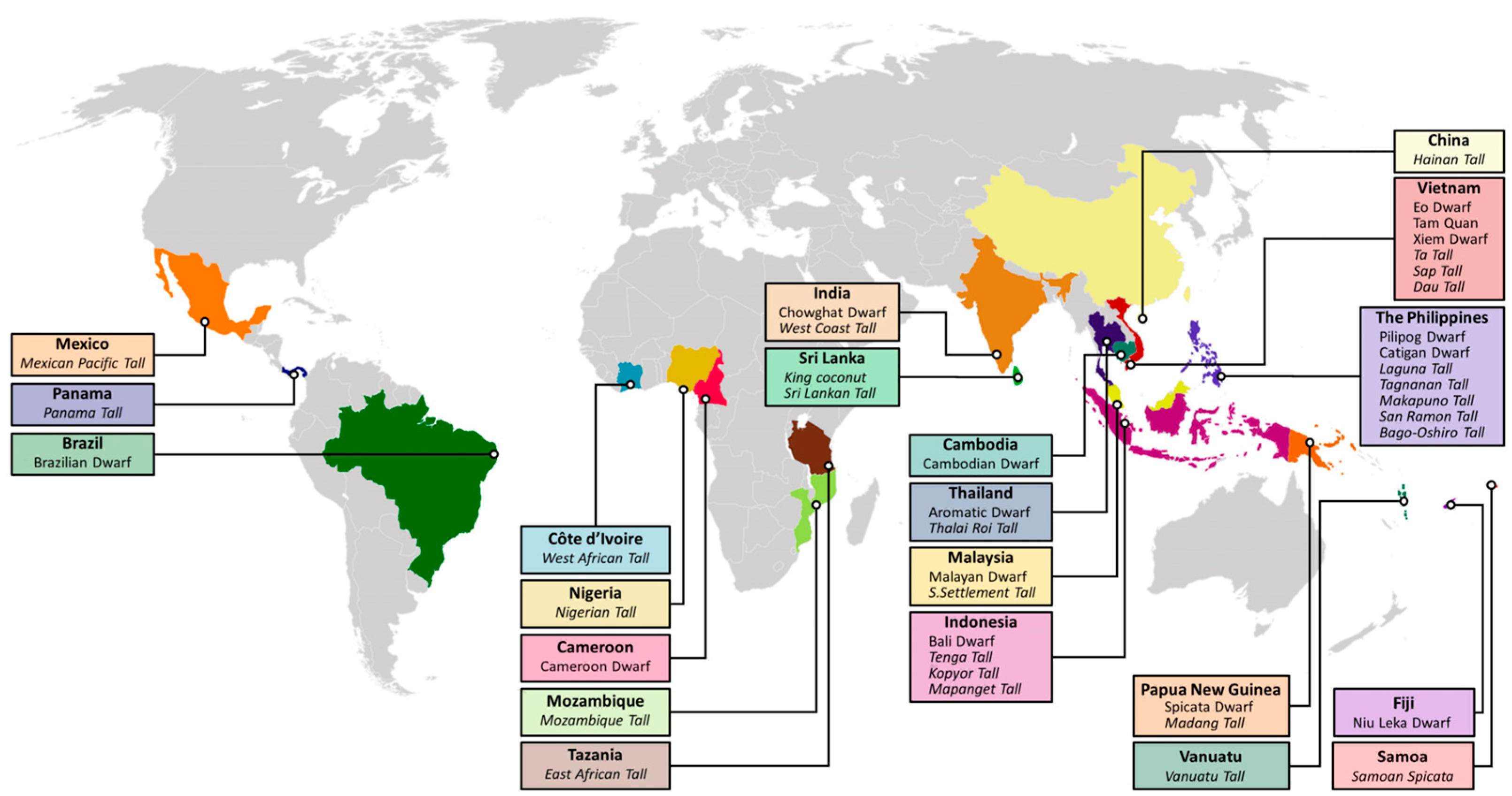
Figure 1. Distribution of important coconut varieties around the world. Italic names indicate the Tall coconut varieties, and circle points indicate major sites of coconut population in each listed country.
Horticulturae 11 01461 g001
Figure 2. Strategies for coconut germplasm exchange via embryo culture technology.
Horticulturae 11 01461 g002
Figure 3. Pathways for the international transfer of coconut and palm germplasm. The export of in vitro cultures enables maximum genetic integrity and proliferation in well-equipped laboratories (Destinations 1 and 2). For partners without such facilities (Destination 3), the protocol provides pre-acclimatized seedlings ready for field establishment.
Horticulturae 11 01461 g003
Table 2. Methods utilized for safe movement of coconut germplasm.
TechniquesTreatmentsReference
Coconut embryo culture laboratories are available in both exporting and destination countries
Embryos
-
Should be surface sterilized and grown under quarantine conditions
-
Must be extracted using standard embryo culture protocols
-
Only non-contaminated, clean embryos may be transported
-
Seedlings must be confirmed free of viroids, viruses, and phytoplasmas before release
[67,73]
The coconut embryo culture laboratory is only available in exporting country
Embryo-cultured seedlings
-
Should be held for at least 3 days in the laboratory of origin to check for contamination
-
Must be transported under in vitro conditions
-
Only seedlings ready for acclimatization may be released
[67]
The coconut embryo culture laboratory is only available in the destination country
Endosperm cylinders
-
Must undergo double surface sterilization (before transport and upon arrival)
-
Should reach the destination country within 5 days
-
Must be processed under quarantine conditions at the embryo culture laboratory
[76]
No coconut embryo culture laboratory is available in either the exporting or destination country
Seed nuts
-
Should be sent to a third country for embryo culture
or
-
Should be partially dehusked
-
Must undergo double fumigation (in exporting and destination countries)
-
Germination must occur under quarantine facilities
-
Each seedling must be indexed for viroids, viruses, and phytoplasmas
[72,73,77]
Pollen
-
Must be tested for viability and inspected for mites, nematodes, fungi, or bacteria
-
Should be dried to <10% moisture content and stored in vacuum-sealed vials
[73,78]
Table 3. Cryopreservation protocols for coconut (Cocos nucifera L.).
Explant TypeSucrose PrecultureCryopreservation ProtocolSurvival/Regrowth RateReferences
Coconut (Cocos nucifera L.)
Zygotic embryosN/ASilica gel dehydration—LN freezing: silica gel dehydration (8 h) + LN storage (24 h)65% regrowth, 20–40% establishment [100]
0.3 M sucrose (3 d) + 0.6 M sucrose (3 d)Vitrification (PVS3)—LN storage: PVS3 solution treatment (16 h) + LN storage (24 h)70–80% survival, 20–25% regrowth, 22% establishment[101]
0.6 M sucrose + 0.01 M gelrite (72 h)Vitrification (PVS3)—LN storage: PVS3 treatment (16 h) + LN storage (72 h)73% survival[102]
Plumule0.6 M sucrose + 0.01 M gelrite (72 h)Droplet vitrification (PVS2/PVS3)—LN storage: PVS2/PVS3 exposure at 0 °C (15 min) + LN storage (24 h)96% survival [103]
Meristem N/ADroplet vitrification (PVS2)—LN storage: PVS2 exposure at 0 °C (20/35/50 min) + LN storage (duration unspecified)82.3% survival [104]
Embryogenic calli0.75 M sucrose (72 h)Encapsulation–dehydration—LN storage: silica gel dehydration (20 h) + LN storage (2 h)45% survival, 25% regrowth[105]
Table 4. Cryopreservation technologies adaptable from other palm species for coconut (Cocos nucifera L.).
SpeciesExplantCore MethodSurvival/
Regrowth Rate
Take-Home Lessons for CoconutReferences
Date palm (Phoenix dactylifera L.)Embryogenic callusEncapsulation–dehydration (2–4 h laminar air flow) + vitrification (PVS2 at 25 °C, 0/15/30/60/120 min) + LN storage (≥48 h)86.7% survival, 53.5% regrowthTwo-step encapsulation widens PVS2 window; coconut embryos can be bead-immobilized to ease handling and cut mechanical injury.[106]
Laminar airflow dehydration (20 min, target moisture content 65%) → LN storage80% survival, 70% regrowthShort (20 min) airflow drying gives clear moisture benchmark; coconut can adopt the same rapid, chemical-free desiccation step.[107]
Oil palm (Elaeis guineensis Jacq.)Poly- embryoidsPVS2 exposure at 0 °C (10 min) → LN storage (1 h)68% survivalUltra-short droplet-PVS2 treatment is sufficient; coconut can switch from long bath to 10 min micro-droplet, saving time and reagent.[108]
Laminar air flow dehydration (9 h) → LN storage (1 h)73.3% survivalAmbient-air dehydration works for Arecaceae; coconut can use overnight airflow cabinets when silica gel is not functional.[108]
Peach palm (Bactris gasipaes Kunth)Somatic embryoPartial air dehydration (1–3 h) → PVS3 exposure (60–240 min) → direct LN submersion (1 min)60–90% survivalWide PVS3 tolerance (60–240 min) reduces over-exposure risk; coconut can replace PVS2 with PVS3 and extend incubation safely.[109]
Table 5. The acclimatization protocols used for coconut plantlets in vitro and ex vitro.
In Vitro Development and Pre-AcclimatizationEx Vitro Acclimatization and NurseryNotable ResultsReference
Liquid culture
Explant: zygotic embryos (Malayan Green Dwarf)
Medium: Y3 + 45 g·L−1 sucrose + 2.5 g·L−1 activated charcoal
Vessel: 500 mL bottle, 50 mL medium
Subculture: Every 2 months
Illumination: 16 h, 50 μmol·m−2·s−1
Temperature: 27 ± 2 °C
Misting irrigation
Container: Plastic bag
Substrate: Peatmoss, sand, soil (1:1:1)
Illumination: 13 h, 120 μmol·m−2·s−1
Temperature: 28 ± 10 °C
Humidity: 80–95%
  • High sucrose reduced photosynthesis;
  • Sucrose depletion during rooting lowered survival
[95]
Liquid culture
Explant: zygotic embryos (Laguna Tall)
Medium: Y3 + 60 g·L−1 sucrose + 0–20 mg·L−1 PVP or PEG + 1 g·L−1 activated charcoal
Vessel: 400 mL bottle, 100 mL medium
Nutrient replenishment: Every 60 days for 2 times
Illumination: 16 h, 120 μmol·m−2·s−1
Temperature: 25 ± 1 °C
Misting irrigation, plastic tent, wooden box humidity chamber
Selection: 3-leaf seedlings
Fungicide: 2 g·L−1 BenlateTM, 15 min
Container: 12 cm pots
Substrate: Garden soil + coir (1:1)
  • PEG/PVP inhibited growth;
  • Tent and chamber improved survival (82% vs. 62%)
[111]
Photoautotrophic system
Medium: Y3 + 0–60 g·L−1 sucrose
Vessel: 500 mL bottle, 40 mL medium
CO2: 1600 μmol·mol−1 (day), 350 μmol·mol−1 (night)
Illumination: 16 h, 90 μmol·m−2·s−1
Temperature: 29 ± 1 °C
Humidity: 85 ± 5%
Opened photoautotrophic system
Chamber: 110 × 50 × 40 cm acrylic
Container: 17 × 14 cm pots
Substrate: Soil, sand, compost (1:1:1)
Temperature: 25 ± 5 °C
Humidity: 60%
Increased survival (40→100%), reduced acclimatization time (10→6 months)[130]
Liquid culture
Explant: xygotic embryos (Kopyor Brown Dwarf)
Medium: HEC + 30 g·L−1 sucrose + 2 g·L−1 activated charcoal
Illumination: 14 h photoperiod (25 ± 2 μmol·m−2·s−1)
Temperature: 27 ± 2 °C
Mini-growth chamber
Selection: 2-leaf seedlings
Fungicide: 2% Dithane, 20 min
Chamber: 70 × 40 × 40 cm glass
Medium: Sucrose-free HEC + 1 µM IBA
Container: 7 × 10 cm pots
Substrate: Cocopeat + rice charcoal (1:1)
Illumination: 14 h, 40 ± 2 μmol·m−2·s−1
Temperature: 27 ± 2 °C
Humidity: 85 ± 5%
90% acclimatization success, low contamination, reduced labor[130]
Liquid culture
Explant: Plumule and inflorescence
Medium: Y3 + 50 g·L−1 sucrose + 2.5 g·L−1 activated charcoal
Vessel: 300 mL bottle, 100 mL medium
Subculture: Every 2 months
Illumination: 16 h, 60 μmol·m−2·s−1
Temperature: 27 ± 2 °C
Transparent plastic cover
Selection: 4-leaf seedlings Container: Plastic potting bag
Substrate: Peat, sand, soil (1:1:1)
Protocol not detailed[131]
Liquid culture
Explant: zygotic embryos (East African Tall)
Medium: Y3 + 5 µM IBA+ 0.5 µM GA3 + 40 g·L−1 sucrose + 1 g·L−1 activated charcoal
Vessel: 300 mL bottle, 100 mL medium
Illumination: 16 h photoperiod
Misting irrigation
Selection: 3-leaf seedlings
Substrate: Soil, sand, manure (3:1:1)
Foliar fertilizer: Every 21 days
Temperature: 28 ± 2 °C
Humidity: 75 ± 5%
New protocol achieved 40–60% survival[132]
Pre-acclimatization chamber
Explant: Cryo- and non-cryopreserved zygotic embryos (Malayan Yellow Dwarf, Xiem Green Dwarf)
Selection: 5-month-old Seedlings
Medium: Y3 + 100 µM NAA + 15 g·L−1 sucrose
CO2: 1600 μmol·mol−1
Illumination: 600 μmol·m−2·s−1
Temperature: 27 ± 2 °C
Mini-growth chamber
Selection: 8-month-old seedlings
Chamber: 160 × 80 × 80 cm glass
Container: 12 × 12 cm pots
Medium: Sucrose-free Y3
Substrate: Cocopeat + rice charcoal (1:1)
Foliar fertilizer: Seasol® seaweed solution
Illumination: 14 h, 45 μmol·m−2·s−1
Temperature: 27 ± 2 °C
Humidity: 90 ± 5%
89% survival for embryo-cultured; 85% for cryopreserved embryos[129]
In vitro and pre acclimatization
Explant: Plumule (Mexican Tall)
Protocols: not specified
Transparent plastic cover
Selection: 3–4 leaf seedlings
Container: 21 × 35 cm plastic bag
Substrate: Peat, sand, soil (1:1:1)
Arbuscular mycorrhizal fungi: 10–15 g per 2.5 kg substrate
Native AMF increased survival by 1.19–1.24×[82]
Table 6. Comparison of major biotechnological approaches for coconut germplasm exchange and conservation.
TechniqueKey FeaturesMajor AdvantagesMajor Limitations/RisksSuitability for BreedingReference
Pollen Transfer
-
No tissue culture needed
-
Long-term storage possible (cryo)
-
Low phytosanitary risk
-
Facilitates cross-breeding of asynchronous genotypes
-
Transfers only half of the genome
-
Requires viable pollen collection and processing
-
No direct clonal propagation
Medium: Useful for introducing specific alleles via controlled crossing, but not for conserving specific genotypes.[139,140,141]
Embryo Culture/Exchange
-
In vitro culture of zygotic embryos
-
Aseptic conditions
-
Drastic weight/size reduction (~1 g vs. 1–2 kg)
-
Lowers pest/disease transfer risk
-
Conserves full genotype
-
High contamination rates during process
-
Variable germination success
-
Requires specialized lab facilities and expertise
High: Ideal for conserving specific populations and elite hybrids. Provides full genetic complement for selection.[83,142]
In vitro Collection and Short-term Storage
-
Maintenance of tissues/cultures under controlled conditions
-
Clonal propagation possible
-
Disease-free plant material
-
Minimal space requirements
-
Risk of somaclonal variation during long-term culture [67]
-
Requires continuous subculture
High: Excellent for medium-term storage, rapid multiplication, and international exchange of disease-free clones.[143,144]
Cryopreservation
-
Ultra-low temperature storage (−196 °C) in LN
-
Theoretical indefinite storage
-
Minimal genetic change
-
Conservation of recalcitrant species
-
Complex protocol optimization needed
-
Explant-specific survival rates
-
Requires high technical skill and infrastructure
Very High: The gold standard for long-term conservation of base collections, securing genetic diversity for future breeding.[85,145]
Somatic Embryogenesis
-
Regeneration of whole plants from somatic cells
-
Mass clonal propagation of elite genotypes
-
Potential for genetic transformation
-
High risk of somaclonal variation [67]
-
Genotype-dependent efficiency
-
Can be lengthy and complex
Very High (with caution): Unparalleled for scaling up superior genotypes. Requires careful monitoring of genetic fidelity.[146,147,148]
Disclaimer/Publisher’s Note: The statements, opinions and data contained in all publications are solely those of the individual author(s) and contributor(s) and not of MDPI and/or the editor(s). MDPI and/or the editor(s) disclaim responsibility for any injury to people or property resulting from any ideas, methods, instructions or products referred to in the content.