
Article

Enhancing Establishment of Young Chestnut Trees Under Water-Limited Conditions: Effects of Ridge Planting and Foil Mulching on Growth, Physiology, and Stress Responses


Department of Agronomy, Biotechnical Faculty, University of Ljubljana, Jamnikarjeva 101, SI-1000 Ljubljana, Slovenia
*
Author to whom correspondence should be addressed.
Horticulturae 2025, 11(12), 1447; https://doi.org/10.3390/horticulturae11121447
Submission received: 30 October 2025 / Revised: 26 November 2025 / Accepted: 27 November 2025 / Published: 30 November 2025
(This article belongs to the Special Issue Strategies of Producing Horticultural Crops Under Climate Change)

Abstract

The successful establishment of young chestnut orchards is increasingly challenged by drought stress and limited irrigation availability, especially in areas with limited water access. This study evaluated the effects of ridge planting and plastic foil mulching, individually and in combination, on the early growth and stress physiology of vegetatively propagated Castanea sativa × C. crenata ‘Marsol’ trees under rainfed conditions. Over a two-year field trial, vegetative traits, photosynthetic pigments, and leaf phenolic profiles were assessed to determine treatment effects. Ridge planting combined with foil mulching significantly improved tree growth, leading to a 2.6-fold increase in leaf number and 1.6-fold increase in height compared to control (flat planting without foil). This treatment also minimized stress indicators, such as chlorosis and elevated phenolic content. Notably, the ellagitannin chestanin emerged as a dominant stress-related metabolite in the first year, suggesting its potential as an early biochemical marker of transplantation stress. Over time, a compositional shift in phenolic groups, from hydroxycinnamic acids and flavanols to flavonols and hydroxybenzoic acids, was observed, reflecting the plant’s transition from acute stress response to developmental acclimation. These results support ridge planting with foil as a practical, climate-adaptive solution for chestnut orchard establishment and highlight chestanin as a candidate marker for stress monitoring in young trees.

1. Introduction

European chestnut (Castanea sativa Mill.) holds considerable ecological, cultural, and economic importance in many European countries, including Slovenia. The chestnut sector has faced significant challenges in recent decades, primarily due to the spread of chestnut blight (Cryphonectria parasitica), which severely affected native populations.
However, recovery efforts are underway, particularly through the introduction of hybrid cultivars derived from C. sativa and the more disease-tolerant C. crenata, which exhibit improved resistance to chestnut blight [1]. Renewed interest in chestnut cultivation has also been driven by its potential as a resilient crop suited to marginal conditions and low-input agroforestry systems [2]. Despite this potential, the successful establishment of young chestnut orchards remains a major challenge, especially in areas with limited or no access to irrigation. In some orchards across Slovenia, seedling mortality in the first few years after planting exceeds 50%, mainly due to drought stress, poor soil moisture retention, and increasingly erratic climatic conditions. These issues are more acute in areas where irrigation is restricted due to legislative or environmental limitations.
Young chestnut trees are particularly vulnerable during the establishment phase, as their developing root systems are shallow and unable to access deeper water reserves. Understanding chestnut stress-resistance mechanisms therefore requires examining not only morphological responses but also biochemical adjustments. Metabolite profiling, particularly of phenolic compounds, provides a sensitive and early indicator of stress, often revealing physiological changes long before visible symptoms appear. In woody species, several metabolite groups, including phenolic acids, flavonoids, tannins, and especially ellagitannins, are consistently associated with abiotic stress tolerance due to their antioxidative and protective functions. High evapotranspiration rates, competition from weeds, and rapid surface-drying further compromise early growth and survival [3]. Consequently, there is a pressing need for sustainable, low-cost practices that enhance early tree vigor and reduce establishment losses under water-limited conditions.
One promising strategy is the use of agrofoil as it minimizes soil evaporation, improves moisture retention, and suppresses weed competition. In other fruit crops, agrofoil has demonstrated positive effects on early plant development by modifying the soil microclimate and supporting root zone stability [4]. Another potentially beneficial method is ridge planting, which improves root development by enhancing soil drainage and aeration [5]; however, its impact on chestnut has not yet been explored. These two techniques, either alone or in combination, could offer practical, environmentally benign solutions to enhance chestnut orchard establishment, particularly in water-restricted areas.
In response to increasing drought pressure, tightening environmental regulations, and the demand for more ecologically responsible orchard management, this study investigates the effects of agrofoil application and ridge planting on the early development of young chestnut trees (1–2 years after planting). The main objectives were to determine whether agrofoil and/or ridge planting improve plant growth and reduce early-season stress compared to conventional flat planting. Furthermore, we assessed their effects on plant survival and initial vegetative performance. Stress-responsive metabolites can also serve as potential biochemical markers for selecting more resilient genotypes, supporting future breeding efforts and enabling marker-assisted selection. In addition, metabolite-based indicators provide growers with practical tools for monitoring plant stress and optimizing cultivation practices during orchard establishment. We hope that these findings will support the development of more resilient and sustainable chestnut orchard systems, especially in regions where water scarcity or regulatory limitations make irrigation difficult or unfeasible. By providing practical, low-impact solutions, this work contributes to the advancement of climate-adaptive horticultural strategies for nut crops.

2. Materials and Methods

2.1. Plant Material

The experiment was conducted using 2-year-old vegetatively propagated chestnut plants of the cultivar ‘Marsol’ at the Experimental Field for Nut Crops in Maribor, Slovenia (46°34′01″ N; 15°37′51″ E; 275 m a.s.l.). The planting material consisted of uniform, vegetatively propagated ‘Marsol’ trees, approximately 1.0 m in height, with well-developed bare root systems. All plants were visually selected to ensure uniformity in shoot and root size prior to planting.
Planting was carried out on 15 November 2022, with a spacing of 1.5 m between individual trees. Before planting, the soil was mechanically prepared, and ridges were constructed on half of the planting area. These ridges measured approximately 0.5 m in width and 0.2 m in height. The experimental area was divided into four treatment groups based on two factors: soil surface structure (ridge vs. flat) and agrofoil application (with vs. without).
On 20 November 2022, agrofoil was applied to half of the ridge-planted and half of the flat-planted trees. The agrofoil used was a standard 4 mm thick black plastic mulch commonly employed in vegetable production. This setup resulted in four distinct treatment groups: (i) flat soil + agrofoil; (ii) ridge + agrofoil, (iii) flat soil without agrofoil (control), and (iv) ridge without agrofoil. Each treatment included 10 plants, for a total of 40 ‘Marsol’ chestnut trees. The experiment was conducted over a period of two years to ensure reliable and representative results. Wheater data parameters for each month are available in the Supplementary File, Table S1, and Figure S1. Details of the soil in which the plants were grown for the duration of this experiment are as follows: pH in KCl: 6.12, P2O5 (mg/100 g of sample): 17.1, K2O (mg/100 g of sample): 25.4, humus (%): 2.5, C-organic (%): 1.45, K2O (mg/100 g of sample): 26.0. The soil particle-size distribution was determined according to ISO 11277:2009 [6]. The soil contained 30.1% clay (<2 µm), 14.7% coarse silt (20–50 µm), 34.4% fine silt (2–20 µm), 15.3% fine sand (50–200 µm), and 5.5% coarse sand (200–2000 µm). Based on this distribution, the soil was classified as a clay loam (internal method). Plants were not fertigated or fertilized in the years of the experiment. Plants that were not under mulch foil were weeded regularly to ensure the weeds did not affect their growth. No spraying or pest control were performed in the years of the experiment. A standard black polyethylene mulch film, 1.20 m in width and 0.04 mm in thickness, was used in the experiment. At planting, the mulch film was placed 3 cm away from the plant trunk. The isolation belt between treatments was 3 m.

2.2. Basic Measurements

For each plant, the following measurements were taken: number of shoots per plant, number of leaves per plant, plant height, plant width, and stem girth. These parameters were evaluated for all plants in the experiment at the end of the growing season, between 15 and 20 September in both 2023 and 2024. Regarding shoot measurements, all shoots on each plant were evaluated for shoot length and internode distance.
For leaf measurements, 20 leaves per plant were sampled. The following parameters were measured using a CI-203 Handheld Laser Leaf Area Meter (CID BIO-Science, Washington, DC, USA): leaf area, leaf length, leaf width, leaf perimeter, leaf ratio, and leaf voids. All measurements were performed in both 2023 and 2024.
Additionally, due to pronounced chlorosis observed in 2023, leaf color was assessed using a CR-300 Chroma colorimeter (Minolta Co., Osaka, Japan). The measured parameters included L* (lightness), ranging from 0 (black) to 100 (white); a* and b* values, where positive a* indicates red and negative a* indicates green, while positive b* represents yellow and negative b* represents blue. Hue angle (h°), representing the attribute of visual perception, and chroma (C*), corresponding to color intensity, were also recorded. In 2024, no visible leaf color differences were observed between treatments. This was confirmed using the same colorimeter, but as no measurable variation was detected, the data from 2024 were not included in the manuscript.

2.3. Determination of the Photosynthetic Pigments in the Leaves

For the spectrophotometric analysis of leaf pigments, leaf disks (4 mm in diameter) were sampled from the middle third of the leaf, approximately 2 cm away from the main leaf vein, for all measurements. A total of five replicates were prepared. The leaf disks were placed into labeled paper bags and immediately shock-frozen in liquid nitrogen and stored at −20 °C until analysis.
For the extraction of chlorophylls and carotenoids, dimethyl sulfoxide (DMSO) was used. In microcentrifuge tubes, 0.5 mL of DMSO was added, followed by the leaf disk and several crystals of magnesium hydroxide carbonate to ensure an adequate concentration of Mg2+ ions in the solution. An additional 0.5 mL of DMSO was then added to each tube. The samples were incubated in a water bath at 65 °C in the dark for 2 h. After extraction, the samples were cooled to room temperature and transferred into cuvettes. Absorbance was measured immediately using a spectrophotometer (Lambda Bio 20, Perkin Elmer, Waltham, Massachusetts, USA) at wavelengths of 480 nm (carotenoids), 649 nm (chlorophyll b), and 665 nm (chlorophyll a). Concentrations of individual photosynthetic pigments (chlorophyll a, chlorophyll b, and carotenoids) in the extracts were calculated according to [7].

2.4. Extraction of Phenolic Compounds

To analyze the content of individual phenolic compounds, 10 leaves per plant per replication were sampled, with five biological replications per treatment, resulting in a total of 50 leaves per treatment. The leaves were frozen in liquid nitrogen and ground to a fine powder using a mortar and pestle.
The extraction protocol followed the method described by [8]. Phenolic compounds were extracted by mixing 0.2 g of leaf powder with 4 mL of 80% methanol containing 1% formic acid in bi-distilled water (1:5 w/v). The samples were sonicated in an ice-cooled ultrasonic bath for 60 min (Sonis 4; Iskra Pio, Šentjernej, Slovenia), centrifuged at 10,000× g for 10 min at 4 °C (5810 R centrifuge; Eppendorf, Hamburg, Germany), and filtered through 0.2 µm polyamide filters (Chromafil AO-20/25; Macherey-Nagel, Düren, North Rhine-Westphalia, Germany) for further analysis.

2.5. Analysis of Phenolic Compounds

Phenolic compounds were initially identified using a tandem mass spectrometer (MS/MS; LCQ Deca XP MAX; Thermo Scientific, Waltham, MA, USA). The instrument was operated in negative ion mode. The specific conditions for phenolic compound identification were previously described by [9]. Quantification was subsequently performed using a Vanquish UHPLC system equipped with a diode array detector. Detection wavelengths were set at 350 nm for flavonols and 280 nm for other phenolic compounds, following the conditions described by [10].
The quantification and identification of phenolic compounds were carried out using external standards where available. For unknown compounds, identification was based on MS fragmentation patterns and comparison with the existing literature, while quantification was performed using structurally similar standards. The phenolic content is reported in mg/kg, and the sum of all identified phenolic compounds is presented as the total analyzed phenolic content (TAPC), expressed in mg/kg of dry weight (DW).

2.6. Chemicals

The standards and chemicals used for the analysis were procured as follows: acetonitrile, formic acid, methanol, neochlorogenic acid, gallic acid, quercetin-3-O-galactoside, quercetin-3-O-rutinoside, kaempferol-3-O-glucoside, and (+)-catechin were obtained from Sigma-Aldrich Chemie GmbH (Steinheim, Nordrhein-Westfalen, Germany). Quercetin-3-O-glucoside, quercetin-3-O-rhamnoside, and isorhamnetin-3-O-glucoside were sourced from Fluka Chemie GmbH (Buchs, St. Gallen, Switzerland).

2.7. Statistical Analysis

Data compilation was performed using Microsoft Excel 2016, while statistical analyses were carried out using the R statistical environment with the Rcmdr package (version 2.7.1; R Development Core Team, 2008, Stanford, CA, USA). Results are presented as means ± standard error (SE). One-way analysis of variance (ANOVA) was used to evaluate differences among treatments, followed by Tukey’s Honest Significant Difference (HSD) post hoc test for multiple comparisons. Statistical significance was set at p < 0.05.
Multivariate analysis was conducted using Principal Component Analysis (PCA) using R with the R Commander (Rcmdr) 4.3.3 interface. The analysis was performed using R’s prcomp() function with centering and scaling enabled, so that all variables were standardized and the PCA was based on the correlation matrix. PCA results were visualized using the factoextra package (version 1.0.7), which relies on ggplot2 for plotting. Biplots display individual observations as points and variables as arrows labeled at their tips. Axis labels include the percentage of explained variance, and zero lines were marked with dashed lines against a light gray ggplot2-style grid background. Variable labels were positioned using the repel = TRUE function from the ggrepel package (version 0.9.6) to avoid overlap. Additional visualizations, such as plots showing only variables or only individuals, were generated using functions like fviz_pca_var() and fviz_pca_ind() to support interpretation of the multivariate data.

3. Results and Discussion

3.1. Vegetative Growth and Physiological Performance in the First Year After Planting

Table 1 shows that in the first year after planting, plants grown on ridges without foil developed fewer shoots per plant compared to other treatments. Similarly, the number of leaves per plant at the end of the growing season was significantly lower (108.33 ± 9.15), by more than 50 leaves, compared to plants in treatments with foil (between 161.83 ± 25.42 and 167.67 ± 15.57). In contrast, plants planted on ridges and covered with foil exhibited the most vigorous vegetative growth, reaching nearly 1.5 m in height within the first year. This combination also resulted in the greatest stem girth and longest shoots, suggesting improved water and nutrient uptake under this treatment. Ridge planting probably reduced the amount of water available to the plants, as the roots had not yet grown deeper and remained near the surface during the first year. Consequently, the available water was lower in ridge plantings without foil, and these plants therefore produced the lowest number of shoots as well as leaves per plant. When comparing plants grown without ridges, either with or without foil, we observed only one difference: stem girth. Plants covered with foil showed greater stem growth compared to those without foil. These observations highlight the benefits of ridge planting and plastic mulch in promoting early chestnut establishment under non-irrigated conditions. The enhanced shoot and stem development under foil treatments is consistent with previous findings in horticultural crops, where foil mulching was shown to reduce soil evaporation, regulate soil temperature, and improve microclimate conditions [11,12].
Leaf morphological traits also reflected treatment differences. The largest leaf area was recorded in plants grown on ridges and covered with foil (55.15 ± 5.27), indicating better resource acquisition and potentially greater photosynthetic capacity. In contrast, both treatments without foil exhibited visible signs of stress, including leaf discoloration and a yellowish hue, symptoms commonly associated with chlorosis. Physiological measurements confirmed these visual symptoms: foil-less treatments had lower chlorophyll content, particularly chlorophyll a, a sensitive marker of plant stress and nutrient deficiency (notably nitrogen) [13]. Carotenoid levels were also reduced in these treatments. As key components of the photoprotective system and antioxidant defense, carotenoids protect chlorophyll from photooxidative damage; thus, their reduced content indicates impaired protection and potential pigment degradation under stress [14,15].
In addition to pigment-related parameters, phenolic compound content served as a metabolic stress indicator. Plants grown under foil, whether on ridges or flat ground, consistently exhibited the lowest levels of individual phenolic compounds, phenolic groups, and total phenolic content (Table 4). Elevated phenolic levels are widely documented as part of the plant’s biochemical response to abiotic stress, particularly drought, as phenolics mitigate reactive oxygen species and help maintain cellular homeostasis [16,17]. In contrast, treatments without foil showed significantly higher phenolic concentrations, especially ridge-only treatments, suggesting more pronounced water stress. This is likely due to increased surface exposure and faster soil desiccation on ridges without mulch, exacerbating drought effects during the early establishment period.
When combining all measured parameters, a clear pattern emerged: the superior growth and physiological performance of plants planted on ridges and covered with foil is consistently supported by both morphological and biochemical indicators. These plants achieved the greatest height, largest leaf area, and lowest levels of stress-associated pigments and metabolites, confirming that this planting method created the most favorable conditions for early establishment and development. Such integrated approaches as combining ridge planting and plastic mulch can be particularly effective under rainfed or drought-prone conditions, aligning with sustainable practices aimed at reducing irrigation inputs while enhancing resilience in young orchard systems.

3.2. Vegetative and Physiological Development in the Second Year After Planting

Table 2 shows the results at the end of the second year after chestnut planting. Despite the stress observed in the first year, the plants responded appropriately, with the most vigorous growth recorded in those planted on ridges and covered with foil. These plants exhibited the highest number of shoots (51.83 ± 9.21) and leaves per plant (534.67 ± 83.44), as well as superior plant height (534.67 ± 83.44), canopy width (143.00 ± 7.46), stem girth (14.00 ± 0.86), and shoot length (43.69 ± 6.61), indicating enhanced overall growth. This supports the recommendation that, in the absence of irrigation, chestnut trees should be planted on ridges and covered with foil to reduce early stress and promote establishment. Ridge planting improves soil aeration and drainage, mitigating root hypoxia and waterlogging, while foil mulching reduces soil evaporation and moderates soil temperature, collectively alleviating drought stress during the critical establishment phase [18,19].
Even when ridge formation is not feasible, the use of foil alone resulted in better growth compared to treatments without foil, highlighting the important role of mulch in conserving soil moisture and reducing evapotranspiration [12]. However, when assessing leaf parameters in the second year, the differences among treatments became smaller or insignificant. This suggests that the positive effects of foil are primarily limited to the first year after planting, when drought stress and soil evaporation are most critical. As root systems become established and more efficient at water uptake, the influence of foil mulch diminishes, consistent with findings in other woody species [20].
This trend is further supported by leaf pigment measurements. Chlorophyll content in the second year showed little variation between treatments, with the highest levels unexpectedly observed in the control plants (no foil, no ridge). This may be explained by the fact that control plants produced fewer and smaller leaves, resulting in a higher chlorophyll concentration per unit leaf area. Additionally, plants grown on ridges or under foil may have been at a slightly earlier developmental stage during measurement, as expanding leaves naturally contain lower chlorophyll levels. However, phenolic content analysis tells a different story: plants grown on ridges and covered with foil once again exhibited the lowest levels of individual and total phenolics, indicating they were under the least stress. Elevated phenolic levels are widely recognized as biochemical markers of environmental stress, as phenolic compounds, particularly flavonoids and ellagitannins, function as antioxidants, membrane stabilizers, and structural protectants that mitigate oxidative damage and strengthen cell integrity under drought and other abiotic stresses [16]. In our study, no significant differences in total phenolic content were observed among the remaining treatments, indicating that the combined ridge and foil treatment was most effective in reducing stress and therefore did not trigger additional phenolic accumulation. Looking at leaf voids from 2023 and 2024, we can see a big difference. Although pests or other stress factors can influence leaf area, no such symptoms were observed in our trial. The sharp increase in leaf voids from 2023 to 2024 is therefore best explained by the natural expansion of the canopy, as plants were one year old in 2023 and two years old in 2024.

3.3. Changes in Phenolic Composition Between First and Second Year After Planting

Looking only at phenolic compounds, we can see that 22 phenolic compounds were identified (Table 3). The majority were previously identified in chestnut leaves or their byproducts [21,22,23,24]. Kaempferol-3-O-(6ˇ-O-acetyl)-glucoside-7-O-rhamnoside, also known as Kaempferol-3-O-neohesperidoside acetate, however, was identified for the first time in C. sativa or any Castanea species.
The individual phenolic contents can be seen in Table 4 and Table 5. Looking at individual phenolic compounds, we can see that chestanin was the major phenolic compound in C. sativa leaves, with values between 5.94 and 21.23 mg/kg DW, followed by quercetin-3-O-rutinoside (4.48 to 9.80 mg/kg DW). This is more or less consistent with the only study that, in addition to identifying, also quantified the phenolic compounds in the chestnut leaves [22]. Cerulli et al. [22], however, reported the highest content of phenolic compounds for cretanin, followed by of chestantin and quercetin-3-O-rutinoside. Interestingly, cretanin was not even identified in our used cultivar.
Table 4. Content of phenolic compounds (mean ± SE, mg/kg dry weight) in the leaves of C. sativa ‘Marsol‘, as influenced by different planting techniques, in the first year after planting.
Phenolic Content in Leaves (mg/kg DW)
FoilNo Foil
CompoundNo RidgeRidgeNo RidgeRidge
Hydroxycinnamic acids
5-O-p-coumaroylquinic acid2.57 ± 0.06 a2.73 ± 0.31 a2.93 ± 0.01 a2.88 ± 0.23 a
Cryptochlorogenic acid (4-caffeoylquinic acid)0.22 ± 0.05 ab0.10 ± 0.02 a0.22 ± 0.02 ab0.30 ± 0.01 b
Hydroxybenzoic acids
Gallic acid0.80 ± 0.04 a0.53 ± 0.21 a0.73 ± 0.09 a2.00 ± 0.09 b
Gallic acid derivative 10.44 ± 0.07 b0.29 ± 0.05 b3.58 ± 0.01 a3.44 ±0.14 a
Gallic acid derivative 21.35 ± 0.08 a1.24 ± 0.06 a1.67 ± 0.07 a3.82 ± 0.18 b
Hexahydroxydiphenic acid 11.01 ± 0.08 a0.75 ± 0.18 a0.63 ± 0.03 a4.05 ± 0.21 b
Hexahydroxydiphenic acid 20.94 ± 0.09 a0.66 ± 0.09 a0.66 ± 0.03 a3.17 ± 0.21 b
Hexahydroxydiphenic acid derivative 11.64 ± 0.15 a1.36 ± 0.10 a0.91 ± 0.04 a5.48 ± 0.32 b
Hexahydroxydiphenic acid derivative 21.82 ± 0.10 a1.57 ± 0.05 a1.55 ± 0.05 a4.19 ± 0.33 b
Chestanin17.95 ± 0.20 bc16.36 ± 0.30 b21.23 ± 0.14 a18.91 ± 0.79 c
Isochestanin2.95 ± 0.13 b2.85 ± 0.03 b3.97 ± 0.03 a3.74 ± 0.21 a
Flavanols
(+) Catechin1.35 ± 0.21 b0.70 ± 0.22 b3.50 ± 0.23 a4.99 ± 0.27 c
Procyanidin pentoside2.52 ± 0.41 a1.58 ± 0.03 a2.69 ± 0.17 a5.02 ± 0.47 b
Flavonols
Quercetin-3-O-rutinoside4.48 ± 0.42 b4.66 ± 0.07 b6.14 ± 0.09 a8.16 ± 0.45 c
Quercetin-3-O-galactoside0.61 ± 0.11 b0.50 ± 0.03 b1.41 ± 0.03 a1.84 ± 0.13 c
Quercetin-3-O-glucoside1.92 ± 0.13 b2.32 ± 0.03 b4.15 ± 0.04 a4.77 ± 0.24 c
Kaempferol-3-O-rutinoside0.21 ± 0.07 c0.23 ± 0.03 ac0.43 ± 0.01 ab0.57 ± 0.06 b
Isorhamnetin-3-O-rutinoside0.21 ± 0.08 b0.24 ± 0.03 b0.33 ± 0.02 ab0.52 ± 0.07 a
Quercetin-3-O-glucuronide0.96 ± 0.07 b0.79 ± 0.03 b1.78 ± 0.03 a2.34 ± 0.17 c
Kaempferol-3-O-glucoside0.68 ± 0.05 b0.71 ± 0.01 b1.38 ± 0.02 a1.55 ± 0.07 a
Quercetin-3-O-rhamnoside0.62 ± 0.14 b0.55 ± 0.04 b1.19 ± 0.03 a1.54 ± 0.14 a
Kaempferol-3-O-(6ˇ-O-acetyl)glucoside-7-O-rhamnoside 0.64 ± 0.10 ab0.39 ± 0.01 a0.66 ± 0.04 ab0.91 ± 0.11 b
Total hydroxycinnamic acids2.80 ± 0.10 a2.83 ± 0.32 a3.15 ± 0.02 a3.18 ± 0.24 a
Total hydroxybenzoic acids28.88 ± 0.68 b25.61 ± 0.96 b34.94 ± 0.14 a48.54 ± 2.27 c
Total flavanols3.87 ± 0.61 b2.28 ± 0.25 b6.19 ± 0.39 a10.02 ± 0.70 c
Total flavonols10.33 ± 1.16 b10.40 ± 0.24 b17.47 ± 0.30 a22.19 ± 1.31 c
TAPC45.87 ± 2.50 b41.12 ± 1.33 b61.76 ± 0.74 a83.93 ± 4.22 c
Data are means ± standard error. Means followed by different letters across the treatments (within rows) are significantly different (p < 0.05).
Table 5. Content of phenolic compounds (mean ± SE, mg/kg dry weight) in the leaves of C. sativa ‘Marsol‘, as influenced by different planting techniques, in the second year after planting.
Phenolic Content in Leaves (mg/kg DW)
FoilNo Foil
CompoundNo RidgeRidgeNo RidgeRidge
Hydroxycinnamic acids
5-O-p-coumaroylquinic acid1.20 ± 0.07 b0.71 ± 0.10 a0.81 ± 0.07 a1.02 ± 0.08 ab
Cryptochlorogenic acid (4-caffeoylquinic acid)0.58 ± 0.06 a0.37 ± 0.07 a0.40 ± 0.08 a0.38 ± 0.07 a
Hydroxybenzoic acids
Gallic acid2.94 ± 0.06 a3.04 ± 0.10 a3.18 ± 0.45 a2.96 ± 0.10 a
Gallic acid derivative 10.51 ± 0.08 a0.50 ± 0.16 a0.38 ± 0.13 a0.31 ± 0.11 a
Gallic acid derivative 23.01 ± 0.19 a2.81 ± 0.30 a3.62 ± 0.21 a3.16 ± 0.18 a
Hexahydroxydiphenic acid 110.60 ± 0.13 a8.53 ± 0.22 b11.07 ± 0.63 a10.76 ± 0.28 a
Hexahydroxydiphenic acid 23.40 ± 0.12 a2.72 ± 0.21 a3.12 ± 0.24 a3.34 ± 0.16 a
Hexahydroxydiphenic acid derivative 110.11 ± 0.21 a8.27 ± 0.29 b10.11 ± 0.33 a10.66 ± 0.36 a
Hexahydroxydiphenic acid derivative 25.32 ± 0.16 a4.27 ± 0.17 b5.40 ± 0.19 a5.41 ± 0.15 a
Chestanin8.23 ± 0.15 a5.94 ± 0.21 b8.42 ± 0.54 a8.91 ± 0.30 a
Isochestanin1.87 ± 0.06 a1.44 ± 0.18 a1.69 ± 0.12 a1.93 ± 0.13 a
Flavanols
(+) Catechin2.05 ± 0.28 a1.44 ± 0.27 a1.31 ± 0.32 a1.13 ± 0.26 a
Procyanidin pentoside2.00 ± 0.18 a1.28 ± 0.21 a1.59 ± 0.16 a1.76 ± 0.25 a
Flavonols
Quercetin-3-O-rutinoside9.21 ± 0.30 ab8.02 ± 0.39 b9.80 ± 0.35 a9.60 ± 0.38 a
Quercetin-3-O-galactoside1.41 ± 0.05 a1.17 ± 0.14 a1.40 ± 0.12 a1.32 ± 0.11 a
Quercetin-3-O-glucoside4.46 ± 0.05 a3.66 ± 0.17 b4.94 ± 0.18 a4.95 ± 0.21 a
Kaempferol-3-O-rutinoside0.71 ± 0.07 a0.46 ± 0.10 a0.59 ± 0.08 a0.56 ± 0.08 a
Isorhamnetin-3-O-rutinoside0.76 ± 0.03 a0.56 ± 0.12 a0.78 ± 0.11 a0.75 ± 0.10 a
Quercetin-3-O-glucuronide2.31 ± 0.05 a1.85 ± 0.15 a2.19 ± 0.14 a2.19 ± 0.16 a
Kaempferol-3-O-glucoside1.25 ± 0.02 b1.17 ± 0.05 b1.49 ± 0.05 a1.57 ± 0.07 a
Quercetin-3-O-rhamnoside1.73 ± 0.04 a1.29 ± 0.15 a1.67 ± 0.13 a1.62 ± 0.18 a
Kaempferol-3-O-(6ˇ-O-acetyl)glucoside-7-O-rhamnoside 1.06 ± 0.04 a0.92 ± 0.82 a1.11 ± 0.07 a1.11 ± 0.09 a
Total hydroxycinnamic acids1.77 ± 0.13 a1.08 ± 0.17 b1.21 ± 0.16 ab1.40 ± 0.14 ab
Total hydroxybenzoic acids46.05 ± 1.10 a37.53 ± 1.66 b46.98 ± 2.17 a47.45 ± 1.56 a
Total flavanols4.01 ± 0.45 a2.72 ± 0.48 a2.90 ± 0.46 a2.89 ± 0.49 a
Total flavonols22.90 ± 0.50 ab19.10 ± 1.33 b23.96 ± 1.21 a23.66 ± 1.35 ab
TAPC74.77 ± 2.19 a60.43 ± 3.54 b75.05 ± 3.52 a75.40 ± 3.21 a
Data are means ± standard error. Means followed by different letters across the treatments (within rows) are significantly different (p < 0.05).
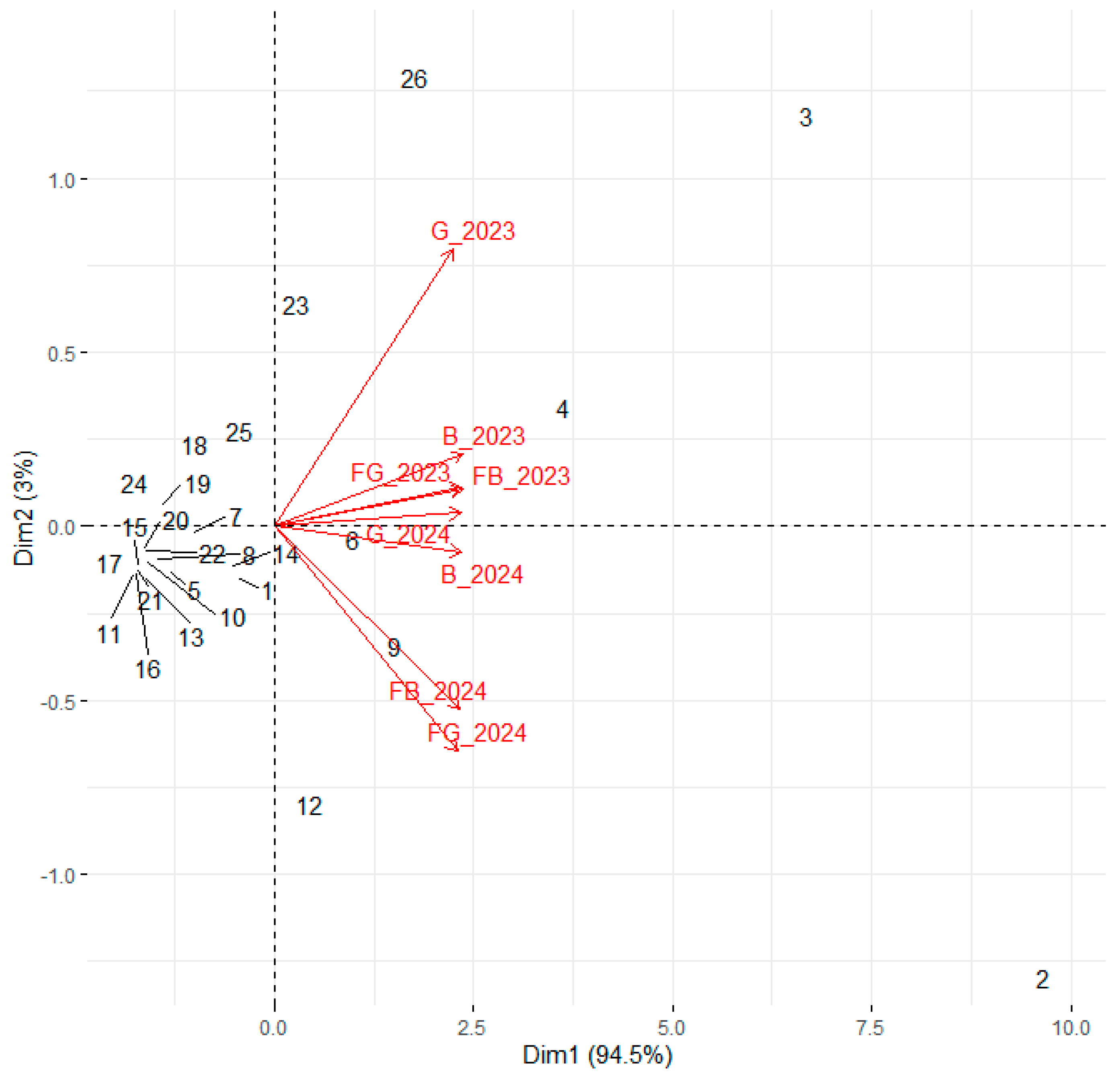
As shown in Figure 1, chestanin was the most abundant phenolic compound in leaves during the first year after planting. This pattern suggests that chestanin accumulation is induced in response to stress, most likely triggered by transplantation and the associated physiological disturbance. Phenolic compounds such as chestanin, which belongs to the ellagitannin class, are widely recognized for their antioxidant properties and roles in mitigating oxidative damage under abiotic stress conditions [25]. Interestingly, the temporal dynamics of chestanin mirrored those of other stress-related parameters, including pigment levels and plant morphological traits, reinforcing its potential role as a biochemical marker of early stress response in young chestnut trees. Interestingly, Table 4 shows that chestanin content was higher in the flat cultivation without film group compared to the ridge without film group. Although ridge cultivation can initially intensify stress through reduced early-season water availability, it also promotes faster root penetration and improved drainage as the season progresses. By the time leaves were sampled, plants on ridges were likely already recovering from early stress, resulting in slightly lower chestanin accumulation compared to the flat, no-foil treatment, where stress conditions remained more constant. Thus, the lower chestanin levels in the ridge without film group are consistent with chestanin acting as an early, transient stress marker rather than a marker of long-term stress intensity. In contrast, leaves sampled in the second year showed significantly higher concentrations of hexahydroxydiphenic acid derivatives and quercetin-3-O-rutinoside. These compounds have been associated with developmental regulation and longer-term acclimation mechanisms rather than acute stress [26]. Their delayed accumulation compared to chestanin implies that different branches of the phenylpropanoid pathway are activated at distinct stages of plant establishment and stress recovery, consistent with observations in other woody perennials, where flavonoid glycosides tend to accumulate during the maturation and adaptation phases [17]. Taken together, these findings support the hypothesis that chestanin plays a role in early stress resilience mechanisms following transplantation. Given its correlation with both physiological and biochemical stress indicators, chestanin shows promise as an early marker for abiotic stress detection in chestnut cultivation. This opens new avenues for further research into its specific role in plant defense, signaling, or antioxidant activity. Moreover, if validated under broader environmental conditions, chestanin could be utilized as a diagnostic parameter in precision horticulture applications, such as smart orchards, enabling real-time monitoring and more responsive stress management strategies during the critical establishment phase of young trees.
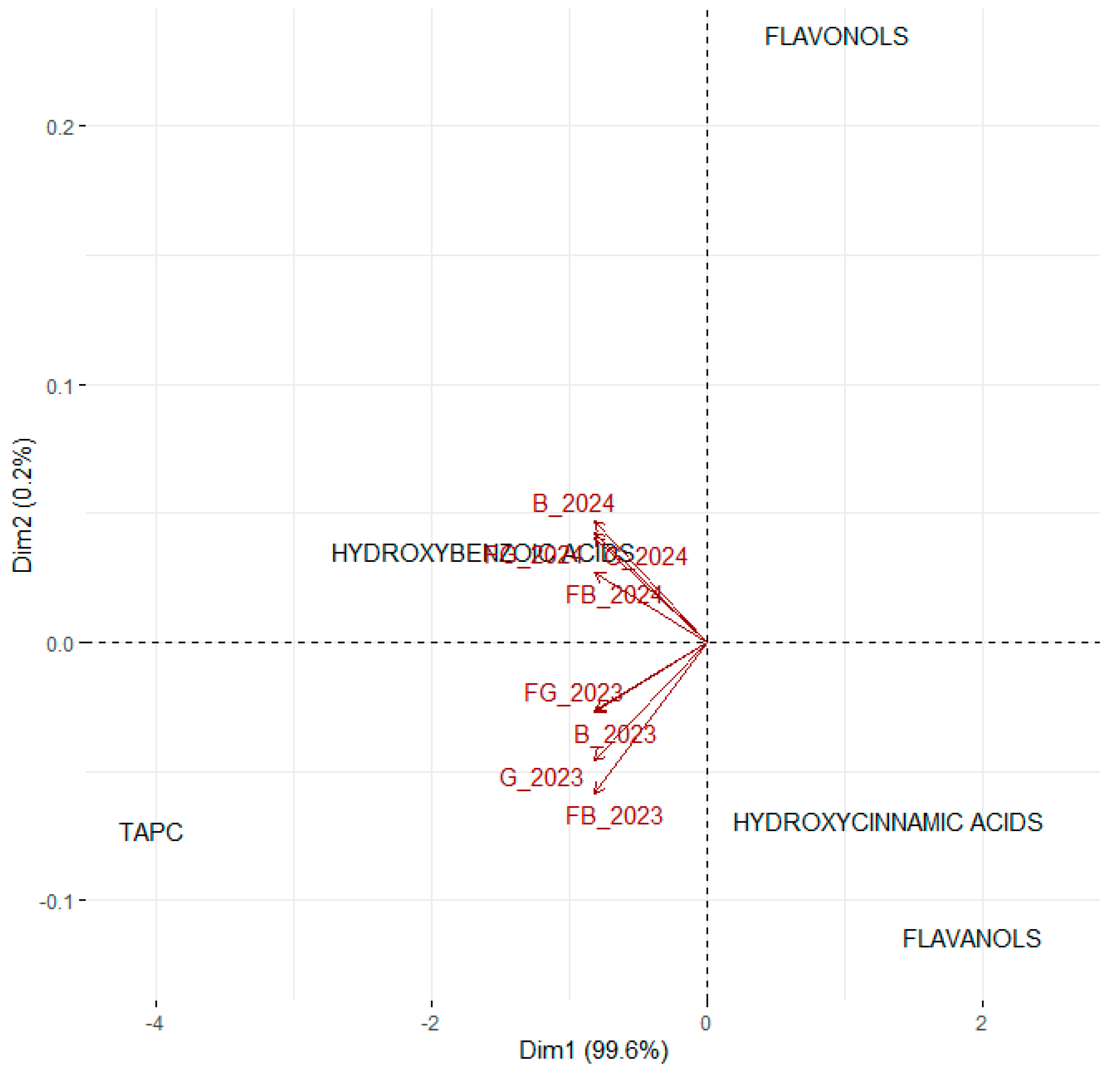
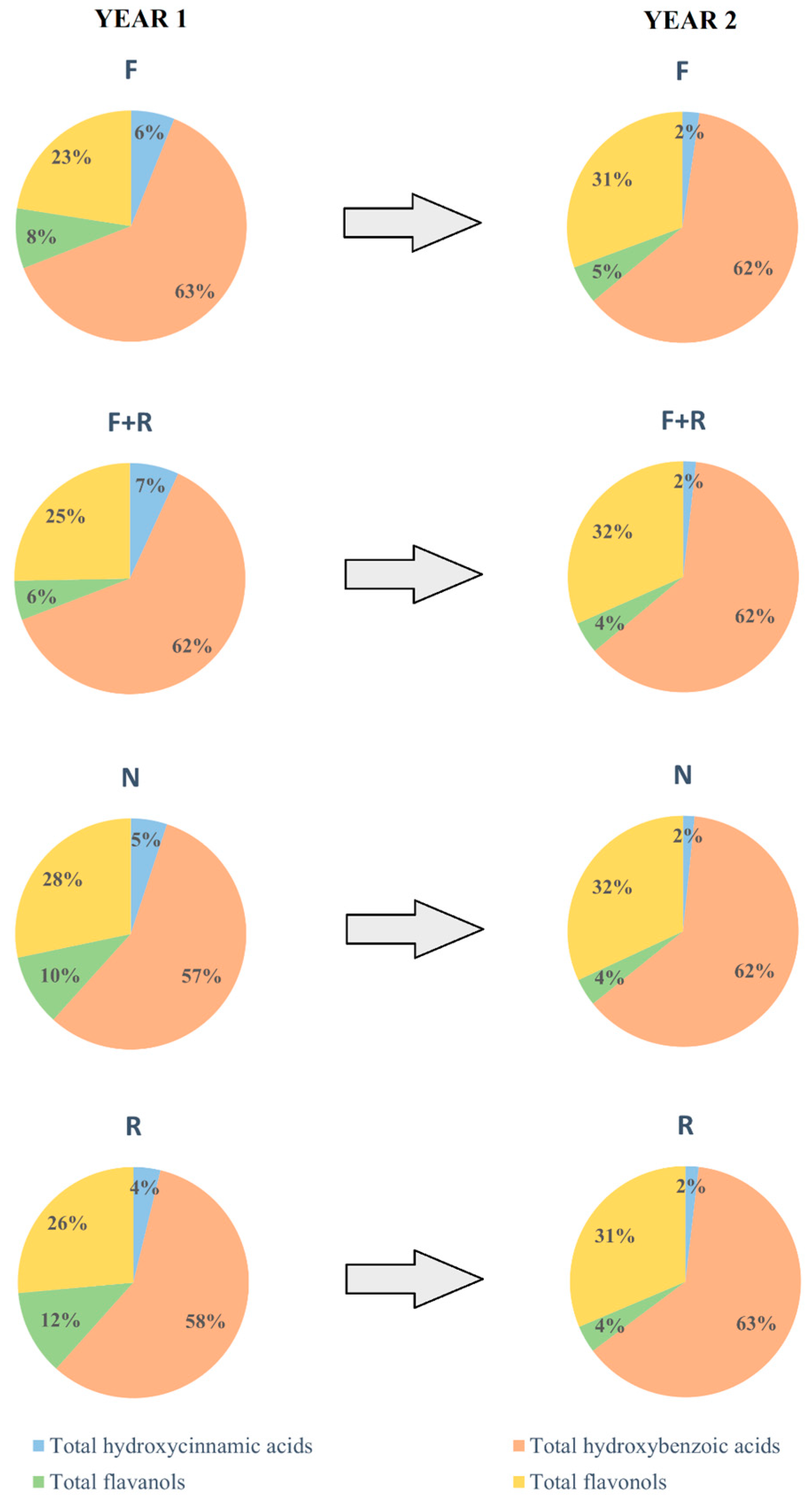
When looking at total phenolic groups’ content (both absolute and relative—Figure 2 and Figure 3), PCA shows that hydroxycinnamic acids and flavanols were the main phenolic compounds in the first year after transplantation, while flavonols and hydroxybenzoic acids were the main phenolic compounds in the second year after transplantation. A similar trend was observed in a study on sorghum grain development, where principal component analysis revealed that the early developmental stages were dominated by phenolic acids, particularly hydroxycinnamic acid derivatives such as caffeic, p-coumaric, and ferulic acids, while later stages showed a shift toward a higher relative abundance of flavonoids, accounting for up to 60% of the total phenolic content [27]. Although this study focused on grain development rather than leaf responses to transplantation, the underlying pattern supports our findings: hydroxycinnamic acids and flavanols were predominant in the first year after planting, whereas flavonols and hydroxybenzoic acids became more prominent in the second year. This temporal shift in phenolic composition may reflect a transition from acute stress response and establishment to the longer-term developmental and acclimation processes clearly seen in Figure 3.

3.4. Taking All Parameters into Account in the First and Second Years After Planting

Lastly, taking all the parameters into account, we can see (Figure 4) that the PCA biplot shows a distinct separation between samples from 2023 and 2024 along the first principal component (Dim1), which explains 94.5% of the total variance. Samples from 2023 are positively associated with phenolic compounds, particularly hydroxycinnamic acids, flavanols, and flavonols, as well as with pigment-related parameters such as carotenoids and total pigment content. These compounds likely reflect stress-induced metabolic responses following transplantation, as phenolic metabolism and pigment accumulation are well-known protective mechanisms against oxidative stress and environmental challenges [28,29]. In contrast, samples from the 2024 group show morphological and growth traits, including number of shoots, number of leaves, plant height, and trunk girth, that indicate a shift toward developmental and structural parameters. This temporal divergence suggests that phenolic and pigment-related traits dominate the early stress response phase, while growth and structural attributes become more important during the plant’s acclimation and recovery in the second year [29]. Furthermore, we clearly observed that plants grown in soil without foil coverage exhibited greater stress and reduced growth, confirming our earlier conclusion that planting chestnut trees on ridges and covering the soil with foil is the most effective method for orchards lacking irrigation. For future experiments, it would be valuable to compare irrigated and foil-covered plants to determine whether additional benefits can be achieved through combined approaches. Nevertheless, these results are significant and provide new insights that can inform both technological recommendations for orchard management and practical guidance for farmers establishing chestnut orchards. They also serve as a strong foundation for future research on stress mitigation and improved establishment techniques in chestnut cultivation.

4. Conclusions

We can conclude that planting chestnut trees on ridges and covering the soil with foil in regions and countries with similar annual rainfall patterns and weather is the most effective method for orchards that lack irrigation; however, in regions where weather patterns significantly differ, this should be tested and confirmed prior to its wide acceptance. This treatment consistently resulted in the least plant stress and the highest overall plant vigor. Consequently, it produced the tallest 2.3 m plants and most robust trees among all treatments. After two years, plants grown on ridges and under foil had 2.63 times more leaves, 2.17 times more shoots, 1.59 times the height, and 1.53 times the stem girth compared to the control treatment (classical planting on flat ground without foil). Even if ridge formation is not feasible, we still recommend the use of soil-covering foil, as this significantly reduced plant stress and improved growth. For example, plants grown on flat ground with foil had 1.63 times more shoots, 1.89 times more leaves, were 1.21 times taller, and had 1.40 times greater stem girth than the control. After two years, there was no clear advantage of planting on ridges versus flat ground if foil was not used. In fact, in the first year, ridge-planted trees without foil showed reduced performance, likely due to increased drought stress caused by the faster drying of elevated soil. For future studies, it would be beneficial to explore alternative soil covers, such as biodegradable foils or organic mulches, to reduce the environmental impact associated with plastic foil use. Overall, chestanin emerges as a promising candidate for early stress detection in chestnut, with potential applications in both research and precision orchard management. Overall, the temporal shift in dominant phenolic groups highlights the dynamic nature of plant metabolic responses following transplantation, with hydroxycinnamic acids and flavanols likely involved in early stress adaptation, and flavonols and hydroxybenzoic acids reflecting subsequent developmental and acclimation processes.

Supplementary Materials

The following supporting information can be downloaded at: https://www.mdpi.com/article/10.3390/horticulturae11121447/s1, Table S1: Weather data parameters during the course of the experiment, Figure S1. Field photo of the experimental design.

Author Contributions

Conceptualization, A.M.; methodology, A.M.; software, A.M., P.K.; validation, A.M., M.C.G. and P.K.; formal analysis, A.M.; investigation, A.M. and M.C.G.; resources, A.M.; data curation, A.M. and P.K.; writing—original draft preparation, A.M.; writing—review and editing, M.C.G. and P.K.; visualization, A.M.; supervision, P.K.; project administration, A.M.; funding acquisition, A.M. All authors have read and agreed to the published version of the manuscript.

Funding

This study is a part of program P4-0013-0481 funded by the Slovenian Research and Innovation Agency (ARIS).

Institutional Review Board Statement

Not applicable.

Informed Consent Statement

Not applicable.

Data Availability Statement

The original contributions presented in this study are included in the article/Supplementary Materials. Further inquiries can be directed to the corresponding authors.

Conflicts of Interest

The authors declare no conflicts of interest.

References

  1. Prospero, S.; Rigling, D. Chestnut blight. In Infectious Forest Diseases; CABI: Wallingford, UK, 2013; pp. 318–339. [Google Scholar] [CrossRef]
  2. Menéndez-Miguélez, M.; Álvarez-Álvarez, P.; Pardos, M.; Madrigal, G.; Ruiz-Peinado, R.; López-Senespleda, E.; Del Río, M.; Calama, R. Development of tools to estimate the contribution of young sweet chestnut plantations to climate-change mitigation. For. Ecol. Manag. 2023, 530, 120761. [Google Scholar] [CrossRef]
  3. Reid, M.; Kalcsits, L. Water deficit timing affects physiological drought response, fruit size, and bitter pit development for ‘Honeycrisp’apple. Plants 2020, 9, 874. [Google Scholar] [CrossRef] [PubMed]
  4. Marasović, P.; Kopıtar, D.; Brunšek, R.; Schwarz, I. The impact of cellulose and PLA biopolymer nonwoven mulches on the soil health. J. Polytech. 2023, 27, 1773–1779. [Google Scholar] [CrossRef]
  5. Khan, M.; Rafiq, R.; Hussain, M.; Farooq, M.; Jabran, K. Ridge sowing improves root system, phosphorus uptake, growth and yield of maize (Zea mays L.) hybrids. J. Anim. Plant Sci. 2012, 22, 309–317. [Google Scholar]
  6. ISO 11277:2009; Soil Quality—Determination of Particle Size Distribution in Mineral Soil Material—Method by Sieving and Sedimentation. International Organization for Standardization (ISO): Geneva, Switzerland, 2009.
  7. Wellburn, A.R. The spectral determination of chlorophylls a and b, as well as total carotenoids, using various solvents with spectrophotometers of different resolution. J. Plant Physiol. 1994, 144, 307–313. [Google Scholar] [CrossRef]
  8. Medic, A.; Zamljen, T.; Hudina, M.; Veberic, R. Identification and quantification of naphthoquinones and other phenolic compounds in leaves, petioles, bark, roots, and buds of Juglans regia L., using HPLC-MS/MS. Horticulturae 2021, 7, 326. [Google Scholar] [CrossRef]
  9. Medic, A.; Kunc, P.; Veberič, R. How storage temperatures shape the metabolic content of selected red and green kiwiberry cultivars. Food Chem. 2025, 48, 144864. [Google Scholar] [CrossRef] [PubMed]
  10. Medic, A.; Kunc, P.; Zamljen, T.; Hudina, M.; Veberic, R.; Solar, A. Identification and quantification of the major phenolic constituents in Castanea sativa and commercial interspecific hybrids (C. sativa × C. crenata) chestnuts using HPLC–MS/MS. Int. J. Mol. Sci. 2023, 24, 13086. [Google Scholar] [CrossRef]
  11. Memon, M.; Zhou, J.; Guo, J.; Ullah, F.; Hassan, M.; Ara, S.; Ji, C.Y. Comprehensive review for the effects of ridge furrow plastic mulching on crop yield and water use efficiency under different crops. Int. Agric. Eng. J. 2017, 26, 58–67. [Google Scholar]
  12. Ramos, T.B.; Darouich, H.; Pereira, L.S. Mulching effects on soil evaporation, crop evapotranspiration and crop coefficients: A review aimed at improved irrigation management. Irrig. Sci. 2024, 42, 525–539. [Google Scholar] [CrossRef]
  13. Athar, H.-R.; Zafar, Z.U.; Ashraf, M. Glycinebetaine improved photosynthesis in canola under salt stress: Evaluation of chlorophyll fluorescence parameters as potential indicators. J. Agron. Crop Sci. 2015, 201, 428–442. [Google Scholar] [CrossRef]
  14. Demmig-Adams, B. Carotenoids and photoprotection in plants: A role for the xanthophyll zeaxanthin. Biochim. Biophys. Acta (BBA)—Bioenerg. 1990, 1020, 1–24. [Google Scholar] [CrossRef]
  15. Mibei, E.K.; Ambuko, J.; Giovannoni, J.J.; Onyango, A.N.; Owino, W.O. Carotenoid profiling of the leaves of selected African eggplant accessions subjected to drought stress. Food Sci. Nutr. 2017, 5, 113–122. [Google Scholar] [CrossRef] [PubMed]
  16. Sharma, P.; Jha, A.B.; Dubey, R.S.; Pessarakli, M. Reactive oxygen species, oxidative damage, and antioxidative defense mechanism in plants under stressful conditions. J. Bot. 2012, 2012, 217037. [Google Scholar] [CrossRef]
  17. Lattanzio, V.; Lattanzio, V.; Cardinali, A. Role of phenolics in the resistance mechanisms of plants against fungal pathogens and insects. In Trivandrum, Phytochemistry: Advances in Research; Imperato, F., Ed.; Research Signpost: Kochi, India, 2006; pp. 23–67. [Google Scholar]
  18. Zheng, R.; Tan, J.; Huo, Z.; Huang, G. Effects of ridge planting on the distribution of soil water-salt-nitrogen, crop growth, and water use efficiency of processing tomatoes under different irrigation amounts. Water 2025, 17, 1738. [Google Scholar] [CrossRef]
  19. Liu, X.; Wang, Y.; Yan, X.; Hou, H.; Liu, P.; Cai, T.; Zhang, P.; Jia, Z.; Ren, X.; Chen, X. Appropriate ridge-furrow ratio can enhance crop production and resource use efficiency by improving soil moisture and thermal condition in a semi-arid region. Agric. Water Manag. 2020, 240, 106289. [Google Scholar] [CrossRef]
  20. Frezghi, H.; Abay, N.; Yohannes, T. Effect of mulching and/or watering on soil moisture for growth and survival of the transplanted tree seedlings in dry period. Am. J. Plant Sci. 2021, 12, 221–233. [Google Scholar] [CrossRef]
  21. Silva, V.; Falco, V.; Dias, M.I.; Barros, L.; Silva, A.; Capita, R.; Alonso-Calleja, C.; Amaral, J.S.; Igrejas, G.; Ferreira, I.C.F.R.; et al. Evaluation of the phenolic profile of Castanea sativa Mill. by-products and their antioxidant and antimicrobial activity against multiresistant bacteria. Antioxidants 2020, 9, 87. [Google Scholar] [CrossRef] [PubMed]
  22. Cerulli, A.; Napolitano, A.; Hošek, J.; Masullo, M.; Pizza, C.; Piacente, S. Antioxidant and In Vitro preliminary anti-inflammatory activity of Castanea sativa (Italian Cultivar “Marrone di Roccadaspide” PGI) burs, leaves, and chestnuts extracts and their metabolite profiles by LC-ESI/LTQOrbitrap/MS/MS. Antioxidants 2021, 10, 278. [Google Scholar] [CrossRef]
  23. Żurek, N.; Pawłowska, A.M.; Pycia, K.; Potocki, L.; Kapusta, I.T. Quantitative and qualitative determination of polyphenolic compounds in Castanea sativa leaves and evaluation of their biological activities. Appl. Sci. 2024, 14, 3859. [Google Scholar] [CrossRef]
  24. Formato, M.; Vastolo, A.; Piccolella, S.; Calabrò, S.; Cutrignelli, M.I.; Zidorn, C.; Pacifico, S. Castanea sativa Mill. leaf: UHPLC-HR MS/MS analysis and effects on In Vitro rumen fermentation and methanogenesis. Molecules 2022, 27, 8662. [Google Scholar] [CrossRef]
  25. Buenrostro-Figueroa, J.J. Ellagitannins: Biosynthesis, biodegradation and biological properties. J. Med. Plants 2011, 5, 4696–4703. [Google Scholar]
  26. Treutter, D. Significance of flavonoids in plant resistance: A review. Environ. Chem. Lett. 2006, 4, 147–157. [Google Scholar] [CrossRef]
  27. D’Almeida, C.T.D.S.; Morel, M.H.; Terrier, N.; Mameri, H.; Simões Larraz Ferreira, M. Dynamic metabolomic changes in the phenolic compound profile and antioxidant activity in developmental sorghum grains. J. Agric. Food Chem. 2025, 73, 1725–1738. [Google Scholar] [CrossRef] [PubMed]
  28. Dixon, R.A.; Paiva, N.L. Stress-Induced Phenylpropanoid Metabolism. Plant Cell 1995, 7, 1085–1097. [Google Scholar] [CrossRef] [PubMed]
  29. Chaves, M.M.; Flexas, J.; Pinheiro, C. Photosynthesis under drought and salt stress: Regulation mechanisms from whole plant to cell. Ann. Bot. 2008, 103, 551–560. [Google Scholar] [CrossRef] [PubMed]
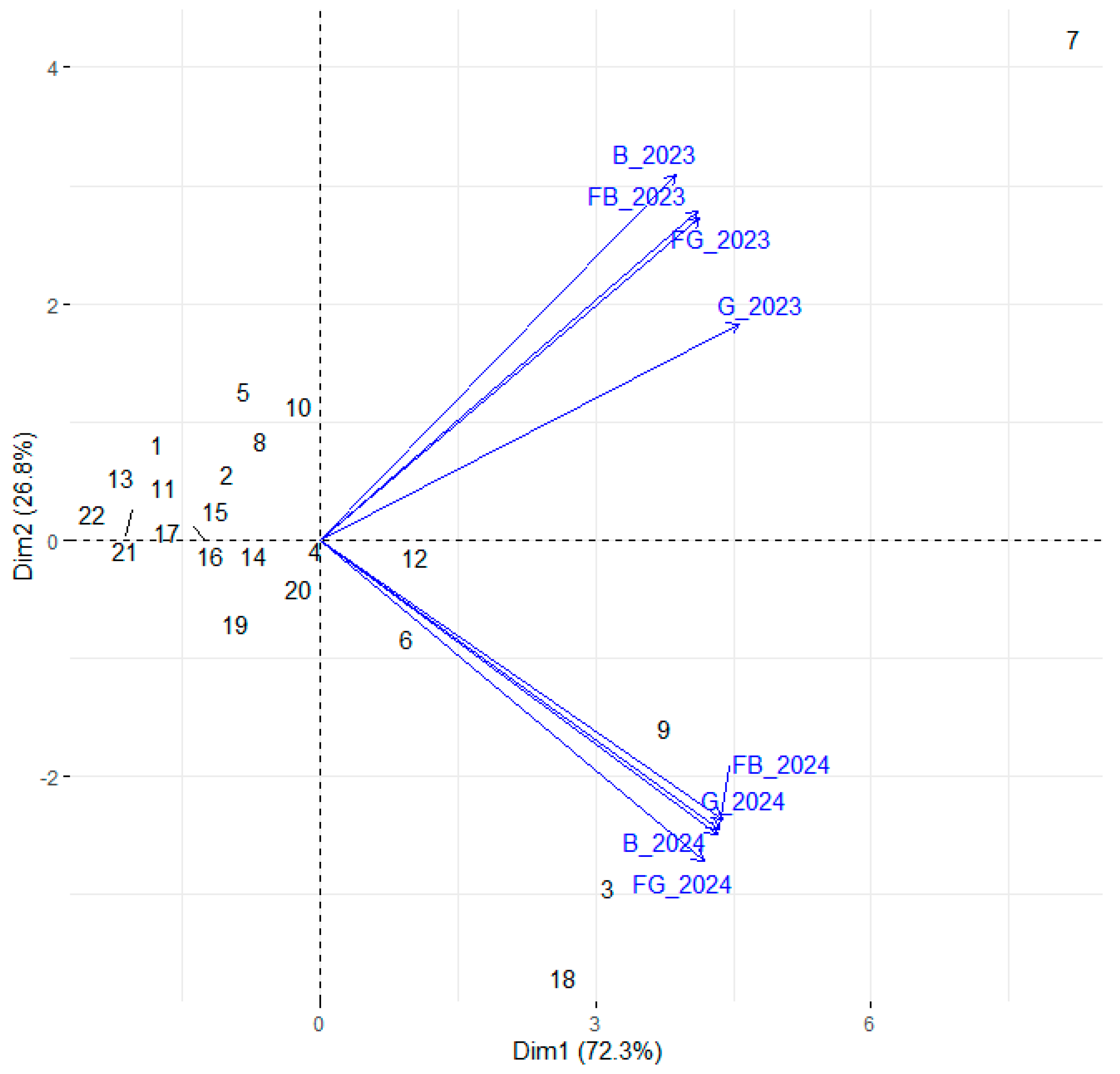
Figure 1. Principal component analysis (PCA) showing different individual phenolic compounds in relation to different treatments. Treatment groups: FB = flat soil + agrofoil; FG = ridge + agrofoil, B = flat soil without agrofoil, G = ridge without agrofoil. Numbers indicate the following parameters: 1 is gallic acid derivative 1, 2 is (+) catechin, 3 is hexahydroxydiphenic acid derivative 1, 4 is gallic acid derivative 2, 5 is 5-O-p-coumaroylquinic acid, 6 is hexahydroxydiphenic acid derivative 2, 7 is chestanin, 8 is procyanidin pentoside, 9 is quercetin-3-O-rutinoside, 10 is isochestanin, 11 is quercetin-3-O-galactoside, 12 is quercetin-3-O-glucoside, 13 is kaempferol-3-O-rutinoside, 14 is quercetin-3-O-glucuronide, 15 is kaempferol-3-O-glucoside, 16 is quercetin-3-O-rhamnoside, 17 is kaempferol-3-O-neohesperidoside acetate, 18 is hexahydroxydiphenic acid, 19 is gallic acid, 20 is hexahydroxydiphenic acid 2, 21 is isorhamnetin-3-O-rutinoside, 22 is cryptochlorogenic acid (4-caffeoylquinic acid).
Horticulturae 11 01447 g001
Figure 2. Principal component analysis (PCA) showing different phenolic group contents in relation to different treatments. Treatment groups: FB = flat soil + agrofoil; FG = ridge + agrofoil; B = flat soil without agrofoil; G = ridge without agrofoil.
Horticulturae 11 01447 g002
Figure 3. Pie charts showing relative phenolic group contents in relation to different treatments in year 2023 (YEAR 1) and year 2024 (YEAR 2). Treatment groups: F = flat soil + agrofoil; F + R = ridge + agrofoil; N = flat soil without agrofoil; R = ridge without agrofoil.
Horticulturae 11 01447 g003
Figure 4. Principal component analysis (PCA) showing different parameters in relation to different treatments. Treatment groups: FB = flat soil + agrofoil; FG = ridge + agrofoil; B = flat soil without agrofoil; G = ridge without agrofoil. Numbers indicate the following parameters: 1 is number of shoots, 2 is number of leaves, 3 is plant height, 4 is plant width, 5 is trunk girth, 6 is leaf area, 7 is leaf length, 8 is leaf width, 9 is leaf perimeter, 10 is leaf ratio, 11 is leaf facts, 12 is leaf voids, 13 is internodal distance on the shoot, 14 is shoot length, 15 is absorbance at 480 nm, 16 is absorbance at 649 nm, 17 is absorbance at 665 nm, 18 is chlorophyl A content, 19 is chlorophyl B content, 20 is carotenoid content, 21 is total pigment content, 22 is hydroxycinnamic acid content, 23 is hydroxybenzoic acid content, 24 is flavanol content, 25 is flavonol content, and 26 is total analyzed phenolic content.
Horticulturae 11 01447 g004
Table 1. Basic plant, leaf, and shoot measurements along with leaf chlorophyll content (mean ± SE) in of C. sativa ‘Marsol‘, as influenced by different planting techniques, in the first year after planting.
FoilNo Foil
CompoundNo RidgeRidgeNo RidgeRidge
Basic plant measurements
number of shoots/plant20.33 ± 2.91 a17.17 ± 1.42 ab18.71 ± 2.86 a15.00 ± 1.75 b
number of leaves/plant161.83 ± 25.42 a167.67 ± 15.57 a162.57 ± 28.53 a108.33 ± 9.15 b
plant height (cm)124.67 ± 6.24 ab149.83 ± 7.87 b119.57 ± 7.48 a108.67 ± 6.88 a
plant width (cm)75.83 ± 3.60 a81.33 ± 9.97 a71.29 ± 7.45 a59.17 ± 5.59 b
stem girth (cm)7.17 ± 0.48 b7.42 ± 0.40 b5.43 ± 0.17 a4.92 ± 0.20 a
Shoot measurements
Internode distance (cm)1.21 ± 0.09 a2.05 ± 0.29 b1.29 ± 0.08 a1.36 ± 0.11 ab
Shoot length (cm)13.06 ± 1.32 b22.11 ± 3.00 c10.54 ± 1.10 a14.00 ± 1.50 b
Leaf parameters
leaf area (cm2)29.48 ± 2.29 a55.15 ± 5.27 b24.27 ± 1.40 a21.65 ± 1.11 a
leaf lenght (cm)10.14 ± 0.53 a14.57 ± 0.85 b9.33 ± 0.30 a9.76 ± 0.30 a
leaf width (cm)4.80 ± 0.54 ac5.31 ± 0.24 c3.96 ± 0.16 ab3.60 ± 0.13 b
leaf perimeter (cm)36.57 ± 2.18 a50.10 ± 3.06 b30.07 ± 1.35 a29.58 ± 1.48 a
leaf ratio 2.31 ± 0.13 a2.73 ± 0.10 b2.42 ± 0.09 ab2.76 ± 0.09 b
leaf voids7.96 ± 1.59 a11.03 ± 1.26 a8.70 ± 1.34 a9.22 ± 1.10 a
L*24.43 ± 0.22 b23.82 ± 0.30 b27.72 ± 0.65 a27.24 ± 0.68 a
a*−1.43 ± 0.15 b−1.12 ± 0.17 b−2.98 ± 0.30 a−2.32 ± 0.17 a
b*11.35 ± 0.65 b9.60 ± 0.71 b16.16 ± 1.35 a15.20 ± 0.94 a
C*11.43 ± 0.65 b9.66 ± 0.74 b16.42 ± 1.38 a15.38 ± 0.95 a
h97.37 ± 1.08 ab96.58 ± 0.57 b100.60 ± 0.99 a98.92 ± 0.83 ab
Leaf chlorophyll content
Kl A (μg/mL)17.52 ± 2.75 a16.66 ± 2.62 a9.1 ± 2.32 b10.12 ± 0.88 b
Kl B (μg/mL)11.1 ± 2.09 a9.3 ± 1.82 a7.26 ± 1.11 b6.7 ± 0.86 b
Karot (μg/mL)3.88 ± 0.3 a4.14 ± 0.54 a2.07 ± 0.78 c2.83 ± 0.27 b
Total pigments (μg/mm2)1.29 ± 0.2 a1.2 ± 0.17 a0.73 ± 0.11 b0.78 ± 0.07 b
Data are means ± standard error. Means followed by different letters across the treatments (within rows) are significantly different (p < 0.05); L* (lightness), where values vary from 0 (black) to 100 (white); a*, (positive values represent red and negative green); b* (positive values represent yellow and negative values represent blue); C* (colorfulness), where higher values represent a more intense color and h (hue angle), which is expressed in degrees.
Table 2. Basic plant, leaf and shoot measurements, along with leaf chlorophyll content (mean ± SE), in of C. sativa ‘Marsol‘, as influenced by different planting techniques, in the second year after planting.
FoilNo Foil
CompoundNo RidgeRidgeNo RidgeRidge
Basic plant measurements
number of shoots/plant39.00 ± 5.48 b51.83 ± 9.21 c23.86 ± 4.10 a21.50 ± 2.16 a
number of leaves/plant383.00 ± 67.74 b534.67 ± 83.44 c203.14 ± 32.62 a186.50 ± 18.30 a
plant height (cm)175.71 ± 8.96 b230.00 ± 7.30 c144.71 ± 7.56 a150.83 ± 5.83 a
plant width (cm)133.43 ± 7.29 b143.00 ± 7.46 b99.71 ± 9.26 a111.50 ± 6.06 a
stem girth (cm)12.79 ± 0.63 b14.00 ± 0.86 b9.14 ± 0.59 a9.33 ± 0.56 a
Shoot measurements
Internode distance (cm)3.78 ± 0.29 a4.02 ± 0.23 a3.60 ± 0.24 a3.44 ± 0.41 a
Shoot length (cm)28.86 ± 3.43 a43.69 ± 6.61 b29.36 ± 2.92 a27.60 ± 3.26 a
Leaf parameters
leaf area (cm2)56.70 ± 4.56 a70.73 ± 3.19 b63.06 ± 3.55 ab61.61 ± 4.35 ab
leaf lenght (cm)15.12 ± 0.83 a16.99 ± 0.37 a16.16 ± 0.49 a15.52 ± 0.67 a
leaf width (cm)5.22 ± 0.21 a6.34 ± 0.28 b5.56 ± 0.18 ab6.12 ± 0.39 ab
leaf perimeter (cm)91.85 ± 6.40 a109.38 ± 3.05 b101.27 ± 3.74 ab98.44 ± 4.95 ab
leaf ratio2.88 ± 0.09 a2.83 ± 0.11 a2.94 ± 0.09 a2.68 ± 0.15 a
leaf voids96.87 ± 7.83 b85.72 ± 5.27 ab63.32 ± 5.86 a66.70 ± 6.59 a
Leaf chlorophyll content
Kl A (μg/mL)6.91 ± 1.24 b6.40 ± 1.21 b9.47 ± 0.80 a5.62 ± 0.98 b
Kl B (μg/mL)13.93 ± 2.37 b12.52 ± 2.98 b18.70 ± 1.60 a11.28 ± 1.80 b
Karot (μg/mL)5.51 ± 0.55 ab4.45 ± 0.94 b6.46 ± 0.04 a4.19 ± 0.53 b
Total pigments (μg/mm2)1.06 ± 0.27 b0.97 ± 0.32 b1.41 ± 0.11 a0.87 ± 0.19 b
Data are means ± standard error. Means followed by different letters across the treatments (within rows) are significantly different (p < 0.05).
Table 3. Tentative identification of the 22 phenolic compounds from the leaves of Castanea sativa Mill, and the standards to which they are expressed.
CompoundRt (min)[M-H]- (m/z)MS2 (m/z)MS3 (m/z)MS4 (m/z)Expressed as
1Hexahydroxydiphenic acid 15.84337293 (100)169 (100), 167 (77), 123 (7), 125 (2)125 (100)Gallic acid
2Gallic acid6.40169125 (100) Gallic acid
3Hexahydroxydiphenic acid 211.96337293 (100)169 (100), 167 (79), 123 (7), 125 (1) Gallic acid
4Gallic acid derivative 112.96337169 (100), 119 (4), 191 (6), 173 (5)125 (100) Gallic acid
5(+) Catechin13.38289245 (100), 205 (36), 179 (13), 231 (8) (+) Catechin
6Hexahydroxydiphenic acid derivative 114.37475293 (100), 337 (19), 169 (3) Gallic acid
7Cryptochlorogenic acid (4-caffeoylquinic acid)14.75353191 (100), 179 (5) Gallic acid
8Gallic acid derivative 216.01477169 (100)125 (100) Gallic acid
95-O-p-coumaroylquinic acid16.94337191 (100), 173 (15), 163 (7) Neochlorogenic acid
10Hexahydroxydiphenic acid derivative 217.78475293 (100), 337 (19), 169 (2) Gallic acid
11Chestanin18.15937467 (100), 469 (30), 637 (10), 305 (2)305 (100), 261 (73), 260 (41), 243 (29), 304 (23) Gallic acid
12Procyanidin pentoside18.87441330 (100), 331 (74), 289 (38), 161 (11)245 (100), 205 (36), 179 (13), 231 (8) (+) Catechin
13Quercetin-3-O-rutinoside20.34609301 (100), 300 (21), 179 (2) Quercetin-3-O-rutinoside
14Isochestanin20.85937467 (100), 469 (32) Gallic acid
15Quercetin-3-O-galactoside21.16463301 (100), 300 (23), 179 (1) Quercetin-3-O-galactoside
16Quercetin-3-O-glucoside21.33463301 (100), 300 (17), 179 (1) Quercetin-3-O-glucoside
17Kaempferol-3-O-rutinoside21.86593285 (100), 357 (3), 229 (2), 284 (2)257 (100), 267 (51), 241 (37), 229 (37), 197 (21), 163 (18) Kaempferol-3-O-glucoside
18Isorhamnetin-3-O-rutinoside22.02623315 (100), 300 (16), 271 (4), 255 (3)299 (100) Isorhamnetin-3-O-glucoside
19Quercetin-3-O-glucuronide22.43477301 (100) Quercetin-3-O-glucoside
20Kaempferol-3-O-glucoside22.82447284 (100), 285 (95), 255 (10), 179 (2)255 (100), 256 (30), 227 (10) Kaempferol-3-O-glucoside
21Quercetin-3-O-rhamnoside23.01447301 (100), 300 (20), 179 (1) Quercetin-3-O-rhamnoside
22Kaempferol-3-O-(6ˇ-O-acetyl)glucoside-7-O-rhamnoside (Kaempferol-3-O-neohesperidoside acetate)24.73635575 (100), 285 (49), 284 (12), 255 (5)285 (100), 283 (62), 255 (37), 284 (28)257 (100), 267 (45), 241 (38), 229 (34), 197 (20), 163 (18)Kaempferol-3-O-glucoside
First or bold numbers represented fragments that were further fragmented; Rt, retention time; [M-H]-, pseudomolecular ion identified in negative ion mode; (), relative abundance of fragment ions.
Disclaimer/Publisher’s Note: The statements, opinions and data contained in all publications are solely those of the individual author(s) and contributor(s) and not of MDPI and/or the editor(s). MDPI and/or the editor(s) disclaim responsibility for any injury to people or property resulting from any ideas, methods, instructions or products referred to in the content.