
Article

Fungal Reactive Oxygen Species Secreted by Candida albicans Induce Barrier Disruption and Cell Death in HaCaT Keratinocytes
School of Life Science and Technology, Institute of Science Tokyo, Yokohama 226-8501, Japan
*
Author to whom correspondence should be addressed.
J. Fungi 2026, 12(1), 38; https://doi.org/10.3390/jof12010038
Submission received: 23 November 2025 / Revised: 24 December 2025 / Accepted: 24 December 2025 / Published: 2 January 2026
(This article belongs to the Special Issue Fungal Infections and Antifungals)

Abstract

Candida albicans is a pathogenic fungus that expresses a fungal NADPH oxidase known as C. albicans Cfl11, which produces reactive oxygen species (ROS). Secretion of these ROS triggers caspase 3–mediated cell death in hepatocytes, which was attenuated in a mutant with a disrupted CaCFL11 gene (designated Cacfl11Δ mutant). Here, we compared the effects of the C. albicans wild-type strain and the Cacfl11Δ mutant. Our findings revealed that C. albicans reduces the viability of HaCaT keratinocytes in a contact-independent manner. Furthermore, exposure to C. albicans increased intracellular ROS production and caspase 3 activity in HaCaT keratinocytes. These changes were attenuated when HaCaT keratinocytes were exposed to the Cacfl11Δ mutant or when HaCaT keratinocytes were treated with the known antioxidant N-acetylcysteine. Furthermore, wild-type C. albicans, but not the Cacfl11Δ mutant, disrupted transepithelial electrical resistance and modulated the downregulation of the tight-junction genes occludin and junction adhesion molecule 1 in HaCaT keratinocytes. Collectively, these results show that fungal ROS secretion via CaCFL11 is a potent virulence factor in mediating keratinocyte viability and barrier function.

1. Introduction

Fungal infections cause approximately three million deaths each year, with invasive candidiasis accounting for an estimated one million of these deaths [1]. However, Candida infections have long been overlooked because they are often regarded as diseases of immunocompromised individuals. During the COVID-19 pandemic, both immunosuppressive drugs [2] and the SARS-CoV-2 virus itself [3] made patients more susceptible to secondary infections with opportunistic fungal pathogens [2]. Furthermore, a number of studies have reported an increase in antifungal resistance among Candida species [4,5,6,7,8]. Hence, additional fungal research, particularly focusing on Candida species, is vital to improve our understanding of Candida infection for future advancements in human health.
Despite being a major threat to human health, Candida spp., especially C. albicans, are frequently isolated from healthy individuals, and they are also often transmitted from mother to child [9,10]. However, in immunocompromised individuals, C. albicans transitions to a hyphal form that exhibits enhanced tissue invasion and increased damage to host tissues. Considerable research has focused on Candida infections in the gut, vagina, and oral cavity. However, Candida-related skin infections have been overlooked, despite a growing number of clinical reports of C. albicans infections in patients with diabetic foot ulcers [11,12], burn wounds [6,13] and atopic dermatitis [14]. In severe cases, a cutaneous Candida infection can progress to gangrene, ultimately requiring surgical intervention such as debridement or amputation.
Skin infections involving C. albicans can lead to a thickening of the skin, hyperkeratosis, and erythema [15]. The natural structure of the skin enables infections to be established only through active penetration and hyphal secretions. Several studies have confirmed that formation of hyphae plays a critical role in damage to the epithelial barrier [16,17]. The prominence of C. albicans infections in diabetic wounds [18] and in patients undergoing anti–IL-17 treatment for psoriasis [19,20] have narrowed Candida skin infection research efforts towards skin immune cell responses against C. albicans. However, the immune functions of keratinocytes are also impaired [21,22,23]. Although keratinocytes are often considered limited to detecting fungi through pattern-recognition receptors and modulating immune cell responses [24,25,26,27], they also contribute to forming a robust physical barrier via the expression of tight-junction (TJ) proteins [28,29].
TJs are structures composed of several proteins expressed on the cell membrane that tightly connect neighboring cells [29]. TJ proteins maintain the apical barrier by forming thread-like structures known as TJ strands along the cells. These proteins also form complexes with the cytoplasmic actin-binding protein zona occludens (ZO), which binds to the actin cytoskeleton to provide support and maintain cell polarity [30]. Although several TJ proteins are found in the skin, claudin 1 (CLDN1), occludin (OCLN), and junction adherence molecule 1 (JAM1) are the most abundant in cell lines and clinical samples [31,32]. Candida albicans is armed with a plethora of secretory factors. However, transepithelial electrical resistance (TEER) measurements have shown that the deletion of one or a few hyphae-associated factors, such as secreted aspartyl protease (SAP) and candidalysin [33,34], cannot completely prevent barrier damage, but inhibiting hyphae formation can [33,34,35]. This observation suggests that several hyphae-associated virulence factors mediate TJ damage. These studies also suggest that other C. albicans virulence factors may also play a role.
In our previous studies, we showed that C. albicans secretes reactive oxygen species (ROS), the synthesis of which is mediated primarily by the NADPH oxidase–encoding gene CFL11, also known as FRE8 in C. albicans. We reported that fungal ROS generated via Cacfl11 protein enhances transglutaminase 2 (TG2) activity in human hepatocytes, ultimately upregulating caspase 3–mediated apoptosis [36,37]. Deletion of the CaCFL11 gene does not impede hyphae formation but does attenuate apoptosis in hepatocytes [36]. Furthermore, the equivalent homologue gene in C. glabrata, CgNOX1, also triggers ROS accumulation and apoptosis in hepatocytes [37,38], suggesting that fungal ROS represent a vital virulence factor shared by C. albicans and C. glabrata.
Interestingly, a previous study reported that exogenous ROS disrupt TJs. Direct exposure to H2O2 downregulates OCLN expression [39], disrupts the localization of CLDN1, and dampens TEER readings [40]. These observations prompted us to investigate the effects of ROS produced through C. albicans Cfl11 on HaCaT keratinocytes. In this study, we demonstrated that fungal ROS production via the CaCFL11 gene contributes to the loss of barrier function and an increase in cell death. Furthermore, the reduction in keratinocyte viability, increase in caspase 3–mediated apoptosis, and downregulation of TJ protein genes were found to be contact-independent, thus highlighting the importance of CaCFL11–mediated ROS production in modulating skin keratinocyte viability and barrier function.

2. Materials and Methods

2.1. Culture of HaCaT Keratinocytes

Human HaCaT keratinocytes (CLS Cell Line, Heidelberg, Germany) were grown in Dulbecco’s Modified Eagle Medium (DMEM) (Fujifilm Wako Pure Chemical Corp., Osaka, Japan) supplemented with 10% fetal bovine serum (FBS; HyClone Cytivia, Tokyo, Japan) and 1% PenStrep (Gibco, Grand Island, NY, USA). The keratinocytes were serum starved for 24 h and then treated with 100 nM dexamethasone (Nacalai Tesque, Kyoto, Japan) for 2 h before infection. For indirect infection, yeast cells and HaCaT keratinocytes were separated using a 0.4-μm PET insert cup (Corning, Corning, NY, USA). For hydrogen peroxide (H2O2; Fujifilm Wako Pure Chemical Corp.) exposure, 800 μM H2O2 was added to DMEM + 10% FBS fresh before exposure of HaCaT keratinocytes. Medium supplemented with 5 mM N-acetyl-L-cysteine (NAC) (Sigma-Aldrich, St. Louis, MO, USA, CAS no. 616-91-1) was also prepared fresh before exposure of HaCaT keratinocytes.

2.2. Fungal Culture

All fungal strains used in this study are listed in Table 1. Fungi were pre-cultured in yeast peptone dextrose (YPD) medium at 30 °C with shaking. To prepare C. albicans for infection, the YPD medium was removed, and the fungal cells were washed with phosphate-buffered saline (PBS; Nacalai Tesque) and then resuspended in DMEM supplemented with FBS.

2.3. MTT([3-[4,5-Dimethylthiazol-2-yl]-2,5-Diphenyltetrazolium Bromide] Assay

MTT solution (5 mg/mL; Nacalai Tesque) was prepared fresh before the experiment. A total of 2 × 10⁵ HaCaT keratinocytes were seeded into 24-well plates and then indirectly exposed to 4 × 10⁵ fungal cells via an insert cup. At 24 h after indirect infection, MTT solution was added to each well at 10% of the culture volume and the cells were incubated at 37 °C for 2 h to allow for the formation of purple formazan. Medium containing MTT was then discarded, and the resulting formazan crystals were dissolved in dimethyl sulfoxide. The plates were then scanned using a Varioskan Lux (Thermo Fischer Scientific, Waltham, MA, USA) microplate reader at wavelengths of 670 nm and 560 nm. The formula used to calculate the percentage of viable keratinocytes is shown below. All groups were compared to the control, which was set at 100%.
(670 nm − 560 nm) × 100%

2.4. Lactate Dehydrogenase (LDH) Assay

LDH assays were performed using a Dojindo LDH assay kit (Dojindo Molecular Technologies, Inc., Kumamoto, Japan). Briefly, 1 × 101 HaCaT keratinocytes were seeded in 96-well plates. At 24 h after direct infection with 2 × 101 fungal cells, the LDH assay was performed, and the plates were scanned at 490 nm using a Varioskan Lux microplate reader. Fungus-only controls were also examined and showed readings similar to blank (medium only) samples.

2.5. Caspase 3 Activity

To measure caspase 3 activity, 4 × 10⁵ HaCaT keratinocytes were seeded onto round cover slips plated in a 12-well plate. After serum starvation and dexamethasone treatment, the keratinocytes were infected for 24 h either directly with 8 × 10² fungal cells or indirectly with 8 × 10⁵ fungal cells. The cells were then fixed with 4% paraformaldehyde, blocked, and stained with a primary antibody against cleaved caspase 3 (Asp175) (1:400, Cell Signaling Technology, Danvers, MA, USA). The keratinocytes were then washed with PBS twice before staining with secondary antibody, anti-rabbit Alexa Fluor 488 (1:200, Jackson ImmunoResearch Laboratories, Inc. West Grove, PA, USA), and DAPI dye (1:5000) (Dojindo Molecular Technologies, Inc.). The keratinocytes were then analyzed using an LSM 780 laser scanning confocal microscope (Carl Zeiss, Inc., Jena, Germany). Representative images were acquired from at least 3 fields from 4 independent experiments. Fluorescence intensity associated with Alexa Fluor 488 was quantitated using ImageJ software (1.54g version).

2.6. Direct and Indirect Co-Culture of Fungi and HaCaT Keratinocytes

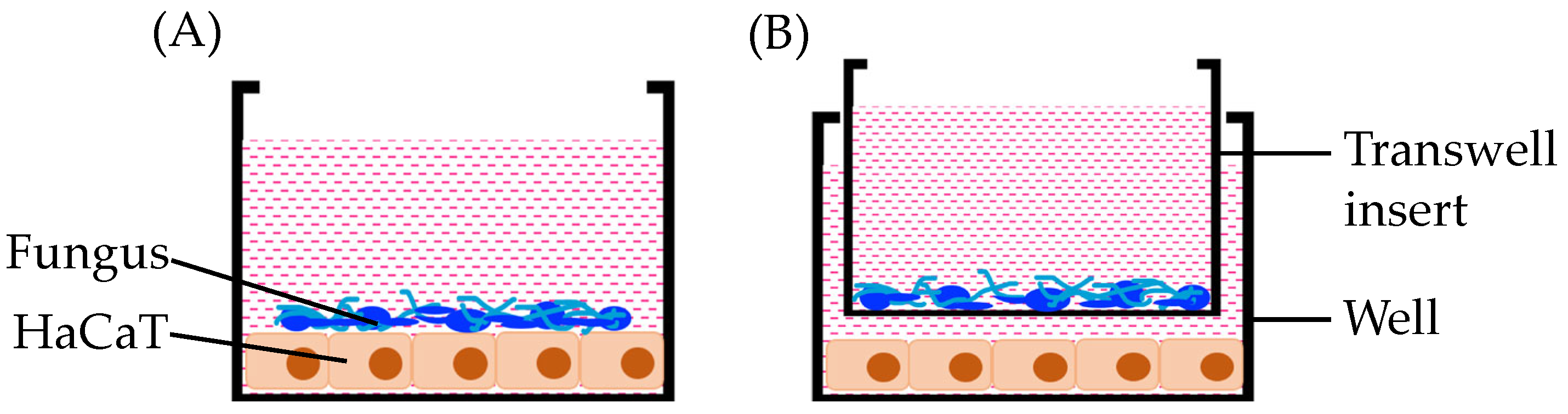
The effects of secreted fungal ROS on HaCaT keratinocytes were evaluated using two models (direct infection and indirect infection) established as shown in Figure 1. For direct infection, HaCaT keratinocytes were infected with fungal cells at a concentration equivalent to a multiplicity of infection (MOI) of 0.001. For the indirect infection model, HaCaT keratinocytes were exposed to fungal cells at a concentration equivalent to an MOI of 1.0, in which the HaCaT keratinocytes and fungal cells were separated via a PET 0.4-μm well insert. The infection ratio was determined by ensuring that neither infection with non-pathogenic Saccharomyces cerevisiae nor fungi alone affected cell viability readings, confirming that any changes observed were due only to the pathogenicity of C. albicans.

2.7. Measurement of Intracellular ROS Yield in HaCaT Keratinocytes During Fungal Co-Incubation

To measure intracellular ROS, 6 × 10⁵ HaCaT keratinocytes were seeded onto cover slips placed in 6-well inserts. After 48 h, the keratinocytes were infected for 24 h either directly with 1.2 × 10³ fungal cells or indirectly with 1.2 × 10⁶ fungal cells. To measure intracellular ROS, the medium was discarded, and a freshly prepared 5 μM CM-H2DCFDA solution was added. After incubation for 20 min at 37 °C with 5% CO2, the cover slips were washed once with PBS and then viewed under the ZEISS LSM 780 confocal microscope. Fluorescence was quantified using ImageJ software.

2.8. Determination of TEER

TEER was measured using a Millicell® ERS-2 volt-ohm meter (Millipore, Burlington, MA, USA). A total of 1 × 10⁴ HaCaT keratinocytes were seeded in 0.4-μm PET insert cups and cultured in DMEM + 10% FBS + 2.4 mM calcium chloride for 6 days. The keratinocytes were then infected with 2 × 101 yeast cells and suspended in DMEM + 10% FBS + 2.4 mM calcium chloride. TEER was measured before and after infection. Fungal cells alone were used as a negative control for direct infection and showed TEER values similar to the blank. All TEER values were normalized to the blank (medium only).

2.9. mRNA Collection and cDNA Synthesis

mRNA was extracted using Qiagen QiaZOL lysis buffer (Qiagen, Hilden, Germany), whereas cDNAs were synthesized using Toyobo REVTra-Ace reagent (Toyobo, Osaka, Japan) with a gDNA-remover kit. Briefly, HaCaT keratinocytes were washed with PBS, and then 500 μL of QiaZOL lysis buffer was added. Samples were collected, and mRNA was extracted following the supplier’s protocol. cDNA stocks of 50 ng/µL were prepared and stored at −80 °C.

2.10. Polymerase Chain Reaction (PCR) and Agarose Gel Electrophoresis Purification

All PCR experiments were performed using the Toyobo KOD FX Neo kit (Toyobo), following the manufacturer’s instructions. PCR products were purified using either the Qiagen QIAEX II kit (Qiagen) or the Promega Wizard SV Gel and PCR Clean-Up System (Promega Corporation, Madison, WI, USA). The final concentrations of PCR products were determined using 2% agarose gel electrophoresis and quantified with ImageJ software. Standards used for calibration were confirmed by sequencing on an Applied Biosystems 3730xl DNA Analyzer at the Integrative Bioscience Facility, Institute of Science, Tokyo, Japan.

2.11. Real-Time Quantitative Reverse Transcription PCR (qRT-PCR)

Absolute qRT-PCR assays were performed using a Toyobo SYBR Green kit (Toyobo) according to the manufacturer’s protocol, with a sample concentration of 5 ng/μL. All primers used in the study are listed in Table 2. Primers used in the study were human cell–specific and did not bind to fungal DNA, as confirmed by PCR. All data were normalized to 18S rRNA.

2.12. Statistical Analyses

All statistical analyses were performed using GraphPad Prism software (Prism 10). Quantitative data are shown as the mean ± standard deviation of at least three independent experiments. One-way analysis of variance was used to compare groups. All data shown are derived from three biological replicates, with at least two technical replicates. Differences were considered statistically significant at p < 0.05.

3. Results

3.1. Candida Albicans Reduces Cell Viability and Triggers Apoptosis in HaCaT Keratinocytes

We previously reported that C. albicans triggers caspase 3–mediated apoptosis in hepatocytes. In this study, we chose to expand our research findings to skin keratinocytes, as C. albicans may cause severe infections of the skin [18,19,20]. C. albicans infections of the skin are reportedly caused primarily as a result of hyphal attachment [15]. We constructed both direct and indirect Candida infection models to determine the fungal effect on HaCaT keratinocyte viability.
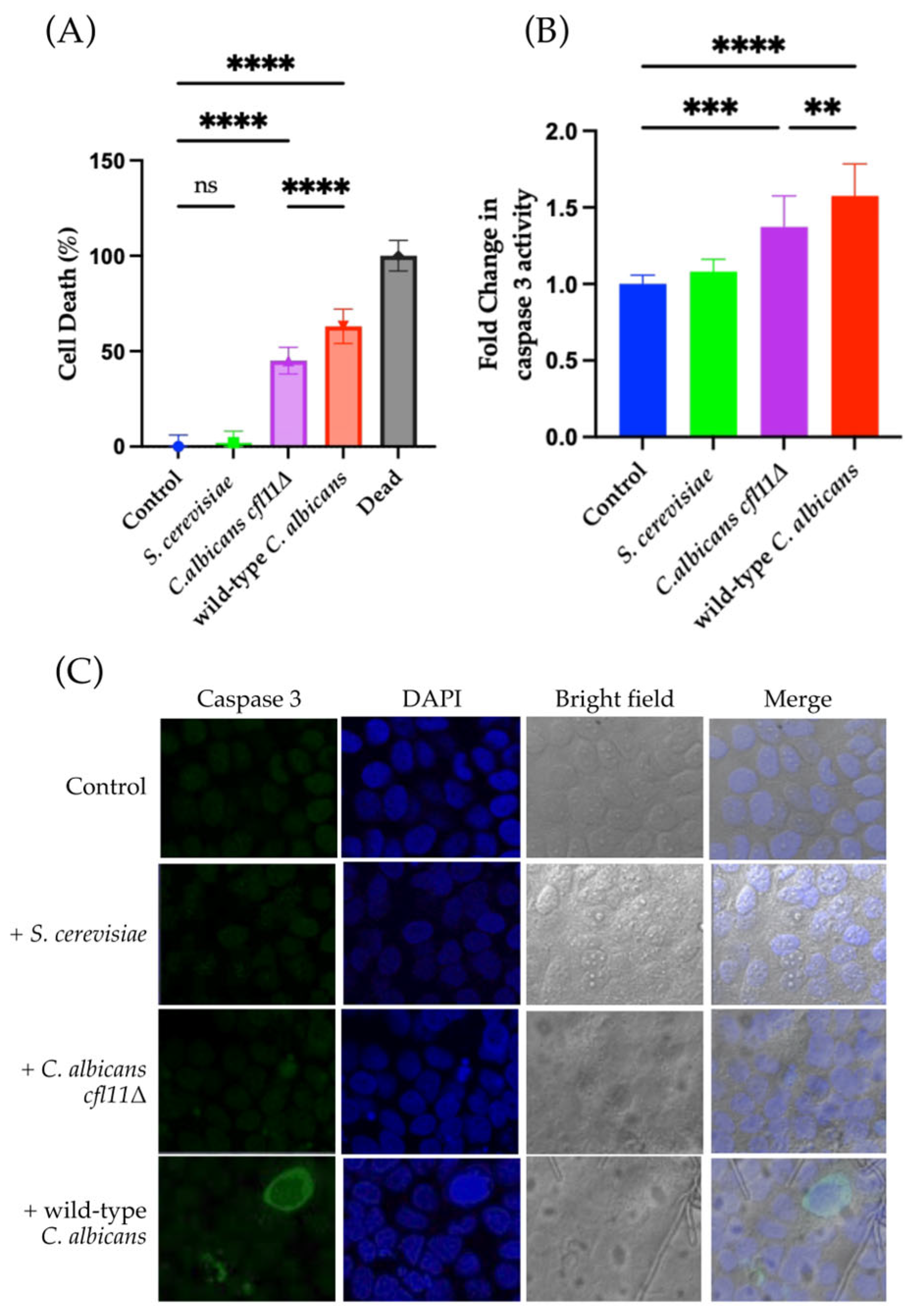
As expected, direct infection with C. albicans triggered a high rate of keratinocyte death (Figure 2A and Figure S1A). By contrast, under our conditions, direct infection with a non-pathogenic yeast, S. cerevisiae, resulted in little to no keratinocyte death, thus confirming that the observed keratinocyte death was due only to the pathogenicity of C. albicans. In addition, a 1.5-fold increase in caspase 3 activity was detected, indicating the induction of apoptotic keratinocyte death (Figure 2B and Figure S1).
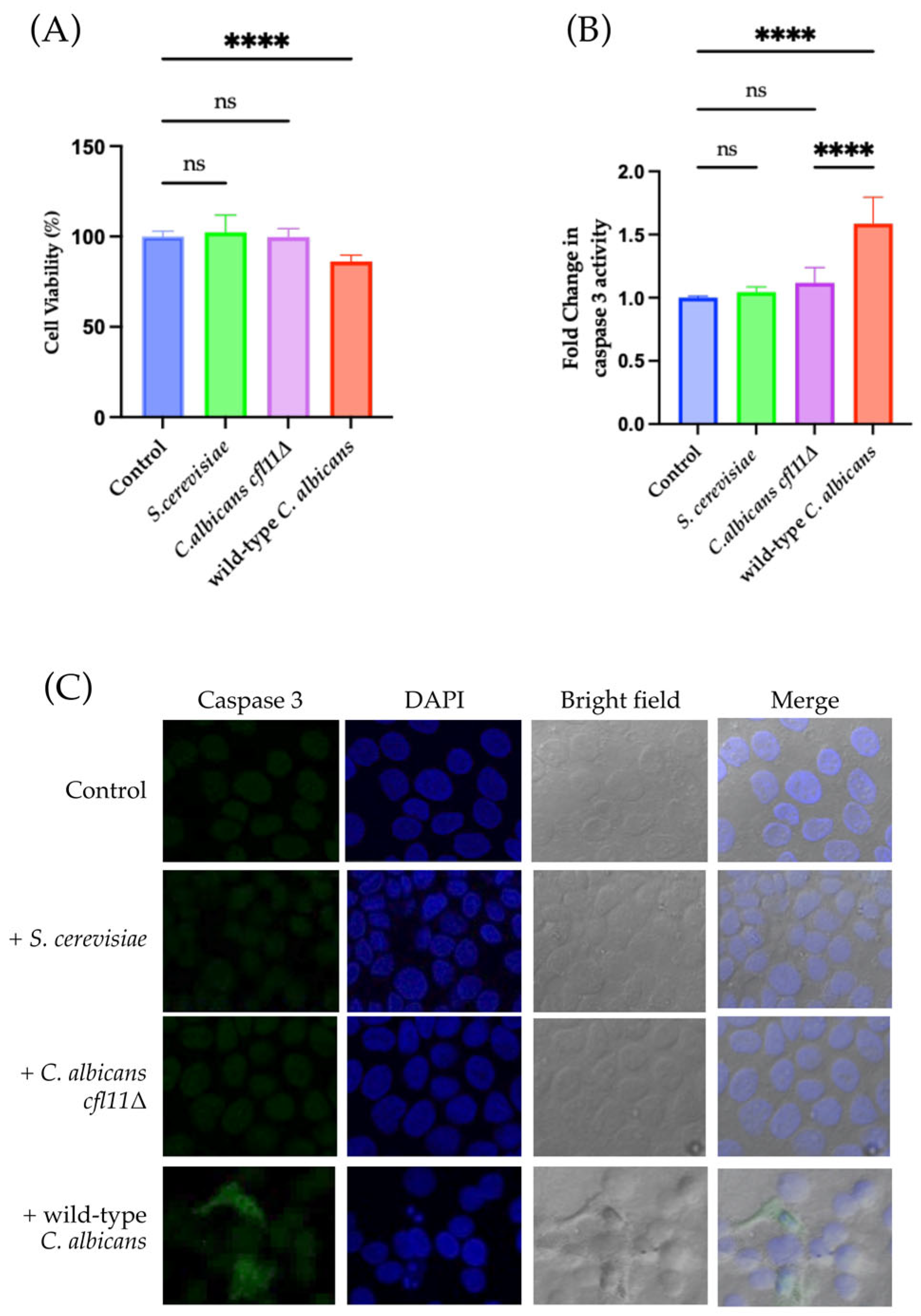
Interestingly, indirect infection with C. albicans significantly decreased the viability of HaCaT keratinocytes by 14% (Figure 3A and Figure S2A), whereas viability was not affected by indirect exposure to S. cerevisiae. However, the pathogenicity was lower with indirect infection than direct infection, as expected. These results suggest that C. albicans affects not only hepatocytes [37] but also HaCaT keratinocytes. Furthermore, indirect infection with C. albicans also significantly increased caspase 3 activity by 1.5-fold (Figure 3B and Figure S2B), strongly suggesting that fungal secretions alone can modulate HaCaT keratinocyte viability and enhance caspase 3–mediated apoptosis. In both infection models, C. albicans increased caspase 3 activity compared with S. cerevisiae, strongly suggesting that C. albicans secretions significantly affect HaCaT keratinocyte viability and enhance caspase 3–mediated apoptosis.

3.2. C. albicans cfl11Δ Is a Significant Factor in Induction of Apoptosis in HaCaT Keratinocytes

Previous studies indicated that ROS secreted by C. albicans function as a virulence factor against human hepatocytes [36,37,38]. Therefore, to clarify whether fungal ROS are related to the induction of apoptosis in HaCaT skin keratinocytes, a C. albicans CFL11 null mutant (Cacfl11Δ) was used in further experiments. The CaCFL11 gene encodes NADPH oxidase, a major enzyme involved in the production of ROS by C. albicans. The Cacfl11Δ mutant shows reduced production of extracellular fungal ROS [36]. In the direct infection model, Cacfl11Δ induced a lower percentage of HaCaT keratinocyte death (45%) than did wild-type C. albicans (63%) (Figure 2A). The caspase 3 activity of HaCaT keratinocytes was also significantly lower in the mutant compared with the wild type (Figure 2B,C). By contrast, Cacfl11Δ did not affect the viability of HaCaT keratinocytes in the indirect infection model (Figure 3A). Moreover, Cacfl11Δ had a minimal effect on the caspase 3 activity of HaCaT keratinocytes in the indirect infection model (Figure 3B,C). These results suggest that CFL11-mediated ROS production in C. albicans is a potent trigger of human keratinocyte apoptosis.
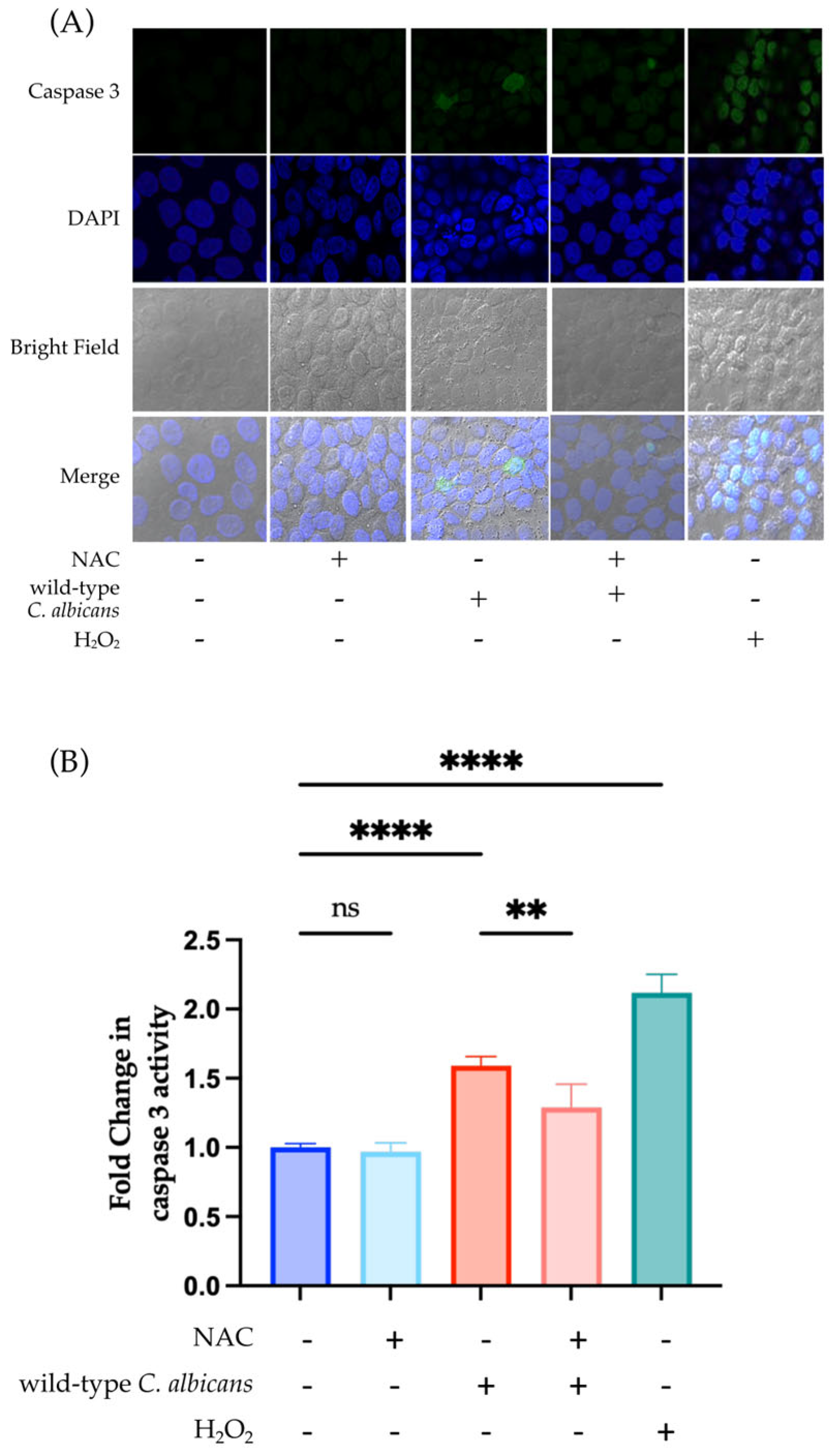
To further confirm that fungal ROS leads to enhanced apoptosis of keratinocytes, HaCaT keratinocytes were treated with the antioxidant NAC in the indirect infection model to negate the fungal ROS effect during co-incubation with wild-type C. albicans. Although C. albicans upregulated the caspase 3 activity of HaCaT keratinocytes, NAC treatment significantly reduced—but did not completely abrogate—the caspase 3 activity (Figure 4). Furthermore, the addition of H2O2 also upregulated caspase 3 activity (Figure 4). This finding suggests that cell death and apoptosis of keratinocytes are affected by fungal ROS.

3.3. Fungal ROS Increase Intracellular ROS Production in HaCaT Keratinocytes

ROS secretion by C. albicans reportedly augments intracellular ROS production in hepatocytes, ultimately leading to caspase 3–mediated apoptosis of these cells [36]. Indeed, H2O2 reportedly has the same effect [44,45,46]. In HaCaT keratinocytes, H2O2 triggers accumulation of intracellular ROS which enhances the p53/Bax/Bcl-2–dependent pathway, upregulating p-53 and Bax expression while downregulating that of Bcl-2 [46]. This leads to the accumulation of cytochrome C, which activates caspase 9 and caspase 3 via apoptotic protease activating factor-1 [46,47].
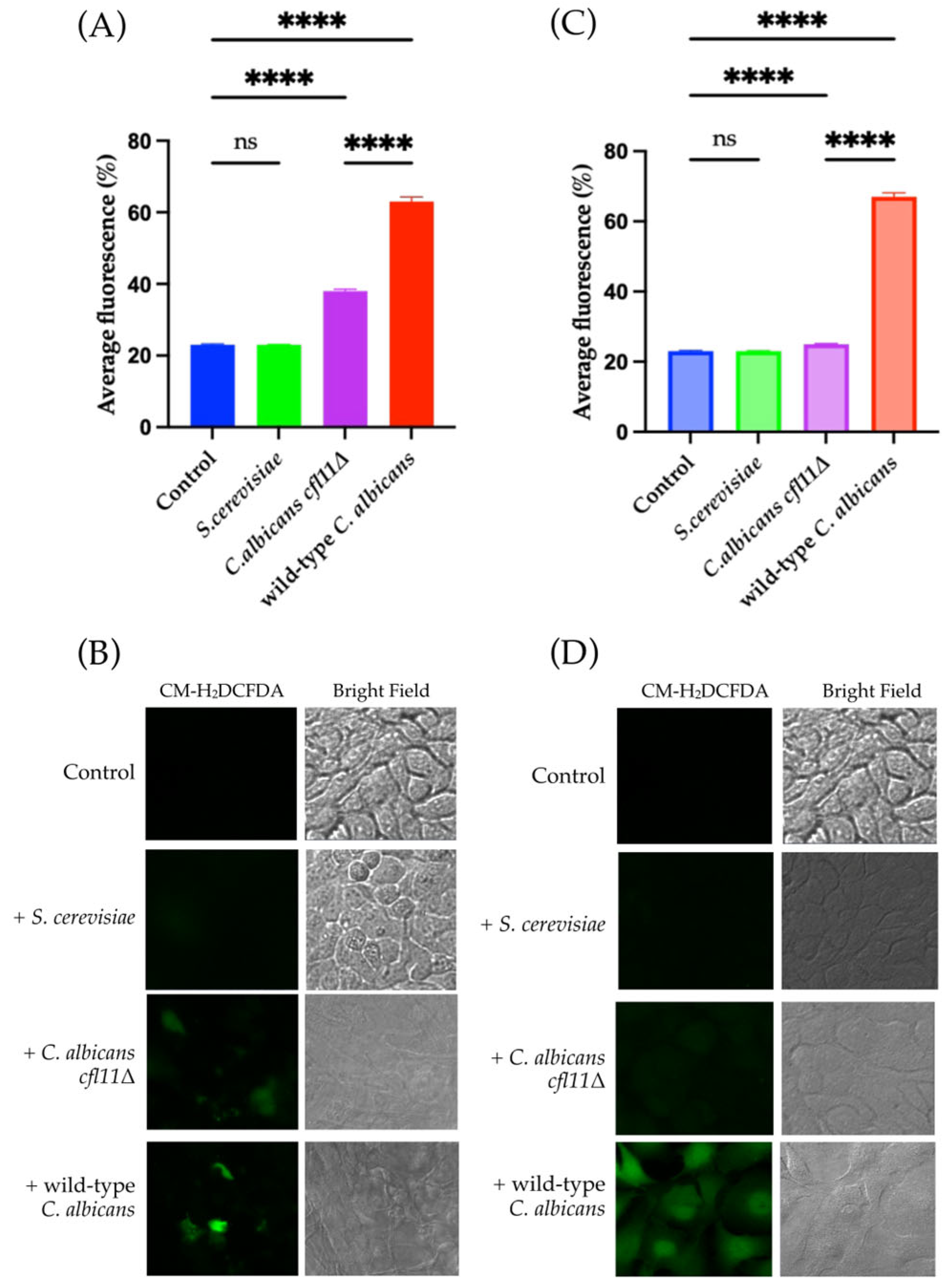
Considering this previous literature, ROS accumulation in HaCaT keratinocytes during co-incubation with fungi was measured using the direct and indirect infection models. Upon direct infection with wild-type C. albicans and the Cacfl11Δ mutant, increased accumulation of intracellular ROS was observed in HaCaT keratinocytes (Figure 5A,B). By contrast, indirect exposure to the Cacfl11Δ mutant did not affect the intracellular ROS level in HaCaT keratinocytes (Figure 5C,D). Indirect exposure to wild-type C. albicans however, significantly increased intracellular ROS accumulation in HaCaT keratinocytes.

3.4. Fungal ROS Disrupt the Functional Barrier and Downregulate the Expression of TJ Gene mRNAs

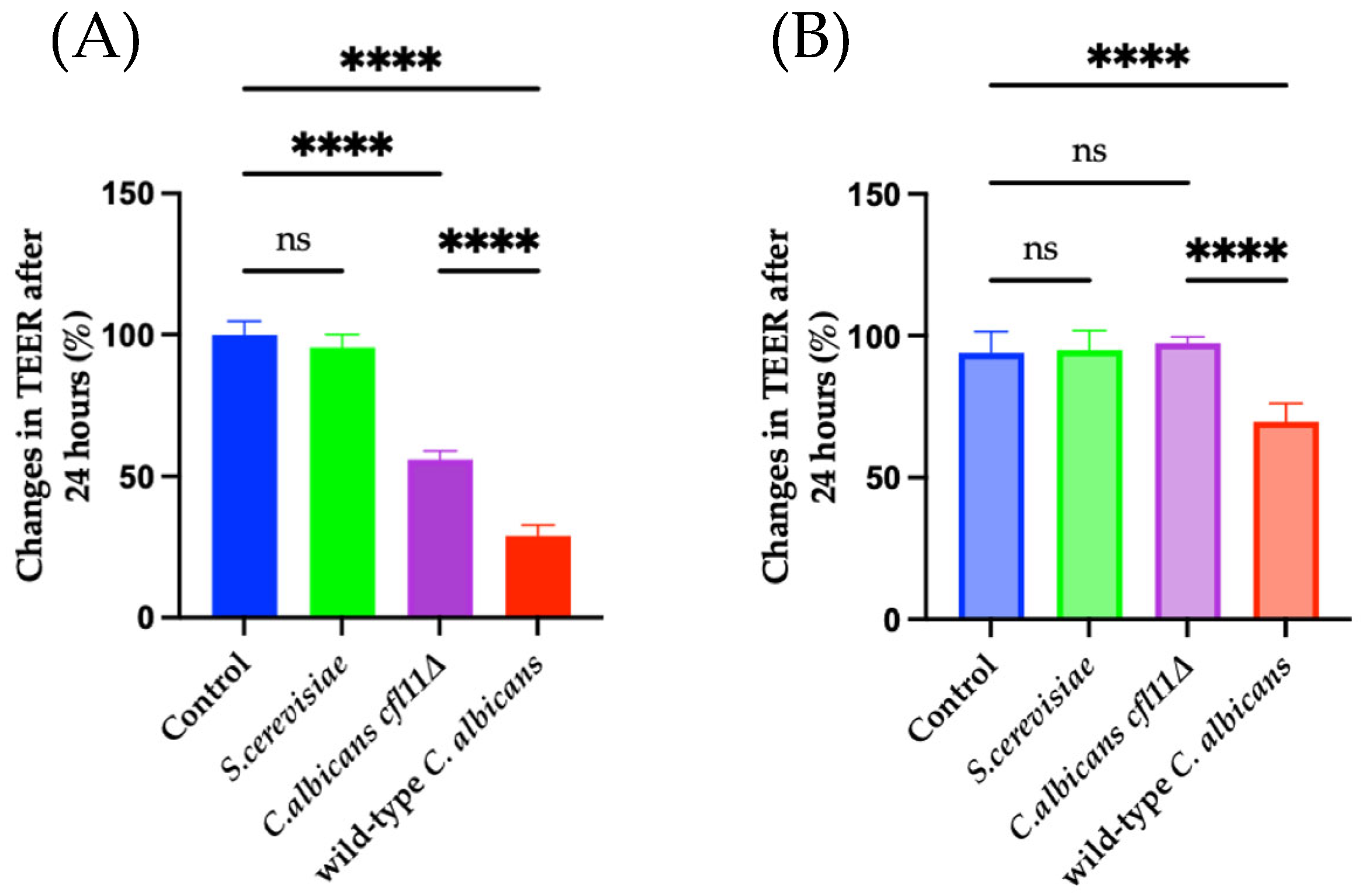
The most important role of the skin is to shield the body from environmental insults. The expression of TJ proteins allows keratinocytes to bind tightly with neighboring keratinocytes, resulting in the formation of a signature “brick-and-mortar” structure [28,48]. It was previously reported that direct infection with C. albicans disrupts barrier strength in intestinal cells; however, whether C. albicans infection influences barrier function in the skin has not been reported. Furthermore, H2O2 has been reported to downregulate tight junction gene expressions [39] and protein arrangement [49]. Hence, the effects of C. albicans and fungal ROS on barrier-function disruption were analyzed in real-time in this study by monitoring TEER. Upon direct infection, both wild-type C. albicans and the Cacfl11Δ mutant significantly decreased the TEER of HaCaT keratinocytes, as shown in Figure 6A, although the effect of the Cacfl11Δ mutant was significantly attenuated. Furthermore, as shown in Figure 6B, indirect infection with wild-type C. albicans significantly reduced the TEER value by 30%, whereas indirect exposure to the Cacfl11Δ mutant had no observable effect on the TEER value of HaCaT keratinocytes. As expected, S. cerevisiae did not affect TEER values. These results strongly suggest that secretion of ROS by C. albicans plays a role in barrier disruption in HaCaT keratinocytes.
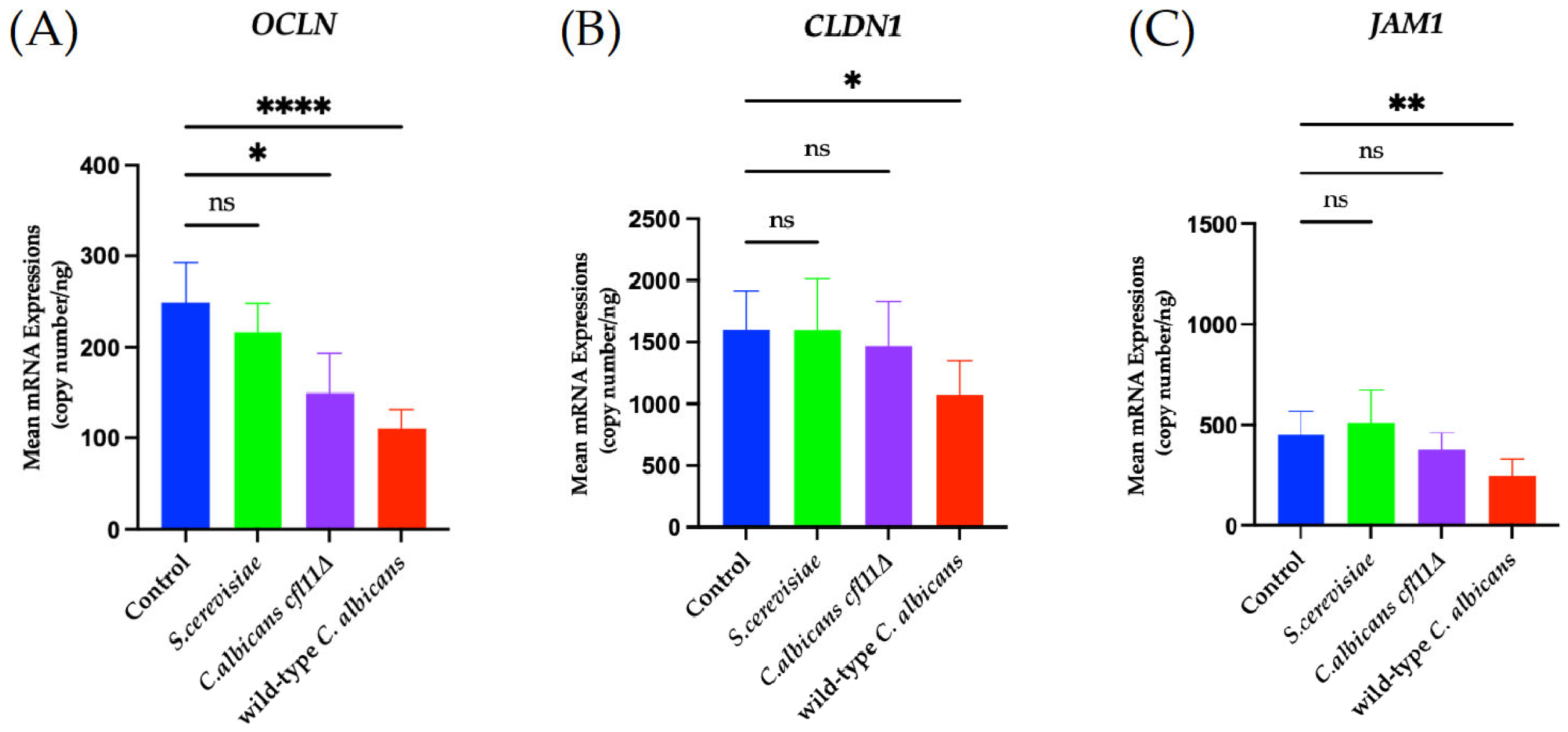
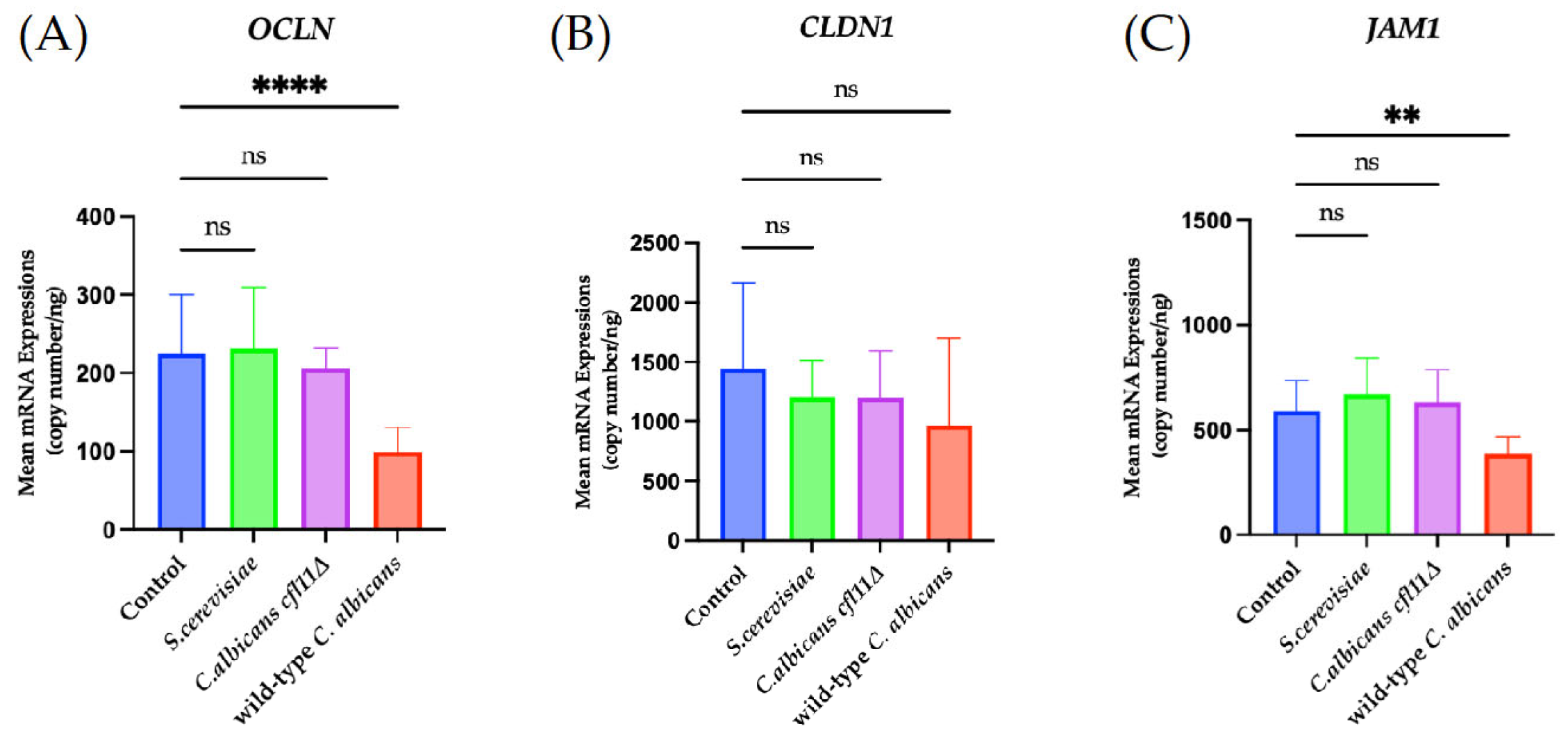
To further characterize the effect of fungal ROS on the expression of TJ genes in skin keratinocytes, the mRNA expressions of OCLN, CLDN1, and JAM1 was analyzed, as these three genes have been consistently reported across studies [31,43,50,51]. Direct infection of HaCaT keratinocytes with wild-type C. albicans caused a significant decrease in the mRNA expressions of all three TJ genes (Figure 7), whereas indirect exposure to the wild-type caused a significant decrease in OCLN (Figure 8A) and JAM1 (Figure 8C). By contrast, direct infection of HaCaT keratinocytes with the Cacfl11Δ mutant led to a slight reduction in OCLN mRNA expression (Figure 7A), whereas indirect infection with the Cacfl11Δ mutant had no significant effect on the mRNA expression of all three TJ genes (Figure 8). We also confirmed that TJ gene expression was not affected by either direct infection or indirect exposure to S. cerevisiae.
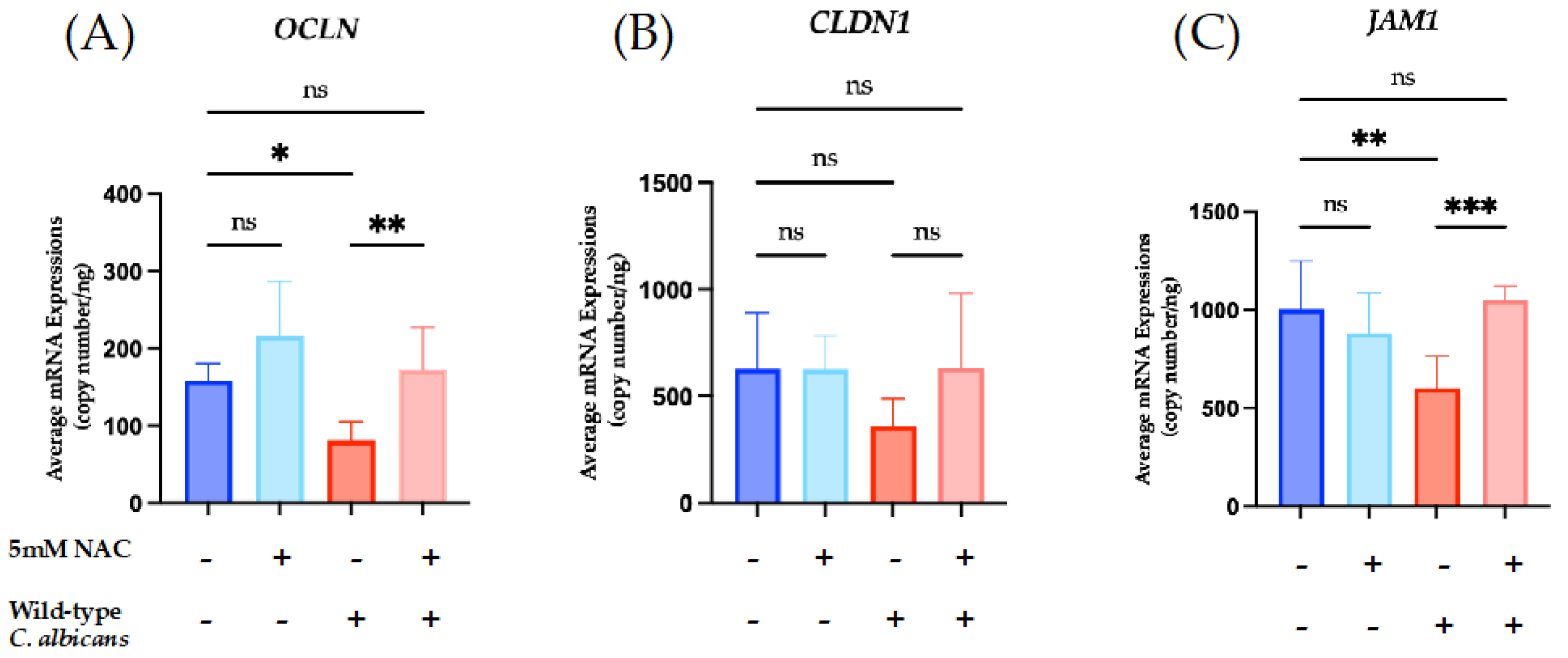
To further investigate whether the differences between wild-type C. albicans and the Cacfl11Δ mutant were caused by fungal ROS, HaCaT keratinocytes were treated with the antioxidant NAC and then indirectly infected with wild-type C. albicans. As shown in Figure 9, NAC treatment significantly alleviated the reduced mRNA expression of OCLN and JAM1, suggesting that secreted fungal ROS affect the mRNA expression of TJ protein genes.

4. Discussion

A number of factors that affect pathogenicity have been identified in Candida albicans, including morphological transition, adhesion, biofilm formation, secreted aspartyl proteases, and various secretory factors [15,52]. However, as fungal infection processes are complex, the molecular mechanisms underlying fungal pathogenicity are not completely clear. To better understand how Candida-derived ROS affect human keratinocytes, both direct and indirect infection models were used in this study to investigate the C. albicans infection mechanism. Whereas the direct infection model captured the effects of direct fungal interaction with human keratinocytes, the indirect infection model was used to observe the effects of fungal secretory factors, including fungal ROS. Under these conditions, we confirmed that a non-pathogenic yeast, S. cerevisiae, did not affect HaCaT keratinocyte viability in either model of infection.
When HaCaT keratinocytes were infected with wild-type C. albicans in both the direct and indirect infection models, a significant reduction in viability was observed. LDH assay results revealed that upon direct infection with wild-type C. albicans, keratinocyte viability declined to <50%. From this finding, we confirmed that direct infection with C. albicans exposes HaCaT keratinocytes to highly damaging effects associated with factors such as hyphal adhesion and inversion, in addition to the effects of secretory factors, ultimately resulting in a significant increase in the rate of keratinocyte death. However, indirect infection was shown to also reduce HaCaT keratinocyte viability significantly by 14%, suggesting that secretory factors play a significant role in keratinocyte death and viability. In addition, the caspase 3 activity in HaCaT keratinocytes was significantly increased by approximately 1.5-fold in both the direct and indirect infection models with wild-type C. albicans, suggesting that apoptosis plays an important role. Overall, our results indicate that these C. albicans secretory factors alone are capable of inducing apoptosis in keratinocytes.
In this study, the Cacfl11Δ mutant was used to investigate the effects of ROS secreted by C. albicans on HaCaT keratinocytes. The role of ROS as a pathogenic factor is further supported by the significant reduction in both keratinocyte death and caspase 3 activity upon direct and indirect infection with the Cacfl11Δ mutant. Moreover, to determine whether caspase 3 activity is enhanced by secreted fungal ROS, keratinocytes were treated with the antioxidant NAC to quench ROS secreted by C. albicans. NAC treatment significantly reduced caspase 3 activity upon indirect infection with wild-type C. albicans. This result suggested that fungal ROS trigger caspase 3–mediated death in HaCaT keratinocytes. Previous studies reported that increases in intracellular ROS lead to the activation of caspase 3–mediated apoptosis in skin keratinocytes [44,45,46,47]. In this study, we confirmed that ROS secreted via C. albicans Cfl11 induce increased accumulation of intracellular ROS in HaCaT keratinocytes. Hence, fungal ROS stimulate an increase in levels of intracellular ROS in HaCaT keratinocytes, thus activating caspase 3.
Our previous work showed that fungal ROS activate caspase 3–mediated apoptosis in hepatocytes by enhancing transglutaminase activity [37,53]. Transglutaminases play a vital role in the cornification [54] and inflammatory [55] processes in keratinocytes. The loss of transglutaminase 1 in mice is lethal due to a failure in proper cornified envelope formation; by contrast, the loss of transglutaminase 2 has no significant negative impact on the skin [56]. Furthermore, the inability of the current test of transglutaminase activity to differentiate between different transglutaminases underscores the need for knockout mutants to identify which if any of the transglutaminases are involved.
In addition to the induction of apoptosis of keratinocytes, we examined the effects of fungal ROS on TJ barrier function and the expression of TJ-related genes. In the skin, keratinocytes form a barrier that separates the inside and outside of the body; this barrier is formed through various TJ proteins that bind neighboring cells together, giving the skin its signature “brick-and-mortar” formation [28,48]. To measure TJ integrity and changes in barrier permeability, TEER assays were employed, as this approach permits continuous analysis of barrier permeability in the same samples. Wild-type C. albicans strongly impacted the barrier permeability of HaCaT keratinocytes in both the direct and indirect infection models. By contrast, Cacfl11Δ only increased the barrier permeability upon direct infection. Furthermore, in both models, S. cerevisiae had no effect on barrier function. Hence, although direct contact between C. albicans hyphae and host cells is important for barrier disruption, our study showed that factors secreted by C. albicans, including ROS, significantly affect the barrier function.
To determine the effects of C. albicans (including ROS secretion) on TJs at the transcription level, the expression of OCLN, JAM1, and CLDN1 was analyzed, as these are the most widely reported TJ proteins expressed in skin cell lines and skin biopsies [31,57,58,59]. Direct infection with either the wild-type C. albicans or the Cacfl11Δ mutant significantly decreased the OCLN mRNA expression; however, the effect was less prominent upon infection with Cacfl11Δ. The downregulation in the mRNA expression of TJ-related genes was not observed upon direct infection with S. cerevisiae as a negative control. By contrast, unlike wild-type C. albicans, direct infection with the Cacfl11Δ mutant did not markedly affect the expression of CLDN1 or JAM1. Furthermore, OCLN and JAM1 were significantly downregulated upon indirect infection with wild-type C. albicans but not the Cacfl11Δ mutant. Although CLDN1 appeared to be downregulated, the effects were not significant, suggesting that direct contact with C. albicans may be required to trigger a downregulation in CLDN1 expression. Furthermore, our findings agree with the current literature; that is, disruption of one virulence factor alone is not sufficient to diminish the pathogenicity of C. albicans. However, future work targeting the CaCFL11, CaECE1, and CaSAP genes together could aid in developing ways to limit invasion, considering the effects of disruption or knockdown of single genes. Hence, investigations of double mutants may result in novel findings.
In conclusion, this study uncovered novel findings regarding the virulence of C. albicans against human skin keratinocytes. Although C. albicans can remain dormant on healthy skin, it becomes pathogenic in cases of weakened immunity, leading to severe skin barrier and tissue damage. We previously showed that ROS secreted by C. albicans trigger caspase 3–mediated cell death via transglutaminase 2. In this study, we report that fungal ROS not only trigger caspase 3–mediated apoptosis but also damage the barrier function of the skin and TJ formation at the transcription level. Considering the additional impact of fungal ROS and the different roles transglutaminases play in the skin, the results of this study may serve as a basis for future research to elucidate the molecular mechanism behind the effects of fungal ROS–mediated cell death and barrier disruption in human keratinocytes. In future studies, experiments using primary human keratinocytes are also needed to further strengthen our findings.

Supplementary Materials

The following supporting information can be downloaded at: https://www.mdpi.com/article/10.3390/jof12010038/s1, Figure S1: Wild-type Candida albicans triggered HaCaT keratinocyte death and apoptosis of HaCaT keratinocytes upon direct infection; Figure S2: Wild-type Candida albicans reduced HaCaT keratinocyte viability and induced apoptosis of HaCaT keratinocytes upon indirect infection HaCaT keratinocytes were indirectly infected with wild-type Candida albicans (wild-type C. albicans) for 24 h before measurements were taken; Figure S3: Representative images of cleaved caspase 3 following direct infection; Figure S4: Representative images of cleaved caspase 3 following indirect infection; Figure S5: Representative images of cleaved caspase 3 following indirect infection and 5 mM NAC treatment; Figure S6: Representative images of HaCaT keratinocytes stained with 5 μM CM-H2DCFDA to measure intracellular ROS; Table S1: The efficiency of primers used in qRT-PCR assays.

Author Contributions

Conceptualization, J.L.J.S. and S.K.; methodology, J.L.J.S.; validation, J.L.J.S. and S.K.; formal analysis, J.L.J.S.; investigation, J.L.J.S.; resources, X.C. and S.K. writing—original draft preparation, J.L.J.S. and S.K.; writing—review and editing, J.L.J.S. and S.K.; supervision, K.O. and S.K.; project administration, S.K.; funding acquisition, J.L.J.S., X.C. and S.K. All authors have read and agreed to the published version of the manuscript.

Funding

This study was supported by internal research funds from Institute of Science Tokyo.

Institutional Review Board Statement

Not applicable.

Informed Consent Statement

Not applicable.

Data Availability Statement

The original contributions presented in this study are included in the article/supplementary material. Further inquiries can be directed to the corresponding author.

Acknowledgments

The authors would like to thank the Open Research Facilities for Life Science and Technology in the Institute of Science Tokyo for technical support and equipment.

Conflicts of Interest

The authors declare no conflicts of interest.

References

  1. Denning, D.W. Global Incidence and Mortality of Severe Fungal Disease. Lancet Infect. Dis. 2024, 24, e428–e438. [Google Scholar] [CrossRef]
  2. Parums, D.V. Editorial: The World Health Organization (WHO) Fungal Priority Pathogens List in Response to Emerging Fungal Pathogens During the COVID-19 Pandemic. Med. Sci. Monit. Int. Med. J. Exp. Clin. Res. 2022, 28, e939088. [Google Scholar] [CrossRef]
  3. Alfaifi, A.A.; Wang, T.W.; Perez, P.; Sultan, A.S.; Meiller, T.F.; Rock, P.; Kleiner, D.E.; Chertow, D.S.; Hewitt, S.M.; Gasmi, B.; et al. SARS-CoV-2 Infection of Salivary Glands Compromises the Production of a Secreted Antifungal Peptide with Potential Implications for Development of Oral Candidiasis. PLoS Pathog. 2024, 20, e1012375. [Google Scholar] [CrossRef]
  4. Kwon, Y.J.; Shin, J.H.; Byun, S.A.; Choi, M.J.; Won, E.J.; Lee, D.; Lee, S.Y.; Chun, S.; Lee, J.H.; Choi, H.J.; et al. Candida auris Clinical Isolates from South Korea: Identification, Antifungal Susceptibility, and Genotyping. J. Clin. Microbiol. 2019, 57, e01624-18. [Google Scholar] [CrossRef]
  5. Seyoum, E.; Bitew, A.; Mihret, A. Distribution of Candida albicans and Non-albicans Candida Species Isolated in Different Clinical Samples and Their in vitro Antifungal Suscetibity Profile in Ethiopia. BMC Infect. Dis. 2020, 20, 231. [Google Scholar] [CrossRef]
  6. Sinh, C.T.; Loi, C.B.; Minh, N.T.N.; Lam, N.N.; Quang, D.X.; Quyet, D.; Anh, D.N.; Hien, T.T.T.; Su, H.X.; Tran-Anh, L. Species Distribution and Antifungal Susceptibility Pattern of Candida Recovered from Intensive Care Unit Patients, Vietnam National Hospital of Burn (2017–2019). Mycopathologia 2021, 186, 543–551. [Google Scholar] [CrossRef] [PubMed]
  7. Calvillo-Medina, R.P.; Mejía-Romero, R.A.; Martínez-Neria, M.; Olalde-Elias, J.J.; Domínguez-Márquez, F. Increase of Non-albicans Candida Species and Their Antifungal Susceptibility in Intensive Care Unit Patients (Mexico). SN Compr. Clin. Med. 2022, 4, 67. [Google Scholar] [CrossRef]
  8. Kilburn, S.; Innes, G.; Quinn, M.; Southwick, K.; Ostrowsky, B.; Greenko, J.A.; Lutterloh, E.; Greeley, R.; Magleby, R.; Chaturvedi, V.; et al. Antifungal Resistance Trends of Candida auris Clinical Isolates in New York and New Jersey from 2016 to 2020. Antimicrob. Agents Chemother. 2022, 66, e0224221. [Google Scholar] [CrossRef] [PubMed]
  9. Ward, T.L.; Dominguez-Bello, M.G.; Heisel, T.; Al-Ghalith, G.; Knights, D.; Gale, C.A. Development of the Human Mycobiome over the First Month of Life and across Body Sites. mSystems 2018, 3, e00140-17. [Google Scholar] [CrossRef]
  10. Wang, Y.-R.; Zhu, T.; Kong, F.-Q.; Duan, Y.-Y.; Galzote, C.; Quan, Z.-X. Infant Mode of Delivery Shapes the Skin Mycobiome of Prepubescent Children. Microbiol. Spectr. 2022, 10, e02267-22. [Google Scholar] [CrossRef] [PubMed]
  11. Raiesi, O.; Siavash, M.; Mohammadi, F.; Chabavizadeh, J.; Mahaki, B.; Maherolnaghsh, M.; Dehghan, P. Frequency of Cutaneous Fungal Infections and Azole Resistance of the Isolates in Patients with Diabetes Mellitus. Adv. Biomed. Res. 2017, 6, 71. [Google Scholar] [CrossRef]
  12. Shahabudin, S.; Azmi, N.S.; Lani, M.N.; Mukhtar, M.; Hossain, M.S. Candida albicans Skin Infection in Diabetic Patients: An Updated Review of Pathogenesis and Management. Mycoses 2024, 67, e13753. [Google Scholar] [CrossRef]
  13. Pruskowski, K.A.; Mitchell, T.A.; Kiley, J.L.; Wellington, T.; Britton, G.W.; Cancio, L.C. Diagnosis and Management of Invasive Fungal Wound Infections in Burn Patients. Eur. Burn J. 2021, 2, 168–183. [Google Scholar] [CrossRef]
  14. Thammahong, A.; Kiatsurayanon, C.; Edwards, S.W.; Rerknimitr, P.; Chiewchengchol, D. The Clinical Significance of Fungi in Atopic Dermatitis. Int. J. Dermatol. 2020, 59, 926–935. [Google Scholar] [CrossRef]
  15. Kühbacher, A.; Burger-Kentischer, A.; Rupp, S. Interaction of Candida Species with the Skin. Microorganisms 2017, 5, 32. [Google Scholar] [CrossRef]
  16. Sohn, K.; Senyurek, I.; Fertey, J.; Konigsdorfer, A.; Joffroy, C.; Hauser, N.; Zelt, G.; Brunner, H.; Rupp, S. An in Vitro Assay to Study the Transcriptional Response during Adherence of Candida albicans to Different Human Epithelia. FEMS Yeast Res. 2006, 6, 1085–1093. [Google Scholar] [CrossRef] [PubMed]
  17. Dieterich, C.; Schandar, M.; Noll, M.; Johannes, F.-J.; Brunner, H.; Graeve, T.; Rupp, S. In Vitro Reconstructed Human Epithelia Reveal Contributions of Candida albicans EFG1 and CPH1 to Adhesion and Invasion. Microbiology 2002, 148, 497–506. [Google Scholar] [CrossRef] [PubMed]
  18. Kandregula, S.; Behura, A.; Behera, C.R.; Pattnaik, D.; Mishra, A.; Panda, B.; Mohanty, S. A Clinical Significance of Fungal Infections in Diabetic Foot Ulcers. Cureus 2022, 14, e26872. [Google Scholar] [CrossRef]
  19. Davidson, L.; Van Den Reek, J.M.P.A.; Bruno, M.; Van Hunsel, F.; Herings, R.M.C.; Matzaraki, V.; Boahen, C.K.; Kumar, V.; Groenewoud, H.M.M.; Van De Veerdonk, F.L.; et al. Risk of Candidiasis Associated with Interleukin-17 Inhibitors: A Real-World Observational Study of Multiple Independent Sources. Lancet Reg. Health-Eur. 2022, 13, 100266. [Google Scholar] [CrossRef]
  20. Bruno, M.; Davidson, L.; Koenen, H.J.P.M.; Van Den Reek, J.M.P.A.; Van Cranenbroek, B.; De Jong, E.M.G.J.; Van De Veerdonk, F.L.; Kullberg, B.-J.; Netea, M.G. Immunological Effects of Anti—IL-17/12/23 Therapy in Patients with Psoriasis Complicated by Candida Infections. J. Investig. Dermatol. 2022, 142, 2929–2939.e8. [Google Scholar] [CrossRef] [PubMed]
  21. Hosseini Mansoub, N. The Role of Keratinocyte Function on the Defected Diabetic Wound Healing. Int. J. Burns Trauma 2021, 11, 430–441. [Google Scholar] [CrossRef]
  22. Mizutani, Y.; Takagi, N.; Nagata, H.; Inoue, S. Interferon-γ Downregulates Tight Junction Function, Which Is Rescued by interleukin-17A. Exp. Dermatol. 2021, 30, 1754–1763. [Google Scholar] [CrossRef] [PubMed]
  23. Haertlé, J.; Kienlin, P.; Begemann, G.; Werfel, T.; Roesner, L.M. Inhibition of IL-17 Ameliorates Keratinocyte-Borne Cytokine Responses in an in Vitro Model for House-Dust-Mite Triggered Atopic Dermatitis. Sci. Rep. 2023, 13, 16628. [Google Scholar] [CrossRef] [PubMed]
  24. Liang, S.C.; Tan, X.-Y.; Luxenberg, D.P.; Karim, R.; Dunussi-Joannopoulos, K.; Collins, M.; Fouser, L.A. Interleukin (IL)-22 and IL-17 Are Coexpressed by Th17 Cells and Cooperatively Enhance Expression of Antimicrobial Peptides. J. Exp. Med. 2006, 203, 2271–2279. [Google Scholar] [CrossRef]
  25. Gläser, R.; Meyer-Hoffert, U.; Harder, J.; Cordes, J.; Wittersheim, M.; Kobliakova, J.; Fölster-Holst, R.; Proksch, E.; Schröder, J.-M.; Schwarz, T. The Antimicrobial Protein Psoriasin (S100A7) Is Upregulated in Atopic Dermatitis and after Experimental Skin Barrier Disruption. J. Investig. Dermatol. 2009, 129, 641–649. [Google Scholar] [CrossRef]
  26. Mose, M.; Kang, Z.; Raaby, L.; Iversen, L.; Johansen, C. TNFA- and IL-17A-mediated S100A8 Expression Is Regulated by P38 MAPK. Exp. Dermatol. 2013, 22, 476–481. [Google Scholar] [CrossRef]
  27. Simanski, M.; Rademacher, F.; Schröder, L.; Schumacher, H.M.; Gläser, R.; Harder, J. IL-17A and IFN-γ Synergistically Induce RNase 7 Expression via STAT3 in Primary Keratinocytes. PLoS ONE 2013, 8, e59531. [Google Scholar] [CrossRef]
  28. Kirschner, N.; Brandner, J.M. Barriers and More: Functions of Tight Junction Proteins in the Skin. Ann. N. Y. Acad. Sci. 2012, 1257, 158–166. [Google Scholar] [CrossRef] [PubMed]
  29. Yokouchi, M.; Kubo, A. Maintenance of Tight Junction Barrier Integrity in Cell Turnover and Skin Diseases. Exp. Dermatol. 2018, 27, 876–883. [Google Scholar] [CrossRef]
  30. Campbell, H.K.; Maiers, J.L.; DeMali, K.A. Interplay between Tight Junctions & Adherens Junctions. Exp. Cell Res. 2017, 358, 39–44. [Google Scholar] [CrossRef]
  31. Kast, J.I.; Wanke, K.; Soyka, M.B.; Wawrzyniak, P.; Akdis, D.; Kingo, K.; Rebane, A.; Akdis, C.A. The Broad Spectrum of Interepithelial Junctions in Skin and Lung. J. Allergy Clin. Immunol. 2012, 130, 544–547.e4. [Google Scholar] [CrossRef]
  32. Volksdorf, T.; Heilmann, J.; Eming, S.A.; Schawjinski, K.; Zorn-Kruppa, M.; Ueck, C.; Vidal-y-Sy, S.; Windhorst, S.; Jücker, M.; Moll, I.; et al. Tight Junction Proteins Claudin-1 and Occludin Are Important for Cutaneous Wound Healing. Am. J. Pathol. 2017, 187, 1301–1312. [Google Scholar] [CrossRef]
  33. Allert, S.; Förster, T.M.; Svensson, C.-M.; Richardson, J.P.; Pawlik, T.; Hebecker, B.; Rudolphi, S.; Juraschitz, M.; Schaller, M.; Blagojevic, M.; et al. Candida albicans-Induced Epithelial Damage Mediates Translocation through Intestinal Barriers. mBio 2018, 9, e00915-18. [Google Scholar] [CrossRef] [PubMed]
  34. Sprague, J.L.; Schille, T.B.; Allert, S.; Trümper, V.; Lier, A.; Großmann, P.; Priest, E.L.; Tsavou, A.; Panagiotou, G.; Naglik, J.R.; et al. Candida albicans Translocation through the Intestinal Epithelial Barrier Is Promoted by Fungal Zinc Acquisition and Limited by NFκB-Mediated Barrier Protection. PLoS Pathog. 2024, 20, e1012031. [Google Scholar] [CrossRef] [PubMed]
  35. Böhringer, M.; Pohlers, S.; Schulze, S.; Albrecht-Eckardt, D.; Piegsa, J.; Weber, M.; Martin, R.; Hünniger, K.; Linde, J.; Guthke, R.; et al. Candida Albicans Infection Leads to Barrier Breakdown and a MAPK/NF-κB Mediated Stress Response in the Intestinal Epithelial Cell Line: Epithelial Barrier Breakdown by C. albicans. Cell. Microbiol. 2016, 18, 889–904. [Google Scholar] [CrossRef] [PubMed]
  36. Huang, Y.; Fujii, K.; Chen, X.; Iwatani, S.; Chibana, H.; Kojima, S.; Kajiwara, S. Fungal NOX Is an Essential Factor for Induction of TG2 in Human Hepatocytes. Med. Mycol. 2020, 58, 679–689. [Google Scholar] [CrossRef]
  37. Shrestha, R.; Shrestha, R.; Qin, X.-Y.; Kuo, T.-F.; Oshima, Y.; Iwatani, S.; Teraoka, R.; Fujii, K.; Hara, M.; Li, M.; et al. Fungus-Derived Hydroxyl Radicals Kill Hepatic Cells by Enhancing Nuclear Transglutaminase. Sci. Rep. 2017, 7, 4746. [Google Scholar] [CrossRef]
  38. Lin, M.; Huang, Y.; Orihara, K.; Chibana, H.; Kajiwara, S.; Chen, X. A Putative NADPH Oxidase Gene in Unicellular Pathogenic Candida glabrata Is Required for Fungal ROS Production and Oxidative Stress Response. J. Fungi 2023, 10, 16. [Google Scholar] [CrossRef]
  39. Kim, G.; Han, D.-W.; Lee, J.H. The Cytoprotective Effects of Baicalein on H2O2-Induced ROS by Maintaining Mitochondrial Homeostasis and Cellular Tight Junction in HaCaT Keratinocytes. Antioxidants 2023, 12, 902. [Google Scholar] [CrossRef]
  40. Marunaka, K.; Kobayashi, M.; Shu, S.; Matsunaga, T.; Ikari, A. Brazilian Green Propolis Rescues Oxidative Stress-Induced Mislocalization of Claudin-1 in Human Keratinocyte-Derived HaCaT Cells. Int. J. Mol. Sci. 2019, 20, 3869. [Google Scholar] [CrossRef]
  41. Kajiwara, S.; Aritomi, T.; Suga, K.; Ohtaguchi, K.; Kobayashi, O. Overexpression of the OLE1 Gene Enhances Ethanol Fermentation by Saccharomyces cerevisiae. Appl. Microbiol. Biotechnol. 2000, 53, 568–574. [Google Scholar] [CrossRef]
  42. Fonzi, W.A.; Irwin, M.Y. Isogenic strain construction and gene mapping in Candida albicans. Genetics 1993, 134, 717–728. [Google Scholar] [CrossRef]
  43. Leonardo, T.R.; Shi, J.; Chen, D.; Trivedi, H.M.; Chen, L. Differential Expression and Function of Bicellular Tight Junctions in Skin and Oral Wound Healing. Int. J. Mol. Sci. 2020, 21, 2966. [Google Scholar] [CrossRef] [PubMed]
  44. Wang, C.; Shang, H.; Zhang, S.; Wang, X.; Liu, D.; Shen, M.; Li, N.; Jiang, Y.; Wei, K.; Zhu, R. Hexavalent Chromium Disrupts the Skin Barrier by Targeting ROS-Mediated Mitochondrial Pathway Apoptosis in Keratinocytes. Chem. Biol. Interact. 2023, 379, 110523. [Google Scholar] [CrossRef]
  45. Kim, I.Y.; Lee, T.G.; Reipa, V.; Heo, M.B. Titanium Dioxide Induces Apoptosis under UVA Irradiation via the Generation of Lysosomal Membrane Permeabilization-Dependent Reactive Oxygen Species in HaCat Cells. Nanomaterials 2021, 11, 1943. [Google Scholar] [CrossRef] [PubMed]
  46. Warinhomhoun, S.; Muangnoi, C.; Buranasudja, V.; Mekboonsonglarp, W.; Rojsitthisak, P.; Likhitwitayawuid, K.; Sritularak, B. Antioxidant Activities and Protective Effects of Dendropachol, a New Bisbibenzyl Compound from Dendrobium Pachyglossum, on Hydrogen Peroxide-Induced Oxidative Stress in HaCaT Keratinocytes. Antioxidants 2021, 10, 252. [Google Scholar] [CrossRef] [PubMed]
  47. Elena-Real, C.A.; Díaz-Quintana, A.; González-Arzola, K.; Velázquez-Campoy, A.; Orzáez, M.; López-Rivas, A.; Gil-Caballero, S.; De La Rosa, M.Á.; Díaz-Moreno, I. Cytochrome C Speeds up Caspase Cascade Activation by Blocking 14-3-3ε-Dependent Apaf-1 Inhibition. Cell Death Dis. 2018, 9, 365. [Google Scholar] [CrossRef]
  48. Katsarou, S.; Makris, M.; Vakirlis, E.; Gregoriou, S. The Role of Tight Junctions in Atopic Dermatitis: A Systematic Review. J. Clin. Med. 2023, 12, 1538. [Google Scholar] [CrossRef]
  49. Kevil, C.G.; Oshima, T.; Alexander, J.S. The Role of P38 MAP Kinase in Hydrogen Peroxide Mediated Endothelial Solute Permeability. Endothelium 2001, 8, 107–116. [Google Scholar] [CrossRef]
  50. Ideta, R.; Sakuta, T.; Nakano, Y.; Uchiyama, T. Orally Administered Glucosylceramide Improves the Skin Barrier Function by Upregulating Genes Associated with the Tight Junction and Cornified Envelope Formation. Biosci. Biotechnol. Biochem. 2011, 75, 1516–1523. [Google Scholar] [CrossRef]
  51. Park, H.Y.; Kweon, D.K.; Kim, J.K. Upregulation of Tight Junction-Related Proteins by Hyaluronic Acid in Human HaCaT Keratinocytes. Bioact. Carbohydr. Diet. Fibre 2023, 30, 100374. [Google Scholar] [CrossRef]
  52. Lopes, J.P.; Lionakis, M.S. Pathogenesis and Virulence of Candida albicans. Virulence 2022, 13, 89–121. [Google Scholar] [CrossRef]
  53. Tatsukawa, H.; Fukaya, Y.; Frampton, G.; Martinez–Fuentes, A.; Suzuki, K.; Kuo, T.; Nagatsuma, K.; Shimokado, K.; Okuno, M.; Wu, J.; et al. Role of Transglutaminase 2 in Liver Injury via Cross-Linking and Silencing of Transcription Factor Sp1. Gastroenterology 2009, 136, 1783–1795.e10. [Google Scholar] [CrossRef]
  54. Surbek, M.; Van De Steene, T.; Sachslehner, A.P.; Golabi, B.; Griss, J.; Eyckerman, S.; Gevaert, K.; Eckhart, L. Cornification of Keratinocytes Is Associated with Differential Changes in the Catalytic Activity and the Immunoreactivity of Transglutaminase-1. Sci. Rep. 2023, 13, 21550. [Google Scholar] [CrossRef]
  55. Lee, S.J.; Lee, K.B.; Son, Y.H.; Shin, J.; Lee, J.-H.; Kim, H.J.; Hong, A.Y.; Bae, H.W.; Kwon, M.; Lee, W.J.; et al. Transglutaminase 2 Mediates UV-Induced Skin Inflammation by Enhancing Inflammatory Cytokine Production. Cell Death Dis. 2017, 8, e3148. [Google Scholar] [CrossRef] [PubMed]
  56. Pitolli, C.; Pietroni, V.; Marekov, L.; Terrinoni, A.; Yamanishi, K.; Mazzanti, C.; Melino, G.; Candi, E. Characterization of TG2 and TG1–TG2 Double Knock-out Mouse Epidermis. Amino Acids 2017, 49, 635–642. [Google Scholar] [CrossRef] [PubMed]
  57. Kobayashi, M.; Shu, S.; Marunaka, K.; Matsunaga, T.; Ikari, A. Weak Ultraviolet B Enhances the Mislocalization of Claudin-1 Mediated by Nitric Oxide and Peroxynitrite Production in Human Keratinocyte-Derived HaCaT Cells. Int. J. Mol. Sci. 2020, 21, 7138. [Google Scholar] [CrossRef]
  58. Nakazawa, T.; Hasegawa, A.; Nagasaka, T.; Yoshida, K.; Guo, F.; Wu, D.; Hiroshima, K.; Takeuchi, M. Differential Expression of Claudin 1 and 4 in Basal Cell Carcinoma of the Skin. Dermatol. Res. Pract. 2023, 2023, 1–11. [Google Scholar] [CrossRef] [PubMed]
  59. El-Chami, C.; Foster, A.R.; Johnson, C.; Clausen, R.P.; Cornwell, P.; Haslam, I.S.; Steward, M.C.; Watson, R.E.B.; Young, H.S.; O’Neill, C.A. Organic Osmolytes Increase Expression of Specific Tight Junction Proteins in Skin and Alter Barrier Function in Keratinocytes*. Br. J. Dermatol. 2021, 184, 482–494. [Google Scholar] [CrossRef]
Figure 1. Direct (A) and indirect (B) infection models used in this study. Under both conditions, we confirmed that Candida albicans causes HaCaT keratinocyte death, whereas infection with non-pathogenic Saccharomyces cerevisiae did not alter HaCaT keratinocyte viability.
Jof 12 00038 g001
Figure 2. Direct infection with the Candida albicans cfl11Δ mutant (C. albicans cfl11Δ) resulted in reduced HaCaT keratinocyte death and caspase 3 activation. (A) HaCaT keratinocyte death upon direct infection with Saccharomyces cerevisiae (S. cerevisiae), the C. albicans cfl11Δ mutant, or the wild-type Candida albicans (wild-type C. albicans), as measured by the LDH assay. Direct infection with the wild-type C. albicans induced approximately 63% keratinocyte death, whereas infection with the C. albicans cfl11Δ caused only 45% keratinocyte death. (B) Fold-change in caspase-3 activity following direct infection with S. cerevisiae, C. albicans cfl11Δ mutant, or the wild-type C. albicans. (C) Representative images of caspase 3 activity under each test condition. Direct infection with the wild-type C. albicans robustly activated caspase 3, and this activation was slightly attenuated in HaCaT keratinocytes infected with the C. albicans cfl11Δ mutant. Across all assays, infection with S. cerevisiae showed no significant changes and served as a negative control. All images shown are cropped. Full images shown in Figure S3. Data were analyzed using ordinary one-way analysis of variance with Tukey’s post hoc test. p < 0.0021 (**); p < 0.0002 (***); p < 0.0001 (****); no significant difference (ns).
Jof 12 00038 g002
Figure 3. Indirect infection with the Candida albicans cfl11Δ mutant resulted in reduced HaCaT keratinocyte death and caspase 3 activation. (A) HaCaT keratinocyte death upon indirect infection with Saccharomyces cerevisiae (S. cerevisiae), the Candida albicans cfl11Δ mutant (C. albicans cfl11Δ), or the wild-type Candida albicans (wild-type C. albicans) as measured by the MTT assay. Indirect infection with the wild-type C. albicans reduced keratinocyte viability by approximately 14%, whereas infection with the C. albicans cfl11Δ had no effect. (B) Fold-change in caspase 3 activity following indirect infection with S. cerevisiae, C. albicans cfl11Δ, or the wild-type C. albicans. (C) Representative images of caspase 3 activity under each test condition. Indirect infection with the wild-type C. albicans robustly activated caspase 3, and this activation was abrogated in keratinocytes infected with C. albicans cfl11Δ. Across all assays, infection with S. cerevisiae showed no significant changes and served as a negative control. All images shown are cropped. Full images shown in Figure S4. Data were analyzed using ordinary one-way analysis of variance with Tukey’s post hoc test. p < 0.0001 (****); no significant difference (ns).
Jof 12 00038 g003
Figure 4. Exposure to 5 mM NAC alleviated the effect of Candida albicans (C. albicans) on caspase 3 activity in HaCaT keratinocytes. HaCaT keratinocytes were pretreated with 5 mM of the antioxidant NAC, before indirect exposure to the wild-type C. albicans. Immunostaining for cleaved caspase 3 was performed 24 h after co-incubation. (A) Representative images showing caspase 3 activity under each test condition. (B) Fold-change in caspase 3 activity following indirect infection with the wild-type C. albicans, NAC treatment, and exposure to H2O2 (positive control). Indirect infection with the wild-type C. albicans increased caspase-3 activity, whereas pretreatment with 5 mM NAC significantly reduced this activation. Exposure to a sublethal dose of H2O2 also triggered caspase 3 activity as a positive control. All images shown are cropped. Full images shown in Figure S5. Data were analyzed using ordinary one-way analysis of variance with Tukey’s post hoc test. p < 0.0021 (**); p < 0.0001 (****); no significant difference (ns).
Jof 12 00038 g004
Figure 5. Intracellular ROS accumulation in HaCaT keratinocytes upon direct and indirect fungal infection. (A) Quantification of ROS levels (%) in HaCaT keratinocytes in the direct-infection model. (B) Intracellular ROS production in HaCaT keratinocytes was measured using 5 μM of CM-H2DCFDA following direct infection with the wild-type Candida albicans (wild-type C. albicans), the Candida albicans cfl11Δ mutant (C. albicans cfl11Δ), or Saccharomyces cerevisiae (S. cerevisiae). (C) Quantification of ROS levels (%) in HaCaT keratinocytes in the indirect-infection model. (D) ROS production in HaCaT keratinocytes upon indirect infection with the wild-type C. albicans, C. albicans cfl11Δ, or S. cerevisiae. All images shown are cropped. Full images shown in Figure S6. Data were analyzed using ordinary one-way analysis of variance with Tukey’s post hoc test. p < 0.0001 (****); no significant difference (ns).
Jof 12 00038 g005
Figure 6. Changes in HaCaT barrier permeability upon infection with Saccharomyces cerevisiae (S. cerevisiae), Candida albicans cfl11Δ mutant (C. albicans cfl11Δ), or the wild-type Candida albicans (wild-type C. albicans). A decrease in TEER reflects increased barrier disruption. (A) In the direct-infection model, the wild-type C. albicans caused a marked decrease in TEER, indicating substantial barrier damage, whereas this effect was significantly—but not fully—attenuated in HaCaT keratinocytes infected with C. albicans cfl11Δ (B). In the indirect-infection model, the wild-type C. albicans induced a small but significant decrease in TEER, and this effect was completely abolished when using C. albicans cfl11Δ, suggesting that fungal ROS contributes to barrier disruption. S. cerevisiae did not alter TEER levels in either model. Overall, the TEER reductions observed were specific to C. albicans infection and were mitigated upon infection with the C. albicans cfl11Δ mutant. Data were analyzed using ordinary one-way analysis of variance with Tukey’s post hoc test. p < 0.0001 (****); no significant difference (ns).
Jof 12 00038 g006
Figure 7. Changes in the mRNA expression of the tight junction-related genes OCLN (A), CLDN1 (B), and JAM1 (C) in HaCaT keratinocytes in the direct-infection model. HaCaT keratinocytes were directly infected with wild-type Candida albicans (wild-type C. albicans), the Candida albicans cfl11Δ mutant (C. albicans cfl11Δ) or Saccharomyces cerevisiae (S. cerevisiae). Direct infection with the wild-type C. albicans significantly decreased the mRNA expression of OCLN, CLDN1, and JAM1. In contrast, infection with the C. albicans cfl11Δ attenuated these changes, with only OCLN showing a slight yet significant reduction. Infection with S. cerevisiae did not affect the mRNA expression of any of the tight junction-related genes. Data were analyzed using ordinary one-way analysis of variance with Tukey’s post hoc test. p < 0.0332 (*); p < 0.0021 (**); p < 0.0001 (****); no significant difference (ns).
Jof 12 00038 g007
Figure 8. Changes in mRNA expression of the tight junction-related genes OCLN (A), CLDN1 (B), and JAM1 (C) in HaCaT keratinocytes in the indirect-infection model. HaCaT keratinocytes were indirectly infected with the wild-type Candida albicans (wild-type C. albicans), the Candida albicans cfl11Δ mutant (C. albicans cfl11Δ), or Saccharomyces cerevisiae (S. cerevisiae). Indirect infection with the wild-type C. albicans significantly decreased the mRNA expression of OCLN and JAM1, but not CLDN1. In contrast, infection with C. albicans cfl11Δ caused no significant changes in the mRNA expression of any tight junction-related genes. Indirect infection with S. cerevisiae also had no effect. Data were analyzed using ordinary one-way analysis of variance with Tukey’s post hoc test. p < 0.0021 (**); p < 0.0001 (****); no significant difference (ns).
Jof 12 00038 g008
Figure 9. Changes in mRNA expression of the tight junction-related genes OCLN (A), CLDN1 (B), and JAM1 (C) in HaCaT keratinocytes in the indirect-infection model with 5 mM NAC treatment. HaCaT keratinocytes were indirectly infected with the wild-type Candida albicans in the absence or presence of 5 mM NAC. Indirect infection with wild-type C. albicans decreased the mRNA expression of OCLN (A) and JAM1 (C), while CLDN1 (B) remained unchanged. Treatment with 5 mM NAC and wild-type C. albicans significantly increased the mRNA expression of OCLN and JAM1, suggesting that quenching ROS improves the expression of tight junction-related genes in HaCaT keratinocytes. Data were analyzed using ordinary one-way analysis of variance with Tukey’s post hoc test. p < 0.0332 (*); p < 0.0021 (**); p < 0.0002 (***); no significant difference (ns).
Jof 12 00038 g009
Table 1. List of fungal strains.
StrainParentGenotypeReference
S. cerevisiae S288C MATα gal2 suc2 mal melKajiwara et al. 2000 [41]
C. albicans SC5314 Wild typeFonzi & Irwin, 1993 [42]
C. albicans cfl11ΔSC5314cfl11Δ::FRT/cfl11Δ::FRTHuang et al. 2020 [36]
Table 2. List of HaCaT cell primers used in this study.
GenePrimerSequenceReference
18SrRNA18S-F5′-CGC CGC TAG AGG TGA AAT TC-3′This study
18S-R5′-CGA ACC TCC GAC TTT CGT TCT-3′
OCLNOCLN-F5′-GCT TCA GTT GGT GTT GTG AG-3′This study
OCLN-R5′-GAT GGC ATG GTG TAG TGT AG-3′
CLDN1CLDN1-F5′-GGT GCT ATC TGT TCA GTG ATG-3′This study
CLDN1-R5′-GGC TGA CTT TCC TTG TGT AG-3′
JAM1JAM1-F5′-ACC TGG TTC AAA GAT GGG ATA G-3′Leonardo et al. 2020 [43]
JAM1-R5′-TGT TGT GGG ATT CAG GAC ATA G-3′
Disclaimer/Publisher’s Note: The statements, opinions and data contained in all publications are solely those of the individual author(s) and contributor(s) and not of MDPI and/or the editor(s). MDPI and/or the editor(s) disclaim responsibility for any injury to people or property resulting from any ideas, methods, instructions or products referred to in the content.