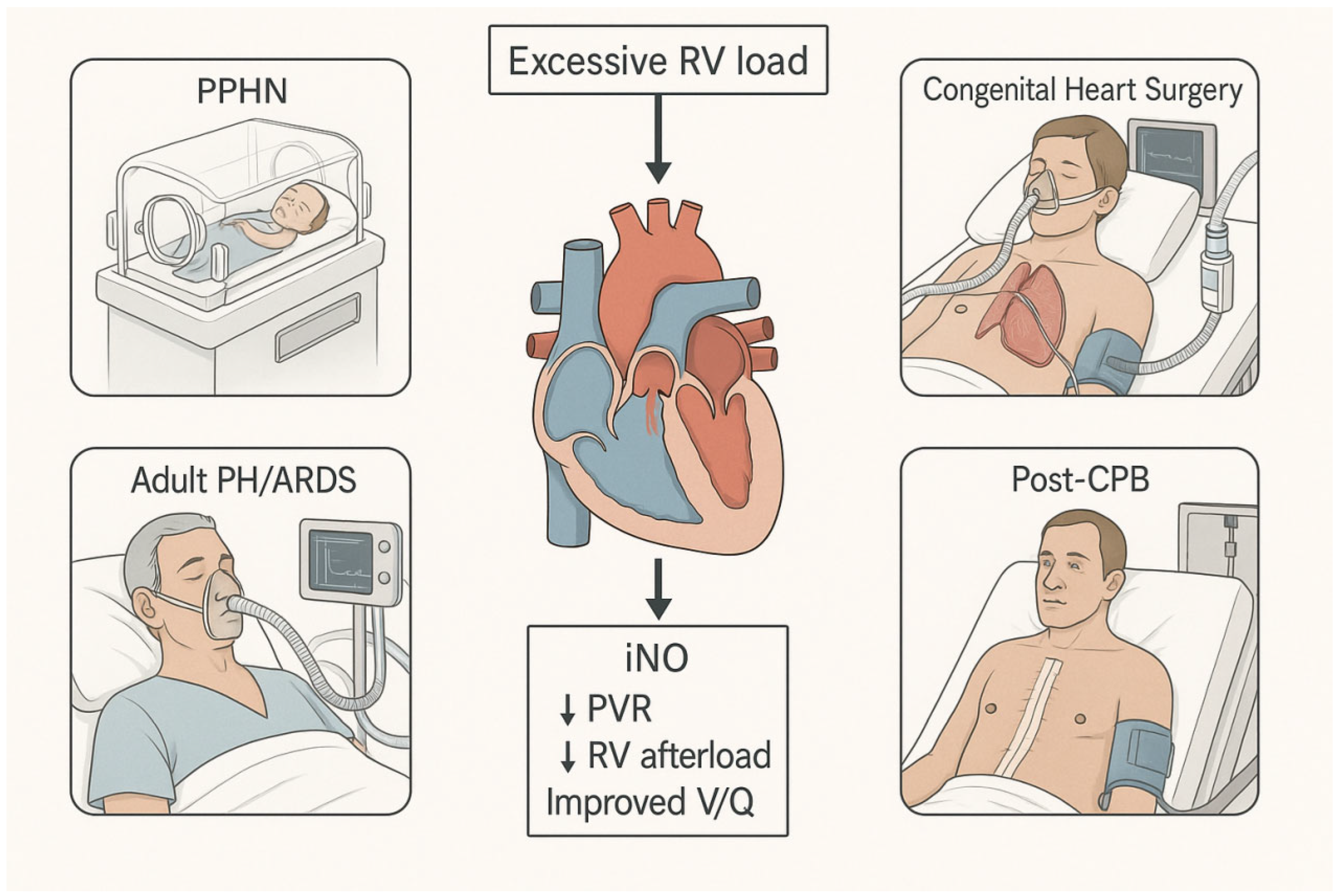

Clinical Application of Inhaled Nitric Oxide in Conditions of Excessive Right Heart Load: A Review from Neonatal Pulmonary Hypertension to Perioperative Cardiac Surgery Management

Abstract
1. Introduction
1.1. Background
1.2. Disease Burden and Clinical Impact
1.3. Existing Therapeutic Strategies and Limitations
1.4. Objectives and Scope of the Review
2. Theoretical Background
2.1. Key Phenotype-Specific Mechanisms Across PH Groups
2.2. Pathophysiology of Excess Right Heart Load
2.3. Endogenous NO and Exogenous iNO
2.3.1. Endogenous NO Production and the NO–sGC–cGMP Axis
2.3.2. Exogenous iNO
2.4. Preclinical and Translational Evidence
2.5. Clinical Delivery, Monitoring and Safety
3. Research Status
3.1. Neonatal Pulmonary Hypertension and Hypoxic Respiratory Failure
3.2. Diseases with Excessive Right Heart Load in Children and Adults
3.2.1. ARDS with Secondary Pulmonary Hypertension
3.2.2. Acute Pulmonary Embolism and Acute RV Failure
3.3. Perioperative and Post-Cardiopulmonary Bypass Use
3.3.1. Rationale in Cardiac Surgery
3.3.2. Prophylactic Postoperative iNO in Congenital Heart Surgery
3.3.3. Intra-CPB NO Administration
3.3.4. After-CPB NO Administration
4. Research Challenges and Controversies
5. Conclusions and Future Directions
Author Contributions
Funding
Data Availability Statement
Conflicts of Interest
Abbreviations
| RV | Right ventricle |
| iNO | Inhaled nitric oxide |
| ARDS | Acute respiratory distress syndrome |
| CPB | Cardiopulmonary bypass |
| ECMO | Extracorporeal membrane oxygenation |
| NO | Nitric oxide |
| NOS | Nitric oxide synthases |
| cGMP | Cyclic guanosine monophosphate |
| PVR | Pulmonary vascular resistance |
| PPHN | Persistent pulmonary hypertension of the newborn |
| CHD | Congenital heart disease |
| LCOS | Low cardiac output syndrome |
| PH | Pulmonary hypertension |
| metHb | methaemoglobin |
| ICU | Intensive care unit |
| NICU | Neonatal intensive care unit |
| mPAP | Mean pulmonary artery pressure |
| PAP | Pulmonary artery pressure |
| PAH | Pulmonary arterial hypertension |
| sGC | Soluble guanylate cyclase |
| PDE5 | Phosphodiesterase type 5 |
| FiO2 | Fraction of inspired oxygen |
| MAP | Mean airway pressure |
| PaO2 | Partial pressure of arterial oxygen |
| SpO2 | Peripheral oxygen saturation |
| V/Q | Ventilation/perfusion ratio |
| RCT | Randomized controlled trial |
| CI | Confidence interval |
| RR | Risk ratio |
| IQR | Interquartile range |
| PE | Pulmonary embolism |
| AKI | Acute kidney injury |
| OI | Oxygenation index |
| HFOV | High-frequency oscillatory ventilation |
| HFJV | High-frequency jet ventilation |
| LV | Left ventricle |
| VSD | Ventricular septal defect |
| AVSD | Atrioventricular septal defect |
Appendix A

| Study/Year | Population & Clinical Setting | N | iNO Dose & Timing | Primary Endpoint | Key Findings |
|---|---|---|---|---|---|
| Neonatal Inhaled Nitric Oxide Study Group (NINOS), 1997 [31] | Term/near-term neonates with severe hypoxic respiratory failure (often with PPHN) | 235 | Rescue iNO, starting at 20 ppm (titrated up to ~80 ppm), continued until oxygenation improved or for ≤96 h | Death or need for ECMO | iNO significantly improved oxygenation and reduced the composite of death or ECMO mainly by lowering ECMO use; no clear effect on mortality alone; no signal for increased renal injury. |
| Clark et al. (CINRGI), 2000 [32] | ≥34-week neonates with PPHN and hypoxic respiratory failure (oxygenation index ≥25) | 248 | 20 ppm for 24 h, then reduced to 5 ppm, continued for up to 96 h as rescue therapy | Need for ECMO | iNO reduced ECMO use (≈64% to 38%) and decreased chronic lung disease; mortality similar between groups; no reported increase in renal dysfunction. |
| Konduri et al., 2004 [108] | Term/near-term neonates with early hypoxic respiratory failure (early vs conventional iNO initiation) | 299 | Early group: iNO started at OI 15–25; conventional group: initiated at OI ≥25; initial dose 20 ppm with stepwise weaning | Death or ECMO | Early iNO produced faster improvement in oxygenation but did not significantly reduce death or ECMO; ventilation duration modestly reduced; no apparent increase in acute kidney injury (AKI). |
| Barrington & Finer, Cochrane review, 2017 (term/near-term) [109] | Term/near-term infants with hypoxic respiratory failure/PPHN; multiple RCTs | ~1300 | Most trials used 5–20 (up to 80) ppm as rescue therapy initiated in moderate–severe hypoxemia | Death, ECMO, chronic lung disease, long-term neurodevelopment | iNO reduced the composite of death or ECMO, driven by lower ECMO use, but did not improve mortality alone, bronchopulmonary dysplasia, or long-term neurodevelopment; no consistent signal of nephrotoxicity. |
| Taylor et al., 2004 [110] | Adults with acute lung injury/ARDS without pre-existing multi-organ failure | 385 | Fixed-dose 5 ppm, continued up to day 28, extubation, or death | Ventilator-free days at day 28 | iNO transiently improved PaO2/FiO2 but did not increase ventilator-free days or reduce mortality; no strong renal signal within this single trial, but subsequent pooled analyses link ARDS cohorts to higher AKI risk. |
| Gebistorf et al., Cochrane review, 2016 (ARDS) [80] | Pediatric and adult ARDS of various etiologies; 14 RCTs | ~1300 | Typically 5–20 ppm as short-term rescue, sometimes titrated and continued for several days | Mortality (28/90-day), ventilator-free days, oxygenation, renal outcomes | iNO consistently improved short-term oxygenation but did not reduce mortality, ventilator-free days, or ICU/hospital length of stay; meta-analysis showed increased risk of renal dysfunction or AKI, especially in high-dose/severe ARDS subgroups. |
| Ruan et al., meta-analysis, 2015 (renal outcomes) [82] | Mixed populations (predominantly ARDS and cardiac/transplant surgery) | 17 RCTs, 1280 pts | Doses 5–80 ppm; timing varied according to indication | Incidence of renal dysfunction/AKI | Overall, iNO use was associated with increased risk of renal dysfunction (RR ≈ 1.4), largely driven by ARDS/critically ill cohorts; in cardiac surgery/CPB trials, no consistent harmful renal signal was observed. |
| Miller et al., 2000 [15] | High-risk infants and young children after congenital heart surgery with CPB, prone to postoperative pulmonary hypertensive crises | 124 | Prophylactic 10 ppm started before separation from CPB and continued in the early postoperative period | Incidence of pulmonary hypertensive crises; time to meet extubation criteria | iNO significantly reduced pulmonary hypertensive crises and shortened time to extubation readiness; no increase in AKI or other major adverse effects reported. |
| Schlapbach et al. (NITRIC trial), 2022 [98] | Children < 2 years undergoing complex congenital heart surgery with CPB (multicenter RCT) | 1371 | ~20 ppm delivered via the CPB oxygenator from initiation of bypass until separation; some centers continued low-dose iNO postoperatively | Ventilator-free days at day 28 | No significant differences in ventilator-free days, 28-day mortality, low cardiac output syndrome, or major postoperative complications; prespecified renal outcomes showed no clear difference between groups. |
| Lei et al., 2018 [111] | Adults undergoing multivalve cardiac surgery with prolonged CPB, at high risk of CSA-AKI | 244 | 80 ppm via the CPB oxygenator during bypass, followed by lower-dose iNO inhalation for 24 h postoperatively | Postoperative AKI (KDIGO); CKD progression and MAKE at 90 days/1 year | iNO reduced AKI incidence (≈64% to 50%) and decreased progression to stage 3 CKD and major adverse kidney events at 90 days and 1 year; no increase in hypotension or bleeding, suggesting a renal-protective effect in this high-risk population. |
| Kamenshchikov et al., 2022 [112] | Adults undergoing valve and other cardiac procedures with CPB | 77 | NO (≈40–80 ppm) delivered via the CPB oxygenator from onset of bypass until separation; no routine postoperative inhalation | Postoperative AKI (KDIGO) | iNO reduced overall AKI incidence (≈42% to ≈21%) and lowered severe AKI and need for renal replacement therapy; no major safety concerns, supporting early intra-CPB NO for CSA-AKI prevention. |
| Hu et al., meta-analysis, 2019 (CPB-AKI) [113] | Adult cardiac surgery patients undergoing CPB | 5 RCTs, 579 pts | 10–80 ppm, mainly administered during CPB; some trials extended treatment postoperatively | AKI incidence, ICU/hospital length of stay, bleeding, methemoglobinemia | Pooled analysis showed that intra-CPB NO reduced AKI risk, particularly when started at the beginning of CPB; no significant effect on ICU/hospital stay or bleeding; methemoglobin levels rose slightly but without major clinical consequences. |
| Abouzid et al., meta-analysis, 2023 (CPB iNO) [97] | Pediatric and adult patients undergoing CPB cardiac surgery | 17 RCTs, 2897 pts | Mostly 10–40 ppm during CPB (some trials used 80 ppm); some continued iNO postoperatively | Mortality, mechanical ventilation duration, ICU/hospital stay, CPB time | Overall mortality and CPB time were similar between groups; iNO modestly shortened ICU stay and significantly reduced ventilation duration in pediatric subgroups; across included trials there was no consistent nephrotoxic signal, and findings from high-risk adult cohorts (e.g., Lei, Kamenshchikov) suggest possible renal protection. |
| Arora et al., 2025 [114] | Adults with pre-existing endothelial dysfunction undergoing prolonged CPB (>90 min) (double-blind, single-center placebo-controlled RCT) | 250 | NO 80 ppm delivered via CPB oxygenator during bypass, continued postoperatively via ventilator/facemask for 24 h vs placebo (nitrogen–oxygen mixture) | Postoperative AKI incidence (KDIGO) | AKI incidence was similar between groups (NO 44.0% vs control 43.2%; adjusted OR ~1.00); AKI severity and renal replacement therapy at all time points were also similar, not supporting routine perioperative NO for AKI prevention in this high-risk population. |
| Di Fenza et al. (Nitric Oxide Investigators), 2023 [83] | Mechanically ventilated adults with COVID-19 acute hypoxemic respiratory failure (multicenter phase II RCT) | 193 | High-dose iNO 80 ppm for 48 h vs usual care (no placebo); initiated while mechanically ventilated | Change in PaO2/FiO2 at 48 h | High-dose iNO improved PaO2/FiO2 at 48 h and increased the proportion achieving PaO2/FiO2 ≥ 300 mmHg by day 28, but duration of ventilation and 28-/90-day mortality were similar; no serious safety signals reported. |
References
- Palmer, R.M.; Ferrige, A.G.; Moncada, S. Nitric Oxide Release Accounts for the Biological Activity of Endothelium-Derived Relaxing Factor. Nature 1987, 327, 524–526. [Google Scholar] [CrossRef] [PubMed]
- Loscher, T.F. Endothelium-Derived Nitric Oxide: The Endogenous Nitrovasodilator in the Human Cardiovascular System. Eur. Heart J. 1991, 12, 2–11. [Google Scholar] [CrossRef] [PubMed]
- Roberts, J.D.; Lang, P.; Bigatello, L.M.; Vlahakes, G.J.; Zapol, W.M. Inhaled Nitric Oxide in Congenital Heart Disease. Circulation 1993, 87, 447–453. [Google Scholar] [CrossRef] [PubMed]
- Arrigo, M.; Huber, L.C.; Winnik, S.; Mikulicic, F.; Guidetti, F.; Frank, M.; Flammer, A.J.; Ruschitzka, F. Right Ventricular Failure: Pathophysiology, Diagnosis and Treatment. Card. Fail. Rev. 2019, 5, 140–146. [Google Scholar] [CrossRef]
- Vonk Noordegraaf, A.; Chin, K.M.; Haddad, F.; Hassoun, P.M.; Hemnes, A.R.; Hopkins, S.R.; Kawut, S.M.; Langleben, D.; Lumens, J.; Naeije, R. Pathophysiology of the Right Ventricle and of the Pulmonary Circulation in Pulmonary Hypertension: An Update. Eur. Respir. J. 2019, 53, 1801900. [Google Scholar] [CrossRef]
- Lankhaar, J.-W.; Westerhof, N.; Faes, T.J.C.; Marques, K.M.J.; Marcus, J.T.; Postmus, P.E.; Vonk-Noordegraaf, A. Quantification of Right Ventricular Afterload in Patients with and without Pulmonary Hypertension. Am. J. Physiol. Heart Circ. Physiol. 2006, 291, H1731–H1737. [Google Scholar] [CrossRef]
- Bryce, Y.C.; Perez-Johnston, R.; Bryce, E.B.; Homayoon, B.; Santos-Martin, E.G. Pathophysiology of Right Ventricular Failure in Acute Pulmonary Embolism and Chronic Thromboembolic Pulmonary Hypertension: A Pictorial Essay for the Interventional Radiologist. Insights Imaging 2019, 10, 18. [Google Scholar] [CrossRef]
- Griffiths, M.J.D.; Evans, T.W. Inhaled Nitric Oxide Therapy in Adults. N. Engl. J. Med. 2005, 353, 2683–2695. [Google Scholar] [CrossRef]
- Barnes, M.; Brisbois, E.J. Clinical Use of Inhaled Nitric Oxide: Local and Systemic Applications. Free Radic. Biol. Med. 2020, 152, 422–431. [Google Scholar] [CrossRef]
- Respiratory Care Group of Chinese Thoracic Society; Respiratory Therapist Working Group of Respiratory Career Development Committee; Chinese Association of Chest Physician; Liang, G.; Luo, F.; Xie, L. Expert consensus on clinical application of inhaled nitric oxide therapy (2024 edition). Chin. Med. J. 2024, 104, 2386–2400. [Google Scholar] [CrossRef]
- Singh, Y.; Lakshminrusimha, S. Pathophysiology and Management of Persistent Pulmonary Hypertension of the Newborn. Clin. Perinatol. 2021, 48, 595–618. [Google Scholar] [CrossRef] [PubMed]
- Brown, T.N.; Brogan, T.V. Right Ventricular Dysfunction in Patients with Acute Respiratory Distress Syndrome Receiving Venovenous Extracorporeal Membrane Oxygenation. Front. Cardiovasc. Med. 2023, 10, 1027300. [Google Scholar] [CrossRef] [PubMed]
- Barrington, K.J.; Finer, N.N. Inhaled Nitric Oxide for Respiratory Failure in Preterm Infants. Cochrane Database Syst. Rev. 2000, 4, CD000509. [Google Scholar] [CrossRef]
- Atlan, L.; Berthomieu, L.; Karsenty, C.; Gascoin, G.; Arnaud, C.; Breinig, S. Neurodevelopmental Outcome in Children between One and Five Years after Persistent Pulmonary Hypertension of Term and Near-Term Newborns. Front. Pediatr. 2024, 12, 1450916. [Google Scholar] [CrossRef]
- Miller, O.I.; Tang, S.F.; Keech, A.; Pigott, N.B.; Beller, E.; Celermajer, D.S. Inhaled Nitric Oxide and Prevention of Pulmonary Hypertension after Congenital Heart Surgery: A Randomised Double-Blind Study. Lancet 2000, 356, 1464–1469. [Google Scholar] [CrossRef]
- Day, R.W.; Hawkins, J.A.; McGough, E.C.; Crezeé, K.L.; Orsmond, G.S. Randomized Controlled Study of Inhaled Nitric Oxide after Operation for Congenital Heart Disease. Ann. Thorac. Surg. 2000, 69, 1907–1912. [Google Scholar] [CrossRef]
- James, C.; Millar, J.; Horton, S.; Brizard, C.; Molesworth, C.; Butt, W. Nitric Oxide Administration during Paediatric Cardiopulmonary Bypass: A Randomised Controlled Trial. Intensive Care Med. 2016, 42, 1744–1752. [Google Scholar] [CrossRef]
- Ichinose, F.; Roberts, J.D.; Zapol, W.M. Inhaled Nitric Oxide: A Selective Pulmonary Vasodilator: Current Uses and Therapeutic Potential. Circulation 2004, 109, 3106–3111. [Google Scholar] [CrossRef]
- Grotberg, J.C.; Reynolds, D.; Kraft, B.D. Extracorporeal Membrane Oxygenation for Respiratory Failure: A Narrative Review. J. Clin. Med. 2024, 13, 3795. [Google Scholar] [CrossRef]
- Konstam, M.A.; Kiernan, M.S.; Bernstein, D.; Bozkurt, B.; Jacob, M.; Kapur, N.K.; Kociol, R.D.; Lewis, E.F.; Mehra, M.R.; Pagani, F.D.; et al. Evaluation and Management of Right-Sided Heart Failure: A Scientific Statement From the American Heart Association. Circulation 2018, 137, e578–e622. [Google Scholar] [CrossRef]
- Rajagopal, S.; Ruetzler, K.; Ghadimi, K.; Horn, E.M.; Kelava, M.; Kudelko, K.T.; Moreno-Duarte, I.; Preston, I.; Rose Bovino, L.L.; Smilowitz, N.R.; et al. Evaluation and Management of Pulmonary Hypertension in Noncardiac Surgery: A Scientific Statement From the American Heart Association. Circulation 2023, 147, 1317–1343. [Google Scholar] [CrossRef] [PubMed]
- Patel, B.; Chatterjee, S.; Davignon, S.; Herlihy, J.P. Extracorporeal Membrane Oxygenation as Rescue Therapy for Severe Hypoxemic Respiratory Failure. J. Thorac. Dis. 2019, 11, S1688–S1697. [Google Scholar] [CrossRef] [PubMed]
- Aokage, T.; Palmér, K.; Ichiba, S.; Takeda, S. Extracorporeal Membrane Oxygenation for Acute Respiratory Distress Syndrome. J. Intensive Care 2015, 3, 17. [Google Scholar] [CrossRef] [PubMed]
- Preston, I.R.; Howard, L.S.; Langleben, D.; Lichtblau, M.; Pulido, T.; Souza, R.; Olsson, K.M. Management of Pulmonary Hypertension in Special Conditions. Eur. Respir. J. 2024, 64, 2401180. [Google Scholar] [CrossRef]
- Kaplish, D.; Vagha, J.D.; Rathod, S.; Jain, A. Current Pharmaceutical Strategies in the Management of Persistent Pulmonary Hypertension of the Newborn (PPHN): A Comprehensive Review of Therapeutic Agents. Cureus 2024, 16, e70307. [Google Scholar] [CrossRef]
- Frostell, C.; Fratacci, M.D.; Wain, J.C.; Jones, R.; Zapol, W.M. Inhaled Nitric Oxide. A Selective Pulmonary Vasodilator Reversing Hypoxic Pulmonary Vasoconstriction. Circulation 1991, 83, 2038–2047. [Google Scholar] [CrossRef]
- Rimar, S.; Gillis, C.N. Selective Pulmonary Vasodilation by Inhaled Nitric Oxide Is Due to Hemoglobin Inactivation. Circulation 1993, 88, 2884–2887. [Google Scholar] [CrossRef]
- Creagh-Brown, B.C.; Griffiths, M.J.D.; Evans, T.W. Bench-to-Bedside Review: Inhaled Nitric Oxide Therapy in Adults. Crit. Care 2009, 13, 221. [Google Scholar] [CrossRef]
- Callahan, R.; Morray, B.H.; Hirsch, R.; Petit, C.J. Management of Pediatric Pulmonary Vein Stenosis. J. Soc. Cardiovasc. Angiogr. Interv. 2022, 1, 100391. [Google Scholar] [CrossRef]
- Humbert, M.; Kovacs, G.; Hoeper, M.M.; Badagliacca, R.; Berger, R.M.F.; Brida, M.; Carlsen, J.; Coats, A.J.S.; Escribano-Subias, P.; Ferrari, P.; et al. 2022 ESC/ERS Guidelines for the Diagnosis and Treatment of Pulmonary Hypertension. Eur. Respir. J. 2023, 61, 2200879. [Google Scholar] [CrossRef]
- The Neonatal Inhaled Nitric Oxide Study Group. Inhaled Nitric Oxide in Full-Term and Nearly Full-Term Infants with Hypoxic Respiratory failure (Neonatal Inhaled Nitric Oxide Study Group). N. Engl. J. Med. 1997, 336, 597–604. [Google Scholar] [CrossRef] [PubMed]
- Clark, R.H.; Kueser, T.J.; Walker, M.W.; Southgate, W.M.; Huckaby, J.L.; Perez, J.A.; Roy, B.J.; Keszler, M.; Kinsella, J.P. Low-Dose Nitric Oxide Therapy for Persistent Pulmonary Hypertension of the Newborn. N. Engl. J. Med. 2000, 342, 469–474. [Google Scholar] [CrossRef] [PubMed]
- Nelin, L.D.; Potenziano, J.L. Inhaled Nitric Oxide for Neonates with Persistent Pulmonary Hypertension of the Newborn in the CINRGI Study: Time to Treatment Response. BMC Pediatr. 2019, 19, 17. [Google Scholar] [CrossRef] [PubMed]
- Mandell, E.; Kinsella, J.P.; Abman, S.H. Persistent Pulmonary Hypertension of the Newborn. Pediatr. Pulmonol. 2021, 56, 661–669. [Google Scholar] [CrossRef]
- DiBlasi, R.M.; Myers, T.R.; Hess, D.R. Evidence-Based Clinical Practice Guideline: Inhaled Nitric Oxide for Neonates with Acute Hypoxic Respiratory Failure. Respir. Care 2010, 55, 1717–1745. [Google Scholar]
- Dudell, G.G.; Jain, L. Hypoxic Respiratory Failure in the Late Preterm Infant. Clin. Perinatol. 2006, 33, 803–830. [Google Scholar] [CrossRef]
- Lakshminrusimha, S. The Pulmonary Circulation in Neonatal Respiratory Failure. Clin. Perinatol. 2012, 39, 655–683. [Google Scholar] [CrossRef]
- Muenster, S.; Zarragoikoetxea, I.; Moscatelli, A.; Balcells, J.; Gaudard, P.; Pouard, P.; Marczin, N.; Janssens, S.P. Inhaled NO at a Crossroads in Cardiac Surgery: Current Need to Improve Mechanistic Understanding, Clinical Trial Design and Scientific Evidence. Front. Cardiovasc. Med. 2024, 11, 1374635. [Google Scholar] [CrossRef]
- Kamenshchikov, N.O.; Duong, N.; Berra, L. Nitric Oxide in Cardiac Surgery: A Review Article. Biomedicines 2023, 11, 1085. [Google Scholar] [CrossRef]
- Monsalve-Naharro, J.Á.; Domingo-Chiva, E.; García Castillo, S.; Cuesta-Montero, P.; Jiménez-Vizuete, J.M. Inhaled Nitric Oxide in Adult Patients with Acute Respiratory Distress Syndrome. Farm. Hosp. 2017, 41, 292–312. [Google Scholar] [CrossRef]
- Baird, J.S.; Smerling, A.J. Meta-Analysis of Nitric Oxide in Acute Respiratory Distress Syndrome: Dosage? Crit. Care Med. 2014, 42, e605. [Google Scholar] [CrossRef] [PubMed]
- Yu, B.; Ichinose, F.; Bloch, D.B.; Zapol, W.M. Inhaled Nitric Oxide. Br. J. Pharmacol. 2019, 176, 246–255. [Google Scholar] [CrossRef] [PubMed]
- Zhang, J.; Zhang, H.; Wang, J.; Wang, T.; Bian, L.; Li, Z.; Wang, J.; Teng, Y.; Liu, G.; Yan, S.; et al. The Organ-Protective Effects of Nitric Oxide in Adult Patients Undergoing Cardiac Surgery with Cardiopulmonary Bypass: A Systematic Review and Meta-Analysis. BMC Anesthesiol. 2025, 25, 335. [Google Scholar] [CrossRef] [PubMed]
- Matsugi, E.; Takashima, S.; Doteguchi, S.; Kobayashi, T.; Okayasu, M. Real-World Safety and Effectiveness of Inhaled Nitric Oxide Therapy for Pulmonary Hypertension during the Perioperative Period of Cardiac Surgery: A Post-Marketing Study of 2817 Patients in Japan. Gen. Thorac. Cardiovasc. Surg. 2024, 72, 311–323. [Google Scholar] [CrossRef]
- Kline, J.A.; Hall, C.L.; Jones, A.E.; Puskarich, M.A.; Mastouri, R.A.; Lahm, T. Randomized Trial of Inhaled Nitric Oxide to Treat Acute Pulmonary Embolism: The iNOPE Trial. Am. Heart J. 2017, 186, 100–110. [Google Scholar] [CrossRef]
- Lahm, T.; McCaslin, C.A.; Wozniak, T.C.; Ghumman, W.; Fadl, Y.Y.; Obeidat, O.S.; Schwab, K.; Meldrum, D.R. Medical and Surgical Treatment of Acute Right Ventricular Failure. J. Am. Coll. Cardiol. 2010, 56, 1435–1446. [Google Scholar] [CrossRef]
- Lakshminrusimha, S.; Keszler, M. Persistent Pulmonary Hypertension of the Newborn. Neoreviews 2015, 16, e680–e692. [Google Scholar] [CrossRef]
- Oakland, H.; Joseph, P.; Naeije, R.; Elassal, A.; Cullinan, M.; Heerdt, P.M.; Singh, I. Arterial Load and Right Ventricular-Vascular Coupling in Pulmonary Hypertension. J. Appl. Physiol. (1985) 2021, 131, 424–433. [Google Scholar] [CrossRef]
- Li, Y.; Guo, D.; Gong, J.; Wang, J.; Huang, Q.; Yang, S.; Zhang, X.; Hu, H.; Jiang, Z.; Yang, Y.; et al. Right Ventricular Function and Its Coupling With Pulmonary Circulation in Precapillary Pulmonary Hypertension: A Three-Dimensional Echocardiographic Study. Front. Cardiovasc. Med. 2021, 8, 690606. [Google Scholar] [CrossRef]
- Mathew, B.; Lakshminrusimha, S. Persistent Pulmonary Hypertension in the Newborn. Children 2017, 4, 63. [Google Scholar] [CrossRef]
- Schmaier, A.H. The Contact Activation and Kallikrein/Kinin Systems: Pathophysiologic and Physiologic Activities. J. Thromb. Haemost. 2016, 14, 28–39. [Google Scholar] [CrossRef]
- Yeh, T.; Kavarana, M.N. Cardiopulmonary Bypass and the Coagulation System. Prog. Pediatr. Cardiol. 2005, 21, 87–115. [Google Scholar] [CrossRef]
- Chai, P.J.; Williamson, J.A.; Lodge, A.J.; Daggett, C.W.; Scarborough, J.E.; Meliones, J.N.; Cheifetz, I.M.; Jaggers, J.J.; Ungerleider, R.M. Effects of Ischemia on Pulmonary Dysfunction after Cardiopulmonary Bypass. Ann. Thorac. Surg. 1999, 67, 731–735. [Google Scholar] [CrossRef] [PubMed]
- Fayad, F.H.; Sellke, F.W.; Feng, J. Pulmonary Hypertension Associated with Cardiopulmonary Bypass and Cardiac Surgery. J. Card. Surg. 2022, 37, 5269–5287. [Google Scholar] [CrossRef] [PubMed]
- Kirshbom, P.M.; Jacobs, M.T.; Tsui, S.S.; DiBernardo, L.R.; Schwinn, D.A.; Ungerleider, R.M.; Gaynor, J.W. Effects of Cardiopulmonary Bypass and Circulatory Arrest on Endothelium-Dependent Vasodilation in the Lung. J. Thorac. Cardiovasc. Surg. 1996, 111, 1248–1256. [Google Scholar] [CrossRef]
- Evgenov, O.V.; Pacher, P.; Schmidt, P.M.; Haskó, G.; Schmidt, H.H.H.W.; Stasch, J.-P. NO-Independent Stimulators and Activators of Soluble Guanylate Cyclase: Discovery and Therapeutic Potential. Nat. Rev. Drug Discov. 2006, 5, 755–768. [Google Scholar] [CrossRef]
- Degjoni, A.; Campolo, F.; Stefanini, L.; Venneri, M.A. The NO/cGMP/PKG Pathway in Platelets: The Therapeutic Potential of PDE5 Inhibitors in Platelet Disorders. J. Thromb. Haemost. 2022, 20, 2465–2474. [Google Scholar] [CrossRef]
- Kass, D.A.; Champion, H.C.; Beavo, J.A. Phosphodiesterase Type 5: Expanding Roles in Cardiovascular Regulation. Circ. Res. 2007, 101, 1084–1095. [Google Scholar] [CrossRef]
- Lakshminrusimha, S.; Mathew, B.; Leach, C.L. Pharmacologic Strategies in Neonatal Pulmonary Hypertension Other than Nitric Oxide. Semin. Perinatol. 2016, 40, 160–173. [Google Scholar] [CrossRef]
- DiBlasi, R.M.; Dupras, D.; Kearney, C.; Costa, E.; Griebel, J.L. Nitric Oxide Delivery by Neonatal Noninvasive Respiratory Support Devices. Respir. Care 2015, 60, 219–230. [Google Scholar] [CrossRef]
- Chandel, A.; Patolia, S.; Ahmad, K.; Aryal, S.; Brown, A.W.; Sahjwani, D.; Khangoora, V.; Shlobin, O.A.; Cameron, P.C.; Singhal, A.; et al. Inhaled Nitric Oxide via High-Flow Nasal Cannula in Patients with Acute Respiratory Failure Related to COVID-19. Clin. Med. Insights Circ. Respir. Pulm. Med. 2021, 15, 11795484211047065. [Google Scholar] [CrossRef] [PubMed]
- Gladwin, M.T.; Shelhamer, J.H.; Schechter, A.N.; Pease-Fye, M.E.; Waclawiw, M.A.; Panza, J.A.; Ognibene, F.P.; Cannon, R.O. Role of Circulating Nitrite and S-Nitrosohemoglobin in the Regulation of Regional Blood Flow in Humans. Proc. Natl. Acad. Sci. USA 2000, 97, 11482–11487. [Google Scholar] [CrossRef] [PubMed]
- Lundberg, J.O.; Gladwin, M.T.; Weitzberg, E. Strategies to Increase Nitric Oxide Signalling in Cardiovascular Disease. Nat. Rev. Drug Discov. 2015, 14, 623–641. [Google Scholar] [CrossRef] [PubMed]
- Fukumitsu, M.; Kawada, T.; Nishikawa, T.; Yokota, S.; Matsushita, H.; Morita, H.; Sato, K.; Yoshida, Y.; Uemura, K.; Saku, K. Effects of Nitric Oxide Inhalation on Pulmonary Arterial Impedance: Differences between Normal and Pulmonary Hypertension Male Rats. Am. J. Physiol. Heart Circ. Physiol. 2024, 327, H287–H297. [Google Scholar] [CrossRef]
- Reinero, M.; Beghetti, M.; Tozzi, P.; von Segesser, L.K.; Samaja, M.; Milano, G. Nitric Oxide-cGMP Pathway Modulation in an Experimental Model of Hypoxic Pulmonary Hypertension. J. Cardiovasc. Pharmacol. Ther. 2021, 26, 665–676. [Google Scholar] [CrossRef]
- Christou, H.; Michael, Z.; Spyropoulos, F.; Chen, Y.; Rong, D.; Khalil, R.A. Carbonic Anhydrase Inhibition Improves Pulmonary Artery Reactivity and Nitric Oxide-Mediated Relaxation in Sugen-Hypoxia Model of Pulmonary Hypertension. Am. J. Physiol. Regul. Integr. Comp. Physiol. 2021, 320, R835–R850. [Google Scholar] [CrossRef]
- Gredic, M.; Wu, C.-Y.; Hadzic, S.; Pak, O.; Savai, R.; Kojonazarov, B.; Doswada, S.; Weiss, A.; Weigert, A.; Guenther, A.; et al. Myeloid-Cell-Specific Deletion of Inducible Nitric Oxide Synthase Protects against Smoke-Induced Pulmonary Hypertension in Mice. Eur. Respir. J. 2022, 59, 2101153. [Google Scholar] [CrossRef]
- Soskić, S.S.; Dobutović, B.D.; Sudar, E.M.; Obradović, M.M.; Nikolić, D.M.; Djordjevic, J.D.; Radak, D.J.; Mikhailidis, D.P.; Isenović, E.R. Regulation of Inducible Nitric Oxide Synthase (iNOS) and Its Potential Role in Insulin Resistance, Diabetes and Heart Failure. Open Cardiovasc. Med. J. 2011, 5, 153–163. [Google Scholar] [CrossRef]
- Molina, C.; Kissner, R.; Koppenol, W.H. Decomposition Kinetics of Peroxynitrite: Influence of pH and Buffer. Dalton Trans. 2013, 42, 9898–9905. [Google Scholar] [CrossRef]
- Beckman, J.S.; Koppenol, W.H. Nitric Oxide, Superoxide, and Peroxynitrite: The Good, the Bad, and Ugly. Am. J. Physiol. 1996, 271, C1424–C1437. [Google Scholar] [CrossRef]
- Jani, V.P.; Friedman, J.M.; Cabrales, P. Nitric Oxide Releasing Nanoparticles Reduce Inflammation in a Small Animal Model of ARDS. Biomed. Pharmacother. 2022, 148, 112705. [Google Scholar] [CrossRef] [PubMed]
- Montgomery, F.J.; Berssenbrugge, A.D. Inhaled Nitric Oxide Delivery and Monitoring. J. Clin. Monit. Comput. 1999, 15, 325–335. [Google Scholar] [CrossRef] [PubMed]
- Martin, A.R.; Jackson, C.; Fromont, S.; Pont, C.; Katz, I.M.; Caillobotte, G. An Injection and Mixing Element for Delivery and Monitoring of Inhaled Nitric Oxide. Biomed. Eng. Online 2016, 15, 103. [Google Scholar] [CrossRef] [PubMed]
- Gianni, S.; Carroll, R.W.; Kacmarek, R.M.; Berra, L. Inhaled Nitric Oxide Delivery Systems for Mechanically Ventilated and Nonintubated Patients: A Review. Respir. Care 2021, 66, 1021–1028. [Google Scholar] [CrossRef]
- Kinsella, J.P.; Truog, W.E.; Walsh, W.F.; Goldberg, R.N.; Bancalari, E.; Mayock, D.E.; Redding, G.J.; deLemos, R.A.; Sardesai, S.; McCurnin, D.C.; et al. Randomized, Multicenter Trial of Inhaled Nitric Oxide and High-Frequency Oscillatory Ventilation in Severe, Persistent Pulmonary Hypertension of the Newborn. J. Pediatr. 1997, 131, 55–62. [Google Scholar] [CrossRef]
- Hoehn, T.; Krause, M.; Hentschel, R. High-Frequency Ventilation Augments the Effect of Inhaled Nitric Oxide in Persistent Pulmonary Hypertension of the Newborn. Eur. Respir. J. 1998, 11, 234–238. [Google Scholar] [CrossRef]
- Markhorst, D.G.; Leenhoven, T.; Uiterwijk, J.W.; Meulenbelt, J.; van Vught, A.J. Occupational Exposure during Nitric Oxide Inhalational Therapy in a Pediatric Intensive Care Setting. Intensive Care Med. 1996, 22, 954–958. [Google Scholar] [CrossRef]
- Qureshi, M.A.; Shah, N.J.; Hemmen, C.W.; Thill, M.C.; Kruse, J.A. Exposure of Intensive Care Unit Nurses to Nitric Oxide and Nitrogen Dioxide during Therapeutic Use of Inhaled Nitric Oxide in Adults with Acute Respiratory Distress Syndrome. Am. J. Crit. Care 2003, 12, 147–153. [Google Scholar] [CrossRef]
- Wild, K.T.; Rintoul, N.; Kattan, J.; Gray, B. Extracorporeal Life Support Organization (ELSO): Guidelines for Neonatal Respiratory Failure. ASAIO J. 2020, 66, 463–470. [Google Scholar] [CrossRef]
- Gebistorf, F.; Karam, O.; Wetterslev, J.; Afshari, A. Inhaled Nitric Oxide for Acute Respiratory Distress Syndrome (ARDS) in Children and Adults. Cochrane Database Syst. Rev. 2016, 2016, CD002787. [Google Scholar] [CrossRef]
- Adhikari, N.K.J.; Burns, K.E.A.; Friedrich, J.O.; Granton, J.T.; Cook, D.J.; Meade, M.O. Effect of Nitric Oxide on Oxygenation and Mortality in Acute Lung Injury: Systematic Review and Meta-Analysis. BMJ 2007, 334, 779. [Google Scholar] [CrossRef] [PubMed]
- Ruan, S.-Y.; Huang, T.-M.; Wu, H.-Y.; Wu, H.-D.; Yu, C.-J.; Lai, M.-S. Inhaled Nitric Oxide Therapy and Risk of Renal Dysfunction: A Systematic Review and Meta-Analysis of Randomized Trials. Crit. Care 2015, 19, 137. [Google Scholar] [CrossRef] [PubMed]
- Di Fenza, R.; Shetty, N.S.; Gianni, S.; Parcha, V.; Giammatteo, V.; Safaee Fakhr, B.; Tornberg, D.; Wall, O.; Harbut, P.; Lai, P.S.; et al. High-Dose Inhaled Nitric Oxide in Acute Hypoxemic Respiratory Failure Due to COVID-19: A Multicenter Phase II Trial. Am. J. Respir. Crit. Care Med. 2023, 208, 1293–1304. [Google Scholar] [CrossRef] [PubMed]
- Adhikari, N.K.J.; Dellinger, R.P.; Lundin, S.; Payen, D.; Vallet, B.; Gerlach, H.; Park, K.J.; Mehta, S.; Slutsky, A.S.; Friedrich, J.O. Inhaled Nitric Oxide Does Not Reduce Mortality in Patients with Acute Respiratory Distress Syndrome Regardless of Severity: Systematic Review and Meta-Analysis. Crit. Care Med. 2014, 42, 404–412. [Google Scholar] [CrossRef]
- Szold, O.; Khoury, W.; Biderman, P.; Klausner, J.M.; Halpern, P.; Weinbroum, A.A. Inhaled Nitric Oxide Improves Pulmonary Functions Following Massive Pulmonary Embolism: A Report of Four Patients and Review of the Literature. Lung 2006, 184, 1–5. [Google Scholar] [CrossRef]
- Summerfield, D.T.; Desai, H.; Levitov, A.; Grooms, D.A.; Marik, P.E. Inhaled Nitric Oxide as Salvage Therapy in Massive Pulmonary Embolism: A Case Series. Respir. Care 2012, 57, 444–448. [Google Scholar] [CrossRef]
- Bhat, T.; Neuman, A.; Tantary, M.; Bhat, H.; Glass, D.; Mannino, W.; Akhtar, M.; Bhat, A.; Teli, S.; Lafferty, J. Inhaled Nitric Oxide in Acute Pulmonary Embolism: A Systematic Review. Rev. Cardiovasc. Med. 2015, 16, 1–8. [Google Scholar] [CrossRef]
- Kline, J.A.; Hernandez, J.; Garrett, J.S.; Jones, A.E. Pilot Study of a Protocol to Administer Inhaled Nitric Oxide to Treat Severe Acute Submassive Pulmonary Embolism. Emerg. Med. J. EMJ 2014, 31, 459–462. [Google Scholar] [CrossRef]
- Kline, J.A.; Puskarich, M.A.; Jones, A.E.; Mastouri, R.A.; Hall, C.L.; Perkins, A.; Gundert, E.E.; Lahm, T. Inhaled Nitric Oxide to Treat Intermediate Risk Pulmonary Embolism: A Multicenter Randomized Controlled Trial. Nitric Oxide 2019, 84, 60–68. [Google Scholar] [CrossRef]
- Yamada, N.; Ueno, M.; Onishi, K.; Sugimoto, K.; Kakehi, K.; Fujita, K.; Matsumura, K.; Nakazawa, G. Impact of Inhaled Nitric Oxide Therapy in Patients with Cardiogenic Shock Treated with Veno-Arterial Extracorporeal Membrane Oxygenation Combined with Impella: A Retrospective Cohort Study. J. Intensive Care 2024, 12, 49. [Google Scholar] [CrossRef]
- Gramegna, M.; Vandenbriele, C.; Tavazzi, G.; Basir, M.B.; Bleakley, C.; Iannaccone, M.; Kretzschmar, D.; Maisano, F.; Scandroglio, A.M.; Schrage, B.; et al. Percutaneous Mechanical Circulatory Support for Acute Right Heart Failure: A Practical Approach. ESC Heart Fail. 2025, 12, 2652–2668. [Google Scholar] [CrossRef] [PubMed]
- Paparella, D.; Yau, T.M.; Young, E. Cardiopulmonary Bypass Induced Inflammation: Pathophysiology and Treatment. An update. Eur. J. Cardiothorac. Surg. 2002, 21, 232–244. [Google Scholar] [CrossRef] [PubMed]
- Carteaux, J.P.; Roux, S.; Siaghy, M.; Schjöth, B.; Dolofon, P.; Bechamps, Y.; Mertes, P.M.; Villemot, J.P. Acute Pulmonary Hypertension after Cardiopulmonary Bypass in Pig: The Role of Endogenous Endothelin. Eur. J. Cardiothorac. Surg. 1999, 15, 346–352. [Google Scholar] [CrossRef] [PubMed]
- Checchia, P.A.; Bronicki, R.A.; Muenzer, J.T.; Dixon, D.; Raithel, S.; Gandhi, S.K.; Huddleston, C.B. Nitric Oxide Delivery during Cardiopulmonary Bypass Reduces Postoperative Morbidity in Children—A Randomized Trial. J. Thorac. Cardiovasc. Surg. 2013, 146, 530–536. [Google Scholar] [CrossRef]
- Gianetti, J.; Del Sarto, P.; Bevilacqua, S.; Vassalle, C.; De Filippis, R.; Kacila, M.; Farneti, P.A.; Clerico, A.; Glauber, M.; Biagini, A. Supplemental Nitric Oxide and Its Effect on Myocardial Injury and Function in Patients Undergoing Cardiac Surgery with Extracorporeal Circulation. J. Thorac. Cardiovasc. Surg. 2004, 127, 44–50. [Google Scholar] [CrossRef]
- Kamenshchikov, N.O.; Mandel, I.A.; Podoksenov, Y.K.; Svirko, Y.S.; Lomivorotov, V.V.; Mikheev, S.L.; Kozlov, B.N.; Shipulin, V.M.; Nenakhova, A.A.; Anfinogenova, Y.J. Nitric Oxide Provides Myocardial Protection When Added to the Cardiopulmonary Bypass Circuit during Cardiac Surgery: Randomized Trial. J. Thorac. Cardiovasc. Surg. 2019, 157, 2328–2336.e1. [Google Scholar] [CrossRef]
- Abouzid, M.; Roshdy, Y.; Daniel, J.M.; Rzk, F.M.; Ismeal, A.A.A.; Hendawy, M.; Tanashat, M.; Elnagar, M.; Daoud, N.; Ramadan, A. The Beneficial Use of Nitric Oxide during Cardiopulmonary Bypass on Postoperative Outcomes in Children and Adult Patients: A Systematic Review and Meta-Analysis of 2897 Patients. Eur. J. Clin. Pharmacol. 2023, 79, 1425–1442. [Google Scholar] [CrossRef]
- Schlapbach, L.J.; Gibbons, K.S.; Horton, S.B.; Johnson, K.; Long, D.A.; Buckley, D.H.F.; Erickson, S.; Festa, M.; d’Udekem, Y.; Alphonso, N.; et al. Effect of Nitric Oxide via Cardiopulmonary Bypass on Ventilator-Free Days in Young Children Undergoing Congenital Heart Disease Surgery: The NITRIC Randomized Clinical Trial. JAMA 2022, 328, 38. [Google Scholar] [CrossRef]
- Russell, I.A.; Zwass, M.S.; Fineman, J.R.; Balea, M.; Rouine-Rapp, K.; Brook, M.; Hanley, F.L.; Silverman, N.H.; Cahalan, M.K. The Effects of Inhaled Nitric Oxide on Postoperative Pulmonary Hypertension in Infants and Children Undergoing Surgical Repair of Congenital Heart Disease. Anesth. Analg. 1998, 87, 46–51. [Google Scholar] [CrossRef]
- Goldman, A.P.; Delius, R.E.; Deanfield, J.E.; Macrae, D.J. Nitric Oxide Is Superior to Prostacyclin for Pulmonary Hypertension after Cardiac Operations. Ann. Thorac. Surg. 1995, 60, 300–305; discussion 306. [Google Scholar] [CrossRef]
- Chen, S.-H.; Chen, L.-K.; Teng, T.-H.; Chou, W.-H. Comparison of Inhaled Nitric Oxide with Aerosolized Prostacyclin or Analogues for the Postoperative Management of Pulmonary Hypertension: A Systematic Review and Meta-Analysis. Ann. Med. 2020, 52, 120–130. [Google Scholar] [CrossRef] [PubMed]
- Solina, A.; Papp, D.; Ginsberg, S.; Krause, T.; Grubb, W.; Scholz, P.; Pena, L.L.; Cody, R. A Comparison of Inhaled Nitric Oxide and Milrinone for the Treatment of Pulmonary Hypertension in Adult Cardiac Surgery Patients. J. Cardiothorac. Vasc. Anesth. 2000, 14, 12–17. [Google Scholar] [CrossRef] [PubMed]
- Sardo, S.; Osawa, E.A.; Finco, G.; Gomes Galas, F.R.B.; de Almeida, J.P.; Cutuli, S.L.; Frassanito, C.; Landoni, G.; Hajjar, L.A. Nitric Oxide in Cardiac Surgery: A Meta-Analysis of Randomized Controlled Trials. J. Cardiothorac. Vasc. Anesth. 2018, 32, 2512–2519. [Google Scholar] [CrossRef] [PubMed]
- Atz, A.M.; Adatia, I.; Wessel, D.L. Rebound Pulmonary Hypertension after Inhalation of Nitric Oxide. Ann. Thorac. Surg. 1996, 62, 1759–1764. [Google Scholar] [CrossRef]
- McMullan, D.M.; Bekker, J.M.; Johengen, M.J.; Hendricks-Munoz, K.; Gerrets, R.; Black, S.M.; Fineman, J.R. Inhaled Nitric Oxide-Induced Rebound Pulmonary Hypertension: Role for Endothelin-1. Am. J. Physiol. Heart Circ. Physiol. 2001, 280, H777–H785. [Google Scholar] [CrossRef]
- Lorch, S.A.; Cnaan, A.; Barnhart, K. Cost-Effectiveness of Inhaled Nitric Oxide for the Management of Persistent Pulmonary Hypertension of the Newborn. Pediatrics 2004, 114, 417–426. [Google Scholar] [CrossRef]
- Bearl, D.W.; Dodd, D.A.; Thurm, C.; Hall, M.; Soslow, J.H.; Feingold, B.; Godown, J. Practice Variation, Costs and Outcomes Associated with the Use of Inhaled Nitric Oxide in Pediatric Heart Transplant Recipients. Pediatr. Cardiol. 2019, 40, 650–657. [Google Scholar] [CrossRef]
- Konduri, G.G.; Solimano, A.; Sokol, G.M.; Singer, J.; Ehrenkranz, R.A.; Singhal, N.; Wright, L.L.; Van Meurs, K.; Stork, E.; Kirpalani, H.; et al. A randomized trial of early versus standard inhaled nitric oxide therapy in term and near-term newborn infants with hypoxic respiratory failure. Pediatrics 2004, 113, 559–564. [Google Scholar] [CrossRef]
- Barrington, K.J.; Finer, N.; Pennaforte, T. Inhaled nitric oxide for respiratory failure in preterm infants. Cochrane Database Syst. Rev. 2017, 1, CD000509. [Google Scholar] [CrossRef]
- Taylor, R.W.; Zimmerman, J.L.; Dellinger, R.P.; Straube, R.C.; Criner, G.J.; Davis, K., Jr.; Kelly, K.M.; Smith, T.C.; Small, R.J. Inhaled Nitric Oxide in ARDS Study Group. Low-dose inhaled nitric oxide in patients with acute lung injury: A randomized controlled trial. JAMA 2004, 291, 1603–1609. [Google Scholar] [CrossRef]
- Lei, C.; Berra, L.; Rezoagli, E.; Yu, B.; Dong, H.; Yu, S.; Hou, L.; Chen, M.; Chen, W.; Wang, H.; et al. Nitric Oxide Decreases Acute Kidney Injury and Stage 3 Chronic Kidney Disease after Cardiac Surgery. Am. J. Respir. Crit. Care Med. 2018, 198, 1279–1287. [Google Scholar] [CrossRef]
- Kamenshchikov, N.O.; Anfinogenova, Y.J.; Kozlov, B.N.; Svirko, Y.S.; Pekarskiy, S.E.; Evtushenko, V.V.; Lugovsky, V.A.; Shipulin, V.M.; Lomivorotov, V.V.; Podoksenov, Y.K. Nitric oxide delivery during cardiopulmonary bypass reduces acute kidney injury: A randomized trial. J. Thorac. Cardiovasc. Surg. 2022, 163, 1393–1403.e9. [Google Scholar] [CrossRef]
- Hu, J.; Spina, S.; Zadek, F.; Kamenshchikov, N.O.; Bittner, E.A.; Pedemonte, J.; Berra, L. Effect of nitric oxide on postoperative acute kidney injury in patients who underwent cardiopulmonary bypass: A systematic review and meta-analysis with trial sequential analysis. Ann. Intensive Care 2019, 9, 129. [Google Scholar] [CrossRef] [PubMed]
- Arora, P.; Di Fenza, R.; Shetty, N.S.; Giammatteo, V.; Marrazzo, F.; Spina, S.; Zadek, F.; Gianni, S.; Fakhr, B.S.; La Vita, C.; et al. Nitric Oxide to Reduce Acute Kidney Injury in Patients with Preexisting Endothelial Dysfunction Requiring Prolonged Cardiopulmonary Bypass: A Randomized Clinical Trial. Anesthesiology 2026, 144, 652–665. [Google Scholar] [CrossRef]

| Clinical Scenario | Mechanism of Excessive RV Load/↑ PVR | Typical Clinical Consequences | Role of Inhaled NO (iNO) | References |
|---|---|---|---|---|
| Persistent pulmonary hypertension of the newborn (PPHN) | Failure of normal postnatal fall in PVR; sustained fetal circulatory shunts | Severe hypoxemia, RV dysfunction, need for ECMO, NICU stay | Selective pulmonary vasodilator to ↓ PVR, improve oxygenation, reduce ECMO requirement | [31,32,33,34] |
| Neonatal hypoxic respiratory failure (meconium, sepsis, RDS) | Hypoxia, acidosis, and lung injury causing reactive pulmonary vasoconstriction | Refractory hypoxemia, ventilator dependence, hemodynamic lability | Rescue therapy to improve V/Q matching and unload RV in selected responders; benefit may be limited with consolidation/atelectasis/flooding | [31,32,33,35,36,37] |
| Complex congenital heart disease requiring CPB (pediatric) | Pre-existing or reactive pulmonary hypertension; CPB-induced endothelial dysfunction | Pulmonary hypertensive crises, LCOS, RV failure, prolonged ICU stay | Prophylactic or rescue use to prevent/treat PHT crises and facilitate postoperative stabilization | [15,38,39] |
| Adult pulmonary hypertension/ARDS with secondary PH | Hypoxic vasoconstriction, vascular remodeling, microthrombi in pulmonary circulation | RV dilatation, reduced RV output, refractory hypoxemia | Short-term support to ↓ PVR, improve oxygenation and RV performance (no proven mortality benefit) | [28,40,41,42] |
| Post-CPB RV dysfunction (adult cardiac surgery) | CPB-related inflammation, ischaemia–reperfusion, increased PVR and RV afterload | Difficulty weaning from CPB, LCOS, need for high inotrope/ECMO support | Adjunct to facilitate separation from CPB, stabilize RV, and reduce need for aggressive systemic vasodilators | [38,43,44] |
| Acute RV failure from other causes (e.g., acute PE, decompensated PH) | Abrupt rise in PVR (embolus, crisis in chronic PH) | Acute RV failure, systemic hypotension, cardiogenic shock | Bridge therapy to reduce RV afterload and improve hemodynamics while definitive treatment is instituted | [45,46] |
| General principle across scenarios | ↑ PVR → ↑ RV afterload → RV dilatation/dysfunction → ↓ LV filling and output | Systemic hypotension, end-organ hypoperfusion, high mortality | iNO acts as aselective pulmonary vasodilator and RV afterload reducer with minimal systemic hypotension | [4,5,28,40,41] |
| PH Phenotype | Core Pathophysiology | Implications for iNO |
|---|---|---|
| Group 1 PAH (vascular remodeling of pulmonary arteries) | Endothelial dysfunction (↓ NO/PGI2, ↑ endothelin) + vascular remodeling; variable vasoreactivity | Variable response; useful for acute RV unloading, perioperative crises, or vasoreactivity testing; limited in fixed remodeling |
| Group 2 PH associated with left-sided heart disease | Post-capillary PH from high LA pressure; may progress to combined post/pre-capillary disease | Often limited; can worsen pulmonary edema if LV filling leads to high pressures—use only with careful echo/hemodynamic assessment |
| Group 3 PH associated with lung disease | Hypoxic vasoconstriction + inflammatory endothelial injury; microthrombi; V/Q heterogeneity; mechanical compression | Transient V/Q improvement and RV unloading in ventilated units; no mortality benefit; avoid prolonged use (AKI signal) |
| Group 4 PH associated with pulmonary artery obstructions | Acute: obstruction + mediator-driven vasoconstriction; Chronic: fixed obstruction/remodeling | Most plausible as short-term bridge in acute PE with RV dysfunction while reperfusion or anticoagulation proceeds; limited in chronic fixed disease |
| Group 5 PH with unclear and/or multifactorial mechanisms | Heterogeneous: systemic/inflammatory or granulomatous lung disease (e.g., sarcoidosis), hematologic disorders (e.g., hemolysis), CKD, metabolic disorders, tumor or fibrosing mediastinitis causing vascular or airway compression; often mixed pre-/post-capillary components. | Evidence limited and response unpredictable; consider a short monitored trial only for acute decompensation with suspected reversible vasoconstriction and RV failure. Discontinue if no objective oxygenation or hemodynamic improvement; prioritize treating the underlying cause (inflammation, anemia, hemolysis, obstruction, compression, metabolic drivers). |
| Aspect | Option/Parameter | Typical Practice/Key Points |
|---|---|---|
| Delivery source | Compressed gas cylinder (e.g., 800–1000 ppm NO in N2) | Standard hospital supply; requires dedicated regulator, injector, and inline gas monitoring. |
| Integrated NO delivery system | Commercial systems combining blender, flow control, and NO/NO2/O2 monitoring. | |
| Connection to circuit | Invasive mechanical ventilation | NO injected into inspiratory limb close to ventilator; continuous NO/NO2/FiO2 monitoring required. |
| High-frequency ventilation (HFOV/HFJV) | NO introduced into bias flow; verify stable NO concentration at patient Y-piece. | |
| Non-invasive/high-flow systems | Possible in selected devices with closed interfaces; risk of gas leakage and ambient exposure must be controlled. | |
| Cardiopulmonary bypass (CPB) oxygenator sweep gas | NO blended into oxygenator sweep gas during CPB; dosing referenced to sweep gas flow, not minute ventilation. | |
| Typical starting dose | Neonates/children | 10–20 ppm (often start at 20 ppm in PPHN/high-risk CHD), then titrate down to lowest effective dose. |
| Adults | 5–20 ppm in ARDS, acute PH or RV failure; higher doses rarely needed. | |
| Maximum dose (short term) | Generally ≤40 ppm in most protocols; up to 80 ppm used short-term in some rescue settings with close monitoring. | |
| Titration & weaning | Up-titration | Increase in small steps (e.g., 5–10 ppm) based on oxygenation and PAP/RV response. |
| Weaning | Gradual reduction (e.g., 20 → 10 → 5 → 2 → 1 ppm) with clinical and hemodynamic monitoring to avoid rebound PH. | |
| Gas monitoring | NO | Continuous monitoring at patient side; maintain at prescribed setpoint. |
| NO2 | Keep < 2 ppm (many centers aim < 1 ppm); alarms for rapid rise. | |
| FiO2 | Continuous monitoring; avoid unnecessary hyperoxia. | |
| Patient monitoring | Methaemoglobin (MetHb) | Check at baseline and regularly thereafter; aim < 5% (many centers intervene at 3–5%). |
| Hemodynamics | HR, BP, central venous pressure, PAP/RV function (echo or catheter if available). | |
| Gas exchange | SpO2, arterial blood gases, lactate; assess response within minutes of dose change. | |
| Safety thresholds | NO2 | Alarm if ≥2 ppm; investigate device setup, scavenging, and FiO2. |
| MetHb | Reduce iNO dose and/or treat if ≥5%; consider alternative therapies. | |
| Ambient NO/NO2 (staff exposure) | Maintain below occupational limits (e.g., time-weighted thresholds per local regulations); ensure adequate scavenging. | |
| Recognized adverse effects | Methaemoglobinemia | Dose- and duration-related; usually reversible with dose reduction or methylene blue if severe. |
| NO2 toxicity | Risk of airway/pulmonary injury at high NO2; controlled by strict monitoring and alarm limits. | |
| Rebound pulmonary hypertension | Can occur with abrupt withdrawal; prevent by slow weaning and overlapping oral/IV pulmonary vasodilators if needed. | |
| Oxidative/nitrosative stress | Theoretical or subtle risk with prolonged/high-dose exposure; minimize dose and duration consistent with goals. | |
| Operational issues | Transport on iNO | Use portable delivery/monitoring units; secure cylinders and ensure battery backup. |
| Infection control & maintenance | Regular calibration, filter changes, and device disinfection per manufacturer and hospital protocols. |
Disclaimer/Publisher’s Note: The statements, opinions and data contained in all publications are solely those of the individual author(s) and contributor(s) and not of MDPI and/or the editor(s). MDPI and/or the editor(s) disclaim responsibility for any injury to people or property resulting from any ideas, methods, instructions or products referred to in the content. |
© 2026 by the authors. Licensee MDPI, Basel, Switzerland. This article is an open access article distributed under the terms and conditions of the Creative Commons Attribution (CC BY) license.
Share and Cite
Hu, C.; Chen, Z.; Lv, L.; Zhu, Y.; Chen, Y.; Wang, Q. Clinical Application of Inhaled Nitric Oxide in Conditions of Excessive Right Heart Load: A Review from Neonatal Pulmonary Hypertension to Perioperative Cardiac Surgery Management. J. Cardiovasc. Dev. Dis. 2026, 13, 81. https://doi.org/10.3390/jcdd13020081
Hu C, Chen Z, Lv L, Zhu Y, Chen Y, Wang Q. Clinical Application of Inhaled Nitric Oxide in Conditions of Excessive Right Heart Load: A Review from Neonatal Pulmonary Hypertension to Perioperative Cardiac Surgery Management. Journal of Cardiovascular Development and Disease. 2026; 13(2):81. https://doi.org/10.3390/jcdd13020081
Chicago/Turabian StyleHu, Chengming, Zhe Chen, Lizhi Lv, Yan Zhu, Yan Chen, and Qiang Wang. 2026. "Clinical Application of Inhaled Nitric Oxide in Conditions of Excessive Right Heart Load: A Review from Neonatal Pulmonary Hypertension to Perioperative Cardiac Surgery Management" Journal of Cardiovascular Development and Disease 13, no. 2: 81. https://doi.org/10.3390/jcdd13020081
APA StyleHu, C., Chen, Z., Lv, L., Zhu, Y., Chen, Y., & Wang, Q. (2026). Clinical Application of Inhaled Nitric Oxide in Conditions of Excessive Right Heart Load: A Review from Neonatal Pulmonary Hypertension to Perioperative Cardiac Surgery Management. Journal of Cardiovascular Development and Disease, 13(2), 81. https://doi.org/10.3390/jcdd13020081