Article

How Does Big Data Analytics Drive Supply Chain Resilience in Pharmaceuticals? Exploring the Roles of Supply Chain Risk and Ambidexterity


by
Sara Sami Al-Nuimat
1,
Zu’bi M. F. Al-Zu’bi
2 and
Ayman Bahjat Abdallah
2,*
1
Queen Alia Heart Institute, Jordanian Royal Medical Services, Amman 11855, Jordan
2
Department of Business Management, School of Business, The University of Jordan, Amman 11942, Jordan
*
Author to whom correspondence should be addressed.
Logistics 2026, 10(1), 14; https://doi.org/10.3390/logistics10010014
Submission received: 7 December 2025 / Revised: 4 January 2026 / Accepted: 5 January 2026 / Published: 7 January 2026

Abstract

Background: The primary objective of this study is to investigate the influence of big data analytics (BDA) on supply chain (SC) risk, SC ambidexterity, and SC resilience. It further examines the effects of SC risk and SC ambidexterity on SC resilience and explores their mediating roles in the BDA–SC resilience relationship. Despite growing interest in BDA and resilience, limited empirical research has addressed these linkages in pharmaceutical distribution, particularly in emerging economies such as Jordan. Methods: A quantitative research strategy was adopted, employing a survey-based methodology. Data were obtained from 204 managers in pharmaceutical distribution companies in Jordan. Results: The findings indicate that BDA reduces SC risk and positively influences SC ambidexterity and SC resilience. Furthermore, SC risk and SC ambidexterity positively affect SC resilience. Notably, both variables partially mediate the BDA–SC resilience relationship, with ambidexterity showing a stronger effect. Conclusions: Grounded in the resource-based view and the dynamic capability view, this study provides empirical evidence that BDA enhances SC resilience primarily by fostering ambidexterity and mitigating risks. By clarifying the distinct mediating roles of SC risk and SC ambidexterity, the research extends theory and offers practical insights for managers seeking to build more resilient pharmaceutical SCs.

1. Introduction

In the current complex global environment, supply chains (SCs) face significant disruptions that threaten their regular operations and interrupt the smooth flow of their products. These disruptions are irregular and challenging to predict, making them difficult to evaluate and manage [1]. In addition, these disruptions often result in negative impacts and consequences [2]. For instance, the unprecedented COVID-19 crisis was an unexpected and serious disruption risk that posed various challenges for the healthcare system. Specifically, pharmaceutical companies’ SCs were severely disrupted, leading to shortages in numerous medications while demand for drugs notably increased during the pandemic [3]. This highlights the significance of a resilient SC, which enables pharmaceutical companies to endure, respond, and recover from disturbances that can affect their operations [4]. Building a resilient SC is especially vital for the pharmaceutical sector, as it plays an essential role in ensuring public health [2].
Innovative technologies, including big data analytics (BDA), have revolutionized SC management, enabling companies in various sectors to derive actionable and deeper insights from both structured and unstructured data [5,6,7]. Significant advances in data analysis, visualization, and storage technologies and techniques have occurred as a result of the rapid increase in data volume, variety, speed, and accuracy [8]. BDA is an emerging technology that is seen as an essential component in developing new competencies to improve SCs [9]. Many organizations of all sizes are seeking to improve their performance, innovation, and business value by extensively utilizing BDA approaches [7]. BDA broadly includes data gathering, analysis, usage, and insight generation across various functional areas to acquire actionable outcomes that enhance business value and foster performance [10,11].
The extant literature has provided evidence regarding BDA’s direct impact on SC resilience [9,12,13,14,15,16]. While exploring this direct impact is important, examining the role of key mediating factors that clarify how BDA contributes to SC resilience remains under-investigated. Recent studies have begun investigating mediators or moderators to clarify BDA’s influence on SC resilience, such as organizational mindfulness [17], anticipation and improvisation capabilities [8], and organizational flexibility [18]. While the existing literature highlights the critical roles of reduced SC risk and enhanced SC ambidexterity in strengthening SC resilience (e.g., [9,19,20,21,22,23]), their roles as mediators in the BDA–SC resilience relationship remain underexplored. SC ambidexterity promotes SC resilience by enabling the mitigation of disruptions and the pursuit of new opportunities using existing resources [24]. This allows an ambidextrous SC to innovate while leveraging existing competencies. SC risk refers to deviations from the anticipated or desired performance of key functions, such as planning demand and supply, sourcing, transportation, production, and reverse logistics [25]. Such risks must be proactively anticipated and managed in a timely manner [2].
In addition, there is a research gap in the literature regarding the investigation of BDA’s impact on SC resilience in pharmaceutical SCs. Likewise, no previous studies have empirically explored the proposed relationships in the Middle East, particularly in Jordan. Addressing these research gaps, this research investigates BDA’s impact on SC risk, SC ambidexterity, and SC resilience in pharmaceutical distribution companies in Jordan. It also examines the influence of SC risk and SC ambidexterity on SC resilience, as well as their mediating roles in the BDA–SC resilience relationship. By doing so, this study aims to extend existing theory by clarifying how BDA-driven capabilities operate through distinct organizational mechanisms in a critical yet underexplored sectoral and regional context.In particular, this study addresses the following research questions (RQs):
RQ1. 
What impact does BDA have on SC risk, SC ambidexterity, and SC resilience?
RQ2. 
What mediating role do SC risk and SC ambidexterity play in the BDA–SC resilience relationship?
The structure of the paper is as follows: Section 2 provides a review of the related literature. The theoretical underpinning and formulation of the study hypotheses are reported in Section 3. Section 4 describes the employed methodology. Statistical analysis and testing of the research hypotheses are covered in Section 5. Next, the study’s findings are discussed in Section 6. Section 7 concludes the study by outlining its conclusions, implications, and limitations.

2. Literature Review

2.1. Big Data Analytics (BDA)

BDA refers to a set of techniques, processes, and tools for utilizing unstructured, semi-structured, and structured data from various sources to generate actionable insights for informed decision-making [26,27]. Such data requires the use of technology to organize, process, analyze, and display information, as well as to detect hidden patterns and trends. In an SC setting, big data is derived from various sources, such as financial records, supplier evaluations, compliance reports, commercial transactions, and content created by users [28]. BDA is also described as a “holistic process that involves the collection, analysis, use, and interpretation of data for various functional divisions with a view to gaining actionable insights, creating business value, and establishing competitive advantage” [29] (p. 86). In today’s global environment, where SCs are highly complex, BDA serves as an essential tool that enables managers to gather crucial insights for more effective competition in fast-paced business settings [7]. Big data is distinguished from traditional datasets by five characteristics: volume, velocity, variety, veracity, and value [26,30]. Volume reflects the massive increase in data; velocity emphasizes the speed of generation; variety indicates the different types of data available; veracity refers to the reliability and accuracy of the data; and value represents the insights and benefits gained from analyzing that data [28,31].
Drawing on the resource-based view (RBV) and dynamic capabilities perspective, this study conceptualizes BDA as a multidimensional organizational capability composed of tangible resources, intangible resources, and human skills [32,33,34,35,36]. According to RBV, firms achieve superior performance when they possess valuable, rare, and difficult-to-imitate resources [8,12], while dynamic capabilities emphasize the firm’s ability to integrate, build, and reconfigure these resources in response to environmental changes [7,13]. Tangible resources refer to the physical and technological infrastructure that enables data collection, storage, and processing, such as hardware, software platforms, and analytics tools [32]. These resources provide the technical foundation necessary for handling large volumes, varieties, and velocities of data, but on their own are insufficient to generate strategic value. Intangible resources capture organizational attributes that support effective use of analytics, including data-driven culture, managerial commitment, governance mechanisms, and organizational routines [35]. These resources shape how analytics is embedded in decision-making processes and determine whether insights derived from data are translated into coordinated organizational actions [36]. Human skills represent the analytical, managerial, and domain-specific competencies of employees involved in data analytics. These include technical analytics skills, understanding of business processes, and the ability to interpret and apply analytical insights ethically and effectively [37]. Human skills act as a critical link between tangible infrastructure and intangible organizational processes. Together, these three dimensions are interdependent and jointly contribute to the development of BDA capabilities. Tangible resources enable data processing, intangible resources provide organizational alignment and strategic direction, and human skills transform analytical outputs into actionable decisions. This integrated perspective offers a more explanatory framework for understanding how BDA capabilities are developed and how they influence SC outcomes.

2.2. Supply Chain Risk

Risk refers to a combination of internal and external aspects faced by organizations of all types and sizes that make it uncertain whether they will accomplish their goals [38]. According to El Baz and Ruel [25], SC risk refers to the deviation in how tasks like demand planning, sourcing, production, supply planning, transportation, and reverse logistics are performed as compared to what is anticipated or standard. Meanwhile, Queiroz et al. [39] described SC risk as the probability and consequences of supply-demand imbalances, while Heckmann et al. [40] characterized it as the potential loss in SC efficiency and effectiveness due to unexpected events. Broadly, SC risks are divided into internal and external categories [25]. Internal risks refer to the risks presented by the SC’s internal environment that directly affect the supplier, manufacturer, distributor, and customer, while external risks include natural calamities like earthquakes, floods, and tsunamis, along with man-made dangers such as terrorism, volatile financial markets, and war [41]. Although external risks have a greater influence on SCs, internal risks are more common [40].
In this study, SC risk is conceptualized as a multidimensional construct capturing managers’ perceived exposure to disruptions across key SC activities. Consistent with prior literature [15,19,20,21], the concept encompasses supply-related risks, operational risks, and logistics/distribution risks. Supply-related risks refer to disruptions arising from supplier failure, poor quality, or inability to deliver required inputs [20,21]. Operational risks relate to internal process interruptions that affect production or order fulfillment [21,25]. Logistics and distribution risks capture disruptions in transportation, shipping, and delivery activities that prevent products from reaching customers as planned [40,41]. Although these risk dimensions are conceptually distinct, in this study they are captured together as a single aggregated construct, measured through five questionnaire items reflecting supplier unreliability, operational interruptions, shipment disruptions, product quality failures, and delivery constraints. This approach aligns with prior empirical studies that capture SC risk as an aggregated perception of exposure across multiple disruption sources [21,25].

2.3. Supply Chain Ambidexterity

Ambidexterity is defined as “the capacity to capitalize on an existing set of resources and capabilities while at the same time developing new combinations of resources to meet future market needs” [42] (p. 1899). In addition, SC ambidexterity involves the ability to adapt SC design to respond to changing market conditions while synchronizing the goals of SC members [43]. Indeed, firms with ambidextrous SCs can exploit existing opportunities while also exploring new ones to achieve a competitive edge [44]. The significance of ambidexterity arises from the necessity for companies to simultaneously adapt to the changing market conditions for sustained success while also reinforcing their present business strategies for short-term gains [43].
Early research on ambidexterity suggested that the activities necessary to leverage current information (exploitation) varied significantly from those required to discover new knowledge (exploration), warning of risks such as ‘failure traps’ and ‘success traps’ [45]. However, subsequent research has demonstrated that exploitation and exploration can coexist. Consequently, ambidexterity is measured as a multidimensional construct representing a balance between the two [42,43,44,46]. According to organizational ambidexterity theory, exploration practices are designed for long-term adaptation and success, whereas exploitation strategies focus on efficiency and immediate performance outcomes [47]. Following this literature, the present study operationalizes SC ambidexterity as a multidimensional construct comprising SC exploration and SC exploitation. SC exploration enables rapid movement toward new opportunities and helps expand an organization’s knowledge base [43]. It involves the pursuit of innovative SC solutions and the acquisition of new information, resources, and skills to build new SC capabilities [46,48]. Conversely, SC exploitation focuses on updating and improving current resources and skills to enhance SC performance, such as optimizing operational workflows and increasing technological efficiency [48].
In SC contexts, ambidexterity is especially critical because operations are inherently inter-organizational. Firms must simultaneously exploit established routines with partners to ensure efficiency, while also exploring new coordination mechanisms to adapt to disruptions, regulatory changes, and demand uncertainty. This dual orientation makes ambidexterity a key driver of resilience in collaborative SCs, where stability and innovation must coexist across organizational boundaries.

2.4. Supply Chain Resilience

SC resilience is defined as “the adaptive capability of a supply chain to reduce the probability of facing sudden disturbances, resist the spread of disturbances by maintaining control over structures and functions, and recover and respond by immediate and effective reactive plans to transcend the disturbance and restore the supply chain to a robust state of operations” [49] (p. 121). SC resilience also refers to the “capability of a SC to develop the required level of readiness, response, and recovery capability to manage disruption risks, get back to the original state or even a better state after disruptions” [50] (p. 659). Worldwide healthcare has become increasingly vulnerable in recent years due to pandemics caused by novel viruses, which resulted in SC disruptions (e.g., supply deficits, significantly volatile demand). Critical response planning efforts are therefore essential for dealing with unanticipated catastrophes and constructing robust global SCs [51]. SC resilience gives firms a superior competitive position over their competitors after disruptions [52]. Resilience is essential because, although not all risks can be prevented, companies can mitigate threats to their SCs by developing resilience, which allows them to maintain the delivery of goods and services to their customers [53]. Moreover, resilient firms arrange their internal resources, competencies, and systems more effectively in the face of disturbances and are generally better equipped to handle them [52].
Recent studies in pharmaceutical SCs highlight how resilience is critical for ensuring medicine availability during disruptions, where BDA tools have been applied to manage shortages, demand volatility, and regulatory pressures [2,3,4,9].
Overall, prior studies confirm the positive role of BDA in enhancing SC performance and resilience; however, most research treats BDA as a unified capability and focuses largely on manufacturing contexts. Limited attention has been given to the distinct mechanisms through which BDA resources, organizational practices, and human skills interact to shape resilience outcomes, particularly in inter-organizational pharmaceutical SCs.

3. Theoretical Foundations and Hypotheses Formulation

3.1. Theoretical Framework

The theoretical underpinning of the present study is grounded in the resource-based view (RBV) theory [54] and the dynamic capability view (DCV) [55]. The RBV suggests that organizations can achieve superior performance through their resources and capabilities. It affirms that “these resources must be rare, valuable, difficult to imitate, and non-substitutable” to confer a sustained competitive edge [56] (p. 1911). The RBV considers an organization as a collection of intangible and tangible resources that, when strategically combined, can create a competitive advantage [54]. Tangible resources comprise material assets like machinery, infrastructure, and facilities; in contrast, intangible resources encompass expertise and employee capabilities, organizational reputation, and culture [56]. Capabilities are defined as “firm-specific formal or informal processes developed over time through the complex allocation and use of resources and are embedded in organizational routines” [57] (p. 665). These capabilities consist of competencies, skills, routines, and knowledge, enabling companies to coordinate and deploy resources effectively for superior performance [54].
Complementing RBV, the DCV emphasizes the firm’s ability to integrate, build, and reconfigure internal and external competencies to address rapidly changing environments [55]. Unlike ordinary capabilities, dynamic capabilities focus on sensing and shaping opportunities, seizing them, and reconfiguring resources to sustain competitiveness [7,13]. Thus, while RBV highlights the possession of valuable resources, DCV extends this logic by stressing the continual renewal and adaptation of those resources in response to disruption and change.
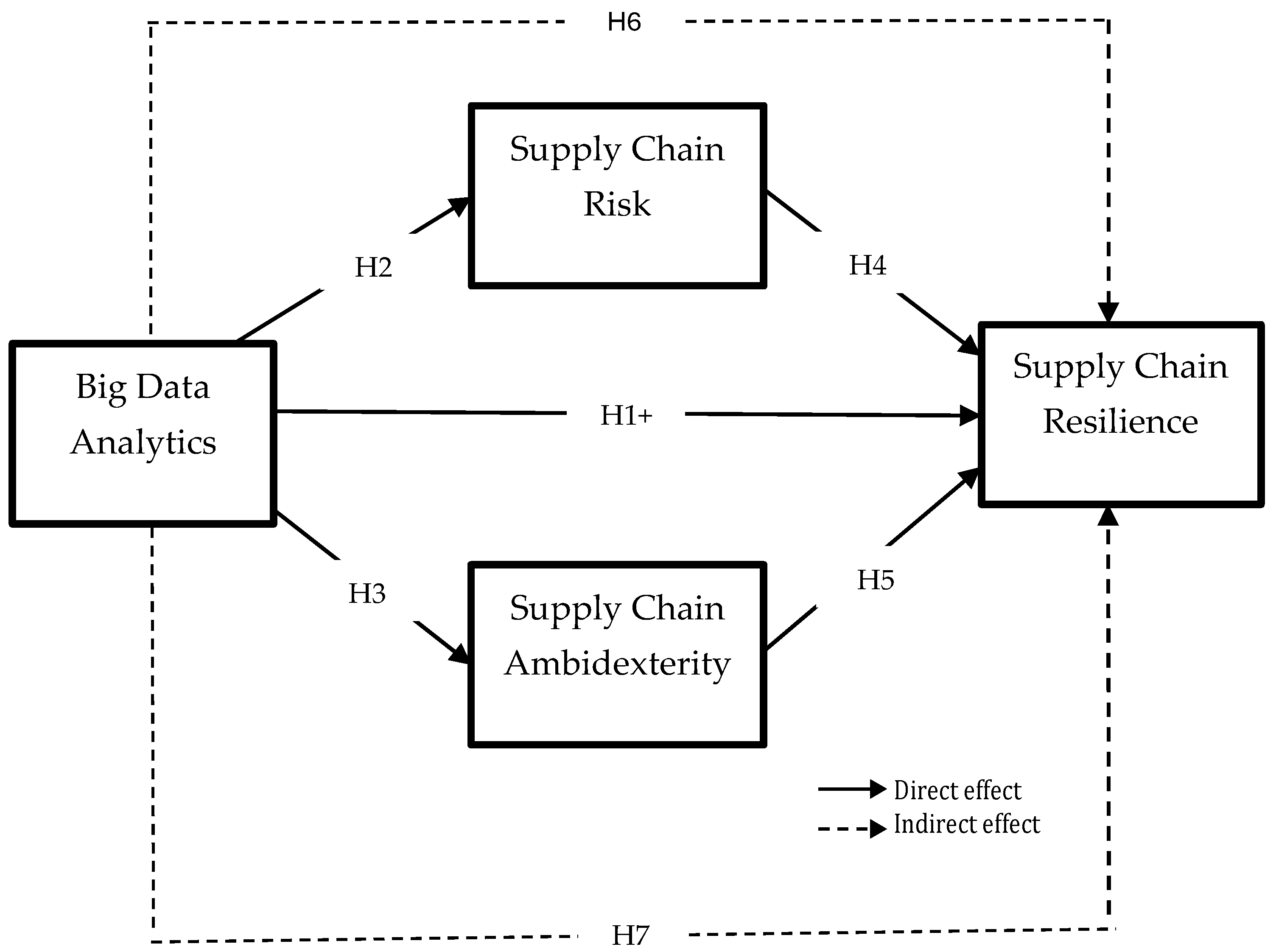
Recent studies highlight that data-sharing capabilities, particularly through BDA, can enhance SC processes and resilience, especially during disruptions [9,58]. Consequently, based on the RBV and DCV, we argue that BDA technologies can be viewed as valuable and dynamic resources for pharmaceutical distribution companies, promoting the development of SC risk mitigation capability and SC ambidexterity capability. BDA technologies, combined with SC risk mitigation and ambidexterity capabilities, are expected to significantly enhance SC resilience. The model of this study is depicted in Figure 1, and the related hypotheses are developed in the subsequent sub-sections.

3.2. BDA and SC Resilience

BDA promotes SC resilience primarily through enhanced visibility enabled by organizational transparency and advanced data visualization capabilities [9,23]. Visibility represents a key BDA outcome, allowing firms to gain timely insights into SC conditions and potential disruptions. In addition, BDA provides significant opportunities to strengthen recovery strategies and improve supply network management [5]. Prior studies indicate that BDA enhances SC resilience readiness by improving demand forecasting accuracy and supporting more effective supplier selection decisions [59]. Singh and Singh [20] further show that organizations can leverage existing knowledge more effectively and strengthen resilience capabilities through the adoption of BDA. Empirical evidence also suggests that data analytics capabilities enhance SC resilience through mechanisms such as organizational flexibility and agility [26]. Similarly, Mandal [60] identifies BDA as a critical enabler of SC readiness, alertness, and agility, which are fundamental dimensions of SC resilience. Studies across different contexts consistently confirm the positive impact of BDA on SC resilience [5,17,59].
Beyond these empirical findings, BDA contributes to SC resilience through several interrelated mechanisms grounded in the RBV and DCV. Tangible BDA resources, such as data infrastructure, analytics platforms, and information systems, enable real-time data collection, visibility, and monitoring across SC activities. These capabilities support early detection of disruptions, improve situational awareness, and allow firms to respond more rapidly to operational disturbances [26,37,59]. However, tangible resources alone are insufficient to generate resilient outcomes. Intangible BDA resources, including a data-driven culture, governance mechanisms, and top management commitment, embed analytical insights into organizational routines and decision-making processes. These resources ensure that insights generated from analytics are institutionalized, shared, and acted upon across SC partners, thereby enhancing coordination and adaptive responses during disruption events [19,20,26]. Human skills represent a critical enabling mechanism through which analytical insights are interpreted and translated into effective SC actions. Analytical and managerial competencies allow decision-makers to contextualize data outputs, balance short-term responses with long-term adjustments, and redesign SC processes when disruptions occur. Through learning, flexibility, and informed judgment, human skills play a central role in transforming BDA investments into sustained SC resilience [17,26]. Thus, it is hypothesized:
H1: 
BDA positively impacts SC resilience.

3.3. BDA and SC Risk

To mitigate the effect of SC risks effectively, organizations must build the capacity to manage both present and upcoming disruptions. BDA is one approach that companies employ to enhance their response to disruptions and reduce risk [61]. In particular, BDA serves as an effective analysis tool that empowers organizations to evaluate risks and adjust their resources and capabilities, enabling them to predict and respond to potential disruptions [60]. Implementing BDA technology introduces an innovative capability for anticipatory strategies within risk management systems, facilitating efficient resource reallocation during the recovery phase [27].
BDA reduces SC risks by enhancing firms’ ability to identify, predict, and manage potential disruptions across supply, operational, and distribution activities. Through advanced data integration and real-time analytics, organizations can monitor supplier performance, demand fluctuations, and logistics conditions, allowing early detection of risk signals and proactive intervention. BDA also supports more accurate forecasting, improved supplier selection, and better coordination among SC partners, which collectively reduce uncertainty and vulnerability to disruptions [5,20,59]. By transforming large volumes of structured and unstructured data into actionable insights, BDA enables firms to shift from reactive risk management to proactive risk prevention, thereby lowering overall SC risk exposure.
There is a need for data-driven techniques to control SC risk, as managers seek decision-making assistance to anticipate and respond to these risks in real time [9]. Some prior studies have explored the impact of BDA capabilities on various aspects of SC risks. For instance, Park and Singh [62], using a sample of 213 managers, found that BDA capabilities positively impact SC disruption risk alert tools. Similarly, Shokouhyar et al. [63] demonstrated that BDA capabilities positively impact pharmaceutical SC sustainability in Iran. Nisar et al. [64] found that BDA talent and technological capabilities positively affect SC risk management in multinational organizations in Pakistan. Thus, the following hypothesis is proposed:
H2: 
BDA significantly reduces SC risk.

3.4. BDA and SC Ambidexterity

Organizations that thrive in volatile environments often structure themselves to support both exploration and exploitation, achieving ambidexterity [24]. BDA capabilities are dynamic resources that allow firms to access and process large volumes of information, especially from unstructured datasets, which is crucial for building flexible routines that support adaptability and resilience [65]. BDA insights enhance an organization’s ability to recognize and exploit new prospects that emerge in the environment while also managing threats and adapting to competitive changes [34]. BDA capabilities enable firms to adjust data resources to meet diverse information demands, which is expected to boost ambidextrous capabilities [24]. Moreover, BDA fosters partner collaboration and knowledge sharing due to the shared technological infrastructure [22]. Therefore, BDA tools enhance the ability of various firms to exploit and explore new information, leading to high levels of ambidexterity [24]. In the short term, BDA enhances current capabilities (exploitation) while facilitating the long-term development of new resources and skills (exploration).
Prior research has provided evidence regarding the impact of BDA on SC ambidexterity. For instance, Wamba et al. [22] demonstrated that BDA positively affects SC ambidexterity (measured in terms of SC adaptability and agility) and overall performance. Likewise, Yoshikuni et al. [65] showed that BDA-driven dynamic capabilities positively impact innovation ambidexterity and firm performance, with innovation ambidexterity mediating this relationship. Additionally, Munir et al. [66] concluded that SC ambidexterity positively affects SC analytics capability. Accordingly, we offer the following hypothesis:
H3: 
BDA positively impacts SC ambidexterity.

3.5. SC Risk and SC Resilience

Global disruptions are causing significant interruptions in SCs, presenting an unavoidable reality. SC risk refers to any threat that affects the flow of information, materials, or products from primary suppliers to end consumers, resulting in unplanned consequences that can affect SC functions at logistical or strategic levels [67]. Various SC risks have emerged due to the unpredictable business environment, such as loss of talent or skills, transport network disruptions, health and safety incidents, and natural disasters [66]. These risks delay operations, increase costs, harm brand reputation, and threaten SC sustainability [9]. Organizations may suffer multiple consequences from a single disruption incident, weakening their ability to respond effectively and restore SC robustness [67]. In the pharmaceutical industry, SC disruptions are the primary cause of shortages in essential drugs and medical supplies [4]. The COVID-19 pandemic, for instance, led to severe disruptions of pharmaceutical SCs globally, resulting in drug and vaccine shortages due to transportation lockdowns and delays [2].
The presence of SC risks and uncertainty hinders firms’ ability to build SC resilience by affecting preparedness, forecasting, responsiveness, and recovery. El Baz and Ruel [25] concluded that SC risk management practices positively impact SC resilience. Munir et al. [66] found that effective SC risk management positively enhances SC resilience. Abdallah et al. [2] empirically demonstrated that SC risk mitigation strategies significantly reduce SC disruptions in pharmaceutical distribution in Jordan. Bag et al. [9] revealed that external risk management of purchasing and supply positively affects SC resilience, while internal risk management did not.
While prior studies confirm the direct negative impact of SC risk on resilience, it is equally important to clarify the intermediary mechanisms through which risk undermines resilience. Beyond establishing a direct relationship, SC risk undermines SC resilience through several intermediary mechanisms. Elevated supply, operational, and delivery risks disrupt material flows, information sharing, and coordination among SC partners, thereby reducing a firm’s ability to anticipate, absorb, and recover from unexpected events. High levels of risk increase uncertainty and variability across the SC, which weakens preparedness and slows response and recovery processes. Moreover, persistent SC risks place pressure on managerial attention and organizational resources, forcing firms to focus on short-term problem solving rather than developing adaptive and learning-oriented capabilities that are essential for resilience [20,62]. As a result, higher exposure to SC risks reduces flexibility, decision-making speed, and recovery effectiveness, ultimately weakening overall SC resilience [15,25]. Thus, the following is hypothesized:
H4: 
SC risk negatively impacts SC resilience.

3.6. SC Ambidexterity and SC Resilience

SC ambidexterity is a key feature of SC networks that enables companies to mitigate the adverse impacts of interruptions and shocks, thus improving SC resilience [22]. Leveraging exploitation/exploration ambidexterity allows organizations to reduce the adverse impact of SC interruptions and boost performance by continuously seeking novel solutions to meet new market demands while adapting to a rapidly changing business environment [68]. Furthermore, while exploitation approaches primarily contribute to resilience through increased agility and redundancy, exploratory approaches enhance resilience by increasing flexibility [47]. A resilient SC seeks new opportunities (exploration) while making use of available resources (exploitation) to reduce disturbance, ensure continuity, and achieve competitive advantage [37]. An ambidextrous SC enhances resilience by continually analyzing and monitoring market needs to identify SC opportunities such as capturing new SC centers, sourcing new suppliers, and optimizing logistical infrastructure, enabling quick adaptation to disruptions and changing conditions [22]. Ambidextrous organizations leverage existing resources and develop strategies to minimize the negative effects of SC disruptions while maximizing firm performance [43]. Firms can withstand and bounce back from external risks by leveraging their ambidexterity skills, which enhance their abilities to withstand and respond to environmental disturbances [69].
Aslam et al. [43] demonstrated that SC ambidexterity positively impacts SC agility and SC resilience in Pakistani manufacturing companies, with SC agility mediating this relationship. Similarly, Xu and Liu [23] concluded that SC ambidexterity positively affects SC resilience in Chinese manufacturing companies. Therefore, the subsequent hypothesis is proposed:
H5: 
SC ambidexterity positively impacts SC resilience.

3.7. Mediation Impact of SC Risk on the BDA-SC Resilience Relationship

The recent COVID-19 pandemic underscored the importance of information management in developing critical competencies and mitigating SC disruptions [47]. Specifically, during this pandemic, uncertainties from both upstream suppliers and downstream customers and markets were unusually high, resulting in many businesses struggling to make effective decisions. For this reason, gathering, processing, and analyzing essential information became critical [70]. Therefore, the crisis has clearly emphasized the essential role of information-processing capabilities to manage SC risks and thereby enhance SC resilience. Consequently, using data technologies to assist managers in identifying possible risks or disruptions is essential for establishing business continuity plans that support recovery processes and boost SC resilience [26]. In this context, BDA can greatly aid in the enhancement of SC resilience by facilitating timely and precise information and knowledge exchange between partners [5]. For instance, BDA can assist in creating disaster-resilient SCs by improving forecast accuracy, decision-making processes, and accelerating the return to normal operations [71]. Dennehy et al. [17] further emphasized that using BDA as part of SC resilience helps businesses anticipate disruptions, as it allows decision-makers to detect, predict, and trace events within their operations. BDA capabilities offer knowledge and insights concerning what to adjust to account for environmental unpredictability, which helps firm SCs to prepare, recover, respond, and adapt to these risks [11]. Such technologies can assist organizations in predicting disruptions rather than merely reacting when they occur. They enable the instant monitoring of any deviations from normal operations and detection of early warning signals through precise, up-to-date big data [17].
Some prior studies have explored related areas, providing insights into the proposed mediating effect. For instance, Singh and Singh [20] found that BDA mediates the influence of IT infrastructure capabilities on the organization’s capacity to build risk resilience against SC disruptions. Gupta et al. [19] empirically found that BDA positively enhances the company’s ability to manage risks during SC disruption. Munir et al. [66] demonstrated that SC analytics capability positively mediates the effect of SC risk management on SC resilience. Based on this, we present the following hypothesis:
H6: 
SC risk mediates the impact of BDA on SC resilience.

3.8. Mediation Impact of SC Ambidexterity on the BDA-SC Resilience Relationship

Big data alone does not guarantee success. As a component of management information systems, it must be handled with the appropriate tools, practices, and, most importantly, competent people [72]. Utilizing big data’s capacity for ambidexterity can significantly impact company processes, but only if applied through business process management, which requires proper competence [68]. BDA, as a critical information-processing capability, enhances ambidexterity (exploitation and exploration), which increases SC resilience by fostering adaptability, redundancy, and flexibility [47]. Big data applications and their analytics capabilities enable firms to use existing information to achieve operational advantages, minimize SC and logistics costs, facilitate information sharing, enhance transparency, enable network-wide tracking, and strengthen trust and collaboration among SC members [12,65]. All of these factors are expected, in turn, to further foster SC resilience. BDA capabilities that extract real-time environmental data to uncover and capitalize on new business opportunities can drive continuous organizational innovation, thereby strengthening SC resilience [24,65]. Moreover, BDA capabilities increase organizations’ visibility, allowing them to better comprehend their internal and external environments [23]. Firms will thus be better equipped to respond to and prevent unpredictable situations, decrease the uncertainty of demand planning, accelerate recovery, and restore operations during sudden disturbances, thereby further enhancing SC resilience. BDA allows firms to exploit and rearrange their resources, routines, and operations while exploring new opportunities and possible threats [24], thereby facilitating SC responsiveness and resilience. Bahrami et al. [13] found that BDA capabilities positively affect innovative capabilities and SC resilience, with innovative capabilities mediating this relationship. Xu and Liu [23] concluded that BDA positively moderated the influence of SC ambidexterity on SC resilience. Thus, we advance the following hypothesis:
H7: 
SC ambidexterity mediates the impact of BDA on SC resilience.

4. Methodology

4.1. Questionnaire and Measures

To gather the required data for this research, the authors prepared a self-administered survey questionnaire. The survey questionnaire included questions adopted from prior studies published in English. The items for measuring BDA (tangible resources, human skills, and intangible resources) were adopted from Gupta and George [32], Mikalef et al. [7], and Mikalef et al. [34]. To measure SC risk, the items were adopted from Jajja et al. [73] and Um and Han [21]. For SC ambidexterity, the items measuring its two dimensions (SC exploitation and SC exploration) were adopted from Kristal et al. [46]. Finally, the items used to measure SC resilience were adopted from Golgeci and Ponomarov [74] and Wong et al. [75]. Before adopting these question items, we confirmed that they demonstrated sufficient levels of reliability and validity in the original research papers. As all items were adopted from studies published in English, the questionnaire was initially prepared in English. Subsequently, the authors translated the questionnaire into Arabic. To ensure content validity, four professors of SC and operations management were asked to review the questionnaire. In addition, five senior managers of pharmaceutical distribution companies were invited to review the questionnaire. In both cases, we addressed all comments regarding appropriateness, clarity, understandability, and accuracy of translation. Participants rated their agreement with each statement in the survey using a five-point Likert scale, where 1 indicated strong disagreement and 5 indicated strong agreement.
Although the measurement scales were adapted from prior SC and BDA literature, they were applied in ways that reflect the pharmaceutical distribution context. For example, the SC risk items (SCR1–SCR5) capture disruptions such as supplier failure, shipment interruptions, and product quality issues, which directly represent high-stakes challenges in drug distribution. Similarly, the BDA items reflect industry-relevant capabilities such as data integration, analytics deployment, and managerial use of analytics, which are critical for meeting regulatory requirements and ensuring product availability. The ambidexterity and resilience measures further capture the sector’s need to balance efficiency and innovation while maintaining continuity of supply during disruption events. Thus, while the scales are not explicitly labeled as “pharmaceutical,” they capture mechanisms highly salient in pharmaceutical distribution SCs. Table 1 presents the measures utilized in the present study, along with the corresponding references for each measurement scale.

4.2. Sample and Data Collection

The target population for this study comprised all pharmaceutical distribution companies in Jordan. According to the Jordan Pharmaceutical Association Report [76], there are 404 distribution companies in Jordan. Given the small population size, we targeted the entire population. The unit of analysis is the pharmaceutical distribution company; therefore, we selected one respondent with adequate knowledge of the research variables from each company. These respondents included SC managers, operations managers, vice general managers, general managers, heads of sections, and supervisors. The researchers contacted all the companies to request their participation in the study. We made contact through personal visits, phone calls, or emails. As a result, 238 companies agreed to participate. We then sent an online questionnaire link to the targeted respondents at these companies. After collecting the responses, 34 questionnaires were excluded due to issues such as a tendency for respondents to select one answer (e.g., “agree”) for all question items. Consequently, the total number of valid questionnaires amounted to 204. This yielded an effective response rate of 50.50%. Details of the respondents and the participating firms are reported in Table 2.

5. Data Analysis and Results

5.1. Measurement Model Assessment

To confirm that our measures met the requirements of reliability and validity, a rigorous assessment of the study’s constructs was undertaken. Validity and unidimensionality of the constructs were assessed by applying appropriate procedures to ensure the internal consistency and accuracy of the study’s measurement scales. Similarly, the reliability of the scales was examined by means of composite reliability (CR) and Cronbach’s alpha coefficient. To evaluate the overall fit of the measurement model and verify the constructs’ unidimensionality, confirmatory factor analysis (CFA) was undertaken with Amos 24.0. The first criterion applied to ensure the constructs’ unidimensionality was to retain items with standardized factor loadings above 0.60 [77]. All items in this study met this criterion, providing initial evidence of unidimensionality as shown in Table 3. The overall model fit indices for the first-order constructs were found to be within acceptable ranges, indicating a satisfactory fit between the proposed measurement model and the observed data. The detailed model fit statistics are reported in Table 4. Furthermore, the statistical significance of all items (p < 0.01) meets the criteria for convergent validity [77]. To further verify convergent validity, the average variance extracted (AVE) for each of the first-order scales was computed. All obtained AVE values surpassed the suggested threshold of 0.50, lending further credence to convergent validity [78]. Reliability tests for Cronbach’s alpha and CR also showed satisfactory values exceeding the recommended cut-off of 0.70 for all first-order constructs, confirming the reliability levels and credibility of the measures used in this study [77].
During hypothesis testing, the second-order constructs of BDA and SC ambidexterity were employed, which required recomputation of validity and reliability measures. The CFA results for the second-order measurement model indicated acceptable fit indices, as reported in Table 4. The standardized factor loadings for all indicators of BDA and SC ambidexterity were greater than 0.60 with statistical significance (p < 0.01). Similarly, the AVE metrics for second-order constructs were above 0.50. Reliability tests for Cronbach’s alpha and CR for the second-order constructs also demonstrated satisfactory levels exceeding 0.70 for both constructs. Thus, all these values provide acceptable evidence regarding the validity and reliability of the second-order constructs in our study. Table 3 summarizes the results of the validity and reliability assessments for both first-order and second-order constructs.

5.2. Results

The hypotheses of this study were examined through a multiple parallel mediator model using the PROCESS macro, Version 4.2 (Andrew F. Hayes, 2022) [79], implemented in SPSS Statistics, Version 25 (IBM Corp., Armonk, NY, USA). The multiple-mediator model employs the bootstrapping resampling method [80], which allows for the simultaneous testing of direct and indirect effects with multiple mediators. Following Hayes’ [79] recommendations, 5000 bootstrap sample sets were generated from the data, and confidence intervals (CIs) were established at a 95% confidence threshold. Hypothesis acceptance or rejection was based on the CIs: if the value zero falls between the lower limit (LL) and upper limit (UL) of the CIs, the alternative hypothesis is rejected, indicating that the direct or indirect effect is zero with 95% confidence. In contrast, if zero is not within the bounds, it can be concluded with 95% confidence that the effect is not zero, thereby supporting the alternative hypothesis.
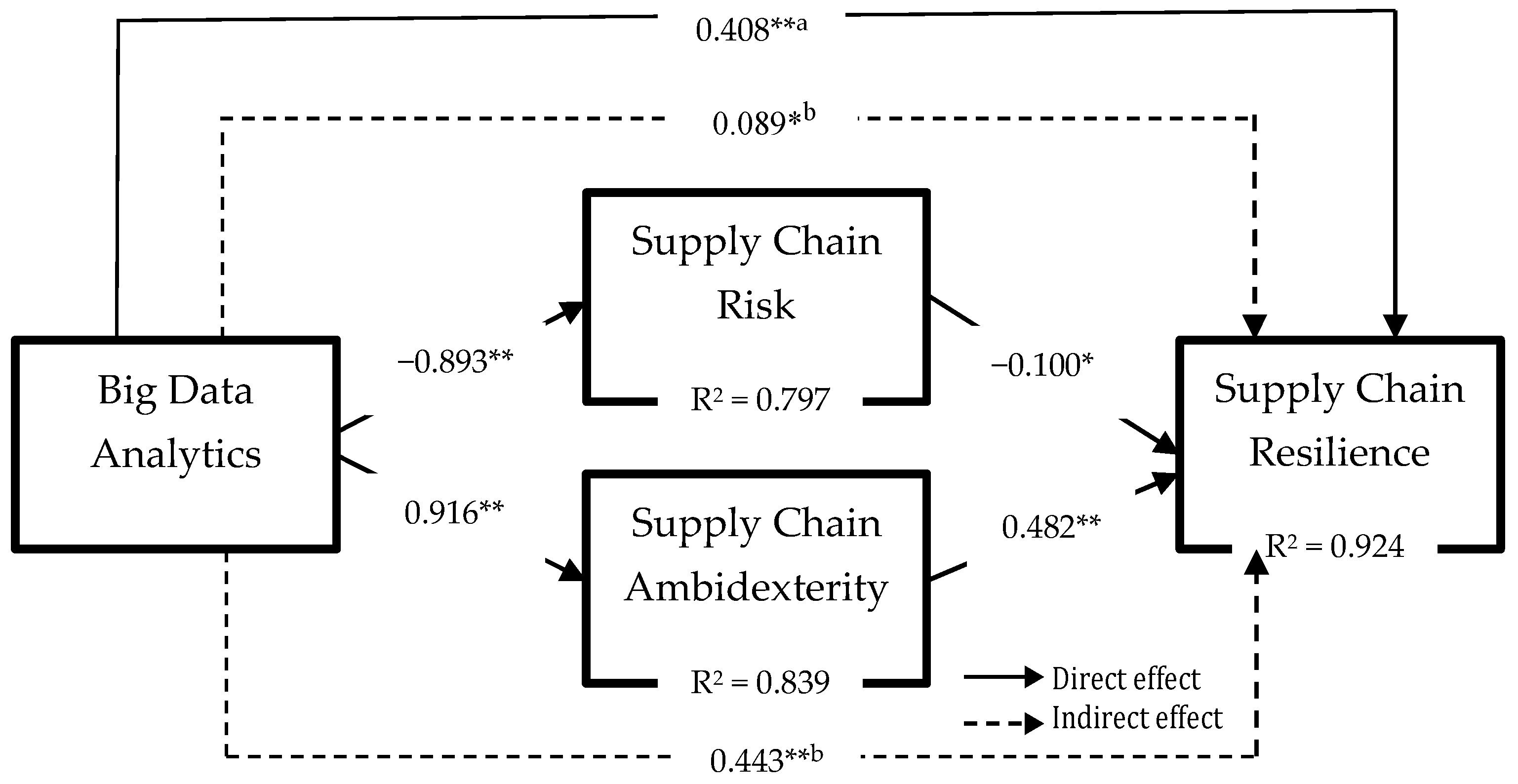
Hypothesis testing began with an examination of the total impact of BDA on SC resilience, excluding the two mediators. The results showed that BDA positively and significantly impacts SC resilience (β = 0.940, p ≤ 0.01), corroborating hypothesis H1. Subsequently, the two mediators were included to test other hypotheses in the full model. In this model, BDA’s direct impact on SC resilience, with both mediators included, was reduced but continued to be significant (β = 0.408, p ≤ 0.01), indicating the presence of a partial mediation effect [81]. BDA demonstrated a significant negative influence on SC risk (β = −0.893, p ≤ 0.01), thereby supporting hypothesis H2. Additionally, BDA exhibited a significant positive impact on SC ambidexterity (β = 0.916, p ≤ 0.01), supporting hypothesis H3. The results further showed that SC risk significantly and negatively affects SC resilience (β = −0.100, p ≤ 0.01), thereby supporting hypothesis H4. Similarly, SC ambidexterity significantly and positively influences SC resilience (β = 0.482, p ≤ 0.01), validating hypothesis H5.
Regarding the mediation hypotheses, the results indicated that SC risk significantly mediates the BDA-SC resilience relationship, as the CIs did not include zero (CILL = 0.011, CIUL = 0.158), thus supporting hypothesis H6. Similarly, SC ambidexterity significantly mediates the BDA-SC resilience relationship, as the CIs did not include zero (CILL = 0.338, CIUL = 0.531), thereby substantiating hypothesis H7. Table 5 and Figure 2 present a summary of the hypotheses testing results.

6. Discussion

The results of this study demonstrate that BDA is crucial in enhancing SC resilience in pharmaceutical distribution. Implementing BDA motivates and encourages pharmaceutical distribution companies to share various types of information in real time, boost synchronization across SCs, and improve decision-making processes by providing accurate and timely insights. These capabilities lead to better preparation, faster recovery from disruptions, and improved overall SC resilience. This finding aligns with prior studies [9,12,13,14,15,16]. However, some distinctions exist between this study and earlier ones. While many of these studies were conducted in the manufacturing sector [12,13,14,15,20], the present study extends this stream of research by focusing on the pharmaceutical distribution industry. Moreover, while Zamani et al. [5] performed a systematic literature review and Hsu et al. [14] employed a case study and multicriteria decision-making approach, this study adopts an empirical survey-based methodology. Unlike prior manufacturing-focused studies, the findings highlight the pharmaceutical context where regulatory compliance, product safety, and service continuity are particularly critical. While manufacturing studies emphasize efficiency and flexibility, the results suggest that BDA-driven resilience in pharmaceutical distribution is closely associated with visibility, compliance, and the ability to ensure uninterrupted drug availability.
In pharmaceutical distribution, BDA enhances SC resilience by enabling real-time information sharing and synchronization across manufacturers, distributors, and healthcare providers. Through integrated data platforms and analytics tools, firms can continuously monitor inventory levels, demand fluctuations, and transportation status, thereby improving coordination and decision-making during disruption events. This real-time visibility allows managers to respond rapidly to shortages, delays, or demand surges, which is particularly critical in pharmaceutical SCs characterized by high service-level expectations and regulatory constraints. Big data–enabled capabilities such as demand forecasting, end-to-end visibility, and process automation strengthen both preparedness and recovery phases of SC resilience. Improved forecasting supports proactive planning and inventory positioning, while visibility and automation facilitate faster execution of contingency actions once disruptions occur, thereby supporting quicker restoration of normal operations and limiting service disruptions [26,59].
The findings also provide strong evidence regarding the role of BDA in reducing SC risks within the pharmaceutical distribution sector, consistent with prior studies [9,62,63,64]. While previous research examined SC risk management across different industries and contexts, including the automotive sector [9], disruption risk alert tools [62], and multinational settings [64], this study focuses specifically on pharmaceutical distribution and highlights the direct role of BDA in reducing SC risk levels. This finding indicates that effectively employing high-quality information generated by BDA systems enables firms to better identify, assess, and respond to unexpected risks and SC disruptions. By increasing data-processing capacity, BDA enhances visibility and provides timely information about the severity of interruptions, supporting managerial responses such as adjusting sourcing strategies or modifying operational processes to meet urgent patient needs.
Further, the results show that BDA positively influences SC ambidexterity. The significant positive impact (β = 0.916, p ≤ 0.01) contributes to existing literature, as this study provides new empirical evidence of such a strong effect. This result corroborates the findings of prior studies [22,65,66]. Nevertheless, our study differs from prior research in important ways. While Wamba et al. [22] also found a substantial impact of BDA on SC ambidexterity, they measured it in terms of SC agility and adaptability. Similarly, Yoshikuni et al. [65] demonstrated the positive impact of BDA-driven dynamic capabilities on innovation ambidexterity, and Munir et al. [66] examined the influence of SC ambidexterity on SC analytics capability. In contrast, our study provides empirical evidence regarding BDA’s influence on SC ambidexterity specifically in terms of SC exploration and exploitation, within the pharmaceutical distribution context. Our results suggest that BDA empowers firms to simultaneously optimize existing resources, capabilities, and skills, while identifying and pursuing new opportunities. BDA fosters a culture of knowledge sharing and innovation that enables managers to refine short-term operational efficiencies (exploitation) while building capacity to address emerging market opportunities (exploration).
The results further indicate that both SC risk and SC ambidexterity have significant direct effects on SC resilience in pharmaceutical distribution. Higher levels of perceived risk reduce resilience by increasing vulnerability and uncertainty, whereas SC ambidexterity enhances resilience by enabling firms to balance efficiency-oriented exploitation with adaptability-oriented exploration in a highly regulated and time-sensitive distribution environment. Specifically, the findings show that SC risk has a significant negative impact on SC resilience, corroborating prior studies [2,9,25,66]. While previous research examined SC risk mitigation strategies [2], the present study emphasizes the influence of SC risk levels on SC resilience within pharmaceutical distribution. In today’s globalized environment, pharmaceutical SCs have become increasingly complex, with expanded network sizes resulting in heightened disruption risks. Approximately 82% of pharmaceutical distribution companies in Jordan collaborate with suppliers located outside the country [2]. This reliance on international suppliers increases vulnerability to disruptions, potentially undermining drug availability and continuity of supply.
The findings also demonstrate that SC ambidexterity is positively related to SC resilience. While prior studies [23,43,69] reported similar relationships in manufacturing contexts, the present study extends these insights to pharmaceutical distribution. SC ambidexterity enhances resilience by enabling continuous monitoring of market requirements and SC opportunities, such as forming partnerships with new SC actors or introducing innovative solutions to meet evolving demands. At the same time, it supports optimization of existing resources and processes, ensuring operational continuity and efficiency. This dual capability mitigates disruptions while fostering adaptability in dynamic and uncertain environments.
The mediation analysis confirms that both SC risk and SC ambidexterity partially mediate the relationship between BDA and SC resilience. Importantly, the stronger mediating effect of ambidexterity shows that BDA enhances resilience more by strengthening adaptive and balancing capabilities than by simply reducing exposure to risk, particularly in pharmaceutical distribution SCs where flexibility and responsiveness are critical. Approximately 83.2% of the mediation effect is attributed to SC ambidexterity, highlighting its pivotal role in translating BDA capabilities into enhanced resilience outcomes in pharmaceutical distribution.
Although prior research examined related mechanisms [13,19,20,23,66], the present study contributes additional empirical evidence from the pharmaceutical distribution sector by jointly examining the mediating roles of SC risk and SC ambidexterity. A resilient pharmaceutical supply chain does not necessarily maintain uninterrupted operations during all disruption cycles; rather, robust BDA infrastructure supports earlier detection of disruptions, more informed decision-making, and faster response and recovery when disruptions occur [5,26]. BDA tools serve as early warning systems that enable firms to process large volumes of data from multiple sources, facilitating proactive environmental scanning, improved preparedness, and effective responses that help maintain the continuity of pharmaceutical distribution operations and the availability of essential medicines.
The findings also demonstrate that SC ambidexterity mediates the BDA–SC resilience relationship. This mediation effect is approximately five times greater than the mediation of SC risk. This significant difference in mediation strength can be explained by the distinct nature of the two mediators. SC risk primarily focuses on mitigation and reducing the negative impact of specific threats [25,40]. In contrast, SC ambidexterity represents a dynamic capability that enables the firm to be both stable and flexible at the same time [22,43]. BDA, as a strategic resource, is more effective at fostering a comprehensive capability like ambidexterity than at simply reducing a specific risk variable. Specifically, SC ambidexterity provides a dual-layered protection for resilience: through exploitation, BDA helps firms refine current processes and recover quickly from shocks (reactive resilience), while through exploration, BDA supports the search for new solutions and innovations to face future changes (proactive resilience). While risk management is important to limit damage, ambidexterity offers a more holistic mechanism to transform BDA insights into organizational actions that ensure long-term survival. This explains why building an ambidextrous SC constitutes a more effective pathway for BDA to drive resilience compared to the narrower focus of risk mitigation. Our result is consistent with prior studies that have investigated related areas [13,23]. Bahrami et al. [13] examined the mediation of innovative capabilities on the BDA–SC resilience relationship, while Xu and Liu [23] explored the moderating impact of BDA on the SC ambidexterity–resilience relationship. In contrast, our study contributes by examining the mediation of SC ambidexterity on the BDA–SC resilience relationship, revealing its substantial effect, and providing empirical evidence from the pharmaceutical distribution sector.

6.1. Implications for Theory

The current study advances the extant body of knowledge on BDA and SC resilience, offering several theoretical implications. Although the existing literature has explored the linkages between BDA and SC resilience (e.g., [9,12,13,14,15,16]), no prior work has examined this relationship within the pharmaceutical distribution sector. This study extends previous research by providing empirical evidence regarding BDA’s impact on SC resilience within this critical sector, which is especially important due to its direct association with public health and citizen well-being. Our research further addresses clear gaps in the literature by highlighting the essential role of BDA in mitigating SC risks and fostering SC ambidexterity. The revealed beta coefficients demonstrate substantial impacts, offering a valuable theoretical contribution that can guide researchers in future studies across other sectors. These findings build on and extend existing research in related areas [22,62,64,65,66,82]. This study further contributes by confirming the significant effects of SC risk and SC ambidexterity on SC resilience. Notably, the impact of SC ambidexterity was approximately five times greater than that of SC risk, underscoring its pivotal role as a critical driver of resilience. This research also uncovers the partial mediating effects of SC risk and SC ambidexterity on the BDA-SC resilience relationship, offering a deeper understanding into the comparative strength of these mediators. This study is the first, to our knowledge, to simultaneously investigate these two mediators within the proposed relationship. Remarkably, the mediation effect of SC ambidexterity in this relationship was also approximately five times greater than that of SC risk. This underlines the paramount significance of SC ambidexterity as a key outcome of BDA implementation that substantially enhances SC resilience. Moreover, by revealing the comparative mediation effects, this study provides a deeper understanding of the mechanisms underpinning the BDA-SC resilience relationship. The findings enrich prior research that has identified other mediating variables in this relationship (e.g., [13,19,20,23,66]). Finally, this research adds to the theoretical literature by offering empirical insights from the pharmaceutical distribution sector in a developing country context.

6.2. Implications for Practice and Policy

The study findings offer significant practical insights for practitioners and decision makers in the pharmaceutical distribution sector. Managers must recognize the crucial role of BDA in addressing SC challenges, particularly by reducing potential risks across the SC, fostering ambidexterity, and enhancing SC resilience. However, to fully realize the benefits of BDA, a comprehensive approach to BDA adoption is essential. This entails that managers focus on adopting the three foundational pillars of BDA: tangible resources (e.g., technology, infrastructure), human skills (e.g., data analytics expertise), and intangible resources (e.g., leadership support, organizational culture). Neglecting any of these pillars can significantly diminish the expected benefits of implementing BDA. BDA has been shown to directly enhance SC resilience, underscoring its strategic importance, especially for pharmaceutical companies facing frequent disruptions. Therefore, managers of pharmaceutical companies facing various SC disruptions and seeking to boost resilience levels are strongly encouraged to adopt BDA tools and capabilities. While the initial investments, required infrastructure, and efforts may pose challenges, managers should consider the long-term benefits of BDA adoption, which far exceed the upfront costs. The partial mediation effects of SC risk and SC ambidexterity identified in the present research indicate that the indirect impact of BDA on SC resilience through these two mediators surpasses its direct impact. This clearly indicates that pharmaceutical distribution companies aiming to achieve superior levels of SC resilience must direct their efforts towards reducing SC risks and enhancing SC ambidexterity. This can be driven by the implementation of BDA capabilities to optimize the resilience levels of their SCs. Remarkably, the intervening effect of SC ambidexterity on the BDA-SC resilience relationship and its direct impact on SC resilience were approximately five times greater than those of SC risk. This highlights the key importance of SC ambidexterity in driving SC resilience in pharmaceutical distribution companies. Managers should prioritize directing BDA implementation toward maximizing SC ambidexterity, which considerably enhances SC resilience. Nevertheless, they must not underestimate the importance of reducing and mitigating SC risks. A dual focus is recommended: leveraging BDA to enhance ambidexterity ensures adaptive capacity and sustained resilience across the SC, while proactive risk management protects against disruptions that could destabilize SC operations. Pharmaceutical companies that successfully develop both capabilities, driven by BDA, can achieve short-term adaptability and long-term stability.

6.3. Limitations of the Study and Future Research Directions

While this research sheds light on the impact of BDA on SC resilience in pharmaceutical distribution, it has certain limitations that future studies might delve into. First, the cross-sectional design of this research, confined to a specific industry and country, may restrict the findings’ generalizability. Further research can extend the analysis to multiple industries to identify both industry-specific and cross-industry commonalities and distinctions. Second, this study conceptualized BDA as a multidimensional construct comprising three types of resources: tangible resources, intangible resources, and human skills. However, the second-order scale of BDA was employed to test the research hypotheses. Future studies are encouraged to examine the direct and indirect impacts of each of these three BDA resources to provide deeper insights into the BDA-SC resilience relationship. Third, data collection was limited to a single manager within each participating distribution company. While this approach is prevalent in SC research, it may impact the extent to which the findings can be applied to other contexts. Future research could bolster the credibility and generalizability of the findings by employing a multiple-informant strategy to reduce potential informant bias. Fourth, the study employed measurement scales adapted from general SC literature. Although these scales capture mechanisms relevant to pharmaceutical distribution, they may not fully reflect technical details such as cold-chain logistics or drug-specific regulatory requirements. Future research could develop customized scales tailored to the unique operational and legal features of pharmaceutical distribution.

7. Conclusions

The current research endeavored to fill some gaps in the extant research concerning BDA’s impact on SC risk, SC ambidexterity, and SC resilience. In addition, this research is, to the best of our knowledge, the first to examine the mediation of SC risk and SC ambidexterity in the BDA-SC resilience relationship. The impact of SC risk and SC ambidexterity on SC resilience was also explored, further advancing existing research. Another key contribution of this study lies in the fact that it was conducted in a developing country and focused on pharmaceutical distribution companies. Therefore, this study extends prior research and contributes to the SC literature by addressing identified gaps and providing empirical evidence regarding the proposed linkages within the pharmaceutical distribution sector.
Grounded in the RBV theory [54], the findings confirmed a positive and significant influence of BDA on SC resilience. Both the direct and total effects of BDA on SC resilience were positive and significant, underscoring the crucial role of BDA in enhancing SC resilience. Furthermore, the results demonstrated that BDA substantially and significantly affects both SC risk and SC ambidexterity. In terms of their influence on SC resilience, both SC risk and SC ambidexterity have significant impacts. Notably, the revealed impact of SC ambidexterity on SC resilience was approximately five times greater than the impact of SC risk. Moreover, our results revealed that SC risk and SC ambidexterity partially mediate the BDA-SC resilience relationship. Similarly, the mediating effect of SC ambidexterity in this relationship was approximately five times greater than the effect of SC risk. These findings underscore the critical role of SC ambidexterity as a key enabler of SC resilience in the pharmaceutical distribution sector. Enhanced SC ambidexterity, driven by BDA capabilities, emerges as the primary contributor to improving SC resilience. While the direct and indirect impacts of SC risk were less pronounced, managing SC risk remains essential to mitigating potential disruptions that could undermine SC resilience. Therefore, the dual focus on enhancing SC ambidexterity and managing SC risk enables pharmaceutical distribution companies to adapt dynamically to market changes and disruptions. This dual capability ensures operational continuity and resilience in both the short and long term.

Author Contributions

Conceptualization, A.B.A. and S.S.A.-N.; methodology, A.B.A. and S.S.A.-N.; software, S.S.A.-N.; validation, A.B.A. and Z.M.F.A.-Z.; formal analysis, A.B.A. and S.S.A.-N.; investigation, S.S.A.-N. and Z.M.F.A.-Z.; resources, Z.M.F.A.-Z.; data curation, S.S.A.-N.; writing—original draft preparation, A.B.A.; writing—review and editing, Z.M.F.A.-Z.; visualization, A.B.A.; supervision, A.B.A.; project administration. All authors have read and agreed to the published version of the manuscript.

Funding

This research received no external funding.

Institutional Review Board Statement

Ethical review and approval were waived for this study because the study involved voluntary survey participation from managers in pharmaceutical distribution companies in Jordan. All participants were informed of the study’s purpose, assured of confidentiality, and informed that their participation was voluntary and that they could withdraw at any time without consequences. Completion of the questionnaire was considered as providing informed consent. No sensitive personal or medical data were collected. According to the regulations of the University of Jordan and national legislation, survey-based research of this type (administrative/organizational questionnaires without identifiable personal data) is exempt from Institutional Review Board (IRB) approval. Therefore, formal IRB approval was not required. The University of Jordan’s official ethics regulations (Arabic version) can be accessed here: https://research.ju.edu.jo/ar/arabic/Pages/Eth.aspx (accessed on 6 December 2025).

Informed Consent Statement

Informed consent was obtained from all subjects involved in the study.

Data Availability Statement

The raw data supporting the conclusions of this article will be made available by the authors on request.

Acknowledgments

During the preparation of this manuscript, we used GenAI tools such as ChatGPT (OpenAI; web-based free version; GPT family models) and Copilot (Microsoft; web-based free version) to check the language, fix grammatical mistakes, improve readability, and edit some parts of the paper. We fully confirm that GenAI tools were not used to generate any parts of this paper. The authors have reviewed and edited the output and take full responsibility for the content of this publication.

Conflicts of Interest

The authors declare no conflicts of interest.

References

  1. Tiwari, M.; Lodorfos, G.; McClelland, Z.; Nair, S. Unraveling the complexities associated with leadership during times of supply chain crisis: A study on the healthcare sector. Int. Stud. Manag. Organ. 2025, 55, 442–475. [Google Scholar] [CrossRef]
  2. Abdallah, A.B.; Al Bourini, B.O.; Al-Shorman, H.M. Managing supply chain disruptions in pharmaceutical distribution: The roles of disruption orientation and mitigation strategies. Bus. Process Manag. J. 2025, 31, 772–799. [Google Scholar] [CrossRef]
  3. Bookwalter, C.M. Drug shortages amid the COVID-19 pandemic. US Pharm. 2021, 46, 25–28. [Google Scholar]
  4. Zighan, S.; Dwaikat, N.Y.; Alkalha, Z.; Abualqumboz, M. Knowledge management for supply chain resilience in pharmaceutical industry: Evidence from the Middle East region. Int. J. Logist. Manag. 2024, 35, 1142–1167. [Google Scholar] [CrossRef]
  5. Zamani, E.D.; Smyth, C.; Gupta, S.; Dennehy, D. Artificial intelligence and big data analytics for supply chain resilience: A systematic literature review. Ann. Oper. Res. 2023, 327, 605–632. [Google Scholar] [CrossRef]
  6. Hasan, R.; Kamala, M.M.; Daowd, A.; Eldabi, T.; Papadopoulos, T. Critical analysis of the impact of big data analytics on healthcare supply chain operations. Prod. Plan. Control 2024, 35, 46–70. [Google Scholar] [CrossRef]
  7. Mikalef, P.; Boura, M.; Lekakos, G.; Krogsite, J. Big data analytics capabilities and innovation: The mediating role of dynamic capabilities and moderating effect of the environment. Br. J. Manag. 2019, 30, 272–298. [Google Scholar] [CrossRef]
  8. Munir, S.; Abdul Rasid, S.Z.; Aamir, M.; Jamil, F.; Ahmed, I. Big data analytics capabilities and innovation effect of dynamic capabilities, organizational culture and role of management accountants. Foresight 2023, 25, 41–66. [Google Scholar] [CrossRef]
  9. Bag, S.; Gupta, S.; Choi, T.M.; Kumar, A. Roles of innovation leadership on using big data analytics to establish resilient healthcare supply chains to combat the COVID-19 pandemic: A multimethodological study. IEEE Trans. Eng. Manag. 2024, 71, 13213–13226. [Google Scholar] [CrossRef]
  10. Iftikhar, A.; Do, Q.; Stevenson, M.; Aslam, H. Big data analytics and supply chain learning: A serial mediation model for enhancing resilience and financial performance. Eur. Manag. J. 2025, in press. [Google Scholar] [CrossRef]
  11. Hosseini Shekarabi, S.; Kiani Mavi, R.; Romero Macau, F. Supply chain resilience: A critical review of risk mitigation, robust optimisation, and technological solutions and future research directions. Glob. J. Flex. Syst. Manag. 2025, 26, 681–735. [Google Scholar] [CrossRef]
  12. Bahrami, M.; Shokouhyar, S.; Seifian, A. Big data analytics capability and supply chain performance: The mediating roles of supply chain resilience and innovation. Mod. Supply Chain Res. Appl. 2022, 4, 62–84. [Google Scholar] [CrossRef]
  13. Bahrami, M.; Shokouhyar, S. The role of big data analytics capabilities in bolstering supply chain resilience and firm performance: A dynamic capability view. Inf. Technol. People 2022, 35, 1621–1651. [Google Scholar] [CrossRef]
  14. Hsu, C.H.; Li, M.G.; Zhang, T.Y.; Chang, A.Y.; Shangguan, S.Z.; Liu, W.L. Deploying big data enablers to strengthen supply chain resilience to mitigate sustainable risks based on integrated HOQ-MCDM framework. Mathematics 2022, 10, 1233. [Google Scholar] [CrossRef]
  15. Seif, M.; Jafari, H. Unpacking the role of analytics for supply chain resilience and performance: The complex influence of supply chain integration. Prod. Plan. Control 2025, 1–18. [Google Scholar] [CrossRef]
  16. Rezaei, G.; Hosseini, S.M.H.; Sana, S.S. Exploring the relationship between data analytics capability and competitive advantage: The mediating roles of supply chain resilience and organization flexibility. Sustainability 2022, 14, 10444. [Google Scholar] [CrossRef]
  17. Dennehy, D.; Oredo, J.; Spanaki, K.; Despoudi, S.; Fitzgibbon, M. Supply chain resilience in mindful humanitarian aid organizations: The role of big data analytics. Int. J. Oper. Prod. Manag. 2021, 41, 1417–1441. [Google Scholar] [CrossRef]
  18. Tetteh, F.K.; Owusu Kwateng, K.; Tani, W. Humanitarian supply chain resilience: Does organizational flexibility matter? Benchmarking 2024. Epub ahead of printing. [Google Scholar] [CrossRef]
  19. Gupta, S.; Bag, S.; Modgil, S.; Jabbour, A.B.; Kumar, A. Examining the influence of big data analytics and additive manufacturing on supply chain risk control and resilience: An empirical study. Comput. Ind. Eng. 2022, 172, 108629. [Google Scholar] [CrossRef]
  20. Singh, N.P.; Singh, S. Building supply chain risk resilience: Role of big data analytics in supply chain disruption mitigation. Benchmarking 2019, 26, 2318–2342. [Google Scholar] [CrossRef]
  21. Um, J.; Han, N. Understanding the relationships between global supply chain risk and supply chain resilience: The role of mitigating strategies. Supply Chain Manag. 2021, 26, 240–255. [Google Scholar] [CrossRef]
  22. Wamba, S.F.; Dubey, R.; Gunasekaran, A.; Akter, S. The performance effects of big data analytics and supply chain ambidexterity: The moderating effect of environmental dynamism. Int. J. Prod. Econ. 2020, 222, 107498. [Google Scholar] [CrossRef]
  23. Xu, T.; Liu, X. Achieving manufacturing supply chain resilience: The role of paradoxical leadership and big data analytics capability. J. Manuf. Technol. Manag. 2024, 35, 205–225. [Google Scholar] [CrossRef]
  24. Rialti, R.; Marzi, G.; Silic, M.; Ciappei, C. Ambidextrous organization and agility in big data era: The role of business process management systems. Bus. Process Manag. J. 2018, 24, 1091–1109. [Google Scholar] [CrossRef]
  25. El Baz, J.; Ruel, S. Can supply chain risk management practices mitigate the disruption impacts on supply chains’ resilience and robustness? Evidence from an empirical survey in a COVID-19 outbreak era. Int. J. Prod. Econ. 2021, 233, 107972. [Google Scholar] [CrossRef]
  26. Dubey, R.; Gunasekaran, A.; Childe, S.J.; Fosso Wamba, S.; Roubaud, D.; Foropon, C. Empirical investigation of data analytics capability and organizational flexibility as complements to supply chain resilience. Int. J. Prod. Res. 2021, 59, 110–128. [Google Scholar] [CrossRef]
  27. Ivanov, D.; Dolgui, A.; Sokolov, B. The impact of digital technology and Industry 4.0 on the ripple effect and supply chain risk analytics. Int. J. Prod. Res. 2019, 57, 829–846. [Google Scholar] [CrossRef]
  28. Lee, V.H.; Foo, P.; Cham, T.; Hew, T.; Tan, G.W.; Ooi, K. Big data analytics capability in building supply chain resilience: The moderating effect of innovation-focused complementary assets. Ind. Manag. Data Syst. 2024, 124, 1203–1233. [Google Scholar] [CrossRef]
  29. Akter, S.; Bandara, R.; Hani, U.; Fosso, S.; Foropon, C. Analytica-based decision making for service systems: A qualitative study and agenda for future research. Int. J. Inf. Manag. 2019, 48, 85–95. [Google Scholar]
  30. Jiang, W.; Feng, T.; Wong, C.Y. How big data analytics capabilities drive supply chain resilience: The mediating roles of supply chain visibility and flexibility. Int. J. Phys. Distrib. Logist. Manag. 2025, 55, 505–539. [Google Scholar] [CrossRef]
  31. Zhang, Y. Enhancing humanitarian supply chains: The role of interpersonal skills and big data and predictive analytics. J. Humanit. Logist. Supply Chain Manag. 2025. Epub ahead of printing. [Google Scholar] [CrossRef]
  32. Gupta, M.; George, J.F. Toward the development of a big data analytics capability. Inf. Manag. 2016, 53, 1049–1064. [Google Scholar] [CrossRef]
  33. Mikalef, P.; Krogsite, J.; Pappas, I.O.; Pavlou, P. Exploring the relationship between big data analytics capability and competitive performance: The mediating roles of dynamic and operational capabilities. Inf. Manag. 2020, 57, 103169. [Google Scholar] [CrossRef]
  34. Kong, T.; Feng, T. Enhancing supply chain resilience: The role of big data analytics capability and organizational ambidexterity. Ind. Manag. Data Syst. 2025, 125, 2348–2370. [Google Scholar] [CrossRef]
  35. Norena-Chavez, D.; Sosa Varela, J.C. Impact of big data analytics on innovation performance: The mediating role of team dynamics. Eur. Bus. Rev. 2025, 37, 1091–1109. [Google Scholar] [CrossRef]
  36. Lozada, N.; Arias-Perez, J.; Perdomo-Charry, G. Big data analytics capability and co-innovation: An empirical study. Heliyon 2019, 5, e02541. [Google Scholar] [CrossRef]
  37. Dubey, R.; Luo, Z.; Gunasekaran, A.; Akter, S.; Hazen, B.T.; Douglas, M.A. Big data and predictive analytics in humanitarian supply chains: Enabling visibility and coordination in the presence of swift trust. Int. J. Logist. Manag. 2018, 29, 485–512. [Google Scholar] [CrossRef]
  38. Chowdhury, M.M.H.; Quaddus, M. Supply chain sustainability practices and governance for mitigating sustainability risk and improving market performance: A dynamic capability perspective. J. Clean. Prod. 2021, 278, 123521. [Google Scholar] [CrossRef]
  39. Queiroz, M.M.; Ivanov, D.; Dolgui, A.; Wamba, S.F. Impacts of epidemic outbreaks on supply chains: Mapping a research agenda amid the COVID-19 pandemic through a structured literature review. Ann. Oper. Res. 2020, 23, 81–95. [Google Scholar] [CrossRef] [PubMed]
  40. Heckmann, I.; Comes, T.; Nickel, S. A critical review on supply chain risk—Definition, measure and modeling. Omega 2015, 52, 119–132. [Google Scholar] [CrossRef]
  41. Ho, W.; Zheng, T.; Yildiz, H.; Talluri, S. Supply chain risk management: A literature review. Int. J. Prod. Res. 2015, 53, 5031–5069. [Google Scholar] [CrossRef]
  42. Hill, S.A.; Birkinshaw, J. Ambidexterity and survival in corporate venture units. J. Manag. 2014, 40, 1899–1931. [Google Scholar] [CrossRef]
  43. Aslam, H.; Khan, A.Q.; Rashid, K.; Rehman, S.-u. Achieving supply chain resilience: The role of supply chain ambidexterity and supply chain agility. J. Manuf. Technol. Manag. 2020, 31, 1185–1204. [Google Scholar] [CrossRef]
  44. Liu, Y.; Liao, Y.; Li, Y. Capability configuration, ambidexterity and performance: Evidence from service outsourcing sector. Int. J. Prod. Econ. 2018, 200, 343–352. [Google Scholar] [CrossRef]
  45. Levinthal, D.A.; March, J.G. The myopia of learning. Strateg. Manag. J. 1993, 14, 95–112. [Google Scholar] [CrossRef]
  46. Kristal, M.M.; Huang, X.; Roth, A.V. The effect of an ambidextrous supply chain strategy on combinative competitive capabilities and business performance. J. Oper. Manag. 2010, 28, 415–429. [Google Scholar] [CrossRef]
  47. Wang, Y.; Yan, F.; Jia, F.; Chen, L. Building supply chain resilience through ambidexterity: An information processing perspective. Int. J. Logist. Res. Appl. 2021, 26, 172–189. [Google Scholar] [CrossRef]
  48. Khan, Z.; Vorley, T. Big data text analytics: An enabler of knowledge management. J. Knowl. Manag. 2017, 21, 18–34. [Google Scholar] [CrossRef]
  49. Kamalahmadi, M.; Parast, M.M. A review of the literature on the principles of enterprise and supply chain resilience: Major findings and directions for future research. Int. J. Prod. Econ. 2016, 171, 116–133. [Google Scholar] [CrossRef]
  50. Chowdhury, M.M.H.; Quaddus, M.; Agarwal, R. Supply chain resilience for performance: Role of relational practices and network complexities. Supply Chain Manag. 2019, 24, 659–676. [Google Scholar] [CrossRef]
  51. Ali, W.; Siddiqui, F.; Javaid, S.; Nabeel, M. A multi-objective optimization of healthcare supply chains during pandemics using neutrosophic goal programming approach. OPSEARCH 2025, 1–35. [Google Scholar] [CrossRef]
  52. Duong, L.; Sanderson, H.; Phillips, W.; Roehrich, J.; Uwalaka, V. Achieving resilient supply chains: Managing temporary healthcare supply chains during a geopolitical disruption. Int. J. Oper. Prod. Manag. 2025, 45, 1090–1118. [Google Scholar] [CrossRef]
  53. Tiwari, M.; Bryde, D.J.; Stavropoulou, F.; Dubey, R.; Kumari, S.; Foropon, C. Modelling supply chain visibility, digital technologies, environmental dynamism and healthcare supply chain resilience: An organisation information processing theory perspective. Transp. Res. E Logist. Transp. Rev. 2024, 188, 103613. [Google Scholar] [CrossRef]
  54. Barney, J. Firm resources and sustained competitive advantage. J. Manag. 1991, 17, 99–120. [Google Scholar] [CrossRef]
  55. Teece, D.J. Explicating dynamic capabilities: The nature and microfoundations of (sustainable) enterprise performance. Strateg. Manag. J. 2007, 28, 1319–1350. [Google Scholar] [CrossRef]
  56. Abdallah, A.B.; Alkhaldi, R.Z.; Aljuaid, M.M. Impact of social and technical lean management on operational performance in manufacturing SMEs: The roles of process and management innovations. Bus. Process Manag. J. 2021, 27, 1418–1444. [Google Scholar] [CrossRef]
  57. Huo, B.; Han, Z.; Prajogo, D. Antecedents and consequences of supply chain information integration: A resource-based view. Supply Chain Manag. 2016, 21, 661–677. [Google Scholar] [CrossRef]
  58. Tseng, M.L.; Islam, M.S.; Karia, N.; Fauzi, F.A.; Afrin, S. A literature review on green supply chain management: Trends and future challenges. Resour. Conserv. Recycl. 2019, 141, 145–162. [Google Scholar] [CrossRef]
  59. Sumrit, D. An investigation of the impact of organizational big data analytics capabilities on healthcare supply chain resiliency. Healthc. Anal. 2025, 7, 100393. [Google Scholar] [CrossRef]
  60. Mandal, S. The influence of big data analytics management capabilities on supply chain preparedness, alertness and agility: An empirical investigation. Inf. Technol. People 2019, 32, 297–318. [Google Scholar] [CrossRef]
  61. Osiyevskyy, O.; Dewald, J. Explorative versus exploitative business model change: The cognitive antecedents of firm-level responses to disruptive innovation. Strateg. Entrep. J. 2015, 9, 58–78. [Google Scholar] [CrossRef]
  62. Park, M.; Singh, N.P. Predicting supply chain risks through big data analytics: Role of risk alert tool in mitigating business disruption. Benchmarking 2023, 30, 1457–1484. [Google Scholar] [CrossRef]
  63. Shokouhyar, S.; Seddigh, M.R.; Panahifar, F. Impact of big data analytics capabilities on supply chain sustainability: A case study of Iran. World J. Sci. Technol. Sustain. Dev. 2020, 17, 33–57. [Google Scholar] [CrossRef]
  64. Nisar, Q.A.; Haider, S.; Ameer, I.; Hussain, M.S.; Gill, S.S.; Usama, A. Sustainable supply chain management performance in post COVID-19 era in an emerging economy: A big data perspective. Int. J. Emerg. Mark. 2023, 18, 5900–5920. [Google Scholar] [CrossRef]
  65. Yoshikuni, A.C.; Dwivedi, R.; Filho, A.R.; Wamba, S.F. Big data analytics-enabled dynamic capabilities for corporate performance mediated through innovation ambidexterity: Findings from machine learning with cross-country analysis. Technol. Forecast. Soc. Chang. 2025, 210, 123851. [Google Scholar] [CrossRef]
  66. Munir, M.A.; Hussain, A.; Farooq, M.; Rehman, A.U.; Masood, T. Building resilient supply chains: Empirical evidence on the contributions of ambidexterity, risk management, and analytics capability. Technol. Forecast. Soc. Chang. 2024, 200, 123146. [Google Scholar] [CrossRef]
  67. Tseng, M.L.; Bui, T.D.; Lim, M.K.; Fujii, M.; Mishra, U. Assessing data-driven sustainable supply chain management indicators for the textile industry under industrial disruption and ambidexterity. Int. J. Prod. Econ. 2022, 245, 108401. [Google Scholar] [CrossRef]
  68. Lee, S.M.; Rha, J.S. Ambidextrous supply chain as a dynamic capability: Building a resilient supply chain. Manag. Decis. 2016, 54, 2–23. [Google Scholar] [CrossRef]
  69. Iborra, M.; Safon, V.; Dolz, C. What explains the resilience of SMEs? Ambidexterity capability and strategic consistency. Long Range Plan. 2020, 53, 101947. [Google Scholar] [CrossRef]
  70. Yang, J.; Xie, H.; Yu, G.; Liu, M. Antecedents and consequences of supply chain risk management capabilities: An investigation in the post-coronavirus crisis. Int. J. Prod. Res. 2021, 59, 1573–1585. [Google Scholar] [CrossRef]
  71. Hazen, B.T.; Skipper, J.B.; Boone, C.A.; Hill, R.R. Back in business: Operations research in support of big data analytics for operations and supply chain management. Ann. Oper. Res. 2018, 270, 201–211. [Google Scholar] [CrossRef]
  72. Festa, G.; Safraou, I.; Cuomo, M.T.; Solima, L. Big data for big pharma: Harmonizing business process management to enhance ambidexterity. Bus. Process Manag. J. 2018, 24, 1110–1123. [Google Scholar] [CrossRef]
  73. Jajia, M.S.S.; Chatha, K.A.; Farooq, S. Impact of supply chain risk on agility performance: Mediating role of supply chain integration. Int. J. Prod. Econ. 2018, 205, 118–138. [Google Scholar] [CrossRef]
  74. Golgeci, I.; Ponomarov, S.Y. Does firm innovativeness enable effective responses to supply chain disruptions? An empirical study. Supply Chain Manag. 2013, 18, 604–617. [Google Scholar] [CrossRef]
  75. Wong, C.W.Y.; Lim, T.C.; Yang, C.C.; Shang, K.C. Supply chain and external conditions under which supply chain resilience pays: An organizational information processing theorization. Int. J. Prod. Econ. 2020, 226, 107610. [Google Scholar] [CrossRef]
  76. JPA. Jordan Pharmaceutical Association. Available online: https://www.jpa.org.jo (accessed on 18 June 2022).
  77. Hair, J.F.; Black, W.C.; Babin, B.J.; Anderson, R.E. Multivariate Data Analysis, 7th ed.; Prentice Hall: Upper Saddle River, NJ, USA, 2010. [Google Scholar]
  78. Fornell, C.; Larcker, D.F. Structural equation models with unobservable variables and measurement error. J. Mark. Res. 1981, 18, 39–50. [Google Scholar] [CrossRef]
  79. Hayes, A.F. Introduction to Mediation, Moderation, and Conditional Process Analysis: A Regression-Based Approach, 3rd ed.; Guilford Press: New York, NY, USA, 2022. [Google Scholar]
  80. Shrout, P.; Bolger, N. Mediation in experimental and nonexperimental studies: New procedures and recommendations. Psychol. Methods 2002, 7, 422–445. [Google Scholar] [CrossRef] [PubMed]
  81. Baron, R.M.; Kenny, D.A. The moderator-mediator variable distinction in social psychological research: Conceptual, strategic, and statistical considerations. J. Personal. Soc. Psychol. 1986, 51, 1173–1182. [Google Scholar] [CrossRef]
  82. Bag, S.; Dhamija, P.; Luthra, S.; Huisingh, D. How big data analytics can help manufacturing companies strengthen supply chain resilience in the context of the COVID-19 pandemic. Int. J. Logist. Manag. 2023, 34, 1141–1164. [Google Scholar] [CrossRef]
Figure 1. Research model.
Logistics 10 00014 g001
Figure 2. SEM results for the mediated model. Note: **: p < 0.01; *p < 0.05; a: direct effect; b: indirect effect.
Logistics 10 00014 g002
Table 1. Measurement items.
Item NumberItem Descriptions
Big data analytics
Tangible resource [7,32,33]
TR1In our company, employees have access to technologies for collecting and storing large volumes of data
TR2Our company has the ability to deploy analytics to extract and analyze data
TR3Our company has big data projects that aim to capture all types of data
TR4Our company has big data projects that aim to collect data from all sources
TR5Our company has employees who curate all data collected into a central data warehouse
TR6Our company sets budgets for big data analytics projects
Human skills [7,32,33]
HS1In our company, employees have skills in big data management
HS2In our company, employees have big data analytics skills
HS3In our company, there is availability of employees who understand the data analytics life cycle
HS4In our company, employees understand ethics and governance of big data analytics
HS5In our company, managers use big data analytics results to make decisions
HS6In our company, big data analytics is guided by business objectives
Intangible resource [7,32,33]
IR1In our company, employees are open to learning big data analytics skills
IR2Our company supports employees to learn new emerging technologies
IR3Our company has a data-driven culture
IR4In our company, there is top management commitment to the use of big data analytics
IR5In our company, top management makes decisions based on intelligence derived from big data analytics
Supply chain risk [21,73]
SCR1In our company, our key suppliers fail to supply affecting our operations
SCR2In our company, operations are interrupted affecting our shipments
SCR3In our company, shipment operations are interrupted affecting our deliveries
SCR4Our company loses supply of quality products (e.g., supplier fails or cannot deliver, bad product quality, etc.)
SCR5Our company cannot ship or deliver our products (e.g., no transportation, ports closed, roads blocked, etc.)
Supply chain ambidexterity
Supply chain exploration [46]
SCEr1Our company proactively pursues new supply chain solutions
SCEr2Our company continually experiments to find new solutions that will improve our supply chain
SCEr3Our company continually explores new opportunities
SCEr4Our company constantly seeking novel approaches in order to solve supply chain problems
Supply chain exploitation [46]
SCEi1In our company, in order to stay competitive, our supply chain managers focus on reducing operational redundancies in our existing processes
SCEi2In our company, leveraging our current supply chain technologies is important to our strategy
SCEi3In our company, in order to stay competitive, our supply chain managers focus on improving our existing technologies
SCEi4In our company, our managers focus on developing stronger competencies in our existing supply chain processes
Supply chain resilience [74,75]
SCRES1Our company’s supply chain can quickly return to its original state after being disrupted
SCRES2Our company’s supply chain has the ability to maintain a desired level of connectedness among its members at the time of disruption
SCRES3Our company’s supply chain has the ability to maintain a desired level of control over structure and function at the time of disruption
SCRES4Our company’s supply chain has the knowledge to recover from disruptions and unexpected events
Table 2. Profiles of respondents and surveyed companies.
CategoryFrequencyPercentage (100%)
Gender
Male11355.4
Female9144.6
Total204100.0
Job Position
Senior manager9144.6
Supervisor6632.4
Head of section4723.0
Total204100.0
Experience
Less than 53416.7
5-less than 103115.2
10-less than155125.0
15-less than 204120.1
20 and above4723.0
Total204100.0
Company age
Less than 1 year73.4
From 1-less than 5 years3919.1
From 5-less than 10 years5928.9
From 10-less than 15 years5024.5
More than 15 years4924.1
Total204100.0
Number of employees
Less than 504321.1
50-less than 1007134.8
100-less than 2006431.4
200-less than 3002512.2
300-less than 40010.5
Total204100.0
Table 3. Measurement model results.
ConstructItem
Number
MeanStandard DeviationFactor
Loading a
Cronbach’s
Alpha
Composite ReliabilityAVE
Tangible resources 4.050.761 0.8600.8910.579
TR1 0.732
TR2 0.716
TR3 0.764
TR4 0.779
TR5 0.719
TR6 0.846
Human skills 3.980.879 0.8470.8850.563
HS1 0.724
HS2 0.837
HS3 0.715
HS4 0.731
HS5 0.762
HS6 0.727
Intangible resources 3.930.929 0.8130.8910.620
IR1 0.746
IR2 0.758
IR3 0.826
IR4 0.817
IR5 0.787
SC risk 2.171.053 0.8510.8930.626
SCR1 0.807
SCR2 0.812
SCR3 0.767
SCR4 0.816
SCR5 0.752
SC exploration 3.920.920 0.8640.8910.672
SCEr1 0.842
SCEr2 0.837
SCEr3 0.786
SCEr4 0.813
SC exploitation 4.020.846 0.8730.8640.614
SCEi1 0.773
SCEi2 0.769
SCEi3 0.832
SCEi4 0.758
SC resilience 3.960.908 0.8240.8330.555
SCRES1 0.720
SCRES2 0.783
SCRES3 0.716
SCRES4 0.758
BDA b 3.990.827 0.8620.8400.637
TR c 0.763
HS c 0.846
IR c 0.782
SC ambidexterity b 3.970.860 0.8590.8240.702
SCEr c 0.846
SCEi c 0.829
a Standardized factor loadings in the CFA model are presented; b Second order construct; c Second order indicators.
Table 4. Model fit indices for first- and second-order measurement models.
Modelχ2dfχ2/dfCFITLIIFIRMRRMSEA
First-order constructs857.6314671.8360.9270.9180.9310.0410.043
Second-order constructs959.9864851.9790.9160.9080.9190.0450.046
Notes: All fit indices meet recommended thresholds: χ2/df < 3; CFI, TLI, IFI > 0.90; RMR < 0.05; RMSEA < 0.06 [77].
Table 5. Results of hypotheses testing.
HypothesisPathModel Without MediatorsMediated ModelBias Corrected Bootstrap 95% CI for Indirect ImpactResult
LowerUpper
H1BDA → SCRES0.940 **0.408 ** Supported
H2BDA → SCRNE−0.893 ** Supported
H3BDA → SCAMBNE0.916 ** Supported
H4SCR → SCRESNE−0.100 * Supported
H5SCAMB → SCRESNE0.482 ** Supported
H6BDA → SCR → SCRESNE0.0890.0110.158Supported
H7BDA → SCAMB →SCRESNE0.4430.3380.531Supported
Notes: ** p < 0.01; * p < 0.05; NE: not estimated; BDA: big data analytics; SCRES: SC resilience; SCR: SC risk; SCAMB: SC ambidexterity.
Disclaimer/Publisher’s Note: The statements, opinions and data contained in all publications are solely those of the individual author(s) and contributor(s) and not of MDPI and/or the editor(s). MDPI and/or the editor(s) disclaim responsibility for any injury to people or property resulting from any ideas, methods, instructions or products referred to in the content.