
Dental Adhesion Protocol: A Clinically Oriented Literature Review with Practical Guidelines

 ,
,  ,
,  ,
,
Abstract
1. Introduction
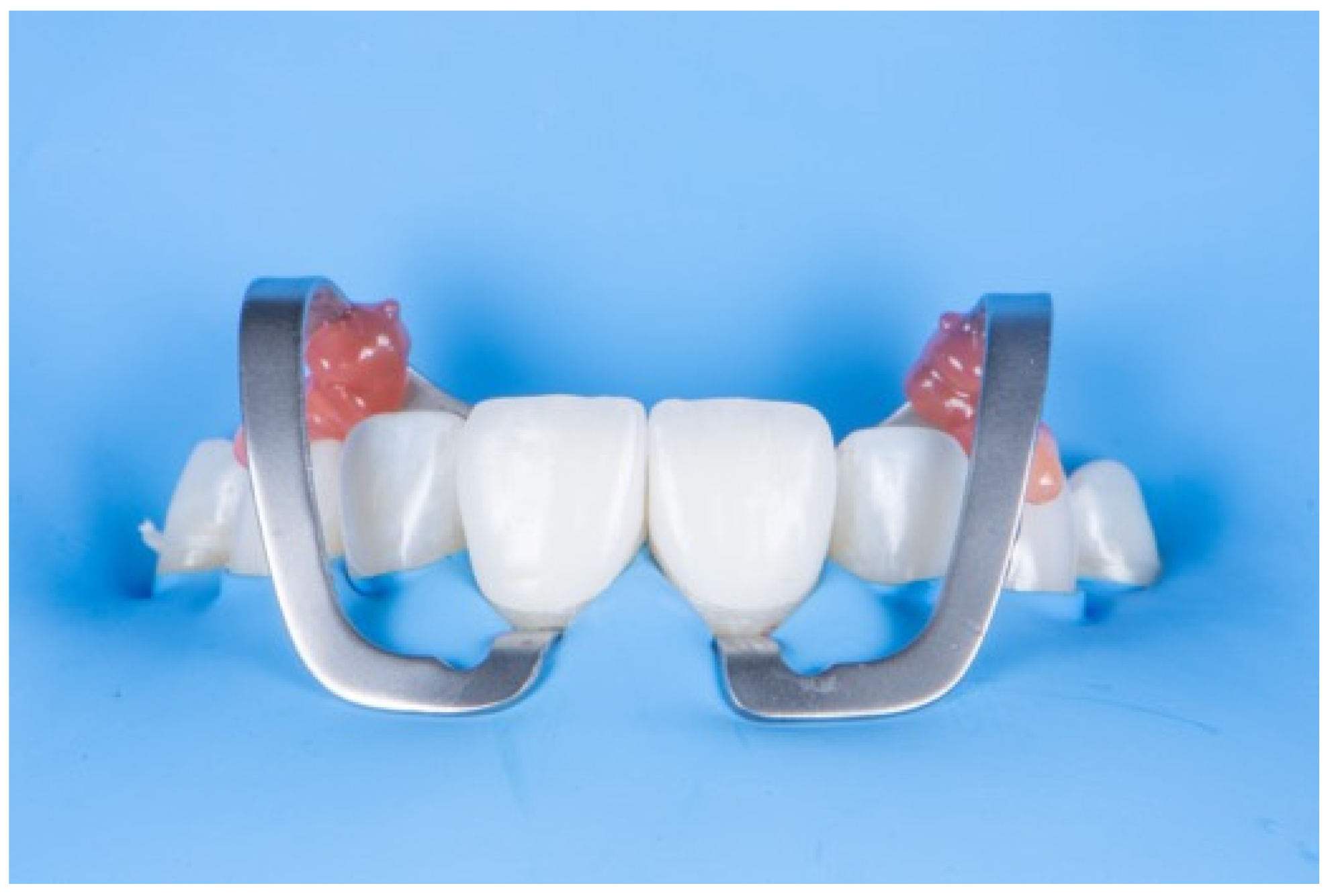
2. Rubber Dam Isolation
- 2.1
- Selection of the rubber sheet;
- 2.2
- Selection of the area of isolation;
- 2.3
- Proper punching;
- 2.4
- Proper sealing;
- 2.5
- Selection of the clamps.
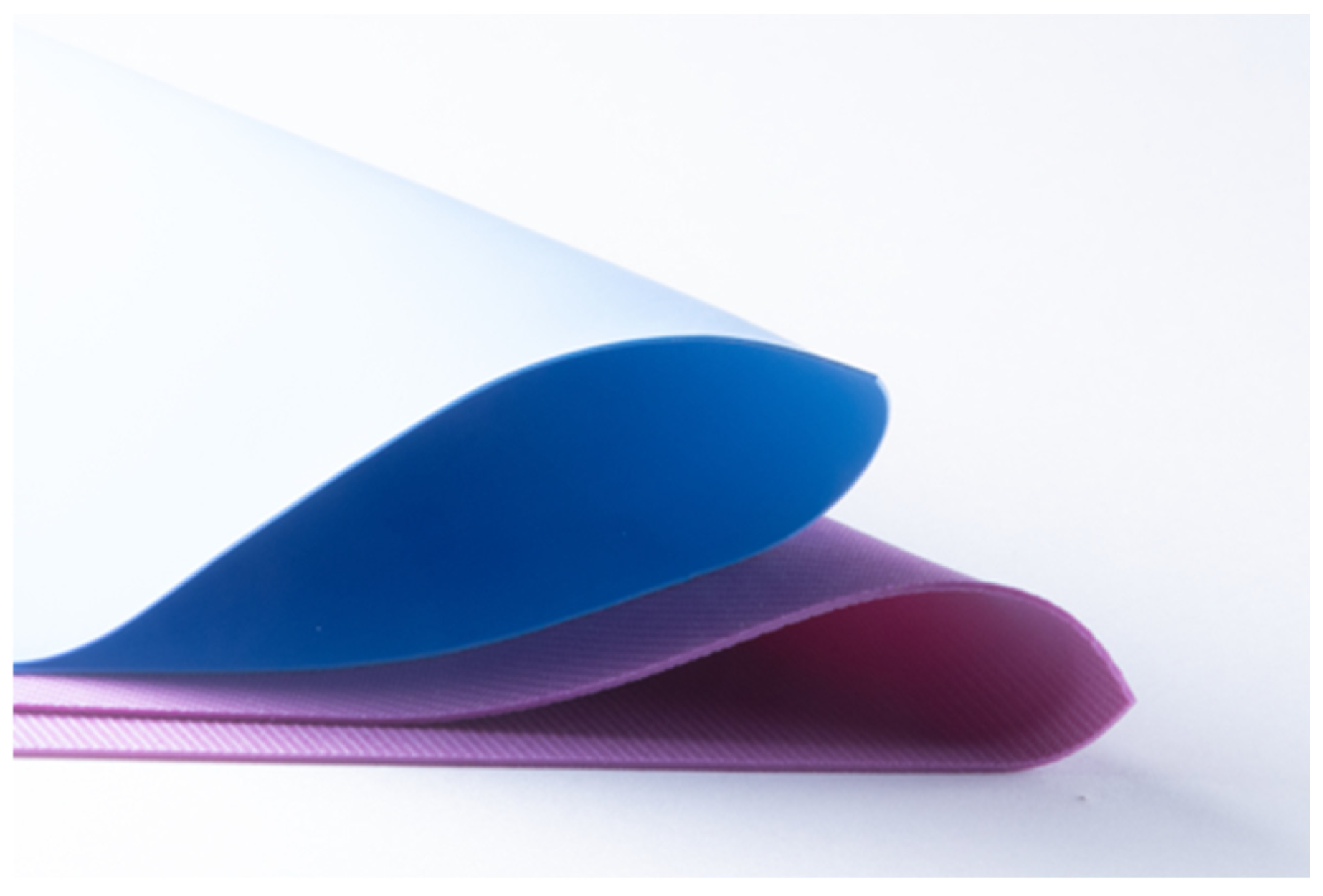
2.1. Selection of the Rubber Sheet
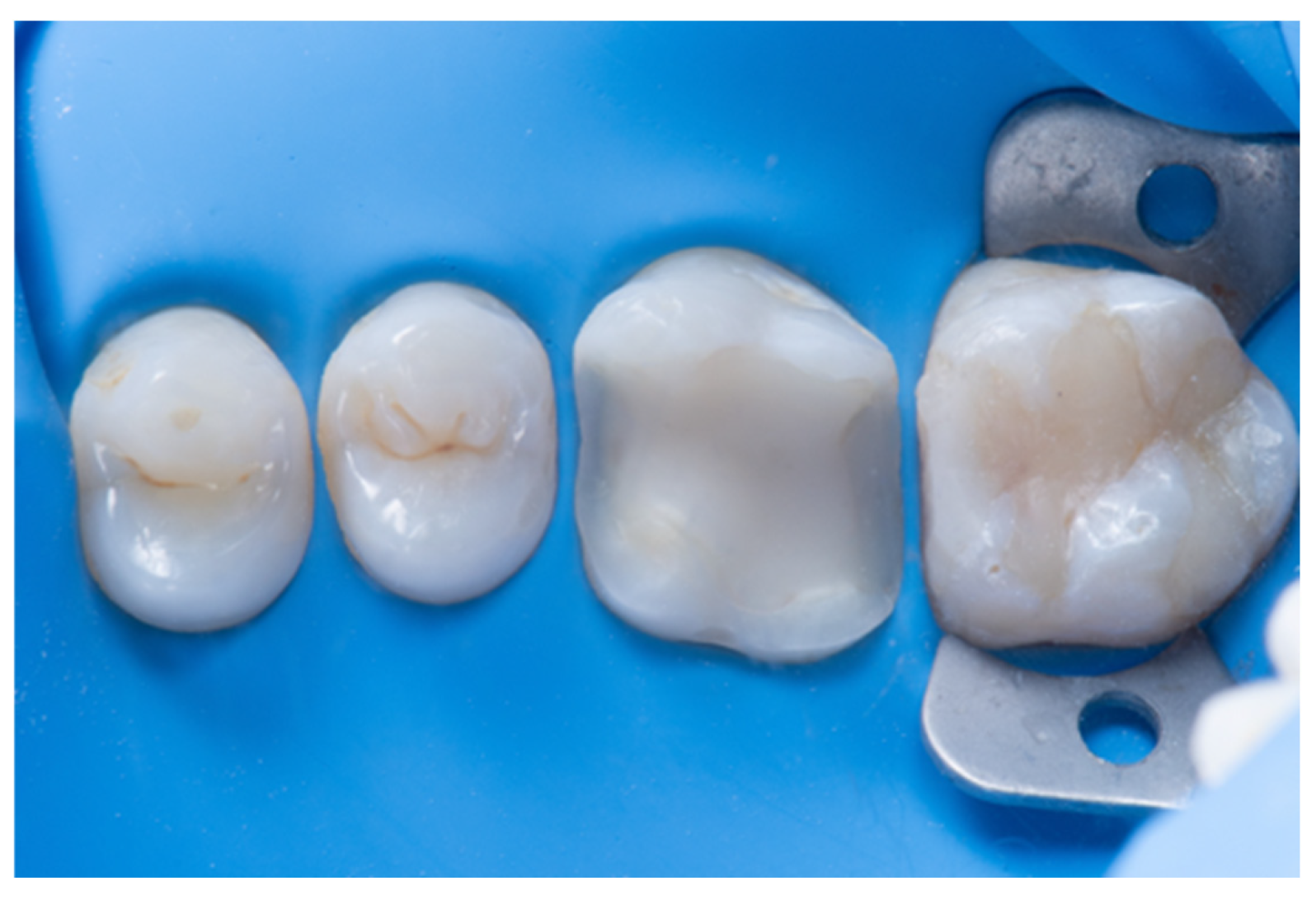
2.2. Selection of the Area of Isolation
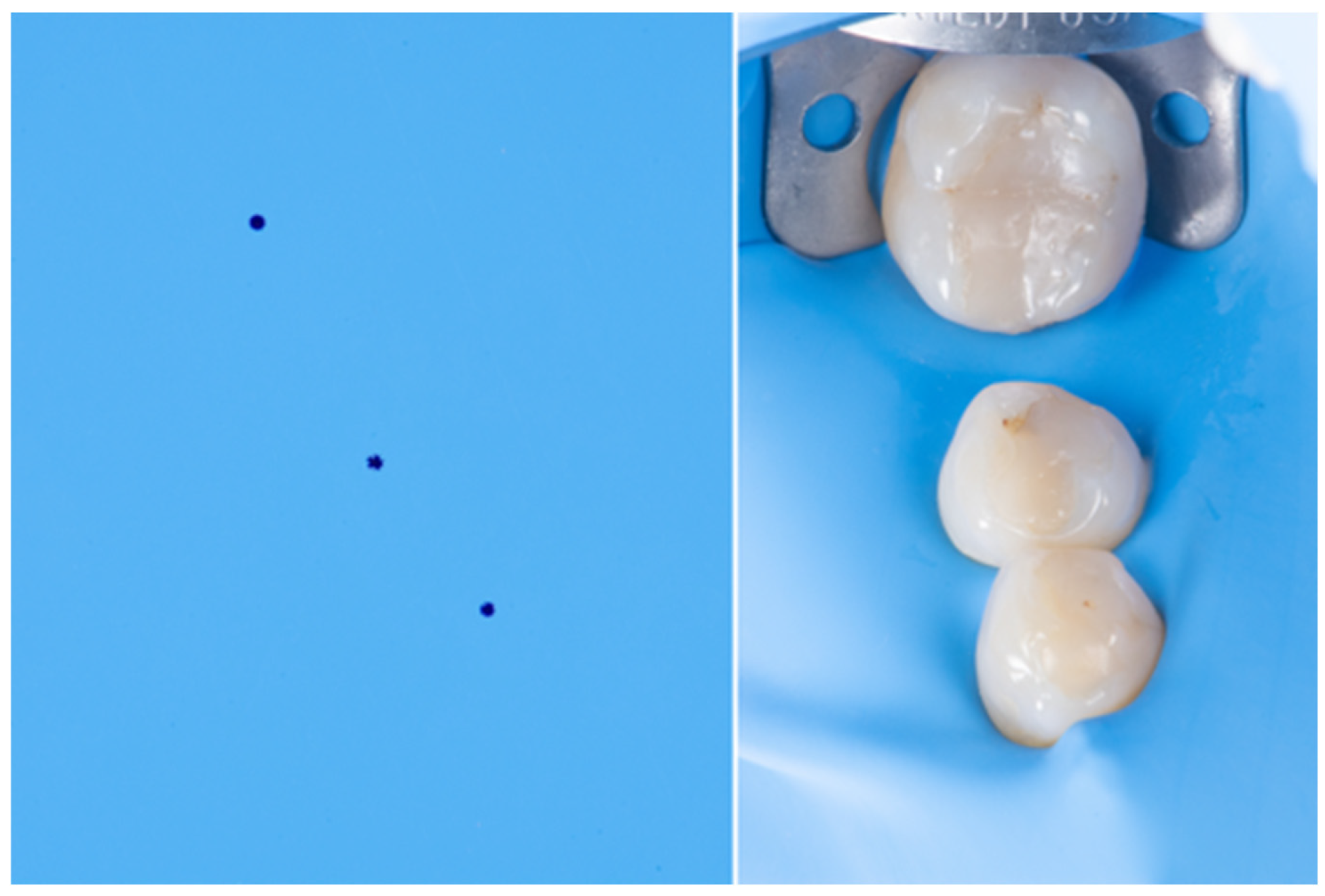
2.3. Proper Punching
2.4. Proper Sealing
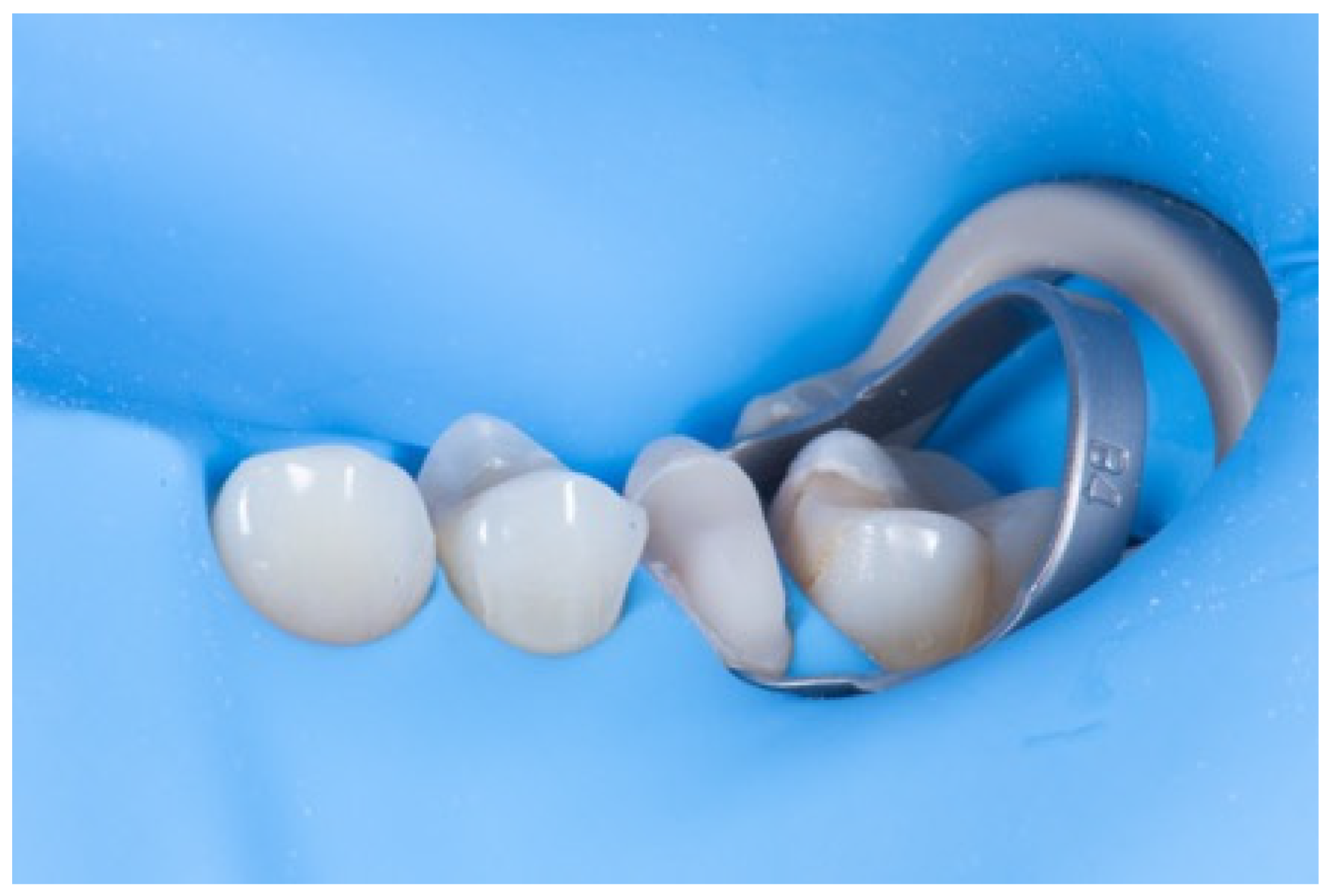
2.5. Selection of the Clamps
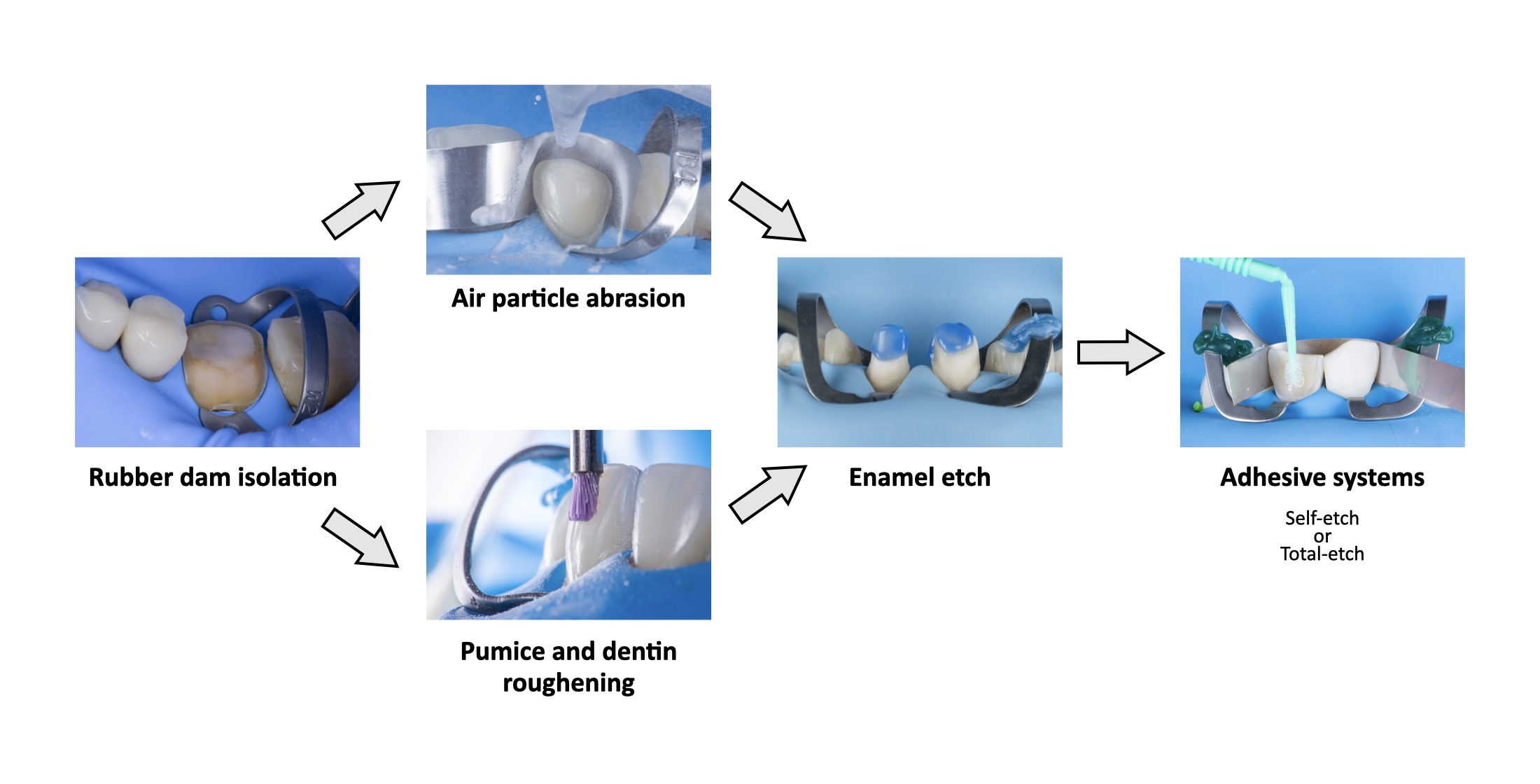
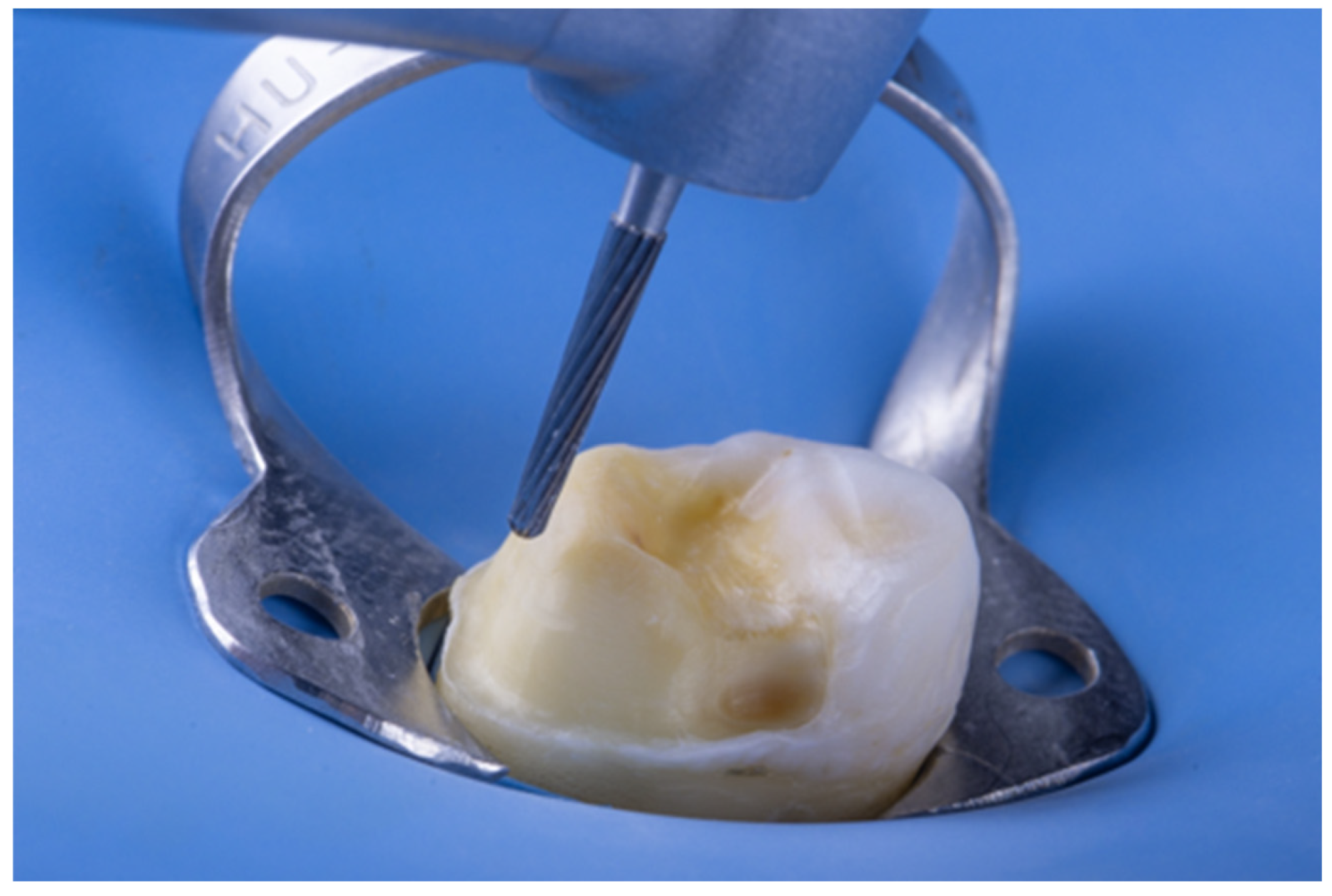
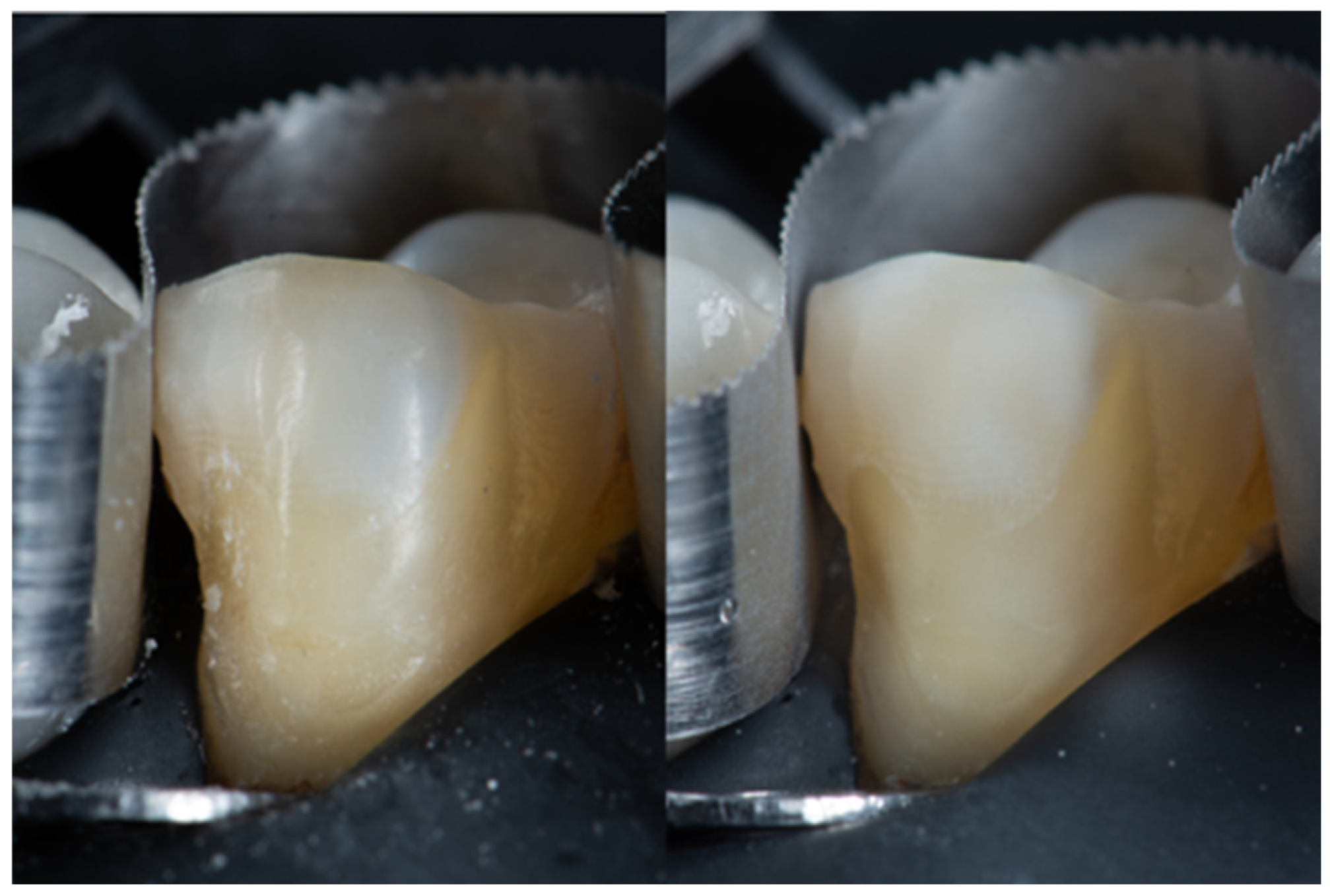
3. Substrate Preparation
4. Adhesive Systems
- The demineralization of the tooth structure: Since Buonocore [19], phosphoric acid etching of the tooth structure has been one of the foundations of dental adhesion. Acid etching of enamel demineralizes the structure, creating microretentions, where the dental bonding agent will interlock and form a hybrid layer when polymerized [26,27,28,29,30]. Acid etching performed on dentin results in partial demineralization, exposing the collagen fibril network by dissolving the mineral phase (hydroxyapatite) [28,31,32,33]. This process allows resin monomers to infiltrate the exposed collagen and form a hybrid layer when polymerized. With the advancement of adhesive systems, self-etch systems were introduced, in which the adhesive primer penetrates the dentin while simultaneously promoting demineralization. Although this technique is effective on dentin, the acid is not strong enough to create microretentions in enamel in the same way that phosphoric acid does.
- The infiltration of the dentin: Due to the structure of dentin and the presence of dentinal fluids, it is challenging for the “bond” of adhesive systems to penetrate dentin, as it is a hydrophobic material. For this reason, it is necessary for a hydrophilic material (the primer) to penetrate the demineralized dentin region and subsequently copolymerize with the adhesive bond, creating the hybrid layer and the micromechanical retention required for adequate bond strength. With self-etch systems, the infiltration of dentin occurs as the acidic primer demineralizes the dentin hydroxyapatite [34].
- The bonding agent: The bonding agent, or “bond,” in multi-bottle adhesive systems, mechanically interlocks with the demineralized enamel and dentin. Upon polymerization, it forms the hybrid layer, a bio-composite structure at the interface between demineralized dentin, enamel, and the bonding agent. As a structure primarily composed of methacrylate, the hybrid layer establishes a chemical bond with methacrylate-based materials such as resin composites, flowable composites, and resin cement [3].
4.1. Referenced Technique for Total Etch (Optibond FL)
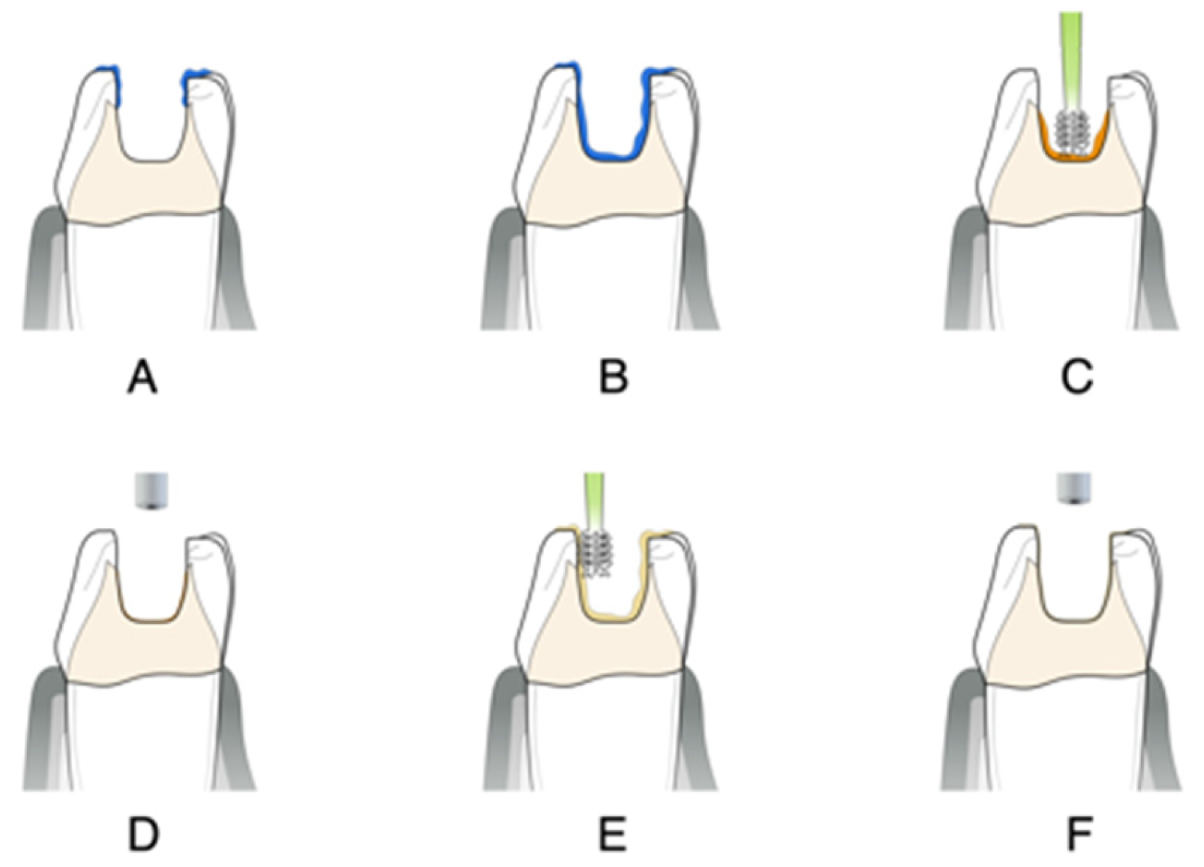
- Apply selective enamel etching with 30% to 40% phosphoric acid gel for a period of 15 s. After this period, apply the acid to the dentin surface for 10–15 s (maximum) * (Figure 8A,B).
- Thoroughly water rinse for 10–15 s and air dry the enamel surface. Air dry the dentin after to remove visible water.
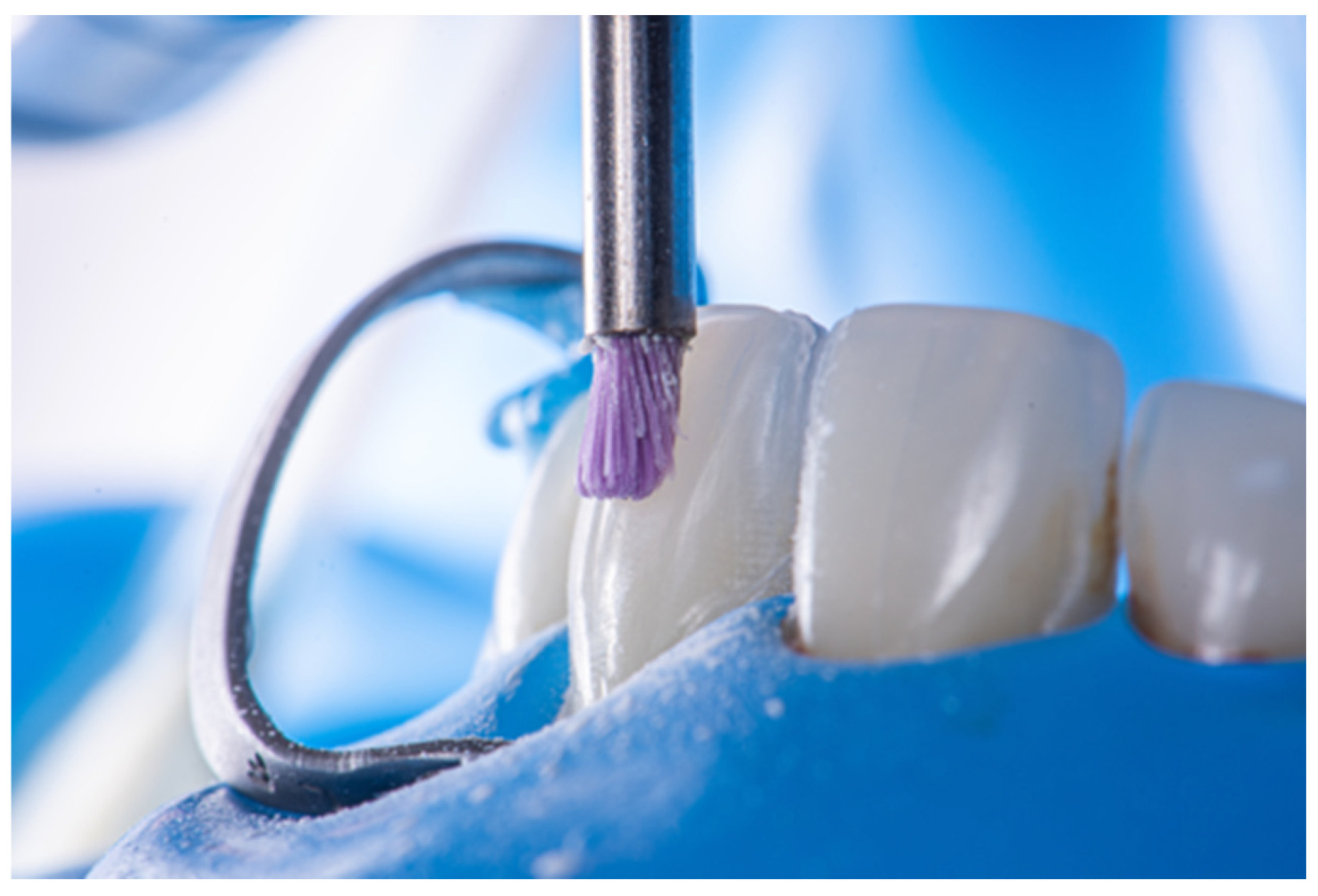
- Actively rub the primer on the dentin surface for at least 15 s *. Extra application or extra time with rubbing the primer is always welcome (Figure 8C).
- Gently air-dry the primer for at least 15 s to evaporate solvents * (Figure 8D).
- Apply the “bond” on all etched surfaces, ideally with a fiber-free micro brush (Figure 8E).
- With gentle air blowing and suction, remove the excess while uniformly spreading the adhesive resin (Figure 8F).
- Photopolymerize for 40 s.
4.2. Referenced Technique for Self-Etch (Clearfil SE)
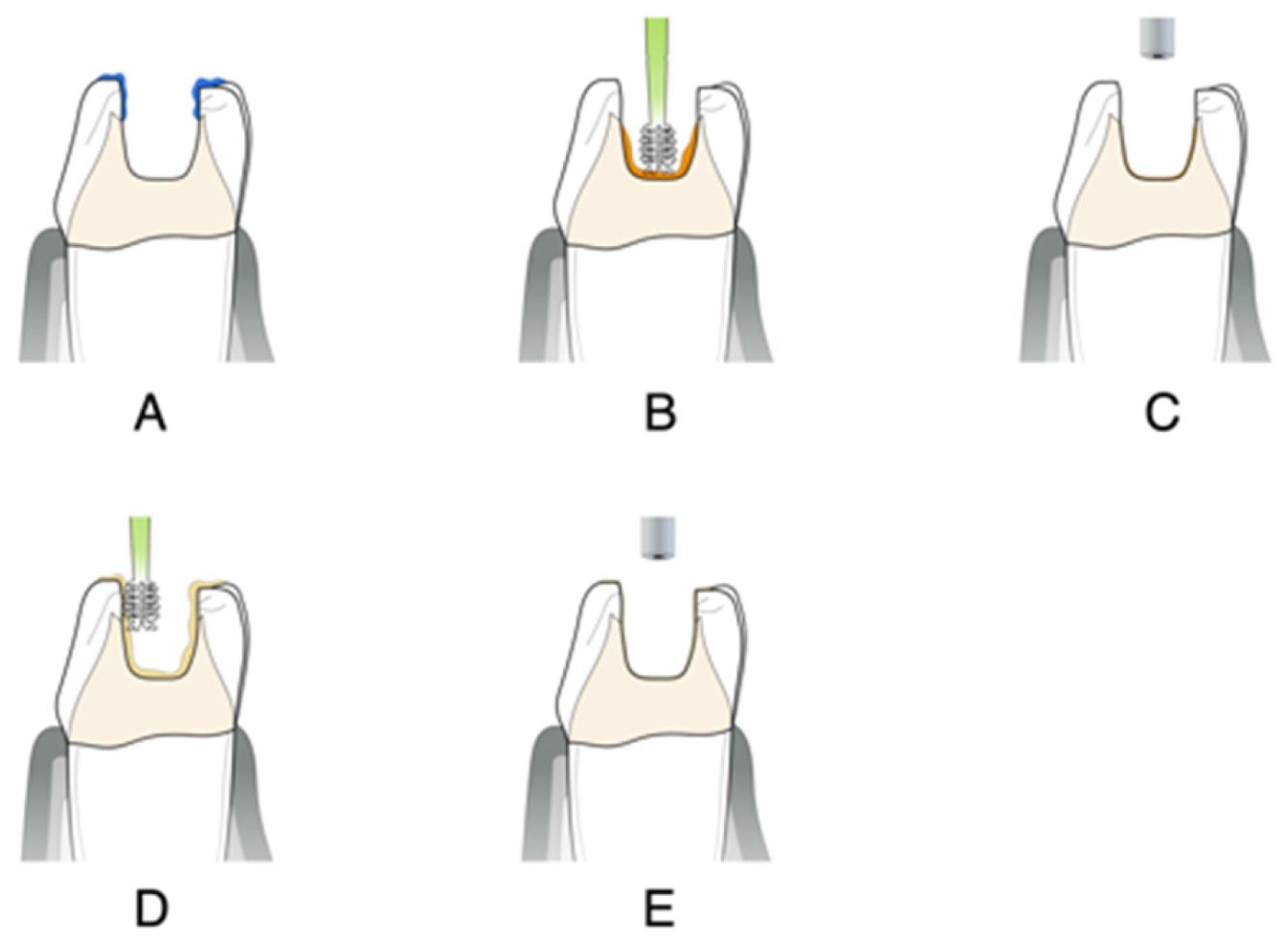
- Apply selective enamel etching with 30% to 40% phosphoric acid gel for 15–30 s (Figure 9A).
- Thoroughly water rinse for 10–15 s and air dry.
- Actively rub the primer on the dentin surface for at least 15 s *. Extra application or extra time with rubbing the primer is always welcome (Figure 9B).
- Gently air dry the primer for at least 15 s to evaporate solvents * (Figure 9C).
- Apply the “bond” on all etched surfaces, ideally with a fiber-free micro brush (Figure 9D).
- With gentle air blowing and suction, remove the excess while uniformly spread the adhesive resin (Figure 9E).
- Photopolymerize for 40 s.
4.3. Different Approaches to Different Clinical Situations
5. Conclusions
Author Contributions
Funding
Institutional Review Board Statement
Informed Consent Statement
Data Availability Statement
Conflicts of Interest
References
- Jin, X.; Han, F.; Wang, Q.; Yuan, X.; Zhou, Q.; Xie, H.; Niu, L.; Chen, C. The roles of 10-methacryloyloxydecyl dihydrogen phosphate and its calcium salt in preserving the adhesive–dentin hybrid layer. Dent. Mater. 2022, 38, 1194–1205. [Google Scholar] [CrossRef] [PubMed]
- Peumans, M.; De Munck, J.; Mine, A.; Van Meerbeek, B. Clinical effectiveness of contemporary adhesives for the restoration of non-carious cervical lesions: A systematic review. Dent. Mater. 2014, 30, 1089–1103. [Google Scholar] [CrossRef] [PubMed]
- De Munck, J.; Mine, A.; Poitevin, A.; Van Ende, A.; Cardoso, M.V.; Van Landuyt, K.L.; Peumans, M.; Van Meerbeek, B. Meta-analytical review of parameters involved in dentin bonding. J. Dent. Res. 2012, 91, 351–357. [Google Scholar] [CrossRef] [PubMed]
- Pashley, D.H.; Tay, F.R.; Breschi, L.; Tjäderhane, L.; Carvalho, R.M.; Carrilho, M.; Tezvergil-Mutluay, A.; Agee, K.A.; Nishitani, Y.; Tay, K.C. State of the art etch-and-rinse adhesives. Dent. Mater. 2011, 27, 1–16. [Google Scholar] [CrossRef]
- Van Meerbeek, B.; Yoshihara, K.; Van Landuyt, K.; Yoshida, Y.; Peumans, M. From Buonocore’s pioneering acid-etch technique to self-adhering restoratives: A status perspective of rapidly advancing dental adhesive technology. J. Adhes. Dent. 2020, 22, 7–34. [Google Scholar]
- Caviglia, N.A.; Urzagaste, O.A.; Siqueira, P.C.; Decurcio, R.A.; Decurcio, D.A. Determinação da umidade relativa do campo operatório com isolamento absoluto, modificado e relativo—Estudo piloto. Rev. Odontol. Bras. Cent. 2020, 29, 10–14. [Google Scholar] [CrossRef]
- Jeon, B.K.; Lee, C.H.; Kim, A.R.; Han, S.H.; Kim, H.J.; Antonson, S.A.; Kim, S.Y. Effect of etching procedures on the adhesion of biofilm-coated dentin. Materials 2020, 13, 2762. [Google Scholar] [CrossRef]
- Prime, J.M. ‘Fifty-seven’ reasons for using rubber dam. Ill. Dent. J. 1938. Available online: https://archive.org/details/sim_illinois-dental-news_1938-05_7_5/page/196/mode/2up (accessed on 26 February 2026).
- Kuphasuk, W.; Harnirattisai, C.; Senawongse, P.; Tagami, J. Bond strengths of two adhesive systems to dentin contaminated with a hemostatic agent. Oper. Dent. 2007, 32, 399–405. [Google Scholar] [CrossRef]
- Jacquot, B.; Durand, J.-C.; Farge, P.; Valcarcel, J.; Deville, D. Influence of temperature and relative humidity on dentin and enamel bonding: A critical review of the literature. Part 1: Laboratory studies. J. Adhes. Dent. 2012, 14, 433–446. [Google Scholar]
- Chaiyabutr, Y.; Kois, J.C. The effect of tooth-preparation cleansing protocol on the bond strength of self-adhesive resin cement to dentin contaminated with a hemostatic agent. Oper. Dent. 2011, 36, 18–26. [Google Scholar] [CrossRef]
- Aboushelib, M.N. Clinical performance of self-etching adhesives with saliva contamination. J. Adhes. Dent. 2011, 13, 489–493. [Google Scholar] [PubMed]
- Barnum, S.C. Rubber or coffer dam. Am. J. Dent. Sci. 1867, 1, 49–50. [Google Scholar]
- Henarejos-Domingo, V.; Clavijo, V.; Blasi, Á.; Madeira, S.; Roig, M. Digital scanning under rubber dam: An innovative method for making definitive impressions in fixed prosthodontics. J. Esthet. Restor. Dent. 2021, 33, 976–981. [Google Scholar] [CrossRef] [PubMed]
- Freeman, R.; Varanasi, S.; Meyers, I.A.; Symons, A.L. Effect of air abrasion and thermocycling on resin adaptation and shear bond strength to dentin for an etch-and-rinse and self-etch resin adhesive. Dent. Mater. J. 2012, 31, 180–188. [Google Scholar] [CrossRef]
- Buonocore, M.G. A simple method of increasing the adhesion of acrylic filling materials to enamel surfaces. J. Dent. Res. 1955, 34, 849–853. [Google Scholar] [CrossRef]
- Bernales Sender, F.R.; Castañeda Vía, J.A.; Tay, L.Y. Influence of different phosphoric acids before application of universal adhesive on the dental enamel. J. Esthet. Restor. Dent. 2020, 32, 797–805. [Google Scholar] [CrossRef]
- Eshghi, A.; Khoroushi, M.; Rezvani, A. Resin bonding using etch-and-rinse and self-etch adhesives to decalcified deciduous enamel after bioactive glass air abrasion. J. Contemp. Dent. Pract. 2014, 15, 595–602. [Google Scholar]
- Antunes, L.A.A.; Pedro, R.L.; Vieira, A.S.B.; Maia, L.C. Effectiveness of high-speed instrument and air abrasion on different dental substrates. Braz. Oral Res. 2008, 22, 235–241. [Google Scholar] [CrossRef]
- Sharafeddin, F.; Farhadpour, H. Evaluation of shear bond strength of total- and self-etching adhesive systems after application of chlorhexidine to dentin contaminated with a hemostatic agent. J. Dent. (Shiraz) 2015, 16, 175–181. [Google Scholar]
- De Carvalho, M.A.; Lazari-Carvalho, P.C.; Polonial, I.F.; De Souza, J.B.; Magne, P. Significance of immediate dentin sealing and flowable resin coating reinforcement for unfilled/lightly filled adhesive systems. J. Esthet. Restor. Dent. 2021, 33, 88–98. [Google Scholar] [CrossRef]
- Browet, S.; Gerdolle, D. Precision and security in restorative dentistry: The synergy of isolation and magnification. Int. J. Esthet. Dent. 2017, 12, 172–185. [Google Scholar]
- Mendonça, E.; Vieira, S.; Kawaguchi, F.; Powers, J.; Matos, A. Influence of blood contamination on bond strength of a self-etching system. Eur. J. Dent. 2010, 4, 280–286. [Google Scholar] [CrossRef]
- Hardan, L.; Bourgi, R.; Cuevas-Suárez, C.E.; Zarow, M.; Kharouf, N.; Mancino, D.; Villares, C.F.; Skaba, D.; Lukomska-Szymanska, M. The bond strength and antibacterial activity of the universal dentin bonding system: A systematic review and meta-analysis. Microorganisms 2021, 9, 1230. [Google Scholar] [CrossRef] [PubMed]
- Magne, P. Immediate dentin sealing: A fundamental procedure for indirect bonded restorations. J. Esthet. Restor. Dent. 2006, 17, 144–154. [Google Scholar] [CrossRef] [PubMed]
- Kui, A.; Buduru, S.; Labuneț, A.; Sava, S.; Pop, D.; Bara, I.; Negucioiu, M. Air particle abrasion in dentistry: An overview of effects on dentin adhesion and bond strength. Dent. J. 2024, 13, 16. [Google Scholar] [CrossRef] [PubMed]
- Souza-Zaroni, W.C.; Chinelatti, M.A.; Delfino, C.S.; Pecora, J.D.; Palma-Dibb, R.G.; Corona, S.A. Adhesion of a self-etching system to dental substrate prepared by Er:YAG laser or air abrasion. J. Biomed. Mater. Res. B Appl. Biomater. 2008, 86, 321–329. [Google Scholar] [CrossRef]
- Ferrazzano, G.F.; Iodice, G.; Cantile, T.; Ingenito, A. Scanning electron microscopic study of air abrasion effects on human dentine. Eur. J. Paediatr. Dent. 2007, 8, 113–118. [Google Scholar]
- Cardoso, M.V.; de Almeida Neves, A.; Mine, A.; Coutinho, E.; Van Landuyt, K.; De Munck, J.; Van Meerbeek, B. Current aspects on bonding effectiveness and stability in adhesive dentistry. Aust. Dent. J. 2011, 56, 31–44. [Google Scholar] [CrossRef]
- Nakabayashi, N.; Kojima, K.; Masuhara, E. The promotion of adhesion by the infiltration of monomers into tooth substrates. J. Biomed. Mater. Res. 1982, 16, 265–273. [Google Scholar] [CrossRef]
- Zhu, J.J.; Tang, A.T.H.; Matinlinna, J.P.; Hägg, U. Acid etching of human enamel in clinical applications: A systematic review. J. Prosthet. Dent. 2014, 112, 122–135. [Google Scholar] [CrossRef]
- Tsujimoto, A.; Fischer, N.; Barkmeier, W.; Baruth, A.; Takamizawa, T.; Latta, M.; Miyazaki, M. Effect of reduced phosphoric acid pre-etching times on enamel surface characteristics and shear fatigue strength using universal adhesives. J. Adhes. Dent. 2017, 19, 267–275. [Google Scholar] [PubMed]
- Lima, A.F.; da Silva, V.B.; Soares, G.P.; Marchi, G.M.; Aguiar, F.H.B.; Lovadino, J.R. Influence of previous acid etching on interface morphology and bond strength of self-etching adhesive to cavosurface enamel. Eur. J. Dent. 2012, 6, 56–62. [Google Scholar] [CrossRef] [PubMed]
- Foscaldo, T.; Dos Santos, G.B.; Miragaya, L.M.; Garcia, M.; Hass, V.; da Silva, E.M. Effect of HEMA phosphate as an alternative to phosphoric acid for dentin treatment prior to hybridization with etch-and-rinse adhesive systems. J. Adhes. Dent. 2016, 18, 425–434. [Google Scholar] [PubMed]
- Clavijo, V.; Duarte, S. Digital scan over dental dam: Workflow for successful clinical outcome. Quintessence Int. 2021, 52, 660–665. [Google Scholar]
- Magne, P.; Belser, U.C. Novel porcelain laminate preparation approach driven by a diagnostic mock-up. J. Esthet. Restor. Dent. 2004, 16, 7–16. [Google Scholar] [CrossRef]
- Dabbagh, S.; Hardan, L.; Kassis, C.; Bourgi, R.; Devoto, W.; Zarow, M.; Jakubowicz, N.; Ghaleb, M.; Kharouf, N.; Dabbagh, M.; et al. Effect of intraoral humidity on dentin bond strength of two universal adhesives: An in vitro preliminary study. Coatings 2022, 12, 712. [Google Scholar] [CrossRef]
- Perdigão, J. New developments in dental adhesion. Dent. Clin. N. Am. 2007, 51, 333–357. [Google Scholar] [CrossRef]
- Bourgi, R.; Kharouf, N.; Cuevas-Suárez, C.E.; Lukomska-Szymanska, M.; Haikel, Y.; Hardan, L. A literature review of adhesive systems in dentistry: Key components and their clinical applications. Appl. Sci. 2024, 14, 8111. [Google Scholar] [CrossRef]
- Albaladejo, A.; Osorio, R.; Toledano, M.; Ferrari, M. Hybrid layers of etch-and-rinse versus self-etching adhesive systems. Med. Oral Patol. Oral Cir. Bucal 2010, 15, e112–e118. [Google Scholar] [CrossRef]
- Carrilho, E.; Cardoso, M.; Marques Ferreira, M.; Marto, C.M.; Paula, A.; Coelho, A.S. 10-MDP-based dental adhesives: Adhesive interface characterization and adhesive stability—A systematic review. Materials 2019, 12, 790. [Google Scholar] [CrossRef]
- Triani, F.; Pereira da Silva, L.; Ferreira Lemos, B.; Domingues, J.; Teixeira, L.; Manarte-Monteiro, P. Universal adhesives: Evaluation of the relationship between bond strength and application strategies—A systematic review and meta-analyses. Coatings 2022, 12, 1501. [Google Scholar] [CrossRef]
- Polesso Patias, M.; Fernandes-e-Silva, P.; Carreño, N.L.V.; Lund, R.G.; Piva, E.; da Silva, A.F.; De Oliveira Da Rosa, W.L. Comparative clinical performance of universal adhesives versus etch-and-rinse and self-etch adhesives: A meta-analysis. Clin. Oral Investig. 2025, 29, 352. [Google Scholar] [CrossRef]
- Ahmed, M.H.; De Munck, J.; Van Landuyt, K.; Peumans, M.; Yoshihara, K.; Van Meerbeek, B. Do universal adhesives benefit from an extra bonding layer? J. Adhes. Dent. 2019, 21, 117–132. [Google Scholar] [CrossRef]






Disclaimer/Publisher’s Note: The statements, opinions and data contained in all publications are solely those of the individual author(s) and contributor(s) and not of MDPI and/or the editor(s). MDPI and/or the editor(s) disclaim responsibility for any injury to people or property resulting from any ideas, methods, instructions or products referred to in the content. |
© 2026 by the authors. Licensee MDPI, Basel, Switzerland. This article is an open access article distributed under the terms and conditions of the Creative Commons Attribution (CC BY) license.
Share and Cite
Agrelli, A.; Voigt, M.d.V.; Clavijo, V.G.R.; Bernardo-Menezes, L.C.; Malise, R.; Torreão, A.d.S.; Vale, D.M.V.d.; Lins de Morais, C.N. Dental Adhesion Protocol: A Clinically Oriented Literature Review with Practical Guidelines. Dent. J. 2026, 14, 189. https://doi.org/10.3390/dj14030189
Agrelli A, Voigt MdV, Clavijo VGR, Bernardo-Menezes LC, Malise R, Torreão AdS, Vale DMVd, Lins de Morais CN. Dental Adhesion Protocol: A Clinically Oriented Literature Review with Practical Guidelines. Dentistry Journal. 2026; 14(3):189. https://doi.org/10.3390/dj14030189
Chicago/Turabian StyleAgrelli, Almerinda, Mateus do Vale Voigt, Victor G. R. Clavijo, Lucas Coêlho Bernardo-Menezes, Ricardo Malise, Adilson dos Santos Torreão, Dione Maria Viana do Vale, and Clarice Neuenschwander Lins de Morais. 2026. "Dental Adhesion Protocol: A Clinically Oriented Literature Review with Practical Guidelines" Dentistry Journal 14, no. 3: 189. https://doi.org/10.3390/dj14030189
APA StyleAgrelli, A., Voigt, M. d. V., Clavijo, V. G. R., Bernardo-Menezes, L. C., Malise, R., Torreão, A. d. S., Vale, D. M. V. d., & Lins de Morais, C. N. (2026). Dental Adhesion Protocol: A Clinically Oriented Literature Review with Practical Guidelines. Dentistry Journal, 14(3), 189. https://doi.org/10.3390/dj14030189