
Next Article in Journal
Clinical and Patient Comparison of AI and Expert Digital Smile Design: A Prospective Paired Study
Previous Article in Journal
Effect of Common Staining Beverages on the Color Stability of Additively and Subtractively Manufactured Provisional Materials
Previous Article in Special Issue
Relationship of Smile Esthetics and Quality of Life Among High-School Adolescents in Al-Ahsa, Saudi Arabia: An Analytic Cross-Sectional Study
 
 
Due to scheduled maintenance work on our servers, there may be short service disruptions on this website between 11:00 and 12:00 CEST on March 28th.
Article

Assessing the Relationship Between the Psychosocial Impact of Dental Aesthetics, Self-Esteem, and Dental Habits


by
Mara Ștefania Șimon
1,
Alexandru Grațian Grecu
1,*,
Ioana Maria Colceriu-Șimon
2,
Andrea Maria Chisnoiu
1,
Cristina Gasparik
1 and
Diana Dudea
1
1
Department of Prosthetic Dentistry and Dental Materials, Iuliu Hațieganu University of Medicine and Pharmacy, 400012 Cluj-Napoca, Romania
2
Department of Orthodontics, Iuliu Hațieganu University of Medicine and Pharmacy, 400012 Cluj-Napoca, Romania
*
Author to whom correspondence should be addressed.
Dent. J. 2026, 14(3), 165; https://doi.org/10.3390/dj14030165
Submission received: 2 February 2026 / Revised: 24 February 2026 / Accepted: 6 March 2026 / Published: 12 March 2026
(This article belongs to the Special Issue Oral Health-Related Quality of Life and Its Determinants)

Abstract

Background/Objectives: Dental aesthetics has been shown to be associated with psychosocial functioning and self-perception, underscoring the importance of integrating psychosocial considerations into holistic patient care. This study assessed self-perceived dental aesthetics, self-esteem, and dental habits among dental medicine students in relation to socio-demographic factors and dental knowledge. Methods: A cross-sectional survey of 172 students from the Dental Medicine Faculty in Cluj-Napoca, Romania, was conducted. The sample was divided into two groups, based on their prior education in dentistry: Level 1 students at the beginning of their studies, without any prior dental medicine experience, and Level 2 students with basic knowledge in the field of dentistry at the end of their preclinical years. After informed consent, participants completed the Psychosocial Impact of Dental Aesthetics Questionnaire (PIDAQ), the Rosenberg Self-Esteem Scale (RSES), and questions on oral hygiene and socio-demographics. Subscale and overall questionnaire scores were computed and statistically analysed using Pearson’s correlations and independent-samples t-tests to examine relationships among self-perceived dental aesthetics and self-esteem and differences between variables. Results: A negative correlation was found between the psychosocial impact of dental aesthetics and overall self-esteem scores (p = 0.006). Greater aesthetic concerns were associated with lower self-esteem (p = 0.003), although the magnitude of correlation was small. Female participants had higher social impact scores for dental aesthetics (p = 0.039), whereas male students reported higher self-esteem (p = 0.047). Students from Level 2 group presented higher self-esteem than Level 1 (p = 0.016). Regarding oral hygiene, a small but statistically significant association was found between dental flossing frequency and aesthetic concern scores (p = 0.044). Additionally, individuals who frequently attended dental check-ups reported a more favourable self-image. Conclusions: Self-perceived dental aesthetics correlates with self-esteem among dental students, varying by gender and academic level. The Dental Self-Confidence subscale of the PIDAQ had the greatest perceived impact, underscoring the importance of self-image for dental students’ psychological and social well-being. Dental flossing and regular dental consultations appear to be linked to improved self-perceived dental aesthetics.

1. Introduction

Since ancient times, humans have been social beings, and the need for acceptance within communities has always been crucial for survival and well-being. During social interactions, the orofacial region plays an essential role in conveying words, emotions, and mental or physical states [1].
In today’s society, where adherence to aesthetic norms is highly valued, deviations from beauty standards can significantly affect mental health and quality of life, especially among younger generations [2]. Studies show that minor imperfections in dental aesthetics can lead to social withdrawal, low self-confidence, negative comparisons with others, and even more serious mental health issues such as anxiety and depression [3,4,5,6].
At the other end of the spectrum, high self-esteem—also influenced by well-perceived dento-facial aesthetics—promotes a better quality of life through enhanced social interactions and more effective management of life events. These factors also play a critical role in guiding clinical protocols during the planning phase of complex dental aesthetic treatments [7,8,9].
Studies indicate that an individual’s self-image regarding dento-facial appearance can also be influenced by their dental hygiene routines. Good oral hygiene habits, including regular tooth brushing, use of mouthwash or flossing, and periodic visits to the dental office for prophylactic check-ups, can reduce concerns about dental aesthetics by lowering the risk of cavities or periodontal disease [10,11].
The Psychosocial Impact of Dental Aesthetics Questionnaire (PIDAQ), developed by Klages et al. [12], is an objective assessment tool that measures the self-perceived impact of dental aesthetics on an individual’s psychological and social aspects. Comprising 23 items organised into four main domains—Dental Self-Confidence (DSC), Social Impact (SI), Psychological Impact (PI), and Aesthetic Concern (AC)—the questionnaire assesses personal perceptions, social fears, feelings of inferiority, and aesthetic concerns related to dental appearance [12]. It has been widely translated and validated across many populations, demonstrating its broad relevance and enabling a comprehensive understanding of how dental aesthetics influence social life and overall well-being [13,14,15].
Studies have shown that individuals with high levels of aesthetic concerns tend to have lower self-confidence and experience greater psychological and social distress, underscoring the direct impact of self-perception on dental treatment outcomes, including orthodontic or prosthodontic procedures [16,17,18].
Complementary to this, the Rosenberg Self-Esteem Scale (RSES), developed in 1965, is a widely used unidimensional measure of self-esteem. It comprises 10 questions, with half addressing positive aspects and the other half addressing negative aspects, thereby providing insight into an individual’s overall sense of self-worth [19]. The link between self-esteem and dental factors is important because self-esteem can significantly influence how people perceive their dental treatment outcomes and their overall satisfaction with their appearance [20,21]. Successful dental treatments not only improve aesthetic outcomes but also significantly enhance patients’ self-esteem and overall quality of life [22,23].
Psychosocial assessment tools have become even more relevant in the context of the COVID-19 pandemic. As observed by Alqarawi et al., global crises can amplify aesthetic-related anxieties during difficult times, underscoring the importance of dento-facial appearance on the psychological and social health of individuals [24]. Even the transition back to normal social interactions without safety masks or distancing may have further intensified these concerns [25,26]. This present study’s data collection was conducted in a post-pandemic period, providing a contemporary look at psychosocial outcomes during the transition back to mask-free social and clinical interactions.
While most studies rely on the use of PIDAQ related to clinical malocclusion, research investigating psychosocial impact (PIDAQ) with general self-esteem (RSES), alongside the additional variables of oral hygiene habits and levels of education, remains overlooked in the literature [4,5,6,8,9,13,14,15,16,17,18,21]. Studying these psychosocial dynamics is essential for future dental professionals, as their self-perception may shape their professional approach regarding holistic patient care.
Additionally, a significant gap in scientific literature exists regarding the pre-clinical dental students in Eastern Europe. The dental student population has a unique double role as ‘professional aesthetic observer’ and future aesthetic treatment providers. Their specific training likely improves their awareness of alterations from standards regarding dento-facial aesthetic parameters. Addressing this gap may contribute to a better understanding of how early professional education interacts with self-perception during formative academic stages.
Therefore, this study assesses self-perceived dental aesthetics, self-esteem, and dental habits among dental students in relation to socio-demographic factors.
Based on the study’s purpose, the following exploratory research questions were developed:
  • Are there any significant correlations between self-perceived dental aesthetics (as measured with PIDAQ) and self-esteem (as measured with RSES)?
  • Are there any significant differences in self-perceived dental aesthetics, self-esteem and dental hygiene habits, with respect to the variables gender and dental medical knowledge?

2. Materials and Methods

Prior to the study, ethical approval was obtained from the Research Ethics Committee of “Iuliu Hațieganu” University of Medicine and Pharmacy in Cluj-Napoca, under approval number DEP245/30.10.2024 from 30 October 2024. The study was conducted in accordance with the Declaration of Helsinki. All study participants signed an informed consent form approved by the Research Ethics Committee of “Iuliu Hațieganu” University of Medicine and Pharmacy in Cluj-Napoca. This study was funded by the Research Project PCD Nr. 284/51/12.01.2026 from “Iuliu Hațieganu” University of Medicine and Pharmacy in Cluj-Napoca. This article was also supported by project no. 100418/29.08.2025, SMIS code 350525, financed by the Ministry of Investments and European Projects, through the Health Programme. The research used the infrastructure provided by the University of Medicine and Pharmacy “Iuliu Hatieganu”-Cluj-Napoca, Romania.
A cross-sectional survey was conducted via a convenience sampling method from a single academic centre, with a final sample of 172 students enrolled in the Faculty of Dental Medicine at “Iuliu Hațieganu” University of Medicine and Pharmacy in Cluj-Napoca, Romania. Informed consent and GDPR compliance were obtained from all participants before their participation. A priori power analysis using G*Power (v3.1) estimated the sample size based on the following parameters: effect size d of 0.5; α error probability of 0.05; power of 0.8; and an allocation ratio of 1 [27]. Based on these inputs, the minimum sample size was 128.
The inclusion criteria were enrollment as an undergraduate dental student, age over 18 years, ability to understand the information given in the study questionnaire, and provision of written informed consent.
Exclusion criteria included refusal to participate, incomplete questionnaires, missing responses on key outcome variables (PIDAQ or RSES total scores), or withdrawal of consent. Questionnaires with substantial missing or inconsistent data were excluded from the final statistical analysis.
In the present study, the categorization into “Level 1” and “Level 2” does not reflect pre-clinical versus clinical training. Level 1 refers to newly enrolled dental students at the beginning of their preclinical studies, who are primarily engaged in foundational biomedical sciences with minimal exposure to dental-specific theoretical content. Level 2 refers to dental students at the end of their preclinical phase, who have increased exposure to introductory dental subjects and simulation-based pre-clinical training, but still no independent clinical patient management.
The following questionnaires were administered to the study sample: the Psychosocial Impact of Dental Aesthetics Questionnaire (PIDAQ) [12], the Rosenberg Self-Esteem Scale (RSES) [19], and an additional questionnaire comprising items on dental habits, including how often participants brush their teeth daily, whether they use dental floss or mouthwash, and the frequency of visits to the dental office in the last five years. The extended version of this questionnaire, including the GDPR form and informed consent form, is available in the Supplementary file under the name: “Questionnaire S1: Assessing The Relationship between the Psychosocial Impact of Dental Aesthetics, Self-Esteem, and Dental Habits”.
The questionnaires were administered in a self-completion format and took approximately 20 min to complete. From the total of 176 initial responses, four questionnaires were excluded due to incomplete answers after a manual review for data integrity. Consequently, a final sample of 172 participants was included in the statistical analysis, with a response rate of 97.7%. The collected data were recorded in Microsoft Excel spreadsheets. A comparative statistical analysis of the data was conducted across various monitored parameters, using relevant statistical tests and descriptive analyses. Subscale and overall questionnaire scores were calculated and analysed, and then used in descriptive and inferential analyses (Pearson correlations and t-tests) to examine the relationship between self-perceived dental aesthetics and self-esteem, as well as differences in these constructs by gender and stage of dental education. In line with current protocols involving psychometric research, the total scores for PIDAQ and RSES were treated as continuous variables, as sum scores from multi-item scales typically approximate an interval level of measurement [28,29]. The effect size was also calculated.

3. Results

The final sample consisted of 172 students from the Faculty of Dental Medicine, with a mean age of 20.43 years. The missing data percentage was low (<5%), and no imputation procedures were required.
The gender distribution was balanced between male (41.3%) and female participants (58.7%). Most of the subjects in the study were classified as Level 1 (62.8%), while around one third were classified as Level 2 (37.2%).
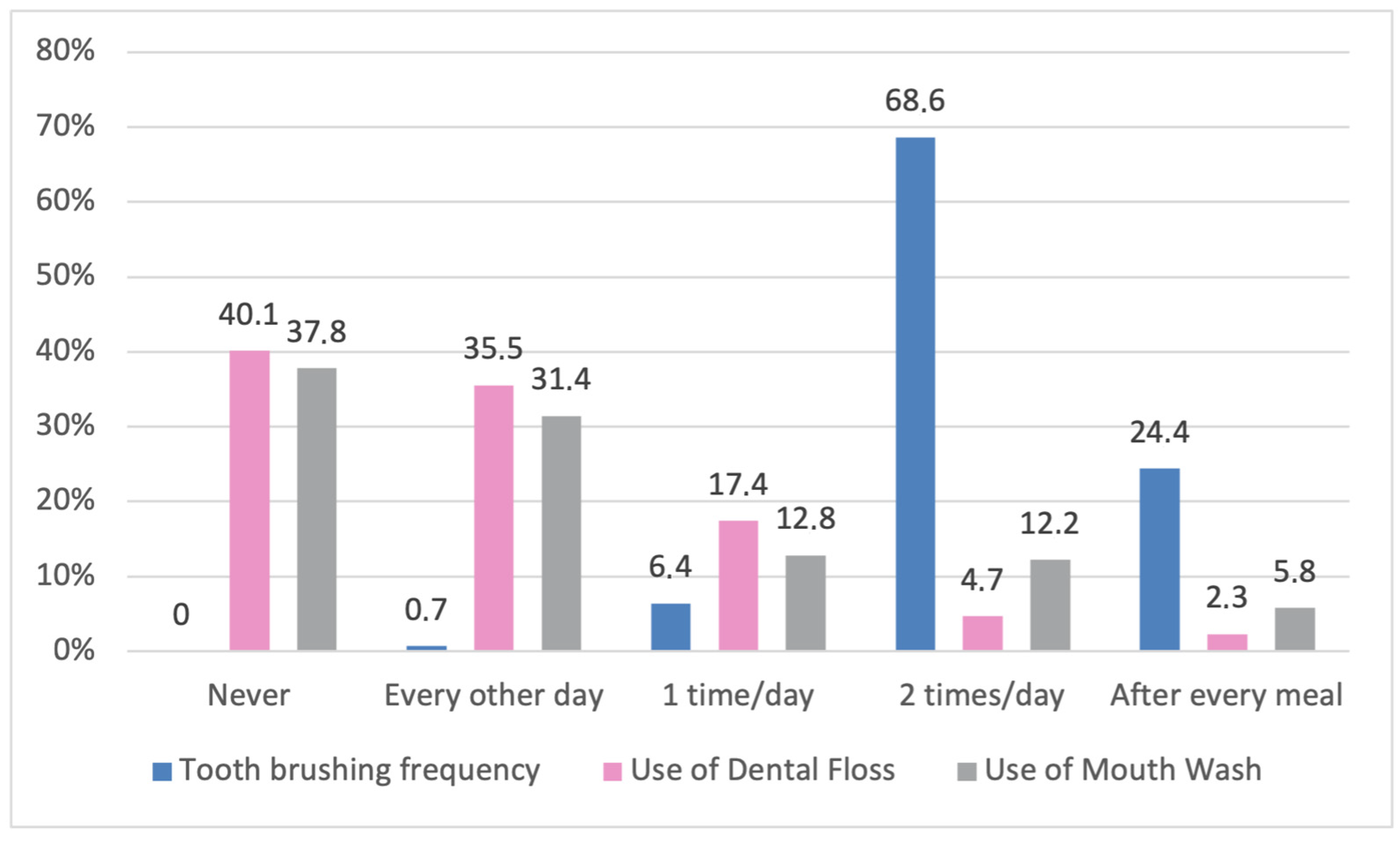
Participants’ oral hygiene habits varied across the sample. Regarding brushing frequency, most brush twice daily, and the remaining ¼ brush after every meal. Regarding dental floss and mouthwash, most of the participants either never use them or use them only every other day, while the remaining approximately one-third of them use them once or more than once a day (Figure 1).
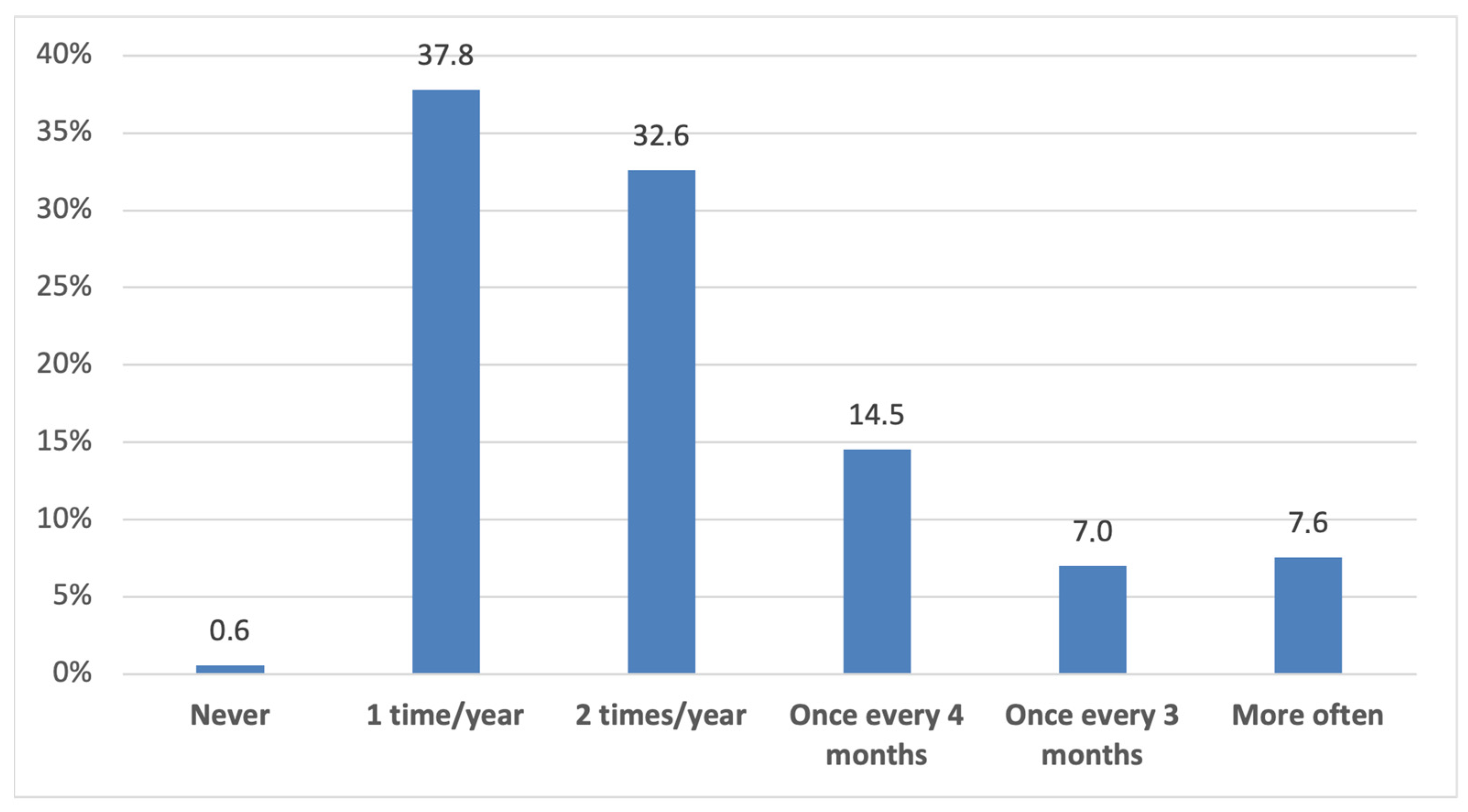
Figure 2 shows the frequency of dental visits among the study participants over the past five years. The majority reported visiting the dental office once or twice a year. Only a very small proportion reported never attending a dental appointment, while an even smaller subgroup reported visiting every few months or more often.
The Cronbach’s Alpha reliability coefficient for the questionnaires used is shown in Table 1 and indicates good internal consistency.
The overall mean PIDAQ score was 16.56 (n = 172), and the mean RSES score was 32.71 (n = 172). In the entire sample, the Dental Self-Confidence subscale of the PIDAQ had the highest score, indicating that this aspect had the greatest perceived psychosocial impact.
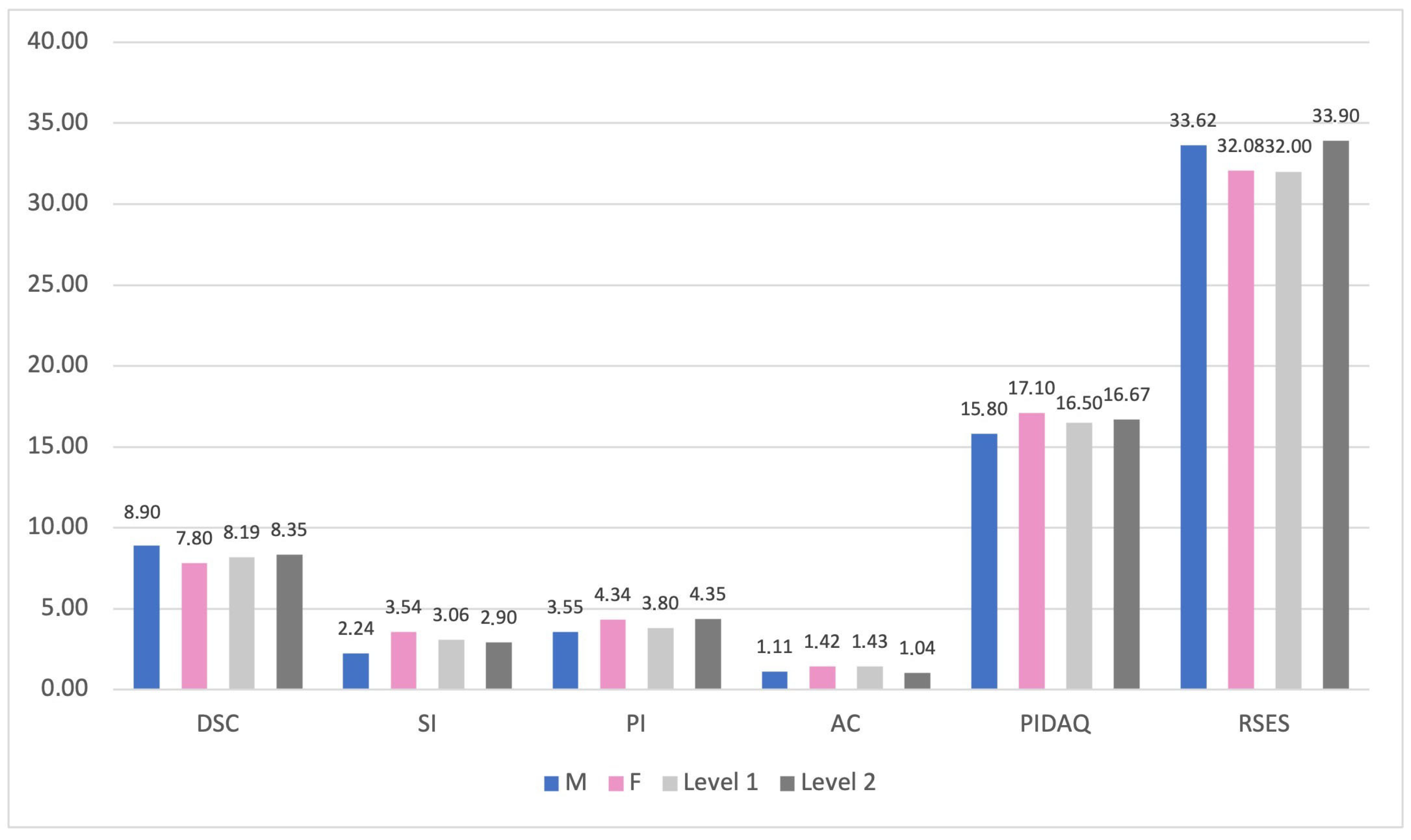
Statistical analysis using independent-samples t-tests revealed significant gender differences. Female participants scored significantly higher than male participants on the Social Impact subscale of the PIDAQ (t(165.16) = −2.083, p = 0.039), indicating a greater perceived impact of dental aesthetics. Male participants also had significantly higher overall RSES scores than female participants (t(170) = 1.998, p = 0.047), suggesting higher self-esteem (Table 2 and Table 3, Figure 3).
Statistically significant differences between the groups regarding dental knowledge, in relation to overall RSES scores, were also observed (t(170) = −2.429, p = 0.016). The Level 2 sample scored higher RSES overall values than the Level 1 sample, suggesting that early academic progression and adaptation may be associated with higher self-esteem, but cannot be interpreted as an effect of clinical exposure (Table 2 and Table 3, Figure 3).
Several small but statistically significant correlations were observed between oral hygiene habits and both aesthetic perception and dental visit frequency. Flossing frequency was positively correlated with the number of dental visits in the past five years (r = 0.316, p = 0.001), suggesting that proactive home care is associated with higher professional maintenance. Negative correlations were observed between the level of dental education and the frequency of dental office visits in the prior 5 years (r = −0.166, p = 0.030), as well as a weak negative correlation between the frequency of dental flossing and Aesthetic Concern scores on the PIDAQ (r = −0.154, p = 0.044). The small effect size suggests a modest association, rather than a strong relationship. A non-significant correlation was found between self-esteem (RSES) and tooth brushing frequency.
The current study found statistically significant minor Pearson correlations between overall RSES scores and the following PIDAQ subscale and overall scores: Social Impact subscale, r = −0.219, p = 0.004; Psychological Impact subscale, r = −0.175, p = 0.022, and Aesthetic Concern (r = −0.228, p = 0.03) subscales, as well statistical significance between the overall RSES and overall PIDAQ scores, r = −0.208, p = 0.006. The correlations were negative, indicating that higher self-perceived dental aesthetics problems were associated with lower self-esteem.

4. Discussion

Previous research has shown that dental aesthetics significantly affect an individual’s self-esteem and psychosocial well-being, underscoring the importance of examining the factors that shape social identity, particularly during key developmental stages [7,8,9].
Although the current study’s observed associations between self-perceived dental aesthetics and self-esteem were weak but statistically significant, integrating behavioural variables offers a multidimensional perspective on self-perception. The first experimental question of the current study, that self-perceived dental aesthetics (as measured by PIDAQ) is associated with general self-esteem (as measured by RSES) among dental students, was confirmed. A negative Pearson correlation indicated that a higher impact of oral health issues was associated with lower self-esteem.
The findings of the current study align with those of Botezatu et al., who concluded that dento-facial asymmetries were associated with heightened self-consciousness and reduced self-esteem regarding personal appearance [30]. Similar findings were reported in research by Faraj et al., which investigated malocclusion and self-image [31]. These findings are further supported by Grecu et al., who highlight the growing interest in the connection between oral health-related quality of life and self-esteem [32].
Research by Bahar et al. assessed the self-esteem of patients undergoing orthodontic treatment and found that those with higher self-esteem tend to view their dental appearance more positively, boosting overall life satisfaction [33]. This finding is supported by Kamath et al., who reported that patients undergoing aesthetic procedures often experience significant increases in self-esteem afterward, suggesting that aesthetic improvements can confer psychological benefits. This phenomenon is especially relevant in orthodontic treatment, where social perceptions and peer influence frequently shape the desire for improved aesthetics [34].
The second research question, assessing the presence of significant differences in self-perceived dental aesthetics, self-esteem and dental hygiene habits, with respect to the variables gender and dentistry knowledge, was partially confirmed.
Research indicates that good, regular dental hygiene practices can substantially influence an individual’s aesthetic concerns about dental and overall appearance, thereby affecting social life, health, and quality-of-life metrics [35]. This underscores the importance of education and reinforcement of good oral health habits in patients, as poor hygiene can worsen concerns about dental aesthetics and, in turn, affect social interactions and self-esteem [36,37,38].
The current research revealed small but statistically significant correlations between the Aesthetic Concern of the PIDAQ Questionnaire subscale and the frequency of dental flossing, suggesting an association between aspects of dental hygiene habits and one’s own dental aesthetics satisfaction. Our results align with existing research, emphasising that regular flossing prevents periodontal disease and reduces oral inflammation, thereby improving overall smile aesthetics and enhancing an individual’s comfort in social expression [39,40,41,42].
However, the statistical analysis did not indicate a relationship between the Rosenberg Self-Esteem Score and tooth brushing frequency. Recent literature on the relationship between oral hygiene behaviour and self-concept has shown mixed results. On the one hand, Ghorbani et al., Koga et al., and Billa et al. examined the same relationship between self-esteem and tooth brushing frequency but found no significant association [43,44,45]. On the other hand, studies by Pazos et al. and Jeong et al. demonstrated a relationship between high self-esteem and a higher frequency of tooth brushing, implying better oral health among young students [46,47]. Foláyan et al. and Khan et al. further highlight the role of effective tooth brushing in enhancing overall quality of life by reducing oral inflammation and the resulting anxiety [39,40].
In addition to tooth brushing, mouthwash has been linked to better oral health, as it helps reduce bad breath and other oral health issues that can negatively affect social life quality [48]. Furthermore, people who regularly use mouthwash report fewer aesthetic concerns on the PIDAQ survey [11,49]. In our study, over a third of participants reported never using mouthwash, approximately 31,4% used it every other day, and the remaining 30,8% used it once or more than once a day. According to Zheng et al., those who incorporate mouthwash into their daily routine tend to have higher self-esteem and greater satisfaction with their oral hygiene [10]. A sizeable proportion of dental students involved in the current study reported a rare use of dental floss or mouthwash. This is notable given their educational background and expected oral health behaviour. It may reflect cognitive dissonance in health behaviours [50].
Recent studies have shown that regular preventive dental visits play a crucial role in positively shaping self-perception of dental aesthetics [43,51,52]. The current study’s results support these findings, as individuals who have sought dental care within the past five years tend to report a more positive self-image and lower aesthetic concern scores on the PIDAQ [48].
Regarding the influence of gender on self-perceived dental aesthetics and self-esteem, statistically significant differences were found, thus confirming the second research question.
The current research showed that the Dental Self-Confidence subscale of the PIDAQ had the greatest perceived impact in this area, underscoring the importance of self-esteem in personal perception [16,17,18]. Female participants scored higher on the Social Impact subscale of the PIDAQ than males, indicating this aspect was more important to them. Additionally, scores on the Rosenberg Self-Esteem Scale were higher among males than among females, suggesting higher perceived self-worth among males. These results align with other research indicating that women are more concerned with aesthetics, experience a greater negative psychological impact, and have a notably higher total PIDAQ score [8,14,17,53,54].
The study’s rationale to focus on dental students is justified by their double role as providers and subjects of aesthetic standards. Their specialised education, which progresses from pre-clinical to clinical phases, makes them more aware of minor dental aesthetic discrepancies that the average person might ignore.
Regarding the role of dental education in self-perceived dental aesthetics and self-esteem, small statistically significant differences were found. The Rosenberg Self-Esteem Scale scores of the Level 2 sample were higher than those of the Level 1, suggesting that progressive dental medicine education may provide a more objective basis for self-assessment. The correlations presented above led to the confirmation of the second research hypothesis.
Since their self-esteem influences the impact of dental aesthetics, integrating psychosocial dimensions into dental education is essential to help future practitioners recognise the emotional impact of their treatment results on patients. Such assessment methods regarding self-image may also improve their ability to provide empathetic and holistic care to patients who present similar concerns.
Recent studies on young populations found the same association between poor self-assessed smile aesthetics and significantly lower self-esteem scores and increased social anxiety [55,56,57,58]. These findings align with those of Svalina et al. and Bous et al., which indicated that facial aesthetics significantly impact self-esteem and depressive symptoms in patients with craniosynostosis [59,60].
Regarding age, adolescents and young adults often face greater pressure related to appearance while trying to conform to specific social norms, making them more susceptible to negative self-image and diminished self-worth linked to dental aesthetics [61,62]. Furthermore, dental students have demonstrated greater awareness of aesthetic considerations than peers in other academic disciplines, suggesting that education and exposure to dental health knowledge may influence perceptions and attitudes toward aesthetics [63,64,65]. Female adolescents and young women, for instance, often experience greater psychosocial impacts than their male counterparts, as they are more likely to internalise societal expectations driven by beauty norms perpetuated by the media [65,66,67].
Beyond personal factors, broader contextual events, such as the COVID-19 pandemic, can affect self-esteem [68]. Regarding the current study’s timeframe, although specific COVID-19 stress variables were not assessed, the transition from social distancing and mandatory safety masks back to clinical and social exposure most likely influenced the participants’ high awareness of their orofacial appearance. Lockdowns, social isolation and disruption in education had negative consequences, especially on the young generations, who faced high psychological distress during their formative years [69,70].
Through these studies, researchers can deepen their understanding of how dental health affects overall well-being, thereby informing strategies to improve self-esteem and encourage positive social interactions across populations.
Based on the results of the present study, there is a significant relationship between individuals’ self-perceived dental aesthetics and self-esteem, and statistically significant differences between these constructs with respect to gender and level of knowledge in dentistry. These results support integrating psychosocial dimensions into dental education and clinical protocols, emphasising the need for a holistic approach to patient care that encompasses both the functional and emotional aspects of oral health.
Several limitations of the current study must be acknowledged. First, focusing on a single-centre convenience sample may lead to selection bias, limiting the generalizability of the results to other academic contexts with a different geographical background. Nevertheless, it serves as an exploratory research of a representative Eastern European dental medicine students cohort.
Another drawback of the current study is the reliance on self-reported questionnaires (PIDAQ and RSES) without additional clinical aesthetic assessment (e.g., IOTN index). While self-perception highly influences patient satisfaction in aesthetic dentistry, objective clinical data would have contributed to more in-depth results.
A potential non-response bias exists, as students enrolled in the Faculty of Dental Medicine may have a high interest in dental aesthetics, making them more prone to participate in the study. Future research should target more academic centres with a longitudinal study design to offer a broader perspective of this topic. However, with a sample size exceeding the power test score and a high response rate (97.7%), the current study presents a low risk of potential for non-response bias, which occurs when non-participants differ systematically from those who respond [71].
Limiting the study to students in pre-clinical years may be a constraint. We acknowledge that the observed differences between the two levels may reflect academic adaptation and maturation, increased familiarity with dental concepts, and greater exposure to theoretical aesthetic principles, rather than clinical experience. The small differences observed between years cannot be interpreted as an effect of clinical exposure. A more extensive sample, including students in clinical years, populations unrelated to dentistry, and a broader age range, is necessary for a comprehensive comparison. Regarding the level of dental education, the sample distribution was uneven, with approximately 62.8% at the first level and 37.2% at the second level. Additionally, future research should consider ethnicity as a variable, as it could enable new comparative analyses, as well as prior orthodontic treatments, socioeconomic background, or mental health status, which act as modulators for self-esteem. The effects of the COVID-19 pandemic on overall mental and social health could be addressed through additional pandemic-related psychosocial variables in future surveys.
While the relationships between self-esteem and self-perception align with the scientific literature results, the magnitude of the correlations was small, suggesting limited predictive strength.
Several methodological and statistical limitations must be acknowledged. Likert-scale questionnaire items are ordinal; although composite scores were treated as continuous in our study in accordance with common practice, alternative non-parametric approaches could also be considered [27,28]. Multiple statistical comparisons were conducted without formal correction procedures, increasing the potential risk of Type I error. Finally, no multivariate analyses were performed to adjust for potential confounding variables.

5. Conclusions

The current study identified weak but statistically significant associations between self-perceived dental aesthetics and self-esteem among pre-clinical dental students. Within the study’s limitations, it was concluded that higher PIDAQ scores were associated with lower RSES scores, although the strength of this association was weak. The Dental Self-Confidence subscale of the PIDAQ had the greatest perceived impact, underscoring the importance of self-image for dental students’ psychological and social well-being.
Regarding oral hygiene habits, regular dental flossing and frequent dental visits were associated with lower aesthetic concern scores, indicating that good oral hygiene behaviours may be positively correlated with self-perception. However, there was no evidence of a direct relationship between these habits and self-esteem.
Gender-related differences were observed, with female participants reporting greater social impact related to dental aesthetics and male participants reporting higher self-esteem.
Overall RSES scores were higher among participants of the Level 2 sample, having more advanced pre-clinical academic progression, and this difference may reflect academic adaptation rather than educational impact. Given the small magnitude of the observed correlations and the exploratory cross-sectional design, these findings should be interpreted cautiously and confirmed in larger, multi-centre future studies using multivariate analytical approaches.

Supplementary Materials

The following supporting information can be downloaded at https://www.mdpi.com/article/10.3390/dj14030165/s1, Questionnaire S1: Assessing The Relationship between the Psychosocial Impact of Dental Aesthetics, Self-Esteem, and Dental Habits.

Author Contributions

Conceptualization, M.Ș.Ș. and C.G.; methodology, I.M.C.-Ș. and M.Ș.Ș.; software, A.G.G.; validation, D.D. and A.M.C.; formal analysis, C.G.; investigation, M.Ș.Ș., A.G.G. and D.D.; resources, D.D. and M.Ș.Ș.; data curation, M.Ș.Ș., A.G.G. and D.D.; writing—original draft preparation, M.Ș.Ș. and A.G.G.; writing—review and editing, D.D., A.M.C. and C.G.; visualization, M.Ș.Ș. and A.G.G.; supervision, D.D. and A.M.C.; project administration, C.G. and I.M.C.-Ș.; funding acquisition, M.Ș.Ș. All authors have read and agreed to the published version of the manuscript.

Funding

This research was funded by “Iuliu Hațieganu” University of Medicine and Pharmacy, Cluj-Napoca, Romania. Research Project PCD Nr. 284/51/12.01.2026. This article was also supported by project no. 100418/29.08.2025, SMIS code 350525, financed by the Ministry of Investments and European Projects, through the Health Program. (The research used the infrastructure provided by the University of Medicine and Pharmacy “Iuliu Hatieganu”-Cluj-Napoca, Romania).

Institutional Review Board Statement

The study was conducted in accordance with the Declaration of Helsinki and approved by the Research Ethics Committee of “Iuliu Hațieganu” University of Medicine and Pharmacy in Cluj-Napoca (protocol code nr. DEP245/30.10.2024 from 30 October 2024).

Informed Consent Statement

Informed consent was obtained from all subjects involved in the study.

Data Availability Statement

The raw data supporting the conclusions of this article will be made available by the authors on request.

Conflicts of Interest

The authors declare no conflicts of interest.

Abbreviations

The following abbreviations are used in this manuscript:
PIDAQPsychosocial Impact of Dental Aesthetics Questionnaire
RSESRosenberg Self-Esteem Scale
DSCDental Self-Confidence
SISocial Impact
PIPsychological Impact
ACAesthetic Concern
MMasculine; Male
FFeminine; Female

References

  1. Grammer, K.; Fink, B.; Møller, A.P.; Thornhill, R. Darwinian aesthetics: Sexual selection and the biology of beauty. Biol. Rev. 2003, 78, 385–407. [Google Scholar] [CrossRef]
  2. Richards, M.R.; Fields, H.W., Jr.; Beck, F.M.; Firestone, A.R.; Walther, D.B.; Rosenstiel, S.; Sacksteder, J.M. Contribution of malocclusion and female facial attractiveness to smile esthetics evaluated by eye tracking. Am. J. Orthod. Dentofac. Orthop. 2015, 147, 472–482. [Google Scholar] [CrossRef] [PubMed]
  3. Hosseini, S.A.; Padhy, R.K. Body Image Distortion. In StatPearls; StatPearls Publishing: Treasure Island, FL, USA, 2023. Available online: https://www.ncbi.nlm.nih.gov/books/NBK546582/ (accessed on 15 October 2025).
  4. Amato, M.A. Mental Health, Resiliency, Self-Esteem, and Body Image Among Thai University Seniors. Ph.D. Thesis, California State University, Long Beach, CA, USA, 2019. [Google Scholar]
  5. Ahadzadeh, A.S.; Rafik-Galea, S.; Alavi, M.; Amini, M. Relationship between body mass index, body image, and fear of negative evaluation: Moderating role of self-esteem. Health Psychol. Open 2018, 5, 2055102918774251. [Google Scholar] [CrossRef]
  6. Tajudin, Z.M.; Wan Hassan, W.N.; Yusof, Z.Y.M.; Makhbul, M.Z.M. Impacts of self-perceived malocclusion on the oral health-related quality of life of young adults. Healthcare 2021, 9, 248. [Google Scholar] [CrossRef] [PubMed]
  7. Yang, C.-C.; Holden, S.M.; Ariati, J. Social media and psychological well-being among youth: The multidimensional model of social media use. Clin. Child Fam. Psychol. Rev. 2021, 24, 631–650. [Google Scholar] [CrossRef]
  8. AlSagob, E.I.; Alkeait, F.; Alhaimy, L.; Alqahtani, M.; Hebbal, M.; Ben Gassem, A.A. Impact of self-perceived dental esthetic on psycho-social well-being and dental self-confidence: A cross-sectional study among female students in Riyadh city. Patient Prefer. Adherence 2021, 15, 919–926. [Google Scholar] [CrossRef]
  9. Zaidi, A.B.; Karim, A.A.; Mohiuddin, S.; Rehman, K. Effects of dental aesthetics on psycho-social wellbeing among students of health sciences. J. Pak. Med. Assoc. 2020, 70, 1033–1037. [Google Scholar]
  10. Zheng, S.; Zhao, L.; Ju, N.; Hua, T.; Zhang, S.; Liao, S. Relationship between oral health-related knowledge, attitudes, practice, self-rated oral health and oral health-related quality of life among Chinese college students: A structural equation modeling approach. BMC Oral Health 2021, 21, 99. [Google Scholar] [CrossRef]
  11. Mueller, M.; Schorle, S.; Vach, K.; Hartmann, A.; Zeeck, A.; Schlueter, N. Relationship between dental experiences, oral hygiene education and self-reported oral hygiene behaviour. PLoS ONE 2022, 17, e0264306. [Google Scholar] [CrossRef]
  12. Klages, U.; Claus, N.; Wehrbein, H.; Zentner, A. Development of a questionnaire for assessment of the psychosocial impact of dental aesthetics in young adults. Eur. J. Orthod. 2006, 28, 103–111. [Google Scholar] [CrossRef] [PubMed]
  13. Shahzad, H.; Awais, F.; Arshad, A.; Iftikhar, D.; Huda, N.; Ahmad, W. Linguistic validity and reliability of Urdu version of the psychosocial impact of dental aesthetic questionnaire (PIDAQ) for orthodontic patients in Lahore, Pakistan. Ann. Abbasi Shaheed Hosp. Karachi Med. Dent. Coll. 2024, 29, 165–171. [Google Scholar] [CrossRef]
  14. Džemidžić, V.; Redžepagić-Vražalica, L.; Jelešković, A.; Tiro, A. Psychosocial impact of malocclusion: Is there gender difference? Balk. J. Dent. Med. 2023, 27, 118–123. [Google Scholar] [CrossRef]
  15. Bourzgui, F.; Serhier, Z.; Sebbar, M.; Diouny, S.; Othmani, M.; Ngom, P. Adaptation and validation of the Moroccan Arabic version of the psychosocial impact of dental aesthetics questionnaire (PIDAQ). Saudi Dent. J. 2015, 27, 180–186. [Google Scholar] [CrossRef]
  16. Ben Gassem, A.A.; Aldweesh, A.H.; Alsagob, E.I.; Alanazi, A.M.; Hafiz, A.M.; Aljohani, R.S.; Kurdi, Y.E.; Abu Hammad, O. Psychosocial impact of malocclusion and self-perceived orthodontic treatment need among young adult dental patients. Eur. J. Dent. 2023, 17, 713–719. [Google Scholar] [CrossRef]
  17. Iranzo-Cortés, J.E.; Montiel-Company, J.M.; Bellot-Arcís, C.; Almerich-Torres, T.; Acevedo-Atala, C.; Ortolá-Síscar, J.C.; Almerich-Silla, J.M. Factors related to the psychological impact of malocclusion in adolescents. Sci. Rep. 2020, 10, 13471. [Google Scholar] [CrossRef]
  18. Zrinski, M.; Pavlić, A.; Katić, V.; Špalj, S. Effect of personality traits on the association between clinically assessed malocclusion and the psychosocial impact of dental aesthetics. Orthod. Craniofac. Res. 2022, 26, 62–71. [Google Scholar] [CrossRef]
  19. Rosenberg, M. Conceiving the Self; Basic Books: New York, NY, USA, 1979. [Google Scholar]
  20. Özhayat, E.B. Influence of self-esteem and negative affectivity on oral health-related quality of life in patients with partial tooth loss. Community Dent. Oral Epidemiol. 2012, 41, 466–472. [Google Scholar] [CrossRef] [PubMed]
  21. Gavric, A.; Mirceta, D.; Jakobovic, M.; Pavlic, A.; Zrinski, M.T.; Spalj, S. Craniodentofacial characteristics, dental esthetics-related quality of life, and self-esteem. Am. J. Orthod. Dentofac. Orthop. 2015, 147, 711–718. [Google Scholar] [CrossRef]
  22. Iancu, I.; Bodner, E.; Ben-Zion, I.Z. Self-esteem, dependency, self-efficacy and self-criticism in social anxiety disorder. Compr. Psychiatry 2015, 58, 165–171. [Google Scholar] [CrossRef] [PubMed]
  23. Alanko, O.M.E.; Svedström-Oristo, A.-L.; Suominen, A.; Soukka, T.; Peltomäki, T.; Tuomisto, M.T. Does orthognathic treatment improve patients’ psychosocial well-being? Acta Odontol. Scand. 2022, 80, 177–181. [Google Scholar] [CrossRef]
  24. Alqarawi, F.K.; Alam, B.F.; Nayab, T.; Alshehri, S.; Al-Jandan, B.; Fahim, F.; Ali, S. Impact of COVID-19 on the self-esteem, psychological and dental esthetics of dental students. Work 2023, 77, 407–416. [Google Scholar] [CrossRef]
  25. Arima, M.; Takamiya, Y.; Furuta, A.; Siriratsivawong, K.; Tsuchiya, S.; Izumi, M. Factors associated with the mental health status of medical students during the COVID-19 pandemic: A cross-sectional study in Japan. BMJ Open 2020, 10, e043728. [Google Scholar] [CrossRef]
  26. Woon Teen, S.; Jih Huei, T.; Tiong Chan, L.; Jia Chyi, T. Post-pandemic evaluation: Impact of COVID-19 pandemic on medical students’ mental health, self-esteem, social interactions, and academic progression in Malaysia. SAGE Open 2024, 14, 21582440241271231. [Google Scholar] [CrossRef]
  27. Stojilković, M.; Gušić, I.; Berić, J.; Prodanović, D.; Pecikozić, N.; Veljović, T.; Mirnić, J.; Durić, M. Evaluating the influence of dental aesthetics on psychosocial well-being and self-esteem among students of the University of Novi Sad, Serbia: A cross-sectional study. BMC Oral Health 2024, 24, 277. [Google Scholar] [CrossRef]
  28. Norman, G. Likert scales, levels of measurement and the “laws” of statistics. Adv. Health Sci. Educ. Theory Pract. 2010, 15, 625–632. [Google Scholar] [CrossRef]
  29. Faul, F.; Erdfelder, E.; Buchner, A.; Lang, A.-G. Statistical power analyses using G*Power 3.1: Tests for correlation and regression analyses. Behav. Res. Methods 2009, 41, 1149–1160. [Google Scholar] [CrossRef] [PubMed]
  30. Botezatu, A.; Cernei, E.; Zegan, G. Cross-sectional study on self-perception of dento-facial asymmetry. Medicina 2024, 60, 1291. [Google Scholar] [CrossRef] [PubMed]
  31. Faraj, M.; Shobha, S.; Latheef, V.; Nivedita, P. Does Psychosocial Impact of Dental Aesthetics Questionnaire (PIDAQ) reflect the impact of malocclusion on facial aesthetics? Dent. Press J. Orthod. 2023, 28, e232211. [Google Scholar] [CrossRef] [PubMed]
  32. Grecu, A.G.; Balázsi, R.; Dudea, D.; Mesaroș, A.; Strîmbu, M.; Dumitrașcu, D. Oral health-related quality of life and self-esteem in a general population. Med. Pharm. Rep. 2019, 92, S65–S72. [Google Scholar] [CrossRef]
  33. Bahar, A.D.; Sagi, M.S.; Zuhairi, F.A.M.; Hassan, W.N. Dental aesthetics and self-esteem of patients seeking orthodontic treatment. Healthcare 2024, 12, 1576. [Google Scholar] [CrossRef]
  34. Kamath, V.; Guggari, V.; Sangewar, A.; Hegde, H.; Mukherjee, P.; Venkatesh, S.B.; Shetty, S.S. A survey to assess oral hygiene awareness, difficulties faced, and satisfaction level during and after orthodontic treatment. Indian J. Forensic Med. Toxicol. 2021, 15, 1220–1226. [Google Scholar] [CrossRef]
  35. Shakeel, M.; Sultana, F.; Mandal, N.B.; Mathew, R.; Lenin, K.P.; Akilan, V.; Tiwari, H.D. Dental caries and brushing techniques attitude in school students. J. Pharm. Bioallied Sci. 2022, 14, S283–S285. [Google Scholar] [CrossRef]
  36. Priyanka, J.; Bhavya, P.; Srinivas, B.; Singaraju, G.; Reddy, G.; Prasad, M. An assessment of the subjective psychological and social effects of malocclusion-related dental aesthetics and its influence on body self-image and oral health-related quality of life in young adults. Cureus 2024, 16, e60120. [Google Scholar] [CrossRef] [PubMed]
  37. Tijare, R.; Chhabra, K.G.; Reche, A.; Madhu, P.P.; Agrawal, S.; Chandak, V. Evaluation of dental hygiene and para-functional habits in oro-facial pain among patients visiting Sharad Pawar Dental College & Hospital: A questionnaire-based cross-sectional study. J. Pharm. Res. Int. 2021, 33, 302–307. [Google Scholar] [CrossRef]
  38. Kalevski, K.; Vojinović, J.; Gajić, M.; Aleksić, E.; Tambur, Z.; Milutinović, J.; Borotic, N.; Mladenovic, R. The outcomes of an interventional oral health program on dental students’ oral hygiene. Int. J. Environ. Res. Public Health 2021, 18, 13242. [Google Scholar] [CrossRef] [PubMed]
  39. Foláyan, M.O.; Tantawi, M.; Oginni, O.; Oziegbe, E.; Mapayi, B.; Arowolo, O.; Adeniyi, A.A.; Sam-Agudu, N.A. Oral health practices and oral hygiene status as indicators of suicidal ideation among adolescents in southwest Nigeria. PLoS ONE 2021, 16, e0247073. [Google Scholar] [CrossRef]
  40. Khan, O.; Asim, S.; Naz, S.; Tahir, A.; Urooj, M.; Feroze, H. The efficacy of different oral hygiene interventions in preventing periodontitis: A retrospective analysis. J. Health Res. Rev. 2023, 3, 1133–1138. [Google Scholar] [CrossRef]
  41. Sicari, F.; Merlo, E.M.; Gentile, G.; Nucera, R.; Portelli, M.; Settineri, S.; Myles, L.A.M.; Militi, A. Body image and psychological impact of dental appearance in adolescents with malocclusion: A preliminary exploratory study. Children 2023, 10, 1691. [Google Scholar] [CrossRef]
  42. Chaudhary, F.; Ahmad, B. The relationship between psychosocial distress and oral health status in patients with facial burns and mediation by oral health behaviour. BMC Oral Health 2021, 21, 172. [Google Scholar] [CrossRef]
  43. Ghorbani, Z.; Esmaeili, S.; Shahbazi, S.; Jarrahzadeh, M.; Madihi, S. Self-esteem and its influence on the inclination toward esthetic dental treatments: A cross-sectional study. BMC Psychol. 2025, 13, 140. [Google Scholar] [CrossRef]
  44. Koga, R.; Herkrath, A.P.C.Q.H.; Vettore, M.V.; Herkrath, F.J.; Vieira, J.M.R.; Pereira, J.V.; Rebelo, M.A.B.; Corrêa de Queiroz, A. The role of socioeconomic status and psychosocial factors on gingivitis in socially disadvantaged adolescents. J. Periodontol. 2020, 91, 223–231. [Google Scholar] [CrossRef]
  45. Billa, A.L.; Sukhabogi, J.R.; Doshi, D.; Jummala, S.; Turaga, S.S. Correlation of self-esteem with oral hygiene behaviour and oral health status among adult dental patients. Ann. Ig. 2023, 35, 534–545. [Google Scholar] [CrossRef]
  46. Pazos, C.T.C.; Austregésilo, S.C.; Goes, P.S.A. Self-esteem and oral health behaviors in adolescents. Cienc. Saude Coletiva 2019, 24, 4083–4092. [Google Scholar] [CrossRef]
  47. Jeong, J.; Jeong, W.; Jung, Y. Association between self-perceived oral health, stress, and oral symptoms in South Korean university students: A cross-sectional study. Healthcare 2025, 13, 984. [Google Scholar] [CrossRef] [PubMed]
  48. Ghazi, O.M.; Alhashimi, A.H.; Jasim, G.M. Assessment of the psychological impact of dental aesthetics among undergraduate university students in Iraq. J. Orthod. Sci. 2023, 12, 34. [Google Scholar] [CrossRef]
  49. Bucci, R.; Rongo, R.; Amato, A.; Martina, S.; D’Antò, V.; Valletta, R. The psychological impact of dental aesthetics in patients with juvenile idiopathic arthritis compared with healthy peers: A cross-sectional study. Dent. J. 2019, 7, 98. [Google Scholar] [CrossRef]
  50. Murray, T.G. Cognitive Dissonance in Medicine: Beyond the White Coat. J. Vitreoretin. Dis. 2025, 9, 5–8. [Google Scholar] [CrossRef] [PubMed]
  51. Gómez-Polo, C.; Sánchez de Martín, M.A.; Curto, A.; Montero, J.; Martín Casado, A.M. Validation of a new questionnaire for assessing the psychosocial impact of gingival aesthetics (PIGAq). J. Clin. Periodontol. 2024, 52, 399–407. [Google Scholar] [CrossRef]
  52. Bonafé, E.; Rezende, M.; Machado, M.M.; Lima, S.N.L.; Fernández, E.; Baldani, M.M.P.; Reis, A.; Loguercio, A.D.; Bandéca, M.C. Personality traits, psychosocial effects and quality of life of patients submitted to dental bleaching. BMC Oral Health 2021, 21, 7. [Google Scholar] [CrossRef]
  53. Vallittu, P.K.; Vallittu, A.S.J.; Lassila, V.P. Dental aesthetics—A survey of attitudes in different groups of patients. J. Dent. 1996, 24, 335–338. [Google Scholar] [CrossRef]
  54. Bellot-Arcís, C.; Montiel-Company, J.M.; Almerich-Silla, J.M. Psychosocial impact of malocclusion in Spanish adolescents. Korean J. Orthod. 2013, 43, 193–200. [Google Scholar] [CrossRef]
  55. Gavić, L.; Budimir, M.; Tadin, A. The association between self-esteem and aesthetic component of smile among adolescents. Prog. Orthod. 2024, 25, 9. [Google Scholar] [CrossRef]
  56. Akpasa, I.O.; Yemitan, T.A.; Ogunbanjo, B.O.; Oyapero, A. Impact of severity of malocclusion and self-perceived smile and dental aesthetics on self-esteem among adolescents. J. World Fed. Orthod. 2022, 11, 120–124. [Google Scholar] [CrossRef]
  57. Júnior, A.B.M.; Carneiro, D.P.A.; De Menezes, C.C.; Degan, V.V.; Vedovello, S.A.S.; Filho, M.V. A multivariate analysis of the psychosocial impact of malocclusion and self-esteem in adolescents. Pesqui. Bras. Odontopediatr. Clín. Integr. 2022, 22, e2200178. [Google Scholar] [CrossRef]
  58. Militi, A.; Sicari, F.; Portelli, M.; Merlo, E.M.; Terranova, A.; Frisone, F.; Nucera, R.; Alibrandi, A.; Settineri, S. Psychological and social effects of oral health and dental aesthetics in adolescence and early adulthood: An observational study. Int. J. Environ. Res. Public Health 2021, 18, 9022. [Google Scholar] [CrossRef] [PubMed]
  59. Svalina, A.; Heikura, E.; Savolainen, T.; Serlo, W.; Sinikumpu, J.J.; Silvola, A.S.; Salokorpi, N. Appearance or attitude: What matters to craniosynostosis patients? Association of self-esteem, depressive symptoms, and facial aesthetics in patients with sagittal and metopic synostosis. Childs Nerv. Syst. 2022, 38, 1929–1936. [Google Scholar] [CrossRef]
  60. Bous, R.M.; Hazen, R.A.; Baus, I.; Palomo, J.M.; Kumar, A.; Valiathan, M. Psychosocial adjustments among adolescents with craniofacial conditions and the influence of social factors: A multi-informant study. Cleft Palate Craniofac. J. 2020, 57, 624–636. [Google Scholar] [CrossRef]
  61. Palenzuela-Luis, N.; Duarte-Clíments, G.; Gómez-Salgado, J.; Rodríguez-Gómez, J.Á.; Sánchez-Gómez, M.B. Questionnaires assessing adolescents’ self-concept, self-perception, physical activity and lifestyle: A systematic review. Children 2022, 9, 91. [Google Scholar] [CrossRef]
  62. Nazir, R.; Mahmood, A.; Anwar, A. Assessment of psychosocial impact of dental aesthetics and self-perceived orthodontic treatment need in young adults. Pak. Oral Dent. J. 2014, 34, 312–317. [Google Scholar]
  63. da Silva, G.C.; de Castilhos, E.D.; Masotti, A.S.; Rodrigues-Junior, S.A. Dental esthetic self-perception of Brazilian dental students. Rev. Sul-Bras. Odontol. 2012, 9, 375–381. [Google Scholar] [CrossRef]
  64. Kerosuo, H.; Al Enezi, S.; Kerosuo, E.; Abdulkarim, E. Association between normative and self-perceived orthodontic treatment need among Arab high school students. Am. J. Orthod. Dentofac. Orthop. 2004, 125, 373–378. [Google Scholar] [CrossRef]
  65. Al-Saleh, S.; Abu-Raisi, S.; Almajed, N.; Bukhary, F. Esthetic self-perception of smiles among a group of dental students. Int. J. Esthet. Dent. 2018, 13, 220–230. [Google Scholar]
  66. Geron, S.; Atalia, W. Influence of sex on the perception of oral and smile esthetics with different gingival display and incisal plane inclination. Angle Orthod. 2005, 75, 778–784. [Google Scholar]
  67. Jørnung, J.; Fardal, Ø. Perceptions of patients’ smiles: A comparison of patients’ and dentists’ opinions. J. Am. Dent. Assoc. 2007, 138, 1544–1553. [Google Scholar] [CrossRef]
  68. Azmi, F.M.; Khan, H.N.; Azmi, A.M.; Yaswi, A.; Jakovljević, M. Prevalence of COVID-19 pandemic, self-esteem, and its effect on depression among university students in Saudi Arabia. Front. Public Health 2022, 10, 836688. [Google Scholar] [CrossRef]
  69. Paolone, G.; Mazzitelli, C.; Formiga, S.; Kaitsas, F.; Breschi, L.; Mazzoni, A.; Tete, G.; Polizzi, E.; Gherlone, E.; Cantatore, G. One-year impact of COVID-19 pandemic on Italian dental professionals: A cross-sectional survey. Minerva Dent. Oral Sci. 2022, 71, 212–222. [Google Scholar] [CrossRef] [PubMed]
  70. León-Manco, R.A.; Agudelo-Suárez, A.A.; Armas-Vega, A.; Figueiredo, M.C.; Verdugo-Paiva, F.; Santana-Pérez, Y.; Viteri-García, A. Perceived stress in dentists and dental students of Latin America and the Caribbean during the mandatory social isolation measures for the COVID-19 pandemic: A cross-sectional study. Int. J. Environ. Res. Public Health 2021, 18, 5889. [Google Scholar] [CrossRef] [PubMed]
  71. Muhuri, P.K. Assessing the potential for nonresponse bias and measurement concordance in the clinical preventive services self-administered questionnaire survey. J. Econ. Soc. Meas. 2022, 46, 61–93. [Google Scholar] [CrossRef]
Figure 1. Frequency distribution of oral hygiene habits.
Dentistry 14 00165 g001
Figure 2. Frequency of dental office visits in the last five years.
Dentistry 14 00165 g002
Figure 3. Comparison of mean scores for the PIDAQ and RSES subscales/overall scores with respect to gender and level of knowledge.
Dentistry 14 00165 g003
Table 1. The Cronbach’s Alpha reliability coefficient for the questionnaires used.
Questionnaire SubscaleCronbach’s Alpha Reliability Coefficient
DSC 10.9
SI 20.83
PI 30.77
AC 40.9
PIDAQ 50.92
RSES 60.86
1 Dental Self-Confidence Subscale of PIDAQ Questionnaire, 2 Social Impact Subscale of PIDAQ Questionnaire, 3 Psychological Impact Subscale of PIDAQ Questionnaire, 4 Aesthetic Concern Subscale of PIDAQ Questionnaire, 5 Overall Score of the Psychosocial Impact of Dental Aesthetics Questionnaire, 6 Overall Score of the Rosenberg Self-Esteem Scale.
Table 2. Questionnaire Mean Scores, Standard Deviation, t-test Value, Significance and Size Effects—Gender variable.
GenderNMeanStd. DeviationStd. Error MeantSig. (2-Tailed)Size Effect
DSCM718.904.760.561.3750.1710.21
F1017.805.430.54
SIM712.243.020.36−2.0830.039−0.29
F1013.545.160.51
PIM713.553.560.42−1.2590.210−0.19
F1014.344.34.0.43
ACM711.111.830.22−0.8220.412−0.12
F1011.422.700.27
PIDAQM7115.8010.371.23−0.6680.505−0.09
F10117.1015.071.50
RSESM7133.624.490.531.9980.4070.30
F10132.085.300.53
Table 3. Questionnaire Mean Scores, Standard Deviation, t-test Value, Significance and Size Effects—Level of dental knowledge variable.
Dental Medical EducationNMeanStd. DeviationStd. Error MeantSig. (2-Tailed)Size Effect
DSCLevel 11088.195.020.48−0.2010.841−0.03
Level 2648.355.450.68
SILevel 11083.064.000.380.2260.8220.03
Level 2642.905.130.64
PILevel 11083.803.520.33−0.8670.387−0.13
Level 2644.354.800.60
ACLevel 11081.432.260.211.0350.3020.16
Level 2641.042.550.31
PIDAQLevel 110816.5012.041.15−0.0820.935−0.01
Level 26416.6715.311.91
RSESLevel 110832.004.740.45−2.4290.16−0.37
Level 26433.905.280.66
Disclaimer/Publisher’s Note: The statements, opinions and data contained in all publications are solely those of the individual author(s) and contributor(s) and not of MDPI and/or the editor(s). MDPI and/or the editor(s) disclaim responsibility for any injury to people or property resulting from any ideas, methods, instructions or products referred to in the content.