Article

Subgingival Plaque Removal Efficacy and Oral Soft Tissue Safety of the Wave Electric Toothbrush: An In Vitro and In Vivo Study

Guangdong Provincial Key Laboratory of Stomatology, Guanghua School of Stomatology, Hospital of Stomatology, Sun Yat-sen University, Guangzhou 510055, China
*
Author to whom correspondence should be addressed.
Dent. J. 2026, 14(1), 29; https://doi.org/10.3390/dj14010029
Submission received: 2 October 2025 / Revised: 18 December 2025 / Accepted: 25 December 2025 / Published: 4 January 2026

Abstract

Background/Objectives: The novel wave electric toothbrush is considered potentially helpful in removing subgingival plaque to prevent the occurrence of periodontal diseases. This study aimed to assess the cleaning efficacy of a novel wave electric toothbrush on subgingival plaque and its safety profile for oral soft tissues. Methods: In vitro cleaning efficacy evaluations were conducted using oral dental models. The wave electric toothbrushes were divided into low-, medium-, and high-swing parameter groups, with manual brushing (Bass technique) as the control. Simulated plaque was applied to the buccal and gingival sulcus sites of the four first molars, and the plaque removal area and sulcus cleaning depth were measured. For safety evaluation, Sprague Dawley (SD) rats were brushed on their molars daily for 30 days, with bleeding incidents recorded. Oral soft tissues were analyzed through H&E staining and immunohistochemical analysis. Statistical analysis included ANOVA and Kruskal–Wallis (p < 0.05). Results: Medium- and high-swing groups demonstrated superior gingival sulcus cleaning efficacy, showing significant differences compared with the low-swing and control groups (p < 0.05). All swing parameters achieved complete plaque removal on buccal surfaces. No significant differences were observed between the low-swing and manual groups, or between the medium- and high-swing groups, regarding sulcus cleaning efficacy and maximum sulcus depth. During the 30-day in vivo experiment, medium- and high-swing groups showed low bleeding frequencies, primarily at the palatal gingiva and vestibule. Histological analyses indicated that higher swing parameters increased the likelihood of soft tissue injury. Conclusions: Wave electric toothbrushes enhance subgingival plaque removal, with higher swing parameters improving gingival sulcus cleaning. However, stronger parameters may increase the risk of soft tissue damage. Further clinical studies are required to establish optimal guidelines.

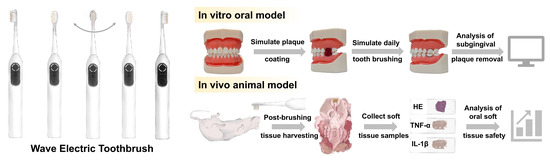
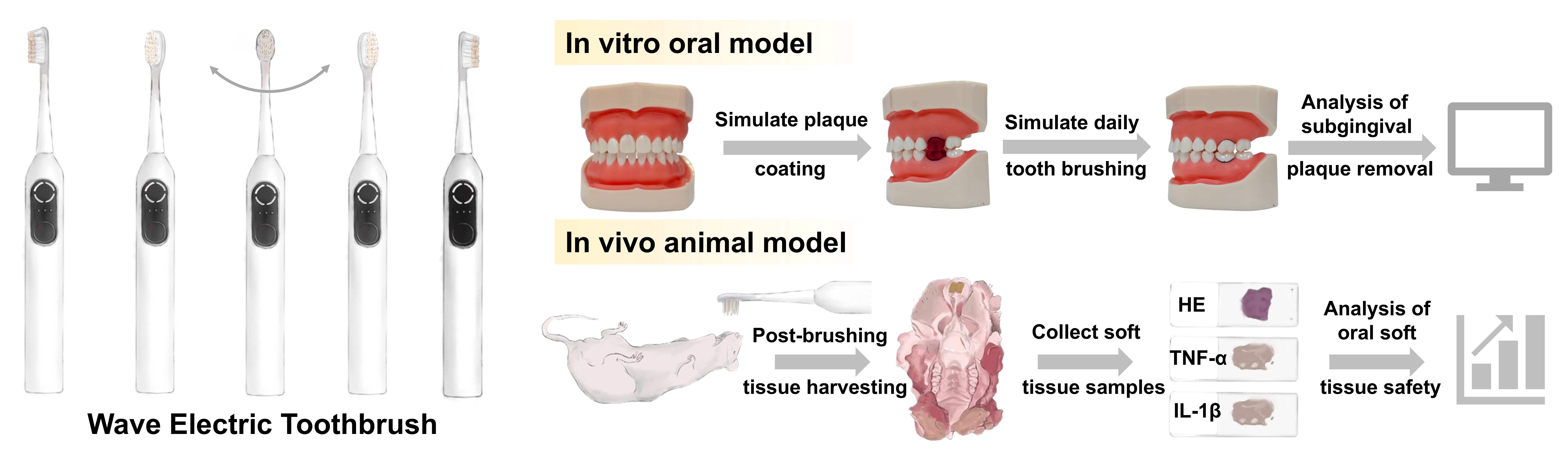
Graphical Abstract

1. Introduction

Approximately 3.5 billion people worldwide are affected by oral diseases such as dental caries and periodontal diseases, primarily due to poor oral hygiene, especially the accumulation of plaque in the gingival sulcus [1,2,3]. Despite recommendations for individuals to brush their teeth twice a day using the Bass technique, the effective prevention of oral diseases through correct and regular toothbrushing has been well established [4]. Correctly using the Bass technique for cleaning tooth surfaces and the gingival sulcus appears to be extremely challenging, as individuals often struggle to master the technique of positioning the bristles at 45° towards the gingival margin, allowing the bristles to enter the gingival sulcus and perform small horizontal vibrations to remove subgingival plaque, while patiently cleaning each tooth [5]. With the growing demand for oral health and effective tooth cleaning, various cleaning techniques have developed, leading to the widespread adoption of electric toothbrushes [6,7,8]. Electric toothbrushes not only demonstrate higher efficiency in plaque removal and maintaining gingival health, but also offer advantages such as ease of use and improved patient compliance [9,10]. In addition, studies have shown that electric toothbrushes also have positive effects in orthodontic treatment, restorative care, and periodontal therapy [11,12,13,14,15,16]. This category of toothbrushes is divided into rotating and vibrating types based on the motion of the brush head [17].
Both rotating and vibrating electric toothbrushes are powered by electricity to drive the brush head in high-frequency reciprocating movements. The bristles on the brush head use friction to directly act on the tooth surface, removing dirt and plaque. For gingival sulcus cleaning, rotating electric toothbrushes primarily rely on the direct friction of the bristle tips to remove plaque at the gingival margin and near the gingival sulcus. In contrast, vibrating electric toothbrushes generate high-speed water flow and microbubbles in the oral cavity through the high-frequency movement of the bristles, which impact the gingival sulcus [18,19]. However, the bristle movement of these two types of electric toothbrushes typically only cleans the gingival sulcus to a depth of 0.5–1 mm [20], whereas plaque in healthy individuals generally accumulates subgingivally in the 0–3 mm range [21]. Studies have shown that if plaque in the 0–3 mm range of the gingival sulcus is not effectively cleaned over the long term, it can lead to gingivitis and other diseases [22]. Therefore, altering the motion of the electric toothbrush brush head to allow the bristles to enter 0–3 mm subgingivally and directly friction-clean the gingival sulcus is a potentially effective method for cleaning the gingival sulcus. This approach could enable comprehensive plaque removal from the oral cavity, thereby effectively preventing oral diseases.
Recently, a new wave electric toothbrush has emerged and rapidly gained market share in China, with representative brands like Laifen and Usmile being prominent drivers of this growth. Building on the vibrating electric toothbrush, it uses a servo motor to achieve high-frequency lateral oscillation of the brush head. The brush head’s maximum oscillation angle can reach 60 degrees, simulating the sweeping motion of the Bass technique, allowing the bristles to penetrate deeply into the gingival sulcus for cleaning. Therefore, it may offer superior gingival sulcus and oral cleaning efficacy. However, the high-frequency, large-angle oscillation of the bristles increases the likelihood of the bristles coming into contact with the oral soft tissues while cleaning the gingival sulcus. Therefore, it is essential to evaluate its effectiveness in cleaning the gingival sulcus and its soft tissue safety to ensure the oral health of the user. Currently, research on the cleaning efficacy and safety of wave electric toothbrushes remains limited.
Therefore, this study aims to investigate the oral cleaning efficacy and soft tissue safety of the wave electric toothbrush by constructing oral dental models and using SD rats as experimental subjects. The factors that may interfere with oral cleaning efficacy and soft tissue safety include the swing parameters of the wave electric toothbrush brush head. The null hypotheses are as follows: (1) There is no difference in oral cleaning efficacy between the wave electric toothbrush and traditional manual brushing; (2) the swing parameters of the wave electric toothbrush brush head do not affect cleaning efficacy; (3) there is no difference in soft tissue safety between the wave electric toothbrush and traditional manual brushing.

2. Materials and Methods

2.1. Utilization of Typodont Teeth and Animal Research Ethics

In this study, typodont teeth made of resin material were firmly mounted on a standardized dental model to construct an in vitro oral model (Alpha Dental Equipment Co., Ltd., Guangzhou, China) [16,23,24,25]. Additionally, the animal experiments involved in this study were approved by the Animal Ethics Committee of Sun Yat-sen University, adhering to the principles of animal protection, welfare, and ethics. The ethics approval number is SYSU-IACUC-2024-001264.

2.2. In Vitro Gingival Sulcus Cleaning Efficacy Experimental Design

The gingival sulcus cleaning efficacy in the oral model was the primary outcome measure, while the cleaning efficacy of the tooth surface was the secondary outcome measure. This study primarily evaluated the cleaning efficacy of wave electric toothbrushes (Starpulse Co., Ltd., Guangzhou, China) with high (brush head swing angle: 22°), medium (14°), and low (9°) swing parameters (Figure 1a). In addition, a manual brushing group using the Bass technique and a blank control group were set up for comparison. The brushing time, simulated plaque coating conditions, and cleaning positions were standardized. After brushing, measurements and calculations were made to obtain the buccal surface cleaning area, maximum gingival sulcus cleaning depth, and gingival sulcus cleaning area.
In the oral cleaning experiment, simulated dental plaque was prepared with modifications based on previous methods [26,27]. The plaque was prepared by mixing cornstarch (Aladdin, Shanghai, China), water (Watsons, Guangzhou, China), fuchsin (Aladdin, Shanghai, China), glycerin (Aladdin, Shanghai, China), and ethanol (Aladdin, Shanghai, China) in a mass ratio of 50:33:1:19:12. Then, the simulated plaque was evenly applied to the buccal surface and gingival sulcus of the upper right first molar (16), upper left first molar (26), lower left first molar (36), and lower right first molar (46), as shown in Figure 1d,f. Moreover, a black line was used to distinguish the buccal surface from the gingival sulcus (Figure 1e). Subsequently, the oral model with uniformly applied simulated plaque was transferred to an oven (Blue Pard, Shanghai, China) and maintained at 60 °C for 30 min to allow solvent evaporation, ensuring firm adherence of the plaque. Subsequently, the four first molars were reinserted into the dental model for the tooth brushing experiment.

2.3. Cleaning Performance Evaluation

The cleaning efficacy of the wave electric toothbrush on the oral model was assessed by simulating daily toothbrushing, brushing the entire oral model with 0.2 g of toothpaste (Colgate-Palmolive, Guangzhou, China) each time. Prior to conducting the in vitro oral cleaning experiment, the operators received systematic training focused on mastering standardized brushing sequences and contact pressure. To simulate daily human brushing, a strict brushing sequence was followed: starting from the upper left quadrant, then proceeding sequentially to the upper right, lower right, and finally the lower left quadrant, with each quadrant allocated 30 s, resulting in a total duration of 2 min. Using a thin-film pressure sensor (RunesKee, Shenzhen, China), the operator was trained to maintain a consistent pressure of approximately 1.5 N on each tooth during the simulated brushing process [28]. After brushing, the right upper first molar (16), left upper first molar (26), left lower first molar (36), and right lower first molar (46) were selected as representative samples for cleaning efficacy evaluation. In this experiment, the wave electric toothbrush head was equipped with a full set of bristles, as shown in Figure 1a,b.
To evaluate the cleaning efficacy of the wave electric toothbrush on the buccal surface and buccal gingival sulcus, photographs were taken with equal distance and magnification. The dental model was placed in a fixed position, with the camera (Canon, Oita, Japan) position and parameters also fixed. A ruler was placed vertically at a fixed location as a scale. Then, the images were then imported into ImageJ software version 1.54g (National Institutes of Health, Bethesda, MD, USA) to calculate the buccal surface cleaning area (Sbuccal), maximum gingival sulcus cleaning depth (L), and gingival sulcus cleaning area (Ssulcus). The area was calculated using the following formula [29]:
Sactual = Spixels × (Lactual/Lpixels)
where Sactual represents the actual area of the target region, Spixels is the pixel area of the target region, Lactual is the actual length of the scale, and Lpixels is the pixel length of the scale in the image. In addition, the entire experimental procedure was repeated six times to minimize experimental error.

2.4. In Vivo Safety Experiment Design Using Animal Models

The in vivo animal experiment randomly assigned SD rats (Beijing Vital River Company, Beijing, China) into 5 groups: wave electric toothbrush with high swing parameters, wave electric toothbrush with medium swing parameters, wave electric toothbrush with low swing parameters, manual brushing group, and blank control group. Over a 30-day period, the rats were brushed once daily, and the number of bleeding episodes during brushing was recorded [30].
The selection of SD rats was based on the criteria used in previous studies [31,32], and the inclusion criteria were as follows: male SD rats aged 10–12 weeks, weighing 240–300 g, with no systemic diseases, normal oral structure and function, ability to eat and drink normally, and normal behavioral activity. The exclusion criteria were as follows: presence of systemic diseases or oral diseases, use of medications or treatments within the last 6 months that could affect the oral cavity, oral injuries caused by fighting or self-mutilation, and the presence of oral developmental abnormalities.

2.5. Soft Tissue Safety Assessment

The safety evaluation of the wave electric toothbrush on oral soft tissues was based on the incidence of soft tissue bleeding and tissue damage in SD rats. To study the impact of different brush head swing parameters on oral soft tissues, 35 SD rats were randomly assigned into 5 groups, with 7 rats per group. Trained experimental staff used the wave electric toothbrush to brush all anesthetized rats, ensuring that the brush head’s vibration angle (14.4°) and vibration frequency (190 Hz) remained consistent, with only the swing parameters being adjusted. Each brushing session used 0.1 g of toothpaste, with the first to third molars in the upper molar region of the rats selected as the primary brushing sites. The total brushing time was standardized to 1 min, with 30 s allocated to the left and right sides. Bleeding was observed and recorded after each session. In this experiment, the brush head of the wave electric toothbrush had a partial bristle configuration compared to a full brush head, as shown in Figure 1a,c. After 30 days of brushing, the rats were euthanized, and soft tissue samples were collected from different oral sites for H&E staining and immunohistochemical analysis (TNF-α and IL-1β). For immunohistochemical quantification, a blinded assessment was conducted following a standard protocol [33]. All reagents used in this experiment were supplied by Servicebio Technology Co., Ltd. (Wuhan, China). The average expression level per animal (n = 7 biological replicates) was used for statistical comparison. The samples were observed under a microscope, and images were captured. H&E staining results were used to directly observe cellular and tissue structures, while ImageJ software was employed to quantify the localization and staining intensity of TNF-α and IL-1β proteins in the oral soft tissues of the SD rats.

2.6. Statistical Analysis

Statistical analyses were performed using SPSS version 30.0 (SPSS Inc., Chicago, IL, USA). Normality and homogeneity of variances were assessed with the Shapiro–Wilk and Levene’s tests, respectively. Data from the in vitro cleaning assay and oral soft tissue bleeding counts violated parametric assumptions (p < 0.05); thus, non-parametric tests were used. Group differences were analyzed with the Kruskal–Wallis test, followed by Dunn’s post hoc test with Bonferroni correction for pairwise comparisons. In contrast, immunohistochemistry data met parametric assumptions (p > 0.05) and were analyzed by one-way ANOVA, with significant results further tested using Tukey’s HSD post hoc test. The significance threshold was set at p < 0.05. In figures, significance is denoted as ns (not significant), * p < 0.05, ** p< 0.01, *** p < 0.001.

3. Results

3.1. Cleaning Efficacy of Buccal Surface and Gingival Sulcus

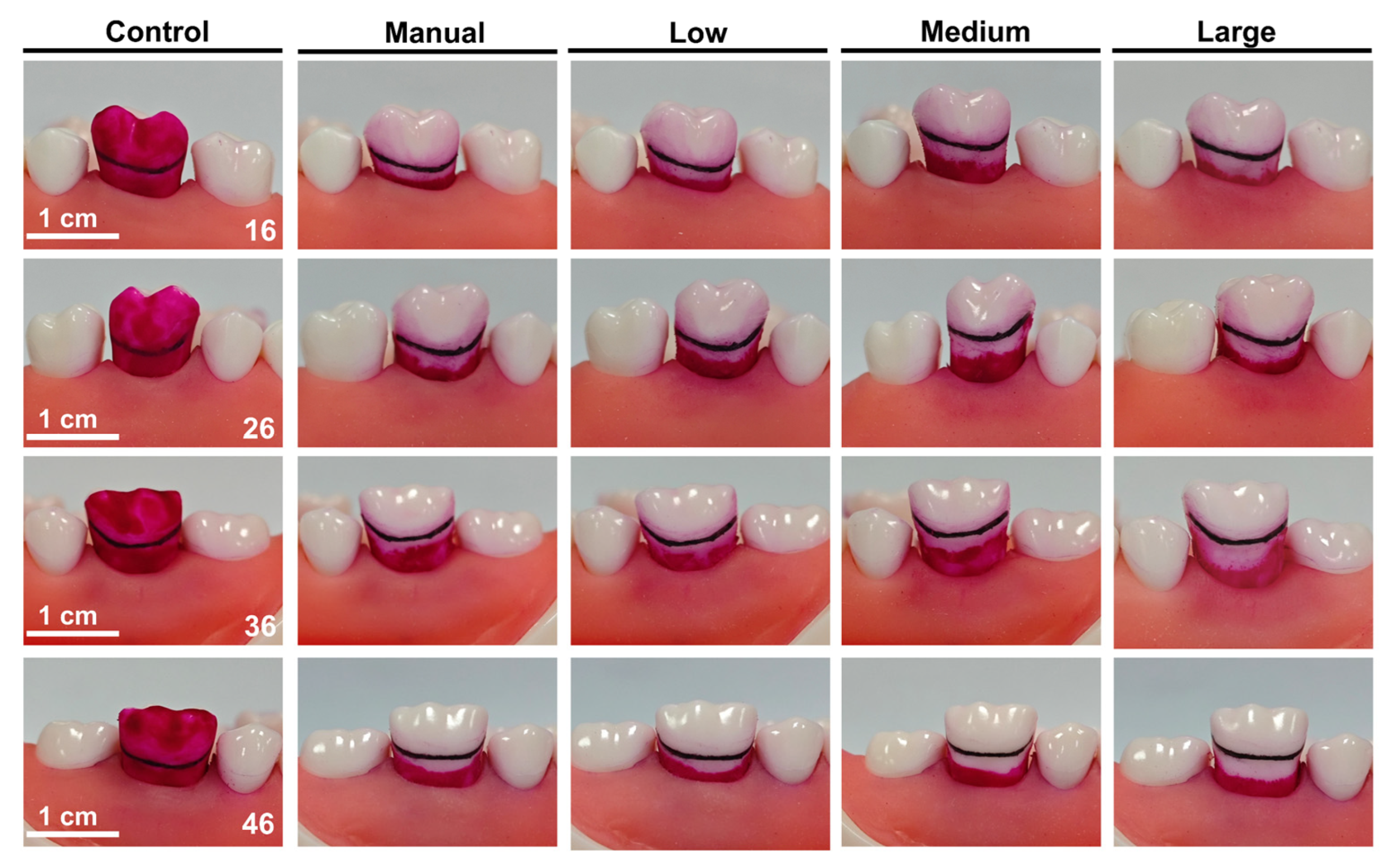
The evaluation of the wave electric toothbrush’s cleaning efficacy was conducted by simulating the daily toothbrushing process and brushing the entire oral model. The buccal surface and gingival sulcus of the upper right first molar (16), upper left first molar (26), lower left first molar (36), and lower right first molar (46) were selected as the areas for plaque cleaning efficacy testing. The boundary between the buccal surface and gingival sulcus was marked in black to facilitate observation and calculation. The plaque-covered areas on the buccal surfaces of teeth 16, 26, 36, and 46 were 62.45, 61.08, 69.94, and 70.09 mm2, respectively. The area beneath the gingival margin up to 3 mm was defined as the gingival sulcus region, with gingival sulcus areas on teeth 16, 26, 36, and 46 measuring 24.88, 25.64, 27.48, and 27.60 mm2, respectively. The cleaning efficacy results of the wave electric toothbrush are shown in Figure 2 and Table 1.
In the evaluation of gingival sulcus plaque cleaning efficacy, significant differences were observed between the wave electric toothbrush with medium and high swing parameters and the manual Bass brushing group (p < 0.05). Compared to the manual group, low swing parameter group, and medium swing parameter group, the wave electric toothbrush with high swing parameters demonstrated the highest gingival sulcus plaque removal rate and maximum gingival sulcus cleaning depth. Both the manual group and the wave electric toothbrush group were able to completely remove plaque from the buccal surface. No significant differences were observed between the manual group and the low swing parameter group in terms of gingival sulcus cleaning efficacy (p > 0.05) and maximum gingival sulcus cleaning depth (p > 0.05). Similarly, no significant differences were found between the medium and high swing parameter groups in terms of gingival sulcus cleaning efficacy (p > 0.05) and maximum gingival sulcus cleaning depth (p > 0.05). Furthermore, the wave electric toothbrush with low swing parameters showed a significant difference in gingival sulcus cleaning area compared to the medium and high swing parameter groups (p < 0.05). In terms of maximum gingival sulcus cleaning depth, significant differences were observed between the low and high swing parameter groups (p < 0.05), but no significant difference was found between the low and medium swing parameter groups (p > 0.05).

3.2. Oral Bleeding Conditions

The occurrence of oral bleeding in SD rats under different working parameters of the wave electric toothbrush is shown in Table 2. During the 30-day experiment, no oral bleeding was observed in the control and manual groups. As the brush head swing parameters of the wave electric toothbrush increased, the number of bleeding episodes in the SD rats’ oral cavity rose from 0 in the low parameter group to 1.17 ± 1.1 in the medium parameter group, and 3.33 ± 2.8 in the high parameter group. Comparison of bleeding conditions between different brush head swing parameters showed significant differences between the low parameter group and the medium parameter group (p < 0.05), as well as between the low parameter group and the high parameter group (p < 0.001).
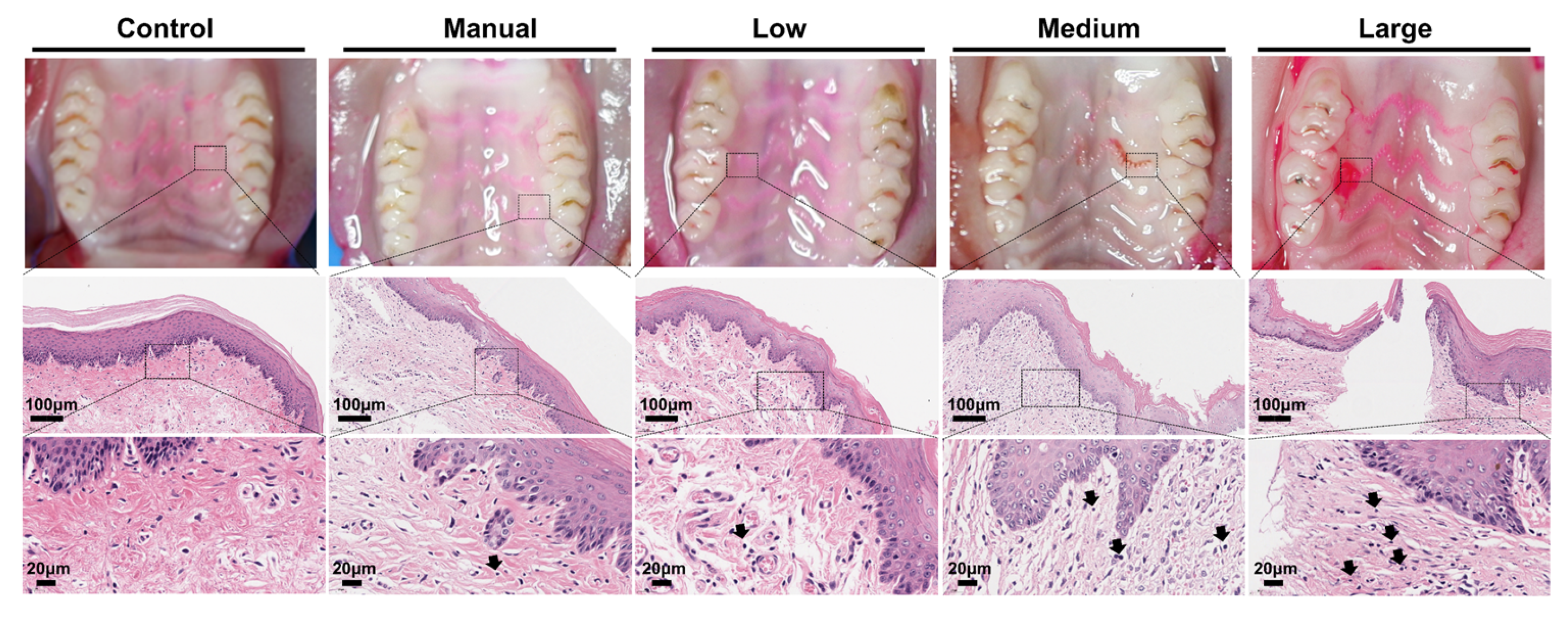
Furthermore, observations of the upper jaw in different groups of SD rats during tooth brushing (Figure 3) revealed that bleeding in the oral soft tissues primarily occurred at the palatal gingiva and within the oral vestibule.

3.3. H&E Staining

H&E staining revealed that in the unbrushed control group, the epithelial layer structure of the oral soft tissues was intact and well-organized, with uniform distribution of chromatin in the cell nuclei and no abnormal changes. No infiltration of inflammatory cells such as lymphocytes or neutrophils was observed in the connective tissue, and the tissue morphology appeared normal (Figure 3). In the manual brushing group, the epithelial layer of the soft tissues showed localized thinning, with slight disorganization of the cell arrangement. A small number of lymphocytes were present in the connective tissue, indicating mild soft tissue damage caused by manual brushing. Compared to the control and manual groups, the use of the wave electric toothbrush resulted in increased soft tissue damage as the swing parameters of the brush head were enhanced. After 30 days of continuous brushing with the low swing parameter wave electric toothbrush, there was a reduction in the number of upper epithelial layers, and the extent of inflammatory cell infiltration in the connective tissue increased, with the damage level being similar to that of the manual brushing group. The medium swing parameter group exhibited increased disruption of the epithelial layer structure, with further infiltration of inflammatory cells. In the high swing parameter group, large areas of epithelial layer loss were observed, directly exposing the underlying connective tissue. Inflammatory cell infiltration was dense, and fibroblast proliferation was also visible.

3.4. Immunohistochemical Analysis

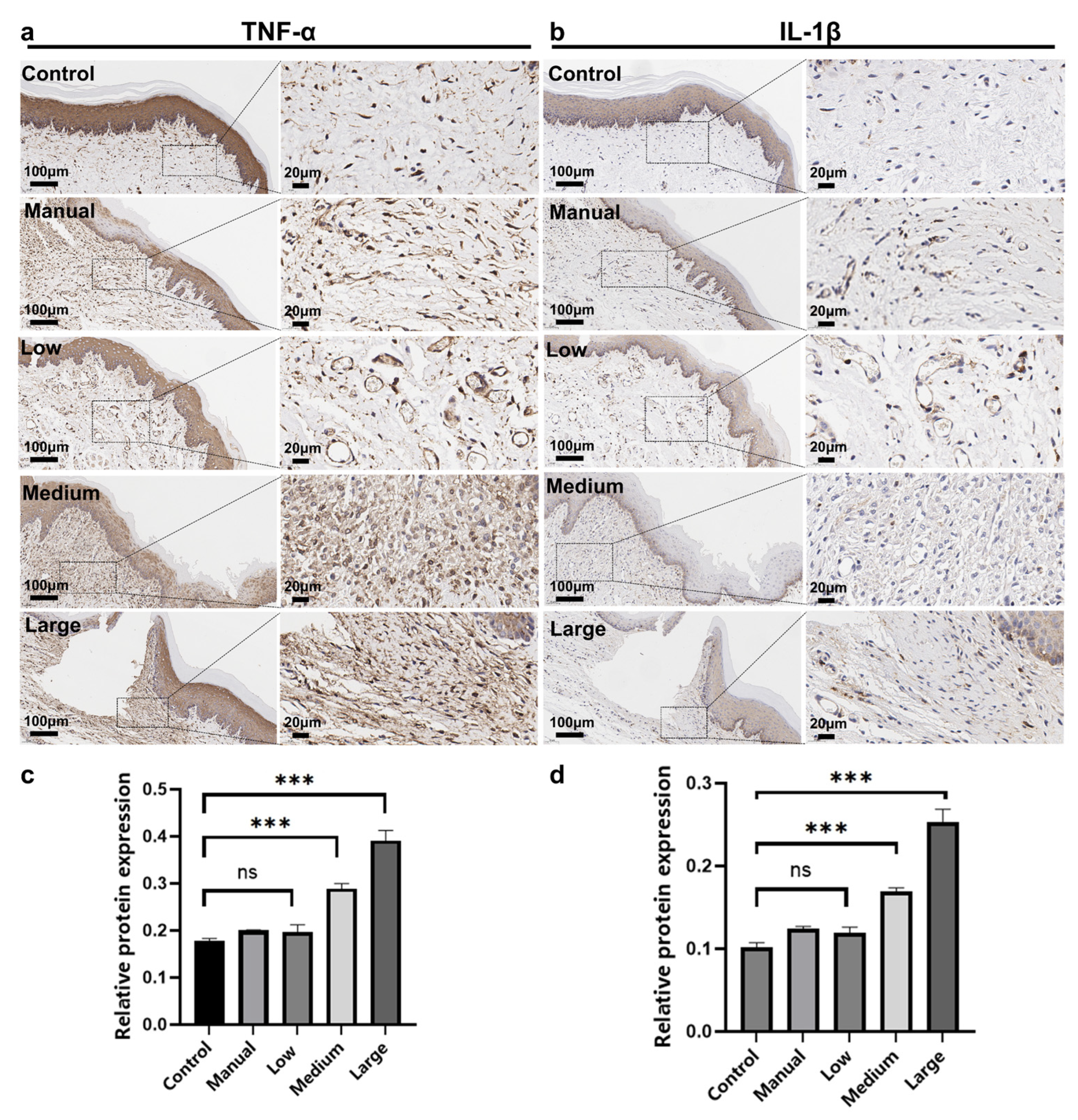
The immunohistochemical staining for TNF-α showed that in the control group, the oral soft tissue exhibited normal structure with very low baseline expression of TNF-α (Figure 4a). In the manual brushing group, stromal cells in the connective tissue displayed brown-yellow staining, and TNF-α expression in the low swing parameter group was similar to that in the manual brushing group. In the medium and high swing parameter groups, TNF-α positive signals were widely distributed in the connective tissue, with the highest TNF-α expression observed in the high swing parameter group after using the wave electric toothbrush. Quantitative analysis indicated that, compared with the control group, TNF-α expression levels increased significantly by 51.4% and 104.8% in the medium and high swing parameter groups, respectively (p < 0.001; Figure 4c). Regarding the expression of the key pro-inflammatory cytokine TNF-α in SD rat oral soft tissue cells, no significant differences were detected between the control, manual, and low swing parameter groups. However, significant differences were observed between the low swing parameter group and the medium swing parameter group (p < 0.001), as well as between the low swing parameter group and the high swing parameter group (p < 0.001). The immunohistochemical staining results for IL-1β (Figure 4b) were highly consistent with those for TNF-α. Specifically, IL-1β expression levels increased by 61.4% and 141.8% in the medium and high swing parameter groups, respectively, compared with the control group. These findings further suggest that stronger brush head swing parameters of the wave electric toothbrush are more likely to trigger an inflammatory response.

4. Discussion

The findings of this study provide valuable insights into the oral cleaning efficacy of the wave electric toothbrush under in vitro conditions, demonstrating its effective cleaning on both the gingival sulcus and the buccal surface of the teeth. The results indicate that the cleaning efficacy of the wave electric toothbrush with medium and high swing parameters differed significantly from that of manual brushing, particularly in the cleaning of the gingival sulcus. Therefore, the first null hypothesis was rejected.
The observed improvement in oral cleaning efficacy may be closely related to the brush head movement pattern of the wave electric toothbrush. We used the dental model to simulate the daily toothbrushing process, with the Bass technique serving as the positive control in this experiment [34,35]. This is because, among the various brushing methods developed, such as the Bass technique, rolling method, and horizontal brushing method, only the Bass technique is effective in cleaning plaque from the gingival sulcus [36,37]. More critically, if plaque in the gingival sulcus is not effectively removed over time, bacteria within the sulcus (such as Porphyromonas gingivalis, Tannerella forsythia, and Treponema denticola) and their metabolic toxins can stimulate the gingival tissue, leading to an inflammatory response, manifesting as redness, swelling, bleeding, and bad breath. If left untreated, this inflammation may spread deeper, progressing to irreversible periodontitis [38,39]. Additionally, it has been linked to various chronic human diseases, including inflammatory bowel disease, cancer, cardiovascular diseases, Alzheimer’s disease, diabetes, rheumatoid arthritis, and preterm birth [40]. Therefore, effective cleaning of the gingival sulcus during daily tooth brushing is crucial. However, correctly performing the Bass technique is difficult for most individuals, as manual brushing often involves improper execution of the Bass technique and inadequate brushing duration [41]. Therefore, the wave electric toothbrush simulates the Bass brushing technique by using a servo motor to control the high-frequency lateral oscillation of the brush head while strictly controlling the brushing time, thus achieving effective oral cleaning. During the brushing process, the brush head oscillates laterally, causing the bristles to move back and forth. As the brush moves across the boundary between the tooth surface and the gingival sulcus, the reciprocating bristles continuously enter the gingival sulcus and provide friction, thereby cleaning the sulcus.
The research results indicate that wave electric toothbrushes with different swing parameters are capable of completely removing plaque from the buccal surface, demonstrating their effective cleaning ability. Furthermore, for the more challenging gingival sulcus cleaning, the Bass technique can remove a portion of the plaque in the gingival sulcus through the bristles’ sweeping motion as they enter the sulcus [42]. The in vitro cleaning experiment showed that when the wave electric toothbrush operated with low swing parameters, the gingival sulcus cleaning efficacy and maximum gingival sulcus cleaning depth were comparable to those of the Bass technique. The results above indicate that the wave electric toothbrush, through the reciprocating oscillation of the bristles at the junction of the gingival sulcus and tooth surface, allows the bristles to enter the gingival sulcus and effectively clean the plaque within the sulcus. Moreover, as the swing parameters of the wave electric toothbrush increase, the gingival sulcus cleaning efficacy improves. With higher brush head swing parameters, the larger angle of oscillation allows the bristles to penetrate deeper into the gingival sulcus, with the reciprocating movement of the brush head causing the bristles to repeatedly rub against the sulcus. For example, at tooth position 16, it is evident that the maximum gingival sulcus cleaning depth increases from 1.39 ± 0.23 mm to 2.60 ± 0.36 mm as the swing parameters of the wave electric toothbrush progress from low to high. Therefore, the second null hypothesis is rejected. Furthermore, both preclinical and clinical studies have confirmed that the deposition and attachment of biofilm on the implant-prosthesis structure are the primary factors leading to the onset and persistence of peri-implant inflammation. Thus, the wave electric toothbrush, with its ability to deeply clean the gingival sulcus, will be used to help prevent peri-implant inflammation and contribute to the long-term success of implants [43,44].
Previous studies have shown that both electric toothbrushes and manual brushing may have an impact on soft tissues. During tooth brushing, the superficial keratinized layer of the gingival tissue may be removed, exposing the underlying connective tissue, leading to gingival abrasion. Additionally, soft tissue damage may be influenced by multiple factors, such as bristle hardness [45,46]. In terms of soft tissue safety, brushing the first to third molars in the upper molar region of SD rats using the wave electric toothbrush with different swing parameters resulted in varying levels of soft tissue bleeding. Therefore, the third null hypothesis is rejected. However, the number of oral bleeding episodes caused by the wave electric toothbrush in SD rats was relatively low and occurred only in cases with medium and high swing parameters. Over the 30-day brushing experiment, the number of bleeding episodes ranged from 1.2 ± 1.1 to 3.3 ± 2.8. The manual Bass technique involves inserting the bristles at a 45° angle into the gingival sulcus and performing horizontal vibrations at 1.4 times per second, while the wave electric toothbrush oscillates reciprocally at high frequencies of approximately 2.2 times per second for low swing parameters (brush head swing angle: 9°), 2.4 times per second for medium swing parameters (brush head swing angle: 14°), and 3.2 times per second for high swing parameters (brush head swing angle: 22°). Therefore, the bristles of the wave electric toothbrush head are more likely and more frequently to come into contact with the soft tissues around the buccal and lingual-palatal regions of the teeth, thereby scraping the epithelial cells. Moreover, the oral mucosal epithelium is thin, and the connective tissue attachment at the gingival margin and gingival sulcus is loose, making it more prone to being lifted or detached by external forces [47]. As such, under low swing parameters, frequent brushing does not cause severe soft tissue damage. In contrast, larger oscillations of the brush head increase the contact area between the bristles and soft tissues, making it more likely to cause damage, particularly in areas like the vestibular sulcus in SD rats. In addition, the anatomical map of the SD rats’ oral cavity confirmed that significant bleeding sites were observed in the oral vestibule and palatal gingiva. These findings suggest that larger oscillations of the wave electric toothbrush brush head increase the likelihood of soft tissue damage and bleeding in the oral cavity of SD rats.
By observing the structure and cell morphology of oral soft tissues, the balance between the mechanical forces exerted during tooth brushing with the wave electric toothbrush and the soft tissue tolerance was analyzed. Soft tissue cells from areas of the SD rat oral cavity most susceptible to bristle friction were selected for H&E staining. The results showed that brushing with different techniques induced varying changes in the oral soft tissue structure of the SD rats. Moreover, the degree of tissue damage caused by the wave electric toothbrush with different swing parameters varied. Similarly to the results of manual Bass brushing, the wave electric toothbrush with low swing parameters caused localized thinning of the epithelium, with a few epithelial cells showing vacuolar degeneration and a small number of inflammatory cells. However, as the swing parameters of the wave electric toothbrush increased, the extent of epithelial damage progressed from small areas of erosion and collagen fiber rupture, with an increase in inflammatory cells, to a state where full-thickness epithelial rupture occurred, exposing the underlying connective tissue. This resulted in epithelial cell damage, disordered cell arrangement, and an increased density of inflammatory cell infiltration. And these results are consistent with previous studies, which suggest that moderate mechanical stimulation can promote the secretion of anti-inflammatory factors, while excessive mechanical stimulation may lead to soft tissue inflammation [48]. Therefore, after epithelial layer damage, exposure of the basement membrane triggers the activation of local immune cells, leading to the release of inflammatory cytokines and initiating an inflammatory response [49]. The mechanical friction generated by the bristles of the wave electric toothbrush during high-frequency oscillation induces external damage signals to the oral soft tissue cells in rats, such as epithelial cells, fibroblasts, and macrophages. These cells activate the inflammatory factor secretion through their stress response system [50]. Among them, the NF-κB pathway is one of the core pathways regulating the gene expression of inflammatory factors. It is activated by the mechanical stimulation from the brush head, triggering the expression of TNF-α and IL-1β [51,52]. Additionally, the expression levels of TNF-α and IL-1β serve as direct quantitative indicators of the intensity of the inflammatory response [53]. Therefore, during the toothbrushing process, the high-frequency oscillation of the bristles driven by the brush head causes damage to the oral soft tissue cells in SD rats, leading to an inflammatory response. And the degree of tissue and cell damage, as well as the intensity of the inflammatory response, are highly correlated with the swing parameters of the wave electric toothbrush.
Overall, the results of this study indicate that the wave electric toothbrush offers effective oral cleaning, particularly in the cleaning of the gingival sulcus. Specifically, the wave electric toothbrush demonstrated comprehensive cleaning of buccal surface plaque on a human oral model across low, medium, and high swing parameters, with the cleaning range of gingival sulcus plaque increasing as the swing parameters were enhanced. Therefore, it presents a potential alternative to the manual Bass technique. Nevertheless, it is important to note that these results were obtained when the wave electric toothbrush was used by trained dental professionals following scientifically established methods. Therefore, before applying the experimental results obtained in this study to daily practice, it is essential to fully understand the usage methods and cleaning principles of the wave electric toothbrush. While this study systematically evaluated the subgingival plaque cleaning efficacy and safety of the wave electric toothbrush, several limitations should be acknowledged. First, the focus on periodontal health led to the adoption of the Bass technique, emphasizing sulcular cleaning; thus, its efficacy in caries prevention (e.g., on occlusal surfaces) was not thoroughly examined. Second, our findings are derived from healthy animal models and lack validation in human populations, particularly those with active periodontal disease. Third, the study assessed a limited set of parameters, without establishing comprehensive time-course or quantitative parameter-effect relationships. Finally, the research focused on histological outcomes and did not explore underlying cellular mechanisms (e.g., inflammatory signaling). However, as pointed out in recent research about conventional powered and experimental toothbrushes, the overall scarcity of clinical trials on this topic precludes definitive conclusions regarding the superiority of any specific toothbrush design over another [17,54]. To address these gaps, future research should: 1. conduct long-term clinical trials in diverse human populations to validate efficacy and establish guidelines; 2. perform systematic parameter-optimization studies to define the quantitative relationships between key brushing parameters and clinical outcomes; 3. utilize molecular techniques to elucidate cellular mechanisms; and 4. evaluate the brush’s effectiveness from a cariology perspective to provide a comprehensive public health assessment. 5. conduct clinical trials comparing the wave electric toothbrush against leading powered toothbrush technologies to establish its relative efficacy and safety in human populations.

5. Conclusions

This study evaluated the subgingival cleaning efficacy and oral soft tissue safety of the wave electric toothbrush through in vitro and in vivo experiments. The results demonstrated that the wave electric toothbrush provides effective subgingival cleaning, with its efficacy improving as the swing parameters of the brush head increase. Furthermore, oral soft tissue safety was closely associated with the swing parameters of the toothbrush, where higher parameters correlated with an increased risk of soft tissue damage.

Author Contributions

Writing—original draft preparation, methodology, software, formal analysis, S.H.; conceptualization, methodology, supervision, W.D. and J.W.; methodology, investigation, Y.L. and W.K.; supervision, funding acquisition, X.Z.; resources, funding acquisition, writing—review and editing, project administration, D.Y. All authors have read and agreed to the published version of the manuscript.

Funding

The research was funded by the Natural Science Foundation of Guangdong Province (2024A1515012918); the National Natural Science Foundation of China (82373255); National Natural Science Foundation of China (82303713).

Institutional Review Board Statement

The animal study protocol was approved by the Animal Ethics Committee of Sun Yat-sen University, adhering to the principles of animal protection, welfare, and ethics. The ethics approval number is SYSU-IACUC-2024-001264; the approval date is 2 April 2024.

Informed Consent Statement

Not applicable.

Data Availability Statement

Available under request to the corresponding author.

Conflicts of Interest

The authors declare no conflicts of interest.

References

  1. Jain, N.; Dutt, U.; Radenkov, I.; Jain, S. WHO’s global oral health status report 2022: Actions, discussion and implementation. Oral Dis. 2024, 30, 73–79. [Google Scholar] [CrossRef]
  2. Lamont, R.J.; Koo, H.; Hajishengallis, G. The oral microbiota: Dynamic communities and host interactions. Nat. Rev. Microbiol. 2018, 16, 745–759. [Google Scholar] [CrossRef]
  3. Ng, T.C.; Luo, B.W.; Lam, W.Y.; Baysan, A.; Chu, C.H.; Yu, O.Y. Updates on Caries Risk Assessment-A Literature Review. Dent. J. 2024, 12, 312. [Google Scholar] [CrossRef]
  4. Weng, L.; Wen, J.; Cui, G.; Liang, J.; Pang, L.; Lin, H. Comparison of modified bass, rolling, and current toothbrushing techniques for the efficacy of plaque control—A randomized trial. J. Dent. 2023, 135, 104571. [Google Scholar] [CrossRef]
  5. Bass, C.C. An effective method of personal oral hygiene. J. La. State Med. Soc. 1954, 106, 57–73. [Google Scholar]
  6. Erbe, C.; Jacobs, C.; Klukowska, M.; Timm, H.; Grender, J.; Wehrbein, H. A randomized clinical trial to evaluate the plaque removal efficacy of an oscillating-rotating toothbrush versus a sonic toothbrush in orthodontic patients using digital imaging analysis of the anterior dentition. Angle Orthod. 2019, 89, 385–390. [Google Scholar] [CrossRef]
  7. Kumar, S.; Gopalkrishna, P.; Syed, A.K.; Sathiyabalan, A. The Impact of Toothbrushing on Oral Health, Gingival Recession, and Tooth Wear-A Narrative Review. Healthcare 2025, 13, 1138. [Google Scholar] [CrossRef]
  8. Dağdeviren, F.; Van der Weijden, G.A.F.; Zijlstra, C.P.L.; Slot, D.E. The Effectiveness of Power Versus Manual Toothbrushes on Plaque Removal and Gingival Health in Children-A Systematic Review and Meta-Analysis. Int. J. Dent. Hyg. 2025, 23, 682–702. [Google Scholar] [CrossRef] [PubMed]
  9. Rosema, N.A.; Adam, R.; Grender, J.M.; Van der Sluijs, E.; Supranoto, S.C.; Van der Weijden, G.A. Gingival abrasion and recession in manual and oscillating-rotating power brush users. Int. J. Dent. Hyg. 2014, 12, 257–266. [Google Scholar] [CrossRef] [PubMed]
  10. Lewis, R.D.; Kanagasingam, S.; Cook, N.; Krysmann, M.; Taylor, K.; Pisani, F. The Effect of Different Electric Toothbrush Technologies on Interdental Plaque Removal: A Systematic Review with a Meta-Analysis. Healthcare 2024, 12, 1035. [Google Scholar] [CrossRef] [PubMed]
  11. Pitchika, V.; Pink, C.; Völzke, H.; Welk, A.; Kocher, T.; Holtfreter, B. Long-term impact of powered toothbrush on oral health: 11-year cohort study. J. Clin. Periodontol. 2019, 46, 713–722. [Google Scholar] [CrossRef]
  12. Busscher, H.J.; Jager, D.; Finger, G.; Schaefer, N.; van der Mei, H.C. Energy transfer, volumetric expansion, and removal of oral biofilms by non-contact brushing. Eur. J. Oral Sci. 2010, 118, 177–182. [Google Scholar] [CrossRef]
  13. Flyborg, J.; Renvert, S.; Anderberg, P.; Larsson, T.; Sanmartin-Berglund, J. Results of objective brushing data recorded from a powered toothbrush used by elderly individuals with mild cognitive impairment related to values for oral health. Clin. Oral Investig. 2023, 28, 8. [Google Scholar] [CrossRef]
  14. Al Makhmari, S.A.; Kaklamanos, E.G.; Athanasiou, A.E. Short-term and long-term effectiveness of powered toothbrushes in promoting periodontal health during orthodontic treatment: A systematic review and meta-analysis. Am. J. Orthod. Dentofac. Orthop. 2017, 152, 753–766.e7. [Google Scholar] [CrossRef]
  15. Flyborg, J.; Renvert, S.; Sanmartin Berglund, J.; Anderberg, P. Use of a powered toothbrush to improve oral health in individuals with mild cognitive impairment. Gerodontology 2023, 40, 74–82. [Google Scholar] [CrossRef] [PubMed]
  16. Rominger, R.L.; Patcas, R.; Hamza, B.; Schätzle, M.; Wegehaupt, F.J.; Hersberger-Zurfluh, M.A. Cleaning performance of electric toothbrushes around brackets applying different brushing forces: An in-vitro study. Sci. Rep. 2024, 14, 5921. [Google Scholar] [CrossRef] [PubMed]
  17. Preda, C.; Butera, A.; Pelle, S.; Pautasso, E.; Chiesa, A.; Esposito, F.; Oldoini, G.; Scribante, A.; Genovesi, A.M.; Cosola, S. The Efficacy of Powered Oscillating Heads vs. Powered Sonic Action Heads Toothbrushes to Maintain Periodontal and Peri-Implant Health: A Narrative Review. Int. J. Environ. Res. Public Health 2021, 18, 1468. [Google Scholar] [CrossRef] [PubMed]
  18. Ng, C.; Tsoi, J.K.H.; Lo, E.C.M.; Matinlinna, A.J.P. Safety and Design Aspects of Powered Toothbrush-A Narrative Review. Dent. J. 2020, 8, 15. [Google Scholar] [CrossRef]
  19. Schmidt, J.C.; Zaugg, C.; Weiger, R.; Walter, C. Brushing without brushing?—A review of the efficacy of powered toothbrushes in noncontact biofilm removal. Clin. Oral Investig. 2013, 17, 687–709. [Google Scholar] [CrossRef]
  20. Sreenivasan, P.K.; Prasad, K.V.V. Distribution of dental plaque and gingivitis within the dental arches. J. Int. Med. Res. 2017, 45, 1585–1596. [Google Scholar] [CrossRef]
  21. Wolfram, K.; Egelberg, J.; Hornbuckle, C.; Oliver, R.; Rathbun, E. Effect of tooth cleaning procedures on gingival sulcus depth. J. Periodontal Res. 1974, 9, 44–49. [Google Scholar] [CrossRef] [PubMed]
  22. Chapple, I.L.; Van der Weijden, F.; Doerfer, C.; Herrera, D.; Shapira, L.; Polak, D.; Madianos, P.; Louropoulou, A.; Machtei, E.; Donos, N.; et al. Primary prevention of periodontitis: Managing gingivitis. J. Clin. Periodontol. 2015, 42, S71–S76. [Google Scholar] [CrossRef] [PubMed]
  23. Lasance, F.A.; Gubler, A.; Attin, T.; Wegehaupt, F.J. Interplay Between the In-Vitro Cleaning Performance and Wear of Manual Toothbrushes in Fixed Orthodontic Appliances. Oral Health Prev. Dent. 2024, 22, 681–688. [Google Scholar] [CrossRef]
  24. Ohsumi, T.; Takenaka, S.; Sakaue, Y.; Suzuki, Y.; Nagata, R.; Hasegawa, T.; Ohshima, H.; Terao, Y.; Noiri, Y. Adjunct use of mouth rinses with a sonic toothbrush accelerates the detachment of a Streptococcus mutans biofilm: An in vitro study. BMC Oral Health 2020, 20, 161. [Google Scholar] [CrossRef]
  25. O’Neill, C.; Kreplak, L.; Rueggeberg, F.A.; Labrie, D.; Shimokawa, C.A.K.; Price, R.B. Effect of tooth brushing on gloss retention and surface roughness of five bulk-fill resin composites. J. Esthet. Restor. Dent. 2018, 30, 59–69. [Google Scholar] [CrossRef]
  26. Lang, T.; Staufer, S.; Jennes, B.; Gaengler, P. Clinical validation of robot simulation of toothbrushing--comparative plaque removal efficacy. BMC Oral Health 2014, 14, 82. [Google Scholar] [CrossRef]
  27. Axe, A.; Mueller, W.D.; Rafferty, H.; Lang, T.; Gaengler, P. Impact of manual toothbrush design on plaque removal efficacy. BMC Oral Health 2023, 23, 796. [Google Scholar] [CrossRef]
  28. Lee, J.; Park, H.M.; Kim, Y.W. Comparative Analysis of Plaque Removal and Wear between Electric–Mechanical and Bioelectric Toothbrushes. Bioengineering 2024, 11, 474. [Google Scholar] [CrossRef]
  29. Liu, C.; Shang, X.; Wang, J.; Zhao, S. Effects of soil acidification on humus, electric charge, and bacterial community diversity. Environ. Monit. Assess. 2024, 196, 1116. [Google Scholar] [CrossRef] [PubMed]
  30. Obukavitha, D.; Geetha Priya, P.R.; Asokan, S.; Yogesh Kumar, T.D. Effectiveness of Plaque Removal Using Different Toothbrushes in Children—A Comparative Study. Indian J. Dent. Res. 2024, 35, 65–69. [Google Scholar] [CrossRef]
  31. Yan, Y.; Liu, T.; Tian, X.; Liu, J.; Chen, Q.; Zhao, H. A double-layer thin oral film for wet oral mucosa adhesion and efficient treatment of oral ulcers. J. Mater. Chem. B 2024, 12, 3015–3021. [Google Scholar] [CrossRef]
  32. Xu, J.; Zhao, X.; Zeng, J.; Yu, J.-H.; Guan, S.; Xu, X.-M.; Mei, L. Role of autophagy in the periodontal ligament reconstruction during orthodontic tooth movement in rats. J. Dent. Sci. 2020, 15, 351–363. [Google Scholar] [CrossRef]
  33. Yang, P.; Li, Y.; Qian, K.; Zhou, L.; Cheng, Y.; Wu, J.; Xu, M.; Wang, T.; Yang, X.; Mu, Y.; et al. Precise Modulation of Pericyte Dysfunction by a Multifunctional Nanoprodrug to Ameliorate Alzheimer’s Disease. ACS Nano 2024, 18, 14348–14366. [Google Scholar] [CrossRef]
  34. Tadakamadla, S.K.; Rathore, V.; Mitchell, A.E.; Johnson, N.; Morawska, A. Protocol of a cluster randomised controlled trial evaluating the effectiveness of an online parenting intervention for promoting oral health of 2–6 years old Australian children. BMJ Open 2022, 12, e056269. [Google Scholar] [CrossRef]
  35. Labib, M.E.; Perazzo, A.; Manganaro, J.; Tabani, Y.; Milleman, K.R.; Milleman, J.L.; Walsh, L.J. Clinical Assessment of Plaque Removal Using a Novel Dentifrice Containing Cellulose Microfibrils. Dent. J. 2023, 12, 7. [Google Scholar] [CrossRef]
  36. Kamer, A.R.; Pushalkar, S.; Gulivindala, D.; Butler, T.; Li, Y.; Annam, K.R.C.; Glodzik, L.; Ballman, K.V.; Corby, P.M.; Blennow, K.; et al. Periodontal dysbiosis associates with reduced CSF Aβ42 in cognitively normal elderly. Alzheimer’s Dement. 2021, 13, e12172. [Google Scholar] [CrossRef] [PubMed]
  37. Matsha, T.E.; Prince, Y.; Davids, S.; Chikte, U.; Erasmus, R.T.; Kengne, A.P.; Davison, G.M. Oral Microbiome Signatures in Diabetes Mellitus and Periodontal Disease. J. Dent. Res. 2020, 99, 658–665. [Google Scholar] [CrossRef]
  38. Rajasekaran, J.J.; Krishnamurthy, H.K.; Bosco, J.; Jayaraman, V.; Krishna, K.; Wang, T.; Bei, K. Oral Microbiome: A Review of Its Impact on Oral and Systemic Health. Microorganisms 2024, 12, 1797. [Google Scholar] [CrossRef] [PubMed]
  39. Kilian, M.; Chapple, I.L.; Hannig, M.; Marsh, P.D.; Meuric, V.; Pedersen, A.M.; Tonetti, M.S.; Wade, W.G.; Zaura, E. The oral microbiome—An update for oral healthcare professionals. Br. Dent. J. 2016, 221, 657–666. [Google Scholar] [CrossRef] [PubMed]
  40. Read, E.; Curtis, M.A.; Neves, J.F. The role of oral bacteria in inflammatory bowel disease. Nat. Rev. Gastroenterol. Hepatol. 2021, 18, 731–742. [Google Scholar] [CrossRef]
  41. Jongsma, M.A.; van de Lagemaat, M.; Busscher, H.J.; Geertsema-Doornbusch, G.I.; Atema-Smit, J.; van der Mei, H.C.; Ren, Y. Synergy of brushing mode and antibacterial use on in vivo biofilm formation. J. Dent. 2015, 43, 1580–1586. [Google Scholar] [CrossRef]
  42. Jakubovics, N.S.; Goodman, S.D.; Mashburn-Warren, L.; Stafford, G.P.; Cieplik, F. The dental plaque biofilm matrix. Periodontology 2021, 86, 32–56. [Google Scholar] [CrossRef]
  43. Montevecchi, M.; Valeriani, L.; Bellanova, L.; Stefanini, M.; Zucchelli, G. In-vitro comparison of two different toothbrush bristles about peri-implant sulcus penetration. Int. J. Dent. Hyg. 2024, 22, 465–470. [Google Scholar] [CrossRef] [PubMed]
  44. Derks, J.; Tomasi, C. Peri-implant health and disease. A systematic review of current epidemiology. J. Clin. Periodontol. 2015, 42, S158–S171. [Google Scholar] [CrossRef] [PubMed]
  45. Gürbüz, S.; Çankaya, Z.T.; Cinal, E.; Koçyiğit, E.G.; Bodur, A. Effects of interactive power toothbrush with or without application assistance on the plaque, gingivitis, and gingival abrasion among dental students: A randomized controlled clinical trial. Clin. Oral Investig. 2022, 26, 5931–5941. [Google Scholar] [CrossRef]
  46. Ranzan, N.; Muniz, F.; Rösing, C.K. Are bristle stiffness and bristle end-shape related to adverse effects on soft tissues during toothbrushing? A systematic review. Int. Dent. J. 2019, 69, 171–182. [Google Scholar] [CrossRef]
  47. Bosshardt, D.D.; Lang, N.P. The junctional epithelium: From health to disease. J. Dent. Res. 2005, 84, 9–20. [Google Scholar] [CrossRef] [PubMed]
  48. Nakai, K.; Tanaka, H.; Fukuzawa, K.; Nakajima, J.; Ozaki, M.; Kato, N.; Kawato, T. Effects of Electric-Toothbrush Vibrations on the Expression of Collagen and Non-Collagen Proteins through the Focal Adhesion Kinase Signaling Pathway in Gingival Fibroblasts. Biomolecules 2022, 12, 771. [Google Scholar] [CrossRef]
  49. Walsh, S.A.; Davis, T.A. Key early proinflammatory signaling molecules encapsulated within circulating exosomes following traumatic injury. J. Inflamm. 2022, 19, 6. [Google Scholar] [CrossRef]
  50. Medzhitov, R. The spectrum of inflammatory responses. Science 2021, 374, 1070–1075. [Google Scholar] [CrossRef]
  51. Zhu, J.; Jiang, L.; Liu, Y.; Qian, W.; Liu, J.; Zhou, J.; Gao, R.; Xiao, H.; Wang, J. MAPK and NF-κB Pathways Are Involved in Bisphenol A-Induced TNF-α and IL-6 Production in BV2 Microglial Cells. Inflammation 2015, 38, 637–648. [Google Scholar] [CrossRef]
  52. Liu, Y.; Bao, L.; Xuan, L.; Song, B.; Lin, L.; Han, H. Chebulagic acid inhibits the LPS-induced expression of TNF-α and IL-1β in endothelial cells by suppressing MAPK activation. Exp. Ther. Med. 2015, 10, 263–268. [Google Scholar] [CrossRef] [PubMed]
  53. Dong, F.; Xue, C.; Wang, Y.; Peng, Y.; Zhang, Y.; Jin, M.; Zang, B. Hydroxysafflor yellow A attenuates the expression of inflammatory cytokines in acute soft tissue injury. Sci. Rep. 2017, 7, 40584. [Google Scholar] [CrossRef] [PubMed]
  54. Li, C.; Xue, L.F.; Xu, Y.X.; Yue, J.; Zhao, J.Z.; Xiao, W.L. Periodontal health and oral hygiene of children with orofacial clefts in Eastern China. J. Clin. Pediatr. Dent. 2024, 48, 86–94. [Google Scholar] [CrossRef] [PubMed]
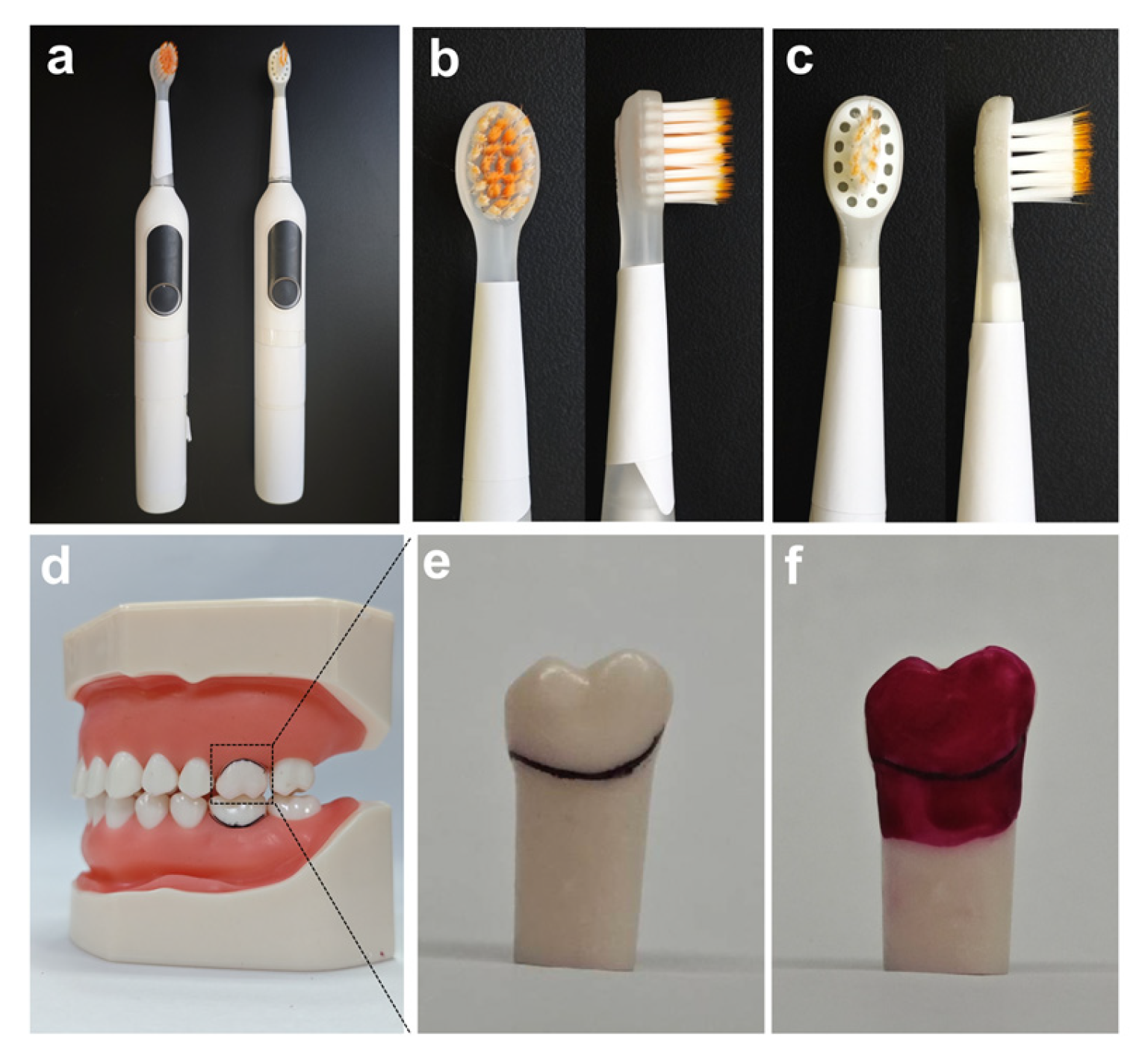
Figure 1. (a) Photo of the wave electric toothbrush. (b) Brush head used for the in vitro experiment. (c) Brush head used for the in vivo experiment. (d) In vitro oral cleaning model. (e) Experimental test tooth. (f) Experimental test tooth coated with simulated plaque on the buccal surface and gingival sulcus area.
Dentistry 14 00029 g001
Figure 2. In vitro cleaning experiment images showing plaque removal from different tooth positions.
Dentistry 14 00029 g002
Figure 3. Photographs of the oral upper jaw of rats and H&E staining of rat oral soft tissues (magnification 20× and 60×, black arrows indicating lymphocytes).
Dentistry 14 00029 g003
Figure 4. The images of immunohistochemical staining of (a) TNF-α, and (b) IL-1β. The quantitative analysis of (c) TNF-α, and (d) IL-1β. Data were presented as mean ± SD, and significant differences were determined by one-way ANOVA followed by Tukey’s HSD post hoc test. (n = 7, *** p < 0.001, ns: no significance).
Dentistry 14 00029 g004
Table 1. Mean values and standard deviations of buccal surface cleaning rate (BSCR), gingival sulcus cleaning rate (GSCR), and maximum gingival sulcus cleaning depth (MGSCD) for different tooth positions (TP) obtained from the in vitro cleaning experiment.
GroupTPBSCR (%)GSCR (%)MGSCD (mm)
Control (n = 6)16000
26000
36000
46000
Manual (n = 6)1610044.1 ± 1.91.32 ± 0.14
2610028.7 ± 3.51.39 ± 0.07
3610038.2 ± 7.71.62 ± 0.47
4610042.6 ± 2.21.31 ± 0.36
Low (n = 6)1610043.4 ± 21.39 ± 0.23
2610028.6 ± 3.71.55 ± 0.31
3610038.1 ± 1.11.85 ± 0.76
4610035.7 ± 1.71.50 ± 0.29
Medium (n = 6)1610058.8 ± 6.71.87 ± 0.29
2610049.1 ± 1.32.00 ± 0.08
3610052.4 ± 7.52.30 ± 0.10
4610052.7 ± 5.32.02 ± 0.52
Large (n = 6)1610068 ± 15.12.60 ± 0.36
2610054.7 ± 0.42.76 ± 0.25
3610062.5 ± 11.52.28 ± 0.22
4610055.7 ± 9.72.13 ± 0.13
Table 2. Number of soft tissue bleeding episodes during toothbrushing in SD rats.
GroupControlManualLowMediumLarge
Bleeding Frequency0001.2 ± 1.13.3 ± 2.8
Disclaimer/Publisher’s Note: The statements, opinions and data contained in all publications are solely those of the individual author(s) and contributor(s) and not of MDPI and/or the editor(s). MDPI and/or the editor(s) disclaim responsibility for any injury to people or property resulting from any ideas, methods, instructions or products referred to in the content.