Article

Analysis of Scintillation Effects on Free Space Optical Communication Links in South Africa


by
Olabamidele O. Kolawole
1,*,
Thomas J. O. Afullo
1 and
Modisa Mosalaosi
2
1
School of Electrical, Electronic, and Computer Engineering, University of KwaZulu-Natal, Durban 4001, South Africa
2
Department of Electrical, Computer and Telecommunication Engineering, Botswana International University of Science and Technology, Private Bag 16, Palapye 10071, Botswana
*
Author to whom correspondence should be addressed.
Photonics 2022, 9(7), 446; https://doi.org/10.3390/photonics9070446

Submission received: 31 December 2021 / Revised: 15 June 2022 / Accepted: 22 June 2022 / Published: 25 June 2022

Abstract

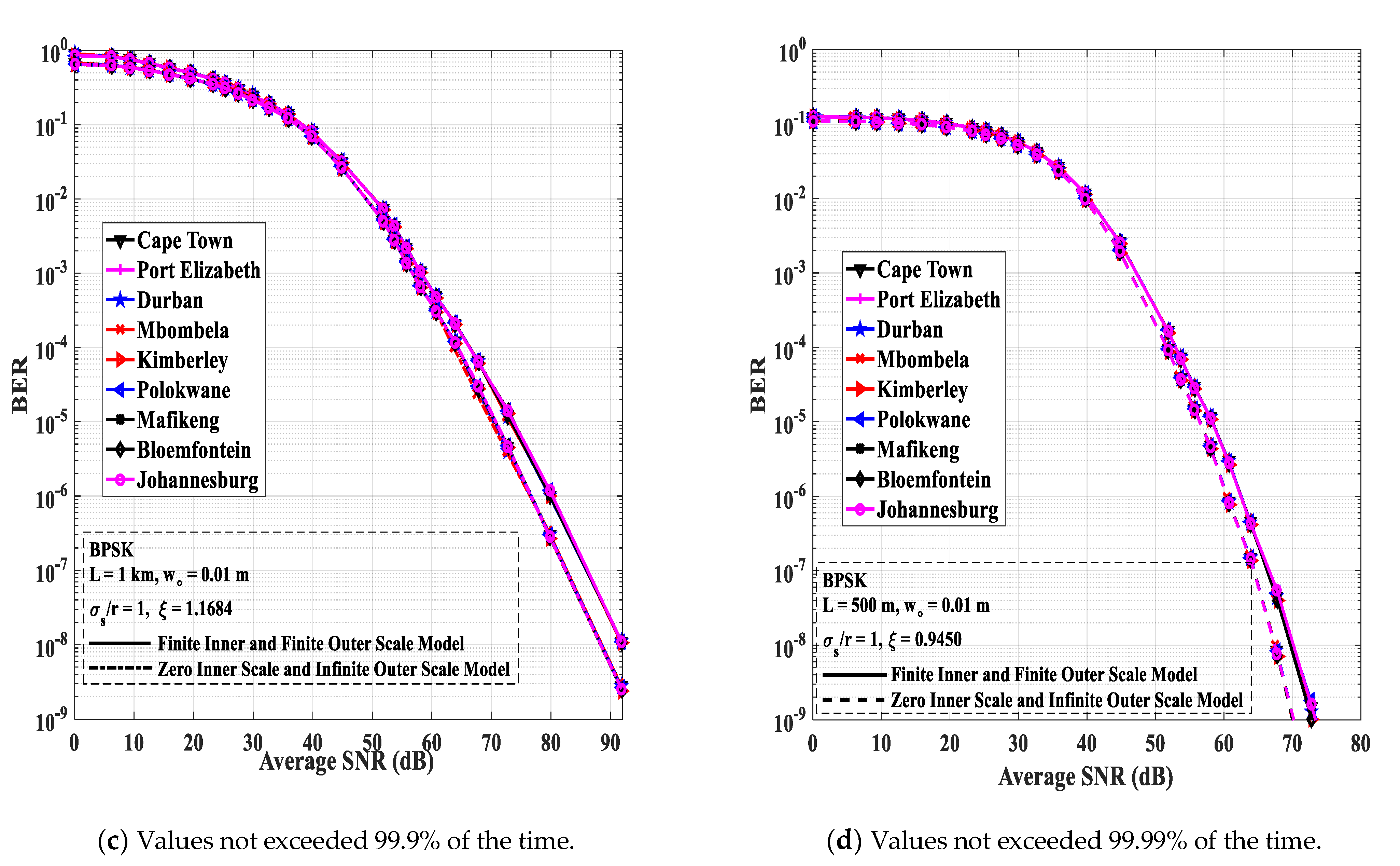
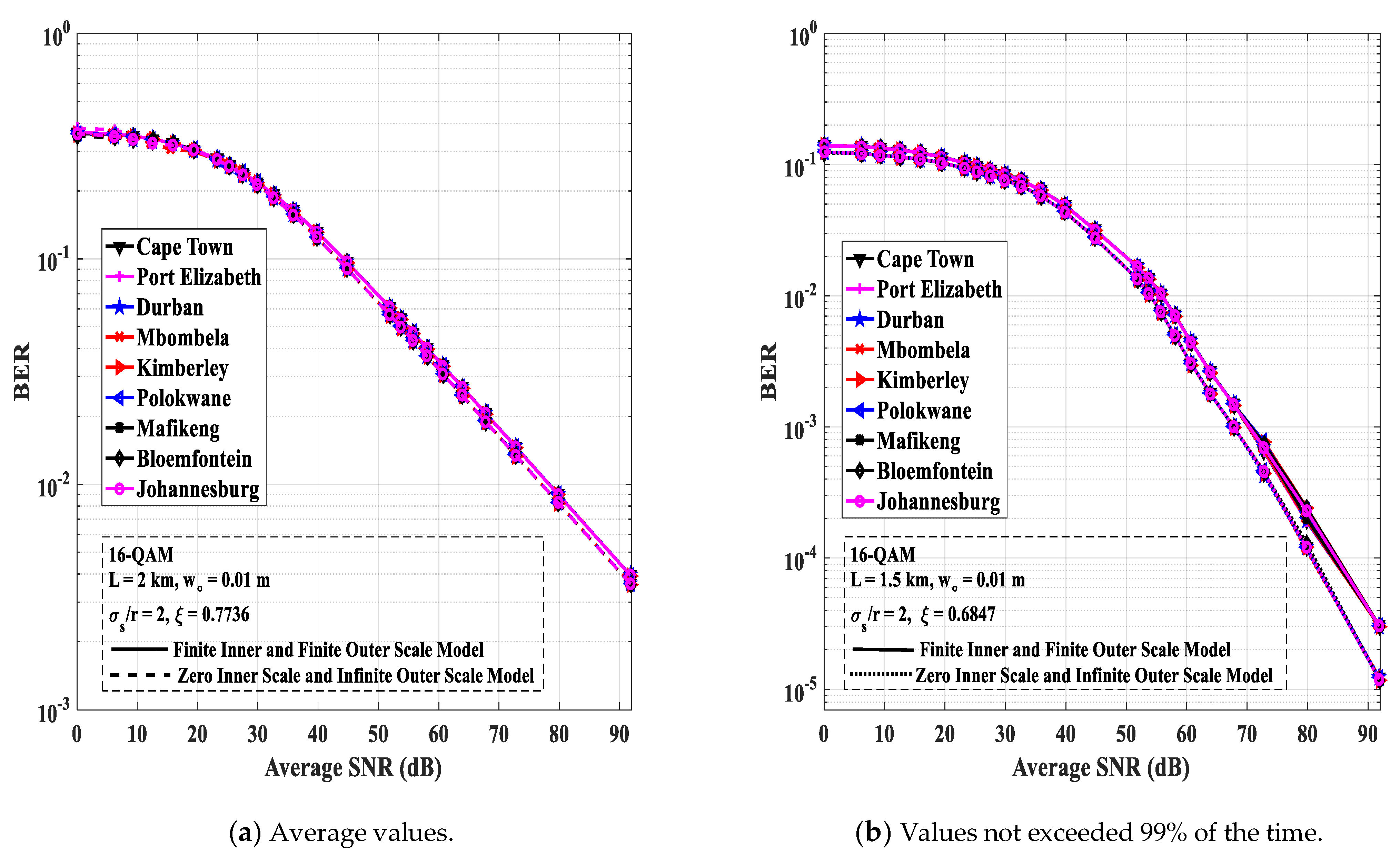
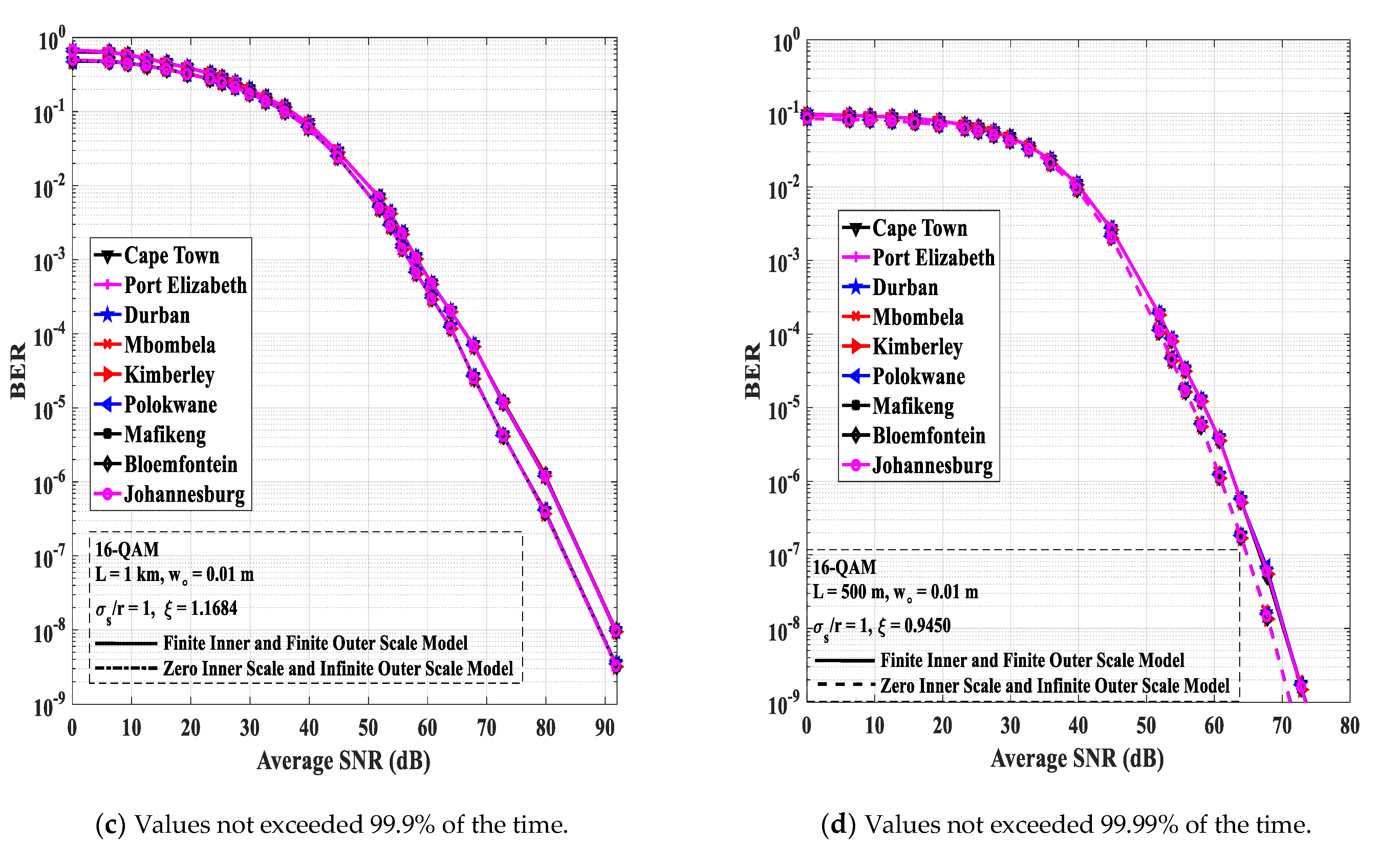
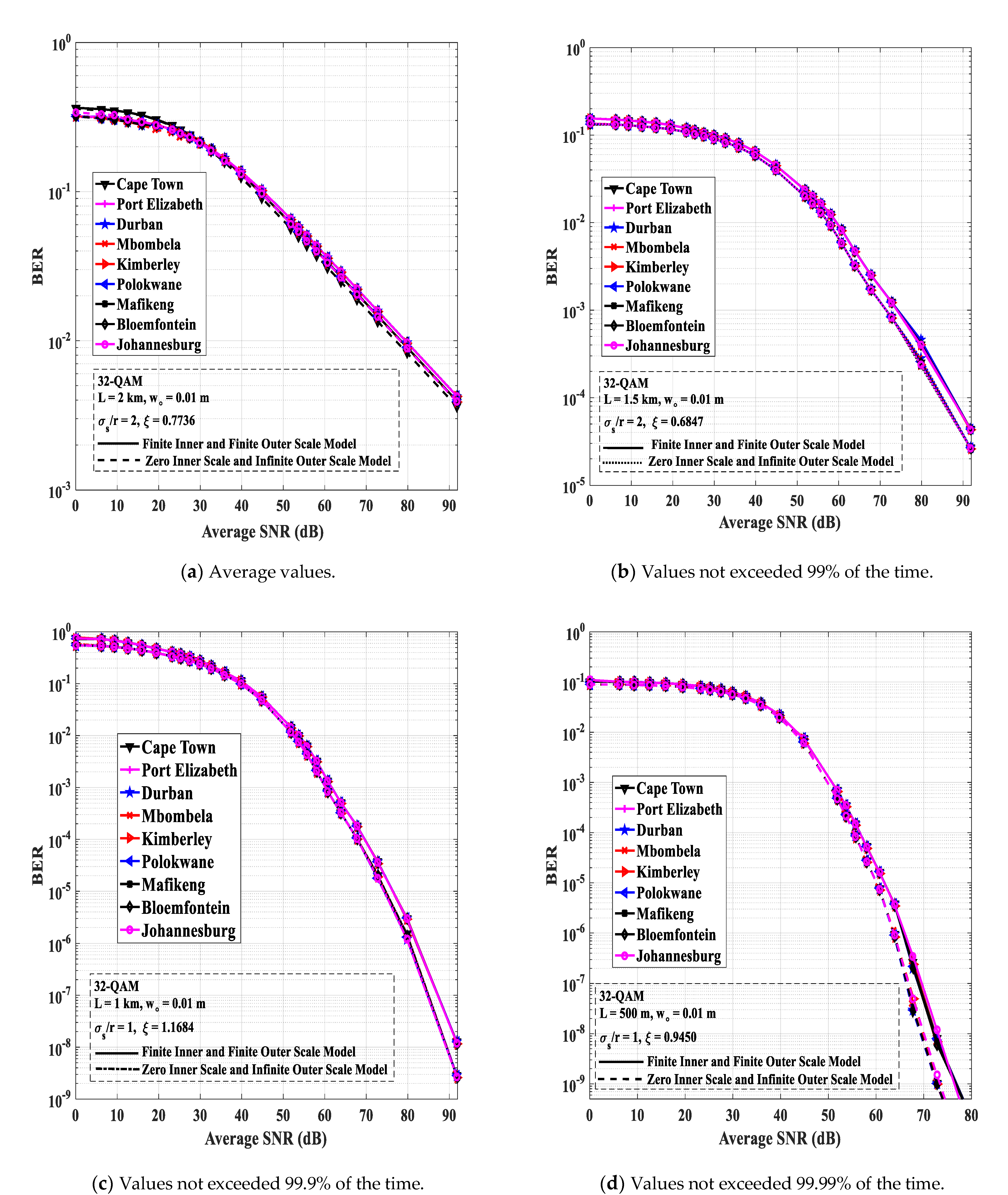
The performance of free space optical communication (FSOC) systems is severely degraded by certain atmospheric conditions prevalent in places where they are deployed, in spite of their numerous advantages. In clear weather conditions, the random fluctuation in the atmosphere’s refractive index causes substantial scintillation losses to transmitted optical signals. It is therefore imperative to estimate the potential losses due to atmospheric turbulence in locations where FSOC links are to be deployed. This will provide the necessary fade margin for FSOC systems so that designed links withstand such atmospheric disturbances. In this paper, statistical analysis of wind speed data collected for various cities of South Africa is used for calculating the corresponding refractive index structure parameter (Cn2). These Cn2 values, as well as the zero inner scale and infinite outer scale model and finite inner and finite outer scale model, are used in computing the scintillation indices not exceeding 50%, 99%, 99.9%, and 99.99% of the time for the investigated locations. The Lognormal and Gamma–gamma distribution models are then employed for the computational analysis of the irradiance fluctuations and channel characteristics while considering the effect of pointing errors for weak and moderate to strong turbulence regimes. Finally, derived mathematical expressions for outage probabilities and bit error rate (BER) performances for FSOC links, employing various intensity modulation and direct detection (IM/DD) schemes, are presented.
Keywords: free space optical communication; wind speed; refractive index structure parameter; scintillation index; atmospheric turbulence; pointing errors free space optical communication; wind speed; refractive index structure parameter; scintillation index; atmospheric turbulence; pointing errors