Next Article in Journal
Seroprevalence of Rubella Virus IgG in Pregnant Women in Harare, Zimbabwe
Previous Article in Journal
Vancomycin Minimum Inhibitory Concentrations and Lethality in Staphylococcus aureus Bacteremia
 
 
Germs is published by MDPI from Volume 15 Issue 4 (2025). Previous articles were published by another publisher in Open Access under a CC-BY (or CC-BY-NC-ND) licence, and they are hosted by MDPI on mdpi.com as a courtesy and upon agreement with the former publisher Infection Science Forum.
Article

HLA Class II Alleles in Romanian Patients with Chronic Hepatitis C

by
Loredana Gheorghe
,
Sorin Rugină
,
Irina Magdalena Dumitru
,
Irina Franciuc
,
Alina Martinescu
and
Iulia Balaș
*
Department of Cell Biology and Medical Genetics, Faculty of Medicine, Ovidius University of Constanța, Constanța, Romania
*
Author to whom correspondence should be addressed.
Germs 2015, 5(2), 44-49; https://doi.org/10.11599/germs.2015.1070
Submission received: 30 March 2015 / Revised: 14 May 2015 / Accepted: 22 May 2015 / Published: 2 June 2015

Abstract

Introduction: The objective of the study was to determine the association of host human leukocyte antigen (HLA) class II genotype DRB1 alleles with the response to interferon therapy, viral loads and extent of liver fibrosis in a group of Romanian patients diagnosed with chronic hepatitis C, with different clinical outcomes. Class II HLA genes, particularly the HLA-DRB1 and DQB1 genes, have been shown to have an important role in self-limiting or persistent viral infection, in different genetic populations. In chronic hepatitis C both susceptible and protective alleles have been described, influencing the development of autoimmunity and progression to cirrhosis and hepatocellular carcinoma. Methods: The study included 54 patients diagnosed with chronic hepatitis C, registered and monitored from January 2014 to January 2015 at the Clinical Hospital of Infectious Diseases, Constanţa, Romania. The selected patients were positive for anti-HCV antibodies and HCV-RNA, with screening laboratory results indicating HCV genotype 1b. The method used for the assignment of alleles at HLADRB1 and DQB1 loci was molecular genotyping, by the sequence specific oligonucleotide (SSO) hybridization method, and when required, by the sequence specific primers method (SSP). The presence of different alleles in patients has been analyzed for statistical significance. Results: The presence of HLA-DRB1*0301 had a high frequency (14.8%) in null-responders (NR) while alleles DRB1*0701 (11.1%), DRB1*11# (22.2%) and DRB1*0101 (16.7%) were prevalent in sustained virologic responders (SVR). No significant correlation was found between the presence of HLA-DRB1* alleles and viral loads or liver fibrosis with p values not statistically significant after the Bonferroni correction. Conclusion: The presented data suggest that in this group of Romanian patients, certain HLA alleles influence the therapeutic response in HCV infection and genetic predisposition may play a role in hepatitis C virus infection in those patients.

Introduction

The World Health Organization (WHO) estimates that 2.8% of the world population is infected with hepatitis C virus (HCV) and there are more than 185 million carriers of HCV at increased risk to develop cirrhosis or liver cancer.
However, it is difficult to estimate the exact number of infected patients because most acute infections are generally asymptomatic [1,2,3].
The prevalence of hepatitis C in European states is estimated at 0.5 to 2% [4]. According to the WHO, Romania ranks first in Europe in prevalence of hepatitis C and fourth in mortality of liver disease. The Romanian Association for the Study of the Liver showed that the prevalence of HCV in the general population is 5.6% compared to the European average of 0.5% to 1%. Furthermore, in Romania 10,000 people die from cirrhosis each year [5,6].
Interferon acts by regulating human leukocyte antigen (HLA) expression, DR, CD80 and intercellular adhesion molecule (ICAM)-1 on dendritic cells, and thus plays an important role in host response to viral infection [7].
Studies on Caucasian populations showed different results concerning the association of HLA DRB1 with response to treatment [8]. Over time, several studies done on different genetic populations reported significant associations between HLA alleles and HCV outcomes, progression of fibrosis, cirrhosis, response to standard treatment with interferon or developing hepatocellular carcinoma [9,10,11].
Studies performed on different genetic populations from around the world reported both consistent and contradictory findings, often even within the same genetic population [12]. In Thailand and in most European Caucasians HLA DRB1*0301, DQB1*0201 and DQA1*0201 appeared to be associated with chronic HCV infection, while HLA DRB1*0701 was correlated with disease severity throughout the European populations [13]. Haplotype DRB1*0701-DQB1*02 was associated with low HCV viral load in Ireland [14] and with HCV viral clearance in Thailand; contrary to this, HLA DR7 was associated with hepatitis C disease severity in several other populations but also with hepatitis B virus (HBV) infection [13]. HLA alleles DRB1*11 and DQB1*0301 are correlated with decreased disease severity of hepatitis C worldwide [12,13]. Patients who are carriers of HLA DR11 and DQB1*0301 alleles have been shown to present HCV epitopes more efficiently to CD4 T cells compared to other allele carriers, associating a more efficient HCV clearance [13].
The activation of type 1 helper T cells (Th1) leads to self-resolving viral infection, while the activation of type 2 helper T cells (Th2) leads to chronic hepatitis. The mechanisms whereby certain lymphocytes are activated along the course of disease are not yet understood [14,15].

Methods

The study included 54 patients diagnosed with chronic hepatitis C, registered and monitored from January 2014 to January 2015 in the Clinical Hospital of Infectious Diseases, Constanţa, Romania. The selected patients were positive for anti-HCV antibodies and HCVRNA, liver biopsy revealed no cirrhosis (Metavir Score of <3 or Ishak score <4) alanine aminotransferase (ALT) and aspartate aminotransferase (AST) >5x the upper limit of normal, and screening laboratory result indicating HCV genotype 1b infection. The inclusion criteria meant to select patients that did not present decompensated liver cirrhosis (Child-Pugh B or C class) so that the study could be followed to the end. Patients were treated with interferon alpha-2b and ribavirin for 12 months and therapy results were evaluated at 12, 20 and 36 weeks after the end of treatment by assessing viremia through quantitative RT-PCR. Subjects were selected based on the inclusion criteria mentioned above and written informed consent was obtained from them regarding participation in the study.
Five mL of whole blood in EDTA were collected from each patient; genomic DNA was extracted from 200 µL of blood using the reagent kit QIAmp DNA Blood Mini Kit (Qiagen Sciences, Maryland, USA) [16].
Genomic DNA was analyzed by designating the corresponding genotype, HLA-DRB1 and HLA-DQB1 [17]. HLA typing using the sequencespecific oligonucleotide (SSO) and sequencespecific primer (SSP) technologies can provide generic (low resolution) or allelic (high resolution) typing results. Ambiguous results in the HLA SSO method were tested with kits for high resolution SSP method. The SSO method was carried out in two major steps, first the region of interest was amplified by PCR, and then the resulting products were analyzed by their specific hybridization with SSO probes immobilized on a nitrocellulose membrane. The SSP method was also a two-step process: amplification of the interest region by PCR with primer pairs specific to different known polymorphisms, and analysis of the amplified products with the use of agarose gel electrophoresis.
For interpretation of the results, the correct genotypes were assigned by the software Reli Pattern Matching Program (Life Technologies, Milwaukee, USA).
Assessment of HCV-RNA presence in the serum was made by RT-PCR using the MasterAm RT-PCR kit (Epicentre Technologies, Wisconsin, USA).
This only included patients diagnosed with chronic hepatitis C and treated with interferon alpha-2b for 12 months. Therapy results were evaluated at 12, 20 and 36 weeks after the end of treatment.
The study hypothesis was that high risk DR genotypes will correlate with high onset viral load/high degree of liver injury and vice versa, low risk DR genotypes will associate less severe manifestations. Categories in the DR genotypes have been defined in previous studies according to viral persistence and protection (Table 1) [13,16].
Statistical tests such as the Chi-square test were computed with the Statistics Online Computational Resource (SOCR) software. Values of p < 0.05 (significance threshold of 5%) were considered statistically significant. Bonferroni correction was also applied for the obtained p values.

Results

Based on treatment results patients were retrospectively assigned into three groups: null responders (NR): received at least 12 weeks of pegIFN/RBV and failed to achieve a 2 log10 IU/mL reduction in HCV-RNA at week 12; partial responders (PR): received at least 20 weeks of pegIFN/RBV and achieved > 2 log10 IU/mL reduction in HCV-RNA at week 12, but failed to achieve undetectable HCV-RNA at the end of treatment; sustained virologic response (SVR): HCV-RNA was undetectable at the end of treatment and at 6 months after treatment with pegIFN/RBV. More than half of the cohort had a favorable response to the treatment (Table 2): 64.9% (35/54) SVR, 22.2% (12/54) NR, and 12.9% (7/54) PR (Figure 1).
It has been demonstrated that the presence of HLA-DRB1* alleles is correlated with clinical outcome of IFN therapy/R, and the p value (0.001) was statistically significant in this case.
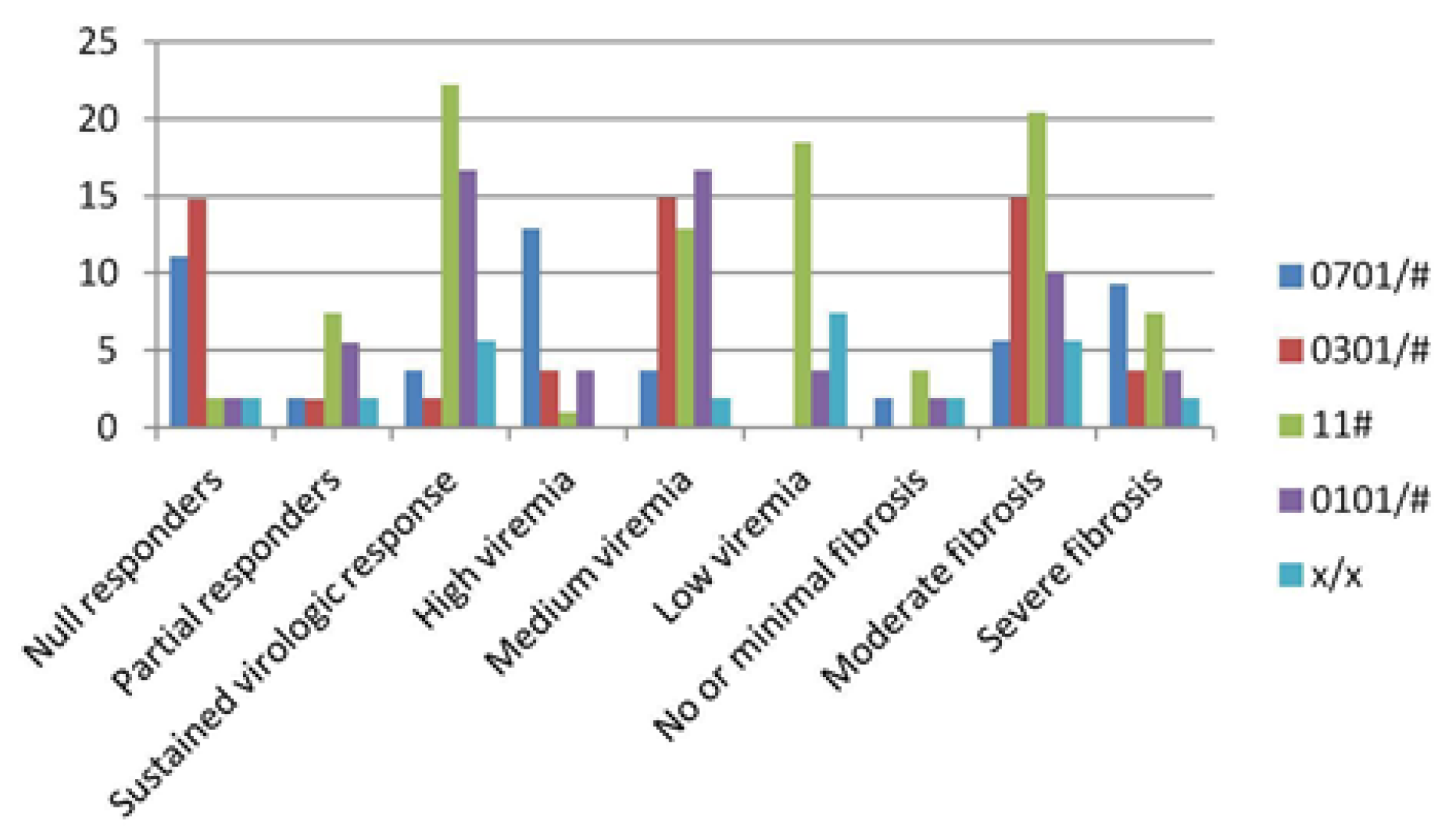
In the NR group DRB1*0301 had a relatively high frequency (14.8%), while the alleles DRB1*0701 (11.1%), DRB1*11# (22.2%) and DRB1*0101 (16.7%) were more frequent in the SVR group compared to the other groups (Table 3).
No correlation between the presence of HLADRB1* alleles and viral loads was found (the p value was not statistically significant after Bonferroni correction). DRB1*0701, an allele known as highly associated with viral persistence and disease severity, had a higher frequency in patients with high viremia (12.9%) than in the other groups. The DRB1*11# allele, known as being associated with protection, was more frequent in patients with low viremia (18.5%).
No correlation between the presence of HLADRB1* alleles and liver fibrosis was found, the p values were not statistically significant.
The DRB1*0701 allele had a higher frequency in patients with severe fibrosis (9.3%) than in the other groups. The protection alleles DRB1*11# (12.9%) and 0101 (16.7%) had a higher frequency in patients with moderate fibrosis (9.3%) than in the other groups (Figure 2).
The results of these comparisons will further be analyzed with a second-stage study of selflimiting infection, persistent infection, treatment response including other host factors such as IL28B, and HLA class I molecules Cw* correlated with Kir genes.

Discussion

In patients on IFN therapy, HLA-DRB1*11 and 0101 were found to be associated with low viral loads and therapeutic response. In contrast, HLA-DRB1*0701 was correlated with a lack of response to antiviral therapy and high viremia. The data gathered in this study for the HLA DRB1*07 allele is similar to other studies showing the association of this allele with viral persistence, chronicity and hepatic injury [13]. No correlation between the presence of HLADRB1*alleles and viral loads or the extent of liver fibrosis was found. Thus, viral liver injuries may be immunogenetically governed by multiple genes. Associations with the outcome of HCV infection may vary depending on the ethnic background of the study population.

Conclusion

The data suggests that in our regional population, certain HLA alleles influence the therapeutic response in HCV infection as host genetic factors and that genetic predisposition may play a role in HCV infection in those patients.
This preliminary study can join other similar projects and may contribute to finding markers related to the host that can help select patients suitable for such therapy and make the treatment efficient, especially in a developing country such as Romania.
In conclusion, response to HCV infection and disease outcome may be modulated by several histocompatibility genes; further work is required to establish the exact role of each gene.

Author Contributions

LG had substantial contributions to study conception and design, acquisition of data, analysis and interpretation of data, and final approval of the manuscript version to be published. SR had substantial contributions to study conception and design, acquisition of data, reviewing the manuscript, and final approval of the manuscript version to be published. IMD contributed to analysis and interpretation of data, as well as final approval of the manuscript version to be published. IF contributed to laboratory diagnosis and final approval of the manuscript version to be published. AM contributed to analysis and interpretation of data, as well as final approval of the manuscript version to be published. BI contributed to laboratory diagnosis, analysis and interpretation of data, and final approval of the manuscript version to be published.

Conflicts of Interest

All authors–none to declare.

References

  1. Cooke, G.S.; Lemoine, M.; Thursz, M.; Gore, C.; et al. Viral hepatitis and the Global Burden of Disease: A need to regroup. J Viral Hepat 2013, 20, 600–1. [Google Scholar] [CrossRef]
  2. Mohd Hanafiah, K.; Groeger, J.; Flaxman, A.D.; Wiersma, S.T. Global epidemiology of hepatitis C virus infection: New estimates of age-specific antibody to HCV seroprevalence. Hepatology 2013, 57, 1333–42. [Google Scholar] [CrossRef]
  3. World Health Organization. Hepatitis C Fact sheet N°164 2014. Available online: http://www.who.int/mediacentre/factsheets/fs164/en/ (accessed on 16 April 2025).
  4. World Health Organization. Hepatitis. Data and statistics. 10 May 2015. Available online: http://www.euro.who.int/en/health-topics/communicable-diseases/hepatitis/data-and-statistics (accessed on 10 May 2025).
  5. The Romanian Association for the Study of the Liver. Guidelines. RASL recommendations for the treatment of HCV infection (in Romanian). 10 May. Available online: http://www.arsf.eu/guidelines.htm (accessed on 10 May 2025).
  6. Esteban, J.I.; Sauleda, S.; Quer, J. The changing epidemiology of hepatitis C virus infection in Europe. J Hepatol 2008, 48, 148–52. [Google Scholar] [CrossRef] [PubMed]
  7. Yu, Y.S.; Tang, Z.H.; Han, J.C.; Xi, M.; Feng, J.; Zang, G.Q. Expression of ICAM-1, HLA-DR, and CD80 on peripheral circulating CD1 alpha DCs induced in vivo by IFN-alpha in patients with chronic hepatitis B. World J Gastroenterol 2006, 12, 1447–51. [Google Scholar] [CrossRef] [PubMed]
  8. Sim, H.; Wojcik, J.; Margulies, M.; Wade, J.A.; Heathcote, J. Response to interferon therapy: Influence of human leucocyte antigen alleles in patients with chronic hepatitis C. J Viral Hepat 1998, 5, 249–53. [Google Scholar] [CrossRef]
  9. Proceedings of the International Workshop on Epidemiology, Diagnosis and Management of Hepatitis C Infection. Medicine and the Community 1996, 6-7, 132.
  10. Thursz, M.; Yallop, R.; Goldin, R.; Trepo, C.; Thomas, H.C. Influence of MHC class II genotype on outcome of infection with hepatitis C virus. The HENCORE group. Hepatitis C European Network for Cooperative Research. Lancet 1999, 354, 2119–24. [Google Scholar] [CrossRef] [PubMed]
  11. Yee, L.J.; Thursz, M.R. Hepatitis B and C. In Genetic Susceptibility in Infectious Disease; Kaslow, R., McNichol, J., Hill, A.V., Eds.; Oxford University Press: Oxford, 2007. [Google Scholar]
  12. Yee, L.J. Host genetic determinants in hepatitis C virus infection. Genes Immun 2004, 5, 237–45. [Google Scholar] [CrossRef] [PubMed]
  13. Patel, K.; Norris, S.; Lebeck, L.; et al. HLA class I allelic diversity and progression of fibrosis in patients with chronic hepatitis C. Hepatology 2006, 43, 241–9. [Google Scholar] [CrossRef] [PubMed]
  14. Fanning, L.J.; Levis, J.; Kenny-Walsh, E.; Whelton, M.; O’Sullivan, K.; Shanahan, F. HLA class II genes determine the natural variance of hepatitis C viral load. Hepatology 2001, 33, 224–30. [Google Scholar] [CrossRef] [PubMed]
  15. Hong, X.; Yu, R.B.; Sun, N.X.; Wang, B.; Xu, Y.C.; Wu, G.L. Human leukocyte antigen class II DQB1*0301, DRB1*1101 alleles and spontaneous clearance of hepatitis C virus infection: A meta-analysis. World J Gastroenterol 2005, 11, 7302–7. [Google Scholar] [CrossRef] [PubMed]
  16. QIAGEN kit handbook or user manual. QIAGEN Group, 2011.
  17. Invitrogen Life Technologies. AllSet+ Gold SSP and SSP UniTray. 10 May 2015. Available online: http://www.b2b.invitrogen.com/site/us/en/home/Pro ducts-and-Services/Applications/Clinical-andDiagnostic-Applications/Transplant-Diagnostics/TD-Misc/SSP-Typing/Dynal-AllSet-153-SSP.html (accessed on 10 May 2025).
  18. Singh, R.; Kaul, R.; Kaul, A.; Khan, K. A comparative review of HLA associations with hepatitis B and C viral infections across global populations. World J Gastroenterol 2007, 13, 1770–87. [Google Scholar] [CrossRef] [PubMed]
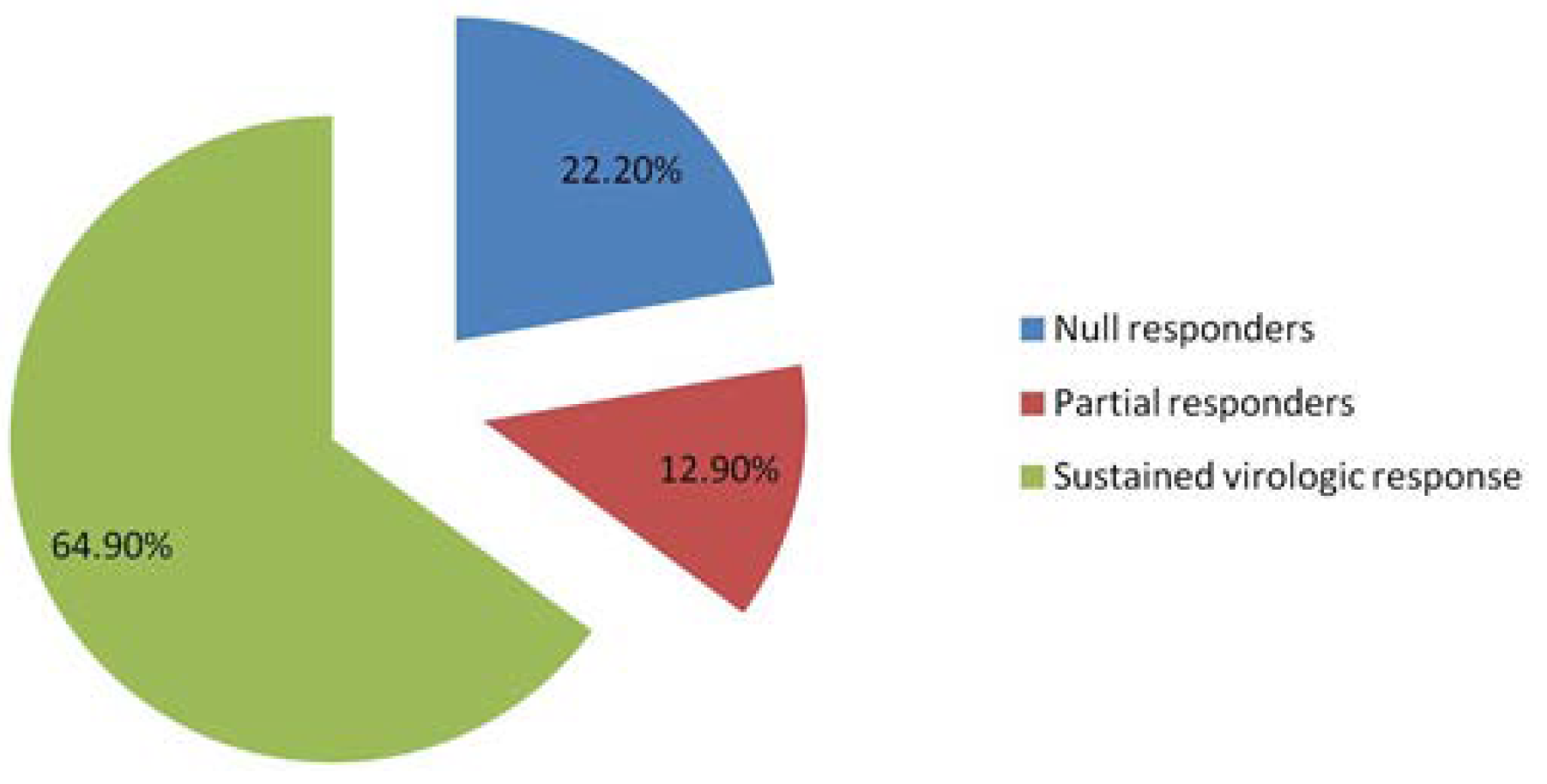
Figure 1. Types of therapeutic response in the study group.
Germs 05 00044 g001
Figure 2. DR genotypes association with therapeutic response, viremia and liver fibrosis.
Germs 05 00044 g002
Table 1. Categories of variables defined in specialized literature and used in the study statistical Analysis.
DR genotype Viral load Liver fibrosis (Metavir score)
DRB1*0701/#13,15Viral persistence high viremia > 10,300,000 IU/mL F0 = no fibrosis
DRB1*0301/#13,14Viral persistence medium viremia
1,680,000–10,300,000 IU/mL
F1 = portal fibrosis without septa (no or minimal fibrosis)
DRB1*11/#13.15 DRB1*0101/#13,17Decreased disease severity
Viral clearance
low viremia < 1,680,000 IU/mL F2 = portal fibrosis with few septa
F3 = numerous septa without cirrhosis (moderate fibrosis)
F4 = severe fibrosis
#-Conventional sign representing any other allele in association with the one typed in heterozygote situations.
Table 2. Study group characteristics: viral load at onset, extent of liver fibrosis, therapeutic response, age and gender (data expressed as percentage).
Viral loads at onset RT-PCR (IU/mL) High
> 10,300,000
Medium
10,300,000-1,680,000
22.3
49.1
Low < 1,680,000 29.7
Extent of liver fibrosis (Metavir score) Minimal F0/F1
Medium F2/F3
12.1
56.5
Severe F4 31.4
Therapeutic response 12-20-36 weeks Null responders after 12 weeks of treatment
Partial responders after 20 weeks of treatment
31.7
18.6
Sustained virologic response after 36 weeks of treatment 50.1
Age
Years
28-45
(n=12)
>45 (%)
(n=42)
22.2
77.7
Gender Male
(n=23)
Female
(n=31)
42.5
57.4
Table 3. Clinical and genetic aspects observed in the chronic hepatitis C group.
DRB1*genotypes 0701/# 0301/# (n= 9) (n=10) 11#
(n=17)
0101/# (n=13) x/x (n=5)
Therapeutic response
Null responders (%) 11.1 14.8 1.9 1.9 1.9
Partial responders (%) 1.9 1.8 7.4 5.5 1.9
Sustained virologic responders (%) 3.7 1.9
Viral load
22.2 16.7 5.6
High viremia (%) 12.9 3.7 1 3.7 -
Medium viremia (%) 3.7 14.9 12.9 16.7 1.9
Low viremia (%) - -
Fibrosis score
18.5 3.7 7.4
No or minimal fibrosis (%) 1.9 - 3.7 1.9 1.9
Moderate fibrosis (%) 5.6 14.9 20.4 10 5.6
Severe fibrosis (%) 9.3 3.7 7.4 3.7 1.9