Article

Evaluation of Pb, Mg, Al, Zn, and Cu as Electrode Materials in the Electrocoagulation of Microalgae

School of Architectural, Civil, Environmental and Energy Engineering, Kyungpook National University, Daegu 41566, Korea
*
Author to whom correspondence should be addressed.
Processes 2021, 9(10), 1769; https://doi.org/10.3390/pr9101769
Submission received: 27 July 2021 / Revised: 23 September 2021 / Accepted: 29 September 2021 / Published: 2 October 2021

Abstract

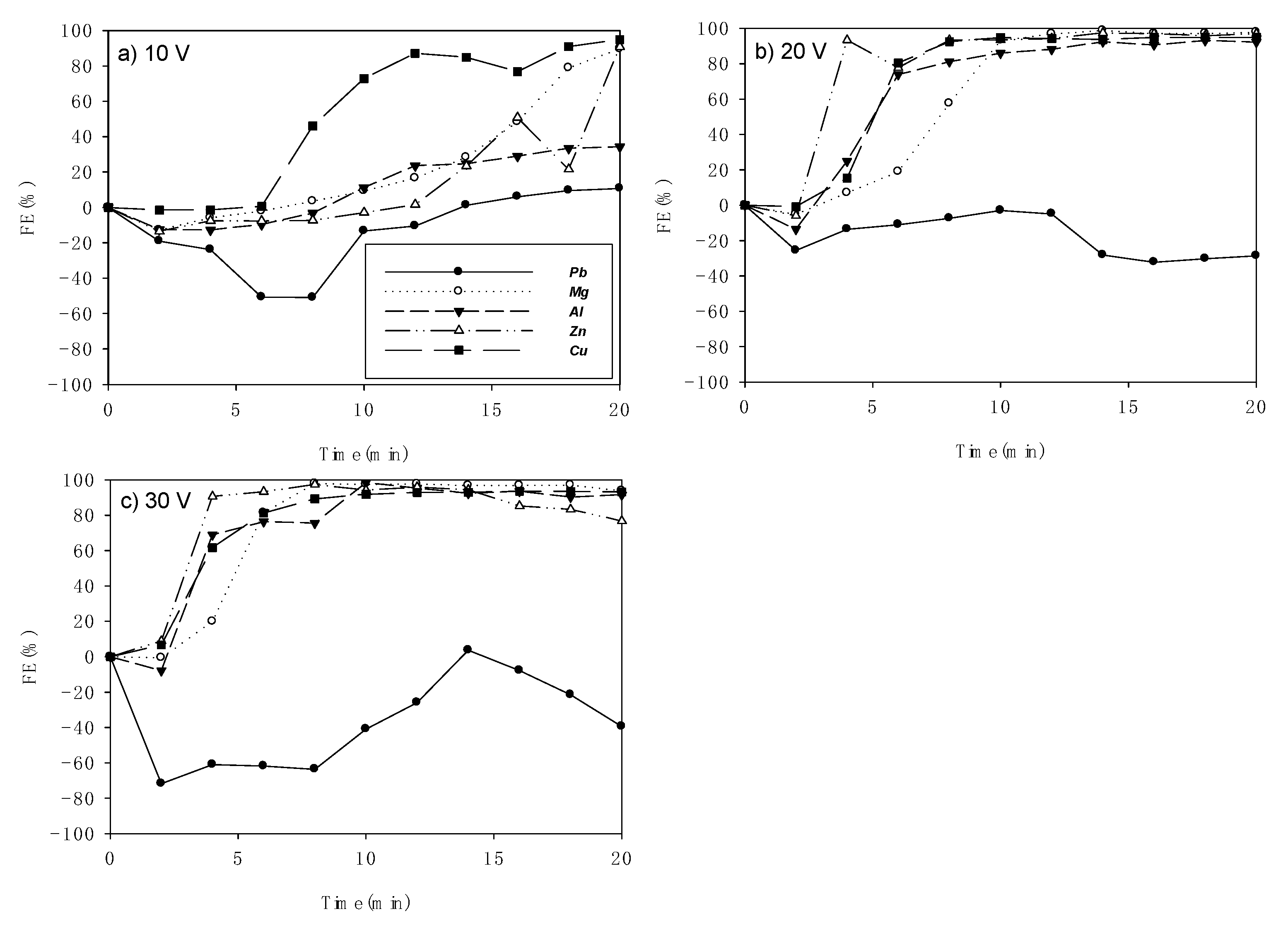
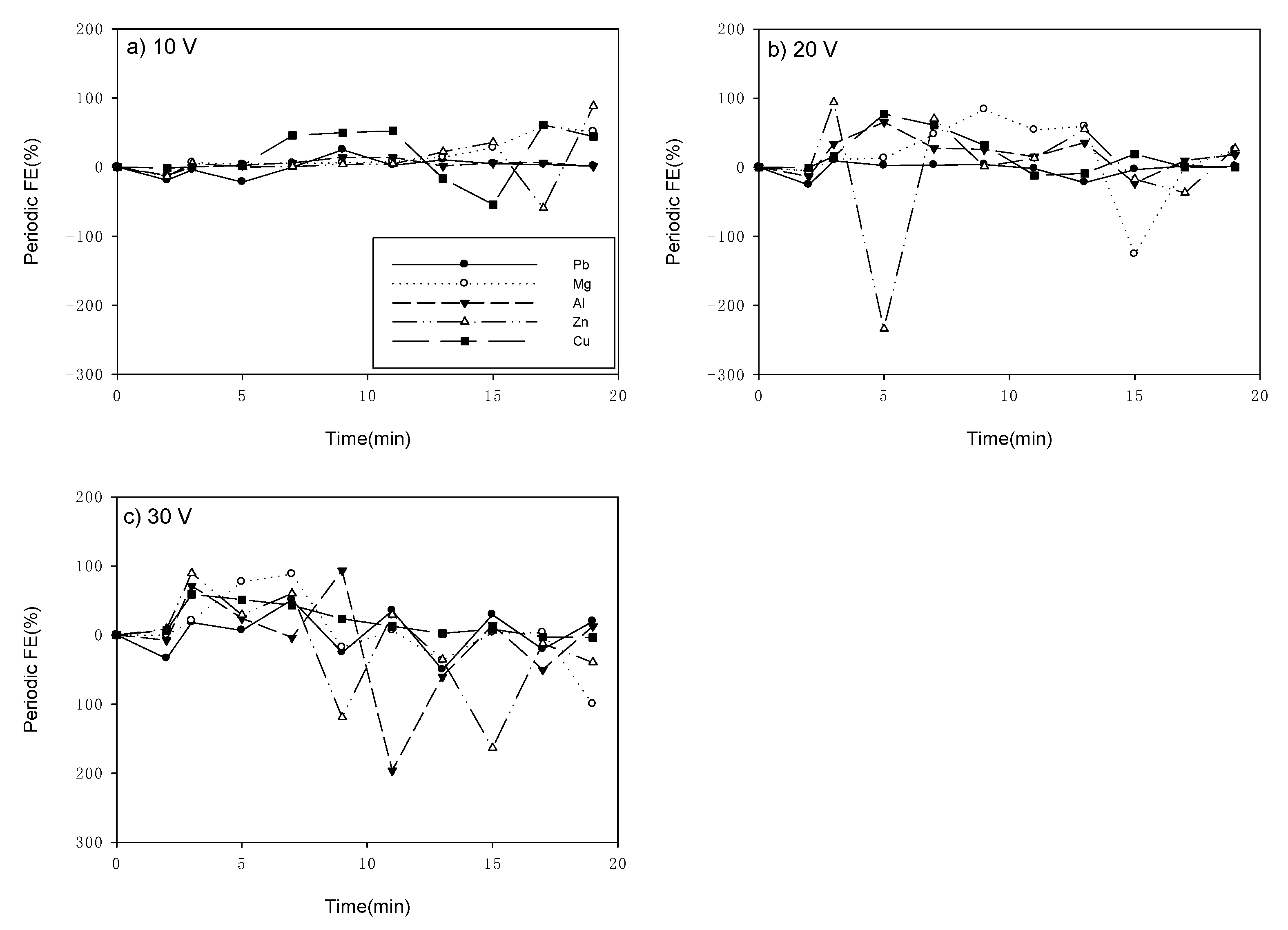
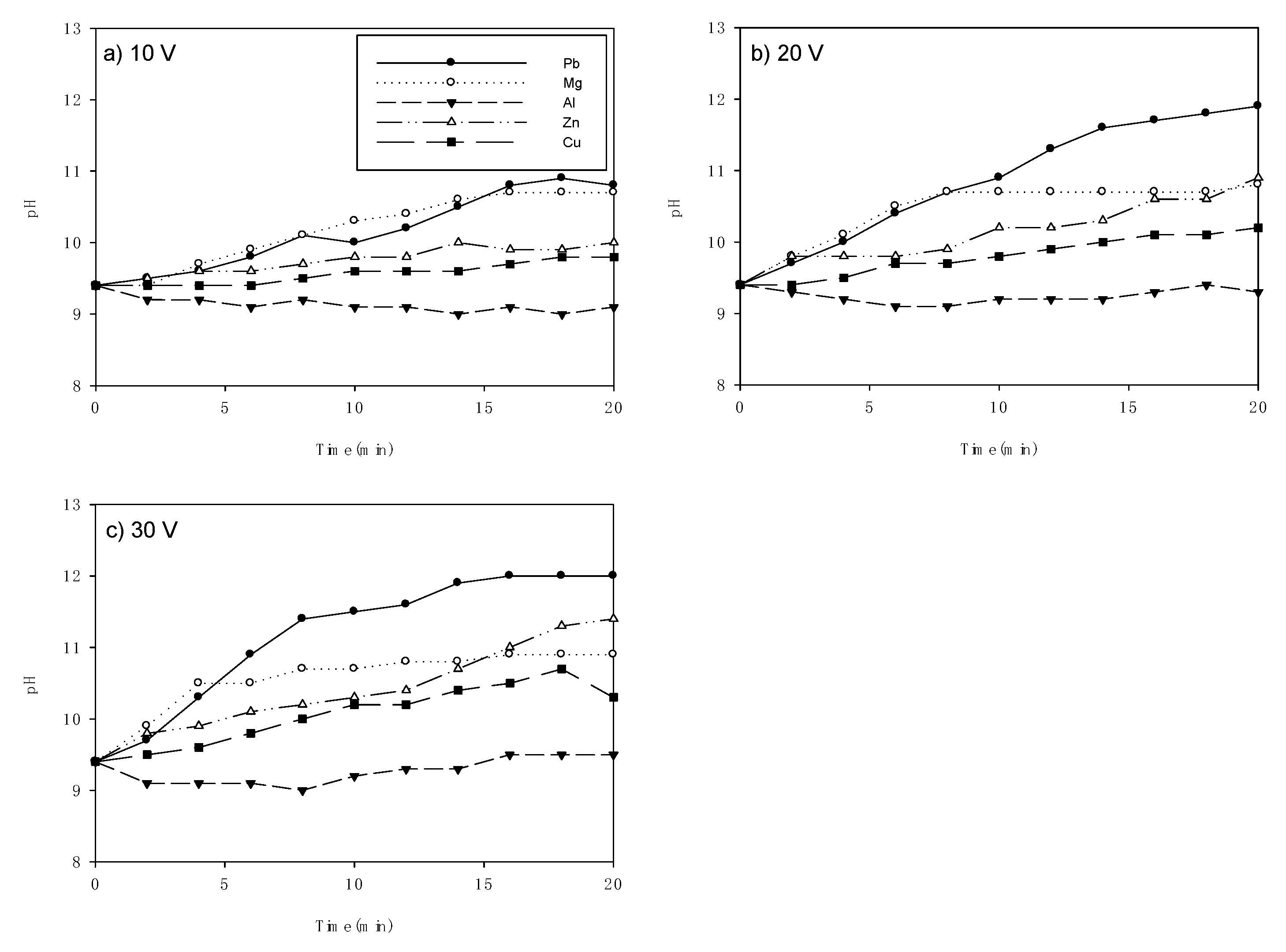
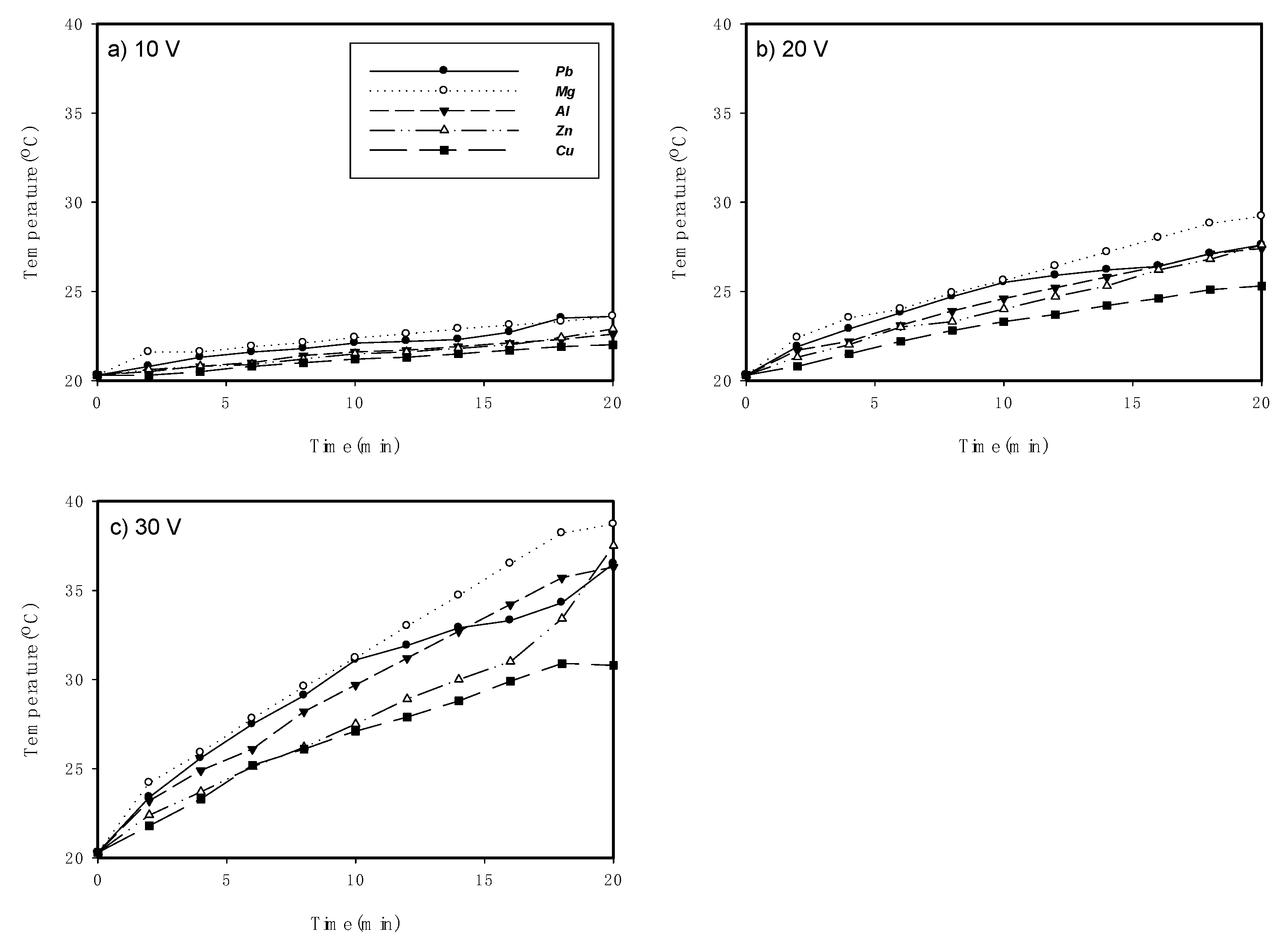
Apart from the conventionally used iron (Fe) and aluminum (Al) electrodes in microalgae harvesting, experiments were designed to examine the viability of lead (Pb), magnesium (Mg), zinc (Zn), and copper (Cu) as electrode materials in the harvesting of microalgae. The effect of voltage on the flocculation efficiency (FE) of the electrode materials was examined and compared. By dividing the optimal FE values by their corresponding periods, a simple yet practical approach was used to rank the electrode materials. From highest to lowest flocculation efficiency, the results were as follows: Cu, Zn, Mg, Al, and Pb at 10 V; Mg, Zn, Cu, Al, and Pb at 20 V; and Mg, Zn, Al, Cu, and Pb at 30 V. Important factors such as temperature, periodic FE, consumption of electrode material, pH, and metallic concentrations in the effluent were evaluated. The temperature increase proposed to have been affected by electric resistance drop and anodic corrosion, between 1.7 °C and 3.3 °C, 5 °C and 8.9 °C, and 10.5 °C and 18.4 °C was recorded at 10 V, 20 V, and 30 V respectively. Except for the supernatants of the experiments from Al electrodes, which remained relatively unaffected by voltage and time, the pH of all the other supernatants increased with time and voltage. The effluents recorded metallic concentrations between 0.513 mg/L and 43.8 mg/L for Pb, 7.02 mg/L and 20.5 mg/L for Mg, 1.34 mg/L and 9.09 mg/L for Al, 0.079 mg/L and 0.089 mg/L for Zn, and 0.252 mg/L and 0.434 mg/L for Cu electrodes.
Keywords: electrocoagulation; microalgae; lead; magnesium; aluminum; zinc; copper electrocoagulation; microalgae; lead; magnesium; aluminum; zinc; copper