Article

Comparative Characterization of Pumpkin Seed Protein Isolates Obtained by Alkaline, Ultrasound-Assisted, and Microwave-Assisted Extraction: Functionality, Particle Size, and Structural Integrity

1
Laboratory of Chemistry and Food and By-Product Processing Technology, National School of Agriculture in Meknes, km 10, Haj Kaddour Road, BP S/40, Meknes 50001, Morocco
2
Microbiology and Molecular Biology Team, Center of Plant and Microbial Biotechnology, Biodiversity and Environment, Faculty of Sciences, Mohammed V University of Rabat, Avenue Ibn Battouta, BP 1014, Rabat 10000, Morocco
3
UPR of Pharmacognosy, Faculty of Medicine and Pharmacy of Rabat, Mohammed V University, BP 6203, Rabat 10000, Morocco
4
Independent Researcher, Istanbul 34300, Turkey
*
Authors to whom correspondence should be addressed.
Processes 2026, 14(8), 1250; https://doi.org/10.3390/pr14081250
Submission received: 17 March 2026 / Revised: 7 April 2026 / Accepted: 13 April 2026 / Published: 14 April 2026
(This article belongs to the Special Issue Resource Utilization of Food Industry Byproducts)

Abstract

As demand for sustainable plant protein rises, pumpkin seeds emerge as a promising but underutilized source. Conventional alkaline extraction (ALK) often impairs protein functionality, prompting interest in non-thermal alternatives. This study systematically compared the functional, colloidal, and structural properties of pumpkin seed protein isolates obtained via ALK (conducted at 50 °C), ultrasound-assisted (UAE), and microwave-assisted extraction (MAE). UAE produced the highest extraction yield (50.07%), superior overall solubility, greatest water and fat absorption capacities, and lowest least gelation concentration (12%). Furthermore, UAE best preserved native protein secondary structure (retaining 43.45% alpha-helix), as quantified by FTIR peak deconvolution, and maintained an intact, flake-like morphology under scanning electron microscopy (SEM), yielding the most uniform particle size distribution. Conversely, MAE achieved the highest protein content (73.53%) and the most negative zeta potential, leading to the highest emulsifying and foaming capacities despite inducing a bimodal particle size and irregular, porous surface morphology. ALK performed the poorest across structural and functional metrics, severely denaturing the proteins due to combined alkaline and thermal stress. UAE is recommended for applications requiring optimal solubility and gelation, whereas MAE is highly effective for emulsion- and foam-based food systems, reinforcing pumpkin seeds as a viable sustainable protein ingredient.

1. Introduction

The global population is projected to approach 10 billion by 2050, placing mounting pressure on food systems to deliver adequate nutrition sustainably and equitably [1]. Dietary protein occupies a central position in this challenge given its essential roles in human growth, immune function, and metabolic regulation. Despite progress in agricultural output, protein–energy malnutrition and chronic food insecurity persist in many regions, reinforcing the need for resilient and accessible protein sources [2]. The consequences of prolonged protein deficiency are well documented and include stunted growth, muscle wasting, impaired cognitive development, and reduced immunity [3,4,5].
Animal-derived proteins have long been regarded as the dietary quality benchmark owing to their high biological value and complete amino acid profiles. Livestock-based food production is, however, resource-intensive, contributing substantially to land and water use, greenhouse gas emissions, and animal welfare concerns [6,7]. These pressures, combined with shifting consumer preferences and continued advances in food processing technologies, have accelerated interest in plant-based protein alternatives. Beyond their lower environmental footprint, plant proteins have been associated with reduced risk of cardiovascular disease, lower LDL cholesterol, and a diminished likelihood of developing type 2 diabetes [8,9]. Identifying underutilized plant protein sources with favorable techno-functional properties has accordingly become an active area of research.
Pumpkin seeds (Cucurbita pepo L.) represent one such underutilized source. Typically discarded as a processing by-product, pumpkin seeds are nutritionally dense and carry considerable economic valorization potential [10,11]. On a dry weight basis, whole seeds contain between 24% and 40% protein, with defatted fractions reaching as high as 54% [12,13]. The amino acid profile is particularly notable for its high content of arginine and sulfur-containing amino acids, and the isolates have been reported to satisfy FAO/WHO reference patterns for essential amino acids [14,15]. The seeds also supply dietary fiber, phytosterols, polyunsaturated fatty acids, and antioxidant phenolics, adding to their biofunctional value [9,15]. Protein isolates derived from pumpkin seeds exhibit techno-functional properties directly relevant to food formulation, including pH-dependent solubility, water and oil absorption, emulsification, foaming, and gelation, making them viable candidates for plant-based meat analogues, dairy alternatives, and structured food products [16,17,18].
Despite this potential, broader commercial use of pumpkin seed protein isolate (PSPI) has been constrained by the limitations of conventional extraction approaches. Alkaline extraction (ALK) is the most widely applied method due to its operational simplicity and low cost. It relies on protein solubilization at elevated pH followed by isoelectric precipitation. While ALK yields reasonable protein recovery, prolonged exposure to high pH and elevated temperature frequently causes partial denaturation, conformational disruption, and irreversible aggregate formation [19,20]. These structural changes negatively affect downstream functional properties including solubility, emulsifying capacity, foaming behavior, and gelling potential, all of which are critical for ingredient performance in food systems [15,16]. Beyond functional properties, the colloidal characteristics of protein isolates, specifically particle size distribution and zeta potential, are important determinants of dispersion stability and behavior in food matrices, yet these parameters have received limited attention in the context of pumpkin seed protein extraction.
Low-temperature-assisted and non-thermal extraction technologies have gained traction as alternatives that improve extraction efficiency while better preserving protein structure and functionality. It is important to distinguish between purely non-thermal mechanical methods, such as ultrasound, and low-temperature-assisted methods like microwave extraction, which, despite maintaining a controlled bulk temperature, can still induce rapid, localized dielectric heating and transient thermal microenvironments. Ultrasound-assisted extraction (UAE) exploits acoustic cavitation, whereby high-energy microbubbles collapse near cell walls and generate localized shear forces that disrupt tissue and facilitate solute-solvent contact [2,4]. Operating at moderate temperatures, UAE has been shown to improve protein recovery, solubility, and emulsifying activity in oilseed and legume matrices while reducing antinutritional factors [3,21]. Microwave-assisted extraction (MAE) relies on rapid dielectric heating to accelerate molecular agitation, promote cell disruption, and enhance mass transfer with shorter processing times and reduced solvent consumption [15,22]. Applied to soybeans, lupins, and peanuts, MAE has demonstrated improved extraction yields while preserving emulsifying, foaming, and gelling properties [23,24].
Comparative studies evaluating ALK, UAE, and MAE specifically for pumpkin seed protein extraction remain scarce. Most published work has focused on a single extraction method or reported yield data without systematically characterizing the functional and structural consequences of each approach. In particular, there is a critical lack of integrated correlative analysis linking colloidal properties (such as particle size distribution and zeta potential) with structural characteristics (via FTIR and SEM) to mechanistically explain why different extraction methods yield vastly different functional outcomes, such as emulsifying and foaming behaviors, for this specific seed matrix [25,26]. Such integrated characterization is essential for developing optimized extraction protocols and for evaluating the suitability of these isolates as food ingredients.
The present study was therefore designed to compare three extraction methods, namely conventional ALK, UAE, and MAE, applied to pumpkin seeds (Cucurbita pepo L.) sourced from the Khemissat region of Morocco. The resulting protein isolates were evaluated across a comprehensive suite of parameters to establish clear structure–function relationships. Specifically, pH-dependent solubility, water/fat absorption, and gelation were measured as they dictate the ingredient’s behavior in aqueous and structured food matrices. Particle size distribution and zeta potential were analyzed to provide critical insight into colloidal stability and aggregation states. Finally, secondary structure via FTIR and surface morphology via SEM were utilized to elucidate the extent of protein denaturation, while colorimetry assessed cosmetic suitability for food applications. It was hypothesized that non-thermal/low-temperature-assisted methods (UAE and MAE) would significantly improve the functional and colloidal properties of the isolates compared to ALK by minimizing thermal and extreme denaturation, with UAE specifically offering superior structural preservation due to its purely mechanical disruption mechanism. Ultimately, these findings are intended to inform the development of efficient, environmentally sound extraction strategies for this underutilized seed protein, with broader relevance to plant-based ingredient formulation.

2. Materials and Methods

2.1. Plant Material and Reagents

Seeds of Cucurbita pepo L. (Cucurbitaceae) were collected from the Khemissat region of Morocco in 2023. All reagents and chemicals were purchased from Sigma-Aldrich (St. Louis, MO, USA) and were of analytical reagent grade.

2.2. Preparation of Defatted Pumpkin Seed Meal

Raw seeds were washed to remove surface impurities and dried at 45 °C for 48 h. After drying, the seeds were ground and sieved through a stainless-steel mesh (500 um pore size) to obtain a uniform flour with a particle size below 500 µm. The flour was stored overnight in airtight containers at 4 °C to prevent lipid oxidation pending defatting. Lipids were removed by solvent extraction with n-hexane at a 10:1 (v/w) solvent-to-meal ratio under continuous stirring. The defatted slurry was centrifuged at 5000 rpm for 30 min, and the recovered meal was dried at 45 °C for 8 h to remove residual solvent. The defatted meal was stored in airtight containers at −20 °C until use [19].

2.3. Preparation of Pumpkin Seed Protein Isolate

Protein isolates were prepared by alkaline extraction (ALK) followed by isoelectric precipitation, with minor modifications relative to the original procedure [25]. The defatted meal was dispersed in distilled water at a 1:10 (w/v) ratio, and the pH was raised to 10.0 with 1 mol/L NaOH. The suspension was stirred for 30 min at 50 °C [26], and the soluble fraction was recovered by centrifugation at 5000 rpm for 15 min. The pH of the supernatant was then lowered to 5.0 with 1 mol/L HCl to induce isoelectric precipitation, and the protein-rich precipitate was collected by centrifugation at 5000 rpm for 15 min. The precipitate was freeze-dried to yield the pumpkin seed protein isolate (PSPI) and stored at −20 °C until analysis. Protein content was determined by the Kjeldahl method [27], and protein yield (PY) was calculated as:
PY (%) = [weight of PSPI (g)/weight of defatted meal (g)] × 100

2.4. Ultrasound-Assisted and Microwave-Assisted Extraction

UAE and MAE were both applied during the protein solubilization step, after the suspension had been adjusted to pH 10.0 with NaOH. For UAE, a Pulse 150 ultrasonic homogenizer (Benchmark Scientific, Inc., Sayreville, NJ, USA) operating at 20 kHz was used at 118 W with a duty cycle of 60% for 20 min (12 min of effective time), maintaining the temperature between 25 and 30 °C [28]. For MAE, a CEM Discover microwave reactor (CEM Corporation, Matthews, NC, USA) (0 to 300 W, 25 to 250 °C) was operated at 120 W for 6 min at 25 to 30 °C, following [7] with minor modifications. After each treatment, the protein isolate was recovered, freeze-dried, and characterized as described in the following sections. Protein content and extraction yield were calculated using the same method as for the ALK control.

2.5. Characterization of Pumpkin Seed Protein Isolates

2.5.1. Protein Solubility

Protein solubility (PS) was determined following the method of [29] with slight modifications. A 100 mg sample of PSPI was dispersed in 10 mL of deionized water, and the pH was adjusted stepwise from 2 to 10 using 0.5 N HCl or 0.5 N NaOH. The pH was re-adjusted every 10 min to maintain equilibration. Dispersions were centrifuged at 5000 x g for 30 min, and the nitrogen content of both the original dispersions and the recovered supernatants was quantified by the Kjeldahl method. Solubility was expressed as:
PS (%) = [nitrogen in supernatant/total nitrogen in 100 mg] × 100

2.5.2. Water Absorption Capacity and Fat Absorption Capacity

Water absorption capacity (WAC) and fat absorption capacity (FAC) were measured as described by [15]. One gram of PSPI was mixed with 10 mL of distilled water (WAC) or virgin olive oil (FAC) and centrifuged at 4500 rpm for 30 min at 10 °C. WAC was calculated from the difference between the initial water volume and the volume of recovered supernatant. FAC was determined from the weight gain of the pellet after removal of the supernatant oil.

2.5.3. Emulsion Activity and Emulsion Stability

Emulsifying properties were assessed following [30]. Briefly, 3.5 g of PSPI was dispersed in 50 mL of distilled water by homogenization for 30 s, after which 50 mL of corn oil was added and the mixture was re-homogenized for 30 s. An aliquot was centrifuged at 1100× g for 5 min, and emulsion activity (EA) was calculated as:
EA (%) = (H1/H0) × 100
where H1 is the height of the emulsified layer and H0 is the total height of the tube contents. For emulsion stability (ES), a separate aliquot was heated at 80 °C for 30 min and centrifuged at 1100× g for 5 min, and the same equation was applied using the post-heating emulsified layer height.

2.5.4. Foaming Capacity and Foaming Stability

Foaming capacity (FC) and foaming stability (FS) were evaluated following [31] with minor adjustments. A 10 mL aliquot of PSPI solution (10 mg/mL) was homogenized for 5 min and transferred to a graduated cylinder. Volumes before (V1) and after (V2) homogenization were recorded, and FC and FS were calculated as:
FC (%) = [(V2 − V1)/V1] × 100
FS (%) = [(volume at 120 min − V1)/(V2 − V1)] × 100

2.5.5. Least Gelation Concentration

The least gelation concentration (LGC) of PSPI was determined as described by [32]. Protein solutions at concentrations from 1% to 20% (w/v) were prepared in 10 mL aliquots in test tubes, vortex-mixed for 5 min, heated in a boiling water bath for 1 h, and then cooled at 4 °C for 2 h. The LGC was identified as the lowest protein concentration at which the gel did not flow or collapse when the test tube was inverted.

2.5.6. Particle Size Distribution and Zeta Potential

Particle size distribution and zeta potential of the PSPI suspensions were measured using a Zetasizer Nano ZS instrument (Malvern Instruments Ltd., Worcestershire, UK). Protein solutions were prepared at 0.15 g per 10 mL of distilled water at pH 7.0 and thoroughly homogenized prior to analysis. One milliliter of each suspension was transferred into a folded capillary cell (DTS1070). Measurements were conducted at 25 °C with an applied voltage of 80 V, using automatic settings for dispersant refractive index, viscosity, and dielectric constant based on water as the dispersing medium. Zeta potential was calculated using the Smoluchowski approximation. Phase shift behavior of the protein dispersions was recorded over the course of each measurement and compared across extraction treatments. All samples were analyzed in triplicate.

2.5.7. FTIR Spectroscopy and Secondary Structure Analysis

Structural characteristics of the protein isolates were examined by Fourier-transform infrared (FTIR) spectroscopy in triplicate using a Spectrum Two FT-IR spectrometer (PerkinElmer, Waltham, MA, USA) at a resolution of 4 cm−1, scanning the mid-infrared region from 4000 to 500 cm−1. To quantitatively determine the protein secondary structure composition, the Amide I band (1700–1600 cm−1) was further analyzed. The spectra were baseline-corrected, and second derivative analysis was utilized to resolve underlying peak positions. Curve fitting was subsequently performed using Fityk software (version 1.3.1, Marcin Wojdyr, Poland). Gaussian peak functions were fitted to the identified components within the Amide I region until a converged fit was achieved. The relative percentages of the secondary structural elements (alpha-helix, beta-sheet, beta-turn, and aggregates) were calculated by dividing the integrated area of their respectively assigned peaks by the total area of the fitted Amide I band.

2.5.8. Scanning Electron Microscopy

Dried protein powders were mounted on aluminum stubs using carbon tape and imaged using a Quanta FEG 250 Environmental SEM (Thermo Fisher Scientific, Hillsboro, OR, USA) at 20 kV in low-vacuum mode without sputter coating. Images were acquired at magnifications of 30×, 250×, and 1000×. At least five representative fields of view per treatment were recorded at each magnification and saved as high-resolution TIFF files. Brightness and contrast were adjusted uniformly across all samples.

2.5.9. Colorimetry

Color parameters (L*, a*, b*) of freeze-dried PSPI powders were measured using a calibrated colorimeter CR-5 benchtop colorimeter (Konica Minolta, Inc., Tokyo, Japan). L* represents lightness, a* represents the red–green axis, and b* represents the yellow–blue axis. Measurements were taken in triplicate for each sample.

2.5.10. Statistical Analysis

All measurements were conducted in triplicate and are reported as mean values plus or minus standard deviation (SD). Data were analyzed by one-way analysis of variance (ANOVA), and significant differences between means were identified by Tukey’s honestly significant difference test at a 95% confidence level (p < 0.05) using SPSS for Windows, version 20 (SPSS Inc., Chicago, IL, USA).

3. Results and Discussion

3.1. Protein Yield and Composition

The protein content and extraction yield of the PSPI differed significantly depending on the extraction method applied (Figure 1A). MAE produced isolates with the highest protein content (73.53 ± 1.00%), followed by UAE (70.18 ± 0.50%), while ALK gave the lowest value (67.96 ± 0.81%). The elevated protein content in MAE-treated samples is consistent with the rapid dielectric heating mechanism, which disrupts cell matrices and promotes solute-solvent interaction, thereby improving protein liberation [15,33]. UAE also produced high-protein isolates, an outcome attributable to acoustic cavitation generating microjets and shockwaves that rupture plant tissue and facilitate protein release [4,11]. ALK yielded the lowest protein content, likely due to conformational changes and aggregate formation induced by sustained alkaline and thermal conditions [19]. It is important to note that the ALK process was deliberately conducted at 50 °C to accurately reflect standard industrial baseline practices for this conventional method, allowing for a realistic assessment of emerging low-temperature alternatives (UAE and MAE) against current real-world manufacturing parameters. These trends are consistent with findings for pumpkin [10], lupin [34], and chickpea proteins [35]. While protein content differed significantly depending on the extraction method, the extraction yield was significantly higher for UAE (Figure 1A), yielding 50.07 ± 2.04%, MAE yielded 47.00 ± 1.73%, and ALK yielded 46.00 ± 1.19%.

3.2. pH-Dependent Solubility

Protein solubility as a function of pH followed a characteristic U-shaped profile for all three extraction methods, with minimum solubility near pH 4, corresponding to the isoelectric point of pumpkin seed proteins [34]. At this point, MAE samples showed the lowest solubility (8.67%), while UAE samples retained the significantly highest solubility (13.82%), with ALK recorded at 8.96%. Above and below the isoelectric point, solubility increased substantially for all treatments; by pH 7.0, both MAE (61.33%) and UAE (60.67%) reached values exceeding 60%, whereas the ALK method exhibited a lower solubility of 51.33%. This trend continued to pH 10.0, where MAE and UAE remained superior (77.33% and 73.33% respectively) compared to the ALK isolate (68.33%) (Figure 1B).
The relatively high solubility of UAE-treated proteins can be attributed to partial unfolding and reduced aggregation from acoustic cavitation, which exposes hydrophilic residues and improves water interaction [2,31]. Similar cavitation-driven solubility improvements have been reported for soy, pea, and mustard proteins, where ultrasound disrupted intermolecular forces and reduced particle size [36]. Conversely, the lower solubility of MAE samples near the isoelectric point likely reflects localized overheating during microwave treatment, which can trigger denaturation and aggregation. However, the superior solubility of MAE at pH 10.0 suggests that the rapid dielectric heating effectively liberated a larger fraction of highly soluble protein species compared to conventional approaches [37], in line with observations for microwave-treated peanut and tamarind proteins [24,35].

3.3. Functional Properties

3.3.1. Water and Fat Absorption Capacities

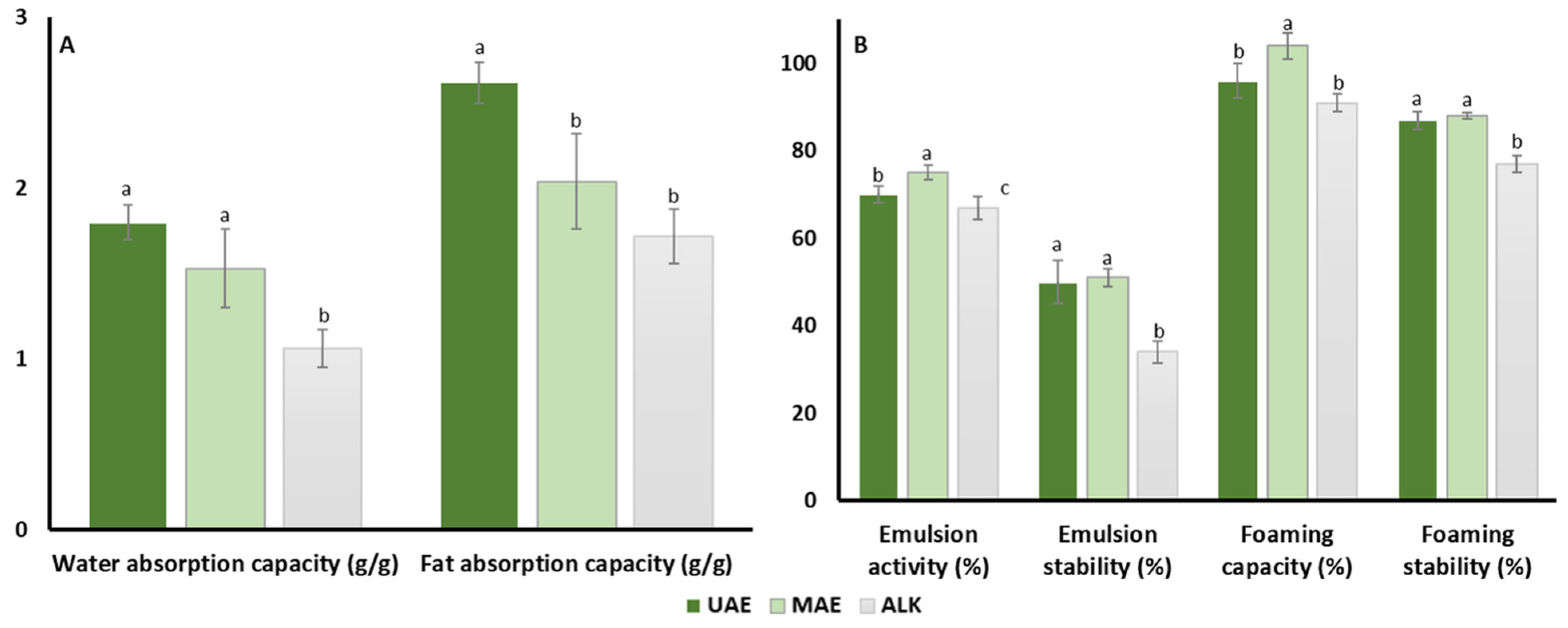
UAE-treated isolates showed the highest water absorption capacity (WAC: 1.80 ± 0.10 g/g), though it was not statistically different from MAE (1.53 ± 0.23 g/g), while ALK exhibited a significantly lower WAC (1.06 ± 0.11 g/g). Conversely, the fat absorption capacity (FAC) of UAE samples (2.62 ± 0.12 g/g) significantly exceeded both MAE (2.04 ± 0.28 g/g) and ALK (1.72 ± 0.16 g/g), which were statistically similar to each other (Figure 2A). The porous microstructure generated by acoustic cavitation, with more exposed hydrophilic and hydrophobic sites, likely accounts for the superior hydration and oil-binding capacity of UAE samples [19,38]. Comparable enhancements in WAC and FAC following ultrasound treatment have been reported for almond [39] and chia [15]. The lower absorption capacities of ALK-extracted proteins are consistent with extensive aggregate formation that reduces accessible interaction sites.

3.3.2. Emulsifying Properties

MAE significantly improved emulsion activity (EA: 75.00 ± 1.70%) compared to UAE (EA: 70.06 ± 2.00%) and ALK (EA: 67.00 ± 2.60%) (Figure 2B). Furthermore, both MAE and UAE exhibited high emulsion stability (ES: 51.00 ± 2.00% and 50.00 ± 5.00%, respectively), which was significantly better than that of the ALK-extracted samples (ES: 34.00 ± 2.50%). The improved emulsifying performance of MAE is closely linked to the significant exposure of charged surface residues (evidenced by its highly negative zeta potential), which enhances electrostatic repulsion between oil droplets [26]. While MAE samples contained the highest absolute protein content, their bimodal particle size distribution and higher aggregate fraction, as discussed after in the secondary structure analysis results part, suggest that superior emulsifying capacity is not driven purely by yield. Rather, it is likely driven by this enhanced interfacial charge combined with the rapid migration of the smaller, highly soluble protein fraction to the oil-water interface, compensating for the presence of the larger aggregates [35,40]. MAE produced moderate improvements over ALK, though internal microwave heating may partially denature proteins and reduce their interfacial flexibility [41]. The inferior emulsifying behavior of ALK-extracted proteins is attributed to insoluble aggregates that limit effective droplet coverage [7].

3.3.3. Foaming Properties

Foaming capacity (FC) was highest in MAE-treated samples (FC: 104.00 ± 3.00%), followed by UAE (FC: 96.00 ± 4.00%) and ALK (FC: 91.00 ± 2.00%). Foaming stability (FS) was similarly enhanced by the non-thermal methods, with MAE (FS: 88.00 ± 0.80%) and UAE (FS: 87.00 ± 2.00%) performing significantly better than ALK (FS: 77.00 ± 1.90%) (Figure 2B). The structural disruption caused by microwave and ultrasound treatments likely exposed more hydrophilic and hydrophobic sites, promoting faster migration to the air-water interface and more stable film formation around air bubbles [42,43]. ALK samples yielded the least stable foams, consistent with aggregation-related reductions in interfacial activity.

3.3.4. Gelation Behavior

The LGC was lowest for UAE-extracted isolates (12.00%), indicating that these proteins form a self-supporting gel at a lower concentration than MAE (14.00%) or ALK (16.00%) samples (Table 1). A lower LGC reflects a greater capacity to form three-dimensional protein networks through intermolecular bonding, which in UAE samples is attributed to enhanced molecular alignment and exposure of reactive sites following cavitation [19]. Reductions in LGC following ultrasound treatment have been observed for tamarind and mustard proteins [44,45]. The high LGC for ALK samples is consistent with irreversible protein aggregation under alkaline conditions, which limits the capacity for ordered network formation.

3.4. Colloidal Properties: Particle Size Distribution and Zeta Potential

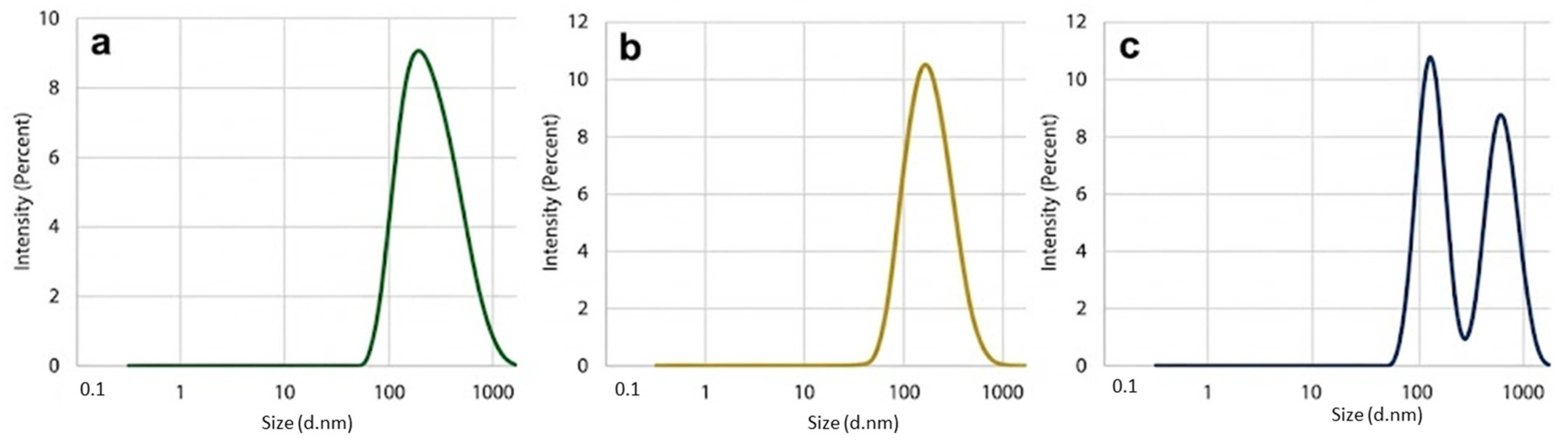
Particle size distribution and zeta potential provide complementary information on the physical state of protein dispersions and help interpret the functional property differences observed across extraction methods (Table 1; Figure 3). All three isolates exhibited negative zeta potential values at pH 7, consistent with the net negative surface charge of globulin-rich protein systems above their isoelectric point. MAE-extracted proteins showed the most negative zeta potential (−32.40 ± 1.27 mV), followed by UAE (−29.90 ± 1.11 mV) and ALK (−29.00 ± 0.23 mV). All three values fall below −25 mV, a threshold commonly associated with electrostatically stable colloidal dispersions [46], indicating that each extraction method produced dispersions with adequate colloidal stability. The more negative zeta potential of MAE-extracted proteins suggests that microwave-induced disruption exposed a greater density of charged surface residues, enhancing electrostatic repulsion between particles. This is consistent with the relatively high protein content of MAE isolates and may partially account for their moderate emulsifying activity despite lower solubility near the isoelectric point.
Particle size data revealed distinct distribution profiles depending on the extraction method. ALK-extracted proteins showed a monomodal distribution with a peak in the range of 150 to 200 nm, indicating moderately aggregated but homogeneous particles. UAE treatment produced a narrower distribution with a slight reduction in particle size to approximately 120 to 150 nm, consistent with the well-established capacity of acoustic cavitation to break down protein aggregates and generate more uniform dispersions [2,4]. This reduction in particle size aligns directly with the superior solubility and emulsifying activity of UAE samples, since smaller and more homogeneous particles offer greater interfacial area and facilitate droplet stabilization. MAE-extracted proteins exhibited a bimodal distribution with peaks at both 100 to 200 nm and above 300 nm, indicating the simultaneous presence of finely dispersed and heavily aggregated protein species. This heterogeneity reflects the uneven energy distribution inherent to microwave processing, where localized thermal hotspots can drive partial unfolding in some protein populations while triggering aggregation in others, even when bulk temperature is maintained at 30 °C [15,33]. The bimodal size distribution of MAE samples is consistent with their intermediate functional profile, marked by higher protein content but lower solubility and less stable emulsions than UAE samples.
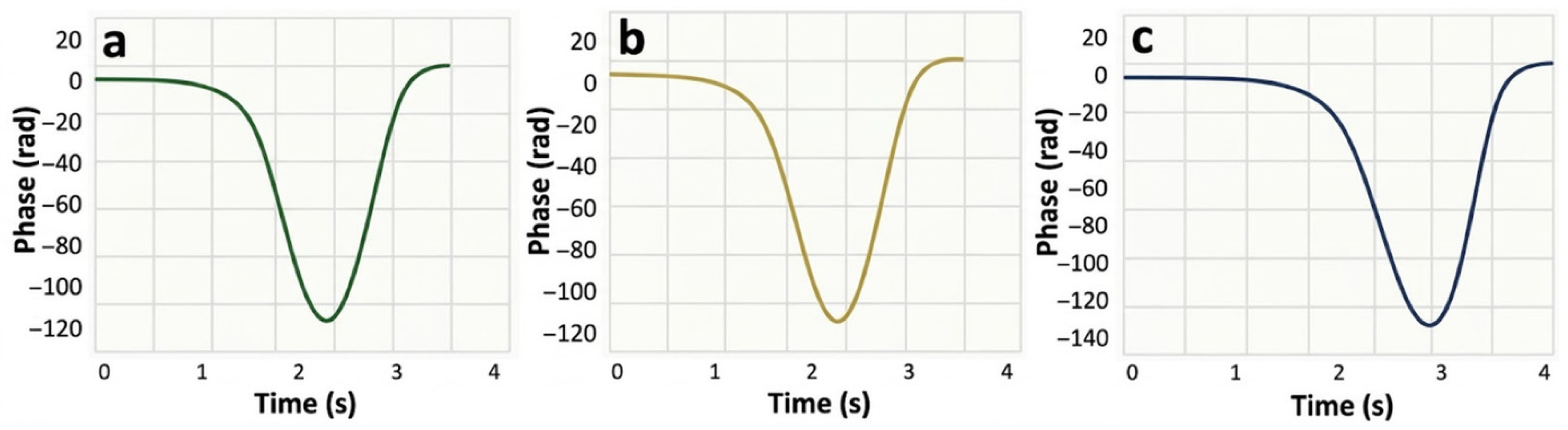
Phase shift measurements recorded during zeta potential analysis further supported these interpretations. All three samples exhibited an initial plateau phase followed by a sharp, symmetrical decrease to a minimum between 1.8 and 2.3 s, after which values returned toward baseline. ALK samples showed a minimum phase shift of approximately −110 rad, UAE samples produced a similar but smoother profile with reduced fluctuation, and MAE samples reached a deeper minimum of approximately −130 rad. The more dynamic phase behavior of MAE samples is consistent with the presence of large aggregates generating heterogeneous mobility responses, whereas the smoother UAE profile reflects the more homogeneous, well-dispersed particle population confirmed by the size distribution data as illustrated in Figure 4. Considered together, the colloidal data indicate that UAE produces the most stable and uniform protein dispersions among the three methods, while MAE, despite generating the highest surface charge, promotes population heterogeneity that may limit performance in applications where colloidal uniformity is critical.

3.5. Color Characteristics

Colorimetric analysis revealed statistically significant differences in the visual appearance of the isolates across the various extraction methods (Table 1). Based on the lightness metric, MAE-treated proteins were the lightest (L* = 78.44 ± 1.32), followed by ALK (L* = 76.79 ± 0.87), while UAE samples were the darkest (L* = 73.68 ± 0.84). The lighter color and significantly reduced yellowness (b* = 22.80 ± 1.20) of MAE samples, compared to ALK (b* = 23.68 ± 1.63), likely resulted from localized overheating and partial pigment degradation during microwave exposure [24,47]. Conversely, UAE samples exhibited the significantly lowest a* value (−4.37 ± 0.15) but the highest b* value (25.12 ± 1.70). While the mild processing temperature and short sonication time of UAE typically minimize non-enzymatic browning [18], the strong mechanical cavitation likely facilitated a higher co-extraction of natural yellow-green pigments (such as chlorophylls and carotenoids) from the pumpkin seeds, accounting for the lower lightness and higher yellowness. Comparable color variations have been reported for ultrasound-treated soy, chickpea, and chia proteins [13,19,48]. Finally, ALK-extracted isolates presented the highest a* value (−3.99 ± 0.08), though it was not statistically different from MAE (−4.04 ± 0.04), representing a relative shift toward the red axis. This is attributable to Maillard-driven browning under prolonged alkaline conditions, as well as the oxidation of tyrosine residues and polyphenol degradation [31,48].

3.6. FTIR Spectroscopy and Secondary Structure Analysis

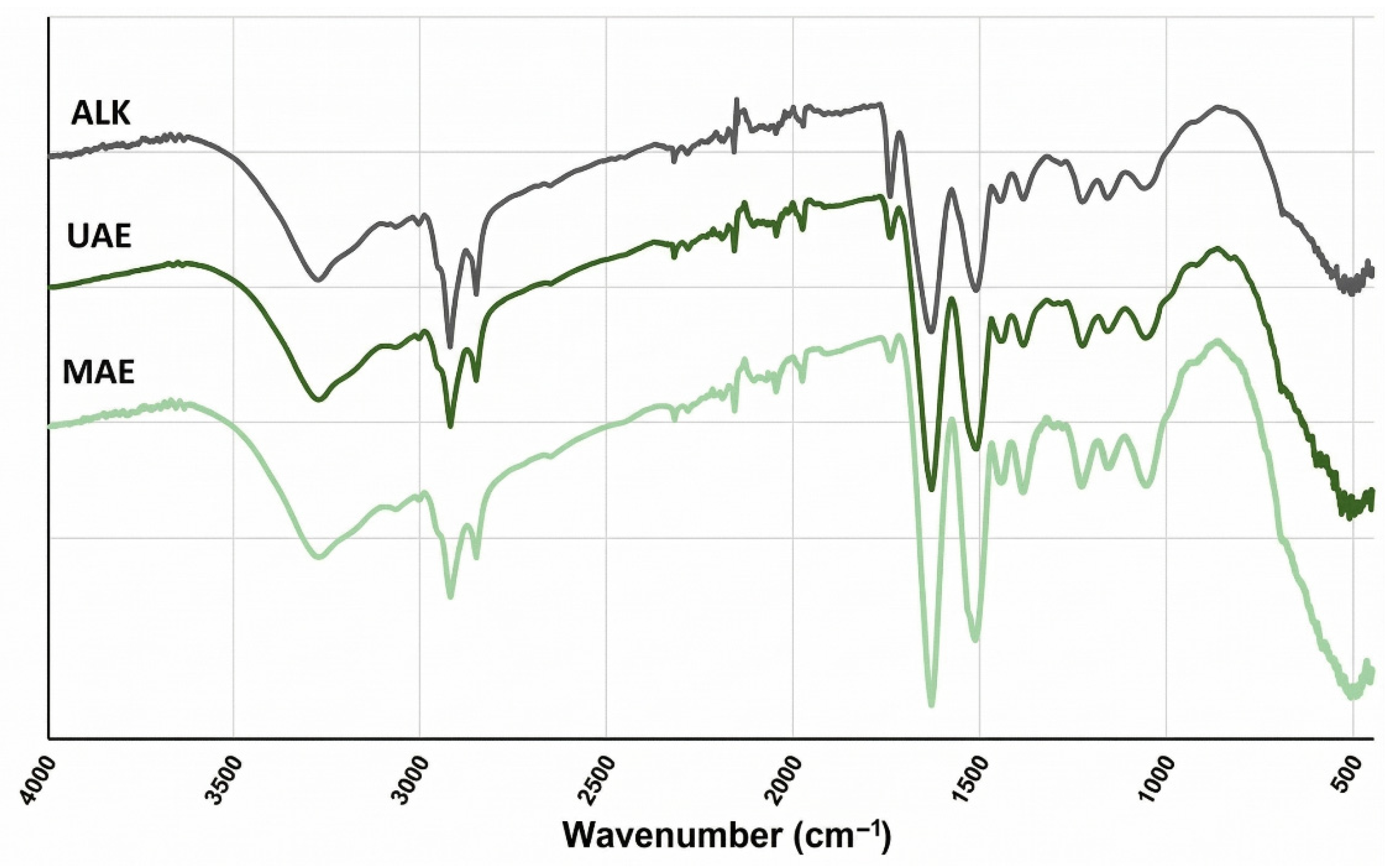
As illustrated in Figure 5, the FTIR spectra of the three isolates showed differences in peak definition in the amide I (approximately 1625 cm−1) and amide II (approximately 1530 cm−1) regions, which are associated with C=O stretching vibrations and N-H bending of peptide bonds and reflect the integrity of protein secondary structure [11]. To quantitatively assess these changes, the amide I band was deconvoluted to determine the relative percentages of secondary structural elements (Table 2).
UAE-treated samples exhibited the sharpest and most resolved peaks in these regions, consistent with better retention of native protein conformation. Quantitative analysis supported this, as UAE maintained a high alpha-helix content (43.45%) and the lowest proportion of aggregates (7.69%). This is likely a consequence of the predominantly mechanical nature of ultrasonic disruption. Acoustic cavitation generates intense, localized shear forces that selectively disrupt weaker non-covalent interactions (such as hydrogen bonds and hydrophobic interactions) to facilitate partial unfolding and the exposure of buried reactive sites. Because it lacks the sustained thermal or harsh chemical energy of conventional methods, UAE avoids triggering extensive covalent bond cleavage or the irreversible beta-sheet aggregation typically associated with severe denaturation [49].
ALK-extracted proteins showed broader, flattened spectral features, indicating greater structural disorder and probable denaturation from the combined stress of high-pH, prolonged exposure, and the elevated extraction temperature (50 °C). Deconvolution confirmed this severe structural collapse, characterized by a significant reduction in alpha-helix content (20.48%) and a massive shift towards beta-sheet structures (50.79%) and aggregates (9.17%). MAE samples fell between the two extremes, with moderately resolved amide peaks. While MAE isolates retained a high alpha-helix content (43.77%) comparable to UAE, they also exhibited elevated aggregate formation (8.89%) that statistically grouped with the denatured ALK samples. This reflects how localized dielectric heating can lead to partial structural rearrangement, accounting for less defined spectral features relative to UAE [33,50]. Overall, the quantitative secondary structure fractions and relative differences in peak sharpness and intensity across treatments consistently favor UAE as the least structurally disruptive method. These FTIR observations are in good agreement with data reported for ultrasound-treated lupin and chickpea proteins [33,38,42]. The FTIR results also corroborate the particle size data: the higher aggregate content and broader, less resolved amide features of ALK and MAE samples correspond to the larger and more heterogeneous particle populations observed for those treatments, while the sharper amide peaks of UAE samples reflect better-preserved, more uniform protein structures.

3.7. Scanning Electron Microscopy

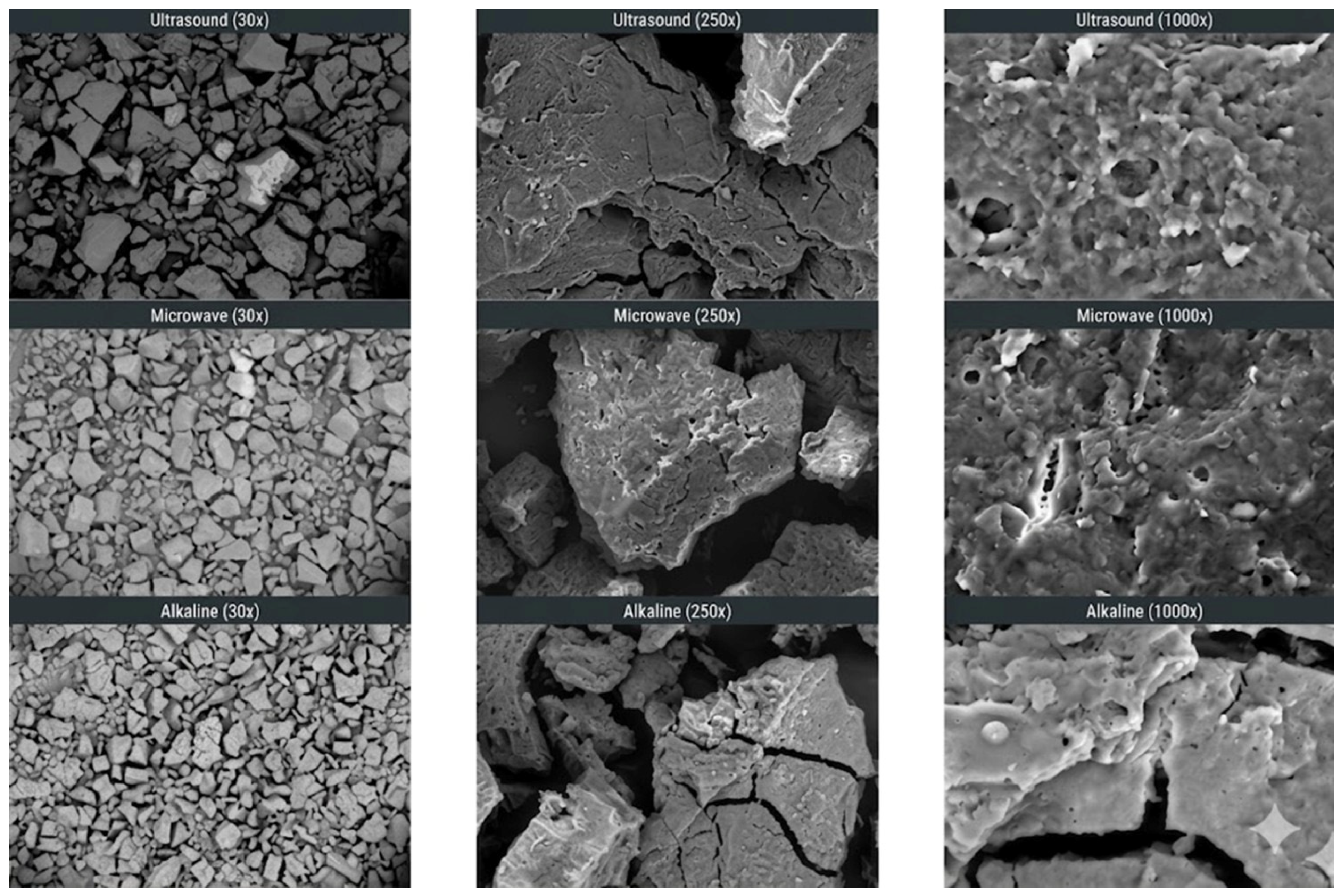
SEM micrographs of the three isolates revealed distinct morphological differences reflecting the disruption mechanisms of each extraction method (Figure 6). At 30× magnification, UAE samples appeared as large, sheet-like fragments with relatively flat surfaces and visible layered structures, characteristic of mild mechanical disruption by cavitation that exfoliates protein-rich layers without fully destroying particle architecture. Similar intact flake morphologies have been reported for ultrasound-treated pea, chickpea, and chia proteins [51,52]. MAE samples exhibited more irregular, porous fragments with rounded, fractured edges, consistent with vapor pressure build-up and explosive cell rupture from localized dielectric heating, as described for microwave-extracted peanut and mustard proteins [53,54]. ALK samples showed the most fragmented appearance, with small angular particles and sharp edges indicative of severe matrix disintegration under alkaline conditions.
At 250× magnification, UAE isolates retained visible lamellar structures with moderate surface roughness, suggesting limited unfolding with preservation of the internal arrangement. MAE proteins showed collapsed regions and fine surface pitting from uneven thermal effects. ALK-treated samples displayed crumbled particles with deep fissures separating from protein aggregates, consistent with alkaline-induced hydrolysis and unfolding [19].
At 1000× magnification, UAE protein surfaces were dense with micro-porosity and granular features along flake edges, consistent with cavitation-assisted unfolding without structural collapse. These morphological features align directly with the narrow particle size distribution, high solubility, and superior foaming and emulsifying performance of UAE samples [55]. MAE surfaces showed fine granularity with surface deformation and partial fusion, corresponding to their intermediate functional properties and the bimodal particle size distribution observed by dynamic light scattering. ALK-treated proteins were highly porous with amorphous, sponge-like textures and globular aggregates, providing morphological evidence of extensive denaturation and reaggregation that aligns with their larger, more homogeneous aggregate population detected in particle size analysis. Taken together, the SEM data reinforce the pattern established across all other characterization methods: UAE preserves protein structure most effectively, producing intact, well-dispersed particles with superior functional properties, while MAE and ALK introduce progressively greater structural disruption with corresponding reductions in colloidal homogeneity and functionality [56].

4. Conclusions

This study compared three extraction methods for the isolation of protein from Moroccan pumpkin seeds (Cucurbita pepo L.) and evaluated the resulting isolates across a comprehensive set of functional, colloidal, structural, and colorimetric parameters. Overall, the non-thermal methods demonstrated significant advantages over conventional alkaline extraction, excelling in distinct functional areas. UAE-extracted isolates demonstrated superior protein solubility, particularly near the isoelectric point, and the greatest water and fat absorption capacities among the three treatments. The least gelation concentration was also lowest for UAE samples, indicating a stronger capacity for protein network formation at low concentrations. Particle size analysis revealed that UAE produced the most uniform dispersions, with a narrow monomodal distribution centered between 120 and 150 nm, while zeta potential measurements confirmed adequate colloidal stability for all treatments. FTIR spectra deconvolution quantitatively confirmed that UAE best preserved native protein secondary structure (retaining 43.45% alpha-helix with minimal aggregation), and SEM micrographs confirmed a porous, intact morphology consistent with mild mechanical disruption rather than thermal or chemical degradation. MAE achieved the highest protein content among the three methods and generated the most negative zeta potential, suggesting a greater density of exposed surface charges. This elevated surface charge and high protein yield likely contributed to MAE exhibiting the best emulsifying and foaming performance among the three treatments, though the bimodal particle size distribution suggests other interfacial dynamics may also influence this behavior. MAE samples were also the lightest in color, reflecting partial pigment degradation, whereas UAE samples exhibited higher yellowness likely due to co-extracted natural pigments. However, MAE produced a bimodal particle size distribution reflecting simultaneous formation of small dispersed species and large aggregates, and its other functional properties, including solubility and gelation capacity, were intermediate. These results indicate that the localized thermal heterogeneity inherent to microwave processing, even at controlled bulk temperatures, introduces structural variability that limits the physical uniformity of the resulting isolates. Conventional alkaline extraction performed the least well across functional, colloidal, and structural criteria.
The combined stress of extreme pH, the elevated extraction temperature (50 °C) and duration triggered severe denaturation, extensive beta-sheet formation, and irreversible aggregation, confirming the well-documented trade-off between the operational simplicity of this method and the quality of the protein isolates it produces. Despite its negative impact on protein functional integrity, ALK remains a viable, cost-effective industrial method for extracting bulk protein where structural preservation is not strictly required, such as in animal feed or basic nutritional supplements.
From a practical standpoint, for producing high-quality pumpkin seed protein isolates suitable for plant-based food formulations, these findings support the use of non-thermal extraction strategies: UAE is highly recommended for systems requiring optimal solubility, absorption, and gelation, while MAE is highly effective for emulsion-based and foamed products. The data also highlight pumpkin seeds as a viable and underutilized agro-industrial by-product with real potential as a sustainable protein source. Because the current study aimed to establish a comparative baseline among extraction methods under fixed, representative conditions, future work should address the systematic optimization of these low-temperature processing parameters. Utilizing Response Surface Methodology or single-factor designs to fine-tune ultrasound amplitude, microwave power, pulse duration, and solid-to-liquid ratios will be critical next steps, alongside evaluating the behavior of these isolates under food-relevant processing conditions such as heat treatment, pH cycling, and ionic strength variation. Scale-up feasibility and the environmental footprint of each extraction route at pilot and industrial scales also warrant investigation before commercial adoption can be fully assessed. Specifically, future research should incorporate quantitative life cycle assessments and energy efficiency analyses to definitively evaluate the sustainability and “green” credentials of these emerging extraction processes compared to conventional methods.

Author Contributions

Conceptualization, W.Z. and E.A.A.; methodology, W.Z. and S.E.; software, W.Z.; validation, S.E., H.A., R.N., A.C., I.H.T. and E.A.A.; formal analysis, W.Z.; investigation, W.Z.; resources, E.A.A.; data curation, W.Z.; writing—original draft preparation, W.Z.; writing—review and editing, S.E., H.A., R.N., A.C., I.H.T. and E.A.A.; visualization, W.Z.; supervision, S.E. and E.A.A.; project administration, S.E. and E.A.A. All authors have read and agreed to the published version of the manuscript.

Funding

This research was funded in Morocco by the Ministry of Higher Education, Scientific Research and Innovation (MESRSI). The study was conducted within the IPSUS project, “Climate-smart food innovation using plant and seaweed proteins from upcycled sources”, supported by the Horizon 2020 ERA-Nets SUSFOOD2 and FOSC. Additional support was provided by the TÜBİTAK 1071 Program for Increasing Capacity to Benefit from International Research Funds and Participation in International R&D Cooperation (Grant No. 122N018).

Data Availability Statement

The original data presented in the study are included in the article; further inquiries can be directed to the corresponding author.

Acknowledgments

Walid Zenasni gratefully acknowledges the CNRST (Centre National de la Recherche Scientifique et Technique) in Morocco for the PhD Associate Scholarship Pass.

Conflicts of Interest

The authors declare no conflicts of interest.

References

  1. Food and Agriculture Organization of the United Nations (FAO). The Future of Food and Agriculture: Trends and Challenges; Food and Agriculture Organization of the United Nations: Rome, Italy, 2014; Volume 4.
  2. Sengar, A.S.; Thirunavookarasu, N.; Choudhary, P.; Naik, M.; Surekha, A.; Sunil, C.; Rawson, A. Application of Power Ultrasound for Plant Protein Extraction, Modification and Allergen Reduction—A Review. Appl. Food Res. 2022, 2, 100219. [Google Scholar] [CrossRef]
  3. Amin, A.; Petersen, I.L.; Malmberg, C.; Orlien, V. Perspective on the Effect of Protein Extraction Method on the Antinutritional Factor (ANF) Content in Seeds. ACS Food Sci. Technol. 2022, 2, 604–612. [Google Scholar] [CrossRef]
  4. Negi, P.; Kalsi, R.; Bhasin, J.K.; Kashyap, P.; Thakur, A.; Goksen, G. Ultrasound-Driven Advancements in Food Waste Protein Extraction: Assessing Yield, Nutritional Impacts, Techno-Functionality, and Structural Modifications. Sustain. Chem. Pharm. 2024, 42, 101767. [Google Scholar] [CrossRef]
  5. Su, G.; Xie, Y.; Liu, R.; Cui, G.; Zhao, M.; Zhang, J. Effect of Transglutaminase on Taste Characteristics of Pea Protein Hydrolysates through Altering the Composition of Amino Acids and Peptides. Food Biosci. 2023, 56, 103261. [Google Scholar] [CrossRef]
  6. Chemat, F.; Vian, M.A.; Ravi, H.K.; Khadhraoui, B.; Hilali, S.; Perino, S.; Tixier, A.S.F. Review of Alternative Solvents for Green Extraction of Food and Natural Products: Panorama, Principles, Applications and Prospects. Molecules 2019, 24, 3007. [Google Scholar] [CrossRef] [PubMed]
  7. Liu, R.L.; Yu, P.; Ge, X.L.; Bai, X.F.; Li, X.Q.; Fu, Q. Establishment of an Aqueous PEG 200-Based Deep Eutectic Solvent Extraction and Enrichment Method for Pumpkin (Cucurbita moschata) Seed Protein. Food Anal. Methods 2017, 10, 1669–1680. [Google Scholar] [CrossRef]
  8. Dotto, J.M.; Chacha, J.S. The Potential of Pumpkin Seeds as a Functional Food Ingredient: A Review: Biofunctional Ingredients of Pumpkin Seeds. Sci. Afr. 2020, 10, e00575. [Google Scholar]
  9. Syed, Q.A.; Akram, M.; Shukat, R. Nutritional and Therapeutic Importance of the Pumpkin Seeds. Biomed. J. Sci. Tech. Res. 2019, 21, 15798–15803. [Google Scholar] [CrossRef]
  10. Lemus-Mondaca, R.; Marin, J.; Rivas, J.; Sanhueza, L.; Soto, Y.; Vera, N.; Puente-Díaz, L. Pumpkin Seeds (Cucurbita maxima): A Review of Functional Attributes and by-Products. Rev. Chil. Nutr. 2019, 46, 783–791. [Google Scholar] [CrossRef]
  11. Sert, D.; Rohm, H.; Struck, S. Ultrasound-Assisted Extraction of Protein from Pumpkin Seed Press Cake: Impact on Protein Yield and Techno-Functionality. Foods 2022, 11, 4029. [Google Scholar] [CrossRef]
  12. Jafari, M.; Goli, S.A.H.; Rahimmalek, M. The Chemical Composition of the Seeds of Iranian Pumpkin Cultivars and Physicochemical Characteristics of the Oil Extract. Eur. J. Lipid Sci. Technol. 2012, 114, 161–167. [Google Scholar] [CrossRef]
  13. Lalnunthari, C.; Devi, L.M.; Amami, E.; Badwaik, L.S. Valorisation of Pumpkin Seeds and Peels into Biodegradable Packaging Films. Food Bioprod. Process. 2019, 118, 58–66. [Google Scholar] [CrossRef]
  14. Yang, C.; Wang, B.; Wang, J.; Xia, S.; Wu, Y. Effect of Pyrogallic Acid (1,2,3-Benzenetriol) Polyphenol-Protein Covalent Conjugation Reaction Degree on Structure and Antioxidant Properties of Pumpkin (Cucurbita sp.) Seed Protein Isolate. LWT 2019, 109, 443–449. [Google Scholar] [CrossRef]
  15. Das, M.; Devi, L.M.; Badwaik, L.S. Ultrasound-Assisted Extraction of Pumpkin Seeds Protein and Its Physicochemical and Functional Characterization. Appl. Food Res. 2022, 2, 100121. [Google Scholar] [CrossRef]
  16. Xu, X.; Liu, H.; Duan, S.; Liu, X.; Zhang, K.; Tu, J. A Novel Pumpkin Seeds Protein-Pea Starch Edible Film: Mechanical, Moisture Distribution, Surface Hydrophobicity, UV-Barrier Properties and Potential Application. Mater. Res. Express 2019, 6, 045304. [Google Scholar] [CrossRef]
  17. Hassan, B.; Ali, S.; Chatha, S.S.A.S.; Hussain, A.I.; Zia, K.M.; Akhtar, N. Recent Advances on Polysaccharides, Lipids and Protein Based Edible Films and Coatings: A Review. Int. J. Biol. Macromol. 2018, 109, 1095–1107. [Google Scholar] [CrossRef] [PubMed]
  18. Galus, S. Functional Properties of Soy Protein Isolate Edible Films as Affected by Rapeseed Oil Concentration. Food Hydrocoll. 2018, 85, 233–241. [Google Scholar] [CrossRef]
  19. Lalnunthari, C.; Devi, L.M.; Badwaik, L.S. Extraction of Protein and Pectin from Pumpkin Industry By-Products and Their Utilization for Developing Edible Film. J. Food Sci. Technol. 2020, 57, 1807–1816. [Google Scholar] [CrossRef]
  20. Kumar, Y.; Singh, L.; Sharanagat, V.S.; Patel, A.; Kumar, K. Effect of Microwave Treatment (Low Power and Varying Time) on Potato Starch: Microstructure, Thermo-Functional, Pasting and Rheological Properties. Int. J. Biol. Macromol. 2020, 155, 27–35. [Google Scholar] [CrossRef]
  21. Zhou, L.; Zhang, W.; Wang, J.; Zhang, R.; Zhang, J. Comparison of Oil-in-Water Emulsions Prepared by Ultrasound, High-Pressure Homogenization and High-Speed Homogenization. Ultrason. Sonochem. 2022, 82, 105885. [Google Scholar] [CrossRef]
  22. Prandi, B.; Di Massimo, M.; Tedeschi, T.; Rodríguez-Turienzo, L.; Rodríguez, Ó. Ultrasound and Microwave-Assisted Extraction of Proteins from Coffee Green Beans: Effects of Process Variables on the Protein Integrity. Food Bioprocess Technol. 2022, 15, 2712–2722. [Google Scholar] [CrossRef]
  23. Hui, D.; Liang, W.; Wang, R.; Feng, X.; Tang, X. A Review of Gelation of Plant Proteins and Their Influencing Factors. Sustain. Food Proteins 2025, 3, e70037. [Google Scholar] [CrossRef]
  24. Ochoa-Rivas, A.; Nava-Valdez, Y.; Serna-Saldívar, S.O.; Chuck-Hernández, C. Microwave and Ultrasound to Enhance Protein Extraction from Peanut Flour under Alkaline Conditions: Effects in Yield and Functional Properties of Protein Isolates. Food Bioprocess Technol. 2017, 10, 543–555. [Google Scholar] [CrossRef]
  25. Vinayashree, S.; Vasu, P. Biochemical, Nutritional and Functional Properties of Protein Isolate and Fractions from Pumpkin (Cucurbita moschata Var. Kashi Harit) Seeds. Food Chem. 2021, 340, 128177. [Google Scholar] [CrossRef] [PubMed]
  26. Gao, D.; Helikh, A.; Duan, Z. Determining The Effect Of Ph-Shifting Treatment On The Solubility Of Pumpkin Seed Protein Isolate. East.-Eur. J. Enterp. Technol. 2021, 5, 29–34. [Google Scholar] [CrossRef]
  27. Bučko, S.; Katona, J.; Popović, L.; Vaštag, Ž.; Petrović, L.; Vučiniće-Vasić, M. Investigation on Solubility, Interfacial and Emulsifying Properties of Pumpkin (Cucurbita pepo) Seed Protein Isolate. LWT 2015, 64, 609–615. [Google Scholar] [CrossRef]
  28. Tas, O.; Sumnu, S.G.; Oztop, M.H. Effect of Extraction Methods and Preheat Treatments on the Functional Properties of Pumpkin Seed Protein Concentrate. ACS Food Sci. Technol. 2024, 5, 105–117. [Google Scholar] [CrossRef] [PubMed]
  29. AACC International. Approved Methods of Analysis, 11th ed.; Method 46-10.01. Crude Protein—Improved Kjeldahl Method (Archived); Cereals & Grains Association: St. Paul, MN, USA, 2010; Available online: https://www.cerealsgrains.org/resources/Methods/Pages/46Nitrogen.aspx (accessed on 12 March 2024).
  30. Wang, H.; Chen, K.; Cheng, J.; Jiang, L.; Yu, D.; Dai, Y.; Wang, L. Ultrasound-Assisted Three Phase Partitioning for Simultaneous Extraction of Oil, Protein and Polysaccharide from Pumpkin Seeds. LWT 2021, 151, 112200. [Google Scholar] [CrossRef]
  31. Bera, M.B.; Mukherjee, R.K. Solubility, Emulsifying, and Foaming Properties of Rice Bran Protein Concentrates. J. Food Sci. 1989, 54, 142–145. [Google Scholar] [CrossRef]
  32. Brishti, F.H.; Zarei, M.; Muhammad, S.K.S.; Ismail-Fitry, M.R.; Shukri, R.; Saari, N. Evaluation of the Functional Properties of Mung Bean Protein Isolate for Development of Textured Vegetable Protein. Int. Food Res. J. 2017, 24, 1595–1605. [Google Scholar]
  33. Lawal, O.S.; Adebowale, K.O.; Ogunsanwo, B.M.; Sosanwo, O.A.; Bankole, S.A. On the Functional Properties of Globulin and Albumin Protein Fractions and Flours of African Locust Bean (Parkia biglobossa). Food Chem. 2005, 92, 681–691. [Google Scholar] [CrossRef]
  34. Tang, J.; Cases, L.; Alves, S.; Sun, D.W.; Tiwari, B.K. Protein Extraction from Lupin (Lupinus angustifolius L.) Using Combined Ultrasound and Microwave Techniques: Impact on Protein Recovery, Structure, and Functional Properties. Ultrason. Sonochem. 2025, 115, 107232. [Google Scholar] [CrossRef]
  35. Náthia-Neves, G.; Getachew, A.T.; Santana, Á.L.; Jacobsen, C. Legume Proteins in Food Products: Extraction Techniques, Functional Properties, and Current Challenges. Foods 2025, 14, 1626. [Google Scholar] [CrossRef]
  36. Shreyas, H.K.; Adhikari, P.; Yasmeen Shaikh, A.E.; Arya, S.S. Hydrodynamic and Ultrasonic Cavitation Physically Modifies the Milk Protein Concentrates with Improved Functionality. Sustain. Food Technol. 2026, 4, 1004–1020. [Google Scholar] [CrossRef]
  37. Zakki, A.; Aryanti, N.; Hadiyanto, H. Functional and Structural Characteristic of Plant Protein Isolates as Emulsifier by Ultrasound-Assisted Extraction: A Review. Bioact. Carbohydr. Diet. Fibre 2024, 32, 100449. [Google Scholar] [CrossRef]
  38. Fematt-Flores, G.E.; Aguiló-Aguayo, I.; Marcos, B.; Camargo-Olivas, B.A.; Sánchez-Vega, R.; Soto-Caballero, M.C.; Salas-Salazar, N.A.; Flores-Córdova, M.A.; Rodríguez-Roque, M.J. Milk Protein-Based Edible Films: Influence on Mechanical, Hydrodynamic, Optical and Antioxidant Properties. Coatings 2022, 12, 196. [Google Scholar] [CrossRef]
  39. Ribeiro, F.P.; Naito, R.S.; dos Santos Galvão, B.; Júnior, W.F.; Toyonaga, K.K.; Branco, I.G.; Ferreira, S.; Malacrida, C.R. Innovative Optimized Protein Extraction from Pequi Almond Cake: A Comparison of Ultrasound-Assisted and Alkaline Extraction Methods. Food Chem. X 2025, 29, 102746. [Google Scholar] [CrossRef] [PubMed]
  40. Cui, B.; Zhang, Y.; Zhu, C.; Li, K.; Wang, Y.; Wang, Y.; Ma, W.; Bai, Y. Ultrasound-mediated fabrication of chickpea protein nanoparticles for stabilizing Pickering emulsions. Ultrason. Sonochem. 2025, 121, 107574. [Google Scholar] [CrossRef] [PubMed]
  41. Náthia-Neves, G.; Echers, S.G.; Getachew, A.T.; Jacobsen, C. Microwave-Assisted Extraction Drives Changes in the Proteomic Profile, Structural, and Functional Properties of Lupin Protein Isolates. Food Hydrocoll. 2026, 175, 112492. [Google Scholar] [CrossRef]
  42. Meurer, M.C.; de Souza, D.; Ferreira Marczak, L.D. Effects of Ultrasound on Technological Properties of Chickpea Cooking Water (Aquafaba). J. Food Eng. 2020, 265, 109688. [Google Scholar] [CrossRef]
  43. Ajayi, F.F.; Mudgil, P.; Maqsood, S. Molecular Structural Modification of Jack Bean Protein Using Thermo-Shearing/Ultrasound/Microwave Treatments for Improved Extractability, Functional and Gelling Properties: The Underlying Impacts of Matrix Pre-Treatment versus Alkaline-Assisted Extraction. Food Hydrocoll. 2024, 154, 110066. [Google Scholar] [CrossRef]
  44. Biswas, B.; Sit, N. Effect of Ultrasonication on Functional Properties of Tamarind Seed Protein Isolates. J. Food Sci. Technol. 2020, 57, 2070–2078. [Google Scholar] [CrossRef] [PubMed]
  45. Jahan, K.; Sultan, Z.; Younis, K.; Mir, S.S.; Yousuf, O. PH-Shift Extraction Followed by Microwave and Ultrasound Modified Functional Properties of Mustard Meal Protein. Biocatal. Agric. Biotechnol. 2024, 60, 103295. [Google Scholar] [CrossRef]
  46. Pochapski, D.J.; Carvalho Dos Santos, C.; Leite, G.W.; Pulcinelli, S.H.; Santilli, C.V. Zeta Potential and Colloidal Stability Predictions for Inorganic Nanoparticle Dispersions: Effects of Experimental Conditions and Electrokinetic Models on the Interpretation of Results. Langmuir 2021, 37, 13379–13389. [Google Scholar] [CrossRef] [PubMed]
  47. Tang, Q.; Roos, Y.H.; Miao, S. Plant Protein versus Dairy Proteins: A PH-Dependency Investigation on Their Structure and Functional Properties. Foods 2023, 12, 368. [Google Scholar] [CrossRef]
  48. Chen, Y.; Duan, Q.; Yu, L.; Xie, F. Thermomechanically Processed Chitosan:Gelatin Films Being Transparent, Mechanically Robust and Less Hygroscopic. Carbohydr. Polym. 2021, 272, 118522. [Google Scholar] [CrossRef]
  49. Malik, M.A.; Sharma, H.K.; Saini, C.S. High Intensity Ultrasound Treatment of Protein Isolate Extracted from Dephenolized Sunflower Meal: Effect on Physicochemical and Functional Properties. Ultrason. Sonochem. 2017, 39, 511–519. [Google Scholar] [CrossRef]
  50. Tang, S.; Li, Y.; Wang, X.; Zhou, L.; Liu, Z.; Jiang, L.; Guo, C.; Yi, J. Development of Soy-Based Meat Analogues via Wet Twin-Screw Extrusion: Enhancing Textural and Structural Properties Through Whole Yeast Powder Supplementation. Foods 2025, 14, 2479. [Google Scholar] [CrossRef]
  51. Loushigam, G.; Shanmugam, A. Modifications to Functional and Biological Properties of Proteins of Cowpea Pulse Crop by Ultrasound-Assisted Extraction. Ultrason. Sonochem. 2023, 97, 106448. [Google Scholar] [CrossRef]
  52. Rahman, M.M.; Lamsal, B.P. Ultrasound-Assisted Extraction and Modification of Plant-Based Proteins: Impact on Physicochemical, Functional, and Nutritional Properties. Compr. Rev. Food Sci. Food Saf. 2021, 20, 1457–1480. [Google Scholar] [CrossRef]
  53. Coutinho, G.S.M.; Prado, P.M.C.; Ribeiro, A.E.C.; Nickerson, M.T.; Caliari, M.; Júnior, M.S.S. Exploring Microwave-Assisted Extraction on Physicochemical and Functional Properties of Pigeon Pea Protein for Food Applications. J. Food Eng. 2025, 392, 112497. [Google Scholar] [CrossRef]
  54. Jahan, K.; Fatima, S.; Osama, K.; Younis, K.; Yousuf, O. Boosting Protein Yield from Mustard (Brassica juncea) Meal via Microwave-Assisted Extraction and Advanced Optimization Methods. Biomass Convers. Biorefin. 2023, 13, 16241–16251. [Google Scholar] [CrossRef]
  55. Scopelliti, P.E.; Borgonovo, A.; Indrieri, M.; Giorgetti, L.; Bongiorno, G.; Carbone, R.; Podestà, A.; Milani, P. The Effect of Surface Nanometre-Scale Morphology on Protein Adsorption. PLoS ONE 2010, 5, e11862. [Google Scholar] [CrossRef] [PubMed]
  56. Phuangjit, U.; Klinkesorn, U.; Tan, C.P.; Katekhong, W. Enhancing Silkworm Protein Yield, Extraction Efficiency, Structure, Functionality, and Antioxidant Activity Using Ultrasound-, Microwave-, and Freeze–Thaw-Assisted Methods. J. Sci. Food Agric. 2024, 104, 383–390. [Google Scholar] [CrossRef]
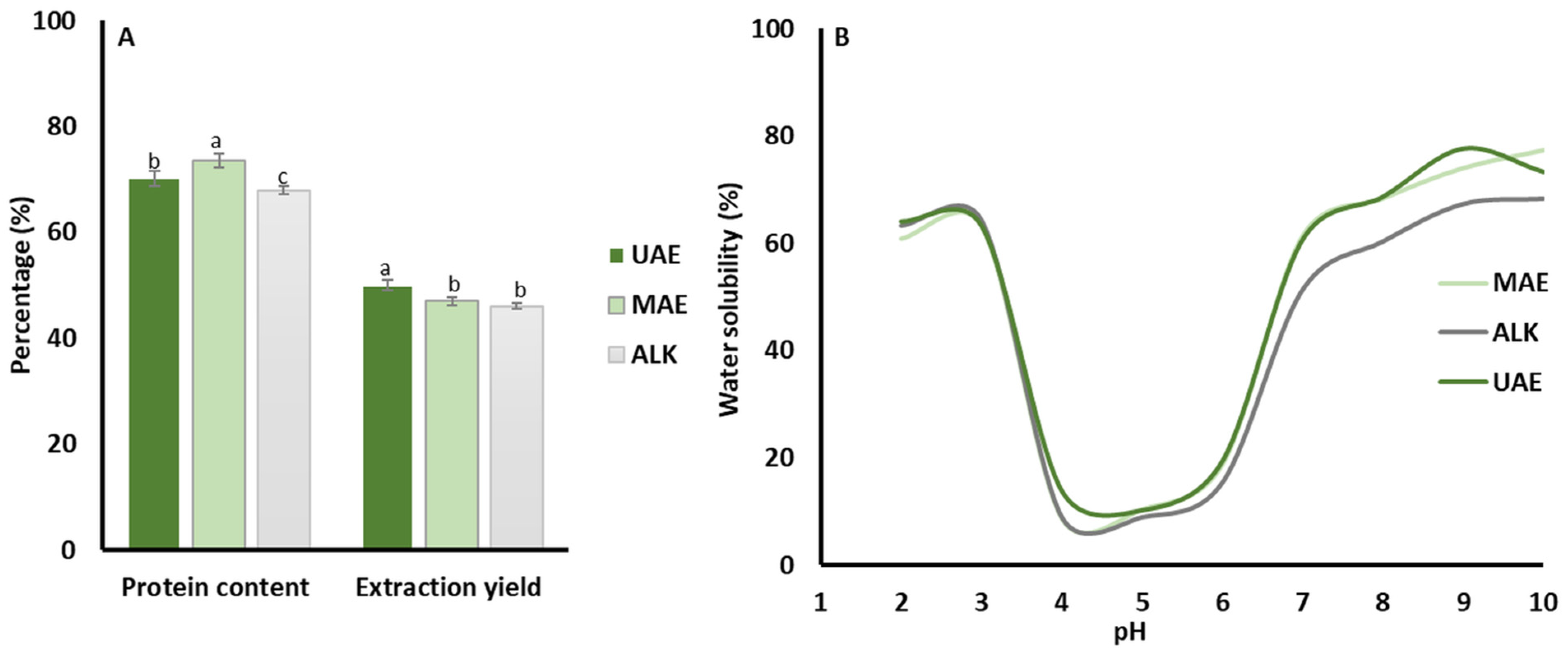
Figure 1. Comparison of extraction methods (UAE, MAE, and ALK) on (A) protein content and extraction yield, and (B) pH-dependent water solubility of pumpkin seed protein isolates; different letters indicate significant differences (p < 0.05).
Processes 14 01250 g001
Figure 2. Effect of extraction methods (UAE, MAE, and ALK) on (A) water and fat absorption capacities, and (B) emulsifying and foaming properties of pumpkin seed protein isolates; different letters indicate significant differences (p < 0.05).
Processes 14 01250 g002
Figure 3. Particle size of pumpkin seed protein isolates extracted using alkaline (a), ultrasound-assisted (b), and microwave-assisted (c) methods.
Processes 14 01250 g003
Figure 4. Phase behavior of pumpkin seeds protein isolates obtained using alkaline (a), ultrasound-assisted (b), and microwave-assisted (c) methods.
Processes 14 01250 g004
Figure 5. FTIR spectra of pumpkin seed protein isolates extracted by ALK, UAE, and MAE methods, highlighting the structural integrity and characteristic amide bands.
Processes 14 01250 g005
Figure 6. SEM micrographs of pumpkin seed protein isolates.
Processes 14 01250 g006
Table 1. Zeta potential, color parameters, and least gelation concentration (LGC) of pumpkin seed protein isolates obtained by ALK, UAE, and MAE methods; different letters within the same column indicate significant differences (p < 0.05).
Extraction MethodZeta Potential (mV)L*a*b*LGC (%)
ALK−29.00 ±0.23 a76.79 ± 0.87 b−3.99 ± 0.08 a23.68 ± 1.63 b16.00 ± 0.00 a
UAE−29.90 ± 1.11 a73.68 ± 0.84 c−4.37 ± 0.15 b25.12 ± 1.70 a12.00 ± 0.00 c
MAE−32.40 ± 1.27 b78.44 ± 1.32 a−4.04 ± 0.04 a22.80 ± 1.20 c14.00 ± 0.00 b
Table 2. Secondary structure composition (%) of pumpkin seed protein isolates obtained by ALK, UAE, and MAE methods; different letters within the same row indicate significant differences (p < 0.05).
Secondary StructureALK (%)UAE (%)MAE (%)
Alpha-Helix20.48 ± 0.85 b43.45 ± 0.92 a43.77 ± 1.05 a
Beta-Sheet50.79 ± 1.12 a35.05 ± 0.78 b30.18 ± 0.89 c
Beta-Turn19.56 ± 0.64 a13.81 ± 0.45 c17.10 ± 0.55 b
Aggregates9.17 ± 0.32 a7.69 ± 0.21 b8.89 ± 0.41 a
Disclaimer/Publisher’s Note: The statements, opinions and data contained in all publications are solely those of the individual author(s) and contributor(s) and not of MDPI and/or the editor(s). MDPI and/or the editor(s) disclaim responsibility for any injury to people or property resulting from any ideas, methods, instructions or products referred to in the content.