1. Introduction
Characterization of near-surface sediments in coastal marine and freshwater-saltwater transition zones is crucial for port infrastructure construction and engineering geology, requiring detailed lithological profile analysis [
1,
2]. Although hydroacoustic methods have traditionally been employed, their effectiveness in these environments is often limited by multiple reflection waves and the shielding effect of gas-bearing muddy layers at the bottom [
3,
4,
5]. Electrical resistivity tomography (ERT) offers a promising alternative, enhancing the capability to assess geological structures in offshore areas [
6,
7,
8] and enabling the detection of key features such as gas-bearing sediments [
9,
10,
11].
However, the quantitative interpretation of underwater ERT data faces a fundamental challenge: the dominant influence of pore water salinity (mineralization) on the bulk resistivity of sediments. This influence often masks or interacts complexly with resistivity variations caused by lithological changes [
10,
11,
12]. Consequently, reliably distinguishing sediment types based solely on resistivity requires robust resistivity petrophysical models that explicitly account for pore fluid properties and their interactions with the sediment matrix.
Developing such models for sediments in coastal areas presents specific complexities. Key unresolved issues include:
What is the influence of pore water salinity on the resistivity of different sediment matrices? What role does the cation exchange capacity (CEC) of sandy clays play in the resistivity of underwater sediments? Under what electrical measurement conditions do lithological contrasts remain discernible in the context of variable-density pore water?
Addressing these questions is essential for transforming underwater resistivity tomography from a qualitative mapping tool into a method for quantitative sediment characterization. Therefore, this study establishes a petrophysical model specifically for bottom sediments in nearshore water environments, integrating field sampling. The modeling focuses on the coupled effects of pore fluid salinity and intrinsic sediment properties (particularly clay CEC) on bulk resistivity. This framework provides the necessary petrophysical basis for accurately interpreting resistivity data in complex coastal environments.
Underwater resistivity tomography, as an efficient geophysical exploration method, has played a significant role in nearshore hydrogeological studies, particularly in characterizing submarine groundwater discharge [
13,
14] and monitoring seawater intrusion [
15]. However, existing research has predominantly focused on the interaction between water bodies and groundwater, with a relative lack of studies on the internal structure of underwater sediments, especially the detailed delineation and interpretation of sedimentary strata. Furthermore, the influence mechanism of complex seabed topography variations on resistivity data acquisition and inversion imaging results remains unclear, constraining the accurate application of this method in complex underwater environments. Underwater resistivity tomography can avoid the influence of seawater’s high conductivity while allowing for closer proximity to the exploration target. This is its unique advantage over previous methods.
Therefore, this study aims to investigate the applicability of seabed and surface resistivity tomography for identifying submarine sediment strata and systematically analyze the impact of different seabed topographic conditions on detection results, in order to provide a more reliable technical basis for underwater geological exploration and marine engineering surveys.
2. Petrophysical Modeling of Bottom Sandy Clay Sediments
Bottom sediments in coastal waters are mainly composed of sandy clay deposits, characterized by relatively low electrical conductivity values [
13]. Their resistivity is influenced by rock type and hydrogeophysical properties (porosity, pore water salinity, cation exchange capacity, and temperature). Under fully saturated conditions, conductivity is primarily affected by the degree of pore water mineralization in unconsolidated sediments [
8,
14,
15].
To quantitatively assess the impact of pore water salinity and cation exchange capacity on the resistivity of sandy clay sediments, specific petrophysical relationships need to be established. These dependencies were calculated using algorithms implemented in the “Petro(ver.8)” software package [
15].
In “Petro”, the electrical conductivity of pore fluid is calculated according to the following formula [
16]:
where
σ—electrical resistivity of the solution, expressed in Ω·m;
C—concentration, expressed in mol/m
3;
F—Faraday constant, expressed in C/mol;
Vc,
Va—mobilities of cations and anions in the dissolved substance, respectively, expressed in m
2/(dry matter);
n—hydration number, representing the number of moles of solvent surrounding the i-th ion in the solution, expressed in mol/m
3; and
z+,
z−—valences of cations and anions, respectively.
The particle size of dispersed sediments consists of fine and coarse fractions. For each component in the model, it is necessary to specify the porosity and water content, capillary radius, m-Archie, and cation exchange capacity (CEC, expressed in g/L).
For the coarse fraction of the soil, the CEC value is considered equal to zero. Considering these factors, the electrical conductivity of dispersed rocks can be calculated using the following formula [
16]:
where
z—valence of ions (cations and anions).
Uc,
Ua—electrical potentials of cations and anions, respectively.
Cc0,
Ca0—concentrations of ions (cations and anions) in the cation exchange capacity (CEC);
Kn—the rock porosity;
r2—capillary radius;
Cc = Cc(
r),
Ca = Ca(
r)—concentrations of cations and anions in the capillary, which depend on r.
Equation (2) incorporates two salinity (mineralization) conditions affecting rock resistivity: one related to pore water and the other originating from the influence of cation exchange capacity (CEC) [
12,
15]. This dual dependence enables the separation and quantitative analysis of soil CEC during the interpretation of electrical data.
Within the framework of dependency calculation, pore water salinity is systematically varied in increasing steps starting from a specified minimum value (0.01 or 0.1 g/L) to generate smooth response curves. The fine fraction content in the sediment mixture is adjusted from 0% to 100%, generating plots of the relationship between soil electrical conductivity and pore water mineralization.
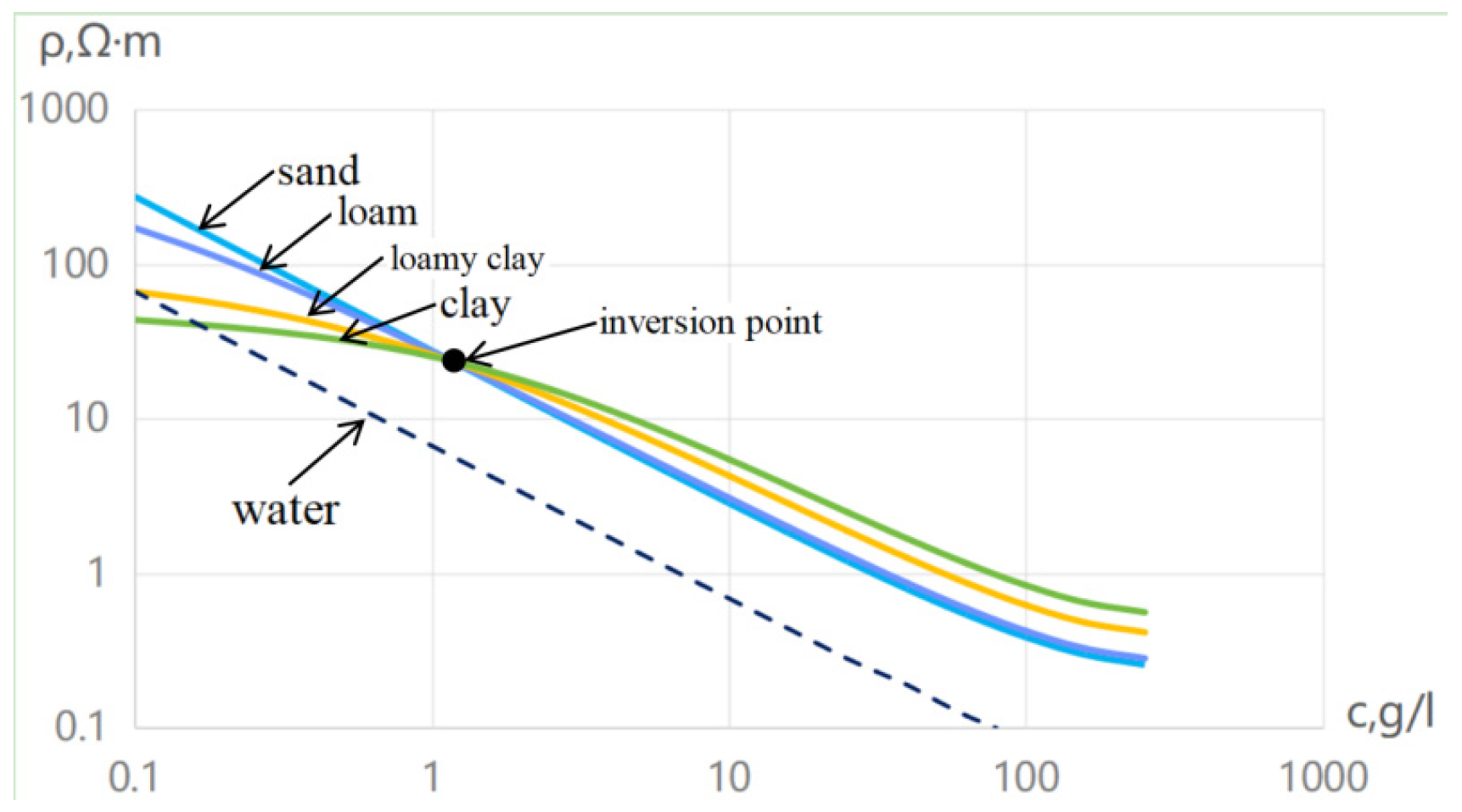
Figure 1 illustrates the dependence of resistivity on pore water mineralization in sandy clay sediments. The curve representing only water resistivity is highlighted with a black dashed line. Under high mineralization conditions, the soil resistivity curve lies above the water line; the magnitude of this vertical offset depends on soil porosity, consistent with Archie’s law. As mineralization decreases, the soil resistivity curve tends to converge with the water line. This convergence is attributed to the dominant influence of the electrical double layer (EDL) effect in clay minerals. The higher the clay content in the soil, the greater the deviation between its resistivity curve and that of the pure sand end-member. As water mineralization increases, the curves for sand and clay intersect at a characteristic resistivity reversal point, after which the resistivity values of both tend to converge. Therefore, the point at which the resistivity of sand changes from being higher than resistivity of clay to being lower than resistivity of clay is called the resistivity reversal point.
At this reversal point, sediment resistivity becomes independent of composition. When moving away from the reversal point (either towards lower or higher mineralization levels) significant changes occur in the resistivity between sandy and clayey sediments.
In the low mineralization region, sandy sediments exhibit the highest resistivity values (275 Ω·m), while clay-enriched sediments display the lowest resistivity values (44 Ω·m). Conversely, at mineralization levels above the reversal point (C = 1.29 g/L), clayey sediments attain the highest resistivity, whereas sandy sediments reach the lowest. The modeling yielded precise values for the resistivity variation and the pore water mineralization at the reversal point. This facilitates subsequent resistivity tomography modeling.
The resistivity contrast between sandy and clayey sediments diminishes significantly near the critical point but remains substantial at mineralization levels away from this critical value. Furthermore, as mineralization increases, the resistivity values of sandy loam tend to converge with those of pure sand, while the resistivity difference between clay and sandy loam becomes increasingly pronounced.
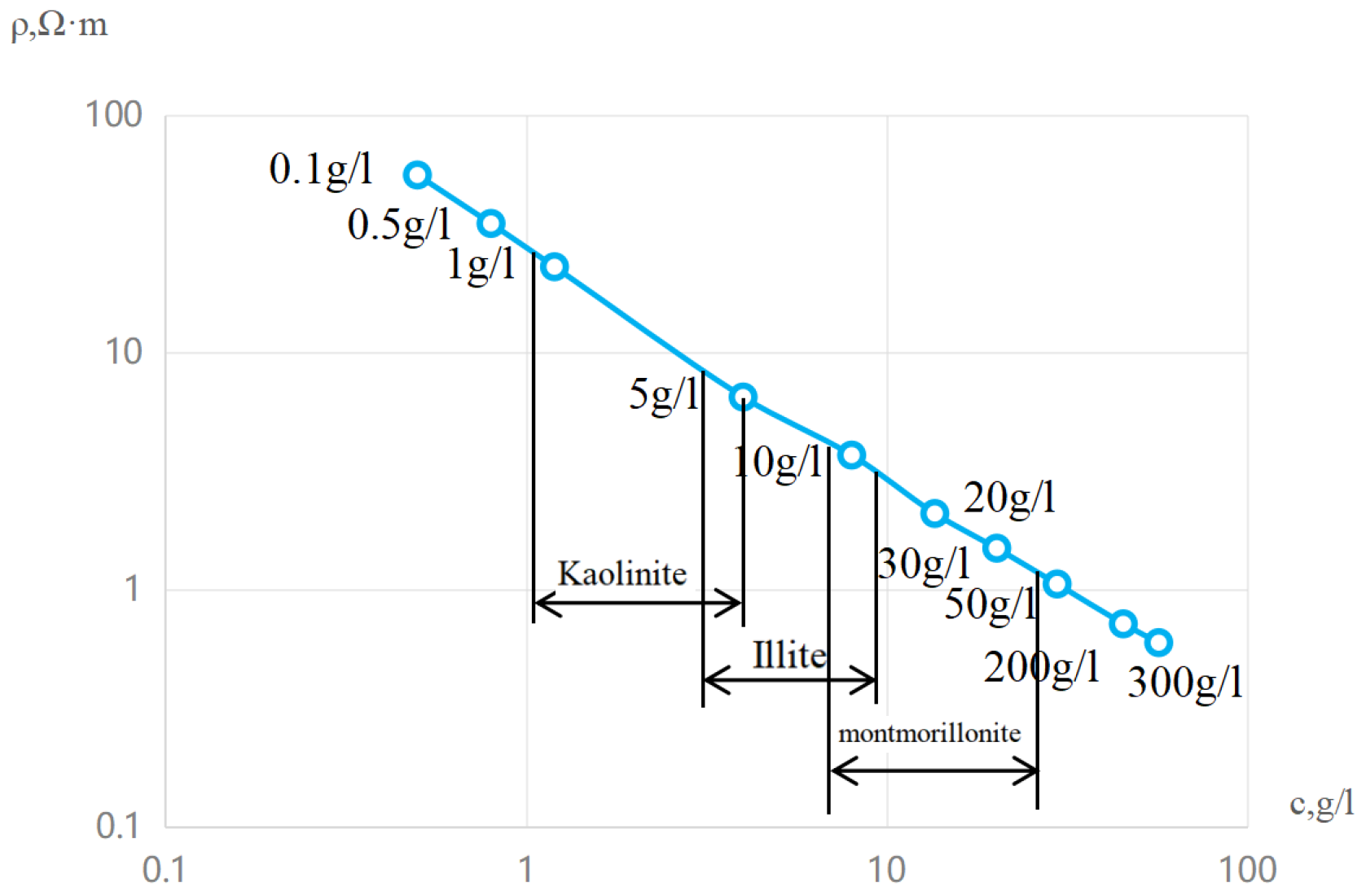
On the log-log plot of resistivity versus water mineralization, the position of the reversal point exhibits a linear relationship with varying mineralization levels (
Figure 2). As the cation exchange capacity (CEC) increases from 1 g/L to 200 g/L, the coordinates of this reversal point shift by several orders of magnitude. CEC, as a property known to depend on the mineralogical composition of sandy clay sediments, is primarily influenced by clay minerals, specifically the kaolinite, illite, and montmorillonite groups (
Figure 2) [
17]. Kaolinite exhibits the lowest physicochemical activity, while montmorillonite displays the highest. Cation exchange occurs on the surfaces of kaolinite and hydromica particles, whereas montmorillonite facilitates interlayer exchange.
The influence of clay mineralogy on the position of the reversal point is illustrated in
Figure 2, where the characteristic CEC ranges for different clay types are plotted along the reversal point displacement line. This dependence arises because the electrical conductivity of sandy clay sediments is controlled not only by the degree of pore water mineralization but also by the electrical double layer effects at the interface between clay particles and the electrolyte. Crucially, CEC itself contributes significantly to the bulk conductivity. When CEC values approach 200 g/L—characteristic of montmorillonite clays and commonly found in coastal marine muds—the resistivity values of water-saturated clays become substantially less dependent on pore water mineralization (
Figure 2).
This complex interaction indicates that resistivity values depend on multiple factors, complicating the differentiation of lithologies in sandy clay marine sediments using electrical methods. Furthermore, the resistivity values of rocks are also influenced by physical and mechanical properties, including porosity, permeability, and hydrocarbon contamination [
18,
19,
20].
The derived geoelectrical models provide a foundation for the reliable interpretation of underwater electrical measurement data. These models enable: (1) assessment of the impact of different hydrogeophysical conditions (pore water salinity, cation exchange capacity) on the effectiveness of resistivity tomography, (2) optimization of mapping methodologies, and (3) enhancement of the reliability of geological interpretation results.
3. Physical Modeling of Bottom Sand and Loam Sediments
To validate the results of the petrophysical modeling from the previous section, samples need to be obtained from the target area for physical modeling based on these samples [
21,
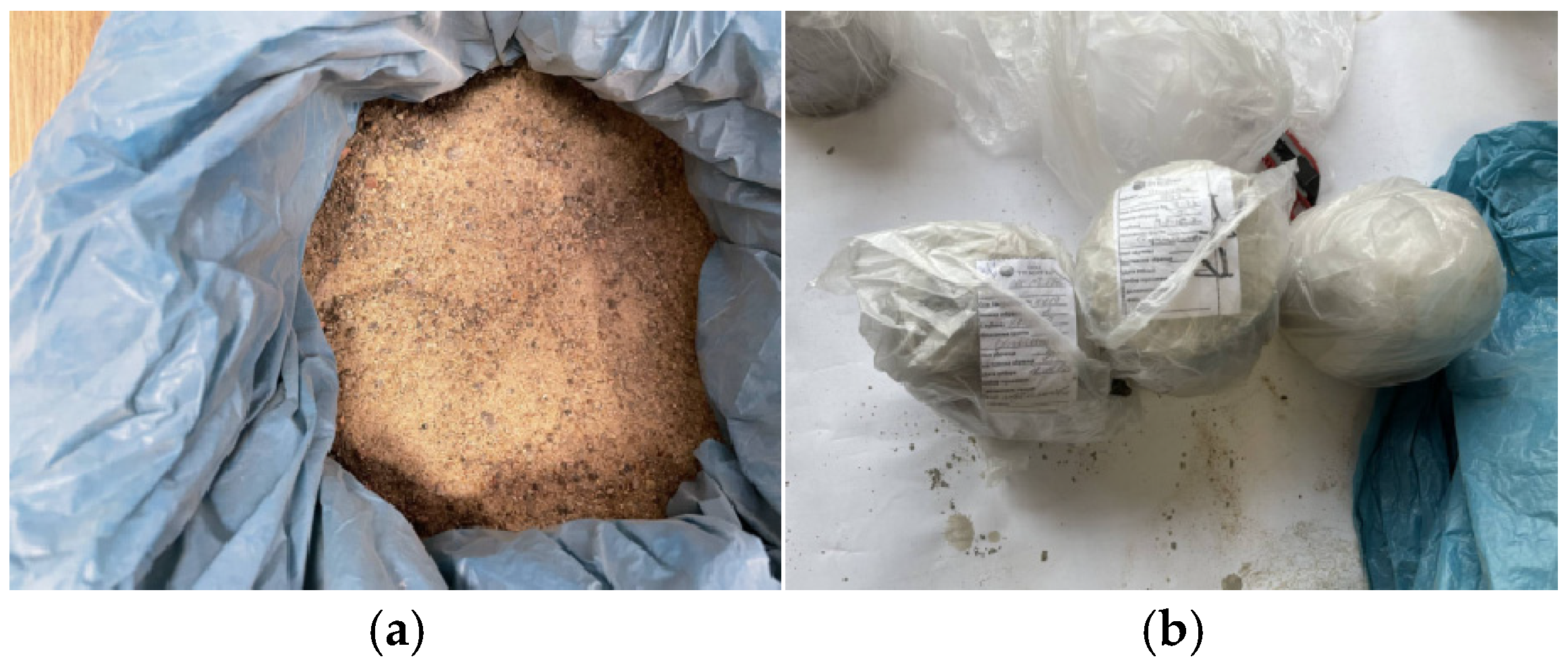
22]. Sample acquisition was carried out during the actual experimental work, using samples obtained from boreholes, as shown in
Figure 3.
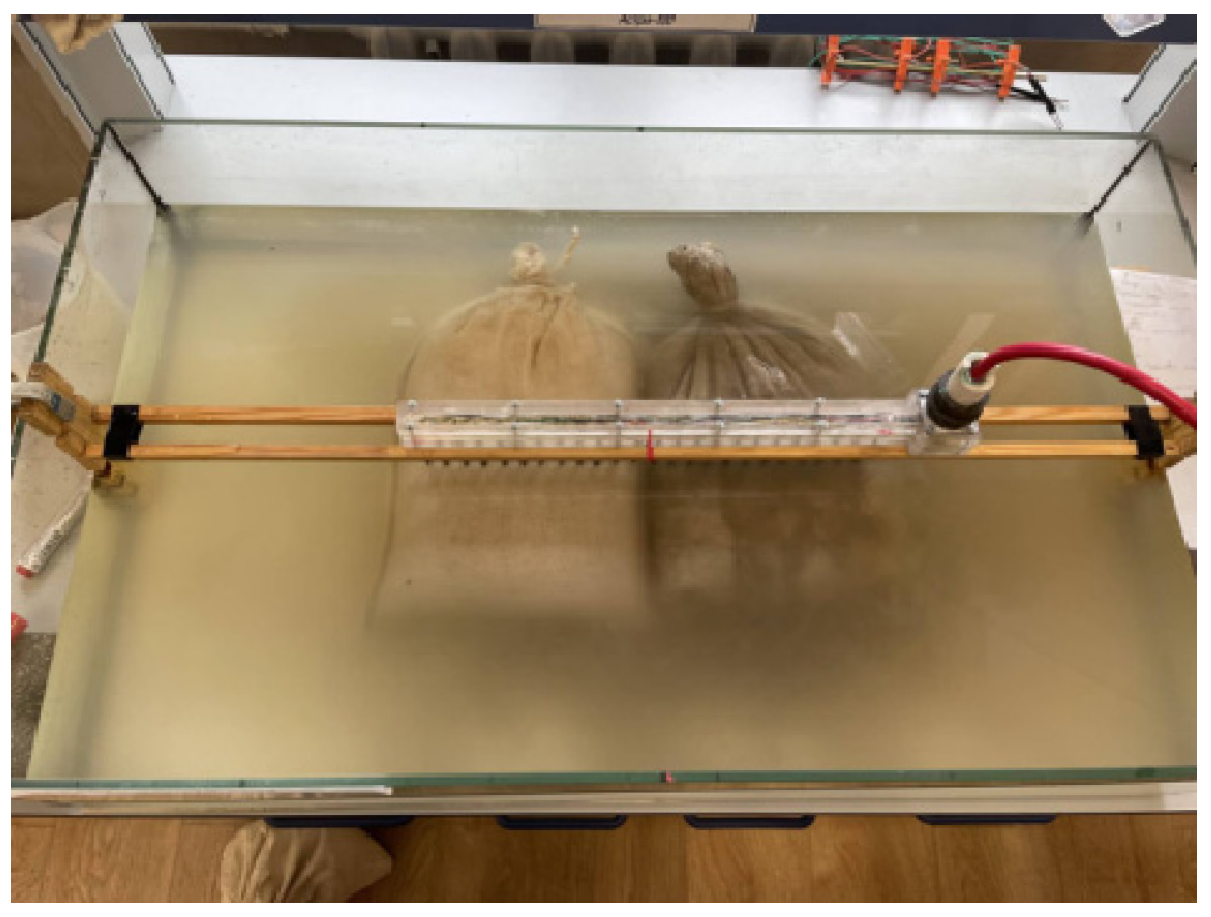
After obtaining the samples, a petrophysical model as shown in the figure below was constructed (
Figure 4). The left side of the model is sand, and the right side is loam. The two samples were packed and placed in the petrophysical model dish so that they were in close contact. Distilled water was then placed inside to ensure the water contained no saline substances.
Then, based on the volume of distilled water and the desired degree of water mineralization to be simulated, the weight of salt to be added was calculated. The initial mineralization levels of the water were set sequentially as C = 0 g/L, 10 g/L, and 20 g/L. Salt was then added accordingly, and experimental resistivity tomography measurements were carried out.
The instrument used was the “SLK-12” 48-channel resistivity tomography system. For precise simulation, only 24 electrodes were used in this experiment. To more closely replicate the acquisition work in actual experiments, the electrodes were immersed in water and coupled with the sample model. Ultimately, the following inversion results were obtained:
Through petrophysical modeling, the resistivity variations in real coastal bottom sediments under different degrees of water mineralization were simulated.
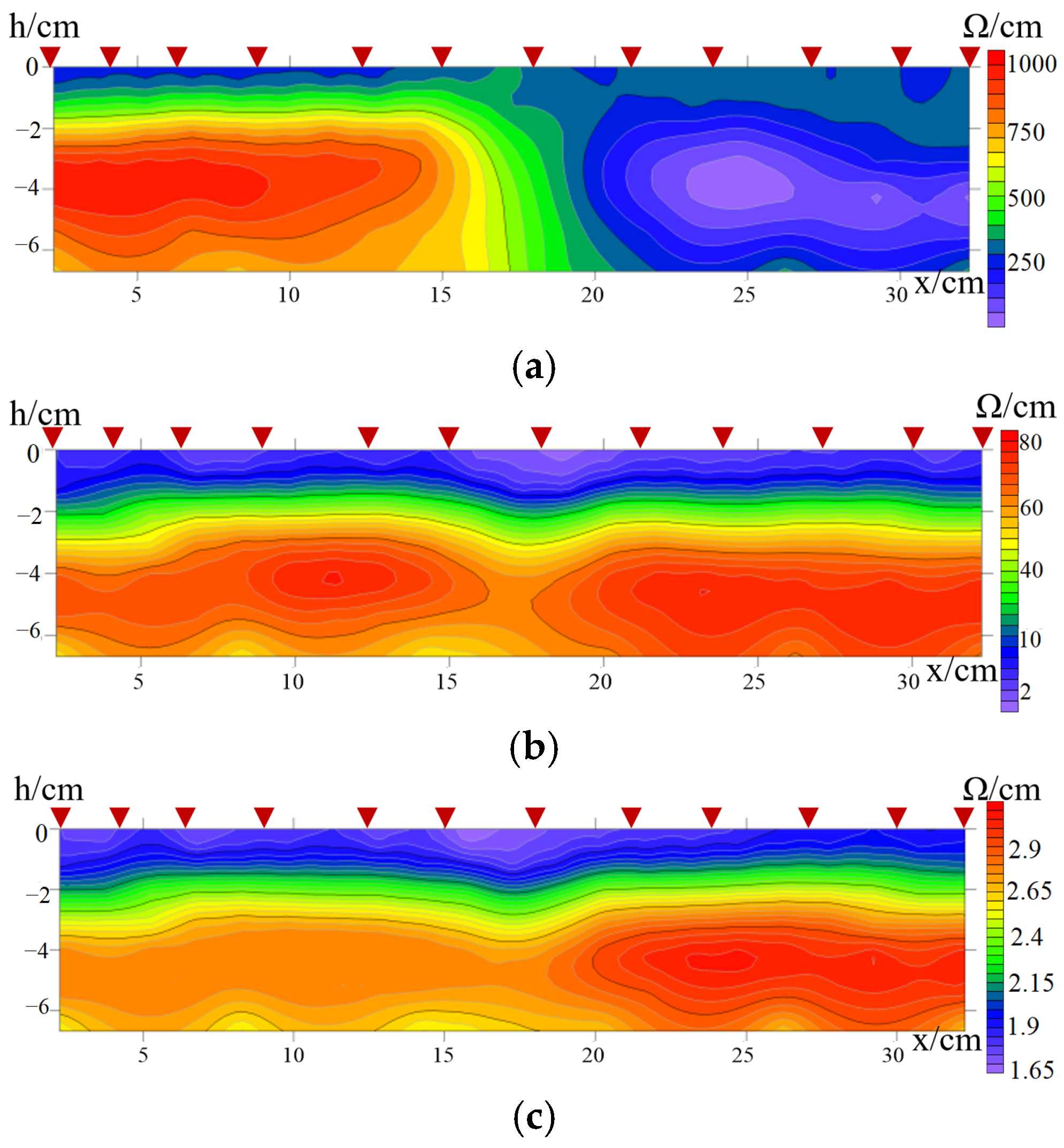
Figure 5a–c show the inversion results corresponding to water mineralization levels of C = 0 g/L, 10 g/L, and 20 g/L, respectively.
Figure 5a indicates that, in a freshwater environment, the resistivity of sand is higher than that of loam, and the resistivity values are very high.
Figure 5b shows that, as the degree of water mineralization increases, the resistivity of both sand and loam decreases, but the significant difference between the resistivity of sand and loam narrows to a smaller gap.
Figure 5c demonstrates that, when the degree of water mineralization continues to increase, resistivity continues to decrease, but a situation arises where the resistivity of sand becomes lower than that of loam.
The results of the petrophysical modeling perfectly confirm the theory mentioned in the previous section, namely, that the degree of seawater mineralization affects the resistivity of seafloor sediments.
4. Electrical Resistivity Tomography Modeling of Bottom Sandy Clay Sediments
Based on the established geological–electrical relationships, a resistivity tomography model for bottom sediments in nearshore coastal environments was constructed. During the model construction process, two different electrode layout methods were considered: one is the surface observation system, where the electrode array is deployed along the water surface; the other is the seabed observation system, utilizing cables deployed on the seabed [
23,
24,
25].
The surface observation system is widely adopted due to its feasibility for achieving continuous survey line coverage in open waters [
26,
27]. Guo Xiujun conducted explorations using a multi-channel towed cable for surface resistivity tomography [
28]; Wu Jingxin studied the sensitive electric field of surface resistivity tomography [
29]; Fu Yao and colleagues conducted exploratory research on the sand body structure beneath plain reservoir bottoms using navigation-type surface resistivity tomography [
30]. In contrast, the seabed observation system is suitable for nearshore areas where port infrastructure may impede the movement of surface systems. Seabed resistivity tomography using the bottom observation system has been studied less frequently. Independent resistivity models were generated for the surface resistivity tomography and seabed resistivity tomography configurations, respectively.
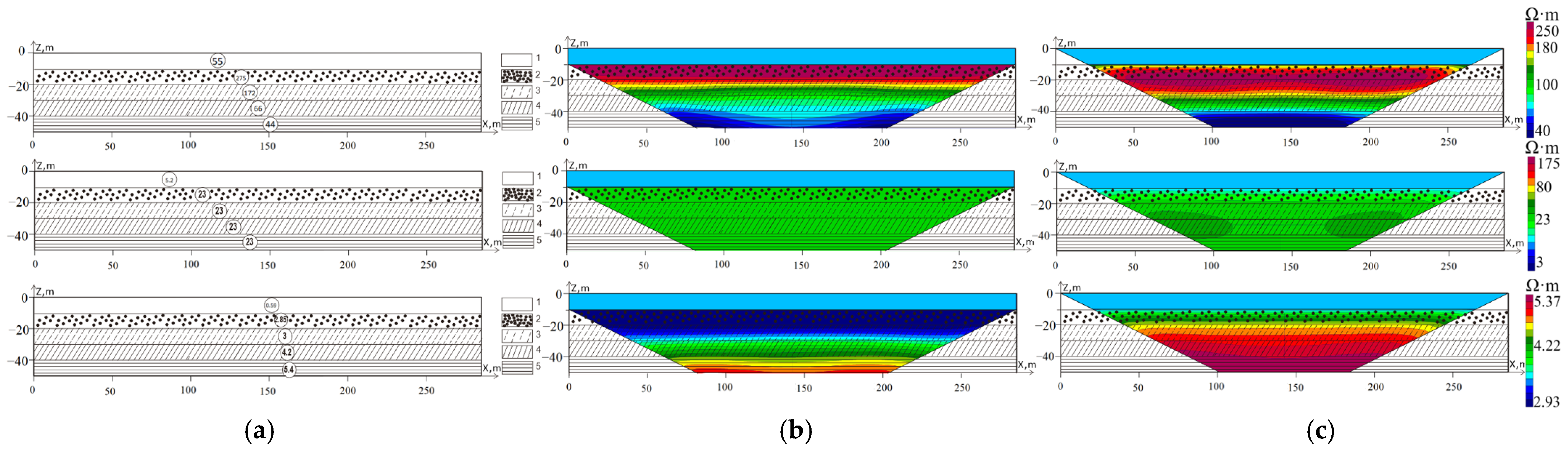
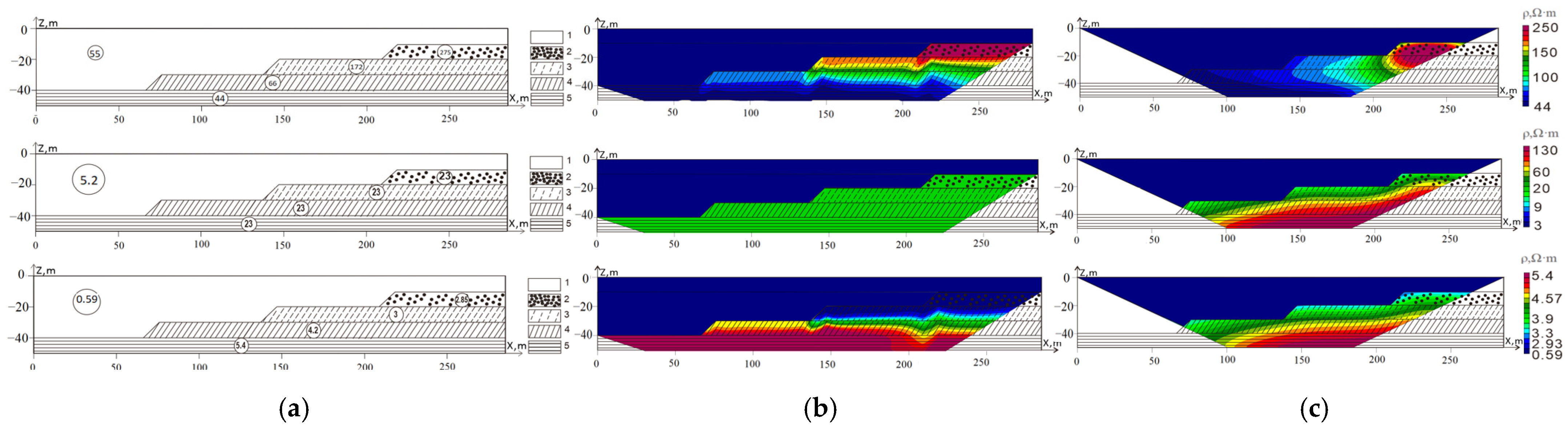
Model 1 comprises a horizontally layered sandy clay profile, including sand, sandy loam, loam, and clay layers (
Figure 6a), with a constant water depth. This geoelectric model was selected to estimate results influenced solely by sediment geology and lithology, minimizing distortions caused by seabed topography. Three variants of Model 1 were created, corresponding to water mineralization values (C) of 0.1, 1.29, and 10 g/L (
Figure 6a). Their resistivity values were determined based on the results of petrophysical modeling. These C values correspond to the resistivity values of sandy clay rocks recorded at the inversion point and adjacent intervals (
Figure 1).
Synthetic ERT profiles were generated using ZondRes2D(ver 2025) software with the Schlumberger electrode array configuration. Profiles were generated for both the seabed resistivity tomography (
Figure 6b) and surface resistivity tomography (
Figure 6c) systems, maintaining identical geometric parameters (electrode spacing AB and MN).
The modified resistivity tomograms obtained through both the surface and seabed resistivity tomography configurations accurately resolved the horizontal layering of the geoelectric section. However, discernible differences existed in the resistivity values between layers obtained from the different ERT methods (
Figure 6).
Due to the high conductivity of seawater, surface ERT showed a thickening of the sand layer when pore water mineralization was low (C = 0.1 g/L), with the boundary abnormally deepening by 50%. The boundary between the sand layer and the sandy loam layer became curved. When pore water salinity was high, the sand layer thinned, and the boundary floated upward by about 50%. The deeper clay layer showed a greater degree of curvature.
In the seafloor resistivity tomography images, the resistivity values of layers under different pore water mineralization levels were consistent with the initial geoelectric parameters (
Figure 6a,b). For the surface resistivity tomography configuration, this correspondence held true only at mineralization levels of 0.1 and 1.29 g/L (
Figure 6c). At the 10 g/L mineralization level, the sand and sandy loam layers in the reference model, which possessed identical geoelectric properties (
Figure 6a), exhibited different resistivity values in the tomogram derived from surface resistivity tomography (
Figure 6c). This characteristic of the surface resistivity tomography model should be considered when interpreting marine ERT data.
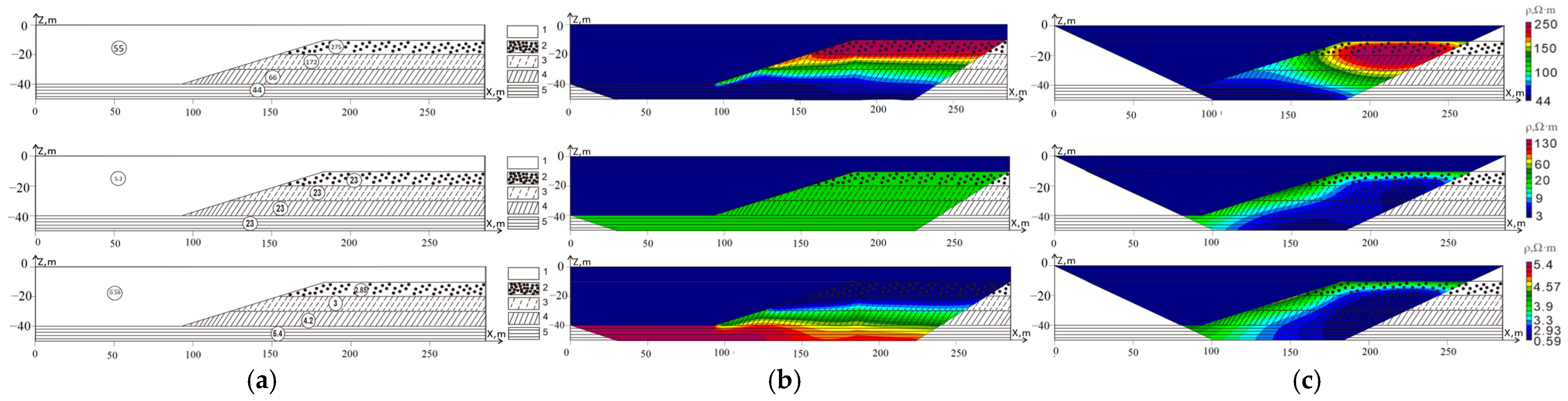
Models 2 and 3 differ from Model 1 in terms of seabed topography; these two topographies are typical of coastal water areas (
Figure 7). These models allow for estimating the influence of not only the geological profile structure but also the seabed topography on ERT data. The resistivity tomography models were calculated for three pore water mineralization values (C = 0.1, 1.29, and 10 g/L).
During the inversion process, the effect of the water layer must be considered. We modeled water layers with thicknesses of 10–40 m and resistivities of 55, 5.2, and 0.59 Ω·m, respectively. The inversion results based on seabed resistivity tomography, shown in
Figure 8b and
Figure 9b, indicate that the resistivity values and lithological layer positions across the mineralization gradient are consistent with the geological structures of Models 2 and 3 (
Figure 8a and
Figure 9a), respectively, with the advantage of detection depth referenced to the seabed.
In contrast, surface resistivity tomography inversion distorts the geoelectric profile (
Figure 8c and
Figure 9c), with the degree of distortion intensifying as mineralization increases. When C = 0.1 g/L, data from the surface observation system mislocate geoelectric boundaries—horizontal interfaces become curved/dipping isoresistivity lines (
Figure 8c and
Figure 9c). Nevertheless, the horizontal layering of Model 2 remains discernible with the correct number of layers.
When C = 1.29 g/L (the reversal point, where sandy clay resistivities tend to converge), surface resistivity tomography generates false high-resistivity anomalies (
Figure 8c). These spurious anomalies persist at C = 10 g/L, preventing complete ERT analysis in areas with dipping topography and high mineralization levels.
Comparative analysis confirms the superiority of seabed resistivity tomography in reconstructing the true geoelectric structure across the mineralization gradient (
Figure 8b). Although surface resistivity tomography is only applicable for near-horizontal seabeds under low mineralization conditions (with sediment resistivity deviations occurring at elevated C values), seabed resistivity tomography can adapt to petrophysical constraints at the sediment-water interface. Under conditions of dipping topography and high mineralization, surface resistivity tomography inversion produces geometrically inconsistent anomalies that misleadingly represent Model 2.
5. Application of Underwater Resistivity Tomography in the Exploration of Sand and Gravel Deposits in the Coastal Waters of the Baltic Sea
Geological characteristics of the experimental study area. Experimental studies utilizing underwater resistivity tomography were conducted in the coastal waters near the river mouth of the Gulf of Finland. The objective of this research was to locate buried valleys associated with sand and gravel sediments, as predicted by geological data. The main research goals were to determine the position of the buried valley and estimate the reserves of sand and gravel.
The seafloor sediments consist of marine sands carried by rivers, containing a significant amount of silt. Due to the shallow seawater depth and intensive oil and gas extraction activities, the gas saturation in the seabed sediments is relatively high, creating unfavorable conditions for solving this problem using seismic exploration methods. Therefore, this study combined underwater resistivity tomography with seismic exploration, which is essential for determining the seabed topography along the survey line profiles.
The geological structure of the coastal area is composed of glacial sediments (such as diamicton, glaciofluvial deposits, glacial clay and silt) as well as post-glacial sediments. The sediments in the eastern Gulf of Finland are predominantly terrigenous, with a wide grain size range extending from boulders to muddy silt. The main grain sizes are gravel-pebble (sometimes containing boulders), gravelly sand, and sandy-gravel sediments, which include silt and muddy silt [
31,
32,
33].
The primary geological target of the experimental study area was a buried valley associated with sandy-gravel sediments, inferred from geological data.
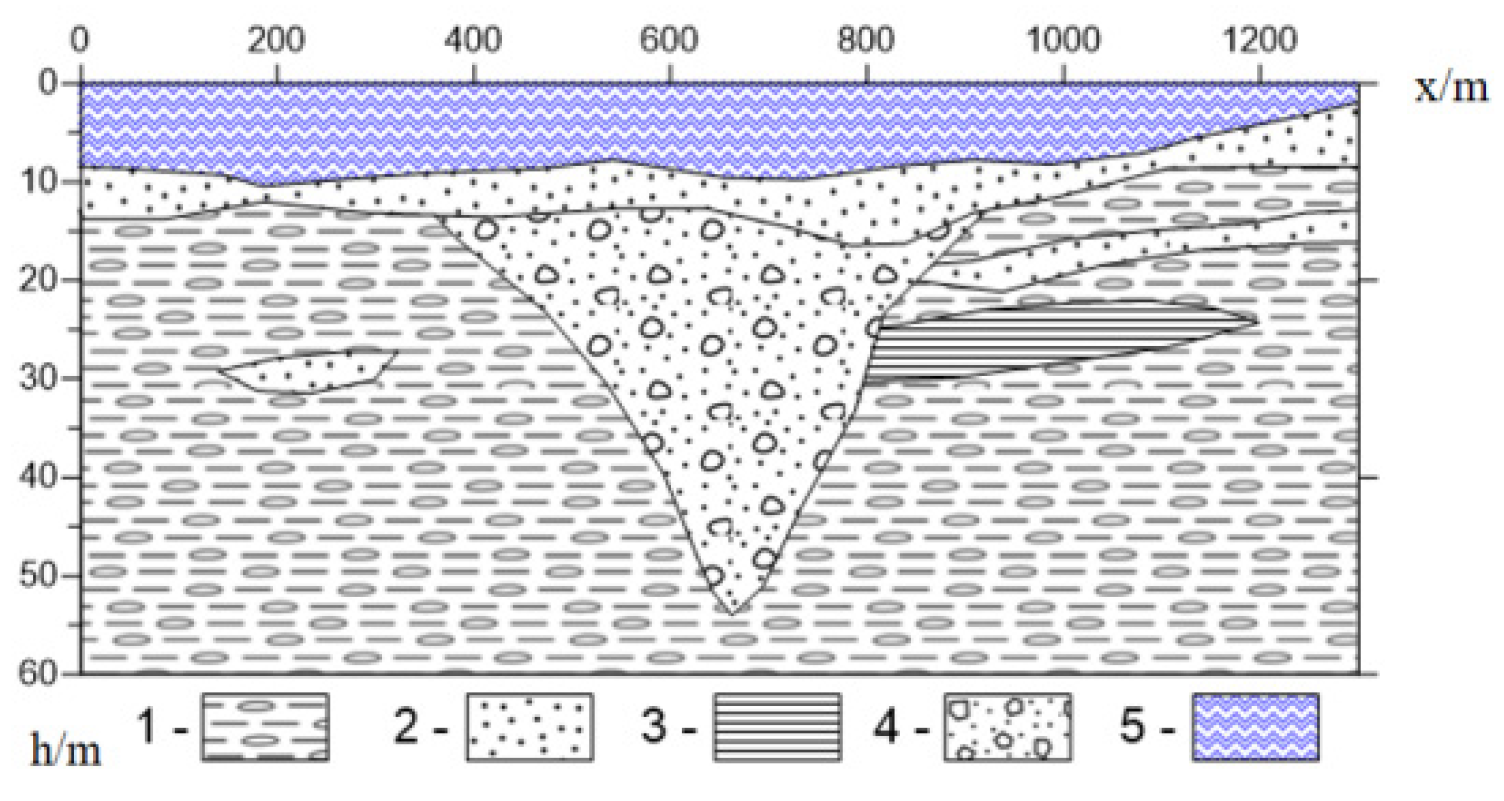
Figure 10 shows a schematic geological profile of this valley.
Along the coast of the Gulf of Finland, the estuaries connected to the river valleys are composed of marine sands. The thickness of these formations ranges from 2 to 10 m. Under normal conditions, these sands overlie boulder loam. Within the work area, the marine sands overlie glaciofluvial sandy-gravel sediments that fill the bed of the buried valley. The valley reaches depths of several tens of meters and widths of several hundred meters.
To enhance the exploration effectiveness, numerical simulation of seabed resistivity tomography was conducted based on the geological profile. The resistivities of various stratigraphic units were obtained from core samples acquired during field sampling, as shown in
Figure 10: 1. ρ (boulder loam) = 32 Ω·m, 2. ρ (marine sand) = 10 Ω·m, 3. ρ (clay) = 26 Ω·m, 4. ρ (sandy-gravel sediments) = 12 Ω·m, and 5. ρ (water) = 4 Ω·m.
Numerical simulation of underwater resistivity tomography was performed using ZondRes3D (ver 2025) software. To compare the exploration effectiveness of different observation systems, electrodes were placed on the water surface and on the seabed, respectively [
32,
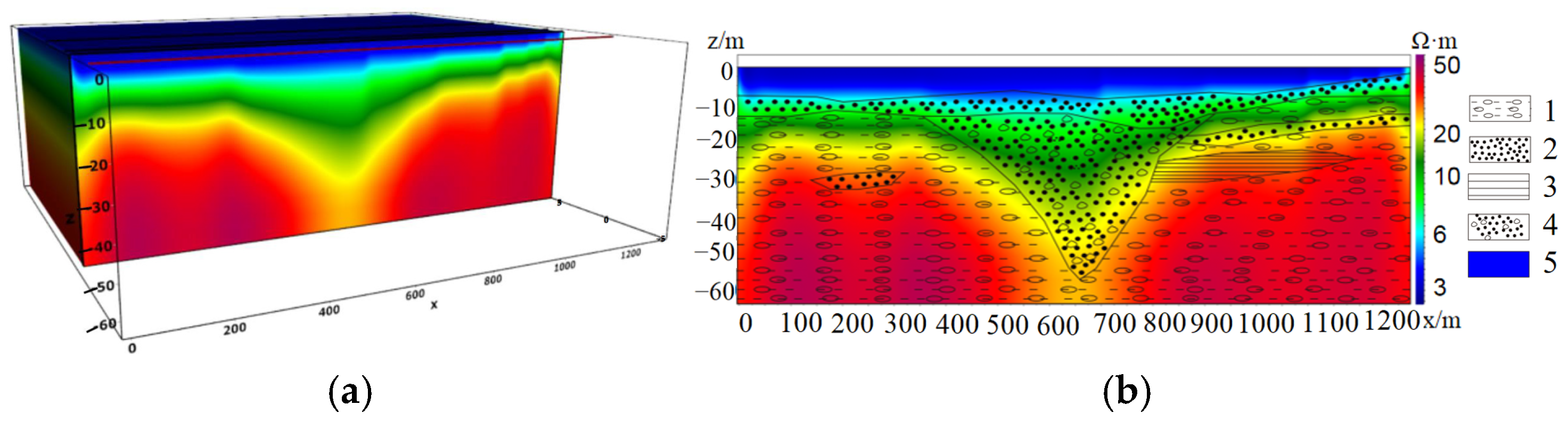
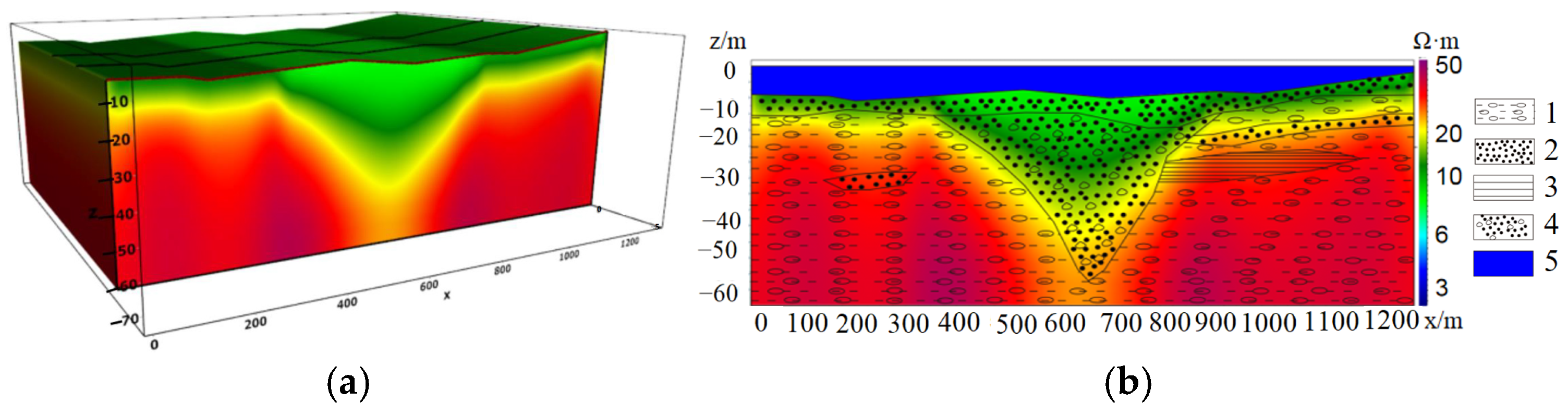
33]. A 3D model was constructed based on the thickness and position of each stratum for numerical simulation. The final inversion results obtained are shown in
Figure 11 and
Figure 12.
Figure 11a shows the 3D inversion result for the surface configuration, and
Figure 11b shows the XZ direction profile from the surface 3D inversion result.
Figure 12a shows the 3D inversion result for the seabed configuration, and
Figure 12b shows the XZ direction profile from the seabed 3D inversion result.
Through numerical simulation of different observation systems (surface and seabed), the inversion results from the numerical simulation clearly delineated the extent of the sandy boulder deposit, which corresponds to the green portion in the figure. The range of the sandy boulder deposit is basically consistent with the geological profile, and the morphology of its right-side bottom is also clearly visible. The uppermost layer is the marine sand layer, which is located on the seabed, is not thick, and its lower morphology is significantly influenced by the seabed topography. The red and yellow portions represent the boulder loam layer, which has relatively low porosity, is deposited beneath the marine sand layer, exhibits higher resistivity, and is not the target of the exploration task.
The results of the seabed resistivity tomography simulation demonstrate that this observation system can not only achieve similar effects to the surface observation system but also offers better resolution and effectiveness in terms of some layer interfaces, stratum thicknesses, and stratum orientations.
After preliminary validation through numerical simulation, proving the feasibility of this method in the experimental phase, it was deemed capable of undertaking tasks in subsequent field experiments. Therefore, to accomplish the designated exploration objectives, underwater electrical prospecting was carried out in the target exploration area using seabed resistivity tomography technology. The shallow coastal waters and flat seabed topography created favorable conditions for the successful application of this underwater electrical prospecting method. This electrical prospecting survey utilized a combined AMNB electrical prospecting array. The survey was conducted using an 8-channel electrical prospecting station, connected to a seabed hydroelectric streamer and an Astra multi-frequency generator resistivity meter.
The maximum spacing for the AB electrical prospecting array was 102 m. The receiving electrodes (MN) were arranged along the streamer at intervals of 6 m. The electrode spacing along the profile was 5 m.
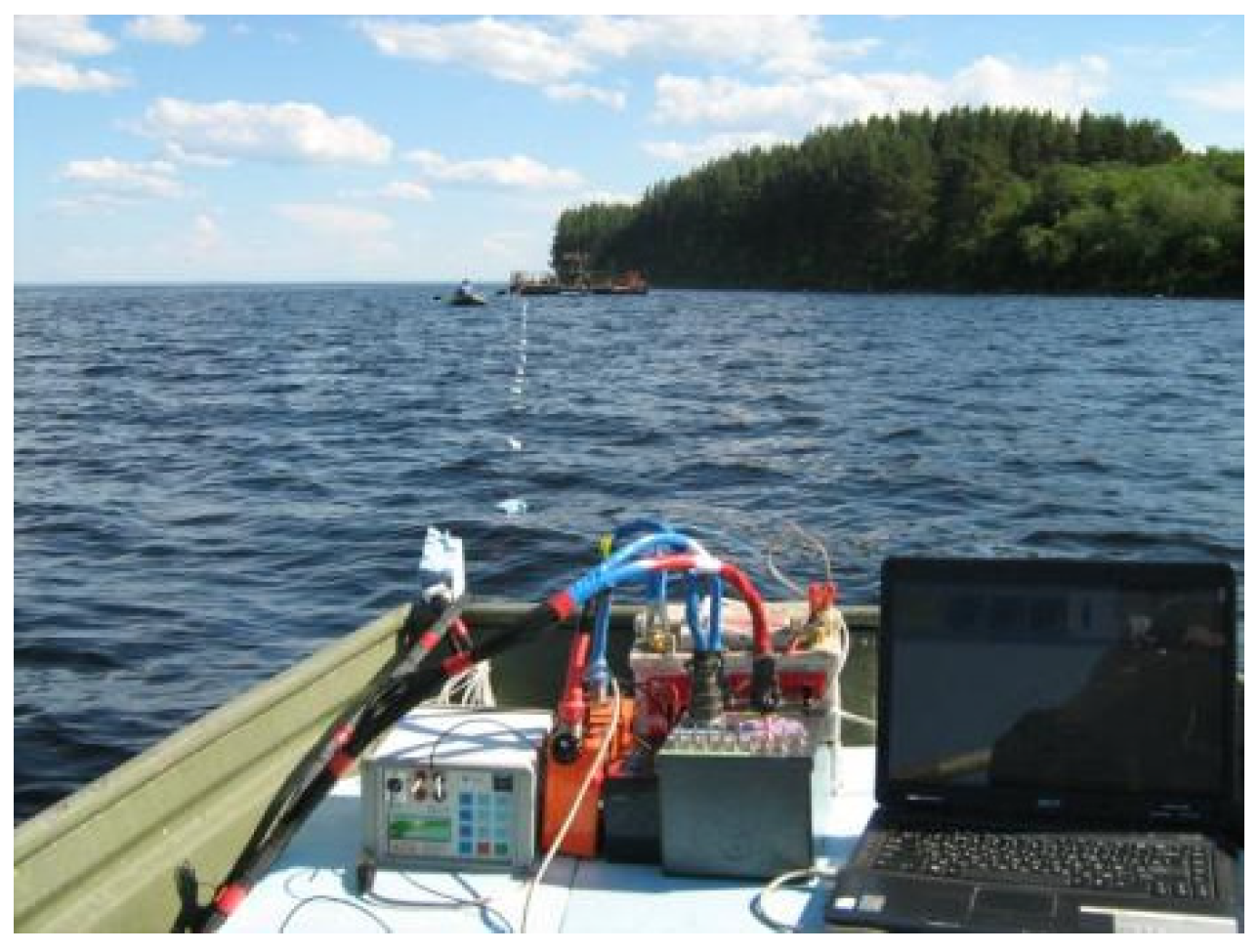
The survey employed a motorboat and a small boat. The two ends of the streamer were connected to the boat and the motorboat, respectively, with the boat carrying the exploration equipment and personnel (
Figure 13). During the measurement process, the position of the survey line within the water area was determined and adjusted based on the water depth required for vessel navigation.
Using the GPS navigation system, the survey vessel was navigated to pre-designated reference points, each with its own serial number. The cable was stretched into a straight line, fitted with floats, and then submerged to the seabed. The survey lines were measured sequentially according to the planned order.
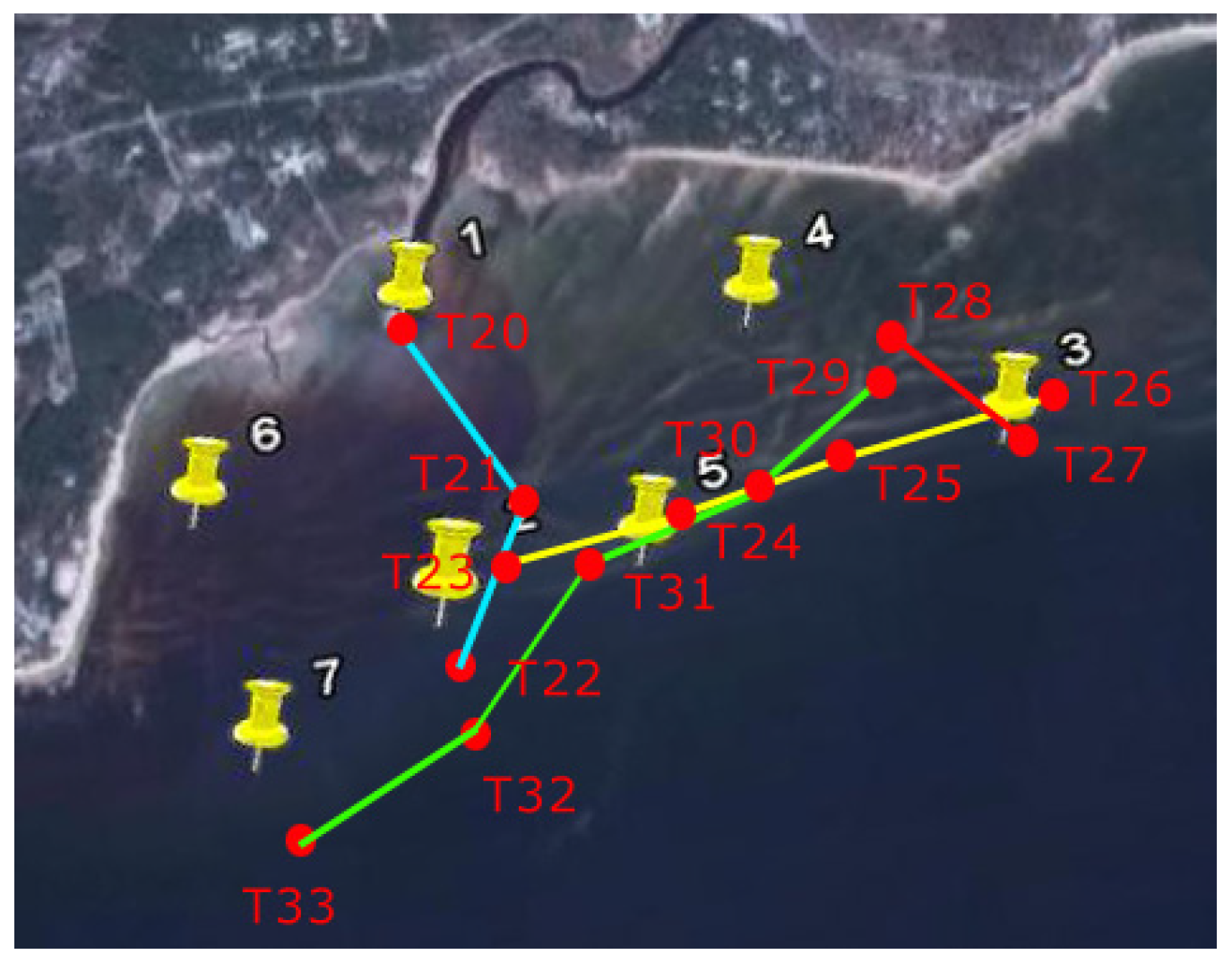
The positioning of the measurement points was determined by the pre-calibrated reference points. Satellite imagery of the study area shows the locations of measurement points T20-T33.
The survey lines PR20-21-22, PR23-24-25-26, PR28-27, and PR29-30-31-32-33 are displayed as colored lines in the image (
Figure 14). These survey lines are shown as simplified straight lines. The actual course of the vessel may have had some deviations.
During the experiment, electrical measurements, GPS vessel positioning, and depth measurements using an echo sounder were continuously carried out. Additionally, the resistivity of the seawater along the survey line was measured at a depth of 1–1.5 m using a resistivity meter.
For the processing and interpretation of the experimental data, the X2ipi preprocessing software (ver 6.8) and the ZondRes2D inversion software (ver 2025) were used. The inversion took into account the seabed topography and the resistivity of the water body. According to the resistivity measurement results, the resistivity of the water body ranged from 4 to 5 Ω·m.
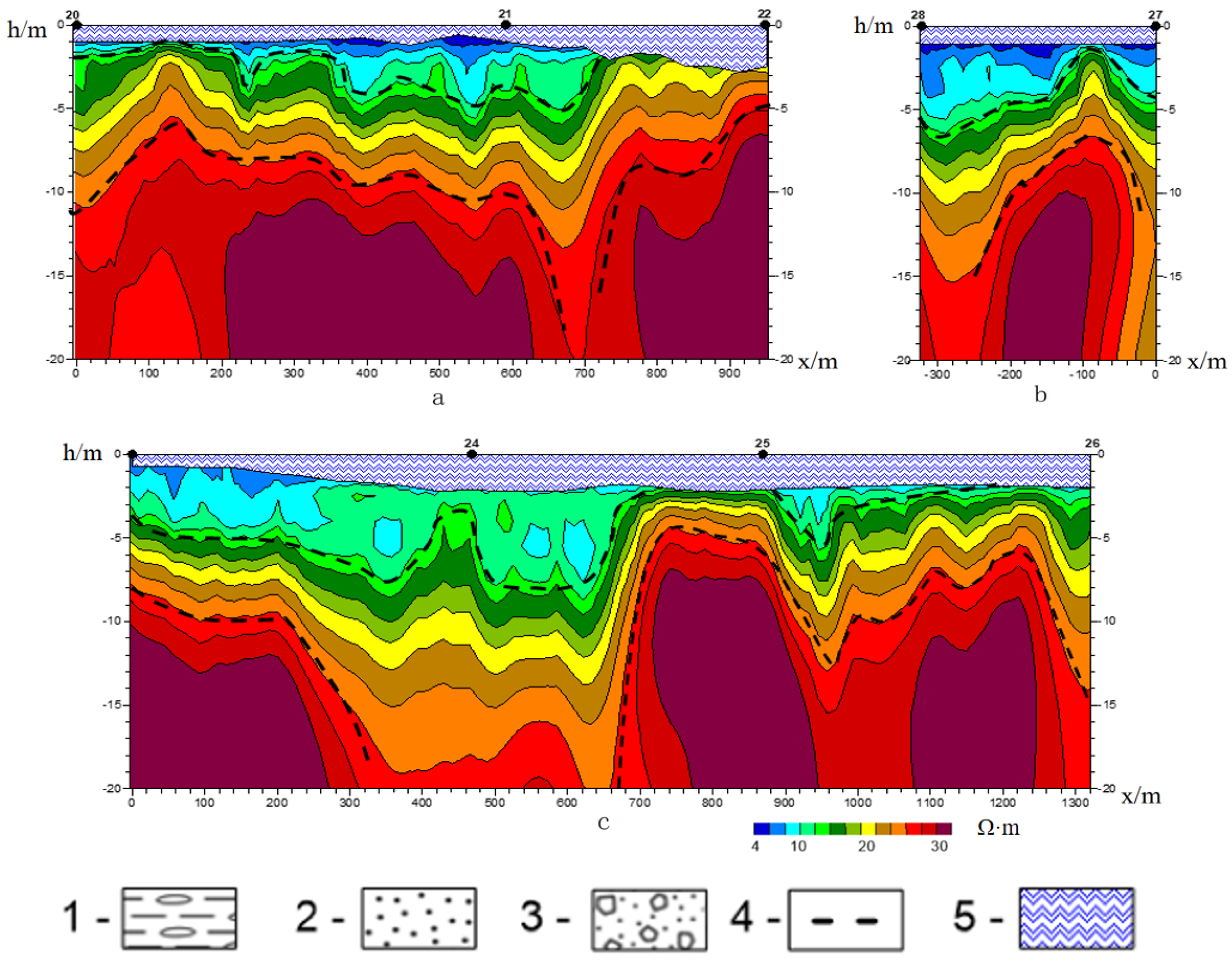
Through processing and inversion of the experimental data, resistivity tomography inversion images for each survey line were obtained, depicting the spatial distribution of resistivity at depths down to −20 m from the water surface. The resistivity values on the profiles are represented by contour lines and are color-coded accordingly. The resistivity color scale is consistent across all profiles.
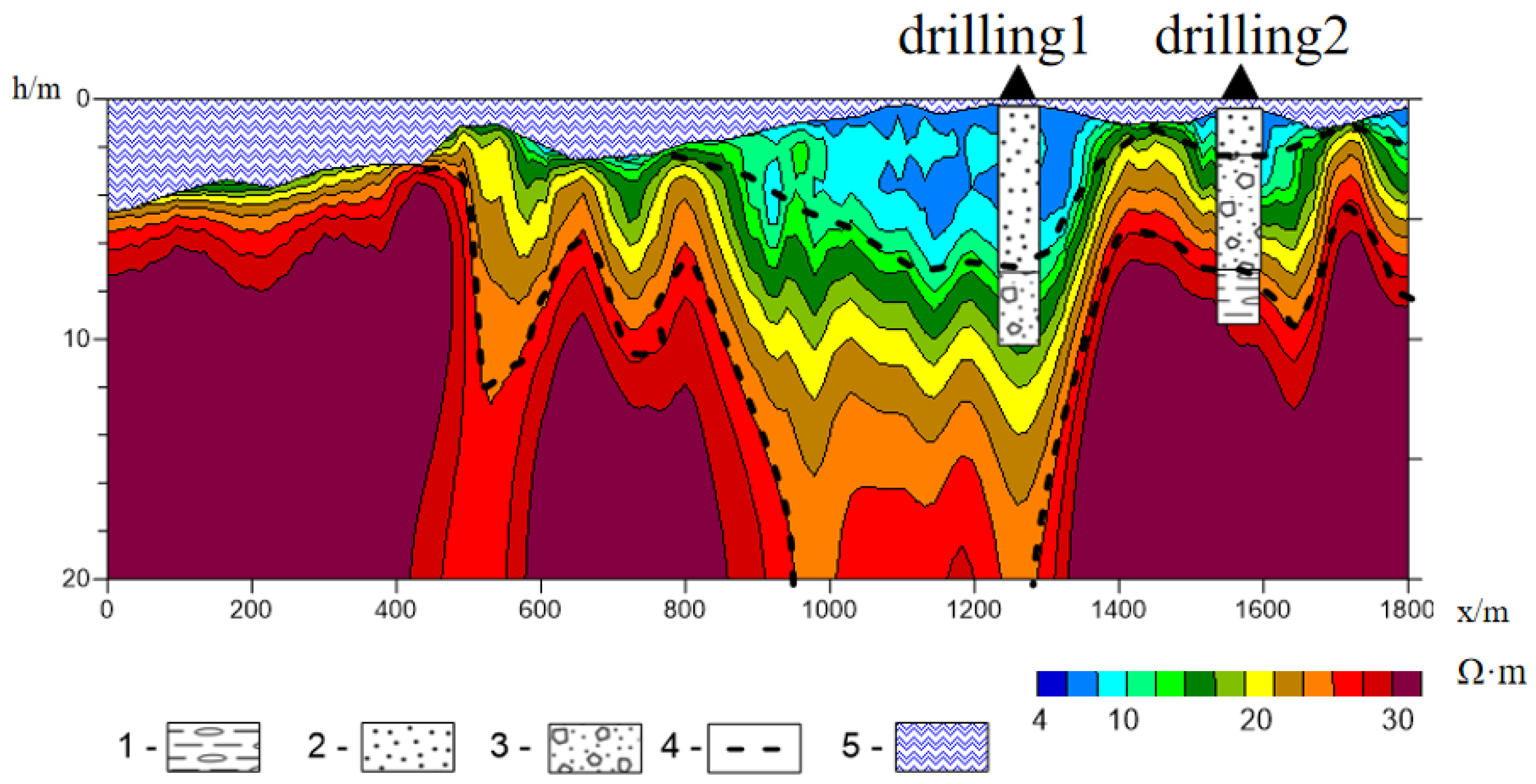
Based on survey line PR29-30-31-32-33, after obtaining the inversion result image using underwater resistivity tomography, two verification boreholes were drilled to validate the experimental results. The inversion result image shows the lithological columnar sections for Borehole 1 and Borehole 2 (
Figure 15).
These boreholes revealed layers of boulder loam, sand, and clay. In Borehole 2, the top of the boulder loam was encountered at a depth of 9.7 m. Based on the borehole data, combined with the resistivity tomography data, a profile was drawn showing the inferred positions of the geological boundaries corresponding to the marine sand layer, the sandy-gravel sedimentary layer, and the top of the boulder loam.
Based on the geoelectric profile of survey line PR29-30-31-32-33, the geoelectric profiles for survey lines PR20-21-22, PR23-24-25-26, and PR28-27 were constructed, respectively (
Figure 16). Borehole 1 data shows the boundary between the sand and sandy-boulder deposit layers at 7.2 m. ERT results show the boundary at 7.3 m, with very little error. Borehole 2 data shows the boundary between the gravel loam layer and the sandy-boulder deposit layer at 7.5 m. ERT results also show the boundary at 7.5 m, which is basically consistent with the drilling data.
The dotted lines on the result maps indicate the proposed geological boundaries, corresponding, respectively, to the marine sand layer, the sandy-gravel sedimentary layer, and the top of the boulder loam.
Experimental research has shown that underwater resistivity tomography is an effective method for exploring underwater building material sediments in the Gulf of Finland, including sandy-boulder deposit sediments, gravel-sand mixtures, and sand layers. When combined with drilling data, this method can effectively determine formation boundaries and reduce exploration errors at these boundaries. It also complements the analysis of geological conditions between wells. Furthermore, it offers unique advantages for exploring geological structures with large angles, such as significant undulations in the formation.