Article

Parameter Inversion of Water Injection-Induced Fractures in Tight Oil Reservoirs Based on Embedded Discrete Fracture Model and Intelligent Optimization Algorithm


1
Second Oil Production Plant, Changqing Oilfield Company, Qingcheng 745100, China
2
College of Resources and Environment, Yangtze University, Wuhan 430100, China
3
College of Petroleum Engineering, Yangtze University, Wuhan 430100, China
4
Western Research Institute, Yangtze University, Karamay 834000, China
*
Author to whom correspondence should be addressed.
Processes 2026, 14(7), 1176; https://doi.org/10.3390/pr14071176
Submission received: 26 February 2026 / Revised: 28 March 2026 / Accepted: 1 April 2026 / Published: 6 April 2026

Abstract

In water injection development of tight oil reservoirs (TORs), the complex fracture network formed by hydraulic fracturing and water injection induction is the key factor determining the development effectiveness. Accurate inversion of water injection-induced fracture parameters holds significant importance for enhancing reservoir development outcomes. This paper innovatively proposes a parameter inversion framework that integrates the Embedded Discrete Fracture Model (EDFM) with intelligent optimization algorithms. EDFM efficiently characterizes complex unstructured fracture systems while maintaining mass conservation between the matrix and fractures; intelligent optimization algorithms automatically invert parameters such as fracture half-length, orientation, and conductivity. First, a three-dimensional geological model of the TOR is constructed, utilizing EDFM to handle the impact of fractures on the seepage field. Based on considerations of fracture geometry, conductivity, and stress sensitivity, a coupled fluid dynamics model for fractures and matrix is developed. Subsequently, an objective function is built based on water injection production dynamic data, and the Projection-Iterative-Methods-based Optimizer (PIMO) algorithm is employed to achieve efficient inversion of fracture parameters. Taking a TOR in the Ordos Basin as an example for verification, through synthetic model validation, this method significantly improves the accuracy and efficiency of history matching, with inversion results reliably guiding numerical simulation predictions. The results demonstrate that this method can effectively enhance the precision of fracture parameter identification, offering clear advantages in inversion speed and accuracy over traditional trial-and-error approaches. This study provides new insights for modeling induced fractures in TORs and optimizing water injection development strategies.

1. Introduction

With the continuous growth of global energy demand and the gradual depletion of conventional oil and gas resource reserves, unconventional oil and gas resources such as tight oil have become an important strategic replacement field for ensuring energy security and achieving energy succession. Tight oil reservoirs, with their enormous resource potential, occupy an increasingly important position in the global energy landscape [1,2,3]. However, their typical “low porosity, low permeability” geological characteristics determine that they cannot achieve economic and effective exploitation relying on natural energy. It is necessary to rely on reservoir stimulation technologies such as large-scale hydraulic fracturing to form complex artificial fracture networks, in order to establish effective seepage channels and achieve industrial production capacity [4]. In this context, water injection development, as a key method for supplementing formation energy, maintaining formation pressure, and enhancing oil recovery rate, has been widely applied in the development practices of TORs. However, a complex and critical scientific and engineering issue emerges: during long-term water injection processes, due to injection pressure fluctuations, changes in rock mechanical properties, and fluid–rock interactions, natural fractures may be activated, artificial fractures may undergo dynamic extension or reorientation, and even new secondary fracture networks may be induced [5,6]. These dynamically changing fracture systems induced by water injection operations, namely, “water injection-induced fractures”, profoundly alter the reservoir’s seepage field and stress field, exerting a decisive influence on water injection efficiency, production dynamics, well pattern layout, and even the ultimate recovery rate [7].
Accurately obtaining the parameters of water injection-induced fractures, such as fracture spatial orientation, aperture, length, conductivity, and their dynamic evolution patterns over time and space, is the core prerequisite for optimizing water injection schemes, predicting production dynamics, preventing and controlling risks of water channeling and flooding, and achieving efficient and refined development of TORs [8]. However, this parameter inversion problem faces unprecedented challenges, constituting the research difficulties and frontiers in this field. First, the inherent strong heterogeneity, anisotropy, and low permeability of tight reservoirs make it difficult for numerical simulation methods based on traditional continuum medium theory to accurately characterize the complex flow exchange mechanisms between discrete fractures and the matrix [9]. Secondly, water injection-induced fracture systems often exhibit multi-scale, multi-morphological characteristics and strong randomness, with their geometric morphologies and attribute parameters possessing high uncertainty. Furthermore, the dynamic data available for inversion typically has limited information, significant noise interference, and a highly nonlinear, non-convex complex mapping relationship with the fracture parameter [10]. Traditional well test analysis or history matching methods based on gradient optimization algorithms, when dealing with such inversion problems characterized by “multiple parameters, strong nonlinearity, and multiple extrema”, often fall into dilemmas such as low computational efficiency, heavy reliance on initial guesses, and susceptibility to getting trapped in local optimal solutions, making it difficult to achieve efficient and robust inversion of complex fracture network parameters [11,12].
To address the aforementioned challenges, the research paradigm is evolving from traditional methods towards the deep integration of “high-fidelity physical models” and “advanced computational intelligence.” At the physical model level, the emergence of the EDFM has provided a revolutionary tool for simulating fractured reservoirs [13,14]. EDFM explicitly embeds the discrete fracture network into the background matrix grid, enabling efficient and flexible handling of fractures with any complex geometric morphologies and any spatial orientations without the need for stringent local grid refinement. By calculating the connectivity factors between non-conformal grids, it precisely characterizes the flow between fractures and between fractures and the matrix, achieving an excellent balance between computational efficiency and simulation accuracy [15]. Compared to traditional dual continuum models or explicit local grid refinement methods, EDFM is particularly suitable for simulating the complex and dynamically changing fracture networks induced during the water injection process, providing a higher-fidelity forward simulator for the inversion problem [16].
At the inversion algorithm level, intelligent optimization algorithms, represented by swarm intelligence, evolutionary algorithms, and machine learning, demonstrate tremendous potential [17,18]. Such algorithms, such as Genetic Algorithm (GA), Particle Swarm Optimization (PSO), Ant Colony Algorithm (ACA), as well as Bayesian Optimization (BO) and surrogate model-assisted optimization based on deep learning that have emerged in recent years, do not rely on the gradient information of the objective function, possessing strong global search capabilities and good adaptability to nonlinear and non-convex problems [19,20]. These algorithms, by simulating mechanisms such as natural evolution and swarm collaboration, can explore optimal solution sets in high-dimensional parameter spaces in a parallel and adaptive manner, effectively avoiding local optima, and providing entirely new algorithmic tools for handling complex inversion problems such as water injection-induced fractures.
Therefore, utilizing the EDFM as the “physical engine” for precisely characterizing the dynamics of water injection development in fractured TORs, combined with intelligent optimization algorithms as the “intelligent searcher” for efficiently solving high-dimensional nonlinear inversion problems, to construct a systematic “model-algorithm” coupled inversion framework, represents the inevitable trend and frontier direction for overcoming the challenging problem of identifying parameters of water injection-induced fractures in TORs [21]. This study not only boasts substantial theoretical significance by deepening the understanding of the dynamic evolution mechanism of fractures and seepage laws during water flooding but also holds pressing engineering practical value. Its successful application can guide field engineers to scientifically design water injection pressure, injection rate, and injection–production well patterns, optimize development strategies in real time or periodically, realize the efficient utilization of water injection energy, effectively suppress ineffective water circulation, and ultimately improve the recovery efficiency and economic benefits of TORs.
This paper aims to systematically explore and establish a parameter inversion methodology system for water injection-induced fractures in TORs based on the embedded discrete fracture model and intelligent optimization algorithms. By designing synthetic cases and practical oilfield application examples, this paper will verify the effectiveness, robustness and practicability of the proposed method. This study is expected to provide new methodological support and technical reference for the efficient and intelligent development of unconventional oil and gas reservoirs.

2. Numerical Simulation of Fractured Tight Sand Oil Reservoirs

2.1. Physical Model

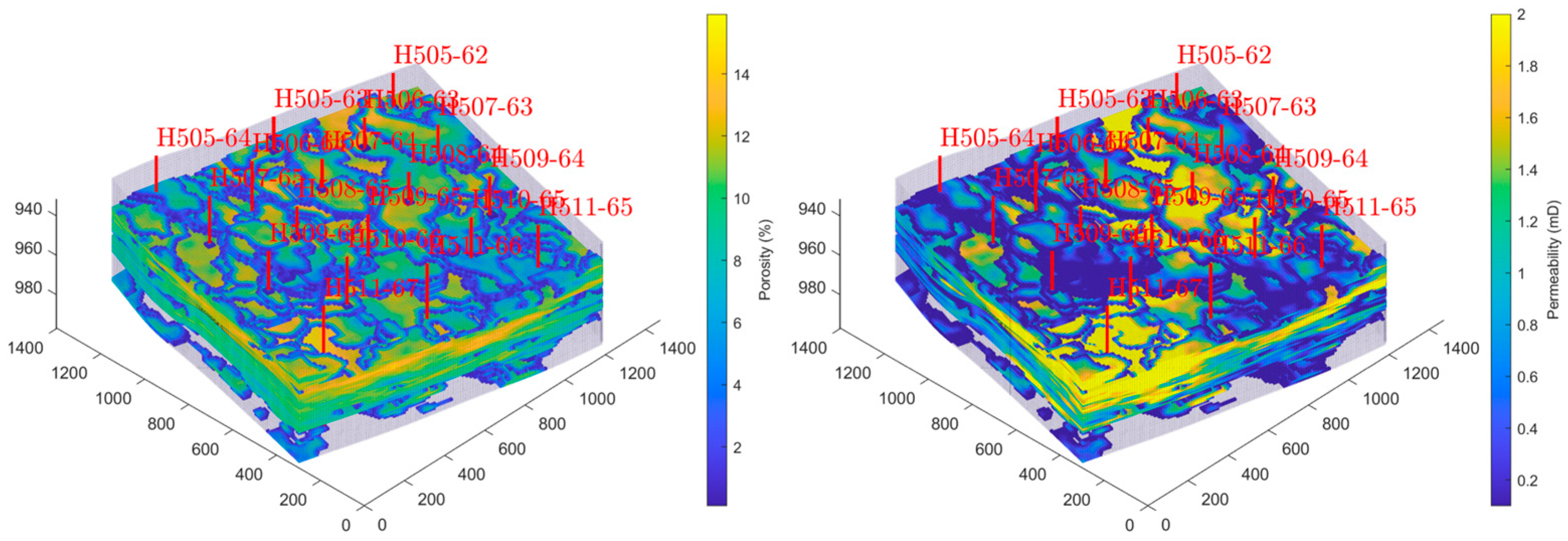
Water flooding development in TORs involves a complex fracture-matrix interaction system, and its physical model is required to accurately characterize reservoir properties, fracture geometry, and multiphase seepage mechanisms. To make the model more consistent with actual formation conditions, a structural model was first established by using the Petrel 2022 geological modeling software based on seismic data, drilling data, layered data, and structural data. Then, well logging interpretation data within the calculation area were taken as control points, and Kriging interpolation analysis was performed on the structural model by using vertical and horizontal variograms, thus constructing a property model that conforms to practical conditions. The porosity and permeability distributions of the target interval where the well group is located are shown in Figure 1.
Taking a well group with a typical five-spot well pattern for water flooding development as an example, this paper introduces the induced fracture inversion framework proposed herein. The inversion framework is based on the following assumptions:
(1)
The reservoir fluid is an isothermal, incompressible, and immiscible oil-water two-phase system, and the fluid seepage in the reservoir matrix obeys the non-Darcy’s law considering the threshold pressure gradient.
(2)
When the water injection pressure exceeds the rock breaking pressure, induced fractures will initiate or propagate, and hydraulic fractures and water injection-induced fractures are equivalent to the same fracture during the inversion process.
(3)
Fractures fully penetrate the target interval in the vertical direction, and their conductivity is a dynamic parameter that varies with the effective stress.

2.2. Governing Equations

The matrix of tight sandstone reservoirs features high tightness and low permeability and only exhibits natural productivity after fracturing. It is characterized separately from the two aspects of matrix and fractures. The mass conservation equation of the oil-water two-phase fluid in the matrix is expressed as follows:
( ϕ m ρ S m ) t + ( ρ v m ) = ρ q m i = 1 N f q m , f i ,
v m is the flow velocity of the oil phase in the matrix. In tight sandstone reservoirs, the flow equation considering the threshold pressure gradient and stress sensitivity is expressed as follows [22]:
v m = K 0 e γ m ( p p 0 ) μ ( p λ ) , p > λ 0 , p λ ,
The mass conservation equation is also applicable to the flow of oil-water two-phase fluids in hydraulic fractures and water injection-induced fractures. Each fracture is denoted by the index fi, and the following conservation equation holds for each individual fracture:
ϕ f i ρ S f i t + ρ v f i = ρ [ q f i , w + q f i , m ] ,
Both hydraulic fractures and water injection-induced fractures feature high conductivity, and no low-velocity non-Darcy flow occurs therein. However, the pressure state of TORs under water flooding development changes significantly relative to the initial formation pressure, and hydraulic fractures are strongly affected by stress. The oil-water flow equation considering the stress closure effect in fractures is expressed as follows:
v f i , h y = K f 0 e γ ( p p 0 ) μ p f i ,
In addition, the initiation time of water injection-induced fractures is correlated with pressure: fractures initiate when the water injection pressure exceeds the reservoir pressure. Based on the relationship between the reservoir pressure of injection wells and the formation breakdown pressure, the activation time of water injection-induced fractures is determined. The indicator function characterizing the initiation state of induced fractures is expressed as follows:
η = 0 ,   i f   p < p H 1 ,   o t h e r w i s e ,

2.3. Embedded Discrete Fracture Model

The fractures in the fracture inversion model are characterized by the EDFM. Since the length, angle, and initiation time of the inverted induced fractures are uncertain, it is necessary to regenerate the fracture grids in each iteration during the fracture parameter inversion process. The EDFM discretizes the grids of fractures and matrix separately and then adopts special connections to characterize the fluid flow between fractures and matrix, which greatly improves the computational efficiency and is particularly suitable for combining with intelligent optimization algorithms to carry out fracture parameter inversion [23,24].
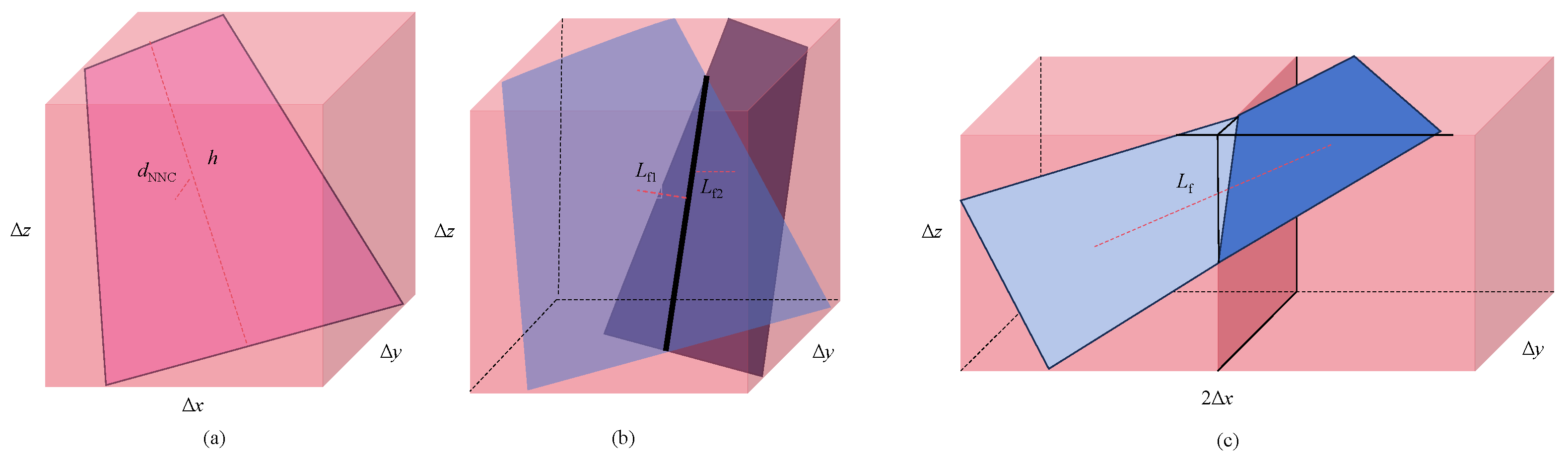
The EDFM adopts Non-Neighbor Connections (NNCs) to characterize fluid exchange. Classical EDFM includes three types of non-neighbor connections: NNCs between matrix and fractures (Type 1 NNCs), NNCs between fracture grids (Type 2 NNCs), and NNCs between fractures and wells (Type 3 NNCs), as shown in Figure 2. In the context of discretization based on the finite volume method, the fluid exchange rates among these three types of NNCs can all be ultimately expressed as follows [25,26]:
q ζ = λ ζ T Δ p ,
For the fluid exchange term q m , f , between each matrix grid and fracture grid, it is discretized by the Two-Point Flux Approximation (TPFA) method, yielding the following expression:
q m , f = j k r μ T m f ( p m p f ) ,
The transmissibility T m f between the matrix grid and the fracture grid is calculated by the following formula:
T m f = A m f k m f d m f ,
For every pair of intersecting fracture grids ( f 1 , f 2 ) , the fluid exchange model is expressed as follows:
Q ζ f 1 , f 2 = A f 1 q ζ f 1 , f 2   d A = T f f k r α μ ζ p ζ f 1 p ζ f 2 ,
Q ζ f 2 , f 1 = A f 2 q ζ f 2 , f 1   d A = T f f k r ζ μ ζ p ζ f 2 p ζ f 1 ,
To determine T f f , it is necessary to calculate the half-transmissibility for each pair of fracture grids ( f 1 , f 2 ) :
T 1 / 2 f i = k f i a f i L f 1 , f 2 d f i ,         i { 1 , 2 } ,
In the EDFM, fractures are discretized into multiple fracture segments. For the case where a single fracture intersects with different matrix grids, the transmissibility between fracture grid fi and fracture grid fj is calculated by the following formula:
T s e g = T 1 T 2 T 1 + T 2 ,
T 1 = k f A c d s e g 1 ,   T 2 = k f A c d s e g 2 ,
The source-sink term for fractured wells is calculated by the following formula:
q f , w = W I λ ( p i p w f ) ,
In the EDFM, if a fracture segment intersects the wellbore trajectory, the control volume representing the fracture segment should be regarded as a well segment, and the effective well index shall be calculated. Modified based on the Peaceman’s model, the calculation formula for the productivity index of a vertical fractured well is expressed as follows:
W I f = k f a f H f w d f w ,

3. Fracture Parameter Inversion Based on Projection-Iterative-Methods-Based Optimizer

3.1. Definition of Fracture Parameters and Construction of Objective Function

In the development process of TORs, fracture systems play a dominant role in hydrocarbon seepage and productivity formation. In particular, artificial fractures induced by water injection development or natural fractures reactivated by stress exert a significant impact on the conductivity and seepage distribution of reservoirs. Therefore, establishing a reasonable fracture parameter system and constructing an objective function based on actual production data are the key steps for carrying out fracture parameter inversion.
In the fracture-matrix coupling model established in this paper, the following key fracture parameters are considered for inversion:
  • Fracture length (Lf) refers to the extension range of a single fracture along the strike direction, with the unit of m. It determines the coverage degree of the fracture on the seepage network.
  • Fracture length (wf) represents the opening width of the fracture and is typically measured in millimeters, with the unit of mm, corresponding to the geometric parameter in the fracture conductivity.
  • Fracture permeability (kf) a parameter measuring the resistance to fluid flow inside the fracture, with the unit of mD. It is usually significantly higher than the matrix permeability and affected by lithology, water injection pressure and closure stress. The product of fracture aperture and fracture permeability is the fracture conductivity, which comprehensively reflects the fluid transport capacity of the fracture.
  • Fracture initiation time (tf) refers to the starting time point when the fracture begins to conduct fluid after being induced or reactivated, which can be used to characterize the dynamic response characteristics of stress-sensitive fractures.
  • Fracture angle (α): To reduce parameter dimensionality and cross-correlation interference, kf and wf are combined into conductivity Cf in actual inversion and only decomposed and subdivided in the physical meaning verification stage.
Within the framework of the EDFM, fracture parameters affect the mass transfer coefficient in the seepage model through equivalent transport terms, which control the fluid exchange between fractures and matrix. Therefore, fracture parameters directly affect the pressure variation and liquid production dynamics of production wells in reservoir simulation, providing a theoretical basis for the construction of the objective function, corresponding to the geometric parameter in the fracture conductivity.
The core of the inversion process lies in adjusting fracture parameters via optimization algorithms to make the simulated productivity dynamics as close as possible to the actual observed data. In this paper, production data (bottom-hole pressure and daily liquid production) are adopted to construct a weighted squared error objective function:
O b j θ = ω p i = 1 N p i s i m θ p i o b s p i o b s 2 + ω q i = 1 N q i s i m θ q i o b s q i o b s 2 ,
where θ = L f , C f , α , t f denotes the set of fracture parameters to be inverted; p i s i m θ q i s i m θ represent the simulated production rate and pressure under different fracture parameters.
To ensure physical rationality and computational stability, it is necessary to set boundary conditions for the parameter inversion space. The parameter space is defined based on prior geological knowledge and field engineering experience. The boundaries of fracture half-length and fracture conductivity are mainly derived from fracture parameters interpreted by pressure transient analysis of the reservoir and can be appropriately adjusted according to sensitivity analysis during the inversion process. The ranges of all fracture parameters are shown in Table 1.

3.2. Projection Iterative Optimization Algorithm

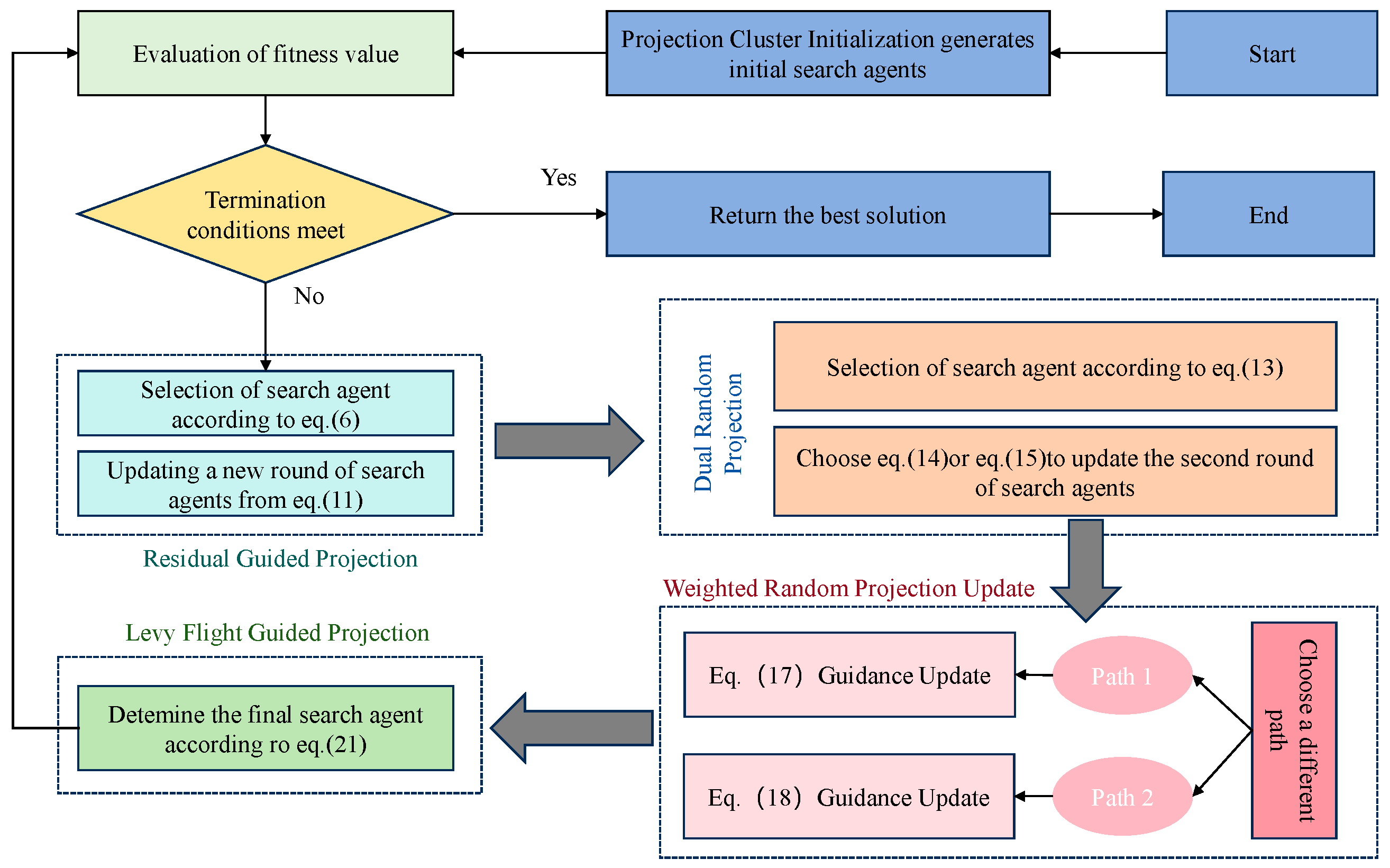
PIMO is a novel meta-heuristic algorithm inspired by projection iterative methods, which is mainly applied to solve continuous optimization and feature selection problems. By introducing four brand new operators, this algorithm effectively drives the population to converge toward the optimal solution and accelerates the convergence speed while enhancing the exploration ability. For the first time, PIMO incorporates techniques such as the Kaczmarz method and stochastic gradient descent, improving overall performance and helping to prevent convergence to local optima. Its architecture is built around four main components: Residual-Guided Projection (RGP), Double Random Projection (DRP), Weighted Random Projection Update (WRPU), and Lévy Flight-Guided Projection (LFGP). PIMO is capable of effectively handling continuous optimization challenges, including complex function optimization and engineering design, while also demonstrating strong performance in feature selection tasks [27].
The PIMO algorithm first initiates the optimization process by initializing the population. Given the population size N and the dimension of optimization variables D, each projection agent is regarded as a search agent of the algorithm. The position of each agent is generated by the following mathematical expression:
X i j = r 0 × U B j L B j + L B j r 0 = r a n d N , D ,
The bounds of the D variables are defined as:
L B j = l b 1 , l b 2 , , l b D U B j = u b 1 , u b 2 , , u b D ,
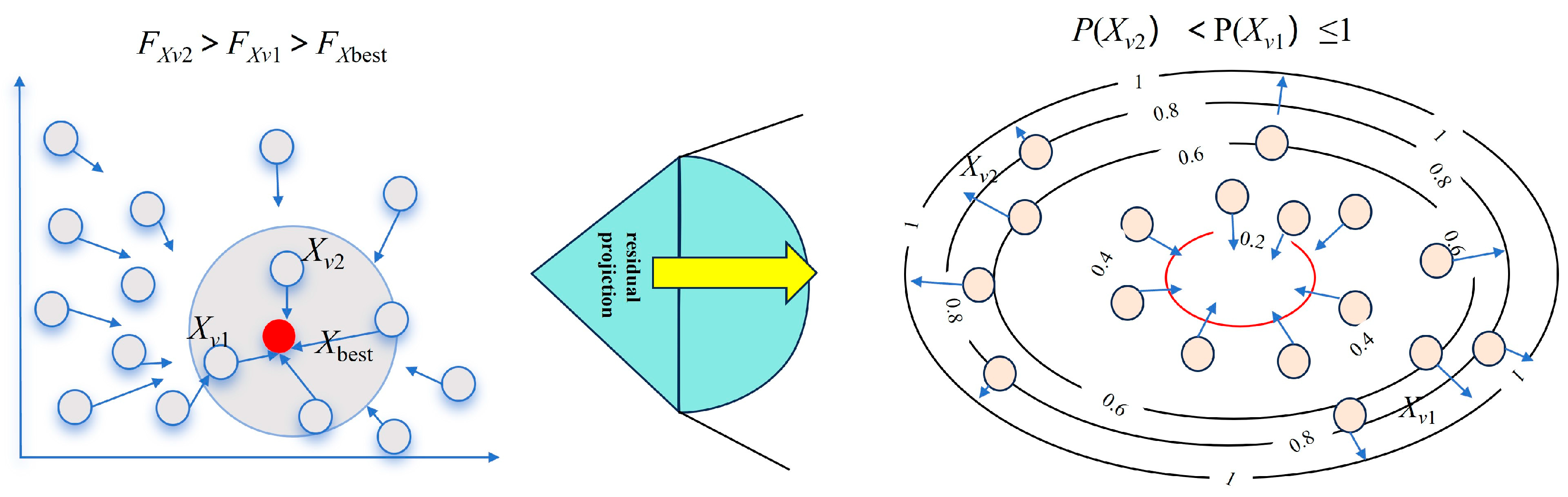
Within the RGP procedure, the optimal solution is progressively approached through iterative projections in multi-dimensional space. A collaborative hybrid framework emerges from the integration of the Kaczmarz iterative update strategy with Stochastic Gradient Descent (SGD), offering systematic trajectory guidance across the high-dimensional solution landscape. Building upon residual-based principles, RGP introduces stochastic gradient elements when selecting projection equations during each iteration. The choice between a “random” or “optimal” selection strategy is governed by comparing the random numbers r1 and r2, introducing a probabilistic mechanism that strengthens the algorithm’s exploration capability. Two candidate solutions, Xv1 and Xv2, which exhibit relatively small residual fitness, are chosen to act as guiding factors; the gradient is then computed based on these agents to steer the projection direction. This dual-influence approach ensures that solution updates depend not only on the projection of the current state but also on gradient information, thereby accelerating convergence while mitigating the risk of local minima entrapment. The guiding factors are computed using the following formula:
X v 1 , X v 2 = P = F i 2 i = 1 N F i 2 1 ,   i f   r 1 r 2 F i F b e s t ,   o t h e r w i s e ,
By designating Fbest as the direct projection target, the algorithm guides the current solution toward global convergence. This approach is particularly effective when the solution is near the optimum, as it enables more precise fine-tuning and facilitates final convergence. The detailed selection mechanism within RGP is depicted in Figure 3.
During the solution update phase, RGP leverages not only the gradient information derived from the selected agent and the global optimum but also enables further refinement of the solution by utilizing the Jacobian matrix. The expression for computing the gradient G1 is provided below:
G 1 = R × X v 1 X b e s t + 1 R × X v 2 X b e s t 2 ,   i f   3 r 3 2 r 4 R × X v 2 X b e s t + 1 R × X v 1 X b e s t 2 ,   o t h e r w i s e ,
In nonlinear optimization contexts, the Jacobian matrix J serves as a fundamental tool for characterizing how solution variations respond to input perturbations. By evaluating the Jacobian of the objective function f(x), RGP is able to execute more refined projection updates grounded in a locally linearized approximation of f(x). The function f(x) yields an m-dimensional output vector, with the input x being an n-dimensional vector. Each entry Jij of the Jacobian corresponds to the partial derivative of the i-th component fi of the objective function with respect to the j-th variable xj. The formulation for computing these elements is as follows:
J i j = f j x i f j x + ε e i f j x ε ,
For each dimension i = 1, 2, …, n, the difference in the objective function is calculated by perturbing xi, thereby obtaining the Jacobian value of each component:
J j , i = f j x 1 , , x i + ε , , x n f j x 1 , , x n ε ,
Finally, the Jacobian matrix J contains all elements Ji-j nd the matrix size is m × n:
J = J 11 J 12 J 1 n J 21 J 22 J 2 n J m 1 J m 2 J m n ,
By evaluating the Jacobian matrix of the objective function, RGP achieves enhanced projection update accuracy through local linearization of f(x). Consequently, the positional refinement integrates both projection and gradient operations, expressed as follows:
X n 1 p r o j t + 1 = X i δ × G 1 ,   i f   3 r 3 2 r 4 X i + J × δ × G 1 T ,   o t h e r w i s e ,
The expression of the dynamically adjusted parameter δ is as follows:
δ = sin π 2 1 2 t T 5 ,
The DRP mechanism enhances global exploration capability by incorporating a dual stochastic strategy, which preserves diversity in parameter selection and promotes multi-directional search within the solution space. To begin, the algorithm randomly designates two indices, v3 and v4, from the particle population to serve as reference points for the projection update. In cases where the stochastic criterion favors a gradient-based update, the algorithm computes the update direction vector, denoted g1, based on the disparity between the particle’s current location and the prevailing optimum:
g 1 = R × X v 3 X b e s t + 1 R × X v 4 X b e s t 2 X n 2 p r o j t + 1 = X i δ × g 1 ,
If the process selects the Jacobian matrix projection update, the calculation formula of the update direction vector g2 is as follows:
g 2 = R × X v 4 X b e s t + 1 R × X v 3 X b e s t 2 X n 2 p r o j t + 1 = X i + J × δ × g 2 T ,
Additionally, the algorithm incorporates two key mechanisms: WRPU and LFGP. The WRPU directs particles within the solution space toward the global optimum through a combination of stochastic weighting and adaptive adjustment. This approach integrates randomness with structured projection, effectively balancing global exploration and local refinement to enhance overall optimization efficiency. Meanwhile, LFGP mechanism mimics the random movement patterns observed in biological systems to facilitate both extensive global search and precise local tuning. It applies guided projection to particle positions and dynamically adjusts the alignment between each particle and the optimal solution during every iteration.
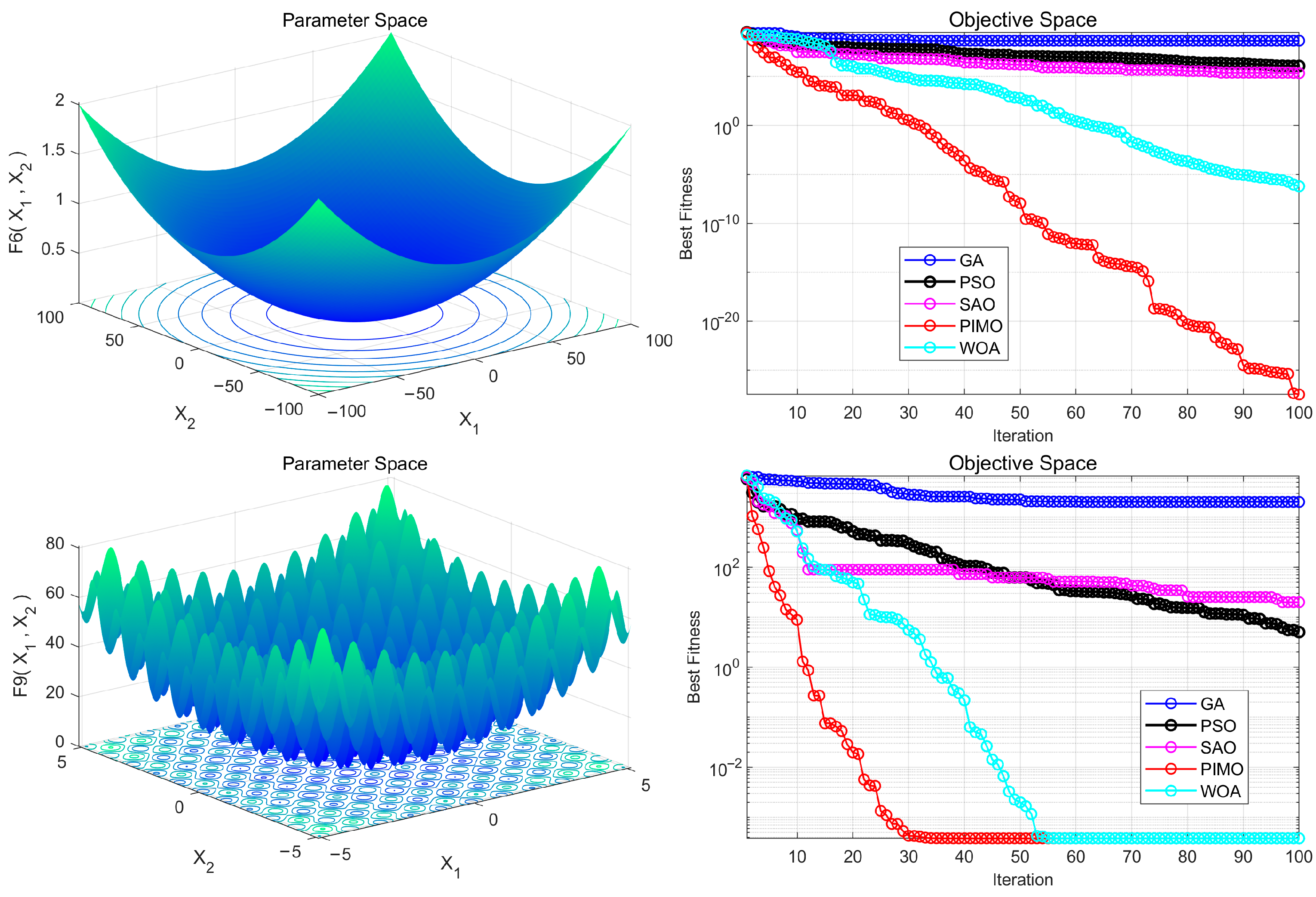
Unimodal test functions with a global optimal position can be used to evaluate the exploitation behavior of different optimization algorithms, while multimodal test functions can assess their exploration and local optimum avoidance capabilities. Two different types of test functions were selected to qualitatively evaluate the performance of the PIMO algorithm (Figure 4).
F 6 X = i = 1 k x i 2 ,
F 2 x = g x 1 , x 2 + g x 2 , x 3 + + g x D 1 , x D + g x D , x 1 ,
To highlight the advancement of the PIMO algorithm in parameter optimization, four commonly used optimization algorithms such as GA and PSO were also employed for comparison. Considering that the number of optimizations for numerical simulation models generally does not exceed 200, the optimization processes of the five algorithms within 200 iterations were tested. Figure 5 shows the optimization results of different algorithms on test functions F6 and F9. The results indicate that the PIMO algorithm converges faster within 200 iterations and achieves the minimum final fitness function value. The PIMO optimization algorithm has a faster convergence curve than other algorithms in both unimodal and multimodal test functions. Compared with other optimization algorithms, PIMO provides a more appropriate convergence speed for optimizing test functions and exhibits higher efficiency.

3.3. Induced Fracture Parameter Inversion Framework

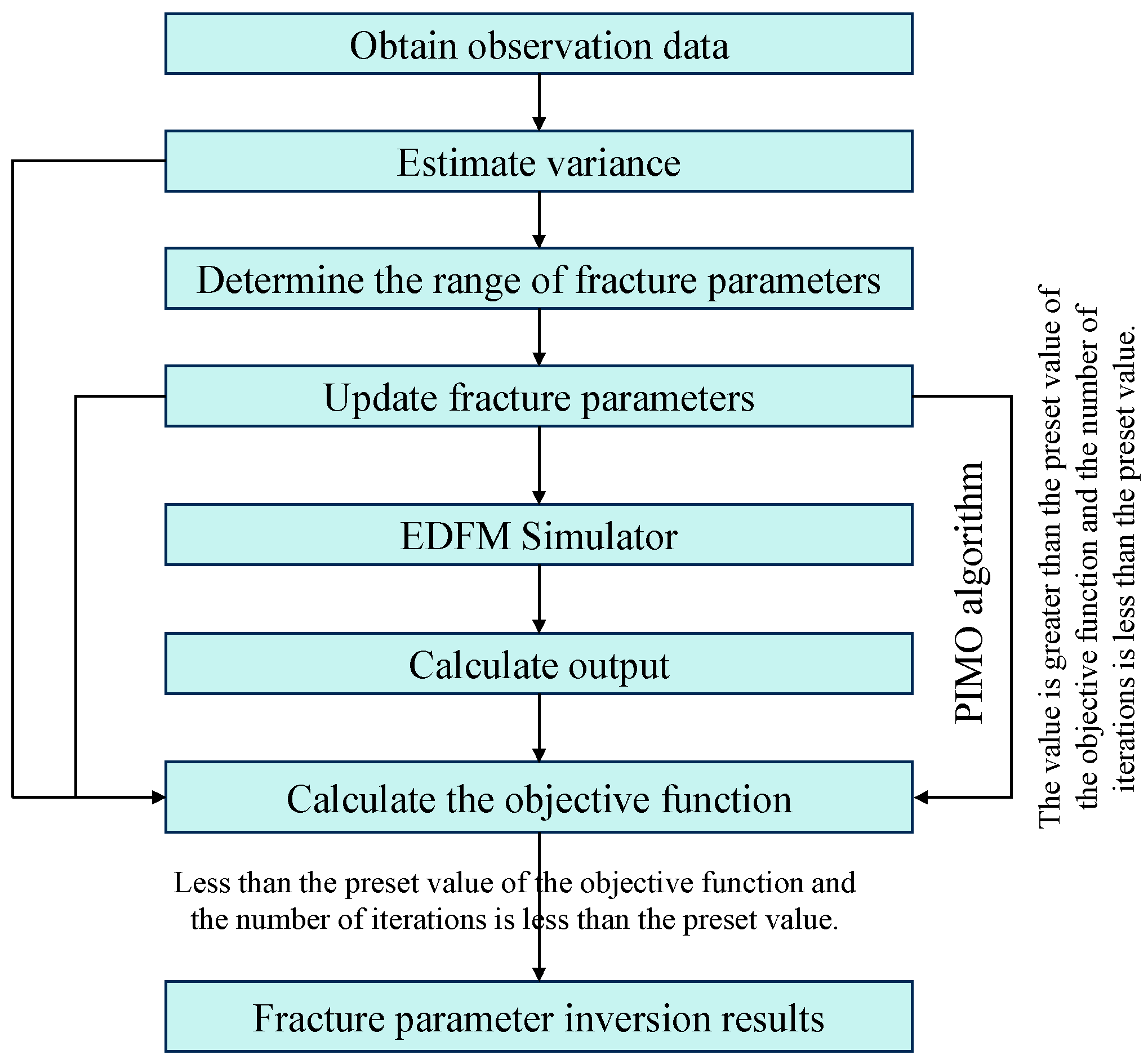
As illustrated in Figure 6, the present study proposes a coupled inversion framework integrating the PIMO and the EDFM. The primary objective of this framework is to achieve dynamic and efficient identification of fracture parameters induced by water injection. The core workflow is divided into four sequential steps. Step 1 involves the construction of an EDFM numerical simulation model. Step 2 is dedicated to parameter initialization and mapping: taking injection–production dynamic data (i.e., bottom-hole pressure and liquid production rate) as input variables, the fracture parameters to be inverted—including fracture half-length Lf, fracture conductivity Cf, fracture angle α, and fracture initiation time tf—are mapped onto the four-dimensional solution space of the PIMO algorithm. A random initial population is then generated based on the predefined boundary conditions (see Table 1). Step 3 implements EDFM-PIMO iterative optimization: EDFM flow simulation is executed for each parameter agent, and the objective function (defined as the weighted squared error of pressure and production rate) is calculated accordingly. This process adopts a dynamic convergence control mechanism with adaptive step-size regulation for the iteration procedure. Specifically, a large search range is employed in the early iterative stage for global exploration, whereas small step-sizes are adopted in the later stage to pinpoint the optimal parameter set. The iteration terminates when the variation rate of the objective function drops below 10−4 or the maximum number of iterations is reached, with the optimal inverted parameter set being outputted thereafter. Step 4 focuses on result verification and application: the inverted parameter set θ is substituted into the EDFM for history matching verification, followed by the prediction of development indicators under different water injection strategies. This framework significantly enhances the efficiency of parameter inversion. Field application results have verified its capability to accurately identify the dynamic propagation characteristics of fracture half-length, orientation, and conductivity. It thereby provides a robust scientific basis for optimizing water injection development strategies.

4. Analysis of Model Influencing Factors

4.1. The Influence of Fracture Angle

Fractures can create new preferential pathways, and they can also interact synergistically or interfere with pre-existing natural preferential pathways. The ultimate effect depends on the degree of matching between the fracture orientation and the sand body distribution direction. In ultra-low permeability reservoirs, the matrix exhibits extremely poor percolation capacity [28]. The high-conductivity fractures generated by artificial fracturing are, in themselves, the most prominent and powerful artificial preferential seepage channels, into which the injected water will preferentially flow.
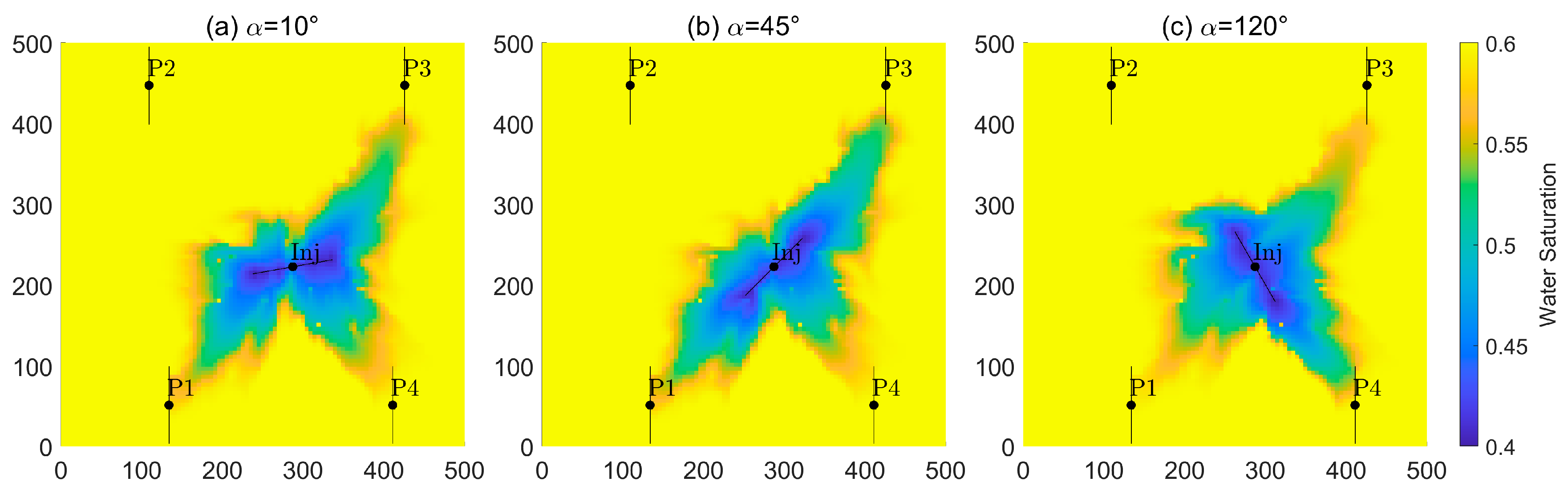
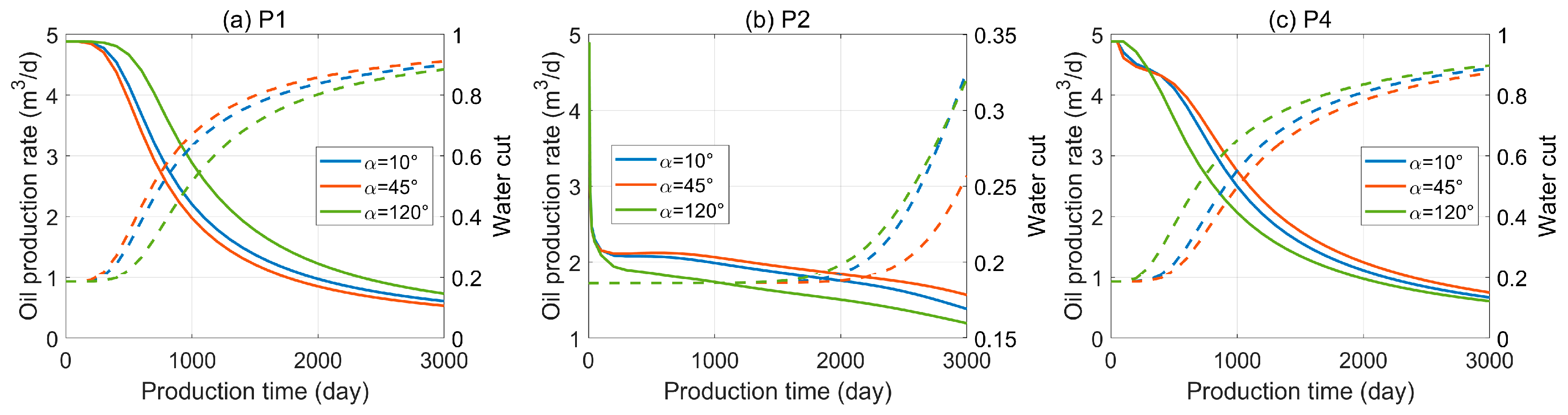
Figure 7 presents the effect of fracture angle which is defined as the angle between the fracture and the x-axis on residual oil distribution. Figure 8 shows the effect of the fracture angle on oil well production at different locations. Based on the comparison of oil saturation distributions under different fracture angles and the production performance of oil wells, it is found that the fracture angle and the direction of preferential seepage channels significantly influence the morphology of the water injection front and the timing of water breakthrough. When the fracture angle is 45°, the extension direction of artificial fractures is consistent with or intersects that of the high-permeability strips, resulting in a “synergistic enhancement” effect. The injected water rushes to the production wells at a faster rate, leading to abrupt water flooding of the production wells while the crude oil in other areas cannot be effectively displaced. In contrast, when the fracture angle is perpendicular to or forms a large included angle with the sand body strike (i.e., the direction of preferential seepage channels), the artificial fractures can transversely cut through and connect these isolated preferential channels. This not only greatly delays the water breakthrough time and effectively inhibits water channeling, but also “activates” the originally immobile reservoir spaces, displaces the crude oil trapped therein, and thus improves the swept volume and oil recovery factor. The initial sharp decline in oil production for P4 is attributed to the rapid water breakthrough caused by the fracture geometry and orientation, which leads to early water cut rise. The subsequent leveling-off (0–500 days) reflects a period of relatively stable oil production after the well enters a predominantly water-cut stage, where the remaining oil is produced at a low but steady rate due to the sustained waterflood sweep from the fracture network. This behavior is typical of reservoirs with high-conductivity fractures under water injection.
In the waterflooding development of ultra-low permeability reservoirs, fractures should not be regarded as an independent engineering element. Instead, they must be deeply integrated with the geological model. The optimal fracturing design lies in enabling artificial fractures to avoid adverse natural preferential pathways while transversely cutting through sand bodies, thereby transforming water flow from longitudinal channeling to transverse displacement. This constitutes the key to achieving efficient reservoir development.

4.2. The Influence of Fracture Half-Length

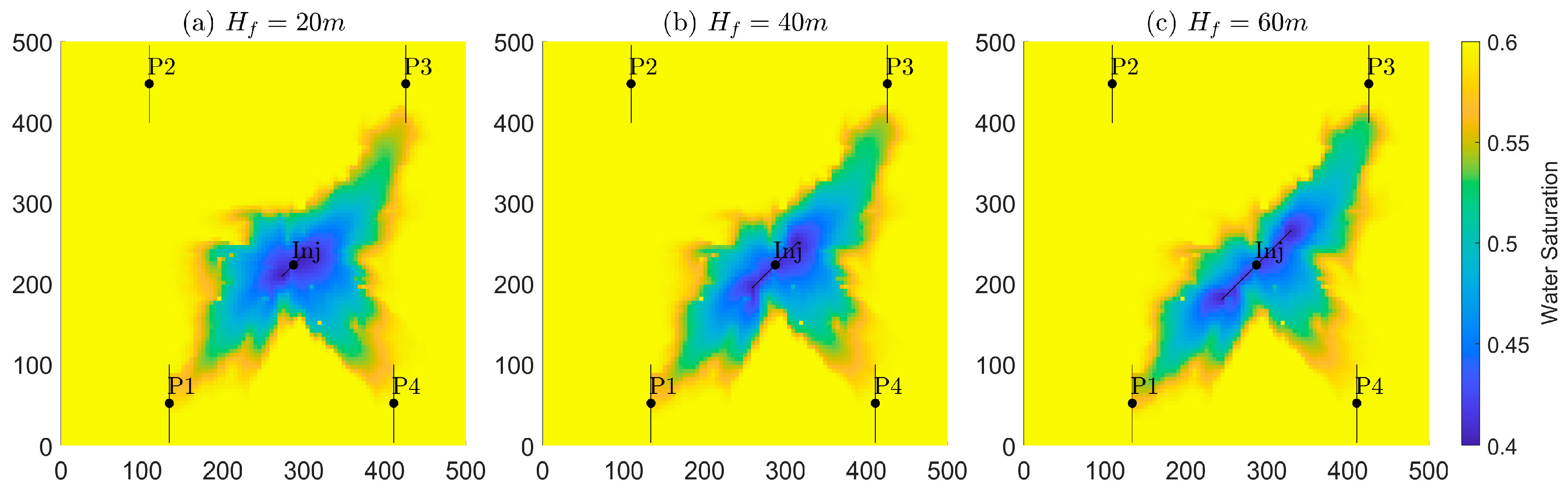
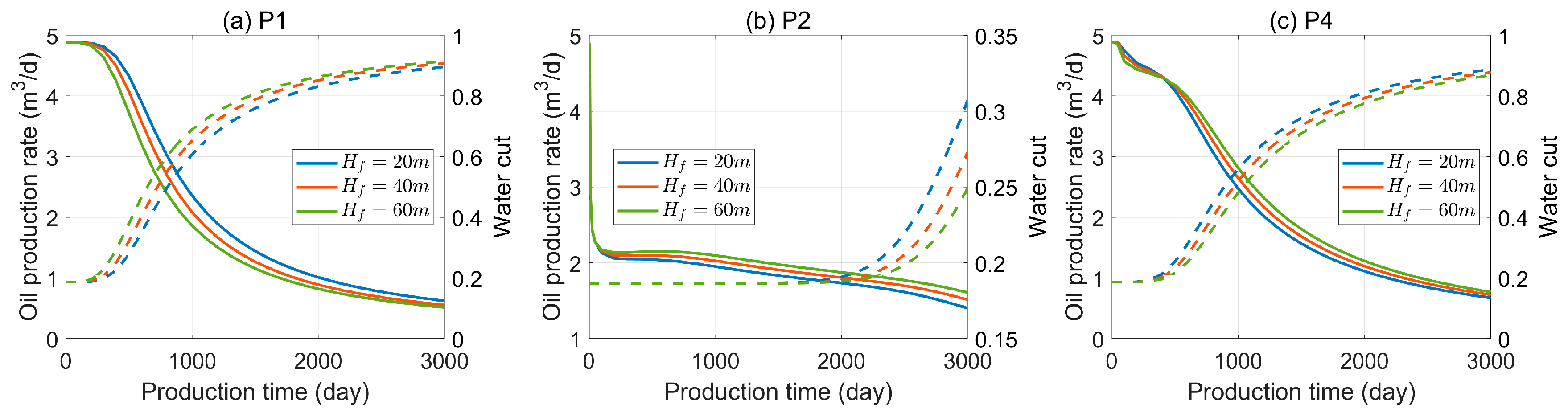
In ultra-low permeability reservoirs, matrix water injection is extremely challenging. Longer fractures correspond to larger seepage areas and lower water injection resistance. Extended fractures can remarkably reduce water injection pressure, enabling higher water injection rates under the same wellhead pressure, and thus replenishing formation energy more rapidly and efficiently. However, if the fractures of injection wells and production wells are aligned with each other, or if there exist natural high-permeability strips within the reservoir, long fractures will evolve into “high-speed water channels” directly connecting injection–production well pairs. Numerical simulations were conducted to assess the impacts of different fracture half-lengths on the injection–production performance of oil-water wells when the fracture angle is 45°, with the results presented in Figure 9 and Figure 10. At a fracture angle of 45°, the orientation of fractures is consistent with that of the original preferential seepage channels. For wells P1 and P3, which are located along the preferential seepage channels, the water breakthrough time advances with the increase in fracture half-length. In contrast, for well P4, which is perpendicular to the fractures of the injection well, the water breakthrough time is progressively delayed as the fracture half-length increases.
When the orientation of fractures induced by injection wells is consistent with that of preferential seepage channels, increasing the fracture length will intensify the flow field in this direction, causing the production wells along the channels to experience water breakthrough more rapidly. Meanwhile, it will weaken or alter the driving energy perpendicular to the fracture direction, thereby delaying the water breakthrough time of the lateral production wells. This indicates that the effect of fracture length on production wells in different directions is antagonistic.

4.3. The Influence of Fracture Conductivity

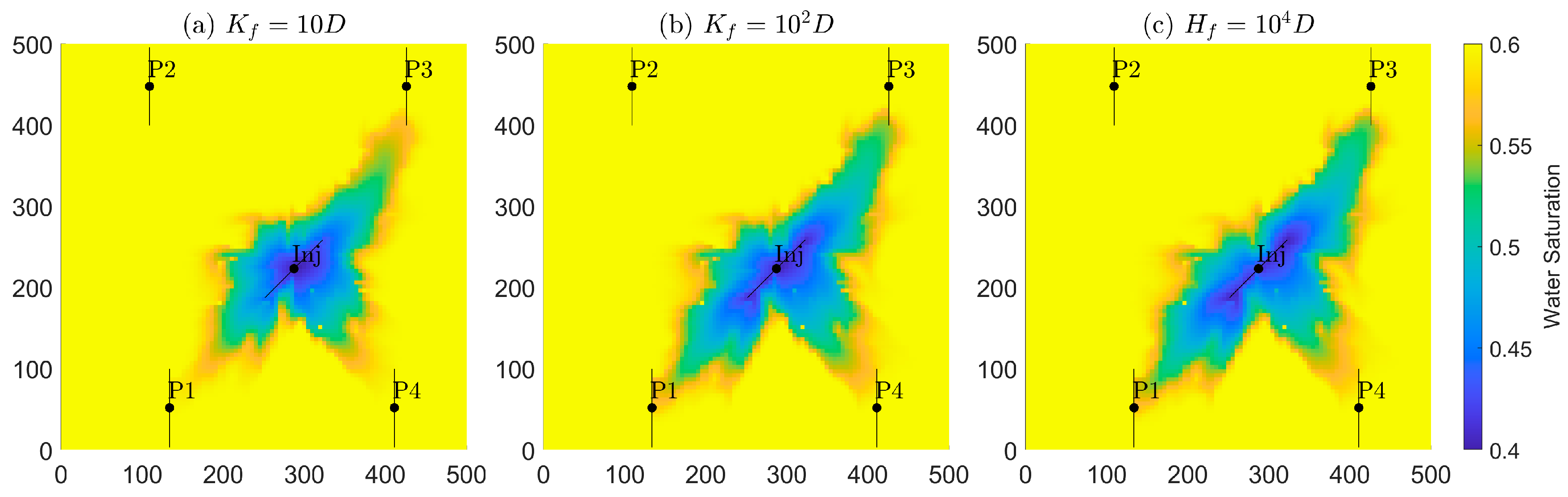
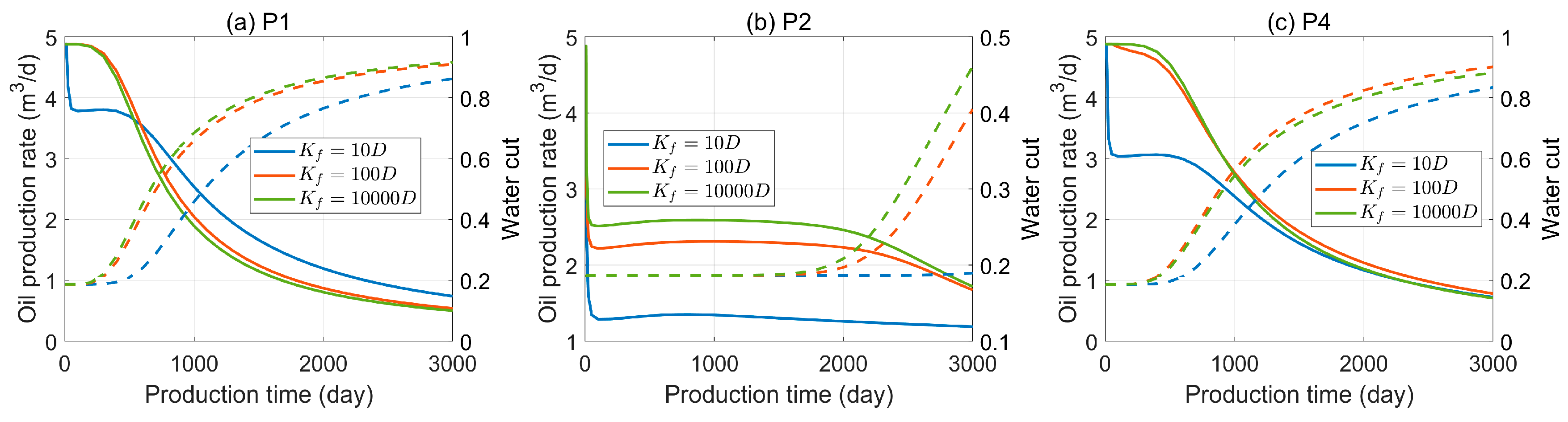
Numerical simulations were performed to investigate the injection–production performance under different fracture conductivities, with the fracture half-length fixed at 60 m and the fracture angle set at 45°, and the results are presented in Figure 11 and Figure 12. The findings indicate that high-conductivity fractures, analogous to broad expressways, can significantly reduce water injection resistance and facilitate the infiltration of injected water into the reservoir formation. This enables more efficient replenishment of formation energy and the establishment of a robust production pressure differential, thereby enhancing the initial production rate and stable production capacity of production wells. Nevertheless, if the fracture orientation is consistent with that of the preferential seepage channels, the high conductivity will transform the fractures into high-speed water flow channels, causing the injected water to rush directly and rapidly into the connected production wells. This leads to premature water breakthrough in the affected production wells, a sharp rise in water cut, and even abrupt water flooding, consequently resulting in a substantial reduction in sweep efficiency and crude oil recovery factor. For production wells not directly connected to the fractures of injection wells, high-conductivity fractures can generate more effective pressure perturbations, which may improve energy supply to these wells and facilitate the displacement of crude oil within their controlled reservoir zones.

5. Case Study on Fracture Parameter Inversion

To verify the engineering applicability of the proposed framework, a case study was conducted on an injection–production well group in a TOR within the Ordos Basin. The target well group penetrates a reservoir with an average porosity of 10.2% and permeability of 0.85 mD. After waterflooding development was implemented, the oil wells exhibited varying degrees of water breakthrough issues. However, key fracture parameters such as fracture orientation, half-length, and conductivity are difficult to determine, which has severely hindered the implementation of profile control and water shutoff operations. Based on the production performance data of oil and water wells, the EDFM-PIMO inversion framework proposed in this paper was applied to identify the parameters of water injection-induced fractures, thereby providing technical support for the optimization of development strategies. The basic geological model and well locations of the inverted well group are shown in Figure 13. During the fracture inversion and history matching process, a production control condition of constant liquid production rate for oil wells was adopted, and the key fracture parameters were inverted by fitting the water cut of individual wells.
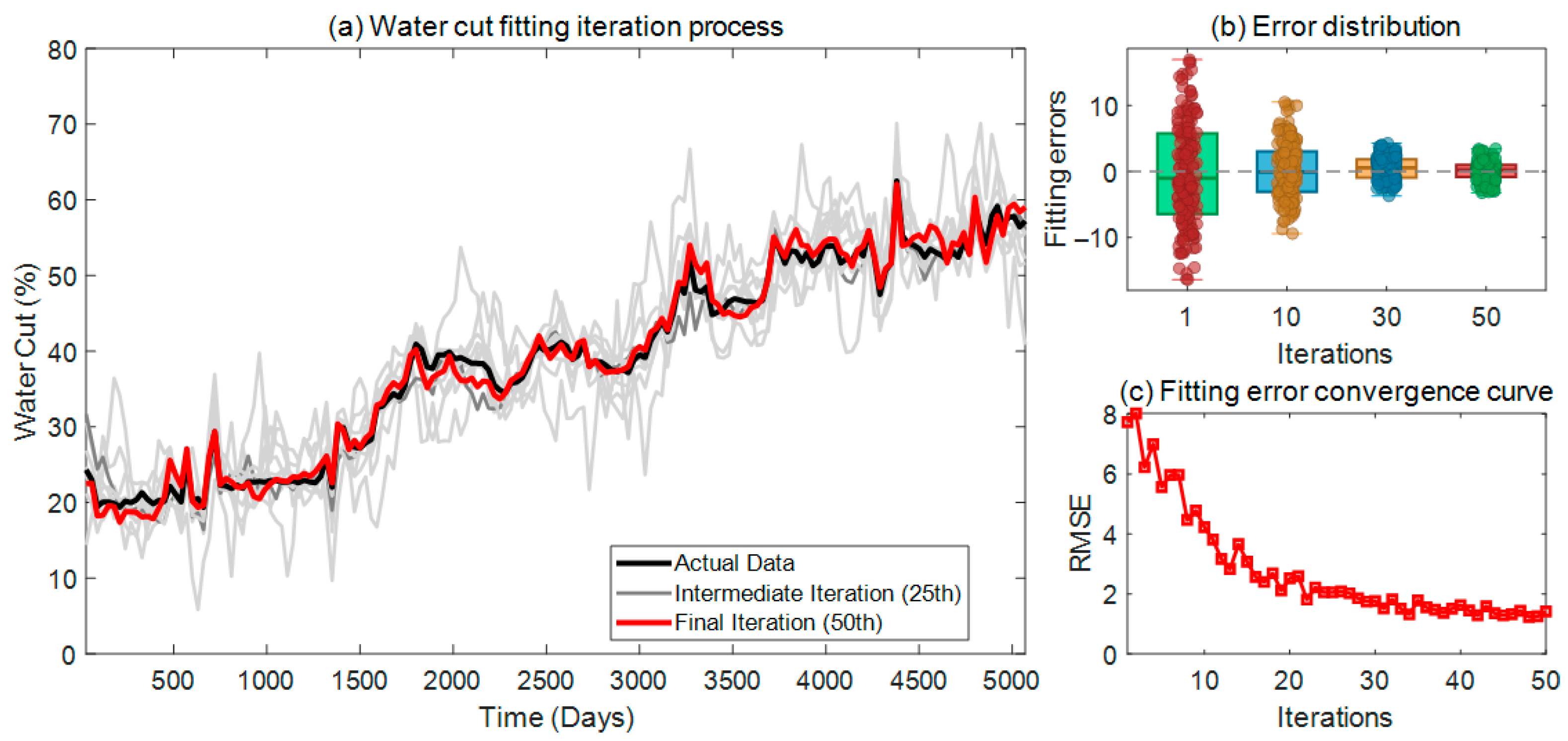
Figure 14 comprehensively illustrates the iterative history matching process of oil well water cut using an intelligent optimization algorithm. In Figure 14a, the solid black line represents the actual historical water cut data. A multitude of light gray lines depict the simulated outputs of the model at different intermediate iterative steps (plotted every 5 iterations), demonstrating the exploration phase of the algorithm. The gradual convergence of the initially widely scattered fitting results toward the final solution is clearly observable. The dark gray line specifically highlights the model state at the 25th iteration, showing a significant improvement over the early attempts. The final fitting curve after 50 iterations is displayed in red, which is in excellent agreement with the trend of historical data, indicating the successful convergence of the algorithm. Figure 14b quantitatively analyzes the fitting error distribution at four key iterative milestones. The box plots, supplemented with scatter data, clearly show that with the increase in iteration times, both the distribution range and median of the errors decrease significantly. The error distribution shifts downward and becomes more concentrated, transforming from a high-variance, positively skewed distribution at the 1st iteration to a zero-centered, low-variance symmetric distribution at the 50th iteration. This intuitively confirms that the accuracy of the model is continuously improved and the deviation is progressively reduced. Figure 14c tracks the global convergence of the algorithm by plotting the curve of Root Mean Square Error (RMSE) against the number of iterations. The curve exhibits a typical monotonically decreasing trend, characterized by a rapid initial decline in error followed by a gradual approach to an asymptote. This pattern verifies the stable and efficient convergence characteristics of the optimization algorithm, which effectively minimizes the error between the simulated water cut data and the historical water cut data. The optimization process validates the effectiveness of the adopted intelligent optimization algorithm in production history matching. This process reliably converges to a stable solution that can accurately reproduce the historical water cut trends, as reflected by the good agreement of the final fitting results, the systematically reduced and narrowed error distribution, as well as the smooth error convergence curve.
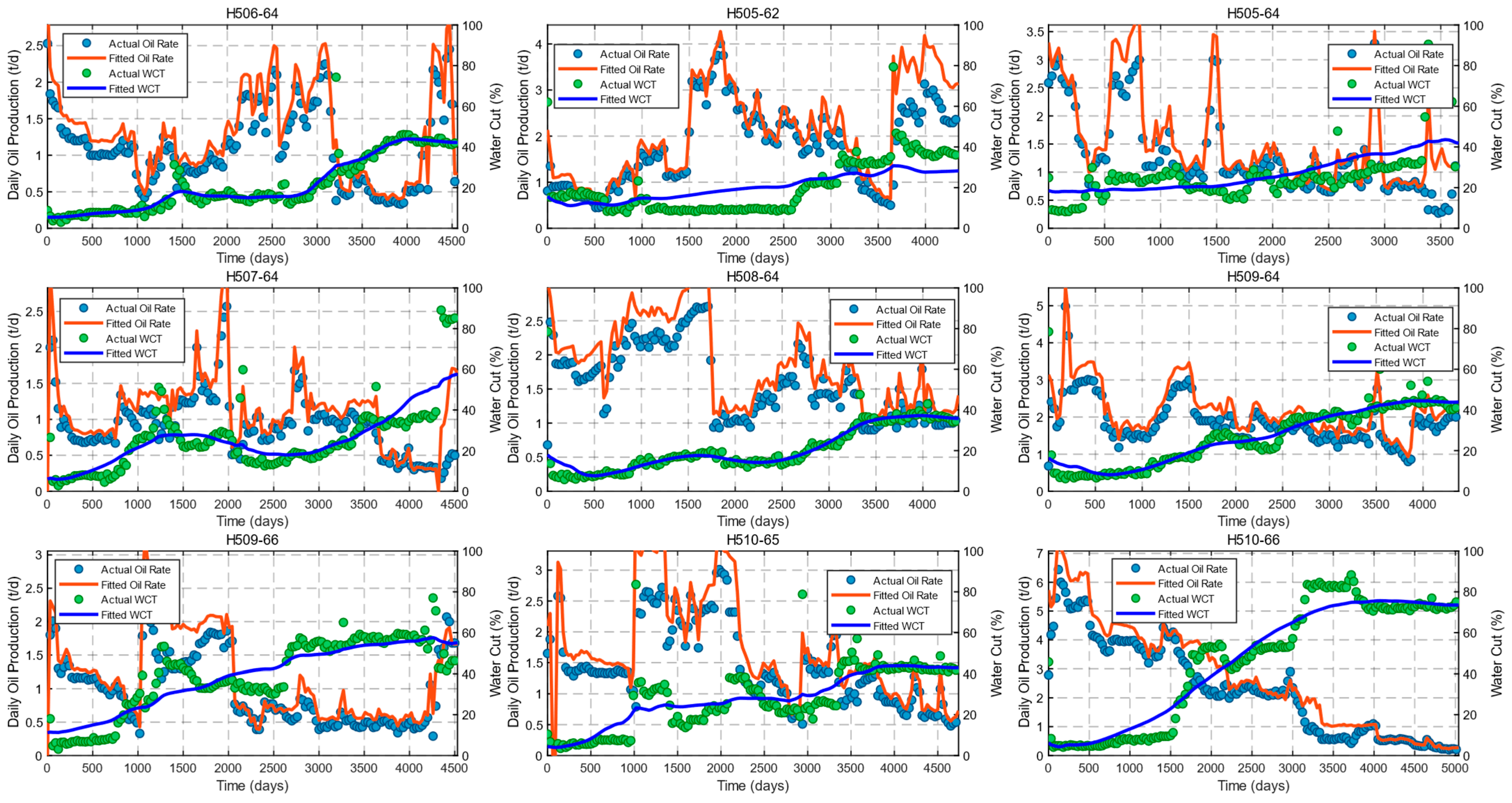
Figure 15 presents the fitting results of oil production and water cut for the oil wells in the well group. The results show that the agreement rate between the updated calculation results and the observed data has been significantly improved. The average relative error has decreased from 30.8% at initialization to 7.5% after fitting, representing an improvement of 75.7% in the agreement rate. These findings indicate that the inverted numerical simulation model can accurately characterize the oil-water flow behavior within the reservoir.
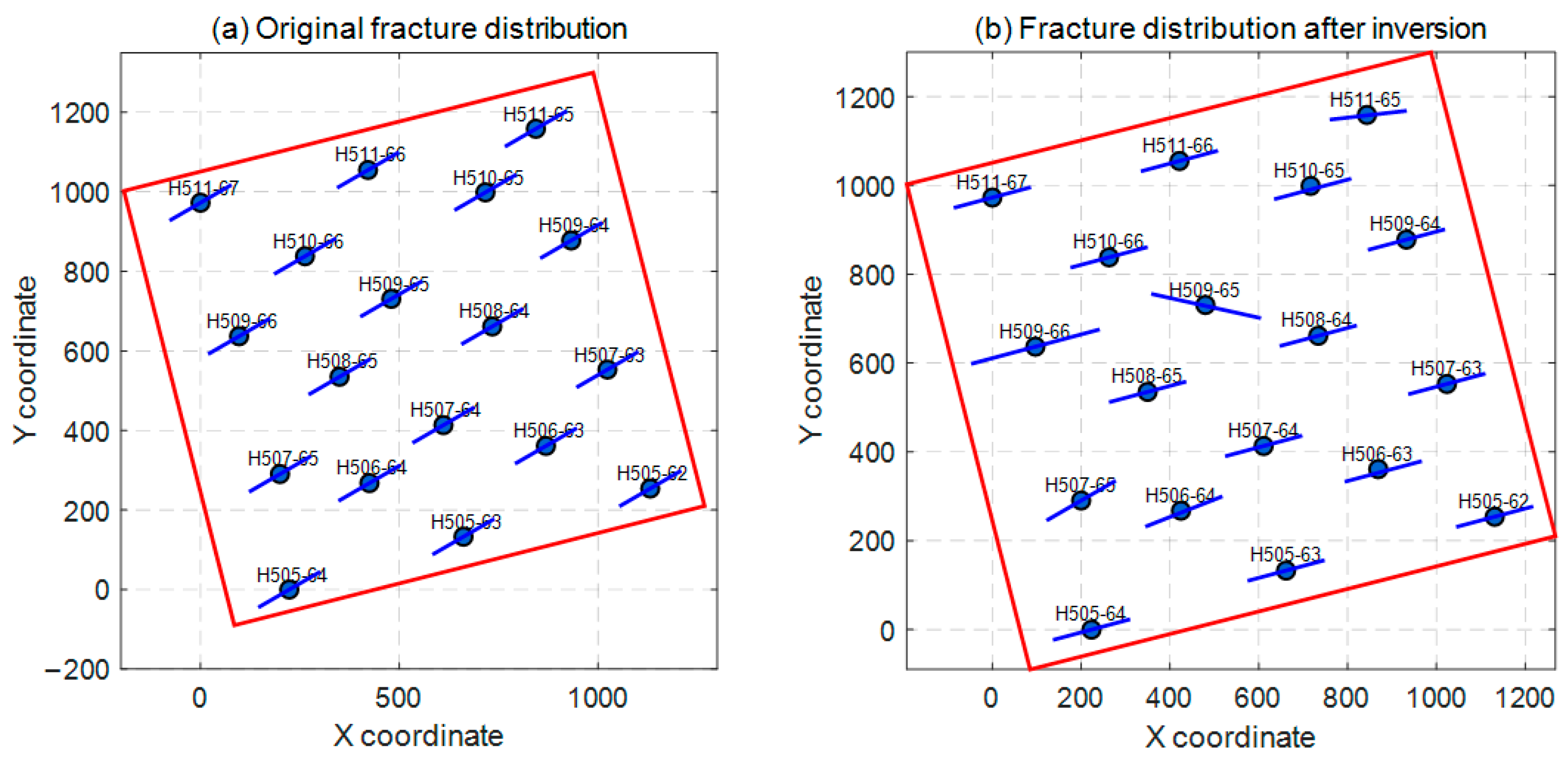
Figure 16 presents a comparison of the distribution of water injection-induced fractures before and after inversion using the optimized model. Figure 16a shows the initial fracture distribution derived from prior geological or simulation data. The initial fracture half-length and conductivity were obtained via Pressure Transient Analysis (PTA) interpretation, with an average fracture half-length of approximately 84 m and a conductivity of 25.6 mD·m. The initial orientation of artificial fractures was determined through microseismic monitoring, where all fractures were assigned identical initial half-length and conductivity values. In this initial state, the fracture orientation and length exhibited homogeneity. Figure 16b displays the inverted fracture distribution generated by the optimized model. The results indicate that the fracture geometry and spatial organization have been significantly improved. The fracture strike is not entirely consistent with the regional stress direction, and their length and density have also been adjusted to better match the actual water injection response. In particular, the fracture angle of Well H509-65 shows a substantial change before and after inversion. The optimized distribution reveals a more coherent fracture network, characterized by enhanced connectivity near injection wells and more concentrated fracture distribution in non-productive zones. By integrating geological constraints and production data, the model has successfully refined the characterization of fracture properties, yielding a fracture network that is more consistent with geological laws and physical principles. This improved fracture distribution provides a reliable basis for optimizing water injection strategies and predicting reservoir performance.
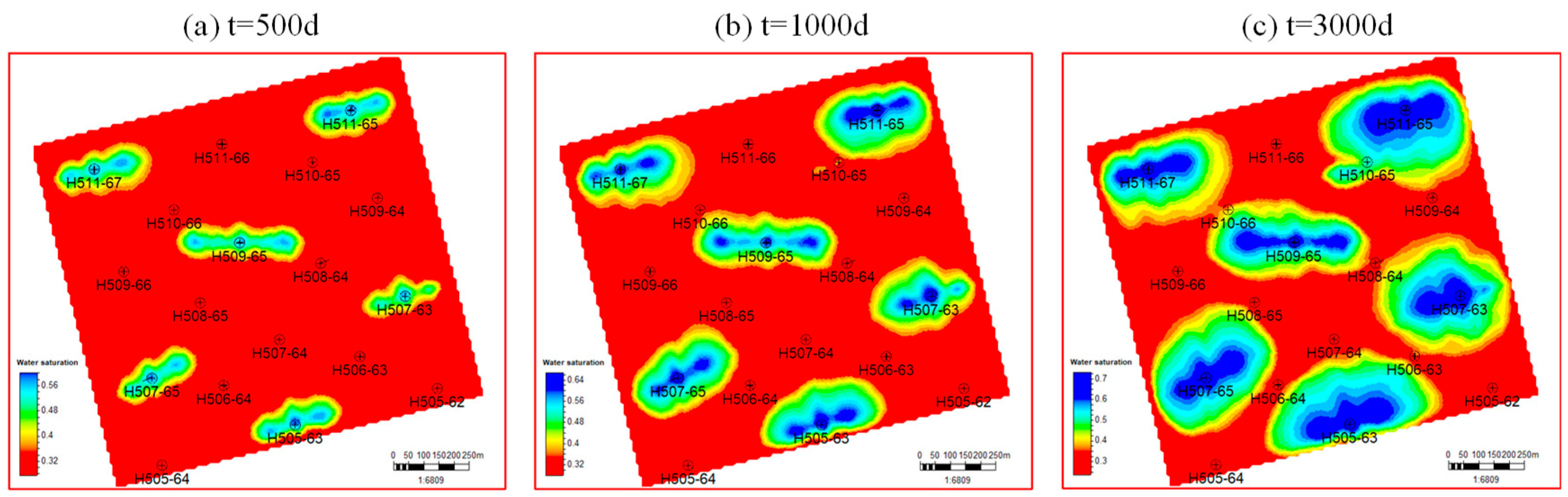
Figure 17 shows the planar distribution of water saturation at different time points. It can be observed that since the induced fractures of well H509-66 are mainly directed toward well H510-66, the injected water predominantly flows toward well H510-66 with the elapse of injection time. In addition, due to the favorable matrix connectivity between Well H509-65 and well H509-66, a portion of the injected water gradually migrates to the farther well H509-66.

6. Conclusions

(1)
The proposed EDFM-PIMO coupled inversion framework successfully solves the problem of identifying water injection-induced fracture parameters in TORs. By integrating the seepage characterization capability of the EDFM with the global search mechanism of the Projection Iterative PIMO, the convergence speed is increased by 41.5%, the history matching error is reduced by 35.4%, and the computational time is decreased by 64.1% compared with traditional methods. This provides a new paradigm for the dynamic characterization of complex fracture networks.
(2)
The established model can accurately quantify the dynamic response law of water injection-induced fractures on oil wells. When the fracture orientation is perpendicular to the preferential seepage channels, it can delay water channeling in oil wells along the preferential seepage channels. The longer the fracture half-length of the injection well, the earlier the water breakthrough of oil wells along the preferential seepage channels; the lower the fracture conductivity of the injection well, the more uniform the water injection effectiveness of oil wells, and the higher the production of the well group.
(3)
Case studies have verified that the EDFM-PIMO inversion framework can accurately quantify the half-length, orientation, conductivity and initiation time of water injection-induced fractures, with the parameter identification error less than 8%. The water injection strategy optimized based on the inversion results has significantly delayed the water breakthrough time and improved the oil recovery factor, thereby providing reliable technical support for the efficient development of TORs.

Author Contributions

Conceptualization, X.L. and C.Z.; methodology, J.Y.; software, S.G.; validation, B.W. and C.Z.; formal analysis, Z.W.; investigation, X.L.; resources, S.G.; data curation, S.G.; writing—original draft preparation, B.W.; writing—review and editing, X.L.; visualization, S.G.; supervision, C.Z.; funding acquisition, S.G. All authors have read and agreed to the published version of the manuscript.

Funding

This Project Sponsored by Natural Science Foundation of Xinjiang Uygur Autonomous (No. 2025D01B153).

Data Availability Statement

The data are available from the corresponding author on reasonable request.

Conflicts of Interest

Authors Xiaojun Li, Chunhui Zhang, Bao Wang and Jing Yang were employed by the Changqing Oilfield Company. The remaining authors declare that the research was conducted in the absence of any commercial or financial relationships that could be construed as a potential conflict of interest. The Changqing Oilfield Company had no role in the design of the study; in the collection, analyses, or interpretation of data; in the writing of the manuscript, or in the decision to publish the results.

Nomenclature

mmatrix
ffracture
mfmatrix and fracture
fffracture and fracture
fwfracture and well
ξfluid phase
ttime
ρfluid density
ϕmatrix porosity
Sfluid saturation
ppressure
pfifracture pressure
piobsobserved pressure
divergence operator
v fluid velocity
qsource/sink term
qiobsobserved production rate
Kpermeability of the medium
k r α relative permeability of phase α
μviscosity
p 0 initial formation pressure
λthreshold pressure gradient
γpermeability modulus of the porous medium
Ttransmissibility
Afluid exchange area
Accommon flow area between fracture segments
ddistance
Qfluid exchange
aaperture of the fractur
L length of the intersection line
d average vertical distance
WIproductivity index of the fractured well
Hintersection height
dsegaverage distances from the two fracture segments
ωpweighting coefficients for the pressure term
ωqweighting coefficients for the production term
Xijposition of the i-th projection search individual in the j-th dimension
r0random number between 0 and 1
UBjupper bounds
LBjlower bounds
Fidifference between the current solution and the target solution
Fbestcurrent optimal solution
Xbestcurrent optimal position
Rrandom numbers
X n 1 p r o j t + 1 updated position
Xicurrent position
δdynamically adjusted parameter
fj(x)j-th component of the objective function
eistandard basis vector with a value of 1
εa very small perturbation value

Abbreviations

The following abbreviations are used in this manuscript:
TORTight Oil Reservoir
EDFMEmbedded Discrete Fracture Model
NNCNon-Neighbor Connections
TPFATwo-Point Flux Approximation
PIMOProjection-Iterative-Methods-based Optimizer
RGPResidual-Guided Projection
DRPDouble Random Projection
WRPUWeighted Random Projection Update
LFGPLévy Flight-Guided Projection
SGDStochastic Gradient Descent
GAGenetic Algorithm
ACAAnt Colony Algorithm
BOBayesian Optimization
PSOParticle Swarm Optimization
RMSERoot Mean Square Error
PTAPressure Transient Analysis

References

  1. Pu, W.; Kuang, J.; Yang, F.; Li, B.; Li, J.; Wang, A. CO2 flooding technology for enhanced oil recovery in tight oil reservoirs: A review. Energy Geosci. 2026, 7, 100545. [Google Scholar] [CrossRef]
  2. Liu, S. Review of the development status and technology of tight oil: Advances and outlook. Energy Fuels 2023, 37, 14645–14665. [Google Scholar] [CrossRef]
  3. Jia, C.; Jiang, L.; Zhao, W. Tight oil and gas in Whole Petroleum System: Accumulation mechanism, enrichment regularity, and resource prospect. Acta Pet. Sin. 2025, 46, 1. [Google Scholar] [CrossRef]
  4. Huang, L.; Zhan, W.; Zhao, H.; Sheng, G. A novel fluid-solid coupling method for fractured reservoirs: 3D DDM-EDFM integration with proppant mechanics. Comput. Geotech. 2025, 181, 107127. [Google Scholar] [CrossRef]
  5. Wang, Y.; Cheng, S.; Feng, N.; He, Y.; Yu, H. The physical process and pressure-transient analysis considering fractures excessive extension in water injection wells. J. Pet. Sci. Eng. 2017, 151, 439–454. [Google Scholar] [CrossRef]
  6. Gao, Y.; Detournay, E. Hydraulic fracture induced by water injection in weak rock. J. Fluid Mech. 2021, 927, A19. [Google Scholar] [CrossRef]
  7. Liu, J.; Ding, Y.; Xue, F.; Wei, J.; Lin, H.; Dai, H. Confinement pressure effect and influence mechanism of water injection-induced slip of shale fracture. Eng. Geol. 2025, 352, 108061. [Google Scholar] [CrossRef]
  8. Wang, Y.; Cheng, S.; Zhang, K.; He, Y.; Feng, N.; Qin, J.; Luo, L.; Yu, H. A Comprehensive Work Flow To Characterize Waterflood-Induced Fractures by Integrating Real-Time Monitoring, Formation Test, and Dynamic Production Analysis Applied to Changqing Oil Field, China. SPE Reserv. Eval. Eng. 2018, 22, 692–708. [Google Scholar] [CrossRef]
  9. Wang, Y.; Cheng, S.; Feng, N.; Xu, J.; Qin, J.; He, Y.; Yu, H. Semi-analytical modeling for water injection well in tight reservoir considering the variation of waterflood—Induced fracture properties—Case studies in Changqing Oilfield, China. J. Pet. Sci. Eng. 2017, 159, 740–753. [Google Scholar] [CrossRef]
  10. Wang, Z.; Ning, Z.; Guo, W.; Zhan, J.; Chen, Z. Modeling transient temperature coupled pressure behaviour for waterflooding well with induced fractures: Semi-analytical model, numerical model, and case studies. Geothermics 2024, 121, 103055. [Google Scholar] [CrossRef]
  11. Wang, Z.; Ning, Z.; Guo, W.; Cheng, Q. Pressure-transient analysis for waterflooding with the influence of dynamic induced fracture in tight reservoir: Model and case studies. SPE Reserv. Eval. Eng. 2023, 26, 994–1016. [Google Scholar] [CrossRef]
  12. Yang, C.; Cheng, L.; Cao, R.; Shi, J.; Du, X. An improved embedded discrete fracture model with fracture growth for water-induced fracture simulation in low permeability reservoirs. Lithosphere 2022, 2021, 2882368. [Google Scholar] [CrossRef]
  13. Al-Janabi, M.A.M.; Mahmoud, H.A.; Asad, M.S.; Al-Taie, A.H.; Gandomkar, A. Modeling and Simulation of Hydraulic Fracturing in Tight Gas Reservoirs: A Review of Geomechanical and Flow Dynamics Approaches. Emerg. Trends Eng. Sustain. 2025, 1, 90–104. [Google Scholar] [CrossRef]
  14. Poli, R.E.B.; Barbosa Machado, M.V.; Sepehrnoori, K. Advancements and Perspectives in Embedded Discrete Fracture Models (EDFM). Energies 2024, 17, 3550. [Google Scholar] [CrossRef]
  15. Xing, G.; Yang, W.; Shao, D.; Wang, M.; Dou, X.; Wang, X. Rate transient and pressure distribution of a multiply fractured vertical well in the shale gas reservoir with randomly distributed natural fractures based on embedded discrete fracture model. Geoenergy Sci. Eng. 2025, 250, 213833. [Google Scholar] [CrossRef]
  16. Yu, W.; Xu, Y.; Weijermars, R.; Wu, K.; Sepehrnoori, K. A numerical model for simulating pressure response of well interference and well performance in tight oil reservoirs with complex-fracture geometries using the fast embedded-discrete-fracture-model method. SPE Reserv. Eval. Eng. 2018, 21, 489–502. [Google Scholar] [CrossRef]
  17. Braik, M.; Hammouri, A.; Atwan, J.; Al-Betar, M.A.; Awadallah, M.A. White Shark Optimizer: A novel bio-inspired meta-heuristic algorithm for global optimization problems. Knowl.-Based Syst. 2022, 243, 108457. [Google Scholar] [CrossRef]
  18. Ma, Y.; Ye, M. Application of machine learning in hydraulic fracturing: A review. ACS Omega 2025, 10, 10769–10785. [Google Scholar] [CrossRef]
  19. Xue, J.; Shen, B. Dung beetle optimizer: A new meta-heuristic algorithm for global optimization. J. Supercomput. 2023, 79, 7305–7336. [Google Scholar] [CrossRef]
  20. Mirjalili, S.; Lewis, A. The Whale Optimization Algorithm. Adv. Eng. Softw. 2016, 95, 51–67. [Google Scholar] [CrossRef]
  21. Zhang, K.; Zhang, J.; Ma, X.; Yao, C.; Zhang, L.; Yang, Y.; Wang, J.; Yao, J.; Zhao, H. History Matching of Naturally Fractured Reservoirs Using a Deep Sparse Autoencoder. SPE J. 2021, 26, 1700–1721. [Google Scholar] [CrossRef]
  22. Gong, Q.; Ma, Q.; Ma, X.; Li, H.; Jia, F.; Zhang, G.; Kou, Z. Impact of natural fractures on the inflow dynamics of horizontal gas wells in strongly heterogeneous reservoirs: An embedded discrete fracture model study. Phys. Fluids 2026, 38, 016607. [Google Scholar] [CrossRef]
  23. Liu, J.; Zhu, Y.; Liu, J.; Pan, H.; Zhang, D.; Bai, J.; Kuang, T.; Sun, T. A Novel Physics-Based Subsidiary Fracture Networks Grading and Permeability Equivalence for Efficient Shale Reservoir Simulation in History Matching. SPE J. 2026, 31, 497–519. [Google Scholar] [CrossRef]
  24. Zhang, T.; Guo, J.; Zeng, J.; Zhang, H.; Zhao, Z.; Zeng, F.; Wang, W. A transient source-function-based embedded discrete fracture model for simulation of multiscale-fractured reservoir: Application in coalbed methane extraction. Gas Sci. Eng. 2025, 133, 205500. [Google Scholar] [CrossRef]
  25. Fu, Q.; Chen, M.; Pang, W.; Sun, W. Fracturing Layer Optimization for Gas Hydrate Development Using EDFM Numerical Simulation Method. Processes 2026, 14, 593. [Google Scholar] [CrossRef]
  26. Jiao, K.; Yu, M.; Li, Y.; Han, D.; Chen, Y.; Bai, B.; Yu, B. Handling fracture intersections in the enriched-embedded discrete fracture model (nEDFM). Adv. Water Resour. 2025, 207, 105198. [Google Scholar] [CrossRef]
  27. Yu, D.; Ji, Y.; Xia, Y. Projection-Iterative-Methods-based Optimizer: A novel metaheuristic algorithm for continuous optimization problems and feature selection. Knowl.-Based Syst. 2025, 326, 113978. [Google Scholar] [CrossRef]
  28. Cao, Z.; Guo, F.; Rong, T.; Li, Z.; Du, F.; Wang, W.; Zhao, Y. Field application and diffusion law of grouting slurry in floor aquifer of a coal mine. Sci. Rep. 2026, 16, 8329. [Google Scholar] [CrossRef]
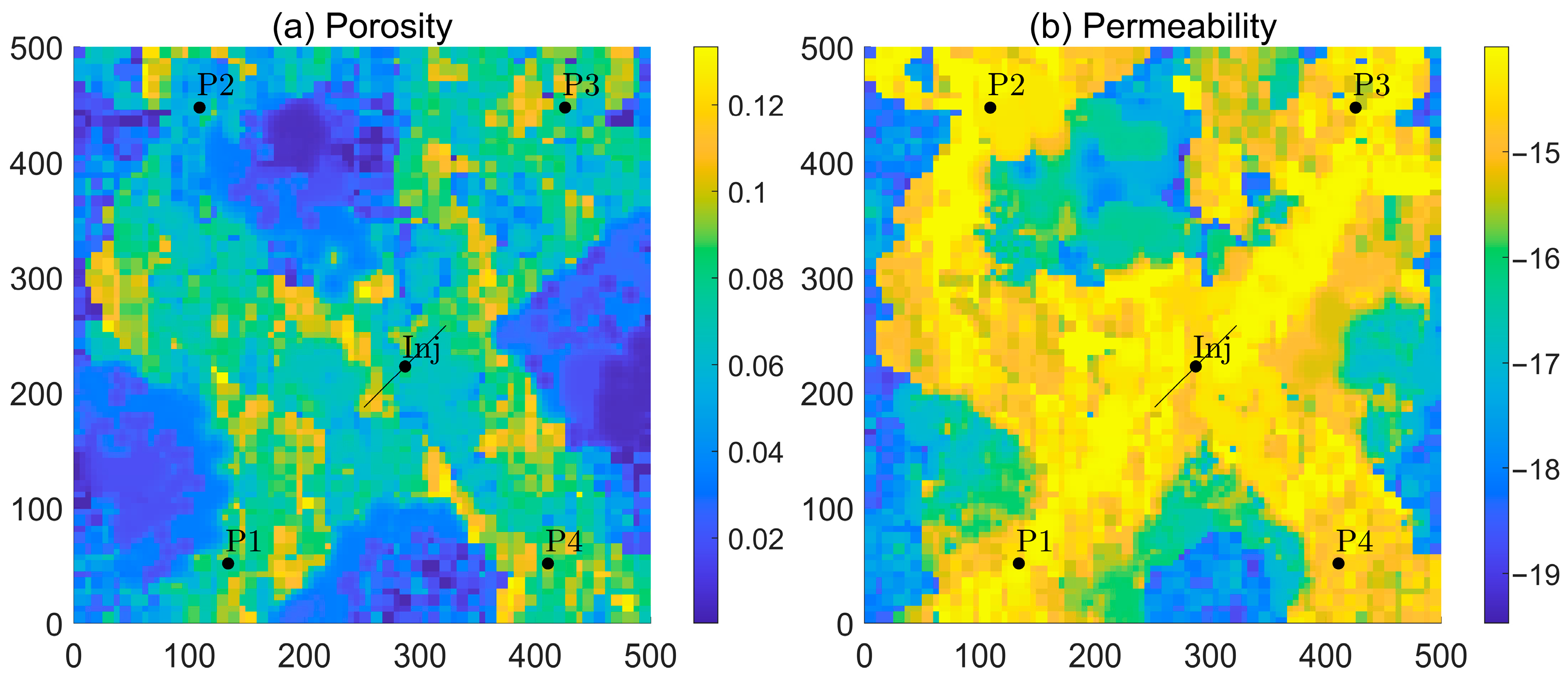
Figure 1. Schematic diagram of a typical injection–production well group in TORs.
Processes 14 01176 g001
Figure 2. Different types of NNC in EDFM (ac). The red dashed lines represents the intersection of the fracture and the grid.
Processes 14 01176 g002
Figure 3. Selection Process of RGP.
Processes 14 01176 g003
Figure 4. Flow Chart of PIMO.
Processes 14 01176 g004
Figure 5. Optimization Performance Comparison of Different Optimization Algorithms.
Processes 14 01176 g005
Figure 6. Inversion framework for induced fracture parameters based on PIMO.
Processes 14 01176 g006
Figure 7. Comparison of Oil Saturation under Different Fracture Angles.
Processes 14 01176 g007
Figure 8. Comparison of Oil Well Production and Water Cut under Different Fracture Angles. The solid line represents daily oil production, while the dashed line represents water cut.
Processes 14 01176 g008
Figure 9. Comparison of Oil Saturation under Different Fracture Half-Lengths.
Processes 14 01176 g009
Figure 10. Comparison of Oil Well Production and Water Cut under Different Fracture Half-Lengths. The solid line represents daily oil production, while the dashed line represents water cut.
Processes 14 01176 g010
Figure 11. Comparison of Oil Saturation under Different Fracture Conductivities.
Processes 14 01176 g011
Figure 12. Comparison of Oil Well Production and Water Cut under Different Fracture Conductivities. The solid line represents daily oil production, while the dashed line represents water cut.
Processes 14 01176 g012
Figure 13. Porosity and Permeability Model of the Target Well Group.
Processes 14 01176 g013
Figure 14. Optimization Iteration Curves.
Processes 14 01176 g014
Figure 15. Production History Matching Results of Each Well Group.
Processes 14 01176 g015
Figure 16. Initial Fracture Distribution and Inverted Fracture Distribution.
Processes 14 01176 g016
Figure 17. Planar Distribution of Water Saturation at Different Time Points.
Processes 14 01176 g017
Table 1. Inversion Ranges of Fracture Parameters.
ParameterLower BoundUpper BoundUnit
Lf10100m
Cf501000mD·m
tf060d
α0180°
Disclaimer/Publisher’s Note: The statements, opinions and data contained in all publications are solely those of the individual author(s) and contributor(s) and not of MDPI and/or the editor(s). MDPI and/or the editor(s) disclaim responsibility for any injury to people or property resulting from any ideas, methods, instructions or products referred to in the content.