Article

Optimization of Installation Position of Choke Valve for Severe Slugging Control on FPSO Units in Offshore Oilfield


1
CNOOC Research Institute Co., Ltd., Beijing 100028, China
2
Shenzhen Branch of CNOOC China Co., Ltd., Shenzhen 510804, China
3
State Key Laboratory of Multiphase Flow in Power Engineering, Xi’an Jiaotong University, Xi’an 710049, China
*
Author to whom correspondence should be addressed.
Processes 2026, 14(7), 1164; https://doi.org/10.3390/pr14071164
Submission received: 2 February 2026 / Revised: 22 March 2026 / Accepted: 26 March 2026 / Published: 3 April 2026

Abstract

Choking is a common method for controlling severe slugging in offshore oil and gas pipeline–riser systems. By combining experimental data with OLGA simulation, the influence of the installation position of the choke valve on control performance is analyzed. The results indicate that installing the valve near the riser top enables the elimination of slug flow at a larger valve opening, and can mitigate the pressure rise in the pipeline and facilitate valve selection for the slug control system, thus improving the safety and stability of the oil and gas transportation system. The mechanism analysis concludes that the principle for optimizing the valve installation position is to suppress liquid accumulation and liquid slug formation in the pipe section on an FPSO unit and to promote gas outflow. In a practical offshore pipeline case, the results under low-liquid-production-rate conditions are consistent with the simulated trends of the laboratory pipeline. However, in the case of the biggest production rate, the control performance at different installation positions tends to converge. The findings of this study can provide a reference for designing slug control strategies on offshore oil and gas production platforms.

1. Introduction

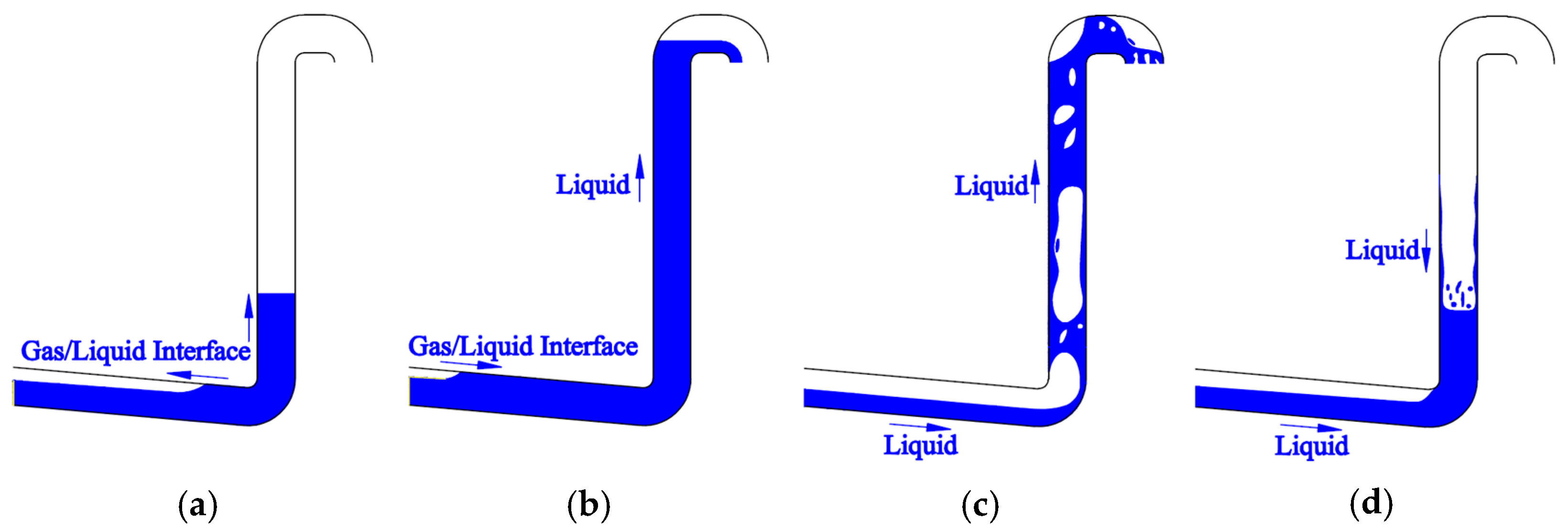
Gas–liquid two-phase flow is a common phenomenon in various industrial applications. In the offshore petroleum industry, pipeline–riser systems are frequently employed to transport oil and gas resources extracted from subsea wells to Floating Production Storage and Offloading (FPSO) units. During this process, severe slugging is a commonly encountered hazardous flow pattern with the periodic occurrence of four stages (see Figure 1). This flow regime causes significant cycling of pressure and flow rate, which can subsequently lead to problems such as separator flow cut-off or inadequate separation, fatigue caused by repeating impact, increased corrosion, low production, and even emergency shutdowns [1,2]. Thus, the elimination of severe slugging is among the flow assurance issues in offshore production facilities [3]. Since this flow pattern cannot be completely eradicated through improvements in pipeline design alone, effective control measures are necessary.
The main control methods for severe slugging include topside choking [4,5,6], gas lift [7,8,9], and flow disturbance [10,11,12]. Adding surfactants [13] may also work. Among these, topside choking is the most widely applied, and automatic control methods using choke valves have been implemented in numerous oilfields [14,15,16,17,18]. The mechanism of valve choking control lies in utilizing the throttling effect of the outlet valve to increase local flow resistance during the transient gas blowout stage of the severe slugging cycle. This mitigates the intensity of the blowout and prolongs its duration, thereby inducing the formation of slug flow or churn flow within the riser, achieving slug control and flow regime stabilization [19]. Although previous studies have confirmed that topside choking can eliminate severe slugging, quantitative prediction of the optimal opening remained a problem until very recently, when we established a model for prediction [14]. However, no previous publications have realized that the optimal opening, and thus also the control effect, for a real offshore pipeline–riser may vary with the installation position. In most theoretical analyses and numerical simulations, the choke valve is positioned on the short horizontal pipe between the riser top and the separator. In experimental studies, the installation position of the choke valve varies depending on the overall loop layout. While in most cases it is installed on the short horizontal pipe between the riser top and the separator [20,21,22], it is also occasionally installed at the upper part of the riser near the top [23] or at the end of the pipeline between the riser top and the ground separator (i.e., the separator inlet) [24]. Zou et al. [25] and Zhao et al. [26] analyzed the influence of a downcomer downstream of the riser on the cycle and pressure fluctuation characteristics of severe slugging. They found that the presence of a downcomer exacerbates the asynchrony between pressure and differential pressure signals and leads to a “multiple-blowout” phenomenon during the blowout stage. In these studies, where the choke valve was installed far from the riser top at the inlet of the ground gas–liquid separator, the shape of the severe slugging pressure fluctuation curve was irregular. Therefore, it can be inferred that different installation positions of the choke valve will lead to differences in the valve opening (including the average opening for automatic control) required to eliminate severe slugging.
Due to the complexity of the process systems on FPSO units and the restrictions imposed by the layout of compartments, the distance between the riser top (single-point mooring system) and the gas–liquid separator or slug catcher is relatively long. The pipeline from the riser top to the slug catcher comprises a short downcomer, a horizontal pipe laid on the deck (including horizontal bends), and an upward pipe connecting the deck to the slug catcher. The existence of this pipeline section inevitably influences the outlet flow characteristics of severe slugging, making the installation position of the choke valve a critical issue that must be addressed in the slug control design scheme. Generally, the operating opening of the control valve should not be less than 10% to ensure it operates within the effective flow coefficient characteristic range. Currently, the influence of the valve installation position on the control effectiveness of severe slugging has not received sufficient attention. However, since valve sizing is constrained by the potential opening range during operation, it is necessary to conduct research on the optimal installation position of the valve.
Given the substantial difficulty in reconstructing the experimental loop, this study employs OLGA, the most widely used and accepted software in the field of multiphase flow dynamic simulation and data generation for petroleum transportation systems [27,28,29], to simulate the process of severe slugging elimination via choking. Specifically, the valve flow coefficient in the OLGA model is configured and calibrated based on experimental measurements from the existing loop. Through these simulations, the maximum valve opening required to eliminate severe slugging is compared across different choke valve positions, thereby revealing the influence of the valve installation position on the effectiveness of the choking method. Finally, a real case is analyzed to investigate whether the results obtained in laboratory can be qualitatively extended to the offshore oil field. With the results, the present study will suggest the optimal position for the design of a slugging control system.

2. Methodology

2.1. Experimental Loop

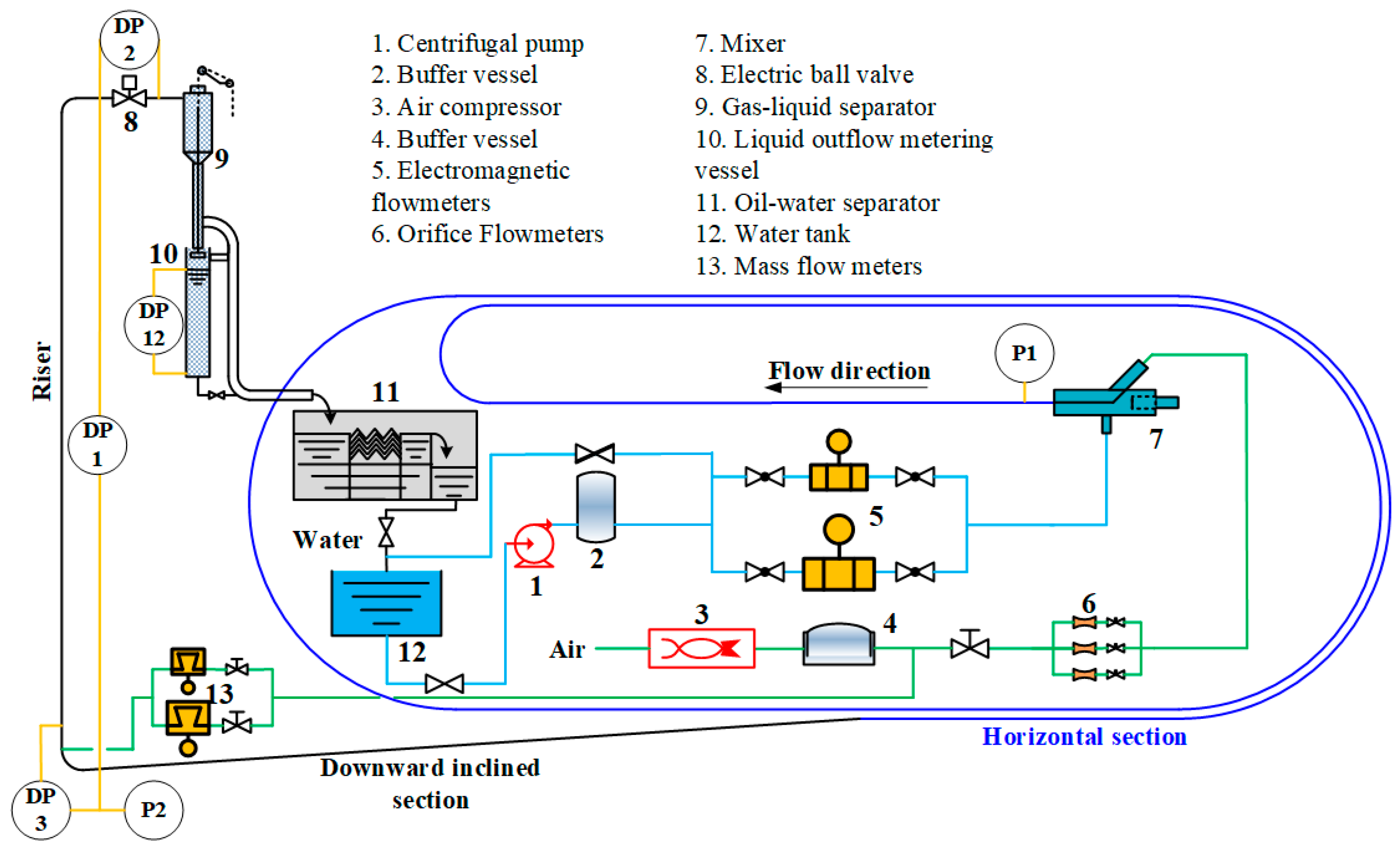
The experimental results used as a reference for the OLGA simulations were obtained from air–water two-phase flow experiments conducted on a 150 m oil–gas–water multiphase flow experimental loop at Xi’an Jiaotong University. A schematic diagram of the experimental system is shown in Figure 2.
The pipeline comprises a 114 m long horizontal pipe, a 20.4 m long downward-inclined pipe, and a 16.3 m long vertical riser. The downward-inclined pipe forms an angle of −5° with the horizontal. The pipeline is constructed of 304 stainless steel with an inner diameter of 50 mm. An electric ball valve with a diameter of 50 mm is installed at the top of the riser, and its opening can be regulated via a control program. Air and water are the fluids used in the experiments, which are supplied by an air compressor and a water pump, respectively. The loop is equipped with various sensors, including electromagnetic flowmeters, orifice plate flowmeters, and pressure/differential pressure transducers, to acquire flow parameters. P1 and P2 are pressure transducers used to measure the inlet pressure of the horizontal loop and the pressure at the riser base, respectively. DP1 and DP2 are differential pressure transducers measuring the pressure drop across the riser and across the choke valve, respectively. A detailed description of the experimental system can be found in reference [10].
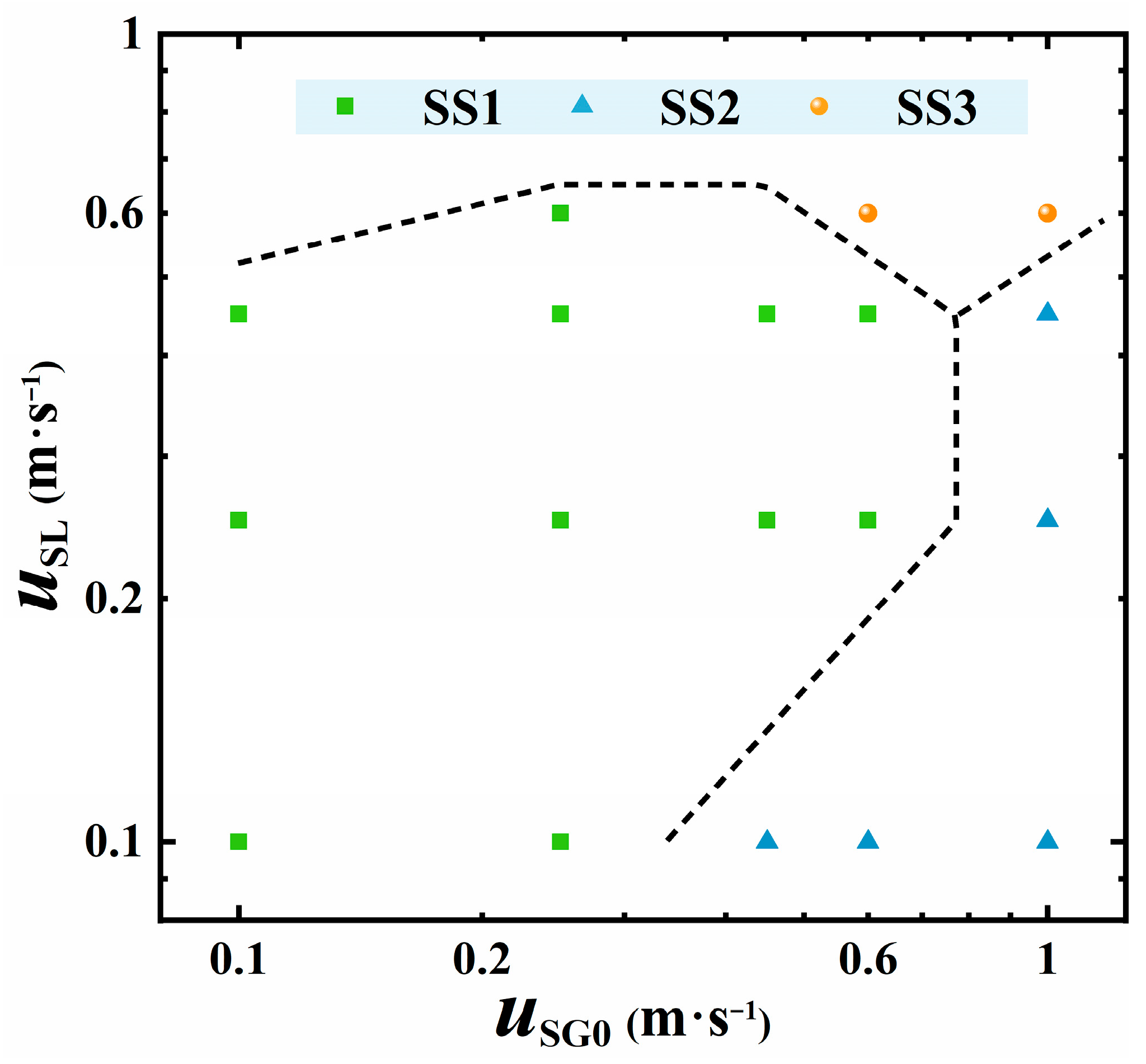
The experimental conditions covered a superficial water velocity (uSL) range of 0.1 to 0.6 m/s and a superficial gas velocity (uSG0, under standard conditions) range of 0.1 to 1.0 m/s. With the valve fully open (Z = 100%), the observed flow regimes included three types of severe slugging, SS1, SS2, and SS3, comprising a total of 18 test cases. The specific flow regime map is illustrated in Figure 3.
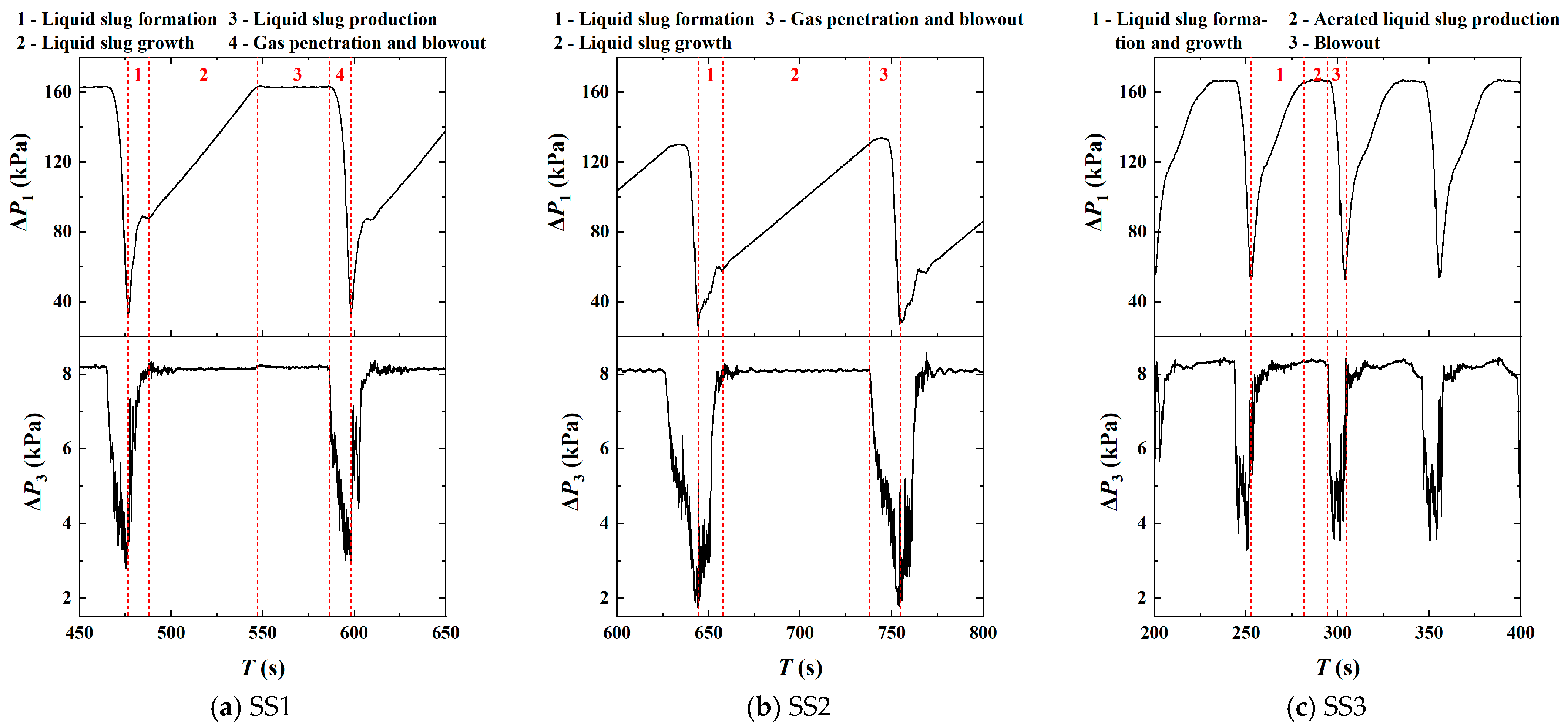
SS1 is the most typical severe slugging, with clear stages of liquid slug growth, liquid slug outflow, gas and liquid blowout, and liquid slug formation, as shown in Figure 1.
For the occurrence of SS2, the superficial gas velocity is bigger compared with SS1, and the stage of liquid slug outflow is absent.
For the occurrence of SS3, the superficial liquid velocity is bigger compared with SS1, and the stage of liquid slug formation is indistinct because the liquid slug is aerated.
Examples of SS1, SS2, and SS3 are presented as trend plots of differential pressure in Figure 4.
In this study, the liquid phase is water. For oil, the superficial velocity range where severe slugging occurs shrinks with the increase in liquid viscosity [24]. For the field case discussed in Section 3.2, the liquid viscosity during transportation is smaller than 15 mPa·s. According to reference [24], for oil with a viscosity of 16.4 mPa·s, the upper limit of the superficial gas velocity reduces by ~30%, while that of the superficial liquid velocity seems to be the same compared with water for the same experimental apparatus. If the liquid is an oil–water mixture, these flow behaviors fall within those expected for single-phase water and single-phase oil.
From the view of similarity, Pots et al. [7] established a non-dimensional parameter, ΠSS, to predict whether severe slugging would occur; see Equation (1).
Π SS = z R g T / M g α ¯ pipeline L pipeline Q G Q L
where z, Rg, T, and M are the compression factor (dimensionless), ideal gas constant in J·mol−1·K−1, temperature in K, and molar mass in kg·mol−1; g, α ¯ pipeline , and Lpipeline are the gravitational acceleration in kg·m·s−2, average cross-sectional gas fraction in the pipeline (dimensionless), and length of the pipeline in m, respectively; and QG and QL are the mass flow rates of the gas and liquid, respectively, in kg/s.
The physical meaning of ΠSS is the ratio of pressure increase induced by liquid slug growth in the riser over that induced by gas accumulation upstream of the riser bottom. The criterion is ΠSS < 1 for the occurrence of severe slugging. For all test points in the experiments except uSL = 0.10 m/s and uSG0 = 1.00 m/s, ΠSS < 1. For uSL = 0.10 m/s and uSG0 = 1.00 m/s, ΠSS = 1.03, which is very close to 1 (see also Zou et al. [24]). For the two simulated field cases in Section 3.2, ΠSS < 1. Therefore, the experiments follow flow regime scaling.
The experiments acted as the reference for tuning the flow coefficient in the OLGA simulation. In both the experiments and OLGA simulation, the valve opening was manually turned gradually from 100% down to a value below critical opening, the definition of which is in Section 2.2. For each step of tuning, the opening interval is an integral multiple of 1%. At the condition close to the critical opening, the step interval is 1%.

2.2. Valve Flow Coefficient

According to the International Standard IEC 60534-2-4: 2009 [30], the flow coefficient refers to “a basic coefficient used to state the flow capacity of a control valve under specified conditions. Flow coefficients in current use are Av, Kv and Cv depending upon the system of units.” In the OLGA software (version 2025.1), only CV is applicable, which is in the British system with the unit of gal·min−1·psi−1. The conversion relationship between Kv (metric system, m3·h−1·(100 kPa)−1) and Cv is KV = 0.865Cv.
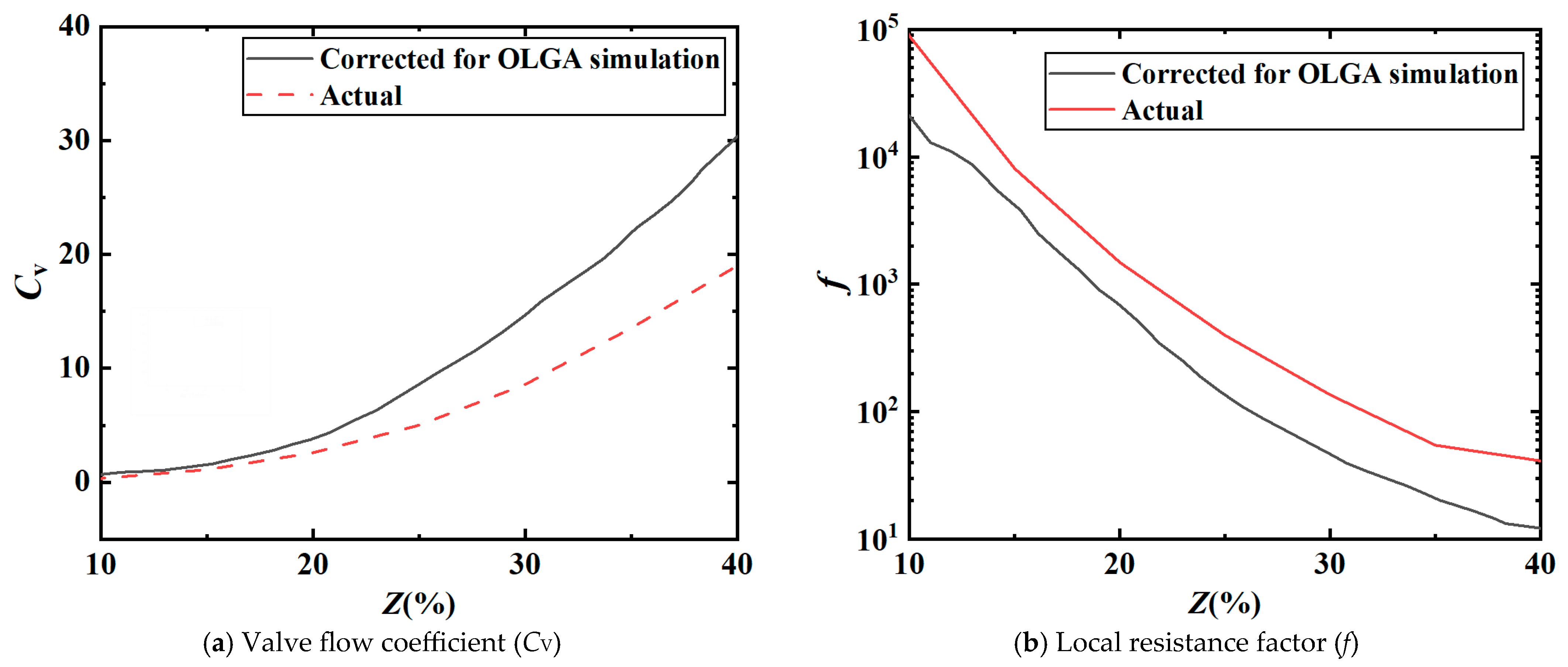
The CV curve obtained from single-phase water experiments is shown as a dashed line in Figure 5a. The relationship between flow coefficient, Kv, and local resistance factor, f, is shown in Equation (2).
f = 2 × 10 5 ρ L 3600 A K v 2
where A is the cross-sectional area of the valve’s nominal diameter. According to Equation (1), the valve opening versus the local resistance factor can be worked out, as shown in Figure 5b.
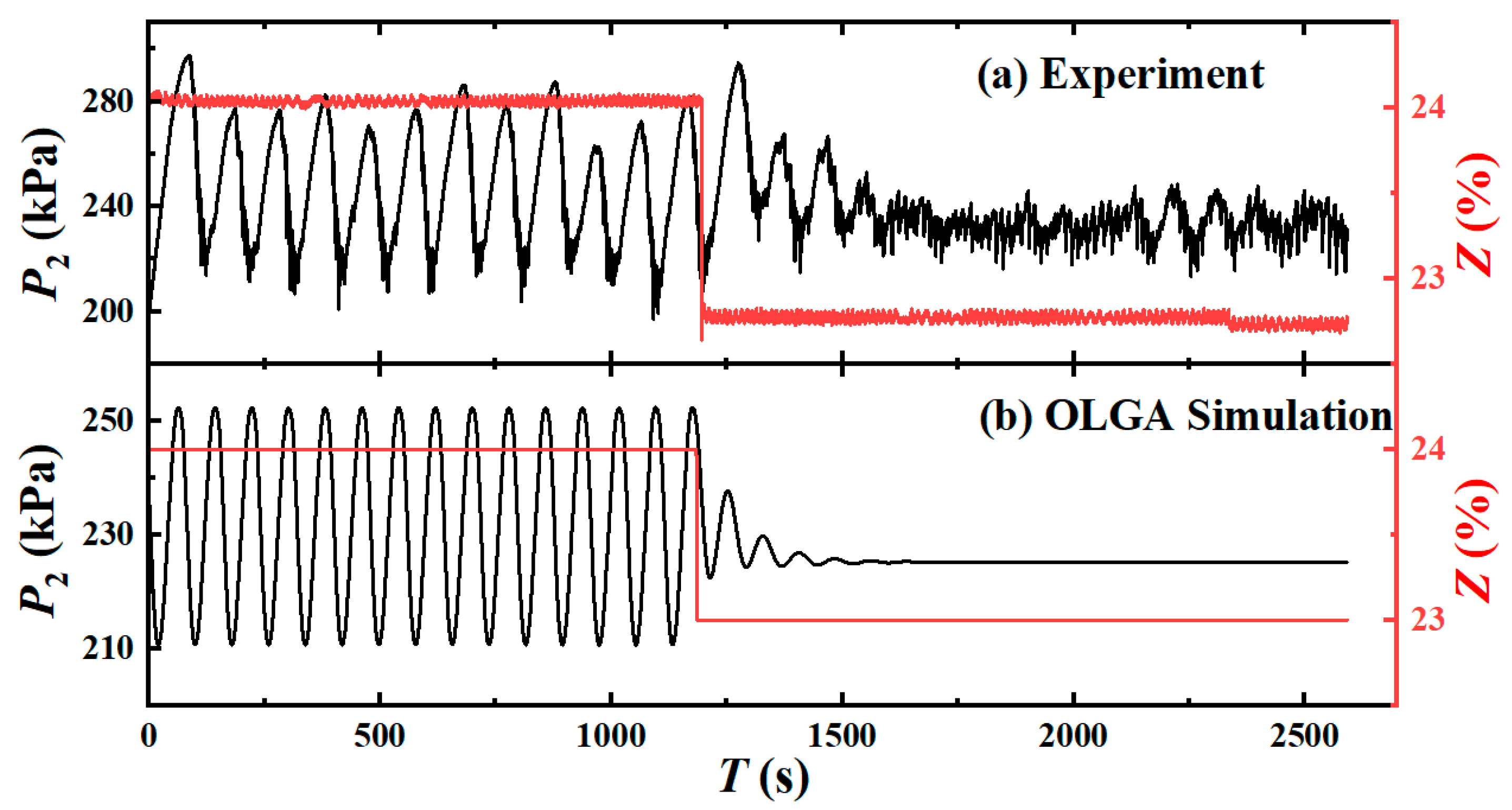
However, when the CV curve was input into the OLGA software, the calculated critical valve opening (Zc) required to just eliminate severe slugging was found to be, on average, 4.9% larger than the opening determined from experimental adjustments. Therefore, it was necessary to correct the CV curve to achieve good agreement between the OLGA simulation results and the experimental data (see Figure 6). It should be noted that good simulation results cannot be achieved simultaneously for different parameters like pressure amplitude, slug frequency, and valve opening, etc. In this study, the focused parameter was valve opening. Therefore, if the deviation in critical opening is limited for different cases, the results are considered reliable.
It should also be noted that OLGA is industrial software with a sparse spatial grid in the simulation; hence, it is not rare that a high-frequency pressure fluctuation cannot be worked out and converges to a horizontal line. The corrected curve is shown as the solid line in Figure 5. Through the correction of the CV curve, good consistency was achieved between the experimental and simulation results. For the 18 test cases, the average deviation between the calculated results and the experimentally adjusted openings was 0.08%. Specifically, the deviation was less than ±1% for 13 cases and less than ±2% for the remaining cases, as listed in Table 1. In Table 1, the experimental data was the actual output signal of the valve positioner, which was not an integer, while the valve opening in the simulation was set as an integer with an interval of 1%. The results indicate that the corrected valve model is of high reliability. On this basis, the following sections investigate the influence of different valve installation positions on the control effectiveness of severe slugging.

2.3. Setup of Extended Pipe Sections in the Simulation

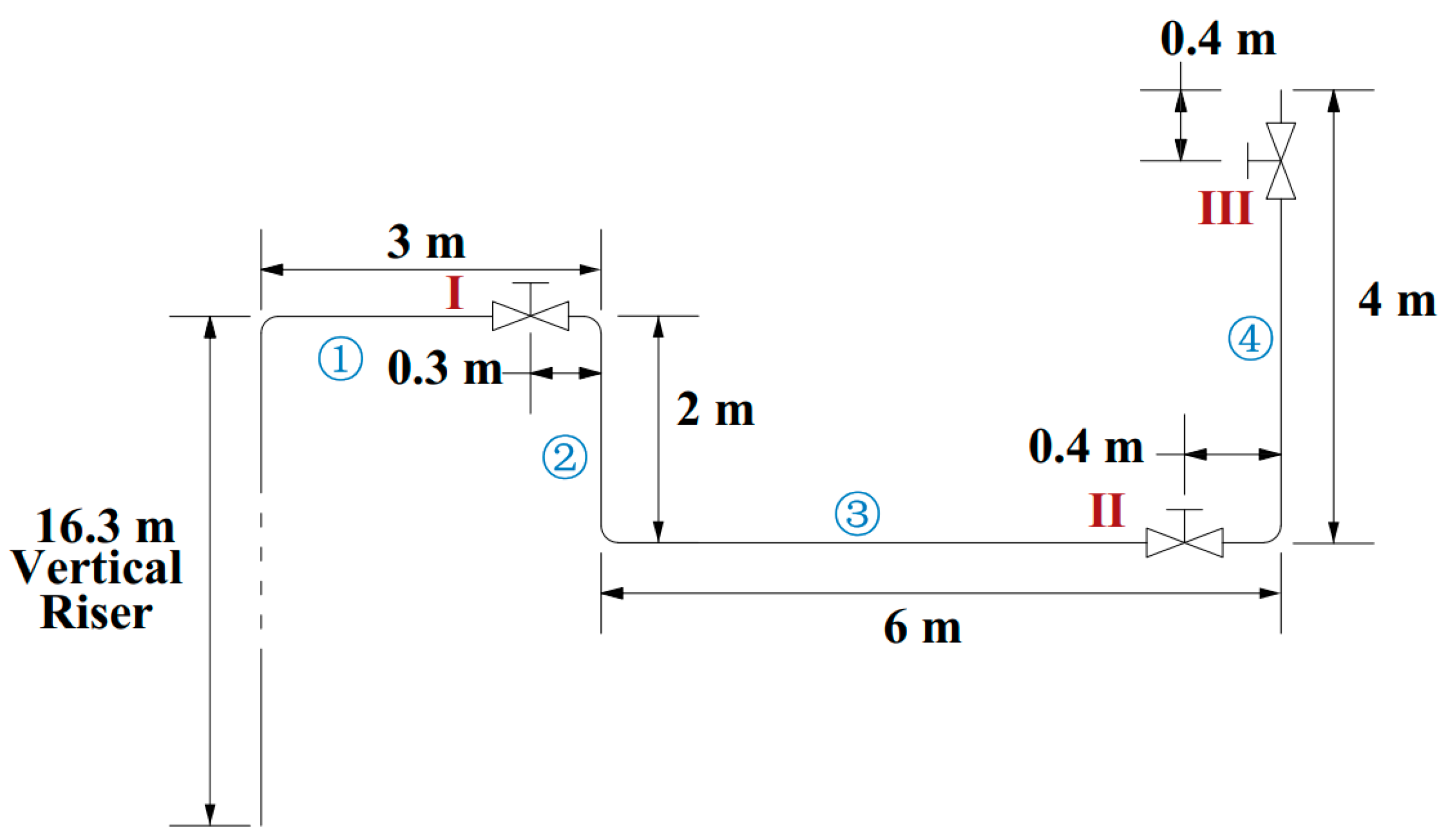
Based on the OLGA geometric model of the experimental loop, the pipeline geometry was extended at the riser top by sequentially adding ① a 3 m horizontal section, ② a 2 m vertical downward section, ③ a 6 m horizontal section, and ④ a 4 m vertical upward section, as shown in Figure 7. The inner diameter of the hypothetic extended section is 50 mm, which is the same as the original physical experimental loop. The flow coefficient characteristics of the valve at each position are also the same as those of the physical valve installed on the experimental loop. This modification was intended to simulate the actual pipeline configuration on an FPSO unit.
Three distinct valve installation positions were selected, as shown in Figure 7, and denoted as Position I, Position II, and Position III, respectively. Monitoring (trend data output) positions were configured at various positions along the pipeline in the OLGA model to extract the calculated flow parameters. Under fixed boundary conditions (inlet flow rates and outlet pressure), the valve opening was gradually reduced. The pressure fluctuation at the riser base was primarily monitored. When the pressure fluctuation exhibited an approximately horizontal line or an approximate sinusoidal waveform with very small amplitude and period, the valve opening at this instant was defined as the critical opening (Zc) for eliminating severe slugging.

2.4. Parameters Used to Indicate Slugging and Examine Effect of Three Positions

The quantitative parameters used to describe the effect of the three positions were the critical valve opening, Zc, in %, and its corresponding flow coefficient, Cv, in (gal·min−1·psi−1); the time-averaged pressure at the riser bottom, P 2 ¯ , in kPa; and also the time-averaged pressure drop across the valve, Δ P 2 ¯ , in kPa. The qualitative parameter used was the condition at the pipe outlet, i.e., whether flow cut-off had occurred. The corresponding quantitative description was whether the minimum flow rates at the riser outlet, QL,out and QG,out, were zero. Zc and Cv were selected because the valve state is directly related to control. P 2 ¯ and Δ P 2 ¯ were selected because as small an increase in pressure as possible was expected in the control so as to minimize the negative effect on production. QL,out and QG,out were selected for the field case because continuous production is required under actual circumstances.

3. Results and Discussion

3.1. Extended Experimental Pipeline

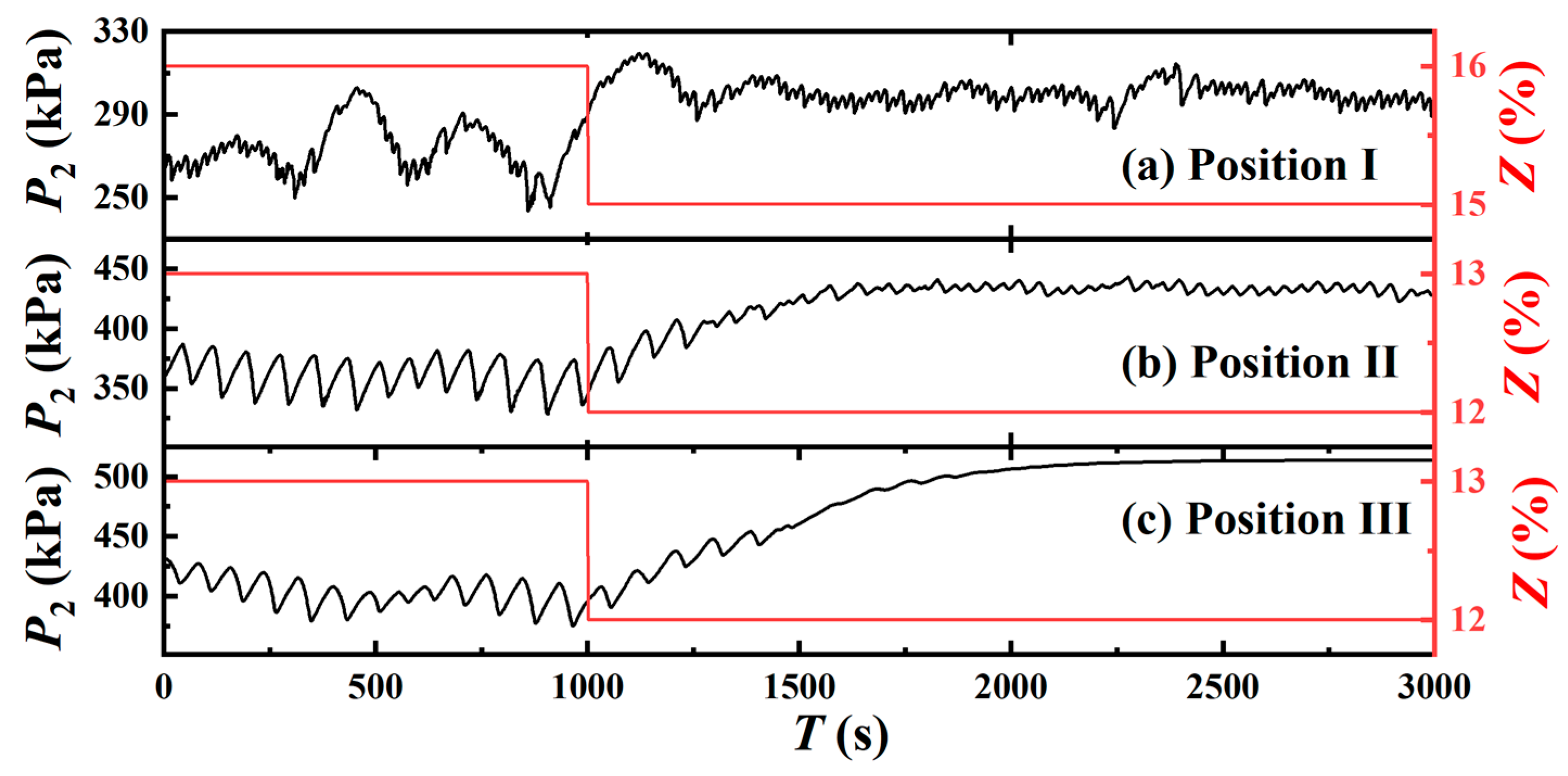
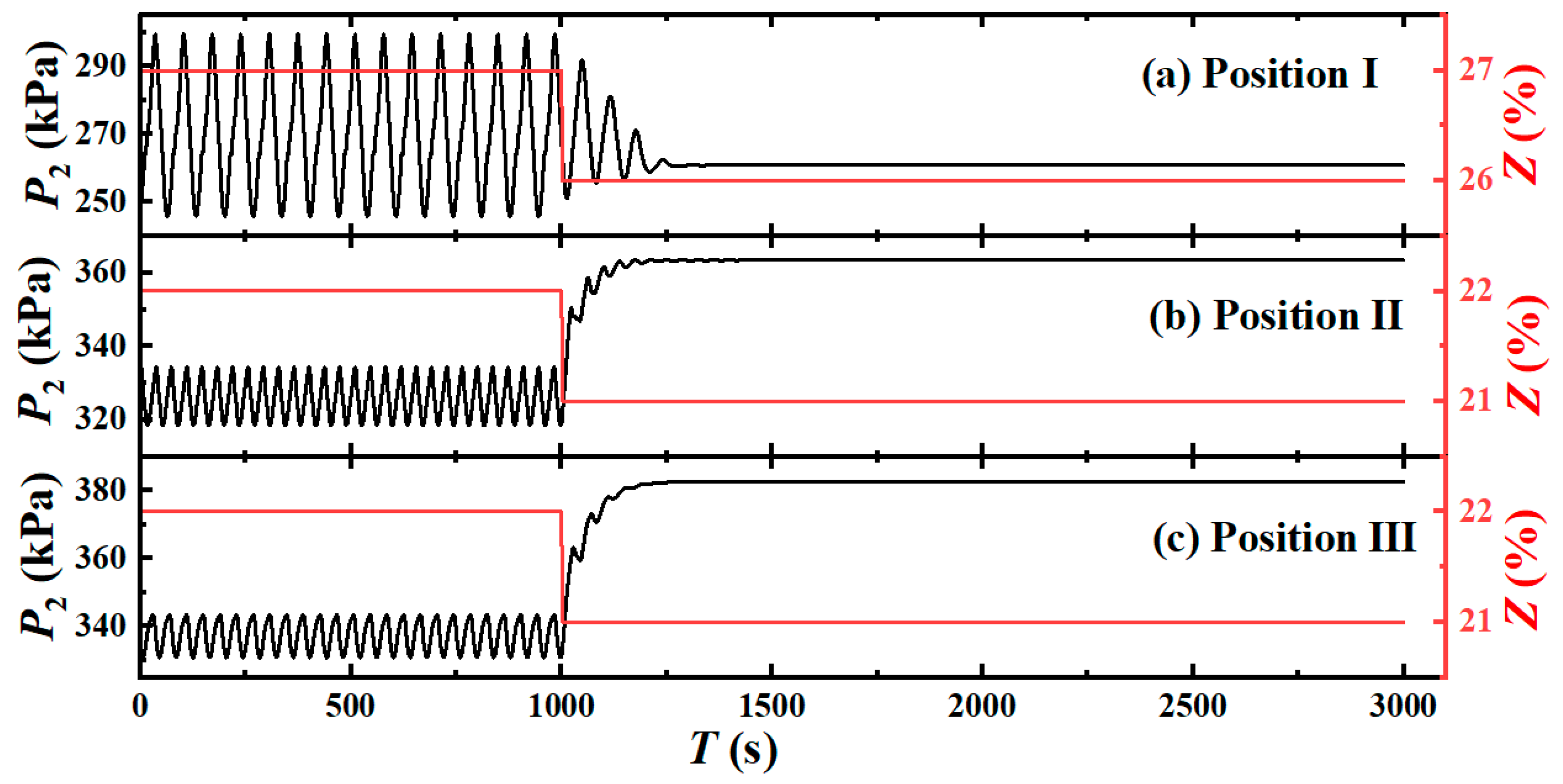
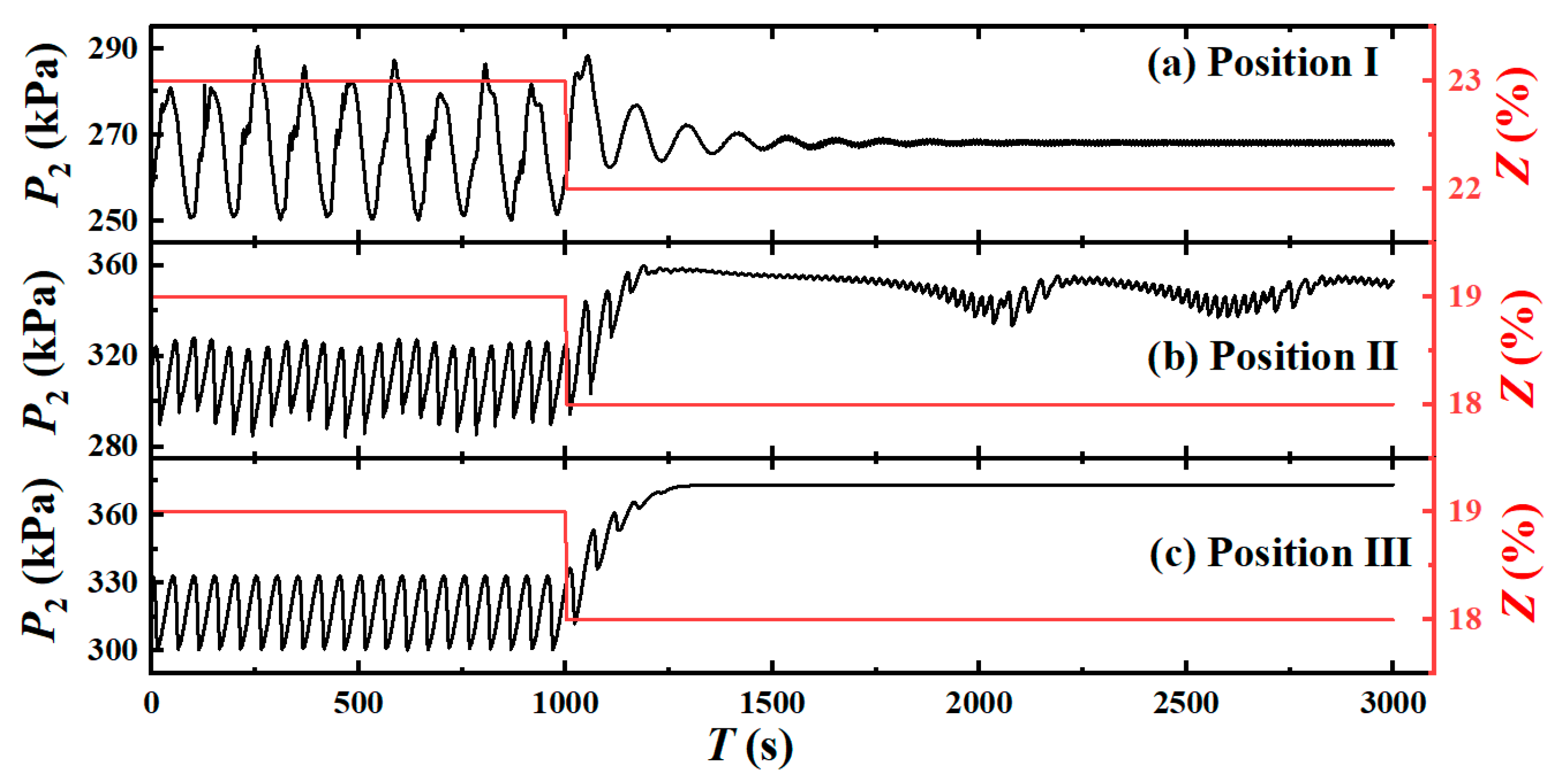
Simulations of severe slugging elimination were performed for the three scenarios where the valve was located at Position I, Position II, and Position III, respectively. The pressure fluctuations at the riser base for the selected cases are illustrated in Figure 8, Figure 9 and Figure 10.
It was observed that when the valve was located at Position II or Position III, the critical opening was relatively small, and the elimination of severe slugging resulted in a significant increase in the pressure at the riser base. In contrast, when the valve was at Position I, the critical opening was relatively large, and the average pressure increased more gently or showed no obvious elevation. This phenomenon can be attributed to the fact that with the valve at Position I, pipe sections ②–④ were directly connected to the atmosphere. The gas phase expanded and accelerated after passing through the choke valve. Consequently, even though sections ②–④ formed a concave profile, long liquid slugs did not form, and section ④ remained in a gas–liquid two-phase flow regime for the majority of the time. Conversely, with the valve at Positions II and III, during the blowout phase of the vertical riser, the ejected liquid accumulated in section ③ or sections ③–④ to form liquid slugs, with the liquid holdup approaching 1. This increased the average density of the fluid flowing through the choke valve, thereby increasing the local resistance of the valve and causing the system pressure to rise. Furthermore, to prevent the liquid phase from rapidly surging into sections ③–④ and forming liquid slugs, it was necessary to further reduce the valve opening to limit the blowout velocity, which in turn further increased the local resistance of the valve.
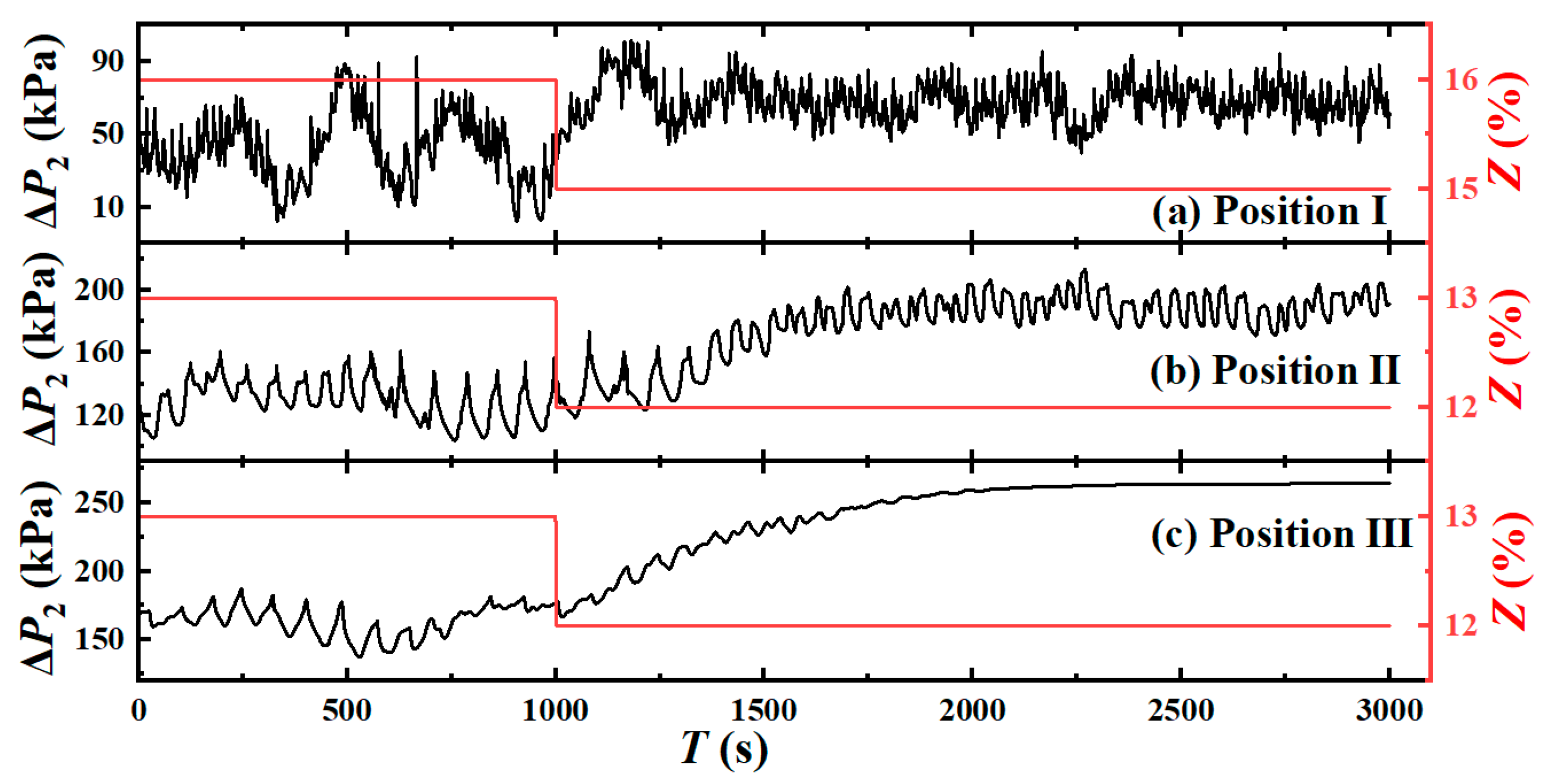
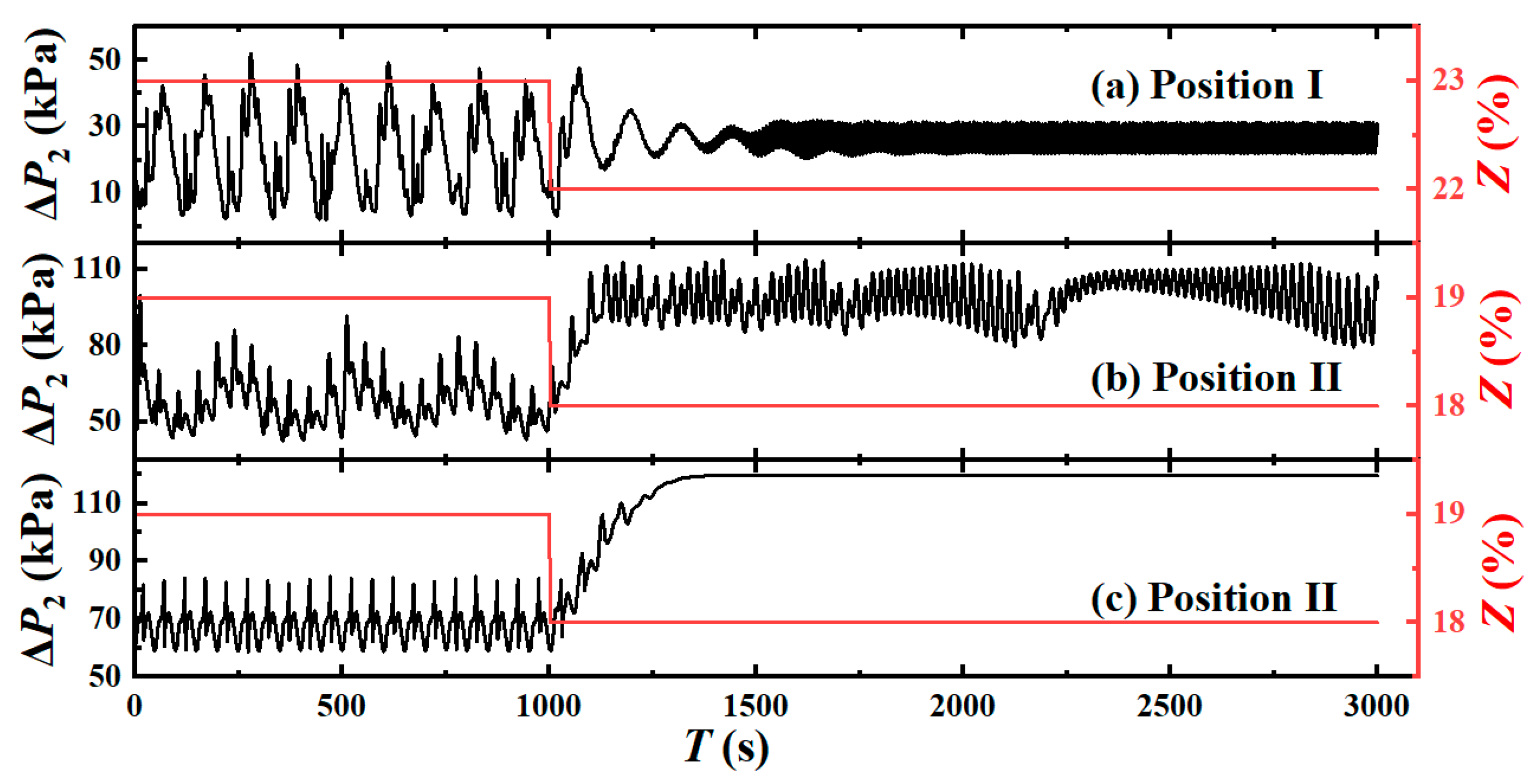
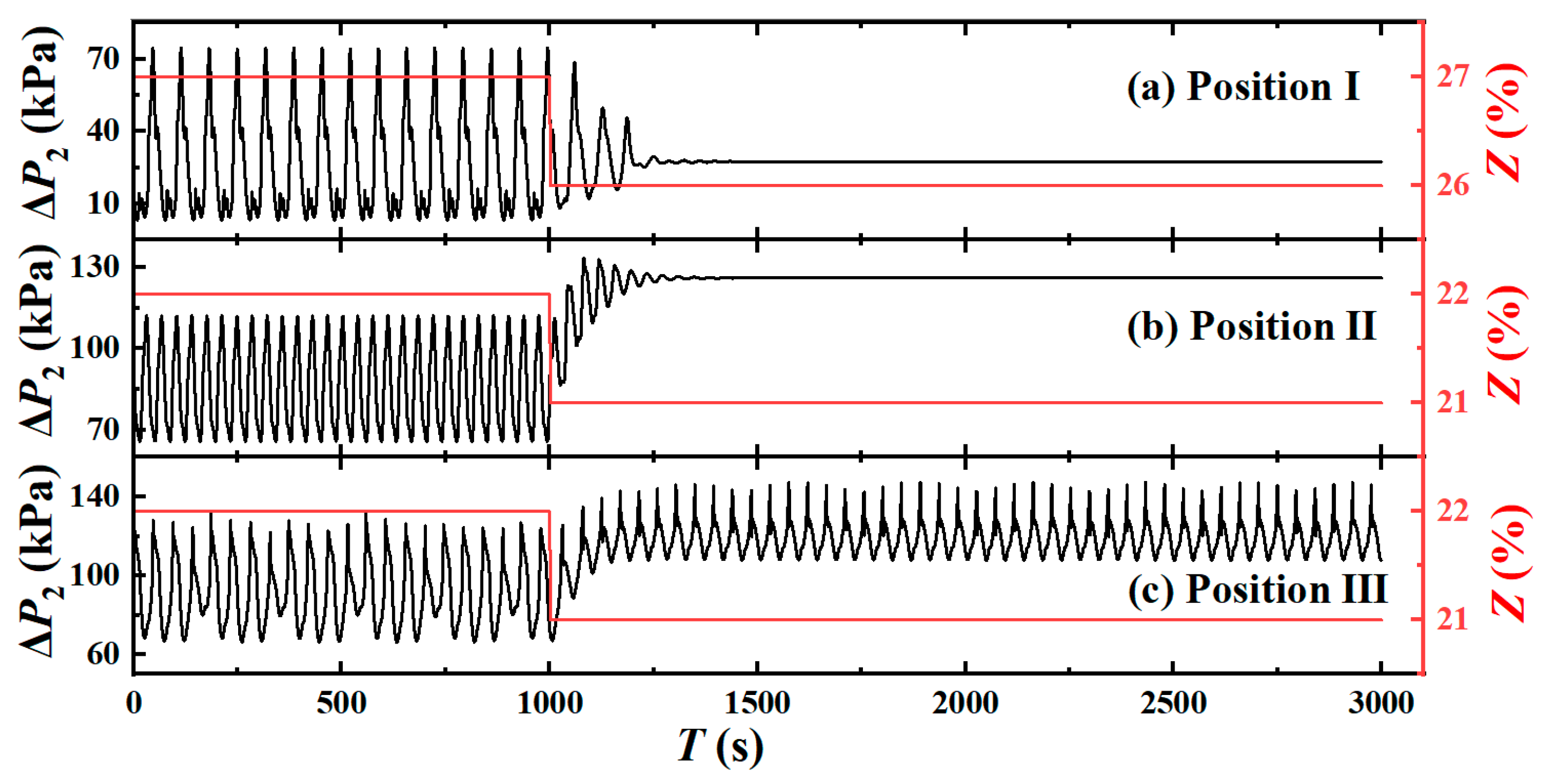
The fluctuations in the pressure drop across the choke valve ( Δ P 2 ) are illustrated in Figure 11, Figure 12 and Figure 13. When the valve was located at Positions II and III, the local resistance ( Δ P 2 ) exhibited a significant increase. Table 2 lists the average values of the riser base pressure ( P 2 ¯ ) and the valve pressure drop ( Δ P 2 ¯ ) at the critical opening for different valve positions. Additionally, Table 3 presents the magnitude of the increases in P 2 ¯ and Δ P 2 ¯ when the choke valve was at Positions II and III compared to Position I. A comparative analysis of the data in the tables indicates that the increase in the riser base pressure ( P 2 ) was primarily attributed to the increase in Δ P 2 . This suggests that when the choke valve was positioned at Positions II and III, the flow capacity at the critical opening was relatively low, preventing the gas–liquid two-phase mixture from flowing smoothly out of the pipeline through the valve. Consequently, this led to an increase in the riser base pressure and a simultaneous rise in the overall system pressure, which is detrimental to flow control.
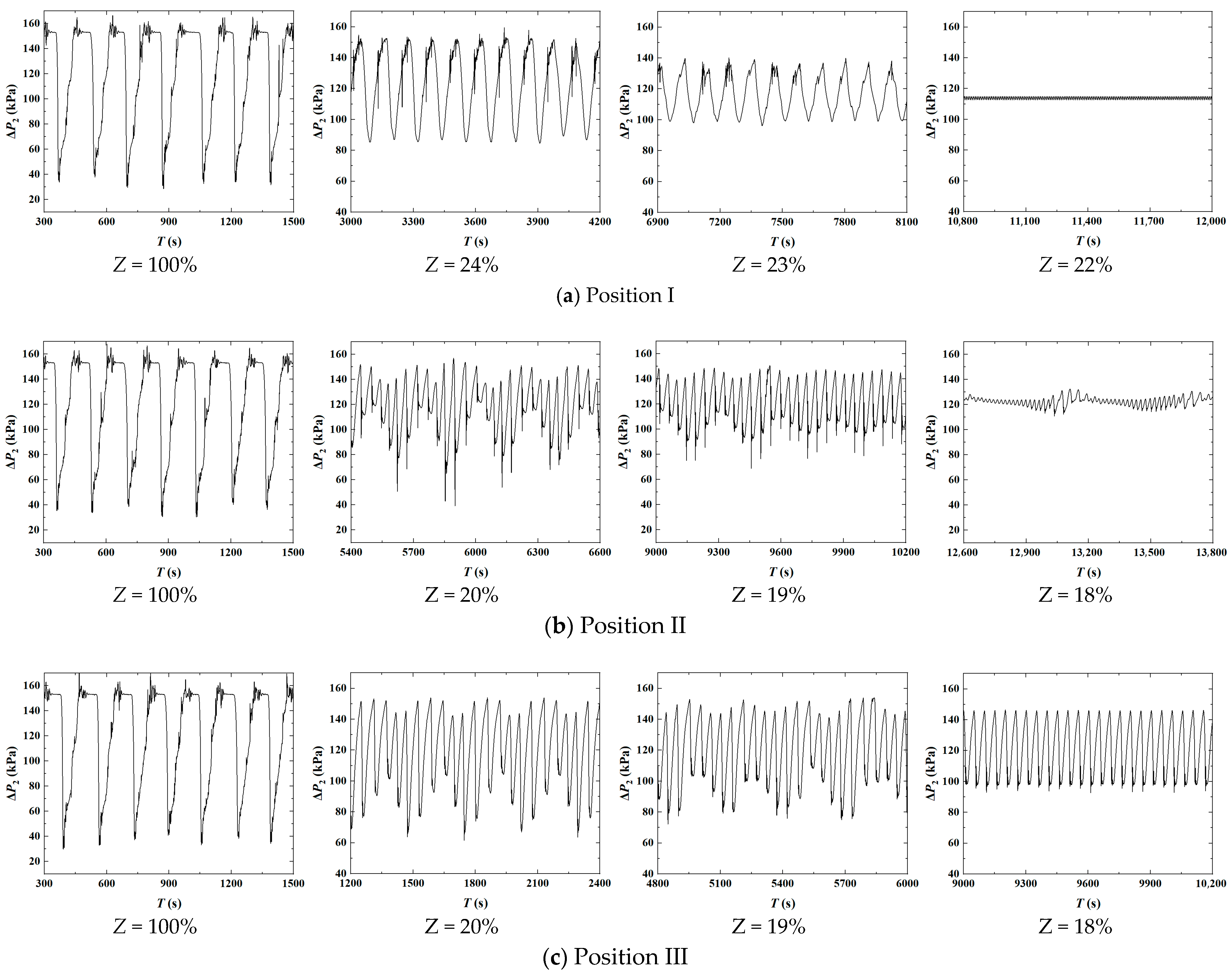
Details of Δ P 2 with the gradual decrease in valve opening are displayed in Figure 14. As shown in Figure 14a, only one dominant frequency is observed, and the fluctuation amplitude is the smallest among the three positions. Figure 14b,c shows evident dual-frequency fluctuation with the gradual decrease of valve opening, which is caused by the concave section. In Figure 14c, the dual-frequency fluctuation disappears at Z = 18% for Position III, indicating that the move from Position II to Position III can mitigate dual-frequency fluctuation. The reason for the dual-frequency fluctuation during the choking process lies in the convex section. When the blowout stage starts, liquid slug is quickly pushed out of the riser and enters the convex and concave sections. It blocks the flow passage in the valve core, and gas is temporarily cut off. Then, gas goes upward in the connection between the convex and the concave and finally accumulates at the convex and cuts the liquid slug into two parts. The remaining part in the riser falls back and does not enter the convex until the next blowout. Since the liquid slug is cut, the interval between the blowouts is shorter, which corresponds to the high-frequency component in Figure 14b,c. The low-frequency component reflects the severe slugging before choking is applied. The period of the low-frequency cycle in Figure 14b,c is bigger than that in Figure 14a, because blowout takes place more times.
Table 4 shows the time-averaged gas fraction in the concave section at critical opening. For the three cases presented, the value for the case at Position I is the lowest, while that for the case at Position II is the highest. The larger water content confirms the greater advantage of the formation of dual-frequency fluctuation for the cases in II and III.
The simulation results for all 18 test cases are presented in Table 5. A comparison reveals that the critical opening (Zc) reaches its maximum when the valve is installed at Position I. On average, it is 4.33% larger than that at Position II and 3.33% larger than that at Position III. This indicates that the relatively optimal installation position for the choke valve is near the top of the vertical riser. Conversely, the least favorable position is within the concave section of the deck pipeline, adjacent to the final upward section. The least favorable position requires the valve to possess a higher rangeability (a rated flow coefficient over the maximum flow coefficient), which increases the difficulty of valve sizing and should be avoided as much as possible.
Although Position III is higher than Position II, which can be regarded as a bigger riser height and bigger riser length if the extended pipe from the riser top to the valve is also considered as part of riser, the critical opening is still larger at Position III than at Position II on average. However, a recent study [31] confirmed that increasing riser height results in a bigger range in gas flow rate for the occurrence of severe slugging: increasing the riser height from 16 m to 22 m would result in a ~7% increase in the upper bound of superficial gas velocity and a smaller increase in the upper limit of superficial liquid velocity. If we consider the flow condition in the pipe section downstream of the valve to be the same for the three installation positions, then, the contribution to the decrease in valve opening and flow coefficients mostly comes from the increased riser height for Position III, while the contribution mostly comes from the installation position in the concave section for Position II. Since the valve opening at Position III is no less than that at Position II, it is evident that the concave pipe sections more significantly reduce the critical opening than the increase in riser height does. Therefore, the concave section contributes more to the decrease in critical opening than the increase in riser height does.
Table 5 further reveals that for the valve employed in this study (characterized by the solid Cv curve in Figure 5), the required flow coefficient decreases significantly at the critical opening. Specifically, the flow coefficient at Position II is 13–53% lower than that at Position I, and at Position III, it is 0–49% lower than at Position I. The result also indicates a negligible difference in valve opening between Positions I and III at a higher gas–liquid ratio (uSL = 0.10 m/s and uSG0 = 0.45–1.00 m/s; gas–liquid ratio = 4.5:1–10:1). With the increase in gas flow rate, liquid slugs become shorter, and their flow behavior is affected less by the pipe route.

3.2. Case Study

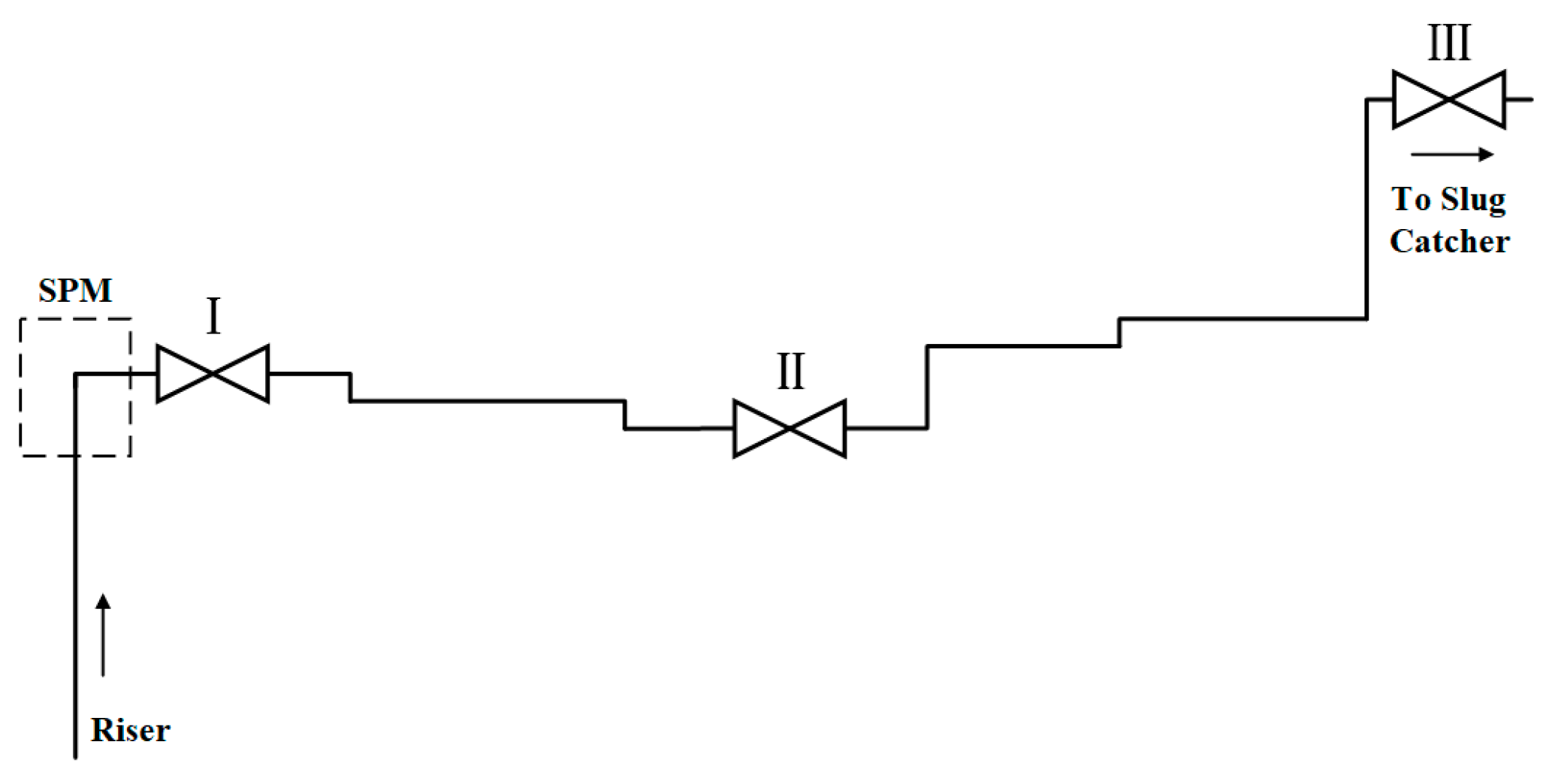
The case is an offshore oil and gas pipeline in China. The geometry of the seabed section of the pipeline is as follows: the length is 15.7 km, the inner diameter is 273.1 mm, and the average inclination angle is −0.00219°. The riser is 128 m high with the inner diameter of 241.3 mm. The connection pipe between the riser top and the slug catcher is from the single-point mooring (SPM) system to the main deck of the FPSO unit. Based on the elevation, the pipeline route from the SPM compartment to the slug catcher is simplified into two descending steps and three ascending steps, as shown in Figure 15. The required openings were investigated with the valve installed at Position I, Position II, and Position III, as indicated in Figure 15. OLGA software was employed for the simulations.
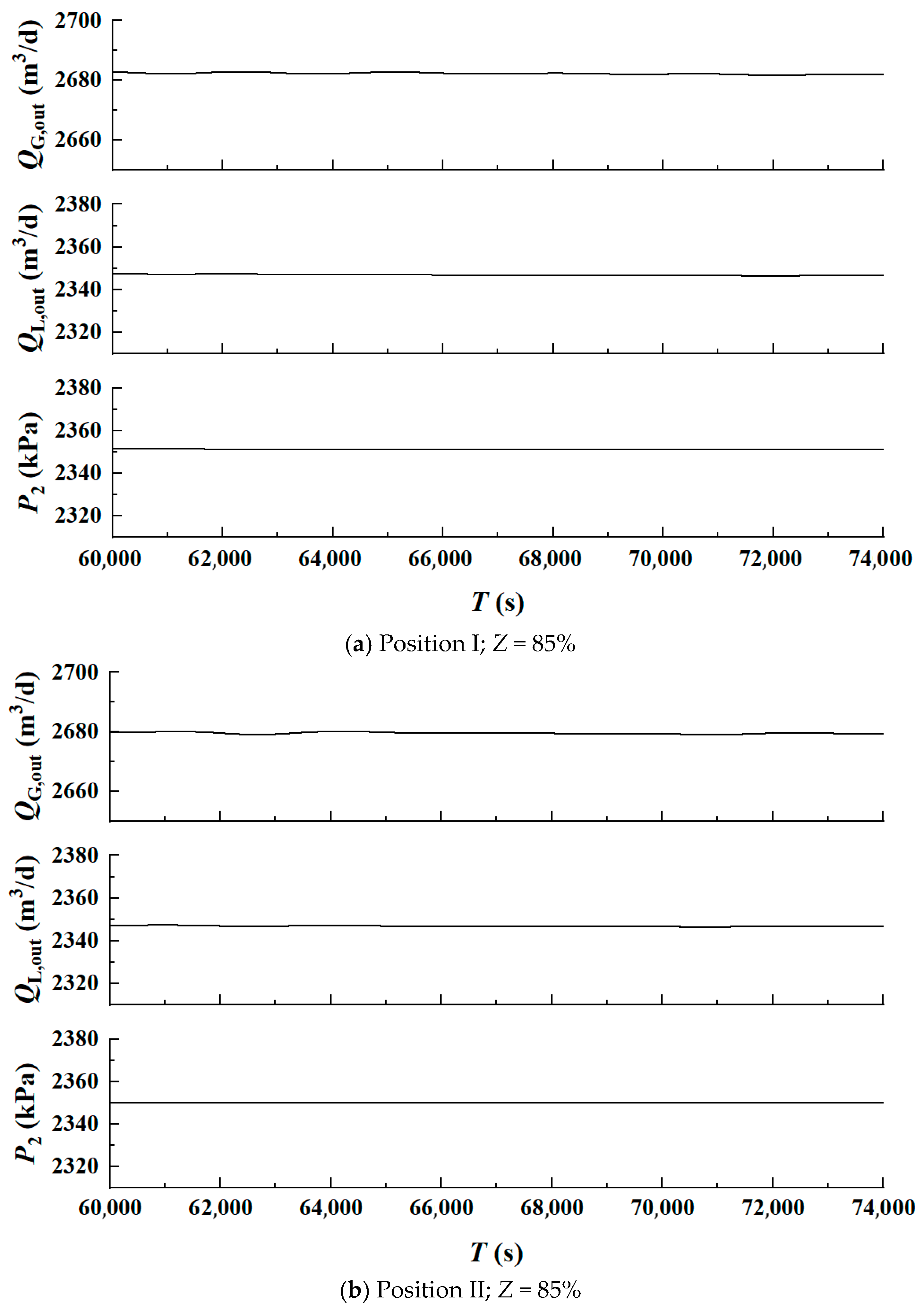
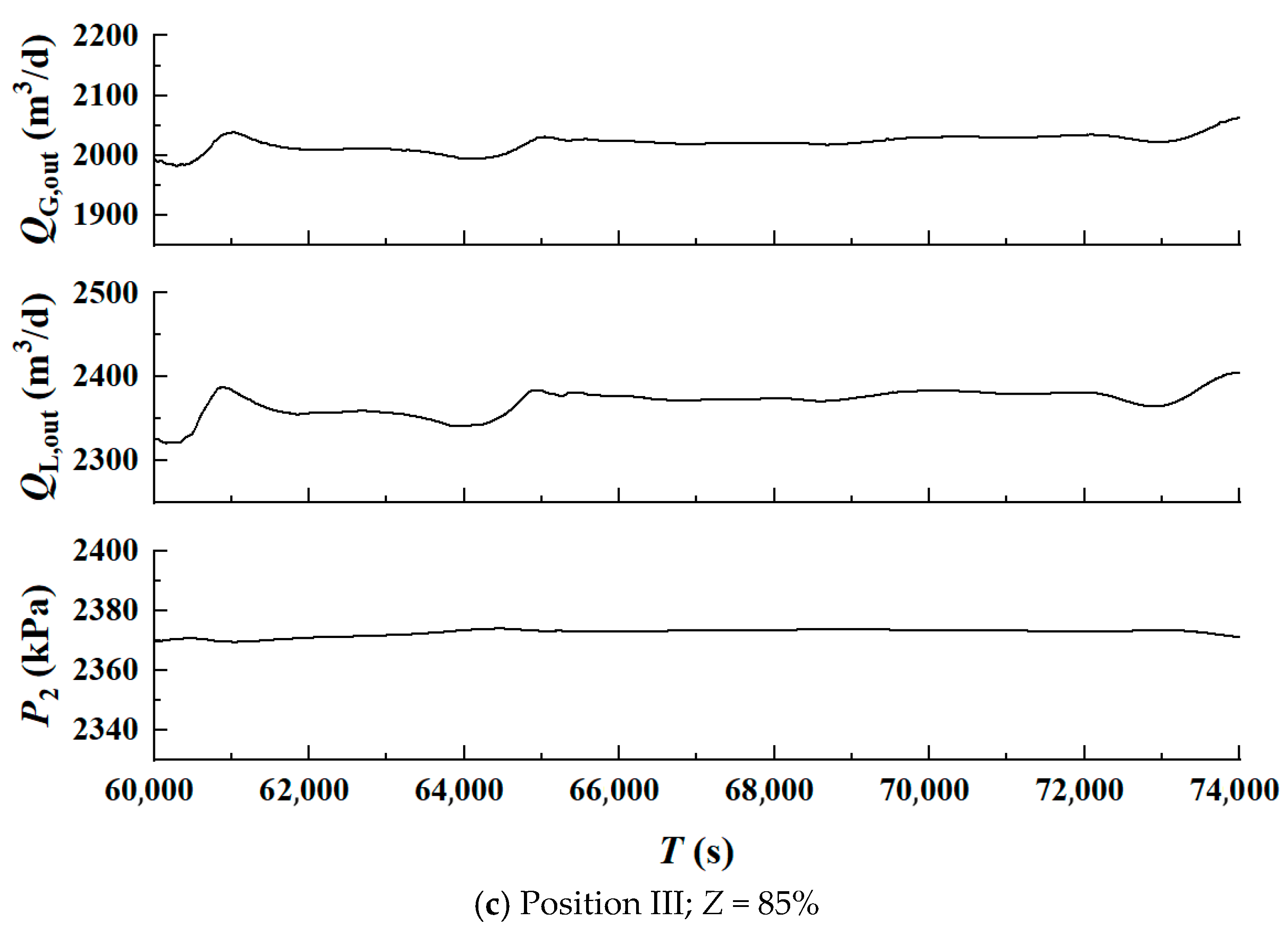
Two typical production years were selected: the first exporting year and the maximum production year. The pressure at the slug catcher was set to 1300 kPa(a) for both cases. The corresponding superficial velocities are listed in Table 6. The valve Cv table was configured based on a rated value of 200 and a rangeability of 50:1 with ideal “equal-percentage” flow characteristics. Small time steps (10−5 to 10−2 s) were set during the simulation to ensure convergence of the results. The input interval for the valve opening in the calculations was set to 1%. For the simulation of a laboratory-scale pipe, it is more distinct to use pressure fluctuation as a criteria for critical opening because the pipe geometry is simpler. However, the pipeline length of the field case is two orders of magnitude greater than that of the experimental loop and the routing is significantly more complex, making it difficult to work out the pressure curves with a perfectly horizontal section or a high-frequency fluctuation. Therefore, combining this with the judgment on the necessity of slug control, the critical opening (Zc) was defined as the maximum opening at which continuous zero values in the outlet flow rate (i.e., a zero-value horizontal section in the flow curve) disappear. For OLGA simulation, pressure fluctuation as an approximate horizontal line or small-amplitude wave is the sufficient condition for the disappearance of continuous zero flow at the separator inlet (pipe outlet).
Based on the actual production conditions of the oilfield, the critical opening (Zc) is defined as the maximum opening that maintains continuous gas–liquid flow at the inlet of the slug catcher. The OLGA simulation results are presented in Table 6. During the first exporting year, the critical opening varied significantly across different valve positions. The corresponding flow coefficients differed by up to 32% (taking Position I as the baseline). This indicates that the simulation results from the laboratory-scale pipeline can be qualitatively extended to real-field pipelines. In contrast, for the maximum production year, the critical openings were identical at 85% for all positions. A comparison between the two years reveals that while the superficial gas velocities were similar, the superficial liquid velocity of the maximum production year was several times that of the first exporting year. This suggests that under conditions of sufficiently high gas production, an increase in liquid production mitigates the adverse effects of installing the valve at Positions II and III, which is not exactly the same as the results in Section 3.1. Possible reasons come from the pipe route, geometric scale, and difference in flow properties, and further simulations and/or laboratory experiments are needed in future work. For the first exporting year, the variation in valve opening was the smallest at Position I and the largest at Position II. This further confirms that Position II requires the highest valve rangeability, making it most difficult for valve selection.
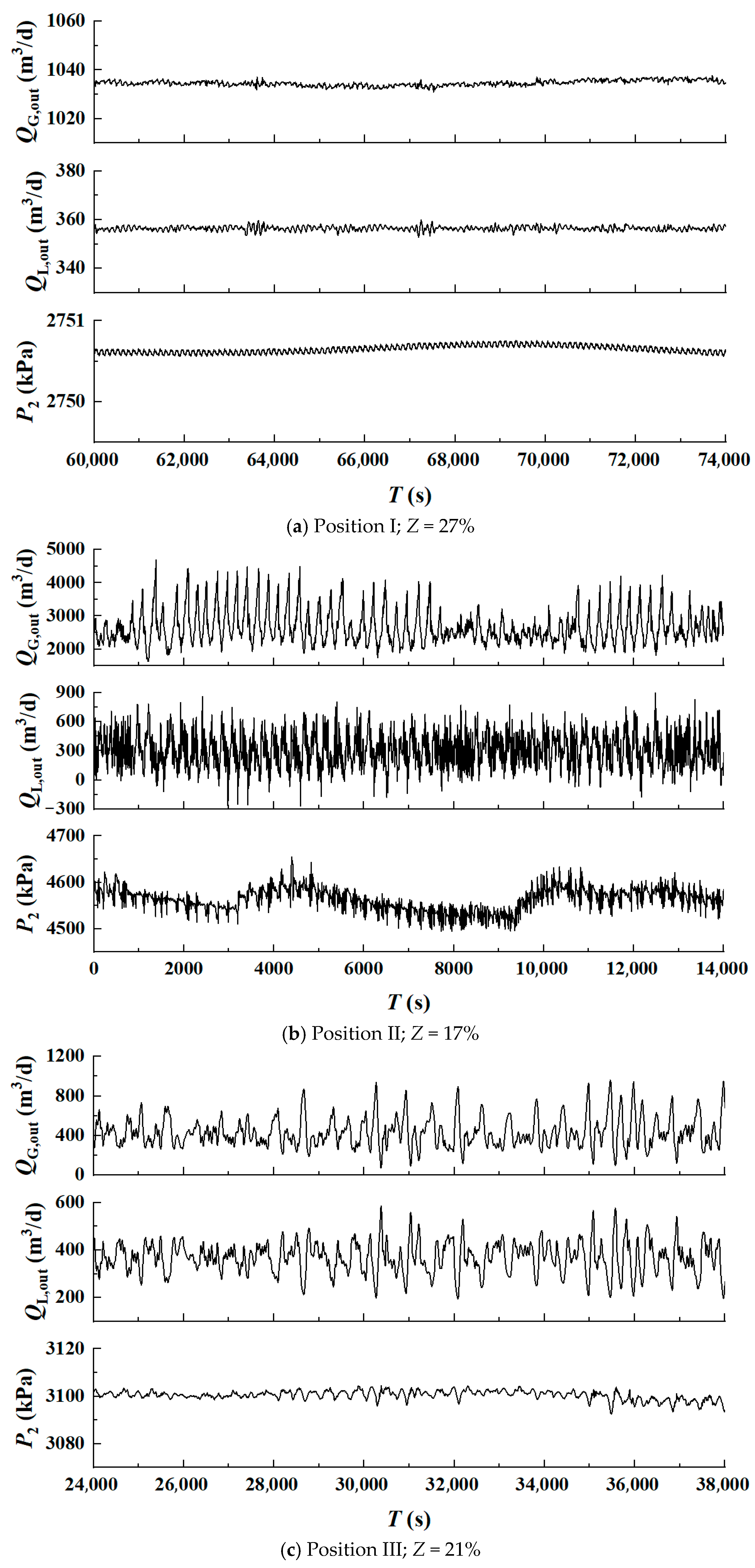
Figure 16 illustrates the fluctuations in riser base pressure and pipeline outlet flow rates during the first exporting year. These results correspond to the valve openings listed in Table 6 for Positions I, II, and III. When the valve was installed at Position I, at the critical opening, both pressure and flow fluctuations were very gentle. The flow rates remained positive, and the curves appeared approximately horizontal. Meanwhile, for Position III, the amplitude of pressure and flow fluctuations increased; however, the gas and liquid flow rates remained positive. In contrast, at Position II, the fluctuation amplitudes of pressure and flow further increased, and the mean pressure rose significantly. The pressure fluctuations exhibited a long period, and the liquid flow rate showed instantaneous negative values (indicating backflow). Since the fluctuation period was short and the instantaneous negative flow would not cause drainage (liquid outage) of the slug catcher, this opening was accepted as the critical opening.
Figure 17 shows the fluctuations in riser base pressure and pipeline outlet flow rates during the maximum production year. These results also correspond to the valve openings listed in Table 6 for the three positions. The fluctuation is mild for all three conditions, and the absolute values of the three parameters (P2, QL,out, and QG,out) are much closer among the three conditions, indicating similar effects.
In summary, barring other constraints, the choke valve for slug control on this platform should ideally be installed on the horizontal section at the SPM compartment outlet. The pipeline outlet (slug catcher inlet) is the second-best option, while the concave section in the middle of the platform pipeline is the least favorable. For automatic control systems using pressure as the process variable, given the characteristics of long-period and large-amplitude pressure fluctuations caused by unfavorable installation positions, parameters such as the control setpoint, PID parameters, and sampling period must be selected with caution. Below is a qualitative but detailed discussion.
The most common process parameter for slugging control is pressure at the pipeline inlet, the setpoint of which should be larger if the valve is installed at unfavorable positions. If pressure is replaced by a non-dimensional pressure amplitude or cut-off ratio (the time ratio of a period of no outflow over sample time), both of which are statistical parameters and do not exceed one, then, the setpoint will be less affected by valve position.
Also, when taking the pressure as the process parameter, installation at unfavorable positions is more likely to result in more complex pressure fluctuation trends. In other words, the relation between the process parameter and the manipulated parameter (such as the valve opening) is more complex. Therefore, PID parameters should be more conservative or smaller, so as to assure the stability of control. However, if other measurement positions are available in the field, switching the controlled variable [32,33] is also a viable option. Implementing these measures can improve the stability of the control system.
A less optimal valve installation position will result in less regular pressure fluctuations during the control, which refers to fluctuations with multiple time-scales or even a non-steady period and amplitude. In order to cover possible fluctuation characteristics, a longer sample time is expected.
For a ship-like FPSO unit, the pipe route from the riser top to the inlet of the gas–liquid separator or slug catcher is qualitatively the same with Figure 15. However, for other types of offshore platform, the pipe route may vary. Future work should also focus on the applications for different platform types. Nevertheless, the results in this study can help to exclude some undesirable positions.

4. Conclusions

In this study, OLGA simulations were performed to investigate the elimination of severe slugging via the riser-top choking method. Based on experimental data, the valve flow coefficient (Cv) curve in the OLGA model was configured to achieve high consistency between the calculated valve openings and the experimental results. This ensured that the model accurately reflected valve behavior under actual operating conditions, thereby enabling the investigation of the influence of valve installation position on choking control effectiveness through simulation, while avoiding the costs associated with the reconstruction of the experimental loop. The specific conclusions drawn from the simulations are as follows:
(1)
The installation position of the choke valve has a significant influence on the critical valve opening required to eliminate severe slugging. The preferred position is Position I (i.e., near the riser top), which can effectively eliminate severe slugging at a relatively larger valve opening, thereby reducing the difficulty of valve sizing.
(2)
When the valve is located at Position I, the pressure at the riser base is lower compared to when the valve is at Position II or Position III. This indicates that installing the valve near the top of the vertical riser can effectively reduce the system operating pressure, which is beneficial for flow control and production maintenance.
(3)
A comparison of the choking control effectiveness across the three positions suggests that the principle for selecting the optimal valve position is to suppress liquid accumulation and slug formation within the platform pipeline and to facilitate the outflow of the gas phase.
(4)
Simulations of an actual subsea pipeline reveal that, with sufficiently high gas production, an increase in liquid production mitigates the adverse effects of installing the valve at Positions II and III. The difference in Zc among the three positions vanished under a specific case. However, if installation at a less favorable position is unavoidable due to other constraints, measures must be taken to improve the stability of the control system when applying automatic control.

Author Contributions

Conceptualization, S.Z.; methodology, L.D.; software, L.Z. and P.L.; validation, J.C.; formal analysis, L.X. and L.Z.; data curation, L.X.; writing—original draft preparation, J.C.; writing—review and editing, S.Z.; project administration, L.Z.; funding acquisition, J.C. All authors have read and agreed to the published version of the manuscript.

Funding

This work is financially supported by the National Natural Science Foundation of China (Grant Number 52506194) and the Fundamental Research Funds for the Central Universities (Grant Number xtr042024002).

Data Availability Statement

The datasets generated and analyzed during the current study are available from the corresponding author on reasonable request.

Conflicts of Interest

Authors Jinghua Chen, Liangsheng Zhou and Pengcheng Li were employed by the company CNOOC Research Institute Co., Ltd. Author Lingfei Dai was employed by the company Shenzhen Branch of CNOOC China Co., Ltd. The remaining authors declare that the research was conducted in the absence of any commercial or financial relationships that could be construed as a potential conflict of interest.

References

  1. Bai, Y.; Bai, Q. Subsea Pipelines and Risers, 1st ed.; Elsevier Ltd.: Oxford, UK, 2005; pp. 277–316. [Google Scholar] [CrossRef]
  2. Pedersen, S.; Durdevic, P.; Yang, Z. Challenges in slug modeling and control for offshore oil and gas productions: A review study. Int. J. Multiph. Flow 2017, 88, 270–284. [Google Scholar] [CrossRef]
  3. Banjara, V.; Pereyra, E.; Avila, C.; Sarica, C. Critical review & comparison of severe slugging mitigation techniques. Geoenergy Sci. Eng. 2023, 228, 212082. [Google Scholar] [CrossRef]
  4. Banjara, V.; Pereyra, E.; Avila, C.; Murugavel, D.; Sarica, C. Improved severe slugging modeling and mapping. Geoenergy Sci. Eng. 2025, 244, 213446. [Google Scholar] [CrossRef]
  5. Nnabuife, S.G.; Tandoh, H.; Whidbore, J.F. Slug flow control using topside measurements: A review. Chem. Eng. J. Adv. 2022, 9, 100204. [Google Scholar] [CrossRef]
  6. Ogazi, A.I. Multiphase Severe Slugging Flow Control. Ph.D. Thesis, Cranfield University, Bedford, UK, 2011. [Google Scholar]
  7. Pots, B.F.M.; Bromilow, I.G.; Konijn, M.J.W.F. Severe Slug Flow in Offshore Flowline/Riser Systems. SPE Prod. Eng. 1987, 2, 319–324. [Google Scholar] [CrossRef]
  8. Tengesdal, J.Ø. Investigation of Self-Lifting Concept for Severe Slugging Elimination in Deep-Water Pipeline/Riser Systems. Ph.D. Thesis, University of Tulsa, Tulsa, OK, USA, 2002. [Google Scholar]
  9. Hill, T. Gas injection at riser base solves slugging flow problems. Oil Gas J. 1990, 88, 88–92. [Google Scholar]
  10. Yao, T. Investigation on the Fast Recognition Theory and Control Method of Undesirable Flow Regimes in Pipeline-Riser System. Ph.D. Thesis, Xi’an Jiaotong University, Xi’an, China, 2019. (In Chinese) [Google Scholar]
  11. Xing, L.; Yeung, H.; Shen, J.; Cao, Y. A new flow conditioner for mitigating severe slugging in pipeline/riser system. Int. J. Multiph. Flow 2013, 51, 65–72. [Google Scholar] [CrossRef]
  12. Makogan, T.Y.; Brook, G.J. Device for Controlling Slugging. Patent No. EP1945902B1, 15 July 2009. [Google Scholar]
  13. Soomro, N.A.; Ansari, U.; Shams, B.; Memom, M.K.; Bhutto, B.K.; Rui, Z.; Pan, Y. Optimizing gas well deliquification: Experimental analysis of surfactant-based strategies for liquid unloading in gas wells for enhanced recovery. Unconv. Resour. 2025, 7, 100200. [Google Scholar] [CrossRef]
  14. Fu, J.; Zhan, Y. Research and practice of severe slugging control in gas field A in the South China Sea. Nat. Gas Oil 2022, 40, 32–37. (In Chinese) [Google Scholar] [CrossRef]
  15. Liu, P.; Liu, F. Research on flow assurance of double pipeline transportation in subsea production system of deepwater oil and gas field: A case study of LH21-1 oilfield. China Offshore Oil Gas 2021, 33, 156–163. (In Chinese) [Google Scholar]
  16. Wang, C.; Chen, G.; Shi, Y.; Ping, C. Engineering plans study on the development of Liuhua deep water oilfields in the South China Sea. China Offshore Oil Gas 2020, 32, 143–151. (In Chinese) [Google Scholar]
  17. Zhang, X.; Li, N.; Chen, B. Analysis and treatment on the severe slug flow in pipeline S-shaped riser of Wenchang Oilfield. Oil Gas Storage Transp. 2019, 38, 472–480. (In Chinese) [Google Scholar] [CrossRef]
  18. Havre, K.; Stornes, K.O.; Stray, H. Taming slug flow in pipelines. ABB Rev. 2000, 46, 55–63. [Google Scholar]
  19. Jansen, F.E.; Shoham, O.; Taitel, Y. The elimination of severe slugging: Experiment and modeling. Int. J. Multiph. Flow. 1996, 22, 1055–1072. [Google Scholar] [CrossRef]
  20. Pedersen, S.; Bram, M.V. The Impact of Riser-Induced Slugs on the Downstream Deoiling Efficiency. J. Mar. Sci. Eng. 2021, 9, 391. [Google Scholar] [CrossRef]
  21. Li, N.; Chen, B. Investigation on gas-liquid two-phase frictional pressure drop in pipeline riser. Geoenergy Sci. Eng. 2024, 234, 212627. [Google Scholar] [CrossRef]
  22. Jahanshahi, E.; De Oliveira, V.; Grimholt, C.; Skogestad, S. A comparison between Internal Model Control, optimal PIDF and robust controllers for unstable flow in risers. IFAC Proc. 2014, 47, 5752–5759. [Google Scholar] [CrossRef]
  23. Schmidt, Z. Experimental Study of Two-Phase Slug Flow in a Pipeline-Riser Pipe System; The University of Tulsa: Tulsa, OK, USA, 1977. [Google Scholar]
  24. Zou, S.; Guo, L.; Yao, T. Upstream-flow-based mechanisms for global flow regime transition of gas/liquid two-phase flow in pipeline-riser systems. Chem. Eng. Sci. 2021, 240, 116542. [Google Scholar] [CrossRef]
  25. Zou, S.; Yao, T.; Guo, L.; Li, W.; Wu, Q.; Zhou, H.; Xie, C.; Liu, W.; Kuang, S. Non-uniformity of gas/liquid flow in a riser and impact of operation and pipe configuration on slugging characteristics. Exp. Therm. Fluid Sci. 2018, 96, 329–346. [Google Scholar] [CrossRef]
  26. Zhao, X.; Xu, Q.; Fu, J.; Chang, Y.; Wu, Q.; Guo, L. Study on eliminating severe slugging by manual and automatic choking in long pipeline-riser system. Chem. Eng. Sci. 2024, 292, 119978. [Google Scholar] [CrossRef]
  27. Al-Ammari, W.A.; Sleiti, A.K.; Hamilton, M.; Ferroudji, H.; Gomari, S.R.; Hassan, I.; Hasan, R.; Hussein, I.A.; Rahman, M.A. Development of Machine Learning Models for Multiple Leak Detection in Offshore Gas Pipelines under Single- and Multiphase Flow Conditions. J. Pipeline Syst. Eng. 2025, 17, 04025092. [Google Scholar] [CrossRef]
  28. Mercante, R.; Netto, T.A. Virtual Multiphase Flowmeter Using Deep Convolutional Neural Networks. SPE J. 2023, 28, 2448–2461. [Google Scholar] [CrossRef]
  29. Ju, S.; Liu, J. Analysis of Fluid Flow and Optimization of Tubing Depth in Deep Shale Gas Wells. Fluid Dyn Mater Proc. 2025, 21, 529–542. [Google Scholar] [CrossRef]
  30. IEC 60534-2-4: 2009; Industrial-Process Control Valves―Part 2–4: Flow Capacity―Inherent Flow Characteristics and Rangeability. IEC Central Office: Geneva, Switzerland, 2009.
  31. Yu, H.; Xu, Q.; Cao, Y.; Huang, B.; Guo, L. Effects of riser height and pipeline length on the transition boundary and frequency of severe slugging in offshore pipelines. Ocean Eng. 2024, 298, 117253. [Google Scholar] [CrossRef]
  32. Wang, H.; Zou, S.; Liu, T.; Xu, L.; Du, Y.; Yan, Y.; Guo, L. Experimental investigation of online solving for critical valve opening for eliminating severe slugging in pipeline-riser systems. Int. J. Heat Fluid Flow 2024, 110, 109584. [Google Scholar] [CrossRef]
  33. Du, Y.; Wang, H.; Wu, Q.; Xu, L.; Yan, W.; Zou, S. Potential variables for automatic slugging control by topside choking in pipeline–riser systems. Int. J. Fluid Eng. 2025, 2, 033501. [Google Scholar] [CrossRef]
Figure 1. Periodic stages of typical severe slugging (SS1). (a) Liquid slug growth; (b) liquid slug production; (c) gas penetration and blowout; (d) liquid slug formation.
Processes 14 01164 g001
Figure 2. Sketch of oil–gas–water multiphase flow experimental system.
Processes 14 01164 g002
Figure 3. Experimental tests marked by flow regimes. (Z = 100%).
Processes 14 01164 g003
Figure 4. Experimental tests marked by flow regimes. (a) uSL = 0.25 m/s and uSG0 = 0.25 m/s; (b) uSL = 0.1 m/s and uSG0 = 0.6 m/s; (c) uSL = 0.6 m/s and uSG0 = 0.6 m/s; all conditions with Z = 100%.
Processes 14 01164 g004
Figure 5. Valve flow parameters versus opening for the experimental apparatus.
Processes 14 01164 g005
Figure 6. Experimentally recorded and simulated pressure trends during the elimination of severe slugging. (uSL = 0.25 m/s; uSG0 = 0.6 m/s). Note: The experimental openings are the feedback value, which deviated a little (−0.5 ± 0.2%) from the set values in the experiments.
Processes 14 01164 g006
Figure 7. Extended pipe section and valve installation positions in the simulation.
Processes 14 01164 g007
Figure 8. Simulated riser bottom pressure trend of choke control for cases with different valve positions at uSL = 0.1 m/s and uSG0 = 0.25 m/s; experimental apparatus with extended pipe section; outlet pressure is atmospheric.
Processes 14 01164 g008
Figure 9. Simulated riser bottom pressure trend of choke control for cases with different valve positions at uSL = 0.25 m/s and uSG0 = 0.25 m/s; experimental apparatus with extended pipe section; outlet pressure is atmospheric.
Processes 14 01164 g009
Figure 10. Simulated riser bottom pressure trend of choke control for cases with different valve positions at uSL = 0.45 m/s and uSG0 = 0.45 m/s; experimental apparatus with extended pipe section; outlet pressure is atmospheric.
Processes 14 01164 g010
Figure 11. Simulated differential pressure trend of choke control for cases with different valve positions at uSL = 0.1 m/s and uSG0 = 0.25 m/s; experimental apparatus with extended pipe section; outlet pressure is atmospheric.
Processes 14 01164 g011
Figure 12. Simulated differential pressure trend of choke control for cases with different valve positions at uSL = 0.25 m/s and uSG0 = 0.25 m/s; experimental apparatus with extended pipe section; outlet pressure is atmospheric.
Processes 14 01164 g012
Figure 13. Simulated differential pressure trend of choke control for cases with different valve positions at uSL = 0.45 m/s and uSG0 = 0.45 m/s; experimental apparatus with extended pipe section; outlet pressure is atmospheric.
Processes 14 01164 g013
Figure 14. Details of differential pressure during the choking process at uSL = 0.25 m/s and uSG0 = 0.25 m/s; experimental apparatus with extended pipe section; outlet pressure is atmospheric.
Processes 14 01164 g014
Figure 15. Pipeline geometry from the SPM compartment to the slug catcher on an FPSO unit.
Processes 14 01164 g015
Figure 16. Simulation results of choking in the first exporting year of an offshore pipeline for the cases with different valve installation positions; outlet pressure is 1300 kPa.
Processes 14 01164 g016
Figure 17. Simulation results of choking in the maximum production year of an offshore pipeline for the cases with different valve installation positions; outlet pressure is 1300 kPa.
Processes 14 01164 g017aProcesses 14 01164 g017b
Table 1. Valve opening for elimination of severe slugging: experimental data versus OLGA simulation.
uSL (m/s)uSG0 (m/s)Valve Opening
Experimental Data (%)
Valve Opening
OLGA Simulation (%)
Absolute Deviation (%)
0.100.1016.6718.001.33
0.100.2517.8318.000.17
0.100.4517.7816.00−1.78
0.100.6016.5417.000.46
0.101.0016.9817.000.02
0.250.1021.8722.000.13
0.250.2521.9923.001.01
0.250.4522.6923.000.31
0.250.6022.7623.000.24
0.251.0021.8623.001.14
0.450.1026.7925.00−1.79
0.450.2525.6626.000.34
0.450.4525.8726.000.13
0.450.6026.5226.00−0.52
0.451.0026.7727.000.23
0.600.4527.7628.000.24
0.600.6028.6828.00−0.68
0.601.0028.5129.000.49
Table 2. Average P2 and Δ P 2 values of different valve installation positions at critical opening.
u S L (m/s) u S G 0 (m/s) P 2 ¯ (kPa) Δ P 2 ¯ (kPa)
IIIIIIIIIIII
0.10.25299.45433.79513.5167.68189.63263.60
0.250.25268.21350.37373.1425.9298.56119.46
0.450.45260.88363.41382.7327.44126.05119.23
Table 3. Deviation in P2 and Δ P 2 values when the valve is installed at positions II and III.
u S L (m/s) u S G 0 (m/s) P 2 , II ¯     P 2 , I ¯ (kPa) Δ P 2 , I ¯     Δ P 2 , I ¯ (kPa) P 2 , III ¯     P 2 , I ¯ (kPa) Δ P 2 , III ¯     Δ P 2 , I ¯ (kPa)
0.10.25134.34121.95214.06195.92
0.250.2582.1672.64104.9393.54
0.450.45102.5398.61121.8591.79
Table 4. Time-averaged gas fraction in concave section at critical opening.
u S L (m/s) u S G 0 (m/s)Gas Fraction in Concave Section
IIIIII
0.10.250.671690.824720.69179
0.250.250.633970.788540.69994
0.450.450.678040.851380.81834
Table 5. Simulated critical openings corresponding to different valve installation positions in Figure 7.
u S L (m/s) u S G 0 (m/s) Z c (%)Reduction Rate of Flow Coefficient
Pos. IPos. IIPos. IIIII vs. IIII vs. I
0.100.10161113−44.7%−32.5%
0.100.25151212−31.3%−31.3%
0.100.45151215−31.3%0.0%
0.100.60151115−37.0%0.0%
0.101.00151315−23.6%0.0%
0.250.10211921−15.8%0.0%
0.250.25221818−39.5%−39.5%
0.250.45211616−48.8%−48.8%
0.250.60211617−48.8%−39.5%
0.251.00211716−39.5%−48.8%
0.450.10252223−26.6%−13.2%
0.450.25252223−26.6%−13.2%
0.450.45262121−43.8%−43.8%
0.450.60262021−53.3%−43.8%
0.451.00272121−49.4%−49.4%
0.600.45302625−26.1%−33.5%
0.600.60292324−43.7%−35.2%
0.601.00292323−43.7%−43.7%
Table 6. Simulated critical openings corresponding to different valve installation positions on an offshore pipeline.
Year u SL (m/s) u SG 0 (m/s) Z c (%) Corresponding   C v
Pos. IPos. IIPos. IIIPos. IPos. IIPos. III
First exporting year0.07430.3727172111.507.789.10
Maximum production year0.48736.42858585111.2111.2111.2
Disclaimer/Publisher’s Note: The statements, opinions and data contained in all publications are solely those of the individual author(s) and contributor(s) and not of MDPI and/or the editor(s). MDPI and/or the editor(s) disclaim responsibility for any injury to people or property resulting from any ideas, methods, instructions or products referred to in the content.