1. Introduction
Bolt connection, as an important fastening method for structural components, has the advantages of high strength, convenient installation, and a wide application range [
1,
2], and has been widely used in important industrial fields such as bridge construction, engineering equipment, and pipeline transportation. To maintain sufficient strength, rigidity, and sealing performance of the connected structural components, it is usually necessary to apply an appropriate preload to the bolts for the purpose of preventing the loosening and slipping of the bolts. However, under the influence of factors such as alternating working loads, impact loads, and changes in environmental temperature, bolt connections will inevitably experience phenomena such as material creep, stress relaxation, and fatigue crack initiation, resulting in a reduction in preload and bolt loosening. The loosening of bolts may lead to the separation of connected components or high-pressure leakage, thereby causing serious safety accidents. Therefore, conducting research on bolt connection loosening detection technology is conducive to ensuring engineering safety and optimizing equipment maintenance, which has significant engineering significance [
3,
4,
5,
6,
7].
Common methods for detecting loosened bolted connections are typically divided into two main categories. One category consists of manual inspection methods, primarily including percussion testing, marking, and magnetic adhesion testing [
8,
9,
10]. These methods are inefficient, costly, and lack high detection accuracy. The other category comprises non-destructive testing methods, which can be divided into two parallel technical approaches based on their underlying principles: data-driven methods and physics-model-driven methods. Data-driven methods rely on massive amounts of monitoring data and deep learning algorithms to achieve intelligent identification of loosening conditions. They primarily include automatic feature extraction and classification methods based on convolutional neural networks (CNNs), recurrent neural networks (RNNs), and their variants (such as LSTMs and GRUs) [
11,
12,
13]. These methods do not require the explicit establishment of physical models and can uncover nonlinear mapping relationships within high-dimensional data, demonstrating strong adaptability under complex operating conditions. However, their performance is highly dependent on the quality and quantity of labeled data, and the models lack interpretability, making it difficult to elucidate the physical mechanisms of damage.
Physics-based methods primarily include vibration detection, mechanical impedance, acoustic emission, and ultrasonic methods [
14,
15,
16,
17,
18,
19,
20]. Vibration detection is susceptible to interference from environmental noise, making quantitative analysis difficult. Mechanical impedance is significantly affected by ambient temperature and involves high detection costs. Acoustic emission signals can easily be confused with corrosion and crack damage features; this method is significantly affected by noise and is costly to implement. Ultrasonic methods are robust, simple to operate, and cost-effective. Based on the different features extracted, ultrasonic methods for detecting bolt loosening can be classified into linear ultrasonic methods [
21,
22] and nonlinear ultrasonic methods [
23]. Among these, vibro-acoustic modulation (VAM) technology [
24,
25], as a contact-based nonlinear ultrasonic testing method, offers advantages such as high sensitivity to structural contact defects and strong robustness, and is attracting increasing attention from researchers.
The detection principle of VAM with bolted connections is that low-frequency vibration waves (pump waves) and high-frequency ultrasonic waves (detection waves) interact with the contact surface, causing nonlinear coupling of the two sound waves. In terms of the selection of pump waves, scholars have adopted different schemes. Parsons [
26] proposes a test method based on surface-mounted piezoelectric sheets. Two excitation signals of different frequencies were generated through PZTs adhered to the surface of the structure, and the test results proved the effectiveness of this method. The method proposed by Zhao [
27] uses the piezoelectric sensor PZT to generate low-frequency signals and takes the amplitude of the side lobe as the damage index to detect the magnitude of the bolt preload. WANG [
28] employs a linear swept-sine signal for low-frequency and high-frequency excitation, which avoids prior understanding of the structure. The above research shows that the method of using a linear sweep frequency signal as the excitation pump signal can directly cover the potential resonance frequency band through wideband excitation without the need to predict the natural frequency parameters and is very suitable for the detection of loose bolt connections.
A linear frequency modulation (LFM) signal is a kind of non-stationary signal whose frequency changes linearly with time and has strong coupling in the time–frequency domain. It is difficult to achieve the separation of its signal and noise by using conventional time–frequency analysis methods. Fractional Fourier transform (FrFT) [
29,
30,
31] is a generalized form of the Fourier transform, with chirp basis decomposition characteristics, and is a linear transformation, which is very suitable for LFM signal filtering [
32,
33].
This paper proposes a new method for detecting bolt connection looseness based on the vibro-acoustic modulation method and fractional Fourier transform filtering. Linear sweep frequency signals are used to excite low-frequency vibrations, while fixed-frequency sine waves are used for high-frequency ultrasonic excitation. Firstly, perform a fractional Fourier transform on the vibrating tone control signal to transform the signal to the optimal fractional domain that enables the sweep frequency signal to converge. Next, the swept-sine signal is masked and filtered, and the filtered signal is transformed back to the time domain. Then, the filtered signal is transformed from the time domain to the frequency domain, and the harmonic amplitudes of the high-frequency signal are extracted as damage parameters. Finally, the effectiveness of the proposed new method is verified through bolt connection experiments.
2. Theoretical Background
2.1. Principle of Bolt Loosening Detection Based on the Vibro-Acoustic Modulation Method
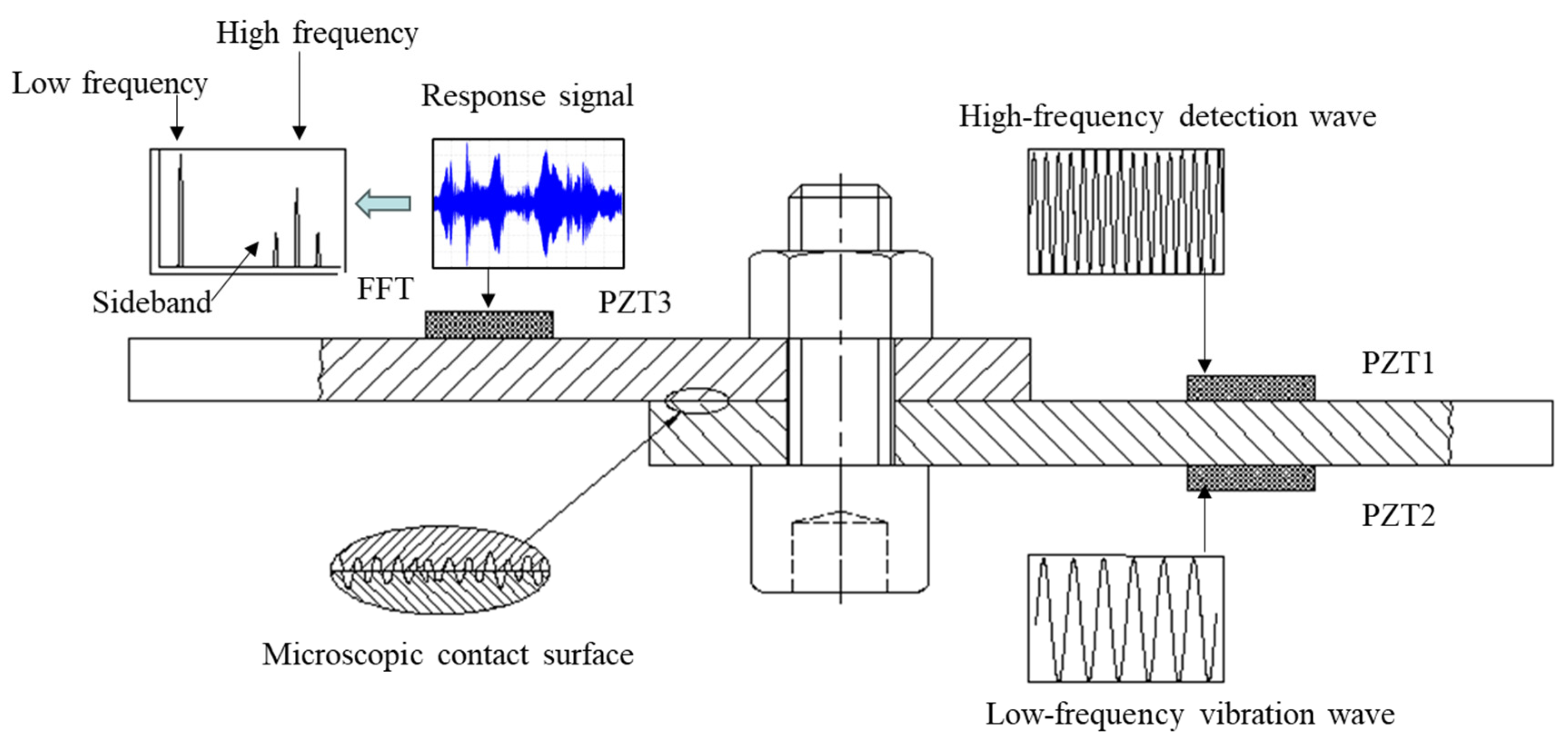
In the bolt loosening detection method based on the vibration-acoustic modulation method, the low-frequency
pump wave and the high-frequency
detection wave are simultaneously input into the bolt-connected specimens. Due to the existence of the microscopic contact surface between the specimens connected by the bolts, as shown in
Figure 1, the two excitation signals generate nonlinear coupling, and the high-frequency detection wave signal is modulated by the low-frequency pump wave signal. In the frequency domain, the response signal has modulated side frequencies, that is, on both sides of the detection wave frequency (
), side lobe signals containing the frequency components of the pump wave appear.
In isotropic materials, the one-dimensional wave equation retaining the second-order nonlinear term is:
In the formula, c represents the wave velocity (m/s), β is a nonlinear coefficient, u is the vibration displacement (m) of the particle, x is the propagation distance (m), and t is time.
According to the theory of micro-perturbation approximation [
34], let the approximate solution of Equation (1) be:
In the formula: represents the linear displacement; is a nonlinear displacement.
When attenuation is not considered, the linear displacement of the vibrational tone control signal can be expressed as:
In the formula: is the amplitude of the low-frequency pump wave and is the amplitude of the high-frequency detection wave.
Suppose the nonlinear displacement is:
In the formula: h(t) is an undetermined function.
Substitute Equations (3) and (4) into Equation (2), and then substitute Equation (2) into Equation (1) to obtain:
In the formula: is the wave number (rad/m), ; is the wave number (rad/m), and .
It can be seen from the above equation that the two signals interact with the microscopic contact surface, generating the second harmonic signal and the sum and difference frequency wave signal. The amplitude of the sidelobe signal is proportional to the nonlinear coefficient and the amplitude of the fundamental wave signal.
Let the amplitudes of the fundamental wave be
and
. Under these conditions, the amplitudes of the sum and difference frequency wave signals are:
It can be seen from Equation (6) that the amplitudes of the sum and difference frequency wave signals are directly proportional to the nonlinearity coefficient, the amplitudes of the fundamental wave signals, and the frequencies of the two emitted sound waves. Therefore, the nonlinearity degree and actual contact area of the microscopic contact surface in the bolt connection structure can be evaluated based on the variation in the amplitude of the sum and difference frequency signals.
2.2. Principle of the Fractional Fourier Transform
In piezoelectric ultrasonic testing, pulse waves and sweep frequency signals are two commonly used excitation methods. The pulse signal has a short duration, low emission energy, and limited propagation distance. A linear sweep frequency signal is a Chirp-based signal. If the transmission duration is long and it has a bandwidth with an adjustable frequency, it can have strong energy. The LFM signal has a large time–bandwidth product, as well as high speed resolution and distance resolution.
The fractional Fourier transform (FrFT) is a generalized Fourier transform with the decomposition characteristics of the chirp basis. FRFT can transform the signal to any intermediate domain between the time domain and the frequency domain and has a high resolution for non-stationary signals such as linear frequency modulation signals [
35]. For the time-domain signal
and the rotation Angle θ, the FRFT result is:
In the formula: is the rotation angle of the FrFT, p is the order of the FrFT, represents the transformation operator of the FrFT, and represents the fractional transform kernel.
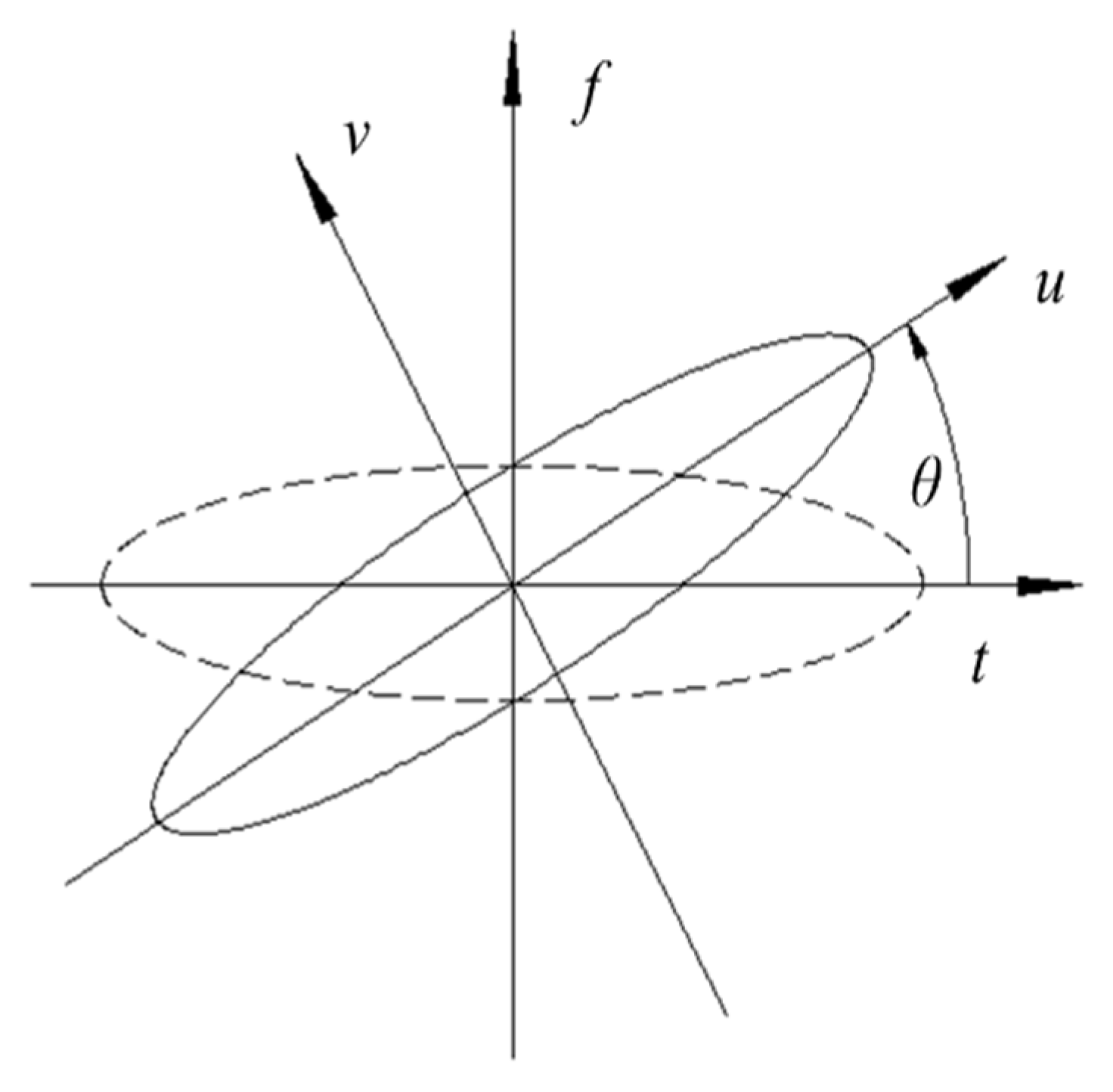
By analyzing Formulas (7) and (8), it can be found that the period of the FrFT transform is 4. The FrFT can be considered as rotating the signal’s coordinate axis counterclockwise by an angle theta around the origin on the time–frequency plane, transforming from the time domain t to the fractional domain u, as shown in
Figure 2.
By selecting an appropriate rotation angle for the FrFT transform of a linear sweep signal, the vast majority of the signal’s energy can be concentrated in a specific u-domain, appearing in a form similar to the peak of an impulse function. Fixed-frequency signals and noise signals, however, will not produce similar peaks in the u-domain. Therefore, this property can be utilized to filter out the linear swept-sine signal used to excite the pump wave from the vibro-acoustic modulation signal, while retaining the high-frequency signal, modulation, and difference frequency signals used for evaluating the state of bolt connections.
2.3. VAM Signal-Processing Method Based on the FrFT
Perform the FrFT on the vibration tone-modulated signal to transform the signal into the optimal fractional domain where the swept-sine signal is focused. Next, apply a bandpass filter to the swept-sine signal, and transform the filtered signal back into the time domain. Finally, transform the filtered signal from the time domain to the frequency domain, extract the amplitude of the sum and difference frequencies of the high-frequency signal, and use this as the damage parameter. The specific signal-processing steps are as follows:
(1) Apply the Hilbert transform to the bolt connection vibro-acoustic modulation signal to obtain the analytic signal of the original signal.
(2) Within the range for the order p, change the value of p with a larger step size Δp = 0.01 to alter the rotation angle θ. Perform a two-dimensional scan in the FrFT plane (θ,u) and determine the fractional order corresponding to the peak value.
(3) In the local region centered around the value of , specifically [0.99], change the value of p with a smaller step size Δp = 0.0005 to alter the rotation angle θ. Using the FrFT, find and values corresponding to the peak point.
(4) For the peaks formed by linear frequency-sweep signals in the u domain, an ideal masking filter with center frequency and bandwidth is used for filtering, removing the linear frequency-sweep signals while retaining the sum and difference frequency signals and noise signals.
(5) Apply a FrFT of order -p to the filtered fractional domain signal and transform it back to the time domain.
(6) Perform a standard Fourier transform on the time-domain signal to obtain the amplitude spectrum diagram. Evaluate the degree of loosening of the bolt connection by transforming the sum and difference frequency amplitude values.
3. Experimental Setup
3.1. Introduction to the Bolt Loosening Detection Test Apparatus
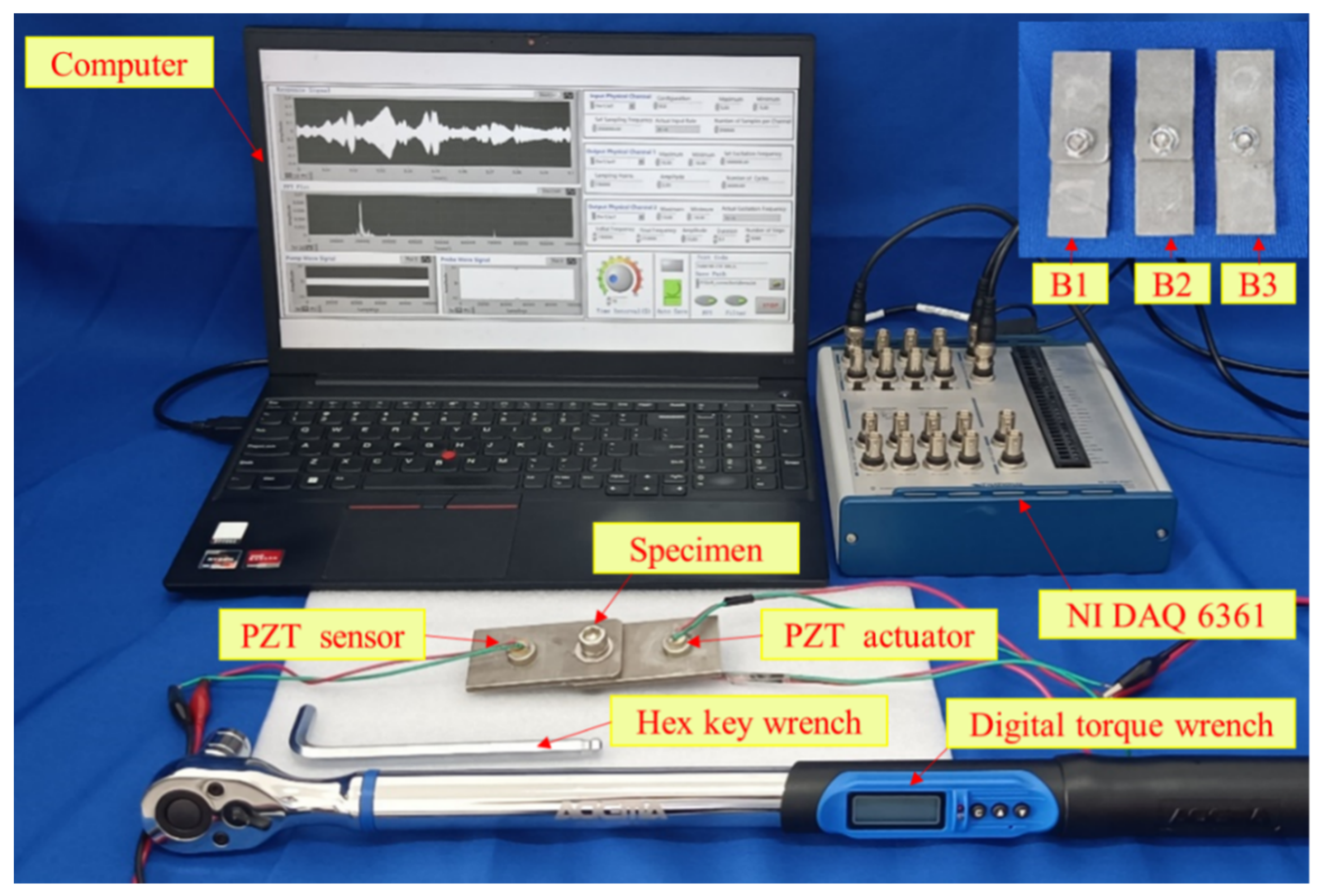
The VAM detection method for bolted joint conditions proposed in this paper was verified through experiments. As shown in
Figure 3, the experimental setup includes two rectangular steel plates measuring 40 mm × 76 mm × 5 mm, M8 bolts (grade 8.8), nuts, a laptop, a NI DAQ 6361 data acquisition device, d33 piezoelectric ceramics with a diameter of 10 mm and a thickness of 2 mm, strong magnets with a diameter of 16 mm and a thickness of 5 mm, and an Allen wrench and a torque wrench. Two piezoelectric ceramics, PZT1 and PZT2, serve as actuators and are magnetically attached to the same steel plate; one piezoelectric ceramic, PZT3, serves as a sensor and is magnetically attached to the other steel plate. A total of three bolted steel-plate specimens were used in this experiment. For ease of identification, they are designated as B1, B2, and B3. All three specimens were fabricated from cold-rolled 16Mn steel plates of the same grade, and their manufacturing tolerances and surface roughness were controlled through machining and deburring processes performed on the same batch of material [
36]. The same experimental conditions and steps were applied to all three samples, with the roles of each piezoelectric sheet remaining unchanged. An ultrasonic coupling agent was used between each magnetically attached piezoelectric ceramic sheet and the steel plate.
In this experiment, linear frequency-sweep signals and sine wave signals are emitted from the AO0 and AO1 ports of the NI DAQ 6361 data acquisition device, respectively. The AO0 port outputs a fixed-frequency sine wave excitation signal, while the AO1 port outputs a linear frequency-sweep excitation signal. Both signals act on the contact surface of the bolted steel plate, with the feedback signal collected by PZT3 on the opposite steel plate and input through the AI0 port to the NI DAQ 6361.
3.2. Experimental Process
(1) To maximize the ‘breathing’ effect between the mating surfaces of rectangular steel plates connected by bolts, it is necessary to find the optimal parameters for the linear frequency-sweep signal. First, apply a wide-range linear frequency-sweep signal to the PZT1, starting at 60 kHz and ending at 250 kHz, with a sweep time of 0.1 s. Identify the peak point in the amplitude spectrum near 200 kHz. Consequently, determine the frequency range of the sweep signal to be 190–210 kHz.
(2) Apply a sweep signal to the pump signal excitation of PZT1, starting at 190 kHz and ending at 210 kHz, with a sweep time of 0.1 s, to induce breathing vibrations between the mating interfaces of the bolt connection. Apply a sinusoidal signal of 300 kHz to the detection signal excitation of PZT2. The two modulated vibration
(3) The bolt-tightening torque is applied using a digital torque wrench, ranging from 10 N·m to 30 N·m in 5 N·m increments. After each bolt torque load step is applied, the system is allowed to rest for 30 s to stabilize. Five consecutive vibration-acoustic signals pass through the bolt interface and are received by the piezoelectric sensor PZT3, sampled at a frequency of 2 MHz for a duration of 0.1 s.induced acoustic signals are then collected, and their average is taken as the representative signal for that load step. The signal is saved after passing through a high-pass filter (cutoff frequency of 100 kHz).
(4) Using the method described in
Section 2.3, perform fractional Fourier filtering on the bolt connection vibro-acoustic modulation signal, ultimately obtaining an amplitude–frequency curve that includes both sum and difference frequency signal components.
4. Results and Discussion
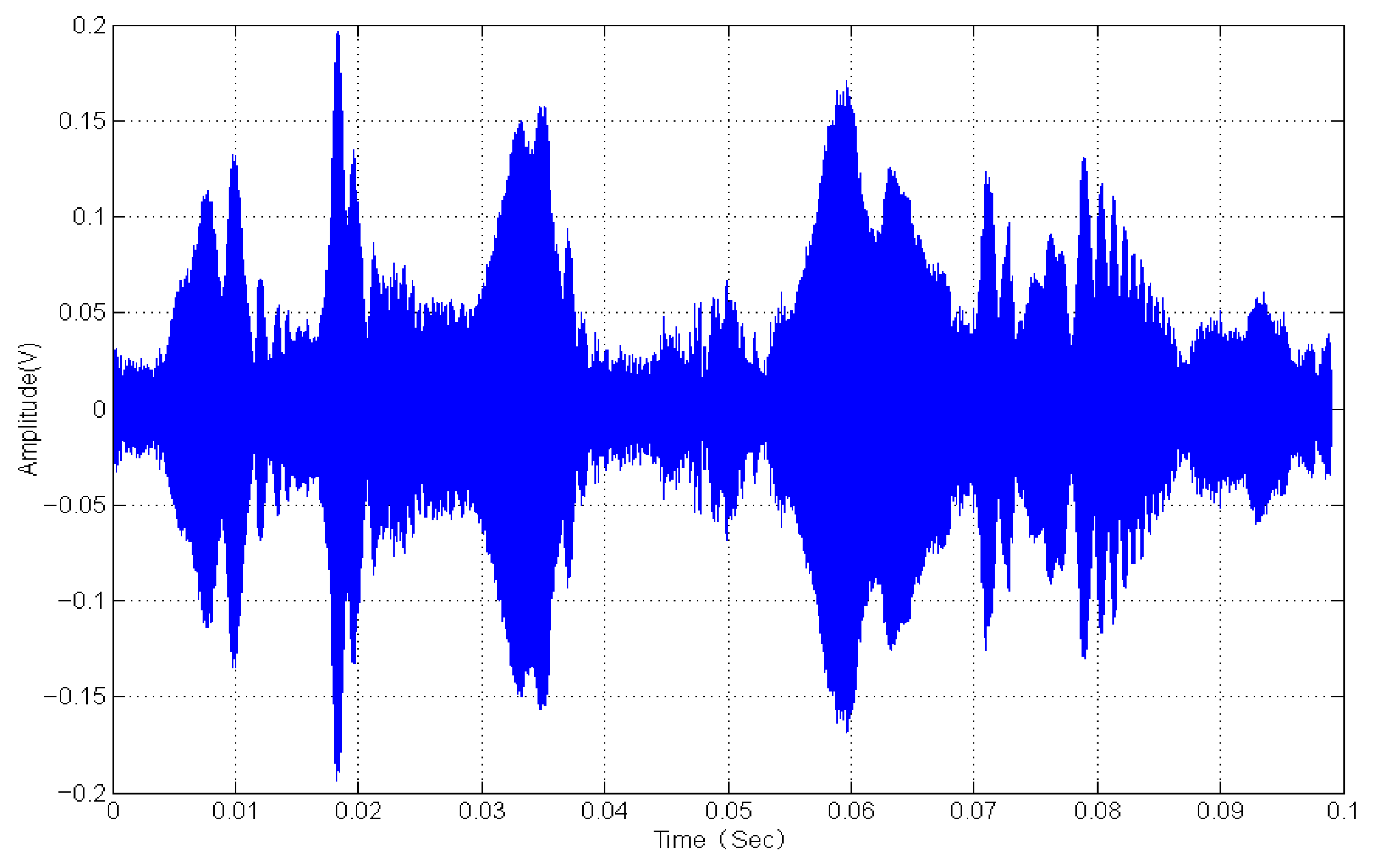
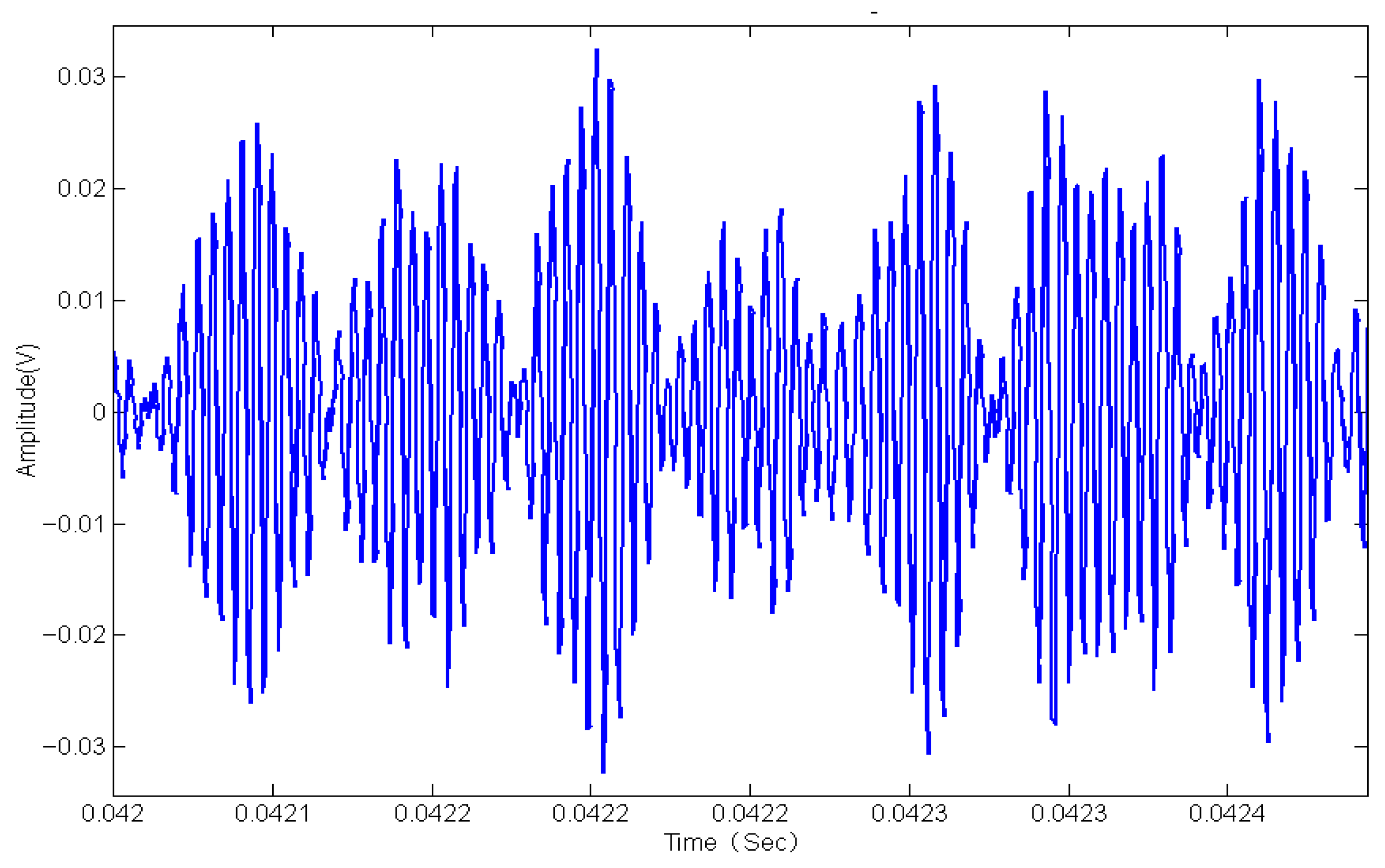
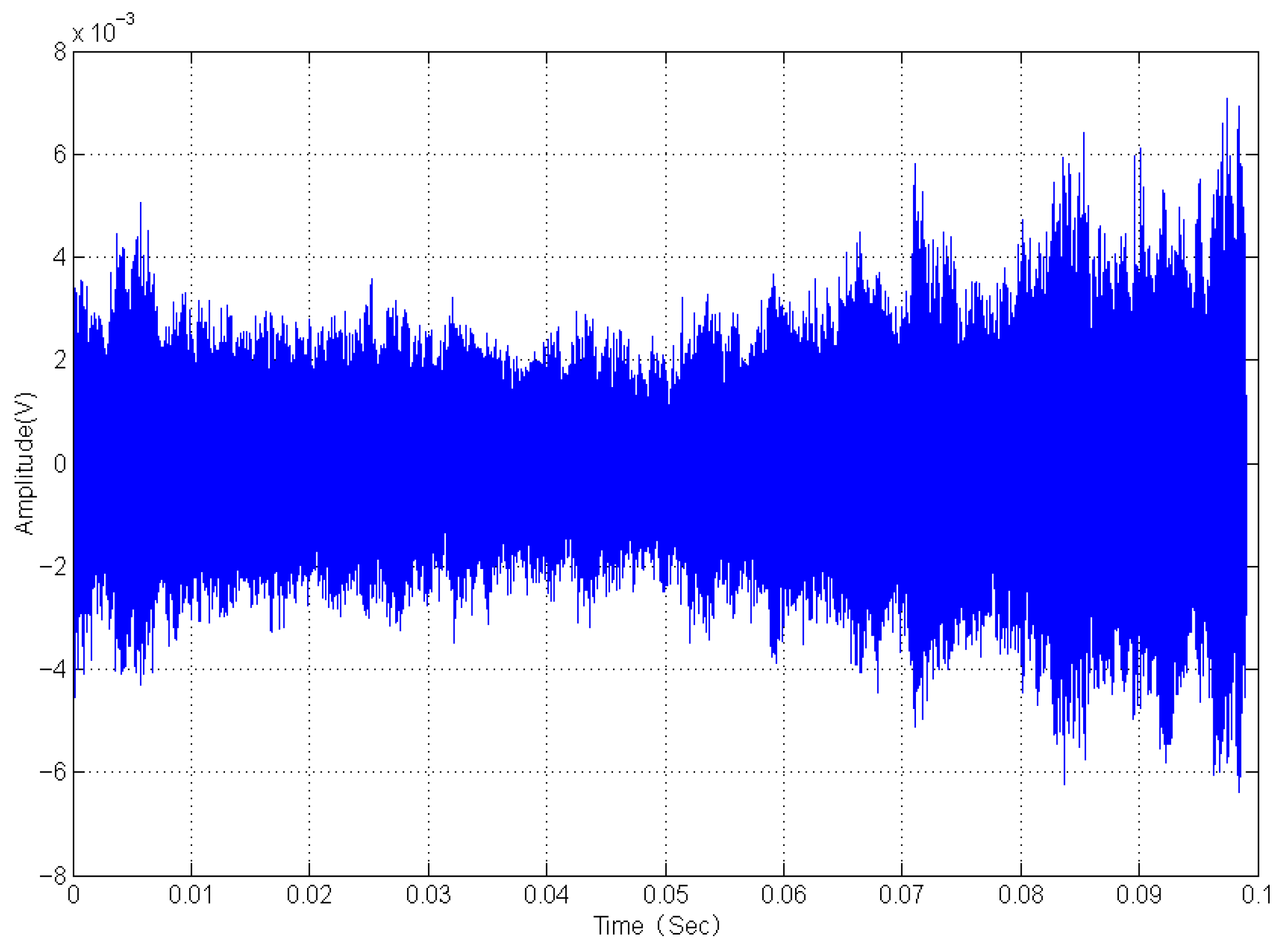
The time-domain signal of the bolted joint vibration frequency modulation experiment is shown in
Figure 4. From the local magnification of the time-domain signal, as shown in
Figure 5, it can be seen that there is a clear modulation phenomenon in the received signal.
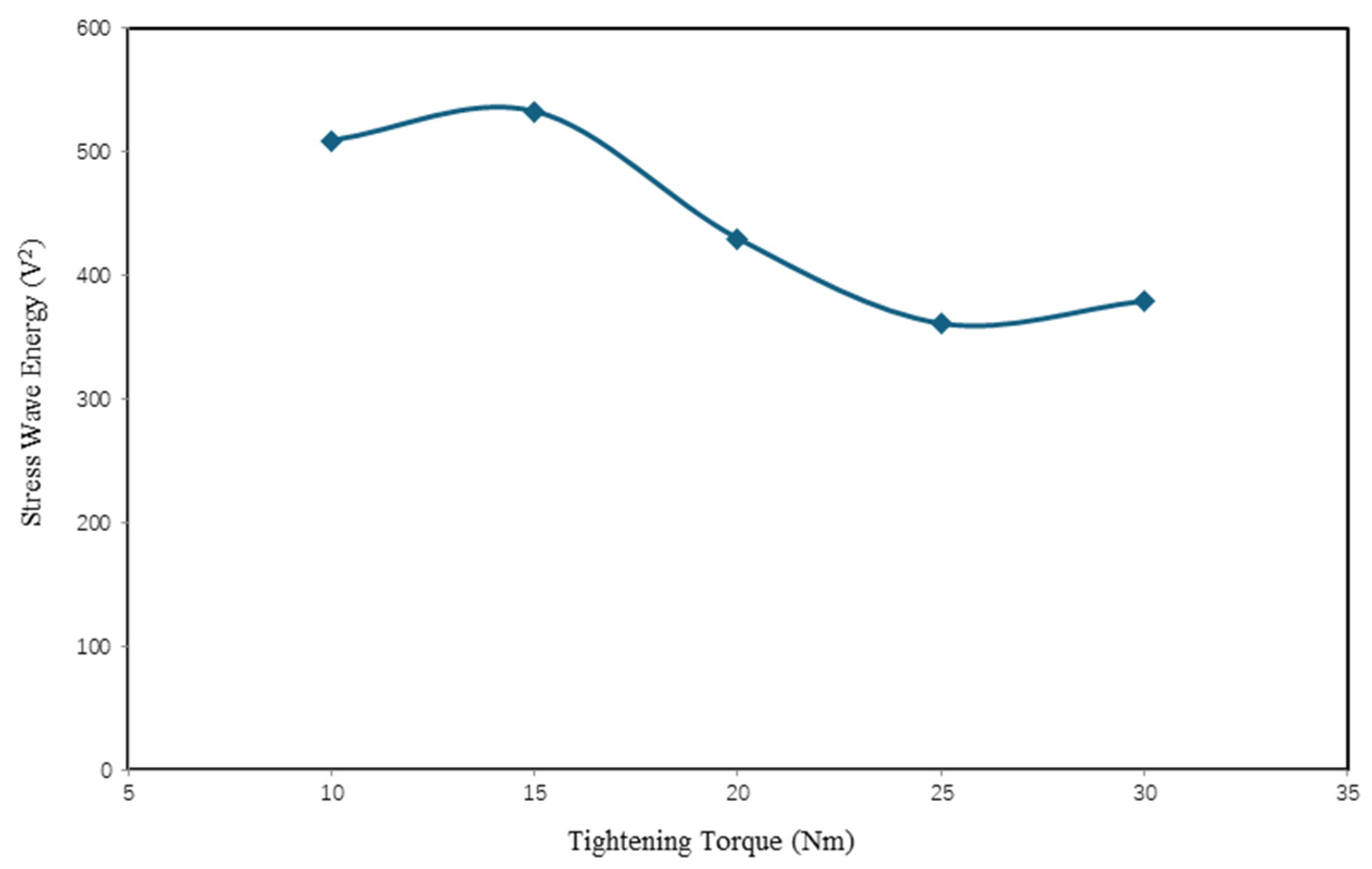
Calculate the signal energy value E for the time-domain signals received by sample B1 under different tightening torques using Formula (9).
From
Figure 6, it can be seen that there is no obvious linear correlation between the time-domain signal energy and the bolt-tightening torque.
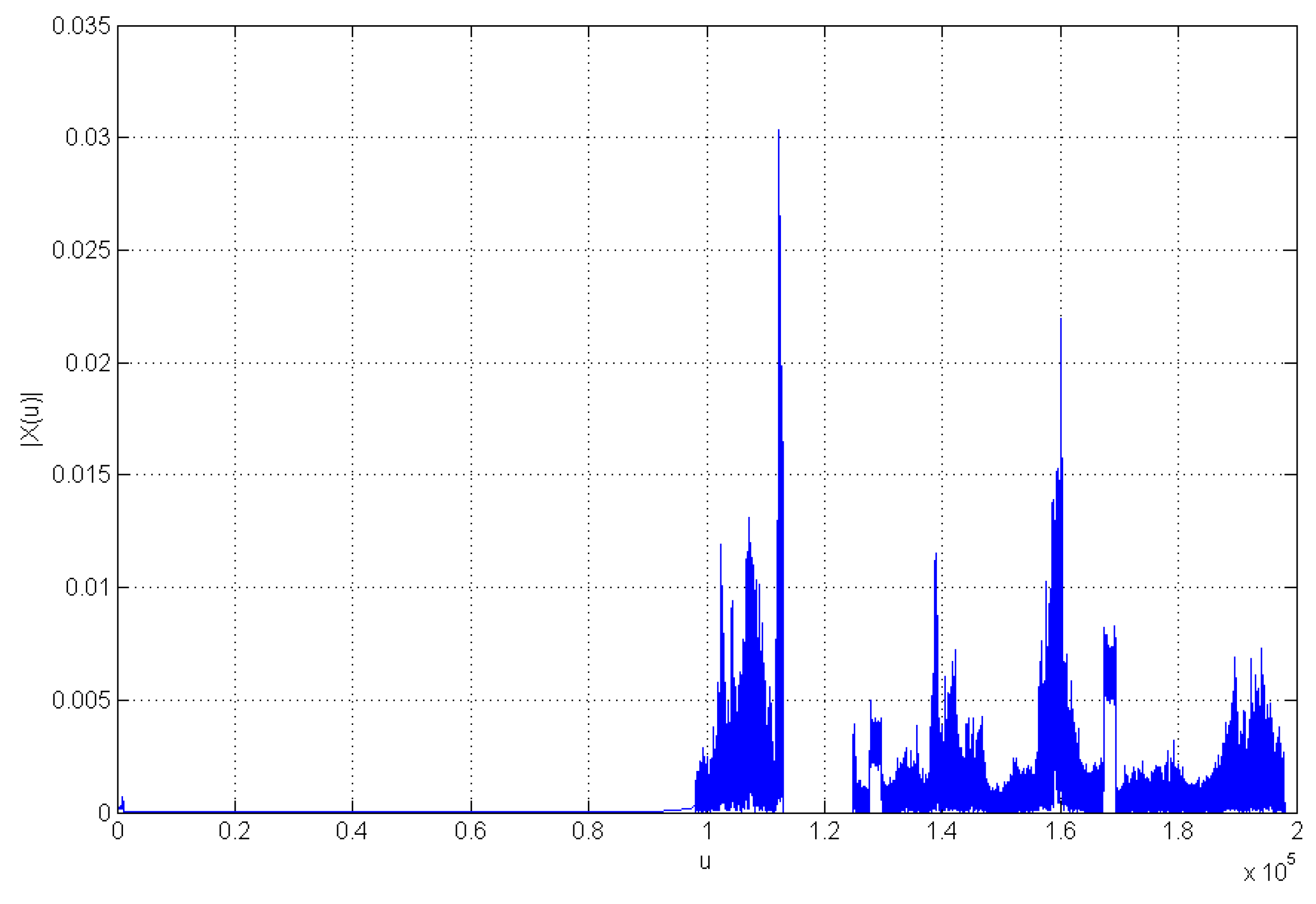
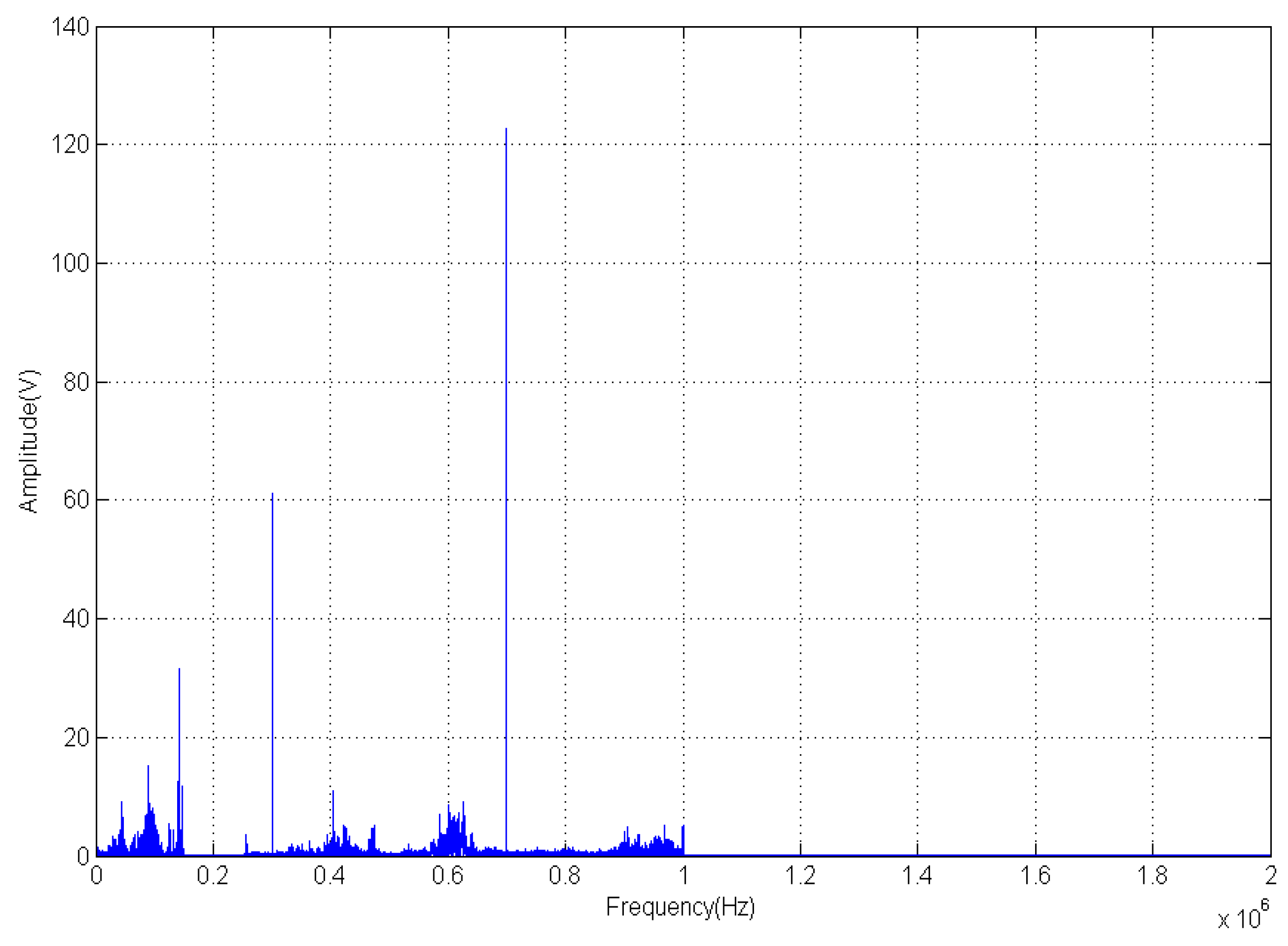
The Fourier transform of the signal yields its amplitude spectrum, as shown in
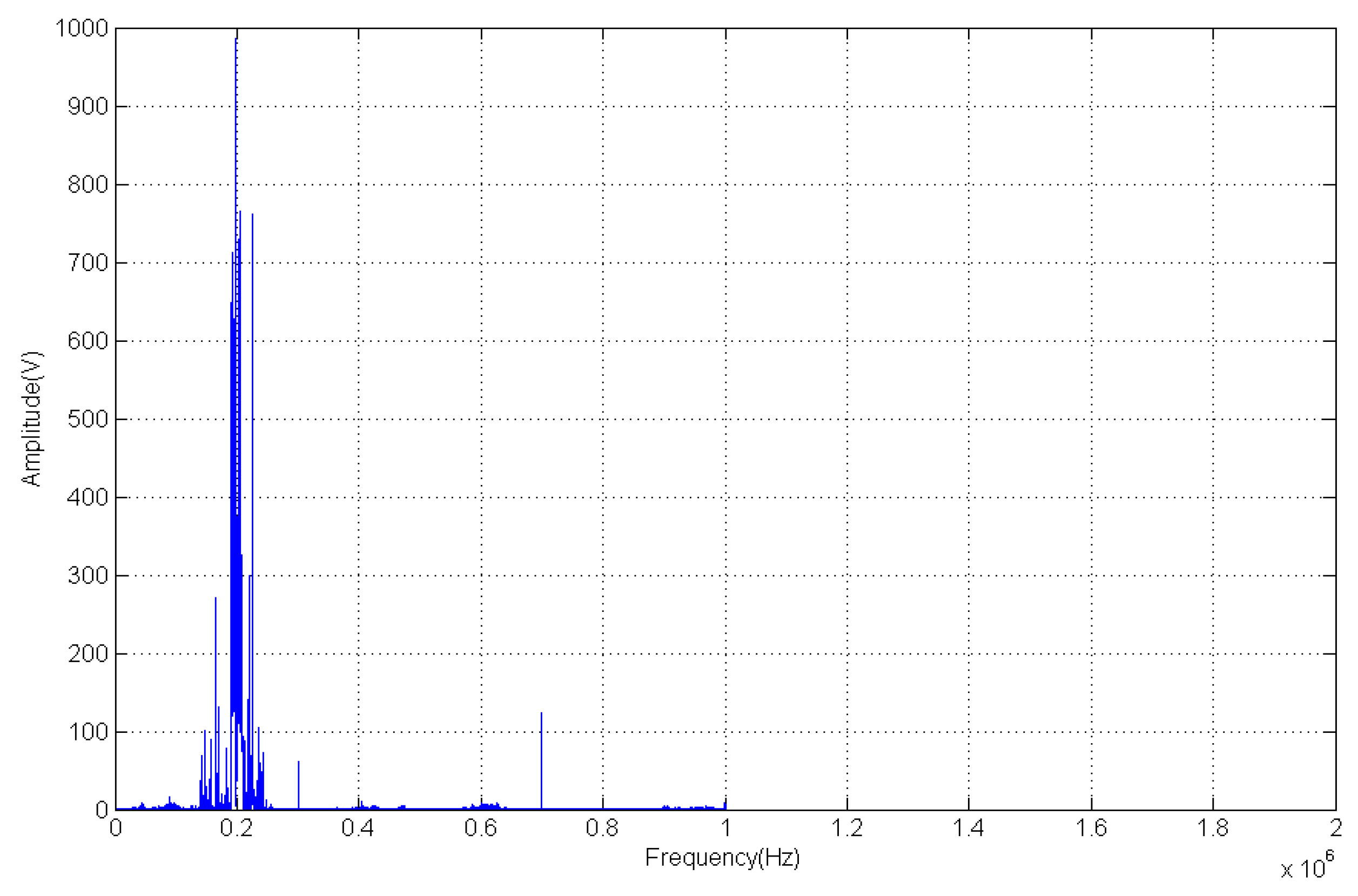
Figure 7. The graph shows multiple peaks around the 200 kHz frequency, with distinct peaks at 300 kHz and 700 kHz. The 300 kHz peak corresponds to the detection sine signal frequency, while the 700 kHz peak represents the sum and difference frequency signals of the VAM. Linear frequency-sweep signals are used to create a ‘breathing’ effect on crack surfaces, and their signal energy is much stronger than that of sinusoidal detection signals. Therefore, using the FrFT to filter out the linear frequency-sweep signal components while retaining the sinusoidal and harmonic components can help improve the analysis accuracy of beat frequencies.
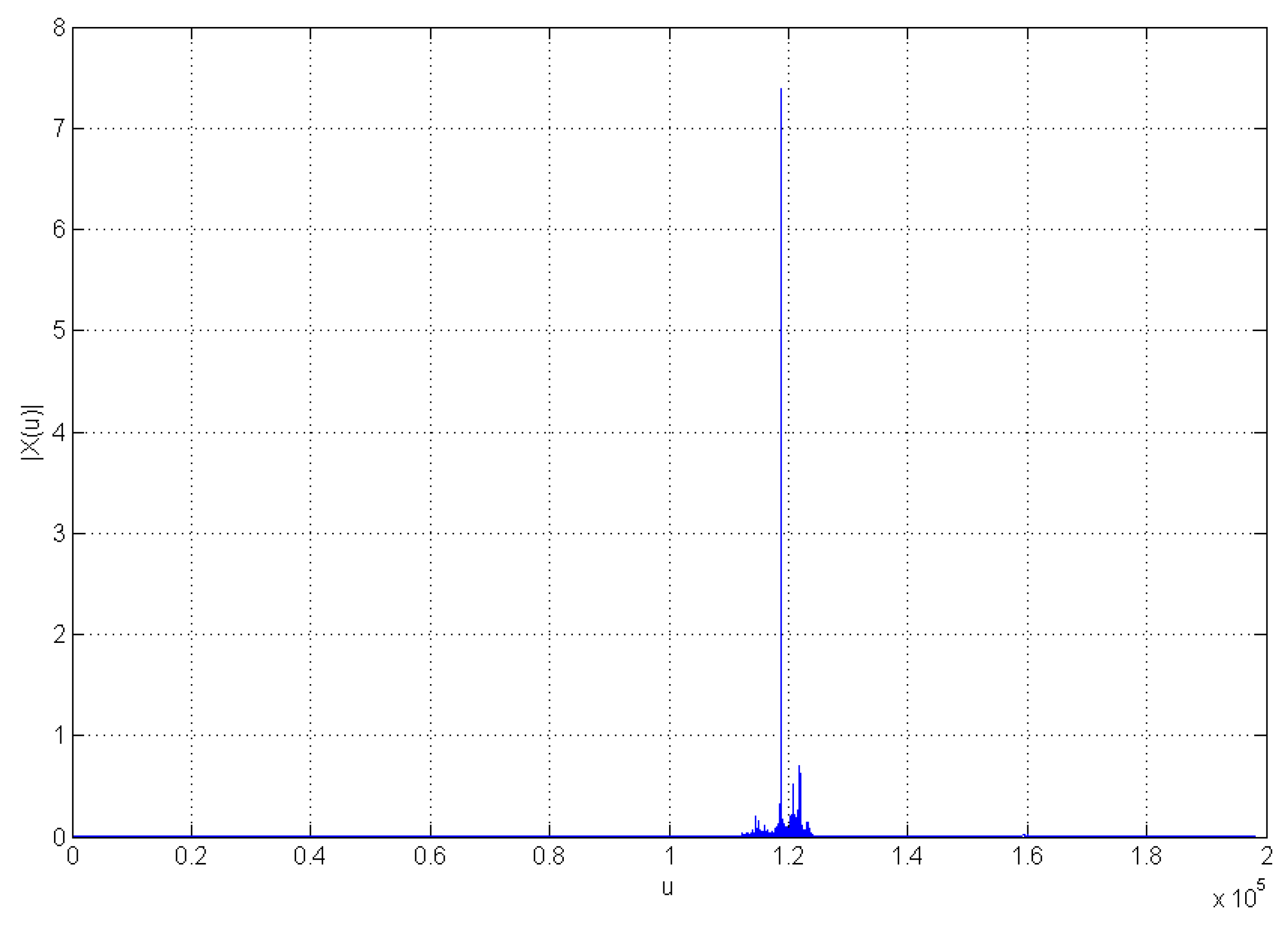
The received signal is transformed using FrFT. To improve computational efficiency, a coarse scan with large steps is first performed, followed by a fine scan with small steps to obtain the optimal fractional order FRFT. This paper uses a linear frequency-sweep signal starting at 190 kHz, ending at 210 kHz, and lasting 0.1 s, which shows significant concentration in the fractional domain, as shown in
Figure 8.
Using the masking filtering method, for the u value corresponding to the peak point of the optimal fractional-order
Fourier transform domain, within the range of
, set its fractional-order domain amplitude to 0 for masking filtering. The filtering effect is shown in
Figure 9. After removing the linear frequency-sweep signal, perform a
order transformation on the signal to obtain the time-domain signal, as shown in
Figure 10. Comparing
Figure 4 and
Figure 10 reveals that after removing the linear frequency-sweep signal, the amplitude of the time-domain signal significantly decreases.
Finally, perform a Fourier transform on the time-domain signal to obtain the amplitude–frequency spectrum of the signal after removing the linear frequency-sweep signal, as shown in
Figure 11. It can be observed that, within the range below 200 kHz, multiple harmonic signal peaks exist. In comparison, the amplitude of the 300 kHz sinusoidal detection signal and the 700 kHz beat frequency signal is relatively significant. Therefore, this study uses the amplitude of the 700 kHz beat frequency signal as an evaluation parameter for the degree of bolt loosening.
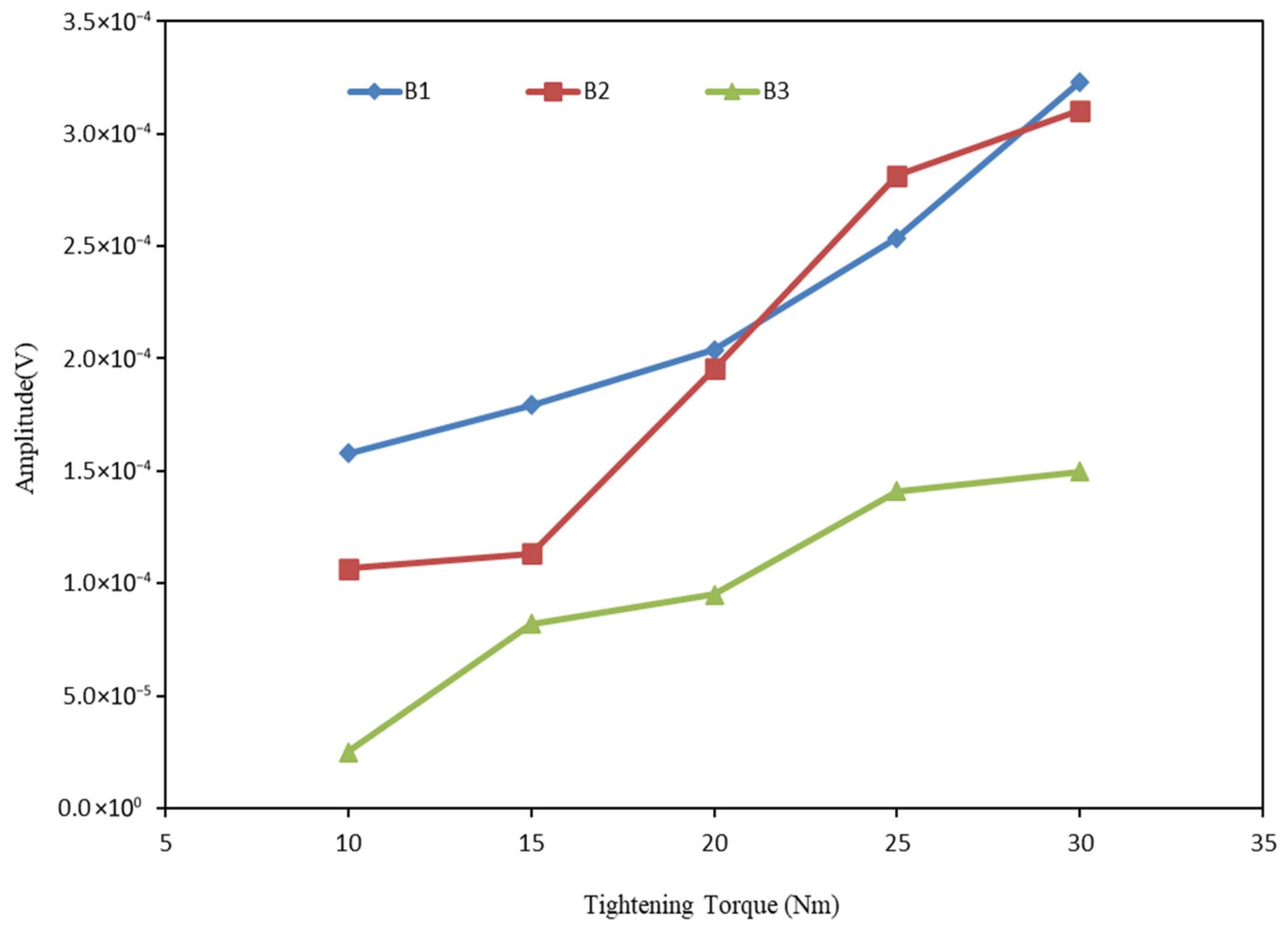
As the tightening torque increases from 10 N·m to 30 N·m, with increments of 5 N·m per load step, the amplitudes of the sum and difference frequency signals at 700 kHz in the frequency domain are shown in
Figure 12. It can be observed from the figure that three sets of bolted joint specimens, B1, B2, and B3, have collected vibration acoustic modulation signals. After filtering with a linear frequency-sweep signal, the amplitude of the 700 kHz harmonic increases with the increase in tightening torque within the range of 10 N·m to 30 N·m. At a tightening torque of 10 N·m, due to the initial contact between the two steel plates, the state is relatively unstable, showing a more significant change compared to other conditions.
According to Hertz contact theory [
37,
38,
39], the actual contact area of two steel plates bolted in this study increases with the increase in tightening torque. Under the vibration excitation of a low-frequency pump signal, the “breathing” effect between contact surfaces is enhanced, and the amplitude of nonlinear modulation response increases accordingly. The experimental results in this paper verify this rule as a whole and show that, by detecting the vibration acoustic modulation signal and adopting the proposed method, the looseness degree of bolt connection can be effectively evaluated according to the amplitude change in sum and difference frequency harmonics. It is worth noting that there is a certain difference in peak amplitude between sample B3, B1 and B2 in
Figure 12, which may be due to slight inconsistency in the pasting of piezoelectric sheets or inherent material fluctuation between samples. Although the change trend of each sample is consistent, the above deviation still suggests that the influence of physical setting difference and manufacturing tolerance on the test results should be considered in engineering application.