Next Article in Journal
Vertical Distribution Patterns and Pollution Gradient-Driven Responses of Prokaryotic Microbial Communities in Northern Contaminated Sites
Previous Article in Journal
Productivity Prediction in Tight Oil Reservoirs: A Stacking Ensemble Approach with Hybrid Feature Selection
 
 
Due to scheduled maintenance work on our servers, there may be short service disruptions on this website between 11:00 and 12:00 CEST on March 28th.
Article

Sustainable Foam-like Carbon as a Flexible Radar Absorbing Material

1
National Institute for Space Research, São José dos Campos 12227-010, Brazil
2
Department of Metallurgical and Materials Engineering, University of São Paulo, São Paulo 05508-030, Brazil
*
Author to whom correspondence should be addressed.
Processes 2026, 14(7), 1082; https://doi.org/10.3390/pr14071082
Submission received: 20 February 2026 / Revised: 18 March 2026 / Accepted: 24 March 2026 / Published: 27 March 2026
(This article belongs to the Section Materials Processes)

Abstract

In this work, a flexible and sustainable radar-absorbing material (RAM) based on porous carbon derived from raw Kraft black liquor was developed. The porous carbon filler was synthesized through a simple, eco-friendly one-pot polymerization route, thereby avoiding lignin extraction, purification, and chemical activation steps. Macroporosity was introduced by using poly(methyl methacrylate) microspheres as a hard template, yielding a lightweight carbon material with a foam-like morphology, low density, and high porosity. The carbon filler was incorporated into a silicone rubber matrix at different loadings (5–25 wt.%) to produce flexible composites. The structural, morphological, and textural properties of porous carbon were investigated by SEM, EDX, Raman spectroscopy, nitrogen adsorption, and mercury porosimetry. The electromagnetic properties of composites were measured in the X-band (8.2–12.4 GHz) using a vector network analyzer. The mechanical behavior was evaluated through Young’s modulus. The results show that increasing filler content enhances dielectric losses and attenuation capability. Among all composites, the sample containing 20 wt.% of porous carbon exhibited the best electromagnetic performance, achieving a reflection loss of −42.3 dB at 10.97 GHz with a thickness of 2.43 mm, corresponding to an absorption efficiency of 99.99%. This performance is attributed to a favorable combination of impedance matching and quarter-wavelength cancellation effects. The developed sustainable, lightweight, and flexible composites demonstrate potential as low-cost RAM for aerospace and electromagnetic interference mitigation applications.

1. Introduction

The widespread use of wireless devices in everyday life, including smartphones, computers, and Wi-Fi routers, has substantially increased the number of electromagnetic radiation sources in the environment. This growth has intensified electromagnetic pollution, leading to electromagnetic interference (EMI) and degrading electronic system performance [1,2]. Emerging technologies in automation and telecommunications, such as the Internet of Things (IoT) [3,4] and fifth-generation (5G) communication networks [5,6], are particularly sensitive to EMI due to their high operating frequencies. In addition to technological challenges, concerns have been raised about the potential biological effects of prolonged exposure to non-ionizing electromagnetic radiation. Although the mechanisms and health implications remain under debate, epidemiological and experimental studies have motivated continued investigation into possible long-term risks [7,8,9].
Radar-absorbing materials are composites specifically designed to reduce reflected electromagnetic waves, converting electromagnetic energy into thermal or other forms of attenuation [10,11]. In contrast, electromagnetic interference (EMI)-shielding materials aim primarily to block electromagnetic radiation through reflection, absorption, or multiple internal reflections, ensuring electromagnetic compatibility in electronic and communication systems [12]. Due to these distinct mechanisms, RAMs are predominantly employed in electronic devices for electromagnetic compatibility, in anechoic chambers for controlled electromagnetic testing, in thermal protection systems for aerospace and satellite components, and in military stealth technologies [13].
In general, RAMs consist of a polymeric matrix combined with an electromagnetic-absorbing filler, such as ferrites [14] or silicon carbide [10]. Conventional RAMs typically rely on rigid polymer matrices, such as paraffin wax or epoxy resins, which significantly limit their applicability to curved, deformable, or complex surfaces. To overcome these limitations, recent studies have focused on developing flexible systems based on matrices such as polyacrylonitrile (PAN) fabrics [15] or silicone rubbers [16], enabling the fabrication of flexible RAMs or EMI-shielding materials that can be applied as coatings on conformal and complex geometries.
Several carbon-based materials have been investigated as electromagnetic-absorbing fillers, including graphene [17,18], iron carbonyl [19,20], carbon black [21,22], and carbon nanotubes [23]. More recently, hollow and porous carbon architectures have also been explored as ultralight RAMs due to their low density [24,25]. Despite these advances, there is a growing demand for the development of electromagnetic materials based on sustainable sources and produced through environmentally friendly processes [26,27,28]. This demand is based not only on industrial requirements for cost reduction and scalability but also on broader socio–economic and environmental concerns, in line with the United Nations Sustainable Development Goals (SDGs) 9 (Industry, Innovation, and Infrastructure), 12 (Responsible Consumption and Production), and 13 (Climate Action). In this context, the production of bio-based porous foam-like carbon using a major by-product of the pulp and paper industry, like raw Kraft black liquor, emerges as a promising and strategically relevant approach, combining waste valorization, reduced environmental impact, and relatively simple, scalable manufacturing routes.
In this context, this present work proposes a simple, environmentally low-impact synthesis route for the preparation of porous foam-like carbon directly derived from raw Kraft black liquor. The resulting carbonaceous structures were systematically characterized in terms of morphology, pore architecture, and chemical composition. Their effectiveness as RAMs was subsequently evaluated using reflectivity measurements and electromagnetic parameter analysis in the 8.2–12.4 GHz (X-band) frequency range. In addition, the mechanical performance of the corresponding RAM composites was evaluated to address their potential applicability under flexible operating conditions.

2. Materials and Methods

2.1. Preparation of Sustainable Porous Carbon Material

The Sustainable Porous Carbon (SPC) material was synthesized via the polymerization of Kraft black liquor as received, without prior lignin extraction or purification. Its physicochemical properties, like pH (12.5), solid content (15 wt.%), and ash content (39 wt.%), were measured and reported elsewhere [29]. Macroporosity was introduced by using poly (methyl methacrylate) (PMMA) microspheres as a hard template. The PMMA particles were previously sieved to obtain a size range of 180 μm < Ø < 250 μm. Kraft black liquor and PMMA microspheres were kindly supplied by Suzano Papel e Celulose and UNIGEL, respectively.
The polymerization was carried out using a one-pot approach based on established lignin–resorcinol–formaldehyde reactions in an alkaline medium [30]. Initially, 15 g of resorcinol was dissolved in 100 g of raw Kraft black liquor under magnetic stirring at room temperature and atmospheric pressure. Subsequently, 45 g of PMMA microspheres was added to the mixture, followed by 44 g of formaldehyde, which promoted rapid gelation.
The resulting material was first dried at room temperature for 10 days, then in an oven at 105 °C for 24 h to ensure complete removal of residual moisture. The dried organic monolith was then carbonized in a horizontal tubular furnace under an argon atmosphere. The temperature was increased at a heating rate of 5 °C·min−1 up to 900 °C and kept for 2 h.
Following carbonization, the samples were cooled to room temperature under an inert atmosphere, washed to remove inorganic residues from the delignification process, and dried at 100 °C for 24 h. The washing of the carbonaceous material was performed using a continuous Soxhlet extraction system with a 1 L capacity for three consecutive days, using water as the solvent. This time was optimized to achieve less than 5% of inorganics, as observed by EDS analysis. Finally, the carbonized material was ground and sieved to obtain particles in the 250–425 μm range.

2.2. Physicochemical Characterization Methods

The thermal stability of the applied template PMMA microspheres was evaluated by thermogravimetric analysis (TGA). The measurements were carried out using a TG/DTA system (NETZSCH STA 900, Selb, Germany), heating the samples from 25 °C to 900 °C under an inert argon atmosphere.
The morphology of both the SPC and the PMMA microspheres was examined using field emission gun scanning electron microscopy (FEG-SEM, TESCAN MIRA 3, LM chamber, Brno, Czech Republic). The elemental composition of the SPC was further analyzed by energy-dispersive X-ray (EDX) spectroscopy (Oxford Instruments, Oxford, UK) coupled to the SEM system.
The textural properties and porosity of the SPC were characterized by nitrogen adsorption–desorption isotherms and mercury intrusion porosimetry. Nitrogen adsorption measurements were conducted at −196 °C using an ASAP 2020 Plus analyzer (Micromeritics, Norcross, GA, USA), after degassing the SPC samples at 200 °C for 48 h. The specific surface area was calculated according to the Brunauer–Emmett–Teller (BET) method [31]. Mercury intrusion porosimetry was performed using an AutoPore III 940 system (Micromeritics, Norcross, GA, USA) with applied pressures ranging from 1.59 to 60,000 psia, enabling evaluation of macro and mesoporous structures.
The structural characteristics of the SPC were investigated by Raman spectroscopy using a Horiba Scientific LabRAM HR Evolution spectrometer (Kyoto, Japan) equipped with a 515 nm excitation laser.

2.3. Preparation of Composites Samples

The composites were prepared using a white silicone rubber matrix (Redelease) cured with PS-1 FR 0.03 GRS catalyst to promote fast curing. SPC was incorporated as a conductive filler at four different mass fractions, up to the saturation limit of the polymer matrix. The SPC loadings were 5 wt.% (SPC5), 10 wt.% (SPC10), 20 wt.% (SPC20), and 25 wt.% (SPC25).
The SPC powder was homogeneously dispersed into the silicone rubber matrix by mechanical stirring for 5 min at room temperature. The resulting mixture was poured into a rectangular 3D-printed mold designed according to X-band waveguide dimensions (10.16 × 22.86 mm) with a nominal depth of 2 mm until curing was achieved (around 60 min). To ensure complete curing, samples were left for 24 h before manipulation.
The final thickness of the SPC composite samples was close to, but not exactly, 2 mm due to the 3D printer’s z-axis resolution and the curing behavior of the silicone rubber. For this reason, the thickness of all composite samples was subsequently measured and used in calculations. The measured thicknesses for composites SPC5, SPC10, SPC20, and SPC25 were 2.09 mm, 2.41 mm, 2.43 mm, and 2.26 mm, respectively.

2.4. Electromagnetic Characterization of Sustainable Composites

The electromagnetic properties of the composites were evaluated using a Vector Network Analyzer (VNA, N5235A, Keysight Technologies, Santa Rosa, CA, USA) coupled to an X-band rectangular waveguide (WR90, Keysight), operating in the frequency range from 8.2 to 12.4 GHz [32,33] and calibrated with the X-band calibration kit X11644A.
The complex relative permittivity ε r = ε r j ε r and permeability μ r = μ r   j μ r were calculated from the measured scattering parameters using the Nicolson–Ross–Weir (NRW) method. The real parts of the permittivity ( ε r ) are associated with electromagnetic energy storage, whereas the imaginary parts ( ε r ) represent energy dissipation within the material.
The reflection loss (RL) was calculated based on the obtained electromagnetic parameters:
R L = 20 log Z i n 1 Z i n + 1
Z i n = μ r ε r tanh j 2 π d λ μ r ε r
where Zin is the input impedance, d is the thickness of the sample, and λ is the microwave wavelength in free space. The RL was also measured with the VNA, validating the RL calculations for a normal reflection of an incident wave.
The dielectric loss tangent and the attenuation constant were calculated from the complex permittivity and permeability values using the standard electromagnetic relations:
t a n   δ ε = ε ε
α = 2 π f c   μ ε μ ε + μ ε μ ε 2 + μ ε μ ε 2 1 2
The electromagnetic impedance matching ( Δ ) was calculated using Equation (5):
Δ = sinh 2 K f d M
where K and M are defined by:
K = 4 π μ ε c sin δ e + δ m 2 cos δ e cos δ m    
M = 4 μ cos δ e ε cos δ m μ cos δ e ε cos δ m 2 + tan δ m δ e 2 2 μ cos δ e + ε cos δ m 2
The quarter-wave equation is given by:
t m = n / 4 c f μ r ε r
where n is an odd number (n = 1, 3, 5, …), μ r is the absolute value of the relative permeability, and ε r is the absolute value of the relative permittivity.

2.5. Mechanical Properties of Composite Samples

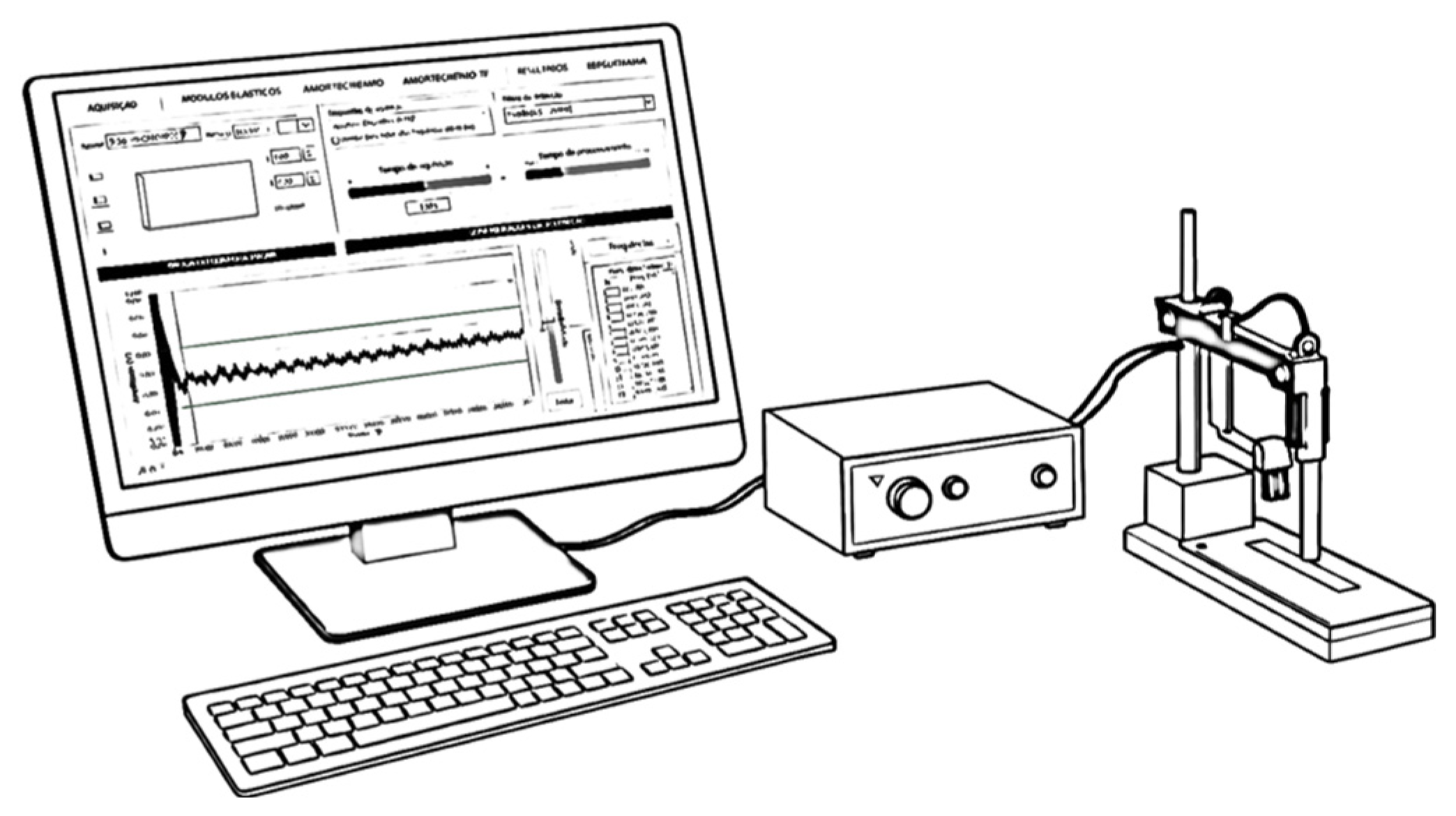
The Young’s modulus of all composite samples was determined using a Sonelastic® system (model SA-BC, Ribeirão Preto, Brazil) equipped with Sonelastic® 3.0 software, as schematically represented in Figure 1. The measurements were performed using a non-destructive impulse excitation technique, where a mechanical impulse is applied to the sample. The resulting resonant frequencies were recorded and analyzed to calculate the Young’s modulus of the composites.

3. Results and Discussion

3.1. Physicochemical Properties

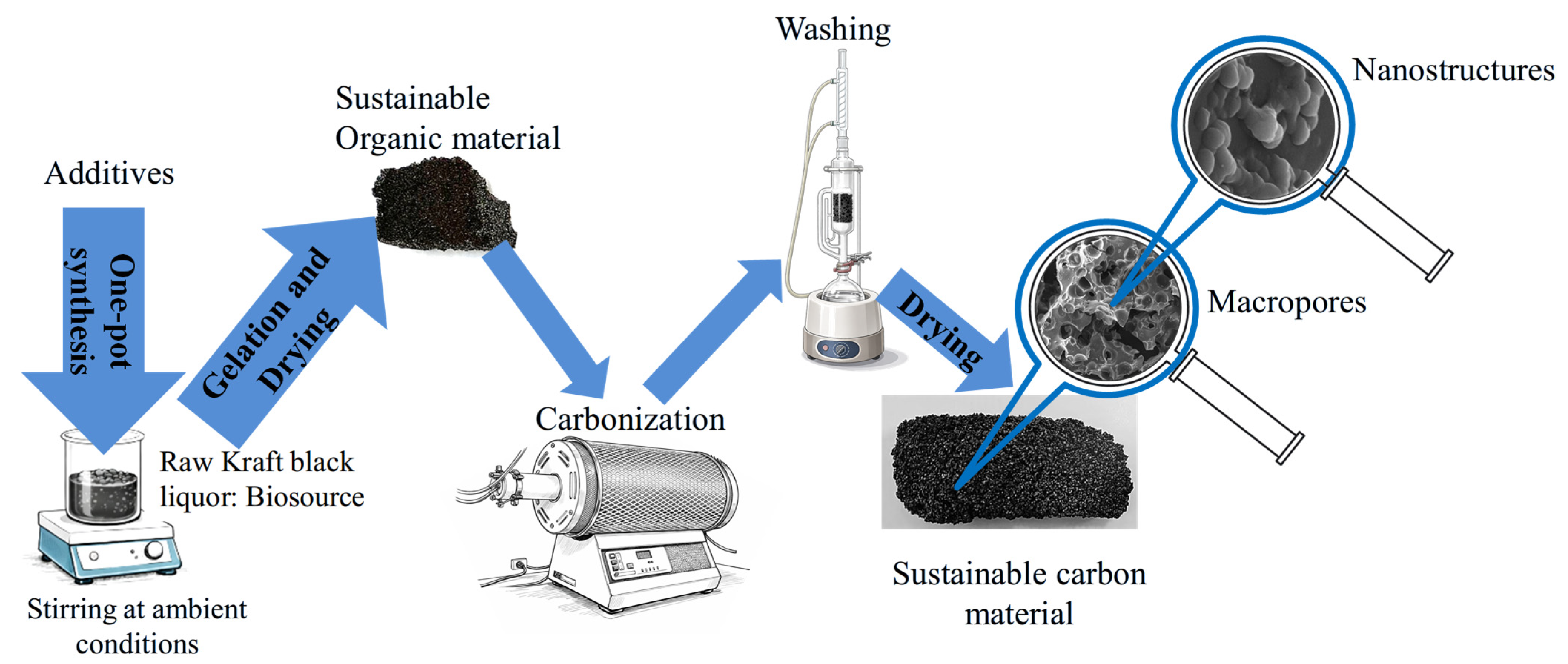
The synthesis of the organic matrix was carried out using a one-pot approach, based on the polymerization of the raw Kraft pulp and paper by-product. Kraft black liquor is a lignin-rich by-product generated in a highly alkaline medium, and therefore is strongly corrosive and potentially toxic [34]. The reaction was performed via sol–gel polycondensation in an alkaline medium (the by-product’s natural pH), using resorcinol as a phenolic co-monomer, formaldehyde as a crosslinking agent, and raw black liquor as the lignin precursor. Under these conditions, hydroxylated aromatic units from lignin and resorcinol undergo condensation reactions, forming a three-dimensional phenolic network typical of resorcinol–formaldehyde gels [30]. While in several works where the extraction of lignin is performed, generating new waste residues, here, the polymerization process was conducted at room temperature and pressure and at the intrinsic alkaline pH of black liquor, thus favoring a straightforward synthesis in which no extraction was required. Although resorcinol is a synthetic and fossil-derived phenolic compound, the high lignin content of the raw black liquor ensures a significant fraction of renewable carbon in the final material, while the use of PMMA enables the formation of macroporosity as a sacrificial macropore-forming agent and, at the same time, avoids shrinkage during the drying process [35]. After gelation and drying, the polymerized material was subjected to carbonization at 900 °C under an inert atmosphere, thereby converting the phenolic network into a porous carbonaceous structure. During thermal treatment, PMMA decomposes completely, generating interconnected macropores within the carbon matrix. This one-pot synthesis supports scalability and addresses the SDGs, as the produced materials are developed directly from raw black liquor, yielding a highly sustainable product with 23% sustainable material content, estimated on a dry-basis. In addition, the large-scale application of this methodology would avoid the burning of black liquor or the improper disposal promoted in developing countries [36], thereby reducing environmental pollution. A schematic representation of the overall synthesis process is presented in Figure 2.
The production cost of phenolic resins can be estimated using a simplified equation [35] that accounts for three main components: precursor costs (P), solvent costs (S), and fixed operational costs (C), which include maintenance, labor, gases, and energy consumption. These contributions represent approximately 80%, 4%, and 16% of the total production cost (T), respectively, as expressed in Equation (9):
T = 0.8 P + 0.04 S + 0.16 C
In the phenolic system proposed in this work, based on a black-liquor residue/resorcinol/formaldehyde formulation, the cost associated with the black-liquor residue is assumed to be negligible since it is a residue. In contrast, resorcinol represents the main precursor cost, with an estimated price of USD 142/kg based on the Sigma-Aldrich product (307521-1KG, St. Louis, MO, USA). The solvent cost was also considered negligible since the black liquor itself was used as a carbon-rich solvent. Thus, considering the organic fraction present in the black liquor and performing the calculations on a dry basis, the proposed formulation reduces the total production cost (T) by a factor of 1.5, corresponding to an overall cost decrease of approximately 33%.
Furthermore, the production of a material with 23% renewable content through the valorization of an industrial by-product is consistent with ESG (Environmental, Social, and Governance) principles, as it promotes waste reduction within a circular economy and consequently improves price/sustainable competitiveness. Consequently, the proposed material also aligns with progressive decarbonization strategies, in which 23% of the fossil-derived fraction is replaced by renewable carbon. In carbon accounting and life-cycle assessment frameworks, CO2 emissions associated with bio-based materials are generally classified as biogenic carbon and are therefore accounted as a different form from emissions derived from fossil sources [37]. The biogenic emissions are linked to a green carbon cycle [38], in which carbon is temporarily stored in biomass and subsequently returned to the atmosphere. Therefore, the proposed methodology helps reduce dependence on petrochemical precursors and may aid in mitigating emissions associated with fossil-based materials.
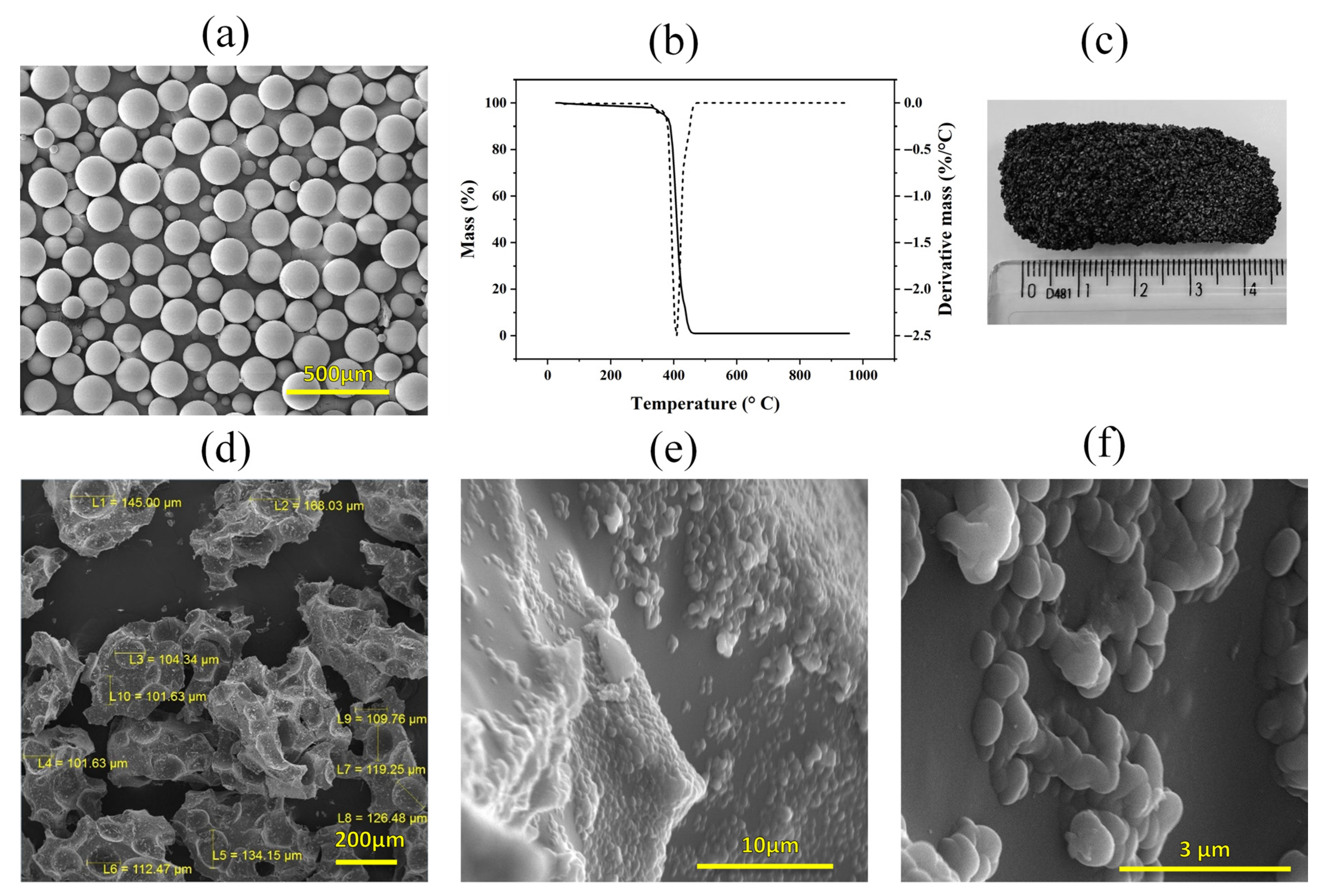
The PMMA templates present a spherical morphology, as shown in Figure 3a. Thermogravimetric analysis (Figure 3b) indicates the complete thermal degradation of PMMA at approximately 410 °C. Accordingly, carbonization at 900 °C ensures the complete removal of the PMMA templates, consistent with the formation of spherical macropores (diameter > 50 nm) in the carbonized material.
The resulting carbon material was washed to remove residual salts from the pulping process. The SPC presents a monolithic body with brittle mechanical behavior and a vitreous appearance, with macroscopic pores visible (Figure 3c). Accordingly, the material exhibits a low density (0.80 g cm−3) and a foam-like carbon morphology composed of a three-dimensional network of interconnected macroporous cells, resembling the architecture of conventional carbon foams (Figure 3d).
Spherical pores with micrometric dimensions are observed in SPC, exhibiting a relatively uniform spatial distribution within the foam-like carbon matrix. These pores are attributed to the removal of the PMMA template during carbonization, consistent with the complete thermal degradation evidenced by TGA. At a higher magnification (Figure 3e,f), the material exhibits nanometric features composed of roughly spherical nodules interconnected in a randomly packed network [39]. This morphology is commonly observed in phenolic aerogels and xerogels [40,41], which are typically synthesized from high-purity precursors through multistep processes involving supercritical or subcritical drying [40]. This present study demonstrates that an equivalent level of structural organization can be achieved using carbon directly derived from raw Kraft pulping residue. This finding suggests that the proposed methodology synthesis can promote the formation of nanostructures from unprocessed waste, even under ambient conditions.
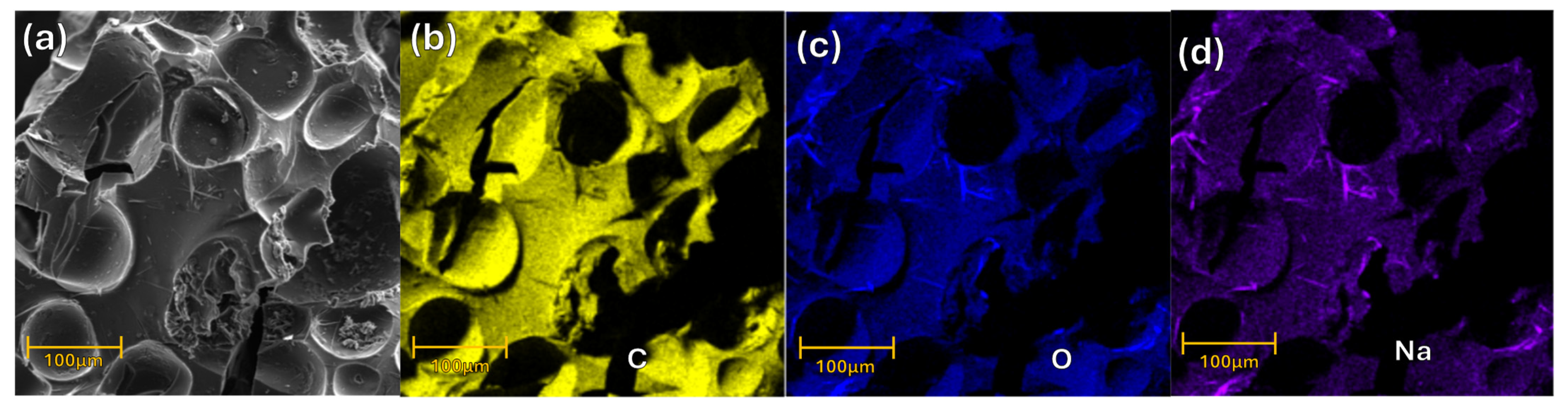
The EDX analysis confirmed carbon and oxygen as the predominant elements derived from the lignocellulosic precursor. Sodium, sulfur, and chlorine are typically associated with residual species from the Kraft pulping process [29,36], while silicon is attributed to the inherent mineral content of the biomass [42]. Carbon (78.8%), oxygen (16.8%), and sodium (2.9%) account for approximately 98.5 wt.% of the total detected composition, whereas the remaining elements collectively represent about 1.5 wt.%. Elemental mapping of the three major species (Figure 4) reveals a homogeneous distribution of sodium across the sample, indicating that residual sodium species remain dispersed throughout the matrix even after the washing step. Dried Kraft black liquor typically presents a high sodium content (~16 wt.%), as previously confirmed by EDS analysis [43]. Here, after the washing process, a significant reduction in sodium content was observed, decreasing to 2.9 wt.%, indicating a high removal of inorganic species from the carbonized material.
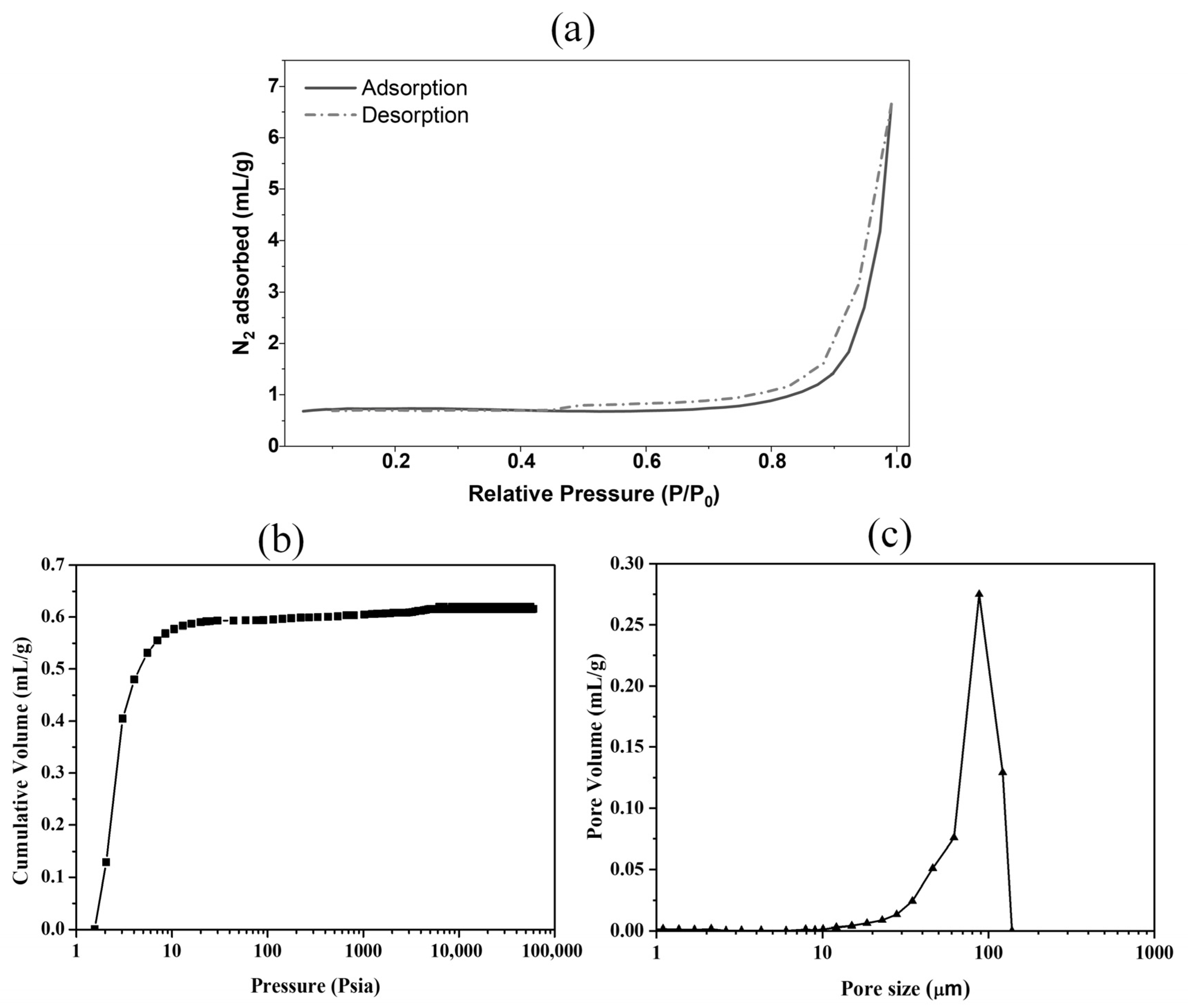
The micro and mesoporous structure of the SPC sample, corresponding to pore sizes in the 0–50 nm range, was evaluated by nitrogen adsorption–desorption isotherm. Although nanometric features are visible in Figure 3e,f, the BET results indicate a very low specific surface area (2.9 m2 g−1) (Table 1), demonstrating that the contributions of micro- and mesoporosity are negligible and that the material is predominantly macroporous. The N2 adsorption–desorption curve (Figure 5a) corresponds to a type III isotherm according to the IUPAC classification [44], typical of non-activated macroporous carbons with weak adsorbate–adsorbent interactions. The curve is characterized by the absence of a well-defined knee, indicating weak adsorbate–adsorbent interactions and a sharp uptake only at high relative pressures, confirming that the adsorption process is promoted by condensation in macropores and interparticle voids, rather than by micropore filling, consistent with the foam-like architecture observed by SEM.
The macroporous structure, defined by pores larger than 50 nm, was therefore investigated by mercury intrusion–extrusion porosimetry curves (Figure 5b), and the textural parameters are also presented in Table 1, confirming the highly porous nature of the SPC. The low bulk density (ρb = 0.80 g mL−1), combined with a significantly higher skeletal density (ρs = 1.83 g mL−1), indicates an extensive pore network, resulting in a total porosity of 56%. This porosity is accompanied by a large total pore volume (VHg = 0.71 mL g−1), indicating that macropores contribute substantially to the overall porous structure of the material. Despite the predominance of large pores, the total pore area (Atotal = 44 m2 g−1) suggests that the macroporous framework still provides a considerable internal surface, consistent with the broad pore size distribution (Figure 5c). The results show a broad macropore distribution ranging from 20 to 140 μm, with a dominant pore centered at approximately 88 μm. This macropore distribution is in good agreement with the morphological features observed in the SEM micrographs. Indeed, low bulk density and interconnected macroporosity are particularly advantageous for applications requiring lightweight materials while maintaining structural integrity.
Additionally, the low bulk density (ρb) and high total porosity (ϕ) are comparable to those reported for sustainable gels from tannin: aerogels synthesized at pH 10 (ρb = 0.84 g cm−3; ϕ = 40%) [45] and xerogels prepared at pH 7 (ρb = 0.58 g cm−3; ϕ = 59%) [41]. However, the SPC material achieves the same porosity but without high-purity precursors or the complex drying procedures typically required for aerogel production. Porosity is a key parameter in the development of RAMs and radomes, as it contributes to weight reduction [43,46]. In particular, the presence and distribution of pores can be strategically exploited to adjust the material’s effective permittivity. In this context, the effective permittivity can be estimated using effective-medium approaches, such as the Maxwell–Garnett model [47].
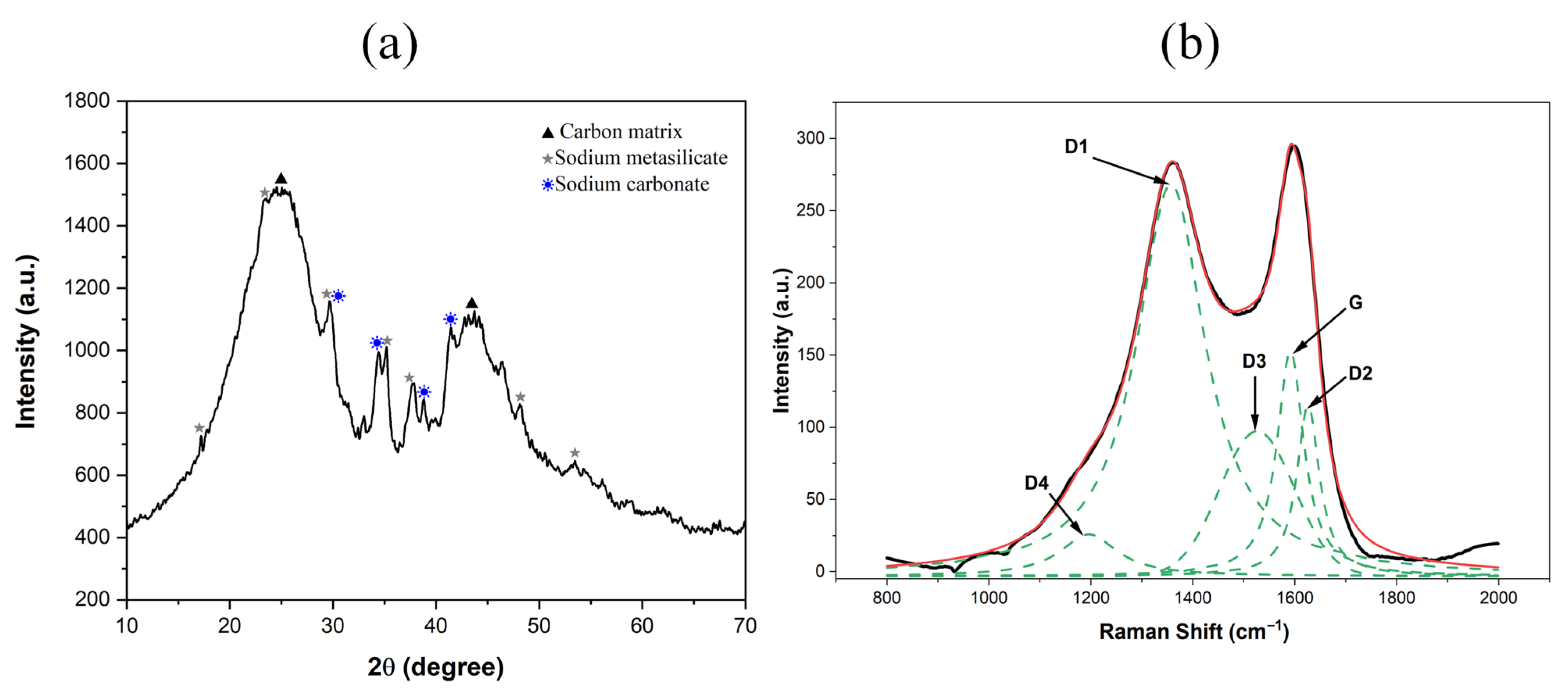
The XRD pattern (Figure 6a) presents broad diffraction bands centered at approximately 24° and 44°, corresponding to the (002) and (100) planes of turbostratic carbon, typical of amorphous carbon [43]. In addition, reflections were detected and assigned to inorganic sodium-based phases. Peaks at 2θ = 29.8°, 34.4°, 37.7°, and 41.4° were indexed to the (002), (310), (112), and (220) planes of sodium carbonate (JCPDS card no. 37-0451) [48,49]. Moreover, peaks observed at 2θ = 17.1°, 23.4°, 35.2°, 37.7°, 48.1°, and 53.0° were attributed to the (100), (101), (110), (111), (002), (112), and (300) planes of crystalline sodium metasilicate (JCPDS card 16-0818) [50]. The overlap observed around 37.7° suggests the coexistence of both sodium phases, while the absence of sharp graphitic peaks and the broad nature of the (002) band confirm that the carbon matrix is predominantly turbostratic, and the sodium species are present as separate crystalline salts. These results agree with the species identified in the EDX results.
Deconvolution of the Raman spectrum (Figure 6b) using a Lorentzian–Gaussian fitting based on the Sadezky model [51] allowed for the identification of the typical D and G bands, centered at approximately 1357 and 1594 cm−1, respectively. The G band is assigned to the in-plane stretching vibration of sp2-hybridized carbon within aromatic domains, while the D1 band originates from defect-activated double-resonance scattering and is related to structural imperfections such as edges, vacancies, and discontinuities in graphene-like layers [52,53]. The G band was observed at a slightly higher wavenumber than the ideal graphite position of 1580 cm−1. This shift might be related to structural distortion within the sp2 network, probably associated with the reduced lateral size of aromatic domains, residual oxygen functionalities inherited from the biomass precursor, and the heterogeneous environment of the carbon matrix [52,53]. The additional D2, D3, and D4 bands were also explored [54]. The D2 band is commonly associated with disorder at the surface of graphitic crystallites and perturbations in relatively ordered aromatic layers. The D3 band, characterized by a broad Gaussian profile, is attributed to amorphous carbon phases and highly disordered sp2 networks. The D4 band has been related to strongly defective carbon environments and to mixed sp2/sp3-like configurations [54].
The intensity ratio ID/IG was calculated from peak heights and reached 1.74, indicating limited long-range graphitic ordering and a structure dominated by small aromatic clusters and abundant edge defects. This value is higher compared to highly crystalline graphite powder 99% (ID/IG = 0.30) [55] but is consistent with biomass-derived carbons produced at moderate carbonization temperatures, for which values between approximately 0.7 and 4.3 have been reported elsewhere [52,54,56]. Such elevated ratios are typical of materials dominated by small aromatic clusters and abundant edge defects and may also reflect the presence of highly disordered sp2 networks and possible sp2/sp3-like environments associated with the complex, oxygen-rich nature of the biomass precursor [57]. The Raman results are consistent with the XRD analysis, indicating a poorly ordered turbostratic structure with the presence of sodium-based inorganic salts as separate phases. The residual sodium species detected by XRD and EDX analyses were identified as separate inorganic phases, suggesting that their influence on the Raman features is indirect and related mainly to structural heterogeneity.

3.2. Mechanical Properties of SPC Composites

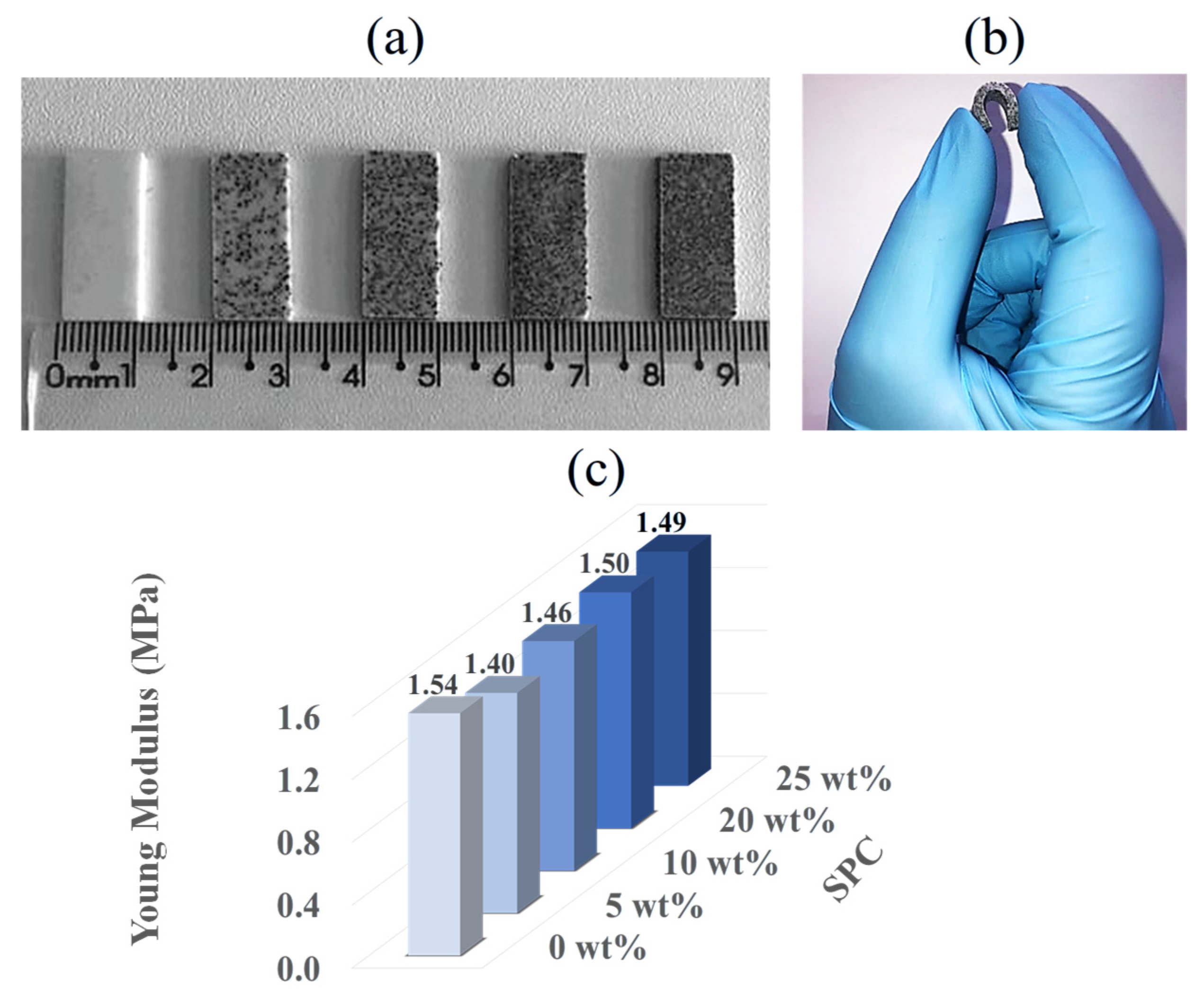
Figure 7a displays, from left to right, the pure silicone rubber matrix and the SPC composites containing increasing filler contents (SPC5, SPC10, SPC20, and SPC25). All materials retained a high degree of flexibility, as illustrated by the deformation of the SPC25 sample in Figure 7b. The pure silicone rubber exhibited a Young’s modulus (YM) of 1.54 MPa (Figure 7c), slightly higher than the value reported for silicone elastomers determined by compressive testing (1.38 MPa) [58]. The incorporation of SPC led to a modest reduction in YM values, ranging from 1.46 to 1.50 MPa. Despite the addition of non-elastic filler, the elastic response of the silicone rubber matrix was largely preserved, suggesting that the filler did not substantially compromise the matrix flexibility. A similar trend has been reported for carbon black-filled silicone elastomer systems containing dimethyl silicone oil [58]. Moreover, the YM values obtained for the SPC composites fall within the same order of magnitude as those reported for flexible tactile sensors based on silicone rubber filled with carbon microcoils (~2.5 MPa) [59] and carbon black–silicone rubber composites (1.5 MPa) [60], and are comparable to the lower range of human skin (0.1–18.8 MPa) [61], highlighting the high flexibility of the composites.
These results demonstrate that the developed composite preserves the inherent flexibility of the elastomeric matrix while incorporating the absorbing filler, suggesting a high flexibility of the SPC composites. In this context, Young’s modulus was used as an initial indicator of the mechanical response based on the flexibility of the elastomeric matrix. In contrast, RAM composites based on conventional matrices such as paraffin or epoxy resins generally exhibit significantly lower flexibility, limiting their applications involving curved or highly deformable structures.

3.3. Electromagnetic Properties of SPC Composites

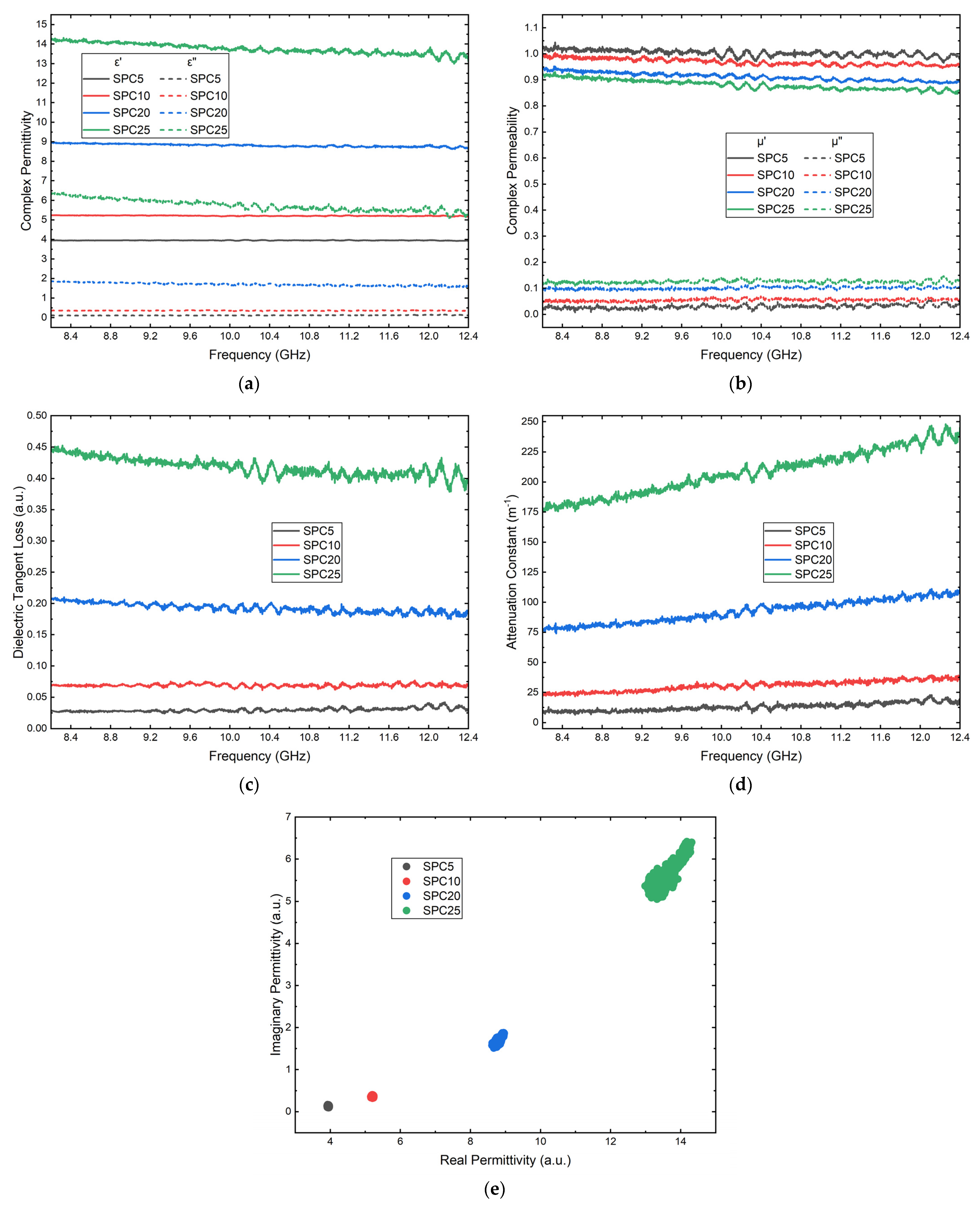
The intrinsic dielectric properties of the SPC/silicone composites are presented in Figure 8. As expected, both the real (ε′) and imaginary (ε″) components of the permittivity increase with increasing SPC content (Figure 8a), reflecting the enhanced contribution of the carbon filler to dielectric polarization and energy dissipation mechanisms [62]. For the SPC5 and SPC10 composites, ε′ remains nearly frequency-independent across the frequency range, with average values of approximately 3.97 and 5.20, respectively. In contrast, SPC20 and SPC25 exhibit a slight frequency-dependent behavior, characterized by a gradual decrease in ε′ with increasing frequency. Specifically, ε′ decreases from 8.94 to 8.64 for SPC20 and from 14.25 to 13.30 for SPC25.
A similar trend is observed for the imaginary part of permittivity. The ε″ values of SPC5 and SPC10 remain nearly constant at approximately 0.12 and 0.35, respectively, whereas higher filler loadings lead to increased dielectric losses. The ε″ of SPC20 decreases from 1.86 to 1.64, while SPC25 exhibits a more distinct decrease, from 6.39 to 5.25, over the same frequency range.
Figure 8b presents the real (μ′) and imaginary (μ″) components of the magnetic permeability for all samples. The real permeability is close to 1, while the imaginary permeability is close to 0 over the entire X-Band due to its predominantly dielectric nature.
The microwave energy conversion into thermal energy [63] was evaluated through the dielectric loss factor, calculated according to Equation (3), and is shown in Figure 8c. The dielectric loss follows the same trend observed for ε″, increasing systematically with SPC content, indicating enhanced dissipative behavior in composites with higher filler concentrations. Additionally, the attenuation constant (Figure 8d) increases with both frequency and SPC loading, particularly for SPC25, suggesting more efficient electromagnetic energy attenuation at higher frequencies.
The Cole–Cole analysis derived from complex permittivity measurements (Figure 8e) usually indicates the type of dielectric loss mechanism, where dielectric polarizations are represented by semicircles, conduction loss by a straight line, and a lack of a conductive network and loss mechanism by data points squeezed together [64]. Therefore, the Cole–Cole curves in Figure 8e show that samples SPC5, SPC10, and SPC20 have no conductive network or loss mechanism, indicating that the amount of porous carbon in the composite is insufficient to provide an induced current [64] or a significant percolation threshold [65]. Contributions from residual sodium ions to the dielectric response via ionic polarization cannot be excluded. Nevertheless, given the low sodium-to-carbon ratio in the composite, such contributions are expected to be negligible. This assumption is further supported by the low values of the imaginary permittivity, which is directly correlated with electrical conductivity [66]. Permittivity is more sensitive to the microstructure than conductivity because of the carrier–atom interaction responsible for the polarization. Other factors that promote permittivity are interfaces (like grain boundaries), a large number of sites (rather than the large size of each site), and a low degree of electrical connectivity (provided by units touching on another) [67]. On the other hand, conductivity is highly influenced by crystallographic orientation, although it slightly influences the permittivity too [67,68]. SPC25 has the highest permittivity among all samples. The amount of filler probably created agglomerates that enhanced permittivity, and the homogeneity of the composite contributed to creating a high density of sites with low connectivity due to the isolation properties of silicone rubber. However, the low level of graphitization, as seen in the ID/IG of the SPC, was not enough to enhance conductivity to the point that conduction loss could be observed.
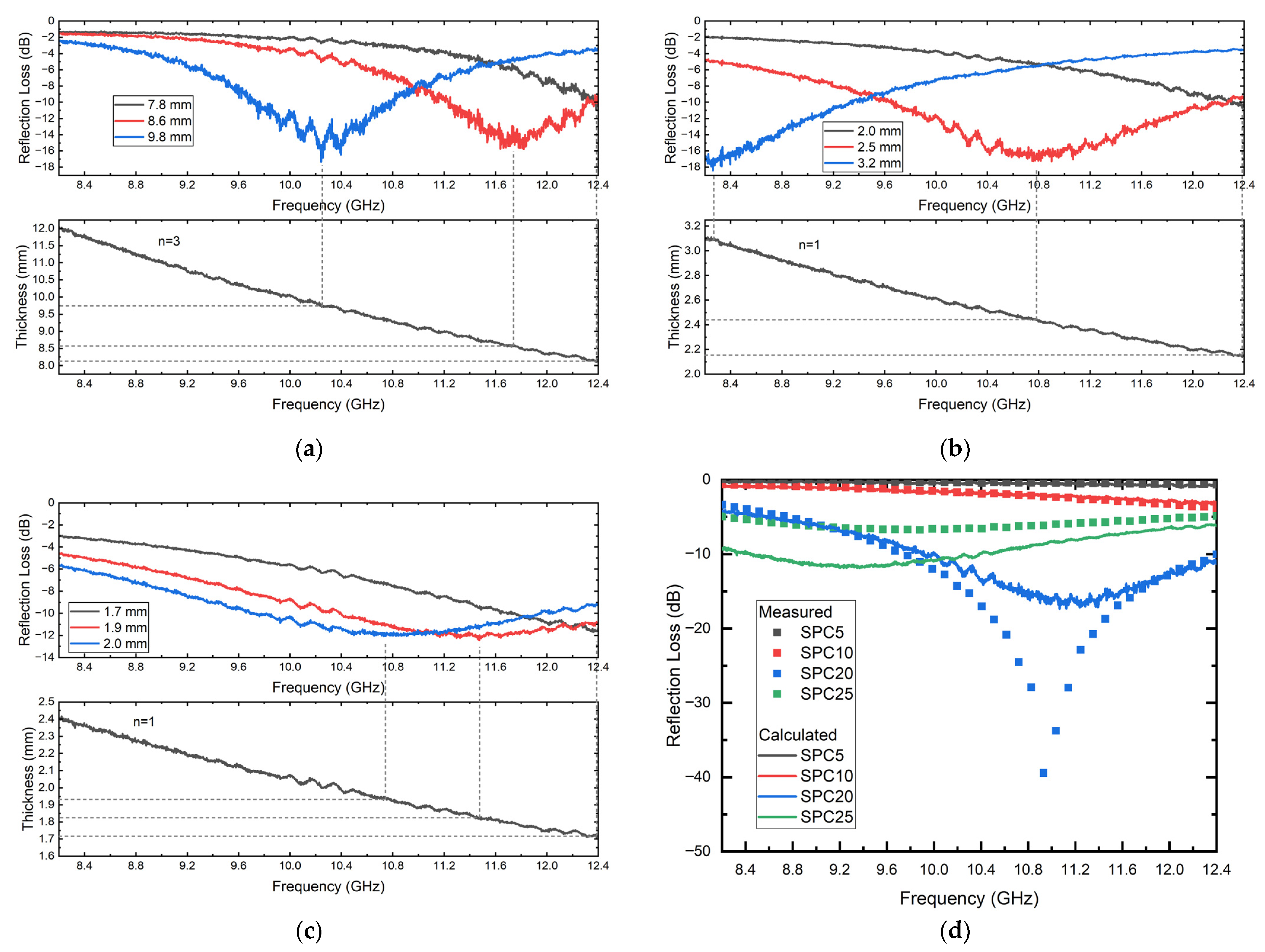
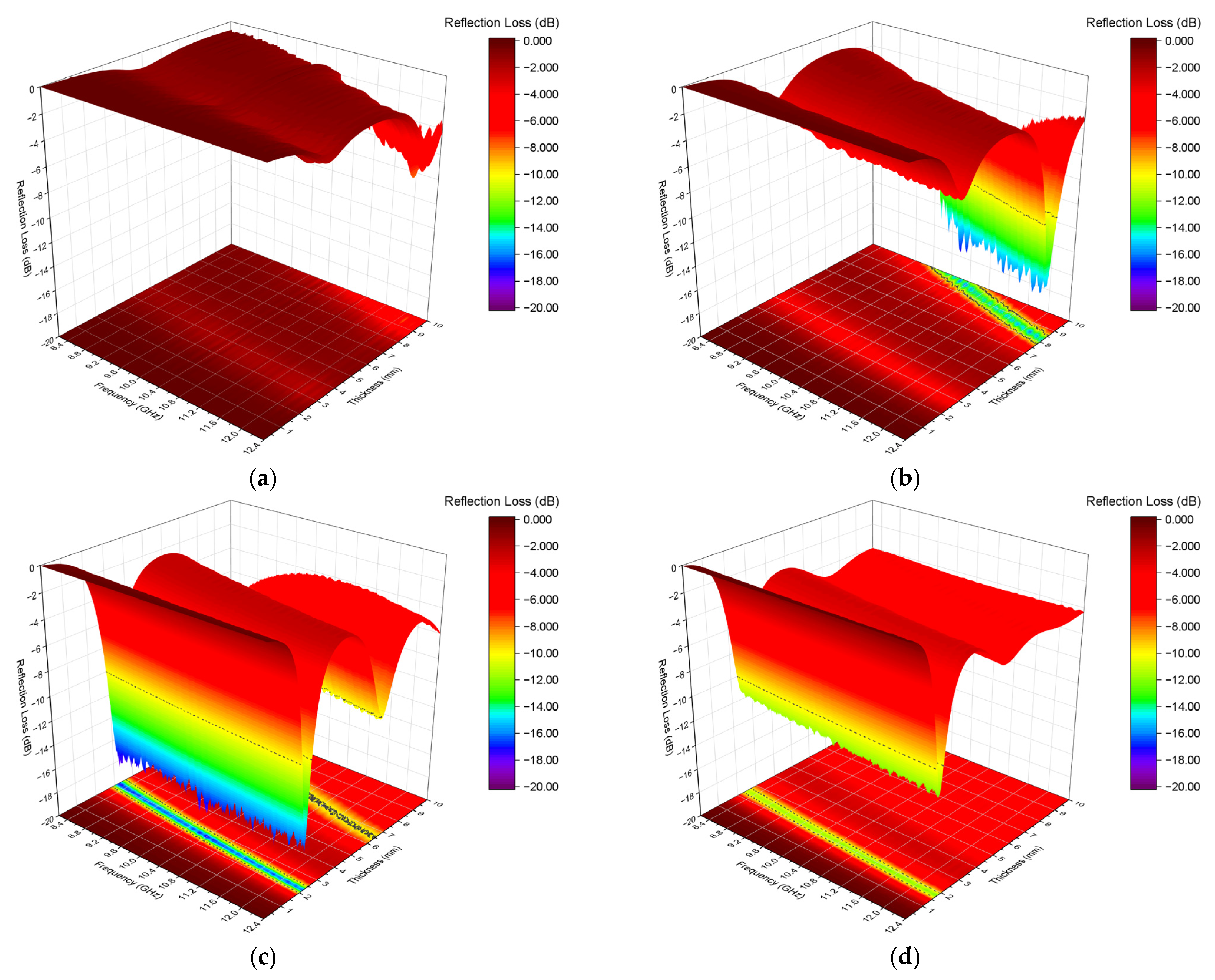
Three-dimensional plots of calculated reflection loss as a function of frequency and absorber thickness for the SPC–silicone composites are presented in Figure 9. Among the evaluated materials, SPC5 shows the weakest microwave absorption performance, with RL > −10 dB across the whole thickness range. This behavior is attributed to its lowest complex permittivity and, consequently, to insufficient dielectric loss mechanisms for electromagnetic wave attenuation. However, the SPC10 composite shows improved absorption performance, with RL values below −10 dB for thicknesses between 7.8 and 10.0 mm. The optimum absorption condition for this sample corresponds to a minimum RL of −17.35 dB at 10.24 GHz, with a thickness of 9.8 mm. SPC20 presents the best RL among all composites. This sample reaches a minimum RL of −18.42 dB at 8.26 GHz, with a thickness of 3.2 mm. Also, the thickness range with RL < −10 dB is observed for thicknesses between 2.0 and 3.6 mm.
The SPC25 composite presents RL < −10 dB with even smaller thickness, although its performance does not overcome the minimum RL reached with SPC20. RL values below −10 dB are obtained for SPC25 at thicknesses between 1.7 and 2.7 mm, thus representing the thinnest absorber configuration among all samples. Despite this thickness reduction, the minimum RL achieved for SPC25 is −12.46 dB at 11.47 GHz, corresponding to a 1.9 mm thickness. This behavior suggests that highly complex permittivity associated with elevated SPC loading favored a thin-layer absorber. A better RL performance may be reached with a lower SPC concentration in the composite but requires a thicker sample.
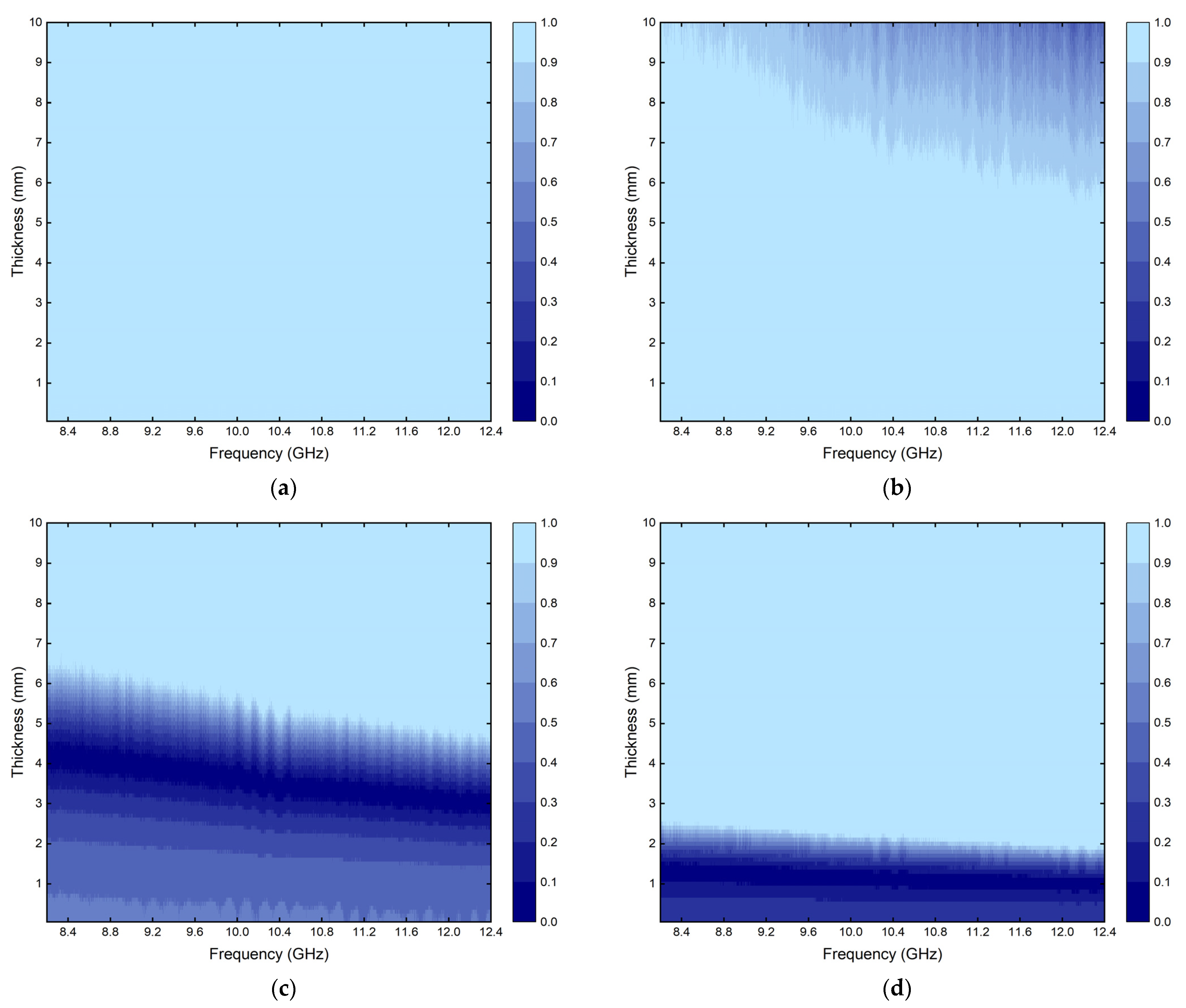
Figure 10 presents the impedance-matching degree across the X-band as a function of thickness, ranging from 0.1 to 10 mm. The SPC5 sample exhibits poor impedance matching over the entire thickness and frequency range, which is probably the cause of its poor reflection loss results (Figure 9a). The SPC10 composite shows a slight improvement in the impedance matching degree at thicknesses above 6 mm; however, Δ values remain higher than 0.4, indicating insufficient impedance matching at the air-material interface. The SPC20 composite achieves Δ values below 0.2 across 2.4–5.1 mm thicknesses. Similarly, SPC25 reaches Δ values below 0.2 at even smaller thicknesses, between 0.5 and 1.7 mm. However, although the thickness ranges are comparable, they do not strictly overlap with the thickness interval corresponding to the minimum RL values.
The reflection loss (RL) shifts toward smaller thicknesses as the frequency increases (Figure 9c,d). This behavior is consistent with the quarter-wavelength cancellation mechanism, where the electromagnetic wave attenuation occurs due to destructive interference between reflections from the air-material and material-metal interfaces [69].
For SPC10, with n = 3 in the quarter-wavelength model (Equation (8)), the predicted matching thickness ranges from approximately 8.2 to 12.0 mm (Figure 11a). This theoretical interval aligns well with the experimental region where the minimum reflection loss is observed. The 9.8 mm sample shows the lowest reflection loss, reaching −17.35 dB at 10.24 GHz. In addition, the thinnest SPC10 sample capable of achieving RL values below −10 dB is 7.8 mm. However, the widest Effective Absorption Bandwidth (EAB), defined as the frequency range in which RL remains below −10 dB for a given thickness, is obtained at 8.6 mm, yielding an EAB of approximately 1.06 GHz. These results show good agreement between the experimental absorption performance and the thickness predicted by the quarter-wavelength condition.
The quarter-wavelength thickness for SPC20 (Figure 11b) was calculated using n = 1 and lies between approximately 2.1 and 3.1 mm, which is close to the thickness range associated with RL values below −10 dB. This correspondence indicates that destructive interference between incident and reflected waves plays a significant role in the attenuation mechanism. The thinner SPC20 sample with RL < −10 dB has a thickness of 2.0 mm, and the RL does not match the quarter-wavelength curve. This is because the RL attenuation starts in the X-band, but the main attenuation peak probably happens in the Ku-band. This suggests that this composite may attenuate electromagnetic waves at higher frequencies. For a thickness of 2.5 mm, SPC20 exhibits an EAB of ~2.46 GHz, while the lower RL is −18.42 dB at 8.26 GHz for a thickness of 3.2 mm.
A similar behavior is observed for SPC25, shown in Figure 11c, with the quarter-wavelength thickness ranging from ~1.7–2.4 mm. The thinner sample with RL < −10 dB has a thickness of 1.7 mm, which is consistent with the quarter-wavelength thickness. The largest EAB is obtained at a thickness of 2.0 mm, reaching ~2.13 GHz, and the minimum RL is −12.46 dB at 11.47 GHz with 1.9 mm. It is noticeable that these thicknesses differ slightly from the quarter-wavelength thickness. This is because the RL curves are close to −10 dB, and the lack of a well-defined RL peak is reflected in this slightly mismatched error. This also suggests that the thinner sample may present better RL values in the Ku-band. Thus, the main attenuation factor observed across all samples is consistent with the quarter-wavelength theory.
Among samples with RL below −10 dB, SPC10 showed the least significant attenuation, although it uses less material and can be slightly flexible. SPC20 presented the enhanced RL and the largest EAB, but with samples thicker than SPC25. For applications where minimal thickness is critical, SPC25 may be a more suitable option. However, if attenuation performance is prioritized over a slight increase in thickness (about 0.5 mm), then SPC20 would be recommended.
Figure 11d presents the measured and calculated reflection loss (RL) curves for SPC5, SPC10, SPC20, and SPC25 composites. SPC5 and SPC10 present measured RL above −10 dB over the entire frequency range, consistent with the calculated RL.
SPC25 shows intermediate performance, with moderate absorption and a broader, less intense minimum compared to SPC20. The calculated results adequately predict the overall shape and position of the absorption feature. The SPC20 exhibited the best performance. The measured RL shows a minimum of −42.3 dB at around 10.97 GHz. The calculated RL follows the measured one, although its magnitude is less intense. SPC25 shows a calculated RL below −10 dB, but the measured RL remains around ~−5 dB. Although the RL magnitude may oscillate, the peak frequency indicates good consistency between the experimental and theoretical results. This difference between measured and calculated RL may be related to surface irregularities and uncertainties during thickness measurements. These factors can influence the determination of the permittivity and, consequently, the calculated reflection loss. Similar deviations have been reported for carbon-based absorbing materials [70,71]. Moreover, theoretical RL values are obtained from electromagnetic models assuming ideal parameters, whereas experimental measurements are affected by practical uncertainties, which may lead to differences between calculated and measured results.
In this work, the evaluated morphological characteristics of fillers show that the particle size ranges from 250 to 425 μm, and the porosity comprises pores with diameters less than 140 μm. These dimensions are significantly smaller than the shortest wavelength considered in the studied frequency range (~2.42 cm). Therefore, the composite can be reasonably treated as an electromagnetically homogeneous medium. Under these conditions, the influence of porosity on the electromagnetic response is mainly related to the permittivity of the material. Therefore, the attenuation of the reflected wave was attributed to the quarter-wavelength theory, a well-established and mathematically supported mechanism widely used to explain microwave absorption behavior. Furthermore, the porosity effect on the medium can be described using effective medium approaches, such as the Maxwell–Garnett model [47].
Overall, the comparison between measured and calculated RL confirms that the model captures the samples’ general absorption behavior, particularly the frequency position of the minima.
Some studies have already reported the use of other sustainable carbon materials as RAM operating in the X-band. However, a limited number of studies investigate RAM composites based exclusively on sustainable carbons [28,72,73,74]. Nevertheless, most of these works focus on hybrid systems in which biomass-derived carbons are combined with metallic nanoparticles or nanocarbon materials, rather than assessing the intrinsic electromagnetic response of the sustainable carbon itself.
Therefore, most sustainable carbon-based RAM reported for X-band applications relies on complex, cost-intensive, and environmentally polluting processes, such as those used to produce activated carbons, aerogels, or nanostructured cellulose-derived materials (Table 2). Although these methodologies can enhance porosity and surface area, they often involve harsh chemical treatments, energy-intensive drying steps, and, consequently, a time-consuming production. In these cases, the materials are typically produced through multistep synthesis routes, frequently involving hydrothermal treatments followed by freeze-drying. Moreover, chemically activated carbons generally require extensive washing with acid solutions and distilled water, which increases processing complexity and cost while limiting the feasibility of large-scale production.
For instance, activated carbons derived from mango leaves or white birch biomass require alkaline activation followed by acid washing, yet still exhibit moderate reflection loss values or demand relatively thick composites to achieve effective electromagnetic wave attenuation. Similarly, aerogel-based materials prepared from wax gourd or nanocellulose are typically produced under freeze-drying conditions to preserve hierarchical porosity, a process widely recognized as incompatible with industrial-scale manufacturing due to its high energy demand and limited scalability. Furthermore, nanocellulose aerogel-based composites typically employ filler contents of up to 30 wt.% in paraffin matrices, yielding modest RL values of around −19.8 dB at approximately 10 GHz. In other works, carbon materials achieved significant RL values when silicone rubber was used as a matrix, but only in very thick samples (5.85 to 8.3 mm), limiting their use in thinnest-layer applications.
In contrast, the bio-based foam-like carbon material presented in this work is directly synthesized from raw black liquor, without lignin extraction, purification, chemical activation, or advanced drying techniques. The polymerization is carried out under ambient conditions and by one-pot synthesis, and the final carbon material is obtained by direct carbonization, demonstrating significantly enhanced electromagnetic absorption despite using a lower filler loading (20 wt.%), showing a minimum RL of −42.3 dB at 10.97 GHz between the finest thickness (2.43 mm), corresponding to an absorption efficiency ( e f f % = ( 1 10 R L 10 ) 100 ) of 99.99%. This performance exceeds that of nanocellulose aerogels and other biomass-derived carbons, as shown in Table 2, even those processed via chemical activation or aerogel routes. These results highlight that optimized carbon architectures from sustainable sources can outperform costly-based systems while requiring lower filler content, offering a more efficient and potentially scalable strategy for sustainable, flexible electromagnetic-absorbing materials.
From a practical perspective, the direct conversion of black liquor into a functional RAM may offer advantages in cost reduction, less chemical consumption, and scalability. This simplified processing strategy significantly enhances the potential for industrial adoption, particularly for sustainable and flexible electromagnetic absorbers, where manufacturability, sustainability, and economic viability are critical constraints. RAM based on sustainable porous carbon derived from biomass can offer significant advantages over conventional carbon nanomaterials, both in cost reduction and sustainability concerns [27], especially when weight reduction is required [43]. In particular, sustainable porous carbon produced from waste biomass avoids many of the energy-intensive, chemically demanding extraction and activation steps typical of lignin-based activated carbons, which require extensive use of solvents and chemicals. By minimizing processing complexity, these non-activated sustainable carbons significantly reduce raw material processes and operational costs, lowering barriers to large-scale production and broadening their practical adoption in applications such as absorbers for anechoic chambers. In addition, converting industrial biomass residues into advanced functional materials for RAM applications represents a strategic pathway toward achieving the Sustainable Development Goals and promoting circular economy principles by valorizing large-volume waste streams.

4. Conclusions

Flexible RAM based on sustainable carbon derived from Kraft black liquor was reported. A sustainable, lightweight, flexible RAM was developed using silicone rubber as the matrix and bio-based carbon as the filler. The filler was prepared in a one-pot polymerization synthesis to obtain a sustainable, porous material. SEM images showed the edges in the SPC, which are probably related to energy dissipation and an increase in imaginary permittivity. A higher SPC concentration in the composite, such as SPC25, resulted in a more complex permittivity. The SPC20 sample showed the best RL, reaching −42.3 dB at 10.97 GHz with a thickness of 2.43 mm. Such behavior is probably related to the degree of impedance matching, which favors the entry of the incident wave, and to the quarter-wavelength, which causes phase cancellation in the electromagnetic source. Our findings highlight the potential of valorizing Kraft black liquor waste directly, demonstrating that industrial residues can serve as precursors for advanced electromagnetic materials, aligning with circular economy principles and the UN’s 2030 Agenda for Sustainable Development. The resulting composites combine sustainability, mechanical flexibility, low density, and high absorption performance, making them promising candidates for aerospace applications and electromagnetic interference mitigation.

Author Contributions

Conceptualization, G.A.-L., A.F.N.B. and M.R.B.; methodology, D.E.F.-V., G.A.-L. and B.H.K.L.; validation, G.A.-L. and A.F.N.B.; formal analysis, D.E.F.-V. and B.H.K.L.; investigation, D.E.F.-V.; resources, G.F.B.L.e.S. and M.R.B.; data curation, D.E.F.-V., B.H.K.L. and A.F.N.B.; writing—original draft preparation, G.A.-L. and D.E.F.-V.; writing—review and editing, G.A.-L. and A.F.N.B.; visualization, A.F.N.B. and G.A.-L.; supervision, G.A.-L. and M.R.B.; project administration, G.A.-L.; funding acquisition, G.F.B.L.e.S. and M.R.B. All authors have read and agreed to the published version of the manuscript.

Funding

This research was funded by FINEP, grant number 01.22 0305.02.

Data Availability Statement

Data are available upon request.

Acknowledgments

During the revision of this manuscript, the authors used Grammarly PRO, version 1.2.233.1828, for the purposes of corrections throughout the text. The authors have reviewed and edited the output and take full responsibility for the content of this publication.

Conflicts of Interest

The authors declare no conflicts of interest.

Abbreviations

The following abbreviations are used in this manuscript:
RAMRadar absorbing materials
BETBrunauer–Emmett–Teller theory
EABEffective Absorption Bandwidth

References

  1. Shukla, V. Review of Electromagnetic Interference Shielding Materials Fabricated by Iron Ingredients. Nanoscale Adv. 2019, 1, 1640–1671. [Google Scholar] [CrossRef]
  2. Wilson, R.; George, G.; Kuruvilla, J. Chapter 1-An Introduction to Materials for Potential EMI Shielding Applications: Status and Future. In Materials for Potential EMI Shielding Applications Processing, Properties and Current Trends; Wilson, R., George, G., Kuruvilla, J., Eds.; Elsevier Inc.: Amsterdam, The Netherlands, 2020; pp. 1–8. ISBN 978-0-12-817590-3. [Google Scholar]
  3. Chahal, R.K.; Kumar, N.; Batra, S. Trust Management in Social Internet of Things: A Taxonomy, Open Issues, and Challenges. Comput. Commun. 2020, 150, 13–46. [Google Scholar] [CrossRef]
  4. Nord, J.H.; Koohang, A.; Paliszkiewicz, J. The Internet of Things: Review and Theoretical Framework. Expert Syst. Appl. 2019, 133, 97–108. [Google Scholar] [CrossRef]
  5. Kumar, A.; Gupta, M. A Review on Activities of Fifth Generation Mobile Communication System. Alex. Eng. J. 2018, 57, 1125–1135. [Google Scholar] [CrossRef]
  6. Skondras, E.; Michalas, A.; Vergados, D.D. Mobility Management on 5G Vehicular Cloud Computing Systems. Veh. Commun. 2019, 16, 15–44. [Google Scholar] [CrossRef]
  7. ICNIRP (International Commission for Non-Ionizing Radiation Protection) Standing Committee on Epidemiology; Ahlbom, A.; Green, A.; Kheifets, L.; Savitz, D.; Swerdlow, A. Epidemiology of Health Effects of Radiofrequency Exposure. Env. Health Perspect. 2004, 112, 1741–1754. [Google Scholar] [CrossRef]
  8. Ferna, M.; Silva, F. Mobile Phones Electromagnetic Interference in Medical Environments: A Review. In Proceedings of the 2010 IEEE International Symposium on Electromagnetic Compatibility, Fort Lauderdale, FL, USA, 25–30 July 2010; IEEE: New York NY, USA; pp. 311–316.
  9. Abate, J.C.; Marinoff, I.I.; Arnal, N.; Machuca, M.; Papa-Gobbi, R.; Vecchio, L.; Rumbo, M.; Stringa, P.; Lausada, N.R. Effect of Multiorgan Abdominal Ischemic Preconditioning on Experimental Kidney Transplantation. Acta Cir. Bras. 2025, 40, e400225. [Google Scholar] [CrossRef]
  10. Xie, S.; Ji, Z.; Zhu, L.; Zhang, J.; Cao, Y.; Chen, J.; Liu, R.; Wang, J. Recent Progress in Electromagnetic Wave Absorption Building Materials. J. Build. Eng. 2020, 27, 100963. [Google Scholar] [CrossRef]
  11. Wanasinghe, D.; Aslani, F. A Review on Recent Advancement of Electromagnetic Interference Shielding Novel Metallic Materials and Processes. Compos. Part B Eng. 2019, 176, 107207. [Google Scholar] [CrossRef]
  12. Cheng, J.; Li, C.; Xiong, Y.; Zhang, H.; Raza, H.; Ullah, S.; Wu, J.; Zheng, G.; Cao, Q.; Zhang, D.; et al. Recent Advances in Design Strategies and Multifunctionality of Flexible Electromagnetic Interference Shielding Materials. Nano-Micro Lett. 2022, 14, 80. [Google Scholar] [CrossRef]
  13. Chung, D.D.L. Materials for Electromagnetic Interference Shielding. Mater. Chem. Phys. 2020, 255, 123587. [Google Scholar] [CrossRef]
  14. Lima, U.R.; Nasar, M.C.; Nasar, R.S.; Rezende, M.C.; Araújo, J.H.; Oliveira, J.F. Synthesis of NiCuZn Ferrite Nanoparticles and Microwave Absorption Characterization. Mater. Sci. Eng. B 2008, 151, 238–242. [Google Scholar] [CrossRef]
  15. Rybicki, T.; Stempien, Z.; Karbownik, I. EMI Shielding and Absorption of Electroconductive Textiles with PANI and PPy Conductive Polymers and Numerical Model Approach. Energies 2021, 14, 7746. [Google Scholar] [CrossRef]
  16. Yang, J.; Wei, R.; Zhang, C.; Liu, Y.; Zhu, H. Porous and Compressible Silicone Rubber Composites Integrated with Progressive Magneto-Electric Networks for Electromagnetic Interference Shielding. J. Mater. Sci. Technol. 2026, 254, 117–125. [Google Scholar] [CrossRef]
  17. Wan, Y.; Zhu, P.; Yu, S.; Sun, R.; Wong, C.; Liao, W. Anticorrosive, Ultralight, and Flexible Carbon-Wrapped Metallic Nanowire Hybrid Sponges for Highly Efficient Electromagnetic Interference Shielding. Small 2018, 14, 1800534. [Google Scholar] [CrossRef]
  18. Li, Y.; Feng, Z.; Huang, L.; Essa, K.; Bilotti, E.; Zhang, H.; Peijs, T.; Hao, L. Additive Manufacturing High Performance Graphene-Based Composites: A Review. Compos. Part A Appl. Sci. Manuf. 2019, 124, 105483. [Google Scholar] [CrossRef]
  19. Xie, H.; Zhou, Y.; Ren, Z.; Wei, X.; Tao, S.; Yang, C. Enhancement of Electromagnetic Interference Shielding and Heat-Resistance Properties of Silver-Coated Carbonyl Iron Powders Composite Material. J. Magn. Magn. Mater. 2020, 499, 166244. [Google Scholar] [CrossRef]
  20. Joseph, N.; Thomas Sebastian, M. Electromagnetic Interference Shielding Nature of PVDF-Carbonyl Iron Composites. Mater. Lett. 2013, 90, 64–67. [Google Scholar] [CrossRef]
  21. Im, J.S.; Kim, J.G.; Lee, Y.-S. Fluorination Effects of Carbon Black Additives for Electrical Properties and EMI Shielding Efficiency by Improved Dispersion and Adhesion. Carbon 2009, 47, 2640–2647. [Google Scholar] [CrossRef]
  22. Xie, S.; Ji, Z.; Yang, Y.; Hou, G.; Wang, J. Electromagnetic Wave Absorption Enhancement of Carbon Black/Gypsum Based Composites Filled with Expanded Perlite. Compos. Part B Eng. 2016, 106, 10–19. [Google Scholar] [CrossRef]
  23. Jung, M.; Lee, Y.; Hong, S.-G.; Moon, J. Carbon Nanotubes (CNTs) in Ultra-High Performance Concrete (UHPC): Dispersion, Mechanical Properties, and Electromagnetic Interference (EMI) Shielding Effectiveness (SE). Cem. Concr. Res. 2020, 131, 106017. [Google Scholar] [CrossRef]
  24. Shao, R.; Wang, F.; Yang, S.; Jin, J.; Li, G. Preparation of Hollow Porous Carbon Nanofibers and Their Performance and Mechanism of Broadband Microwave Absorption. Materials 2022, 15, 7273. [Google Scholar] [CrossRef]
  25. Chen, S.; Cui, C.; Yan, J.; Lin, C.; Jiang, S.; Tang, H.; Guo, R. Lightweight Carbon Fiber Aerogel@hollow Carbon/Co3O4 Microsphere for Broadband Electromagnetic Wave Absorption in X and Ku Bands. Carbon 2024, 230, 119617. [Google Scholar] [CrossRef]
  26. Medeiros, N.C.F.L.; Amaral-Labat, G.; De Medeiros, L.I.; Boss, A.F.N.; Da Silva Fonseca, B.C.; De Castro Munhoz, M.G.; Lenz E Silva, G.F.B.; Baldan, M.R.; Braghiroli, F.L. Optimizing Activation Temperature of Sustainable Porous Materials Derived from Forestry Residues: Applications in Radar-Absorbing Technologies. JRM 2025, 13, 1021–1042. [Google Scholar] [CrossRef]
  27. Boss, A.F.N.; Munhoz, M.G.C.; Amaral-Labat, G.; Lima, R.G.A.; Medeiros, L.I.; Medeiros, N.C.F.L.; Fonseca, B.C.S.; Braghiroli, F.L.; Silva, G.F.B.L.E. Why Sustainable Porous Carbon Should Be Further Explored as Radar-Absorbing Material? A Comparative Study with Different Nanostructured Carbons. JRM 2024, 12, 1639–1659. [Google Scholar] [CrossRef]
  28. Boss, A.F.; Braghiroli, F.L.; Amaral-Labat, G.; Souza, A.A.; Baldan, M.R.; Bouafif, H.; Koubaa, A.; Lenz E Silva, G.F. Dielectric Characterization of White Birch–Activated Biochar Composites: A Sustainable Alternative to Radar-Absorbing Materials. J. Compos. Mater. 2020, 54, 1233–1244. [Google Scholar] [CrossRef]
  29. Amaral-Labat, G.; Da Silva, E.L.; Cuña, A.; Malfatti, C.F.; Marcuzzo, J.S.; Baldan, M.R.; Celzard, A.; Fierro, V.; Lenz E Silva, G.F.B. A Sustainable Carbon Material from Kraft Black Liquor as Nickel-Based Electrocatalyst Support for Ethanol Electro-Oxidation. Waste Biomass Valor. 2021, 12, 2507–2519. [Google Scholar] [CrossRef]
  30. BioResources. Preparation and Characterization of Organic Aerogels from a Lignin–Resourcinol–Formaldehyde Copolymer. Available online: https://bioresources.cnr.ncsu.edu/ (accessed on 30 January 2026).
  31. Brunauer, S.; Emmett, P.H.; Teller, E. Adsorption of Gases in Multimolecular Layers. J. Am. Chem. Soc. 1938, 60, 309–319. [Google Scholar] [CrossRef]
  32. Singh, P.; Babbar, V.K.; Razdan, A.; Puri, R.K.; Goel, T.C. Complex Permittivity, Permeability, and X-Band Microwave Absorption of CaCoTi Ferrite Composites. J. Appl. Phys. 2000, 87, 4362–4366. [Google Scholar] [CrossRef]
  33. Kim, S.S.; Jo, S.B.; Gueon, K.I.; Choi, K.K.; Kim, J.M.; Churn, K.S. Complex Permeability and Permittivity and Microwave Absorption of Ferrite-Rubber Composite at X-Band Frequencies. IEEE Trans. Magn. 1991, 27, 5462–5464. [Google Scholar] [CrossRef]
  34. Hidd, C.; Morales, G.; Monsalves, N.; Vidal, G. Toxic Effects of Liquors Generated During Kraft Pulp Production Process on Aerobic Biomass and Growth of Selenastrum Capricornutum. Sustainability 2025, 17, 4494. [Google Scholar] [CrossRef]
  35. Amaral-Labat, G.; Munhoz, M.G.C.; Fonseca, B.C.D.S.; Boss, A.F.N.; De Almeida-Mattos, P.; Braghiroli, F.L.; Bouafif, H.; Koubaa, A.; Lenz E Silva, G.F.B.; Baldan, M.R. Xerogel-like Materials from Sustainable Sources: Properties and Electrochemical Performances. Energies 2021, 14, 7977. [Google Scholar] [CrossRef]
  36. Pola, L.; Collado, S.; Oulego, P.; Díaz, M. Kraft Black Liquor as a Renewable Source of Value-Added Chemicals. Chem. Eng. J. 2022, 448, 137728. [Google Scholar] [CrossRef]
  37. Davis, T.W.; Mahmud, R.; McNaul, S.; Jamieson, M.; Lewis, E. A Comparative Analysis of Waste-as-a-Feedstock Accounting Methods in Life Cycle Assessments. Hydrogen 2025, 6, 74. [Google Scholar] [CrossRef]
  38. Füchsl, S.; Huber, J.; Fröhling, M.; Röder, H. Balancing the Green Carbon Cycle—Biogenic Carbon within Life Cycle Assessment. Int. J. Life Cycle Assess. 2025, 30, 2300–2313. [Google Scholar] [CrossRef]
  39. Albert, D.F.; Andrews, G.R.; Mendenhall, R.S.; Bruno, J.W. Supercritical Methanol Drying as a Convenient Route to Phenolic–Furfural Aerogels. J. Non-Cryst. Solids 2001, 296, 1–9. [Google Scholar] [CrossRef]
  40. Braghiroli, F.L.; Amaral-Labat, G.; Boss, A.F.N.; Lacoste, C.; Pizzi, A. Tannin Gels and Their Carbon Derivatives: A Review. Biomolecules 2019, 9, 587. [Google Scholar] [CrossRef] [PubMed]
  41. Amaral-Labat, G.; Grishechko, L.I.; Fierro, V.; Kuznetsov, B.N.; Pizzi, A.; Celzard, A. Tannin-Based Xerogels with Distinctive Porous Structures. Biomass Bioenergy 2013, 56, 437–445. [Google Scholar] [CrossRef]
  42. Maj, I.; Niesporek, K.; Płaza, P.; Maier, J.; Łój, P. Biomass Ash: A Review of Chemical Compositions and Management Trends. Sustainability 2025, 17, 4925. [Google Scholar] [CrossRef]
  43. Portes, R.C.; Baldan, M.R.; Amaral-Labat, G. From Waste to Resource: Transforming Kraft Black Liquor into Sustainable Porous Carbon Fillers for Radome Applications. Chem. Eng. J. 2024, 497, 155007. [Google Scholar] [CrossRef]
  44. Thommes, M.; Kaneko, K.; Neimark, A.V.; Olivier, J.P.; Rodriguez-Reinoso, F.; Rouquerol, J.; Sing, K.S.W. Physisorption of Gases, with Special Reference to the Evaluation of Surface Area and Pore Size Distribution (IUPAC Technical Report). Pure Appl. Chem. 2015, 87, 1051–1069. [Google Scholar] [CrossRef]
  45. Amaral-Labat, G.; Szczurek, A.; Fierro, V.; Pizzi, A.; Celzard, A. Systematic Studies of Tannin–Formaldehyde Aerogels: Preparation and Properties. Sci. Technol. Adv. Mater. 2013, 14, 015001. [Google Scholar] [CrossRef] [PubMed]
  46. Singh, A.K.; Shishkin, A.; Koppel, T.; Gupta, N. A Review of Porous Lightweight Composite Materials for Electromagnetic Interference Shielding. Compos. Part B Eng. 2018, 149, 188–197. [Google Scholar] [CrossRef]
  47. Huang, Y.; Wang, Y.; Li, Z.; Yang, Z.; Shen, C.; He, C. Effect of Pore Morphology on the Dielectric Properties of Porous Carbons for Microwave Absorption Applications. J. Phys. Chem. C 2014, 118, 26027–26032. [Google Scholar] [CrossRef]
  48. Delgado-Plana, P.; Bueno-Rodríguez, S.; Pérez-Villarejo, L.; Eliche-Quesada, D. Synthesis of Solid Sodium Silicate from Waste Glass and Utilization on One-Part Alkali-Activated Materials Based on Spent Oil Filtering Earth. Env. Sci. Pollut. Res. Int. 2025, 32, 27763–27785. [Google Scholar] [CrossRef]
  49. Gupta, S. CO2 Assisted Geo-Polymerization: A Win-Win Pragmatic Approach for the Synthesis of Soda Ash Leading to Reversal of the Climate Clock. RSC Sustain. 2024, 2, 3782–3787. [Google Scholar] [CrossRef]
  50. Petrus, H.T.B.M.; Olvianas, M.; Shafiyurrahman, M.F.; Pratama, I.G.A.A.N.; Jenie, S.N.A.; Astuti, W.; Nurpratama, M.I.; Ekaputri, J.J.; Anggara, F. Circular Economy of Coal Fly Ash and Silica Geothermal for Green Geopolymer: Characteristic and Kinetic Study. Gels 2022, 8, 233. [Google Scholar] [CrossRef] [PubMed]
  51. Sadezky, A.; Muckenhuber, H.; Grothe, H.; Niessner, R.; Pöschl, U. Raman Microspectroscopy of Soot and Related Carbonaceous Materials: Spectral Analysis and Structural Information. Carbon 2005, 43, 1731–1742. [Google Scholar] [CrossRef]
  52. McDonald-Wharry, J.; Manley-Harris, M.; Pickering, K. Carbonisation of Biomass-Derived Chars and the Thermal Reduction of a Graphene Oxide Sample Studied Using Raman Spectroscopy. Carbon 2013, 59, 383–405. [Google Scholar] [CrossRef]
  53. Kgwadibane, T.; Morad, R.; Momodu, D.Y.; Hlongwa, N.W.; Fuku, X.; Madito, M.J. Heteroatom-Doped Electrochemically Exfoliated Graphene Thin Films: A Raman Spectroscopy and Density Functional Theory Study. Diam. Relat. Mater. 2025, 160, 113058. [Google Scholar] [CrossRef]
  54. Liu, X.; Yuan, L.; Zhong, M.; Ni, S.; Yang, F.; Fu, Z.; Xu, X.; Wang, C.; Tang, Y. Enhanced Capacitive Performance by Improving the Graphitized Structure in Carbon Aerogel Microspheres. RSC Adv. 2020, 10, 22242–22249. [Google Scholar] [CrossRef] [PubMed]
  55. Casallas Caicedo, F.M.; Vera López, E.; Agarwal, A.; Drozd, V.; Durygin, A.; Franco Hernandez, A.; Wang, C. Synthesis of Graphene Oxide from Graphite by Ball Milling. Diam. Relat. Mater. 2020, 109, 108064. [Google Scholar] [CrossRef]
  56. Ilić, M.; Haegel, F.-H.; Lolić, A.; Nedić, Z.; Tosti, T.; Ignjatović, I.S.; Linden, A.; Jablonowski, N.D.; Hartmann, H. Surface Functional Groups and Degree of Carbonization of Selected Chars from Different Processes and Feedstock. PLoS ONE 2022, 17, e0277365. [Google Scholar] [CrossRef]
  57. Long, S.-Y.; Qin, Y.; Liu, J.-L.; Xian, X.-Q.; Zhou, L.-Q.; Lv, W.-D.; Tang, P.-D.; Wang, Q.-Y.; Du, Q.-S. Study on the Lignin-Derived Sp2–Sp3 Hybrid Hard Carbon Materials and the Feasibility for Industrial Production. Sci. Rep. 2024, 14, 5091. [Google Scholar] [CrossRef]
  58. Yi, W.; Wang, Y.; Wang, G.; Tao, X. Investigation of Carbon Black/Silicone Elastomer/Dimethylsilicone Oil Composites for Flexible Strain Sensors. Polym. Test. 2012, 31, 677–684. [Google Scholar] [CrossRef]
  59. Yoshimura, K.; Nakano, K.; Hishikawa, Y. Flexible Tactile Sensor Materials Based on Carbon Microcoil/Silicone-Rubber Porous Composites. Compos. Sci. Technol. 2016, 123, 241–249. [Google Scholar] [CrossRef]
  60. Fu, Y.-F.; Yi, F.-L.; Liu, J.-R.; Li, Y.-Q.; Wang, Z.-Y.; Yang, G.; Huang, P.; Hu, N.; Fu, S.-Y. Super Soft but Strong E-Skin Based on Carbon Fiber/Carbon Black/Silicone Composite: Truly Mimicking Tactile Sensing and Mechanical Behavior of Human Skin. Compos. Sci. Technol. 2020, 186, 107910. [Google Scholar] [CrossRef]
  61. Liu, Y.-F.; Huang, P.; Li, Y.-Q.; Liu, Q.; Tao, J.-K.; Xiong, D.-J.; Hu, N.; Yan, C.; Wang, H.; Fu, S.-Y. A Biomimetic Multifunctional Electronic Hair Sensor. J. Mater. Chem. A 2019, 7, 1889–1896. [Google Scholar] [CrossRef]
  62. Quan, B.; Liang, X.; Ji, G.; Cheng, Y.; Liu, W.; Ma, J.; Zhang, Y.; Li, D.; Xu, G. Dielectric Polarization in Electromagnetic Wave Absorption: Review and Perspective. J. Alloys Compd. 2017, 728, 1065–1075. [Google Scholar] [CrossRef]
  63. Tamura, H. Microwave Dielectric Losses Caused by Lattice Defects. J. Eur. Ceram. Soc. 2006, 26, 1775–1780. [Google Scholar] [CrossRef]
  64. Fang, Y.; Zhang, Y.; Wang, W.; Wang, S.; Hou, X.; Huang, Y.; Ye, W.; Yang, R.; Zhao, R.; Xue, W.; et al. Modulation of Electromagnetic Wave Absorption via Porosity in Pechini-Derived Carbon Guided by a Random Network Model. Nanoscale 2023, 15, 5855–5864. [Google Scholar] [CrossRef]
  65. Qin, F.; Peng, M.; Estevez, D.; Brosseau, C. Electromagnetic Composites: From Effective Medium Theories to Metamaterials. J. Appl. Phys. 2022, 132, 101101. [Google Scholar] [CrossRef]
  66. Bakry, M.; Klinkenbusch, L. Using The Kramers-Kronig Transforms to Retrieve the Conductivity from the Effective Complex Permittivity. Adv. Radio Sci. 2018, 16, 23–28. [Google Scholar] [CrossRef]
  67. Chung, D.D.L.; Xi, X. Factors That Govern the Electric Permittivity of Carbon Materials in the Graphite Allotrope Family. Carbon 2021, 184, 245–252. [Google Scholar] [CrossRef]
  68. Zeng, X.; Cheng, X.; Yu, R.; Stucky, G.D. Electromagnetic Microwave Absorption Theory and Recent Achievements in Microwave Absorbers. Carbon 2020, 168, 606–623. [Google Scholar] [CrossRef]
  69. Wang, T.; Chen, G.; Zhu, J.; Gong, H.; Zhang, L.; Wu, H. Deep Understanding of Impedance Matching and Quarter Wavelength Theory in Electromagnetic Wave Absorption. J. Colloid Interface Sci. 2021, 595, 1–5. [Google Scholar] [CrossRef]
  70. Panwar, R.; Agarwala, V.; Singh, D. A Cost Effective Solution for Development of Broadband Radar Absorbing Material Using Electronic Waste. Ceram. Int. 2015, 41, 2923–2930. [Google Scholar] [CrossRef]
  71. Abbasi, M.I.; Ismail, M.Y. Reflection Loss and Bandwidth Performance of X-band Infinite Reflectarrays: Simulations and Measurements. Micro Opt. Tech Lett. 2011, 53, 77–80. [Google Scholar] [CrossRef]
  72. Negi, P.; Chhantyal, A.K.; Dixit, A.K.; Kumar, S.; Kumar, A. Activated Carbon Derived from Mango Leaves as an Enhanced Microwave Absorbing Material. Sustain. Mater. Technol. 2021, 27, e00244. [Google Scholar] [CrossRef]
  73. Pan, F.; Liu, Z.; Deng, B.; Dong, Y.; Zhu, X.; Huang, C.; Shi, Z.; Lu, W. Magnetic Fe3S4 LTMCs Micro-Flowers@ Wax Gourd Aerogel-Derived Carbon Hybrids as Efficient and Sustainable Electromagnetic Absorber. Carbon 2021, 179, 554–565. [Google Scholar] [CrossRef]
  74. Gu, W.; Xia, A.; Jin, C.; Zhang, H.; Li, H.; Ji, G. An Ultralight, Eco-Friendly 3D Porous Carbon Aerogel Derived from Cotton Nano-Cellulose for Infrared Stealth and Microwave Absorption. Carbon 2024, 229, 119565. [Google Scholar] [CrossRef]
Figure 1. Schematic representation of the Sonelastic system.
Processes 14 01082 g001
Figure 2. Overview of the one-pot polymerization process and overall synthesis.
Processes 14 01082 g002
Figure 3. (a) FEG-SEM image of sieved PMMA spheres. (b) Thermogravimetric analysis of pure PMMA under Ar atmosphere: mass loss (solid line) and DTG (dashed line). (c) Picture of SPC (in cm). (df) FEG-SEM images of SPC at different magnifications.
Processes 14 01082 g003
Figure 4. SEM image of SPC (a) and the corresponding elemental mapping of carbon (b), oxygen (c), and sodium (d).
Processes 14 01082 g004
Figure 5. (a) N2 isotherm of SPC at 77 K. (b) Mercury intrusion–extrusion curves and (c) pore-size distribution of SPC.
Processes 14 01082 g005
Figure 6. (a) XRD pattern and (b) Raman fitting of the SPC sample.
Processes 14 01082 g006
Figure 7. Pictures of (a) flexible SPC composites; (b) appearance of the flexibility level of SPC25; (c) Young’s modulus of SPC composites.
Processes 14 01082 g007
Figure 8. The (a) complex permittivity and (b) complex permeability over the X-band frequency range, demonstrating their dielectric characteristic. The (c) dielectric tangent loss shows that SPC25 has higher losses than other samples, enhancing its (d) attenuation constant over them. The (e) Cole-Cole graph shows that most samples behave as insulating materials.
Processes 14 01082 g008
Figure 9. Three-dimensional RL of (a) SPC5, (b) SPC10, (c) SPC20, and (d) SPC25. The black dashed line in the graphs indicates where the RL reaches −10 dB.
Processes 14 01082 g009
Figure 10. Impedance matching degree of (a) SPC5, (b) SPC10, (c) SPC20, and (d) SPC25 samples.
Processes 14 01082 g010
Figure 11. RL curves of the thinner, largest EAB and the minimum RL value, along with the quarter-wavelength curve for samples (a) SPC10, (b) SPC20, and (c) SPC25 and calculated and measured RL (d).
Processes 14 01082 g011
Table 1. Porosity properties of SPC (SBET; calculated from the BET method) and mercury porosimeter parameters: bulk density (ρb), skeletal density (ρs), porosity (ϕ), total pore volume (VHg), and total pore area (Atotal).
SampleSBET
(m2·g−1)
ρb
(g·mL−1)
ρs
(g·mL−1)
ϕ
(%)
VHg
(mL·g−1)
Atotal
(m2·g−1)
SPC2.90.801.83560.7144
Table 2. Electromagnetic properties of sustainable carbon materials.
BiosourceChemical ActivatorMaterialFiller Loading (wt.%)MatrixThickness (mm)RL (dB)Frequency (GHz)Ref.
Mango leaves KOHActivated Carbon 20Paraffin2.5~−21~10[72]
Wax gourd -Aerogel 20Paraffin0.5–5.0*-[73]
White birch biomass KOH/CO2Activated Biochar 2Silicone
rubber
5.85−810.56[28]
Cotton Nano-cellulose aerogel 30Paraffin2.00−19.8~10[74]
End-of-life wood panels CO2 Activated Carbon 15Silicone rubber8.4−37.211.3[26]
Black wattle bark Carbon 20Silicone rubber7.2−13.3412.32[27]
Black liquor - Foam-like carbon 20Silicone rubber2.43−42.310.97This work
* No RL values below −10 dB.
Disclaimer/Publisher’s Note: The statements, opinions and data contained in all publications are solely those of the individual author(s) and contributor(s) and not of MDPI and/or the editor(s). MDPI and/or the editor(s) disclaim responsibility for any injury to people or property resulting from any ideas, methods, instructions or products referred to in the content.