Article

Metal Oxide Electrode-Based Treatment of Industrial Dyes with Assessment of Performance and Oxidation Efficiency

by
D. Kiabeth Partida-Joya
1,
Nancy Ornelas-Soto
2,
Iliana E. Medina-Ramírez
3,
Oscar Rodríguez
4,
Rossy Feria-Reyes
5,* and
Juan M. Peralta-Hernández
1,*
1
Laboratorio de Medio Ambiente y Electroquímica (LMAE), Departamento de Química-DCNE, Universidad de Guanajuato, Cerro de la Venada s/n, Pueblito de Rocha 36040, Guanajuato, Mexico
2
Tecnológico de Monterrey, Escuela de Ingeniería y Ciencias, Ave. Eugenio Garza Sada 2501, Monterrey 64849, Nuevo León, Mexico
3
Chemistry Department, Universidad Autónoma de Aguascalientes, Av. Universidad 940, Aguascalientes 20100, Aguascalientes, Mexico
4
Dirección de Investigación Aplicada y Desarrollo, Centro de Innovación Aplicada en Tecnologías Competitivas, Calle Omega 201, León 37545, Guanajuato, Mexico
5
Tecnológico Nacional de México Campus Instituto Tecnológico del Valle de Etla, Abasolo S/N. Barrio del Agua Buenas, Santiago Suchiltongo 68230, Oaxaca, Mexico
*
Authors to whom correspondence should be addressed.
Processes 2026, 14(6), 987; https://doi.org/10.3390/pr14060987
Submission received: 13 January 2026 / Revised: 8 March 2026 / Accepted: 17 March 2026 / Published: 19 March 2026

Abstract

This study evaluated the electrochemical and oxidative performance of titanium-supported RuO2–SnO2–Sb2O5 mixed metal oxide electrodes (hereafter denoted as RuO2–SnO2–Sb2O5/Ti) for degrading three aniline-based dyes and their mixture using electro-oxidation (EOx), electro-Fenton (EF), and photoelectron-Fenton (PEF) processes. Electrochemical characterization showed quasi-reversible redox behavior and fast electron-transfer kinetics, while SEM, AFM, and EDS analyses revealed a rough surface with fissures and agglomerates that increased the real electroactive area to 4.85 cm2, supporting the high catalytic activity. Spectroscopic analyses confirmed the functional groups typical of azo dyes, and RNO assays verified sustained hydroxyl-radical production during electrolysis. Current density was the main operational factor: at 50 mA cm−2, decolorization exceeded 90% due to enhanced OH generation, whereas higher initial dye concentrations decreased reaction rates because of surface saturation and diffusion limitations. Among the oxidation processes, EF was most effective for Brown KK and Brown 5VR, EOx performed best for Brown NT, and PEF showed a slight advantage for the dye mixture owing to UV-assisted regeneration of reactive species. COD removal followed similar trends, with Brown KK mineralizing fastest and Brown 5VR showing the highest recalcitrance. Analysis of H2O2 and active chlorine indicated that EOx favors the accumulation of chlorine-derived oxidants, whereas PEF maximizes H2O2 conversion to OH and reduces chlorinated by-products, positioning PEF as the most efficient and environmentally favorable option for treating chloride-containing wastewater.

1. Introduction

The tanning industry is a major sector in developing economies, particularly in Asia, Europe, and Latin America. Mexico is one of the world’s leading producers, contributing about 4% of global leather output, valued at roughly USD 16 billion and supporting more than 300,000 jobs [1,2,3]. Despite its economic relevance, the industry has a substantial environmental footprint due to its high-water consumption up to 63 m3 per ton of processed product and the discharge of highly polluted wastewater [4]. These effluents contain toxic compounds such as heavy metals, azo and anthraquinone dyes, and other persistent organic pollutants (POPs), and are characterized by elevated COD/BOD, TOC, alkaline pH, and high suspended solids [5].
Beyond their impacts on human health, including carcinogenic and mutagenic effects, these pollutants also degrade aquatic ecosystems by limiting light penetration and inhibiting photosynthesis [6,7]. Given the scarcity of freshwater resources, developing efficient treatment technologies for tannery wastewater remains an urgent priority [8].
Advanced Electrochemical Oxidation Processes (AEOPs) have emerged as promising alternatives because they generate hydrogen peroxide (H2O2) in situ and achieve high mineralization with relatively low energy consumption. Among them, electro-oxidation (EOx) and electro-Fenton (EF) are particularly significant [9,10,11]. Equally important is the photoelectro-Fenton (PEF) process, in which UV irradiation enhances both H2O2 photolysis and the regeneration of Fe2+, keeping the Fenton cycle highly active [12]. This synergistic interaction markedly increases OH production and accelerates pollutant degradation, making PEF more efficient and environmentally favorable than EOx and EF for treating recalcitrant organic contaminants [13].
Mixed metal oxide electrodes behave as active anodes, where water discharge forms surface-bound chemisorbed hydroxyl radicals (M–OH) rather than weakly adsorbed free radicals in solution, exhibit high electrocatalytic activity, and provide good stability and durability factors for improving treatment performance and reducing operational costs [14]. Several studies have highlighted their efficiency in the presence of chloride ions (Cl), since under these conditions they can generate active oxidizing species such as Cl2, HOCl, and OCl (depending on the solution pH) through the anodic oxidation of the chloride ion (Cl), Equation (1) [15]. These species subsequently participate in a series of reactions, Equations (2) and (3), which possess high oxidizing power and contribute significantly to the degradation of complex contaminants, including dyes.
2 C l C l 2 + 2 e
C l 2 + H 2 O H C l O + H + + C l
H C l O C l O + H +                       p K a = 7.55
Non-active anodes based on mixed metal oxides consist of a metallic substrate, typically titanium, zirconium, tantalum, or niobium, coated with a thin oxide layer produced through various fabrication methods [16,17]. These oxides fall into two categories: catalytic and stabilizing. Catalytic oxides drive specific electrochemical reactions; for example, RuO2 is an excellent electrocatalyst for active chlorine generation in chloride media [18], while IrO2 performs efficiently in sulfate media for oxygen evolution [19]. However, catalytic oxides alone often lack mechanical robustness and long service lifetimes, requiring combination with stabilizing oxides such as TiO2, Ta2O5, Co3O4, or ZrO2 to improve durability [20,21]. The synthesis and optimization of these electrodes remain active research areas, particularly for treating wastewater containing recalcitrant pollutants.
Recent studies have demonstrated that the performance of advanced oxidation processes (AOPs) for dye removal is strongly dependent on the design of the catalyst and electrode materials. For instance, heterogeneous electro-Fenton systems employing Ti4O7 anodes combined with iron-based catalysts achieved efficient degradation of Orange G with high mineralization and good operational stability [22]. Similarly, Najafzadeh and Ayati [23], reported enhanced removal of Acid Blue 25 using a Fe-MIL-88B nanocatalyst, highlighting the role of heterogeneous catalysts in improving hydroxyl radical generation and reducing sludge formation. Comprehensive reviews on catalytically driven AOPs emphasize that electrochemical, Fenton, and photo-Fenton processes are among the most effective strategies for degrading refractory dyes and other persistent organic pollutants [24]. In parallel, photocatalytic systems based on TiO2 have also shown high decolorization efficiencies and pseudo-first-order kinetics for reactive textile dyes, Carrasco-Venegas et al., 2024 [25]. More recently, novel catalytic electrodes for heterogeneous electro-Fenton have been developed, achieving high dye removal efficiencies with reduced formation of secondary by-products, Applied Water Science, 2025 [26]. These advances underline the importance of tailoring mixed-oxide and catalytic electrode systems to enhance oxidant generation and treatment performance, providing the context for the present study.
Recent advances in plasma-based advanced oxidation technologies have demonstrated the feasibility of treating multi-pollutant systems in a single operation, underscoring the broader applicability of advanced oxidation beyond single-contaminant scenarios. For instance, a dielectric barrier discharge (DBD) plasma reactor has been shown to achieve the concurrent removal of benzene, toluene, and p-nitrophenol from aqueous solutions, demonstrating the ability of non-thermal plasma to generate a complex mixture of reactive species capable of degrading multiple organic pollutants simultaneously, Agadyekar et al., 2025 [27]. Additionally, dielectric barrier discharge plasma has been effectively coupled with ozone circulation to enhance the degradation efficiency of p-nitrophenol through the production of long-lived and short-lived reactive oxygen species, further illustrating the oxidative potential of plasma systems for persistent pollutants, Khourshidi et al., 2024 [28]. These studies provide a relevant comparison to electrochemical and Fenton-based approaches by highlighting alternative advanced oxidation processes that can also address complex pollutant mixtures, thereby supporting the claim that the methodology presented in this work could be adapted for multi-pollutant treatment in wastewater contexts.
The novelty of this study lies in the rational design and application of a RuO2–SnO2–Sb2O5/Ti mixed metal oxide electrode synthesized by the Pechini method [29], specifically tailored to enhance both hydroxyl radical generation and the control of chlorine-derived oxidants in chloride-containing media. Unlike conventional MMO anodes, this catalyst formulation provides an enlarged electroactive surface area, fast electron-transfer kinetics, and a favorable balance between H2O2 accumulation and OH regeneration under UV-assisted conditions. In addition, this work presents a systematic and comparative evaluation of electro-oxidation (EOx), electro-Fenton (EF), and photoelectro-Fenton (PEF) processes using the same electrode and identical operating conditions for three highly recalcitrant industrial tannery dyes and their mixture. The results demonstrate that the PEF process coupled with this specific electrode formulation achieves high decolorization and mineralization efficiencies while minimizing the accumulation of chlorinated by-products. These combined features position the proposed system as a more efficient and environmentally favorable alternative to existing electrochemical and Fenton-based technologies for the treatment of dye-contaminated wastewaters.
Despite the advances of mixed metal oxide (MMO) anodes in electrochemical advanced oxidation processes, important limitations persist, including restricted service life, moderate electroactive surface area, and poor control of oxidant selectivity in chloride-containing media, where chlorine-derived species often compete with hydroxyl radicals (OH) and favor the formation of chlorinated by-products [15,18,20]. Moreover, most studies assess electro-oxidation (EOx), electro-Fenton (EF), and photoelectro-Fenton (PEF) separately and with different electrodes, hindering direct comparison of oxidant pathways and efficiencies [10,11,12,13]. In this context, this work aims to develop a RuO2–SnO2–Sb2O5/Ti electrode synthesized by the Pechini method [29] and to systematically evaluate its performance in EOx, EF, and PEF for degrading three recalcitrant tannery dyes and their mixture under identical conditions; the novelty lies in the rational electrode design with enlarged electroactive area and fast kinetics, the integrated control of OH and chlorine mediated oxidation, and the direct side by side comparison of the three processes using the same catalytic framework [9,11,18,30].
This study aims to develop novel titanium-supported RuO2–SnO2–Sb2O5 mixed metal oxide electrodes (RuO2–SnO2–Sb2O5/Ti) using the Pechini method [29], incorporating an oxide formulation designed to enhance both hydroxyl radical generation and active chlorine production. This tailored electrocatalyst seeks to improve the performance of electrochemical processes (EOx, EF, and PEF) applied to the degradation of highly recalcitrant tannery dyes such as Brown NT, Brown 5VR, and Brown KK, addressing a critical environmental challenge associated with leather industry wastewater.

2. Materials and Methods

2.1. Reagents and Chemical Specifications

Hydrochloric acid (HCl, ≥37%) and nitric acid (HNO3, ≥65%) (J.T. Baker, Phillipsburg, NJ, USA) were used for electrode pretreatment to promote surface roughness and improve oxide layer adhesion on the titanium substrate. The precursor inks for mixed metal oxide (MMO) coatings were prepared using ethylene glycol (EG, ≥99.5%) and citric acid (CA, ≥99.5%), together with ruthenium (III) chloride hydrate (RuCl3·xH2O, ≥99.9%), titanium (III) chloride (TiCl3, ≥99%), tin (IV) chloride (SnCl4, ≥99%), and antimony (III) chloride (SbCl3, ≥99%) as metal precursors (Sigma-Aldrich, St. Louis, MO, USA). Electrochemical degradation and dye decolorization experiments were conducted using sodium chloride (NaCl, ≥99.5%) as supporting electrolyte, sulfuric acid (H2SO4, 95–98%) for pH adjustment, and ferrous sulfate heptahydrate (FeSO4·7H2O, ≥99%) as the iron source for Fenton-based processes (Merck, Burlington, MA, USA).
Analytical determinations of chemical oxygen demand (COD), hydrogen peroxide, and active chlorine were performed using mercury (II) sulfate (HgSO4, ≥99%), silver sulfate (Ag2SO4, ≥99%), potassium dichromate (K2Cr2O7, ≥99.8%), titanium (IV) oxysulfate solution (TiOSO4, ≥15% Ti basis), and N,N-diethyl-p-phenylenediamine (DPD, ≥98%) (Sigma-Aldrich, St. Louis, MO, USA).
All solutions were prepared using deionized water with a resistivity of ≥18.2 MΩ cm.

2.2. Equipment and Instrumentation

The synthesis of the RuO2–SnO2–Sb2O5/Ti electrodes was carried out using two muffle furnaces (Barnstead Thermolyne FB1415, Thermo Fisher Scientific, Waltham, MA, USA) for calcination and thermal treatments, and a drying oven (Hach DRB200 (Hach, Loveland, CO, USA)) for intermediate solvent evaporation and polymer curing.
UV–Vis absorbance measurements for dye decolorization and hydrogen peroxide quantification were performed using a double-beam UV–Vis spectrophotometer (CINTRA 1010, CINTRA 1010, GBC Scientific Equipment de México, Ciudad de México, Mexico), operating in the wavelength range of 190–900 nm with a spectral resolution of 1 nm and quartz cuvettes of 1 cm optical path length.
Electrochemical experiments were conducted using a regulated DC power supply (BK Precision 9110, BK Precision, Yorba Linda, CA, USA), operated in galvanostatic mode. The electrolytic cell consisted of a 100 mL glass reactor equipped with a magnetic stirrer/hot plate (IKA RET Basic, Breisgau, Germany), operating at 300 rpm to ensure homogeneous mixing. The working electrode (RuO2–SnO2–Sb2O5/Ti, geometric area 2 cm2), carbon cathode (2 cm2), and Ag/AgCl reference electrode were positioned vertically and separated by 1.5 cm. For the PEF experiments, a UV lamp (λ = 364 nm, 15 W) was placed externally at a fixed distance of 10 cm from the reactor.
Cyclic voltammetry was carried out using a potentiostat/galvanostat (Epsilon-BASi, West Lafayette, IN, USA). Measurements were performed in a three-electrode configuration using RuO2–SnO2–Sb2O5/Ti as the working electrode, a platinum wire as the counter electrode, and Ag/AgCl (3 M KCl) as the reference electrode. Scan rates ranged from 25 to 150 mV s−1 over a potential window from −0.5 to +1.0 V vs. Ag/AgCl.
The electrochemical surface area (ECSA) of the RuO2–SnO2–Sb2O5/Ti electrode was estimated from cyclic voltammetry measurements using the reversible redox probe K4[Fe(CN)6]/K3[Fe(CN)6]. The anodic peak current (Ip) was plotted as a function of the square root of the scan rate (ν1/2), and the ECSA was calculated from the slope using the Randles–Ševčík Equation (4) [31]:
I p = 2.69 × 10 5 n 3 2 A D 1 2 C v 1 / 2
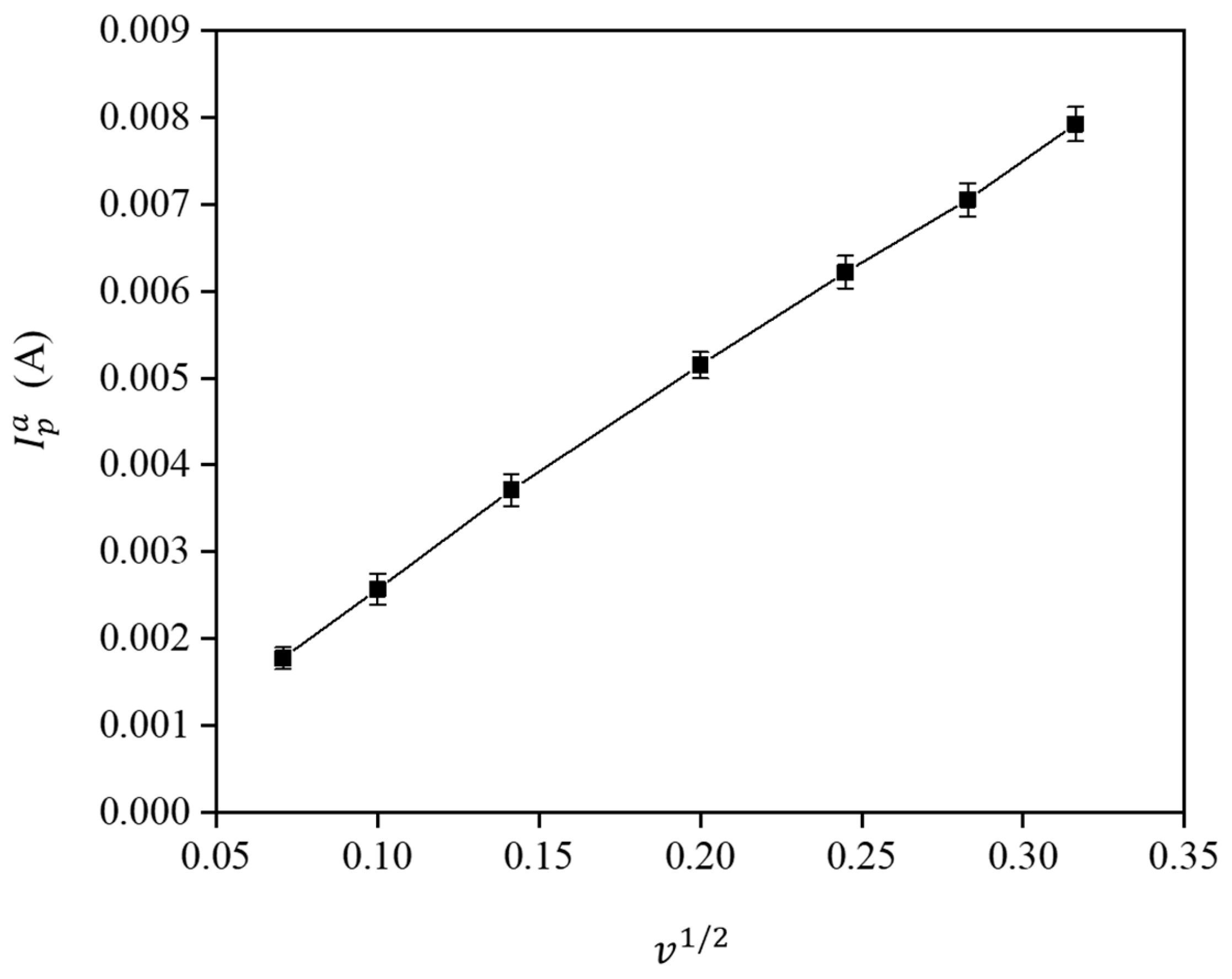
where Ip is the peak current (A), n is the number of electrons transferred (n = 1 for Fe(CN)63−/4−), A is the electroactive area (cm2), D is the diffusion coefficient of the redox probe (7.6 × 10⁻⁶ cm2 s−1), C is its concentration (mol cm−3), and ν is the scan rate (V s−1). From the slope of the Ip vs. ν1/2 plot, the ECSA was determined and found to be 4.85 cm2, significantly larger than the geometric area, confirming the high surface roughness and electrochemical activity of the electrode.
Surface morphology was examined by scanning electron microscopy (SEM) coupled with energy-dispersive X-ray spectroscopy (EDS) using a field-emission SEM (e.g., JEOL JSM-IT500HR, Tokyo, Japan) operated at 15 kV. Atomic force microscopy (AFM) images were obtained using a Bruker Dimension Icon microscope (Bruker, Billerica, MA, USA) in tapping mode with silicon cantilevers.
FTIR spectra of the dyes were recorded using an FTIR spectrometer (e.g., Thermo Nicolet iS10, Thermo Fisher Scientific, Waltham, MA, USA) in ATR mode over the range 4000–400 cm−1 with a resolution of 4 cm−1.

2.3. Synthesis, Characterization, and Electrochemical Evaluation

The mixed metal oxide (MMO) electrodes were prepared using the Pechini polymeric precursor method to obtain RuO2–SnO2–Sb2O5/Ti electrodes, where a titanium substrate is coated with a mixed metal oxide layer, which enables molecular-level dispersion of metal ions and promotes the formation of homogeneous and stable oxide coatings. The titanium plates were mechanically abraded and then ultrasonically cleaned in acetone for 15 min to remove organic residues and surface contaminants before chemical etching.
This was followed by chemical etching, consisting of immersion in concentrated HCl at 75 °C for 1 h and subsequent treatment in concentrated HNO3 for 30 min at room temperature. These steps generated surface roughness and microporosity, improving the adhesion of the oxide layer. After rinsing with distilled water and drying under a nitrogen stream, the substrates were stored in a desiccator to avoid moisture absorption before coating.
The polymeric precursor solution was prepared by dissolving citric acid in ethylene glycol at 70 °C under constant stirring, following a molar ratio of 3.2:0.024. Once homogenized, RuCl3·3H2O, SbCl3, and SnCl2 were incorporated in the proportions indicated in Table 1 [29], and the mixture was stirred continuously at 70 °C and 400 rpm for 30 min to obtain a uniform solution. Each titanium plate was coated with the precursor using a camel-hair brush, heated at 110 °C to promote adhesion, and calcined at 550 °C for 10 min to induce oxide formation and eliminate organics. This coating calcination sequence was repeated eight times per cycle and carried out for four cycles, resulting in electrodes with 32 MMO layers with an average thickness of approximately 20 µm over the titanium substrate, which were finally subjected to a thermal treatment at 550 °C for 1 h [30].
Following electrode preparation, their electrochemical behavior was assessed through a series of characterization techniques. Active chlorine species (HClO and Cl2) were quantified spectrophotometrically using the DPD method, which produces a pink coloration proportional to the oxidant concentration. The procedure involved preparing phosphate buffer and DPD solutions stabilized with EDTA, and measuring absorbance at 515 nm using a KMnO4 calibration standard [9,32]. Complementarily, cyclic voltammetry tests were performed in a three-electrode configuration using an Ag|AgCl reference electrode, a platinum counter electrode, and the RuO2–SnO2–Sb2O5/Ti working electrode. Voltammograms were recorded in 0.50 M K4[Fe(CN)6] within a potential window from −0.5 to 1.0 V at scan rates between 25 and 150 mV s−1 to evaluate the redox behavior of the MMO surface.
The surface and elemental properties of the electrodes were examined using SEM-EDS and AFM. SEM-EDS enabled the identification of inorganic elements through the detection of characteristic X-ray emissions generated under electron beam irradiation, providing qualitative and semi-quantitative insights into the oxide composition. AFM complemented this analysis by quantifying surface roughness with angstrom-scale resolution and providing topographical information on microstructural features such as step height, particle distribution, and morphological uniformity. Furthermore, the functional groups of the industrial aniline dyes Brown NT, Brown KK, and Brown 5VR were characterized with FTIR spectroscopy, which records the absorption of infrared radiation by molecular bonds and generates spectra in terms of transmittance versus wavenumber (cm−1), enabling the identification of key chemical functionalities.
Finally, the electrochemical degradation of the dyes and their mixture was evaluated in a 100 mL stirred electrolytic cell containing 50 mM NaCl as supporting electrolyte. The system employed a RuO2–SnO2–Sb2O5/Ti anode (2 cm2) paired with a carbon cathode (2 cm2). In EF and PEF assays, 0.05 mM iron sulfate was added, and the pH was adjusted to 3, conditions known to favor the Fenton reaction by preventing Fe3+ hydrolysis and the formation of Fe(OH)3(s), which otherwise inhibits Fe2+ regeneration and hydroxyl radical production [33]. The decolorization efficiency was assessed by varying the dye concentrations (100, 150, and 200 mg L−1) and current densities (20, 35, and 50 mA cm−2), allowing correlation of electrode properties with degradation performance.
To distinguish between simple adsorption and genuine electrochemical degradation, control experiments were performed under open-circuit conditions and without current application. No significant decrease in dye absorbance was observed in the absence of electrolysis, indicating that passive adsorption of the dyes onto the RuO2–SnO2–Sb2O5/Ti electrode surface is negligible. In addition, the electrodes were preconditioned in electrolyte solution before each run, and no dark adsorption step produced measurable color loss. Furthermore, the dependence of decolorization kinetics on current density and the simultaneous decrease in Chemical Oxygen Demand (COD) confirm that dye removal is dominated by oxidative electrochemical reactions rather than physical sorption processes [34].
All electrochemical degradation experiments were carried out in triplicate (n = 3) under identical operating conditions in order to ensure reproducibility. The reported standard deviations are presented for descriptive purposes to illustrate experimental reproducibility. No inferential statistical analysis or inter-treatment hypothesis testing was performed based on these deviations.
For each set of experiments, the reported kinetic constants (kdis), decolorization efficiencies, and COD removal values correspond to the arithmetic mean of three independent runs. The associated experimental uncertainty was evaluated by calculating the standard deviation (SD) for each parameter. These statistical descriptors were used to assess the reliability of the measurements and to compare the performance of the different electrochemical processes (EOx, EF, and PEF).

2.4. UV–Vis Spectrophotometric Quantification of Color Removal and Hydrogen Peroxide

The evolution of the electrochemical processes was monitored using UV-Vis spectrophotometry. Color removal was quantified by periodically withdrawing 3 mL aliquots every 5 or 10 min and measuring the absorbance at the maximum wavelength characteristic of each dye and their mixture (Table 2). The percentage of color removal was calculated using Equation (5):
C o l o r   a b a t e m e n t % =   A 0 A t A 0 × 100
where A 0 is the initial absorbance and A t   is the absorbance at time t .
In parallel, hydrogen peroxide (H2O2) concentration was determined using the same UV-Vis technique by exploiting the formation of a yellow peroxotitanium complex produced upon reaction between Ti (IV) and H2O2 in acidic medium, as shown in Equation (6). This complex exhibits a characteristic absorbance peak at 407 nm [35,36]:
Ti4+ + H2O2 + 2H2O ⇌ [Ti(O2)(H2O)2]2+ + 2H+
For the analysis, 4.5 mL of sample from the electrolysis tests was mixed with 0.5 mL of titanium oxysulfate, and the absorbance was recorded at 407 nm. Hydrogen peroxide concentration was then determined using an appropriate calibration curve.

2.5. Chemical Oxygen Demand (COD) Determination

Chemical Oxygen Demand (COD) was used to evaluate the mineralization of industrial dyes during electrolysis. COD was determined using the dichromate closed reflux colorimetric method according to Standard Methods for the Examination of Water and Wastewater 5220 D. In this method, samples are oxidized with an excess of potassium dichromate (K2Cr2O7) is strongly acidic medium (H2SO4) under sealed digestion conditions. Silver sulfate (Ag2SO4) was used as catalyst to enhance the oxidation of organic compounds, while mercury sulfate (HgSO4) was added to eliminate chloride interference.
The oxidizing solution was prepared by dissolving (29.418 ± 0.005) g of potassium dichromate previously dried at 105 °C in distilled water, followed by the addition of concentrated H2SO4 under continuous stirring, cooling, and dilution to 1000 mL. Mercury sulfate and silver sulfate solutions were prepared in diluted and concentrated sulfuric acid, respectively. The digestion reagent was prepared by mixing the appropriate volumes of dichromate solution, mercury sulfate, and silver sulfate in sealed digestion tubes prior to analysis.
Calibration was performed using potassium hydrogen phthalate (KHP) standards and COD values were expressed as mg O2 L−1 [37].

2.6. Hydroxyl Radical Quantification Using the RNO Test

Hydroxyl radical (OH) generation during electrochemical treatment was indirectly quantified using N, N-dimethyl-p-nitrosoaniline (RNO) as a chemical probe. The RNO method is based on the rapid and selective reaction between OH radicals and the RNO molecule, which leads to the bleaching of its chromophoric group. As a result, the decrease in absorbance of RNO at its characteristic wavelength (~440 nm) is directly proportional to the amount of hydroxyl radicals generated in the system [38].
In practice, an aqueous RNO solution (initial concentration 0.137 mM) was subjected to electrolysis under the same experimental conditions used for the dye degradation assays. Aliquots were withdrawn at regular time intervals and analyzed by UV–Vis spectrophotometry. The progressive decrease in absorbance at 440 nm was used to monitor OH production over time.
The relevance of the RNO probe lies in its ability to provide a simple and sensitive indirect measurement of hydroxyl radical activity, allowing comparison of oxidative capacity under different electrochemical operating conditions. This method is widely used in advanced oxidation studies to evaluate radical generation efficiency.
However, it should be noted that the RNO technique is an indirect method and does not provide absolute OH concentrations. In addition, RNO can also react with other highly reactive oxidizing species, and therefore, the signal reflects the overall radical activity rather than exclusively free OH. Despite these limitations, the method remains a valuable comparative tool for assessing oxidative performance in electrochemical and Fenton-based systems.
Hydroxyl radicals are generated electrochemically at the anode surface through water discharge, forming adsorbed M(OH) species (M + H2O → M(OH) + H+ + e), which indicates that one electron is involved per hydroxyl radical formed. Consequently, the theoretical maximum amount of radicals is directly related to the electric charge passed (Q = I·t) according to Faraday’s law, giving a faradaic upper bound n(OH)max = Q/F and an associated concentration limit [OH]max = (I·t)/(F·V). In practice, only a fraction of this theoretical amount reacts with the probe because hydroxyl radicals are simultaneously consumed by competing reactions such as oxygen evolution, recombination processes, formation of secondary oxidants, and oxidation of organic species. Therefore, the RNO decay reflects the oxidative capacity of the electrochemical system rather than the absolute hydroxyl radical concentration.

3. Assessment of Experimental Findings

3.1. Electrode Properties and Oxidative Treatment Performance

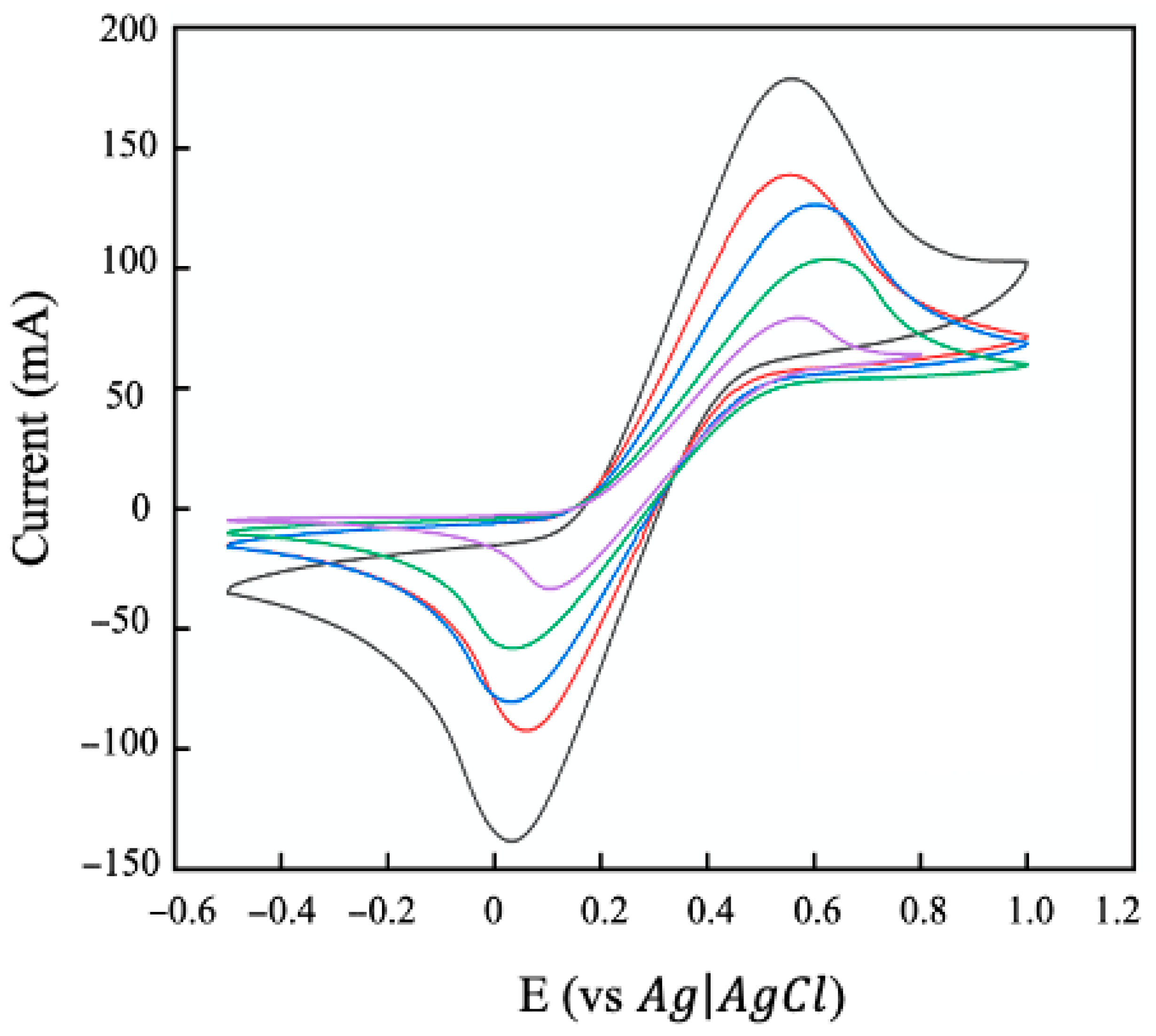
The electrochemical behavior of the RuO2–SnO2–Sb2O5/Ti electrodes was first evaluated by cyclic voltammetry (CV). Figure 1 presents the voltammograms recorded at scan rates of () 150, () 100, () 75, () 50, and () 25 mV s−1, within a potential window of −0.5 to 1.0 V. The well-defined redox peaks and the increase in current with scan rate indicate a quasi-reversible redox pair, where the anodic peaks correspond to the oxidation of Fe(CN)64− to Fe(CN)63− and the cathodic peaks reflect its reduction. The small peak-to-peak separation suggests relatively fast electron-transfer kinetics and good electrochemical activity, as summarized in Table 3.
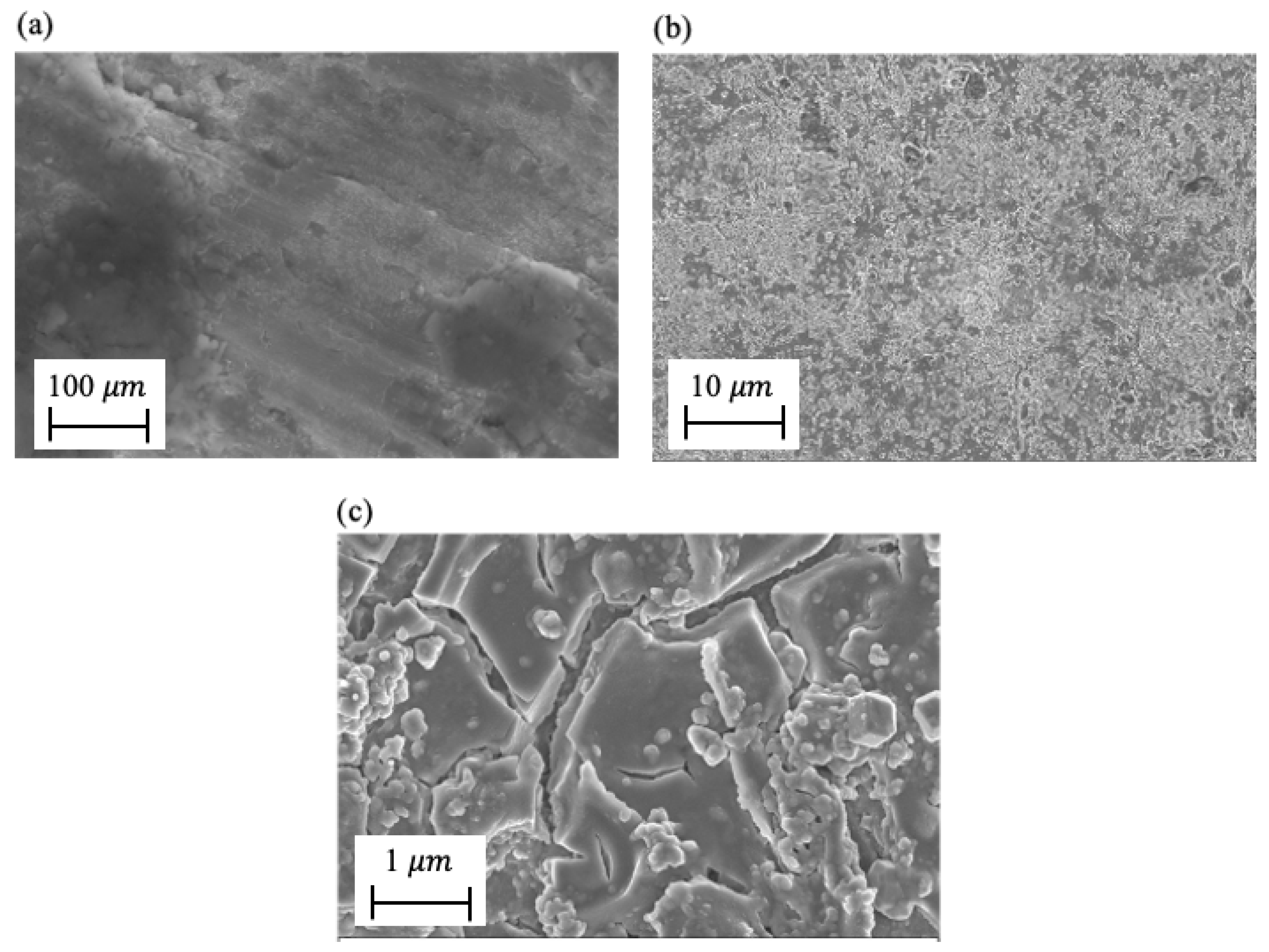
The surface characterization of the electrodes was examined by SEM/EDS. As shown in Figure 2, bare titanium exhibits a smooth surface, whereas the oxide-coated electrode displays a homogeneous distribution of the deposited material at 1000× g magnification. At higher magnification (10,000× g), a rough and highly irregular cracked-mud morphology is observed, featuring fissures and small agglomerates that increase the active surface area attributes commonly associated with thermally treated mixed oxide anodes [18,39,40]. The formation of agglomerates is likely related to rapid CO2 release during polymer decomposition [32].
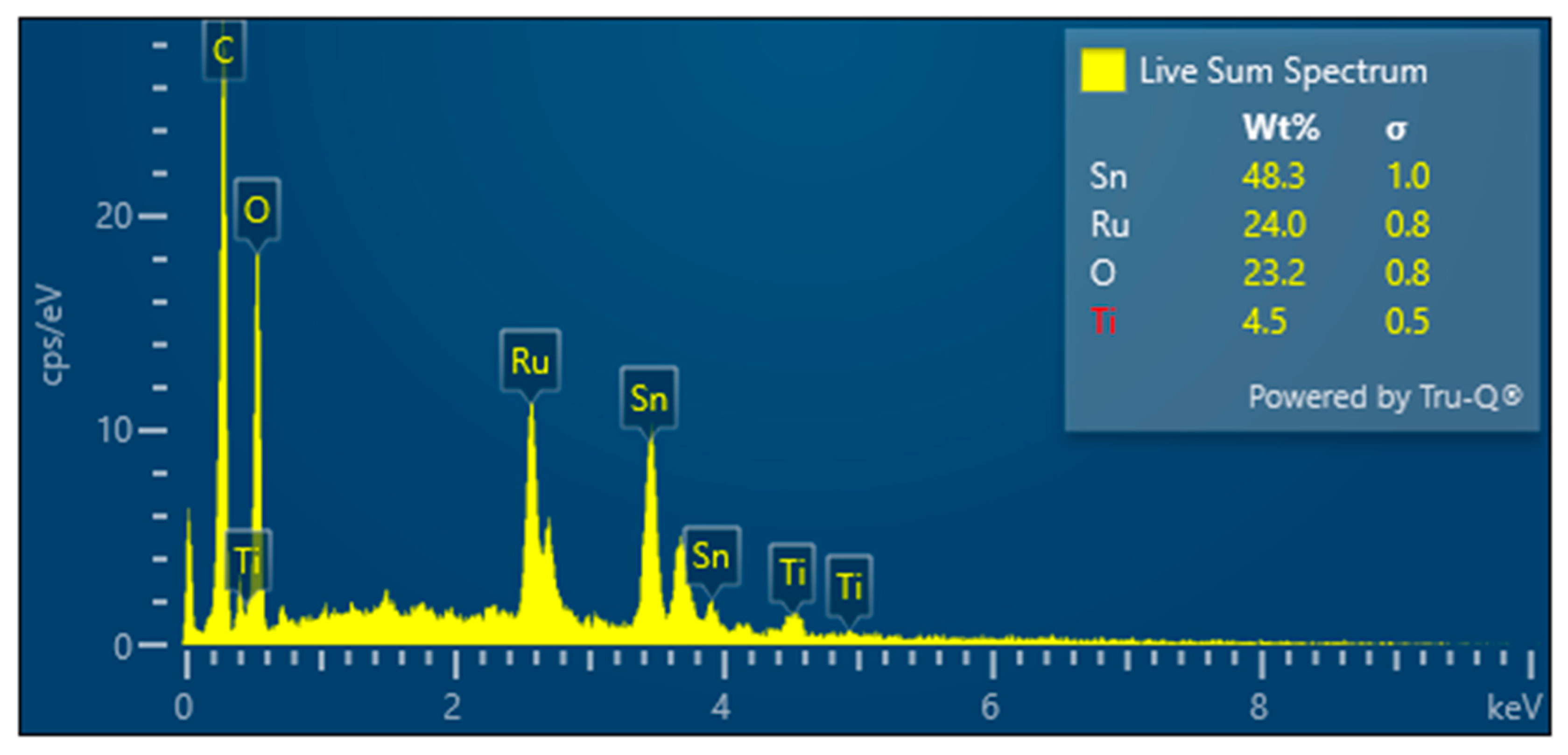
EDS mapping Figure 3 confirmed the presence of Sn, Ru, Ti, O, C, and traces of Sb distributed heterogeneously, reflecting its low concentration. Detection of Ti is attributed to electron beam penetration through cracks or thin regions of the coating and does not imply insufficient coverage.
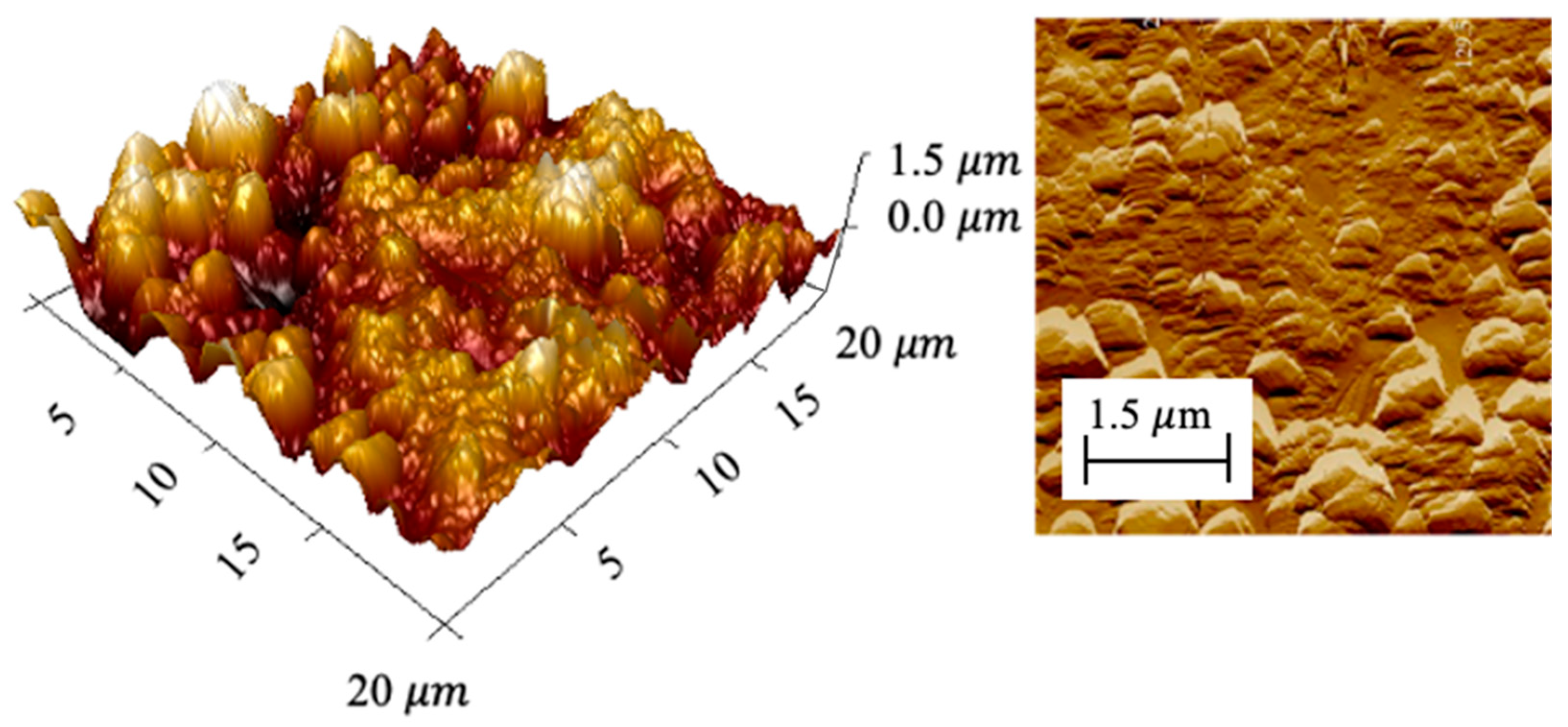
Complementary AFM analysis, Figure 4, corroborated the SEM findings. The electrode surface exhibits significant roughness, with crack depths reaching up to 1.5 µm, confirming the development of a textured microstructure beneficial for expanding the electroactive area.
Although AFM reveals a non-homogeneous surface roughness, this feature is directly related to the unique catalytic activity of the RuO2–SnO2–Sb2O5/Ti electrode. The presence of cracks, valleys, and asperities increases the density of high-energy surface sites (edges, grain boundaries, and defect zones), which act as preferential locations for electron transfer and oxidant generation. This morphology enhances the formation of surface chemisorbed M–OH species and active chlorine oxidants and improves electrolyte penetration and local mass transport, explaining the enlarged ECSA (4.85 cm2) and the high catalytic efficiency observed during EOx, EF, and PEF processes [41].
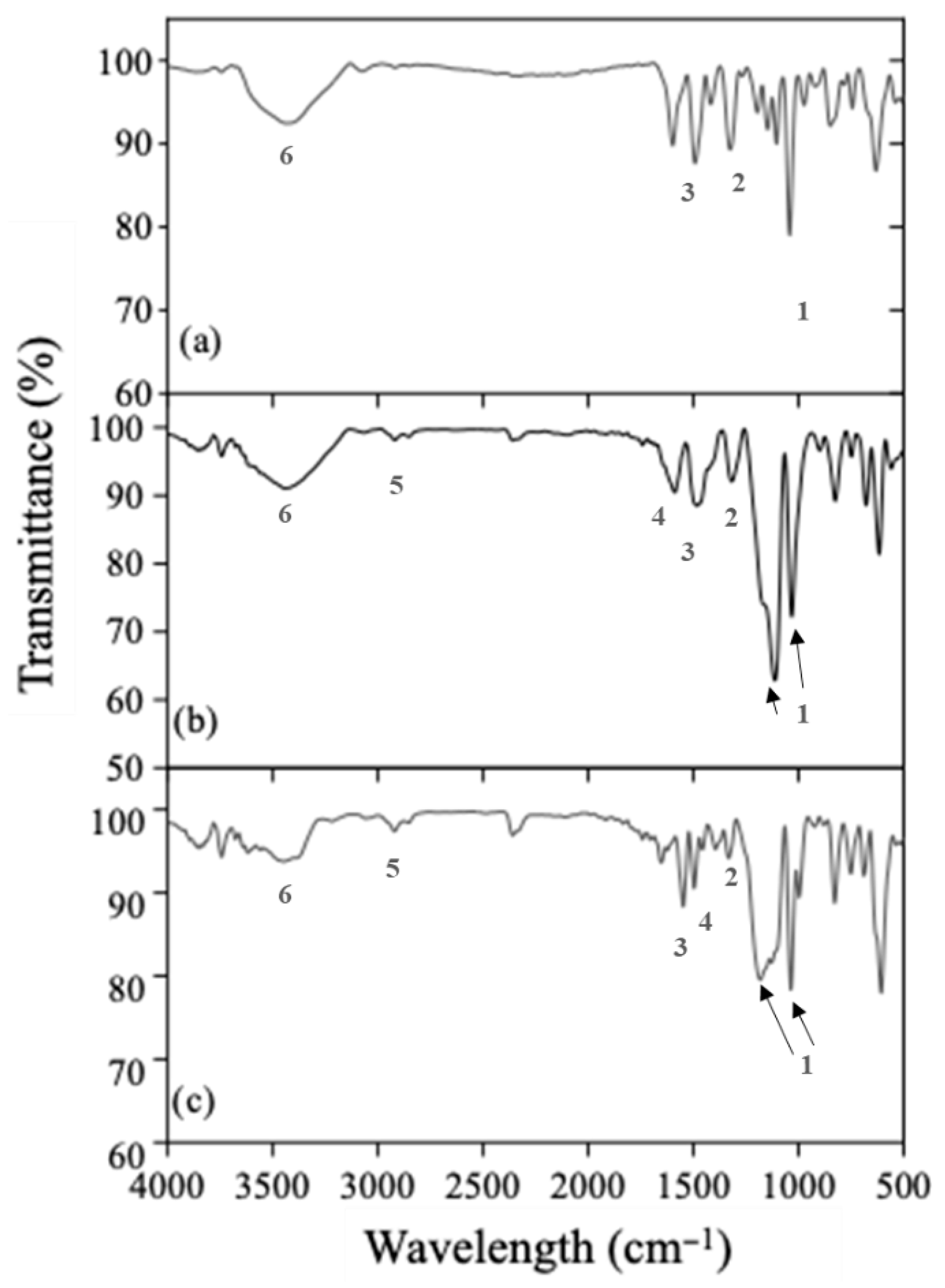
The industrial dyes used in this study, Brown KK, Brown NT, and Brown 5VR, were characterized by FTIR spectroscopy, as shown in Figure 5. All three dyes showed characteristic azo stretching bands (–N=N–), asymmetric S–O stretching vibrations from sulfonic groups, and primary aromatic amine C–N stretching vibrations, consistent with their reported structures [42]. Additionally, each dye displayed distinct absorption features, such as N=O stretching at 1457 cm−1 for Brown KK and C–N=O stretching at 1598 cm−1 for Brown 5VR, as well as O–CH3 stretching bands present in Brown KK and Brown NT.
Table 4 presents the main absorption bands identified by FTIR spectroscopy in the dyes Brown 5VR, Brown NT, and Brown KK, using standard vibrational nomenclature. It compares the wavenumbers (cm−1) associated with different characteristic vibrational modes, highlighting structural similarities as well as specific variations among the three compounds.
In the region between 1033 and 1181 cm−1, bands assigned to the asymmetric stretching of the sulfonate group (νas(SO3)) and/or C–O stretching are observed in all three dyes, confirming the presence of sulfonated groups typical of reactive dyes. The signals corresponding to the δ(N–H) bending vibration of aromatic amines appear around 1316–1332 cm−1 in all samples, indicating the presence of aromatic structures substituted with amino groups.
The bands attributed to azo group stretching ν(N=N), located between 1491 and 1589 cm−1, confirm the azo nature of the three dyes. In addition, aromatic ring ν(C=C) vibrations are identified at 1598 cm−1 for Brown 5VR and at 1457 cm−1 for Brown KK, while no distinct band in this specific region is reported for Brown NT. For Brown NT and Brown KK, additional bands around 2920–2921 cm−1 corresponding to aliphatic C–H stretching are detected, which are absent in Brown 5VR.
Finally, in the high-frequency region (3415–3450 cm−1), broad bands associated with O–H and/or N–H stretching vibrations are observed, suggesting the presence of hydroxyl and/or amino groups possibly involved in hydrogen bonding interactions.
Overall, the table confirms the presence of functional groups characteristic of sulfonated azo dyes and reveals slight variations in band position and occurrence among the three analyzed dyes.
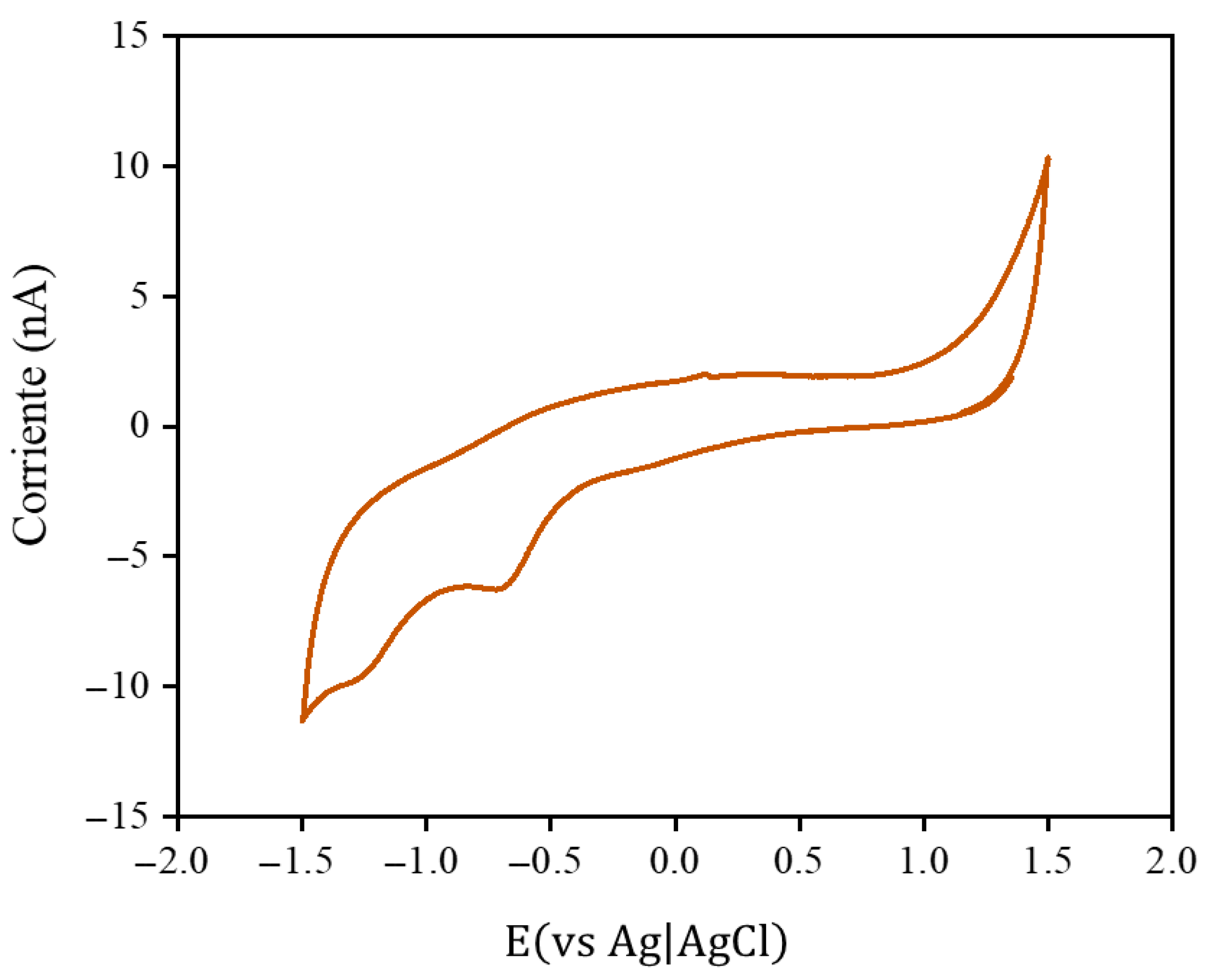
The electrochemical behavior of Brown NT was further examined by cyclic voltammetry, Figure 6, using glassy carbon as the working electrode. The low faradaic currents (±15 nA) indicate limited electroactivity or low concentration. An irreversible reduction process at 1.3 V and a growing irreversible oxidation above +1.0 V were observed features typical of organic dyes with azo or amino groups [43].
Electrolytic degradation experiments were conducted for the individual dyes and their mixture at three concentrations (100, 150, and 200 mg L−1), under three current densities (20, 35, and 50 mA cm−2), and employing three advanced electrochemical oxidation processes: electro-oxidation (EOx), electro-Fenton (EF), and photoelectro-Fenton (PEF). These experiments enabled comparative assessment of degradation efficiency and mineralization performance for highly recalcitrant aniline-based dyes.
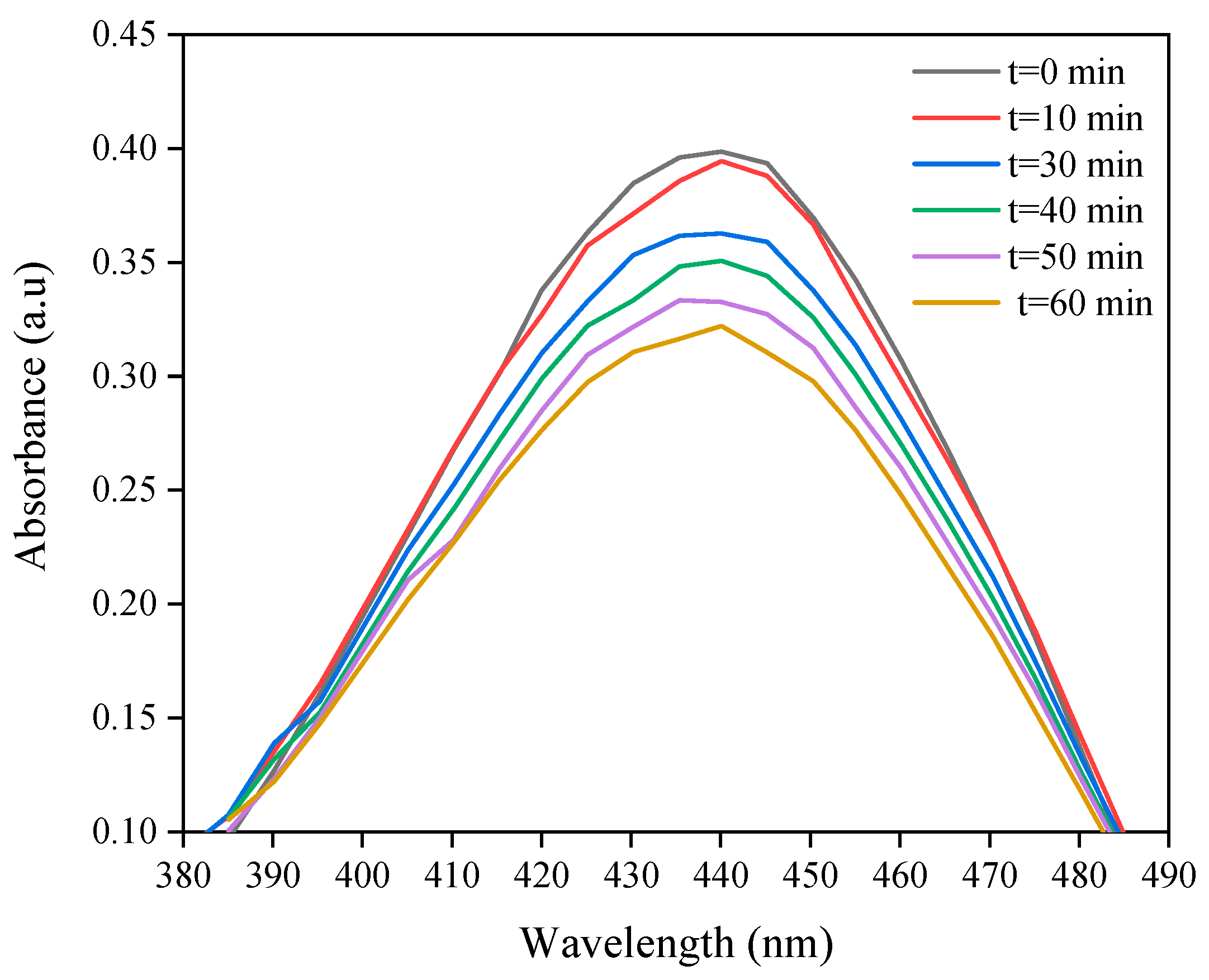
Figure 7 shows the progressive bleaching of the RNO probe during electrolysis, evidenced by the continuous decrease in its characteristic absorbance band at ~440 nm without any significant wavelength shift. This behavior indicates the sustained generation of highly reactive oxidizing species throughout the treatment rather than the formation of stable intermediates with distinct spectral signatures. The gradual decrease in both absorbance and RNO concentration (from 0.137 to 0.0898 mM, ~34% reduction) confirms that radical-mediated oxidation remains active during the entire experiment. Although the RNO method is widely employed as an indirect probe for hydroxyl radicals (OH), it is well recognized that RNO can also react with other short-lived oxidants present in electrochemical systems, such as chlorine-derived radicals and reactive oxygen species. Therefore, the results in Figure 7 do not demonstrate the exclusive formation of OH, but rather indicate that radical-mediated pathways dominate the process, with hydroxyl radicals playing a major role under the applied EF and PEF conditions. This interpretation is consistent with the Fenton reaction between electrogenerated H2O2 and Fe2+ and with the photoreduction of Fe3+ in the PEF process, which continuously regenerates OH and sustains the high oxidation capacity of the system [44].
The electrochemical surface area (ECSA) of the RuO2–SnO2–Sb2O5/Ti electrode was determined as 4.85 cm2 (Figure 8), significantly higher than its geometric area (1 cm2). This confirms that a large fraction of the surface is electrochemically accessible and actively participates in charge-transfer processes, explaining the high catalytic performance observed during EOx, EF, and PEF [45].
In addition to morphological roughness, the electrochemical activity of mixed metal oxide anodes is also strongly influenced by the presence of structural defects, particularly oxygen vacancies, which act as active sites for electron transfer and oxidant generation. Thermal treatments during electrode synthesis can promote defect formation, modifying the electronic structure and enhancing charge transport properties. As reported in recent studies, defect-mediated behavior plays a key role in controlling electrochemical performance in oxide-based materials, especially in reactions involving oxygen evolution and radical formation. Similar effects are expected in RuO2–SnO2–Sb2O5/Ti electrodes, where defect sites may facilitate both hydroxyl radical production and active chlorine generation, contributing to the high degradation efficiencies observed in this work [46].
Based on the electrochemical characterization and oxidation performance, a plausible reaction mechanism for dye degradation on the RuO2–SnO2–Sb2O5/Ti anode can be proposed. Under anodic polarization, water molecules are discharged on the active sites of the mixed-metal oxide coating, generating adsorbed hydroxyl radicals (M OH), which act as powerful, non-selective oxidants. In parallel, in chloride-containing media, active chlorine species such as Cl2, HOCl, and ClO are electrochemically generated and contribute to indirect oxidation in the bulk solution. During EF and PEF processes, H2O2 is electrogenerated at the cathode and reacts with Fe2+ via the Fenton reaction to continuously produce free OH radicals in solution, while UV irradiation in PEF accelerates Fe3+ photoreduction and sustains radical regeneration [47].
The combined action of surface-bound OH (heterogeneous oxidation) and free OH and chlorine-derived radicals (homogeneous oxidation) leads to the stepwise breakdown of the dye chromophoric structures, followed by the formation of smaller aromatic intermediates and, ultimately, their mineralization into CO2, H2O, and inorganic ions. The high electrochemical surface area and defect-rich morphology of the RuO2–SnO2–Sb2O5/Ti electrode enhance these pathways by increasing the density of active sites for water discharge, oxidant generation, and electron transfer. This synergistic mechanism explains the superior performance observed during EOx, EF, and PEF treatments [48].

3.2. The Role of Current Density

Figure 9 illustrates the effect of current density (j) on the discoloration of the three dyes and their mixture, using an initial concentration of 200 mg L−1. The plots show the decrease in color intensity over electrolysis time at pH 3.0 under electro-oxidation for: (a) Brown NT, (b) Brown KK, (c) Brown 5VR, and (d) the mixed dye solution. In all cases, the discoloration followed pseudo-first-order kinetics. Increasing the current density markedly enhanced the degradation rate, with () 50 mAcm−2 consistently achieving near-complete color removal within significantly shorter treatment times: 97% for Brown NT in 28 min, 98% for Brown KK in 10 min, 92% for Brown 5VR in 100 min, and 98% for the mixture in 36 min. This strong dependence on current density is attributed to the higher generation rate of hydroxyl radicals at elevated j values, which accelerates the oxidation of both the parent dyes and their intermediates [49].
All decolorization and COD removal profiles shown in Figure 9, Figure 10 and Figure 11 represent the average behavior obtained from three independent experiments. The kinetic constants (kdis) were calculated from linear regressions of ln(C0/C) versus time using the mean concentration values, and the corresponding standard deviations were derived from the three replicate runs. Error bars (±1 SD) have been added to the kinetic plots to illustrate the experimental uncertainty and confirm the reproducibility of the electrochemical degradation trends.
The absence of dye removal under open-circuit conditions and the strong dependence of degradation rate on applied current further confirm that the observed decolorization arises from electrochemically generated oxidizing species rather than from adsorption onto the electrode surface [50].
To better contextualize the catalytic performance of the RuO2–SnO2–Sb2O5/Ti anode, its efficiency toward the degradation of Brown NT, Brown KK, Brown 5VR, and a mixed dye solution was compared with reported performances of structurally related azo/brown dyes treated using similar mixed metal oxide anodes. As summarized in Table 5, the present electrode exhibits comparable or superior degradation efficiencies at relatively low current densities, highlighting its strong catalytic activity for both single and mixed dye systems.

3.3. Impact of Initial Dye Concentration on Electrochemical Performance

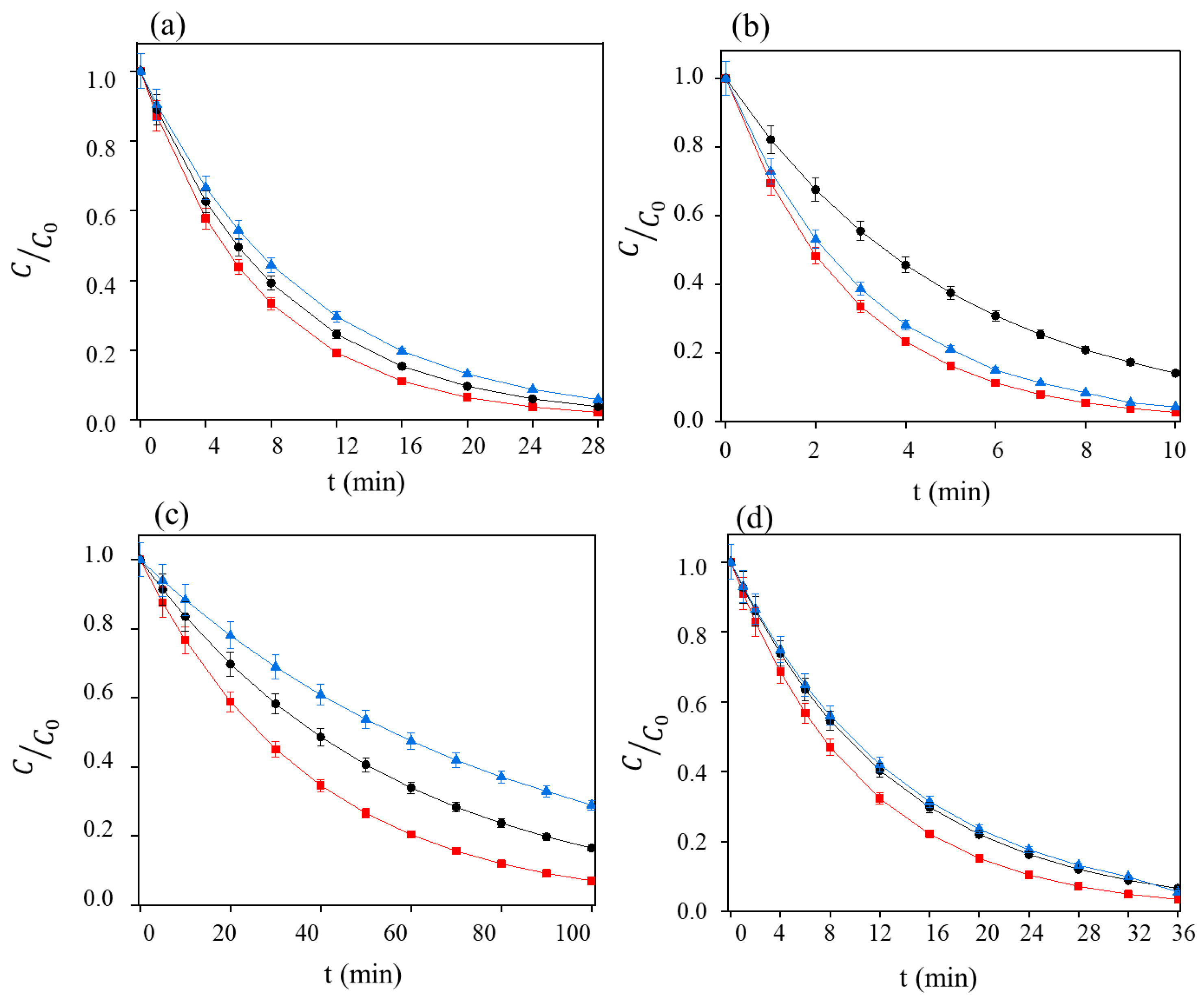
Figure 10 compares the normalized concentration as a function of electrolysis time for solutions of () 100, (●) 150, and () 200 mg L−1, respectively, of each dye using a current density of 50 mA cm−2. In all cases, increasing the initial dye concentration decreased the decolorization rate. For example, for Brown NT (panel a), the 200 mg L−1 solution reached 93.99% decolorization after 36 min with a kinetic constant kdis of 0.292 min−1, whereas the 100 mg L−1 solution achieved 93.2% in only 6 min with kdis of 0.448 min−1. This reduction in efficiency can be attributed to the saturation of the electrode surface at higher concentrations, which prevents active sites and limits the formation of oxidizing species, while also intensifying mass transport limitations, shifting the process from electrochemical kinetics toward diffusion control of the dye toward the electrode surface [55].
To further support the distinction between intrinsic kinetic control and mass transfer-limited behavior, the apparent pseudo-first-order rate constants (kdis) were determined from the linear fits of ln(C0/C) versus time for the different dyes and operating conditions. Table 6 summarizes the obtained kdis values together with the corresponding regression coefficients (R2), allowing a quantitative comparison of degradation efficiency under varying current densities, pollutant loads, and electrochemical processes. The trends clearly show that higher kdis values are obtained at low initial dye concentration and moderate current density, where the process is kinetically controlled, whereas lower kdis values at high C0 and high j reflect the onset of diffusion limitations and transport-controlled regimes.

3.4. Impact of the Chosen Electrochemical Oxidation Process

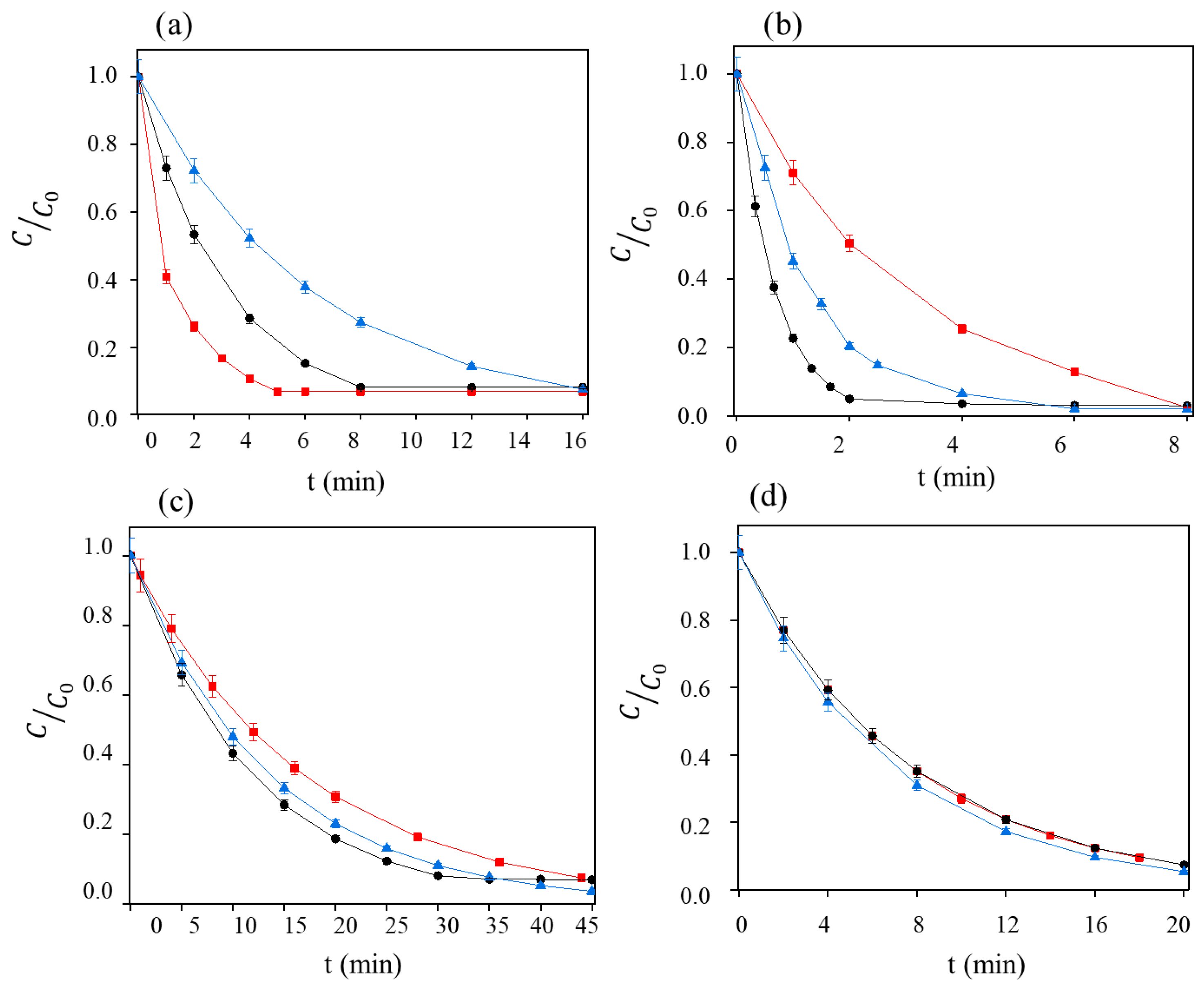
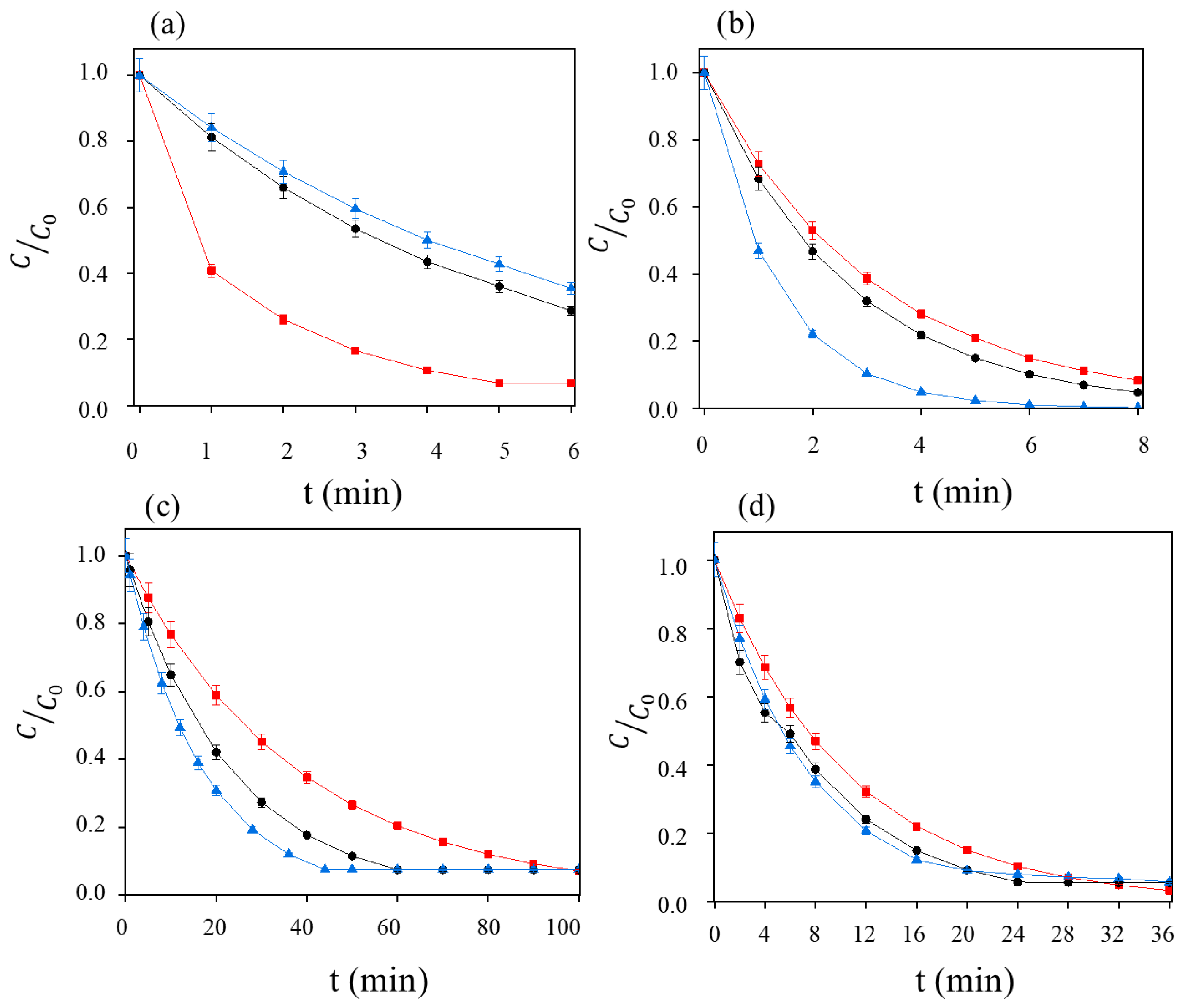
Figure 11 compares the performance of the three advanced oxidation processes () EOx, (●) EF, and () PEF) at 50 mA cm−2 and 100 mg L−1, showing that all dyes progressively decrease in concentration, but the degradation pathways and efficiencies differ according to the characteristics of each compound. Starting with Brown NT (a), electro-oxidation exhibits the fastest degradation, surpassing both EF and PEF and reaching a kdis of 0.44 min−1. For Brown KK (b), the EF process shows the highest performance, rapidly reducing its concentration in the initial minutes with a kdis of 1.48 min−1. A similar trend is observed for Brown 5VR (c), where EF again provides the most efficient removal, achieving a kdis of 0.0838 min−1, although the degradation proceeds more slowly than for Brown KK. Finally, for the dye mixture (d), the PEF process offers a slight advantage, likely due to the combined effect of UV irradiation, photolysis of intermediates, and the enhanced regeneration of reactive species, yielding a kdis of 0.14 min−1 [56].
To clarify the role of hydrogen peroxide in the EF and PEF systems, the key electrochemical and chemical reactions involved in its in situ generation and utilization are summarized below. In these processes, H2O2 is electrogenerated at the cathode through the two-electron oxygen reduction reaction as shown in Equation (7) [47]:
O 2 + 2 H + + 2 e H 2 O 2
The produced H2O2 reacts with Fe2+ to generate highly reactive hydroxyl radicals via the classical Fenton reaction, as shown in Equation (8):
Fe 2 + + H 2 O 2 Fe 3 + + O H + OH
In the PEF process, irradiation promotes the photoreduction of Fe3+ back to Fe2+ and the photolysis of Fe (III) complexes, further enhancing OH production as shown in Equation (9):
Fe 3 + + h ν Fe 2 + + O H
These coupled electrochemical and photochemical reactions explain the higher degradation rates observed in EF and especially PEF compared to direct electro-oxidation (EOx), due to the continuous in situ generation of H2O2 and hydroxyl radicals.
Although the exact chemical structures of these commercial dyes are unknown, the observed differences can be attributed to variations in ionic character, functional groups, iron binding affinities, solubility, and light absorption properties. These factors modulate the predominant degradation mechanisms and determine the relative contribution of radical-mediated reactions, direct anodic oxidation, or photo enhanced pathways. Consequently, each dye or dye mixture responds optimally to a specific electrochemical oxidation strategy, explaining the order of performance displayed across the four systems.

3.5. Determination of the Chemical Oxygen Demand (COD)

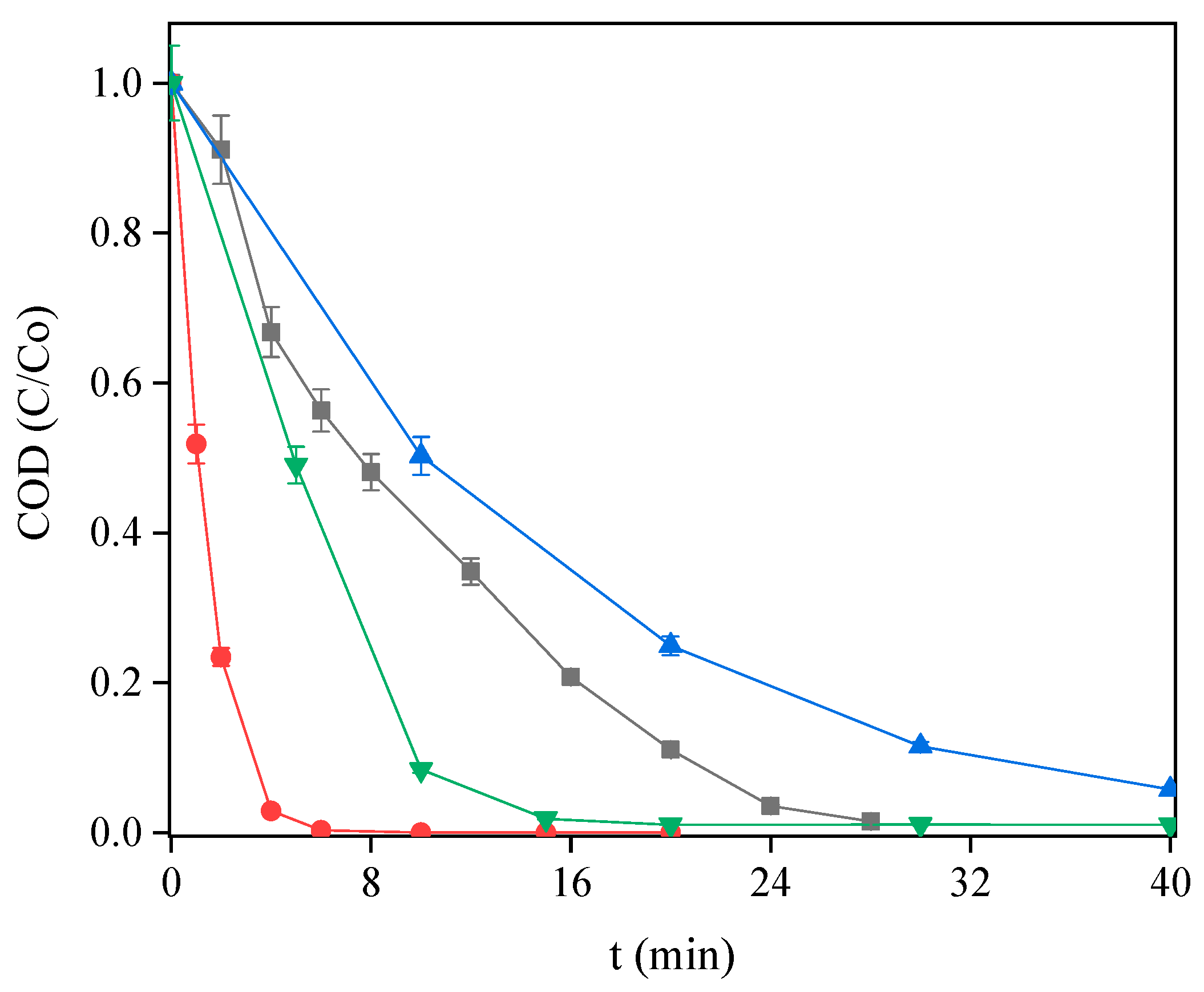
Figure 12 illustrates the decrease in Chemical Oxygen Demand (COD) as a function of electrolysis time for the different dyes evaluated. In all cases, a pronounced reduction in COD is observed during the first minutes of treatment, evidencing the rapid generation of oxidizing species at the anode surface; moreover, the trend mirrors the decolorization behavior obtained for each electrochemical process. Among the dyes, () Brown KK exhibited the fastest degradation, achieving near complete COD removal in less than 10 min, suggesting a molecular structure containing functional groups highly susceptible to oxidative attack. In contrast, (●) Brown NT required approximately 25 min to achieve a comparable COD decrease, indicating a more stable structure or the presence of substituents less reactive toward the generated oxidizing species. The slowest system was () Brown 5VR, which showed a gradual COD decline extending up to 100 min, consistent with a dye molecule bearing a more condensed aromatic system or electron-donating groups that stabilize the chromophore and hinder oxidative cleavage. Based on the initial COD value (150 mg O2 L−1) and the initial dye concentration (100 mg L−1), the COD-to-dye concentration ratio was (Equation (10)). 1.5 mg O2 per mg dye. This value is an experimental parameter derived from the initial conditions and is used only as a reference for the mineralization analysis [57].
m g   C O D m g   o f   D y e = 150   m g   O 2   L 1 100   m g   d y e   L 1 = 1.5   m g   O 2   p e r   m g   o f   d y e

3.6. Effect on Oxidant Activity

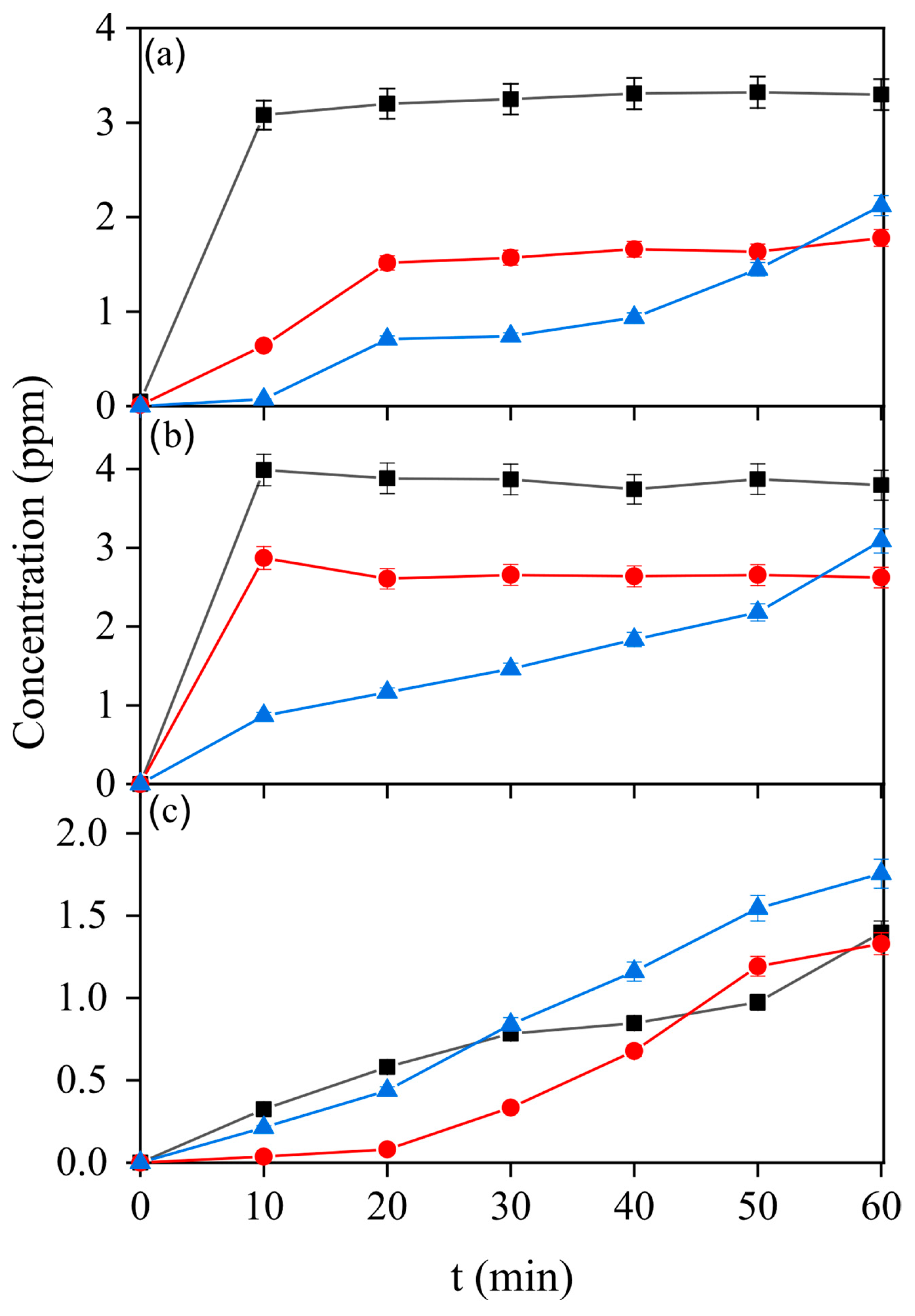
In the evaluation of oxidizing agents, the behavior of both hydrogen peroxide and active chlorine plays a decisive role in determining the efficiency of the electrochemical degradation processes. As shown in Figure 13, hydrogen peroxide generation strongly influences colorant removal during electro-oxidation. At low current densities (■) 20 mA cm−2, the higher accumulation of H2O2 promotes the formation of secondary oxidizing species such as hydroxyl radicals (OH), enabling a more homogeneous and selective oxidation of organic molecules. However, as the current density increases, the decrease in H2O2 concentration indicates the predominance of competing reactions with chloride ions, leading to the formation of active chlorine species [58].
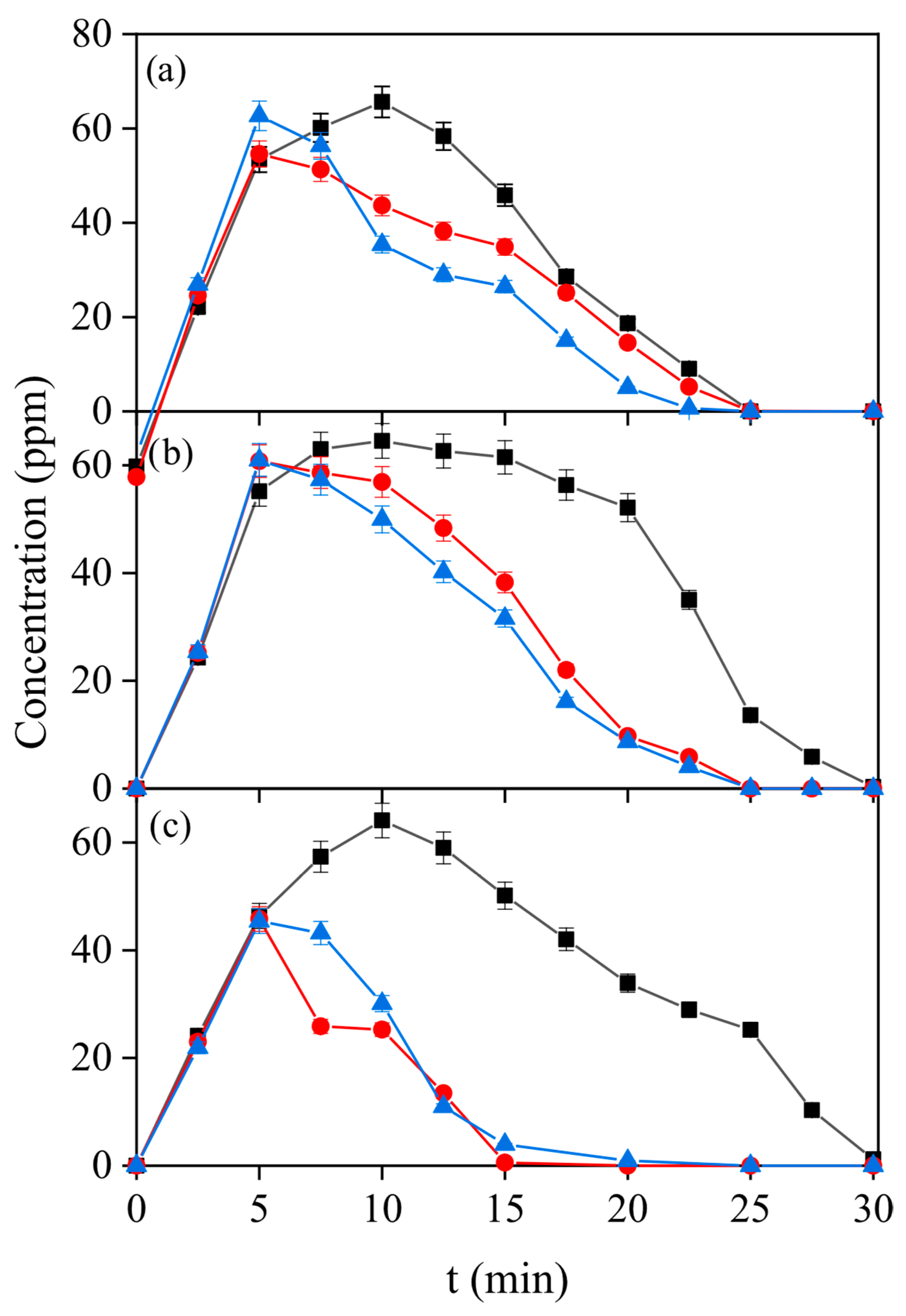
This trend is consistent with the behavior observed in Figure 14, where active chlorine exhibits a rapid initial increase due to the anodic oxidation of chloride, producing mainly HOCl at pH 3.0, followed by a progressive decline associated with its consumption by OH and other reactive oxygen species. At low current densities, active chlorine levels remain sustained for longer periods, whereas higher current densities () 35 and () 50 mA cm−2) result in faster formation and equally rapid depletion due to intensified side reactions such as oxygen evolution, which reduce the stability of chlorinated oxidants.
Among the three processes, EOx shows the highest accumulation of active chlorine, whereas EF and especially PEF display accelerated consumption. In PEF, the rapid conversion of oxidants is reflected in the lower persistence of chlorinated species and the higher oxidative efficiency observed. The parallel analysis of hydrogen peroxide and active chlorine trends shows a strong interdependence in the early stages, followed by a preferential transformation into reactive species under PEF conditions. Overall, these results demonstrate that the PEF process achieves the greatest oxidative efficiency and represents a more environmentally favorable technology for the advanced degradation of organic contaminants in chloride-containing matrices [59,60].

3.7. Energetic Analysis

The energy efficiency of the assessed setups was quantified based on the electrical energy required per unit mass of chemical oxygen demand removed (ECCOD, kWh·(g COD)−1). This metric allows a direct comparison of process performance in terms of the energy expended for each unit of pollutant actually mineralized, thus preventing an overestimation of efficiency in cases where color removal does not necessarily imply a real decrease in COD. ECCOD was determined using the following equation, Equation (11) [11]:
E C C O D ( k W h ( g   C O D ) 1 ) = 2.7 × 1 0 7 ( E c e l l   I   t + P U V A   t ) V s   C O D
where the coefficient 2.7 × 10⁻⁷ represents the conversion factor from W·s to kWh. Ecell denotes the voltage difference between anode and cathode (V), I is the applied current (A), t is the electrolysis duration (s), Vs is the treated solution volume (L), and ΔCOD is the measured decrease in COD (g L−1).
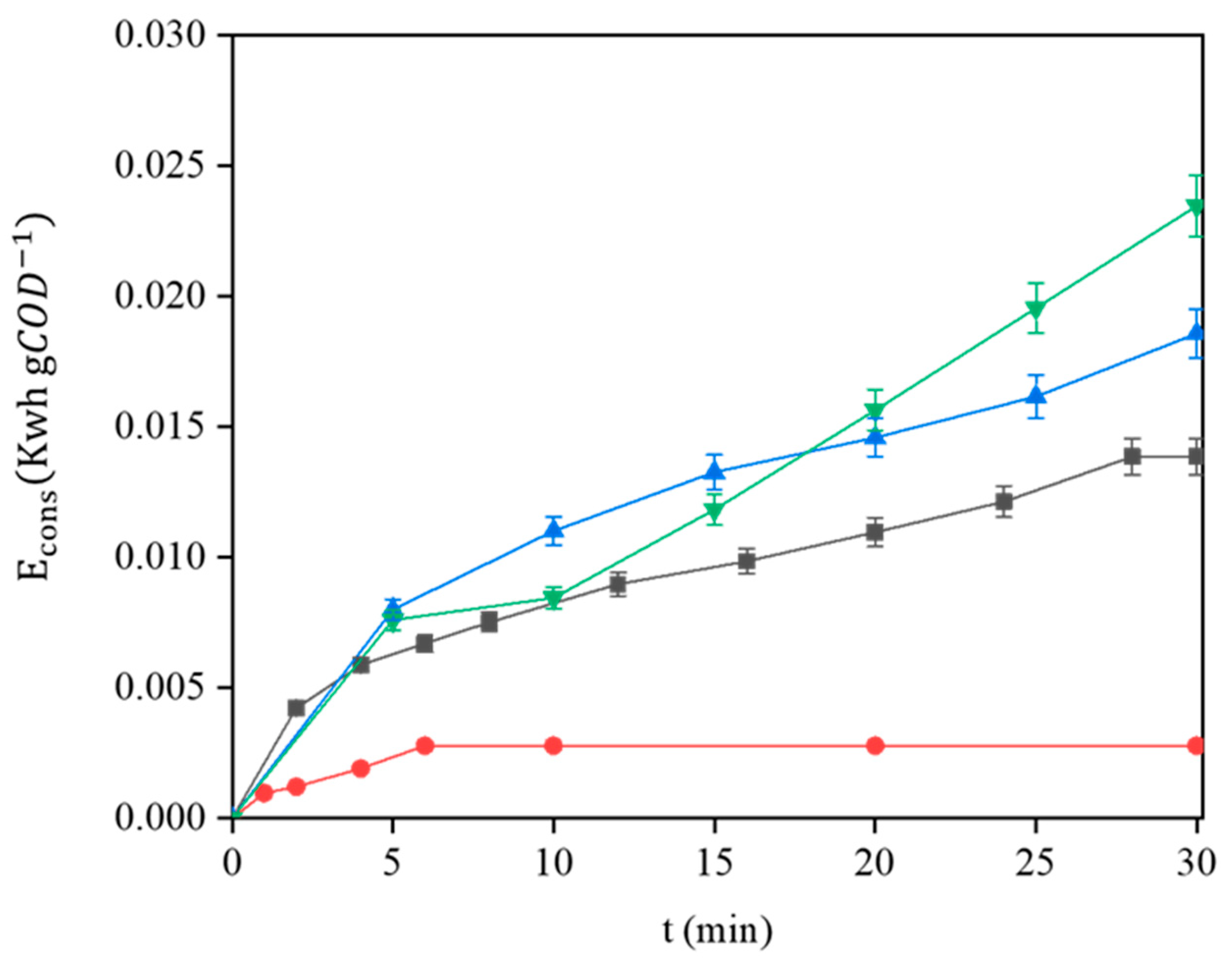
As shown in Figure 15, the specific energy consumption per unit of COD removed (ECCOD) increased with treatment time for all configurations, although with markedly different magnitudes. This behavior reflects the fact that, as electrolysis progresses, the remaining organic matter becomes more recalcitrant and requires a higher energy input for further oxidation. The () Brown KK dye exhibited the lowest and most stable ECCOD throughout the process, reaching only about 0.20–0.22 kWh·(g COD)−1, which indicates that most of the easily oxidizable compounds were removed at the initial stage with minimal additional energy input. Once this fraction was eliminated, the system entered a plateau region in which further energy supply did not translate into significant COD removal.
In contrast, () Brown NT dye showed a moderate increase, attaining final values close to 0.45–0.48 kWh·(g COD)−1, while () Brown 5VR required a higher energy investment, with ECCOD rising to approximately 0.65–0.70 kWh·(g COD)−1. This trend suggests that although Brown 5VR dye promotes a greater degree of COD mineralization, it does so at the expense of a higher specific energy demand.
The () Mixture of brown configuration exhibited the steepest increase and the highest final ECCOD, reaching around 0.90–0.95 kWh·(g COD)−1, which reflects an energy-intensive but deeper mineralization process. This behavior is consistent with literature reports on electrochemical oxidation of textile dyes such as Acid Violet 7, where COD removal typically requires substantially more energy than simple decolorization [61].

4. Conclusions

This study demonstrates that the RuO2–SnO2–Sb2O5/Ti mixed metal oxide electrode is a highly efficient and robust anode for the electrochemical degradation of recalcitrant industrial dyes. Beyond reporting removal efficiencies, the results show that the electrode composition and surface architecture play a decisive role in governing oxidant generation, electron-transfer kinetics, and mass transport at the electrode–solution interface. The rough, defect-rich morphology and enlarged electroactive surface area (4.85 cm2) significantly enhance the formation of reactive species and sustain high catalytic activity.
The systematic comparison of electro-oxidation (EOx), electro-Fenton (EF), and photoelectro-Fenton (PEF) under identical conditions confirms that coupling electrochemical oxidation with Fenton-based reactions markedly improves both degradation kinetics and mineralization efficiency. Among the evaluated processes, PEF exhibited the most favorable performance, owing to the synergistic effects of in situ H2O2 generation, Fe3+ photoreduction, and enhanced OH production under UV irradiation.
The analysis of oxidant activity revealed that EOx promotes the accumulation of chlorine-derived oxidants, whereas EF and especially PEF favor the rapid conversion of H2O2 into highly reactive hydroxyl radicals. This selective oxidant control explains the superior mineralization and the lower persistence of chlorinated species observed under PEF conditions, positioning this process as the most environmentally favorable option for chloride-containing wastewater.
From an energy perspective, the ECCOD analysis showed that the specific energy consumption per unit of COD increases with electrolysis time, as the remaining organic matter becomes more recalcitrant. Brown KK displayed the lowest and most stable ECCOD values, indicating efficient oxidation at low energy cost, while Brown 5VR and the dye mixture required higher energy inputs to achieve deep mineralization. These results highlight that true process efficiency must be assessed in terms of energy consumed per unit of COD removed by decolorization.
Overall, the RuO2–SnO2–Sb2O5/Ti electrode combines high catalytic activity, structural stability, and selective oxidant control, making it a promising material for advanced treatment of tannery and textile wastewaters. This work provides not only performance data but also design criteria for MMO anodes aimed at maximizing OH generation, minimizing chlorinated by-products, and improving energy efficiency. Future studies should address long-term stability, identification of degradation by-products, and scale-up to pilot and real wastewater matrices.

Author Contributions

D.K.P.-J., writing, research, data analysis, and review and editing; N.O.-S., review and editing; I.E.M.-R., review and editing; O.R., conceptualization, review, and editing; R.F.-R., Writing, review, editing, and conceptualization; J.M.P.-H., writing, review, conceptualization, data analysis, and project management. All authors have read and agreed to the published version of the manuscript.

Funding

This work is supported by the Secretaría de Ciencia, Humanidades, Tecnología e Innovación (SECIHTI) under grant LN-2025-I-16. And CIIC-UG-2026. D.K.P.-J. also gratefully acknowledges SECIHTI for the financial support.

Data Availability Statement

The original contributions presented in this study are included in the article. Further inquiries can be directed to the corresponding author.

Conflicts of Interest

The authors declare no conflicts of interest.

References

  1. Bravo-Yumi, N.; Pacheco-Álvarez, M.; Bandala, E.R.; Brillas, E.; Peralta-Hernández, J.M. Studying the influence of different parameters on the electrochemical oxidation of tannery dyes using a Ti/IrO2–SnO2–Sb2O5 anode. Chem. Eng. Process. 2022, 181, 109173. [Google Scholar] [CrossRef]
  2. Chan-Bacab, M.J.; Sanmartín, P.; Camacho-Chab, J.C.; Palomo-Ascanio, K.B.; Huitz-Quimé, H.E.; Ortega-Morales, B.O. Characterization and dyeing potential of colorant-bearing plants of the Mayan area in Yucatan Peninsula, Mexico. J. Clean. Prod. 2015, 91, 191–200. [Google Scholar] [CrossRef]
  3. Villaseñor-Basulto, D.L.; Picos-Benítez, A.; Pacheco-Álvarez, M.; Pérez, T.; Bandala, E.R.; Peralta-Hernández, J.M. Tannery wastewater treatment using combined electrocoagulation and electro-Fenton processes. J. Environ. Chem. Eng. 2022, 10, 107290. [Google Scholar] [CrossRef]
  4. Hansen, É.; de Aquim, P.M.; Gutterres, M. Environmental assessment of water, chemicals and effluents in leather post-tanning process: A review. Environ. Impact Assess. Rev. 2021, 89, 106597. [Google Scholar] [CrossRef]
  5. Singh, K.; Kumari, M.; Prasad, K.S. Tannery effluents: Current practices, environmental consequences, human health risks, and treatment options. Clean Soil Air Water 2022, 50, 2200303. [Google Scholar] [CrossRef]
  6. Tadesse, G.L. Impacts of tannery effluent on environments and human health: A review article. Adv. Life Sci. Technol. 2017, 54, 58–67. [Google Scholar]
  7. Mohd, I.; Ahamed, I.; Lichtfouse, E. Water Pollution Remediation: Organic Pollutants; Springer: Cham, Switzerland, 2019. [Google Scholar]
  8. Zhao, J.; Wu, Q.; Tang, Y.; Zhou, J.; Guo, H. Tannery wastewater treatment: Conventional and promising processes, an updated 20-year review. J. Leather Sci. Eng. 2022, 4, 10. [Google Scholar] [CrossRef]
  9. Aguilar, Z.G.; Brillas, E.; Salazar, M.; Nava, J.L.; Sirés, I. Evidence of Fenton-like reaction with active chlorine during the electrocatalytic oxidation of Acid Yellow 36 azo dye with Ir–Sn–Sb oxide anode in the presence of iron ion. Appl. Catal. B 2017, 206, 44–52. [Google Scholar] [CrossRef]
  10. Deng, F.; Brillas, E. Advances in the decontamination of wastewaters with synthetic organic dyes by electrochemical Fenton-based processes. Sep. Purif. Technol. 2023, 316, 123764. [Google Scholar] [CrossRef]
  11. Pacheco-Álvarez, M.; Fuentes-Ramírez, R.; Brillas, E.; Peralta-Hernández, J.M. Assessing the electrochemical degradation of Reactive Orange 84 with Ti/IrO2–SnO2–Sb2O5 anode using electrochemical oxidation, electro-Fenton, and photoelectro-Fenton under UVA irradiation. Chemosphere 2023, 339, 139666. [Google Scholar] [CrossRef]
  12. Behrouzeh, M.; Mehdi, M.; Danesh, E. Application of photo-Fenton, electro-Fenton, and photo-electro-Fenton processes for the treatment of DMSO and DMAC wastewaters. Arab. J. Chem. 2022, 15, 104229. [Google Scholar] [CrossRef]
  13. Zhou, Q.; Chen, H.; Liu, G.; Wang, X. Occurrence, sustainable treatment technologies, potential sources, and future prospects of emerging pollutants in aquatic environments: A review. Front. Environ. Sci. 2024, 12, 1455377. [Google Scholar] [CrossRef]
  14. Nozari-Asbemarz, M.; Amiri, M.; Imanzadeh, H. Mixed metal oxides as efficient electrocatalysts for water oxidation. Int. J. Hydrogen Energy 2021, 47, 5250–5259. [Google Scholar] [CrossRef]
  15. Ribeiro, J.Y.C.; Santos, G.O.S.; Dória, A.R.; Requena, I.; Lanza, M.R.V.; Salazar-Banda, G.R.; Eguiluz, K.I.B.; Lobato, J.; Rodrigo, M.A. Platinum-Modified Mixed Metal Oxide Electrodes for Efficient Chloralkaline-Based Energy Storage. Catalysts 2024, 14, 152. [Google Scholar] [CrossRef]
  16. Ganzoury, M.A.; Ghasemian, S.; Zhang, N.; Yagar, M.; de Lannoy, C.F. Mixed metal oxide anodes used for the electrochemical degradation of a real mixed industrial wastewater. Chemosphere 2022, 286, 131600. [Google Scholar] [CrossRef]
  17. Alves, L.; Chantelle, L.; Garcia, M.; Menezes, L.; Alves, F.M.C. The influence of synthesis methods and experimental conditions on the photocatalytic properties of SnO2: A review. Catalysts 2022, 12, 428. [Google Scholar] [CrossRef]
  18. Luna-Trujillo, M.; Palma-Goyes, R.; Vazquez-Arenas, J.; Manzo-Robledo, A. Formation of active chlorine species involving the higher oxide MOx+1 on active Ti/RuO2–IrO2 anodes: A DEMS analysis. J. Electroanal. Chem. 2020, 878, 114661. [Google Scholar] [CrossRef]
  19. Oakton, E.; Lebedev, D.; Povia, M.; Abbott, D.F.; Fabbri, E.; Fedorov, A.; Nachtegaal, M.; Copéret, C.; Schmidt, T.J. IrO2–TiO2: A high-surface-area, active, and stable electrocatalyst for the oxygen evolution reaction. ACS Catal. 2017, 7, 2346–2352. [Google Scholar] [CrossRef]
  20. Moradi, M.; Vasseghian, Y.; Khataee, A.; Kobya, M.; Arabzade, H.; Dragoi, E.N. Service life and stability of electrodes applied in electrochemical advanced oxidation processes: A comprehensive review. J. Ind. Eng. Chem. 2020, 87, 18–39. [Google Scholar] [CrossRef]
  21. Trasatti, S. Electrocatalysis: Understanding the success of DSA®. Electrochim. Acta 2000, 45, 2377–2385. [Google Scholar] [CrossRef]
  22. Titchou, F.E.; El Ghachtouli, N.; El Hourch, A.; Zaitan, H. Removal of Orange G Dye from Water by Heterogeneous Electro-Fenton-Based Processes Using Ti4O7 Anode and Iron-Based Catalysts. Emergent Mater. 2025, 8, 112–126. [Google Scholar] [CrossRef]
  23. Zheng, T.-H.; Zhang, Z.-Z.; Liu, Y.; Zou, L.-H. Recent Progress in Catalytically Driven Advanced Oxidation Processes for Wastewater Treatment. Catalysts 2025, 15, 761. [Google Scholar] [CrossRef]
  24. Najafzadeh, A.A.; Ayati, B. Improvement of Electro-Fenton Process Using Heterogeneous Fe-MIL-88B Nanocatalyst for Dye Removal. Sci. Rep. 2024, 14, 74655. [Google Scholar] [CrossRef] [PubMed]
  25. Carrasco-Venegas, L.A.; Cortés-Muñoz, J.; Arancibia-Miranda, N.; Maturana-Rojas, J.; Rubilar, O. Kinetics of Decolorization of Reactive Textile Dye via Heterogeneous Photocatalysis Using Titanium Dioxide. Water 2024, 16, 633. [Google Scholar] [CrossRef]
  26. Al-Jabri, H.; Al-Musharfi, M.; Al-Khatri, H.; Al-Amri, I. Heterogeneous Electro-Fenton Process Using a Novel Catalytic Electrode for the Degradation of Direct Dye from Aqueous Solutions. Appl. Water Sci. 2025, 15, 239. [Google Scholar] [CrossRef]
  27. Agadyekar, V.G.; Kakodkar, E.; Barretto, D.A.; Barni, R.; Riccardi, C.; Joshi, N.G. Concurrent Removal of Benzene, Toluene, and P-Nitrophenol from Water Using Dielectric Barrier Discharge Plasma. Clean. Eng. Technol. 2025, 27, 101042. [Google Scholar] [CrossRef]
  28. Khourshidi, A.; Ajam, F.; Rabieian, M.; Taghavijeloudar, M. Efficient Degradation of p-Nitrophenol from Water by Enhancing Dielectric Barrier Discharge (DBD) Plasma through Ozone Circulation: Optimization, Kinetics and Mechanism. Chemosphere 2024, 362, 142749. [Google Scholar] [CrossRef]
  29. Rodríguez, F.A.; Rivero, E.P.; González, I. Adapted Pechini method to prepare DSA type electrodes of RuO2–ZrO2 doped with Sb2O5 over titanium plates. MethodsX 2018, 5, 1613–1617. [Google Scholar] [CrossRef]
  30. Bravo-Yumi, N.; Espinoza-Montero, P.; Picos-Benítez, A.; Navarro-Mendoza, R.; Brillas, E.; Peralta-Hernández, J.M. Synthesis and characterization of Sb2O5-doped Ti/SnO2–IrO2 anodes toward efficient degradation of tannery dyes by in situ generated oxidizing species. Electrochim. Acta 2020, 358, 136904. [Google Scholar] [CrossRef]
  31. Masood, Z.; Muhammad, H.; Tahiri, I.A. Comparison of Different Electrochemical Methodologies for Electrode Reactions: A Case Study of Paracetamol. Electrochem 2024, 5, 57–69. [Google Scholar] [CrossRef]
  32. León, M.I.; Aguilar, Z.G.; Nava, J.L. Electrochemical combustion of indigo at ternary oxide coated titanium anodes. J. Electrochem. Sci. Eng. 2014, 4, 247–258. [Google Scholar] [CrossRef]
  33. El-Desoky, H.S.; Ghoneim, M.M.; El-Sheikh, R.; Zidan, N.M. Oxidation of Levafix CA reactive azo-dyes in industrial wastewater of textile dyeing by electro-generated Fenton’s reagent. J. Hazard. Mater. 2010, 175, 858–865. [Google Scholar] [CrossRef] [PubMed]
  34. Mansour, D.; Alblawi, E.; Alsukaibi, A.K.D.; Al Shammari, B. Removal of Congo Red Dye by Electrochemical Advanced Oxidation Process: Optimization, Degradation Pathways, and Mineralization. Sustain. Water Resour. Manag. 2024, 10, 41. [Google Scholar] [CrossRef]
  35. Cornejo, O.M.; Ortiz, M.; Aguilar, Z.G.; Nava, J.L. Degradation of Acid Violet 19 textile dye by electro-peroxone in a laboratory flow plant. Chemosphere 2021, 271, 129804. [Google Scholar] [CrossRef]
  36. Pérez, T.; Coria, G.; Sirés, I.; Nava, J.L.; Uribe, A.R. Electrosynthesis of hydrogen peroxide in a filter-press flow cell using graphite felt as air-diffusion cathode. J. Electroanal. Chem. 2018, 812, 54–58. [Google Scholar] [CrossRef]
  37. Baird, R.; Eaton, A.D.; Rice, E.W.; Bridgewater, L.; American Public Health Association; American Water Works Association; Water Environment Federation (Eds.) Method 5220, D. Chemical Oxygen Demand (Closed reflux, Colorimetric Method). In Standard Methods for the Examination of Water Wastewater, 23rd ed.; American Public Health Association: Washington, DC, USA, 2017. [Google Scholar]
  38. García-López, M.; Oturan, N.; Brillas, E. Hydroxyl radicals in anodic oxidation systems: Generation, identification and quantification. Water Res. 2022, 217, 118425. [Google Scholar] [CrossRef]
  39. Aguilar, Z.G.; Coreño, O.; Salazar, M.; Sirés, I.; Brillas, E.; Nava, J.L. Ti|Ir–Sn–Sb oxide anode: Service life and role of the acid sites content during water oxidation to hydroxyl radicals. J. Electroanal. Chem. 2018, 820, 82–88. [Google Scholar] [CrossRef]
  40. Dória, A.R.; Silva, R.S.; Júnior, P.H.O.; dos Santos, E.A.; Mattedi, S.; Hammer, P.; Salazar-Banda, G.R.; Eguiluz, K.I. Influence of the RuO2 layer thickness on the physical and electrochemical properties of anodes synthesized by the ionic liquid method. Electrochim. Acta 2020, 354, 136625. [Google Scholar] [CrossRef]
  41. Zhang, Y.; Zhang, C.; Shao, D.; Xu, H.; Rao, Y.; Tan, G.; Yan, W. Magnetically assembled electrodes based on Pt, RuO2–IrO2–TiO2 and Sb–SnO2 for electrochemical oxidation of wastewater featured by fluctuant Cl concentration. J. Hazard. Mater. 2021, 421, 126803. [Google Scholar] [CrossRef]
  42. Bartošová, A.; Blinová, L.; Sirotiak, M.; Michalíková, A. Usage of FTIR-ATR as non-destructive analysis of selected toxic dyes. Res. Pap. Fac. Mater. Sci. Technol. Trnava 2017, 25, 103–111. [Google Scholar] [CrossRef]
  43. Bechtold, T.; Aguiló-Aguayo, N.; Pham, T. Cyclic voltammetry of C.I. Disperse Orange 62 in an aqueous electrolyte. Materials 2023, 16, 6901. [Google Scholar] [CrossRef] [PubMed]
  44. Muff, J.; Bennedsen, L.R.; Søgaard, E.G. Study of electrochemical bleaching of p-nitrosodimethylaniline and its role as hydroxyl radical probe compound. J. Appl. Electrochem. 2011, 41, 599–607. [Google Scholar] [CrossRef]
  45. Martínez-Hincapié, R.; Wegner, J.; Anwar, M.U.; Raza-Khan, A.; Franzka, S.; Kleszczynski, S.; Čolić, V. The determination of the electrochemically active surface area and its effects on the electrocatalytic properties of structured nickel electrodes produced by additive manufacturing. Electrochim. Acta 2024, 476, 143663. [Google Scholar] [CrossRef]
  46. Zeng, C.; Tsui, L.S.; Lam, F.L.Y.; Wu, T.; Yip, A.C.K. Revisiting the crucial roles of oxygen vacancies in photo/electro-catalytic degradation of aqueous organic pollutants. Appl. Catal. A Gen. 2024, 694, 120930. [Google Scholar] [CrossRef]
  47. Brillas, E.; Sirés, I.; Oturan, M.A. Electro-Fenton process and related electrochemical technologies based on Fenton’s reaction chemistry. Chem. Rev. 2009, 109, 6570–6631. [Google Scholar] [CrossRef]
  48. Sirés, I.; Brillas, E.; Oturan, M.A.; Rodrigo, M.A.; Panizza, M. Electrochemical advanced oxidation processes: Today and tomorrow. Environ. Sci. Pollut. Res. 2014, 21, 8336–8367. [Google Scholar] [CrossRef]
  49. Barcenas-Grangeno, C.; Pacheco-Álvarez, M.O.A.; Brillas, E.; Sandoval, M.A.; Peralta-Hernández, J.M. Kinetic insights and process selection for electrochemical remediation of industrial dye effluents using mixed electrode systems. Processes 2025, 13, 3439. [Google Scholar] [CrossRef]
  50. Abilaji, S.; Narenkumar, J.; Das, B.; Rajakrishnan, R.; Sathishkumar, K.; Rajamohan, R.; Rajasekar, A. Electrochemical Oxidation of Azo Dyes Degradation by RuO2–IrO2–TiO2 Electrode with Biodegradation Aeromonas hydrophila. Chemosphere 2023, 345, 140516. [Google Scholar] [CrossRef]
  51. Lima, A.P.; dos Santos, W.T.; Nossol, E.; Richter, E.M.; Munoz, R.A. Critical evaluation of voltammetric techniques for antioxidant capacity and activity: Presence of alumina on glassy-carbon electrodes alters the results. Electrochim. Acta 2020, 358, 136925. [Google Scholar] [CrossRef]
  52. Wang, L.; Shao, Y.; Zhao, Z.; Chen, S.; Shao, X. Optimized utilization studies of dredging sediment for making water treatment ceramsite based on an extreme vertex design. J. Water Process Eng. 2020, 38, 101603. [Google Scholar] [CrossRef]
  53. Sun, N.; Wang, Z.; Sun, B.; Li, Y.; Guo, Z. Purification of primary aluminum liquid through supergravity-induced filtration. Chem. Eng. Process. 2022, 182, 109199. [Google Scholar] [CrossRef]
  54. Song, K.; Gao, Y.; Yang, Y.; Guo, B.Q.; Wang, Y.Z. Performance of simultaneous carbon and nitrogen removal of high-salinity wastewater in heterotrophic nitrification-aerobic denitrification mode. J. Environ. Chem. Eng. 2023, 11, 109682. [Google Scholar] [CrossRef]
  55. Ouagued, I.; Cretin, M.; Petit, E.; Lesage, G.; Djafer, A.; Ouagued, A.; Lacour, S. Screening refractory dye degradation by different advanced oxidation processes: Influence of operational parameters including initial concentration and kinetics. Molecules 2025, 30, 712. [Google Scholar] [CrossRef] [PubMed]
  56. García-Segura, S.; Brillas, E. Applied photoelectrocatalysis on the degradation of organic pollutants in wastewaters. J. Photochem. Photobiol. C 2017, 31, 1–35. [Google Scholar] [CrossRef]
  57. Bi, H.; Zhao, X.; Ma, K.; Wang, Y.; An, L.; Yang, Q.; Liu, J. Role of molecular structure in the electrochemical degradation of coordination structure dye effluents. J. Environ. Chem. Eng. 2025, 13, 117969. [Google Scholar] [CrossRef]
  58. Moreira, F.C.; Boaventura, R.A.R.; Brillas, E.; Vilar, V.J.P. Electrochemical advanced oxidation processes: A review on their application to synthetic and real wastewaters. Appl. Catal. B Environ. 2017, 202, 217–261. [Google Scholar] [CrossRef]
  59. Qiao, Q.; Singh, S.; Lo, S.-L.; Jin, J.; Yu, Y.; Wang, L. Effect of current density and pH on the electrochemically generated active chloro species for the rapid mineralization of p-substituted phenol. Chemosphere 2021, 275, 129848. [Google Scholar] [CrossRef]
  60. Wei, J.; Liu, Y.; Wu, X. Electrochemical advanced oxidation processes using PbO2 anode and H2O2 electrosynthesis cathode for wastewater treatment. Process Saf. Environ. Prot. 2023, 169, 109634. [Google Scholar] [CrossRef]
  61. Körbahti, B.K.; Turan, K.M. Evaluation of energy consumption in electrochemical oxidation of Acid Violet 7 textile dye using Pt/Ir electrodes. J. Turk. Chem. Soc. Sect. A Chem. 2016, 3, 75–92. [Google Scholar] [CrossRef][Green Version]
Figure 1. Cyclic voltammetry at different scan rates () 150, () 100, () 75, () 50, and () 25 mV s−1, for the electrode coated with a mixture of metal oxides in a system F e C N 6 3 / F e C N 6 4 .
Processes 14 00987 g001
Figure 2. SEM image of the anode: (a) Titanium plate before coating treatment, (b) plate after 32 layers of coating RuO2–SnO2–Sb2O5/Ti with 1000× g magnification, (c) plate after 32 layers of coating with 10,000× g magnification.
Processes 14 00987 g002
Figure 3. EDS analysis of the anode RuO2–SnO2–Sb2O5/Ti.
Processes 14 00987 g003
Figure 4. AFM analysis of the anode surface of RuO2–SnO2–Sb2O5/Ti.
Processes 14 00987 g004
Figure 5. FTIR spectrum of the dyes: (a) Brown KK, (b) Brown NT, and (c) Brown 5VR.
Processes 14 00987 g005
Figure 6. Cyclic voltammetry of Brown NT [200 m g   L 1 ] at scan rate of 100 m V   s 1 .
Processes 14 00987 g006
Figure 7. Absorption spectra of an RNO solution at 10 min intervals during 1 h of electrolysis.
Processes 14 00987 g007
Figure 8. Linear regression of the anodic peak current against the square root of the scan rate, for the calculation of the electroactive area. Error bars represent ±1 standard deviation from three independent experiments (n = 3).
Processes 14 00987 g008
Figure 9. Decrease in dye concentration over time, comparing the current density () 50, (●) 35, and () 20 m A   c m 2 . With the EOx process, (a) Brown NT, (b) Brown KK, (c) Brown 5VR, (d) Mixture of browns. Error bars represent ±1 standard deviation from three independent experiments (n = 3).
Processes 14 00987 g009
Figure 10. Decrease in dye concentration over time, comparing the dye concentration () 200, (●) 150, and () 100 m g   L 1 . With the EOx process, (a) Brown NT, (b) Brown KK, (c) Brown 5VR, (d) Mixture of browns. Error bars represent ±1 standard deviation from three independent experiments (n = 3).
Processes 14 00987 g010
Figure 11. Decrease in dye concentration over time, using j = 50   m A c m 2 and a dye concentration of 100 m g   L 1 , comparing the three oxidation processes () EOx, (●) EF, and () PEF for (a) Brown NT, (b) Brown KK, (c) Brown 5VR, (d) Mixture of browns. Error bars represent ±1 standard deviation from three independent experiments (n = 3).
Processes 14 00987 g011
Figure 12. Decrease in chemical oxygen demand with respect to time, using j = 50   m A c m 2 and dye concentration of 100 m g   L 1 for (■) Brown NT, () Brown KK, () Brown 5VR, and () Mixture of browns. Error bars represent ±1 standard deviation from three independent experiments (n = 3).
Processes 14 00987 g012
Figure 13. Production of hydrogen peroxide at three current densities (■) 20, () 35, and () 50 m A   c m 2 , with the processes of (a) EOx, (b) EF, and (c) PEF. Error bars represent ±1 standard deviation from three independent experiments (n = 3).
Processes 14 00987 g013
Figure 14. Production of active chlorine at three current densities (■) de 20, () 35, and () 50 m A   c m 2 , with the processes of (a) EOx, (b) EF, and (c) PEF. Error bars represent ±1 standard deviation from three independent experiments (n = 3).
Processes 14 00987 g014
Figure 15. Specific energy consumption per unit of COD removed (ECCOD) versus electrolysis time under EOx processes, 100 mg L−1, current density at 50 mA cm−2 for the different dyes: (■) Brown NT, () Brown KK, () Brown 5VR, and () Mixture of brown. Error bars represent ±1 standard deviation from three independent experiments (n = 3).
Processes 14 00987 g015
Table 1. Nominal molar composition of the synthesized RuO2–SnO2–Sb2O5/Ti electrode.
ElectrodeEthylene GlycolCitric AcidRuSnSb
Electrode3.2 mM0.024 mM0.041 mM0.041 mM0.0010 mM
Table 2. Characteristic UV–Vis absorption maxima (λmax) of selected industrial aniline dyes.
DyePeak Absorbance (nm)
Brown KK410.019
Brown NT449.272
Brown 5VR378.445
Brown mixture414.64
Table 3. Compilation of data obtained in the cyclic voltammetry of the electrode coated with a mixture of metal oxides, at different scan rates: () 150, () 100, () 75, () 50, and () 25 mV s−1.
Scan Rate (mV s−1)Ipa (mA)Ipc (mA)|Ipc|/Ipa (mA)Epa (V)Epc (V)Epa − Epc (V)
2079−330.410.580.090.49
50103−580.560.650.030.62
75126−800.630.600.030.57
100138−920.660.560.050.51
125145−1010.690.660.030.63
150178−1380.770.570.030.54
Ipa = anodic peak, Ipc = cathodic peak, Epa = peak potential of the anode and Epc = peak potential of the cathode.
Table 4. Main FTIR absorption bands identified in Brown 5VR, Brown NT, and Brown KK dyes using standard vibrational nomenclature.
NumberVibrational AssignmentBrown 5VR (cm−1)Brown NT (cm−1)Brown KK (cm−1)
1νas(SO3)/ν(C–O)1042–11051033–11121036–1181
2δ(N–H) aromatic amine132313161332
3ν(N=N) azo group149115891549
4ν(C=C) aromatic ring15981457
5ν(C–H) aliphatic29212920
6ν(O–H)/ν(N–H) stretching341534433450
Abbreviations: ν = stretching vibration; νas = asymmetric stretching vibration; δ = bending (deformation) vibration.
Table 5. Comparative catalytic performance of electrochemical anodes for azo/brown dye degradation.
Anode MaterialProcessDyeCurrent Density
(mA cm−2)
% RemovalRef.
Ti/IrO2–SnO2–Sb2O5EOxBrown DR (azo dye)50~6 min (color >86%)[51]
Ti/IrO2–SnO2–Sb2O5EOxMixed azo dyes50~20 min (color), ~60 min (COD)[52]
Ti/IrO2–SnO2–Sb2O5EOxMixed azo dyes50~92% COD removal (60 min)[53]
Ti/IrO2–SnO2–Sb2O5EOx/EF/PEFReactive Orange 8425–100~91% COD removal (60 min)[54]
RuO2–SnO2–Sb2O5/Ti (this work)EOxBrown NT20–50~95% COD removal (20 min)This work
RuO2–SnO2–Sb2O5/Ti (this work)EOxBrown KK20–50~99% COD removal (6 min)This work
RuO2–SnO2–Sb2O5/Ti (this work)EOxBrown 5VR20–50~97% COD removal (60 min)This work
RuO2–SnO2–Sb2O5/Ti (this work)EOxMixed dye brown20–50~99% COD removal (60 min)This work
Table 6. Apparent pseudo-first-order rate constants (kdis) and regression coefficients (R2) for dye degradation under different operating conditions. All kdis values correspond to mean ± SD obtained from three independent experiments (n = 3).
Dye/SystemProcessC0 (mg L−1)j (mA cm−2)kdis (min−1)R2Regime
Brown NTEOx100500.45 ± 0.020.992Kinetic
Brown NTEOx200500.29 ± 0.010.987Mixed/MT
Brown NTEOx100350.31 ± 0.02 *0.985Kinetic
Brown KKEF100501.48 ± 0.080.995Kinetic
Brown 5VREF100500.084 ± 0.0050.981Mixed
MixturePEF100500.14 ± 0.010.989Kinetic–Transport
* Estimated from slope of ln(C0/C) vs. time (Figure 9).
Disclaimer/Publisher’s Note: The statements, opinions and data contained in all publications are solely those of the individual author(s) and contributor(s) and not of MDPI and/or the editor(s). MDPI and/or the editor(s) disclaim responsibility for any injury to people or property resulting from any ideas, methods, instructions or products referred to in the content.