Article

Mechanistic and Data-Driven Modeling of Ultrasound–Carvacrol Inactivation of Escherichia coli ATCC 25922 in Meat-like Emulsions: Impact of Protein-to-Lipid Ratio


by
Kamran Baghirov
and
Fatma Şahmurat
*
Department of Food Engineering, Faculty of Engineering, Aksaray University, Aksaray 68100, Türkiye
*
Author to whom correspondence should be addressed.
Processes 2026, 14(5), 797; https://doi.org/10.3390/pr14050797
Submission received: 6 February 2026 / Revised: 22 February 2026 / Accepted: 25 February 2026 / Published: 28 February 2026
(This article belongs to the Special Issue Processes in Agri-Food Technology)

Abstract

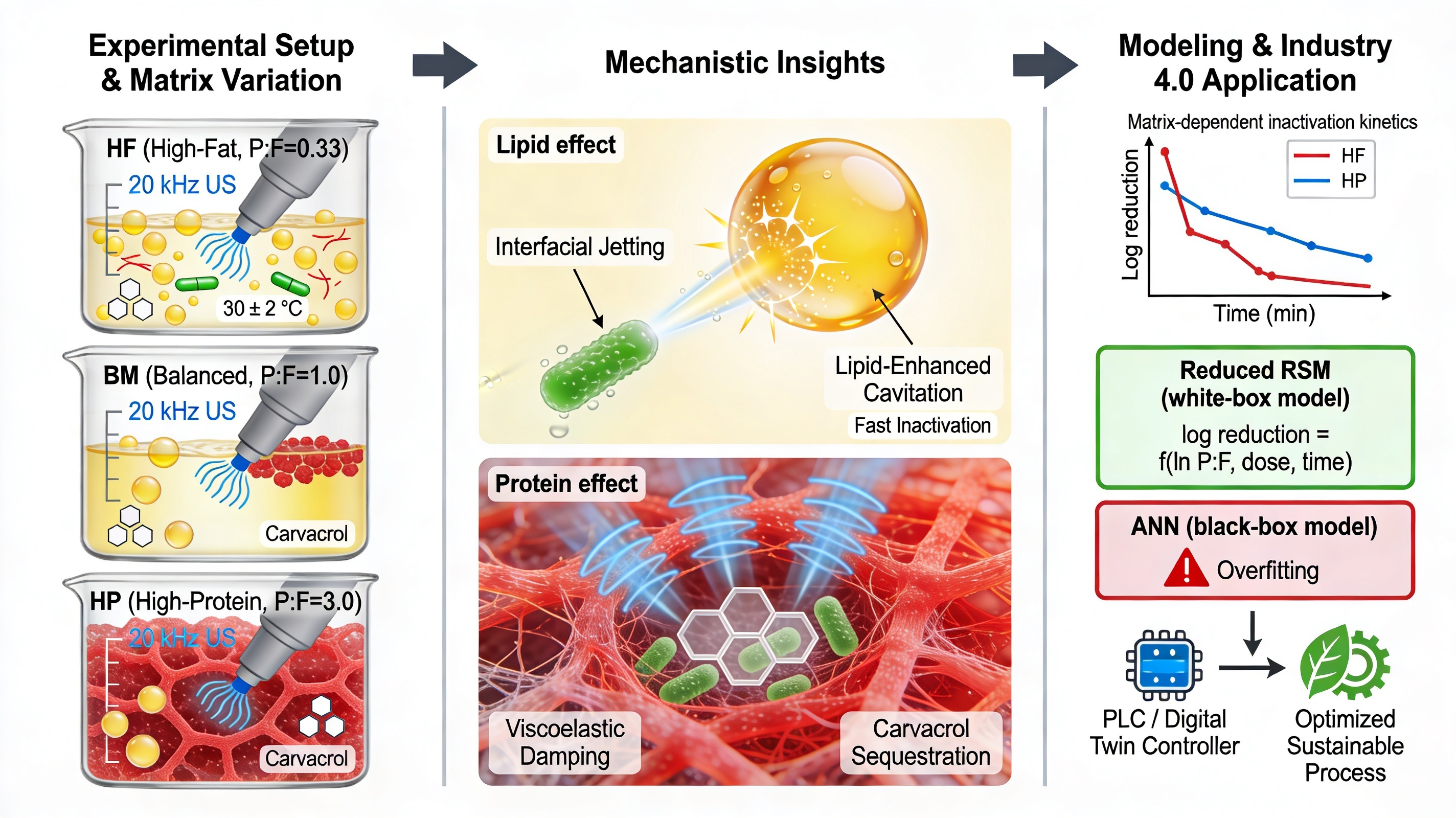
The growing consumer demand for minimally processed, “clean-label” foods is increasing interest in innovative technologies that maintain quality while ensuring microbial safety. This study sheds light on how the protein:lipid ratio in meat-like model matrices modulates the effectiveness of combined high-intensity ultrasound (20 kHz) and carvacrol treatments applied against Escherichia coli ATCC 25922. Three emulsified systems with geometrically spaced protein:lipid ratios (0.33, 1.0, 3.0) were subjected to combinations of ultrasound and carvacrol (0–1200 ppm) at 30 ± 2 °C. To address the rheological non-linearity, the matrix index was log-transformed, and the process was modeled using both Response Surface Methodology (RSM) and Artificial Neural Networks (ANN). While both models achieved high predictive accuracy ( R 2 > 0.96 ), lack-of-fit analysis revealed that the reduced polynomial RSM model provided a more robust and statistically valid representation of the process compared to the ANN, which exhibited significant overfitting to experimental noise ( p < 10 9 ). The results highlighted a distinct matrix dependency: ultrasound alone provided the fastest inactivation in the high-lipid matrix, while the high-protein matrix exhibited much slower kinetics due to viscous damping. Consequently, the explicit mathematical relationships derived from the RSM model are proposed as the preferred, transparent kernel for future digital twins and autonomous process-control systems in smart food-processing lines.

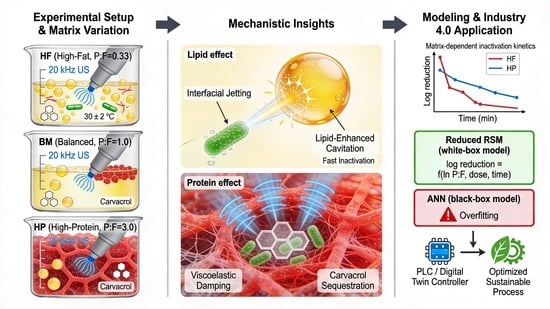
Graphical Abstract

1. Introduction

Escherichia coli is highly relevant to both raw and processed meat due to its prevalence, pathogenic potential, and role as a reservoir for antimicrobial resistance. Systematic reviews report substantial E. coli contamination in beef, poultry, and pork, with positivity rates often ranging between 20% and 80% depending on the production context [1,2].
Shiga toxin-producing E. coli (STEC), particularly O157:H7, are major causes of severe foodborne illness and are frequently linked to raw or undercooked ground meat products [3,4,5].
Furthermore, E. coli serves as a critical indicator of fecal contamination and hygiene failure, with retail-meat isolates often harboring multidrug resistance [1,6,7].
The increasing consumer demand for minimally processed, “clean-label” food products has accelerated the adoption of non-thermal technologies such as high-intensity ultrasound (HIU). Unlike thermal pasteurization, HIU inactivates microorganisms through acoustic cavitation—the violent collapse of microbubbles generating localized hot spots and shock waves [8,9,10].
To enhance efficacy, HIU is often combined with natural antimicrobials like carvacrol.
The synergistic action of HIU and carvacrol arises from complementary mechanisms. Low-frequency ultrasound primarily exerts physical effects (cavitation, shear, microstreaming) that damage cell envelopes and enhance mass transfer, thereby facilitating the uptake of dissolved antimicrobials [11].
Carvacrol, in turn, is a lipophilic phenolic compound that partitions into bacterial membranes, disrupts membrane integrity, dissipates ion gradients and depletes intracellular ATP pools [12,13].
When applied together, ultrasound-induced membrane perturbation and enhanced transport amplify the access of carvacrol to its membrane targets, resulting in synergistic inactivation effects that have been documented for several foodborne pathogens [11,14].
Among natural antimicrobials (e.g., thymol, eugenol, cinnamaldehyde), carvacrol offers a favourable balance of potency, hydrophobicity and sensory impact, and is one of the most extensively studied phenolic compounds in ultrasound-assisted hurdle technologies [15,16].
However, the efficacy of this combination is critically dependent on the food matrix composition [17].
Lipid droplets can act as cavitation nuclei [18], whereas high protein concentrations often increase bulk viscosity, causing acoustic attenuation.
In modern meat-like emulsions, the lipid phase often consists of vegetable oils—such as sunflower, canola, or olive oil—to replace animal fat and improve fatty acid profiles [19,20,21].
In such systems, the protein-to-lipid (P:L) ratio becomes a critical determinant of both physical wave propagation and chemical antimicrobial bioavailability.
In the context of Industry 4.0, the food sector is transitioning towards data-driven manufacturing and Digital Twins [22].
A Digital Twin requires a robust mathematical model to correlate material properties with process parameters for real-time control.
While Artificial Neural Networks (ANN) are favoured for capturing highly complex or discontinuous response surfaces, their “black-box” nature raises concerns for safety-critical applications. Conversely, Response Surface Methodology (RSM) utilizes low-order polynomial models that, while potentially less flexible than ANN, offer explicit mathematical transparency more suitable for embedding into programmable logic controllers (PLCs).
To address these gaps, this study investigates the ultrasound–carvacrol inactivation of Escherichia coli ATCC 25922 in simplified meat-like emulsions with geometrically spaced protein-to-lipid ratios (P:L ≈ 0.33, 1.0, 3.0).
The primary aim is to elucidate how the macronutrient balance between protein and lipid modulates microbial inactivation kinetics via lipid-enhanced cavitation and protein-mediated damping.
A second aim is to compare conventional Response Surface Methodology (RSM) with Artificial Neural Networks (ANN) in describing these matrix-dependent inactivation patterns and to assess their suitability as mathematical kernels for future smart processing and Digital Twin applications.
The specific objectives were: (1) to quantify the competing roles of lipid-enhanced cavitation and protein-mediated damping; and (2) to identify the most statistically robust model architecture to serve as a reliable predictive engine in Industry 4.0 frameworks.

2. Materials and Methods

2.1. Bacterial Culture Preparation

Escherichia coli ATCC 25922 strain was obtained from the culture collection of the Food Biotechnology Laboratory at Aksaray University (Aksaray, Türkiye). Stock cultures were activated from glycerol stocks (−18 °C) by inoculating 100 μL stock into 10 mL Tryptic Soy Broth (TSB; Merck, Darmstadt, Germany) and incubating at 37 °C for 24 h. For use in experiments, activated cultures were spread on Plate Count Agar (PCA; Merck, Darmstadt, Germany) and isolated colonies were obtained. A single colony was subcultured into TSB and incubated at 37 °C for 18–24 h; the resulting stationary-phase culture (≈ 10 9 CFU/mL) was used as an inoculum.

2.2. Formulation of Model Meat-like Emulsions

To systematically investigate the impact of macronutrient composition while minimizing the confounding variables inherent in complex muscle tissues—such as connective tissue networks, fiber orientation, and enzymatic variability—simplified model food systems were developed.
These models serve as controlled environments to decouple matrix-dependent effects from structural heterogeneity, a common approach in food engineering research [19,23].
In these formulations, beef extract (Merck, Darmstadt, Germany) was utilized as the standardized protein source, while commercial sunflower oil (Sole, Tekirdag, Türkiye) represented the model lipid phase.
The selection of a liquid vegetable oil as a fat replacer aligns with contemporary meat science trends focused on improving fatty acid profiles and developing healthier formulations [20,24].
Furthermore, the use of a liquid lipid phase instead of solid animal fat allows for a clearer investigation of the physical interactions between protein-mediated damping and lipid-enhanced cavitation, as it avoids the complexities of triglyceride crystallinity and melting profiles [25].
Three distinct matrices were formulated with a constant total solid content (20%, w/v) but varying protein-to-lipid ratios (P:L):
  • High-Lipid (HL): 5% Protein + 15% Lipid (P:L ≈ 0.33)
  • Balanced (BM): 10% Protein + 10% Lipid (P:L = 1.0)
  • High-Protein (HP): 15% Protein + 5% Lipid (P:L = 3.0)
The selection of three protein-to-lipid ratios was based on industrial formulation clusters. Recent surveys of meat emulsion systems show that commercial products naturally group into three macromolecular regimes: high-lipid systems (≈13–17% protein, 20–30% lipid), balanced formulations (≈15–20% protein, 10–20% lipid), and high-protein/low-lipid products (≈17–22% protein, 3–10% lipid) [21,26]. Within this framework, our three geometrically spaced P:L ratios (0.33, 1.0, and 3.0) were strategically chosen to represent these high-lipid, balanced, and high-protein regimes.

2.3. Emulsification Process

The components were mixed with sterile distilled water. No external emulsifying agents were added; the high-intensity ultrasound treatment itself served as a powerful physical homogenizer, creating stable emulsions in situ. This approach aligns with previous findings demonstrating that ultrasound cavitation effectively reduces particle size and improves stability in meat emulsions without surfactants [18]. Preliminary stability tests confirmed that no macroscopic phase separation occurred within 24 h of treatment.

2.4. Inoculation and Ultrasound-Carvacrol Treatment

Escherichia coli ATCC 25922 was cultured in Tryptic Soy Broth (TSB) at 37 °C for 24 h. The cells were harvested by centrifugation (5000× g, 10 min) and washed twice with peptone water (0.1%). The final pellet was resuspended in the prepared model matrices to achieve an initial population of ≈108 CFU/mL.
Ultrasound treatments were performed using a probe-type sonicator (Model 2200, Bandelin, Berlin, Germany; 20 kHz, nominal power 200 W, 14 mm tip diameter). The probe was immersed 2 cm below the liquid surface. The temperature was maintained at 30 ± 2 °C using a water bath circulation system to isolate non-thermal effects from thermal inactivation. Carvacrol (98% purity, Sigma-Aldrich, Steinheim, Germany) was added to the matrices immediately prior to sonication at concentrations of 0, 600, 900, and 1200 ppm. Samples were withdrawn at specific time intervals ( 0 , 2 , 5 , 8 , 12 , 15 , 18 , 20 , 22 min) for enumeration.

2.5. Microbiological Analysis

Live cell counting was performed using the Miles and Misra (drop plate) technique [27], which enables efficient processing of high sample volumes. Serial dilutions were prepared in peptone water, PCA plates were divided into four quadrants, and three 20 μL drops from each dilution were placed on the agar surface from a height of 2.5 cm. After allowing the drops to dry for 15–20 min, the plates were incubated at 37 °C for 18–24 h. The enumeration process was carried out in sectors containing 2–20 colonies within the drop area, and the results were expressed as CFU/mL.
For samples with microbial counts below the detection limit (no colonies observed in undiluted drops), the count was limited to the theoretical Detection Limit (LOD). Based on the volume placed on the plate (3 × 20 μL drops, totaling 60 μL), the LOD was calculated as 16.7 CFU/mL, corresponding to a value of 1.22 log CFU/mL. While the true concentration in these samples is strictly below this threshold, assigning the LOD serves as a conservative upper bound on survivors. This treatment ensures that information from late-time measurements is preserved without artificially overestimating processing safety.

2.6. Inactivation Kinetic Modeling

Survival data were fitted to the Mafart Weibull model (Equation (1)) [28] to accommodate the nonlinear deviations (shoulder/tail formation) that are frequently observed in ultrasonic inactivation:
log 10 ( N / N 0 ) = t δ p
In this equation, δ (delta) represents the initial logarithmic decay time (scale parameter); p represents the shape parameter of the curve ( p > 1 : downward-curved/sensitive, p < 1 : upward-curved/resistant population). This modeling strengthens the mechanistic interpretation of matrix effects compared to classical first-order kinetics. Also, the time to reach a 5-log reduction ( t 5 log ) was calculated for each experimental condition.

2.7. Experimental Design and Data Modeling

A full factorial design was employed to study the effects of Matrix Type (3 levels), Carvacrol Dose (4 levels), and Time (9 levels). To address the non-linear rheological changes associated with formulation, the protein-to-lipid ratio was treated as a continuous variable using a geometric spacing strategy. This approach provides industrially relevant low–centre–high design points required for statistically robust RSM and ANN modeling while maintaining a focus on matrix-dependent inactivation kinetics. The levels (0.33, 1.0, 3.0) correspond to a symmetric distribution on a logarithmic scale (approx. ln ( 0.33 ) 1.1 , ln ( 1.0 ) = 0 , ln ( 3.0 ) + 1.1 ). This transformation allows for the application of Response Surface Methodology (RSM) on a statistically balanced design space. Although additional intermediate formulations could further refine the response surface, three geometrically spaced P:L levels already satisfy the minimum requirement for fitting second-order (quadratic) models and provide sufficient spread for stable ANN interpolation within the experimental domain.

2.8. Response Surface Methodology (RSM)

The log-transformed matrix index ( X 1 = ln ( P : L ) ), carvacrol dose ( X 2 ), and time ( X 3 ) were used as independent variables. A second-order polynomial model was initially fitted. Based on the principle of parsimony, non-significant terms were removed to generate a **Reduced RSM Model**, ensuring that the model captures systematic trends rather than overfitting experimental noise. The model’s quality was evaluated using the coefficient of determination ( R 2 ), Root Mean Square Error (RMSE), and Lack-of-Fit testing ( p < 0.05 ).

2.9. Artificial Neural Network (ANN) Modeling

A feedforward artificial neural network (ANN) was developed as a comparative predictive tool using the same input (matrix ratio, dose, time) and output (log reduction) variables, following standard multilayer perceptron practice in regression problems.
The network architecture as shown in Figure 1 consisted of an input layer with 3 neurons ( X 1 , X 2 , X 3 ), a single hidden layer with 5 neurons using the hyperbolic tangent (tanh) activation function, and an output layer with 1 neuron (Y) using a linear activation function [29]. This architecture was selected based on preliminary trials testing 3–10 hidden neurons and comparing performance metrics; a hidden layer size of 5 was chosen to balance model flexibility with generalization capability.
To prevent data leakage inherent in time-series measurements, where successive time points are not independent, model validation was performed using grouped k-fold cross-validation ( k = 5 ), a widely recommended strategy for assessing generalization in supervised learning [30]. Data points were grouped by experimental treatment (Treatment_ID: specific Matrix × Dose combination), ensuring that the model was tested on unseen independent experimental runs rather than interpolated time points from the training set. This grouping provides a more rigorous estimate of true generalization performance than random splitting of individual observations.
The dataset was systematically split as follows: 70% of grouped samples were used for training ( n = 151 observations), 15% for validation ( n = 33 observations), and 15% for testing ( n = 32 observations). Network training employed the Levenberg–Marquardt backpropagation algorithm, which is commonly used for efficiently solving nonlinear least-squares problems in feedforward neural networks [29,31]. Early stopping was implemented to prevent overfitting: training was terminated when the validation error increased for six consecutive epochs, a standard criterion to avoid degradation of generalization performance in ANN models.

2.10. Statistical Analysis

All experiments were conducted in triplicate. Data were expressed as mean ± standard deviation (SD). All statistical computations, modeling, and data visualizations were performed using the Python (Version 3.13.9) programming language with the Pandas (Version 2.3.3), NumPy (Version 2.3.5), Matplotlib (Version 3.10.6), Seaborn (Version 0.13.2), SciPy, Statsmodels (Version 0.14.5), and Scikit-learn (Version 1.7.2) libraries. Statistical significance was established at α = 0.05 .
The effects of matrix type and carvacrol dose on the Weibull kinetic parameters ( δ , p, and t 5 log ) were evaluated using a two-way analysis of variance (ANOVA). Post-hoc comparisons were conducted using Tukey’s Honestly Significant Difference (HSD) test. Additionally, the global effects of matrix, dose, and time on microbial inactivation were analyzed using the General Linear Model (GLM) framework within the Response Surface Methodology (RSM). Prior to analysis, the normality of residuals was verified using the Shapiro-Wilk test, and homogeneity of variance was confirmed using Levene’s test. In cases where Levene’s test indicated heterogeneity, logarithmic transformation was applied to stabilize variance.
Statistical validation of the fitted models was performed using ANOVA. Model adequacy was rigorously evaluated through the coefficient of determination ( R 2 ), adjusted R 2 , and lack-of-fit testing to distinguish between systematic model error and pure experimental error. To strictly compare the generalization capability of the RSM and ANN models, the Mean Squared Error (MSE) and lack-of-fit significance were evaluated. Three-dimensional (3D) response surface and two-dimensional (2D) contour plots were generated to visualize the complex interactive effects of protein-to-lipid ratio, carvacrol dose, and treatment time on E. coli inactivation and to identify optimal processing conditions. To statistically compare the generalization capability of the RSM and ANN models, a paired t-test was performed on the absolute prediction errors ( | Y p r e d Y o b s | ) calculated for the independent test set observations.

3. Results and Discussion

3.1. Matrix-Dependent Inactivation Dynamics: Lipid Enhancement vs. Protein Damping

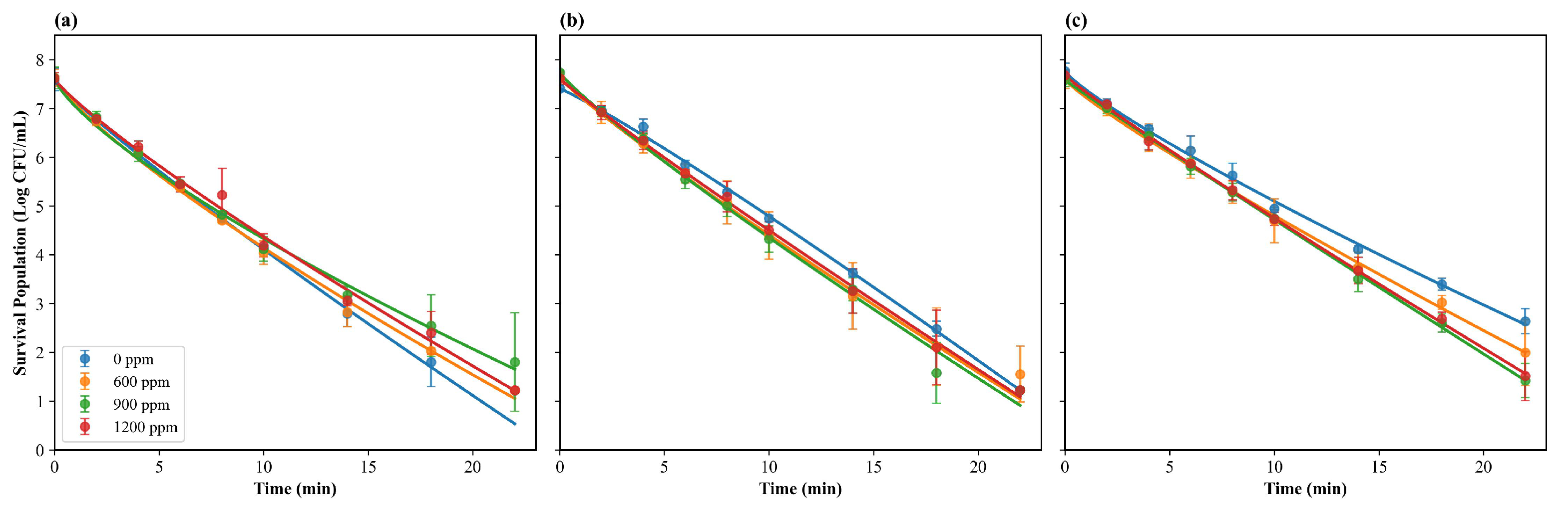
The combined treatment of ultrasound and carvacrol resulted in a significant, matrix-dependent inactivation of E. coli ATCC 25922. The survival curves (Figure 2) reveal a distinct hierarchy of sensitivity: High-lipid (HL) > Balanced Matrix (BM) > High-Protein (HP).
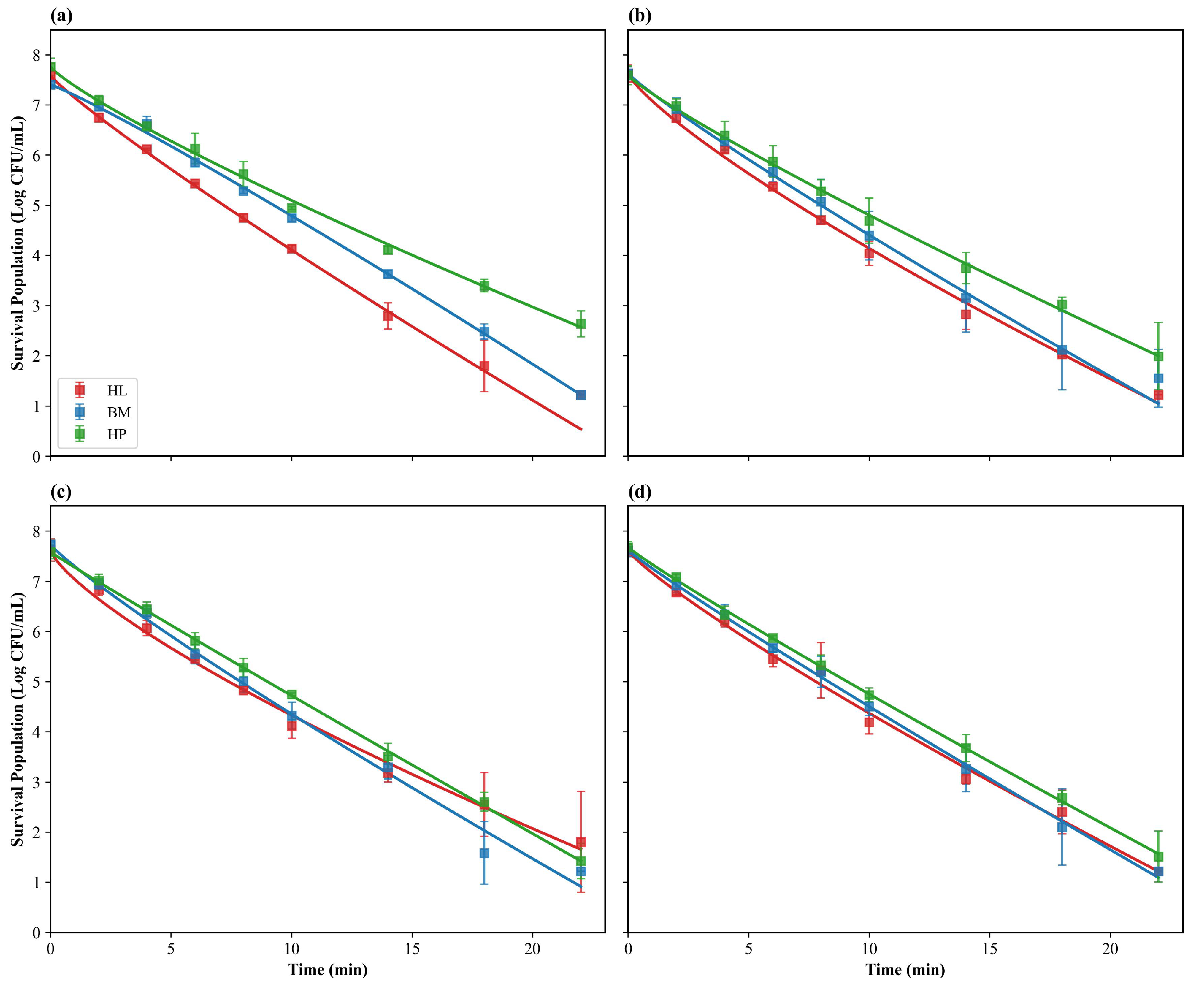
In the absence of carvacrol (0 ppm), the HL matrix (protein:lipid = 0.33 ) exhibited the strongest antimicrobial response, achieving a reduction of 6.5 log after 22 min. This finding challenges the conventional view that lipids always protect bacteria; instead, it aligns with acoustic cavitation theory in heterogeneous liquids. The superior inactivation can be physically explained by two synergistic mechanisms. First, dispersed lipid droplets act as cavitation nuclei, lowering the cavitation threshold [8]. As demonstrated by Orthaber et al. [32] and Han et al. [33], bubbles collapsing near an oil-water interface do not collapse spherically but generate high-velocity liquid jets (“interfacial jetting”) that penetrate the interface. Since bacteria can preferentially accumulate at oil–water interfaces in heterogeneous systems to minimize surface energy [34], they are directly exposed to these concentrated shear forces. Second, the acoustic impedance mismatch between oil and water phases amplifies local shock wave reflection, further intensifying mechanical stress [35].
Conversely, the HP matrix exhibited the slowest kinetics (Figure 2c), achieving only 5.2 log reduction. High protein content (15% meat extract) increases bulk viscosity, which is known to attenuate acoustic wave propagation [36]. However, the inhibitory mechanism extends beyond simple viscosity. Shen et al. [37] recently demonstrated through numerical simulations that the viscoelastic nature of protein networks significantly raises the acoustic pressure threshold required for cavitation inception. This implies that the HP formulation represents a regime where ultrasonically induced shear is effectively damped by the matrix structure, which is consistent with the significantly slower inactivation rates observed in this study. Furthermore, this physical barrier is compounded by chemical interactions; molecular dynamics simulations indicate that carvacrol binds to the hydrophobic pockets of myofibrillar proteins (e.g., myoglobin) [38]. Thus, in the HP matrix, the free carvacrol activity is compromised, providing a biochemical explanation for the attenuated synergistic effect compared to the lipid-rich environment.
Overall, the scientific foundation of our formulation strategy rests on the fundamental competition between two matrix-dependent phenomena: acoustic attenuation and cavitation nucleation. In high-protein matrices ( P : L 3.0 ), the increased bulk viscosity and viscoelastic damping significantly raise the acoustic pressure threshold required for cavitation inception, thereby shielding the E. coli cells from mechanical shear stresses [8]. Conversely, in high-lipid systems ( P : L 0.33 ), dispersed oil droplets act as preferential nucleation sites, lowering the cavitation threshold and concentrating lethal micro-jets at the lipid–water interface—a region where Gram-negative bacteria like E. coli frequently partition due to their amphiphilic surface characteristics [9,18]. Furthermore, the chemical bioavailability of carvacrol is governed by its partitioning coefficient; high protein content facilitates hydrophobic binding to protein domains, effectively scavenging the antimicrobial and reducing its free aqueous concentration, whereas lipid-rich environments promote a sustained release from the oil–water interface directly onto the sequestered microbial cells [17,38].

3.2. Synergistic Interactions: Hurdle Effect and Saturation

The interaction between ultrasound and carvacrol displayed a nuanced, matrix-specific behavior (Figure 3). In the BM and HP matrices, increasing carvacrol concentration resulted in a clear dose-dependent increase in lethality. This characterizes a classic hurdle effect, where sonoporation facilitates the entry of antimicrobial agents into the cell [39,40,41].
However, in the HP matrix, significantly higher doses were required to achieve reductions comparable to the HL matrix. Ultrasound pre-treatment is known to disrupt protein secondary structures; however, proteins can still bind carvacrol via hydrophobic interactions. This binding mechanism, validated by molecular dynamics simulations in pork systems [42], reduces the free concentration of carvacrol in the aqueous phase. This likely explains the slower kinetics in HP, where carvacrol partitions into protein phases (e.g., myoglobin), reducing its bioavailability against E. coli.
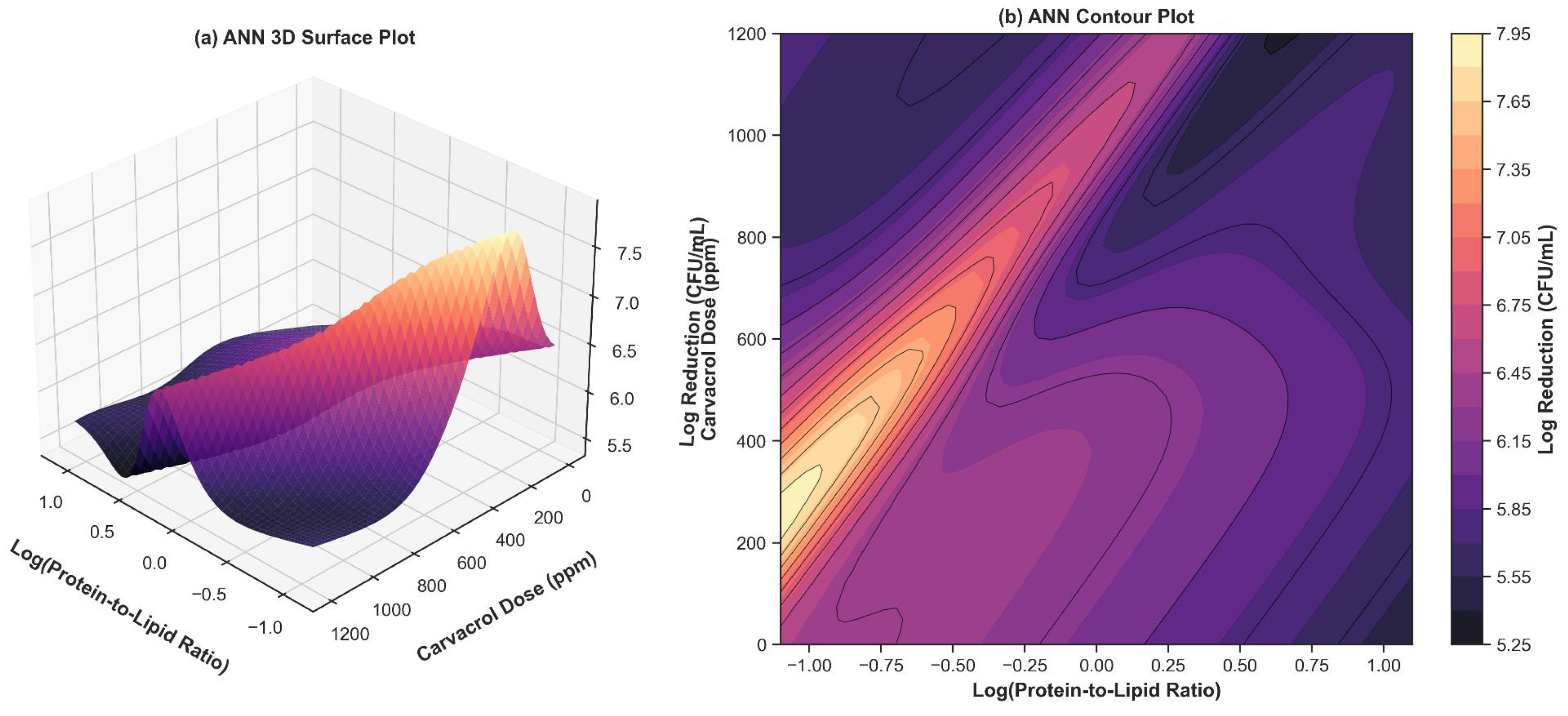
In contrast, a clear saturation effect emerged in the HL matrix: above 600 ppm, higher doses did not significantly increase inactivation, with the endpoint remaining around 6.5 6.7 log (Figure 3b–d). This plateau appears to be governed by a thermodynamic mass-transfer limitation that manifests as an “all-or-nothing” phenomenon [43]. As elucidated by Zhao et al. [44], while ultrasound enhances the mass transfer rate across liquid-liquid interfaces, it accelerates the system towards a thermodynamic equilibrium dictated by the partition coefficient rather than shifting it indefinitely. In high-lipid matrices, the abundant lipid phase acts as a substantial sink for hydrophobic compounds. Consistent with the “scavenging effect” reported by Liu et al. [45] in milk emulsions, excess carvacrol likely remains sequestered within the lipid droplets or surfactant-free micro-emulsions. Consequently, beyond a critical dose (≈600 ppm), the aqueous concentration of carvacrol reaches a saturation limit. Therefore, any additional antimicrobial remains thermodynamically unavailable to target the bacterial cells, implying that mechanical disruption eliminates the susceptible population before the additional chemical potential of higher carvacrol doses becomes distinguishable.

3.3. Kinetic Analysis Using the Weibull Model

The Weibull model provided excellent fits to the experimental data ( R 2 = 0.984 0.998 ), confirming the non-linear nature of inactivation (Table 1). The shape parameters (p) were consistently <1, indicating upward concavity and the presence of “tails” in the survival curves.
According to vitalistic theories, this tailing effect ( p < 1 ) reflects the phenotypic heterogeneity of the bacterial population, where a sub-population possesses greater inherent resistance to the lethal stress [46]. In the context of emulsion systems, this heterogeneity is further amplified by the structural protection offered by the matrix. As described by Gera and Doores [47] in milk systems, fat globules and protein aggregates can exert a “sonoprotective effect” by physically encapsulating bacterial cells or dampening the local acoustic energy. The resistant tails observed in our study likely correspond to cells that were effectively sequestered within these micro-architectural shelters, evading the direct impact of cavitation.
The ANOVA results (Table 2) confirmed that the scale parameter δ (time to first decimal reduction) was significantly influenced by the matrix type ( p < 0.001 ). HL matrices consistently exhibited the lowest δ values (2.05–2.57 min). Following the interpretation by Iñiguez-Moreno et al. [48], a lower δ indicates that the applied stress intensity exceeds the immediate physiological adaptability of the cells, leading to rapid initial inactivation. This supports our earlier finding that lipid-enhanced cavitation in the HL matrix delivers an overwhelming initial physical shock.
Interestingly, increasing the carvacrol dose generally led to a decrease in the p value (e.g., from 0.89 to 0.75 in HL). This suggests that higher antimicrobial concentrations impose a rigorous selection pressure: the susceptible population is eliminated almost instantly (reducing δ ), leaving behind only the most resilient or spatially protected sub-population. This dynamic widens the variance in resistance probability, mathematically manifesting as a more pronounced tail (lower p) [49]. In this context, maintaining sub-LOD observations at the 1.22 log threshold—rather than setting them to zero or discarding them—is critical for the accurate characterization of this tail. Alternative treatments would artificially eliminate the tailing effect and underestimate the presence of a resistant sub-population. By utilizing the LOD, we ensure that the estimated Weibull p parameter reflects a realistic, non-zero surviving fraction, providing a more reliable foundation for safety validation in meat-like emulsions.

3.4. Process Modeling: Reduced RSM

To translate kinetic findings into process design tools, a reduced Response Surface Model was developed using the log-transformed matrix index. Non-significant terms were removed to satisfy the principle of parsimony.
The reduced model (Equation (2)) exhibited excellent descriptive power ( R 2 = 0.971 ). The analysis of coefficients (Table 3) revealed that treatment time was the most dominant factor ( t = 34.16 ), followed by the matrix index ( t = 4.77 ). Crucially, the quadratic terms for Dose ( t = 2.40 ) and Time ( t = 6.06 ) were significant and negative, mathematically confirming the “diminishing returns” or saturation effect observed in the survival curves.
Y log = 0.126 0.230 ( ln M ) + 0.00047 D + 0.340 T 2.89 × 10 7 D 2 0.0026 T 2 + 0.0002 ( ln M × D ) 0.013 ( ln M × T )
where M is the Matrix Index (P:L ratio), D is Dose (ppm), and T is Time (min).
The ANOVA results (Table 4) demonstrate the statistical adequacy of this approach. Although the lack-of-fit test for the RSM model was statistically significant ( p = 0.040 ), the corresponding F-value (1.34) is close to unity. This suggests that the systematic deviation from the model is small in practical magnitude relative to the inherent experimental variability of microbial enumeration, and the model provides a statistically adequate fit for process description.

3.5. Comparative Modeling: RSM vs. ANN

A feed-forward ANN (3–5–1 topology) was developed as a non-linear benchmark. While the ANN achieved a high coefficient of determination in the training phase ( R 2 = 0.975 ), its performance degraded significantly on the independent testing set (Table 5). The Root Mean Square Error (RMSE) for the ANN increased by over 66% from training (0.331) to testing (0.551), whereas the Reduced RSM maintained a robust overall RMSE of 0.347.
This divergence confirms that the ANN’s flexibility led to overfitting the experimental noise ( p < 10 9 for lack-of-fit). The assessment of ANN overfitting was based on the substantial divergence between training and testing errors, alongside diagnostic visualization of residual patterns; formal hypothesis testing for residual normality was not prioritized due to the non-parametric nature of the network and the evident error clustering observed during residual analysis. In the context of digital twins, where reliability is paramount, the explicit polynomial structure of the RSM provides a “white-box” advantage. Unlike the ANN, which requires complex weight matrices, the RSM equation can be directly embedded into Programmable Logic Controllers (PLCs) with minimal computational load, ensuring predictable behavior even at the edges of the design space.

3.6. Implications for Industry 4.0: Transparency vs. Complexity

The comparative analysis provides a clear directive for digital twin development. The ANN model (Figure 4), while capturing complex local features, failed to generalize better than the polynomial approximation due to the inherent variability of biological data.
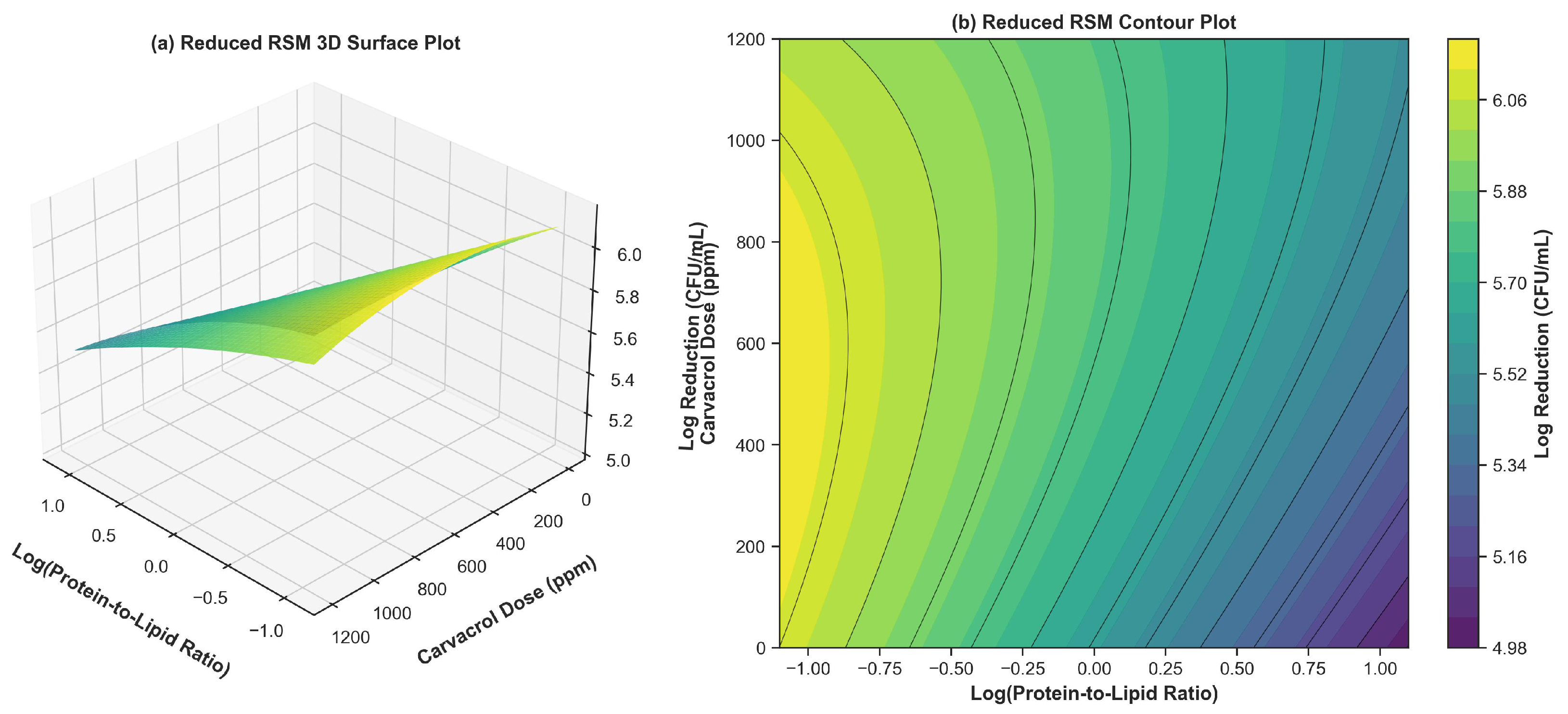
The reduced RSM model (Figure 5) not only satisfies the statistical requirements but also offers a transparent, mathematical structure suitable for embedding into industrial controllers (PLCs).
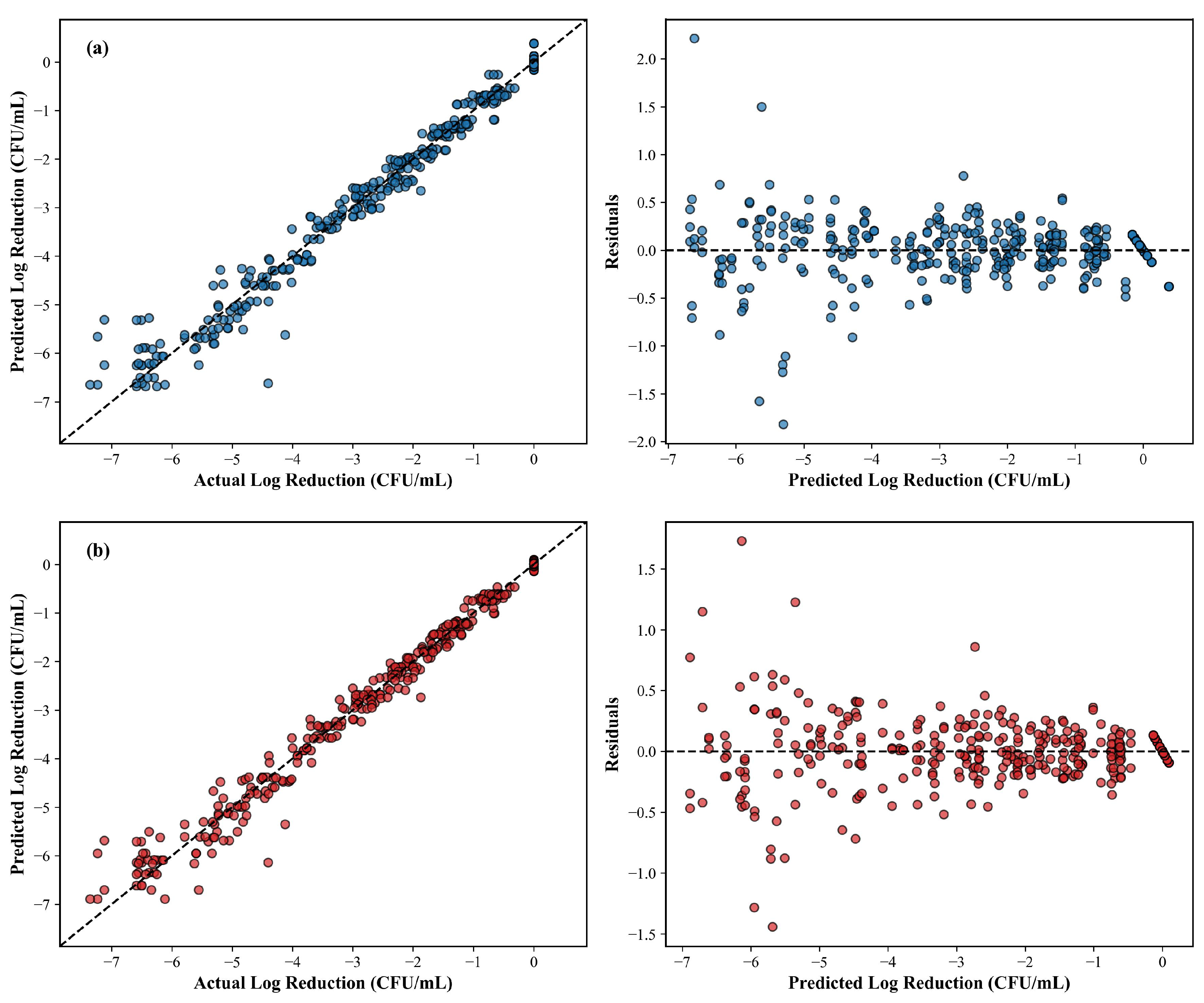
The predictive capabilities of both models were visualized in the comparative diagnostic plots (Figure 6). The Reduced RSM model (Figure 6a) demonstrates unbiased predictions across the entire experimental range ( R 2 = 0.971 ), with residuals randomly distributed around zero, confirming the assumption of homoscedasticity. In contrast, while the ANN model (Figure 6b) achieved a similarly high correlation, the residual analysis reveals distinct clustering patterns. This visual evidence corroborates the lack-of-fit analysis ( p < 10 9 ), indicating that the ANN’s flexibility led to the modeling of irreducible experimental noise. Consequently, the RSM is validated as the more statistically robust and reliable kernel for integration into process control algorithms.
Recent reviews emphasise that ANN, RSM and digital-twin architectures are becoming central tools in Industry 4.0-oriented food manufacturing, where they support real-time quality control, process optimisation and supply-chain transparency [50,51,52,53]. However, most existing digital-twin and ANN/RSM applications in food focus on unit operations such as drying, extraction or generic quality grading, and only rarely address matrix-dependent microbial inactivation in complex emulsified systems. In this context, our study contributes a mechanistically grounded, statistically validated comparison of RSM and ANN for ultrasound–carvacrol inactivation in meat-like emulsions, explicitly linking macronutrient composition to pathogen response. The reduced RSM model, formulated on a log-transformed protein-to-lipid axis, therefore provides a transparent and PLC-ready kernel that can be embedded into future Digital Twins for smart hurdle-processing of meat emulsions, while the ANN serves as a flexible nonlinear benchmark within the same experimental domain. Our findings are also consistent with emerging hybrid RSM–ANN strategies in food systems, where the two methods are assigned complementary roles. In such workflows, RSM is typically used to design efficient experiments (e.g., CCD or Box–Behnken), screen factors and obtain an initial, interpretable polynomial description of factor–response relationships, while ANN is then trained on the RSM-designed data to capture higher-order nonlinearities and improve multi-response prediction accuracy [53,54,55,56,57,58]. Several comparative studies on spray-dried juices, extraction of bioactives and fermentation systems report that ANN models, especially when coupled with metaheuristics such as GA, achieve lower RMSE/MAE and higher R 2 than standalone RSM, whereas RSM retains advantages in transparency and ease of implementation [59,60]. In this context, our use of RSM for structured exploration and explicit modelling, with ANN as a flexible interpolative benchmark within the experimental domain, is in line with current best practice for Industry 4.0-oriented, data-driven optimisation in food processing.

3.7. Sustainability and Industrial Relevance

The results provide actionable insights for Industry 4.0 applications. An optimization algorithm based on the Reduced RSM (Table 6) revealed that the protein-to-lipid ratio is the critical determinant for energy and chemical efficiency.
For High-lipid products, the model indicates that the safety target can be met in ≈15.5 min without any carvacrol, leveraging lipid-enhanced cavitation. The RSM optimization identified processing regimes that eliminate the carvacrol requirement under the modeled conditions, achieving the target ≥ 5-log reduction with ultrasound alone. Conversely, for High-Protein matrices, the model identifies that extending treatment time (to ≈19.7 min) is more effective than increasing chemical dosage, due to the scavenging of carvacrol by proteins. This capability to dynamically adjust process parameters based on incoming raw material composition is the core advantage of a Digital Twin, preventing over-processing and minimizing environmental footprint.

3.8. Study Limitations and Statistical Considerations

The experimental design employed a 3-level general factorial approach with geometrically spaced protein-to-lipid ratios ( 0.33 , 1.0 , 3.0 ). Although this spacing differs from the linearly spaced levels typical of Central Composite Designs (CCD), it was deliberately chosen to reflect the underlying physics of acoustic propagation. As highlighted by Dhal et al. [61], acoustic parameters such as isentropic compressibility and impedance in complex aqueous systems often exhibit non-linear dependencies on solute concentration due to changes in electrostriction and intermolecular interactions. Therefore, the geometric spacing (and subsequent log-transformation) provides a more physically relevant mapping of the rheological phase transitions than a standard linear design.
The emulsions used in this work contain sunflower oil as the lipid phase and do not reproduce the crystalline structure and minor components of animal fat; therefore, extrapolation of the present P:L effects to real meat products should be made cautiously and ideally validated in systems containing actual animal fat.
Because E. coli ATCC 25922 is a non-pathogenic surrogate and some pathogenic strains (e.g., STEC O157:H7) can be more resistant under certain conditions, extrapolation of our results to specific pathogens should be made with caution and ideally validated in future studies.
A limitation of this study is that rheological and acoustic properties, such as bulk viscosity and impedance, were not experimentally quantified; thus, mechanistic explanations regarding viscoelastic damping are inferred from formulation composition and established literature rather than direct measurement.
Consequently, while the quadratic RSM model serves primarily to characterize global trends, it effectively captures the exponential nature of viscous damping observed in high-protein matrices. Future studies aiming for high-precision optimization at intermediate ratios may benefit from mixture designs (e.g., simplex-lattice). Additionally, while the ANN model successfully modeled the saturation effect in high-lipid matrices, its predictive power outside the trained node space remains to be validated. The principles established here regarding matrix-driven acoustic shielding are likely applicable to other heterogeneous food systems, such as fresh produce, where surface hydrophobicity modulates antimicrobial efficacy [62].

4. Conclusions

This study elucidated that the protein-to-lipid ratio serves as a critical control point in ultrasonic inactivation; lipid droplets enhanced cavitation efficacy via interfacial jetting, whereas high protein concentrations dampened the effect through viscoelastic attenuation and chemical scavenging. From a modeling perspective, the Reduced RSM proved superior to the ANN, which exhibited significant overfitting to experimental noise on independent test data. Consequently, the derived RSM equations are proposed as a robust mathematical kernel for future Industry 4.0 applications, enabling the automation of decontamination processes with high precision and reliability.

Author Contributions

Conceptualization, K.B. and F.Ş.; methodology, K.B. and F.Ş.; software, K.B.; validation, F.Ş.; formal analysis, K.B. and F.Ş.; investigation, K.B.; resources, F.Ş.; data curation, K.B.; writing—original draft preparation, K.B.; writing—review and editing, K.B. and F.Ş.; visualization, F.Ş.; supervision, F.Ş.; project administration, F.Ş.; funding acquisition, F.Ş. All authors have read and agreed to the published version of the manuscript.

Funding

This research received no external funding.

Data Availability Statement

Data is contained within the article.

Acknowledgments

This study was derived from the master’s thesis of Kamran Baghirov. Generative AI and AI-Assisted Technologies in the Writing Process: During the preparation of this work, the authors used Gemini 1.5 Flash (Google, Mountain View, CA, USA; https://gemini.google.com, accessed on 5 February 2026) to assist with the conceptual design and formatting of the graphical abstract and (Grammarly Inc., San Francisco, CA, USA) (Grammarly Inc.; Web version, https://www.grammarly.com, accessed on 5 February 2026) to improve readability and language. After using this tool/service, the authors reviewed and edited the content as needed and take full responsibility for the publication’s content.

Conflicts of Interest

The authors declare no conflicts of interest.

References

  1. Brito-Junior, L.; Brito, H.; Simoes, M.; Farias, J.; Santos, B.; Marques, F.; Medeiros, M.; Alves, M.; Pereira, C.; Diniz, A.; et al. Prevalence of Escherichia coli isolates in meat products: A systematic review. Braz. J. Biol. 2025, 85, e292127. [Google Scholar] [CrossRef]
  2. Kalwaniya, M.; Gaurav, A.; Kumar, N.; Choudhary, D. Prevalence and antibiogram of Escherichia coli isolated from meat and meat products. J. Entomol. Zool. Stud. 2020, 8, 438–443. [Google Scholar]
  3. Fayemi, O.; Akanni, G.; Elegbeleye, J.; Aboaba, O.; Njage, P. Prevalence, characterization and antibiotic resistance of Shiga toxigenic Escherichia coli serogroups isolated from fresh beef and locally processed ready-to-eat meat products in Lagos, Nigeria. Int. J. Food Microbiol. 2021, 347, 109191. [Google Scholar] [CrossRef]
  4. Karmi, M. Escherichia coli O157:H7 in raw and processed meat with virulence genes detection in Aswan Governorate. Zagazig Vet. J. 2019, 47, 275–286. [Google Scholar] [CrossRef]
  5. Hiko, A.; Asrat, D.; Zewde, G. Occurrence of Escherichia coli O157:H7 in retail raw meat products in Ethiopia. J. Infect. Dev. Ctries. 2008, 2, 389–393. [Google Scholar] [CrossRef] [PubMed]
  6. Hasib, F.; Magouras, I.; St-Hilaire, S.; Paudel, S.; Kamali, M.; Lugsomya, K.; Lam, H.; Elsohaby, I.; Butaye, P.; Nekouei, O.; et al. Prevalence and characterization of antimicrobial-resistant Escherichia coli in chicken meat from wet markets in Hong Kong. Front. Vet. Sci. 2024, 11, 1340548. [Google Scholar] [CrossRef] [PubMed]
  7. Wang, X.; Ma, H.; Li, Y.; Gao, S.; Qu, W.; Jiang, X.; Ren, X. Ultrasound technology in fish proteins processing: Innovations in extraction and structure–function dynamics. Ultrason. Sonochem. 2024, 110, 107033. [Google Scholar] [CrossRef]
  8. Alarcon-Rojo, A.D.; Carrillo-Lopez, L.M.; Reyes-Villagrana, R.; Huerta-Jiménez, M.; Garcia-Galicia, I.A. Ultrasound and meat quality: A review. Ultrason. Sonochem. 2019, 55, 369–382. [Google Scholar] [CrossRef] [PubMed]
  9. Chemat, F.; Rombaut, N.; Sicaire, A.G.; Meullemiestre, A.; Fabiano-Tixier, A.S.; Abert-Vian, M. Ultrasound assisted extraction of food and natural products. Mechanisms, techniques, combinations, protocols and applications. A review. Ultrason. Sonochem. 2017, 34, 540–560. [Google Scholar] [CrossRef]
  10. Ashokkumar, M.; Bhaskaracharya, R.; Kentish, S.; Lee, J.; Palmer, M.; Zisu, B. The ultrasonic processing of dairy products: An overview. Dairy Sci. Technol. 2010, 90, 147–168. [Google Scholar] [CrossRef]
  11. Chang, Y.; Kim, M.; Park, J.; Jo, C. Synergistic inactivation of bacteria using a combination of ultrasound and natural antimicrobials in food systems. Front. Microbiol. 2021, 12, 682900. [Google Scholar] [CrossRef]
  12. Ultee, A.; Kets, E.P.W.; Smid, E.J. Mechanisms of action of carvacrol on the food-borne pathogen Bacillus cereus. Appl. Environ. Microbiol. 1999, 65, 4606–4610. [Google Scholar] [CrossRef]
  13. Stratakos, A.C.; Koidis, A. Synergistic interactions of carvacrol with other natural antimicrobials: A review of mechanisms and applications in food preservation. Food Microbiol. 2018, 73, 118–129. [Google Scholar] [CrossRef]
  14. Liao, X.; Liu, D.; Xiang, Q.; Ahn, J.; Chen, S. Inactivation of foodborne pathogens based on synergistic effects of ultrasound and natural compounds during fresh produce washing. Ultrason. Sonochem. 2020, 64, 104958. [Google Scholar] [CrossRef]
  15. Nazzaro, F.; Fratianni, F.; De Martino, L.; Coppola, R.; De Feo, V. Mechanisms, applications and challenges of natural antimicrobials in food systems. Food Control 2022, 138, 109017. [Google Scholar] [CrossRef]
  16. Silva, C.L.; Pereira, R.N.; Vicente, A.A. Lights and shadows of essential oil-derived compounds as food preservatives: Efficacy, mechanisms and resistance prevention. Compr. Rev. Food Sci. Food Saf. 2025, 24, 1–30. [Google Scholar]
  17. Wang, L.; Dekker, M.; Heising, J.; Zhao, L.; Fogliano, V. Food matrix design can influence the antimicrobial activity in the food systems: A narrative review. Crit. Rev. Food Sci. Nutr. 2024, 64, 8963–8989. [Google Scholar] [CrossRef]
  18. Cichoski, A.J.; Silva, M.S.; Le aes, Y.S.V.; Brasil, C.C.B.; de Menezes, C.R.; Barin, J.S.; Wagner, R.; Campagnol, P.C.B. Ultrasound: A promising technology to improve the technological quality of meat emulsions. Meat Sci. 2019, 148, 150–155. [Google Scholar] [CrossRef]
  19. Delgado-Pando, G.; Cofrades, S.; Ruiz-Capillas, C.; Solas, M.T.; Jim’enez-Colmenero, F. Healthier lipid combination oil-in-water emulsions prepared with various protein systems: An approach for development of functional meat products. Eur. J. Lipid Sci. Technol. 2010, 112, 791–801. [Google Scholar] [CrossRef]
  20. Cofrades, S.; Antoniou, I.; Solas, M.; Herrero, A.M.; Jim’enez-Colmenero, F. Preparation and impact of multiple (water-in-oil-in-water) emulsions in meat systems. Food Chem. 2013, 141, 338–346. [Google Scholar] [CrossRef]
  21. Ren, Y.; Huang, L.; Zhang, Y.; Li, H.; Zhao, D.; Cao, J.; Liu, X. Application of Emulsion Gels as Fat Substitutes in Meat Products. Foods 2022, 11, 1950. [Google Scholar] [CrossRef] [PubMed]
  22. Singh, K.A.; Patra, F.; Ghosh, T.; Mahnot, N.K.; Dutta, H.; Duary, R.K. Advancing food systems with industry 5.0: A systematic review of smart technologies, sustainability, and resource optimization. Sustain. Futures 2025, 9, 100694. [Google Scholar] [CrossRef]
  23. Kim, T.K.; Lee, M.H.; Yong, H.I.; Jang, H.W.; Jung, S.; Choi, Y.S. Impacts of fat types and myofibrillar protein on the rheological properties and thermal stability of meat emulsion systems. Food Chem. 2020, 346, 128930. [Google Scholar] [CrossRef]
  24. Jim’enez-Colmenero, F.; Salcedo-Sandoval, L.; Bou, R.; Cofrades, S.; Herrero, A.M.; Ruiz-Capillas, C. Novel applications of oil-structuring methods as a strategy to improve the fat content of meat products. Trends Food Sci. Technol. 2015, 44, 177–188. [Google Scholar] [CrossRef]
  25. Herrero, A.M.; Ruiz-Capillas, C. Novel lipid materials based on gelling procedures as fat analogues in the development of healthier meat products. Curr. Opin. Food Sci. 2021, 39, 1–6. [Google Scholar] [CrossRef]
  26. Zheng, B.; Li, X.; Hao, J.; Xu, D. Meat systems produced with Monascus pigment water-in-oil-in-water multiple emulsion as pork fat replacers. Food Chem. 2022, 402, 134080. [Google Scholar] [CrossRef]
  27. Herigstad, B.; Hamilton, M.; Heersink, J. How to optimize the drop plate method for enumerating bacteria. J. Microbiol. Methods 2001, 44, 121–129. [Google Scholar] [CrossRef]
  28. Mafart, P.; Couvert, O.; Gaillard, S.; Leguerinel, I. On calculating sterility in thermal preservation methods: Application of the Weibull frequency distribution model. Int. J. Food Microbiol. 2002, 72, 107–113. [Google Scholar] [CrossRef]
  29. Haykin, S.S. Neural Networks: A Comprehensive Foundation; Prentice Hall: Englewood Cliffs, NJ, USA, 1999. [Google Scholar]
  30. Bishop, C.M.; Nasrabadi, N.M. Pattern Recognition and Machine Learning; Springer: Berlin/Heidelberg, Germany, 2006; Volume 4. [Google Scholar]
  31. Hagan, M.T.; Menhaj, M.B. Training feedforward networks with the Marquardt algorithm. IEEE Trans. Neural Networks 1994, 5, 989–993. [Google Scholar] [CrossRef]
  32. Orthaber, U.; Zevnik, J.; Petkovšek, R.; Dular, M. Cavitation bubble collapse in a vicinity of a liquid-liquid interface—Basic research into emulsification process. Ultrason. Sonochem. 2020, 68, 105224. [Google Scholar] [CrossRef]
  33. Han, R.; Zhang, A.M.; Tan, S.; Li, S. Interaction of cavitation bubbles with the interface of two immiscible fluids on multiple time scales. J. Fluid Mech. 2022, 932, A8. [Google Scholar] [CrossRef]
  34. Subbiahdoss, G.; Reimhult, E. Biofilm formation at oil-water interfaces is not a simple function of bacterial hydrophobicity. Colloids Surfaces B Biointerfaces 2020, 194, 111163. [Google Scholar] [CrossRef]
  35. Yang, T.; Jin, Y.; Neogi, A. Acoustic attenuation and dispersion in fatty tissues and tissue phantoms influencing ultrasound biomedical imaging. ACS Omega 2022, 8, 1319. [Google Scholar] [CrossRef]
  36. Qin, D.; Zou, Q.; Lei, S.; Wang, W.; Li, Z. Cavitation dynamics and inertial cavitation threshold of lipid coated microbubbles in viscoelastic media with bubble–bubble interactions. Micromachines 2021, 12, 1125. [Google Scholar] [CrossRef]
  37. Shen, X.; Wu, P.; Lin, W. Numerical simulation of cavitation threshold in water and viscoelastic medium based on bubble cluster dynamics. Ultrason. Sonochem. 2025, 119, 107414. [Google Scholar] [CrossRef]
  38. Du, J.; Zhan, Y.; Zou, T.; Shi, L.; Liu, G.; Yuan, D. Mechanism of ultrasonic pre-treatment in enhancing carvacrol preservation: An integrated strategy validated by molecular dynamics simulation and application in chilled pork. Food Chem. X 2026, 34, 103550. [Google Scholar] [CrossRef]
  39. Fitriyanti, M.; Bagherzadeh, S.; Narsimhan, G. Synergistic effect of ultrasound and antimicrobial solutions of cecropin P1 in the deactivation of Escherichia coli O157:H7 using a cylindrical ultrasonic system. Sci. Rep. 2023, 13, 10997. [Google Scholar] [CrossRef] [PubMed]
  40. Patil, U.; Benjakul, S. Combined effect of ultrasound and enzymatic treatment on the physicochemical and functional properties of myofibrillar proteins. Ultrason. Sonochem. 2020, 69, 105268. [Google Scholar] [CrossRef]
  41. Fan, L.; Zhang, X.; Liu, Y.; Wang, Y.; Jiang, P. Antibacterial mechanism of ultrasound combined with essential oils against Escherichia coli and Staphylococcus aureus. Ultrason. Sonochem. 2021, 73, 105509. [Google Scholar] [CrossRef]
  42. Li, H.; Fan, J.; Guan, W.; Qiao, Y.; Chen, Q.; Wang, X.; Gu, Y.; Sun, C.; Li, Y.; Sui, X.; et al. Nizip Yaglık olive leaves (Olea europaea L.) collected at different seasons and altitudes: Enzyme inhibition, antioxidant activities and phenolic compound profiles. Food Biosci. 2024, 62, 105524. [Google Scholar] [CrossRef]
  43. Wang, Z.; Bi, X.; Xiang, R.; Chen, L.; Feng, X.; Zhou, M.; Che, Z. Inactivation of Escherichia coli by ultrasound combined with nisin. J. Food Prot. 2018, 81, 993–1000. [Google Scholar] [CrossRef]
  44. Zhao, S.; Dong, Z.; Yao, C.; Wen, Z.; Chen, G.; Yuan, Q. Liquid–liquid two-phase flow in ultrasonic microreactors: Cavitation, emulsification and mass transfer enhancement. AIChE J. 2018, 64, 1412–1423. [Google Scholar] [CrossRef]
  45. Liu, P.; Wu, Z.; Fang, Z.; Cravotto, G. Sonolytic degradation kinetics and mechanisms of antibiotics in water and cow milk. Ultrason. Sonochem. 2023, 99, 106518. [Google Scholar] [CrossRef]
  46. Esua, O.J.; Sun, D.W.; Ajani, C.K.; Cheng, J.H.; Keener, K.M. Modelling of inactivation kinetics of Escherichia coli and Listeria monocytogenes on grass carp treated by combining ultrasound with plasma functionalized buffer. Ultrason. Sonochem. 2022, 88, 106086. [Google Scholar] [CrossRef] [PubMed]
  47. Gera, N.; Doores, S. Kinetics and mechanism of bacterial inactivation by ultrasound waves and sonoprotective effect of milk components. J. Food Sci. 2011, 76, M111–M119. [Google Scholar] [CrossRef] [PubMed]
  48. Iñiguez-Moreno, M.; Calderón-Santoyo, M.; Ascanio, G.; Brito-Bazán, E.; Córdova-Aguilar, M.S.; Brito-de la Fuente, E.; Ragazzo-Sánchez, J.A. Inactivation Kinetics of Escherichia coli and Staphylococcus aureus Using Ultrasound in a Model Parenteral Emulsion. Appl. Microbiol. 2025, 5, 34. [Google Scholar] [CrossRef]
  49. Nunes, B.V.; da Silva, C.N.; Bastos, S.C.; de Souza, V.R. Microbiological Inactivation by Ultrasound in Liquid Products. Food Bioprocess Technol. 2022, 15, 2185–2209. [Google Scholar] [CrossRef]
  50. Hassoun, A.; Aït-Kaddour, A.; Abu-Mahfouz, A.; Rathod, N.; Bader, F.; Barba, F.; Biancolillo, A.; Cropotova, J.; Galanakis, C.; Jambrak, A.; et al. The fourth industrial revolution in the food industry—Part I: Industry 4.0 technologies. Crit. Rev. Food Sci. Nutr. 2023, 63, 6547–6563. [Google Scholar] [CrossRef] [PubMed]
  51. Arteaga-Cabrera, E.; Ramírez-Márquez, C.; Sánchez-Ramírez, E.; Segovia-Hernández, J.G.; Osorio-Mora, O.; Gómez-Salazar, J.A. Advancing optimisation strategies in the food industry: From traditional approaches to multi-objective and technology-integrated solutions. Appl. Sci. 2025, 15, 3846. [Google Scholar] [CrossRef]
  52. Krupitzer, C.; Noack, T.; Borsum, C. Digital food twins combining data science and food science: System model, applications and challenges. Processes 2022, 10, 1781. [Google Scholar] [CrossRef]
  53. Liu, Y.; Dar, B.; Makroo, H.; Aslam, R.; Marti-Quijal, F.; Castagnini, J.; Amigo, J.; Barba, F. Optimizing recovery of high-added-value compounds from complex food matrices using multivariate methods. Antioxidants 2024, 13, 1510. [Google Scholar] [CrossRef]
  54. Youssefi, S.; Emam-Djomeh, Z.; Mousavi, S. Comparison of artificial neural network and response surface methodology in prediction of quality parameters of spray-dried pomegranate juice. Dry. Technol. 2009, 27, 910–917. [Google Scholar] [CrossRef]
  55. Desai, K.; Survase, S.; Saudagar, P.; Lele, S.; Singhal, R. Comparison of artificial neural network and response surface methodology in fermentation media optimization. Biochem. Eng. J. 2008, 41, 266–273. [Google Scholar] [CrossRef]
  56. Misra, N.N.; Kumar, S.; Mishra, H.N. Optimisation of process parameters for development of probiotic-GABA enriched nutri bar by RSM coupled with multi-parameter optimised ANN model. Probiotics Antimicrob. Proteins 2025, 17, 2611–2628. [Google Scholar] [CrossRef]
  57. Jha, A.; Sit, N. Comparison of response surface methodology and artificial neural network modelling for supercritical fluid extraction of phytochemicals from Terminalia chebula pulp. Ind. Crop. Prod. 2021, 170, 113769. [Google Scholar] [CrossRef]
  58. Mukherjee, R.; Chakraborty, R.; Dutta, A. Comparison of optimization approaches (RSM and ANN–GA) for soybean meal fermentation. J. Food Process Eng. 2019, 42, e13124. [Google Scholar] [CrossRef]
  59. Ware, K.; Kashyap, P.; Gorde, P.; Yadav, R.; Sharma, V. Comparative analysis of RSM and ANN-GA based modelling for protein extraction from cotton seed meal. Food Bioprod. Process. 2024, 150, 63–77. [Google Scholar] [CrossRef]
  60. Shu, H.; Chen, X.; Jiang, Q.; Wang, Y.; Wan, Z.; Xu, J.; Wang, P. Optimization of fungal secondary metabolites production via RSM coupled with multi-parameter optimised ANN model. Bioresour. Technol. 2024, 413, 131495. [Google Scholar] [CrossRef]
  61. Dhal, K.; Das, P.; Singh, S.; Talukdar, M. Analysis of ultraacoustic behavior of L-aspartic acid in aqueous sodium benzoate and ammonium acetate media. J. Mol. Liq. 2023, 376, 121413. [Google Scholar] [CrossRef]
  62. Cardoso, L.T.; Alexandre, B.; Cacciatore, F.A.; Magedans, Y.V.S.; Fett-Neto, A.G.; Contri, R.V.; Malheiros, P.S. Carvacrol-loaded nanoemulsions produced with a natural emulsifier for lettuce sanitization. Food Res. Int. 2023, 168, 112748. [Google Scholar] [CrossRef] [PubMed]
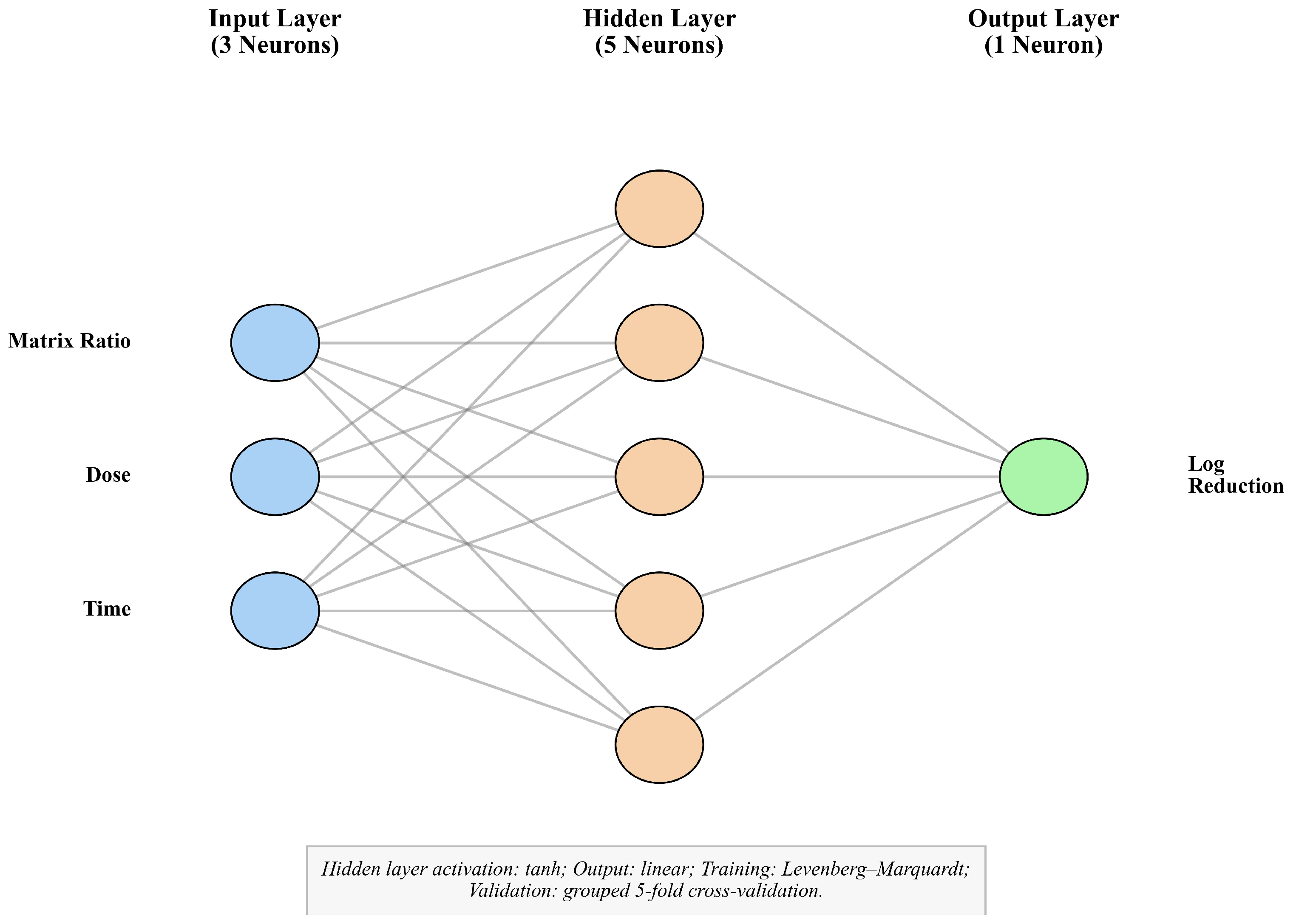
Figure 1. Schematic representation of the Artificial Neural Network (ANN) architecture developed to predict E. coli inactivation. The network utilizes a multilayer perceptron (MLP) structure with a 3–5–1 topology: an input layer (matrix ratio, carvacrol dose, and treatment time), a single hidden layer with five neurons using the hyperbolic tangent (tanh) activation function, and a linear output layer for log reduction. The model was trained using the Levenberg–Marquardt algorithm with grouped 5-fold cross-validation to prevent overfitting.
Processes 14 00797 g001
Figure 2. Survival curves showing matrix-dependent inactivation kinetics of E. coli ATCC 25922 under ultrasound-carvacrol treatment. Panels show (a) high-lipid (HL) matrix, (b) balanced matrix (BM), and (c) high-protein (HP) matrix. The carvacrol doses are indicated by color: 0 ppm in blue, 600 ppm in orange, 900 ppm in green, and 1200 ppm in red. Solid lines represent Weibull model fits. Error bars represent standard deviation ( n = 3 ).
Processes 14 00797 g002
Figure 3. Matrix-dependent survival curves of E. coli ATCC 25922 at constant carvacrol concentrations: (a) 0 ppm, (b) 600 ppm, (c) 900 ppm, and (d) 1200 ppm. The formulations are indicated by color: High-Lipid (HL) in red, Balanced Matrix (BM) in blue, and High-Protein (HP) in green. Solid lines represent Weibull model fits.
Processes 14 00797 g003
Figure 4. ANN response surfaces showing complex local features. Despite capturing non-monotonic patterns (e.g., saturation plateau in HL region), the model exhibited significant lack-of-fit ( p < 10 9 ), suggesting overfitting to experimental noise.
Processes 14 00797 g004
Figure 5. Visualization of the Reduced Log-Transformed RSM Model ( R 2 = 0.971 ). (a) 3D Surface plot showing the interaction between log-transformed Matrix Index and Dose. (b) Contour plot highlighting the optimal inactivation regions.
Processes 14 00797 g005
Figure 6. Comparative diagnostic plots for (a) the Reduced RSM model and (b) the ANN model. Left panels show Predicted vs. Actual values; Right panels show the Residual distribution. While both models show high predictive alignment ( R 2 > 0.96 ), the RSM residuals display a random distribution indicating robust fit, whereas the ANN residuals show clustering patterns characteristic of overfitting to experimental noise.
Processes 14 00797 g006
Table 1. Weibull model parameters for ultrasound-carvacrol inactivation of E. coli ATCC 25922 in model meat matrices.
MatrixDose (ppm) δ (min)p R 2 t 5 log (min)
HL (P:L = 0.33)0 2.49 ± 0.26 bcd 0.89 ± 0.04 bc 0.991 15.12 ± 1.62 b
600 2.57 ± 0.46 bcd 0.86 ± 0.08 bc 0.996 16.53 ± 0.15 ab
900 2.15 ± 0.44 cd 0.81 ± 0.06 bc 0.984 15.65 ± 1.02 b
1200 2.05 ± 0.20 d 0.75 ± 0.11 c 0.987 18.34 ± 4.56 ab
BM (P:L = 1.0)0 4.14 ± 0.38 a 1.09 ± 0.06 a 0.998 18.11 ± 0.14 ab
600 3.02 ± 0.58 abcd 0.94 ± 0.07 ab 0.993 16.58 ± 1.19 ab
900 2.79 ± 0.57 bcd 0.91 ± 0.09 abc 0.987 16.53 ± 2.48 ab
1200 2.56 ± 0.29 bcd 0.89 ± 0.04 bc 0.993 15.54 ± 0.82 b
HP (P:L = 3.0)0 3.14 ± 0.24 abcd 0.85 ± 0.04 bc 0.995 21.05 ± 0.34 a
600 3.19 ± 0.49 abc 0.94 ± 0.08 abc 0.993 17.79 ± 1.11 ab
900 3.14 ± 0.11 abcd 0.88 ± 0.01 bc 0.997 19.42 ± 1.01 ab
1200 3.39 ± 0.23 ab 0.97 ± 0.04 ab 0.996 17.81 ± 1.17 ab
Note: Within each column, different superscript letters (a–d) indicate statistical significance ( p < 0.05 ) based on Tukey’s HSD test applied across all matrix–dose combinations.
Table 2. Two-way ANOVA results for the effects of matrix type and carvacrol dose on Weibull parameters and 5-log decay time.
ParameterMatrix F ( df , p ) Dose F ( df , p ) Interaction F ( df , p )
Weibull δ 20.29 (2,24), p < 0.001 4.62 (3,24), p = 0.011 3.54 (6,24), p = 0.012
Weibull p12.25 (2,24), p < 0.001 2.95 (3,24), p = 0.053 4.06 (6,24), p = 0.006
t 5 log 8.08 (2,24), p = 0.002 0.72 (3,24), p = 0.55 2.37 (6,24), p = 0.061
Table 3. Regression coefficients and significance testing for the Reduced Log-Transformed RSM Model.
TermCoefficient ( β )Std. Errort-Valuep-ValueSignificance
Intercept 0.126 0.055 2.30 0.022 *
Log_Matrix_Index ( ln M ) 0.230 0.048 4.78 <0.001**
Dose (D) 4.67 × 10 4 1.46 × 10 4 3.19 0.002 **
Time (T) 0.340 0.010 34.17 <0.001**
Dose2 ( D 2 ) 2.89 × 10 7 1.21 × 10 7 2.40 0.017 *
Time2 ( T 2 ) 0.0027 0.0004 6.06 <0.001**
ln M × D 2.18 × 10 4 4.82 × 10 5 4.54 <0.001**
ln M × T 0.0135 0.0031 4.43 <0.001**
Note: * significant at p < 0.05 ; ** significant at p < 0.01 .
Table 4. ANOVA for the Reduced RSM Model including Lack-of-Fit testing.
SourceSum of SquaresdfMean SquareF-Valuep-Value
Model Regression 162.91 7 23.27 193.77 <0.001
Residual 37.95 316 0.120
   Lack of Fit 14.52 100 0.145 1.34 0.040
   Pure Error 23.44 216 0.109
Total 200.86 323
Table 5. Comparison of statistical performance metrics between the Reduced RSM and ANN models. The ANN model shows a significant performance drop in the testing phase, indicating overfitting.
MetricReduced RSMANN (3–5–1)
(Overall Fit) Training Validation Testing
R 2 0.971 0.975 0.959 0.896
RMSE (log CFU/mL)0.347 0.331 0.400 0.551
MAE (log CFU/mL) 0.218 0.335 0.445
Lack-of-Fit Analysis
Sum of Squares (LoF) 14.52 25.21
F-value1.34 2.83
p-value 0.040 7.57 × 10 10
Table 6. Optimal processing parameters predicted by the Reduced RSM model to achieve a target 5-log reduction. Results highlight conditions that eliminate the carvacrol requirement within the experimental domain.
Matrix TypeOptimal DoseOptimal TimePredicted Log Red
High-lipid (HL)0 ppm 15.53 min 5.00
Balanced (BM)600 ppm 16.76 min 5.00
High-Protein (HP)0 ppm 19.74 min 5.00
Disclaimer/Publisher’s Note: The statements, opinions and data contained in all publications are solely those of the individual author(s) and contributor(s) and not of MDPI and/or the editor(s). MDPI and/or the editor(s) disclaim responsibility for any injury to people or property resulting from any ideas, methods, instructions or products referred to in the content.