Article

Controlling Mannitol Polymorphism for Enhanced Dispersibility in Spray Freeze-Dried Inhalable Microparticles


by
Lorena Pasero
1,
Andrea Silenzi
1,
Adamo Sulpizi
2,
Tomaso Guidi
2 and
Roberto Pisano
1,*
1
Department of Applied Science and Technology, Politecnico di Torino, 24 Corso Duca Degli Abruzzi, 10129 Torino, Italy
2
R&D Department, Chiesi Farmaceutici S.p.A, Largo F. Belloli 11/A, 43122 Parma, Italy
*
Author to whom correspondence should be addressed.
Processes 2026, 14(1), 6; https://doi.org/10.3390/pr14010006
Submission received: 6 November 2025 / Revised: 10 December 2025 / Accepted: 15 December 2025 / Published: 19 December 2025
(This article belongs to the Section Pharmaceutical Processes)

Abstract

Spray freeze-drying (SFD) is a novel technique for formulating dry powders, particularly for pulmonary drug delivery via dry powder inhalers (DPIs). Despite their low density and excellent aerodynamic properties, such powders are affected by high cohesiveness due to their surface properties. Sugars such as mannitol (MAN), trehalose, raffinose, and sucrose are commonly used in SFD. MAN is widely employed due to its high MAN—ice eutectic temperature—at which MAN and water (ice) form a stable eutectic mixture—and its crystallinity. However, crystallinity can impact the microparticles’ (MPs) cohesiveness, since MAN exhibits distinct polymorphs (α, β, δ) with peculiar properties. This study provides valuable insights for the development of DPI formulations by ensuring precise control over MAN polymorphism, ultimately enhancing formulation stability and performance. We introduced, for the first time, an intermediate freezing (IF) step within the SFD process to modulate MAN polymorphism, demonstrating its synergy with optimised storage temperature conditions. Furthermore, polyvinylpyrrolidone, 2-hydroxypropyl beta cyclodextrin, dextran, and polysorbate 80 were employed as polymorphism-controlling agents for MAN, contributing to the development of stable formulations with reduced particle cohesion and improved storage stability at room temperature. For the first time, this study shows that MAN polymorphism in SFD can be controlled to drive dry powder inhaler performance.

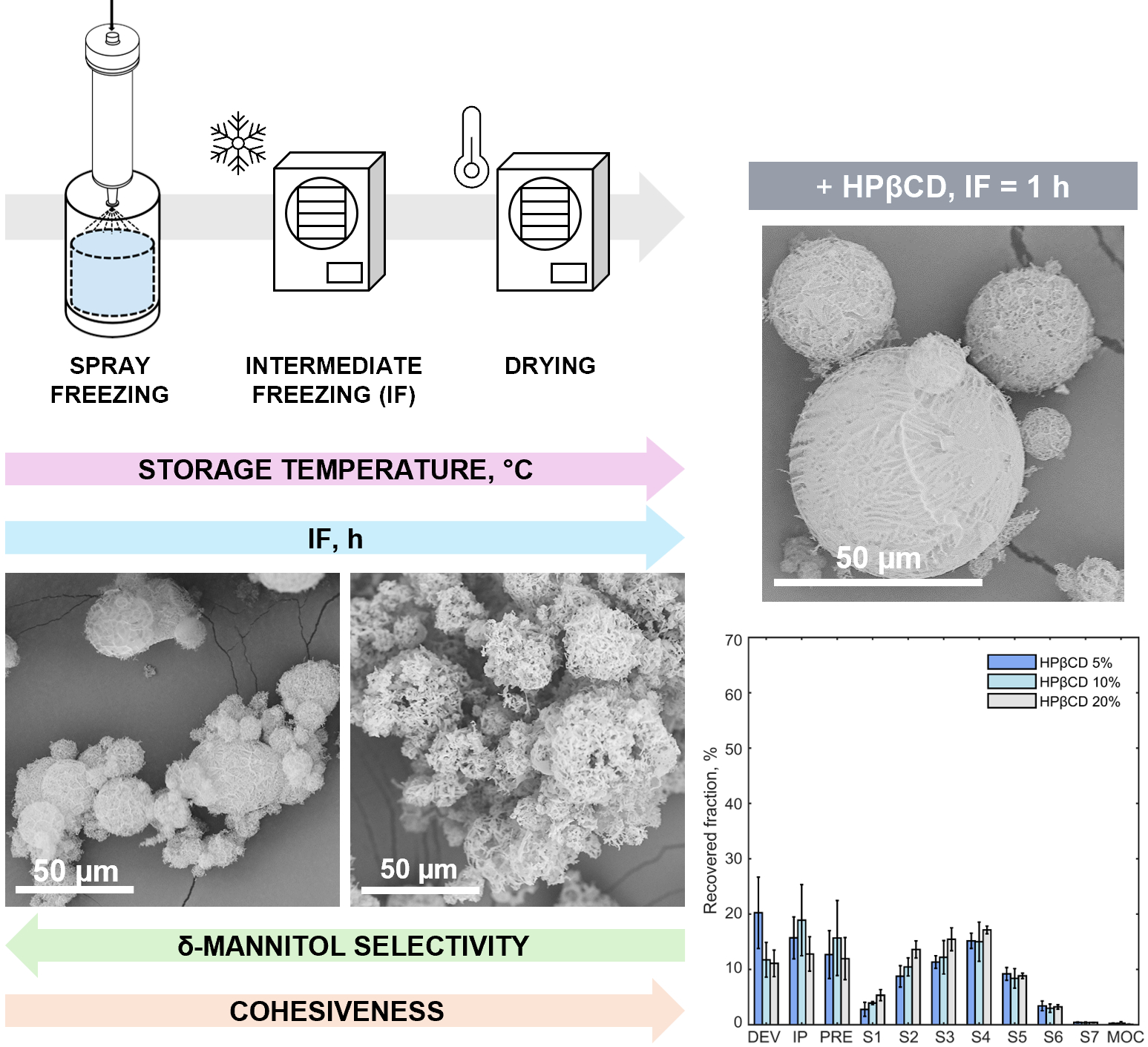
Graphical Abstract

1. Introduction

Spray freeze-drying (SFD) has emerged as a groundbreaking technique for formulating dry powders for drug administration [1,2]. Besides being useful in increasing the dissolution of non-soluble drugs, SFD finds its major application in the production of inhalable powders to be administered by dry powder inhalers (DPIs) [3]. Solid formulations for DPIs offer significant advantages over liquid aerosols such as easier administration, reduced product loss during inhalation, and higher patient compliance [4]. SFD integrates two key technological advantages: lyophilisation, which enables the generation of solid, stable, and sterile formulations, and atomisation, which produces microparticles (MPs) suitable for pulmonary delivery. Compared to conventional spray drying, SFD avoids exposure to high temperatures, making it particularly suitable for temperature-sensitive biomolecules [3]. Spray freeze-dried powders are carrier-free, avoiding the need for the coarse lactose carriers commonly used in commercial dry powder inhalers, and thus facilitating drug delivery [5]. SFD is particularly attractive for its adaptability to continuous operation, positioning it as a promising technique for both laboratory-scale development and the industrial production of inhalable drugs. However, the application of SFD presents some drawbacks such as the high production costs, the potential particle fragility, and the scale-up challenges [6]. Inhalation has been recognised as a promising drug administration route due to the high surface area offered for drug absorption, the bypassing of the first-pass metabolism, the reduction in required drug doses, and the minimisation of side effects [5]. The application of SFD for the pulmonary delivery of drugs is driven by the possibility of producing porous MPs with excellent aerodynamic properties. SFD is composed of three steps, i.e., atomisation, freezing, and drying. The first two steps, also referred to as spray freezing (SF), generate frozen droplet-embedding ice crystals which sublime during drying, thus providing the MPs with a porous structure and a low density [7]. Such features are responsible for the low aerodynamic diameter ( d a e ) of the MPs, which is representative of their dispersibility, flowability, and, hence, their ability to reach the lowest stages of the respiratory system [8]. The d a e is the diameter of a sphere with unitary mass density and the same settling velocity as the particle of interest [8]. It depends on the MPs’ geometric size, which is one of the most crucial properties of spray freeze-dried MPs. Particle size is determined by the SF parameters, such as nozzle type, feed and atomisation gas flow rates, and solid concentration [9]. In a previous study, we selected 5% (w/v) solid, 7 normal L/min N 2 flow rate, and 9 mL/min feed flow rate as the optimal parameters set to minimise particle size in a pneumatic nozzle [10]. However, as a function of their small size and surface properties, spray freeze-dried MPs were exposed to inter-particle cohesiveness, which induced aggregation and poor flowability [11]. Such cohesiveness has been primarily attributed to the adhesion forces and electrostatic properties of the MPs [12]. Our previous study uncovered the relationship between crystallinity and cohesiveness in spray freeze-dried MPs composed of mannitol (MAN) and L-leucine (LL) [10]. It was observed that the powders displayed significantly different cohesiveness and lung deposition depending on LL and MAN crystallinity and morphology, e.g., a rougher or smoother surface [10]. We ascribed the variable powder crystallinities to the recrystallisation of the excipients during storage at ambient temperature ( T a m b ). Recrystallisation induced higher crystallinity, which was responsible for the higher inter-particle cohesiveness and worse aerodynamic properties of powders. Such results suggested that crystallinity may play a crucial role in establishing the dispersibility properties of DPI powders, especially in the presence of crystalline excipients.
So far, little attention has been given to the crystallinity of spray freeze-dried MPs and its possible influence on the inter-particle interactions. Different approaches have been proposed to tune MAN polymorphism after spray drying and freeze-drying processes [13]. By acting either on the formulation or the drying conditions, MAN crystallinity was controlled in spray drying, e.g., co-spray drying with polyvinylpyrrolidone (PVP) led to the formation of δ-MAN [14], while increasing the outlet temperature of the spray dryer induced the increment in α-MAN [15]. Furthermore, the self-assembling of sodium dodecyl sulphate as monolayers, micelles, or crystals was identified to be responsible for the formation of β-, α-, and δ-MAN, respectively [16]. However, these findings cannot be directly translated to SFD, whose ultrafast freezing kinetics produce entirely different crystallisation pathways. Consequently, the control of MAN polymorphism in SFD remains poorly understood. In particular, the impact of freezing protocols and post-production storage conditions has received little attention.
MAN is a crystalline excipient which presents three distinct polymorphs, i.e., α, β, and δ, and a hemihydrate form. According to its solid-state structure, MAN displays different characteristics, including thermodynamic stability, morphology, solubility, and tabletability [13]. Therefore, controlling MAN polymorphism in dry powder formulations may be crucial to ensuring consistent physicochemical and aerodynamic properties. However, no prior work has investigated how SFD freezing protocols affect MAN polymorphism or recrystallisation in spray freeze-dried powders. This gap is critical because uncontrolled δ to β transitions can directly impair morphology, increase cohesiveness, and reduce aerosolisation performance, as observed in Pasero et al. [10]. This study addressed this gap by successfully controlling, for the first time, MAN polymorphism in spray freeze-dried MPs to avoid any recrystallisation phenomena and to achieve morphological stability over time at T a m b . In the first phase of this study, we investigated how the freezing step and the storage conditions affect MPs’ crystallinity. To this end, we introduced a novel conditioning step—similar to annealing in conventional freeze-drying—between freezing in liquid N 2 and primary drying. Moreover, powders were stored at different temperatures upon production to investigate the influence of storage temperature on MAN recrystallisation. While previous studies have primarily studied the effect of storage conditions on DPI performance as a function of the relative humidity [17], temperature-induced recrystallisation in SFD powders has not been investigated. Therefore, to the best of our knowledge, the combined action of the freezing protocol and storage temperature over time was reported here for the first time in the case of particle-based materials. The second part of this work focused on fine-tuning MAN polymorphism at T a m b by adding different excipients to the formulation under fixed process and storage conditions. Four classes of excipients were selected, i.e., polysaccharides (dextran, DEX), cyclodextrins (2-hydroxypropyl beta cyclodextrin, HPβCD), polymers (polyvinylpyrrolidone, PVP), and surfactants (polysorbate 80, PS80). Although being widely employed in the pharmaceutical field, the influence of these excipients on the crystallinity of MAN in SFD had not been previously assessed. Here, we disclosed how these additives promoted the preferential formation of δ-MAN, offering a novel strategy for controlling MAN polymorphism in SFD. This targeted control of polymorphism enabled the stabilisation of MP morphology and the suppression of cohesiveness over long-term storage at T amb , preventing the formation of clusters and aggregates. Once control over polymorphism was established, the role of the excipients towards the MPs’ deposition and dissolution in the lungs was also explored. The RespiCell™ dissolution apparatus was applied for the first time to spray freeze-dried powders, to provide further insights into the dissolution behaviour of highly porous inhalable powders under air–liquid interface conditions. These advancements fill a critical knowledge gap in SFD technology by demonstrating, for the first time, how MAN polymorphism can be actively controlled through freezing protocol design and excipient selection, and by linking this control to the functional performance of SFD dry powder inhaler formulations.

2. Materials and Methods

2.1. Formulations

Spray freeze-dried MPs were produced from an aqueous solution at 5% (w/v) of solute. F1 contained D-MAN (C6H14O6, 98+%, CAS: 69-65-8, Chem-Lab NV, Zedelgem, Belgium) added with 1% (w/w) dry-basis (db) SS (C13H21NO3·0.5H2SO4, CAS: 51022-70-9, Teva Pharmaceutical Industries Ltd., Petah Tikva, Israel). F1 was then added with DEX from Leuconostoc spp. (CAS: 9004-54-0, Sigma Aldrich, St. Louis, MO, USA), HPβCD (CAS: 128446-35-5, Sigma Aldrich, St. Louis, MO, USA), PVP (CAS: 9003-39-8, Sigma Aldrich, St. Louis, MO, USA), and PS80 (CAS: 9005-65-6, Sigma Aldrich, St. Louis, MO, USA) at different concentrations. A detailed list of the formulations involved in the study is given in Table 1.

2.2. Spray Freeze-Drying

SF into vapour over liquid was used to produce frozen MPs, according to a modified version of the protocol reported by [9]. A syringe pump (Model KDS 200, KD Scientific, Holliston, MA, USA) was employed to deliver the solution to a two-fluid nozzle (B-290, Ø0.7 mm, Buchi, Flawil, Switzerland), positioned approximately 10 cm above a Dewar containing liquid nitrogen (N2). During atomisation, the sprayed MPs were gently stirred using a magnetic stirrer placed within the Dewar. Subsequently, the frozen MPs were collected in a beaker, covered with a Phase Separator 1 PS (Whatman, Maidstone, UK), and transferred to a freeze-dryer pre-cooled to −50 °C. In contrast to the typical SFD process, here a novel intermediate step was incorporated. Indeed, samples were kept at −50 °C either for 1 h or 5 h before drying. For the sake of simplicity, from now on we will refer to this step as intermediate freezing (IF). Primary drying was conducted at 10 °C under 20 Pa, followed by secondary drying at 20 °C under the same pressure for 5 h. The transition from primary to secondary drying was marked by achieving a unitary pressure ratio between measurements from a Pirani gauge and a capacitance manometer (Baratron®, MKS, Andover, MA, USA). After drying, the resulting powders were placed in vials, sealed, and stored over silica gel in a desiccator at T a m b , in a refrigerator at 5 °C, or in a freezer at −20 °C.

2.3. Particle Size and Morphology

Particle morphology was analysed using scanning electron microscopy (SEM) after one week ( t 0 ), and three months ( t 2 ) of storage. The spray freeze-dried powders were evenly distributed on the surface of a double-sided carbon tape (NEM TAPE, Nisshin Ltd., Tokyo, Japan), which was attached to an aluminium stub. The carbon tape was subsequently coated with platinum for 20 s at 30 mA using a Quorum Q150T S sputter coater (2M Instruments, Rome, Italy). Images were captured at a voltage of 15 kV with a Desktop SEM Phenom XL (Thermo Fisher Scientific, Waltham, MA, USA). The geometric diameter ( d g ) of 400 MPs was measured using the open-source software ImageJ 1.54g (Windows version bundled with 64-bit Java 1.8.0_345, NIH, Bethesda, MD, USA) and the results were expressed as mean value ± standard deviation (SD). The MPs’ d a e was calculated as follows:
d a e = d g ρ ρ a λ
where ρ is the particle mass density, ρ a is the unitary mass density (1 g/cm3), and λ is the shape factor (equal to 1 for spheres) [18]. ρ was estimated as follows:
ρ =   ρ f
where ρ f is the concentration (w/v) of solid in the feedstock solution [10]. The S p a n value was also calculated to express the dimensional homogeneity of the powders:
S p a n = d 90 d 10 d 50
where the diameters d 90 , d 10 , and d 50 correspond to the sizes at which, respectively, 90%, 10%, and 50% of the MPs’ population is smaller.

2.4. Powder X-Ray Diffraction

The crystalline structure of the MPs was analysed using powder X-ray diffraction (PXRD) with an X-ray diffractometer (Empyrean, Malvern Panalytical, Malvern, UK). Measurements were conducted over a range of 5° to 60° with a 2θ step size of 0.026°, operating at 40 mV and 40 mA. Diffraction spectra were processed using X’pert Highscore software (version 1.0c, Malvern Panalytical, Malvern, UK). For all formulations, a characteristic peak ratio ( R ) was evaluated:
R =   I 9.7 ° I 14.6 °
where I 9.7 ° and I 14.6 ° indicate the intensity of the peak at 9.7° and 14.6°, respectively. PXRD tests were performed after one week ( t 0 ), one month ( t 1 ), and three months ( t 2 ) of storage.

2.5. In Vitro Drug Deposition

The aerodynamic properties and in vitro drug deposition of powders containing DEX, HPβCD, PVP, and PS80 (F2–F13) were evaluated using a Next Generation Impactor (NGI) (Copley, Nottingham, UK). The protocol for SS described by [9] was applied. The NGI was connected to a critical flow controller (TPK, Copley, Nottingham, UK) and a rotary pump (SCP5, Copley, Nottingham, UK). To prevent particle bounce, the NGI stages were pre-coated with 1% TWEEN® 20 (Sigma Aldrich, St. Louis, MO, USA), and the pre-separator was filled with 15 mL of water, following British Pharmacopoeia recommendations. For each experiment, hydroxypropyl methylcellulose capsules (Vcaps Plus, size 3, transparent cap and body; Capsugel®, Lonza Group, Basel, Switzerland) were loaded with the powder samples and inserted into a high-resistance RS01® dry powder inhaler (DPI) device (RPC Plastiape®, Osnago, Italy). Dispersion tests were conducted in triplicate at 60 L/min for 3.8 s. After dispersion, powders were recovered by rinsing the following components with water: the device (capsule, inhaler, and adapter; DEV) with 25 mL, the induction port (IP) with 50 mL, the pre-separator (PRE) with 100 mL, and the NGI cups (S1–S7) and micro-orifice collector (MOC) with 10 mL each. The MOC-derived solutions were filtered using 0.45 µm PTFE filters. High-performance liquid chromatography (HPLC) was employed to analyse the solutions, and data were processed using the Copley Inhaler Testing Data Analysis software (CITDAS V3.10, Copley, Nottingham, UK). The recovered dose (RD) was calculated as the total mass of SS recovered from the device and the NGI apparatus, while the recovered fraction (RF) was determined as the ratio of the RD in each stage to the total RD. The emitted dose (ED) represented the sum of SS recovered in the NGI. The fine-particle fraction (FPF) was calculated as the ratio of the mass of particles with a d a e less than 5 µm to the ED. The mass median aerodynamic diameter (MMAD) and geometric standard deviation (GSD) were derived from the particle size distribution using CITDAS. The MMAD represents the particle size which categorises the MP population into two halves, while the GSD expresses the polydispersity index of an aerosol [19].

2.6. In Vitro Drug Dissolution

The dissolution properties of powders containing DEX, HPβCD, PVP, and PS80 (F2–F13) were evaluated using a RespiCell (EU registration No. 006649570-0001, designed by the University of Parma and produced by DISA S.p.A., Milan, Italy). The dissolution study was performed according to a modified version of [20]’s protocol. Briefly, the receiving compartment of the RespiCell was filled with 170 mL of water and connected to a chiller (Alpha RA 8, Lauda, Germany) to keep the temperature of the dissolution medium at 37 °C. Then, a glass fibre filter (Pall Corporation, Port Washington, NY, USA) was gently leant on the water’s surface and the RespiCell system was closed with the donor chamber and the clamp. For each formulation, 60 mg of powder was deposited on the wet filter and 1 mL of water was added through the donor compartment. To achieve a homogeneous drug concentration within the dissolution medium, a stirring magnet was employed. The samplings were performed over 20 min at different times throughout the sampling arm of RespiCell, and the medium’s volume in the receiving chamber was restored by adding 1 mL of fresh dissolution medium following each sampling. After 20 min, the filter was sonicated in 10 mL of water for 10 min, and the resulting solution was filtered prior to analysis through 0.45 µm PTFE filters. HPLC was employed to determine the amount of SS dissolved during this time. Dissolution tests were performed in triplicate, and the results were expressed as mean ± SD.

2.7. Analytical Quantification of SS

The quantification of SS deposited in the NGI and dissolved in the RespiCell was performed using HLPC. Analyses were carried out on a 1260 Infinity II system (Agilent, Santa Clara, CA, USA) equipped with an MOS-1 Hypersyl column (100 × 4.6 mm, 5 µm; Thermo Fisher, Waltham, MA, USA). Samples (100 µL) were injected and eluted isocratically at 1.5 mL/min for 9 min at 40 °C. The mobile phase comprised a mixture (43/30/27, v/v) of 0.005 M sodium 1-heptanesulfonate (adjusted to pH 3.5 with glacial acetic acid), acetonitrile, and methanol. The detection of SS was performed at 220 nm.

3. Results and Discussion

This study delves into the stability of MAN-based spray freeze-dried MPs, unravelling the interplay between their morphology, cohesiveness, and crystallinity. For the sake of clarity, the study was composed of two distinct phases, each investigating the effect of specific parameters on the morphological and crystalline properties of the MPs. The first part of the study aimed at examining the influence of the IF, the storage temperature, and the storage time on the MPs’ morphology and crystallinity. The first part of the study was conducted on the F1 formulation only, as thermal treatment was tested in the absence of the polymorphism-controlling excipients. The second part, instead, was focused on the effect of additional excipients under consistent process conditions, utilising the F2–F13 formulations.

3.1. F1 Formulation

3.1.1. Morphology and Size

The size and morphology of F1 MPs were investigated according to the storage time, the storage temperature, and the duration of the IF step. It is widely known that the size of spray freeze-dried MPs depends only on the SF step of SFD. Therefore, the size of F1 MPs was not affected by the different IF durations and storage temperatures (Table 2) and remained in the inhalation range. By contrast, a significant dependence of the morphology on such variables was observed. Figure 1 showcases the SEM images of the MPs, revealing the interconnected effects of the selected variables on their morphological stability.
Storage temperature dramatically impacted the morphology of F1 MPs. At t 0 , the MPs progressively transitioned from a well-defined spherical shape and a smooth surface to a more irregular shape and a rougher surface as the temperature increased. Such a temperature-induced phenomenon could also be detected at t 2 , and its effect was more intense for IF times equal to 5 h, suggesting an interaction between the two effects. A similar effect was induced by Yoshinari et al. on MAN through moisture [21]. Indeed, temperature and residual moisture are linked: higher storage temperatures increase the equilibrium relative humidity within the vial and enhance molecular mobility, which promotes both moisture redistribution and polymorphic transitions. This combination accelerates surface deformation and the roughening of the MPs. Conversely, lower temperatures limit water activity, reducing the extent of polymorphic transformation and maintaining the original spherical morphology [22].
The influence of IF time on the morphology was noticeable only for higher storage times and temperatures. By keeping the MPs at −20 °C, the morphology was preserved over time, independently of the IF duration. Conversely, an increased IF duration led to a dramatic morphological modification over time when the MPs were stored at 5 °C and T a m b .
Therefore, the lower the temperature, the higher the morphological stability was for all the selected IF durations. Instead, when the temperatures were not suitable for preserving the MPs, the IF effect prevailed and the longest IF duration, i.e., 5 h, promoted a substantial modification of the MPs’ morphology. An analogous pattern was observed for the cohesiveness among the MPs, which instantaneously increased as the storage temperature grew. Moreover, an extended IF stage fostered the formation of clusters and aggregates over time, thus making distinct MPs no longer detectable. Being that MAN is a crystalline excipient, a different crystallinity could have triggered such a morphological transition, as discussed in Section 3.1.2. A similar behaviour was shown by spray freeze-dried MPs, whose morphology and cohesiveness depended on the crystalline degree of LL [10].

3.1.2. Crystallinity

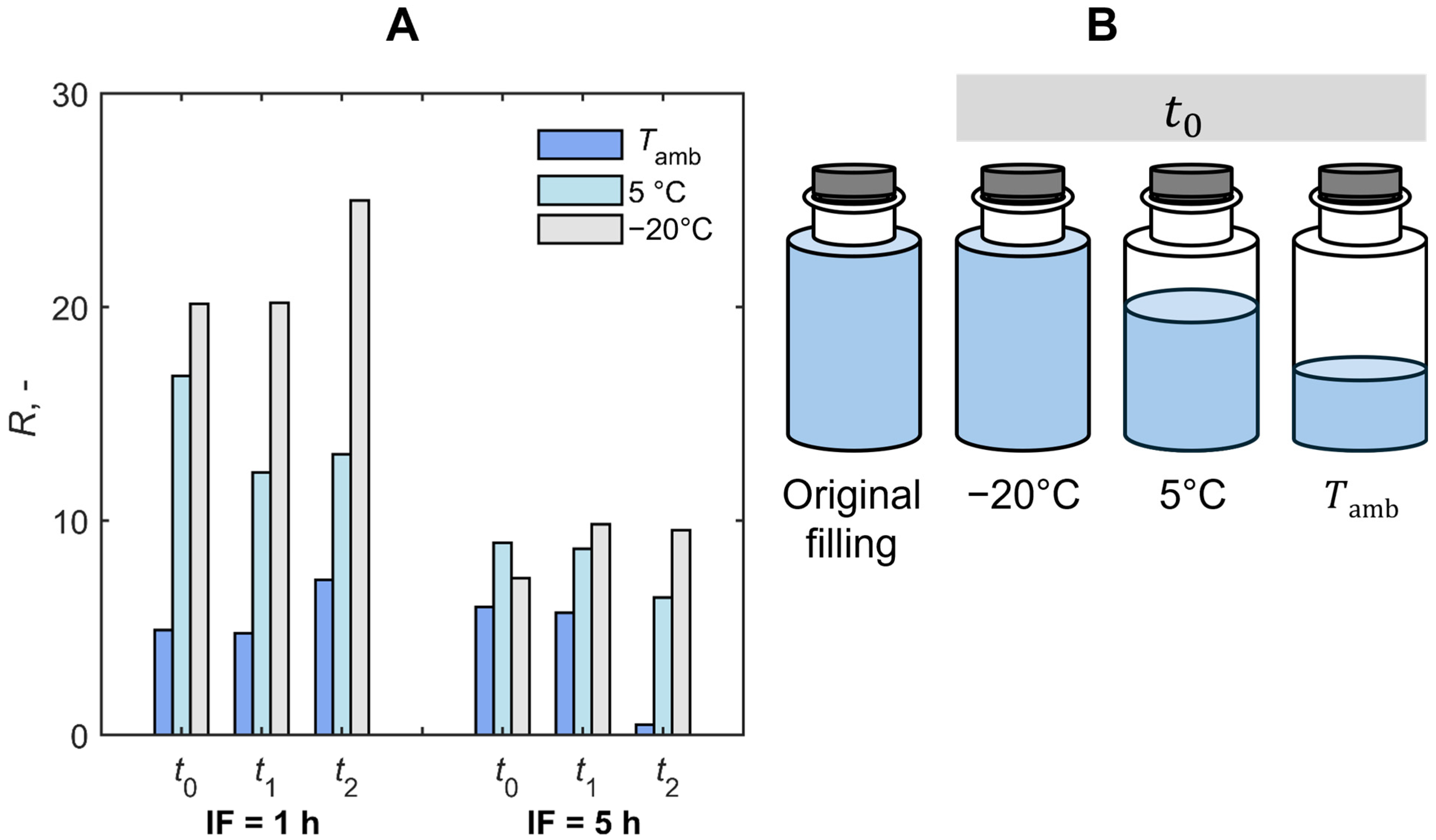
The instability of spray freeze-dried MAN MPs derives from the crystalline nature of MAN, whose polymorphism can change over time among its α, β, and δ forms [13]. The PXRD peak ratio ( R ) between δ - and β -MAN at 9.7° and 14.6° is reported in Figure 2A. At IF times equal to 1 h, δ -MAN was the dominant polymorph and the recrystallisation of MAN was limited when MPs were stored at 5 °C and −20 °C. Instead, at T a m b , R was lower, thus indicating a superior amount of β -MAN. The MPs stored at −20 °C also possessed reduced crystallinity than those stored at T a m b (see Figure S2 in the Supplementary Materials). These findings corroborated our previous results, where a significant morphological and crystalline change was observed in MAN and LL MPs [10], confirming that the recrystallisation of MAN or other crystalline excipients can occur during storage. Moreover, the crystalline pattern was consistent with the morphology of the MPs depicted in Figure 1, whose modification at higher storage temperatures could be attributed to the recrystallisation from δ - to β -MAN due to the higher mobility of MAN chains. Therefore, the corrugated MPs’ surface at T a m b could be due to the presence of β -MAN crystals, which are more needle-shaped than the monoclinic δ -MAN ones [13]. The corrugated MPs may possess higher surface areas than the smooth ones, leading to a larger number of free contact points between MPs. Indeed, a six-fold increase in surface area was observed in the transition from δ - to β -MAN in a previous study [21]. Such a phenomenon may explain why the cohesiveness of the MPs was boosted by the higher contents of β -MAN and rougher matrixes (Figure 1). The increased cohesiveness at higher storage temperatures was macroscopically evidenced by the dramatic reduction in the volume occupied by the powders within the vials (Figure 2B). Despite starting from an equal filling volume after SFD, a volume reduction of approximately 50% was observed at T a m b and t 0 . Such cohesion may have also been promoted by the large surface energy associated with β -MAN crystals [23]. Indeed, inter-particulate bonding forces, e.g., van der Waals attractions, are proportional to the Hamaker constant, which is correlated to the surface energy [24]. Such findings were supported by a previous study, where Yoshinari et al. induced the transition from δ- to β-MAN through moisture, exploiting it to improve the compaction and compression properties of MAN [25]. A similar phenomenon was addressed by Vanhoorne et al., where the polymorphic transition of MAN was observed during twin-screw granulation, which allowed for the enhancement of the tabletability of this material [26].
At IF durations equal to 5 h, the difference in R across storage temperatures were minimised. A higher amount of β -MAN was detected both at 5 °C and −20 °C compared to an IF duration of 1 h. This increased presence of β-MAN at longer IFs could be attributed to the extended time provided for the MAN crystals to reorganise into their most stable form, in accordance with the Ostwald rule [27]. Notably, in a study conducted by Yan et al. on a micro-fluidic jet spray freeze tower, the formation of β-MAN was promoted by low freezing rates, while fast freezing boosted δ-MAN [28]. Conversely, the R values at T a m b remained comparable to those observed for an IF time equal to 1 h, underscoring the pivotal role of storage temperature in determining MP crystallinity. Interestingly, at T a m b , R dropped over time when the MPs were produced at 5 h of IF, evidencing the total conversion from δ - to β -MAN, as confirmed by the PXRD spectrum (Figure S2 in the Supplementary Materials). Therefore, a longer IF duration not only decreased the amount of δ -MAN but also promoted its recrystallisation to β -MAN over time at T a m b .

3.2. F2–F13 Formulations

3.2.1. Morphology and Size

Low temperatures (−20 °C) and an IF time of 1 h proved to limit both morphological modifications and MAN recrystallisation, thus avoiding inter-particle cohesiveness. However, one of the main advantages of DPIs is avoiding cold chain storage since such powders are commonly stored and administered at T a m b [5]. Therefore, achieving the physical stability of spray freeze-dried MPs at T a m b is mandatory. To this end, different excipients were added to the MAN and SS solutions and an IF duration equal to 1 h was employed.
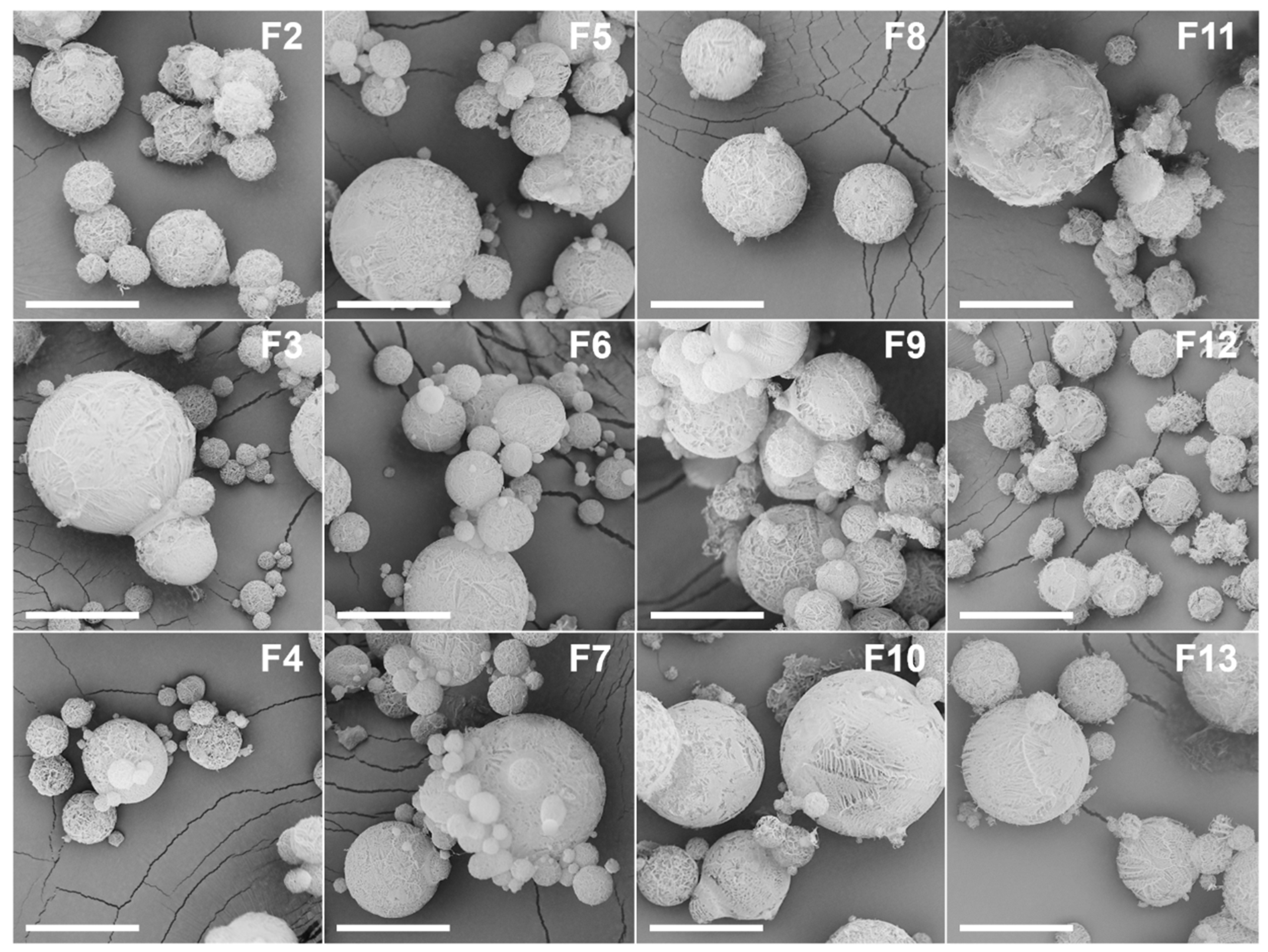
Figure 3 displays the morphology of the MPs at t 0 . All the formulations successfully stabilised the morphology of the MPs at t 0 , as indicated by the perfectly spherical shape and the low cohesiveness of the MPs.
A slightly rougher surface was exhibited by MPs composed of 0.01 and 0.1% (w/w) db PS80 compared to the other formulations. The more pronounced surface roughness of F11–F12 could be due to the highest presence of β-MAN (see Section 3.2.2). However, such corrugation was considerably lower than in F1 MPs stored at T a m b . Interestingly, the morphology of F2–F13 powders was well preserved during the three-month storage period since no substantial modifications could be observed (see Figure S1 in the Supplementary Materials). The main morphological modifications were detected in the presence of PS80, where the MPs appeared more sponge-like and presented a more open structure at t 2 . The greater tendency of the PS80-based formulations to undergo morphological changes can be attributed to their higher MAN content relative to the other formulations. As demonstrated in Section 3.2.2, increasing the amount of MAN enhances the likelihood of recrystallisation, making these formulations behave more similarly to the non-modified reference (F1), particularly at low PS80 concentrations (F11–F12). Nevertheless, the extent of morphological modification in F11–F13 remained markedly lower than that observed for the F1 MPs. Moreover, at t 2 , PVP-based powders displayed more aggregates than others without altering the morphology, suggesting that such cohesiveness could have been induced by surface properties rather than a recrystallisation phenomenon. Indeed, PVP may increase the surface energy and adhesion forces of the MPs, rendering them more prone to sticking together [29]. PVP-based MPs also displayed a slightly reduced size compared to the powders containing DEX, HPβCD, and PS80, whose sizes were comparable to the excipient-free F1 formulation (Table 3).

3.2.2. Crystallinity

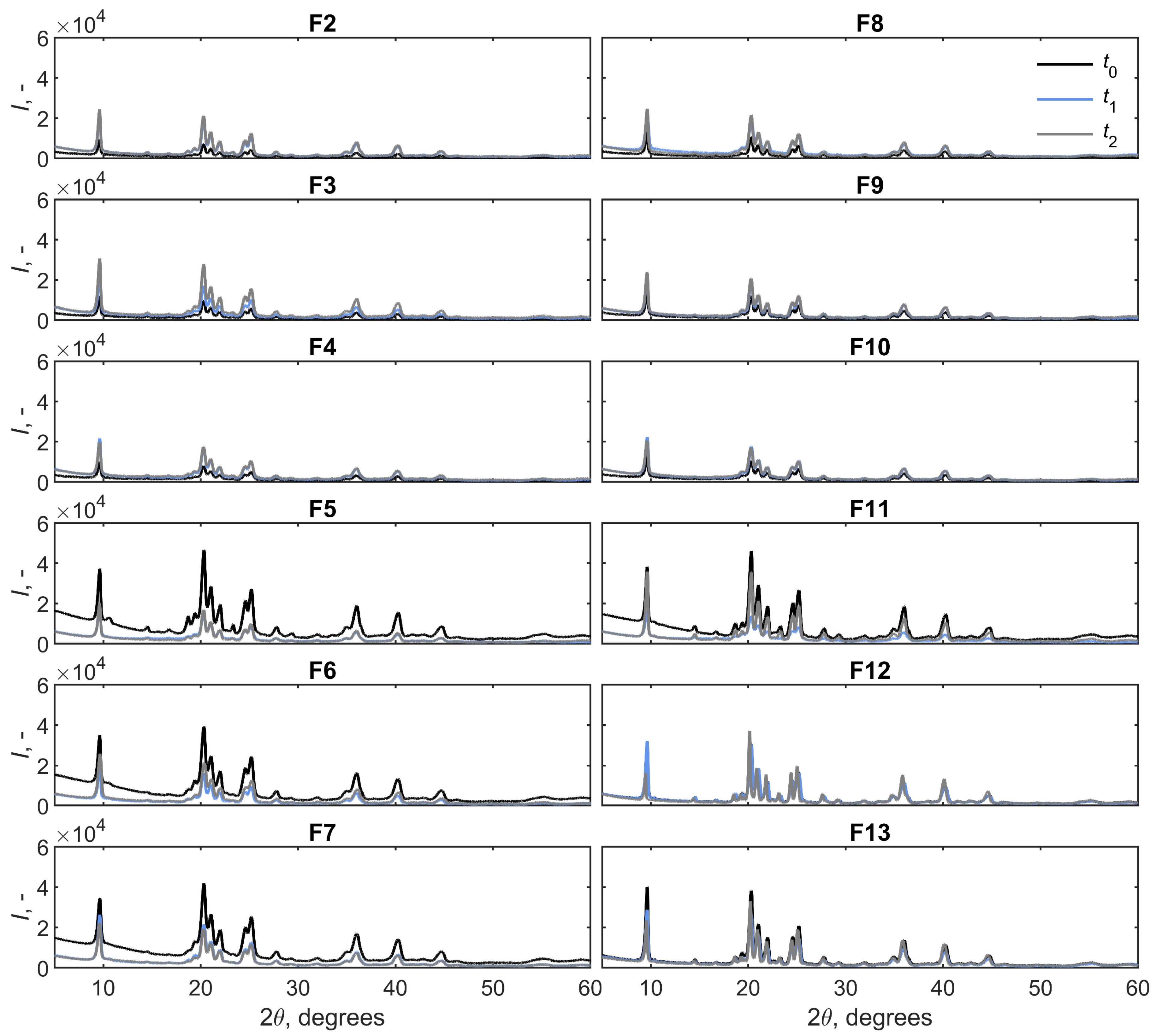
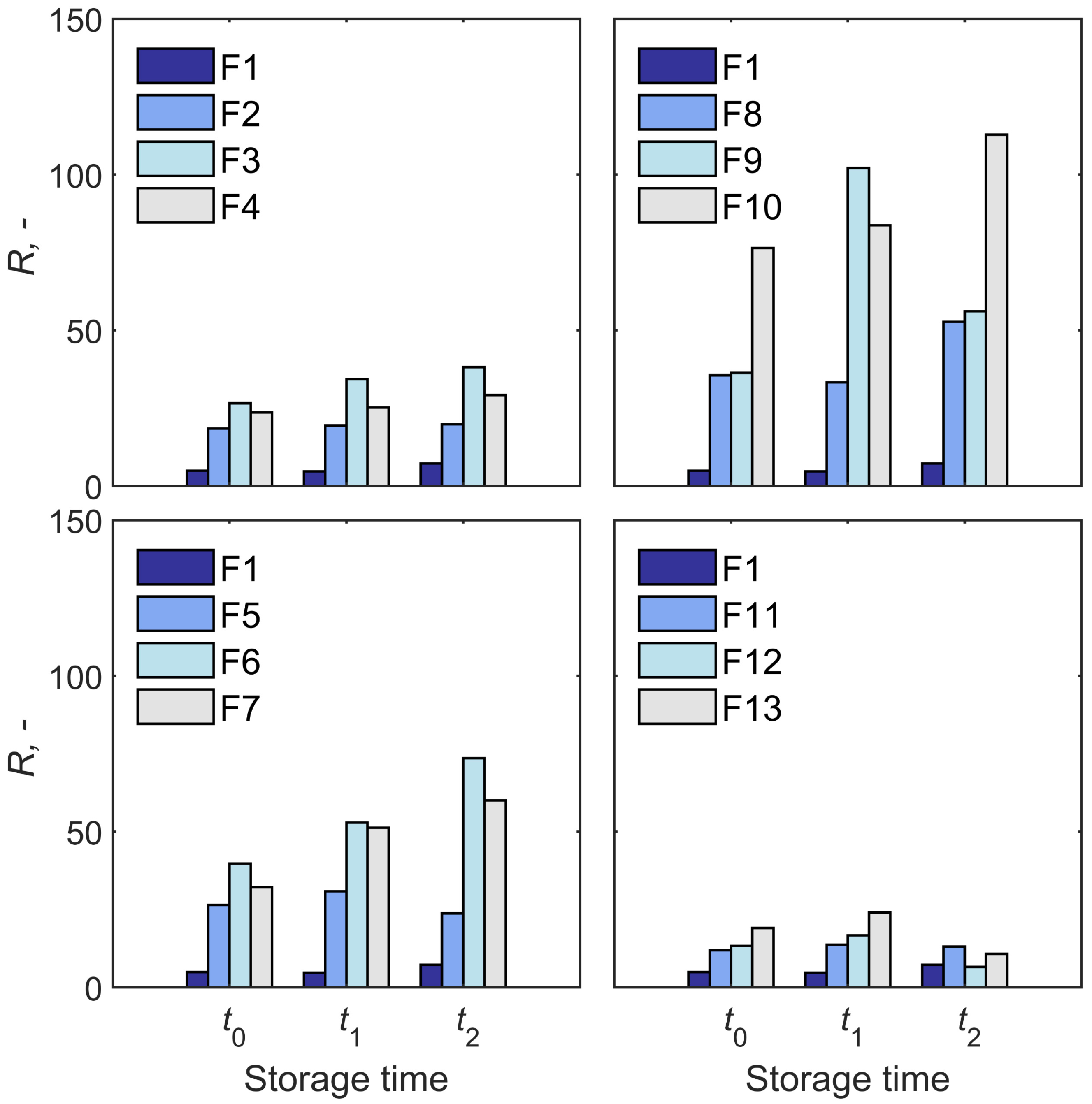
The analysis of the crystalline behaviour of the F2–F13 MPs over time is reported in Figure 4.
The addition of DEX (Figure 4 top left) increased the content of δ -MAN at T a m b compared to F1 and stabilised the crystallinity of the MPs since R was almost constant, meaning that no recrystallisation event occurred. The presence of HPβCD (Figure 4 top right), instead, boosted the amount of δ -MAN without completely avoiding recrystallisation over time. Interestingly, such recrystallisation led to an increased δ -MAN content, especially for high HPβCD concentrations. Similarly, PVP (Figure 4 bottom left) fostered the supremacy of δ -MAN, whose amount was at its maximum at 10% (w/w) db PVP. Although recrystallisation was inhibited by 5% (w/w) db PVP, higher PVP concentrations induced recrystallisation towards δ -MAN over time. Among such excipients, PS80 (Figure 4, bottom-right) allowed for the highest β -MAN content while maintaining a favourable limitation of recrystallisation compared to the excipient-free MPs (F1). However, a slight recrystallisation over time in F12-F13 was observed, thus explaining the morphological modification detected by SEM imaging (Section 3.2.1). Overall, each excipient increased the initial content of δ -MAN ( R ) at T a m b in comparison with the F1 formulation. The preferential formation of δ -MAN in the presence of DEX, HPβCD, PVP, or PS80 reflected the stabilisation of the MPs’ morphology and, hence, the reduction in inter-particle cohesiveness at t 0 . The PXRD spectra (Figure 5) confirmed δ-MAN to be the predominant polymorph while highlighting variations in crystallinity among the MPs.
Notably, DEX- and HPβCD-based powders exhibited low crystallinity, similarly to F1 MPs stored at −20 °C, whereas the inclusion of PVP and PS80 resulted in higher crystallinity. We hypothesise that the presence of DEX- and HPβCD may interfere with MAN crystallisation in the droplet’s bulk. A reduction in MAN crystallinity upon the addition of HPβCD was also detected by Parsian et al. in spray freeze-dried MPs carrying budesonide [30]. Instead, DEX may act as a crystallisation inhibitor on the co-spray freeze-dried MAN, as a consequence of its amorphous nature. The increase in δ -MAN selectivity and reduction in MAN crystallinity in MAN-DEX solutions were also detected in freeze-dried powders, where hydroxyl compounds (e.g., DEX) were recognised to reduced MAN crystallisation by trapping it into a highly viscous phase [31]. The amphiphilic nature of PVP and PS80, instead, may induce their accumulation at the surface of the droplet after atomisation and reduce their interference with MAN crystallisation in the bulk. A preferential crystallisation of δ -MAN was previously observed by Vanhoorne et al., in co-spray-dried MAN- and PVP-based MPs [14]. Although it was hypothesised that PVP acts as a binder, which can prevent polymorphic transition by molecular interactions with MAN or by reducing the solubilised fraction of δ -MAN, the mechanism remains unclear [32]. The different self-assembling forms of surfactants was proposed by Penha et al. as a heteronucleant template to achieve the selective crystallisation of mannitol during cooling crystallisation. An SDS monolayer at the air–solution interface favoured the nucleation of the β-mannitol polymorph, whereas SDS micelles promoted preferential crystallisation of the metastable α form. In contrast, rigid SDS crystalline templates selectively induced nucleation of the unstable δ-mannitol form [16]. However, here, the concentration of PS80 was too low to appreciate such an intense effect on MAN crystallisation.

3.2.3. In Vitro Deposition

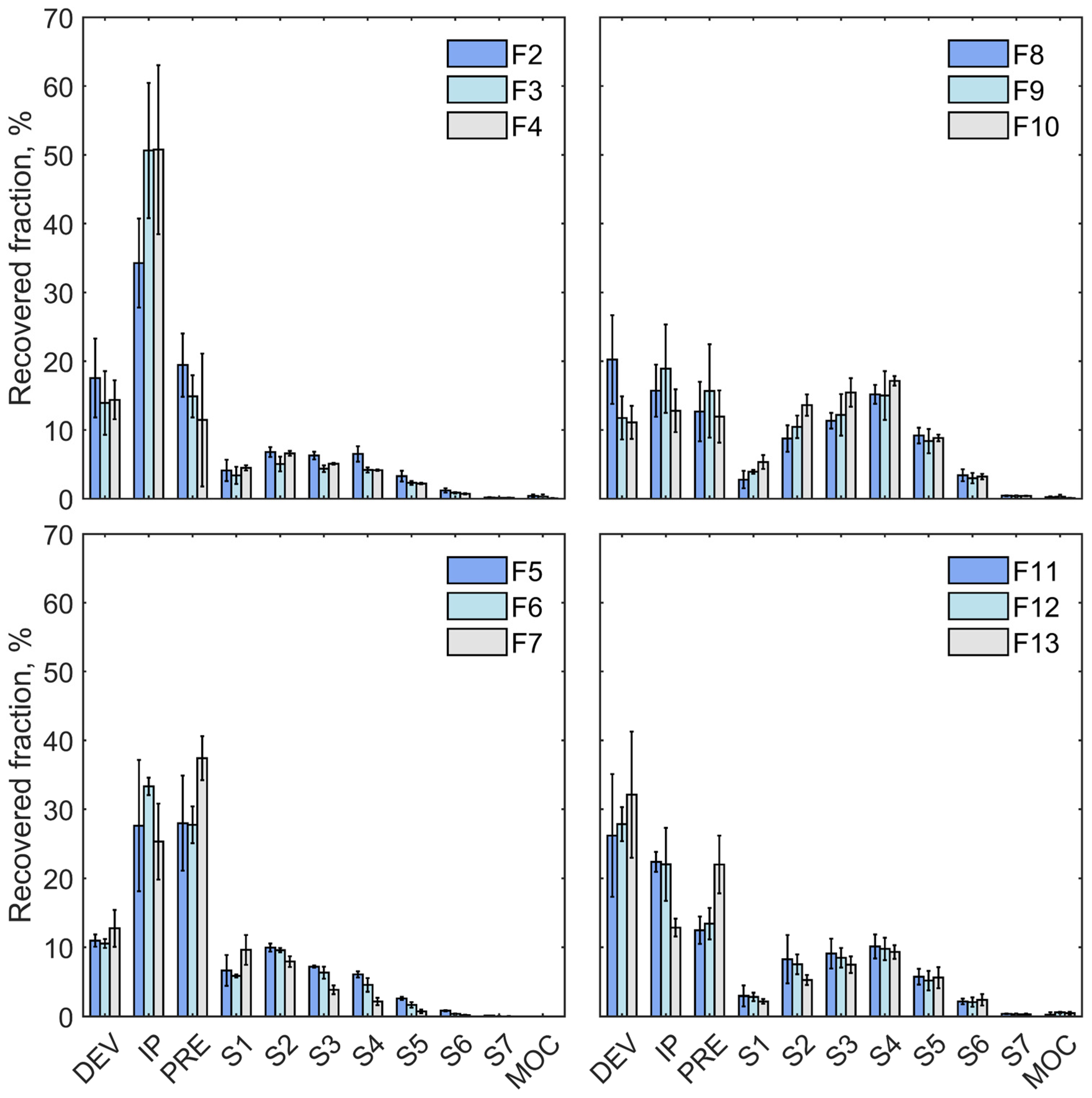
Table 4 details the FPF, MMAD, and GSD of F2–F13 MPs, which were assessed through an NGI apparatus. As depicted by the GSD exceeding 1.2, all the powders were constituted by polydisperse aerosols whose clear dependence on the dispersibility of the formulation was highlighted. Despite the high stability, growing DEX concentrations reduced the FPF from 23.7 ± 4.6% to 16.1 ± 0.8% and increased the MMAD up to 2.3 ± 0.1 µm at 20% (w/w) db DEX. PVP induced the worst aerodynamic behaviour, since the lowest FPF (9.6 ± 1.6%) and the highest MMAD (6.7 ± 0.8 µm) were reached at 20% (w/w) db PVP. Indeed, the tendency for cohesiveness showed by PVP-based MPs over time may have affected their flowability during aerosolisation. In the presence of PS80, lower MMADs and an FPF around 40% were obtained, indicating that PS80 was able to increase the flowability of the MPs. Indeed, the addition of surfactants to the formulation may have reduced the surface energy of the MPs, thus limiting cohesiveness and promoting lung deposition. The decrement in surface energy promoted by PS80 could be attributed to its adsorption to the air–water interface of the droplets during SF [24]. Among the formulations, the MPs composed of 20% (w/w) db HPβCD displayed the highest FPFs (54.6 ± 1.6%) and a low MMAD (3.0 ± 0.1 µm), emerging as an excellent formulation for pulmonary delivery purposes.
Overall, poor aerodynamics was exhibited by DEX- and PVP-based MPs, while powders containing HPβCD and PS80 evidenced a better dispersibility. The in vitro drug deposition profiles, reported in Figure 6, confirmed this trend by highlighting that most of the powders containing DEX and PVP were retained by IP and PRE. Conversely, the deposition pattern was shifted towards the lowest stages of the NGI in the presence of HPβCD and PS80. Lo et al. demonstrated that HPβCD served effectively as an excipient in spray freeze-dried protein formulations, providing good stabilisation and yielding particles with favourable morphologies and handling properties for inhalation [33]. In our previous study [10], a similar boost in FPF was observed in the presence of LL, where a clear dependence of the aerodynamic properties on MAN and LL recrystallisation was detected. Similarly to LL, the dispersibility enhancement induced by HPβCD and PS80 could be related to their hydrophobic portions, which could limit the inter-particle cohesive forces, e.g., van der Waals interactions. Here, HPβCD outperformed LL by limiting recrystallisation and minimising cohesion, thus emerging as an outstanding dispersibility enhancer and stability controller.

3.2.4. In Vitro Dissolution

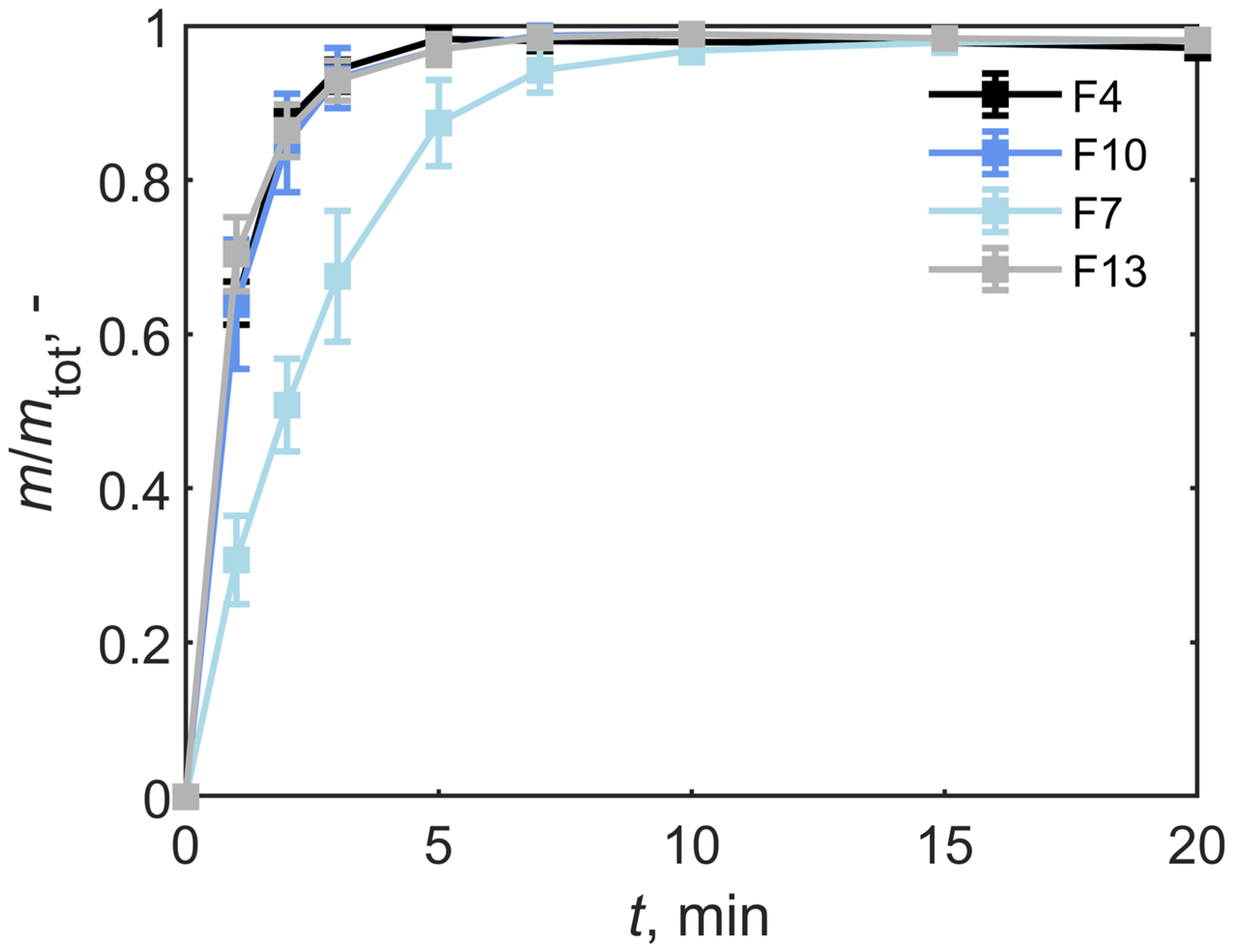
The dissolution behaviour of DPI powders has been extensively studied in recent times. Although the most critical requirement of pulmonary drug delivery is the MPs’ size, dissolution becomes a limiting step when a low-water-soluble drug is involved [20]. At the same time, the burst release and absorption of high-water-soluble molecules may constitute an undesired lung clearance mechanism [34]. In this study, the influence of DEX, HPβCD, PVP, and PS80 on the dissolution properties of spray freeze-dried MPs containing SS was investigated. To this end, the innovative dissolution system RespiCell was selected to mimic drug dissolution in the lungs, by simulating an air–liquid interface and using a limited volume of medium [20]. Figure 7 reports the dissolution profiles of F4, F7, F10, and F13 MPs for the duration of 20 min. The total mass of SS which was dissolved ( m t o t ) was calculated as the sum of the total mass of SS recovered in the dissolution medium and the mass of SS recovered in the filter. The dissolution profiles of DEX-, HPβCD-, and PS80-based MPs were identical and showed a complete dissolution of SS after 7 min. Such rapid release of SS indicates that DEX, HPβCD, and PS80 did not affect the great solubility of SS and MAN in water. This behaviour was expected, since MAN and SS are both water-soluble, and spray freeze-dried powders are highly soluble due to their porosity and high surface area [35]. The addition of highly soluble (DEX and HPβCD) excipients or a low concentration of surfactants (PS80) did not limit water penetration or dissolution rate, explaining the overlapping dissolution curves. By contrast, the presence of PVP prolonged the time required to achieve the complete dissolution of SS up to 15 min. Such a phenomenon could be related to the reduction in the external porosity of the spray freeze-dried MPs operated by this polymer, which was previously observed in Zhang et al. [36]. At the same time, the presence of more aggregates induced by the higher surface energy of PVP may have delayed the uptake of water and, hence, the dissolution process. Therefore, PVP may be applied to target a slower drug release, when avoiding the clearance mechanism by rapid dissolution is required. Instead, DEX, HPβCD, and PS80 could be used to reach rapid drug dissolution in the lungs.

4. Conclusions

In this study, we controlled for the first time the crystallinity of MAN spray freeze-dried MPs by acting either on the freezing step, the storage temperature, or the formulation. Overall, lower storage temperatures selectively promoted higher δ-MAN contents, while recrystallisation towards β -MAN was induced by storage at T a m b , owing to the higher mobility of MAN chains. Such recrystallisation was accompanied by an increase in MPs’ cohesiveness and surface roughness due to the presence of needle-shaped β -MAN crystals. This study highlighted, for the first time, the combination of an IF duration equal to 1 h and storage at −20 °C as the best conditions for obtaining non-cohesive and spherical MPs, mainly formed by δ-MAN. Longer IF durations increased the amount of β -MAN by providing the crystals with more time to arrange into such stable polymorphs. The influence of concentration and type of amorphous excipient on the morphology, crystallinity, flowability, and dissolution of MAN spray freeze-dried MPs was also disclosed. DEX, HPβCD, and PS80 inhibited the cohesiveness of the MPs, while PVP-based MPs showed a tendency to form more aggregates during storage, probably due to the increased surface energy. In the end, all the excipients acted as excellent morphological stability enhancers and fine polymorphism tuners, minimising recrystallisation towards β -MAN. Particularly, DEX and PS80 almost avoided the recrystallisation of MAN over time, while HPβCD and PVP dramatically boosted the presence of δ-MAN. However, PVP acted as an inhibitor of the MPs’ deposition and dissolution in the lungs due to the higher cohesiveness. Instead, 20% (w/w) db HPβCD emerged as an excellent formulation to control polymorphism, avoid cohesiveness, and increase the MPs’ flowability, thanks to its hydrophobicity. These advancements cover a key gap in SFD technology by showing that MAN polymorphism during storage can be controlled through the freezing protocol and excipient design. Future work should further elucidate the role of the drying phase on polymorph evolution and particle stability, supported by advanced analytical techniques to monitor crystallisation in real time. Additionally, extended stability studies under both standard and accelerated conditions could confirm long-term performance. Finally, scaling the process to larger production systems will be essential to validate its industrial applicability and robustness.

Supplementary Materials

The following supporting information can be downloaded at https://www.mdpi.com/article/10.3390/pr14010006/s1. Figure S1: Morphology of the F2–F13 MPs stored at T a m b and produced at an IF duration equal to 1 h. Samples were characterised three months ( t 2 ) after production. Scale bars refer to 50 µm and 1450× magnification. Figure S2: PXRD profiles of F1 MPs, produced at IF durations equal to 1 and 5 h, and stored at T a m b , 5 °C, and −20 °C. Powders were characterised as (black) t 0 , (blue) t 1 , and (grey) t 2 .

Author Contributions

Conceptualisation, L.P., A.S. (Adamo Sulpizi), T.G. and R.P.; methodology, L.P., A.S. (Adamo Sulpizi) and R.P.; validation, L.P.; formal analysis, L.P.; investigation, L.P. and A.S. (Andrea Silenzi); resources, A.S. (Adamo Sulpizi), T.G. and R.P.; data curation, L.P.; writing—original draft preparation, L.P.; writing—review and editing, L.P., A.S. (Adamo Sulpizi) and R.P.; visualisation, L.P.; supervision, A.S. (Adamo Sulpizi) and R.P.; project administration, T.G. and R.P.; funding acquisition, T.G. and R.P. All authors have read and agreed to the published version of the manuscript.

Funding

This publication is part of the project PNRR-NGEU, which has received funding from the MUR—DM352/2022. This research was funded by Chiesi Farmaceutici S.p.A.

Data Availability Statement

The original contributions presented in this study are included in the article/Supplementary Materials. Further inquiries can be directed to the corresponding author.

Acknowledgments

The authors are grateful to Richard Friend and Riccardo Brini (Chiesi Farmaceutici S.p.A) for the training in HPLC.

Conflicts of Interest

Lorena Pasero holds a Doctorate Studentship and collaborates with Chiesi Farmaceutici S.p.A as part of her PhD training. Adamo Sulpizi and Tomaso Guidi are employees of Chiesi Farmaceutici S.p.A. The remaining authors declare that the research was conducted in the absence of any commercial or financial relationships that could be construed as a potential conflict of interest.

Abbreviations

The following abbreviations are used in this manuscript:
DEVDevice
DEXDextran
DPIDry Powder Inhaler
EDEmitted Dose
FPFFine-Particle Fraction
GSDGeometric Standard Deviation
HPβCD2-hydroxypropyl beta cyclodextrin
HPLCHigh-Performance Liquid Chromatography
IPInduction Port
LLL-leucine
MANMannitol
MMADMass Median Aerodynamic Diameter
MOCMicro-Orifice Collector
MPMicroparticle
NGINext Generation Impactor
PREPre-Separator
PS80Polysorbate 80
PVPPolyvinylpyrrolidone
PXRDPowder X-Ray Diffraction
RDRecovered Dose
RFRecovered Fraction
SDStandard Deviation
SEMScanning Electron Microscopy
SFSpray Freezing
SFDSpray Freeze-Drying
SSSalbutamol Sulphate

References

  1. Adali, M.B.; Barresi, A.A.; Boccardo, G.; Pisano, R. Spray Freeze-Drying as a Solution to Continuous Manufacturing of Pharmaceutical Products in Bulk. Processes 2020, 8, 709. [Google Scholar] [CrossRef]
  2. Vishali, D.A.; Monisha, J.; Sivakamasundari, S.K.; Moses, J.A.; Anandharamakrishnan, C. Spray Freeze Drying: Emerging Applications in Drug Delivery. J. Control. Release 2019, 300, 93–101. [Google Scholar] [CrossRef] [PubMed]
  3. Duong, T.; López-Iglesias, C.; Szewczyk, P.K.; Stachewicz, U.; Barros, J.; Alvarez-Lorenzo, C.; Alnaief, M.; García-González, C.A. A Pathway from Porous Particle Technology Toward Tailoring Aerogels for Pulmonary Drug Administration. Front. Bioeng. Biotechnol. 2021, 9, 671381. [Google Scholar] [CrossRef] [PubMed]
  4. Labiris, N.R.; Dolovich, M.B. Pulmonary Drug Delivery. Part II: The Role of Inhalant Delivery Devices and Drug Formulations in Therapeutic Effectiveness of Aerosolized Medications. Br. J. Clin. Pharmacol. 2003, 56, 600–612. [Google Scholar] [CrossRef]
  5. Pasero, L.; Susa, F.; Limongi, T.; Pisano, R. A Review on Micro and Nanoengineering in Powder-Based Pulmonary Drug Delivery. Int. J. Pharm. 2024, 659, 124248. [Google Scholar] [CrossRef]
  6. Pramanik, S.; Mohanto, S.; Manne, R.; Rajendran, R.R.; Deepak, A.; Edapully, S.J.; Patil, T.; Katari, O. Nanoparticle-Based Drug Delivery System: The Magic Bullet for the Treatment of Chronic Pulmonary Diseases. Mol. Pharm. 2021, 18, 3671–3718. [Google Scholar] [CrossRef] [PubMed]
  7. Liao, Q.; Yip, L.; Chow, M.Y.T.; Chow, S.F.; Chan, H.K.; Kwok, P.C.L.; Lam, J.K.W. Porous and Highly Dispersible Voriconazole Dry Powders Produced by Spray Freeze Drying for Pulmonary Delivery with Efficient Lung Deposition. Int. J. Pharm. 2019, 560, 144–154. [Google Scholar] [CrossRef]
  8. Carvalho, T.C.; Peters, J.I.; Williams, R.O., III. Influence of Particle Size on Regional Lung Deposition—What Evidence Is There? Int. J. Pharm. 2011, 406, 1–10. [Google Scholar] [CrossRef]
  9. Pasero, L.; Susa, F.; Chiavarino, R.; Limongi, T.; Sulpizi, A.; Guidi, T.; Pisano, R. Tailoring Dry Microparticles for Pulmonary Drug Delivery: Ultrasonic Spray Freeze-Drying with Mannitol and Salbutamol Sulphate. Processes 2023, 11, 3096. [Google Scholar] [CrossRef]
  10. Pasero, L.; Sulpizi, A.; Guidi, T.; Pisano, R. Spray Freeze-Drying for Inhalable L-Leucine, Mannitol-Based Microparticles: The Impact of Process Variables, L-Leucine, and Crystallinity on Aerosolization Properties. Powder Technol. 2025, 455, 120788. [Google Scholar] [CrossRef]
  11. Chaurasiya, B.; Zhao, Y.Y. Dry Powder for Pulmonary Delivery: A Comprehensive Review. Pharmaceutics 2021, 13, 31. [Google Scholar] [CrossRef]
  12. Otake, H.; Okuda, T.; Hira, D.; Kojima, H.; Shimada, Y.; Okamoto, H. Inhalable Spray-Freeze-Dried Powder with L-Leucine That Delivers Particles Independent of Inspiratory Flow Pattern and Inhalation Device. Pharm. Res. 2016, 33, 922–931. [Google Scholar] [CrossRef]
  13. Yang, Y.; Liu, J.; Hu, A.; Nie, T.; Cheng, Z.; Liu, W. A Critical Review on Engineering of D-Mannitol Crystals: Properties, Applications, and Polymorphic Control. Crystals 2022, 12, 1080. [Google Scholar] [CrossRef]
  14. Vanhoorne, V.; Van Bockstal, P.J.; Van Snick, B.; Peeters, E.; Monteyne, T.; Gomes, P.; De Beer, T.; Remon, J.P.; Vervaet, C. Continuous Manufacturing of Delta Mannitol by Cospray Drying with PVP. Int. J. Pharm. 2016, 501, 139–147. [Google Scholar] [CrossRef]
  15. Maas, S.G.; Schaldach, G.; Littringer, E.M.; Mescher, A.; Griesser, U.J.; Braun, D.E.; Walzel, P.E.; Urbanetz, N.A. The Impact of Spray Drying Outlet Temperature on the Particle Morphology of Mannitol. Powder Technol. 2011, 213, 27–35. [Google Scholar] [CrossRef]
  16. Penha, F.M.; Gopalan, A.; Meijlink, J.C.; Ibis, F.; Eral, H.B. Selective Crystallization of D-Mannitol Polymorphs Using Surfactant Self-Assembly. Cryst. Growth Des. 2021, 21, 3928–3935. [Google Scholar] [CrossRef] [PubMed]
  17. Shetty, N.; Zeng, L.; Mangal, S.; Nie, H.; Rowles, M.R.; Guo, R.; Han, Y.; Park, J.H.; Zhou, Q. Effects of Moisture-Induced Crystallization on the Aerosol Performance of Spray Dried Amorphous Ciprofloxacin Powder Formulations. Pharm. Res. 2018, 35, 7. [Google Scholar] [CrossRef] [PubMed]
  18. Hassan, M.S.; Lau, R.W.M. Effect of Particle Shape on Dry Particle Inhalation: Study of Flowability, Aerosolization, and Deposition Properties. AAPS PharmSciTech 2009, 10, 1252–1262. [Google Scholar] [CrossRef]
  19. Jain, H.; Bairagi, A.; Srivastava, S.; Singh, S.B.; Mehra, N.K. Recent Advances in the Development of Microparticles for Pulmonary Administration. Drug Discov. Today 2020, 25, 1865–1872. [Google Scholar] [CrossRef]
  20. Sonvico, F.; Chierici, V.; Varacca, G.; Quarta, E.; D’angelo, D.; Forbes, B.; Buttini, F. Respicelltm: An Innovative Dissolution Apparatus for Inhaled Products. Pharmaceutics 2021, 13, 1541. [Google Scholar] [CrossRef] [PubMed]
  21. Yoshinari, T.; Forbes, R.T.; York, P.; Kawashima, Y. Moisture Induced Polymorphic Transition of Mannitol and Its Morphological Transformation. Int. J. Pharm. 2002, 247, 69–77. [Google Scholar] [CrossRef] [PubMed]
  22. Sood, J.; Sapra, B.; Bhandari, S.; Jindal, M.; Tiwary, A.K. Understanding Pharmaceutical Polymorphic Transformations I: Influence of Process Variables and Storage Conditions. Ther. Deliv. 2014, 5, 1123–1142. [Google Scholar] [CrossRef]
  23. Cares-Pacheco, M.G.; Calvet, R.; Vaca-Medina, G.; Rouilly, A.; Espitalier, F. Inverse Gas Chromatography a Tool to Follow Physicochemical Modifications of Pharmaceutical Solids: Crystal Habit and Particles Size Surface Effects. Int. J. Pharm. 2015, 494, 113–126. [Google Scholar] [CrossRef]
  24. Fichtner, F.; Mahlin, D.; Welch, K.; Gaisford, S.; Alderborn, G. Effect of Surface Energy on Powder Compactibility. Pharm. Res. 2008, 25, 2750–2759. [Google Scholar] [CrossRef] [PubMed]
  25. Yoshinari, T.; Forbes, R.T.; York, P.; Kawashima, Y. The Improved Compaction Properties of Mannitol after a Moisture-Induced Polymorphic Transition. Int. J. Pharm. 2003, 258, 121–131. [Google Scholar] [CrossRef] [PubMed]
  26. Vanhoorne, V.; Bekaert, B.; Peeters, E.; De Beer, T.; Remon, J.P.; Vervaet, C. Improved Tabletability after a Polymorphic Transition of Delta-Mannitol during Twin Screw Granulation. Int. J. Pharm. 2016, 506, 13–24. [Google Scholar] [CrossRef] [PubMed]
  27. Lee, Y.Y.; Wu, J.X.; Yang, M.; Young, P.M.; Van Den Berg, F.; Rantanen, J. Particle Size Dependence of Polymorphism in Spray-Dried Mannitol. Eur. J. Pharm. Sci. 2011, 44, 41–48. [Google Scholar] [CrossRef]
  28. Yan, S.; Zhang, S.; Chen, X.D.; Wu, W.D. Spray Freeze Dried Uniform Mannitol Microspheres. Powder Technol. 2024, 434, 119312. [Google Scholar] [CrossRef]
  29. Traini, D.; Scalia, S.; Adi, H.; Marangoni, E.; Young, P.M. Polymer Coating of Carrier Excipients Modify Aerosol Performance of Adhered Drugs Used in Dry Powder Inhalation Therapy. Int. J. Pharm. 2012, 438, 150–159. [Google Scholar] [CrossRef]
  30. Parsian, A.R.; Vatanara, A.; Rahmati, M.R.; Gilani, K.; Khosravi, K.M.; Najafabadi, A.R. Inhalable Budesonide Porous Microparticles Tailored by Spray Freeze Drying Technique. Powder Technol. 2014, 260, 36–41. [Google Scholar] [CrossRef]
  31. Barresi, A.; Ghio, S.; Fissore, D.; Pisano, R. Freeze Drying of Pharmaceutical Excipients Close to Collapse Temperature: Influence of the Process Conditions on Process Time and Product Quality. Dry. Technol. 2009, 27, 805–816. [Google Scholar] [CrossRef]
  32. Vanhoorne, V.; Almey, R.; De Beer, T.; Vervaet, C. Delta-Mannitol to Enable Continuous Twin-Screw Granulation of a Highly Dosed, Poorly Compactable Formulation. Int. J. Pharm. 2020, 583, 119374. [Google Scholar] [CrossRef]
  33. Lo, J.C.K.; Pan, H.W.; Lam, J.K.W. Inhalable Protein Powder Prepared by Spray-Freeze-Drying Using Hydroxypropyl-β-Cyclodextrin as Excipient. Pharmaceutics 2021, 13, 615. [Google Scholar] [CrossRef]
  34. Eedara, B.B.; Bastola, R.; Das, S.C. Dissolution and Absorption of Inhaled Drug Particles in the Lungs. Pharmaceutics 2022, 14, 2667. [Google Scholar] [CrossRef]
  35. Wanning, S.; Süverkrüp, R.; Lamprecht, A. Pharmaceutical Spray Freeze Drying. Int. J. Pharm. 2015, 488, 136–153. [Google Scholar] [CrossRef] [PubMed]
  36. Zhang, X.; Qin, L.; Su, J.; Sun, Y.; Zhang, L.; Li, J.; Beck-Broichsitter, M.; Muenster, U.; Chen, L.; Mao, S. Engineering Large Porous Microparticles with Tailored Porosity and Sustained Drug Release Behavior for Inhalation. Eur. J. Pharm. Biopharm. 2020, 155, 139–146. [Google Scholar] [CrossRef] [PubMed]
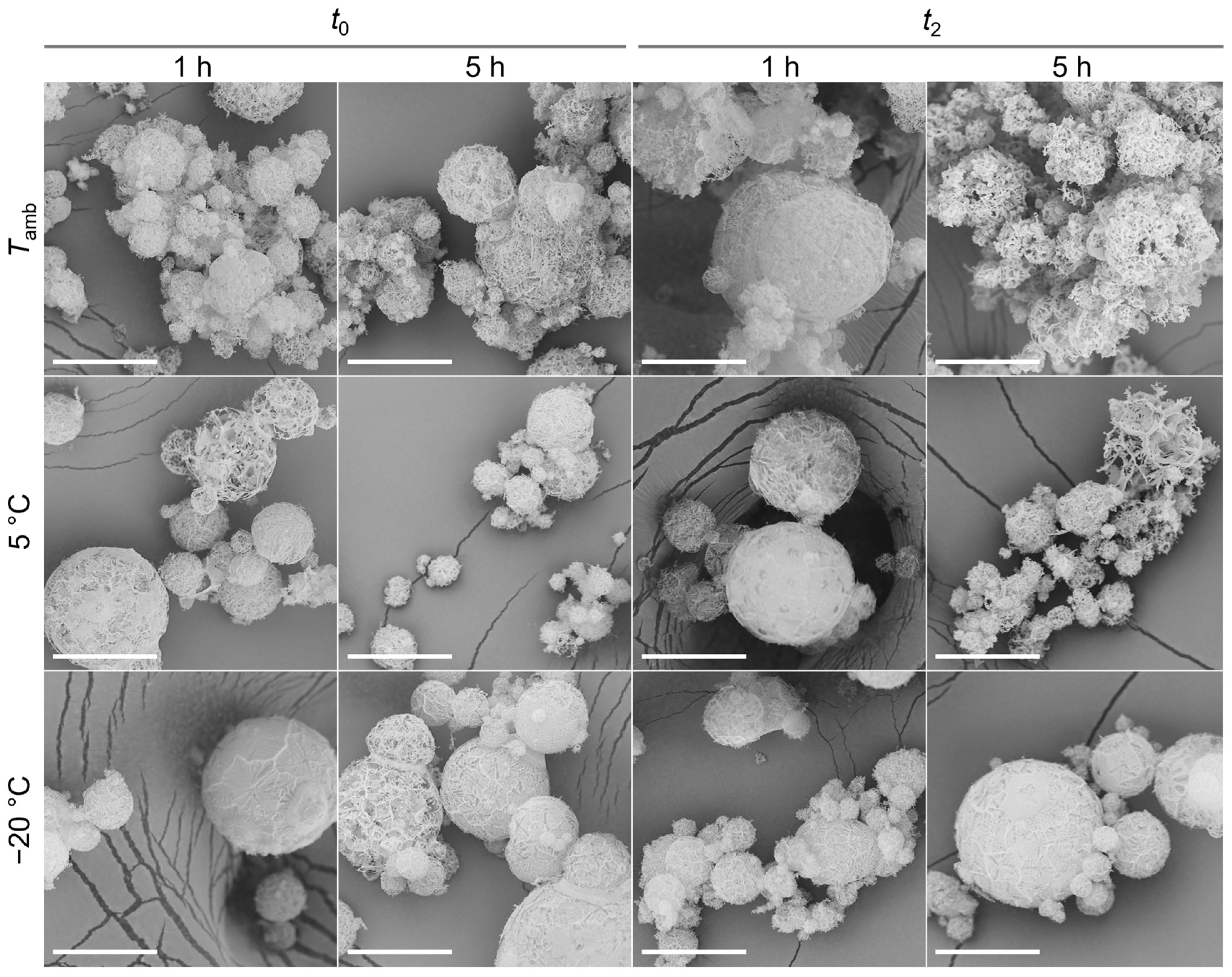
Figure 1. Morphology of F1 MPs stored at different temperatures and produced at IF durations equal to 1 and 5 h. Samples were characterised one week ( t 0 ) and three months ( t 2 ) after production. Scale bars refer to 50 µm and 1450× magnification.
Processes 14 00006 g001
Figure 2. (A) R of F1 MPs, produced either at 1 h or 5 h of IF. MPs were stored at T a m b , 5 °C, and −20 °C. R is the PXRD peak ratio between δ - and β -MAN at 9.7° and 14.6°, which was calculated at t 0 (one week), t 1 (one month), and t 2 (three months). (B) Visual representation of the macroscopic volume reduction in powders stored at different temperatures for one week ( t 0 ).
Processes 14 00006 g002
Figure 3. Morphology of the F2–F13 MPs stored at T a m b and produced at an IF time equal to 1 h. Samples were characterised one week ( t 0 ) after production. Scale bars refer to 50 µm and 1450× magnification.
Processes 14 00006 g003
Figure 4. R of the F2–F13 MPs, stored at T a m b . R is the PXRD peak ratio between δ - and β -MAN at 9.7° and 14.6°, which was calculated at t 0 (one week), t 1 (one month), and t 2 (three months) of storage.
Processes 14 00006 g004
Figure 5. PXRD profiles of F2–F13 MPs, produced at an IF time equal to 1 h and stored at T a m b . Powders were characterised at (black) t 0 , (blue) t 1 , and (grey) t 2 . Legend: t 0 (one week), t 1 (one month), and t 2 (three months).
Processes 14 00006 g005
Figure 6. In vitro drug deposition profiles of F2–F13 MPs obtained through an NGI apparatus. Results are expressed as mean ± SD.
Processes 14 00006 g006
Figure 7. Dissolution profiles of F4, F7, F10, and F13 in water obtained through a RespiCell system. The total mass of SS which was dissolved ( m t o t ) was calculated as the sum of the maximum mass of SS recovered in the dissolution medium and the mass of SS recovered in the filter. Results are expressed as mean ± SD.
Processes 14 00006 g007
Table 1. List of formulations and operative conditions involved in the study. All the formulations were prepared at 5% (w/v) of total solute.
% (w/w) db
MANSSDEXPVPHPβCDPS80IF, hTemperature, °C
F1991----1, 5−20, 5, T a m b
F29415---1 T a m b
F389110---1 T a m b
F479120---1 T a m b
F5941-5--1 T a m b
F6891-10--1 T a m b
F7791-20--1 T a m b
F8941--5-1 T a m b
F9891--10-1 T a m b
F10791--20-1 T a m b
F1198.991---0.011 T a m b
F1298.91---0.11 T a m b
F1398.61---0.41 T a m b
Table 2. d g , d ae and S p a n of F1 powders produced at different IF times and stored at various temperatures.
d g , µm d a e , µm S p a n , -
1 h5 h1 h5 h1 h5 h
−20 °C14.7   ±   11.517.2   ±   12.73.3   ±   2.63.8   ±   2.82.22.2
5 °C17.2   ±   14.215.9   ±   13.53.8   ± 3.23.6   ±   3.02.32.7
T a m b 17.2   ±   11.616.1   ±   12.6 3.8   ±   2.63.6   ±   2.81.92.3
Table 3. d g , d a e , and Span of F2–F13 powders produced at an IF duration of 1 h and stored at T a m b .
d g , µm d a e , µmSpan, - d g , µm d a e , µmSpan, -
F216.1   ±   12.73.6   ±   2.82.4F818.0   ±   13.44.0   ±   3.02.3
F315.4   ±   12.93.4   ±   2.92.9F916.7   ±   12.93.7   ±   2.92.2
F413.6   ±   11.83.0   ±   2.62.5F1015.8   ±   11.03.5   ±   2.52.2
F511.2   ±   10.82.5   ±   2.42.4F1116.8   ±   12.83.8   ±   2.92.3
F69.4   ±   7.82.1   ±   1.72.5F1217.7   ±   10.94.0   ± 2.41.7
F712.1   ±   13.62.7   ±   3.03.2F1316.3   ± 11.63.6   ± 2.62.0
Table 4. Aerodynamic properties of F2–F13 MPs. Results are expressed as mean ± SD.
F2F3F4F5F6F7
FPF, %23.7 ± 4.615.5 ± 2.516.1 ± 0.821.3 ± 0.716.7 ± 2.79.6 ± 1.6
MMAD, µm3.5 ± 0.33.7 ± 0.44.2 ± 0.24.4 ± 0.54.8 ± 0.46.7 ± 0.8
GSD, -2.2 ± 0.12.4 ± 0.22.3 ± 0.12.2 ± 0.12.0 ± 0.12.1 ± 0.1
F8F9F10F11F12F13
FPF, %53.2 ± 7.647.7 ± 11.754.6 ± 1.640.2 ± 3.539.1 ± 739.5 ± 2
MMAD, µm2.6 ± 0.32.8 ± 0.13.0 ± 0.12.9 ± 0.32.9 ± 0.22.6 ± 0.1
GSD, -2.0 ± 0.12.0 ± 0.12.0 ± 0.12.1 ± 0.12.1 ± 0.12.1 ± 0.1
Disclaimer/Publisher’s Note: The statements, opinions and data contained in all publications are solely those of the individual author(s) and contributor(s) and not of MDPI and/or the editor(s). MDPI and/or the editor(s) disclaim responsibility for any injury to people or property resulting from any ideas, methods, instructions or products referred to in the content.