Article

Comparative Study of Structural Designs of Stationary Components in Ultra-High-Head Pumped Storage Units

1
Fujian Yunxiao Pumped Stroge Co., Ltd., State Grid Corporation of China, Zhangzhou 363300, China
2
School of Civil Engineering and Water Resources, Qinghai University, Xining 810016, China
3
Laboratory of Ecological Protection and High Quality Development in the Upper Yellow River, Xining 810016, China
4
Key Laboratory of Water Ecology Remediation and Protection at Headwater Regions of Big Rivers, Ministry of Water Resources, Xining 810016, China
5
Department of Energy and Power Engineering, Tsinghua University, Beijing 100084, China
6
S.C.I. Energy, Future Energy Research Institute, 8706 Zurich, Switzerland
*
Author to whom correspondence should be addressed.
Processes 2025, 13(12), 3826; https://doi.org/10.3390/pr13123826
Submission received: 22 October 2025 / Revised: 18 November 2025 / Accepted: 24 November 2025 / Published: 26 November 2025
(This article belongs to the Special Issue CFD Simulation of Fluid Machinery)

Abstract

Pumped storage power stations provide essential benefits to power grids by cutting peak loads, filling valleys, and boosting renewable energy integration rates. They serve as the foundation for developing a new power system based on renewable energy. Pump turbines are currently evolving to provide higher heads, larger capacities, and higher rotating speeds. The performance and dependability of its basic components have a direct impact on the safety and stability of unit operation. Based on this, this research looks into the modal characteristics and structural aspects of essential stationary components, such as the pump-turbine head cover. By comparing the mechanical performance of two different structural designs (Design A and Design B), Design B features an overall thickness 1.5 times that of Design A and incorporates an upper flange structure. Its design aims to enhance the component’s resistance to bending and deformation, optimize stress distribution while reducing peak stress values, and improve modal characteristics. This approach elevates the overall structural performance of the fixed components to accommodate the complex operating conditions of ultra-high-head pumped storage units. It was discovered that Design B had greater bending and deformation resistance than Design A, as well as better stress distribution and lower maximum stress values. This study further indicates that variations in structural design lead to significant differences in modal characteristics and overall structural performance. In particular, the thicknesses of the head cover’s main body and stiffening ribs are critical parameters that govern the modal behavior and structural properties of stationary components. These insights provide critical technical guidance for optimizing the design of stationary parts, such as the head cover, in pumped storage power plant units.

1. Introduction

To address the issue of global energy shortages, governments around the world have developed appropriate policies, emphasizing the production of new and renewable energy as a vital means of alleviating supply limitations. Renewable energy has become a critical component of global sustainable development. Among these, clean energy sources such as wind and solar power have seen significant development [1,2,3]. However, wind and solar power generation are extremely vulnerable to environmental conditions, resulting in low power generating stability. Pump turbines, as the core equipment of pumped storage power plants, are an important option for dealing with the intermittent and variable character of emerging energy sources like wind and solar power. Pumped storage power stations convert excess electricity into potential energy at times of low demand for storage. During peak periods, this stored energy is released to generate electricity, allowing for peak shaving and valley filling on the grid. This essentially increases the grid’s absorption capacity. Pumped storage hydropower facilities are a safe, reliable, and cost-effective energy storage system that also offers flexible mode switching and great operating reliability. This makes them indispensable in developing new power systems based on renewable energy sources [4]. Pumped storage technology has made significant strides in key areas, including high-head, large-capacity, and high-speed applications. This trend poses major challenges to the structural design and overall performance of pump turbines. Furthermore, to meet diverse electricity demands, power generation systems must operate under non-design conditions [5,6,7], leading to excessive vibration issues in existing units. Therefore, a systematic assessment of structural strength and operational stability under high-head, large-capacity conditions is essential.
Pump turbines have fundamentally different vibration magnitude and spectrum properties than typical hydro turbines [8]. Vibration concerns are the primary factors affecting pump-turbine stability [9,10,11,12,13]. Due to its reversible operation, guide vane switching and transitions between operating conditions occur frequently and rapidly. This produces continuous unsteady hydraulic excitations within the unit, including dynamic interference and vortices. These excitations persistently act on the structure, and their long-term accumulation can lead to structural damage [14,15,16,17]. Simultaneously, the rapid and frequent opening and closing of guide vanes severely disturbs the internal flow field, causing abrupt changes in flow rates within the unit. Sudden water flow variations generate water hammer and reverse water hammer phenomena, which are critical issues in pressure pipelines [18]. These phenomena not only induce plant vibrations [19] but also impose instantaneous impact loads on the unit. This exacerbates structural vibrations and increases peak stresses on critical fixed components such as the head cover and stay rings, potentially leading to component fatigue damage and performance degradation. Long-term, this directly threatens the sustained safe and stable operation of the unit and its service life [20,21]. The combination of these two concerns poses severe hazards to the equipment’s structural stability and operating safety. To maintain the safe and stable operation of pump-turbine units, the performance and dependability of their basic components have become vital. The head cover, stay ring, and bottom ring, as the core load-bearing components of the pump-turbine assembly, must withstand both the impact loads generated by water flow and the weight of superimposed structures such as the main shaft and guide ring. Their vibration characteristics and amplitudes directly influence the stable operation of the entire unit. Given the importance of the head cover, stay ring, and bottom ring, investigating their structural strength and vibration characteristics has become essential for ensuring the safe and efficient operation of pumped storage power plants.
Due to the high cost and inconvenience associated with unit model tests and full-scale prototype tests, numerical simulation of stationary components such as the head cover, stay ring, and bottom ring is an effective method for identifying their structural and modal characteristics [22]. Moreover, the numerical simulation methods employed for structural characteristic analysis and modal analysis have been well validated. Their computational results have been experimentally verified, demonstrating high accuracy in numerical simulation [22,23,24,25,26]. Intensive research has been conducted on the structural characteristics and modal properties of stationary components for the operation of pump-turbine units. Natural frequencies and mode shapes are crucial parameters in modal analysis. Accurate prediction of these characteristics for the runner can effectively prevent transient resonance and fatigue failure [27]. During actual operation, the runner is surrounded by water. Vibrations in the runner structure induce vibrations in the surrounding fluid, introducing add mass effects that influence the runner’s modal behavior [28,29,30]. Modal analysis considering the added mass effects of water surrounding the rotor has been extensively applied in engineering [31,32]. Researchers have conducted structural stress analysis of stationary components in ultra-high-head pump turbines, providing a reference for optimizing statically determinate structures of pump turbines [33,34]. During transient processes such as pump-turbine startup and shutdown, the pressure and flow rate inside the pump-turbine’s internal flow passages undergo abrupt changes, which can affect the unit’s flow characteristics. As a result, some scholars have analyzed the flow characteristics within pump-turbine units during transient processes [35,36]. Utilizing unidirectional fluid–structure interaction theory and computational methods, they have examined the dynamic stresses on stationary components such as the head cover [36,37].
Some scholars have concentrated on the deformation of the head cover during operation, proposing an eddy current sensor approach for measuring turbine head cover deformation. Experimental verification confirmed the method’s feasibility, simplicity, and high precision, providing a viable approach for on-site deformation measurement of turbine head covers [38]. Some other researchers systematically analyzed the static loads and vibration characteristics experienced by the head cover and connecting bolts under various operating conditions. They also highlighted shortcomings in existing bolt deformation monitoring systems, emphasizing the need to comprehensively consider deformation and vibration across different operational phases to develop more reliable bolt condition monitoring systems [39]. Researchers optimized the design of vertical Francis turbine head covers, refining the bolt assembly structure to significantly reduce overhaul downtime and effectively enhance maintenance efficiency [40]. Researchers conducted a vibration characteristic analysis of the head cover of an ultra-high-head pump turbine, providing a systematic and reliable method for analyzing the vibration characteristics and resonance assessment of the head cover [41,42]. Researchers employed a combined approach of CFD (Computational Fluid Dynamics) and FEM (Finite Element Method) to conduct a systematic analysis of the vibration characteristics and deformation patterns of the pump-turbine head cover. Results indicate that the core cause of abnormal vibrations in the head cover lies in hydraulic excitation. Simultaneously, the combined CFD-FEM method was validated for its applicability and reliability in analyzing the structural mechanical behavior of the head cover under various operating conditions [43,44]. The experts used finite element analysis and modal testing to strengthen and control resonance in the water turbine head cover, effectively mitigating excessive vibration through structural reinforcement [45]. Some scholars compared the structural characteristics of double-flange and single-flange head cover designs. Their results show that different head cover configurations lead to significant variations in stiffness, which in turn substantially influence the natural frequencies and overall structural properties of the head covers [46]. To accurately analyze the vibration mechanism of the unit, researchers incorporated the head cover into the vertical vibration analysis model of the hydropower station. The findings indicate that the head cover serves as a key element in vertical vibration transmission, and its vibration response has a significant, non-negligible impact on the entire vertical vibration behavior of the unit [47]. However, existing research has not sufficiently addressed the comparative analysis of structural characteristics under extreme operating conditions (1.5 times the maximum head pressure) among different structural designs, nor has it adequately evaluated the advantages and disadvantages of their modal properties.
To elucidate the differences in modal characteristics and structural features between different design schemes and ensure the safe and stable operation of ultra-high-head units under complex operating conditions, this study established fully three-dimensional static component structural domain models for two fundamentally different structural designs. Furthermore, the computational models were extended upstream and downstream to mitigate the influence of boundary conditions [48]. A novel approach for differentiated assessment of structural frequency response was proposed. By comprehensively considering fluid-induced added mass effects, modal analysis was conducted to compare the modal characteristics of the head covers in both designs. To investigate structural load-bearing performance, ultimate pressure was further applied to the finite element models to analyze stress distribution patterns in both designs. These findings deepen understanding of the influence mechanisms of structural design and geometric parameters, providing a basis for optimizing the design of fixed components in ultra-high-head pump turbines, thereby enhancing unit operational reliability.

2. Numerical Calculation Methods

The finite element–based numerical simulations conducted in this study include fluid–structure coupled modal analysis and stress analysis.

2.1. Fluid–Structure Coupled Modal Characteristic Analysis

The stationary components of the pump-turbine unit, including the head cover, stay ring, and bottom ring, interact with the surrounding water during operation, resulting in fluid–structure coupling effects. Considering the structural forces acting on the fluid, the pump turbine unit’s fluid pressure is controlled by the following Equation (1):
M f p ¨ + N f p ˙ + K f p = f s f t
where M f is the fluid mass matrix, N f is the fluid damping matrix, K f is the fluid stiffness matrix, f s f t is the structural force vector acting on the fluid, and p represents the pressure.
The structural force vector acting on the fluid is:
f s f t = M f s i x ¨
where M f s i is the FSI coupling “mass” matrix.
Considering the pressure exerted by the fluid on the stationary components of the prototype pump-turbine unit, the structural dynamics equation incorporating fluid effects is established based on Equation (1) as follows:
M s x ¨ + N s x ˙ + K s x = f f s t
where M s is the structural mass matrix, N s is the structural damping matrix, K s is the structural stiffness matrix, f f s t represents the fluid pressure acting on the structure, and x , x ˙ , and x ¨ represent the displacement, velocity, and acceleration of the structural node, respectively.
The fluid pressure applied to the structure is:
f s f t = K f s i p
where K fsi is the FSI coupling “stiffness” matrix.
Based on the above equations, the complete fluid–structure coupled finite element discrete equations can be expressed as:
M s 0 M f s i M f x ¨ p ¨ + N s 0 0 N f x ˙ p ˙ + K s K f s i 0 K f x p = f t 0
Simplifying the above equation, the external load is zero in modal analysis, and damping is neglected. The equation describing the vibration of the head cover under the action of water can be obtained.
M s + M a x ¨ + K s + K a x = 0
In the equation: M a is the added mass matrix; K a is the added stiffness matrix.
Therefore, the natural frequencies of stationary components in air and under the action of internal water can be obtained:
f a = K s M s
f w = K s + K a M s + M a
Compared to the stiffness of the rotor structure, the added stiffness of the water body is relatively small and is therefore generally neglected. Equation (7) can be written as:
f w = K s M s + M a

2.2. Fluid-Induced Structural Stress Analysis

The peak stress during the extraction transition process (1.5 times the head) should be used as the loading load for the structure, enabling analysis of the structural characteristics of stationary components under ultimate stress conditions:
σ = E S x
where E is the elastic modulus matrix, and S is the strain–displacement matrix.
The structural strength of stationary components in pump turbines is evaluated using the equivalent stress σ v M (Equation (11)):
σ v M = σ 1 σ 2 2 + σ 2 σ 3 2 + σ 3 σ 1 2 2
In the equation, σ1, σ2, and σ3 represent the three principal stresses.

3. Calculation Models for Pump-Turbine Stationary Components

This study primarily compares the structural design differences between two stationary component configurations and analyzes their modal characteristics and structural stress. Both Design A and Design B utilize structural steel for the head cover, stay ring, and bottom ring. Both head cover designs utilize Q355C material, where 355 denotes the material’s nominal yield strength. Due to the lamination effect, its actual yield strength is 275 Mpa. Similarly, the stay ring and guide vane materials employ Q500D, with an actual yield strength of 430 Mpa. The bottom ring material is Q345C, featuring an actual yield strength of 275 Mpa. Table 1 presents the material parameters for stationary components. All structural designs, material applications, and safety standards comply with IEC [49] and ASME [50] engineering standards.

3.1. Computational Model for Modal Analysis

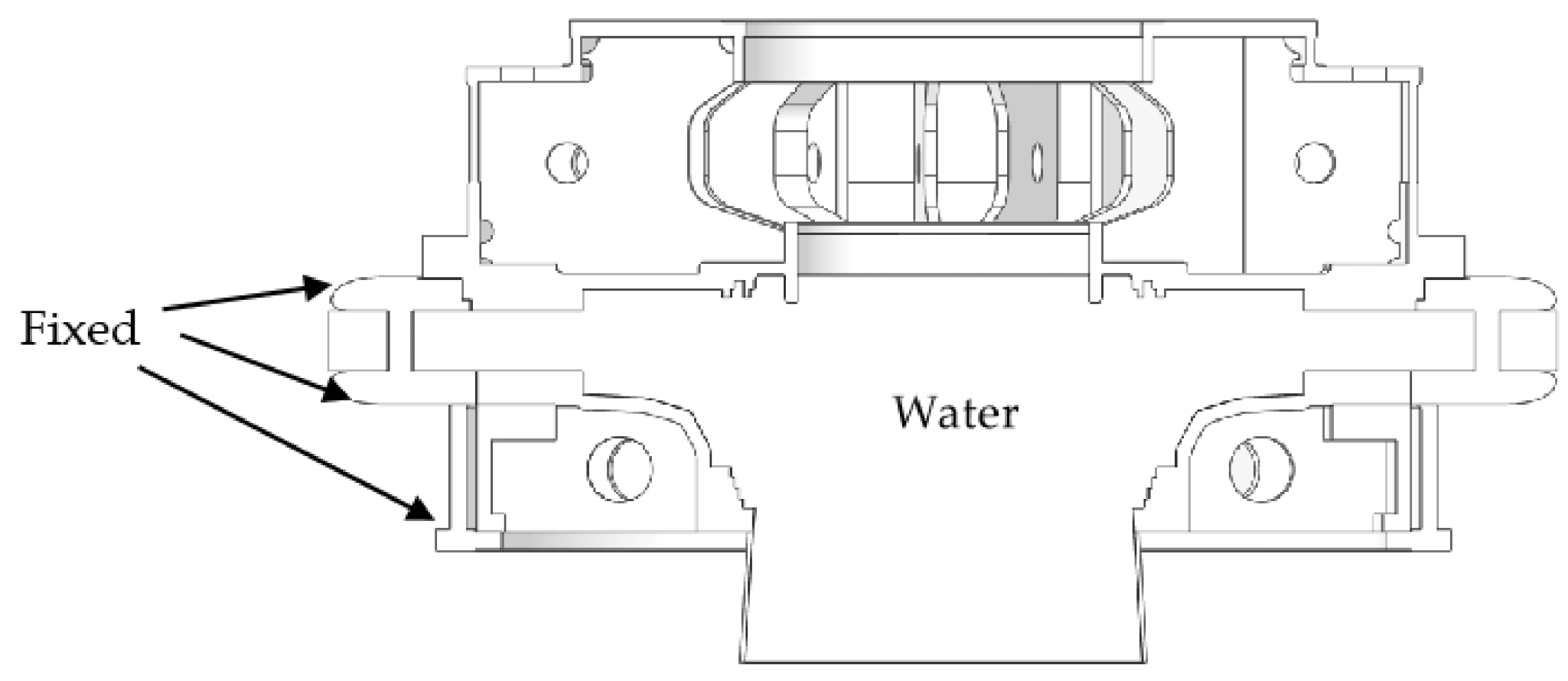
In this study, the modal characteristics of the head cover for a high-head pump-turbine unit were investigated. Figure 1 shows the computational model for the head cover’s modal analysis. This model includes the head cover, stay ring, and bottom ring. In actual construction, the stay ring is embedded in concrete, so its entire bottom surface is set as a fixed constraint. The connection interface between the stay ring and the spiral case is also defined as a fixed constraint. Modal analysis was performed using the ANSYS24R1 Modal Acoustics Module, where the water domain was defined as the acoustic domain and the stationary components were defined as the structural domain. Mesh generation was conducted using ANSYS Mesh. For complex geometric shapes such as the head cover, stay ring, and bottom ring, high-quality tetrahedral elements were selected for mesh generation.

3.2. Structural Characteristics Analysis and Computational Model

The figure below shows the stress calculation model for the stationary component Design A, where the fixed constraints in the structural analysis are consistent with those in the modal analysis. Stress calculations for stationary components were performed using the ANSYS Static Structural module, with the same mesh generation and modal analysis methods applied. The gravitational acceleration was set to −9.8066 m/s2.

3.3. Differences Between Structural Design A and Design B

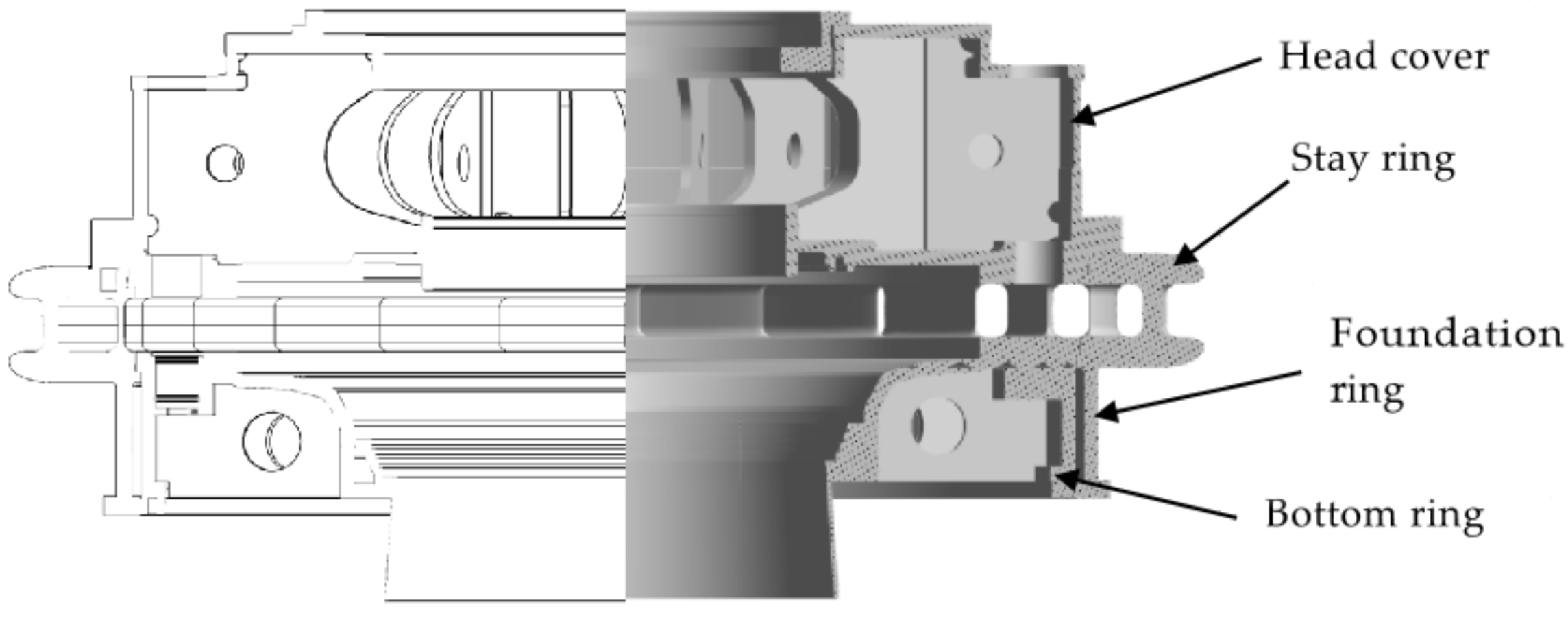
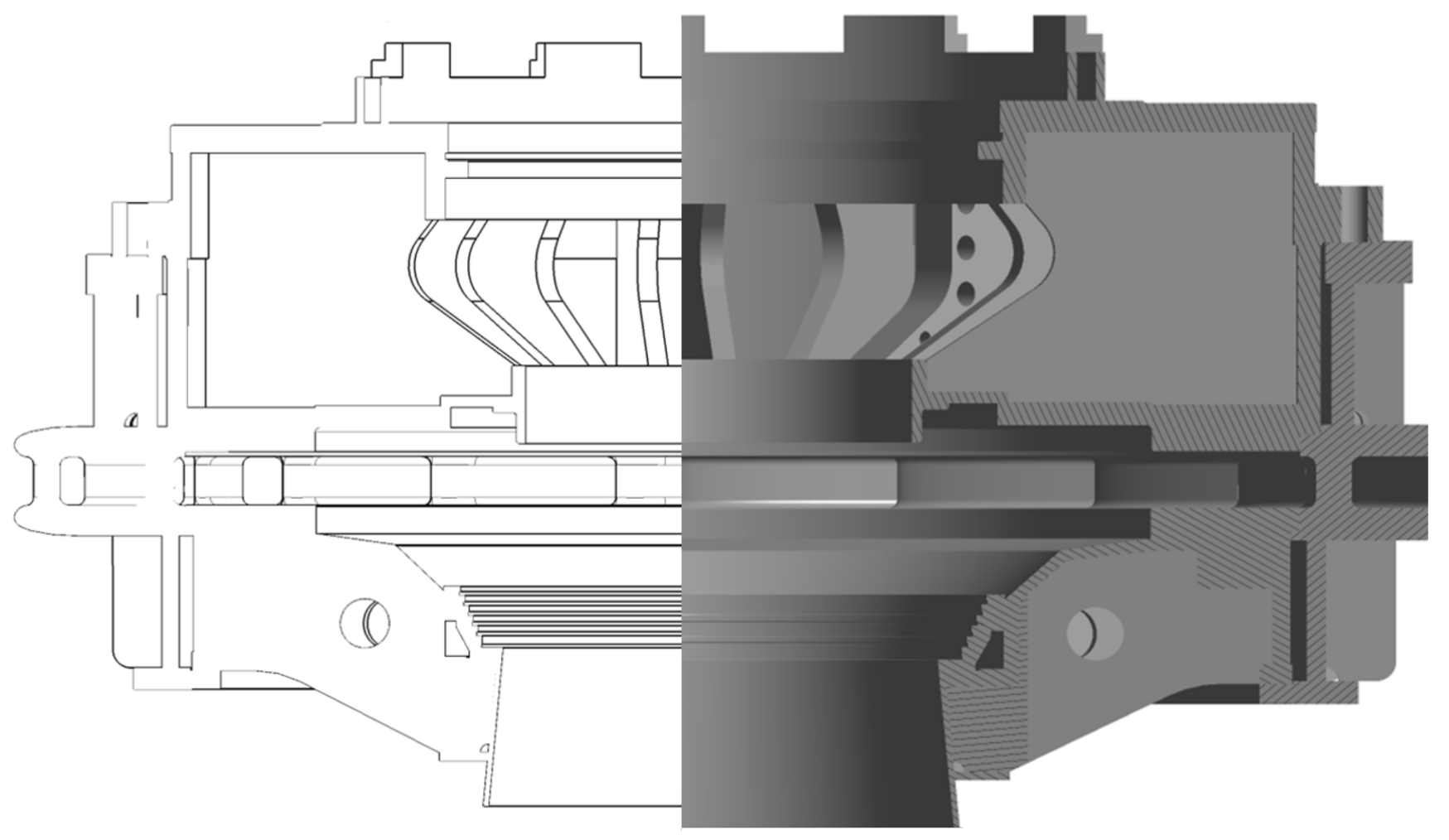
Based on the structural diagrams of Design A and Design B in Figure 2 and Figure 3, significant differences exist between the head cover and bottom ring of Design A and Design B. The primary differences are as follows: (1) The main body thickness of Design B’s head cover is approximately 1.5 times that of Design A. (2) Design B features two annular plates above the head cover. (3) The thickness of the ribs in Design B is 1.7 times that of Design A. (4) The flange ring of Design B’s head cover is located on the underside, whereas Design A’s flange ring is positioned on the head cover’s upper section. (5) Design B’s stay ring assembly includes an upper foundation ring.

3.4. Mesh-Independent Verification

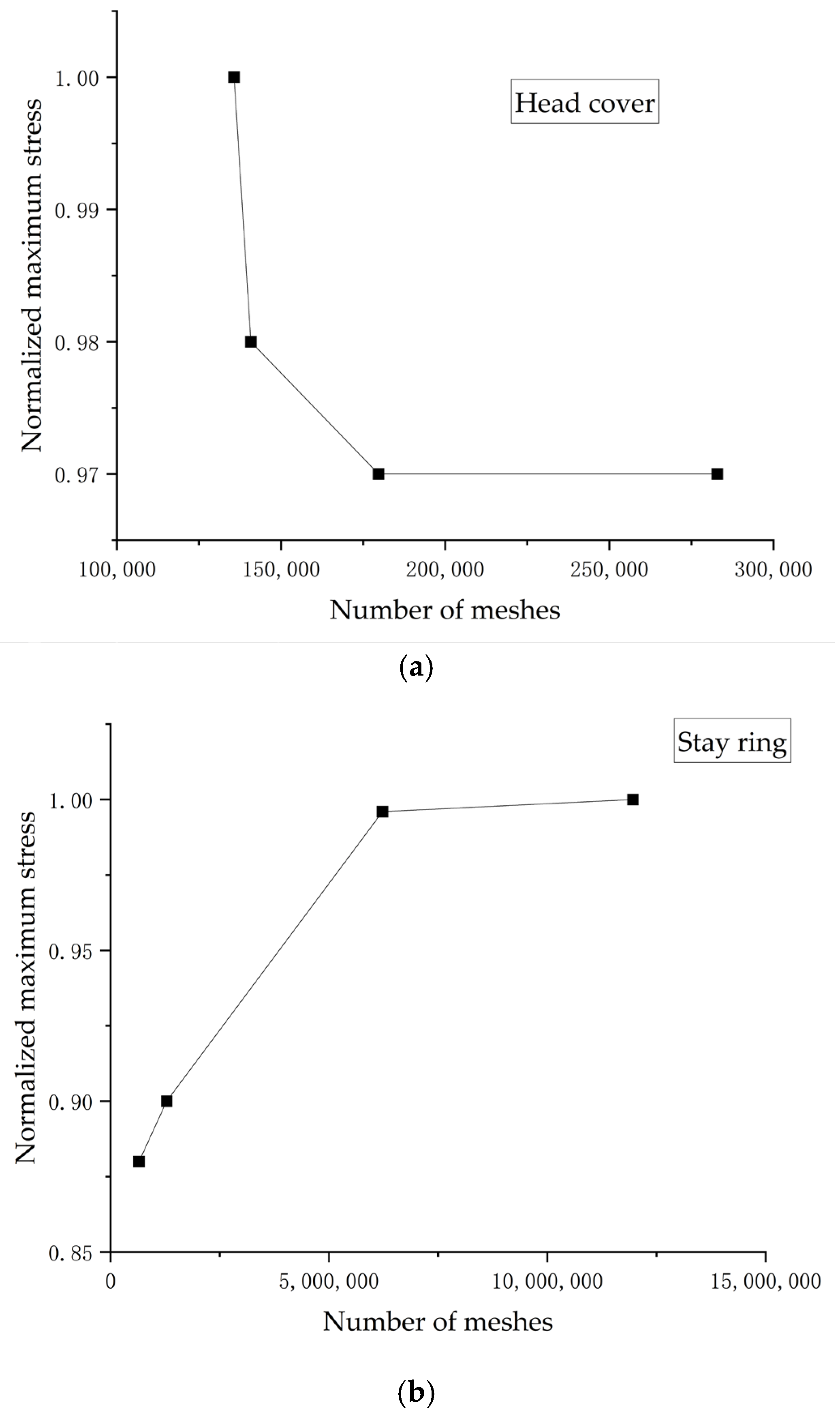
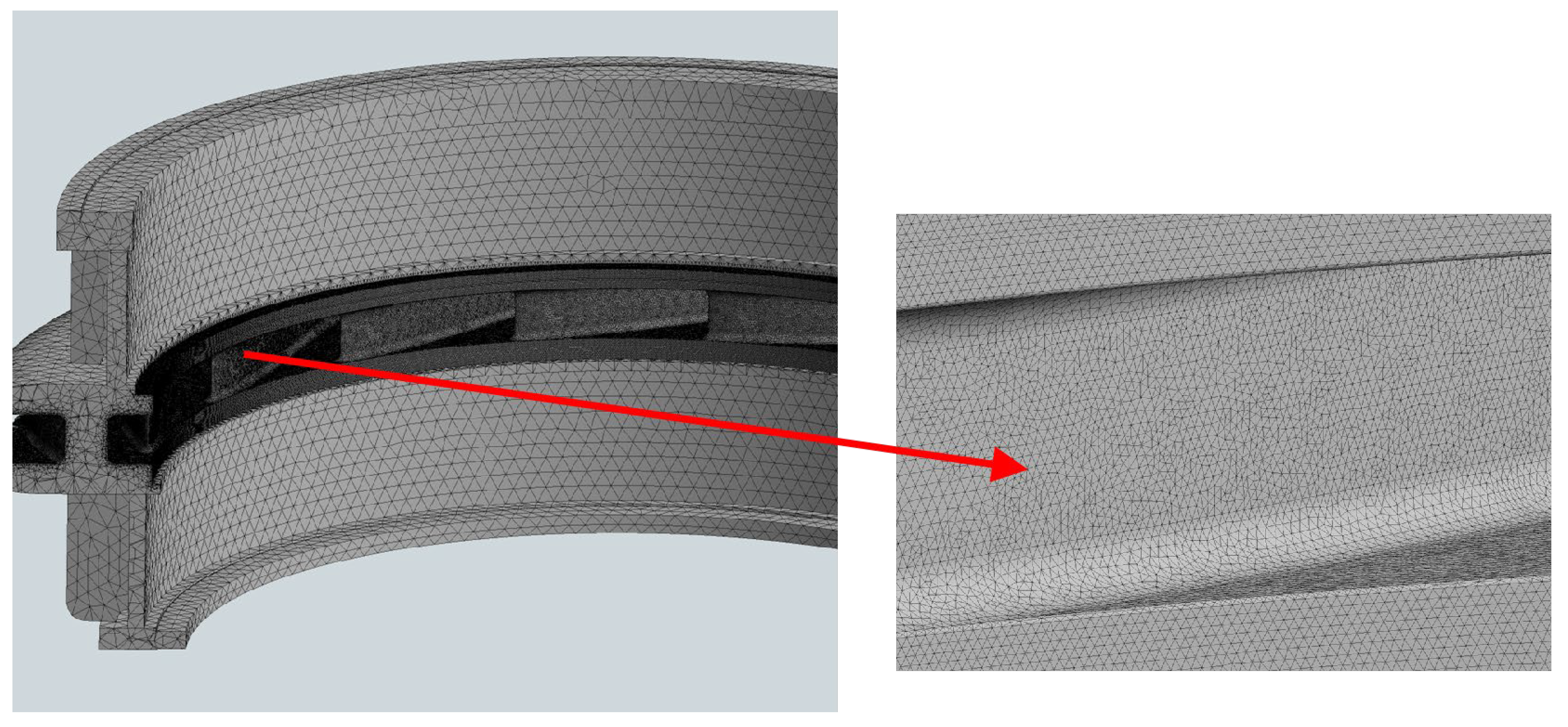
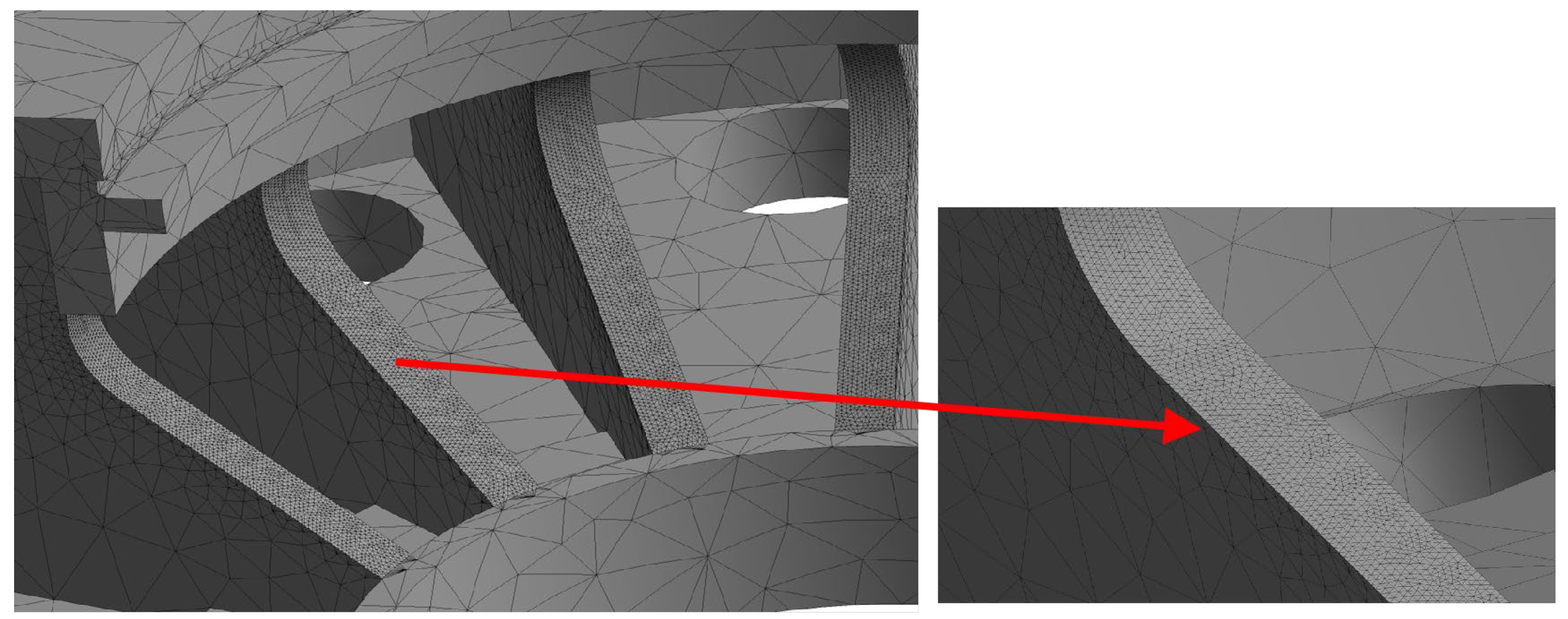
To eliminate errors caused by numerical calculations, mesh independence verification is required. Mesh independence verification was performed using stress values at the maximum stress points. Mesh sizes at the maximum stress point of the head cover were set to: 100 mm, 50 mm, 20 mm, and 10 mm. Mesh sizes at the maximum stress point of the stay ring were set to: 30 mm, 20 mm, 7 mm, and 5 mm. The results are shown in Figure 4a. It can be observed that the stress value at the maximum stress point of the head cover gradually levels off at 20 mm, with the stress values at 10 mm and 20 mm being nearly identical. As shown in Figure 4b, the stress values at the maximum stress point of the stay ring exhibit little difference between mesh sizes of 7 mm and 5 mm. Considering both solution accuracy and computational efficiency, a mesh size of 20 mm is adopted for the maximum stress point on the head cover. In comparison, a mesh size of 5 mm is used for the maximum stress point on the stay ring. The remaining areas employ a mesh size of 200 mm. The following figure illustrates the number of meshes corresponding to different mesh sizes. Figure 5 and Figure 6 show the mesh divisions for the head cover and stay ring.

4. Results and Discussion

All experimental results in this paper have undergone normalization processing. For modal analysis, data normalization was performed using the maximum frequency of the dry mode as the reference. Stress analysis followed the same logic, selecting the maximum deformation value and maximum stress value, respectively, as normalization references to complete the corresponding data normalization calculations. Before normalization, the data units employed commonly used engineering units: stress units were MPa, deformation units were mm, and frequency units were Hz.

4.1. Modal Characteristics Analysis

4.1.1. Modal Characteristics of Design A

Vibration analysis of pump-turbine stationary structure is typically based on the node diameter theory, where the node diameter refers to the straight line with zero deformation within the vibration zone.
Using the finite element method under fluid–structure interaction effects, the first four static vibration modes and their natural frequencies were calculated. Utilizing the wet frequency (fw) and dry frequency (fa), the frequency reduction ratio for each mode was computed via the following formula, and an added mass coefficient λ was introduced to describe the added mass effect:
Δ = 100 % × f a f w f a
λ = M a M s = f a f w 2 1
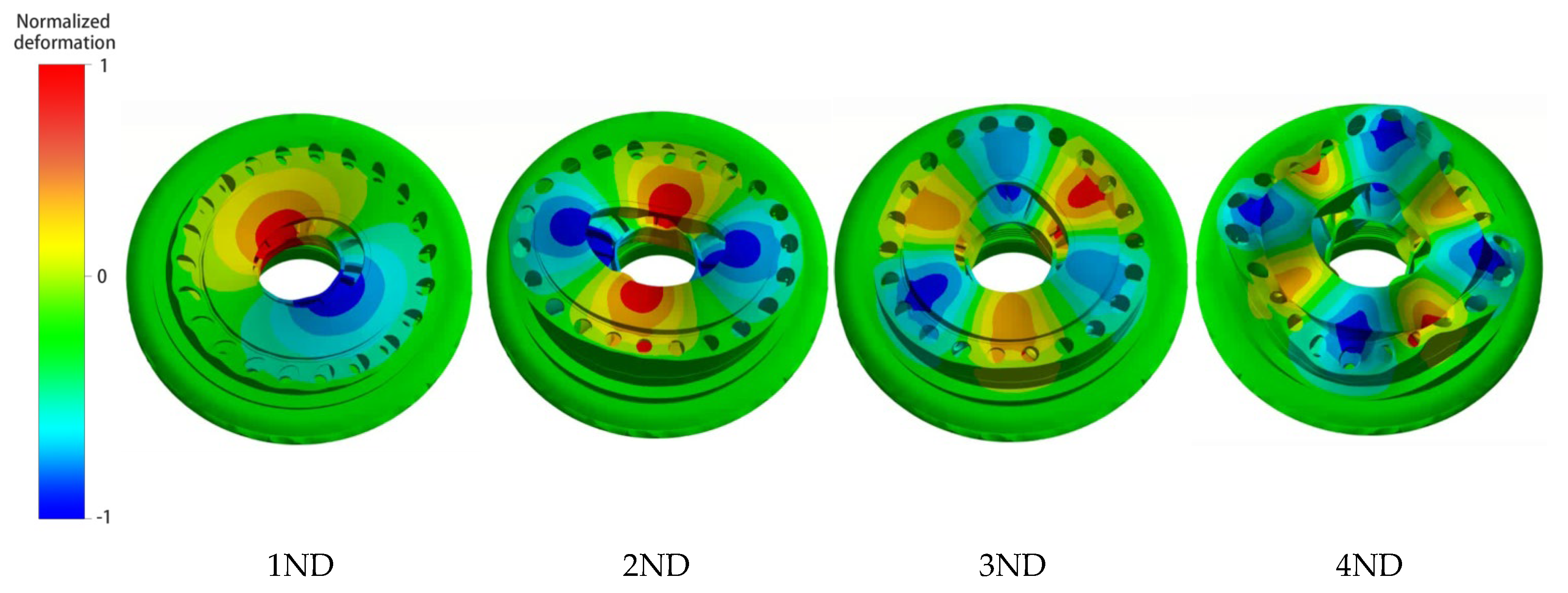
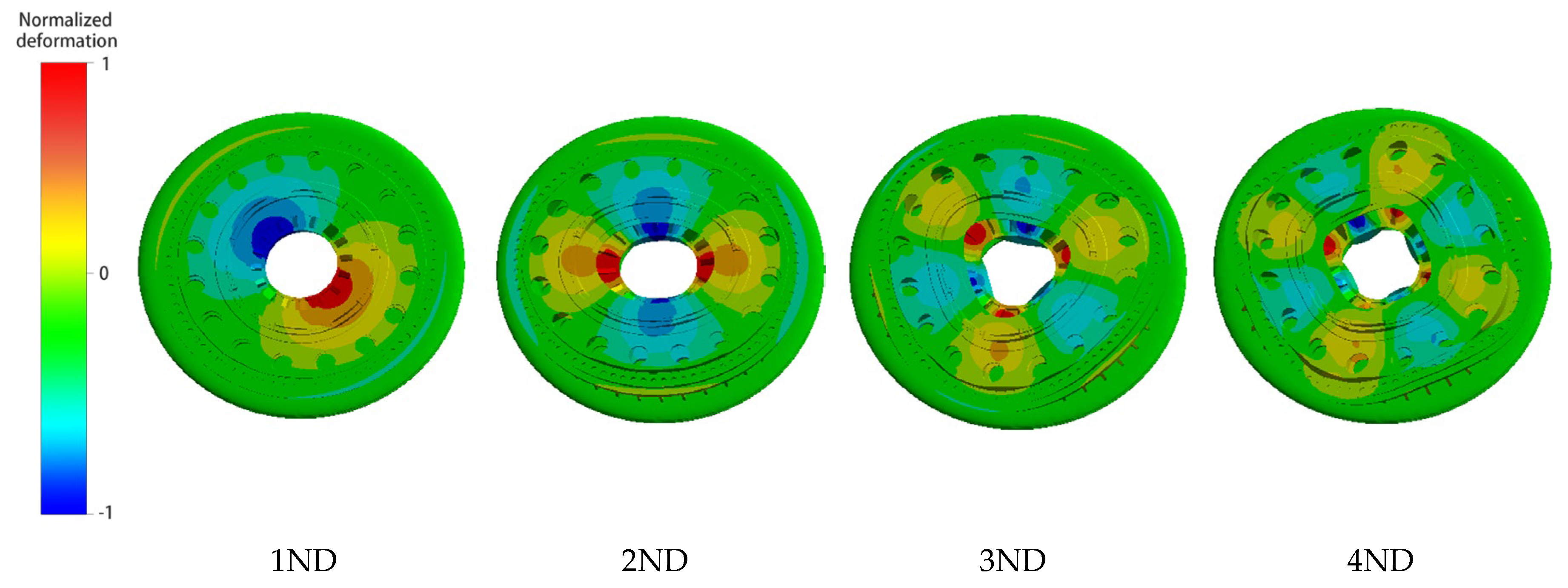
Table 2 lists the first four natural frequencies of the head cover in Design A. Figure 7 displays the mode shapes corresponding to these frequencies. In the first-order (1ND) mode shape, the pump-turbine head cover is divided into two symmetrically distributed regions by a diameter line, with the vibration directions of both sides being completely opposite: one side moves upward while the other moves downward. In the second-order (2ND) modal shape, the cover is divided into four regions by two diameters, forming two sets of oppositely distributed regional units. Regions within the same set maintain the same motion direction, while the two sets exhibit opposite motion characteristics: one set moves upward while the opposing set moves downward simultaneously. In the third-order (3ND) modal shape, three diameters divide the stationary structure into six regions. Three of these regions move upward, while the remaining three regions are distributed at 60° intervals relative to the upward-moving regions and move downward. Following a similar pattern, in the fourth-order (4ND) modal shape, four diameter lines divide the stationary structure into eight regions. Four regions maintain upward motion, while the other four regions are arranged at 45° intervals relative to the upward-moving regions, exhibiting downward motion.
As shown in Table 2, the natural frequency increases with the number of nodes. Dry mode frequencies are higher than wet mode frequencies, with the 1ND frequency reduction ratio at 8%, the 2ND at 14%, the 3ND at 30%, and the 4ND at 31%. The frequency reduction ratio also increases with the number of nodes. The added mass coefficient also increases with the number of pitch diameters.

4.1.2. Modal Characteristics of Design B

Table 3 lists the first four natural frequencies of the stationary structure in Design B, and Figure 8 displays the first four natural vibration modes of the stationary structure in Design B.
As shown in Table 3, the natural frequency increases with the number of nodes. Dry mode frequencies are higher than wet mode frequencies, with the 1ND frequency reduction ratio at 18%, the 2ND at 19%, the 3ND at 35%, and the 4ND at 40%. The frequency reduction ratio also increases with the number of nodes. The added mass coefficient also increases with the number of pitch diameters.

4.1.3. Interpretation of Modal Shapes

The 1ND mode represents overall stiffness and is susceptible to low-order excitations such as mass imbalance and improper installation. The 2ND mode may be affected by specific harmonics of fluid excitation. The 3ND mode poses a high-order excitation risk, particularly when the unit has a multiple of three blades. The 4ND mode, a typical blade-through frequency excitation risk, is a key modal vibration pattern requiring close monitoring in pump turbines. Table 4 shows the modal characteristics of the two designs.

4.1.4. Frequency Sensitivity Comparison

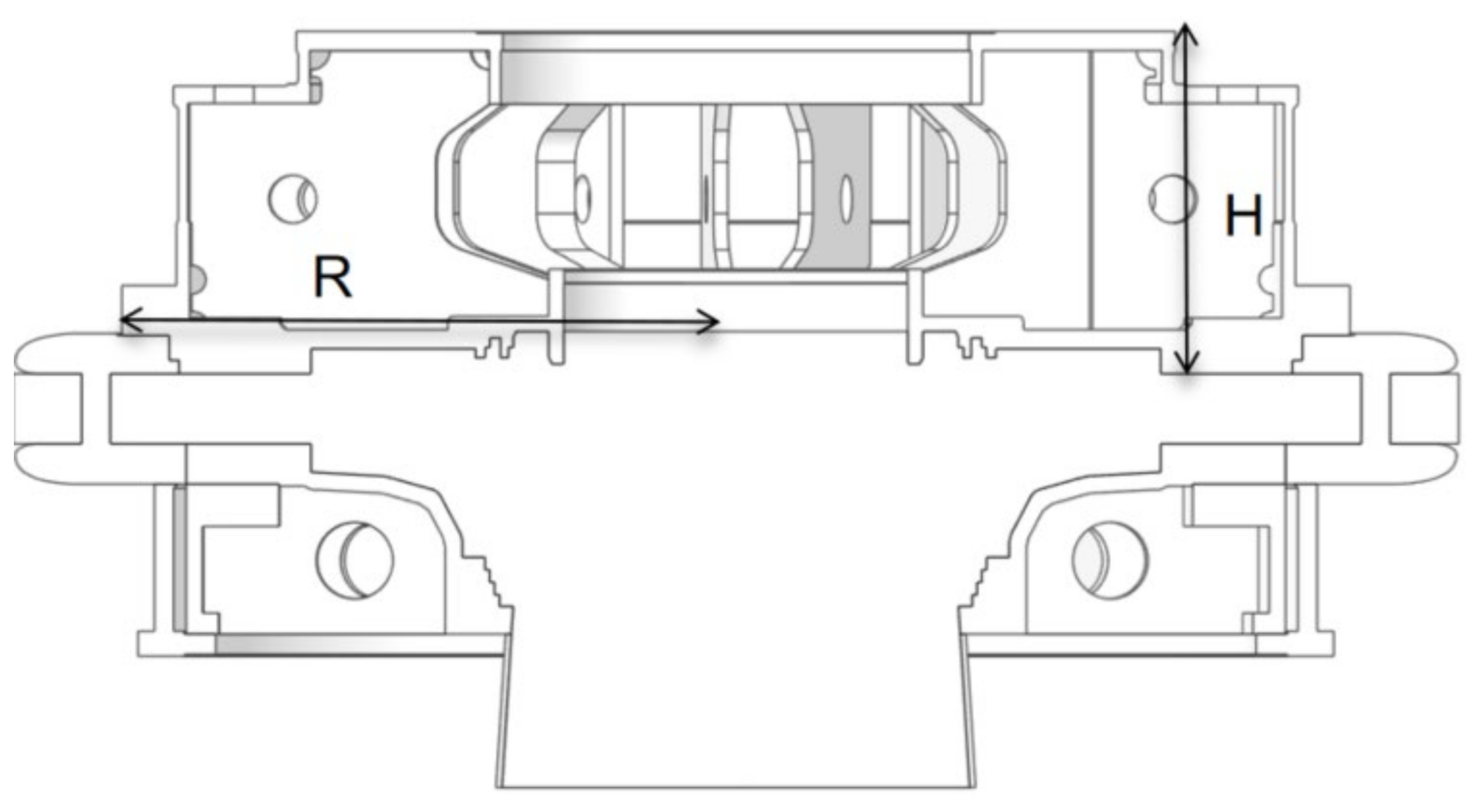
Due to differing dimensions between the two head cover designs, this paper first performs dimensionless processing to analyze the relationship between the 4ND wet mode natural frequency and the head cover’s outer diameter and height. To quantify this correlation, the 4ND wet mode frequency is divided by both the head cover’s outer diameter and height, as shown in Figure 9. with the resulting ratio defined as the frequency sensitivity:
α = f w R , β = f w H
As shown in the results of Table 5, compared to Design A, Structural Design B exhibits lower frequency sensitivity in both the R direction and the H direction. This demonstrates superior frequency control performance for Design B, with its 4ND critical frequency responding more gradually to structural dimension changes and maintaining more stable control over frequency fluctuations.

4.2. Structural Stress Analysis

During the transition process of ultra-high-head pump turbines, abrupt changes in flow conditions cause significant pressure fluctuations within the unit, thereby inducing water hammer and reverse water hammer phenomena. Against this backdrop, to accurately and rigorously evaluate the structural characteristics of the unit’s stationary components, this study employs 1.5 times the maximum head of each unit as the pressure load for the internal flow passages. In actual engineering applications, the bottom ring is largely embedded in concrete, resulting in minimal deformation and stress. Stress-induced failure is rare, so this study primarily focuses on the deformation and stress of the head cover and stay ring. The deformation values, stress values, and material yield strength values in the following structural analysis undergo data normalization processing.

4.2.1. Structural Stress of Design A

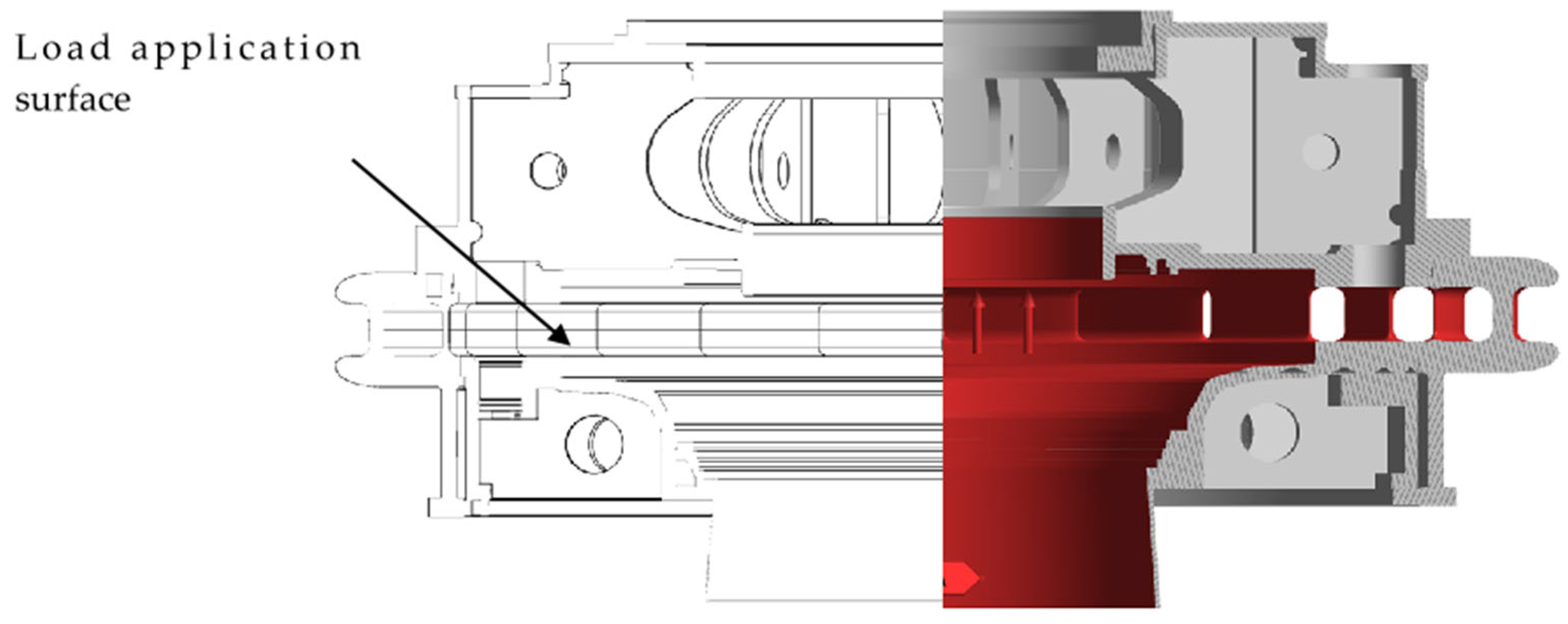
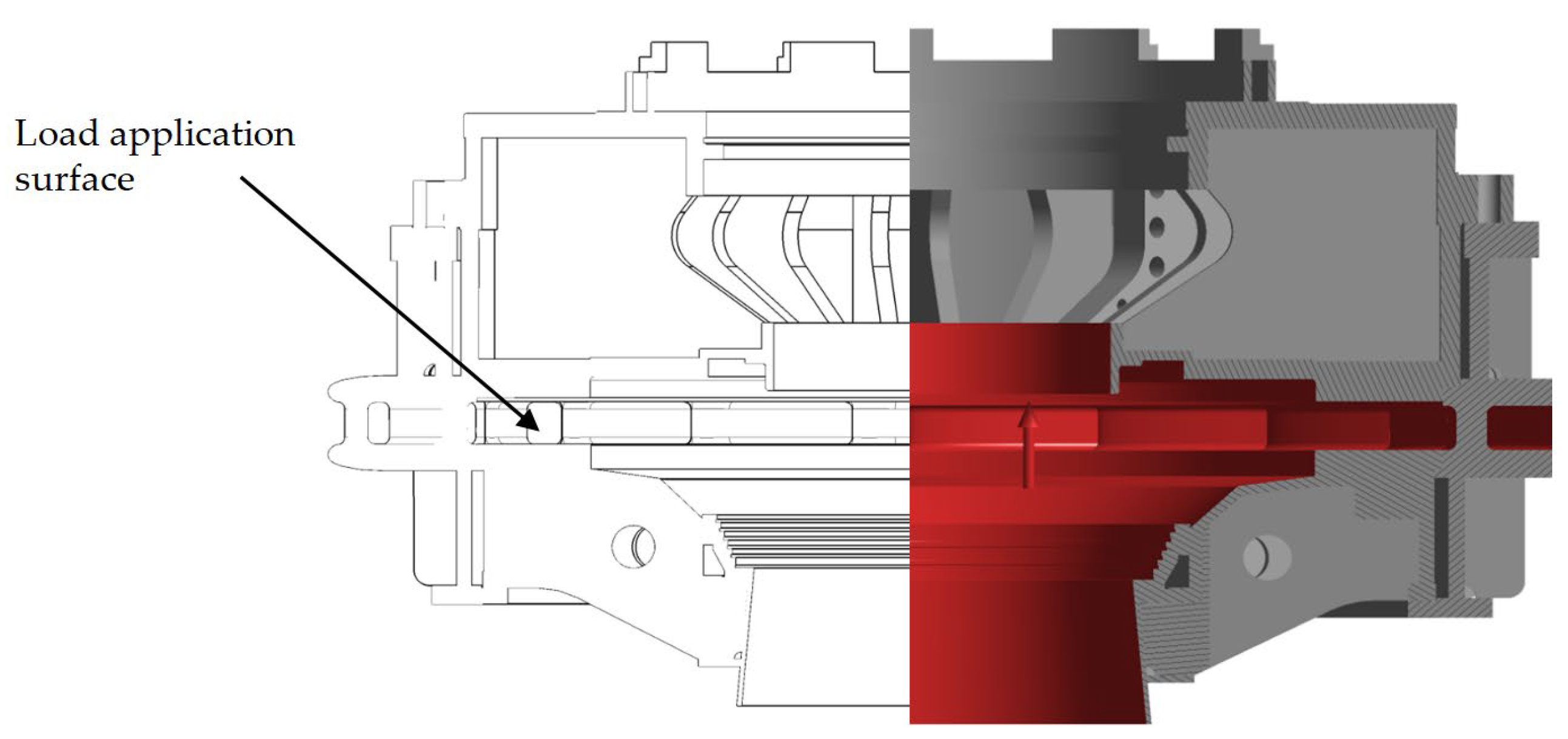
During rapid transients in pump-turbine units, peak pressure pulsations within the flow passage can reach up to 1.5 times the maximum head. Considering that stationary components, such as the head cover, must withstand extreme pressures within the flow passage, the maximum pressure value of 1.5 times the head is applied as the pressure load to the inner surfaces of these stationary components during relevant analyses to ensure structural safety.Load application as shown in Figure 10.
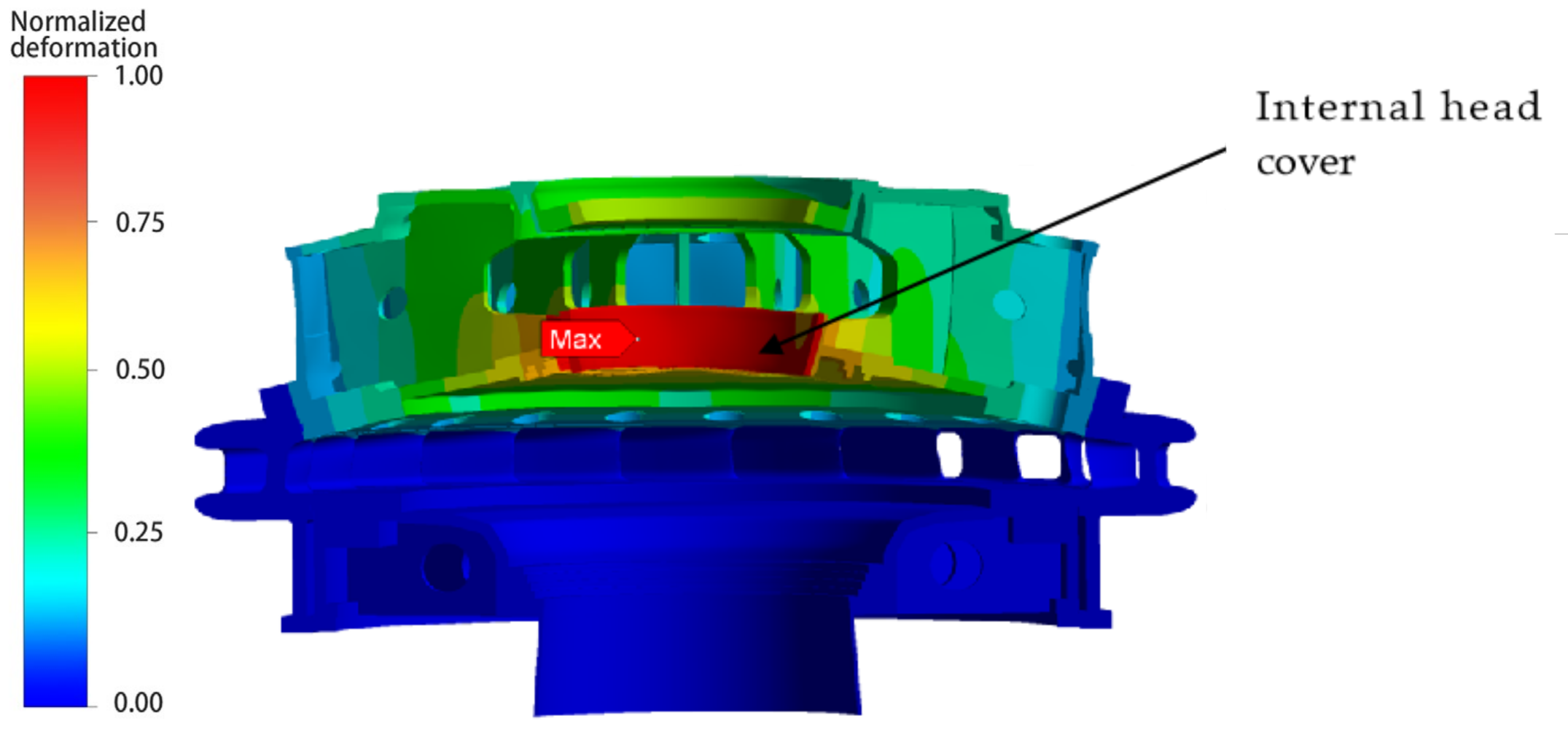
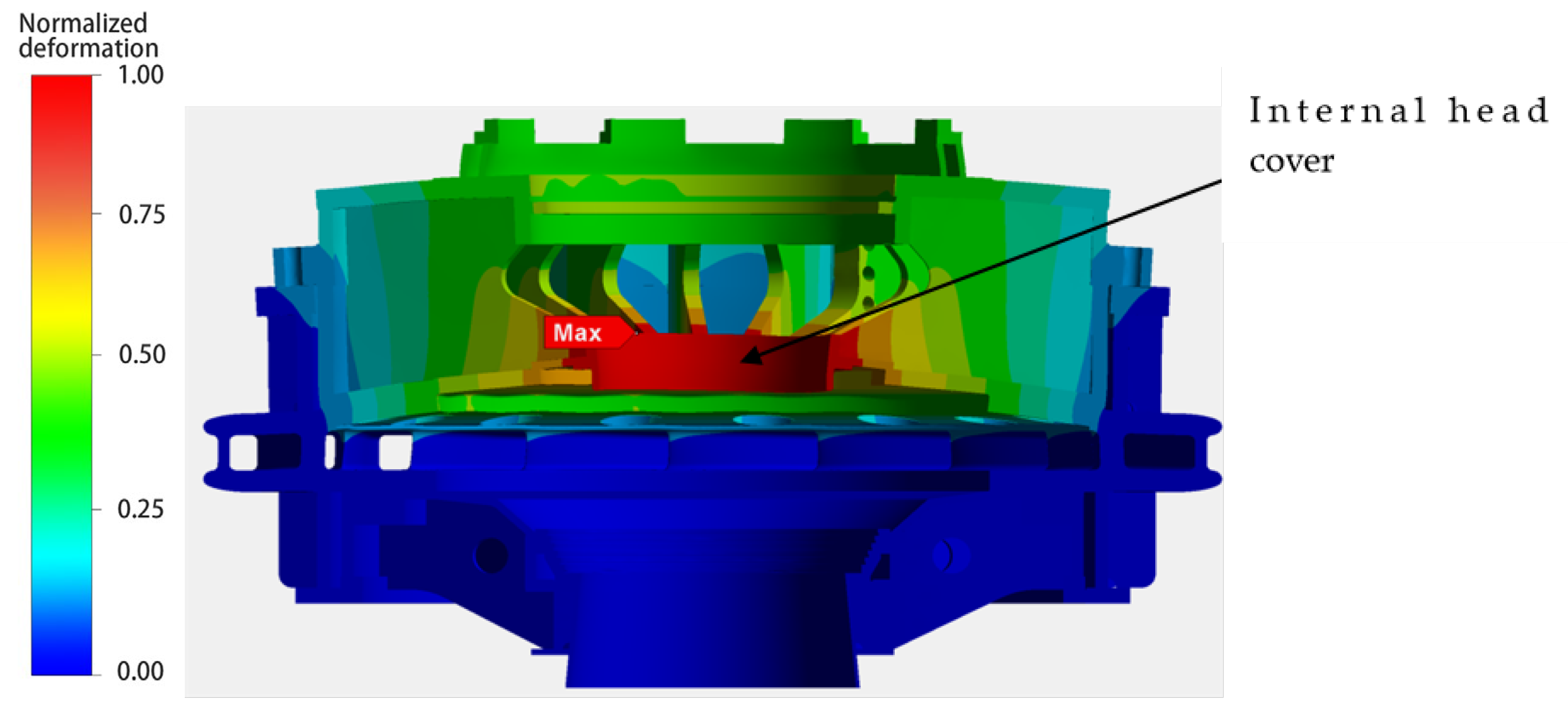
Under extreme pressure, the overall deformation pattern is shown in Figure 11 below. Since the head cover experiences the least constraint while the stay ring section and most of the bottom ring are embedded in concrete. Therefore, the maximum deformation occurs at the internal head cover of the stationary components, with a maximum deformation of 1 in the axial direction.
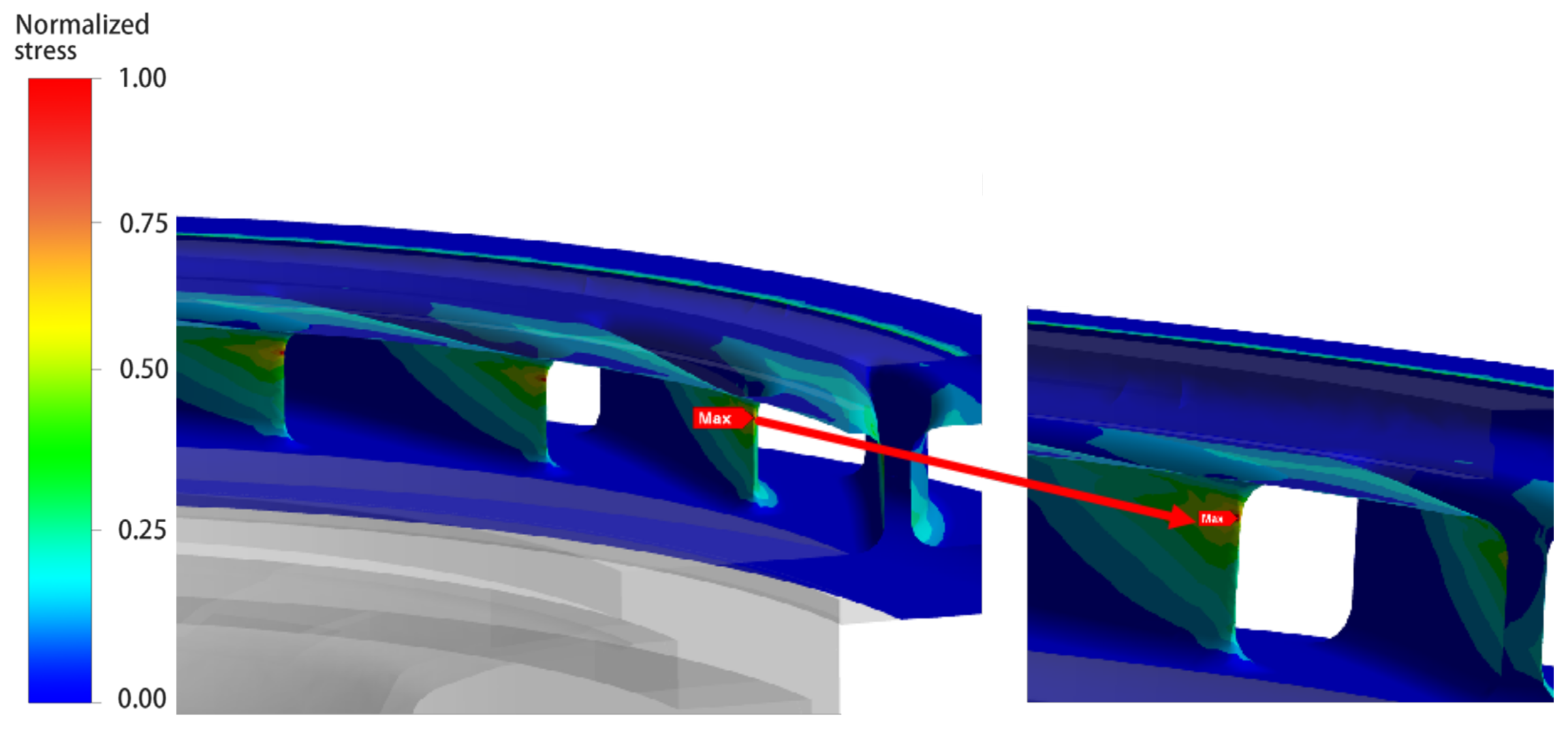
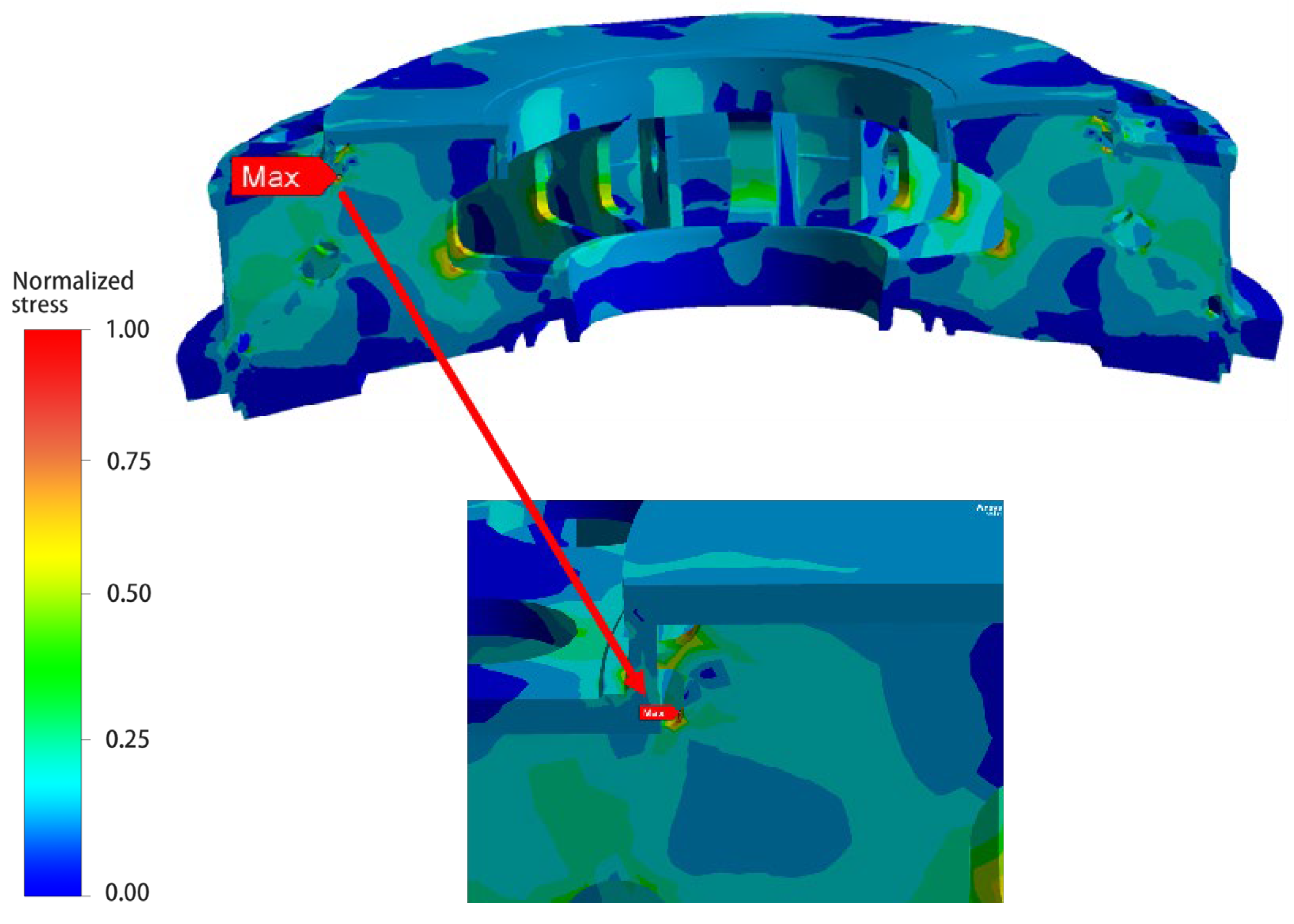
Figure 12 shows the stress distribution on the head cover of the pump turbine in Design A. The maximum stress point on the head cover is located at the weld between the stiffener plate and the outer head cover, The maximum stress value exceeds 0.69, surpassing the material’s yield strength.
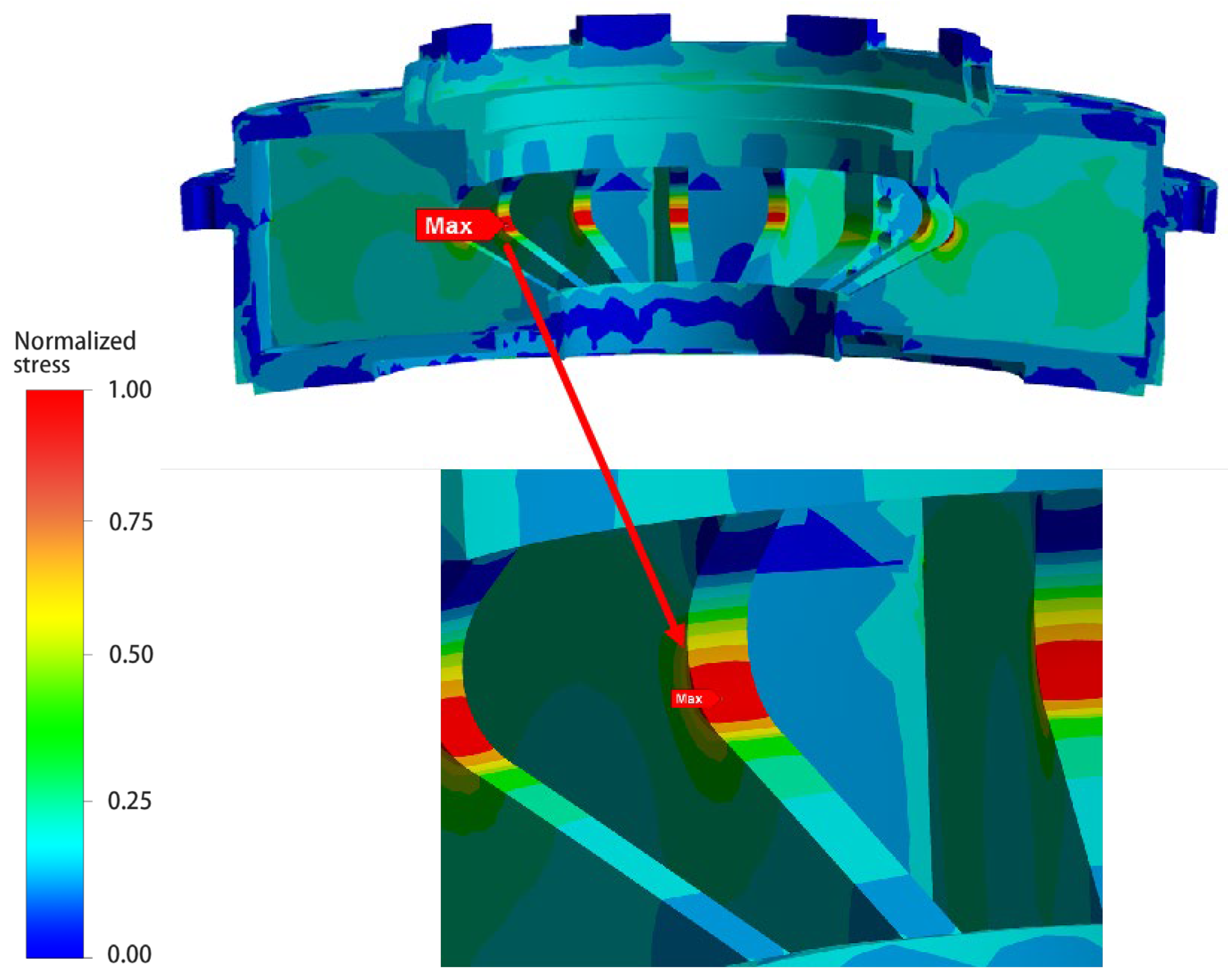
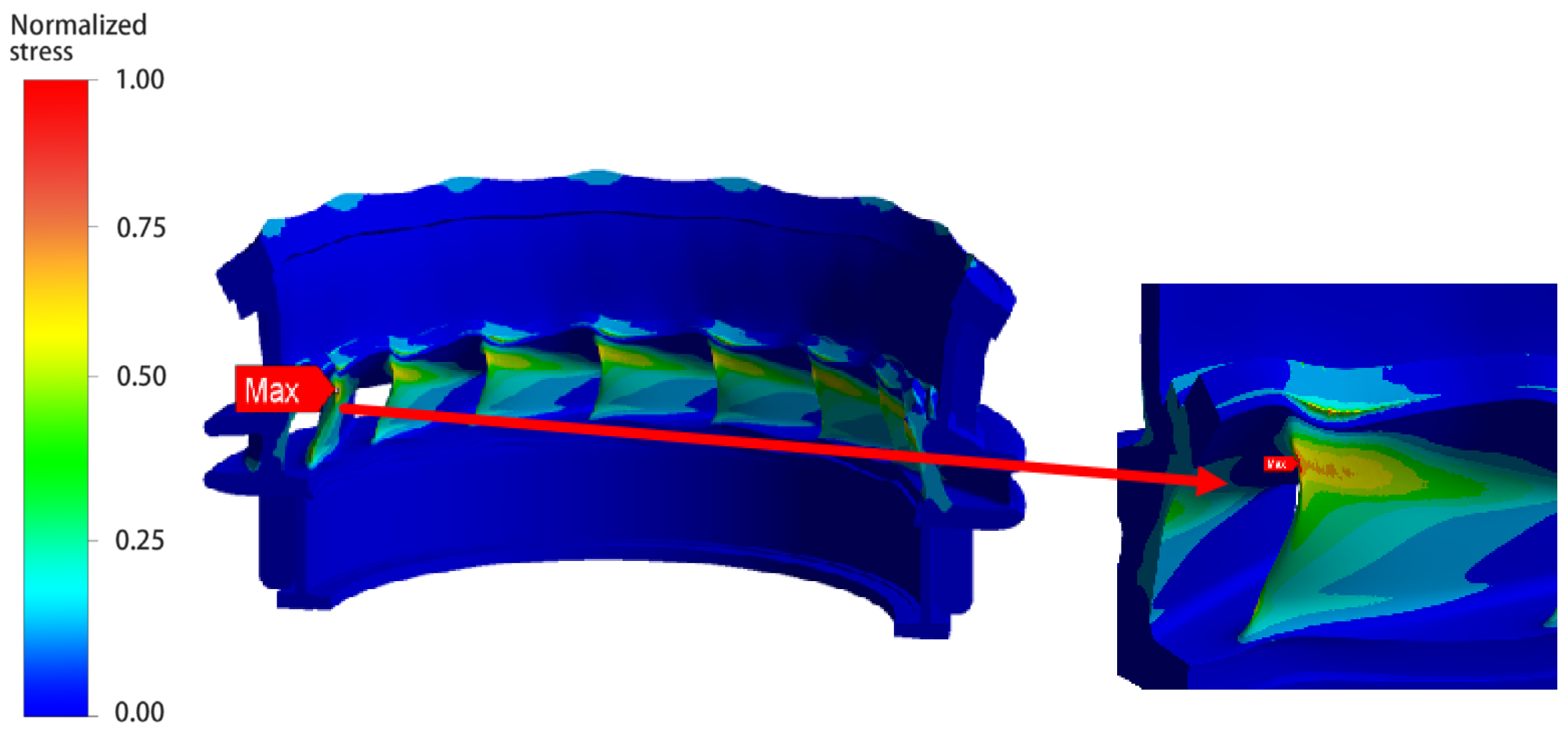
Figure 13 shows the stress distribution of the pump-turbine stay ring in Design A. The maximum stress point of the stay ring is located at the outlet edge of the fixed guide vane. The maximum stress value exceeds 0.82, surpassing the yield strength of the material.

4.2.2. Structural Stress of Design B

Figure 14 shows the pressure load application diagram for Design B, where the pressure load is applied to the inner surface of the stationary component.
Under extreme pressure, the overall deformation distribution is shown in Figure 15. Similarly, the inner head of the head cover experiences minimal constraint, while the stay ring section and bottom ring components are embedded within the concrete. Consequently, the maximum deformation occurs at the internal head cover of the Stationary components. The maximum deformation is 0.73.
Figure 16 shows the stress distribution on the pump-turbine head cover. The maximum stress point is located at the curved section of the rib plate. Its value is less than 0.69, which is below the yield strength of the material.
Figure 17 shows the stress distribution of the pump-turbine stay ring in Design B. The maximum stress point on the stay ring is located on the low-pressure side of the fixed guide vane near the upper ring plate. Its value exceeds 0.82, surpassing the yield strength of the material. However, it remains below the value specified in Design A.
According to studies [34,36], under pressure-induced conditions, the maximum stress point on the head cover is located at the rib plate, while the maximum stress point on the stay ring is situated at the outlet edge of the fixed guide vane, near the upper ring plate.
As shown in Table 6, the results indicate that Structural Design B outperforms Structural Design A in terms of deformation and stress distribution, demonstrating superior overall performance. The specific reasons are as follows:
  • Structural Design A exhibits greater overall maximum deformation than Structural Design B. Structural Design B possesses stronger deformation resistance, demonstrating superior static stiffness.
  • The maximum stress values in the core components (head cover, stay ring) of structural Design A are lower than those in Structural Design B. Structural Design B features a more uniform internal stress distribution, resulting in higher load-bearing capacity and enhanced structural safety.

5. Conclusions

This study analyzes how varying structural designs influence the modal and structural properties. To more accurately obtain the modal and structural characteristics of these stationary components, a fully three-dimensional solid domain model encompassing the head cover, stay ring, and bottom ring was constructed.
Based on the numerical simulation results, structural Design B exhibits lower frequency sensitivity than structural Design A. This indicates that Design B demonstrates superior frequency control performance, with its 4ND critical frequency responding more gradually to changes in structural dimensions and maintaining more stable control over frequency fluctuations. This facilitates rapid design of unit components. Additionally, as the modal order increases, the frequency decay rate exhibits an increasing trend with the added mass coefficient, indicating that the influence of fluid added mass intensifies with higher orders. The essence of the added mass effect is the inertial effect, where structural vibrations induce surrounding fluids to participate in the vibrations. Its intensity depends on the efficiency and volume of the mode shape in displacing fluid—which is whether the mode shape can efficiently and synchronously displace a large volume of fluid. The greater the scale of displaced fluid, the more pronounced the added mass effect becomes. Structurally, the head cover comprises a panel, densely arranged stiffening ribs, and two split stiffening panels. The differing thicknesses between the split stiffening panels and the stiffening ribs result in a heterogeneous stiffness distribution. For low-order modes (1ND), the vibration mode primarily involves overall bending or torsion of the head cover. At this stage, the synergistic constraint effect between the stiffeners and segmented stiffeners is strong, effectively limiting the overall movement amplitude of the head cover. The disturbance range and displaced volume of the surrounding fluid by the vibration mode are both relatively limited, resulting in a weaker added mass effect. For higher-order modes (4ND), the vibration mode manifests as localized bending or torsion. The synergistic constraint effect of the stiffeners significantly diminishes. Concurrently, the thickness disparity between the segmented stiffeners and the stiffeners further exacerbates the non-uniformity in stiffness distribution. This localized vibration mode generates greater deformation differences, leading to a significant increase in displaced fluid volume. Consequently, the added mass effect is pronounced.
Analysis of deformation characteristics reveals that the maximum deformation points of both Design A and Design B are concentrated in the critical area of the inner head, indicating that this section represents the weak link in the head cover structure’s resistance to deformation. However, in terms of deformation, the two designs exhibit starkly different behaviors. Design A demonstrates greater overall maximum deformation than Design B. The core reason for this difference lies in the structural restraint provided by the upper ring plate of the stay ring in Design B, as this component effectively limits the deformation of the head cover and thereby significantly reduces overall deformation. Consequently, Design B exhibits superior structural deformation resistance compared to Design A. Its essence lies in the lateral ring plate support, reducing structural deformation in non-load-bearing directions by restricting lateral free displacement, optimizing force transmission paths, and enhancing local stiffness. This concentrates external forces more effectively onto load-bearing sections, thereby suppressing both overall and localized deformation.
According to the stress distribution analysis, the maximum stress concentration point in Design A occurs at the welded joint between the rib plate and the outer shell cover, while the maximum stress in the stay ring appears at the outlet edge of the fixed guide vane. In Design B, the maximum stress in the head cover shifts to the curved section of the rib plate, while the maximum stress in the ring is distributed in the low-pressure side area of the fixed guide vane near the upper ring plate. In terms of stress values, both the head cover plate and stay ring in Design A exceed the material yield strength, far surpassing the corresponding values in Design B. Analysis indicates that increasing thickness enhances structural stiffness, enabling more uniform transmission and dispersion of external forces. This prevents localized stress concentration while reducing stress gradients, ultimately resulting in a smoother stress distribution with lower peaks. Consequently, Design B exhibits superior stress distribution characteristics, with significantly lower stress concentration levels than Design A, thereby improving structural safety performance.
Based on the previously discussed analysis results, increasing the thickness of the main head cover and rib plates is conducive with improving the problem of stress concentration, while the existence of the upper ring plate of the stay ring helps alleviate the excessive deformation of the inner head cover. Furthermore, the structure similar to Design B exhibits lower frequency sensitivity. Therefore, Structural Design B not only excels in frequency control but also offers advantages in stress distribution optimization. Consequently, for high-head pumped storage units, Structural Design B is recommended as the preferred option.
The findings of this study contribute to a better understanding of the effects of structural design and geometric parameters, providing a reference for the design and optimization of stationary components in ultra-high-head pump turbines. This advances the safety and stability of unit operation.

Author Contributions

Conceptualization, Z.W. and X.H.; methodology, G.C., X.H. and M.L.; software, F.J. and G.C.; validation, F.J., Z.L. and D.Z.; investigation, F.J., G.C., D.Z., X.H. and Z.L.; writing—original draft preparation, F.J., G.C. and X.H.; writing—review and editing, F.J., G.C., D.Z., X.H., Z.L. and M.L.; project administration J.L.; supervision, Z.W. and J.L. All authors have read and agreed to the published version of the manuscript.

Funding

The authors gratefully acknowledge the financial support of the project: Fujian Yunxiao Pumped Storage Power Station Pump-Turbine Unit Steady-State and Transient Operation Fluid–Structure Interaction Dynamic Characteristics Analysis and Evaluation Service, China National Nuclear Power Co., Ltd., Zhangzhou Energy Co., Ltd.

Data Availability Statement

The original contributions presented in this study are included in the article. Further inquiries can be directed to the corresponding author.

Conflicts of Interest

Author Feng Jin, Dawei Zeng and Zebin Lai were employed by the company Fujian Yunxiao Pumped Stroge Co., Ltd. The remaining authors declare that the research was conducted in the absence of any commercial or financial relationships that could be construed as a potential conflict of interest. The Fujian Yunxiao Pumped Stroge Co., Ltd. had no role in the design of the study; in the collection, analyses, or interpretation of data; in the writing of the manuscript, or in the decision to publish the results.

Abbreviations

The following abbreviations are used in this manuscript:
CFDComputational Fluid Dynamics
EElastic Modulus Matrix
FEMFinite Element Method
f f s t Fluid Pressure Acting on the Structure
f s f t Structural Force Vector Acting on the Fluid
HHeight
K Stiffness Matrix
M Mass Matrix
N Damping Matrix
p Pressure
R Outer Diameter
S Strain–displacement Matrix
x Displacement
x ˙ Velocity
x ¨ Acceleration
λAdded Mass Coefficient
σPrincipal Stresses

References

  1. Ostergaard, P.A.; Duic, N.; Noorollahi, Y.; Kalogirou, S. Renewable Energy for Sustainable Development. Renew. Energy 2022, 199, 1145–1152. [Google Scholar] [CrossRef]
  2. Gayen, D.; Chatterjee, R.; Roy, S. A Review on Environmental Impacts of Renewable Energy for Sustainable Development. Int. J. Environ. Sci. Technol. 2024, 21, 5285–5310. [Google Scholar] [CrossRef]
  3. Barbour, E.; Wilson, I.A.G.; Radcliffe, J.; Ding, Y.; Li, Y. A Review of Pumped Hydro Energy Storage Development in Significant International Electricity Markets. Renew. Sustain. Energy Rev. 2016, 61, 421–432. [Google Scholar] [CrossRef]
  4. Wang, X.L.; Zhong, H.W. Research on the Synergetic Development of Pumped Storage and New Energy Storage Under the Background of New Power System. ACS Sustainable Chem. Eng. 2024, 12, 363–371. [Google Scholar]
  5. Goyal, R.; Gandhi, B.K. Review of Hydrodynamics Instabilities in Francis Turbine during Off-Design and Transient Operations. Renew. Energy 2018, 116, 697–709. [Google Scholar] [CrossRef]
  6. Morissette, J.F.; Nicolle, J. Fluid-Structure Simulations of the Stochastic Behaviour of a Medium Head Francis Turbine During Startup. IOP Conf. Ser. Earth Environ. Sci. 2019, 240, 022026. [Google Scholar] [CrossRef]
  7. Presas, A.; Luo, Y.; Wang, Z.; Guo, B. Fatigue Life Estimation of Francis Turbines Based on Experimental Strain Measurements: Review of the Actual Data and Future Trends. Renew. Sustain. Energy Rev. 2019, 102, 96–110. [Google Scholar] [CrossRef]
  8. Egusquiza, E.; Valero, C.; Valentin, D.; Presas, A.; Rodriguez, C.G. Condition Monitoring of Pump-Turbines. New Challenges. Measurement 2015, 67, 151–163. [Google Scholar] [CrossRef]
  9. Mohanta, R.K.; Chelliah, T.R.; Allamsetty, S.; Akula, A.; Ghosh, R. Sources of Vibration and Their Treatment in Hydro Power Stations—A Review. Eng. Sci. Technol. Int. J. 2017, 20, 637–648. [Google Scholar] [CrossRef]
  10. Valero, C.; Egusquiza, M.; Egusquiza, E.; Presas, A.; Valentin, D.; Bossio, M. Extension of Operating Range in Pump-Turbines. Influence of Head and Load. Energies 2017, 10, 2178. [Google Scholar] [CrossRef]
  11. Zhao, W.; Deng, J.; Jin, Z.; Xia, M.; Wang, G.; Wang, Z. A Comparative Analysis on the Vibrational Behavior of Two Low-Head Francis Turbine Units with Similar Design. Water 2025, 17, 113. [Google Scholar] [CrossRef]
  12. Chen, Y.; Hao, Y. Research on test of hydraulic turbine top cover running state based on dynamic strain. Water Resour. Power 2023, 41, 185–188+184. [Google Scholar]
  13. Mateja, K.; Dejan, Z.; Andrej, K. Vibrations of a Hydropower Plant Under Operational Loads. J. Civ. Struct. Health Monit. 2020, 10, 29–42. [Google Scholar] [CrossRef]
  14. Egusquiza, E.; Valero, C.; Huang, X.; Jou, E.; Guardo, A.; Rodriguez, C. Failure Investigation of a Large Pump-Turbine Runner. Eng. Fail. Anal. 2012, 23, 27–34. [Google Scholar] [CrossRef]
  15. Casanova, F.; Mantilla, C. Fatigue Failure of the Bolts Connecting a Francis Turbine with the Shaft. Eng. Fail. Anal. 2018, 90, 1–13. [Google Scholar] [CrossRef]
  16. Mantilla-Viveros, C.; Aponte, R.; Casanova-Garcia, F. Fatigue Analysis of the Head Cover of a 100-MW Hydroelectric Power Plant. J. Fail. Anal. Prev. 2025, 25, 1850–1858. [Google Scholar] [CrossRef]
  17. Lyutov, A.; Kryukov, A.; Cherny, S.; Chirkov, D.; Salienko, A.; Skorospelov, V.; Turuk, P. Modelling of a Francis Turbine Runner Fatigue Failure Process Caused by Fluid-Structure Interaction. IOP Conf. Ser. Earth Environ. Sci. 2016, 49, 072012. [Google Scholar] [CrossRef]
  18. Bergant, A.; Simpson, A.R.; Tijsseling, A.S. Water Hammer with Column Separation: A Review of Research in the Twentieth Century. J. Fluid. Struct. 2004, 22, 135–171. [Google Scholar] [CrossRef]
  19. Pejovic, S.; Zhang, Q.F.; Karney, B.; Gajic, A. Analysis of pump-turbine ‘S‘ instability and reverse waterhammer incidents in hydro power systems. In Proceedings of the 4th International Meeting on Cavitation and Dynamic Problems in Hydraulic Machinery and Systems, Belgrade, Serbia, 26–28 October 2011; pp. 1–166. [Google Scholar]
  20. Lupa, S.-I.; Gagnon, M.; Muntean, S.; Abdul-Nour, G. The Impact of Water Hammer on Hydraulic Power Units. Energies 2022, 15, 1526. [Google Scholar] [CrossRef]
  21. Kahraman, G. Investigation of the Effect of Operating Conditions Change on Water Hammer in Hydroelectric Power Plants. J. Fail. Anal. Prev. 2020, 20, 1987–1991. [Google Scholar] [CrossRef]
  22. Huang, X.; Oram, C.; Sick, M. Static and Dynamic Stress Analyses of the Prototype High Head Francis Runner Based on Site Measurement. IOP Conf. Ser. Earth Environ. Sci. 2014, 22, 032052. [Google Scholar] [CrossRef]
  23. Khalfaoui, K.; Zorn, M.; Riedelbauch, S. Towards Accurate Vibration Prediction of Pump-Turbine Runners in Deep Partial Load Operation. IOP Conf. Ser. Earth Environ. Sci. 2022, 1079, 012089. [Google Scholar] [CrossRef]
  24. Valentín, D.; Presas, A.; Egusquiza, E.; Valero, C.; Bossio, M. Dynamic Response of the MICA Runner. Experiment and Simulation. J. Phys. Conf. Ser. 2017, 813, 012036. [Google Scholar] [CrossRef]
  25. Egusquiza, E.; Valero, C.; Liang, Q.; Coussirat, M.; Seidel, U. Fluid Added Mass Effect in the Modal Response of a Pump-Turbine Impeller. In Proceedings of the 22nd Biennial Conference on Mechanical Vibration and Noise, Parts A and B, ASMEDC, San Diego, CA, USA, 30 August–2 September 2009; Volume 1, pp. 715–724. [Google Scholar]
  26. Egusquiza, E.; Valero, C.; Presas, A.; Huang, X.; Guardo, A.; Seidel, U. Analysis of the Dynamic Response of Pump-Turbine Impellers. Influence of the Rotor. Mech. Syst. Signal Process. 2016, 68–69, 330–341. [Google Scholar] [CrossRef]
  27. Liu, X.; Luo, Y.; Wang, Z. A Review on Fatigue Damage Mechanism in Hydro Turbines. Renew. Sustain. Energy Rev. 2016, 54, 1–14. [Google Scholar] [CrossRef]
  28. Huang, X.; Escaler, X. Added Mass Effects on a Francis Turbine Runner with Attached Blade Cavitation. Fluids 2019, 4, 107. [Google Scholar] [CrossRef]
  29. Hübner, B.; Seidel, U.; Roth, S. Application of Fluid-Structure Coupling to Predict the Dynamic Behavior of Turbine Components. IOP Conf. Ser. Earth Environ. Sci. 2010, 12, 012009. [Google Scholar] [CrossRef]
  30. Liu, X.; Luo, Y.; Karney, B.W.; Wang, Z.; Zhai, L. Virtual Testing for Modal and Damping Ratio Identification of Submerged Structures Using the PolyMAX Algorithm with Two-Way Fluid–Structure Interactions. J. Fluids Struct. 2015, 54, 548–565. [Google Scholar] [CrossRef]
  31. Yujian, F.; Shouqi, Y.; Jinwei, L.; Jixing, Y.; Jinfeng, Z.; Dörfler, P. Evaluation of the hydraulic resonance in turbine mode of a medium-head pump-turbine. J. Vib. Eng. Technol. 2017, 5, 451–466. [Google Scholar]
  32. He, L.Y.; Wang, Z.W.; Kurosawa, S.; Nakahara, Y. Resonance Investigation of Pump-Turbine during Startup Process. IOP Conf. Ser. Earth Environ. Sci. 2014, 22, 032024. [Google Scholar] [CrossRef]
  33. Jiang, L.; Xiao, J.; Zhao, W.; Huang, X. Strength Evaluation of the Flow Passage Stationary Structures of a Large Francis Turbine Unit. J. Phys. Conf. Ser. 2024, 2752, 012035. [Google Scholar] [CrossRef]
  34. Huang, X.; Huang, X.; Huang, Y.; Bi, H.; Xu, B.; Wang, Z. Structural Characteristics Analysis of Extra–High–Head Pump–Turbine-Unit under Extreme-Pressure Working Conditions. E3S Web Conf. 2024, 561, 02028. [Google Scholar] [CrossRef]
  35. Mandair, S.; Morissette, J.F.; Magnan, R.; Karney, B. MOC-CFD Coupled Model of Load Rejection in Hydropower Station. IOP Conf. Ser. Earth Environ. Sci. 2021, 774, 012021. [Google Scholar] [CrossRef]
  36. He, Q.; Huang, X.; Yang, M.; Yang, H.; Bi, H.; Wang, Z. Fluid–Structure Coupling Analysis of the Stationary Structures of a Prototype Pump Turbine during Load Rejection. Energies 2022, 15, 3764. [Google Scholar] [CrossRef]
  37. Yang, M.; Zhao, W.; Bi, H.; Yang, H.; He, Q.; Huang, X.; Wang, Z. Flow-Induced Vibration of Non-Rotating Structures of a High-Head Pump-Turbine During Start-Up in Turbine Mode. Energies 2022, 15, 8743. [Google Scholar] [CrossRef]
  38. He, L.; Deng, W. Research and Application of Deformation Measurement Method of Hydraulic Turbine Head Cover. J. Phys. Conf. Ser. 2022, 2310, 012043. [Google Scholar] [CrossRef]
  39. Yujra Rivas, E.; Vyacheslavov, A.; Gogolinskiy, K.V.; Sapozhnikova, K.; Taymanov, R. Deformation Monitoring Systems for Hydroturbine Head-Cover Fastening Bolts in Hydroelectric Power Plants. Sensors 2025, 25, 2548. [Google Scholar] [CrossRef]
  40. Koirala, R.; Thapa, B.; Singh Thapa, B.; Chhetry, B. Design Optimization of Head Cover of Vertical Francis Turbine from Maintenance Perspective in Context to Sediment Laden River Projects. Fluid Mech. Res. Int. J. 2018, 2, 13–20. [Google Scholar] [CrossRef]
  41. Huang, X.; Jin, F.; Liu, M.; Zheng, D.; Wang, Z.; Lai, Z. Fluid Structure Interaction Resonance Assessment of Ultra-High Head Pump Turbine Head Cover. In Proceedings of the Third International Conference on Advanced Materials and Equipment Manufacturing (AMEM 2024), Kunming, China, 28–30 December 2024; Penza, M., Wang, S., Eds.; SPIE: Bellingham, WA, USA, 2025; p. 55. [Google Scholar]
  42. Zhou, J.P.; Fan, Y.M.; He, Q.Y.; Wang, S.J.; Zhao, H.L.; Sun, F.; Tang, Q. Vibration Characteristic Analysis of Pump-Turbine Head Cover Based on Fluid-Solid Coupling. J. Phys. Conf. Ser. 2024, 2752, 012089. [Google Scholar] [CrossRef]
  43. Xue, S.; Tian, H.; Cheng, Y.; Hou, X.; Guan, Z.; Yang, W.; Wang, Z.; Wang, Z.; He, Q. Mechanism Analysis of the Abnormal Head-Cover Vibration of an Ultra-High-Head Pump-Turbine Operating in Pump Mode by CFD and FEM. Eng. Appl. Comput. Fluid Mech. 2024, 18, 2351949. [Google Scholar] [CrossRef]
  44. Jia, Y.; Li, F.-C.; Wei, X.-Z.; Li, X.-B.; Li, Z.-H. A Method for Analysis of Head Cover Deformation and Vibration Amplitude in Francis Hydro-Turbine System by Combination of CFD and FEA. J. Mech. Sci. Technol. 2017, 31, 4255–4266. [Google Scholar] [CrossRef]
  45. Xie, J.; Huang, B.; Fu, L. Reinforcement and Resonance Control of Head Cover of Francis Turbine by Finite Element Analysis and Modal Testing. IOP Conf. Ser. Earth Environ. Sci. 2020, 560, 012051. [Google Scholar] [CrossRef]
  46. Hong, Z.; Shihai, H.; Junpeng, Z.; Min, S.; Weibin, S.; Yanmei, M. Optimization Analysis of Head Cover Structure of High Head Pump Turbine. J. Phys. Conf. Ser. 2024, 2752, 012087. [Google Scholar] [CrossRef]
  47. Zhi, B.P.; Ma, Z.Y. Research on the Hydraulic Turbine Vertical Vibration Power Flow in the Head Cover System. IOP Conf. Ser. Earth Environ. Sci. 2012, 15, 042001. [Google Scholar] [CrossRef]
  48. Al-Obaidi, A.R. Effect of Different Guide Vane Configurations on Flow Field Investigation and Performances of an Axial Pump Based on CFD Analysis and Vibration Investigation. Exp. Tech. 2024, 48, 69–88. [Google Scholar] [CrossRef]
  49. IEC 62256; Hydraulic Turbines—Design Requirements. International Electrotechnical Commission: Geneva, Switzerland, 2017.
  50. ASME. Boiler and Pressure Vessel Code, Section II—Materials, and Section VIII—Rules for Construction of Pressure Vessels; The American Society of Mechanical Engineers: New York, NY, USA, 2023. [Google Scholar]
Figure 1. The stationary components for the pump turbine unit filled with water.
Processes 13 03826 g001
Figure 2. Computational model for Design A.
Processes 13 03826 g002
Figure 3. Computational model for Design B.
Processes 13 03826 g003
Figure 4. (a). Stress values at the maximum stress point of the head cover under different number of meshes. (b). Stress values at the maximum stress point of the stay ring under different number of meshes.
Processes 13 03826 g004
Figure 5. Mesh generation and local refinement for the head cover of stationary components.
Processes 13 03826 g005
Figure 6. Mesh generation and local refinement for the stay ring of stationary components.
Processes 13 03826 g006
Figure 7. Mode shape of the prototype pump turbine stationary structure A (1ND−4ND).
Processes 13 03826 g007
Figure 8. Mode shape of the prototype pump turbine stationary structure B (1ND−4ND).
Processes 13 03826 g008
Figure 9. Outer diameter and height of pump turbine head cover.
Processes 13 03826 g009
Figure 10. Pressure load application to stationary components.
Processes 13 03826 g010
Figure 11. Stationary components deformation for Design A.
Processes 13 03826 g011
Figure 12. Head cover stress distribution of Design A.
Processes 13 03826 g012
Figure 13. Stress Distribution analysis of Design A stay ring.
Processes 13 03826 g013
Figure 14. Extreme pressure applied to stationary components.
Processes 13 03826 g014
Figure 15. Overall deformation diagram for Design B.
Processes 13 03826 g015
Figure 16. Stress distribution analysis of Design B head cover.
Processes 13 03826 g016
Figure 17. Stress distribution analysis of Design B stay ring.
Processes 13 03826 g017
Table 1. Table of mechanical properties of materials.
PropertyQ345CQ355CQ500D
Density (kg m−3)785078507850
Poisson ratio0.30.30.3
Modulus of elasticity (GPa)206206206
Yield strength (GPa)275275430
Table 2. Modal parameters of structural Design A.
Mode ShapeDry Mode (fa)Wet Modulus (fw)Frequency
Reduction Ratio (Δ)
Added Mass Coefficient (λ)
1ND0.350.338%0.19
2ND0.540.4714%0.34
3ND0.810.5730%1.04
4ND10.6931%1.09
Table 3. Modal parameters of structural Design B.
Mode ShapeDry Mode (fa)Wet Modulus (fw)Frequency
Reduction
Ratio (Δ)
Added Mass Coefficient (λ)
1ND0.340.2818%0.47
2ND0.510.4119%0.57
3ND0.800.5235%1.37
4ND10.6040%1.94
Table 4. Comparison of modal parameters for static components between Design A and Design B.
Mode ShapeDry Mode AWet
Modulus A
Dry Mode BWet
Modulus B
Frequency
Reduction Ratio (Δ) A
Frequency
Reduction
Ratio (Δ) B
Added Mass
Coefficient (λ) A
Added Mass
Coefficient (λ) B
1ND0.320.290.340.288%18%0.190.47
2ND0.490.420.510.4314%19%0.340.57
3ND0.740.510.800.5230%35%1.041.37
4ND0.900.6310.6031%40%1.091.94
Table 5. Comparison of frequency sensitivity between Design A and Design B.
Frequency
Sensitivity
of design A (α)
Frequency
Sensitivity
of design A (β)
Frequency
Sensitivity
of design B (α)
Frequency
Sensitivity
of design B (β)
0.0700.130.0660.11
Table 6. Comparison of deformation and stress between Design A and Design B.
Design ADesign B
Maximum deformation10.73
Maximum stress value of the head cover10.65
Maximum stress value of the stay ring10.94
Disclaimer/Publisher’s Note: The statements, opinions and data contained in all publications are solely those of the individual author(s) and contributor(s) and not of MDPI and/or the editor(s). MDPI and/or the editor(s) disclaim responsibility for any injury to people or property resulting from any ideas, methods, instructions or products referred to in the content.