You are currently viewing a new version of our website. To view the old version click .
Processes
  • Review
  • Open Access

13 November 2025

Metallogels as Supramolecular Platforms for Biomedical Applications: A Review
,
and
1
Department of Basic and Applied Sciences, University of Basilicata, Via dell’Ateneo Lucano 10, 85100 Potenza, Italy
2
Department of Pharmacy, University of Naples “Federico II”, 80131 Naples, Italy
3
Institute of Biostructures and Bioimaging, Italian National Council for Research (IBB-CNR), Area di Ricerca Site and Headquarters, Via Pietro Castellino 111, 80131 Naples, Italy
*
Authors to whom correspondence should be addressed.
This article belongs to the Special Issue Applications of Supramolecular Chemistry in Polymer Synthesis and Characterization

Abstract

Metallogels, three-dimensional supramolecular networks formed through metal–ligand coordination, have emerged as a new generation of adaptive soft materials with promising biomedical potential. By integrating the structural stability and tuneable functionality of metal centres with the dynamic self-assembly of organic gelators, these systems exhibit exceptional mechanical strength, responsiveness, and multifunctionality. Recent studies demonstrate their diverse applications in drug delivery, anticancer therapy, antimicrobial and wound healing treatments, biosensing, bioimaging, and tissue engineering. Interestingly, the coordination of metal ions such as Ru(II), Zn(II), Fe(III), and lanthanides enables the creation of self-healing, thixotropic, and stimuli-responsive gels capable of controlled release and therapeutic action. Moreover, the incorporation of luminescent or redox-active metals adds optical and electronic properties suitable for diagnostic and monitoring purposes. This collection summarizes the most recent advances in the field, highlighting how rational molecular design and coordination chemistry contribute to the development of multifunctional, biocompatible, and responsive metallogels that bridge the gap between materials science and medicine.

1. Introduction

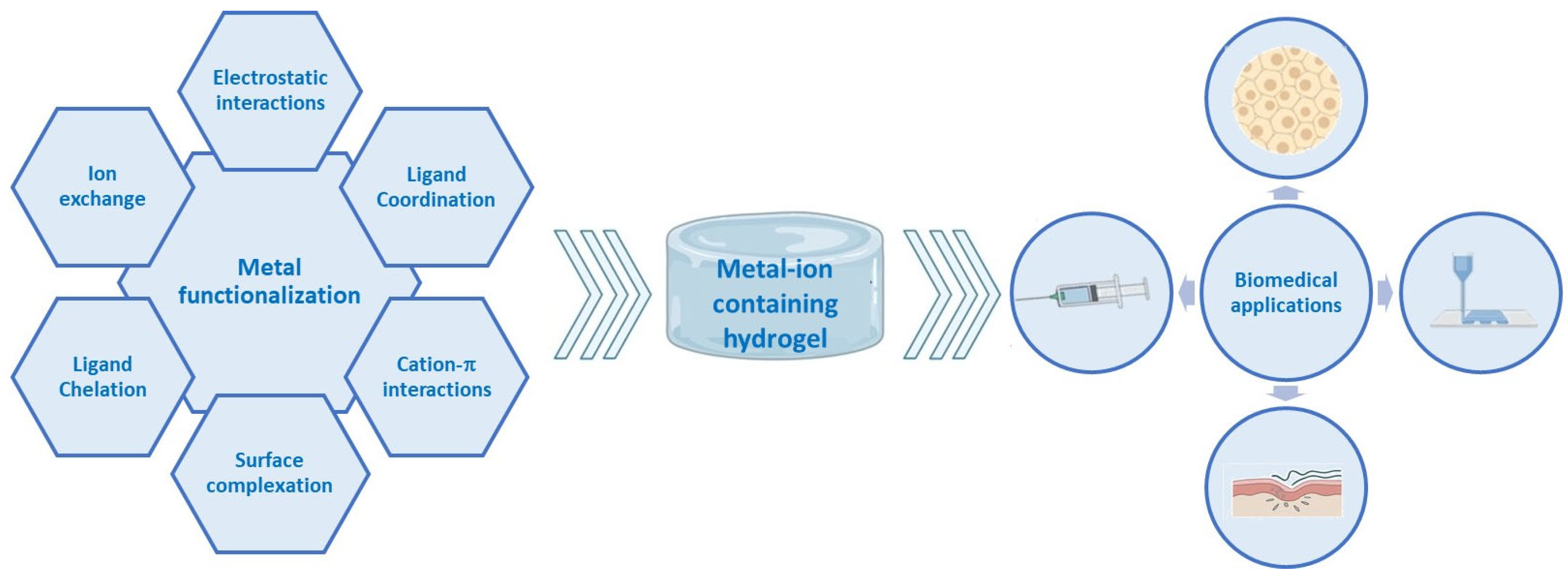
Metallogels [1,2,3,4,5] represent a fascinating and rapidly expanding class of soft materials at the intersection of coordination chemistry [6,7], supramolecular self-assembly [8,9], and biomedical science [10,11,12]. By combining the dynamic and reversible nature of supramolecular gels with the structural and functional diversity of metal coordination, metallogels exhibit a unique balance between mechanical robustness, responsiveness, and multifunctionality [13,14]. The incorporation of metal ions or clusters into organic or polymeric gel matrices not only enhances mechanical and rheological properties but also introduces intrinsic optical, electronic, and catalytic functions that are crucial for medical applications [15,16,17,18,19,20,21,22]. Over the past decade, considerable progress has been made in tailoring metallogels for biomedical use, particularly in areas such as drug delivery [23,24,25,26,27], anticancer therapy [28,29], antimicrobial activity [30,31], biosensing [32], and tissue engineering. Their tuneable viscoelasticity, thixotropic and self-healing behaviour, and compatibility with biological environments allow metallogels to act as stimuli-responsive materials capable of adapting to physiological conditions. Drug-loaded metallogels provide localized and controlled release through pH- or redox-triggered disassembly, offering targeted therapeutic effects with minimized systemic toxicity [33,34,35,36]. Similarly, metallogels incorporating biologically active ions such as Fe2+, Zn2+, Cu2+, or Ag+ reveal potent antibacterial [37] and wound-healing [38] properties through mechanisms involving reactive oxygen species generation and ionic exchange. Lanthanide-based metallogels, in turn, introduce exceptional luminescent and sensing capabilities, enabling their application in optical detection, anti-counterfeiting, and bioimaging. In the context of regenerative medicine, peptide-, polysaccharide-, and small-molecule-derived metallogels serve as biocompatible scaffolds that promote cell adhesion, proliferation, and tissue repair (Scheme 1). Collectively, the studies summarized in this work illustrate the diversity of approaches and functionalities that metallogels can achieve when rationally designed for medical applications. Through the synergy between molecular design, metal coordination, and supramolecular organization, these materials bridge the gap between chemistry and biology, paving the way for next-generation soft therapeutic and diagnostic platforms.
Scheme 1. Schematic representation of the main mechanisms involved in the formation and functionalization of metal-ion-containing hydrogels. Metal incorporation can occur through diverse non-covalent and coordination-based interactions, including ion exchange, electrostatic attraction, hydrogen bonding, surface complexation, cation–π interactions, and coordination/chelation processes, which collectively contribute to network structuring and stabilization. The resulting metallohydrogels exhibit tunable physicochemical and mechanical properties that enable a broad range of biomedical applications, such as drug delivery, wound healing, and tissue engineering.

2. Drug Delivery and Anticancer Applications

In recent years, supramolecular metallogels [39,40,41] have emerged as promising candidates for biomedical applications, particularly in drug delivery and cancer therapy [42]. Their tuneable porosity, structural responsiveness, and biocompatibility make them suitable for the controlled release of therapeutic agents [43]. This section highlights a variety of innovative metallogel systems developed for targeted drug delivery and anticancer purposes, with special focus on their structural design, self-assembly mechanisms, and biological efficacy. Famously, supramolecular gels represent a versatile class of soft materials with broad potential in applications such as drug delivery, possessing intrinsic porosity arising from their three-dimensional nanofibrous networks formed through the supramolecular self-assembly of gelator molecules. Additional porosity can be introduced when the gelator itself contains internal molecular cavities, as in the case of metal–organic cage (MOC) structures [44,45,46]. In a recent work, a palladium-based MOC with the formula [(Pd2L24)·4NO3·3H2O·2DMF·MeOH] (Pd-cage), where L2 = 5-azido-N,N′-di-pyridin-3-yl-isophthalamide, was synthesized and thoroughly characterized using Fourier Transform Infrared Spectroscopy (FT-IR), 1H NMR, ESI-MS, and single-crystal X-ray diffraction [47]. The Pd-cage readily formed a stimuli-responsive supramolecular metallogel (PdG) in a DMSO/water medium. Importantly, the molecular cavity of the Pd-cage provided a suitable site for encapsulating the anticancer drug doxorubicin (DOX). Drug loading and release studies confirmed that DOX could be effectively incorporated within the PdG matrix and subsequently delivered to melanoma (B16-F10) cells, where it exhibited marked cytotoxic effects, as confirmed by MTT viability and scratch assays. Moreover, PdG displayed rheo-reversible behaviour, allowing it to recover its gel state after mechanical disruption. Overall, the Pd-cage-derived metallogel combines structural responsiveness, porosity, and efficient drug-loading capability, establishing PdG as a promising candidate for further development as a topical, stimuli-responsive anticancer hydrogel system [47]. Moreover, a new family of coordination polymers (CPs) was synthesized and structurally characterized by single-crystal X-ray diffraction with the goal of developing drug-delivery systems based on metallogel formation [26]. The design strategy relied on structure-guided assembly principles, employing two bis(pyridyl)urea ligands, 1,3-dipyridin-3-ylurea (3U) and 1,3-dipyridin-4-ylurea (4U), in combination with the sodium salts of several nonsteroidal anti-inflammatory drugs (NSAIDs), including ibuprofen (IBU), naproxen (NAP), fenoprofen (FEN), diclofenac (DIC), meclofenamic acid (MEC), and mefenamic acid (MEF), as well as Zn(NO3)2. In total, nine coordination polymers were successfully obtained, all displaying one-dimensional polymeric chain structures stabilized by extensive hydrogen-bonding interactions between urea N–H groups and carboxylate oxygen atoms, occasionally assisted by lattice-occluded water molecules. When dispersed in dimethyl sulfoxide/water (DMSO/H2O) mixtures, the CP components yielded five metallogels, which were further characterized using rheological measurements and transmission electron microscopy (TEM) to probe their viscoelastic and microstructural properties. Among these, three metallogelators, 3UMEFg, 3UNAPg, and 3UMECg, exhibited distinct and promising biological functionalities. Specifically, 3UMEFg showed in vitro anticancer activity, as evidenced by MTT assays showing the highest cytotoxic efficacy with an IC50 value of 80 μg/mL. Whereas, 3UNAPg demonstrated cell-imaging capability, and 3UMECg functioned as a multidrug delivery platform for antibacterial applications. Notably, 3UMECg showed shear-thinning, rheo-reversible, and injectable behaviour, suggesting its potential for topical or localized biomedical applications [26]. Another interesting study reports the development of a self-drug-delivery system targeting melanoma, based on a series of metallogelators derived from coordination polymers [48]. Six coordination polymers (CP1–CP6) were synthesized using a nitrile-containing terpyridyl ligand (L) and transition metal salts of Cu(I) and Zn(II), and were comprehensively characterized through various physicochemical techniques, including single-crystal X-ray diffraction. Guided by insights from their crystal structures, reactions among the components yielded four metallogels (CPG2–CPG5), which were subsequently characterized by dynamic rheological measurements and transmission electron microscopy (TEM). Among them, the metallogelator CPG3 revealed the most promising biological activity. MTT assays performed on melanoma (B16-F10) and macrophage (RAW 264.7) cell lines showed significant cytotoxic effects against melanoma cells while maintaining acceptable biocompatibility. In details, IC50 of the metallogelators was found to be within the range of 0.1–0.15 mg/mL. Further biological evaluations, including scratch assays, cell cycle analysis, nuclear condensation studies, annexin V-FITC/PI staining, mitochondrial membrane potential assays, and Hoechst efflux tests, confirmed that CPG3 exerts a “drug-like” therapeutic effect against B16-F10 melanoma cells. The data indicated that cell death occurred via mitochondrial membrane potential depolarization–induced apoptosis. Given that the B16-F10 cell line serves as a standard model for human skin cancer, the results suggest that the CPG3 metallogel holds considerable potential for further development as a self-delivering therapeutic material for melanoma treatment [48]. Remarkably, a self-assembly-driven thixotropic metallohydrogel (Mg-Tetrakis) was successfully synthesized from Mg(II) metal salt and N,N,N′,N′-tetrakis(2-hydroxyethyl)ethylenediamine (Tetrakis), which served as a low-molecular-weight gelator, using water as the gelation medium [49]. The resulting supramolecular metallohydrogel exhibited distinct viscoelastic and mechano-elastic properties, as proved by comprehensive rheological analyses. Its thixotropic behaviour was also clearly established through these studies, confirming its reversible structural recovery under mechanical stress. Field emission scanning electron microscopy (FESEM) provided detailed insights into the microstructural organization of the Mg-Tetrakis metallohydrogel, revealing its well-defined supramolecular architecture. Beyond its mechanical performance, the gel displayed noteworthy biological activity, particularly anticancer properties. The cytotoxic potential of the metallohydrogel was evaluated against the MCF-7 human breast cancer cell line, demonstrating a significant inhibitory effect on cell proliferation. The metallogel presented dose-dependent cytotoxicity toward MCF-7 breast cancer cells (IC50 = 4.27 mg/mL), while showing minimal toxicity in normal MCF-10A cells (IC50 = 187.3 mg/mL). Colony formation assays confirmed the gel’s ability to suppress cancer cell growth, while wound-healing and tumour spheroid inhibition assays revealed its antimigratory and antitumor capabilities [49]. Further investigations assessed nuclear morphology and reactive oxygen species (ROS) generation, indicating that the metallohydrogel induces oxidative stress-mediated apoptosis, while mechanistic studies of apoptosis were performed by analyzing the expression of key apoptotic markers, including BAX, BCL2, PUMA, and NOXA, highlighting the activation of pro-apoptotic pathways. Overall, the Mg-Tetrakis metallohydrogel combines favourable mechanical properties with potent anticancer activity, revealing its potential as a promising candidate for biomedical and therapeutic applications [15]. In the same context, a self-healing manganese(II)-based metallohydrogel (MOG) was developed using a low molecular weight gelator, Na2HL {H3L = l-(3,5-di-tert-butyl-2-hydroxy-benzyl)amino aspartic acid} [50]. The MOG was characterized by MALDI-TOF mass spectrometry, rheological measurements, IR spectroscopy, and various microscopic techniques. The non-steroidal anti-inflammatory drug indomethacin (IND) and the anticancer drug gemcitabine (GEM) were encapsulated within the metallohydrogel. The gemcitabine-loaded metallogel (MOG_GEM) exhibited enhanced drug delivery efficiency and stronger cytotoxic effects compared to the free drug against breast cancer cell lines MDA-MB-468 and 4T1. The anticancer activity was assessed through in vitro MTT cytotoxicity assay, live/dead assay, and cell migration assay. Furthermore, in vitro cytotoxicity studies on the RAW 264.7 cell line denoted that treatment with MOG_IND led to an improved anti-inflammatory response compared to the drug alone [50]. Indeed, the compounds showed negligible cytotoxicity, with high IC50 values in L929 cells (MOG_GEM: 84 μg/mL). MOG_IND showed improved biocompatibility and reduced cytotoxicity toward RAW 264.7 cells compared to free indomethacin (IC50 = 15.6 μg/mL vs. 31.3 μg/mL). Importantly, developing effective strategies for targeted cancer therapy remains one of the major challenges in biomedical research. Among emerging approaches, stimuli-responsive metallogels capable of controlled drug release in the tumour microenvironment offer a highly promising route, as cancer cells typically exhibit acidic conditions due to lactic acid accumulation. In a recent study, a low-molecular-weight gelator (G5) bearing a free carboxylic acid arm was rationally designed, synthesized, and thoroughly characterized through a combination of spectroscopic and microscopic techniques [51]. These analyses confirmed the formation of an ordered supramolecular gel exhibiting a clover-leaf-like morphology. Rheological studies further proved its viscoelastic nature and mechanical robustness. Interestingly, crystals of G5 could be isolated from pure DMSO, while gelation was induced by water addition, indicating solvent-dependent self-assembly. When the carboxylate group was esterified with methanol, the gelation ability was lost, yielding the crystalline derivative Me-G5′ (G5′ = G5–H), confirming the critical role of the free carboxylate in gel formation [51]. The G5 gelator was then employed to fabricate a ruthenium-based metallogel (Ru(II)G5) by incorporating the [Ru26-p-cymene)2Cl4] dimer, producing a monomeric complex [Ru(G5′)(η6-p-cymene)Cl] exclusively within the confined gel environment. The resulting Ru(II)G5 metallogel showed notable intrinsic anticancer activity, with an IC50 value of 10.53 μM against the A549 lung cancer cell line. Remarkably, upon exposure to lactic acid, mimicking the acidic tumour milieu, the metallogel underwent gel-to-sol transition, releasing ruthenium ions that subsequently formed a new complex (Ru(II)L). Both the released Ru(II)L complex and the liberated G5 gelator displayed anticancer properties. Molecular docking studies revealed that G5 can bind to monocarboxylate transporters, potentially disrupting lactate transport in cancer cells and thereby inducing apoptosis. Overall, this work had the merit to introduce a smart, pH-responsive ruthenium metallogel system capable of selective disassembly and controlled drug release in acidic tumour environments, representing a powerful strategy for self-delivering anticancer therapies with dual mechanisms of action [51]. Interestingly, new metallogelators/metallogels derived from a series of multi-NSAID-based Zn(II)-coordination complexes displaying anticancer and antibacterial properties were also designed based on a structural rationale as plausible multi-drug self-delivery systems [52]. In another study [53], a crystal engineering strategy was employed to design and synthesize a new family of eight Zn(II) coordination complexes using various non-steroidal anti-inflammatory drugs (NSAIDs), including diclofenac (DIC), ibuprofen (IBU), naproxen (NAP), flufenamic acid (FLU), and meclofenamic acid (MEC), in combination with two co-ligands, N-phenyl-3-pyridylamide (3-Py) and N-phenyl-4-pyridylamide (4-Py), and Zn(NO3)2. The objective was to explore their potential as supramolecular metallogelators. Among the synthesized complexes, four Zn(II) derivatives—MG-3-PyMEC, MG-3-PyDIC, MG-4-PyNAP, and MG-4-PyMEC—successfully formed aqueous metallogels. Single-crystal X-ray diffraction analyses of all eight complexes revealed the presence of one-dimensional hydrogen-bonded networks, often featuring ‘amide-amide’ synthons, which are crucial gelation-inducing motifs. These structural insights strongly validated the rational crystal engineering design principles employed in their synthesis. Notably, one of the metallogelators, 3-PyMEC, exhibited promising anticancer activity against the human breast cancer cell line MDA-MB-231. MTT cytotoxicity and cell migration assays confirmed that 3-PyMEC induced approximately 96% cancer cell death at 35 μM and, at its IC50 concentration, significantly reduced cell motility (1.5 μm/h) compared to the control (7.2 μm/h) and the parent drug MEC-Na (1.7 μm/h) [53]. Collectively, the studies described in this section highlight the growing potential of supramolecular metallogels as multifunctional platforms for drug delivery and anticancer therapy (Table 1). The diversity in gelator design, metal coordination, and drug encapsulation strategies not only showcases their structural versatility but also demonstrates their applicability in real-world biomedical contexts. In fact, from stimuli-responsive release to self-delivery and synergistic therapeutic effects, metallogels represent a powerful class of materials poised to transform next-generation cancer treatment approaches.
Table 1. Overview of Supramolecular Metallogels Developed for Drug Delivery and Anticancer Applications.

3. Antibacterial, Antioxidant, and Wound Healing Metallogels

The rise in multidrug-resistant pathogens and chronic wounds has driven significant interest in multifunctional biomaterials capable of delivering therapeutic effects beyond traditional antibiotics [54]. Among these, supramolecular metallogels have gained prominence due to their intrinsic porosity, tuneable mechanical properties, and ability to incorporate metal ions that confer antibacterial, antioxidant, and regenerative functions [55,56,57]. This section explores recent advances in the design and development of metallogels for antimicrobial and wound healing applications, highlighting their structural diversity, functional mechanisms, and potential for clinical translation. Supramolecular hydrogels provide an ideal platform for localized generation of reactive oxygen species (ROS) under controlled conditions, thereby minimizing cytotoxic effects. In this context, a multifunctional hydrogel system was developed using guanosine-5′-monophosphate (GMP) and tetra(4-carboxylphenyl)ethylene, which exhibits aggregation-induced emission (AIE) and tuneable mechanical properties upon coordination with divalent metal ions such as Ca2+, Mg2+, and Fe2+ [58]. The introduction of these metal ions induced structural transformations within the resulting metallogels (M-1GMP), modulating both their mechanical strength and optical behaviour. In particular, the incorporation of Fe2+ ions into the hydrogel (Fe-1GMP) enabled catalytic ROS generation through a Fenton reaction, which could be further enhanced by the addition of ascorbic acid (AA). This redox-activated system demonstrated potent antibacterial activity against Escherichia coli, Staphylococcus aureus, and vancomycin-resistant Enterococcus (VRE) strains. Furthermore, the antimicrobial efficacy was assessed by quantifying the colony-forming units (c.f.u per mL). Notably, the Fe-1GMP metallogel in the presence of H2O2 and AA achieved complete (100%) eradication of bacterial strains compared to the control samples. In vitro assays confirmed efficient bacterial eradication, while in vivo experiments involving topical application of Fe-1GMP on Balb/c mice with skin infections validated its strong antibacterial efficacy. Overall, the Fe-1GMP hydrogel combines controllable mechanical properties, luminescent functionality, and ROS-mediated antimicrobial activity, making it a highly promising candidate for biomedical applications such as wound healing, localized infection control, and smart therapeutic material design [58]. Moreover, a new supramolecular metallogel, named Hg-SA, was developed using succinic acid (SA) as a low-molecular-weight gelator in DMF under standard synthesis conditions [59]. The mechanical characteristics of Hg-SA were investigated through rheological analyses, including angular frequency and strain sweep tests. FESEM revealed a rod-like network morphology, while energy-dispersive X-ray (EDX) mapping confirmed the elemental composition. FT-IR spectroscopy was employed to elucidate the formation mechanism of the Hg-SA metallogel. The antimicrobial properties were assessed against Gram-positive bacteria (Bacillus subtilis and Staphylococcus epidermidis) and Gram-negative bacteria (Escherichia coli and Pseudomonas aeruginosa), demonstrating notable antibacterial activity. In details, the 1 mM Hg-SA metallogel have exhibited inhibitory zones against all four bacterial strains: 10 mm for E. coli; 10 mm for P. aeruginosa; 11 mm for B. subtilis, and 10 mm for S. epidermidis. Notably, the diameters of the inhibition zones increased significantly after gelation, indicating enhanced antibacterial activity of the metallogel. Overall, the study emphasizes the strong antimicrobial potential of Hg(II)-based succinic acid metallogels against both Gram-positive and Gram-negative bacterial strains [59].
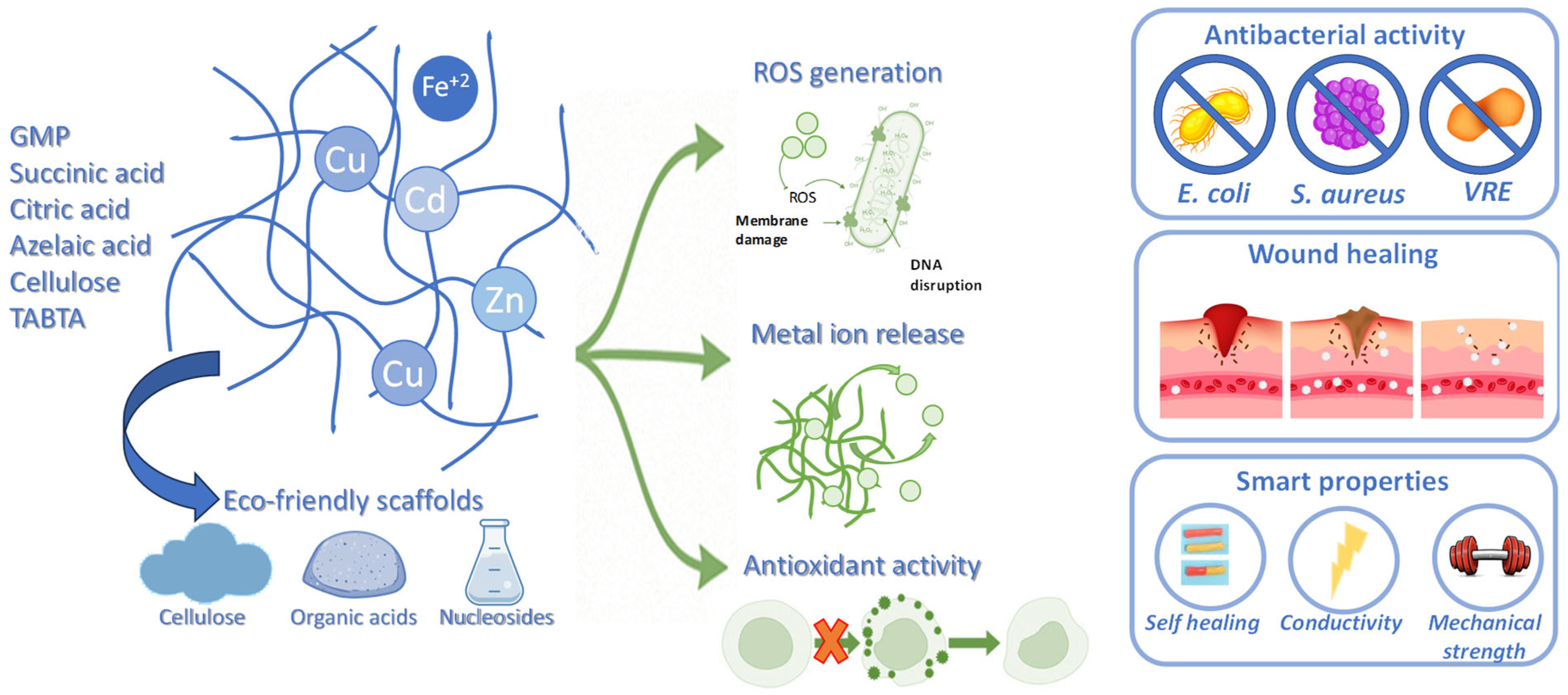
In another study [60], an efficient ultrasonication-assisted approach was employed to synthesize two novel supramolecular metallogels using citric acid as a low-molecular-weight gelator in combination with Cd(II) acetate and Hg(II) acetate in N,N-dimethylformamide (DMF) under environment conditions. The resulting Cd(II)- and Hg(II)-based metallogels were thoroughly investigated for their structural, mechanical, and antimicrobial properties. Rheological analyses confirmed the exceptional mechanical robustness and viscoelastic stability of both metallogels across varying angular frequencies and shear strains. Energy-dispersive X-ray (EDX) mapping verified the presence and uniform distribution of key elemental constituents, while FESEM revealed well-defined microstructural morphologies characteristic of hierarchical supramolecular networks. FT-IR spectroscopy further elucidated the mechanism of metallogel formation, highlighting the coordination interactions between the metal ions and the carboxylate groups of citric acid. The antimicrobial activity of the Cd(II)- and Hg(II)-metallogels was evaluated against a representative set of bacterial strains, including Gram-positive species (B. subtilis and Staphylococcus epidermidis) and Gram-negative species (E. coli and P. aeruginosa). Both metallogels exhibited strong antibacterial efficacy, effectively inhibiting the growth of all tested microorganisms. In details, the 1 mM Cd-CA metallogel have shown inhibitory zones against all four bacterial strains: 12.3 mm for E. coli; 12.1 mm for P. aeruginosa; 17.5 mm for B. subtilis, and 8.2 mm for S. epidermidis. In summary, the mentioned study presented a comprehensive account of the synthesis, structural characterization, and antimicrobial performance of Cd(II)- and Hg(II)-based citric acid metallogels. The combination of facile synthesis, mechanical durability, and broad-spectrum antibacterial activity manifests their potential as multifunctional materials for industrial, biomedical, and environmental applications, particularly in the development of antimicrobial coatings and therapeutic systems [60]. Remarkably, self-healing supramolecular metallogels based on azelaic acid and transition-metal acetates of Co(II), Ni(II), and Zn(II) were also successfully fabricated via molecular self-assembly [61]. In particular, the metallogel systems were prepared using N,N′-dimethylformamide and dimethyl sulfoxide as immobilized solvent media, which contributed to their characteristic semisolid and viscoelastic behaviour. Comprehensive rheological analyses, including amplitude sweep, frequency sweep, and thixotropic measurements, confirmed the mechanical stability, reversible deformation, and self-healing ability of the metallogels. Distinct microstructural morphologies, visualized by FESEM, reflected variations in the extent of supramolecular interactions among the metal ions, azelaic acid, and solvent molecules. Comparative FT-IR spectroscopy between the metallogels, their xerogels, and individual precursors revealed notable peak shifts, confirming the formation of coordination- and hydrogen-bond-driven supramolecular networks. Electrospray ionization mass spectrometry further substantiated the molecular interactions responsible for network formation, while the temperature-dependent ionic conductivity of the metallogels, analyzed via impedance spectroscopy, demonstrated that ion transport within the gel matrix was influenced by both the nature of the metal cations and the dielectric properties of the incorporated solvent. Biological assays revealed notable antimicrobial activity of the Co(II)-, Ni(II)-, and Zn(II)-metallogels against Gram-negative bacteria (Klebsiella pneumoniae, Vibrio parahaemolyticus) and Gram-positive bacteria (Bacillus cereus). Importantly, cytotoxicity studies using human cell lines (SH-SY5Y neuroblastoma and HEK 293 kidney cells) indicated that no significant cell death was observed, and the morphology of the cells was also unchanged even at the highest tested concentration. Overall, this work led to a new class of solvent-directed, self-healing supramolecular metallogels that integrate mechanical resilience, ionic conductivity, antimicrobial activity, and biocompatibility, with these multifunctional soft materials holding strong potential for bioelectronic devices, antimicrobial coatings, and smart biomedical applications [61]. Another recent study focused on three newly synthesized metallogels derived from suberic acid and coordinated with Ni, Zn, and Cd acetate salts [62]. N,N′-dimethylformamide was employed as the trapped solvent during the formation of these soft materials. The resulting metallogels exhibit remarkable viscoelastic properties, as supported by rheological data confirming their gel-like behaviour. Microstructural characterization coupled with energy-dispersive X-ray analysis verified the presence of the individual metal-based components within distinct hierarchical architectures. Field emission scanning electron microscopy, atomic force microscopy, and transmission electron microscopy revealed notable differences in microstructural organization and the extent of supramolecular non-covalent interactions within the gel networks. Fourier-transform infrared spectroscopy, electrospray ionization mass spectrometry, and powder X-ray diffraction analyses provided insights into the supramolecular forces governing the metallogel frameworks. Thermogravimetric studies of xerogels derived from these metallogels were conducted to assess their thermal stability [62]. Moreover, the antibacterial activity of the metallogels was evaluated against selected Gram-positive and Gram-negative bacteria using spectrophotometric measurements. The tested human pathogens included Klebsiella pneumoniae (MTCC 109), Salmonella typhi (MTCC 733), Vibrio parahaemolyticus, B. cereus (MTCC 1272), Lactobacillus fermentum (NCDO 955), and S. aureus (MTCC 96). Among the investigated systems, Cd-SA proved the highest antimicrobial activity, with minimum inhibitory concentration (MIC) values of approximately 100 μg/mL against K. pneumoniae, V. parahaemolyticus, B. cereus, and S. aureus, and 50 μg/mL against S. typhi and L. fermentum. These results clearly indicate the superior bactericidal efficacy of the Cd-based metallogel compared to its Ni- and Zn-analogues. Moreover, these metallogels showed exceptional diode behaviour when incorporated into semiconducting devices, exhibiting pronounced non-linearity characteristic of a non-ohmic conduction mechanism under dark conditions at room temperature. The devices were fabricated using a sandwich configuration consisting of indium tin oxide-coated glass/metallogel/aluminum layers [62]. Interestingly, the gel-forming molecule N(1),N(3),N(5)-tris(4-aminophenyl)benzene-1,3,5-tricarboxamide (TABTA) was synthesized and thoroughly characterized through a range of spectroscopic techniques [63] and hybrid gel systems were developed by combining TABTA with ibuprofen (Ibp) or G8, serving, respectively, as a drug-loading matrix and as a template for silver nanoparticle synthesis and stabilization. All gels were prepared via the minimum critical gelation (MCG) approach, and FT-IR and PXRD analyses were employed to elucidate the noncovalent interactions and structural organization within the hybrid matrices. The G8–TABTA system successfully formed metallogels with Ag+, Fe3+, Fe2+, Co2+, Cu2+, and Zn2+, whereas Ni2+ failed to induce gelation. In contrast, the TABTA–Ibp system formed a metallogel exclusively with Ag+, suggesting a high degree of selectivity in metal coordination. Rheological studies confirmed the viscoelastic nature of all systems, with storage (G′) and loss (G″) moduli obtained from amplitude, frequency, and thixotropy measurements demonstrating robust gel-like behaviour and mechanical resilience. The TABTA–Ibp gel matrix exhibited particularly advantageous features, including self-healing capability, injectability, and controlled drug-release performance. Ibuprofen release kinetics from both the TABTA–Ibp organogel and TABTA–Ibp–Ag metallogel were monitored at room temperature in phosphate-buffered saline (PBS) over 72 h at varying pH levels via UV–vis spectroscopy, confirming sustained release profiles. Additionally, antibacterial assays revealed strong inhibitory effects for G8–TABTA, G8–TABTA–Ag, G8–TABTA–Zn, TABTA–Ibp, and TABTA–Ibp–Ag xerogels against both Gram-negative (E. coli) and Gram-positive (B. subtilis) strains. Notably, at 100 μg/mL, G8-TABTA-Ag and TABTA-Ibp-Ag showed strong antibacterial activity with >99% inhibition, while G8-TABTA-Zn achieved >90% inhibition against E. coli and B. subtilis. Overall, these results highlighted the multifunctionality of TABTA-derived gels as tuneable platforms for metal coordination, drug delivery, nanoparticle stabilization, and antimicrobial applications, suggesting their potential in biomedical and smart material design [63]. Moreover, a Cu(II)-based supramolecular metallogel was successfully synthesized at room temperature using Cu(II) acetate and isophthalic acid as the gel-forming components in N,N-dimethylamine [64]. Rheological analyses demonstrated the material’s excellent mechanical robustness and structural stability under diverse experimental conditions. FE-SEM imaging coupled with EDX mapping revealed a well-organized microstructure with homogeneous elemental distribution, while FT-IR spectroscopy confirmed metallogel formation through characteristic coordination between the Cu(II) centre and the carboxylate groups of isophthalic acid. Electrical characterization indicated a distinct semiconducting behaviour with notably high conductivity, suggesting potential applicability in electronic systems. Moreover, antimicrobial assays revealed that the Cu(II)-metallogel exhibited strong antibacterial activity against both Gram-positive and Gram-negative strains, with the largest inhibition zones observed for B. subtilis and P. aeruginosa (≈11 mm), confirming its potential as a dual-functional antibacterial material. Collectively, these findings position the Cu(II)–isophthalic acid metallogel as a multifunctional soft material that integrates mechanical stability, electrical conductivity, and antimicrobial performance. Its unique combination of physicochemical and biological properties makes it a strong candidate for biomedical applications, such as infection control, as well as for integration into next-generation electronic and optoelectronic devices [64]. Self-assembled hydrogels, owing to their tuneable 3D architectures and inherent biocompatibility, have attracted significant attention for biomedical applications such as tissue engineering, drug delivery, and controlled therapeutic release. In this frame, a new class of nucleoside-based biocompatible hydrogels was developed, reveling potent leishmanicidal activity against both Leishmania major promastigotes and amastigotes, while showing no cytotoxicity toward mammalian macrophage cells [65]. More in detail, the hydrogels were formed via silver ion (Ag+)-driven self-assembly of natural nucleoside and nucleotide derivatives, specifically cytidine and 5′-guanosine monophosphate (5′-GMP). The coordination of Ag+ ions with these biomolecular components facilitated the formation of supramolecular metallogels through noncovalent interactions, including hydrogen bonding, π–π stacking, and metal coordination. Among the series, the cytidine–boronic acid–Ag+ metallogel showed exceptional bioactivity, inducing apoptosis-like cell death in Leishmania parasites. Mechanistic studies revealed that the gel damages both the cell membrane and DNA, leading to effective parasite eradication. The MTT assay also revealed that all these supramolecular hydrogels showed acceptable efficacy in inhibiting promastigotes after 72 h of incubation (IC50 values ranging from 263.3 to 683.4 μg/mL and IC90 values ranging from 473.9 to 1230.1 μg/mL). Importantly, the absence of cytotoxic effects on macrophage cell lines highlights the biocompatibility and selectivity of these nucleoside-derived hydrogels. Overall, this was the first example of nucleoside-based Ag metallohydrogels with dual attributes of biocompatibility and antiparasitic efficacy. Their ability to selectively target Leishmania species while remaining non-toxic to host cells highlights their potential for topical applications in the treatment of cutaneous leishmaniasis, opening avenues for next-generation, bioinspired therapeutic hydrogels [65]. As anticipated in this work, metallogels, hybrid materials formed through the coordination of metal ions with polymeric gel matrices, represent a versatile and rapidly growing class of functional soft materials. When metal ions complex with reactive groups within the polymer network, they impart unique physicochemical properties, including enhanced mechanical stability, electrical conductivity, catalytic activity, and biological functionality. Among various polymeric supports, cellulose stands out as an ideal candidate for hydrogel and metallogel formation owing to its abundance, renewability, non-toxicity, biodegradability, and cost-effectiveness [66]. Additionally, cellulose exhibits excellent mechanical strength, thermal stability, porosity, and a high density of reactive hydroxyl (–OH) groups, making it a highly adaptable scaffold for metal coordination and functionalization. However, the poor solubility of native cellulose in most solvents necessitates its chemical derivatization (e.g., carboxymethylation, acetylation) or dissolution through specialized solvent systems to produce hydrogels. In recent years, considerable progress has been made in developing dissolution–regeneration techniques that enable the direct fabrication of hydrogels from non-derivatized cellulose, sourced from plants, lignocellulosic biomass, and industrial or agricultural wastes. These approaches expand the sustainability and scalability of cellulose-based hydrogel production. The choice of solvent system plays a pivotal role in hydrogel formation and subsequent metallogel synthesis, particularly because many metallogels are prepared by introducing metal ions into pre-formed hydrogels. Therefore, solvent selection directly influences network structure, porosity, metal distribution, and the coordination environment. Numerous are the advantages and challenges of various solvent systems with respect to industrial scalability, including ionic liquids, aqueous alkali systems, and deep eutectic solvents [66]. Furthermore, there is a growing interest in cellulose-based metallogels incorporating d-block transition metals (such as Fe, Cu, Zn, Ni, Co, and Ag), with particular attention being paid to synthetic strategies, structural characteristics, and emerging applications in areas such as catalysis, sensing, environmental remediation, and biomedicine. In other words, the cellulose-derived metallogels constitute a promising class of eco-sustainable, multifunctional materials, while outlining key developments, challenges, and future directions for their scalable synthesis and practical implementation in advanced technologies [66]. Together, these studies demonstrate the vast potential of metallogels as multifunctional platforms for antibacterial, antioxidant, and wound healing therapies. Through careful design of metal–ligand coordination, molecular self-assembly, and responsive behaviour, researchers have developed a diverse array of soft materials with applications ranging from infection control to tissue regeneration and beyond (Figure 1). As the field continues to evolve, the integration of sustainable components like cellulose, smart release systems, and bioinspired architectures positions metallogels at the forefront of next-generation therapeutic and biomedical technologies.
Figure 1. Schematic representation of multifunctional supramolecular metallogels designed for antibacterial and wound-healing applications. Metal ions (Fe2+, Hg2+, Cd2+, Zn2+, Cu2+) coordinate with organic gelators (e.g., GMP, succinic acid, citric acid, azelaic acid, cellulose, TABTA), generating hierarchical networks with tuneable mechanical properties and biological functionalities. The combination of ROS-mediated antimicrobial action, drug release, and tissue-regenerative behaviour positions these materials as advanced platforms for infection control and wound healing. The red X indicates the inhibition of oxidative stress and the protective effect on cells.

4. Biosensing, Luminescent, and Imaging Metallogels

The unique coordination chemistry and tuneable optical properties of supramolecular metallogels make them highly attractive for applications in biosensing, luminescence, and bioimaging [67,68,69,70,71,72,73]. These soft materials offer responsive behaviour, structural adaptability, and the ability to incorporate lanthanides, transition metals, and molecular switches, enabling dynamic changes in fluorescence, conductivity, and morphology in response to environmental stimuli. This section highlights recent developments in luminescent metallogels with advanced functionalities, including stimuli-responsive sensing platforms, artificial light-harvesting systems, and smart materials for imaging and optoelectronic integration. Recently, a luminescent lanthanide supramolecular metallogel was constructed through the self-assembly of 5,5′,5″-(1,3,5-triazine-2,4,6-triyl)tris(azanediyl)triisophthalate (H6L) and Tb3+ ions, with the luminescence performance significantly enhanced by the incorporation of carboxymethyl chitosan (CMCS) [74]. The resulting hybrid metallogel, denoted as H6L/Tb3+/CMCS, exhibited a ninefold increase in total quantum yield compared to the gel without CMCS. Additionally, the average luminescence lifetime increased markedly from 0.51 ms to 1.20 ms, demonstrating the strong sensitizing effect of CMCS on the Tb3+-centred emission. Notably, the aqueous dispersions of H6L/Tb3+/CMCS xerogels displayed stable, pH-dependent luminescence, confirming the robustness and environmental responsiveness of the material. Exploiting the selective binding affinity of CMCS toward various metal ions and employing principal component analysis (PCA), the H6L/Tb3+/CMCS system was successfully used as a sensor array capable of discriminating 11 different metal ions (p < 0.05). Importantly, the mentioned work introduced an effective bio-based strategy for designing functional luminescent lanthanide metallogels, highlighting the synergistic integration of natural polysaccharides and lanthanide coordination networks for advanced sensing and photonic applications [74]. Moreover, a novel Th4+-tuned aggregation-induced emission (AIE) strategy has been developed for the ultrasensitive sequential detection and separation of Th4+ and Hg2+ ions, demonstrating a new approach to functional supramolecular sensing materials [75]. To realize this concept, two tripodal gelators—TH (tri-(isoniazid-4-yl)-functionalized trimesic acylhydrazine) and TA (tri-(pyridine-4-yl)-functionalized trimesic amide)—were synthesized. When combined, these molecules self-assembled into a stable supramolecular polymer hydrogel (THTA-G) in a DMSO/H2O (3.3:6.7 v/v) binary system. The pristine THTA-G hydrogel exhibited no aggregation-induced emission. However, upon the introduction of Th4+ ions, the resulting Th4+-coordinated metallogel (THTA-GTh) displayed strong green fluorescence, confirming that Th4+ effectively induces and modulates the AIE effect within the gel matrix. This tuneable photophysical behaviour enabled ultrasensitive fluorescence sensing, with detection limits of 8.61 × 10⁻¹¹ mol L−1 for Th4+ (using THTA-G) and 1.08 × 10⁻¹¹ mol L−1 for Hg2+ (using THTA-GTh). Furthermore, the xerogels derived from these systems exhibited excellent ion separation capabilities, efficiently adsorbing and removing Th4+ and Hg2+ from aqueous media. Beyond sensing and separation, the luminescent properties of THTA-G also allowed its use as a writable, smart light-emitting material, illustrating its multifunctionality. Overall, this study presents an innovative metal-ion-regulated AIE mechanism within a supramolecular metallogel framework, offering a powerful platform for fluorescent sensing, ion separation, and optically responsive soft materials [75]. Notably, an innovative approach has been recently developed for constructing artificial light-harvesting systems (ALHSs) based on supramolecular metallogels [76]. In this method, various metal ions were introduced into a solution of a bi-benzimidazole compound (P) in ethylene glycol. Among them, P showed remarkable selectivity for Al3+ ions, as evidenced by a significant red shift of 49 nm in its fluorescence spectrum upon Al3+ addition. Interestingly, the gelator P was able to self-assemble into a stable supramolecular gel (P-gel) in ethylene glycol, exhibiting strong aggregation-induced emission (AIE) behaviour. Taking advantage of these properties, two distinct ALHSs were successfully fabricated within the gel matrix. In both systems, the P–Al3+ assembly served as the energy donor, while BODIPY 505/515 (BDP) and rhodamine 6G (Rh6G), incorporated into the P–Al3+ network, functioned as energy acceptors. Efficient energy transfer from the P–Al3+ donor to the BDP and Rh6G acceptors was confirmed, demonstrating the successful operation of the light-harvesting systems. These results provide valuable insights into the design and development of novel supramolecular metallogel-based ALHSs, offering promising potential for future applications in photonic and optoelectronic materials [76]. Even if stimuli-responsive supramolecular gels and metallogels have attracted significant interest in recent years, the development of metallogels with reversible photoresponsive properties remains relatively rare. In this context, a new class of photoresponsive hybrid zinc-based metallohydrogels was constructed through the co-assembly of an imidazole-functionalized phenylalanine derivative (ImF) and carboxylic acid-functionalized arylazopyrazole (AzoPz) molecular photoswitches in the presence of Zn2+ ions [77]. Unlike traditional systems that rely on covalent modifications, this approach employs noncovalent incorporation of molecular photo-switches into the gel network, providing a facile and tuneable strategy for generating optically controllable supramolecular materials. Notably, neither the AzoPz derivatives nor their mixtures with ImF were able to form gels on their own. However, upon addition of Zn2+ ions, co-assembled hybrid metallogels formed readily in alkaline aqueous media, displaying diverse morphologies depending on the specific conditions. This demonstrates that Zn2+ coordination serves as the key trigger for gelation. Interestingly, the ImF gelator exhibited specific selectivity toward Zn2+ ions, while the inclusion of the AzoPz unit endowed the metallogels with reversible photo-responsiveness. The gel-to-sol transition under UV light (λ = 365 nm) and sol-to-gel recovery under green light (λ = 530 nm) were monitored via UV–vis spectroscopy, confirming a reversible light-induced phase transformation. Transmission electron microscopy revealed a fibrillar network morphology, while rheological analyses confirmed the viscoelastic and reversible nature of the metallogels. Overall, this work presented a modular and noncovalent design strategy for fabricating light-switchable zinc-based metallogels, offering new opportunities for photo-responsive soft materials with potential applications in smart optics, controlled release, and adaptive supramolecular systems [77]. The development of luminescence-stable lanthanide materials through simple and controllable methods remains a significant challenge in materials chemistry. In this frame, a facile heat-set strategy was employed to construct a terbium-based supramolecular metallogel (H6L/Tb gel) derived from the multicarboxylate ligand 5,5′,5″-(1,3,5-triazine-2,4,6-triyl)tris(azanediyl)triisophthalate (H6L) [78]. The resulting H6L/Tb metallogel displayed intense and stable green luminescence, which remarkably retained its emission intensity across a broad temperature range (0–90 °C) and even under mechanical perturbation, highlighting its exceptional thermal and mechanical stability. Moreover, the xerogel form of the material preserved its luminescent behaviour in aqueous media, indicating robust retention of the emissive properties after dehydration. Comprehensive characterization by UV–vis, FT-IR, and XRD analyses revealed that the luminescence stability arises from a combination of heat-induced structural reinforcement via strong hydrogen bonding, π–π stacking interactions, and coordination between Tb3+ ions and the triazine–carboxylate framework. Overall, the above-described study introduced a straightforward heat-set method for fabricating luminescence-stable lanthanide metallogels, providing a new platform for durable, stimuli-resistant photofunctional materials. Such systems hold great potential for anti-counterfeiting technologies, optical sensing, and other photonic applications [78]. In another example, a zirconium-cluster-based metallogel was successfully synthesized through an unconventional one-pot solvothermal approach, yielding a robust, adaptive, and multifunctional soft material [79]. The resulting metallogel exhibits remarkable mechanical integrity, along with self-healing ability, high thermal stability, and electrical conductivity, making it an exceptional example of a stimuli-responsive gel system. Notably, the material shows reversible multi-stimuli responsiveness, reacting distinctly to light, aliphatic amines, electrical input, and metal ions, with observable colour and fluorescence modulation. This tuneable optical behaviour demonstrates its potential as a smart, dynamic material. Among its notable functionalities, the metallogel displays electrochromic properties, allowing its integration into soft electrochromic devices such as smart windows and electro-optical display panels. Furthermore, its metal-responsive chromism (metalchromism) offers a practical application in corrosion monitoring, providing visual feedback on the condition of metal surfaces. Overall, the mentioned study introduced a versatile, multifunctional Zr-based metallogel that combines mechanical resilience, self-repair capability, and multi-stimuli responsiveness, positioning it as a promising platform for next-generation adaptive materials in optoelectronics, sensing, and smart coatings [79]. Collectively, recent advancements in luminescent, biosensing, and imaging metallogels demonstrate their growing potential as multifunctional platforms for next-generation optoelectronic and biomedical technologies (Table 2). By integrating precise metal–ligand coordination, aggregation-induced emission phenomena, and environmentally responsive designs, researchers have created soft materials that not only respond to external cues but also provide robust performance in real-world applications. Whether through selective ion sensing, reversible light-triggered behaviour, or integration into smart devices, these metallogels offer a powerful combination of adaptability, sensitivity, and functional versatility, paving the way for innovative solutions in diagnostics, environmental monitoring, and interactive material systems.
Table 2. Summary of luminescent and stimuli-responsive supramolecular metallogels and their applications.

5. Biocompatible Scaffolds and Tissue Engineering

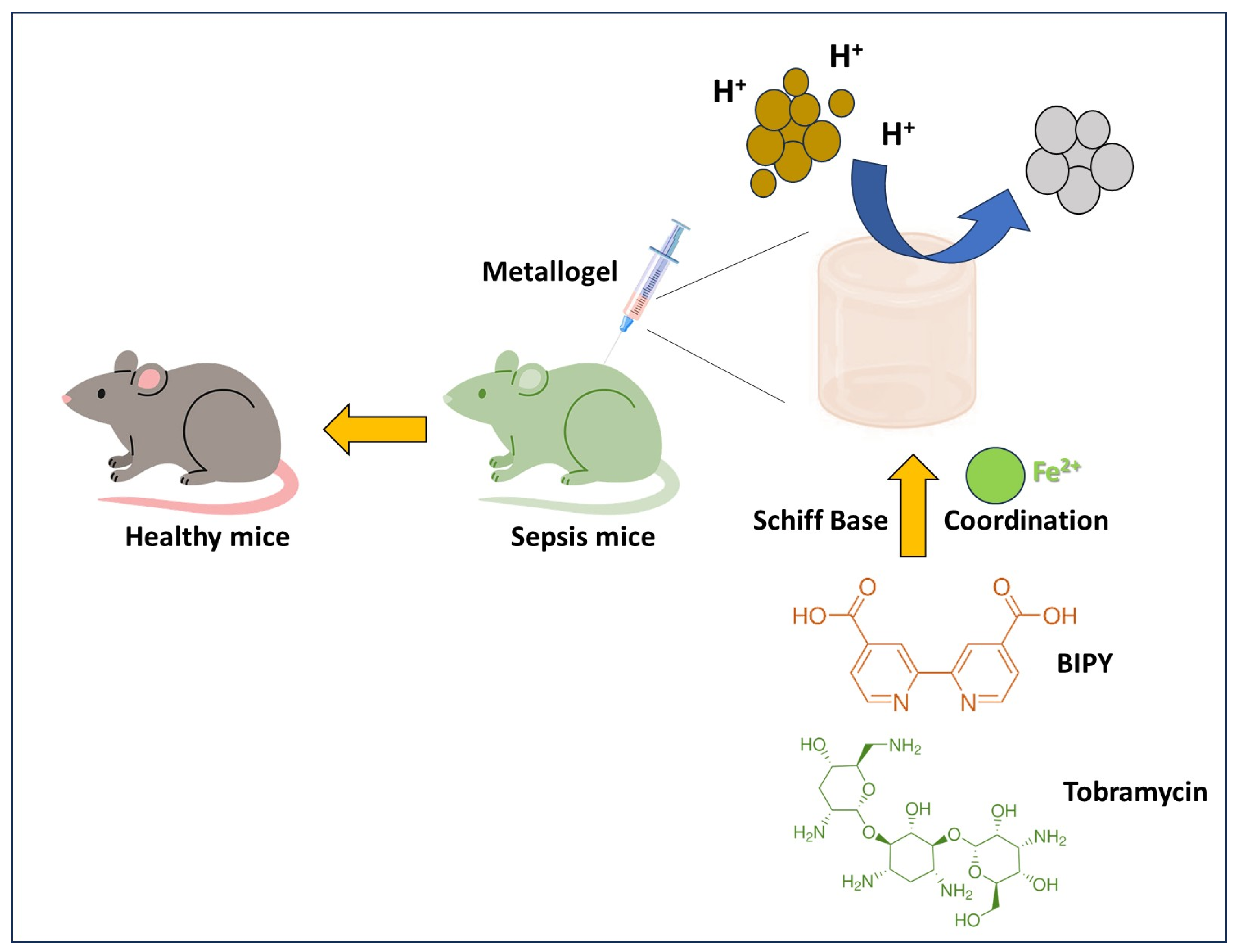
Supramolecular metallogels are increasingly recognized as promising candidates for biomedical applications due to their inherent biocompatibility, tuneable mechanical properties, and potential for functional integration. In the context of tissue engineering and regenerative medicine, metallogels offer dynamic, cell-supportive environments that can be engineered to mimic extracellular matrices, support cell adhesion and proliferation, and deliver therapeutic agents [80,81,82]. This section explores recent innovations in the design of biocompatible metallogel scaffolds, particularly those based on small-molecule self-assembly strategies, emphasizing their structural versatility, biodegradability, and suitability for in vitro and in vivo biomedical applications. All-small-molecule dynamic hydrogels have emerged as promising materials for applications in cell culture, tissue engineering, and controlled drug delivery [83,84,85]. However, their further advancement has been greatly limited by the scarcity of suitable molecular building blocks available from natural sources or commercial suppliers. Inspired by the structural principles of metal–organic frameworks (MOFs), a recent study reported a simple approach to fabricating metallogels through the direct gelation of small molecular compounds, specifically aminoglycosides, 2,2′-bipyridine-4,4′-dicarboxaldehyde (BIPY), and metal ions, via coordination bonding and Schiff base reactions [86]. The resulting metallogels exhibited excellent biodegradability and electrical conductivity, along with adjustable mechanical properties and strong antibacterial activity both in vitro and in vivo. The metallogel also exhibited excellent in vitro (≥95% cell viability) and in vivo biocompatibility with minimal systemic and organ toxicity. This work introduced a versatile strategy for broadening the range of all-small-molecule dynamic metallogels, opening new opportunities for diverse biomedical applications (Figure 2) [86]. Further progress in biomimetic scaffold development has been demonstrated through the integration of bioactive inorganic components within hydrogel matrices. In particular, a thermosensitive strontium-loaded chitosan hydrogel was shown to effectively induce osteogenic differentiation in stem cells from human exfoliated deciduous teeth (SHEDs) [87]. Encapsulation of SHEDs within the strontium phosphate-enriched hydrogel promoted cell proliferation and biomineralization, as evidenced by MTT assays, PCNA staining, and upregulated expression of key osteogenic markers such as alkaline phosphatase, collagen type I, Runx2, osteopontin, and osteonectin. These findings indicate that strontium ions play a pivotal role in stimulating osteogenesis and enhancing the regenerative potential of cell-laden hydrogels, thereby offering a valuable platform for bone tissue engineering and bioceramic–polymer hybrid scaffolds. In another study, self-assembled nanocomposite hydrogels stabilized via bisphosphonate–magnesium (BP–Mg2+) coordination were developed as injectable, cell-compatible materials for tissue regeneration [88]. Mixing polymers functionalized with bisphosphonate moieties and Mg2+ ions led to the rapid formation of Ac-BP–Mg nanoparticles that acted as dynamic multivalent crosslinkers, yielding self-healing hydrogels with superior mechanical stability at physiological pH. The system supported cell encapsulation and injection without compromising cell viability, while a secondary UV-triggered crosslinking process allowed temporal modulation of gel stiffness and crosslinking density. Remarkably, this delayed secondary crosslinking promoted stem cell spreading and osteogenic differentiation, highlighting the potential of BP–Mg2+ nanocomposite hydrogels for bone regeneration and injectable scaffold applications. In summary, the development of biocompatible and biodegradable supramolecular metallogels represents a significant advancement in the design of dynamic scaffolds for tissue engineering and related biomedical applications. The integration of naturally derived small molecules, bioactive ions (e.g., Sr2+, Mg2+), and metal coordination enables the formation of multifunctional networks with favourable mechanical, biological, and conductive properties. These emerging systems reveal great potential not only in supporting cellular growth and tissue regeneration but also in serving as platforms for controlled drug delivery and bioelectronic interfaces, thereby broadening the future landscape of soft material-based therapeutic technologies.
Figure 2. Schematic description of a strategy using a Fe2+–BIPY–TOB supramolecular metallogel for sepsis therapy [86].

6. Future Perspectives and Translational Challenges

Despite the remarkable progress achieved in the design and biomedical exploration of metallogels, their translation from laboratory prototypes to clinically viable materials remains at an early stage. Several key challenges must be addressed to bridge this gap.
A primary issue concerns the scalability and reproducibility of metallogel synthesis. The fine balance between metal–ligand coordination, solvent composition, and gelation kinetics often limits large-scale production and batch-to-batch consistency. Developing robust, green, and standardized synthetic protocols will be essential for reproducible performance and regulatory compliance.
Another major concern is the long-term biocompatibility and safety of metallogels. Although many formulations show promising cytocompatibility and biodegradability in vitro, comprehensive toxicological assessments and chronic exposure studies in vivo are still limited. Hence, understanding the fate of released metal ions and degradation products within biological systems will be critical to ensure their safety profiles.
From a translational standpoint, the integration with existing therapeutic and diagnostic platforms represents an important opportunity. Metallogels could serve as multifunctional scaffolds for localized drug delivery, wound healing, tissue regeneration, and real-time biosensing, but success will depend on tailoring their rheological, mechanical, and degradation properties to specific biomedical contexts.
Finally, regulatory and manufacturing considerations must be addressed. Meeting Good Manufacturing Practice (GMP) standards, performing toxicological profiling, and designing rigorous preclinical and clinical studies will be indispensable steps toward clinical translation. Collaborative efforts between chemists, material scientists, clinicians, and regulatory agencies will therefore play a pivotal role in transforming metallogels from innovative soft materials into clinically relevant therapeutic and diagnostic tools.

7. Conclusions

Supramolecular metallogels have emerged as a versatile and rapidly evolving class of soft materials with broad applicability across biomedical, sensing, and electronic domains. Their dynamic architectures, formed through metal–ligand coordination and non-covalent interactions, confer a unique combination of tuneable mechanical properties, self-healing capabilities, and responsiveness to external stimuli. In the biomedical field, metallogels have demonstrated significant potential in targeted drug delivery, antimicrobial therapy, and wound healing strategies, owing to their biocompatibility, controlled release kinetics, together with their redox-activated functionalities. The ability to generate reactive oxygen species or incorporate therapeutic agents, including antioxidants, into gel matrices has enabled the development of systems with enhanced antibacterial and antioxidant performance, particularly valuable in infection control and regenerative medicine. Simultaneously, the integration of metal ions has endowed metallogels with luminescent, electrical, and photonic functionalities, paving the way for their use in biosensing, imaging, and smart optoelectronic materials. Recent advances in photoresponsive, stimuli-adaptive, and light-harvesting metallogel systems illustrate their growing relevance in smart device integration and real-time environmental or biological monitoring. Furthermore, metallogels based on renewable scaffolds such as cellulose and low-molecular-weight gelators have shown great promise for sustainable development. Their broad-spectrum antibacterial activity, low cytotoxicity, and excellent structural adaptability support their use in biocompatible scaffolds for tissue engineering and bioelectronics. Overall, the multifunctionality, structural tunability, and eco-sustainability of supramolecular metallogels position them at the forefront of next-generation soft materials. Future research is expected to focus on scalable synthesis strategies, improved biocompatibility, and integration into real-world devices and therapeutic systems, further expanding their impact across scientific and technological frontiers.

Author Contributions

Conceptualization, P.L.S. and G.N.R.; investigation, P.L.S. and G.N.R.; writing—original draft preparation, P.L.S. and G.N.R.; writing—review and editing, P.L.S., D.T. and G.N.R.; visualization, P.L.S., D.T. and G.N.R. All authors have read and agreed to the published version of the manuscript.

Funding

Project PRIN_2022PNRR, titled “The envelope (E) protein of SARS-CoV-2: a key to unlock new insights into Coronavirus disease (COVID-19)”, CUP C53D2300734000.

Data Availability Statement

Not applicable.

Acknowledgments

P.L.S. acknowledges Ministero dell’Università e della Ricerca (MUR).

Conflicts of Interest

The authors declare no conflicts of interest.

Abbreviations

The following abbreviations are used in this manuscript:
AIEAggregation-Induced Emission
AAAscorbic Acid
ALHS(s)Artificial Light-Harvesting System(s)
AzoPzArylazopyrazole (molecular photoswitch)
BAXBcl-2-associated X Protein (pro-apoptotic marker)
BCL2B-cell Lymphoma 2 (anti-apoptotic protein)
BDP/BODIPYBoron-dipyrromethene (fluorescent dye)
BIPY2,2′-Bipyridine-4,4′-dicarboxaldehyde
CMCSCarboxymethyl Chitosan
CuG/PdG/Ru(II)G5Copper/Palladium/Ruthenium-based metallogel
DICDiclofenac
DMFN,N-Dimethylformamide
DMSODimethyl Sulfoxide
DOXDoxorubicin
ECMExtracellular Matrix
EDXEnergy-Dispersive X-ray Spectroscopy
ESI-MSElectrospray Ionization Mass Spectrometry
FESEM Field Emission Scanning Electron Microscopy
FENFenoprofen
FITCFluorescein Isothiocyanate
FLUFlufenamic Acid
FT-IRFourier Transform Infrared Spectroscopy
GEMGemcitabine
GMPGood Manufacturing Practice
GMP/5′-GMPGuanosine-5′-Monophosphate
G5Low-molecular-weight carboxylic acid gelator
H6L5,5′,5″-(1,3,5-Triazine-2,4,6-triyl)tris(azanediyl)triisophthalate
HEK 293Human Embryonic Kidney 293 cell line
Hg-SAMercury(II)-Succinic Acid Metallogel
HRTEMHigh-Resolution Transmission Electron Microscopy
IC50Half Maximal Inhibitory Concentration
IBUIbuprofen
ImFImidazole-functionalized Phenylalanine
L25-Azido-N,N′-dipyridin-3-yl-isophthalamide (ligand)
MCF-7Human Breast Cancer Cell Line
MECMeclofenamic Acid
MEFMefenamic Acid
Mg-TetrakisMg(II)-Tetrakis(2-hydroxyethyl)ethylenediamine Hydrogel
MOCMetal–Organic Cage
MOFMetal–Organic Framework
MOGManganese(II)-Based Metallohydrogel
MOG_INDMOG loaded with Indomethacin
MOG_GEMMOG loaded with Gemcitabine
MTT3-(4,5-Dimethylthiazol-2-yl)-2,5-diphenyltetrazolium Bromide Assay
NAPNaproxen
Ni-AA/Co-AANickel/Cobalt Adipic Acid Metallogel
Ni/Zn/Cu/FeNickel/Zinc/Copper/Iron (metal centres)
NOXAPhorbol-12-myristate-13-acetate-induced protein 1 (pro-apoptotic marker)
NSAIDsNon-Steroidal Anti-Inflammatory Drugs
NMRNuclear Magnetic Resonance
PBi-benzimidazole compound (light-harvesting donor)
PBSPhosphate-Buffered Saline
Pd(II)Palladium(II)
Pd2L24Palladium-based metal–organic cage
PCAPrincipal Component Analysis
PXRDPowder X-ray Diffraction
RAW 264.7Murine Macrophage Cell Line
Rh6GRhodamine 6G
ROSReactive Oxygen Species
Ru(II)LRuthenium(II) complex released from Ru(II)G5 gel
SH-SY5YHuman Neuroblastoma Cell Line
TABTAN(1),N(3),N(5)-tris(4-aminophenyl)benzene-1,3,5-tricarboxamide
TEMTransmission Electron Microscopy
Th4+/Tb3+Thorium(IV)/Terbium(III)
THTA-GTripodal Hydrogel (TH + TA co-assembly)
TH/TATri-(isoniazid-4-yl)- and Tri-(pyridine-4-yl)-functionalized Trimesic Derivatives
TetrakisN,N,N′,N′-tetrakis(2-hydroxyethyl)ethylenediamine
UV–visUltraviolet–Visible Spectroscopy
VREVancomycin-Resistant Enterococcus
Zn(II)-NSAIDZinc(II)-Non-Steroidal Anti-Inflammatory Drug Complex
Zn2+/Cu2+/Mn2+/Mg2+Metal Ions: Zinc, Copper, Manganese, Magnesium
Zr4+Zirconium(IV)
XRDX-ray Diffraction

References

  1. Liu, Z.; Zhao, X.; Chu, Q.; Feng, Y. Recent Advances in Stimuli-Responsive Metallogels. Molecules 2023, 28, 2274. [Google Scholar] [CrossRef] [PubMed]
  2. Tam, A.Y.Y.; Yam, V.W.W. Recent Advances in Metallogels. Chem. Soc. Rev. 2013, 42, 1540–1567. [Google Scholar] [CrossRef]
  3. Wu, H.; Zheng, J.; Kjøniksen, A.L.; Wang, W.; Zhang, Y.; Ma, J. Metallogels: Availability, Applicability, and Advanceability. Adv. Mater. 2019, 31, 1806204. [Google Scholar] [CrossRef]
  4. Mikhailidi, A.; Ungureanu, E.; Belosinschi, D.; Tofanica, B.-M.; Volf, I. Cellulose-Based Metallogels—Part 3: Multifunctional Materials. Gels 2023, 9, 878. [Google Scholar] [CrossRef]
  5. Mondal, S.; Ray, J.; Sarma, D. Metallogels as Functional Catalysts: Bridging Soft Materials with Sustainable Transformations. ChemCatChem 2025, 17, e00640. [Google Scholar] [CrossRef]
  6. Case, D.R.; Zubieta, J.; P Doyle, R. The Coordination Chemistry of Bio-Relevant Ligands and Their Magnesium Complexes. Molecules 2020, 25, 3172. [Google Scholar] [CrossRef]
  7. Sutar, P.; Kumar Maji, T. Recent Advances in Coordination-Driven Polymeric Gel Materials: Design and Applications. Dalton Trans. 2020, 49, 7658–7672. [Google Scholar] [CrossRef]
  8. Peptide Supramolecular Self-Assembly: Regulatory Mechanism, Functional Properties, and Its Application in Foods. J. Agric. Food Chem. 2024, 72, 5526–5541. [CrossRef]
  9. Nazarova, A.; Shurpik, D.; Padnya, P.; Mukhametzyanov, T.; Cragg, P.; Stoikov, I. Self-Assembly of Supramolecular Architectures by the Effect of Amino Acid Residues of Quaternary Ammonium Pillar [5]Arenes. Int. J. Mol. Sci. 2020, 21, 7206. [Google Scholar] [CrossRef]
  10. Zamora-Ledezma, C.; Clavijo, D.F.C.; Medina, E.; Sinche, F.; Santiago Vispo, N.; Dahoumane, S.A.; Alexis, F. Biomedical Science to Tackle the COVID-19 Pandemic: Current Status and Future Perspectives. Molecules 2020, 25, 4620. [Google Scholar] [CrossRef] [PubMed]
  11. Vicidomini, C.; Roviello, G.N. Therapeutic Convergence in Neurodegeneration: Natural Products, Drug Repurposing, and Biomolecular Targets. Biomolecules 2025, 15, 1333. [Google Scholar] [CrossRef]
  12. Roviello, V.; Musumeci, D.; Mokhir, A.; Roviello, G.N. Evidence of Protein Binding by a Nucleopeptide Based on a Thyminedecorated L-Diaminopropanoic Acid through CD and In Silico Studies. Curr. Med. Chem. 2021, 28, 5004–5015. [Google Scholar] [CrossRef]
  13. Panja, P.; Ghosh, U.; Sil, A.; K Patra, S. A Highly Selective Cu2+-Coordination Triggered Multi-Stimuli Responsive and Functional Metallogel of Bis-Terpyridyl-Based Low Molecular Weight (LMW) Gelator. Dalton Trans. 2025, 54, 14687–14700. [Google Scholar] [CrossRef]
  14. Preet, K.; Kumar, R.; Kaur, L.; Roy, S.; Sahoo, S.C.; Salunke, D.B. Competition in Formation of Stimuli-Responsive Metallogel and Coordination Polymers from a Single Precursor: Synthesis, Characterization and Catalytic Application. J. Mol. Struct. 2024, 1310, 138316. [Google Scholar] [CrossRef]
  15. Costanzo, M.; Roviello, G.N. Precision Therapeutics Through Bioactive Compounds: Metabolic Reprogramming, Omics Integration, and Drug Repurposing Strategies. Int. J. Mol. Sci. 2025, 26, 10047. [Google Scholar] [CrossRef]
  16. Fu, H.L.-K.; Yam, V.W.-W. Supramolecular Metallogels of Platinum(II) and Gold(III) Complexes. Chem. Lett. 2018, 47, 605–610. [Google Scholar] [CrossRef]
  17. Singha, T.; Pal, B.; Majumdar, S.; Lepcha, G.; Pal, I.; Ray, P.P.; Dey, B.; Datta, P.K. Optical Nonlinearity of Semiconducting Cd(II) Metallogel in the Femtosecond Regime with Two-, Three-, and Four-Photon Absorption. ACS Appl. Opt. Mater. 2024, 2, 474–484. [Google Scholar] [CrossRef]
  18. Pal, I.; Pathak, N.K.; Majumdar, S.; Lepcha, G.; Dey, A.; Yatirajula, S.K.; Tripathy, U.; Dey, B. Solvent-Driven Variations of Third-Order Nonlinear Thermo-Optical Features of Glutaric Acid-Directed Self-Healing Supramolecular Ni(II) Metallogels. Langmuir 2023, 39, 16584–16595. [Google Scholar] [CrossRef] [PubMed]
  19. Su, H.; Zhu, S.; Qu, M.; Liu, R.; Song, G.; Zhu, H. 1,3,5-Triazine-Based Pt(II) Metallogel Material: Synthesis, Photophysical Properties, and Optical Power-Limiting Performance. J. Phys. Chem. C 2019, 123, 15685–15692. [Google Scholar] [CrossRef]
  20. Shi, H.; Li, R.; Ren, Y.; Gan, S.; Zhu, S.; Liu, R. Synthesis, Self-Healing and Optical Power Limiting Properties of Pt(II) Metallogel Based on Reversible Quadruple Hydrogen Bonding. Dye. Pigment. 2025, 242, 112980. [Google Scholar] [CrossRef]
  21. Majumdar, S.; Sil, S.; Sahu, R.; Ghosh, M.; Lepcha, G.; Dey, A.; Mandal, S.; Pratim Ray, P.; Dey, B. Electronic Charge Transport Phenomena Directed Smart Fabrication of Metal-Semiconductor Based Electronic Junction Device by a Supramolecular Mn(II)-Metallogel. J. Mol. Liq. 2021, 338, 116769. [Google Scholar] [CrossRef]
  22. Dhibar, S.; Dey, A.; Majumdar, S.; Ghosh, D.; Mandal, A.; Pratim Ray, P.; Dey, B. A Supramolecular Cd(Ii)-Metallogel: An Efficient Semiconductive Electronic Device. Dalton Trans. 2018, 47, 17412–17420. [Google Scholar] [CrossRef]
  23. Sedghiniya, S.; Soleimannejad, J.; Blake, A.J. A Low Molecular Weight Zr(IV) Metallogel for Protein Delivery. Mater. Today Commun. 2021, 27, 102448. [Google Scholar] [CrossRef]
  24. Choudhary, P.; Gaur, R.; Rambabu, D.; Dhir, A.; Gupta, A.; Pooja. Copper Metallogel as Potential Drug Carrier for Anti-Inflammatory Drugs. ChemistrySelect 2021, 6, 9139–9143. [Google Scholar] [CrossRef]
  25. dos Santos Batista, J.G.; Vigilato Rodrigues, M.Á.; de Freitas, L.F.; Moreira Fonseca, A.C.; de Souza Rodrigues, A.; Cunha da Cruz, C.P.; Thipe, V.C.; Lugão, A.B. Copper-Based Nanomaterials for Biologically Relevant Compounds. In Copper-Based Nanomaterials in Organic Transformations; ACS Symposium Series; American Chemical Society: Washington, DC, USA, 2024; Volume 1466, pp. 305–338. [Google Scholar]
  26. Biswas, P.; Dastidar, P. Anchoring Drugs to a Zinc(II) Coordination Polymer Network: Exploiting Structural Rationale toward the Design of Metallogels for Drug-Delivery Applications. Inorg. Chem. 2021, 60, 3218–3231. [Google Scholar] [CrossRef] [PubMed]
  27. Afzal, S.; Maswal, M.; Lone, M.S.; Ashraf, U.; Mushtaq, U.; Dar, A.A. Metal–Ligand-Based Thixotropic Self-Healing Poly (Vinyl Alcohol) Metallohydrogels: Their Application in pH-Responsive Drug Release and Selective Adsorption of Dyes. J. Mater. Res. 2021, 36, 3293–3308. [Google Scholar] [CrossRef]
  28. Borah, S.T.; Mondal, A.; Das, B.; Saha, S.; Das Sarma, J.; Gupta, P. β-Cyclodextrin Encapsulated Platinum(II)-Based Nanoparticles: Photodynamic Therapy and Inhibition of the NF-κB Signaling Pathway in Glioblastoma. ACS Appl. Bio Mater. 2025, 8, 3331–3342. [Google Scholar] [CrossRef]
  29. Xu, J.; Wang, J.; Ye, J.; Jiao, J.; Liu, Z.; Zhao, C.; Li, B.; Fu, Y. Metal-Coordinated Supramolecular Self-Assemblies for Cancer Theranostics. Adv. Sci. 2021, 8, 2101101. [Google Scholar] [CrossRef] [PubMed]
  30. Dhibar, S.; Some, S.; Pal, S.; Laha, R.; Kaith, P.; Trivedi, A.; Bhattacharjee, S.; N Nthunya, L.; O Ajiboye, T.; Kumar Panja, S.; et al. Investigating the Potent Antimicrobial Properties of a Supramolecular Zn(Ii)-Metallogel Formed from an Isophthalic Acid-Based Low Molecular Weight Gelator. RSC Adv. 2025, 15, 27544–27550. [Google Scholar] [CrossRef]
  31. Dhibaris, S.; Pal, S.; Some, S.; Karmakar, K.; Saha, R.; Bhattacharjee, S.; Roy, A.; Jyoti Ray, S.; O Ajiboye, T.; Dam, S.; et al. Efficient Antimicrobial Applications of Two Novel Supramolecular Metallogels Derived from a l (+)-Tartaric Acid Low Molecular Weight Gelator. RSC Adv. 2024, 14, 26354–26361. [Google Scholar] [CrossRef]
  32. Fortunato, A.; Mba, M. Metal Cation Triggered Peptide Hydrogels and Their Application in Food Freshness Monitoring and Dye Adsorption. Gels 2021, 7, 85. [Google Scholar] [CrossRef] [PubMed]
  33. Foster, J.A.; Piepenbrock, M.-O.M.; Lloyd, G.O.; Clarke, N.; Howard, J.A.K.; Steed, J.W. Anion-Switchable Supramolecular Gels for Controlling Pharmaceutical Crystal Growth. Nat. Chem. 2010, 2, 1037–1043. [Google Scholar] [CrossRef]
  34. Anh, H.T.P.; Huang, C.-M.; Huang, C.-J. Intelligent Metal-Phenolic Metallogels as Dressings for Infected Wounds. Sci. Rep. 2019, 9, 11562. [Google Scholar] [CrossRef]
  35. Legrand, A.; Liu, L.-H.; Royla, P.; Aoyama, T.; Craig, G.A.; Carné-Sánchez, A.; Urayama, K.; Weigand, J.J.; Lin, C.-H.; Furukawa, S. Spatiotemporal Control of Supramolecular Polymerization and Gelation of Metal-Organic Polyhedra. J. Am. Chem. Soc. 2021, 143, 3562–3570. [Google Scholar] [CrossRef]
  36. Piepenbrock, M.-O.M.; Clarke, N.; Steed, J.W. Metal Ion and Anion-Based “Tuning” of a Supramolecular Metallogel. Langmuir 2009, 25, 8451–8456. [Google Scholar] [CrossRef] [PubMed]
  37. Lepcha, G.; Pal, B.; Majumdar, S.; Ahmed, K.T.; Pal, I.; Biswas, S.R.; Ray, P.P.; Dey, B. Ni(II) and Zn(II)-Metallogel-Based Anti-Bacterial Scaffolds for Fabricating Light-Responsive Junction-Type Semiconducting Diodes with Non-Ohmic Conduction Mechanism. Mater. Adv. 2023, 4, 2595–2603. [Google Scholar] [CrossRef]
  38. Yee, Z.L. Human Hair Keratin Gradient Metallogel and Their Applications for Wound Healing. Ph.D. Thesis, Nanyang Technological University, Singapore, 2024. [Google Scholar]
  39. Puttreddy, R.; Thongrom, B.; Rautiainen, J.M.; Lahtinen, M.; Kukkonen, E.; Haag, R.; Moilanen, J.O.; Lundell, J.; Rissanen, K. Free-Standing Supramolecular Pyridine N-Oxide-Silver(I) Metallogels. Adv. Mater. 2025, 37, e2502818. [Google Scholar] [CrossRef]
  40. Dhibar, S.; Halder, S.; Pal, S.; Kumari, D.; Karmakar, K.; Saha, R.; Bhattacharjee, S.; Mohan, A.; Ajiboye, T.O.; Ray, S.J.; et al. Development of a Bioactive Supramolecular Cobalt(II)-Metallogel for Antimicrobial and Semiconducting Microelectronic Device Applications. Langmuir 2025, 41, 16777–16785. [Google Scholar] [CrossRef]
  41. Singh, S.; Sharma, A.K.; Rohilla, K.; Verma, N.; Sharma, B. A Multistimuli Responsive and Self-Healing Zn(Ii)-Inosine Supramolecular Metal-Organic Gel: Phase Selective Gelation and Application as a Light-Responsive Schottky Barrier Diode. Nanoscale Adv. 2025, 7, 1923–1936. [Google Scholar] [CrossRef]
  42. Sarkar, K.; Dastidar, P. Rational Approach Towards Designing Metallogels From a Urea-Functionalized Pyridyl Dicarboxylate: Anti-Inflammatory, Anticancer, and Drug Delivery. Chem. Asian J. 2019, 14, 194–204. [Google Scholar] [CrossRef]
  43. Roviello, G.N.; Roviello, V.; Autiero, I.; Saviano, M. Solid Phase Synthesis of TyrT, a Thymine–Tyrosine Conjugate with Poly(A) RNA-Binding Ability. RSC Adv. 2016, 6, 27607–27613. [Google Scholar] [CrossRef] [PubMed]
  44. Li, T.-T.; Liu, S.-N.; Wu, L.-H.; Cai, S.-L.; Zheng, S.-R. Strategies for the Construction of Functional Materials Utilizing Presynthesized Metal-Organic Cages (MOCs). ChemPlusChem 2022, 87, e202200172. [Google Scholar] [CrossRef]
  45. Zeng, Q.-W.; Hu, L.; Niu, Y.; Wang, D.; Kang, Y.; Jia, H.; Dou, W.-T.; Xu, L. Metal-Organic Cages for Gas Adsorption and Separation. Chem. Commun. 2024, 60, 3469–3483. [Google Scholar] [CrossRef]
  46. Guan, J.; Du, J.; Sun, Q.; He, W.; Ma, J.; Hassan, S.U.; Wu, J.; Zhang, H.; Zhang, S.; Liu, J. Metal-Organic Cages Improving Microporosity in Polymeric Membrane for Superior CO2 Capture. Sci. Adv. 2025, 11, eads0583. [Google Scholar] [CrossRef]
  47. Bera, S.; Dutta, A.; Dastidar, P. Developing Supramolecular Metallogel Derived from Pd2L4 Cage Molecule for Delivering an Anti-Cancer Drug to Melanoma Cell B16−F10. Chem.–Asian J. 2024, 19, e202400419. [Google Scholar] [CrossRef]
  48. Bera, S.; Datta, H.K.; Dastidar, P. Nitrile-Containing Terpyridyl Zn(II)-Coordination Polymer-Based Metallogelators Displaying Helical Structures: Synthesis, Structures, and “Druglike” Action against B16-F10 Melanoma Cells. ACS Appl. Mater. Interfaces 2023, 15, 25098–25109. [Google Scholar] [CrossRef]
  49. Saha, D.; Talukdar, D.; Pal, I.; Majumdar, S.; Lepcha, G.; Sadhu, S.; Yatirajula, S.K.; Das, G.; Dey, B. Mechanically Flexible Self-Healing Mg(II)-Metallogel: Approach of Triggering the ROS-Induced Apoptosis in Human Breast Cancer Cells. Langmuir 2024, 40, 19816–19829. [Google Scholar] [CrossRef]
  50. Dutta, M.; Banerjee, S.; Mandal, M.; Bhattacharjee, M. A Self-Healable Metallohydrogel for Drug Encapsulations and Drug Release. RSC Adv. 2023, 13, 15448–15456. [Google Scholar] [CrossRef]
  51. Malviya, N.; Sonkar, C.; Ganguly, R.; Bhattacherjee, D.; Bhabak, K.P.; Mukhopadhyay, S. Novel Approach to Generate a Self-Deliverable Ru(II)-Based Anticancer Agent in the Self-Reacting Confined Gel Space. ACS Appl. Mater. Interfaces 2019, 11, 47606–47618. [Google Scholar] [CrossRef] [PubMed]
  52. Biswas, P.; Datta, H.K.; Dastidar, P. Multi-NSAID-Based Zn(II) Coordination Complex-Derived Metallogelators/Metallogels as Plausible Multi-Drug Self-Delivery Systems. Chem. Commun. 2022, 58, 969–972. [Google Scholar] [CrossRef] [PubMed]
  53. Mondal, S.; Dastidar, P. Designing Metallogelators Derived from NSAID-Based Zn(II) Coordination Complexes for Drug-Delivery Applications. Chem. Asian J. 2020, 15, 3558–3567. [Google Scholar] [CrossRef] [PubMed]
  54. Ruiz-Pérez, R.; Newman-Portela, A.M.; Ruiz-Fresneda, M.A. Emerging Global Trends in Next-Generation Alternatives to Classic Antibiotics for Combatting Multidrug-Resistant Bacteria. J. Clean. Prod. 2024, 478, 143895. [Google Scholar] [CrossRef]
  55. Wang, Y.; Zhang, M.; Yan, Z.; Ji, S.; Xiao, S.; Gao, J. Metal Nanoparticle Hybrid Hydrogels: The State-of-the-Art of Combining Hard and Soft Materials to Promote Wound Healing. Theranostics 2024, 14, 1534–1560. [Google Scholar] [CrossRef] [PubMed]
  56. Clarkin, O.M.; Wu, B.; Cahill, P.A.; Brougham, D.F.; Banerjee, D.; Brady, S.A.; Fox, E.K.; Lally, C. Novel Injectable Gallium-Based Self-Setting Glass-Alginate Hydrogel Composite for Cardiovascular Tissue Engineering. Carbohydr. Polym. 2019, 217, 152–159. [Google Scholar] [CrossRef]
  57. Brady, S.A.; Fox, E.K.; Lally, C.; Clarkin, O.M. Optimisation of a Novel Glass-Alginate Hydrogel for the Treatment of Intracranial Aneurysms. Carbohydr. Polym. 2017, 176, 227–235. [Google Scholar] [CrossRef]
  58. Umesh; Chandran, V.C.; Saha, P.; Nath, D.; Bera, S.; Bhattacharya, S.; Pal, A. A Hydrogel Based on Fe(II)-GMP Demonstrates Tunable Emission, Self-Healing Mechanical Strength and Fenton Chemistry-Mediated Notable Antibacterial Properties. Nanoscale 2024, 16, 13050–13060. [Google Scholar] [CrossRef]
  59. Dhibar, S.; Pal, S.; Some, S.; Karmakar, K.; Saha, R.; Bhattacharjee, S.; Kumari, D.; Mohan, A.; Ajiboye, T.O.; Ray, S.J.; et al. Exploring the Efficient Antimicrobial Applications of a Novel Supramolecular Hg(II)-Metallogel Derived from Succinic Acid Acting as a Low Molecular Weight Gelator. RSC Adv. 2025, 15, 5214–5219. [Google Scholar] [CrossRef]
  60. Dhibar, S.; Pal, S.; Karmakar, K.; Hafiz, S.A.; Bhattacharjee, S.; Roy, A.; Rahaman, S.K.M.; Ray, S.J.; Dam, S.; Saha, B. Two Novel Low Molecular Weight Gelator-Driven Supramolecular Metallogels Efficient in Antimicrobial Activity Applications. RSC Adv. 2023, 13, 32842–32849. [Google Scholar] [CrossRef]
  61. Pal, I.; Majumdar, S.; Lepcha, G.; Ahmed, K.T.; Yatirajula, S.K.; Bhattacharya, S.; Chakravarti, R.; Bhattacharya, B.; Biswas, S.R.; Dey, B. Exploration of Variable Solvent Directed Self-Healable Supramolecular M(II)-Metallogels (M = Co, Ni, Zn) of Azelaic Acid: Investigating Temperature-Dependent Ion Conductivity and Antibacterial Efficiency. ACS Appl. Bio Mater. 2023, 6, 5442–5457. [Google Scholar] [CrossRef]
  62. Lepcha, G.; Majumdar, S.; Pal, B.; Ahmed, K.T.; Pal, I.; Satpati, B.; Biswas, S.R.; Dey, B. Suberic Acid-Based Supramolecular Metallogels of Ni(II), Zn(II), and Cd(II) for Anti-Pathogenic Activity and Semiconducting Diode Fabrication. Langmuir 2023, 39, 7469–7483. [Google Scholar] [CrossRef]
  63. Bora, A.; Munjal, R.; Chakraborty, A.; Meena, L.; Chathangad, S.N.; Sadhukhan, S.; Mukhopadhyay, S. Design and Synthesis of Ibuprofen-Based Self-Deliverable Hybrid Gel Systems: Stabilization of Silver Nanoparticles, Antibacterial and Self-Healing Properties. ACS Appl. Bio Mater. 2025, 8, 6159–6176. [Google Scholar] [CrossRef] [PubMed]
  64. Some, S.; Das, P.; Pal, S.; Dhibar, S.; Kumari, D.; Bhattacharjee, S.; Ray, S.J.; Ajiboye, T.O.; Dam, S.; Ray, P.P.; et al. Development of a Semiconducting Supramolecular Copper(II)–Metallogel for Antimicrobial and Microelectronic Device Applications. RSC Adv. 2025, 15, 18392–18402. [Google Scholar] [CrossRef]
  65. Bhattacharya, S.; Bhattacharyya, T.; Khanra, S.; Banerjee, R.; Dash, J. Nucleoside-Derived Metallohydrogel Induces Cell Death in Leishmania Parasites. ACS Infect. Dis. 2023, 9, 1676–1684. [Google Scholar] [CrossRef] [PubMed]
  66. Mikhailidi, A.; Volf, I.; Belosinschi, D.; Tofanica, B.-M.; Ungureanu, E. Cellulose-Based Metallogels—Part 1: Raw Materials and Preparation. Gels 2023, 9, 390. [Google Scholar] [CrossRef]
  67. Kuosmanen, R.; Rissanen, K.; Sievänen, E. Steroidal Supramolecular Metallogels. Chem. Soc. Rev. 2020, 49, 1977–1998. [Google Scholar] [CrossRef]
  68. Li, X.; Jin, Y.; Zhu, N.; Yin, J.; Jin, L.Y. Recent Developments of Fluorescence Sensors Constructed from Pillar[n]Arene-Based Supramolecular Architectures Containing Metal Coordination Sites. Sensors 2024, 24, 1530. [Google Scholar] [CrossRef] [PubMed]
  69. Panja, S.; Panja, A.; Ghosh, K. Supramolecular Gels in Cyanide Sensing: A Review. Mater. Chem. Front. 2021, 5, 584–602. [Google Scholar] [CrossRef]
  70. Moral, R.; Das, G. An Expedition towards Designing of Luminescent Supramolecular Metallogels for Chemosensing Applications. Inorganica Chim. Acta 2025, 581, 122635. [Google Scholar] [CrossRef]
  71. Mehwish, N.; Dou, X.; Zhao, Y.; Feng, C.-L. Supramolecular Fluorescent Hydrogelators as Bio-Imaging Probes. Mater. Horiz. 2019, 6, 14–44. [Google Scholar] [CrossRef]
  72. Das, A.K.; Gavel, P.K. Low Molecular Weight Self-Assembling Peptide-Based Materials for Cell Culture, Antimicrobial, Anti-Inflammatory, Wound Healing, Anticancer, Drug Delivery, Bioimaging and 3D Bioprinting Applications. Soft Matter 2020, 16, 10065–10095. [Google Scholar] [CrossRef]
  73. Gnaim, S.; Scomparin, A.; Eldar-Boock, A.; Bauer, C.R.; Satchi-Fainaro, R.; Shabat, D. Light Emission Enhancement by Supramolecular Complexation of Chemiluminescence Probes Designed for Bioimaging. Chem. Sci. 2019, 10, 2945–2955. [Google Scholar] [CrossRef]
  74. Zhang, B.; Dong, X.; Zhou, Q.; Lu, S.; Zhang, X.; Liao, Y.; Yang, Y.; Wang, H. Carboxymethyl Chitosan–promoted Luminescence of Lanthanide Metallogel and Its Application in Assay of Multiple Metal Ions. Carbohydr. Polym. 2021, 263, 117986. [Google Scholar] [CrossRef]
  75. Zhang, Y.-M.; Zhu, W.; Zhao, Q.; Qu, W.-J.; Yao, H.; Wei, T.-B.; Lin, Q. Th4+ Tuned Aggregation-Induced Emission: A Novel Strategy for Sequential Ultrasensitive Detection and Separation of Th4+ and Hg2. Spectrochim. Acta A Mol. Biomol. Spectrosc. 2020, 229, 117926. [Google Scholar] [CrossRef]
  76. Wang, Y.; Lai, Y.; Ren, T.; Tang, J.; Gao, Y.; Geng, Y.; Zhang, J.; Ma, X. Construction of Artificial Light-Harvesting Systems Based on Aggregation-Induced Emission Type Supramolecular Self-Assembly Metallogels. Langmuir 2023, 39, 1103–1110. [Google Scholar] [CrossRef]
  77. Sallee, A.; Ghebreyessus, K. Photoresponsive Zn2+-Specific Metallohydrogels Coassembled from Imidazole Containing Phenylalanine and Arylazopyrazole Derivatives. Dalton Trans. 2020, 49, 10441–10451. [Google Scholar] [CrossRef] [PubMed]
  78. Zhang, B.; Dong, X.; Xiong, Y.; Zhou, Q.; Lu, S.; Liao, Y.; Yang, Y.; Wang, H. A Heat-Set Lanthanide Metallogel Capable of Emitting Stable Luminescence under Thermal, Mechanical and Water Stimuli. Dalton Trans. 2020, 49, 2827–2832. [Google Scholar] [CrossRef] [PubMed]
  79. Zhang, Y.-J.; Shen, F.-J.; Li, Y.-J.; Pang, X.-L.; Zhang, C.; Ren, J.-J.; Yu, X.-D. A Zr-Cluster Based Thermostable, Self-Healing and Adaptive Metallogel with Chromogenic Properties Responds to Multiple Stimuli with Reversible Radical Interaction. Chem. Commun. 2020, 56, 2439–2442. [Google Scholar] [CrossRef] [PubMed]
  80. Dey, B.; Saha, D.; Bhattacharjee, B.; Sadhu, S.; Dey, R.; Yatirajula, S.K.; Chakrovorty, A.; Samadder, A. Self-Repairing Metallosupramolecular Soft Flexible Scaffolds with Different Gel-Immobilized Media: Study of Rheo-Reversibile Systems toward Cytochrome c and Bcl2 Protein-Mediated Apoptotic Cascades in Cancer Cells. Langmuir 2025, 41, 21107–21124. [Google Scholar] [CrossRef] [PubMed]
  81. Picci, G.; Caltagirone, C.; Garau, A.; Lippolis, V.; Milia, J.; Steed, J.W. Metal-Based Gels: Synthesis, Properties, and Applications. Coord. Chem. Rev. 2023, 492, 215225. [Google Scholar] [CrossRef]
  82. Janarthanan, G.; Noh, I. Recent Trends in Metal Ion Based Hydrogel Biomaterials for Tissue Engineering and Other Biomedical Applications. J. Mater. Sci. Technol. 2021, 63, 35–53. [Google Scholar] [CrossRef]
  83. Tian, R.; Qiu, X.; Yuan, P.; Lei, K.; Wang, L.; Bai, Y.; Liu, S.; Chen, X. Fabrication of Self-Healing Hydrogels with On-Demand Antimicrobial Activity and Sustained Biomolecule Release for Infected Skin Regeneration. ACS Appl. Mater. Interfaces 2018, 10, 17018–17027. [Google Scholar] [CrossRef] [PubMed]
  84. Yavvari, P.S.; Pal, S.; Kumar, S.; Kar, A.; Awasthi, A.K.; Naaz, A.; Srivastava, A.; Bajaj, A. Injectable, Self-Healing Chimeric Catechol-Fe(III) Hydrogel for Localized Combination Cancer Therapy. ACS Biomater. Sci. Eng. 2017, 3, 3404–3413. [Google Scholar] [CrossRef]
  85. Swamy, B.Y.; Yun, Y.-S. In Vitro Release of Metformin from Iron (III) Cross-Linked Alginate–Carboxymethyl Cellulose Hydrogel Beads. Int. J. Biol. Macromol. 2015, 77, 114–119. [Google Scholar] [CrossRef]
  86. Li, H.; Zhang, J.; Xue, H.; Li, L.; Liu, X.; Yang, L.; Gu, Z.; Cheng, Y.; Li, Y.; Huang, Q. An Injectable All-Small-Molecule Dynamic Metallogel for Suppressing Sepsis. Mater. Horiz. 2023, 10, 1789–1794. [Google Scholar] [CrossRef]
  87. Su, W.-T.; Chou, W.-L.; Chou, C.-M. Osteoblastic Differentiation of Stem Cells from Human Exfoliated Deciduous Teeth Induced by Thermosensitive Hydrogels with Strontium Phosphate. Mater. Sci. Eng. C Mater. Biol. Appl. 2015, 52, 46–53. [Google Scholar] [CrossRef] [PubMed]
  88. Zhang, K.; Feng, Q.; Xu, J.; Xu, X.; Tian, F.; . Yeung, K.W.K.; Bian, L. Self-Assembled Injectable Nanocomposite Hydrogels Stabilized by Bisphosphonate-Magnesium (Mg2+) Coordination Regulates the Differentiation of Encapsulated Stem Cells via Dual Crosslinking. Adv. Funct. Mater. 2017, 27, 1701642. [Google Scholar] [CrossRef]
Disclaimer/Publisher’s Note: The statements, opinions and data contained in all publications are solely those of the individual author(s) and contributor(s) and not of MDPI and/or the editor(s). MDPI and/or the editor(s) disclaim responsibility for any injury to people or property resulting from any ideas, methods, instructions or products referred to in the content.

Article Metrics

Citations

Article Access Statistics

Multiple requests from the same IP address are counted as one view.