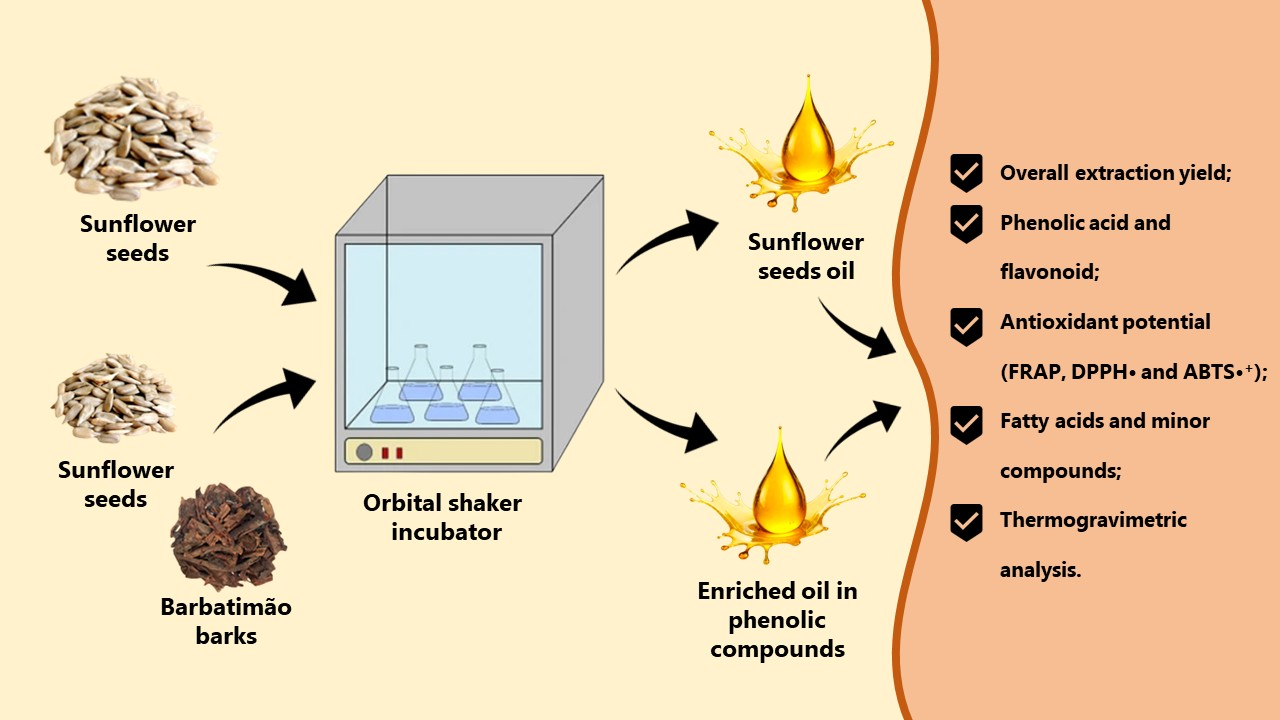

Sunflower Seed Oil Enriched with Phenolic Compounds from Barbatimão Bark

 , ,
, ,  , and
, and
Abstract
1. Introduction
2. Materials and Methods
2.1. Materials
2.2. Preparation of Raw Materials
2.3. Extraction
2.4. Analytical Methods
2.4.1. Total Phenolics, Antioxidant Potential, and Phenolic Profile
2.4.2. Fatty Acid Profile
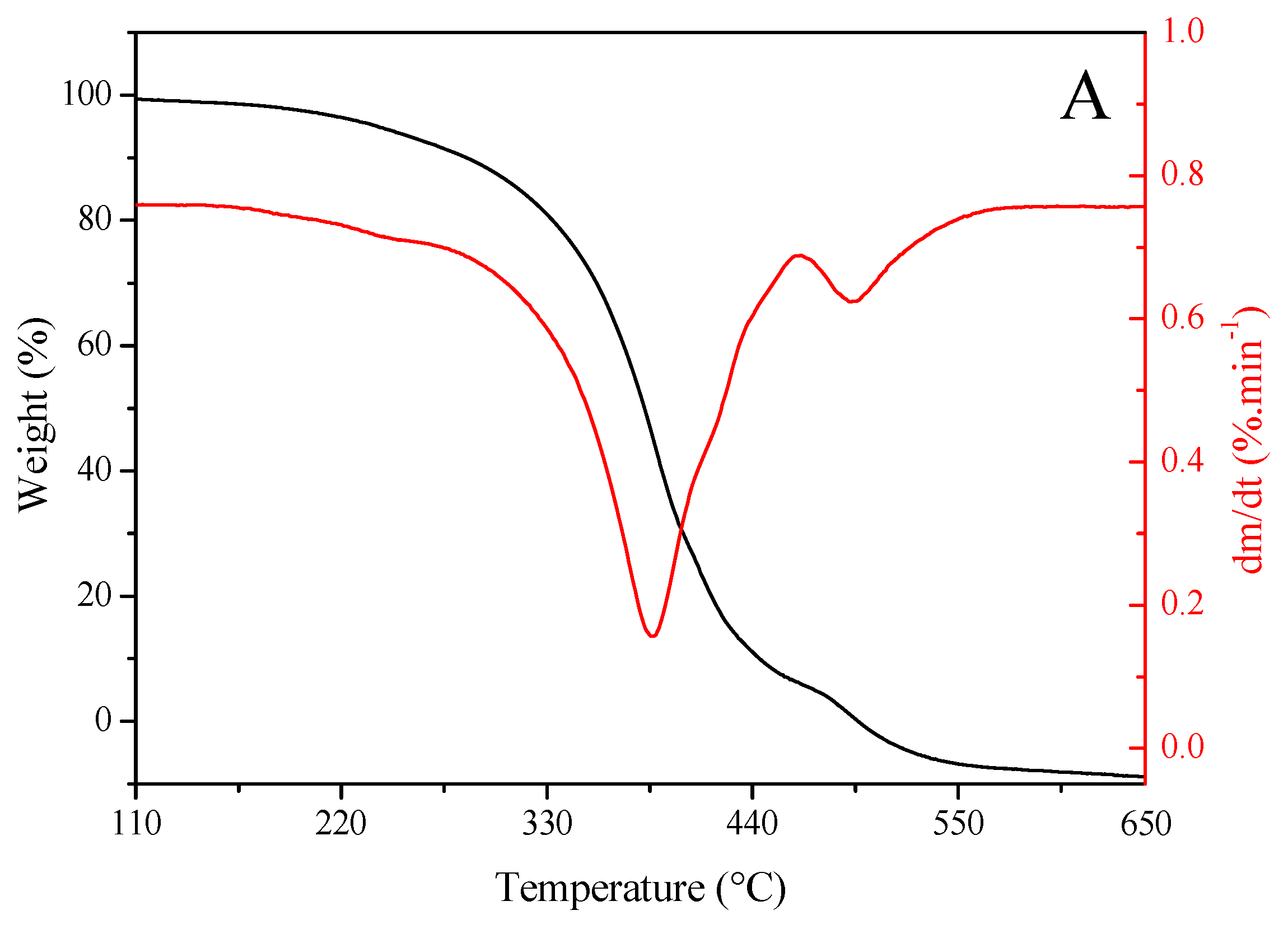
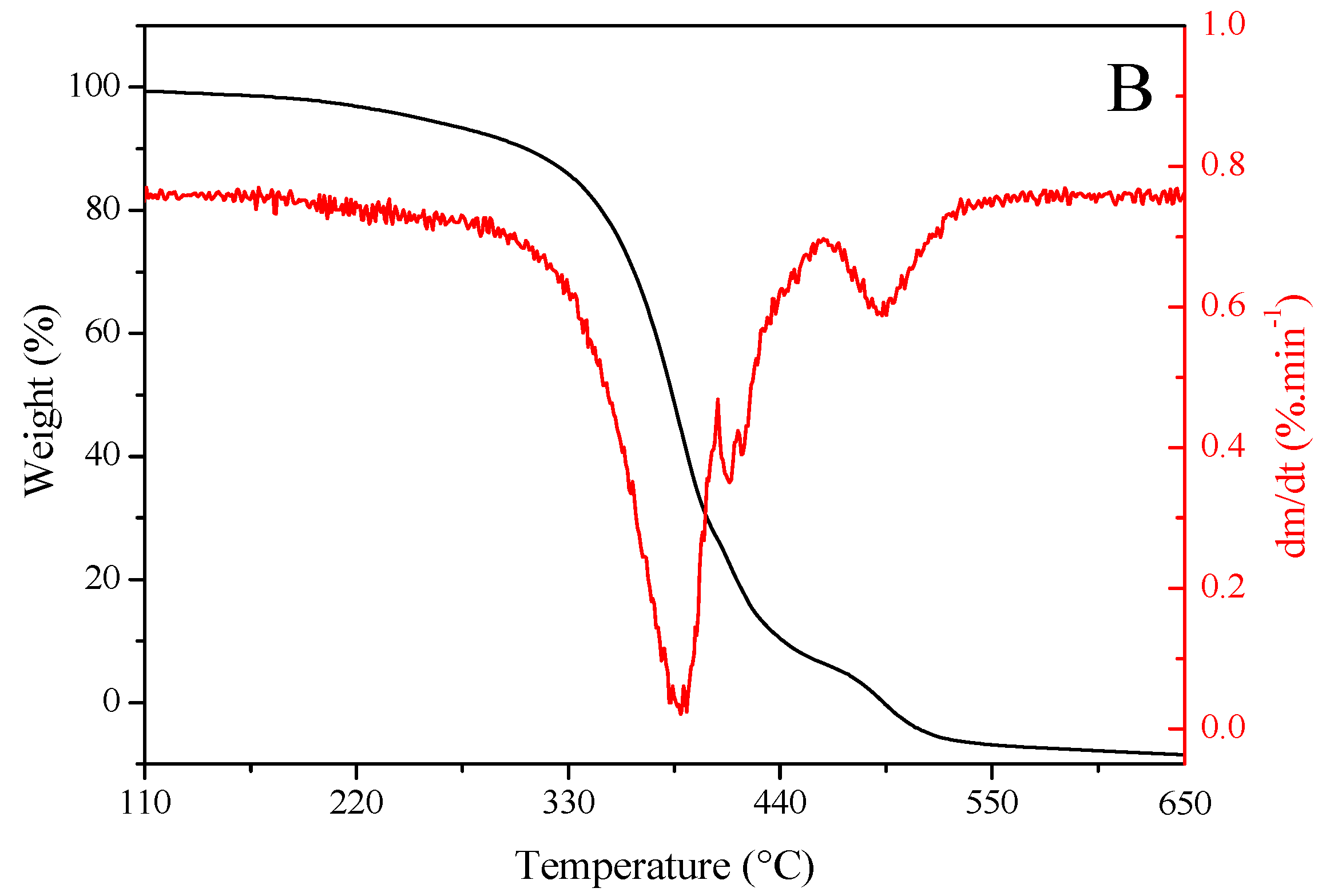
2.4.3. Thermogravimetric Analysis
2.4.4. TBARS Assay
2.4.5. Cytotoxicity Analysis
2.5. Statistical Analysis
3. Results and Discussion
3.1. Effect of Raw Material Ratio
3.2. Effects of Extraction Temperature and Time
3.3. Oil Characterization
3.4. Cytotoxicity Analysis
4. Conclusions
Author Contributions
Funding
Data Availability Statement
Acknowledgments
Conflicts of Interest
References
- Sousa, J.d.P.d.S.; Feitosa, R.S.; Lira, B.S.d.M.M.; Medeiros, M.d.G.F.d.; Carvalho, A.L.M. Óleos vegetais como promotores de permeação cutânea em formulações tópicas e transdérmicas de anti-inflamatórios: Uma revisão integrativa. Res. Soc. Dev. 2021, 10, e541101220308. [Google Scholar] [CrossRef]
- Sanches, S.C.d.C.; Silva-Júnior, J.O.C.; Ribeiro-Costa, R.M. O uso dos óleos vegetais na prevenção do envelhecimento da pele. Res. Soc. Dev. 2021, 10, e44010111941. [Google Scholar] [CrossRef]
- Torres, S.B.; de Queiroz, A.L.F.G.; dos Santos, A.N.A.; Alves, G.Q.; da Silva, I.A.; Brito, J.K.C.; Sultanun, R.F.d.S.; Monteiro, A.C.S. Óleo de girassol (Helianthus annus L.) como cicatrizante de feridas em idosos diabéticos. Braz. J. Health Rev. 2021, 4, 4692–4703. [Google Scholar] [CrossRef]
- da Rosa, A.C.S.; Costa, A.J.N.; Santos Júnior, O.O.; da Silva, C. Ultrasound-Assisted Extraction of Sunflower Seed Oil Enriched with Active Compounds from Jambolan Leaf. J. Braz. Chem. Soc. 2025, 36, 1–10. [Google Scholar] [CrossRef]
- Segantini, K.C.d.O.; Santos Junior, O.d.O.S.; Garcia, V.A.D.S.; Raspe, D.T.; da Silva, C. Sunflower Seed Oil Enriched with Compounds from the Turmeric Rhizome: Extraction, Characterization and Cell Viability. Separations 2025, 12, 121. [Google Scholar] [CrossRef]
- Correa, M.C.M.; Mao, G.; Saad, P.; Flach, C.R.; Mendelsohn, R.; Walters, R.M. Molecular interactions of plant oil components with stratum corneum lipids correlate with clinical measures of skin barrier function. Exp. Dermatol. 2014, 23, 39–44. [Google Scholar] [CrossRef]
- Elias, P.M.; Brown, B.E.; Ziboh, V.A. The Permeability Barrier in Essential Fatty Acid Deficiency: Evidence for a Direct Role for Linoleic Acid in Barrier Function. J. Investig. Dermatol. 1980, 74, 230–233. [Google Scholar] [CrossRef] [PubMed]
- Cižmárová, B.; Hubková, B.; Tomečková, V.; Birková, A. Flavonoids as Promising Natural Compounds in the Prevention and Treatment of Selected Skin Diseases. Int. J. Mol. Sci. 2023, 24, 6324. [Google Scholar] [CrossRef] [PubMed]
- Yang, D.J.; Moh, S.H.; Son, D.H.; You, S.; Kinyua, A.W.; Ko, C.M.; Song, M.; Yeo, J.; Choi, Y.-H.; Kim, K.W. Gallic Acid Promotes Wound Healing in Normal and Hyperglucidic Conditions. Molecules 2016, 21, 899. [Google Scholar] [CrossRef]
- Mekhoukh, N.; Chougui, N.; Vilas-Boas, A.A.; Pintado, M.; Bendif, H.; Zancato, M.; Bellik, Y.; Sid, N.; Peron, G. Development and characterization of natural phenolics-rich extracts and formulations based on Putoria calabrica leaf for wound healing applications. J. Pharm. Pharmacol. 2025, 77, 970–982. [Google Scholar] [CrossRef] [PubMed]
- Song, Y.; Zeng, R.; Hu, L.; Maffucci, K.G.; Ren, X.; Qu, Y. In vivo wound healing and in vitro antioxidant activities of Bletilla striata phenolic extracts. Biomed. Pharmacother. 2017, 93, 451–461. [Google Scholar] [CrossRef] [PubMed]
- Janicka, P.; Płotka-Wasylka, J.; Jatkowska, N.; Chabowska, A.; Fares, M.Y.; Andruch, V.; Kaykhaii, M.; Gębicki, J. Trends in the new generation of green solvents in extraction processes. Curr. Opin. Green Sustain. Chem. 2022, 37, 100670. [Google Scholar] [CrossRef]
- Piotrowski, W.; Kubica, R. Integration of the process for production of ethyl acetate by an enhanced extraction process. Processes 2021, 9, 1425. [Google Scholar] [CrossRef]
- Ribeiro, M.M.d.S.; dos Santos, L.C.; de Novais, N.S.; Viganó, J.; Veggi, P.C. An evaluative review on Stryphnodendron adstringens extract composition: Current and future perspectives on extraction and application. Ind. Crops Prod. 2022, 187, 115325. [Google Scholar] [CrossRef]
- Henriques, B.O.; Corrêa, O.; Azevedo, E.P.C.; Pádua, R.M.; Oliveira, V.L.S.; de Oliveira, T.H.C.; Boff, D.; Dias, A.C.F.; de Souza, D.G.; Amaral, F.A.; et al. In vitro TNF-α inhibitory activity of brazilian plants and anti-inflammatory effect of Stryphnodendron adstringens in an acute arthritis model. Evid.-Based Complement. Altern. Med. 2016, 2016, 9872598. [Google Scholar] [CrossRef]
- Baldivia, D.D.S.; Leite, D.F.; Castro, D.T.H.D.; Campos, J.F.; Santos, U.P.D.; Paredes-Gamero, E.J.; Carollo, C.A.; Silva, D.B.; Souza, K.P.; Santos, E.L. Evaluation of in vitro antioxidant and anticancer properties of the aqueous extract from the stem bark of Stryphnodendron adstringens. Int. J. Mol. Sci. 2018, 19, 2432. [Google Scholar] [CrossRef]
- Ishida, K.; Mello, J.C.P.; Cortez, D.A.G.; Dias Filho, B.P.; Ueda-Nakamura, T.; Nakamura, C.V. Influence of tannins from Stryphnodendron adstringens on growth and virulence factors of Candida albicans. J. Antimicrob. Chemother. 2006, 58, 942–949. [Google Scholar] [CrossRef] [PubMed]
- Sabino, A.P.L.; Eustáquio, L.M.S.; Miranda, A.C.F.; Biojone, C.; Mariosa, T.N.; Gouvêa, C.M.C.P. Stryphnodendron adstringens (“Barbatimão”) leaf fraction: Chemical characterization, antioxidant activity, and cytotoxicity towards human breast cancer cell lines. Appl. Biochem. Biotechnol. 2018, 184, 1375–1389. [Google Scholar] [CrossRef]
- Trevisan, D.A.C.; Silva, P.V.; Farias, A.B.P.; Campanerut-Sá, P.A.Z.; Ribeiro, T.D.V.R.; Faria, D.R.; Mendonça, P.S.B.; Mello, J.C.P.; Seixas, F.A.V.; Mikcha, J.M.G. Antibacterial activity of Barbatimão (Stryphnodendron adstringens) against Staphylococcus aureus: In vitro and in silico studies. Lett. Appl. Microbiol. 2020, 71, 259–271. [Google Scholar] [CrossRef]
- Braga, M.N.S.; Batista, D.M.; Souza, D.B.; Lima, E.S.; Pantoja, T.M.A.; Xavier, R.A.T.; Lima, R.A. Estudo Etnobotânico de Plantas Medicinais da Família Fabaceae Na Comunidade Cristolândia, Humaitá-AM. Rev. Biodivers 2022, 21, 14–26. [Google Scholar]
- Ribeiro, M.M.d.S.; Viganó, J.; de Novais, N.S.; Mesquita, L.M.d.S.; Kamikawachi, R.C.; Vilegas, W.; Lopes, P.S.; da Silva, C.S.; Rostagno, M.A.; Veggi, P.C. The effect of ultrasound on improving the extraction of tannins from the Stryphnodendron adstringens bark. Sustain. Chem. Pharm. 2023, 33, 101044. [Google Scholar] [CrossRef]
- Aguiar, P.d.S.d.; Correa, Á.P.; Antunes, F.T.T.; Ferraz, A.F.d.B.; Vencato, S.B.; Amado, G.J.V.; Wiiland, E.; Corrêa, D.S.; Grivicich, I.; de Souza, A.H. Benefits of Stryphnodendron adstringens when associated with hydrogel on wound healing in diabetic rats. Clin. Phytoscience 2021, 7, 22. [Google Scholar] [CrossRef]
- Haiyan, Z.; Bedgood, D.R., Jr.; Bishop, A.G.; Prenzler, P.D.; Robards, K. Endogenous biophenol, fatty acid and volatile profiles of selected oils. Food Chem. 2007, 100, 1544–1551. [Google Scholar] [CrossRef]
- Singleton, V.L.; Orthofer, R.; Lamuela-Raventós, R.M. Analysis of total phenols and other oxidation substrates and antioxidants by means of Folin-Ciocalteu reagent. Methods Enzymol. 1999, 299, 152–178. [Google Scholar] [CrossRef]
- Gu, C.; Howell, K.; Dunshea, F.R.; Suleria, H.A.R. LC-ESI-QTOF/MS Characterisation of Phenolic Acids and Flavonoids in Polyphenol-Rich Fruits and Vegetables and Their Potential Antioxidant Activities. Antioxidants 2019, 8, 405. [Google Scholar] [CrossRef]
- Benzie, I.F.F.; Strain, J.J. The Ferric Reducing Ability of Plasma (FRAP) as a Measure of “Antioxidant Power”: The FRAP Assay. Anal. Biochem. 1996, 239, 70–76. [Google Scholar] [CrossRef] [PubMed]
- Pellegrini, N.; Colombi, B.; Del Rio, D.; Salvatore, S.; Bianchi, M.; Brighenti, F.; Serafini, M. Total Antioxidant Capacity of Plant Foods, Beverages and Oils Consumed in Italy Assessed by Three Different In Vitro Assays. J. Nutr. 2003, 133, 2812–2819. [Google Scholar] [CrossRef]
- Stevanato, N.; de Mello, B.T.F.; Saldaña, M.D.A.; Cardozo-Filho, L.; da Silva, C. Production of ethyl esters from forage radish seed: An integrated sequential route using pressurized ethanol and ethyl acetate. Fuel 2023, 332, 126075. [Google Scholar] [CrossRef]
- de Mello, B.T.F.; Stevanato, N.; Filho, L.C.; da Silva, C. Pressurized liquid extraction of radish seed oil using ethanol as solvent: Effect of pretreatment on seeds and process variables. J. Supercrit. Fluids 2021, 176, 105307. [Google Scholar] [CrossRef]
- Sridhar, K.; Charles, A.L. Grape skin extracts as a sustainable source of antioxidants in an oil-in-water emulsion: An alternate natural approach to synthetic antioxidants using principal component analysis. Int. J. Food Sci. Technol. 2021, 56, 1937–1945. [Google Scholar] [CrossRef]
- Malich, G.; Markovic, B.; Winder, C. The sensitivity and specificity of the MTS tetrazolium assay for detecting the in vitro cytotoxicity of 20 chemicals using human cell lines. Toxicology 1997, 124, 179–192. [Google Scholar] [CrossRef]
- de Queiroz, J.E.; dos Santos, D.M.; Verde, G.M.V.; de Paula, J.R.; de Aquino, G.L.B. Microwave irradiation to the rapid extraction of Stryphnodendron adstringens (Barbatimão) compounds by statistical planning. Nat. Prod. Res. 2019, 35, 354–358. [Google Scholar] [CrossRef]
- Cruz, J.E.R.; Costa, J.L.G.; Teixeira, T.A.; Freitas, G.R.O.; Gomes, M.S.; Morais, E.R. Phenolic compounds, antioxidant and antibacterial activity of extract from leaves and bark of Stryphnodendron adstringens (Mart.) Coville. Rev. Ciênc. Agron. 2022, 53, e20217903. [Google Scholar] [CrossRef]
- Kumar, S.; Rai, A.; Prasad, K. Enhancing sustainability and quality: A comparative study of sunflower seed oil extraction methods and physico-chemical characterization. Sustain. Chem. One World 2025, 6, 100060. [Google Scholar] [CrossRef]
- Sibhatu, H.K.; Jabasingh, S.A.; Yimam, A.; Ahmed, S. Ferulic acid production from brewery spent grains, an agro-industrial waste. LWT 2021, 135, 110009. [Google Scholar] [CrossRef]
- Qian, S.; Lu, M.; Zhou, X.; Sun, S.; Han, Z.; Song, H. Improvement in caffeic acid and ferulic acid extraction by oscillation-assisted mild hydrothermal pretreatment from sorghum straws. Bioresour. Technol. 2024, 396, 130442. [Google Scholar] [CrossRef]
- Dai, J.; Mumper, R.J. Plant Phenolics: Extraction, Analysis and Their Antioxidant and Anticancer Properties. Molecules 2010, 15, 7313–7352. [Google Scholar] [CrossRef]
- de Novais, N.S.; Ribeiro, M.M.d.S.; Viganó, J.; Coelho, D.B.; Falcão, L.d.S.; de Moraes, M.A.; Veggi, P.C. High- and low-pressure fixed bed extraction behaviors to obtain phenolic compounds from barbatimão (Stryphnodendron adstringens) bark. Sustain. Chem. Pharm. 2023, 36, 101314. [Google Scholar] [CrossRef]
- Romana-Souza, B.; dos Santos, J.S.; Monte-Alto-Costa, A. Caffeic acid phenethyl ester promotes wound healing of mice pressure ulcers affecting NF-κB, NOS2 and NRF2 expression. Life Sci. 2018, 207, 158–165. [Google Scholar] [CrossRef]
- Singh, M.P.; Gupta, A.; Sisodia, S.S. Wound healing activity of Terminalia bellerica Roxb and gallic acid in experimentally induced diabetic animals. J. Complement. Integr. Med. 2019, 17, 20190133. [Google Scholar] [CrossRef]
- Pellenz, N.L.; Barbisan, F.; Azzolin, V.F.; Duarte, T.; Bolignon, A.; Mastella, M.H.; Teixeira, C.F.; Ribeiro, E.E.; da Cruz, I.B.M.; Duarte, M.M.M.F. Analysis of in vitro cyto-and genotoxicity of barbatimão extract on human keratinocytes and fibroblasts. BioMed Res. Int. 2018, 2018, 1942451. [Google Scholar] [CrossRef] [PubMed]
- Özay, Y.; Güzel, S.; Yumrutaş, Ö.; Pehlivanoğlu, B.; Erdoğdu, I.H.; Yildirim, Z.; Türk, B.A.; Darcan, S. Wound healing effect of kaempferol in diabetic and nondiabetic rats. J. Surg. Res. 2019, 233, 284–296. [Google Scholar] [CrossRef]
- Subramanian, S.; Duraipandian, C.; Alsayari, A.; Ramachawolran, G.; Wong, L.S.; Sekar, M.; Gan, S.H.; Subramaniyan, V.; Seethalakshmi, S.; Jeyabalan, S.; et al. Wound healing properties of a new formulated flavonoid-rich fraction from Dodonaea viscosa Jacq. leaves extract. Front. Pharmacol. 2023, 14, 1096905. [Google Scholar] [CrossRef]
- Souza-Moreira, T.M.; Queiroz-Fernandes, G.M.; Pietro, R.C.L.R. Stryphnodendron Species Known as “Barbatimão”: A Comprehensive Report. Molecules 2018, 23, 910. [Google Scholar] [CrossRef]
- Alves, M.C.M.A.; Nascimento, M.F.; de Almeida, B.M.; Alves, M.M.A.; Lima-Verde, I.B.; Costa, D.S.; Araújo, D.C.M.; de Paula, M.N.; de Mello, J.C.P.; Cano, A.; et al. Hydrophilic Scaffolds Containing Extracts of Stryphnodendron adstringens and Abarema cochliacarpa for Wound Healing: In Vivo Proofs of Concept. Pharmaceutics 2022, 14, 2150. [Google Scholar] [CrossRef] [PubMed]
- Ge, X.; Jing, L.; Zhao, K.; Su, C.; Zhang, B.; Zhang, Q.; Han, L.; Yu, X.; Li, W. The phenolic compounds profile, quantitative analysis and antioxidant activity of four naked barley grains with different color. Food Chem. 2021, 335, 127655. [Google Scholar] [CrossRef] [PubMed]
- Santos, A.R.D.; Barbosa, C.R.; Souza, C.G.; Fernandes, T.; Chagas, R.A.; Navarro, S.R.; Fernandes, A.R.M.; Vargas Junior, F.M. Barbatimão bark as an alternative to sodium lasalocid in finishing diets for lambs: Carcass characteristics and meat quality. Meat Sci. 2025, 225, 109831. [Google Scholar] [CrossRef]
- Getachew, A.T.; Saravana, P.S.; Cho, Y.J.; Woo, H.C.; Chun, B.S. Concurrent extraction of oil from roasted coffee (Coffea arabica) and fucoxanthin from brown seaweed (Saccharina japonica) using supercritical carbon dioxide. J. CO2 Util. 2018, 25, 137–146. [Google Scholar] [CrossRef]
- Rocha, K.F.; Melo, E.S.d.P.; Cardozo, C.M.L.; Guimarães, R.d.C.A.; Freitas, K.d.C.; Coelho, M.L.; Ramos, C.A.D.N.; de Oliveira, L.C.S.; Cavalheiro, L.F.; Nascimento, V.A.D. Data on fatty acid profile, optical properties and oxidative stability of sunflower oils used in the treatment of skin wounds. Data Brief. 2023, 47, 109009. [Google Scholar] [CrossRef]
- Lu, L.; Luo, K.; Luan, Y.; Zhao, M.; Wang, R.; Zhao, X.; Wu, S. Effect of caffeic acid esters on antioxidant activity and oxidative stability of sunflower oil: Molecular simulation and experiments. Food Res. Int. 2022, 160, 117060. [Google Scholar] [CrossRef]
- Roy, V.C.; Getachew, A.T.; Cho, Y.-J.; Park, J.-S.; Chun, B.-S. Recovery and bio-potentialities of astaxanthin-rich oil from shrimp (Penaeus monodon) waste and mackerel (Scomberomous niphonius) skin using concurrent supercritical CO2 extraction. J. Supercrit. Fluids 2020, 159, 104773. [Google Scholar] [CrossRef]
- Machate, D.J.; Melo, E.S.P.; de Oliveira, L.C.S.; Bogo, D.; Michels, F.S.; Pott, A.; Cavalheiro, L.F.; Guimarães, R.d.C.A.; Freitas, K.d.C.; Hiane, P.A.; et al. Oxidative stability and elemental analysis of sunflower (Helianthus annuus) edible oil produced in Brazil using a domestic extraction machine. Front. Nutr. 2022, 9, 977813. [Google Scholar] [CrossRef] [PubMed]
- ISO 10993-5:2009; Biological Evaluation of Medical Devices—Part 5: Tests for In Vitro Cytotoxicity. International Organization for Standardization: Geneva, Switzerland, 2009.
- Chanaj-Kaczmarek, J.; Wysocki, M.; Karachitos, A.; Wojcinska, M.; Bartosz, G.; Matławska, I.; Kmita, H. Effects of plant extract antioxidative phenolic compounds on energetic status and viability of Saccharomyces cerevisiae cells undergoing oxidative stress. J. Funct. Foods 2015, 16, 364–377. [Google Scholar] [CrossRef]
- Lim, J.; Na, G.; Kang, J. A green nanocoating approach to Lactobacillus plantarum using tea residue-derived phenolic compounds and cellulose nanocrystals. Food Hydrocoll. 2025, 167, 111469. [Google Scholar] [CrossRef]
- Gomes, P.W.P.; Pamplona, T.C.D.L.; Navegantes-Lima, K.C.; Quadros, L.B.G.; Oliveira, A.L.B.; Santos, S.M.; Silva, C.Y.Y.; Silva, M.J.C.; Souza, J.N.S.; Quirós-Guerrero, L.M.; et al. Chemical composition and antibacterial action of Stryphnodendron pulcherrimum bark extract, “barbatimão” species: Evaluation of its use as a topical agent. Arab. J. Chem. 2021, 14, 103183. [Google Scholar] [CrossRef]
- Cecílio, A.B.; de Faria, D.B.; Oliveira, P.d.C.; Caldas, S.; de Oliveira, D.A.; Sobral, M.E.G.; Duarte, M.G.R.; Moreira, C.P.d.S.; Silva, C.G.; de Almeida, V.L. Screening of Brazilian medicinal plants for antiviral activity against rotavirus. J. Ethnopharmacol. 2012, 141, 975–981. [Google Scholar] [CrossRef]



| SS/BB Ratio (w/w) | Mass Yield (wt%) | Total Phenolic Content 1 (mg GAE/100 g) |
|---|---|---|
| 3:0 | 40.2 a ± 0.9 | 13.8 f ± 0.7 |
| 3:1 | 29.9 b ± 0.7 | 67.4 e ± 0.3 |
| 3:1.5 | 27.9 b ± 0.5 | 95.2 d ± 0.6 |
| 3:2 | 24.4 c ± 0.1 | 135.6 c ± 0.7 |
| 3:2.5 | 22.8 c ± 0.8 | 182.0 b ± 0.4 |
| 3:3 | 18.8 d ± 0.3 | 177.6 b ± 0.4 |
| 0:3 | 4.2 e ± 0.1 | 43,289.1 a ± 2397.5 |
| Run | T (°C) | Time (min) | Mass Yield (wt%) | Compound (mg/100 g) | ||||||
|---|---|---|---|---|---|---|---|---|---|---|
| Phenolic Acid | Flavonoid | TPC | ||||||||
| Gallic Acid | Trans-Cinnamic Acid | Caffeic Acid | Quinic Acid | Kaempferol | Quercetin | |||||
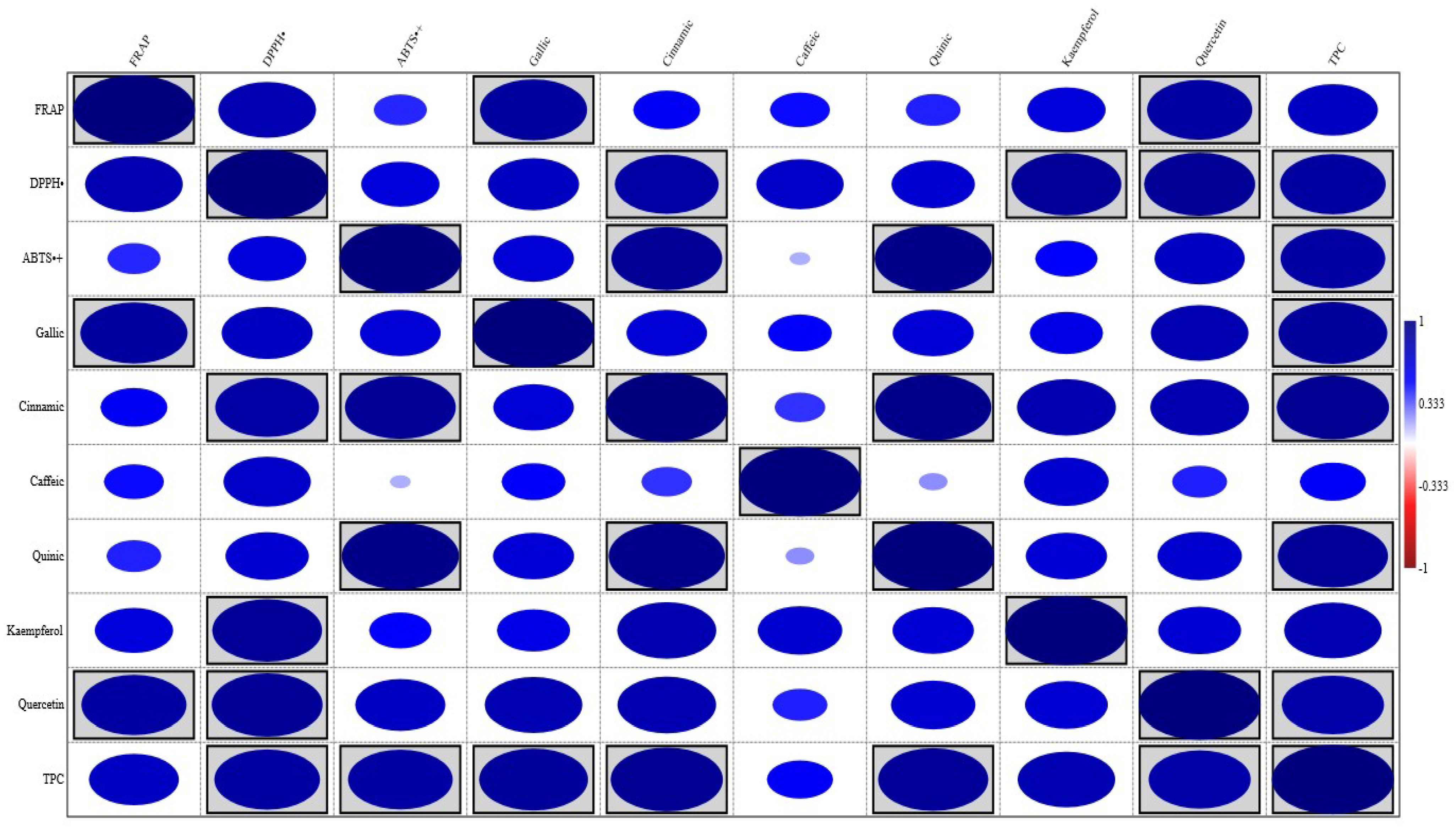
| 1 | 30 | 60 | 19.8 c ± 0.4 | 0.8 e ± 0.04 | 0.3 e ± <0.1 | 0.7 e ± 0.03 | 1.5 f ± 0.05 | 0.2 d ± 0.01 | 0.6 c ± <0.1 | 4.1 |
| 2 | 45 | 60 | 20.4 b ± 0.4 | 3.4 c ± 0.02 | 0.4 d ± <0.1 | 1.4 b ± 0.02 | 1.9 e ± 0.07 | 0.3 b ± 0.01 | 0.7 b ± <0.1 | 8.2 |
| 3 | 60 | 60 | 22.8 a ± 0.8 | 3.9 a ± 0.01 | 0.9 a ± <0.1 | 1.5 a ± 0.02 | 5.1 a ± 0.19 | 1.0 a ± 0.06 | 0.8 a ± <0.1 | 13.3 |
| 4 | 60 | 45 | 19.3 ab ± 0.1 | 3.6 b ± 0.1 | 0.6 b ± 0.1 | 0.8 d ± <0.01 | 4.4 b ± 0.12 | 0.2 cd ± <0.1 | 0.7 b ± 0.1 | 10.4 |
| 5 | 60 | 30 | 19.5 ab ± 0.6 | 1.9 d ± 0.02 | 0.7 b ± 0.1 | 0.8 d ± <0.01 | 3.5 c ± 0.05 | 0.2 cd ± <0.1 | 0.7 ab ± <0.1 | 7.9 |
| 6 | 60 | 15 | 19.8 b ± 0.5 | 1.4 e ± 0.03 | 0.5 c ± 0.1 | 1.3 c ± 0.01 | 2.7 d ± 0.11 | 0.2 bc ± 0.1 | 0.7 c ± 0.02 | 6.8 |
| SSO | 60 | 60 | 40.2 ± 0.9 | n.i. | 0.08 ± <0.1 | 0.6 ± 0.01 | n.i. | 0.17 ± < 0.1 | 0.42 ± 0.06 | 1.3 |
| BBE | 60 | 60 | 4.2 ± 0.1 | 134.5 ± 4.1 | 20.5 ± 1.1 | 43.7 ± 4.1 | 53.4 ± 0.3 | 7.7 ± 0.03 | 11.36 ± 0.2 | 705.1 |
| Run | T (°C) | Time (min) | FRAP | DPPH• | ABTS•+ |
|---|---|---|---|---|---|
| 1 | 30 | 60 | 7.16 e ± 0.09 | 4.53 e ± 0.09 | 0.3 d ± 0.03 |
| 2 | 45 | 60 | 15.8 b ± 0.24 | 7.92 b ± 0.08 | 0.9 e ± 0.02 |
| 3 | 60 | 60 | 16.6 a ± 0.19 | 11.19 a ± 0.88 | 2.2 a ± 0.1 |
| 4 | 60 | 45 | 11.5 c ± 0.07 | 6.27 cd ± 0.1 | 2.1 a ± 0.02 |
| 5 | 60 | 30 | 10.0 d ± 0.15 | 7.50 bc ± 0.02 | 2.0 b ± 0.1 |
| 6 | 60 | 15 | 4.2 f ± 0.05 | 5.92 d ± 0.1 | 1.1 c ± 0.1 |
| SSO | 60 | 60 | 0.3 ± 0.06 | 0.4 ± <0.1 | 0.3 ± 0.2 |
| BBE | 60 | 60 | 106.7 ± 3.2 | 20.4 ± 6.4 | 306.8 ± 16.1 |
| Compound | Fatty Acid (%) | |
|---|---|---|
| Sunflower Seed Oil | Enriched Oil | |
| Palmitic acid (C16:0) | 8.4 b ± 0.1 | 9.5 a ± 0.1 |
| Palmitoleic acid (C16:1n−7) | 0.1 a ± <0.1 | 0.1 a ± <0.1 |
| Stearic acid (C18:0) | 4.9 b ± 0.1 | 6.1 a ± 0.1 |
| Oleic acid (C18:1n−9) | 32.7 a ± 0.1 | 33.3 a ± <0.1 |
| Linoleic acid (C18:2n−6) | 53.7 a ± <0.1 | 50.7 b ± <0.1 |
| Linolenic acid (C18:3n−3) | 0.1 a ± <0.1 | 0.1 a ± <0.1 |
| Oil Concentration (µg/mL) | Time (h) | |
|---|---|---|
| 24 | 48 | |
| 50 | 90.8 Ba ± 4.3 | 107.3 Aa ± 3.9 |
| 100 | 104.0 Aa ± 4.9 | 111.5 Ba ± 1.9 |
| 200 | 98.6 Ba ± 16.8 | 107.8 Aa ± 3.5 |
| 400 | 100.1 Aa ± 8.1 | 97.9 Ab ± 4.1 |
| Control | 100.0 ± 0.8 | 100.0 ± 2.7 |
Disclaimer/Publisher’s Note: The statements, opinions and data contained in all publications are solely those of the individual author(s) and contributor(s) and not of MDPI and/or the editor(s). MDPI and/or the editor(s) disclaim responsibility for any injury to people or property resulting from any ideas, methods, instructions or products referred to in the content. |
© 2025 by the authors. Licensee MDPI, Basel, Switzerland. This article is an open access article distributed under the terms and conditions of the Creative Commons Attribution (CC BY) license (https://creativecommons.org/licenses/by/4.0/).
Share and Cite
de Oliveira Cavitioli, J.; de Castro França, I.A.; Raspe, D.T.; Stevanato, N.; Garcia, V.A.d.S.; Barros, B.C.B.; da Silva, C. Sunflower Seed Oil Enriched with Phenolic Compounds from Barbatimão Bark. Processes 2025, 13, 3534. https://doi.org/10.3390/pr13113534
de Oliveira Cavitioli J, de Castro França IA, Raspe DT, Stevanato N, Garcia VAdS, Barros BCB, da Silva C. Sunflower Seed Oil Enriched with Phenolic Compounds from Barbatimão Bark. Processes. 2025; 13(11):3534. https://doi.org/10.3390/pr13113534
Chicago/Turabian Stylede Oliveira Cavitioli, Janiani, Izabelle Alves de Castro França, Djéssica Tatiane Raspe, Natália Stevanato, Vitor Augusto dos Santos Garcia, Beatriz Cervejeira Bolanho Barros, and Camila da Silva. 2025. "Sunflower Seed Oil Enriched with Phenolic Compounds from Barbatimão Bark" Processes 13, no. 11: 3534. https://doi.org/10.3390/pr13113534
APA Stylede Oliveira Cavitioli, J., de Castro França, I. A., Raspe, D. T., Stevanato, N., Garcia, V. A. d. S., Barros, B. C. B., & da Silva, C. (2025). Sunflower Seed Oil Enriched with Phenolic Compounds from Barbatimão Bark. Processes, 13(11), 3534. https://doi.org/10.3390/pr13113534