1. Introduction
As environmental challenges such as biodiversity loss, climate change, and resource depletion continue to escalate, businesses are facing mounting pressure to consider the long-term environmental risks associated with their operations (
Testa et al. 2025). While these issues have gained considerable attention in recent years, the growing recognition of biodiversity loss as a critical environmental and financial risk has prompted increasing calls for corporations to disclose detailed information about their environmental impacts, particularly concerning biodiversity (
He et al. 2025;
Culpi Mann et al. 2025). In this context, corporate biodiversity information disclosure has become an essential tool for managing environmental risks and demonstrating a company’s commitment to sustainability (
Bassen et al. 2025;
Chen et al. 2025). This disclosure is not only crucial for enhancing corporate transparency but also serves as a means for institutional investors to assess the long-term sustainability of their investments (
Zhao et al. 2025;
Tian and Chen 2025).
Corporate social responsibility (CSR) involves voluntary corporate actions aimed at addressing environmental, social, and governance (ESG) issues, and is typically associated with positive contributions to society (
Du et al. 2010). Although CSR, ESG, and sustainability are conceptually related, they have distinct meanings in the literature. ESG refers to specific corporate performance metrics related to environmental, social, and governance factors, whereas CSR involves broader voluntary corporate activities aimed at societal well-being (
Duanmu et al. 2021). In this study, we specifically focus on CSR investments, which refer to capital directed towards companies that demonstrate responsible and sustainable practices. These investments are crucial for aligning long-term financial returns with broader societal benefits, and are particularly important in the context of global challenges such as climate change, inequality, and biodiversity loss (
Rakotomavo 2012;
Hlophe and Ellis 2024;
Tao 2025).
Institutional investors, who are increasingly seen as stewards of capital, have a unique role in driving the integration of environmental sustainability into the business world (
Alda 2025). These investors are facing increasing pressure to incorporate not only short-term financial performance but also long-term environmental and social factors into their investment strategies (
Lin et al. 2024;
Fan et al. 2024). A key concern for institutional investors is how corporate sustainability, particularly in relation to biodiversity, can affect the future stability and profitability of their investments (
Ali et al. 2024). The willingness of institutional investors to engage in corporate social responsibility (CSR) investment is heavily influenced by the quality of environmental disclosures provided by companies (
Zu Ermgassen et al. 2025;
Mair et al. 2024). It is in this context that corporate biodiversity information disclosure becomes a critical driver of investor behavior, as it enables institutional investors to make informed decisions that align with both their financial objectives and their broader sustainability goals.
However, despite the growing attention to CSR in investment decision-making, the existing literature has yet to fully explore the mechanisms through which corporate biodiversity information disclosure influences institutional investors’ CSR investment willingness. Much of the existing research has focused on general ESG factors, with limited investigation into how biodiversity-specific disclosures shape investment behavior. Although recent studies have examined institutional investors’ interest in biodiversity commitments, particularly among long-term investors (
Ali et al. 2024), the impact of sustainable institutional investors on firms’ biodiversity disclosure practices (
Velte 2023), and the growing demand for biodiversity-related information (
Garel et al. 2024), these works do not address how corporate biodiversity information disclosure translates into CSR investment willingness.
Another central research goal in this study is intergenerational responsibility, which refers to the institutional investors to consider the long-term environmental, social, and financial impact of their investments on future generations (
Puaschunder 2018). This concept is becoming increasingly relevant as institutional investors, particularly those managing pension funds, endowments, and sovereign wealth funds, are faced with the task of ensuring that their investments do not compromise the well-being of future generations (
Clark and Hebb 2005). As climate change and biodiversity loss threaten long-term societal stability, institutional investors are increasingly adopting a long-term perspective on sustainability, recognizing that decisions made today can have far-reaching consequences for tomorrow (
Nofsinger et al. 2019). The notion of intergenerational responsibility aligns with the broader concept of sustainable finance, which seeks to ensure that investments today contribute to the long-term prosperity of future generations without undermining the ecological systems that support human life (
Wen 2009;
Diprose et al. 2019).
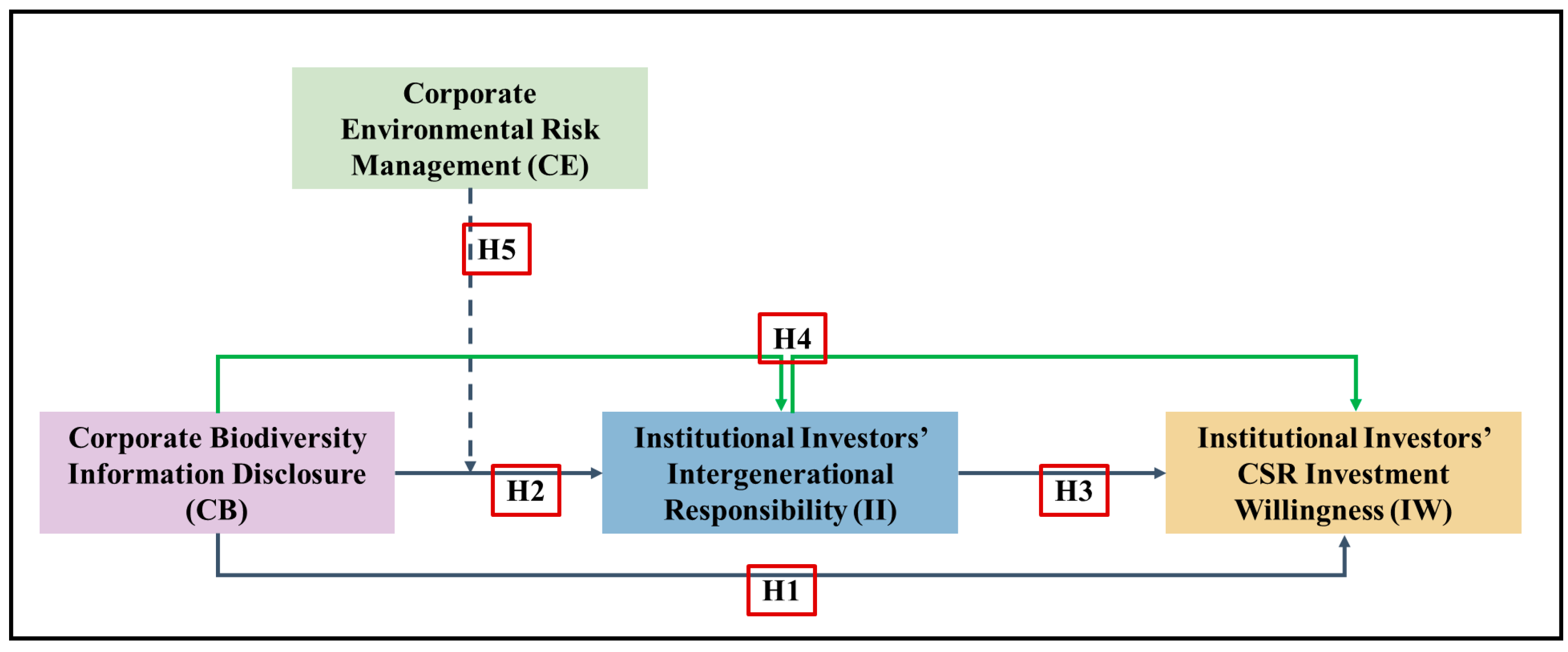
Hence, this study proposes that institutional investors’ intergenerational responsibility is a key effect factor between corporate biodiversity information disclosure and their CSR investment willingness. Specifically, this study argues that by promoting a long-term view of environmental sustainability, corporate biodiversity information disclosure can help institutional investors align their portfolios with the needs and values of future generations (
Tian and Chen 2025;
Elliot et al. 2024;
Zhu and Carrasco 2025). Biodiversity disclosures can facilitate the consideration of long-term environmental risks, such as species extinction or ecosystem degradation, that may affect the profitability and stability of investments (
Treepongkaruna 2024). In doing so, corporate biodiversity information disclosure can enhance institutional investors’ willingness to engage in CSR investments, particularly those focused on addressing environmental and social challenges that will affect future generations.
In addition to the importance of intergenerational responsibility, this study underscores the potential moderating role of corporate environmental risk management. Corporate environmental risk management encompasses the strategies and practices a company employs to identify, assess, and mitigate environmental risks, including those associated with biodiversity loss, climate change, and other ecological threats (
Stroehle et al. 2026;
Farooq et al. 2025). Companies with robust environmental risk management frameworks are better positioned to ensure the accuracy, credibility, and comprehensiveness of their corporate biodiversity information disclosures, as they are more adept at addressing the uncertainties and risks inherent in environmental issues (
Bassen et al. 2025). As a result, effective corporate environmental risk management is likely to strengthen the relationship between corporate biodiversity information disclosure and institutional investors’ commitment to intergenerational responsibility, as investors—particularly those with a long-term sustainability focus—are more inclined to trust companies that actively manage environmental risks and demonstrate a genuine commitment to sustainable development (
Feng et al. 2024). Therefore, corporate environmental risk management may play a pivotal role in shaping how corporate biodiversity information disclosure influences institutional investors’ intergenerational responsibility (
Shi et al. 2024;
Jonäll et al. 2025).
The intersection of corporate biodiversity information disclosure, intergenerational responsibility, and environmental risk management introduces a novel perspective in the literature on sustainable finance. While previous studies have explored the relationship between environmental disclosures and investment decisions, few have considered the combined effects of biodiversity disclosures, intergenerational responsibility, and risk management on institutional investors’ CSR investment willingness. Hence, by integrating these factors, this research offers a comprehensive framework for understanding how corporate sustainability practices—specifically biodiversity disclosures can influence the investment willingness of institutional investors.
While corporate biodiversity disclosure is often positioned within the broader CSR framework, this study adopts a more granular perspective, treating biodiversity as a distinct and measurable dimension of corporate environmental stewardship. Biodiversity loss is intrinsically linked to climate change, ecosystem degradation, and systemic risks to financial markets (
Karolyi and Tobin-de la Puente 2023). A sole focus on biodiversity allows this research to better capture the direct environmental externalities relevant to institutional investors and to align with urgent global calls for action, including the Kunming–Montreal Global Biodiversity Framework, the Paris Agreement’s nature-based solutions agenda, and the United Nations Sustainable Development Goal 15 (“Life on Land”) (
Huan and Zhu 2023). This positioning ensures that the analysis does not dilute biodiversity under the social, ethical, or economic dimensions of CSR, but instead maintains thematic integrity around ecological capital and its financial implications.
In conclusion, this study makes several important contributions to both theory and practice. Theoretically, it advances our understanding of the pathways through which corporate biodiversity information disclosure can affect institutional investors’ CSR investment willingness by incorporating the factors of intergenerational responsibility and environmental risk management, and can shape investor willingness in a way that aligns financial interests with long-term sustainability goals. From a practical perspective, the study offers valuable insights for policymakers, corporate managers, and institutional investors alike. By highlighting the role of environmental risk management in enhancing the impact of biodiversity disclosures, the study underscores the importance of integrating comprehensive risk management frameworks into corporate sustainability strategies. This, in turn, can improve the decision-making process for investors, helping them make more informed, long-term investment choices that contribute to a more sustainable development.
3. Methodology
3.1. Research Scale Development
The measurement instruments used in this study were developed based on validated scales from relevant fields such as corporate information disclosure, responsible investment, and environmental risk management, combined with relevant conceptual frameworks. These instruments have undergone systematic improvement and validation to align with the specific theoretical framework and empirical objectives of this research.
In the initial stage, a comprehensive review of the literature was undertaken to identify validated measurement approaches related to corporate biodiversity information disclosure (CB), institutional investors’ intergenerational responsibility (II), institutional investors’ CSR investment willingness (IW), and corporate environmental risk management (CE). This process ensured that the conceptual definitions of each construct were grounded in internationally recognized theoretical foundations, while also reflecting the institutional and context of the Chinese capital market.
To enhance content validity, a structured expert consultation process was conducted. Semi-structured interviews and focus group discussions were organized with academic scholars in sustainability accounting and environmental economics, senior practitioners from institutional investment institutions, and specialists in corporate environmental governance. These experts evaluated the clarity, relevance, and completeness of each item. Their feedback led to iterative revisions of item wording and construct coverage, thereby improving the alignment between theoretical constructs and observable indicators.
Given the Chinese institutional context of the study, a rigorous translation and cultural adaptation process was implemented. Following the forward–backward translation procedure proposed by
Sousa and Rojjanasrirat (
2011), professional bilingual translators independently translated the original English questionnaire into Chinese and then back-translated it into English. Discrepancies were resolved through panel discussions involving translators and subject-matter experts to ensure semantic equivalence and conceptual consistency.
A pilot study was subsequently conducted with a sample of 100 institutional investment professionals to evaluate the psychometric properties of the preliminary scale. Reliability analysis and exploratory factor analysis were applied to assess internal consistency and construct structure. Items with low factor loadings, or insufficient reliability indicators were revised or removed. Feedback from pilot participants regarding item clarity and contextual appropriateness was also incorporated, resulting in the refinement of the final measurement instrument.
The reliability and validity of the finalized scales are further examined in the empirical analysis section. The ultimate measurement items for the four constructs are reported in
Table 1. All items were measured using a five-point Likert scale ranging from 1 (“strongly disagree”) to 5 (“strongly agree”), which enabled precise capture of respondents’ perceptions and attitudes and supported robust examination of the hypothesized relationships.
3.2. Respondent Recruitment and Data Collection
This study employed a rigorous and carefully controlled respondent recruitment and data collection process to ensure the reliability, validity, and representativeness of the sample. The primary focus was on institutional investors—key actors in promoting corporate sustainability initiatives—within the Chinese capital market.
First, regarding the respondent eligibility criteria and recruitment procedure: The respondent recruitment process followed a systematic and transparent procedure to ensure that only qualified institutional investors participated in the study. Several inclusion criteria were established to guarantee that the sample was both relevant and credible:
- (1)
Experience and expertise: Participants were required to have a minimum of two years of continuous experience as institutional investors in China’s capital market. This ensured that respondents were well-versed in making informed investment decisions based on financial data, corporate disclosures, and sustainability practices, including those related to biodiversity.
- (2)
Familiarity with biodiversity disclosure: A two-step screening process was employed to ensure that participants had adequate knowledge of corporate biodiversity information disclosure. In the first step, respondents were asked to complete a brief assessment consisting of five multiple-choice questions to gauge their understanding of biodiversity disclosure practices, such as the nature of biodiversity conservation reports, distinctions between biodiversity and carbon-related disclosures, and typical reporting channels used by companies. Only those who correctly answered at least three of the five questions proceeded to the second step. In the second step, participants rated their familiarity with biodiversity and sustainability disclosures on a 5-point Likert scale (1 = not familiar at all, 5 = highly familiar). Those scoring below 3 were excluded from the study.
- (3)
Independent decision-making: To ensure the study captured individual investor perceptions, respondents were required to demonstrate that their investment decisions were primarily based on personal judgment, publicly available information, and corporate disclosures, as opposed to relying on institutional or third-party advisors. This criterion helped avoid potential biases from institutional influence and ensured that the responses were reflective of individual decision-making patterns.
- (4)
Company selection: Participants were asked to select one company from the broader market with which they had either personal investment experience or significant interest. This approach allowed them to choose companies they were familiar with, based on their own portfolios, knowledge, or exposure to the company’s environmental practices, rather than being restricted to a predefined list.
Second, about the company validation process: To ensure data accuracy and integrity, the companies chosen by respondents underwent a stringent validation process. After the participants submitted their selected companies, the research team cross-checked these firms to confirm that they had recently disclosed relevant biodiversity-related information. Specifically, the companies were required to report on metrics related to biodiversity conservation, biodiversity-related initiatives, or other forms of ecological sustainability reporting. This step was crucial for ensuring that the data collected were based on actual, up-to-date corporate disclosures, thereby minimizing any biases due to outdated or unreliable information.
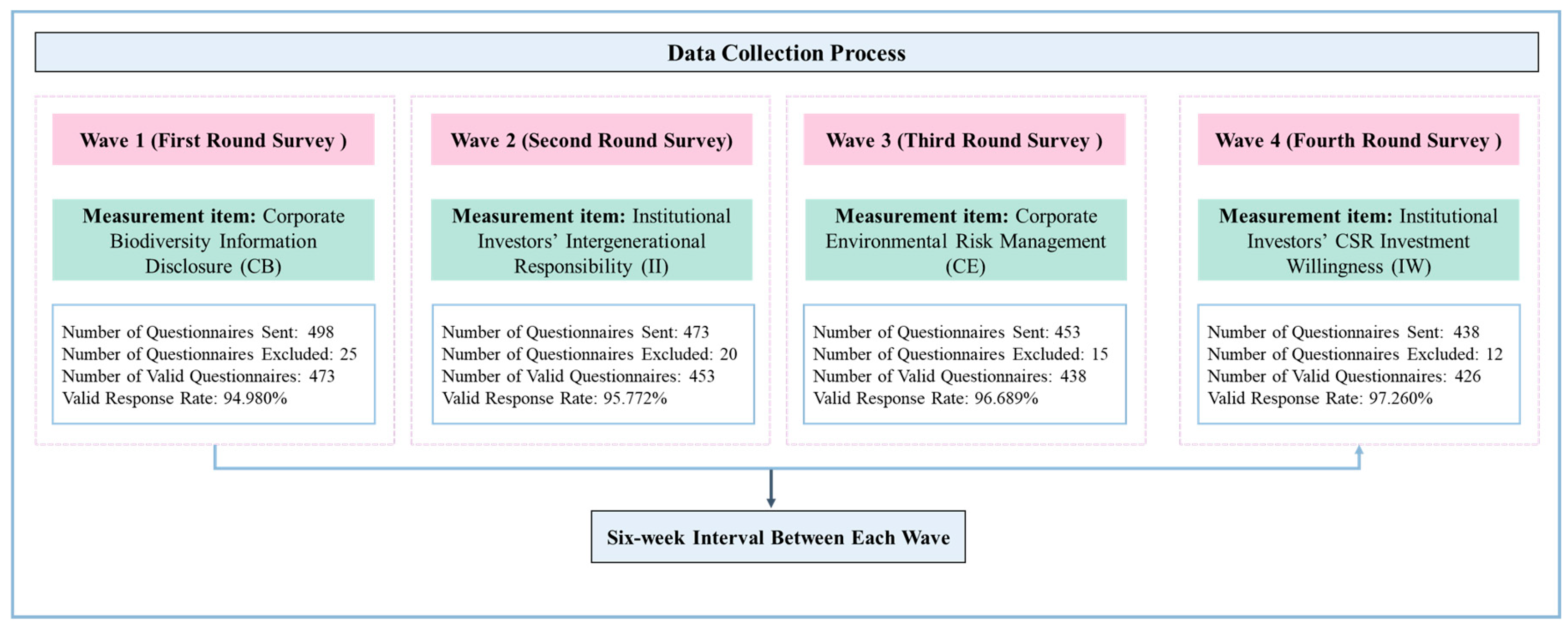
Third, regarding data collection design and methodology, this study utilized a four-wave time-lagged data collection design to address potential common method bias (CMB) and strengthen causal inferences, with a six-week interval between each wave. The four-wave design followed the methodological recommendations of
Podsakoff et al. (
2003) to ensure temporal separation between different constructs.
This temporal separation minimized the risk of participants providing consistent or socially desirable answers across multiple constructs, thereby improving the robustness of the causal relationships tested in the study.
Fourth, about survey administration and the sampling procedure: Participants were recruited through various channels, including offline investor seminars, financial literacy workshops, local investment discussion groups. This multi-channel recruitment strategy helped ensure voluntary participation and authenticity, reducing the sampling bias often associated with anonymous online surveys or email-based recruitment methods.
To ensure the geographical and socioeconomic diversity of the sample, participants were drawn from four regions of China: Beijing, Shanghai, Guangzhou, Shenzhen. These provinces and municipalities were selected to represent a diverse range of economic structures, financial development levels, and exposure to environmental policies. This geographical diversity ensured that the findings were more likely to be generalizable across different investor types and local market conditions in China.
Final, the data collection process is depicted in
Figure 2. During the initial phase, the survey engaged 498 participants. After eliminating 25 questionnaires due to excessive missing information or inadequate quality, 473 valid responses remained, yielding a valid response rate of 94.980%. In the subsequent phase, 20 questionnaires were removed; in the third phase, 15 were discarded; and in the fourth phase, 12 were excluded. Following these four survey rounds, 426 valid questionnaires were obtained. Statistical details regarding the respondents can be found in
Table 2.
3.3. Ethical Considerations
Strict adherence to ethical guidelines was maintained during both recruitment and data collection phases. Prior to participating in the study, all individuals gave their informed consent. Participants were guaranteed that their personal information would remain confidential and their responses would be anonymous. Furthermore, they were distinctly informed that the research was pursued exclusively for academic purposes, free from any commercial or financial motivations.
5. Discussion
5.1. Research Findings
This study examines the impact of corporate biodiversity information disclosure (CB) on institutional investors’ willingness to engage in corporate social responsibility (CSR) investments, focusing on the roles of intergenerational responsibility and environmental risk management. The findings reveal that biodiversity disclosure significantly influences institutional investors’ CSR investment willingness, aligning with existing literature that highlights the importance of environmental transparency in investment decisions. These results reinforce the critical role of sustainability disclosures in shaping investor behavior, as noted by prior study like
Hu et al. (
2025).
Additionally, this research shows that biodiversity disclosure not only directly impacts CSR investment willingness but also through the mediating role of intergenerational responsibility among institutional investors. This finding is consistent with research by
Qudah et al. (
2025) and
Kontakos (
2025), which suggests that long-term sustainability concerns motivate investors to align their decisions with broader societal goals, further emphasizing the ethical and long-term perspectives driving investment behavior.
In addition, this study identifies the moderating effect of corporate environmental risk management in the relationship between biodiversity disclosure and institutional investors’ intergenerational responsibility. Effective environmental risk management enhances the influence of biodiversity disclosure on CSR investment willingness, underscoring the importance of integrated environmental strategies. This perspective adds depth to the existing studies, such as
Li et al. (
2025);
Landi et al. (
2022), by showing how risk management can amplify the impact of sustainability disclosures. Furthermore, this research contributes a novel perspective by focusing on institutional investors in China, where the CSR investment environment is evolving, suggesting that the relationship between biodiversity disclosure and investment willingness may be more pronounced in emerging markets due to the need for greater corporate transparency.
5.2. Theoretical Contributions
This study significantly advances the theoretical understanding of sustainable finance, corporate biodiversity, and risk management by constructing and empirically validating a comprehensive framework that links corporate biodiversity information disclosure to institutional investors’ CSR investment willingness. This research offers three primary theoretical contributions, which are framed around the unique context of China, where biodiversity risks present particular challenges and opportunities within the emerging market.
First, this study deepens the application of signaling theory and responsible investment theory within the specific context of biodiversity finance. While existing literature often aggregates environmental factors into general ESG metrics, this research isolates corporate biodiversity information disclosure as a distinct and critical determinant of investors’ investment willingness. It highlights how biodiversity disclosure functions as a high-quality signal that reduces information asymmetry regarding ecological risks, thereby promoting institutional investors’ CSR investment willingness. This study enriches signaling theory (
Amaya et al. 2021) by demonstrating that institutional investors interpret biodiversity transparency not merely as regulatory compliance, but as a strategic signal of long-term sustainability and risk mitigation capabilities. Furthermore, this research contributes to responsible investment theory (
Dam and Scholtens 2015) by providing empirical evidence for the positive screening mechanism, showing that institutional investors proactively utilize biodiversity-specific signals to identify and select companies for CSR investments. This research refines the theoretical understanding of how niche environmental data, specifically biodiversity disclosures, drives capital allocation in emerging markets, where investors are often navigating uncertainties related to both environmental degradation and regulatory landscapes. This addition to theory is particularly valuable in understanding how market-specific factors, like China’s evolving environmental regulations, shape investor perceptions and decision-making.
Second, this research elucidates the underlying cognitive and ethical mechanisms governing investor decision-making by integrating intergenerational equity theory, stakeholder theory, and social capital theory. By identifying and verifying the mediating role of institutional investors’ intergenerational responsibility, this study reveals the psychological pathway through which disclosure influences investment willingness. This research operationalizes intergenerational equity theory (
Puaschunder 2015) in a financial context, establishing that biodiversity disclosure activates an investor’s moral obligation to safeguard resources for future needs. Concurrently, this study expands stakeholder theory (
Schaltegger et al. 2019) by demonstrating that investors view “future generations” as salient stakeholders whose interests must be integrated into current investment strategies. Additionally, by drawing on social capital theory (
Choy et al. 2023), this research frames intergenerational responsibility as a form of trust-based social capital that spans generations. This study proposes that biodiversity disclosure fosters a collective logic where CSR investment is perceived as a necessary action to preserve social capital and ensure sustainable returns, thus theoretically bridging the gap between information perception and ethical investment willingness. The integration of these theories provides a unique contribution by highlighting the ethical dimensions of investment decisions, particularly in emerging markets like China, where intergenerational responsibility is becoming a prominent consideration in the investment landscape.
Third, this study clarifies the boundary conditions of disclosure effectiveness by synthesizing the resource-based view (RBV), contingency theory, and risk governance theory. By confirming that corporate environmental risk management positively moderates the relationship between biodiversity disclosure and intergenerational responsibility, this research highlights the interdependence of external reporting and internal capabilities. Drawing on the RBV (
Hussain et al. 2024), this study frames environmental risk management as a strategic organizational capability that validates the credibility of disclosed information. Consistent with contingency theory (
Mensah et al. 2025) and risk governance theory (
Hossain et al. 2019;
Hutchinson et al. 2015), this study demonstrates that the efficacy of biodiversity disclosure in cultivating investor responsibility is contingent upon the presence of robust internal risk governance systems. This research establishes a theoretical “fit” between disclosure and governance, suggesting that institutional investors rely on evidence of systematic risk management to fully internalize the intergenerational implications of biodiversity data. This addition to theory introduces a nuanced perspective of how governance systems within companies mediate the effectiveness of biodiversity disclosures, thus contributing to the broader understanding of the interplay between disclosure practices and organizational risk management in driving investment behavior. In the context of China, where environmental risk management frameworks are rapidly evolving, this theoretical perspective provides insight into how the alignment of disclosure and governance practices can help institutional investors assess the long-term sustainability of companies more effectively.
Overall, these theoretical contributions provide a comprehensive and context-specific understanding of the mechanisms linking biodiversity disclosure to institutional investors’ CSR investment willingness. By integrating multiple theoretical lenses and focusing on the unique context of China, this study enhances the theoretical discourse on responsible investment, signaling, and corporate risk management, while contributing to a more nuanced understanding of how companies can strategically manage biodiversity risks to attract institutional investments in emerging markets.
This research also addresses a significant gap in existing literature by offering a theory that explicitly connects biodiversity disclosure with investor behavior, emphasizing the role of intergenerational responsibility and governance in shaping CSR investment decisions. By proposing a conceptual model that links these factors, this study offers a unique theoretical contribution that advances our understanding of how biodiversity-related information can be effectively communicated to and utilized by institutional investors in a rapidly changing environmental landscape.
5.3. Practical and Managerial Contributions
This study offers valuable practical and managerial insights by examining the relationship between corporate biodiversity information disclosure, institutional investors’ CSR investment willingness, and the role of environmental risk management. From a risk-oriented perspective, the findings present several key takeaways for corporate managers, institutional investors, and policymakers, particularly in emerging markets like China, where biodiversity loss poses significant environmental and financial risks.
First, this study reveals that corporate biodiversity information disclosure positively influences institutional investors’ CSR investment willingness. From a risk management perspective, this finding emphasizes that institutional investors are increasingly concerned with long-term environmental risks, including those related to biodiversity loss. Transparency in biodiversity disclosures reduces uncertainty about a company’s environmental impact and its potential risks, making the company more attractive to institutional investors who are focused on sustainable, risk-mitigated investments. This underscores the importance for corporate managers to enhance the quality and transparency of biodiversity disclosures as part of their broader risk management strategies. Companies that clearly communicate their efforts to manage biodiversity-related risks are likely to strengthen investor confidence and increase their attractiveness to responsible institutional investors who prioritize minimizing environmental risks in their portfolios.
Second, this study finds that biodiversity disclosure fosters the development of institutional investors’ sense of intergenerational responsibility, which in turn enhances their willingness to engage in CSR investments. From a risk-oriented viewpoint, this highlights that institutional investors who prioritize long-term sustainability are more likely to be influenced by disclosures that reflect a company’s commitment to addressing environmental risks not only for the present but for future generations. As biodiversity loss is a long-term issue with significant intergenerational consequences, demonstrating a forward-looking, sustainable approach to biodiversity can help institutional investors better assess and manage long-term risks. For corporate managers, this suggests that integrating the concept of intergenerational responsibility into biodiversity disclosures can play a pivotal role in aligning the company’s risk management strategies with investor expectations regarding sustainability. This alignment can help attract investors who are concerned with minimizing both short-term and long-term environmental risks.
This study also shows that institutional investors’ sense of intergenerational responsibility significantly mediates the relationship between corporate biodiversity information disclosure and their CSR investment willingness. This finding is important as it implies that biodiversity disclosures do not influence CSR investment decisions in isolation; rather, they do so by fostering a broader sense of responsibility for future generations. From a managerial perspective, companies should focus on not only providing information about their current biodiversity efforts but also framing these efforts in the context of long-term sustainability and risk mitigation. By doing so, companies can appeal to institutional investors who view intergenerational responsibility as a key factor in their investment decisions, thereby enhancing the company’s appeal as a responsible investment.
In addition, this study highlights that corporate environmental risk management positively moderates the relationship between corporate biodiversity information disclosure and institutional investors’ sense of intergenerational responsibility. This moderation effect underscores the importance of not only disclosing biodiversity-related information but also integrating such disclosures within a broader environmental risk management framework. Effective environmental risk management can strengthen the credibility of biodiversity disclosures by demonstrating that the company is actively addressing both current and future environmental risks. This comprehensive approach helps institutional investors better assess the company’s long-term sustainability and risk profile. From a practical standpoint, managers need to further improve the framework and practices of corporate environmental risk management. In addition, managers should ensure that biodiversity disclosures are accompanied by clear discourse of how these efforts are integrated into the company’s overall risk management strategies. This could include providing specific details on risk mitigation actions, future plans, and the long-term impact of their management initiatives. Such integration would make the disclosure more robust and trustworthy, which in turn would enhance the company’s attractiveness to institutional investors who are focused on long-term risk reduction.
Last, the findings have significant implications for sustainable finance trends. By aligning corporate biodiversity disclosure with international biodiversity frameworks and policy instruments—such as SDG 15, the TNFD recommendations, and nature credit markets—firms can enhance their appeal to institutional investors seeking measurable environmental impact. Moreover, positioning biodiversity at the intersection of environmental risk management and climate strategies allows corporations to respond effectively to the integrated nature–climate risks that increasingly influence institutional investment portfolios. This reframing advances the agenda of the bioeconomy, supports the valuation of natural capital, and reinforces the financial case for biodiversity preservation.
5.4. Practical Recommendations and Policy Implications
The findings from this study offer valuable practical recommendations for both corporate managers and institutional investors, especially in emerging markets where biodiversity risks are becoming increasingly critical. These recommendations are not only grounded in the results of our empirical analysis but are also designed to provide actionable steps for the integration of biodiversity disclosure into investment decision-making processes and corporate sustainability strategies. At the same time, the findings offer significant implications for policy development.
First, practical recommendations for corporate managers:
- (1)
Enhance Biodiversity Disclosures for Risk Mitigation: Corporate managers should prioritize enhancing the transparency and quality of biodiversity-related information in their public disclosures. Investors are increasingly concerned about long-term environmental risks, including biodiversity loss. Clear, detailed, and well-structured disclosures regarding biodiversity efforts will help reduce investor uncertainty and provide a clearer picture of a company’s exposure to environmental risks. Furthermore, it is important that these disclosures are not limited to past actions but also outline future biodiversity-related initiatives, as long-term strategies play a critical role in shaping investors’ decisions.
- (2)
Emphasize Intergenerational Responsibility: The study shows that biodiversity disclosures can foster institutional investors’ sense of intergenerational responsibility, which is essential in motivating CSR investments. Companies can enhance the impact of their biodiversity disclosures by framing their efforts within the context of sustainability across generations. This could involve articulating how current biodiversity management strategies will benefit future generations, particularly through the lens of mitigating long-term environmental risks. Corporate managers should explicitly state how they are managing biodiversity risks in a way that reflects long-term sustainability, which is key to attracting responsible investors.
- (3)
Integrate Biodiversity Disclosures within a Holistic Risk Management Framework: The research underscores the importance of aligning biodiversity disclosures with broader environmental risk management strategies. Managers should not view biodiversity as a standalone issue but rather integrate it within the company’s overall environmental risk management framework. This could involve setting measurable biodiversity goals, disclosing progress, and showcasing how biodiversity efforts align with broader sustainability goals. A comprehensive environmental risk management strategy that includes biodiversity considerations will increase the credibility of the company’s disclosures, enhancing investor confidence in its ability to manage long-term risks.
- (4)
Engage in Stakeholder Dialogue to Enhance Trust: Engaging with institutional investors and other stakeholders regarding biodiversity risks can help build trust and demonstrate the company’s commitment to sustainability. Corporate managers should be proactive in addressing investor concerns, offering detailed information on the company’s long-term risk management strategies, and participating in industry dialogues on biodiversity preservation. This engagement will help align investor expectations with the company’s long-term sustainability goals and improve the overall attractiveness of the company’s sustainability initiatives.
Second, practical recommendations for institutional investors:
- (1)
Incorporate Biodiversity Risk into Investment Decision-Making: Institutional investors should consider biodiversity risks as an integral part of their portfolio construction, similar to other environmental, social, and governance (ESG) factors. Given the positive influence of biodiversity disclosure on CSR investment willingness, institutional investors need to assess not only financial metrics but also how well companies disclose and manage biodiversity risks. A company with clear, transparent biodiversity disclosures and a solid risk management framework is more likely to mitigate long-term environmental risks, making it a more sustainable investment option.
- (2)
Develop Strategies for Assessing Intergenerational Responsibility: As our study shows, institutional investors who possess a strong sense of intergenerational responsibility are more likely to be attracted to companies that demonstrate long-term sustainability efforts. Investors should develop frameworks to evaluate how companies incorporate intergenerational responsibility into their biodiversity strategies. This can include assessing whether companies’ biodiversity efforts align with long-term ecological goals, such as the preservation of ecosystems for future generations, and whether these efforts contribute to the overall sustainability of the global bioeconomy.
Third, policy recommendations at the organizational level:
- (1)
Incentivize Biodiversity Reporting Through Sustainability Rankings: One of the key findings from this study is the importance of clear and comprehensive biodiversity disclosures in attracting institutional investors. Companies that effectively manage and disclose their biodiversity risks could be incentivized through sustainability rankings or ratings that take into account their biodiversity-related disclosures. By integrating biodiversity-related criteria into existing sustainability indices and ratings, organizations can increase their competitiveness and appeal to investors looking for environmentally responsible companies.
- (2)
Mandatory Reporting Guidelines for Biodiversity: Given the growing importance of biodiversity-related risks, companies should be encouraged—or mandated—by national and international regulatory bodies to provide detailed biodiversity disclosures as part of their annual reports. These disclosures should include information on biodiversity-related risks, the strategies in place to mitigate those risks, and progress towards set biodiversity goals. A mandatory reporting framework would ensure consistency, comparability, and reliability in the data disclosed, enabling institutional investors to make informed investment decisions based on standardized and robust information.
Fourth, policy recommendations at the governmental level:
- (1)
Support for Biodiversity Risk Management Initiatives: Governments can play a crucial role in supporting the integration of biodiversity into corporate risk management strategies. Policymakers should encourage the development of frameworks and best practices that help companies integrate biodiversity considerations into their environmental risk management processes. This can be achieved through incentives, such as tax breaks or subsidies for companies that invest in biodiversity preservation, as well as providing technical assistance to help companies build more robust biodiversity risk management frameworks.
- (2)
Promote Biodiversity Conservation in Financial Markets: Governments can create policies that incentivize institutional investors to consider biodiversity risks in their investment decisions. For instance, introducing tax incentives or green bonds linked to biodiversity preservation could encourage investors to allocate capital to biodiversity-friendly businesses. Additionally, governments can work with financial regulators to integrate biodiversity-related factors into the environmental risk assessments that financial institutions conduct when evaluating potential investments. By doing so, policymakers can help shape the financial market’s focus on biodiversity and sustainability, leading to a greater flow of capital towards responsible investments.
In conclusion, these practical and policy recommendations provide tangible steps for both corporate managers and institutional investors to integrate biodiversity risk considerations into their decision-making processes. By enhancing biodiversity disclosures, fostering a sense of intergenerational responsibility, and improving environmental risk management practices, companies can attract responsible investors and contribute to global biodiversity conservation. At the same time, policies that support these practices at both organizational and governmental levels can encourage broader industry-wide adoption of biodiversity-conscious approaches, ultimately leading to more sustainable financial systems and a healthier natural environment.
6. Limitations
Despite the valuable insights offered by this empirical analysis, several limitations should be acknowledged. First, the sample data used in this research only includes 426 institutional investors from China, which does not fully encompass all types of institutional investors. As such, the findings may not be fully representative of the broader Chinese institutional investor landscape. Second, while the current study focuses on Chinese sample data, future research could benefit from incorporating international samples. By expanding the data to include institutional investors from other regions, researchers would be able to further validate the conclusions and explore whether the patterns observed in China hold true in different global contexts. This broader approach would help to deepen the understanding of how biodiversity disclosures influence CSR investment worldwide.
Second, this study adopts a cross-sectional design, which captures the relationships among variables at a single point in time. This approach does not account for potential dynamic changes or long-term effects in the interaction between corporate biodiversity information disclosure and institutional investors’ CSR investment willingness. A longitudinal design would provide greater insight into causal relationships and the evolution of these mechanisms over time, particularly regarding the development of institutional investors’ intergenerational responsibility and the moderating role of corporate environmental risk management. Furthermore, while this research model focuses on key organizational-level factors, it does not capture the full range of potential influences. Individual characteristics of institutional investors—such as their risk preferences, values, professional experience, and sustainability-related expertise—may also play a significant role in shaping CSR investment decisions. Future research should consider these personal attributes alongside other mediating and moderating variables, such as market regulations and corporate governance structures, to develop a more comprehensive framework and further validate the robustness of research findings.
Also, one such consideration is the distinction between “willingness” and actual behavior. This study primarily focuses on institutional investors’ willingness to engage in CSR investments, measured through self-reported survey responses. However, willingness does not always translate directly into behavior. Future studies could expand upon this by exploring the actual investment decisions or behaviors of institutional investors. A more comprehensive approach could involve the use of longitudinal data or observational studies that track the shift from stated willingness to tangible investment actions. Additionally, while the study includes institutional investors with at least two years of continuous investment experience, it does not consider investment size, which could play a crucial role in influencing CSR investment decisions. The scale of an investor’s portfolio may impact their capacity or willingness to incorporate biodiversity considerations into their investment strategy. Therefore, incorporating investment size as a variable in future research could provide further insights into its influence on CSR investment willingness.
Moreover, cultural values can shape how institutional investors perceive environmental risks, intergenerational responsibility, and CSR investments. Different cultural contexts may influence how biodiversity information is interpreted and acted upon by investors. Future research could examine cross-cultural differences in CSR investment, which would provide a broader understanding of how cultural dimensions affect the investment willingness of institutional investors in diverse geographical settings.
In addition, this study uses self-reported survey responses that could be complemented by objective market data in future research. By incorporating publicly available data on CSR investment flows and corporate biodiversity disclosures, researchers could reduce the potential for social desirability bias and further validate the findings. This approach would provide a more comprehensive view of the relationship between institutional investors’ attitudes toward biodiversity disclosure and their actual investment behaviors, thereby helping to bridge the gap between stated willingness and actual investment actions.
Building upon the findings of this study, several new avenues for future research emerge. One potential direction is to explore the intersection between biodiversity risk and the financial materiality of non-financial factors, particularly in terms of corporate valuation and stock market reactions. Future studies could also delve into the role of financial technology (FinTech) in improving biodiversity disclosures, leveraging big data and AI to enhance transparency and reporting standards. Another promising area for exploration is the impact of consumer behavior on institutional investment strategies related to biodiversity—understanding how consumer demand for sustainable products can drive investor decisions and corporate strategies. Lastly, research could focus on the role of international collaborations and cross-border initiatives in harmonizing biodiversity risk reporting practices, exploring how global standards and partnerships can support more unified approaches across markets.
In conclusion, while this study provides important theoretical and practical contributions, these suggestions offer avenues for further refinement and enhancement of the research, allowing for a more holistic understanding of the factors influencing CSR investment willingness among institutional investors.