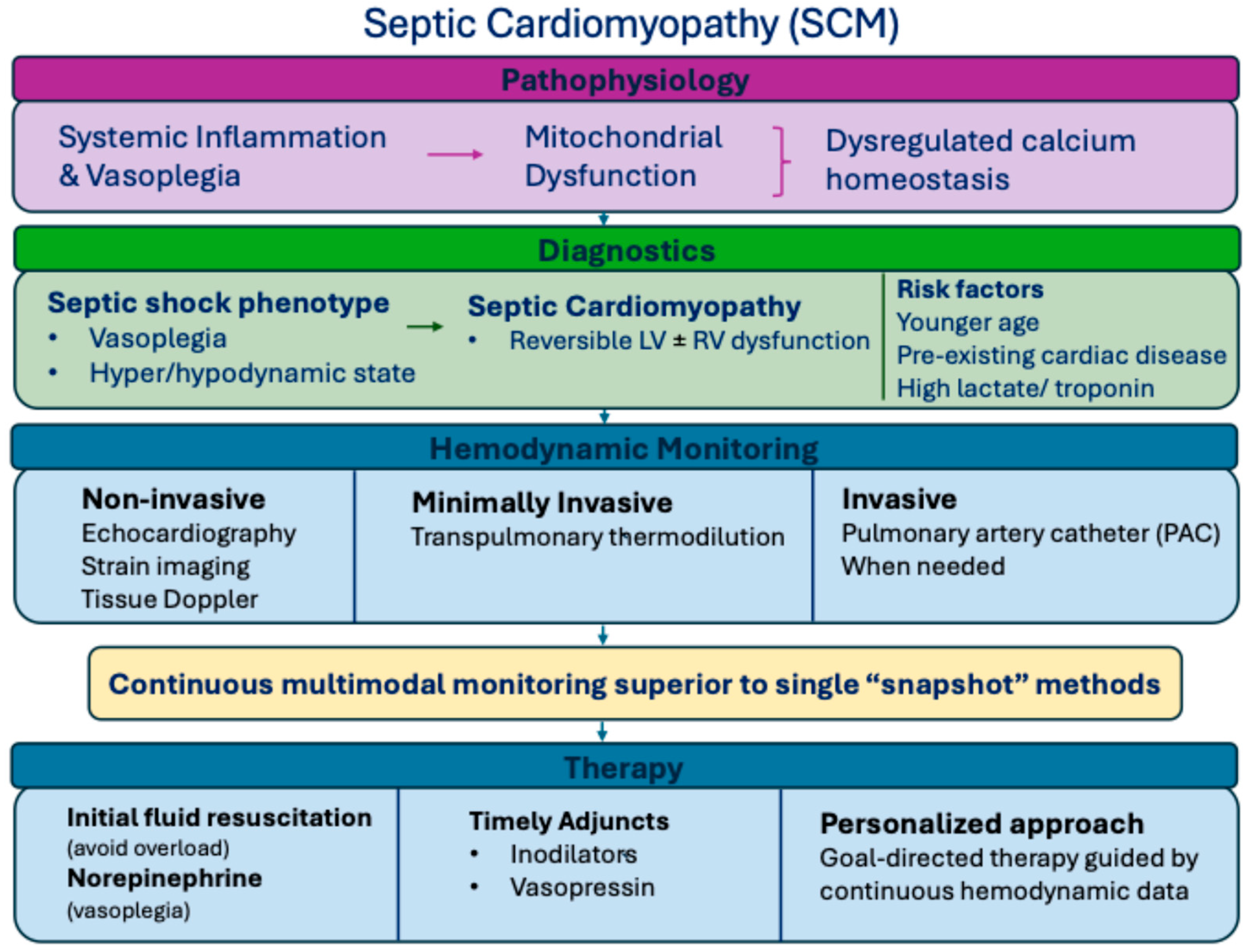
Septic Cardiomyopathy: Age-Dependent Physiology and Hemodynamic Aspects—A Narrative Review

 , , and
Highlights
- Sepsis-induced cardiomyopathy (SCM) is an acute, reversible, non-ischemic myocardial dysfunction in children and adults, ranging from subclinical biventricular impairment to overt cardiogenic shock.
- Pediatric SCM often presents with hypodynamic profiles, while adults frequently show hyperdynamic, vasoplegic states, reflecting age-dependent differences in cardiovascular physiology.
- Multimodal diagnostic approaches, including echocardiography and advanced hemodynamic monitoring, improve detection of subtle or evolving myocardial dysfunction.
- SCM requires repeated, physiology-driven, multi-modal cardiovascular assessment to guide individualized management.
- Understanding age-specific hemodynamic profiles can help tailor interventions and improve outcomes in both adult and pediatric patients.
Abstract
1. Introduction
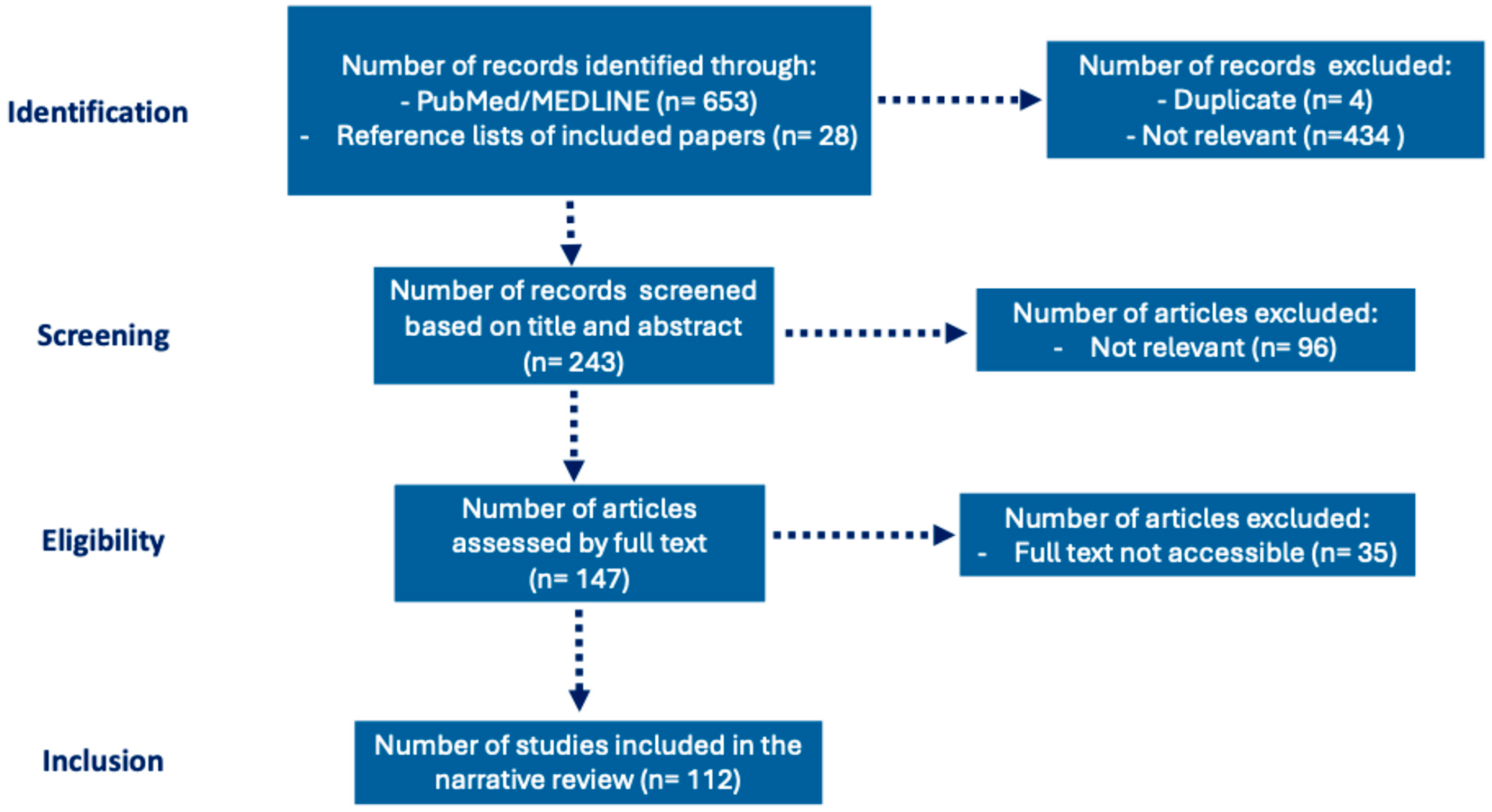
2. Methods
2.1. Study Design
2.2. Search Strategy
2.3. Eligibility Criteria
2.4. Data Synthesis
3. Epidemiology
Pediatric Prevalence of Septic Cardiomyopathy
4. Pathophysiological Mechanisms in Sepsis
Pediatric Pathophysiological Responses
5. Echocardiographic Findings in Sepsis
Pediatric Echocardiography
6. Basic Hemodynamic Monitoring
7. Advanced Multimodal Hemodynamic Monitoring
8. Current Treatment Concepts Based on Hemodynamic Monitoring
8.1. Refractory Septic Shock
8.2. Post-Sepsis Cardiac Recovery
9. Discussion
10. Limitations
11. Conclusions
Author Contributions
Funding
Institutional Review Board Statement
Informed Consent Statement
Data Availability Statement
Acknowledgments
Conflicts of Interest
Abbreviations
| BP | Blood pressure |
| CO | Cardiac Output |
| CRT | Capillary refill time |
| CVP | Central venous pressure |
| DO2 | Oxygen Delivery |
| EVLW | Extravascular lung water |
| FAC | Fractional area change |
| FS | Fractional shortening |
| GEDV | Global end-diastolic volume |
| GLS | Global longitudinal strain |
| HR | Heart rate |
| ICU | Intensive Care Unit |
| LVEF | Left ventricular ejection fraction |
| LVEDV | Left ventricle end-diastolic volume |
| LV | Left ventricle/ventricular |
| MAP | Mean arterial pressure |
| PAC | Pulmonary artery catheter |
| Pv-aCO2 | Venous-to-arterial carbon dioxide difference |
| RV | Right ventricle/ventricular |
| SCM | Sepsis-induced cardiomyopathy |
| STE | Speckle-tracking echocardiography |
| TAPSE | Tricuspid annular plane systolic excursion |
| TDI | Tissue Doppler imaging |
| TPTD | Transpulmonary thermodilution |
| VA-ECMO | Veno-arterial extracorporeal membrane oxygenation |
| VAD | Ventricular assist device |
| VIS | Vasoactive inotrope score |
| SvO2 | Mixed venous oxygen saturation |
| PICCO | Pulse index continuous cardiac output |
References
- Beesley, S.J.; Weber, G.; Sarge, T.; Nikravan, S.; Grissom, C.K.; Lanspa, M.J.; Shahul, S.; Brown, S.M. Septic Cardiomyopathy. Crit. Care Med. 2018, 46, 625–634. [Google Scholar] [CrossRef] [PubMed]
- Gupta, S.; Sankar, J. Advances in Shock Management and Fluid Resuscitation in Children. Indian J. Pediatr. 2023, 90, 280–288. [Google Scholar] [CrossRef] [PubMed]
- Lautz, A.J.; Zingarelli, B. Age-Dependent Myocardial Dysfunction in Critically Ill Patients: Role of Mitochondrial Dysfunction. Int. J. Mol. Sci. 2019, 20, 3523. [Google Scholar] [CrossRef]
- Boissier, F.; Aissaoui, N. Septic cardiomyopathy: Diagnosis and management. J. Intensive Med. 2022, 2, 8–16. [Google Scholar] [CrossRef]
- İpek, S.; Güllü, U.U.; Güngör, Ş.; Güllü, Ş.D. Prognostic value of cardiac biomarkers and Phoenix criteria in pediatric sepsis: A retrospective cohort study. BMC Pediatr. 2025, 25, 995. [Google Scholar] [CrossRef]
- Ravikumar, N.; Sayed, M.A.; Poonsuph, C.J.; Sehgal, R.; Shirke, M.M.; Harky, A. Septic Cardiomyopathy: From Basics to Management Choices. Curr. Probl. Cardiol. 2021, 46, 100767. [Google Scholar] [CrossRef]
- Chan, J.C.; Menon, A.P.; Rotta, A.T.; Choo, J.T.; Hornik, C.P.; Lee, J.H. Use of Speckle-Tracking Echocardiography in Septic Cardiomyopathy in Critically Ill Children: A Narrative Review. Crit. Care Explor. 2024, 6, e1114. [Google Scholar] [CrossRef]
- Sato, R.; Hasegawa, D.; Guo, S.; Nuqali, A.E.; Moreno, J.E.P. Sepsis-induced cardiogenic shock: Controversies and evidence gaps in diagnosis and management. J. Intensive Care 2025, 13, 1. [Google Scholar] [CrossRef]
- L’heureux, M.; Sternberg, M.; Brath, L.; Turlington, J.; Kashiouris, M.G. Sepsis-Induced Cardiomyopathy: A Comprehensive Review. Curr. Cardiol. Rep. 2020, 22, 35. [Google Scholar] [CrossRef] [PubMed]
- Sato, R.; Kuriyama, A.; Takada, T.; Nasu, M.; Luthe, S.K. Prevalence and risk factors of sepsis-induced cardiomyopathy: A retrospective cohort study. Medicine 2016, 95, e5031. [Google Scholar] [CrossRef]
- Jeong, H.S.; Lee, T.H.; Bang, C.H.; Kim, J.-H.; Hong, S.J. Risk factors and outcomes of sepsis-induced myocardial dysfunction and stress-induced cardiomyopathy in sepsis or septic shock: A comparative retrospective study. Medicine 2018, 97, e0263. [Google Scholar] [CrossRef]
- Lukić, I.; Mihić, D.; Varžić, S.C.; Relatić, K.S.; Zibar, L.; Loinjak, D.; Ćurić, Ž.B.; Klobučar, L.; Maričić, L. Septic Cardiomyopathy. Rev. Cardiovasc. Med. 2024, 25, 23. [Google Scholar] [CrossRef]
- Bakker, J.; Kattan, E.; Annane, D.; Castro, R.; Cecconi, M.; De Backer, D.; Dubin, A.; Evans, L.; Gong, M.N.; Hamzaoui, O.; et al. Current practice and evolving concepts in septic shock resuscitation. Intensive Care Med. 2022, 48, 148–163. [Google Scholar] [CrossRef]
- Hernández, G.; Ospina-Tascón, G.A.; Damiani, L.P.; Estenssoro, E.; Dubin, A.; Hurtado, J.; Friedman, G.; Castro, R.; Alegría, L.; Teboul, J.-L.; et al. Effect of a Resuscitation Strategy Targeting Peripheral Perfusion Status vs Serum Lactate Levels on 28-Day Mortality Among Patients With Septic Shock: The ANDROMEDA-SHOCK Randomized Clinical Trial. JAMA 2019, 321, 654–664. [Google Scholar] [CrossRef] [PubMed]
- Guarracino, F.; Bertini, P.; Pinsky, M.R. Heterogeneity of Cardiovascular Response to Standardized Sepsis Resuscitation. Crit. Care 2020, 24, 99. [Google Scholar] [CrossRef]
- Raj, S.; Killinger, J.S.; Gonzalez, J.A.; Lopez, L. Myocardial dysfunction in pediatric septic shock. J. Pediatr. 2014, 164, 72–77.e2. [Google Scholar] [CrossRef] [PubMed]
- Sato, R.; Sanfilippo, F.; Hasegawa, D.; Prasitlumkum, N.; Duggal, A.; Dugar, S. Prevalence and prognosis of hyperdynamic left ventricular systolic function in septic patients: A systematic review and meta-analysis. Ann. Intensive Care 2024, 14, 22. [Google Scholar] [CrossRef] [PubMed]
- Schlapbach, L.J.; Watson, R.S.; Sorce, L.R.; Argent, A.C.; Menon, K.; Hall, M.W.; Akech, S.; Albers, D.J.; Alpern, E.R.; Balamuth, F.; et al. International Consensus Criteria for Pediatric Sepsis and Septic Shock. JAMA 2024, 331, 665–674. [Google Scholar] [CrossRef]
- Hasegawa, D.; Ishisaka, Y.; Maeda, T.; Prasitlumkum, N.; Nishida, K.; Dugar, S.; Sato, R. Prevalence and Prognosis of Sepsis-Induced Cardiomyopathy: A Systematic Review and Meta-Analysis. J. Intensive Care Med. 2023, 38, 797–808. [Google Scholar] [CrossRef]
- Fernández-Sarmiento, J.; Carcillo, J.A.; Díaz Del Castillo, A.M.E.; Barrera, P.; Orozco, R.; Rodríguez, M.A.; Gualdrón, N. Venous–arterial CO2 difference in children with sepsis and its correlation with myocardial dysfunction. Qatar Med. J. 2020, 2019, 18. [Google Scholar] [CrossRef]
- Swami, V.S.; Lalitha, A.V.; Ghosh, S.; Reddy, M. Sepsis-Induced Myocardial Dysfunction in Pediatric Septic Shock: Prevalence, Predictors, and Outcome—A Prospective Observational Study. J. Pediatr. Intensive Care 2021, 13, 87–94. [Google Scholar] [CrossRef] [PubMed]
- Lee, E.-P.; Hsia, S.-H.; Lin, J.-J.; Chan, O.-W.; Lee, J.; Lin, C.-Y.; Wu, H.-P. Hemodynamic Analysis of Pediatric Septic Shock and Cardiogenic Shock Using Transpulmonary Thermodilution. BioMed Res. Int. 2017, 2017, 3613475. [Google Scholar] [CrossRef]
- Liang, Y.-W.; Zhu, Y.-F.; Zhang, R.; Zhang, M.; Ye, X.-L.; Wei, J.-R. Incidence, prognosis, and risk factors of sepsis-induced cardiomyopathy. World J. Clin. Cases 2021, 9, 9452–9468. [Google Scholar] [CrossRef] [PubMed]
- Pulido, J.N.; Afessa, B.; Masaki, M.; Yuasa, T.; Gillespie, S.; Herasevich, V.; Brown, D.R.; Oh, J.K. Clinical Spectrum, Frequency, and Significance of Myocardial Dysfunction in Severe Sepsis and Septic Shock. Mayo Clin. Proc. 2012, 87, 620–628. [Google Scholar] [CrossRef] [PubMed]
- Yu, Y.-Y.; Wang, R.; Chen, G.-Q.; Gui, Y.-F.; Ma, J.; Ma, J.-H.; Li, S.-J. Mechanisms and Targeted Therapeutic Strategies in Sepsis-Induced Myocardial Dysfunction: The Role of NLRP3 Inflammasome-Mediated Inflammation. J. Inflamm. Res. 2025, 18, 8875–8897. [Google Scholar] [CrossRef]
- Furian, T.; Aguiar, C.; Prado, K.; Ribeiro, R.V.P.; Becker, L.; Martinelli, N.; Clausell, N.; Rohde, L.E.; Biolo, A. Ventricular dysfunction and dilation in severe sepsis and septic shock: Relation to endothelial function and mortality. J. Crit. Care 2012, 27, 319.e9–319.e15. [Google Scholar] [CrossRef]
- Lu, N.-F.; Niu, H.-X.; Liu, A.-Q.; Chen, Y.-L.; Liu, H.-N.; Zhao, P.-H.; Shao, J.; Xi, X.-M. Types of Septic Cardiomyopathy: Prognosis and Influencing Factors—A Clinical Study. Risk Manag. Healthc. Policy 2024, 17, 1015–1025. [Google Scholar] [CrossRef]
- Malomo, S.; Oswald, T.; Stephenson, E.; Yip, A.; Alway, T.; Hadjivassilev, S.; Coombs, S.; Ellery, S.; Lee, J.; James, R.; et al. Characterisation of Post-Sepsis Cardiomyopathy Using Cardiovascular Magnetic Resonance. Diagnostics 2025, 15, 997. [Google Scholar] [CrossRef]
- Pamporis, K.; Karakasis, P.; Pantelidaki, A.; Goutis, P.A.; Grigoriou, K.; Theofilis, P.; Katsaouni, A.; Botis, M.; Karanikola, A.-E.; Milaras, N.; et al. Sepsis-Induced Cardiomyopathy and Cardiac Arrhythmias: Pathophysiology and Implications for Novel Therapeutic Approaches. Biomedicines 2025, 13, 2643. [Google Scholar] [CrossRef]
- Williams, F.Z.; Sachdeva, R.; Travers, C.D.; Walson, K.H.; Hebbar, K.B. Characterization of Myocardial Dysfunction in Fluid- and Catecholamine-Refractory Pediatric Septic Shock and Its Clinical Significance. J. Intensive Care Med. 2019, 34, 17–25. [Google Scholar] [CrossRef]
- Sankar, J.; Das, R.R.; Jain, A.; Dewangan, S.; Khilnani, P.; Yadav, D.; Dubey, N. Prevalence and outcome of diastolic dysfunction in children with fluid refractory septic shock—A prospective observational study. Pediatr. Crit. Care Med. 2014, 15, e370–e378. [Google Scholar] [CrossRef] [PubMed]
- Boissier, F.; Razazi, K.; Seemann, A.; Bedet, A.; Thille, A.W.; de Prost, N.; Lim, P.; Brun-Buisson, C.; Dessap, A.M. Left ventricular systolic dysfunction during septic shock: The role of loading conditions. Intensive Care Med. 2017, 43, 633–642. [Google Scholar] [CrossRef]
- Jain, A.; Sankar, J.; Anubhuti, A.; Yadav, D.K.; Sankar, M.J. Prevalence and Outcome of Sepsis-induced Myocardial Dysfunction in Children with ‘Sepsis’ ‘with’ and ‘Without Shock’—A Prospective Observational Study. J. Trop. Pediatr. 2018, 64, 501–509. [Google Scholar] [CrossRef]
- Yuliarto, S.; Pudjiadi, A.H.; Latief, A. Characteristics of hemodynamic parameters after fluid resuscitation and vasoactive drugs administration in pediatric shock: A prospective observational study. Ann. Med. Surg. 2022, 76, 103521. [Google Scholar] [CrossRef]
- Kuroshima, T.; Kawaguchi, S.; Okada, M. Current Perspectives of Mitochondria in Sepsis-Induced Cardiomyopathy. Int. J. Mol. Sci. 2024, 25, 4710. [Google Scholar] [CrossRef] [PubMed]
- Hiraiwa, H.; Kasugai, D.; Okumura, T.; Murohara, T. Clinical implications of septic cardiomyopathy: A narrative review. Medicine 2024, 103, e37940. [Google Scholar] [CrossRef] [PubMed]
- Carbone, F.; Liberale, L.; Preda, A.; Schindler, T.H.; Montecucco, F. Septic Cardiomyopathy: From Pathophysiology to the Clinical Setting. Cells 2022, 11, 2833. [Google Scholar] [CrossRef]
- Stanzani, G.; Duchen, M.R.; Singer, M. The role of mitochondria in sepsis-induced cardiomyopathy. Biochim. et Biophys. Acta (BBA)-Mol. Basis Dis. 2019, 1865, 759–773. [Google Scholar] [CrossRef]
- Fujimura, K.; Karasawa, T.; Komada, T.; Yamada, N.; Mizushina, Y.; Baatarjav, C.; Matsumura, T.; Otsu, K.; Takeda, N.; Mizukami, H.; et al. NLRP3 inflammasome-driven IL-1β and IL-18 contribute to lipopolysaccharide-induced septic cardiomyopathy. J. Mol. Cell. Cardiol. 2023, 180, 58–68. [Google Scholar] [CrossRef]
- Zheng, Y.; Lin, J.; Wan, G.; Gu, X.; Ma, J. Macrophage Notch1 drives septic cardiac dysfunction by impairing mitophagy and promoting NLRP3 activation. Biol. Direct 2025, 20, 65. [Google Scholar] [CrossRef]
- Muehlberg, F.; Blaszczyk, E.; Will, K.; Wilczek, S.; Brederlau, J.; Schulz-Menger, J. Characterization of critically ill patients with septic shock and sepsis-associated cardiomyopathy using cardiovascular MRI. ESC Heart Fail. 2022, 9, 2147–2156. [Google Scholar] [CrossRef]
- Hollenberg, S.M.; Singer, M. Pathophysiology of sepsis-induced cardiomyopathy. Nat. Rev. Cardiol. 2021, 18, 424–434. [Google Scholar] [CrossRef]
- Werdan, K.; Oelke, A.; Hettwer, S.; Nuding, S.; Bubel, S.; Hoke, R.; Ruß, M.; Lautenschläger, C.; Mueller-Werdan, U.; Ebelt, H. Septic cardiomyopathy: Hemodynamic quantification, occurrence, and prognostic implications. Clin. Res. Cardiol. 2011, 100, 661–668. [Google Scholar] [CrossRef] [PubMed]
- Belfiore, J.; Taddei, R.; Biancofiore, G. Catecholamines in sepsis: Pharmacological insights and clinical applications—A narrative review. J. Anesth. Analg. Crit. Care 2025, 5, 17. [Google Scholar] [CrossRef] [PubMed]
- Aneja, R.K.; Carcillo, J.A. Differences between adult and pediatric septic shock. Minerva Anestesiol 2011, 77, 986–992. [Google Scholar]
- Ginsburg, S.; Conlon, T.; Himebauch, A.; Glau, C.; Weiss, S.M.; Weber, M.D.R.; O’cOnnor, M.J.; Nishisaki, A.M. Left Ventricular Diastolic Dysfunction in Pediatric Sepsis: Outcomes in a Single-Center Retrospective Cohort Study*. Pediatr. Crit. Care Med. 2021, 22, 275–285. [Google Scholar] [CrossRef]
- Buijs, E.A.; Danser, A.H.; Meijer, N.I.; Tibboel, D. Cardiovascular catecholamine receptors in children: Their significance in cardiac disease. J. Cardiovasc. Pharmacol. 2011, 58, 9–19. [Google Scholar] [CrossRef] [PubMed]
- Salameh, S.; Ogueri, V.; Posnack, N.G. Adapting to a new environment: Postnatal maturation of the human cardiomyocyte. J. Physiol. 2023, 601, 2593–2619. [Google Scholar] [CrossRef]
- Garbern, J.C.; Lee, R.T. Mitochondria and metabolic transitions in cardiomyocytes: Lessons from development for stem cell-derived cardiomyocytes. Stem Cell Res. Ther. 2021, 12, 177. [Google Scholar] [CrossRef]
- Soydan, E.; Murat, M.; Karahan, C.; Gonullu, A.; Aksoy, Y.; Ceylan, G.; Topal, S.; Colak, M.; Seven, P.; Sandal, O.S.; et al. The effect of myocardial dysfunction on mortality in children with septic shock: A prospective observational study. Eur. J. Pediatr. 2023, 182, 4759–4766. [Google Scholar] [CrossRef]
- Mathias, B.; Mira, J.C.; Larson, S.D. Pediatric Sepsis. Curr. Opin. Pediatr. 2016, 28, 380–387. [Google Scholar] [CrossRef]
- Ranjit, S.; Aram, G.; Kissoon, N.; Ali, M.K.; Natraj, R.; Shresti, S.; Jayakumar, I.; Gandhi, D. Multimodal monitoring for hemodynamic categorization and management of pediatric septic shock: A pilot observational study. Pediatr. Crit. Care Med. 2014, 15, e17–e26. [Google Scholar] [CrossRef] [PubMed]
- Killu, K.; Patino-Sutton, C.; Kysh, L.; Castriotta, R.; Oropello, J.; Huerta, L.; Engracia, D.; Merchant, K.; Wee, C.P.; Cortessis, V.K. The association between integrating echocardiography use in the management of septic shock patients and outcomes in the intensive care unit: A systematic review and meta-analysis. J. Ultrasound 2025, 28, 281–294. [Google Scholar] [CrossRef]
- De Backer, D.; Cecconi, M.; Chew, M.S.; Hajjar, L.; Monnet, X.; Ospina-Tascón, G.A.; Ostermann, M.; Pinsky, M.R.; Vincent, J.-L. A plea for personalization of the hemodynamic management of septic shock. Crit. Care 2022, 26, 372. [Google Scholar] [CrossRef]
- Soliman-Aboumarie, H.; Pastore, M.C.; Galiatsou, E.; Gargani, L.; Pugliese, N.R.; Mandoli, G.E.; Valente, S.; Hurtado-Doce, A.; Lees, N.; Cameli, M. Echocardiography in the intensive care unit: An essential tool for diagnosis, monitoring and guiding clinical decision-making. Physiol. Int. 2021, 14, 1–15. [Google Scholar] [CrossRef]
- Garo, M.L.; DI Folco, M.; Celestino, M.G.; Strumia, A.; Stifano, M.; Lavorante, F.; Schiavoni, L.; Mattei, A.; Pascarella, G.; Cataldo, R.; et al. Global longitudinal strain to early detect myocardial dysfunction in septic shock: A systematic review. Minerva Anestesiol. 2025, 91, 961–969. [Google Scholar] [CrossRef]
- Gonzalez, F.A.; Bacariza, J.; Varudo, A.R.; Leote, J.; Mateus, R.M.; Martins, C.M.; Ribeiro, M.I.; Sanfilippo, F.; Lopes, L.R.; Almeida, A.G. Sepsis-induced myocardial dysfunction diagnosed with strain versus non-strain echocardiography parameters: Incidence, evolution and association with prognosis. Ann. Intensive Care 2025, 15, 141. [Google Scholar] [CrossRef]
- Pruszczyk, A.; Zawadka, M.; Andruszkiewicz, P.; LaVia, L.; Herpain, A.; Sato, R.; Dugar, S.; Chew, M.S.; Sanfilippo, F. Mortality in patients with septic cardiomyopathy identified by longitudinal strain by speckle tracking echocardiography: An updated systematic review and meta-analysis with trial sequential analysis. Anaesth. Crit. Care Pain Med. 2024, 43, 101339. [Google Scholar] [CrossRef] [PubMed]
- Wang, J.; Tong, Z.; Wang, X.; Wang, G. Time Course of Morbidity and Mortality Across Echocardiographic Phenotypes in Patients With Sepsis: A Systematic Review and Meta-Analysis. Crit. Care Med. 2025, 53, e2294–e2304. [Google Scholar] [CrossRef]
- Lima, M.R.; Silva, D. Septic cardiomyopathy: A narrative review. Rev. Port. de Cardiol. 2023, 42, 471–481. [Google Scholar] [CrossRef] [PubMed]
- Zhang, H.; Gao, B.; Liu, Y.; Zhang, Q.; Wang, X. Patterns of left and right ventricular dysfunction and their clinical outcomes in septic patients. BMC Anesthesiol. 2025, 25, 364. [Google Scholar] [CrossRef]
- Zakynthinos, G.E.; Giamouzis, G.; Xanthopoulos, A.; Oikonomou, E.; Kalogeras, K.; Karavidas, N.; Dimeas, I.E.; Gialamas, I.; Gounaridi, M.I.; Siasos, G.; et al. Septic Cardiomyopathy: Difficult Definition, Challenging Diagnosis, Unclear Treatment. J. Clin. Med. 2025, 14, 986. [Google Scholar] [CrossRef]
- Lanspa, M.J.; Cirulis, M.M.; Wiley, B.M.; Olsen, T.D.; Wilson, E.L.; Beesley, S.J.; Brown, S.M.; Hirshberg, E.L.; Grissom, C.K. Right Ventricular Dysfunction in Early Sepsis and Septic Shock. Chest 2021, 159, 1055–1063. [Google Scholar] [CrossRef]
- Kakihana, Y.; Ito, T.; Nakahara, M.; Yamaguchi, K.; Yasuda, T. Sepsis-induced myocardial dysfunction: Pathophysiology and management. J. Intensive Care 2016, 4, 22. [Google Scholar] [CrossRef]
- Chen, Y.-S.; Huang, C.-C.; Wang, C.-C.; Chang, H.-Y.; Hwang, J.-J.; Hou, C.J.-Y.; Chao, T.-H.; Hung, C.-L.; Hsia, C.-P.; Tzeng, B.-H.; et al. Prognostic Implications of Left Ventricular Ejection Fraction Improvement in Patients with Heart Failure with Reduced and Mildly Reduced Ejection Fraction. Acta Cardiol. Sin. 2026, 42, 62–73. [Google Scholar] [CrossRef] [PubMed]
- Porter, T.R.; Shillcutt, S.K.; Adams, M.S.; Desjardins, G.; Glas, K.E.; Olson, J.J.; Troughton, R.W. Guidelines for the use of echocardiography as a monitor for therapeutic intervention in adults: A report from the American Society of Echocardiography. J. Am. Soc. Echocardiogr. 2015, 28, 40–56. [Google Scholar] [CrossRef] [PubMed]
- Jentzer, J.C.; Tabi, M.; Wiley, B.M.; Singam, N.S.V.; Anavekar, N.S. Echocardiographic Correlates of Mortality Among Cardiac Intensive Care Unit Patients With Cardiogenic Shock. Shock 2022, 57, 336–343. [Google Scholar] [CrossRef] [PubMed]
- Reveco, S.; Barbagelata, S.; Cruces, P.; Diaz, F.; Yohanessen, K.; Larraín, M.; Guerra, M.; Bataszew, A. Functional echocardiography identifies association between early ventricular dysfunction and outcome in pediatric sepsis. Front. Pediatr. 2025, 13, 1570519. [Google Scholar] [CrossRef]
- Deep, A.; Goonasekera, C.D.A.; Wang, Y.; Brierley, J. Evolution of haemodynamics and outcome of fluid-refractory septic shock in children. Intensive Care Med. 2013, 39, 1602–1609. [Google Scholar] [CrossRef]
- Abdalaziz, F.A.; Algebaly, H.A.F.; Ismail, R.I.; El-Sherbini, S.A.; Behairy, A. The use of bedside echocardiography for measuring cardiac index and systemic vascular resistance in pediatric patients with septic shock. Rev. Bras. Ter. Intensiv. 2018, 30, 460–470. [Google Scholar] [CrossRef]
- Kim, J.-S.; Kim, M.; Kim, Y.-J.; Ryoo, S.M.; Sohn, C.H.; Ahn, S.; Kim, W.Y. Troponin Testing for Assessing Sepsis-Induced Myocardial Dysfunction in Patients with Septic Shock. J. Clin. Med. 2019, 8, 239. [Google Scholar] [CrossRef]
- Patel, M.D.; Mariano, K.M.; Dunbar, T.; Cornell, T.T.; Punn, R.; Haileselassie, B.M. Cardiac Dysfunction Identified by Strain Echocardiography Is Associated With Illness Severity in Pediatric Sepsis. Pediatr. Crit. Care Med. 2020, 21, e192–e199. [Google Scholar] [CrossRef]
- Cater, D.T.; Meyers, B.A.; Mitra, S.; Bhattacharya, S.; Machado, R.F.; Serrano, R.; Rowan, C.M.; Gaston, B.; Vlachos, P. Novel echocardiogram analysis of cardiac dysfunction is associated with mortality in pediatric sepsis. Shock 2024, 62, 26–31. [Google Scholar] [CrossRef]
- Orde, S.R.; Pulido, J.N.; Masaki, M.; Gillespie, S.; Spoon, J.N.; Kane, G.C.; Oh, J.K. Outcome prediction in sepsis: Speckle tracking echocardiography based assessment of myocardial function. Crit. Care 2014, 18, R149. [Google Scholar] [CrossRef]
- Pinsky, M.R.; Cecconi, M.; Chew, M.S.; De Backer, D.; Douglas, I.; Edwards, M.; Hamzaoui, O.; Hernandez, G.; Martin, G.; Monnet, X.; et al. Effective hemodynamic monitoring. Crit. Care 2022, 26, 294. [Google Scholar] [CrossRef] [PubMed]
- Orso, D.; Federici, N.; Lio, C.; Mearelli, F.; Bove, T. Hemodynamic goals in sepsis and septic shock resuscitation: An umbrella review of systematic reviews and meta-analyses with trial sequential analysis. Aust. Crit. Care 2024, 37, 818–826. [Google Scholar] [CrossRef]
- Chertoff, J.; Chisum, M.; Garcia, B.; Lascano, J. Lactate kinetics in sepsis and septic shock: A review of the literature and rationale for further research. J. Intensive Care 2015, 3, 39. [Google Scholar] [CrossRef]
- Guarino, M.; Luppi, F.; Maroncelli, G.; Baldin, P.; Costanzini, A.; Maritati, M.; Contini, C.; Sassone, B.; De Giorgio, R.; Spampinato, M.D. From cardiac injury to omics signatures: A narrative review on biomarkers in septic cardiomyopathy. Clin. Exp. Med. 2025, 25, 298. [Google Scholar] [CrossRef]
- Wang, J.; Blake, L.M.; Orozco, N.; Fiorini, K.; McChesney, C.; Slessarev, M.; Prager, R.; Leligdowicz, A.; Sharif, S.; Lewis, K.; et al. Dynamic Measures of Fluid Responsiveness to Guide Resuscitation in Patients With Sepsis and Septic Shock: A Systematic Review and Meta-Analysis. Crit. Care Explor. 2025, 7, e1303. [Google Scholar] [CrossRef] [PubMed]
- Fernández-Sarmiento, J.; Lamprea, S.; Barrera, S.; Acevedo, L.; Duque, C.; Trujillo, M.; Aguirre, V.; Jimenez, C. The association between prolonged capillary refill time and microcirculation changes in children with sepsis. BMC Pediatr. 2024, 24, 68. [Google Scholar] [CrossRef] [PubMed]
- Guo, Q.; Liu, D.; Wang, X. Chinese Critical Ultrasound Study Group (CCUSG) Early peripheral perfusion monitoring in septic shock. Eur. J. Med. Res. 2024, 29, 477. [Google Scholar] [CrossRef]
- Brierley, J.; Carcillo, J.A.; Choong, K.; Cornell, T.; DeCaen, A.; Deymann, A.; Doctor, A.; Davis, A.; Duff, J.; Dugas, M.-A.; et al. Clinical practice parameters for hemodynamic support of pediatric and neonatal septic shock: 2007 update from the American College of Critical Care Medicine. Crit. Care Med. 2009, 37, 666–688. [Google Scholar] [CrossRef]
- Michard, F.; Divatia, J.; Nacul, F.E.; Masri, S.N.N.S.; Lorsomradee, S.; Kanoore-Edul, V.; Kattan, E.; Demir, A.Z.; Chacon-Lozsan, F.; Rojas-Diaz, E.L.; et al. Access to haemodynamic evaluation tools in middle-income countries: A survey of 1593 anaesthetists and intensivists from 39 nations. BJA Open 2026, 17, 100515. [Google Scholar] [CrossRef] [PubMed]
- Giraud, R.; Siegenthaler, N.; Merlani, P.; Bendjelid, K. Reproducibility of transpulmonary thermodilution cardiac output measurements in clinical practice: A systematic review. J. Clin. Monit. Comput. 2017, 31, 43–51. [Google Scholar] [CrossRef]
- Pernbro, F.; Wåhlander, H.; Romlin, B. Haemodynamic monitoring after paediatric cardiac surgery using echocardiography and PiCCO. Cardiol. Young- 2024, 34, 2636–2640. [Google Scholar] [CrossRef]
- Proulx, F.; Lemson, J.; Choker, G.; Tibby, S.M. Hemodynamic monitoring by transpulmonary thermodilution and pulse contour analysis in critically ill children. Pediatr. Crit. Care Med. 2011, 12, 459–466. [Google Scholar] [CrossRef] [PubMed]
- Monnet, X.; Teboul, J.-L. Transpulmonary thermodilution: Advantages and limits. Crit. Care 2017, 21, 147. [Google Scholar] [CrossRef]
- Zhang, Y.; Wang, Y.; Shi, J.; Hua, Z.; Xu, J. Cardiac output measurements via echocardiography versus thermodilution: A systematic review and meta-analysis. PLoS ONE 2019, 14, e0222105. [Google Scholar] [CrossRef]
- Wetterslev, M.; Møller-Sørensen, H.; Johansen, R.R.; Perner, A. Systematic review of cardiac output measurements by echocardiography vs. thermodilution: The techniques are not interchangeable. Intensive Care Med. 2016, 42, 1223–1233. [Google Scholar] [CrossRef]
- Singh, Y.; Villaescusa, J.U.; da Cruz, E.M.; Tibby, S.M.; Bottari, G.; Saxena, R.; Guillén, M.; Herce, J.L.; Di Nardo, M.; Cecchetti, C.; et al. Recommendations for hemodynamic monitoring for critically ill children—Expert consensus statement issued by the cardiovascular dynamics section of the European Society of Paediatric and Neonatal Intensive Care (ESPNIC). Crit. Care 2020, 24, 620. [Google Scholar] [CrossRef] [PubMed]
- Lemson, J.; van Die, L.E.; Hemelaar, A.E.; van der Hoeven, J.G. Extravascular lung water index measurement in critically ill children does not correlate with a chest x-ray score of pulmonary edema. Crit. Care 2010, 14, R105. [Google Scholar] [CrossRef] [PubMed]
- Grindheim, G.; Eidet, J.; Bentsen, G. Transpulmonary thermodilution (PiCCO) measurements in children without cardiopulmonary dysfunction: Large interindividual variation and conflicting reference values. Pediatr. Anesth. 2016, 26, 418–424. [Google Scholar] [CrossRef] [PubMed]
- Sivakorn, C.; Schultz, M.J.; Dondorp, A.M. How to monitor cardiovascular function in critical illness in resource-limited settings. Curr. Opin. Crit. Care 2021, 27, 274–281. [Google Scholar] [CrossRef]
- Monnet, X.; Persichini, R.; Ktari, M.; Jozwiak, M.; Richard, C.; Teboul, J.-L. Precision of the transpulmonary thermodilution measurements. Crit. Care 2011, 15, R204. [Google Scholar] [CrossRef]
- Bregani, E.R.; Tien, T.V.; Occhipinti, M. Echocardiography in low-resource rural tropical hospitals. Trop. Dr. 2011, 41, 103–105. [Google Scholar] [CrossRef]
- Slagt, C.; de Leeuw, M.A.; Beute, J.; Rijnsburger, E.; Hoeksema, M.; Mulder, J.W.R.; Malagon, I.; Groeneveld, A.B.J. Cardiac output measured by uncalibrated arterial pressure waveform analysis by recently released software version 3.02 versus thermodilution in septic shock. J. Clin. Monit. Comput. 2013, 27, 171–177. [Google Scholar] [CrossRef]
- Arteaga, G.M.; Crow, S. End organ perfusion and pediatric microcirculation assessment. Front. Pediatr. 2023, 11, 1123405. [Google Scholar] [CrossRef]
- Shvilkina, T.; Shapiro, N. Sepsis-Induced myocardial dysfunction: Heterogeneity of functional effects and clinical significance. Front. Cardiovasc. Med. 2023, 10, 1200441. [Google Scholar] [CrossRef]
- Chiscano-Camón, L.; Ruiz-Sanmartin, A.; Bajaña, I.; Bastidas, J.; Lopez-Martinez, R.; Franco-Jarava, C.; Gonzalez, J.J.; Larrosa, N.; Riera, J.; Nuvials-Casals, X.; et al. Current perspectives in the management of sepsis and septic shock. Front. Med. 2024, 11, 1431791. [Google Scholar] [CrossRef]
- Marchetto, L.; Zanetto, L.; Comoretto, R.I.; Padrin, D.; Menon, K.; Amigoni, A.; Daverio, M. OUTCOMES OF PEDIATRIC FLUID-REFRACTORY SEPTIC SHOCK ACCORDING TO DIFFERENT VASOACTIVE STRATEGIES: A SYSTEMATIC REVIEW AND META-ANALYSIS. Shock 2024, 62, 599–611. [Google Scholar] [CrossRef] [PubMed]
- Li, Y.; Li, H.; Zhang, D. Timing of norepinephrine initiation in patients with septic shock: A systematic review and meta-analysis. Crit. Care 2020, 24, 488. [Google Scholar] [CrossRef]
- Banothu, K.K.; Sankar, J.; Kumar, U.V.; Gupta, P.; Pathak, M.; Jat, K.R.; Kabra, S.K.; Lodha, R. A Randomized Controlled Trial of Norepinephrine Plus Dobutamine Versus Epinephrine As First-Line Vasoactive Agents in Children With Fluid Refractory Cold Septic Shock. Crit. Care Explor. 2022, 5, e0815. [Google Scholar] [CrossRef]
- Cavigelli-Brunner, A.; Hug, M.I.; Dave, H.; Baenziger, O.; Buerki, C.; Bettex, D.; Cannizzaro, V.; Balmer, C. Prevention of Low Cardiac Output Syndrome After Pediatric Cardiac Surgery: A Double-Blind Randomized Clinical Pilot Study Comparing Dobutamine and Milrinone*. Pediatr. Crit. Care Med. 2018, 19, 619–625. [Google Scholar] [CrossRef]
- Lewis, T.C.; Aberle, C.; Altshuler, D.; Piper, G.L.; Papadopoulos, J. Comparative Effectiveness and Safety Between Milrinone or Dobutamine as Initial Inotrope Therapy in Cardiogenic Shock. J. Cardiovasc. Pharmacol. Ther. 2019, 24, 130–138. [Google Scholar] [CrossRef] [PubMed]
- Lee, E.-P.; Wu, H.-P.; Chan, O.-W.; Lin, J.-J.; Hsia, S.-H. Hemodynamic monitoring and management of pediatric septic shock. Biomed. J. 2022, 45, 63–73. [Google Scholar] [CrossRef] [PubMed]
- Jozwiak, M. Alternatives to norepinephrine in septic shock: Which agents and when? J. Intensive Med. 2022, 2, 223–232. [Google Scholar] [CrossRef] [PubMed]
- Choong, K. Vasopressin in Pediatric Critical Care. J. Pediatr. Intensive Care 2016, 5, 182–188. [Google Scholar] [CrossRef]
- Long, E.; Hearps, S.; Williams, A.; Gelbart, B.; Butt, W.; Rozen, T.; McNab, S.; Borland, M.L.; Erickson, S.; Jani, S.; et al. Vasoactive drug use in children with community acquired septic shock in Australia and New Zealand. Lancet Reg. Health-West. Pac. 2026, 66, 101777. [Google Scholar] [CrossRef]
- Bailey, D.M.; Chima, R.S.; Tidmarsh, G.F.; Williams, M.D. Synthetic Human Angiotensin II in Pediatric Patients With Vasodilatory Shock: A Report on Two Patients. Crit. Care Explor. 2019, 1, e0036. [Google Scholar] [CrossRef]
- Otero Luna, A.V.; Johnson, R.; Funaro, M.M.; Canarie, M.F.; Pierce, R.W. Methylene Blue for Refractory Shock in Children: A Systematic Review and Survey Practice Analysis. Pediatr. Crit. Care Med. 2020, 21, e378–e386. [Google Scholar] [CrossRef]
- Alamami, A.; Rahhal, A.; Alqudah, B.; Shebani, A.; Alammora, A.; Mohammad, H.; Omar, A.S.; Shehatta, A.L. Clinical Outcomes of Angiotensin II Therapy in Vasoplegic Shock: A Systematic Review and Meta-Analysis. Life 2024, 14, 1085. [Google Scholar] [CrossRef]
- Huang, L.; Liu, C.; Zhang, C.; Dou, Q. Research progress on beta-blockers in the treatment of sepsis-induced cardiomyopathy: A mini review. SAGE Open Med. 2026, 14, 20503121251413649. [Google Scholar] [CrossRef] [PubMed]
- Hu, Y.; Wang, L.; Yang, F.; Wang, X.; Zhang, S.; Hao, X.; Wang, H.; Hou, X. Prognostic implication of Vasoactive Inotropic Score in adult patients with cardiogenic shock on veno-arterial extracorporeal membrane oxygenation. J. Thorac. Dis. 2024, 16, 1097–1107. [Google Scholar] [CrossRef] [PubMed]
- Vikas, K.V.; Biswas, A.; Samanta, M. Vasoactive-Inotropic Score (VIS) and Outcome of Children with Pediatric Septic Shock. Indian Pediatr. 2025, 62, 732–737. [Google Scholar] [CrossRef]
- Morin, L.; Ray, S.; Wilson, C.; Remy, S.; Benissa, M.R.; Jansen, N.J.G.; Javouhey, E.; Peters, M.J.; Kneyber, M.; De Luca, D.; et al. Refractory septic shock in children: A European Society of Paediatric and Neonatal Intensive Care definition. Intensive Care Med. 2016, 42, 1948–1957. [Google Scholar] [CrossRef]
- Lee, E.-P.; Lin, J.-J.; Hsia, S.-H.; Chan, O.-W.; Jan, S.-L.; Wu, H.-P. Cutoff Values of Hemodynamic Parameters in Pediatric Refractory Septic Shock. Children 2022, 9, 303. [Google Scholar] [CrossRef]
- Antonucci, E.; Polo, T.; Giovini, M.; Girardis, M.; Martin-Loeches, I.; Nielsen, N.D.; Lozsán, F.J.C.; Ferrer, R.; Lakbar, I.; Leone, M. Refractory septic shock and alternative wordings: A systematic review of literature. J. Crit. Care 2023, 75, 154258. [Google Scholar] [CrossRef]
- Broman, L.M.; Dubrovskaja, O.; Balik, M. Extracorporeal Membrane Oxygenation for Septic Shock in Adults and Children: A Narrative Review. J. Clin. Med. 2023, 12, 6661. [Google Scholar] [CrossRef] [PubMed]
- Torre, D.E.; Pirri, C. ECMO in Refractory Septic Shock: Patient Selection, Timing and Hemodynamic Targets. J. Clin. Med. 2025, 14, 7904. [Google Scholar] [CrossRef]
- Grant, M.C.; Brudney, C.S.; Hernandez-Montfort, J.; Ibekwe, S.O.; Rea, A.; Stoppe, C.; Zarbock, A.; Shaw, A.D.; Engelman, D.T.; Kanwar, M.K.; et al. Definitions of Cardiogenic Shock and Indications for Temporary Mechanical Circulatory Support: Joint Consensus Report of the PeriOperative Quality Initiative and the Enhanced Recovery After Surgery Cardiac Society. Ann. Thorac. Surg. 2025, 120, 202–212. [Google Scholar] [CrossRef]
- Ling, R.R.; Ramanathan, K.; Poon, W.H.; Tan, C.S.; Brechot, N.; Brodie, D.; Combes, A.; MacLaren, G. Venoarterial extracorporeal membrane oxygenation as mechanical circulatory support in adult septic shock: A systematic review and meta-analysis with individual participant data meta-regression analysis. Crit. Care 2021, 25, 246. [Google Scholar] [CrossRef]
- Melnikov, G.; Grabowski, S.; Broman, L.M. Extracorporeal Membrane Oxygenation for Septic Shock in Children. Asaio J. 2022, 68, 262–267. [Google Scholar] [CrossRef]
- Warnock, B.; Lafferty, G.M.; Farhat, A.; Colgate, C.; Dhar, A.; Gray, B. Peripheral Veno-Arterial-Extracorporeal Membrane Oxygenation for Refractory Septic Shock in Children: A Multicenter Review. J. Intensive Care Med. 2024, 39, 196–202. [Google Scholar] [CrossRef] [PubMed]
- Knoester, H.; Sol, J.J.; Ramsodit, P.; Kuipers, I.M.; Clur, S.-A.B.; Bos, A.P. Cardiac function in pediatric septic shock survivors. Arch. Pediatr. Adolesc. Med. 2008, 162, 1164–1168. [Google Scholar] [CrossRef]
- Badke, C.M.; Marsillio, L.E.; Weese-Mayer, D.E.; Sanchez-Pinto, L.N. Autonomic Nervous System Dysfunction in Pediatric Sepsis. Front. Pediatr. 2018, 6, 280. [Google Scholar] [CrossRef]
- Merx, M.; Weber, C. Sepsis and the Heart. Circulation 2007, 116, 793–802. [Google Scholar] [CrossRef]
- Moharana, S.S.; Av, L.; Ghosh, S. Electrocardiometry for the Management of Pediatric Septic Shock: A Pilot Randomized Controlled Trial. Crit. Care Explor. 2025, 7, e1242. [Google Scholar] [CrossRef]
- Fathi, E.M.; Narchi, H.; Chedid, F. Noninvasive hemodynamic monitoring of septic shock in children. World J. Methodol. 2018, 8, 1–8. [Google Scholar] [CrossRef] [PubMed]
- Baranwal, A.K.; Deepthi, G.; Rohit, M.K.; Jayashree, M.; Angurana, S.K.; Kumar-M, P. Longitudinal Study of CPK-MB and Echocardiographic Measures of Myocardial Dysfunction in Pediatric Sepsis: Are Patients with Shock Different from Those without? Indian J. Crit. Care Med. 2020, 24, 109–115. [Google Scholar] [CrossRef] [PubMed]
- Pérez, M.C.; Fernández-Sarmiento, J.; Bustos, J.D.; Ferro-Jackaman, S.; Ramírez-Caicedo, P.; Nieto, A.; Lucena, N.; Barrera, S.; Fernández-Rengifo, J.M.; Cárdenas, C.; et al. Association between the lactate-albumin ratio and microcirculation changes in Pediatric Septic patients. Sci. Rep. 2024, 14, 22579. [Google Scholar] [CrossRef]



| Feature | Adults | Pediatrics |
|---|---|---|
| Predominant shock phenotype | Hyperdynamic, vasoplegic (“warm shock”) 1 | Low cardiac output, elevated afterload (“cold shock”) 2 |
| Cardiac output pattern | Often preserved or high 1 | Frequently low; some hyperdynamic cases 2 |
| Systemic vascular resistance (SVR) | Low 1 | Often elevated; highly sensitive to afterload 2 |
| Myocardial reserve | Relatively preserved 1 | Lower; limited ability to respond to stress 2 |
| Echocardiographic findings | LV diastolic dysfunction common; RV dysfunction in ~30–50% 1 | LV systolic dysfunction dominant; RV dysfunction in ~60% of severe cases 2 |
| Response to fluids | Many respond in early phase 1 | Often poor response; refractory shock common 2 |
| Response to inotropes | Typically preserved 1 | Blunted due to immature β-adrenergic signaling 2 |
| Mortality impact | SCM increases ICU mortality (40–70%) 3 | SCM dramatically increases mortality (~55% vs. 7.5% without SCM) 4 |
| Modality | Parameters Assessed | Clinical Role in SCM | Advantages | Limitations | Pediatric Considerations |
|---|---|---|---|---|---|
| Basic monitoring | HR, BP, urine output, lactate, SvO2, Pv-aCO2 1 | Early detection of hypoperfusion | Widely available, non-invasive | Low specificity; isolated markers may mislead 1 | Hypotension often late; lactate/SvO2 may be more reliable 1 |
| Echocardiography | LVEF, LVEDV, FS, FAC, TAPSE, GLS, RV strain 2 | Characterize myocardial dysfunction, guide therapy | Bedside, non-invasive, assesses both ventricles | Load-dependent; operator variability 2 | Age-specific norms needed; strain may detect subclinical dysfunction 2 |
| Dynamic preload indices | PLR, IVC diameter, SVV, PPV 2 | Predict fluid responsiveness | Non-invasive or minimally invasive | Limited in spontaneously breathing children; ventilation-dependent 2 | Pediatric norms not fully established 2 |
| Transpulmonary thermodilution (PiCCO) | CI, SVR, GEDV, EVLW 3 | Continuous trend analysis; guide fluids/vasopressors | Measures preload, afterload, pulmonary edema | Invasive; affected by shunts, arrhythmias, ventilator changes 3 | Reference ranges limited; interpretation must consider low SVR 3 |
| Pulmonary artery catheter | CO, PA pressures, PCWP 3 | Detailed hemodynamic assessment | Gold standard for physiology | Procedural risks; no proven survival benefit 3 | Rarely feasible; invasive in children 3 |
Disclaimer/Publisher’s Note: The statements, opinions and data contained in all publications are solely those of the individual author(s) and contributor(s) and not of MDPI and/or the editor(s). MDPI and/or the editor(s) disclaim responsibility for any injury to people or property resulting from any ideas, methods, instructions or products referred to in the content. |
© 2026 by the authors. Licensee MDPI, Basel, Switzerland. This article is an open access article distributed under the terms and conditions of the Creative Commons Attribution (CC BY) license.
Share and Cite
Miliaraki, M.; Briassoulis, G.; Dardamani, E.; Briassoulis, P.; Ilia, S. Septic Cardiomyopathy: Age-Dependent Physiology and Hemodynamic Aspects—A Narrative Review. Children 2026, 13, 239. https://doi.org/10.3390/children13020239
Miliaraki M, Briassoulis G, Dardamani E, Briassoulis P, Ilia S. Septic Cardiomyopathy: Age-Dependent Physiology and Hemodynamic Aspects—A Narrative Review. Children. 2026; 13(2):239. https://doi.org/10.3390/children13020239
Chicago/Turabian StyleMiliaraki, Marianna, George Briassoulis, Evangelia Dardamani, Panagiotis Briassoulis, and Stavroula Ilia. 2026. "Septic Cardiomyopathy: Age-Dependent Physiology and Hemodynamic Aspects—A Narrative Review" Children 13, no. 2: 239. https://doi.org/10.3390/children13020239
APA StyleMiliaraki, M., Briassoulis, G., Dardamani, E., Briassoulis, P., & Ilia, S. (2026). Septic Cardiomyopathy: Age-Dependent Physiology and Hemodynamic Aspects—A Narrative Review. Children, 13(2), 239. https://doi.org/10.3390/children13020239