
Article

Genetic Disruption of Cilia-Associated Signaling Pathways in Patients with VACTERL Association

1
Department of Pediatric Surgery, Dr. von Hauner Children’s Hospital, LMU Munich University, 80337 Munich, Germany
2
Department of Diagnostic and Interventional Radiology, Klinikum Rechts der Isar, Technical University of Munich, Ismaninger Straße 22, 81675 Munich, Germany
3
Department of Pediatric Surgery, Marien Hospital Witten, Ruhr-University Bochum, 58452 Witten, Germany
*
Author to whom correspondence should be addressed.
These authors contributed equally to this work.
Children 2023, 10(5), 882; https://doi.org/10.3390/children10050882

Submission received: 17 April 2023 / Revised: 5 May 2023 / Accepted: 13 May 2023 / Published: 14 May 2023
(This article belongs to the Section Translational Pediatrics)

Abstract

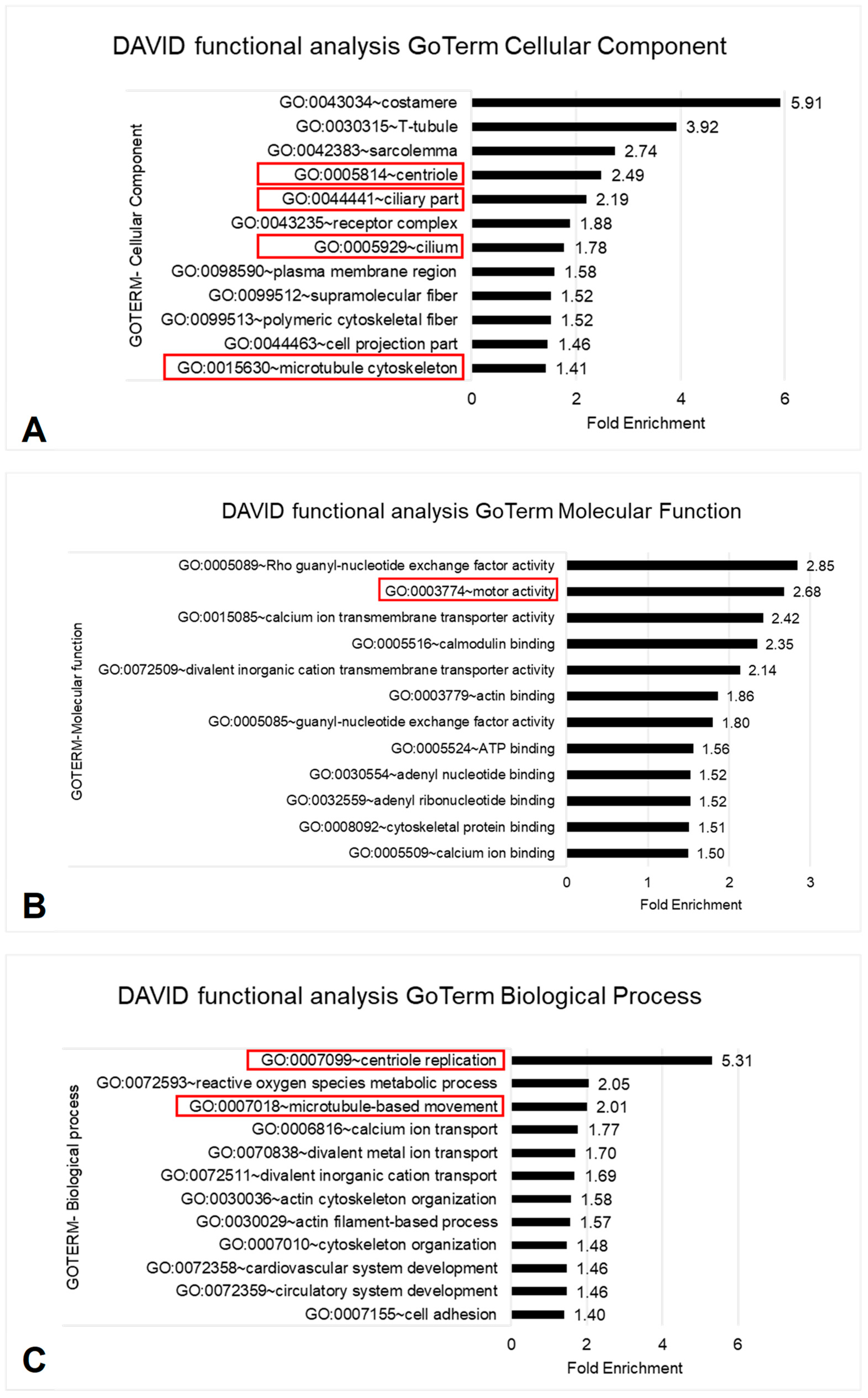
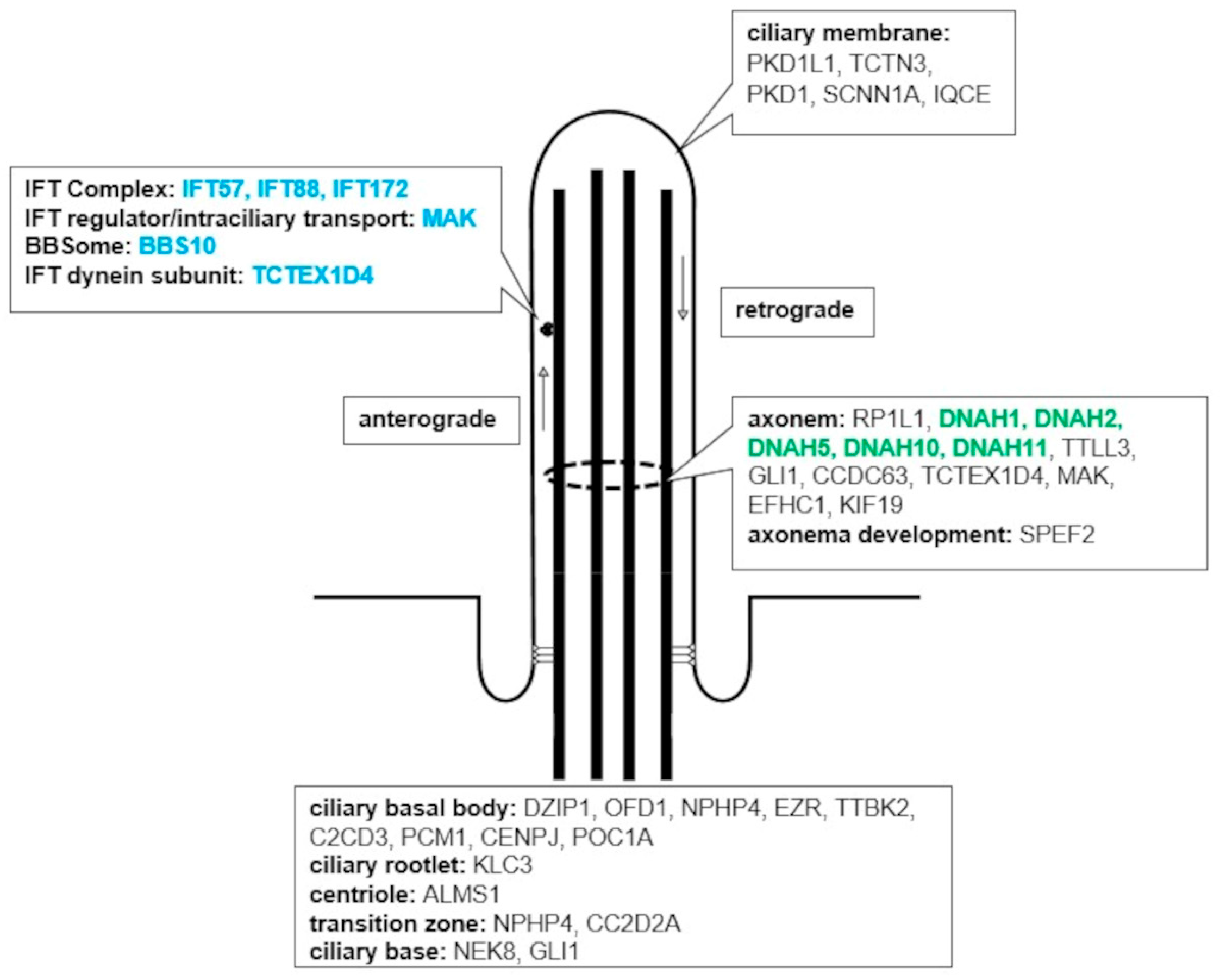
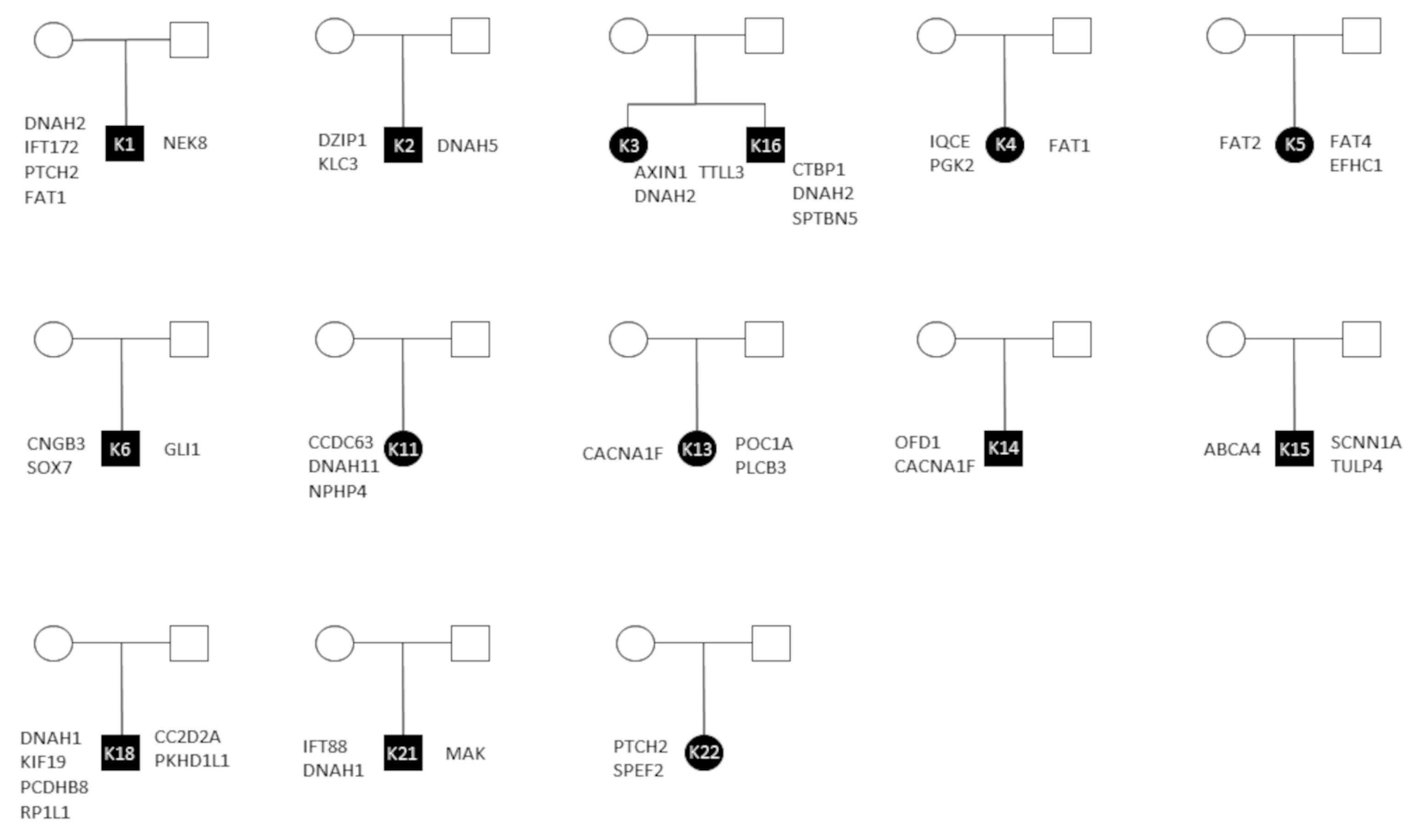
VACTERL association is a rare malformation complex consisting of vertebral defects, anorectal malformation, cardiovascular defects, tracheoesophageal fistulae with esophageal atresia, renal malformation, and limb anomalies. According to current knowledge, VACTERL is based on a multifactorial pathogenesis including genomic alterations. This study aimed to improve the understanding of the genetic mechanisms in the development of VACTERL by investigating the genetic background with a focus on signaling pathways and cilia function. The study was designed as genetic association study. For this, whole-exome sequencing with subsequent functional enrichment analyses was performed for 21 patients with VACTERL or a VACTERL-like phenotype. In addition, whole-exome sequencing was performed for three pairs of parents and Sanger-sequencing was performed for ten pairs of parents. Analysis of the WES-data revealed genetic alteration in the Shh- and Wnt-signaling pathways. Additional performed functional enrichment analysis identified an overrepresentation of the cilia, including 47 affected ciliary genes with clustering in the DNAH gene family and the IFT-complex. The examination of the parents showed that most of the genetic changes were inherited. In summary, this study indicates three genetically determined damage mechanisms for VACTERL with the potential to influence each other, namely Shh- and Wnt-signaling pathway disruption, structural cilia defects and disruption of the ciliary signal transduction.
Keywords: VACTERL association; VATER association; whole-exome sequencing; cilia-associated signaling; sonic-hedgehog signaling pathway; wnt signaling pathway VACTERL association; VATER association; whole-exome sequencing; cilia-associated signaling; sonic-hedgehog signaling pathway; wnt signaling pathway