Article

Absence of Cold-Inducible RNA-Binding Protein (CIRP) Promotes Angiogenesis and Regeneration of Ischemic Tissue by Inducing M2-Like Macrophage Polarization

by
Matthias Kübler
1,2,
Sebastian Beck
1,2,
Silvia Fischer
3,
Philipp Götz
1,2,
Konda Kumaraswami
1,2,
Hellen Ishikawa-Ankerhold
1,4,†,
Manuel Lasch
1,2,5,† and
Elisabeth Deindl
1,2,*,†
1
Walter-Brendel-Centre of Experimental Medicine, University Hospital, Ludwig-Maximilians-Universität München, 81377 Munich, Germany
2
Biomedical Center, Institute of Cardiovascular Physiology and Pathophysiology, Faculty of Medicine, Ludwig-Maximilians-Universität München, 82152 Planegg-Martinsried, Germany
3
Department of Biochemistry, Faculty of Medicine, Justus Liebig University, 35392 Giessen, Germany
4
Department of Internal Medicine I, Faculty of Medicine, University Hospital, Ludwig-Maximilians-Universität München, 81377 Munich, Germany
5
Department of Otorhinolaryngology, Head and Neck Surgery, University Hospital, Ludwig-Maximilians-Universität München, 81377 Munich, Germany
*
Author to whom correspondence should be addressed.
These authors contributed equally to this work.
Biomedicines 2021, 9(4), 395; https://doi.org/10.3390/biomedicines9040395

Submission received: 28 February 2021 / Revised: 31 March 2021 / Accepted: 4 April 2021 / Published: 7 April 2021
(This article belongs to the Special Issue Macrophages in Health and Non-infectious Disease)

Abstract

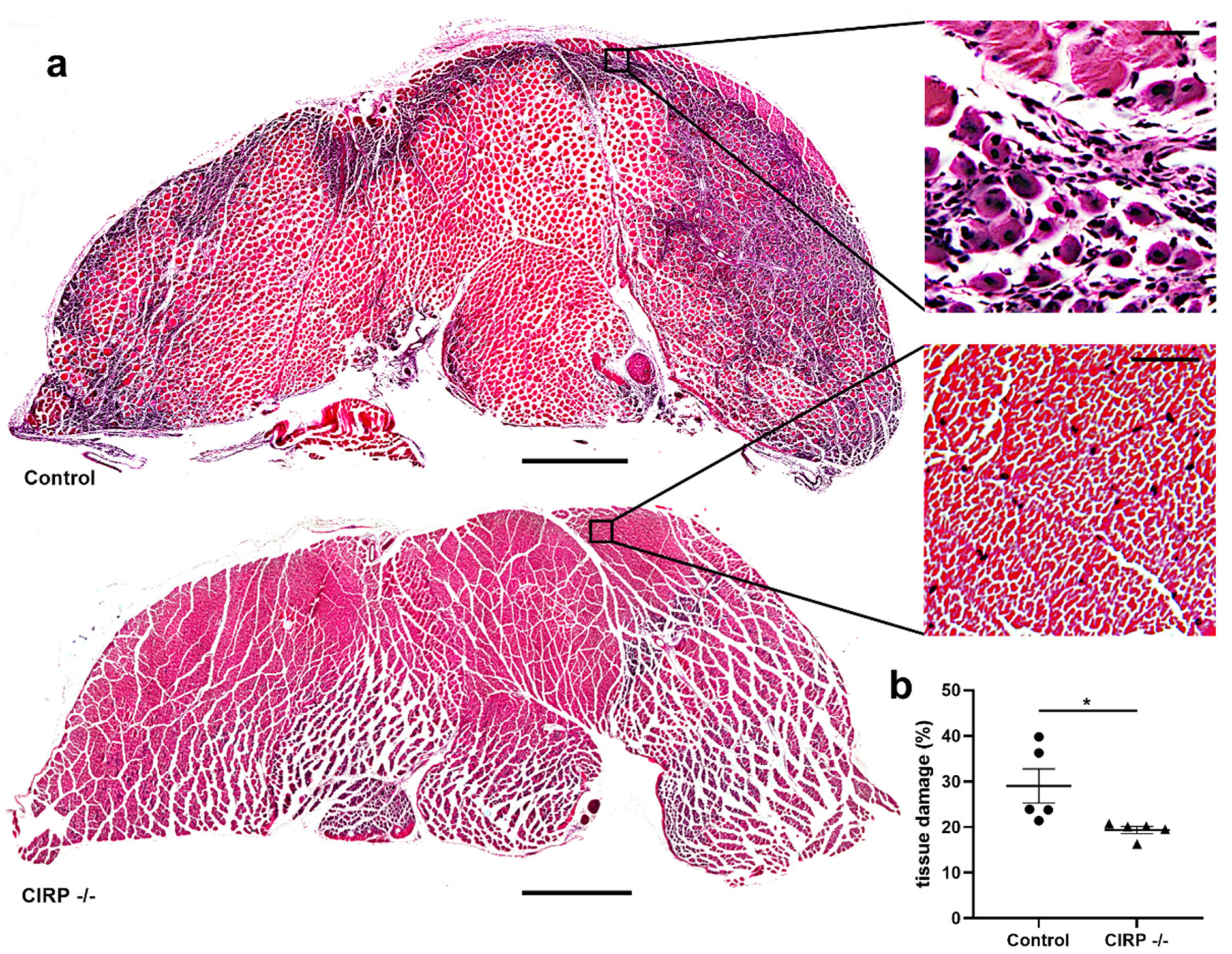
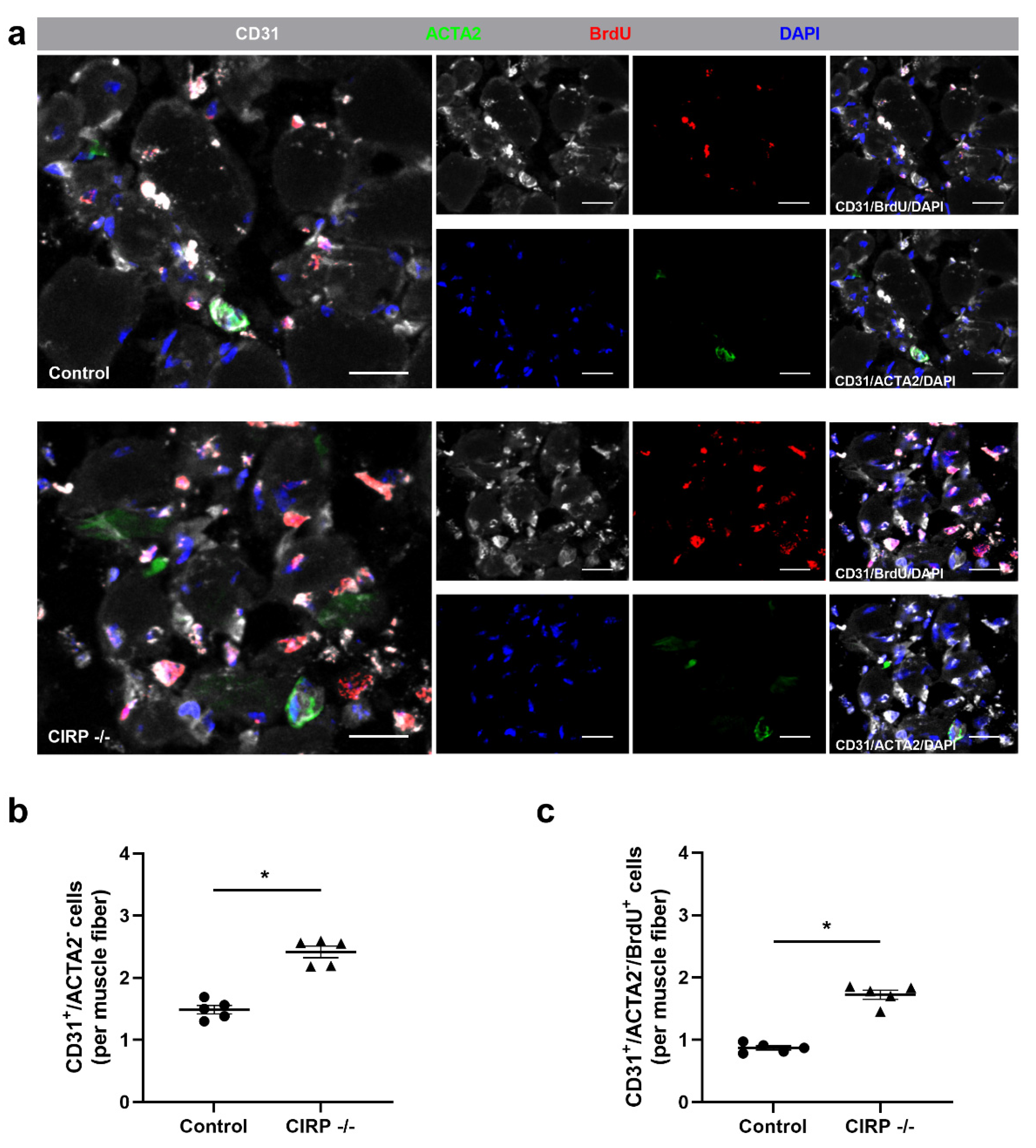
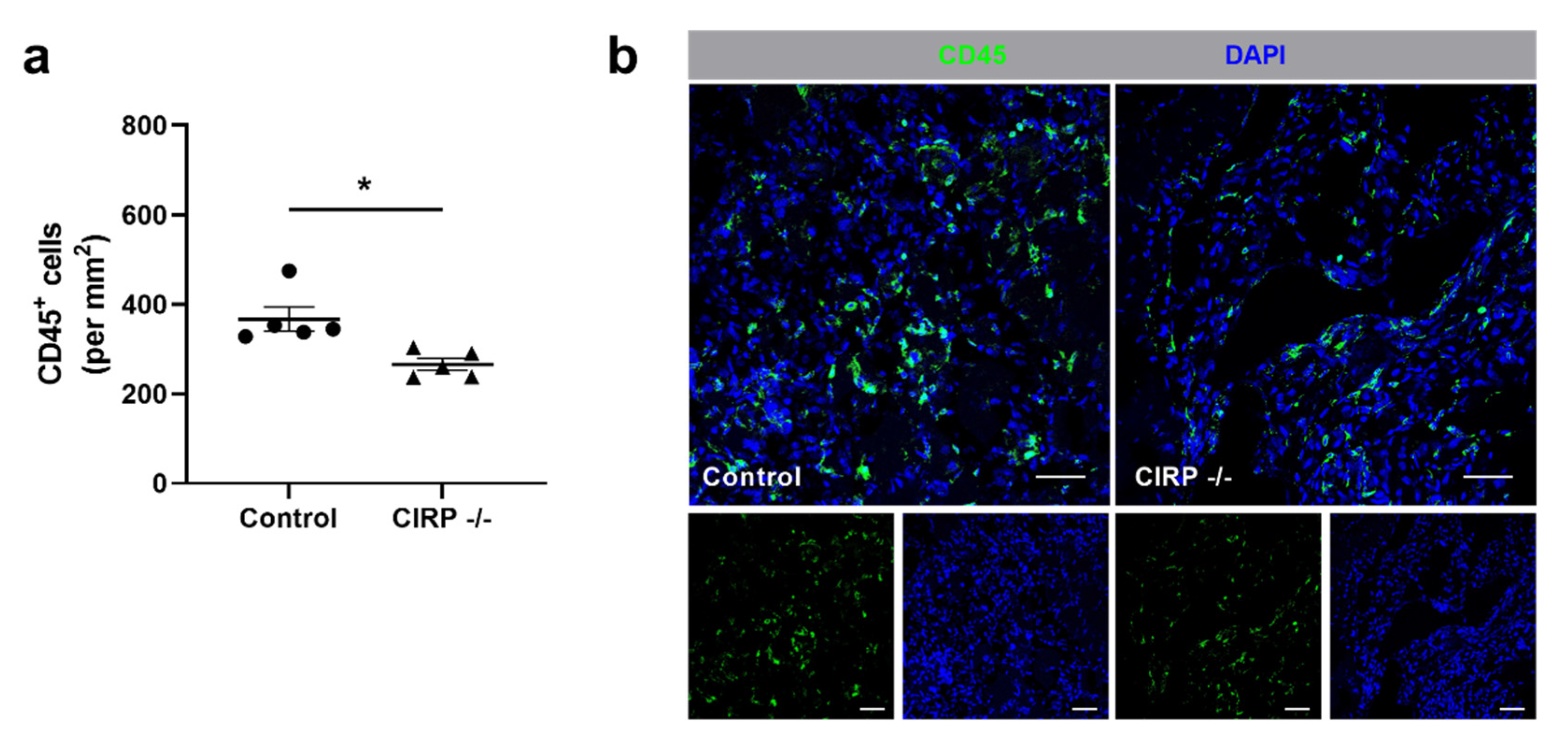
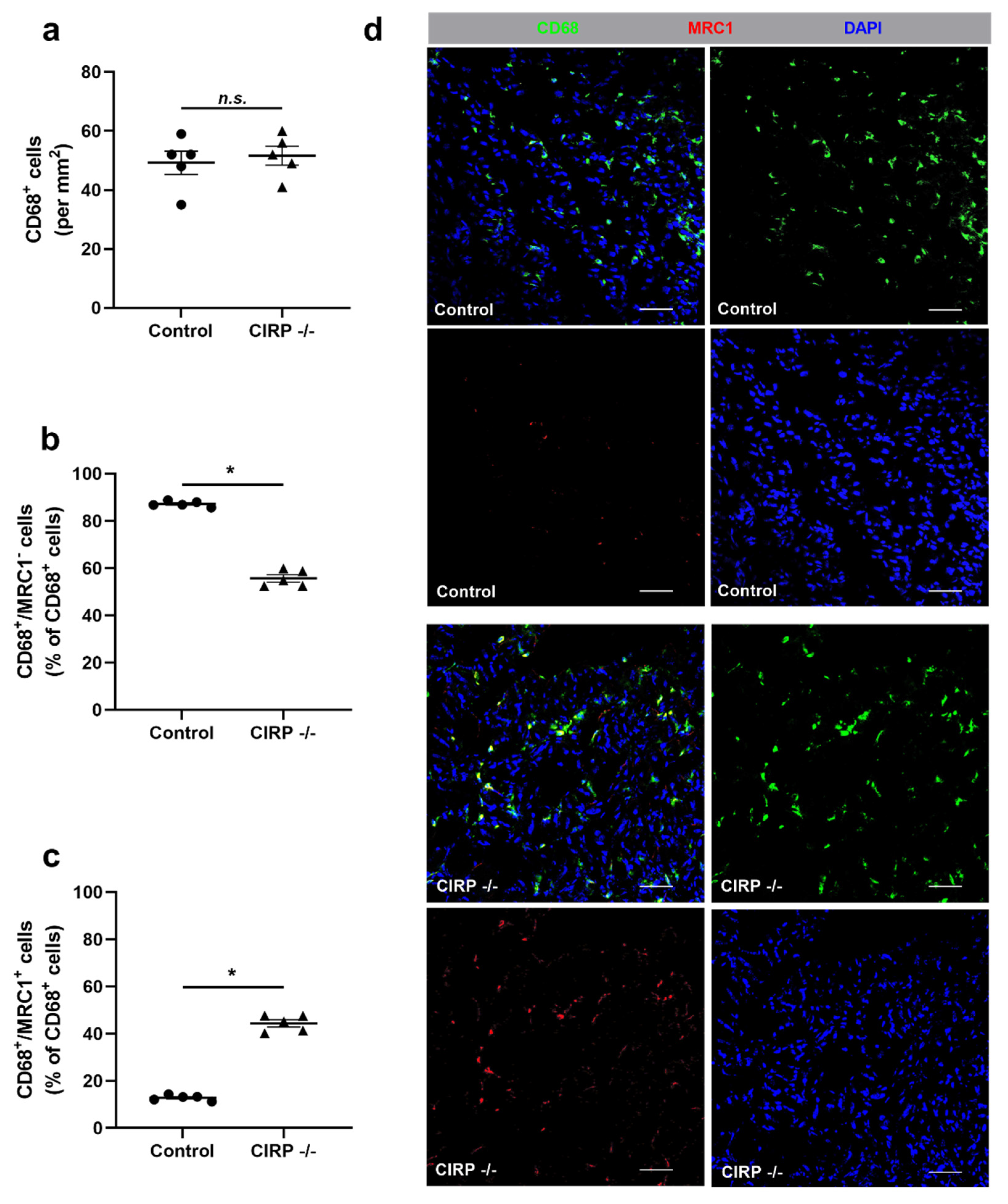
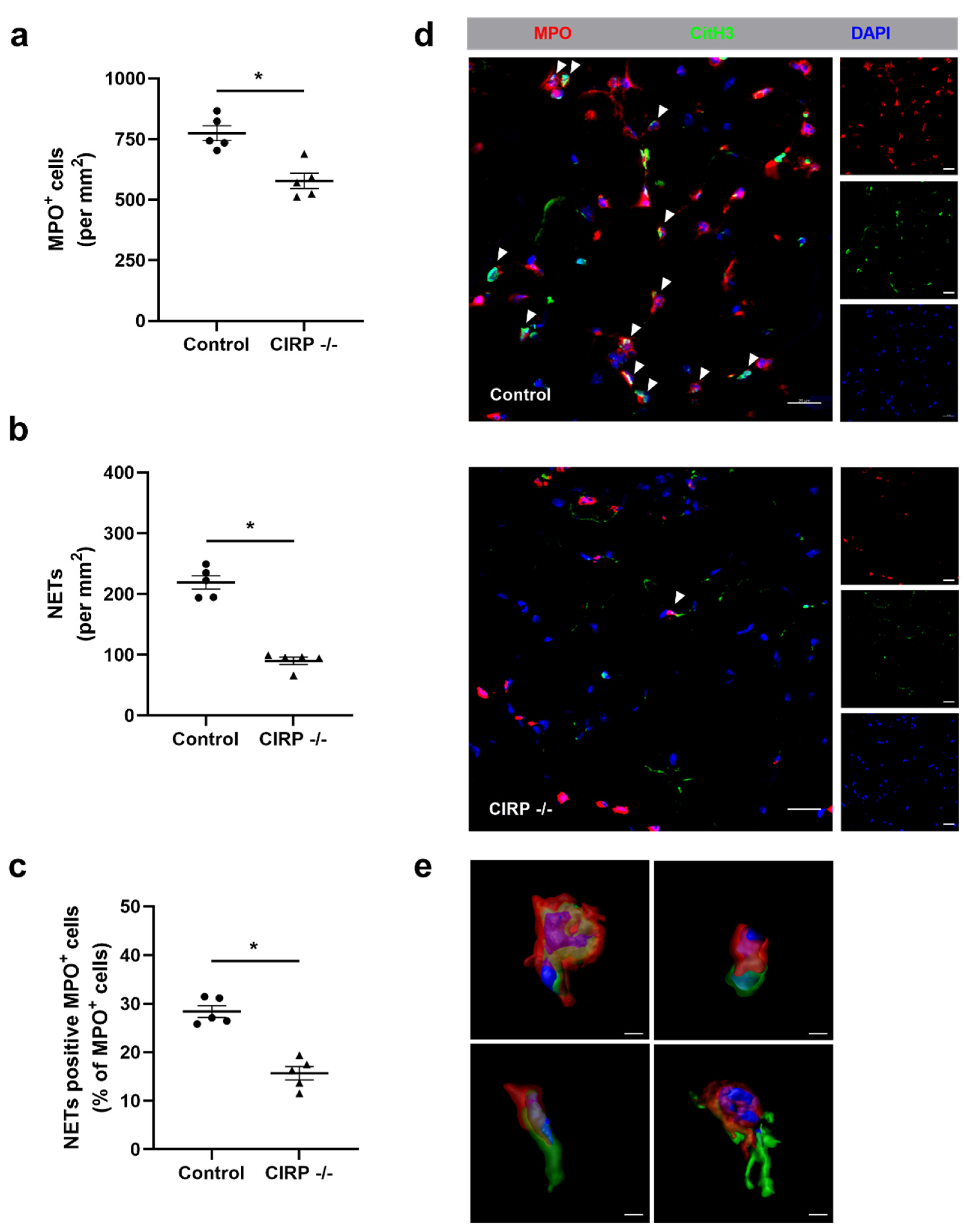
Cold-inducible RNA-binding protein (CIRP) is an intracellular RNA-chaperone and extracellular promoter of inflammation, which is increasingly expressed and released under conditions of hypoxia and cold stress. The functional relevance of CIRP for angiogenesis and regeneration of ischemic muscle tissue has never been investigated and is the topic of the present study. We investigated the role of CIRP employing CIRP deficient mice along with a hindlimb model of ischemia-induced angiogenesis. 1 and 7 days after femoral artery ligation or sham operation, gastrocnemius muscles of CIRP-deficient and wildtype mice were isolated and processed for (immuno-) histological analyses. CIRP deficient mice showed decreased ischemic tissue damage as evidenced by Hematoxylin and Eosin staining, whereas angiogenesis was enhanced as demonstrated by increased capillary/muscle fiber ratio and number of proliferating endothelial (CD31+/BrdU+) cells on day 7 after surgery. Moreover, CIRP deficiency resulted in a reduction of total leukocyte count (CD45+), neutrophils (myeloperoxidase, MPO+), neutrophil extracellular traps (NETs) (MPO+/CitH3+), and inflammatory M1-like polarized macrophages (CD68+/MRC1-), whereas the number of tissue regenerating M2-like polarized macrophages (CD68+/MRC1-) was increased in ischemic tissue samples. In summary, we show that the absence of CIRP ameliorates angiogenesis and regeneration of ischemic muscle tissue, most likely by influencing macrophage polarization in direction to regenerative M2-like macrophages.
Keywords: angiogenesis; cold-inducible RNA-binding protein; CIRP; CIRBP; neutrophil extracellular traps; NETs; macrophage polarization; inflammation; tissue regeneration; ischemia angiogenesis; cold-inducible RNA-binding protein; CIRP; CIRBP; neutrophil extracellular traps; NETs; macrophage polarization; inflammation; tissue regeneration; ischemia