Review

Advances in Nanomaterial-Mediated Photothermal Cancer Therapies: Toward Clinical Applications
1
Natural Product Informatics Research Center, Korea Institute of Science and Technology (KIST), Gangneung 25451, Korea
2
Division of Bio-Medical Science and Technology, KIST School, University of Science and Technology (UST), Seoul 02792, Korea
*
Author to whom correspondence should be addressed.
Biomedicines 2021, 9(3), 305; https://doi.org/10.3390/biomedicines9030305

Submission received: 3 March 2021 / Accepted: 14 March 2021 / Published: 16 March 2021
(This article belongs to the Special Issue Advanced Nanomedicines for Optical Imaging and Phototherapy)

Abstract

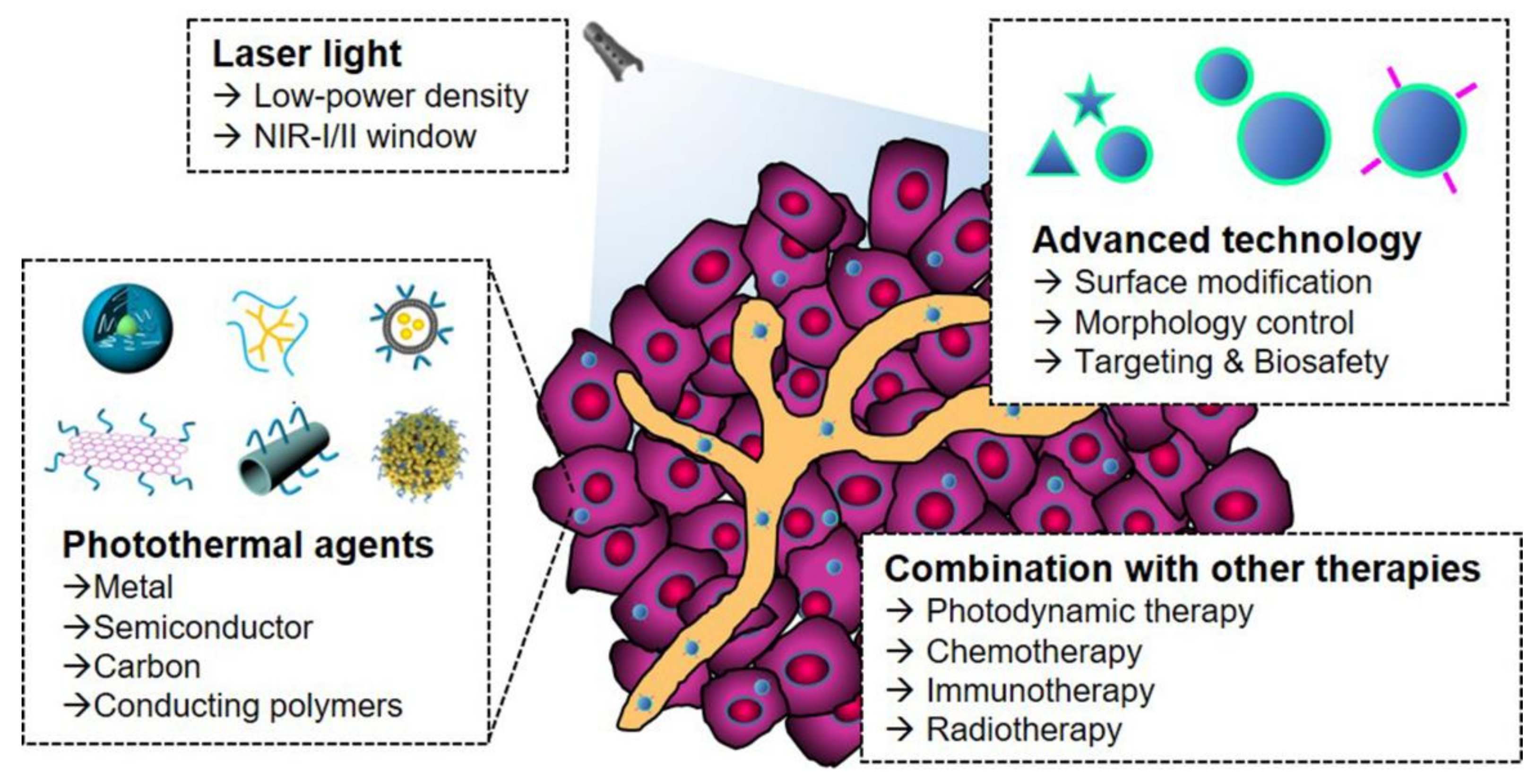
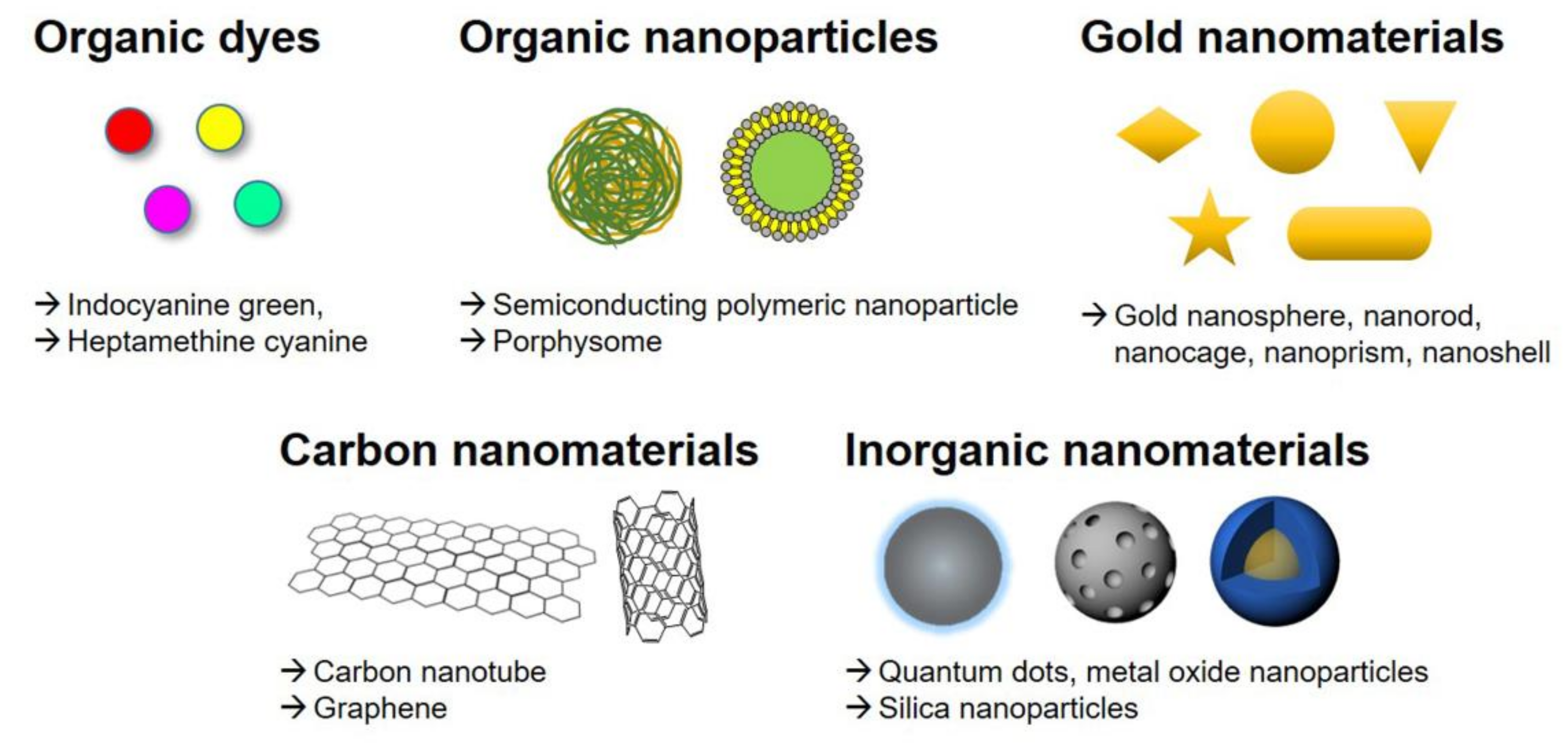
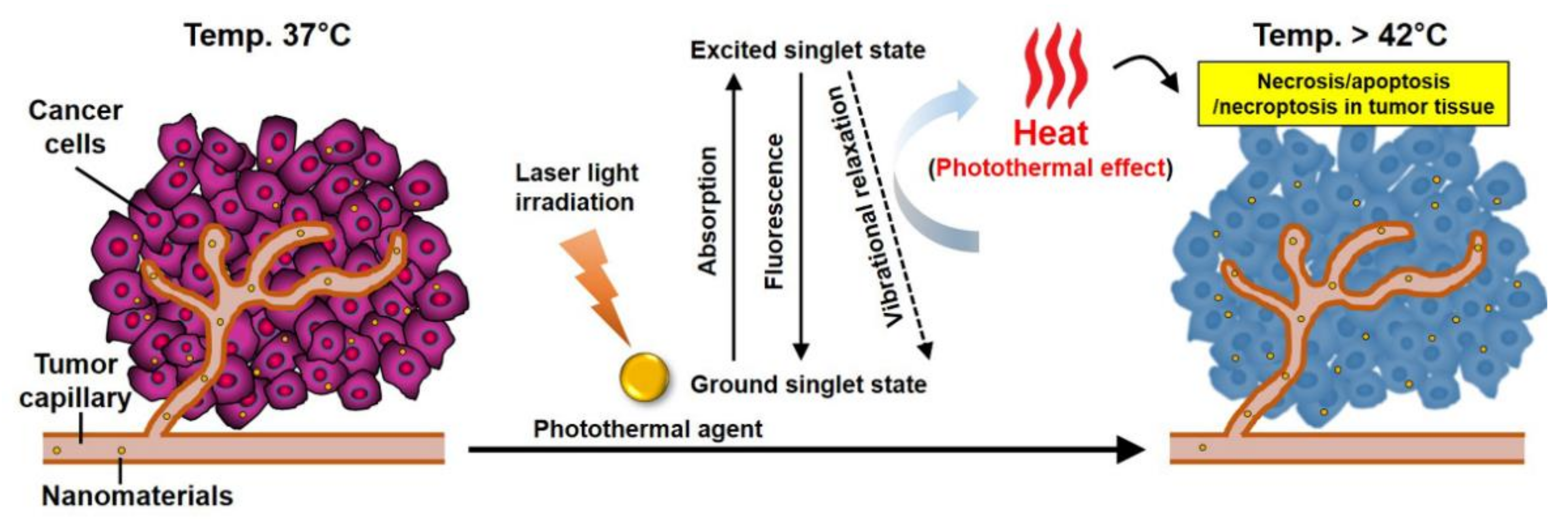
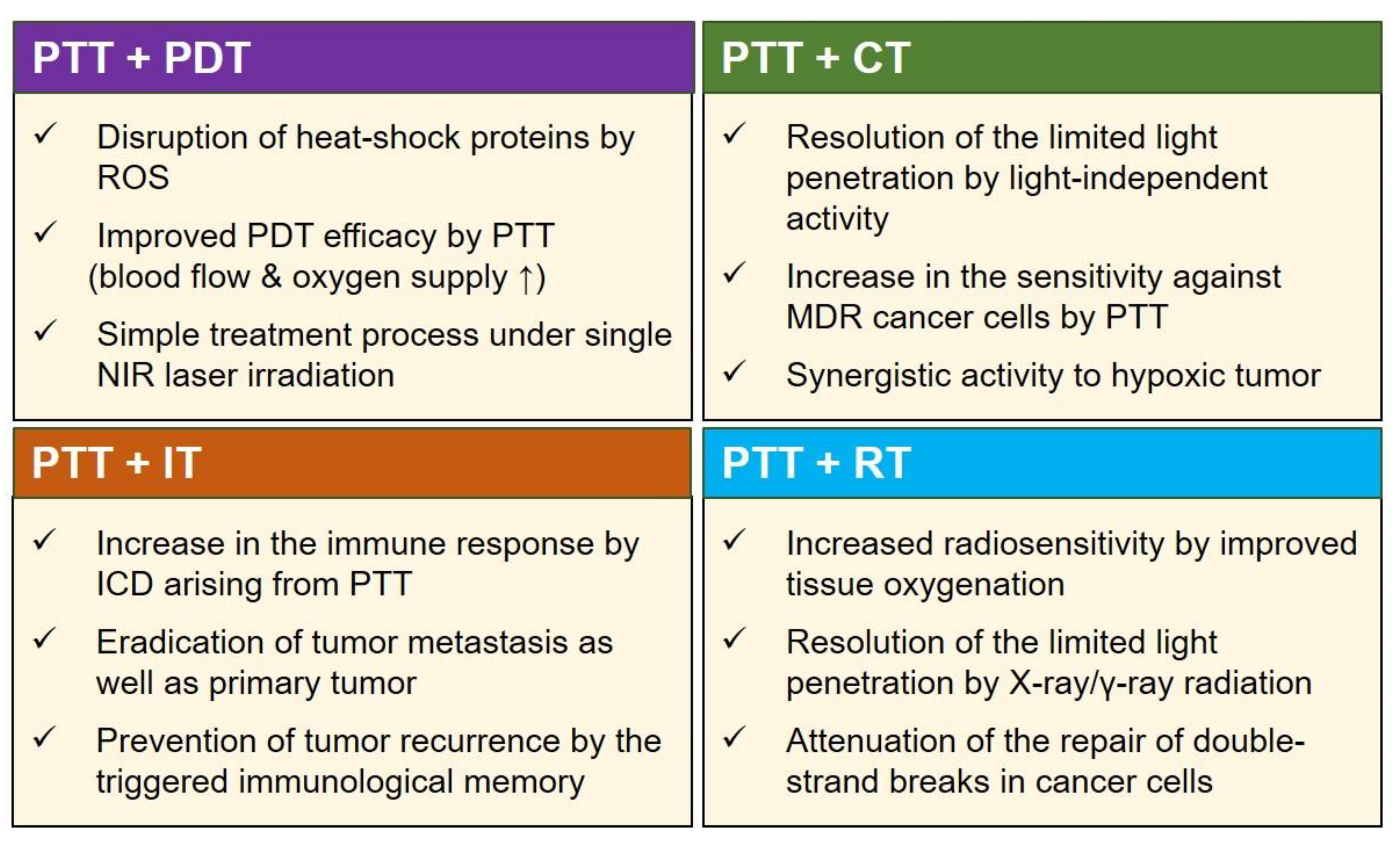
Photothermal therapy (PTT) has attracted extensive research attention as a noninvasive and selective treatment strategy for numerous cancers. PTT functions via photothermal effects induced by converting light energy into heat on near-infrared laser irradiation. Despite the great advances in PTT for cancer treatment, the photothermal therapeutics using laser devise only or non-specific small molecule PTT agents has been limited because of its low photothermal conversion efficiency, concerns about the biosafety of the photothermal agents, their low tumor accumulation, and a heat resistance of specific types of cancer. Using nanomaterials as PTT agents themselves, or for delivery of PTT agents, offers improved therapeutic outcomes with fewer side effects through enhanced photothermal conversion efficiency, accumulation of the PTT agent in the tumor tissue, and, by extension, through combination with other therapies. Herein, we review PTT’s current clinical progress and present the future outlooks for clinical applications. To better understand clinical PTT applications, we describe nanomaterial-mediated photothermal effects and their mechanism of action in the tumor microenvironment. This review also summarizes recent studies of PTT alone or in combination with other therapies. Overall, innovative and strategically designed PTT platforms are promising next-generation noninvasive cancer treatments to move closer toward clinical applications.
Keywords: photothermal therapy; photothermal agent; photothermal effect; clinical application; cancer therapy; nanomaterials photothermal therapy; photothermal agent; photothermal effect; clinical application; cancer therapy; nanomaterials